Fractional CO2 Laser Resurfacing: Understanding Skin Renewal, Recovery, and Results
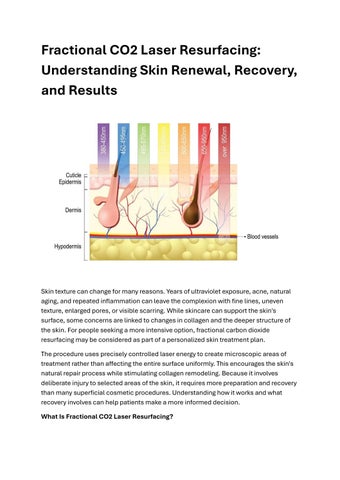
Skin texture can change for many reasons. Years of ultraviolet exposure, acne, natural aging, and repeated inflammation can leave the complexion with fine lines, uneven texture, enlarged pores, or visible scarring. While skincare can support the skin's surface, some concerns are linked to changes in collagen and the deeper structure of the skin. For people seeking a more intensive option, fractional carbon dioxide resurfacing may be considered as part of a personalized skin treatment plan. The procedure uses precisely controlled laser energy to create microscopic areas of treatment rather than affecting the entire surface uniformly. This encourages the skin's natural repair process while stimulating collagen remodeling. Because it involves deliberate injury to selected areas of the skin, it requires more preparation and recovery than many superficial cosmetic procedures. Understanding how it works and what recovery involves can help patients make a more informed decision. What Is Fractional CO2 Laser Resurfacing?