Su st aina bility i n Gl o bal Tra de an d Lo gistics
:

Su st aina bility i n Gl o bal Tra de an d Lo gistics
:
Increasingly, leadership in today’s global t rade and logistics industry is meas ured less by size and reach and more by economic, social, and environmental i mpact In a word: sus tainability. How sustainable is your organisation? Are you positively cont ributing to the economies in which you operate? Are you reducing energy use and emissions? Are you conserving and prot ecting natural resources and biodiversity? Are you integrati ng sust ainability int o your supply c hains?
And finally, are you enhancing community responsibility?
It is not possible to imagine the global trade and logistics industry moving in any direction other than toward swifter, fuller, and more robust economic, social, and environmental responsibility.
When one stops to consider the advancements made in any number of measurable areas of sustainable development – from employee training and community giving to climate change mitigation, energy e ciency, and water optimisation – the industry has come a long way, even in the last five years to 2020.
However, further change is coming. For example, the European Union (EU) has set new standards for sustainability, publishing its Green strategy in July 2021 to become net-zero by 2050. To protect access to capital, low capital costs, and ensure long-term investors, companies will need to focus on having a proactive and demonstrable program for reducing their carbon impact and energy intensity. Furthermore, with the rapid shift in regulation, companies need to be ahead of the expected tightening of Environmental, Social and Governance (ESG) directives post-COP26. Any ESG strategy needs to have the correct frameworks (SASBI, TCFD), as well as a proactive commitment to and investment in reducing carbon intensity (water, electricity, and energy efficiency).
Organisations will need to evaluate what other actions they can take to put the business ahead within the sector for the next 20 - 30 years. There are already EU proposals to introduce carbon pricing to the maritime sector. This will foster the use of sustainable fuels for all ships departing or arriving at an EU port. In addition, vessels not meeting those limits would pay a deterrent financial penalty. There will also be targets for important ports to serve vessels with onshore power, reducing polluting fuels that also harm local air quality.
The next decade’s industry leaders have been hard at work for some time, tracking and monitoring their behaviors, modifying them on occasion and changing them entirely where required, to ensure that sustainable thinking becomes ingrained in the overall thought process of the organisations which they lead. Creating “lasting legacies for communities” is the most apt way we heard experts describe how responsible organisations should think about how they intend to deliver environmental, economic, and social value through their operations.
We found that the most sustainable organisations are actively changing the way they operate.
They are:
Contributing in a positive, measurable way to the economies in which they operate
Reducing energy use and emissions
Conserving and protecting natural resources and biodiversity
Integrating sustainability into their supply chains
Enhancing community responsibility
During Q2 2021, we conducted telephone and video call interviews with those who deal closely with sustainability issues in the global trade and logistics industry.
Our research questions focused on strategic objectives employed to increase organisational change seen necessary to ensure economic, social, and environmental sustainability.
We wanted to learn what sustainability professionals believed were evolving bestpractices that could be put into place and effect measurable and beneficial change.

Open the annual report of any multinational organisation, and you will read of an enterprise committed to contributi ng to the ec onomi es in which it operates. The reason is manif est: a company invested in an economy is a company with a future in that market.
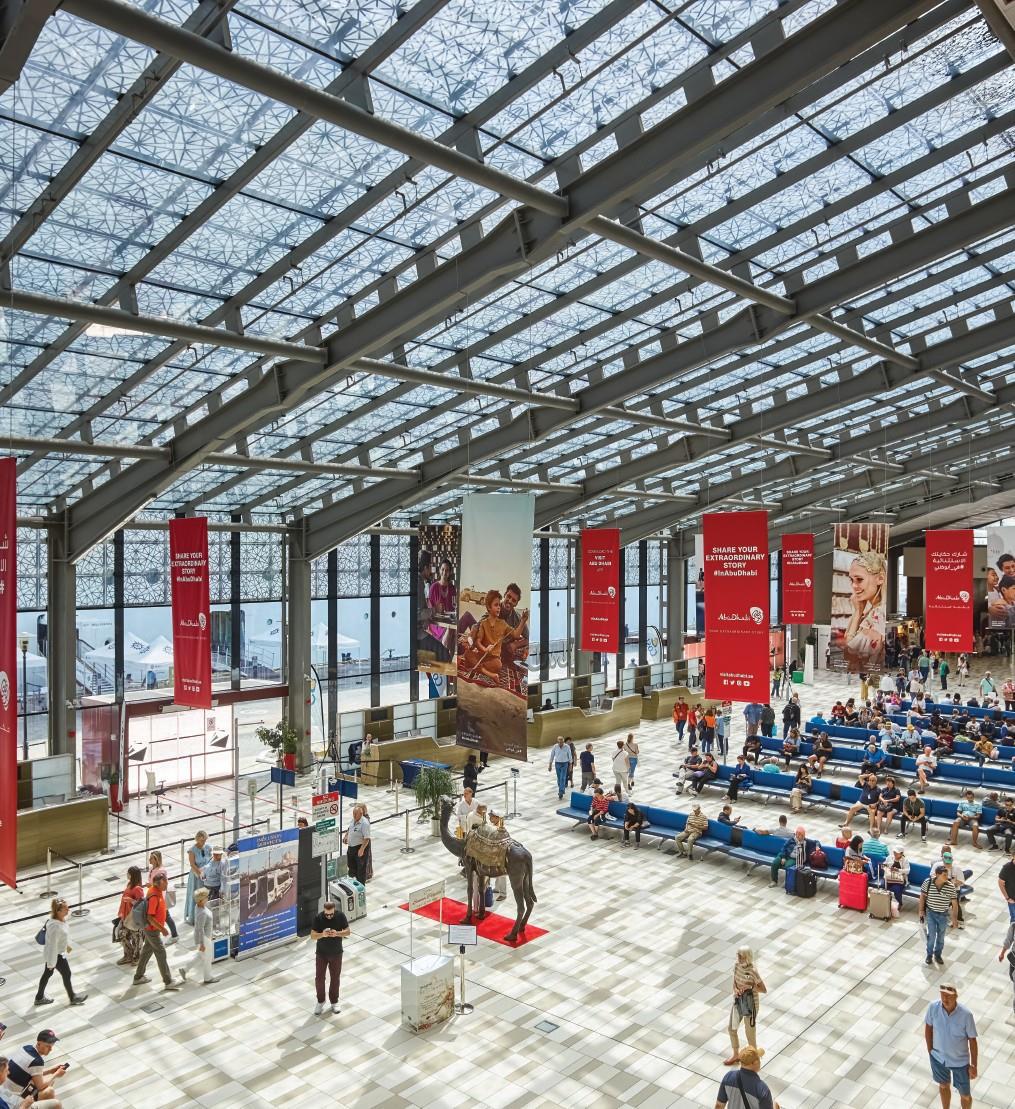
We were reminded by respondents that, unlike most other organisations, ports and industri al zones are vital elements in a country’s i nfrast ructure, connecting it to gl obal trade rout es and, thus, increasing its possibilities f or economic growth
Indeed, global trade and logistics organisations contribut e tremendously to the ec onomies in which they operate
Measured by any reasonable metric – jobs support ed, payments to t he gov ernment, employee wages and benefits, or community investment – the economic impact of our industry on the key markets in whic h we choose to i nvest remains outsized and overwhelmingly beneficial to all parties involved.
There is still so muc h every organisation in the industry can do to opti mise envi ronmental stewardship by reducing energy cons umption and emissions output Technology will drive muc h of t his change, but a shift in mindset is w hat is paramount –companies must want to c hange, we heard from respondents, as opposed to bein g forc ed to adopt change
We also heard that the leadin g global trade and logistics players are all-embracing change early and enthusiastically, s eeking to lead low carbon transformation
Through st rategic plannin g and careful adv anced consideration, t hese int ernational organis ations are taking the time provided to them to best effect change to thei r competitive advant age. I n short, they are all working now to find ways to introduce clean energy s ources into their total existing energy mix, thus reducing their ov erall carbon foot print, if not t he size of thei r energy footprint.
We know from the World Watch Institut e that buildings are res ponsibl e for the annual consumpti on of 40 percent of the world’s energy
The int roducti on of building management systems (BMS) to cont rol, monitor, and operate all heating/ air conditioning, ventilati on, lighting, water, and power will significantly enhance energy s avings, improve operational e cienci es, and promote a safe and comfortable envi ronment f or all who live and work inside them
Another emission-reduci ng measure increasingly under c onsideration i n the i ndustry is Cold Ironing, or Alternate Maritime Power, an e cient pollution control measure in which the diesel engines of large vessels are turned off, and the vess els’ electricity is supplied using shore elec tric power as a
substitute The environmental benefits are many, not least the ships switching off thei r auxiliary power units, which further reduces noise and air pollution
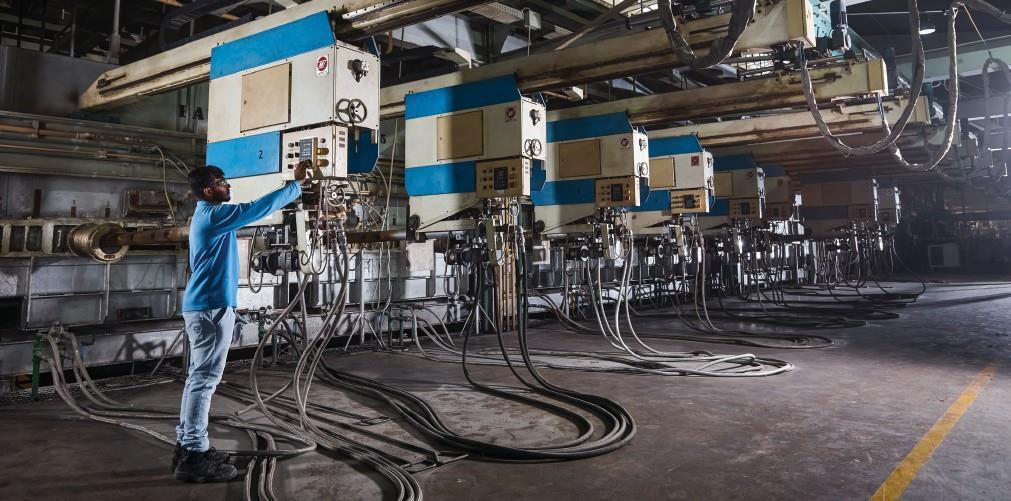
Industrial z ones f orm an int rinsically vital dimension i n today’s global trade and logistics arena, partic ularly where energy -intensiv e met als manufac turing is concerned We were told that, for too many years , met als often were unnec essarily cast and recast before ever reaching their intended customers and at great expense to both manufac turers and the environment Thus, the creation of a Modula r Path or ‘Hot Metal Road’ that enables transport and delivery of metals in molten form is s een as an energy emissionsreducing gamechanger.
In the cas e of Emirates Glo bal Aluminiu m (EGA), located at Khalifa Industrial Zone Abu Dhabi (KIZAD), we learned that molten aluminiu m is transferred to preheated 14 5 tonne trailermounted crucibl es via overhead cranes The crucibles are designed to keep the metal in a liquid state for up to 18 hours at temperatures of 780°C The trailer-mounted crucibles are then driven to customers who utilise the molten metal t o manufac ture a vari ety of products.
In a business-as -usual sc enari o, alumi nium would have been cast i nto ingots, which w ould then be molten and us ed by al uminiu m product manufac turers; how ever, t he energy used for melting the ingots is avoid ed through the Hot Metal Road By avoidin g the use of fossil fuels, the Hot Metal Road signific antly reduces emissions in addition to the energy and cost of remelting the ingots for use
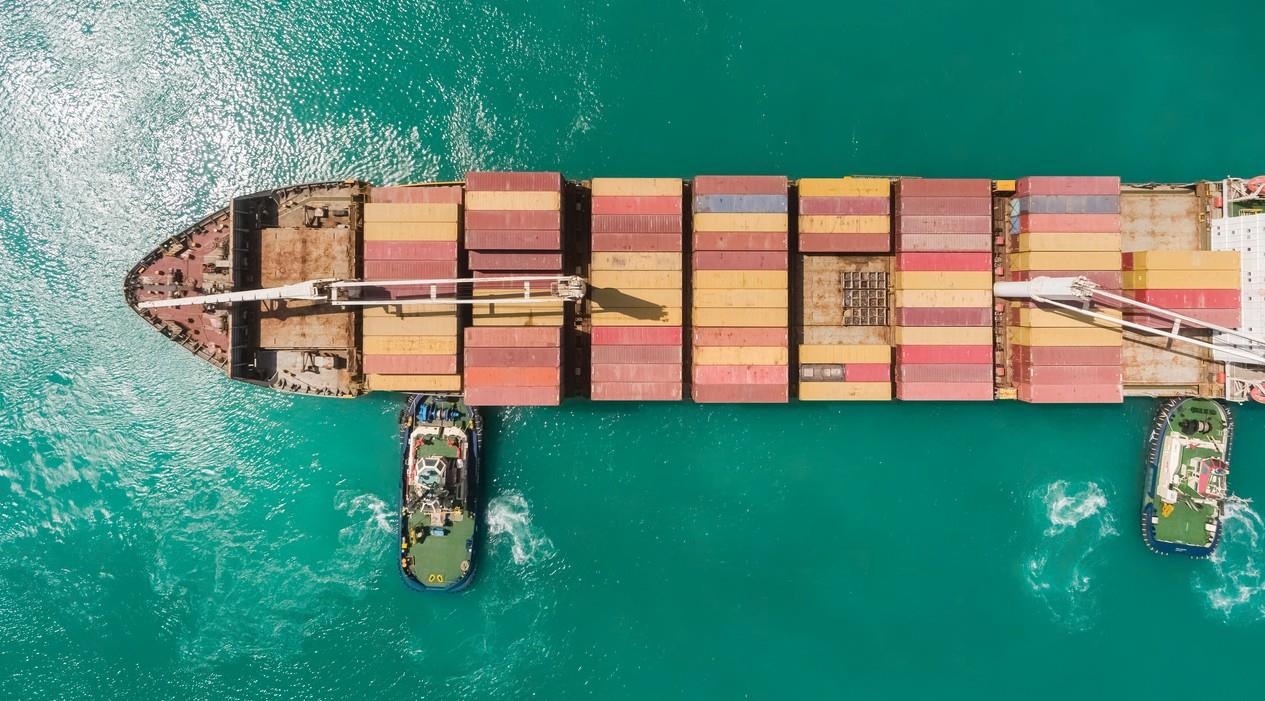
No sustainability efforts – anyw here in the world –can be advanced if existing nat ural resourc es are not protected vigorously.
In the gl obal trade and logistics indust ry, there is heightened sensitivity around natural resources and biodiv ersity, as so muc h of its v olume is shipped by air and sea, two environmental areas known to be suffering the impacts of unregulat ed carbon emission and wast e management.
We learned that i ndust ry leaders are mobilising efforts, resources, and funding to clean the marin e environment – first in their own areas of jurisdiction, and then in others ; raising awareness about t he criticality of reducing plastic consumpti on and, more urgently, its dispos al at sea Overall, we found there is an impetus t o reduce to zero where possi ble the c onsumption of ‘single-use’ pl astics that could find thei r way int o the world’s waterways.
But marine pollution prev ention is not t he only concern of global trade and logistics leaders ; they are also vi gilant monitors of air and seawater quality
The int roducti on of highly advanced air quality management programmes, for ex ample, is now being propos ed for KIZAD, the l argest indust rial zone in the Middle East And many of the w orld’s most ultra-modern ports operate w ell-established water quality and ecologic al monit oring programmes, with particular concern shown to
critical habitats with hig h biodiversity value, such as those with threatened coral or s eagrass populations Global indust ry leadership of the highest order is demonstrated, w e found out , when organisations undertak e enormous time and a great i nvestment to transl ocate coral, t hus enabling the ex pansion of their operati ons without damagin g the environment.
Finally, global trade and logistics le aders who are committed to sust ainability and protectin g nat ural resourc es and biodiversity hav e given due consideration to waste management and will have a documented plan to address the dispos al of all waste
Beyond the obvious tenets of “reduc e, reuse, recycle” a robust waste management pla n calls for all port operati ons and indust rial zones to commit to the deployment of regulatory criteri a, implementation prot ocols, and monitoring methodologies f or all mentioned causes of pollution All waste should be tracked and measured and benchmarked from generation to storage to disposal.
As one proud respondent t old us: “Sustainable waste management is inc redibly import ant to us, and we are committed to the pri nciples of a circular ec onomy Year after y ear, we are shaping the fut ure for wast e management in por ts and indus trial zones ”
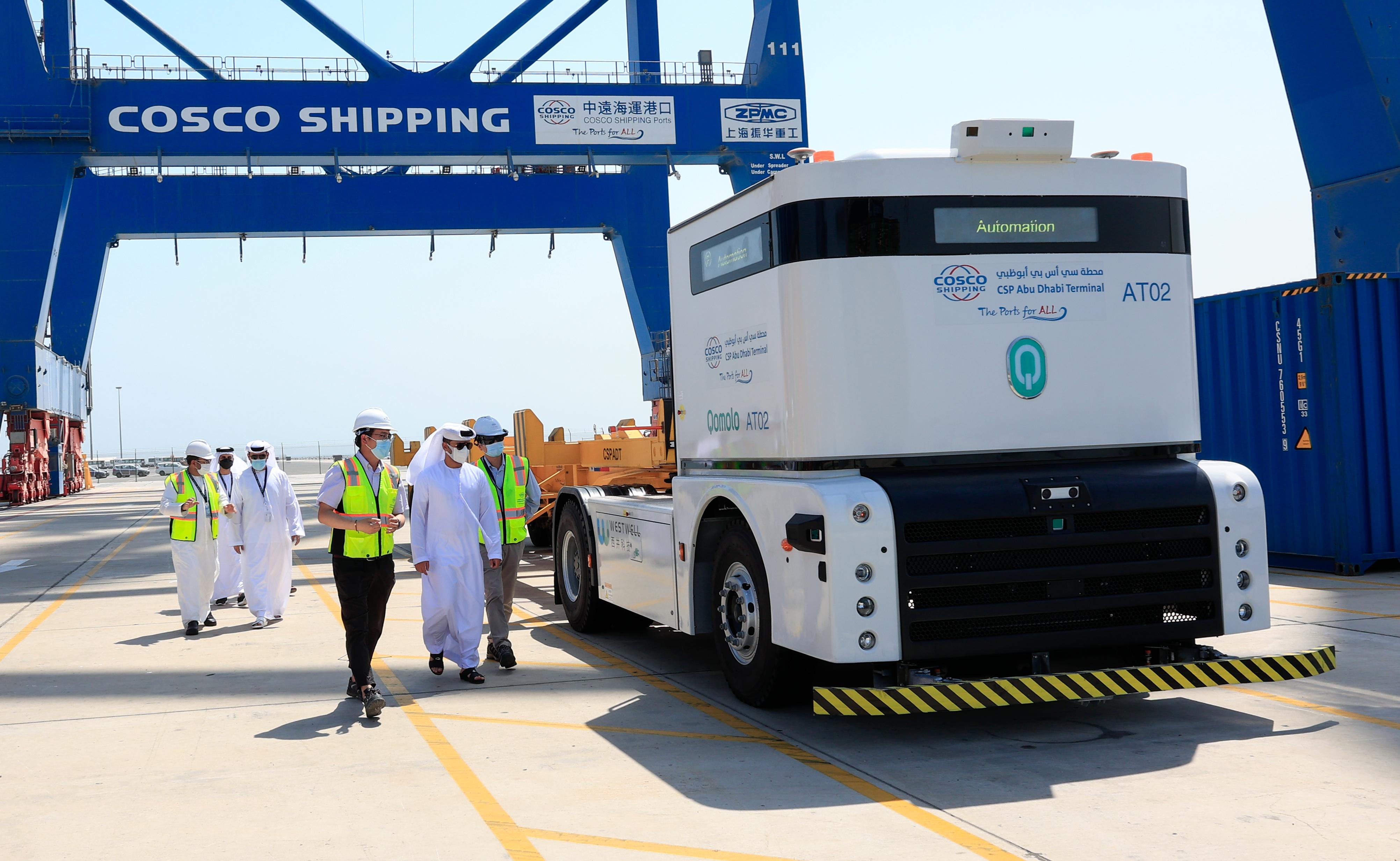
Sustainability is only a worthy goal f or an organisation if its v alues and pri nciples can be seen clearly how it conducts its business across its supply chains
Our res pondents challenged us to think about t he tremendous i mport ance of organisational consideration for human rights, la bour, the environment, and a nti-corruption, among other responsibilities, when contemplating their sustainability in the global trade and logistics industry By incorporating The UN Gl obal Compact’s principles of responsible business, which include meeting thes e fundamental responsibilities, into st rategi es, policies, and procedures, organisations c an set thems elves on a path toward l ong-term supply chain sustainability.
Stakeholder inclusiveness is cent ral to any global trade and logistics organisation’s sustainability
effort, thus engagin g regularly and openly with stakeholders is critical t o the success of the supply chain
As one cont ributor shared with us: “O ur stak eholders are the s ource of our inspiration and aspirations ; without their s upport, it would not have been possible for us to become the indust ry leader we are today ”
Finally, measurement is fundamental to the successful integration of sus tainability in any organisation’s supply chain We were told that events, activities , surveys , and meetings proved to be the best way for global players to stay i n close contact with their respectiv e supply chain stakeholders, educating them about new developments gaugin g their feedback regarding the same

Creating “lasting legacies of community involvement ” best sums up how l eading global trade and logistics respondents aim to meet thei r community responsibilities.
It is true that all organisations will measure social value differently, but the noti on that meaningf ul engagement is paramount has been an increasingly evident trend in corporate social responsibility over the pas t five years.
Organisati ons are effecting p ositive local c hange because they want to do so, not bec ause they feel obliged to do so
Increasingly, global supply c hain companies are pursuing a more proactive and more collaborative approach to sustainability
We discovered that l eadin g global trade and logistics players are overwhelmingly soci ally responsibl e. They demonst rate this trait most notably in their human capital management, health and safety, and governanc e practices.
Leading organisations , first and foremost, take care of their peopl e They promot e diversity, gender equality, and employee well-bein g within and outside their work culture They also prioritis e health and saf ety to drive solid growt h; and finally, the organisation’s strat egic direction, often wit h the aid of a ‘sus tainability c ommitt ee’ composed of senior ex ecutives representing various depart ment al functions; from strategy and procurement to finance and communic ations.
Organisati ons should leverage their si gnificant investments in ports and indust rial infrastruct ure to create st rong, positive, and l asting goodwill that will unlock future ec onomic and social value for all parties inv olved I n additi on, they shoul d look f or ways to cont ribute to the social needs of the wider community.
By constantly asking themselves how they c an add social value – through both conventional and nonconventional means – t o the c ommunities
in which they operate, gl obal play ers can further their shared s ustainability goals
One res pondent spok e of a new initia tive to deliver aid to Guinea in West Africa through marine vess els that travel regularly and continuously every six months t o a container terminal in the port city of Kamsar In-kind donations are made on every return voyage and include computers, clothes, toys, stationery , and non -peris hable goods.
Another respondent s poke of a more c reative community -giving in the form of industrial zone reli ef to business es facing operational challenges during the COVID-19 pandemic. The relief pack age included sev eral m easures for existing c ustomers, including a three-month rent deferment for Q2 2020, a freez e on lat e pay ment penalti es, and an exemption from standard tenancy cont ract fees.
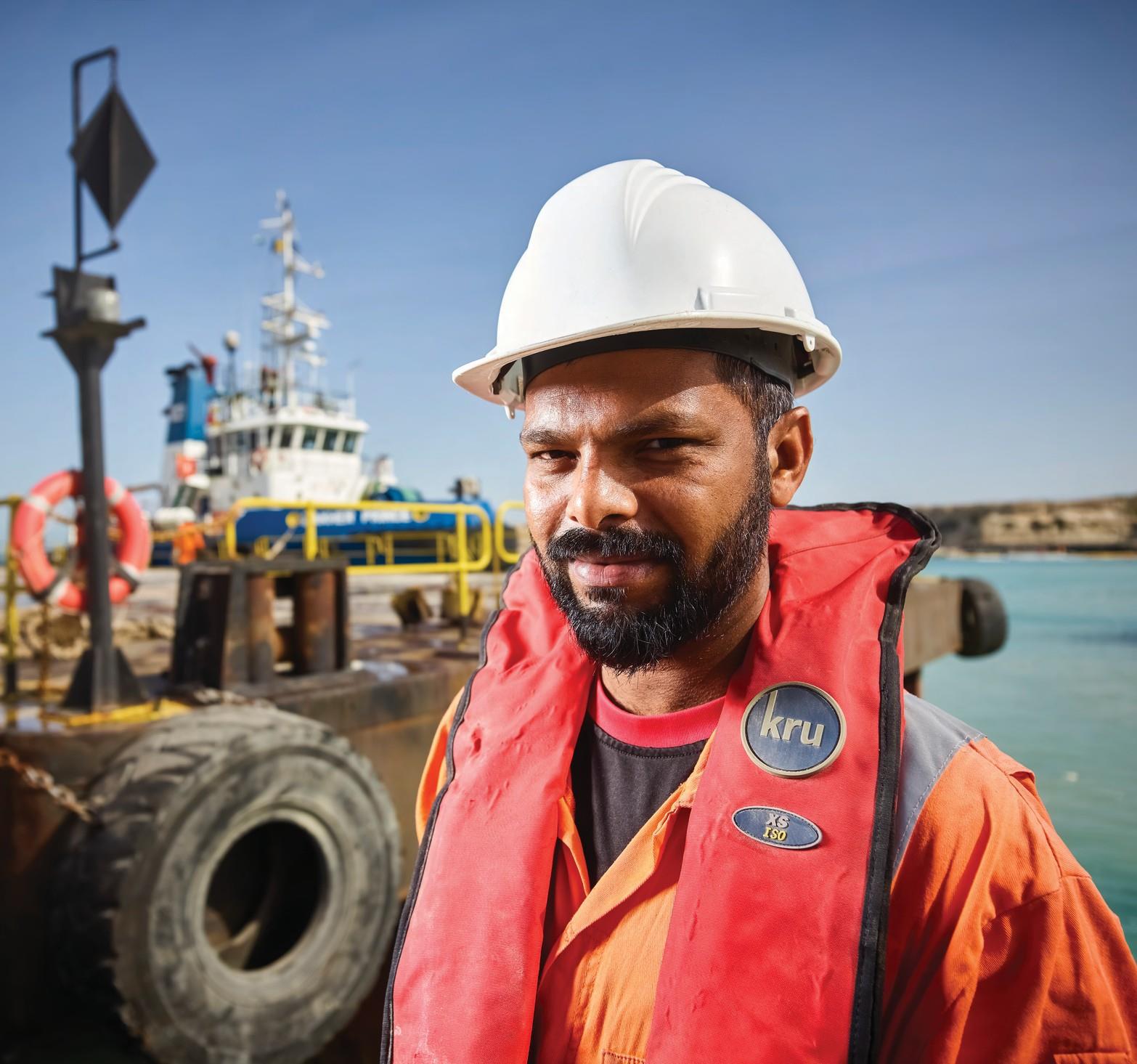
The global trade and logistics i ndustry is currently committed to sust ainability in all its forms, with an unprec edent ed level of passion and ent husiasm
We found that t he mos t sustain able organis ations are actively changi ng their operational models by contrib uting in a positiv e, measurable way to the economies in which they operate They are reducing energy use and emissions; c onserving and protectin g natural resourc es and biodiversity; integrati ng sust ainability int o their supply chains; and enhancing community responsi bility.
In the corporate world, an increasing number of businesses recognise that adhering to the highes t standards of sus tainability – whether it be tackling

climate change and building an equit able society –while remai ning both competitive and profitable ar e not mut ually exclusive
As the Abu Dhabi Ports Group CEO has said: “Sustainability is a core principle of our busi ness strategy, and it has provided our organisation with an opport unity to demonstrate leadershi p in championi ng bes t prac tice.”
His sentiment is reflective of an increasing number of global trade and logistics i ndustry executiv es who believe sustai nability is not just the right thing to do, but it is essential to the long-term succ ess of any organisation