Key Considerations In Industrial Park Selection - White Paper
Introduction
Industrial parks today are next-generation platforms for trade, logistics, and manufacturing, and, as such, can be somewhat intimidating and quite complex to navigate. The world’s most competitive industrial parks, then, become those which are more inviting and readily predictable for customers. Where will your company’s international trading operations be based in the next five, 10, 25, 50 years? And will the industrial park in which you have set up be ready to meet the challenges of the day, with respect to regulatory, technological, transport, financial, and environmental considerations that matter most to you and your stakeholders?
Summary
Taking the decision to set up in an industrial park is not done lightly. In fact, most companies consider it a once-in-a-generation decision for an organisation, given the tremendous strategic significance that is assigned to the move – geographically, financially, politically, and, of course, operationally.
Businesses are always seeking options to improve their competitiveness, so setting up a new facility in an industrial park, whether for manufacturing or for meeting logistics and distribution requirements, is a critical decision that every business carefully makes with considerations on overall costs, scalability of operations, an enabling ecosystem, and access to markets and raw materials.
Access to markets and raw materials at a reduced overall long-term cost helps companies serve their customers better and more efficiently. Shared resources are also key to helping companies work in an economy of scale and be part of a planned development vision that supports their expansion.
About Our Research
In consideration of the overwhelming time and effort involved in selecting an industrial park, we found organisations which succeeded in making the best selections were able to clearly demonstrate that they:
Possessed a clear timeline for setting up; Understood the location/market; Ranked multimodal connectivity/logistics capability;
Evaluated the market’s/region’s eco-system; Anticipated government cost-saving incentives; Leveraged private sector financial incentives; Prioritised value-chain/industrial clustering; Demanded 4IR readiness/connectedness; and Supported and expanded upon existing sustainability efforts. •
During the months of August and September 2020, we conducted extensive telephone and video call interviews with industry experts from within the Middle East region and around the world. Our research questions focused on organisational strategies employed to optimise investment in industrial parks. We wanted to learn the extent to which the experts believe that an organisation’s selection of industrial park can bring predictability to what is inherently a long-term, capital-intensive investment. In other words, are industrial parks within a given geography much the same or can they be very different, and, if so, how great is that potential impact on an investor’s bottom line?
TIMELINE: From Brainstorming to Ribbon Cutting
Most organisations believe that they move quickly and intentionally, but, on decisions for which the related consequences will last decades – as is the case with companies setting up in industrial zones – decision making, we learned, tends to be slower and more deliberate.
Selecting a region, a country, and even a specific city can be a quite straight-forward process we were told by more than a few expert consultants. Possessing a clear timeline for setting up, from brainstorming to ribbon cutting, however, can be quite another.
For some companies in specific industries, time is money, thus the shorter the set-up period, the better. A good example might be warehousing or manufacturing facilities that cater to healthcare or pharmaceutical products which have a demonstrated high demand over the coming few years, as well as food packaging industries supporting food processing and manufacturing. By contrast, there are other types of businesses in the
MARKET: Strength in Numbers
To suggest that industrial parks have become a permanent fixture on the economic landscape is an understatement; they are, quite literally, everywhere.
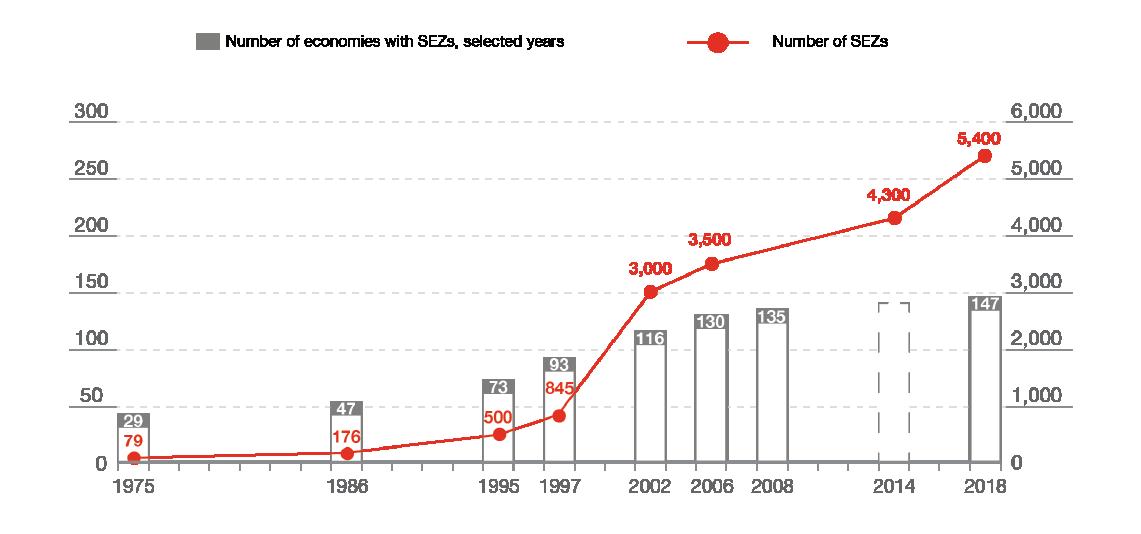
Indeed, there are more than 6,000 ‘Special Economic Zones’ (SEZs) throughout the world, and they will continue to increase in time, as cities, counties, states, and countries continue to compete ever more fiercely for increasingly scarcer foreign direct investment.
At present, the Middle East is rich with industrial parks, but the UAE far and away leads the field with a staggering 47 SEZs, followed by Jordan with 16, Saudi Arabia and Egypt with 10 each, Oman with five, Kuwait with four, and Bahrain three.
SEZs in the Middle East promise tremendous economic benefits and demonstrated competitive advantage to organisations setting up, while enabling countries to rapidly diversify economically.
“Typically, a park’s composition is driven by national strategy,” one survey participant told us. “If food security is part of a national strategy, for example, you will see a huge focus on attracting and retaining global companies that can support that effort.
And the same goes for healthcare or defence.”
Always look closely at a country’s long-term national strategy before investing, is the clear implication.
energy industry, such as a commercial bulk liquid storage terminal, for example, which take years to assess, plan, and execute, from concept to delivery.
One regional industrial park operator told us: “we have a broad suite of shared services provided within the industrial zones to minimise the dependence of creating captive facilities. Our objective is to facilitate the unique requirements that each company may have to achieve that and provide an efficient and concerted effort to ensure the fastest possible start-up time.”
In speaking with consultants and existing industrial park customers, we learned that the discovery phase of setting up in an industrial park of any description can take several months to even a few years, depending on the size and complexity of the undertaking, but that speaking directly and candidly with senior management of the industrial zones in an organisation’s defined market as early as possible in the discovery phase can save invaluable time and money.
The UAE’s stable and predictable regulatory regime and history of strong support for global and domestic companies operating from SEZs has led to its global reputation for excellence in the industrial parks industry, we were told by nearly all respondents.
In speaking with a range of experts in the industry, we learned that the location of an industrial park is of prime consideration for most businesses. It not only determines access to markets but also factors in whether other enablers – such as human resources, raw materials, vendor ecosystem, and social infrastructure – are all readily available and close by.
Finally, and crucially, the market in which an industrial park is located is critically important for any new customer because it dictates the terms of trade between the new customer’s country of domicile and the target markets being pursued. The UAE, for example, enjoys access to more than 100 countries that signed free trade and bilateral agreements as well as access to more than 22 countries tariff-free.
The average global industrial park re-exports the majority of all goods manufactured onsite, so location is about market access but also the ability to trade freely and, critically, the ability to connect easily with other markets.
CONNECTIVITY: Logistics Matter
Talk with anyone in the business of manufacturing, and you will soon find the conversation quickly turning to that of logistics, and, more specifically, connectivity. What are the available sea, air, road, and rail links? And are they close to my facilities? And are they any good?
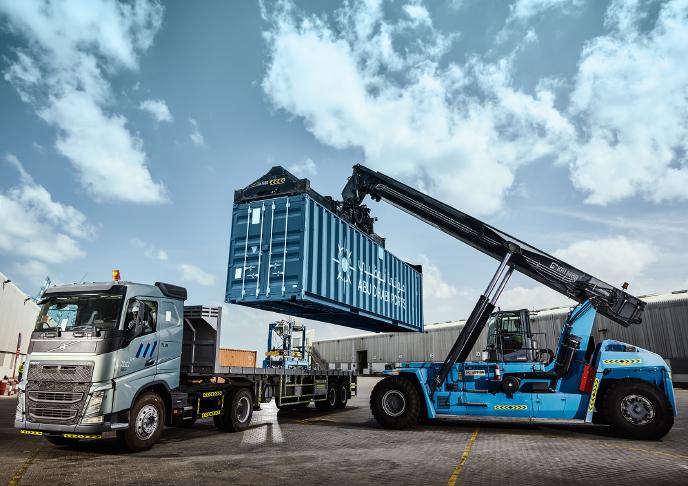
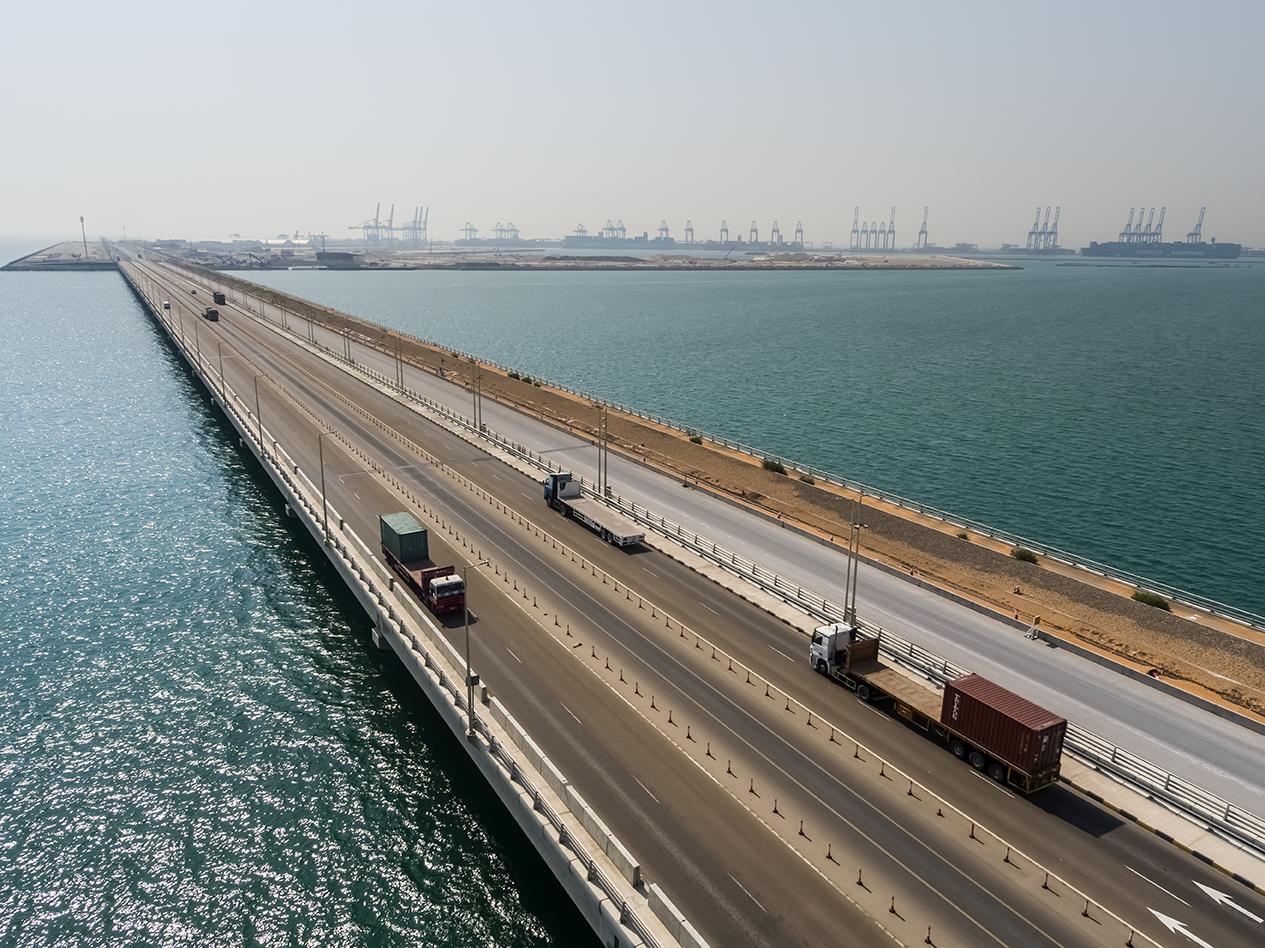
Multimodal connectivity and logistics capability are crucial considerations for companies in their selection of an industrial park. For example, Abu Dhabi’s industrial zones are strategically located with access to worldwide markets through land, air, sea and upcoming rail, and, provide a perfect scenario for companies. Leading domestic and international logistics players base significant operations from the UAE.
This arrangement was not by chance but designed keeping in mind that efficient supply chain and logistics are critical to keeping operational costs to the minimum while
One respondent with whom we spoke told us that his Abu Dhabi-based organisation ships to 57 countries, including the US, Australia, and most countries in Europe. “It’s about multimodal connectivity. We need all of it, and we need it working together in a really smooth way that keeps our costs down.”
“You want to know that the kind of people needed to grow and scale your business are already in the market to some extent,” we were told. There was a particular focus among our respondents on human capital, especially in the Middle East, and there is the sense that these higher skilled workers are in the UAE, more than any other regional market.
In addition, support systems such as laws, business facilities, healthcare, and education significantly influence an organisation’s decision to select one industrial park over another. A business that commits 20 or 30 years to being present in a specific location needs to ensure that there is an existing and evolving support system for the company to flourish.
Furthermore, parks that sustainably support small and medium industrial enterprises add innovative partners to the ecosystem by offering accessible options to companies looking to set up.
Safety and security of personnel and assets, technological infrastructure, education, and health facilities for families are also an increasingly important factor being looked at by companies seeking to enter new markets.
Respondents spoke of the need for excellent facilities in the way of world-class elementary, secondary, but also universities of international reputation; hospitals operating to the very highest international standards and accreditations and employing globally-renowned caregivers; passenger airports with service to more than 100 cultural and commercial centres; and, finally, locations of shopping and entertainment in their own right.
We learned that the world’s future hubs of trade and logistics will also be global hubs of culture,
places visited as much for their arts and leisure attractions as for the onloading and offloading of cargo. In short, organisations investing in the industrial parks of the future demand a rich existing eco-system that values community.
They will be places where people already “want to be”. We continually heard that the UAE, and specifically the emirate of Abu Dhabi, provides a big boost for the nation’s industrial zones’ value proposition as it has one of the safest and most modern family-oriented ecosystems in the world.
Source: PwC Consulting
Editor’s note:
INCENTIVES: Government Help Can be Just the Boost Needed
No organisation making a capital-intensive investment can be expected to set up in an industrial park in a serious way without a government incentive, some inducement to make a longer-term play.
“Smart organisations engage directly with multiple industrial parks, and they do it early in the discovery phase,” we learned. They gather all the materials, they make visits, they stay connected, they begin internal discussions, and they do all this quickly before engaging external advisory services.
At an external advisory stage, a shortlist of, say, three regional industrial parks will be made. It is at this juncture that serious discussions will take place between the third-party advisory and the
industrial park management regarding what is loosely referred to as “government incentives”.
Companies look at capital protection and easy repatriation, tax benefits and exemptions, customs duty benefits, special rates for facilities, competitive utility rates with long-term visibility in tariffs.
Besides these benefits, investors look at strategic avenues on investment support, lower compliance costs, trade treaties for lower cost of market access across the region, and efficient administrative services that help reduce operational overheads.
Regardless of format, the government incentive intention is clear: long term binding partnership that cements both parties in a win-win relationship based on mutual respect. 5
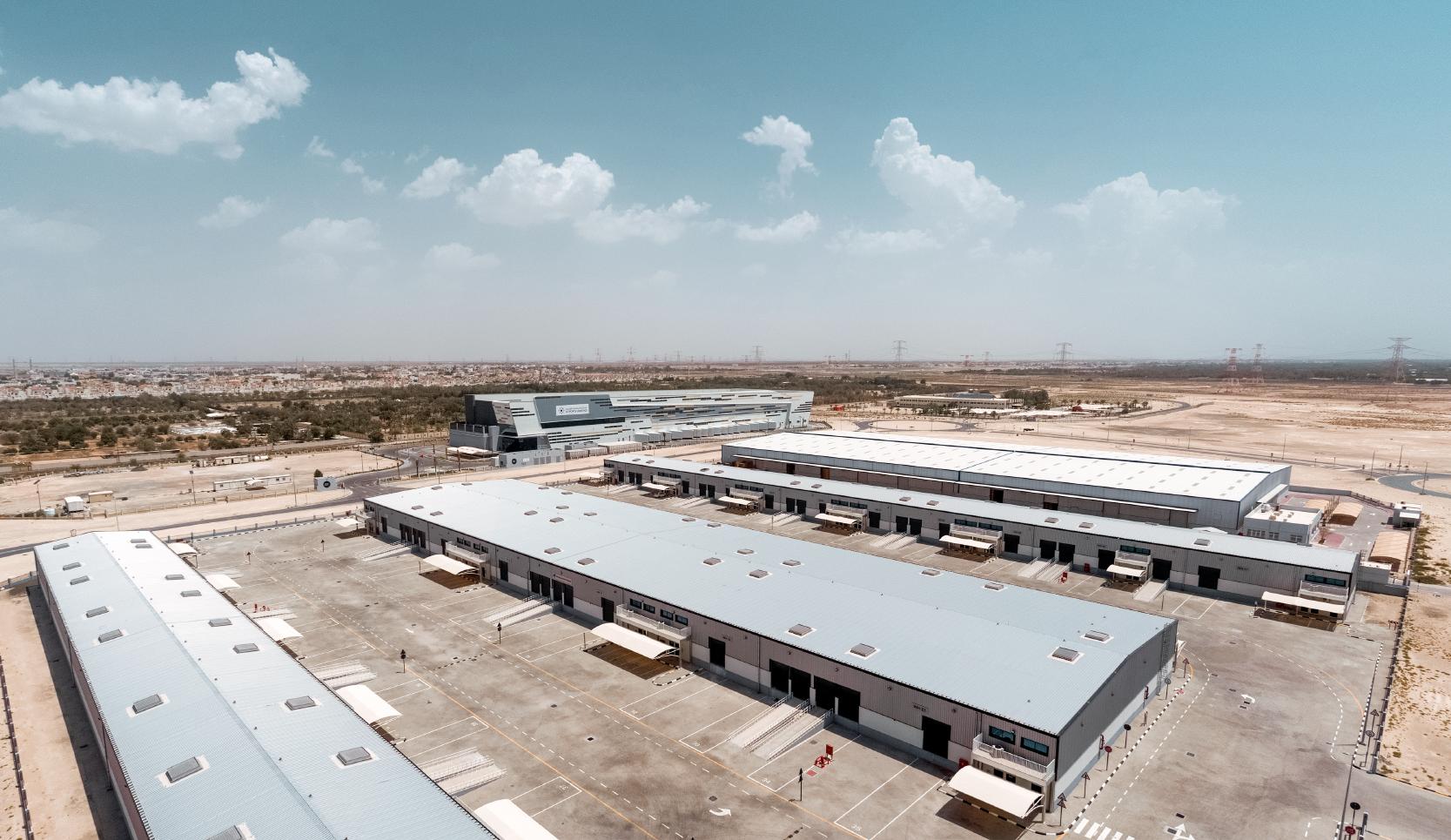
Abu Dhabi Ports owns and operates the Middle East’s largest industrial parks, with 555 square kilometers of industrial zone space in the UAE, of which 100 is classified as ‘special economic free zone’ and the balance classified ‘domestic industrial territory’. Investors have the option to choose one or both options, depending upon the nature of their trade and operational requirements.
FINANCE: Competitive Banking
The Governments with the most competitive industrial park offerings have thought about finance from a whole new perspective – that of the investor.
Reimaging trade at a city, state, or even national level contemplates financial optionality never before considered. The idea that industrial park operators would work together with governments and private sector financial institutions to offer preferential
including the Middle East today. In speaking with consultants, we learned that access to preferential financing is a reality in many Gulf Cooperation Council (GCC) countries.
“These are debt or equity instruments that allow the investor to equalise a return by being in one location, as opposed to somewhere else. This financial incentive becomes a very strong weapon
accomplish competitive advantage.
Smart parks will prioritise certain industrial sectors over others and “cluster” them to the benefit of others in those sectors. So, for example, a park might decide that it wants to compete in the food, polymers, metals, auto, and energy sectors. It will then go about ensuring that it is able to cater to the unique, often capital-intensive infrastructure demands required to attract and retain those types of investors.
A foods cluster investor will want to see that there are cold storage facilities in addition to superior multimodal connectivity. A polymers cluster investor will want to know that there is ready and inexpensive access to feedstock. A metals cluster investor will want to learn that there is availability to bulk raw materials for production but also
want to see, for example, that there is an adjacent deep-water port with a roll-on/roll-off terminal. An energy cluster investor will want to learn that there is, for example, a liquid storage terminal.
“In general, best practice demonstrates that clustering has a significant impact on successful operations of a certain industry. The value chain helps develop economies of scale through shared resources while the circular economy benefits the wider economy and environment making business flourish,” we were told.
Co-locating industries enables collaboration on research and knowledge sharing on such industries. In certain cases, industrial park operators offer volume rebates, assistance with research, and training and product development which facilitate efficient business operations.
The COVID-19 shock to global supply chains has shown that, particularly for larger manufacturers, clustering is critical – i.e. having all your partners and suppliers located in proximity, as opposed to other countries. Clustering really showed its value
during this pandemic, proved that manufacturers located in clustered eco-systems are far more resilient to supply chain shocks.
4IR: Smart Technology is the Di erence between Success and Failure in the Next Decade
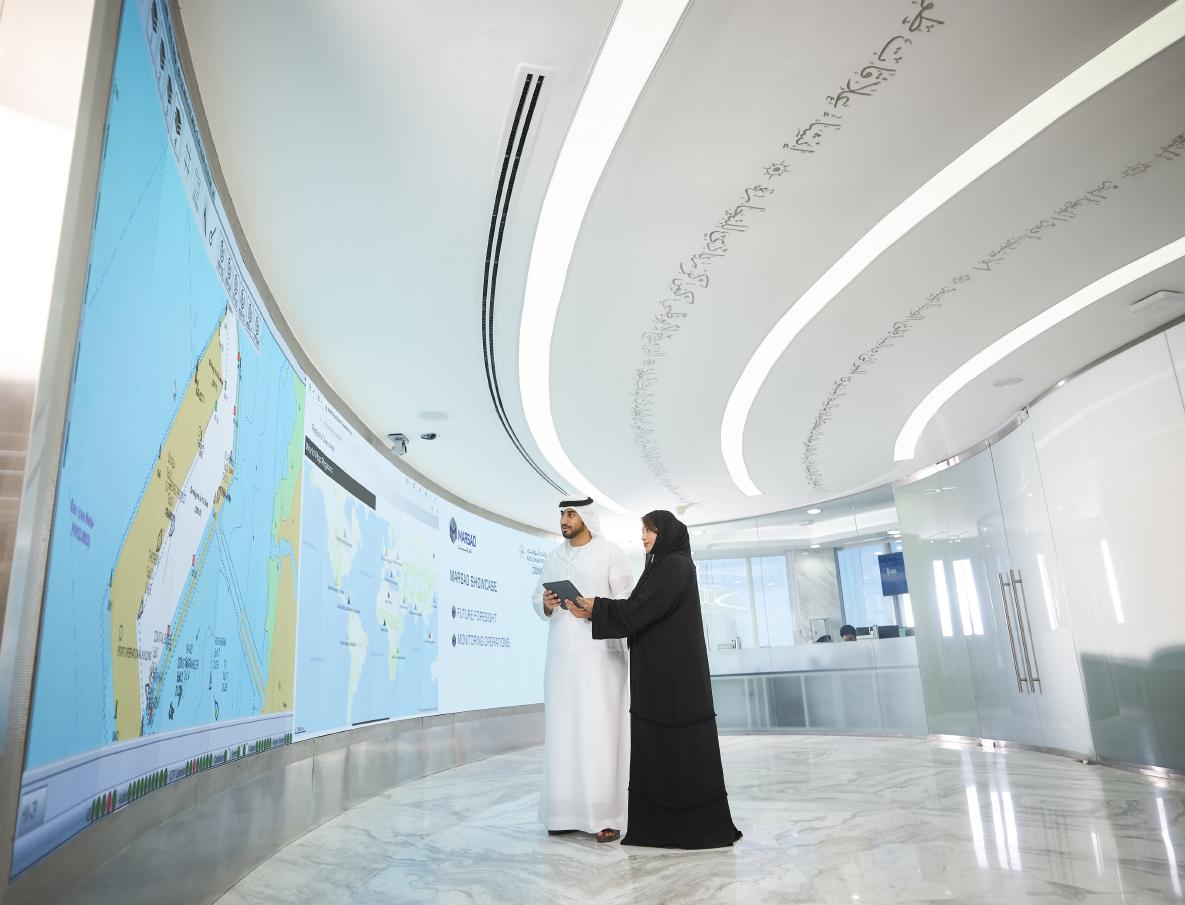
With any survey of industrial park infrastructure, one critical consideration tends to find its way into every organisation’s top three list of ‘must-haves’ – Fourth Industrial Revolution (4IR) levels of smart technology industrial park infrastructure.
4IR – also known as Industry 4.0 – is the ongoing automation of traditional manufacturing and industrial practices through the deployment of smart technologies such as artificial intelligence (AI), augmented reality (AR) and wearables, nanotechnology, biotechnology, the internet of
learned that what companies setting up care most about in terms of infrastructure is how future-ready they are from a technological perspective.
“Successful and visionary companies adopt 4IR early and that gives them significant competitive advantages. The responsibility of industrial zones is to live up to the expectations of such early adopters and facilitate their operations as efficiently as possible by providing the requisite technological platforms and smart infrastructure that accelerates the adoption of 4IR,” we were told.
SUSTAINABILITY: It’s
About More than the Environment
Interestingly, a few of the respondents with whom we engaged tended to speak of industrial parks as almost experimental in nature, quasi-governmental economic pilots whose sole purpose was to act as a “sandbox” in which theories could be trialed with the hope that “soft spill-over” would find its way into the mainland economies and, thus, spur them on to increased productivity.
In reality, industrial parks are almost entirely about the long run – economic diversification, the next 50 years, the very definition of sustainability. We heard a few recurring sustainability themes that related to environment, economy, and human capital.
Responsible industrial park operators and customers, we were told, take sustainability very seriously, and usually begin with a focus on the environment, and clean energy specifically, which drives the circular economy and ensures resource conservation. Through the development of technology enabled infrastructure to reduce consumption and waste, and by promoting and rewarding sustainable practices among investors, industrial park operators are building a more sustainable tomorrow today.
But economic growth is also a key sustainability objective for both industrial park operators and customers. Organisations must be making a
reasonable and predictable profit, and on a reliable timeline, to ensure economic growth and, thus, economic sustainability. Attracting and retaining foreign direct investment through constant initiatives to ensure ever higher rates of regional and global competitiveness would seem to be the secret to economic sustainability.
After all, no organisation wants to set up in an industrial park that is not “going places”, not expanding on a massive scale to rival the biggest and best parks in the world.
Finally, the development of a human capital base that adds value to the overall growth and the advancement of an industrial park’s location “creates a progressive, engaged, and interdependent industrial community, further boosting skills development through partnerships with industry and academia,” we learned.
It is worth noting that the UAE continues to uphold its commitment with the United Nations’ Sustainability Development Goals (SDGs) as a key member.
CONCLUSION
By 2030, it will be difficult to imagine that there is a trade, logistics, or manufacturing-related company anywhere in the world that does not have at least part of its global operation based in an industrial park.
The weight of evidence is such that there is no valid reason why any organisation, of any size, would not be drawn to an industrial park of some description somewhere in a market that best suits its sales and distribution model.
The industrial park selection should not be made in haste, but it should not be protracted either. The wealth of opportunities and benefits is great and growing by the month, even as the world continues to challenge the industries’ most established competitors.
Provided due consideration is given to timeline, market, connectivity, eco-system, incentives,
finance, value-chains, 4IR, and sustainability, organisations can be assured to benefit from today’s ever-improving industrial park model.
“My advice to all new industrial park entrants,” one respondent concluded, “is to select locations that they believe will prove to be long term, value-adding partners because that’s what they are – very long term partners and significant ones at that.”
Special Economic Zones that successfully serve their customers have the following six points in common: