INNOVATION AND OPPORTUNITY IN HUNGARY’S PHARMA SECTOR
Hungary’s pharmaceutical sector has long stood as one of the country’s most strategically important and globally competitive industries. With a strong legacy of research excellence, advanced manufacturing capabilities and a growing role in international supply chains, the sector continues to serve as a cornerstone of the national economy. It not only contributes significantly to exports and high-value job creation, but also plays a vital role in improving healthcare outcomes both domestically and beyond Hungary’s borders.
In this edition of Pharma Industry Review, the Budapest Business Journal once again turns its focus to this dynamic and fast-evolving field. Following the warm reception of our publications in 2025, we are looking to go further, offering broader insights, sharper analysis and a more comprehensive view of the forces shaping the pharmaceutical landscape today. Our goal remains to provide a platform where industry leaders, policymakers and innovators can share perspectives, address challenges and explore opportunities in a rapidly changing environment.
A key part of this effort is the Budapest Business Journal ’s signature Pharma CEO Breakfast series, which has become an important forum for high-level discussion within the industry. These events bring together leading executives and decision-makers to exchange views on the most pressing issues facing the sector,
PHARMA FACES
STRUCTURAL SHIFT AS U.S. PRICE CONTROLS TRIGGER
GLOBAL MARKET FALLOUT
The Budapest Business Journal ’s sixth Pharma CEO Breakfast gathered around 40 senior industry leaders at the Kimpton BEM Budapest by IHG, continuing a well-established BBJ tradition of bringing together key players to assess the direction of Hungary’s pharmaceutical sector within a global context.
PHOENIX MARKS THREE DECADES OF CONTRIBUTIONS TO THE HUNGARIAN PHARMACEUTICAL SUPPLY SYSTEM
IN CONVERSATION WITH
TAMÁS KALÓ AND DR. LÁSZLÓ GYETVAI
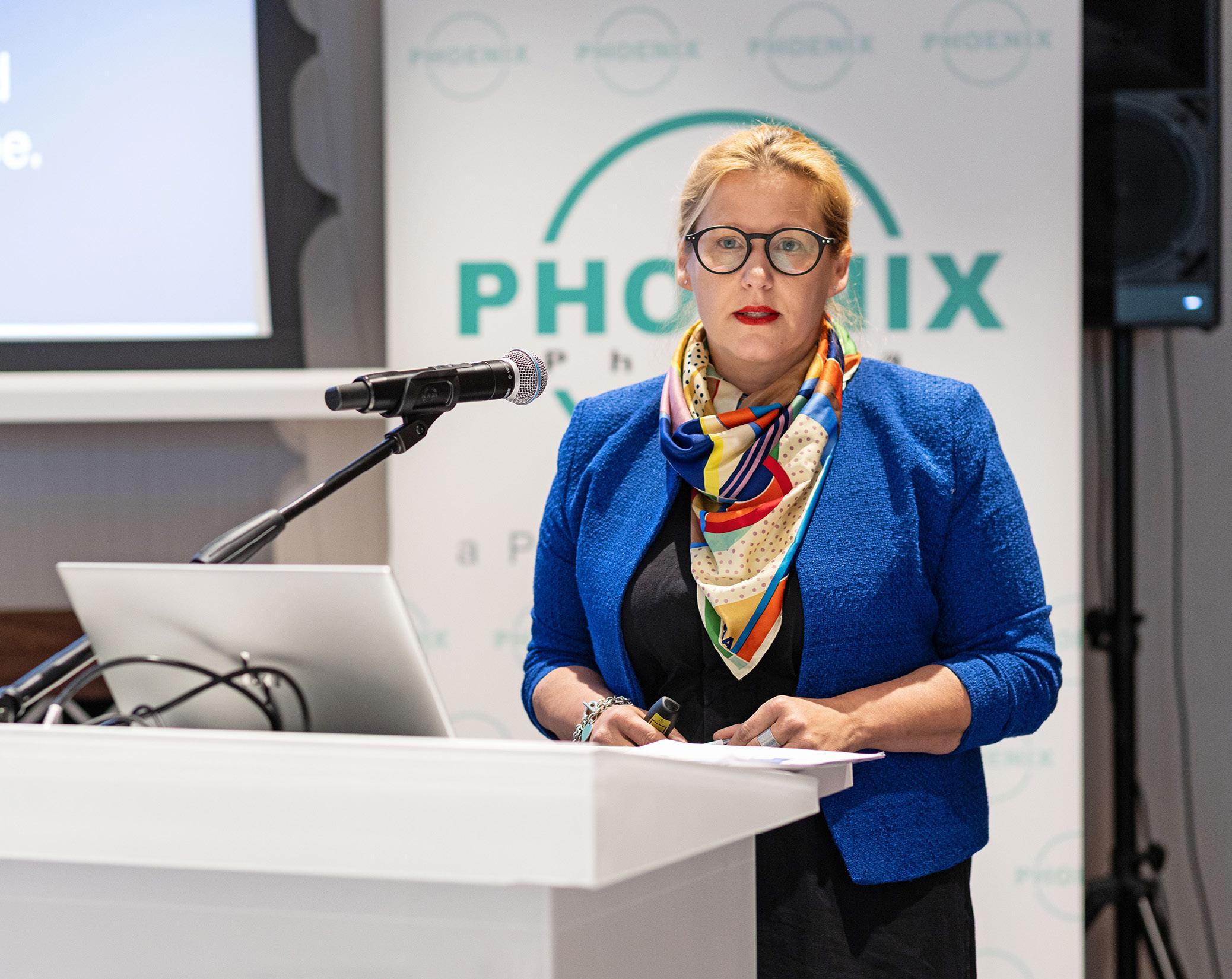
PHOENIX Pharma Zrt. is one of Hungary’s leading pharmaceutical wholesalers, acting as a key partner to both manufacturers and healthcare providers in the country. Every day, the company plays a vital role in ensuring that medicines reach pharmacies and hospitals reliably and efficiently. In 2026, PHOENIX celebrates a major milestone, its 30th anniversary, marking three decades of contribution to the Hungarian pharmaceutical supply system. To mark this occasion, we spoke with Tamás Kaló, chairman of the Board, and Dr. László Gyetvai, director of the Specialty Pharma & Market Services Division, about the company’s journey, its role today, and its vision for the future.
INNOVATION AND COLLABORATION DRIVE HUNGARY’S LIFE SCIENCES SECTOR FORWARD
Hungary’s life sciences sector is entering a period of rapid transformation, with the country emerging as a key player in advancing medical innovation.
Pawel Tokarzewski, country manager for Eli Lilly Hungary, underscores how breakthroughs in oncology, cardiometabolic diseases, and neuroscience are reshaping patient care. He also emphasizes the increasing importance of collaboration between industry, academia, and healthcare stakeholders, as well as the growing role of digital technologies and data in driving research and clinical trials forward.
How would you describe the current state of the life sciences industry in Hungary in 2026, and what major trends are shaping the market right now?
Pawel Tokarzewski: The Hungarian pharmaceutical sector stands on a strong scientific foundation, but it is also navigating a period of profound transformation. At Lilly, our purpose — turning science into healing to make life better — shapes how we engage with Hungary’s strong scientific ecosystem. This foundation matters now more than ever, as healthcare systems across Europe face mounting pressure from aging populations, rising chronic disease, and growing expectations for faster access to innovation.
At the same time, science is moving faster than ever. Breakthroughs in areas such as cardiometabolic diseases, oncology and neuroscience are fundamentally changing what medicine can achieve. Diseases that were once managed symptomatically are increasingly being addressed at the biological level.
One of the most important shifts we are seeing is the growing recognition that many of today’s biggest health challenges, obesity, diabetes or Alzheimer’s disease, for example, are complex chronic diseases that require long-term, system-level solutions, not just episodic treatment.
Another major trend is the expanding role of partnerships. Healthcare innovation today sits at the intersection of science, technology, policy and patient advocacy. Medicines companies, like Lilly, healthcare systems, academic institutions and patient organizations increasingly need to work together to translate scientific breakthroughs into real-world impact.
Hungary has the intellectual capital and clinical expertise to remain
IMPROVING HEALTH TOGETHER
THROUGH INNOVATION
Having led MSD Hungary for more than a year, Sean R. Smith has gained a deep understanding of the local healthcare landscape and the distinct ways of working that shape it. With an extensive career spanning various countries and environments both in Big Pharma and the entrepreneurial startup space, he understands how global innovation agendas meet national healthcare realities. Now he shares hisinsights on how these elements may come together in Hungary and beyond.
How would you describe MSD’s mission in Hungary?
Sean R. Smith: At MSD Hungary, our mission is very clear and has remained consistent over time. We aim to improve the health and well-being of patients and society by creating a sustainable healthcare environment where innovation can truly thrive. We believe healthcare should be viewed as a long-term investment rather than a cost.
That means reimagining patient care with a stronger emphasis on prevention, early diagnosis, and value-based solutions, while unlocking better health outcomes
Sean R Smith, managing director, MSD Hungary
BUSINESS INNOVATION
BECOMING AN ETHICAL ISSUE IN THE PHARMACEUTICAL INDUSTRY
The pharmaceutical market has always operated in a complex and constantly evolving industry environment, but recent developments have noticeably accelerated the pace of innovation. Changes affecting every segment of the supply chain now require reconsideration not only at an operational level but also strategically. We discussed these processes with Judit Füzesi, CEO of Hungaropharma Gyógyszerkereskedelmi Zrt.
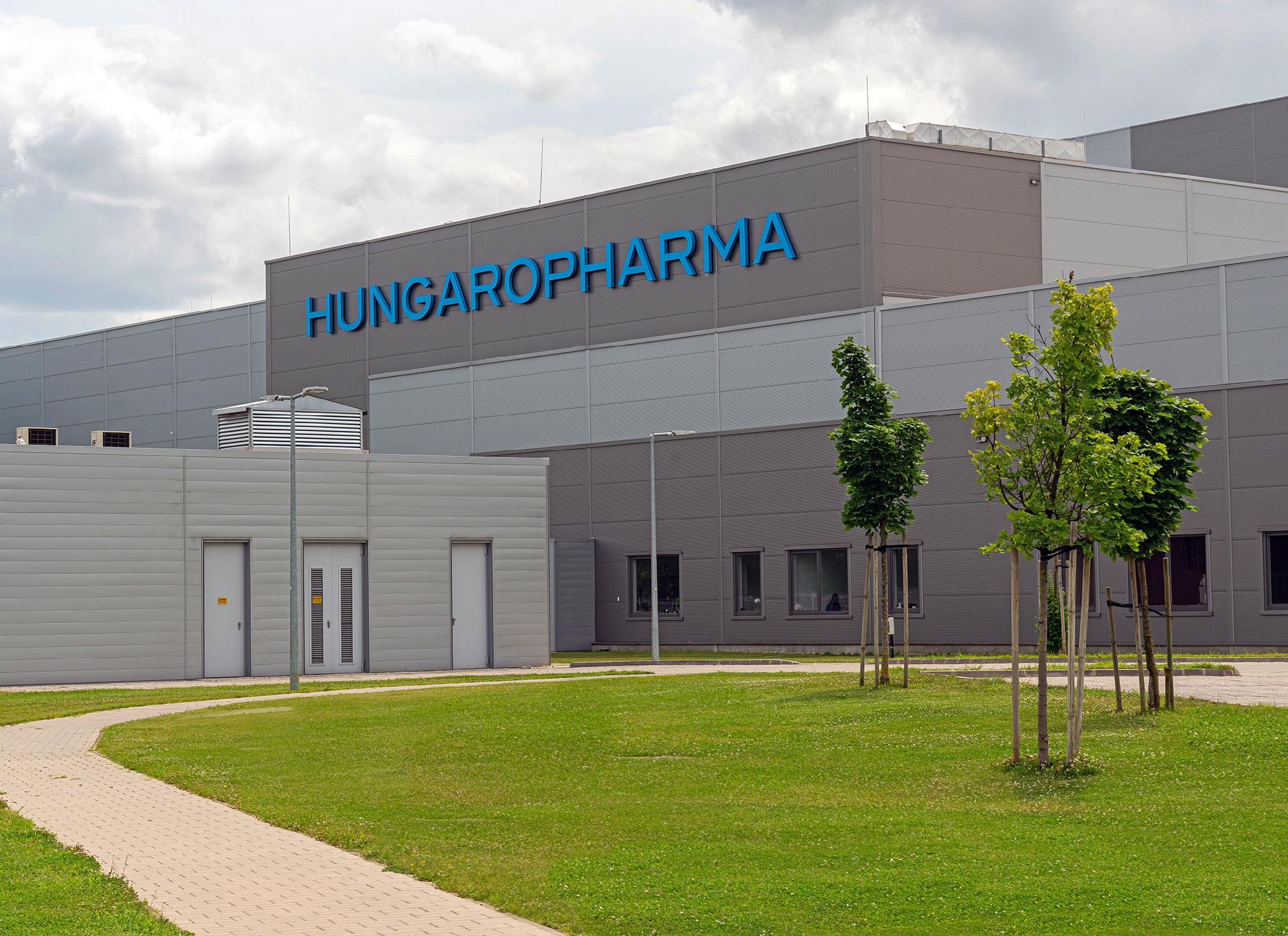
Hungaropharma’s Budapest Logistics Center
HOW DATA SCIENCE AND COLLABORATION ARE RESHAPING PHARMA
This market talk brings together leading voices from across Hungary’s pharmaceutical and healthcare landscape to explore the forces shaping innovation today. Featuring insights from Balázs Sinkovits, government affairs and market access lead at AstraZeneca; Ildikó Ádám, partner and life sciences industry leader for the Europe Central region at Ernst & Young Consulting; Colette Matz, country president at Novartis Hungary; and Szilvia Lember, country manager at Haleon Hungary, the discussion examines how data, technology and cross-sector collaboration are redefining research, development and patient care.
Image
AI EMERGES AS A FIRST-STOP HEALTH ADVISOR FOR HUNGARIANS
Artificial intelligence is increasingly becoming a first point of reference for everyday health-related questions, according to new research by PwC Hungary and Publicis Groupe Hungary. From understanding symptoms to interpreting medical results, AI tools are now widely used to help patients navigate the healthcare system.
The findings suggest that AI has become a natural source of health information for many. Some 74% of respondents use it to understand disease descriptions, 71% to assess symptoms, and 61% to select vitamins and dietary supplements. Demand for fast, personalized information is accelerating adoption, while also helping patients arrive at medical consultations better prepared and more confident.
FAST, ACCESSIBLE AND JUDGMENT-FREE
The spread of AI in daily life has been rapid, with six in 10 respondents now using some form of artificial intelligence on a daily basis. Twothirds primarily turn to these tools for quick, easy-to-understand answers to personal questions.
Although more than half of users first encountered AI tools only last year, many now consider it natural to share
AI, LOGISTICS AND THE SHIFTING FUTURE OF DRUG DISTRIBUTION IN HUNGARY
Ultra-cold storage units, volatile supply chains and the growing weight of artificial intelligence are reshaping how medicines move from manufacturers to patients. In an industry where delays can quickly translate into shortages and cost pressures, pharmaceutical distribution is becoming less about physical handling and more about data-driven coordination across increasingly complex systems.
On the outskirts of Hungaropharma’s operations, ultra-low temperature storage units sit at the center of a logistics system that has already been tested by crisis. By the time COVID-19 vaccines needed distribution across Hungary, the infrastructure was already in place. That timing, according to Hungaropharma CEO Judit Füzesi, reflects how pharmaceutical logistics actually evolves: not through sudden disruption, but through long planning cycles that often outpace public expectations.
By 2020, she said, the company had already completed its ultra-low temperature (ULT) storage capacity, capable of holding products at minus 70 to minus 90 degrees Celsius. “This made it possible to store and distribute the vaccines that arrived a year later across Hungary,” she said.
The development, she added, is less about foresight as a slogan and more about the demands of the sector itself.
“Anyone operating in this industry,
BETTER DATA INFRASTRUCTURE CRUCIAL FOR RARE DISEASE TREATMENT
Data-driven healthcare, stronger digital infrastructure and the planned introduction of a national rare diseases registry could significantly improve diagnosis, patient pathways and treatment outcomes in Hungary, Katalin Szalóki, CEO of the Association of Innovative Pharmaceutical Manufacturers (AIPM), told the Pharma Industry Review, highlighting the strategic importance of structured and interoperable data in addressing the challenges of rare conditions.
The recent conference organized by AIPM focused strongly on digitalization in the field of rare diseases. Why is data-driven healthcare becoming such a critical factor in improving the treatment of rare conditions?
Katalin Szalóki: In rare diseases, data is not simply a technical issue or an administrative by-product of care — it is a core part of care itself. Because patient populations are small, fragmented and often geographically dispersed, every structured data point has disproportionate value. Data-driven healthcare makes it possible to shorten the diagnostic journey, identify patterns earlier, follow patient pathways more precisely, and better understand treatment outcomes over time.
It also helps reduce unnecessary tests and delays, supports better coordination between care levels, and gives decisionmakers a clearer
PUBLIC COVERAGE EXPANDED FOR NEW MEDICINES UNDER UPDATED
REIMBURSEMENT
RULES
Hungary has introduced new regulatory changes aimed at broadening access to modern therapies under the public health insurance system, as part of a wider update to pharmaceutical financing and reimbursement rules. The changes were set out in a decree issued in April, which modifies several existing regulations governing the reimbursement and financing of medicines under the national health system.
by
Photo
NEW STRATEGIC
PARTNERSHIP AIMS TO STRENGTHEN TALENT PIPELINE AND INNOVATION IN PHARMA
A new strategic partnership between Magyosz and the University of Szeged is set to deepen cooperation between industry and academia, with a focus on strengthening Hungary’s pharmaceutical sector through education, research and innovation. The agreement, signed this spring reflects a shared recognition that the future competitiveness of Hungary’s pharmaceutical industry is closely tied to the quality of higher education and the strength of its scientific talent pipeline.
Fields such as pharmacy, chemistry, biotechnology and life sciences are considered strategic areas, forming the backbone of the country’s research and development ecosystem. The University of Szeged plays a central role in this landscape. The institution has long been regarded as one of Hungary’s leading knowledge centers in pharmaceutical sciences, supported by decades of tradition, a strong academic faculty and internationally recognized research output.
At the signing ceremony, rector László Rovó highlighted the university’s recent international achievements, noting that it once again ranked first in Hungary in pharmacy and pharmaceutical sciences in the latest QS global rankings, and also became the country’s top institution in biological sciences this year. He added that the university’s reputation has been shaped in part by the legacy of Nobel laureates such as Albert SzentGyörgyi and Katalin Karikó.
Rovó emphasized that strengthening the competitiveness of Hungary’s pharmaceutical industry is a broader societal interest, requiring the development of manufacturing, research and development capacities, as well as higher employment levels within the sector. A key pillar of
PHARMACEUTICAL INDUSTRY LISTS
PHARMACEUTICAL MANUFACTURERS
LISTED IN ALPHABETICAL ORDER
COMPANY WEBSITE
AbbVie
Gyógyszerkereskedelmi Kft. abbvie hu 29,727 412 379 2011 94
Accord-Healthcare
Gyógyszerkereskedelmi Kft. accord-healthcare com
ALKALOIDA
Vegyészeti Gyár Zrt. alkaloidazrt hu 15,392 B B 1991 506