







There was a time when women searching for ins piration had to look far beyond their immediate world Role models were rare, often distant, and frequently filtered through narrati ves shaped by others Stories, particularly thos e of South Asian women, were trimmed, softened, or si lenc ed Achievem en t exis ted, but rec ognition did not always follow
Yet even in those quieter decades, Indian women were breaking barriers Indira Gandhi became one of the world’s most powerful political leaders Kalpana Chawla journeyed into space, expanding not only scientific frontiers but the boundaries of imagination for young girls in small towns Kiran Bedi redefined authority in uniform Mary Kom fought her way to global acclaim And Sudha Murty quietly reshaped philanthropy and literature with purpose and compassion
But these women were often presented as exceptions, extraordinary anomalies in a world still structured for men Today, something profound is shifting Women are not waiting to be framed; they are claiming their narratives They are not anomalies, they are multiplying R epresentati on within reach
In the UK, Tahira Bibi has made history as the country’s first female train driver of Pakistani heritage, challenging the assumptions of a maledominated industry “I see it as being a role model,” she says “If younger girls from Asian or minority backgrounds see me and think, ‘If she’s done it, we can do it,’ then that makes me proud ” Representation is no longer abstract: it is visible, tangible, within reach
Naz Shah, Member of Parliament for Bradford West, understands the power of visible resilience Having witnessed violence and insecurity in childhood, she transformed fracture into fortitude By occupying space unapologetically and speaking about the unspeakable, she reframed survival as strength
For her, resilience is “the gift survival gives you ”
That instinct to protect and empower runs through Gulshen Bano’s work Through Strike Back Self Defence, a women-led organisation, she equips women and girls with practical skills that build awareness and confidence “Women don’t learn self-defence because they want to fight, they want to feel safe and get home safely,” she explains Safety becomes liberation
Beyond safety lies equality
When Ambassador Lakshmi Puri speaks about gender equality, she calls it architecture: structural and foundational After decades embedding equality into global governance,
she insists, “Gender equality is the most important project for humanity And it is mission possible ” In professional kitchens, Angula Devi challenges assumptions about who belongs there Born in Southall to firstgeneration Indian immigrant parents, she sees visibility as collective “If that challenges long-standing views about who belongs there, that’s good ” Deepa Mann-Kler is rewriting narratives around women ’ s bodies Drawing from her own perimenopausal journey, she uses virtual reality to challenge the silence surrounding menopause and dismantle the notion that a woman ’ s value peaks at reproduction
Meanwhile, Aekta Patel, founder of City O’Clock, is reshaping the UK’s luxury experience economy while championing female leadership
In a post-pandemic world, she has built a community largely powered by women “There’s a shared understanding and emotional intelligence that feels incredibly energising,” she says The hidden weight of ambition
But progress is rarely pastoral It is not all blossom and ease; not for these women, not for any Behind the headlines celebrating female founders lies a quieter reality: isolation, stubborn funding gaps and the mental toll of carrying ambition in spaces not built for you
Research by Female Founders Rise reveals that for many women building companies, human connection is not a luxury, it is lifeblood Shalni Arora knows this terrain intimately As CEO of Savannah Wisdom, working across philanthropy, finance and community leadership, she speaks candidly about the loneliness that can shadow leadership Imposter syndrome, she admits, often arrives uninvited, whispering doubts amid the balancing act There have been moments, she says, when she wondered whether choosing the “easier option” might have spared her the weight of ambition
In newsrooms too, the climb has been steep Shruti Tripathi Chopra, editor-in-chief of
“I think it’s hugely important to tell stories”
Acentury ago, women in Britain w ere still fig hting fo r th e right to v ote Today, pro gress is visible, yet incom plete Fo r Naz Shah, that unfinished journey towards equality is no t abstract history; it is p ersonal
As a South Asian Muslim woman in British politics, she carries not only the responsibility of policymaking, but also the weight of representation and the lived experiences that shaped her long before she entered public life
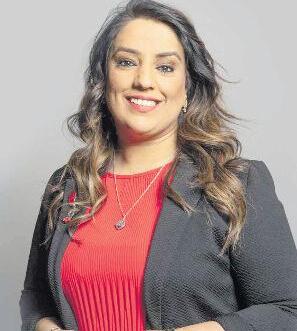
Naz Shah MP
Financial News and Private Equity News, recalls being underestimated early on Women, particularly women of colour, are too often boxed into false binaries: too soft to lead, too assertive to be palatable
Rejecting that script required her to unlearn the instinct to shrink and instead anchor herself in performance and clarity of vision As the youngest editor and first woman of colour in the role, she chose substance over stereotype Community as capital
Nearly 80 per cent of female entrepreneurs surveyed say meaningful human connection sustains not just their businesses, but their belief in themselves That conviction fuels Reena Ranger and the community she co-founded, Women Empowered Designed without gatekeeping or hierarchy, it offers something radical in its simplicity: access A room where stories are shared, lessons exchanged, and growth encouraged without prescription
For Reena, the act of giving created its own gain What began as an offering space, time, platform became a source of personal expansion Every conversation carried insight; every shared story sharpened perspective In lifting others, she found herself lifted too
At the British Museum, Sushma Jansari echoes that ethos As the first person of South Asian heritage to curate a major exhibition there, she champions humility as strength The moment we assume we have nothing left to learn, she warns, we close the door to collaboration and innovation Openness is not weakness; it is momentum
This is what real progress looks like Not a solitary figure silhouetted at the summit, but a constellation of women ascending together Role models are no longer remote legends; they are editors, curators, entrepreneurs, mentors; all women within reach
And as they rise, visibly and unapologetically, they expand the horizon for everyone watching, proving that the surest way to gain ground is to give it
Shah’s early years were marked by instability, experiences she details candidly in her memoir Yet she reflects on them with striking clarity rather than bitterness “When you ’ re living in poverty, you don’t realise it at the time,” she says “It’s only later, when you ’ re out of it, that you understand what you actually experienced ”
Witnessing violence and insecurity in childhood, she explains, does not immediately mould you, it settles quietly, shaping you later in life “It doesn’t give you security It leaves you with insecurities and questions It doesn’t raise you with confidence ” And yet, from those fractures came resilience, what she calls “the gift survival gives you ” That resilience has become central to her worldview Rather than holding grudges, Shah speaks of lessons “Even a bad experience will teach you something,” she says “It will teach you what not to be and who not to be ” Rather than resentment, she channels adversity into reform, a principle that underpins both her politics and her cultural critique
One such area is the concept of izzat, or honour, deeply embedded in many South Asian communities Shah has spoken openly about how izzat was used to justify silence and endurance in her own life and how she seeks to redefine it “My izzat comes from doing the right thing,” she says firmly “It should be defined by your character, who you are and what you do, not by keeping up appearances ” Her memoir, releasing more than a decade after she first entered Parliament, was deliberately timed She was initially approached to write it when she became an MP in 2015, but chose not to “I needed to concentrate on doing my job,” she explains “I was new I needed to understand the role ” Now, older and more seasoned, she felt ready, not to change legislation through her book, but to influence culture and attitudes
And that distinction is important Shah is clear that while law matters, and she expresses pride in initiatives such as the UK’s Violence Against Women strategy and expanded childcare support, cultural transformation requires something deeper It requires stories
“I think it’s hugely important to tell stories,” she
says “Stories shape narratives, culture, influence ” In South Asian communities particularly, she believes conversations around sexual abuse, mental health and domestic violence must move from whispers to open dialogue She has already seen change begin in community spaces where oncetaboo topics are finally being discussed
Representation, she argues, is not symbolic, it is structural “You can’t make decisions about us without us, ” she says plainly Women comprise half the population, yet leadership positions still lag behind For women of colour the barriers multiply “You have to work twice as hard,” she acknowledges “When you ’ re a woman, you work harder When you ’ re a woman of colour, even more When you ’ re a Muslim woman, it’s more challenging still ”
And yet, she describes her role not as a burden but as a privilege “It doesn’t feel like a job, it feels like a calling I’m very lucky to have the job of my dreams ”
Her optimism is pragmatic, not naive She speaks candidly about the urgent challenges facing women in Britain today: mental health pressures, the cost of living crisis, violence against women, and persistent inequality Progress, she believes, must be pursued without resentment “You don’t resent the country,” she says “You work to make things better ”
That philosophy extends to confronting patriarchy within communities too Anger, she says, is understandable, but it must be purposeful “Blind anger just burns you If your anger isn’t used to create change, it becomes an internal injury ” Ultimately, Shah hopes her story carries a simple but powerful message, particularly for South Asian women who may see themselves reflected in her journey “If she can do it, we can do it,” she says By occupying space unapologetically, by speaking about the unspeakable, by transforming survival into leadership, she is not merely building a political career, she is expanding the boundaries of who belongs in power
On this Women’s Day, Shah’s story is a reminder that resilience can be revolutionary, and that sometimes, the most radical act is to turn pain into purpose
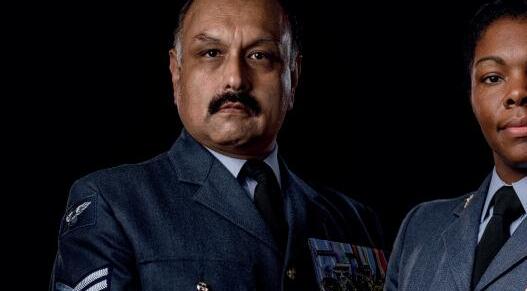
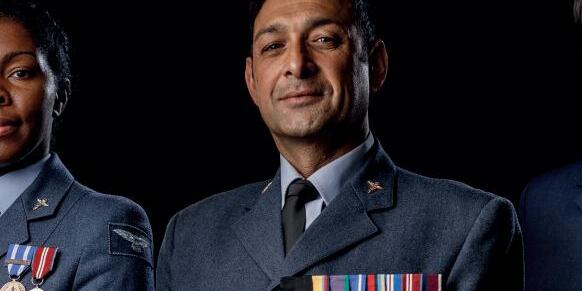
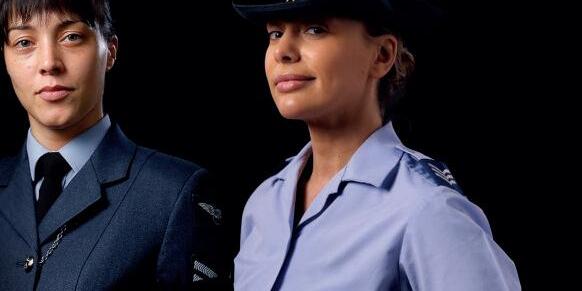
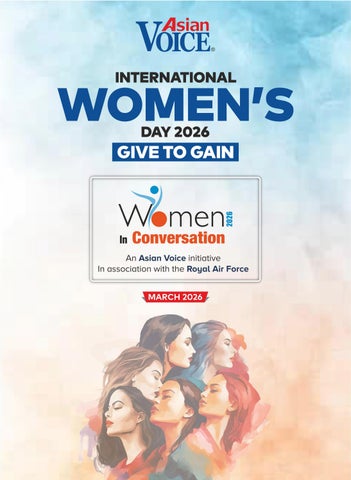
Every year, Women in Conversation brings together powerful voices on one stage in a celebration of resilience, leadership and lived experience. Hosted by Asian Voice in association with the Royal Air Force, the annual panel marks International Women’s Day with insight, honesty and inspiration
On 13 March 2026, the conversation will unfold at the House of Lords, London, under this year’s compelling theme: “Give to Gain ” Through personal stories, professional journeys and hard-won lessons, the moderator and panellists will explore how generosity of time, mentorship, courage and conviction often becomes the very pathway to growth, influence and lasting impact
The interviews and biographies that follow offer a glimpse into their remarkable perspectives and the experiences that have shaped them
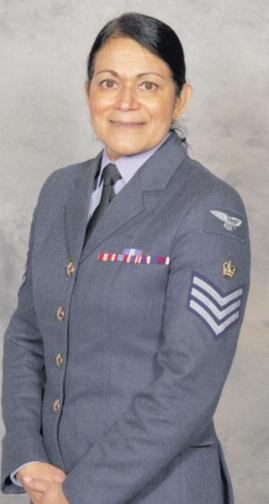
FS Sun ita Ave n
FS Sunita “Sunny” Aven is a dynamic and accomplished HR Specialist whose career is defined by purpose, resilience and an unwavering passion for helping others succeed Since joining the RAF in 1996, she has built a reputation as a confident, people-focused leader who brings energy, compassion, and professionalism to every role she undertakes
Now serving at RAF Halton, FS Aven is the HR Analyst, playing a key role in shaping the RAF’s future through role analysis and proactive support to personnel Her career has spanned a wide variety of appointments, including welfare and recruitment, where she has empowered countless young people to unlock their potential and thrive during the challenges
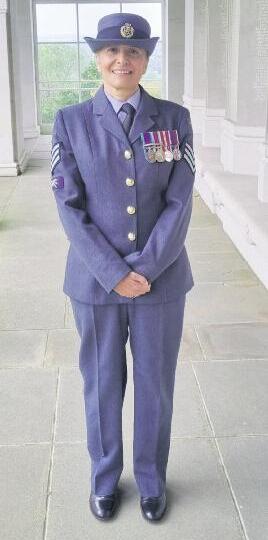
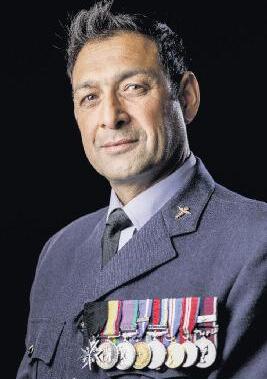
Sergeant Wazeeha Laher
Sergeant Wazeeha Laher joined the Royal Air Force in 1998 as an intelligence Analyst (Linguist), launching a career defined by operational excellence, cultural expertise and relentless drive Following trade training her first posting took her to JSSU Digby in Lincolnshire – the beginning of a distinguished journey in the military
Over the course of her career, Sgt Laher has deployed operationally to Northern Ireland, Afghanistan and the Falkland Island, contributing critical intelligence support in complex and demanding environments
of basic training Her Service has also taken her across the world She has travelled widely with the RAF and completed a tour in the Falkland Islands, experiences that allowed her to see the global impact of
the organisation and strengthen her sense of purpose within it
FS Aven’s commitment to leadership and Service values has earned her opportunities to influence senior leaders and represent the RAF at national events, including delivering a reading at Westminster Abbey for the Battle of Britain service
Known for her warmth, strength, and determination, she describes the RAF as a community that challenges you, develops you, and surrounds you with people who want to see you succeed Her message to anyone considering a career is simple and powerful:
“The RAF doesn’t just create careers, it shapes confident, capable people If you have the passion to grow and be part of something bigger, the opportunities are limitless ”
multiple languages, her most recent is Arabic To deepen her cultural and linguistic fluency she immersed herself abroad, travelling to countries including Colombia, India and Jordan –sharpening not only her language skills but her global perspective
Driven by resilience and a spirit of adventure, she has tackled challenges far beyond the workplace, form sailing in the Caribbean and rock climbing to parachuting, skiing and snowboarding She consistently pushes her limits and has completed multiple ultramarathons in support of military charities
The RAF is no ordinary employer
We look at you differently; a career in the RAF is about discovering your natural talent and working together to find out what makes you happy, productive ands brings you the most value in your life
The RAF is full of ordinary folk who come to us often with nothing more than desire to lead a less ordinary existence
Our people remain at the heart of our organisation They are our strength, and to ensure our continued success, we must stay committed to attracting new talent
Inclusivity is therefore fundamental to our
operational effectiveness By continuing to embed pride and belonging across our Service, and by fostering a shared purpose, we can only strengthen our collective resolve
The RAF’s core values of RIS E Respect, Integrity, Serv ice and Excellence form the foundation of our inclusive approach This approach ensures our people are empowered to thrive, regardless of their background, role, or experience The RAF has always taken pride in recognising and valuing the unique contributions each individual brings to the Service
Our collaboration with the Asian Business Publication Ltd has given a platform to increase our footprint within many diverse communities and allowed our team to further enhance our honed skills within the inclusivity sphere
“Your weaknesses can be your strengths”
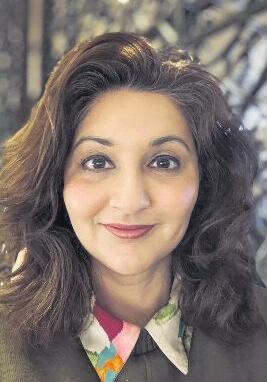
Reena Ranger OBE does not speak about leadership in abstract terms For her, it begins with visibility, with being seen in rooms where, for a long time, women like her simply were not.
Growing up, politics was not something she studied; it was something she absorbed Her father was politically active, and family outings often meant community events designed to widen horizons Yet on television and in public life, she saw very few women, and even fewer ethnic minority women, who reflected her world Representation felt distant, almost theoretical
Today, that picture has shifted There are more South Asian women in public life, more diverse voices shaping policy But for Reena, representation is only meaningful when it comes with influence “It’s not just about having a seat at the table,” she often reflects “It’s about having a voice at the table ” Real experiences, she believes, enrich debate and produce better decisions Lived reality matters
weaknesses revealed themselves as strengths: empathy, creativity, the ability to think laterally and juggle multiple perspectives at once “Your weaknesses can be your strengths They give you empathy, a unique worldview, and the ability to multitask and see things differently ” This philosophy underpins her work with Women Empowered, which she co-founded to create inclusive spaces for learning and networking “Unlike
large institutions with barriers, Women Empowered was designed to be open to everyone; anyone could attend, hear stories, and connect with others The goal was never prescriptive; it was to help people become the best version of themselves ”
Reena stresses the importance of networks, particularly for women navigating life’s challenges “Having people to bounce ideas off, seek advice from, and learn from provides resilience and strength ”
But even the most passionate leaders must learn restraint Reena speaks candidly about balance When you care deeply about something, the instinct is to charge forward Yet burnout helps no one Life, she believes, unfolds in chapters
Each chapter demands its own rhythm, its own priorities
Across 27 years of service, she has embraced roles beyond her core trade, serving as Assistant to the Islamic Advisor to the Chief of the Defence Staff In an outreach role she was pivotal in strengthening leadership and command capability among young people through outreach initiatives, championing inclusion and representation within Defence
She is currently training for an 100km ultramarathon in the Albanian Mountains
A gifted linguist, Sgt Laher holds qualifications in
Today, Sgt Laher serves as a Full-Time reservist on the Ethnic Minorities Community Engagement Team, continuing to inspire, connect and lead with purpose
Her own lived reality was quietly shaped by something she did not fully understand until much later School was often confusing and discouraging Struggling academically, she internalised the idea that difficulty meant deficiency It was only three years ago, after receiving a formal diagnosis of dyslexia and ADHD, that the pieces began to align The label did not diminish her, it liberated her There was sadness for the younger version of herself who had not been supported, but there was also clarity What once felt like
Representation is only meaningful when it comes with influence.
“It’s not just about having a seat at the table,” she often reflects.
“It’s about having a voice at the table.”
Awarded an OBE in 2019 for her services to BAME women, Reena has served as a Three Rivers District Councillor since 2014 and as a Hertfordshire County Councillor (2021–2025), holding key roles in Highways, Transport, Public Health, and Community Safety
And what of legacy?
For Reena, it is not about titles or honours, though she holds many It is about intention She hopes to be remembered as someone who cared, who tried, who acted with integrity
Someone who built bridges and opened doors
Perhaps even someone who planted a few trees: quiet, lasting symbols that growth, when nurtured, continues long after you step aside
here is a quiet certainty about Shalni Arora OBE, the kind forged early, in homes where responsibility arrives before adolescence has quite finished At 12, while other children were still being looked after, she was helping raise her younger siblings as her mother worked It gave her a work ethic too and sense of responsibility, and success was an expectation “I did not work so hard for you not to achieve your potential,” her mother would remind her, a sentence that became both anchor and fuel
Today, Arora stands at the intersection of philanthropy, finance and community leadership As CEO of Savannah Wisdom, she oversees a private family charitable foundation while investing in life sciences ventures She co-founded and chairs Belong – The Cohesion and Integration Network, serves as ViceChair and Trustee of the British Asian Trust, supports grassroots impact through Altrincham Football
“Life is a jungle gym not a ladder,” and “sometimes you move sideways or even down, but you can still climb to achieve your goals over a longer term.”
Community Trust, and sits on the Council of the Institute for Fiscal Studies
Her contributions have been recognised with a Medal of Honour from the University of Manchester and a Beacon Award for Philanthropy
But leadership, she says, is rarely glamorous It is often lonely and exhausting; especially for someone juggling multiple hats: executive, mother, daughterin-law, wife “It is lonely, and difficult to motivate yourself when facing imposter syndrome too on top of the
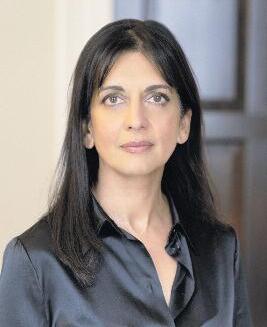
constant balancing act ” At times, she candidly admits to have wondered “if I should have taken the easier option and not been driven by ambition and achievement ”
But she is extremely comfortable with who she is and grateful for “the full support of a loving husband, my biggest fan, and the gratitude of two daughters ” Her philosophy is simple: “life is a jungle gym not a ladder,” and “sometimes you move sideways or even down, but you can still climb to achieve your goals over a longer term ”
Arora’s leadership style is shaped as much by spirituality as by spreadsheets She speaks of seva and of kindness, humility, honesty and equality as non-negotiables
Yet she is candid about the cultural pressures that measure success in money, influence or proximity to power As a British-Asian woman in visible positions of authority, she has felt compelled to prove that her success is earned, not inherited or tokenistic
To counter that, she says, “I have had to work hard to prove myself, keep achieving academically, and demonstrating that my success is mine alone ”
Women, she believes, must reach back and lift others up, sharing not just contacts and career advice, but the everyday knowledge that makes life lighter: shortcuts, recipes, even the name of a trusted facialist
Sisterhood, she insists, is strategy
Entrepreneurs such as Martha Lane Fox inspired her to think expansively; to see success not as exception but as possibility
For her, empowerment distils to one word: choice
The ability to decide, freely and without apology, who to be and how to live And in modelling that choice visibly, she hopes to reshape perceptions: that BritishAsian women can honour family and faith, embrace ambition, and lead without relinquishing either
“Enjoy the ride,” she tells young women who aspire to follow “And don’t climb alone ”
“When women champion and support one another, the entire sector benefits”
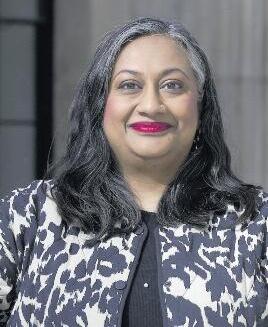
r Sushma Jansari is a cultural changemaker and South Asia Curator at the British Museum She was the first person of South Asian heritage to curate a major exhibition at the Museum – Ancient India: living traditions, which inspired the theme of the inaugural Pink Ball She also serves as Vice Chair of Trustees at the Roald Dahl Museum
Previously, she led the co-curation of the South Asia Gallery at Manchester Museum and was involved in the reimagining and curation of the Sir Joseph Hotung Gallery of China and South Asia at the British Museum
A strong advocate for inclusivity in the arts, she founded The Wonder House podcast and regularly writes on art, history and popular culture, making these subjects accessible to wider audiences
Sushma said her interest in the arts and heritage sector began at a young age, with regular visits to free
“It’s about bringing society together and sharing knowledge about different faiths and cultures"
museums in Leicester
“When I was a child, my mum would often take me to local museums It was educational, which, as any Indian parent would say, is important, but I also simply loved being in those spaces, ” she said
Over time, her connection to museums deepened
“For me now, it’s about enriching people’s lives Study after study shows that engaging with culture has a real impact on health and wellbeing, for both adults and children It’s also about building genuine, meaningful partnerships where decisionmaking is shared That’s vital if we want more people to engage with culture widely and deeply ”
She believes museums play a vital role in making national collections more accessible and relevant
“These are our collections collectively,” she said, stressing the need for diverse interpretations and a sense
of shared ownership
Reflecting on her exhibition, she added, “It’s about bringing society together and sharing knowledge about different faiths and cultures, not to homogenise differences, but to reflect how we live alongside one another ”
Speaking about traditionally exclusive institutions, Sushma acknowledged the challenge of having her understanding of her own faith and culture questioned She pointed to ongoing “gatekeeping,” with some acting as “the arbiters of what is correct,” making it harder to introduce lived perspectives At the same time, she highlighted the power of collaboration “It’s not just me saying something, it’s other people completely backing it up, ” she said, noting that initiatives like South Asian Heritage Month have created greater visibility, even if the journey is “certainly not easy ”
Reflecting on the theme “Give to Gain,” Sushma emphasised humility and openness, particularly among women entering the sector “Don’t assume you know everything,” she said, warning that the moment anyone believes they have nothing left to learn, “ you shut off knowledge, you shut off innovation, and you shut off collaboration ”
She also highlighted a significant generational shift among South Asian curators in the UK “Even one generation back, you’d be hardpressed to find many women, ” she noted, whereas today women form the majority in the field, with more continuing to come through As communities have become more established, more women feel empowered to pursue the arts as meaningful careers rather than just hobbies However, she cautioned that financial insecurity remains a challenge Above all, she stressed the importance of solidarity: “That time for gatekeeping is gone, ” she said, emphasising that when women champion and support one another, the entire sector benefits
“Leadership isn’t about fitting a mould, it’s about expanding it”
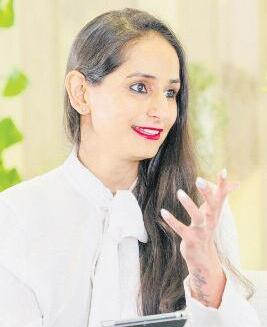
hruti Tripathi Chopra is the editor-in-chief of Financial News and Private Equity News, two Dow Jones publications that have served the finance sector for nearly three decades. The youngest editor in their history, she is also the first woman and first person of colour to hold the role.
In December 2025, she was awarded the ‘Freedom of the City’ in recognition of her contribution to the finance sector A champion of diversity, equity and inclusion, she launched the South Asian Power Brokers list, marking the occasion by closing the London Stock Exchange Her accolades include ‘Journalist of the Year – Stewardship’ at the State Street Global Advisors Awards, DEI Journalist of the Year at the Aviva Investors media awards, and the Cardiff University 30(ish) Alumni Award in 2024
Speaking to Asian Voice, Shruti said she had consciously challenged and unlearned stereotypes throughout her career “Early on, I was often underestimated There’s a persistent view that women, particularly women of colour, are either too soft to lead or too aggressive when they do I’ve had to reject the idea that authority must look or sound a certain way, and unlearn the instinct to shrink myself to make others comfortable Stepping forward for senior roles, including the editorship, meant entering rooms where I wasn’t always expected There were moments of doubt, even tears on the Tube, but each time I stayed, spoke up and delivered, I dismantled those assumptions ”
As the youngest editor and first woman of colour in the role, she said she navigated expectations by focusing on performance and clarity of vision “The visibility can feel heavy, but it’s also powerful I chose not to dilute who I am, whether that meant wearing Indian clothes to industry events or leading with my own perspective Professionally, I leaned into results Under my editorship, Financial News has won multiple awards and strengthened its agenda-setting journalism Excellence makes it harder for anyone to reduce you to a label ” On realising her perspective was a strength rather than a hurdle, Shruti said, “During a major editorial debate, I saw that
my different lens wasn’t a liability but an asset Viewing the story through the experience of someone who has felt ‘othered’ in elite spaces sharpened our coverage and resonated with readers It made me understand that the lived experience I once tried to mute actually gave me stronger instincts and deeper empathy When that coverage went on to win industry recognition, it reinforced that my perspective helps me spot
"Put your hand up, even when you feel unsure, no one is ever fully ready. Build resilience, because persistence compounds."
blind spots and ask tougher questions ” Reflecting on the lessons she feels responsible to pass on, she added, “Put your hand up, even when you feel unsure, no one is ever fully ready Build resilience, because persistence compounds Let excellence speak for you, and protect your authenticity Leadership isn’t about fitting a mould; it’s about expanding it ” Advising women told to “fit in”, she said, “Fitting in is short term; authentic leadership lasts You may be asked to soften your voice or tone down your ambition, resist that pressure Keep showing up, deliver excellence and celebrate who you are When you lead authentically, you give others permission to do the same ”
“Gender
is the most important project for humanity”
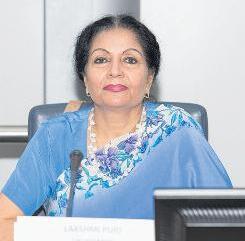
When Ambassador Lakshmi Puri speaks abo ut gender equality, she do es not frame i t as a peripheral s ocial issu e F or her, it i s architecture: glo bal, stru ctural, fou ndatio nal
A former Assistant Secretary-General of the United Nations and Deputy Executive Director of UN Women, Puri has spent decades embedding gender equality into the machinery of global governance
Before her 15-year tenure at the UN, she served for 28 years in the Indian Foreign Service, including as India’s Ambassador to Hungary
That dual experience, national diplomacy and multilateral leadership, shapes her conviction that gender equality is not simply a moral imperative, but a development strategy and a security necessity
“Gender equality and women ’ s empowerment are not only ends in themselves,” she says “They are essential means to achieving every other global public good ” The architecture of equality
At UN Women, Puri helped build what she calls a “global gender architecture,” anchored in five interconnected pillars: peace and security, sustainable development, climate action, human rights and democracy, and technology
Take peace and security Since the adoption of UN Security Council Resolution 1325 in 2000, the women, peace and security agenda has recognized women ’ s role in conflict prevention and peacebuilding Under Puri’s leadership, gender perspectives were strengthened across UN peacemaking efforts
“Case after case shows that when women participate, peace agreements are more durable,” she notes In sustainable development, her influence was even more pronounced Puri was closely involved in shaping the Sustainable Development Goals (SDG 5) and mobilizing support for a standalone gender goal within the 2030 Agenda “We ensured that gender equality was not an afterthought,” she says, “but a comprehensive goal in itself, and integrated across 11 other SDGs ” The message was clear: without women ’ s equal participation, economic growth and environmental sustainability are
Cli mate nego tiatio ns, too, required a shift in perspective Women are disproportionately affected by climate change, yet often excluded from decision-making
From the Paris Climate framework onward, gender equality provisions were woven into climate discussions, highlighting women not only as vulnerable populations but as agents of innovation
Across all these arenas, Puri insists, gender mainstreaming must be a core strategy “It is not pink-washing,” she says firmly “From conception to policy design, implementation, monitoring and evaluation, women ’ s voices and agency must be integrated ” A woman in a man ’ s world
Yet Puri’s commitment to equality was forged not just in conference halls but in personal experience When she joined India’s Foreign Service, women made up just five percent of the cadre Today, the number is higher, around 13 percent overall, with 20 percent at entry level, but still far from parity
“There were struggles,” she admits, “but I learned to turn challenges into advantages ”
She recalls an early posting in Tokyo, where she was told that the media would not accept a woman diplomat , “especially one in a sari ” Offered an administrative desk role instead, she refused “Give me two months,” she said “If I don’t succeed, you can withdraw me ” She proved them wrong “It was a test of conviction,” she reflects
Being underestimated, she says, became a “secret weapon ” It allowed her to surprise counterparts with competence and resolve
She would go on to become the first Indian woman appointed Assistant SecretaryGeneral at the UN
The fictio n of truth
In recent years, Puri has turned to fiction to tell another kind of story Her debut novel, ‘Swallow the Sun’, is a sweeping historical saga inspired by her parents’ lives and India’s freedom
The novel follows Malti, a young woman who defies child marriage, studies at Elphinstone College, becomes a lawyer, and joins the independence struggle Historical figures such as Mahatma Gandhi and Annie Besant intersect with the narrative, blending personal and national histories
“I chose fiction because it reaches the heart, not only the intellect,” Puri explains During the COVID lockdown, she completed the manuscript she had begun decades earlier The book has since become a national bestseller and is being adapted into a web series
Beyond fiction, Puri has also written ‘The Sari Eternal’, a cultural and civilizational exploration of India’s most iconic garment The book examines the sari not merely as attire, but as a symbol of continuity, identity, empowerment and diplomacy Drawing from her own experience of wearing the sari on global diplomatic platforms, Puri reflects on how it became both a personal statement and a political one, challenging stereotypes while asserting cultural confidence Progres s and peril
Today, women ’ s representation in diplomacy is rising At the UN, parity targets have pushed female participation in senior roles to as high as 40 percent in some tiers Yet the world has still never had a woman SecretaryGeneral
“There is strong advocacy this time,” Puri notes, though she tempers optimism with realism The UN itself faces institutional strain, funding withdrawals, and geopolitical fragmentation
When asked about her legacy, Puri does not hesitate She points to five enduring contributions: transforming UN Women into a global convener; strengthening international gender norms; mobilizing mass campaigns like HeForShe; embedding gender mainstreaming across the UN system; and driving a data revolution to “make women count ”
Despite current pushbacks, her tone remains resolute
“Gender equality is the most important project for humanity,” she says “And it is mission possible ”
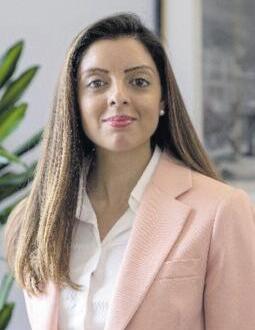
Aek ta Pat el, foun der of C ity O’C lock, is on a mission to tr ansform t he U K’s lux ury ex pe rie nce sce ne , offer ing
a b le momen ts t hat blen d quality , culture , a nd conne ction, while championin g female le ade rship in the post-pandem ic e xpe rien ce econ omy
Aekta Patel said, “I didn’t
f o r m y o w n family and realised many others felt the same City O ’ C l o c k g r e w f r o m t h a t personal need into a mission to redefine how we discover and enjoy meani n g f u l m o m e n t s I c a r e deeply about the details, the venue, the atmosphere, the service and storytelling, and wanted every experience to r e f l e c t t r u e q u a l i t y T h a t belief led me to leave my senior role in the British Government to build City O’Clock and help reshape the experience economy ” On the experiences that led to the creation of City O’Clock, Aekta said, “At the O f f i c e f o r I n v e s t m e n t , a joint unit between Number 10, HM Treasury and the D e p a r t m e n t f o r B u s i n e s s a n d T r a d e , I w o r k e d o n attracting global investors to the UK We partnered w i t h Q u i n t e s s e n t i a l l y t o o f f e r ‘ m o n e y - c a n ’ t - b u y ’ e x p e r i e n c e s , g i v i n g m e a front-row seat to the depth of extraordinary British culture, from private tours to e x c l u s i v e a c c e s s W h a t struck me was how inaccess i b l e t h e s e e x p e r i e n c e s were to the wider public At the same time, I saw a clear s h i f t i n c o n s u m e r behaviour, with more peop l e c h o o s i n g e x p e r i e n c e s
f o r s p e c i a l o c c a s i o n s , y e t the market remained fragm e n t e d , i n c o n s i s t e n t a n d often out of reach ”
On her mission to position the UK as “the best d e s t i n a t i o n f o r c u r a t e d , c h e r i s h e d e x p e r i e n c e s , ”
Aekta said, “For years, the UK hasn’t been associated with high-touch luxury the way the Middle East has There, service is intuitive and seamless In the UK, quality exists but is often hidden or limited My goal is to change that perception and show the UK can delive r w o r l d - c l a s s , m o d e r n , human, and culturally rich experiences ” She added, “Consumer behaviour has shifted dram a t i c a l l y p o s t - p a n d e m i c People now prioritise time, c o n n e c t i o n , a n d s h a r e d moments Over a third of consumers want to spend more on experiences, and 43% are choosing to live in the moment rather than plan ahead, according to E r n s t & Y o u n g L o n d o n alone is set to see £10bn invested in its experience e c o n o m y o v e r t h e n e x t decade People aren’t just l o o k i n g f o r a c t i v i t i e s m they want intentional, elev a t e d , a n d m e m o r a b l e moments At City O’Clock, we offer a curated platf o r m o f v e t t e d l u x u r y
experiences to meet that demand ” Aekta said community, p
works, has been central to building City O’Clock “My team is largely made up of women, and many of my closest advisors and mentors are women too Their support and belief in the
journey in ways
moving into
space where I work mostly with women
Women’s Day, Aekta said, “This day reminds me that
and
It’s
and celebrate women who prove every day that we
When
woman builds
business, she’s not just fill-
considering what women need, how they navigate the world, and offering a perspective that’s powerful and deserves recognition ”
said, “My advice is to pursue something you ’ re truly passionate about, beyond j
p i s demanding, and passion is what carries you through u n c e r t a i n t y , l o n g n i g h t s , and setbacks When you b e l i e v e i n w h a t y o u ’ r e b u i l d i n g
days feel meaningful
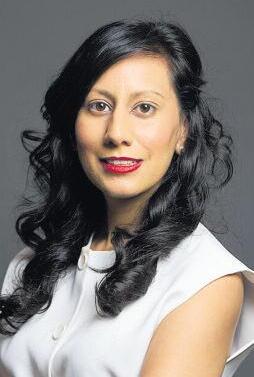
L abo u r M P S on ia K u m ar, w ho won Du dley in 20 24 and works as an NHS p hysiotherapist, has led a pioneering v isit to U kraine to p ro v id e p h y si o t h era p y training She organised the trip a f t e r a S e p t e m b e r v i s i t , where she was moved by the c o u r a g e a n d r e s i l i e n c e o f injured Ukrainian soldiers
L a s t m o n t h , P r e s i d e n t
Z e l e n s k y r e p o r t e d 5 5 , 0 0 0 U k r a i n i a n s o l d i e r s k i l l e d , though other sources estimate up to 200,000 After a long journey on a “rickety train,” Kumar helped train 25 clinicians to treat conf l i c t - r e l a t e d i n j u r i e s , f r o m back and shoulder issues to ankle sprains She noted the frontline context made care more urgent, asking, “If an a n k l e i n j u r y b a l l o o n s u p , h o w d o y o u m a n a g e i t q u i c k l y a n d g e t s o m e o n e back to fighting?” She also treated patients with brain i n j u r i e s a n d a m p u t a t i o n s , a d d i n g , “ I w o u l d d o i t again ” K u m a r d i s c u s s e d h o w the UK could better support U k r a i n i a n h e a l t h p r o f e ssionals, noting that mental support is crucial but staff also need practical skills and partnerships She described the visit as “what international cooperation looks like
Deepa Mann-Kler’s radical VR experience, through immersive technology, reclaims menopause as a rebellion challenging silence and stigma
WhenDeepa Mann-Kler talks about menopause, she doesn’t lower her voice She doesn’t frame it as a quiet medical milestone or an inevitable diminishment Instead, she calls it what it felt like: disorientating, destabilizing and ultimately, revolutionary
Mann-Kler’s latest work, The Baby
South by Southwest (SXSW) 2026 as part of its XR Experience Competition, is a 20-
Zoraan, a British-born Sikh woman navigating menopause amid climate crisis, surveillance culture and inherited medical bias But to understand the fire behind the piece, you have to understand the woman who made it
Politics, policy and the power of storytelling
political and emotional Born in India, she spent her early years moving between Calcutta, Delhi and Chandigarh before her family eventually settled in the UK
L
worldview was already expansive Her parents were formidable influences: her mother a trade union representative and BBC radio performer, her father a Labour councillor who later became Lord Mayor Their house pulsed with debate, activism and community
“Knowledge is power, ” she was told repeatedly growing up And knowledge, she learned early, would not be optional
At the London School of Economics, she studied Social Policy, later completing postgraduate work in European Social Policy before building a career in equality advocacy One of her most formative pro-
report on racism in the region Working closely with Indian, Chinese, Vietnamese and Pakistani communities, she documented lived experiences of exclusion from healthcare, policing and education
It was there that she sharpened her understanding of storytelling as a catalyst Data informs Story transforms
F o r o v e r a d
k e d i n equality, married, raised two children, and gradually began to explore a parallel creative life as a painter Then grief inter-
s death in 2016, she found herself unable to

paint The silence was heavy
The turning point came in Iceland
Inside an immersive installation by Björk
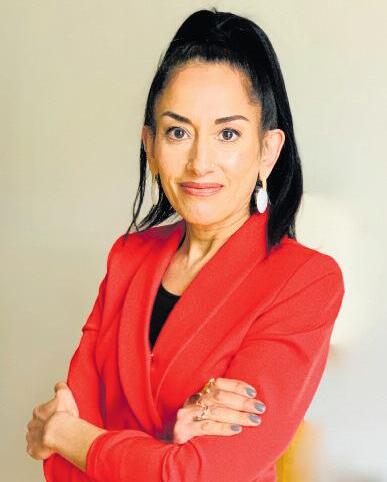
at Reykjavik’s Harpa Concert Hall, MannKler experienced virtual reality for the first time Music, image and embodiment merged “For a moment,” she said, “ my grief lifted ” It was enough and she founded her company, Neon, and soon after premiered her first VR project at SXSW
She has been working at the intersection of art, empathy and technology ever since and all her projects share a throughline: immersive storytelling in service of social equity
Reclaiming the body as rebellion
Menopause was different It was personal N o w a p p r o a c h i n g 5 7 , M a n n - K
arrived without warning, the brain fog that made simple tasks feel mountainous, the creeping sense that her body had turned traitor “I was shocked by how little I understood,” she admits “And I’m someone who researches everything ”
The ignorance unsettled her almost as much as the symptoms Rather than approaching the subject as a problem to be solved, Mann-Kler approached it as a narrative to be reclaimed
I n ‘ T h e B
, menopause becomes insurgent terrain Zoraan, the protagonist, is furious, funny, s h a r p - t o n
audience does not watch her struggle; they inhabit it
The title itself is a provocation A challenge to the idea that a woman ’ s value peaks at reproduction
As artificial intelligence and immersive technologies increasingly shape global culture, Mann-Kler is determined that women not only participate but lead She sees virtual reality as a space that has, in many ways, welcomed diverse voices
s
abilities and identities using immersion to reframe dominant narratives But she remains cautious about AI, particularly a r o u n d b
k entrenching gender and racial inequalities
“It’s not enough to be in the room, ” she says “We have to shape the systems from the ground up ”
If there is a single thread that runs through Deepa Mann-Kler’s life, from a politically charged childhood in Leicester to international festival premieres, it is this: refusal Refusal to accept invisibility
accept
“Women don’t want to fight, they want to feel safe”
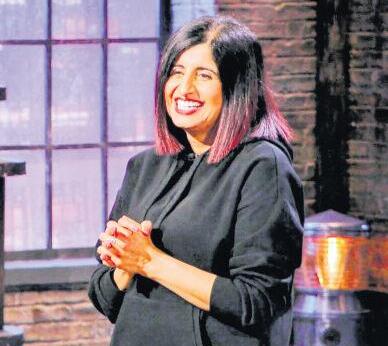
Self-defence is an essential life skill, especially for women navigating safety concerns in their daily lives Founded by West Midlands–based entrepreneur Gulshen Bano, ‘Strike Back Self Defence’ is a womenled organisation dedicated to equipping women and girls with practical self-defence skills that build awareness, confidence and personal safety
S p e a k i n g t o A
inspiration behind founding ‘Strike Back Self Defence’, Gulshen said, “I’m a former pharmacist, and I experienced several physical assaults, some at work and some simply walking home I realised how unsafe I was and that I was being targeted because I looked small and unable to fight back That made me want to find a way to protect myself and regain some control ” She added, “When I started learning Krav Maga over 15 years ago, so many women shared their own stories with me But many didn’t feel comfortable attending mixed classes or being taught by male instructors, especially those who had experienced trauma That’s when I realised there was a real need for a safe, female-only space ” I qualified as an instructor and created Strike Back Self Defence as a supportive environment where women and girls, regardless of background or faith, could l e a r n t o d e f e n d t h e m s e l v e s a n d f e e l empowered ” Strike Back Self Defence centres on awareness, prevention and building confidence Highlighting its holistic approach, Gulshen said, “Women don’t learn selfdefence because they want to fight, they want to feel safe and get home safely As a petite woman, I know I don’t want to get into a physical confrontation with someone bigger and stronger, and most women feel the same ”
She stressed that the training is about more than physical moves “It’s about spotting red flags, reading body language and trusting your instincts Women are highly intuitive, but we ’ re often conditioned to ignore that gut feeling to avoid seeming rude ”
“We encourage women to act on that instinct,” she added “If something feels wrong, remove yourself That awareness and confidence can stop situations from escalating The physical skills are there if needed, but women fight for survival, not ego ” As a women ’ s safety advocate, Gulshen
addressed the view that women should not have to “adjust” their behaviour to stay safe “ W e a g r e e t h a t m e n ’ s a t t i t u d
change, but that will take time In the meantime, women still deserve to be safe,” she said
She stressed that the goal is empowerment, not restriction “We’re not telling women not to go out or travel We’re saying live your life, but have the skills to protect yourself if something feels wrong ”
Using a simple analogy, she added, “We lock our doors at night because we know burglars exist That’s prevention It’s not about blame, it’s about giving women the confidence and basic skills to stay safe ”
Dragons’ Den, said securing a Dragon as an investor was a major milestone “I’ve been advocating for women ’ s safety for years, but this is a global issue Whether in the UK or elsewhere, women share the same fears and experiences,” she said
She emphasised the urgency of action “ W e h e a r a b o u t l o n g - t e r m p l a
women are being attacked today Safety can’t wait ten years CCTV and patrols aren’t enough when assaults happen in isolation This has to be a priority now ” F
amplifying the message “It was about visibility, pushing the conversation worldwide Every woman I speak to says, ‘Enough is enough ’ If that makes people uncomfortable, then we ’ re having the right conversation ”
“Don’t let anyone shrink you The power has always been yours, you are stronger and more capable than you think We’re simply reminding women to reclaim that strength, stand tall and take control Living in what can feel like a man ’ s world is tough, but it doesn’t define us ”

and low mood are common, some women face a higher likelihood of serious illness Perimenopausal
The RCPsych warns that this knowledge gap means many women are not
likely to develop bipolar disorder and 30% more likely to experience clinical depression Hormonal and physical changes can also trigger or worsen eating disorders, and suicide rates are higher a m o
menopausal age
or
Health found 58% of Black women in the U
formed about menopause, with many describing it as “psychologically damaging ” Over half reported anxiety, often misdiagnosed as general anxiety or depression, and only 23% used hormone replacement therapy (HRT) to manage symptoms
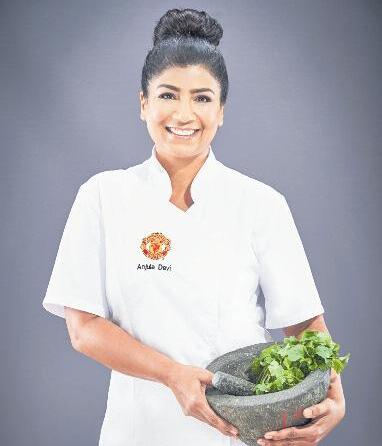
Ina world where food is often reduced to trend and technique, Anjula Devi brings it
b a c k t o w h
connection, memory and power.
An Indian chef, author and storyteller at heart, Anjula has built a remarkable career
b y b l e n d
recipes do more than nourish; they carry the warmth of heritage, the resilience of migration and the confidence of a woman redefining Indian cuisine on her own terms
T h r o u g h h e r c o o
Indian Food, Spice for Life, and 15 Minute Indian she has transformed perceptions of Indian cooking
What’s more? Her expertise has taken her far beyond the home kitchen As a consultant chef for Manchester United, Anjula has crafted authentic dishes for one of the world’s most recognised football clubs, while also collaborating with leading retail, electronics and food brands
B o r n i n S o u t h
t i o n Indian immigrant parents, and one of eight siblings, Anjula’s culinary journey began at just ten years old, cooking beside her father
But her impact extends beyond food A passionate educator, she dedicated years to volunteering in primary and special needs schools, a commitment that earned her the honour of becoming a torchbearer at the London 2012 Olympic Games
T o d a y , A n j u l a c o n t i n u e s t o i n s p i r e through her healthy, accessible approach to Indian cuisine, reminding us that every dish
has a story, and every story has the power to bring people together
In this interview, we explore how she built a formidable name for herself in a field
f t e n t
South Asian community, and how her role as consultant chef for Manchester United is redefining the place of Indian cuisine, and an Indian woman chef, within one of the world’s most iconic kitchens
Back to the beginning, what first drew you to food and how much of that inspiration came from the women in your family?
I think food found me out of necessity
long before it ever became my passion As the next eldest daughter, the responsibility of feeding my siblings fell to me while my mum and dad were at work The kitchen
b
everyone was fed
That sense of nurturing was deeply rooted in the women in my family I grew
They often had to make something from very little - that has stayed with me
Cooking is often seen as a domestic duty for South Asian women, yet professional kitchens have historically been male dominated When did you first see it as a career?
I didn’t grow up thinking ‘I’m going to be a chef ’ It was only later, when p
responding positively to my food that I realised what I had been taught had real value I came to understand that home cooking required skill and technique and c
a t cooking professionally was giving our food the wider recognition it deserved Did you ever feel that your work was taken less seriously because it emerged from a tradition that is often dismissed as “home cooking”?
Occasionally, but I realised that it’s where the real expertise lies - cooking by
Railways have traditionally been a male-dominated industry, but Tahira Bibi is helping to change that narrative. One of Northern’s qualified train drivers, she has made history as the UK’s first female train driver of Pakistani heritage From Bradford, Tahira passed her final exams to qualify as a train driver She began her training with Northern in May 2019, though the process was extended due to the Coronavirus pandemic
B e f o r e j o i n i n g t h e r a i l w a y , T a h i r a b u i l t a varied career, serving with the British Transport Police ( B T P ) f o r a d e c a d e a n d previously working in the charity sector
On being recognised as the UK’s first female train driver of British-Pakistani a n d M u s l i m h e r i t a g e , Tahira said, “When I first joined Northern, I didn’t
r e a l l y t h i n k a b o u t i t I noticed there weren’t any
A s i a n f e m a l e s , o n l y a couple of Asian males, but it was only later that I was told I was the first in the c o u n t r y I t h o u g h t , ‘ O h wow ’” My family, friends and local community were very proud It hadn’t been
d o n e b e f o r e , s o i t f e l t special “I see it as being a role model The railway has traditionally been a maled o m i n a t e d e n v i r o n m e n t , s o i f y o u n g e r g i r l s f r o m
A s i a n o r m i n o r i t y b a c k g r o u n d s s e e m e a n d think, ‘If she’s done it, we
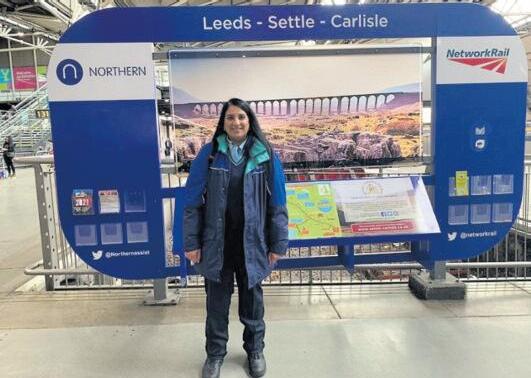
can do it,’ then that makes me proud ” S p e a k i n g a b o u t t h e i m p o r t a n c e o f r e p r e s e n t a t i o n i n a t r a d i t i o n a l l y m a l edominated railway industry, T a h i r a s a i d , “ I t ’ s v e r y important actually, because the way jobs are these days, with equality and women wanting to do something
d i f f e r e n t f r o m t h e traditional roles they used t o g o i n t o , e s p e c i a l l y f o r y o u n g g i r l s , v i s i b l e r e p r e s e n t a t i o n r e a l l y m a t t e r s I o f t e n h a v e students come up to me on station platforms when I’m walking to my driving cab, and they’re inspired to see an Asian female driving a train I tell them, ‘You can do it as well ’ The country is d i v e r s e , f u l l o f d i f f e r e n t minorities, and for them to know they can be part of s
t traditionally been seen as a j o b f o r t h e m , t h
s w h y r e p r e s e n t a t i o n i s
important
b r i n g i n g i n p e o p l e f r o m e t h n i c m i n o r i t y backgrounds It’s definitely changing, and that change needs to happen ” A b o u t t h e r o l e o f s u p p o r t s y s t e m s i n h e r journey, Tahira said, “My manager, colleagues and the group I trained with were i n c r e d i b l y s u p p o r t i v e Whenever I had a ‘wobble’ a n d s t a r t e d d o u b t i n g m y s e l f , t h e y w o u l d s i t down, talk it through and e n c o u r a g e m e W e r e a l l y supported each other; there w a s a s t r o n g n e t w o r k around me ”
from the application and i
pass just to be considered
training period, which ends with an intensive four-day assessment “Some say it’s like doing a full degree in nine months There were times I thought, ‘I’m not going to be able to do this ’ But what kept me going is t
v e driving trains ” O n
workplace culture, Tahira said, “Absolutely, especially a t N o
t h e r n T h e r e ’ s g r o w i n g f e m a l e representation, not just in driving roles but across the company ” She added that o t h e r T r a i n O p e r a t i n g
C o m p a n i e s a r e
l s o becoming more inclusive “ N o r t
about gender equality and
measurements, feeding people with little I had to adapt and evolve for that
changed the core of the food itself
Becoming a consultant chef for Manchester United, when you first stepped into that kitchen, did you feel you were representing more than yourself perhaps a cuisine, a culture, or a generation of women?
I was very aware that I wasn’t just there as an individual chef I carried my culture with me, as well as the food I
women who taught
to cook
had
been
definitely felt that my food deserved to be there
How important is it for you to be visible, not just as
chef, but
unapologetically
My view is that visibility isn’t just personal, it’s collective too As a South Asian woman, I always enjoy being in a professional kitchen – if that challenges long-standing views about who belongs there, that’s good I hope it says that our knowledge, flavours, and voices deserve to be there on merit
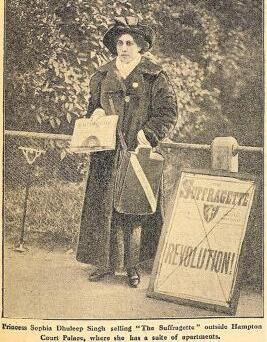
Kensington Palace marks
150th birthday of suffragette
Princess Sophia Duleep Singh
In M ar c h 2 02 6 , K en s ingt on
Pa l a c e wi l l o pe n ‘ The L a s t Pr i nc e s s e s o f P un ja b ’ , cel ebrating the 150th b irthday of Pr i nc e s s a n d s u f f r a ge t t e Sophia Duleep Singh, Queen
V ic t or ia ’ s g odd aug ht er The exhib ition highl ights Sophia and the women who s ha ped her , her sis ters Catherine and B am b a , m ot he r B a m b a M ul l er , gr a n dm ot he r Jin d Kaur, and godm other Queen
V ic t or ia , s h owc as in g ho w each express ed womanhood, powe r, and royalty
Looking ahead, she said, “I’d love to see more female d r i v e r s , e s p e c i a l l y f r o m Asian, Black and minority backgrounds At Northern, there are only two of us from minority backgrounds, which isn’t many ” She also h o p e s m o r e w o m e n w i l l enter engineering and move i n t o l e a d e r s h i p r o l e s “ R e p r e s e n t a t i o n o n t h e ground and at the top really matters It is changing, and I h o p e t o s e e e v e n m o r e w o m e n r i s e t h r o u g h t h e ranks ”
Tahira added that she
h a s b e e n i n v o l v e d i n International Women’s Day events for nearly 20 years
“ I t ’ s i m p o r t a n t t o h a v e a v i s i b l e d a y t h a t s h i n e s a l
g h t o n w o m e n , t h e i r s t r u g g l e s , t h e i r a c h i e v e m e n t s a n d t h e i r t r i u m p h s I t ’ s a l s o a b o u t recognising the challenges
w o m e n f a c e g l o b a l l y a n d
h o w t h e y o f t e n b e a r t h e
b r u n t o f w o r l d e v e n t s
”
H i g h l i g h t i n g t h a t i s v e r y important to me
T h e
Princess Sophia Duleep Singh’s 150th birthday and her family’s remarkable legacy It highlights Sophia’s suffrage activism with items like an original copy of The Suffragette, her 1911 census record reading “No Vote, No Census,” and a 1930 photo of her and sister Catherine at a suffrage dinner
The display also explores the women who shaped her Princess Sophia Duleep Singh’s grandmother, Jind Kaur, was a defiant Maharani and regent of the Sikh Empire, imprisoned after the Anglo-Sikh Wars and separated from her son Duleep Singh for thirteen years The exhibition features her emerald and seed pearl necklace and a makara-head gold bangle gifted to Bamba Muller, Duleep Singh’s wife Bamba, born to a German banker and an enslaved Ethiopian woman, faced challenges adapting to life in England, revealed in a bilingual letter she wrote before her death in 1886
Sophia and her sisters, Catherine and Bamba, grew up in British aristocracy while embracing activism and resistance Catherine aided Jewish refugees during WWII and is an LGBTQ+ South Asian icon, with letters to Sophia showing her personal life with companion Lina Schaeffer Princess Bamba Sutherland returned to Lahore in the 1940s, preserving her family’s heritage; dupattas worn in Norfolk and Lahore are displayed to showcase her legacy The exhibition includes voices of British South Asian women today, with community c
identity, expression, and the lasting impact of empire Polly Putnam, Curator, said Kensington Palace is a fitting space to tell these stories, displaying objects from the women ’ s lives alongside contemporary responses Mishka Sinha, Exhibition Historian, added that the exhibition celebrates Sophia Duleep Singh’s 150th birthday, highlighting powerful women across generations to inspire and move visitors