

NAVIGATING HEALTH WITH INSIGHT, ADVICE, AND CARE
In to day’s fast-paced world, man aging o u r h ealth can
o ft en f e el o v er wh e lm i ng
F ro m navi gatin g co mp lex
m ed i c al i n fo r ma ti o n t o
f i n di n g r el i ab le w el ln es s advice, it’s easy to get lost in a sea of c onflicting gu idance
The health landscape in the United Kingdom pre-
s e n t s b o t h p r o g r e s s a n d profound challenges Life expectancy improvements have slowed, and chronic
c o n d i t i o n s r e m a i n
, prostate cancer has recently overtaken breast cancer as the most commonly diag-
n o s e d c
n c
n t h e U K , with over 64,000 new diag-
n o s e s i n 2 0 2 2 , a s t a r k reminder of the need for awareness and early detection across populations
A t t h e s a m e t i m e , women ’ s health continues
t o g r a p p l e w i t h s y s t e m i c h u r d l e s C o n d i t i o

around one in ten women, yet in the UK, the average w a i t f o r d i a g
b u t e t o u n
i n v e s tment and entrenched biases in care pathways
y : health isn’t just about disease prevention, it’s about
informed support
Within this broader UK context, British Asians, who make up a significant portion of the population, face
health outcomes Research
such as type
diabetes and
with White British counter-
parts, and traditional BMI classifications can understate these risks, leading to u n d
y rates among Asians
Hospital admissions for infectious diseases also tell a stark story: certain ethnic minority groups, including S o u t h A
admission rates dramatically higher than the White British population, in some cases up to 29 times higher for conditions like tuberculosis
These patterns are driven by a complex interplay of socioeconomic factors, cultural barriers, and syst e m i c c h a l l e n g e s w i t h i n healthcare delivery, factors t h a t o f t e n l e a v e B r i t i s h
Asian communities underserved
A s i a n V o i c e ’ s H e a l t h y
Living feature is more than just a collection of articles, it’s a holistic health toolkit
Know the early warning signs of prostate problems
Anusha Singh
P rostate cancer is no w th e
m ost com monly diagnosed cancer in men in the United K ing dom, overtaking ev en breast cancer in recent years, with over 64,0 00 new cases recorded annually and m ore th an 12,0 00 d eaths every year Approximately o ne in eight men in the UK w ill be diagnosed with p rostate cancer in their lifetime, with risk increasing significantly after age 50 , and even h igher for Black men and those with a fam ily histo ry o f the d isease
In recent years, diagnostic pathways have improved significantly Men with concerning symptoms or elevated PSA levels are now referred rapidly into suspected cancer pathways that include repeat PSA testing, urine analysis, advanced MRI imaging, and, when indicated, targeted biopsies These advances mean prostate cancer can be detected earlier and with greater accuracy than ever before, and interventions can be better tailored to the individual, including options for active surveillance, precision robotic surgery, focal therapy, and modern radiotherapy techniques
Early detection remains crucial: men diagnosed at an earlier stage have a much greater chance of successful treatment and long-term survival, while late diagnosis, when cancer has
already spread, historically led to far poorer outcomes
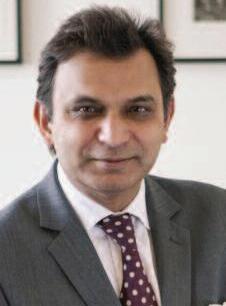
Pro fessor Prokar Dasg upta OBE, one of the world’s leading robotic urological surgeons, in an interview with Asian Voice, shed light on the early warning signs men often ignore, the modern prostate cancer diagnostic pathway, and the latest innovations helping men avoid unnecessary side effects while achieving the best outcomes
Whatare the early warning signs of prostate problems that men most often ignore, and shouldn’t?
Patients can experience urinary symptoms such as slowing of the urinary stream, frequency and urgency, waking up at night to pee and blood in the urine Although less common these days than in the past, some men present with pain in the bones We are increasing seeing men who are diagnosed without any symptoms, simply as a result of a routine annual health check where the PSA blood test is elevated
What does a prostate cancer diagnosis actually look like in practice today, from initial testing to treatment, and how has that pathway improved in recent years?
Most of my patients either present with a raised PSA blood test or urinary symptoms Some of them have had the PSA blood test because they have a strong
family history of prostate cancer and have been told about this by other members of the family
These days patients are seen rapidly on a suspected cancer pathway After taking a history, I examine them, repeat the PSA along with a urine test and arrange a MRI scan of the prostate as well as a flow test which measures the strength of their stream If the MRI is abnormal, then patients are advised to have a biopsy of the prostate In my practice this is performed through the perineum, and not the rectum, to reduce the risk of infection
When I was training three in four patients presented with prostate cancer that had already spread to the bones which now occurs much less frequently
There is still confusion around PSA testing Who should be asking for it, when, and what should men realistically expect from the results?
A single PSA test on its own is inaccurate as it can be elevated due to other reasons such as benign enlargement of the prostate (not cancer) and urine infection Men who have abnormality of breast cancer genes called BRCA, a strong family history of prostate cancer particularly in younger men and AfroCaribbean heritage should be asking for it Currently there is no prostate cancer screening program for all
men above 50 in the UK
We also have more accurate genetic tests for prostate cancer based on blood and saliva and PET scans which can increase the accuracy of MRI
Whichmyths about prostate cancer do you most want to dispel, especially those that stop men from coming forward early?
Whilst there is no screening program for all, those at higher risk should seek advice from their doctors We are keen to avoid overdiagnosis and overtreatment Many men with prostate cancer can be observed without any adverse effects that they fear, such as urinary leakage and difficulty with erections Others can be treated with highly precise robotic surgery which can be personalised to individual patients using AI Focal therapy and radiotherapy have also become very accurate and can cure the cancer without causing too many side effects
options, and strategies to n a v i g a t
journeys, as well as compre-
understanding risk factors and screening debates to tips on approaching conversations with healthcare professionals T
offering practical advice on resilience, stress management, and knowing when to seek help For everyday
shares guidance on hair and scalp care, blending scien-
practical tips for nutrition, lifestyle changes, and pre-
ventive care By combining expert insights with com-
health information accessible, relatable, and actionable
As the UK continues to
health inequalities, public
empowerment have never
rising rates of chronic illness, disproportionate risks across ethnic groups, and gender-specific challenges
under-addressed, accessible health education is a cornerstone of stronger, more resilient communities
Whether you ’ re seeking support for a specific condi-
healthier habits, this initiative is here to inform, support, and inspire a healthier future for all
How small lifestyle changes can add years to your life
When it c omes to longevity, pe op le of te n th i nk i t requires drastic m easures, b ut s c i e n c e s ho ws t ha t s ma ll , c on s i st e nt l i f es t yl e changes c an have a significant impact on health and li f e s pa n S i m pl e da i l y hab its , r angi ng f rom di et and exercise to sleep and s tr e s s m an a g em e n t, c a n reduce the risk of chronic di s e a s e s , i m pr ov e ov e ra l l we l lb e i n g, an d ev e n a d d years to life
Diet and nutrition
One of the most influential factors in longevity is what we eat A balanced diet rich in fruits, vegetables, whole grains, lean proteins, and healthy fats prov i d e s e s s e n t i a l n u t r i e n t s that support heart health, brain function, and immun i t y R e d u c i n g p r o c e s s e d foods, refined sugars, and e x c e s s i v e s a l t i n t a k e c a n lower the risk of diabetes, hypertension, and cardiovascular disease Even small changes, such as swapping s u g a r y d r i n k s f o r w a t e r , adding an extra serving of v e g e t a b l e s t o m e a l s , o r choosing whole grains over refined options, can have a cumulative positive effect over time
Regular physic al ac tivity
Exercise doesn’t need to be intense or time-consumi n g t o i m p r o v e h e a l t h S t u d i e s s h o w t h a t e v e n moderate physical activity, s u c h a s b r i s k w a l k i n g , cycling, or stretching, can e n h a n c e c a r d i o v a s c u l a r health, strengthen muscles, and improve mental well-
being Incorporating movement into daily routines, like taking the stairs instead of the elevator or walking short distances instead of d r i v i n g , n o t o n l y b o o s t s m e t a b o l i s m b u t a l s o reduces the risk of obesity, heart disease, and certain c a n c e r s O v e r t h e l o n g term, these small, consistent habits contribute significantly to longevity
Adequate s leep S l e e p i s o f t e n o v e rlooked, yet it is vital for overall health Quality sleep allows the body to repair tissues, regulate hormones, a n d m a i
i t i v e function Adults should aim for seven to nine hours of s
l l changes, such as maintain-
time before bed, and creating a calm sleeping environ-
p quality and, in turn, support long-term health
Stress management and mental health C
shorten lifespan by affecting the immune system and increasing the risk of heart disease and mental health issues Incorporating stressreduction techniques such as meditation, deep breathing exercises, journaling, or
Spending time with loved ones, practicing gratitude, a
nections also contribute to a longer, healthier life
Professor Prokar Dasgupta OBE
F
R G E T F U L N E S S
Alzheimer’ s Disease and the Importance of Early Action
Small changes in memory or thinking are easy to overlook A forgotten appointment, difficulty finding the right word or repeating a story can feel like part of a busy life Everyone has moments of forgetfulness
However, when changes become more frequent, more noticeable or begin to affect everyday life, they should not be ignored With Alzheimer’s disease, early action matters, not because people should worry unnecessarily, but because earlier understanding creates more choice, more clarity, and more time
Advances in diagnosis, research, and treatment mean that Alzheimer’s care today looks very different from the past Early assessment can provide access to specialist support, clinical trials, and new treatment approaches that are most relevant in the earlier stages of the condition
The message is straightforward Notice the signs, talk about them and seek advice sooner rather than later
Alzheimer’s
Disease is Not a Normal Part of Ageing
Alzheimer’s disease is a pandemic It affects memory, thinking, language, behaviour and the ability to manage everyday tasks While age increases risk, Alzheimer’s is not a normal or inevitable part of ageing
The condition develops gradually Changes in the brain begin many years before symptoms are obvious During this early phase, people often continue working, socialising and living independently, even though subtle changes may already be present
Early sig ns can include:
w Forgetting recent conversations or events
w Asking the same questions repeatedly
w Difficulty finding words
w Confusion in familiar places
w Changes in mood, confidence or behaviour
w Reduced interest in activities
Because these changes are often mild at first, they are easy to explain away
This is why Alzheimer’s is frequently identified later than it needs to be
Why Timing Matters
It is natural to wait and see whether memory problems improve Many people do However, Alzheimer’s is a progressive condition, and timing plays an important role in determining what options may be available
Earlier assessm ent allows:
w A clearer understanding of what is happening
w Access to specialist monitoring
w Time to plan gradually rather than urgently
w Exploration of clinical trials
w Assessment for newer treatment approaches
Later assessment can mean fewer options and more difficult decisions made under pressure
Early action allows people and families to move forward at a considered and informed pace
alone and may also provide access to treatments and close specialist follow up
Modern clinical trials are carefully regulated, ethically approved and designed with patient safety as a priority For people with early Alzheimer’s, trials may offer:
w Access to treatments not yet widely available
w Detailed diagnostic assessment
w Regular monitoring by specialist teams
w The opportunity to contribute to future advances

symptoms alone, they target specific biological processes associated with Alzheimer’s disease
Key points to und erstand include:
w They are intended for people with early stage Alzheimer’s
w Not everyone will be suitable

Why an Early Diagnosis is Vital
An early diagnosis is not about labels It is about clarity
Understanding w hether Alzheimer’s is present help s indiv iduals and fam ilies:
w Make sense of changes they have noticed
w Reduce uncertainty and ongoing worry
w Access appropriate advice and support
w Take part in decisions about future care
It is also important to note that not all memory problems are caused by Alzheimer’s Conditions such as vitamin deficiencies, sleep disorders, depression, anxiety or medication effects can cause similar symptoms Specialist assessment helps identify or rule out these possibilities
Clinical Trials as an Option
Clinical trials are an important part of progress in Alzheimer’s care They are not limited to research
Participation is voluntary, and individuals are given time and information to decide whether a trial is right for them
A Changing Treatment Landscape
For many years, treatment for Alzheimer’s focused mainly on managing symptoms
While symptom management remains important, there is now increasing focus on approaches that target the disease process itself
This shift has led to the development of a new generation of treatments designed to slow progression in people with early Alzheimer’s disease
New Generation Alzheimer’s Treatments Available Privately
In the UK, access to new generation Alzheimer’s treatments is currently limited However, these treatments are available privately at specialist clinics for eligible patients following thorough assessment
These treatments are described as disease modifying therapies Rather than addressing
w Eligibility requires specialist diagnosis and imaging
w Ongoing monitoring is essential
w Decisions are made collaboratively and carefully
Private availability allows eligible individuals to explore these options while wider access continues to be assessed nationally Importantly, availability does not imply obligation The focus is on understanding suitability and supporting informed decision making
Early assessment is essential Without it, people may miss the point at which these treatments can be considered
The Role of Families
Memory changes rarely affect just one person
Families are often the first to notice when something feels different, and they play a central role in support and decision making
Early action allow s families to:
w Attend appointments together
w Ask questions and understand options
w Share responsibility
w Reduce uncertainty
w Plan gradually and thoughtfully
Early conversations can feel difficult, but they often make the journey more manageable for everyone involved
Specialist Support and Guidance
Once concerns arise, knowing where to turn matters
Re: Cognit ion H ea lth
is a UK based specialist provider focused on brain health, memory and cognitive conditions, including Alzheimer’s disease
They have administered more doses of the new Alzheimer’s drugs than anyone else in Europe, as they were instrumental in running clinical trials for the medications
The ir serv ices incl ude :
w Specialist cognitive and memory assessments
w Advanced diagnostic testing
w Guidance on clinical trial eligibility
w Assessment for and administering new generation treatments
w Ongoing monitoring and clinical support
Their role is to provide clear explanations, evidence based guidance, and support at every stage, allowing individuals and families to understand their situation and consider appropriate next steps
What to Do If You’re Worried About Memory Changes
Noticing changes in memory or thinking in yourself or someone close to you can feel unsettling
Many people hesitate, hoping changes will settle on their own However, early action is vital
Here are som e practical step s to consid er:
1 Look for pat ter ns
Occasional forgetfulness is common Concern usually arises when changes are persistent, increasing or affecting daily life
2 St ar t a conve rsat ion
Talking openly and gently can reduce worry and make it easier to take the next step together
3 See k an ear ly a sse ssme nt Specialist assessment can clarify what is happening and whether further support is needed
4 Ask about option s Early assessment allows time to explore monitoring, clinical trials and treatment approaches without pressure
5 Ge t ex pert guidan ce Specialist clinics such as Re :C ognition Hea lt h provide assessments, explanations and advice on early intervention and next steps
Taking action does not mean committing to treatment It means choosing clarity and support
Taking the First Step
Taking early action does not mean assuming the worst It means choosing not to ignore ongoing changes and seeking expert advice sooner rather than later
For many people, the first step is simply an assessment that brings understanding and reassurance
If memory or thinking changes are affecting you or someone close to you, early specialist input can help clarify what is happening and what options may be available
When it comes to Alzheimer’s disease, early action supports better choices and more time to live well
Five everyday aches physiotherapy can actually fix
M ost of us have at least one ache w e ’ v e learned to live
w it h T h e s ti ff n ec k, th e
l o w er b ac k p ai n, o r th e
sh ould er that h urts for no
o bv ious reason T hese p ains are often dismissed as “ norm al”, but that d oesn’t mean they’ re untreatable
Physiotherapy can make
a r e a l d i f f e r e n c e t o t h e everyday aches we quietly put up with, often for years, assuming they’re just part of modern life; it isn’t just for elite athletes or post-surgery rehab In reality, many com-
m o n p a i n s a r e c
u s e d b y muscle imbalance, poor posture, or repetitive strain, all of which physiotherapy is designed to treat
Here are five everyday
a c h e s p h y s i o t h e r a p y c a n g e n u i n e l y h e l p w i t h a n d when it’s worth seeking support
1 Desk-related neck pain
H o u r s s p e n t h u n c h e d over laptops and phones can strain the neck and upper b a c k , l e a d i n g t o s t i

m e d i c a l h e l p , l o w e r b a c k pain is often caused by poor m o v e m e n t p
s , w e a k core muscles, or prolonged sitting Physiotherapy focuses on improving strength, f l e x i b i l i t y , a n d h o w y o u move day to day, rather than simply masking pain with medication
3 Knee p ain from walking or running
K n e e p a i n d o e s n ’ t always originate in the knee
It can be linked to hip weakn e s s , f o o t a l i g n m e n t , o r t r a
gait, correct muscle imbal-
p a d j u s t s l e e p i n g positions to avoid ongoing irritation
5 Jaw pain (TMJ)
J a w p a i n , c l i c k i n g , o r
tension headaches are often linked to stress, teeth grinding, or poor posture Many people don’t realise physio-
t h e r a p i s t s c a n t r e a t t e mporomandibular joint (TMJ)
p r o b l e m s t h r o u g h g e n t l
tion, and relaxation techniques
W
phys iotherapist?
n g with daily life, even if it feels “minor”, it’s worth
Why hair falls more in winter and how to manage it
Subhasini Naicker
Durin g win ters , hai r fall often in creas es, an d m any people mi stake it for s eas o n a l s h e dd i n g, t ho u gh the two a re quite differen t Seas on al s he dding is a natu r al , te m po r a ry p r o c e s s t i ed t o th e ha i r g r ow th c ycle, where old hai rs fall out to m ake wa y for new growth
Winter hair fall, howe v e r , i s o f t e n d r i v e n b y e n v i r o n m e n t a l a n d lifestyle factors, such as cold, dry air, indoor heating, and reduced moisture in the scalp, which make h a i r m o r e f r a g i l e a n d prone to breakage Asian Voice spoke to a f e w e x p e r t s , w h o explained how to tell them apart and offered tips on caring for your hair during the colder months
Fo u n d e r of T uh i
worsen the problem, espec i a l l y i n w o m e n “ B o t h
c o n d i t i o n s a r e d i f f e r e n t f r o m t e l o g e n e f f l u v i u m , w h i c h i s a p a t h o l o g i c a l
h a i r l o s s t r i g g e r e d b y stress, illness or nutritional deficiencies,” she added Dr M a n a v B a w a e x p l a i n e d t h a t s e a s o n a l

l p health and nutrition, sayi n g , “ P r
health with gentle cleansi n g ,
proper nutrition, including protein, iron, omega3s, and vitamin D ” He also cautioned that people should seek medical advice if hair fall is “sudden, excessive, patchy, or persists beyond three to f o u r
, ” a s t h i s could indicate an underlying issue
Adding a pharmacist’s perspective, S habir Daya, c
, h e a d a c h
n d r e d u c e d mobility Physiotherapy can help by identifying posture issues, strengthening weak muscles, and teaching simple exercises to relieve tension and prevent recurrence
2 Lower back pain
One of the most com-
m o n r e a s o n s p e o p l e s e e k
changes to reduce strain
4 Shou ld er pain from sleeping bad ly
Waking up with shoulder pain is common, especially if you sleep on one side or use unsuitable pil-
l o w
P
improve shoulder mobility, a
m e chronic ones
The key message: pain i s n ’ t s o m e t h i n g y o u j u s t h a v e t o l i v e w i t h Sometimes, it just needs the right kind of help

C l i n i c , Dr B ha v j i t K a ur, said winter hair fall and s e a s o n a l s h e d d i n g a r e
o f t e n m i s t a k e n f o r t h e same issue, though they differ in cause “Seasonal shedding is a normal physi o l o g i c a l p h e n o m e n o n , w i t h s t u d i e s s h o w i n g increased shedding at the end of summer and early autumn, while hair shedding is usually lowest in l a t e w i n t e r , ” s h e explained, noting that factors like daylight and temp e r a t u r e i n f l u e n c e t h i s cycle
She clarified that “winter hair fall is not a distinct medical condition” and is often perceived due to low humidity, indoor heating and scalp dryness, which lead to hair fragility and breakage rather than true shedding from the follicle
S t y l i n g h a b i t s , f r e q u e n t w a s h i n g a n d c h e m i c a l
t r e a t m e n t s c a n f u r t h e r
s h e d d i n g a n d w i n t e rrelated hair fall are often confused but have differe n t c a u s e s “ S e a s o n a l shedding is a normal, temp o r a r y c y c l e i n w h i c h more hairs enter the resting phase, usually noticed in autumn and early winter, and it corrects itself within a few months,” he said “Winter hair fall, on the other hand, is largely driven by environmental and lifestyle factors such a s c o l d w e a t h e r , d r y i n d o o r h e a t i n g , r e d u c e d s u n l i g h t , a n d d i e t a r y changes ”
He noted that dry winter air can “strip moisture from the scalp and hair shaft, making hair brittle and prone to breakage,” while lower sun exposure may reduce vitamin D levels that support healthy hair growth Tight headw e a r a n d l e s s f r e q u e n t w a s h i n g c a n a l s o c o ntribute to scalp irritation
“Keeping the scalp heal thy su pp or ts the hair gro wth cycle”
Advising on managing hair fall, Dr Bhavjit Kaur said, “Maintaining good n u t r i t i o n , g e n t l e s c a l p care and minimising heat
s t y l i n g a r e k e y ” S h e a d d e d , “ S e a s o n a l s h e dding is self-limiting, while w i n t e r - r e l a t e d h a i r f a l l can usually be controlled by improving scalp health and hair care practices ”
S i m

a l changes, winter dryness, or natural seasonal hair fall,” each with different triggers and treatments He noted that winter hair fall happens when “cold, dry air and indoor heati n g r e d u c e s c a l p m o i sture, making hair brittle and prone to breakage
scalp with warm oil massages such as coconut oil
omega-3 intake through diet or supplements ” For seasonal shedding, Daya highlighted that “keeping
adding that black seed oil is a popular option He also cautioned that “hair
severe itching or burning, or hair loss lasting longer than 12 weeks” should be checked by a GP, as these are not typical signs of
loss
Keep your body hydrated this winter
Hydration is often ass oc iate d with hot summ er days, but it is jus t as important during win te r C old t em pe ra tur es , dry indoor heating, and low hum idity can all lead t o fluid l os s, e ve n whe n you don’t f eel thirs ty
W h e n t h e b o d y i s n o t
p r o p e r l y h y d r a t e d , i t c a n result in dry skin, fatigue, headaches, and even a weak-
e n e d i m m u n e s y s t e m
Staying adequately hydrated helps regulate body tempera-
Many people mistakenly reduce water intake in wint e r , a s s u m i n g t h a t l o w e r sweat levels mean less need for fluids In reality, water l o s s c o n t i n u e s t h r o u g h b r e a t h i n g , u r i n a t i o n , a n d normal metabolic processes
Neglecting hydration can leave you feeling lethargic, irritable, and more prone to winter illnesses Maintaining c
t u r e , s u p p o r t s d i g e s t i o n , i m p r o v e s c i r c u l a t i o n , a n d keeps the skin and organs functioning optimally
, hydrating foods can make a significant difference Warm soups and stews, fruits like oranges and watermelon, and vegetables such as cucumber a n
water and essential nutrients
Practical tips for staying hydrated include keeping
Dr Bhavjit Kaur
Dr Manav Bawa
Shabir Daya





ENDOMETRIOSIS
The women’s health crisis hiding in plain sight
most significant concerns
Dr Nitu Bajekal
Anusha Singh
For millio ns o f wo men, pain is not a monthly inconvenienc e but a lifelong companion
Endo metrio sis, a ch ro nic condi tio n affecting arou nd one in ten women, is ro utinely dismissed, mis understo od, and diagno sed years too late, leavi ng many to suffer in silence
In the NHS, women can wait up to eight years for answers, often told their symptoms are “normal” or imagined To rectify the situation, women ’ s health will be a key focus of the NHS’s planned online hospital, due to launch in 2027
Menopause and menstrual problems, which can signal conditions such as endometriosis or fibroids, are among nine common conditions set to be prioritised for treatment through the NHS Online Service
To help readers understand what to look out for, Dr Nitu Bajekal, a senio r co nsultant obstetrician and gynaeco lo gist with 40 years of experience, offers practical advice
Whyis the NHS struggling to meet women’s health needs, and what must change to improve outcomes?
First and most important priority is raising awareness and improving education, not just for the public but also for healthcare professionals On average, it takes seven to eight years for women to receive a diagnosis for conditions such as endometriosis, polycystic ovarian syndrome, or even painful periods caused by other factors which are often dismissed or left undiagnosed for years
Education should begin at school and extend to children, young women and men, parents, and, crucially, doctors and other health professionals
Clinicians need to understand how serious these conditions are and the profound impact they have on quality of life
This, in turn, affects earning capacity, productivity, and sick leave, meaning the government has a clear responsibility to make women ’ s health a priority
Endometriosis, in particular, is one of the
Around one in ten women are affected, and among women who struggle to conceive, up to 50 per cent may have the condition It is frequently overlooked despite affecting women from the onset of menstruation through menopause and beyond The second priority must be improving diagnosis
Currently, diagnosis relies on highly specialised imaging or invasive keyhole surgery, both of which require expert clinicians and are not widely accessible There is hope that less invasive tests, such as blood tests, could enable earlier and more widespread diagnosis, preventing many women from being left undiagnosed for years
What signs should people look out for that indicate they should seek a diagnosis?
First and foremost, painful, heavy, irregular periods, or bleeding between periods should not be accepted as normal They are not At most, period pain should be limited to mild cramps that respond to simple pain relief, such as a single dose of ibuprofen
Anything beyond that, pain that affects quality of life, causes someone to miss school or work, or interferes with daily activities, should never be normalised
Painful periods are often a sign of an underlying condition
Initial investigations should include checking for anaemia, as heavy bleeding frequently accompanies pain Using double protection, bleeding for more than seven days, flooding, leaking, or passing clots are all warning signs that require medical attention Bleeding after sex, bleeding between periods, missed periods, or very irregular cycles should also never be ignored
Crucially, women should not be told to wait until they want to conceive before seeking help There is a full life to live both before and after pregnancy, and symptoms deserve attention at every stage
Does endometriosis affect British Asian women differently?
Endometriosis diagnosis is often significantly delayed for women of colour There is a long history of discrimination in healthcare, and many
women are still told that nothing is wrong, that they are being “hysterical”, or that the pain is “all in their head” This is a major issue Language barriers and cultural taboos around discussing periods also play a role In many families, menstruation and reproductive health are not openly talked about, which means crucial family history, such as early menopause, endometriosis, or PCOS, may never be shared
Without that context, symptoms are often normalised and dismissed internally as well For many Asian women, lack of knowledge, dismissal by health professionals, and repeated negative experiences create lasting trauma
Whatcommon myths about endometriosis would you like to debunk?
One common myth is that everyone with endometriosis or PCOS will be infertile or unable to conceive That is not necessarily true While these conditions can make conception more difficult for some, seeking medical advice early can make a significant difference Many women with endometriosis or PCOS go on to become pregnant, some naturally and others with the help of assisted reproductive techniques such as IVF A diagnosis does not mean there is no hope, and it certainly does not mean pregnancy is impossible
Another widespread myth is that having one condition rules out having another This is incorrect Conditions such as endometriosis, PCOS, fibroids, or adenomyosis can coexist, and their symptoms often overlap Another important factor is the fear of hormonal contraception In many Asian families, there is resistance to medications that could significantly improve symptoms, driven by myths around fertility, promiscuity, or long-term harm While it’s essential to provide accurate information before prescribing, relying solely on “natural” approaches is not realistic for everyone
Diet and lifestyle changes can help reduce inflammation and improve symptoms
However, many people will still require surgery or hormonal treatment Doing everything “right” does not guarantee symptom-free living
Why UK maternal deaths rose by 20%?
The rate of women dying during or shortly after pregnan cy i n the U nited Kin gdom has surged by 2 0% over the last 14 years , reveali ng a de epenin g cri sis in matern ity c are According to a report by MBRRACE-UK, maternal mortality has climbed from 10 63 deaths per 100,000 maternities in 2009–11 to 12 80 in the
2022–24 period This data, led by the University of Oxford, confirms that the previous Conservative government’s high-profile pledge to halve maternal deaths by 2025 has not only been missed but entirely reversed Experts have branded the findings an absolute tragedy, particularly as deaths linked directly to
pregnancy, including blood clots, pre-eclampsia, and severe bleeding have skyrocketed by 52% The audit exposes a maternity system under extreme pressure, where chronic workforce shortages and overstretched resources have created a dangerous environment for expectant mothers
Supporting women’s health with care and expertise: Dr Deepa Srinivasan
Dr Deepa Srinivasan is a consult an t obst et rician and gynaecol ogist with over 25 years of experienc e in l eading NHS and private hospitals She specialises in fibroids, PCOS, menopause, menst rual problems, high-risk pregnancies, and holistic women ’ s heal th, helpin g women navigate their care with confiden ce and reassurance
Known for her compassionate and personalised approach, Dr Deepa tailors care to each woman ’ s individual needs Fluent in Tamil, Hindi, Gujarati, and Marathi, she easily connects with a diverse range of patients
She leads the Fetal

Medicine Services at London North West University Healthcare NHS Trust and is an Honorary Consultant at Imperial College London She also provides private maternity and gynaecology care at The Portland Hospital, London, and through MyGynaePlus clinics
Her services include
early pregnancy scans, detailed fetal ultrasounds, antenatal consultations, pregnancy planning advice, postnatal care, and support for complex or high-risk pregnancies
Many women choose her private care alongside their NHS pathway, benefiting from continuity, additional scans, and timely reviews all delivered with expert guidance
Dr Deepa accepts a range of insurers, making her care accessible to women throughout their reproductive journey For those seeking expert, approachable, and personalised support, Dr Deepa Srinivasan offers guidance and reassurance every step of the way

Dr Deepa Srinivasan

Mental health risks of modern digital intimacy

Swathi Anil
Inan era where perfection is accessible at the tap of a button, the landscape of human connection is undergoing a seismic shift. As generative artificial intelligence becomes an inescapable third wheel in modern dating, society is grappling with the clinical and social consequences of digital intimacy
To explore these shifts, Asian Voice spoke with Kamaldeep Bhui CBE, Professor of Psychiatry at the University of Oxford
a
Professor Bhui, who was awarded a CBE in 2017 for services to mental health research, h
inequalities and the socio-cultural influences on mental health His latest venture,
a
Maharaja’s Bodyguard’, continues his work of bridging complex histories and identities

Professor Bhui breaks down how calculated intimacy is impacting our conflict resolution muscles and whether we are reaching a social tipping point
The atrophy of conflict resolution muscles
Prof Bhui notes that the nature of healthy relationships relies on a two-way dialogue, a mix of mutual support and useful challenge By removing the friction of differing opinions, we risk a form of emotional atrophy While AI might seem a convenient way to meet emotional needs without the fear of embarrassment, it lacks the real history of family, joys, and sadness that defines human intimacy
Physical touch, the soothing caress of a mother or the embrace of a partner remains a biological necessity that code cannot replicate "I do not think it can replace real relationships," Bhui explains "There is a risk of not moving at a pace that requires us to adapt and learn from another " While AI has shown promise in providing brief psychotherapies, it currently lacks the depth offered in a human therapeutic space
Prof Bhui is cautious with the word delusional, which has a specific clinical meaning, but acknowledges the danger of attachments built on false premises In England, the Big Mental Health Report 2025 found that 20 2% of adults are living with a common mental health problem, and for those in crisis, AI can be a dangerous substitute "A greater risk than misinformation is information to progress the crisis," Bhui warns, noting that unregulated AI can hallucinate false guidance on self-harm Furthermore, structural disadvantages found in public services are often recreated in the digital world
Unless there is a concerted effort to adapt AI to specific cultural norms, these tools may fail to address the social responsibilities and community supports that traditionally sustain mental wellbeing
As of 2025, approximately 95% of UK teens have access to a smartphone, and nearly 40% of young people in England have turned to AI for advice or company Professor Bhui suggests that while young people may develop powerful branding and marketing skills, the distinction between a digitised persona and the deeper personal self is becoming blurred
Adolescence is a critical period for negotiating self-identity If AI becomes the only source of relationship, it may stifle the growth that comes from navigating real-world awkwardness "If AI is the only source of relationship, it may stifle growth and learning," Bhui says He notes that countries like Australia have already moved to ban digital and phone access in schools to combat this distraction
Digital radicalisation is a documented reality Research from 2023–2025 indicates that online radicalisation has risen sharply; between 2019 and 2021, 92% of those convicted of extremist offences in England and Wales were radicalised at least in part online Within this group, 42% showed a strong presence of mental health issues, including depression and autism
Professor Bhui explains that closed, self-sustaining groups can lead to violence against women and minorities AI that reinforces these beliefs by providing a submissive digital partner is "worrisome and should fall under legal proceedings " He emphasises that people are less likely to fall into these traps if they have access to socially valued roles and opportunities in the physical world Public education in schools and proactive parenting are the primary defenses against this digital grooming
The remedy is not as simple as a digital detox Professor Bhui advocates for a balanced approach where AI is used complementarily, much like search engines or cloud services In my research, young people preferred digital offers as they could retain control and avoid waitlists," he notes One of his current projects involves a game designed for youth who have experienced adverse childhood events, providing a safe, co-designed space for healing
However, the human premium remains irreplaceable To maintain health, we must remove reliance on AI as the only source of solace by encouraging adventures in the outside world and nature The goal is to embrace technological potential while anticipating ethical dilemmas and real risks of harm
Why synthetic connection is creating a loneliness epidemic?
The fabric of human intimacy is being rewoven by algorithms, and the results are chilling The rise of the Griefbots, AI companions, and digital dysmorphia has triggered what sociologists call a ‘synthetic connection crisis ’
While these technologies promise to bridge the void left by death and isolation, they are instead trapping users in a

increasingly exhausting Research from the University of Oxford and MIT indicates that while one-third of teenagers now turn to AI companions for social support, over 40%
human interaction as a result
The rise of digital avatars like Griefbots that mimic the deceased and non-judgmental companion bots has left one-third of teenagers reliant on software for emotional support While marketed as cures for isolation, these digital painkillers actually cause social muscle atrophy Because AI provides
24/7 validation without the friction of realworld negotiation, users increasingly find
Compounded by the anxiety of comparing real life to flawless, AI-generated perfections, this high-fidelity simulation offers the sensation of companionship while eroding the soul of authentic communal life
Unless we actively choose to preserve the soul of authentic presence, we may find ourselves in a future where we are surrounded by billions of voices, yet entirely and irrevocably alone
Managing stress in a high-pressure work culture
In today’s fast-paced corporate world, highpressure work environments have become the norm rather than the exception Tight deadlines, constant performance expectations, and the demand for multitasking can take a serious toll on employees’ mental and physical health P r o l o n g e d s t r e s s n o t
but also increases the risk of burnout, anxiety, and other health issues Learning to manage stress effectively is

manageable steps, and setting realistic deadlines can
r e d u c e f e e l i n g s o f o v e rwhelm Tools like calendars, to-do lists, and digital prod u c t i v i t y a p p s c a n h e l p
e m p l o y e e s s t a y o r g a n i s e d and focused Learning to say

mance and personal wellbeing U n
n d i n g t h e sources of stress is the first step High workloads, lack o
and poor work-life balance are common contributors A d d i t i o n a l l y , w o r k p l a c e dynamics such as office politics, unsupportive management, and lack of recognition can intensify stress leve l s B e i n g a w a r e o f t h e s e triggers allows employees to a d d r e s s t h e m p r o a c t i v e l y , e i t h e r t h r o u g h p e r s o n a l strategies or by seeking support from management
One of the most effective ways to manage stress is through time management Prioritising tasks, breaking large projects into smaller,
no to unreasonable requests and delegating when possible also prevents overburdening
A n o t h e r i m p o r t a n t strategy is cultivating mindfulness and relaxation techn i q u e s P r a c t i c e s s u c h a s meditation, deep breathing
e x e r c i s e s , y o g a , o r e v e n s h o r t m i n d f u l n e s s b r e a k s d u r i n g t h e w o r k d a y c a n l o w e r c o r t i s o l l e v e l s a n d i m p r o v e c o n c e n t r a t i o n P h y s i c a l a c t i v i t y , e v e n a b r i s k w a l k d u r i n g l u n c h breaks, can release tension a n d b o o s t e n e r g y Maintaining a balanced diet, staying hydrated, and gett i n g s
structured support and coping strategies
balance is crucial Allocating time for hobbies, family, and social connections helps recharge mental and emotional energy Setting boundaries, such
Prof Kamaldeep Bhui CBE