Yarrpany Sweet Bush Honey

Presented by Aboriginal & Pacific Art in association with Buku-Larrnggay Mulka Centre, Yirrkala, NT
30 April – 23 May, 2026
Exhibiting artists: Wolpa Wanambi, Yalanba Wanambi, Burŋanydji #2 Gaykamaŋu, Yilpirr Wanambi (dec)
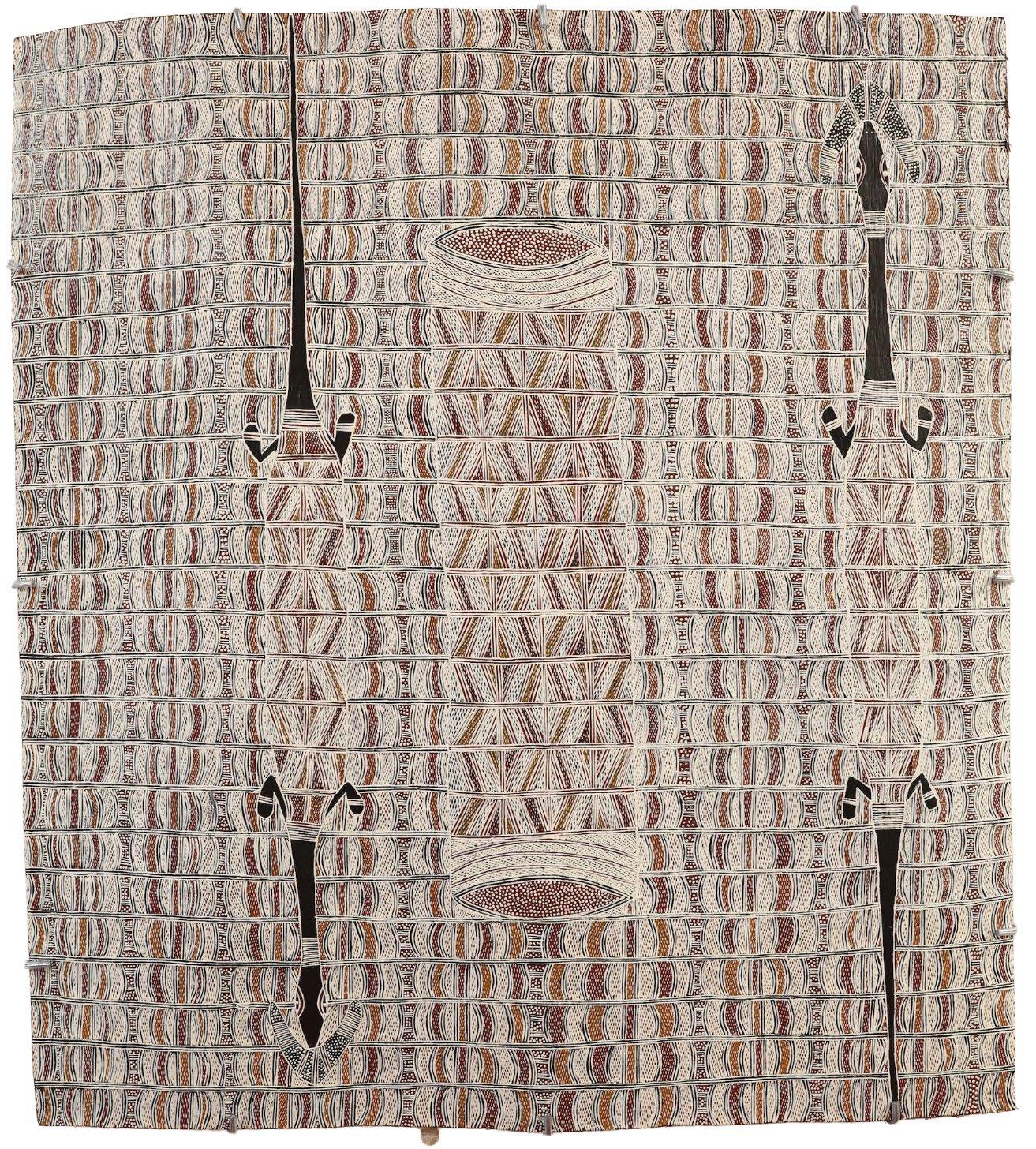
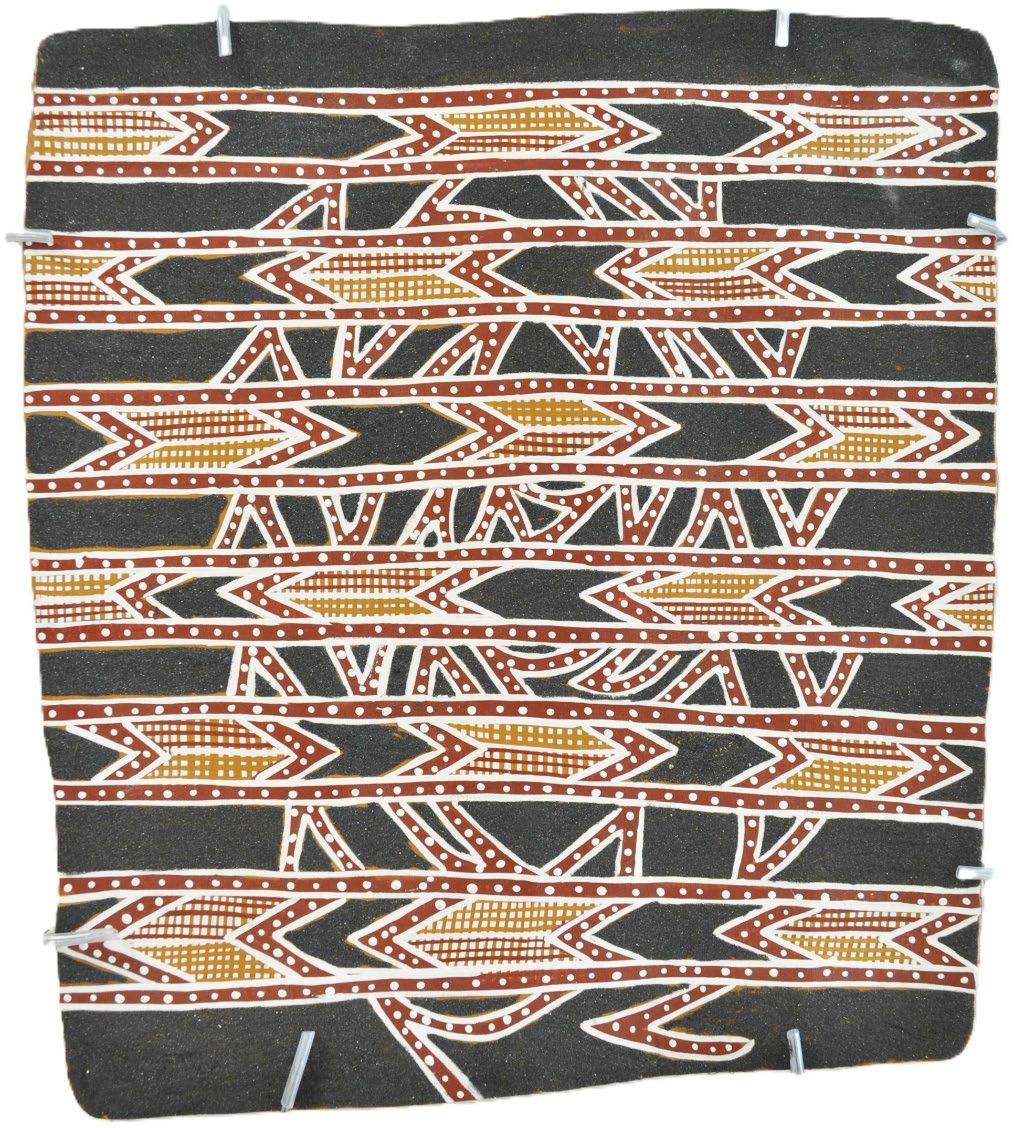
Cover Image: Burŋanydji #2 Gaykamaŋu, Trial Bay, #8534-24, 78 x 70cm, Bark Painting

This exhibition explores the epic song poems that recount the journey of ancestral spirit Wuyal, on his quest to cut down the towering supernatural Wänambi tree, that causes a flood of Yarrpany - sweet bush honey - that becomes the Gurka’wuy River. This narrative follows the journey of this honey imbued water as it flows from the river into the bay, and finally past the monolithic rocks, which are statues of ancient heroes, out to meet the turbulent ocean.
As the songs move through different estates, the designs associated with each place shift and transform. Each stage represents different states of water, the people, land, and their ancestral law. In this exhibition, four Marrakulu artists interpret the full cycle of the Gurka’wuy River from its first emergence as a small freshwater stream to its powerful arrival at the ocean.
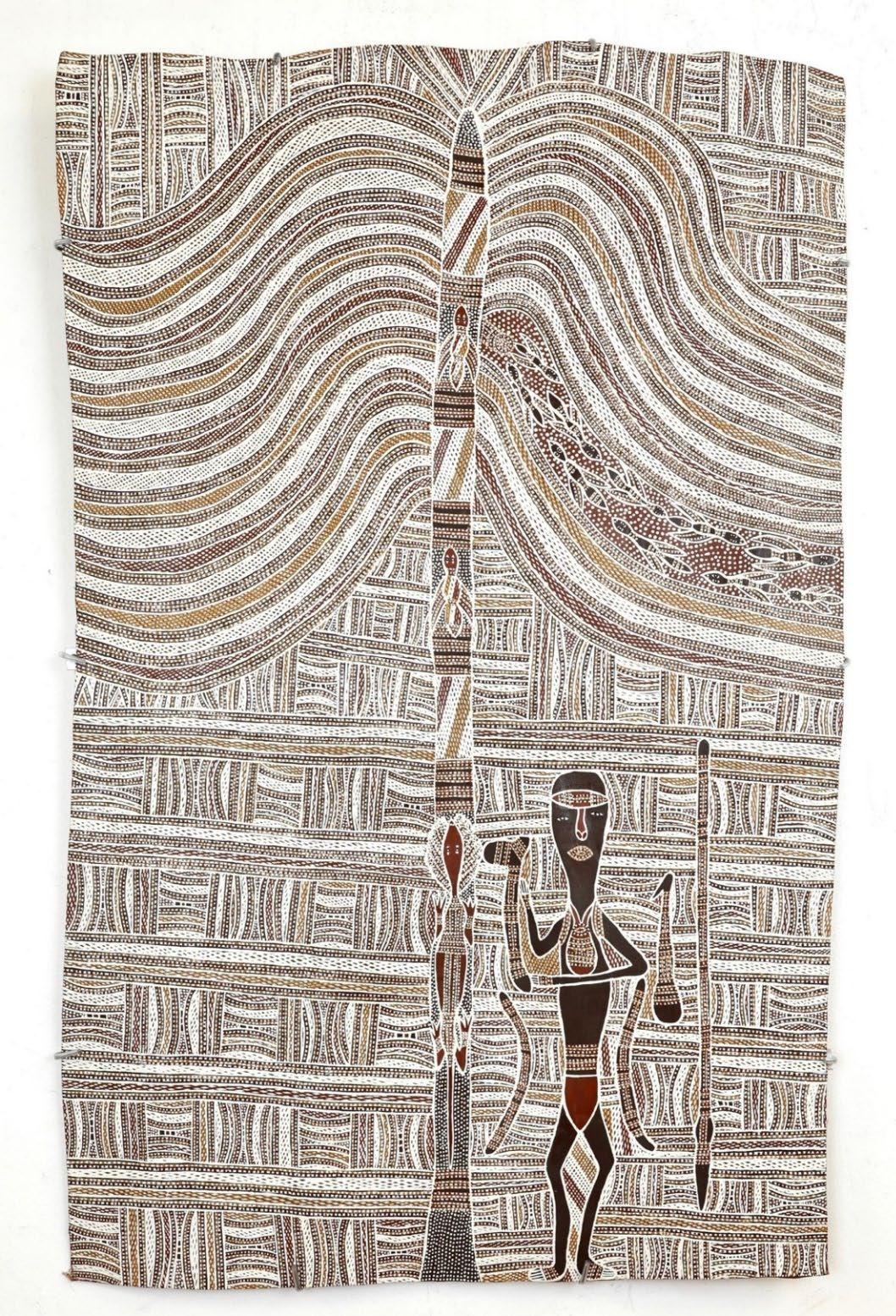
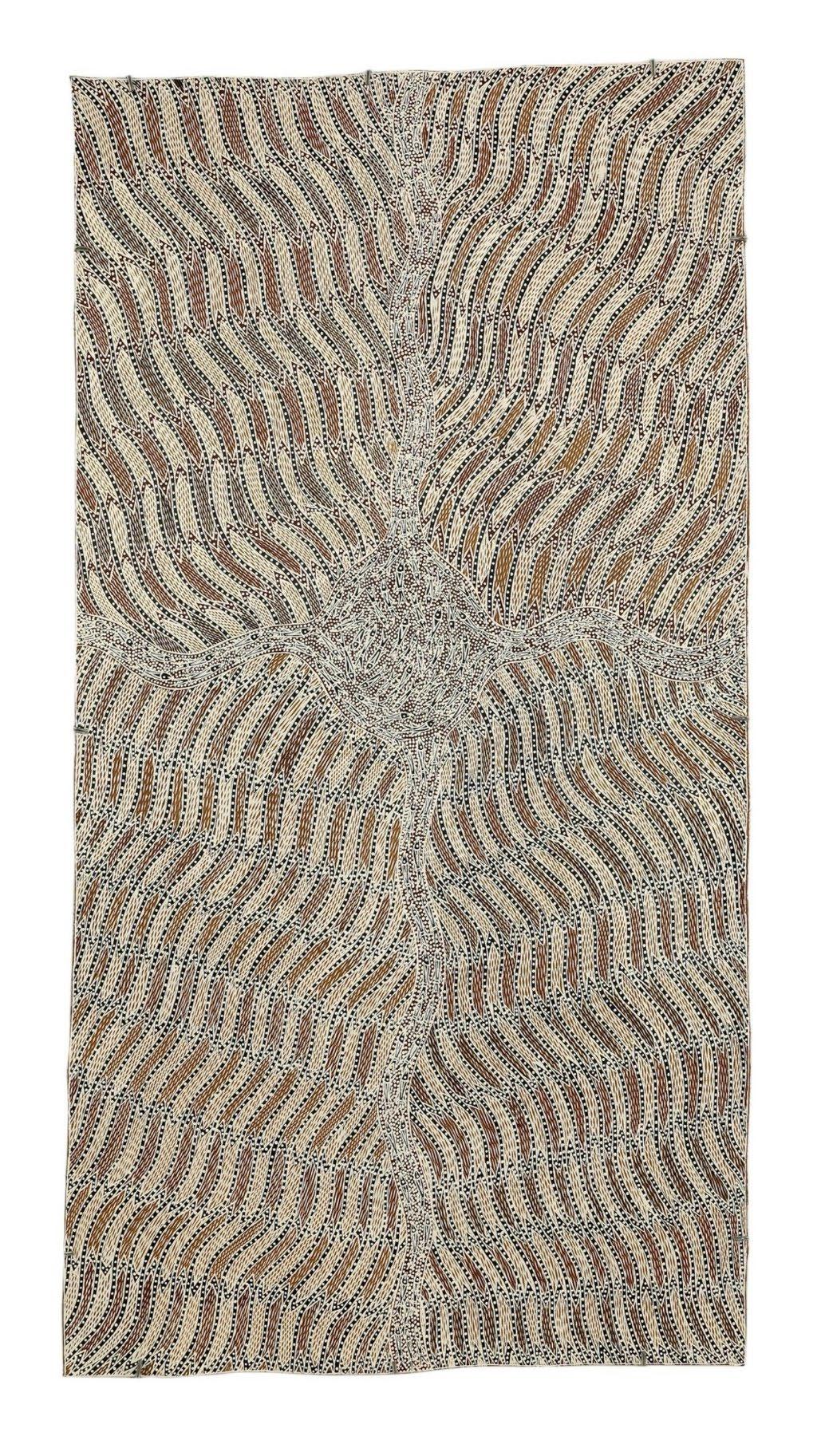
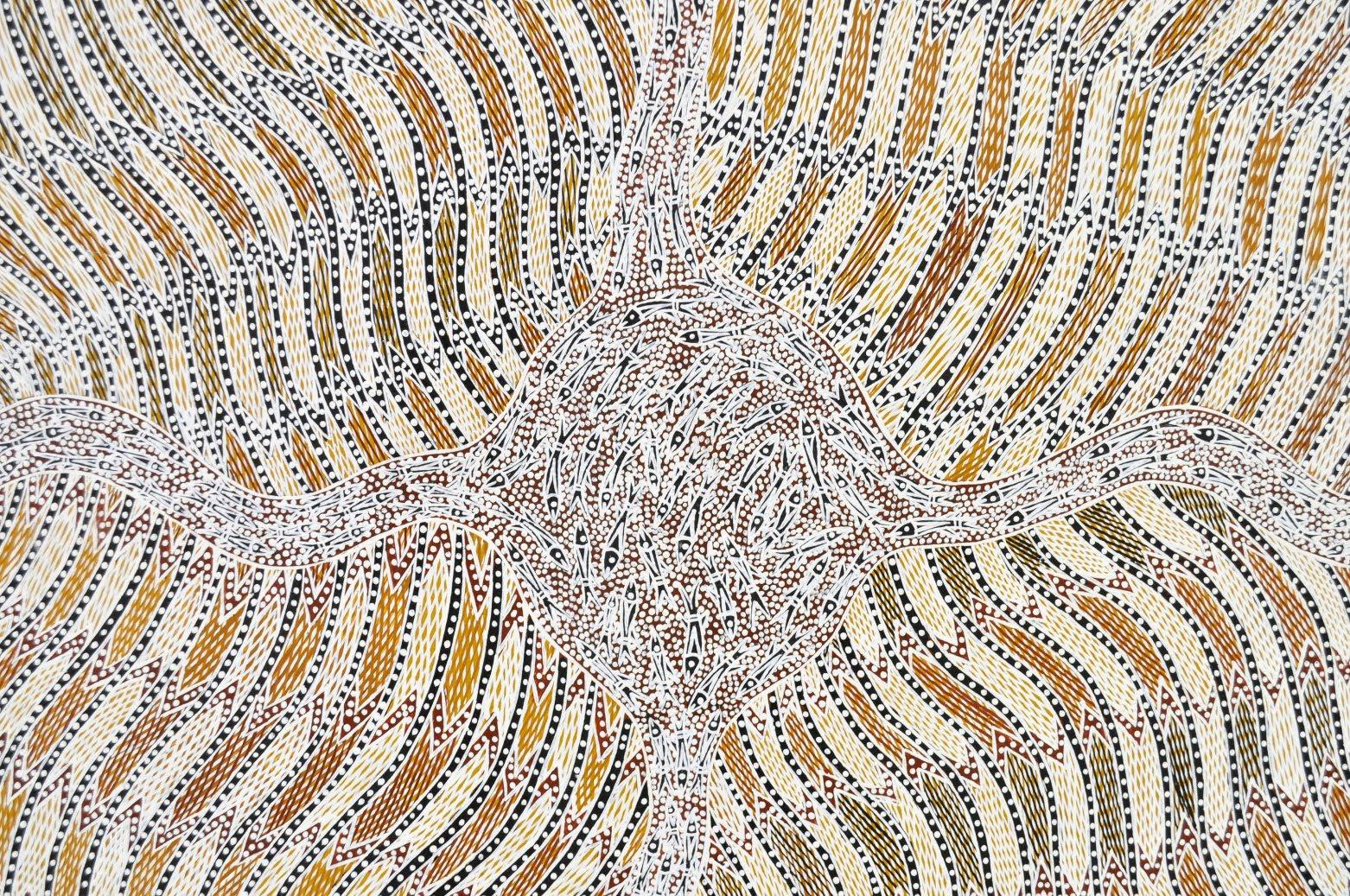
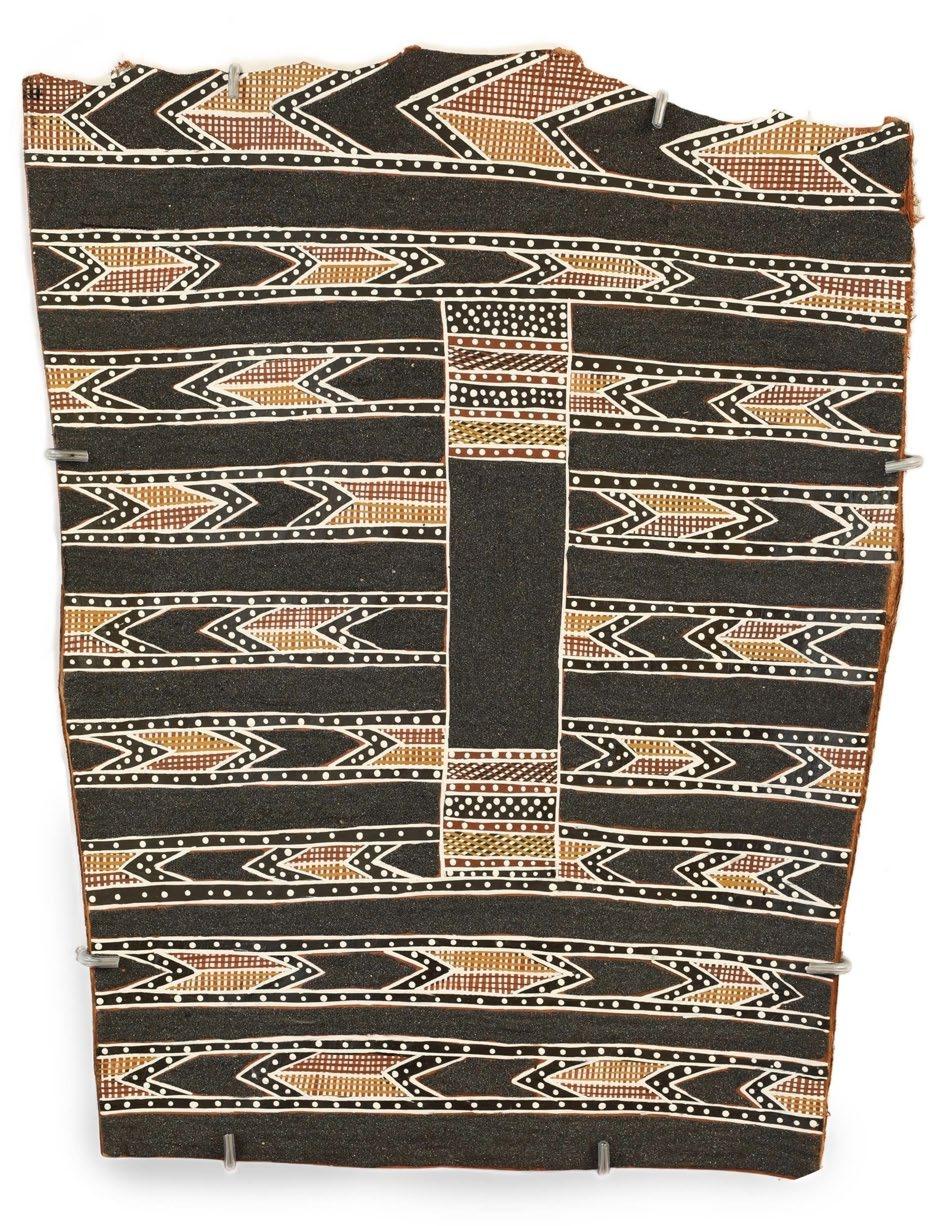
Bamurruŋu is a monolithic rock standing in the mouth of Trial Bay submerged within its waters. The waters of Gurkawuy River flow out through Trial Bay past these rocks conflicting and clashing in a turbulent unity with the incoming tidal waters from the deep ocean. Yolŋu of this area speak of a hole submerged under the rock, from where bubbles are seen rising to the surface, sometimes bursting forth with a rush. The bubbles are seen as a life force and a direct Ancestral connection for the Marrakulu. In sacred song, Bamurruŋu, a sacred and solitary rock in the mouth of Trial Bay is a statue of ancestral spirit. When the Marrakulu perform ritual dance for the events depicted in this painting participants move towards a held spear representing the steadfastness of the rock, splitting the dancers who then surround the rock known as Bamurruŋu moving as does the sea to song and rhythm of Yidaki and Bilma.
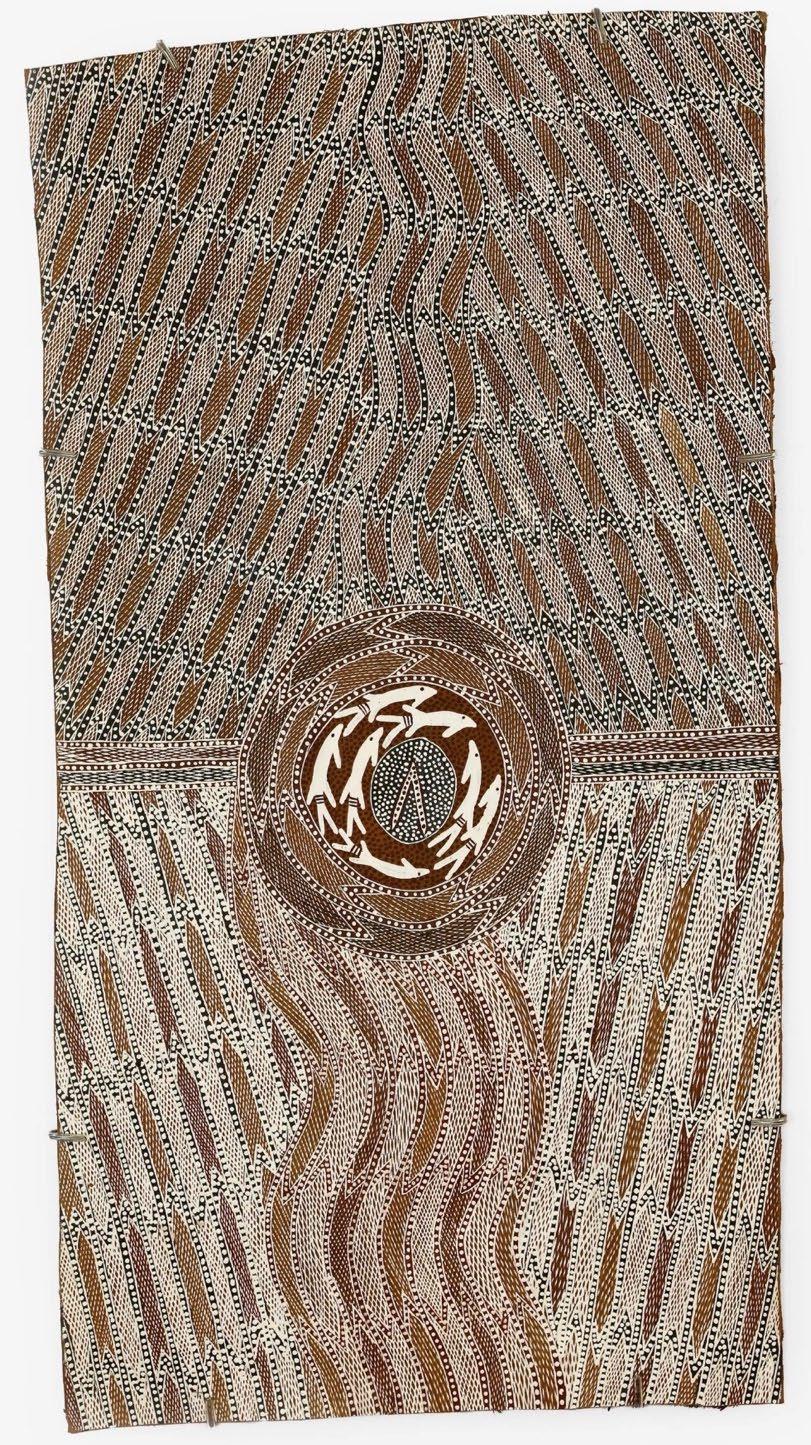
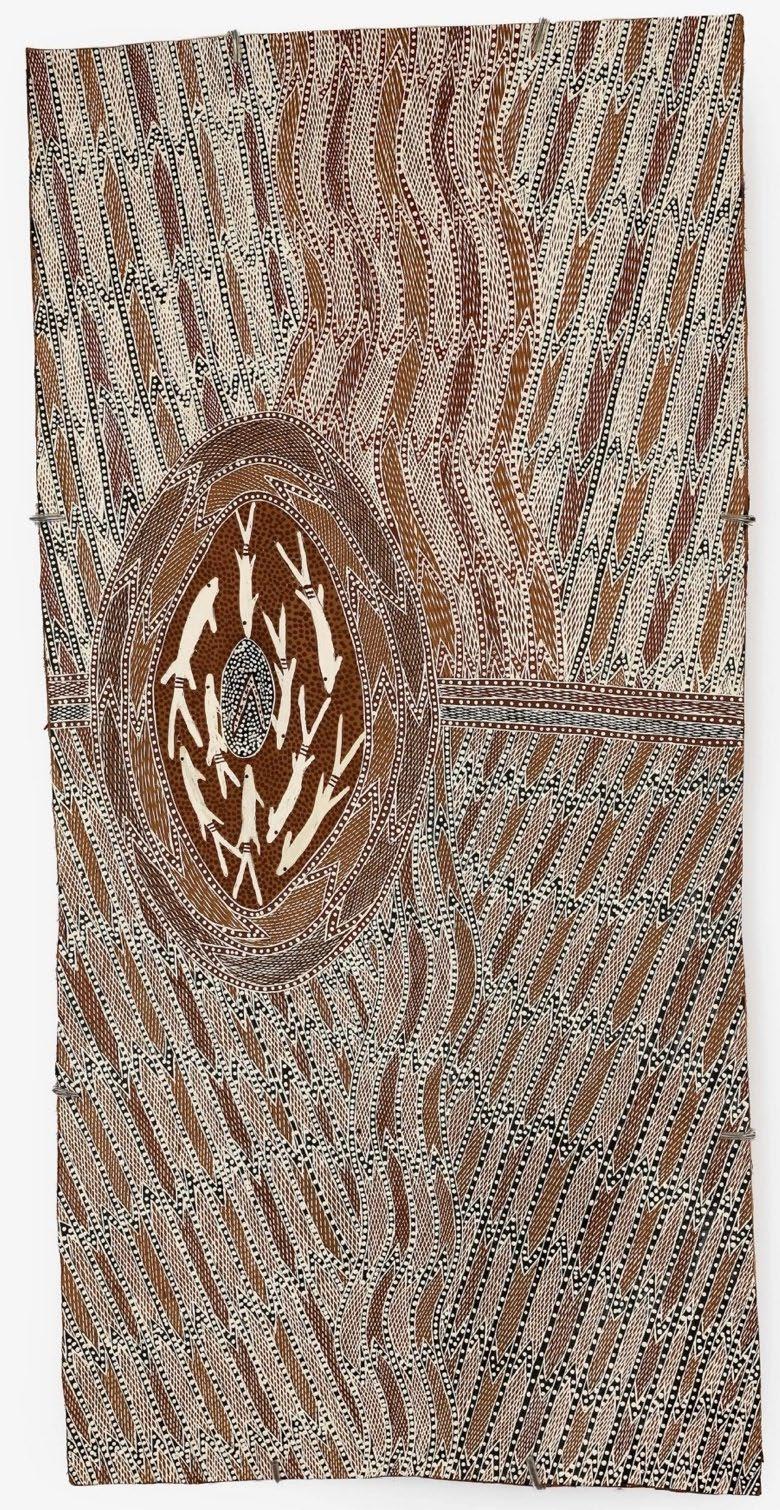
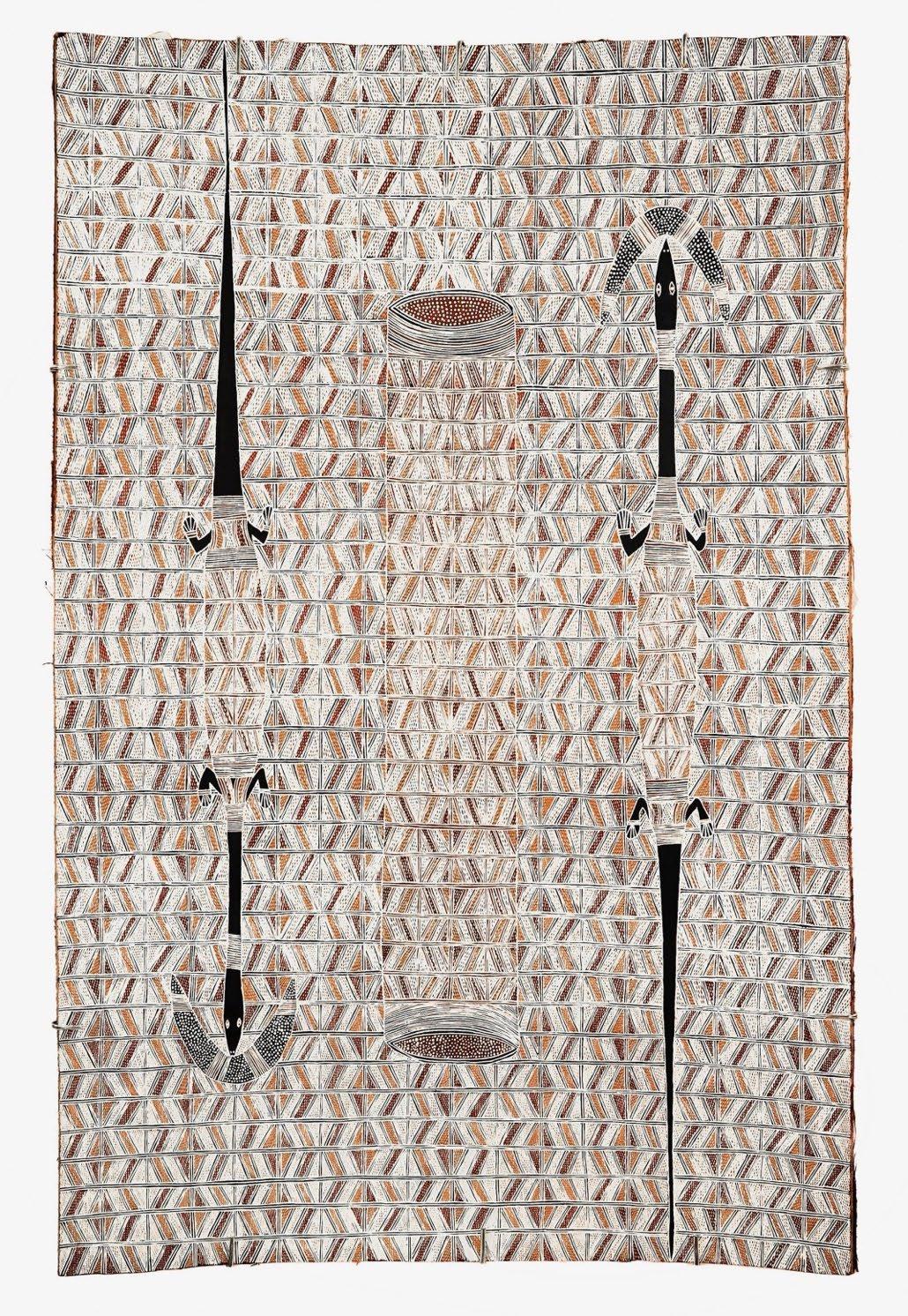
Trial Bay #3999-24
108 x 74.5cm
Earth pigments on Stringybark
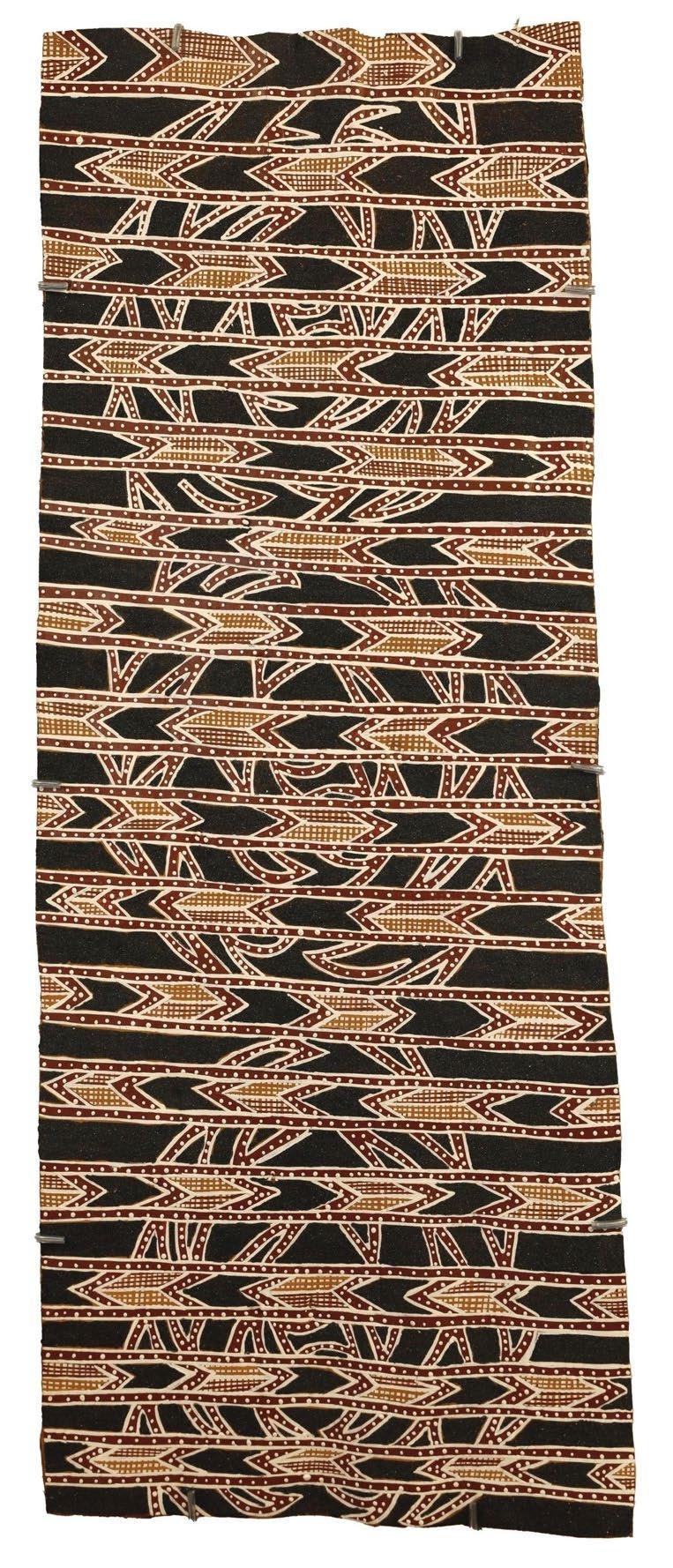
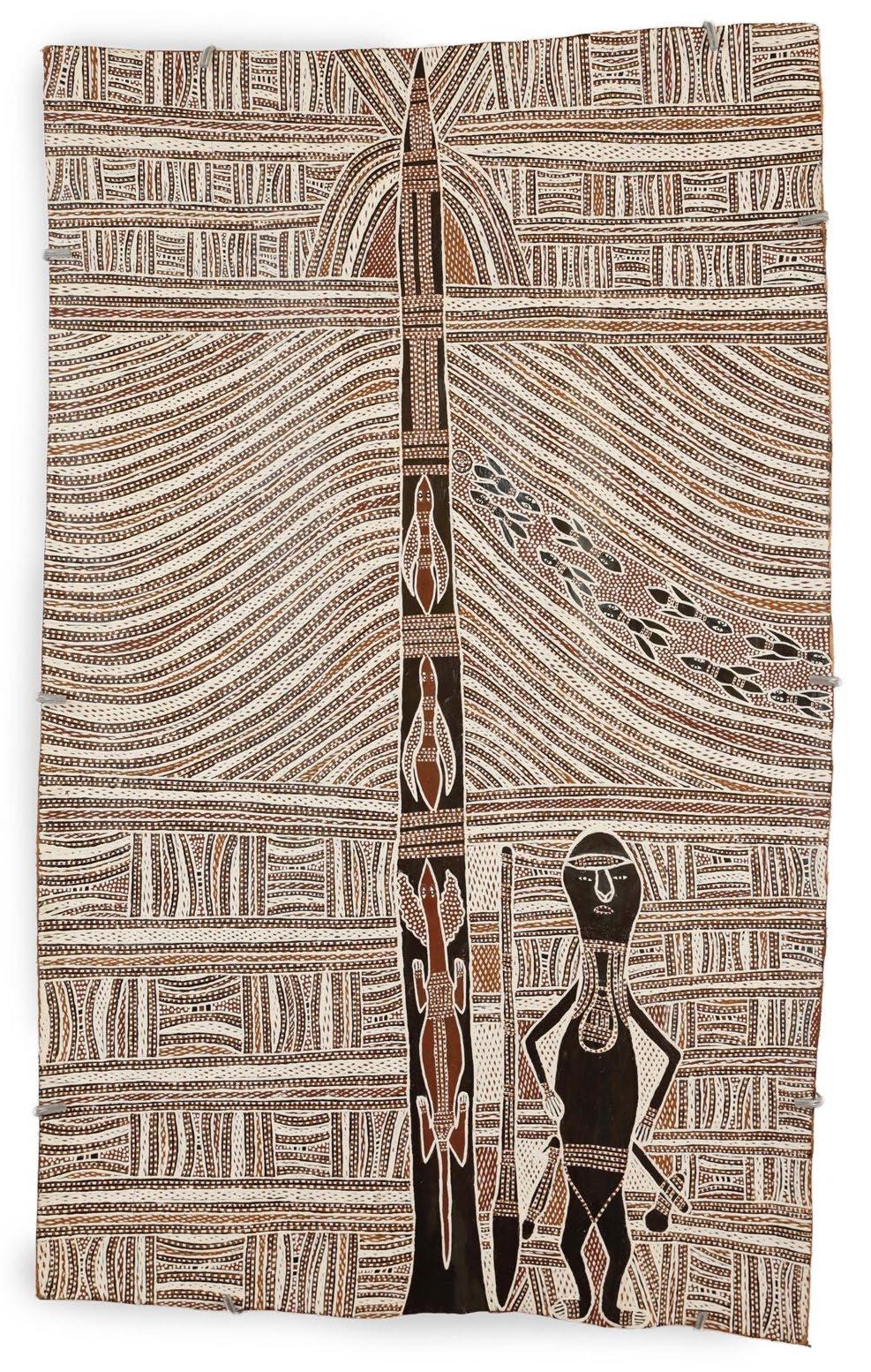
The painting on this work depicts the sacred goanna Djarrka identified as Marrakulu. This is Mertens Water Monitor Varanus Mertensi. The hollow log of Gadayka cut down by the Ancestral Sugarbag Man named Wuyal washed down the Gurka’wuy River and into Trial Bay. The opening stanzas of manikay (sacred song) for some Marrakulu ceremony tell of the Djarrka and the Log washing back to shore at Gurka’wuy (Djarrkawuy) on the incoming tide. The original Djuwany
people having arrived. The miny’tji depicts the mix of both the freshwaters of the Gurka’wuy river and the saltwaters of Trial Bay. The lines of dots adorning the Djerrka, Djarrwit and the Log has reference to the life force behind the Marrakulu in the form of native honey and the flower of the stringy bark, the dots in the miny’tji again the same life force as bubbles created by the activity of Djarrka in the tidal waters of Gurka’wuy.
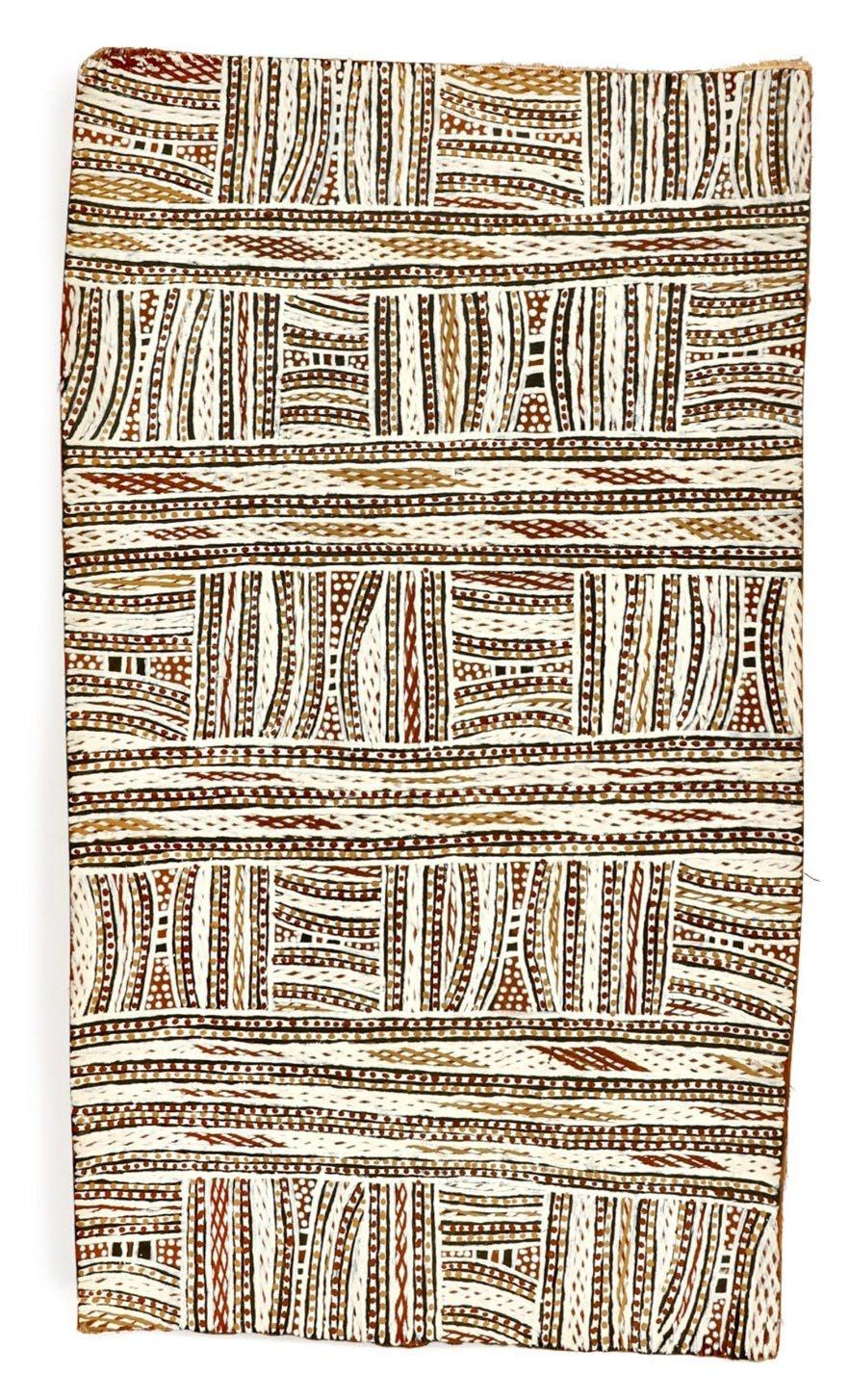
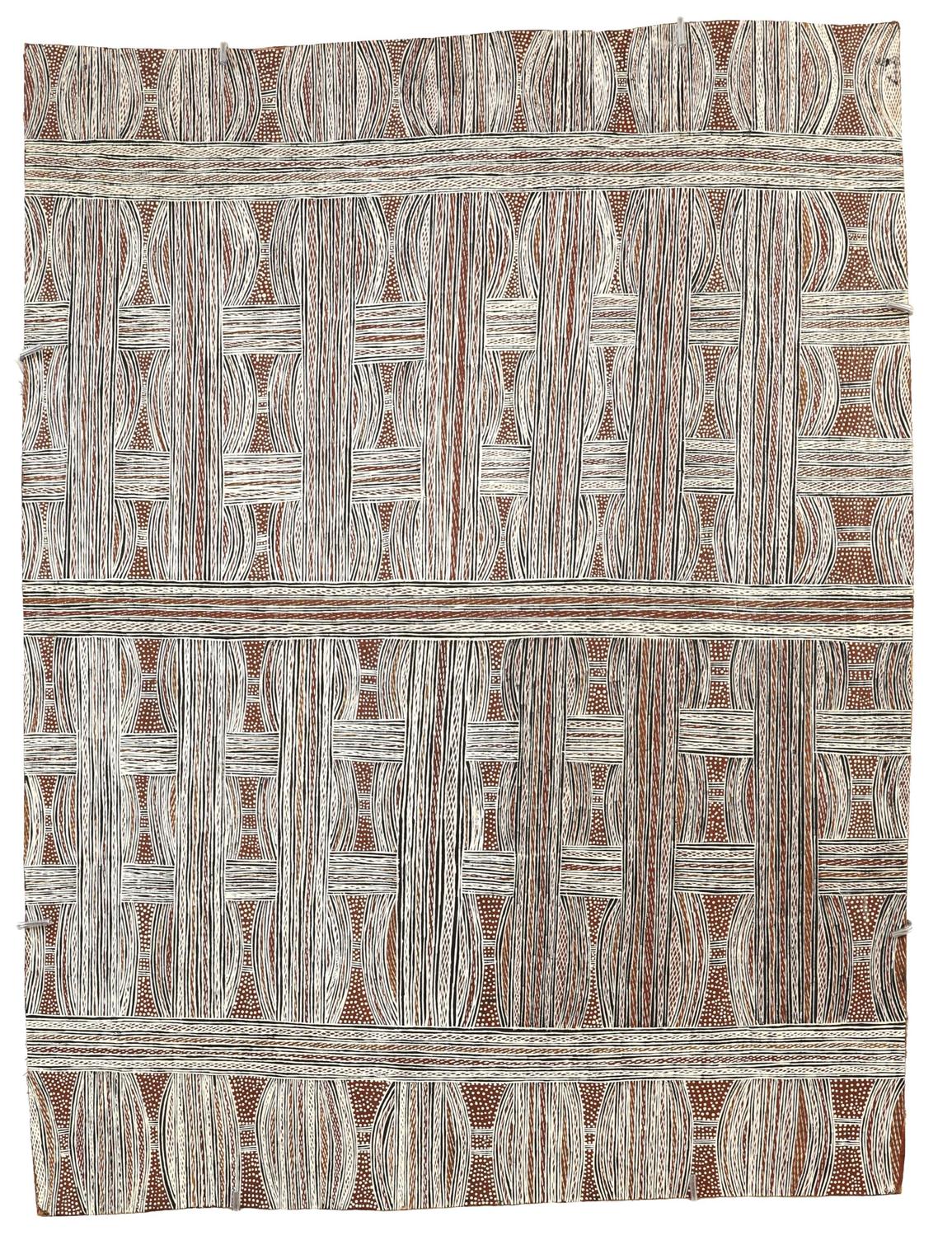
Gurka’wuy
#8379-24
95 x 70cm
Earth pigments on Stringybark
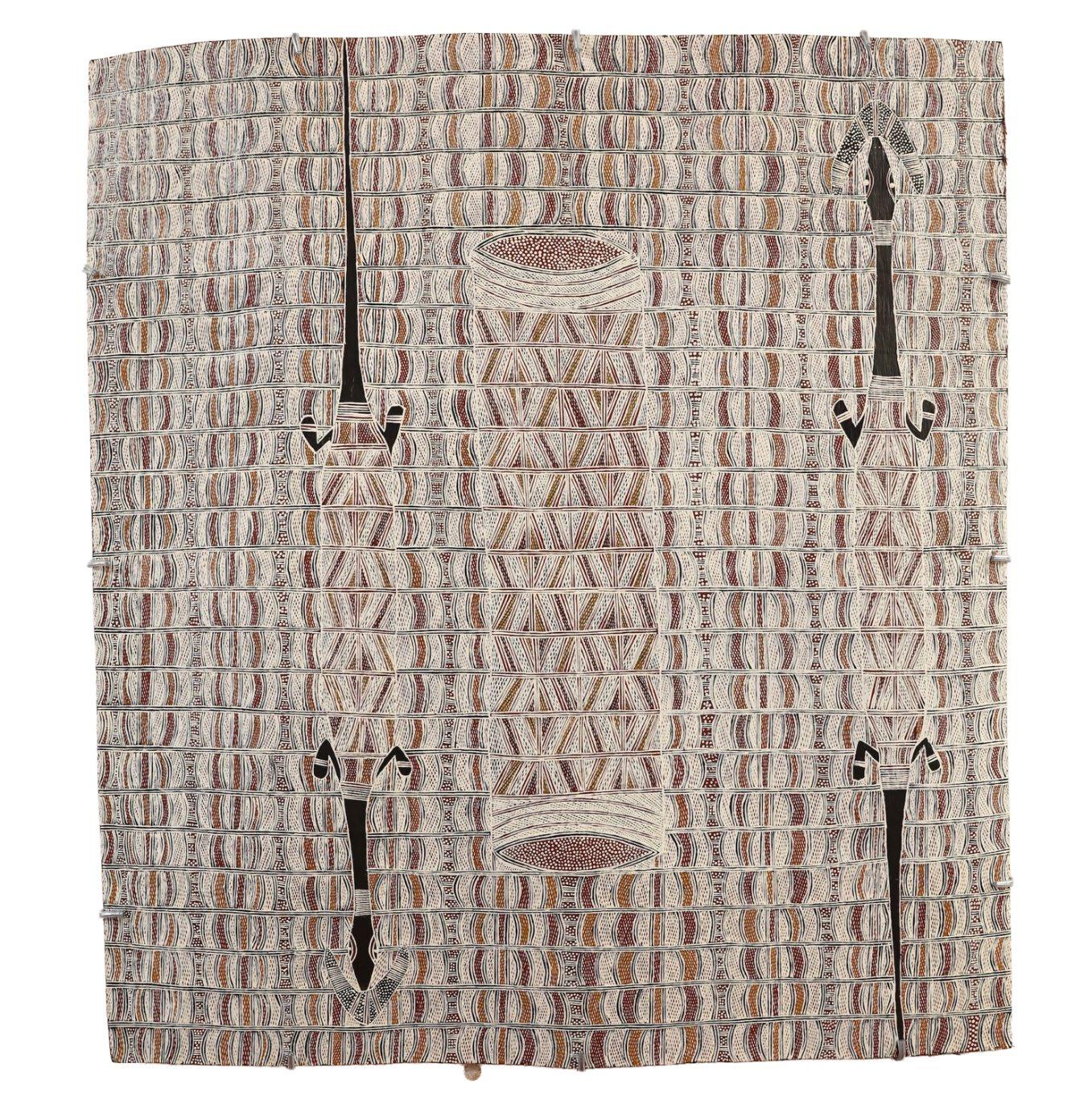
Trial Bay
#8534-24
78 x 70cm
Earth pigments on Stringybark
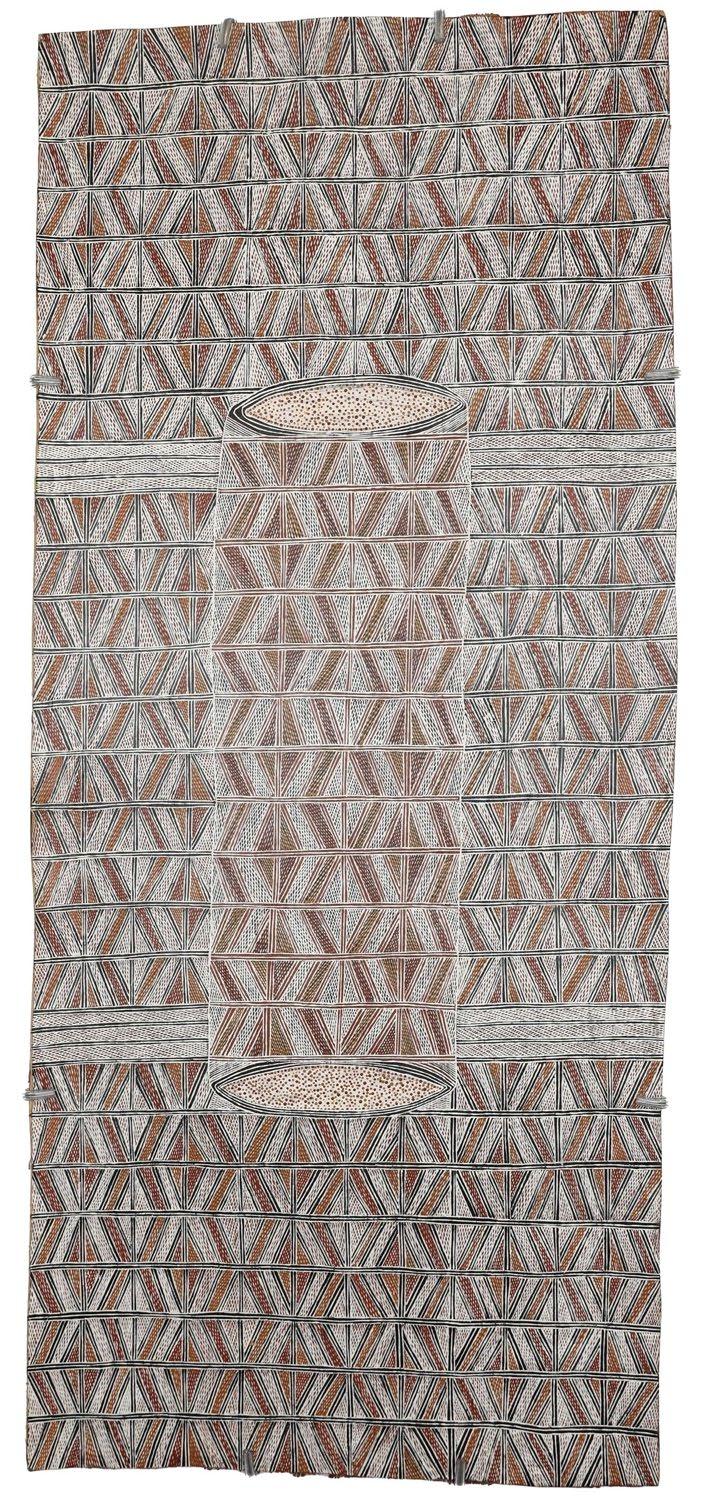
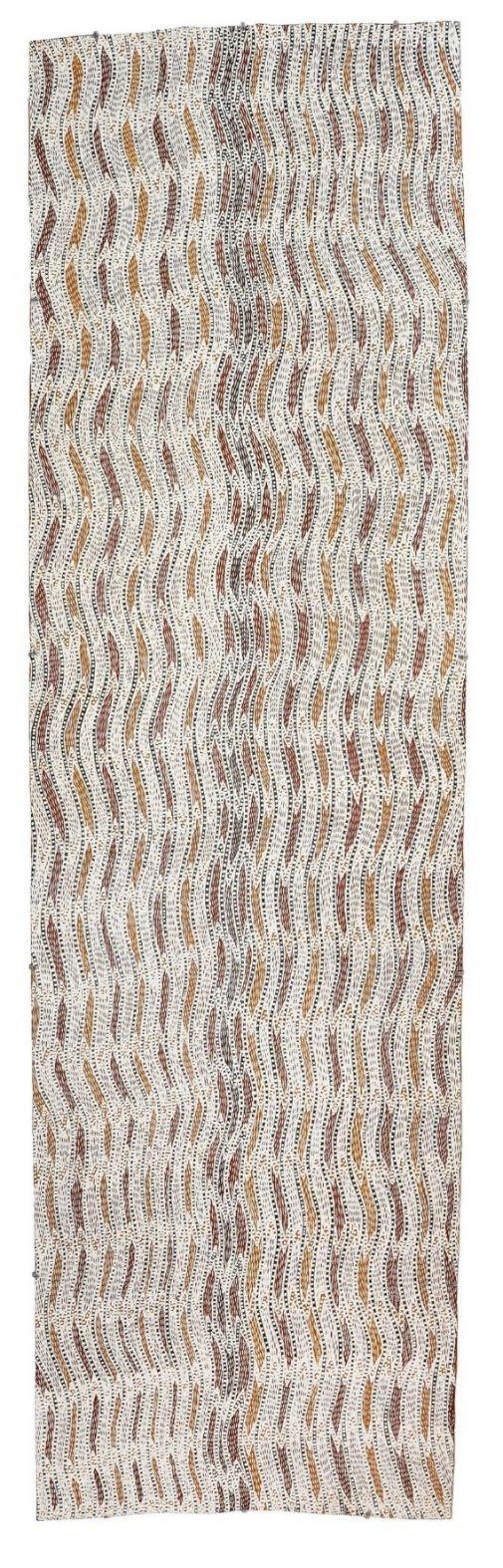
Gurka’wuy
#714-25
82 x 36cm
Earth pigments on Stringybark
The painting on this larrakitj is about Wuyal, the ancestral sugarbag man, an important ancestor of the Marrakulu clan of North East Arnhem Land. The designs refer also to the continuation of the Marrakulu culture in dance, song and ceremony, which are performed by current generations who have inherited this knowledge and culture from ancestral figures such as Wuyal. This story refers also to important Dhuwa moiety ancestors called the Wawilak sisters.
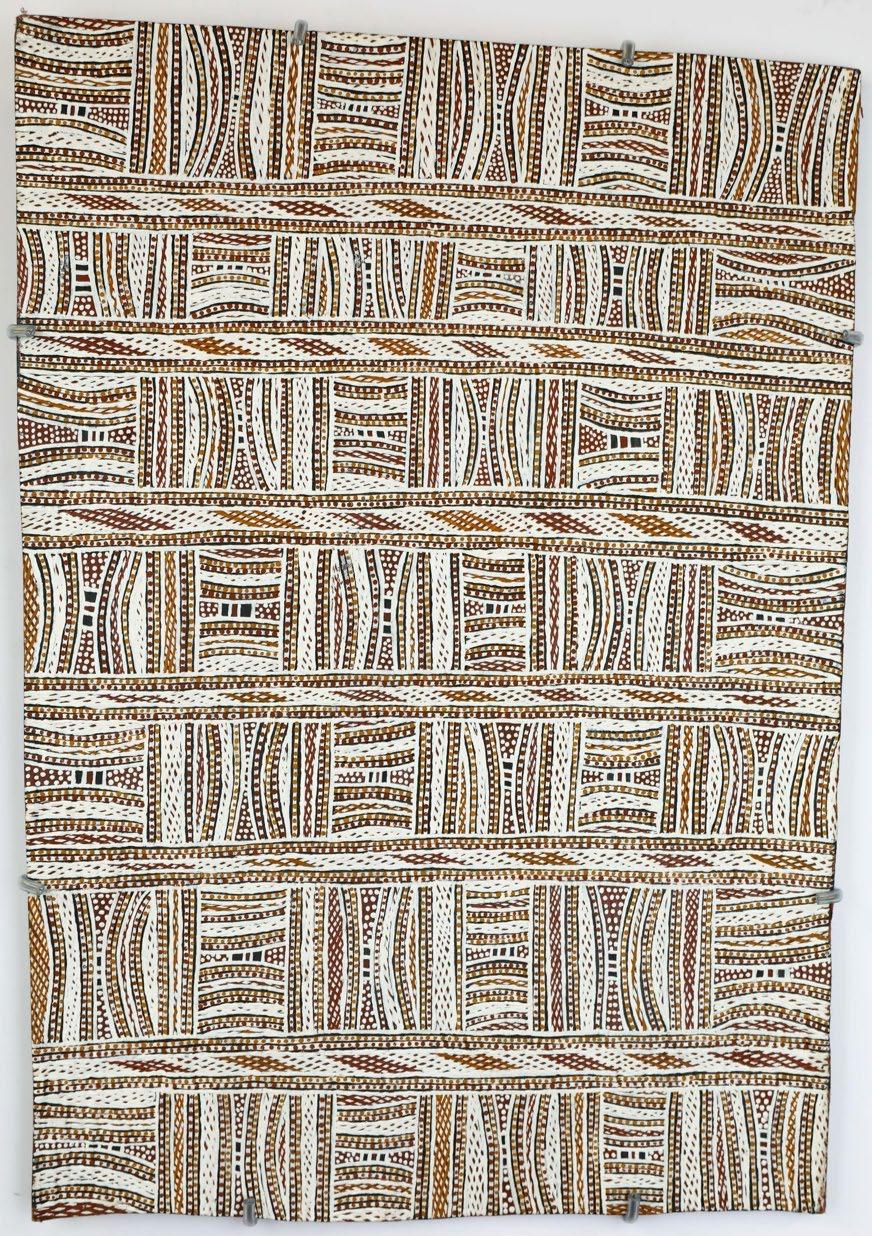
Trial Bay
50
Buku-Larrŋgay – “the feeling on your face as it is struck by the first rays of the sun (i.e. facing East) Mulka – “a sacred but public ceremony.”
Buku-Larrŋgay Mulka Centre is the Indigenous community controlled art centre of Northeast Arnhem Land. Located in Yirrkala, a small Aboriginal community on the northeastern tip of the Top End of the Northern Territory, approximately 700km east of Darwin. Our primarily Yolŋu (Aboriginal) staff of around twenty services Yirrkala and the approximately twenty-five homeland centres in the radius of 200km.
In the 1960’s, Narritjin Maymuru set up his own beachfront gallery from which he sold art that now graces many major museums and private collections. He is counted among the art centre’s main inspirations and founders, and his picture hangs in the museum. His vision of Yolŋu-owned business to sell Yolŋu art that started with a shelter on a beach has now grown into a thriving business that exhibits and sells globally.
In 1976, the Yolŋu artists established ‘Buku-Larrŋgay Arts’ in the old Mission health centre as an act of self-determination coinciding with the withdrawal of the Methodist Overseas Mission and the Land Rights and Homeland movements.
In 1988, a new museum was built with a Bicentenary grant and this houses a collection of works put together in the 1970s illustrating clan law and also the Message Sticks from 1935 and the Yirrkala Church Panels from 1963.
In 1996, a screen print workshop and extra gallery spaces was added to the space to provide a range of different mediums to explore.
In 2007, The Mulka Project was added which houses and displays a collection of tens of thousands of historical images and films as well as creating new digital product.
Still on the same site but in a greatly expanded premises Buku-Larrŋgay Mulka Centre now consists of two divisions; the Yirrkala Art Centre which represents Yolŋu artists exhibiting and selling contemporary art and The Mulka Project which acts as a digital production studio and archiving centre incorporating the museum.
Copyright Ⓒ 2017- Buku-Larrnggay Mulka
Presented by Aboriginal & Pacific Art in association with Buku-Larrnggay Mulka Centre, Yirrkala, NT
30 April – 23 May, 2026
All images © the artists and the community, Buku-Larrŋgay Mulka Centre, Yirrkala, NT.