Our Commitment to Quality
From the Chair
Ability WA has a long history of empowering people to realise their abilities and thrive in their community.
We do this by consistently providing a great customer and employee experience in line with our values, which is guided by our Ability Compass.
The Ability Compass is a Quality and Clinical Governance Framework which outlines the systems, roles and practices Ability WA has in place to deliver great support. It supports us to deliver on our strategic objectives to understand and respond to our customers experiences, needs and aspirations and exceed their expectations.
This Framework goes beyond compliance and allows everyone to understand their role in providing great support for every customer.
Dianne Ritson Ability WA Board Chair
From the CEO
Personal, right, safe and connected support is at the heart of everything we do.
I’m pleased to introduce our Ability Compass. It’s the Ability WA way, where a lot goes into providing a quality experience for our customers. It also allows us to be consistent in the way we enable our employees to deliver quality support for every customer.

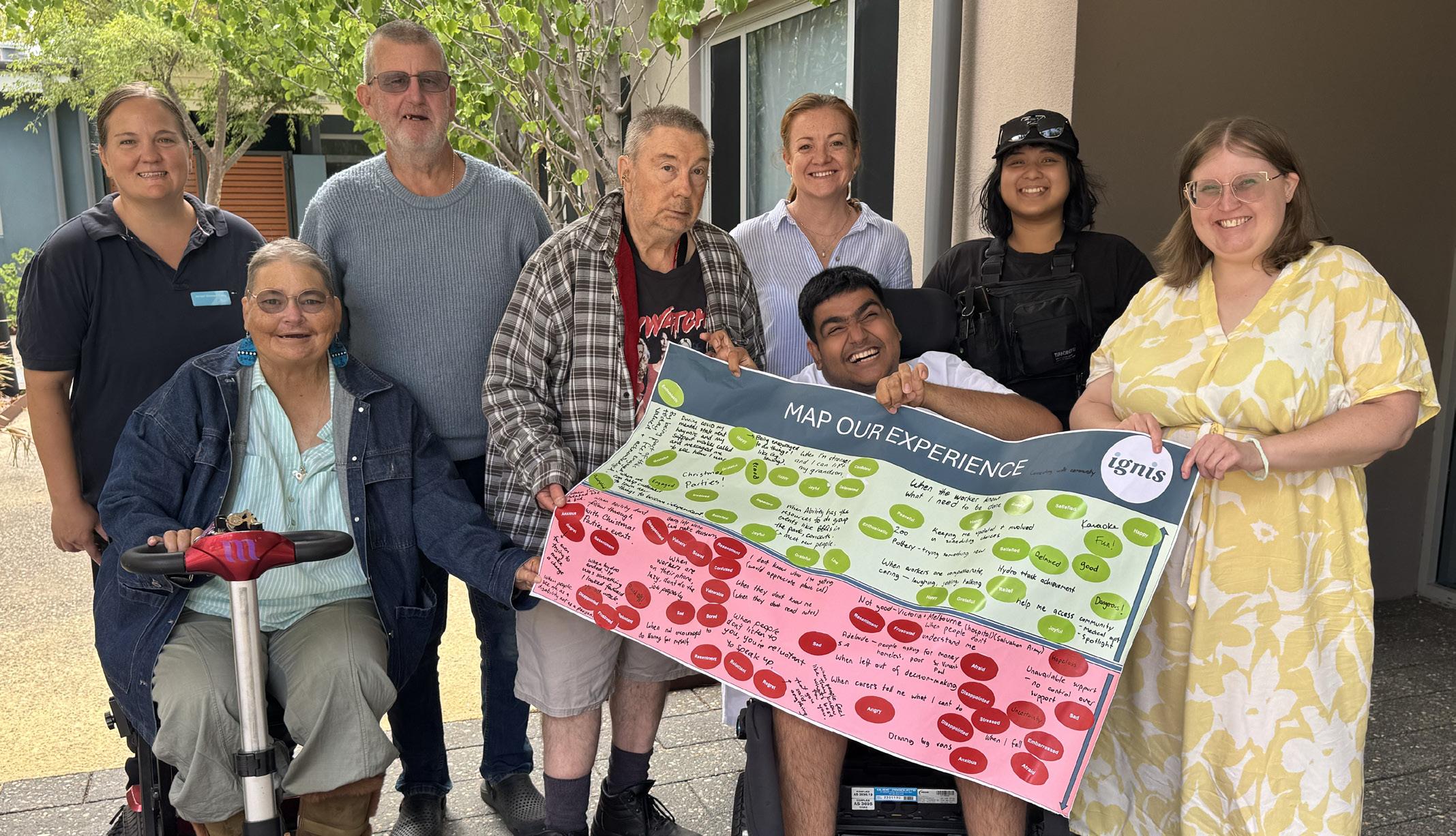
The Ability Compass was co-designed from scratch by over 130 of our customers and employees, coming together to develop a clear and shared understanding of what quality support looks and feels like. By implementing this framework, we are defining the service quality our customers can expect and outlining how our systems and practice culture are intentionally designed to deliver on what our customers tell us is most important to them.
Jacquie Thomson Chief Executive Officer
Acknowledgement of Country
At Ability WA we acknowledge the traditional owners and custodians of this land and recognise their strength and continuing culture. Ability WA empowers people to realise their abilities on Whadjuk Noongar Boodjar (land). We pay our respects to Elders past and present as we move together towards a reconciled future.

Our Model Quality and Clinical Governance
This Framework outlines who we are and how we work at the point of service delivery, with clear guidance on the standard of practice our customers, their families, employees and stakeholders can expect from Ability WA.
Our four domains shown in the outer circle are how we enable our employees to deliver great services which our customers and employees have defined as supports which are personal, right, safe and connected. We call these our quality goals.
Our Ability Compass was created from the ground up, by building a framework based on how our customers and employees define great supports, to ensure our systems and practice culture are built to deliver on what our customers want. When we work to our Ability Compass, alignment with external standards follows.
How organisational elements fit together
The Ability Compass doesn’t replace our values or other organisational elements. It complements them by outlining what we will do to deliver on our customer commitment in practice.
By being part of this, I feel engaged, valued and acknowledged.”

The Ability Compass enables us to achieve our purpose to empower people to realise their abilities and thrive in their community and to deliver on our strategic objective to deliver personal, right, safe and connected services efficiently.

Ability Compass
Great support is defined as personal, right, safe and connected support for every customer.
We call these elements of great support our Quality Goals. What this means for you and your role is outlined below.
Customers
It is important to me that:
Frontline
To deliver high quality support:

Leaders
To lead the delivery of high-quality support:

Corporate Support
To support the delivery of high-quality support:
Board & Executive
To oversee and govern the delivery of high-quality support:
My choices, needs and preferences are respected.
Personal
I can reach my goals and feel good about myself.
I take the time to understand the customer and their choices and adapt support to meet their needs.
I promote individualised support that meets customers’ needs, choices and goals.
I feel safe and can speak up.
I empower customers to achieve their goals by following plans and using evidence-based best practice.
I provide my team with access to education, systems and resources to enable the delivery of evidence-based support.
I develop and enable systems, processes and tools that promote customer choice and control.
I support changes that improve service delivery for our customers.
I oversee and am accountable for the culture, systems and experience of our customers and employees.
We work as a team, and I know what is going on.
I use safe practices and speak up to create an environment free from harm.
I collaborate and communicate with the team, the customer and those who are important to them.
I lead a learning and fair culture by addressing issues and promoting open communication. I enhance safety by continuously improving practices, implementing contemporary tools and strengthening governance.
I support everyone to work holistically as a team by fostering opportunities for interaction, sharing information and proving clear expectations.
I partner with others and support connection with heart.
Personal Support
What matters to you, matters to us.
We provide supports that are flexible to meet the customer’s preferences, needs and choices.
Personal means:
• Customer’s rights are upheld.
• Customers are supported to make their own choices and informed decisions.
• Where possible we adapt our supports to meet the customer’s individual needs, beliefs, culture and preferences.
• Employees foster and encourage customer’s independence to provide the right level of support.
• Employees do not make assumptions about the customer.
• Customers are supported to engage in activities that are meaningful to them.
• Supports are flexible to meet the customer’s needs.

Good looks like Is not happening when
“People know me well, what I need, when I need it and what I don’t like”.
“Doing things I enjoy and that make me feel good, like going to the Metallica concert or seeing my family”.
“Doing things on my own. Being independent is important to me. People help me to do as much for myself as I can (e.g. get the ingredients out for my sandwich and I make the sandwich myself). To me, that’s being free.”
“Asking me what I want, not assuming”.
“Respecting my choice when I want to stay up late or don’t want a shower”.
“When people say ‘What would you like to do? It’s your day.’ That makes me feel really good about myself, like I am in control and get to choose.”
“On my birthday they gave me a little party, they put a nice spread for me. I felt a bit emotional because they cared about me”.
“People do everything for me and don’t let me do things for myself. They take over, they make me feel like I can’t do anything for myself”.
“People use my disability as a reason why I can’t do things - as an excuse to exclude me. Don’t put me in a box”.
“People don’t let me choose for myself”.
“Being left out of decision making”.
Right Support
We provide support the right way
Right means:
• Supports are consistent, well-coordinated and planned.
• Employees are confident and skilled.
• Employees follow plans and support the customer to reach their goals.
• Customers receive the services they’ve agreed to.
• The equipment and environment is fit for purpose and accessible.
• The right support is provided at the right time.
“People do their job properly”.
“I get the support I need, when I need it”.
“Scheduling keeping me updated and involved in scheduling choices”.
“People have the right skills and are trained on how to support me”.
“People read my file and know, and follow, my support plans”.
“When they help me in the way I want them to e.g. when I tell them there’s something wrong with my catheter and they act on it”.
“My behaviour support practitioner helps me with strategies to stay calm and works with my team, so they know what to do”.
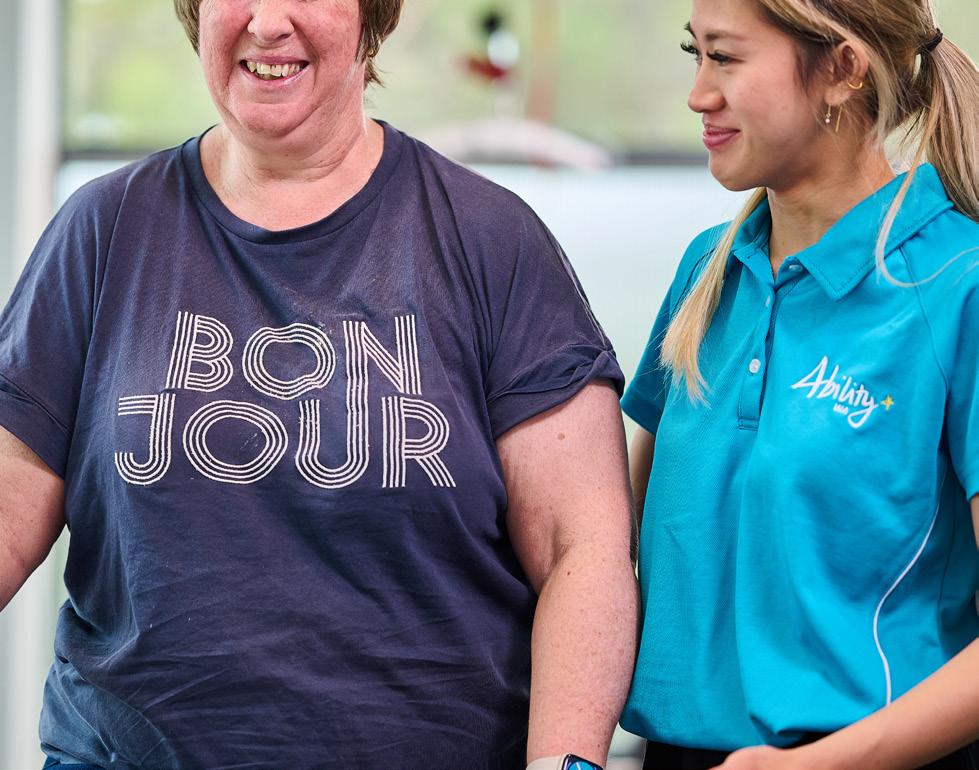
“I can achieve my goals and feel good about myself”
Good looks like Is not happening when
“People don’t do what they’re meant to do, like arriving late, leaving early or leaving work unfinished”.
“There’s a lot of new people in my team and I need to repeatedly train new people”.
“When others aren’t confident - I’m not confident”.
Safe Support
We provide physically, emotionally, culturally and psychologically safe supports
Safe means:
• Customers are safe to speak up.
• Customers are free from isolation, exclusion, harm and abuse.
• We respond in the right way to make customers and people safe when something goes wrong.
• Employees are present and focused.
• Customers are listened to, heard and valued.
• Customers are treated with respect and dignity and their consent honoured.
• The environment, equipment and practices are safe and accessible.
• Employees are accountable for their practice and for speaking up to prevent harm.
Good looks like
“I can speak up when things aren’t right”.
“Asking before touching me or my wheelchair”.
“When people are compassionate, caring, really listen and give me their attention”.
“When people care about my mental health. They ask me respectfully if I’m ok and allow me quiet time when I need it. They’re there for me when I’m feeling low, sad or tired”.
“People taking the time understand my speech and repeating back what I say so I know they understand”.
“When I can say what I want and how I feel and people are ok with that”.
“When I tell someone about a problem or complaint, someone listens and helps”.
“People introducing themselves, their name and who they are”.
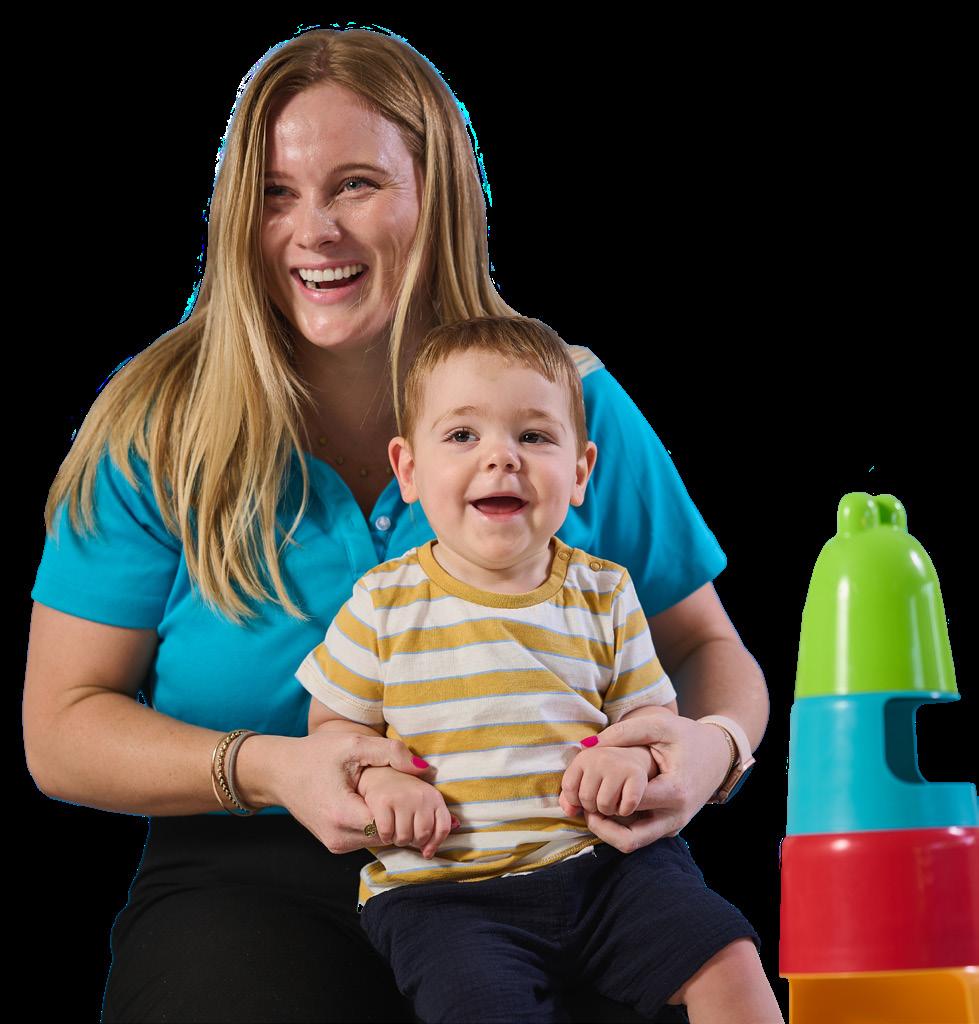

“I feel safe”
Is not happening when
“I don’t feel heard”.
“I’m being told to hurry up or treated like a kid”.
“When people are on their phone or don’t answer the call bell”.
“I don’t know who is coming to support me”.
“People talk about other customers or staff in front of me”.
Connected Support
We work together to provide cohesive support
Connected means:
• Customers and the people who are important to them receive timely, clear communication.
• Communication is tailored to the customer’s needs and preferences.
• Employees take the time to know me, my communication style and understand me.
• Employees work as a team and work together with external partners.
• Customers are supported to be connected to their community, family and friends.
• Customers are supported to access the external services they need.
• Information is shared with consent with the people the customer chooses.
Good looks like
“People know how I communicate and can understand me”.
“If I choose, my family/GP/trustee is kept up to date if there are any worries”.
“Having friends at work [Goodwill] and happy hour”.
“Read information about me, with me”.
“My team and nurses work together with my doctors to keep me healthy”.
“Knowing who is coming and going- that helps me to be calm. I don’t mind change, but I just want to know about changes that impact me”.
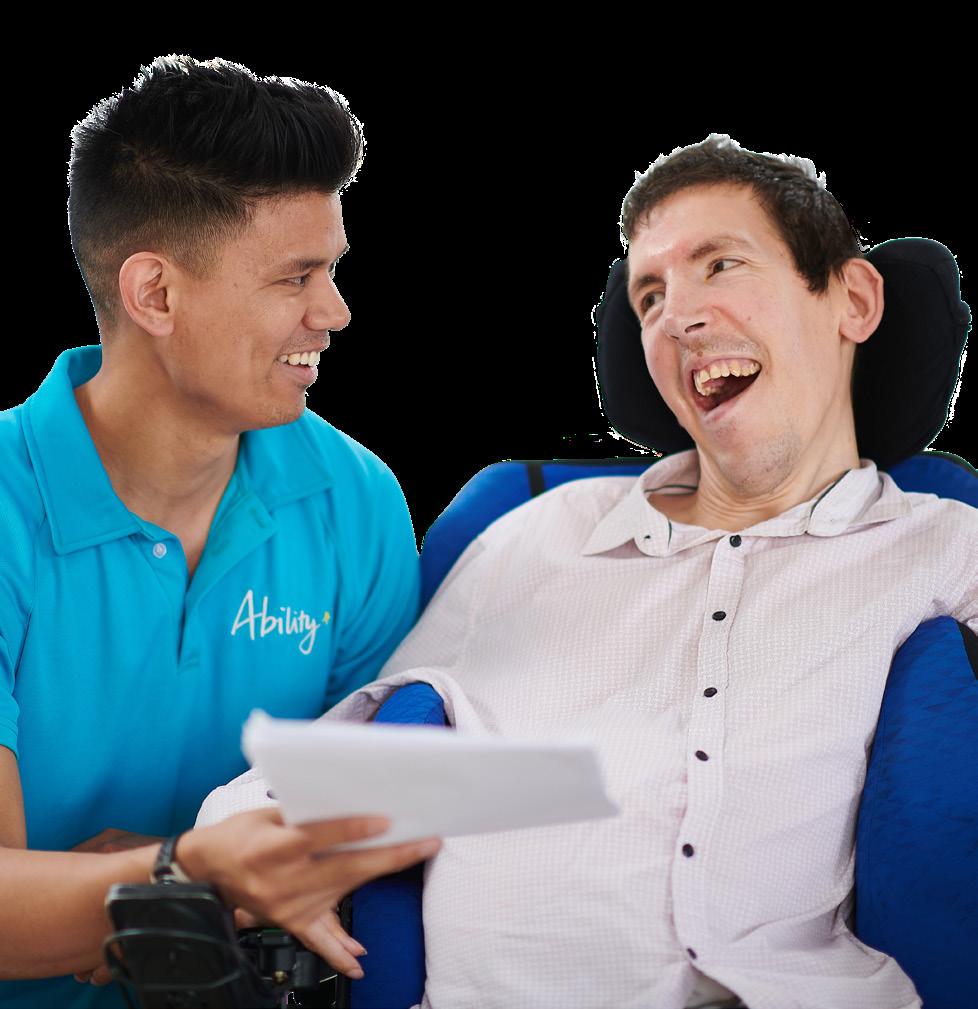
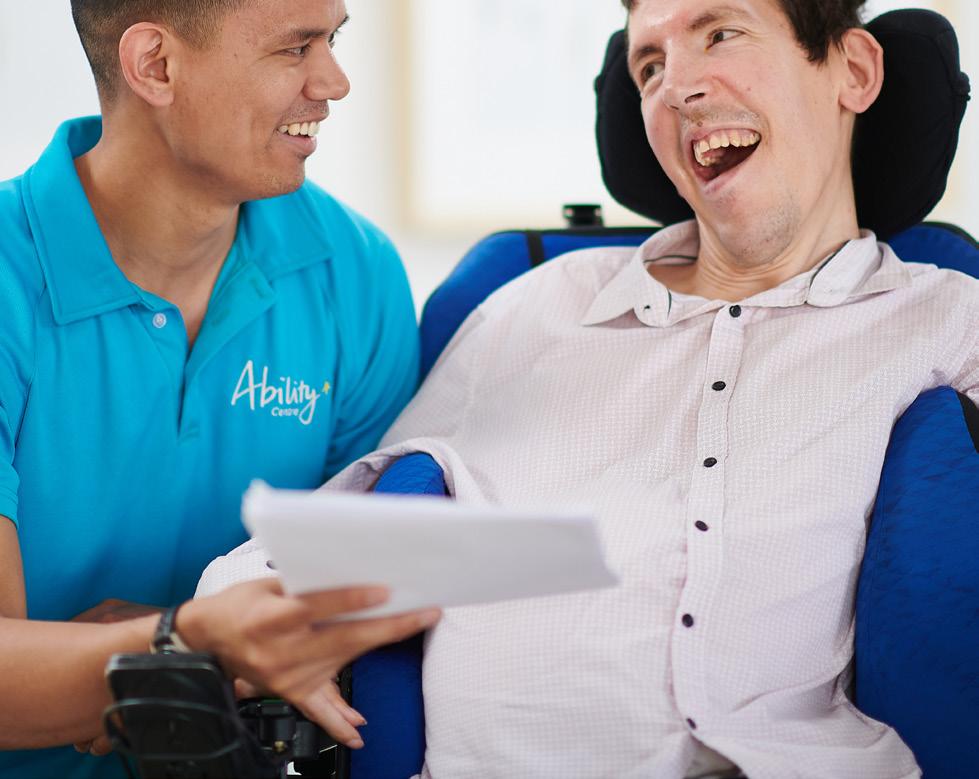
“Everyone in the circle is confident”
Is not happening when
“People use other languages I don’t understand around me”.
“I’m not included in conversations”.
“There aren’t events like Christmas Parties or BBQs for me to meet new people and connect with my community”.
Ability Compass in Home & Living
Great support is defined as personal, right, safe and connected support for every customer.
We call these elements of great support our Quality Goals. What this means for you in your team is outlined below.
Customers
It is important to me that:
Frontline
To deliver high quality support:
Leaders
To lead the delivery of high-quality support:
Corporate
To support the delivery of high-quality support:

Board & Executive
To oversee and govern the delivery of high-quality support:
It’s my choice and I feel validated.
Personal
I can reach my goals and feel good about myself.
I take time to know the customer and support their choices.
I promote customer involvement, choices and decision-making.
I feel safe to speak up and am free from harm
I follow plans and keep training up to date to ensure I can meet the customers goals.
I provide my team with the resources and education to deliver provide excellent support.
I develop and enable systems, processes and tools that promote customer outcomes.
I support changes that improve service delivery for our customers.
I oversee and am accountable for the culture, systems and experience of our customers and employees.
We are working as a team.
I use safe work practices and speak up to ensure customers are free from harm.
I promote a learning and fair culture by communicating clearly, being present and honouring customer preferences and comfort.
I enhance safety by continuously improving practices, implementing contemporary tools and strengthening governance.
I communicate information and foster connection with the customer and their community.
I support everyone to work as a team and share information to create transparency and positive outcomes.
I partner with others and support connection with heart.
Ability Compass in Home & Living
Set The Bar: Practice Examples
To fulfill our purpose of empowering people to realise their abilities and thrive in their community, we demonstrate our values of achieving together, connecting with heart, making things happen and thinking differently in everything we do. To guide our day-to-day practice, our customers and employees have defined the practices expected to achieve high-quality support which is personal, right, safe and connected. This list doesn’t cover everything- anyone unsure should discuss with their line manager.
Personal Right Safe
• See the customer before their disability and respect their unique lived experience which may include the impact of trauma.
• Encouraging independence and choice in daily activities – instead of doing tasks for the customer, seek opportunities to provide the right level of support for the customer to do it themselves (Active Support).
• Displaying kindness, patience, and humour.
• Celebrating milestones that are important to the customer (e.g. birthdays).
• Fostering a home environment that reflects the culture, age and interests of customer/s.
• Considering customer comfort for heating/cooling and water temperature.
• Arriving on-time, prepared and completing designated tasks, duties and routines.
• Reading, understanding and following the customer’s profile book and Support Plans to know the customers choices, needs and preferences.
• Attending and participating in all mandatory training.
• Knowing how to use equipment.
• Ensuring customer communication devices are accessible (e.g. using preferred language/aids, repeating back to check understanding).
• Knowing who to contact if there is a concern.
• Keeping accurate and current records.
• Working within the scope of practice.
• Recognising and upholding the customers human rights
• Seeking consent before touching customers, their wheelchair or entering customers private spaces.
• Consistently check in during transfers, meal assistance, personal care, clinical tasks and transport.
• Helping the customer to speak up if things aren’t right. Look for early warning signs that a customer may feel unsafe.
• Being present- don’t bring personal problems to work.
• Reporting incidents and hazards promptly because doing so keeps everyone safe.
Connected
• Forming connections with customers and try to find genuine things in common with the customer.
• Supporting customers connections with family, friends, partners and their community (e.g. visits, video calls).
• Ensuring customers get to their appointments on time, with all the information and things that they need (e.g. doctors, therapists, nurses, healthcare professionals).
• Handing over information precisely and timely.
• Working together and with the customer and their support network as a team.
• Making people important to the customer feel welcome.
• Not introducing themselves
• Making the home feel regimented, clinical and a workplace instead of a home (i.e. unnecessary signs in living areas).
• Assuming the customer can’t make their own decisions or speak for themselves.
• Not talking to the customer, talking over them, or speaking in a language they don’t know.
• Not giving the customer choice and control, ignoring their preferences or telling them what to do.
• Acting like a parent towards the customer
• Disregarding the customer or families expertise.
• Not reading or following Support Plans.
• Leaving tasks half-completed.
• Not using the customer’s communication aids.
• Repeatedly arriving late or leaving early
• Undertaking personal tasks, errands or conversations at work.
• Using a mobile phone or device for non-work related tasks.
• Following routines which are decided by the employee for their own benefit, not the customer e.g. shower and pyjamas at 3pm.
• Copying and pasting case notes.
• Unnecessarily hurrying the customer or rushing through tasks (e.g. transfers).
• Making the customer feel as if they will ‘get in trouble’ if the customer doesn’t do what they are told.
• Ignoring the customer or making the customer feel invisible.
• Dismissing concerns, such as unsafe noise levels or house dynamics.
• Talking about a customer in front of another customer.
• Leaving a customer unattended in a vehicle or other unsafe environments.
• Not informing the customer or their chosen people of changes that impact them.
• Placing limits on participating in activities the customer values.
• Not providing a “heads-up” for any changes in appointments or visitors.
• Not including the customer in planning about their own supports
• Arguing with each other in front of customers and not working as a team.
Ability Compass in Therapy Services
Great support is defined as personal, right, safe and connected support for every customer.
We call these elements of great support our Quality Goals. What this means for you in your team is outlined below.
Customers
It is important to me that:
Frontline
To deliver high quality support:
Leaders
To lead the delivery of high-quality support:
Corporate Support
To support the delivery of high-quality support:
Board & Executive
To oversee and govern the delivery of high-quality support:
I am well known and my choices, needs and preferences are heard and respected.
Personal
I can achieve my goals.
I take the time to listen and understand and respect the customer and their needs to ensure choice and control.
I feel safe to speak up and am free from harm
I use evidence-based practice to support customer’s goals and adapt to their needs.
I model and promote individualised support across our services.
I develop and enable systems, processes and tools that promote positive customer outcomes.
I oversee and am accountable for the culture, systems and experience of our customers and employees.
We do things together.
I help customers make informed choices through listening and sharing my cilnical recommendations to ensure they feel safe and supported in the decisions they make.
I collaborate with the team, customers, and the people that are important to them.
I provide access to information and resources to enable the consistent delivery of evidencebased support.
I promote physical and psychological safety across all environments by encouraging open communication and addressing concerns as they arise.
I model and support team connection through nurturing trust and providing clear expectations to promote confidence and capability across the team.
I support changes that improve service delivery for our customers.
I enhance safety by continuously improving practices, implementing contemporary tools and strengthening governance.
I partner with others to facilitate and support connection with heart.
Ability Compass in Therapy Services
Set The Bar: Practice Examples
To fulfill our purpose of empowering people to realise their abilities and thrive in their community, we demonstrate our values of achieving together, connecting with heart, making things happen and thinking differently in everything we do. To guide our day-to-day practice, our customers and employees have defined the practices expected to achieve high-quality support which is personal, right, safe and connected. This list doesn’t cover everything- anyone unsure should discuss with their line manager.
Personal Right Safe
• Customers have agency and are supported to make their own choices and decisions recognising dignity of risk.
• Customers are treated as a person with individual needs, wants and preferences.
• Employees foster and encourage customer’s independence.
• Supports are flexible to meet the customer’s needs.
• Employees take meaningful time to get to know customers.
• Employees are aware of their biases and do not make assumptions about customers.
• Taking time to learn about the customer’s background and history.
• Asking what the customer wants.
• Engaging with the customer directly.
• Asking the customer what they are comfortable with.
• Knowing the customer’s goals.
• Supporting the customer to do the things they can do for themselves.
• Supports are consistent, wellcoordinated and planned.
• Employees are confident, professional and skilled.
• Employees follow plans and support the customer to meet their goals.
• Customers receive services they’ve been promised.
• The equipment and environment are fit for purpose.
• Supports are responsive and timely.
• Customers feel safe to speak up.
• Employees are present and actively engaged.
• Customers are listened to, heard and valued.
• Customers are treated with respect and dignity.
• Customers are free from harm, abuse, isolation and exclusion.
• The environment is safe and welcoming.
• Customers are supported to try new things and take risks in a safe way.
• Customers rights are upheld.
• Adapting support when customer needs change.
• Following assessment processes.
• Working within our scope of practice.
• Asking the customer what their goals are and support them to be achieved.
• Asking for consent.
• Welcoming feedback.
• Being interested in the customer and what is important to them.
• Practicing using Child Safety National Principles.
• Being aware of the physical environment and minimising risk of hazards.
Connected
• Customers and the people who are important to them receive timely, clear communication.
• Customers are supported to be connected to their community, family and friends.
• Customers are supported to engage with other services they need.
• Information is shared and handed over well between the team.
• Customers know how to connect to services through our website and other channels.
• Telling the customer what to do.
• Not offering the customer choices.
• Not wanting to know the customer as an individual.
• Not letting the customer try anything new.
• Being overly familiar with customers and not maintaining professional boundaries
• Not following plans.
• Acting uninterested and not engaging with the customer.
• Treating the customer differently after they give feedback or complain.
• Working outside the scope of practice.
• Not respecting human rights and the customers right to make decisions.
• Leaving workspaces untidy.
• Asking the customer who is important to them.
• Taking time to handover important information.
• Letting the customer know if there are changes in the roster.
• Knowing who the key contacts are for the customer.
• Closing the loop on communication and following through.
• Using the customer’s communication aids.
• Being present when we are in the company of customer.s
• Handballing tasks to others .
• Not following through.
• Not reading handover and asking the customer to repeat the same story.
Ability Compass in Employment Services
Great support is defined as personal, right, safe and connected support for every employee.
We call these elements of great support our Quality Goals. What this means for you in your team is outlined below.

Employees/ Customers
It is important to me that:
Supervisors & Coordinators
To deliver high quality support:

Managers
To lead the delivery of high-quality support:
Corporate Support
To support the delivery of high-quality support:

Board & Executive
To oversee and govern the delivery of high-quality support:
I have choice and am understood.
I treat each supported employee as an individual, listen to them and adapt support to meet their needs.
I promote taking time to know the employees’ needs and goals to provide the support they want.
I can reach my goals and do my job well.
I feel safe to speak up and am free from harm.
I empower employees to achieve their goals through supervision and support.
I promote continuous improvement and provide access to systems and tools that work well.
I develop and enable systems, processes and tools that promote employee outcomes.
I am part of a team and know what is going on.
I speak up and provide appropriate supervision of work practices to create a safe environment.
I share information and updates and communicate openly with employees and the people important to them.
I lead a safe practice culture by encouraging open communication and providing guidance.
I support changes that improve service delivery for our employees.
I oversee and am accountable for the culture, systems and experience of our customers and employees.
I work holistically with the team and foster opportunities for interaction.
I enhance safety by continuously improving practices, implementing contemporary tools and strengthening governance.
I partner with others and support connection with heart.
Ability Compass in Employment Services
Set The Bar: For a good experience
To fulfill our purpose of empowering people to realise their abilities and thrive in their community, we demonstrate our values of achieving together, connecting with heart, making things happen and thinking differently in everything we do. To guide our day-to-day practice, our employees have defined the practices expected to achieve high-quality support which is personal, right, safe and connected. This list doesn’t cover everything- anyone unsure should discuss with their line manager. The term employee on this page refers to customers we support to find or maintain their employment.
Personal Right Safe
Connected
What good looks like Negative Experiences
• Employees are included in and able to make their own choices and decisions.
• Supervisors/Coordinators are flexible to meet employee’s individual needs, wants and preferences.
• Supervisors/Coordinators take a strengths-based approach.
• Employees have independence and can try new things.
• Employees are supported to engage in meaningful work and to learn new skills.
• The workplace allows flexibility to meet the employee’s needs.
Positive Experiences
• Employees can choose to have flexibility in their hours.
• Employees have their own workstation set up to suit them.
• The work is well-coordinated and planned.
• Employees are given the tools and skills they need.
• Supervisors/Coordinators create realistic expectations and assign clear roles and responsibilities.
• The workplace equipment and environment are fit for purpose.
• Supports in the workplace are responsive and timely.
• Employees have a manageable workload.
• Employees are paid on time.
• Employees are safe to speak up.
• Employee complaints and feedback are listened to and valued.
• Supervisors/Coordinators treat employees with respect, patience and dignity.
• Employees are free from harm, injury, bullying and abuse.
• The workplace is free of stress and has a positive culture.
• Employees are included as part of the team.
• Employee’s rights are upheld.
• There is clear and open communication.
• The people who are important to employees are included and involved.
• Everyone is clear on their role and works as a team.
• Employees have the opportunity to engage in social activities with their colleagues and build relationships.
• Information and changes are shared between the team.
• Employees don’t have the choice to work next to other employees they don’t like/like.
• Jobs are changed without employees being involved in the decision.
• The workshop is well ventilated.
• Noise levels are manageable.
• Supervisors/Coordinators explain tasks well and set clear expectations.
• Employees can take breaks when they need it.
• Employees have access to training.
• Employees feel safe to put in complaints or feedback.
• The workplace culture is accepting and inclusive.
• Everyone trusts each other.
• Supervisors/Coordinators ensure employees are supported with their needs i.e. toileting and mealtime management.
• Supervisors/Coordinators acknowledge employees when they have done their job well.
• Social activities are organised e.g. happy hour, social club, bowling.
• Employees have opportunities to make friends at work.
• Employees have the chance to work closely with others.
• Employees have time to share stories.
• The workshop is too hot.
• The noise levels are too high.
• There is not time to take unplanned breaks when needed.
• The machines break and are faulty.
• There is arguing and confrontation in the workplace.
• Supervisors/Coordinators don’t listen.
• There is bullying and name calling.
• Employees are blamed for mistakes.
• There is gossip.
• Work parties are cancelled.
• There are no meetings to share information.
Ability Compass in Community Connect
Great support is defined as personal, right, safe and connected support for every customer.
We call these elements of great support our Quality Goals. What this means for you in your team is outlined below.
Customers
It is important to me that:
Frontline
To deliver high quality support:
Leaders
To lead the delivery of high-quality support:
Corporate Support
To support the delivery of high-quality support:
Board & Executive
To oversee and govern the delivery of high-quality support:
I can live my life in the way that I choose.
I can reach my goals and do things for myself.
I take time to understand the customer and support their choices.
I feel safe to speak up and am free from harm.
I follow support plans and keep training up to date to ensure I can meet the customers needs and goals.
I promote taking time to know the customers’ needs and goals to provide the support they want.
I develop and enable systems, processes and tools that promote customer outcomes.
I am present, listen to customers and follow safe work practices.
I promote continuous improvement and provide access to systems and tools that work well. I support changes that improve service delivery for our employees.
I oversee and am accountable for the culture, systems and experience of our customers and employees.
I am part of my community and everyone works as a team.
I work with the customer and the team to achieve positive outcomes.
I lead a learning and fair culture by encouraging open communication and providing guidance. I enhance safety by continuously improving practices, implementing contemporary tools and strengthening governance.
I work holistically with the team and foster opportunities for interaction.
I partner with others and support connection with heart.
Ability Compass in Community Connect
To fulfill our purpose of empowering people to realise their abilities and thrive in their community, we demonstrate our values of achieving together, connecting with heart, making things happen and thinking differently in everything we do. To guide our day-to-day practice, our customers and employees have defined the practices expected to achieve high-quality support which is personal, right, safe and connected. This list doesn’t cover everything- anyone unsure should discuss with their line manager.
Personal Right Safe
• Customers are supported to make their own choices and decisions.
• Customers are treated as their own person with individual needs, wants and preferences.
• Customers are supported to engage in activities they enjoy and are meaningful to them.
• Supports are tailored to meet the customer’s needs.
• Customers are supported to achieve their goals.
• Supports are consistent, wellcoordinated and planned.
• Customers are matched with compatible employees.
• Employees follow plans and do what they are supposed to in line with their roles and responsibilities.
• Customers receive services they’ve been promised.
• Clear processes and systems are in place and kept up to date.
• Supports are responsive and timely.
• Customers are safe to speak up and are listened to.
• Employees are present and available.
• Customers are treated with respect and dignity.
• Customers are free from harm and abuse.
• The environment and practices are safe.
• Employees advocate for the customer’s rights so they are upheld.
Connected
• Customers and the people who are important to them receive timely, clear communication, tailored to the customer’s needs and preferences.
• Employees collaborate and work as a team.
• Customers are supported to be connected to their community, family and friends.
• Customers are supported to access and visit external services, appointments and places.
• Information is shared across teams.
• External referrals are facilitated.
• Taking time to understand the customer.
• Encouraging customers to do the things they like (e.g. sewing) and create opportunities for customers to learn new things (e.g. pottery).
• Knowing the customers’ needs and adapting to meet them.
• Seeing the customer first and not making assumptions based on their disability.
• Celebrating when customers reach their goals and key milestones.
• Reading support plans to understand what needs to be done to support the customer.
• Helping customers to define and reach their goals (e.g. getting physically stronger).
• Informing customers when there are scheduling changes.
• Respectfully asking about customers and their mental wellness.
• Laughing and joke with customers.
• Acting on customer feedback.
• Displaying care and compassion.
• Answering questions from the customer and those important to them.
• Working with other team members to resolve issues.
• Communicating clearly in a way customers can understand.
• Facilitating opportunities to meet and engage with others and build friendships and connection, including events and social activities e.g. concerts.
• Supporting customers to get to appointments, prepared and on time.
• Treating customers like children or telling customers what they can and can’t do.
• Leaving customers out of decisions.
• Not engaging the customer in any fun activities.
• Being lazy or not showing initiative.
• Arriving late or leaving early.
• Not reading the customers plans.
• Undertaking personal errands when out with the customer.
• Being on their phone.
• Not listening when the customer speaks up.
• Leaving customers unattended in a vehicle or other unsafe environment.
• Not considering the customers comfort.
• Not contacting the customer to let them know of scheduling changes.
• Cancelling social events or activities
• Avoiding answering questions instead of following up with others to find solutions.
How our systems deliver great support
Partnering with Customers
Customers human rights are upheld in practice.
Customers are supported to make informed decisions about their own lives, recognising dignity of risk.
Customers are involved in planning how their support is delivered with their Key Worker.
A strengths-based approach is applied to achieving the outcomes the customer is seeking.
Translation Services are available and key documents are provided in easy read and alternate formats.
Customers culture, beliefs and sexuality are respected in accordance with our Customer Commitment.
Children and their families/caregiver/ network receive child safe, family centred supports.
Services respond to the customers changing needs through engagement, advocacy, planning and coordination.
Goals and Support Plans are developed with the customer and regularly reviewed.
Customer representatives input into new initiatives and service design.
Employees have the right skills to perform their role, supported by induction, training, professional development and supervision.
Employees work within clearly defined Position Descriptions, Code of Conduct, Delegations and where relevant Professional Registration and Scope of Practice.
Leaders are supported to build capability by the Leadership Development Program, Leadership Community of Practice, Leadership Behaviours and Succession Planning.
Privacy and confidentiality are maintained and conflicts of interest are managed.
When things go wrong, leaders are supported to respond promptly and appropriately.
Routine Surveys and Exit Interviews identify improvement actions.
Internal and external audit programs, compliance processes, performance indicators and benchmarking enable risk identification and compliance with legal and regulatory obligations.
Risks are identified, monitored and mitigated by an effective Risk Management Framework.
Policy, procedures and worker screening are in place to prevent harm.
A learning, speak up, fair culture is fostered, supported by the Continuous Quality Improvement Continuum.
Customers and employees are actively involved in Emergency and Disaster readiness.
Infection prevention and control measures are in place and equipment is maintained to provide a clean and comfortable environment for all.
Each customer’s unique risks are monitored and considered through the Customer Risk Assessment and Customer at Risk Process.
Restrictive practices are actively targeted for reduction or elimination.
Governance roles and responsibilities are clearly defined.
Independent safeguarding reporting pathways and access to advocacy services is promoted.
Multidisciplinary teams collaborate to support the customer’s needs, goals and preferences through effective planning, communication and handover.
Service Agreements, Consent Forms and Multi-Provider Agreements clarify roles, responsibilities, escalations and information sharing.
Life and service transitions, both planned and unplanned, are supported for success.
Customer feedback is shared and responded to by a simple complaints, compliments and feedback process.
Measures are in place to provide Continuity of Support and Business Continuity for essential services.
Customer Engagement Coordinators conduct regular service reviews with customers .
Health Promotion activities such as vaccination clinics and where relevant medical reviews, Advance Care Planning and hospital discharge planning are undertaken in partnership with the customer and their health professionals.
Ability WA Governance Structure
A skills-based Board of Directors accountable for delivering quality services and products to customers & ensuring appropriate quality & clinical governance arrangements are effective & in place. This includes setting the organisation’s strategy & culture, managing risk, monitoring performance, and appropriately delegating responsibility for quality & safety activities.
Corporate Governance functions relating to financial control and performance, investment activities, audit, compliance matters and risk.
Monitor, evaluate and ensure effective Clinical Governance and Quality Management Systems are implemented and manage clinical risk.
Provide governance and guidance of the engagement and experience of current and future customers.
Ensure robust and effective processes for evaluating Board performance and functional obligations.
Consider opportunities which support Ability WA’s long term interests and strategic objectives.
Monitor and evaluate risk, quality management, assurance, audit & compliance activities.
Prevent, monitor & address clinical risk, practice & processes & to ensure clinical governance systems are effective & appropriate.
Advise, inform & advocate on the planning and delivery of Ability WA products & services.
Develop workforce strategy & undertake workforce planning to control and mitigate workforce risk.
Develop information management strategy & systems to optimise operations and objectives.
Responsible for operational leadership and management including operationalising Ability WA’s Strategic Plan & the Ability WA Compass.
Chaired by Board Members
Chaired by Executive Members with representation from stakeholders across Ability WA
Chaired by the Chief Executive Officer
Measures
Are we delivering great support and do our customers and employees feel it?
Personal
Do customers feel their choices, needs and preferences are respected - and are they?
1. Customer survey response to “My views and choices are respected and I am informed about big changes that affect me.”
2. Customer survey response to “I am involved as much as I want to be in decisions about my services”
3. Timely development and review of person-centred customer profiles/plans
Do customers feel that services are right for them and achieve what they are designed to – and do they?
1. Customer eNPS data
2. Complaints and feedback data
3. Mandatory training compliance
4. Quality audit scores
5. Customer retention rate
Do customers feel safe - and are they?
1. Customer survey response to “I feel safe when accessing Ability WA services”
2. Total Incident and Clinical Incident Reporting Rates
3. Abuse, Neglect, Substandard Care & Safeguarding Concern Incident tracking
4. Incidents reported to external regulators
5. Restrictive Practices elimination and reduction rates
Do customers feel their services are planned and coordinated – and are they?
1. Consents are in place and routinely checked to ensure information is able to be shared with the customer’s chosen people and services
2. Therapy Service Utilisation Rate
Do Employees feel supported to provide great support in their everyday work – and are they?
1. Employee eNPS
2. Employee turnover rate
3. Employee survey response to “Ability WA required me to uphold the highest ethical standards at all times”
4. Employee survey response to “I understand what outcomes and standards are expected of me”
5. Employee survey response to “I know what to do and who to contact if I have a concern about customers or outcomes I am responsible for”
6. Employee survey response to “My leader is interested in my safety at work”
7. Employee survey response to “Ability WA is committed to delivering high quality services”
8. Employee survey response to “Ability WA cares about and is committed to our customers”
9. Employee survey response to “People of all cultures and backgrounds are respected and valued at Ability WA”
Ability Compass Action Plan 2026
Targeted quality improvement strategies, projects and activities to be updated annually.
Topic Action
Ability Compass Introduce the Ability Compass across all Ability WA services.
Develop plans to implement and embed the Ability Compass across all Ability WA services.
Palliative Care
NDIS Practice Standards
Support the development and implementation of a new Palliative Care Model in Home and Living services.
Following the anticipated release of new NDIS Practice Standards, map the new standards to the Ability Compass and address any gaps.
Child Safety Progress work to review and strengthen Ability WA practice against National Principles for Child Safe Organisations.
Shared Care
Further develop strategies to improve role clarity and communication within shared care arrangements.
Just Culture Identify measures to introduce restorative just culture principles into Ability WA culture and processes.
Quality AssurancePractice Quality
Develop and release of a practice quality measure for Home & Living and From Hospital to Home services.
Customer Survey Strategy Develop and deliver a coordinated customer survey strategy.
Cultural Safety Implement and embed the Ability WA Reconciliation Action Plan.
Records Management Procure and implement a contemporary Document Management System to support centralised access and storage of digital records.
Sponsor By When Supporting
CEO 30 June 2026
All Exec 30 June 2026
EGMCS 30 June 2026
Personal Right Safe Connected
CQGO 31 October 2026
EGMTS 31 July 2026
EGMCS 30 September 2026
CQGO & CPO 31 December 2026
CQGO 30 September 2026
CCO 31 December 2026
CPO 30 June 2028
CFO 30 June 2027