
Learning Resources Wellbeing Toolkit Teachers Guide

Page 1


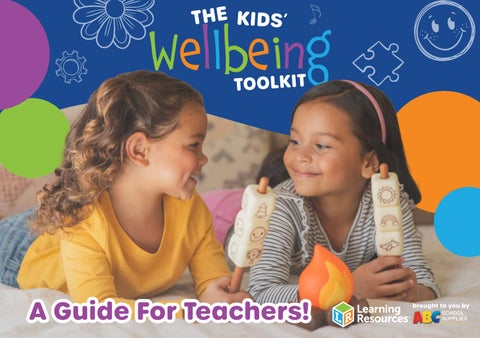
A Guide For Teachers!

Welcome to The Kids’ Wellbeing Toolkit!

This resource is designed to help you support pupils’ emotional health in practical, easyto-use ways. Inside, you’ll find activities, discussion prompts, and strategies that make big feelings easier to understand and manage in the classroom.

From engaging games that build emotional literacy to calming techniques and gratitude practices, each section offers tools you can integrate into lessons, use during transitions, or weave into your daily routines. This guide was developed in collaboration with Hayley Standen, our SEMH (Social, Emotional and Mental Health) Advisor.

Hayley brings years of experience working with children who need additional emotional support, and her expertise ensures every activity is not only engaging but grounded in proven strategies that help children feel safe, understood, and ready to thrive. Her input means these ideas aren’t just fun-they’re effective tools for building confidence and coping skills.

You’ll explore how emotions work, why they matter, and how to help children develop confidence, resilience, and empathy-skills that will benefit them far beyond school.

Whether you need quick ideas to ease stress or creative ways to spark meaningful conversations, this toolkit is packed with approaches to nurture wellbeing and strengthen relationships across your classroom.

For more information on how we help children of all ages learn through hands on play, visit us at: abcschoolsupplies.ie

Understanding SEMH: What It Means for Your Classroom

According to the Department of Education, in 2019-20 the number of children in the UK with an EHCP with SEMH as their primary need was 39,189. In the five years to 2024-25, this had increased by 82% to 71,304. Those on SEN Support with an SEMH need in 2019-20 was 194,111. In 2024-25 this increased 44% to 279,230.

Social, Emotional and Mental Health (SEMH) is one of the four areas of need outlined in the Special Educational Needs and Disabilities (SEND) Code of Practice (2015). When a child has SEMH needs, these can show up in many different ways-from behaviours that challenge or harm, to more withdrawn or reclusive behaviours that may lead to emotionally based school avoidance (EBSA).

Left unsupported, these difficulties can make vulnerable pupils more at risk of harm and significantly impact their life chances.

While these emotional and behavioural needs are often associated with neurodivergence such as Autism or ADHD, they can also arise from other factors, including:

• Speech and language difficulties

• Unresolved trauma

• Attachment challenges

As teachers, understanding the underlying cause of a child’s emotional or behavioural needs is essential. This insight allows us to provide the right support-whether that’s through classroom strategies, targeted interventions, or working closely with families and external professionals.

Understanding ACEs and the Brain: Why It Matters for Teaching

Adverse

Childhood Experiences (ACEs)

To support pupils with emotional and behavioural needs, we must understand where these challenges often begin. For many, Adverse Childhood Experiences (ACEs)-stressful or traumatic events during childhood-play a significant role in shaping behaviour and wellbeing.

What Are ACEs?

ACEs include:

• Abuse: Physical, verbal, sexual, or emotional

• Neglect: Emotional or physical

• Household challenges:

• Adults with substance misuse

• Adults with mental illness

• Domestic violence

• Parental imprisonment

• Loss of a parent through death, separation, or abandonment

Other adversities include poverty, parental unemployment, online harm, displacement, bereavement, natural disasters, and conflict.

Impact on Learning and Behaviour

Experiencing ACEs before age 18 can lead to:

• Anxiety and depression

• Low self-esteem

• Difficulty forming healthy relationships

• Challenges recognising and managing emotions

• Behaviour that disrupts learning or leads to school avoidance

If unrecognised and unsupported, these difficulties can escalate. In Autumn Term 2024–25, 51% of UK school suspensions were due to persistent disruptive behaviour, with 1,411 permanent exclusions (DfE data).

Long-term, ACEs are linked to adult mental health conditions-1 in 3 diagnoses of anxiety, depression, or PTSD relate directly to ACEs (NHS source).

Neuroscience: The Brain Under Stress

When pupils experience stress, their brains can enter a survival state where learning becomes impossible.

Understanding this helps us respond with empathy and effectiveness.

Behaviour = Communication of Need

Instead of asking “What’s wrong with you?”, ask:

• “What happened to you?”

• “What do you need?”

The Three Key Parts of the Brain

• Brain Stem (Reptilian Brain)

Controls survival functions-heartbeat, breathing, hunger, sleep.

• Amygdala [a-mig-da-la]

Processes big emotions like fear, anger, and joy. Acts as an alarm system. When triggered, it hijacks the brain, causing fight, flight, freeze, or fawn responses. For some pupils, the classroom feels threatening-especially if they’ve experienced trauma or struggle academically.

• Prefrontal Cortex

Responsible for reasoning and emotional regulation. It isn’t fully developed until adulthood, so children often cannot reason when overwhelmed. When stress hits, this part of the brain goes offline-Dan Siegel calls this “flipping the lid.”

Responding When the Brain Is in Survival Mode

As teachers and support staff, it’s crucial to recognise which part of the brain is in control during moments of stress. When a child’s survival response is activated, shouting or repeatedly giving instructions will not calm them-in fact, it will likely escalate their stress.

Instead, focus on:

• Remaining calm yourself

• Creating a sense of safety for the child

• Meeting basic needs first (space, water, reassurance)

These steps help the child begin to regulate and, over time, build trust. This trust becomes the foundation for developing a robust system of emotional support that enables learning.

Understanding Attachment and Its Impact on Learning

Attachment is an innate, biological mechanism that ensures survival. From birth, babies seek connection with caregivers to feel safe and secure.

How Attachment Develops

Initially, babies communicate through aversive behaviours-crying, screaming, back-arching-to signal their needs. When caregivers respond consistently, babies begin to form secure attachments. Later, they experiment with attractive behaviours-smiling, cooing, giggling-to elicit positive responses. When these are reciprocated, the attachment strengthens.

A secure attachment helps a child feel:

• The world is safe

• They are worthy of care

• People will come to their aid when needed

If care is inconsistent or attractive behaviours are ignored, the child may develop an insecure attachment style, leading to mistrust and feelings of insecurity.

The Four Main Attachment Styles

1. Secure Attachment

There is a healthy attachment between the child and their care giver and they are raised in a nurturing environment which will support them not just to survive, but to thrive. Children with secure attachment will be able to leave their parents in order to explore the world, safe in the understanding that they can return to them for co-regulation at any point. This is not perfect parenting, moreover it is care-giving that is consistently loving and nurturing.

2. Avoidant Attachment

This can be recognised in children whose aim is not to be noticed as they have learnt that in order to stay safe, they must keep a low-profile. These children will be the ones who are self-sufficient in order not to have to ask for help as they do not trust that adults will meet their needs. This extends to not asking for help which could in turn have a damaging impact upon their academic progress as well as their social and emotional development.

What It Looks Like in Practice

3. Ambivalent Attachment

This is the child in your class with the loudest volume and most extreme behaviours, designed to ensure that they have your attention. They are also the children who know all the details about everything that it going onfrom what colour shoes your TA is wearing to who just walked past the room. This is because they are constantly ready for anything that could be a threat to them or their environment due to an ever-present belief that they are not safe and that the people around them cannot be trusted.

4. Disorganised Attachment

This is the child who is yet to understand how best to cope and so will be unpredictable in their behaviours, not knowing whether to need or want you. This is potentially the most challenging type of attachment style to support as it requires a much deeper understanding of the reasons behind it.

The good news? Supporting pupils’ emotional wellbeing doesn’t always require formal interventions or alternative provision. By embedding trauma and attachment-informed approaches into daily classroom practice, we can provide consistent support throughout the school day.

What Is Trauma

and Attachment-Informed

This approach recognises that challenging behaviours often stem from unmet needs or past experiences-not simply a child choosing to misbehave. Importantly, understanding the reasons behind behaviour does not mean accepting unsafe or harmful actions. Just as we adapt teaching for pupils with cognition and learning needs, we must teach pupils with emotional needs how to develop socially acceptable and safe behaviours.

Understanding a child’s attachment style and whether they have experienced ACEs (Adverse Childhood Experiences) helps us interpret behaviour as communication. This insight allows us to respond with empathy and tailor strategies that build trust and security.

Practice?

Key Principles

• Create a Safe and Predictable Environment

• Greet pupils with an emotionally available adult each day to help them feel seen and valued.

• Provide a quiet, calming space (e.g., a “Regulation Station”) for pupils who find the classroom overwhelming.

• Build Trusting Relationships

• Consistency and connection are vital.

• Practice Unconditional Positive Regard (Carl Rogers, 1956)-meeting pupils with a fresh start each day, even when behaviours challenge.

• Empower Pupils

• Many children with trauma histories have experienced high levels of control. Offer choices where possible to build autonomy and confidence.

Developing Emotional Literacy

What is Emotional Literacy?

Emotional literacy is the ability to understand, express, and manage your own feelings and the feelings of others. For children, developing emotional literacy is a gradual process that aligns with other developmental milestones, but it is absolutely essential for building well-rounded individuals.

Emotional literacy is fundamental to:

• Fostering healthy relationships

• Enhancing personal wellbeing

• Navigating challenges-both personal and academic

• Improving communication and collaboration

By promoting self-awareness, empathy, and resilience, emotional literacy helps pupils:

• Cope with stress

• Make sound decisions

• Build stronger social bonds

• Lay the foundation for lifelong success and wellbeing

Practical Emotional Literacy Activities for the Classroom

Here are some simple, effective ways to nurture emotional literacy in your classroom:

1. Feelings Check-In

Start the day with a quick “How are you feeling?” activity using emotion cards or a feelings chart. This helps pupils name emotions and feel heard.

2. Emotion Sorting Game

Provide scenarios and ask pupils to sort them into “happy,” “sad,” “angry,” or “worried.” Discuss why they chose each category.

3. Role-Play Scenarios

Act out common classroom situations (e.g., sharing, losing a game) and explore how different responses affect feelings.

4. Calm Corner

Create a quiet space with tools like stress balls, fidget tools, breathing cards, and emotion posters where pupils can regulate their feelings.

5. Feelings Journal

Encourage pupils to write or draw about their emotions at the end of the day. This builds self-awareness and reflection.

6. Compliment Circle

Once a week, have pupils share positive comments about each other to foster empathy and kindness.

7. Story Time with Emotions

Choose books that explore feelings and pause to discuss characters’ emotions and choices.

Classroom Activities

Activity 1: Fizzy Volcano – Understanding Anger

The Fizzy Volcano Preschool Science Lab is a fantastic tool for helping children visualise what happens inside their bodies when emotions-especially anger-start to build.

Explain to pupils:

“When we feel angry, our bodies show this through behaviour. This is because we want others to see how we feel and help us. Humans seek connection when they feel unsafe, scared, or worried.”

You’ll need:

• White vinegar

• Bicarbonate of soda

• Red food colouring

Instructions:

1. Place two teaspoons of bicarbonate of soda into a bottle.

2. Add a couple of drops of red food colouring.

3. Carefully pour in the vinegar and watch the fizz!

Extend the Learning:

• Link the activity to a text or story about emotions.

• Explore anger as a secondary emotion by discussing what triggers it-e.g., frustration, fear, or feeling misunderstood.

As the mixture bubbles, explain:

• Early feelings: “This is what happens inside your body when you start to feel annoyed or anxious-like a bubbly tummy.”

• Ask pupils to describe what happens in their body when they feel angry. Model this by sharing your own experience.

• Escalation: As the solution rises, explain that if early feelings aren’t managed, they grow bigger and try to escape.

• Overflow: When the volcano erupts, compare this to what happens when feelings become overwhelming. Use non-judgemental language:

“I notice when you feel this way, your face gets red and you shout.”

Fizzy Volcano Preschool Science Lab Item # LER2895

Activity 2: Cooking for Calm and Connection

Simple cooking activities are an excellent way to support pupils with emotional and social needs. Weekly cookery sessions can provide a safe, structured environment that promotes wellbeing and essential life skills.

Why Cooking Works

Cooking offers multiple benefits for pupils with SEMH needs:

• Builds self-esteem and confidence

Trusting pupils with tools or heat shows belief in their ability.

• Provides predictability and control

Following a recipe step-by-step creates a calming, structured experience.

• Encourages mindfulness

Rhythmic stirring, peeling, and chopping help pupils focus on the present moment.

• Engages the senses

Smells, textures, and tastes provide rich sensory input.

• Promotes teamwork and cooperation

Preparing different parts of a dish and bringing them together fosters collaboration and achievement.

And while some may question the academic value of cooking, it develops maths (measuring, timing), science (changes in state), literacy (reading instructions), and life skills-making it a holistic learning experience.

Scan the QR code to discover fun recipes and activity ideas created in collaboration with the amazing online Snack Queen @SquashedPickle!

Activity 3: Naming Feelings – Building Emotional Literacy

Developing emotional literacy starts with helping children recognise and name emotions. This can be done in small groups, 1:1 sessions, or whole-class settings.

Why it Works

Naming feelings helps children:

• Understand their emotions

• Express themselves safely

• Build empathy and social awareness

• Lay the foundation for emotional regulation

Ideas for Implementation

1. Safe Expression

For young children or those who have experienced trauma, hands-on resources provide a non-threatening way to talk about feelings.

• Use puppets to support discussions.

• Encourage children to reach for a puppet, an emotion prompt or Rainbow Emotion Fidget Popper when they want to share how something made them feel.

• During conflict resolution, puppets can illustrate how each child felt at the time.

Rainbow Emotions

Fidget Poppers

Item # LER5573

2. Small Group Activities

• Use oral storytelling, acting, or drawing to explore emotions-boosting both emotional literacy and imagination, which supports writing skills.

• Use the Campfire Chatmallows Storytelling Set to prompt discussions and creative stories. Children pick three “Chatmallows” with story starter icons, place them on a stick, and use the prompts to create imaginative stories-building vocabulary, creativity, reasoning, and social skills.

3. Whole-Class Discussion

• Use the Big Feelings Pineapple for a daily check-in.

• Each day, one child creates a face on the pineapple.

• Spend a few minutes discussing:

• How the pineapple is feeling

• What facial features show this

• Why it might feel that way

• How we can respond

Big Feelings

Pineapple

Item # LER6373

Campfire

Chatmallows™ –Storytelling Set

Item # 1450

Activity 4: Tuff Tray Activities – Exploring Emotions Through Play

Tuff tray activities are an excellent way to help younger children-or those with more complex SEMH needs-begin recognising and naming emotions in a fun, hands-on way.

Why It Works

• Encourages active engagement through play

• Builds emotional vocabulary in a non-threatening environment

• Supports fine motor skills and sensory exploration

• Creates opportunities for peer interaction and discussion

Ideas for Implementation

Use My Feelings Bean Bags with additional homemade emotions labels:

• Present the full set or divide into smaller sets for multiple sessions.

• Children can work independently or with adult support to piece together facial expressions and emotion words.

Add Express Your Feelings Sensory Bottles

:

• Encourage children to copy facial expressions linked to different emotions.

• Discuss what each expression might mean and when they might feel that way.

Express Your Feelings

Activity 5: Yoga in the Classroom – Movement for Mindfulness

Yoga is a fantastic way to help children connect their body and mind, reduce stress, and improve focus. Short, simple yoga sessions can easily fit into the school day and benefit pupils of all ages.

Enhance Classroom Yoga with Yoga Ball Buddy

Bring yoga to life with Yoga Ball Buddies with BubblePlush characters Ziggy the Puppy and Tully the Penguin. Ziggy and Tully introduce children to yoga through fun, active play: Why It Works

• Promotes relaxation and reduces anxiety

• Improves concentration and self-regulation

• Encourages physical activity in a calm, structured way

• Builds resilience and emotional awareness through mindful movement

Ideas for Implementation

• Start Small: Begin with 2–3 simple poses like Mountain, Tree, and Child’s Pose.

• Use Breathing with Movement: Pair each pose with slow, deep breaths to reinforce calmness.

• Make It Fun: Give poses playful names for younger children (e.g., “Stretch Like a Star” or “Curl Up Like a Hedgehog”).

• Create a Routine: Use yoga as a transition activity after lunch or before a challenging lesson to reset focus.

• Add Mindfulness: End with a short moment of stillness or gratitude to help pupils feel grounded.

• Comes with 12 colourful cards, each showing a yoga pose and mindfulness prompt.

• Children bend, stretch, and balance using their yoga friend-building strength, coordination, and emotional awareness.

• The soft, tactile cover is removable and machine washable, making it practical for classrooms.

• Perfect for easing stress, improving focus, and stimulating the vestibular system in a playful,

Ball Buddy Item # 97697/96997

The Kids’ Wellbeing Toolkit is designed to make supporting emotional health and wellbeing straightforward, practical, and impactful in your classroom. By integrating these activities and strategies into daily routines, you’ll help pupils develop confidence, resilience, and empathy-skills that underpin both academic success and lifelong wellbeing.

Small, consistent actions can create meaningful change. Whether it’s a calming technique, a moment of gratitude, or a game that encourages emotional understanding, each step contributes to a positive, supportive learning environment where every child can thrive.

Learn more about us: www.abcschoolsupplies.ie

Follow us on social media to see how our toys support your child’s learning

Emotionsand Feelings

OBJECTIVE:Havechildrenbecomeawareof theiremotionsandlearnhowto managetheirfeelings.

ACTIVITY:

PlayEmotionsBingo.Callouteachemotionandhavechildrenidentifyand markthemoffontheirgameboards. Whencallingoutdifferentemotions,promptchildrentodiscusseachone.Use thisgametoopenupaconversationabouthowtohandledifferentemotionsat homeandatschool.Thefollowingquestionscanhelpfacilitateconversation: “Whatemotionisthat?” “Canyoushowmewhatyoulooklike whenyou’refeeling(theemotion)?”

Cutouttheimagecardsbelowandusethemtodiscussemotionsandfeelings. Usethemirrorsandtrytore-createtheemotionsshownonthecard.

“Howcanyoutellifafriendisfeeling(the emotion)?”“Canyourememberatimewhenyou were(theemotion)?Whywereyou(the emotion)?”

Fornegativeemotions,likesad,angry,confusedandothers: “Whatdidyoudowhenyouwere(the emotion)?Whatmadeyoufeelbetter?” “Whichspotontheboardlookslikehow youarefeelingrightnow?Why?”

READALOUDSUGGESTIONS: DAILYMINDFULMINUTE

OneBreath:Findacomfortableplaceandsit peacefullyforoneminute.Allowfor throughyournoseandoutthrough yourmouthandfocusonthedeep breathsyouaretakingtoclearyour mindandrelax.Payattentiontothe lungsandrelease.

HowAreYouFeelingToday? Fillintheblanksandcircletheemojicubethatmatchesthatfeeling.

Free resources and activity sheets!

Drawyourfacialexpressionof whatyou’refeelingtoday! Sharewithafriend!

Turn static files into dynamic content formats.
Create a flipbook
Learning Resources Wellbeing Toolkit Teachers Guide by ABC School Supplies - Issuu