SAMPLE
My Pets JI + SI Classes

Themes/Discussion Points: Family, Pets
My Pets JI + SI Classes
Themes/Discussion Points: Family, Pets
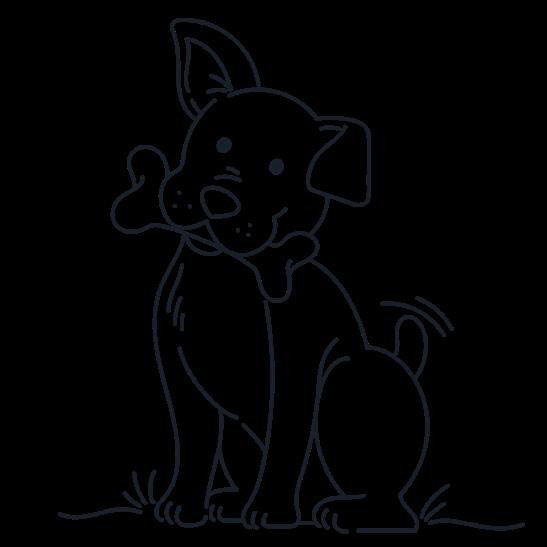
I love my puppy and he loves me. He chases my kitten up a tree. She hisses at him to go away, but puppy only wants to play! When she teases her toy mouse, puppy barks around the house! Then, at night, when it’s time for bed, they snuggle together, head to head.
Geraldine Galligan
Strands Element
“MY
Learning Outcomes
Concepts/Skills
k
k
Communicating Understanding Communicating
1. Engagement, listening and attention
4. Sentence structure and grammar Understanding
4. Phonological and phonemic awareness
1. Engagement
Exploring and using
6. Purpose, genre and voice
Show interest in, demonstrate joint attention and actively listen and attend for enjoyment and for a particular purpose.
Use coherent sentences of increasing complexity with correct tense, word order and sentence structure, while using connectives and producing compound and complex sentences to elaborate appropriately.
Play with, recognise and manipulate sounds such as syllables, rhyme, onset-rime and phonemes in spoken words.
Attend to, take part in and have fun mark-making, drawing and writing, across languages where appropriate, to communicate with others.
Develop an individual voice to share their thoughts, knowledge and experiences.
INTRODUCTION
Class discussion: Does anyone have a pet? What type of pet do you have? Who chose it? Is your pet easy or difficult to look after? What is your favourite and/or least favourite thing about your pet? What kinds of animals make good pets? What kinds of animals would not make good pets? Why? Do you think it’s important to have a pet? Why ?
Children could be asked to bring in or send in photographs of their pet to form part of this discussion.
BODY OF
Read the poem aloud for the class twice. During the second reading, ask the students to listen for one thing the puppy and the kitten do in the poem. Discuss other things puppies and kittens might do. Use the following questions for further discussion: Do you think that the puppy and the kitten are friends? Why or why not? How are the puppy and the kitten different? Why do you think the mouse is a toy and not a real mouse?
Poetry Puppet Show: Students could use classroom puppets, toys or laminated pictures attached to lollipop sticks to recreate the poem ‘My Pets’. You may model initially for scaffolding, asking several children to act as the different characters in the poem. Students then move into groups to recreate the poem using puppets (or other props). Encourage the students to move beyond the words in the poem: What else might the puppy do? What about the kitten? Could the poem include another pet? If so, what might they be doing? You may scaffold the students in creating simple oral rhymes as part of the learning experience, if appropriate for the student group.
Students draw a picture of the poem ‘My Pets’ or of the version of the poem they have created through the Poetry Puppet Show. You can act as a scribe, annotating the drawings (see photocopiable page X).
Students perform their puppet theatre version of the poem for other students. The puppet theatre performance may be a visual representation of the poem above or may involve other pets or rhymes that the children have created during the lesson.
What You Will Need:
A4 Card
Primary Paint Colours
(blue, yellow, red)
Paintbrushes
Water pots
Artist Focus:
George Rodrigue
Art Concept:
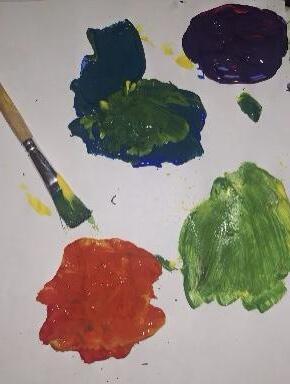
Colour Skill Development: Painting, mixing colours



Strands
CREATING
PERFORMING & PRESENTING
RESPONDING & CONNECTING
ART – UPDATED CURRICULUM
Learning Outcomes
JI & SI
JI & SI
Create 2D and 3D art using various tools, materials and techniques with use of space and a variety of lines, shapes, colours, forms and textures. AL, C, CL
Show and explain choice of space, line, shape, colour, form, and texture to represent ideas, figures, and objects. AL, C, CL
Engage with a variety of stimuli, materials, artworks, events and performances from Ireland and the wider world. AC, AL, CL Share and talk about arts connected to their lives and traditions from home, school and local communities (e.g. songs, activities and events). AC, AL, CL
ARTIST FOCUS: George Rodrigue
INTRODUCTION
ART CONCEPT: Colour SKILL DEVELOPMENT: Painting, mixing colours
YOU WILL NEED: A4 Card, primary paint colours (blue, yellow, red), paintbrushes, water pots.
Learning about the primary colours – red, yellow and blue – and colour mixing. Read the storybook Mouse Paint by Ellen Stoll Walsh aloud. Discuss the story and the colours that the mice created. How did they make the colours? What colours did they start with? Have you ever mixed colours? What happened?
Demonstrate the appropriate mixing of colour using a paintbrush; show how to hold the paintbrush and how to move the paintbrush on the card.
BODY OF LESSON
Students experiment with mixing colours. This could be set up in stations, where students create a different colour at each station (e.g. mixing red and yellow at the first table, blue and red at the second and blue and yellow at the third). Alternatively, students could be given exploratory time to mix colours in their own spaces.
Students examine a picture of George Rodrigue’s famous ‘Blue Dog’ artwork. Discuss the following as a class: Have you ever seen a blue dog? Why do you think the artist painted his dog blue in this picture? What else is blue? What does the colour blue make us think of?
Students can explore other ‘blue’ pictures from other book sources and/or printed images in the classroom environment.
END OF LESSON
Each student paints a picture entitled ‘My Pet’. They can take inspiration from ‘Blue Dog’ and only use blue in their painting, or they can draw on their knowledge of colour mixing to create and use secondary colours in their piece.
All About Me
JI/SI + 1st/2nd Classes
Themes/Discussion Points: All about me, What makes me special
I’ve two eyes, two ears and a nose. Two arms, two legs and ten toes.
I’ve a mouthful of teeth and good lips and a back that sits into my hips.
I’ve a fine head of hair on my head and a tummy that likes getting fed. My fingers belong to my hands, and everyone says I look grand. I’m happy as I can be, for there’s no one else like me!
Geraldine Galligan
“ALL ABOUT ME” – POETRY (JI/SI + 1ST/2ND CLASSES)
ENGLISH – PRIMARY LANGUAGE CURRICULUM
Strands Element
Exploring and using
Learning Outcomes
10. Playful and creative use of language
Understanding
4. Phonological and phonemic awareness
Communicating
1. Engagement
2. Motivation and choice
Concepts/Skills
JI/SI & 1st/2nd Classes
Listen and respond to the aesthetic and creative aspects of language and use language playfully and creatively, and across other languages as appropriate.
JI/SI & 1st/2nd Classes
Play with, recognise and manipulate sounds such as syllables, rhyme, onset-rime and phonemes in spoken words.
JI/SI Classes
Attend to, take part in and have fun mark-making, drawing and writing, across languages where appropriate, to communicate with others.
1st/2nd Classes
Choose appropriate tools, content and topics for their own writing and select texts for sharing with others.
Begin the exploration of this poem by reading it aloud.
Encourage a discussion about similarities in our physical appearances, such as eye or hair colour. Children may move around the room, forming groups with other children who have the same eye colour, hair colour, etc. Then expand the discussion to address individuality: while each of us may share some physical traits with others, we are all unique. Explore the meaning of the word ‘unique’ with the students. A read-aloud link with a storybook here – for example, I’m Special, I’m Me by Ann Meek – can both foster a discussion about what makes us unique and introduce topic-specific vocabulary.
1st/ 2nd class:
For older students, the discussion may address the poem’s structure as well as its theme.
Focus Activity: Supplying Rhyme (JI/SI Classes)
After some discussion and/or using a storybook stimulus to investigate how each of us are special or unique, read the poem aloud again, this time modelling and encouraging students to point to each part of the body as it is mentioned. Repeat this two or three times. As you reread the poem, you may ‘forget’ which body part comes next, prompting the students to recall the missing word. The focus here is on the child’s capacity to supply the relevant rhyming pattern.
Display the poem on the board with blank spaces in place of some of the body parts. You may have picture cards of these body parts for the students to pick from: when you come to a blank space as you read out the poem, the students can work collaboratively to decide which picture card should go in the blank space.
Focus activity: Rhyming Style (1st/ 2nd classes)
This poem is written in rhyming couplets, where every two lines rhyme. It could be explored as part of an introduction to rhyming words in poetry, or it could be used as part of a development activity, building on students’ prior knowledge. Initially, you may want to explore with the students how the rhyming words appear at the end of the line in each couplet. Alternatively, you might like to facilitate the students in analysing the poem independently, allowing them the space to identify this pattern themselves through exploratory work.
Display a copy of the poem on the board. The class can jot down on mini-whiteboards any pairs of rhyming words they can find in the poem. Alternatively, you can give copies of the poem to groups or pairs of students and ask them to use their colours to identify pairs of rhyming words.
Rhyming Words Activity 1: Each student in the class is given a word card. Students move around the room finding their ‘partner’, a student who has a matching rhyming word, thus creating rhyming pairs. Each pair of children shares their matching rhyming words with the class (see photocopiable page X).
Rhyming Words Activity 2: The children work collaboratively in pairs to come up with as many rhyming words as they can for the words ‘kind’, ‘lamp’ and a third word of their or your choosing (see photocopiable page X).
Rhyming Words Activity 3: The students independently identify rhyming couplets, then create their own (see photocopiable page X).
END OF LESSON
JI/ SI Classes
Each student can draw a picture of themselves and colour it in. You can act as scribe during student conferencing, helping them to label the picture with the body parts from the poem as well as the student’s unique attributes (e.g. hair or eye colour). See photocopiable page X.
Students are given the opportunity to put what they have learned about rhyming couplets in poetry into practice. This can be scaffolded, if needed, with you providing sentence starters for each line. Or, students can be encouraged to write independently. The theme of the students’ poems can be ‘All About Me’.
Poetry4kids.com has an online rhyming dictionary which provides examples of rhyming words: students may access it on tablets or laptops when writing their own rhyming poems.
What You Will Need:
Coloured dot stickers
Printed images of Andy Warhol’s
artwork
Coloured cubes/cut out flowers
Sponges
Poster paint
White A3 card/paper
Artist Focus:
Andy Warhol
Art Concept:
Colour and Tone
Skill Development:
Colour mixing

Strands
CREATING
PERFORMING & PRESENTING
ART
Learning Outcomes
JI & SI
1st & 2nd
JI & SI
1st & 2nd
JI & SI
RESPONDING & CONNECTING
1st & 2nd
Create 2D and 3D art using various tools, materials and techniques with use of space and a variety of lines, shapes, colours, forms and textures. AL, C, CL
Design and create 2D and 3D art using various tools, materials and techniques with use of space and increased variety of lines, shapes, colours, forms and textures. AL, C, CL
Show and explain choice of space, line, shape, colour, form and texture to represent ideas, figures and objects. AL, C, CL
Show and explain choice and use of space, line, shape, colour, form and texture to represent ideas, figures and objects. AL, C, CL
Engage with a variety of stimuli, materials, artworks, events and performances from Ireland and the wider world. AC, AL, CL Experience and notice space, line, shape, colour, form and texture in artworks and in the world around them. AL, C, CL
Engage with and describe a variety of stimuli, materials, artworks, events and performances from Ireland and the wider world. AC, AL, CL Experience, observe and describe space, line, shape, colour, form and texture in artworks and in the world around them. AL, C, CL
ARTIST FOCUS: Andy Warhol
You will need:
ART CONCEPT: Colour and Tone
SKILL DEVELOPMENT: Colour mixing
Coloured dot stickers, printed images of Andy Warhol’s artwork, coloured cubes/cut out flowers, sponges, poster paint, white A3 card/paper.
Pre-exploration activities:
Depending on the students’ age and prior knowledge of colour(s), this lesson can be integrated as a par t of a scheme of work on a particular colour. Or, for first and second classes, it can complement an exploration of the colour wheel, tones of colours and colour temperature (i.e. warm and cool colours).
INTRODUCTION
This discussion integrates with maths and may form part of an integrated approach to exploring the artist’s work.
Recall prior colour knowledge (to the appropriate level) as a class. This can be done through singing, reciting a poem, using colour cards, etc.
Display some images of artwork by Andy Warhol on each table group. Each child gets some small circular stickers (coloured dot stickers) in a range of bright colours. They place their stickers on the Warhol artwork wherever they see that colour (for instance, students would place a red sticker beside the colour red in the artwork). Discuss as a class the colours they found.
JI/SI Classes
Students are shown an image of ‘Flowers’ (1964) by Andy Warhol. Class discussion may include: What colours can you see? Can you spot anything in the classroom that is the same colour?
This time, the students use cut-out coloured flowers or cubes to identify the colours in the images: in the images: for instance, identifying two examples of pink and two of orange.
Students can practise creating their own two-colour patterns using manipulatives or by colouring.
Focus students’ attention on additional Warhol images. They can share their responses to the artwork, noting similarities and differences in responses in a constructive manner and building on peer responses (accountable talk). You may draw the students’ attention to aspects of the artworks – the bright, bold colours, connections to comic-style art or commercial illustrations – or highlight the use of repetition/multiplication in the artworks, which is a notable style of the artist and art movement. You may also include information here about when and where the Pop Art movement began and about some other famous Pop artists.
It is important that the focus in the introduction to the lesson is on the colours used and the repeated patterns found in Pop art. Spend some time researching information about Pop art and Andy Warhol.
Music link: A song like ‘San Francisco’ by Scott McKenzie can provide additional stimulus for discussion or can be explored through song singing.
Scaffold a discussion, linking to the poem ‘All About Me’, about the things that are special and unique about each student. A storybook like My Hands by Aliki can be a lovely supporting stimulus, further integrating literacy and the arts.
Students will paint one of their hands in a chosen colour using a sponge or paintbrush. Encourage them to take inspiration from the artwork of Andy Warhol. Students will place their hands on opposite or diagonal corners of an A3 page (folding the page into halves or quarters in advance is advisable) to create a handprint. In the two remaining segments, students will paint their hands again, this time using a different colour to create the handprint. Students can then pick a third colour and print another handprint on top of the first two (see Picture 1). Encourage discussion around the colours chosen, the pattern created and how the student was inspired by the artwork of Andy Warhol.
Students could fold their A3 page into eighths and could extend their knowledge base by using complementary colours when completing this activity.
Students can stick their artwork onto black card and include it in an ‘All About Me’ class display. A copy of the poem could be placed beside the artwork.
Digital: A digital collage of all the artworks could be created and displayed during integrated discussions about us and our class in SPHE, encouraging conversations about similarities and differences and/or what makes us unique.
Pesky Elf JI/SI + 1st/2nd Classes
Themes/Discussion Points: Christmas, Magic
A pesky little elf sits quietly on my shelf. He waits for night to come so he can have some fun. He moves around the chairs and throws things down the stairs. He hides some of our toys but never makes a noise. He swings from every light and gives us all a fright. He splashes in the sink but disappears in a blink! Then, when the morning comes, this elf is back up on my shelf!
Geraldine Galligan
“PESKY
ENGLISH – PRIMARY LANGUAGE CURRICULUM
Strands Element
Exploring and using
1. Engagement, listening and attention 2. Motivation and choice 1. Engagement
Exploring and using
4. Phonological and phonemic awareness
Concepts/Skills
JI/SI + 1st/2nd Classes
Show interest in, demonstrate joint attention and actively listen and attend for enjoyment and for a particular purpose, and in other languages where appropriate.
JI/SI + 1st/2nd Classes
Choose, listen to, respond to and create texts in a range of genres, and in other languages where appropriate, across the curriculum for pleasure and interest.
JI/SI + 1st/2nd Classes
Attend to, take part in and enjoy listening to reading and talking about the meaning and interpretation of written words and illustrations with others, recognising themselves as readers.
7. Writing process and creating text
1st/2nd Classes
Play with, recognise and manipulate sounds such as syllables, rhyme, onset-rime and phonemes in spoken words.
JI/SI + 1st/2nd Classes
Use the writing process when creating texts collaboratively or independently.
Read the poem aloud twice as the children listen. Introducing this poem at a time of year when ‘Elf on the Shelf’ is making an appearance may integrate nicely.
Class discussion: Has anyone ever seen a real elf? What did it look like? Did you feel happy and excited or scared when you saw it? This can move into a discussion around whether each child has an Elf on the Shelf, whether it’s a good or bad idea to have one and the reasons why. Are the elves naughty and a bad influence, or are they good, helping us to learn the difference between right and wrong?
JI/SI Classes
Reread the poem several times, changing pace, tone of voice and expression each time and encouraging the pupils to join in as they feel able and/or ready. Using puppets or props when reading the poem aloud will enhance this experience for younger listeners.
Focus Activity: “What Happens Next”: Act as scribe as the class collaboratively creates a simple story version of what the elf gets up to next. Depending on the class level, you may like to encourage the use of some rhyming words here, drawing the students’ attention to how the poet uses rhyming words in the poem.
Students can draw their versions of what happens next (see photocopiable page X). Teacher annotation can be included.
1st/2nd Classes
Re-read the poem as a class- reading changing the pace, tone of voice and expression.
Focus Activity: Rhyming Words: Give each child a copy of the poem. Ask the students to identify and underline rhyming words in the poem. Once the rhyming words have been discovered, encourage the students to identify the rhyming pattern in the poem. Students then create a simple poem of their own following the same rhyming pattern as ‘Pesky Elf’.
OR
Focus Activity - What Happens Next: Students work collaboratively to create a plan of the other tricks the elf might play. Then they sequence the events and write a collaborative account of what the elf gets up to next.
Students can include drawings to complement their collaborative story, creating a comic strip of their elf’s adventures.
Students can record themselves saying their story aloud, including the voice recording over the drawings they have created during the ‘What Happens Next’ activity above or the accompanying art activity below.
What You Will Need:
Clay Rolling pins
A range of items that can be pressed into the clay to leave a print
A selection of plastic or wooden clay tools
Poster paint PVA glue
Artist Focus: n/a
Art Concept:
Printing
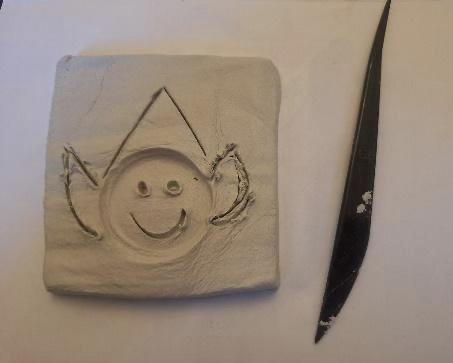
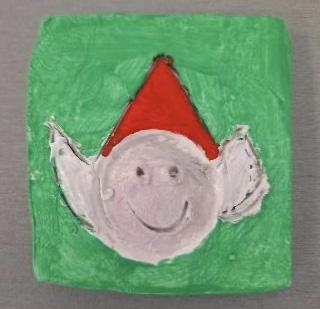
Skill Development: Clay relief prints/mark making

Strands
CREATING
PERFORMING & PRESENTING
Learning Outcomes
JI & SI
1st & 2nd
JI & SI
1st & 2nd
JI & SI
RESPONDING & CONNECTING
1st & 2nd
Create 2D and 3D art using various tools, materials and techniques with use of space and a variety of lines, shapes, colours, forms and textures. AL, C, CL
Design and create 2D and 3D art using various tools, materials and techniques with use of space and increased variety of lines, shapes, colours, forms and textures. AL, C, CL
Show and explain choice of space, line, shape, colour, form and texture to represent ideas, figures and objects. AL, C, CL
Show and explain choice and use of space, line, shape, colour, form and texture to represent ideas, figures and objects. AL, C, CL
Share and talk about arts connected to their lives, and traditions from home, school and local communities (e.g. songs, activities and events). AC, AL, CL
Share and talk about arts connected to their lives, and traditions from home, school, local and wider communities and cultures (e.g. songs, activities and events). AC, AL, CL
ARTIST FOCUS: n/a
You will need:
ART CONCEPT: Printing
SKILL DEVELOPMENT: Clay relief prints/mark making
Clay, rolling pins, a range of items that can be pressed into the clay to leave a print, a selection of plastic or wooden clay tools, poster paint, PVA glue.
Pre-exploration activities:
Depending on the students’ age and prior knowledge of colour(s), this lesson can be integrated as a par t of a scheme of work on a particular colour. Or, for first and second classes, it can complement an exploration of the colour wheel, tones of colours and colour temperature (i.e. warm and cool colours).
INTRODUCTION
This discussion integrates with maths and may form part of an integrated approach to exploring the artist’s work.
Recall prior colour knowledge (to the appropriate level) as a class. This can be done through singing, reciting a poem, using colour cards, etc.
Display some images of artwork by Andy Warhol on each table group. Each child gets some small circular stickers (coloured dot stickers) in a range of bright colours. They place their stickers on the Warhol artwork wherever they see that colour (for instance, students would place a red sticker beside the colour red in the artwork). Discuss as a class the colours they found.
JI/SI Classes
Students are shown an image of ‘Flowers’ (1964) by Andy Warhol. Class discussion may include: What colours can you see? Can you spot anything in the classroom that is the same colour?
This time, the students use cut-out coloured flowers or cubes to identify the colours in the images: in the images: for instance, identifying two examples of pink and two of orange.
Students can practise creating their own two-colour patterns using manipulatives or by colouring.
Focus students’ attention on additional Warhol images. They can share their responses to the artwork, noting similarities and differences in responses in a constructive manner and building on peer responses (accountable talk). You may draw the students’ attention to aspects of the artworks – the bright, bold colours, connections to comic-style art or commercial illustrations – or highlight the use of repetition/multiplication in the artworks, which is a notable style of the artist and art movement. You may also include information here about when and where the Pop Art movement began and about some other famous Pop artists.
It is important that the focus in the introduction to the lesson is on the colours used and the repeated patterns found in Pop art. Spend some time researching information about Pop art and Andy Warhol.
Music link: A song like ‘San Francisco’ by Scott McKenzie can provide additional stimulus for discussion or can be explored through song singing.
Scaffold a discussion, linking to the poem ‘All About Me’, about the things that are special and unique about each student. A storybook like My Hands by Aliki can be a lovely supporting stimulus, further integrating literacy and the arts.
Students will paint one of their hands in a chosen colour using a sponge or paintbrush. Encourage them to take inspiration from the artwork of Andy Warhol. Students will place their hands on opposite or diagonal corners of an A3 page (folding the page into halves or quarters in advance is advisable) to create a handprint. In the two remaining segments, students will paint their hands again, this time using a different colour to create the handprint. Students can then pick a third colour and print another handprint on top of the first two (see Picture 1). Encourage discussion around the colours chosen, the pattern created and how the student was inspired by the artwork of Andy Warhol.
Students could fold their A3 page into eighths and could extend their knowledge base by using complementary colours when completing this activity.
Students can stick their artwork onto black card and include it in an ‘All About Me’ class display. A copy of the poem could be placed beside the artwork.
Digital: A digital collage of all the artworks could be created and displayed during integrated discussions about us and our class in SPHE, encouraging conversations about similarities and differences and/or what makes us unique.
I Think I’ve Seen a Fairy JI/SI + 1st/2nd Classes

Themes/Discussion Points: Fairies, Magic
I think I’ve seen a fairy flutter through the trees today.
I watched her flap her gentle wings and quickly fly my way.
She wore a dress of petals that shimmered as she flew, and when the sun shone on her wings, you could see right through!
She sipped some water from a leaf and rested on a stone.
She looked so graceful sitting there, a queen upon her throne.
I called to her quite softly and asked her if she’d play.
She looked at me with twinkling eyes and swiftly flew away.
Geraldine Galligan
‘I THINK I’VE SEEN A FAIRY’ – POETRY (JI/SI + 1ST/2ND CLASSES)
ENGLISH – PRIMARY LANGUAGE CURRICULUM
Strands Element
Exploring and using
10. Playful and creative use of language
k k
Exploring and using
7. Purpose, genre and voice
Communicating
1. Engagement
Exploring and using
6. Purpose, genre and voice
Concepts/Skills
JI/SI + 1st/2nd Classes
Listen and respond to the aesthetic and creative aspects of language and use language playfully and creatively, and across other languages as appropriate.
JI/SI Classes
Experience and respond to the aesthetic, creative and imaginative aspects of text and a range of genres expressing preferences and opinions.
1st/2nd Classes
Experience and respond to the aesthetic, creative and imaginative aspects of texts and a wider range of genres, justifying preferences and opinions.
JI/SI Classes
Attend to, take part in and have fun mark-making, drawing and writing, across languages where appropriate, to communicate with others.
1st/2nd Classes
Draw and write with a sense of purpose and audience while creating texts in a range of genres and other languages where appropriate.
Explore and use the typical text structure and language features associated with a variety of genres. Develop an individual voice to share their thoughts, knowledge and experiences.
INTRODUCTION
The discussion and supporting activities in this lesson integrate seamlessly with SPHE and Wellbeing in the Primary School Curriculum.
Creating interest and engagement: When students come in after break time, a fairy door may have ‘appeared’ in their classroom, or they may find a note decorated with glitter and ‘written’ by a fairy. Another lovely starter stimulus for this lesson would be bringing the students to a fairy garden on the school grounds or in the local community.
Teacher-directed questions will stimulate the children’s imagination: Have you ever seen a fairy? Where did you see it? What did it look like? How did it make you feel? Did you tell anyone about it? Who? How did they react? Who does or doesn’t believe in fairies? Why or why not?
Encourage the students to explore connections with any stories they may have read or heard that involve fairies. Exploring a picture book such as Tiny Jenny by Briony May Smith with the children can help to stimulate discussion: this could either be done as part of the introduction to this lesson or as part of a separate literacy lesson.
For older students, the first verse of William Allingham’s poem ‘The Fairies’ could be explored as a text stimulus. Similarly, it could be examined alongside another text of a different genre as part of a comparative study in literacy.
Focus Activity: Listening and Responding (JI/SI Classes)
Read the poem aloud twice. During the second reading, encourage the children to listen for details such as where the fairy was seen, what she wore and what she did. Class discussion should encourage accountable talk.
Focus the students’ attention on some of the words the poet uses: What does ‘flutter’ mean? Why do you think the poet chose this word? Why do you think the poet calls her a ‘queen’? What does that make you think of? Why do you think the fairy flew away?
Students can respond creatively to the poem, integrating literacy and drama, by taking on the role of a fairy. Encourage the children to move about the classroom as a fairy would: you may want to pause to reflect orally with the students on how the fairy might move or complete certain tasks. Read the poem aloud again while the students respond through movement. Material scarves can be a lovely addition to this activity, as students who may not have the confidence or gross motor skills to move about the classroom can instead move the scarf to track the movement of the fairy fluttering around the room.
Focus Activity: Listening and Responding (1st/2nd Classes)
Read the poem aloud twice. During the second reading, encourage the children to listen for details such as where the fairy was seen, what she wore and what she did. Class discussion should encourage accountable talk.
Focus the students’ attention on some of the words the poet uses: What does ‘flutter’ mean? Why do you think the poet chose this word? Why do you think the poet calls her a ‘queen’? What does that make you think of? Why do you think the fairy flew away? Students can discuss the answers to these questions in groups and then as a class, or may complete them independently.
Students can respond creatively to the poem, integrating literacy and drama: Pretend you are interviewing someone who has seen a fairy. What questions would you ask them? Students can work in groups to compile their questions and then practise their interviews, with one student acting as the interviewer and another as the interviewee who comments on their experience of seeing a fairy. See photocopiable page X for fairy interview questions.
JI/SI Classes
Students can create an image for the poem. They may be given simple templates of trees, flowers and fairies to arrange on cards they think best represents the poem. Alternatively, they can draw and label a picture corresponding to the poem.
1st/2nd Classes
Students perform their interviews for their peers. They can record and then share their interviews digitally or may perform the interview in real time in front of the class.
As the students listen to the poem being read aloud a second time they can visualise and record their responses on a page or in their copy.
You may want to explore synonyms as part of this lesson or as a separate lesson. Begin by asking the students to identify how the poet describes the fairy’s wings: do they know another word for ‘see-through’ (SESE science link)? Explain that different words with the same meanings are called synonyms. Students could complete a whole-class example matching activity on the IWB. Each student could be given a card with a word and asked to find their partner(s) in the class: that is, students who have other words with the same meaning as theirs. These words could be taken from the poem, e.g., ‘shimmered’ and ‘flutter’, or may be chosen at random. Alternatively, children could complete a digital matching card game on their tablets: this can be created online using Wordwall or a similar tool.