Rte: Asociación Civil de la Comunidad Argentino-Británica - Esmeralda 634, 2ºD - C1007ABF Buenos Aires, Argentina


Esmeralda 634, 2º Cuerpo, 2º “D” - C1007ABF Buenos Aires - Tel.: (+54 11) 5921 0634 / Cel.: +54 9 11 2528 9364 abcc@abcc.org.ar • www.abcc.org.ar•Facebook: @ABCC.Argentina Instagram: @abcc.argentina•X: @ABCC_Argentina • YouTube: https://www.youtube.com/@abcc.argentina
Honorary President
HM Ambassador David Cairns
Chairman
Gavin Bruce
Vice-Chairman
Ralph Kirby
Honorary Secretary
Ronald MacGaul
Honorary Treasurer
María Cristina Gatica Mulhall
Full Members
Federico Bollero, Denise Enright, Veronica Hortis, Helen Hudd, Penny Ortner, Guillermo Santana Mackinlay, Virginia Tuckey, Juan Wood.
Substitute Members
Pamela Dickin, Robert Fraser, Malcolm Piñero.
Ex-Officio
Lucy Santamarina - Charlie Fox
ABCC Office
Sandra Handley, Manager
Luisa Ibarra, Administrative Assistant
Communications
The Bulletin, Newsletter and ABCC Calendar
Virginia Tuckey
Events
Gavin Bruce
Regulatory Body
Pablo Rassmussen - Adrián Dougall
Ethics Committee
Titulares: Alan Arntsen - Esteban Cohen - Francisco Fernie
Suplente: Roxanne M. Munton
BUENOS AIRES
Belgrano & Urquiza (C.A.B.A.)
Ian Gall
(+54 9 11) 4098 1939 ianmgall@yahoo.com.ar
Hurlingham
Joaquín Henault (+54 9 11) 6466 0712 joaquin.hlt@gmail.com
North Riverside
Helen Judd (+54 9 11) 6826 3092 juddlacarlota@gmail.com
Quilmes, Ranelagh & Hudson
Valeria María Hardie (+54 9 11) 4051 4501 valeriahardie@gmail.com
Southern Suburbs
Andrew Grant (+54 9 11) 4969 0767 andrew@andresgrant.com.ar
Chascomús
Sylvia McIver (+54 9 11) 6196 8577 abcc.chascomus@gmail.com
Mar y Sierras
Janet Bruce (+54 9 261) 254 8634 weeonebruce@gmail.com
Pergamino
George Page (+54 9 2477) 20 0225 geopage919@gmail.com
Western Camps
Dominic Gunningham (+54 9 11) 5006 2538 dgunningham@gmail.com
CHUBUT
Western Chubut
Arthur D. Lowndes arturolowndes@gmail.com (+54 9 2945) 40 8145
Director
Virginia Tuckey
Editor
Sub-committees:
Finance
María Cristina Gatica Mulhall
Legal Affairs
Ralph Kirby
Welfare
Veronica Hortis
Honorary Legal Advisor
Estudio Juan Patricio O’Farrell
Notaries
Estudio Guyot
Auditor
Suarez y Menéndez S.R.L.
CORDOBA
La Cumbre
Vicky Duff 3548 451861 victoriaduff@gmail.com
CUYO
María Cecilia O’Shee (+54 261) 604 7283 mceciliaoshee@gmail.com
ENTRE RIOS
David Thomas (+54 9 343) 5077313 davidthomas.arq@gmail.com
MISIONES & CORRIENTES
John Haynes (+54 9 3756) 49 8298 john.virocay@gmail.com
RIO NEGRO
Alto Valle
John Anthony Vérel (+54 9298) 458 2577 panchoverel@gmail.com
Juan Martin Gall abccbulletineditor@gmail.com 15 (+54 9 11) 4098-1939
Property of /Propietario
Asociación Civil de la Comunidad Argentino-Británica (ABCC)
San Carlos de Bariloche
Juan Wood (+54 9 2944) 410788 juan.wood@gmail.com
NOA
Nicolas Barr (+54 9 3875) 00-0975 nicolasbarr@hotmail.com
SANTA CRUZ
Rio Gallegos
Pablo G. Beecher (+54 9 2966) 53 3446 pablogustavo.beecher@yahoo.com.ar
SANTA FE
Rosario
Andrew Knight (+54 9 341) 638 7516 andrewknight50@outlook.com
SANTA FE NORTE
Guido A. Tourn (+54 9 3405) 45 1807 guidotourn@gmail.com
Honorary Legal Advisors
ESTUDIO BERTON MORENO IP LAW
Graphic Design & Production
Imagine Studio Printer
Artes Gráficas Integradas S.A. William Morris 1049 1602 Florida - Prov. Buenos Aires



Become an ABCC donor by making a monthly donation of at least $5,000.- or an annual donation of at least $50,000.- in one payment (January 2026 values). Note: These amounts might change in the near future. You will receive The Bulletin four times a year and our monthly e-newsletter.
Place a notice in The Bulletin and in the Day-by-Day section of our website.
• Congratulate a friend or relative on their birthday by donating in their name.
• Make the announcement of a wedding or anniversary. We can also publish a photo of the happy couple in The Bulletin.
• Remember the passing of a family member or a friend.
• Publish an obituary about a relative or friend.
Contribute to the Flower Fund (In Lieu of Floral Tributes). Ask friends and relatives to donate to the ABCC instead of sending flowers when a friend or family member passes away. Donors appear in the Day-by-Day section in The Bulletin and on the ABCC website.
Advertise in The Bulletin. Prices start at $74,000.
You can also choose to make a donation to BABS or Links House.
To donate online, please follow this link https://www.abcc.org.ar/support-us
If you prefer not to donate online, please see below for the ways in which you can make your donation offline.
• Come or send somebody to the ABCC office to make a cash or cheque donation.
• Visit the ABCC office and make your donation with a credit or debit card.
• Send a cheque to the ABCC made out to: "Consejo de la Comunidad Argentino-Británica - No a la orden".
• Authorise a one-time OR a recurring debit from your Credit or Debit Card. Contact us (Tel 1159210634 /email abcc@abcc.org.ar) and we'll be delighted to help you through the process.
• Deposit or transfer a donation into our bank accounts in Argentina or in the United Kingdom (details given below). Please remember to email us at adm@abcc.org.ar to inform amount and date of your contribution. Otherwise, it may be lost in the “anonymous donation bag”.
Argentina:
Banco Patagonia
Bank: Banco Patagonia
Account: Asociación Civil del Consejo de la Comunidad Argentino Británica
Sucursal: Nº 10
Cuenta Corriente Nº: 010-008315051-000
Alias: ABCC.ARGENTINA
CBU: 0340010400008315051005
CUIT: 30-52566392-9
Outside Argentina:
Lloyds Bank
Bank: Lloyds Bank
Account Name:
Argentine British Community Council
Branch: Pall Mall St. James
Account number: 01362730
Sort Code: 30-00-08
BIC: LOYDGB21012
IBAN: GB85 LOYD 3000 0801 3627 30
https://www.abcc.org.ar/what-we-do/who-we-help
The ABCC can receive property and donations. We can help you sort out your wishes and ensure that they are carried out smoothly, particularly if you do not have a family and are concerned about your future. If you have included the ABCC in your Will, we would appreciate you contacting the ABCC on +54 11 5921 0634, Cel.: +54 9 11 2528 9364 or abcc@abcc.org.ar) and we will put you in touch with our Legal Department, to help you through the formalities.

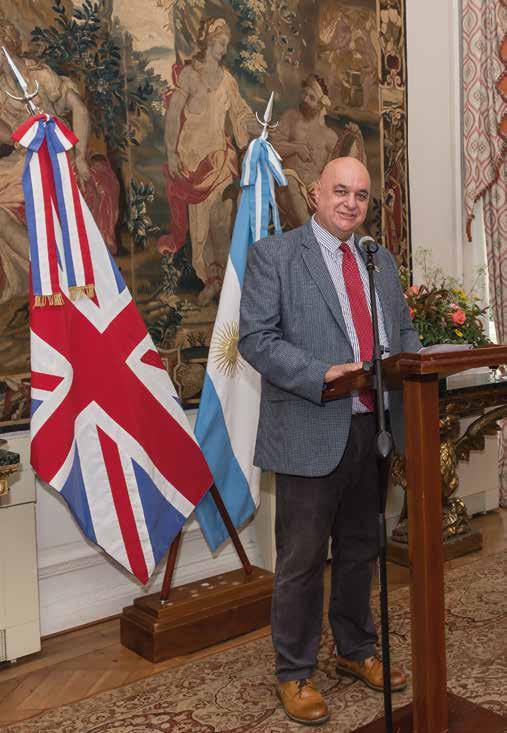
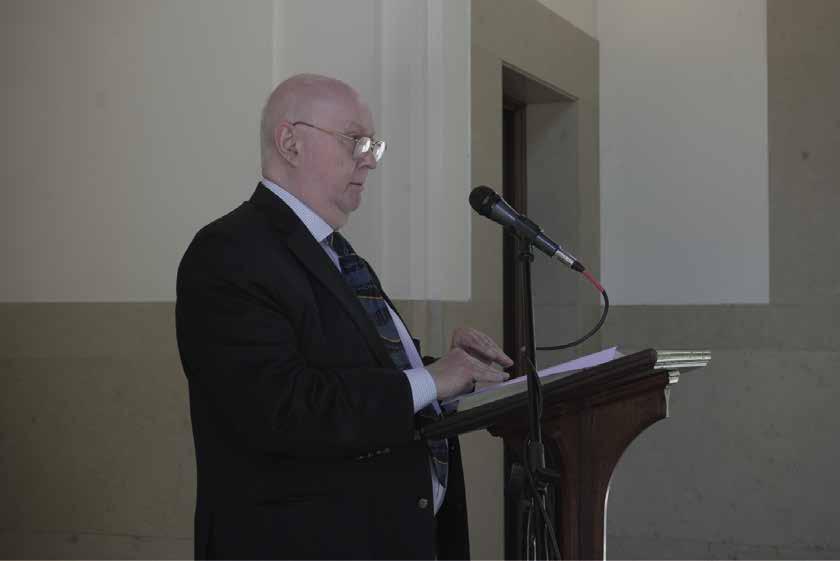
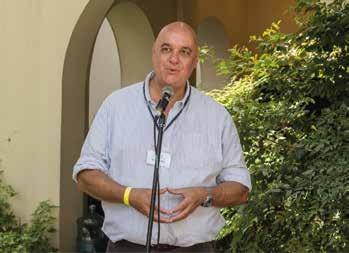
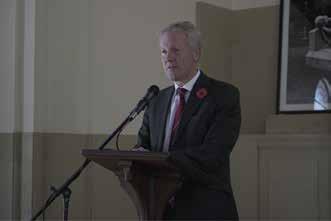
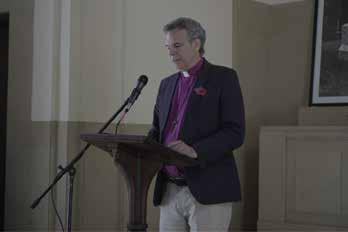
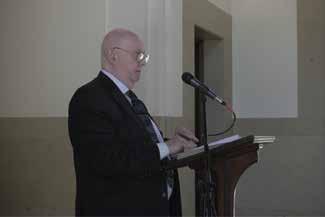
Dear friends of the Argentine-British community. What a joy to be here today at the British Embassy, under the warm welcome of our Honorary Chairman, His Exce llency Ambassador David Cairns. Thank you for your unwavering support - it is a true honour to stand with you as we weave the threads of our shared history into the fabric of tomorrow.
First, a quick confession: when I was invited to take on the rôle of Chairman of the ABCC, I felt a bit like a player debuting in a community rugby match-excited by the roar of the familiar crowd, a touch nervous about that first tackle, and comple tely inspired by the team spirit that drives us forward. Founded in 1939, our Argentine British Community Council has been more than an organisation; it has been a lifeline, a gathering spot full of laughter, and a quiet force for good—especially in supporting our elders and those in need. And today, on this vibrant Friday, we are not just reflecting on that legacy; we are igniting its next chapter.
Allow me to introduce the heart of that chapter: our newly elected Committee. From our dedicated 12 members—backed by three steadfast substitutes: Pamela Dickin, Robert Fraser, and Malcolm Piñero, ready to jump into the fray when needed—six pioneers joined us yesterday at our Annual General Meeting. Ladies and gentlemen, please join me in welcoming Lally Barr, Ronnie MacGaul, Ralph Kirby, Virginia Tuckey, Juan Wood, and Freddy Bollero. Each brings a unique spark: from cultural innovators to community connectors, they are ready to amplify our voice.
And to our District Representatives—from Cuyo, Córdoba, Santa Fe, La Pampa, the Province of Buenos Aires, the Upper Valley of Río Negro, Bariloche, Chubut, Santa Cruz, the Northwest Argentine, Entre Ríos, and Corrientes—your passion on the ground is the pulse of our provinces. Next year, I commit to visiting you all, offering whatever support you need to enhance your events in your communities and to help those who require it—as partners in pop-up gatherings and cultural fusions that unite hearts: imagine mate with scones, or tango meeting ceilidh!
tales of Anglo-Argentine pioneers are not relics; they are rocket fuel for tomorrow’s leaders. This 2025, still resonating from the 200th anniversary of the Treaty of Friendship, Commerce, and Navigation between Argentina and the United Kingdomsigned in Buenos Aires on 2 February 1825, an eternal pillar of our alliance - and the arrival of the first Scottish colony on 28 May, we will celebrate with renewed vigour. In 2026 and beyond, we will continue honouring these milestones with Highland games in the pampas, whisky tastings with Malbec, and events that weave every thread of our British tapestry- from English gardens in Patagonia to Welsh choirs in the Andes.
In the words of a favourite Scottish bard, “We are doubly armed if we fight with faith”- and today, our faith in one another is our greatest strength.
Ambassador Cairns, esteemed Committee, District Representatives, and all you 70 remarkable souls: here’s to stronger bridges, closer communities, and brighter futures!
Presentation Speech given at the British Embassy Residence - October 24th 2025.

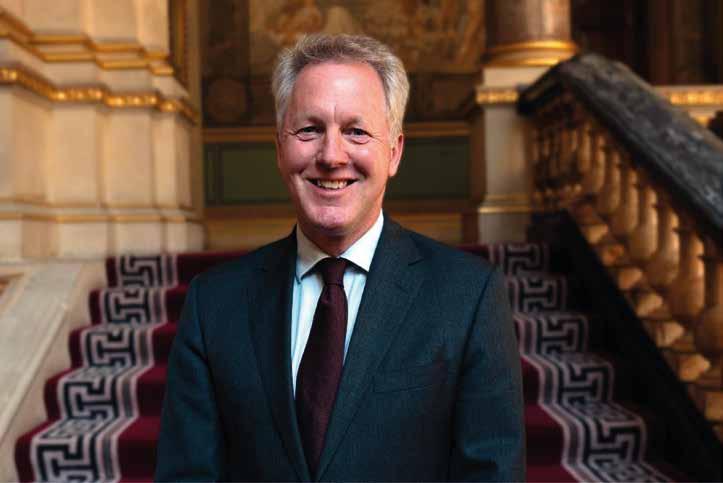
As I begin my tenure as British Ambassador to Argentina, I am delighted to share my first message with the Argentine-British Community Council. It is a privilege to take up this role in a year of such historic significance: 2025 marks the bicentenary of diplomatic relations between the United Kingdom and Argentina. Two hundred years of friendship, dialogue, and cooperation—built on countless contributions from the British community to Argentine society—are truly worth celebrating.
From the very first days of my posting, I have felt the warmth and openness that characterise this country. My first official meeting was on my first working day in Argentina with then Foreign Minister Werthein, and on 4 November I had the honour of presenting my credentials to President Javier Milei at the Casa Rosada. In my first week, we also welcomed Minister Chris Bryant—the first UK ministerial visit in several years—underscoring the renewed momentum in our bilateral relationship.
There is lots to be proud of. I have met Argentine Ministers for the economy, health, security, mining and justice, and we have programmes of bilateral cooperation in all these areas. In trade, the UK is investing in Argentina’s
critical minerals, energy, pharmaceutical, financial services, transport infrastructure and consumer goods sectors, and there is political interest to develop the trade relationship further.
Beyond trade, in just my first few weeks we have celebrated UK films, sporting connections, ballet, music, art, education, an ABCC fashion show, and I write this just before the arrival of Oasis... It has been a pleasure to meet the ABCC. Your work in fostering community spirit and supporting charitable initiatives is amazing, and I look forward to working with you all in my time here, and of course I am looking forward to the ABCC Christmas fair.
As we approach the festive season, I want to extend my warmest wishes to you and your families. May this holiday period bring joy and peace, and may the New Year open new opportunities for us to work together. I am committed to strengthening the bonds between our nations and to honouring the legacy of friendship that has endured for two centuries. Here’s to a year of celebration and partnershipand to building the next chapter of UK-Argentina relations together.
David Cairns British Ambassador to Argentina
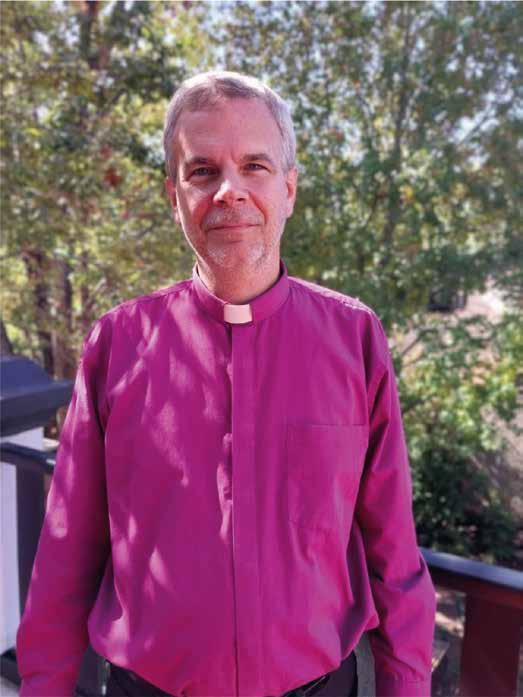
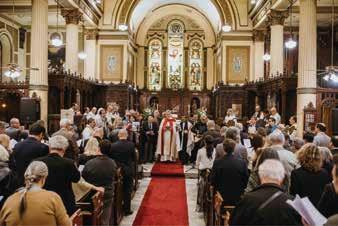
As Christmas approaches, I am delighted to greet the Anglo-Argentine community in Argentina through The Bulletin. This season invites us to pause, reflect, and rejoice in the extraordinary gift of God’s love revealed in the birth of Jesus Christ.
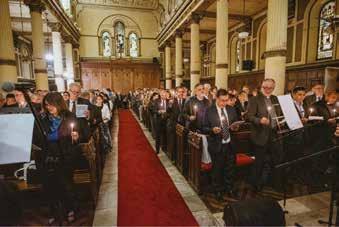
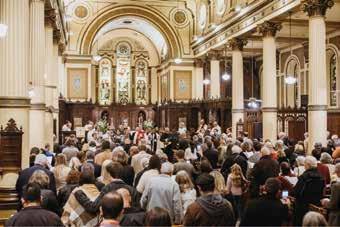
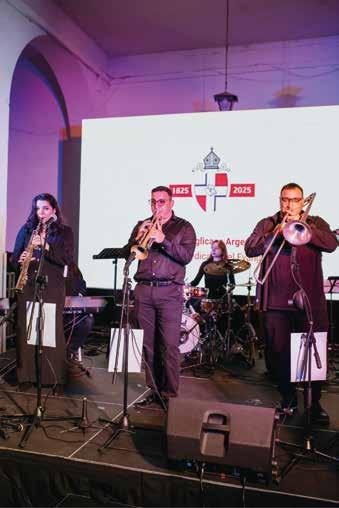
Our joy this year is enriched by a significant milestone in our history: the bicentenary of the first official Anglican service in Argentina. On the 25th September 1825, the Church began its uninte rrupted worship in this land, a continuity that has shaped generations of faith, service, and community. It is worth recalling, as a fascinating anecdote, that the very first recorded Anglican service on Argentine soil took place much earlier, in 1578, when Sir Francis Drake anchored at Puerto San Julián—just as Magellan had done 58 years before. That service, however, was an isolated event. In contrast, the worship that began in 1825 marked the beginning of a living tradition, sustained without interruption throughout two hundred years. This Bicentenary is therefore not only an historical commemoration but also a celebration of God’s enduring faithfulness.
Christmas itself is the celebration of God’s
sanctifying the ordinary. Whether through singing Christmas carols, gatherings with family and friends, or acts of kindness extended to those in need, each gesture embodies the love first revealed in the manger.
The bicentenary of our first official service
rests” (Luke 2:14, NIV). That proclamation remains as urgent today as it was on that holy night.
May this Christmas be for you a time of renewal and joy. May the peace of Christ dwell richly in your hearts and homes. And may the celebration of our bicentenary inspire us all to continue building communities of faith, hope, and love.
I wish you and your families a blesséd Christmas and a New Year filled with grace and promise. With every blessing,
Brian Williams Bishop of Argentina and Archbishop of South America
By Douglas Robertson - Teaching Elder - St. Andrew´s Scots Church
In a world full of uncertainty and difficulties, we seem to have fewer and fewer reasons to be grateful and even celebrate good times. In 1980 the music group Kool & the Gang released a single called “Celebration”. We would sing and dance to this song at parties; its lyrics are a timely reminder of the importance of celebrating the good things in life.
In 2025 the British community was blessed with at least three important landmarks, one of them being the 200-year anniversary of the Anglo-Ar gentine treaty of commerce signed in 1825, which included the first official recognition of Argenti na’s independence by a major European power. We also celebrated 200 years since the first English and Scottish immigrants landed in Argentina, eager to start over a new life in a very different context. This celebration of the bicentenary since the arrival of the first settlers and their contribu tion to the growth of Argentina as a nation is reason enough to be grateful and celebrate the accomplishments of the first generation of settlers, which contributed to create an increasingly fruitful bilateral relationship between the United King dom and Argentina.
Many of us have reaped the benefits of the oppor tunities made available thanks to the restoration and strengthening of the Anglo-Argentine relationship. I, in particular, worked in British Airways’ sales department as from 1988. The airline started operating that year as an offline station, which means that there were no direct commercial flights between Buenos Aires and London. Then, just as we imagined things could deteriorate when Carlos Menem was elected President, we were surprised when diplomatic and commercial ties were quickly re-established between the two countries. Before we knew it British Airways was flying to Buenos Aires and Aerolíneas Argentinas was flying to London. This of course meant a complete overhaul of the local station in Buenos Aires, requiring more office staff, airport staff at Ezeiza and local cabin crew. It´s also important to note that the British community brought with it not only their culture, but also their faith. The Argentine government authorized both the Anglicans and Presbyterians to establish their churches and worship freely according to their beliefs. For those of us who profess a truly Christian faith, we believe that our faith and

beliefs form the bedrock of our way of life. It is interesting to note that St. George’s Quilmes was founded by the Rev. J. T. Stevenson in 1898 and has since maintained high standards of education. In the same way, in 1838, St. Andrew´s Scots School was founded through St. Andrews’s Presbyterian church.
The importance of these examples of faith and values is relevant for us today. The British band Depeche Mode produced a song called “Your own personal Jesus”. This statement is true in so far as God establishes with us a personal relationship through Jesus Christ. However, our faith is not something to keep under lock and key. The purpose of our faith is to apply it to all areas of life just as the first British settlers did.
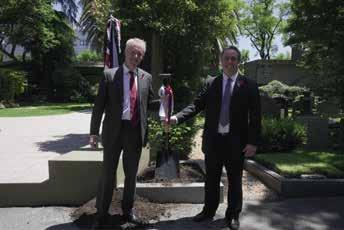
On the 5th November this year, with the presence
of the British Ambassador David Cairns and after a short ceremony celebrating the 200th anniversary of diplomatic and commercial relations at the British Cemetery, an elm tree was planted as a symbol of our desire to see this relationship continue to grow and be strengthened. Now we need to rise to the challenge of finding ways to contribute with this aim in mind using our creativity, skills, and looking to the younger generations to help us to work and build on what has already been achieved. Where can we receive guidance and gain inspiration to go in the right direction? In the book of Jeremiah, God´s people had been taken into captivity. They were living in a country and culture that differed significantly from their own, and yet God said to them: “Build houses and live in them; plant gardens and eat their produce. 6 Take wives and have sons and daughters; take wives for your sons, and give your daughters in marriage, that they may bear sons and daughters; multiply there, and do not decrease. 7 But seek the welfare of the city where I have sent you into exile, and pray to the LORD on its behalf, for in its welfare you will find your welfare.” Jeremiah 29:6-7. The point is that they were to adopt their new situation and put down their roots in this new land and develop a lifestyle based on their faith and
culture, integrating their lives as a community that contributed to the growth and stability of the country where they lived. However, this could only be achieved without negotiating their faith and spirituality. And so it is that more than ever before we need to go back to our roots and hold onto our faith and not negotiate our identity which has brought us thus far.
As I write these words, we are a few weeks away from the beginning of the advent season during which we remember “The reason for the season”, which is Emmanuel, God with us. God has come to us in the person of Jesus Christ, the light and saviour of the world. As we think about the significance of the Christmas season, it can be found in the promise God gave his people who had been exiled; “For I know the plans I have for you, declares the LORD, plans for welfare[b] and not for evil, to give you a future and a hope. 12 Then you will call upon me and come and pray to me, and I will hear you. 13 You will seek me and find me, when you seek me with all your heart.” Jeremiah 29: 11-12.
Let us celebrate what has been achieved over these two hundred years, but looking to the future. Let us appropriate ourselves of these promises of hope and of a better future for the next two hundred years to come.

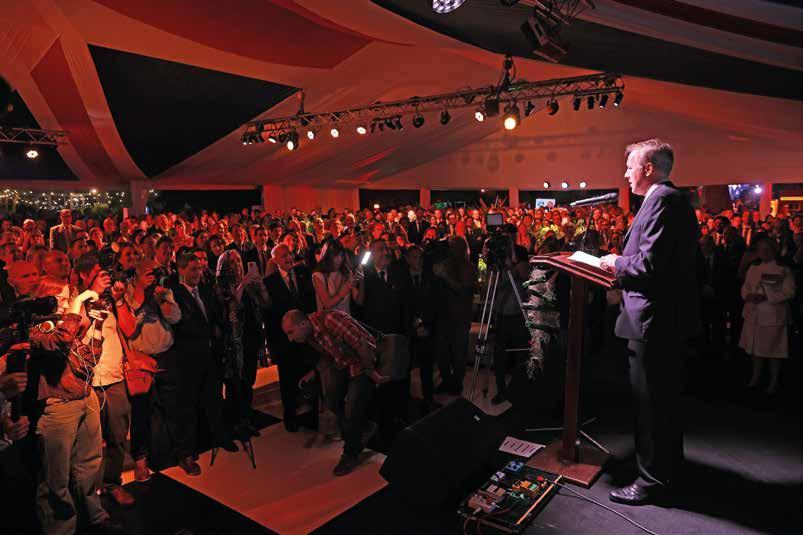
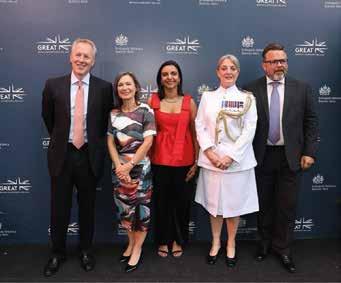
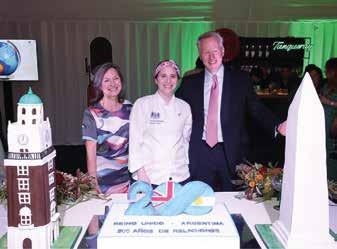
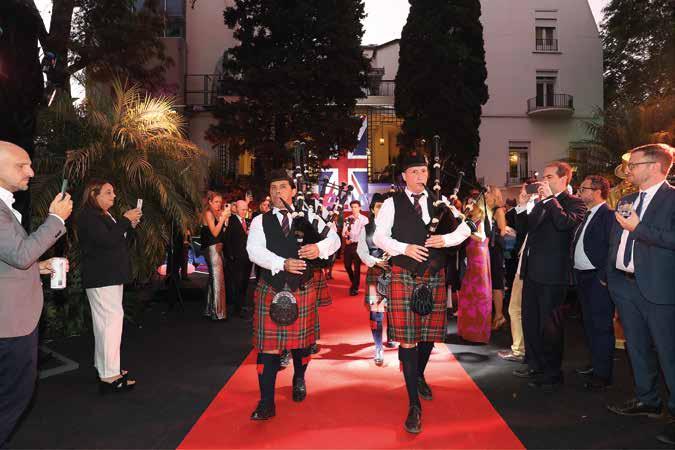
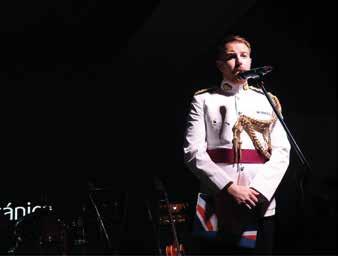
On Tuesday 18th November we celebrated the 77th birthday of His Majesty King Charles III at the British Ambassador's Residence. The celebration was attended by approximately 800 guests, including prominent figures from politics, Congress, the judiciary, and the business world, as well as diplomats, academics, artists, journalists, and members of civil society. The Argentine government was represented by Foreign Minister Pablo Quirno; the Minister of Deregulation, Federico Sturzenegger; the Minister of Justice, Mariano Cúneo Libarona; and the Secretary of Education, Carlos Torrendell, among others.
This was the first major event hosted by Ambassador David Cairns, who arrived in the country last September. Furthermore, the celebration marked the end of the Bicentennial campaign, as the Embassy spent the entire year commemorating two centuries of diplomatic relations between the United Kingdom and Argentina.
During his speech, Ambassador Cairns recalled some milestones of these 200 years, such as the construction of the Torre de los Ingleses (English Tower) at the beginning of the 20th century and Charles's visit to Argentina in 1999 (when he was still Prince of Wales), and in particular his forays into tango and polo.
Before concluding his remarks, the Ambassador showed a video summarizing the 200-year history
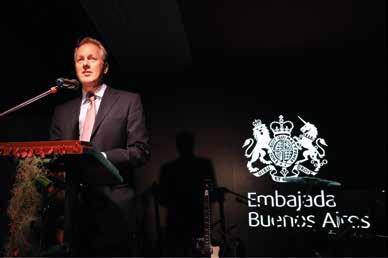
of the bilateral relationship from various angles: scientific and educational cooperation, trade, sports, culture, and the contributions of British immigration to Argentina.
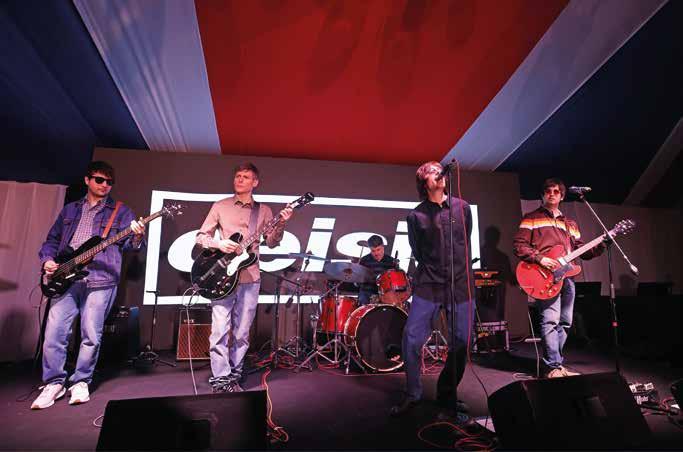
After the Ambassador's speech, the Argentine band Oeisis performed a tribute to Oasis, the Manchester group that gave two historic concerts at the Monumental Stadium over the weekend. In addition, singer María Álvarez de Toledo sang the national anthems of both countries, and DJ Maxi Martina, host of The Selector, the British Council's weekly radio program, played a selection of British music from all eras.
The main sponsor of the event was the
By Michael Soltys
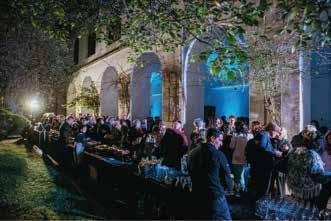
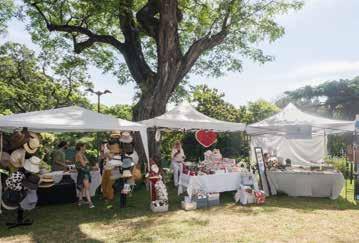
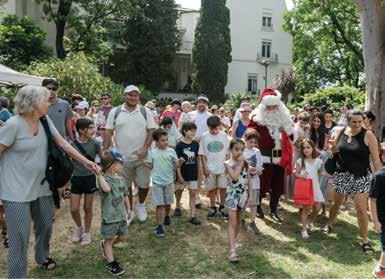
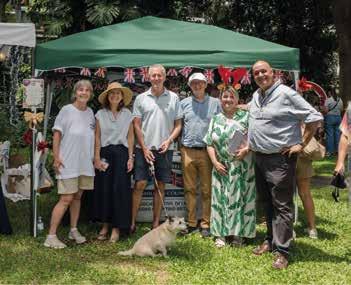
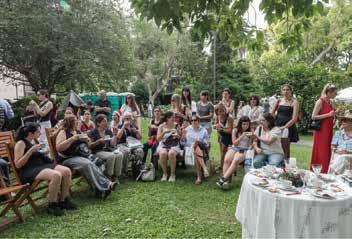
Easy enough to say that it was the best Christmas Fair of the decade since it was the only one (making its first return since 2019 when the coronavirus pandemic was already spreading out from China) but it was a splendid effort by any standard from the Argentine-British Community Council (ABCC) now headed by Gavin Bruce – and all credit too to British Ambassador David Cairns for allowing thousands of feet to trample on his impeccable residence gardens last Saturday.
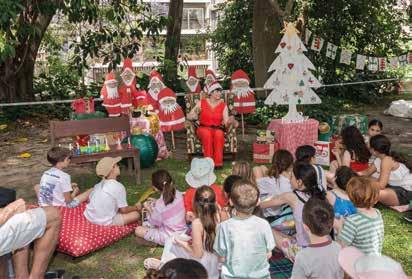
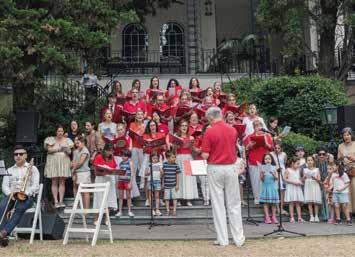
Unapologetically a celebration of Christmas with no attempt at “happy holidays” neutrality – a classic Father Christmas (complete with a mailbox to post requests to Santa Claus) and culminating in the carols of Ian Gall’s Santa Singers.
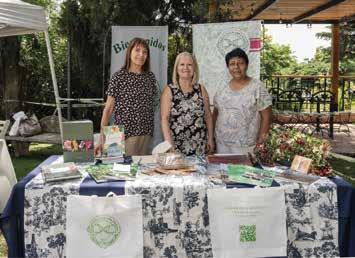
The first impression upon entry was just how many more boutiques and stands than last time – the past is another country and the change perhaps reflects the difference between Javier Milei’s Argentina and the Frente de Todos régime just starting life in 2019. Women are usually the backbone of community life and at this stage it gave every impression of being a fair by women for women.
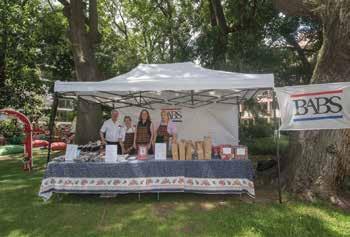
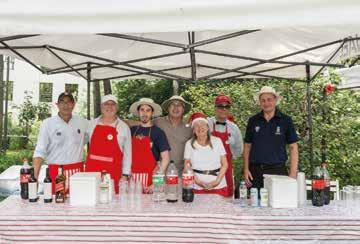
Nevertheless, males and kids were far from being out of the picture – the former had choripans, lomitos and hamburgers for every taste along with a well-stocked bar while children had entertainments typical of birthday parties apart from Santa Claus. Nevertheless (and here comes the first unfavourable comparison with last time), this columnist missed the previous games area for children (and also for
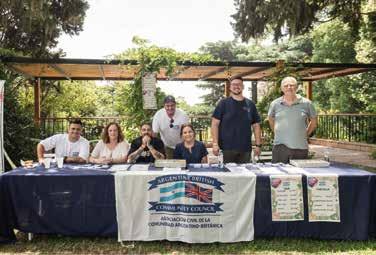
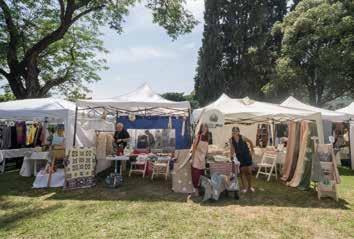
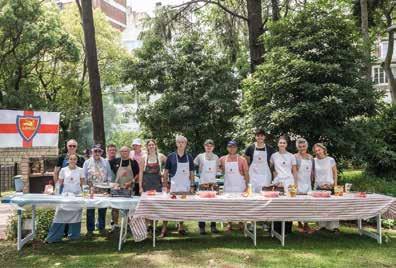

adults who enjoy shuffleboard or quoits at least as much, even if they would never admit it). And, just to tuck away all the criticism in one paragraph, also missed was the fond and increasingly distant memory of tea and cakes on the residence balcony overlooking the gardens – unbeatable. Also not everybody caught onto the need for advance registration, thus making for some unfortunate absences. But the Christmas Fair is only now making its comeback and the ABCC effort is huge – a work in progress.
The first half of the event (11am-3pm) was shop until you drop for those with the energy in the searing heat and a liquid lunch possibly followed by tea and rich fruit and Dundee cakes from BABS with people dressed in period costume (one of this fair’s main innovations) as background decoration – not too much else but catching up with old friends and languid enjoyment of the beautiful gardens was more than enough to while away the hours.
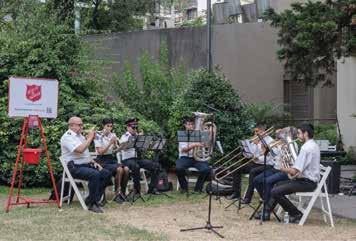
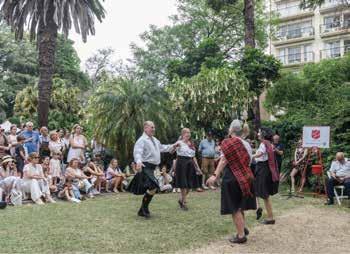
The second half (3pm-7pm) was a different story with one entertainment after the other – first carols from the brass band of the Colegiales branch of the Salvation Army and then the Merry Scottish Dancers doing just that, followed by talented musicians of the
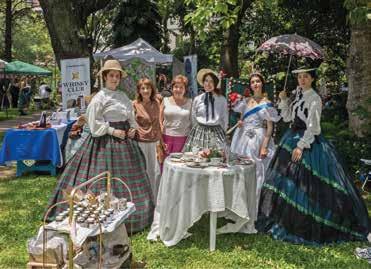
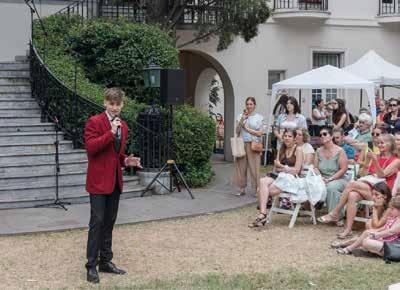
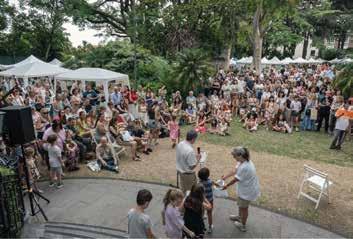
Orquesta de los Barrios (recruited from low-income neighbourhoods) and an impressively professional singing of “Winter Wonderland” and “White Christmas” by the youthful Fran Lombardo. The climax was the carol-singing of Ian Gall’s Santa Singers (little or no overlap with his church choir Vox Celeste) – Ian works hard at involving his audience.
Then 12 prizes were raffled with the Ambassador’s wife Sharon Cairns delivering the closing words.
A good time was had by all – thank you ABCC and Embassy and long may this tradition continue.
By Michael Soltys
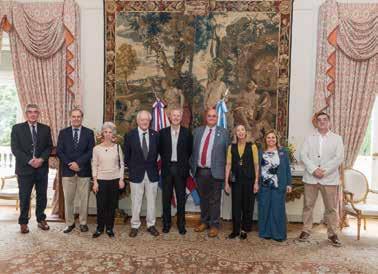
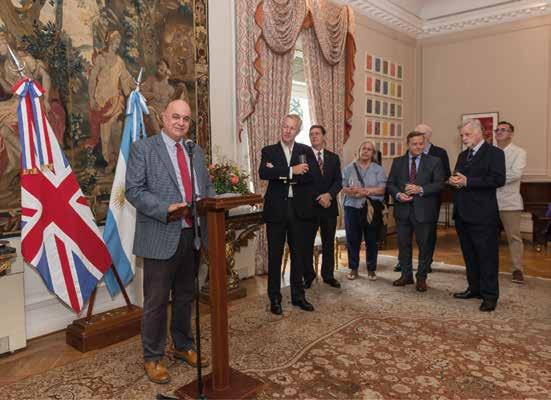
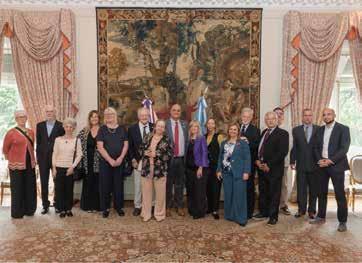
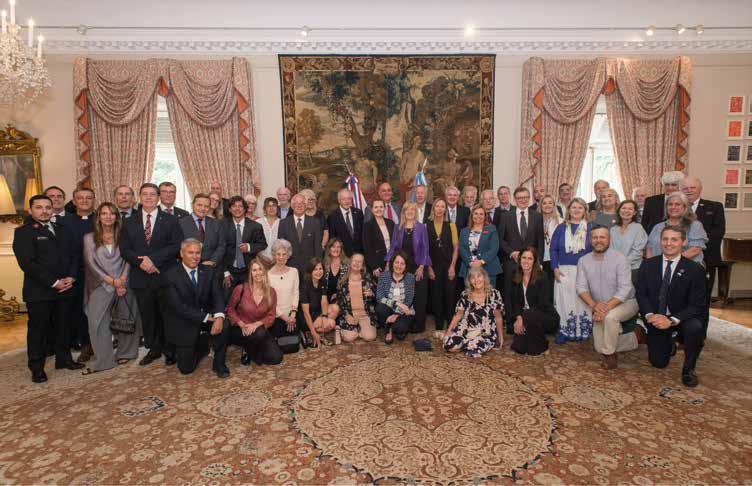
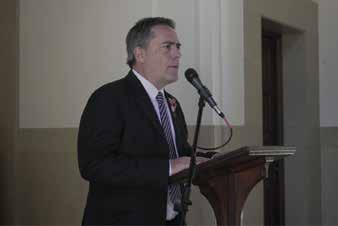
The new authorities of the Argentine-British Community Council (ABCC) were given a flying start by a new ambassador at the British Embassy residence hosting a reception last October 24. Previous envoys have tended to place their focus on outreach to mainstream Argentina (quite rightly, as this is their job), sometimes leaving the British community somewhat by the wayside in the process, but not David Cairns.
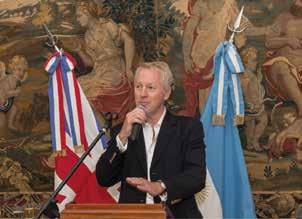
Presenting the new authorities, he reminded his audience that we are still in the bicentenary of diplomatic relations between the Argentine Republic and the United Kingdom, also bringing up an anniversary closer to home –80 years since the Embassy residence along with its huge gardens was bought by the British government from the Madero family for a bargain 125,000 pounds. And talking of those gardens, Cairns brought glad tidings of great joy to the community audience – come December they will again be made available to the ABCC’s traditional Christmas fair after a hiatus of a few years.
Introduced by a previous ABCC chairman John Hunter, the new chairman Gavin Bruce pledged to renew the momentum given to the Council by Hunter before lockdown during the coronavirus pandemic was followed by slowdown. Bruce’s vice-chairman will be Ralph Kirby with his treasurer

A
ceremony at the British Cemetery of Buenos Aires honoured two centuries of Argentina–UK relations with
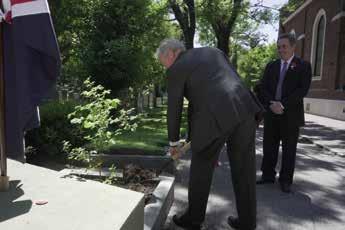
the planting of a commemorative elm*
by John Hunter BEM
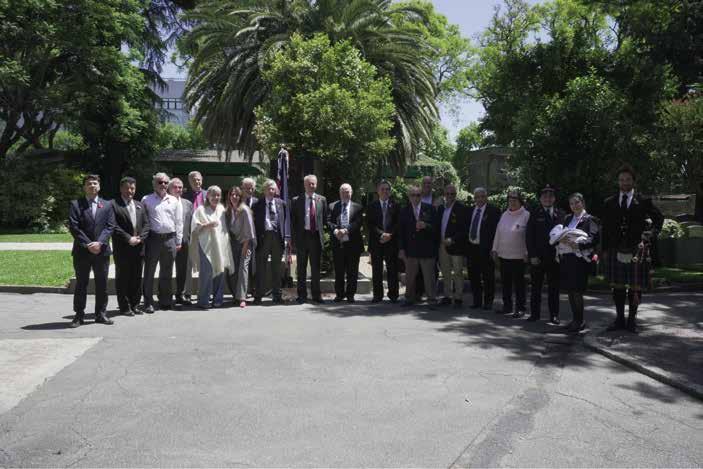
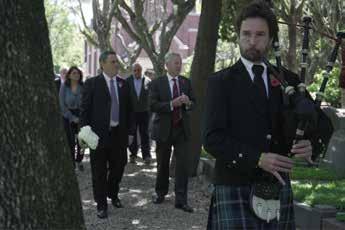
The British Cemetery of Buenos Aires held a solemn ceremony at 11am on November 5 to mark the bicentennial of diplomatic relations between the Republic of Argentina and the United Kingdom. The principal act was the planting of an elm sapling descended from the trees introduced by the 19th-century Scottish colony of Santa Catalina, symbolising continuity, remembrance and the enduring ties between both nations.
Programme and speakers
• The ceremony opened with a procession led by bagpiper Brian Gibson, followed by a service in the chapel.
• Bishop Brian Williams delivered the sermon.
• British Ambassador David Cairns addressed the assembly, highlighting the shared history and ongoing friendship between the two countries.
• John Hunter BEM, chairman of the Cemetery, offered remarks and coordinated the commemorative planting.
• Pilar Bosca, director general of Worship of the
Historical background
The event recalled the 1825 Treaty of Friendship, Commerce and Navigation and, in particular, Article 12, which guaranteed religious freedom and burial rights for British subjects in the United Provinces of the Río de la Plata. That provision enabled the founding of the Scottish colony of Santa Catalina in 1825, a settlement that once covered some 6,500 hectares from present-day Llavallol to the Riachuelo.
Among the colony’s notable figures was John Tweedie, a Scottish gardener and botanical explorer associated with the Royal Botanic Garden Edinburgh, whose forestry and landscaping works endure in the Santa Catalina forest at Llavallol.
Elm and institutional participation
The elm planted at the cemetery is a direct descendant of the original Santa Catalina trees and was presented to the Cemetery two weeks earlier by Dr. Alberto De Magistris, Professor of Botany at the Faculty of Agricultural Sciences, Universidad Nacional de Lomas de Zamora. The university is
honorary associate of the institution. Members of the Cemetery’s Board of Directors and staff formally welcomed Ambassador Cairns and extended their best wishes for his stay in Argentina.
Ceremonial moments and reception
For the planting, Ambassador Cairns and Mr. Hunter used a ceremonial spade painted with Argentine and British flag colours to turn the first shovelfuls of earth. Mr. Hunter then invited representatives of municipal, religious, and community organisations to participate in the planting.
The ceremony concluded with a reception where champagne was served and a toast honoured the bicentenary, aspiring to another 200 years of constructive relations.

by Michael Soltys
The annual Remembrance Day service in honour of war dead was held at St John the Baptist Anglican Cathedral last Sunday with Presbyterian elder Douglas Robertson reminding the congregation that this year marks both the 80th anniversary of the end of the Second World War and the bicentenary of formal relations between Argentina and Britain. The Argentine national anthem and opening words from Anglican Bishop Brian Williams were followed by hymns and Bible lessons interspersing each other ahead of the sermon and the British Royal Legion’s ceremony of remembrance. The readings were by Bhavna Sharma (the chargé d’affaires running the British Embassy ahead of the recent arrival of David Cairns), RAF Group Captain Sally Cawdery (the defence attaché at the British Embassy) and St. George’s College headmaster Roberto Prata.
Congregation and choir sang “Abide with me,” “O valiant hearts” and “This is my song,” to which the Vox Celeste choir, impeccably led by Ian Gall as always, added some Bach – the “Chorale” and “Jesu, Joy of Man’s Desiring” with Marnix Doorn

on the organ.
Beyond the anniversaries, Robertson’s sermon compared those who gave their lives in wars to Christ’s sacrifice on the cross and deplored that there was increasingly less understanding among the young but he also called for giving peace a chance and spiritual renewal as well as remembrance. He further recalled the horror in the words of a British veteran of the 1982 war about looking into the eyes of somebody against whom he had nothing before killing him.
The Legion ceremony then followed with the exhortation (“The Legion of the Living salutes the Legion of the Dead”) read by Major Lawrence Ward RE and the Kohima Epitaph (“For your tomorrow we gave our today”) read by Les Space of the American Legion before the wreaths were placed, preceded by bugling “The Last Post” and followed by “The flowers of the forest.”
The Lord’s Prayer, “God save the King,” “Amazing Grace” (played by piper Alan Oliver) and William Blake’s “Jerusalem” sung by Vox Celeste concluded a moving ceremony.
Igrew up in London, and through my childhood I remember vividly attending annual Remembrance Sunday services, just like this one, with my parents and grandparents. None of my parents or grandparents had served in the two world wars, nor the armed forces full stop, but despite that they knew all too well the importance of remembering those who had made the ultimate sacrifice for their freedom.
This year we mark 80 years since the end of WW2. As a child my mum played in the bomb craters that were still all over the city of London for years after WW2. My grandparents, too young to fight, remember having very little to eat as rationing gripped the British Isles and London was bombed.
11NOVEMBER
So when I was young they tried to make sure I knew the importance of remembering each year. I think I understood at some level, but perhaps it felt more like a national tradition than something real. With no one in my family who had served, perhaps it all felt a bit distant.
I made the decision at the age of 22 to join the Army. So now, I think I really do understand why it is so important to remember.
I have seen combat and the destruction it brings. I have seen friends of mine badly injured in combat, both physically and mentally. I have lost people I knew well; my own cousin died in a combat zone. All following orders, placing themselves in danger on behalf of their country.




Sylvia McIver - Chairman
2025 will be singled out in our memories as the time in which 200 years of the arrival of the “Symmetry” was duly remembered through several commemorative events.
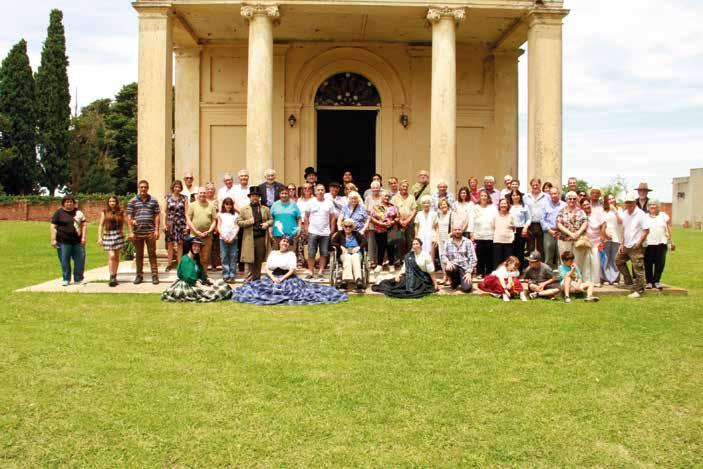
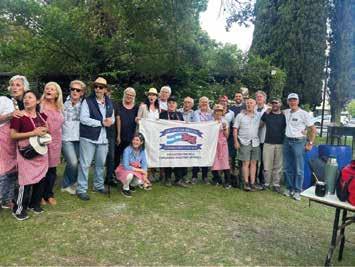
But as well as this milestone, there had been other special dates which had to be remembered as well and so, on December 7, at the St. Andrew’s Presbyterian Church in Chascomús, organizers of the event, the following milestones were remembered:
200 years of the arrival of the “Symmetry”
168 years of the establishment of the first Scottish pioneers in Chascomús
160 years of the arrival of the first train service
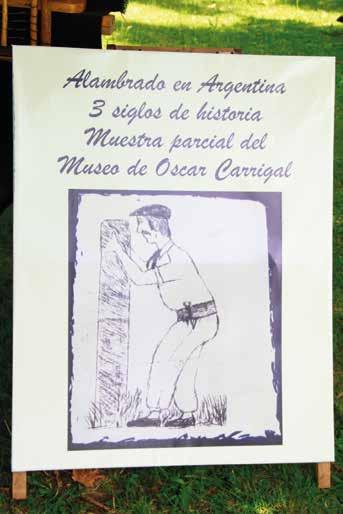
180 years of the first plain wire fencing, brought to Chascomús by Richard Blake Newton
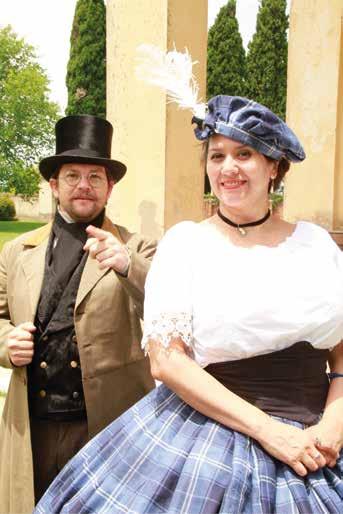
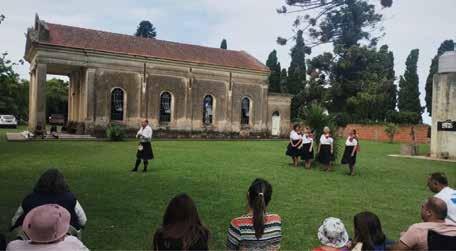
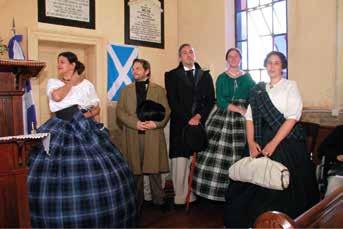
Due to bad weather conditions, the original date in November had to be cancelled, but the event still took place in December, on a very nice day, allowing the participants to enjoy a pic-nic outdoors. In the morning, those present were able to take part in the religious service offered by Rev. Julian Blanco, browse the informative stands and later in the day enjoy the Scottish dancing diplaypu on by the Merry Scottish Dancers and the full charm of the “Sociedad Victoriana Augusta” whose members very elegantly walked the grounds.

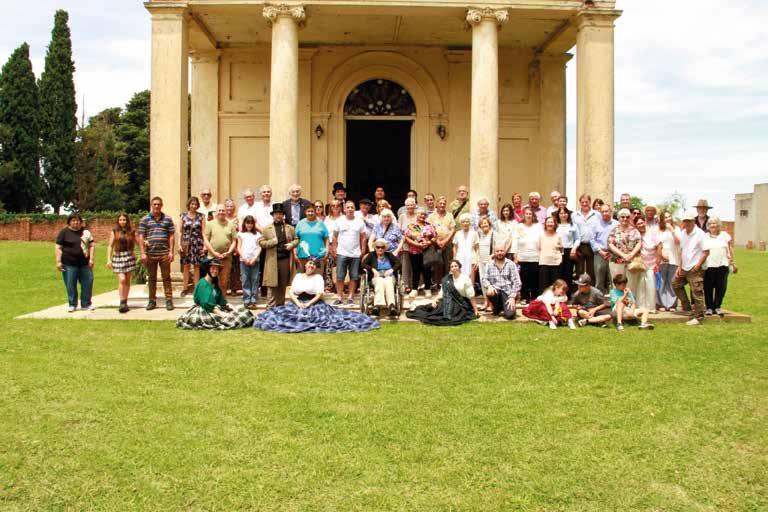
Chascomús, by the end of the 1800s, became an important centre of activity for several British ventures where, while all that was taking place, British families were established; their social and cultural background left many markers. But time has had a way of blurring these important moments from the minds of contemporary local descendants. The objective of the Chascomús District of the ABCC is to bring them round to recognize and cherish their “roots” and value what their ancestors did in this area.
ABCC Chascomús District abcc.chascomus@gmail.com FB abcc.chascomus IG @abcc.chascomus
Arthur Lowndes - Chairman
Rhys Meirion, the famous Welsh tenor, who came with the visitors, gave a concert accompanied by local choirs and pianists.
An enjoyable time was held at the asados and tea parties organized for the occasion and the tourists went home praising the local wines and the welcome they received.
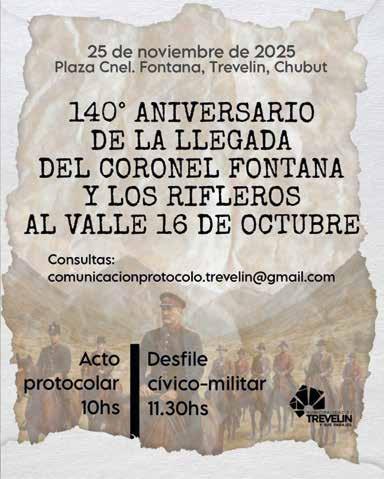
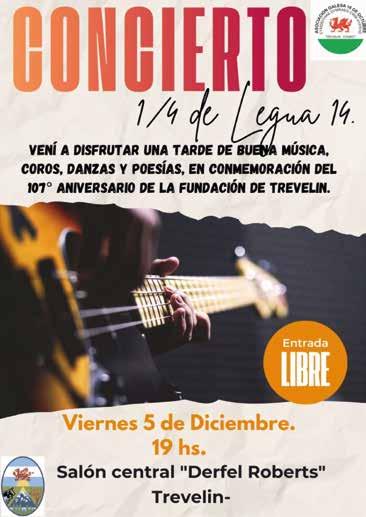
Sixty visitors from Wales and England travelled out on the first week of December to join in Trevelin's anniversary celebrations and the commemoration of the arrival of Coronel Fontana and his Rifleros with the ride up the mountain to where he first observed the 16 de Octubre Valley.
Janet Bruce - Chairman
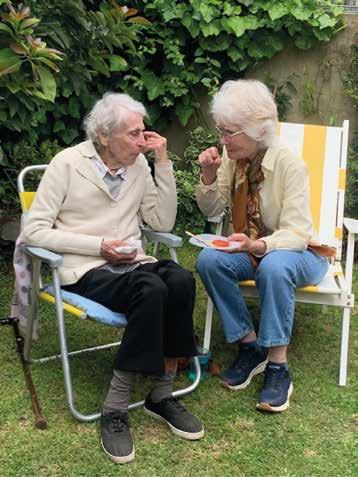
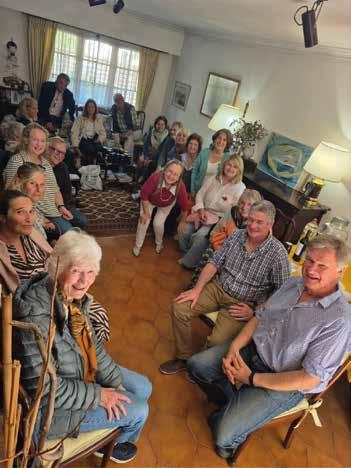
Awonderful sunny day accompanied 25 people meeting in Mar del Plata on the 8th of November!
Folk travelled from Buenos Aires, Vivoratá, Tandil and surroundings to enjoy a delicious pernil (slow cooked pork roast) with sauces and salads, lemon and orange juices plus white and red wines, the latter donated by Bodegas Vistalba in Mendoza. There was also a table with G&Ts for a fee. Later on there were delicious desserts, and after that coffee was served along with cakes and cookies.
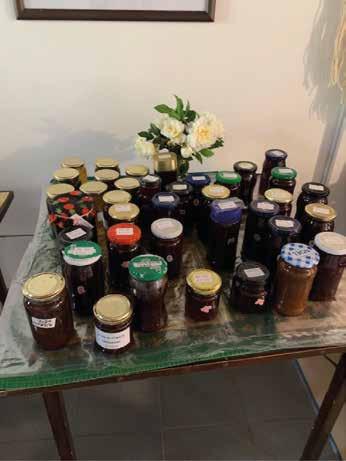
A plentiful table of donated homemade jams and jellies were sold at good prices. There was also a table of used books - alongside the Poppy Fund Appeal - for people to help themselves.
The entrance fee included a donation of toys which will be delivered to the Children’s section of the Hospital Materno Infantil nearing Christmas. Each payee was also given a ticket number for a raffle, which took place after coffee, and which the people
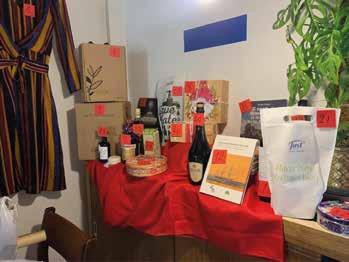
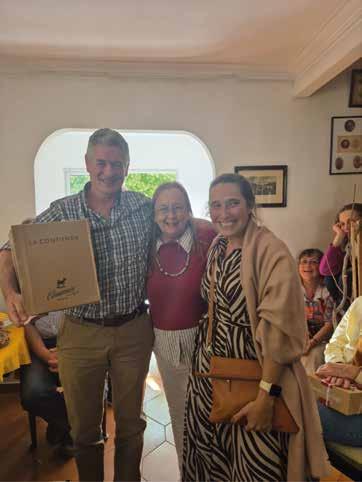
wonderful quantity of gifts, so much so that many more numbers were sold! Prizes came from Salta, Mendoza and the ABCC Central Office. Second Prize was won by ABCC Events Manager, Ms Laura Riera, who apparently is quite accustomed to delivering prizes, but not winning one herself so she was absolutely delighted! Malcolm Collie and his wife Manuela won 1st Prize, consisting of a prize box of Cimarrón Wines, produced by the fourth generation of the Bianchi/Stradella family (they were tickled pink, because they had a barbecue that evening, so they would be serving a superb Malbec!)
The Raffle was followed by a “remate” of leftover bottles of gin and pots of jam. All in all, this helped to close a lovely day and a good amount to be donated to FibroChau, an institution which helps people who suffer from Fibromyalgia, a very painful condition suffered mostly by women though not exclusively.
The Mar y Sierras Committee wants to thank all those who were able to join us, including two new members. We hope that the next Gathering will include those who weren’t able to make it this time. It was a pleasure to chat to one and all, and the feedback of the meeting was so reassuring! Till next time!

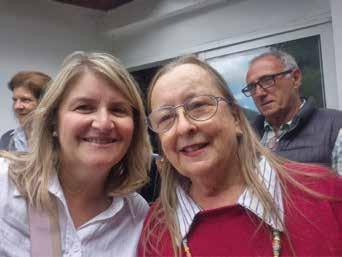
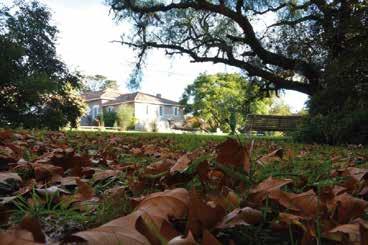

After a rough start to 2025 when we had to find a new venue for our Car Boot Sale, we were fortunate to have the opportunity to hold our events at the Colegio Marin. Fantastic venue!
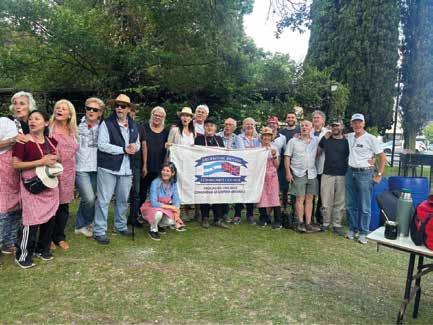
We began with our first 2 events in the School’s car park which were a success. Our last one in November we decided to hold the event in their front garden with trees to protect us all from the sun. This went very well also but required lots of planning and organizing in order to get all the feriantes comfortably settled.
Thanks again to this amazing group of helpers: tea ladies, parrilleros, Car Boot Sales table, bar, parrilla helpers, parkers and ticket table boys.
We will be confirming dates for 2026 as soon as possible.
Pablo Beecher - Chairman
An ancient longing that starts to take shape…
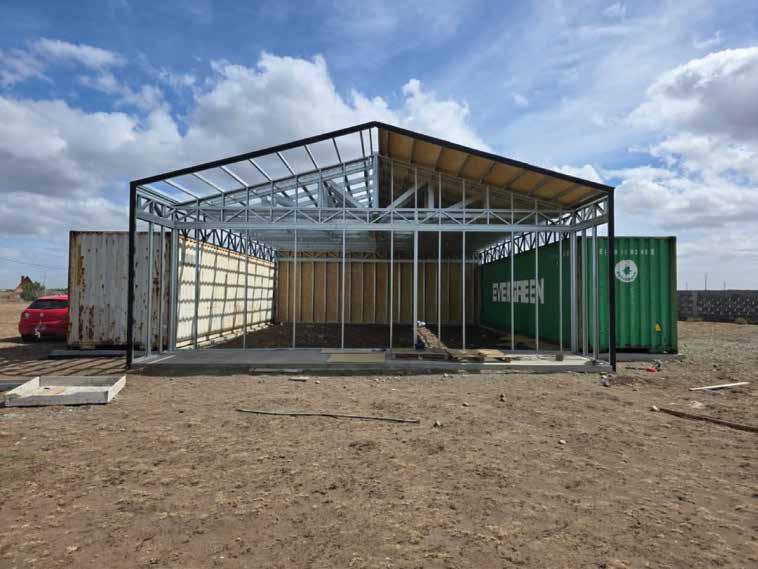
At their traditional end-of-year toast - Christmas Eve and New Year's Eve - the Board of Directors of the British Club of Río Gallegos shared a meal with its members. There, they viewed images showing the progress of the clubhouse construction at the Country Club. This is on the one-hectare plot donated by the Beecher Apollonio family two years ago. Ricardo Gómez, manager of the company CONSAR along with architect Sebastián Méndez (both club members), are managing the logistics and construction, which has progressed considerably despite the adverse weather. This is thanks to the significant donation from the Igor Bain family, in addition to contributions so far from Naomi Kennard de O'Byrne and Miguel Mayeste, the Club's President.
The clubhouse is organized around a main hall created by a roof connecting two large containers where the restrooms and kitchen will be located. In their address on December 22, 2025—in front of dozens of members—members of the Committee reviewed the progress of the works and expressed their enthusiasm for continuing them during 2026 with the intention of putting them into operation as soon as possible for the enjoyment of all the Club’s
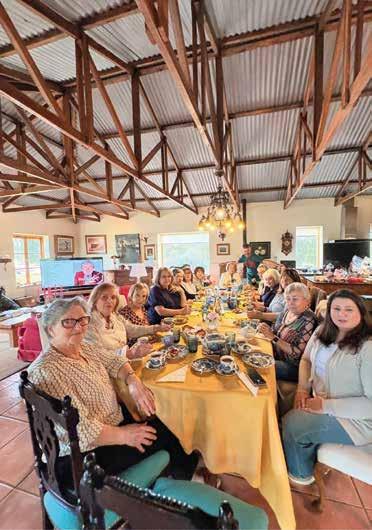
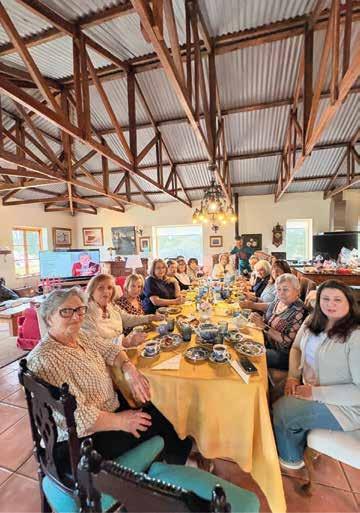
Recently, members of the British Club and collaborators of the ABCC gathered to mark the end of the 2025 cycle. In recent years, their charitable work - providing donations of meatfocused on the "Casa de María" soup kitchen at the Sacred Heart of Jesus Parish. However, this collaboration has now shifted to the "Nuestra Señora del Rosario" Parish to support various areas of their work.
Those present included: Elena Fuentes de Beecher, Eliana Fleuret de Espinoza, "Nené" Colombo, Marta García Rushen de López Calo, Miriam Clark de Fourlón, Juanita Morrison de Tiscornia, "Pichona" San Miguel de Fernández, Paula Apollo nio de Beecher, María Cristina Darré de Tournour, Nora Lofredo de García, "Ichi" Rossetti de Ballardini, Ana María Coloe de Paiva, Gloria Maillo de Nallar, and Carolina Neil de Fernández.
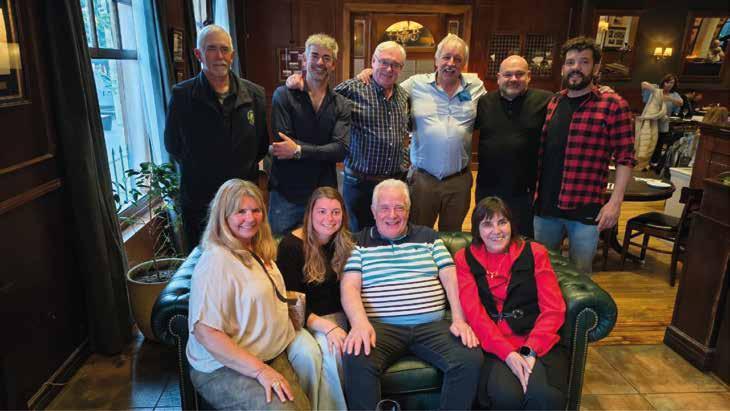
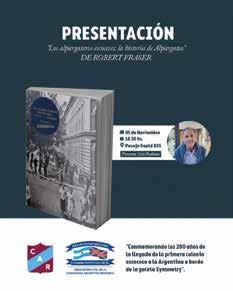
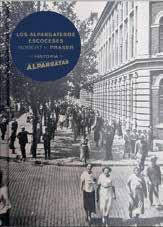
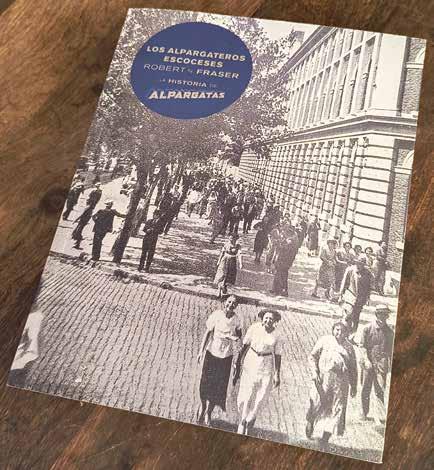
To commemorate the 200th anniversary of the arrival of the first Scottish colonists in Argentina aboard the schooner Symmetry, we decided to honour those bold immigrants with the presentation of the book "Los Alpargateros escoceses", written by Mr Robert Fraser, a descendant of the Scottish founders of this argentine company.
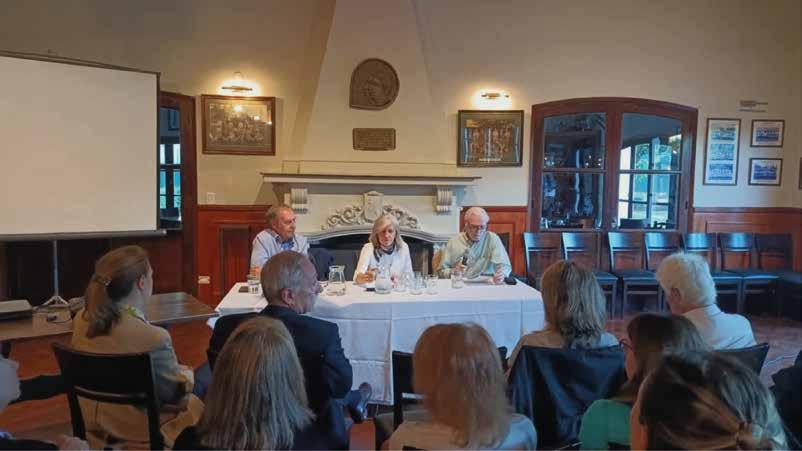
The event was held on Wednesday, November 5th, in the main hall of the Club Atlético del Rosario, Plaza Jewell.
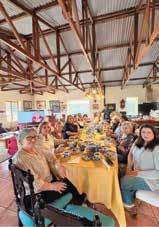
We were joined by members of the ABCC Rosario District, club members and interested parties
The book is highly recommended.
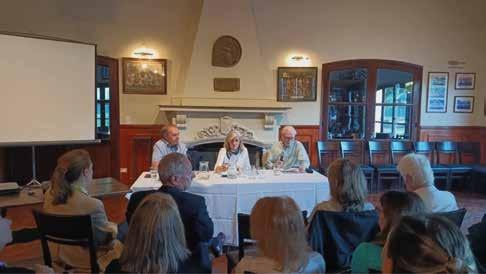

At 10:30 AM on August 26, 2025, the Plaza Ciudad de Banff, Buenos Aires served as the setting for a heartfelt tribute to General José de San Martín on the anniversary of him being awarded the Freedom of Banff in 1824.
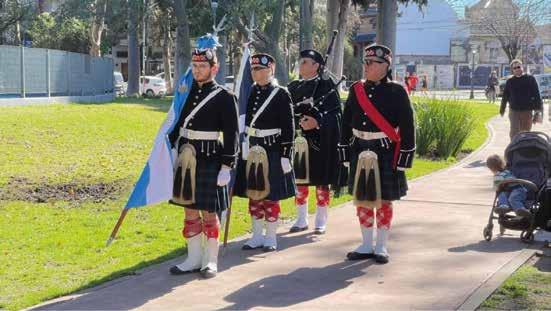
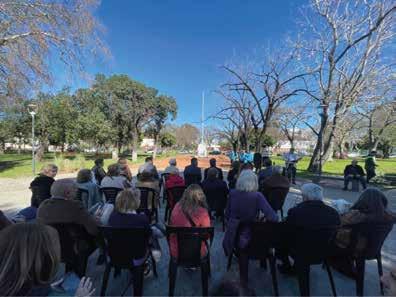
The ceremony opened with the Buenos Aires Scottish Guard marching in, Argentine and Scottish flags aloft and accompanied by a bagpi per, blending ceremonial precision with solemn remembrance. The event drew together neigh bours, local officials, and representatives of various organisations. Historian Susana Boragno, who has visited Banff, traced the Liberator’s (as San Martin is known) 1824 journey and explained how the square came to be named Plaza Ciudad de Banff.
John Hunter BEM, vice-chairman of the Argenti ne-British Community Council, then read a letter from Lord-Lieutenant of Banffshire Andrew Simpson, as well as a joint letter from Ian Williams (Chair, Friends of Duff House), Mhairi McKean (Secretary, Banff Preservation and Heritage Society and the Museum of Banff), and John Cox (Chair, Banff Castle Community Association). Both letters celebrated the occasion and expressed hopes for continued friendship between the Scottish and Argentine peoples. Juan Manuel Oro, president of the local council, expressed his delight at the ceremony and his hope that neighbours would better understand why the square bears the name Ciudad de Banff.

Tony Kay OBE of the British Embassy congratulated the organisers and highlighted the event’s significance in strengthening Argentina–UK ties, inviting all attendees to visit Banff.
In a highlight of cross-continental camaraderie,
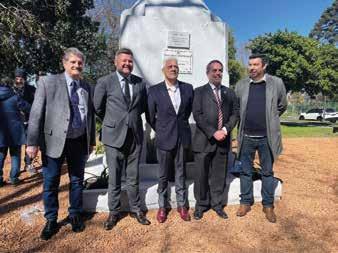
Lord-Lieutenant Andrew Simpson presented a Banffshire flag to John Hunter - a flag first bestowed upon him in Banff on August 19, 2024which is now displayed in the public library near Plaza Ciudad de Banff as a living symbol of shared heritage.
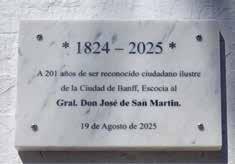
The ceremony also featured the unveiling of a commemorative marble plaque dated August 19, 2025, marking the 201st anniversary of San Martín’s recognition in Banff and honouring the Libertador’s historic bond with Scotland.
These initiatives aim to deepen community engagement with the shared heritage between Argentina and Scotland.
Banff Castle Community Centre - Banffshire Friends of Duff House Banff Preservation and Heritage Society and Museum of Banff
by Paula Seiguer
My name is Paula Seiguer, I am a History professor at the University of Buenos Aires and a researcher at CONICET (National Scientific and Technical Research Council) and a member of PECBAL (Program of Studies of British Communities in Latin America) at the University of San Andrés.
When presenting Robert Fraser's book, The Scottish Espadrille Makers: The History of Alpargatas, Robert has repeatedly emphasized that he is not a professional historian, but rather a descendant of the family that founded and ran the company for most of its history. However, I believe it would be unfair to Robert's achievements to simply accept this modest self-description. As a historian, I believe the book makes a genuine contribution to historical knowledge, and for several reasons.
First, because it is a very thorough reconstruction, based on a wealth of unique documentation, of the history of what was one of Argentina's most important companies, the origin of countless products that are part of everyone's memories and experiences. Topper, Flecha, Havaianas, Rueda—these are names we all know. In this sense, Robert has had access to invaluable family and company archives for specialists in the history of business.


Secondly, what we can see through the history of Alpargatas that Robert tells us is a history of industry in Argentina. I recently read with indignation a very new book, written by a North American colleague, that claimed Latin American industrialization began in the 1980s. I felt like sending him a Siam Di Tella so he could learn his lesson, and the driver should certainly be wearing Alpargatas clothing. There is a great deal of ignorance about the temporal depth and complexity of the history of Argentine industrialization. That is why this book is so necessary. In its first part, which recounts the founding of the factory, the book provides an extraordinary perspective that parallels this industrialization with the British Industrial Revolution. It describes a series of economic journeys that include the colonies and the Royal
Navy, the Basque Country, and the entire Atlantic trade route during the 19th century. Similarly, the narrative throughout the 20th century reveals the impact that political changes, the increasing complexity of Argentina's international relations, and its ever more diverse integration into international markets had on local industry. The constant adaptation to rapidly changing and challenging circumstances—from the difficulties in obtaining raw materials during wars or the Great Depression, to changes in regulations and the relationship with unions under Peronism, to technological advancements and the constant need for capital—all of this that Alpargatas faced mirrored the challenges other sectors of industry had to grapple with.
Third, this book is an important contribution because it makes us reflect on Argentine-British relations, and in particular, on the role of the
Anglo-Argentine community (in this case, Scottish-Argentine) in this whole story. Reading the history of Alpargatas made me think about how difficult it is to distinguish foreign capital from local capital: in the end, the Scottish Frasers contributed capital and know-how in the beginning, but they weren't the only source of capital, and the venture became local very quickly. There are two key moments in the book that I consider fundamental: one is when the first Fraser told his Scottish relatives no, that he wasn't willing to save the family factory in Scotland at the expense of Alpargatas. And the second is when another Fraser, the first Fraser grandson, said: "I'm not the owner; the shares are widely distributed. Those who have contributed capital come from very different backgrounds, and the owners include the Alpargatas workers." I think these pivotal moments compel us to think of the Scots, and Anglo-Argentines in general, a bit like we think of any other immigrant group. Despite their preference for speaking English and maintaining certain cultural distinctions, it's important not to lose sight of the level and speed of their integration: they are not simply English or Scottish, they are first and foremost Argentine, deeply integrated into the local society.
I want to personally thank Robert for also reconstructing some of my family history in this book, because my grandfather and great-grandfather (along with a couple of great-uncles) make appearances throughout its pages. Something Robert has helped me discover is how closely our families have been intertwined for so long, something I was completely unaware of. And recognizing family history, whether the Fraser family history or that of my ancestors, always brings great emotion with it.
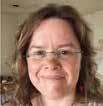
Paula Seiguer holds a PhD in History from the Universidad de Buenos Aires, where she is Professor of General Social History in the Facultad de Filosofía y Letras. She is also a tenured researcher in CONICET. She is the author of "Jamás he estado en casa". La Iglesia Anglicana y los ingleses en la Argentina (Biblos, 2017), and the editor of Experiencias plurales de lo sagrado (Imago Mundi, 2014) and Fronteras de lo sagrado (imago Mundi, 2020), with Dr. Fabián Flores, and of Argentina y Gran Bretaña, 200 años de historia (1825-2025) (Universidad Nacional de Quilmes, 2025), with Dr. Alina Silveira.

By Catherine Kirby
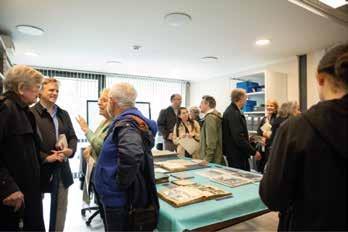
In October 2025, the Max Von Buch Library’s Special Collections & Archives Sector (known as CEyA) at the Universidad de San Andrés Victoria campus, held their tenth gathering for users and contributors to the Documentary Fonds and Collections.
Library Director Andrea Saladino welcomed the visitors, mentioning that the Library was celebrating the CEyA’s 25th Anniversary in the year 2000 this Sector was specifically created with the objective of gathering and preserving local historical documents from the past two centuries that originated in English, Scottish and Irish immigrant communities in Argentina.
It was a very informative meeting, as librarians and archivists Manuel San Román and Amanda Padín Amato explained how their Sector works: all material is free for users and researchers, but depending on the type of material (paper, books, film, images, photos, etc.) of some of the Documentary Fonds and Collections can be accessed online, while others can be seen and researched in person by making an appointment to visit the CEyA’s premises. All documents are kept at special temperatures to avoid deterioration, and must be handled with gloves, and no flash photos are allowed.
Only donations are accepted. Among the Documentary Fonds available are files on shipping companies, the Turner Group and Agencia Marítima Johnson; the historic Telegraph companies; theatre activity is represented by The Mordino Company and the Buenos Aires Amateur Dramatic Club; and certainly very interesting, the Royal British Legion, Buenos Aires Branch; Anglo-Argentine journalist and writer Andrew Graham-Yooll’s enormous collection of drafts, notes and photographs gathered throughout his career at the Buenos Aires Herald and other newspapers and magazines, plus his many books; and the daily The Standard collection, a treasure of a newspaper printed for over 100 years, with local and foreign news.
CEyA was founded with a mission: collecting, organizing and preserving the documents that emanated from the activities and histories of the communities mentioned. The Archives “provide free access to the academic community and users, keeping this heritage for future generations.”
Also during the gathering, we had two very interesting presentations: Dr Alina Silveira and Dr Paula Seiguer from UdeSA’s “Programme on the British Community in Latin America” (Programa de Estudios sobre la Comunidad Británica en América Latina
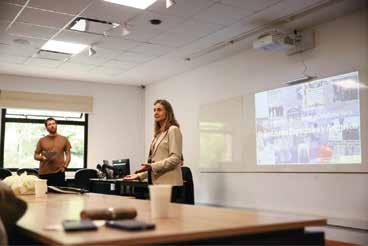
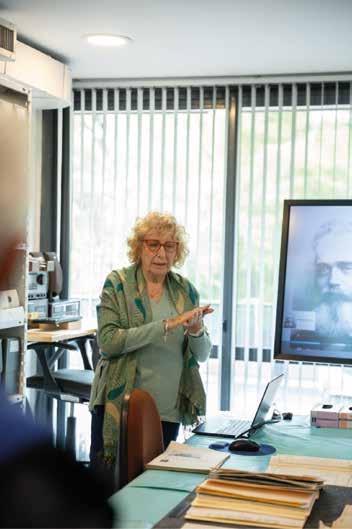
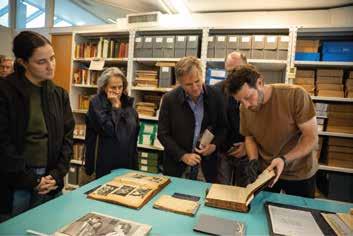
(PECBAL), as part of the 200th Anniversary of the Scottish schooner “Symmetry’s” arrival in Buenos Aires in August 1825, carrying the future settlers of the Scottish agricultural colony, established on the Santa Catalina/Monte Grande properties belonging to the Parish Robertson brothers (see The Bulletin, May 2011, article by same author). Alina Silveira’s talked of a “shared history”, in an outline of the PECBAL’s activities both regarding local history of the British Community in Argentina as well as the PECBAL’s connections with other academies or programmes also focused on British communities in several Latin American countries.
The 200th Anniversary celebrating the historical event of the arrival of the Scottish settlers was also taken into account by the Comunidad Ampliada San Andrés, which through Max Rohm (Comunidad
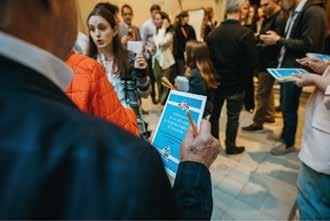
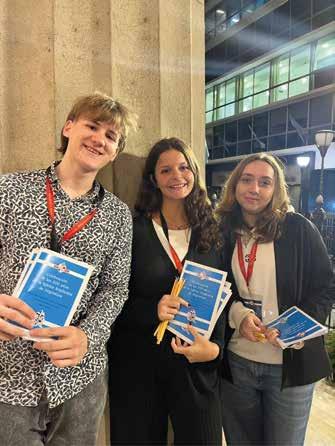
Ampliada San Andrés, CASA) and Sebastián Pasquet introduced their contribution to this event, a special box containing nine books under the collective name of: “¿Habrán soñado esta trama? Apuntes de una comunidad” (Did They Dream of This Plot? Notes of a Community). This printed collection was created to highlight an immigration minority’s valuable cultural contribution to the country in so many ways, therefore each book has a theme, a history of the community, stories, poetic prose, essays, even a child’s colouring book, etc. Focusing on diversity as well as sustainability, the books were jointly written and edited by several members of the extended St Andrew’s community, inviting an inter-generational view to recall milestones, habits or bonds forged and still recognizable in today’s busy community network, which has expanded around the world.
After the presentations, the Library team invited guests to visit the Library’s premises, as well as the CEyA area, where Glennis Oliver (one of the Sector’s volunteer contributors) read and described her transcripts of several hand-written letters by Archibald Williamson, “Archie’s Tea Dance” and “Archie’s Escape from the Heat”, descriptions of “Archie’s” experiences in Buenos Aires, taken from the letters he wrote to his family in the 1800s, and which form part of the Lough Family Fonds.
As Bulletin readers may have already read, the Special Archives Sector welcomes the donation of any historical material connected to our British and Irish communities, be it in the form of business files, personal papers, photos, etc., which can be viewed as valuable historical documents for the future generations!
To contact, see below. Colecciones Especiales y Archivos Biblioteca Max von Buch Tel.: (+ 5411) 7078 0400 int 4230
Email: archivo@udesa.edu.ar

by Arthur Lowndes
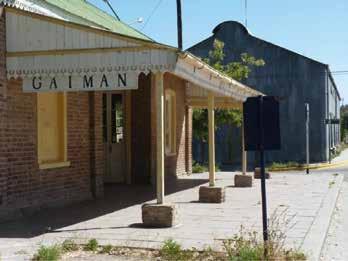
The Wladfa or Welsh colony of Chubut in 1881 extended nearly 70 kms from the mouth of the río Chubut (now Playa Unión) to the west of Gaiman (tehuelche for “rocky ridge”). The lack of grain storage for the more than 80 farms in production and the bad roads unpassable after rains, sparked the idea of building a railroad.
It should be said that the wheat production from the Chubut farms was of superb quality and had won prizes in France and the USA.
The mouth of the river Chubut was inadequate for ocean-going vessels and therefore the produce would need to be shipped from Puerto Madryn.
Under the leadership of Lewis Jones, engineer E.J. Williams and others, plans were made for the railway. By the year 1885, most of the surveying and costing had been done by engineer Williams. The arrival of Thomas Davies from Wales and his vigorous advocacy of building the railroad kept the project alive.
In 1886, A.P. Bell set up a company in Liverpool called Ferrocarril Central Chubut (FCC) and raised the capital necessary to build the railway and in 1886 the ship “Vesta” arrived with a contingent of families from Wales and Liverpool to start the construction. They established base at a location that later became the city of Trelew (tre in welsh is “city” and lew for Lewis Jones).
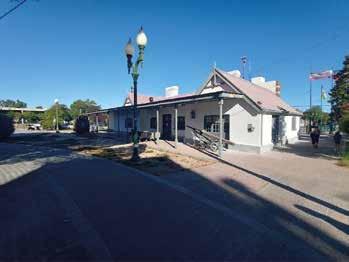
They laid tracks between Port Madryn, Trelew, Gaiman and Dolavon (bend of the river) and an extension to Playa Union, and built a 70-meter long tunnel in Gaiman to allow them to reach further West.
If communications between the engineers working the railroad were difficult, how much more tedious was the link between Chubut and Liverpool. The mail services from Buenos Aires were in the capable hands of J.H. Lamb and Co. (shipbrokers), agents for Lamport & Holt and Co., who contracted the Vesta to carry the rolling stock from Liverpool to Madryn. The ship lay approximately 100 meters from the shore and a rock pier and tracks were laid up to the ship in order to unload the 2 heavy steam engines.
The first train ran from Madryn on the 26th of April 1888 and during the first year, 8000 tons of products were transported.
Arthur David Lowndes, berry farmer, Choir director, musical judge and concert organist and ABCC representative in Chubut.


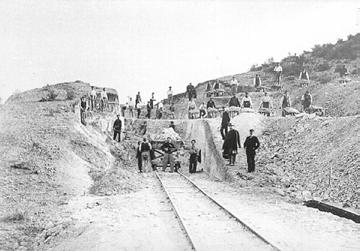
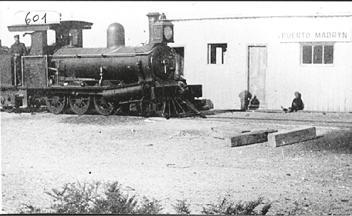
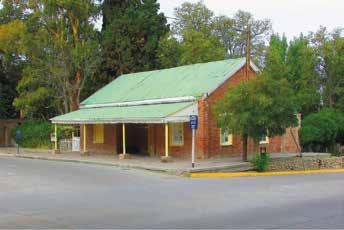
During this period of Chubut history, a Royal Navy squadron visited Chubut at least every year to report back to the Admiralty on the Colony’s progress, which clearly demonstrates the interest Great Britain had regarding the Colony in Patagonia.



The ABCC records with gratitude the receipt of the following donations. If for some reason your contribution does not appear on this pages, please await a future listing in the next edition of The Bulletin
11 LIVES CELEBRATED
Marcela Righetto
Lila De Carolis - 11/10/2004
Caroline Bridger - 6/9/2017
Diana Pierrepont - 17/4/2017
Jennifer Grut
Alicia Perrone
Betty Barnaimon - 8/5/2022
Cecilia Forrester - 6/9/2020
Marina Zumaran - 11/10/2025
Cecilia Otonello - 5/11 2025
M Laura Guastavino - 6/11/2025
From: St. Andrew’s Scots School – Year 1971
Paul Reynolds ..../..../....
Norman & Diana Boyer
Michael G. Harrison 15-1-2026
Julianne, Agustin and their children

ABCC Donors / Special thanks to this list of donors, who quietly yet regularly help the ABCC.
Roxana Inés Absi
Ana Laura (Ani) Alvarez
Olga Alvarez de Barr
Carlos Omar Amarillo
Daniel Argüello
Alan. Arntsen.
Carlis Axel Augspach
William & Mariana Bain
Mary Barker
Lally Gatica de Barr
Phyllis Barrantes
Susana C. Bateson
Ian Bishop Beech
Merina Begg
R M Robin Begg
Daniel Bell
Jane Beller
Walter & Frances Bengtsson
Stephanie Berwick
Ailsa Helena Berzon
H.A. Bindon
Penella Bingham
Sally Anne Black
Richard E. Bowen
Josefina Maria Bradbury
Mauricio Bradbury
Anne M. Bradbury
Maria Elina Bravo
Margaret Bridger
Basilio Jorge Bridger
Alejandra Maria Brown
Janet Bruce
Alejandro Bruce
Viviana Btesh de Attie
Susana Beatriz Budai
Roberto Ariel Bunge
Rodrigo Bunge
Ralph Dennis Burton
Roderick A. Cameron
Juan Cameron
Reinaldo D. Campbell
juan argentino campbell
Pamela Campbell de Ponce de León
Marina Cecilia Candioti Crook
Daniel Carr Rollitt
Miguel A. Cassels
Roberto Cegelnicki
Patricia Chandler
Carina & Resi Chapman
Dorotea I. Charap
Ricardo Federico Cleaver
Jorge Clutterbuck
Esteban Cohen
Silvia Collingwood
Eduardo S. Colson
Mariela Adriana Colucci de Blanco
Jennifer Juana Cook de Geddes
Roberto C. Cox
Carlos Cranbourne
Juana Sylvia Joan Croucher
Mariana Curi
Roberto Daintree
Alejandro Daly
Barry Y. Darbyshire
Jorge Carlos Dickinson
C. W. De Donaldson
James Donaldson
Eduardo Donnelly
P.A. Dougall
Stephanie Dougall de Collazo
Victoria Duff
Heather Raquel Dunn Randall
Vivian Ann Earsman
Martin Eayrs
Pedro Eddy
Nicolás Edwards
Francis Fernie
Janet Forbes
Janet Forbes
Susana Foster
Derek Foster
Ernesto Fox
Valeria Fragola
Diego Edgar Francis
Roberto Norman Fraser
Margarita A. G.D.de Carlés
Jorge R. Gandolfo
Diego & Margarita Garbarino
Diana Garrett
Matías Alejandro Gibson
Martin H. Gibson
Jesus María Godoy
Maria Godward
Nora C.G. Goodliffe en BABS
Luisa L. Gordon Davis
Jaime R. (Rocky) Gordon Davis
Lorraine Gordon Davis
Joanne Graham-Yooll
Eduardo & Karin Grant
Elaine María Macadam de Grant
Lorenzo Felipe Grant
John Alistair Grant
Jean E. Graves
Andrés Gregg
Roland V. Grimmer
Alfredo Martin Grisar
Michele Groning
George Anthony Barton Hall
Carlos Edgardo Hampton
Jorge Ronaldo Hampton
Juan Antonio Hampton
Cecilio Alejandro Hampton
Alicia Hannaford
Guillermo Harris
Ronaldo Eduardo Hawes
Alberto Francisco Henning
Maria Cecilia Herrera Dauphin
Alice Hobbs Jones
Axel N. Hogg
Tomás Jorge Holway Ramos
Mejía
William Alejandro Horsey
Christian Horsey
Graham S. Hortis
Helen Houstoun
John Neville Hudson
Brian Hughes
David Hughes
Rolando Huisman
Cecilia Laura Hunter
Juan Hunter
Judy Hutton
Margarita A. Jackson
M.P. Johnson
Ruth Jones
Cinthia Irene Juricic Botto
Graciela Sandra Karas
Margaret Kay
Patricia Ann Dunn de Kennard
Patricio Kirby
Rodolfo A. Kirby
Melanie Kirkwood

Julia Maria Kirton
Patsy Kotroba
Ana Maria (Annette) Krieger
Pedro Kristiansen
Pedro Kristiansen
Eduardo Carlos Lane
Florence Myriam Lane Richardson
Federico W. Langdon
Ernesto Nicanor Lastra
John & María Inés Lee
Michael Leslie
Miguel Leslie
James Douglas Lewis
Clara Eva Lockwood Martínez de Hoz
Guillermo Jaime Logan
Alejandro & Joanie López
Pueyrredón
Timoteo Juan Lough
Arturo Lowndes
Margarita Ana Lyons
Ronald Mac Gaul
Cecilia Inés Macadam
Ronald MacGaul
Phyllis Magdalena MacKenzie
Felicia Evelina (Phyllis) Hortis de Macnie
Roberto P. Marenzi
Ronaldo Martin
Claudia Martin
Patricia E. Marull De Campos
Carles
Patricia Susana Mathews
Andrés D. McCallum
Wendy & Alan Estuardo
McDonald
Silvia Jean McIntyre Morley
Alma & Otto Meile
Vito Meiller
Diana Patricia Merchant
Alejandro Mischutin
Nancy Elizabeth Mitchell
Richard Moeller
Michael Mohr-Bell
Valeria Ana Monk
Christine Moore
Maxine Louise W. de Moore
Dudley Jorge Morgan
Carlos Morris
Jean Morris
Guillermo Murchison
Barbara Murray
Cristopher Nash
Malcolm Nino
Mariana Niven
Renée Rosa Niven
Alexander Daniel Norris
Michael O´Byrne
Naomi H. Kennard De O'Byrne
Catherine Ogdon
Juan A. Olivo
Penelope Ortner
Cristina Sheila Page
Carlos Eduardo Peebles
Reginald Penn
Humphrey J. Peter
Pedro Phillips
Gerardo Pickenpack
Raul Alejandro Piñero
Ricardo F. Place
Ricardo S. Pollock
Helena Palmer de Powell
Paulina J Pritchard
David Ricardo Pruden
David Rogelio Puleston
Graciela Queirolo de Ghiraldo
Silvia Raquel Quesada de Martelli
Eduardo J. Raffo
Joan Raitzin
Carlos María Rodríguez Lara
Sylvia Ryan Bahmann
Jorge Gustavo Sandez
Lucy Santamarina
Richard Schefer
Margarita Elizabeth Ruth Schiele
Lorenzo Shakespear
Jane Simian
Jeremy & Elena Simpson
Ricardo Siri
Inés M. Slobom
Bruno (Brian) Esteban Smith
Claire Smith de Hufnagel
Nuria Mónica Solé
Michael John Soltys
Jonathan Spencer Jones
Ricardo St. John
Jorge M. Steverlynck
Ian M. Stocks
Pedro Stocks
Miguel Strugo
Jacqueline Syme de Steed
Jenifer J. de Taylor
Ian R. Taylor
Roberta Dagmar Taylor de Clark
Silvana Andrea Tejón
Patrick Temple
Richard R. Thomas
David Christian Thomas
Silvia Elia Turner
Carlos E. Uijt Bogaard
Anne Welch Flynn
Raquel G. de Willans
Sylvia Maureen Williams
Sonia Williams de Fox
John With
Vera Mavis Woodbridge
Patricia Rosa Wray
Sylvia Wray
Linda Yael
Leila Yael
Ruben Zadro
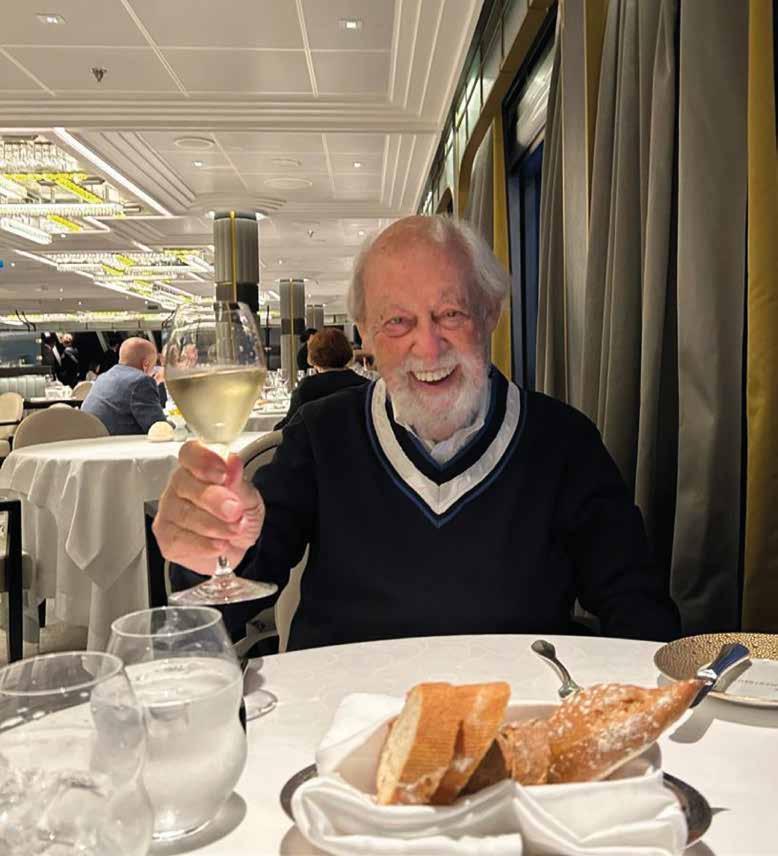
August 29, 1940-September 27, 2025
By Catherine E. Kirby
When Stanley Nash was very young, just a teenager, he was picked out of a class in a school in the U.K. as an “excellent Maths student” a few years after the end of WWII. As Stan used to tell his story, he was trained at a young age (I believe at 16!) to become a broker for the New York stock exchange… and was named then as New York’s youngest stock exchange broker ever, a job he worked as until the end.
But Stan’s greatest love - besides his family, children and grandchildren – was the theatre. It was in this environment that he thrived, made his theatre-loving friends, and the Suburban Players playhouse in San Isidro became his second home –it’s where he met his wife, Marcela, and to which he brought his son, Stanley Junior, who has also made it his home.
It was at an audition for a tragedy (Terence Rattigan’s “The Deep Blue Sea”) that I first met Stanley at the Playhouse, and we became friends over 40 years ago. Although it was his first acting experience, he fell in love with all theatre activities. And despite his busy work days, he became a very active member. Over the years he was also a key person in the SP Board (President at one point), tided over the hard times as a sponsor, and is well-remembered as a talented director of fun comedies, such as “Noises Off” and “Run for Your Wife” in the ‘90s decade and beyond.
He also encouraged new members to try their hand, and showed his appreciation. But we mustn’t forget that although he was known to praise actors for their performances, he also had his opinion on the plays, direction or performances he thought were poor, both locally and abroad!
Another activity in which he was always willing to serve was for the ABCC’s yearly fairs, held for many years at the British Embassy Residence, (up to 2019) usually in the months of March and December, through which the ABCC does its fundraising for many local organizations. These Fairs were suspended during the Covid lockdown. On this note, I was present when this past week Stan was enormously pleased with the news that the Christmas Fair was once again to take place at the Residence this coming December - he had been asked to be back at his
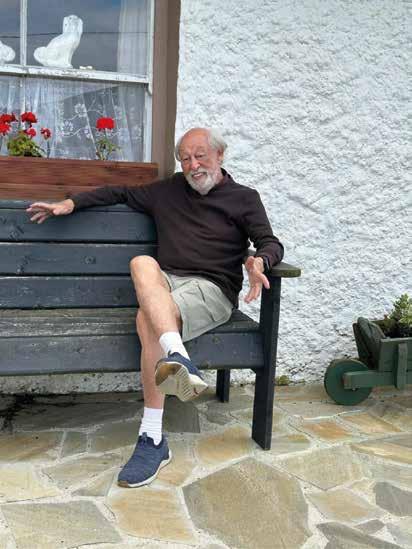
usual place, at the “door” into the Residence’s gardens.
“I’m Nash, the one with the cash,” he used to say with a laugh. But he was not only generous with helping people and organizations financially: he was an absolutely generous spirit with his friendship, with humour, with finding the funny side in the ridiculous, always a kind, caring and loving friend.
We will miss you this year and into the future, not only at “Stanley’s Door” – I’m sure you’ll be overlooking us from your Heaven, and have something to say about a previously paid QR for the entrance ticket instead of cash - but personally, what will we do without your daily jokes on the phone; or your comments on worldwide politics and economies? Whether one agreed or not, Stanley’s point-of-view was intelligent, forthright and clever. Stan, thank you for all these years.
By Laura Riera
Stanley Nash was born in London and went through the World War II there.
He was a survivor and a self-made man. After traveling the world he arrived in Argentina and decided to stay and formed a big family. Fortunately, many of us were considered part of it. He was a wonderful father, a good friend, a great person.
Generous and optimistic. He always gave good advice and praised every step of his loved ones. Stanley was a tireless member of the ABCC and a Director and the President of The Suburban Players for many years. He welcomed everybody with a joke at the theatre box office or at the entrance tohe Christmas Fair.
Dear friend: Your passage through this world did not go unnoticed. You left your mark, your legacy and your good name. We have shared wonderful, memorable moments on and off stage that today have left with you but your smile will always be in our hearts. Love you always.