Abigail (Abby) Feldmann is a second-year Master’s of Architecture student at Carnegie Mellon University, expecting to graduate in May of 2026.
Abby graduated summa cum laude from the University of Pittsburgh in April of 2024, earning a Bachelor of Science in Architecture and a minor in Studio Arts.
SUSTAINABLE DEVELOPMENT RESOURCE & LEARNING CENTER
II. “reGen”
METHODS OF ALTERNATIVE EDUCATION
III. “WOVEN COMMUNITY”
CONVIVIAL/LOCALIZED LIVING & WORKING COMPLEX
IV. “BRADDOCK UNITY”
V. “FLANNERY’S ELEVATION”
I. “THE ARMATURE”
SUSTAINABLE DEVELOPMENT
RESOURCE & LEARNING CENTER
CARNEGIE MELLON
UNIVERSITY
X-CHANGE 2025
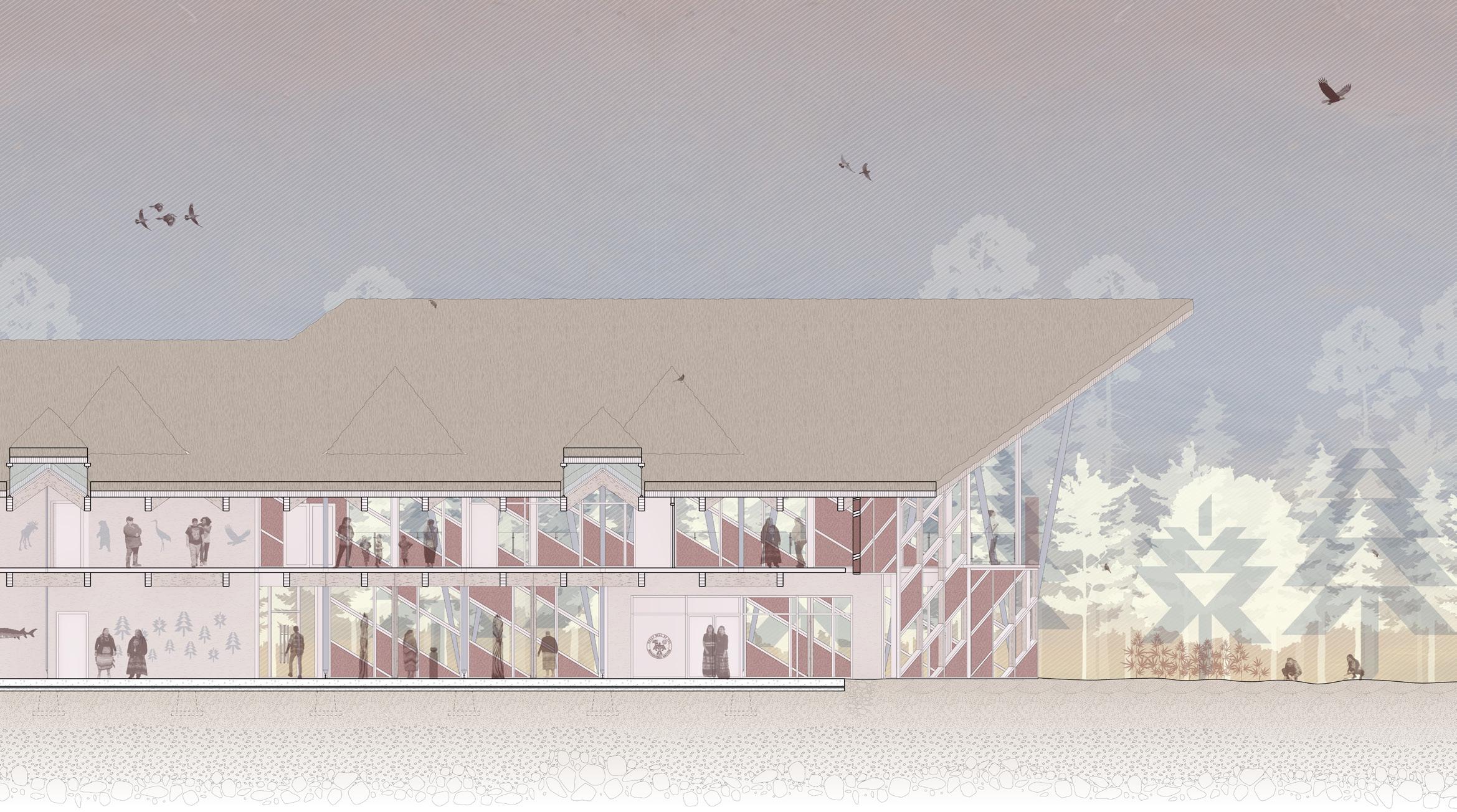
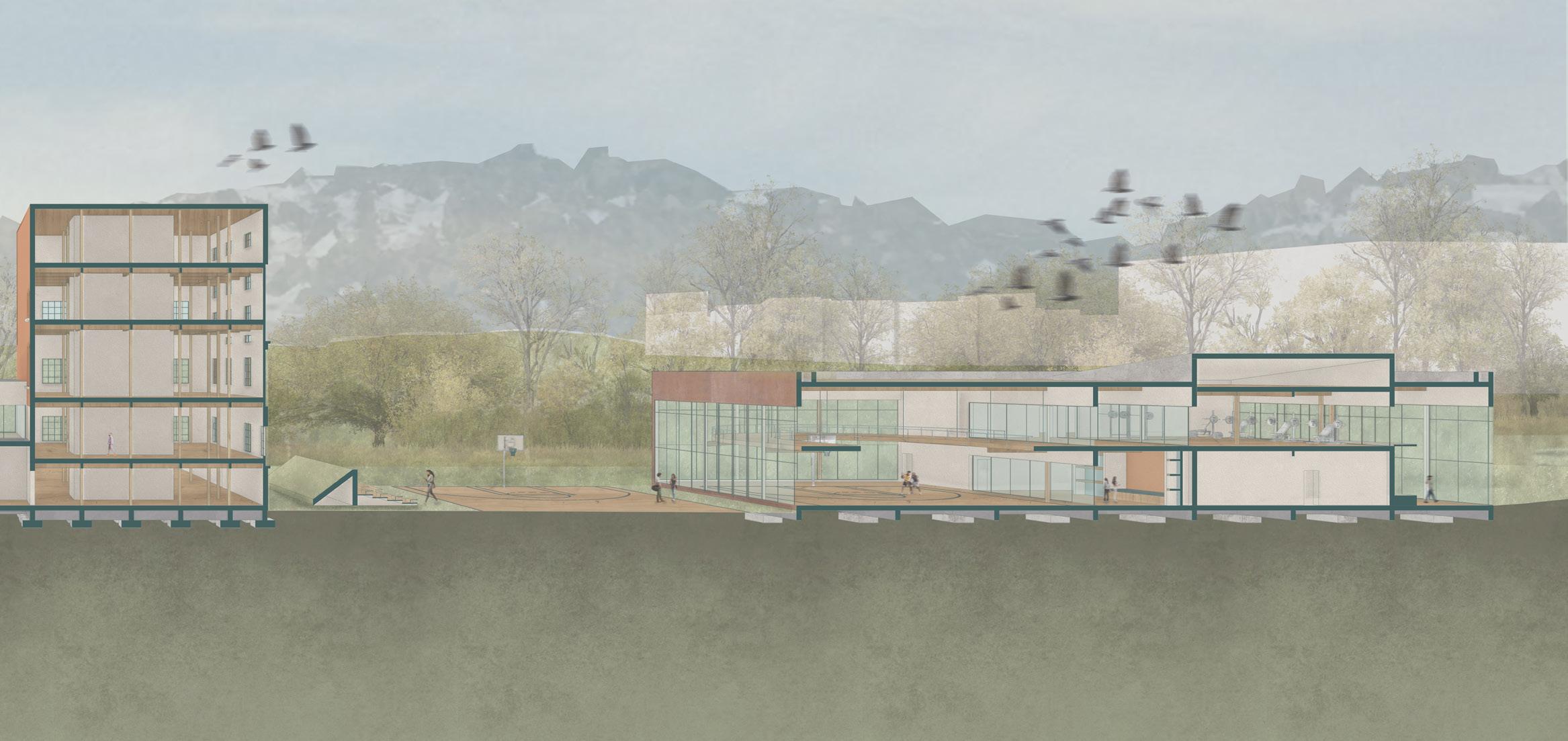
Producing of design speculations for the College of Menominee Nation Sustainable Development Institute, a 501c3 non-profit with the goal of advancing development futures based on the principles governing land management in the Menominee Forest
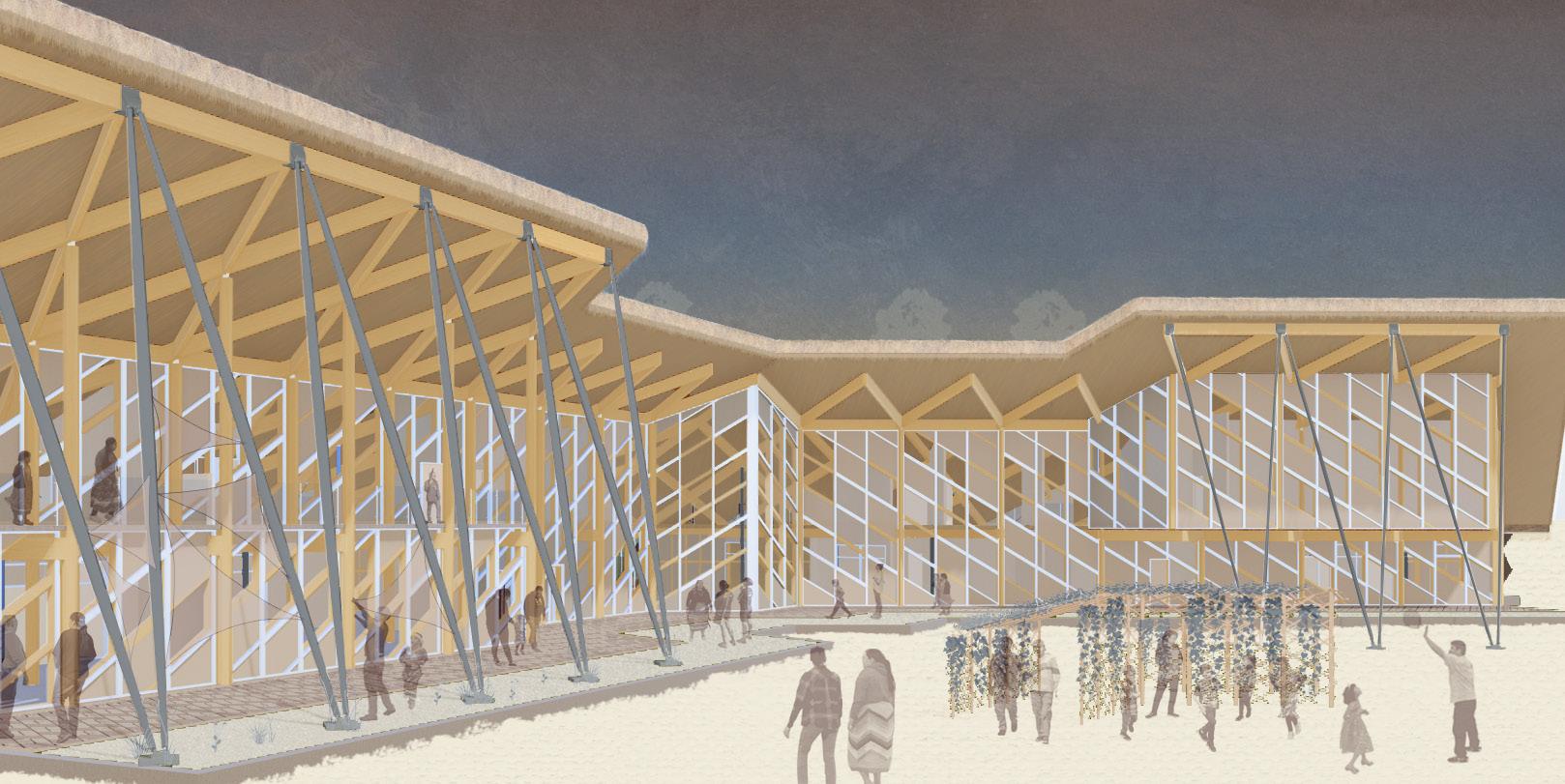
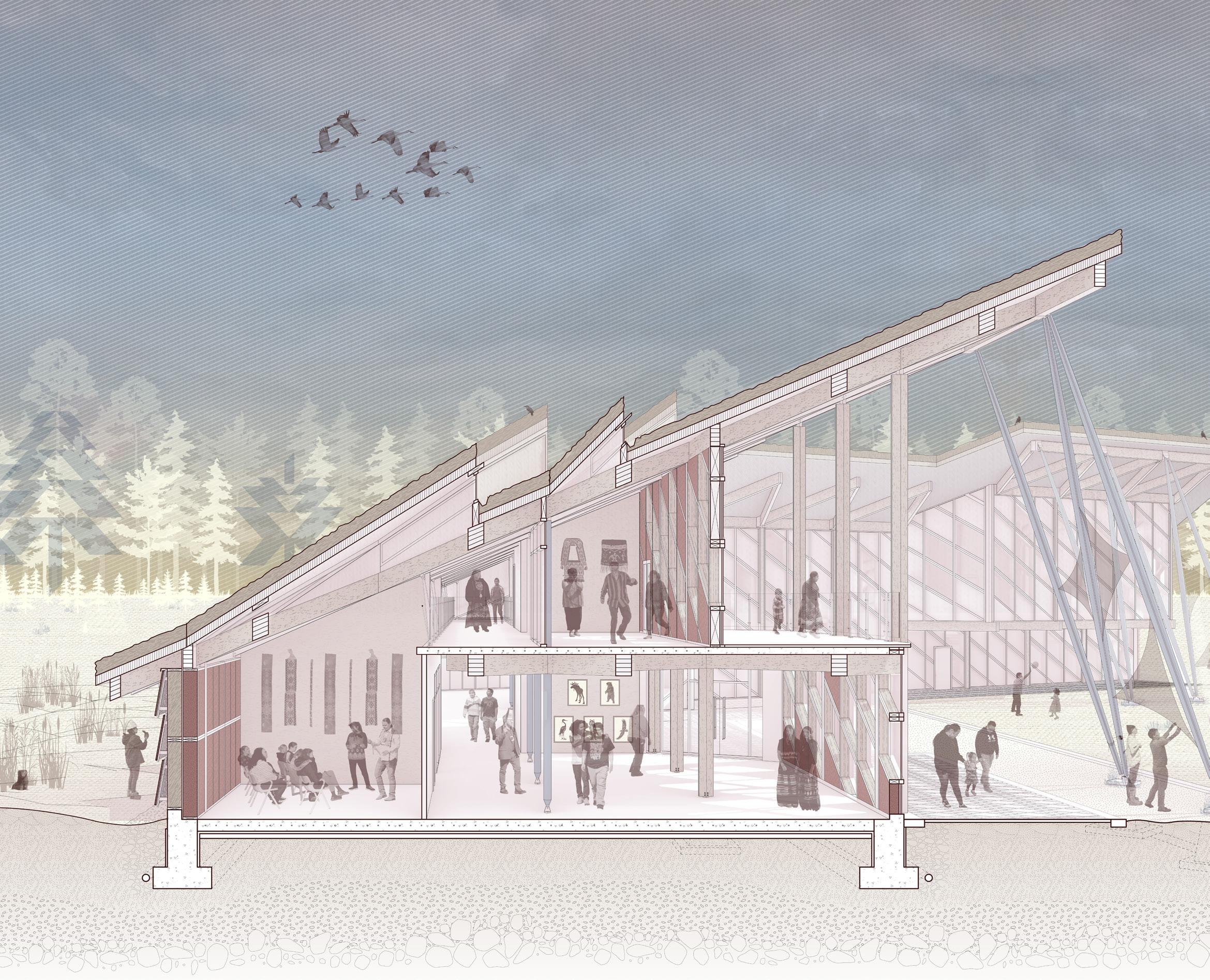
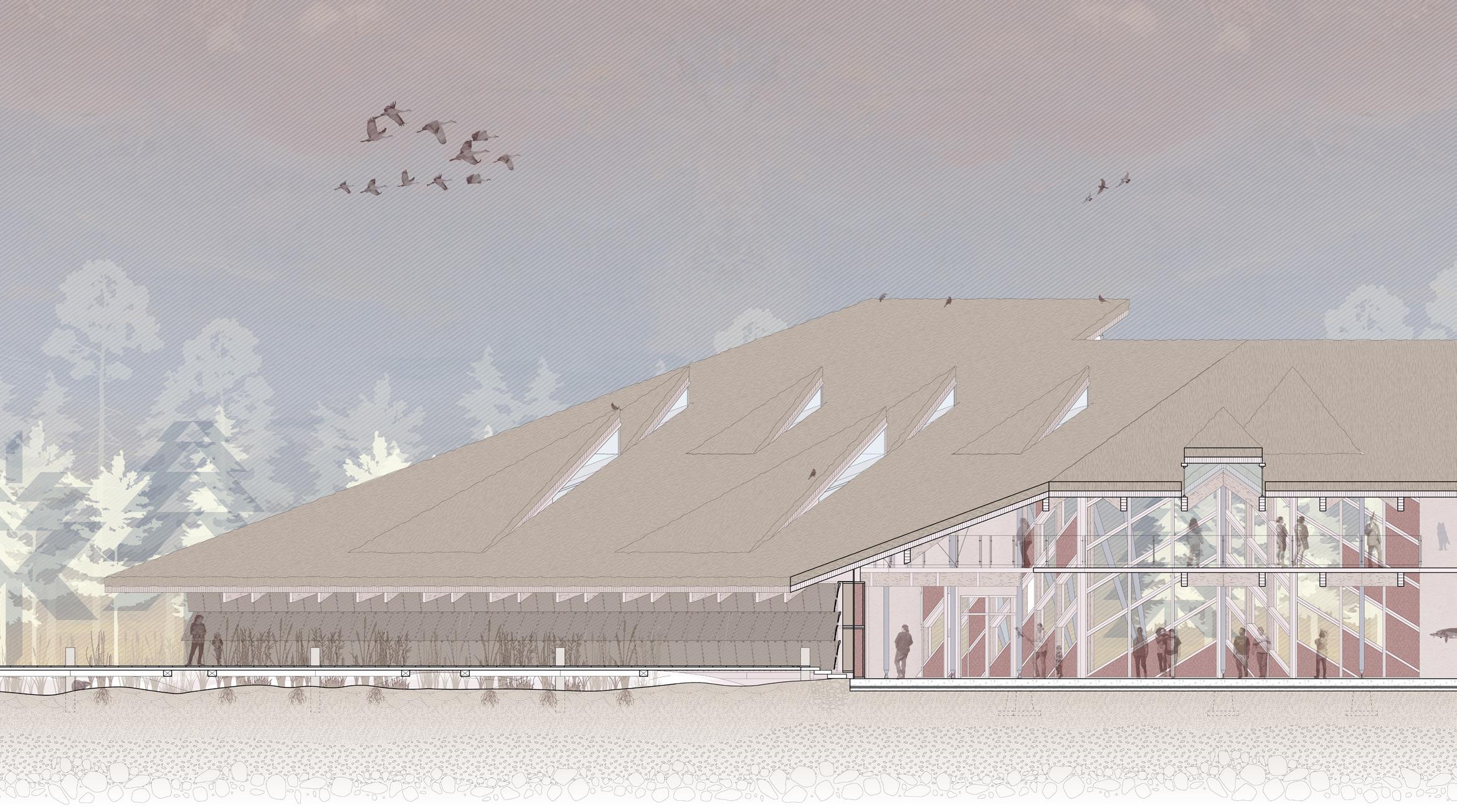
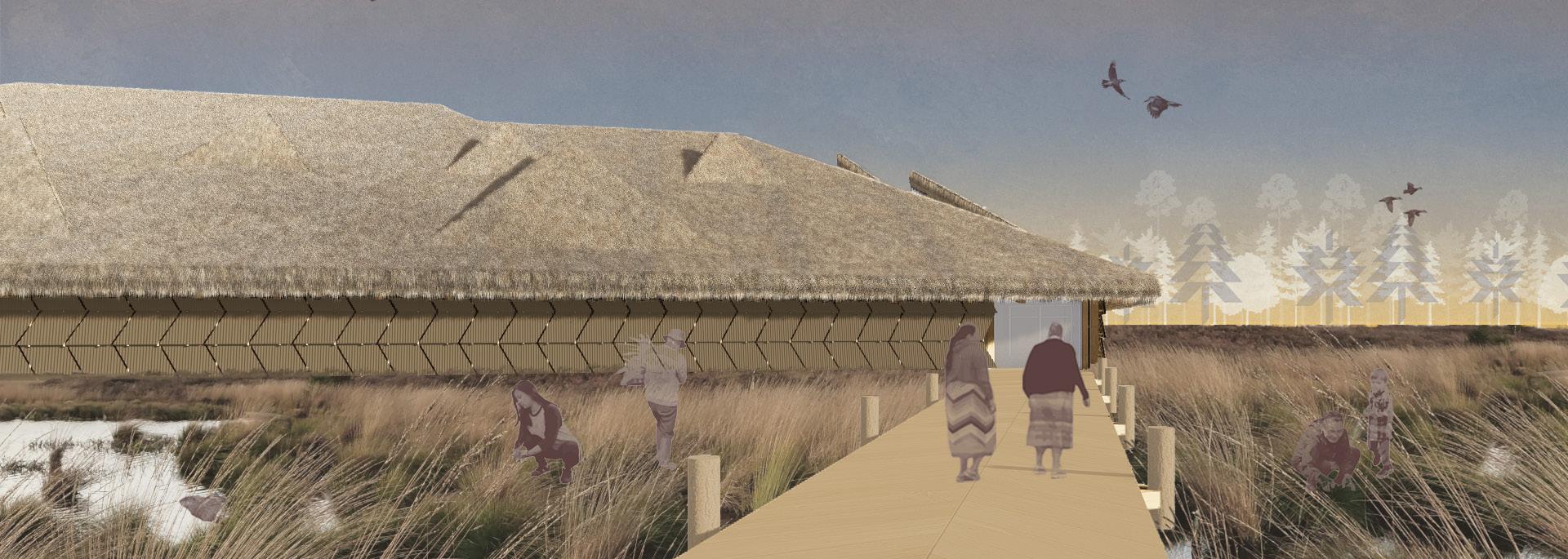
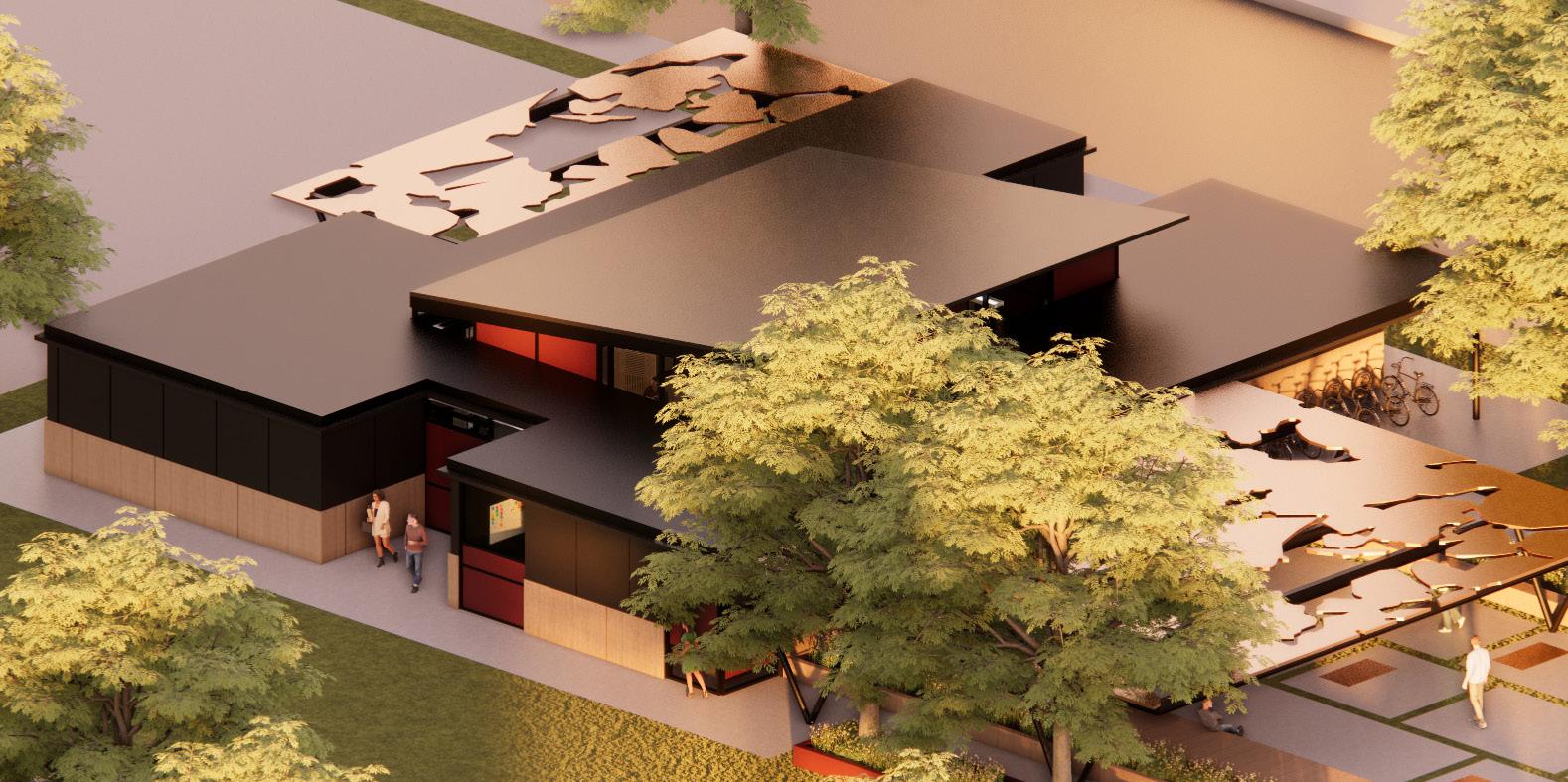
“The Armature” became a building to house the Institute and its functions, to interface with the community and with external partners, and to demonstrate SDI principles and practices; all while maintaining a connection to the ideals and traditions of the Menominee Nation as a whole.
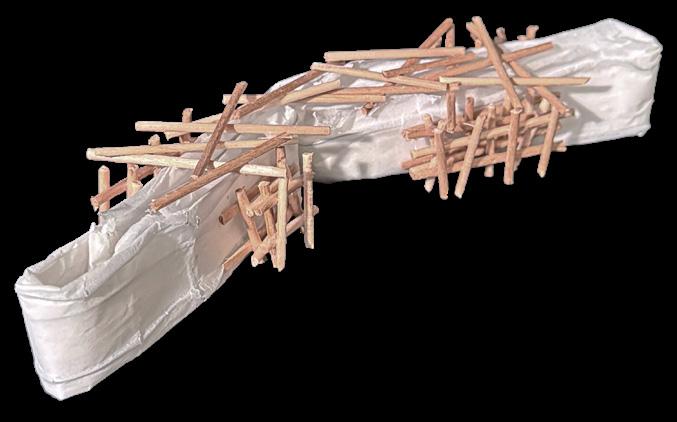
Inspirations for “The Armature” derived from the universal greeting of the Menominee language: Netaēnawēmākenak (“all my relatives”). The tribe uses this greeting as a way to symbolize the treatment of everything/everyone as an equal or peer, encouraging the formulation of inspirations and connections to “non-human” relatives and how they interact with the land within the project.
Stemming from these ideas, passages from Karl von Frisch’s Animal Architecture helped to facilitate researching ways in which animals connect with nature through different nesting typologies, found or built, with nesting features such as stack, nurture, comfort, support, protect, layer, and grow becoming drivers for the project.
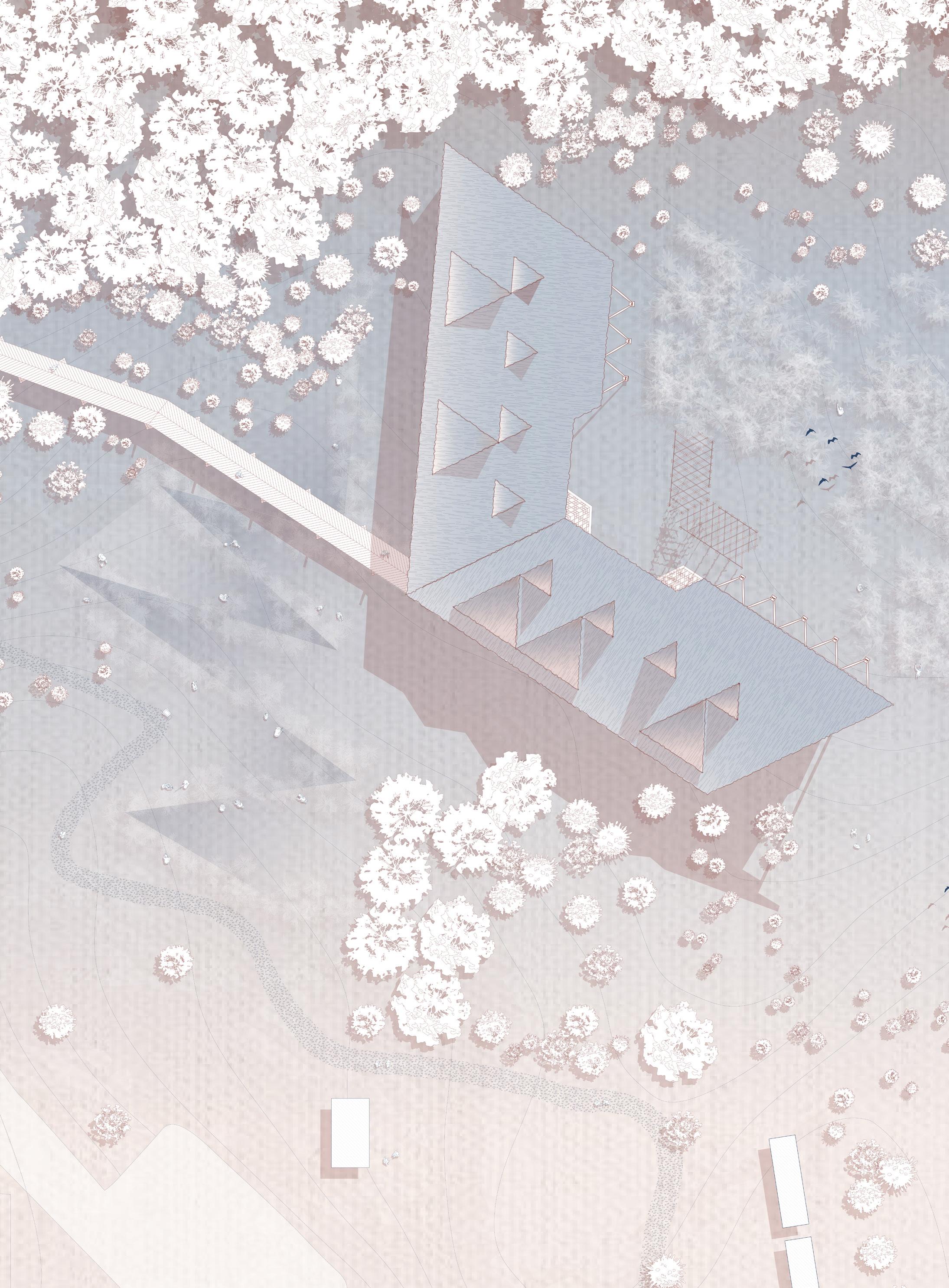
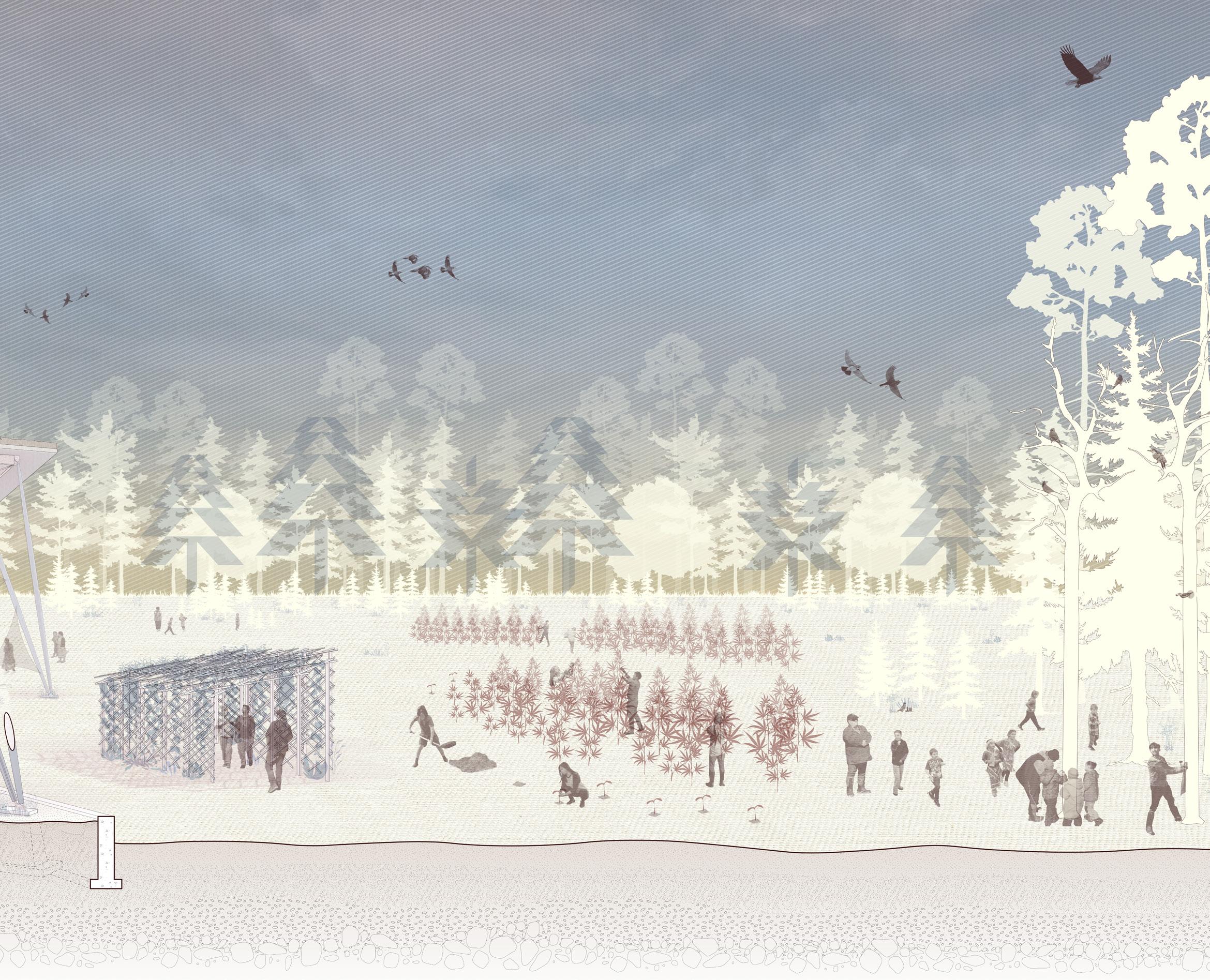
Using landscape topography as habitation, a new nesting typology for “The Armature” was formed: working with existing trees, new growth areas, and naturalized bends/paths to create a bespoke geometry within “found objects,” blurring the sharp tree line and extending towards future growth potentials beyond the site line.
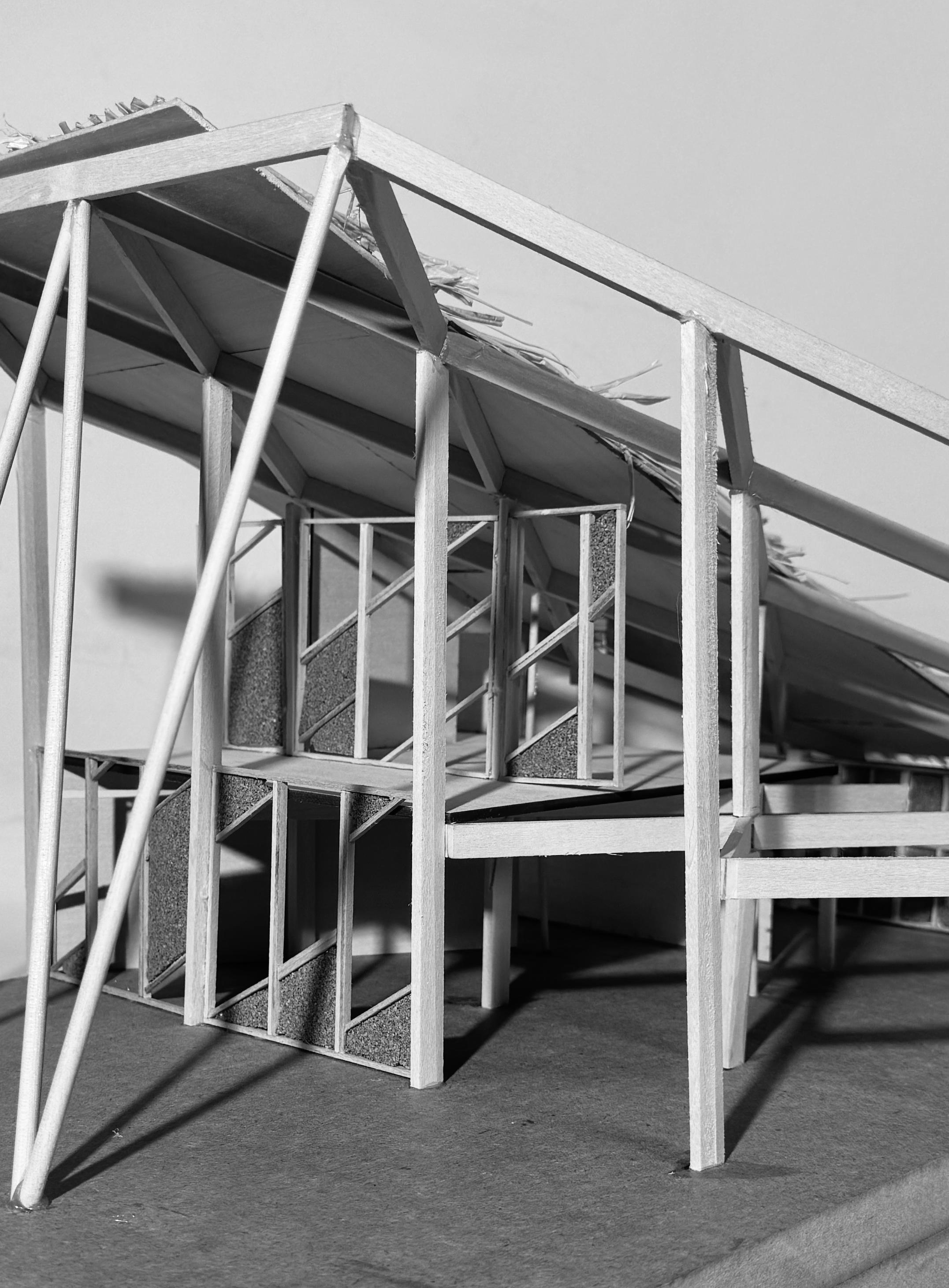
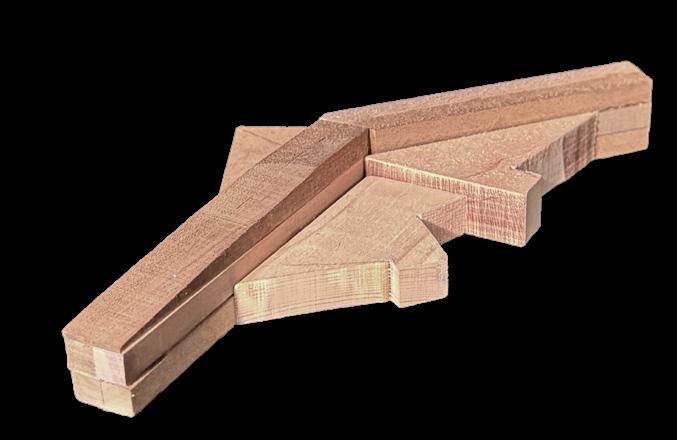
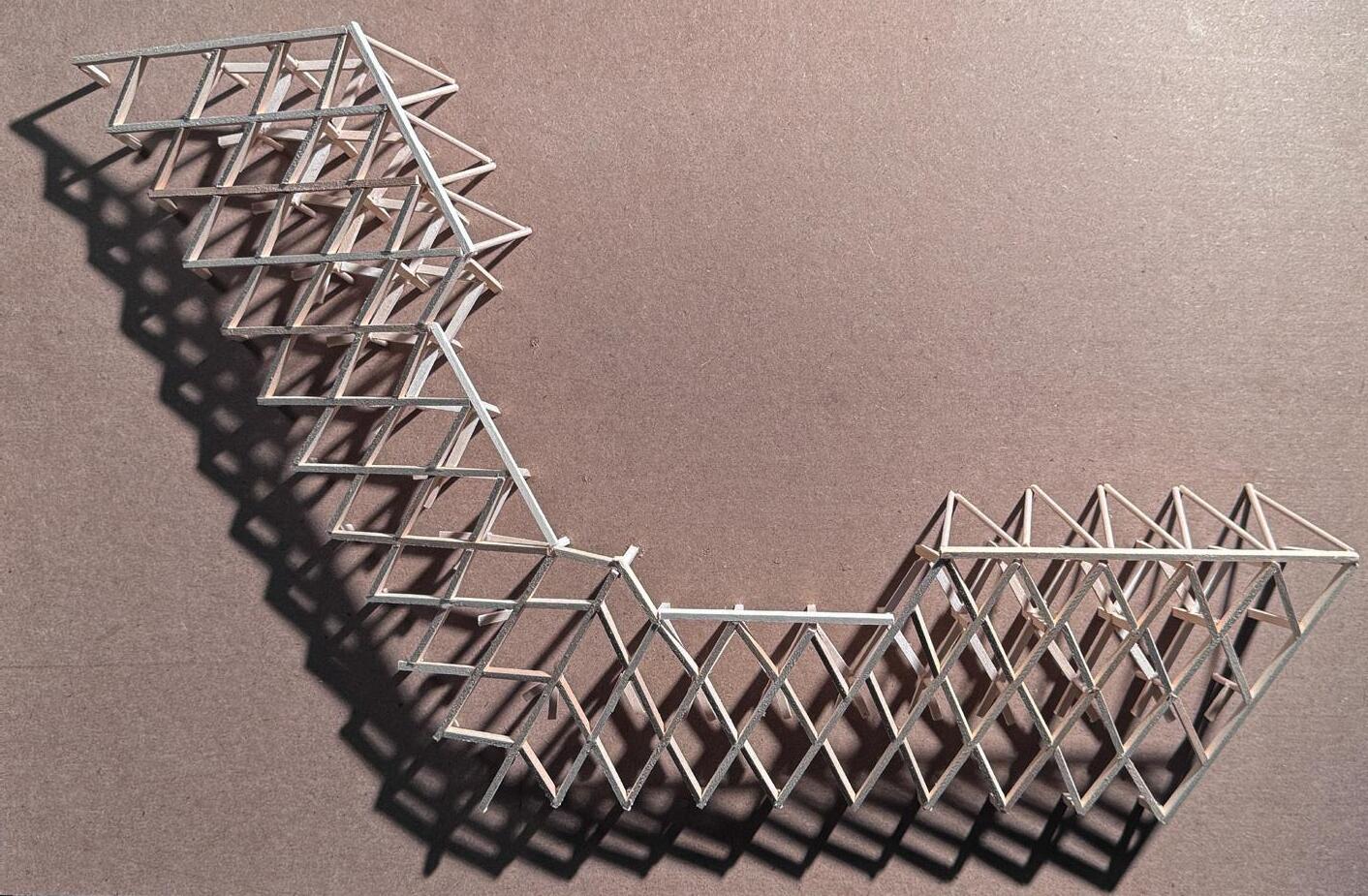
The project showcased designs found within traditional Menominee arts in its structure, envelope, and program spaces. Diamonds and triangular forms represent sugar maple leaves, white pine trees, the backs and bellies of sturgeon, and otter tracks within the Menominee culture. The intersections of these shapes within our structure and facade system continued to connect to nesting typologies also, through the development of a visual weave.
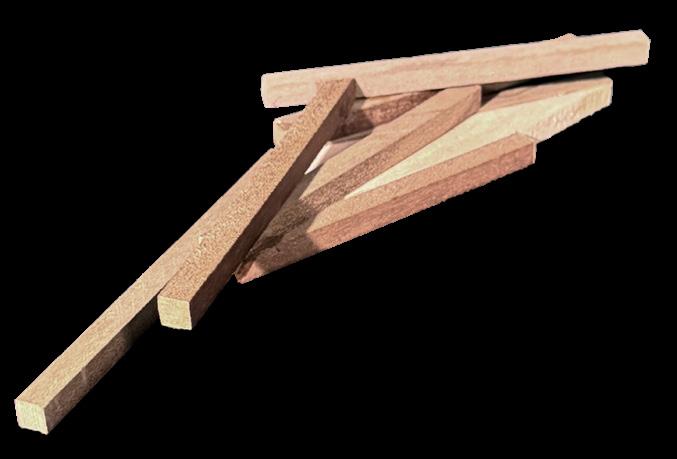
These shapes manifested materially using locally sourced products including bulrush, hemp, and red oak timber. Hemp and bulrush would be grown on site to provide a cyclical learning experience for the community where they can not only care for the material as it grows, but also harvest and use the material to contribute to the building’s maintenance.
II. “reGen”
METHODS OF ALTERNATIVE EDUCATION
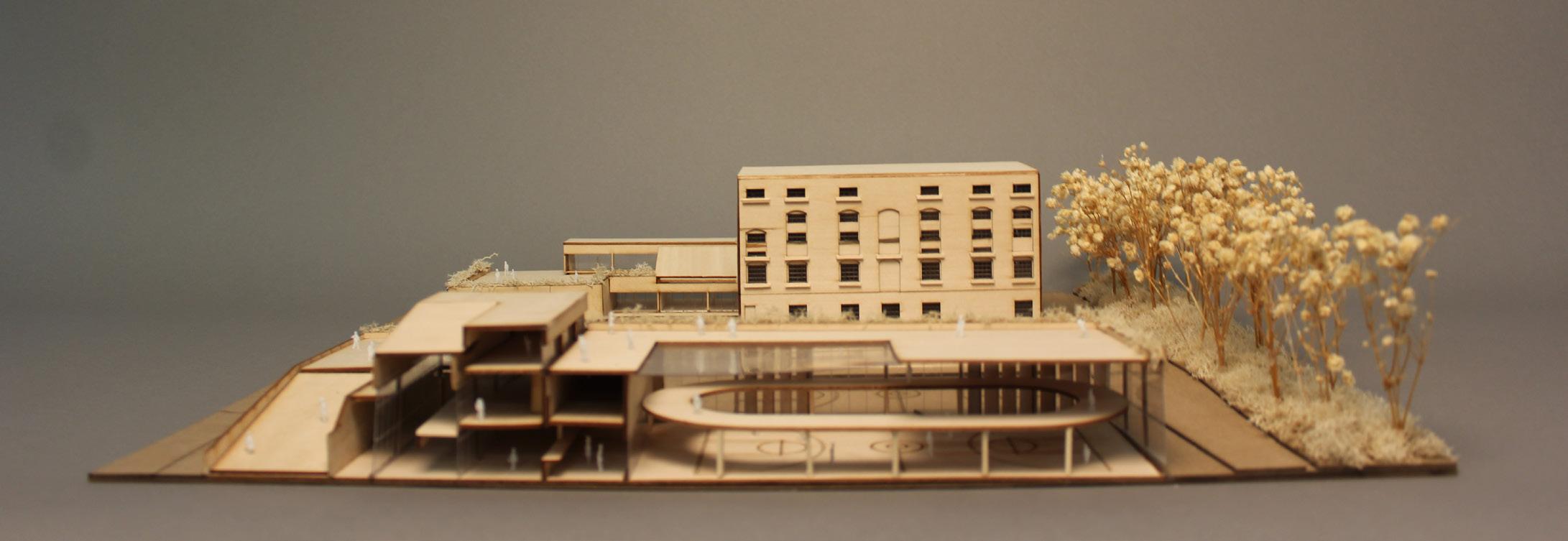
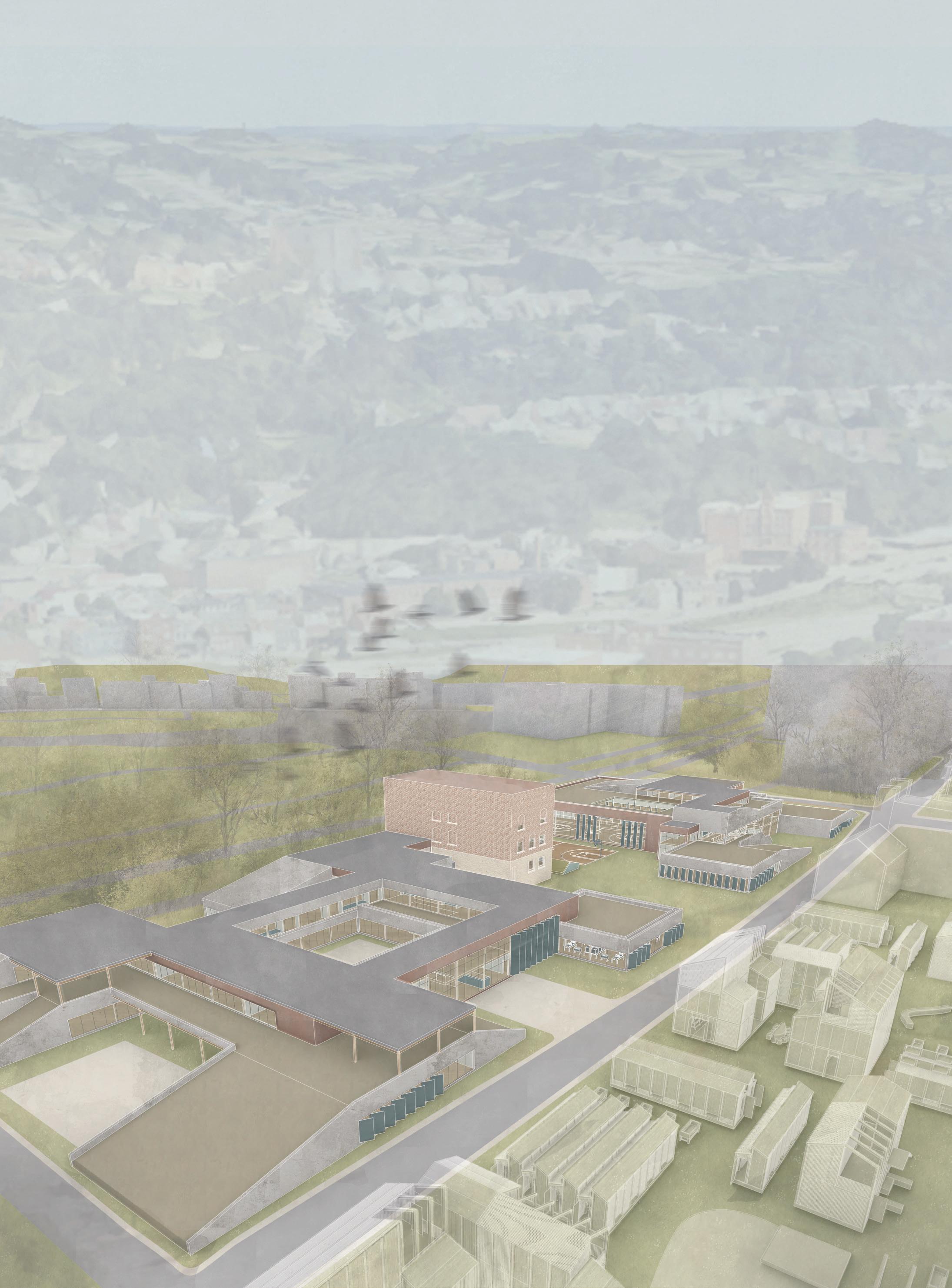
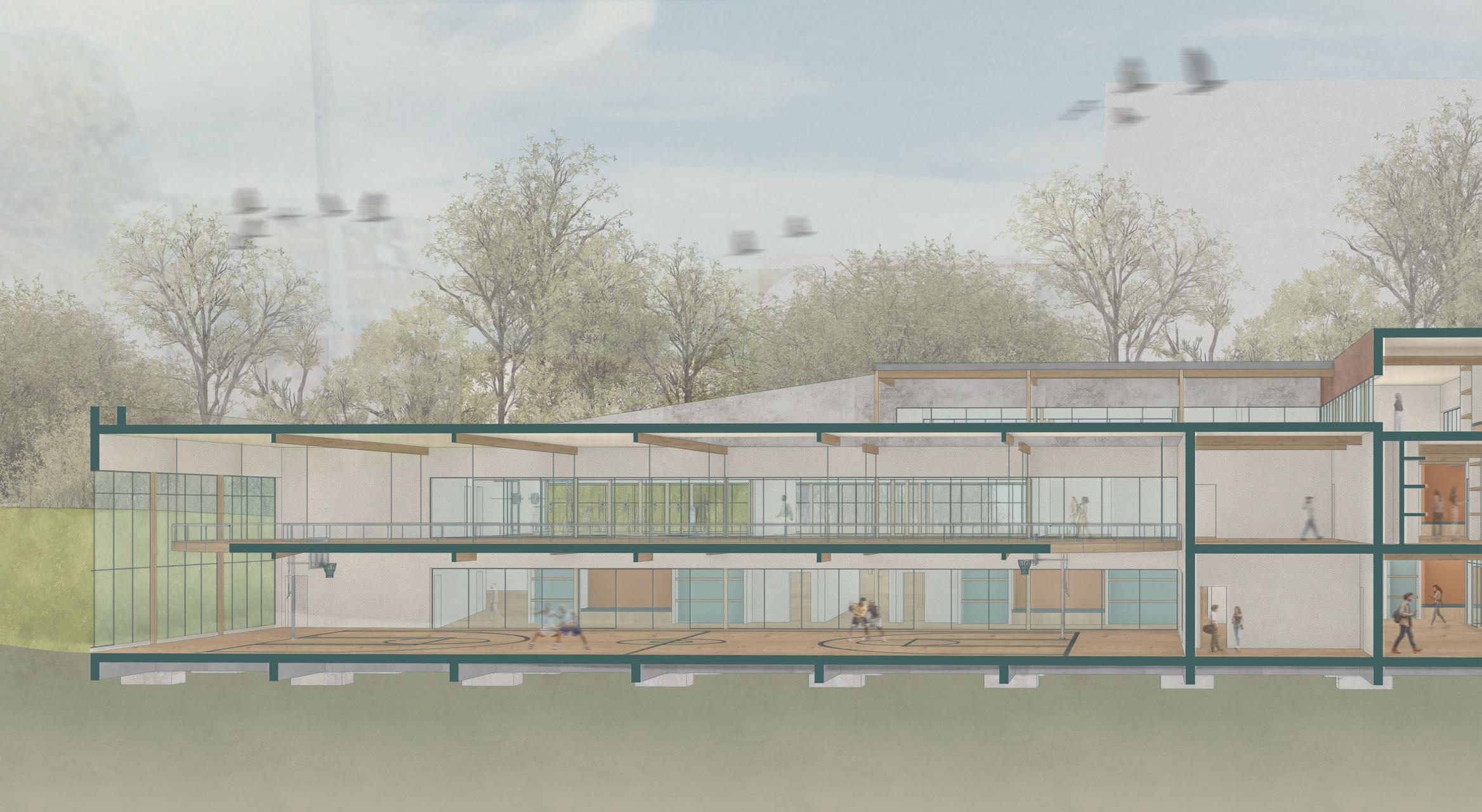
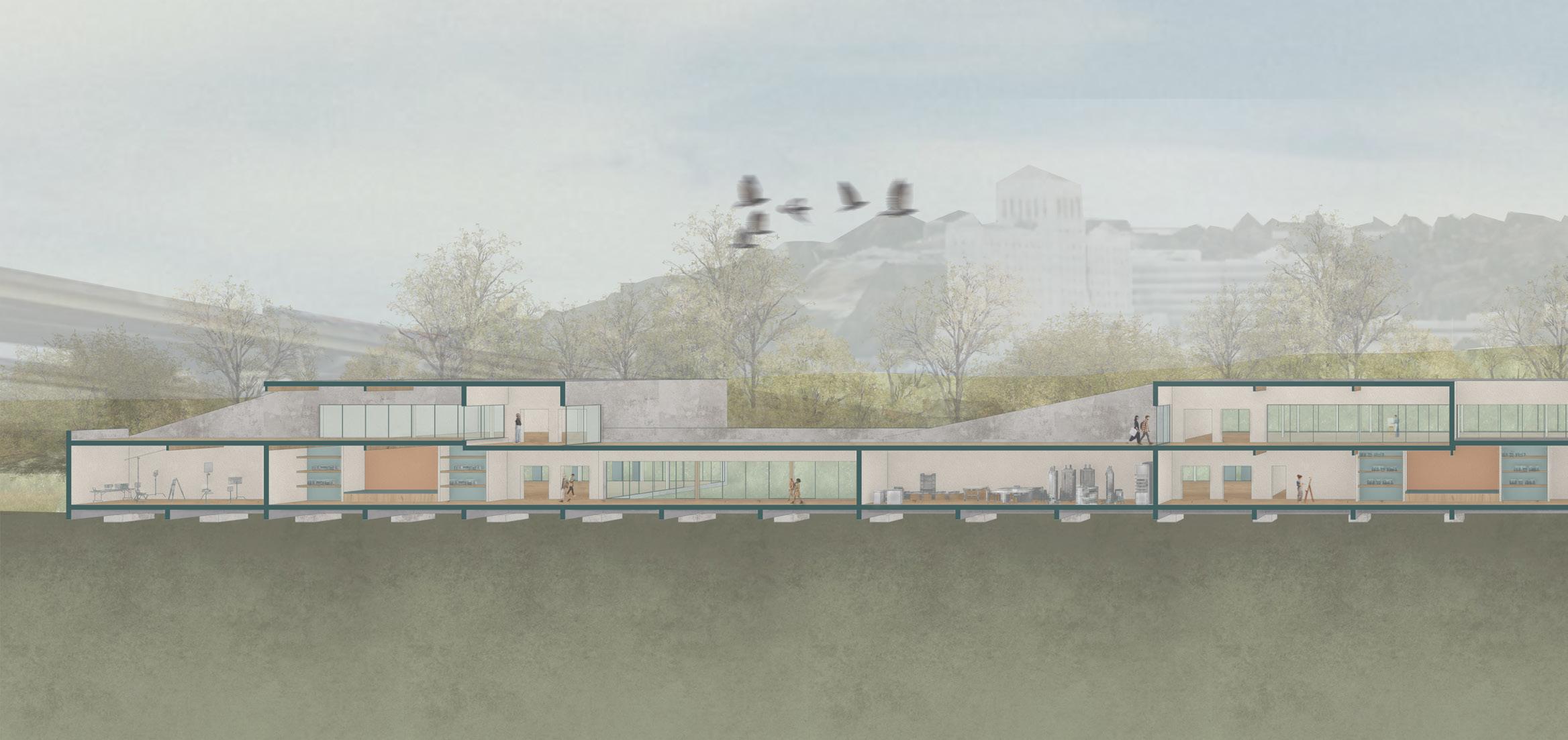
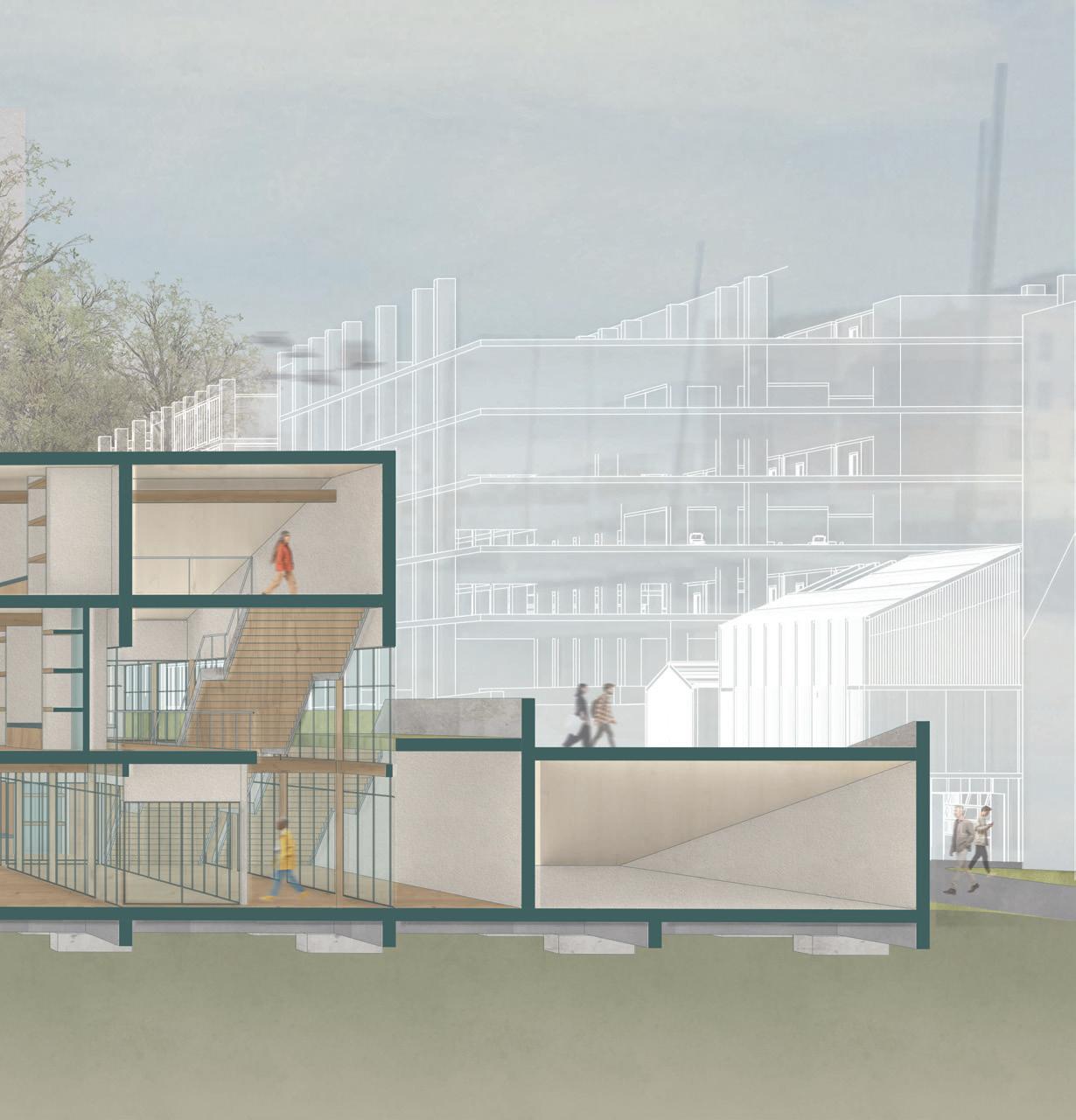
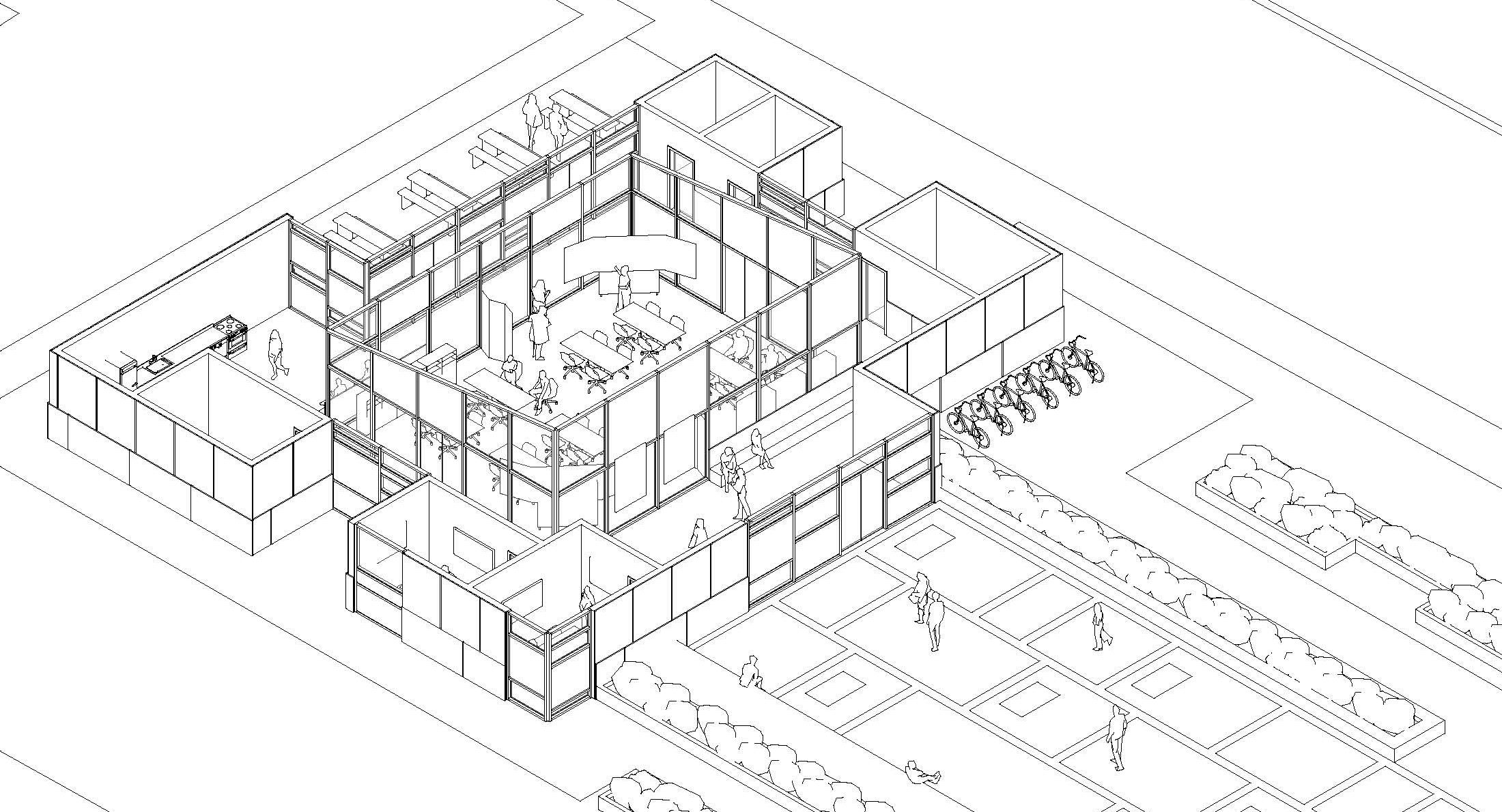
“reGen” formed opportunities for both career and community exploration where historical influences became multimodal, fostering a physical sense of learning to generate a better understanding of how the world can operate in a more dynamic way. This ribboned intersection of community and industry established an egalitarian commons to help the community to develop important life skills and craftwork outside of a standard classroom setting, facilitating an ideal maintenance of comfort and exploration through shared resources, labor, and communication.
According to the Carnegie Museum’s “after school” exhibition, typically, students are “assessed, sorted, and disciplined; prevailing norms are enforced and histories are redacted.” However, keeping the needs of local communities in mind, schools can also be or become “spaces of play, discovery, and collective care, where rights have been fought for and standards contested… shape(ing) the life of streets, neighborhoods, and cities everywhere.” That said, the proposal for the selected site aimed to cater to young people in a way that was both distinctive and flexible, developing an expanse for alternative modes of education - a collaborative network for the exploration of the mind and body.
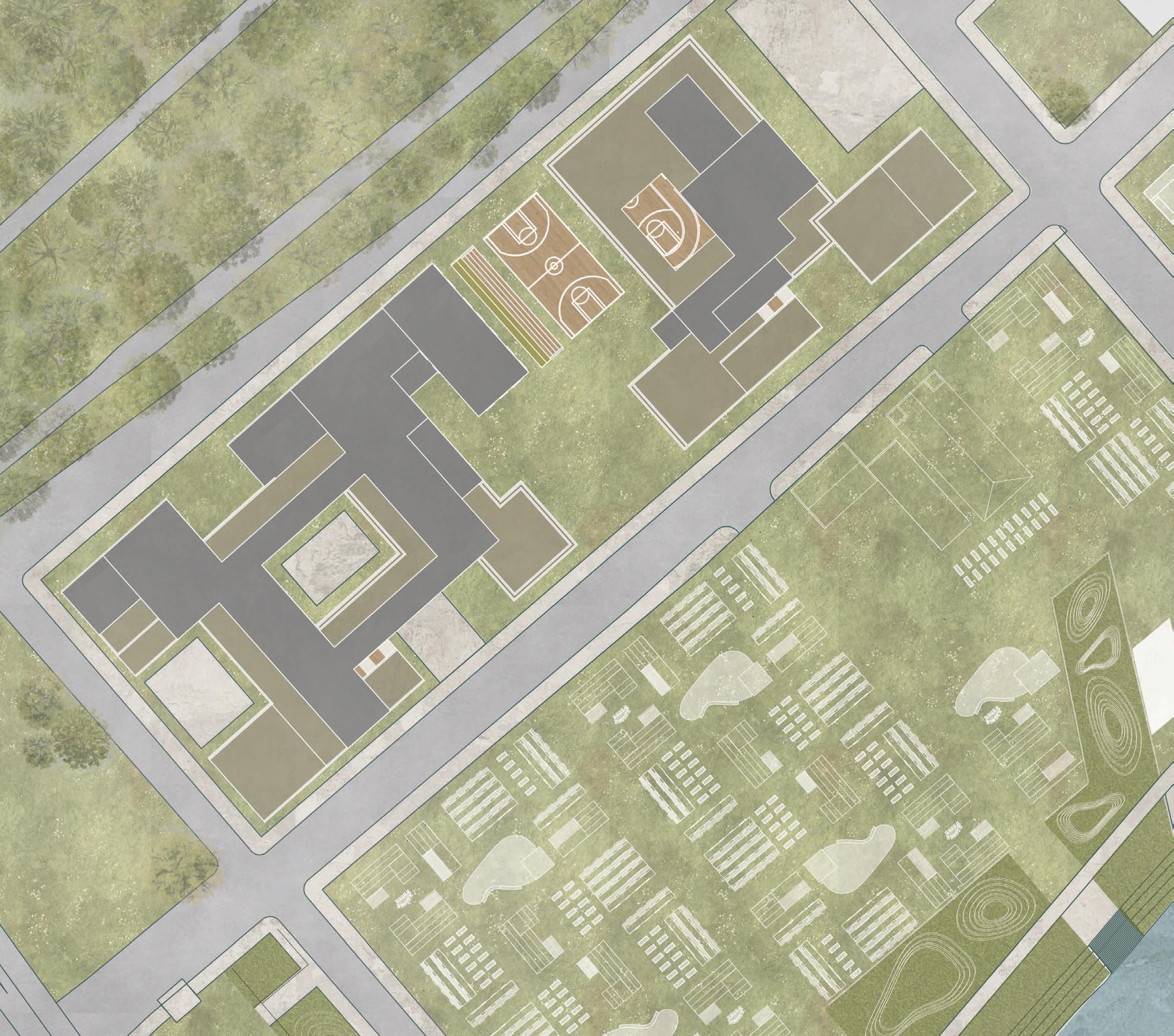
Mirroring the Strip District, just across the Allegheny River, a plot used to cater to community and industry emerged; nestled between Pittsburgh’s Veterans and David McCullough bridges. After exploring the intense layered histories of the proposed South Canal Street plot, the new project, titled “reGen,” focused on themes that responded to the intersections of industry and community that existed on site, as well as attempting to respond to the changes to public education spaces implemented by the Allegheny Turners throughout the 19th Century.
III. “WOVEN COMMUNITY”
CONVIVIAL/ LOCALIZED LIVING & WORKING COMPLEX
CARNEGIE MELLON UNIVERSITY
X-CHANGE 2025
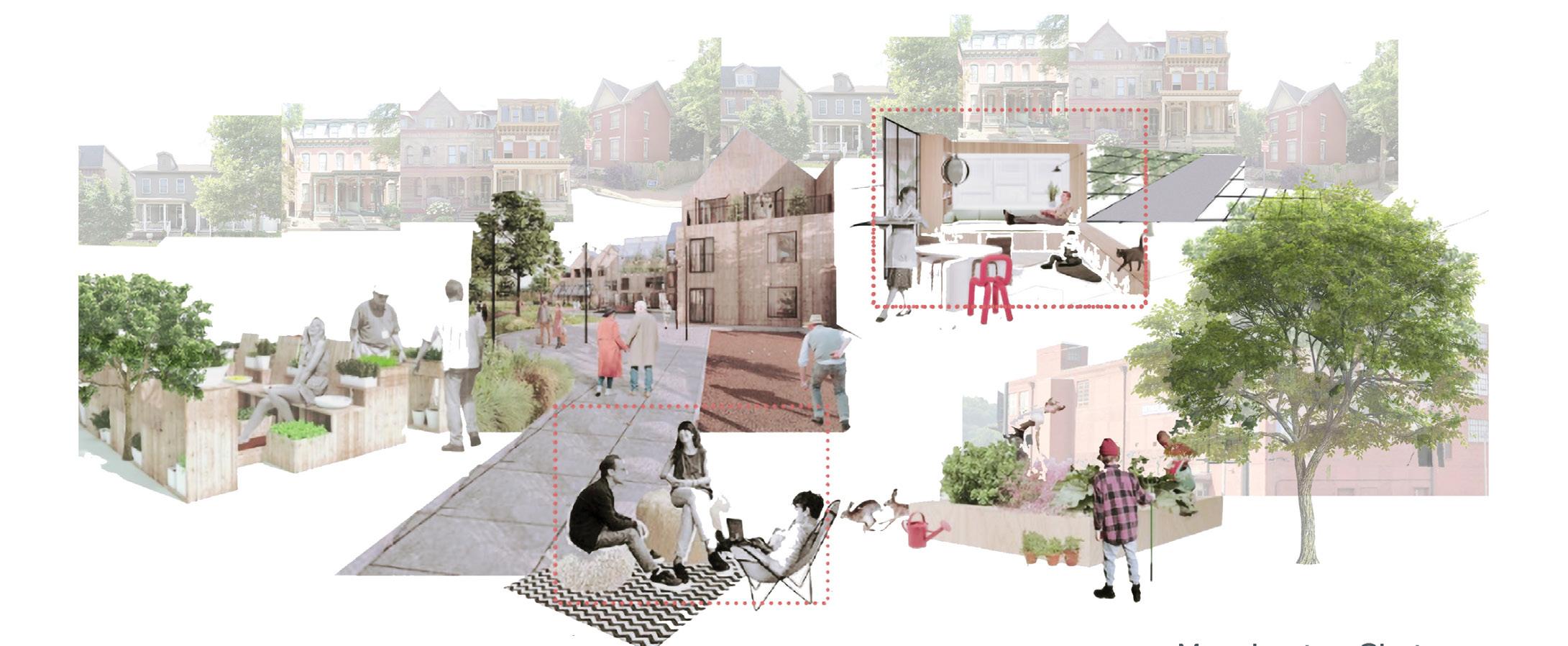
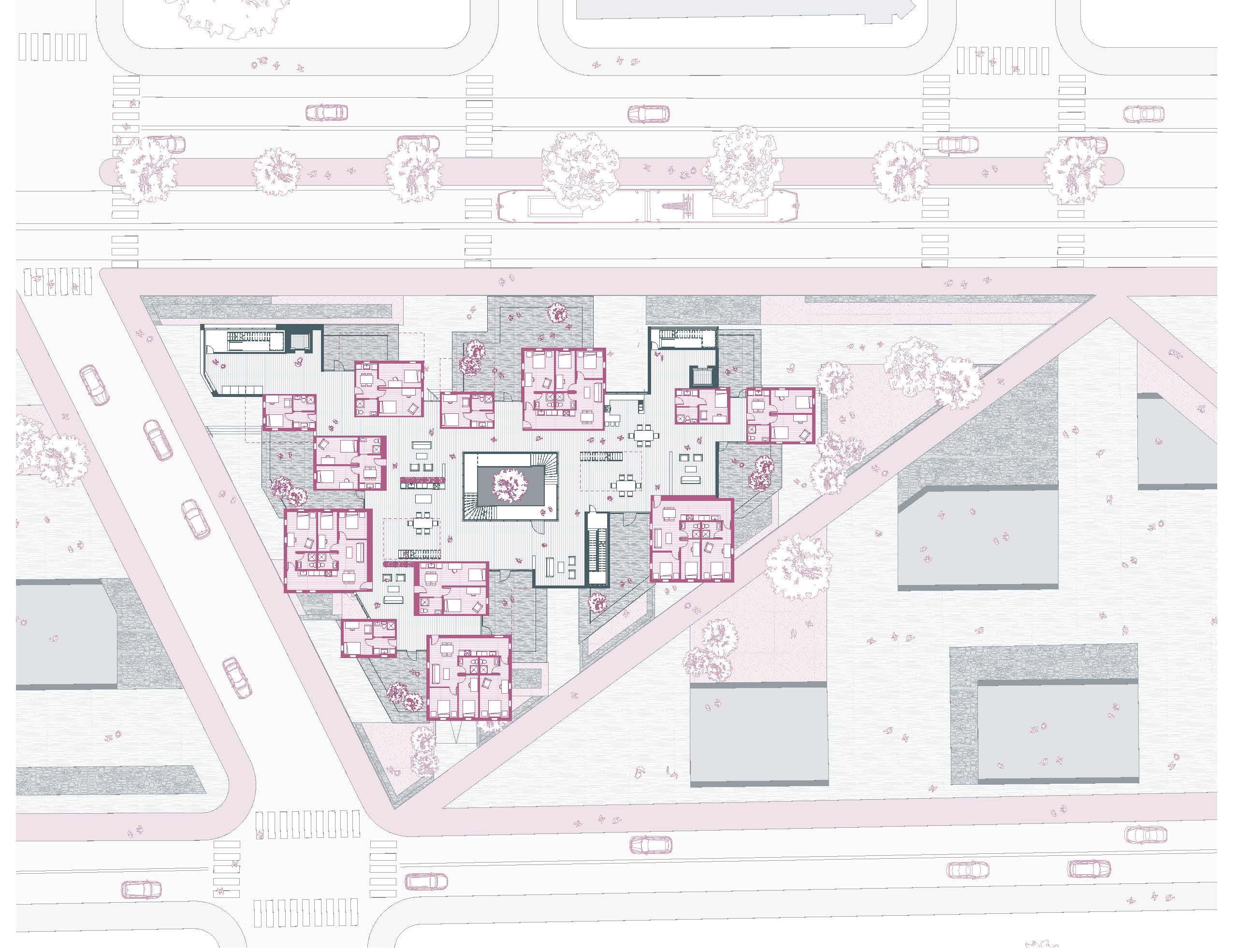
Exploring how architectural interventions can connect to, expand, and transition existing Pittsburgh neighborhood systems to create social and ecological benefits by employing a “what-if?” questioning strategy, worldmaking tools, and ideas of Just Transitions to describe structural, tectonic, material, and organizational logics.
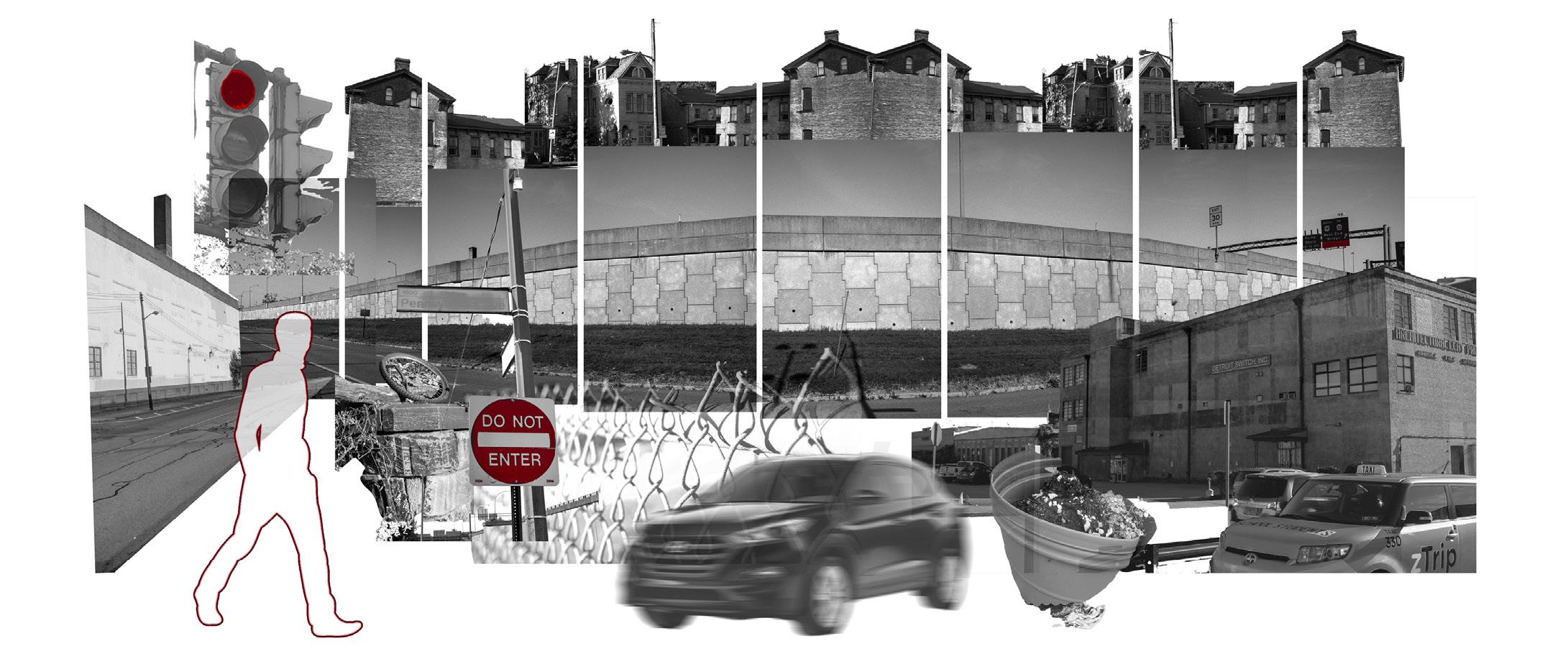
The proposed new highways running along Chateau Street would become what is now Pennsylvania Route 65. Construction began in 1961. The highway became the border for the L-shaped urban islet that is now Chateau, forcibly separating it from Manchester and creating a new neighborhood. A sharp decline in population had already struck Manchester; in a twenty-year span from 1940 to 1960, the neighborhood’s population dwindled from 11,797 residents to 8,528 – a 28 percent drop. With Route 65 splitting Chateau from Manchester, the population of the area quickly plummeted. By 1970, only 681 people still remained in Chateau.
Today, Chateau bears the scars of its redevelopment. The great wall that is Route 65 left Chateau isolated and difficult to access, crippling the neighborhood’s population to the point that very few persons still currently reside there. – Eustis, “Chateau: A Fragmented History”
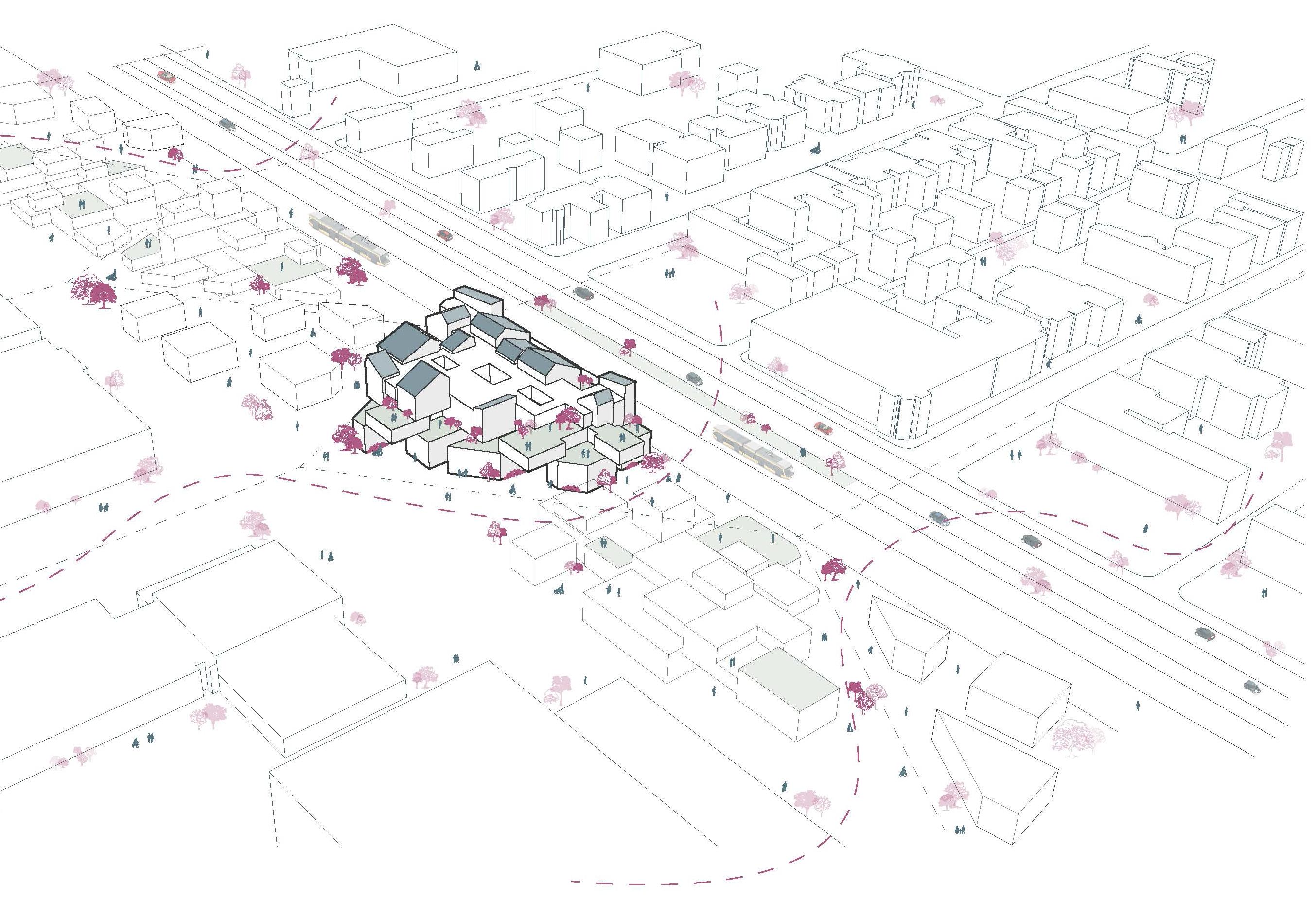
What if the transformation of the 65 corridor created a village system that is modular and convivial: geared towards living, working, and community development; diffusing the existing linearity on the site and weaving Manchester, Chateau, and their surrounding neighborhoods together?
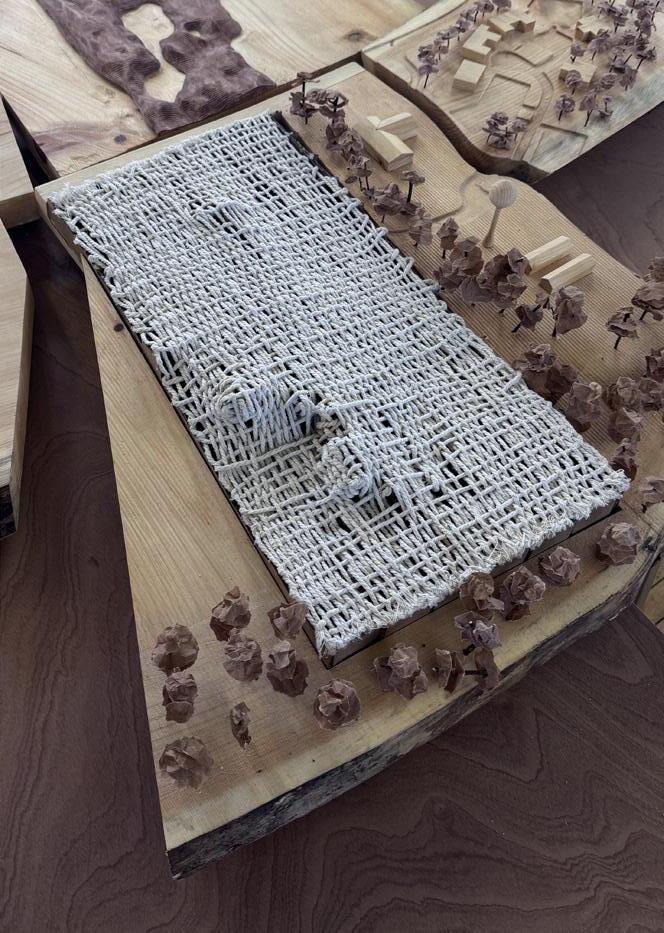
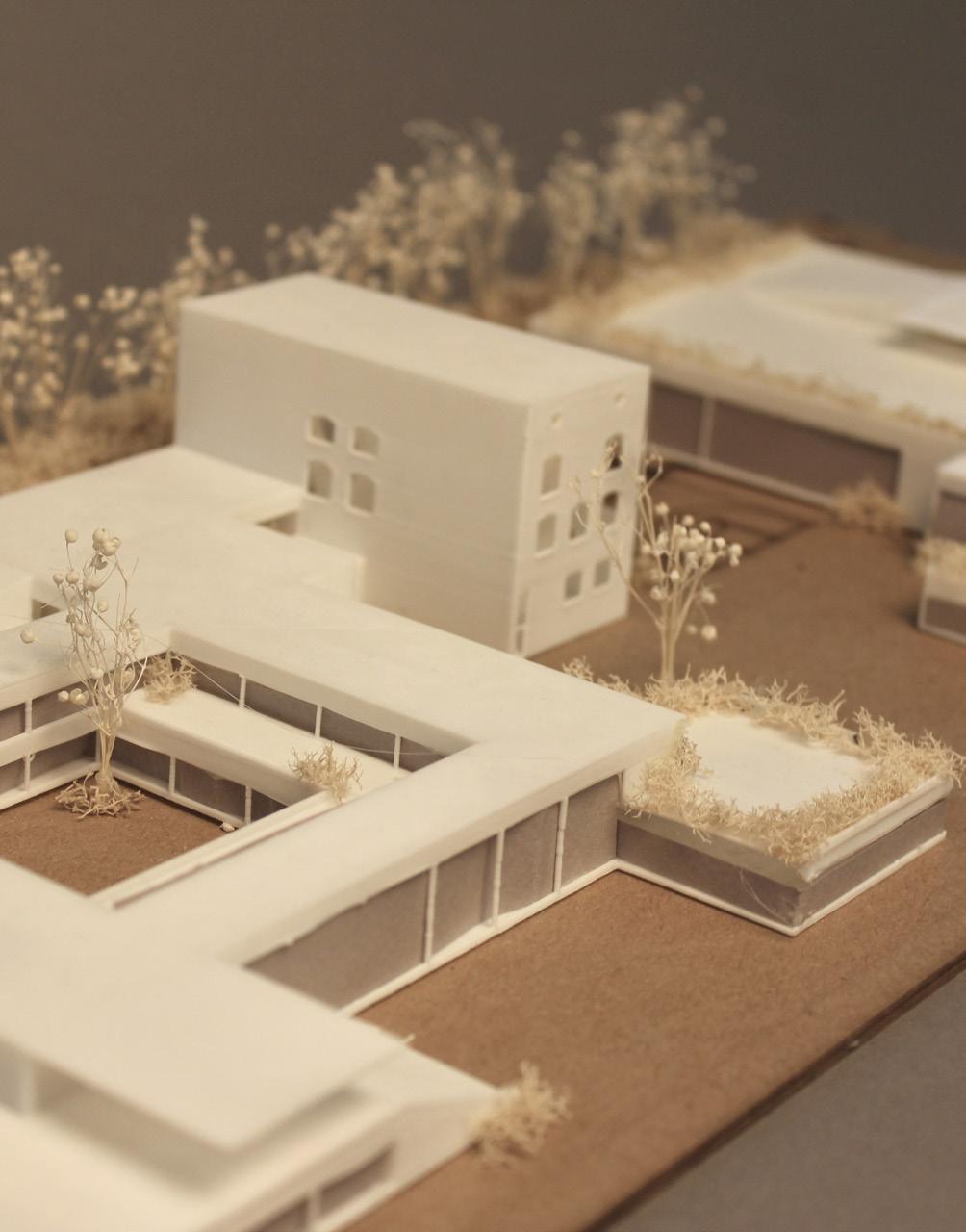
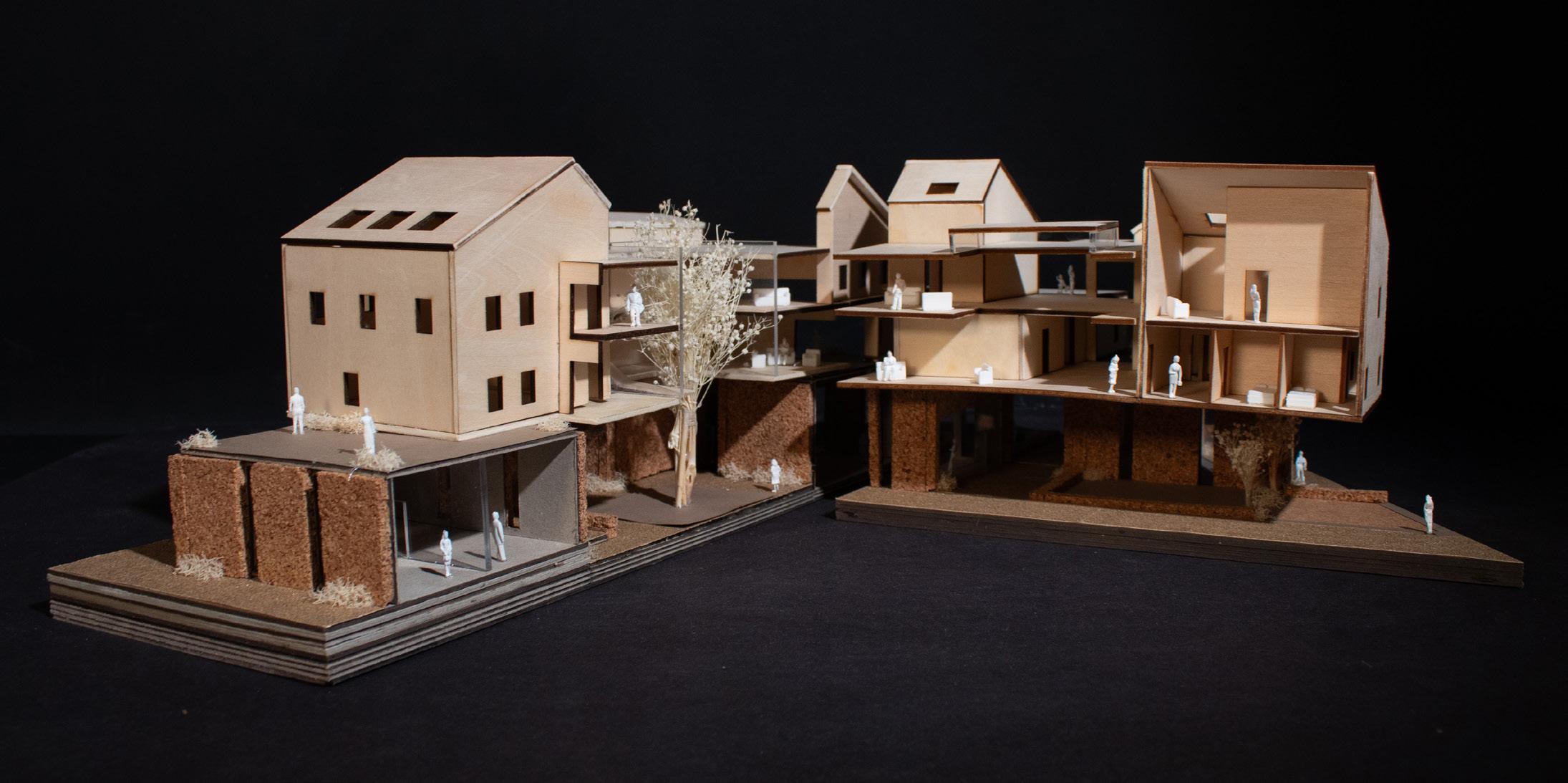
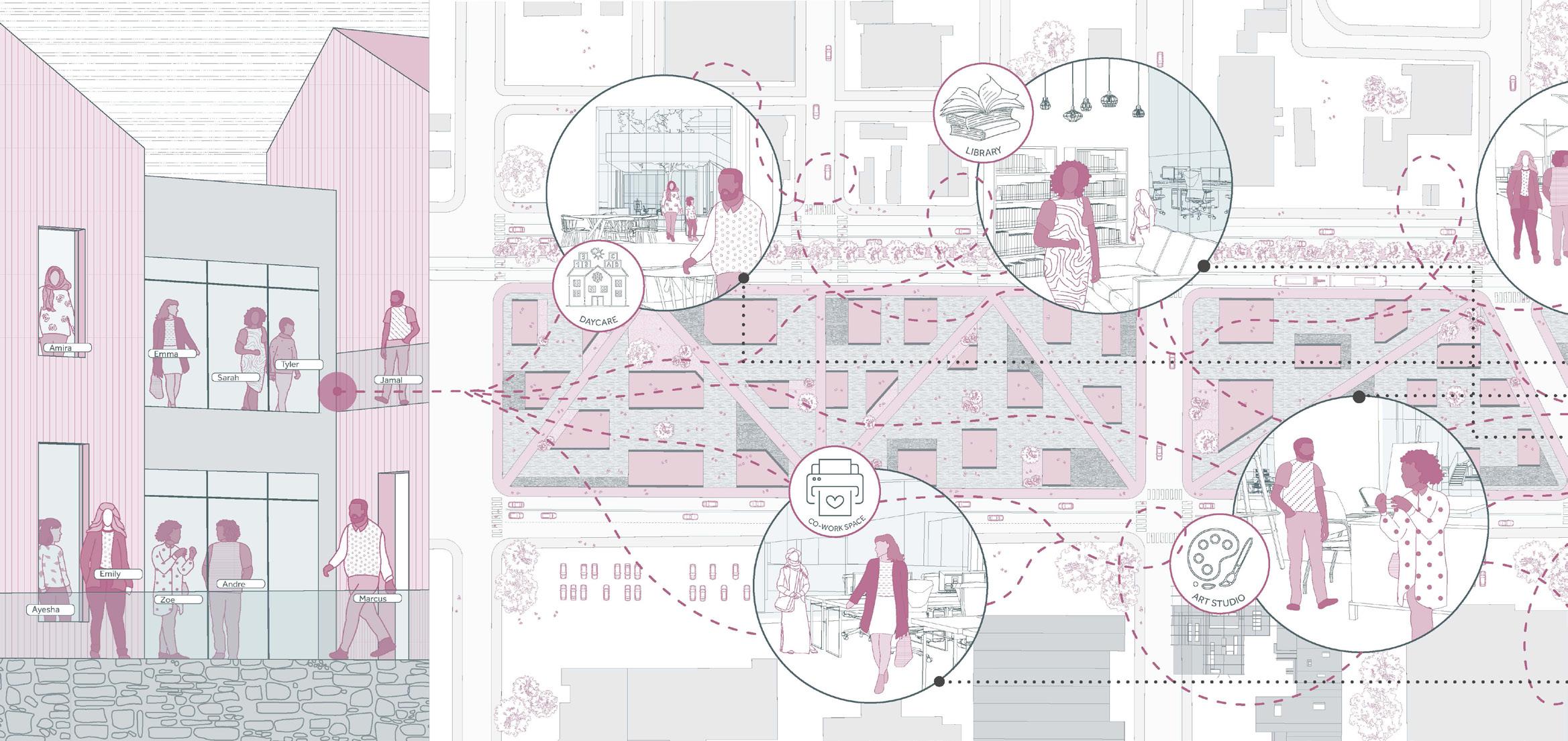
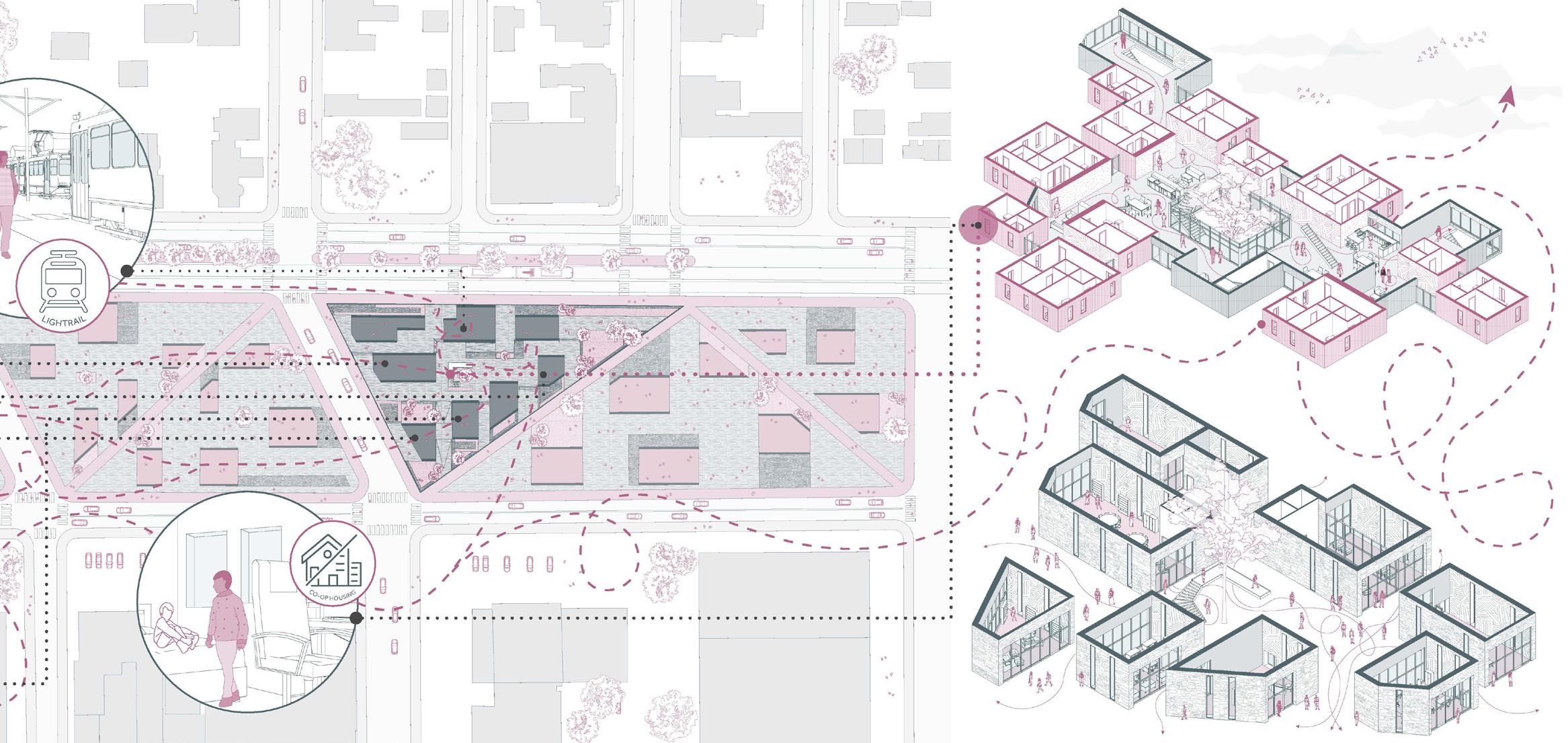
Route 65 currently serves as an intense barrier between two local Pittsburgh neighborhoods: Manchester and Chateau. In attempts to dissolve this boundary, Woven Community proposes the development of a vibrant, village-like system in its place. Our project achieves the adjacent neighborhood’s goals through modular and convivial spaces that are geared towards living, working, and community development; diffusing the existing linearity on the site and tying Manchester and Chateau back together.
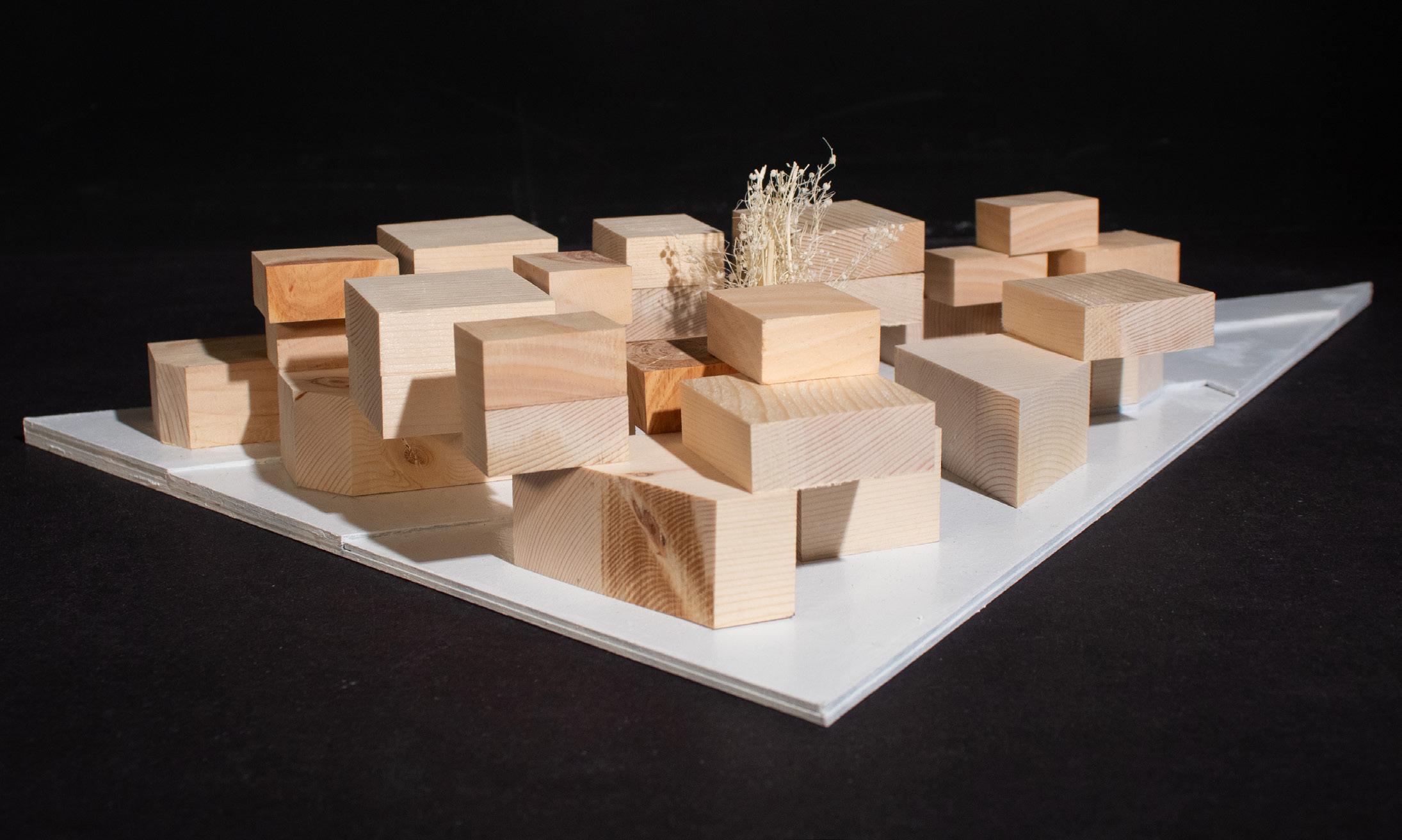
Localism became a lost art within the development of a globalized economy, but Woven Community forms a deeply local and anarchistic practice that resembles not just housing, but the formation of a new “world” where a pixelated form paired with strategies of commoning help to describe the politics of the project and facilitate chance encounters between not only the residents, but also the surrounding public.
Ideals of commoning and conviviality are paramount within this new structure, but Woven Community also employs strategies of reuse as a resistance to “tabula rasa” thinking. As the proposed co-living parcels expand down the corridor, the materials from the old highway reappear as interactive pixels on each new site - the rubble becoming embodied energy and a memory of the past for communities new and old.
IV. “BRADDOCK UNITY”
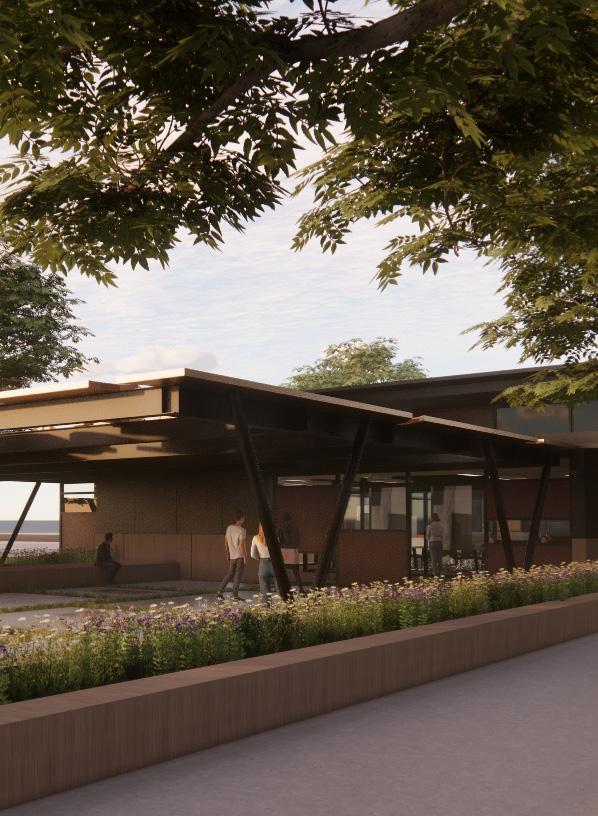
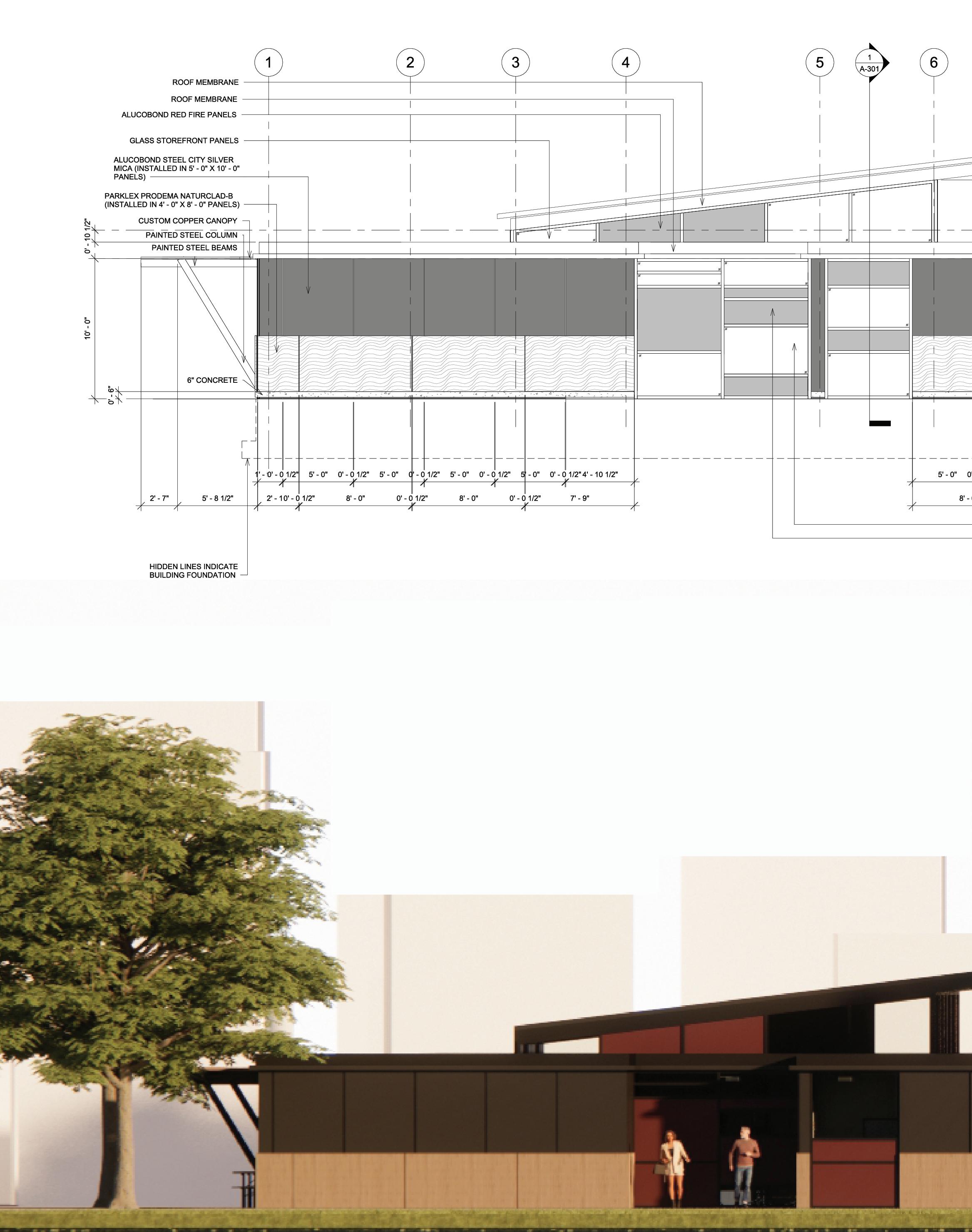
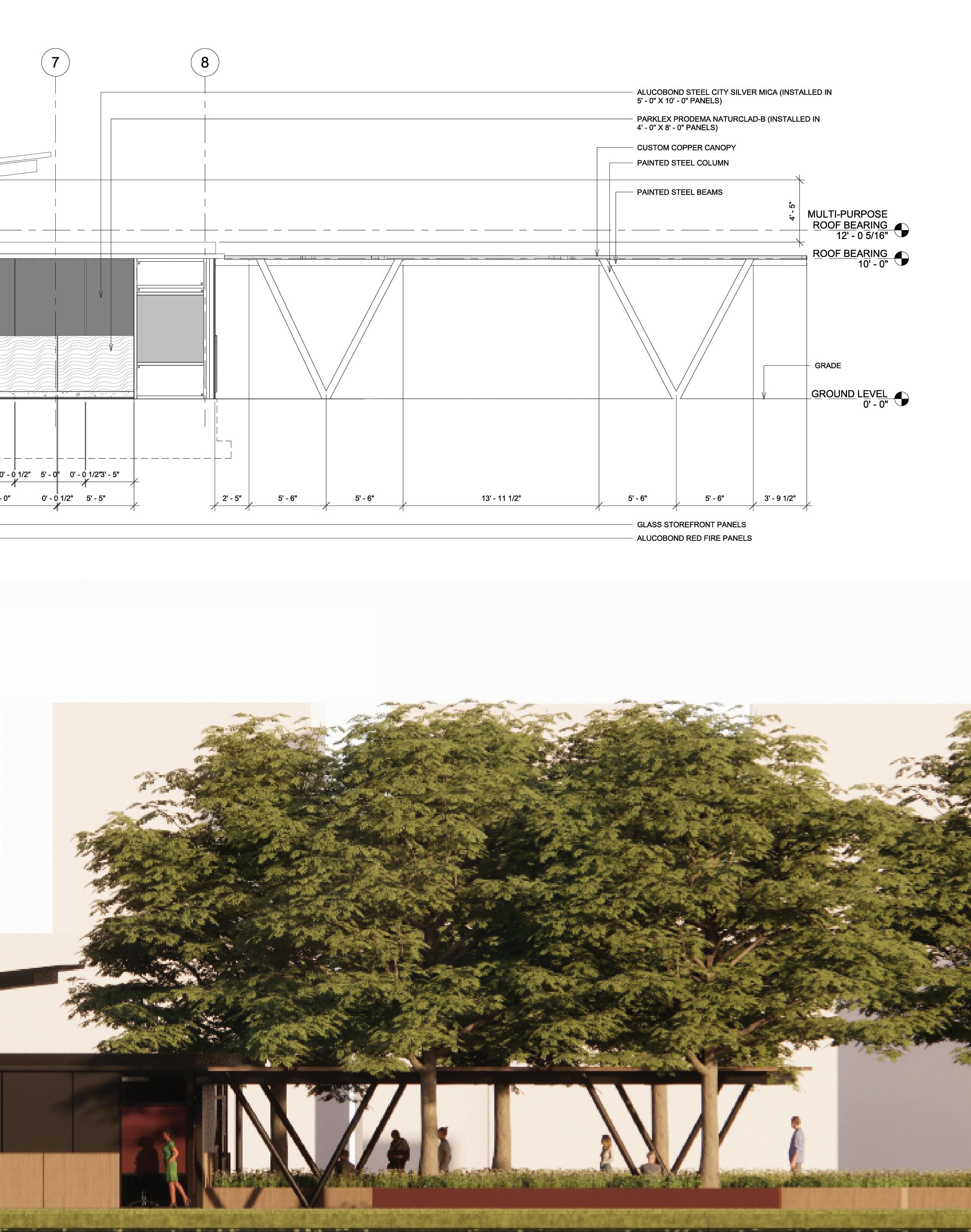
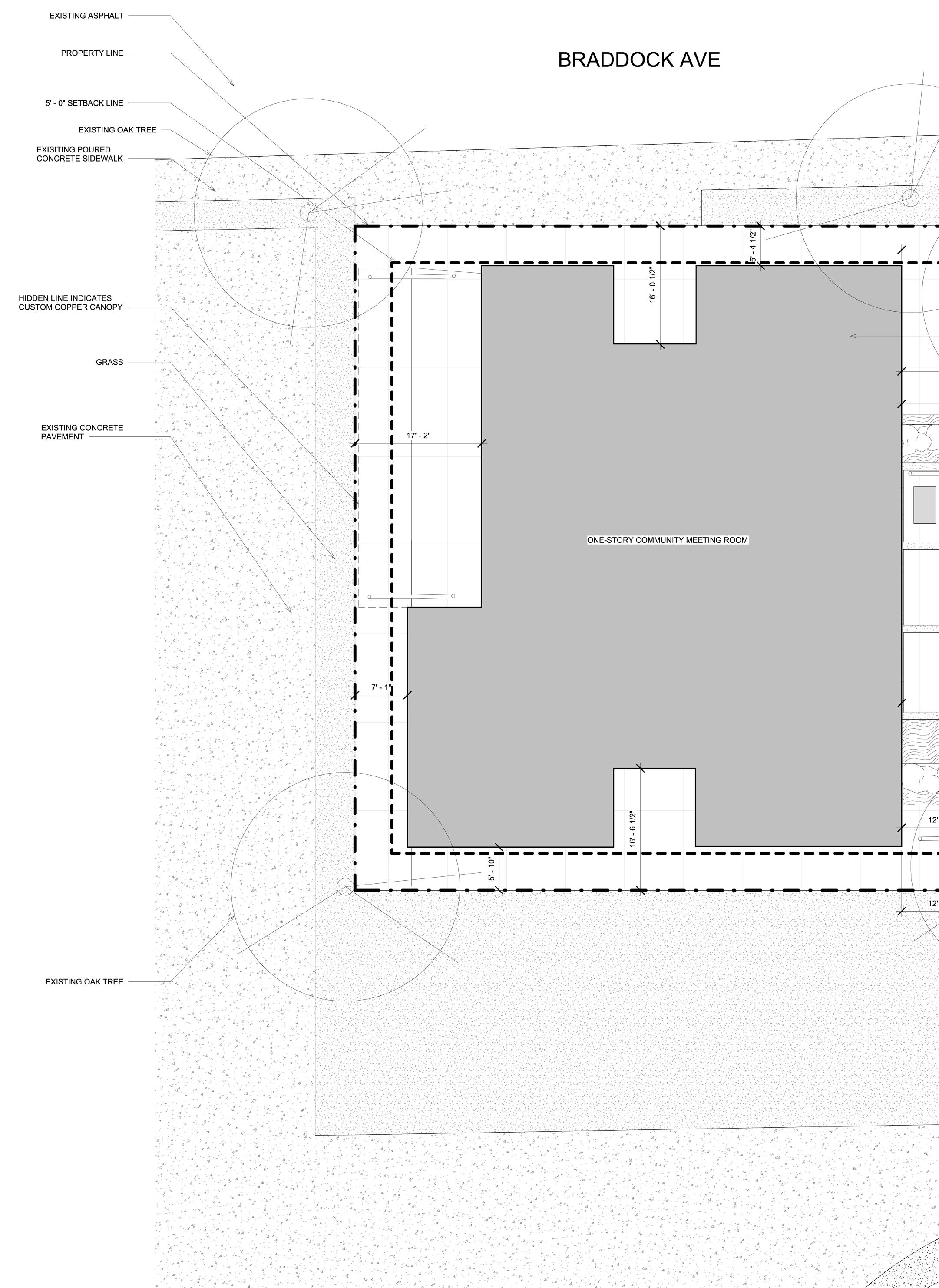
COMMUNITY MEETING CENTER
Creating a sense of place that strengthens the relationship between humans and the built environment, enhancing communal notions of inclusivity and a shared belief system.
Even though a built structure is static, the goal of this project was to establish a dynamic space that helps to foster a community that is constantly evolving and growing, allowing for greater inclusions, and unifying this ever-changing body through themes of collective growth within the built environment.
“Braddock Unity” is a community meeting center nestled between Frick Park and the Regent Square neighborhood along Braddock Avenue in Allegheny County, PA.
Highlighting the powerful relationship between people and place, this project aimed to create a destination for surrounding communities that cultivated a network for shared communication, inclusivity, and equity by redefining a new space for gathering at this intersection between nature and the built environment.
V. “FLANNERY’S ELEVATION”
LOW-RISE, HIGHDENSITY HOUSING
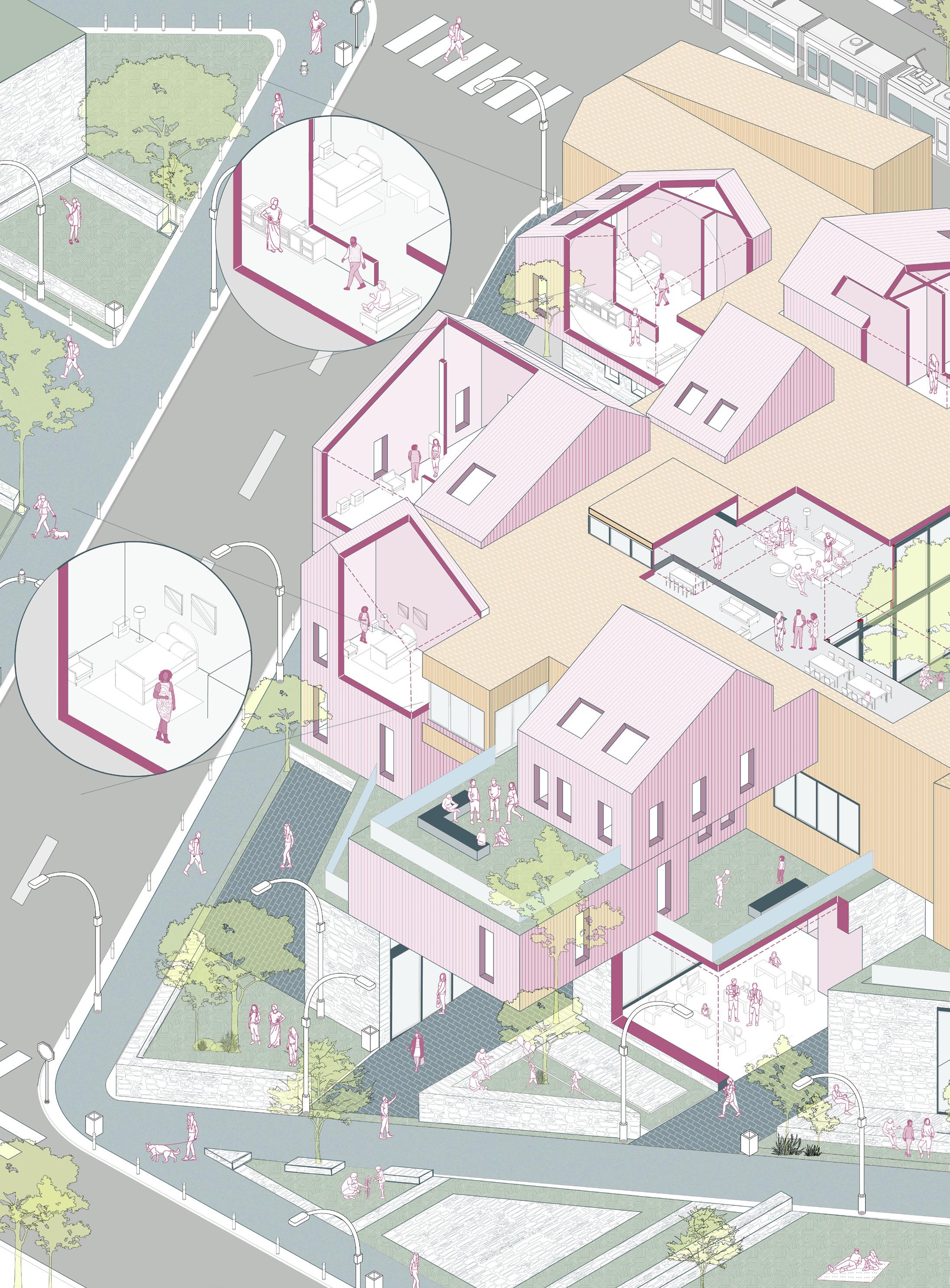
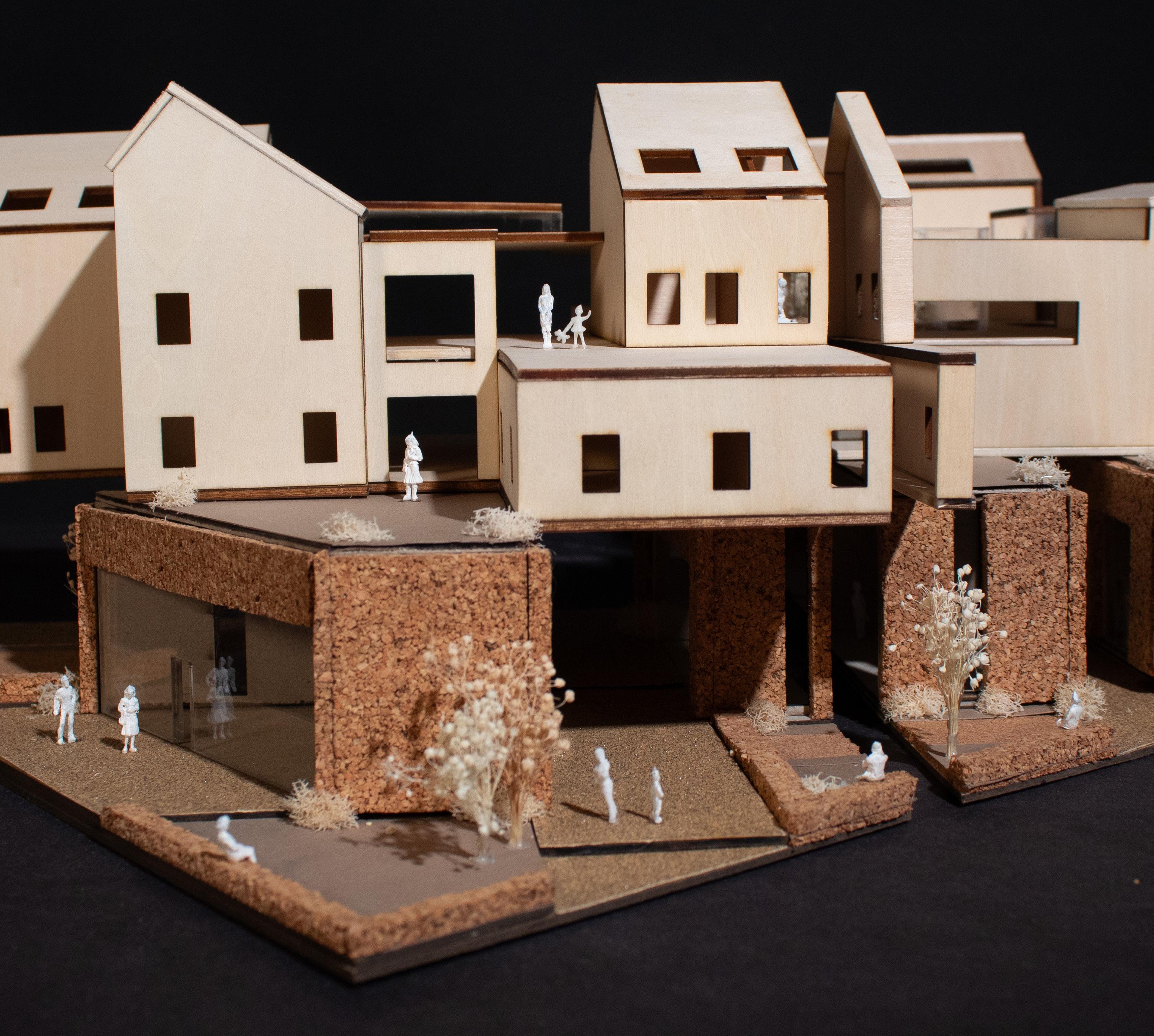
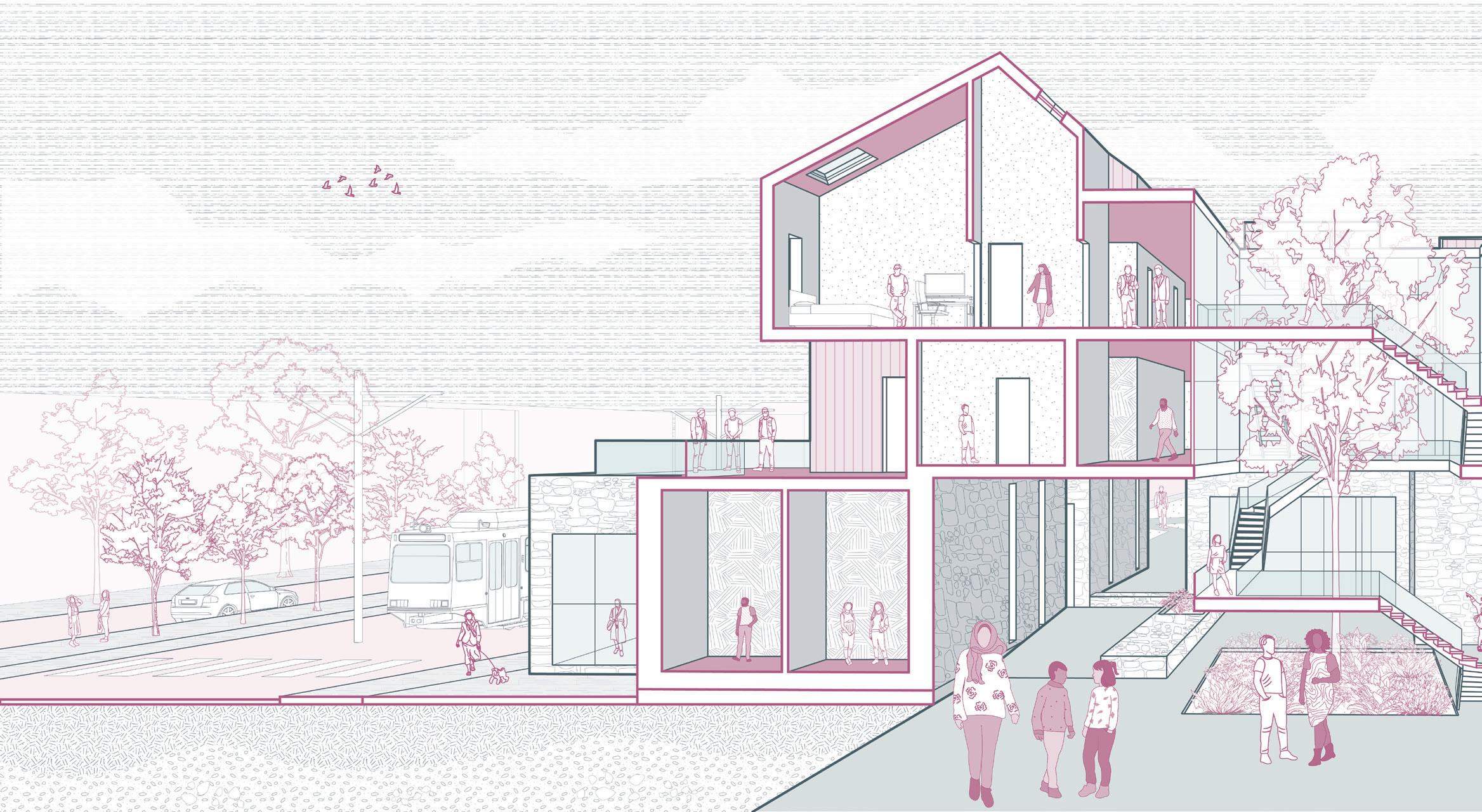
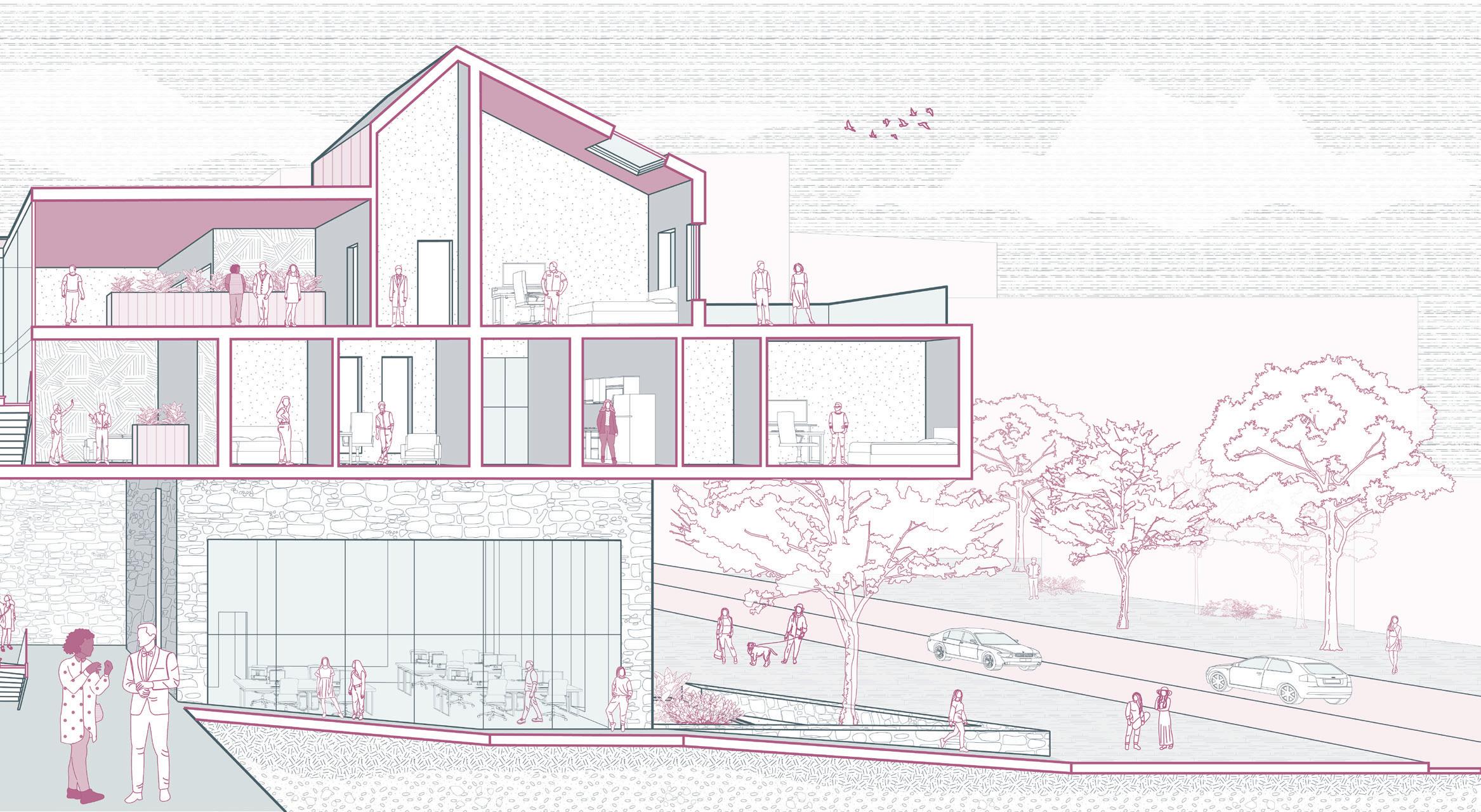
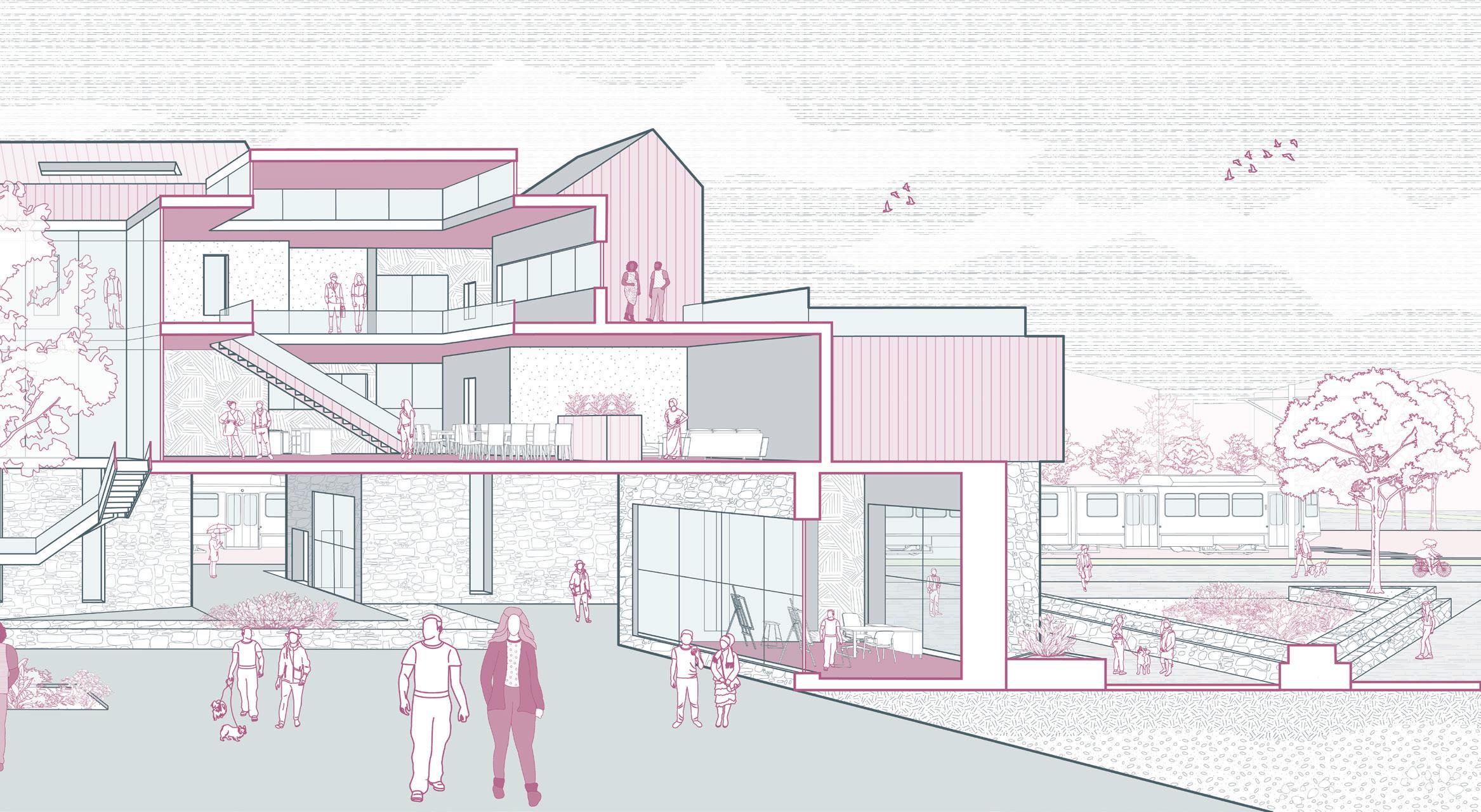
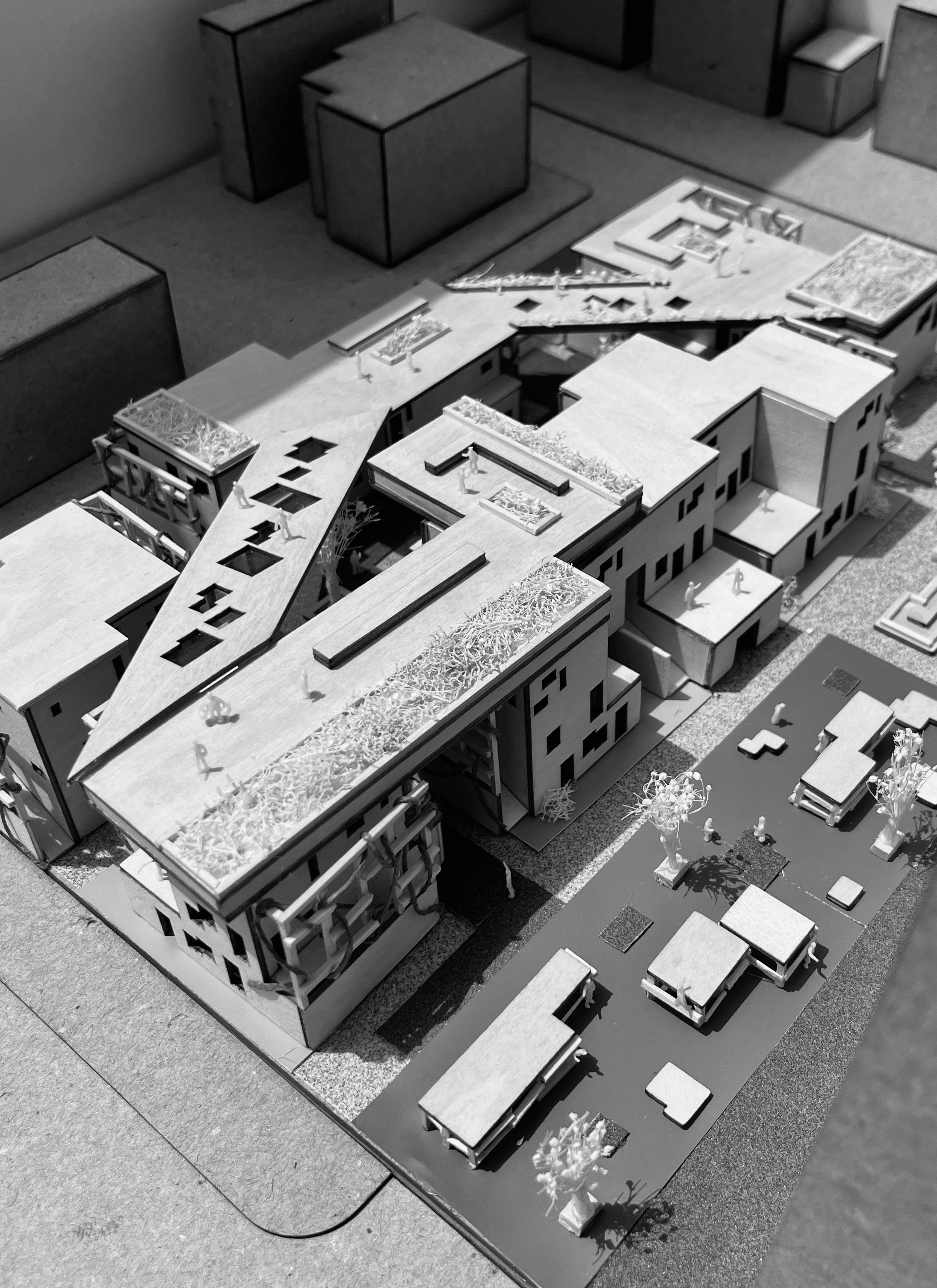
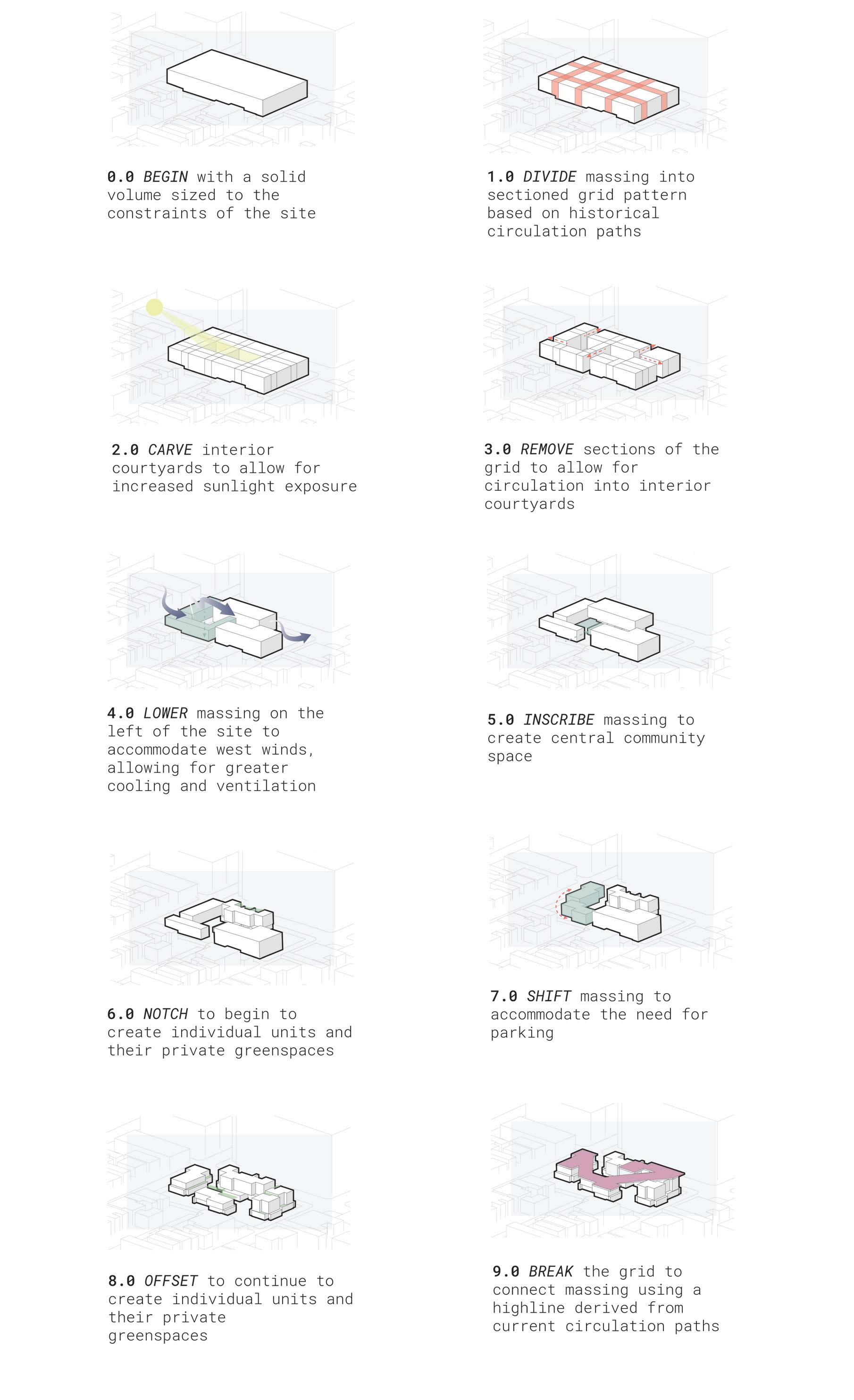
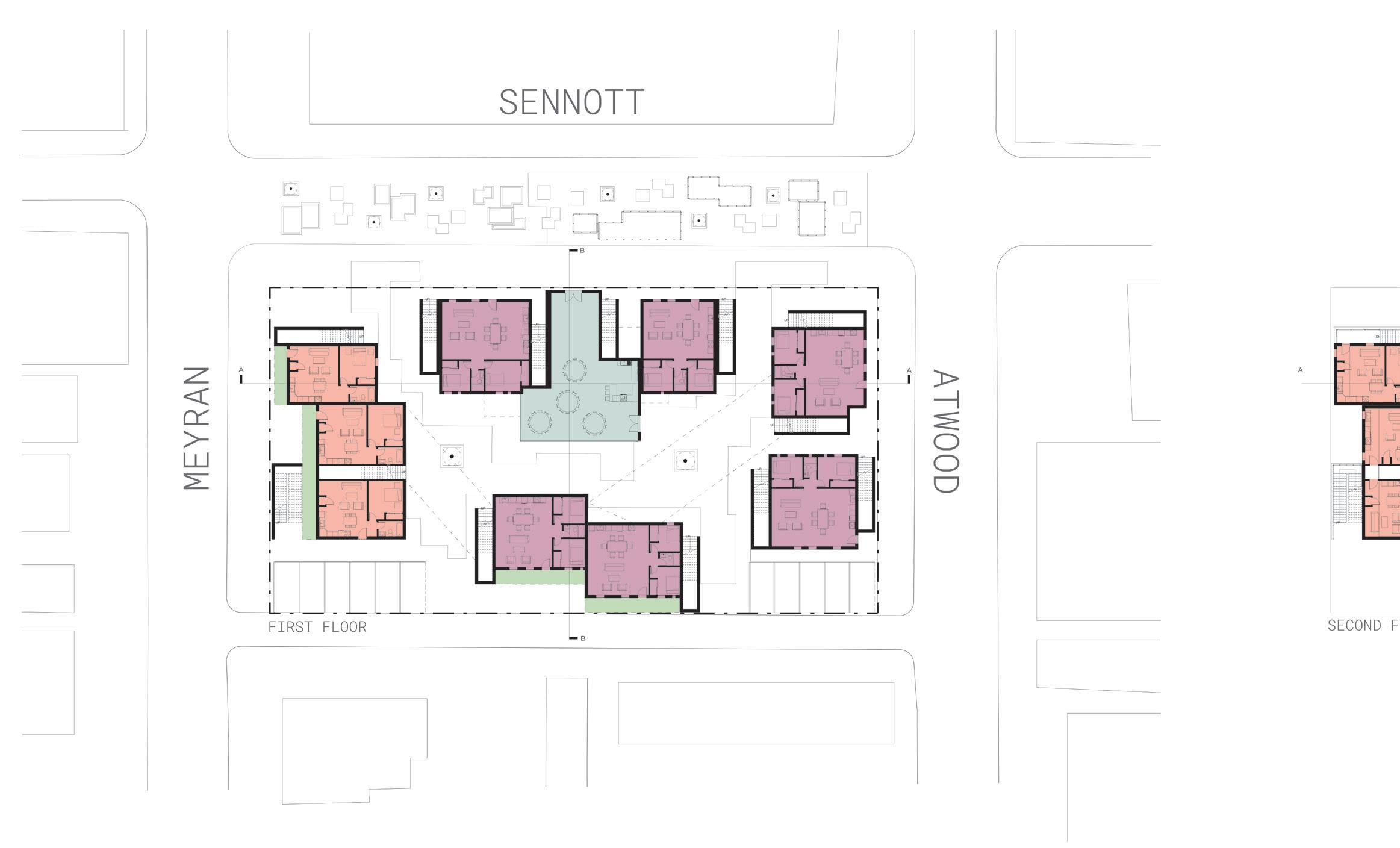
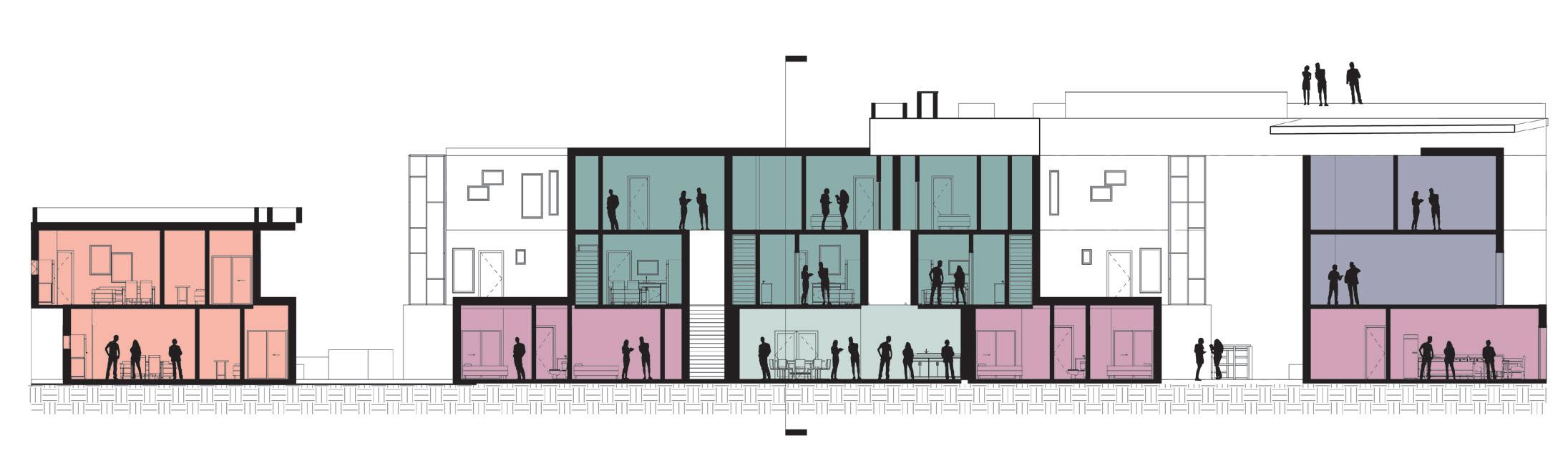
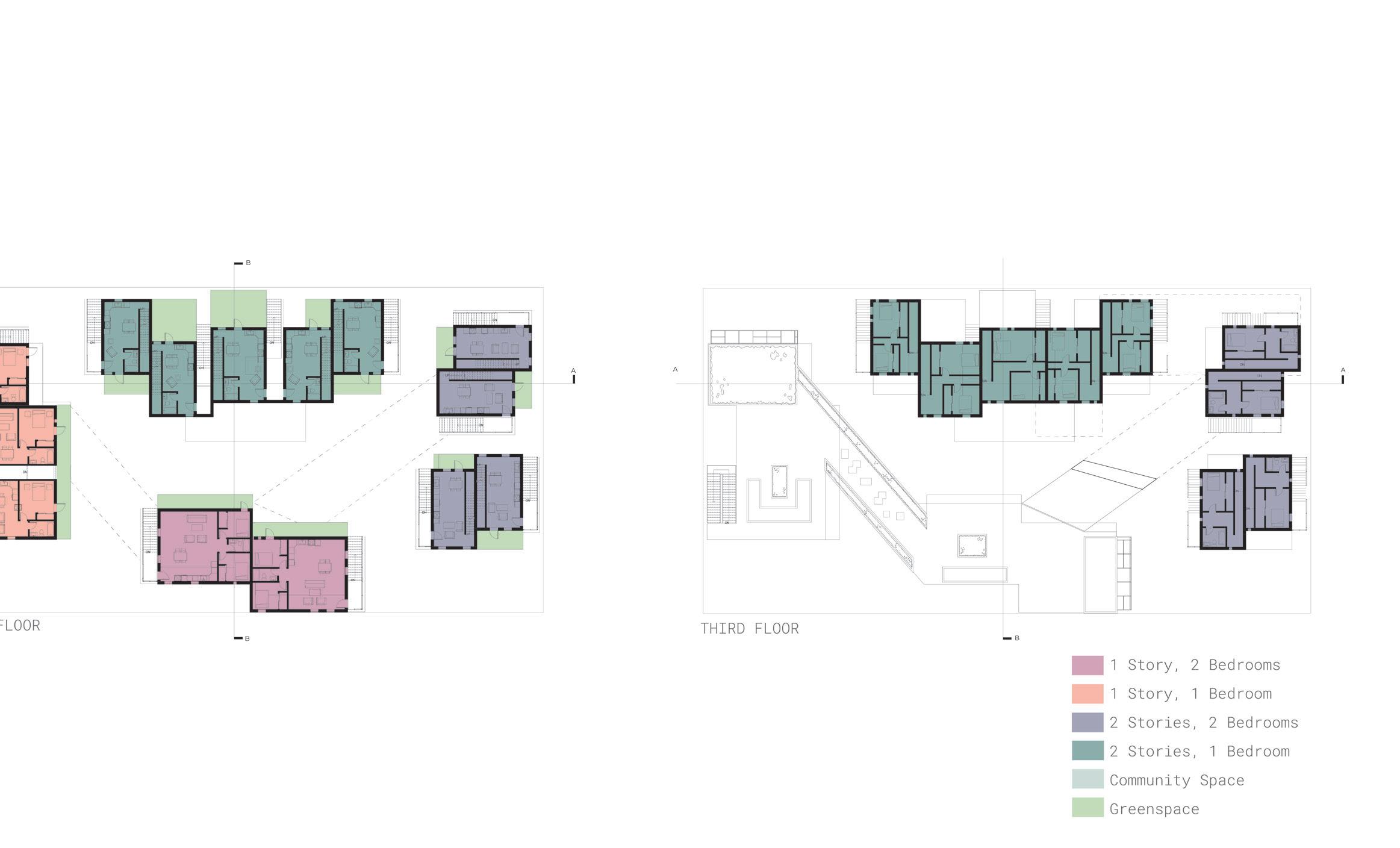
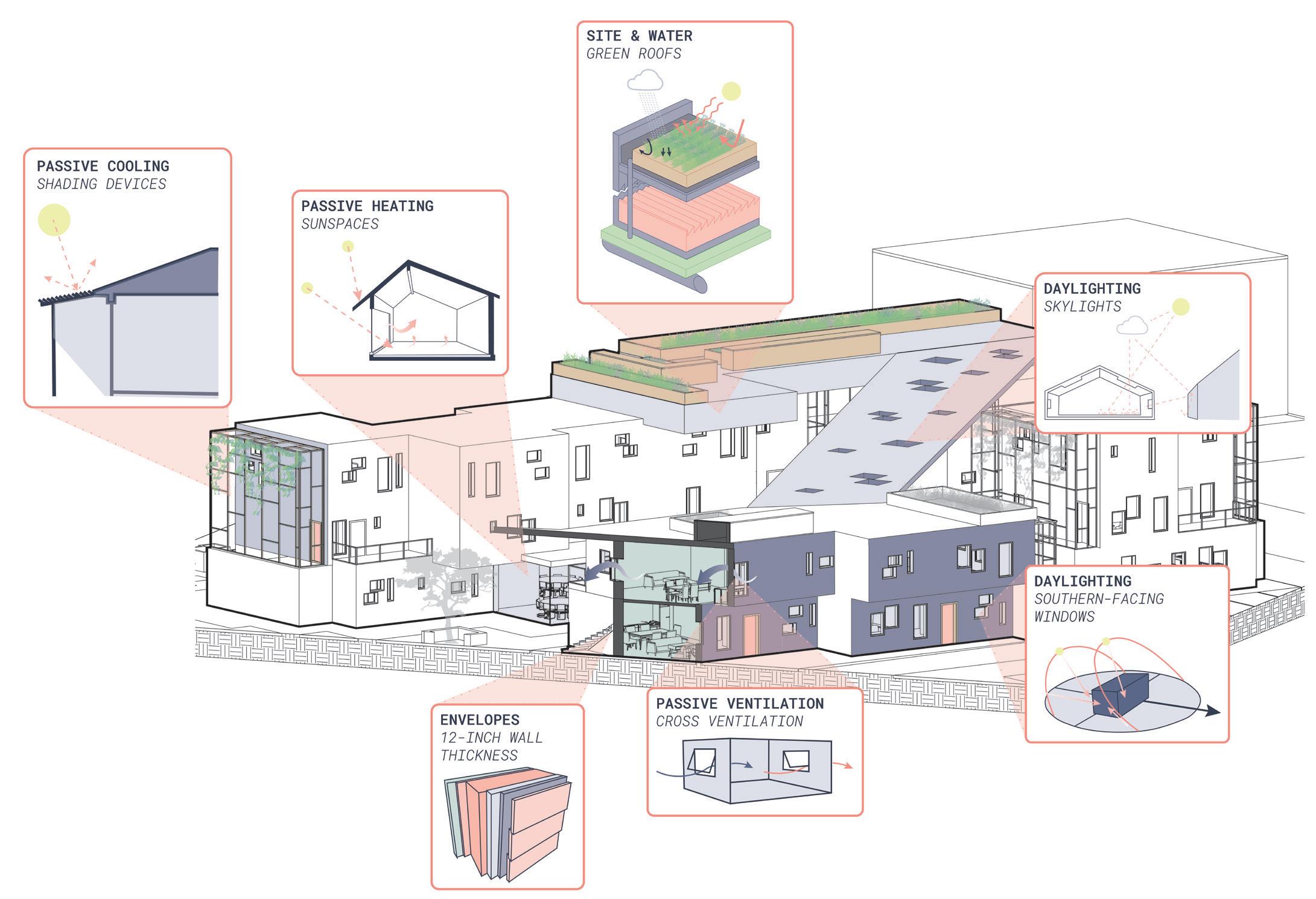
Using key elements of site analysis combined with operative and passive design strategies to develop an affordable and sustainable low-rise, high-density housing complex rooted in ideas of play and creativity
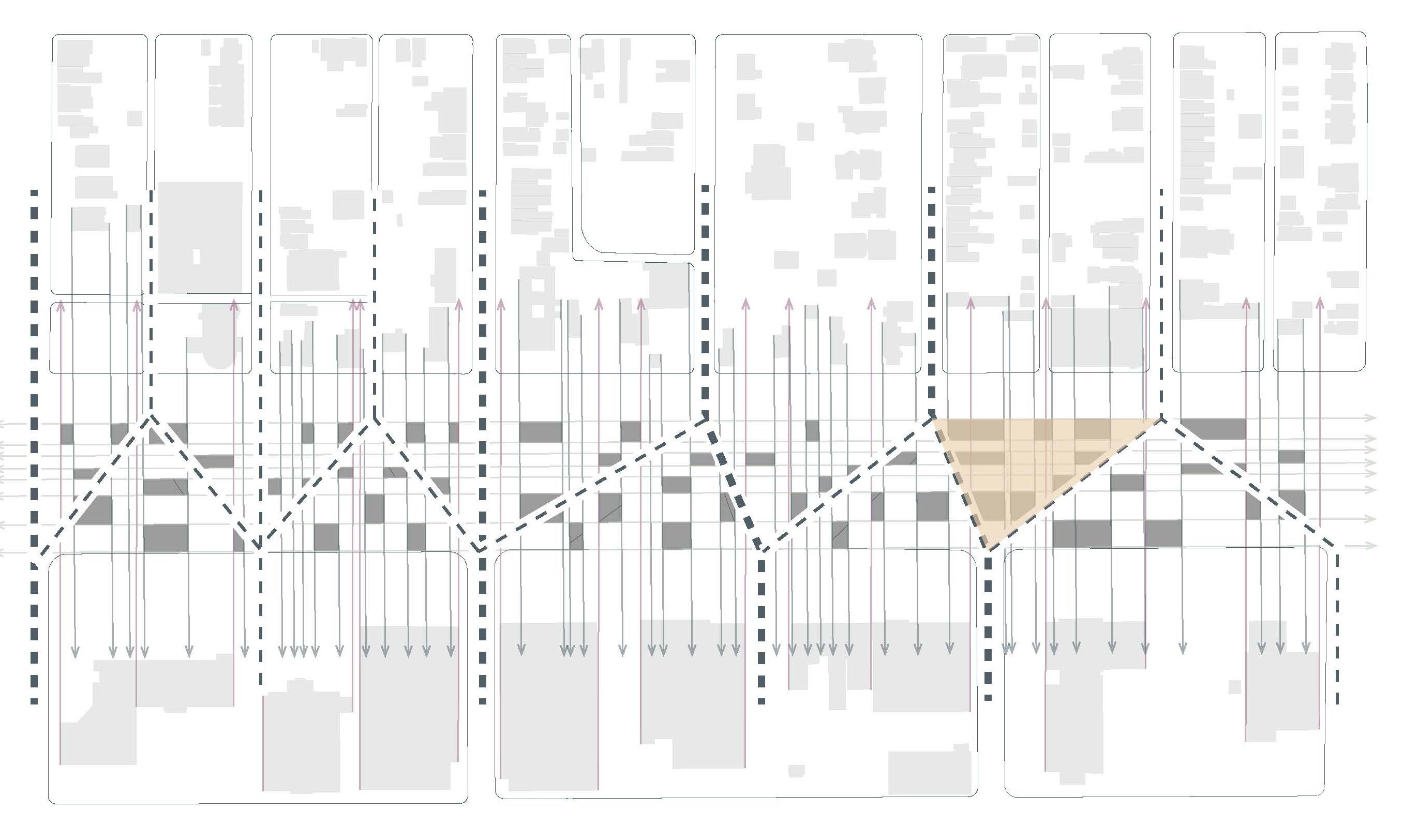
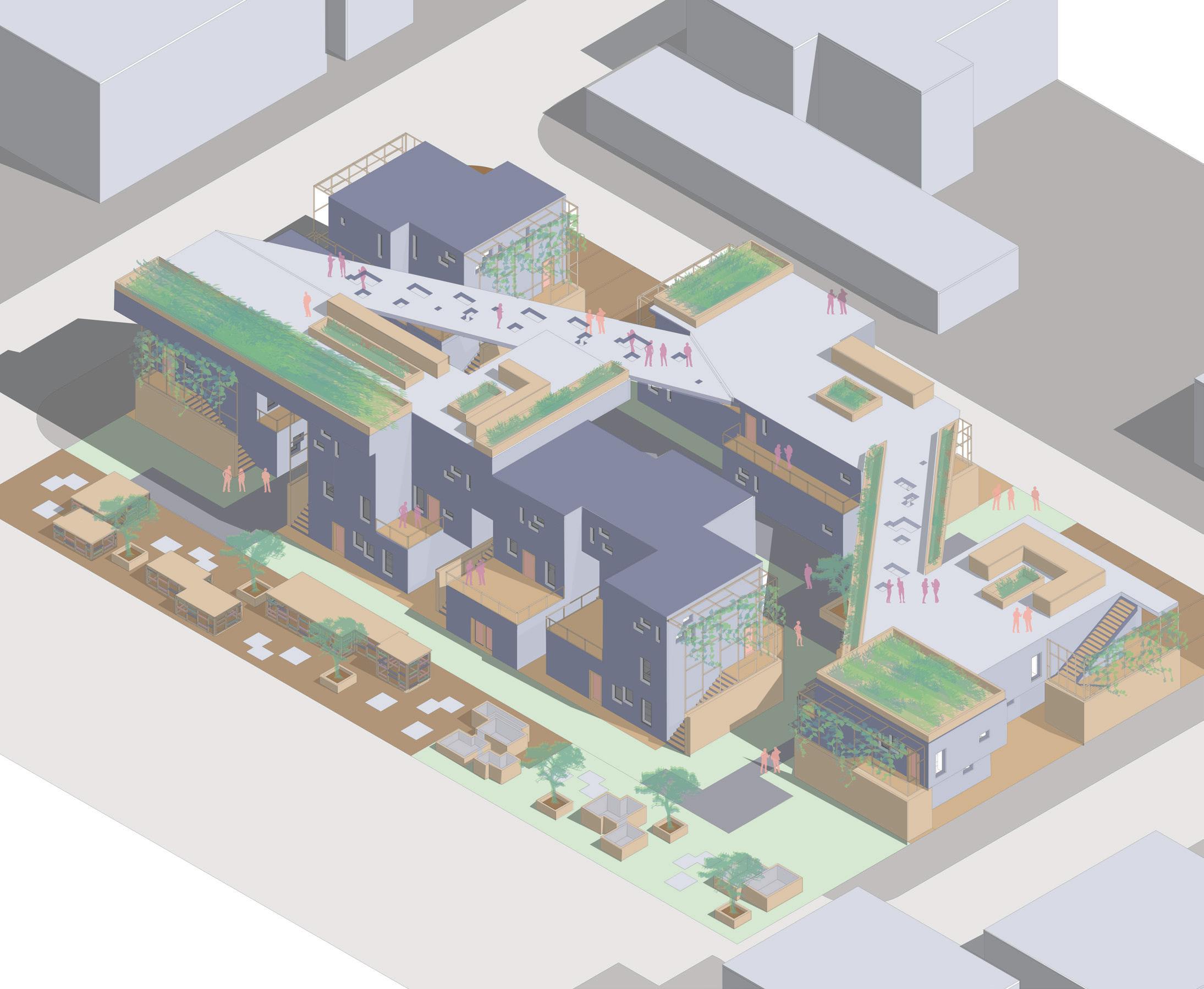
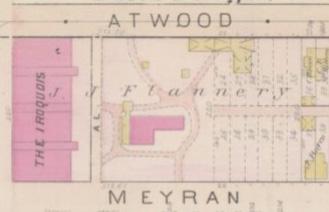
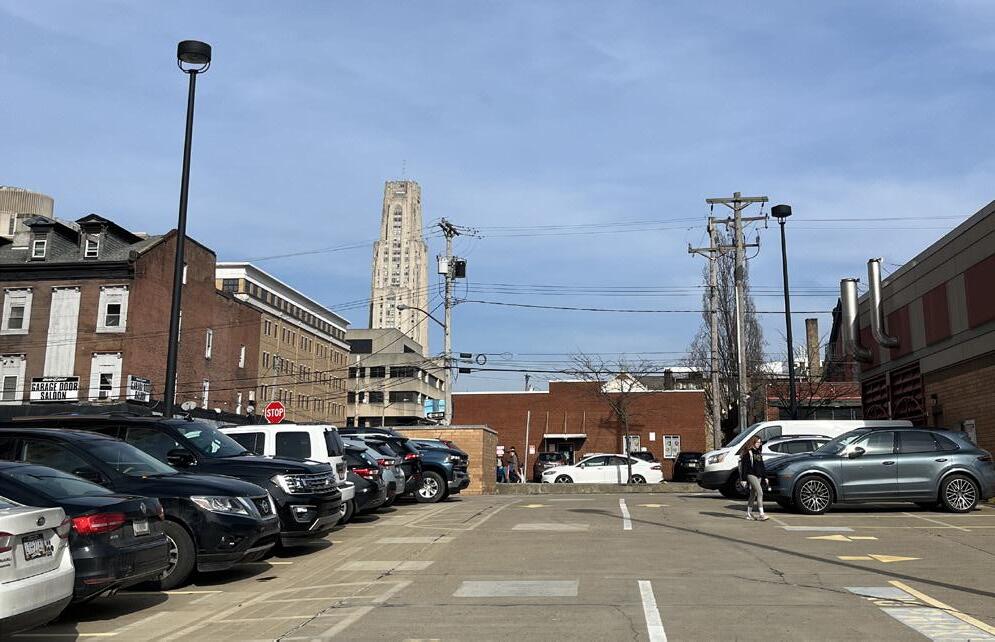
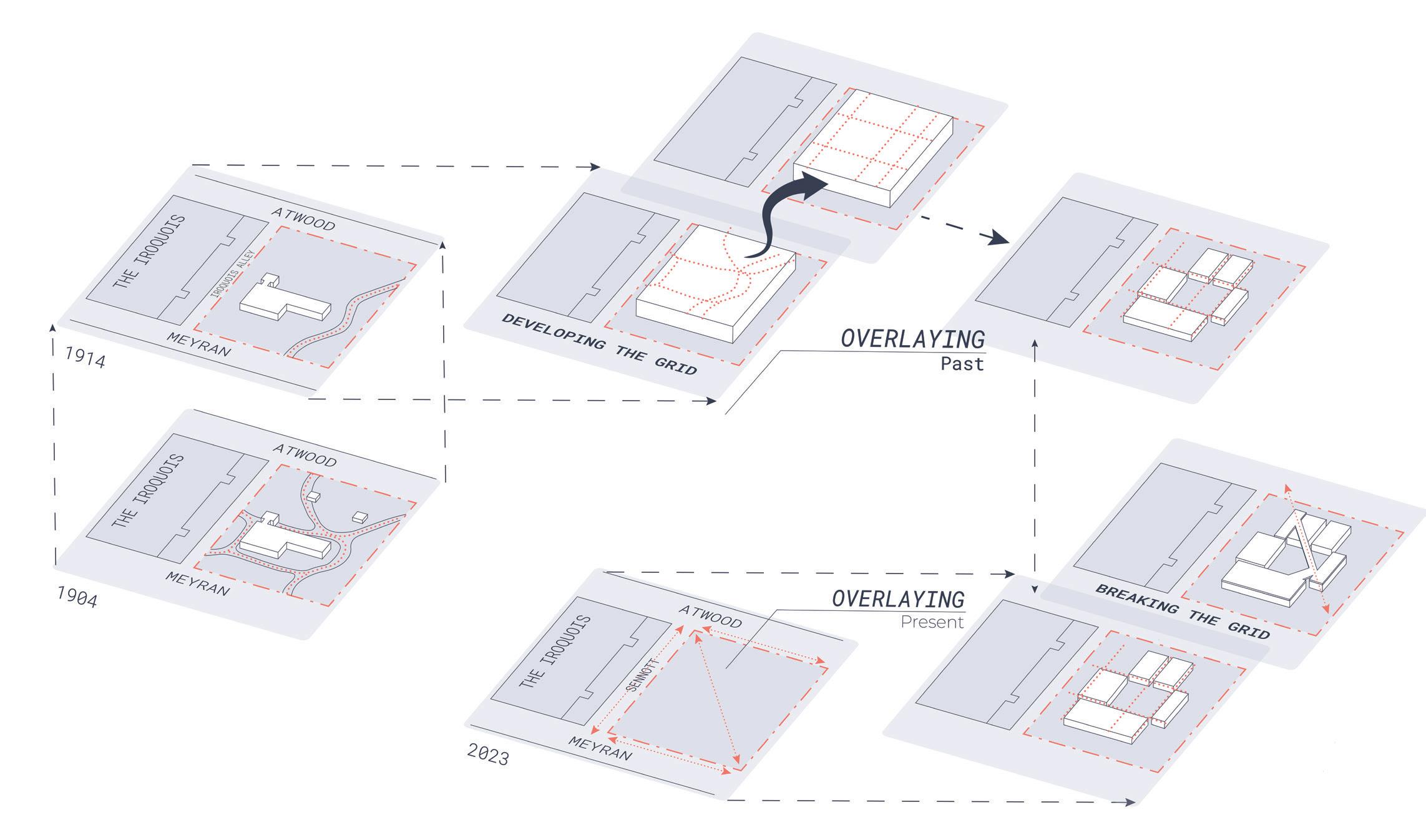
The massing of the project developed from Pittsburgh’s 1904 and 1914 Hopkins maps. Historic and current circulation paths served as inspirational guidelines to carve out the massing of the complex, establishing a grid.
The grid derived from historical contexts was then deliberately broken using a diagonal gesture that directly responds to the most heavily-trafficked circulation path of the current day
This diagonal manifests itself as the “high-line” on the complex; doubling the amount of occupiable exterior space on site as well as nodding to the gradient of activity present within the transition from commercial to residential space within the surrounding neighborhood.
With the integration of passive strategies as well as the undulation of form on site, the complex became a vibrant participant within the surrounding environment.
Though the building program is relatively private, the playful building shape along with the “take back” of the street for public space helped to add a level of participation and shared community elements back into the proposal.