AMERICAN ANTI-VIVISECTION SOCIETY SPRING 2026
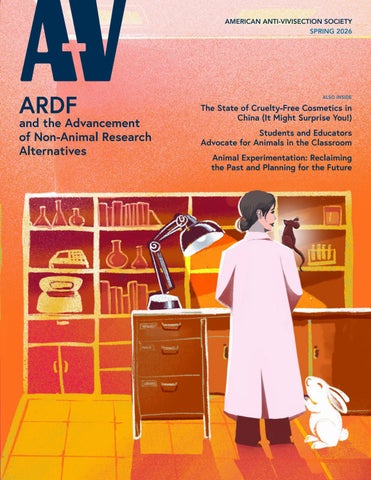
ARDF
and the Advancement of Non-Animal Research Alternatives
ALSO INSIDE
The State of Cruelty-Free Cosmetics in China (It Might Surprise You!) Students and Educators Advocate for Animals in the Classroom Animal Experimentation: Reclaiming the Past and Planning for the Future
SPRING 2026 A-V I
In This Issue
Spring 2026 FEATURES
6 ARDF and the Advancement of Non-Animal Research Alternatives New technologies could lead to a turning point in ending the use of animals for research and testing. By Angela Hvitved, Carolina Romero, and Karin Gabrielson Morton
An analysis of federal inspection reports of bird-breeding facilities is raising serious questions about accuracy and regulatory effectiveness.
14 Coexisting with Wild Rodents Liminal rodents have their place—and deserve consideration—in the environments we’ve created for them.
By Eric Kleiman
By Rebecca Gooley
10 Evolution of Alternatives to Animal Testing
16 Interview: Jeff Sebo
12 The State of Cruelty-Free Cosmetics in China Regulatory changes are gradually making China more open to non-animal product testing. By Kim Paschen
13 Students and Educators Advocate for Animals in the Classroom Animalearn’s annual awards honor humane teachers and students setting kind examples in the classroom.
Author and bioethicist Jeff Sebo shares his views about the use of animals in research and the larger questions of what humans owe other species. By Jill Howard Church
19 Animal Experimentation: Reclaiming the Past and Planning for the Future Scholars funded by the Culture & Animals Foundation are examining the frameworks of animal studies and the role of technology in changing them. By Martin Rowe
By Nicole Green
ALSO INSIDE
Humane Science Allies Join our heroine, Aly, and her new friend, Suki, as they guide us through fun activities in this issue.
DEPARTMENTS
1 A Note from Luke 2 News to Know Save Animals, Modernize Drug Safety; Monkey Imports Increase; Animals Like Little Foot Benefit from $425,000 in AAVS Sanctuary Grants; EPA to Phase Out Testing on Mammals; For the Birds
20 Tributes Special friends honored and remembered.
21 Celebrating Sanctuaries Safe Haven Farm Sanctuary in New York is home to Sugar and Spice and everyone nice!
COVER ILLUSTRATION BY EMILY CHARNIGA; ILLUSTRATION (BOTTOM) BY EMILY CHARNIGA; PHOTO (OPPOSITE, BOTTOM) © ADOBE STOCK; PHOTO (OPPOSITE, TOP) BY ROB CARDILLO
4 Flights of Fancy
A NOTE FROM LUKE
Volume CXXXIII ISSN 0274-7774 EXECUTIVE EDITOR
Where Ethics and Progress Meet
Luke Klein
Dear Friends,
MANAGING EDITOR & COPY EDITOR
For nearly a century and a half, the American Anti-Vivisection Society has worked toward a future that once seemed impossibly distant: a world in which animals are no longer exploited in laboratories. Ours was founded not as a scientific movement but as a philosophical and ethical one, rooted in the belief that animals are not ours to use and harm for human ends. That conviction remains at the heart of our work today, even as the world around us changes and new scientific possibilities emerge.
Jill Howard Church ART DIRECTOR & DESIGNER Emily Charniga STAFF CONTRIBUTORS Alisa Brooks, Jill Howard Church, Jessie Doble, Nicole Green, Angela Hvitved, Eric Kleiman, Karin Gabrielson Morton, Kim Paschen, Carolina Romero, Crystal Schaeffer, Gregg Tully A-V (USPS 002-660) is published by the American Anti-Vivisection Society for the benefit of its members and has been in continuous publication since 1892. OFFICE OF PUBLICATION 801 Old York Road, Suite 204 Jenkintown, PA 19046-1611 215-887-0816 | editor@aavs.org | aavs.org AAVS welcomes requests to reproduce articles that appear in A-V. In all cases, we will require that the credit be given to the author and to AAVS. The individual views and claims expressed in A-V are not necessarily those of the organization.
• MA
NK A SE D
I
D
L IA
W IT H V
At the same time, science alone is not enough. Ending animal experimentation also requires us to ask deeper questions about who other animals are, what they experience, and what we owe them. That is why this issue includes thoughtful philosophical reflections on animals too often overlooked or dismissed—from invertebrates, whose interests are only beginning to receive broader consideration, to wild rats, whose lives and social bonds invite us to reconsider assumptions shaped by fear and habit. After 143 years, we may finally be entering the era we have long hoped to see: one in which ethical conviction and scientific progress are no longer in tension but are moving together toward the end of animal testing. For the Animals,
E-B
DE
ETABL EG
E WITH AD
Y REC CLE
• M
All inks are vegetable based, and all waste from the printing process is recycled. Humane Science Allies is printed on paper made with 100% postconsumer waste.
In many ways, this A-V issue reflects that continuity. Our cover story explores the rapidly advancing science of non-animal alternative methods and the growing evidence that human-relevant approaches can do more than spare animals suffering—they can also lead to better, more meaningful results for humankind. From sophisticated celland tissue-based systems to other emerging technologies, the pace of progress is accelerating, bringing us closer to the future this movement has long sought.
MATER
Luke Klein, President American Anti-Vivisection Society
AAVS is a leader in supporting alternatives to inhumane testing on animals. Not only do we seek to spare animals from suffering in laboratories, we also help advance human health by promoting innovative and more effective research techniques.
Empower this work to continue CALL (800) SAY-AAVS OR VISIT AAVS.ORG/SUPPORTALTERNATIVES
News to Know By Crystal Schaeffer
Save Animals, Modernize Drug Safety Countless numbers of animals, including mice, rabbits, dogs, and primates, continue to suffer and die during drug development. But with research showing that over 90% of new drugs tested on animals have failed in human clinical trials, why does this practice continue? Financial incentives may be a factor. Last year, Inotiv, a contract research organization, stated that the 2022 FDA Modernization Act 2.0, which required the Food and Drug Administration (FDA) to allow the use of non-animal methods in drug development, could harm the company’s animal-centered business model. The successor to that statute, the FDA Modernization Act 3.0, would require the FDA to update testing regulations to revamp drug development, sparing both animal and human lives.
Monkey Imports Increase For years, the primate research industry has been looking for a steady supply of monkeys to use in experiments. Unfortunately, it may be getting what it wants. According to data from the Centers for Disease Control and Prevention, 22,843 primates were imported into the U.S. in 2025, an increase of over 30% from 2024. More than 97% of these were long-tailed macaques, most likely destined for pain and suffering in labs. The top exporters were Mauritius (10,696) and Vietnam (8,037), filling a previous void left by China—which stopped exports during COVID—and Cambodia, in the wake of the alleged “monkey laundering” indictment unsealed by the U.S. Department of Justice (DOJ) in 2022. PHOTO (TOP, MOUSE) © VASILIY KOVAL / ADOBE STOCK; PHOTO (MIDDLE, MACAQUE) © THEWILDGOOSE_CHILD / ADOBE STOCK; PHOTO (OPPOSITE, MACAQUE) © BORN FREE SANCTUARY; PHOTO (OPPOSITE, BIRD) © AKSOL / ADOBE STOCK
2
A-V
SPRING 2026
In related news, Charles River Laboratories (CRL) has announced the $510 million acquisition of K.F. (Cambodia) Ltd., which had been a major supplier of longtailed macaques for research until it was accused of illegal wildlife trading. According to a shareholder lawsuit, CRL— by far the largest user of primates in the U.S.—has bought more than 10,000 long-tailed macaques from K.F. since 2020. Charles River was subpoenaed by the DOJ in 2023 during an investigation into the company’s primate supply chain from Cambodia. CRL says the purchase of K.F. will help it “safeguard” its supply of monkeys for experimentation. Animal advocates believe it will likely lead to reduced transparency and increased use of primates in experiments.
Despite the 2022 Act, the agency has failed to amend regulations to reflect a reduced reliance on animal tests. Consequently, reliance on animal-derived results continues to slow human-centered innovation. Modern, non-animal methods can better predict human outcomes, reduce costs, and speed life-saving treatments to patients, while also dramatically reducing animal suffering. The FDA Modernization Act 3.0 has already unanimously passed in the Senate; now it’s time for the House to support this important bill. Please contact your legislators and ask them to support this; take action at aavs.org/FDA
Animals Like Little Foot Benefit from $425,000 in AAVS Sanctuary Grants
EPA to Phase Out Testing on Mammals
Animals released from labs will continue to thrive in sanctuaries thanks to over $425,000 in grants in 2025 from the AAVS Sanctuary Fund, which have been awarded to nearly 20 sanctuaries. Recipients include sanctuaries located in Africa that care for gorillas and chimpanzees. Among the hundreds of rescued animals are baboons Little Foot and her mom Dee Dee, as well as Auntie Izzy, who arrived at the Born Free sanctuary in 2025.
The U.S. Environmental Protection Agency (EPA) has renewed a policy aimed at eliminating toxicity testing on mammals such as rabbits, rats, mice, and dogs by 2035, a goal originally set in 2019 but shelved during the Biden administration. This effort can help accelerate the development and use of non-animal testing technologies such as in vitro assays, computational models, and microphysiological platforms that mimic human organ responses to assess chemical safety. These methods can offer faster, cost-effective, and more human-relevant data than traditional animal tests, while significantly reducing animal suffering.
Over the past 40 years, AAVS has awarded nearly $5 million to sanctuaries caring for animals released from labs. We’re deeply grateful for their work, because we know that our effort to end the use of animals in science is only complete when it includes a commitment to the long-term care of individuals who have endured so much. Learn more about these grants at aavs.org/sanctuaryfund
Although not much is known about her life before coming to the sanctuary, Little Foot is a healthy baboon, likely born at the same lab where Dee Dee and Izzy were used in research. Sadly, Dee Dee and Izzy each had one of their legs amputated; it is not known whether this was part of an experiment, or for medical reasons. But their disability doesn’t slow them down, and we’re excited that Little Foot can grow up surrounded by her mother’s love—something many primates born in labs never know.
To achieve its goals, the EPA will need to revise its regulations, validate alternative methods, and ensure changes will still meet regulatory safety requirements. Additionally, birds and fish—who are often subjected to environmental toxicity experiments—are not mammals, so their use can continue under this renewed policy.
Little Foot from Born Free Sanctuary in Texas
For the Birds By Eric Kleiman A February 2026 investigation by World Animal Protection (WAP) and Vox revealed disturbing conditions at bird breeders in Texas and Oklahoma that directly relate to the findings presented in “Flights of Fancy” (see page 4). At a “massive parakeet breeding operation” in Oklahoma, an undercover WAP investigator found cages caked with feces, as well as birds who plucked their own feathers due to stress or boredom. He documented a “pile of dead parakeets and severed body parts in a trash can, including one dead bird placed headfirst into a red SOLO cup.” Vox called it a “parakeet mill.” The investigator said it was “factory farm-like.” This facility is among the eight breeders and dealers for the pet trade that had
identical bird inventories in multiple U.S. Department of Agriculture (USDA) inspections. The USDA listed exactly 6,000 parakeets in three inspections spanning 19 months, including one inspection conducted three days before the Vox exposé was published. Despite the devastating Vox and WAP findings, the USDA has failed to document a single citation at this breeder classified as having a “serious or severe adverse effect” on the parakeets’ health and well-being. Across USDA inspections since August 2023, 19 of 22 bird-only breeders and dealers with identical inventories or inventories with suspiciously round numbers were located in Oklahoma. Since the bird regulations went into effect, 36 USDA inspections listing
132,408 birds have been conducted at these Oklahoma entities. AAVS continues to believe the Animal Welfare Act is largely focused on providing information about animals—not protecting them. Worse, data provided by the USDA is minimal and often incomplete. The AWA has not prevented the disturbing abuse documented in these investigations. Parakeets in filthy conditions and body parts in trash cans are just a few examples of the abhorrent reality birds face in these unchecked bird mills.
SPRING 2026 A-V 3
Flights of Fancy
The USDA’s Bird Numbers Don’t Add Up By Eric Kleiman February 21 marked three years since the U.S. Department of Agriculture (USDA) published its final rule for birds covered under the Animal Welfare Act (AWA) along with an analysis of the projected impact, stating that “a great deal of uncertainty surrounds the number of facilities that will be affected by this rule.” Uncertainty was an understatement. AAVS believes that the profound disparity between the USDA’s estimates and the reality documented in the USDA’s own inspection reports raises fundamental questions about the USDA’s enforcement and oversight of the AWA. However, AAVS’s analysis of USDA inspections that have been conducted since the bird regulations went into effect— which does not include birds at Agricultural Research Service facilities (which are not subject to APHIS enforcement) or entities that have no birds listed in inspection inventories—shows that we must enhance our decades-long efforts to protect birds under the AWA.
USDA Estimates vs. Reality AAVS’s analysis of 45,166 bird facility inspections that were conducted between April 21, 2021, and December 21, 2025, shows huge disparities between USDA estimates and the reality for birds. The USDA estimated that between 5,975 and 7,913 entities would be affected under the final bird rule. AAVS’s analysis reveals that only 1,882 entities were actually affected. Of those, just 243 were both newly licensed and housed only birds (see Figure 1). The USDA’s regulatory impact analysis also used the terms "newly licensed" and "newly regulated" interchangeably. However, those words have different meanings, especially considering that many entities with birds also house other species covered under the AWA, and therefore did not need new licenses or registrations because of the bird regulations. 4
A-V
SPRING 2026
In fact, AAVS’s analysis shows that the vast majority of entities with birds that were inspected after the regulations took effect housed other AWA-covered species. The USDA also overestimated the financial impact of the regulations. The licensing cost estimates were based on a range of 5,625 to 7,563 breeders, dealers, and exhibitors paying $120 per license every three years (research facilities are registered, not licensed). The inspection reports conducted after August 21, 2023, show actual licensing costs were just 3 percent of the USDA’s upper estimates (see Figure 2). Moreover, the USDA’s prediction that up to 7,913 AWA entities would be affected by the new bird regulations is undermined by the USDA’s own published lists of all active licensees and registrants. These lists show that the numbers of dealers, breeders, exhibitors, and research facilities have not changed significantly since the bird regulations took effect—actually, they have gone down since November 2020 (see Figure 3).
A Miss on De Minimis The legal definition of de minimis is “of trifling consequence,” a matter so small that courts don’t even consider it. In the context of animal lives, this is a disturbing concept. The USDA bird regulations include de minimis exemptions for sales of birds that do not require a license. For USDAlabeled “pet bird species” whose average adult weight is 250 grams or less (e.g., finches, cockatiels, and parakeets), annual sales of 200 or fewer do not need a license. For birds who weigh more than 250 grams (e.g., cockatoos, macaws, and crows), annual sales of eight or fewer are exempt from licensure requirements. AAVS’s analysis raises significant questions regarding the USDA’s determination of de minimis and the adequacy of its bird inventory numbers.
USDA inspection reports from seven different Oklahoma bird-only breeders and dealers since August 21, 2023, show identical inventory numbers, ranging from 200 cockatiels to 6,000 parakeets. These inspections were conducted as many as 19 months apart, and all reported inventories with suspiciously round numbers. (For more about these questionable inventories, see “For the Birds,” page 3.) Worse, inspections 18 months apart at California bird-only breeder Nationwide Birds showed identical inventory numbers across 18 different species totaling 2,694 birds. These inspections raise questions about not only the reported bird numbers, but also the USDA’s enforcement and oversight. The USDA states that birds can be difficult to count, particularly free-flying birds in aviaries—but AAVS believes these examples transcend such difficulties and reveal significant concerns.
The USDA’s Flights of Fancy In August 2025, Science magazine quoted a USDA official who said that the bird regulations have had a “seismic” impact. However, AAVS’s analysis of the USDA’s records shows that it substantially overestimated the number of AWA entities that would be affected. The USDA repeatedly stated that there was “a great deal of uncertainty” regarding the number of impacted facilities, but the real uncertainty continues to be the USDA’s lack of adequate oversight. AAVS will continue to demand accountability for the untold numbers of birds and other species who suffer and die in labs. Eric Kleiman is Senior Policy Advisor for AAVS.
Fig. 1. USDA Inspections Contradict USDA Estimates for Birds In February 2023, the USDA estimated 5,9757,913 “newly regulated” entities under the AWA could be affected by the bird rule.
Fig. 2. Impact of the Bird Rule USDA Estimates vs. Reality The USDA estimated that between 5,975 and 7,913 entities regulated under the AWA could be affected by the final bird rule. It also estimated new licensing costs of up to $303,000 annually. USDA inspections conducted between August 21, 2023, and December 21, 2025, show just how far off those estimates were. TOTAL NUMBER OF ENTITIES AFFECTED
ESTIMATED
5,975-7,913 newly regulated entities
BREEDERS AND DEALERS
8000
4000
6000
3000
4000
2000
RESEARCH FACILITIES 250 200 150
ACTUAL
1,882
100
entities with birds during inspections
2000 0
ACTUAL
486
1000
Estimate
Reality
0
50
Estimate
0
Reality
Estimate
Reality
THE FINANCIAL BIRDBATH
Estimated vs. actual licensing costs under the AWA bird regulations
new entities housing birds during inspections ACTUAL
243
newly licensed bird-only entities
August 21, 2023 to December 21, 2025
$9,720 annually
$225,000-$303,000 annually
243 bird-only breeder, dealer, exhibitor licenses ($120 each)
Source: USDA regulatory impact analysis dated February 21, 2023, and USDA inspection reports dated August 21, 2023-December 21, 2025
Fig. 3. AWA-Regulated Entities Over Time Numbers of active dealers, breeders, exhibitors, and research facilities under the Animal Welfare Act (2020-2025). Overall numbers have not changed significantly, which is consistent with inspection reports that show few new bird-only entities. BREEDERS
3500
NUMBER OF ACTIVE AWA ENTITIES
EXHIBITORS RESEARCH FACILITIES
3000
DEALERS 2500 2000
Bird Regulations Take Effect August 21, 2023
1500 1000 500 0
11/02/20
10/19/21
10/21/22
09/09/23
10/25/24
Source: USDA lists of active AWA licensees and registrants, 2020-2025. Exhibitors constitute the vast majority of entities affected by the bird rule. Not shown are carriers and handlers, which have not been affected in significant numbers.
12/18/25
SPRING 2026 A-V 5
ARDF and the Advancement of Non-Animal Research Alternatives By Angela Hvitved, Carolina Romero, and Karin Gabrielson Morton The Alternatives Research & Development Foundation (ARDF) has been funding the development of non-animal research methods for more than 30 years. With the growth of alternative methods in biomedical research and safety testing, it’s important to understand what these methods are and the critical role they play in reducing and replacing the use of animals in science. New technology and recent policy developments have created the perfect climate for rapid progress in implementing alternative methods. These innovative technologies have the potential to help improve the health and well-being of humans even more effectively than traditional research using animals. Alternative methods are technologies or research procedures used in place of animal research to answer scientific questions. For example, to determine whether a certain chemical causes skin damage, researchers can test on samples of laboratory-grown human skin instead of rabbits. These alternative methods provide important information without using animals, and they can even be more reliable than animal testing for understanding effects on humans. Such alternatives are also called new approach
methods, reflecting the paradigm shift they represent in research and testing. Alternatives research and animal research have been closely intertwined throughout their histories. Although animal use in scientific studies—and criticism of this practice—has existed for
Alternative methods provide important information without using animals, and they can even be more reliable than animal testing for understanding effects on humans. centuries, contemporary animal research has been strongly influenced by the 3Rs: replacement, reduction, and refinement. First proposed in 1959, the 3Rs philosophy was introduced to improve animal welfare in research. The interpretation of the 3Rs has changed over time, but it remains a foundational framework that has been incorporated into legislation worldwide. According to the 3Rs, researchers should replace the use of animals with non-animal methods when possible. If the use of animals cannot be replaced, the number of animals should be reduced to the extent possible and experiments should be refined to minimize suffering for the animals involved.
A-V
SPRING 2026
Since its founding, ARDF has provided nearly $5.5 million in grants to scientists around the world who are conducting innovative research to reduce or replace animal use. In its earliest years, much of ARDF’s funding supported chemical safety testing projects, but as technology has advanced, the types of research that can be done using alternative methods have expanded to include cancer, Alzheimer’s disease, and many other pressing human health issues. As scientific understanding has progressed, so have ARDF’s research priorities.
Advancing Science and Policy
Funding Research That Improves Human Health
Promoting the development and use of alternative methods involves more than just funding research. Beyond the technological challenges of creating new methods that are useful and reliable, there are also significant legal and cultural barriers, such as laws that prioritize or require animal testing to prove the safety of chemicals and pharmaceuticals. Because animal tests have been used in these industries for many years, the companies that make these substances and the federal agencies that regulate them are more confident interpreting animal studies, even though some alternative methods have been shown to be more reliable.
AAVS established ARDF in 1993 to promote the development and use of
Another challenge lies in validating alternative methods. Although validation
Although interest in alternative methods has historically been tied to the 3Rs, ARDF’s work is focused on using these technologies to replace the use of animals in science.
6
alternative methods by supporting high-quality scientific research that can reduce or replace the use of animals in research, testing, and education. ARDF supports this mission by providing research funding for individual scientists, as well as by sponsoring scientific conferences and achievement awards to support the research community.
does not have an agreed-upon singular definition, it generally refers to a process that supports widespread acceptance that a specific method is reproducible, reliable, and accurately predicts the human biological response that it claims to predict. Validating a method is expensive and time-consuming, but it is important for all parties involved (including manufacturers and the federal agencies that approve the safety of drugs and chemicals) to verify that the information obtained is correct and can be used as the basis for regulatory decisions.
role in reducing animal use in chemical testing. Since 1981, it has adopted guidelines for chemical risk assessment and validating alternative methods in order to increase their use. Because OECD guideline tests are globally accepted, when a new alternative method replaces an older animal-based guideline, animal testing for that purpose can be phased out. ARDF recently joined the International Council on Animal Protection in OECD Programmes, a group of invited experts that works within the OECD system to promote alternatives.
The challenges around validation help explain why transitioning to non-animal methods is both a technological and a political process. ARDF has long recognized the importance of working on both fronts and has supported efforts to convince policymakers that true progress requires considerable policy change in addition to increased investments in research. Fortunately, these efforts appear to be paying off.
The U.S. government has recently made rapid progress in this area, announcing several initiatives with the potential to transform the alternatives landscape through coordinated research and policy reforms. The National Institutes of Health (NIH) has launched Complement-ARIE, a major initiative to develop and standardize human-relevant alternative methods. One component is its Validation and Qualification Network, which brings interested parties together to accelerate the use of alternative methods for biomedical research and regulatory approval. To coordinate the many new efforts, the NIH has also created the Office of Research Innovation, Validation, and Application.
Currently, more than 130 alternative methods have been accepted by regulators in the U.S. and EU. Making Real Progress Historically, Europe has surpassed the U.S. in advancing policies to encourage the replacement of animal experiments. Since 1986, European Union (EU) law has required that animals not be used when alternatives exist. The EU established a European center for validating alternative methods, banned animal testing of cosmetics, and passed legislation calling for the full replacement of animal use as soon as scientifically possible. To support these efforts, the EU has funded numerous scientific projects and collaborations, and it will launch a roadmap to phase out animal testing for regulatory purposes in 2026. The global Organisation for Economic Co-operation and Development (OECD) has also played a significant
The Food and Drug Administration (FDA) has also been pursuing new initiatives to promote the use of alternative methods. The FDA Modernization Act 2.0 and the Innovative Science and Technology Approaches for New Drugs (ISTAND) program allow alternative methods for evaluating drugs to be formally accepted and qualified for use in the regulatory review process. Finally, the Environmental Protection Agency has adopted new policies to integrate non-animal data into chemical safety assessments with the goal of ending tests on mammals by 2035. These efforts have led to an exciting turning point. Some of the earliest examples of alternative methods have now displaced animal studies as accepted standards, while others are becoming more broadly accepted. The following
examples show the wide range of scientific questions that can be addressed using alternative methods, as well as the process of introducing these technologies into widespread use.
Chemical Safety Whether a company sells lipstick or pesticides, it is generally required to demonstrate that its products are safe for people to use. These tests can use hundreds of animals (most commonly rodents and rabbits) and cause significant suffering. In the 1990s and early 2000s, product testing for skin or eye corrosion and irritation (including the painful Draize tests) relied almost entirely on rabbits. Fortunately, many of these tests have now been replaced by three-dimensional human skin and eye models, which consist of human cells cultured on a supportive membrane. As they grow, these cells organize into multiple layers that closely resemble the structure and barrier properties of the human epidermis and cornea. Several laboratory-grown tissue models have now been approved by the OECD to identify substances that can cause burns or irritation of the skin and eyes. Other alternatives include methods to test genetic toxicity and carcinogenicity, which assess whether substances can damage DNA or increase cancer risk. SPRING 2026 A-V 7
Computer-based (in silico) approaches that use existing biological data and chemical structure information to predict toxicity are helping prioritize testing and reduce animal studies. Recent advances in artificial intelligence have greatly expanded the accuracy and scope of these tools and will continue to increase their usefulness. Currently, more than 130 alternative methods have been accepted by regulators in the U.S. and the EU to evaluate the safety of chemicals and drugs. Many of these methods have already been successful in replacing animals in routine safety testing.
Drug Development There are also some promising alternative methods for use in drug development and testing. One notable example is organ-on-a-chip technology used for early detection of drug-induced liver injury (DILI). DILI is a common reason that new drugs fail; liver toxicity is often inaccurately predicted by animal studies, and therefore not detected until the drug is taken by humans. Liveron-a-chip technology uses human liver cells grown in a small, microengineered device that recreates key features of the liver’s physiology and function, making it possible to detect toxicity and stress responses that can be missed using traditional animal studies. In 2024, a liver chip was accepted into the FDA’s ISTAND program, an important first step for its use in regula8
A-V
SPRING 2026
tory decision-making. Eventually, this technology could significantly reduce or replace animal use in preclinical drug safety testing and offer more accurate predictions of human drug responses than traditional animal models.
to form structures that resemble those in the early human brain and spinal cord. Incorporating this technology could reduce the number of tests required while improving ethical acceptability and human relevance.
Brain Studies
Cancer Research
Another exciting area of alternatives research is understanding how chemicals affect the developing brain. Currently, developmental neurotoxicity assessments rely on large and complex animal studies, often involving multiple generations of rodents exposed to chemicals during pregnancy. As an alternative, scientists recently proposed a battery of 17 in vitro (cell-based) tests. These tests measure critical processes in brain development, including cell growth, migration, differentiation, synapse formation, and electrical activity. By integrating known information about the processes that are important for brain development, this set of tests can help predict how a chemical would affect the developing brain.
Progress in other areas of biomedical research further demonstrates the potential of alternative approaches for understanding and treating human disease. In cancer research, efforts to personalize treatment increasingly rely on patient-derived xenograft models, where part of a patient’s tumor is implanted in mice so that multiple therapies can be tested for efficacy. An emerging alternative is the use of patient-derived cancer chips, which grow a patient’s tumor cells in organ-specific microdevices that closely mimic the tumor’s natural environment. Although still in the early stages of validation and regulatory acceptance, these systems could replace current mouse models and better reflect human biology, allowing doctors to guide treatment decisions more effectively.
However, challenges remain that impede the widespread use of this assessment. Some of the tests rely on human fetal tissue, which is ethically sensitive and restricted in many countries. Other tests depend on animal-derived cells (such as rat brain cells), limiting the potential for full replacement of animal use. To avoid these ethical concerns, newer methods are being developed using human induced pluripotent stem cells. One example is the RosetteArray technology, a system that guides stem cells
Alternative Methods: The Future of Biomedical Science ARDF has been at the forefront of alternatives research since its founding, and we are excited about the future of this important scientific area. For over three decades, ARDF has supported researchers in their efforts to develop innovative,
New technology and recent policy developments have created the perfect climate for rapid progress in implementing alternative methods. humane research methods that address human health questions. Alternative methods have already transformed safety testing, and a similar revolution is emerging in biomedical research. Technologies that are more predictive of human biology have even allowed researchers to answer questions that weren’t previously answerable using animals. Scientific progress that improves human health while reducing animal suffering is a win-win proposition. We are proud of our role in promoting these advances and look forward to the many breakthroughs yet to come.
REFERENCES 1 Russell, W.M.S. and Burch, R.L. (1959). The Principles of Humane Experimental Technique, Methuen, London. ISBN0900767782. Available at: https://caat.jhsph.edu/the-principles-of-humaneexperimental-technique-2/ 2 Natsch A, Kleinstreuer N, Asturiol D. Regul Toxicol Pharmacol. 2023 Feb;138:105333. doi: 10.1016/j.yrtph.2023.105333. Epub 2023 Jan 3. PMID: 36608925; PMCID: PMC9941753. Ewart L, Apostolou A, Briggs SA, Carman CV, et al. Commun Med (Lond). 2022 Dec 6;2(1):154. doi: 10.1038/ s43856-022-00209-1. Erratum in: Commun Med (Lond). 2023 Jan 12;3(1):7. doi: 10.1038/s43856023-00235-7. Erratum in: Commun Med (Lond). 2023 Feb 2;3(1):16. doi: 10.1038/s43856-02300249-1. PMID: 36473994; PMCID: PMC9727064.
5 https://www.oecd.org/en/topics/sub-issues/ testing-of-chemicals/test-guidelines.html 6 https://www.epa.gov/newsreleases/ administrator-zeldin-gets-epa-back-trackeliminate-animal-testing-after-biden-admin 7 https://ntp.niehs.nih.gov/whatwestudy/niceatm/ accept-methods 8 Ewart et al. (2022). 9 https://www.oecd.org/en/publications/initialrecommendations-on-evaluation-of-data-from-thedevelopmental-neurotoxicity-dnt-in-vitro-testingbattery_91964ef3-en.html
3 Directive 86/609/EEC on the protection of animals used for experimental and other scientific purposes and Directive 2010/63/EU on the protection of animals used for experimental and other scientific purposes. 4 Valérie Zuang, Andrew P. Worth, Michael Balls. The History of Alternative Test Methods in Toxicology: History of Toxicology and Environmental Health, Eds: Michael Balls, Robert Combes, Andrew Worth; Academic Press (2019), pages 95-107. ISBN 9780128136973. https://doi.org/10.1016/B9780-12-813697-3.00013-5. https://single-marketeconomy.ec.europa.eu/sectors/chemicals/reach/ roadmap-towards-phasing-out-animal-testing_en
Angela N. Hvitved, Ph.D., is Director of ARDF. Carolina Romero, Ph.D., is Director of Science Policy for ARDF. Karin Gabrielson Morton is a Program Analyst for ARDF. The Alternatives Research & Development Foundation, an affiliate of AAVS, was established in 1993 with a mission of funding and promoting the development, validation, and adoption of non-animal methods in biomedical research, product testing, and education
SPRING 2026 A-V 9
Evolution of Alternatives to Animal Testing New technologies are gradually shifting test methods away from the use of live animals TEST SUBSTANCE BOVINE CORNEA
Ocular Irritation Test
TEST SUBSTANCE
Draize Eye Irritation Test The in vivo rabbit eye test was developed in 1944. It involves applying a test substance into a rabbit’s eye and monitoring irritation over time. Scoring is based on redness, swelling, discharge, and corneal opacity, with daily observations over 21 days after exposure.
ANIMAL RESTRAINT
Developmental Neurotoxicity Testing
MEASURE OF OPACITY
TEST SUBSTANCE
One-Generation Reproductive Toxicity Study Developed in the 1980s, this test involves daily administration of the test substance to pregnant rodents from implantation through lactation. Offspring are subsequently evaluated for key endpoints, including neurobehavioral performance, neuropathology, and brain weight.
ZEBRAFISH
ZEBRAFISH EMBRYOS
PREGNANT MOUSE
RADIATION PATIENT CELLS
Cancer Research & Treatment
Radiation Therapy & Chemotherapy
CHEMOTHERAPY GLIOBLASTOMA BEARING MOUSE
10
A-V
SPRING 2026
Tumor-bearing mice are treated with candidate therapies, and outcomes such as tumor growth, regression, survival, and systemic toxicity are monitored. These in vivo studies provide valuable insights into therapeutic response, dosing strategies, and potential side effects prior to clinical testing. However, subsequent clinical trial failure is common, often due to limited relevance to human biology and disease.
MEASURE OF PERMEABILITY
ANIMAL-BASED MODELS
NON-ANIMAL ALTERNATIVE METHODS
ILLUSTRATIONS BY EMILY CHARNIGA
TEST SUBSTANCE
Isolated Chicken Eye (ICE) or Bovine Cornea (BCOP)
HUMAN KERATINOCYTES
ICE and BCOP are alternative tests for assessing ocular irritation without using live animals. ICE, developed in the 1980s, utilizes eyes from chickens sourced from food production, while BCOP, introduced in the 1990s, uses corneas from cows obtained at slaughterhouses. Both models measure opacity, swelling, and permeability, providing reliable irritation data while reducing live animal use.
Reconstructed Human Cornea-Like Epithelium (RhCE)
This in vitro method, developed in the early 2000s, is constructed from human-derived epidermal keratinocytes which show a cornea-like structure analogous to that found in the human eye. Test substances are applied to the surface, and tissue viability, morphology, and barrier integrity are assessed, providing a realistic and quantifiable model of human eye exposure. MEDIA
MICROPOROUS MEMBRANE BRAIN ORGANOID
Zebrafish Embryos: Replacing the Mouse Model
Brain Organoids & Microphysiological Systems The image depicts a brain organoid cultured in a multiwell plate, containing major brain cell types (neurons, astrocytes, and oligodendrocytes) labeled in distinct colors. An imaging software is used to quantify endpoints such as cellular differentiation, migration, and morphology following test substance exposure. Combined with functional endpoints (e.g., electrical activity), this approach provides mechanistic, human-relevant insights while enabling higher throughput and reducing reliance on animal models.
Since the early 2000s, zebrafish embryos have been used to study developmental neurotoxicity by exposing them to test substances and monitoring PREPARATION OF effects on brain development, behavior, EMBRYOS FOR CHEMICAL TESTING and neural circuitry. Their transparency and rapid development allow real-time observation of neurodevelopmental processes, offering a cost-effective, high-throughput alternative to traditional mammalian testing.
CANCER-ON-CHIP IN VITRO CELL EXPANSION
CART-CELLS / PHARMACOLOGICAL INTERVENTION
MEDIUM COLLECTION TO ASSESS TREATMENT RESPONSE
PATIENT-DERIVED TUMOR
Patient-derived Cancer Chips
Patient-derived Xenografts (PDX)
This method cultures tumor cells from individual patients within microfluidic devices that mimic the tumor microenvironment. Controlled fluid flow delivers nutrients, drugs, and immune components, enabling real-time monitoring of tumor growth, cell interactions, and therapeutic response. These platforms support mechanistic, patient-specific testing in a dynamic, human-relevant in vitro setting.
PDX are created by implanting human tumor cells/tissues into immunocompromised mice. Tumor growth, histology, and response to therapies are monitored over time, preserving key features of the original patient tumor. These models enable evaluation of drug efficacy and resistance in a more clinically relevant in vivo setting. PATIENT-DERIVED TUMOR ORGANOIDS
SPRING 2026 A-V 11
The State of Cruelty-Free Cosmetics in China (It Might Surprise You!) By Kim Paschen It’s no secret that China has earned a notorious reputation for its animal testing requirements over the years. Until recently, imported cosmetics could not be registered in China without toxicological safety assessments using animals, so many leading beauty companies refused to sell in the country to avoid the testing requirements. The Leaping Bunny Program, a certification chaired by AAVS that connects compassionate consumers to cruelty-free companies, would not certify brands registered to sell there domestically—either in brick-and-mortar stores or on local Chinese websites. In short, selling in China while remaining cruelty-free was impossible. Good news came in 2021 with an announcement from China’s top regulatory body, the National Medical Products Administration (NMPA), the counterpart to the U.S. Food and Drug Administration. For the first time, imported goods such as cosmetics, fragrances, and hair, skin, and nail care products would be exempted from animal testing requirements for registration. On the alternatives front, China began accepting validated in vitro tests and incorporating them into safety assessments in lieu of animal tests. This was progress, but the announcement came with caveats. Animal testing was still required for special-use cosmetics (e.g., hair dyes and perm treatments, sunscreen, and products with certain efficacy claims), as well as products for pregnant and breastfeeding mothers, products for children, and products containing new ingredients not previously approved by the NMPA. That same year, AAVS partnered with global regulatory consultant Knudsen&CRC to create the Leaping Bunny China Qualification Program, which helps Leaping Bunny-certified brands navigate the requirements to sell cru12
A-V
SPRING 2026
elty-free products in China. The program consists of a series of extensive pre- and post-market audits conducted by the Knudsen&CRC team in Shanghai, China. Dozens of audits have been successfully conducted on Leaping Bunny-certified brands through this ongoing collaboration. Animal testing exemptions depend on the availability of comprehensive safety data, validated alternative tests, and regulatory acceptance. May 2025 marked the end of the grace period that allowed companies to submit a simplified safety assessment during the registration process. Companies are now required to submit more comprehensive data, which could result in an increase in animal testing as a last resort if evidence of safe use is not available. Further, special-use cosmetics still require animal testing in most cases. This legislation remains a stark reminder that animal testing has not yet been banned in China.
Current regulations allow exemptions under specific conditions, but a full ban has yet to be achieved. However, Knudsen&CRC continues to work with Chinese scientists and government officials to pursue this goal, and significant headway has been made. In November 2025, the NMPA announced an ambitious agenda for cosmetics policy reform, which included waiving the animal testing requirements for certain new ingredients and accepting more in vitro tests after careful evaluation. Mette Knudsen, Founder and CEO of Knudsen&CRC, remains cautiously optimistic: “The Chinese government now supports a transition toward in vitro and other non-animal safety assess-
ments; however, animal testing remains widespread. Current regulations allow exemptions under specific conditions, but a full ban has yet to be achieved. For progress to continue, brands and organizations must support advocacy efforts and educate consumers on the validity of non-animal methods. Our Leaping Bunny China Qualification Program plays a key role in ensuring certified brands meet no-animal-testing standards and maintain certification integrity while selling in China as the only cruelty-free certification globally. Continued collaboration and awareness remain crucial to progress in this area.” In the last decade, progress toward cruelty-free cosmetics in China has been very promising, but there is still more work to be done. In the meantime, every Leaping Bunny-certified brand will continue to be carefully vetted. Through our partnership with Knudsen&CRC, AAVS remains dedicated to ending China’s mandatory animal testing for cosmetics. Kim Paschen is Director of the Leaping Bunny Program. Learn more at leapingbunny.org.
Students and Educators Advocate for Animals in the Classroom By Nicole Green For more than three decades, Animalearn, the humane science education program of AAVS, has fought to protect animals in science education. Each year, Animalearn recognizes standout students and educators who have acted on behalf of animals used in education. These awards highlight the positive impacts of their efforts and bring awareness to ethical alternatives. For 2025, Animalearn selected science teacher Stacey Frankenstein-Markon and high school student Jasmine Wang-Jethi as Humane Science Educator and Humane Student of the Year, respectively. Six other educators and two additional students received honorable mention recognition as well. Frankenstein-Markon, a science teacher at Oshkosh North High School in Oshkosh, WI, was chosen because of her commitment to creating a compassionate classroom environment for students and animals. She noted, “In a world where hands-on models, technology, and dissection alternatives are becoming more readily available, there is absolutely no reason why educators cannot offer students dissection alternatives that promote high-quality education, ecological sustainability, and empathy toward all life. At the end of the day, students will reach the same educational outcomes in a way allowing them voice and choice.”
Jasmine Wang-Jethi
2025 Humane Student of the Year from Pleasanton, CA
Animalearn recognized Wang-Jethi, a student at Amador Valley High School in Pleasanton, CA, for her campaign to provide alternatives to animal dissection at her school. Initiated through New Roots Institute, an advocacy organization devoted to ending factory farming, her campaign will continue through the 2025-26 school year and encourages her science teachers to offer non-animal alternatives to dissection for students who want to opt out of traditional dissection labs. In Wang-Jethi’s nomination entry, she wrote, “I was raised to value all life and to treat animals with respect. Dissecting the carcasses of animals under the guise of education directly opposes what I believe in, especially when there are many viable alternatives that many are not aware of. I advocate for animals in science education to make a difference in my community and to fight for these animals. At my own school, I have advocated for my biology teachers to offer models to students who object to dissection. I reached out to my teachers, met with them multiple times, and presented data that supports alternatives to dissection. I have surveyed fellow students and helped inform them about their right to object. Despite the resistance
I have faced, I have learned to be persistent, and I plan not to give up until I’m able to implement the alternatives, specifically for frog and worm specimens.” By sharing the stories of humane educators and students like Frankenstein-Markon and Wang-Jethi, Animalearn aims to inspire others to take action for ethical science education. If you know of a humane science educator or student who is taking steps to make a difference for animals used in education, visit animalearn.org/get-empowered to learn more about awardees and join our email list. Nicole Green, M.A., is Director of Animalearn. Learn more at animalearn.org and TheScienceBank.org.
Stacey Frankenstein-Markon 2025 Humane Educator of the Year from Oshkosh, WI
Coexisting With Wild Rodents By Rebecca Gooley My favorite activity is watching the rats at night around Lake Merritt in Oakland, California. As often as I can, I head down to the lake a few hours after sunset and sit quietly on a park bench. Waiting. Eventually—maybe after they decide I am safe, or perhaps because they see me nearly every night—the rats emerge from their burrows and begin their nightly search for food. They are highly social, so I often see them in small groups. Wild brown rats, the same species as the rats used in laboratory experiments and cared for as companions, build their homes underground. I personally think their building skills are admirable and social connections are inspiring, but that view isn’t widely shared. Hidden in plain sight, acts of cruelty persist. Five years ago, I met a rat I named Peppermint. The day I met her was also the day we said goodbye. She came to my backyard in broad daylight in a desperate attempt to find water as poison coursed through her body. I later learned that someone on my street had put out rat poison. That day, I found so many dead and dying rats. The impacts of these poisons ripple through the food web, exposing any animal who eats a poisoned rat. Owls, hawks, foxes, coyotes, bobcats, and mountain lions are among the many animals who frequently die from ingesting rat poisons, driving some legislative efforts to ban such products at the state level. Dying from poison isn’t just falling asleep and never waking up; the internal hemorrhaging is slow, painful, and disorienting. Rats experience complex emotions, just like you and me. They play, they laugh, and they cuddle with their family. They can feel scared and lonely. They can also experience anxiety after a traumatic event. For example, rats who have survived being caught in a misfired trap often show PHOTOS BY JON PAULING
14
A-V
SPRING 2026
a heightened fear of sudden movements. What happens to them matters to them. Despite the broadly curated narratives that rats don’t belong in human spaces and that their very presence is inherently dangerous, human-dominated environments can be their homes also, and they often have nowhere else to go. They are often here because we are here. Human societies provide ample resources for animals, especially in urban environments where our everyday habits provide a never-ending food supply. It is ethically inconsistent to say that rats don’t belong in our societies while accepting the presence of other animals, such as songbirds or opossums. The brown rat, black rat, and house mouse are the three most common species of liminal (not quite wild and not quite domesticated) rodents. Nearly every human around the world has encountered them. Across countries, cultures, and cities, the nature of the conflict between humans and liminal rodents varies widely, and vulnerable communities are most heavily impacted by this conflict. However, overarching “solutions” remain human centered. Human-centered approaches are reinforced through villainizing narratives and pejorative language. The word pest, for example, allows humans to collapse a complex, sentient being into a category used to justify harm. Once labeled pests, animals lose most legal protections, and their suffering becomes easier for many people to ignore. This leads to “management” that lacks moral consideration, such as lethal control with poisons and traps. These practices are often framed as necessary and effective by those who want to eradicate rodents. Yet despite centuries of lethal control, liminal rodents are still here. The current approach locks communities in a never-ending cycle of harm and suffering—for everyone involved.
Human-centered approaches are reinforced through villainizing narratives and pejorative language. The word pest, for example, allows humans to collapse a complex, sentient being into a category used to justify harm.
Every sentient being should be given moral consideration, and we must strive to find solutions for coexistence. This does not mean ignoring legitimate concerns; subsistence farmers deserve to eat, and communities should be protected from avoidable public health risks. However, we can approach these challenges from a starting point grounded in science, justice, and empathy. Nonlethal approaches that enable coexistence with stable populations already exist, and they begin with a shift in perspective. Strategies such as improved waste management, rodent-proofed homes, habitat modification, and rodent fertility control focus on reducing conflict, reducing attractants, and communicating boundaries rather than eradicating animals from the ecosystem. These methods recognize liminal rodents as sentient beings responding to the environments we create, and they work with an understanding of rodent ecology. In Berlin, people have installed pigeon lofts to peacefully coexist with pigeons, caring for them while also managing their
reproductive output. I often wonder how we could extend the same intentionality to rats. What kinds of cities could we create if we focused on coexistence? What would our agricultural lands look like? How might we communicate our intentions to other species? I imagine cities where liminal rodents are no longer symbols of failure or viewed with disgust or fear but are recognized as members of our shared ecosystem. Cities where people pause, as I do at Lake Merritt, to peacefully watch rats leaving their burrows in the evening to start their nightly activities. Our busiest hours are ending while theirs are just beginning. A world where people see rats not with fear, but as a reminder: We are not separate from nature, we are a part of it. Rebecca Gooley, Ph.D., is Senior Scientist for WISDOM Good Works.
SPRING 2026 A-V 15
INTERVIEW
Jeff Sebo AAVS: How does your concept of ‘the moral circle’ apply to animals used in research and testing?
Jeff Sebo: The moral circle is a concept for the community of beings who merit consideration, respect, and compassion. My view is that if a being has a realistic possibility of being sentient*, agentic**, and morally significant, then we have a responsibility to consider welfare risks for them when making decisions that affect them. There is a lot of behavioral, anatomical, and evolutionary evidence that not only vertebrates—mammals, birds, reptiles, amphibians, and fishes—can suffer and set and pursue their own goals, but also that invertebrates like cephalopod mollusks, decapod crustaceans, and insects may have those same capacities. And while we might not be certain about whether all of these animals can suffer and set and pursue their own goals, certainty is not required for minimal consideration; a realistic possibility that they have these capacities is enough for our treatment of them to generate welfare risks, and those risks deserve consideration. When we talk about the relativism of benefits versus suffering, what considerations are there for that in this moral equation?
We do care about other animals, and we give nods to animal welfare, but we tend to hold a human exceptionalist view that we always matter the most and deserve priority. That means even trivial benefits for humans can justify massive harms to nonhumans. I think that human exceptionalist view is unwarranted. We can pri16
A-V
SPRING 2026
Jeff Sebo is Associate Professor of Environmental Studies, Affiliated Professor of Bioethics, Medical Ethics, Philosophy, and Law, Director of the Center for Environmental and Animal Protection, and Director of the Center for Mind, Ethics, and Policy at New York University. He is the author of The Moral Circle and Saving Animals, Saving Ourselves and co-author of Chimpanzee Rights and Food, Animals, and the Environment. Managing Editor Jill Howard Church spoke with him recently about his views on ethical questions related to animals and research. oritize ourselves to some extent, but that does not mean we can kill nonhumans simply because we prefer the taste of their flesh or because we can glean a marginal amount of information from experimenting on them. There need to be limits on what we can do to them in order to serve our interests. How do you view the moral relativism of scientists saying they're still going to do these experiments but use species that might have less capacity for suffering?
This is a really complicated question because there may well be differences in capacities like sentience and agency across species. It may well be that primates have the ability to experience more intense happiness and suffering than many other species. But it may also be that we have biases in favor of primates because they remind us of ourselves, and it can be difficult to disentangle our evidence from our biases. Either way, I would feel troubled if the recognition that we should stop treating fellow primates badly leads us to treat a larger number of animals across a wider range of species similarly badly. For example, the shift from primates to mice or fishes is not necessarily moral progress. It might cause less harm to animals on average, but it might also cause more harm to them in total because we need to harm and kill more of them to get the relevant information. And there might be translatability issues because they are less similar to humans, so we could end up causing more harm to other species in the aggre-
gate in exchange for less useful information for our own species. In my view, when we recognize that we should not be imposing these harms on fellow primates, the solution is not to ramp up research on mice or fishes or other animals (the use of invertebrates is particularly concerning given the current lack of ethical oversight), but rather to start ramping up more human-relevant, non-animal alternatives. What considerations do human beings owe other animals when deciding their fate?
Moral theories pull in different directions: some emphasize welfare, others rights, others virtuous characters, others caring relationships. My view is that these theories all capture part of the truth. If we want to relate to each other and to other animals in the right way, then we should think about welfare, rights, virtues, and relationships all at the same time. We should also work to create the social, legal, political, economic, and infrastructural conditions that make it easier to treat fellow creatures with care. I think this has important lessons for how we think about research ethics, because in the human case we rightly aim to treat research subjects with respect, compassion, and justice, whereas in the animal case we merely aim to replace, refine, and reduce our use of research subjects where feasible. If we instead used broader values like respect, compassion, and justice in both cases, then we could treat all research subjects ethically, even
You recently lost your dog Smoky; so many people know that pain. What can we take away from the relationships we have with the animals in our lives that would make us better stewards of the species that we don't share our homes with?
Jeff and Smoky COURTESY OF JEFF SEBO
if that means permitting fewer research projects to move forward. What would you encourage people to do in everyday life that would benefit the most species? What's the best way to live our best lives with the least harm?
I do think that harm reduction ought to be the goal. Harm elimination is not possible in this world right now, but reducing and repairing the harms that we cause to nonhumans where possible would still help a lot. The reality is there are all kinds of ways we can engage. We can engage through education and advocacy—conversations with friends, family, students, and community members. We can also engage through politics and economics: we can talk with local representatives, we can lobby and protest, we can support animal-friendly candidates in elections, and so on. What I would suggest is doing what you can, given your health and eco-
nomic circumstances, to reduce the harm caused to animals through your own behavior, and then doing what you can as a worker, as a teacher, as a student, as a donor, as a citizen, to have the right kinds of conversations and support the right kinds of interventions. Everything helps, even if it might not always feel like enough.
If we want to relate to each other and to other animals in the right way, then we should think about welfare, rights, virtues, and relationships all at the same time.
Thank you for acknowledging Smoky. He passed away recently at the age of 14, and I dedicated The Moral Circle to him in part because I was thinking about him a lot when I wrote the book. It was because of my personal relationship with Smoky that I was able to fully appreciate how special and individual he was—his personality, his quirks, his bonds, everything that made him irreplaceable. When we lack that kind of personal relationship with a nonhuman, it can be easy to miss their individuality, their personality, their quirks, their bonds. Instead, we tend to think of them as grains of sand or droplets of water—totally interchangeable with each other. I might not be able to connect with each of the quintillions of animals alive at any given time the way I connected with this incredible individual dog, but my relationship with him still reinforced why it matters to better understand them and improve our relationships with them.
* “Sentience” refers to the ability to consciously experience positive states like pleasure and happiness and negative states like pain and suffering ** “Agency” refers to the ability to set and pursue your own goals in a self-directed manner, by acting on states like beliefs, desires, and intentions SPRING 2026 A-V 17
Animal Experimentation: Reclaiming the Past and Planning for the Future By Martin Rowe
Two recent grants from the Culture & Animals Foundation exemplify those tensions: between working for the abolition of animal experimentation while ensuring that those in laboratories suffer as little as possible, and between working to improve existing technologies and advocating for new ones that might make animal experimentation redundant—while at the same time, setting out clear ethical guidelines to ensure that new technologies don’t lead to even greater suffering. In 2022, a quartet of researchers—Shelly Volsche, Alexandra Horowitz, Anna Korzeniowska, and Holly Root-Gutteridge—received a CAF grant for a paper called “Centring Individual Animals to Improve Research and Citation Practices” (Biological Reviews 98:2, 421–433). The paper proposed citation methods that honor the animals sacrificed in historical research to advance human knowledge,
Sue2026 Leary, Sarah Scott 18 Martin A-V Rowe, SPRING
and offers “a method of transparent reporting for future behaviour research that (i) improves replicability, (ii) accounts for individuality of non-human participants, and (iii) considers the impact of the animals’ welfare on the validity of the science.” In their 2025 grant, Rébecca Kleinberger and Lena Ashooh received funding to examine some of the limitations in current oversight mechanisms for animal–technology interactions, research, and deployment—and to propose improvements that center animal welfare in regulatory structures. Their presentation, “What Is an ‘Animal’ Anyways?: From Essentialism to Social Construction Through Research on ACI” was accepted for the International Conference on AnimalComputer Interaction, held in Bloomington, Indiana, in December 2025. As Kleinberger and Ashooh wrote in their report to CAF, “this theoretical work, which emerged from expert discussions facilitated by this grant, examines how researchers conceptualize animal categories in technology research. The paper argues for moving from essentialist to social constructionist frameworks, which could fundamentally change how we approach technology regulation for animals.”
These two grants represent the poles of the current work that CAF is receiving interest in when it comes to thinking about animals in science. On the one hand, we’re seeing an effort to revisit the science of the past and reclaim animal subjectivity. On the other, we’re noting attempts to ensure that the future is, at the very least, kinder to animals than the present. Given the challenges of what is known as the “polycrisis”—threats posed to the climate, biodiversity, and democracy; and threats posed by rearmament, artificial intelligence, and zoonotic diseases—it’s vital that scholars do what they can to push ethics, sentience, and humanity to the fore in discussions around protocols, policy, and practice. Martin Rowe is Executive Director of CAF. Learn more at cultureandanimals.org.
CAF funds projects related to scholarly research, creativity, and performance. Grantee Toh Bright created this mural for the Limbe Wildlife Centre in Cameroon in 2022. Photo courtesy of CAF WINTER 2025 A-V 18
PHOTOS (OPPOSITE, FLOWERS) © ANTONEL / ADOBE STOCK
Are the animals we study passive objects or active participants? And what do we owe to those confined to laboratories, particularly as new technologies promise to alter and even abolish animal experimentation while also threatening both human and animal subjectivity?
Tributes from
AAVS Supporters In memory of Lucky LuLu Belle and Simon Winslow.
Honor or memorialize a companion animal or animal lover by making a donation in their name. Gifts of any amount are greatly appreciated, and a tribute accompanied by a gift of $50 or more will be published in A-V magazine. At your request, we can also notify the family of the individual you have remembered. All donations are used to continue AAVS’s mission of ending the use of animals in biomedical research, product testing, and education.
Carol Frank PHILADELPHIA, PA
In memory of Ian Williamson. In memory of my two dogs who Thank you, Ian, for your service to passed: Dolly and Princess, who our country and me and to our dogs. were my service Chihuahuas. Both passed from heart problems. Dolly is Victoria Williamson CUYAHOGA FALLS, OH buried in my backyard. Princess was cremated and I have her ashes. I now In honor of my special beach buddy, adopted a senior mix Chiterrier. Katie Serge, and our mutual love of Lorraine Sorgman BROCKTON, MA and respect for all animals. Judy Banon PEMBROKE PINES, FL In memory of Nelson, a good cat.
In memory of all the pets I have owned (who owned me) and lost.
In memory of my loving son, Jeffrey Lind.
James Spates AUSTIN, TX
In loving memory of my father, Rudolph Frank, on the 40th anniversary of his passing on July 28, 1985. A true friend to the AV movement.
Patricia Plunkett TROY, NY
Joan Lind NEW PORT RICHEY, FL
In honor of our current rabbits Annie, Doe, and Kiwi. And in Gloria Foster CANANDAIGUA, NY memory of Vinny, Jack, Jake, Josey, and Katie. Thank you to all of our In memory of Patricia Lacey Metzger. rabbits that have been a big part of Paul Metzger SPOTSYLVANIA, VA our life. Our babies.
Diana Wesley-Gouker TIFFIN, OH
Robert & Susan Lukasiewicz BREWERTON, NY
In honor of Bruce Wagman. Bonnie Faigeles & Sean Hoyer SAN FRANCISCO, CA
In memory of Isabel, the most beautiful Siamese I bonded with. You were my perfect fur angel, now in heaven. I miss your purr and comforting soft fur. Paula Du Brul CHALFONT, PA
In memory of Frank Krafchik. Frank was a special person to me. He was a lovely, gentle man; kind and generous. He and I had long conversations discussing so many topics, politics, food, but most especially our love of movies! I miss him!! Maryellen Alviti FLOURTOWN, PA
In honor of Sue A. Leary. You led the Society so well! Many thanks. Nina P.Z. Waite IDAHO FALLS, ID
In memory of Mr. Black Cat. We miss you so much! Steven Kotula RICHFORD, NY
HURRICANE, UT
In memory of Mel Giovacchini, Jr. W. David Jackson PITMAN, NJ
In memory of Bella.
In memory of Brenna (Weaver) Pravlic, PRN. Gone but never forgotten.
Susan Sheridan
In memory of Skippy, Bindi, and Bad Boy. Lynne Cerrone NEW YORK, NY
In honor of animals cruelly treated and killed. Lynn Fischer NAPLES, FL
In memory of all my rescued and adopted beagles over the years: Penny, Shiloh, Pennie, Molly, Victoria, and Marigold. Virginia Lewis O’Hare
In memory of Leonard, Freda, and John Wojno. RIP, with love. Eileen Wojno Parlow FAIRFAX, VA
In memory of Hope, Margo, and Buddy. You are angels now. I truly hope you enjoy your new wings. You’re always in my heart. Carol Reines Kolodziej CHICAGO, IL
In memory of Sara Bella, a wonderful rescue companion animal. Gail Marquardt Black SAYVILLE, NY
In honor of Clarice Prange. Sarah Koten BOW, WA
In honor of Nancy Luiz. Happy Birthday, dear friend! A life-long friend
In memory of Janice Kramer, a beloved sister who gave to all animal welfare organizations to help the animals. Denise Kennedy WEST CHICAGO, IL
In memory of Cashew Klein. Rest in peace. Victor Klein SEA CLIFF, NY
In memory of Michelle Arlene Nowak, my loving daughter who loved people and animals. Love, Mom. Arlene Uzmed WHITE HALL, MD
In memory of Ellen. Carl Peterson, III WETHERSFIELD, CT
In memory of Snuggle, our braindamaged gray squirrel who, as a baby, fell into our lives after falling out of her nest. She lived for 7 years inside our house and purred like a kitten. She once scared away a burglar when she surprised him and jumped out of her basket at him. He fled without taking anything! Ron Stowers MADISON, MS
In memory of Wiley. I miss my little In memory of Sita, beloved therapy wolf. dog and faithful companion. Scott MacTarnahan PORTLAND, OR Gentle and sensitive, she comforted children and adults—and greeted In memory of Virginia Yates Cole loved ones with her famous smile. (1930 – 2023), a devoted mother A joyful beach walker and who promoted a love of animals swimmer, she is deeply missed. and nature with many of her projects and endeavors.
Susan Cole Mitchell CHARLOTTE, NC
In memory of Ingrid Persson. With deepest appreciation for her faithful and fearless leadership of the International Association Against Painful Experiments on Animals. Her commitment to the cause of animal rights in Sweden and worldwide continues to inspire us.
Dottie Higgins Klein & Jerry Klein PHILADELPHIA, PA
In loving memory of Jerry Cesak. A tireless champion for the animals, he let his heart lead the way. He brought warmth and joy to everyone he touched. Sue Leary & Rob Cardillo AMBLER, PA
Sue Leary AMBLER, PA
SPRING 2026 A-V 19
CELEBRATING SANCTUARIES
Safe Haven Farm Sanctuary The first several months of a piglet’s life should be a time to bond with her mother and littermates, explore, and play. But the lives of Sugar and Spice started in a laboratory. From soon after birth until they were 3 months old, both were used to test personal care products, leaving still-visible scars on their backs. Pigs have very sensitive skin, so it’s hard to imagine the immense pain that they were forced to endure. Thankfully, Sugar and Spice have discovered a whole new world at the Safe Haven Farm Sanctuary, where, with support from AAVS, they receive lots of love and care. They now have the life that every animal should have, free to be themselves, and we couldn’t be happier for them!
Sugar and Spice from Safe Haven Farm Sanctuary PHOTOS BY JEAN RHODE ART
20
A-V
WINTER SPRING 2026 2025
PHOTOS (TOP, RAT) © MOTORTION / ADOBE STOCK; PHOTOS (BOTTOM, MICE) © RODENT SANCTUARY
It's scary being an animal in a lab.
It’s time for animal testing to end. Are you part of the movement? Millions of animals are exploited for research every year. For more than 40 years, AAVS has been promoting and funding humane alternatives. Thanks to you and other supporters, we’ve made great strides in reducing the scope of animal testing and the suffering it causes. But animals in labs still need your help.
You can help transform a life. VISIT AAVS.ORG/SUPPORTALTERNATIVES OR CALL (800) SAY-AAVS TODAY
Living the good life at the Rodent Sanctuary in California! The three photos at the bottom are from the Rodent Sanctuary, which provides lifelong care for mice and rats who were used in laboratory research. The sanctuary provides a safe home where animals can recover and experience comfort, choice, and social connections. AAVS is contributing to the costs of care for these animals, including veterinary treatment, bedding, and enrichment.
SPRING 2026 A-V 21
American Anti-Vivisection Society 801 Old York Road, Suite 204 Jenkintown, PA 19046-1611 U.S.A.
22
A-V
SPRING 2026
NONPROFIT ORG US POSTAGE PAID HAMBURG, PA PERMIT 102