



5 Raising the Bar
Linda Hyde, AAPL
6 Bigger Moves. Sharper Tools. Zero Apologies.
Kat Hungerford, AAPL
12 Growth Continues, Divide Widens
Michael Fogliano and Sean Morgan, Forecasa
16 Split Market Forces Lenders to Balance Risk/Reward
Nema Daghbandan, Esq., Lightning Docs
26 Emerging Cracks in DSCR
Chris Meinhardt and Ryan Sailor, Diya Finance
32 AI Convenience Is an Illusion
Nichole Moore, Esq., Fortra Law
38 The Broker Channel Is a Two-Way System
Jeremy Altervain, Vault Financial Services


42 Choice Comes to RTL Ratings
Aleksandra Simanovsky, Adige Advisory
46 Stop the Cascade with Conversation Kemra Norsworthy, Bull Funding
50 AI Helps You Show Up First Shaylee Henning, 1 Shay Studios
54 From Loan Tracking Spreadsheets to Infrastructure Strategy Shaye Wali, Baseline
59 The Ripple Effect: Defying ‘You Can’t’ with Briana Hildt, Cardinal Capital Group
66 AAPL Strengthens Member Vetting as Industry Growth Accelerates Kat Hungerford, AAPL
70 Demolished, Delayed, and Defaulted Susan Naftulin, Rehab Financial Group
74 Underwriting in the Dark
Charles Farnsworth, 1892 Capital Partners
80 Private Lender Exchange: Institutional RE Purchases
Jesse Goldberg, Parkplace Finance, and John V. Santilli, Unitas Funding
86 Are Short-Term Rentals Scalable?
Michael Tedesco, Class Valuation
90 Defensive Driving for Appraisals
Rodney Mollen, RicherValues
96 When Seeing Is No Longer Believing Craig Stack, Truepic
102 Operational Maturity Is the Engine of Stock Value
Chuck Reeves, Asset Acquisitions Inc.
108 Why Great Executive Hires Quietly Fail Phil Feigenbaum, Huffman Associates
VENDOR GUIDE
112 Spring Guide
LAST CALL
114 Right Turn Funds a Compounding Deal
Jeremy Altervain, Vault Financial Services












LINDA HYDE
President, AAPL
KAT HUNGERFORD
Executive Editor
CONTRIBUTORS
Jeremy Altervain
Nema Daghbandan, Esq.
Charles Farnsworth
Phil Feigenbaum
Michael Fogliano
Jesse Goldberg
Shaylee Henning
Chris Meinhardt
Rodney Mollen
Nichole Moore, Esq.
Sean Morgan
Susan Naftulin
Kemra Norsworthy
Chuck Reeves
Ryan Sailor
John V. Santilli
Aleksandra Simanovsky
Craig Stack
Michael Tedesco
Shaye Wali
COVER PHOTOGRAPHY
Atèpá Media
PRIVATE LENDER
Private Lender is published quarterly by the American Association of Private Lenders. AAPL is not responsible for opinions or information presented as fact by authors or advertisers.
SUBSCRIPTIONS
Visit aaplonline.com/subscribe.
BACK ISSUES
Visit aaplonline.com/magazine-archive, email PrivateLender@aaplonline.com, or call 913-888-1250. For article reprints or permission to use Private Lender content including text, photos, illustrations, and logos: E-mail PrivateLender@aaplonline.com or call 913-888-1250. Use of Private Lender content without the express permission of the American Association of Private Lenders is prohibited.
www.aaplonline.com
Copyright © 2026 American Association of Private Lenders. All rights reserved.

As we enter a new year in private lending, our industry continues to operate in a landscape defined by both complexity and opportunity. Shifting market conditions have required lenders to exercise greater discipline, sharper risk assessment, and a renewed commitment to responsible practices. Even with these pressures, private lending remains resilient. Our adaptability—grounded in entrepreneurial thinking and a willingness to evolve—continues to set us apart within the broader real estate and financial sectors.
Today’s environment reflects a recalibration, not a contraction. Capital is still available, though more selective. Borrower demand persists but is shaped by tighter margins and more cautious deal structures. Regulatory scrutiny is intensifying, underscoring the need for compliance frameworks that are robust and consistently applied. Lenders who prioritize operational excellence, transparent communication, and sound underwriting are positioned to serve clients and investors effectively.
AAPL sees these dynamics as a call to reinforce our industry’s foundation. Sustainable growth depends on shared ethical standards, informed decisionmaking, and ongoing professional development. This year, we are expanding our commitment to education with new, accessible learning opportunities.
AAPL’s Packaged Learning Series, a structured suite of educational modules, is designed to deliver high-quality training on issues most critical to private lending today. These programs combine expert instruction with real-world application that mirrors today’s market challenges. Our goal is to equip organizations of all sizes to operate with confidence, consistency, and integrity.
Our first release—developed with Truepic—is Media Fakes & Misrepresentation, a rapidly escalating risk. As technology evolves, so do the tactics used to manipulate media and influence lending decisions. This module helps lenders detect altered content, assess its impact on collateral verification and fraud prevention, and strengthen internal safeguards. It’s available exclusively to AAPL members through the Member Dashboard, with additional modules rolling out throughout the year.
Education is not an added value; it’s a strategic imperative. In a fast-shifting market, informed lenders are better equipped to protect their businesses, serve borrowers, and uphold our industry’s reputation. AAPL remains committed to elevating standards, strengthening cohesion, and supporting private lending’s continued growth.

LINDA HYDE President, American Association of Private Lenders

From foundational training to fraud defense and regulatory engagement, AAPL is building the systems private lending now requires.

If it feels like the private lending market is louder, faster, and riskier than ever, that’s because it is. Capital is moving. Fraud is evolving. Regulators are circling. Borrower expectations are shifting. And everyone claims to have “the solution.”
Here’s the difference: AAPL isn’t reacting. We’re building infrastructure.
Behind the scenes, AAPL’s committees— staffed by operators, risk experts, educators,
and seasoned industry veterans who confront these challenges in real time— are rolling out an aggressive and highly focused aagenda. The goal is simple: to raise the professional standard of private lending while giving members practical, usable tools they can deploy immediately within their businesses.
What follows is a look at the high-impact initiatives coming out of four core committees—and what they mean for you.
Focus: Building the industry’s core curriculum from first deal to advanced operations
At the center of this push is a new foundational Introduction to Private Lending course designed to serve as the industry’s on-ramp. This is not advanced training; it’s orientation at a professional level.

THE INDUSTRY ON-RAMP. The course will explain where private lending fits inside the broader financial system, how the sector evolved, and why it exists alongside (not in place of) conventional banking and agency lending. It will walk learners through the types of deals private lenders commonly will and won’t handle, the risk-return trade-offs unique to the space, and the vocabulary that drives everyday conversations among lenders, brokers, borrowers, and capital partners.
Those new to the industry will gain clarity on:
» HOW PRIVATE LENDING DIFFERS FROM CONVENTIONAL MORTGAGE MODELS.
» WHY SPEED, STRUCTURE, AND ASSET FOCUS DEFINE THE SPACE.
» THE ROLES OF LENDERS, BROKERS, CAPITAL PROVIDERS, SERVICERS, AND LEGAL PARTNERS.
» CORE DEAL TYPES SUCH AS BRIDGE, REHAB, CONSTRUCTION, AND SPECIALTY TRANSACTIONS.
» THE DECISION-MAKING MINDSET BEHIND PRIVATE CREDIT.
The goal is simple: to eliminate the steep learning curve that slows down new hires and creates internal misalignment. Firms will be able to use this course as a standardized onboarding tool to get employees fluent in the fundamentals before they ever touch a live file.
How will this course differ from our popular CPLA credentialing? The intro course answers the question: “What is private lending, how does it work, and where do I fit?”
CPLA answers a different question, moving from awareness to execution: “What do I need to know to operate correctly, legally, and professionally?”
A PROFESSIONAL PATHWAY. Together, the intro course and our certification program (including Certified Private Lender Associate, Certified Private Lender Broker, and Certified Fund Manager
101 and 102) create a clear journey: orientation to applied knowledge to operational competence.
For employers, that means a straightforward training ladder. For employees, it means they don’t just learn tasks; they understand the system they’re operating in.
BUT WAIT, THERE’S MORE. AAPL is releasing several video-based packaged learning courses in a structure that allows subject matter experts to focus on what they know best while AAPL handles production and delivery.
Newly Launched: Media Fakes and Misrepresentation, in partnership with Truepic, educates lenders on fraud enabled by fake or misrepresented photos and videos and includes detection best practices.
Newly Launched: Public Records Checks, in partnership with Business Screen, teaches members how to run
public records searches on borrowers and their entities, collect and interpret court filing documents, and produce summaries to inform decision-making.
Starting Soon: AI Adoption, in partnership with Value AI Labs, takes members on a deep dive into AI’s capabilities and risks specific to lending, including how to apply a framework for safe and effective AI adoption, evaluate vendors and pilots, and plan their own rollout efforts.
On the Road Map: Database management and its real-world application in private lending environments connects directly to how deals are tracked, risk is monitored, and reporting is handled.
QUARTERLY MEMBER TOWN HALL. Education isn’t just courses; it’s conversation. To that end, we’re rolling out quarterly committee town hall calls that bring practitioners together to discuss live issues, trends, and questions from the field. In addition to initiative updates, sessions will tackle the audience’s real-world challenges.
IN-PERSON STATE OF THE ASSOCIATION. In addition to our Annual Conference SOTA, we’ll be taking these updates on the road. At select partner industry events, AAPL’s committee members will host sessions providing brief updates and open audience Q&A, giving attendees the opportunity to engage directly with industry leaders guiding our work in education, fraud prevention, government relations, and ethics.
The message from the Education Committee is clear: Competence is not optional. AAPL is making sure the tools to achieve it are everywhere.
Focus: Turning hard lessons into defensive systems
Fraud in private lending is not static. It adapts. It professionalizes. It scales. The Fraud Steering Committee’s agenda is built around one idea: Education as risk control.
WHERE THEORY MEETS REAL CASES. Following earlier launches on media fakes and background checks, the committee is developing a comprehensive straw buyer packaged learning course built around real case patterns and transaction structures that hide relationships between parties.
In addition to operational checklists, the program seeks to help pattern recognition.
Modules will examine:
» IDENTITY FRAUD AND SYNTHETIC BORROWER PROFILES.
» MANIPULATED DOCUMENTATION AND FORGED SIGNATURES IN RECORDED DOCUMENTS.
» RELATED-PARTY TRANSACTIONS MASKED THROUGH LAYERED OWNERSHIP.
» TITLE AND CLOSING VULNERABILITIES.
» BEHAVIORAL AND STRUCTURAL RED FLAGS THAT SURFACE ONLY WHEN DEALS ARE VIEWED HOLISTICALLY.
Case studies will anchor the course in real outcomes, not abstract warnings.
APPRAISAL & VALUATIONS FRAUD: A DEDICATED DEEP DIVE. Also in development is a packaged learning course focused specifically on appraisal and valuations fraud. This course will examine how inflated values, selective comps, property concentration issues, and sale history manipulation distort underwriting.
Industry practitioners, including experienced professionals from the appraisal management space, will ensure the course addresses both technical valuation mechanics and how fraud pressures enter the system.


Members are being trained to apply a “trust but verify” model: Scalable risk practices that are realistic for day-to-day operations, not investigative overkill on every deal.
INDUSTRY POLICY AND FAIRNESS ISSUES. Fraud prevention also intersects with fairness and compliance. The committee is tackling sensitive industry topics such as informal “blacklists” and fair credit implications, bringing education to areas where risk management and regulatory exposure collide.
These discussions are moving beyond closed rooms into broader educational content, conference sessions, and written resources—ensuring members understand both the protective and legal dimensions of their decisions.
The Fraud Steering Committee’s approach is straightforward: The cost of prevention is always lower than the cost of cleanup. We’re investing accordingly.
Focus: Accountability, visibility, and a stronger professional standard
Ethics in a high-growth market may seem like a background issue but the reality is structural. The Ethics Committee focuses on two parallel tracks: enforcing standards and making ethical guidance more accessible before problems escalate.
REAL ENFORCEMENT, REAL CONSEQUENCES. Over the past year, the committee addressed cases involving fee disputes, broker service clarity, misuse of trademarks, and contract performance issues. Outcomes ranged from warnings and corrective expectations to suspension and expulsion when member conduct failed to meet association standards.
AAPL is not a court system, but it is a professional body. Accountability reinforces trust among the membership.
JOINING THE TOWN HALL. To shift ethics from reactive to proactive, the Ethics Committee will join the quarterly member town halls, ready to answer questions, discuss scenarios, and give guidance in an open, peer-informed setting.
These sessions are designed to normalize conversations about gray areas before they turn into formal complaints. They will also serve as reminders of available resources and best practices.
FASTER MEMBER SUPPORT & EDUCATION.
An existing AAPL comment and inquiry form is being more actively promoted as an avenue to ask experts for clarity and guidance around gray areas, with committee members coordinating to respond to member questions promptly.
The committee is also increasing its presence through articles, white papers, and case-based education that explains how ethical principles apply to everyday lending operations.
ETHICS ACROSS BUSINESS CYCLES. One key theme: Ethical risk often rises when capital flows easily and production pressure increases. The committee is working to keep ethics visible during growth cycles, not just downturns, reinforcing that professionalism is not market dependent.
The takeaway: Ethics is not a side conversation. It’s part of how AAPL defines professional private lending.
Focus: Defining the industry before lawmakers do it for us
The committee opened the year with a clear directive: move from reactive defense
to proactive influence. That means shaping conversations early, clarifying what private lending is (and is not), and stepping in before policy language unintentionally sweeps legitimate operators into regulatory crossfire.
THE INSTITUTIONAL INVESTOR QUESTION –WATCHING THE TRIAL BALLOONS. The GRC is closely monitoring a recent executive order related to institutional investor activity in single-family housing.
Key definitions are still pending, but the language signals potential scrutiny of large institutional investors in residential real estate. The concern is imprecise definitions that could unintentionally impact private lenders and local operators.
The committee is taking a measured approach to track developments, raise awareness, and prepare to respond, if necessary. This is exactly why early monitoring matters.
DRAWING A HARD LINE ON “SUBJECT TO” CONFUSION. Another area drawing legislators’ attention: “Subject 2” transactions, where buyers take control of a property without formally assuming the underlying mortgage, often leaving sellers exposed and vulnerable to default.
These practices are not synonymous with legitimate private lending, but the potential for legislators and the public to conflate them is real. Plans are underway to develop a formal white paper outlining AAPL’s position and clarifying distinctions.
The objective is precision. If regulators choose to address “Subject 2” practices, policy language must target those structures—not responsible private lenders operating within best practices.
EDUCATION AS POLICY DEFENSE. One of the GRC’s strongest tools is clarity; confusion
in the marketplace creates risk. When real estate professionals, legislators, or the public misunderstand private lending, that confusion can snowball into restrictive or misdirected regulation.
To combat that, the committee is launching an educational initiative that includes short educational videos defining private lending practices, as well as clear, publicfacing explanations of how private lending supports housing supply, property rehabilitation, and local economic growth.
This content will be shared with policymakers and broader audiences. The goal is to control the narrative before it controls the industry.
ACTIVE VISIBILITY. Like the other committees, GRC members will participate in the quarterly town halls. Advocacy cannot operate in isolation; it must stay connected to the operational realities that members face every day.
The Government Relations Committee exists to ensure that when private lending is discussed—in legislative chambers, regulatory agencies, or media narratives—it is described accurately and represented by professionals who understand the business.
AAPL is not waiting to see what rules come down the pipeline; we are helping shape the environment in which private lenders operate.
What ties these committee initiatives together is scale and intent. Education needs structure and foundation. Fraud prevention must be systematic and case driven. Ethics must be visible, interactive, and consistently enforced. And government relations cannot sit on the sidelines. It
must anticipate, define, and influence the policy environment before it defines us.
This is what industry infrastructure looks like: shared knowledge, shared standards, proactive safeguards, and a clear voice in legislative and regulatory conversations. It means building practical tools that members can plug into their businesses right now while also protecting the conditions that allow those businesses to thrive tomorrow.
Our 2026 agenda is about building the operating framework for a sector that has grown up fast and now demands professional systems to match. For members who want substance behind the signal, AAPL is delivering with depth, expertise, and a clear direction forward.

Kat Hungerford is executive editor of Private Lender magazine and digital project manager at the American Association of Private Lenders, leading many of the organization’s content and programming efforts.
AAPL is the oldest and largest national organization representing the private lending profession. The association supports the industry’s dedication to best practices by providing educational resources, instilling oversight processes, and fighting regulatory encroachment. Find more information at aaplonline.com.





Private lending expanded again in 2025, but shifting borrower demand and product mix are reshaping where capital flows.
The private lending industry experienced a second consecutive growth year in 2025. Transaction volume was up 3% compared to 2024 and 18% compared to 2023. Volume remained consistent throughout most of 2025, but there was a bigger seasonal drop off in November and December relative to previous years: a 23% drop from October 2025 to November 2025 vs. a 16% drop from October 2024 to November 2024. See Figure 1 for a quarterly analysis.
The mix between short- and long-term loans remained relatively stable year over year, though there has been a slight shift toward longer-term loans as more private lenders expand into RTL and DSCR offerings. Industry conversations suggest that the institutional appetite for DSCR loans is broader than for RTL, with a wider pool of capital willing to participate in the DSCR market.
Among loans with known maturities, the distribution has been moving incrementally toward long-term structures in the last few years:
» 2023: SHORT 55.8%, LONG 38.4%
» 2024: SHORT 54.7%, LONG 40.5%
» 2025: SHORT 54.6%, LONG 41.2%
Although the shifts are measured rather than dramatic, the data reflects a steady expansion of long-term rental lending within private credit portfolios.
Forecasa tracks new entrants (originators) to the private lending industry. As discussed in previous Private Lender articles, most states do not require licensing to participate in private lending; therefore, each quarter Forecasa identifies hundreds of new players entering the space. Some of these lenders are former brokers that are converting to lenders; still others are spinoffs from existing lenders. See Figure 2 for new entrant counts throughout 2025.
Comparatively, there were 1,504 emerging private lending entrants, further emphasizing the long tail of local and regional lenders who operate in this industry.
Forecasa analyzed the markets that demonstrated the most growth and contraction from 2024 to 2025. In general, Texas and Florida metros show outsized


FIGURE 1. TOTAL PRIVATE LENDING MORTGAGE VOLUME (MILLIONS)
FIGURE 2. NEW ENTRANTS TO PRIVATE LENDING, 2025
Port 51 Lending
*Some of these lenders may only originate a few loans, but Forecasa wants to identify all active players to ensure the entire market is captured.
FIGURE 3. GROWTH IN LOAN VOLUME BY LEADING MSAS, 2024-2025
year-over-year gains, suggesting 2025 expansion in demand for fix-and-flip and bridge loans in the Sun Belt. Several California and Midwest metros show pullbacks (notably Chicago and parts of inland California), potentially reflecting tighter investor pipelines or slower resale velocity. Figures 3 and 4 show top Metropolitan Statistical Areas by growth and decline in loan volume.
Year-over-year, Arkansas (+159%), Kentucky (+151%), and Wyoming (166%) showed the highest growth. West Virginia (-49%), Illinois (-47%), and Louisiana (-44%) showed the biggest contraction.
When evaluating lender market share, Forecasa looks at both market share by units (number of loans) and market share by Volume ($s) Market Share.
As you can see in Figure 5, the top 10 private lenders continue to capture more market share year over year. It may not look significant, but the top lenders have gained 12% of units since 2023.
The private lending industry continues to show consistent growth since the lows of 2023. This growth is sparked by (1) top
Dayton–Kettering–Beavercreek, OH
Santa Rosa–Petaluma, CA
New Orleans–Metairie, LA
UT
PA
IL–IN
Riverside–San Bernardino–Ontario, CA
Sacramento–Roseville–Folsom, CA
lenders’ growth and (2) new entrants to the market. Unless there is a drastic change in the interest rate environment, Forecasa expects these trends to continue into 2026 and beyond.

Michael Fogliano is a product manager at Forecasa, responsible for product development and data analysis. After studying mathematics, Fogliano gained experience in several different industries but always worked with complex data.

Sean Morgan is the founder and CEO of Forecasa, where his primary focus is product and business development. With a background in oil and gas intelligence, Morgan and his team achieved a successful exit several years ago before entering the lending analytics space. Morgan began his career as a CPA for PwC, cultivating a strong foundation in data interpretation and strategic insights.



AAPL Digital Solutions delivers precision digital marketing, addressa le targeting, e site retargeting, S , social media management, streaming audio, and CTV so your message reaches the right people, not everyone.
Less noise. More impact.



As DSCR volumes continue to climb, bridge lending starts looking like a less-stable cousin.
NEMA DAGHBANDAN, ESQ., LIGHTNING DOCS
More than a year of data shows that DSCR lending is firmly established as a core product in
private lending. The trajectory for bridge lending is less clear, even as the majority of private lenders remain focused there.
BRIDGE LENDING: VOLATILE BUT RESILIENT Bridge lending proved volatile in 2025. Strong growth early in the year slowed in

the second half, with November showing little year-over-year change, but there was a strong rebound in December.
Throughout the year, bridge lenders were able to grow their volume by 28%. However, the most recent data through January 2026 once again shows bridge lending with flat year-over-year growth—2,044 loans in January 2026 versus 2,037 in January 2025—when covering same-store sales across 224 companies (see Fig. 1).
National bridge loan rates have steadily declined over the last two years. Median
Lightning Docs, the official loan documents of AAPL, is a platform built for private lenders to generate their short-term (bridge, fix-and-flip, construction, RTL, etc.) and long-term rental (DSCR) loan documents. Adopted by more than half the nation’s top 50 private lenders, the platform has been used for more than 154,000 loans totaling over $84 billion in originations.
A bridge loan is any loan with a duration of 36 months or less utilizing interest-only payments for the duration of the term and a balloon payment at maturity. Bridge loans are generally secured by a residential property for investment purposes and can be commonly referred to as residential transition loans, fix-and-flip, nonowneroccupied, or hard money.
DSCR loans are 30-year term loans secured by rental properties. The primary underwriting for these loans divides the monthly net operating income of the property by the monthly debt service.
A user refers to a unique company using the Lightning Docs platform. If multiple individuals within the same company access the platform, they are collectively counted as a single user.
rates dipped below 10% in January 2026 for the first time since 2022, while the average loan amount has remained near $700,000 over the past seven months (see Fig. 2).
The shift in interest rate distribution highlights broader market changes. In January 2026, more than 50% of bridge loans carried rates below 10%, and nearly 15% were under 9%. A year ago, just 27% of loans were below 10%, and only 4.4% fell under 9%, underscoring the significant movement in pricing conditions during the past 12 months (see Fig. 3).
Three states—California, Florida, and Texas—have long held the top three spots for bridge loans. In California, Los Angeles and San Diego are the leading counties
nationally, each averaging more than 100 loans a month (142 and 103, respectively). Riverside, Sacramento, and San Bernardino are the only top 10 counties in California with average loan amounts below $1 million. Riverside and San Bernardino
also have the highest interest rates, with Riverside at 12.09% in January, nearly 2% above the national average—perhaps signaling greater risk (see Fig. 4).
In Florida, Miami-Dade serves as a strong top market with Pinellas (St. Petersburg),
FIGURE 4. ACTIVE CALIFORNIA BRIDGE RATE
Broward (Fort Lauderdale), and Lee (Cape Coral) counties a close group just behind it. Orange (Orlando), Palm Beach, and Miami are the only markets to have average loan amounts above $1 million in recent months, while Sarasota, Duval
(Jacksonville), and Lee counties have average loan amounts around half of the national average. Hillsborough, home to Tampa, is a county to keep an eye on as it started 2026 with much higher loan volume than we saw at the end of 2025 (see Fig. 5).
Dallas has held its spot as the top market in Texas each of the last two months after briefly being edged out by Harris County (Houston) in November. Bexar County (San Antonio) has been rising as of late, beginning the year as a top 10 bridge market. Interestingly,
three of the top 10 counties sit well below national average interest rates, disproving the common myth that lenders can get much better yield in Texas than in California or other competitive markets (see Fig. 6).
Switching over to focus on DSCR, we continue to see strong growth of this product nationwide. Users who have been on Lightning Docs since the beginning of 2025 grew DSCR loan volumes by 46% year over year in January. Looking at a longer-tenured cohort, users active since the beginning of 2024 increased DSCR volumes by 91% from 2024 to 2025. As bridge lending has stagnated, much of the growth we’re seeing in private lending overall can be attributed to DSCR volumes increasing (see Fig. 7).
Average DSCR rates have steadily declined over the past six months,
Three of the top 10 [Texas] counties sit well below national average interest rates, disproving the common myth that lenders can get much better yield in Texas than ... other competitive markets.”
reaching a national average of 7.04% in January. Despite these changes in interest rates, loan amounts have remained remarkably stable, with 10 of the past 11 months showing averages within $10,000 of $319,000 (see Fig. 8).
The distribution of interest rates shows that the vast majority of loans, over 93%, fall within the 6% to 8% range (notwithstanding all the social media and other advertising of rates starting
at 5%). And despite the national average at 7.04%, more than half of DSCR loans are now below 7%. This trend reflects the increasingly competitive nature of the market, where lenders are offering more attractive rates to secure a larger share of high-quality rental property borrowers (see Fig. 9).
Like bridge and DSCR interest rates, consumer mortgages have also been showing a long-term trend of decreasing,
dropping each of the last seven months. As the 10-year Treasury has ticked up in recent months, spreads between Treasury rates and DSCR rates continue to tighten. In January, the spread was 2.83%, the tightest level observed over the past 12 months, reflecting continued strong demand for DSCR loans. Simply put, there is more demand for purchasing DSCR loans than there is available supply that originators can offer (see Fig. 10).
Florida, Texas, and Ohio continue to dominate DSCR lending activity, holding the top three spots nationally. In Florida, MiamiDade remains in the lead, consistently driving high loan volume. Duval County has seen notable fluctuations, including a spike in November that placed it above Miami. Duval also has some of the lowest average loan amounts in the state, typically falling below $200,000. Conversely, Broward County consistently records loan amounts over twice that size, averaging around $500,000. These contrasts highlight how variation in market dynamics can be observed even within a single state (see Fig. 11).
Ohio continues to stand out as a strong DSCR market. Cuyahoga County (Cleveland) leads the state, averaging over 100 loans per month and ranking first nationally for volume. Montgomery (Dayton) and Lucas (Toledo) are counties to watch, with rising volumes in the last couple of
months. Ohio also has much lower mean loan amounts, with only Stark (Canton) and Franklin (Columbus) surpassing the national average in recent months.
Meanwhile, in Texas, Bexar County (San Antonio metro) has been rising steadily in recent months. Having broken into the national top 10 for both bridge and DSCR loans, the county is signaling its growing importance as a competitive market for either product category.
The market is showing a dual trajectory. DSCR lending continues to expand and provide a stable growth engine, while bridge lending shows mixed performance with pockets of opportunity. Declining interest rates and tightening spreads indicate that lenders must increasingly focus on operational efficiency, speed, and building strong relationships rather than pricing alone.

Nema Daghbandan, Esq., is the founder and CEO of Lightning Docs, a proprietary cloud-based software that produces business-purpose mortgage loan documents. The software produces attorney-grade short-term bridge, construction, and other temporary financing, and term financing typically associated with DSCR rental loans.
As a real estate finance attorney and partner at Fortra Law, Daghbandan understands the needs of private mortgage lenders. For more information, visit https://www.lightningdocs.ai/.




Originators and capital providers must sharpen controls across broker, credit, valuation, and secondary market exposure.
Macroeconomic conditions over the past several years have created sustained demand for residential rental properties, increasing the demand for financing rental properties. Non-Agency Debt Service Coverage Ratio (DSCR) loans have become a popular choice for financing, supported by refined underwriting standards and wider lender acceptance.
According to a study conducted by Lightning Docs across 42 DSCR loan originators,
DSCR rental loan volume increased by 94% year-over-year through November 2025. This study illustrates a broader market trend of increasing availability of DSCR rental loan options across various types of originators.
Non-Qualified Mortgage (non-QM) lenders offer both non-agency consumer mortgage products such as bank statement, asset qualification, and P&L loans, as well as business-purpose DSCR rental loans. Most non-QM volume is sourced by
third-party originators (TPOs) and funded through wholesale and nondelegated correspondent channels.
Traditional mortgage lenders often offer agency and non-agency loan options, primarily focused on consumer mortgage loans. More traditional mortgage lenders have been adding DSCR rental loans to their product suite in recent times, including the nation’s two largest mortgage lenders, United Wholesale Mortgage and Rocket Mortgage.

Private lenders typically offer businesspurpose loans only, including shortterm bridge, fix-and-flip, and groundup construction loans, as well as long-term DSCR rental loans. Private lenders source DSCR rental loans through either direct-to-customer retail and/or TPO wholesale channels.
Private lenders have significantly expanded their market share of DSCR rental loan volume over the past three years. The growth has been driven by their extensive networks of real estate investor clients and deep expertise in real estate investment that traditional mortgage lenders may lack. With the significant growth of the DSCR loan product and shifting real estate market conditions, new risks are emerging and existing ones are evolving. As loan volume continues to climb, DSCR originators and capital providers must
understand the most significant risks shaping the next phase of the market.
Loans sourced through brokers inherently carry an added layer of risk. The broker’s influence and control over the borrower relationship increases the opportunity for fraud. That risk, however, can be reduced substantially when managed properly with adequate controls in place.
Defining an ideal broker profile is the first step. Wholesale lenders must not only define their ideal broker profile but also maintain discipline around the selection process. Some lenders cast a wide net and attract hundreds of broker relationships through account executives. Others prefer to maintain a smaller roster of brokers and are more selective in whom they will work with. Understanding the quality of
the broker counterparty is critical and is achieved through prudent onboarding requirements and ongoing monitoring.
Effective onboarding begins with a substantive due diligence call that includes stakeholders other than the salesperson who sourced the relationship. Formal documentation should follow, including a fully executed broker agreement, NDA, and zero tolerance fraud policy. Lenders should conduct comprehensive background checks, verify state licensing, and confirm that the counterparty is not on trade association watchlists, industry red-flag reports, or note-buyer exclusionary lists. Ongoing monitoring is just as critical as disciplined onboarding. Completing broker scorecards on a monthly or quarterly basis is an industry best practice for monitoring broker performance. These evaluations should incorporate input from
key stakeholders across the business to ensure a balanced view of the relationship.
Effective scorecards track measurable indicators such as pull-through rates, the quality of submissions relative to underwriting touches and condition lists, timelines (e.g., from rate lock to close), delinquency trends, and fraud attempts and issues.
Most DSCR loans are sold by the lender to institutional investment managers and banks that securitize and/or hold the loans for investment. As such, underwriting guidelines are largely based on institutional investor buy boxes and securitization standards. While these are critical underwriting considerations, it is important for lenders to develop their own credit philosophy and mitigate risks that may lead to increased delinquencies in the future.
DEBT SERVICE COVERAGE RATIO (DSCR). In theory, if a property produces sufficient income to cover its expenses, the borrower should be able to make their loan payment each month. The DSCR tests whether there is enough rent revenue to cover property expenses and provide additional cash flow to the borrower. For 1-4 unit singleasset loans, most lenders use a PITIA (Principal, Interest, Taxes, Insurance, Association dues) DSCR calculation.
Most DSCR lenders will accept a PITIA DSCR as low as 1.00x, meaning the borrower is breaking even, assuming no other costs (e.g., maintenance and repairs) are incurred (an unlikely scenario). When originating loans with lower DSCRs, it is important to understand the borrower’s broader cash flow across their REO, particularly when originating multiple low DSCR loans for the same borrower.
Underwriting overlays that require additional liquidity for borrowers with multiple low DSCR loans are also prudent.
Some lenders offer “No Ratio” programs that typically cap Loan-to-Value (LTV) at 65% to mitigate a sub-1.0x DSCR, typically allowing down to 0.75x. If offering a “No Ratio” program, it is recommended to assess whether there is a strong retail market for that property. In a default scenario, the valuation is unlikely to hold if the sale is to an investor, because the property does not create cash flow, even at lower LTVs.
For multifamily and cross-collateralized portfolio loans, a Net Cash Flow (NCF) DSCR calculation is typically used, which includes additional expenses such as repairs and maintenance, property management fees, leasing expenses, pest control, landscaping, utilities, and capital expenditures. Requiring a 1.20x minimum NCF DSCR on these types of loans is standard, and it may be prudent to require a higher DSCR depending on the property’s location and condition.
OCCUPANCY AND LEASE RISK. DSCR loans are intended for properties with stable cash flow through long-term rental income. However, the emergence of low or no prepayment penalty DSCR loan products has incentivized some borrowers to use DSCR loans as a cheaper alternative to short-term bridge debt.
Although some lenders have minimum occupancy guidelines to ensure the properties have in-place cash flow, others are originating vacant refinances in meaningful volume. Maintaining occupancy requirements is a best practice to ensure the properties are being used for the intended purpose. Furthermore, fake leases are one of the most common types of fraud DSCR lenders see. Underwriters should verify lease legitimacy by reviewing the lease
document and verifying security deposits and rent payments against the borrower’s bank statements. When suspicion arises, these deposits should be sourced.
LIQUIDITY. The borrower must have readily accessible cash to cover unexpected issues such as a large repair bill or a lost tenant. Although borrower liquidity positions can change rapidly, cash reserves are a good indicator of financial health.
Liquidity requirements vary significantly across the industry, with three to nine months of payment reserves typically required depending on different risk factors (e.g., property type, loan type, FICO, DSCR, and loan size). Borrower concentration risk should be considered, with many lenders opting for stacked liquidity requirements, meaning the liquidity requirement is based on the total number of loans a borrower has secured from the lender over a certain period.
FICO. A guarantor’s past financial management behavior is perhaps the strongest indicator of their future behavior, and the best measurement of an individual’s financial history is FICO. Most loan aggregators will not accept FICOs below 660, or in some cases, 640. There are typically meaningful cuts in LTV as well as higher pricing for lower FICO buckets.
For lenders focused on maintaining low delinquency rates, overlays on lower FICO deals likely further mitigate default risk. Additionally, trade line analysis is a critical part of the credit review process. A 700 FICO due to high debt utilization does not represent the same risk as a 700 FICO due to delinquencies or debt charge-offs.
PROPERTY VALUATION, LOAN-TO-COST (LTC), AND LOAN-TO-VALUE (LTV). According to Zillow, 53 percent of homes lost value as of October 2025 year-over-year, which
has increased from 16 percent only one year prior. Further, various schemes to inflate property values have been at the center of recent mortgage fraud. As such, valuation risk is perhaps the highest it has been in recent years.
Strong appraisal review controls are essential to mitigating valuation risk. Appraisers should be selected through an objective, independent process that excludes borrower or third-party originator influence and incorporates industry watchlists and exclusion databases. Lenders should also maintain ongoing appraiser performance monitoring and internal watchlists to identify patterns of concern early.
A comprehensive appraisal review checklist helps ensure consistency and thoroughness in evaluating reports. Beyond traditional appraisal underwriting, lenders should support valuation conclusions with datadriven tools such as automated valuation models and other analytics platforms, including rating agency–approved review products. Some institutions further strengthen controls by developing internal valuation models and proprietary review processes to validate external opinions and add an additional layer of scrutiny.
Other controls can be put into place based on LTC, which is calculated by dividing the loan amount by the hard cost the borrower used to purchase and renovate the property. It does not include soft costs like interest expense or other carrying costs that did not add value to the property.
LTC is typically reviewed in cases where the property was purchased and renovated within six months of the expected refinance loan closing date (i.e., seasoning period). While this is a prudent practice, there are large non-QM lenders and others that do not maintain seasoning requirements,

thereby lending up to maximum LTV based on as-is value within six months of purchase. Understanding LTC helps lenders assess whether the as-is value is reasonable and measures how much actual cash the borrower still has in the deal post-refinance.
Thoroughly reviewing title commitments and chain of title is crucial. Lenders should analyze all title exceptions to ensure there are no unexpected tax liens, mechanic’s liens, claims, or deeds of trust/mortgages recorded on title.
Pulling property profiles from a national title company can assist with identifying red flags
early in the loan manufacturing process. A common red flag is multiple ownership changes/quit claim deeds recorded leading up to the proposed mortgage transaction, which may indicate the presence of a “straw buyer” or a forged quit claim deed. Lenders should source and carefully review backup documentation justifying ownership changes, such as original and amended operating agreements and resolutions.
Working with reputable and trusted title companies helps mitigate title risks, and various technology-enabled services assist in vetting title companies and validating closing protection letters and wiring instructions.
For lenders that fund and sell DSCR loans to institutional loan buyers, repurchase and interest rate risks represent existential threats that must be carefully managed.
REPURCHASE RISK. To sell funded production to note buyers, the lender is required to execute Mortgage Loan Purchase Agreements (MLPA) that require robust representations and warranties, including Early Payment Default (EPD), Early Payoff (EPO), and fraud repurchase clauses. Lenders that fund and sell DSCR loans should maintain a repurchase reserve and/or ensure financing options

... Significant upward interest rate movement could reduce the loan(s) purchase price below par, essentially requiring the lender to pay the note buyer to buy the loan.”
are available in the event of a repurchase demand. Repurchased DSCR loans are often sold “scratch and dent” for below par, either as a nonperforming loan (NPL) or a reperforming loan (RPL).
Non-delegated correspondent programs require the note buyer to perform a credit review of the complete loan file prior to funding. As a result, the note buyer essentially directs the ultimate credit decision. If the loan passes this credit review, the note buyer will provide the lender with a level of certainty that the loan will be purchased. This mitigates the lender’s risk of funding a loan on the balance sheet that is unsalable. Furthermore, non-delegated arrangements typically hasten loan buying timelines after funding.
Delegated correspondent programs typically require lenders to fund loans and obtain reliance letters from an approved thirdparty review (TPR) firm for securitization purposes prior to loan acquisition. The note buyer does not perform a credit review of the file before funding, which increases the risk that the loan buyer will choose not to purchase the loan. However, having multiple loan buyer options for each loan partially mitigates this risk.
INTEREST RATE RISK. Many lenders use warehouse lines of credit to fund
loans and hold them until they are sold to a note buyer. Loans are sold on either a flow or bulk basis.
For forward flow arrangements, interest rates are locked with the note buyer, which reduces interest rate risk for the lender, assuming the note buyer honors locks during times of volatility. For bulk sales, the lender aggregates the loans over a period of time and then sells the closed loan production in bulk. During this aggregation period, lenders must consider the spread between the interest rate earned on the funded loan and the interest rate on their warehouse line, as delays in the loan purchase can reduce expected margins. Furthermore, significant upward interest rate movement could reduce the loan(s) purchase price below par, essentially requiring the lender to pay the note buyer to buy the loan. If lenders anticipate longer aggregation timelines, hedging the interest rate risk should be considered.
The DSCR loan product continues to have strong tail winds, and 2026 is poised to be another strong year of volume growth supported by incredible capital market demand. The private lending community should continue to share best practices and focus on making credit decisions that will drive strong loan performance.

Chris Meinhardt helped launch Diya in 2023 and leads its credit philosophy and operations process. A former licensed civil engineer in heavy construction and U.S. Marine Corps communications officer—awarded the Navy and Marine Corps Commendation Medal following deployment to Afghanistan—Meinhardt has spent 14 years in commercial real estate underwriting across banking and private lending.

Sailor is president of
Finance, which he launched in 2023 and has scaled to a Top 30 private lender nationally. Over a 20-plus-year mortgage career, he has advised investment banks, global investment managers, and private lenders on M&A due diligence, credit facility approvals, and large trading relationships. He previously led a national team overseeing a Top Five bank’s compliance with the National Mortgage Settlement and built an RMBS surveillance operation and data integration team managing more than 200 transactions.
Private lenders relying on AI-generated legal documents may discover too late that automation does not replace regulatory oversight or experienced counsel.
NICHOLE MOORE, ESQ., FORTRA LAW
You pride yourself on moving faster than traditional banks, structuring creative deals, and capitalizing on opportunities before competitors can react. In that environment, AI tools can look like a perfect tool to trim your bottom line.
You may ask, “Why pay an attorney thousands of dollars to spend days or even weeks to analyze the law as it pertains to my deals, examine the nuances of a transaction, draft loan documents, or structure my loans when an AI platform can generate a ‘legally enforceable’ agreement in seconds?”
If you are thinking this way, you are not alone. Many players in the private lending industry believe that asking AI to churn out documents saves time and money.
The unpopular truth is this convenience is often an illusion that can land you in expensive, reputation-damaging predicaments. It is far less expensive to retain experienced legal counsel to remove the guesswork and mitigate risks from the start than it is to fix an artificially generated problem after it explodes. That does not mean AI has no role in your business. It absolutely can help you think through deal points before you sit down with counsel. But it is a tool—nothing more, nothing less.
When you generate a promissory note, deed of trust, or loan agreement using AI, the output usually looks impressive, and the legal jargon even sounds sophisticated. But to be sure, just because something “looks” the part does not mean it does the job.
AI systems generate language based on patterns in data. They optimize for fluency and plausibility, not legal outcomes.
Researchers have documented that large language models can produce confident but incorrect information, a phenomenon often referred to as “hallucination”
(Massenon, R., Gambo, I., Khan, J.A. et al. “My AI is Lying to Me”: User-reported LLM hallucinations in AI mobile apps reviews. Sci Rep 15, 30397; 2025). Similarly, a 2025 article in Forbes warned that these systems often fabricate citations and misstate legal authority while maintaining a high degree of confidence (Daniel, L., “The Irony – AI Expert’s Testimony Collapses Over Fake AI Citations”; Forbes, Jan. 29, 2025).
AI often generates language that appears legally correct but subtly alters rights, obligations, or remedies. For example, a default clause might be drafted in such a way that it actually weakens your


acceleration rights, or your remedies provision might inadvertently waive certain statutory protections. If your signature blocks are defective or the authority of the signing party is improperly documented, you may find yourself litigating not just default, but whether a valid contract existed at all. AI can get even the most basic information, like city names, state references, and ZIP codes wrong, which may render your loan document unenforceable or leave your multimillion-dollar loan unsecured.
More important, AI may draft provisions that appear protective but are unenforceable under governing law. If your governing law clause is incorrect, you may reference the wrong jurisdiction or find yourself violating licensing, usury, or other compliance requirements. A court will not enforce a clause simply because it sounds authoritative. If a term violates public policy, conflicts with state statutes, or fails to meet statutory requirements, it can be struck down. In some cases, the entire contract may be deemed void or voidable.
Besides the legal ramifications, certain insurance policies often contain exclusions for knowingly engaging in unauthorized practices or noncompliant conduct. Coverage depends on policy language and the facts at issue, but you should not assume your insurer will absorb the consequences of a fundamentally defective document. If something goes wrong, your insurance carrier may not step in, and liability can shift back to you.
Your AI-generated documents look legitimate until a borrower defaults, and those documents are tested before a court. You may find that you have zero meaningful legal protection compared to if you had used a simple, well-vetted template drafted and reviewed by counsel.
It is dangerous to assume that if a document looks professional, a judge will treat it as such. Judges are not sympathetic to the argument that you used AI to save money or that your agreement references nonexistent statutes or misstates the law governing interest rates, default remedies, or foreclosure procedures because AI drafted the agreement. Judges are concerned with (1) whether the contract complies with the law, (2) whether statutory requirements were met, and (3) whether the terms are enforceable. There is now documented case law that AI tools have fabricated legal authorities in real court filings. In 2023, attorneys were
sanctioned in Mata v. Avianca, Inc. in the U.S. District Court for the Southern District of New York after submitting a brief containing fictitious cases generated by an AI tool.
Missing provisions can be just as damaging as incorrect ones. For example, if your agreement fails to include required notices, cure rights, or statutorily mandated disclosures, you may lose claims or defenses, be barred from collecting certain fees, and face counterclaims. In fact, courts typically construe ambiguous contract provisions against the drafter under the doctrine of contra proferentem. This means that if you drafted, or in the case of AI-generated documents, caused to
be drafted, an agreement, ambiguities can be interpreted in favor of the borrower, and you should assume that opposing counsel will weaponize every inconsistency and omission against you. Civil litigation costs can escalate quickly depending on complexity, discovery, and motion practice. What you thought you saved in drafting fees can be dwarfed by the cost of defending a poorly constructed contract in court.
You may believe that making businesspurpose loans places you outside any regulatory framework because you are
not engaged in consumer lending. While certain consumer protection statutes may not apply to business-purpose loans, that does not mean you are exempt from all rules and regulations.
The Securities and Exchange Commission has repeatedly emphasized that offering or selling securities must comply with federal securities laws. Regulation D offerings, for example, require strict adherence to exemption requirements. Failure to comply can result in enforcement actions, civil penalties, and investor rescission rights. If your AI-drafted documents fail to properly structure the offering, omit critical disclosures, or mischaracterize risk, you could expose yourself to securities violations. If investors are involved, noncompliance can lead to rescission rights, meaning investors may demand their money back.
Similarly, state usury laws impose caps on interest rates and fees. These laws vary significantly by jurisdiction and can depend on the type of borrower, loan size, and collateral. AI tools do not inherently “understand” regulatory thresholds or multilayered legal intersections. They respond to prompts. If you do not know what to ask, you will not receive the right protections. Finally, compliance and licensing violations can carry severe consequences. In some jurisdictions, making loans without the required licenses can render loans unenforceable. In others, it can trigger fines or even criminal exposure.
Another risk that often goes overlooked is data exposure. When you input your loan documents, borrower information, deal terms, or proprietary strategies into an AI platform, even “just for spell check,” you are disclosing confidential information to

a third-party system. Depending on the platform’s terms of service and your usage settings, your data could be stored, processed, or used in ways you did not anticipate.
If you have signed confidentiality agreements with borrowers or investors, uploading their information into an AI tool could violate those agreements. Once you input the data, your control over who has access to it may be significantly reduced, if not completely eliminated.
You also risk waiving certain legal protections. Disclosure of privileged or confidential information to third parties can jeopardize claims of attorney-client privilege or trade secret protections. If proprietary underwriting criteria, deal structures, or investor lists are exposed, you may have little recourse. Even if the platform maintains strong security practices, you bear the risk of misuse or breach.
The convenience of instant editing or drafting assistance does not outweigh the potential loss of confidentiality, proprietary information, or strategic business advantages.
In theory, drafting documents with AI and then having a lawyer review them should save money. However, AI-drafted documents often require a full rewrite. An attorney cannot simply “tweak” the language when the structure of the agreement is flawed, definitions are inconsistent, or key provisions are missing. Structural flaws can mean renegotiation of economic terms if protective provisions you thought you had are legally invalid. That is not a simple redline exercise, and it can reopen business discussions that stall or even kill your transaction or lead to strained relationships. By the time counsel corrects and reconciles structural errors and revises for missing
provisions, the cost can exceed what it would have taken to draft the documents correctly from the start. Instead of cutting costs, adopting an AI-first model frequently results in higher legal fees, and you will not realize it until your documents are tested in court; by then, it is too late.
Your loan documents should reflect your business model, including risk tolerance, investor expectations, and business strategy. They should be tailored to the types of properties you finance, the jurisdictions in which you operate, and the investor structures you use. AI does not understand your long-term business objectives. It does not sit with you to discuss how you handle defaults, how quickly you foreclose, whether you pursue deficiencies, or how you communicate with investors during distress. AI cannot anticipate how a particular judge in your jurisdiction interprets certain clauses or evaluates how your servicing practices align with your contractual remedies.
Simply put, using AI-generated documents that read well but are not legally sound puts your money at risk.
Whether you acknowledge it or not, when you are leveraging private capital, structuring secured transactions, and navigating multi-jurisdictionally, you are operating in a high-risk legal environment.
AI-generated documents are a liability not just because they sometimes get language a little wrong, but because they get language convincingly wrong. This confidence can lull you into a false sense of security. Of course, everything is fine until a borrower defaults or a regulator knocks on your door—and you discover the convenience was an illusion.
AI does not understand the unforgiving rules of the private lending game or the legal system. If you want enforceable protection you can rely on, your legal documents must be designed and critically analyzed by counsel who understands your business model and what happens when a dispute arises. An experienced private lending attorney thinks several steps ahead: How will this clause be interpreted? What happens in bankruptcy? What if the borrower challenges the interest rate? What if an investor alleges misrepresentation?
If you are serious about protecting you and your stakeholders, hire experienced legal counsel to draft your loan documentation from the outset. Let AI assist with efficiency where appropriate. Let lawyers handle enforceability.

Moore is an attorney in the banking and finance department with Fortra Law (recently rebranded from Geraci LLP). She has extensive real estate and finance experience, serving as assistant general counsel for a government agency, representing the agency in all phases of real estate development and advising on the risks associated with multilayered real estate transactions. Moore’s experience also includes foreclosure and bankruptcy litigation, negotiations, contract review and drafting, and legislative drafting.
Connect with verified private lenders who finance DSCR, Fix & Flip, Bridge Loans and

Clear expectations, honest wheelhouses, and disciplined communication help lenders and brokers mitigate operational static.
JEREMY ALTERVAIN, VAULT FINANCIAL SERVICES
You do not have a broker problem. You have a partnership design problem.
When a deal drags, conditions multiply, or a closing slips at the finish line, tension rises quickly. The broker thinks the lender is slow, and the lender thinks the broker is messy. In reality, most friction comes from misaligned expectations and inconsistent execution. When lenders and brokers treat their relationship like an operating system, however, deals
close faster without loosening credit and partnerships scale through market cycles.
The strongest broker channels run both directions: Lenders become better partners to brokers, and brokers become better partners to lenders—driving clarity, predictability, and a mutual growth engine.
To achieve the 50-50 broker-lender framework, start by building a shared
baseline, and then enforcing it with mutual respect.
You scale together when both parties agree on what a complete file looks like, what documentation matters most, and what responsiveness you owe each other. AAPL has emphasized that broker relationships work best when expectations are transparent and intentionally managed rather than handled ad hoc. Borrowers notice this too: J.D. Power’s 2025 mortgage origination satisfaction findings highlighted

that improved communication and accountability are key drivers of satisfaction. Even in private lending, the lesson holds. When clear standards for submissions and replies are set, you reduce rework, lower misunderstandings, and protect outcomes.
Lenders strengthen broker partnerships by making requirements legible and consistent. Brokers strengthen broker partnershps by submitting defensible files and responding quickly and cleanly when credit requests information that affects eligibility or enforceability. The more you both treat documentation as risk control rather than paperwork, the less emotional your condition process becomes.
Stop chasing a one-stop shop and start routing deals to lender wheelhouses. At some point, brokers will hear lenders say: “We want all of your deals.” Brokers naturally welcome that; lenders may believe they can deliver it. In practice, nearly every lender has a wheelhouse: collateral
types, leverage bands, markets, and sponsor stories where they are consistently competitive and fast. When every deal is forced to just one lender, friction is never eliminated. It is just concentrated.
Stronger partnerships start with honesty. Lenders become easier to work with when they communicate strengths and limitations without marketing hype. Brokers protect pull-through when they prioritize product fit as the first step rather than a last-minute negotiation. In a market that is becoming more institutionalized and more competitive, the edge shifts from “I can find capital” to “I can route the right deal to the right capital quickly.”
Create one shared source of truth for product fit and performance. Dealby-deal conversations with account executives burn time and produce inconsistent guidance. Tribal knowledge inside underwriting confuses brokers and creates uneven decisions. The fix is
not more calls. The fix is a living source of truth that both sides respect.
Lenders should provide a concise, updated view of their credit box and non-negotiables. For their part, brokers should maintain a living matrix of lender options that reflects reality rather than outdated rate sheets. Keep it current and record what actually happens when exceptions are requested. This reduces dependence on one or two lenders while preserving speed and confidence.
Use incentives that align, not incentives that distort. This is where many partnerships get sensitive, especially as competition increases. Brokers are naturally sensitive to lender fees because those fees shape what they can quote and earn. Of course, lenders are naturally sensitive to broker compensation because the lender is taking credit risk, operational risk, and, in many cases, balancesheet risk. The healthiest partnerships acknowledge this tension and build a structure that makes the trade-offs explicit.

Volume-based economics can be a fair tool when performance is earned. Tiered pricing or reduced lender fees make sense when a broker consistently delivers clean files, high pull-through, and strong early performance. But lenders still need guardrails because low-quality volume is not growth. It increases complexity and can sink deals.
The nuance lies in the lender’s model.
A lender that originates to distribute, including through loan sales or securitizations, may prioritize velocity and clean execution. A lender that holds loans in portfolio may be more protective of long-run yield and loss exposure. Neither approach is better. They simply produce different tolerances for fee concessions and different expectations for how risk is priced. If economics are to improve, the partnership conversation is not “make it cheaper.” It is “make it safer and more predictable.”
White label programs can work, but only when the structure is clear and honest. As the private lending market professionalizes, more brokers are looking for white-label or private-label programs to create continuity in the borrower experience and strengthen their client-facing brand. Lenders may also welcome this model when it creates a stable channel and a more durable relationship.
The key is precision. As Fortra Law has explained (see aaplonline.com/fortralaw-terminology), terms such as white labeling, wholesale, and table funding are often used interchangeably in practice, but the differences matter for compliance, disclosures, and how the transaction is structured. If you explore a white-label model, treat it like a partnership tier with clear rules, not as a shortcut. Both sides must align on who is funding, what borrowers are told, how files are
controlled, how conflicts are avoided, and what performance metrics qualify brokers for access to the program.
A simple rule applies: Brand continuity cannot come at the expense of clarity. If the structure makes it harder for borrowers to understand who is responsible for what, friction will follow. If the structure improves clarity and speed while staying compliant, it can deepen loyalty and grow volume responsibly.
Build a post-close handshake that protects both reputations. In private lending, the relationship does not end at funding. If the borrower’s experience collapses after closing, it becomes a lose-lose situation: the broker absorbs reputational damage, and the lender assumes performance risk. The partnership answer is a clear post-close handshake: how borrowers get information, how servicing questions are handled, how construction progress is communicated, and how problems are escalated without unnecessary drama.
When executed well, this approach reduces delinquencies caused by confusion, shortens disputes, and turns one-time borrowers into repeat clients because the experience feels controlled rather than chaotic. It also protects capital partners and investors who care deeply about performance history and documentation trails.
Two complementary habits improve every partnership. First, communicate the deal in a way that credit can underwrite quickly. That does not mean writing a novel. It means presenting the facts, the risks, and the mitigants in a clean narrative so the lender can decide faster and more consistently.
Second, establish predictable communication loops. Borrowers, brokers, and lenders all perform better when updates are consistent, specific, and tied to next actions rather than vague check-ins. Predictability lowers stress, reduces rework, and raises close rates.
Business scales when credit boxes are legible, execution is repeatable, and incentives are aligned. Lenders become broker-friendly by being clear, consistent, and predictable. Brokers become lenderfriendly by routing deals to the right lender wheelhouses, delivering defensible files, and maintaining a current view of the market that keeps submissions accurate.
In a world where spreads move, exits change, and competition increases, repeatable outcomes are your real edge. Build the operating system, and you will stop relying on luck and start compounding trust.

Jeremy Altervain speaks from a broker’s perspective: where deals actually stall, what terms borrowers truly value, how to translate investor risk into borrowerfriendly structures, and practical ways brokers and capital providers can work together to deliver certainty without unnecessary red tape.
We’re not just another direct lender funding our own deals. We are directly owned and powered by Fidelis Investors. As experts in residential credit, Fidelis has spent over a decade managing billions of dollars in assets for investors who know and trust them.
What that means for our partners:
Smarter, Deal-Driven Underwriting
We understand investor deals. Our practical, experience-driven approach supports a wider range of transactions without sacrificing discipline.
Faster Decisions, Efficient Closings
Internally managed capital and fewer layers mean faster approvals, reliable terms, quicker closings, and efficient draws that keep projects moving.
Transparency and Direct Access
Work directly with decision-makers. Clear communication and full visibility eliminate surprises and keep deals on track.
Prioritizing the Value of Relationships
We prioritize every broker and borrower, giving each deal the attention it deserves.
The Result: Reliable capital, speed, and transparency, and a partner built to perform in any market.
We look forward to assisting you with your fix-and-flip/hold and new construction funding, and all your RTL needs.

Try our Deal Analyzer Calculator Institutional-grade analysis. Instant clarity.
We're more than just hard money lenders — we’re also partners in your growth


- End-to-end commercial loan underwriting and servicing
- In-depth credit analysis and risk assessment
- Portfolio management and ongoing support
- Scalable solutions for both new and experienced commercial lenders
- Delivering stronger, smarter commercial lending—without adding internal overhead.




KBRA’s entrance into rental transition loans ratings introduces optionality that could materially reshape tranche sizing, pricing, and proceeds.
This year, getting the best financing for Residential Transitional Loan (RTL) portfolios will require more deliberate planning than in prior years. It’s not because of a lack of investor demand or market fundamentals have shifted. It’s because, for the first time, lenders have a real choice in how these loans can be securitized and rated.
On Feb. 2, KBRA released its proposed methodology for rating bonds backed by RTL loans. It is worth considering what the arrival of a second credible rating agency means for private, nonbank lenders active in the RTL space.
To understand why this matters, it helps to step back and simplify how RTL securitizations work. Lenders originate short-term residential bridge loans, pool them, and then issue bonds backed by the cash flows from those loan pools. Those bonds are divided into tranches, or slices of risk represented by a percentage of the deal, that determine who gets paid first. The senior slice receives principal first and is, therefore, viewed as the safest.
Importantly, tranche labels can make structures appear different even when the economics are the same. For example, an unrated deal with a single A1 tranche equal to 80% of the deal structure is economically identical to a rated deal split into A1 at 70% and A2 at 10%. Although the names differ, the senior exposure still totals 80% of the deal.
Before 2024, issuers were effectively structuring to a single dominant unrated approach, with predictable tranche splits (e.g., 80%, 10%, and 5% for A1, A2, and M classes, respectively). Outcomes were predictable. Execution risk was low. But flexibility was limited.
That changed when DBRS rated the first RTL securitization, Toorak 2024-RRTL1, in February 2024, a turning point for the asset class. The entrance of a rating agency into the RTL market formalized risk assessment and tranche sizing based on perceived collateral performance. By assigning investment-grade ratings (BBB and above), rating agencies influence pricing, investor eligibility, and the leverage a lender can achieve.
Investment-grade ratings on bonds backed by RTL loans opened the door for institutional investors expanding the bond buyer base from a few dozen investors with pockets of money for unrated securities to include over 100 investors, such as insurance companies, which require investment-grade bonds.
The higher demand for rated bonds drove down the overall pricing by as much as 100 basis points, resulting in material cost savings of hundreds of thousands of dollars per transaction. Figure 1 shows an example of unrated versus rated structures in a $200 million loan-backed pool.
Since then, DBRS has developed a deep understanding of how RTL loans perform, having rated nearly 30 deals from 15 issuers for more than two years. That experience allows DBRS to consider a more nuanced portfolio, including wider ground-up compositions, giving issuers access to a proven methodology that has been tested in practice.
KBRA’s announcement that it intends to rate RTL securitizations as early as the second quarter does not represent the same disruption. Instead, it brings an alternative analytical lens, using a different but still institutionally accepted rule book.
Importantly, KBRA may perceive certain collateral attributes as different risks than DBRS, resulting in materially different pool-level conclusions. Collateral pools that were historically viewed as higher risk under DBRS assumptions may be viewed as lower risk by KBRA, enabling higher senior tranche percentages against specific collateral profiles and making those structures a better fit for certain investor portfolios.
Issuers are no longer implicitly structuring a single methodology. That new flexibility brings opportunity. It also introduces a new responsibility: Someone must decide which framework best aligns with the portfolio’s characteristics. Even
modest differences in assumptions can translate into real dollars at execution.
There is no universally “right” rating agency for each issuer. The answer depends on collateral composition, loan size distribution, extension behavior, how different agencies view those attributes as risk, and exposure to small multifamily assets. Getting that answer right may require more upfront analysis this year, but the payoff can be meaningful.
For lenders willing to engage in comparative analysis, this creates an opportunity to optimize execution rather than default to convention.
At a high level, both rating agencies cap RTL securitizations at the single-A level. However, there are some key differences in their approaches that issuers should consider (see Fig. 2).
One meaningful distinction is that KBRA’s framework allows for an A+ rating at the top of the capital stack, which may increase the size of the senior tranche and improve advance rates for certain portfolios.
Rating Level Caps senior ratings at “A” for RTL transactions
Credit Structure Flexibility
Loan Extensions
Average Loan Size
Ground-Up Construction
Approach reflects observed RTL performance across multiple rated transactions
Assumes fewer extensions and relies on more traditional amortization assumptions
Allows for A+, potentially increasing the size of the senior-most tranche
Framework is methodologydriven and not yet tested through rated RTL transactions
More accommodating of loan extensions, viewing them as non-modification loss mitigation, a key feature for many RTL lenders
Reviews pools across a wide range of average balances based on rating experience
Can support wider ground-up allocations informed by live deal experience
Multifamily Exposure
Generally caps small multifamily exposure at 5%, without property-type differentiation
Places greater emphasis on granularity and diversification
Initially more conservative; archetypal loan assumes a smaller rehab budget (≈$50,000)
May be comfortable with >5% exposure for small multifamily properties (typically fewer than 10 units)
DBRS generally caps ratings at “A” but offsets that limitation with structural flexibility informed by live transaction experience.
Further, the archetypal pool assumed under KBRA’s methodology appears more accommodating to portfolios with smaller average loan sizes, smaller rehab budgets, and more frequent extensions. Small differences in loss assumptions, propertytype treatment, or loan-size weighting can shift subordination levels by tens of basis points, resulting in hundreds of thousands of dollars in proceeds per deal.
Over multiple transactions, those differences compound. Lenders that securitize regularly will feel the impact in execution consistency and overall cost of capital.
This is why upfront modeling matters more now than it did when there was effectively only one expected outcome.
Under existing DBRS-rated frameworks, multifamily exposure has generally been capped at 5%, partly due to internal rating-agency processes that involve CMBS counterparts and do not meaningfully differentiate between small and large multifamily properties.
According to conversations with KBRA, their methodology may allow up to 10% exposure to small multifamily properties with fewer than 10 units.
This distinction is meaningful. Sub-10unit properties often behave more like two-to-four-unit residential assets than traditional commercial multifamily. They are typically financed, underwritten, and
sold based on comparable sales rather than capitalization rate analysis and are often backed by the same borrower base as traditional residential investors.
By acknowledging that distinction, KBRA may create additional flexibility for lenders whose originations naturally include slightly larger residential buildings that function as residential housing stock.
For platforms operating in dense urban and infill suburban markets— such as New York and New Jersey— where small multifamily properties represent a significant share of supply, this adjustment could materially improve securitization execution.
In this environment, the strongest advantage belongs to lenders whose capital markets teams or external advisors proactively evaluate rating agency fit before a deal is launched.
That means testing collateral under multiple methodologies, understanding how portfolio construction affects tranche sizing, aligning origination strategy with long-term financing goals, and avoiding late-stage surprises that slow execution or weaken pricing.
That choice introduces a need for more intentional planning, particularly in 2026 as the market adjusts to multiple viable rating approaches. Lenders who compare options, understand their portfolio’s natural fit and align execution strategy accordingly are more likely to achieve better advance rates, broader investor participation, and more predictable outcomes.
Simply put, the lenders who do a bit more work upfront this year are
positioning themselves for cheaper, more reliable capital in the years ahead.
The bottom line is simple. RTL demand is still there. Institutional capital is still available. What has changed is that lenders now have to be more intentional. Those who embrace that shift rather than resist it are likely to secure better advance rates, broader investor participation, and more scalable securitization programs over time.
ALEKSANDRA SIMANOVSKY

Aleksandra Simanovsky, the founder of Adige Advisory, has over 20 years of financial experience in credit risk, underwriting, securitization, and structured finance and capital raising. She pioneered the first-ever rated RTL securitization, securing institutional investor acceptance. At Toorak Capital Partners, she spearheaded strategy and capital markets initiatives, and as VP at Deutsche Bank, she led over $40 billion in commercial real estate securitizations. Early in her career at Moody’s and KBRA rating agencies, Simanovsky published credit opinions cited by Bloomberg and CNBC. Simanovsky manages a 14-unit real estate portfolio and serves as chair of the Economic Development Committee in Marlboro Township, New Jersey. She holds a BBA in finance, magna cum laude, from Pace University.

Centralize the draw lifecycle for faster funding and a better borrower experience

Borrowers Submit and Track Draws
Teams Review and Disburse Draws
Automated Tasks and Budget Insights
Real-time Status and Audit Trails
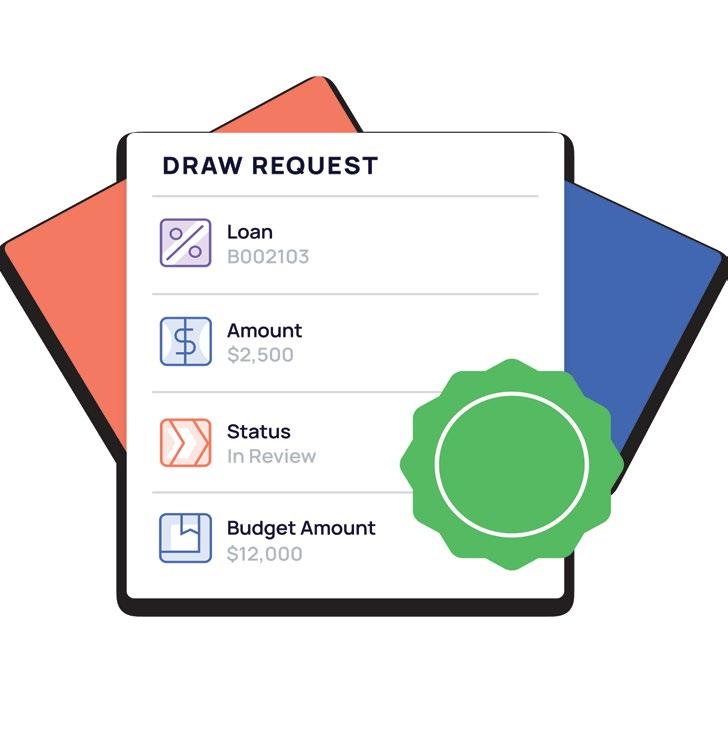
One missed follow-up can set a deal on a costly trajectory, but consistent, structured communication can stop the chain reaction before it starts.
You don’t notice the first mistake at the moment it happens. That’s the trouble with cascades—they rarely begin with a dramatic explosion or a flashing warning sign. Instead, they start with something small, subtle, almost forgettable: a missed detail in a borrower’s documentation, a gut feeling you ignore because the deal looks too good on paper, a phone call you promise you’ll return tomorrow.
The smallest oversight doesn’t stay small for long. Private lenders operate in an ecosystem where capital must move quickly, trust must be built even faster, and information gaps widen in mere hours. You’re not just managing money–you’re managing risk, reputation, and relationships. And in this world, one mistake is never just one mistake. It’s the first nudge in a chain reaction that can snowball into a costly, stressful, and sometimes reputation-damaging cascade.
But here’s the truth you eventually learn: Communication is nearly always the place where the small drips of the initial cascade begin. It’s also where they can be stopped.
Picture this: You receive a loan request that looks solid. The property value checks out, the borrower’s experience seems credible, and the numbers align well enough for you to feel confident moving forward. You mean to ask one more question about the borrower’s exit strategy, but you’re tired, busy, or behind on several other deals. So, you file the thought away for later.
But later never comes, and that unanswered question becomes the first stone sliding down the hill. And yet, you don’t yet feel the rumble.
You approve the loan, schedule the closing, and wire the funds. It’s only weeks later, when your borrower stops returning messages or the project hits unexpected delays, that you wish you’d pressed a little harder, perhaps asked just one more clarifying question.
The first mistake wasn’t a bad borrower or a weak property. It was communication left unfinished.
Time is your enemy in private lending, not because it’s scarce (though it often is),


but because silence widens gaps faster than any spreadsheet can close them. You know this from experience: A quiet borrower is not a reassuring borrower.
Still, life gets in the way. You mean to check in, but several new deals demand your attention. You tell yourself you’ll wait for the monthly progress update. You rationalize that “no news is good news.” That’s when the real damage begins.
A week slips by. Then two. The silence becomes heavy. You start assuming the worst, but you hesitate to reach out because you don’t want to appear anxious or distrustful. Meanwhile, your borrower—facing their own challenges—worries they’ll disappoint you if they share the truth. So, they stay quiet too. The conflict the two of you are trying to avoid is creating the perfect conditions for a bigger one.
This is the part of the cascade that feels strangely passive. No one is doing anything wrong, but no one is doing anything right either. Communication is the bridge that should connect you both, but neither of you is reaching out.
Silence eventually collides with reality. A rehab budget goes over. An appraisal comes back lower than expected. A contractor disappears. The borrower starts making decisions under pressure (e.g., adjusting timelines, reallocating funds, juggling invoices) and stops updating you to avoid triggering your concern.
Now you’re dealing with the consequences of decisions you didn’t even know were made.
You see discrepancies in the latest draw request. The receipts don’t align with the photos. The work seems behind schedule.
Your underwriting instincts stir uneasily. But by now, the cascade has momentum. You’re no longer just evaluating numbers: You’re unraveling delayed information, unclear explanations, and hidden issues.
And the worst part? You realize that you’re not just dealing with a borrower problem. You’re dealing with a communication problem you could have prevented weeks ago.
Every cascade has a moment when it becomes undeniable. For private lenders, this moment often arrives through an email or text message that begins with something like:
“Hey, I’ve been meaning to update you …”
You brace yourself, because nothing good ever follows that opening line.
Suddenly, everything is urgent. A contractor walked off the job. City permits were delayed. Materials doubled in cost. The borrower’s last draw ran dry faster than expected. Cash flow is strained. And now they’re asking for flexibility: extensions, reduced payments, restructuring, exceptions.
You feel backed into a corner because you now have to react instead of guide. Reacting in lending is expensive, both financially and emotionally.
The borrower did not intend to conceal the challenges. You did not intend to overlook the early red flags. But communication breakdowns compound over time, and by this stage, the window to correct course has narrowed.
The mistakes that began weeks earlier start showing up in places you didn’t expect. You’re spending time untangling issues instead of
You begin second guessing your underwriting, your processes, and your instincts ... It’s not just financial; it changes your thinking.”
moving the deal forward. Liquidity stays tied up longer than planned. Your confidence in the borrower weakens. And the borrower begins to wonder whether this deal will affect how you’ll price, or even fund, future deals.
Even worse, you begin second guessing your underwriting, your processes, and your instincts. The mental load swells, and you start scrutinizing new borrowers more harshly, hesitating on deals that once would have been easy approvals.
What began as a communication lapse is now affecting how you run your entire business. That’s the real cost of a breakdown like this. It’s not just financial; it changes your thinking.
Eventually, every cascade reaches its bottom. Sometimes it ends with a late exit. Sometimes it ends with a foreclosure you never wanted. Sometimes it ends with a conversation that finally tells you everything you should have known earlier.
As you review the timeline, the pattern becomes clear. There were questions you didn’t press, updates you didn’t request, stretches of silence you let continue longer than you should have. You assumed the relationship didn’t need active nurturing.
In hindsight, the problem wasn’t the borrower’s budgeting problems or the
contractor’s delays, or even the appraisal discrepancy. It was the absence of consistent, direct communication at critical points in the process. The lack of communication created uncertainty that compounded over time. This is how breakdowns take hold—not through a single dramatic failure, but through silence.
The good news is that cascades are preventable, but prevention requires a communication structure that doesn’t depend on memory, mood, or motivation. It must be built into your operating system.
That means scheduling consistent check ins with every active borrower, even the ones who appear to be adept communicators. It means requiring brief, structured updates that answer the same key questions every time so gaps are easier to spot. It means establishing expectations before closing about how often you’ll communicate, what information will be shared, and how quickly both sides will respond.
Bottom line, it means making transparency a condition of the partnership itself, not something borrowers embrace only when problems become unavoidable. When communication is built into your systems, it becomes nearly impossible for small issues to stay hidden long enough to snowball.
Private lenders often underestimate how much their own communication style influences borrower behavior. You are not only supplying capital but setting expectations for how the relationship functions. When your outreach is consistent and direct, borrowers are more likely to respond. When you address issues early, borrowers are less inclined to delay difficult conversations. Over time, that consistency establishes a working norm that allows problems to surface so you can discuss and resolve them before they cascade. The tone you set tends to be reflected back. Borrowers who feel they are working with
a disciplined partner are more likely to act like disciplined partners themselves.
Imagine the same scenario from the beginning—but this time, you ask the extra question. The borrower responds, and a minor issue comes to light early. The mistake remains small, you make adjustments, the project stays on track, and the relationship stays strong.
Ultimately, what makes you a successful private lender is your ability to keep the snowball small. You don’t stop the cascade by avoiding mistakes. You stop it by not allowing silence to give problems time to expand.

Kemra Norsworthy is the founder and CEO of Bull Funding, which provides hard money loans for commercial investments, including fix-and-flips, commercial loans, SBA loans, apartments, and ground-up on single-family homes and warehouses. Norsworthy is currently a member of AAPL’s Ethics Committee.





The edge belongs to lenders who automate the grunt work, not the handshake, to stay in front of borowers and brokers.
You’re underwriting a deal when your phone buzzes. It’s a broker you’ve never met, sending you a LinkedIn message: “Have a deal. Closing in 14 days. Can you handle it?”
Across town, your competitor gets the exact same message. But here’s the difference: His market update already went out this morning, and his last three deals are already featured on LinkedIn. The broker has already heard his name twice this week from people in his feed. He didn’t stay up until midnight managing his marketing because he automated tedious tasks. So,
when the deal came in, he was fresh and ready to move, while you’re exhausted from trying to do everything yourself.
Within the hour, your competitor gets the callback with the deal details. You’re unaware the opportunity ever existed.
Here’s the uncomfortable truth: In 2026, if you’re not visible before a broker needs you, you’re invisible when they do. The lenders who stay visible aren’t working nights and weekends. They’ve figured out how to automate the “grunt work,” so they have time to be strategic.
You’re probably working 60 hours a week— underwriting, taking calls, managing draws— and trying to keep existing borrowers happy while hunting for the next deal. Somewhere in there, you’re also supposed to be marketing yourself. But that’s not sustainable. Meanwhile, your competitor’s working 40 hours. He isn’t smarter than you, but he’s not wasting time on stuff that doesn’t require his brain. He’s figured out how to use AI to stay visible without becoming a full-time marketer. His

market updates go out automatically, and his content gets repurposed across platforms without manual work. He spends his actual brainpower on deals, relationships, and strategy.
You can’t be physically present for every introduction, but your digital presence can be. And thankfully, that presence doesn’t require you to work nights and weekends.
This isn’t about becoming an influencer with a ring light; it’s about being consistent and visible. When a broker’s deciding which lenders to call, your name needs to be one of them, and using AI to your benefit is the only way to do that without losing your mind.
You know that feeling when you’re staring at a blank email, knowing you’ve written the same market update 40 times before? Save some brainpower and let AI enter the chat— not to replace your thinking, but to help you brainstorm and get you past the blank page.
You open ChatGPT and type, “Draft a market update on how construction costs are affecting LTVs right now.” ChatGPT spits something back in 10 seconds that’s clean and grammatically perfect, but it sounds like it was written by a robot that has never funded a deal.
That’s where your actual work starts: You tear apart the generic information and add your insights on deals where construction overruns have impacted margins. You delete everything that sounds like it came from Wikipedia and add your opinion: “This is why I’m passing on anything under a 25 percent equity cushion until labor costs stabilize.”
Did you sell out and use AI for the entire update? Nope. It helped you move past the blank page, which is all you needed it for. Your voice finished the job. Total time invested: 7 minutes instead of 45. The same thing applies to content you’ve already created. Your deal close recaps sit
in your team’s email inboxes, never to be seen again. AI can reshape those recaps into LinkedIn posts in seconds. You’ve already done the heavy lifting once; don’t let the story die because you don’t have time to reformat it.
You’ve just written an insightful LinkedIn post explaining why you’re passing on deals under 25 percent equity, but you realize it’s too long for X. So, you ask AI to cut it to 120 words without losing the main point. Five seconds later, your post for X is optimized, and the sentiment is still yours.
That’s the strategic play. AI isn’t replacing your thinking. It’s saving you hours every week on annoying administrative tasks, so you can focus on what really matters. Formatting, resizing, and repurposing insights are all the “grunt work” you can hand off to your AI assistant.
This is where lenders make the fatal mistake: They automate the human part.
A borrower reaches out with a complex deal question, and they get a chatbot. They wait three hours for an automated response that doesn’t really answer their question, so they get frustrated and call someone else.
That’s backward. The mistake most lenders make is automating judgment when they should automate repetition. When something real comes in, a human needs to pick up the phone. Not eventually, not after answering five questions— immediately. They need to hear from you, in your voice, sharing your expertise.
Three things must have human involvement.
1 YOUR GUT. No algorithm can understand what a borrower faces when they’re about to lose a property. A deal looks mediocre on paper, so AI may reject it. But you’ve done multiple deals with this borrower; they know what they’re doing, and they’ve never missed a payment. You fund the deal because of your experience and history with this client—that’s all you.
2 YOUR OPINION. Anyone can say, “Rates remain elevated.” That’s not the insight people are looking for. What lands is this: “I funded three fix-and-flips last month in the eight to 10 percent range. The ones I passed on wanted 7.5. This market’s softer than people want to admit.” That’s your portfolio talking, not an AI bot.
3 YOUR VOICE. If your content could run on a competitor’s website with their logo swapped in and nobody would notice, it isn’t human enough. Your borrowers need to hear from you, not from a content generator.
How exactly do you know if automating tasks works for you? Try a 90-day experiment. Start by picking one borrower segment you want more of and identifying one question you answer constantly. Use AI to build a campaign around that question, such as one email and three social posts. Let AI help you write the outline; then edit it until it sounds like what you’d say. Finally, use AI insights to narrow down the best days to send out the email and when to post.
Once your test is complete, measure what happened. Did you get more inbound inquiries? Did your response time improve? Did any deals come from this visibility?
If you spend two hours on this test and get one deal inquiry you wouldn’t have otherwise received, you win. Either way, you’re better off than staring at a blank screen.
Every piece of content with your name on it needs your eyes and your compliance team’s approval; this is nonnegotiable. Using AI doesn’t give you a free pass to say whatever you want. What you post or send is still your responsibility. Using AI just means you’re reviewing something you helped shape, not creating from a blank page. If you’re able to be audited, keep records of what you use AI for. If a regulator asks, you can show your thought process and how AI helped shape the result. Keep in mind that public AI tools have a public memory, so be careful when uploading sensitive and confidential documents!
AI’s not coming for your job. But the lender across town who figured out how
to make AI work for his business and use it correctly? He’s coming for your deals. Not because he’s smarter or harder working, but because he’s top of mind when that broker needs an answer. He’s showing up consistently without burning himself out, saving hours every week on tasks that don’t require his brain and freeing up time for the strategy that will scale his business.
Your borrowers don’t need you to be a content factory; they need someone they can call and trust to help when time is tight and a deal is falling apart. They need your experience, your instinct, your perspective. The lender who gets that right wins the deals. There’s no algorithm for that.
Everything else? Let AI handle it.

Shaylee Henning is the founder and creative strategist at 1 Shay Studios, specializing in social media strategy and content creation for private lenders. With nearly three years as marketing and social media manager for the American Association of Private Lenders, Henning brings an insider’s understanding of what resonates in this space. She helps businesses build an authentic digital presence through strategic content, community engagement, and storytelling, while also offering voice-over and creative services for clients across industries.
Step
Step
Step
Step






A data warehouse doesn’t create more reports; it gives private lenders the foundation to scale, measure performance, and spot risk early.
You already have the data. The information for every loan you’ve originated, every draw request you’ve funded, every borrower who paid late or defaulted is sitting somewhere in your systems. The problem is that it’s scattered across your loan origination system, your servicing platform, your accounting software, and more than a few spreadsheets that only two people in your organization fully understand. When your CFO needs a report, someone has to manually pull it. When a capital partner asks a question, you hope the answer someone gives them is accurate.
This is a problem a data warehouse solves. And if you’re running an institutional private lending platform (or aspire to do so) and you don’t have a data warehouse yet, you’re making decisions with one hand tied behind your back.
A data warehouse is a centralized repository where data from all of your operational systems is pulled together,
standardized, and stored in a format optimized for analysis. Think of it as the single source of truth for your business.
Unlike your operational tools, which are designed to run workflows, a data warehouse is designed to answer questions. Which loan processors are processing loans fastest? How is my portfolio performing by geography? What’s my average time from draw request to funding—and has it gotten better or worse during the last six months? These are questions your transactional systems weren’t built to answer cleanly, especially when the data lives in multiple places.
The process that feeds a data warehouse is called ETL, which stands for Extract, Transform, Load. You extract data from your source systems, transform it into a consistent format (cleaning inconsistencies, resolving duplicates, standardizing field names), and load it into the warehouse. From there, you layer on a Business Intelligence (BI) tool like Tableau, PowerBI, or Looker. Then your team can start building
dashboards and running queries without touching a single spreadsheet.
In a typical institutional private lending operation, your data comes from several different places: a loan origination system that tracks the pipeline, a servicing platform that manages active loans, a construction management tool for draw requests, accounting software for financial data, and likely a CRM for borrower and broker relationships. Each of these systems does its job well. But none of them talks to the others in any meaningful way.
A data warehouse changes that. Once your systems are piping data into a central repository, you can start asking crossfunctional questions that were previously impossible without hours of manual work. You can tie borrower behavior in the CRM to loan performance in the servicing platform. You can connect draw request timelines to your construction monitoring data and maybe find a correlation between repeat borrowers and draw release speed. You can see which loan officers or underwriters have loans with the highest default rates, which may tell you something important about traits to look for or avoid when making future hiring decisions.
The goal isn’t to create more reports. The goal is to get out of reactive mode. Right now, your team probably learns about a problem when it’s already a problem. A data warehouse lets you build signals that tell you something is trending in the wrong direction before it becomes a loss event.
Origination analytics is the most obvious place to start. You can track your entire

deal funnel and break it down by loan officer, loan type, geography, or referral source. You start to understand where your best business comes from. Over time, you can connect origination characteristics to performance outcomes, which is how you move from intuitionbased underwriting to something more defensible and scalable.
Operational efficiency is the second major unlock. Think about draw management. In construction lending, the time between a borrower submitting a draw request and actually receiving funds is one of the most friction-heavy parts of your operation. It’s also one of the most important for ensuring repeat borrowers. With a data warehouse, you can measure every step of that process: how long inspections are taking, where draw requests sit in your internal queue, and how often requests come in incomplete and must be sent back. You can identify whether delays are systemic or isolated to specific inspectors, processors, or borrowers. That distinction matters enormously when you’re trying to fix something.
Portfolio risk management is the third area. When all your loan data lives in one place, you can slice it any way you want. You can see concentration risks before they bite you. You can flag loans approaching maturity with no payoff in sight. You can monitor loans with interest payments that return with an NSF code a few too many times and identify borrowers who are trending toward delinquency weeks before they actually miss a payment.
If you have fund investors, bank warehouse lines, or institutional capital partners, they expect consistent, accurate reporting delivered on time. A data
Start with your source systems inventory. Before writing a line of code or signing a contract with a vendor, understand clearly where all your data lives.”
warehouse eliminates the quarterly scramble of manually pulling data, reconciling numbers across systems, and hoping nothing falls through the cracks.
Start with your data source systems inventory. Before writing a line of code or signing a contract with a vendor, understand clearly where all your data lives. List every system that touches a loan, including origination, servicing, accounting, CRM, construction management, and so on. For each system, understand—and document—what data it holds, how it is structured, and whether it has an API or data export capability. This step sounds basic, but a lot of organizations skip it and end up halfway through a warehouse project before they realize one of their critical systems has no clean way to export data.
Next, choose your warehouse platform. For most institutional lenders, the leading options are Snowflake, Google BigQuery, and Amazon Redshift. All three are cloud-based, highly scalable, and well-supported by modern ETL ( E xtract, T ransform, L oad) and business intelligence tools. Snowflake tends to be popular in financial services for its
separation of compute (i.e., processing power) and storage, which makes it easy to scale up for heavy queries without paying for that capacity all the time. The right choice depends on your existing technology stack and your team’s expertise, but any of the three options will serve you well. The platform matters less than the discipline with which you build and maintain the data pipelines feeding it.
Then build your ETL pipelines. This is the engineering work of connecting your source systems to the warehouse. Tools like Fivetran, Airbyte, or dbt make this substantially easier than it used to be, with pre-built connectors for common platforms and frameworks for transforming data before it lands in the warehouse. If your source systems are common enough, you may be able to get to the first working version faster than you’d expect. If your origination and servicing systems are highly customized or archaic, plan for more work here.
Once data is flowing, layer on your business intelligence tool and build your first dashboard. Resist the temptation to boil the ocean. Start with two or three dashboards that answer the questions your team asks most often. Get those in front of people who will actually use them. Gather feedback and iterate. The
worst data warehouse projects are the ones that spend 18 months building something perfect that nobody uses. The best ones ship something useful—a true minimum viable product—in 60 days and improve from there.
Here’s the thing about private lending. The industry has historically competed on relationships and speed. That’s still true and will continue to be true for the foreseeable future. But as the market matures and institutional capital continues to flow in, the lenders who win over the
next decade will be the ones who combine relationships with operational precision.
A data warehouse doesn’t replace judgment. Your underwriters still need to read a loan request. Your loan officers and asset managers still need to know their borrowers well. But when your people have access to clean, reliable data, they make better decisions faster. They stop spending time pulling or building reports and start spending time analyzing what the reports tell them. That’s a meaningful difference in how an organization operates. And over time, it compounds.
The data you need is already there.
SHAYE WALI

Shaye Wali is the founder and CEO of Baseline, a software platform revolutionizing the private lending industry. Before starting Baseline, Wali worked at Morgan Stanley as a sales trader on the fixed income team. He graduated from Tulane University, where he served as the captain of the varsity men’s tennis team.















The job proposal made sense, at least on paper.
An established industry executive approached Briana Hildt with what she describes as a “pretty rock solid offer”— an opportunity to move from brokering loans into an in-house lending role. For most professionals in the space, it would have been the natural progression: more institutional backing, fewer operational headaches, and a clear career path forward. Hildt turned it down.
The response she got next changed everything.
“He said, what was I going to do? I was just a broker. I couldn’t go be a lender,” she recalled.
To the executive, the comment was meant as reality. Running a lending platform meant raising capital, deploying it responsibly, selling loans, hiring staff, and managing operations. Brokers, in his view, didn’t typically make that leap.
Hildt heard something different.
“I’m not really one to take people telling me what I can’t do,” she said.
The next day, she called her lawyer. “I want to drain my bank account and create a fund,” she told him.
That decision would become the “origin” story of Cardinal Capital Group. But it also revealed how Hildt thinks about opportunity and what happens when someone is told they don’t belong in the room.
There was a reason the executive made such a lucrative offer: In just a few years brokering, Hildt built her book of business to a staggering $20 to $25 million a month in loan originations. But while that foundation meant she wasn’t launching Cardinal as a blank slate, it also meant risk.
“The last thing I wanted was for these repeat loyal customers or clients to call me and I didn’t have the funding or financing to do their loans,” she said.
Instead of launching blindly, she quietly made her next move: assembling capital. She reached out to several high-net-worth individuals she had worked with and asked them to take a chance on the new venture.
“There was a lot of behind-the-scenes stuff that had to happen,” she says, “to get it to a safe enough place to kind of dip down a little bit and then take off.”
The Boston-headquartered Cardinal Capital Group launched in the spring of 2021—into one of the most unpredictable lending environments in recent memory. The pandemic had disrupted markets, capital flows were shifting, and lenders across the country were pulling back or tightening credit.
Cardinal did the opposite.
The company leaned into speed and flexibility, focusing on deals that required creativity and quick execution.
“We’re kind of scrappy,” Hildt said. “We operate at the speed and capacity of these big companies, and we only have 41 people.”
That scrappiness sometimes means stepping into situations where traditional lenders cannot.
“We have taken loans that a bank can’t close and the client stands to lose hundreds of thousands of dollars, performing on that loan in two business days.”
Deals like that tend to build loyalty.
“The biggest value that I have is the relationships that I have,” she says.
That model recently culminated in one of Cardinal’s most significant milestones: its first securitization.
“There wasn’t really a market for first-time issuers,” she says.
Cardinal moved forward anyway. The deal was oversubscribed, and pricing came in as the lowest for a non-rated, first-time issuer securitization.
“It was very black and white to see,” Hildt says. “You have to present the truth. You have to show your track record and your performance.”
Hildt’s comfort with risk started long before brokering or launching Cardinal.
Her father ran a car business but built homes on the side, and she spent much of her childhood watching those projects take shape.
“I was always going with my dad to properties. I’d watch them go from literally raw land to this big, beautiful house.”


Color Blue
Movie or TV show
Game of Thrones
Place to travel Hawaii
Season of the year Fall
Music genre Rap
Weekend activity Golf
Guilty pleasure
Shopping trips
Sport or team
Football/Washington Commanders
Business or leadership book?
Traction by Gino Wickman
Punching Bag
Sauna
[Editor’s note: Hildt starts her day with both mindfulness and violence.]

Her interest in real estate is also rooted in sentiment. “I know what my home means to me … Back in the day, my mom struggled and we lost our home,” she said. “To me, if I had a career path that was providing more housing—affordable housing, whatever it might be—that’s very fulfilling to me.
“So I’ve always had a passion for construction and real estate … but I wasn’t sure what to do with it.”
Years later, living in California, she stumbled into private lending while working half a dozen or so jobs— bartending, marketing, building web sites, real estate, and trustee asset management. It was the marketing role that pulled her in.
“This company in San Diego called me and said, ‘We’re in real estate, but we’re a private lender,’” Hildt said. “They wanted me to do a pitch deck on bridge loans.”

She laughed, recalling, “I quite literally thought they meant bridge loans.”
She made the deck and started connecting the dots toward opportunity.
“It was a perfect storm working at the asset management trustee,” she said.
“I was naturally meeting developers who wanted to purchase distressed assets [but needed capital] and now I was doing marketing for this lender who was doing construction loans.
She recalled the exhilaration she felt the day she brokered her first deal: “I was like, well, that was a lot more fun than being a real estate agent, than being a bartender, than working in foreclosures.
“I loved feeling like the weight was on my shoulders,” she added. “If I wanted to do more volume, it was on me and nobody else.”
I remember how much knowledge and confidence [CPLA] gave me. ... I’m investing in these people and they’re going to be investing their careers into the company. Why wouldn’t I want them to have this additional knowledge?”
What she liked less was inconsistency and lack of control—the different closing processes and shifting structures between lenders.
Hildt knew she loved the creative piece and improving procedures. When she started Cardinal, that mindset shaped the company’s DNA—taking insight from what performed well at the asset management trustee and combining it with the more novel structures that had allowed lenders she’d brokered with to finance challenging deals.
From that foundation, Cardinal expanded intentionally, entering markets where there were close connections and clear needs. She didn’t chase national scale for the sake of scaling.
“There’s not a single market that we’re in that didn’t generate from an internal connection,” Hildt said.

Yet as Cardinal stabilized, something else began to shift.
Hildt didn’t fully recognize her growing influence until her first-ever podcast appearance, on Lender Lounge, hosted by Fortra Law partner Kevin Kim.
“The views on that podcast blew out every other podcast,” she recalls. What surprised her wasn’t just the numbers—it was the response.
“There were people I looked up to,” she said, “coming to me saying, ‘That moved me.’”
Then she spoke on a Yale panel for women in business. A younger woman approached her, saying, “I texted my boss and said, ‘I quit.’ You gave me the courage to go do what I wanted to do.”
The interaction reframed Hildt’s own story. Being told she was “just a broker” had pushed her to build Cardinal. But her experience was now doing something else entirely: It was giving others permission to take risks of their own.
Rather than keep that influence abstract, she has institutionalized it. Hildt sends members of her team through the Certified Private Lender Associate (CPLA) program offered by AAPL.
“I remember how much knowledge and confidence it gave me,” she said of taking the course earlier in her career.
“I’m investing in these people and they’re going to be investing their careers into the company, “ she added. “Why wouldn’t I want them to have this additional knowledge?”
To Hildt, certification is empowerment. It gives her team language, structure, and confidence. In an industry where she once felt underestimated, she’s ensuring the people around her walk into rooms overprepared.
That same sense of responsibility shapes how she leads under pressure.
Early in her career, she admitted, her instinct was “fight or flight mode.” That changed once she had a team looking to her for cues. She began to understand that her reactions set the temperature—something she internalized during a visit to the San Diego Zoo, where she learned that the zoo’s cheetahs were often paired with canine companions.
“I guess cheetahs are really, really anxious animals,” she explained. “And so they’ll put a Labrador—a very calm, very friendly animal—in the pen with the cheetah.
“The cheetah leans on the dog to see, are the dog’s ears up?” Is the dog fine? Is there a threat? ... If the dog is calm, the cheetah knows it can be calm too.”
Now, before reacting to market noise or unexpected volatility, Hildt pauses.
“Is it a real threat?” she first asks, using the moment to assess and—if it is—ensure her messaging to the team comes from a place of calm.
Her “no scrambling” mindset extends to culture. Every candidate who interviews
at Cardinal is asked the same question: If a deadline is approaching and it’s your child’s T-ball game, what do you do?
Hildt said, “If the answer is, ‘There’s a million T-ball games, I’ve got to meet the deadline,’ culturally, you don’t fit.”
The correct answer isn’t missing the deadline or negotiating an extension. It’s better planning: “Well, I already obviously hit the deadline before the T-ball game, because I’m going to the T-ball game.”
For Hildt, that answer signals something deeper than time management. It signals priorities and foresight. The work gets done. But life doesn’t get sacrificed. And she holds herself to that standard.
“I don’t work on the weekends anymore,” she said. “Phone goes into do not disturb.”
The most direct expression of that philosophy came in October 2024.
Hildt’s second child was born appearing healthy but with a rare blood disorder that at first went unnoticed—until her daughter had a brain bleed.
For weeks, Hildt lived in the hospital, watching doctors and nurses treat critically ill children as part of their daily routine. She also watched other parents make difficult choices—returning to work, caring for other children, navigating financial strain.
“It was very eye-opening and humbling,” she said, “You couldn’t get me to leave that hospital, but not everyone has that option.”
Her daughter left the hospital healthy, and Hildt left with new resolve: “I just said to myself, I have to find the time to do this.”
That decision meant founding a nonprofit. Cardinal Cares became a 501(c)(3) focused on children and families, with initial giving directed to Connecticut Children’s Hospital and Boston Children’s Hospital—institutions that had directly impacted her family and colleagues.
If everything went away tomorrow, Hildt says she would rebuild around one thing: “My relationships.”
That answer carries through her business decisions, her hiring philosophy, her investment in certification, and her philanthropic work.
Refusing to accept the characterization that she was “just a broker,” Hildt built a lending platform that supports borrowers, invests in education for her team, and directs resources toward families facing medical crises like the one her own family experienced.
What began as one moment of defiance created a ripple.
Today, that ripple has grown into a continuing tide—through her company, her employees, her borrowers, and the next generation of entrepreneurs deciding to bet on themselves.

The association is pairing a mandatory high-level screening for new members with a voluntary in-depth verification option for companies seeking to signal additional transparency.
As private lending grows in scale and visibility, so does the responsibility to protect the integrity of industry professionals. AAPL is taking a proactive step in that direction with two important updates: the transition to a new background check provider and the rollout of a new member screening process designed to safeguard the association and its members. These changes are not about creating barriers. They are about reinforcing what AAPL membership has always signaled to the market: professionalism, accountability, and trust.
AAPL membership has grown to more than 900 companies and professionals nationwide. The industry itself has expanded just as rapidly, fueled by new technology, increased capital flows, and a wider range of entry points into private lending.
That growth is a positive sign. It also means the environment looks very different than it did when the industry was smaller and more relationshipbased. Today, AAPL represents a broad cross-section of lenders, brokers, service providers, and capital partners operating in diverse markets and structures.
As the oldest and largest professional trade association in private lending, AAPL sees it as its responsibility to evolve with the industry. Maintaining a high-caliber membership base cannot rely on reactive enforcement alone; it requires proactive safeguards that reinforce ethical conduct and professional standards from the start.
AAPL will be moving its existing (voluntary) verification background check program to a new provider, Business Screen.


This Business Screen Verification program remains a company-level, in-depth background check for members who want to demonstrate an additional level of transparency and commitment to borrower trust. Members who complete the verification process can display a verification emblem in marketing materials and receive differentiation in AAPL’s Member Directory.
This offering is not changing in purpose or positioning. It continues to serve as a way for members to go above and beyond baseline requirements and signal to borrowers, partners, and capital sources that their business has undergone a deeper level of third-party review.
The transition to Business Screen strengthens the technical foundation behind the program while maintaining the same core goal: giving members a credible, visible way to stand out for professionalism and transparency.
In addition to the verification program, AAPL is introducing a mandatory background check for all new members, which will also be conducted through Business Screen. It is important to understand how this differs from the voluntary verification process.
The new-member check is a high-level review of the business entity and the individual with controlling interest. It is not a deep-dive investigation into every operational detail. Instead, it serves as an initial safeguard to help ensure that new entrants to the association do not have a history of conduct that directly conflicts with AAPL’s Code of Ethics.
This process is focused on identifying systemic patterns of serious misconduct or willful disregard for industry best practices—not minor, technical, or accidental missteps. The goal is to reduce the risk of bad actors entering the membership, not to create a punitive or intimidating experience for legitimate professionals.
The new standard sets a clear baseline for participation in a professional association whose name carries true weight in the marketplace.
To avoid confusion, AAPL is emphasizing the distinction between the two types of background checks:
New Member Background Check (Mandatory): A high-level screening of the business and controlling individual. Its purpose is to protect the association and its existing members by identifying serious red flags before membership begins.
Verification Background Check (Voluntary, Comprehensive): A thorough review for members who want to showcase their commitment to transparency and borrower trust, along with visible recognition through AAPL channels, including the member directory.
One establishes a professional floor. The other allows members to raise their hands and demonstrate an even higher standard.
AAPL recognizes that background check processes must be handled carefully and consistently. The association is working closely with its Ethics Committee to ensure the new procedures include clear
This process is focused on identifying systemic patterns of serious misconduct or willful disregard for industry best practices.”
standards, checks, and balances, as well as an emphasis on impartiality and fairness.
This is not a “set it and forget it” policy. As the process rolls out, AAPL will continue refining procedures to ensure they are applied equitably and aligned with the association’s professional mission.
Members should view this as part of a broader effort to strengthen the ecosystem, not as an administrative hurdle. Protecting the credibility of AAPL membership ultimately protects every member who operates in good faith.
Borrowers, brokers, capital partners, and service providers all look for signals they can trust when choosing whom to work with. For many, AAPL membership is one of those signals.
These new steps help ensure the signal remains strong.
By pairing a baseline safeguard for new members with an enhanced, voluntary verification option, AAPL is building a more resilient membership structure —one that reflects the realities of a growing, evolving industry while staying grounded in professional standards.
AAPL membership has long represented trust and excellence in private
lending. These updates are designed to ensure it continues to do so.
In a market where reputation matters and trust drives business, AAPL is choosing to lead—with clearer standards, stronger safeguards, and a commitment to keeping AAPL membership synonymous with quality and excellence.
Hungerford is executive editor of Private Lender magazine and digital project manager at the American Association of Private Lenders, leading many of the organization’s content and programming efforts.
AAPL is the oldest and largest national organization representing the private lending profession. The association supports the industry’s dedication to best practices by providing educational resources, instilling oversight processes, and fighting regulatory encroachment. Find more information at aaplonline.com.



A routine rehab project involving two properties turned into a prolonged legal and operational battle that tested every layer of lender oversight.
As if private lending didn’t already come with enough challenges— defaults, unresponsive borrowers, and stalled projects—Rehab Financial Group found itself facing all of the above. What began in the summer of 2022 with a respectable and experienced borrower turned into a three-year ordeal marked by repeated setbacks and costly complications.
In August 2022, RFG made two loans to a single borrower. The guarantors, a husband and wife, were prior customers with substantial experience and a strong
track record. Their credit scores were 724 and 673. Each loan was secured by identical eight-unit apartment buildings located within one block of each other. The properties were in poor condition, with rehab work having started and then stalled. For clarity, we will refer to them as the Flattened Project and the Stalled Project.
Each loan totaled $999,902. The purchase price funded by RFG at loan origination was $540,000, with the remaining $459,902 held back as rehabilitation funds to be disbursed in stages as work was completed. For the first nine months, work progressed as expected. The borrower made payments
as due and was finishing construction at a good pace. One of the guarantors advised RFG that they had entered into an agreement with the City of Atlanta to use the properties as a shelter for battered women upon completion. The borrower’s financials and the city contract would make refinancing the properties easy, and RFG would be paid off. This appeared to be a good project helping a good cause. What could be better?
Then disaster struck. A contractor working for the borrower reported that


a demolition crew had arrived at the Flattened Project with a demolition order from the city. The contractor was able to stop the demolition that day but was advised that the crew would be back to carry it out at a later date.
The borrower notified RFG in a panic. We immediately pulled the title commitments and policies to determine whether any demolition orders or municipal liens had been missed during review, as RFG always requests confirmation of municipal liens and violations as part of our title process. None were found.
One detail, however, stood out: Even though the two loans closed on the same day through the same title agency, each policy was issued by a different title insurer. RFG never received a clear explanation for the discrepancy, particularly given that the seller was the same for both properties.
In hindsight, this was an underwriting oversight. The difference in insurers should have been questioned at the
time as an unusual detail, but it went unexamined, likely because the agency handling both transactions was the same. Ultimately, the variance appeared to be nothing more than an unexplained irregularity, though it served as a reminder of the importance of probing even minor inconsistencies during underwriting.
RFG immediately issued a title claim letter informing the two title companies of the situation and urging them to go to court to get an injunction stopping any potential demolition on each property. All documents that were needed were sent with the title claim. The title insurer for the Stalled Project immediately jumped on the matter, found there was also a demolition order on the that property and obtained an immediate injunction. Unfortunately, the title insurer on the Flattened Project property kept repeatedly asking for more and more documents and delayed taking any action. During this delay, a demolition company arrived and demolished the property.
At this point, all work at the Stalled Project property stopped until all parties could figure out what was going on. The borrower hired an attorney who discovered that both demolition liens were invalid because they were “time barred,” meaning they were by law good only for a specific period of time. Although the orders were valid when the loans were closed (hence the title claim), they had expired by law at the time the demolition took place. The demolition should never have happened, and both the city and demolition company were liable.
All parties agreed that moving forward with the Stalled property, even with the injunction, would be foolish until the city confirmed it had canceled the demolition with the outside demolition company. No one from the city would verify this.
Accordingly, the work at the Stalled Property stopped completely. RFG was not willing to disburse any additional rehab funds for a property that might be
knocked down. The borrower was stuck with invoices for work finished on both properties, which they had no means to pay. The matter dragged on for months.
During this time, RFG pursued a title claim for the Flattened property. After much back and forth, RFG received its payoff, less $50,000, which was determined to be the value of the land itself that was left. The problem was the $50,000 property now had a $40,000 city demolition lien on it and unpaid taxes. Shortly after, the city started a tax foreclosure on the Flattened property. Because there was no equity in it, neither RFG nor the borrower was willing to pay the taxes, so the vacant land was sold back to the city via tax sale.
Eventually, the city gave adequate assurance that the Stalled property would not be demolished. The borrower’s contractors, however, had moved on to other jobs, still had unpaid invoices from the Stalled and Flattened properties, and several contractors had filed mechanic’s liens on the Stalled property. The borrower had no funds to continue to pay RFG and went into default.
After some time, RFG and the borrower worked out an agreement to move forward with the Stalled property. The borrower was able to negotiate the mechanics’ liens on Stalled and get them released. The new contractor was not as efficient as the prior one, however, and the project dragged on much longer than anticipated.
Unfortunately, by the time the Stalled project was finished, the borrower had defaulted on its revised payments to RFG. After trying to work with the guarantors, RFG was told the borrower was leaving
Atlanta entirely and had no interest in either property any longer. He further informed RFG that the stress of these two projects had caused him and his wife to divorce and that he was going off grid to the Caribbean, where he would not respond to calls, emails, or texts.
Before leaving for the Caribbean, the borrower retained counsel to pursue claims against the city for the wrongful demolition and resulting damages from both properties. From the borrower’s and RFG’s perspective, the city gave the matter little attention. The case lingered for years.
RFG finished the foreclosure on the Stalled project in September 2025. At the time, six of the eight units were occupied, with five paying rents. Eventually, all eight units were rented to tenants (with the help of a very competent property manager), and income began to flow into the property.
As of February 2026, there has been an offer on Stalled in an amount sufficient to pay RFG in full. Final terms are still being negotiated.
With regard to Flattened, the city finally admitted liability in 2024 but then spent a year negotiating the amount of the borrower’s damages. Finally, in late November 2025, the parties agreed to an amount, which the borrower received in February.
The borrower’s counsel has given RFG a commitment that the full debt owed on Flattened (including interest for an agreed-upon amount of time) will be paid to RFG once the city funds are received. Litigation by the borrower against the demolition company is ongoing.
In this case, it is hard to believe the sequence of adverse events affecting these two loans. RFG never stopped working on recovery (with and without the borrower),
even going so far as to pursue the title carrier for the benefit of the borrower. Without staying on top of it all through these processes, RFG believes it would never have been paid off in full. The key is to keep on top of defaults. No one wants to deal with them, but managing defaults is a large part of protecting a lender’s bottom line.

Susan Naftulin is the co-founder, president, and managing member of Rehab Financial Group LP. Before forming RFG, she held several senior management positions in the mortgage industry, including general counsel, managing attorney, chief operating officer, and senior vice president for both privately and publicly held mortgage lenders. In each position, Naftulin was responsible for multiple aspects of the company, including loan origination and documentation, licensing and regulatory compliance, servicing, default management, litigation management, and human resources.
Prior to entering the mortgage industry, Naftulin was a creditors’ rights attorney with the Philadelphia law firm of Fox Rothschild LLP. She earned her law degree from the University of Pittsburgh and holds two bachelors of arts degrees from Carnegie Mellon University.



When valuation spreads, vacancy assumptions, and exit math conflicted, careful dialogue rather than leverage determined whether the RV park bridge-loan deal made sense.
There is a point in every nontraditional transaction when the spreadsheets stop answering the most important questions. The model may work. The appraisal may land within range. The debt service may pencil. Yet something deeper remains unresolved. It is not a missing data point, but an uncertainty about how an asset behaves, how a market functions, and how risk shows up over time.
That is where judgment begins.
This case study reflects one of those moments for 1892 Capital Partners. It was our second RV park loan and a reminder that familiarity with an asset class does not remove uncertainty. In many cases, it reveals how different two projects within the same category can truly be. This is a story about how lenders can approach deals in the absence of certainty and about how disciplined processes can replace rigid formulas when underwriting unique assets; in other words, when you’re underwriting in the dark.
This transaction came to us through one of our preferred brokers, Nick Klein of Bellevue Capital Group, alongside Dan Spurr—and this framing mattered.
The sponsor had recently completed construction on multiple RV parks with
a clear institutional strategy in mind. Their plan was to aggregate the portfolio and refinance into a single permanent loan once stabilization was achieved. As construction loans reached maturity, the institutional lender unexpectedly changed its strategy and withdrew its commitment. What had once been a clean, portfoliolevel execution fragmented into several time-sensitive bridge financing needs.
In situations like this, speed alone is not a challenge. The real challenge is judgment. The sponsor did not need aggressive leverage or speculative capital; they needed a lender who could underwrite nuance and move quickly without compromising discipline. A rare combination, but precisely where relationship-driven execution becomes valuable.
At first glance, RV parks were not new to us. Our portfolio already contained an RV park, and we’d spent significant time learning how the asset class performs across different regions.
But that familiarity created a false sense of comfort that we were careful to examine. RV parks are not homogeneous. They vary widely by location, tenant mix, length of stay, regulatory environment, and valuation methodology. Two
assets that appear similar on paper can behave very differently in practice.
Several early signals did not eliminate risk, but they earned the deal the right to deeper diligence. The property was brand new. The sponsor was experienced and had successfully developed multiple RV parks. The broker relationship was strong and credible. The leverage request was conservative.
These factors did not answer every question, but they did signal that the efforts to answer the remaining questions were worth making.
The turning point was geography. Although RV parks are recreational by nature, location largely determines how they function. Some are destination-oriented, with high turnover, heavier amenities, higher management intensity, and higher operating costs. Others operate as longer-term corridor assets, with lower turnover and leaner expense structures. The property sits just off the I-5 corridor, a location that supports both transient demand and longer-term occupancy. That duality creates diversified
Borrower // Confidential
Location // Woodland, Washington
Asset Type // Newly constructed 68-unit RV park
Site Size // 3.71 acres
Year Built // 2023
Loan Amount // $5,070,000
LTV/LTC // 65%/65%
Interest Rate // 12%
Loan Term // 12 months
Rehab Costs // None
Borrower Experience // Seasoned RV park operator with multiple assets
Exit Strategy // Refinance
income drivers and reduces reliance on any single tenancy pattern.
Location does not eliminate risk, but it provides context. In this case, it allowed us to frame the park as something more resilient than a purely seasonal or purely long-term asset, justifying deeper diligence rather than a quick rejection.
Valuation and income assumptions remained the core areas of uncertainty throughout underwriting. Rather than trying to smooth those uncertainties away, we leaned into them. We compared performance patterns across markets.

We overlaid our own conservative adjustments where the data felt fragile.
To test the appraiser’s assumptions, we engaged two experienced RV operators in different states. Each reviewed the project through a different lens, and that contrast sharpened our view and helped answer necessary questions about vacancy assumptions, management expenses, and how differently operators can experience the same market.
One operator evaluated the park from a destination-market perspective, forcing us to examine occupancy mix and turnover assumptions more closely. The park we were underwriting, however, was not a
The hardest part of this transaction was trusting people, not the math. We had to trust the broker to present the deal honestly and the appraiser to engage thoughtfully. We also had to trust operators to share real experiences rather than sales narratives.”




destination asset. It sat along a major travel corridor, supported longer stays, offered fewer amenities, and operated with a materially lower management expense ratio. Recognizing those differences allowed us to appropriately support a lower expense profile in underwriting rather than apply a destination-park cost structure where it did not belong.
The second operator came from a more competitive market with easier permitting and flagged vacancy assumptions as potentially low. That feedback led to deeper market diligence. What we found was limited competing inventory, significant permitting barriers, and constrained land availability, all of which supported lower vacancy expectations in this specific market.
The appraiser was a key part of this process. When asked to confirm assumptions, he was very helpful in providing supporting data around cap rate selection, pointing to high demand for RV inventory, scarcity of product, and the difficulty of permitting and constructing new parks. He also provided support for lower vacancy assumptions, citing current usage, the operator’s ability to fill any vacancies with either short-term or longer-term tenancies, and the fact the park is relatively new with highly desirable 50-amp service capable of accommodating larger and newer RVs.
Lastly, he helped confirm that a lower management expense ratio was warranted. The majority of sites were rented monthly, which requires less active management, and the park offered fewer amenities than destination-oriented RV parks, further reducing management intensity.

RV parks can be valued on a fee simple or a leased-fee basis; the spread between those approaches is meaningful. In this case, that spread raised real questions about income durability, exit assumptions, and how future lenders would ultimately view the asset.
The difference between the leased-fee and fee simple valuations was nearly 15%, a material gap when determining value based on current leases. Given the longer-term tenancies in place, we believed it was more prudent to evaluate the asset based on the income being generated rather than a pro forma that assumed future rent increases.
In theory, rents can reset as tenants turn over. In practice, this park had no fixed 12-month leases and operated with a tenant profile that behaved more like long-term occupancy. We could have reached for a forward-looking valuation. Because the asset was still relatively new to us, we chose the more conservative leased-fee approach grounded in existing cash flow.
This was a non-value-add bridge loan. Pricing reflected that reality.
Although the interest rate was lower than a typical value-add bridge, the diligence burden was meaningfully higher. The time invested was greater, and the internal debate was deeper.
We often discuss expectations with brokers early to ensure alignment.
One of the more notable structural decisions was omitting an interest reserve. Typically, we require one. In
this case, the sponsor needed higher proceeds to stabilize their broader capital stack. The RV park could service debt, but the debt service coverage ratio at our rate would not satisfy most institutional lenders. We accepted that risk consciously and mitigated it elsewhere.
We underwrote the refinance exit at a lower loan-to-value than the bridge. That conservative exit assumption materially improved the probability of a successful takeout and aligned incentives across all parties.
Risk is not eliminated by avoiding it. It is managed by placing it where it can be absorbed.
The loan closed as the project stabilized and began optimizing rents toward the highest and best use. There were no construction draws. No execution risk remained. Performance responsibility rested with the sponsor, where it belonged. To date, the borrower has met expectations, and the asset has performed as underwritten.
The hardest part of this transaction was trusting people, not the math. We had to trust the broker to present the deal honestly and the appraiser to engage thoughtfully. We also had to trust operators to share real experiences rather than sales narratives.
This deal reinforced an important belief. Brokers invest years building trust with sponsors. A lender’s role is not to disrupt that dynamic but to support it. We aim to stay in our lane, execute, preserve relationships, and allow brokers to remain the primary advisors while we provide the capital and judgment behind the scenes.
Markets change, asset classes evolve and institutional capital shifts strategies. In a constantly changing environment, a deal does not need to fit a formula; it just needs to make sense.
We continue to test new asset classes, identify financing gaps, and reassess risk and reward in real time. If the value is real and the risk is understood, many conventional overlays simply do not apply. This RV park was not a replication of our first. It was a reminder that experience sharpens awareness of uncertainty.
Underwriting in the dark is about building enough perspective, process, and humility to move forward responsibly when the answers are incomplete.

Charles Farnsworth has over 30 years in real estate investment, finance, and banking. He manages 1892 Capital Partners’ private lending. After graduating from the University of Puget Sound, he founded a finance company, raised private capital, and served as vice president in corporate banking and private wealth management. In 2008, he returned to private capital, managing secured debt portfolios and real estate investments. In 2021, he joined 1892 Capital Partners to expand a real estate debt-secured lending portfolio for Corliss Management Group LLC.





These letters aren’t alphabet soup. They’re credibility!
Stand out in the private lending industry with AAPL-backed credentials like:
✔ CPLB (Certified Private Lender Broker)
✔ CPLA (Certified Private Lender Associate)
✔ CFM (Certified Fund Manager)
In addition to these designation programs, AAPL now provides members packaged learning courses at no additional cost.
These courses are built for professionals who want to show clients and partners they know the business and follow best practices.
Because in private lending… reputation is everything.
AAPL Certifications are members-only. Enroll online at aaplonline.com/programs for $349.
JESSE GOLDBERG, PARKPLACE FINANCE, AND JOHN V. SANTILLI, UNITAS FUNDING
This series explores the perspectives, counter perspectives, and middle ground behind key issues in the private lending industry. Through candid dialogues, we aim to challenge entrenched assumptions, surface subtle trade-offs, and create a forum to help equip industry stakeholders with a richer, more nuanced lens to navigate today’s evolving real estate finance landscape.
We invite readers to submit topics for debate. Please send your ideas to privatelender@aaplonline.com.
Few topics in residential real estate generate as much emotional and financial disagreement as the role of investors in housing markets serving first-time and veteran homebuyers. For years, the conversation has centered on whether investor participation, particularly by large institutional buyers, has materially impaired affordability and access for first-time homeowners.
Although the topic has dominated news articles, the impact on noninstitutional investors has seldom been discussed. With recent federal action
aimed at limiting institutional home purchases, that debate has moved from theory into potential policy.
As with most structural interventions, the implications are neither singular nor straightforward. If enacted and upheld, the policy could reshape demand dynamics, capital deployment, and underwriting risk across multiple segments of the market. Whether this ultimately benefits homeowners, small investors, or neither depends less on intent and more on execution, enforcement, and market response.

Jesse: From the typical first-time homeowner’s view, restricting institutional buyers is straightforward. These funds, with their immediate access to cash, ability to waive contingencies, avoid long escrows, and avoid reliance on mortgages can give sellers closing confidence that a normal purchaser cannot. Although national ownership figures suggest institutional investors own a small fraction of total housing stock, 2024 data shows that one
in six U.S. homes and one in four lowpriced homes were purchased by investors during peak acquisition periods.
If institutional demand is meaningfully reduced, one plausible outcome is the creation of a buyer’s market. Fewer cash-heavy offers could ease competitive pressure, allowing price corrections to be in line with local incomes. For properties in opportunity zones, such as tear-down construction, new construction, and depreciated properties with ARV upsides, this would allow residential investors to support local demands to bring livable
properties to the market. However, this could also push investors that do not fall into the policy definition of institutional, but have easy access to cash, to still drive price increases. It is also important to recognize that overall investor participation remains elevated, accounting for roughly 30% of U.S. home purchases in 2025, according to a 2026 Housing Wire article.
John: Though headlines may paint a picture of faceless institutions holding all the house keys, that reality is playing out on a very small scale. Institutional holdings of single-family homes and
rentals are at about 0.35% and 3%, respectively, of total housing stock.
Large institutional investors hold an even smaller segment of single-family homes (0.06%), and cities with the highest institutional ownership rate typically peak at around 5%. In other words, although institutional buyers may be highly visible in competitive bidding situations, their overall footprint remains marginal relative to the scale of the broader housing market. It’s also worth noting the lack of success of some of the most visible large-scale investor

experiments. Zillow’s well-publicized attempt to scale a technology-driven homebuying platform is a prime example. Despite significant capital and data resources, the model ultimately failed and was shut down. That outcome underscores a key point: Access to capital and technology does not automatically translate into durable pricing power or sustained market dominance.
Other large players have similarly pulled back or recalibrated after discovering that operating at scale in local housing markets is more complex and less controllable than anticipated. Even in neighborhoods within the same geographic area, there is a slate of specific details to consider, ranging from the caliber of school districts to walkability to backyard size.
Jesse: Investors, however, tend to respond to constraints with creativity. One likely outcome, particularly given the lack of a precise statutory definition of what constitutes a “large institutional investor,” is structural adaptation rather than withdrawal. Capital may fragment into smaller entities, new funds, or joint ventures designed to remain compliant while preserving acquisition capacity. History suggests that where demand exists, capital finds a way to deploy.
Importantly, the policy does not impose an immediate or absolute prohibition. Instead, it initiates a coordinated review across housing and finance agencies,
leaving enforcement mechanisms and key definitions to subsequent rulemaking. This introduces uncertainty. Policy-driven markets often create incentives that favor well-advised or well-positioned participants, which can introduce distortions rather than eliminate them.
For small investors, the “mom-and-pop” operators who form the backbone of many private-lending portfolios, the effect may be mixed. Reduced competition at acquisition could improve entry pricing and deal flow. At the same time, softer demand on the back end weakens after-repair values and exit certainty, increasing underwriting complexity and added risk for exit strategies.
John: This conversation should not pit institutional investors against local “mom-

and-pop” operators. Both can exist in the same space and play constructive roles. Framing the issue as a zero-sum contest between large capital and small operators overlooks the reality that housing markets are layered, and different participants often address different segments of need.
Private lending capital, whether institutional or individual, frequently funds the renovation of aging housing stock. Investors often purchase distressed or outdated properties, improve them, and return them to the market in livable condition. In many communities, that process increases the number of functional homes available for purchase or rent, helping to chip away at our nation’s supply shortage. Restricting or complicating
access to capital through broad policy responses could unintentionally slow that rehabilitation cycle, particularly in neighborhoods where traditional mortgage financing is less accessible. According to the National Association of Home Builders, about half of U.S. housing was built in the 1980s and earlier.
Jesse: This proposal becomes most consequential not at acquisition, but downstream. A sharp pullback in institutional buying could accelerate depreciation in markets already vulnerable to oversupply or insurance-driven outflows, particularly in South Florida. That scenario introduces real risk for
balance sheet lenders exposed to thin equity margins and aggressive leverages.
In more moderate outcomes, the impact may be uneven. Some markets may barely register the change, while others experience heightened volatility. For lenders and underwriters, this creates a familiar but uncomfortable environment: better pricing opportunities paired with weaker exit assumptions. Deals pencil more conservatively, leverage compresses, and uncertainty increases.
None of this is inherently negative, but it may demand discipline. If pricing corrects faster than capital structures adjust, defaults rise not because projects failed operationally, but because assumptions failed structurally.
John: One of the main flaws behind policies that target institutional ownership is they often rely on arbitrary thresholds that set limits on the number of houses that can be owned. Once those lines are drawn, it becomes easier to continue narrowing participation and pointing to investors as the culprit, even if affordability does not materially improve. Over time, those incremental adjustments can create a moving target for capital, introducing instability without delivering measurable gains in supply or pricing stability.
Limiting one category of buyer without materially increasing supply does not address the root cause. If there are not enough homes available, restricting who can purchase them does little to change the underlying math. Demandside constraints, in isolation, rarely solve a supply-driven imbalance.
Instead of taking the easy way out and blaming all levels of investors, our nation needs to reduce barriers to housing creation to lower overall costs. This includes eliminating restrictive zoning measures
that favor the creation of only one type of home and cutting red tape that slows down the actual construction process.
Jesse: The proposed policy highlights a tension that has existed for decades: housing as shelter versus housing as an investment. Framing the issue as homeowners versus investors oversimplifies a system where both play essential roles. Institutional capital has expanded rental supply and increased liquidity, while smaller investors often rehabilitate aging housing stock that might otherwise deteriorate—both contributing inventory in a still low-stocked nation.
If policy intervention is the chosen path, clarity matters more than ideology. Definitions must be precise and avoid loopholes. Enforcement must be consistent. And the unintended consequences on credit markets, construction activity, and lending stability must be acknowledged rather than dismissed.
For our industry, the opportunity lies in preparation. Tighter underwriting, market-specific risk weighting, and realistic exit modeling will matter more than ever. If demand shifts, disciplined capital will still find attractive opportunities, just with fewer shortcuts and more scrutiny.
Ultimately, whether these changes prove beneficial will depend less on who they exclude and more on how well markets are allowed to recalibrate. Corrections, when measured, can be healthy and offer massive benefits to our clients.
John: Housing prices and affordability are driven by home shortages, higher interest
rates, and increased construction cost. The problem is not due to institutional investors, who own only 35 of every 10,000 homes. Looking ahead, responsible and well-executed participation by a broad mix of buyers could help stabilize housing markets rather than destabilize them. A diversified capital base tends to dampen extremes, not amplify them, particularly when underwriting standards and operational discipline remain intact.
When both institutional and local investors operate responsibly, they provide liquidity, allowing homes to move more efficiently and distressed properties to be refreshed at a quicker pace. Transactions can occur with greater consistency across market cycles and more active buyers can help absorb supply when traditional demand ticks lower in response to interest rate shifts.
This is not about shoving aside smaller investors or favoring large ones. A healthy housing market includes a combination of homeowners, local operators, and institutional capital. The combined participation of these groups, when executed thoughtfully, can help create steadier demand and less volatility. Over time, that stability supports more predictable pricing. Policies that narrow participation too aggressively risk concentrating activity rather than broadening it, which can unintentionally heighten the very volatility the policies seek to prevent.
Housing affordability is a serious issue that deserves attention. Targeting a small ownership segment may make a splashy headline, but the challenge isn’t about who’s buying homes. Rather it’s that there simply aren’t enough of them.

Jesse Goldberg brings more than a decade of expertise in private lending to his role as chief operating officer at Park Place Finance. His background spans sales, leadership, process improvement, and business scaling. He specializes in ground-up construction lending and building high-efficiency operational systems. Goldberg is known for his innovation and execution, consistently enhancing client service and driving growth through process optimization.

John V. Santilli has over 30 years of experience building lending organizations. As chief production officer at Unitas Funding, he leads go-to-market strategy, broker/ investor partnerships, and scalable operations for their hard-money lending platform. As chief revenue officer at Rehab Financial Group, he drove growth of the company’s unique 100% financing product, overseeing a 30-person team across marketing, sales, operations, and technology.












Discover where short-term rental valuations go off track and how to keep appraisals aligned with underwriting reality.
Short-term rentals (STRs) are a small slice of the U.S. housing market, but they have been growing steadily for the last decade. According to a Consumer Affairs Report, industry estimates suggest STRs account for roughly 3 million properties. Although STRs have many advantages, financing them can be extremely challenging. Private lenders, though, have found a home for the STR product in debt service coverage ratio (DSCR) lending.
You would think a DSCR loan would be the perfect product. The loan is underwritten against the income of the property and an STR is its own business built to produce income. Unfortunately, as private credit scales and technology-enabled valuation platforms are widely adopted, you’re increasingly faced not with whether STR-backed loans can be originated but with how they can be underwritten and valued responsibly at scale.
Why does this matter? Because valuation misalignment, rather than borrower intent or property quality is often the hidden reason STR deals stall, get repriced, or fall apart late in the process. When this happens in your lending operation, those breakdowns cost time, credibility, and capital. Getting a deal to “pencil out”
used to be the priority in DSCR loans, but with STRs, using the correct income data could be even more important.
One of the most common challenges is conflating market rent with short-term rental income. Market rent reflects typical long-term leases. STR income, by contrast, is business-driven and can vary widely based on operator skill, marketing, reviews, seasonality, management quality, and local competition. For your underwriting team, these are two very different numbers with two very different risk profiles. When they’re treated interchangeably, that’s usually when surprises start to show up later.
Collateral Review Services (CRS) is a company that gathers data from multiple STR platforms and overlays it with local property management data to determine specific bedroom counts, ADR, and average monthly occupancy rate by month. Their report can show a 12-month average, and you can make an educated decision from here. Although there’s a cost involved, the time can be offset by ordering at the onset, which may be a solution for some lenders.


Another area that can create confusion is labeling STR properties as “commercial” simply because they generate income. The underlying real estate is still residential. What changes is not the asset class, but the income stream layered on top of it, which often reflects an operating business model. Keeping that distinction clear helps protect scope integrity, appraisal credibility, and the conclusions an appraiser can responsibly reach.
Oversimplified income math can also create unintended exposure. Rules of thumb like “ADR (average daily rate) × 30” or “ADR × 365” are inefficient from a modeling standpoint. They overlook seasonality, vacancy, cleaning and turnover impacts, platform fees, regulatory limits, and competitive supply shifting. STRs rarely perform in straight lines, and underwriting assumptions work best when they reflect that reality.
There isn’t a single, authoritative STR data source appraisers can rely on. STR data is fragmented. Listings often lack addresses, performance varies widely, and verification, as required under USPAP, can be difficult to obtain. For you, that means STR income analysis must be approached differently than market rent derived from MLS data, with expectations calibrated accordingly.
The solution is not avoiding STR lending altogether. It is ensuring that your STR loans are approached with clearer valuation expectations, more precise engagement language, and a sharper understanding of what residential appraisals can—and cannot—support.
Most STR-related delays don’t originate with the borrower. More often, they
surface after the appraisal is ordered, when valuation expectations don’t fully align with the original scope of work.
A common example is scope mismatch at intake. Your team may be expecting an STR income conclusion, but the appraiser is engaged for a standard residential assignment, such as a Form 1004 or 1025. That disconnect can lead to revision cycles, added time, and unexpected fees—not because anyone is unwilling but because the assignment wasn’t structured to support that level of analysis from the start.
Data and verification gaps are another frequent pressure point. Borrowers may provide screenshots or projections in good faith. Appraisers, however, need supportable data (e.g., credible thirdparty sources, documented operating history where available, and clearly stated assumptions). When that information is limited, appraisal conclusions naturally become more constrained, which can affect your timeline later in the process.
Regulatory uncertainty can also pause momentum. If zoning, permits, HOA rules, or local enforcement around STR use are unclear, underwriting often has to slow down. From your perspective, that’s not a technicality; it’s a real collateral and marketability consideration that deserves attention early.
Unsupported requests can create additional tension. Even well-intentioned revision requests can introduce delays when they effectively require a new scope of work. A request like, “Can you add STR income?” may sound minor, but it often involves additional research, expanded analysis, additional fees and time and, in some cases, a new assignment altogether.
Clear engagement language doesn’t slow production. In most cases, it prevents unnecessary rework and keeps your pipeline more predictable.
Asking an appraiser to guarantee STR revenue, apply a specific cap rate, meet a DSCR threshold or base value solely on projected income puts them in a difficult position. These types of requests raise legitimate independence and compliance concerns. Appraisers may not be the best answer for STR income analyses. A lender with a solution to this puzzle may give them better leverage on the fulcrum to deliver a better product.
Experienced valuation professionals help reset expectations by clearly separating deliverables. The appraisal of real property establishes market value. Any short-term rental income analysis is a separate exercise designed to support underwriting, not replace the opinion of value. Keeping those components distinct allows each to do their job well.
Valuation professionals also differentiate between what can be supported and what remains more speculative. When historical STR performance is available and verifiable, it can inform reasonable expectations. When it is not, projections must rely on marketsupported assumptions with clearly stated limitations. That distinction is important for your credit decisioning and overall risk management.
Most important, valuation professionals bring the conversation back to risk controls. Questions about STR legality, permits, zoning, or HOA restrictions are not procedural hurdles; they are
material collateral considerations. Framing them early protects capital and reduces downstream surprises, while keeping production moving sustainably.
Many short-term rental valuation challenges can be reduced before the appraisal is even ordered. When expectations are set clearly at engagement, the process tends to move more smoothly. Consider the clarity of this example:
“Please complete a residential appraisal (Form 1004 or appropriate form) to develop an opinion of the market value of the real property. In addition, provide a separate STR projected income analysis to support underwriting, based on credible market data and clearly stated assumptions. If market rent is needed for any reason, provide it separately as market rent based on long-term leases. Do not substitute STR income for market rent.”
Data expectations also benefit from clarity, as you can see in the following:
“Borrower to provide any available STR operating history, such as 12 to 24 months of gross revenue by month, platform statements, and management agreements, if applicable. Appraiser may rely on thirdparty STR data sources as available and will clearly state sources and limitations.”
Equally important are appropriate scope limitations:
“The appraiser is not being asked to value a going concern (business as a whole, assets, and intangibles), business value, or personal property, nor to guarantee future STR revenue. Any income analysis is for
underwriting support only and is not a representation of borrower performance.”
And, finally, regulatory transparency and other related considerations:
“Appraiser to report observed or researched STR-related restrictions, including zoning, permits, and HOA rules, and comment on any material impact on marketability.”
STRs represent a small fraction of U.S. housing stock, yet they create disproportionate complexity in private lending workflows. According to the U.S. Census Bureau’s “Housing Vacancies and
Homeownership” report, approximately 58.6% of U.S. housing units were owneroccupied as of third quarter 2025, while renter-occupied units made up just over 31% of the housing stock. Still, STRs remain a small percentage of the total housing market—one that introduces unique valuation, regulatory, and income-related risk for private lenders.
As private lending continues to scale, credible, income-aware valuations are not about slowing production. They are about helping you reduce downstream surprises, align underwriting expectations with appraisal reality, and support sustainable growth in private real estate lending.

and private
built and led teams focused on valuation, fraud prevention, and investor-focused loan products. Tedesco was the founder of Appraisal Nation before it was acquired by Class Valuation.



Most valuation risk hides in predictable gaps, if you know where to look.
RODNEY MOLLEN, RICHERVALUES
Defensive Driving Rule #1: Check your blind spots. All drivers have them—areas outside our natural line of sight. The risk isn’t their existence; it’s pretending they aren’t there. Smart drivers build habits that force them to check their blind spots to reduce avoidable danger
situations and protect themselves, their passengers, and their property.
The same holds true in lending—whether it’s DSCR, renovation, or construction. Our workflows are built for speed and efficiency, but speed creates blind spots. Those gaps aren’t obvious unless we deliberately look for them. In valuation,
particularly with heightened awareness around appraisal fraud, those gaps can carry serious consequences. The good news is they don’t have to remain vulnerabilities. The first step is identifying where risk tends to hide, what can slip through unnoticed, and how to surface it without sacrificing efficiency or cost control.

Appraisal risk, for example, has been a known issue for decades. It was one of the primary reasons Fannie Mae developed their Collateral Underwriter model, which produces a CU score designed to convey appraisal risk with simplicity. Released to the public in January 2015, the tool is powerful and fast, although it has gaps. The CU analysis largely looks at issues within the appraisal XML file itself, mainly related to compliance flags, and also compares information from other appraisals that Fannie Mae has on file. For example, items flagged by CU can include flagging comp condition compared
to its year built. This means that if the appraisal says a certain comp built in 1920 is in a C2 condition (generally understood as “fully remodeled”), then the CU model is likely to flag this comp as a potential concern. In reality, though, in many markets, there can be a lot of comps that are more than 100 years old that have been fully remodeled and sufficiently reflect a true C2 condition.
In contrast, you could have a comp built in 2012, with an appraisal rating of C2. Within the CU platform, it is less likely to receive this flag. However, the CU process does not conduct or pull any cross-reference intelligence to analyze listing remarks, listing photos, or other
metadata to cross-reference the expected condition ratings for any of the comps. This means the condition flags within CU may simply create more noise and more work for a rewriting/review team rather than flag tangible issues or concerns.
Although the CU flags are helpful, they often take the ball only “halfway up the field,” leaving the underwriting or review team without clear action items or independent comparison metrics. You can see the fundamental flaw here.
Even with this being the comparison base, Fannie Mae says they typically
find over 50% of appraisals have at least one material flag, either for compliance, accuracy concern, or both. That’s a staggeringly high number, which conveys how prevalent the issues are and how critically important it is to develop an effective process to evaluate and minimize appraisal risk.
Risk can hide in multiple places. When you understand them and know where to look for them, you can develop a systematic, effective, and scalable review process.
Risks fall into two groups. Group one includes five categories that are easily accessible for processors and employees without significant levels of prior expertise:
» COMP DISTANCE
» COMP SIMILARITY
» SUBJECT CONDITION
» COMP CONDITION
» COMP SALE PRICES
Group two includes three categories that do require a bit more expertise, as well as some hyperlocal assessments to derive trustworthy conclusions:
» COMP ADJUSTMENTS
» ADJUSTED COMP SALE PRICES
» VALUE CONCLUSIONS
Live beta testing in January and February 2026 of RicherValues’ new OverSight product—an automated real-time appraisal tool—revealed that 74% of analyzed appraisals (Forms 1004, 1007, and 1025) contained at least one Group One concern, and 52% contained at least one Group Two concern (see Fig. 1).
Among Group One factors, the two factors with the highest prevalence of concerns can be easily identified with some simple checks and balances: comp sales prices and comp similarity (see Fig. 2).
The comp sales price factor highlights when an appraisal relies on the highest-priced comparable sales in the area, particularly within a defined size range (e.g., ±20% of the subject property’s square footage). If one or more selected comps rank among the top three highest sales in the entire market, that should prompt closer scrutiny. Although there may be legitimate reasons for those selections, consistently choosing top-tier sales can signal potential bias, value inflation, and ultimately potential appraisal risk. The comp similarity factor refers to the similarity of property specs compared to the subject property. This covers items such as above-grade square footage, below-grade square footage (finished), bedroom count, bathroom count, lot size, year built, and/or other factors. It can be acceptable to include comps that appear somewhat dissimilar from the subject property, although these differences need to be adequately adjusted. For example, seeing differences in above-grade square feet of more than 15% or 300+ square feet, with only small adjustments to comp sales prices, or without any adjustments at all, could indicate the appraised value is overinflated for the subject property.
Figure 3 provides some rules of thumb for how much variation is acceptable without adequate comp adjustments being applied. These thresholds are not hard rules. Every hyperlocal neighborhood is different, and the impact of each adjustment factor can vary significantly by neighborhood.
Measuring the Group Two factors requires a bit more expertise and
ideally an effective use of data and technology. We will explore those factors in greater depth in our next article.
Until then, remember that having blind spots is natural and understandable. Continuing to operate without checking your blind spots, on the other hand, is negligent. Take the time to understand your blind spots so you can develop scalable, systematic, and effective ways of checking them before you hit the gas again. That way, you can close your loans with speed—and with precision and safety.

Rodney Mollen is the founder and CEO of RicherValues, a software and valuation services provider that delivers highquality, comprehensive intelligence for lenders and investors on any residential asset nationwide. Mollen has more than 20 years of experience, including acquiring, managing, renovating, and selling over $1.2 billion in REO and NPLs nationwide from 2008 to 2013 as COO of an Arizona-based investment firm.
Mollen has previous experience with small-cap to Fortune 50 companies as a consultant with Sibson Consulting in Los Angeles. Mollen has also acquired and managed his own private real estate deals for infill residential redevelopment. He began building the technology prototypes for RicherValues in 2017, with a commercial launch in January 2019.
FIGURE 1. PREVALENCE OF COMP GROUP 1 AND GROUP 2 CONCERNS
FIGURE 2. PREVALENCE OF CONCERNS IN COMP GROUP 1 FACTORS
FIGURE 3. GUIDELINES FOR ACCEPTABLE VARIANCE IN VALUATION
FACTOR IDEAL RANGE ACCEPTABLE RANGE POTENTIAL ADJUSTMENTS
Above Grade Sq. Ft.
Below Grade Sq. Ft.
+/- 10% sq.ft. or within 200 sq.ft. +/- 20% sq. ft. or within 300 sq. ft.
+/- 200 sq. ft., within 10% total sq. ft. +/- 350 sq. ft. within 15% total sq. ft.
Bedrooms Same +/- 1
Bathrooms Same +/- 0.5 for ≤3 baths; otherwise, +/- 1
Year Built +/- 4 years Same decade, or ±10 years max
If outside 10% sq. ft., usually 35%-50% of the percentage difference impacts value. For example, a comp that is 28% larger might need to be adjusted as much as 14% downward.
If outside 350 sq. ft., usually at least 20%-35% of the percentage difference for total sq. ft. For example, a 600 sq. ft. basement in a home that is 1,200 sq. ft. represents a 50% basement, and the value impact could be as much as 35%-50%, or an adjustment of up to 17.5% of the comp sales price, depending on the market.
Bedroom count usually has a minor impact on value, typically limited to a maximum of 5% of the sales price, all other things being equal.
Bathroom count can have a more material impact on value, which can reach 5-15% of the sales price, depending on the difference in bathroom count (a 0.5 difference from 1.0 bath to 1.5 baths is more material than from 4.0 baths to 4.5 baths).
Comps that are decades apart in vintage can sometimes lead to 20%–35% price differences, even for homes of the same size.
Lot Size +/- 15% +/- 25% For lot size, there’s no great rule of thumb. The impact of lot size on value can vary greatly based on the area. The impact could be negligible or as low as a few percentage points, or it could be as high as impacting the value by 5% to 25% or more, depending on the difference in lot size.
Waterfront Same Same
Use of waterfront comps for a non-waterfront subject property can be a material concern in most markets, or using waterfront comps with deep water access and/ or convenient seaway locations for subject properties without deep water access or convenient seaway locations can also lead to overestimating value.

Fortra Law is a full-service law firm and conference line specializing in the private lending industry.
CORPORATE & SECURITIES
• Securities Offerings and Compliance
• Entity Formation and Governance
• Corporate Transactions and Combinations
• Mortgage Licensing for Private Lenders
• Experts in Fund Formation, Including Syndications, Crowdfunding, Real Estate Funds, and Debt Funds
BANKING & FINANCE
• Nationwide Loan Document Preparation
• Foreclosure and Loss Mitigation
• Nationwide Lending Compliance
• Capital Markets Agreements and Negotiation
LITIGATION & BANKRUPTCY
• Defense of Claims from Borrowers
• Foreclosure Related Litigation
• General Business Litigation (Partnership, Investor, and Vendor Disputes)
• Creditor Representation in Bankruptcy
• Mortgage Loan Litigation
• Collection Actions
• Replevin
• Receivership
• 1079 Litigation
FORTRA CONFERENCES: PREMIER EVENTS
• Insights Into Private Lending and Market Trends
• Networking, Education, and Deal-Making Opportunities
LENDER LOUNGE: INDUSTRY PODCAST
• Insights Into Private Lending and Industry Leaders
• Expert Interviews with Industry Leaders
• Explore What Drives Successful Companies
• Inspiring Stories and Insights
WESTERN LAWMAN: LEGAL SERIES
• Legal Insights on Media and Culture
• Analyzing Law in Current Events and Entertainment
• Informative Discussions and Expert Commentary

As AI-driven image manipulation accelerates, private lenders must rethink how they authenticate visual proof of progress.
The private lending industry has a long history of balancing opportunity with operational risk. During the past decade, underwriting and compliance have grown more sophisticated, targeting credit quality, valuation variances, and lien position integrity. Yet much of the industry still relies on borrower-submitted photos and videos to support property valuations, collateral condition, and construction progress.
Those visual workflows drive funding decisions, geographic expansion, and portfolio flexibility. But as lending’s digital infrastructure has matured, a new and formidable threat has emerged: fake and manipulated media.
Generative AI and advanced image editing software have turned images and videos into a new high-risk category: visual risk. Fraudsters can
now fabricate or alter convincing media in minutes, at virtually no cost.
In financial services, AI-driven fraud is increasing in both frequency and sophistication. Deloitte projects that fraud losses tied to generative AI could reach $40 billion in the U.S. by 2027, up from $12.3 billion in 2023. That’s an annual growth rate of roughly 32%.
Industry researchers underscore the

scale of the problem: Deepfake and synthetic media files skyrocketed past 8 million globally in 2025, up from half a million just two years earlier.
The traditional assumption that ”seeing is believing” no longer holds up when AIgenerated content enters the loan workflow.
Multiple factors are driving the rise of visual fraud. Generative AI tools are easy to access, inexpensive, and require little technical skill. Nearly anyone can generate new images as “proof,” enhance old photos to appear current, or remove critical defects. At the same time, lenders face mounting pressure for speed and efficiency, which is a dangerous combination.
Unchecked visual fraud can trigger a cascade of negative outcomes, including:
DIRECT FINANCIAL LOSS. Over-advanced loans can leave lenders short on recovery when defaults occur.
OPERATIONAL HEADACHES. Disputes, reinspections, and staff time spent investigating issues erode efficiency.
DATA INTEGRITY ISSUES. Portfolio analytics, forecasting, and capital allocation all suffer when visual documentation is unreliable.
LOSS OF INVESTOR CONFIDENCE. Secondary market partners and institutional investors increasingly scrutinize draw verification and fraud mitigation protocols.
AAPL’s fraud guidance notes that investment real estate transactions are susceptible to various types of fraud, including entity and title fraud, appraisal
This is the first article in a two-part series about emerging visual fraud risks in private lending. The series examines how digital content has become a serious fraud vector in lending workflows, explains why these risks matter to private and construction lenders, and introduces practical warning signs and responses. The second article, covering visual risk in lending and steps for preventing AI-driven fraud, builds on the first article by defining visual risk inside lending workflows, showing common warning signs, and outlining steps lenders can take to prevent and respond to manipulated or misrepresented media.
and valuation manipulation, and cybercrime. In construction lending, staged photos and creative cropping have been used to falsely represent project progress. Fraudsters have photographed one finished section of drywall and submitted the same angle repeatedly as evidence of progress across multiple stages or properties. More sophisticated tactics include photographing retail locations and passing off inventory as on-site improvements.
Visual fraud compounds the structural characteristics of private lending that already heighten exposure. Competitive market dynamics reward rapid funding. On-site physical inspections are often replaced by remote verification, especially for projects located out of state. Borrowers and contractors now routinely submit photos and videos as evidence of progress.
Industry reporting shows that 70% of contractors regularly experience payment delays, with most eager for faster, nearinstant funding once milestones are met. As verification processes shift online, they become more vulnerable to manipulation. The result is that a single deceptive image or video can trigger a substantial draw, leaving lenders exposed if the collateral does not match what is depicted.
Manual photo examination, metadata checks, periodic site visits, and other conventional controls for fraud detection have not kept pace with modern risks.
Human review is unreliable when AI can seamlessly alter images, digitally remove unwanted flaws, or manufacture new content without obvious indicators. Metadata, such as timestamps and GPS coordinates, can be stripped or forged with basic editing tools. Even live video calls are not immune because selective camera angles or AI-powered filters can mislead reviewers. Remember, “live” does not always mean authentic.
Compounding these risks, the cost and logistics of in-person verification add significant pressure. A traditional site visit for draw or inspection often exceeds $100 per property, especially in suburban or rural locations. Multiply that by multiple draws
and a growing portfolio, and lenders face substantial recurring expenses, which is why lenders turn to virtual verification and manual photo review in the first place. Yet not all virtual approaches are equally secure. Quickly reviewing borrower-submitted images may save time, but it introduces risk if you can’t independently verify their authenticity. The challenge is maintaining confidence in verification without slowing down workflows or raising operational costs.
As generative AI and media manipulation accelerate, the industry must evolve to keep pace. Lenders who combine rapid funding









with strong authentication and verification practices will be better positioned to compete and protect their portfolios.
For example, Boomerang Capital Partners initially had issues verifying whether borrower-submitted photos accurately reflected completed work tied to draw requests. Some pictures were found to be sourced from unrelated job sites. Uncovering this fraud prompted operational changes. After adopting robust photo verification and inspection processes, the lender was able to fund draw requests in less than 30 minutes because inspection details and borrowersubmitted visuals were authenticated.

After implementing verified inspections and a standardized process, Boomerang Capital significantly reduced its exposure to fraudulent or misleading images and caught inconsistencies before funding decisions were made. The shift also streamlined internal reviews, replacing manual photo checks with authenticated property details, and strengthened confidence across the portfolio.
Boomerang Capital Partners also observed that investors showed greater trust and more willingness to participate in funding: “Our partner organizations—whether it’s the institutions that provide our credit facilities or the buyers of our loans—they appreciate seeing that we take this process
extremely seriously,” said Christopher Marohn, senior vice president of operations at Boomerang Capital Partners.
Private lenders face a rapidly evolving landscape of digital deception. As image manipulation and AI-generated content become more sophisticated, keeping up with the threat requires more than general awareness. Ongoing education and practical skill-building are essential for staying ahead of fraud schemes and protecting your portfolio.
AAPL, in collaboration with Truepic Vision, is offering a dedicated






Media Fakes & Misrepresentation course free for AAPL members.
This program addresses the latest tactics in photo and video fraud, highlights the financial impact of these threats, and breaks down real-world risk mitigation strategies relevant to private lending operations. Here’s an overview of what attendees will learn:
TYPES OF VISUAL FRAUD. Learn to identify staged photos, AI-edited
“Media Fakes and Misrepresentation” AAPL [free member course]
images, time/place misrepresentation, and collusion, using examples drawn from active lending environments.
CASE STUDIES AND PRACTICAL EXAMPLES. Explore recent cases where fake or misleading media triggered significant losses or operational issues for lenders.
FRAUD DETECTION AND RESPONSE. Understand the limits of manual review, where fraud technology fits
“The Blind Spot: Operational Risk” AAPL [article]
“Spot (and Stop!) Real Estate Fraud” AAPL [article]
“Understand Visual Risk” Truepic [article]
“Draw Inspection AI Fraud: Can You Spot the Difference” Truepic [quiz]
“Boomerang Capital Partners Streamlines with Virtual Inspections” Truepic [case study]
“How AI Image Wars Are Reshaping Enterprise Risk” Forbes [article]
“Deepfake Statistics 2025: AI Fraud Data & Trends” Deepstrike [article]
“Generative AI Expected to Magnify Risk of Deepfakes, Fraud in Banking” Deloitte Insights [article]
“Instant Payments Take Center Stage, Construction Confronts Cash Crisis” Pymnts.com [article]
in, and what trusted image and data authentication really means.
KNOWLEDGE CHECKS AND TOOLS. Apply learning through real/fake challenges, practical checklists, and step-by-step guides for internal review and response.
STRATEGIC RISK MITIGATION. Discover how lenders across the country are updating their processes to reduce exposure while maintaining efficiency and service standards.
The course is designed for lending professionals, fund managers, compliance leaders, and anyone responsible for operational risk or loan review in private lending. Whether you oversee a team or review funding yourself, the material equips you with actionable tools for today’s digital-first lending landscape. AAPL members can access the Media Fakes & Misrepresentation course at no cost (see the Additional Resources sidebar).

Craig Stack is the founder and president of Truepic, the leading photo and video verification platform that develops the world’s most secure camera technology. Since 2015, Stack has been responsible for developing Truepic’s strategic direction and supporting growth expansion. Prior to starting Truepic, Stack was the co-founder of Life Credit Company, a finance company specializing in life settlements. Prior to that, he was an equity trader at Goldman Sachs.


Businesses create real enterprise value when they replace heroics with systems.
CHUCK REEVES, ASSET ACQUISITIONS INC.
This is the third article in a series about creating stock value in your private lending business. The first article outlined a value creation strategy for transforming a transactional lending operation into an investable lending platform that can be sold or leveraged. Stock value is not the necessary result of hard work and revenue; it must be built intentionally through systems, processes, and risk mitigation. The second article argued that leaders must lead. Your business doesn’t need you to be a hero; it needs you to architect a scalable lending platform. This third article begins to shift these basic principles to actionable items.
Stock value—value that attracts capital and commands a premium— increases as you progress along an operational maturity spectrum. The concept of operational maturity is not new. Long before tech startups and private equity firms popularized the term, manufacturers like Toyota demonstrated the power of system-driven performance through Total Quality Management (TQM), later refined into the Toyota Production System (TPS). TPS focused on eliminating waste, improving flow, and continuously enhancing quality through standardized processes and employee-driven innovation.
That discipline allowed Toyota to consistently outperform its competitors. This philosophy can be applied to virtually any business, including private lending.
We all expect to grow wiser with age, but that only happens if we think deliberately about what matters in life and about how we react to the circumstances and people in our lives. Business is no different. The operational maturity of your business is directly related to the amount of thought and discipline you apply to it.


Consider these five stages of operational maturity:
1 BEGINNING
2 EMERGING
3 SCALING
4 OPTIMIZING
5 INNOVATING
In the beginning stage, an ambitious founder launches the organization, driving the business through energy, vision, and sheer force of will. It’s an exciting phase, but nearly everything important runs through one or two people. There are few documented processes, little measurement, and virtually no ability to predict future activity or results. Decisionmaking at this stage is mostly reactive.
If you’re in this stage, you experience surprise closings, inconsistent underwriting, minimal reporting, and constant urgency. Problems are addressed as they arise. Decisions are driven by gut instinct. When something breaks, you step in and fix it yourself.
At this stage, the business is fragile. Growth produces exhaustion rather than leverage. There is no stock value; you have a job and possibly some support staff.
The emerging stage is the most unstable and the most discouraging stage, largely because it is misunderstood and difficult to navigate. You could refer to it as the Pit of Despair.
At this point, the excitement of building your own business is tempered by the sobering realization of how fragile the business is because it depends almost entirely on you. Growth starts to feel heavy instead of
energizing. Each new loan, hire, or capital relationship adds complexity and stress. You know something has to change, but you’re not sure what that something is.
When you attempt to implement systems, they tend to be incomplete or followed inconsistently. Roles exist, but accountability is uneven. You delegate but step back in when outcomes disappoint. Progress feels slow, and mistakes are costly. Many business leaders stall here. Some retreat. Others push harder and burn out themselves and their teams. In my experience, the way forward is not more effort or speed, but discipline, patience, and humility. This stage requires
leadership, not heroics. It requires a different kind of effort than the effort that allowed you to start the business.
When a business reaches the scaling stage, a real breakthrough has occurred. Standards are defined. Core workflows in sales, underwriting, servicing, and reporting are documented and generally followed. Managers are held accountable for outcomes rather than activity alone. Results are consistent enough to forecast. Risk is managed deliberately. The business no longer depends on heroics, even though refinement still lies ahead.
This is the point at which the business begins to have intrinsic value. Before this stage, you had nothing to sell. You may have had a pipeline, but its value depended on someone else’s ability to exploit it. Once you reach scaling, you can begin to put a price on the business itself.
That said, this stage is a bit like a roller coaster; it has its ups and downs. Processes don’t always connect cleanly. Information gets lost between stages of the customer life cycle. Employees must conform to new processes that are still evolving and change with processes that are still developing. Turnover is common, and hiring for senior roles is often necessary but expensive.

At this point, you may also realize that one of the greatest threats is an employee the business has become overly dependent on. These once-celebrated, “indispensable” contributors now represent concentrated operational risk. Your job as a leader is to help them understand that long-term success depends on building systems strengthening the lending platform—not on individual heroics. If they cannot adapt to that shift, you may face personnel decisions that would have seemed unthinkable in the company’s earlier stages.
As the business enters the optimizing stage, processes begin to connect. Data flows across functions. Teams anticipate issues instead of reacting to them. Leadership shifts from enforcing standards to improving them, and continuous improvement becomes embedded in the culture. Metrics are no longer just descriptive; they are diagnostic. And profits begin to grow.
In a lending business, this translates into smoother borrower experiences, faster capital velocity, stronger portfolio performance, and better margins. Scale no longer degrades quality, and premium valuations start to become realistic.
At this stage, enterprise value accelerates. Investments made in earlier stages compound. Access to capital improves, as does the effectiveness with which you deploy it. Strategic partnerships emerge. New possibilities come into focus. This is often where the leader’s enthusiasm returns. It feels similar to the early days, but it’s much more substantive because it is shared by capable professionals and hard-earned understanding.
Many business leaders stall [in the Emerging Stage]. Some retreat. Others push harder and burn out themselves and their teams. In my experience, the way forward is not more effort or speed, but discipline, patience, and humility. This stage requires leadership, not heroics.”
The final stage is Innovating. Previously, innovation would have been a distraction from the core business, but now it is a way to leverage mature operational systems into complementary ventures. At this level, you can explore new ideas, markets, and models without destabilizing the core operation. Strategy and execution remain tightly aligned with the existing lending platform.
Few businesses reach this stage, but when they do, they are able to capitalize on market opportunities in ways that others can only imagine.
The value creation journey is a process. Each stage requires specific capabilities across people, processes, and technology that must be built. It is counterproductive to pretend you are further along than you are. Leaders in the beginning and emerging stages must be fearlessly honest. They must identify the work that is needed and seek the knowledge or help to push through.
Honest self-assessment is not a weakness; it is a strategic advantage.
Operational maturity must be evaluated across multiple disciplines. The categories of strategy, compensation, financial management, sales management, and service management provide a practical framework.
STRATEGY. At higher stages of maturity, strategy is explicit, documented, operationalized, and clearly communicated. Mature businesses have a defined value-creation strategy that explains how the company becomes more valuable over time. Strategic planning is regular. Priorities are clear. Trade-offs are intentional. Performance reviews reinforce strategic objectives.
SALES MANAGEMENT. Immature organizations rely on hustle. Operationally mature lenders define their ideal borrower clearly and align marketing, sales, and underwriting around that profile. The sales process is documented, measured, and continuously

improved. Pipelines are forecast. Repeat borrowers are cultivated deliberately.
Pricing discipline holds even under pressure. Losses are reviewed for learning rather than to assign blame. Predictability, not volume, is the sign of maturity.
FINANCIAL MANAGEMENT. Financial maturity separates operators from owners. Highmaturity businesses close their books quickly and accurately. They budget and forecast regularly. Leaders understand contribution margins, capital velocity, and cash flow dynamics—not just top-line revenue.
Financial data informs decisions. Portfolio performance is analyzed. Capital partners receive timely, transparent reporting. Financial management maturity is one of the strongest drivers of enterprise value.
SERVICE MANAGEMENT. Service management determines whether execution is repeatable or dependent on heroics. Mature lenders document the full loan life cycle. Systems are used consistently. Quality controls are embedded. Service levels are defined and measured. Borrower communication is timely and standardized.
Operational metrics such as draw cycle times, collections, and recovery periods are tracked and improved. This discipline protects margins and builds trust.
INCENTIVE COMPENSATION MANAGEMENT. Incentives shape behavior. Low-maturity compensation plans reward activity. High-maturity plans reward outcomes aligned with strategy. Sales, underwriting, and servicing incentives reinforce one another rather than compete.
Plans are reviewed regularly. High performers are retained through clear advancement paths and long-term incentives. When incentives align, culture becomes self-reinforcing.
Operational maturity is not bureaucracy; it’s leverage. It allows your business to grow without breaking, attract capital, and create value independent of your heroics. You don’t need perfection to get there, but you do need honesty to recognize where you are and humility to accept help and make changes. Each stage of operational maturity compounds value. Effort turns into systems. Systems become lending platforms. Platforms become assets.
That is how enterprise value is built— deliberately, patiently, and sustainably.

Chuck Reeves is the general manager of Asset Acquisitions, Inc., where he leads the daily operations of three synergistic real estate businesses: Cityscape Properties, a high-volume houseflipping firm; Destination Properties, a property management firm; and Crossroads Investment Lending, a private lending firm.
Previously, Reeves managed business process improvement engagements at Service Leadership, which operated the largest financial benchmark for the IT industry, and helped develop and enhance a groundbreaking operational maturity model to help hundreds of IT companies optimize profitability.









From the other side of the offer letter, recruiters often see the same pattern emerge: a talented hire, high expectations, and an onboarding process that quietly undermines both.
PHIL FEIGENBAUM, HUFFMAN ASSOCIATES
Recruiters rarely hear from clients when onboarding goes smoothly. They hear from them when something is wrong.
Sometimes the call comes on day 45. Sometimes it comes at month six. The tone is usually measured at first. “We just need to calibrate expectations.”
Or, “I’m not sure this is trending the way we thought it would.”
Then the other call comes. The candidate reaches out privately. “This is not what I thought I was walking into.” “The mandate feels different from what we discussed.” “I am not sure I have the authority to do what I was hired to do.”
When a placement begins to unravel, it is almost never about intelligence or work ethic. It is rarely about raw capability. Often, it traces back to onboarding.
In private lending, where execution speed and strategic clarity directly impact profitability, you do not have the luxury of a long adjustment period. When you hire a head of capital markets, a national sales leader, or an operations executive, you are hiring someone to move the business. If onboarding is misaligned, momentum
never fully builds. And when momentum stalls, performance conversations start.
The breakdown typically begins in one of four places: communication, clarity, authority, or philosophy. The challenge is that most organizations do not recognize the issue until frustration has already taken hold.
Recruiters occupy a unique vantage point. They know what commitments were implied and sometimes what commitments were explicitly made. And they are often the first to be called when expectations start to drift apart.
The patterns are consistent. The CEO says the new executive is not taking ownership. The executive says they are unclear about what they are empowered to change. A lender says production is not accelerating quickly enough. The sales leader says priorities feel fluid. A candidate says communication is inconsistent. A client says results feel slow.
These are rarely capability gaps; they are alignment gaps.
Too many firms treat onboarding as a checklist: systems access, compliance

modules, CRM training, and a few introductory meetings. That is orientation; it is not onboarding. If you want real performance and full integration into the team and culture, you have to start somewhere deeper.
One of the most common mistakes is to begin onboarding with process instead of philosophy. Here is how we enter loans. Here is how pricing works. Here is how reporting flows. Those mechanics matter, but they are secondary. High-performing executives do not operate from procedural memory alone; they operate from philosophy.
Why does this organization make decisions the way it does? What actually drives risk tolerance? When capital is constrained, what gets prioritized?

What behaviors are rewarded, and which ones quietly stall careers?
During interviews, companies often articulate ambition: growth plans, market expansion, and cultural values. But once the hire starts, the onboarding conversation narrows to tools and tasks. That shift creates quiet confusion. The executive thought they were hired to drive strategy; instead, they feel like they are being trained to manage workflow.
When new hires understand the underlying philosophy, they can make decisions without waiting for instruction. They can align their actions with leadership’s intent rather than simply executing tasks. Without that context, they are guessing, and guessing creates friction.
Another recurring breakdown is assumed authority. Leadership believes the new hire has authority because of their title. The new hire is not certain they do—or at least, not yet. That gap is subtle but damaging. You cannot assume someone feels empowered simply because you hired them at a senior level. Authority must be explicit. What can they change immediately? What requires collaboration? What requires approval? Where is experimentation encouraged, and where is risk tightly controlled?
If you expect a capital markets leader to restructure investor relationships, say it clearly. If you expect a head of operations
to overhaul workflow, state that directly. If you expect a sales leader to realign territories or challenge compensation structures, define that authority up front.
In some situations, leaders may wait months to make necessary changes simply because they are unsure how far their mandate extends. By the time clarity is established, momentum has slowed and confidence has eroded.
When authority is implied but not declared, executives hesitate. They test boundaries. They wait for signals. From the outside, hesitation looks like underperformance. From the inside, it feels uncertain. The best onboarding environments eliminate that ambiguity early.
Communication is another common fault line. Informal check-ins are not enough. Slack messages and passing conversations do not replace structured dialogue. The first 30, 60, and 90 days should include intentional conversations so both sides can speak candidly about what they are seeing.
What feels aligned so far? Where are expectations different from what is assumed? What concerns are emerging? What support is needed? What does success look like by the end of the first quarter?
These conversations do not have to be long, but they must be deliberate. They create a formal lane for surfacing misalignment before it becomes dysfunctional.
In many failed placements, the warning signs surface early. They simply are not addressed directly. By month six, frustration has compounded on both sides. Expectations have hardened. Confidence has eroded. And then the call comes in.
Strong onboarding verifies alignment repeatedly in the early stages.
Private lending is interconnected. Capital markets impact originations. Origination impacts servicing. Servicing impacts investor relationships. Finance touches everything. Yet many new hires are introduced only to their immediate team and reporting line.
If you want executives to operate effectively, they need quick visibility across the ecosystem. They need conversations with peers in credit, finance, servicing, compliance, and
sales. They need to understand pressure points outside their vertical.
What is the head of credit navigating right now? What constraints is finance managing? What challenges is servicing experiencing that originations may not see? What investor expectations are shaping capital markets decisions?
These conversations accelerate credibility. They prevent blind spots. They allow new leaders to operate with context rather than isolation. From a recruiter’s perspective, firms that prioritize early cross-functional exposure tend to experience smoother integration and longer tenures. Firms that isolate new hires often experience friction that builds quietly.
Ultimately, onboarding is not administrative; it is strategic risk management. Every executive hire represents a material investment of time, capital, and credibility. If onboarding is weak, failure does not happen immediately; it happens gradually. Momentum stalls, communication tightens, and alignment erodes.
When performance conversations begin, both sides often feel misled. The candidate believes the role was described differently. The client believes the performance should look different. In many cases, neither party is wrong. The disconnect occurs in the transition from interview expectations to operational reality.
The irony is that organizations spend significant energy on sourcing and selection, yet comparatively little on the first 90 days. That window determines whether a strong hire scales or stalls.
Start with philosophy before process. Define authority clearly. Structure communication intentionally. Build cross-functional understanding early.
The offer letter is not the finish line; it is the starting point. And onboarding is where great hires either gain momentum or quietly begin to unravel.
In a market as competitive and compressed as private lending, you cannot afford avoidable misalignment. The firms that win are not just disciplined in their hiring; they are disciplined in how they launch.
If you want your placements to perform, treat onboarding as strategically as you treat hiring. The cost of getting it wrong is not just one failed executive; it is lost time, lost trust, and lost opportunity in a market that does not slow down for anyone.

at Huffman Associates LLC, specializing in executive search for the banking and private lending sectors. With over 21 years at Huffman, Feigenbaum has led high-level search projects, demonstrating a profound understanding of client needs and industry demands. He has managed teams executing comprehensive search assignments across mortgage banking, consumer lending, private lending, and traditional banking.

If you’re looking for a service provider with real experience working with private lenders, this guide is your starting point.
In each issue, we publish a cross section of specialties. These providers do not pay for inclusion. Instead, we vet them by reviewing their product offerings and talking to private lender references.
AAPL members can access all vendors online at aaplonline.com/vendors.
» ACCOUNTING
» BUSINESS CONSULTANTS
» DEFAULT & LOSS MITIGATION
» LEGAL SERVICES
» WAREHOUSE LENDERS

» APPRAISALS & VALUATIONS
» CAPITAL PROVIDERS
» DATA
» ENVIRONMENTAL SERVICES
» LEAD GENERATION
» NOTE BUYING/SELLING
Boxwood Means, LLC
BoxwoodMeans.com (203) 653-4100

» Commercial Evaluations
» Restricted Appraisals
» Property and Environmental Inspections
Class Valuation
classvaluation.com (248) 955-9580

» Residential & Commercial Appraisals
» Conventional Products
» Desktop Appraisals
» Desk Reviews
» Re-certs of Value/Draw Inspections
» BPO Interior/BPO Exterior
» Commercial BPO
» Rental Portfolios
» As-Is ARV, ARV Only
» Hybrid Appraisals
» Flood Certification
Inspectify/Appraisify inspectify.com (855) 271-6876
» BROKERS
» FUNDS CONTROL
» LOAN ORIGINATION SERVICES
» LOAN SERVICING
» DEVELOPMENT COST ESTIMATES
» EDUCATION
» FUND ADMINISTRATION
» INSURANCE
» MARKETING
» RECRUITMENT & HEADHUNTING
PCV Murcor

» Due Diligence Inspections
» Inspector- and BorrowerLed Draw Inspections
» Feasibility Studies
» Desktop and Hybrid Appraisals
MTS Group, LLC
mtsgrp.net (412) 345-5199

» Appraisal Management
» Automated Valuation Models
» Broker Price Opinions
» Commercial Services
» Flood Certification
» Occupancy Verifications
» Property Inspections
» Recordation
» Settlement Services
» Title Insurance
» Title Search

pcvmurcor.com (855) 819-2828
» Appraisal Management
» BPOs
» Alternative Valuation Management
» Disaster Inspections
» Asset Management and Disposition
» Title and Settlement Services
» Risk Exposure
RicherValues
richervalues.com (480) 296-6554

» Institutional-Grade Valuations
» Condition-Based Analytics
Bernhardt Appraisal
portlandresidentialappraisal.com (971) 288-1328
Fidelis Investors fidelis-investors.com (908) 402-8132
Roc Capital roccapital.com (212) 607-8363
Toorak Capital Partners toorakcapital.com (212) 393-4100
Forge Trust

Lender Consulting Services
lenderconsulting.com (980) 579-1041

» Commercial and Residential Evaluations
» Appraisal Reviews
» Appraisal Validation Reports
» Environmental Ph I/Ph II
» Desktops and Reviews

forgetrust.com/alternative-assets (415) 480-9741
Rice Park Capital riceparkcapital.com (847) 567-6600
Vista Capital vista-capital.net (760) 779-8900
Elementix elementix.ai
» Lead Generation

» Due Diligence Platform
Restb.ai
restb.ai (763) 228-1867

» Computer Vision and AI Solutions
Zelman & Associates zelmanassociates.com
» Construction Monitoring/Draws
» Property Condition Reports
» Plan, Specification and Cost Reviews
» Peer Reviews
Western Technologies Group westerntechnologiesgroup.com (908) 725-1143
» Flood Determination services

» Elevation Certificates
» LOMA Filing with FEMA
Gallagher Bassett Technical Services gallagherbassett.com (305) 403-8633
McAlister GeoScience dirtyproperty.com (310) 339-8359
Lender Link
privatelenderlink.com (650) 226-4277

» Private Lender Directory for Companies Offering Short-Term Financing Secured by Residential/Commercial Real Estate
Lendersa Inc.
lendersa.com (818) 430-2606
» Hard Money Leads
» Residential Leads
» Commercial Leads
» Vacant Land Leads

Scotsman Guide scotsmanguide.com (800) 297-6061
» Owner/Nonowner-Occupied LEAD GENERATI o N

» Ranked Mortgage Originators and Lenders for Residential Lending
» Commercial Lending
» Mortgage Banking
InvesTechs investechs.com (503) 539-8014
REI Network LP myhousedeals.com (713) 701-5144
Sophinvest sophinvest.com
» Acquires Nonperforming Loans Secured by Commercial Real Estate (CRE), Multifamily, New Construction Assets
Reimenn Capital Group, LLC Reimenn.com (713) 425-9413


Ayear ago, you’d have found me in Los Angeles doing the work that never shows up in a pipeline report: staying visible. In private lending, relationships are the channel. If you want repeat borrowers, a steady referral flow, and real distribution, you have to show up in person.
Since I was working on a mid-construction refinance for a repeat developer client, I drove up Laurel Canyon for a site walk so I could confirm the asset’s condition.
I was looking for “weathered-in” status and real progress, not just “spreadsheetpassable”: taking photos to support the story, verifying the construction stage, and building a clear narrative for credit. That walk is part of the underwriting discipline that lets me confidently place a deal.
It was late afternoon when I wrapped up, and LA traffic was doing what it always does: turning simple decisions into longer ones. Half my mind was navigating congestion and the other half working out how I was going to package the file.
Then my phone rang.
It was my cousin. She’s in the fashion industry and rents office space in a building at Sunset and La Cienega. She wanted to introduce me to a business neighbor, a developer who needed construction financing.
A spontaneous meeting turned a warm introduction into a funded construction loan and a new stream of referrals.
A referral is always worth attention, but it’s not always a deal. “Developer needs financing” can mean anything: a legitimate opportunity with a clear path, a fishing expedition, a problem file in disguise. It was the end of the day. I’d already done the site walk, and I was tired.
Then I hit the fork in the road.
To go home, I needed to make a left onto Sunset Boulevard. To meet this person, I needed to make a right. Traffic was heavy, and I had my rationalizations lined up: set up a call or push it to another day.
But there were other realities at play: I wasn’t in LA every day. It wasn’t every day that my cousin made a referral. And, in this business, timing is real.
So, I made the right turn.
I walked in expecting a quick hello. Instead, I was soon in serious conversation with a seasoned luxury homebuilder working on a 10,000-square-foot custom residence in the Hollywood Hills. He’d funded much of the build with cash—a strategy that works until it doesn’t. When timelines stretch or costs accelerate, even strong operators can run short of cash. When you step into a conversation like that, the underwriting starts immediately.
You must understand exactly where the job sits: what’s complete, what’s remaining, what costs look like, and the exit strategy. You also must gauge the borrower because construction lending is collateral and execution risk.
We hit it off immediately, not because I told him what he wanted to hear, but because I was direct about what it would take to close the deal and what lenders need. Then I did what you do when a deal is real: built the file, structured the loan, and packaged the story to make it easy for a lender to underwrite the project, not just the pitch. The result? A $3.5 million fast-to-close construction loan.
That “right” turn created a relationship. I’m now doing a second loan for the same developer, and he’s referred me to several friends. If you execute well on a difficult file, you don’t just get a paycheck; you get credibility that travels.
It also reinforced something that’s easy to forget when you’re buried in email and underwriting conditions: Distribution is built in person. If you aren’t consistently visible, you will get leapfrogged by someone who is.
Sometimes a turn yields nothing. But sometimes it becomes a multimillion loan, a second transaction, and a referral network you didn’t have yesterday.






























NOV. 9-10 2026 | LAS VEGAS
































































2 DAYS 50+ SPEAKERS 70+ VENDORS 900+ ATTENDEES






































Join us for the 17 year as we bring together owneroperators, executives, and decision-makers for the industry’s premier education and networking conference.




















AAPL Certification Courses | VIP Nightclub Reception













Networking Reception | After Party Lender us

Networking Breakfasts | 15+ Sessions & Panels




























Private Lender Roundtables | Packed Vendor Hall