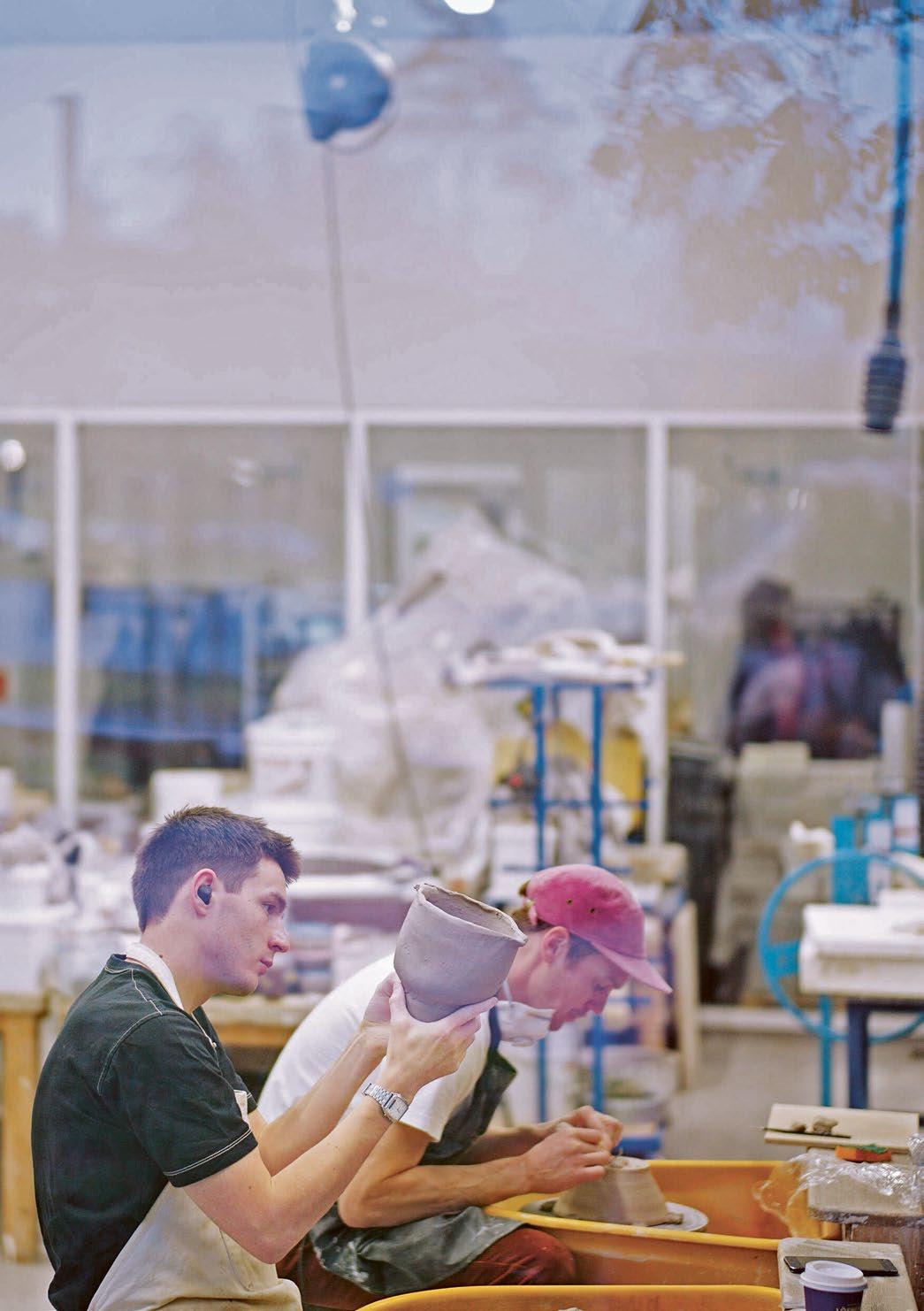
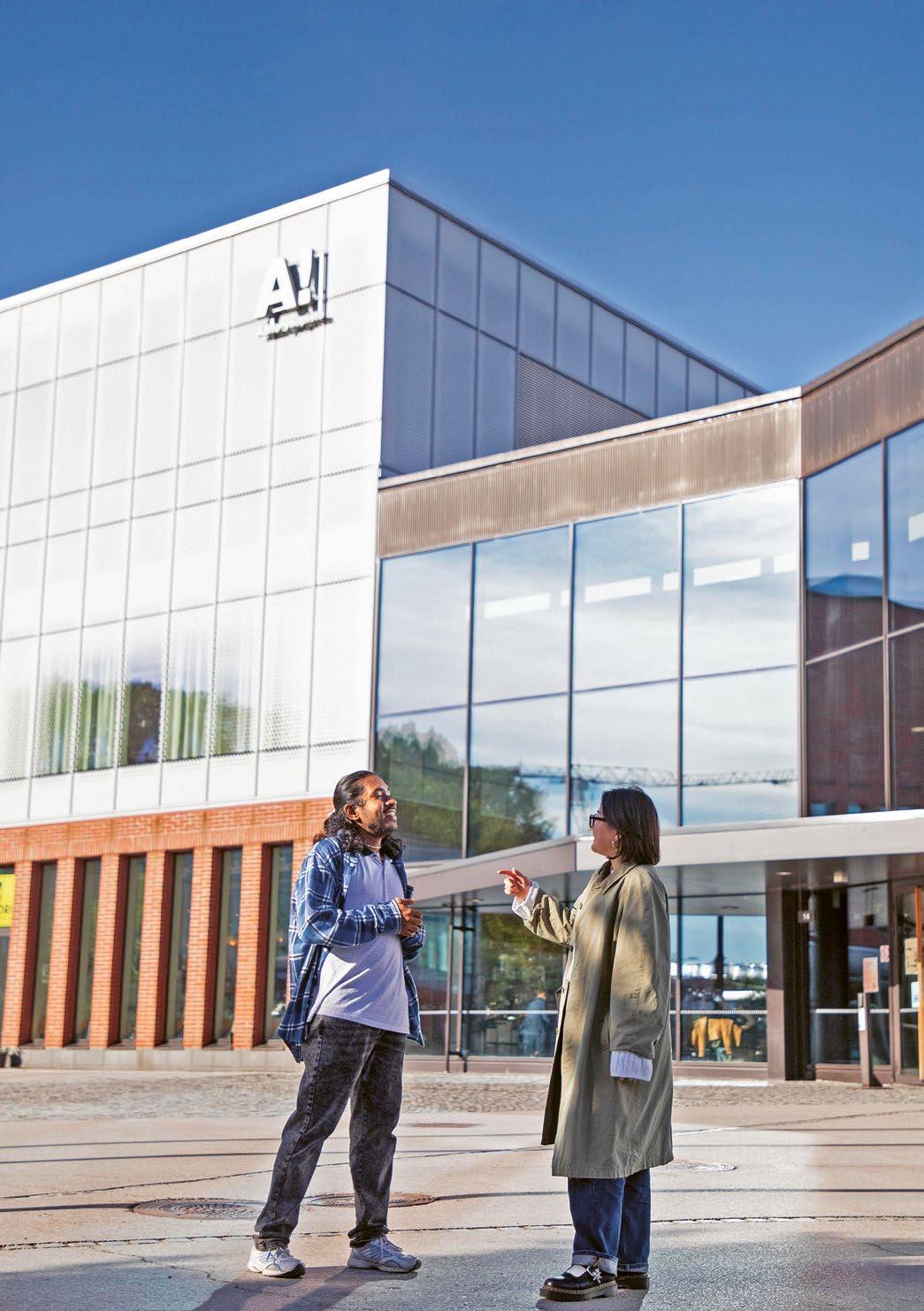
7 Experiences and events – Donation from the Finnish Fair Foundation
10 Towards change with the support of donors – two professors share insights
12 Professor of Practice Miklu Silvanto advancing human–technology collaboration
13 Building the road to the future with expertise
14 A strong investment in AI: ELLIS Institute launched in Finland
16 SemiSummer jobs pave the way into the semiconductor industry
17 Strengthening data economy excellence in the Mikkeli region
18 Donor stories
19 Column / Eero Seuna: My 70th birthday without gift wrappers
20 Investment lessons to schools with support from OP Uusimaa
21 Keijo and Salli Suila donated to Aalto University Junior
22 Erkki and Kaija Rautiainen’s donation supports the future of young people
23 Alum Heli Bergström donated to doctoral education
24 New initiatives
25 Innovation School helps researchers turn their ideas into solutions
26 Centre for Radical Creativity brings together experts from various fields
28 Multidisciplinary Bachelor’s programme set to launch –Matti Alahuhta and Sari Baldauf share insights
30 Ways to donate
31 The Department of Industrial Engineering and Management at the core of business and growth
32 Good drive and can-do attitude with Student Union Chair Joona Lipponen
33 Shaking up Tech inspires young people to explore technology
34 Aalto University Endowment annual report 2025
Review for donors
Publisher Aalto University, Donor Engagement
Editors
Paula Haikarainen / Aalto University, Communications; Marjukka Puolakka / KirjaiMin
Endowment annual report 2025
Susanna Knuts, Laura Lindholm-Pingoud, Eero Tuulos / Aalto University, Financial Services
Graphic design Dog Design
Print
PunaMusta, 2026
Source of addresses
Aalto University CRM for partnership and alumni data management
Dear Donor,
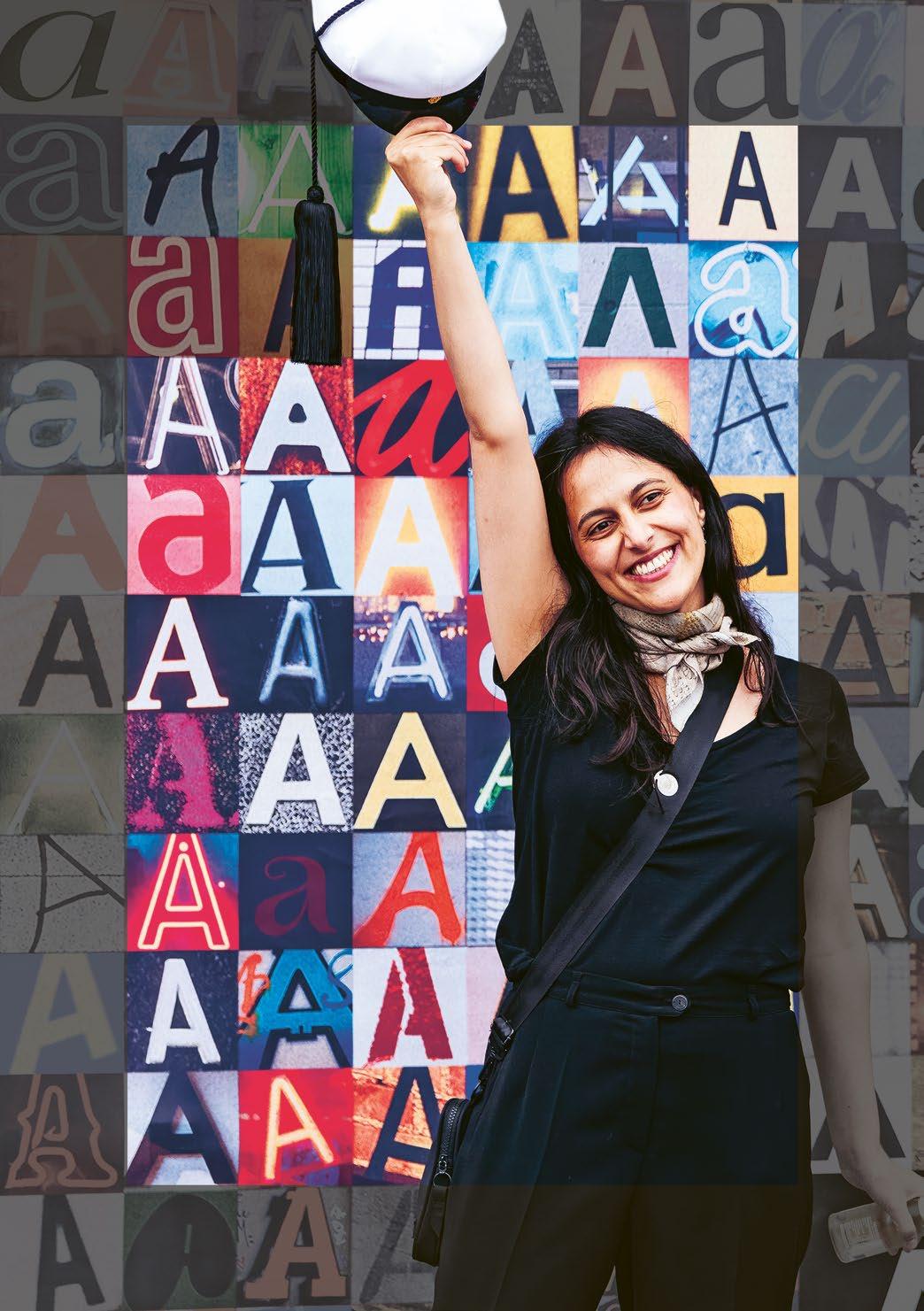
A warm thank you for your support and for being part of the change! Together, we are building the future.
The A! Sign of Change fundraising campaign was set up to attract 1 500 donors and raise 30 million euros to support Aalto University’s education and research. When we planned the campaign two years ago, we knew the goals were ambitious. Looking at it today, it feels amazing to see that the community is responding to the campaign and wants to support Aalto.
It has been a pleasure to see many previous donors return after witnessing the impact of their contributions in practice. At the same time, we have welcomed many new donors, both individuals and organisations. Every euro matters and reinforces a shared message: meaningful work is taking place in Otaniemi, laying the foundation for future sustainable growth.
The impact of donations extends from individuals to society as a whole. They enable, for example, student exchanges and investments in student wellbeing. When students thrive and develop their skills, their expertise benefits working life, companies, and Finland as a whole.
Donations directed to research create the foundation for new innovations and breakthroughs. They lead to new companies, jobs, and solutions to major societal challenges.
Running until the end of 2026, the A! Sign of Change campaign marks the beginning of a new journey to build a long-term culture of giving and to communicate Aalto’s societal impact even more broadly.
I warmly welcome all current and future donors to visit the Otaniemi campus. We look forward to meeting you, sharing more about our work, and exploring opportunities for collaboration.
It is also a pleasure to invite all those who contributed to the campaign to a joint appreciation celebration on 3 June 2027.
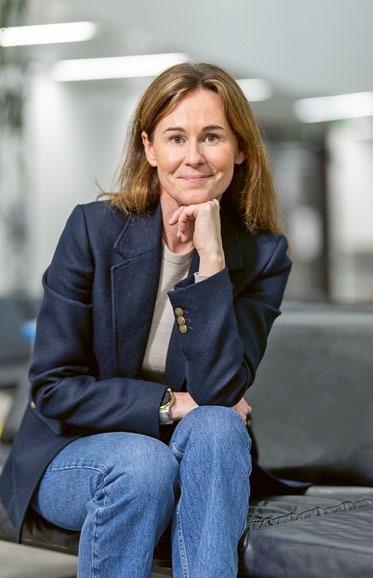
Camilla Wardi Head of Donor Engagement at Aalto University
‘When students thrive and develop their skills, their expertise benefits working life, companies, and Finland as a whole.’
Photo: Kalle Kataila
There’s still time to be part of the change
The A! Sign of Change fundraising campaign is approaching its final stretch. Our shared goal – 1 500 donors and €30 million by the end of 2026 – is now so close that we may even exceed it. This is a remarkable achievement and a powerful testament to the strength of our community. There is still time to join us in building a more hopeful future. Every donation, large or small, can spark an idea that changes the world.
You can donate easily via the QR code or at: aalto.fi/donate
As a token of our gratitude, all campaign donors will receive a Shimmering Wood pin designed by our students, along with an invitation to a thank-you celebration on 3 June 2027 at Dipoli in Espoo. Invitations will be sent closer to the date, but you can already save it in your calendar.
The campaign also features a quick and fun test (in Finnish) to help you discover your personal reasons to give. Start by scanning the QR code with your phone.
Photo: From the A! Sign of Change campaign
Encounters in Otaniemi
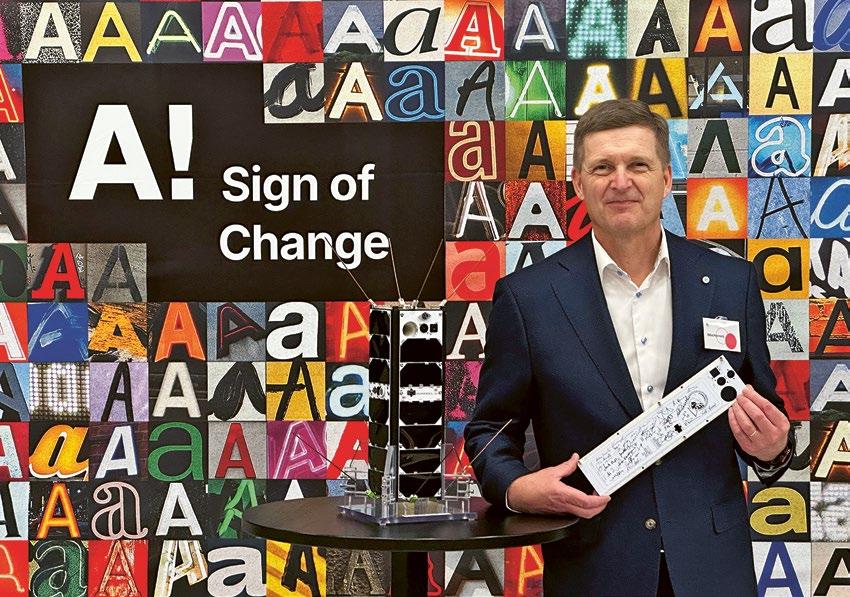
President’s Donor Evening on 27 October 2025 brought together more than 60 of Aalto’s key supporters for an evening of memorable experiences, inspiring discussions, and warm encounters.
During the event, donors’ signatures were inscribed on a satellite panel. Guests also had the opportunity to admire breathtaking views from the top of a wind turbine through virtual reality, enjoy a virtual sauna experience, explore the high-tech studio facilities of the Marsio building, and create music based on their own movements.
Why donate?
Impact
Your donation enables breakthroughs in science and helps educate future experts. Its impact extends from campus to society at large.
A value-based choice
Donating is an act for our shared future. It shows that you want to be part of solving the world’s biggest challenges.
Tax deduction
Doing good can also be tax-efficient. You can support a cause that matters to you in a financially sensible way.
Donations made to Aalto University during a calendar year are tax-deductible if the total amount is at least €850. Donations can be made in several instalments over the course of the year. For private individuals, the maximum deductible amount is €500 000. For organisations, the maximum is €250 000.
Photo: Kalle Kataila
President Ilkka Niemelä and the donors’ signatures ‘on their way to space.’
From donations to impact
Photo: Mika Huisman
Experiences and events
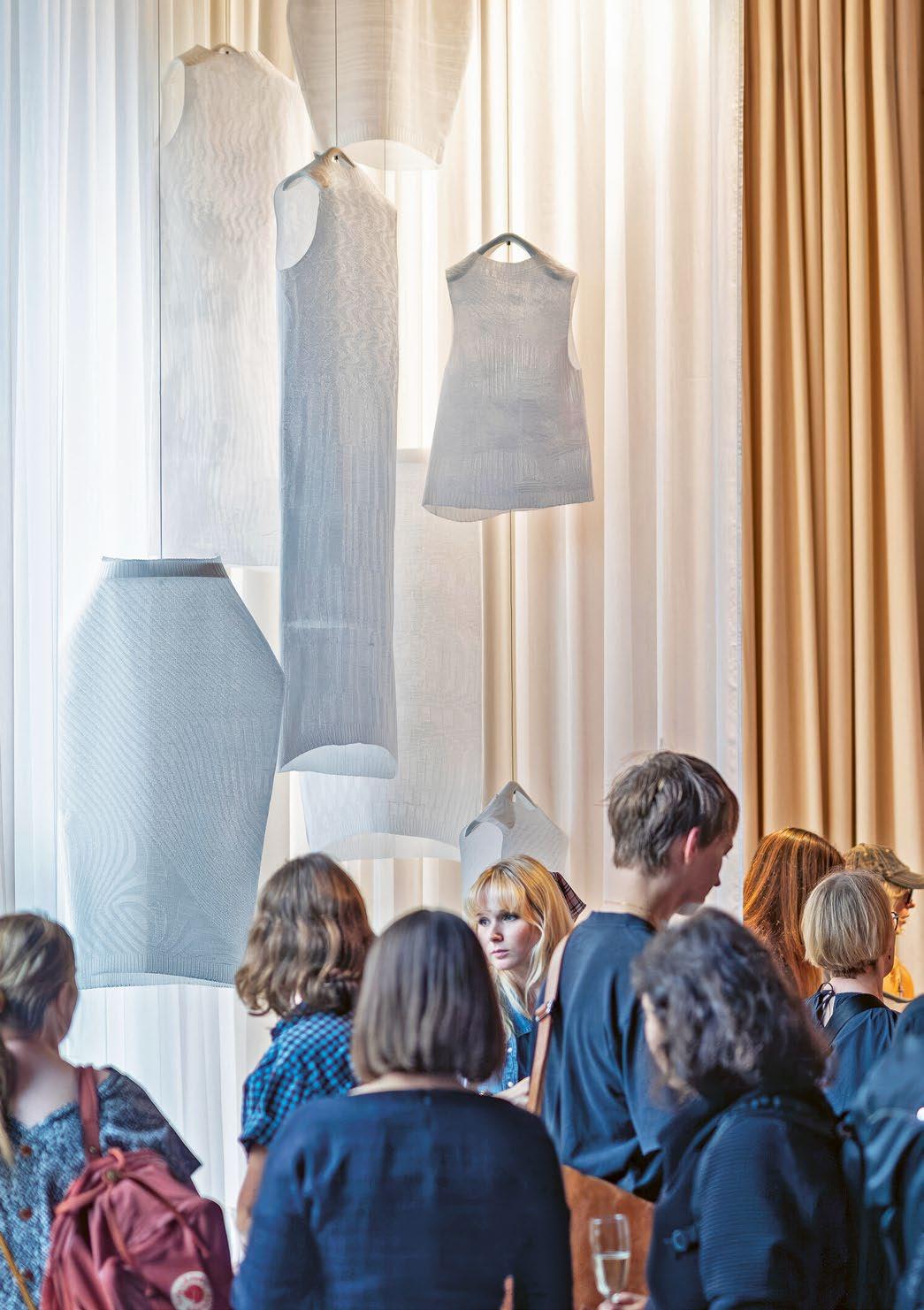
Thanks to a donation from the Finnish Fair Foundation, the School of Business will establish a professorship in experience and event business. The events industry is a rapidly growing sector with a significant role in the Finnish economy.
Bringing Finland to the spotlight
The events industry is also growing rapidly globally, and countries compete to host fairs, conferences and other events. For companies, events provide an opportunity to showcase their innovations and products.
The donation amounts to €3.1 million and enables academic research and education in the field for the next 20 years. The Professor of Experience and Event Business will be based in the Department of Marketing at the School of Business.
Dean of the School of Business Timo Korkeamäki welcomes the significant donation, which strengthens Finnish research and education in the field that has so far been underrepresented at universities.
‘Experience and event business could play a much larger role in Finland than it currently does. We are delighted that the donor has recognised that the School of Business has the expertise and tools needed to advance the field in Finland,’ Korkeamäki says.
The Finnish Fair Foundation aims to strengthen Finnish industry, trade and other business sectors while promoting awareness of domestic production. The foundation has also long supported the development of the events industry through sector organisations.
‘We hope that this professorship will generate a wealth of knowledge for the experience and events industry and its companies, which can be used to develop the field. This is an important and growing sector in Finland,’ says Pauliina Tenhunen, Chair of the Board of the Finnish Fair Foundation.
‘Hosting international events in Finland brings broad visibility to both Finland and Finnish companies. We hope that the professorship will strengthen Finland’s role as a venue for international events in the long term and help bring insights about global industry developments to Finland,’ Tenhunen says.
An internationally accomplished expert will be recruited for the position to advance education, cutting-edge research and visibility of the experience and event sector. In addition to research and education, the professor will serve as an expert for industry operators, authorities, decision-makers and the media.
‘We are looking for an outward-looking individual with both the ability and the willingness to contribute to society,’ Korkeamäki says.
‘We hope that this professorship will generate a wealth of knowledge for the experience and events industry and its companies, which can be used to develop the field. This is an important and growing sector in Finland.’
The professor’s work will also be reflected in the supervision of theses and doctoral researchers, bringing new highly educated talent to the field.
‘We have high expectations for the professorship, and we have no doubt they will be met,’ Tenhunen says.
From encounters to insights
At Aalto University, technology, business and arts naturally come together on a shared campus, with the School of Business located at its centre. This creates excellent opportunities for collaboration across disciplines.
‘Multidisciplinarity is a major competitive advantage for us compared to many European business schools that operate independently. Even though Aalto is only 16 years old, the spirit of collaboration is already a strong part of our DNA, and that is a tremendous asset,’ Korkeamäki says.
Collaboration between Aalto’s schools is part of everyday life. The School of Business hosts joint professorships with both science and technology and art and design. Large thematic initiatives are also underway, bringing together researchers from across the university.
The events industry in Finland
The industry’s turnover reached a record level of around €3 billion in 2024, continuing its growth after the pandemic.
This is roughly on a par with the pharmaceutical and mining industries, and larger than the textile industry.
There are around 3 500 companies operating in the events sector in Finland, most of them small and medium-sized enterprises. The industry employs around 24 500 people permanently and up to 175 000 people temporarily.
Every year, thousands of public, corporate and cultural events are organised in Finland, generating customers for the accommodation, restaurant, transport and retail sectors.
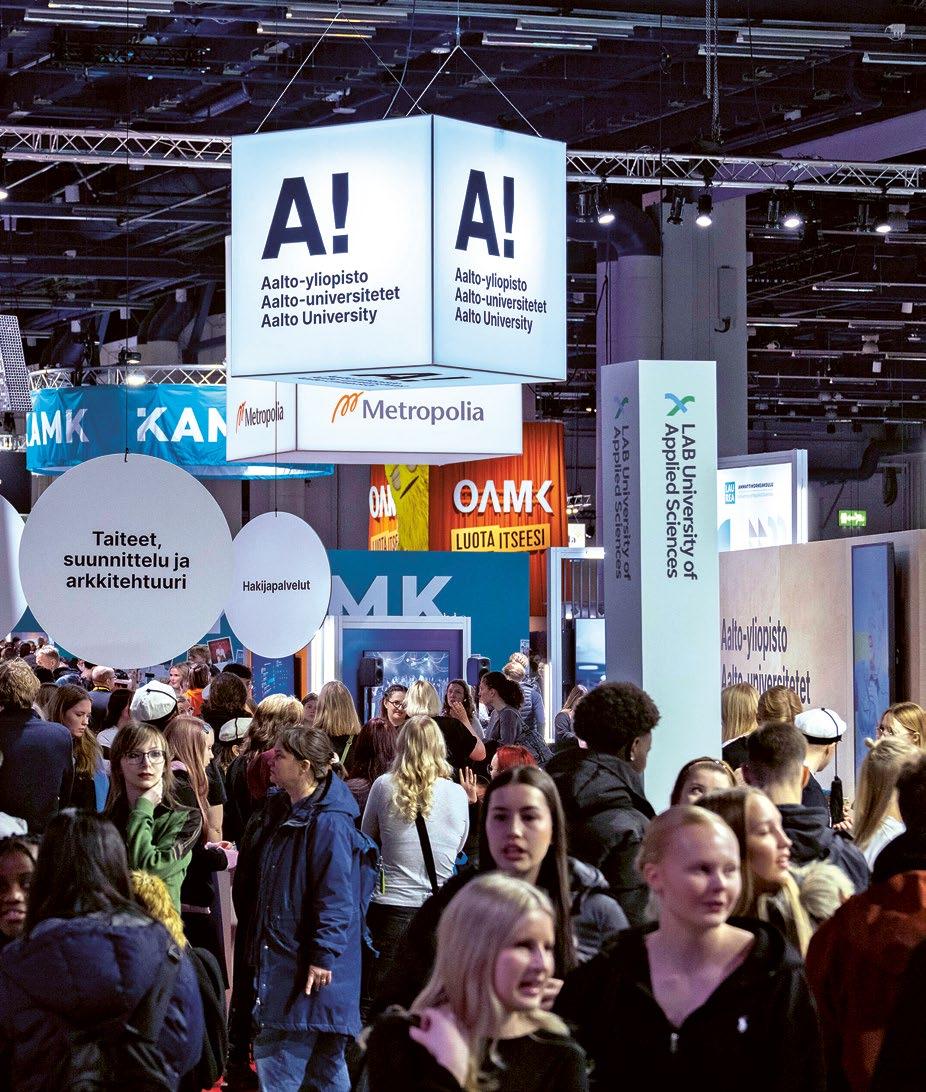
Aalto University’s exhibition stand is a popular destination at the Studia fair. The largest student and career event in Finland is held annually at the Helsinki Expo and Convention Centre. In 2025, it reached a record number of over 19 000 visitors.
Photo: Mikko Raskinen
Towards change with the support of donors
Professorships established with donations bring new research initiatives and teaching to Aalto University. Two professors share what they have achieved during their first years and what currently inspires them in their work.
A pioneer of ownership
Samuli Knüpfer took up the position as the world’s first Professor of Ownership in 2022. The professorship, established at the School of Business, was made possible through the support of more than one hundred donors. Major contributions came, among others, from the Jenny and Antti Wihuri Foundation and the Saastamoinen Foundation.
What are you particularly proud of in your work?
‘I feel especially proud of the Aalto Ownership Lab research centre, which focuses on corporate ownership and its societal significance.
I am also happy with the popularity of the Personal Finance course. The course, open to all Aalto students, reached over 400 students already in its second year. The course covers topics such as saving, investing, borrowing, home ownership and insurance. It is great that financial skills interest young people across Aalto’s schools.
It is also rewarding to see that ownership is now discussed in Finland in a completely different way than just a few years ago. Society is increasingly reflecting on what ownership means and why it is important that Finland is a good place to own assets.’
Samuli Knüpfer’s latest research examines Finnish family businesses.
What research inspires you right now?
‘My latest research examines Finnish family businesses and the persistent myths surrounding them. In Finland, 73 percent of companies are family businesses, and a large share of economic activity takes place within them.
Family businesses are, on average, more profitable and financially stable than other companies, and they invest more than average. They are also significant employers, especially outside the Helsinki metropolitan area.
The lack of economic growth is a serious problem. For Finland’s future, it is crucial to understand what kinds of companies generate growth.’
What has the Aalto community taught you?
‘Aalto is an inspiring community. The Otaniemi campus is full of smart and energetic people who want to change the world.
Multidisciplinarity enriches everyone’s work. When two people from different fields meet on campus, one plus one is more than two.’
Aalto Ownership Lab is a research centre that examines corporate ownership and its societal significance. The centre produces accessible and relevant insights into the state of ownership in Finland and globally. It provides education related to ownership and engages in active societal dialogue.
A builder of sustainability
Luana Dessbesell works as an Assistant Professor at Aalto’s Bioinnovation Center, which supports the development and commercialisation of forest-based innovations. Her professorship was established in 2023 through a donation from the Jane and Aatos Erkko Foundation.
What are you particularly proud of in your work?
‘When I arrived in Finland, I was not familiar with the local research environment or European funding channels. However, within three years I have secured approximately three million euros in research funding and established a multidisciplinary research group. Our group currently includes nine doctoral students and three postdoctoral researchers. In both research and teaching, I aim to broaden sustainability thinking toward a holistic perspective that simultaneously considers ecological, societal and economic aspects.’
What research inspires you right now?
‘In the SciSustain project, we are developing methods and tools together with industrial partners to help packaging material innovations move faster from idea to market.
New metrics help identify risks and bottlenecks in technologies already in the early stages of development. At the same time, they integrate holistic sustainability into the evaluation of innovations.
The project supports both large forest industry companies and startups in scaling bio innovations to industrial levels.’
What has the Aalto community taught you?
‘I have had the opportunity to walk on bridges built by professors before me between different schools. Now my task is to guide new researchers onto these bridges and to explore new forms of collaboration together.
Students are all different, and that is their superpower. As a supervisor, I aim to support these individual strengths so they can move toward their own goals. I have also learned to be a bit more firm, which helps students advance their work more systematically.’
The Bioinnovation Center is a multidisciplinary research and learning centre where pioneering technologies and innovations are developed to accelerate the transition toward a circular and bioeconomy and to promote sustainable economic growth in Finland. At its core is a multidisciplinary doctoral school involving all six Aalto University schools. The center was launched in 2021 with support from the Jane and Aatos Erkko Foundation.
The research project led by Luana Dessbesell promotes the commercialisation of new packaging materials.
Photo: Kristina Tsvetkova
Design builds bridges between people and technology
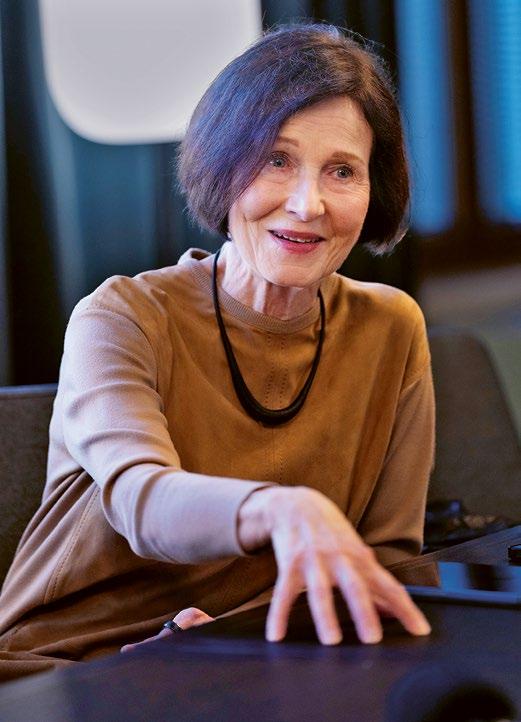
Mikael ‘Miklu’ Silvanto uses design to explore new ways of making the interaction between people and technology even more seamless. He encourages students to integrate timeless wisdom into their thinking.
As a Professor of Practice at the School of Arts, Design and Architecture, Miklu Silvanto develops new approaches to design and seeks to understand humanity at the intersection of technology and its possibilities. He believes that thinking becomes especially sharp in teamwork.
As Chief Design Officer at Oura, he is responsible for the user experience and visual design of the company’s smart rings. Oura rings collect health data in a similar way to activity trackers and heart rate monitors.
A career working with some of the world’s leading brands, including Apple, Airbnb and Bang & Olufsen, has taught Silvanto that the best solutions are created through collaboration.
‘Design is one of the most effective ways to create value for technology. When engineers and designers understand the value and significance of each other’s work, better solutions emerge.’
Silvanto’s part-time professorship at Aalto University’s Department of Design has been established through donations. It has been made possible by Supercell, Kone, Marimekko and First Fellow.
In his work, Silvanto is driven by curiosity and a desire to operate at the intersection of possible and impossible.
‘Many of my most important projects have involved doing things that were not previously technologically feasible. Learning and applying new insights to the next project is the main driving force behind our work.’
AI and timeless wisdom
Silvanto wants to inspire students to recognise the power of design in creating something new.
‘At the beginning of the semester, I spoke to new master’s students about the word ‘philosophy,’ which means the love of wisdom. Wisdom is about structuring, simplifying and clarifying things. If we want to succeed with new technologies, we must reconnect our thinking with timeless wisdom.’
Artificial intelligence is also reshaping design processes. Silvanto is concerned that designers are not engaging early or actively enough with its possibilities.
‘AI is a massive phenomenon in the interaction between people and technology. That’s why it is crucial for designers to be involved in developing AI-driven solutions.’
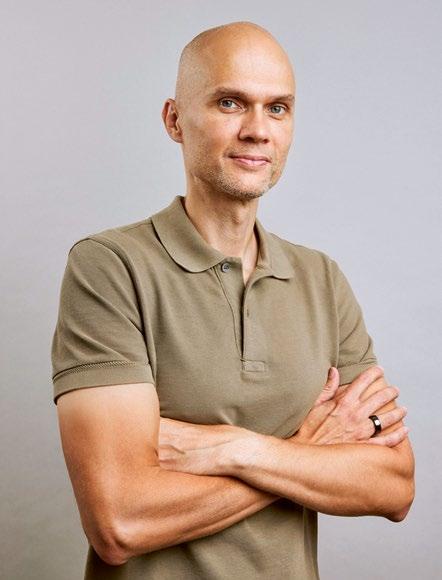
Mikael ‘Miklu’ Silvanto, Chief Design Officer at Oura, serves as a Professor of Practice at Aalto University.
Photo: Mona Salminen
Building the road to the future with expertise
A joint donation of €400 000 from companies and associations in road and pavement engineering ensures that education and research in the field will continue at the School of Engineering.
Streets, roads and highways form the foundation of a functioning society. Well-maintained transport routes enable the safe and smooth movement of people and goods and play a key role in Finland’s security of supply and operational capacity.
High-quality education and research ensure that Finland will continue to have the worldclass expertise needed for the planning, construction and maintenance of roads. Finland’s demanding and unique road conditions further highlight the importance of domestic research.
The donation secures the continuation of teaching in key courses that are critical for students’ competences. At the same time, research will be strengthened by hiring new postdoctoral researchers and doctoral candidates.
The donation was made by Asfalttikallio, GRK Suomi, INFRA, NYNAS, Ramboll Finland, SKOL and the Finnish Road Association. The Finnish Transport Infrastructure Agency is supporting the field through commissioned research.
‘We consider it crucial that education and
research in a core area of the infrastructure sector – pavement engineering – are maintained and developed also at the university level,’ says Matti Kiiskinen, Development Manager at SKOL.
Kari Tammi, Dean of the School of Engineering, warmly thanks all donors for their significant support.
‘Expertise in road and pavement engineering will be needed in the future as well – both to tackle challenges such as those posed by climate change and to develop new materials and more cost-efficient construction methods,’ Tammi says.
A new professorship in road and pavement engineering at Aalto University will further accelerate development in the field.
‘It is great that we can preserve the traditional professorship at Aalto and at the same time ensure a pipeline of new experts in the field. Through research, we can make sure we are able to meet the challenges of the future,’ says Paavo Syrjö, CEO of INFRA.
Photo: Finnish Transport Infrastructure Agency
A strong investment in AI: ELLIS Institute launched in Finland
Public and private funding helped establish ELLIS Institute Finland, where the future of machine learning (ML) is being developed.
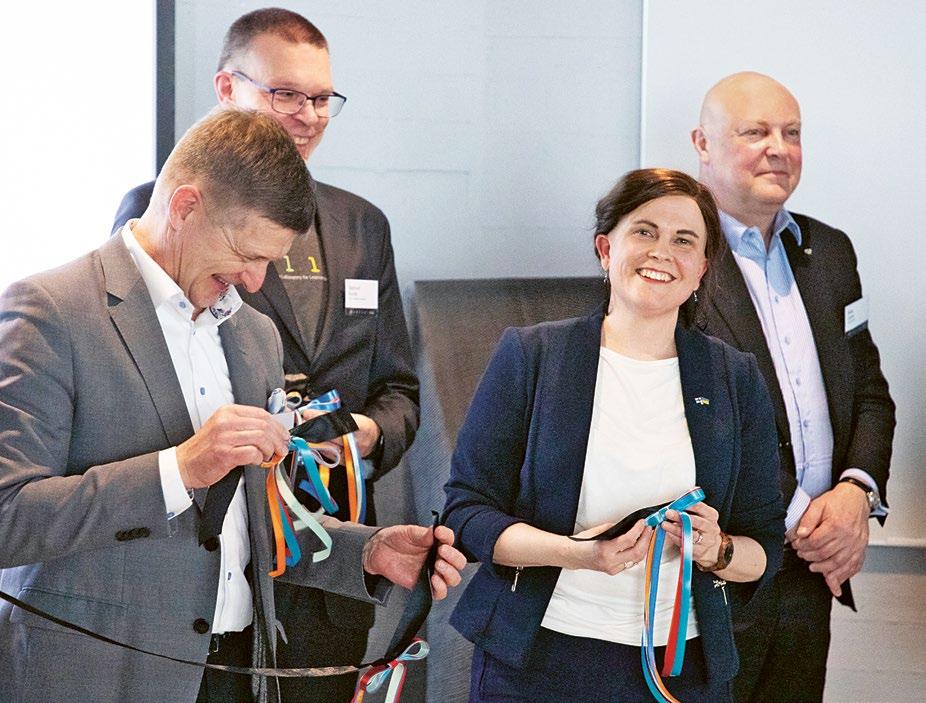
Aalto University president Ilkka Niemelä, ELLIS Institute director Samuel Kaski, Minister of Science and Culture Mari-Leena Talvitie, and Åbo Akademi University vice-rector Reko Leino cutting the ELLIS Institute ribbon at the opening.
Photo: Matti
Ahlgren
ELLIS Institute Finland, coordinated by Aalto University, is part of a European network of artificial intelligence (AI) research excellence. Launched in 2025, the institute focuses particularly on fundamental research in machine learning, which forms the basis for much of the AI technology that is transforming science and society.
The ELLIS (European Laboratory for Learning and Intelligent Systems) network brings together researchers, universities and companies to secure lasting international leadership of AI made in Europe. In Finland, the institute is a joint initiative of all universities, aiming to accelerate research, development and innovation while improving collaboration between humans and machines.
From fundamental research to impact
At the core of the institute is the development of machine learning methods. The ELLIS Institute builds new theoretical and mathematical foundations that make machine learning more reliable and applicable.
One aim is to build the world’s first nationwide healthcare foundation model, which can support doctors in decision-making, guide disease prevention and analyse population health.
The impact of this research is far-reaching: new methods support scientific progress,
generate new areas of expertise and offer companies opportunities to develop innovations. Collaboration with companies and first-class computing resources, such as the LUMI supercomputer, also make Finland an attractive destination for leading experts in the field.
Donations enable growth
The establishment of the ELLIS Institute is an example of cooperation between public and private funding. The Ministry of Education and Culture supports the initiative with €40 million, while private donations play a key role in establishing new professorships.
A €10 million donation from Foundation PS, established by Peter Sarlin, supports the recruitment of top-level researchers to Finland. Donations also strengthen Finland’s attractiveness in the global competition for AI talent.
‘Our operations have started at a rapid pace, with ten leading scholars and rising stars in AI and ML joining us in the first year, and more to come. The widespread adoption of AI across companies and society requires precisely this kind of international talent and ambition,’ says the institute’s director, Professor Samuel Kaski. ‘Scaling up impact also requires significant private investment, and in this regard, Peter Sarlin serves as a visionary example for our current and future partners.’
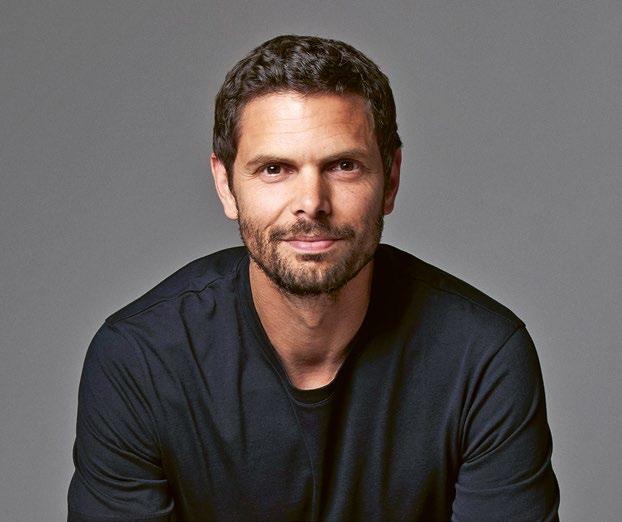
Peter Sarlin
Photo: Elina Simonen
Summer jobs pave the way into the semiconductor industry
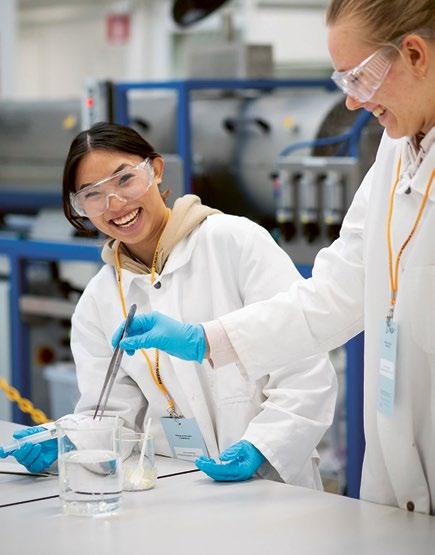
The SemiSummer programme offers students summer jobs in semiconductor research. Thanks to donations from companies, students gain early exposure to the rapidly growing technology field during their studies.
Semiconductors are the foundation of modern electronics. Microchips and components made from these materials enable smartphones, computers, sensors, electric vehicles, and a wide range of solutions in energy, healthcare, and transport systems. As the importance of the field continues to grow, so does the demand for new talent.
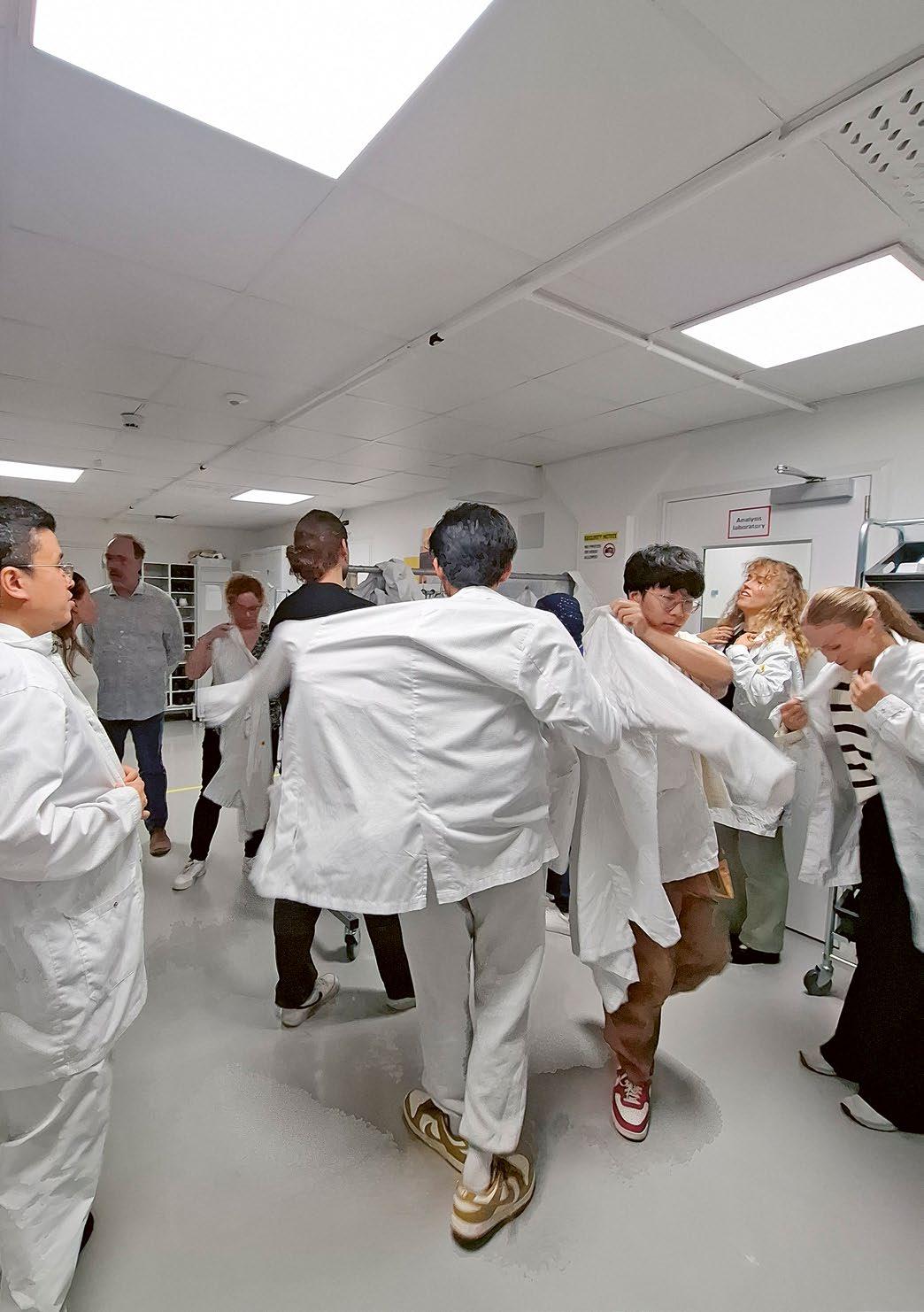
The programme provides students with summer jobs in research groups at Aalto University. Over the summer, students work on topics such as micro- and nanotechnology, materials research and electronics development. At the same time, they gain their first hands-on experience of research work and career opportunities in the semiconductor industry.
The summer jobs are funded through corporate donations. Students work in research groups, visit companies, and see firsthand how semiconductor products are manufactured.
SemiSummer also strengthens collaboration between the university and industry. Companies get to know future talent, while students gain a concrete understanding of the career opportunities in the semiconductor sector. For many, a summer in a research group is the first step toward a future in the field – either in research or in industry.
In 2025, the programme was supported by semiconductor companies Applied Materials, Okmetic, Murata Manufacturing, Bosch Sensortec, Kyocera Technologies and Canatu.
Photo: Susanna Jaarmo
Strengthening data economy excellence in the Mikkeli region
The data economy utilises digital platforms and electronically stored data to create new products, services and operating models. The professorship brings expertise on how data can be collected, processed and utilised more effectively. Its aim is to support the renewal of business operations and the development of public services.
The professorship focuses in particular on the use of data in innovation and decision-making, as well as on developing value-adding practices.
The five-year professor of practice position will be based in the Department of Industrial Engineering and Management at Aalto University’s School of Science. The professor will work both at Xamk’s Mikkeli campus and at Aalto University, with the goal of bridging academic research and practical working-life needs.
The professorship is funded by donations and has been supported by Xamk, Disec, City
A new professorship of practice in data economy will deepen collaboration between Aalto University and South-Eastern Finland University of Applied Sciences (Xamk). Data economy expertise supports both industries and public services in the Mikkeli region.
of Mikkeli, Small Business Center Support Foundation and Osuuskauppa Suur-Savo.
‘Warm thank you to all donors! The professor of practice position is a long-term joint effort to build a strong foundation of data economy expertise for Finland’s success,’ says Jouko Lampinen, Dean of the School of Science at Aalto University.
The importance of the data economy is growing across all industries, and data has become an essential part of companies’ everyday operations and value creation.
‘The professorship reinforces the longstanding partnership between Aalto University and Xamk, which has already involved close collaboration in research and education for many years. This new initiative around the data economy represents a significant investment in our region at the present time,’ says Heikki Saastamoinen, President of Xamk.
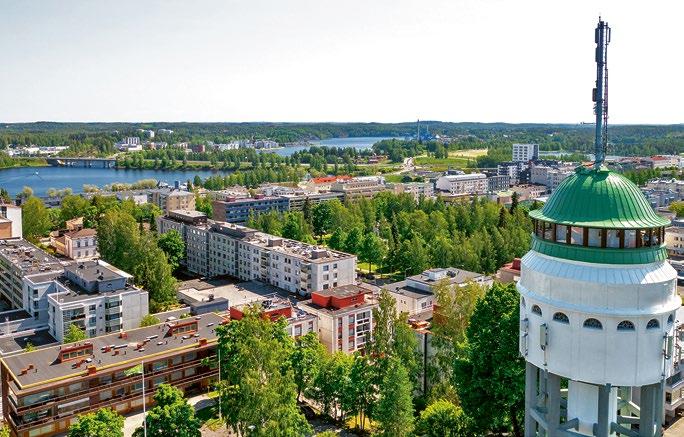
Photo: Jonne Vaahtera / City of Mikkeli
A view over Mikkeli town from Naisvuori.
Donor stories
Photo: Henri Vogt
My 70th birthday without gift wrappers – Choosing an Anniversary Fundraiser
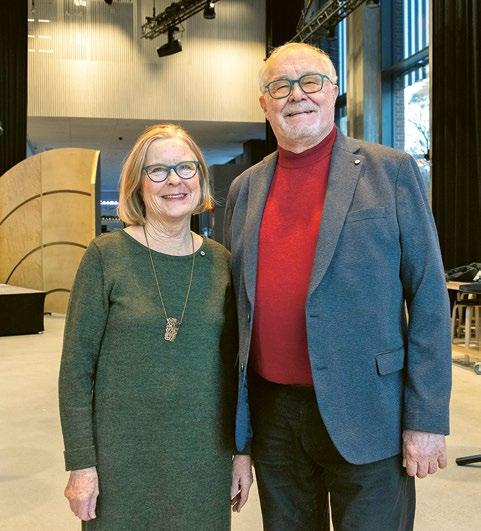
Today’s seniors already have everything that is needed for comfortable life. And if something is missing, they can get it themselves. There is really no need for birthday gifts.
Gifts from previous generations’ 50th, 60th and 70th birthdays – wall clocks, candle holders and vases – still fill many cupboards and attics. One more would already be comparable to problematic waste.
Yet guests seem to feel a strange social obligation to bring a gift to the party, as if in return for the hospitality.
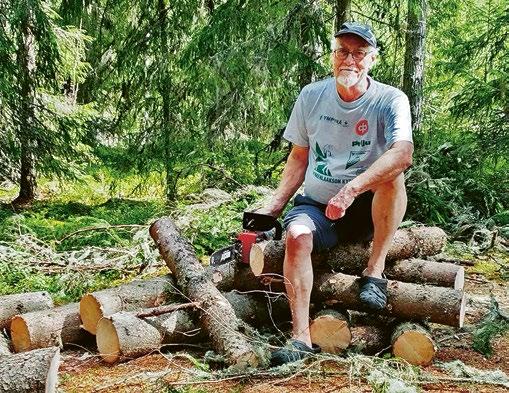
A celebration fundraiser offers an excellent alternative. At least in my case, it worked extremely well. To celebrate my 70th birthday, I organised a fundraiser and donated the collected sum to Aalto University’s School of Chemical Engineering.
My passion for chemistry began in childhood, when I conducted experiments in my home laboratory at the age of twelve. The Helsinki University of Technology provided me with a strong foundation for a long career in the chemical industry and research.
Today, funding for education is under serious pressure as part of the broader crisis in public finances. At the same time, experts are expected to have deeper knowledge of products and processes that are more complex than ever before.
Many of the green technology themes in the forest and chemical industries, which I supported already forty years ago, have recently become increasingly central. Still, there remains an enormous need for development work and expertise to learn how to refine and utilise our forest resources cost-effectively into green chemicals and new raw materials. The need for future professionals is greater than ever.
My own children are engineers and economists, and many others in my close circle are academically educated. This creates a strong understanding of the importance of education. I believe many Aalto alumni share a similar situation. That is why I believe celebration fundraisers have strong potential and that more people could choose them instead of traditional gifts.
Eero Seuna
The author is a Master of Science (Technology) in Chemical Engineering from Helsinki University of Technology, 1980, with a long career in the chemical industry in Finland and abroad.
Anniversary Fundraiser: an alternative way to honour special occasions. For further information, please contact: donor-engagement@aalto.fi
Photo: Eero
Seuna’s home album
Investment lessons enter schools
With support of donations by OP Uusimaa, Aalto University Junior has developed the Juniorpörssi learning platform for workshops in lower secondary and upper secondary schools. The activities have now also been expanded to Money Moments in primary schools.
In Aalto University Junior’s Invest in Your Future workshops, students are encouraged to explore investing and reflect on their own financial habits.
In 2025, OP Uusimaa donated €60 000 to Aalto University Junior. With this support, Junior hired a coordinator to further develop the Invest in Your Future workshops and launched the development of Juniorpörssi, the new digital learning platform.
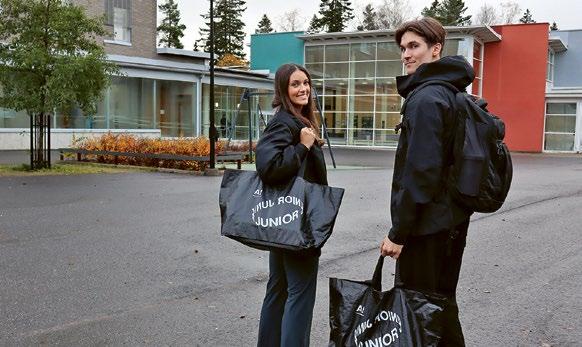
During autumn 2025, the Invest in Your Future workshops reached 1 730 children and young people. Junior instructors Tilda Hyttinen and Nuutti Torkki, who have led the workshops in schools, say:
‘It’s great to be able to motivate, inspire and encourage young people. Our work is important so that as many young people as possible have equal opportunities to start saving and
investing, and no one hesitates to begin simply because they lack information.’
With a new donation from OP Uusimaa, Aalto University Junior has continued its investment and financial literacy workshops in comprehensive schools and upper secondary institutions during spring 2026.
The new donation has also enabled the launch of Money Moments workshops designed for students in grades 3–6. Launched in spring 2026, these workshops held in schools provide gamified learning sessions that introduce children to spending, saving and making purchasing decisions.
‘Warm thanks to OP Uusimaa for its impactful support of Aalto University Junior. Thanks to the new donation, we can inspire an even greater number of children and young people to explore financial topics,’ says Petri Suomala, Vice President for Education at Aalto University.
A giant leap in participation
In 2025, Aalto University Junior’s activities reached a record of approximately 55 000 participants. The number of participants in workshops, events and other activities increased by about 22 000 compared to the previous year.
‘Last year we coordinated four different projects through which approximately 12 000 pupils participated in activities delivered in schools. It is clear that without donors, we would not reach numbers like these,’ says Pilvi Saaristo, Acting Head of Aalto University Junior.
Aalto University students
Tilda Hyttinen and Nuutti Torkki lead the Invest in Your Future workshops at schools.
Photo: Heidi Simppala
Over 60 years together: ‘Giving young people tools for the future’
Donating to Aalto University Junior is a cause close to the hearts of Salli and Keijo Suila. The couple’s experiences of loss and their strong belief in education have led them to support the future of children and young people.
Originally from Ostrobothnia, Salli and Keijo first met in Laihia, where Salli attended high school and lived in lodging, as there was no high school in her home parish of Jurva. Later, their paths crossed again in Helsinki, where Keijo was studying at the School of Economics and Salli worked as a nurse at the Children’s Hospital.
Keijo graduated with a master’s degree in economics in 1968 and began his career at Unilever, where he advanced to the position of Marketing Director. He later became Deputy Managing Director at Sinebrychoff, and after that, spent more than 13 years in the Netherlands as CEO of Huhtamäki’s global confectionery operations. After retiring from his position as President and CEO of Finnair, he served for several years on various company boards in Finnish business life.
‘I was born in Laihia, and that’s where I received my first lessons in economy,’ Keijo says with a laugh, adding that the School of Economics provided a good foundation for his career.
Life’s turns brought new perspective
Salli has worked as a nurse in pediatric intensive care, as a school nurse, and later also in crisis intervention with young people.
The 1970s, however, brought profound sorrow into the couple’s life.
‘We had three children who passed away from congenital heart muscle degeneration. The 1970s were emotionally extremely heavy for us, but somehow we’ve managed to move forward together,’ Keijo says.
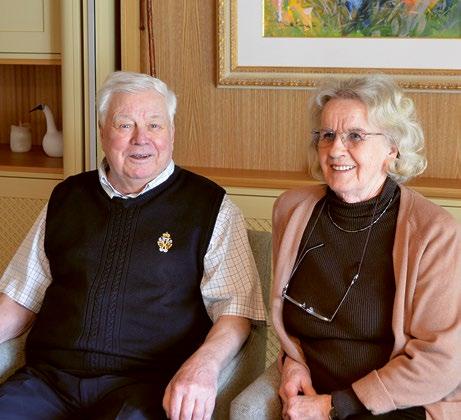
‘It’s a joy to be part of something as meaningful as Aalto Junior,’ say Keijo and Salli Suila.
As they no longer have children of their own, the idea of supporting young people has taken on a special meaning.
Their donation to Aalto University Junior is specifically directed to the development of content related to business and economics.
‘It’s important that children and young people learn to understand economics and societal matters. Without a healthy economy, it’s impossible to build a welfare society,’ Keijo says.
At its best, Aalto University Junior can spark a young person’s interest in their future. For Salli, such a moment came in her childhood:
‘As a little girl, I was out on May Day Eve ringing cowbells, when I saw the village shopkeeper’s son, a dentist, walking down the road wearing his white student cap. At that moment, I knew I wanted to become a high school graduate, too.’
By donating to Aalto University Junior, you support the future talent in the fields of science, art, technology and business.
Photo: Marjukka Puolakka
Supporting the future of young people
For decades, Erkki and Kaija Rautiainen worked abroad in the machine manufacturing industry and in textile art. When the time came to give back, they decided to support the teaching and research in textile design and industrial engineering and management.
Erkki Rautiainen began studying industrial engineering and management at the Helsinki University of Technology in 1967. Kaija Rautiainen, in turn, was studying to become a crafts teacher. They first met in Helsinki in 1973 while standing in the queue of the KY building just before May Day.
The couple married in 1976, after which the joint path of the industrial engineer and the textile artist took them around the world, first to Brazil and then to Canada.
After working for about two decades in senior leadership roles at large companies, Erkki had the opportunity to become an entrepreneur. Together with his Canadian business partner, he acquired Allied Blower, a company that employed 100–150 people at its four manufacturing locations and was the market leader in Western Canada.
‘We ran Allied for over 15 years until 2013, when we sold the company to its management and I retired from active working life. Being an entrepreneur was the best time of my career,’ says Erkki.
Kaija Rautiainen has built a career as a textile artist specialising in tapestries, drawing her inspiration from nature. Loom and other weaving equipment have traveled with her in their relocations abroad. During the years in Brazil, Kaija made her own textile art as well as gave weaving lessons to locals in Portuguese. She also continued her own art and teaching in Canada.
The Rautiaisens returned to Finland a few years ago. At the end of their long international careers, they want to give back and support the future of entrepreneurship and textile design.
A new fund at Aalto University, named after Erkki and Kaija Rautiainen, supports research, education and impact in entrepreneurship and leadership at the Department of Industrial Engineering and Management. The fund also supports textile design education and research, as well as related innovation and development at the Aalto University School of Arts, Design and Architecture.
‘Our international careers have been rewarding, and we want to help young people move forward in theirs,’ the Rautiainens emphasise.
Photo: Mikko Raskinen
Learning carries you forward
Aalto alum Heli Bergström wants her legacy gift to support the development of doctoral education at Aalto University.
Heli Bergström is a seasoned leadership developer, coach and researcher. In her role as principal lecturer in digital business at South-Eastern Finland University of Applied Sciences (Xamk), she promotes the use of artificial intelligence in leadership and the development of teaching.
What fascinates her about AI is its controlled unpredictability and rapid evolution, which constantly challenges people to keep learning.
The same idea has guided Bergström’s own career. She completed all her university studies as an adult alongside her work. She earned her Licentiate of Science in Technology from Helsinki University of Technology and her Doctorate of Science in Technology from Aalto University. In her doctoral research, she examined the fluency of expert work and the leadership of knowledge workers.
‘Studying as an adult is incredibly rewarding because learning is directly connected to practice. I haven’t pursued studies just for a degree, but to develop my work and my expertise.’
Doctoral education at the core of renewal
For Bergström, legacy gift is an act of value and impact.
‘I want my assets to support long-term development that truly matters to society.
Doctoral education is a driver of new knowledge and renewal, but it also cultivates the quality of thinking, deep expertise, and the ability to solve complex problems.’
Her doctoral research reinforced her understanding of how important clear practices,
good supervision, and a sense of community are in a researcher’s work.
‘When doctoral education is developed, the impact is seen not only in researchers’ daily lives, but also in the quality of research, the renewal of working life, and Finland’s overall knowledge base.’
Education is close to Bergström’s heart. She herself has financed her studies since high school without a financial safety net.
‘I hope that doctoral studies will become even more accessible in the future, regardless of background. At the same time, it is important to make the degree more diverse and flexible without compromising its high quality.’
Leave a better future as your legacy.
More information: Nora Rahnasto donor-engagement@aalto.fi
Illustration: Ilona
Partanen
New initiatives
Photo: Kalle
Kataila
From research to real-world impact
Aalto University’s new Innovation School helps researchers turn ideas into solutions – and offer a new opportunity for meaningful giving.
Every year, numerous scientific breakthroughs emerge at Aalto University. Yet only a fraction of these ideas develop into practical applications, products or businesses. The new Innovation School initiative addresses this gap bringing together education, support and networks to help transform research into sustainable innovations. Its goal is to strengthen the entire innovation pipeline – from fundamental research to real-world impact –and ensure that more ideas reach society.
At the heart of this effort is the Aalto Inventors programme. Designed for researchers at the early stages of innovation, it provides practical skills in identifying applications, understanding intellectual property, exploring funding opportunities and developing business thinking. Participants also connect with industry and innovation experts.
Complementing this, the Innovation Postdoc programme enables postdoctoral researchers to further develop and commercialise their research results. It offers time, resources and expert support to advance promising ideas towards practical solutions.
Beyond individual projects, the aim is to foster a cultural shift: innovation and impact become a natural part of the research journey. As more ideas move beyond academia, they create new companies, partnerships and solutions even to global challenges.
The Innovation School is part of the Entrepreneurship and Innovations fundraising target and offers donors a chance to support this transformation. Contributions directly empower researchers and their ideas – helping ensure that cutting-edge science translates into tangible benefits worldwide.
Research-oriented startup Arivin Therapeutics develops solutions against antibiotic resistance.
Read more about the Innovation School. More information about donating: donor-engagement@aalto.fi
Photo: Mikko Raskinen
Creativity as a competitive edge and a driver of new thinking in working life
Aalto University Centre for Radical Creativity brings together experts from different fields and turns creativity into a concrete skill for working life.
The new Centre for Radical Creativity strengthens the role of creativity in research, education and practical collaboration with companies and other partners. Rather than being a single physical space, it represents an approach that runs throughout the entire university: the aim is to bring together expertise from different disciplines and generate new kinds of solutions to the complex challenges of our time.
Radical creativity refers to the ability to transcend conventional boundaries and combine different fields of science in an open-minded way. At Aalto, this is reflected, for example, in the collaboration between art, technology and business. The centre provides a platform where researchers, students and partners can experiment, combine their expertise and develop ideas without predefined answers or outcomes.
Creativity is a source of innovation and one of the most important skills in working life. The centre’s goal is to make it a tangible skill that is accessible to everyone and can be actively developed. The ambition is to integrate radical creativity into the studies of every Aalto student – potentially bringing thousands of professionals with new ways of thinking into the workforce.
One example of the centre’s broad reach is the open and free online course Diving into Radical Creativity, launched in November
2024. Within a year, the course reached more than 20 000 learners and makes developing creativity accessible to a wide audience. The Radical Creativity online course has nearly 70 partners, most of which are companies.
Creativity in research and practice
Research conducted at the centre strengthens Aalto University’s interdisciplinary collaboration in leveraging creativity and advancing new ways of thinking. For example, the multidisciplinary Creative Leap project, funded by Business Finland, has developed methods for identifying and enhancing creativity in companies, as well as demonstrating its connection to financial success. Several major Finnish companies participated in the research.
An international perspective is brought to the centre by Visiting Professor Mark Runco, one of the world’s leading scholars in creativity research. His professorship has been made possible through a donation from the Amer Cultural Foundation. Runco has fostered collaboration between Aalto’s schools and strengthened the university’s international research networks.
‘The Aalto University Centre for Radical Creativity also serves as a bridge between the university and society. Experiments and joint projects carried out with companies and other partners help translate research into practice and generate new innovations,’ says Riikka Mäkikoskela, Head of the Centre.
The centre is a new fundraising target for Aalto University. Through it, the university aims to strengthen its position as an international forerunner in research and application of creativity – and to build national competitiveness far into the future.
More information about donating to the Centre for Radical Creativity: Raila Tapio donor-engagement@aalto.fi
Photo: Lina Jelanski
Radical creativity refers to the ability to transcend conventional boundaries and combine different fields of science in an open-minded way.
Multidisciplinary Bachelor’s programme calls for future changemakers
The new Bachelor’s programme, set to begin in autumn 2027, got off to a flying start thanks to a €2M donation from Matti Alahuhta, Sari Baldauf, Antti Herlin and Jorma Ollila.
Aalto University’s new multidisciplinary Bachelor’s programme combines technology, business, arts and design in a groundbreaking way. It cultivates future changemakers who have diverse expertise and the passion to tackle the major challenges of our time. The first class will begin in the autumn of 2027.
A unique feature of the programme is that students do not decide until the end of their
first year of study whether they will graduate with a Bachelor of Science degree in Economics and Business Administration or in Technology. After completing their Bachelor’s studies, students may apply to several Aalto’s Master’s programmes in all fields of education.
This programme, taught in English, responds to the transformations taking place in the world and the workplace which highlight
A new initiative that combines studies in technology, economics, arts and design.
Students admitted to this Englishlanguage programme will not decide on their major until the end of their first year of study.
The programme seeks talented students interested in broad-based social phenomena.
Launches in autumn 2027, with 60 students starting the programme.
Students will graduate with Bachelor of Science degree in Economics and Business Administration or in Technology, after which they can apply to Aalto’s Master’s programmes.
Matti Alahuhta reminds that a key factor in international competition is which country has the best universities that also understand the changes in business.
Photo: Heli Sorjonen
‘I believe the Bachelor’s programme will significantly impact Finland’s progress.’
SARI BALDAUF
the importance of versatile expertise, networks and crossdisciplinary collaboration.
A boost for Finland
Matti Alahuhta and Sari Baldauf, both seasoned leaders in Finnish business, hope that students in the new Bachelor’s programme will arrive at Aalto full of enthusiasm, curiosity, and with an open mind.
And what kind of Finland is this donation aimed at building?
Sari Baldauf believes that the students of the programme will form an international network, which will be useful in many ways.
‘Skilled, eager to learn and forward-looking,’ says Matti Alahuhta. Sari Baldauf adds the word “courageous” to the list. She believes that the students will form an international network, potentially resulting in a wave of new ideas and companies.
‘The programme will likely attract ambitious young people who want to solve the great challenges of the world in various roles within society. Contacts are particularly valuable when entering the working life,’ says Baldauf.
‘I believe the Bachelor’s programme will significantly impact Finland’s progress.’
Ready for the new initiative
The idea of a multidisciplinary Bachelor’s programme has existed since the founding of Aalto University. Now the time is right. It features a compact, year-based study model and strong academic support.
All six of Aalto University’s schools have been involved in creating the programme,
and its development has also involved active dialogue with industry professionals.
Matti Alahuhta, Sari Baldauf, Antti Herlin and Jorma Ollila, all prominent figures in Finnish business, have each donated €500 000 to the programme, and it has also received other significant donations and supporters.
To ensure the new Bachelor’s programme can be fully implemented, the university is inviting new donors to invest in the education of future changemakers. The goal is to raise €5.4 million in donations for the six-year pilot phase of the new Bachelor’s programme. The university will cover the remaining €3.2 million of the pilot phase’s total costs.
More information about donating to the programme: Nora Rahnasto donor-engagement@aalto.fi
Photo: Heli
Sorjonen
Ways to donate
Photo: Mikael Niemi
At the core of business and growth
Finland needs growth and the people who build it. The Department of Industrial Engineering and Management has been educating such professionals for 60 years.
In 1966, teaching began in the mechanical engineering department of the Helsinki University of Technology, setting in motion an impact that extends from Finland’s early unicorn companies to today’s successful businesses.
Initially, education and research in industrial engineering and management focused on machines and the organisation of production. Since the early days, technology has become digital, but the core has remained the same: the ability to integrate technology, business, and people into a functional whole. Production control and work psychology have evolved into the management of operations and services as well as leadership and people management.
Since the 1990s, a third focus area has emerged alongside the others: technology entrepreneurship. At the same time, the department’s research has risen to an internationally top level.
‘We were the first ones to systematically teach entrepreneurship, and many of our students and alumni have founded companies. In fact, in nearly all Finnish unicorns our alumni were either co-founders or the earliest investors,’ says Jens Schmidt, Head of the Department.
Now, alongside business transformation and entrepreneurship, scaling has emerged as a new focus area – growing startups into large companies and actively managing growth.
A broad-based approach is a defining feature of the department’s thinking. Emeritus Professor Esa Saarinen’s lecture series Philosophy and Systems Thinking has filled Aalto’s largest lecture hall for 20 years.
‘Today, three philosophers work in our department. It reflects a culture in which broad, integrative thinking has always been valued.’
Growth as the anniversary theme
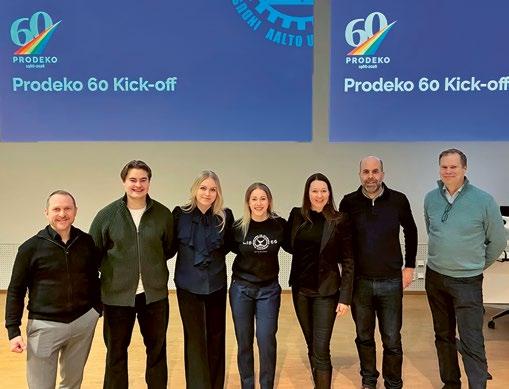
The Prodeko Guild is also celebrating its 60th anniversary. Founded in 1966 as a professional club for students, it evolved into a student association in 1989, bringing together students, alumni, and companies into a close-knit network.
The anniversary year is themed around having a passion for growth and concrete actions to promote it.
‘Finland’s key challenge is the lack of economic growth. Both at the department and Prodeko we will be initiating a number of concrete activities to help Finland to growth track.’
The DIEM Prodeko Fund, established on the initiative of the programme’s alumni, supports the development of top-level expertise and technology entrepreneurship for future generations.
‘The anniversary year is a great moment to do something meaningful together. By donating to the DIEM Prodeko Fund, you help build expertise that will carry far into the future.’
The Prodeko Guild’s 60th anniversary celebrations were launched together with members from Prodeko, Prodeko alumni and the department faculty and staff.
Support our community, the next generation of students and researchers, and the renewal of the economy by donating to the DIEM Prodeko Fund.
Good drive and can-do attitude
Student culture is built by doing things together. According to Joona Lipponen, Chair of the Aalto University Student Union (AYY), donors’ support helps to turn students’ potential into action.
Student numbers grow
Joona Lipponen in the Wappu mood with some other AYY actives.
At the beginning of 2026, Lipponen began his term as Chair of AYY.
‘I see AYY as a foundation for helping every Aalto student find a meaningful community that supports their studies.’
At the same time, he highlights the realities of student life. Student numbers are growing, but university funding is not increasing at the same pace.
When Joona Lipponen began his studies in built environment at Aalto in autumn 2020, the first week left a lasting impression. The tutors took good care of the freshmen, and the community warmly welcomed the newcomers.
The experience inspired him to get involved in student activities in many ways.
‘I’ve been motivated by the great team spirit and the joy of doing things together. Things are done properly, but not too seriously.’
One of the highlights of Lipponen’s student life has been the freshman May Day.
‘There was a certain kind of magic about it. The shared atmosphere and the surprises made the freshman May Day unique.’
Lipponen graduated with a Bachelor of Science in Technology in spring 2025 and now continues in the Urban Studies and Planning in Real Estate Economics master’s programme. The multidisciplinary programme, jointly organised by Aalto University and the University of Helsinki, brings together future city planners and urban developers.
‘Donations help ensure that the quality of teaching remains high and that both current and future students receive a strong education.’
Lipponen also emphasises the importance of the Entrepreneurship and Innovation fundraising initiative, which enables grants for students and doctoral researchers to develop ideas, build prototypes and for early-stage acceleration.
‘Many of us graduate with student loans, so getting a steady job feels like the safe choice and entrepreneurship can be left untried. There is huge potential at Aalto – potential that Finland cannot afford to miss.’
Looking ahead, Lipponen hopes to find meaningful work related to cities, society and people.
‘I want to continue doing things ambitiously, but with a twinkle in my eye.’
By supporting entrepreneurship and innovation, you encourage our students to become entrepreneurs and promote groundbreaking research.
Photo: Kalle Kataila
Shaking up Tech inspires young people to explore technology
The annual event encourages young women and gender minorities to pursue studies in technology.
Shaking up Tech offers young people considering their future careers an opportunity to explore studies and career paths in technology, and to meet students, researchers and industry professionals.
The event will feature presentations and workshops, and the participants will get hands-on experience of what the work is like.
First held in 2018, the event was created to lower the threshold for entering a field that not everyone feels is for them. Although young women in Finland perform well in mathematics and science, their interest in studying technology is often low.
A
positive bubble
Sara Ikonen, who holds a Master of Science (Technology) degree in Industrial Engineering and Management, was involved in building the concept from the very beginning. ‘We wanted to create an event where the field of technology appears approachable and diverse,’ she says.
‘It was great to see how positively companies responded to supporting the event. Many of the partners and speakers were experienced women in technology, and their stories made a strong impression.’
Karola Salminen, who holds a Master of Science (Technology) degree in Civil Engineering, has taken part in the event as many as five times in different roles.
According to Salminen, it was especially important to meet people she could relate to and to try out practical work:
During the day, young participants get hands-on experience of what working in the field of technology can be like.
‘One of the most memorable things for me as a participant was a workshop where we built a mobile application. Even though it wasn’t directly related to my own field, it was a fun and educational experience. The workshops really are the highlight of the event.’
The event is organised in collaboration with several universities in the field of technology and reaches hundreds of young people across Finland on the same day. On the Aalto University campus alone, there are 300–400 participants each year.
‘The event creates a positive bubble where young people can explore opportunities and gain the confidence to apply to technical fields,’ says Karola Salminen.
Shaking up Tech – support diversity in technology
With your support, we cover participation-related costs and enable hundreds of young people to attend free of charge.
Photo: Matti
Ahlgren
Photo: Mika Huisman
36 Key facts about Aalto University
37 University’s sources and uses of funds
38 Highlights of year 2025
42 Endowment governance
43 Glossary
44 Annex 1: Aalto University Endowment financials 2025
44 Endowment inflows & outflows
44 Endowment balance sheet
45 Fund specific reports
50 Endowment assets
Key facts about Aalto University
Six schools
School of Engineering: built environment, civil engineering, energy and mechanical engineering
School of Business: accounting and business law, economics, finance, information and service management, management studies, marketing
School of Chemical Engineering: bioproducts and biosystems, chemical and metallurgical engineering, chemistry and materials science
School of Science: applied physics, computer science, industrial engineering and management, mathematics and systems analysis, neuroscience and biomedical engineering
School of Electrical Engineering: electrical engineering and automation, electronics and nanoengineering, information and communications engineering
School of Arts, Design and Architecture: architecture, art and media, design, film
In 2025
16 184 degree students (full-time equivalent) A staff of 4 809 of whom 412 are professors (full-time equivalent)
Number of graduates: 266 doctoral degrees
2 797 master’s degrees, and
1 938 bachelor’s degrees
1. university in Finland QS World University Rankings 2025
8. globally in art & design QS World University Rankings 2025
Over 100 000 alumni The proportion of international academic staff 49%
27. globally in marine technology ShanghaiRanking’s Global Ranking of Academic Subjects 2025
51. globally for international outlook Times Higher Education 2025
65. globally in business and economics THE World University Rankings 2025 by Subject
87. globally in computer science THE World University Rankings 2025 by Subject
Sources and uses of funds
Sources €481M
55% €263M
Government funding (MEC)
Sources and uses of funds in university activities 2025. Represents university activities in the whole university group, including Aalto EE. Facility costs are based on internal charges.
22% €108M
Funding from Research Council of Finland, Business Finland and EU
Uses €481m
66% €318M
Personnel
9% €42M
Spending from endowment
8% €38M
Corporate funding
6% €30M
Other funding and cumulative profits
20% €96M
Other expenses*
* Consists of e.g. services, travel expenses, materials and supplies.
8% €38M
Depreciations
6% €29M
Facilities
The role of Aalto University Endowment is to manage the received donations and safeguard the intergenerational equity of the university. The impact of the funding from the endowment to the university’s research and education is significant, currently covering about 9% of Aalto University’s total operating budget. The funding secures the continuation of high-quality education and research activities, counter-balancing the long-term erosion of the university’s public funding base.
Read more about the university’s endowment funding on the following pages.
Highlights of year 2025
Donors are a vital part of Aalto University community. Donations advance the purpose of the university and strengthen its long-term financial sustainability.
The role of Aalto University Endowment is to manage the received donations and safeguard the intergenerational equity of the university. Spending from the endowment is guided by the spending policy set by the Aalto University Board. The level of annual spending is based on the long-term expected return of the endowment’s investment portfolio. The impact of the funding from the endowment to the university’s research and education is significant, currently covering about 9% of Aalto University’s total operating budget. The funding secures the continuation of high-quality education and research activities, counter-balancing the long-term erosion of the university’s public funding base.
Donations to Aalto University in 2025
During 2025, Aalto University Endowment received €9M (€7M) new donations, of which €7M (€4M) were expendable donations and €2M (€3M) capitalizing or hybrid. Donations were directed to restricted funds. Of the donations, 55% were targeted to the field of technology, 8% to business, 6% to art and design, and 31% to the university in general.
Of the donations, 24% were targeted towards the long-term development, financial sustainability and risk resiliency of Aalto University and its schools, 69% towards the development of Aalto University’s research and arts spearheads, including academic positions, and 7% towards educating and supporting present and future talent. The total number of donors in 2025 was 820 (540), marking a 52% increase from the year 2024.
Figures in parenthesis refer to 2024.
During 2025, Aalto University Endowment provided €42M (€41M) funding to the university operations. Spending from the general endowment fund was €32M (€32M), allocated to education and research activities based on the university internal funding model. As an example, this amount would cover the salary costs of approximately 210 professors per year. Spending from the restricted funds was €8M (€7M), the most significant funding being directed to professorships and professorships of practice, development of the Schools of Technology, operations of the Bioinnovation Center, as well as student grants and scholarships. At the end of 2025, the value of the endowment funds was €1591M (€1498M), of which assets in endowment portfolio were €1572M (€1480M) and cash assets were €20M (€19M).
Endowment assets & Equity
The value of the general endowment fund, providing funding for the long-term development of the university, was €1480M (€1391M). It consisted of donations of €200M (€200M), capitalization received from the Finnish government of €532M (€532M), and €748M (€658M) of accumulated return, including accumulated university inflation of €280M and accumulated real return of €468M.
The restricted funds, providing funding for both the current and long-term development needs of a specific cause, were €89M (€84M) at the end of 2025. Of them, €21M (€19M) were expendable, €68M (€65M) capitalizing and hybrid funds.
The long-term capital of Aalto University Endowment is invested in the financial markets. At the end of 2025, the average return of the endowment portfolio since inception in 2010 was 6.0% per annum, net of fees and costs. In 2025, the total return net of fees was 8.5% (11.2%). The market value of the portfolio at the year-end was €1572M (€1480M).
2025 reversed the trend of US equity outperformance as the equities of other regions had more favorable conditions due to lower starting valuations and geopolitical turbulence. The outlook for monetary policy stabilized as
inflation continued on a downward path even if it remained somewhat elevated in US. Fears of US downturn turned out to be false as the AI related data center capex investments compensated for the weakness of the US consumer in the latter part of the year. Private equity continued to adapt to new investing environment with higher rates, and despite positive performance underperformed the public markets significantly. Returns from both equities and diversifying strategies were good in 2025, with other portfolio elements contributing to a lesser degree.
Aalto University Endowment investment portfolio
Integration of broad sustainability considerations across the portfolio continued in 2025. Aalto University Endowment evaluates and selectively adds strategies aiming to utilize opportunities born out of the transition toward a more sustainable society. Currently these funds represent 4% of the portfolio.
Aalto University looks to promote sustainable practices in the investment industry by engaging in discussions, industry networks and complying with reporting standards. Aalto University is a member of FINSIF, SBAI and a PRI signatory.
Weighted average carbon intensity
Further information on Aalto University Endowment carbon intensity and other key sustainability metrics are available in the sustainable investing report on our website.
Aalto public equity portfolio
Global public equity benchmark
Endowment governance
Aalto University Endowment is governed by three main policies: Fundraising Policy, Endowment Strategy and Endowment Spending Policy.
Fundraising Policy covers the university policy on donor relations and communications, donation process, management of donated assets as well as roles and responsibilities related to donations.
Endowment Strategy defines the university policy and target setting for managing the investments of the endowment, including sustainability aspects.
Endowment Spending Policy sets principles for defining the level of spending from the endowment towards the university operations. The predefined spending policy provides a clear and transparent way to estimate future endowment spending that will support the annual operative planning of the university and donor communications, and sets a clear target for the endowment strategy, including a strategic risk/return profile of the endowment portfolio.
General endowment fund
Read more about Fundraising Policy.
Restricted funds Capitalizing
Restricted funds Hybrid
Restricted funds Expendable
The maximum spending rate is set at 2.5%.
The real return target is 3.0%, and the long-term target for real value accumulation of capital is 0.5%. The long-term real value appreciation target improves the probability of real value preservation.
Spending by fixed real return rule: fixed return of 5%, where the capital is protected against inflation with adjustment of 2.5% and 2.5% of the fund value is available for use.
Spending by fixed nominal return rule: use of fixed nominal return of 5% of the capital as well as the capital itself during the pre-defined duration.
Spending of whole capital, no return (not invested as part of the endowment portfolio).
Glossary
Capitalizing fund
Fund consisting of donations with a purpose of using the return of the capital while maintaining the real value of the capital over time. The capital of these funds is invested in the financial markets as part of the endowment portfolio.
Donation
A free, gratuitous contribution to support the University activities, given with a deed of donation or as online-donation with standard terms.
Endowment
Donation of money or other assets to the University, which uses the resulting investment returns to advance its purpose.
Endowment cash
Short and medium-term assets of expendable funds are held in cash.
Endowment portfolio
Long-term assets from capitalizing and hybrid funds are invested in financial markets to generate real return.
Expendable fund
Fund consisting of donations for the current needs of the University with a short usage horizon. Assets are held in cash.
Fundraising
Process of collecting donations for the University.
General Endowment fund
Fund consisting of government capitalization and donations without limitations as well as its accumulated nominal return. The accumulated return includes inflation adjustment to preserve real value over time and real return used to provide funding for university operations according to spending policy.
Government capitalization
Public financial investment outside of annual budget provided by the Finnish government to the university endowment equity.
Hybrid fund
Fund consisting of donations for earmarked use for a long but pre-defined duration, during which the return of the capital and the capital itself will be used. The capital of these funds is invested in financial markets as part of the university endowment portfolio. An example of a hybrid fund is a 20-year donation-based professorship fund that enables an opening of a 20-year tenure track professor slot.
Internal funding model
Resource allocation model used by the University to direct government block grant and endowment general spending to the research and education activities.
Restricted fund
Fund consisting of donations with earmarking or limitations on their use given by the donor.
Spending policy
Policy defining the amount of funding the endowment can contribute to the university operations.
Unrestricted fund
Fund established by the University Board from the accumulated operative profit of the University for a specific purpose.
Annex 1: Aalto University Endowment financials 2025
Fund specific reports €1 000
* Hybrid fund: the return of the capital and the capital itself will be used.
Endowment assets €M
* Aalto University Foundation only invests in funds registered in domiciles which participate in automatic exchange of tax information under the Common Reporting Standards (CRS) or US Foreign Account Tax Compliance Act (FATCA).