Annual review 2025
6 President’s review of 2025
8 A year of excellence in research and art
14 Aalto as an education provider has now an even broader impact on societal renewal
18 Creating growth through innovation and entrepreneurship
22 An inviting and vibrant campus for the community’s needs
30 Key figures, role and strategy of the university
and art
38 Enabling
The year 2025 was marked worldwide by the rapid development of artificial intelligence as well as global economic tensions, geopolitical instability and societal polarisation. Finland also faced challenges with public finance, an upsurge in debt and weak economic growth. Productivity has not improved as desired, and the economy has not grown in over ten years. To achieve growth, the level of education must rise, innovations and growth sectors must be created and existing ones renewed.
Aalto University plays a critical role in this. We provide research-based knowledge for the society and business and support economic growth by educating the experts of the future. In addition, we create innovation through research to renew the business world and build new industries.
We are carrying out this vital work for society using fewer resources than before. In the spring 2025 the Finnish Government took the decision to cut the core funding for universities. This will particularly affect the funding of education activities.
It is also important to strengthen the university’s funding base with donations. At the end of 2024, Aalto University launched a broad fundraising campaign that will continue until the end of 2026. The campaign has already attracted over 1 000 donors and raised over 20 million euros. These donations will help Aalto to better meet the growing needs for education, research and innovation, and thereby bolster Finnish prosperity and the basis for a more sustainable future.
A highlight of the year was the operational launch of ELLIS Institute Finland, a world-class
research hub in AI and machine learning. The institute, a joint initiative of all Finnish universities and VTT Technical Research Centre of Finland, is coordinated by Aalto. Last year, ELLIS Institute Finland recruited 10 top scientists from abroad to serve as principal investigators with co-affiliated professorships at Finnish universities, including four at Aalto. The institute’s combination of public and private funding is exemplary of Finland’s substantial investment in AI as a catalyst for growth and its commitment to becoming an even more attractive destination for international experts.
As an education provider, Aalto has an increasingly significant impact on societal renewal through our degree programmes and lifewide learning offerings. In 2020 we began increasing the number of available student places stepwise to respond proactively to a growing shortage of new talent in our fields. This increase is now reflected in a significant upswing in the number of bachelor’s and master’s degree graduates. The studies offered through lifewide learning and the number of students taking part in such studies have increased, strengthening Aalto’s role as a provider of continuing education. We also work actively with children and young people. In 2025, Aalto University Junior activities reached 55 000 children, young people, teachers and parents across Finland.
By ensuring high quality education, we can reinforce the competitiveness and resilience of the society. We have maintained the attractivity for our education by continually developing its content and programme offerings. Last year, we set about creating a multidisciplinary bachelor’s programme where students could choose their own field only during their studies. With
this remarkable initiative, we are continuing Aalto’s strong commitment to advancing multidisciplinary education while simultaneously contributing to the reformation of the Finnish education system. The first students in the new bachelor’s programme begin their studies in the autumn of 2027.
Economic growth requires innovation and entrepreneurship, in addition to an educated workforce. In 2025, we invested in studentcentric entrepreneurship and research-driven innovation, establishing the Aalto Founder School for students and the Aalto Inventors programme for researchers. These efforts seek a renewal of the corporate landscape and the formation of new industries to spur economic growth. Aalto has already been a major force behind the creation of such rapidly developing fields as the Finnish space industry and quantum business; indeed, these would not exist were it not for Aalto. The last year also saw an upsurge in Aalto’s invention disclosures, and a record number of 40 research-driven precommercialisation projects launched.
Our people – students, researchers, teachers and service personnel – are our most valuable resource. We are an international and diverse community, and this is our strength. Despite the polarisation in the world and in Finland, Aalto has managed to maintain well-being and cohesion of our community. Overall, Aalto personnel report a good level of well-being in the workplace, and Aalto achieved the best results in personnel well-being surveys among the Finnish universities.
Our campus in Otaniemi is an ideal place for bringing people together and generating new ideas. We are developing the campus by listening to campus users and their needs. Sustainable development drives campus developments, and in recent years, the campus has become more urban while simultaneously maintaining its close connection to nature. The new meeting and events venue, Marsio, with its open events and exhibitions, has strengthened the vitality of the campus, as have the student apartments arising at the heart of campus through an initiative by the Aalto University Student Union.
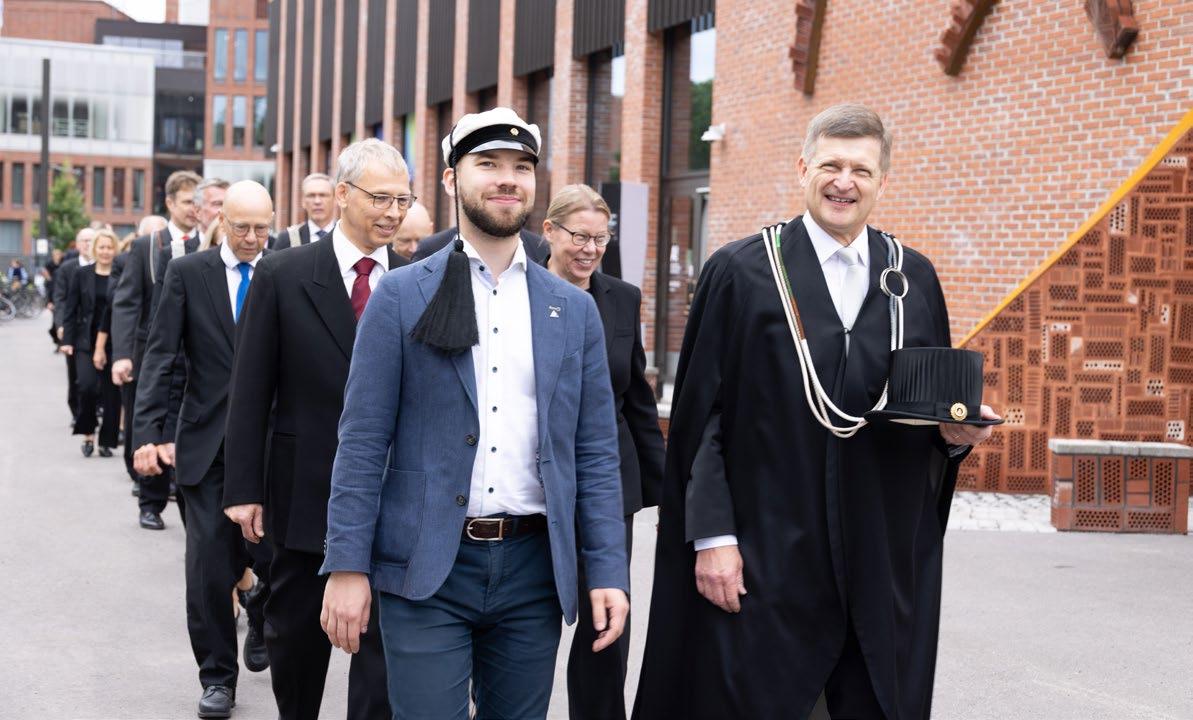
↓ President Ilkka Niemelä and Sakari Ropponen, chair of the student union board at the opening of the academic year. Photo: Mikko Raskinen
In 2025, the impact of Aalto University’s research and art was evident in the ways in which Finland and the rest of the world can be renewed through knowledge, technology, creativity, art and competitive research infrastructures.

Coordinated by Aalto University, ELLIS Institute Finland is the second institute of ELLIS, the pan-European AI network of excellence. The first ELLIS Institute was established in 2023 in Tübingen, Germany.
Established in 2025, ELLIS Institute Finland functions as a world-class research hub in AI and machine learning. The institute operates in partnership with Finnish universities, RDI organisations and businesses, and is funded by Finland’s Ministry of Education and Culture, and Foundation PS. The institute’s work continues the pioneering artificial intelligence and machine learning research of Finland’s Center for Artificial Intelligence (FCAI).
The institute focuses on the research of machine learning methods. Machine learning and the methods it enables are at the core of research, development, and innovation activities across various fields, and advancements in machine learning directly contribute to scientific progress in a broad spectrum.
These results lay the foundation for completely new expertise, which will benefit both businesses and society. The work of the ELLIS Institute and the FCAI Flagship is complemented by the House of AI, which focuses on applying AI to application areas where Aalto University already has strong research and where AI can further accelerate progress.
This is a significant boost for AI research and development in Finland and a signal that Finland is investing in AI as a tool for growth as well as attracting international talent. Recruitment for ELLIS Institute Finland’s principal investigator positions began in early 2025.
For researchers, the institute offers a dynamic, international research environment, access to cutting-edge computing resources (including the EuroHPC LUMI supercomputer), and close ties to both academia and industry in Finland and beyond.
← The Artpreneurship research group, formed by an interdisciplinary team of researchers, brings together artistic and creative thinking and working strategies. Photo: Teemu Ullgren
Concluded at the end of 2025, the twoyear project Creative Leap: Creativity as a Competitive Advantage in Business, funded by Business Finland and Next Generation EU, brought together a diverse range of expertise.
Creativity enables people to innovate, view problems from new perspectives and to discover solutions that might otherwise remain undiscovered. However, measuring, managing and harnessing creativity has been considered challenging.
During the Creative Leap project, researchers from various fields at Aalto University, along with business and co-research partners Fiskars, Kemira, Marimekko, Posti, Raisio, and Yellow Method, have produced scientific evidence showing that creativity is not only measurable but also directly linked to business performance indicators.
In 2025, 178 new doctoral students began their studies at Aalto University as part of a doctoral education pilot funded by the Ministry of Education and Culture. Altogether 11 national doctoral pilot consortia are operative in Aalto University. Most of the pilot research projects are in the areas of the Research Council of Finland’s flagship initiatives, and at Aalto University, the consortia themed around quantum technology, bioeconomy, and artificial intelligence, which are also coordinated by Aalto, received the most positions.
The pilot testing new practices for doctoral studies was launched to enable Finnish universities to address the growing skills shortage and strengthen research-driven innovation activities in Finland.
For Aalto University, the pilot involves around 50 companies or organisations participating in doctoral thesis projects as either project partners, thesis supervisors, or mentors for doctoral students.
The aim of the collaboration is to ease the transition of new doctors into working life and strengthen the dialogue between companies and universities.
The MAGICS community, Aalto Ice and Wave Tank and Otanano, as well as seven other Aalto University research infrastructures were selected for the Research Council of Finland’s roadmap of national research infrastructures. OtaNano was also granted the lighthouse status. According to the Council, lighthouse infrastructures are pioneers who stand out by their range of services and significant impact.
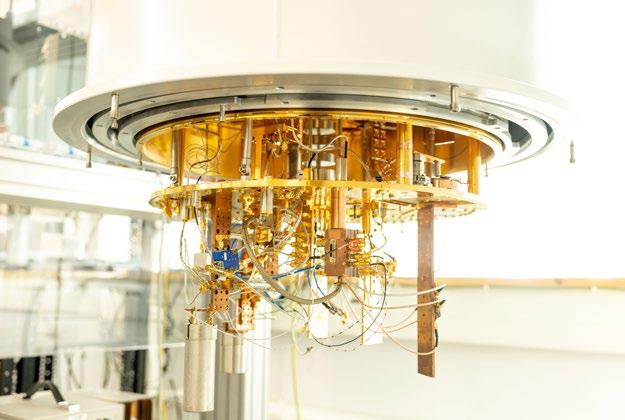
↓ OtaNano is a national research infrastructure for micro, nano and quantum technology, offering state-of-the-art equipment for nano processing, low-temperature measurements and atomic-scale characterisation of materials. OtaNano enables cutting-edge international research and the scaling of innovations for researchers and startups.
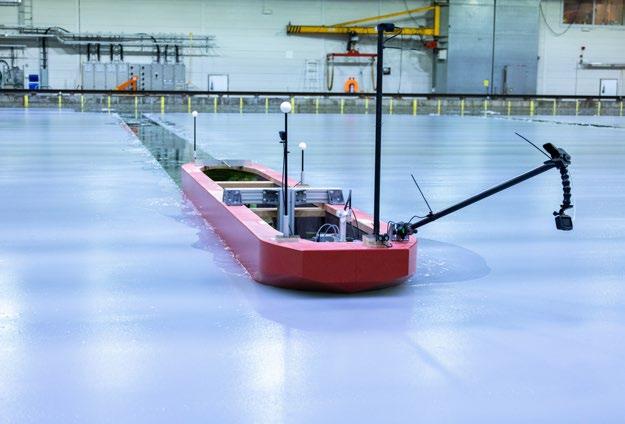
→ Aalto Ice and Wave Tank is the world’s largest ice tank by surface area, allowing experiments with both ice and waves. The tank enables the study of ice conditions, waves, ships and structural phenomena, while it also accelerates the green transition, reduces risks in ice-covered sea areas, and serves Aalto researchers, students and academic and industrial partners. Photo: Mikko Raskinen
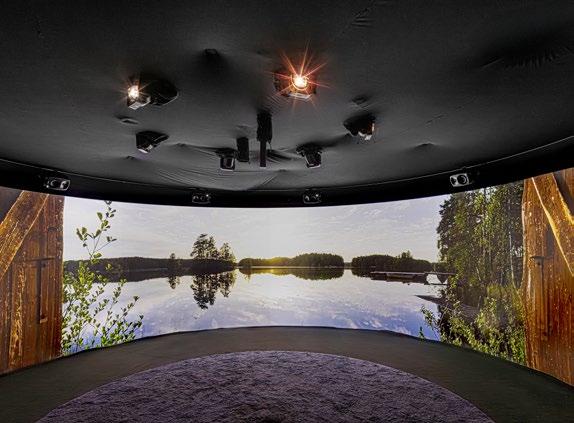
← The MAGICS community explores the digital transition through a multi-method approach that combines digital technologies and human-centred research. Through this multidisciplinary collaboration, the community sets out to develop technologies that improve remote interaction, accessibility of education and engagement in cultural and artistic activities.
Samuli Miettinen


National research flagship FinnCeres and the Hydrogen Innovation Centre drive the green transition.
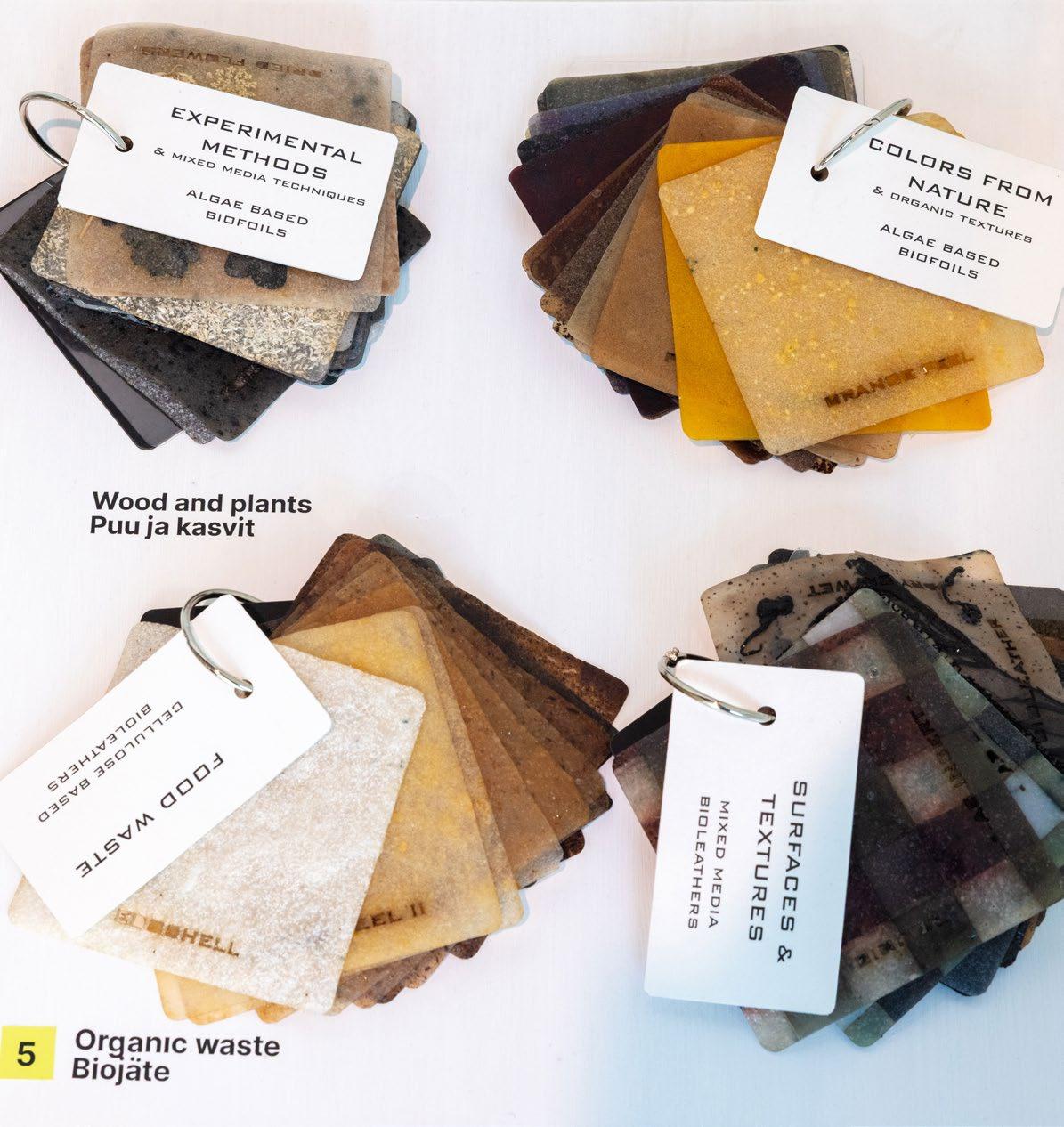
FinnCERES, the joint bioeconomy competence centre of Aalto University and VTT, sets out to develop bioeconomy materials from wood raw materials, ensuring the foundation for a sustainable future. The close collaboration between FinnCERES flagship and Finnish industry advances the utilisation of new material solutions, transforming them into successful businesses and new jobs.
The objective of Aalto University’s Hydrogen Innovation Centre is to enable a sustainable hydrogen society by conducting world-class research, educating future experts in the field, and facilitating collaboration among the academic community, businesses, policymakers, and other research organisations.
Long-term investments in quantum research are generating business activities in the quantum sector. InstituteQ, a joint competence hub established by Aalto University, the University of Helsinki and VTT, brings together national expertise in quantum technology research, education, and commercialisation. In 2025 the institute expanded and includes now nine key Finnish quantum science and technology institutions.
Aalto as an education provider has now an even broader impact on societal renewal
Our study offering reaches a broad range of children, young people, degree students and lifewide learners. The offering is now more multidisciplinary than ever to meet the needs of a changing world.
Aalto University is currently developing a new multidisciplinary bachelor’s programme in collaboration with stakeholders. Students selected for the programme will be able to decide on their field of graduation during their studies.
Students enrolled in the programme will explore science and technology, business, and arts and design – incorporating Aalto’s three fields – and graduate with a Bachelor of Science in Economics and Business Administration or a Bachelor of Science in Technology.
In 2025
applications to bachelor’s programmes in Finnish and Swedish (9% growth)
The world is becoming increasingly complex, and this is especially evident in global challenges like biodiversity loss, unsustainable material use, and poverty. Technological development can enable – as well as sometimes restrict – societal change, business opportunities, and participation in society.
The Aalto programme seeks students who are interested in broad societal issues and eager to tackle the challenges of our times. The first students in the programme will start in autumn 2027.
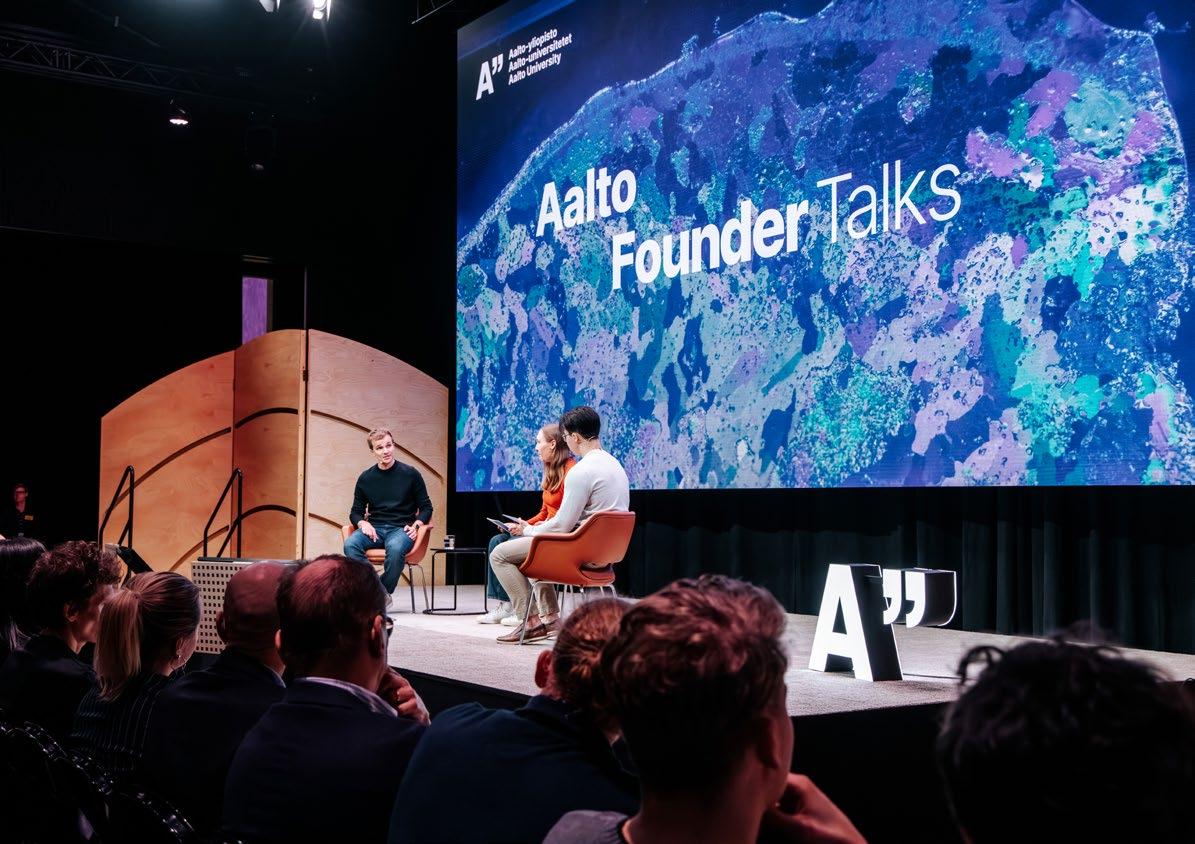
↑ In autumn 2025 Aalto University launched a new entrepreneurship programme: Aalto Founder School. It will offer entrepreneurship studies that are open to all Aalto students, a tailored coaching programme for selected students and a public lecture series led by successful growth entrepreneurs. The idea is to create a community of best experts, raising the skill level and spurring the ambition of growth entrepreneurs.
Photo: Ahti Brummer
Number of degrees in 2025
266 doctors
2 797 masters
1 938 bachelors
At the heart of Aalto University Junior are hands-on workshops and researcher visits, held on campus and remotely, all free for schools. Junior also offers events, camps, courses, lectures, and various other activities for children, young people, teachers, and all curious minds.
Curiosity, questioning, and hands-on experimentation are the key. Over the years, participants have built moving sculptures and fascinating contraptions, designed future cities and energy solutions, and been inspired by entrepreneurship.
Aalto University Junior offers children and young people more extensive and diverse programmes than any other Finnish university. It’s also internationally unique.
In 2025, Aalto Junior attracted a record 55 000 participants. One of the enablers of growth is external donations.
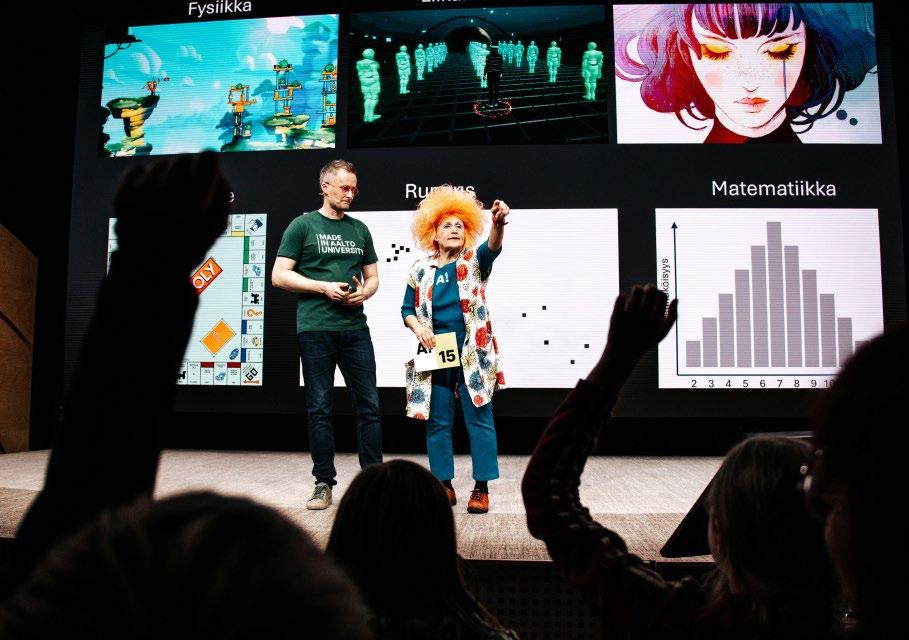
children, young people, teachers and parents across Finland took part in Aalto University Junior activities in 2025 (67% growth).
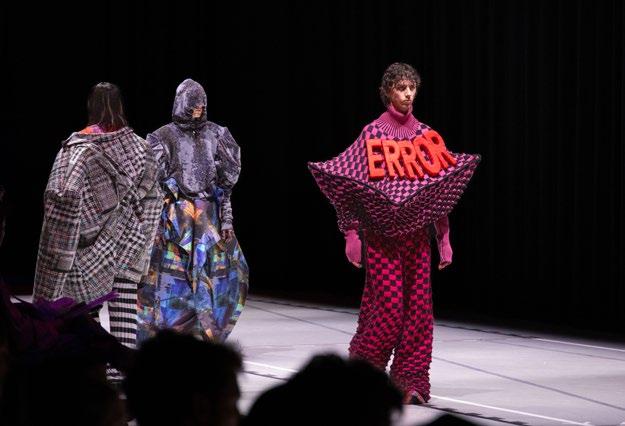
↑ Aalto University’s Näytös/Näyttely25 is one of the most important fashion and textile events in Finland and part of the wider Fashion in Helsinki week. At the event, students graduating from the Bachelor’s Major in Fashion and the Master’s Major in Fashion, Clothing and Textile Design present their thesis work. In 2025, the event expanded to include an exhibition showcasing collections and e.g. interior textiles, in addition to the fashion show. Photo: Mikko Raskinen
← Aalto University Junior Science Theatre inspires 9–12-year-olds to learn about science and art in a fun and experimental way. Children can attend with their school class or with a familiar adult. The events are organised in cooperation with the City of Espoo, and they are free of charge and conducted in Finnish. Photo: Ahti Brummer
learners attended over
750
Aalto lifewide learning courses in 2025 (25% growth).
Lifewide learning offering comprises Aalto University Executive Education and MBA programmes, Aalto Open University, Aalto University Summer School and FITech Network University.
Through innovation activities, we accelerate the path from research to business, and create new industries and jobs.
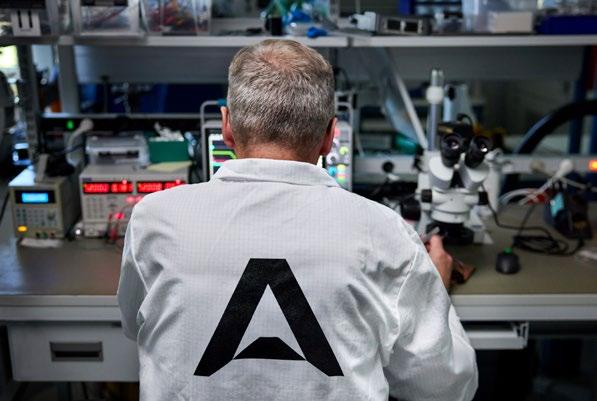
↑ Aalto University has invested in a smoother process to promote technology transfer and commercialisation of innovations by research-based spin-off companies. Agate Sensors, a startup originating from Aalto University, has raised €5.6 million in funding for its spectral sensor technology — offering the accuracy of large and expensive imaging devices in a form small enough to fit in smartwatches and mobile phones. The company would not exist without the basic research conducted at Aalto and the breakthrough that resulted from it. Photo: Paavo Lehtonen
Aalto Inventors is a training programme designed for researchers who are interested in strengthening the impact of their work through innovations. Aalto University’s world-class researchers do groundbreaking research every day across disciplines. But while Aalto has continued to uphold its excellence in science, the utilisation of the innovation potential could have been better: only a fraction of the research has found its way beyond academia to create societal or commercial impact.
In 2025, the Aalto Inventors programme was piloted in the School of Chemical Engineering in collaboration with the FinnCERES flagship and the Aalto University Bioinnovation Center. The programme offers doctoral students and postdoctoral researchers a structured path to explore the commercial potential of their research. The aim is to bridge these two seemingly distant worlds in a meaningful way.
The Inventors programme focuses on bringing about a mindset shift and offering hands-on learning: during the programme, participants assess the impact potential of their work, think about the applicability of their research, learn the basics of intellectual property and funding, write invention disclosures, get to know the opportunities provided at Aalto and meet other researchers who have transitioned from academia to entrepreneurship.
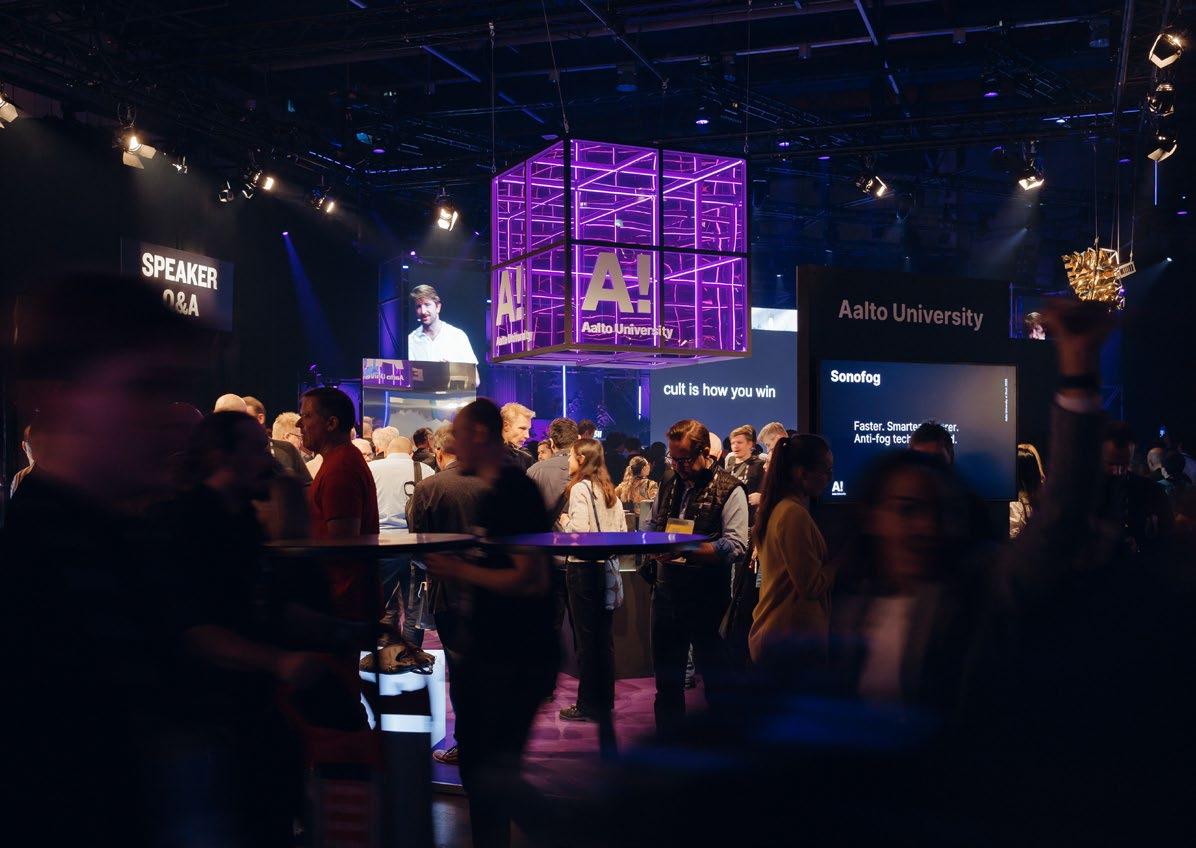
↑ Aalto researchers participated in the startup and technology event Slush and presented ambitious technological solutions in areas such as quantum computers, new types of electric motors, dementia monitoring, and bio-based packaging materials.
Photo: Kristian Presnal
168 invention disclosures in 2025 (up by 14%)
5th in Finland by number of patent applications
A record
40 pre-commercialisation projects in progress
The European Space Agency’s new innovation programme in Otaniemi (Phi-Lab Finland) helps Finnish companies commercialise inventions, leverage satellite data and strengthen their position in the industry.
Space technology is no longer the exclusive domain of large space agencies like NASA and ESA or corporate giants like SpaceX. Finland’s space era began in 2017 with the launch of Aalto-1, a student-led satellite project. Since then, the country has become home to dozens of space technology companies, such as Iceye and Kuva Space, which have gained international recognition as satellite operators.
Phi-Lab Finland operates out of the Aalto Startup Center accelerator and collaborates with the Finnish Meteorological Institute, the National Land Survey of Finland’s Finnish Geospatial Research Institute FGI and the University of Vaasa. ESA BIC Finland, a business incubator supporting space startups, is also a partner. The space sector in Finland is growing rapidly, and there is still huge potential, particularly in developing data analytics and geospatial technologies.
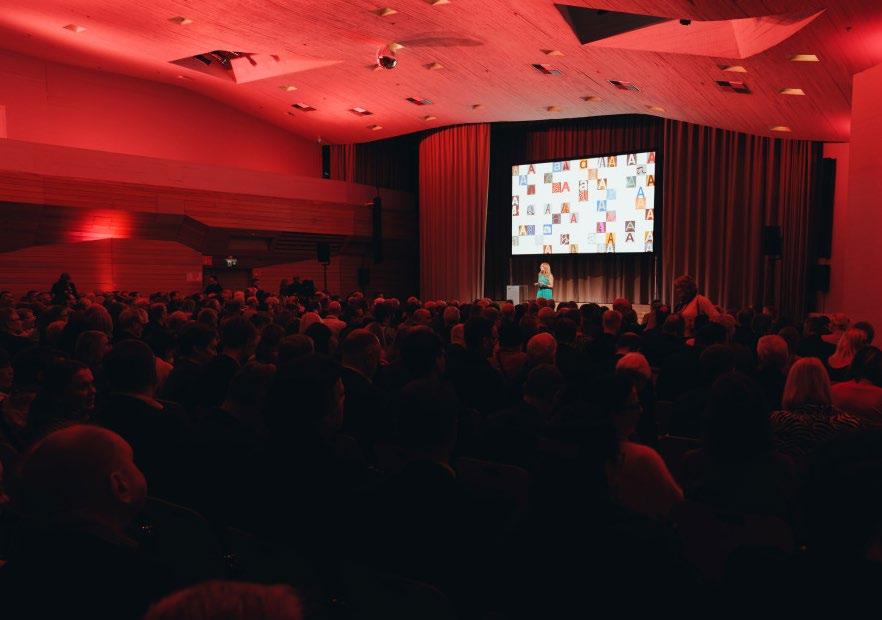
↑ Aalto graduates create the university’s most powerful impact on society. The total value of the businesses founded by Aalto alumni now exceeds EUR 30 billion and these companies have created over 15 000 jobs. The Aalto Alumni Weekend brought together 1 400 alumni on the Otaniemi campus in October. Photo: Kristian Presnal
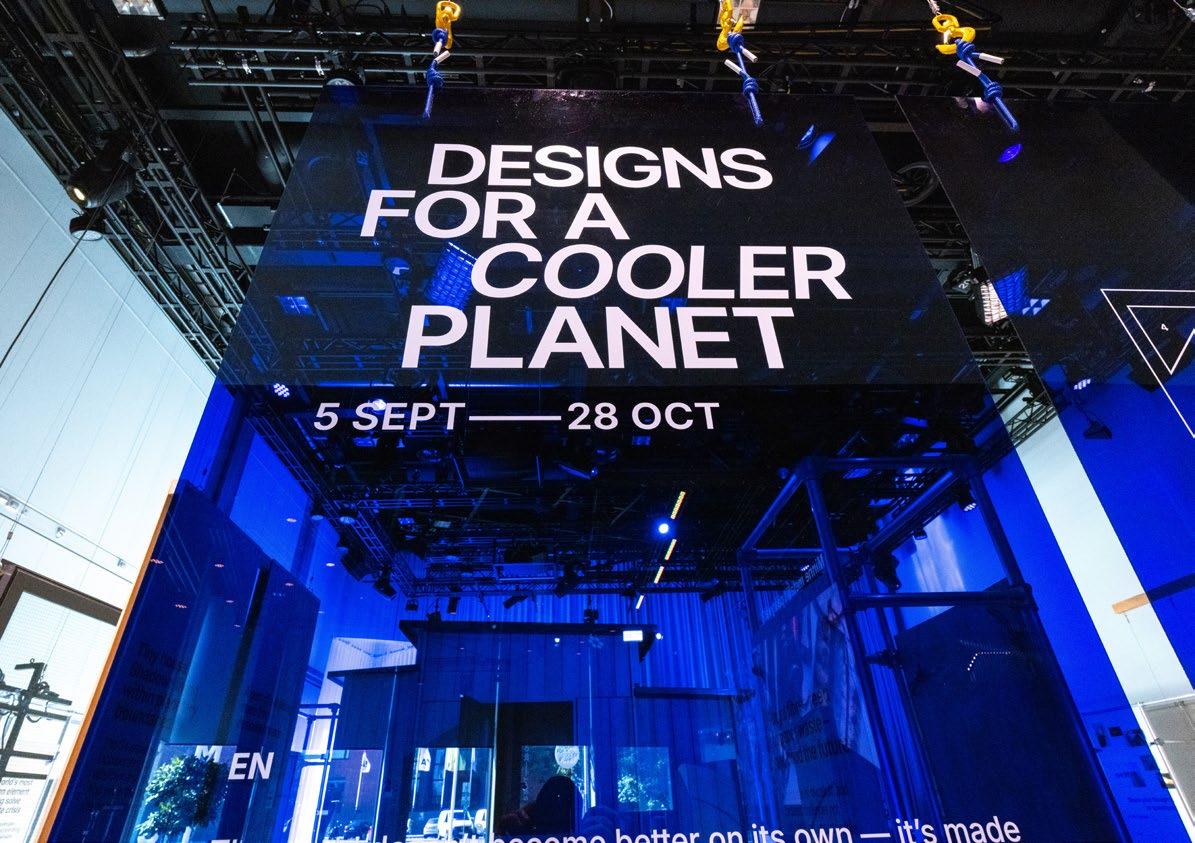
← Aalto University’s biggest annual exhibition, Designs for a Cooler planet, showcased, for example, four Aaltoborn growth companies that are shaping a healthier and more resource-wise world by commercialising cuttingedge research. Woamy, Elmery, NPHarvest and Fepod advance innovations rooted in nature-inspired structures, the principles of circular economy and energy-efficient technologies that reduce environmental impact and the need for fossil raw materials. The events of the 2025 Designs for a Cooler Planet exhibition attracted more than 15 000 visitors. Photo: Mikko Raskinen
Campus development strengthened the conditions for Aalto’s activities by expanding and renewing infrastructure, and by enhancing Otaniemi’s appeal through public art and a diverse environment. Successful recruitment and improved workplace wellbeing supported positive progress across the entire Aalto community.
With the active construction phase now complete, more emphasis in Otaniemi campus development is now given to social, economical and environmental sustainability as well as ensuring that the campus is fit for purpose and for its users.
Aalto University is enhancing the campus’s appeal and functionality by upgrading teaching and research facilities and by improving the campus environment through long-term, strategic development.
The renovation of facilities and laboratories also strengthen Aalto’s collaboration with partners and support the UN’s sustainable development goals, including SDGs Sustainable cities and communities to Industry, innovation and infrastructure. In 2025, a comprehensive building services renovation was carried out at the property on Konemiehentie 2. Low Temperature Lab in the Nanotalo building was expanded and the laboratories in i3 for microscopy, indoor air, and asphalt and bitumen research were retooled.
Alongside the built environment, the campus’s natural environment is also being developed. In Otaniemi, meadows are being established to support local habitats, and soil quality is being enhanced to strengthen biodiversity. In this way, the campus is being shaped into an ecologically valuable, beautiful whole that respects the historic landscape.
Campus development during the spring and summer of 2025 included relocating Aalto’s joint services and management from the Dipoli building closer to the campus centre. Additionally, some Aalto Executive Education operations moved from Aalto University Töölö to Dipoli building in Otaniemi. These moves increased the accessibility of services and space utilisation rate.

↑ Aalto University celebrated its 15th anniversary in January 2025. At the same time, the university launched the Sign of Change fundraising campaign, highlighting Aalto’s wide-reaching impact on society and encouraging others to join Aalto in building a more hopeful and international Finland. Photo: Pinja Valja
In 2025, Aalto’s piloting of new recruitment models for doctoral researchers and ELLIS Institute professors provided the university with outstanding talent and raised the university’s international profile.
Aalto University has become an increasingly attractive employer. The university-wide employee wellbeing survey conducted in October 2025 indicated an improvement in the university-level results in all areas of employee well-being compared to the previous survey conducted in 2023. Additionally, the employer Net Promoter Score indicating employees’ likelihood to recommend Aalto as a workplace was excellent at +45, an increase of 7 points from two years ago.
The employer Net Promoter Score indicating employees’ likelihood to recommend Aalto as a workplace was
(+38)
The figure in parentheses refers to 2024.
Campus functionality and comfort as measured by Net Promoter Score was
33 (31) for staff and 45 (41) for students in 2025.
The figures in parentheses refer to 2023.
An assessment of climate change’s direct and indirect adverse effects on people, university operations and the local ecosystems was prepared for the Otaniemi campus area in 2025. The work focused on assessing physical risks, the risks inherent in the transition to sustainable energy, as well as opportunities regarding existing and possible new campus buildings and the campus environment.
Aalto University researchers from different Aalto schools participated in the study, laying the foundations for long-term campus development that takes into account the risks and impacts of climate change.

Aalto University Student Union entered into an agreement with the City of Espoo and Aalto University Campus & Real Estate to acquire plots of land for the development of a new property. The student housing project will provide new accommodation options for students. In construction since February 2025 on the Otaniemi campus, the housing project Otakaari 15 is set to be completed in August 2026.
↑ Our strength lies in the diversity of our community. Together, we can achieve more. We are building an inclusive community where members feel a sense of belonging and fully engage as equals in their work and studies. Photo: Pinja Valja
new apartments for students
The Alusta research pavilion for multispecies encounters moved to the Otaniemi campus in 2025. The pavilion offers a space to reflect on humanity’s place as part of a community larger than human life. A flowering meadow, fungus-inoculated deadwood, and porous structures made from clay, wood and biochar provide shelter and food for pollinators, birds and other species. At the same time, they bring aesthetic experiences to the campus and strengthen biodiversity in the urban environment.
The pavilion was realised through interdisciplinary collaboration led by architects and doctoral researchers Elina Koivisto and Maiju Suomi. It forms part of Maiju Suomi’s doctoral research at Aalto University’s Department of Design. Before moving to Otaniemi, Alusta was located between 2022 and 2024 in the courtyard between the Museum of Finnish Architecture and the Design Museum in Helsinki.
↓ The Alusta pavilion takes its form in collaboration with plants, human visitors, natural processes and the passage of time. Photo: Elina Koivisto

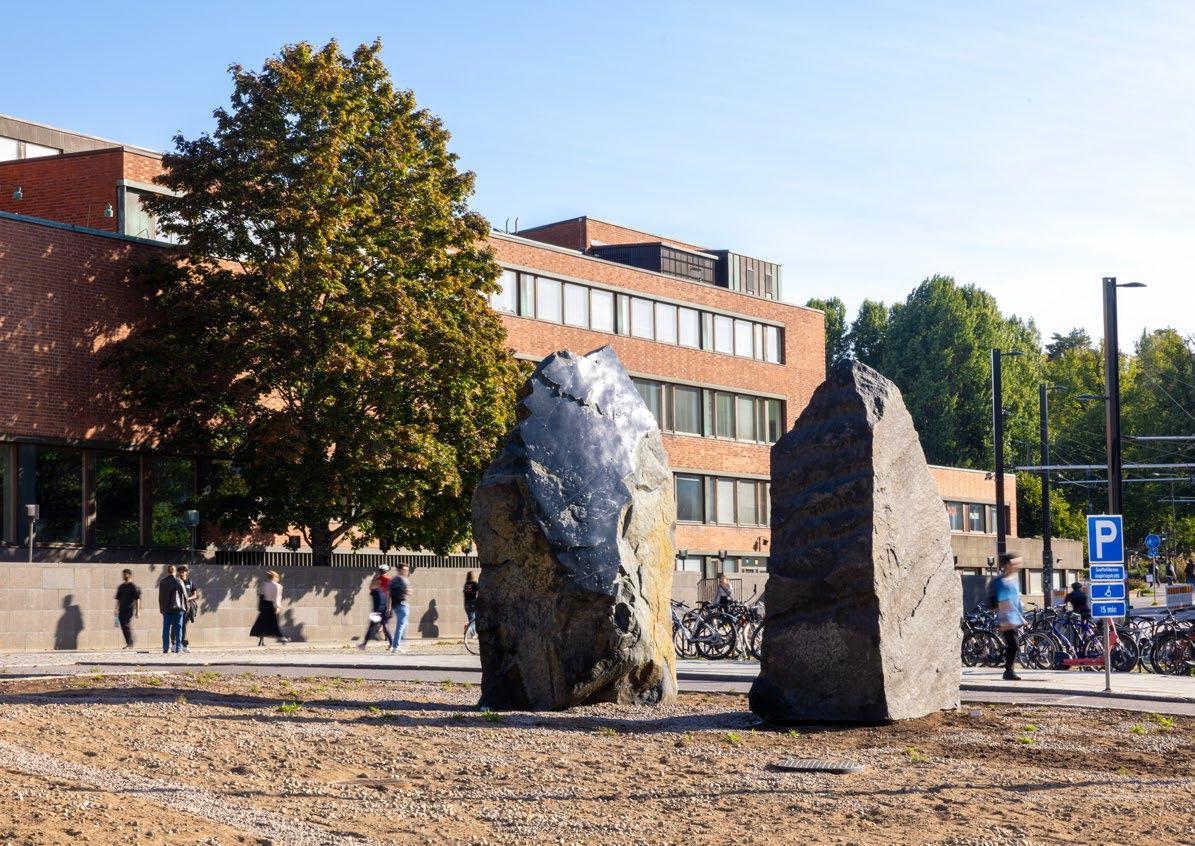
↑ Laura Könönen’s artwork ‘Glitch’ (2025) is located in a prime spot on campus, between the Undergraduate Centre and Marsio. Aalto University follows the Percent for Art principle, where approximately one percent of the construction budget is used to acquire art for display in the constructed buildings. Photo: Mikko Raskinen
Laura Könönen’s Glitch artwork is an inspiring and thought-provoking piece that combines natural materials with the complexity of the human mind. The sculpture was unveiled in October 2025.
The sculpture depicts a rock split in two, revealing within it a cosmic vista dotted with individual planets. When light falls on the piece, its surface throws off tiny, colourful glints, suggesting the emergence of new ideas and creative interaction among people from different disciplines.
Glitch is part of Aalto University’s public art collection. The vision of public art at Aalto University is to address and raise questions about what it means to be a university, what we do as a part of society, and what does ‘public’ mean.

16 184 (15 724) degree students (FTE)
4 809 (4 709) personnel, of which
412 (398) are professors (FTE)
49% (47%) of teaching and research personnel are international (FTE)
1 938 (1 732) bachelor’s degrees
2 797 (2 258) master’s degrees
266 (281) doctoral degrees
64 (58) patent applications 17 (15) technology transfers
EUR 38 (35) million of corporate collaboration in university group
EUR 474 (450) million of total funding, of which direct government funding
EUR 263 (255) million, external funding
EUR 168 (154) million and the use of endowment funds
EUR 42 (41) million
Aalto University is an autonomous, multidisciplinary science and art community operating in the fields of technology, business, art and design.
The Aalto University Foundation sr (registered foundation) operates as Aalto University. The operations of a foundation university are governed by the Universities Act (Yliopistolaki 558/2009), the Foundations Act (Säätiölaki 487/2015) and the Aalto University Foundation Constitution.
The mission of the universities is to promote independent academic research as well as academic and artistic education, to provide research-based higher education and to educate students to serve their country and humanity at large. In carrying out their mission, the universities shall promote lifelong learning,
Our purpose of shaping a sustainable future, along with our values, and ways of working, defines our long-term direction. To achieve our purpose, we aim: to excel and make breakthroughs in and across science, art, technology and business; to spark the game changers of tomorrow; to renew society with research-based knowledge; and to generate innovative solutions to tackle global challenges.
To support our long-term direction, we have selected the development areas that best help us achieve our purpose.
interact with the surrounding society and promote the social impact of university research findings and artistic activities.
According to its constitution, the special national mission of the Aalto University Foundation is to sustain Finland’s success, to contribute to Finnish society, its economy, technology, art and design, internationalisation and competitiveness and to promote the welfare of humankind and the environment through high-quality research and education.
According to the Aalto University Foundation’s constitution, ‘the university will abide by the ethical principles of a world-class university in all its activities, follow the principles of good administration, safeguard academic autonomy and the independence of the professoriate intrinsic to it, which are prerequisites for freedom of education, research and art.’
Driving excellence: We create world-class clusters of excellence and bring talent together.
Future-led learning: We advance highquality and data-driven teaching and learning with a life-wide learning path.
Inspiring ecosystem: We build an international collaborative ecosystem.
Enablers of success: To enable our success, we invest in our community and people, infrastructures, campus and services.
Cross-cutting approaches: We integrate solutions for sustainability, radical creativity and an entrepreneurial mindset into everything that we do.
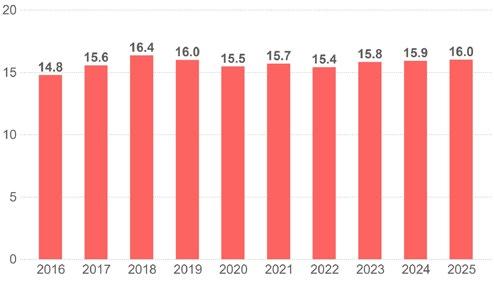
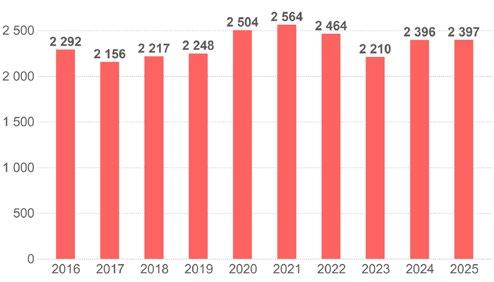
Key performance indicators related to research continued at a good level in 2025. The number of publications among the most cited 10% in 2025 was 1 708 (1 678), and their share of all publications was 16.0 (15.9) per cent. The university published a total of 2397 (2 396) international refereed articles in scientific journals. Approximately 30 (31) per cent of these addressed the 17 sustainable development goals (SDGs) defined by the UN.
Share of the university’s publications in the top 10% most cited
International peer-reviewed articles in scientific journals
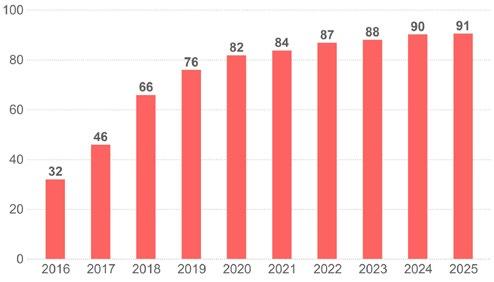
Open access enhances the impact of research by encouraging cross-disciplinary research, ensuring global and equal access to research data, and speeding up the creation of new inventions. In 2025, open access publications accounted for 91 (90) per cent of all refereed scientific publications of the university.
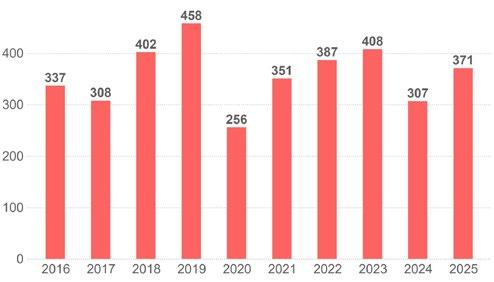
The university produced a total of 371 (307) new artistic outputs. Of these, 116 (117) were presented in international forums.
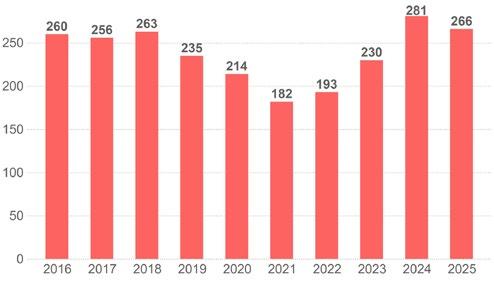
The number of doctoral degrees in 2025 was close to the peak year 2024. The most important development in 2024–2025 was the launch of the national doctoral education pilot, through which the Ministry of Education and Culture allocated to the university EUR 45 million for a three-year period to educate 178 doctors – an initiative expected to significantly increase doctoral output in the near future. The time-to-graduation of doctoral degrees has shortened, with the median now at 5.17 years. The notable cuts made to university funding in 2016–2017 contributed to a decrease in the number of doctoral degrees in 2020–2022.
Figures in parentheses refer to 2024 unless otherwise mentioned.
Doctoral degrees
The university saw growth across all categories of competitive research funding with the total reaching EUR 118 million (EUR 111 million). The funding from Business Finland amounted to EUR 23 million (EUR 21 million), while the Research Council of Finland’s funding rose slightly from last year, to EUR 57 million (EUR 55 million). Of the competitive research funding, international funding accounted for EUR 26 million (EUR 23 million).
Competitive research funding (EUR million)
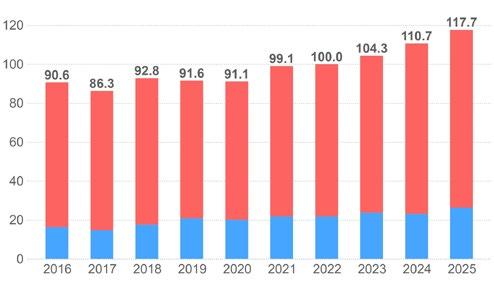
International competitive research funding
Other competitive research funding
The university’s significant research and learning infrastructures include Aalto University Data Hub; Aalto Ice and Wave Tank; Aalto i3 (supporting industry and innovation activities); Aalto NeuroImaging (ANI) brain imaging and behavioural research laboratories; Aalto Studios media centre (incl. MAGICS); the Bioeconomy Infrastructure; Metsähovi Radio Observatory; OtaNano microtechnologies and nanotechnologies infrastructure; RawMatTERS Finland Infrastructure (RAMI); the Science-IT computational science infrastructure and the Finnish Quantum-Computing Infrastructure. In addition to the above, the university has a host of smaller laboratories. Along with its partners, the university also maintains and develops a number of other significant research infrastructures.
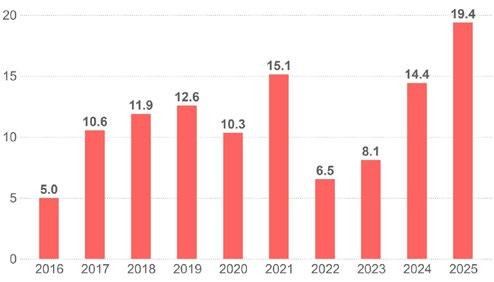
Significant increase in infrastructure investments reflects university’s commitment to develop cutting-edge research and education infrastructures. Growth in 2025 mainly came from investments to OtaNano microtechnologies and nanotechnologies infrastructure and Finnish Quantum-Computing Infrastructure.
Fixed asset investments in research and education infrastructure
The university significantly increased the number of student places in its bachelor’s programmes from 2020 to 2022. Towards the end of the agreement period with the Ministry of Education and Culture, the increase in new students is beginning to show also as an increase in the number of degrees awarded. During 2025, a total of 1 938 (1 732) students completed a bachelor’s degree, 2 797 (2 258) a master’s degree and 266 (281) a doctoral degree. Of the bachelor’s degrees, 54 (2024: 50, 2023: 51) per cent were completed within the recommended time-tograduation limits (normative duration of studies), while the corresponding figure for master’s degrees was 27 (2024: 25, 2023: 25) per cent.
Bachelor’s degrees
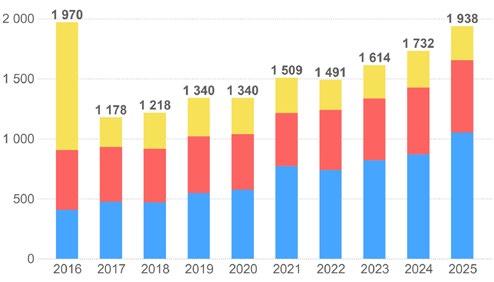
Degree completed in target time (3 years)
Degree completed in max 1 year over target time
Degree completed in more than 1 year over target time
Master’s degrees by field of education
Master’s degrees
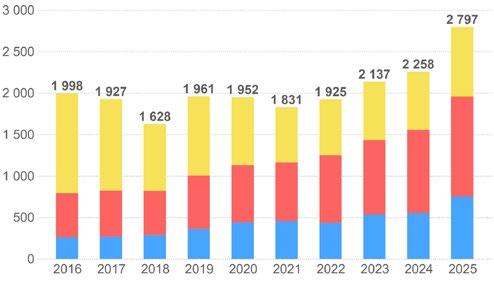
Degree completed in target time (2 or 5 years)
Degree completed in max 1 year over target time
Degree completed in more than 1 year over target time
In 2025, the university had 21 600 (20 969) degree students. The number of international students was 5 349 (5 305), of whom 79 (81) per cent were degree students and 21 (19) per cent were exchange students. The number of bachelor’s and master’s degree students, converted to full-time equivalent (FTE) students, was 14 816 (14 465). Bachelor’s and master’s degree students completed in total 714 495 (688 330) ECTS credits, corresponding to an average of 38 (38) credits per enrolled bachelor’s or master’s degree student. In the Finnish Bachelor’s Graduate Survey (Kandipalaute), the average score was 3.92 (3.86) on a scale of 1–5.
Figures in parentheses refer to 2024 unless otherwise mentioned.
Degree students (FTE)
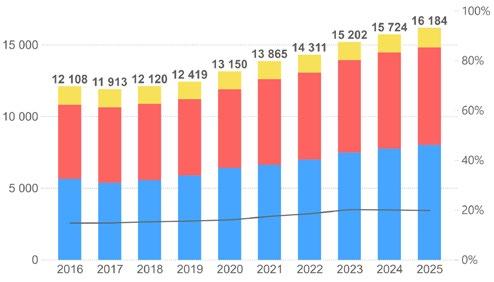
Bachelor’s degree students
Master’s degree students
Doctoral and licentiates degree students
Share of international degree students (%)
Bachelor’s graduate survey
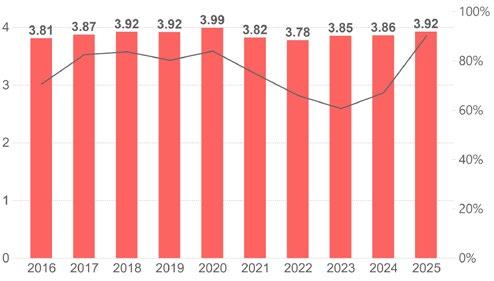
Average of bachelor’s feedback assessment
Response rate for bachelor’s feedback
Year after year, the university’s bachelor’s programmes attract a large number of applications. A total of 29 079 (30 691) applications for bachelor’s degree programmes were received in 2025, a decrease of 5 per cent compared to the previous year. Of all applicants, the share of applicants who selected Aalto as their first choice of university developed favourably to 70 (66) per cent.
Also, Aalto’s English-language bachelor’s programmes continue to be popular among applicants. In 2025, English-language programmes received a total of 5 940 (9 198) applications, of which 50 (64) per cent came from international applicants from 101 (134) different countries. The English-language bachelor’s programmes are popular not only among international students but also among
Finnish students, who accounted for 41 (40) per cent of the applicants who accepted one of these student places. The year 2025 saw the Englishlanguage bachelor’s programmes transferred from the first joint admissions procedure of the spring to a separate admissions procedure. This was also the first time when a national application fee was charged of those applicants to Englishmedium bachelor’s programmes who come from outside the EU/EEA countries or Switzerland, i.e. of the same applicants who pay tuition fees when studying at Finnish higher education institutions. The introduction of the application fee led to a decrease of approximately 50 per cent in the number of applications submitted in the first joint application procedure of the spring. Similarly to Aalto bachelor’s programmes, the two-year master’s programmes of the university attracted a fair number of applications, totalling 13 591 (18 422), which was a decrease of 26 per cent on the previous year.
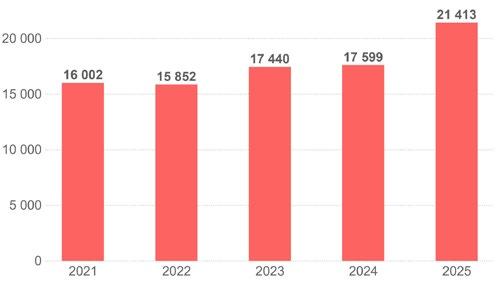
The services for lifewide learning are provided by the University’s Open University, Aalto University Junior, Aalto University Summer School, Aalto University Executive Education and Professional Development (Aalto EE) and FITech Network University. In 2025, the number of participants in lifewide learning (excluding Aalto University Junior) was 21 413 (17 599). Despite difficult re- and upskilling market situation, lifewide learning offering development covering all university’s fields and comprehensive development in lifewide learning platforms, processes, and practices have resulted in increasing number of learning participants.
The university’s innovation and entrepreneurial ecosystem stands out favourably in international comparisons. Its signature features include multidisciplinarity, openness, close collaboration, a robust startup culture and entrepreneurship promoted by the various activities of the students and the university.
In the Finnish Patent and Registration Office’s roster of Finnish companies with the most patent applications, Aalto University placed 5th (3rd) in the overall ranking in 2025 with 56 applications, being the only university on the list.
During 2025, the university processed 168 (147) invention disclosures, filed a total of 64 (58) patent applications (including international applications) and performed 17 (15) technology transfers to companies. Business Finland granted a total of EUR 8 million (EUR 8 million) for 13 (17) Research to Business projects conducted at the university. Corporate funding for research and development totalled EUR 11 million (2024: EUR 12 million, 2023: EUR 13 million).
Innovations created at Aalto University are commercialized by transferring the ownership of the technology from Aalto University to a company. Usually, the company is a spin-off company founded by a professor, researcher, or student. Aalto University receives shares in the spin-off company in exchange for the transfer of technology. Further information on spin-off assets is available in Enabling our success chapter.
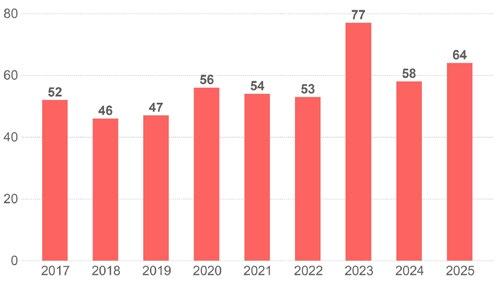
Number of transfers of technology or competence to businesses
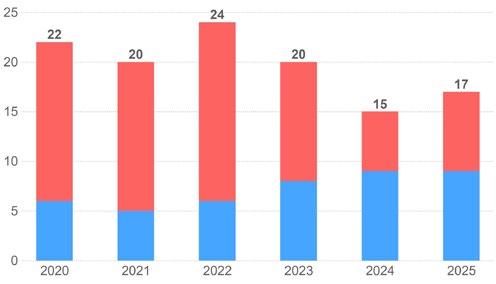
Originated from university’s own research
Results from university’s own commercialisation activities. Includes transfers to companies or other collaboration partners. Originated from commissioned research
New IPR is transferred to the party who has ordered the research.
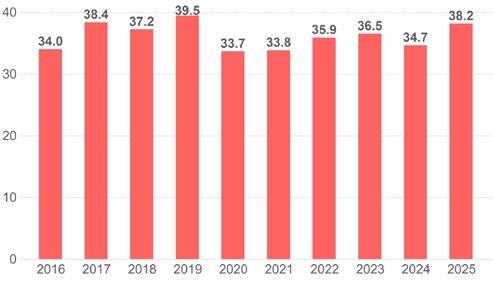
Altogether, the university collaborates with about 2 500 companies on an annual basis. University has longer term strategic business partnerships with ABB, Neste, Nokia and Saab. In 2025, the volume of Aalto University Group’s corporate collaboration totalled EUR 38 million (EUR 35 million), while the recommendation score given by its business partners (Net Promoter Score, NPS) was 50 (63). The corporate collaboration turnover consists mainly of contract research, co-funded research, Aalto Executive Education’s education services and renting out the premises owned by the university to companies.
Corporate collaboration turnover in Aalto University Group (M€)
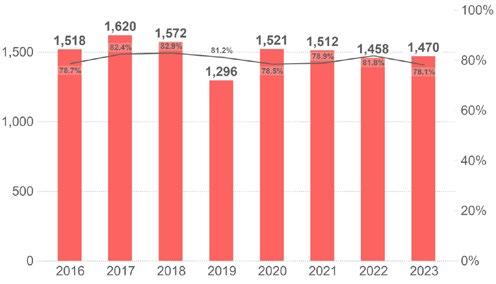
The economic situation in Finland has declined and, as a result, there are fewer job vacancies than before. The change is also evident on the university’s students’ job advertising channels, where the number of advertisements has been steadily decreasing for years. As competition tightens, international students, who tend to have fewer networks, limited Finnish proficiency and less work experience, are less likely to find employment in Finland, and therefore more likely to pursue job opportunities in other countries. As a result, the share of employed graduates declined, especially in non-Finnish graduates.
Master’s graduates employed to Finland one year after graduation
Non-Finnish master’s graduates employed to Finland one year after graduation
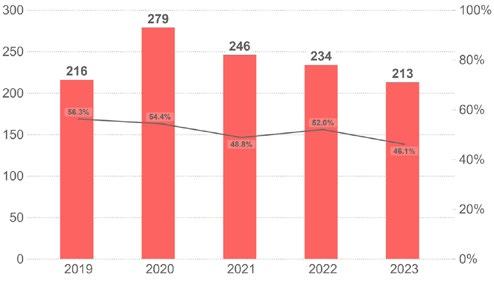
Number of
Share of (%)
Figures in parentheses refer to 2024 unless otherwise mentioned.
The university’s headcount was 5 234 (5216) and total sum of salaries and other compensations was EUR 260 million (EUR 247 million). A total of 61 (60) per cent of the personnel were employed in teaching and research positions, while 10 (11) per cent were bachelor’s and master’s students working as teaching and research assistants and 30 (29) per cent belonged to other personnel groups. In total, 27 (26) per cent of the personnel were doctoral researchers.
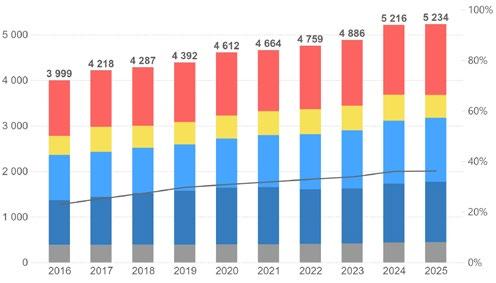
Service personnel
Students (employed)
Doctoral students (employed)
Professors
Other teaching and research personnel (includes postdoc researchers)
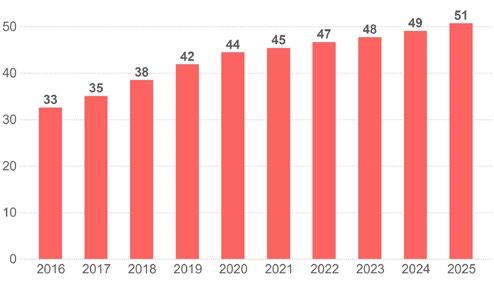
Share of international personnel (%)
A total of 39 (38) per cent of the personnel held a permanent employment contract, and 85 (84) per cent worked full-time. Women accounted for 43 (43) per cent of the personnel. The share of non-Finnish personnel was 36 (36) per cent, reflecting the strong international focus of the university. The share of international personnel in teaching and research positions continued to grow, reaching 51 (49) per cent.
Significant investments in the tenure track for professors continued in 2025. At the end of 2025, the university had 446 (437) professors, of whom 378 (363) were appointed after the founding of Aalto University. Women accounted for 27 (25) per cent of the professors, while non-Finnish professors accounted for 30 (29) per cent of the total.
The principles and evaluation criteria of the lecturer career system support individual development and career advancement with teaching-focused merits. At the end of 2025, Aalto University had a total of 278 (256) lecturers appointed through the lecturer career system.
The university invites people who have made distinguished contributions to business, industry or society and who have a strong academic or artistic background to serve as professors of practice. Professors of practice, who mostly work part time, make their expertise available to the university and diversify its teaching offerings. At the end of 2025, Aalto University had 50 (52) professors of practice.
Figures in parentheses refer to 2024 unless otherwise mentioned.
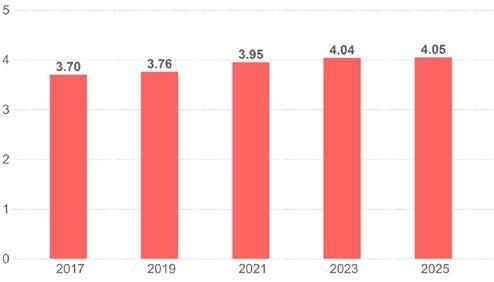
The university continued on an upward trend in the Wellbeing at Work survey implemented jointly by Finnish universities: the university had an overall index of 4.05, out of 5, compared to an average of 3.93 across all universities. The results exceed the Finnish university norm across all themes of the survey. The university’s Employee Net Promoter Score (eNPS), measuring employee experience and engagement, is a very strong +45 (+38), clearly exceeding the average score for the whole Finnish university sector (+23). Although the overall result of the university is excellent, there are differences in experiences of wellbeing and inclusion across units and personnel groups, and the university will provide targeted support measures to improve the situation.
Personnel wellbeing survey overall index
Campus development has progressed to a stage where the university’s largest construction projects and real-estate investments have been finalised, and the university has achieved the goal of consolidating the campus area as planned. In 2025, campus development focused particularly on space usage improvements, user experience and targeted renovations.
The year 2025 saw a slight decrease in the space used in the university’s own activities compared to the previous year. At the end of year, the university used a total of 208 000 (212 200) square metres, of which about 205 400 (209 600) square metres were on the Otaniemi campus and about 2 600 (2 600) square metres at other locations. A total of 60 000 square metres (53 000) of the university facilities were rented out to its partners. The largest tenants were VTT Technical Research Centre of Finland Ltd, Aalto University Executive Education Ltd, Compass Group Finland Oy, Kanresta Oy and the Foundation for Business Students in Aalto University.
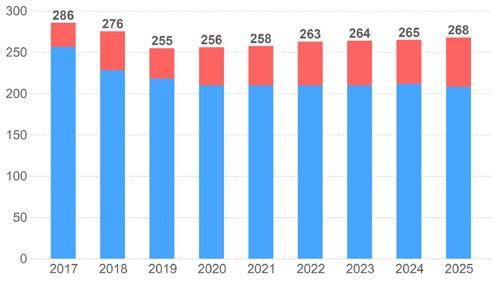
Facilities in University use (1000 m 2 )
Facilities in partners use (1000 m 2 )
Financial resources ensure the university’s long-term sustainability and enable the implementation of its strategy. They consist of annual funding and the long-term assets of the university.
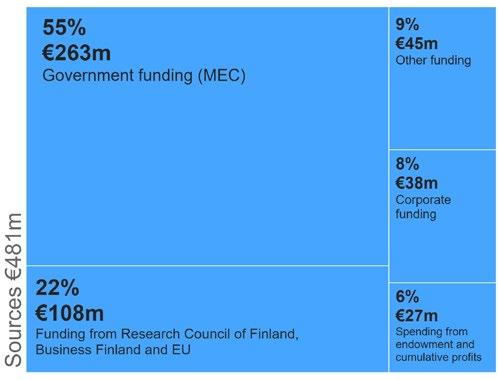
The university’s annual funding consists of core funding from the Finnish Ministry of Education and Culture, competitive research funding, private funding, tuition fees, and revenues from lifewide learning. The funding from Finnish Ministry of Education and Culture continued to be the main source of income, accounting for 55 per cent of the funding base. The 3 per cent year-on-year increase was mainly due to the higher volume of bachelor’s and master’s degrees as well as Aalto University’s performance in the focus areas of the Ministry of Education and Culture’s new funding model. In addition, the university operations are funded by donations and returns from endowment funds. Widening the funding base remained the primary objective in 2025. University also continued the work to improve its performance on the ministry’s funding model indicators, while seeking to increase the level of high impact private funding, including donations.
Total funding excluding MEC core funding, including use of funds (M€)
The university’s investment assets mainly consist of endowment funds, real estate assets and spin-off assets.
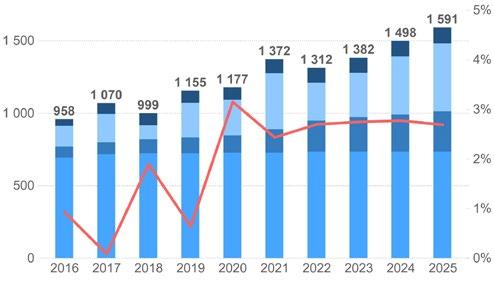
The primary purpose of the university endowment funds is to finance its core activities. At the end of the year, the endowment funds’ capital amounted to EUR 1 591 million (EUR 1 498 million). The average annual return on the endowment investment portfolio has been 6.0 (5.9) per cent after expenses since the inception of operation. In 2025, the return on the endowment investment portfolio was 8.6 (11.2) per cent after expenses. At the end of the year, 60 (60) per cent of the portfolio was held in equities, 21 (21) per cent in fixed-income instruments and 18 (18) per cent in alternative risk. In 2025, returns from the university funds were used to finance the university’s core activities by EUR 42 million (EUR 41 million), of which EUR 30 million (EUR 30 million) were from the general endowment fund of the university, EUR 8 million (EUR 7 million) from restricted funds and EUR 4 million (EUR 4 million) from unrestricted funds.
General endowment fund, capital
General endowment fund, accumulated inflation
General endowment fund, accumulated real return
Restricted funds, including capitalising, expendable and hybrid funds
Spending from funds, share of fair value (%)
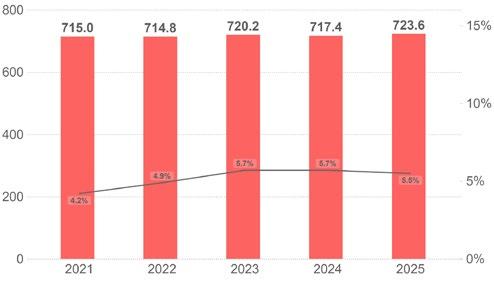
The purpose of the university’s real estate assets is to provide campus spaces for the core activities and the partner ecosystem of the university, while also generating financial value in the long term. At the end of the year, the market value of the real estate assets of the university was EUR 724 (717) million, consisting of 20 (21) mutual real estate companies with a rental area of 296 000 (291 000) square metres. According to an assessment by an external service provider, the calculated net income of the real estate portfolio at market-rate rents was EUR 40 (41) million. Loans accounted for 46% (49%) of the market value of the real estate assets.
Market value of real estate assets (M€) and primary net yield (%)
Market value (M€)
Primary net yield %
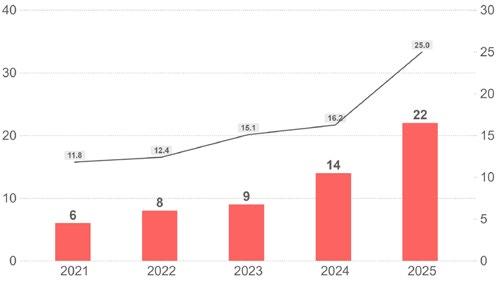
The purpose of the university’s spin-off assets is to enhance the impact of the university’s research results by commercialising them, thereby creating long-term added value for society, the entrepreneurial ecosystem and the university. The value of the spin-off assets totalled EUR 24.9 million (EUR 16.3 million) euros at the end of 2025. This valuation is based on the share value of the spin-off companies’ latest funding round, with a 20% illiquidity and minority discount. At year’s end, the number of spin-off holdings was 22 (14), reflecting increased innovation and technology transfer activity. The largest holdings are in the deep technology area, including ICEYE, IQM Finland and Willo Technologies.
Number of companies
Asset (M€)
Figures in parentheses refer to 2024 unless otherwise mentioned.
Aalto University aims to reach the net zero emissions target of Greenhouse Gas Protocol (GHG) Scopes 1 and 2 by 2030 and to halve the emissions in Scope 3 by 2035.
The university’s CO2 emissions have been calculated as covering Scopes 1–3.
Emissions in 2025 were 59 270 (56 923) tonnes of carbon dioxide equivalent (tCO2e), and emissions per degree student and employee (FTE) were 2.82 (2.79) tCO2e. The largest sources of emissions are investments, fixed asset investments in research, teaching, and other activities; purchased services; workrelated travel; and commuting.
In 2025, the emissions accounting was expanded. Investments were included as a new category in the accounting, in accordance with the GHG Protocol. This accounting reported the university’s listed shareholdings, which make up approximately 45 per cent of the university’s total investment portfolio. In addition, services as well as investments in research, teaching and other fixed assets were included more comprehensively in the accounting.
Total CO2 emissions (tCO2e)
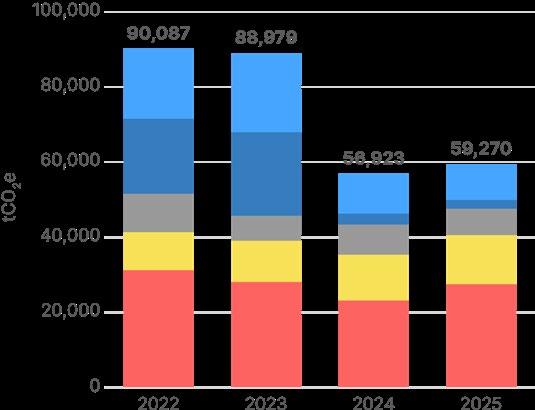
Aalto University’s emissions grew in 2025, despite significant reductions in travel and construction. Positive changes were also seen in the campus community’s daily practices as the use of private cars for commuting purposes declined and campus restaurants took measures to promote environmentally friendly food choices and to reduce waste. At the same time, an increase was seen in indirect emissions sources, such as fixed asset investments, service purchases, ICT energy consumption, and investments.
Aalto University’s work with nature strengthens biodiversity and ecological resilience by restoring campus habitats, carrying out ecological pilots and research-based experiments, and taking into consideration the resiliency of the landscape in the face of climate change.
Aalto University is committed to responsible investment and sustainable management of the university’s investment assets, in line with the university’s values and the responsibility policy of the university’s investment strategy. Separate sustainability and emissions targets have been set for the investments, taking into account the carbon intensity of the investments. Aalto University also publishes an annual sustainability report on its investment activities.
Other
Energy procurement (market-based)
Business travel and commuting
Procurements and investments
Financial Investments
Aalto University’s key actors of governance and management are the Aalto University Board, the University Academic Affairs Committee, the president, the provost, the vice presidents, the deans of the university’s schools, the vice deans and the schools’ academic affairs committees.
The board comprises seven external members, including the chair and vice chair. The board decides on university strategy, operational and financial matters, and on other longrange plans. The board also ensures that the university’s operations are organised appropriately and that its assets are invested in a systematic and productive manner. The board appoints the president, the provost, the vice presidents, the deans and other personnel reporting directly to the president and the provost.
The University Academic Affairs Committee is a joint, multi-member, university-level administrative body referred to in the Universities Act. The committee decides on curricula and degree requirements, sets the admissions criteria and appoints the necessary committees for organising research and education. It also appoints the five-member Board Nomination Committee and the members of the Aalto University Board based on the nomination committee’s proposal.
The president directs university operations in accordance with the Universities Act, the values of the university community, the university strategy approved by the board, and the guidelines and regulations issued by the board. The president is responsible for the resource management and allocations of the university and leads the long-term strategic development and strategic partnerships of the university.
The provost acts as deputy for the president and supports the president in strategic development, in the appointment of professors and in resource management, and leads all the processes connected to education, research and societal impact. The provost reports to the president, and the vice presidents report to the provost.
Aalto University is organised into six schools and joint units. Led by the deans, the university’s schools consist of departments, each led by a department head. The schools are responsible for processes related to research, teaching, and societal impact within the framework of the university’s strategy, guidelines, annual operating plan and budget. Detailed provisions on the organisation of the schools’ operations are issued in the bylaws of the schools. To deal with academic matters at the level of the schools, Aalto has an academic affairs committee for each school. The school academic affairs committees perform the duties assigned to them by the University Academic Affairs Committee.
Aalto University and its subsidiaries form the Aalto University Group. The board and the president are responsible for steering the group and organising its supervision. The president appoints university representatives to the annual meetings of the subsidiaries, in which the board members of these companies are elected. The boards of the subsidiaries elect CEOs, who are responsible for the subsidiaries’ operations.
The following members sat on the Aalto University Board in 2025: Tiina Alahuhta-Kasko, Mariana Amatullo, Karel Luyben, Andreas Mortensen, Marita Niemelä (vice chair), Tero Ojanperä (chair) and Hanna Sievinen. President Ilkka Niemelä served as rapporteur for the board.
Figures in parentheses refer to 2024 unless otherwise mentioned.
Risk management is an essential part of the internal control and governance system of Aalto University, supporting the university in achieving its strategic and operational objectives. Aalto’s risk management policy defines risks as contingencies that could negatively impact the attainment of the university’s objectives. Risk assessment also takes into account missed opportunities. Risks may be related to external factors, such as fluctuations in state funding, changes in legislation, or demographic changes. The university’s internal risk factors include for example infrastructure and capacity challenges as well as performance issues.
To achieve its goals, the university is, as a rule, prepared to take risks in which the expected benefits are in reasonable proportion to the extent and likelihood of the potential losses. Aalto University seeks to avoid risks that are unlikely to bring corresponding benefits and to cost-effectively mitigate risks to an acceptable level when appropriate. Aalto’s risk management aims to take account of all the risks that may threaten the achievement of the university’s short-term and long-term objectives. Particular consideration is given to the management of strategic risks and financially significant risks.
The university is exposed to various kinds of risks which could significantly impact its operations, financial position or ability to fulfil its obligations. The most significant of these are related to the macroeconomy, geopolitical uncertainties, operational and regulatory challenges, the university’s dependency on public funding, debt financing, and insurance coverage.
In the Aalto University operating environment, the key risks relate to ensuring that the funding and operational preconditions are met for the university over the long term. Geopolitical tensions and the increase in anti-immigration attitudes may affect Finland’s attractiveness for prospective students and researchers, thereby weakening the academic competitiveness and quality of the university. The decrease in Finland’s birth rate also creates financial
pressures for a reassessment of how higher education is currently structured in Finland. Furthermore, there are pressures to reduce public funding for universities, as the needs increase to fund the health and social services field and Finland’s defence sector. Uncertainty in financial markets may negatively impact Aalto University’s endowment assets and thus the funding available for the university’s core activities over the long term. All these changes may diminish the university’s prospects of reaching its long-term strategic goals.
Damage to the university’s reputation can also negatively affect its operations and funding. The reliability of the information systems is a must for the university, as potential cyberattacks and data breaches are risks for the integrity and confidentiality of information and could lead to data loss, regulatory sanctions, financial damage, and reputational harm. Maintaining personnel and student wellbeing is also vital to mitigating risks and achieving the university’s objectives, as these depend heavily on academic and managerial talent.
Climate change can increase the physical risks relating to real estate assets, such as damages due to extreme weather, moisture stress, and wide swings in temperature. Energy transition risks may arise from stricter regulations and energy efficiency requirements, changes in energy prices, and related investment pressures affecting the cost and value of the university’s properties.
Aalto University’s physical assets are centrally insured against damages. The insurance is based on insuring major property items with a relatively high deductible. The deductible is determined based on the risk-bearing capacity and financial standing of the university. Aalto University also has liability insurance, covering the possibility of damages to third parties by university operations, as well as management liability insurance to cover any financial losses resulting from the actions of Aalto subsidiaries or university management or board members.
Aalto University Foundation’s turnover was EUR 432 million (EUR 409 million), a six per cent rise on the previous year. Government funding of EUR 263 million (EUR 255 million) was the main source of income. The increase in government funding is explained by the increased number of bachelor’s and master’s degrees as well as Aalto University’s success in the focus areas of the Ministry of Education and Culture’s new funding model. Income from grants totalled EUR 132 million (EUR 120 million), of which EUR 57 million (EUR 55 million) were from the Research Council of Finland, EUR 28 million (EUR 27 million) from the European Union, EUR 23 million (EUR 21 million) from Business Finland and EUR 23 million (EUR 17 million) from other funders. Income from business activities totalled EUR 31 million (EUR 29 million). Other income totalled EUR 6 million (EUR 6 million).
The expenses of ordinary operations were EUR 464 million (EUR 453 million), a 2 per cent increase compared to the previous year. Personnel and facility expenses were the two largest expense items, accounting for 66 (64) per cent and 13 (14) per cent of the operating expenses, respectively. Personnel expenses increased by 6 per cent compared to the previous year. This rise is attributable to an increase in personnel numbers and salary rises in accordance with the collective agreement. Facility expenses decreased by 9 per cent compared to the previous year. Universityowned mutual real estate companies’ facility charges to university decreased following a decrease in mutual real estate companies’ interest rate expenses and university using fewer square meters. A general decrease in Euribor reference interest rate and the conversion of intra-group loans into equity investments in 2024 led to the decreased
interest rate expenses. Other expenses decreased by altogether 2 per cent from the previous year, mostly due to the new financial management system whose deployment increased expenses in 2024.
The operating loss of the university was EUR 32 million (EUR 44 million).
In 2025, the university launched A! Sign of Change fundraising campaign, bringing in sizable new donations to the endowment funds. The fundraising profit was EUR 7 million (EUR 5 million). The fundraising income of EUR 9 million (EUR 7 million) consisted of donations received. The transfer of donations received to restricted funds in the balance sheet is shown in the change in restricted funds in the profit & loss statement.
Profit from endowment activities amounted to EUR 131 million (EUR 152 million), mainly due to an increase in the market value of investment funds, with the global stock markets performing strongly.
Loss from financing activities amounted to EUR 4 million (loss EUR 3 million). The loss was mainly due to a decrease in the intra-group interest income compared to the previous year. Additionally, one-time proceeds from the sale of interest-rate derivatives, which were taken to reduce interest-rate risk, lowered the interest expenses in 2024. The profit/loss from endowment activities and financing activities includes both realised profits and losses as well as changes in the fair value of assets.
The university’s net profit for the financial year was EUR 97 million (EUR 107 million).
The university’s balance sheet total was EUR 2 318 million (EUR 2 227 million).
Figures in parentheses refer to 2024 unless otherwise mentioned.
On the assets side, fixed assets increased to EUR 57 million (EUR 49 million) euros, mainly due to fixed asset investments in the university’s research and education infrastructure. Other shares and holdings rose to EUR 15 million (EUR 8 million) as a result of the appreciation of shares in spin-off companies. The increase in endowment assets to EUR 1 569 million (EUR 1 463 million) was due to a rise in the market value of investment funds. Cash and bank decreased to EUR 38 million (EUR 56 million), and securities decreased to EUR 32 million (EUR 41).
In liabilities, the increase in equity to EUR 1 809 million (EUR 1 707 million) is primarily explained by the profit for the financial year. Unrestricted funds increased to EUR 646 million (EUR 531 million) when the profit from endowment activities for 2024 was transferred to the accumulated endowment returns fund and the fund was used to finance the university’s ordinary operations.
Liabilities decreased to EUR 510 million (EUR 520 million). The decrease is explained by repayment of long-term loans.
In the cash flow statement, cash flow from ordinary operations was EUR 35 million (EUR 7 million). This increase was mainly due to reduced operating loss and to an increase in the use of restricted funds and the returns from investment activities. Cash flow from investments was EUR −41 million (EUR −12 million). Of the cash flow from investments, EUR −21 million (EUR −19 million) related to fixed asset investments and EUR −20 million (EUR 7 million) to endowment activities. Endowment reduced its cash and bank balance and ensures necessary liquidity with money market funds instead. The cash flow from financing activities was EUR −11 million (EUR 18 million). This cash flow was reduced by repayment of long-term loans and increased by the sale of money market funds. The change in the university’s cash and bank was EUR −17 million (EUR 13 million), of which EUR 3 million (EUR 6 million) related to ordinary operations and EUR −20 million (EUR 7 million) to endowment activities.
Figures in parentheses refer to 2024 unless otherwise mentioned. KEY FIGURES, EUR
Aalto University Group’s financial statements include Aalto University Foundation sr, its directly and indirectly controlled subsidiaries, and minority interests from associated companies.
Aalto University Group’s total income was EUR 607 million (EUR 620 million) and total expenses EUR 511 million (EUR 518 million) including ordinary operations, fundraising, endowment activities, and financing activities. The decrease in total income was due to decreased endowment profits, while turnover and fundraising profits increased. The group recorded a net profit of EUR 96 million (102 million) for the financial year.
The group’s balance sheet total was EUR 2 336 million (EUR 2 251 million). The increase in the balance sheet total is primarily explained by the increase in the value of the university’s endowment assets. Cash flow from Aalto University Group’s ordinary operations was EUR 55 million (EUR 45 million), and the cash flow from investments was EUR –57 million (EUR −27 million). Cash flow from financing was EUR −16 million (EUR −6 million). The change in group’s cash and bank was EUR −18 million (EUR 12 million).
The sub-group Aalto University Executive Education recorded a turnover of EUR 20 million (EUR 20 million) and a net loss of EUR 0.1 million (profit EUR 0.4 million).
All Aalto University Group companies have prepared their own financial statements for the financial year 2025.
Sources and uses of funding in the university group
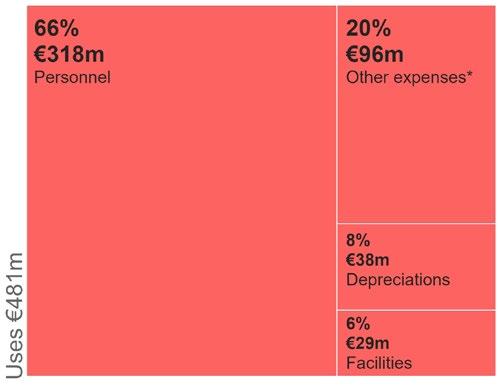
* Consists of e.g. services, travel expenses, materials and supplies.
No events of a material nature affecting the financial status of the Aalto University Group and its financial statements for 2025 took place between the end of the financial year and the preparation of the financial statements.
The decline in the real level of government funding since 2010 poses significant challenges for the implementation of the university’s strategy. If government funding in the coming years fails to compensate for the impact of inflation and take into consideration the increasing co-funding requirements of the research, development, and innovation (RDI) funding, a further decline of the university’s funding-base will result.
In January 2025, Aalto University and the Ministry of Education and Culture signed a four-year agreement for the period 2025–2028. The key indicators of the agreement are external funding; corporate funding for RDI; investments in teaching and research infrastructure; number of patent applications; target-time graduation percentages; international graduates’ employment in Finland; and the number of participants in lifewide learning. The non-permanent RDI investments introduced by the Finnish government in the university sector are expected to increase funding from the Ministry of Education and Culture, as well as other public funding, and increase the number of fixed-term university personnel.
The budget for 2026 and the long-term financial plan for the period 2027–2029 aim to safeguard sufficient, stable and predictable resourcing for core activities of the university to allow it to achieve higher performance targets set for it. Efforts are being made to widen and diversify the funding base by increasing private funding, donation income and the use of endowment funds. Value-add and efficiency is pursued in university campus, infrastructures, and services expenses.
Aalto University maintains a register of its related parties, which covers all necessary and available information. This register is updated annually and includes Aalto University decision-makers and Aalto subsidiary decision-makers as well as their family members. A summary of the university’s financial activities with its related parties is presented in the notes to the financial statements.
The Aalto University Foundation has granted intra-group lines of credit that are valid until further notice to Aalto-owned subsidiaries. As of the end of 2025, the real estate companies of the Aalto University Group had drawn EUR 168 million (EUR 177 million) from the credit lines to finance real estate investments supporting university operations, mainly in the Otaniemi campus area. The credit lines are unsecured, and their interest rates are marketbased and linked to Euribor rates.
KPMG Oy Ab was the university’s auditor during the financial year.
Figures in parentheses refer to 2024 unless otherwise mentioned.
Based on the audited Finnish version
* Year 2024 income from grants and other expenses have been restated concerning Digivisio 2030 project to align with the principle presented in accounting principles.
* Year 2024 income from grants and other expenses have been restated concerning Digivisio 2030 project to align with the principle presented in accounting principles. The split between facility expenses and other expenses in mutual real estate companies and real estate service company has been corrected to better reflect the original nature of expenses.
Aalto University Foundation forms a group, domiciled in Helsinki.
The annual statements and financial reports of the Aalto University Foundation are available at Aalto University Foundation, Otakaari 24, 02150 Espoo.
Aalto University Foundation’s accounting complies with the principles laid down in the Finnish Accounting Act (1336/1997) and the Accounting Code for Universities (2/500/2018 11/11/2022) issued by the Ministry of Education and Culture. Financial assets and liabilities are valued at fair value through profit & loss statement or amortized cost in accordance with IFRS 9. Notes to financial assets and liabilities are presented in accordance with IFRS 7 where appropriate. The cash flow statement is presented as an indirect statement.
Valuation of fixed assets
Fixed assets have been valued at the original acquisition cost deducted by accumulated depreciation according to plan. Depreciation according to plan has been calculated from intangible assets according to straight-line depreciation and from tangible assets based on straightline depreciation or declining depreciation. Minimum value for activating fixed asset to balance sheet is €10000.
Depreciation according to plan categories are:
Asset group Depreciation method Period
Intangible assets Straight-line depreciation 4–10 years
Buildings Straight-line depreciation 23–40 years
Longstanding Straight-line depreciation 10–15 years teaching and research equipment, heavy machinery
Equipment, Straight-line depreciation 4–5 years machinery and or declining depreciation /25% furniture
Inventories are valued in the balance sheet at acquisition cost or net realizable value if lower.
Aalto University owns, develops and commercializes intellectual property rights (IPR). University activates IPR registering costs. The shareholdings resulted from the transfer of rights are valued and revenue is recognized based on third-party valuation and conservative principles. Revenue from sales and licensing is recognized as invoiced. In connection with revenue recognition, possible liabilities to third parties are recorded.
Endowment assets (Endowment portfolio) include the actual investment assets defined by the University Board. University’s endowment portfolio consists of fund investments (non-current assets), foreign currency derivatives (current assets), and cash (current assets). The endowment investment returns are used to fund university operations. Endowment portfolio is valued at the market value.
Securities include short-term fund investments in current assets. Securities are valued at the market value.
Financial receivables and liabilities are valued at amortized cost, except for derivatives, which are valued at fair value through profit or loss.
Investment and financing activities’ surplus is transferred to the funds yearly, after approving the financial statements. The Board decides on the use of the funds to cover the university’s activities.
The fair value hierarchy of financial assets and liabilities valued at fair value is divided into three hierarchical levels with generally used calculation models.
Level 1: Fair values are based on quoted market prices of identical assets or liabilities.
Level 2: Fair values are to a significant extent based on other information than those used in level 1. Fair values are based on directly or indirectly verifiable prices or calculated based on market price components.
Level 3: Fair values are based on information on assets or liabilities that are not based on verifiable market information, for instance private equity fund.
Valuation techniques and significant non-observable inputs
Levels 1-3 valuation techniques are based on the information described below. The table also contains information on possible non-observable inputs and their use in determining fair value.
Investments in equity funds
Investments in fixed income funds
The instruments included in the fund are valued at market value on the value date. If no reliable market value is available, the most recently confirmed market value is used. The valuation information is available on a monthly / quarterly basis from the fund manager.
The instruments included in the fund are valued at market value on the value date.
Investments in Fixed income funds can be valued at the last available bid price on each valuation day, if no reliable market value is available. If no reliable market value is available, the most recently confirmed market value is used. The valuation information is available on a monthly / quarterly basis from the fund manager.
Investments in private equity and alternative funds
The value of the fund is based on the fund valuation reports and the fair value corresponds to the fund’s market value. The valuations of investments in private equity and alternative funds are based on market quotations or best-in-line feeds. If no reliable market value is available, the most recently confirmed market value is used. The valuation information is available on a monthly / quarterly basis from the fund manager.
Financial assets and liabilities
Aalto University Group reports financial assets and liabilities according to below principles.
Financial assets are valuated according to following valuation principles:
Group of financial Assets Instruments Valuation principle
1. Financial assets at fair value through profit or loss.
2. Loans and other receivables.
Fund investments, Interest and Currency Derivatives.
Sale and loan receivables, fixedterm deposits and other similar receivables.
Fair value, changes in value are recognized in profit or loss.
Amortised cost.
Classification is made in connection with the initial acquisition of financial assets based on the purpose of the acquisition. If an item is not valued at fair value through profit or loss, transaction costs are included in the original book values of financial assets.
Financial liabilities are valuated according to following valuation principles:
Group of financial liabilities Instruments Valuation principle
1. Financial liabilities at fair value through profit or loss.
2. Financial liabilities recognized at amortized cost.
Interest and Currency Derivatives.
Bank loans, Bonds.
Fair value, changes in value are recognized in profit or loss.
Amortised cost.
Costs originated from current liabilities are recognized as an expense in the financial period during which they incurred.
Interest rate swaps and FX forward exchange agreements were used during the financial year. Derivatives are not subject to hedge accounting. Derivatives are included in the profit & loss statement, according to the Accounting Act, and both realized and unrealized profits and losses are included in the year they first arise. In the balance sheet the fair values of the derivatives are included in short term or long-term liabilities or receivables. The cash collateral of derivative agreement is shown in receivables.
According to the Universities Act the Ministry of Education and Culture shall compensate to the universities the value added tax included in the cost incurred by the universities procurements and facility rents relating to basic statutory functions. During the financial year the Foundation has followed net procedure as regards to the VAT. The receivables relating to the VAT compensation have been calculated according to the principles set in the Accounting Code for Universities.
The revenue from ordinary operations of the university is recognized as a percentage of completion using cost to cost method. The non-invoiced turnover of the subsidiaries involved in business transactions is recorded in the accounts according to estimated level of completion of the deliverable. The corresponding receivable is recorded in the accrued income. Received advance payments are recorded in the balance sheet as short-term debts. The revenue from educational programs is recorded as income in proportion of number of training days provided.
Aalto University coordinates the Digivisio 2030 project, funded by the Ministry of Education and Culture, in which a digital service environment that benefits all higher education institutions is built as a joint procurement. For this project, Aalto University’s income statement only includes Aalto University’s share of the income and costs of the joint procurement. Other costs incurred from the joint procurement have been allocated directly to the coordinated assets in the balance sheet.
Business activities are operations that according to tax authorities are subject to corporate income tax or subject to value added tax.
Statutory pension for employees born before 1 January 1980 and transferred from the three earlier universities has been arranged through Keva and for other employees in an external pension insurance company. Pension fees are expensed according to accrual basis.
Receivables and liabilities in foreign currencies have been translated into euro using the European Central Bank’s rates at the financial statement closing date. Events realized during the financial year have been translated into euros using the transaction date’s exchange rates.
The management compensation includes salaries and other compensation paid to the members of the Foundation Board of Trustees and the President and for the Board members and CEO’s of the Group subsidiary companies.
Accounting principles and extent of the consolidated accounts
The Group consolidation is done according to the acquisition cost method. Internal business operations, internal receivables and liabilities, mutual ownership as well as internal profit sharing have been eliminated. The profit & loss statement of the foreign Group company has been converted into euros with ECB’s average exchange rate for the financial year. Balance sheet has been converted into euros with the exchange rates at the end of the financial year. Differences in exchange rates and elimination of shareholding caused by conversions are recorded in Profit/Loss from previous years.
1.
2.
3. PROFIT & LOSS STATEMENT BY FIELD OF OPERATION
4. PROFIT & LOSS STATEMENT IN ACCORDANCE WITH FINNISH ACCOUNTING ORDINANCE 3 §
15.
16. CHANGES IN INVESTMENTS
17. REAL ESTATE PROPERTY
Aalto University group owns a significant number of properties located in Otaniemi, Töölö, and Kirkkonummi. The book value of campus assets owned by mutual real estate companies was € 495 (€ 531) million. An external service provider estimates the market value of campus assets yearly. The market value at the year-end was € 724 (€ 717) million. The market value estimate is not reflected in the financial statements. Aalto University uses its campus assets mainly in university’s core activities and partly for rent. University rents campus space to collaboration partners, start-up companies, campus restaurants and other service providers. The turnover from renting was € 11,6 (€ 10.1) million, and a total of 60 000 (53 000) square meters was rented at the year end.
Aalto University Foundation has granted intragroup lines of credit, which are valid until further notice, to its subsidiaries. At the end of 2025, the total credit lines granted by Aalto University Foundation was EUR 302 million, and the real estate companies of the Aalto University Group had drawn EUR 168 million from the credit lines to finance real estate investments supporting university operations, mainly in the Otaniemi campus area. The credit lines are unsecured, and their interest rates are market-based and linked to Euribor rates. Rents for related parties are priced according to market conditions.
Mutual real estate companies and the real estate service company are listed in Appendix 43, under ‘Real estate service company and mutual real estate companies’.
* Hamilton Lane Aalto Fund is a fund owned by the Aalto University Foundation, where an external asset manager invests in private equity funds according to the Aalto University Foundation’s plan. The fund had investments in 61 private equity and private credit funds at the end of 2025. Investments include both equity-based private equity funds and debt-based private credit funds. See notes 29 and 35 for further information on investment commitments related to Hamilton Lane Aalto Fund.
18. ENDOWMENT PORTFOLIO
** Excluding University internal bank account balancing of 1.215 Meur between Endowment and University ordinary operations.
Aalto University Foundation only invests in funds registered in domiciles which participate in automatic exchange of tax information under the Common Reporting Standards (CRS) or US Foreign Account Tax Compliance Act (FATCA).
19.
The loans granted to the subsidiaries are bullet loans and they mature between 2026-2027. The subordinated loan is scheduled to be paid back between 2031-2035.
21.
COMPENSATION
*Hybrid fund: the return of the capital and the capital itself will be used.
27.
28. RENTAL AGREEMENTS (incl. VAT)
29. INVESTMENT COMMITMENTS
Foundation 2025 Foundation 2024 Capital Funds
Hamilton Lane Aalto Fund 364 617 418 243
The time horizon of investment commitments is detailed in Note 35.
30. DERIVATIVE CONTRACTS
In the end of the fiscal year group derivatives include interest rate swaps and foreign exchange forward exchange agreements. Derivatives are not subject to hedge accounting. The university aims to keep the contracts to maturity. If a derivative contract would be terminated prior to maturity, the University is committed to cover the pre-termination indemnity to the counter party.
The interest rate swaps hedge the current and expected loan portfolio against increase in market interest rates by converting floating interest rates into fixed rates. University’s current interest rate swap agreements will mature from 2026 to 2027. Interest rate swaps have been used only for hedging purposes. The terms and conditions of interest rate swap portfolio and the loan portfolio are not identical and therefore derivative contracts are included in the income statement at fair value.
In 2024, Aalto Univeristy Foundation issued fixed-rate Senior Unsecured Notes that will mature in 2039 and 2044.
According to the Endowment Strategy the university may employ derivatives in investment acitivities for three purposes: to hedge investment risks, to allocation adjustments or to gain exposure to certain risk premia more efficiently. During 2025 the forward exchange agreements have been used to hedge against the foreign exchange risk of the investment portfolio.
The nominal and the fair value of the derivative instruments are shown below.
32. LOANS WITH MATURING PERIOD OVER FIVE YEARS
33. VAT REFUND LIABILITIES
Companies owned by the foundation have deducted VAT from their property investments and this involves liability to revise the deduction in the case of alteration of use in the of property.
VAT Refund liability 31 Dec.
Total VAT relating to the investments under revision liablility
At Aalto University risk management forms an essential part of Aalto University’s governance system and supports the university in achieving its strategic and operational objectives. Aalto University risk management principles, including risk management process and responsibilities, are defined in Aalto University Risk Management Policy approved by the Board. In addition, financial risk management principles and limits are guided by Endowment Authorizations and Risk Limits Policy and Treasury Policy approved by the Board.
The main price risk of the university consists of market price volatility related to equity fund investments.
The financial impact to the endowment portfolio of a possible decline of 20% in global equity market prices is described below (all other factors remaining unchanged). The effect of market sensitivity of the equity investments is also taken into account.
The calculated effect of 20% corresponds to the risk level of the asset class.
The main currency risk of the university relates to investments in equity funds investing in non-euro assets. The financial impact to the endowment portfolio of a possible 10% appreciation of euro against all other currencies is described below.
In the calculation the currency positions of the underlying investments as well as possible currency hedges have been taken into account.
The calculated effect of 10% corresponds to the risk level of the asset class.
Interest rate risk
The university carries interest rate risk as part of its investment and debt activities.
In investment activities interest rate risk is defined as market value change due to changes in the level of interest rates. Such changes affect fixed income securities inversely and are managed by changing investment portfolio durations.
In debt activities the interest rate risk is due to changes in interest rates of floating rate loans raised to finance campus investments. The risks related to floating rate loans are managed by interest rate swaps.
The financial impact of possible changes in interest rates is described below. The change of one percent indicates well the significance of the impact.
The university’s liquidity risks are limited, as the investments are mainly implemented through mutual funds and ETFs Future contractual commitments relating to financial instruments are described below.
35. FINANCIAL RISK MANAGEMENT
Credit risk
The university receivables credit risks are limited, as its main funders are public institutions, like Research council of Finland, Business Finland and EU.
The impact of possible credits risks related to investment activities are to large extent included in the previous risk categories, mainly in interest rate and price risks. Counter party risks related to investment activities are monitored constantly, based on the counter party limits defined the board. In derivative contracts the counter party risk is managed by cash collateral based on fair value.
Political risk
Political decisions and events may have a significant impact on the university’s financial standing. The university’s main political risk relates to university sector’s public funding development in the long term. There are also risks relating to the fund allocation between universities.
Below table shows the financial impact, if Aalto University’s share of Ministry of Education and Culture’s university funding would change one percentage point, all other factors being equal. The one percentage point reflects the biggest historical change.
36. LEGAL PROCEEDINGS AND OTHER COMPENSATION CLAIMS
The foundation had no pending lawsuits with financial risks 31.12.2025.
37. OTHER CONTINGENT LIABILITIES
Covenants
Aalto University campus development investments are financed by loans taken by Aalto University Foundation. The loan agreements are unsecured and contain different types of restrictive terms. These terms restrict, inter alia, organizational changes and property investment arrangements as well as the level of group indebtedness and provided security. No material changes has been made to the terms during 2025. 38.
40. MANAGEMENT COMPENSATION
41. KEY FIGURES OF PERSONNEL ACCORDING TO MEC ACCOUNTING CODE (FOUNDATION)
42. RELATED PARTY FINANCIAL TRANSACTIONS Gratuitous grants and similar payments
and their subsidiaries, Aalto University’s subsidiaries
Above parties’ board members, CEOs and their substitutes, auditors, Aalto University’s directors and any
owned by aforementioned
respective input
Aalto Holding Oy
Owned by Aalto Holding Oy
Aalto University Executive Education Oy
Kvanttinova Oy
Unigrafia Oy
Funidata Oy
Unihome Oy
Owned by Aalto University Executive Education Oy
Aalto Executive Academy Pte Ltd
Real estate service company and mutual real estate companies
Aalto-yliopistokiinteistöt Oy
Koy Bionova
Koy Espoon Amfi
Koy Espoon Betonimiehenkuja 5
Domicile Shares owned by Group
Koy Espoon Kemistintie 1 Espoo
Koy Espoon Konemiehentie 2 Espoo
Koy Espoon Metallimiehenkuja 4 Espoo
Koy Espoon Otakaari 1 Espoo
Koy Espoon Otakaari 24 Espoo
Koy Espoon Otakaari 3
Koy Espoon Otakaari 5
Koy Espoon Otakaari 7
Koy Espoon Puumiehenkuja 2
Koy Espoon Sähkömiehentie 4
Koy Espoon Tietotie 1
Koy Espoon Vuorimiehentie 1
Koy Espoon Vuorimiehentie 2
Koy Espoon Väre
Koy Helsingin Runeberginkatu 14-16
Koy Kirkkonummen Metsähovintie 114
Otaniemen Liikekeskus Oy
Other holdings
Kiinteistö Oy Hgin Pohj. Hesperiankatu 23A
Oy
Oy
Hub Finland Oy
Oy
Loma-aika Oy
Vierumäki Golf Oy
CSC-Tieteen tietotekniikan keskus Oy
Spinoff holdings
Aani Oy
Agate Sensors Oy Raasepori
Automous Oy
Circular Foams Oy
Cortisys Inc.
Dry & Durable Holding BV
epicMeets Oy Espoo
Fepod Oy
Halide Energy Oy
Oy
Ioncell Oy
Koite Health Oy
Lignum Medical Oy
NPHarvest Oy
Otos Health Inc.
Shimber Oy
Surgify Oy
Twinbase Oy
Vacuum Insulation Systems Oy
Willo Technologies Oy
Xfold Imaging Oy
NJ, US
en Duin, NL
The cover photo and the photos that separate the sections are from the 2025 Designs for a Cooler Planet exhibition.
Photos: Mikko Raskinen
Aalto University
P.O. Box 11000
FI-00076 AALTO, Finland
Switchboard +358 9 47001
aalto.fi
@aaltouniversity