

leadership isn't claimed – it's earned.
leadership isn't claimed – it's earned.
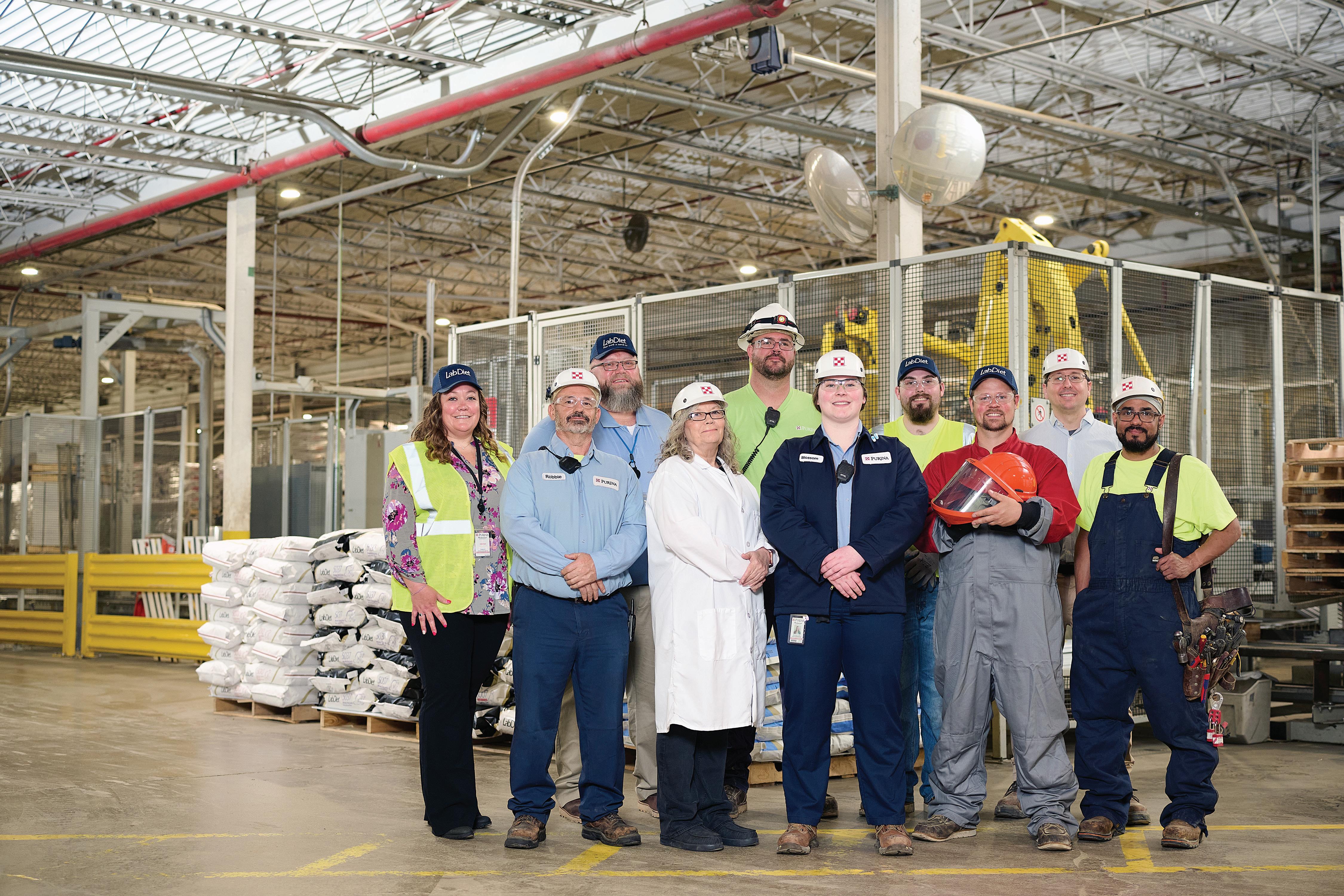
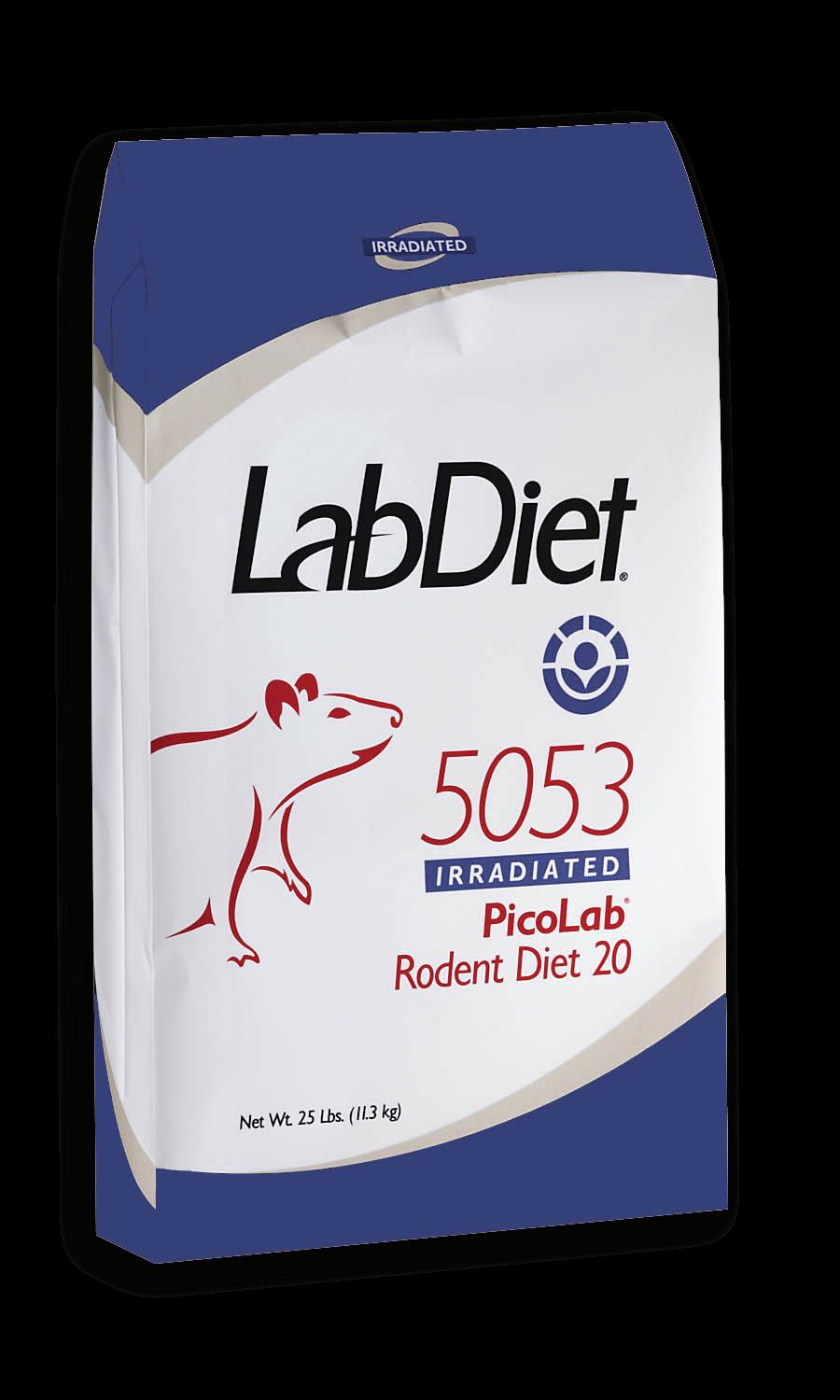
Superior Quality Isn't Just Our Promise — It's Our Process.
Every ingredient meticulously sourced. Every production run carefully monitored. Every product nutritionally verified before reaching your lab. Our commitment to excellence goes beyond standards:
• Multiple irradiation sites to ensure you always have irradiated PicoLab®
• Rigorous pest control protocols with expert oversight
• Validated contamination prevention systems
When precision science demands precision nutrition, there's a reason researchers choose LabDiet®.
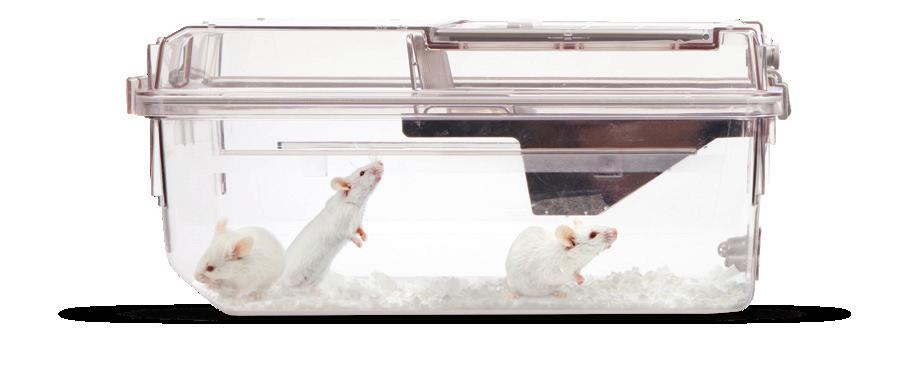
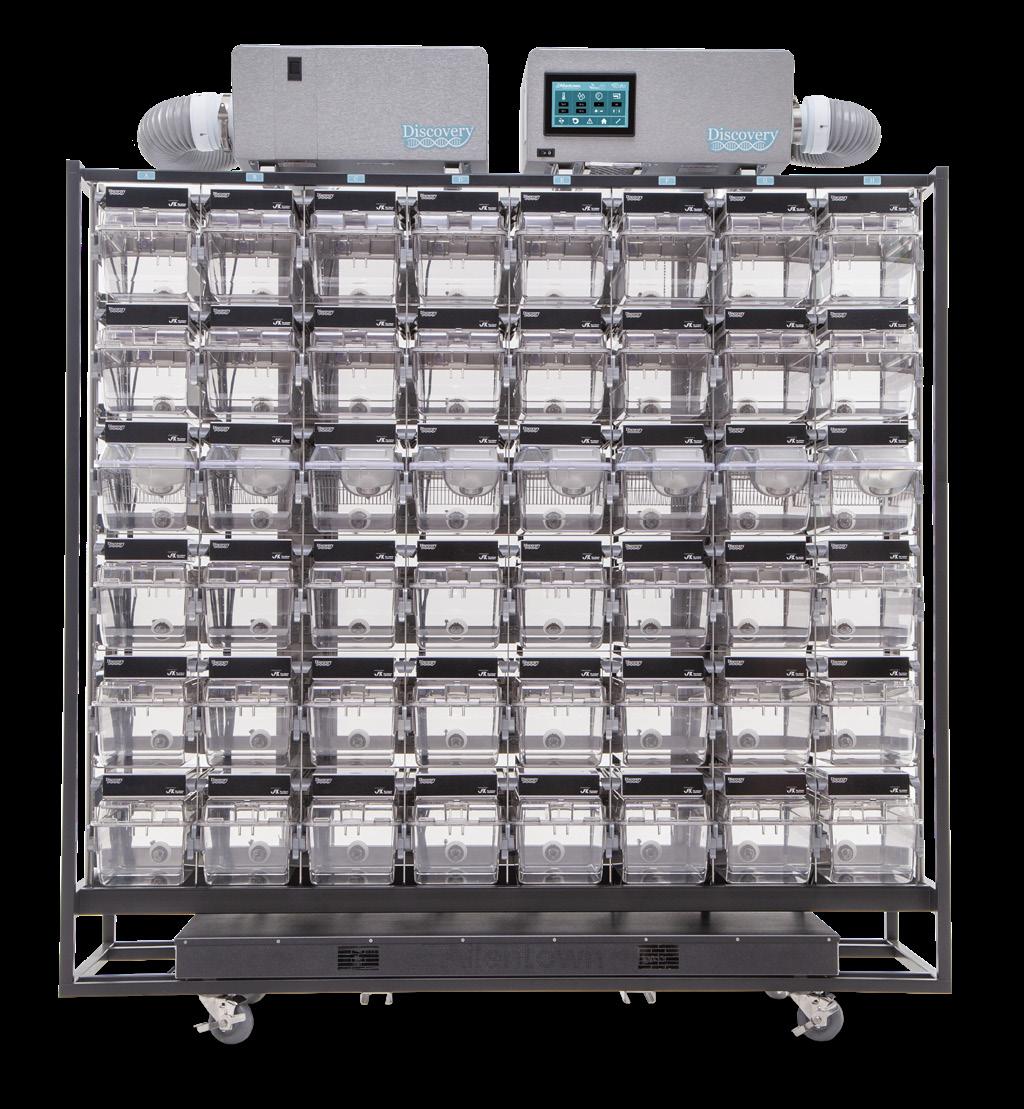
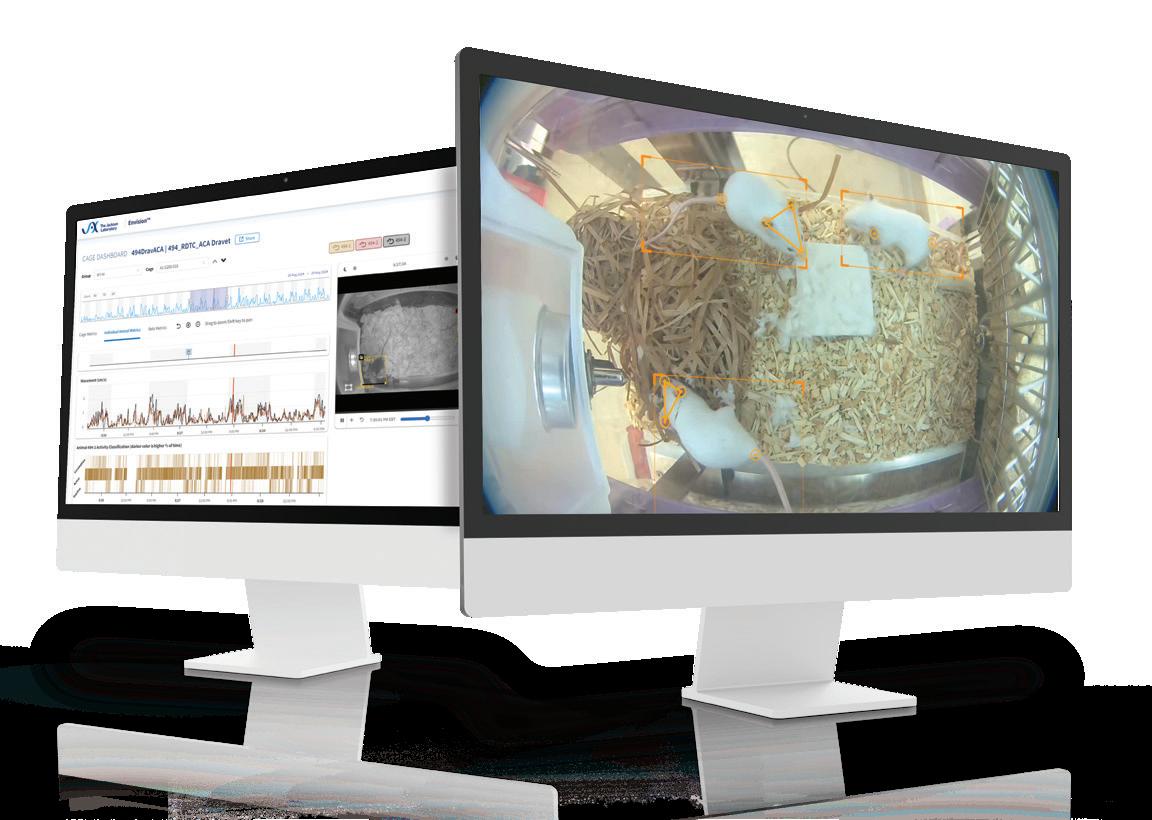
Discovery + Envision makes biology continuously visible through non-invasive observation of animals in their home cage via AI-driven computer vision.
• Seeing + understanding behavior
• Earlier detection of post-surgical distress
• Fewer unexpected animal removals from studies
• Reduced repeat studies and extended cage occupancy
• Less animal transport and handling for behavioral testing
• Less staff time spent on routine observation rounds
• Faster response across multi-room or decentralized facilities


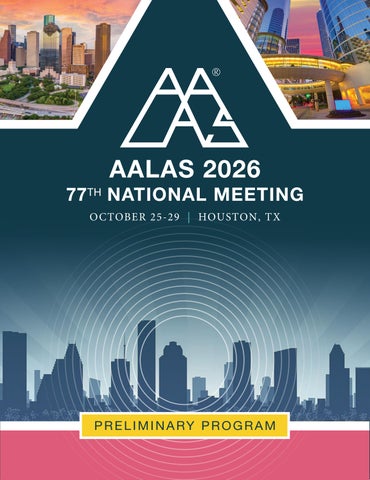
OCTOBER 25-29 | HOUSTON, TX
Chair: Fakhrid-deen S. Muhammad
Vice Chair: Derek L. Fong
Members:
Verda A. Davis, Steven E. Davison, Crystal H. Johnson, Carissa P. Jones, Rashida M. Moore, Eden Paster, Morgan A. Perkins, Karen R. Strait, Thomas E. Todd, Jr., Rachel L. Wilson
Local Arrangements Chair: Tanya L. Herzog
BOT Liaison, AALAS President: Jori K. Leszczynski
EXHIBITOR ADVISORY COUNCIL
Chair: Maria Cariglia
Vice-Chair: Nancy McCormick
Past Chair: Janine Meluso
Members:
Robert C. Davis, Rene Ketelsen, Priscilla Shirley, Breanna Knight, Michael Evans
Past AALAS President: James D. Macy
BOT Liaison: Karena E. Thek
EXECUTIVE DIRECTOR/CHIEF EXECUTIVE OFFICER
Thomas L. Joseph




On behalf of the National Meeting Program Committee (NMPC), I am pleased to welcome you to the 77th AALAS National Meeting in Houston, Texas. This past year, we have each experienced uncertainty and change in our industry, which is why this AALAS National Meeting is an especially meaningful gathering of our friends, colleagues, and industry partners. Thanks to the dedication of the AALAS community and the hard work of the NMPC, we are proud to offer a robust educational program.
To help us navigate these changes and prepare ourselves for the future, we developed this year’s program around the theme of New Frontiers. Together, we will explore how to use emerging technologies and innovative approaches to shape the future of animal care and research, even amid uncertainty. By continually adapting and innovating, we will remain a resilient community that advances science.
Houston’s city spirit and rich history made it an ideal setting for building the future of our field. Houston is diverse, home to one of the world’s largest medical centers and a leader in science and space exploration; the city is built on the idea of innovation and discovery. Much like the pioneering mindset that drives breakthroughs here, our community continues to push boundaries and advance science in meaningful ways.
I look forward to welcoming you to Houston and hope you make time to connect with colleagues, engage in our robust curriculum, and explore Houston’s vibrant culinary and cultural scene. Be sure to stop by the local arrangements booth to learn more about the activities planned during your stay. We are excited to have you with us and look forward to an engaging and memorable meeting!
Salih Muhammad, DVM, DACLAM, MBA
2026 AALAS National Meeting Program Committee Chair
Please join us at the upcoming AALAS National Meeting in Houston, Texas! The Program Committee has strategically assembled an inspiring program featuring innovative ideas, engaging sessions, and opportunities to connect with colleagues. Our meeting theme, New Frontiers, along with our program, highlights a dynamic mix of forward-looking topics alongside timely discussions that address today’s challenges and opportunities.
In recent years, we have been reminded of the importance of gathering in person, especially during times of uncertainty. This meeting offers a chance to step away from daily demands, foster a mindset of learning and collaboration, and engage in strategic thinking, essential elements for both personal and professional growth.
Houston itself is a vibrant destination, offering world-class dining, diverse cultural attractions, and a lively downtown scene just steps from the Convention Center. While there is plenty to explore, it also provides the perfect backdrop for resetting, recharging, and reconnecting with colleagues as you look ahead to what the future holds. We look forward to welcoming you this October!
Jori K Leszczynski, DVM, DACLAM
2026 AALAS President
Planning for the AALAS National Meeting? Here are a few quick tips and important details to help you prepare for a successful meeting experience in Houston. The most up-to-date meeting information, schedules, announcements, and resources will be available online and in the Mobile App launching in October.
Visit the meeting website at AALAS National Meeting Information for the latest updates.
AALAS strongly encourages all attendees to remain up to date on recommended vaccinations before attending the National Meeting. All participants will be expected to follow applicable CDC guidance and any local Houston health and safety recommendations in effect during the meeting dates.
Pre-registration rates for the 2026 National Meeting are:
• AALAS National Members*: $360
• Nonmembers: $460
Attendees may also purchase access to up to 100 hours of recorded educational sessions during registration at discounted advance rates:
• AALAS National Members*: $125
• Nonmembers: $200
*Membership must be current at the time of registration to receive member pricing.
Access registration information and the online registration portal here:
AALAS Registration Information
Workshop descriptions are available throughout this program and online at: AALAS Meeting Program & Workshops
Workshops may be added during online registration or purchased on-site in Houston, subject to availability.
October 24:
Speakers, moderators, and facilitators can find presentation tips, session instructions, and additional meeting resources online at:
PRESENTER & FACILITATOR RESOURCES
Interested in volunteering? The National Meeting is always looking for facilitators to help support educational sessions and enhance the attendee experience. Facilitator sign-up information is available on the meeting website.
COMMITTEE MEETINGS & EVENTS
An updated schedule of committee meetings and special events will be posted later this summer at AALAS Website and included in the Mobile App launching in October.
EXHIBIT HALL INFORMATION
Exhibit Hall Set-Up
Saturday, October 24: 8:00 AM – 6:00 PM
Sunday, October 25: 7:30 AM – 6:30 PM
Ribbon Cutting Ceremony
Sunday, October 25: 6:30 PM
Exhibit Hall Hours
Sunday, October 25: 6:30 PM – 8:00 PM
Welcome Reception open to all attendees
Monday, October 26: 9:00 AM – 5:00 PM Tuesday, October 27: 9:00 AM – 5:00 PM Wednesday, October 28: 9:00 AM – 1:00 PM
Exhibit Hall Dismantling Wednesday, October 28: 1:00 PM – 10:00 PM
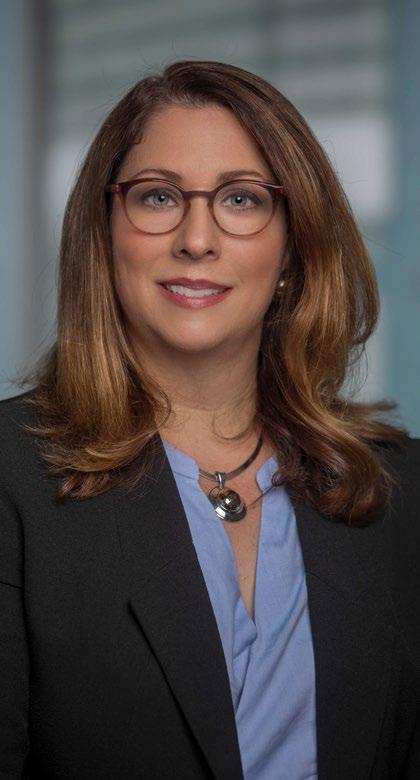
It is both an honor and a pleasure to welcome you to Houston, Texas, for the 77th AALAS National Meeting. As the Local Arrangements Chair, I am delighted to extend a warm greeting on behalf of our committee and our host city.
On behalf of the National Meeting Program Committee (NMPC), I am pleased to welcome you to the 77th AALAS National Meeting in Houston, Texas. This past year, we have each experienced uncertainty and change in our industry, which is why this AALAS National Meeting is an especially meaningful gathering of our friends, colleagues, and industry partners. Thanks to the dedication of the AALAS community and the hard work of the NMPC, we are proud to offer a robust educational program.
We are delighted to host you in the dynamic and diverse city of Houston. As a hub of innovation, culture, and Southern hospitality, Houston provides an ideal setting for a week of learning, collaboration, and connection. Whether you’re exploring its world-class museums, enjoying the vibrant downtown scene, or networking over its renowned and globally inspired cuisine, we hope the city enhances and enriches your meeting experience.
To help us navigate these changes and prepare ourselves for the future, we developed this year’s program around the theme of New Frontiers Together, we will explore how to use emerging technologies and innovative approaches to shape the future of animal care and research, even amid uncertainty. By continually adapting and innovating, we will remain a resilient community that advances science.
Our committee has worked diligently to ensure your time here is both productive and enjoyable. We invite you to visit our Local Arrangements booth, located near registration in the convention center. Our volunteers will be available to assist with questions, provide helpful materials, and offer a few giveaways.
Houston’s city spirit and rich history made it an ideal setting for building the future of our field. Houston is diverse, home to one of the world’s largest medical centers and a leader in science and space exploration; the city is built on the idea of innovation and discovery. Much like the pioneering mindset that drives breakthroughs here, our community continues to push boundaries and advance science in meaningful ways.
Please join us for the Welcome Reception, hosted by the Houston Local Arrangements Committee, on Sunday evening in the Convention Center, immediately following the Opening Session. We look forward to celebrating the start of the meeting with you.
We trust the program will provide meaningful dialogue, valuable insights, and enduring professional connections. May your experience here in Houston be both professionally enriching and personally memorable.
I look forward to welcoming you to Houston and hope you make time to connect with colleagues, engage in our robust curriculum, and explore Houston’s vibrant culinary and cultural scene. Be sure to stop by the local arrangements booth to learn more about the activities planned during your stay. We are excited to have you with us and look forward to an engaging and memorable meeting!
Thank you for your participation and your continued support of AALAS.
Tanya Herzog, DVM, DACLAM
2026 Local Arrangements Chair
Salih Muhammad, DVM, DACLAM, MBA
2026 AALAS National Meeting Program Committee Chair
Please join us at the upcoming AALAS National Meeting in Houston, Texas! The Program Committee has strategically assembled an inspiring


SATURDAY
OCTOBER 24
Exhibit Hall Exhibitor Set-Up
8:00 AM-6:00 PM, CC, Exhibit Hall B3
Exhibitor Registration
10:00 AM-6:00 PM, CC, General Assembly Prefunction First Aid
7:30 AM-6:00 PM, CC, Across from rooms 342 A & D Mothers Room
2:00 PM-6:00 PM, CC, 350B
Registration
2:00 PM-6:00 PM, CC, General Assembly Prefunction COMMITTEE MEETINGS
AALAS Executive Committee Meeting
3:00 PM-5:00 PM, Marriott, Parker Boardroom
AFFILIATE EVENTS
Allied Trade Association (ATA) New Product Showcase set-up
2:00 PM-6:00 PM, CC, Outside Exhibit Hall Entrance
SUNDAY
OCTOBER 25
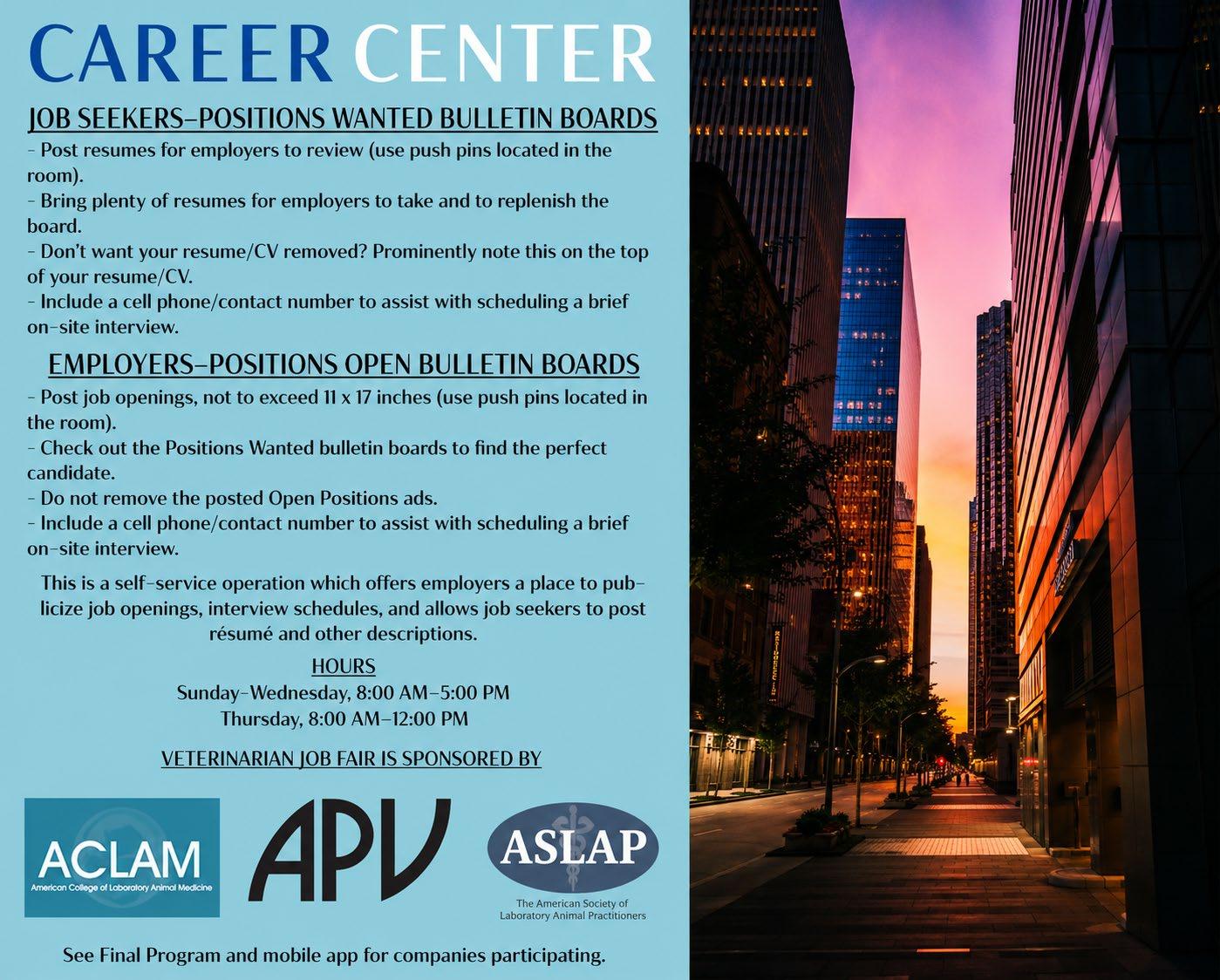
Career Center
Veterinarian Job Fair sponsored by ACLAM, APV, and ASLAP
(see mobile app for companies participating) Career Center
8:00 AM-5:00 PM, CC, 351B Veterinarian Job Fair
2:00 PM-4:00 PM, CC, 351B
Exhibit Hall Exhibitor Set-Up
7:30 AM-6:30 PM, CC, Exhibit Hall B3 First Aid
7:30 AM-8:00 PM, CC, Across from rooms 342 A & D Mothers Room
7:30 AM-7:00 PM, CC, 350B
Registration
ASLAP CE Seminar
9:00 AM-3:30 PM, Marriott, Hunters Creek A District 8 Council
2:00 PM-5:00 PM, CC, 350E
Facility Directors-Yale University
9:00 AM-1:00 PM, Marriott, River Oaks A National Meeting Orientation (first-time attendees, new members, international attendees)
2:00 PM-3:00 PM, CC, 342D
Poster Sessions set up by the presenting author
2:00 PM-5:00 PM, CC, Inside Exhibit Hall
Technical Trade Presentations Track I:
Animal Care & Operational Excellence
1:00 PM-4:20 PM, CC, 342D
Technical Trade Presentations Track II:
Digital Innovation & Automation in the Vivarium
1:00 PM-4:20 PM, CC, 342D
Technician Fun Fair
1:00 PM-5:00 PM, CC, Grand Ballroom Prefunction
Tecniplast Welcome Breakfast
8:00 AM-11:00 AM, CC, 332A COMMITTEE MEETINGS
Certification Oversight Committee
1:00 PM-3:00 PM, CC, 350D
Education Oversight Committee
10:00 AM-12:00 PM, CC, 350D Nominations Committee
10:00 AM-11:30 AM, CC, 350E
Program Committee Walk Thru 4:00 PM-5:00 PM, CC, meet at Registration
Scientific Advisory Committee
3:00 PM-5:00 PM, CC, 350D
AFFILIATE EVENTS
ACLAM Board of Directors
7:30 AM-4:00 PM, Marriott, Parker Boardroom
ACLAM Exam Resources Committee
8:00 AM-5:00 PM, Marriott, Galleria Boardroom
ACLAM Publications Committee
MONDAY
OCTOBER 26
AALAS Central
9:00 AM-5:00 PM, CC, Exhibit Hall B3, Booth 1020 Career Center
Veterinarian Job Fair sponsored by ACLAM, APV, and ASLAP
(see mobile app for companies participating) Career Center
8:00 AM-5:00 PM, CC, 351B
Veterinarian Job Fair
9:00 AM-11:00 AM & 2:00 PM-4:00 PM, CC, 351B
Exhibit Hall
9:00 AM-5:00 PM, CC, Exhibit Hall B3 First Aid
7:30 AM-6:15 PM, CC, Across from rooms 342 A & D
Mothers Room
7:30 AM-5:00 PM, CC, 350B
Poster Sessions
9:00 AM-5:00 PM, CC, Inside Exhibit Hall
Poster Sessions set up by the presenting author
7:30 AM-9:00 AM, CC, Inside Exhibit Hall
Registration
7:30 AM-5:00 PM, CC, General Assembly Prefunction
Speaker Ready Room
7:30 AM-4:00 PM, CC, 330A
MEETINGS & EVENTS
AALAS Foundation Silent Auction & “Rocket into Research” Contest
8:00 AM-5:00 PM, CC, Grand Ballroom Prefunction
Biocontainment (ABSL-3 and ABSL-4)
4:00 PM-6:00 PM, Marriott, Tanglewood
District 1 Membership Meeting
5:15 PM-6:15 PM, CC, 310A
District 2 Membership Meeting
5:15 PM-6:15 PM, CC, 352D
District 3 Membership Meeting
5:15 PM-6:15 PM, CC, 352E
7:30 AM-7:00 PM, CC, General Assembly Prefunction Speaker Ready Room
9:30 AM-11:00 AM, Marriott, Tanglewood
District 4 Membership Meeting
10:00 AM-5:00 PM, CC, 330A SPECIAL EVENTS
Exhibit Hall Opening Ceremony with Ribbon Cutting at 6:30 PM
6:30 PM-8:00 PM, CC, Exhibit Hall B3
Opening General Session / General Membership Meeting
5:00 PM-6:30 PM, CC, Grand Ballroom Welcome Reception
6:30 PM-8:00 PM, CC, Exhibit Hall B3 MEETINGS & EVENTS
AALAS Foundation Silent Auction & “Rocket into Research” Contest
9:00 AM-5:00 PM, CC, Grand Ballroom Prefunction
Allied Trade Association (ATA) Membership Meeting/Breakfast (Invitation only; RSVP required)
8:30 AM-10:30 AM, CC, 370A
Allied Trade Association (ATA) New Product Showcase
7:30 AM-7:00 PM, CC, Outside Exhibit Hall Entrance
ASLAP Board of Directors Meeting
7:00 AM-9:00 AM, Marriott, Sugarland A Association for Gnotobiotics
3:00 PM-5:00 PM, CC, 350C LAMA Board Meeting
12:00 PM-5:00 PM, Marriott, Clear Lake A
5:15 PM-6:15 PM, CC, 352F
PURPOSES ONLY. This design remains the exclusive property of Fern and should not be copied or replicated in any way without prior written permission from Fern.
District 5 Membership Meeting
5:15 PM-6:15 PM, CC, 362A
District 6 Membership Meeting
5:15 PM-6:15 PM, CC, 362B
District 7 Membership Meeting
5:15 PM-6:15 PM, CC, 360A
District 8 Membership Meeting
5:15 PM-6:15 PM, CC, 320A
Small Institution Group Meetup
3:00 PM-4:30 PM, CC, 350E
Tech Connect Reception Sponsored in part by PMI Lab Diet
12:30 PM-2:00 PM, CC, 342D
Technician Fun Fair
8:30 AM-5:00 PM, CC, Grand Ballroom Prefunction
Allied Trade Association (ATA)
New Product Showcase
8:30 AM-5:00 PM, CC, Outside Exhibit Hall Entrance
ASLAP LARC/ACLAM GRAC Meeting
5:00 PM-6:00 PM, Marriott, Clear Lake A
ASLAP Networking
12:00 PM-2:00 PM, Marriott, Texas Ballroom Salon B
LAWTE General Membership Meeting
3:00 PM-5:00 PM, CC, 351E
TUESDAY
OCTOBER 27
AALAS Central
9:00 AM-5:00 PM, CC, Exhibit Hall B3, Booth 1020
Branch Leadership Meeting
4:30 PM-5:30 PM, CC, 351E Career Center
Veterinarian Job Fair sponsored by ACLAM, APV, and ASLAP
(see mobile app for companies participating) Career Center
8:00 AM-5:00 PM, CC, 351B Veterinarian Job Fair
9:00 AM-11:00 AM & 2:00 PM-4:00 PM, CC, 351B Exhibit Hall
9:00 AM-5:00 PM, CC, Exhibit Hall B3 First Aid
7:30 AM-5:00 PM, CC, Across from rooms 342 A & D Mothers Room
7:30 AM-5:00 PM, CC, 350B Poster Sessions
9:00 AM-5:00 PM, CC, Inside Exhibit Hall Registration
7:30 AM-5:00 PM, CC, General Assembly Prefunction Speaker Ready Room
7:30 AM-4:00 PM, CC, 330A SPECIAL EVENTS
Poster Sessions Reception*
4:00 PM-5:00 PM, CC, Inside Exhibit Hall *poster award winners announced at 4:45 PM MEETINGS & EVENTS
AALAS Foundation Silent Auction & “Rocket into Research” Contest
8:00 AM-5:00 PM, CC, Grand Ballroom Prefunction
AREA Teachers Program
(Invitation only; RSVP required)
9:30 AM-1:30 PM, Marriott, Texas Ballroom Salon C Past President’s Luncheon
12:30 PM-1:30 PM, Marriott, Tanglewood Technician Fun Fair
8:00 AM-5:00 PM, CC, Grand Ballroom Prefunction
VAVMO & VMU Supervisor’s Business Meeting / Luncheon
12:00 PM-2:00 PM, CC, 351E
Editorial Review Board Meeting
7:30 AM-8:30 AM, CC, 350D
ILAM Committee
2:00 PM-5:00 PM, CC, 350D
AFFILIATE EVENTS
AAALAC Ad Hoc / Council / Emeriti Networking (Invitation only; RSVP required)
7:00 AM-10:30 AM, Marriott, Texas Ballroom Salon B
ACLAM General Business Meeting
5:00 PM-7:00 PM, Marriott, Texas Ballroom Salon A
ACLAM New Diplomate Orientation
9:00 AM-11:00 AM, Marriott, Montrose A Allied Trade Association (ATA) New Product Showcase
9:00 AM-5:00 PM, CC, Outside Exhibit Hall Entrance
AMP - USARO Agreement Signatory and Allies Meeting
5:00 PM-6:30 PM, Marriott, Montrose A
AMP Meet & Greet
3:00 PM-4:30 PM, CC, 350E
WEDNESDAY
OCTOBER 28
AALAS Central
9:00 AM-1:00 PM, CC, Exhibit Hall B3, Booth 1020
AALAS Foundation Silent Auction (Auction ends at 1:00 PM)
8:00 AM-1:00 PM, CC, Grand Ballroom Prefunction Career Center
Veterinarian Job Fair sponsored by ACLAM, APV, and ASLAP
(see mobile app for companies participating) Career Center
8:00 AM-5:00 PM, CC, 351B Veterinarian Job Fair
9:00 AM-11:00 AM & 2:00 PM-4:00 PM, CC, 351B
Exhibit Hall
9:00 AM-1:00 PM, CC, Exhibit Hall B3
Exhibit Hall Exhibitor dismantle
1:00 PM-10:00 PM, CC, Exhibit Hall B3 First Aid
7:30 AM-10:00 PM, CC, Across from rooms 342 A & D
Mothers Room
7:30 AM-5:00 PM, CC, 350B
Poster Sessions
9:00 AM-1:00 PM, CC, Inside Exhibit Hall
Poster Sessions dismantle
1:00 PM-3:00 PM, CC, Inside Exhibit Hall
Registration
7:30 AM-5:00 PM, CC, General Assembly Prefunction
Speaker Ready Room
7:30 AM-4:00 PM, CC, 330A
SPECIAL EVENTS
AALAS Foundation Live Auction & Appreciation Reception
6:30 PM-9:00 PM, Marriott, Texas Ballroom Salon B
President’s Reception
(Invitation only; RSVP required)
5:30 PM-6:30 PM, Marriott, Texas Ballroom Salon D
MEETINGS & EVENTS
AALAS Affiliates Roundtable Conference (Invitation only; RSVP required)
7:30 AM-9:30 AM, Marriott, Hunters Creek B
AALAS Foundation & “Rocket into Research” Contest
8:00 AM-11:00 AM, CC, General Assembly Prefunction Technician Fun Fair - Winners Announced
2:00 PM, CC, Grand Ballroom Prefunction COMMITTEE MEETINGS
CTAD Committee
3:00 PM-4:00 PM, CC, 350D
Exhibitor Advisory Council
3:00 PM-4:30 PM, CC, 350C AFFILIATE EVENTS
AAALAC / AALAS / ICLAS International Luncheon (Invitation only; RSVP required)
12:00 PM-2:00 PM, Marriott, Texas Ballroom Salon B
ACLAM/ASLAP Program Committee
8:00 AM-12:00 PM, Marriott, Clear Lake A
Allied Trade Association (ATA)
New Product Showcase
9:00 AM-1:00 PM, CC, Outside Exhibit Hall Entrance Allied Trade Association (ATA) New Product Showcase dismantle 1:00 PM-5:00 PM, CC, Outside Exhibit Hall Entrance Camp ACLAM
3:00 PM-5:00 PM, Marriott, Hunters Creek A
THURSDAY
OCTOBER 29
Career Center
Veterinarian Job Fair sponsored by ACLAM, APV, and ASLAP
(see mobile app for companies participating) Career Center
8:00 AM-12:00 PM, CC, 351B
Veterinarian Job Fair
9:00 AM-11:00 AM, CC, 351B First Aid
7:30 AM-5:00 PM, CC, Across from rooms 342 A & D
Mothers Room
7:30 AM-12:00 PM, CC, 350B
Registration
7:30 AM-12:00 PM, CC, General Assembly Prefunction
Speaker Ready Room
7:30 AM-12:00 PM, CC, 330A
COMMITTEE MEETINGS
AALAS Executive Committee Meeting 9:00 AM-12:00 PM, Marriott, Parker Boardroom
SUNDAY
OCTOBER 25
Afternoon
Track I: Animal Care and Operational Excellence
✪ Research Models, Methods, and Innovation
Continuous Pathogen Reduction in Occupied Research Spaces: Evaluating Dry Hydrogen Peroxide Technology for Life Sciences Vivaria
Nick G Hidell
1:00 PM - 1:20 PM/Room: 310, (TTP)
✪ When Upgrading Your Washer & Sterilizer Makes Sense Instead of Buying New
Kedir Felix
1:20 PM - 1:40 PM/Room: 310, (TTP)
✪ Dry Heat Sterilization in Vivariums: A Case Study
Robert C Davis
1:40 PM - 2:00 PM/Room: 310, (TTP)
✪ Let’s Get Physiological: Non-Invasive Intraoperative Monitoring Basics
Katherine M Garner
2:00 PM - 2:20 PM/Room: 310, (TTP)
✪ Refining Perioperative Analgesia in Laboratory Animal Models
Lester Patrick
2:20 PM - 2:40 PM/Room: 310, (TTP)
✪ Dual-Purpose Decontamination: Transforming Your Bulk Autoclave
Elizabeth Massoth
✪ Seeing More with Less: The Role of Preclinical Imaging
Lindsay G Andrews
4:00 PM - 4:20 PM/Room: 310, (TTP)
Track II: Digital Innovation and Automation in the Vivarium
✪ AI-Assisted In Vivo Research: Real-World Applications
Andrew Ian Smith
1:00 PM - 1:20 PM/Room: 320, (TTP)
✪ Beyond Voice: Why Digital Labs Still Feel Manual and What AI Changes
Angel Gil Nolskog
1:20 PM - 1:40 PM/Room: 320, (TTP)
✪ Smaller Animals, Smarter Sampling: Automation in Mouse Blood Collection
Candace A Rohde-Johnson
1:40 PM - 2:00 PM/Room: 320, (TTP)
✪ The Automation Loop: Practical Integration of Vivarium Robotics and Digital Systems
Brian Canna
2:00 PM - 2:20 PM/Room: 320, (TTP)
✪ From Software Users to Software Creators: The Next Step in Research Platforms
Kelly Rodriques
2:20 PM - 2:40 PM/Room: 320, (TTP)
✪ The Future of Large Animal Data Capture: Mobile Workflows and AI-Assisted Insights
Mathew D Sanderson
2:40 PM - 3:00 PM/Room: 320, (TTP)
MONDAY
OCTOBER 26
Morning
✪ W-01 Don’t Pet, Palpate! Improve Your Physical Exam Skills and Develop Differential Lists for Common Rodent Health Concerns
Katherine E Brannick
8:00 AM - 12:00 PM/Room: 362B, (WK)
✪ W-02A Microsurgery Skills Training Using Surgical Loupes
Robert F Hoyt
8:00 AM - 12:00 PM/Room: 352E, (WK)
✪ W-03 Not Just a Document: The Art of Crafting SOPs That Work
Amy L Dryman
8:00 AM - 12:00 PM/Room: 362A, (WK)
✪ W-04 Preparing for an AAALAC Site Visit: Tips from the AAALAC Office
Debra L Hickman
8:00 AM - 12:00 PM/Room: 352D, (WK)
✪ W-05 Challenges in Rodent Anesthesia and Analgesia
Cholawat Pacharinsak
8:00 AM - 12:00 PM/Room: 352F, (WK)
✪ Pathology Quiz Bowl
Jennifer L Brazzell
8:00 AM - 9:15 AM/Room: General Assembly A, (STL)
✪ Keeping it in the FAMily: Facility and Animal Management Quiz Bowl
Erin K O’Connor
CONCEPTUAL PURPOSES ONLY. This design remains the exclusive property of Fern and should not be copied or replicated in any way without prior written permission from Fern.
2:40 PM - 3:00 PM/Room: 310, (TTP)
✪ AI-Driven Knowledge and Health Management for Animal Research Facilities
Chandra Devireddy
3:00 PM - 3:20 PM/Room: 310, (TTP)
✪ Development of a Plant-Derived Composite Material for Enrichment Devices in Laboratory Animal Environments
Terry Burns-Heffner
3:20 PM - 3:40 PM/Room: 310, (TTP)
✪ Handling Techniques Do Not Impact Production Mice – But Could Impact You
Danielle R Adney
3:40 PM - 4:00 PM/Room: 310, (TTP)
✪ Data Entered Twice Is Data Entered Wrong: Building an Integrated Hub for Laboratory Animal Facility Management
Andreas Staubi
3:00 PM - 3:20 PM/Room: 320, (TTP)
✪ Why You Should Be Concerned About Your Rodents’ Temperature
Jose R Gadea
3:20 PM - 3:40 PM/Room: 320, (TTP)
✪ Monitoring Extrinsic Environmental Factors in Rodent Facilities
Erik Dohm
3:40 PM - 4:00 PM/Room: 320, (TTP)
✪ Beyond the Service Call: Improving Vivarium Equipment Uptime
Brian Bilecki
4:00 PM - 4:20 PM/Room: 320, (TTP)
9:30 AM - 10:45 AM/Room: General Assembly A, (STL)
✪ From Lab to My Life: Perspectives on Animal Enabled Discovery in Brain Computer Interface Research
Kelly L Morrisroe
8:00 AM - 9:30 AM/Room: General Assembly B, (SEM)
✪ Preventative Medicine and Clinical Case Management of Nonhuman Primates
Jessica Herrod
8:00 AM - 9:30 AM/Room: General Assembly C, (SEM)
✪ Inotiv
10:10 AM - 10:30 AM/Room: Booth 1760, (ETC)
✪ Allentown
10:35 AM - 10:55 AM/Room: Booth 1760, (ETC)
✪ Charles C Hunter Lecture - Sea Turtle Restoration on the Upper Texas Coast: Nesting, Rescue, Recovery, Rehabilitation, and Habitat Restoration
Christopher Marshall
11:00 AM - 12:00 PM/Room: General Assembly C, (STL)
✪ What’s New at the AVMA: Updates on Initiatives Relevant to Laboratory Animal Professionals
Jennifer K Quammen
11:00 AM - 12:00 PM/Room: General Assembly B, (STL)
✪ Transitioning Towards a Work-at-Home Model for Macaques: Stakeholders, Housing Designs, and the Behavioral Conditioning Aspects
Dawn M Abney
11:00 AM - 11:30 AM/Room: 320, (STL)
✪ Transitioning Towards a Work-at-Home Model for Macaques: Improving Data and Welfare Quality
Kylie Thurman
11:30 AM - 12:00 PM/Room: 320, (STL)
MONDAY
Afternoon
✪ Addressing Study Design Challenges Through Flexible Gnotobiotic Practices
Joshua M Frost
12:30 PM - 2:00 PM/Room: General Assembly A, (SEM)
✪ Murine Corynebacteria: New Insights into their Roles as Pathogens and Commensals
Neil S Lipman
12:30 PM - 2:00 PM/Room: General Assembly B, (SEM)
✪ Spontaneous Neoplasms in Nonhuman Primates and Great Apes
Mallory Brown
12:30 PM - 2:00 PM/Room: General Assembly C, (SEM)
✪ What’s in a NAM? Understanding New Approach Methodologies and Their Role in the Vivarium
Lindsay G Andrews
12:30 PM - 1:00 PM/Room: 320, (STL)
✪ Your “GUIDE to ARRIVE”ing : Tips and Tricks for Successful Submissions
Dawn Marie Hidenfelter
1:00 PM - 1:30 PM/Room: 320, (STL)
✪ Caring for Animals, Caring for Ourselves: Compassion Fatigue and Culture of Care
Antony Horwood
1:30 PM - 2:00 PM/Room: 320, (STL)
✪ W-06 Empirical Methods to Improve the Success of Pair Housing Macaques
Mollie A Bloomsmith
1:00 PM - 5:00 PM/Room: 352F, (WK)
✪ W-02B Microsurgery Skills Training Using Surgical Loupes
Robert F Hoyt
1:00 PM - 5:00 PM/Room: 352E, (WK)
✪ W-07 The Art of Communication 101: Transform Your Leadership and Level Up Your Vivarium
Andrea Abrams
1:00 PM - 5:00 PM/Room: 362A, (WK)
✪ W-08 From Local Conflict to National Struggle: How the ONPRC Crisis Emerged & Why Multi-Level Advocacy is Critical for Preserving Science
Lauren Drew Martin
2:00 PM - 5:00 PM/Room: 352D, (WK)
✪ W-09 Making Culture the Catalyst for Change
Elizabeth A Nunamaker
2:00 PM - 5:00 PM/Room: 362B, (WK)
✪ Micro Photonics Inc
2:10 PM - 2:30 PM/Room: Booth 1760, (ETC)
✪ Somni Scientific: Visualization of Anesthetic Waste Gas in the Benchtop Environment
Matthew Leevy
2:35 PM - 2:55 PM/Room: Booth 1760, (ETC)
✪ Mutiny! Throwing Old Panels Overboard
Connor J Balzer
3:30 PM - 5:00 PM/Room: General Assembly A, (SEM)
✪ Soft/Human Skills in Laboratory Animal Science: A Missing but Critical Dimension of Training
William L Singleton
3:30 PM - 5:00 PM/Room: General Assembly B, (SEM)
✪ Special Topics for IACUC Consideration: Veterinary Clinical Trials and the Animal Rule
Lon V Kendall
3:30 PM - 5:00 PM/Room: General Assembly C, (SEM)
TUESDAY
OCTOBER 27
Morning
✪ W-10 Animal Facility, Design, Processes, Decisions, and Automation
Chad Zuberbuhler
8:00 AM - 12:00 PM/Room: 352E, (WK)
✪ W-11 Create Your Own “Teachable Moments” Toolkit for Animal Welfare Training
Judy Murray
8:00 AM - 12:00 PM/Room: 362B, (WK)
✪ W-06cont Empirical Methods to Improve the Success of Pair Housing Macaques
Mollie A Bloomsmith
8:00 AM - 12:00 PM/Room: 352F, (WK)
✪ W-12 The Art of Communication 201: Boundaries and Challenging Conversations
Andrea Abrams
8:00 AM - 12:00 PM/Room: 362A, (WK)
✪ Building 3R Focused Competency: Technician Training for Today’s Research Environment
Jarod Scheff
8:00 AM - 9:30 AM/Room:
General Assembly A, (SEM)
✪ Empowering the Next Generation to Talk About Animal Research
Paula A Clifford
8:00 AM - 9:30 AM/Room:
General Assembly B, (SEM)
✪ Expanding Frontiers in Microbiome Science: Insights from Gnotobiotic Research
Stephanie W Fowler
8:00 AM - 9:30 AM/Room:
General Assembly C, (SEM)
✪ What Shall We Do About It? How Associations Address Hot Topics Through International Collaboration
JP Mocho
8:00 AM - 9:30 AM/Room: 360, (SEM)
✪ JoVE
Beyond the Cage: Talking 3Rs, NAMs, and Evolving Training Methods with JoVE
Jordan Clark
10:10 AM - 10:30 AM/Room: Booth 1760, (ETC)
✪ Shepherd Specialty Papers: Human and Animal Health: The Bedding Connection
Joel M Shepherd
10:35 AM - 10:55 AM/Room: Booth 1760, (ETC)
✪ Charles River Ethics and Animal Welfare Lecture: Minimizing Harm Across Species: A Research Agenda for Laboratory Animal Ethics
Bob Fischer
11:00 AM - 12:00 PM/Room: General Assembly A, (STL)
✪ Wallace P Rowe Lecture
11:00 AM - 12:00 PM/Room: General Assembly C, (STL)
✪ Beyond the Never-Ending Acronym: Integrating NAMs into the Laboratory Animal Community
Sally Thompson-Iritani
11:00 AM - 11:30 AM/Room: 320, (STL)
✪ History of the Lab Rat
Tyler Judd
11:30 AM - 12:00 PM/Room: 320, (STL)
✪ Navigating AAALAC Accreditation Standards: Clarifying How Multiple Guidance Documents Inform Program Evaluation
Debra L Hickman
11:00 AM - 11:30 AM/Room: 360, (STL)
✪ An International Perspective on Laboratory Animal Medicine
Gary L Borkowski
11:30 AM - 12:00 PM/Room: 360, (STL)
TUESDAY
Afternoon
✪ Animal and Non-Animal Testing Methods in Research
Ivy R. Tillman
✪ Advancing Continuous Improvement in Vivarium Operations: Thermoneutral Housing and Bedding Status Index Algorithms Support Obesity Research
Crystal Bluette
1:00 PM - 1:30 PM/Room: 310, (STL)
✪ Oddity to Opportunity: Harnessing Spontaneous Mutations to Develop Novel Mouse Models
Kelly LaRue Brackett
1:30 PM - 2:00 PM/Room: 310, (STL)
✪ Role and Value of Small Animal Models for Non-invasive Imaging
Jillene Visser
12:30 PM - 1:00 PM/Room: 320, (STL)
✪ Sampling For Success: Getting the Most Out of Your Diagnostic Results
Connor J Balzer
1:00 PM - 1:30 PM/Room: 320, (STL)
✪ Potty with a Purpose: 3-D Printed Pitcher Plant for Northern Tree Shrew
Stephanie Achilles
1:30 PM - 2:00 PM/Room: 320, (STL)
✪ W-13 Genetically Modified Rabbit Production and Colony Management Techniques
Zachary T Freeman, Brooke D Pallas, Hailey C Maresca-Fichter
1:00 PM - 5:00 PM/Room: 352E, (WK)
✪ W-14 The Art of Communication 202: Interview Skills Intensive Workshop
Andrea Abrams
1:00 PM - 5:00 PM/Room: 362A, (WK)
✪ Charles River: Sentinel-Free Soiled Bedding (SFSB): One Small Step for Sampling, One Giant Leap for Agent Detection
Cheryl L Woods
2:35 PM - 2:55 PM/Room: Booth 1760, (ETC)
✪ Addressing Common FAQs in Anesthesia and Analgesia
Cholawat Pacharinsak
3:30 PM - 5:00 PM/Room: General Assembly A, (SEM)
✪ Everything Water: Lessons Learned in Water Delivery and Sanitation Practices
Carolyn Malinowski
3:30 PM - 5:00 PM/Room: General Assembly B, (SEM)
✪ The Current Animal Research
Oversight Environment
B Taylor Bennett
3:30 PM - 5:00 PM/Room: General Assembly C, (SEM)
WEDNESDAY
OCTOBER 28
Morning
✪ W-18 Communication & Media Training for Animal Research Institutions
Kirk Leech, Eva C Maciejewski 8:00 AM - 12:00 PM/Room: 362A, (WK)
✪ W-19 Embracing Transparency in Animal Research
Kirsten Bell, Letitia Cheatham, Megan Gerhardt, James R Brennan 8:00 AM - 12:00 PM/Room: 352D, (WK)
CONCEPTUAL PURPOSES ONLY. This design remains the exclusive property of Fern and should not be copied or replicated in any way without prior written permission from Fern.
12:30 PM - 2:00 PM/Room: General Assembly A, (SEM)
✪ Animal Work Risk Assessment for Occupational Health
Michelle K Gochnour, Domenica B Zimmerman
12:30 PM - 2:00 PM/Room: General Assembly B, (SEM)
✪ Hard Hats in the Vivarium: Managing Budgets, Builders, and Animal Welfare
During Facility Construction
Phil LaTourette
12:30 PM - 2:00 PM/Room: General Assembly C, (SEM)
✪ Effects of Extended Cage Change Intervals on Microenvironment, Microbial Load, and Animal Welfare Indicators Using Home Cage Monitoring Technologies
Vanessa Jensen
12:30 PM - 1:00 PM/Room: 310, (STL)
✪ W-15 Tools of the Trade: Training Non-Human Primates in the Biomedical Research Environment
Lisa A Houser
1:00 PM - 5:00 PM/Room: 352F, (WK)
✪ W-16 Would You Like to Improve Your Suturing and Rodent Surgery
Aseptic Technique?
Marcel I Perret-Gentil
1:00 PM - 5:00 PM/Room: 352D, (WK)
✪ W-17 The Science of Thriving Workplaces: Strategies for Strengthening Workplace Culture. A MultiOrganization Collaboration
Crystal H Johnson
2:00 PM - 5:00 PM/Room: 362B, (WK)
✪ Innovive LLC: Connecting the Dots: How Caging, Inventory, and Staffing Work Together to Drive Facility Efficiency
2:10 PM - 2:30 PM/Room: Booth 1760, (ETC)
✪ W-15cont Tools of the Trade: Training Non-Human Primates in the Biomedical Research Environment
Lisa A Houser
8:00 AM - 12:00 PM/Room: 352F, (WK)
✪ Beyond the Site Visit: Transforming Due Diligence for Externalized In Vivo Research
Danielle E Covington, Allison M Williams
8:00 AM - 9:30 AM/Room: General Assembly B, (SEM)
✪ Exploring Best Practices and Emerging Trends in Zebrafish Facility Management
Shane Miller
8:00 AM - 9:30 AM/Room: General Assembly A, (SEM)
✪ Ecosystem of Environment Enrichment: Bridging Welfare and Science
Rajneesh Pathania
8:00 AM - 9:30 AM/Room: General Assembly C, (SEM)
✪ You’re Invited: A Community Conversation Concerning C. bovis
Caroline Winn
8:00 AM - 8:30 AM/Room: 360, (STL)
✪ Swine Working and Living at Home: How We Can Increase Welfare and Data
John J Hasenau
8:30 AM - 9:00 AM/Room: 360, (STL)
✪ Locomotor Activity as an Early Biomarker of Illness in Mice Using Continuous AI-Based Cage Monitoring
Pamela Straeter
9:00 AM - 9:30 AM/Room: 360, (STL)
✪ Sable Systems International 10:10 AM - 10:30 AM/Room: Booth 1760, (ETC)
✪ Contec Professional: Harnessing the Power of Probiotics: A New Paradigm in Vivarium Sanitation
Keri Lestage
10:35 AM - 10:55 AM/Room: Booth 1760, (ETC)
✪ Nathan E Brewer Lecture
11:00 AM - 12:00 PM/Room: General Assembly A, (STL)
✪ A Practical Guide to Choosing and Working With Immunodeficient Mice
Andrew Schile
11:00 AM - 11:30 AM/Room: 320, (STL)
✪ What’s Wrong With This Mouse: A Practical Approach To Diagnostic Testing
Marcia L Hart
11:30 AM - 12:00 PM/Room: 320, (STL)
✪ Evaluating an Integrated Rodent Anesthetic Suite to Improve Workflow and Safety
Steven E Davison
11:00 AM - 11:30 AM/Room: 310, (STL)
✪ Refining Perioperative Analgesia in Laboratory Animal Models: Practical Implementation of Long-Acting or Sustained-Release Buprenorphine
Patrick A. Lester
11:30 AM - 12:00 PM/Room: 310, (STL)
✪ LED Use in Animal Facilities: Can it Alter Rodent Stress?
John J Hasenau
11:00 AM - 11:30 AM/Room: 360, (STL)
✪ Lighting Matters: Improving Zebrafish Welfare Through Biologically Informed Lighting
John J Hasenau
11:30 AM - 12:00 PM/Room: 360, (STL)
WEDNESDAY
Afternoon
✪ Digital Monitoring Technologies in Laboratory Animal Programs: Survey Insights
Aleeza Stephens
12:30 PM - 2:00 PM/Room: General Assembly A, (SEM)
✪ Human-Centered Change:
Sustaining a Culture of Care During Times of Transition
Jennifer L Booth, Danielle E Covington, Jessica T Hart Hunt, and Renee L Thompson
12:30 PM - 2:00 PM/Room:
General Assembly B, (SEM)
✪ The Adaptive IACUC: Turning Program Change into Program Strength
Stacy Pritt
12:30 PM - 2:00 PM/Room: General Assembly C, (SEM)
✪ Oink If You Love Anesthesia: Practical Swine Anesthesia in 30 Minutes
Rebecca A Johnson
12:30 PM - 1:00 PM/Room: 310, (STL)
✪ Counting Sheep: Practical Anesthesia for Ovine Patients
Rebecca A Johnson 1:00 PM - 1:30 PM/Room: 310, (STL)
✪ From Hop to Drop: Rabbit Anesthesia in 30 Minutes
Rebecca A Johnson
1:30 PM - 2:00 PM/Room: 310, (STL)
✪ When the Target Is You: Protecting Professional Licensure in Laboratory Animal Medicine
Christina L Cruzen
12:30 PM - 1:00 PM/Room: 320, (STL)
✪ Trends in USDA Enforcement of the Animal Welfare Act: Using Citation Analysis to Minimize Noncompliance
Nancy Halpern
1:00 PM - 1:30 PM/Room: 320, (STL)
✪ Strengthening Our Voice: Who Speaks for the Laboratory Animal Veterinarian?
Carrie Lynn Freed
1:30 PM - 2:00 PM/Room: 320, (STL)
✪ W-20 Laboratory Animal Anesthesia and Surgery Immersive Simulation Workshop
Cholawat Pacharinsak
1:00 PM - 5:00 PM/Room: 352E, (WK)
✪ W-21 Leveraging Gamification to Develop Interactive Learning Tools in Varied Workplaces
Samantha Shaneybrook, Mohamed A Alioua 1:00 PM - 5:00 PM/Room: 362A, (WK)
✪ W-22 Your Elevator Pitch for Animal Research: How to Talk, Engage, and Build Trust
Christina L Cruzen
2:00 PM - 5:00 PM/Room: 352D, (WK)
✪ Automated Genotyping and Data-Driven Colony Management Reduce Census and Improve Breeder Efficiency
Erin NZ Yu
3:30 PM - 5:00 PM/Room: General Assembly A, (SEM)
✪ Invertebrate Care and Use: An Emerging Conversation
Mark A Suckow 3:30 PM - 5:00 PM/Room: General Assembly B, (SEM)
✪ Operational Challenges and Practical Strategies for Managing Immunodeficient Mice
Lorissa M Lamoureux
3:30 PM - 5:00 PM/Room: General Assembly C, (SEM)
✪ No Chute, No Shoe Covers, No Problem? Navigating Agricultural Animal Research Programs
Jonathan F Bova
3:30 PM - 5:00 PM/Room: 360, (SEM)
THURSDAY
OCTOBER 29
Morning
✪ W-23 Unlock the Power of Lean: Transform Your Vivarium with White Belt Certification and Practical Strategies
Renee L Thompson, Mary T Spencer
8:00 AM - 11:00 AM/Room: 362B, (WK)
✪ Engaging Patients as Partners in Communicating the Role of Animal Research in Medical Progress
Paula A Clifford
8:00 AM - 9:30 AM/Room: General Assembly A, (SEM)
✪ From Animal Care to Clinical Insight: The Role of Vivarium Professionals in Translational Success
Brianna N Gaskill, Natalie A Bratcher-Petersen
8:00 AM - 9:30 AM/Room: General Assembly B, (SEM)
✪ Operational Excellence Reimagined: Integrating Smart Technologies in Animal Programs
Pamela Straeter
8:00 AM - 9:30 AM/Room: General Assembly C, (SEM)
✪ From Core-and-Shell to Colony: Planning and Delivering High-Performance Vivaria in Leased Research Space
Verrick Walker
10:00 AM - 10:30 AM/Room: 360, (STL)
✪ Disaster Management in High Containment Facilities
Kasi Elizabeth Russell-Lodrigue
10:30 AM - 11:00 AM/Room: 360, (STL)
✪ Directly Connecting Animal Care Employees to Scientific Research Increases Personal Motivation
Kelly LaRue Brackett
11:00 AM - 11:30 AM/Room: 360, (STL)
✪ Evolving with Purpose: Leading Program-Wide Change in an Academic Research Hospital
Timothy J Scott
11:30 AM - 12:00 PM/Room: 360, (STL)
✪ Advancements in Animal Models of Cancer Research and Their Relevance to the 3Rs
Rajneesh Pathania
11:00 AM - 11:30 AM/Room: 310, (STL)
✪ Advancing Welfare Monitoring in Aged Mice: Comparing Digital Home Cage System and Standard Housing
Patricia Perez-Bonilla
11:30 AM - 12:00 PM/Room: 310, (STL)
✪ Animal Per Diem Rates: What Do These Animals Really Cost?
Neel Velani
11:00 AM - 11:30 AM/Room: 320, (STL)
✪ Per Diem Rate Setting: Leveraging Time & Motion Study Data
Autumn Tennis
11:30 AM - 12:00 PM/Room: 320, (STL)
✪ How to Apply the DEA Controlled Substance Regulations in the Research Setting
Brian Gibson Gibson
11:00 AM - 12:00 PM/Room: General Assembly B, (STL)
TTP: Technical Trade Presentation | WK: Workshop | SEM: Seminar | STL: Special Topic Lecture | ETC: Exhibitor Teach & Chat
Categories: ✪ Animal Welfare, Ethics, and Regulatory Oversight ✪ Clinical Medicine and Animal Care ✪ Exhibitor Teach & Chat
✪ Research Animal Facilities and Program Operations ✪ Research Models, Methods, and Innovation
PURPOSES ON ated in any way without prior written permission from Fern.
Sunday, October 25, 2026 | 5:00 – 6:30 PM
George R. Brown Convention Center, Grand Ballroom
■ Welcome from AALAS President, Jori Leszczynski
■ AALAS Awards presentations
■ Recognition of guests and Board of Trustees members
■ Gavel ceremony introducing the new AALAS President
■ Introduction of new Trustees
■ Incoming AALAS President Brian Ebert’s address
■ Keynote Speaker, Tara Ruttley
■ Welcome Reception from 6:30 – 8:00 PM, George R. Brown Convention Center, Exhibit Hall B3
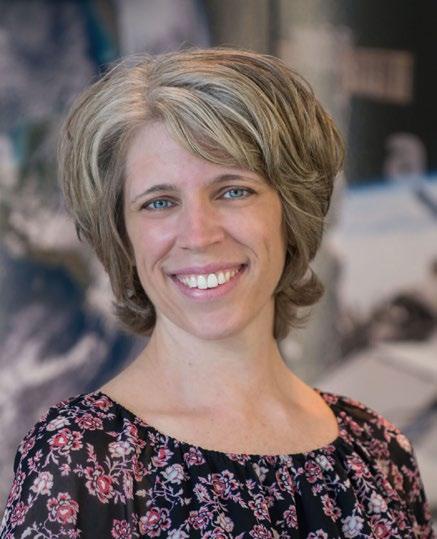
Dr. Tara Ruttley is the Chief Scientist for Orbital Reef, Blue Origin’s next-generation commercial space station, where she helps shape a future in which space is not only explored, but actively used to advance science, innovation, and humanity. Her work focuses on enabling research and discovery that will define the next era of human presence in low Earth orbit. Dr. Ruttley’s career reflects a lifelong fascination with life, learning, and exploration. She spent 21 years at the National Aeronautics and Space Administration (NASA), contributing to one of humanity’s greatest collaborative achievements: the International Space Station (ISS). Beginning her career at NASA’s Johnson Space Center in 2001, she worked as an engineer designing medical systems and human research hardware that flew aboard the ISS, directly supporting the health and performance of astronauts in space.
Driven by a deep curiosity about the human experience, Dr. Ruttley pursued a PhD in Neuroscience and joined the ISS Program Science Office as ISS Associate Program Scientist. In this role, she helped guide and communicate the Station’s scientific mission, connecting research conducted in orbit to benefits on Earth. She later served as NASA’s Associate Chief Scientist for Microgravity Research in Washington, DC, advising senior leadership on how space-based research can expand knowledge, inform policy, and serve society. In 2022, Dr. Ruttley joined Blue Origin to lead the scientific vision for Orbital Reef, helping build the laboratories, partnerships, and opportunities that will open space to researchers, educators, and innovators from around the world.
Dr. Ruttley holds a BS in Biology and an MS in Mechanical Engineering from Colorado State University, as well as an MA in Anthropology–Archaeology from the University of Houston, where her research explored the role of religion in slavery and social control in the pre–Civil War United States. Her work spans disciplines from engineering to neuroscience to the social sciences, reflecting a belief that the biggest questions — on Earth or in space — are best answered by crossing boundaries.An astronaut selection finalist, holder of a U.S. utility patent, and author of publications across multiple fields, Dr. Ruttley is also a sought-after speaker on topics about science, exploration, leadership, and the power of curiosity to shape a more informed and inspired future.
George R. Brown Convention Center, Exhibit Hall B3
Sunday, October 25, 2026 | 6:30 – 8:00 PM
Attend Your District Membership Meeting on Monday, 5:15–6:15 PM
District Membership Meetings are an essential part of the AALAS National Meeting experience. All attendees are invited to participate in their AALAS District Meeting, based on the branch you belong to and/or your geographic location. Not a current branch member? You’re still welcome! This is a valuable opportunity to explore branch activities and consider the benefits of membership.
International members are encouraged to attend any district meeting and may join the branch of their choice.
District Meetings offer you the chance to:
■ Hear updates from the AALAS National Board of Trustees and your local branch leaders
■ Connect with peers and learn about local programs and initiatives
■ Provide direct feedback to leadership
Unsure of your district or trustees?
Refer to the branch & district information in this program.







clusive property of Fern and should not be copied or replicated in any way without prior written permission from Fern.
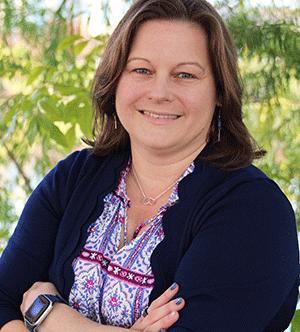
Dr. Jennifer Quammen, former AVMA Vice President (2022–2024), began her career as a credentialed veterinary technician before earning her MPH from the University of Iowa and DVM from The Ohio State University. A recognized leader in organized veterinary medicine, she has served as president of the Kentucky Veterinary Medical Association, championed leadership development programs, and held numerous national leadership roles, including chair of the AVMA Council on Veterinary Services. As Chief Veterinary Officer of Otto, member of the Kentucky Board of Veterinary Examiners, and co-founder of Veterinarian Coaching, Dr. Quammen has supported veterinarians, practices, and students in leadership, wellness, and career development.
Dr. Bob Fischer
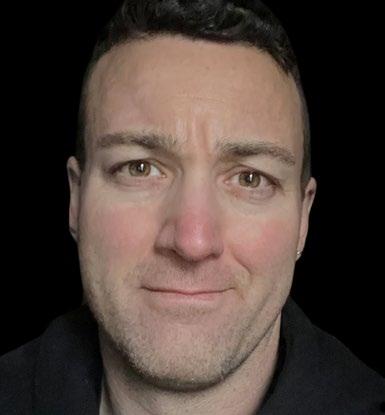
Dr. Bob Fischer is a Professor of Philosophy at Texas State University and Senior Researcher at Rethink Priorities, whose work focuses on applied animal ethics, interspecies tradeoffs, and the science of sentience. A widely published scholar, he is the author, editor, and contributor to several leading texts on animal welfare, ethics, and conservation, including A 21st Century Ethical Toolbox, Wildlife Ethics: The Ethics of Wildlife Management and Conservation, and Weighing Animal Welfare: Comparing Well-being Across Species. Through his research and teaching, Dr. Fischer brings a multidisciplinary perspective to complex ethical questions surrounding animals and their care.
Christopher D. Marshall, Ph.D.,
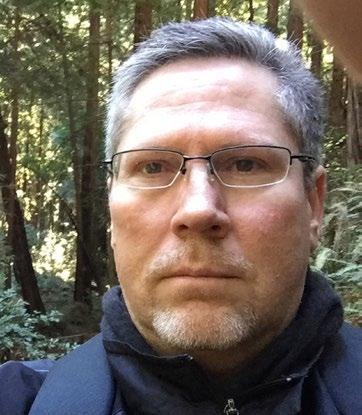
Christopher D. Marshall is a Professor of Marine Biology and Director of the Gulf Center for Sea Turtle Research at Texas A&M University at Galveston. With more than 25 years of experience in sea turtle, sirenian, and pinniped research and conservation, he has worked across Florida, Mexico, Japan, Qatar, and Texas, including nesting beach studies, rescue and rehabilitation, captive research, and conservation management. Dr. Marshall has received national recognition for leadership in sea turtle stranding, rescue, and rehabilitation efforts and has contributed to the discovery of new fossil whale and pinniped species through his research with the Smithsonian Institution’s National Museum of Natural History. Under his leadership, the Gulf Center for Sea Turtle Research has become a leading program for sea turtle monitoring, rescue, rehabilitation, and conservation along the Upper Texas Coast.
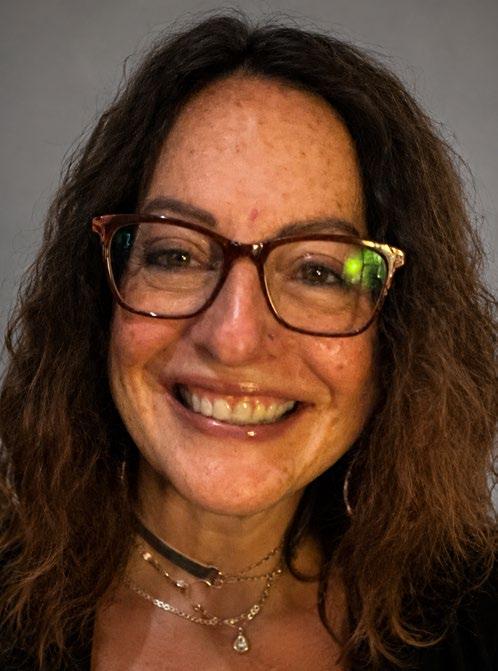
Welcome to Houston! For our 77th National Meeting, we will focus on professional growth, foster meaningful connections, and participate in engaging, thought-provoking activities that advance our shared mission in research and animal care.
On Sunday afternoon, be sure to set aside time to attend the Technical Trade Presentations (TTPs), led by representatives from exhibiting organizations. Once again, two concurrent TTP tracks will be available, offering a wide range of opportunities to explore emerging technologies, best practices, and new trends serving our community. Many thanks to all exhibitors who submitted topics for consideration!
Following the Opening General Session, attendees are invited to the Welcome Reception in the exhibit hall immediately after the ribbon-cutting ceremony. Join us for a relaxed evening of refreshments, conversation, and reconnecting with colleagues and friends.
We invite you to visit exhibitor booths on Monday and Tuesday from 9:00 a.m. to 5:00 p.m., and on Wednesday from 9:00 a.m. to 1:00 p.m.
The Exhibitor Teach & Chat (ETC) sessions will return in a dedicated area of the Exhibit Hall. These engaging 20-minute presentations, hosted by exhibitors, take place during program breaks so you won’t miss any of the broader schedule of sessions, workshops, and events. Come explore new products, services, and innovative industry solutions in action!
Now more than ever, I encourage you to attend the 2026 AALAS National Meeting to advance your professional development, build meaningful connections, and engage in thought-provoking activities that help advance our shared mission.
As we come together in Houston, we are reminded of the strength, resilience, and innovation that define both this city and our community. Known for its leadership in science, medicine, and exploration, Houston provides an inspiring backdrop as we reflect on our progress and look ahead. This meeting is a powerful opportunity to come together, support one another, and shape the future of laboratory animal science.
Maria Carigilia Chair, Exhibitor Advisory Council
Explore, connect, and discover what’s new in laboratory animal science at the AALAS NATIONAL MEETING EXHIBIT HALL
More than 200 companies, representing approximately 400 booths, will showcase the latest products, services, technologies, and innovations supporting the laboratory animal science community. Attendees will have opportunities to network with representatives from academia, research institutions, government agencies, and commercial organizations from across the industry.
Visit the Exhibitors section online at AALAS Exhibitors Information for exhibitor applications, sponsorship opportunities, and additional details.
RIBBON CUTTING CEREMONY
WELCOME RECEPTION
COMMERCIAL EXHIBITS
AFFILIATE BOOTHS
REFRESHMENT BREAKS
SUNDAY | 6:30 PM
SUNDAY | 6:30 PM - 8:00 PM
Kick off the meeting by reconnecting with colleagues, meeting new attendees, and exploring the Exhibit Hall.
Discover the newest products, equipment, technologies, and services from leading industry vendors and suppliers.
Connect with AALAS affiliates and explore educational resources, outreach initiatives, and professional development opportunities.
Enjoy complimentary refreshments while networking with exhibitors and attendees throughout the meeting.
MONDAY: 9:00 AM – 11:00 AM
2:00 PM – 4:00 PM
TUESDAY: 9:00 AM – 11:00 AM
2:00 PM – 4:00 PM
WEDNESDAY: 9:00 AM – 11:00 AM
POSTER SESSIONS & POSTER RECEPTION
EXHIBIT HALL HOURS
View this year’s scientific posters and engage directly with presenters during the Poster Reception on Tuesday from 4:00 PM – 5:00 PM. Enjoy refreshments, meet the authors, and celebrate the announcement of the 2026 Poster Award winners at 4:45 PM.
SUNDAY: 6:30 PM – 8:00 PM
Welcome Reception open to all attendees
MONDAY: 9:00 PM – 5:00 PM
TUESDAY: 9:00 AM – 5:00 PM
WEDNESDAY: 9:00 AM – 1:00 PM
Advanced Wall Solutions
AES, Inc
Allentown
Tote Bag Sponsor
Presidents Level Sponsor
Alternative Design
ALZET LLC
American Association for Laboratory Animal Enrichment
American Protective Products
Anatomage, Inc.
ANCARE Corp.
Animal Equipment By Stoney LLC
Animal Identification & Marking Systems, Inc.
Animal Specialties and Provisions
Animal Welfare Institute
AnimalCare Software
Antech
Aquaneering LLC
ARES Scientific
Art’s Way Scientific
Avid Identification Systems Inc
Avidity Science
BASi Research Products
Benchling
Beta Star Life Science Equipment
Bio-Serv
Elemental Machines
Elm Hill Labs
Epicur Pharma
EZ-Systems
Fidelis Animal Health, Inc.
Fine Science Tools
GenoBio TX*
GenoTyping Center of America
Getinge
Girton
Gruenberg - TPS
Hilltop Lab Animals Inc
HotDog Patient Warming by Augustine Surgical
Huron Consulting Group
IDEXX BioAnalytics
InfoEd Global
Innovive LLC
Inotiv
Instech Laboratories, Inc.
Instem
Iwaki Aquatic
JoVE
Kent Scientific
Key Solutions, Inc.
Lab Cycle Partners
Lab Products LLC
Lab Supply
Tech Connect Reception Sponsor
PURPOSES ONLY. This design remains the exclusive property of Fern and should not be copied or replicated in any way without prior written permission from Fern.
Wi-Fi Sponsorship
Gold Level Sponsor
Bioz, Inc.*
Brain & Software International-BSI
Braintree Scientific
Catch Glove by Rotano
Cayuse
Charles River
Presidents Level Sponsor
Class Biologically Clean, Ltd
ClearH2O
Gold Level Sponsor
Colonial Medical Supply Co., Inc.
CONTEC PROFESSIONAL
CURIS System
Datesand Ltd
Drexel University - Masters in Lab Animal Science
Dycem
Ecolab
Neck Cord Sponsor
President’s Level Sponsor
LABEX of MA
LabVoice
LBS Serving Biotechnology
LGL Animal Care Products, Inc.
Life Science Products, Inc.
Lithgow Laboratory Services
Lomir Biomedical Inc.
MacCauley Suffolks, LLC
MAI Animal Health
Marshall BioResources
Micro Photonics Inc
Mispro
New England Ovis
Northeastern Products Corp
NuAire, Inc.
Oak Hill Genetics LLC
Otto Environmental
Patterson Scientific
P.J. Murphy Forest Products Group
Perimed Inc.
Pharmacal Research Laboratories, Inc.
PLAS-LABS
Premier BioSource
Priority One Services, Inc
Quip Labs
Exhibit Hall Aisle Sign Sponsor
Gold Level Sponsor
RapID Lab
Red Plank Software
Research Diets, Inc.
RICA Animal Health
Ridglan Farms
Sable Systems International
SAFE Complete Care Competence, formerly BioFresh
Safer Human Medicine
SAI Infusion
Sanitation Strategies, LLC
Exhibit Hall Aisle Sign Sponsor
Silver Level Sponsor
SARSTEDT
SHANGHAI CHUNTIAN EXPERIMENTAL EQUIPMENT
CO., LTD*
Shepherd Specialty Papers
Shoe Cover Magic
Sika Corporation
Sinclair Bio Resources
SoftMouse.NET
Softron NIBP & Telemetry*
Somark Innovations
SOMNI SCIENTIFIC
Spectral Instruments Imaging, A Bruker Company
SPIRE INTEGRATED SOLUTIONS
Star-Oddi
STERIS
Stoelting Co
Studylog Systems, Inc.
Suburban Surgical Co Inc
Systems Engineering Lab Group (SE Lab Group)
Taconic Biosciences
TBJ Inc.
Tecniplast
The Andersons Bedding & Enrichment
The Jackson Laboratory
Thoren Caging Systems
TOPAZ Technologies
Translite, LLC
Transnetyx
Tricorder Array Technologies LLC
Turner Scientific
TUTTNAUER
Unified Information Devices
Verona Safety
VetEquip, Inc.
Tote Bag Sponsor
Silver Level Sponsor
Vivus Technologies, LLC
Voda IQ
VRL Laboratories
Wedgewood
W.F. Fisher & Son
Worldwide Primates Inc
XpressBio
Zeigler Bros Inc
Zephyr Equipment, LLC.
* First-time exhibitor
Pfizer AALAS Foundation AREA Program Sponsor
AAALAC International
Academy of Laboratory Animal Veterinary Technicians and Nurses (ALAVTN)
American College of Laboratory Animal Medicine (ACLAM)
American Society of Laboratory Animal Practitioners (ASLAP)
Americans for Medical Progress (AMP)
Association of Primate Veterinarians (APV)
Foundation for Biomedical Research (FBR)
International Association of Colleges of Laboratory Animal Medicine (IACLAM)
Laboratory Animal Management Association (LAMA)
National Association of Biomedical Research (NABR)
Public Responsibility in Medicine and Research (PRIM&R)
Scientists Center for Animal Welfare (SCAW)
Thai Association For Laboratory Animal Science (TALAS)
Vivarium Operational Excellence Network (VOE)
The 27th annual International Laboratory Animal Technician Week will be held from January 31 – February 6, 2027. The theme is “Research Scores with Technicians on the Floor”, and all Tech Week items are available through the AALAS Bookstore online beginning September 7, 2026.
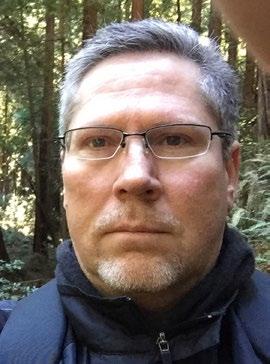
Who: All technicians
When: Monday, October 26 through Wednesday, October 28, 2026
Where: Fun Fair registration will be onsite at the Technician Fun Fair Booth. You will visit the on-site exhibitor booths to find the answers to the questions. The exam will be accessed through the link provided when you register or scan the QR code to open the exam.
The Charles Hunter Lecture will take place on Monday, October 26, 11:00 a.m. to noon. Christopher D. Marshall, Ph. D. Department of Marine Biology, Gulf Center for Sea Turtle Research, Texas A&M University at Galveston, Galveston, TX. Topic Sea Turtle Restoration on the Upper Texas Coast: Nesting, Rescue, Recovery, Rehabilitation and Habitat Restoration.
Why: To learn more about AALAS and your field, meet other technicians and make new friends, check out exhibitors’ new products and services, win fabulous prizes, become active in your organization, and earn CEUs! For more details, visit our website https://www.aalas.org/ main/tech-nm or email Nancy Dorcy at nancy.dorcy@aalas.org.
PURPOSES ONLY. This design remains the exclusive property of Fern and should not be copied or replicated in any way without prior written permission from Fern.
Here’s an excellent opportunity for all technicians attending the National Meeting! Hosted by CTAD and sponsored by PMI LabDiet, the Tech Connect Reception is on Monday, October 26 from 12:30 – 2:00 p.m. Join us for an exclusive networking reception where you can connect with other technicians, enjoy interactive games like Bingo and Kahoot, and stand a chance to win incredible prizes! We are thrilled to announce that AALAS Vice President- Brian Ebert, will be joining us along with Dr. Karen Froberg-Fejko to share the indispensable role of technicians in and their involvement with AALAS. Don’t miss this opportunity that offers both enjoyment and professional development. Food and drink are provided; no registration is necessary. Seating is limited, so be sure to arrive early.
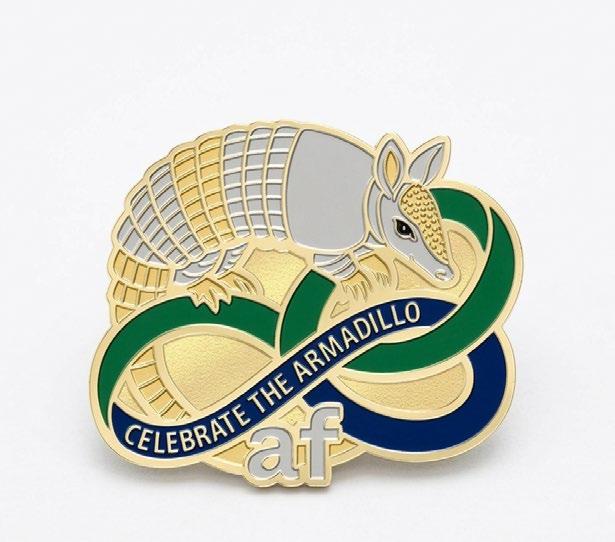
The AALAS Foundation is thrilled to announce that this year, it is celebrating the armadillo and its role in reproductive and genetic research! A Celebrate the Armadillo lapel pin has been designed, and anyone making a $5 or more in-person donation at the AALAS Foundation booth during the National Meeting in Houston will receive one. Anyone making an online donation of $10 or more to the AALAS Foundation between October 30, 2026, and December 31, 2026, will also receive a lapel pin – while supplies last!
We are very thankful to Charles River for sponsoring our 2026 Celebrate the Armadillo public awareness program!
The AALAS Foundation will conduct its Appreciation Reception & Live Auction on Wednesday, October 28, 2026, from 6:30 – 9:00 pm at the AALAS National Meeting in Houston, Texas.
This is always a fun and lively event, and this year’s theme is Space: Science’s New Frontier, so dress as your favorite space-themed character and join us for a casual and fun evening!
6:30 pm
Opening Remarks and Recognition of Sponsors, first-time Platinum+ Donors, Recognition of Memorial Wall of Honor Recipients, and award contest winners.
We ask the audience to remain silent during this portion of the program.
7:00 pm
Live Auction Check-In; Cash Bars Open; Appetizers Served
7:30 pm – Live Auction Begins
We are thankful for the following sponsors and supporters of this year’s event:
$10,000 Level Sponsors





Email foundation@aalas.org to learn how your company or organization might serve as an Appreciation Reception & Live Auction sponsor and receive recognition in the AALAS National Meeting Final Program and other communication channels!
The money raised through the AALAS Foundation’s annual contests and auctions helps support the AALAS Foundation and its mission to inform the public about the vital role of animals in research, the vast career opportunities available in biomedical research, and to educate the public about the compassionate professionals working in the field of laboratory animal science.
The AALAS Foundation is gearing up for another exciting Silent & Live Auction event at the 2026 AALAS National Meeting in Houston, Texas! These auctions play a vital role in supporting the Foundation’s mission, and we need your help to make them successful.
We are seeking donations of auction items to ensure a fantastic selection for bidders. Items that consistently generate high interest include:
• Animal-related items
• Event tickets
• Jewelry
• Gift baskets
• Travel packages and vacation getaways
• Sporting goods and memorabilia
• The latest must-have electronics
Your generous donations will be showcased at the Foundation Booth at the National Meeting.
Make your pledge by completing our online auction donation form here:
AALAS Foundation 2026 Live and Silent Auction –Fill out form
Thank you for helping us create a memorable and impactful auction!
Pledges received by August 15, 2026, will be recognized in the 2026 AALAS National Meeting Final Program.
All auction donation items must be shipped to the AALAS Foundation office no later than Tuesday, September 29, 2026, at the following address:
Attn: 2026 Silent Auction 9190 Crestwyn Hills Drive Memphis, TN 38125
PURPOSES ONLY. This design remains the exclusive property of Fern and should not be copied or replicated in any way without prior written permission from Fern.
While all auction donations will be on display at the Foundation Booth in Houston, Silent Auction bidding will take place via mobile device. This means that even if you cannot attend the National Meeting in person, you can still participate and place bids on fantastic items!
If you are attending the National Meeting, you will pick up your winning auction item(s) in person. If you are not attending the National Meeting, a shipping charge will be sent to you at the conclusion of the National Meeting, and your winning auction item(s) will be shipped to you once shipping payment has been received.
Alternatively, you may drop off your auction item donations at the AALAS Foundation Silent Auction Booth in Houston, TX, beginning Sunday, October 25, 2026.
To help promote your donation, please email a photo of your auction item to foundation@aalas.org so it may be featured in our Auction photo gallery on our Facebook page and our online auction bidding page. Your support is crucial to the success of the 2026 Silent & Live Auctions. Thank you for your generosity!
Take advantage of discounted pricing by registering early for the AALAS National Meeting.
• Attendees who register before August 1 will receive a $125 discount off the advance registration rate.
• Attendees who register between August 2 and October 5 will still save $125 off the on-site registration rate.
Registering early not only saves money but also helps streamline your arrival experience in Houston. Simply present a valid photo ID at the registration counter to quickly pick up your badge and meeting materials.
All registered attendees will receive an official meeting badge, which is required for access to educational sessions, meeting events, and the Exhibit Hall. For security purposes, badges must be worn at all times within the conference venue.
Your badge will also function as a digital business card during the meeting. Exhibitors may scan your badge to exchange contact information, and workshop attendance will be verified through badge scanning at session entrances.
A $50 replacement fee applies to lost, misplaced, forgotten, or damaged badges.
FIRST NATIONAL MEETING? START HERE!
If this is your first AALAS National Meeting, we invite you to attend the National Meeting Orientation on Sunday, October 25, from 2:00–3:00 PM
Designed for first-time attendees, new members, international participants, and anyone looking for guidance, this session will provide:
Tips for navigating the meeting
Suggestions for planning your schedule
An overview of AALAS programs and resources
Information on professional development opportunities
Networking recommendations to help maximize your experience
Start your week informed, connected, and ready to make the most of your time in Houston.
Before booking your hotel accommodation, AALAS recommends confirming your travel itinerary and arrival/ departure dates to help avoid unnecessary reservation penalties or change fees.
Be sure to review your hotel’s cancellation policy carefully prior to booking and finalize travel plans whenever possible before securing accommodation.
For your convenience, below are links to major airline carriers frequently used by attendees traveling to Houston:
Air Canada
Alaska Airlines
Allegiant Air
American Airlines
Delta Air Lines
Frontier Airlines
Southwest Airlines United Airlines
Attendees who select the session recording option during registration will receive access to up to 100 hours of recorded educational content as sessions become available. These recordings also provide valuable opportunities for continued learning after the meeting. If used as part of a future seminar or educational program, both presenters and participants may be eligible to earn continuing education units (CEUs) applicable toward:
AALAS technician certification registry maintenance
CMAR certification renewal
International attendees are encouraged to review visa requirements for their country and begin the application process as early as possible.
While AALAS cannot assist directly with visa processing or embassy requirements, invitation letters are available upon request. To request an invitation letter, email info@aalas.org and include:
Full legal name
Complete mailing address
Requests should be submitted by August 14 to allow adequate time for visa processing, advance registration for the meeting, and hotel reservations within the official AALAS room block. Invitation letters are mailed through the standard U.S. postal service. Expedited shipping is available for an additional fee.
PURPOSES ONLY. This design remains the exclusive property of Fern and should not be copied or replicated in any way without prior written permission from Fern.
International attendees are especially encouraged to attend the National Meeting Orientation on Sunday, October 25, from 2:00–3:00 PM
Please refer to the Final Program and Mobile App for location details once available.
Powered by Cvent, the official AALAS National Meeting Mobile App helps attendees stay connected and organized throughout the week.
App features include:
General meeting information
Personalized schedules
Session, track, and speaker listings
Poster and platform presentations
Exhibitor directories by company and category
Interactive maps
Social media integration
QR code scanner
Speaker and presenter information
Additional app details and download information will be released prior to the meeting launch in October

The AALAS Foundation proudly presents the exciting Rocket into Research contest!







As we gear up for the 2026 AALAS National Meeting in Houston, Texas, the AALAS Foundation invites you to unleash your creativity by painting and decorating a 10-inch wooden rocket. Whether inspired by the mysteries of the universe, the rich history of space in Houston, or the innovative spirit of scientific discovery, this is your chance to turn a blank wooden rocket into a masterpiece!




The contest includes four categories: Individual, Corporate, Branch, and Institution/Organization. A winner will be selected from each category. Additionally, AALAS Leadership will choose a Best of Show winner. A Fan Favorite will also be awarded to the entry whose photo receives the most likes in the Rocket into Research contest photo gallery on the AALAS Foundation’s Facebook page.
All winners will be announced, and prizes will be awarded at the AALAS Foundation’s Appreciation Reception, held on October 28, 2026, at the AALAS National Meeting in Houston, Texas.
Join the fun, show off your artistic talents, and help support the AALAS Foundation simultaneously!





Visit https://www.aalas.org/meeting/rocket-into-research for details and to enter the contest.








You strive for high standard quality research, ensuring the most consistent, predictable outcomes possible—while prioritizing animal welfare.
Ethiqa XR is the only long-acting buprenorphine
FDA-Indexed for the control of post-procedural pain in captive rodents, ferrets, laboratory rabbits, and non-human primates.
A single subcutaneous dose provides up to 72 hours of pain control.
Unlike compounded forms of buprenorphine, Ethiqa XR meets a high level of safety and efficacy by FDA standards, supporting both research integrity and the well-being of the animals in your care.
HUMAN SAFETY WARNING
Abuse Potential


Important Safety Information
For Captive Rodents, Ferrets, Laboratory Rabbits, and Non-Human Primates:
ETHIQA XR contains buprenorphine, an opioid that exposes humans to risks of misuse, abuse, and addiction, which can lead to overdose and death. Use of buprenorphine may lead to physical dependence. The risk of abuse by humans should be considered when storing, administering, and disposing of ETHIQA XR. Persons at increased risk for opioid abuse include those with a personal or family history of substance abuse (including drugs or alcohol) or mental illness (e.g., depression).
Life-Threatening Respiratory Depression
Serious, life-threatening, or fatal respiratory depression may occur with accidental exposure to or with misuse or abuse of ETHIQA XR. Monitor for respiratory depression if human exposure to buprenorphine occurs. Misuse or abuse of buprenorphine by swallowing, snorting, or injecting poses a significant risk of overdose and death.
Accidental Exposure
Because of the potential for adverse reactions associated with accidental exposure, ETHIQA XR should only be administered by veterinarians, veterinary technicians, or laboratory staff who are trained in the handling of potent opioids. Accidental exposure to ETHIQA XR, especially in children, can result in a fatal overdose of buprenorphine.
Risks From Concurrent Misuse or Abuse with Benzodiazepines or Other CNS Depressants
Concurrent misuse or abuse of opioids with benzodiazepines or other central nervous system (CNS) depressants, including alcohol, may result in profound sedation, respiratory depression, coma, and death.
See HUMAN SAFETY WARNINGS for detailed information. ethiqaxr.com 833-EthiqaXR (833-384-4729)
Only administer Ethiqa XR® by subcutaneous injection. Ethiqa XR is not intended for intravenous, intra-arterial, intrathecal, intramuscular, or intra-peritoneal injection. Do not use in animals with pre-existing respiratory compromise. Death has been reported when non-steroidal anti-inflammatory drugs (NSAIDs such as meloxicam and carprofen) and Ethiqa XR have been administered concomitantly in mice.
Do not house rats on wood chip-type bedding after administration of Ethiqa XR. Pica involving wood chip type bedding can be lethal.
Ethiqa XR may cause sedation, decreased blood pressure, decreased heart rate, decreased gastrointestinal mobility, and respiratory depression. Use caution with concomitant administration of Ethiqa XR with drugs that cause respiratory depression. Animals should be monitored for signs of decreased cardiovascular and respiratory function when receiving Ethiqa XR.
The safety of Ethiqa XR has not been evaluated in pregnant, lactating, neonatal, or immune-compromised animals.
For Humans:
Not for use in humans. Keep out of reach of children and pets.
Ethiqa XR contains buprenorphine, a Schedule III controlled substance with an abuse potential similar to other Schedule III opioids, which may lead to overdose and death.
Ethiqa XR should be handled appropriately to minimize the risk of misuse, abuse, addiction, and criminal diversion, including restriction of access, the use of accounting procedures, and proper disposal methods as appropriate to the laboratory setting and as required by law.
Ethiqa XR should only be handled and administered by a veterinarian, veterinarian technician, or laboratory staff trained in the handling of potent opioids. Wear protective clothing when administering Ethiqa XR to avoid direct contact with human skin, eyes, oral, or other mucus membranes which could result in absorption of buprenorphine and adverse reactions.
For more information, consult the Prescribing Information including the Boxed Warning.
1.3 mg/mL
Opioid Analgesic For subcutaneous use only For use in captive rodents, ferrets, laboratory rabbits, and non-human primates
CAUTION: Federal law restricts this drug to use by or on the order of a licensed veterinarian.
LEGAL STATUS—In order to be legally marketed, a new animal drug intended for a minor species must be Approved, Conditionally Approved, or Indexed by the Food and Drug Administration. THIS PRODUCT IS INDEXED—MIF 900-014. Extra-label use is prohibited. This product is not to be used in animals intended for use as food for humans or food-producing animals.
HUMAN SAFETY WARNING
Abuse Potential
ETHIQA XR contains buprenorphine, an opioid that exposes humans to risks of misuse, abuse, and addiction, which can lead to overdose and death. Use of buprenorphine may lead to physical dependence. The risk of abuse by humans should be considered when storing, administering, and disposing of ETHIQA XR. Persons at increased risk for opioid abuse include those with a personal or family history of substance abuse (including drugs or alcohol) or mental illness (e.g., depression).
Life-Threatening Respiratory Depression
Serious, life-threatening, or fatal respiratory depression may occur with accidental exposure to or with misuse or abuse of ETHIQA XR. Monitor for respiratory depression if human exposure to buprenorphine occurs. Misuse or abuse of buprenorphine by swallowing, snorting, or injecting poses a significant risk of overdose and death.
Accidental Exposure
Because of the potential for adverse reactions associated with accidental exposure, ETHIQA XR should only be administered by veterinarians, veterinary technicians, or laboratory staff who are trained in the handling of potent opioids. Accidental exposure to ETHIQA XR, especially in children, can result in a fatal overdose of buprenorphine.
Risks From Concurrent Misuse or Abuse with Benzodiazepines or Other CNS Depressants
Concurrent misuse or abuse of opioids with benzodiazepines or other central nervous system (CNS) depressants, including alcohol, may result in profound sedation, respiratory depression, coma, and death.
See HUMAN SAFETY WARNINGS for detailed information.
DESCRIPTION
Ethiqa XR is an injectable suspension of extended-release buprenorphine. Ethiqa XR is an extended-release formulation using the Fidelipid LAI™ technology, a proprietary lipid combination of glycerides and cholesterol. Buprenorphine hydrochloride, an opioid analgesic, is the active ingredient in Ethiqa XR. Lipid-bound buprenorphine hydrochloride is suspended in medium chain fatty acid triglyceride (MCT) oil. Lipids encapsulate the buprenorphine limiting diffusion which provides for larger doses and prolonged action.1,2 Ethiqa XR has a slightly yellow to white opaque appearance. Each mL contains approximately 1.3 mg buprenorphine hydrochloride. The sterile product contains cholesterol, benzyl alcohol, glyceryl tristearate, and buprenorphine hydrochloride suspended in MCT oil. Buprenorphine belongs to the opioid class of drugs and is a narcotic under the Controlled Substances Act due to its chemical derivation from thebaine. Buprenorphine
Formula C29H41NO4
INDICATIONS
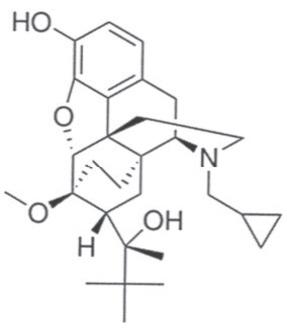
Ethiqa XR is indicated for the control of post-procedural pain in captive rodents, ferrets, laboratory rabbits, and non-human primates.
DOSAGE AND ADMINISTRATION
Wear protective clothing when administering Ethiqa XR.
Do not dispense Ethiqa XR for administration at home by the pet owner (see HUMAN SAFETY WARNINGS).
Dosing
Administer Ethiqa XR subcutaneously according to the dose listed in the table for the appropriate species.
Doses were derived either from published literature or using allometric principles.
Consider the time to reach estimated therapeutic blood levels when administering Ethiqa XR for post-procedural pain. If needed, a single repeat dose may be administered subcutaneously 72 hours after the initial dose.
Definitive therapeutic blood levels of Ethiqa XR have not been established for all species. The times to reach blood levels thought to be therapeutic is presented below and is representative of what has been found in published literature.
For more information, consult the published literature referenced at the end of this package insert.
DOSING TABLE FOR SUBCUTANEOUS INJECTION OF ETHIQA XR
Species
Mice 3.25 mg/kg10
30 minutes10
Naked mole rats (NMR)
Gerbils
Hamsters
Rats
3.25 mg/kg*
1 mg/kg13
0.8 mg/kg*
0.65 mg/kg12
30 minutes13
4 hours16
Precautions/ Adverse Events
• Death has been reported when non-steroidal anti-inflammatory drugs (NSAIDs such as meloxicam and carprofen) and Ethiqa XR have been administered concomitantly.5
• Granulomatous inflammatory nodules have been observed in naked-skinned mice and rats administered Ethiqa XR.4,5
• In one study, two male mice died following the third surgery and redosing; weight loss.11
• No published data available administering Ethiqa XR to naked mole rats.
• Granulomatous inflammation at injection site.13
• No published data available administering Ethiqa XR to hamsters.
• Nausea within 24 hrs of dosing, self-licking, self-gnawing and efforts to eat wood-chip bedding, one out of 36 rats exposed to wood bedding died3,12, 3 of 222 rats bled profusely from jugular vein, which was used for obtaining blood samples, and died.
• Granulomatous inflammatory nodules have been observed in naked-skinned mice and rats administered Ethiqa XR.4,5
Guinea pigs
0.48 mg/kg*
0.48 mg/kg17*
8 hours17
0.48 mg/kg*
Ferrets
Non-human primates Laboratory rabbits
0.6 mg/kg9 0.2 mg/kg6 0.15 mg/kg19
30 minutes9
15 minutes6
• No published data available administering Ethiqa XR to chinchillas.
• Decrease in body weight14,17 and fecal output.14 Increase in passive behavior, such as eyes closed or squinting, subtle body movement, and incomplete movement.17
• No published data available administering Ethiqa XR to prairie dogs.
• No adverse reactions observed.9
• Injection site reactions including inflammation and necrosis have been observed in common marmosets.6
• Mild sedation, decreased body weight, increased cage movements, acute necrosis and inflammation at the injection site.6
• 60 minutes19
• 30 minutes in female and 60 minutes in male rabbits20
• Reduced fecal output post-operatively. Returned to normal at 72 hours.19
*These doses are based on allometric principles.
Allometric principles (i.e., animals among closely related species and of similar body size should have similar metabolic rates) can be used to determine the dose of Ethiqa XR for rodent species not listed in the table above and where no published data is available.
For example, doses for hamsters and guinea pigs were calculated using published allometric scaling factors ( see Nair21 and FDA22 for detailed discussion and how to apply allometric scaling).
The dose of Ethiqa XR can also be estimated by using the known dose for a rodent species of similar size (the doses listed in the table above for NMR, chinchillas, and prairie dogs were calculated using this approach).
Based upon the time to reach estimated therapeutic blood levels, Ethiqa XR can be administered 30 minutes prior to painful stimulus in mice10 and gerbils13, 8-12 hours prior in guinea pigs17, 60 minutes prior in laboratory rabbits19, and 15 minutes prior in non-human primates.6
Administration
Shake the vial well before each use to ensure uniform suspension. If stored refrigerated, bring to room temperature before use.
Use aseptic technique to subcutaneously administer Ethiqa XR by utilizing minimally stressful restraint techniques or sedation.
An oily sheen may be observed in the fur after injection due to leakage of Ethiqa XR, which is an oil-based drug suspension, from the injection site. The oily sheen may last for 4 to 5 days post-injection. Leakage from the injection site can be minimized by slowly injecting Ethiqa XR into the subcutaneous space. Do not return any unused drug suspension from the syringe back into the vial.
The animal can be returned to its cage immediately after receiving Ethiqa XR. (See CONTRAINDICATIONS, PRECAUTIONS, and DOSAGE AND ADMINISTRATION for additional information on bedding.)
CONTRAINDICATIONS
Only administer Ethiqa XR by subcutaneous injection. Ethiqa XR is not intended for intravenous, intraarterial, intrathecal, intramuscular, or intra-peritoneal injection.
Do not use in animals with pre-existing respiratory compromise.
Do not house rats on wood chip-type bedding after administration of Ethiqa XR. Signs of nausea, including pica, have been observed in rats for up to 3 days post-treatment with Ethiqa XR. Pica involving wood chip type bedding can be lethal (see ADVERSE REACTIONS).
HUMAN SAFETY WARNINGS
Not for use in humans. Keep this and all medications out of reach of children and pets.
Human User Safety While Handling Ethiqa XR in the Hospital:
Ethiqa XR should only be handled and administered by a veterinarian, veterinary technician, or laboratory staff trained in the handling of potent opioids.
To prevent human adverse reactions or abuse, at least 2 trained administrators should be present during injection of Ethiqa XR.
Wear protective clothing when administering Ethiqa XR.
Mucous Membrane or Eye Contact During Application:
Direct contact of Ethiqa XR with the eyes, oral, or other mucous membranes could result in absorption of buprenorphine and the potential for adverse reactions. If accidental eye, oral, or other mucous membrane contact is made during application, flush the area with water and contact a physician immediately. If wearing contact lenses, flush the eye first and then remove the contact lens.
Skin Contact During Application:
If human skin is accidentally exposed to ETHIQA XR, wash the exposed area immediately with soap and water and contact a physician. Accidental exposure could result in absorption of buprenorphine and the potential for adverse reactions.
Drug Abuse, Addiction, and Diversion of Opioids:
Controlled Substance:
Ethiqa XR contains buprenorphine, a Schedule III controlled substance with an abuse potential similar to other Schedule III opioids.
Abuse:
Ethiqa XR contains buprenorphine, an opioid substance, that can be abused and is subject to misuse, abuse, and addiction, which may lead to overdose and death. This risk is increased with concurrent use of alcohol and other central nervous system depressants, including other opioids and benzodiazepines.
Ethiqa XR should be handled appropriately to minimize the risk of diversion, including restriction of access, the use of accounting procedures, and proper disposal methods, as appropriate to the clinical setting and as required by law.
Prescription drug abuse is the intentional, non-therapeutic use of a prescription drug, even once, for its rewarding psychological or physiological effects. Buprenorphine has been diverted for non-medical use into illicit channels of distribution. All people handling opioids require careful monitoring for signs of abuse.
Storage and Disposal:
Ethiqa XR is a Schedule III opioid. Store in a locked cabinet according to federal and state controlled substance requirements/guidelines. Discard any broached vials after 90 days. Any unused or expired vials must be destroyed by a reverse distributor; for further information, contact your local DEA field office or call Fidelis Animal Health at 1-833-384-4729.
Information for Physician:
Ethiqa XR contains a mu opioid partial agonist (1.3 mg buprenorphine/mL). In the case of an emergency, provide the physician with this package insert. Naloxone may not be effective in reversing respiratory depression produced by buprenorphine. The onset of naloxone effect may be delayed by 30 minutes or more. Doxapram hydrochloride has also been used as a respiratory stimulant.
PRECAUTIONS
The use of paper or soft bedding for up to 3 days following administration of Ethiqa XR should be considered (see CONTRAINDICATIONS and ADVERSE REACTIONS).
Buprenorphine is excreted in the feces (see CLINICAL PHARMACOLOGY). Coprophagy may lead to ingestion of buprenorphine or its metabolites by animals treated with Ethiqa XR and untreated cage mates. Ethiqa XR forms a depot near the injection site.
Animals may exhibit an obtunded response to stimuli up to 4 hours after receiving Ethiqa XR. When using Ethiqa XR, an opiate antagonist such as naloxone, should be available in case reversal is required. Ethiqa XR may cause sedation, decreased blood pressure, decreased heart rate, decreased gastrointestinal mobility, and respiratory depression. Use caution with concomitant administration of Ethiqa XR with drugs that cause respiratory depression.
Animals should be monitored for signs of decreased cardiovascular and respiratory function when receiving Ethiqa XR.
The safety of Ethiqa XR has not been evaluated in pregnant, lactating, neonatal, or immune-compromised animals. Species-specific precautions described in the published literature are included in the dosing table under the DOSAGE AND ADMINISTRATION section.
ADVERSE REACTIONS
See the dosing table under the DOSAGE AND ADMINISTRATION section for species-specific adverse reactions.
CONTACT INFORMATION
Contact Fidelis Animal Health at 1-833-384-4729 or www.ethiqaxr.com. To report suspected adverse drug experiences, contact Fidelis Animal Health at 1-833-384-4729.
For additional information about reporting adverse drug experiences for animal drugs, contact FDA at 1-888-FDA-VETS or http://www.fda.gov/reportanimalae.
CLINICAL PHARMACOLOGY3
Mechanism of Action: Buprenorphine exerts its analgesic effect via high affinity binding to various subclasses of opiate receptors particularly mu, in the central nervous system. Buprenorphine analgesic and adverse reactions are mediated by mu opioid receptor agonism. Due to its partial agonist activity, buprenorphine exhibits a ceiling effect to its actions and thus has a greater therapeutic index compared to full mu opioid receptor agonists such as morphine. Buprenorphine binds tightly to and dissociates slowly from the opioid receptor. Therefore, the pharmacological effects of buprenorphine are not directly related to plasma concentrations.
Buprenorphine can act as an agonist and antagonist at different classes of opioid receptors. Agonism at the mu opioid receptor and, in some cases, antagonism at the kappa or delta opioid receptors are possible underlying mechanisms for the ceiling effect and bell-shaped dose-response curve of buprenorphine. Studies with knockout mice have shown that the antinociceptive effect of buprenorphine, which is mediated primarily by the mu opioid receptor, is attenuated by the ability of the drug to activate the opioid receptor like (ORL-1) receptor. The drug can be described as a ‘full’ and a ‘partial’ agonist at the same receptor depending on the specific assay. There appears to be no ceiling effect for analgesia, but there is a ceiling effect for respiratory depression.
Pharmacokinetic studies with bolus injections of buprenorphine in mice and rats provide similar models. After bolus intravenous administration, plasma levels decline tri-exponentially. The drug is n-dealkylated in the liver to norbuprenorphine (NBN), an active metabolite. Studies have shown that glucuronide metabolites of buprenorphine and NBN are also metabolically active, and can approximate or exceed the concentration of the parent drug. Un-metabolized drug excreted in the urine and feces one week after injection was 1.9 and 22.4% of the dose, respectively, and 92% of the dose was accounted for in one week.3
See the dosing table under DOSAGE AND ADMINISTRATION section for information specific to each species regarding time to reach estimated therapeutic blood levels.
HOW SUPPLIED
Ethiqa XR is supplied in a 5 mL glass vial containing 3 mL of injectable drug suspension.
STORAGE INFORMATION
Store between 15° and 25°C +/- 2°C (59° and 77°F) or refrigerated. DO NOT FREEZE. If stored refrigerated, bring to room temperature before use. Once broached, the multi-dose vial should be discarded after 90 days. Product could change its physical properties if not stored within the specified storage conditions and original vial container.
1. Mishra et al. Engineering solid lipid nanaparticles for improved drug delivery: promises and challenges of translational research. Drug Deliv. and Transl. Res, 2: 238-253; 2012.
2. Bethune et al., The role of drug-lipid interactions on the disposition of liposome-formulated opioid analgesics in vitro and in vivo. Anesth Analg. 93(4):928-33; 2001.
3. Guarnieri et al.,Safety and efficacy of buprenorphine for analgesia in laboratory mice and rats. Lab Animal, 41(11): 337-343; 2012.
4. Levinson BL, Leary SL, Bassett BJ, Cook CJ, GormanGS, Coward LU. Pharmacokinetic and Histopathologic Study of an Extended-Release, Injectable formulation of Buprenorphine in Sprague-Dawley Rats. J Am Assoc Lab Anim Sci. Jan 1, 61(1): 81-8; 2022.
5. Fidelis’ postmarketing surveillance database.
6. Fabian NJ et al. Evaluation and comparison of pharmacokinetic profiles and safety of two extendedrelease buprenorphine formulations in common marmosets (Callithrix jacchus). Scientific Reports, 13, 11864; 2023.
7. Klein H. et al. A pharmacokinetic study of extended-release buprenorphine in Cynomolgus monkeys (m.fascicularis). Journal of Medical Primatology. 52(6):369-373; 2023.
8. Williams W et al. Pharmacokinetics of sustained-release buprenorphine in adult baboons (Papio Anubis). 2021 National Meeting of the Am Assoc for Lab Anim Sci (virtual).
9. Katzenbach JE, Wittenburg LA, Allweiler SI, Gustafson DL, Johnson MS. Pharmacokinetics of single-dose buprenorphine, butorphanol, and hydromorphone in the domestic ferret (Mustela putorius furo). J Exotic Pet Med 27:95-102; 2018.
10. Chan G et al. Assessment of the Safety and Efficacy of Pre-emptive Use of Extended-release Buprenorphine for Mouse Laparotomy. J Am Assoc Lab Anim Sci 99(99): 1-7;2022.
11. Traul KA et al. Safety studies of post-surgical buprenorphine therapy for mice. Lab Anim. 49(2):100-110;2015.
12. Cowan A et al. Lack of adverse effects during a target animal safety trial of extended-release buprenorphine in Fisher 344 rats. Nature America, Inc. Jan Vol 45(1):28-34; 2016.
13. Bowie AR et al. Pharmacokinetics of Extended-release Buprenorphine in Mongolian Gerbils (Meriones unguiculatus). J Am Assoc Lab Anim Sci: 62 (6): 538-544; 2023.
14. Zanetti AS et al. Pharmacokinetics and adverse effects of 3 sustained-release buprenorphine dosages in healthy guinea pigs. J Am Assoc Lab Anim Sci 56 (6): 768-778; 2017.
15. Fox L et al. Analgesic Efficacy and Safety of Buprenorphine in Chinchillas (Chinchilla lanigera). J Am Assoc Lab Anim Sci 57 (3): 286-290; 2018.
16. Alamaw ED et al. Extended-release Buprenorphine, an FDA indexed Analgesic, Attenuates Mechanical Hypersensitivity in Rats (Rattus norvegicus). J Am Assoc Lab Anim Sci. 61 (1): 81-88; 2022.
17. Oliver VL et al. Evaluation of pain assessment techniques and analgesic efficacy in a female guinea pig model of surgical pain. Am Assoc Lab Anim Med. 56 (4): 425-435; 2017.
18: Hutson CL et al. Analgesia during Monkeypox Virus Experimental Challenge Studies in Prairie Dogs (Cynomys ludovicianus). J Am Assoc Lab Anim Sci. 58 (4):485-500; 2019.
19. Farkas MR, Dorn S, Muller L, et al. Pharmacokinetics, Fecal Output, and Grimace Scores in Rabbits Given Long-Acting Buprenorphine or Fentanyl for Postsurgical Analgesia. J Am Assoc Lab Anim Sci.; 2024.
20. New Zealand white rabbits receiving 0.15 mg/kg and 0.3 mg/kg SQ Ethiqa XR. Unpublished study 2021. Data on file.
21. Nair AB, Jacob S. A simple practice guide for dose conversion between animals and human. J Basic Clin Pharm. 7(2):27-31; 2016.
22. Food and Drug Administration. FDA Guidance for Industry Estimating the Maximum Safe Starting Dose in Initial Clinical Trials for Therapeutics in Adult Healthy Volunteers. July 2005.
Fidelis Animal Health, Inc. 685 US Highway One, Suite 265 North Brunswick, NJ 08902 833-384-4729 www.EthiqaXR.com
Fidelis, Fidelis Animal Health™, Ethiqa XR®, and Fidelipid LAI™ are trademarks of Fidelis Animal Health, Inc., a Delaware Corporation. NDC 86084-100-30. U.S. Patent Nos. 10,555,899; 11,058,629 FID-ETH-PIMP017






on Monday, 5:15–6:15 p.m.
District Membership Meetings are an essential part of the AALAS National Meeting experience. All attendees are invited to participate in their AALAS District Meeting, based on the branch you belong to and/or your geographic location. Not a current branch member? You’re still welcome! This is a valuable opportunity to explore branch activities and consider the benefits of membership. International members are encouraged to attend any district meeting and may join the branch of their choice.
District Meetings offer you the chance to:
■ Hear updates from the AALAS National Board of Trustees and your local branch leaders
■ Connect with peers and learn about local programs and initiatives
■ Provide direct feedback to leadership
Unsure of your district or trustees? Refer to the branch listing or district map below.
District 1 Metro New York, New England, Northern Mountain, Southern New England, Upstate New York
District 2
Delaware Valley, New Jersey, Three Rivers
District 3 Greater Virginia, National Capital Area
District 4 Appalachian, Florida, Mid-South, Research Triangle, Southeastern
District 5 Ohio, Indiana, Kentucky, Michigan
District 6 Central Illinois, Chicago, Iowa, Minnesota, Nebraska
District 7 Kansas City, Louisiana, Mile High, Oklahoma, St. Louis, Texas
District 8 Arizona, Mountain West, Northern California, Northern Rocky Mountain, Oregon, Sacramento Valley, San Diego, Southern California, Washington
Connecticut, Maine, Massachusetts, New Hampshire, New York, Rhode Island, Vermont
Delaware, New Jersey, Pennsylvania, West Virginia
Maryland, Virginia, Washington, DC
Alabama, Florida, Georgia, Mississippi, North Carolina, South Carolina, Tennessee, US Commonwealth of Puerto Rico
Indiana, Kentucky, Michigan, Ohio
Illinois, Iowa, Minnesota, Nebraska, North Dakota South Dakota, Wisconsin, Wyoming
Arkansas, Colorado, Kansas, Louisiana, Missouri, New Mexico, Oklahoma, Texas
Alaska, Arizona, California, Hawaii, Idaho, Montana, Nevada, Oregon, Utah, Washington
Erin Vogelsong
Erika Wiltrout
Thomas
Emily Werner
Continuous Pathogen Reduction in Occupied Research Spaces: Evaluating Dry Hydrogen Peroxide Technology for Life Sciences Vivaria
1:00 PM - 1:20 PM/Room: 310
Speaker: Nick Hidell
Terminal disinfection controls contamination between uses but not during active operations, when animals are housed, and active surface disinfection is often impractical. Dry Hydrogen Peroxide (DHP) devices fill this gap by operating continuously in occupied spaces at ~2 ppb. This presentation reviews peerreviewed efficacy data, animal welfare data, and implications for implementing continuous pathogen reduction in research institutions that use DHP devices.
This Technical Trade Presentation is sponsored in part by Quip Laboratories.
When Upgrading Your Washer & Sterilizer Makes Sense Instead of Buying New
1:20 PM - 1:40 PM/Room: 310
Speaker: Kedir Felix
Buy New Equipment or Upgrade? Let’s Settle It. New isn’t always better, and waiting to find out could cost you. Every day you run aging sterile processing equipment, you’re risking performance gaps, compliance issues, and budget overruns. Replacement isn’t your only option, and it may not be your best one. This presentation will highlight what’s upgradeable, what it costs, and how to make the smartest investment decision for your facility. This Technical Trade Presentation is sponsored in part by Spire Integrated Solutions.
2:00 PM - 2:20 PM/Room: 310
Speaker: Kathy Garner
Heart rate, core temperature, and SpO2, oh my! To ensure animal welfare, many institutions require surgeons to monitor animals’ vital signs during procedures. While seasoned professionals can do this with no sweat, the number of parameters that can be monitored, what they mean, and their interpretations can be confusing for personnel learning best practices. This presentation provides a basic overview of when to monitor various physiologic parameters, with a focus on how Kent Scientific products can help you achieve your goals.
This Technical Trade Presentation is sponsored in part by Kent Scientific Corporation.
2:20 PM - 2:40 PM/Room: 310
Speaker: Daniel D Myers Jr
This design remains the exclusive property of Fern and should not be copied or replicated in any way without prior written permission from Fern.
1:40 PM - 2:00 PM/Room: 310
Speaker: Bob Davis
This presentation summarizes a recent project to replace two steam sterilizers with two dry-heat sterilizers in an operating cage-wash facility, with minimal impact on daily operations. We will discuss the project background, throughput requirements, available space, facility operations, impact on cage wash operations, impact on husbandry operations, project time, planning and phasing, execution, and lessons learned. Please join us to learn how to make your sterilizer replacement project faster, less expensive, and far less intrusive on operations. This Technical Trade Presentation is sponsored in part by Gruenberg Dry Heat Sterilizers.
Effective perioperative analgesia is essential for maintaining animal welfare and supporting the integrity of rodent research models. Conventional buprenorphine administration in mice and rats often requires repeated dosing due to its relatively short duration of action, increasing animal handling, and potential variability in analgesic coverage. Sustained-release formulations have been developed to extend analgesic duration, although some preparations have demonstrated variable pharmacokinetics or local injection-site reactions. To review the practical implementation and clinical use of currently available long-acting buprenorphine formulations in rodent and non-rodent species, with emphasis on optimizing analgesic strategies based on species, surgical procedure, duration of action, and potential adverse effects. Drawing on educational webinars and institutional experience, this seminar will discuss practical considerations for integrating sustained-release buprenorphine into perioperative analgesic protocols. Topics will include dosing strategies, administration techniques, expected duration of analgesia, monitoring for adverse effects, and programmatic considerations such as protocol development, veterinary oversight, and alignment with refinement principles within institutional animal care and use programs. Institutional experience and preliminary observations suggest that longacting buprenorphine formulations can provide consistent postoperative analgesia in rodent and non-rodent species while reducing the need for repeated dosing and animal handling. Extended-release buprenorphine formulations represent a practical refinement for perioperative pain management in laboratory animal models, with the potential to enhance animal welfare and improve procedural consistency within research programs.
This Technical Trade Presentation is sponsored in part by Epicur Pharma.
2:40 PM - 3:00 PM/Room: 310
Speaker: Elizabeth Massoth
Budget constraints are pushing laboratories to maximize existing resources. This presentation reveals an innovative approach implemented at Texas Tech University, in partnership with CURIS System, that repurposes bulk autoclaves as hydrogen peroxide vapor bio-decontamination chambers. By doing so, facilities effectively gain an additional chamber capable of safely treating IVC racks, BSCs, transfer stations, feed bags, computers, and more—without consuming valuable space in already crowded lab environments. We will demonstrate how CURIS’s no-heat, lowconcentration hydrogen peroxide technology successfully integrates with standard autoclaves, creating a dual-purpose solution that saves money, space, and time while maintaining rigorous biosafety standards. Participants will learn how configuring existing bulk autoclaves for hydrogen peroxide vapor decontamination with CURIS’ Pulse™ technology enables operation at 110°F and drastically reduces wait times compared to traditional methods that require complete cooling. Differences in operation and outcomes between various systems and solutions will be explored, including speed, safety, material compatibility, and efficacy. Other potential dual-purpose bio-decontamination options will be discussed with an eye toward economic and space-saving protocols. This Technical Trade Presentation is sponsored in part by CURIS System.
3:00 PM - 3:20 PM/Room: 310
Speaker: Chandra Devireddy
Animal research facilities generate large volumes of complex data, including health records, veterinary reports, standard operating procedures (SOPs), experimental protocols, and regulatory documentation. Managing this information efficiently is critical to maintaining animal welfare, ensuring compliance, and supporting operational decision-making. Traditional approaches rely heavily on manual record-keeping and document retrieval, which can be time-consuming and error-prone. We present an Intelligent Animal Health and Knowledge Management Software Module, designed for easy integration into animal facility management software platforms. This AI-powered module leverages Data Analytics and Large Language Models (LLMs) to provide comprehensive health monitoring, intelligent knowledge retrieval, and compliance support for facility staff. The Animal Health Monitoring module maintains detailed digital records for each animal, including medical history, treatments, behavioral observations, and laboratory results. Predictive analytics identify early signs of disease or stress, generating alerts to enable proactive interventions. The Knowledge Retrieval module allows staff to query regulatory guidelines, SOPs, and protocols using natural language, retrieving precise, contextaware responses in real time. The Compliance and Reporting module continuously analyzes operational data to flag deviations, summarize protocol compliance, and produce audit-ready reports. Additionally, the Environmental Data Analytics module evaluates housing conditions such as temperature, humidity, lighting, and air quality, providing recommendations to maintain optimal animal welfare. By integrating these capabilities into a single platform, the system reduces administrative workload, improves regulatory compliance, and provides actionable operational insights. It enables
staff to make faster, data-driven decisions while maintaining high standards of animal care. This also demonstrates a practical, scalable approach for transforming animal facility management through intelligent AI and knowledge-driven workflows, bridging the gap between operational efficiency and animal welfare. This Technical Trade Presentation is sponsored in part by Key Solutions, Inc.
3:20 PM - 3:40 PM/Room: 310
Speaker: Terry Burns-Heffner
Environmental enrichment is essential for the welfare of laboratory animals, yet many existing enrichment devices are adapted from companion-animal products and are primarily manufactured from petroleum-derived plastics, including nylon, rubber, and other synthetic polymers. These materials, when subjected to animal chewing and manipulation, may introduce variables such as material degradation and potential ingestion of synthetic compounds, which can confound research outcomes. To mitigate these concerns, a novel plant-derived composite material specifically for enrichment devices in laboratory and zoological animal environments was developed. This composite is formulated from renewable plant-based resources and engineered to achieve a balance of hardness, flexibility, durability, and controlled abrasion suitable for animal interaction. Importantly, the material is free from petroleum-based plastics (e.g., nylon, PVC) and common plastic additives such as phthalates, BPA, and plasticizers. Analytical assessment detected no PFAS compounds in the tested panel, and independent laboratory testing conducted in accordance with internationally recognized biodegradation protocols demonstrated measurable aerobic biodegradation under controlled conditions. Prototype devices were fabricated to support manipulation and chewing behavior while remaining compatible with standard husbandry practices in laboratory animal settings. Ongoing controlled behavioral studies are evaluating animal interactions with these devices in rabbits and pigs at an academic research facility, with additional pilot observations planned in rodents and nonhuman primates.
This Technical Trade Presentation is sponsored in part by Animal Specialties and Provisions.
Handling Techniques Do Not Impact Production Mice – But Could Impact You
3:40 PM - 4:00 PM/Room: 310
Speaker: Danielle R Adney
Techniques for handling laboratory mice have been widely evaluated and discussed; however, as alternative handling techniques have been increasingly adopted, the available consensus is often based on the synthesis of multiple small studies. To better understand the comprehensive impact on large mouse breeding colonies, The Jackson Laboratory recently conducted a large, multi-pronged study to investigate the effects of four handling techniques on mouse breeding colonies, health, behavioral phenotypes, employee safety, biosecurity, and more. Overall, despite sporadic differences within smaller cohorts, we found that handling method had no influence on any major behavioral phenotype, home-cage behavior, or physiological parameters. In contrast, tail handling was associated with a lower risk of work-
related musculoskeletal disorders and decreased biosecurity risk as compared with other techniques. This seminar will highlight key findings and discuss the overall welfare and operational impact of each technique.
This Technical Trade Presentation is sponsored in part by The Jackson Laboratory.
4:00 PM - 4:20 PM/Room: 310
Speaker: Lindsay Andrews
Preclinical imaging spans a diverse landscape of technologies that enable researchers to monitor disease progression and treatment response in living animals over time. By exploring the major imaging modalities currently available, along with their strengths and limitations, researchers can strategically select the most appropriate tools for their studies. Techniques such as bioluminescence and fluorescence imaging provide high-resolution, non-invasive insight into molecular and cellular processes, allowing repeated measurements in the same subject. This longitudinal approach reduces the need to sacrifice large cohorts at multiple time points while preserving, and often improving, statistical power and translational relevance. Through earlier detection of disease changes, shorter study durations, and higher-quality data, preclinical imaging supports the principles of the 3Rs and plays a critical role in advancing ethical and efficient biomedical research.
This Technical Trade Presentation is sponsored in part by Spectral Instruments Imaging, a Bruker Company.
AI-Assisted In Vivo Research: Real-World Applications
1:00 PM - 1:20 PM/Room: 320
Speaker: Andrew Smith
Artificial intelligence is increasingly embedded in the tools that support preclinical research workflows, but what does this mean in practice? This session explores the AI features available in Benchling In Vivo and how they are applied across real study designs to support protocol authorship, data capture, and downstream analysis. Drawing on concrete use cases, attendees will gain an understanding of where AI augments researcher decision-making, reduces manual burden, and improves data integrity in the in vivo setting. The session will also consider the practical considerations that arise when deploying AI-assisted tools within a research facility, and reflect on the evolving role of technology in supporting animal research that is both scientifically rigorous and compliant with welfare standards. This Technical Trade Presentation is sponsored in part by Benchling.
1:20 PM - 1:40 PM/Room: 320
Speaker: Ángel Gil Nolskog
Despite advances in digitalization, laboratory workflows remain largely manual, leading to inefficiencies, fragmented data capture, and compliance challenges. Scientists spend 20–40% of their time on documentation, often relying on postexperiment data entry. While AI has focused on discovery and analysis, a key opportunity lies at the point of data creation. This work introduces an AI “execution layer” embedded within lab workflows to capture structured data in real time and integrate with existing systems. By acting as a co-pilot through multimodal interaction, AI enhances productivity, data integrity, and workflow efficiency, enabling a shift toward truly AI-native digital laboratories.
This Technical Trade Presentation is sponsored in part by LabVoice.
1:40 PM - 2:00 PM/Room: 320
Speaker: Candace Rohde-Johnson
Mice already dominate research, and broader scientific and ethical trends are reinforcing that reliance, especially as researchers try to move away from larger species. Whether working with the more common strains or with genetically modified or humanized models, the challenges of collecting blood in mice remain consistent: limited blood volume, constraints on sampling frequency, and the stress associated with repeated handling and restraint can all impact study outcomes and physiological relevance. These factors not only affect animal welfare but can also introduce variability that influences data quality. Automated sampling platforms enable the collection of programmable, serial samples from freely moving, low-stress animals. By reducing handling frequency and supporting repeated measures from the same subject, these approaches can reduce overall animal use, decrease interanimal variability, and improve statistical power and translational relevance. When integrated appropriately, automation can facilitate high-frequency data collection while aligning with the principles of the 3Rs. However, this approach also requires careful attention to surgical preparation, catheter maintenance, post-operative recovery, and ongoing monitoring. In mice, where stress sensitivity and blood volume limitations are critical considerations, successful implementation depends on balancing technical execution with vigilant animal care. This presentation will use recently published work as a framework to explore what is now possible in mouse sampling studies and how these approaches impact both animal welfare and study results. We’ll also share details on how the system works in practice, so attendees will have a better understanding of how to evaluate and integrate this type of technology into their own work.
This design remains the exclusive property of Fern and should not be copied or replicated in any way without prior written permission from Fern.
This Technical Trade Presentation is sponsored in part by BASi Research Products.
2:00 PM - 2:20 PM/Room: 320
Speaker: Brian Canna
Laboratory animal science is undergoing a significant transformation. In addition to growing public skepticism toward in vivo research, despite its essential role in therapeutic development, facilities are navigating a generational workforce shift, increasing expectations for reproducibility and data transparency, and rising sustainability demands. Many workflows, however, still rely on manual processes developed decades ago. Automation and digitalization are becoming essential to maintaining operational continuity, scientific reliability, and staff retention. This presentation introduces the “Automation Loop” concept, an integrated framework connecting cage wash automation, robotics, and AGVs for material transport; automated cage disassembly and reassembly; and digital home-cage systems that guide cagechange workflows and enable monitoring based on real-time animal-derived data. By operating as a connected system rather than isolated technologies, this approach reduces variability, improves traceability, enhances ergonomics, and supports resource optimization. The session will provide a practical overview of automation and digital platforms developed specifically for facilities, demonstrating how integrated innovation can strengthen reproducibility, animal welfare, and long-term operational resilience.
This Technical Trade Presentation is sponsored in part by Tecniplast.
2:20 PM - 2:40 PM/Room: 320
Speaker: Kelly Rodriques
Implementation of institutional software often begins with a lengthy and expensive setup process. Facilities can spend months working with vendors to define workflows, configure forms, and work through repeated customization cycles before the platform becomes usable at scale. During this time, the subscription period has already begun, meaning institutions are paying for software that is not yet fully workable, while still relying on previous tools or workarounds. Even after implementation, the outcome is often a rigid application that requires costly vendor involvement for every new report, workflow change, or interface adjustment. This creates further delays and frustration for all involved, from compliance offices to animal care technicians. But what if research institutions had the control and agency to design their own software, without additional costs or reliance on internal or external IT teams?
Advances in today’s technology landscape are making this possible. Modern platforms now empower users to shape their software in ways previously possible only through vendor customization. Users can create their own functionality, such as dashboards, workflows, reports, and operational tools, directly within the platform, without needing programming expertise. These user-created capabilities operate on top of a trusted and standardized environment where records remain secure, traceable, and compliant, while giving stakeholders meaningful control over how their tools evolve over time. As a result, the relationship between institution and vendor also begins to shift, from one of dependency to a true partnership, in which the vendor platform provides a reliable foundation on which users can build the tools they need. This session will present practical examples of how animal research professionals can
create various interfaces for veterinary case tracking, compliance monitoring, and facility operations. The discussion will explore how this shift enables institutions to adopt systems faster, continuously improve them, and move from simply using software to actively adapting it to their specific needs.
This Technical Trade Presentation is sponsored in part by SoftMouse.NET.
2:40 PM - 3:00 PM/Room: 320
Speaker: Mathew Sanderson
Capturing real-time data for non-rodent species presents unique operational challenges, particularly in field and farm environments where Wi-Fi or cellular connectivity may be unreliable and access to desktop computers is limited. While many digital data solutions have been designed for rodent facilities, these approaches do not always translate effectively to large-animal environments. Facilities that house both small and large species face additional complexity due to varying workflows, data requirements, and operational constraints. This presentation will share practical experiences from working with non-rodent facilities and demonstrate how digital workflows can support technicians, veterinary care staff, vivarium managers, and researchers in capturing accurate, realtime data during daily animal care and research activities. We will explore how mobile tools can enable staff to record observations, procedures, and treatments directly at the point of care, even in environments with limited connectivity. Using enos Flow, our new mobile data capture platform, we will show how real-time or offline data entry on tablet devices can streamline workflows in largeanimal and mixed-species facilities while ensuring that information remains accessible to administrative teams and researchers. This Technical Trade Presentation is sponsored in part by Brain & Software International - enos.
Data Entered Twice Is Data Entered Wrong: Building an Integrated Hub for Laboratory Animal Facility Management
3:00 PM - 3:20 PM/Room: 320
Speakers: Andreas Staubi, Tara DeLeo
While 2026 finds research institutions deploying AI-driven discovery pipelines, IoT-enabled sensors, and cloud-based genomics platforms, a striking paradox persists on the vivarium floor: animal census counts are hand-transcribed from cage cards into spreadsheets, billing data is manually re-entered into institutional accounting systems, genotyping results are copypasted from vendor portals, and training compliance records live in yet another disconnected tool. Each manual transfer is not merely inefficient; it is a source of error, a compliance risk, and a hidden operational cost that facility managers absorb every single day. This presentation examines the root cause of data fragmentation in laboratory animal facilities and demonstrates how a modern animal management system can serve as a central integration hub, connecting the disparate platforms that vivarium operations depend on: IACUC protocol systems, institutional financial platforms, training compliance services, genotyping providers, and breeding colony databases. Drawing on hands-on experience with tick@lab and its connectivity within the Transnetyx ecosystem, we present a practical framework for identifying and prioritizing integration opportunities, from automated per diem billing and cage census
synchronization to genotyping workflow connectivity. We share concrete guidance on where integration delivers the greatest reduction in manual effort and data error.
This Technical Trade Presentation is sponsored in part by Transnetyx.
3:20 PM - 3:40 PM/Room: 320
Speaker: Jose Gadea
Rodent body temperature is a stable, well-characterized physiological parameter that can serve as a valuable biomarker of animal health and welfare. This presentation examines the benefits of continuous home-cage temperature monitoring and its role in early detection of both environmental and physiological changes in laboratory animals. Temperature deviations often precede observable clinical symptoms and can indicate stressors such as cage changes, food or water restriction, infection, or pharmacological effects. Conditions including torpor resulting from caloric restriction are readily identifiable through temperature trends, allowing for earlier intervention and improved welfare outcomes. As RFID microchip identification becomes increasingly common, integrating temperature monitoring into existing animal management practices is both feasible and minimally disruptive. Continuous temperature data can provide veterinarians, IACUC members, and animal welfare teams with objective, longitudinal insight into animal well-being, supporting informed decision-making and regulatory oversight. This presentation highlights how temperature monitoring can complement existing observation protocols, enhance animal welfare, and help institutions demonstrate proactive and datadriven stewardship of laboratory animals. This Technical Trade Presentation is sponsored in part by Unified Information Devices.
3:40 PM - 4:00 PM/Room: 320
Speaker: Erik Dohm
Extrinsic variables, including temperature, humidity, and light cycle, can undermine reproducibility and animal welfare when not continuously controlled or recorded. Yet the microenvironment animals experience inside individual cages may not be fully represented by room-level temperature, humidity, and lighting data, the standard of environmental oversight in rodent facilities. As reproducibility and study rigor receive increasing attention, there is growing value in tools that provide more direct environmental context at the point of animal housing. This presentation will discuss how PenPal® is being used to measure temperature, humidity, and light directly inside the cage and how the data can complement existing room-level monitoring programs. The session will emphasize practical lessons from in-cage environmental monitoring, including identification of cage-level variation that may otherwise go unrecognized, comparison of cage and room conditions over time, and creation of time-stamped records that can support troubleshooting, quality review, and study documentation. This talk will center on the practical application and implications of using PenPal® to directly measure extrinsic environmental factors in the environments where animals live. The discussion
will highlight how in-cage monitoring may help animal care teams and investigators better understand environmental variability, strengthen reproducibility records, and improve confidence that documented conditions reflect the animal’s true housing environment. The full platform capabilities of PenPal® will be touched on, but the presentation will focus on environmental monitoring as a practical support tool for rodent facility operations and research quality.
This Technical Trade Presentation is sponsored in part by Tricorder Array Technologies.
4:00 PM - 4:20 PM/Room: 320
Speaker: Brian Bilecki
What happens when a critical piece of vivarium equipment unexpectedly goes offline or requires service? In many facilities, the effects can quickly ripple through the entire operation, disrupting cage-processing workflows, increasing staff workload, and putting pressure on teams to maintain research continuity. Modern animal research facilities rely on complex systems such as cage washers, sterilizers, ventilated housing, and automation technologies to maintain consistent workflows. When these systems require service or experience performance issues, facilities often face operational disruptions, overtime labor, and temporary workarounds to maintain throughput. This session will examine practical approaches for improving equipment reliability and service coordination in vivarium environments. Using Allentown’s OneCallTM service as a case example, the presentation will explore how a centralized OEM (Original Equipment Manufacturer) service structure can streamline communication and connect facilities directly with the engineers and technicians who design and manufacture the equipment. Attendees will learn how this model may support more efficient troubleshooting, clearer service coordination, and improved visibility into equipment performance over time.
This Technical Trade Presentation is sponsored in part by Allentown, LLC.
This design remains the exclusive property of Fern and should not be copied or replicated in any way without prior written permission from Fern.


This program is an extension of our extremely popular Demo Days, but in-person! Exhibit Hall, Booth 1760
Monday, October 26:


Inotiv 10:10am - 10:30am
Allentown 10:35am - 10:55am
Micro Photonics Inc 2:10pm - 2:30pm
Somni Scientific 2:35pm - 2:55pm
Tuesday, October 27:
JoVE 10:10am - 10:30am
Shepherd Specialty Papers 10:35am -10:55am
Innovive LLC 2:10pm - 2:30pm
Charles River 2:35pm - 2:55pm
Wednesday, October 28:
Sable Systems International 10:10am - 10:30am
Contec Professional 10:35am - 10:55am National Meeting 2026



W-01 Don’t Pet, Palpate! Improve Your Physical Exam Skills and Develop Differential Lists for Common Rodent Health Concerns
8:00 AM - 12:00 PM/Room: 362B
Leader/Faculty: Katherine E Brannick
Facilitator: TBN
Workshop Fee: $150 Workshop Limit: 40
This hands-on workshop uses simulation-based learning to strengthen physical examination and palpation skills in laboratory rodent species. Designed for entry-level laboratory animal veterinarians, veterinary technicians, residents, and students developing foundational rodent skills in a laboratory animal setting, as well as experienced clinicians and trainers, this workshop will provide structured content to teach and standardize palpation techniques. Participants rotate through progressive hands-on stations that build tactile proficiency and clinical reasoning. Foundational exercises reinforce systematic physical exam technique, low-stress restraint, and body condition scoring using the validated 1–5 rodent scale. Advanced palpation activities focus on distinguishing tissue densities, interpreting size and contour, and developing three-dimensional mental mapping skills through tactile discrimination exercises. Emphasis is placed on appropriate application of pressure, anatomical orientation, and precise clinical communication. The workshop culminates in simulated rodent case scenarios modeled after common health concerns encountered in research colonies. Using a clinical rounds format, participants identify abnormalities, formulate differential diagnoses, and discuss treatment and colony management considerations based on physical examination findings. All learning stations utilize simulation models; no live animals are used.
W-02A Microsurgery Skills Training
Using Surgical Loupes (offered twice, also see Monday 1:00 PM)
8:00 AM - 12:00 PM/Room: 352E
Leader: Robert F Hoyt
Faculty: Tannia S Clark, Tanya L Herzog, Karen J Keeran, Kenneth R Jeffries, Audrey Noguchi, Tom L Thomas, John Stollone, Adreinne Brown, Shawn M Kozlov, Gayle Z Nugent
Facilitator: TBN
Workshop Fee: $250 Workshop Limit: 20
Performing surgical procedures with magnification has become widespread in human medicine over the past 30+ years. Using surgical loupes, surgeons can now routinely perform procedures on small structures that were considered impossible only a few decades ago. Within the past 20 years, the use of magnification in surgical techniques has also spread to other health care disciplines, especially dentistry and dermatology, to the point that it is now considered part of the standard of care. The use of microsurgery in biomedical research has, unfortunately, only just begun to be realized. Because of the small body size of laboratory animals, including rats and mice, they have historically not been considered valuable models for surgical procedures routinely performed on larger species, such as dogs, pigs, sheep, rabbits, or primates. Researchers have chosen the
larger species, in part because standard surgical equipment is more readily available and the surgical techniques are more familiar to the support personnel. In recent years, there has been a major shift toward the use of genetically engineered rodents, especially mice. Such a change has now led to increased interest among researchers in using these animals for more sophisticated modeling, especially in surgery. Rather than being limited to simple procedures such as IM, IP, or IV injections, researchers using microsurgery can now perform complex surgical procedures on many rodent organ systems, including the heart, lungs, and gastrointestinal tract. This workshop will provide an introduction to the basic techniques, equipment, and general applications of microsurgery using surgical loupes. Hands-on training will be conducted in 2 phases: a) teaching students to develop technical skills by performing exercises using surgical loupes and b) applying these skills to perform simple surgical procedures using rodent and organ surrogates. This Workshop is sponsored in part by Q-Optics, RICA Surgical Products, and Supramid Suture.
8:00 AM - 12:00 PM/Room: 362A
Leader/Faculty: Amy L Dryman
Facilitator: TBN
Workshop Fee: $150 Workshop Limit: 50
This workshop will cover how to build SOPs that are fit and functional for your team and program. We will explore SOP anatomy and function and solve the riddle of when an SOP is not an SOP. We will also dive into developing and writing SOPs that are valuable tools and references. While we won’t get from the first draft to a finalized tool, we will examine key points to keep in mind as we develop, write, edit, and finalize SOPs. Participants will get the chance to put those points to the test during the workshop. The audience for this session is anyone tasked with writing SOPs for their program or interested in learning to create an SOP from scratch.
8:00 AM - 12:00 PM/Room: 352D
Leader: Debra L Hickman
Faculty: Cecile Baccanale, Montip Gettayacamin, Javier Guillen, Jacob R Werner
Facilitator: Debra L Hickman
Workshop Fee: $150 Workshop Limit: 50
Whether you are interested in learning more about the AAALAC accreditation program, navigating your first AAALAC site visit, or looking to strengthen your institution’s preparation process, this workshop offers essential guidance directly from AAALAC International. Designed especially for those new to accreditation or unfamiliar with the application and site visit experience, this session will break down what accreditation is and what to expect before, during, and after an accreditation site visit. Led by representatives from the AAALAC International Office, the workshop will walk participants through the accreditation process, including the application, site visit components, frequently observed strengths and deficiencies, and provide actionable strategies for effective preparation and staff engagement. Participants will gain insight into how site visitors
approach their evaluations, how best to showcase institutional practices, and how to foster a positive, transparent dialogue during the visit. Interactive elements, real-world examples, and ample time for Q&A will ensure that attendees leave with a solid understanding of the application, site visit, and the broader goals of the accreditation process. The target audience for this workshop is program administrators, animal care staff, veterinarians, IACUC members, and facility personnel who participate in the AAALAC International site visit process. This Workshop is sponsored in part by AAALAC International.
8:00 AM - 12:00 PM/Room: 352F
Leader: Cholawat Pacharinsak
Faculty: Patrick E Sharp
Facilitator: TBN
Workshop Fee: $150 Workshop Limit: 30
Challenges in rodent anesthesia and analgesia arise from a combination of species-specific and research-related factors, such as animal size, high metabolic rates, and experimental manipulations. Given the high prevalence of these anesthesia/ analgesia procedures in rodents, anesthetists must become proficient in various anesthetic monitoring techniques and interpret the associated parameters. While gas anesthesia is generally recommended when feasible, injectable anesthesia serves as a viable alternative when gas anesthesia is unavailable. Regardless of the chosen technique, anesthetic monitoring and supportive care are crucial in minimizing morbidity and mortality. This workshop will provide an overview of both gas and injectable anesthesia, available monitoring methods, and offer troubleshooting guidance, and is designed for all attendees.
8:00 AM - 10:45 AM
Platform Session abstracts will be available on www.aalas.org in July. They will also be included in both the mobile app and the National Meeting Final Program.
From Lab to My Life: Perspectives on Animal Enabled Discovery in Brain Computer Interface Research
8:00 AM - 9:30 AM/Room: General Assembly B
Leader/Moderator: Kelly L Morrisroe
Speakers: Scott Imbrie, Allison Ostdiek
Facilitator: Sarah Hansen
Brain computer interface (BCI) technologies represent a rapidly advancing frontier in neuroscience and biomedical engineering, built on decades of foundational discovery that includes essential contributions from laboratory animal research. This seminar brings together three perspectives on this work: Scott Imbrie, a person living with paralysis and a volunteer participant in BCI research; Allison Ostdiek, a laboratory animal veterinarian who cares
for nonhuman primates in neuroscience research; and animal behaviorist Kelly Morrisroe, who will moderate the discussion and provide insight into animal behavior and care. Scott shares his story to illustrate how animal-enabled science connects laboratory discovery to human experience. He reflects on how animal research has supported the development, safety assessment, and refinement of neural interface technologies, advances that emerge through long-term commitment, collaboration, and care. Dr. Ostdiek shares the stories of animals involved in neuroscience research and, by relating them to Scott’s experiences, fosters deeper connections between people and animal research. She will recount the history of a macaque from the laboratory where Scott participates in research and explore how this animal received implants similar to Scott’s, illustrating both the medical dimensions of laboratory animal care and the high standards that guide this work. Moderated by Kelly Morrisroe, the discussion explores how Scott’s experiences as a research participant have informed approaches to interacting with and caring for the monkeys involved in this research. Together, these perspectives highlight the often unseen continuum linking laboratory animal care, scientific rigor, regulatory oversight, and human research participation. This Seminar is sponsored in part by the American College of Laboratory Animal Medicine (ACLAM) and the American Society of Laboratory Animal Practitioners (ASLAP) Joint Program Committee.
8:00 AM - 9:30 AM/Room: General Assembly C
Leader/Moderator: Jessica A Herrod
Speakers: Jessica A Herrod, Amanda Maxwell, Natalie Castell Facilitator: TBN
Sponsored by the Association of Primate Veterinarians (APV), this seminar will feature speakers with extensive experience in nonhuman primate (NHP) medicine and clinical case management across Old World and New World species. Designed for a broad AALAS audience, including veterinarians, veterinary residents, veterinary technicians/technologists, facility managers, and animal care staff, this seminar will be particularly valuable for teams supporting small NHP colonies or programs with limited routine primate caseloads. The seminar will provide a practical, clinically focused approach to NHP colony health and case management. Topics will include core elements of preventive care programs applicable across species, including routine health assessment frameworks, colony surveillance and screening considerations, and operational workflows that support early recognition of disease trends and timely clinical escalation. Speakers will then address common clinical presentations in Old World primates encountered in laboratory and managed-care settings, with emphasis on stepwise diagnostic workups, prioritization of differential diagnoses, and case-management decision points that impact outcomes and staff/animal safety. A dedicated segment on New World primates will highlight species-group–specific clinical concerns, diagnostic strategies, and behavioral and social factors (e.g., housing, social stability, and stress-related effects on recovery) that influence treatment planning and monitoring. The session will conclude with an interactive Q&A; attendees are encouraged to bring questions from cases they have managed, and speakers will discuss potential differentials, diagnostic opportunities, and practical considerations for workup and management in real-world program settings. This Seminar is sponsored in part by the Association of Primate Veterinarians (APV).
8:00 AM - 9:15 AM/Room: General Assembly A
Speakers: Jennifer L Brazzell, Marcia L Hart, Bettina A Gentry
Moderator: Jennifer L Brazzell
Facilitator: TBN
This session will consist of an informal review of the macroscopic and microscopic pathology of laboratory animals, presented as an image-based interactive Mentimeter quiz. Topics will include lesions of well-described infectious and non-infectious diseases, pathological manifestations of emerging diseases, and selected phenotypic characteristics of important genetically-engineered animal models. Images will be educational and challenging to laboratory animal specialists at all levels of pathology expertise. The targeted audience is comparative medicine trainees, laboratory animal veterinarians, pathologists, and scientists. Participants from comparative medicine training programs have the opportunity to receive a fabulous cash prize for the highest score. Attendees will learn macroscopic and microscopic pathology of laboratory animals.
Keeping it in the FAMily: Facility and Animal Management Quiz Bowl
9:30 AM - 10:45 AM/Room: General Assembly A
Speakers: Samantha A Gerb, Scott W Korte, Erin K O’Connor, Sarah N Schlink, Dana E Weir-Guffey
Moderator: Erin K O’Connor
Facilitator: Craig L Franklin
This session is a companion to the long-standing Pathology Quiz Bowl and will consist of an informal review of elements of facility operations and experimental animal models, presented as an image-based quiz using Mentimeter. Topics will include facility equipment, environmental conditions, husbandry considerations, and animal models and experimental techniques. Images will be educational and challenging for laboratory animal specialists at all levels of expertise. Participants have the opportunity to receive a fabulous cash prize for the highest score.
This Facility Quiz Bowl is sponsored in part by IDEXX BioAnalytics.
Exhibit Hall Refreshment Break!
9:00 AM – 11:00 AM
The presentation title, product, and description will be in the mobile app and the National Meeting Final Program.
10:10 AM - 10:30 AM/Exhibit Hall: Booth 1760
The presentation title, product, and description will be in the mobile app and the National Meeting Final Program. 10:35 AM - 10:55 AM/Exhibit Hall: Booth 1760
Sea Turtle Restoration on the Upper Texas Coast: Nesting, Rescue, Recovery, Rehabilitation, and Habitat Restoration
11:00 AM - 12:00 PM/Room: General Assembly C
Speaker: Christopher D Marshall
Moderator: Mariel Nigro
Facilitator: TBN
The Texas A&M University at Galveston (TAMUG) has been the permitted lead on sea turtle restoration over the past decade. With NRDA restoration funding from the Texas Trustee Implementation Group (TIG), the Sea Aggie Sea Turtle Patrol has been monitoring and responding to nesting turtles since 2016. In 2019, the Texas A&M Regents approved the Gulf Center for Sea Turtle Research (GCSTR) and took on the lead role for the sea turtle stranding network (now Rescue and Recovery). In 2020, the GCSTR took on the lead for sea turtle rehabilitation in the area and built a short-term sea hospital on the TAMUG campus, with plans to open a larger, state-of-the-art hospital and educational outreach facility by 2027. In 2025, the GCSTR Marine Debris program was initiated to remove marine debris both in-water and on the beach that imperils both sea turtles and nesting shorebirds. The Sea Aggie Sea Turtle Patrol is an experimentally designed monitoring program that includes 14 routes from Rollover Pass on the Bolivar Peninsula to Surfside, TX. Each year, 300-350 community and student volunteers assist in that effort from April 1st to July 15th. Although the upper Texas coast is outside of the historical range of Kemp’s ridley sea turtle nesting, there is evidence that this range is expanding, particularly in the north Gulf, in Florida, and along the east coast of the USA. Since 2016, TAMUG/GCSTR has responded to 85 nests and recovered ~8000 eggs with a combined 151,493 miles and 31,040 hours of effort.
This Special Topic Lecture is sponsored in part by the Committee for Technician Awareness and Development (CTAD).
What’s New at the AVMA: Updates on Initiatives Relevant to Laboratory Animal Professionals
11:00 AM - 12:00 PM/Room: General Assembly B
Speaker: Jennifer K Quammen
Moderator: Fakhrid-deen S Muhammad
Facilitator: Nathaniel S Kollias
The American Veterinary Medical Association (AVMA), representing more than 111,000 members across the veterinary profession, continues to develop science-based guidance and resources that support animal health, animal welfare, and biomedical research. Input from laboratory animal veterinarians and the broader laboratory animal science community remains critical to these efforts. Dr. Quammen will provide a 2026 update on initiatives most relevant to laboratory animal professionals, including recent enhancements to the AVMA Clinical Trials Registry. The registry is evolving to improve study visibility and collaboration, offering opportunities to support recruitment, data sharing, and ethical oversight of animal studies, including tools that facilitate study discovery and program-level integration. Additional updates will include recent policy changes, progress on Humane Endings guidance, and current legislative and regulatory activities impacting laboratory animal practice and biomedical research. This Special Topic Lecture is sponsored in part by the American Veterinary Medical Association (AVMA).
11:00 AM - 12:00 PM/Room: 320
Moderator: John J Hasenau
Facilitator: TBN
Transitioning Towards a Work-at-Home Model for Macaques: Stakeholders, Housing Designs, and the Behavioral Conditioning Aspects
11:00 AM
Speakers: Dawn M Abney, Kylie Thurman
This session of the two-part series will focus on the Macaques’ housing designs, the stakeholders involved, approaches for success, and behavioral conditioning aspects for this to work. For Macaque NHP studies, it has been fairly routine to have socialized animals removed from enclosures for procedural and study purposes. This seminar introduces how some facilities have been able to keep the animals within their social groups while they are doing procedures and studies. The approaches to doing this, the collaborative team (the veterinary staff, animal care and research staff, behaviorists, and research scientists) contributions will be presented, as well as the challenges and resolutions in developing such programs at different types of institutions. Attendees will gain a better understanding of how to evaluate their programs and encourage optimal use of existing housing systems, while hopefully planning for future housing
systems to allow optimal NHP Care, welfare, and management. The underlying goal of study component incorporation (full or partial) in the home housing unit will be emphasized. The benefits to the animals (welfare and behavioral) as well as to the staff (study participation and perceived welfare benefits) are incorporated in the discussions. Participants will be encouraged to attend Part B, where data quality and quantity will be presented. This session is appropriate for all individuals engaged in research involving macaques, and especially those involved in housing and study designs (DVMs, behaviorists, animal care technicians, animal study technicians, facility managers, and facility directors).
11:30 AM
Speakers: Kylie Thurman, Andrew N Winterborn
This session of a two-part series will emphasizes how the study incorporates home housing, which benefits the animals, by examining the quantity and quality of the data collected, with a focus on some areas of neurological studies and brain outcomes. Studies conducted at Biotech facilities (Neuralink) and at an Academic Institution (Queens University, Canada) will present data in these areas to help participants understand how this can work in different environments. Quantity and Quality of the Data are important, and the ability to translate the data is critical as well. This session is appropriate for all individuals engaged in research involving macaques, and especially those involved in housing and study designs (DVMs, behaviorists, animal care technicians, animal study technicians, facility managers, and facility directors).
12:30 PM - 2:00 PM/Room: General Assembly A
Leader: Joshua M Frost
Moderator: Allison R Rogala
Facilitator: Steven E Davison
Gnotobiotic facilities routinely encounter significant technical challenges related to strict microbial exclusion requirements, reliance on specialized equipment, and highly controlled workflows. The use of gnotobiotic animal models continues to expand, both in scale and in the complexity of experimental designs required to support advanced research. This seminar will examine current trends and persistent challenges in gnotobiotics while presenting practical, proven solutions derived from the collective experience of the speakers, who have established and led some of the largest gnotobiotic programs in the United States. In addition to institutional leadership roles, the presenters are actively involved in consulting and training gnotobiotic staff at other facilities, offering a broad perspective on common operational barriers and strategies for overcoming them. Topics will include the application of multiple rederivation strategies to generate germ-free mouse lines and the adaptation of standard facility processes to meet study-specific experimental requirements. We will emphasize flexible, creative problemsolving approaches that enable continued support of complex study designs while maintaining rigorous microbial control. Attendees will gain practical insights from real-world technical scenarios, many of which can be cross-applied to other gnotobiotic and specialized animal research settings. The session will conclude with an interactive discussion among panelists and attendees to encourage exchange of experience, troubleshooting strategies, and perspectives on managing evolving challenges in gnotobiotic research programs. While foundational concepts in gnotobiotics will not be directly covered, the discussion of real-world problems will be highly informative to both seasoned veterans and those who might become involved in gnotobiotics.
Speakers/Topics:
12:30 Allison R Rogala Welcome and Introductions
12:35 Betty R Theriault Surgery Outside the Isolator
12:50 Joshua M Frost
1:05 Stephanie W Fowler
1:20 Rickesha S Bell
Germ-Free Rederivation via Aseptic Cesarean Section
Germ-Free Rederivation via NSET
Maintaining DefinedMicrobiota Mouse Colonies: Workflow, QC Plan, and Contamination Response
1:35 All Questions and Answers
This Seminar is sponsored in part by the Association for Gnotobiotics.
12:30 PM - 2:00 PM/Room: General Assembly B
Leader/Moderator: Neil S Lipman
Facilitator: Melissa A Nashat
Immunocompromised mice, including nude, NOD/SCID, NSG, and NOG strains, are foundational to contemporary biomedical research, particularly in oncology and immunology. Their increasing prevalence in vivaria has been accompanied by heightened recognition of opportunistic corynebacterial infections, most notably Corynebacterium bovis. While often regarded as a uniformly problematic pathogen, emerging data suggest a more complex reality: murine corynebacteria exhibit substantial biological and clinical diversity, with strain-dependent variability in virulence, transmissibility, and experimental impact. This seminar will examine new insights into the spectrum of murine corynebacteria, both as pathogens and as commensals. We will review recent findings on C. bovis phenotypic heterogeneity, host genetic susceptibility, and the role of the microbiome in shaping corynebacterial-associated dermatitides and dermatopathology. Evidence suggesting that some isolates may be minimally pathogenic or clinically silent will be discussed, with implications for biosecurity decisions. In addition, we will present emerging data on closely related species, including Corynebacterium muris sp. nov. (formerly HAC2) and other opportunistic bacteria that can produce similar clinical presentations in immunocompromised mice. By integrating advances in microbial biology with practical biosecurity considerations, this session will provide attendees with a framework for evidence-based strategies for exclusion, containment, and, when appropriate, elimination. The goal is to reduce morbidity and research confounding while avoiding reflexive interventions that may be unnecessary in certain contexts.
12:30 Neil S Lipman Welcome and Introductions
12:35 Neil S Lipman Murine Corynebacteria: The Cast of Characters
12:45 Christopher Cheleuitte-Nieves Unravelling the Molecular and the Clinical Phenotypes of Corynebacterium bovis
1:05 Kate Fodor Utilizing Gnotobiotes to Dissect the Importance of the Microbiome in C. bovisAssociated Disease
1:25 Kourtney P Nickerson Characterization of a Novel Opportunistic Corynebacterium: Clinical Features, Phylogeny, and Infectivity of Corynebacterium muris sp. nov. aka HAC2
1:40 Rebecca Schmieley Exploring the Pathogenicity of Corynebacterium muris sp. nov. (HAC2) and Corynebacterial Commensals in Immunocompromised Mouse Strains
1:55 All Questions and Answers
Spontaneous Neoplasms in Nonhuman Primates and Great Apes
12:30 PM - 2:00 PM/Room: General Assembly C
Leader/Moderator: Mallory G Brown
Facilitator: TBN
In 2025, the American Cancer Society estimated that there were over 2 million newly diagnosed cancer cases and over 618,000 deaths caused by cancer in the United States. With cancer being the second leading cause of death in the US and the concerning trend of more young people being diagnosed with cancer, coupled with an accelerated demand for new and improved treatments, a need exists to discover and report cancers in animal species with the potential for translational importance. Although primarily used as models during the pharmacokinetic, pharmacodynamic, and toxicological phases of cancer research, nonhuman primates and great apes have the potential to contribute more directly as more cancer types are identified and reported in these species. Given our close genetic relationship, spontaneous tumors in nonhuman primates and great apes can serve as translational models if a method can be found to identify cancers early and connect researchers with appropriate animals. However, the first step is to document and report cancers in these species as they occur. In this Seminar, the audience will explore newly identified and reported cancers in Old and New World Nonhuman Primates as well as Great Apes. The dissemination of this fundamental information will refine our understanding and treatment of cancer in the future.
Speakers/Topics:
12:30 Mallory Brown Welcome and Introductions
12:35 Mallory Brown Introduction to Spontaneous Tumors in Nonhuman Primates
12:40 Natalie J Castell Spontaneous Tumors in New World Primates
1:00 Martha Hensel Spontaneous Tumors in Great Apes
1:20 Carolyn Malinowski Spontaneous Tumors in Old World Nonhuman Primates
1:40 All Questions and Answers
12:30 PM - 2:00 PM/Room: 320
Moderator: TBN
Facilitator: TBN
What’s in a NAM? Understanding New Approach Methodologies and Their Role in the Vivarium
12:30 PM
Speaker: Lindsay G Andrews New Approach Methodologies (NAMs) are rapidly gaining attention across the biomedical research landscape as scientific tools that can complement traditional animal models. As funding agencies, regulators, and research institutions increasingly discuss NAM adoption, these conversations can sometimes create uncertainty among vivarium professionals about the future role of animal facilities and the technicians who operate them. This session aims to provide clarity by explaining what NAMs are, what they are designed to do, and how they fit within the broader research ecosystem, including vivarium-based animal models. NAMs encompass a range of technologies, including organoids, organ-onchip systems, advanced 3D cell culture models, and computational approaches used to better understand biological mechanisms or screen potential therapies. While these methods offer powerful ways to study specific processes and improve the efficiency of early-stage research, they cannot replicate the complexity of whole-organism biology. Critical areas of research, including immunology, neurobiology, infectious disease, metabolism, and systemic drug responses, still require in vivo models to understand interactions across organs and biological systems. Rather than replacing animal research, NAMs often function as complementary tools that can improve study design, refine hypotheses, and reduce unnecessary animal use through better experimental targeting. When used alongside in vivo models, these technologies can enhance scientific rigor and support the principles of the 3Rs. This presentation will provide a practical overview of NAM technologies, highlight areas where animal models remain essential, and explore how modern research programs integrate multiple experimental approaches. The session will also emphasize the continued importance of skilled vivarium professionals in maintaining animal welfare, supporting complex disease models, and ensuring the reproducibility and integrity of biomedical research.
1:00 PM
Speakers: Dawn Hidenfelter, Fernando Gustaldi
This session will focus on connecting Gold Standard funding guidance and the ARRIVE Guidelines with the Guide for the Care and Use of Laboratory Animals in a way that is practical and relevant for everyone working in or alongside the vivarium. Our goal is to demonstrate how strong collaboration across roles and adhering to the guidance in each of these regulatory documents directly support high-quality science and successful grant and manuscript submissions. Simply put, good science creates more opportunities—more funding for research programs, stronger facilities, more jobs, and better outcomes for the animals in our care. Grants, funding, and publications ultimately drive the financial and institutional support for animal care and use programs. They also influence areas we may not always think about day-to-day, such as staffing, program resources, and long-term sustainability. By highlighting how the Gold Standard, ARRIVE Guidelines, and the Guide align, we demonstrate how each role, from animal care staff and facilities teams to veterinarians and researchers, contributes essential data and practices that support compliance, rigor, and reproducibility. This presentation will also provide practical tips for
identifying where the necessary information already exists within animal programs and how teams can work together to ensure it supports successful submissions.
1:30 PM
Speaker: Antony Horwood
Compassion fatigue is an often-overlooked but common challenge for those working in animal care, research, and related caregiving professions. While individuals enter these roles driven by empathy and commitment, the emotional impact of caring for animals—particularly in challenging or ethically complex environments—can accumulate over time and remain unrecognized. This presentation shares a personal account of compassion fatigue from a UK-based animal care professional who did not initially recognize its presence while working in the field. Only after leaving that line of work did the emotional impact fully surface, highlighting how compassion fatigue can remain hidden until individuals step away from their role. Using this experience as a starting point, the talk explores what compassion fatigue is, how it can manifest, and why awareness is critical for individuals and organizations. The session will also discuss the growing shift within the UK toward acknowledging staff wellbeing as a core component of a strong Culture of Care. Historically, compassion fatigue was rarely discussed; however, recent years have seen increased openness and recognition of emotional well-being alongside animal welfare and scientific integrity. By combining personal reflection with practical insights, this presentation aims to raise awareness, encourage open and honest conversations, and help attendees recognize signs of compassion fatigue. The session will also highlight practical resources and support options to help individuals and teams manage compassion fatigue and promote long-term well-being.
W-06 Empirical Methods to Improve the Success of Pair Housing Macaques - Part 1 (8-hour workshop continued Tuesday 8:00 AM)
1:00 PM - 5:00 PM/Room: 352F
Leader: Mollie A Bloomsmith
Faculty: Melissa A Truelove, Kate C Baker, Kris Coleman
Facilitator: TBN
Workshop Fee: $250 Workshop Limit: 50
The value of pair housing macaques in a research setting is well demonstrated to improve animal welfare, but it is still difficult to achieve for all macaques. This 8-hour workshop will focus on methods to increase success and extend the time pairs can live together compatibly. Most of the material presented will focus on techniques grounded in quantitative studies. We will review options for optimizing partner selection and introductions, as well as approaches for conducting introductions beyond the standard gradual steps method. We will describe how to assess compatibility once pairs are formed by accurately identifying social behaviors, and we will teach a simple behavioral data collection method for long-term monitoring of pairs. We will discuss practices to help support
pairs staying together over time, as well as challenging circumstances such as adult male pairs, pairing macaques with histories of abnormal behavior, pairing during quarantine, and other circumstances that require additional knowledge and effort.
This Workshop is sponsored in part by Allentown, Bio-Serv, NC3Rs, Research Diets, and Tecniplast.
Using Surgical Loupes (offered twice, also see Monday, 8:00 AM)
1:00 PM - 5:00 PM/Room: 352E
Leader: Robert F. Hoyt
Faculty: Tannia S Clark, Tanya L Herzog, Karen J Keeran, Kenneth R Jeffries, Audrey Noguchi, Tom L Thomas, John Stollone, Adreinne Brown, Shawn M Kozlov, Gayle Z Nugent
Facilitator: TBN
Workshop Fee: $250 Workshop Limit: 20
See Monday AM for description.
This Workshop is sponsored in part by Q-Optics, RICA Surgical Products, and Supramid Suture.
W-07 The Art of Communication 101: Transform Your Leadership and Level Up Your Vivarium
1:00 PM - 5:00 PM/Room: 362A
Leader: Andrea Abrams
Faculty: Andrea Abrams, Patrick E Sharp
Facilitator: TBN
Workshop Fee: $150 Workshop Limit: 25
You and your team are experts on animal welfare, veterinary science, regulatory compliance, and customer service to your stakeholders. And yet the world of laboratory animal science requires another vital skill: the art of communication. You will leave this dynamic workshop with clear tactics you can implement immediately at your institution to improve morale, ensure regulatory compliance, ace your next interview, and protect boundaries from the email energy drain. Experienced communications SME Andrea Abrams is a communications coach for executives and front-line staff. In this workshop, Andrea will provide actionable tactics for mastering interviews, resolving conflict, unlocking your team’s potential, and leveling up your team’s culture to improve performance and morale. Attendees will learn the four elements of communication guaranteed to work every time; the physical and choreographic elements of communication that will level up your confidence and charisma; the art of nailing every interview; how to end the cycle of email essays; and how to integrate communications training at your vivarium.
W-08 From Local Conflict to National Struggle: How the ONPRC Crisis Emerged & Why Multi-Level Advocacy is Critical for Preserving Science
2:00 PM - 5:00 PM/Room: 352D
Leader: Lauren D Martin
Faculty: Lauren D Martin, Naomi Charalambakis, Melissa Tribelhorn, Jim Newman
Facilitator: TBN
Workshop Fee: $150 Workshop Limit: 50
The Oregon National Primate Research Center (ONPRC), the oldest of the seven federally funded Nonhuman Primate Research Centers (NPRCs), has become the focal point of an unprecedented convergence of anti-science, political, and advocacy pressures. In February 2026, the Oregon Health and Science University (OHSU) Board of Directors authorized OHSU to enter 180 days of negotiations with the NIH to explore transitioning ONPRC to a sanctuary, following federal policy shifts encouraging reduced reliance on animal research and updated NIH guidance supporting rehoming and retirement of research animals. Americans for Medical Progress (AMP) expressed concern that the process elevates sanctuary-focused perspectives while undervaluing scientific expertise, warning that the timeline is inadequate to assess impacts on research capacity, workforce stability, public health, and animal welfare. AMP emphasized the need to align decisions with Congressional direction and NIH priorities supporting centralized primate research infrastructure. Regional advocacy leadership from the Northwest Association for Biomedical Research (NWABR) underscores the importance of public trust, education, and crisis support as political pressure and shifting ethical expectations shape the ONPRC’s future. NWABR’s work to strengthen the research community and public engagement remains critical. ONPRC’s potential transition carries substantial consequences. ONPRC contributes to essential fields including neuroscience, reproductive health, genetics, metabolic health, immunology, and infectious disease research, and supports over 350 specialized animal care and research staff. Loss of ONPRC would diminish research capacity, scientific leadership, and regional economic stability. Any transition must protect employees, ensure humane care for more than 4,500 nonhuman primates, and maintain compliance with federal research commitments. This session will examine how the ONPRC situation emerged, its escalation amid changing scientific and political priorities, and today’s complex decision landscape. We will discuss advocacy efforts and outline what institutions must commit to to support the ONPRC, strengthen the NPRCs network, protect biomedical research, and safeguard the future of human health.
2:00 PM - 5:00 PM/Room: 362B
Leader: Elizabeth A Nunamaker
Faculty: Elizabeth A Nunamaker, Judy A Murray, Sarah E Thurston
Facilitator: TBN
Workshop Fee: $150 Workshop Limit: 50 Have you ever been through a change that left you wanting more: information, training, consistency in messaging and expectations, and understanding of what success looks like? Successful and sustainable change requires understanding WHY the change is being made, HOW it will be accomplished, and a belief in its benefits to ensure it continues. Whether large or small, initiatives that impact people need effective organizational change management (OCM) strategies and continual
reinforcement. This requires planning, multiple communication channels, and relationship-building to ensure buy-in at all levels. This workshop will blend the Awareness, Desire, Knowledge, Action, and Reinforcement (ADKAR) method (the how) with the Results Pyramid model (shaping culture) to create a personalized roadmap to facilitate discussion and implementation of change at the departmental or institutional level. In this workshop, we will explore Charles River’s journey in implementing low-stress handling (LSH) in mice and rats across 68 sites globally. We will examine how ADKAR and the Results Pyramid can be used to gain buy-in, work through the logistics of organizational change, address multiple challenges through education and training, and measure success to drive sustainable implementation. Attendees will learn, through real-world examples, how these two OCM methods were successfully applied to ensure LSH implementation across different work environments and business units. Attendees will develop an ADKAR strategy: Identify stakeholder groups, outline communication plans and training to raise awareness and desire for change, select materials to increase knowledge and ability to put LSH into action, identify appropriate metrics for their work environment, and share ideas to recognize and reinforce implementation of change. These insights and tools will help navigate organizational resistance, foster buy-in, and sustain momentum to achieve transformational impact in animal handling practices. Attendees will leave with actionable templates for planning that use the ADKAR steps, the Results Pyramid, multimedia training approaches, implementation metrics, and ideas for ongoing reinforcement.
Exhibit Hall Refreshment Break!
2:00 PM – 4:00 PM
Helping researchers change the world
The presentation title, product, and description will be in the mobile app and the National Meeting Final Program.
2:10 PM - 2:30 PM/Exhibit Hall: Booth 1760
Visualization of Anesthetic Waste Gas in the Benchtop Environment
2:35 PM - 2:55 PM/Exhibit Hall: Booth 1760
Speaker: Matthew Leevy
This presentation explores the generation and movement of anesthetic waste gas (WAG) during common benchtop anesthesia procedures in preclinical research environments. Using visual, “smoke”-based modeling techniques, we demonstrate how waste anesthetic gas can escape into the workspace during induction, transfer, and maintenance phases. A comparison of passive and
active scavenging approaches is provided, highlighting the effectiveness of properly designed evacuation systems in reducing operator exposure. The sum of this presentation will reinforce the importance of optimized anesthesia workflows and engineered scavenging solutions to improve laboratory safety and regulatory compliance.
2:45 PM - 5:00 PM
Platform Session abstracts will be available on www.aalas.org in July. They will also be included in both the mobile app and the National Meeting Final Program.
3:30 PM - 5:00 PM/Room: General Assembly A
Leader: Connor J Balzer
Moderator: Kourtney P Nickerson
Facilitator: Kenneth S Henderson
Health monitoring panels are designed to detect agents that pose a significant risk to rodent colony health or impact research outcomes. Testing and eradication efforts over the years have reduced the prevalence of infectious agents. A substantial number of new and emerging agents have been identified due to increased use of genetically modified and immunodeficient models, as well as through high-throughput sequencing. Over time, these influences can shift the pathogen pressure on our colonies, necessitating a review of our health monitoring panels to ensure we are mitigating risk while balancing resources and animal welfare. We are often inclined or pressured to add agents to our testing panels but find it difficult to remove them, given industry precedent. In some instances, the pathogens we are testing for are no longer prevalent in colonies, are generally tolerated, or are believed to have a limited impact on animal health. Agents in these categories should be considered for removal from routine testing panels or for placement on annual panels. Another challenge in reducing the number of panels stems from differences in exclusion lists and import requirements among institutions. This can be pronounced when animals are moving internationally. This seminar aims to highlight updated pathogen prevalence data and their influence on recommendations for health monitoring panels and testing methodologies from both North America (AALAS) and Europe (FELASA). As international collaboration continues to grow, the observations, challenges, and perspectives of institutions worldwide require harmonization. This includes supporting the adoption of improved testing methodologies, such as Environmental Health Monitoring, and embracing a risk-based approach for determining which agents to test for. Reviewing your health monitoring panels and aligning testing frequency and methodology with our updated understanding of pathogen prevalence and impact on colony health can reduce your costs, improve detection, and increase efficiency. This seminar will be of particular interest to laboratory animal veterinarians, vivarium managers, and investigators working with mouse models.
Speakers/Topics:
3:30 Kourtney P Nickerson Welcome and Introductions
3:35 Connor J Balzer Changing Tides: Survey of Pathogen Prevalence Over the Years
3:50 Stephanie Buchheister Tales from the Vikingsthe European Perspective
4:10 Kerith R Luchins Designing Mouse Health Monitoring Panels Based on Current North American Pathogen Trends
4:30 Zachary T Freeman Rational Design of Health Monitoring Panels using Risk and Data Based Approaches
4:50 All Questions and Answers
3:30 PM - 5:00 PM/Room: General Assembly B
Leader: William L Singleton
Moderator: Thierry Decelle
Facilitator: Jean A Nemzek-Hamlin Federal regulations require individuals working with animals to be appropriately trained in the procedures they perform. This technical training, covering animal biology, care, welfare, ethics, and regulations, has created consistency and compliance across the laboratory animal community. However, soft skills, communication, compassion, collaboration, and conflict management are not mandated, despite shaping how teams function. This gap may limit the effectiveness of Animal Care and Use Programs (ACUPs). Strong ACUPs depend not only on technical expertise but also on effective human interaction. Technical competence alone does not guarantee alignment, quality, or a culture of care. Institutional Animal Care and Use Committees (IACUCs), for example, function primarily through advisory influence rather than hierarchical authority, relying on credibility, dialogue, and cross-disciplinary collaboration. Similarly, building a genuine culture of care requires intentional commitment to psychological safety, shared responsibility, and open dialogue. It is not simply about setting high standards, but about fostering an environment in which staff feel empowered to raise concerns and in which scientists view welfare input as value-adding. These are behavioral competencies, not technical ones, yet many organizations struggle to create harmony and meaningful collaboration across teams. Technical expertise ensures procedural rigor, but soft skills enable collaboration, ethical judgment, and sustainable welfare outcomes. Integrating soft skills into ACUP training and leadership development is essential to meet the evolving demands of laboratory animal programs. While scientific competence defines what we do, soft skills determine how effectively we care for both animals and the professionals who support them.
Speakers/Topics:
3:30 Thierry Decelle Welcome and Introductions
3:35 William L Singleton How to Build Culture: Don’t Leave Care and High Standards to Chance
3:50 Thierry Decelle Values and Motivational Factors to Foster Engagement
4:05 Portia S Allen Bringing Out the Best in Our Teams: The Power of Listening and Open Dialogue in Animal Care and Use Programs
4:20 Eugene Matullo Transversal Management: A Human Centered Approach to Harnessing ACUP System Potential
4:35 All Questions and Answers
3:30 PM - 5:00 PM/Room: General Assembly C
Leader: Lon V Kendall
Moderator: Jessica D Ayers
Facilitator: Brandon McKenna
This panel will discuss the Veterinary Clinical Trial review process through the IACUC and other appropriate committees across three research facilities, demonstrating the various ways these studies can be handled within the regulatory and research enterprise
frameworks. One panelist will also discuss the Animal Rule (21 CFR Parts 314 and 601, 2002), which allows the efficacy testing phase of human clinical trials to be conducted in animals for high-impact pathogens for which a trial in humans would be unethical or not feasible. This rule most often applies to agents studied at ABSL3 and ABSL4 when an animal model closely mimics the human disease course, and it would be unethical to perform either human challenge studies or placebo-controlled trials after exposure. The Panelists will provide an overview of these processes at their institutions, present specific examples, and then open the floor to questions from the audience.
Speakers/Topics:
3:30 Jessica Ayers Welcome and Introductions
3:40 Lon V Kendall FDA Animal Rule: Animal Efficacy Trials for High Impact Pathogens
4:00 Judy M Hickman-Davis Navigating Client-owned Animals, Clinical Trials and the IACUC
4:20 Colleen Thurman FDA Animal Rule: Animal Efficacy Trials for High Impact Pathogens
4:45 All Questions and Answers
This Seminar is sponsored in part by the American College of Laboratory Animal Medicine (ACLAM) and the American Society of Laboratory Animal Practitioners (ASLAP) Joint Program Committee.
8:00 AM - 12:00 PM/Room: 352E
Leader: Chad Zuberbuhler
Faculty: Lauri J Tyrrell, Danielle Yeaton, Chris Czenszak, Cliff R
Roberts, Laura Halverson, Katie L McGimpsey, Mitch Hickmann
Facilitator: TBN
Workshop Fee: $150 Workshop Limit: 50
This session will benefit those involved in animal facility design and operations by describing the processes, decisions, and technologies used in the design and construction of animal facilities. The workshop will begin with a discussion of the facility design process and a look to the future of facility design — who should be involved, the objectives and level of effort by stakeholders, the milestone decisions to be reached, and the anticipated duration of the various process phases. Current trends and future thinking within the industry will be explored through discussions about planning, interior construction, acoustics, and finishes. Throughout the session, we will frame the discussion from the occupant’s perspective and their realworld experiences. We will include critical mechanical, electrical, and piping design and operations. This section will focus on the mechanical, electrical, and plumbing risks associated with compromised animal welfare, loss of research and facility resiliency, and how engineering decisions affect each of these parameters. The lessons learned will help enable participants to make more informed decisions as they develop and operate their own facilities. Conversations will focus on vivarium operations, facility sanitation, and safety. We will also discuss strategies regarding energy and water conservation and vivarium automation that are being effectively implemented in animal facilities and the derived long-term benefits
W-11 Create Your Own “Teachable Moments” Toolkit for Animal Welfare Training
8:00 AM - 12:00 PM/Room: 362B
Leader: Judy A Murray
Faculty: Judy A Murray, Kate P Storves, Rachel A Beall, Sarah E
Thurston, Adam Taggi
Facilitator: TBN
Workshop Fee: $150 Workshop Limit: 50 In complex, fast-paced research environments, the richest learning opportunities often appear in the flow of work. This workshop focuses on designing for adaptability and demonstrates how to systematically capture these “teachable moments” and scale them across sites using a practical toolkit, including short-form multimedia, printable risk-reduction posters, high-impact infographics, and engaging games and puzzles to reinforce messages. We’ll share how this approach has been implemented across 75+ facilities and nine languages, highlighting practices that make content transferable across roles, species, and institutional contexts. We’ll also address key design constraints of time, cost, accessibility, and measurable impact. This workshop demonstrates how to meet learners where they are with just-in-time content and how multiple touchpoints work together to reinforce behavior change. In this workshop, participants will learn the benefits of storyboarding,
why a standard poster format facilitates the exchange of species-relevant images, and how infographics, games, and puzzles amplify recall for continuous improvement. Attendees will leave with at least one ready-to-adapt learning activity, a list of options for showcasing teachable moments, and a plan to distribute and reinforce learning across their site.
W-06cont Empirical Methods to Improve the Success of Pair Housing Macaques - Part 2
(8-hour workshop continued from Monday 1:00 PM)
8:00 AM - 12:00 PM/Room: 352F
Leader: Mollie A Bloomsmith
Faculty: Melissa A Truelove, Kate C Baker, Kris Coleman
Facilitator: TBN
See Monday 1:00 PM for pricing and description. This Workshop is sponsored in part by Allentown, Bio-Serv, NC3Rs, Research Diets, and Tecniplast.
8:00 AM - 12:00 PM/Room: 362A
Leader: Andrea Abrams
Faculty: Andrea Abrams, Patrick E Sharp
Facilitator: TBN
Workshop Fee: $150 Workshop Limit: 25
You and your team are experts on animal welfare, veterinary science, regulatory compliance, and customer service to your stakeholders. And yet the world of laboratory animal science requires another vital skill: the art of communication. You will leave this intermediate-to-advanced workshop (NOTE: you must have completed Level One at this or a prior AALAS conference before attending this workshop) equipped with practical tactics you can immediately implement at your institution to ensure that your communication skills create the constructive, positive environment you seek for your team. Led by a communications coach who works with both executive and front-line staff, the session begins with a brief review of foundational concepts from Level One. From there, the course explores more advanced strategies for managing emotions, respecting personal and professional boundaries, and navigating difficult conversations common in vivarium settings. You’ll engage in realistic role-play exercises involving interactions with husbandry staff, researchers, and leadership, including how to effectively discuss your career goals and vivarium development plans with supervisors.
8:00 AM - 10:45 AM
Platform Session abstracts will be available on www.aalas.org in July. They will also be included in both the mobile app and the National Meeting Final Program.
Building 3R Focused Competency: Technician Training for Today’s Research Environment
8:00 AM - 9:30 AM/Room: General Assembly A
Leader/Moderator: Jarod V Scheff
Facilitator: Tyler Dawson
The 3Rs become truly impactful only when technicians have the hands-on skills and foundational knowledge to apply them consistently. Introductory training is critical to building that foundation; without it, technicians may lose sight of broader goals, struggle with SOP adherence, or inadvertently compromise safety and welfare. Robust training programs ensure that essential handling and laboratory techniques are taught effectively while reinforcing long-term compliance and confidence. This session brings together four unique training programs from across the country to highlight how technician-centered training strengthens the 3Rs in practice. Panelists will share how open dialogue, shared experiences, and trainer skill development contribute to more confident, capable technicians. They will also discuss strategies for adapting training to an ever-changing workforce and improving employee retention. Labcorp will highlight its training programs from two sites and the evolution of its primate catch training approach to advance the 3Rs. MD Anderson will showcase how establishing a dedicated training team and embedding it within an existing program has enhanced structure, support, and skill progression for new technicians. Charles River will highlight how it develops and manages, driving the 3Rs in technical training skill development within a diverse CRO.
8:00 Jarod Scheff Welcome and Introductions
8:05 Jarod Scheff Before the First Stick: Refining Training with Animal Simulations
8:20 Heather Waldis Driving 3R Best Practices for Technical Training in a CRO
8:35 Michelle Bourgeois Building a Dedicated Training Team and Integrating into an Established Program
8:50 Emma Vance Evolution of Training: How Training Changes Based on Learning Styles
9:05 All Questions and Answers
8:00 AM - 9:30 AM/Room: General Assembly B
Leader/Moderator: Paula A Clifford
Facilitator: TBN
The biomedical research environment is evolving rapidly. Advances in science, shifting policy priorities, and complex public discourse around animal research and emerging technologies have created a challenging communication landscape for early-career scientists, veterinarians, and laboratory animal professionals. Many who
work closest to the research report uncertainty or concern about discussing it outside the laboratory. Significant barriers to advocacy often come from within. Emotional, psychological, and social pressures, including fear of confrontation, concern about being misunderstood, and uncertainty about public perception, can make public engagement feel daunting. This session will explore these challenges and examine how institutions can help scientists and animal care staff build confidence and emotional security to speak openly about this essential work. Tips for individuals will also be presented. The session will also provide an overview of emerging policy, legislative, and advocacy trends affecting biomedical research. It will highlight two themes shaping current conversations: the growing focus on New Approach Methodologies (NAMs) and the need to modernize communication and participate in policy-making. Speakers will discuss the importance of accurately conveying what NAMs are and are not, emphasizing how oversimplified narratives can suggest that these tools can wholly replace animal studies. Using a practical “three basket” framework inspired by international roadmaps, the session will outline where NAMs are validated and widely used, where they are promising but still require refinement alongside animal studies, and where substantial challenges remain. Finally, the session will highlight outreach opportunities through Biomedical Research Awareness Day (BRAD) and similar initiatives that improve public understanding of animal research and recognize the contributions of scientists, animal care professionals, and research animals. Panelists will discuss how such programs offer accessible entry points for early career professionals and why integrating outreach and advocacy skills into training empowers the next generation to engage responsibly and contribute to informed policy discussions.
8:00 Paula A Clifford Welcome and Introductions
8:05 Paula A Clifford Empowering the Next Generation to Talk About Animal Research in a Changing Advocacy Landscape
8:15 John Meredith Overcoming Emotional, Psychological, and Social Barriers That Can Make Discussing Animal Research Challenging for Scientists and Animal Care Professionals
8:30 Naomi Charalambakis Emerging Policy and Advocacy Trends Affecting Biomedical Research and How These Developments Influence Communication and Outreach Strategies
8:45 Logan K France Using Opportunities Like BRAD and Other Initiatives to Build Confidence and Increase Public Understanding of Animal Research
9:00 Thomas A Leach How to Incorporate Outreach and Advocacy Training into Professional Development
9:15 All Questions and Answers
This Seminar is sponsored in part by the Americans for Medical Progress (AMP) and Understanding Animal Research.
8:00 AM - 9:30 AM/Room: General Assembly C
Leader: Stephanie W Fowler
Moderator: Betty R Theriault
Facilitator: Joshua M Frost
Gnotobiotic technology has become an essential platform for uncovering causal relationships between the microbiome and host physiology, enabling controlled, mechanistic studies that are not possible in conventional systems. Over the last decade, microbiome research has expanded at an extraordinary pace, reshaping our understanding of how microbial communities influence health and disease. Once viewed primarily through the lens of gastrointestinal biology, the microbiome is now recognized as a key modulator of physiological processes throughout the body, from the gut-brain axis to conditions historically considered organ-specific. Emerging evidence has implicated microbial interactions in neurological disorders, immune dysregulation, metabolic diseases, and even acute conditions such as traumatic brain injuries. This seminar brings together four leading investigators whose work leverages gnotobiotic models to illuminate how microbial communities influence health and disease across diverse biological systems.
Speakers/Topics:
8:00 Betty R Theriault Welcome and Introductions
8:05 Geoffrey Preidis Gut-Barrier Dysfunction in Malnutrition
8:20 Heather Danhof Humanized Microbiome Mice as a Model of NDD
8:35 David Durgan Microbiome Driven Outcomes in a Rat Model of Hypertension
8:50 Richard Pyles
Microbiome-Mediated Outcomes in mTBIs
9:05 All Questions and Answers
This Seminar is sponsored in part by the Association for Gnotobiotics.
What Shall We Do About It? How Associations Address Hot Topics Through International Collaboration
8:00 AM - 9:30 AM/Room: 360
Leader/Moderator: JP Mocho
Facilitator: TBN
What are the main challenges in your laboratories today? Are they unique to your institution, shared across your country, or something that would benefit from international collaboration? Many issues in laboratory animal science benefit from international dialogue, which is why AALAS and its partners from Europe, Oceania (respectively FELASA and ANZLAA), and North America (CALAS) regularly exchange perspectives on emerging issues and explore opportunities to develop joint solutions for their respective communities. These partnerships have already produced impactful outcomes through the publication of recommendations by joint Working Groups involving AALAS and FELASA members. Yet, many topics remain, including communication, evolving
regulations, the 3Rs, and the rise of alternative technologies. Some issues, like animal transport, require direct international coordination, while others benefit from organized congresses and the publication of recommendations on best practices, as well as shared access to platforms for training and education. Despite the benefits, international endeavors have their own challenges, including reliance on experts’ voluntary time and long timelines for developing recommendations and publishing them. This session highlights how AALAS, FELASA, ANZLAA, and CALAS work together to address these common challenges and promote international best practices within our industry.
8:00 JP Mocho Welcome and Introductions
8:05 Jori K Leszczynski How AALAS Works with Our International Partners
8:20 Veronika Tatarinoff How ANZLAA Works with Our International Partners
8:35 JP Mocho How FELASA Works with Our International Partners
8:50 Kelley Putzu TBN
9:05 Jennifer Keyte TBN
9:20 All Questions and Answers
This Seminar is sponsored in part by the American Association for Laboratory Animal Science (AALAS), Australian and New Zealand Laboratory Animal Association (ANZLAA), Canadian Association for Laboratory Animal Science (CALAS), and the Federation of European Laboratory Animal Science Associations (FELASA).
Beyond the Cage: Talking 3Rs, NAMs, and Evolving Training Methods with JoVE
10:10 AM - 10:30 AM/Exhibit Hall: Booth 1760
Speaker: Jordan Clark
As expectations around animal welfare and research compliance continue to evolve globally, veterinarians, animal welfare officers, and laboratory animal professionals are increasingly expected to consider alternative methods and the principles of the 3Rs when training or planning studies. Join us for an interactive discussion on how JoVE is approaching emerging training methods, New Approach Methodologies (NAMs), and educational resources designed to support the 3Rs, regulatory expectations, and modern vivarium training.
Human and Animal Health: The Bedding Connection
10:35 AM - 10:55 AM/Exhibit Hall: Booth 1760
Speaker: Joel Shepherd
Together, we will explore several bedding materials previously offered by Shepherd, including recycled paper and corncob bedding, and discuss why, in our opinion, these products are no longer the best fit for the evolving demands of today’s biomedical research environments. We will also talk through how these differences can affect study results and broader biomedical progress. The goal is to create an open and practical conversation about reducing variability in research models and improving the consistency and translatability of scientific findings that support future medical advances.
11:00 AM - 12:00 PM/Room: General Assembly A
Speaker: Bob Fischer
Moderator: Elizabeth A Nunamaker
Facilitator: TBN
Researchers face various tradeoffs when choosing an animal model. Some animals offer more genetic tools; others have a greater number of relevant homologies; some have a better translational track record in a given domain; others have life cycles that lend themselves to studies with greater statistical power. In addition, the use of some animals that are “higher on the phylogenetic scale” (primates, beagles) is far more contentious than the use of others that are “lower” on the scale” (mice, zebrafish), to use the Guide’s language. When selecting an animal model, and setting aside all political considerations, how should researchers think about the use of “higher” vs. “lower” animals? Are there ethical reasons to prefer using a mouse instead of a beagle? If so, do those ethical reasons also support using several mice in lieu of one beagle? If not, what about several zebrafish in lieu of one mouse? These questions raise many more fundamental ones. Which differences between model organisms are ethically significant (if any)? If focused exclusively on ethical considerations, what principle should we use to choose among different model organisms, and what values inform it? Insofar as our goal is to minimize harm, as the 3Rs recommend, how can we compare harms across species? This talk charts one path through these complexities, suggesting a research program that animal researchers can contribute to. The proposal is that, when focused on the ethics of animal research, we should narrow our focus to research’s welfare impacts. When we do, the critical issue is whether animals vary in how severely their welfare is compromised by particular protocols. I propose ways that interdisciplinary teams might begin to advance our understanding of this problem, recognizing the many conceptual and empirical challenges along the way.
This Special Topic Lecture is sponsored in part by Charles River.
11:00 AM - 12:00 PM/Room: General Assembly C
The Wallace P. Rowe lecture is an invited presentation established in 1985 to celebrate Dr. Rowe’s legacy and momentous scientific contributions to our current understanding of viral infections in laboratory mice. The Rowe lecture features a speaker who has made significant scientific contributions using animal models and is a strong role model for scientists in the field of Comparative Medicine. In recent history, this has been the winner of the Pravin N. Bhatt Investigator Award. The speaker and description will be available after the Award Selection Committee selects the Bhatt Award Recipient. This session information will be available in the Mobile App and the Final Program.
This Special Topic Lecture is sponsored in part by the AALAS Awards Selection Committee (ASC).
11:00 AM - 12:00 PM/Room: 320
Moderator: TBN
Facilitator: TBN
Beyond the Never-Ending Acronym: Integrating NAMs into the Laboratory Animal Community
11:00 AM
Speaker: Sally Thompson-Iritani
The explosion of New Approach Methodologies (NAMs) has created a landscape of never-ending acronyms that can feel disconnected from the daily reality of the vivarium. However, these methodologies are not merely technical labels; they are essential, data-driven tools that require the established expertise of laboratory animal professionals to be used effectively. This session provides a comprehensive overview of NAMs tailored for all levels of the AALAS community, from frontline care staff to senior management. We will move past the jargon to focus on the deliberate practice of integration, demonstrating how NAMs and in vivo models work together to enhance scientific rigor. By framing this transition as an evolution of our professional mastery, we emphasize that the success of these new tools depends on our unique understanding of systemic biology and our commitment to animal welfare. Participants will gain a clearer understanding of the NAMs landscape and how to leverage their existing skills to support career growth, personnel well-being, and the continued integrity of our collective mission in a changing research environment.
11:30 AM
Speaker: Tyler W Judd
Laboratory rats are among the most widely used and scientifically valuable animal models in biomedical research, yet their transition from vilified pests to indispensable research partners is often overlooked. This presentation examines the historical, cultural, and scientific trajectory that reshaped public and scientific perceptions of rats over time. Beginning with cultural attitudes in both Western and non-Western societies, the discussion explores how myth, media, and major historical events, particularly the Black Plague, contributed to centuries of fear and stigma. It then traces the biological origins and global dissemination of Rattus norvegicus and Rattus rattus, emphasizing their evolutionary adaptability and unintended influence on human history. The presentation highlights the critical shift from eradication to domestication, examining rat catching, rat baiting, early animal welfare movements, and the emergence of Victorian “fancy rats” as precursors to laboratory strains. Special focus is given to the first documented scientific use of albino rats in 1828 and the establishment of standardized strains through the foundational work of the Wistar Institute in the early twentieth century. Finally, landmark and contemporary research are reviewed to illustrate the cognitive, social, and emotional complexity of rats, including studies on addiction, environmental enrichment, and harm aversion. By integrating historical context, scientific advancement, and professional experience in animal care, this presentation reframes the laboratory rat as more than a model organism; it is a species whose unique journey reflects humanity’s evolving ethical and scientific relationship with animals in research.
11:00 AM - 12:00 PM/Room: 360
Moderator: Lesley A Colby
Facilitator: TBN
Navigating AAALAC Accreditation Standards: Clarifying How Multiple Guidance Documents Inform Program Evaluation
11:00 AM
Speaker: Debra L Hickman
While foundational guidance documents play an important role, accreditation programs must also consider the broader landscape of applicable scientific, regulatory, and speciesspecific standards. To successfully harmonize across this broad landscape, the AAALAC accreditation process often relies on multiple sources of guidance that reflect regional regulations, evolving scientific knowledge, and disciplinespecific best practices. Communicating how these standards interact within an accreditation framework can present challenges for both accrediting bodies and accredited programs and can lead to confusion regarding expectations. AAALAC International evaluates animal care and use programs against a comprehensive set of standards applicable to institutional activities, species, and geographic location. As the global scope
of accreditation has expanded, AAALAC recently updated the way its accreditation standards framework is presented to stakeholders to ensure that its description accurately reflects how program evaluations have long been conducted in practice. This session will examine AAALAC’s initiative to align how its accreditation standardtitle us framework is described with the long-standing practice of evaluating programs using all applicable standards relevant to institutional activities. This effort focuses on clarifying how accreditation standards are applied in practice rather than introducing new evaluation criteria. Attendees will gain insight into how accreditation organizations and research institutions can navigate complex standards ecosystems and communicate expectations clearly across diverse regulatory environments.
This Special Topic Lecture is sponsored in part by AAALAC International.
11:30 AM
Speaker: Gary L. Borkowski
The International Association of Colleges of Laboratory Animal Medicine (IACLAM) brings together laboratory animal medicine specialists from around the world. The ability to operate successfully in a global business environment can present both challenges and opportunities. This presentation will provide examples of how IACLAM has been operating across multiple continents and countries for over 20 years. IACLAM has continued to grow and expand program offerings, including the first-ever global lab animal medicine event in Greece in 2025. IACLAM representatives publish peer-reviewed articles to provide a global overview and understanding of laboratory animal medicine, supporting research, animal welfare, and collaboration.

Essential online training for investigators, technicians, veterinarians, managers, and IACUC members in the laboratory animal science field.
260+ courses on animal research and compliance – courses customizable
Translatable instantly to 100+ languages – website and courses
Specialty certificate programs on animal biosafety, transgenics, and research support
Training documentation and management
12:30 PM - 2:00 PM/Room: General Assembly A
Leader/Moderator: Ivy R Tillman
Facilitator: TBN
Advances in New Approach Methodologies (NAMs) are reshaping preclinical research and prompting renewed discussion about the appropriate role of animal and non-animal testing methods. This session provides an overview of the foundational principles underlying both animal-based and non-animal testing methodologies used in preclinical research, highlighting their respective strengths, limitations, and areas of applicability. Attendees will examine regulatory expectations and challenges associated with proposals that exclusively use non-animal testing methods, including considerations of scientific validity, safety, and compliance. This session will also explore the ethical and practical implications of integrating NAMs into established animal research programs, with attention to responsible implementation, oversight responsibilities, and the maintenance of rigorous standards for research integrity.
Speakers/Topics:
12:30 Ivy R Tillman Welcome and Introductions
12:35 Allyson J Bennett
1:05 Ivy R Tillman
Animal and Non-Animal Testing Methods in Research
Animal and Non-Animal Testing Methods in Research
1:35 TBN TBN
This Seminar is sponsored in part by the Public Responsibility in Medicine and Research (PRIM&R).
12:30 PM - 2:00 PM/Room: General Assembly B
Leaders/Speakers: Michelle K Gochnour, Domenica B Zimmerman
Moderator: Mary Ann Sondrini
Facilitator: TBN
Animal work risk assessment is a foundational element of an effective Occupational Health and Safety Program (OHSP), consistent with AAALAC International standards and the Guide for the Care and Use of Laboratory Animals. This seminar will provide a practical overview of conducting risk assessments for animal work within an effective OHSP. Topics will include identifying and evaluating hazards associated with animal care and use; assessing risks related to species-specific behaviors, zoonotic diseases, allergens, hazardous agents, and workplace activities; and implementing controls through facility design, administrative practices, and personal protective equipment. The seminar will also address task- and species-specific assessment strategies, integration with veterinary care, biosafety, IACUC, and OHSP programs, and collaboration among occupational health, veterinary, biosafety, and animal care professionals to reduce worker injury, exposure, and illness.
This Seminar is sponsored in part by the Eagleson Institute.
12:30 PM - 2:00 PM/Room: General Assembly C
Leader: Phil C LaTourette
Moderator: Dawn Hidenfelter
Facilitator: Emily Wickerham
Construction and renovation within laboratory animal facilities present challenges that extend far beyond traditional building projects. Construction in active vivaria is increasingly common across research institutions, yet practical guidance for maintaining animal welfare, research continuity, and operational stability during these projects remains limited. Unlike most facilities, vivaria cannot simply pause operations during construction. Animal care activities, ongoing studies, and regulatory compliance must continue while construction crews, shifting timelines, and budget constraints introduce new risks to daily operations. This seminar will examine the realities of managing construction projects within active animal research programs. Presenters will discuss practical strategies for balancing budgets, construction timelines, and operational needs while ensuring animal welfare remains the central priority. Topics will include early planning considerations, financial tradeoffs, coordinating construction around research studies, and mitigating environmental disruptions such as noise, vibration, and airflow changes. Presenters will also discuss approaches for coordinating diverse stakeholders, including veterinary teams, animal care staff, researchers, facilities personnel, and contractors, to maintain effective communication and operational stability throughout the project lifecycle. Through real-world examples and lessons learned, attendees will gain practical strategies for planning, communication, and risk mitigation that support successful construction projects while maintaining high standards of animal care.
12:30 Dawn M Hidenfelter Welcome and Introductions
12:35 Phil LaTourette Animal Welfare Monitoring, Environmental Concerns, Regulatory Oversight
12:50 Dawn M Hidenfelter Hard Hats in the Vivarium
12:55 Michelle Wodzak
1:10 Sai Tummala
Operational Continuity, Staffing Impacts, and Husbandry Adjustments
Institutional Planning, Communication, Budget Management, and Animal Advocacy 1:25 Jessica Galatro
Budgeting, Contractor Coordination, and Timeline Management
1:40 Eleanor H Simpson
Study Continuity and Experimental Considerations During Construction
1:55 All Questions and Answers
12:30 PM - 2:00 PM/Room: 310
Moderator: TBN
Facilitator: TBN
Effects of Extended Cage Change Intervals on Microenvironment, Microbial Load, and Animal Welfare Indicators Using Home Cage Monitoring Technologies
12:30 PM
Speaker: Vanessa B Jensen
Extended cage change intervals supported by Home Cage Monitoring (HCM) technologies are gaining interest as a strategy to improve sustainability and operational efficiency in animal facilities. Their ethical and scientific acceptability, however, depends on maintaining high standards of animal welfare while ensuring environmental and microbiological safety. This discussion will explore how microenvironmental and biological parameters evolve under standard versus extended-cage use conditions, with the goal of establishing a welfare-first, evidence-based framework for managing cage-change frequencies in digitally monitored housing systems. Welfare assessment will include both traditional clinical behavioral indicators and the continuous, automated daily welfare evaluations generated by HCM platforms using AI and machinelearning algorithms that analyze cage-level activity patterns to detect potential anomalies. Environmental measures such as ammonia (NH3), CO2, and microbial load will also be evaluated to understand how these factors interact with cage change schedules. Overall, the findings support a refinement-aligned, risk-based approach, suggesting that extended cage change intervals can be responsibly implemented when paired with continuous digital monitoring that prioritizes animal-centered welfare outcomes.
Advancing Continuous Improvement in Vivarium Operations: Thermoneutral Housing and Bedding Status Index Algorithms Support Obesity Research
1:00 PM
Speaker: Crystal Bluette
Moderator: Dinesh K Hirenallur Shanthappa
Obesity and metabolic dysregulation represent significant unmet clinical needs, contributing to increased risk of type 2 diabetes, cardiovascular disease, and reduced quality of life. Robust translational mouse models remain essential for understanding disease mechanisms and evaluating therapeutic strategies relevant to patient outcomes. However, standard vivarium housing temperatures are typically below thermoneutrality for mice, slowing disease progression and increasing metabolic demand and physiological stress. This presentation highlights the operational efficiency gains using continuous, noninvasive, digital monitoring of the home cage environment under thermoneutral housing conditions for obesity research. Automated Digital Ventilated Cage (DVC) technology enables longitudinal assessment of activity patterns, environmental interactions, and cage conditions without increasing handling frequency or labor burden. Building on prior work demonstrating operational gains through DVC bedding status
index algorithms, this study integrates continuous home cage monitoring to provide objective, real time indicators of animal wellbeing and bedding condition under thermoneutral housing in a diet induced obesity model. These data support evidence based refinement of husbandry practices, including optimization of cage change timing, labor allocation, and resource utilization. Aligning housing conditions more closely with mouse thermoneutral physiology, in combination with continuous monitoring and bedding status index algorithms, may reduce environmentally driven variability, improve reproducibility, and enhance efficiency.
to Opportunity: Harnessing
1:30 PM
Speaker: Kelly L Brackett
A key feature of laboratory animal production is maintaining high standards of genetic quality to ensure that researchers receive reliable and reproducible models. Genetic stability is maintained through stringent genotyping, breeding practices and colony maintenance. Despite best efforts, spontaneous mutations are inevitable. Instead of resisting, The Jackson Laboratory has embraced this natural phenomenon as an opportunity to discover new mouse models. This seminar provides an in-depth overview of a successful program that has generated numerous strains used in research worldwide today. Animal caretakers are empowered to identify animals with abnormal phenotypes. Then they are validated using genotyping and phenotyping strategies before being made commercially available to the broader community. We will review several examples of mouse models discovered through this program, their path to use in scientific research, and their impact on it.
12:30 PM - 2:00 PM/Room: 320
Moderator: TBN
Facilitator: TBN
12:30 PM
Speaker: Jillene Visser
Small animal models, particularly rodents, have been indispensable in biomedical research, providing critical insights into human disease mechanisms, drug efficacy, and therapeutic interventions. In recent years, their role in non-invasive imaging has become increasingly significant. This presentation explores the advantages, applications, and value of small animal models in non-invasive imaging for preclinical research. Small animal models enable longitudinal studies of disease progression and therapeutic response without invasive procedures Imaging modalities, including magnetic resonance imaging (MRI), positron emission tomography (PET), computed tomography (CT), and optical imaging (bioluminescence and fluorescence), provide detailed anatomical, functional, and molecular information. These tools allow researchers to track disease across multiple stages and evaluate the effects of novel treatments in real time. The small size of these models, combined with advanced imaging techniques,
provides high-resolution data at relatively low cost and resource use compared with larger animal models or human studies. These models are particularly valuable in cancer research, cardiovascular disease, neurodegenerative disorders, and infectious disease studies. For example, non-invasive imaging of tumor growth, metastasis, and drug delivery in rodent models accelerates the development of new cancer therapies. Noninvasive techniques used in rodents often mirror those used in clinical settings, making these models ideal for translating preclinical research into human clinical trials. Advances in imaging technologies have enabled the detection of subtle physiological and pathological changes, further increasing the relevance of these models. This presentation will highlight case studies and recent advances in small-animal models that drive innovation in medical imaging.
This Special Topic Lecture is sponsored in part by the Nuclear Medical Research Infrastructure (NuMeRi).
1:00 PM
Speaker: Connor J Balzer
Diagnostic testing for routine health monitoring, quarantine clearance, and differential diagnosis of observed pathology is central to colony management. It helps protect the health and safety of animals and their handlers, and aids in maintaining consistency in research outcomes. The accuracy of these results is essential. It is often assumed that diagnostic testing results simply reflect the quality of the assays used by diagnostic labs. While the testing itself is important, the selection of sample types, collection methods, storage and shipping protocols, and timing of collection are equally important, and perhaps more important in ensuring the quality and utility of diagnostic results. Submitting unaffected or unrelated sample types, or over-pooling samples, may yield false-negative results. It is recommended to leverage your diagnostic provider’s expertise when selecting sample types to maximize detection potential. Additionally, contamination can occur during improper sample collection, resulting in unexpected and potentially inaccurate results. Following testing, the interpretation of results depends on many factors, including but not limited to the methodology, sample type, time of collection, and immune status. A positive serologic result for a virus may indicate past exposure and not represent an active infection, whereas positive PCR results confirm the presence of genetic material that can represent infectious or non-infectious virus particles post-seroconversion, depending on the collection strategies used. This talk will dive into strategies you and your teams can employ to improve the quality of your diagnostic results and better understand them, so you can make the best decisions for your animals and staff. These strategies include training your animal care staff, communication between sample collectors, veterinary staff, and shippers, understanding the diagnostic methodologies you employ, careful sample selection and collection, and harnessing the expertise of your diagnostic labs. Employing these strategies will help reduce the number of inconclusive results you receive, minimize retesting, and bolster your confidence in making decisions based on your diagnostic reports.
1:30 PM
Speakers: Stephanie Achilles, Renee Gainer Tree shrews are small (<300g), diurnal mammals from South and Southeast Asia, and an increasingly recognized species group used in biomedical research. Tree shrews are classified in Scandentia (Tupaiidae, 19 species) and have been used in visual neuroscience and disease pathogenesis studies as a partial replacement for nonhuman primates. In nature, certain Nepenthes pitcher plants (e.g., Nepenthes lowii and N. rajah) form a well-documented mutualism relationship with small mammals, particularly mountain tree shrews (Tupaia montana) and other tree shrews’ species such as the northern tree shrew (Tupaia belangeri). In these systems, pitcher morphology and secretions encourage mammals to feed at the pitcher lid and rim, positioning the animals’ hindquarters over the pitcher opening and resulting in fecal deposition into the trap. Previous stable-isotope work indicates that mammal feces can contribute to a substantial proportion of the plant’s required nitrogen budget, and comparative analyses suggest that trap geometry is a key driver supporting this interaction. To translate this natural history into a controlled laboratory setting, we developed a 3D-printed pitcher-plant that replicates (“toilet pitchers”) geometry (e.g., orifice dimensions, rim features, lid angle/orientation) to promote the geometric cues associated with feces capture in a laboratory setting. The goal was to improve sanitation and enhance species-specific behaviors in northern tree shrew (Tupaia belangeri). Prototypes incorporated a reward-delivery point analogous to pitcher secretions to promote voluntary engagement and a naturalistic posture. Tree shrews were assessed for interaction frequency, duration, posture at the rim, and fecal deposition within the device. This bioinspired approach demonstrates a practical strategy to improve both husbandry and welfare in laboratory-housed tree shrews.
1:00 PM - 5:00 PM/Room: 352E
Leaders: Zachary T Freeman, Brooke D Pallas, Hailey C Maresca-Fichter
Faculty: Zachary T Freeman, Brooke D Pallas
Facilitator: Hailey C Maresca-Fichter
Workshop Fee: $150 Workshop Limit: 50
Genetically modified (GM) rabbits offer great potential as translationally relevant models of human disease for many biomedical research applications. Thanks to their evolutionary proximity to humans, long lifespans, medium body size, and favorable reproductive traits, GM rabbits represent a new optimal laboratory-friendly animal model for biomedical advancement. The newly created, NIH-funded National Center of Rabbit Models for Translational Research (NCRM) was established at the University of Michigan to expand access for US researchers to GM rabbit models. The NCRM provides a centralized source for generating GM rabbit models, cryopreservation, bio-banking, and distribution of rabbit models, and the training of research
staff on the care, maintenance, and related technologies required to successfully maintain a GM rabbit colony. The workshop will include lecture-based education, video-based demonstrations, and (non-live animal) hands-on learning opportunities for participants on topics such as methods for creating GM rabbit models, rabbit breeding, husbandry, and veterinary care tactics in a reproductive rabbit colony. The workshop will expand on unique aspects of managing GM rabbits compared with other GM species and provide practical solutions based on the NCRM experience. Attendees will also work through real examples to help them develop knowledge on working with GM rabbits. The overall mission of this workshop is to provide education and training for researchers, veterinarians, veterinary technicians, and husbandry technicians on the methods required to successfully establish and maintain a genetically modified rabbit colony.
This Workshop is sponsored in part by the National Center of Rabbit Models for Translational Research (NCRM)
1:00 PM - 5:00 PM/Room: 362A
Leader/Faculty: Andrea Abrams
Facilitator: TBN
Workshop Fee: $150 Workshop Limit: 25
Communications coach Andrea Abrams is a deep subject matter expert in professional interviewing with decades of experience successfully coaching executives, middle management, and front-line staff to win the role of their dreams through worldclass interview skills. Interviewing is an art, and this workshop will provide you with the opportunity to level up your skills within hours. This workshop will include a brief review of the four pillars of masterful interpersonal communication (taught in the Level One class); explain the formula to convey confidence, charisma, and capability; and provide focused time for improvisational practice in which Andrea will role-play being an interviewer, you will practice answering questions, and the group and Andrea will provide you with constructive feedback. You will leave this intermediate-toadvanced workshop (NOTE: you must have completed Level One at this or a prior AALAS conference before attending this workshop) with personalized coaching stemming from intensive, hands-on experience preparing for interviews. The workgroup class is small to ensure in-depth individualized coaching for participants. The leader will bring actual interview questions and encourage you to bring any you especially want to prepare for (if known). The leader also encourages you to bring the mission statement of the institution at which you’re interviewing (if applicable, but not required).
Non-Human Primates in the Biomedical Research Environment - PART 1
1:00 PM - 5:00 PM/Room: 352F
Leader: Lisa A Houser
Faculty: Rachel L Haller, Andrea N Franklin, Jessica Khuu
Facilitator: TBN
Workshop Fee: $250 Workshop Limit: 50 Appropriately harnessing the principles of operant conditioning can be a powerful tool to promote the welfare of non-human primates (NHPs). Positive reinforcement training (PRT) is a critical
element as it provides opportunities for NHPs to cooperate with clinical, husbandry, and research procedures; however, it can be challenging to implement in the biomedical research environment. In this 8-hour workshop, instructors with a deep understanding of and extensive experience implementing PRT in a research setting will lead discussions and activities that explore the core principles of operant conditioning, with a focus on PRT. Lectures will be supplemented with hands-on experience through interactive activities and demonstrations for implementing basic training concepts and techniques. This workshop will provide an understanding of fundamental concepts associated with training as well as information about how to set both staff and NHPs up for success in training, how to shape behavior using clickers and targets, how to implement desensitization techniques to overcome fear in animals, and how to help prepare NHPs for procedures involving restraint. It will also include a round table discussion addressing common training challenges. Participants will receive a strong foundation of training terminology and techniques to use with NHPs in the laboratory setting and will gain the tools necessary to implement training at their facilities. This workshop is designed for beginners with little to no primate training experience, but will be helpful to anyone who has an interest in learning how to use positive reinforcement training to train NHPs for clinical, husbandry, and research-related procedures, including animal care technicians, animal care managers, behavior specialists, veterinary technicians, veterinarians, and research technicians. This Workshop is sponsored in part by LabDiet, Bio-Serv, Lomir, Allentown, and Tecniplast USA.
1:00 PM - 5:00 PM/Room: 352D
Leader: Marcel I Perret-Gentil
Faculty: Marcel I Perret-Gentil, Raphael A Malbrue, Diego CeldranBonafonte, Miranda Menke, Misha L Dunbar, Laurie A Long, Pratish Parbhoo
Facilitator: TBN
Workshop Fee: $150 Workshop Limit: 30
Even if you’re confident in your rodent surgery skills, small refinements in technique can lead to significant improvements in both animal recovery and data quality. This hands-on workshop is designed to help participants develop and enhance essential surgical skills, including common suture patterns, knot-tying techniques, and proper rodent surgical draping. Whether you’re a beginner or an experienced practitioner, the session focuses on improving hand-eye coordination and precision through guided practice. Participants will also explore practical, research-supported enhancements to aseptic technique—such as the use of Press’n Seal™ and Reynolds Wrap® aluminum foil—based on recent scientific findings. The workshop features a state-of-the-art inanimate model for realistic suture practice, making it ideal for individuals new to surgery as well as those looking to update or elevate their current skills. Instructors will share simple, effective methods that can be easily adopted and taught to others, making this workshop especially valuable for trainers and mentors seeking to pass on high-quality surgical practices. Join us to gain hands-on experience, evidence-based insights, and confidence in techniques that can improve surgical outcomes and reproducibility in rodent research.
This Workshop is sponsored in part by Atramat, Hundred Medical, 3R Simulation, and Kent Scientific.
W-17 The Science of Thriving Workplaces: Strategies for Strengthening Workplace Culture. A Multi-Organization Collaboration
2:00 PM - 5:00 PM/Room: 362B
Leader: Crystal H Johnson
Faculty: Crystal H Johnson, Sally Thompson-Iritani, Charlette
Cain, Donna M Jarrell, Lee-Ronn Paluch, Sharron M Kirchain, Tanise L Jackson, Derek L Fong, Jessica Hart Hunt
Facilitator: Crystal H Johnson
Workshop Fee: Free Workshop Limit: 50
Creating and sustaining an inclusive and equitable workplace is essential for fostering innovation, engagement, and long-term success. While many laboratory animal research institutions and affiliates have developed statements and committees to support these efforts, challenges persist, and some initiatives are facing increasing resistance or dissolution. Despite these hurdles, a collaborative approach strengthens sustainability and amplifies the impact of shared initiatives. This workshop, jointly organized by AALAS, ACLAM, APV, ASLAP, and VOEN, provides an opportunity for open dialogue and practical learning in a supportive, collegial setting. Attendees will engage in smallgroup discussions and real-world case-based scenarios that focus on leadership responsibilities for cultivating inclusive workplaces, identifying and addressing unconscious biases, and implementing effective strategies for advocacy and allyship. Additionally, we will explore the scientific principles underlying workplace culture and their role in building environments where all individuals can thrive. This interactive workshop will equip participants with practical tools and actionable insights to foster a workplace culture that supports belonging, collaboration, and professional growth. The session is designed for veterinarians, technicians, animal care staff, researchers, IACUC staff, and vendors—anyone committed to strengthening workplace culture and promoting an environment where all individuals can succeed.
labor, room flow, and animal care consistency. Yet many facilities will manage staffing, inventory, and operational workflows independently rather than as a connected system. This session introduces a systems-thinking approach to vivarium operations, helping labs understand how the decisions made in each of these domains affect the others. Using real scenarios drawn from facilities of varying sizes and complexity, attendees will explore what integrated vivarium operations look like in practice, and what gets in the way. Rather than focusing on a single product or service, the session is designed to encourage operational problem-solving and open discussion around the realities many facilities are currently navigating, including staffing pressure, workflow consistency, inventory planning, and operational scalability.

Sentinel-Free Soiled Bedding (SFSB): One Small Step for Sampling, One Giant Leap for Agent Detection
2:35 PM - 2:55 PM/Exhibit Hall: Booth 1760
Speaker: Cheryl Woods
This presentation provides fuel to lift off your sentinel-free soiled bedding sampling with the PathogenBinder® Kit. We will discuss launchpads available for soiled bedding collection and exposure, such as boxes, bags, and clean cages; how agitation yields better thrust than other exposure methods in improving agent detection; and why separating dirty bedding from the contact media, like separating booster engines, is essential to mission success. Let’s get your program into orbit.
2:45 PM - 5:00 PM
Platform Session abstracts will be available on www.aalas.org in July. They will also be included in both the mobile app and the National Meeting Final Program.
Connecting the Dots: How Caging, Inventory, and Staffing Work Together to Drive Facility Efficiency
2:10 PM - 2:30 PM/Exhibit Hall: Booth 1760
Speaker: TBN
Most vivarium operational challenges don’t start or stop in one department. A staffing shortage impacts cage changes. Delayed inventory creates workflow disruption. A caging decision affects
3:30 PM - 5:00 PM/Room: General Assembly A
Leader: Cholawat Pacharinsak
Moderator: Patrick E Sharp
Facilitator: TBN
Anesthesia and analgesia in research animals remain among the most frequently discussed aspects of laboratory animal medicine. This seminar will address commonly asked questions in research animal anesthesia and analgesia, drawing from practical experience in laboratory animal practice. Topics
will include an example of species-specific anesthetic or analgesic considerations; selection and dosing of injectable and inhalant anesthetics; multimodal analgesic strategies; longacting analgesics; and peri-anesthetic monitoring standards and treatment of some complications. By addressing frequently encountered questions, this seminar aims to enhance confidence in anesthetic planning, improve perioperative outcomes, and promote best practices in research animal care.
Speakers/Topics:
3:30 Patrick E Sharp Welcome and Introductions
3:35 Rebecca A Johnson Frequent Inquiries During Peri-Operative Periods
4:15 Cholawat Pacharinsak Frequently Asked Questions Regarding Analgesia
4:55 All Questions and Answers
Everything Water: Lessons Learned in Water Delivery and Sanitation Practices
3:30 PM - 5:00 PM/Room: General Assembly B
Leader: Carolyn M Malinowski
Moderator: Madison R Campodonico
Facilitator: TBN
Water is essential to sustain life. In laboratory animal research facilities, water quality can introduce experimental variables into research studies and compromise animal health. Water delivery methods and sanitation practices vary and are often specific to individual facilities. However, methodologies and practices change over time and with advancing knowledge. In this seminar, speakers will share experiences and lessons learned over 20 years at the UT MD Anderson Cancer Center’s Houston vivaria. Over the decades, different water delivery methods and sanitation practices have been investigated, implemented, and evaluated to optimize the efficiency of water delivery to research rodents. Water delivery methods evaluated included water bottles, water pouches, and automated watering systems. Sanitation options investigated included reverse osmosis, autoclaving, and dry heat. Audience members will learn about pitfalls, lessons learned, and impacts on vivarium operational needs for each system and practice. Additionally, issues to consider when planning for renovations or new construction will be discussed.
Speakers/Topics:
3:30 Madison R Campodonico Welcome and Introductions
3:35 Carolyn Malinowski Introduction and Background
3:40 Andrew T Pesek Water Delivery Systems
3:55 Chetna Patel Water Sanitation
4:10 Carolyn Malinowski Dry Heat for Pathogen Elimination
4:20 Andrew T Pesek Lessons Learned
4:35 All Questions and Answers
3:30 PM - 5:00 PM/Room: General Assembly C
Leader/Moderator: B Taylor Bennett
Facilitator: Brandon Morton
There are ongoing challenges in keeping up with issues affecting the animal research oversight environment. These include an unprecedented number of bills introduced at the state and federal levels that could impact animal research. Efforts to reduce the size of the federal government could affect both the role of federal agencies in the oversight process and the funds available to support research. The discussion surrounding the process for updating the Guide for the Care and Use of Laboratory Animals continues. Efforts by those opposed to the use of animal research targeting dogs, cats, and nonhuman primates remain a challenge. All of these have had, or will have, an impact on how animal care and use programs are managed going forward. This seminar will provide the attendees with an opportunity to hear from representatives of the USDA, OLAW, AAALAC International, and NABR regarding these ongoing issues, possible changes within their organizations, and to discuss with those representatives how their organizations’ activities impact the environment in which we work and what changes to expect in the future. Questions for the panelists can be submitted to btbdvm@yahoo.com. The target audience will be those who need to stay current with the regulations and requirements governing animal-based biomedical research.
3:30 B Taylor Bennett Welcome and Introductions
3:35 B Taylor Bennett Discussion
4:00 Louis DiVincenti USDA Update
4:15 Neera V Gopee OLAW Update
4:30 Gary L Borkowski AAALAC Update
4:45 Matthew R Bailey NABR Update
This Seminar is sponsored in part by the National Association for Biomedical Research (NABR), The U.S. Department of Agriculture (USDA), the National Institutes of Health Office of Laboratory Animal Welfare (OLAW), and AAALAC International.
8:00 AM - 12:00 PM/Room: 362A
Leaders/Faculty: Kirk Leech, Eva C Maciejewski
Facilitator: Matthew R Bailey
Workshop Fee: $150 Workshop Limit: 50
This communication and media training workshop is designed for communicators at institutions with animal research programs. The topic leaders will share best practices and insights from experience to communicate effectively with the public and the media about animal research. Following the presentation, the room will be divided into small groups (a maximum of eight per group) for the two exercises. In the first exercise, each person will write an elevator speech about their job in animal research and share it with their group. Volunteers from each group will then share the elevator speech they developed with the other groups. In the second exercise, the breakout groups will be presented with a real-life crisis communication scenario. Each group will be asked to act as a communication team for the research institution experiencing the crisis. Each group will prepare talking points and a short-term crisis communication response strategy with the other group members. One representative from each group will then share their group’s short-term communication strategy in response to the crisis presented. Participants will be able to communicate more effectively about their work in animal research with the public and the media at the end of the workshop. They will also understand principles of communication in a time of crisis at an animal research institution.
This Workshop is sponsored in part by the Foundation for Biomedical Research (FBR) and European Animal Research Association (EARA).
8:00 AM - 12:00 PM/Room: 352D
Leaders/Faculty: Kirsten Bell, Letitia Cheatham, Megan Gerhardt, James R Brennan
Facilitator: TBN
Workshop Fee: $150 Workshop Limit: 50
ethics committee members, compliance officers, educators, and students seeking practical skills to discuss their work with internal and external audiences.
This Workshop is sponsored in part by the Americans for Medical Progress (AMP) and The US Animal Research Openness (USARO).
W-15cont Tools of the Trade: Training Non-Human Primates in the Biomedical Research Environment - Part 2
(8-hour workshop continued from Tuesday 1:00 PM)
8:00 AM - 12:00 PM/Room: 352F
Leader: Lisa A Houser
Faculty: Rachel L Haller, Andrea N Franklin, Jessica Khuu
Facilitator: TBN
See Tuesday, 1:00 PM for pricing and description. This Workshop is sponsored in part by LabDiet, Bio-Serv, Lomir, Allentown, and Tecniplast USA.
8:00 AM - 10:45 AM
Platform Session abstracts will be available on www.aalas.org in July. They will also be included in both the mobile app and the National Meeting Final Program.
Beyond the Site Visit: Transforming Due Diligence for Externalized In Vivo Research
8:00 AM - 9:30 AM/Room: General Assembly B
Leaders/Speakers: Danielle E Covington, Allison M Williams
Moderator: Danielle E Covington
Facilitator: Gina Wilkerson
This design remains the exclusive property of Fern and should not be copied or replicated in any way without prior written permission from Fern.
Sharing the facts about animal research builds public trust, highlights scientific discovery, and counters misinformation. But sharing our work is not always easy. This interactive workshop equips animal research professionals with practical tools to design, launch, and/or expand openness programs in their institutions. Participants will explore what openness means in the context of animal research, why it matters for scientific integrity and public trust, and how to build organizational and individual buy-in. Through facilitated discussion, real-world case studies, and hands-on group activities, attendees will understand frameworks for engaging different audiences, managing challenging conversations, and communicating clearly about complex topics. The session blends strategy with practice: participants will co-develop brief “elevator pitches” on assigned topics, respond to common and unexpected questions, and leave with actionable approaches tailored to their institutional settings. The target audience includes institutional leaders, program managers, veterinarians, animal care staff, researchers, IACUC/
With the increasing use of external partners for in vivo studies, institutions must adopt innovative due diligence approaches to safeguard animal welfare, ensure regulatory compliance, and maintain program integrity. These collaborations introduce additional oversight responsibilities and potential risks, making structured and adaptable diligence processes essential for high-quality laboratory animal programs. This session will explore strategies for aligning third-party diligence with current regulatory and ethical standards. Additionally, future directions in risk management and technology integration will be explored, offering a forward-looking perspective on sustaining program excellence. Participants will examine the growing need for structured diligence frameworks and review how varying levels of oversight can be applied based on the scope, complexity, and risk profile of externally conducted work. Attendees will also learn how a third-party risk management database system was customized and implemented to support oversight of a laboratory animal program.
Exploring Best Practices and Emerging Trends in
8:00 AM - 9:30 AM/Room: General Assembly A
Leader/Moderator: Jared A Rouchard
Facilitator: Shane C Miller
This seminar, presented by experts from the Zebrafish Husbandry Association, will explore best practices and emerging trends in zebrafish facility management. Topics include lessons learned from facility design and strategic growth planning; optimizing colony management and operational efficiency at scale; cost-conscious infrastructure investment; risk management and automation realities; and integrating veterinary expertise with staff training. This session will provide practical insights and actionable strategies for researchers, facility managers, and veterinary staff seeking to enhance zebrafish husbandry and support high-quality research outcomes.
Speakers/Topics:
8:00 Jared Rouchard Welcome and Introductions
8:05 Katy Murray Zebrafish Health Monitoring – It’s More Than Pathogen Detection
8:30 Marcus J Crim Adverse Effects of Naturally Occurring Infections on Research Using Fish
8:55 Austin Forbes Fish Facility Budgeting - Navigating Costs for Automation, Maintenance, and Supplies
9:20 All Questions and Answers
Ecosystem of Environment Enrichment: Bridging Welfare and Science
8:00 AM - 9:30 AM/Room: General Assembly C
Leader: Rajneesh Pathania
Moderator: Krystal K R Garrow
Facilitator: Jody L Swain
Environmental enrichment (EE) is a critical component of laboratory animal care, aimed at promoting the physical and psychological well-being of animals and promoting speciesspecific behaviors. When implemented systematically, EE not only enhances motor and sensory stimulation and reduces boredom but also improves scientific quality and reproducibility. This session will review the historical development of EE in the laboratory animal field and highlight key advancements in recent years. Attendees will also be introduced to the development and use of scientific methods to evaluate enrichment programs. Key behavioral concepts, including abnormal behaviors, stereotypies, and species-typical behavioral needs, will also be discussed. Finally, this seminar will describe the establishment of an Environmental Enrichment Committee at our institution. The committee’s role and composition, key milestones, and future directions will be discussed.
Speakers/Topics:
8:00 Rajneesh Pathania Welcome and Introductions
8:05 Rajneesh Pathania
8:20 Erica Moore
Enrichment Committee - The Architect of the Enrichment Ecosystem
Building Better Environments: A Historical Overview and Recent Literature Review on Laboratory Animal Enrichment
8:35 Adrienne Duran Understanding Abnormal Behaviors and the Role of Enrichment
8:50 Jennifer M Mitchell Behavioral Based Assessment of Laboratory Animal Enrichment
9:05 All Questions and Answers
8:00 AM - 9:30 AM/Room: 360
Moderator: TBN
Facilitator: TBN
You’re Invited: A Community Conversation Concerning C. bovis
8:00 AM
Speakers: Caroline B Winn, Lynlee Stevey-Rindenow
Moderator: Kourtney P Nickerson
The laboratory animal community has a formidable foe in Corynebacterium bovis. Able to persist in the environment, enter facilities through research biologics, and colonize a wide range of immunodeficient rodents and immunocompetent non-rodent hosts, C. bovis remains an omnipresent concern. Despite its association with scaly skin disease, the circumstances of disease onset remain unclear and are further complicated by the diversity of C. bovis genomes in the environment and the capability of early detection via PCR testing. More outbreaks are presented without macroscopic disease, prompting the community to question how we should approach C. bovis. In this special topic lecture, community leaders will discuss their experiences with C. bovis and share how their observations have influenced our knowledge and actions regarding C. bovis in their facilities. This lecture will be of particular interest to laboratory animal veterinarians, vivarium managers, and investigators working with immunocompromised mouse models.
8:30 AM
Speakers: William R Britz, John J Hasenau
Moderator: John J Hasenau
Swine are increasingly used as translational research models in cardiovascular, metabolic, transplantation, dermatology, neurology, toxicology, orthopedics, and cancer studies due to their physiological, anatomical, and genetic similarities to humans. Approaches to swine housing also continue to advance, with greater emphasis on socialization and enrichment to enhance quality research outcomes. Ideal housing meets species-specific requirements that promote each animal’s ability to root, manipulate, and vocalize. Care staff appreciate and benefit from housing designs that effectively and efficiently meet these needs. New innovations and advancements allow for behavioral testing, monitoring, feeding, and enrichment that surpass typical standards and help ensure the highest levels of health and health monitoring. This session will show how such housing systems are enhancing study execution, incorporating enrichment, and including devices for behavioral data and analysis, and describe ideas and improvements in all three of these areas. This presentation will encourage individuals to better understand and evaluate current swine housing and enrichment. Attendees will gain a better understanding of utilizing current practices for the husbandry, housing, and care of swine, and how to incorporate enrichment devices to improve study outcomes and analyses.
9:00 AM
Speaker: Jeetendra R Eswaraka
Moderator: Pamela A Straeter
Daily health observations are a critical component of animal welfare programs in research animal facilities; however, detecting early signs of illness in rodents, particularly mice, can be challenging. As nocturnal animals, mice are often inactive during routine daytime health checks, and limited cage manipulation between the cage-change cycle may further limit thorough observation. As prey animals, mice often conceal pain, making early detection of distress difficult. These factors raise the chance that minor health issues might be missed during daily checks. To help solve this, a noninvasive digital cage system that monitors animals 24/7 was tested alongside standard human observation. A two-year study was conducted to assess whether locomotor activity can act as a biomarker for the early detection of potential health issues. The initial implementation required substantial collaboration among technicians, veterinary staff, and management staff to refine alert thresholds and workflows. During the study, the AI algorithm detected activity changes signaling health issues 3–5 days before traditional visual checks. After the validation study, the technology was used in 2300 cages over eight months. The algorithm remained stable and accurately predicted sub-clinical cases. Our findings indicate that combining AI algorithms with locomotor activity tracking is an effective biomarker for detecting sickness in mice. Integration of digital monitoring technologies can improve early intervention, thereby strengthening animal health and welfare outcomes in
laboratory animal facilities. Lessons learned from facility-wide implementation, including change management, personnel training, and practical tips, will be discussed.
Exhibit Hall Refreshment Break!
9:00 AM – 11:00 AM

The presentation title, product, and description will be in the mobile app and the National Meeting Final Program.
10:10 AM - 10:30 AM/Exhibit Hall: Booth 1760

Harnessing the Power of Probiotics: A New Paradigm in Vivarium Sanitation
10:35 AM - 10:55 AM/Exhibit Hall: Booth 1760
Speaker: Keri Lestage
11:00 AM - 12:00 PM/Room: General Assembly A Speaker and description will be available after the Award Selection Committee selects the Nathan Brewer Award Recipient. This session information will be available in the Mobile App and the Final Program.
This design remains the exclusive property of Fern and should not be copied or replicated in any way without prior written permission from Fern.
This Special Topic Lecture is sponsored in part by the AALAS Awards Selection Committee (ASC).
11:00 AM - 12:00 PM/Room: 320
Moderator: TBN
Facilitator: TBN
11:00 AM
Speaker: Andrew Schile
Immunodeficient mouse strains have expanded rapidly in popularity and are now widely used across research facilities worldwide. However, the growing diversity and complexity of these models can make it challenging for researchers and animal care staff to fully understand their experimental applications and distinct husbandry requirements. This presentation will provide a concise overview of the evolution of immunodeficient mice since their initial discovery in the 1960s and will outline the major research uses of commonly employed strains. A particular emphasis will be placed on the NOD.Cg-Prkdcscid Il2rgtm1Wjl/ SzJ strain. Commonly referred to as the immunodeficient NSG mouse, this strain forms the foundation for advanced humanized models that support robust engraftment, growth, and functional maturation of human cells. We will review the primary approaches for generating humanized mice. including transplantation of hematopoietic stem cells and engraftment of PBMCs or other mature human blood cells, and discuss practical considerations that promote animal well-being throughout these procedures and while on study. Because highly immunodeficient strains present unique challenges in handling, husbandry, and veterinary care, we will highlight common clinical presentations in both naïve and humanized mice, such as heel lesions, graft-versus-host manifestations, and spontaneous tumor development. Finally, the presentation will introduce next-generation immunodeficient platforms, including the NSG-FLT3-IL15 and NSG-SGM3-IL15-DKO, designed to further enhance human cell engraftment and functional reconstitution. The emerging models represent more robust and healthy models for testing treatments. Overall, this session aims to equip veterinarians, facility managers, animal care personnel, and researchers with the knowledge needed to support highquality science while maintaining the health and welfare of these uniquely vulnerable mouse models.
11:30 AM
Speaker: Marcia L Hart
Moderator: Sarah Hansen
Unexpected illness or death in rodent research colonies can disrupt ongoing studies, delay project timelines, compromise data quality, and impact multiple investigators. The underlying causes of morbidity and mortality are often multifactorial, involving husbandry practices, environmental conditions, experimental procedures, genetic factors, or infectious agents – many of which are rare or opportunistic and therefore not routinely identified through standard health monitoring programs. A timely, systematic diagnostic approach is essential for determining the source of the problem and restoring colony stability. This interactive presentation will guide participants through a series of real-world diagnostic case scenarios to highlight practical strategies for evaluating sick animals within a research colony. Emphasis will be placed on selecting appropriate samples, employing effective collection techniques,
and ensuring proper sample handling to maximize diagnostic outcome. Guidance will also be provided on interpreting results and determining logical next steps once initial test findings are available.
11:00 AM - 12:00 PM/Room: 310
Moderator: TBN
Facilitator: TBN
11:00 AM
Speaker: Steven E Davison
Rodent anesthesia is a common practice in many research programs for a number of reasons, and requires coordination of an appropriate environment for anesthesia, procedure, and recovery. While survival surgery may require separate preparation and surgical areas to reduce additional handling, movement, and staff exposure to anesthetic waste gas, it is an important consideration when performing rodent anesthesia. We evaluated an alternative workflow using an integrated anesthesia suite biosafety cabinet (BSC) that allows anesthesia induction, procedures (including surgical procedures), monitoring, and initial recovery support to occur within a single, controlled environment. The system also incorporates smart detection monitoring to assist with tracking anesthetic delivery and to ensure operator safety. This study compares a traditional multi-station anesthetic process with the integrated anesthetic suite BSC approach during rodent survival anesthetic events. Evaluations include operator exposure to waste gas, the number of animal handling steps, overall procedure flow (total time anesthetized), and recovery time. These evaluations are compared across the two anesthetic setups, and preliminary data show that the integrated anesthetic suite BSC requires fewer handling steps, reduced total anesthesia time, and less personnel waste gas exposure than the traditional multi-station anesthetic process. Handling and recovery within a single BSC can also make this setup useful for germ-free/gnotobiotic or rodent biocontainment housing scenarios, which we will demonstrate. Results and benefits of this anesthetic suite BSC, compared to the traditional process, will be presented to an intended audience of veterinarians, veterinary staff, research staff, and others utilizing rodent anesthesia for research.
Refining Perioperative Analgesia in Laboratory
Animal Models: Practical Implementation of LongActing or Sustained-Release Buprenorphine
11:30 AM
Speaker: Patrick A Lester
Moderator: Daniel D Myers Jr
Effective perioperative analgesia is essential for maintaining animal welfare and supporting the integrity of rodent research models. Conventional buprenorphine administration in mice and rats typically requires repeated dosing due to its short duration of action, which may increase animal handling and introduce variability in analgesic coverage. Sustained-
release opioid formulations have been developed to extend analgesic duration; however, some preparations have been associated with variable pharmacokinetics, viscous formulations, or local injection-site reactions. To describe the practical implementation and clinical use of currently available long-acting buprenorphine formulations designed for use in rodent and non-rodent species, and how best to optimize therapy by species, type of surgery, duration, and potential for adverse effects. Drawing on educational webinars and institutional experience, this seminar will review practical considerations for integrating sustained-release buprenorphine into perioperative analgesic protocols. Topics will include dosing strategies, administration techniques, expected duration of analgesic coverage, and monitoring for potential adverse effects. Programmatic considerations such as protocol development, veterinary oversight, and alignment with refinement principles within institutional animal care and use programs will also be discussed. Institutional experience and preliminary observations indicate that long-acting or sustained-release buprenorphine can provide consistent analgesic coverage following surgical procedures in rodent and non-rodent species. Reduced repeat dosing may decrease handling frequency while simplifying postoperative care. Extended-release buprenorphine formulations represent a practical refinement for perioperative pain management in laboratory animal models, with the potential to enhance animal welfare and improve procedural consistency within research programs.
11:00 AM - 12:00 PM/Room: 360
Moderator: John J Hasenau
Facilitator: TBN
LED Use in Animal Facilities: Can it Alter Rodent Stress?
11:00 AM
rapidly moving to LED lighting in our research environments, and then on how lighting can affect stress outcomes in our mouse populations. Light is one of the most critical extrinsic variables for housing research animals, yet it remains among the least understood. Light levels vary across rooms, and individual housing units have variable intensities and frequencies in these areas. Differences in light intensity and frequency between housing units can cause acute and chronic stress in animals, which in turn can affect research outcomes. This presentation examines how light can act as a stressor affecting research results and discusses methods to reduce its impact. This session is appropriate for all individuals engaged in research involving primarily rodents, and especially those involved in housing designs and study outcomes.
11:30 AM
Speakers: John J Hasenau, Nick Bridel
Speakers: John J Hasenau, Frank J Jenkins LED lighting is becoming inevitable in our research environments, and its effects need to be better understood. Light has always been a critical extrinsic factor in animal studies, and the current adoption of LED lighting as the new standard raises questions about how research outcomes may be affected. This talk will focus on the multiple reasons we are
With LED lighting as the new standard, light as an extrinsic factor is more complex, especially in aquatic environments. Existing zebrafish husbandry guidance provides general recommendations for photoperiod but lacks guidance on intensity, spectral composition, transition dynamics, or tanklevel illumination achievable with LED lighting technologies. Current Illumination in many facilities is designed for human visual requirements rather than lighting systems specifically optimized for zebrafish biology within rack environments. Light influences multiple aspects of zebrafish physiology and behavior, including circadian hormone regulation, stress responses, and reproductive timing. Lighting conditions are critical in routine welfare monitoring. In rack-based systems, uneven or insufficient illumination can limit technicians’ ability to visually inspect animals. Improved tank-level lighting enhances visibility within tanks, enabling earlier identification of health and behavioral abnormalities and supporting more effective welfare assessment. As lighting control becomes more precise, facilities have an opportunity to move beyond human-centric illumination toward lighting environments informed by zebrafish biology. Observations from facility trials suggest that lighting conditions can influence animal performance and welfare, highlighting the need for further research to define biologically optimized lighting strategies for zebrafish husbandry. Attendees will learn the multiple reasons we are rapidly moving to LED lighting in our research environments, as well as ways to optimize LED room and tank lighting for both human and Zebrafish welfare.
PURPOSES ONLY. This design remains the exclusive property of Fern and should not be copied or replicated in any way without prior written permission from Fern.




Stay current with The LASt Word, the official AALAS podcast.

New episodes are released twice monthly and offer highlights from recent JAALAS and LAS Pro issues and interviews with leading voices in the field.
Stay informed on current research findings, best practices, and innovations that impact laboratory animal science.










LISTEN HERE:


















12:30 PM - 2:00 PM/Room: General Assembly A
Leader: Szczepan Baran
Moderator: Sally Thompson-Iritani
Facilitator: TBN
Digital monitoring technologies that continuously capture behavioral and physiological data from unrestrained animals are gaining attention as tools to improve laboratory animal welfare, strengthen scientific outcomes, and increase operational efficiency. Despite growing interest, adoption across laboratory animal programs remains uneven. Understanding why institutions choose to implement or delay these technologies is essential for the laboratory animal community. The Translational Digital Biomarkers (TDB) Initiative of the 3Rs Collaborative conducted a global survey of professionals working with research animals, including veterinarians, facility managers, researchers, and technicians across academic, industry, and government programs. The survey examined how organizations evaluate digital monitoring technologies, the benefits users experience, and the barriers that prevent broader implementation. Survey results indicate strong interest in these technologies, particularly for monitoring animal behavior and physiology and for collecting continuous, objective data in home-cage environments. Among institutions currently using digital monitoring systems, 56% of respondents report enhanced scientific insight from continuous data collection, 35% report benefits including improved animal welfare monitoring, and 26% report operational efficiencies through automation and digital analytics. However, adoption barriers remain significant. Within institutions that have not implemented these technologies, 83% of respondents cite financial challenges, especially initial capital investment and lack of dedicated budgets. This seminar will present key survey findings and explore how laboratory animal programs evaluate the value of digital monitoring technologies. Speakers will discuss practical considerations for implementation, including welfare impact, operational workflow, and strategies for evaluating return on investment.
Speakers/Topics:
1:20 Jeetendra R Eswaraka
Developing a National Data Standard for Home Cage Monitoring to Improve Rigor and Reproducibility of Research
1:35 All Questions and Answers
This Seminar is sponsored in part by The 3Rs Collaborative.
Human-Centered Change: Sustaining a Culture of Care During Times of Transition
12:30 PM - 2:00 PM/Room: General Assembly B
Leaders/Speakers: Jennifer L Booth, Danielle E Covington, Jessica T Hart Hunt, Renee L Thompson
Moderator: Mary T Spencer
Facilitator: TBN
ONLY. This design remains the exclusive property of Fern and should not be copied or replicated in any way without prior written permission from Fern.
12:30 Sally ThompsonIritani Welcome and Introductions
12:35 Aleeza Stephens Survey Insights on Benefits and Barriers of TDB in Current and Potential Users
12:50 Robert Tierney Pains, Gains, & TDB
1:05 Jason Rogers Development of a Home Cage Monitoring System: The Manufacturer’s Perspective. Requirements and Development Choices with Respect to Sensors, Software, and AI: Functionality, Quality, Usability, and Cost
Periods of transition in laboratory animal programs test more than operational systems; they test leadership, trust, and the integrity of a program’s Culture of Care. Facility renovations or closures, staffing shortages, budget pressures, accreditation cycles, technology implementation, leadership turnover, and unexpected crises can quickly destabilize teams and threaten both animal welfare and research continuity. This seminar brings together operational leaders from diverse research environments to examine practical, human-centered strategies that sustain stability, regulatory compliance, and employee engagement during disruption. Drawing from real-world case examples, including organizational restructuring, cultural repair, emergency response, and implementation of process improvements, presenters will demonstrate how leadership tone, communication cadence, accountability structures, and alignment with human resources practices directly influence retention, psychological safety, and animal welfare outcomes. The session will highlight how data-driven decision-making and Lean management principles can reduce chaos, clarify expectations, and reinforce transparency with investigators during periods of change, regardless of institutional size or structure. Panelists will also address common leadership missteps that unintentionally erode morale and describe corrective strategies that balance empathy with clear performance standards. Attendees will leave with a practical framework for leading human-centered change in animal care programs, tools to stabilize teams under pressure, strategies to embed Culture of Care into daily management systems, and measurable indicators to assess whether cultural interventions are improving operational and welfare outcomes. This Seminar is sponsored in part by the Vivarium Operational Excellence Network (VOEN).
The Adaptive IACUC: Turning Program Change into Program Strength
12:30 PM - 2:00 PM/Room: General Assembly C
Leader/Moderator: Stacy L Pritt
Facilitator: TBN
In today’s rapidly evolving regulatory landscape and increasingly demanding research environments, Institutional Animal Care and Use Committees (IACUCs) must continually adapt to change. Rather than viewing change as a disruption, IACUCs can strategically embrace it as an opportunity to strengthen compliance programs, enhance operational efficiency, and better support the research enterprise. Change may arise from the need to modernize workflows, implement new technologies, respond to updated regulatory requirements, expand into new animal models, or transition leadership. This seminar will explore four critical areas of change currently affecting IACUC programs: the implementation of new software systems, the development of new policies and programs, the incorporation of new animal species or husbandry practices, and leadership transitions. Presenters will provide practical strategies for effectively facilitating and leading change, addressing both the visible logistical challenges and the more nuanced cultural dynamics that influence successful implementation. Attendees will leave with actionable tools to proactively manage change while maintaining regulatory compliance and program excellence.
Speakers/Topics:
12:30 Stacy Pritt Welcome and Introductions
12:35 Stacy Pritt Change & Change Management for the IACUC
12:45 Stacy Pritt IACUC Leadership Transition
1:00 Tennille Lamon IACUCs, New Animals, and New Husbandry Practices
1:20 Rachael Cohen IACUC Software Changes
1:40 Samantha Sullivan IACUC Facilitation of Policy Changes
12:30 PM - 2:00 PM/Room: 310
Moderator: Rebecca A Johnson Facilitator: TBN
Oink If You Love Anesthesia: Practical Swine Anesthesia in 30 Minutes
12:30 PM
Speaker: Rebecca A Johnson
Swine present unique anesthetic challenges that can quickly turn even routine procedures into difficult situations. In this fast-paced, practical session, we’ll cover the essentials of porcine anesthesia, including safe sedation and anesthetic/analgesic drug choices, to airway management, monitoring, and recovery. Whether you are
working with Wisconsin mini-swine, production pigs, or Yucatan swine, this talk will highlight common pitfalls, practical tips, and drug protocols that help transform squeals into smooth anesthetic plans. Packed with clinical pearls and real-world experience, this 30-minute session will give you the confidence to approach pig anesthesia and analgesia safely, efficiently, and with a few novel tricks up your sleeve.
1:00 PM
Speaker: Rebecca A Johnson
Sheep personalities can be nervous and skittish, and they always present unique anesthetic challenges. In this lively 30-minute session, we’ll explore practical approaches to safely sedating and anesthetizing sheep, from drug selection and dosing to airway management, positioning, monitoring, and recovery. Special attention will be given to common pitfalls such as rumen-related complications, regurgitation risk, and stress responses that can quickly complicate anesthesia and analgesic techniques. This talk will provide practical tips, clinical pearls, and real-world strategies to help ensure that your ovine patients go smoothly from “baa” to blissfully asleep and into recovery.
1:30 PM
Speaker: Rebecca A Johnson
Rabbits may be an effective research model in some situations, but anesthetizing them can feel anything but simple. In this fast-paced 30-minute session, we’ll hop through the essentials of safe and effective rabbit anesthesia, including practical sedation protocols, airway management options, monitoring strategies, and recovery considerations. Special attention will be given to the unique physiology of rabbits, which can make anesthesia challenging, including stress sensitivity, difficult intubation, gastrointestinal concerns, and rapid physiologic changes. Through practical tips, common pitfalls, and real-world clinical pearls, this talk will help practitioners approach rabbit anesthesia with greater confidence, ensuring that every rabbit goes smoothly from hop ... to safe recovery.
12:30 PM - 1:00 PM/Room: 320
Moderator: Brandon A McKenna
Facilitator:
12:30 PM
Speakers: Christina L Cruzen, Suzanne L Craig
Moderator: Brandon A McKenna
Historically, opposition to biomedical animal research has focused primarily on research institutions. In recent years, however,
advocacy strategies have increasingly shifted toward targeting individual professionals involved in research oversight and animal care. Laboratory animal veterinarians may now face complaints filed directly against their professional licenses, public allegations of misconduct, or other efforts intended to initiate regulatory or legal scrutiny. This session will examine the implications of this shift for veterinary professionals working in research environments. Speakers will share personal experiences and case-based examples involving complaints filed against laboratory animal veterinarians by advocacy organizations and individuals. These examples will illustrate the processes that may follow such complaints, including interactions with institutional legal counsel, regulatory authorities, and veterinary licensing boards. Discussion will highlight the professional, legal, and institutional considerations that arise when individual veterinarians become the focus of external scrutiny. Additional perspective will address professional liability insurance, including licensure defense, liability coverage considerations, and strategies for navigating regulatory complaints. Through a combination of legal overview, professional experience, and risk-management perspectives, this session will provide laboratory animal veterinarians and research professionals with greater awareness of emerging challenges and practical considerations for protecting their professional licensure and careers in an evolving advocacy landscape. This Special Topic Lecture is sponsored in part by the American College of Laboratory Animal Medicine (ACLAM) and American Society of Laboratory Animal Practitioners (ASLAP).
1:00 PM
Speaker: Nancy E Halpern
Moderator: Thomas A Leach
Regulated research facilities, dealers, and exhibitors operate in an increasingly scrutinized enforcement environment under the Animal Welfare Act (AWA), with USDA APHIS Animal Care inspection reports actively exploited by animal rights organizations to challenge biomedical research, target registrants and licensees, and influence legislation and regulatory action. This program presents an in-depth analysis of USDA APHIS inspection data, enforcement actions, settlement agreements, and appeal outcomes compiled from publicly available sources over multiple years. It also examines how the enforcement landscape has evolved in response to court decisions, most notably SEC v. Jarkesy, 144 S. Ct. 2117 (2024), which has effectively limited APHIS’s ability to impose civil monetary penalties without a jury trial. In addition, the session will review how activist-driven legal challenges have contributed to the elimination of self-reporting incentive programs, the removal of teachable moments designations, and the posting of inspection reports as tools for anti-research advocacy campaigns. Changes in government administrations over the last decade have resulted in significant shifts in enforcement, including veterinary medical officer inspector retirements and turnover, changes in enforcement actions, and inconsistencies in enforcement, all of which directly impact the regulated community and also influence activist strategy and conduct. Participants will learn to identify specific categories of citations most commonly issued to research facilities, recognize patterns of enforcement inconsistency
that may support an appeal, and implement proactive administrative and veterinary care protocols to minimize the risk of noncompliance findings.
1:30 PM
Speaker: Carrie L Freed
The ACLAM Advocacy Task Force was established in 2023 to help members better understand advocacy pathways and to emphasize the importance of membership in both the American Society of Laboratory Animal Practitioners (ASLAP) and the American Veterinary Medical Association (AVMA). As an allied organization of the AVMA, ASLAP elects members to serve as delegates and alternate delegates to the AVMA House of Delegates (HOD) as well as to fill designated seats on the AVMA Animal Welfare Committee and the Legislative Advisory Committee. Additionally, ASLAP communicates opportunities to the membership for open at-large positions within AVMA, and, subsequently, HOD representatives can advocate for those individuals within the HOD prior to a vote. Because ASLAP is the only organization that directly represents laboratory animal veterinarians within the AVMA, maintaining this connection is essential. Strong ASLAP participation ensures that the unique perspectives and expertise of laboratory animal veterinarians remain visible and influential within organized veterinary medicine. Over the past two years, the task force has contributed to this effort by facilitating content at the ACLAM Forum, developing an avenue to an advocacy guidance document, and preparing a presentation focused on the ASLAP–AVMA partnership that will be made available as a resource to all ACLAM and ASLAP members. In 2026, the task force promoted additional opportunities for in-person engagement on the hill following the AVMA Fly-In by connecting interested laboratory animal veterinarians directly with a representative from the National Association of Biomedical Research (NABR) who arranged additional meetings with senators, representatives, and staffers to discuss issues more pertinent to our field. This session aims to educate veterinarians and veterinary students about opportunities within organized veterinary medicine, explain the governance structures that shape our collective voice, and highlight the resources available to support laboratory animal veterinarians who wish to engage in advocacy and leadership.
This design remains the exclusive property of Fern and should not be copied or replicated in any way without prior written permission from Fern.
This Special Topic Lecture is sponsored in part by The American College of Laboratory Animal Medicine (ACLAM) Advocacy Task Force.
W-20 Laboratory Animal Anesthesia and Surgery Immersive Simulation Workshop
1:00 PM - 5:00 PM/Room: 352E
Leader: Cholawat Pacharinsak
Faculty: Robert Keegan, Fernando Amitrano, Diego CeldranBonafonte
Facilitator: TBN
Workshop Fee: $150 Workshop Limit: 30
Explore anesthetic management of laboratory animal patients in a hands-on, adrenaline-fueled, and totally risk-free environment. Immersive simulation delivers a learning experience unlike any lecture or laboratory session you or your staff have ever encountered! Simulation instructors and laboratory animal experts will immerse you in realistic surgical scenarios designed to enhance anesthetic decision-making, problem-solving, and communication skills, followed by post-scenario debriefing sessions that cement knowledge and build confidence, preparing laboratory animal residents and technicians for real-world patient challenges. Equip your clinical team with the knowledge, skills, and confidence to manage anesthetic challenges in difficult patients by attending this experiential workshop.
W-21 Leveraging Gamification to Develop Interactive Learning Tools in Varied Workplaces
1:00 PM - 5:00 PM/Room: 362A
Leader/Faculty: Samantha Shaneybrook, Amine Alioua
Facilitator: Danielle Adney
Workshop Fee: $150 Workshop Limit: 50
Gamification is rapidly emerging as a transformative approach to workplace learning and problem-solving. By integrating game mechanics—such as points, challenges, and rewards—into professional development, organizations can enhance engagement, motivation, knowledge retention, and take training from a passive to an active learning state. This workshop will begin by discussing the fundamentals of gamification and reviewing science-driven best practices for adult learning. Using a board game developed at The Jackson Laboratory, participants will play a game focused on increasing biosecurity knowledge and awareness. Finally, participants will create an implementation plan focused on identifying a training need in their facility, develop a storyline associated with the theme of their choice, and design the components and mechanics required to turn their concept into a playable game. This workshop is for individuals seeking creative solutions to build training engagement or tools to learn more about adult learning. There are no requirements for tenure or seniority, and this workshop is intended for a broad audience.
W-22 Your Elevator Pitch for Animal Research: How to Talk, Engage, and Build Trust
2:00 PM - 5:00 PM/Room: 352D
Leader: Christina L Cruzen
Faculty: Elizabeth A Nunamaker, Jennifer F Iwamoto
Facilitator: Sally Thompson-Iritani Workshop Fee: $150 Workshop Limit: 50
Growing public scrutiny of animal research, coupled with rising regulatory and social pressures, underscores an urgent need for greater transparency across the biomedical community. Yet many institutions, and individuals within them, remain uncertain about how to communicate openly, confidently, and effectively about their work. This workshop addresses that challenge by exploring both institutional and personal approaches to fostering meaningful openness about animal research. We will begin by examining strategies implemented at various academic and contract research organizations to strengthen public trust. These initiatives demonstrate how deliberate visibility can help counter misinformation and reinforce the ethical and scientific foundations of responsible research. Building on these examples, the session will then provide practical guidance for individuals seeking to become more effective communicators - covering skills such as framing messages for non-scientific audiences, anticipating difficult questions, and crafting a concise, compelling “elevator pitch” about the value and humane conduct of animal research. Finally, participants will engage in an interactive role-playing exercise that provides a safe, supportive environment for practicing conversations with curious, skeptical, or concerned community members. Through this combined institutional and personal focus, attendees will gain a clear understanding of why transparency is increasingly essential, how organizations can support it, and how veterinarians and other animal care professionals can serve as credible ambassadors for the research enterprise. The session concludes that cultivating both organizational openness and individual communication skills is critical for sustaining public trust and ensuring the continued progress of humane, ethical biomedical research.
2:45 PM - 5:00 PM
Platform Session abstracts will be available on www.aalas.org in July. They will also be included in both the mobile app and the National Meeting Final Program.
Automated Genotyping and Data-Driven Colony Management Reduce Census and Improve Breeder Efficiency
3:30 PM - 5:00 PM/Room: General Assembly A
Leader/Moderator: Erin N Z Yu
Facilitator: Kristin Uyl
In 2023, Vanderbilt University implemented automated genotyping and colony management software to improve space utilization, support the 3Rs, and control program costs. Understanding the impact of these tools can be challenging, as personnel turnover, investigator practices, strain diversity, colony size, and funding shifts all influence colony outcomes. This seminar presents a longitudinal evaluation of 29 laboratories that provided quantitative utilization data from 2023–2025 and qualitative feedback through a 2026 retrospective survey. Genotyping and colony productivity trends were assessed across this cohort. Despite increasing strain complexity and steady genotyping throughput, the overall census declined over two years. Key performance indicators
improved: average breeder retirement age decreased from 343 to 250 days, and non-breeder retirement age from 353 to 161 days, reflecting reduced surplus holding and more accurate genotype-driven forecasting. Reproductive efficiency also increased—days between litters decreased and stabilized, and average litter size rose from 5.94 to 6.32—consistent with removal of low performing breeders and more effective pairing strategies. Biopsy and weaning ages remained closely linked, demonstrating rapid response to automated genotyping, though opportunities exist for earlier sampling. Notably, reductions in census and retirement ages were already evident in 2023–2024, preceding 2025 funding constraints, indicating genuine behavioral change rather than contraction-driven effects. This session will highlight how investigators, lab managers, trainees, and laboratory animal care programs can leverage automated genotyping and real-time analytics to reduce excess holding, optimize breeding decisions, and advance the 3Rs in academic research programs.
Speakers/Topics:
3:30 Erin N Yu Welcome and Introductions
3:40 Ronald Emeson Institutional Colony Management Initiative: Outcomes from the Researcher’s Perspective
4:00 Karen Jackson Institutional Impact of Improved Colony Management and Strengthened 3Rs Practices on the Animal Care and Use Program
4:20 Jessica Janeczek Community Outreach and Engagement
4:40 Todd Ellis Colony Software Implementation and Data Analysis
Invertebrate Care and Use: An Emerging Conversation
3:30 PM - 5:00 PM/Room: General Assembly B
Leader: Mark A Suckow
Moderator: Bob Fischer
Facilitator: TBN
the US, these shifts create an opportunity to reflect on current norms and to engage in dialogue about best practices for the scientific community. Speakers will discuss the biological needs of cephalopods and best practices for their care and use, the history of the development of those best practice guidelines for cephalopods, and the new frontier of ethical invertebrate use—namely, insect welfare, which has received considerable attention in recent years due to the evolving science of sentience. This seminar will be of interest to all who work in laboratory animal science, including technicians, scientists, veterinarians, and IACUC members.
Speakers/Topics:
3:30 Mark A Suckow Welcome and Introductions
3:35 Bob Fischer The Changing Landscape of Invertebrate Care and Use
3:55 Lisa A Abbo The Needs of Cephalopods
4:15 Graziano Fiorito The History of Best Practice Development in the Context of Cephalopod Research
4:35 Meghan Barrett Improving Insect Husbandry and Experimental Design
3:30 PM - 5:00 PM/Room: General Assembly C
Leader: Lorissa M Lamoureux
Laboratories use invertebrates in significant numbers, as they are important model organisms in physiology, neurobiology, toxicology, and the developmental and behavioral sciences. While the Guide for the Care and Use of Laboratory Animals notes that its principles apply to invertebrates, there is very little species-specific guidance on the care and use of these animals, leaving researchers with little information on best practices. This lack of guidance is increasingly challenging for animal scientists navigating ethical animal use in a context of both shifting public opinion and scientific evidence regarding invertebrate welfare. This seminar introduces the emerging conversation about the care and use of invertebrates in laboratory research, opening an inclusive discussion about possible steps that individual labs may want to take. The seminar begins with an overview of the changing legal, social, and scientific landscape of invertebrate care and use, including legal protections for some invertebrates in certain (non-US) jurisdictions, the expansion of ethics review at various academic institutions, public sympathies for invertebrates, and the growing scientific evidence regarding the cognitive and affective capacities of invertebrates. As regulation is unlikely in
Moderator: Kourtney P Nickerson Facilitator: Connor J Balzer Immunodeficient mice are critical to biomedical research and are routinely used in oncology, immunology, infectious disease, and translational model development. Their lack of functional immune responses makes them particularly vulnerable to infectious and opportunistic agents, environmental contaminants, and biologic materials introduced during research procedures. As a result, management practices for immunodeficient mouse colonies often vary across laboratory animal programs with respect to husbandry, health monitoring, outbreak response, and mitigation of biosecurity risks. This seminar aims to review practical strategies for managing immunodeficient mouse colonies, beginning with housing and husbandry considerations to reduce risks of infectious and opportunistic pathogens and environmental exposures. Presenters will discuss health monitoring approaches and the selection and interpretation of diagnostic testing panels for opportunistic and emerging pathogens. The session will also include results from a survey of institutions regarding housing and management practices for immunodeficient mouse colonies. Real-world outbreak scenarios will be explored to illustrate how factors such as housing practices, diagnostic approaches, and researcher buy-in can shape outbreak detection, containment decisions, and recovery outcomes. The session will also address biosecurity risks associated with research activities, including cell line use, patient-derived xenografts (PDX), tumor inoculation, and biologic materials, and will discuss testing strategies and risk-based program design to protect colony health and research outcomes.
PURPOSES ONLY. This design remains the exclusive property of Fern and should not be copied or replicated in any way without prior written permission from Fern.
Speakers/Topics:
3:30 Kourtney P Nickerson Welcome and Introductions
3:35 Lorissa M Lamoureux Husbandry and Housing Considerations for Immunodeficient Mice
4:00 Wai Hanson Behind the Barrier: Operations, Biosecurity, and Outbreak Control
4:15 Catherine Pope Behind the Barrier: Operations, Biosecurity, and Outbreak Control
4:25 Kourtney P Nickerson Diagnostic Data and Transmission Studies Empower Thoughtful Testing Strategies
4:35 All Questions and Answers
3:30 PM - 5:00 PM/Room: 360
Leader: Jonathan F Bova
Moderator: Erika Im
Facilitator: Carley Claudio
Agricultural research programs present challenges that differ from those encountered in traditional biomedical animal facilities. Farm species may be housed in agricultural environments with production-oriented practices, distributed facilities, and alternative staffing models. These differences create complexities in veterinary care, facility management, regulatory compliance, and institutional oversight. Institutions must reconcile agricultural practices with expectations for research oversight. This presentation describes strategies developed through programmatic experience at multiple institutions. Topics include veterinary care models, distinctions between attending and clinical veterinarians, and approaches to
clinical decision-making for agricultural practices with research requirements. Additional areas include surgical practices in nontraditional settings, access to medical records, and euthanasia. Facility-related topics will address agricultural housing systems, environmental management, biosecurity, pest and predator control, and the challenges of aging infrastructure across geographically dispersed sites. Administrative and regulatory considerations include cost recovery, occupational health oversight, staff training, and IACUC review processes, including protocol requirements, inspections, and application of guidance documents. Agricultural research programs often operate with limited infrastructure funding, decentralized facilities, and reliance on student labor. Cultural norms within farm operations may influence veterinary engagement and treatment decisions. Institutions must also address regulatory considerations, such as drug residues, controlled substance requirements, and the categorization of standard agricultural practices and procedures. Effective oversight of agricultural animal research programs requires flexible, riskbased approaches that recognize the realities of agricultural environments while maintaining regulatory compliance and animal welfare standards. Clear policies, strong communication, and administrative support are essential to successfully integrate agricultural research activities into institutional animal care and use programs and are applicable to any institution that utilizes agricultural animals for teaching or research.
3:30 Erika Im Welcome and Introductions
3:35 Tiffanie Brooks Veterinary Care
3:55 Jacob Werner Administrative/Institutional Oversight
4:15 Jonathan F Bova Facilities
4:35 All Questions and Answers
This Seminar is sponsored in part by the American College of Laboratory Animal Medicine (ACLAM) and the American Society of Laboratory Animal Practitioners (ASLAP) Joint Program Committee.
W-23 Unlock the Power of Lean: Transform Your Vivarium with White Belt Certification and Practical Strategies
8:00 AM - 11:00 AM/Room: 362B
Leaders/Faculty: Renee L Thompson, Mary T Spencer
Facilitator: Krystal K R Garrow
Workshop Fee: $150 Workshop Limit: 50 Lean management, often referred to as Operational Excellence, is a systematic approach to improving processes by eliminating waste, reducing variation, and empowering frontline staff to solve problems in real time. In laboratory animal care environments—where precision, compliance, animal welfare, and teamwork are critical—Lean provides a structured yet practical framework to improve efficiency and strengthen a culture of care. This workshop will simplify Lean principles and Continuous Improvement (CI) methodologies, making them practical and accessible in laboratory animal care settings. While Lean has transformed many industries by reducing waste and improving efficiency, traditional approaches can seem overwhelming in vivarium environments. We will break down core Lean tools like visual management, 5S, process mapping, and root cause analysis into actionable strategies that can be easily implemented without specialized training. The focus will be on engaging frontline staff in daily problem-solving and continuous improvement, making it a seamless part of their routine. In-person Lean White Belt Training will provide handson, technician-friendly learning, empowering staff to adopt a culture of continuous improvement. Attendees will gain insights from real-world case studies demonstrating the success of these practices in vivariums, leading to better performance, enhanced teamwork, and improved quality of animal care. Join us to learn how simple Lean tools can revolutionize your vivarium operations, improving efficiency, engagement, and animal welfare.
This Workshop is sponsored in part by the Vivarium Operational Excellence Network (VOEN).
8:00 AM - 10:45 AM
Platform Session abstracts will be available on www.aalas.org in July. They will also be included in both the mobile app and the National Meeting Final Program.
Engaging Patients as Partners in Communicating the Role of Animal Research in Medical Progress
8:00 AM - 9:30 AM/Room: General Assembly A
Leader: Paula A Clifford
Moderator: Kirk Leech
Facilitator: Tom A Leach
Patients and patient advocacy organizations are among the most compelling voices in communicating the value of biomedical research. Yet many research institutions have limited direct engagement with patient communities when discussing the role of animals in advancing science and medicine. This seminar will explore strategies for building meaningful relationships with patients and patient advocacy groups to foster understanding of how responsible animal research contributes to lifesaving therapies and improved quality of life. Led by a representative from Americans for Medical Progress, this interactive session will bring together perspectives from multiple sectors of the biomedical research community. Speakers will share realworld examples of patient engagement initiatives, including the Patient Discovery Project from the European Animal Research Association, pharmaceutical industry experiences collaborating with patient communities, contract research organization outreach efforts that incorporate patient stories into public engagement, and perspectives from an academic researcher who partners with disease-focused patient foundations that support biomedical research. Through these case studies, presenters will highlight how patient voices can help contextualize the importance of animal research in developing treatments and cures. The session will also explore practical approaches institutions can use to initiate their own patient engagement efforts, including educational programming, facility tours, storytelling approaches, and partnerships with advocacy organizations. A moderated audience discussion will identify opportunities to connect with patient communities across disease areas and explore how patients and advocacy groups can serve as ambassadors to communicate the role of animals in advancing science and medicine.
Speakers/Topics:
8:00 Kirk Leech Welcome and Introductions
8:05 Paula A Clifford Engaging Patients as Partners in Communicating the Role of Animal Research in Medical Progress
8:20 Kirk Leech Patient Discovery Projects
8:30 Elizabeth Nunamaker A CRO’s approach in Connecting Animal Research with Patient Stories
8:45 Jennifer L Lofgren TBN
9:00 Megan Gerhardt Pharmaceutical Approach Connecting Animal Research to Patient Stories
9:15 Peter Nghiem A University’s Approach in Connecting with Patient Advocacy Groups
This Seminar is sponsored in part by the Americans for Medical Progress (AMP).
From Animal Care to Clinical Insight: The Role of Vivarium Professionals in Translational Success
8:00 AM - 9:30 AM/Room: General Assembly B
Leaders: Brianna N Gaskill, Natalie A Bratcher-Petersen
Moderator: Natalie A Bratcher-Petersen
Facilitator: Danielle Adney
Improving human health is the ultimate justification for preclinical animal research. To enter human trials, a drug must demonstrate efficacy and safety. Yet only about 10% of drugs succeed in humans, with most failures reflecting lack of efficacy—suggesting the preclinical signal was misleading. This seminar explores emerging approaches to improve translation and highlights the critical role vivarium professionals play in generating interpretable data that support earlier de-risking and better decisions in drug development. Translational alignment operates in two directions: forward translation (models predicting human response) and reverse translation (using clinical observations to refine preclinical models and endpoints). Translational success depends on decisions made long before the first patient is enrolled. Animal care technicians, veterinary staff, and vivarium operations managers build the biological and environmental foundations that make preclinical studies interpretable. Daily observations, husbandry, environmental consistency, and study execution shape baseline health, behavior, and variability. Vivarium teams enable the maintenance of well-characterized systems in which baseline biology, variability, environment, and animal quality of life are understood. Without this foundation, even advanced technologies cannot reliably distinguish biological signals from background noise. Wearable sensors, automated home-cage monitoring, and quality-of-life measures can detect subtle changes in behavior and physiology, but only in stable, well-characterized systems. Strengthening these foundations improves signal detection and confidence in which therapies advance.
Speakers/Topics:
8:00 Natalie A BratcherPetersen Welcome & Introduction
8:05 Joseph P Garner Measuring What Matters: Reverse Translation, Biomarkers, and Welfare
8:25 Brianna N Gaskill Beyond Welfare: Building Preclinical Systems That Improve Predictive Confidence
8:45 Laura Schaevitz Visibility Matters: Better Preclinical Decisions with Digital Measures
9:05 All Questions and Answers
Operational Excellence Reimagined: Integrating Smart Technologies in Animal Programs
8:00 AM - 9:30 AM/Room: General Assembly C
Leader/Moderator: Pamela A Straeter
Facilitator: Dante M D’India
Animal research programs are experiencing escalating financial, regulatory, and operational pressures driven by reduced indirect cost recovery and workforce constraints. With growing expectations to adopt New Approach Methodologies (NAMs), vivarium operations must demonstrate heightened efficiency, reproducibility, and scientific rigor to remain sustainable. This seminar examines how automation and digitalization are transforming modern vivarium management by optimizing resource utilization, standardizing operations, and strengthening animal welfare outcomes. Representatives from three institutions will present complementary models illustrating the strategic deployment of automated systems across diverse operational contexts. An overview of the current industry landscape highlights the convergence of cost containment, workforce limitations, and NAM-driven scrutiny as key drivers for operational change. Case studies include a centralized operational model that improves workflow predictability, reduces allergen exposure, and increases throughput; a fully automated vivarium integrating autonomous guided vehicle transport, on-demand cage washing, and data-driven process triggers; and the implementation of automated Digital Welfare Checks to enable earlier detection of welfare concerns. Collectively, these approaches demonstrate how automation and digitalization enhance operational consistency, support AAALAC-aligned performance standards, and reinforce the scientific validity of animal-based research. The findings underscore that operational optimization is no longer optional but a critical requirement for future-ready vivarium programs operating under increasing fiscal and ethical constraints.
8:00 Pamela Straeter Welcome and Introductions
8:05 Pamela Straeter Industry Overview – Current State, Benefits, and Challenges
8:20 Matthew Keller Fully Automated Facility – Rutgers Fully Digitalize!
8:40 Julia Tsai Automated Digital Welfare Check – SCRI Experience: A New Way of Working
9:00 Andrew T Pesek Centralized Operations – MDA Experience, New Building Strategic Planning and Design
9:20 All Questions and Answers
10:00 AM - 12:00 PM/Room: 360
Moderator: TBN
Facilitator: TBN
From Core-and-Shell to Colony: Planning and Delivering High-Performance Vivaria in Leased Research Space
10:00 AM
Speakers: Rebecca Suzanne Blackwood, Verrick D Walker
Moderator: Verrick D Walker
Across the U.S., institutions are expanding animal research programs in leased or developer-delivered research buildings to accelerate timelines and control capital costs. Yet converting a core-and-shell environment into a compliant, efficient, and staff-supportive vivarium introduces unique risks: fixed column grids and structural loads, prescribed utility pathways, landlord controls, and mechanical systems not originally designed around vivarium airflow, redundancy, or decontamination needs. This session presents a case study of Baylor College of Medicine’s vivarium delivery within the Beacon Capital–developed Dynamic One Tower at TMC Helix Park in Houston, Texas, highlighting the practical strategies used to translate program requirements into a constrained footprint while preserving operational performance and animal welfare outcomes. The presenters will share design and operational approaches for critical vivarium components; quarantine and separation of critical vivarium components; procedure/support zones; cage wash and material flow; and staff work areas, emphasizing biosafety, ergonomics, indoor environmental quality, and workflow efficiency. The discussion focuses on early decisions that most influence long-term success: defining performance metrics, negotiating landlord interfaces, establishing validation-ready design intent, and making strategic tradeoffs when “ideal” conditions are not feasible. Participants will leave with tools, checklists, and lessons learned to reduce risk, improve stakeholder alignment, and deliver high-functioning vivarium capability in non–purpose-built or leased research settings.
This Special Topic Lecture is sponsored in part by Stantec.
10:30 AM
Speakers: Kasi E Russell-Lodrigue, Andrew G Kocsis
Laboratory animal facilities are susceptible to natural disasters, utility failures, and other crises and face unique challenges in ensuring animal welfare while maintaining personnel safety and protecting ongoing scientific work. This session will provide an overview of disaster preparedness, with a focus on highcontainment facilities, including the importance of prompt internal and external communications, establishing collaborative relationships with external partners, making shelter-in-place vs. evacuation decisions, navigating resource management, and conducting after-action reviews with a philosophy of continuous program improvement in preparedness. Speakers will discuss real-life scenarios and lessons learned, moving beyond theory to practical application in response and recovery phases of animal facility emergencies.
This Special Topic Lecture is sponsored in part by the American College of Laboratory Animal Medicine (ACLAM) and American Society of Laboratory Animal Practitioners (ASLAP).
11:00 AM
Speakers: Kelly LaRue Brackett, Courtney L Majoros Employees are motivated by meaningful work. Research suggests that this is especially important for younger generations entering the workforce and for older generations deciding to remain in it. Animal care workers in a research environment can directly connect their work to the labs they support; they may even be acknowledged in publications. At the Jackson Laboratory (JAX), an animal breeding and distribution facility, the animal caretakers have a less direct connection to how the animals they raise are used in biomedical research. JAX Impacts is an initiative that connects animal care workers at JAX to the research they support. Each month, a research paper is selected. Strains cited within the methods of the paper and author names are used to discover order and project records. Using our operational databases, order and project numbers can be connected to technicians who performed husbandry and shipped mice. Technicians are tagged in a lay summary of the research with a fun social/cultural connection to attract readers on a JAX internal social platform. Over 3 years of JAX Impacts posts, 265 employees have been acknowledged for their contributions to science. In a survey of all animal care employees using Likert-scale items, staff who read the posts reported feeling appreciated, motivated, and connected to science and the organization, and that the posts contributed to their overall happiness at work. Notably, being tagged in a post significantly increased personal motivation. This initiative can serve as a model for other organizations to directly connect their staff to the research they support. Small, repeated efforts in employee engagement can build culture and employee retention in significant and lasting ways.
11:30 AM
Speakers: Timothy J Scott, Renee L Thompson Change can be unsettling, especially if you are a researcher. Yet in an academic animal research program, change is not optional; it is essential to growth, sustainability, and scientific excellence. Brigham and Women’s Hospital, a large academic research institution in Boston, MA, has implemented several significant operational changes over the past year, including transitioning bedding and feeding standards, implementing tube handling, and closing a vivarium. The drivers behind these decisions were varied but deliberate: improving cost efficiency, strengthening operational flow, and enhancing animal welfare. Ultimately, each change was made in service of high-quality, reproducible research and long-term program continuity. From an investigator’s perspective, however, operational adjustments can feel like new experimental variables, each carrying the potential to influence ongoing work. Acknowledging that concern is critical. In this special topic lecture, we will outline the changes we implemented, the challenges that emerged, and the strategies we used to address them. We will focus particularly on communication, transparency, and data-driven reassurance, and on how we framed these transitions not as disruptions but as investments in better science and better animal care. Most importantly, we will discuss how we partnered with investigators to build trust
and secure meaningful buy-in for change. Although change may be uncomfortable, when managed thoughtfully, it becomes a catalyst rather than a threat to scientific progress.
11:00 AM - 12:00 PM/Room: 310
Moderator: Patricia A Kowal
Facilitator: TBN
11:00 AM
Speaker: Rajneesh Pathania
Animal models remain central to cancer research, providing critical insights into tumor initiation, metastasis, prevention strategies, and therapeutic response. As increasingly advanced cancer models are developed, the need for detailed, model-specific clinical care has become even more important. Early recognition of distress, structured monitoring plans, and clearly defined humane endpoints are essential not only for maintaining scientific integrity but also for supporting the principles of Refinement and Reduction within the 3Rs framework. This presentation will review the major categories of animal cancer models, including lineage-tracing systems, carcinogen-induced models, transgenic mouse models, patient-derived xenografts, and humanized mouse platforms. For each model type, we will outline characteristic clinical manifestations, key monitoring priorities, and pain management strategies, incorporating environmental enrichments and welfare considerations relevant to laboratory animal professionals. Emphasis will be placed on how improved clinical assessment, staff training, and standardized intervention strategies can reduce unanticipated morbidity and enhance Refinement across cancer research programs. In addition, emerging non-animal technologies such as organ-on-chip systems, in silico and computational modeling, digital twins, and organoid cultures will be discussed for their potential contributions to Reduction and Replacement. These new approach methodologies (NAMs) offer promising alternatives to complement or decrease reliance on in vivo models while maintaining translational relevance. Finally, we will highlight how advanced imaging techniques, single-cell RNA sequencing, and multi-omics technologies enhance model characterization and promote welfare-focused research practices.
Advancing Welfare Monitoring in Aged Mice: Comparing Digital Home Cage System and Standard Housing
11:30 AM
Speakers: Patricia Perez-Bonilla, Dinesh K Hirenallur Shanthappa Aging mouse models used in long-term studies present unique welfare challenges, as subtle health declines can go undetected with standard husbandry. This project describes a welfare assessment of 18-month-old female 5xFAD transgenic mice (an Alzheimer’s Disease model) housed in an automated, digitally ventilated cage system with continuous home-cage monitoring, compared with age-matched cohorts housed in standard
individually ventilated cages. All animals (n=30 per group, including transgenic and wild-type controls) were pair-housed under identical conditions. Routine once-daily technician health checks in conventional housing may miss early signs of illness or distress. The digital system provided real-time activity and environmental data, alerting staff to potential health or welfare issues. We tracked health concerns, survival, cage change frequency, activity patterns, and the lead time between system alerts and technician-identified problems. The automated monitoring system consistently detected emerging health concerns approximately 2 days before they were noticed during scheduled checks, enabling timely interventions and preventing serious welfare incidents that would otherwise have gone unnoticed in standard cages. Furthermore, cages with digital monitoring required fewer bedding changes (based on bedding status index), reducing handling frequency. While stress biomarkers were not assessed directly, the reduction in handling and improved detection of abnormal behavior suggest potential welfare benefits. Continuous digital cage monitoring improved the timeliness of detecting health issues and reduced routine disturbances, supporting better overall well-being in aged mice. These benefits demonstrate significant refinements in animal care and suggest a reduction in unplanned adverse outcomes, aligning with the 3Rs principles. Integrating digital home-cage monitoring into long-term studies of aging and severe disease models supports earlier intervention, enhances animal welfare, and improves scientific outcomes.
11:00 AM - 12:00 PM/Room: 320
Moderator: TBN
Facilitator: TBN
11:00 AM
Speaker: Neel Velani
Understanding the true costs of each species at an Animal Research Facility is essential to an institution’s financial health. These costs should be reflected in a facility’s animal per diem rates, which represent the daily cost to care for an animal or a cage of animals. When per diem rates are not grounded in a clear understanding of underlying costs, institutions can experience inaccurate cost recovery and challenging conversations with investigators and leadership. This session focuses on how animal research facilities can better understand the true cost of animal care through a structured animal per diem rate calculation. Using guidance from the Cost Analysis and Rate Setting Manual for Animal Facilities (CARS), the presentation reviews the major cost components to include in per diem rates, such as personnel, operating expenses, space, and animal census data. Attendees will see how these costs are captured and allocated to species using commonly applied approaches, including direct assignment, census-based metrics, assigned costs, and labor distribution inputs. We will also cover common challenges and pitfalls, including how to approach per diem calculations when complete metrics are not available, how to incorporate new or emerging species, and how to address data limitations while still producing defensible rates. Designed for administrators,
directors, and animal facility staff, this session offers a practical framework for understanding animal per diem rates and the costs that drive them.
Time
11:30 AM
Speaker: Autumn L Tennis
Accurate animal per diem rates are a cornerstone of effective financial management in animal research programs. These rates are intended to reflect the true daily cost of caring for an animal or a cage of animals while supporting regulatory compliance and high standards of animal welfare. Achieving this level of accuracy requires a disciplined, data-informed per diem rate calculation. A critical component of this calculation is the time and motion study, which provides an objective, data-driven understanding of how personnel effort is distributed across species and operational activities. Time and Motion studies systematically capture the time animal facility staff spend on healthcare, husbandry, and support functions. Over a defined observation period, typically 2-4 weeks, personnel document their activities using standardized time intervals, producing detailed insight into labor effort by species and activity. Because personnel costs often comprise the majority of total operating expenses in animal research facilities, accurately measuring staff time allocation is fundamental to developing defensible, cost-based per diem rates. This presentation will outline best practices for designing and implementing a time and motion study, including considerations for study duration, data collection tools, staff participation, and data validation. The session will also demonstrate how study results can be integrated with annual operating expenses to allocate labor
costs appropriately and support species-specific per diem rate development. By incorporating time and motion analysis into a structured rate-setting methodology, animal research programs can improve financial accuracy, enhance cost transparency, and better align per diem rates with the actual cost of delivering high-quality animal care.
11:00 AM - 12:00 PM/Room: General Assembly B
Speaker: TBN
Moderator: Brian Gibson
Facilitator: TBN
Understanding controlled substance regulations can be an intimidating and frustrating task for investigators as they learn to apply them in research settings. Oversight can be equally daunting for IACUCs and other bodies with oversight of controlled substance use. This session is designed to provide U.S. Drug Enforcement Administration (DEA) registrants, veterinary staff, and research leadership with tools to build a successful controlled substance program at their institution. The local Houston DEA office representative will provide information on registering with the DEA, maintaining a closed system of distribution, recordkeeping, and identifying effective controls against diversion. This information will aid those involved in animal program oversight so they can ultimately provide guidance to principal investigators and their teams.
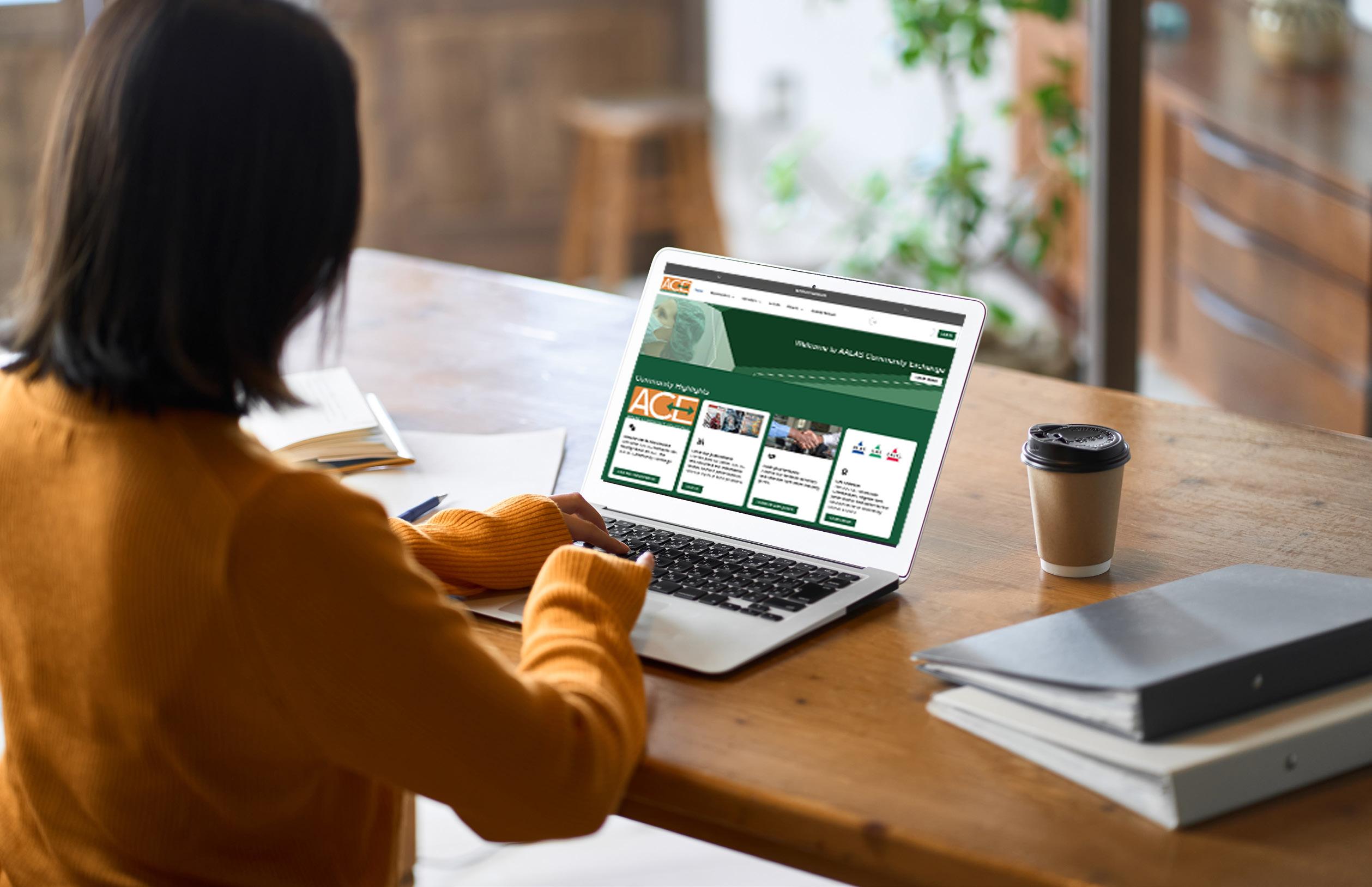
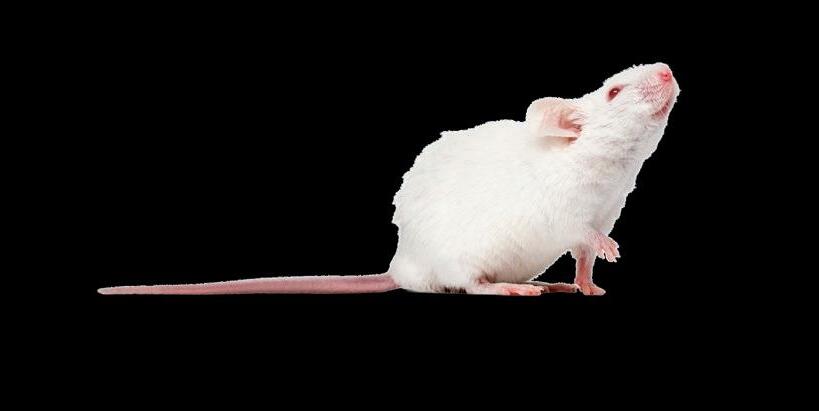
ess
Isoflurane than traditional vaporizers.
Lower waste. Better welfare.
Smarter anesthesia delivery.
Use up to 40x less isoflurane
With operating flows as low as 50–100mL/min versus the 0 5–2 0L/min commonly used with traditional vaporizers, SomnoFlo can dramatically reduce anesthetic consumption helping labs cut waste, lower ongoing cost, and minimize excess exposure
Support a more appropriate anesthesia approach for mice and rats
Traditional vaporizers were designed around much larger patients and higher flow assumptions. SomnoFlo’s low-flow, programmable delivery is built specifically for small animal procedures, helping align anesthesia delivery more closely with rodent physiology and welfare-focused care.
Run a simple, more precise workflow
Higher-flow systems can create unnecessary waste, added setup burden, and variability across users SomnoFlo combines small-animal-specific design with electronic control to help labs standardize procedures, reduce waste, and manage anesthesia more efficiently
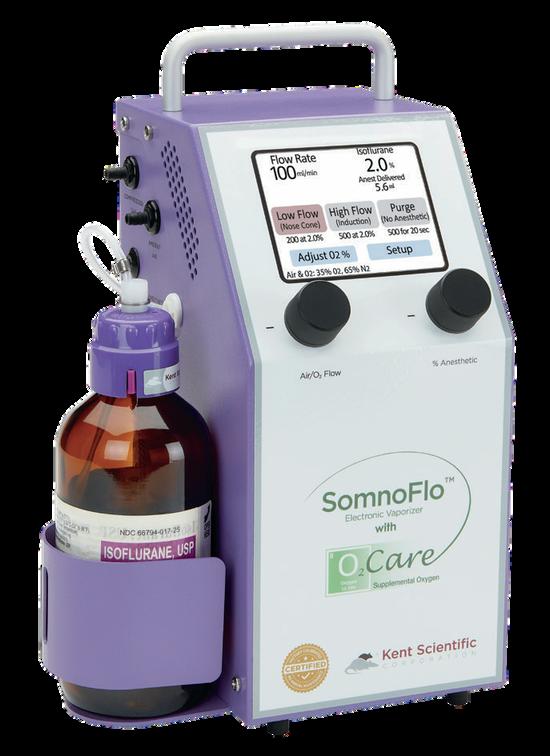

Available in two workflowspecific options
SomnoFlo is ideal for routine low-flow small animal anesthesia, while SomnoFlo O Care is better for longer surgeries and protocols where blended oxygen delivery provides added control.

Or visit KentScientific.com/sflas26 to watch the mini-webinar and calculate your lab’s anesthesia savings today.