SPECTACLE
Issue Four

01 02 03
Spotlight
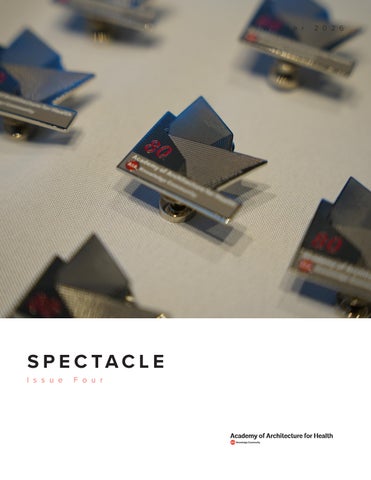
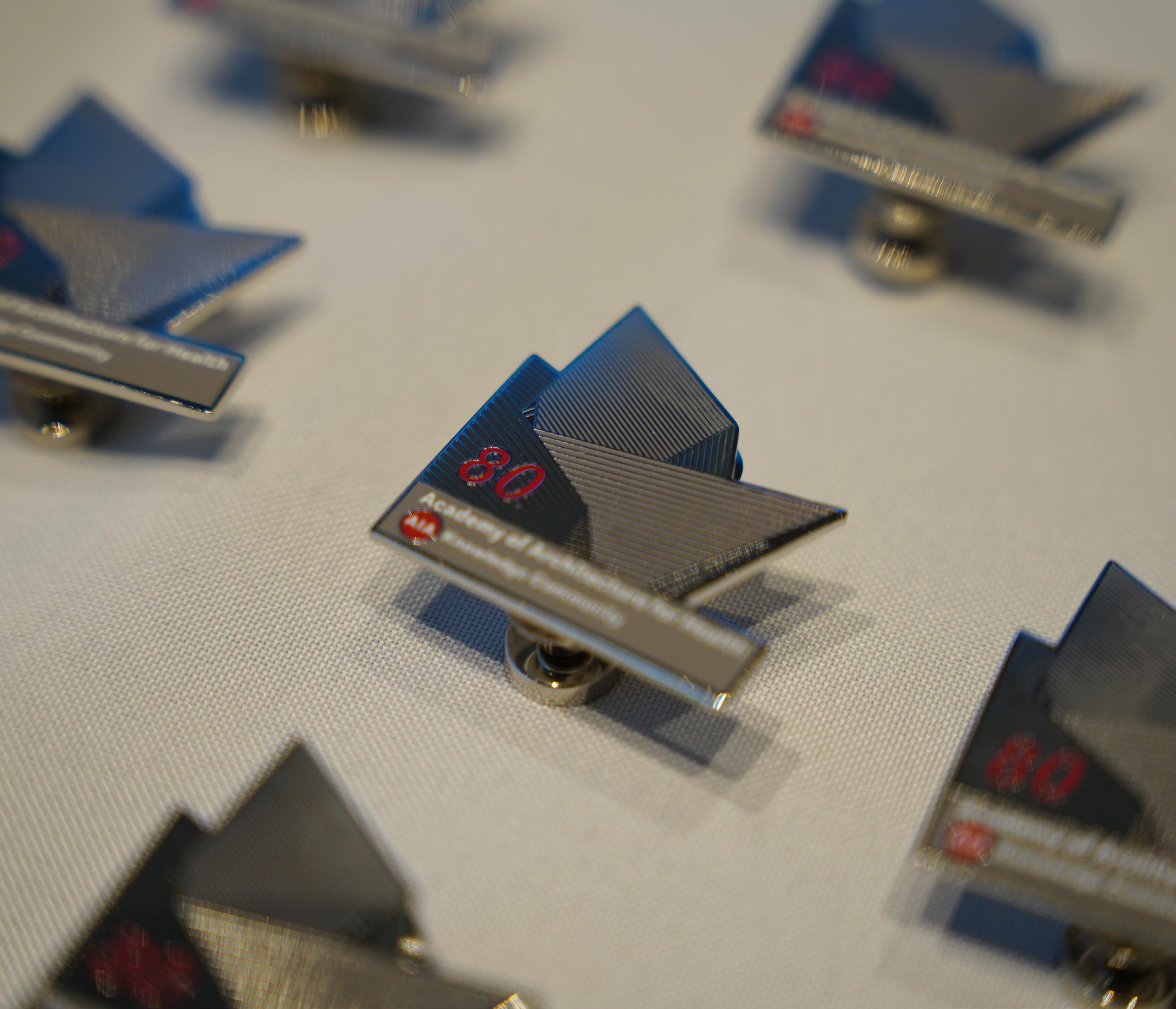
AAH 80th Anniversary
Pillars of Healthcare Architecture feature
2025 AAH Design Awards
Sub Committee Work
Summer Leadership Summit Recap
How to Join a Committee
AAH Celebrates
NextGen Scholars U40
Tuttle Fellowship
ABOUT SPECTACLE
Spectacle is the official journal of the Academy of Architecture for Health celebrating healthcare environments and those who are passionate about their design and operation.
We invite you to join us on a journey to discover how our community is enhancing the built environment, improving the quality of life for patients and caregivers, and shepherding values of health and wellness into the future.
From the President’s Desk
Welcome to 2026! Last year the AIA Academy of Architecture for Health marked its eight decades as an organization by promoting the theme of ‘a place for leaders to flourish’. The long history of this success was evident at our 80th Anniversary Celebration party at the Summer Leadership Summit in Denver this past July. Many past presidents joined our colleagues and current leadership to reflect upon the Academy’s contributions to promoting health and wellness with the communities that we serve.
In 2026 we will prepare for the next 80 years with an emphasis on Resiliency and Relevancy. We will promote resiliency within the academy, as well as a means of practice for our colleagues and the healthcare systems with which we collaborate. And we will continue to build our pipeline of leaders by providing educational and engagement opportunities that resonate with younger practitioners.
In addition to marking our eightieth, 2025 was the first entire year celebrating our publication, Spectacle. As promised from the beginning, Spectacle serves the healthcare design community as a direct conduit from the perspective of the Academy. Within this first issue of 2026 you can:
• Check out what you may have missed in our 80th celebration year.
• Gain knowledge of one of our Pillar Organizations – The American College of Healthcare Architects and maybe be persuaded to apply!
• Be inspired by a review of the 2025 Healthcare Design Awards.
• Relive the best moments of the Summer Leadership Summit.
• Get motivated to volunteer and join one of our committees of interest.
• Celebrate the achievements of the accomplished among us – our next generation scholars, individuals winning Tuttle Fellowships, and those recognized as significant contributors at a youngish age, our U40.
Dive in, pique your curiosity, and plan to follow us throughout 2026. We look forward to having you join us.
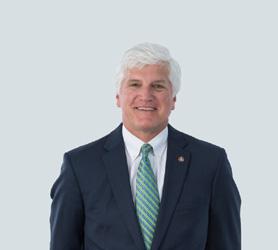
Pierce McVey, AIA, LEED AP Academy of Architecture for Health President
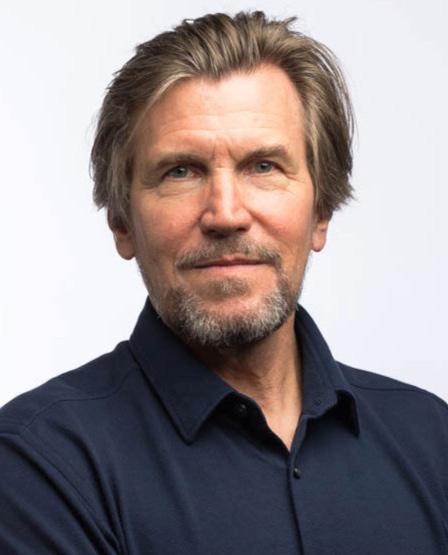
McVey President
Pierce


From the AAH Communication Team
In this issue of Spectacle, we celebrate the close of our 80th anniversary as an organization and the remarkable accomplishments of our colleagues across the country. It is always inspiring to recognize the individuals and projects that set the standard for excellence in healthcare design—work that challenges us, elevates our profession, and gives us something meaningful to aspire to year after year.


In this edition, we also welcome our new committee members who will help carry forward the mission of the Academy of Architecture for Health. The dedication and commitment of our committee volunteers continue to unify the many facets of our organization while strengthening collaboration across the broader pillars of healthcare design. Together, we celebrate not only individual achievements, but the collective progress of our community.
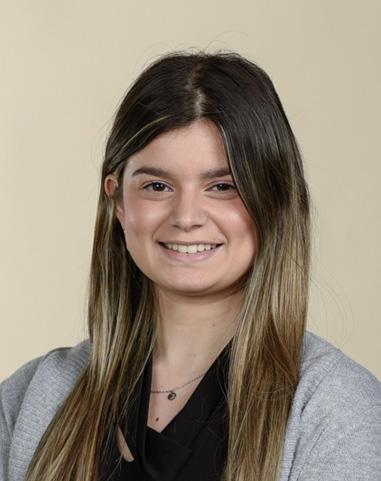
Eugene Damaso Board Member
Jen Cagide-Alexander Board Member
Jenny Cestnik Chair
Gozde Yildirim
Maite Bruno
Spotlight
See the work, ideas, and camaraderie of healthcare design industry leaders and emerging professionals
AAH Celebrates 80 Years
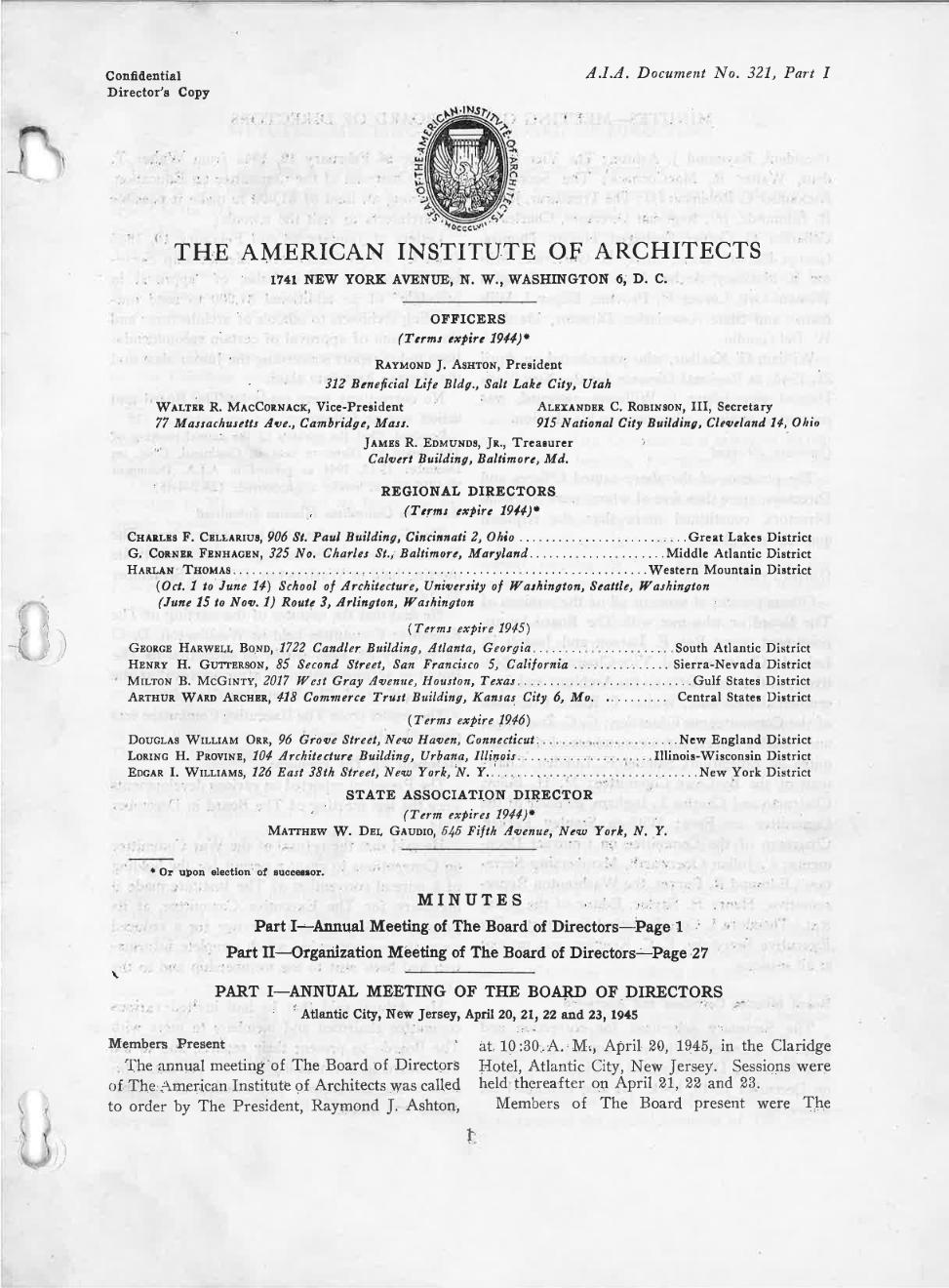
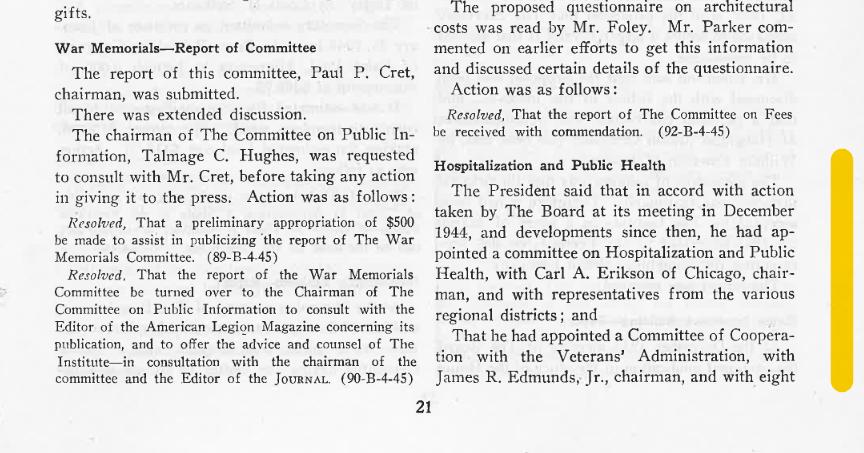
In April 1945 at the Annual meeting of Board of AIA Directors, The board approved formation of an AIA Committee on hospitalization and Public Health as a special board committee at the urging of national AIA’s Architect and Government Relations Committee, in view of the urgent postwar demand for new veterans’ hospitals. It authorized by the Board to cooperate and work with the Council of Hospital Planning and plant Operations of the American Hospital Association in instituting a nation-wide survey by states of existing hospital facilities to indicate present needs for additional plants, to integrate them into state master plans, and promote uniform legislation.
Its duties were “To cooperate with the American Hospital association and its committees, and with Federal and State agencies engaged in programs affecting hospitalization and public health; and to make suggestions and recommendations to the Officers of The Institute and to the Washington Representative and circumstances may require.”
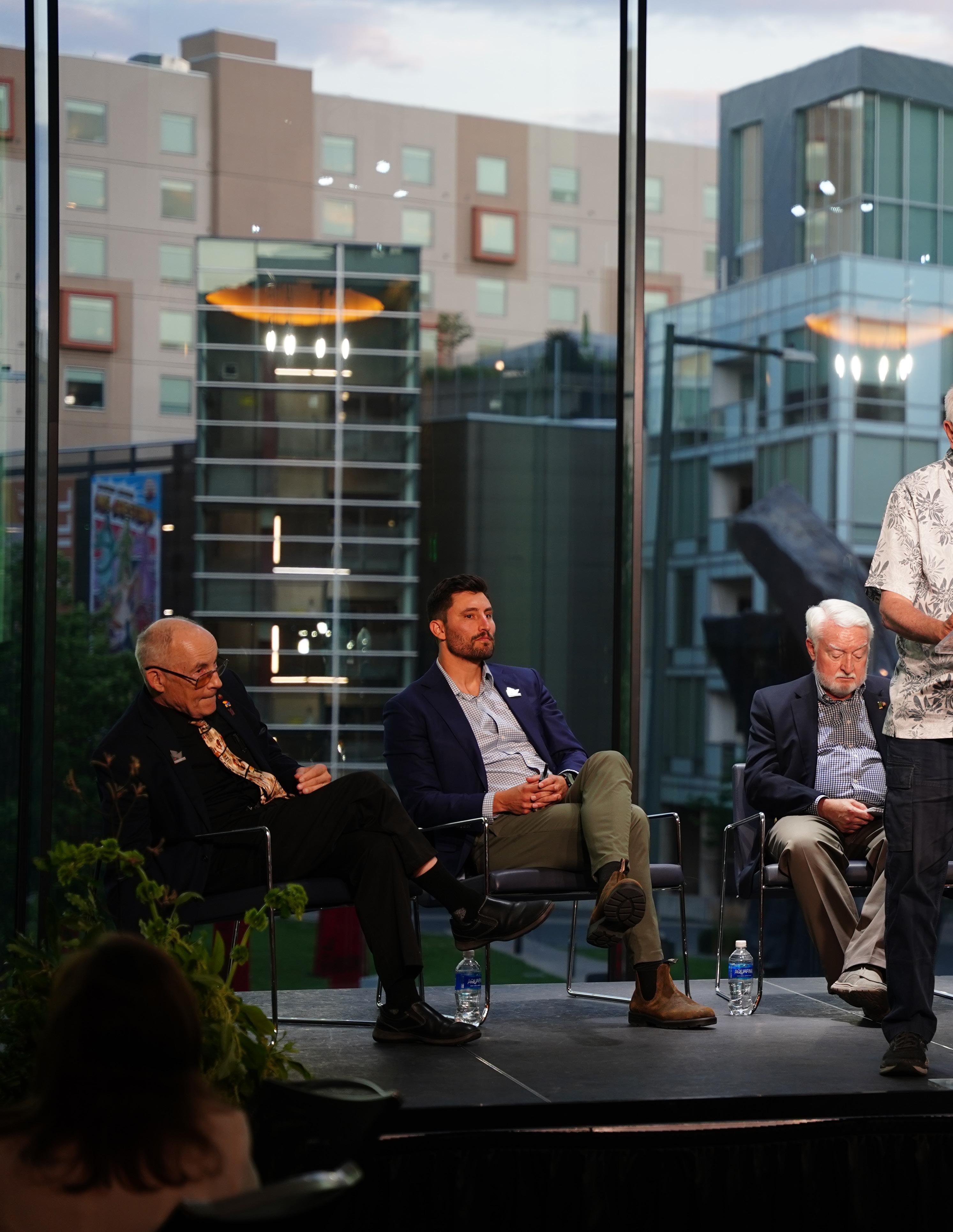
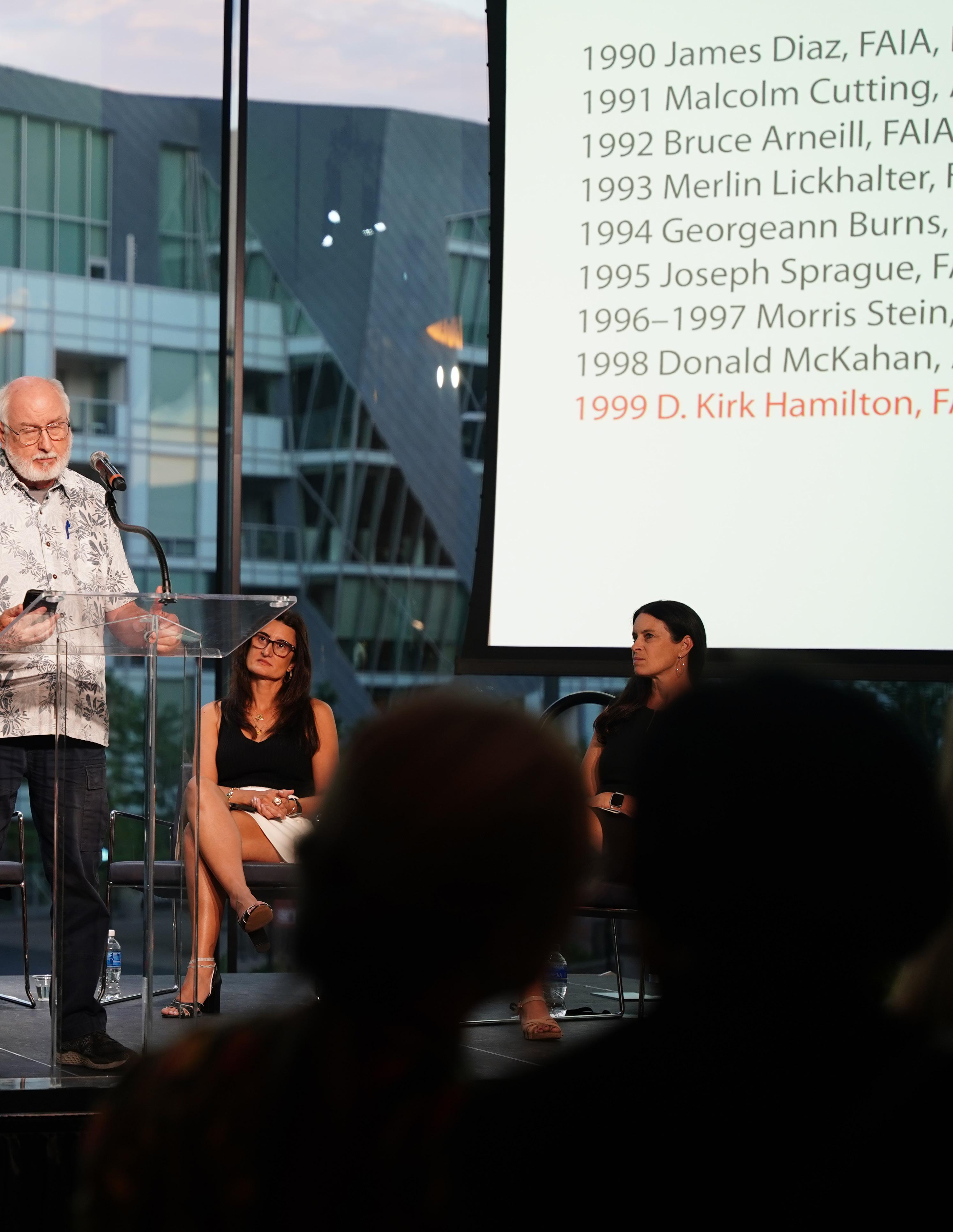
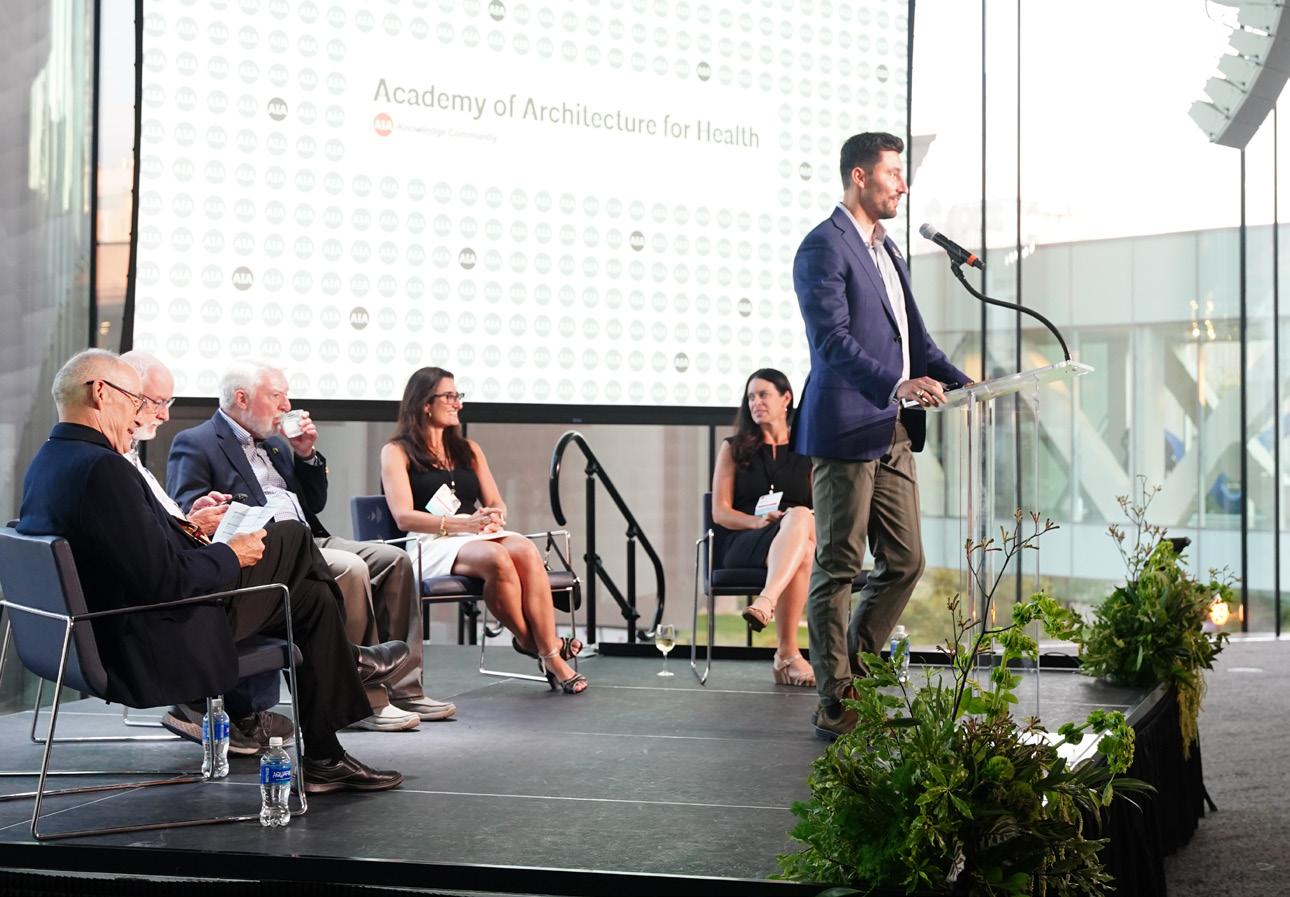
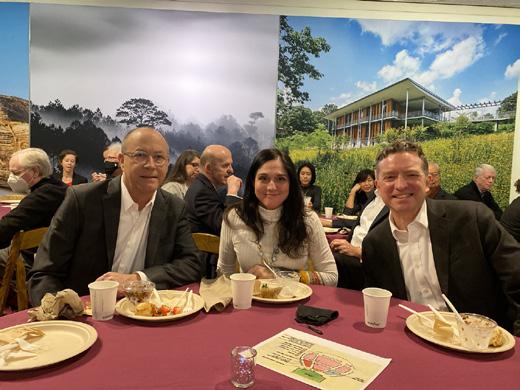
As part of the SLS AAH and FHER Anniversary Celebration, 2025 AAH President Southern Ellis and past presidents shared the following engaging recap of the committee since its foundation in 1945.
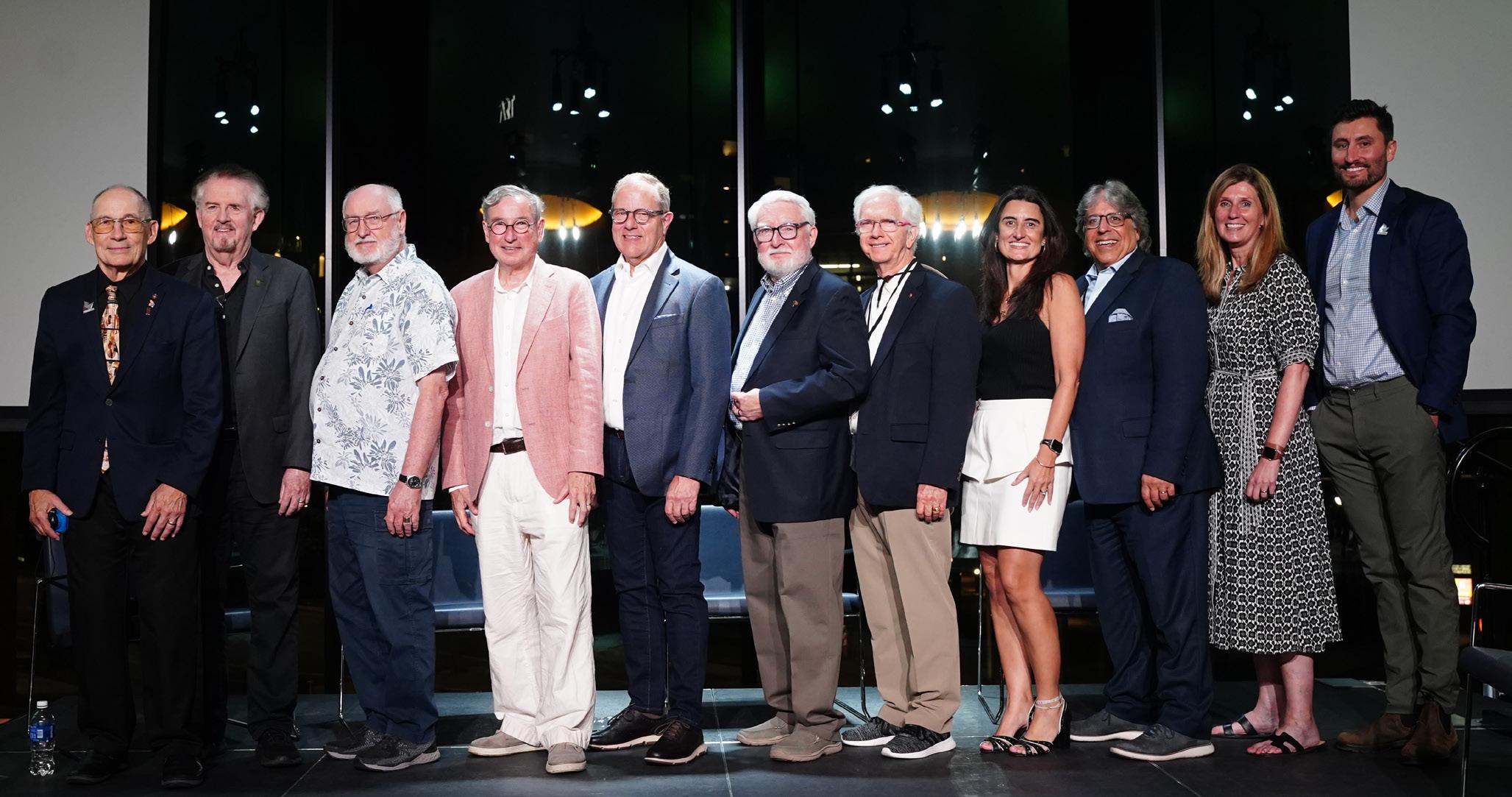
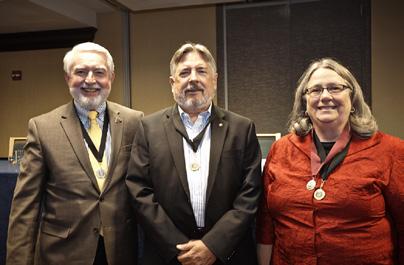
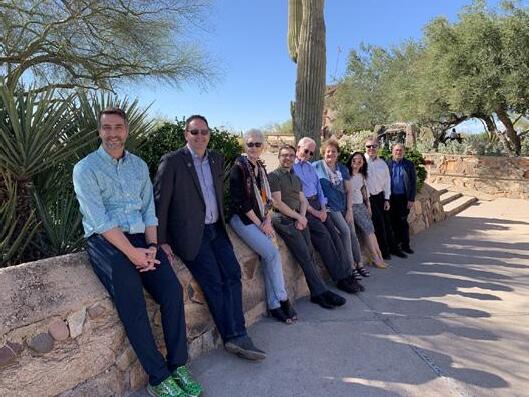
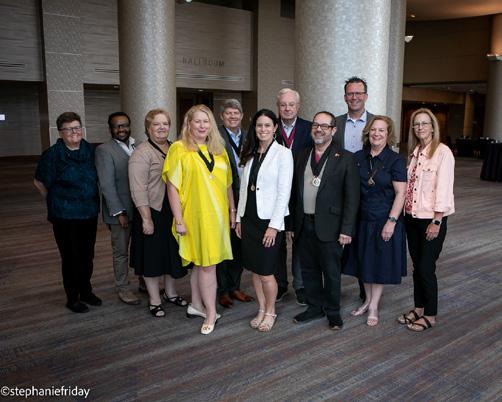
AAH Past Presidents celebrate at Summer Leadership Summit in July 2025
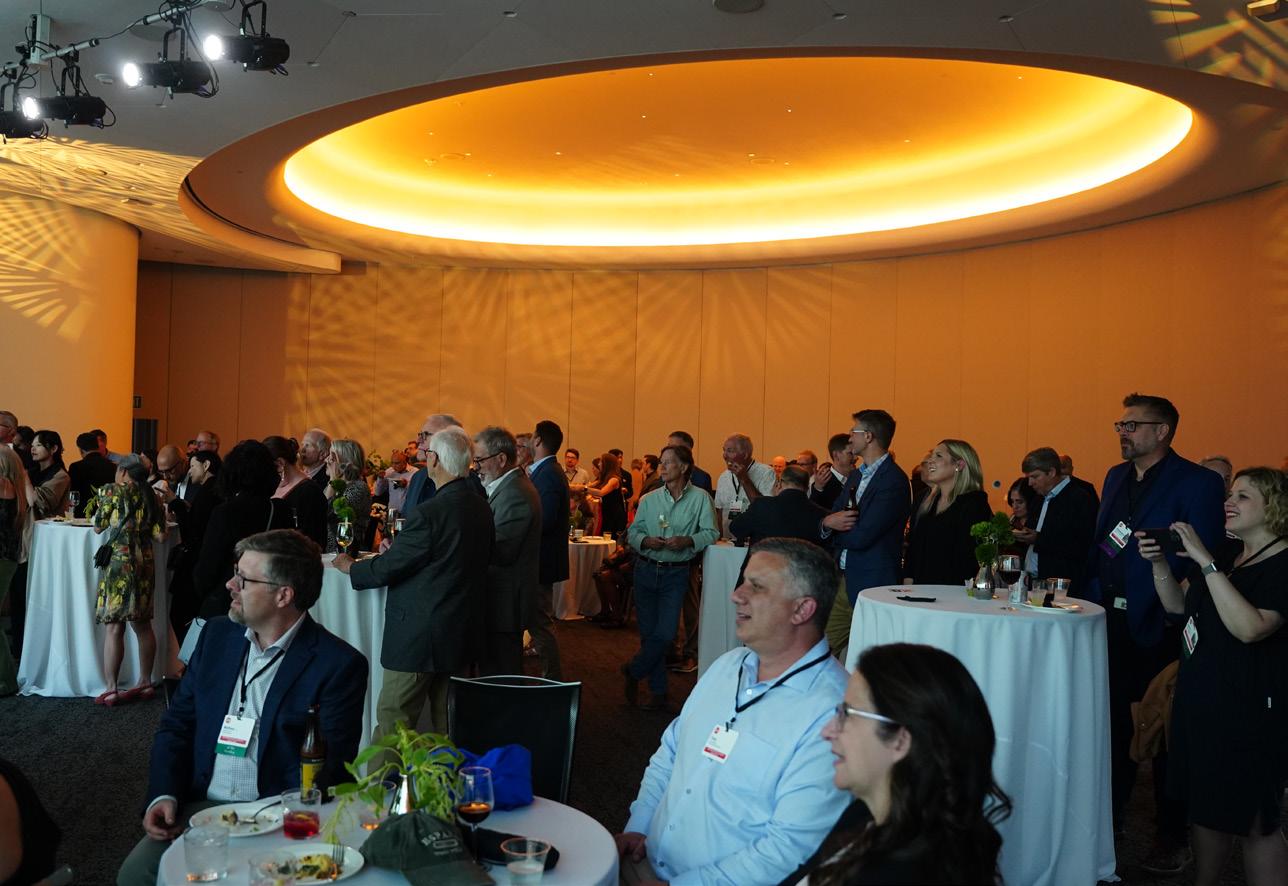
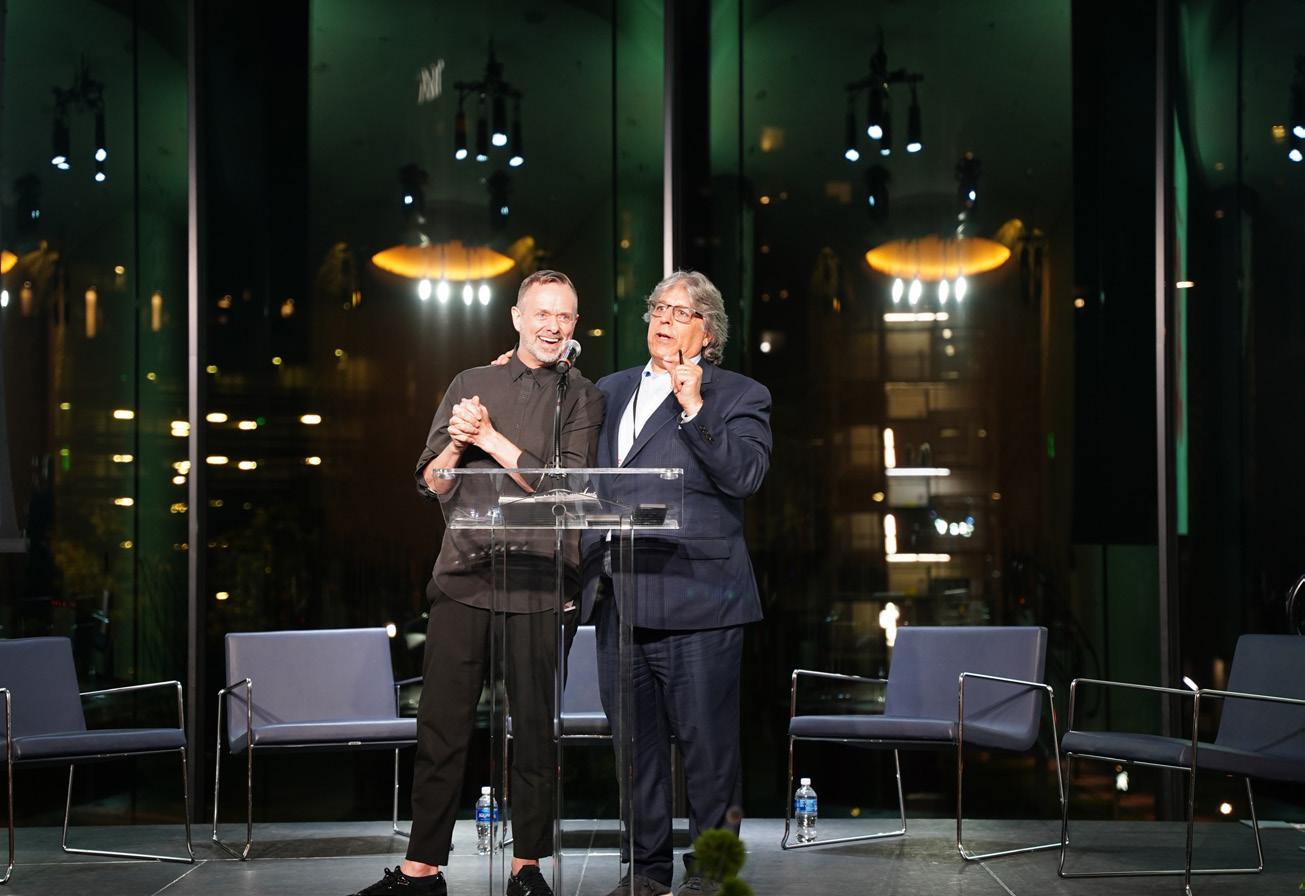
“The AIA Academy of Architecture for Health has been on quite an 80-year run. In 1945, with the end of WWII imminent and hospitals needed for our troops returning home, the mission was clear: Unite as an industry and build a ton of hospitals. Today, our mission has grown to include a deeper thread of underlying intention that extends beyond advocacy within our profession. Ultimately, our soul is about fighting to see people flourish. We are about life, dignity, service, and love.
I’m proud of the spirit I see in our crew—a spirit of grit, passion, and purpose. A spirit that celebrates our history and fights for an even brighter future. With each step, mile, and year, we are continuing the journey that began 80 years ago, ensuring the AIA Academy of Architecture for Health will remain a place for leaders to flourish.”
Southern Ellis, AIA 2025 President

From the AIA Archives
1945 AIA Annual Meeting of the Board of Directors meeting minutes which records the official resolution to form the Committee on Hospitalization and Public Health.
Timeline of Committee Names
1945-1955
Hospitalization and Public Health
1956-1962
Hospitals and Health
1963-1965
Hospital Architecture
1966-1969
Health Environment
1970-1993
Architecture for Health
1994-Present
Academy for Architecture for Health
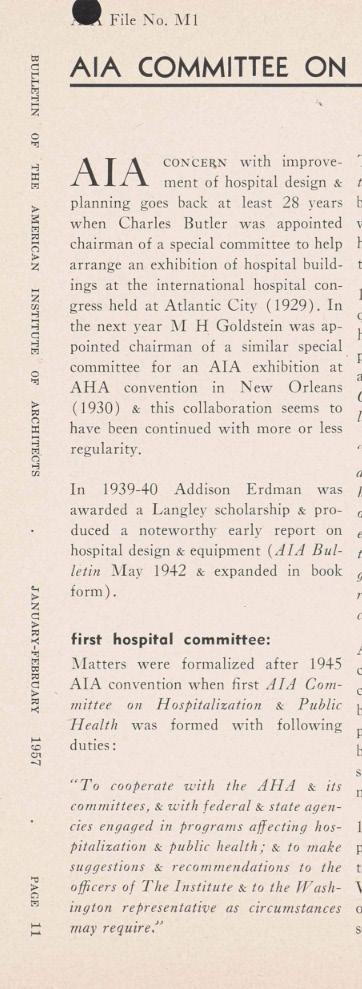
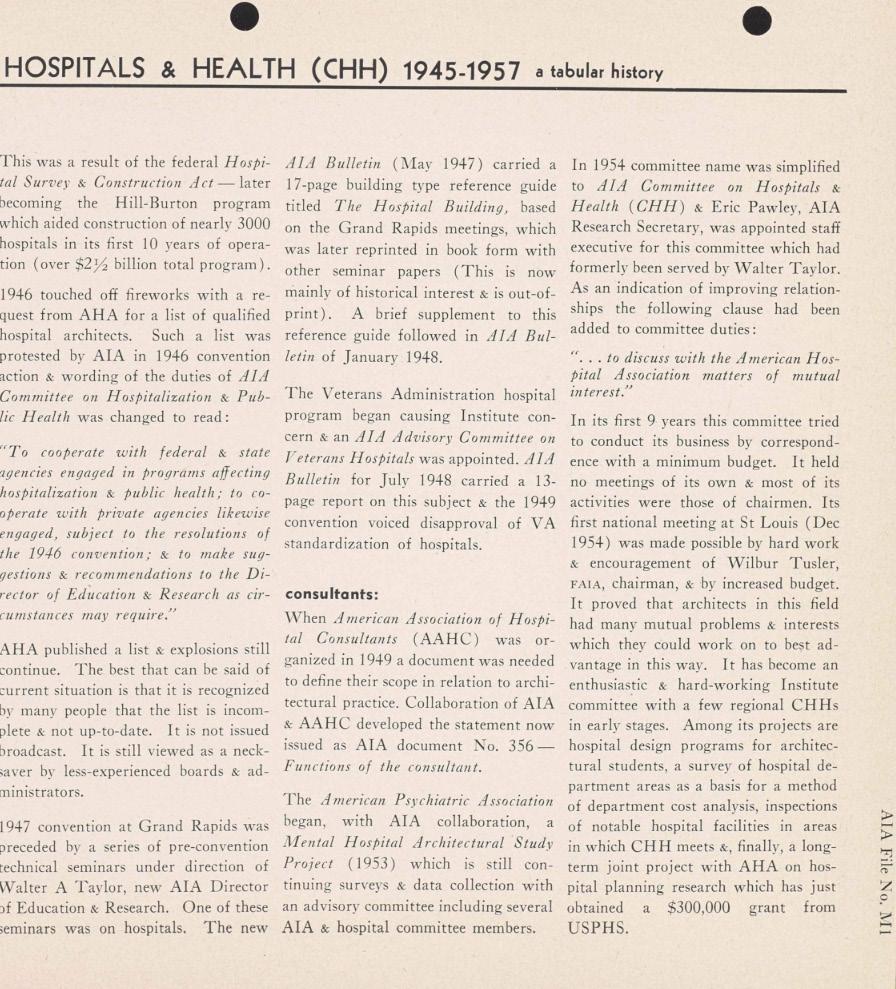
“It has become an enthusiastic and hardworking institute committee”
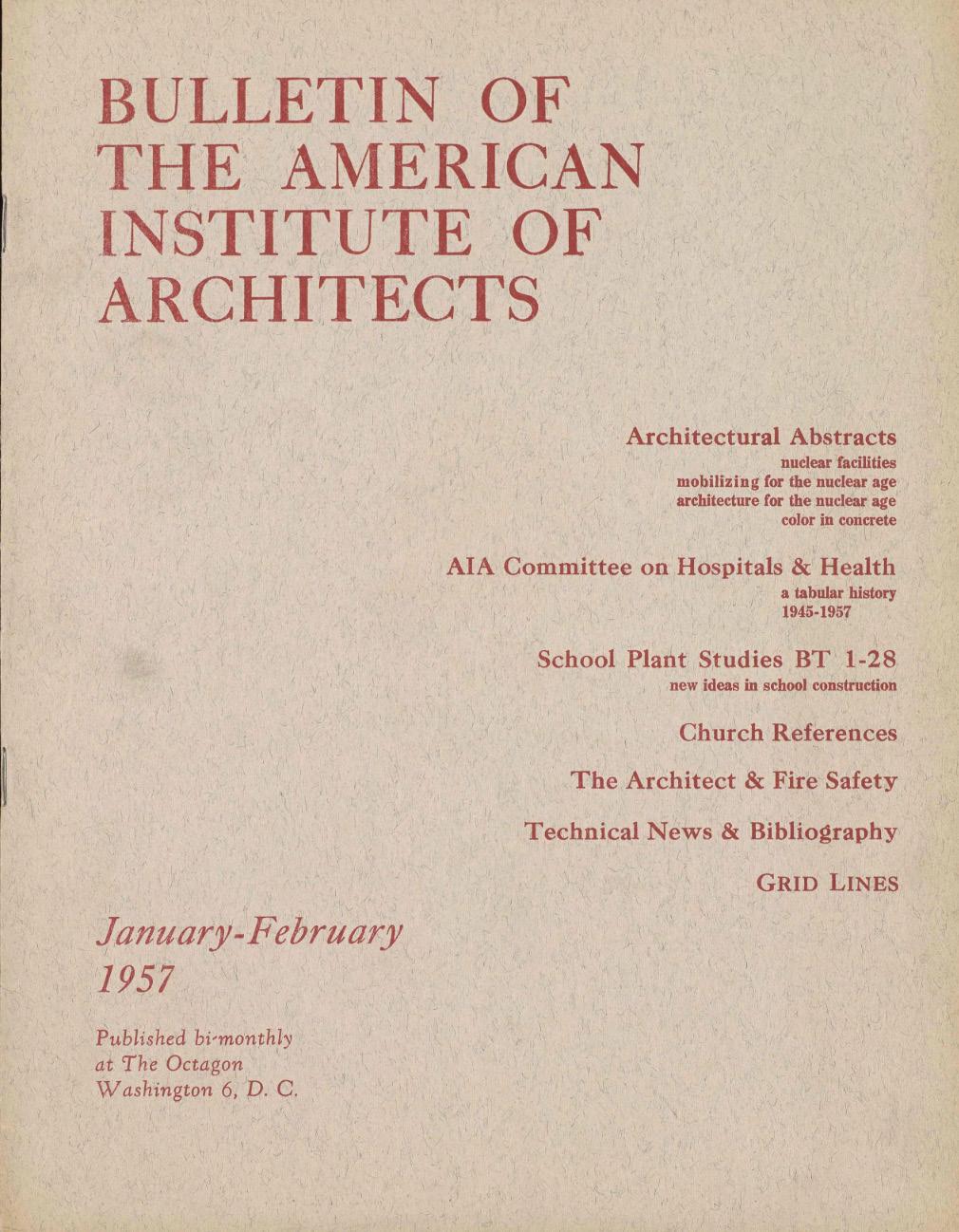
1957 publication featuring the AIA Committee on Hospitals & Health. This document outlines the organization’s history up to that year, provides a roster of members, summarizes meetings and conferences held, details key activities and initiatives (organized by agenda), and highlights collaborating partners.
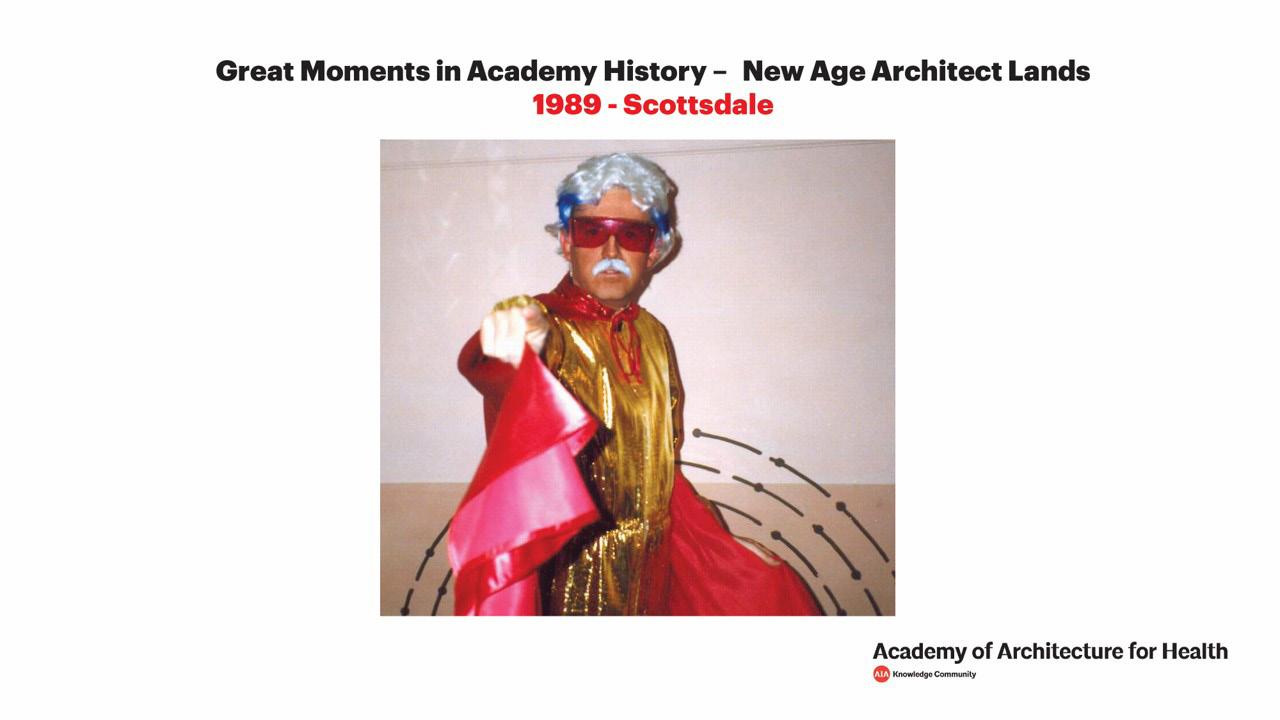

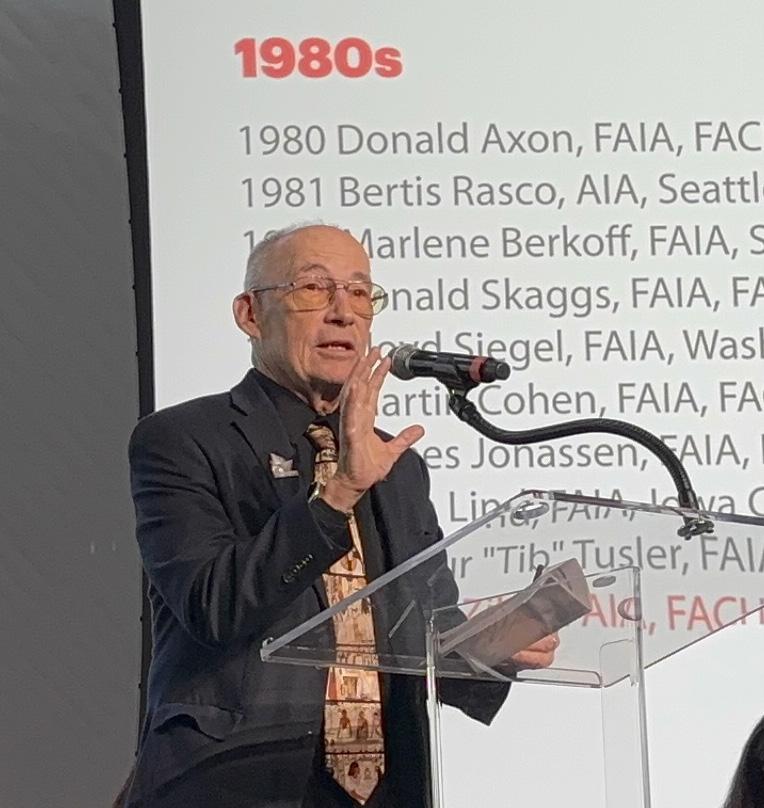
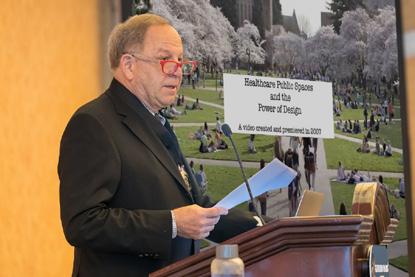
1989 President Frank Zilm, FAIS, FACHA, Kansis City, MO
In the 1980s, the AIA Academy of Architecture for Health (AAH) functioned as a closed committee. Membership was highly restricted: only individuals delegated by an AIA board member were allowed to participate, and each board member could appoint just two people. Though the committee was small, it included some of the most highly regarded healthcare architects in the world. Despite its size, the group was extremely active. Known informally as the “baby gorillas,” members earned a reputation for pushing boundaries and driving new initiatives. They met in major cities across the United States and internationally.
The transformation from a closed to an open committee was led by Marlene Berkoff and Jim Jonassen. They negotiated with the AIA to change the structure so that anyone could join, provided they attend at least two meetings. This shift significantly broadened participation and influence.
During this decade, the national political climate also had an impact on the committee’s role. With President Ronald Reagan’s focus on reducing federal spending, funding for the Department of Health and Human Services’ minimum guidelines was cut. The AIA stepped in to take over this responsibility, and leaders such as Armand Burgun and Marty Cohen played essential roles in shaping what eventually became the AIA Guidelines. These guidelines became widely recognized as the industry standard. Their success even generated revenue through publication sales, prompting negotiations with the AIA over the use of carry-forward funds. After one year in which the funds unexpectedly disappeared, the experience ultimately led to the creation of the Facility Guidelines Institute (FGI), established to ensure the long-term stability and stewardship of the guidelines.
The mid-1980s also saw the development of a health facilities research program, expanding the AAH’s role in evidence-based design and innovation. In 1986, the committee negotiated with the AIA to launch the first design awards program in partnership with Modern Healthcare, establishing a tradition that continues today.
By 1989, the committee was looking ahead to the future of healthcare architecture. In a forward-leaning program that year, Denver architect Lizan Kiezer predicted that healthcare spending could eventually reach 25 percent of the U.S. GDP—an idea that many initially dismissed. He emphasized the importance of shaping the future rather than simply speculating about it, saying, “The most important thing to remember about the future is that it’s too important to guess at. You have to invent it.”
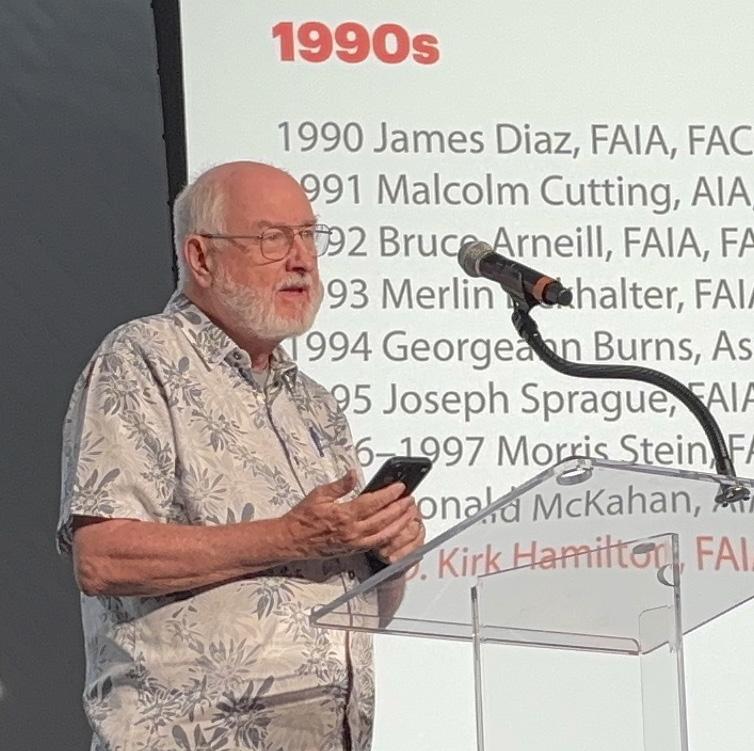
1999 President
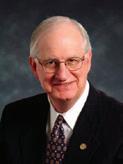
D. Kirk Hamilton, FAIA, FACHA, Houston, TX
The 1990s began with Jim Diaz serving as president of the AAH. Under his leadership, the Academy traveled to Ottawa, collaborated with the Royal Institute of Canadian Architects ans the Union of National Architects public health group. Together, they launched the Guidelines Revision Task Force.
In 1991, Malcolm Cutting organized a tour of Johns Hopkins. During this period, the AIA’s carry-forward funds unexpectedly disappeared, leaving the Academy in need of financial stability. In 1992, Bruce Arneill produced the first joint Academy meeting held in conjunction with the AIA Convention in Boston.
In 1993 Merlin Lickhalter followed as president, guiding the transition from the Committee on Architecture for Health to the organization’s current name, the Academy of Architecture for Health. This rebranding reflected both growth
and a clearer professional identity. In 1994 Georgeann Burns worked tirelessly in effort to recover lost funds. At the time, the AAH was the most financially successful of all AIA committees, generating revenue through events and publications.
In 1995 Joe Sprague negotiated a partnership with ASHE for the PDC Conference. Mo Stein served two terms from 1996-1997 and collaborated with Don McKahan to design a new organizational structure for the Academy. Represented visually as a circle, the model placed the board at the center, surrounded by members who were committed and actively doing committee work, and an outer ring consisting of “mailbox members”—individuals who checked the box on membership renewals to receive Academy materials. This structure introduced a new way of working, recognizing that the Academy’s success depended on committed contributors while still engaging a broad professional audience. The shift fundamentally changed how the organization operated and delivered value.
In 1998 Don McKahan published the Academy’s first journal and became known for producing creative skits that brought levity to meetings. In partnership with the Society for Critical Care Medicine, he helped launch the ICU 2010 Conference. However, during this period, the Academy once again experienced the loss of its carry-over funds.
In 1999 Kirk Hamilton responded to these challenges by taking the Academy in a grassroots direction in Washington. His efforts ultimately led to the incorporation of the American College of Healthcare Architects. He, Don, and Mo recruited the original Board of Regents and identified the first group of practitioners qualified for certification, establishing the inaugural cohort of board-certified healthcare architects on January 1, 2000
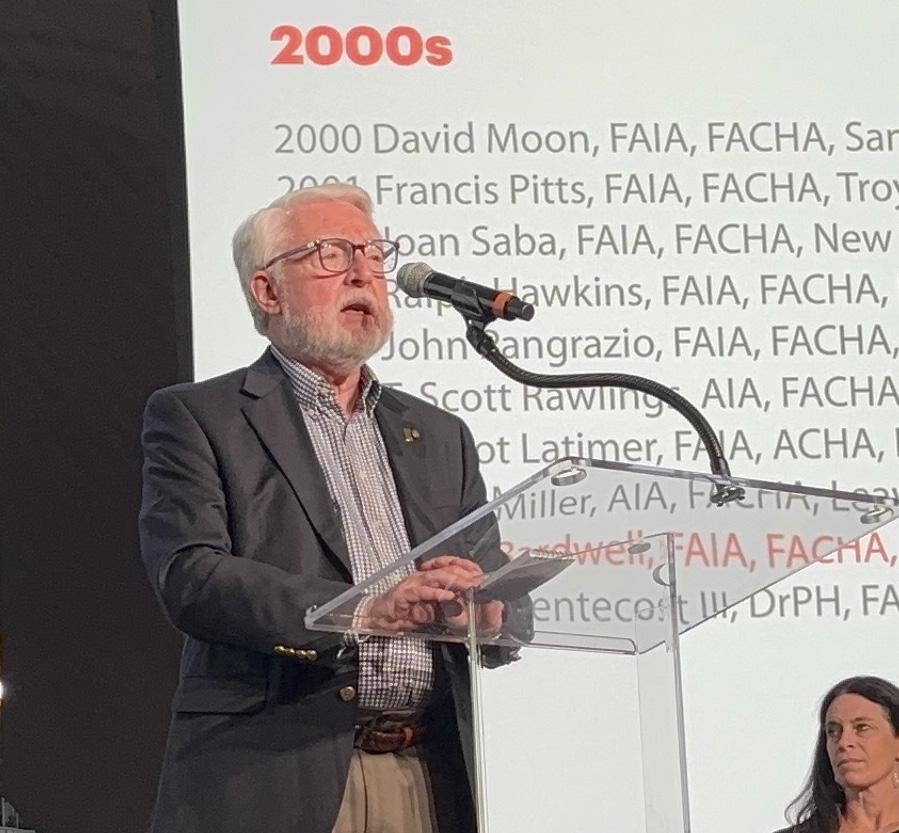
2008 President Peter Bradwell, AIA, FACHA, Columbus, OH
During this period, the Academy of Architecture for Health continued to refine its identity and operations through a series of significant changes and events.
In 2001, early summer work sessions were held in Scottsdale, Arizona, and in 2002 the group met in New Orleans. Afterward, the Academy remained in Chicago for nearly two decades. Underlying tensions between the AAH and the AIA gradually surfaced, particularly around the issue of specialization. At the 2005 AIA National Convention in Las Vegas, the Boston Society of Architects took a position that precluded the formal recognition of specialties within the AIA. The Academy strongly advocated in support of specialization in healthcare architecture.
The fall of 2006 marked the last dedicated AAH Fall Conference, held in Miami Beach. After that year, the event was blended with
ACHA activities, ending the tradition of a standalone fall gathering. In 2007, the Academy introduced the first formal Summer Leadership Summit. What had previously been an internally focused working session was transformed into a high-level program featuring guest speakers and a robust agenda at the 600-course level, setting a new standard for leadership development within the field.
Ultimately, in 2007 the American College of Healthcare Architects (ACHA) became the first nationally sanctioned specialty organization formally recognized by the AIA—a milestone that validated the Academy’s longstanding efforts.
In 2008, negotiations surrounding the Facility Guidelines Institute (FGI) created another turning point. The Academy had not been fully aware that responsibility for the Guidelines had shifted from the AIA to ASHE. Although the Academy was disappointed by the transition, it acknowledged the change and moved forward.
By 2009, widespread funding challenges affected the Academy’s ability to operate under the traditional AIA financial structure. Leaders such as Scotty Miller and Bardwell guided a pilot program to give the AAH greater financial autonomy. This initiative established the Academy as its own financial entity and ultimately led to the formation of the AAH Foundation, ensuring more stable and transparent stewardship of its resources. This became a successful model for other AIA committees to follow.
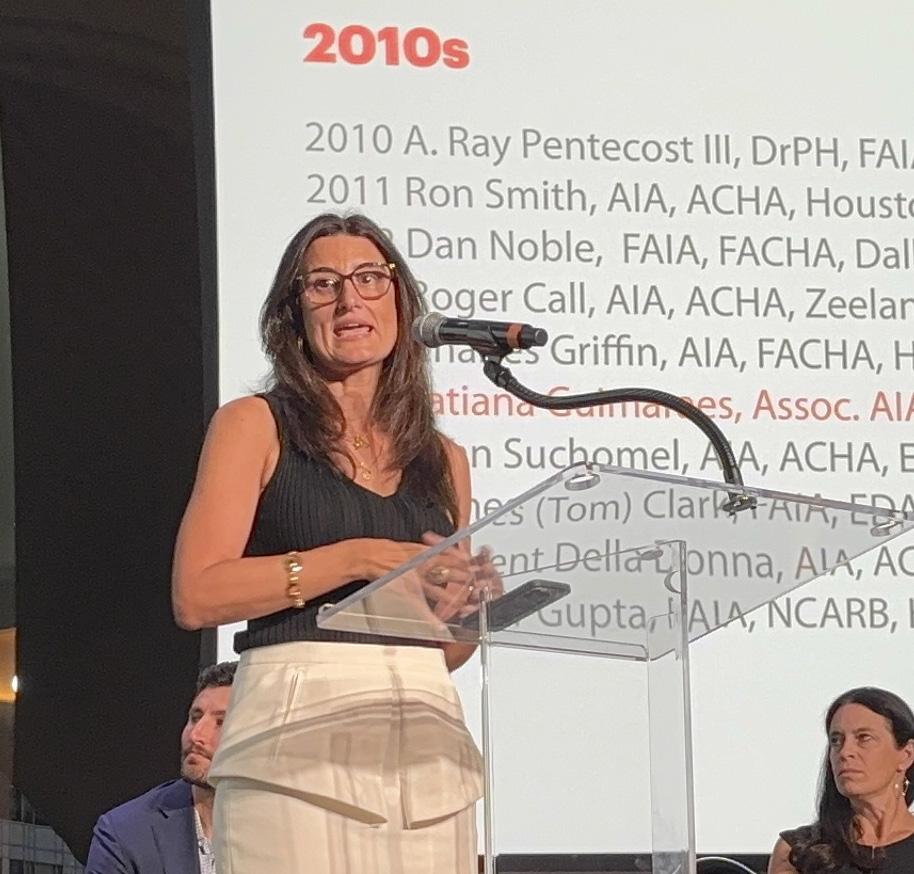
2015 President
Tatiana Guimaraes, Assoc, AIA, Coral Gables, FL
The decade from 2010 to 2020 was a defining chapter for the AIA Academy of Architecture for Health (AIA-AAH)—marked by financial independence, strategic growth, and a renewed commitment to advancing healthcare architecture. The era began with a major milestone: financial independence from AIA, granting the Academy greater autonomy to manage its resources and initiatives.
In 2015–2016, AIA-AAH adopted a comprehensive Strategic Plan following months of internal restructuring and member engagement through interviews, focus groups, and surveys. The plan brought clarity to four key areas: Initiatives, Talent, Leadership, and Organization/Governance. One significant outcome was the creation of Local Chapters, strengthening ties with AIA components and fostering a more connected organization.
The decade also introduced strategic pillars, formalizing collaboration among leading organizations. Founding partners—ACHA, FHER (the Foundation), AAH, FGI, and CHD—joined forces to advance standards, education, and innovation in healthcare design.
The launch of the AIA/AAH Design Awards became a hallmark achievement, honoring projects that exemplify design excellence and innovative planning—from hospitals to outpatient centers and wellness facilities. These awards follow AIA’s rigorous standards, elevating healthcare architecture and inspiring innovation across the profession.
As the economy rebounded, firms experienced renewed growth, contrasting with the challenges of the prior decade and the pandemic disruptions that followed. Signature events thrived: the Summer Leadership Summit (SLS) continued in Chicago, while ASHE PDC and Healthcare Design (HCD) conferences strengthened their roles as premier forums for knowledge exchange—with AAH serving as a trusted advisor and partner.
The Academy invested in future leaders through initiatives such as the NextGen Committee, fostering mentorship and leadership development, the U40 Awards recognizing outstanding contributions from professionals under 40, and the ASHE PDC Student Design Challenge a multidisciplinary competition complementing the HCD Student Design Charrette.
This committee initiatives became a cornerstone for engaging emerging professionals, fostering mentorship, and ensuring a pipeline of future leaders. Its establishment signaled a commitment to inclusivity and succession planning—values that remain central to AIAAAH’s mission.
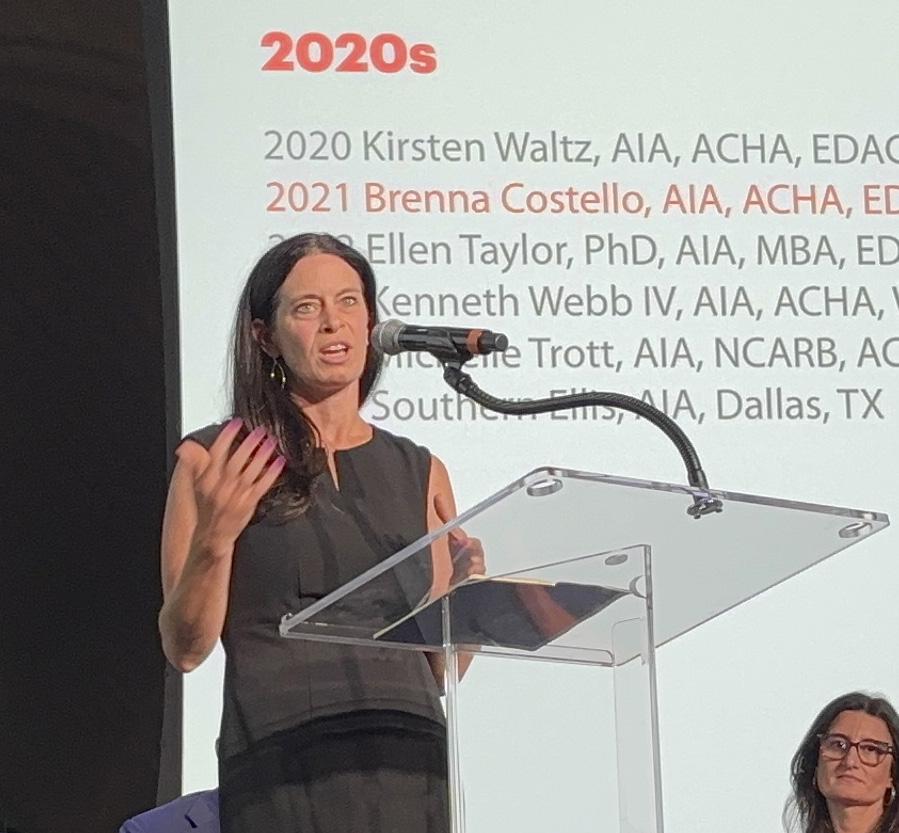
2021 President Brenna Costello, AIA, ACHA, EDAC, Denver, CO
During the 2020s, the Academy had to navigate many challenges, stemming for the initial COVID-19 pandemic and throughout its aftermath.
During Kirsten Waltz’s tenure, COVID-19 fundamentally reshaped operations, identity, and how the academy functioned. A task force was created to address emerging client needs and develop disaster-relief strategies. The team successfully transitioned to a virtual conference and built new modes of connection.
Recognizing a lack of mentorship, they launched the C2C Mentoring Program, which is now thriving in its fifth year.
From 2022–2023, the focus expanded to include DEI and sustainability initiatives. A sustainability grant significantly elevated what the organization could achieve in this space.
AAH Past Presidents
1945 Carl Erickson, AIA Chicago, IL
1946– Marshall Schaffer, AIA
1947 Washington, DC
1948 H. Elridge Hannaford, AIA Cincinnati, OH
1949– Slocum Kinsbury, AIA 1952 Washington, DC
1953– Wilbur Tusler, AIA
1955 Minneapolis, MN
1956– Aaron Kiff, AIA
1959 New York City, NY
1960– E. Todd Wheeler, FAIA 1961 Chicago, IL
1962– Matt Jorgensen, AIA 1963 Atlanta, GA
1964 Rex Allen, FAIA Sonoma, CA
1965– John M. Ware, AIA 1966 Jackson, MS
1967 Edward Matthei, FAIA Chicago, IL
1968– Sherman Morss, FAIA 1969 Boston, MA
1970 Edward Matthei, FAIA Chicago, IL
1971 Roger Mellem, AIA Port Republic, MD
1972 Donald Neptune, FAIA Newport Beach, CA
1973 John Rea Jr., FAIA Altoona, PA
1974 Donald Edge, AIA West Palm Beach, FL
1975 Gerald Oudens, FAIA, FACHA Chevy Chase, MD
1976 Theodore Stolte, AIA Los Altos, CA
1977 William Black, AIA Chestnut Hill, MA
1978 Jason William Frye Jr., AIA Houston, TX
1979 J. Armand Burgun, FAIA, FACHA Kitty Hawk, NC
1980 Donald Axon, FAIA, FACHA Laguna Niguel, CA
1981 Bertis Rasco, AIA Seattle, WA
1982 Marlene Berkoff, FAIA San Rafael, CA
1983 Ronald Skaggs, FAIA, FACHA Dallas, TX
1984 Lloyd Siegel, FAIA Washington, DC
1985 Martin Cohen, FAIA, FACHA Armonk, NY
1986 James Jonassen, FAIA, FACHA Seattle, WA
1987 John Lind, FAIA Iowa City, IA
1988 Wilbur “Tib” Tusler, FAIA, FACHA San Francisco, CA
1989 Frank Zilm, FAIA, FACHA Kansas City, MO
1990 James Diaz, FAIA, FACHA San Francisco, CA
1991 Malcolm Cutting, AIA Chagrin Falls, OH
1992 Bruce Arneill, FAIA, FACHA Glastonbury, CT
1993 Merlin Lickhalter, FAIA, FACHA Naples, FL
1994 Georgeann Burns, Assoc. AIA Atlanta, GA
1995 Joseph Sprague, FAIA, FACHA Dallas, TX
1996– Morris Stein, FAIA, FACHA
1997 Phoenix, AZ
1998 Donald McKahan, AIA, FACHA Del Mar, CA
1999 D. Kirk Hamilton, FAIA, FACHA Houston, TX
2000 David Moon, FAIA, FACHA San Diego, CA
2001 Francis Pitts, FAIA, FACHA Troy, NY
2002 Joan Saba, FAIA, FACHA New York City, NY
2003 Ralph Hawkins, FAIA, FACHA Dallas, TX
2004 John Pangrazio, FAIA, FACHA Seattle, WA
2005 T. Scott Rawlings, AIA, FACHA Washington, DC
2006 H. Scot Latimer, FAIA, ACHA Evergreen, CO
2007 Scott Miller, AIA, FACHA Leawood, KS
2008 Peter Bardwell, FAIA, FACHA Columbus, OH
2009– A. Ray Pentecost III, DrPH, FAIA, FACHA
2010 Norfolk, VA
2011 Ron Smith, AIA, ACHA Houston, TX
2012 Dan Noble, FAIA, FACHA Dallas, TX
2013 Roger Call, AIA, ACHA, Zeeland, MI
2014 Charles Griffin, AIA, FACHA Houston, TX
2015 Tatiana Guimaraes, Assoc. AIA Coral Gables, FL
2016 Joan Suchomel, AIA, ACHA, EDAC Chicago, IL
2017 James (Tom) Clark, FAIA, EDAC Portland, OR
2018 Vincent Della Donna, AIA, ACHA South Plainfield, NJ
2019 Tushar Gupta, FAIA, NCARB Houston, TX
2020 Kirsten Waltz, AIA, ACHA, EDAC, LEED AP Boston, MA
2021 Brenna Costello, AIA, ACHA, EDAC Denver, CO
2022 Ellen Taylor, PhD, AIA, MBA, EDAC New York, NY
2023 Kenneth Webb IV, AIA, ACHA, LEED BD+C Washington, DC
2024 Michelle Trott, AIA, NCARB, ACHA Rochester, NY
2025 Southern Ellis AIA, LEED AP Dallas, TX
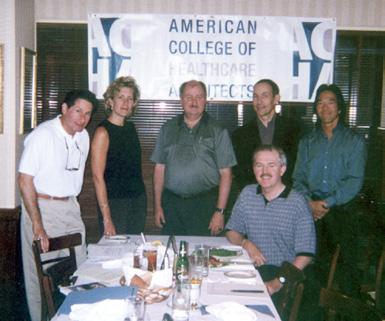
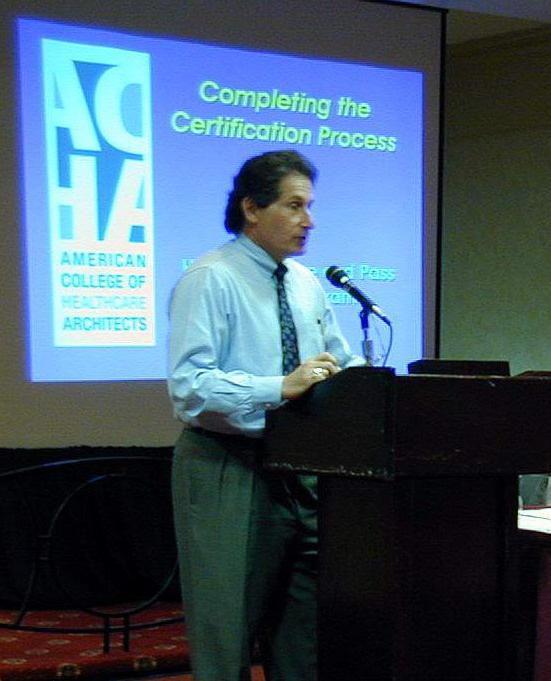
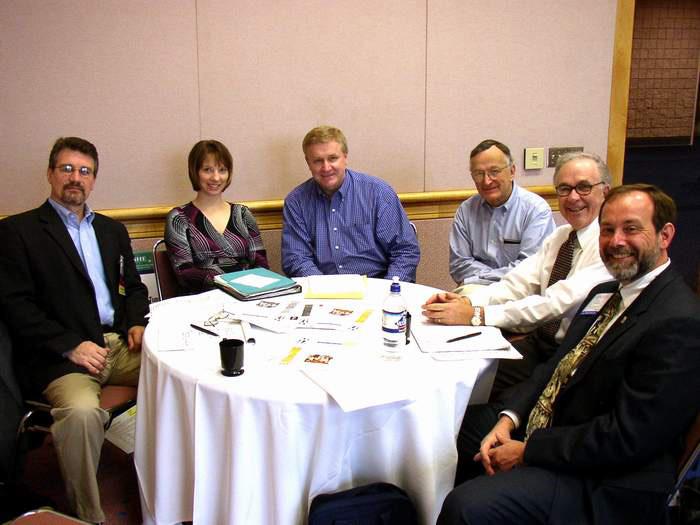
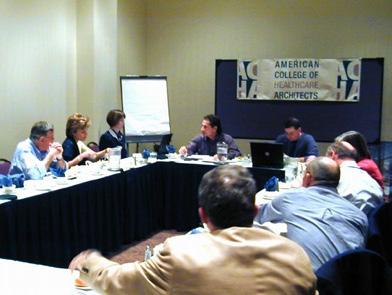
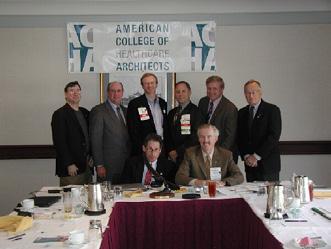
Pillars of Healthcare Architecture: The American College of Healthcare Architects
The American College of Healthcare Architects [ACHA] provides Board Certification for Architects who practice as healthcare design specialists. Our mission is to distinguish healthcare architects through certification, experience, and rigorous standards. Our vision is transforming healthcare through better built environments.
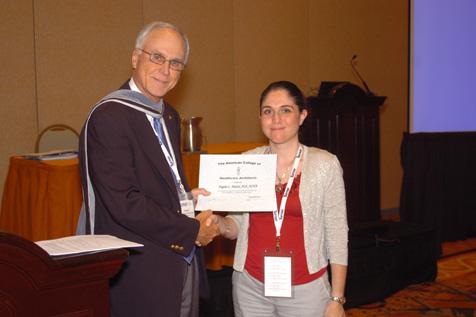
The American College of Healthcare Architects [ACHA] was founded in 1999-2000 “with the intent to improve the quality of design for healthcare for patients and their families by offering specialty certification” for licensed architects who demonstrated expertise in the practice of healthcare architecture. The College was created by a founding and visionary board of regents under the leadership of its initial President Kirk Hamilton. 155 healthcare architects with significant documented healthcare practice experience were initially certified prior to the first certification exam. An independent psychometric testing firm created the first exam based on material generated in the first year of the college by a cohort of founders who averaged over 26 years of healthcare experience. These founders also created a rigorous certification process that involves a portfolio and reference review in addition to passing the exam. The certification exam was initially administered in 2001 and the first exam taking cohort was certified after passing the exam and the certification review process. After years of work, the College executed a Memorandum of Understanding with the American Institute
of Architects in 2008 to formally recognize ACHA Certification as the first and only area of specialty architectural practice. ACHA Certification was also endorsed by the American Society of Healthcare Engineers in 2019. As the College passes its 25th anniversary, it now represents a growing body of over 500 certified healthcare architects in large and small firms throughout North America. An additional 104 certificate holders hold emeritus status in the College. ACHA certificate holders include architects throughout the United States and Canada with specialized skills and proven expertise.
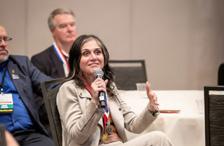
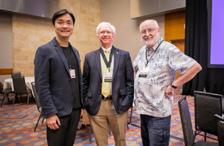
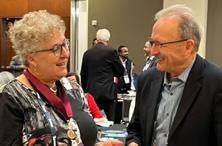
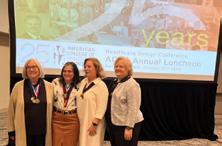
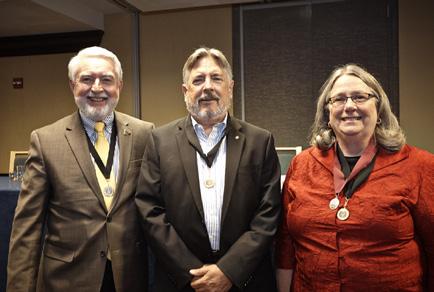
The ACHA has been celebrating their 25th anniversary throughout 2025, including special social media posts with milestones from each year of the College. The culmination of this year-long commemoration included an unforgettable party on October 25th at the National World War I Museum during the HCD Conference + Expo in Kansas City. Over 200 attended with well-wishers spanning the generations from original founding members to new Certificants, as well as candidates, supporters and sponsors. A special retrospective timeline documenting

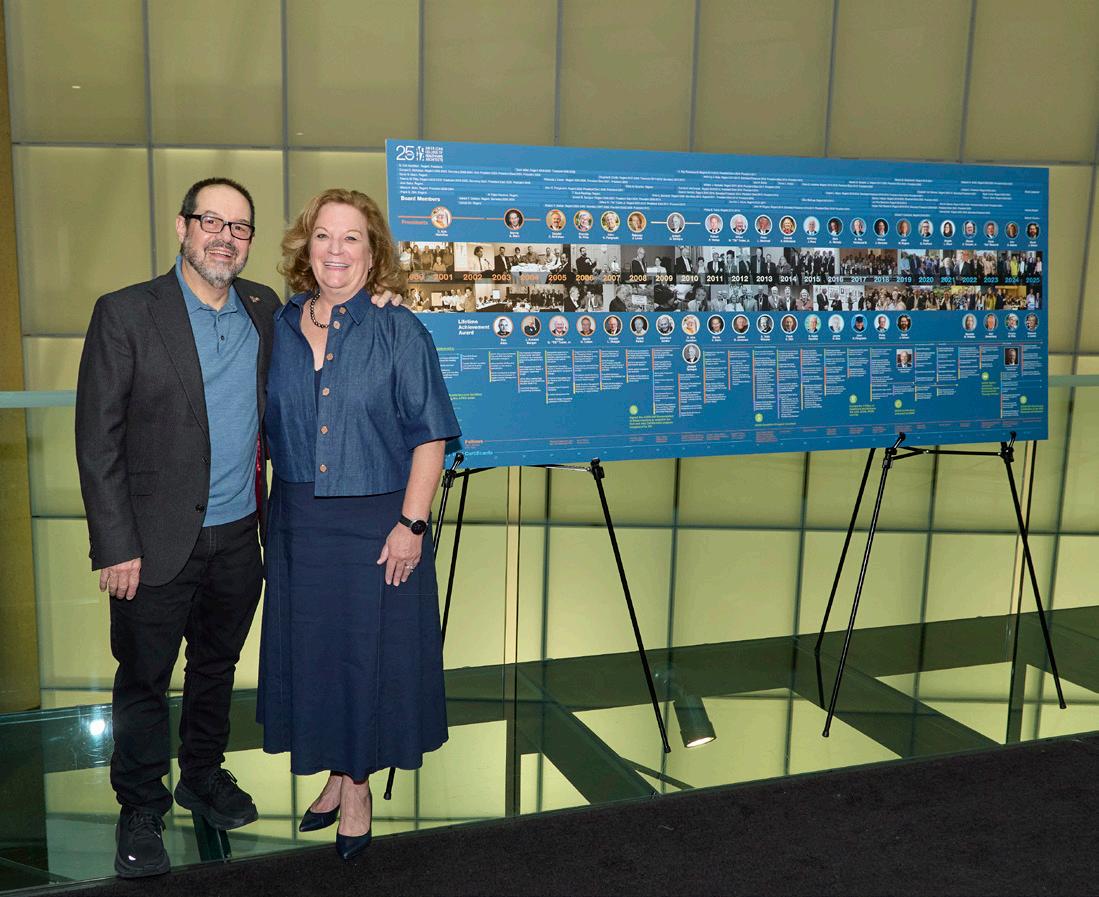
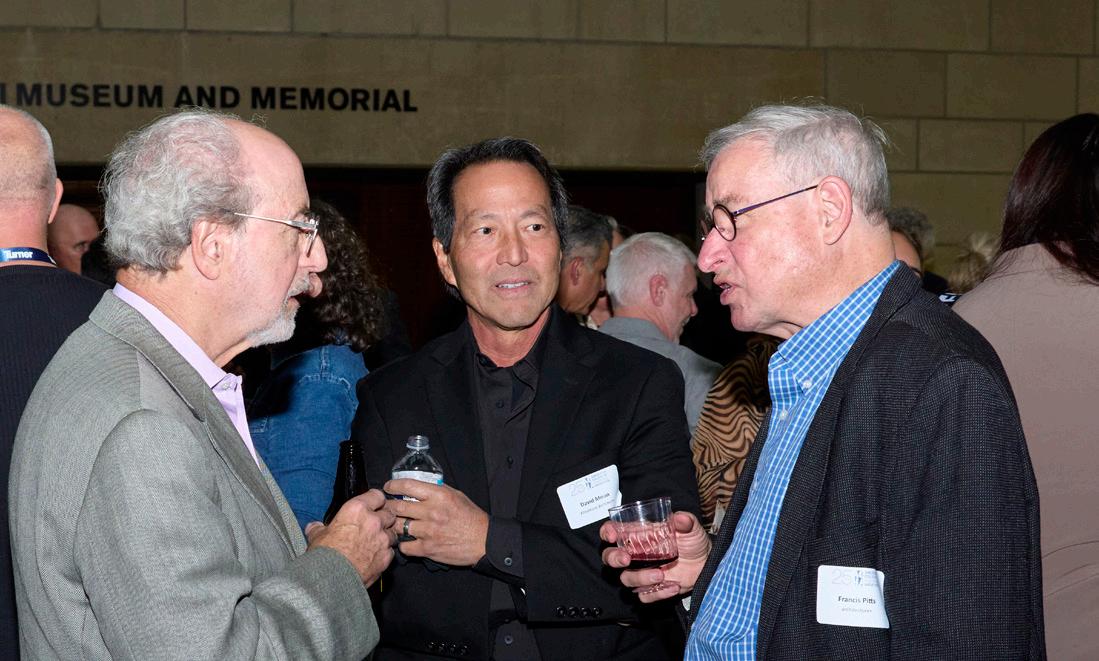
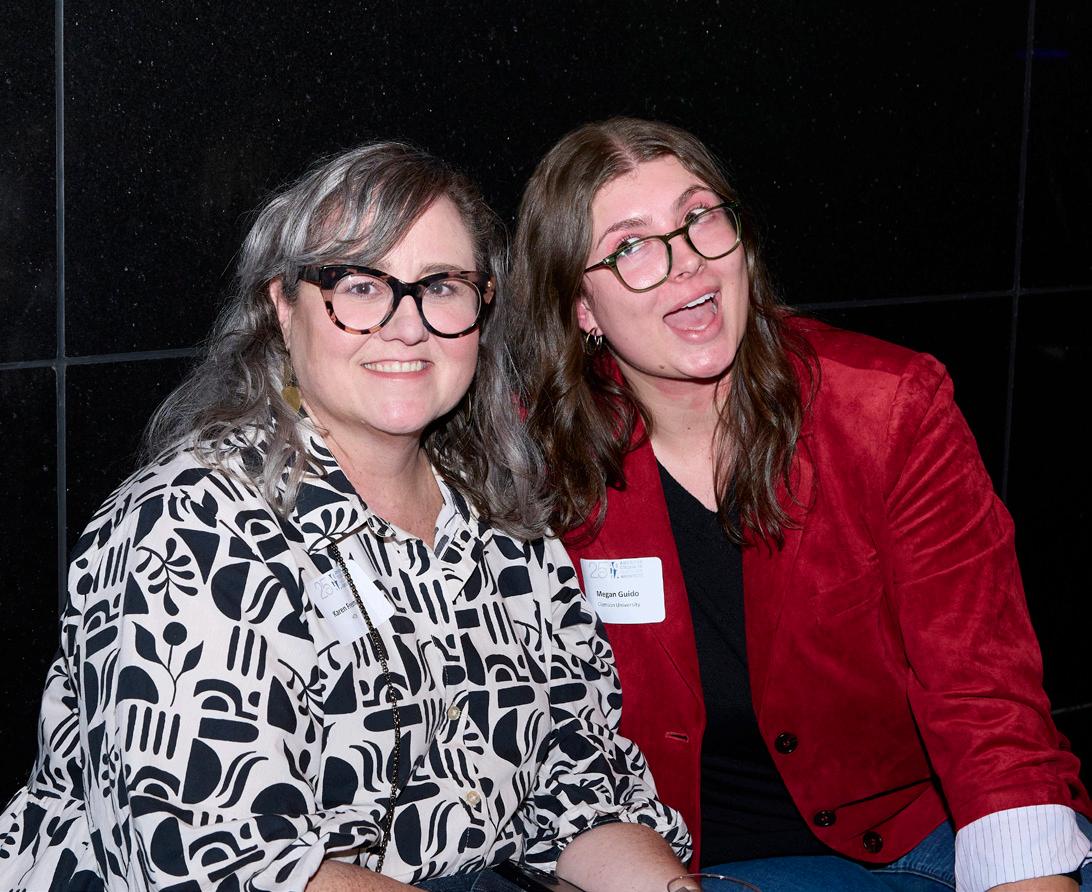
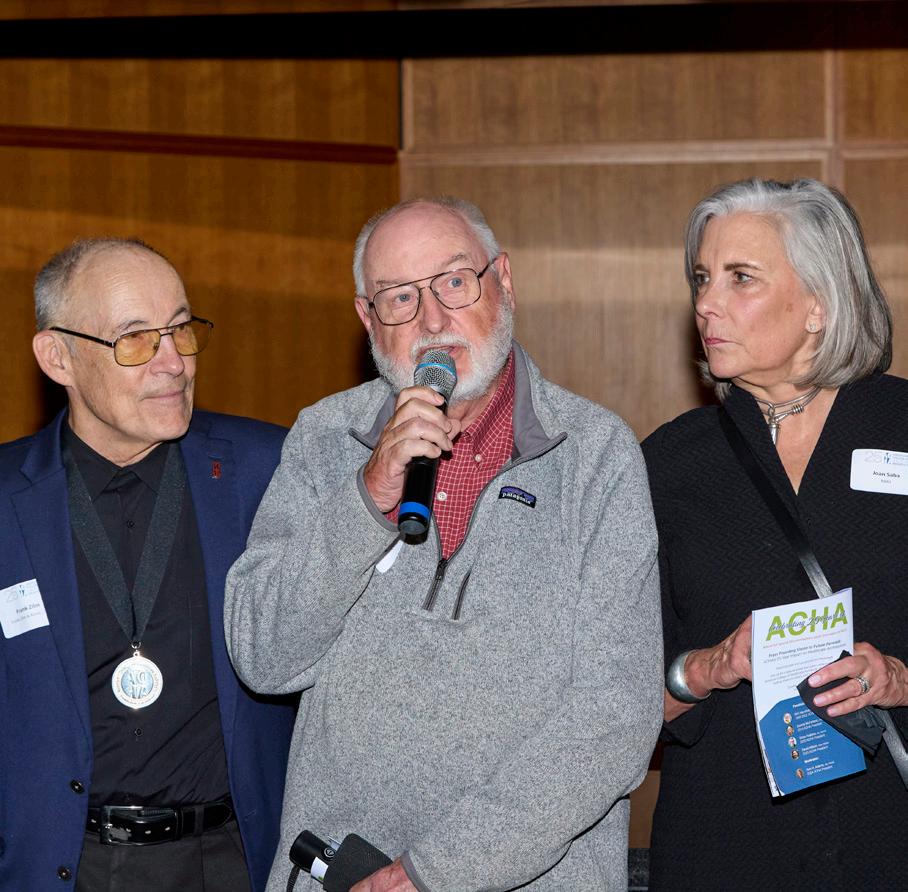


Celebrating 25 years at the ACHA Anniversary Party in Kansas City
25 years of contributions by key certificants who built and positively influenced both ACHA and the healthcare industry was proudly on display.
In addition to lively socialization and reflections from both Ann A. Adams, ACHA Past President, and David Allision, ACHA President, all were invited to explore the iconic KC landmark at the top of the Liberty Memorial Tower with 360-degree views to the city.
ACHA supplemented the party with a comprehensive panel presentation during the conference titled “From Founding Vision to Future Forward, ACHA’s 25- Year Impact on Healthcare Architecture.” The College is also publishing a commentative book on its 25th year history.
ACHA

The College, along with its original sister “Pillar” organizations, was essentially born out of the AIA Academy of Architecture for Health, where many of its founders were active. It represents the architectural certification organization within the now six Pillars alongside FGI, The Foundation for Health Environments Research, the Center for Health Design, the Nursing Institute for Healthcare Design and the Academy.
To receive ACHA Board Certification, healthcare architects must document their experience and demonstrate their skills through a computer-based examination, references, 6000 hours of documented healthcare practice, and a portfolio review of their work experience. Licensed architects from the US, UK, Australia and other countries recognized for reciprocal







licensure in the US by the National Council of Architectural Registration Boards [NCARB] are eligible to apply for ACHA Certification.
ACHA certified healthcare architects work toward improving the evidence-based design of healthcare architecture on behalf of the public, practice in an ethical manner, maintain high standards of specialized continuing education, and add to the body of knowledge. They are recognized as pioneers and industry leaders in the design of healthcare facilities throughout the US and around the world. They routinely develop, present, and share knowledge on evidence based best practices for healthcare facility design in national and international forums.
Our vision for the future is to have greater impact beyond the healthcare design community and be an effective voice advocating for the improved design of health supporting and healthcare environments. Building on our vision, the college defines “better” built environments as those that must address and support a series of fundamental issues and forces impacting human health and the delivery of healthcare. Therefore, we believe that:
• Health and healthcare environments should be designed to optimize operational efficiency and effectiveness.
• Health and healthcare environments should be designed to protect and optimize safety, health, and health outcomes.
• Health and healthcare environments should be designed to optimize the healthcare experience.
• Health and healthcare environments should be designed to optimize the ability to accommodate change.
• Finally, health and healthcare environments must be designed to employ collaborative, multi-disciplinary, interdisciplinary and evidence-based design decision-making processes.
Health and healthcare environments must be designed with knowledge of and in compliance with the best practices, guidelines, standards, and building codes established as an industry standard of care for all healthcare settings. Certified healthcare architects must advocate to protect the health, safety, and welfare of all building occupants within the unique dynamics of healthcare.
Are you interested in learning more about the pathways to becoming a boardcertified healthcare architect?
The next deadline to apply is April 1, 2026; the exam window is June 1-30, 2026, and you can submit portfolios and letters of recommendation anytime, as they are reviewed quarterly. You can even earn 20 AIA approved HSW CEUs for passing the certification exam in your testing year.
Everything you need to prepare, organize, and start your journey can be found on the website, https://healtharchitects.org/ becoming-certified/ including the Certification Handbook with all the details.


























Mardelle
2025 Healthcare Design Awards
Design excellence is sustainable, resilient, & inclusive design
The Healthcare Design Award recognizes the best of health care building design, health care planning, and health care design-oriented research. Project types include outpatient centers, hospital expansions, diagnostic and treatment facilities, communitybased clinics, children’s hospitals, and wellness centers. Projects should exhibit conceptual strength that solve aesthetic, civic, urban, and social concerns as well as the requisite functional and sustainability concerns associated with a health care setting.
All projects must demonstrate design achievement, including a sense of place and purpose, ecology and environmental sustainability, and history in one of the following categories.
Categories
Category A: Built: Less than $25 million (construction cost)
Category B: Built: More than $25 million (construction cost)
Category C: Renovations/remodeled: Primarily built within existing hospital or clinical space or adaptive reuse of an existing building to a health care use.
Category D: Unbuilt: Must be commissioned for compensation by a client with the authority and intention to build.
Category E: Innovations in planning and design research, built and unbuilt.
Category F: Master planning urban design for health care settings.
Esperanza Health Center
UrbanWorks, Ltd.
Chicago, IL
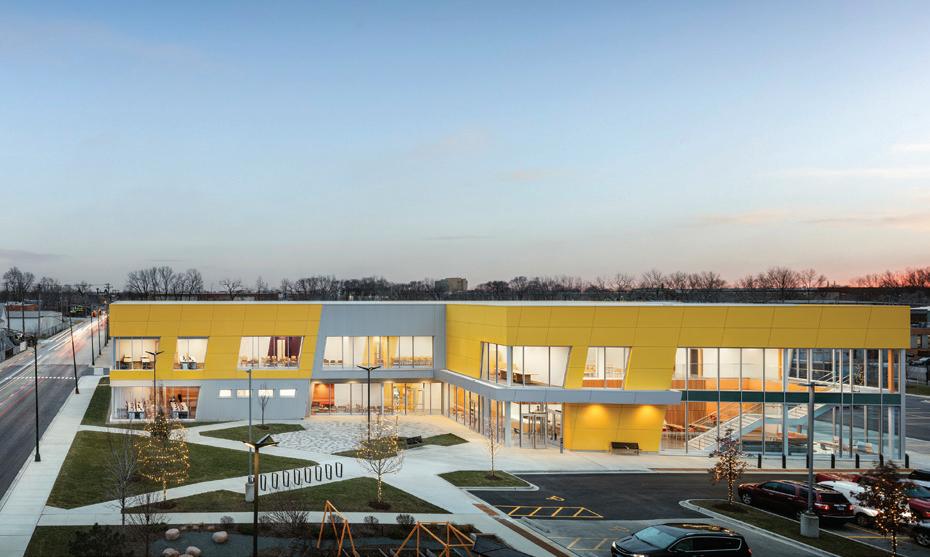
The new Esperanza Brighton Park Health Center is a memorable two-story-tall, 43,450-square-feet facility that houses expanded medical health services, comprehensive senior programming, and a family medicine residency program. The new building expands Esperanza’s presence in the Brighton Park community on Chicago’s South Side to encompass an entire city block, forming a new civic plaza in concert with an earlier facility at the north end of the site. Planned as a “health campus,” multiple indoor and outdoor spaces create opportunities to promote health, learning, and recreation for the community that builds on the services provided within the complex.
Jefferson Health Care Honickman Center
Ennead Architects Stantec, BLTa
Philadelphia, PA
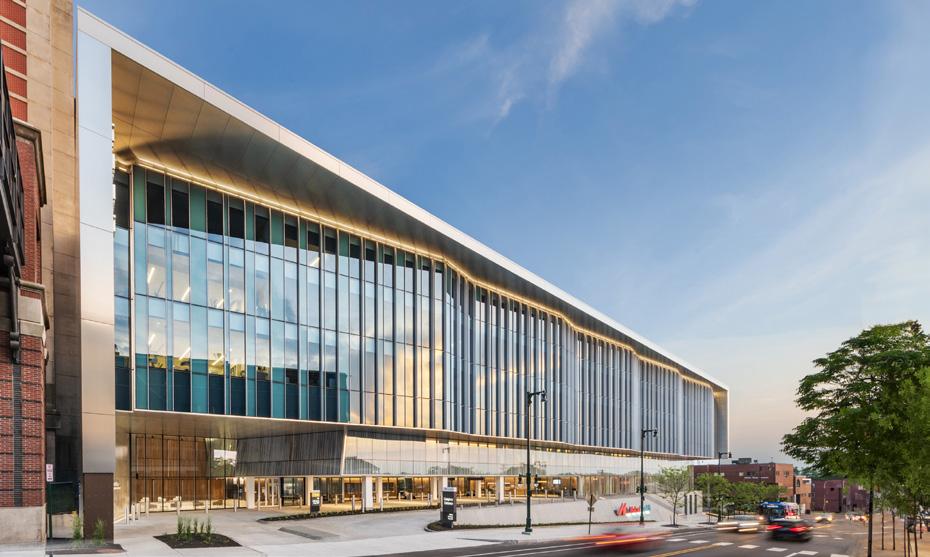
The Honickman Center completes the East Market redevelopment, a 4.3-acre urban redevelopment project in heart of Center City Philadelphia, extending pedestrian-friendly streetscapes and mixed-use activity from Market Street south to Chestnut Street. With its pleated glass facade, it redefines Jefferson Health’s identity, anchoring its Center City campus while enhancing the skyline. Inside, it transforms care with a seamless, patient-focused experience— integrating evaluation, diagnosis, and treatment with centralized access to care and supportive amenities. The design exemplifies how large healthcare facilities can thoughtfully integrate into urban environments, fostering community engagement and providing clear, and navigable access to care.

Bruce Damonte
AJ Brown Imaging
Malone Family Tower
Perkins&Will
Portland, ME
Approaching 150 years in service and faced with an aging campus, Maine Medical Center desired to remain at their founding location. New infrastructure and programs were needed to address a shortage of beds and accommodate Portland’s growth, especially with an aging, impoverished population in need of cardiac care. The 8-story Malone Family Tower delivers this crucial campus transformation and is an investment in the next generation of care. This new gateway provides 19 procedure rooms, 40 pre/ post-surgical bays, and 96 adaptable patient rooms, transitioning between ICU and medical/surgical use as needed, improving patient access and outcomes.
Stanford School of Medicine Center for Academic Medicine
Hellmuth, Obata & Kassabaum, Inc.
Palo Alto, CA
The Center for Academic Medicine at Stanford University, known as the “Treehouse at Stanford,” was designed to combat physician burnout by creating a restorative workspace for academic research. Located within Stanford’s historic arboretum, the building integrates nature into its design, lifting its west wing to form a two-story porch and extending the arboretum throughout the site. Outdoor spaces, porches, and terraces provide natural ventilation and foster collaboration. Inside, no one is more than 30 feet from a window, with biophilic design elements inspired by the arboretum. This connection to nature enhances occupant well-being and supports the Stanford Medicine community.
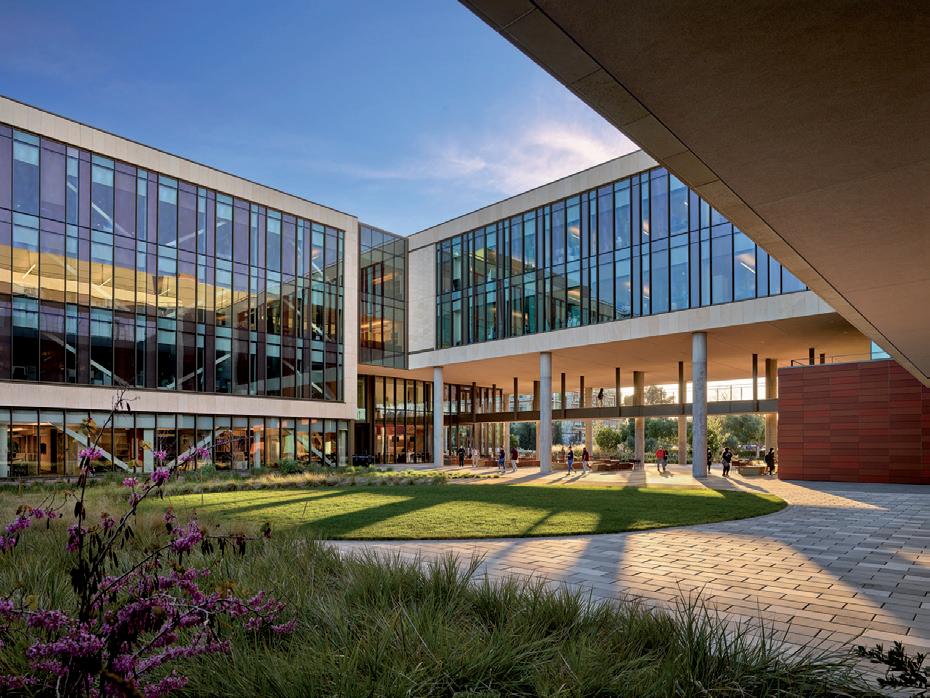
Alan Karchmer Photography
Anton Grassl
Victory Wellness Center
PATTERNS / Marcelo Spina, Mutuo,
Tina Chee Studio North
Hollywood, CA
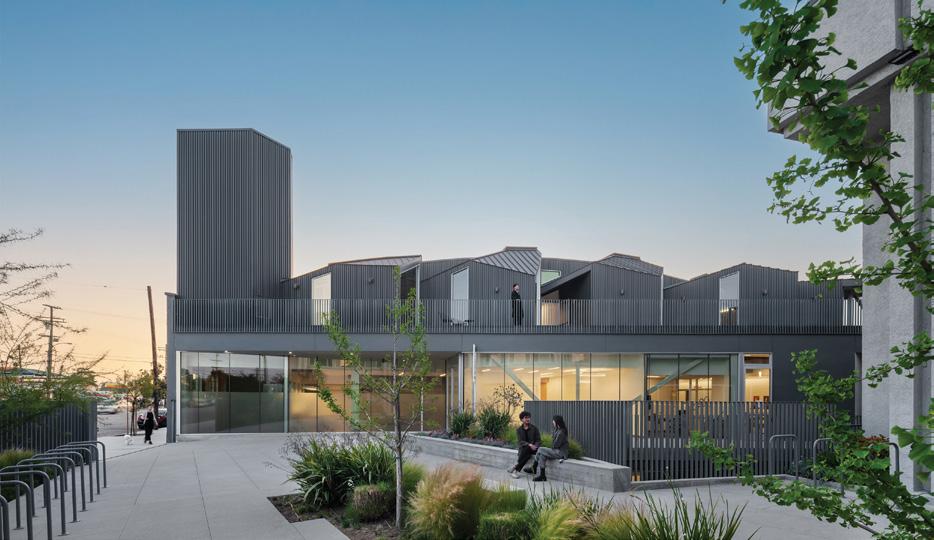
Victory Wellness Center in North Hollywood, CA, transforms a mid-century bowstring truss warehouse into a modern medical facility. The project expands the original 17,000 ft² structure to 42,000 ft², adding a basement, mezzanine, and over 10,000 ft² of landscaped open space. By retaining three facades and the original roof, the design balances preservation with innovation, introducing a new campus-facing façade. This adaptive reuse project revitalizes the site, enhancing functionality while integrating sustainable and community-focused design elements.
UW Medicine, Center for Behavioral Health and Learning
SRG + CannonDesign Seattle, WA
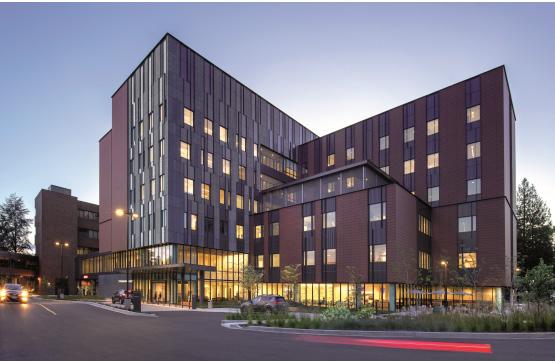
The University of Washington’s Center for Behavioral Health and Learning exemplifies how architecture can enhance mental healthcare and education. Designed to integrate behavioral health, medical care and teaching under one roof, the building offers a holistic environment that promotes healing and innovation. Its thoughtful design maximizes natural light, incorporates calming materials and fosters a sense of dignity and community. Collaborative spaces support interdisciplinary care, while patient-centered areas prioritize privacy and comfort. Anchoring a new behavioral health campus, the center is a beacon for mental health advocacy and a model for how architecture can advance equitable, compassionate and integrated healthcare delivery.
Explore more on the 2025 award winners https://www.aia.org/design-excellence/awardwinners/healthcare-design-award-2025
Bill Timmerman
Paul Vu (Here and Now) / Patterns
Sub-Committee Work
Featured articles and engagement opportunities
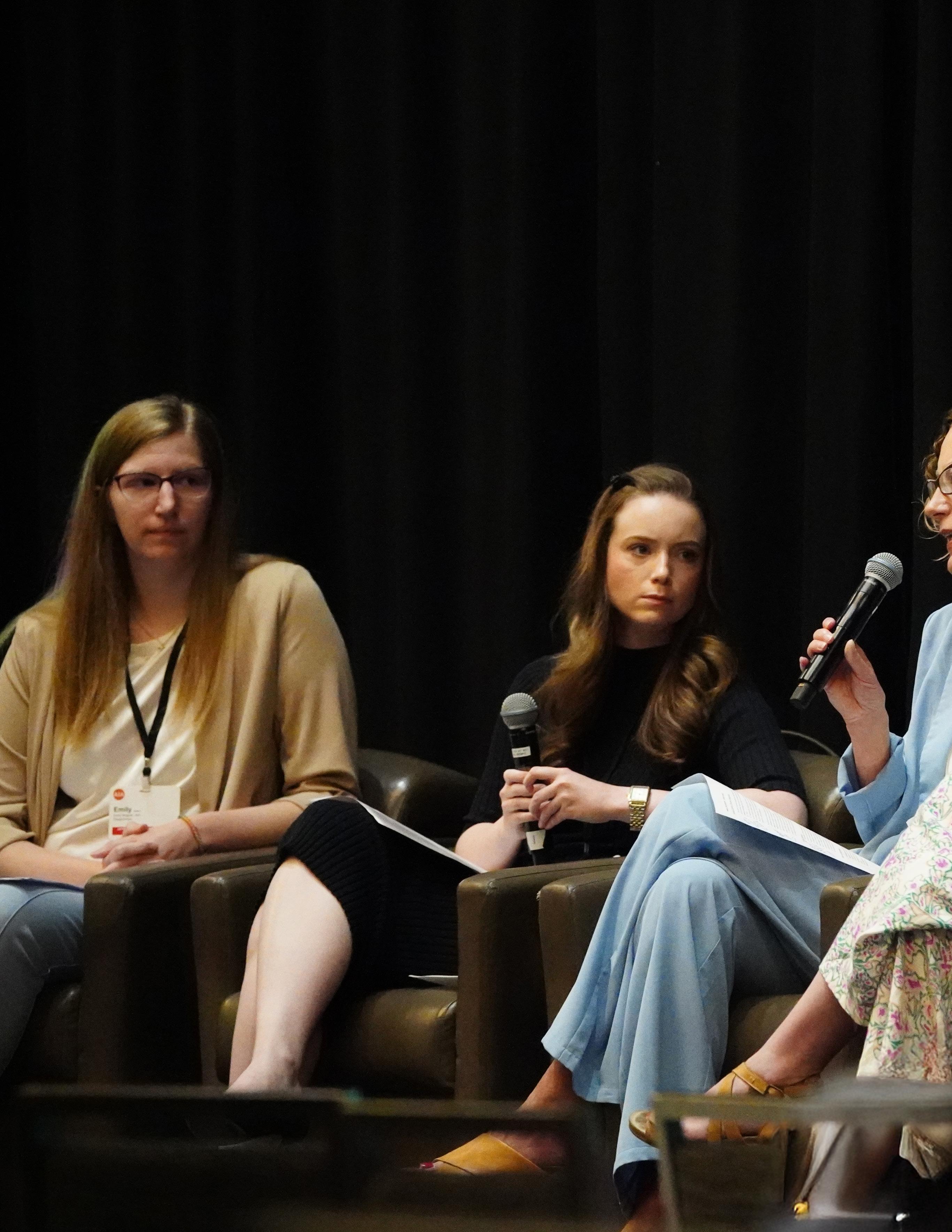
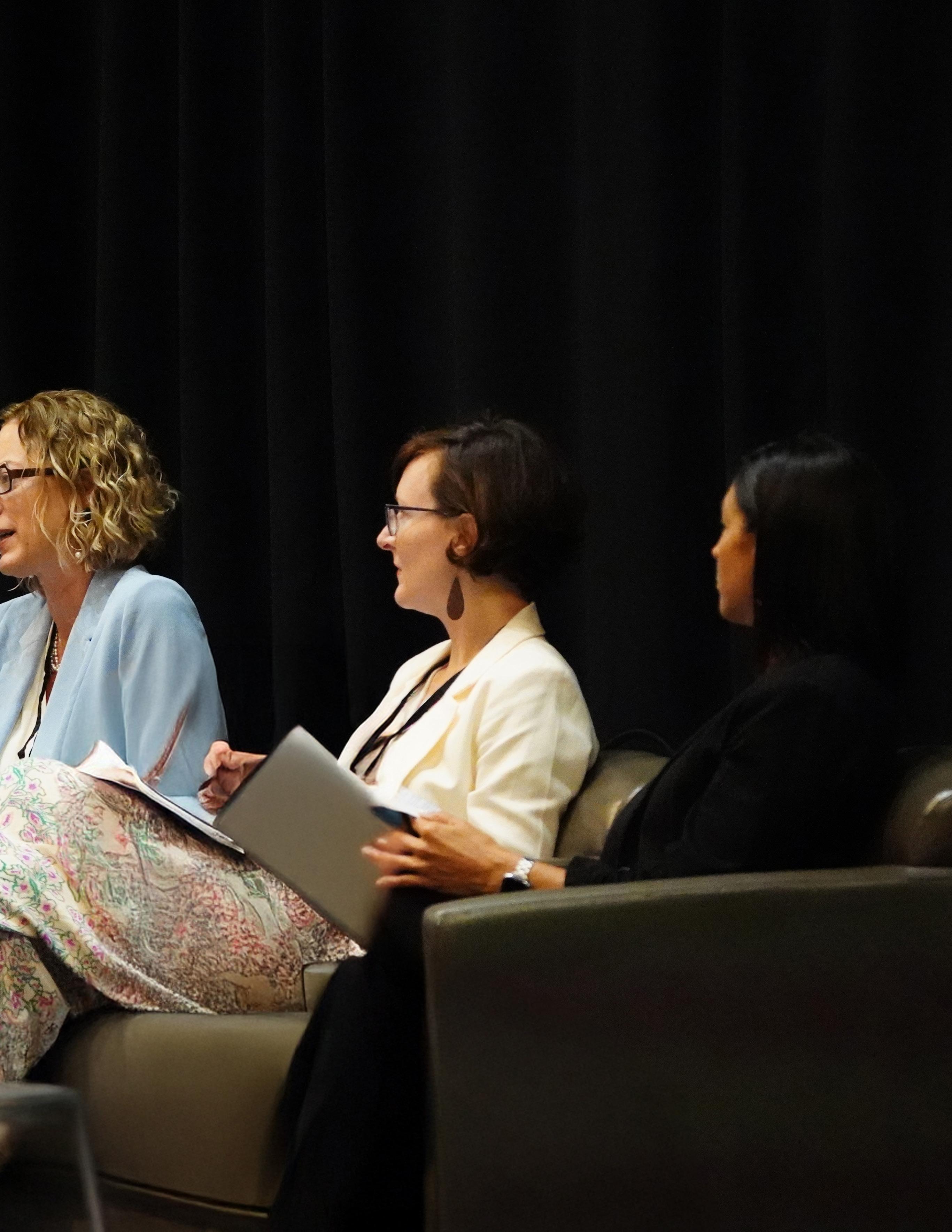
AIA AAH Healthcare Design Next Generation Panel: Women’s Health Care: How Does a Crisis Affect a Condition Already in Crisis? Speakers: Dr. Amy Person, DC, DICCP, Dr. Jennifer Runkle, Dr. Megan Tiron
2025 Summer Leadership Summit Recap
Denver, Colorado, July 18 - 20, 2025
With the growing impacts of climate change on our communities, how can health care organizations prepare for stability during environmental disasters? How do facilities build resilient infrastructure, maintain supply chains, and provide everyday health care needs while also addressing emergency demands during unforeseen events? What are the fiscal challenges and realities for health care facilities as part of the emergency response network in communities both large and small? The Summer Leadership Summit (SLS) is co-organized by the AIA Academy of Architecture for Health (AAH) and the American College of Healthcare Architects (ACHA).”
Michelle Meyer, PhD presented Whole Community and Disaster Resilience: Supporting Health and Well-being in Your Institution and Community Before, During, and After Crises, emphasizing that institutions must proactively identify and reduce inequalities, strengthen social capital through community engagement, and mitigate risks in the built environment. She highlighted that resilience is an ongoing practice embedded in everyday decisions and noted that healthcare institutions can build their own capacity while contributing to broader community resilience. Design choices from facilities to systems can either support or hinder resilience across all phases of a crisis.
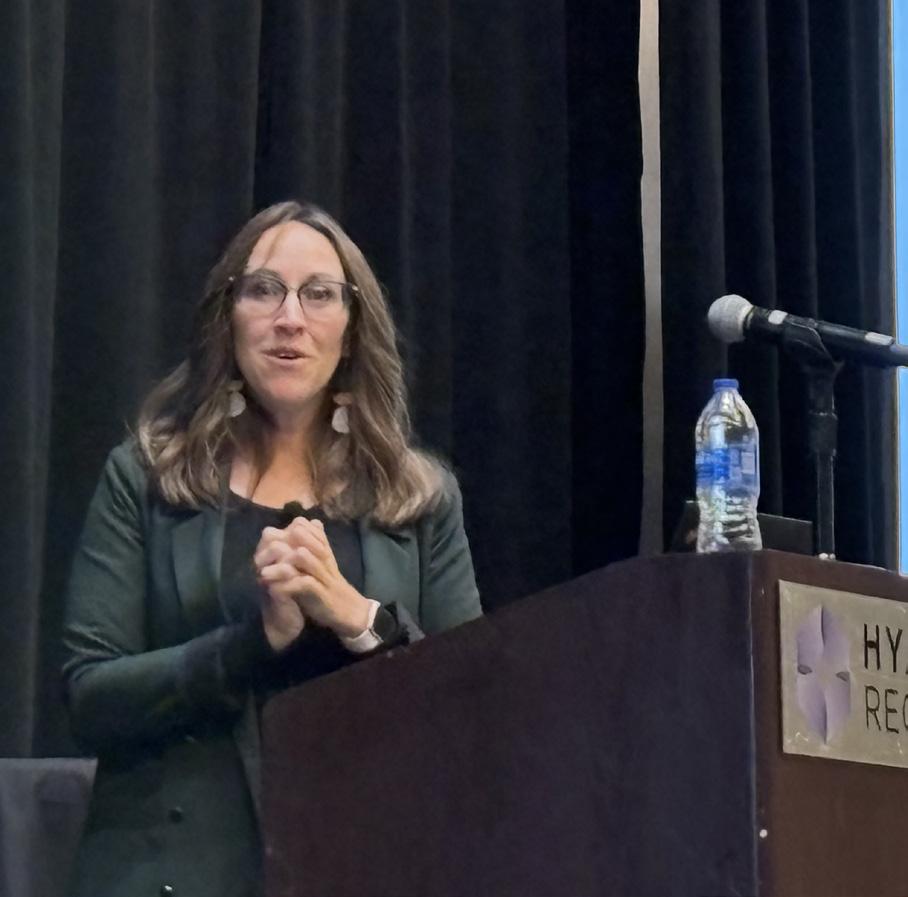
Michelle Meyer, PhD
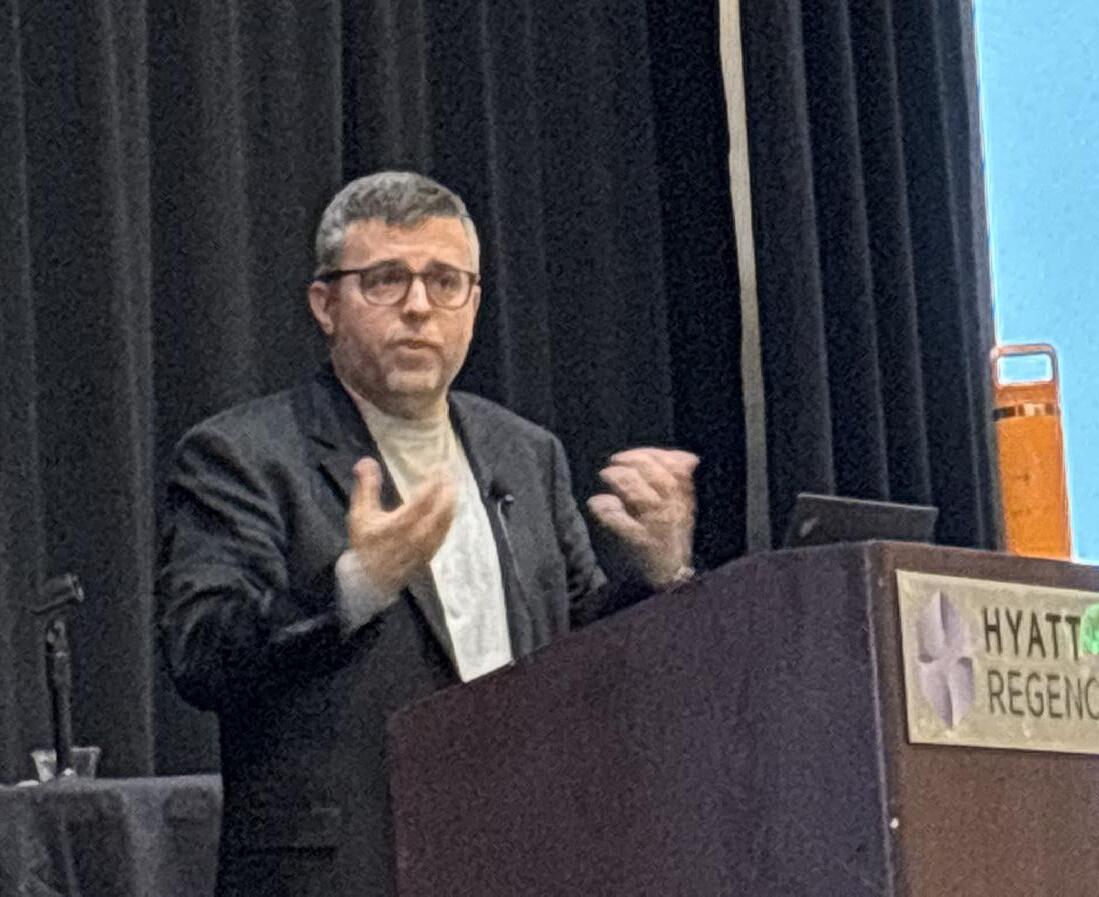
Nicholas Rajkovich, PhD, AIA, CPHC
A special thank you! Putting together an event like the Summer Leadership Summit would not be possible without support from out sponsors.


Nicholas Rajkovich, PhD, AIA, CPHC presented Integrating Adaptation Science into Health Care Architecture, outlining features of becoming Flexible by Design: Integrating Adaptation Science into Healthcare Architecture, outlining how adaptation science can inform more resilient healthcare environments. He explained the role of exploratory scenario planning (XSP) in supporting flexible, long-term climate adaptation and identified design strategies that strengthen healthcare infrastructure over time. He also emphasized the value of publicly available data and emerging research in guiding climate-adaptive decisions, framing resilience as a process that involves categorizing hazards, assessing vulnerability and risk, investigating options, prioritizing and planning, and ultimately taking action.
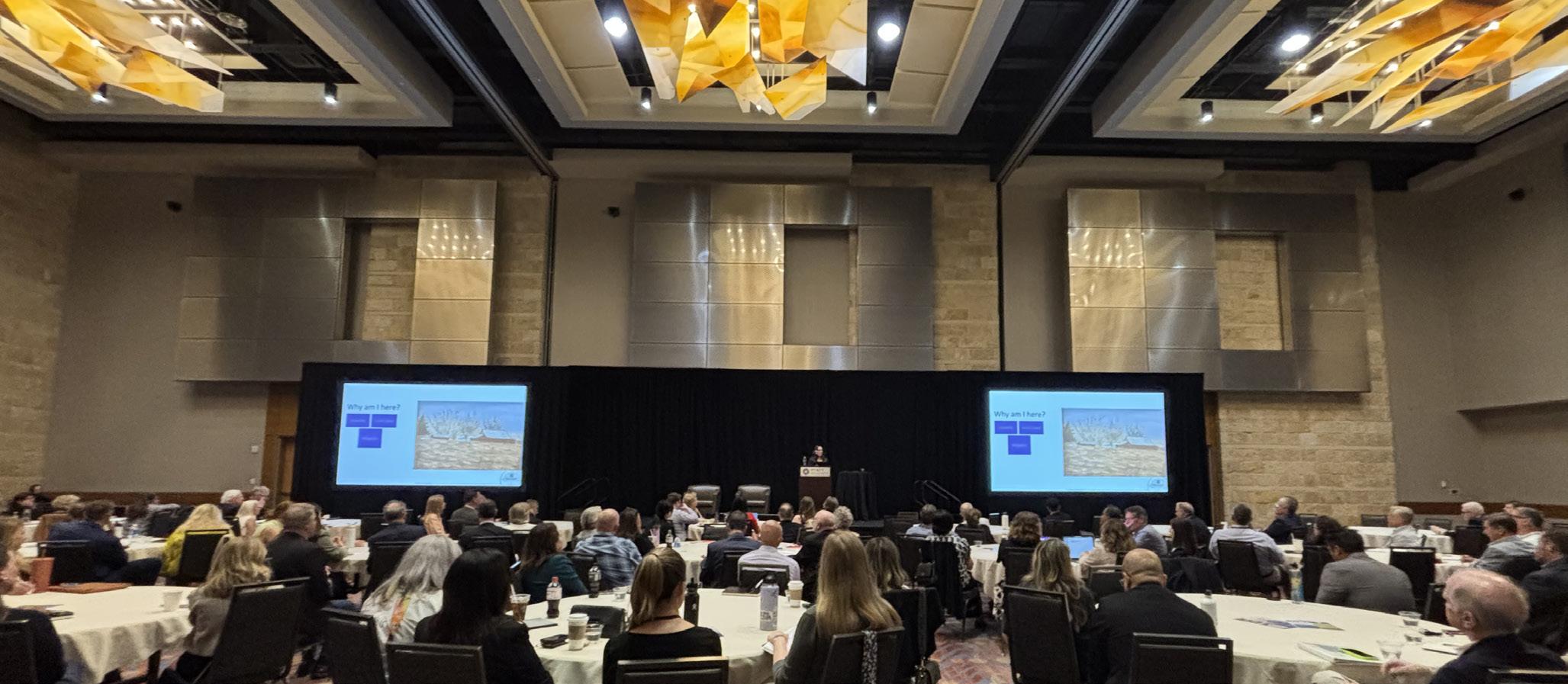
CAPT Derek Feld USN presented presented Designing for the Unseen: Lessons from Military Emergency Operations in Healthcare Crisis Response, drawing on Navy Reserve emergency-response experience to illustrate how coordinated military-civilian efforts shape healthcare outcomes during crises. He emphasized how the phases of emergency management influence the safety and welfare of patients, staff, and surrounding communities, and compared the differing capabilities and constraints of the National Guard and federal military forces in supporting healthcare environments. Using real-world scenarios such as COVID-19 and civil disturbance operations, he highlighted how joint operations affect vulnerable populations and continuity of care, while underscoring strategies healthcare architects can adopt—such as resilient power systems, flexible circulation, access planning, and logistical preparedness—to enhance protection during large-scale emergencies.
Dave Kistel presented Disruption & Resiliency: Lessons for Health Care Integration of Health & Built Environment Professionals into Public Health Preparedness and Disaster Response, emphasizing the growing urgency of resilience as natural disasters have increased dramatically over recent decades. He highlighted how unexpected disruptions, shifting flood elevation requirements, and evolving building code resiliency directly affect healthcare facility design and operations. Through case studies—from major hurricanes to the COVID-19 pandemic—he illustrated the financial and operational impacts of disasters and the challenges that follow. Kistel also stressed the importance of collaborating with local municipalities, identifying incident command locations, and considering access routes and site features such as tree placement to ensure continuity and safety during large-scale events.Molly Scanlon, PhD, FAIA, FACHA presented Integration of Health & Built Environment Professionals into Public Health Preparedness and Disaster Response
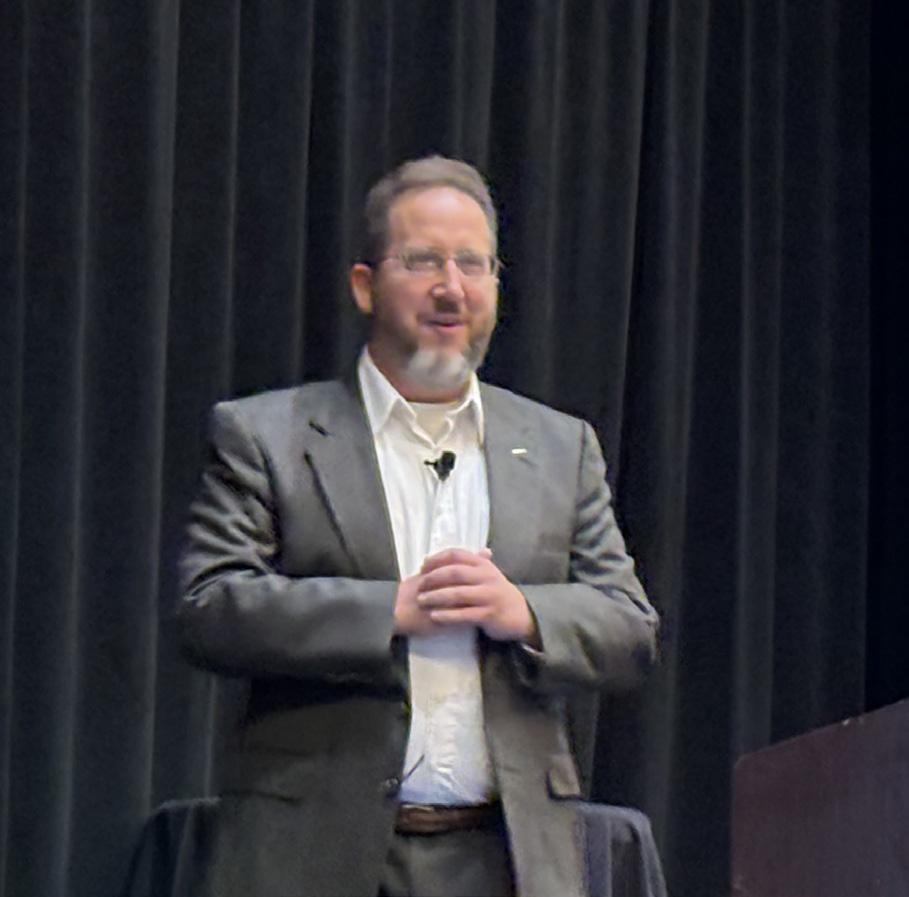

CAPT Derek Feld USN
Dave Kistel

Molly Scanlon, PhD, FAIA, FACHA presented Integration of Health & Built Environment Professionals into Public Health Preparedness and Disaster Response, emphasizing the need to strengthen collaboration between clinical medicine, public health, and the built-environment disciplines to support more effective disaster preparedness. She contrasted public health and clinical approaches, highlighted how the built environment shapes public and environmental health outcomes, and underscored the importance of whole-of-society responses and well-planned alternative care sites. Scanlon encouraged reflection on whether current practices are sufficient, calling for clearer inter-pandemic strategies, a more defined “health” disaster assistance cycle, and better alignment between building codes and public health toolkits to improve future readiness.
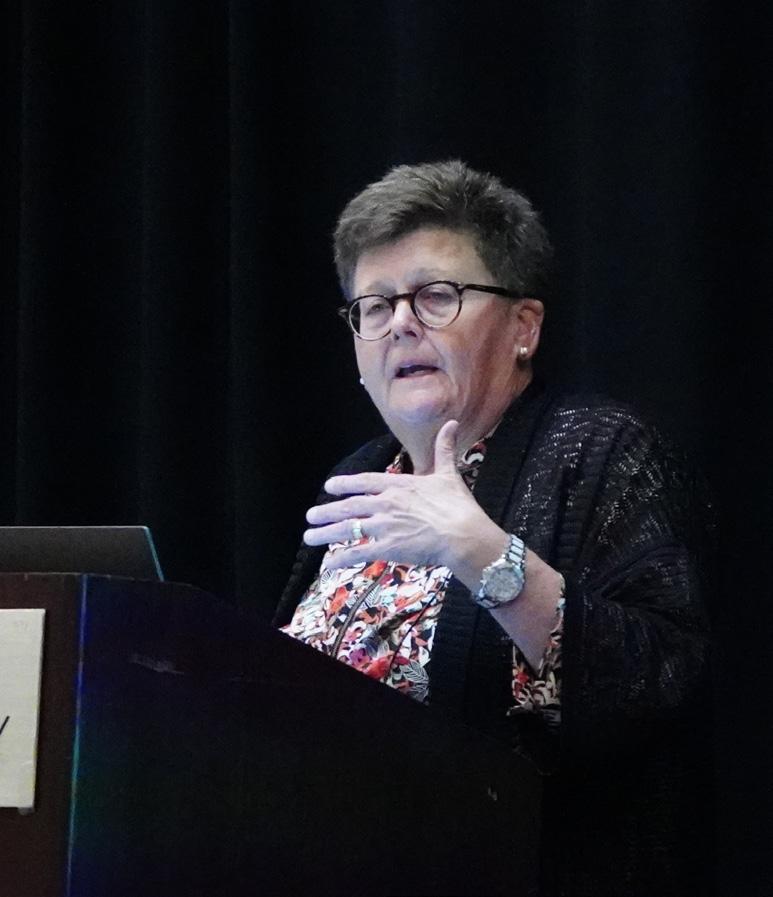
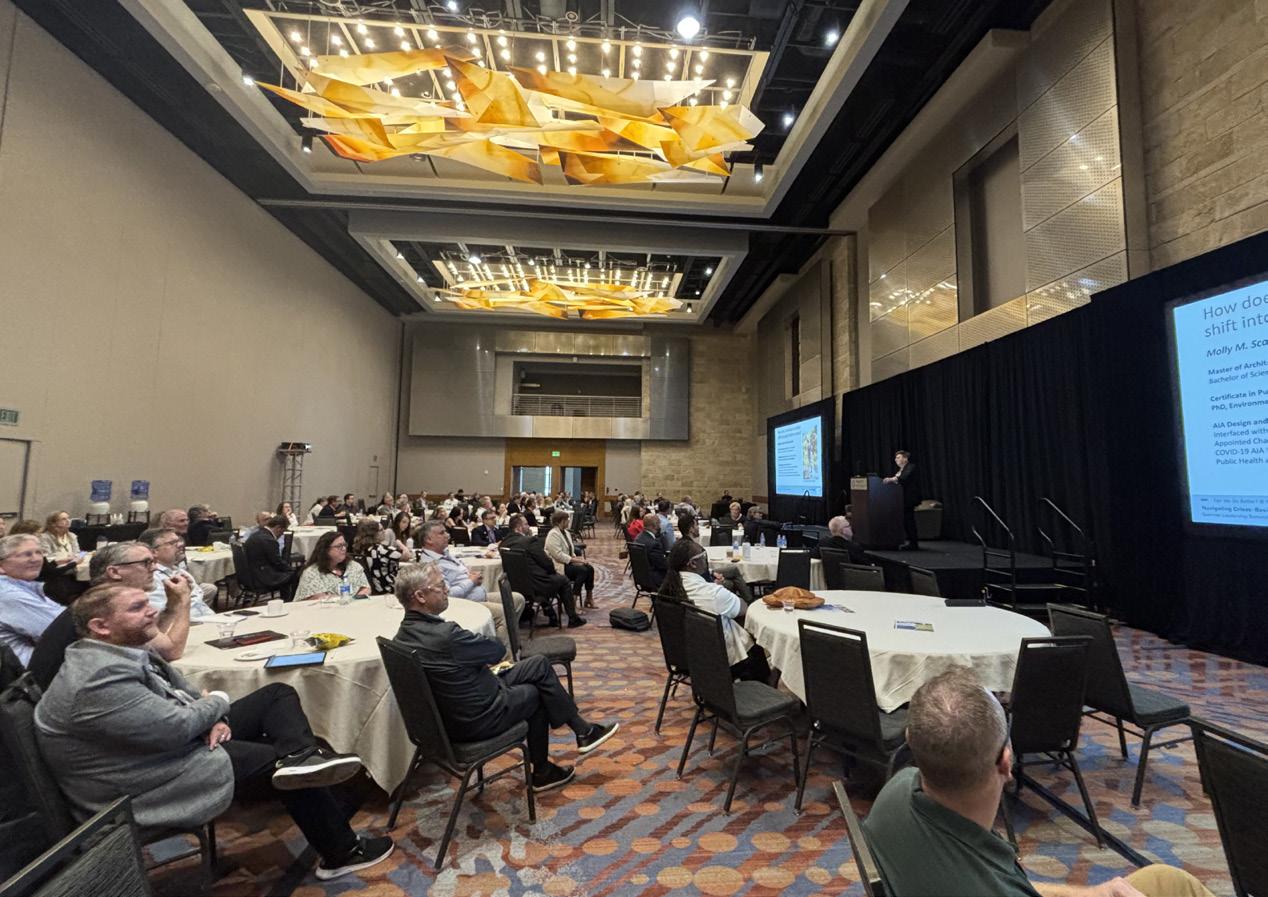
AIA AAH Healthcare Design Awards Panel
Molly Scanlon, PhD, FAIA, FACHA
Components Council Knowledge Communities
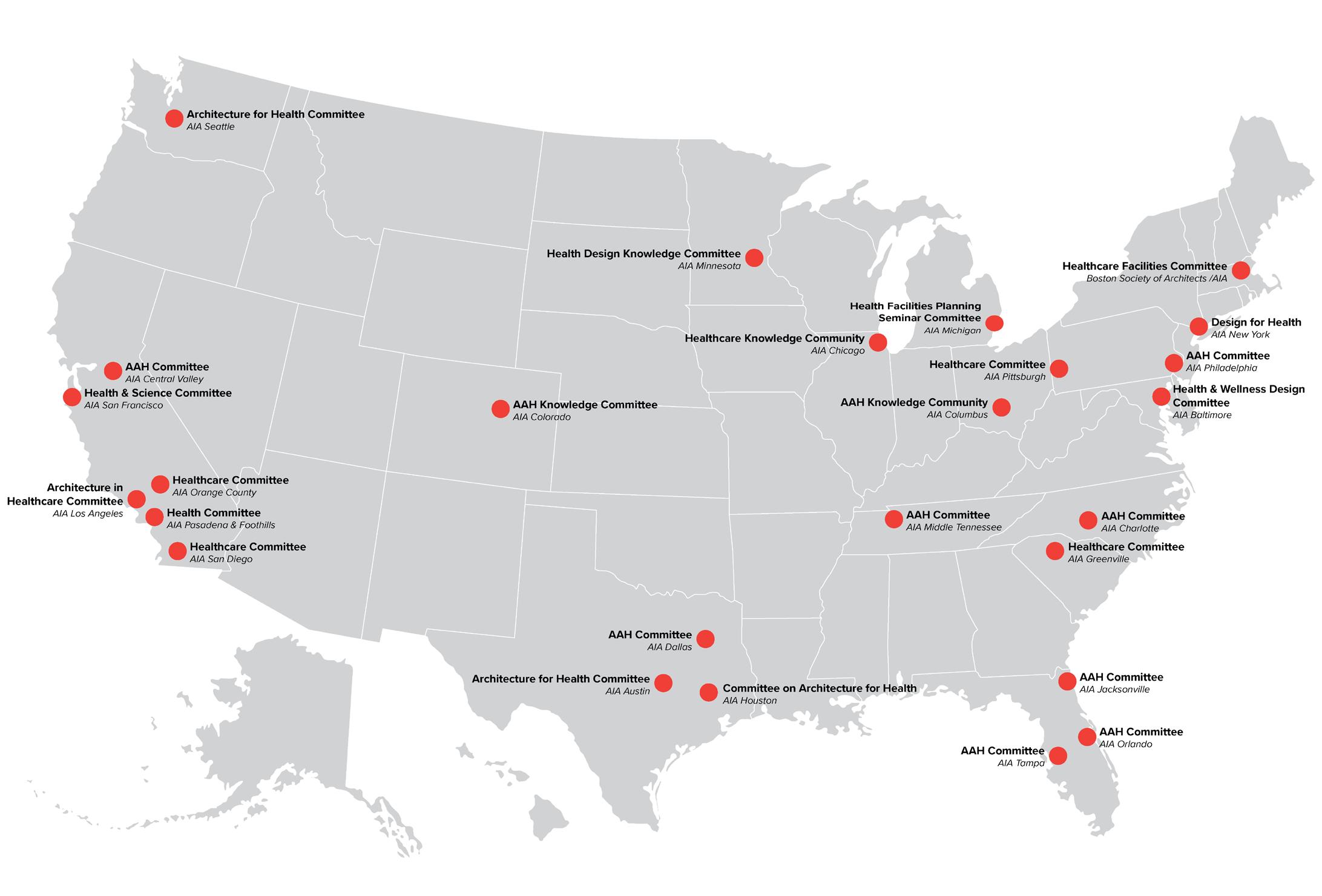
The mission of the AAH Components Council is to establish a more visible and recognized regional presence for the Academy for Architecture for Health (AAH) through the recruitment of prospective academy members and to provide educational and networking opportunities to our current members. It is to serve as the network for all local AAH Knowledge Community (KC) components, to advise AAH leadership on its mission and challenges, and to create a potential path to national leadership.
The vision of the AAH Components Council is that this group is a conduit for change and working diligently to improve quality in healthcare. It will bring issues and raise awareness of regional challenges and opportunities and be focused both on what we practice and how we practice.
Local councils are located across the country, many serving multiple cities and states. AAH and Local AAH Components can collaborate through education and networking opportunities.
Interested in joining a Knowledge Community? Find your closest AIA chapter on the map below or reach out to a Components Council co-chair for more information.
How to Join a Sub-Committee
Interested in joining a subcommittee? Reach out to our committee chairs to learn how you can contribute, add value to our knowledge community, and increase your impact and network.
C2C Mentorship
Codes + Standards
Michelle Acosta
michelle.acosta@hdrinc.com
Vince Avallone vince.avallone@smithgroup.com
Tina Duncan TDuncan@hksinc.com
Communications + Jenny Cestnik
Jenny.Cestnik@zgf.com Spectacle
Components Council
Design Awards
Fellowships + Scholarships
Healthcare Design Awards
HCD Conference
Next Gen
PDC Conference
Research
SLS Conference
Sustainability
Angela Holcomb angela.holcomb@hdrinc.com
Marybeth Dietz Marybeth.Dietz@smithgroup.com
Chris Haedt christopher.haedt@hdrinc.com
Hans Walter HWalter@dlrgroup.com
Emily McGee
emily.mcgee@meadowsandohly.com
Hans Walter hwalter@dlrgroup.com
Sara Shumbera sshumbera@shepleybulfinch.com
Kinjal Shah kshah@hksinc.com
Jack Reed jreed@eypae.com
Asma Sanaee ASanaee@e4harchitecture.com
Marjorie Brown Eliason@comcast.net
Carly Fenton carly.fenton@smithgroup.com
Amber Wirth AWirth@hksinc.com
U40 Alison Leonard ALeonard@CannonDesign.com
Webinars
Nick Faust
nick.faust@thelawrencegroup.com; Thomas Bahr thomas.bahr@jacobs.com
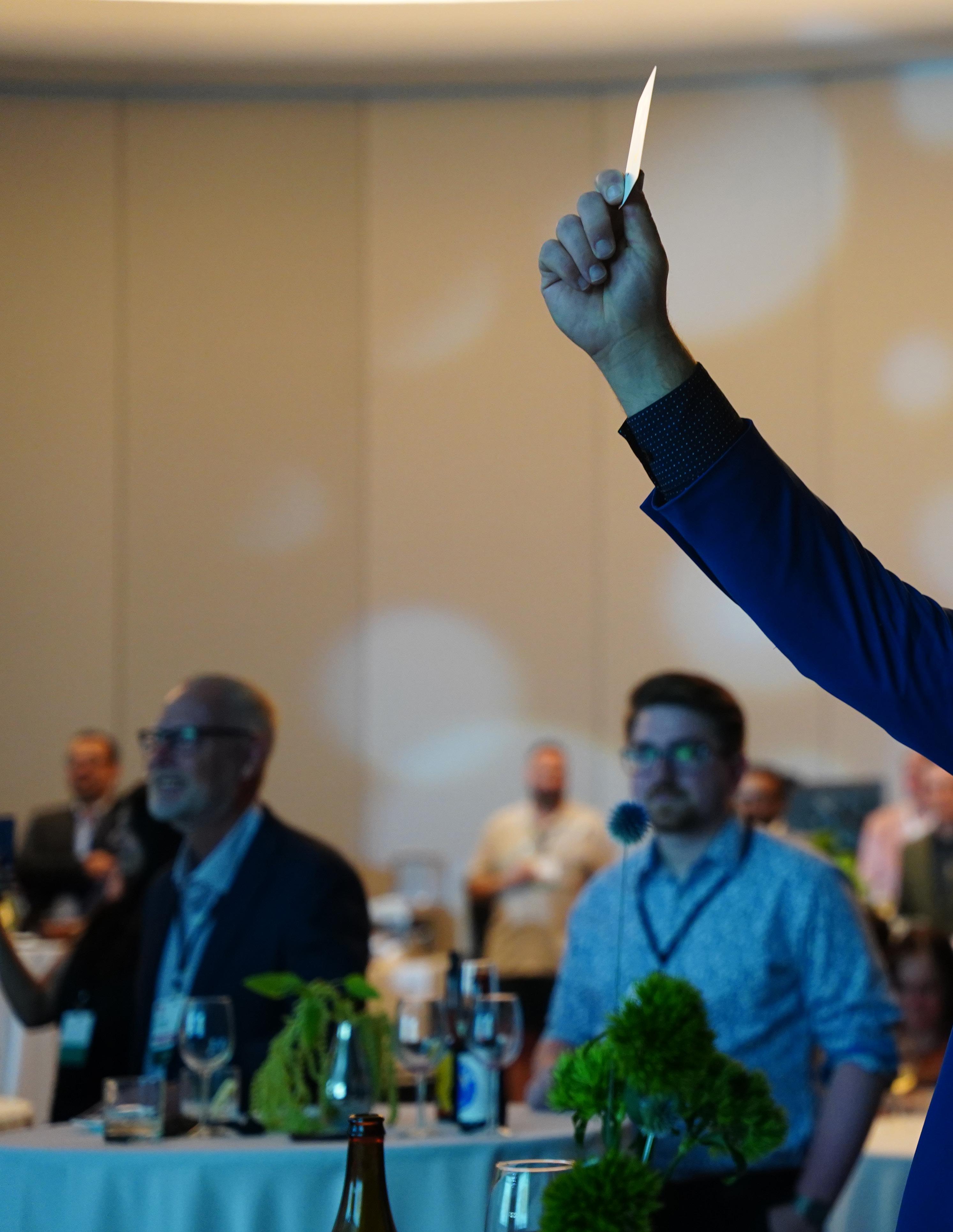
AAH Celebrates
See the innovative work, ideas, and accolades of our leaders and next generation.

2025 NextGen Scholars
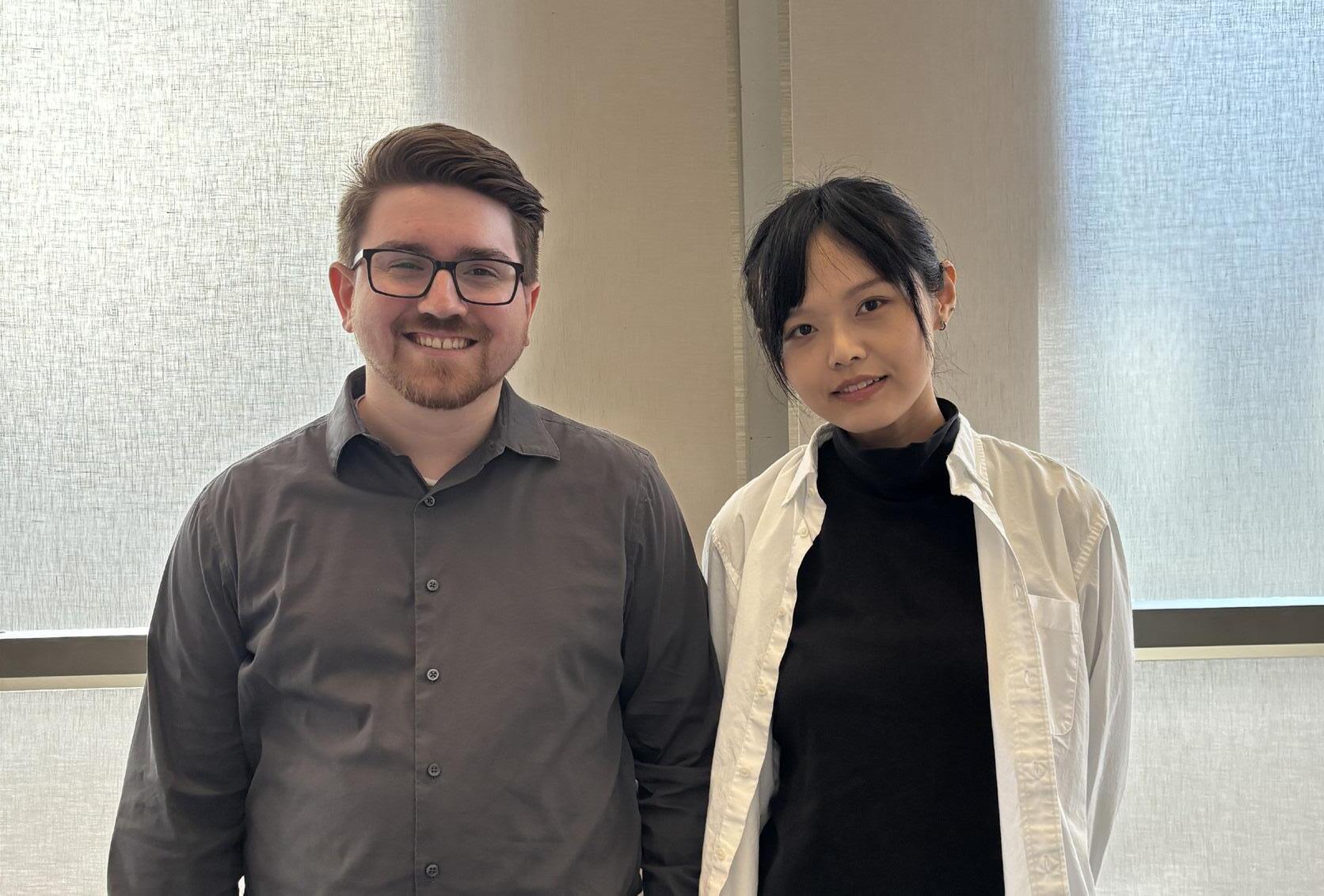
The AIA Academy of Architecture for Health (AAH) and the American College of Healthcare Architects (ACHA) are proud to announce the 2025 Summer Leadership Summit (SLS) Next Generation Scholars: Haimei Li and Noah Gaither. These emerging professionals represent the future of healthcare architecture, bringing fresh perspectives, deep commitment to human-centered design, and a passion for creating environments that truly heal.
Haimei Li: From Family Legacy to Healthcare Innovation
Haimei Li’s journey into healthcare architecture began at home. Her mother, an architect specializing in senior living design, revealed to her daughter the importance of creating healing environments rather than focusing solely on architectural form. This early exposure taught Li that designing with human health in mind transforms architecture “from a work of art into a space that genuinely enhances people’s well-being.”
A licensed architect with over four years of experience and advanced degrees from Rice University and Harvard, Li brings technical expertise and humanistic vision to her work. Her approach is rooted in narrative-driven design that connects people with nature, evokes cultural meaning, and celebrates the material qualities of architecture. At Perkins Eastman, she has worked on complex Stanford Hospital projects, including renovations for general bed conversions and image-guided procedure rooms.
Being named a NextGen Scholar represents both honor and responsibility for Li. The 2025 AAH SLS provided her with access to healthcare architects and medical planners from across the country. Her Scholar duties—including serving on the 2026 jury and delivering the NextGen panel—offer opportunities to exercise leadership skills and give back to the profession. The role encourages her “to keep growing as both a designer and a leader, and to contribute to the advancement of healthcare architecture.”
Noah Gaither: Inspired by Healers, Driven to Design for Healing
Noah Gaither’s path to healthcare architecture was shaped by the healers who raised him. As the son of a therapist father and medical assistant mother, he developed an early respect for those whose life’s work is helping others heal. “The practice of healthcare is one of the most noble pursuits,” he reflects. “It requires technical mastery, continuous learning, and a profound love for humanity.” While his aptitude for problem-solving led him to study architecture, he credits his parents as his biggest inspiration for designing healing environments.
As a medical planner, Gaither brings a research-driven approach to his work. He implements evidence-based design strategies that create mutually beneficial healthcare spaces. His knowledge spans healthcare settings, market trends, and wellness strategies. But it’s his passion for environmental psychology that distinguishes his practice. Gaither’s designs are intentionally crafted to empower users by providing agency and opportunities for rejuvenation—at every scale, for every person.
For Gaither, the NextGen Scholar designation comes with a clear mandate. “As young thought leaders, it is our duty to help cultivate the future of the profession and provide them with the resources to always continue pushing the bar forward for bold, innovative design solutions.” This commitment reflects his belief that healthcare architecture should do more than serve—it should transform, inspire, and heal in equal measure.
A Shared Vision for Healthcare’s Future
Li and Gaither demonstrate that the next generation of healthcare architects is ready not just to inherit the field, but to reimagine it. Through their commitment to evidence-based design, biophilic principles, environmental psychology, and community impact, these 2025 NextGen Scholars help ensure that healthcare architecture continues to evolve as a practice grounded in both technical excellence and profound humanity.
The AIA Academy of Architecture for Health and the American College of Healthcare Architects congratulate Haimei Li and Noah Gaither on this well-deserved recognition and look forward to their continued contributions at the 2026 Summer Leadership Summit and beyond.
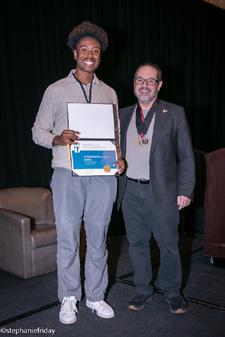
Noah Gaither and Haimei Li at Summer Leadership Summit 2025
2025 U40 Awards
The U40 List is an award to celebrate individuals making a significant contribution to the advancement of health facilities design. Each year up to two individuals will be selected to have their names added to the distinguished U40 List. The U40 List recipients will also receive complimentary registration and a travel expense stipend to attend the AAH/ACHA Summer Leadership Summit in person in July.
The U40 List is designed to recognize the emerging leaders and the movers and shakers in the healthcare design industry who are involved in advancing the creation of healing environments. The U40 List is not limited to architects - any individual (researcher, educator, engineer, planner, etc.) who has worked on healthcare-related projects or research for at least the past 5 years is eligible.
The U40 List nominees should display these characteristics:
• Leadership – Nominees have taken on leadership roles within their firm or community in a way that contributes to advancing healthcare facility design.
• Innovation – Nominees look like an up-andcoming change maker in the industry and push beyond the industry norm.
• Active Dissemination of Ideas – Nominees embrace initiatives that go beyond project responsibilities and work towards advancing the industry. Examples could include sharing ideas as thought leaders via white papers, conferences, or articles.
• Alignment with AIA Values, Goals and Standards – Nominees exemplify the AIA values and are working toward carrying them forward into the future.

Brian Giebink, AIA, LEED AP BD+C, EDAC
Brian is an architect and leader of HDR’s mental health design studio. He has a deep understanding of current research and trends in mental health design and uses his expertise to create innovative, researchbased solutions that improve the patient experience in mental health environments. Brian has served as the mental health expert on numerous projects around the world, frequently presents at conferences, and is an author of numerous publications. He is an active member of the FGI Health Guidelines Revision Committee and The Center for Health Design’s Behavioral and Mental Health Environment Network. Brian is currently an adjunct associate professor at the University of Kansas, has served as a design critic and juror for multiple design studios, and mentors graduate architecture students. Brian believes all humans have value and strives to promote equity by building stronger connections for patients, family, and staff in mental health environments.

Graham Sinclair AIA, ACHA, EDAC
Graham is the Healthcare Practice Leader for The Beck Group’s Atlanta office, where he leads the planning and design of environments that support healing, dignity, and operational excellence. A graduate of the Health and Wellness Architecture program at the University of Kansas, Graham has built his career at the intersection of medical planning and architectural design, integrating both disciplines to create spaces that are clinically intuitive, emotionally supportive, and visually uplifting. His work centers on improving the experience of patients, families, and clinical staff through evidence-based planning, empathetic design thinking, and solutions that enhance workflow efficiency and the overall delivery of care.
Beyond his project leadership, Graham is a dedicated contributor to the healthcare design community. He has presented nationally on topics related to patientcentered planning, behavioral health, and integrated delivery, and has volunteered for more than a decade with various committees
of the AIA Academy of Architecture for Health. As chair of the STERIS Student Design Charrette, he has mentored emerging designers and helps cultivate the next generation of healthcare architects. Additionally, Graham is an ACHA board certified architect and currently serves on the planning committee for the AAH’s southeast chapter’s symposium. Graham is recognized for his collaborative approach, passion for elevating the human experience in healthcare facilities, and commitment to advancing the industry through innovation, mentorship, and compassionate design.
More information and nomination forms for the 2026 U40 is available on the AAH Knowledge community website.
Apply by April 3, 2026
2025 Tuttle Fellowship
The Arthur N. Tuttle Fellowship is supported by the American Institute of Architect’s Academy of Architecture for Health (AIAAAH) and supports graduate students who desire to increase their awareness of the needs and nature of healthcare facilities. The specific goal of this fellowship is to attract talented students to the field to advance their knowledge of planning and design for healthcare environments.
The Tuttle Fellowship is offered concurrently with the Foundation for Health Environments Research (FFHER) Griffin/McKahan/Zilm (GMZ) Fellowship.
Both fellowships are focused on Health Facility Planning and Design. While independent from each other, they share a mission to:
• Increase architecture students’ and emerging professors’ awareness of the special needs and nature of health facilities.
• Encourage research consistent with the overall mission of the AAH, FHER, and facility Guidelines Institute (FGI).
• Attract talented emerging architects and students to this field.
• Advance the knowledge of planning and design of healthcare environments.

Juliet Oluyale Assoc. AIA
Juliet Oluyale is an architectural designer and researcher with experience in healthcare, commercial and residential architecture projects. She obtained her bachelor’s degree from Federal University of Technology, Akure, Nigeria, and graduated as the University valedictorian. She also received her master’s degree in architecture from Ball State University (BSU), United States.
She has carried out research focusing on healthcare architecture. For her master’s thesis, her research addressed how innovative architectural designs can accelerate healing in pediatric clinics, comfort patients’ families, and create a healthier environment for healthcare providers. She has presented at professional and academic conferences such as the Environmental Design Research Association (EDRA) and the Interior Design Educators Council (IDEC).
Her research earned her the People’s Choice Award during the Three-Minute Thesis (3MT) competition at Ball State University, which reflects her dedication to quality work. She also received the “Walter B. Jones Jr., FAIA Excellence Award for Aspiring Health Care Architects” and the “2025 AIA Arthur N. Tuttle, Graduate Fellow in Health Facility Planning and Design.”
Looking ahead, she is scheduled to present her ongoing research at the Healthcare Design Conference (HCD) in 2026, continuing to advance the integration of research-driven strategies in creating healing-centered healthcare environments. Juliet is dedicated to continuous growth in the Architecture Industry. In her free time, she plays the violin instrument.
More information and applications for the 2026-2027 Tuttle and GMZ fellowship is available on the AAH Knowledge community website.
Apply by April 6, 2026.
