

MAAK BO’OY
REPURPOSINGVERNACULAR MAYANARCHITECTUREFOR STORMRESILIENCE
CourseDirector -Dr.ElifErdine
FoundingDirector -Dr.MichaelWeinstock
StudioMaster -Dr.MiladShowkatbakhsh
StudioTutors -FelipeOeyen, EleanaPolychronaki,LorenzoSantelli
LuisBosomsHernandez(MArch)
RodrigoMaronRius(MArch)
MaxenceFromentin(MSc)


ARCHITECTURALASSOCIATIONSCHOOLOFARCHITECTURE GRADUATESCHOOLPROGRAMMES
PROGRAMME: EMERGENTTECHNOLOGIESANDDESIGN
YEAR: 2021-2022
COURSETITLE: MSc.Dissertation
DISSERTATIONTITLE:
MaakBo’oy- Repurposingvernacularmayanarchitectureforstorm resilience
STUDENTNAMES: RodrigoMaronRius,LuisBosomsHernandez,MaxenceFromentin
DECLARATION: “Icertifythatthispieceofworkisentirelyourownandthatanyquotationor paraphrasefromthepublishedorunpublishedworkofotherisdulyacknowledged.”
SIGNATUREOFTHESTUDENT:
RodrigoMaronRius LuisBosomsHernandez MaxenceFromentin
DATE: 23September2022
ABSTRACT
TheYucatanpeninsulainMexicofaces thehurricaneseasonfromMayto December,eachyearmoredevastating. Whilemajorcitieshavethetoolstoresist them,theindigenousruralMayanpeople andtheirtraditionallifestyleanddwellingsarethreatened.Theresearch presentedinthispaperaddressesthe themesofhurricanecatastrophe,emergencyshelters,vernaculararchitecture, andwind-drivenform-finding.A multiscalardesignprocessguidedtheresearch.
Atamorphologicalscale,theresearch developsaninnovativedwellingsystem fortheMayanswithamethodologythat integrateswind-drivenform-findingprocessesandmaterialexperimentationsby exploringlocalbambooandnatural fibres’structuralproperties.Thisdesign isinformedbyabstractingastudyofthe indigenouslifestyleandarchitecture.It proposesthedevelopmentofahurricaneresilient,thermalregulatingefficient,andcommunity-basedauto-con-
structionsystemforanewMayandwelling.Morethanredefiningthefunctional morphologies,amicro-urbandesign strategyhasbeendevelopedtoenhance economicgains,communitysense,and windmitigationcapabilitiesbyexploring landscapearchitecturepossibilities.
FurtherdevelopmentintheMArchphase willdiveintoastudyataregionalscaleto createanemergencynetworkforMayan communitiestoevacuatewhenevera hurricanehitsthepeninsula.Thisnetworkwillinformonnewruralsafezones whereanewurbanstrategybasedon community,economicopportunities,and stormresiliencewillbeestablished.
Contribution: Analternativetothe Mayanvernaculararchitecture’sconstructionmethodsandurbanplanning, improvingthehurricaneprotectionsystemandlivingconditionsforMayan people.
INTRODUCTION
02/ RESEARCH DOMAIN
HURRICANES/ PROBLEMS 01/1.1
MAYANS/ REBUILDING 01/1.2 p.15
03/ METHODS
CONTEXT/ YUCATANPENINSULA 02/1
HURRICANES/ TROPICALCYCLONE 02/2
THEMAYANS/ THESOLAR 02/3.1
THEMAYANS/ TRADITIONALDWELLING 02/3.1
MATERIAL/ LOCALLYSOURCED 02/4
CASESTUDIES/ HURRICANERESISTANT STRUCTURES 02/5 p.20
PHYSICAL&DIGITAL PROTOTYPING 03/1
FINITEELEMENTANALYSIS 03/2
AGENT-BASEDSYSTEMS 03/3
COMPUTATIONAL FLUIDDYNAMICS 03/4
EVOLUTIONARY MULTI-OBJECTIVEOPTIMISATION 03/5
04/ RESEARCH DEVELOPMENT
05/ DESIGN DEVELOPMENT
MICRO-URBANSTRATEGIES/ FUNCTIONALABSTRACTION 04/1.1
MICRO-URBANSTRATEGIES/ LANDSCAPEARCHITECTURE 04/1.2
MICRO-URBANSTRATEGIES/ WINDMITIGATION STRATEGIES 04/1.3
MICRO-URBANSTRATEGIES/ AGENT-BASEDWINDCHANNELS 04/1.3
MATERIAL/ NATURALFIBRES 04/2.1
MATERIAL/ BI-LAYEREXPERIMENTS 04/2.2
MORPHOLOGY/ WIND-DRIVENFORM-FINDING 04/3 p.82
MORPHOLOGY/ GENERATIVESTRUCTURE 05/1.1
MORPHOLOGY/ STRUCTURALOPTIMISATION 05/1.2
MORPHOLOGY/ STRUCTURALLAYERS 05/1.3
MORPHOLOGY/ 1:1PROTOTYPE 05/1.4
MATERIAL/ BREATHABLEPANELS 05/2.1
MATERIAL/ ELASTICPANELS 05/2.2
MICRO-URBANDESIGN/ GENERATIVEDESIGN 04/3.1
MICRO-URBANDESIGN/ FUNCTIONALOPTIMISATION
04/3.2
MICRO-URBANDESIGN/ COMMUNITY-BASEDCONSTRUCTIONPROTOTYPE 04/3.3
EVACUATIONNETWORK/ RURALSAFEZONES
04/4.1
06/ DISCUSSION
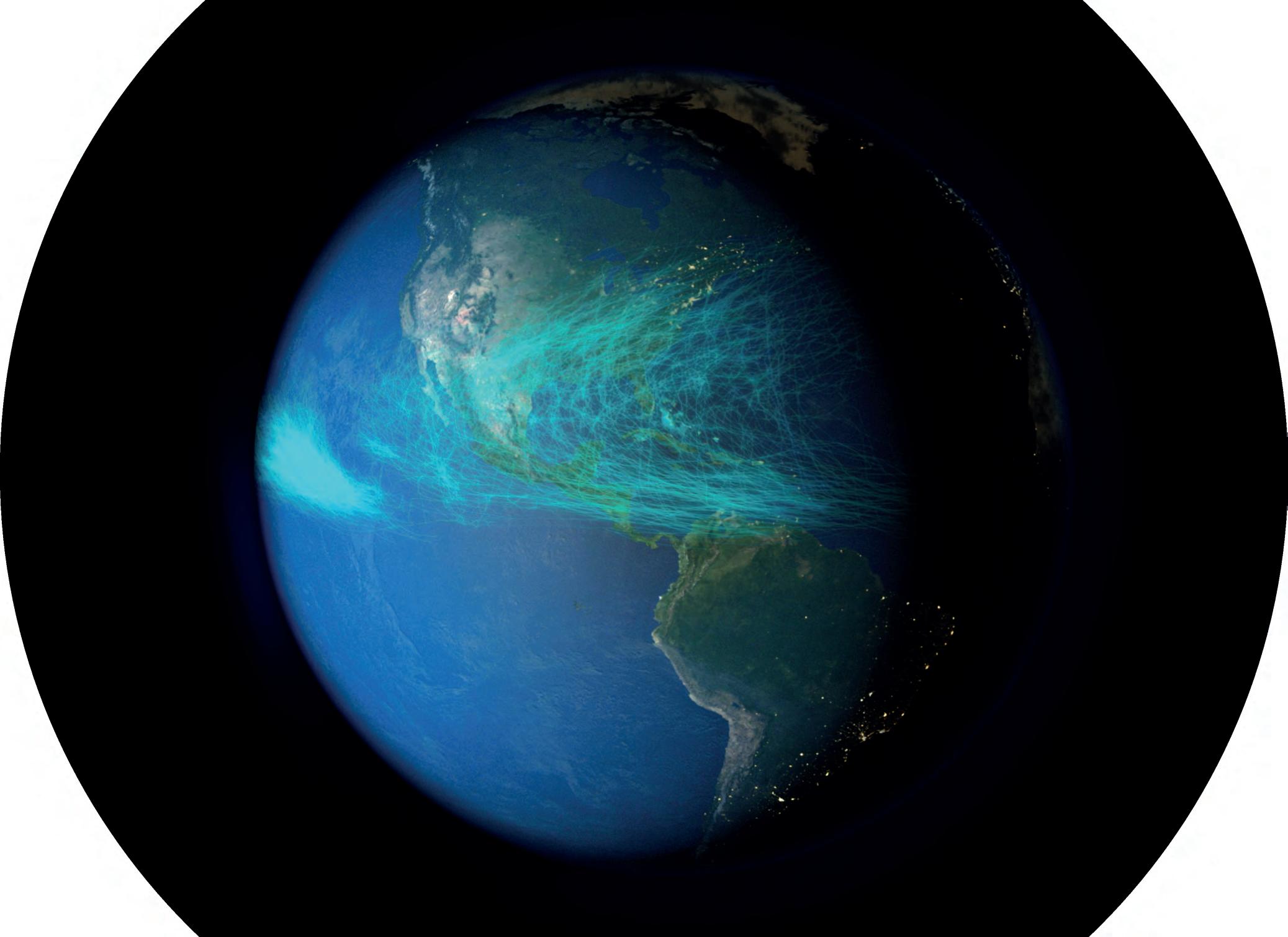

Hurricanetracksfrom1988to2021
Figure1
Figure 2
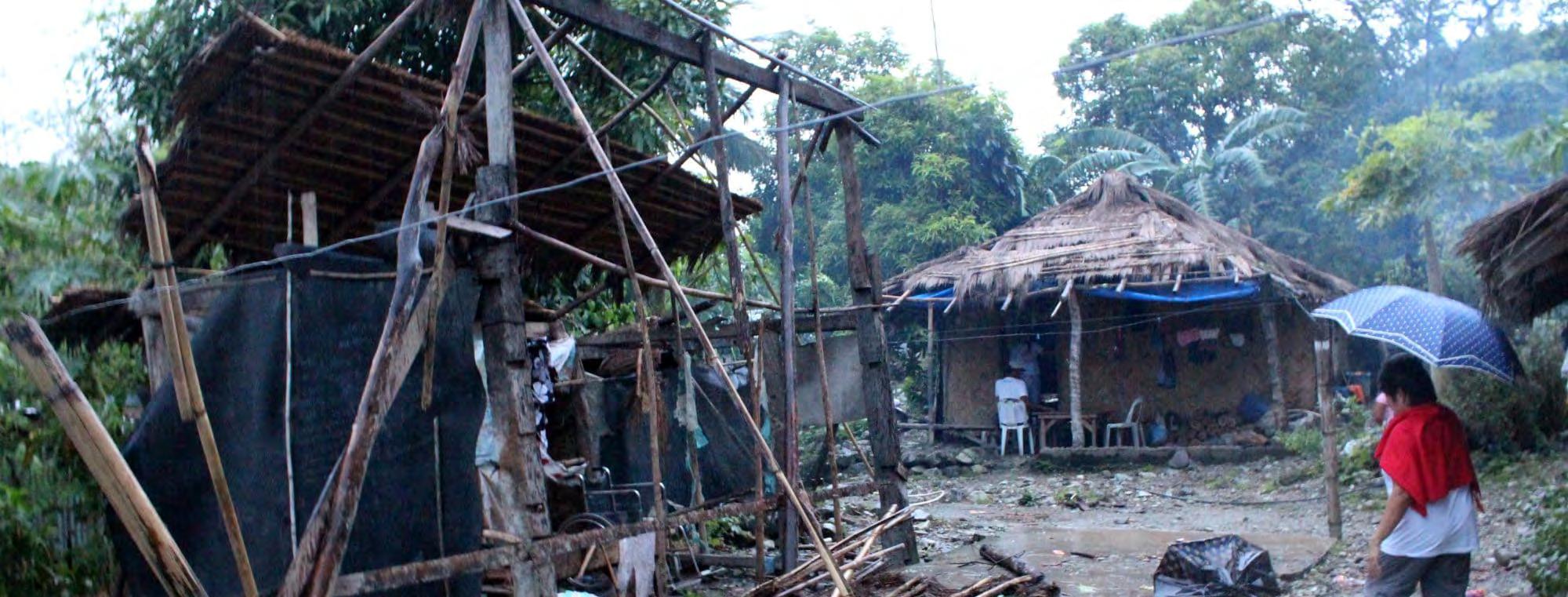
A Family survey of the damage caused to their homes by Hurricane Dean. This was the strongest tropical cyclone of the 2007 Atlantic hurricane season; the storm made landfall on the Yucatan Peninsula on August 21 at peak intensity.
01 /
Introduction
The unique lifestyle of Mexico’s indigenous communities is threatened due to Climate Change. Every year, from May to November, they face the hurricane season, and changes in the climatic conditions in Mexico’s coastal biomes have caused a massive increase in the impact of this phenomenon. With each devastating natural catastrophe, it is becoming harder for the indigenous Mayan coastal communities of the Yucatan peninsula to evacuate, seek protection, repair, and stay on their ancestral land (Figure 2). Consequences of Climate change are carried along to local flora as many endemic species used as local construction materials are facing extinction. If the Mayan house is deconstructed thoroughly, it is composed of two essential parts; the main elongated volume that
acts as a structure and a canopy system that functions as a thermal regulator for the dwelling. The canopy system is the most affected part of the Mayan house whenever a hurricane hits. The lack of material used on the canopy makes it harder for these communities to rebuild their homes after each storm; this emergency requires a tailored solution that can adapt to these coastal communities’ unique lifestyles and biome. The research focuses on the Mayan people, understanding their lifestyle, cultural and social behaviours, and studying the vernacular architecture and traditional construction techniques it employs to abstract fundamental design principles to elaborate strategies to deal with such issues.
HURRICANES / PROBLEMS
01 / 1.1

Figure 3
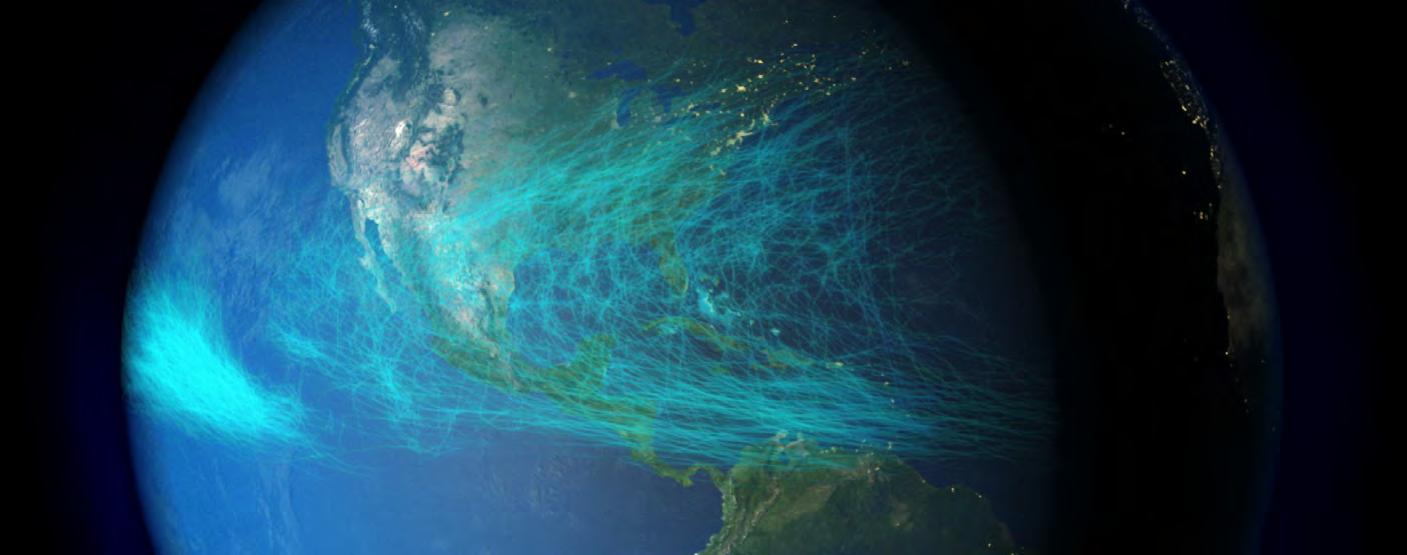
In the Atlantic Hurricane Path, historical storms dating back to 1850 are studied and tracked to predict the upcoming hurricane season. NOAA predicts a 65% chance of an above-normal season for the 2022 Atlantic hurricane season
The Yucatan peninsula extends across the bottom of the North American hurricane path (Figure 3). Its location ensures that it will be affected by all tropical depressions in the Caribbean and Gulf of Mexico. These storms have been happening before records were kept. The first recorded storm dates to 1886; since then, at least one hurricane or tropical storm has been recorded to affect the peninsula each year.1 Studies conducted on ancient Mayan city sites have led experts to attribute an increasing frequency of storms joint with other factors exacerbated by these disasters, such as
access to fresh water and food, which contributed to the fall of the Mayan empire.2 Today, several experts believe that global climate change is expected to affect temperature and precipitation patterns along the globe, which, when combined with the rising sea levels, the frequency, intensity, timing, distribution of hurricanes, and tropical storms, are due to increase. 3
1 Dixon Clifton, “Yucatan after the Wind: Human and Environmental Impact of Hurricane Gilbert in the Central and Eastern Yucatan Peninsula,” GeoJournal 23, no. 4 (April 1991), https://doi.org/10.1007/BF00193607.
2 John Eric Sidney Thompson, The Rise and Fall of Maya Civilization, 2. ed., enlarged (Norman: Univ. of Oklahoma Pr, 1977).
3 William K Michener et al., “Climate Change, Hurricanes and Tropical Storms, and Rising Sea Level in Coastal Wetlands,” 2022, 33.
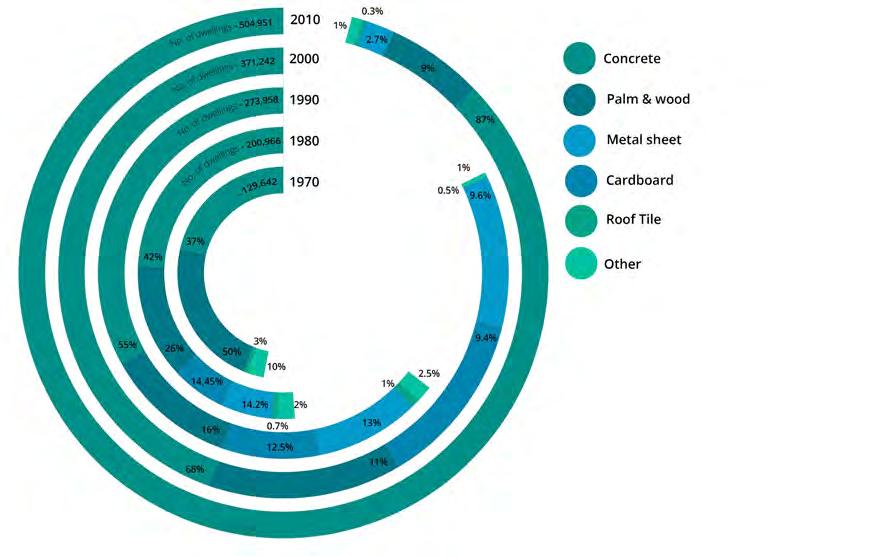
graph shows how over the last decades, Mayan communities began replacing the traditional canopy system of palm & wood with concrete and other materials.
MAYANS / REBUILDING AFTER THE CATASTROPHE
01 / 1.2
The Mayans’ connection to these storms dates to the height of the Mayan empire. This civilisation created not only a written language and a binary mathematical system but also the world’s first hurricane warning system. Housed in the temple of the god of the wind in Tulum, this temple contains an intricate web of holes that cause an extremely loud whistling sound when early hurricane-force winds blow in from the Caribbean Sea towards Tulum.1 This unique connection towards the storms can be felt when analysing the vernacular Mayan house that, to this date, continue to be built all along the Yucatan peninsula and beyond. This unique architectural style relies on clever wind design to mitigate damages to the homes; if these were to be destroyed or damaged, repairs could be easily made with materi-
als grown at the home site. With adequate materials and community participation, a house can be constructed by a team of five members within two working days.2 As the storms’ frequency and strength continue to increase each year, the availability of local materials has decreased, which has led the Mayan communities to search for other materials to incorporate into their traditional architecture (Figure 4). These modern construction materials are used to replace the once easily obtainable palm used for the traditional “palapa” style canopy (figure 5) but fail to attribute the same thermal regulation advantages gained using any of the traditional fibrous palm materials. Thus, research on new materials capable of giving these efficient thermal regulation properties has been undertaken.
1 “Mexico’s Maya Could Predict Hurricanes,” accessed June 5, 2022, https://www.undrr.org/news/mexicos-maya-could-predict-hurricanes.
2 Aurelio Sánchez Suárez, Xa’anil naj LA GRAN CASA DE LOS MAYAS (Mérida, Yucatán, México: UNIVERSIDAD AUTÓNOMA DE YUCATÁN, 2017).
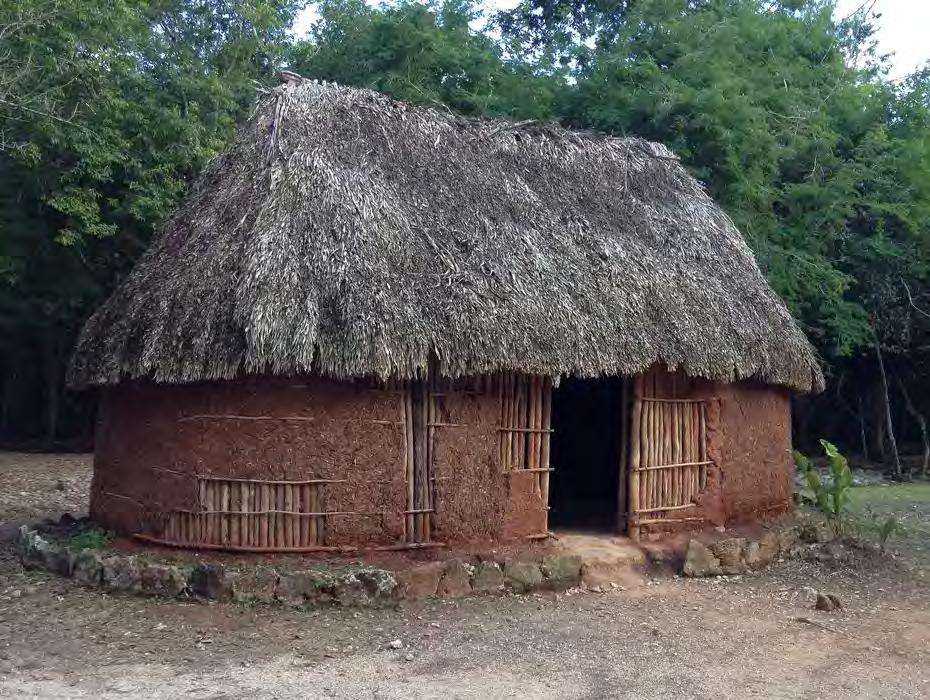
Figure 4
This
Figure 5
A traditional Mayan dwelling. Walls are constructed traditionally with a combination of clay and wooden sticks. The dwellings canopy is built utilising sabal palm in the palapa style with palm grown next to the dwelling.

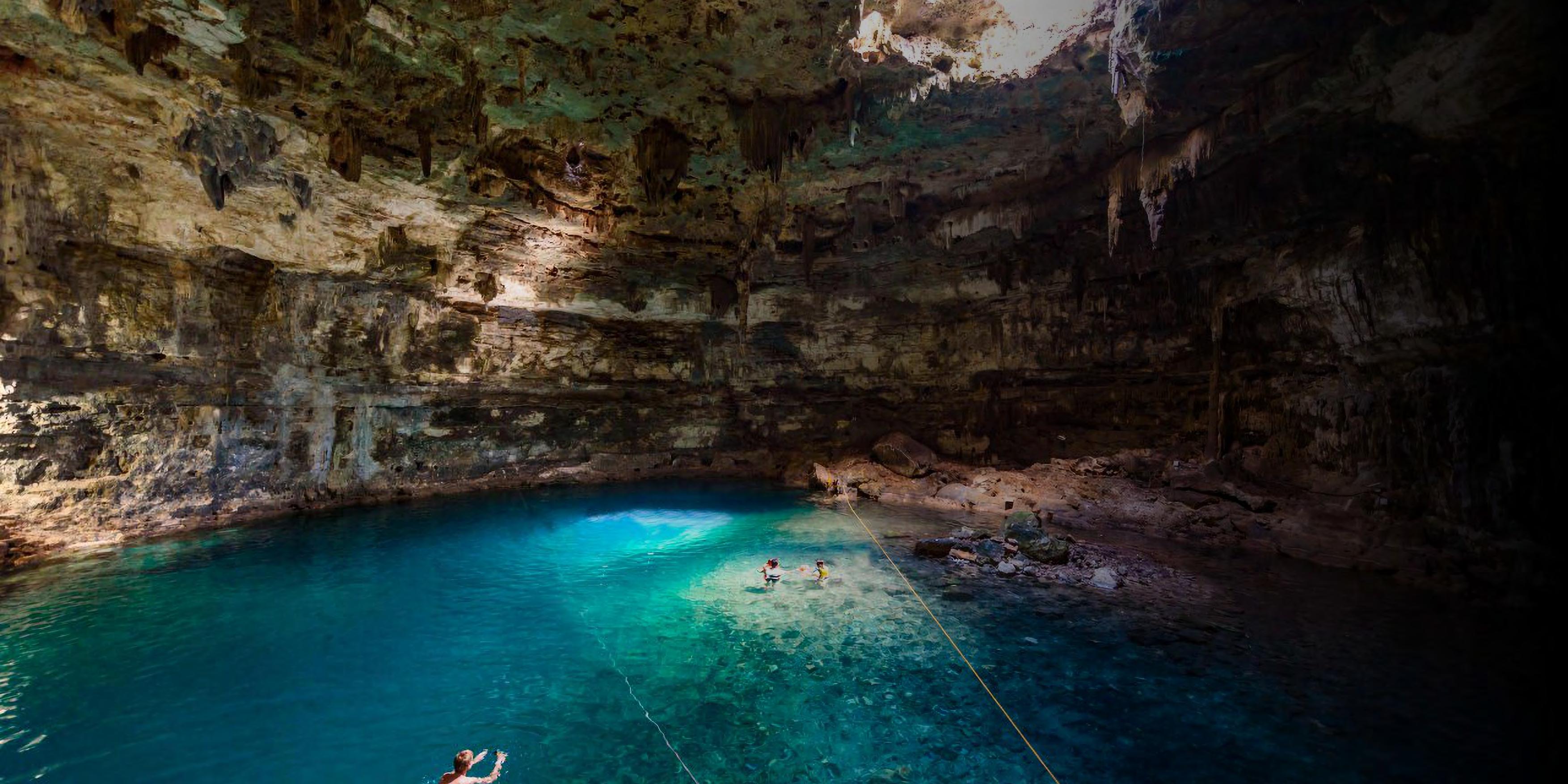
Figure6 Photographyofacenote
The following chapter covers the areas of study as well as the subsequent research which was conducted. This chapter focuses on the context of the Yucatan peninsula, providing an overview of the study area. Tropical cyclones have then been analysed to understand how there are created and how they impact the site. This is followed by a general overview of the Mayan culture,
their lifestyle, and traditional construction techniques. The research looks into local materials and flora to incorporate this into the project’s development. This chapter concludes by looking at several case studies where fundamental abstractions were made and utilised to inform the development of this research.
Yucatan
Total Area 39,524 km2
Total Population : 2,2320,898
Mayan Population : 745,758 (77%)
02
Yucatan Peninsula
CONTEXT
02 / 1.1
The Yucatan peninsula is found between the Gulf of Mexico to its north and the Caribbean Sea to its south. Besides the three Mexican states of Campeche, Yucatan, and Quintana Roo, the peninsula also includes parts of Guatemala and Belize. When a hurricane makes landfall, it usually enters the peninsula from the
east, where it hits the state of Quintana Roo first, followed by Yucatan and lastly Campeche. (Figure 7)
Campeche
Total Area : 57,507 km2
Total Population : 928,363
Mayan Population 99,439 (10%)
Quintana Roo
Total Area : 44,705.2 km2
Total Population : 1,857,985
Mayan Population : 126,550 (13%)
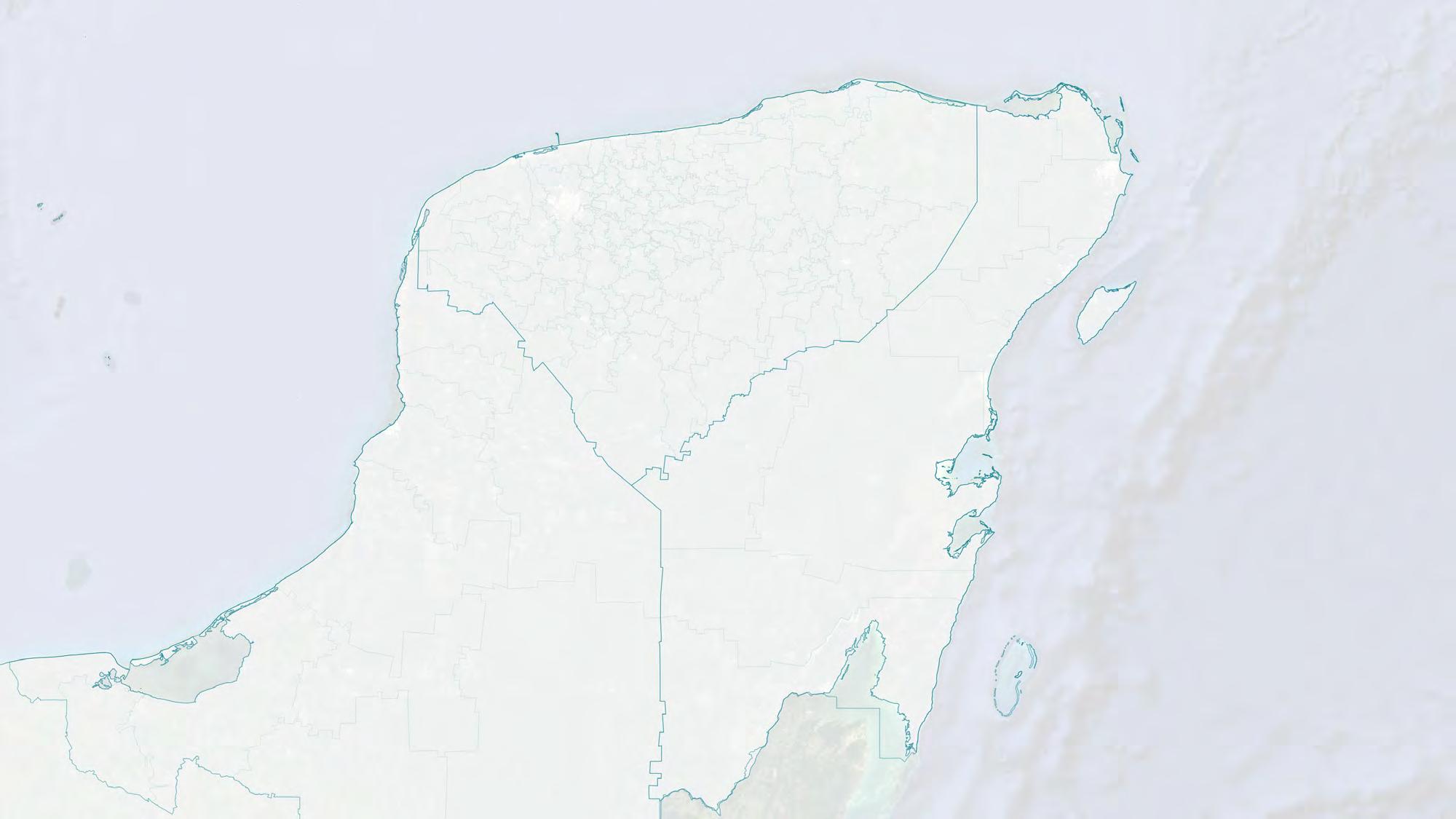
Figure 7
Outline of the Yucatan peninsula showing state lines and general information of each of the three states that make up the region.
BIOME 02 / 1.2
The Yucatan peninsula can be subdivided into four main biomes.
The first biome we encounter is the Tropical Rainforest from south to north. Tropical Rainforests cover 7% of the earth’s surface area and contain around 50% of the world’s species.1 This extremely biodiverse environment can be found in the southeast of the peninsula on the island of Cozumel, just off the Quintana Roo coast.
The low elevation of the peninsula’s coastline, when combined with the underground water system, makes it possible for mangrove forests to develop around the peninsula. Mangrove forests are essential for these unique biomes. These wetlands are the interface between land and the ocean. This intersection creates a continuous flow of matter and energy between these different environments. Mangroves provide the Yucatan coast with protection, flood prevention, and a place where water is filtered, cleaned, and stored. 2
Two distinct types of deciduous forests dominate the mainland of the peninsula. Firstly, we encounter the Yucatan tropical moist deciduous forest an ecoregion of the tropical and subtropical moist broadleaf forest biome. These forests are mostly made up of high and medium semi-evergreen trees, which form a canopy between 20 and 35 meters in height. Approximately half of these trees will lose their leaves during the annual dry season.
Lastly, the northern part of the peninsula’s biome is dominated by Tropical dry broadleaf forests These areas include two state capitals, Campeche and Merida. This primarily flat area creates a forest with predominant open canopy trees and thorn shrubs. Most trees and shrubs are deciduous, and cacti become more prominent as we move further north. (Figure 8)



















1 “The Tropical Rain Forest,” accessed July 21, 2022, https://globalchange.umich.edu/globalchange1/current/lectures/kling/rainforest/rainforest.html.
2 Rudolf S. de Groot, Functions of Nature: Evaluation of Nature in Environmental Planning. Management and Decision Making (Groningen: Wolters-Noordhoff, 1992).


















Figure 8
Map of the Yucatan Peninsula subdivided into the region’s four main biomes.



















































































CLIMATE
02 / 1.3
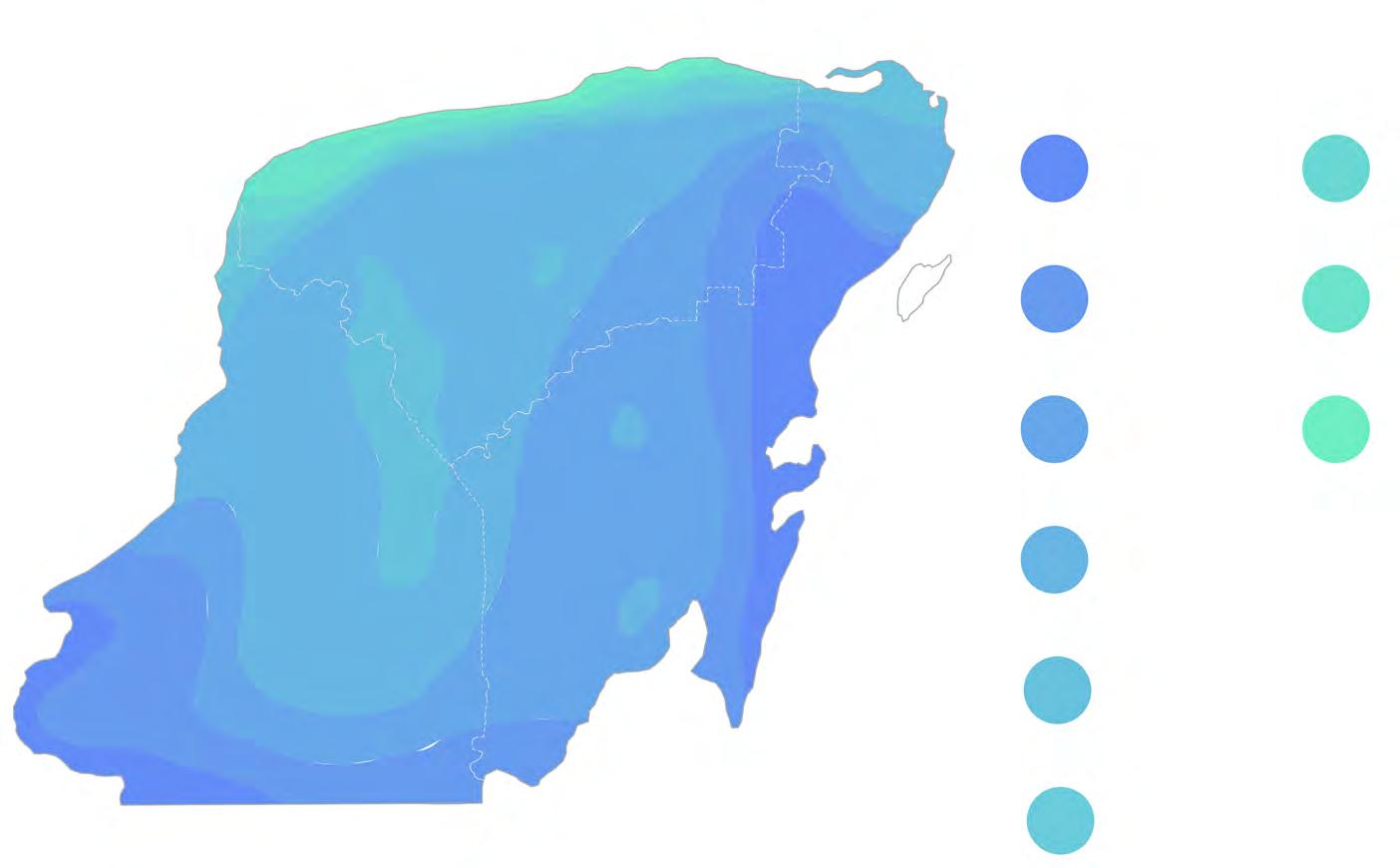
Most of the peninsula’s climate is categorised under the “Aw” climate criteria due to its winter dry season, with precipitation levels less than 60mm.1 Researchers at UNAM created further modifications of the Köppen Climate classification to better suit Mexico’s unique climates. In the latest modification, the Yucatan peninsula is divided. “Aw” climate zones are subdivided into three different zones where the amount of precipitation and
annual temperatures differentiate these climate zones. Aw 0 is the driest of the sub-climate zones. Aw1 has around average precipitation, and Aw2 is the wettest of these Tropical Humid Climates. Lastly, the Northern Coast of the peninsula is classified under the BS category as a semi-arid steppe due to its higher than usual annual precipitation levels. (Figure 9).2
1 “Koppen-Geiger Climate Changes 1901 - 2100,” Science On a Sphere, accessed July 19, 2022, https://sos.noaa.gov/catalog/datasets/koppen-geiger-climate-changes-1901-2100/.
2 Enriqueta García, Modificaciones al Sistema de Clasificación Climática de Köppen, 5th ed., Serei Libros, Num. 6 (Instituto de Geografia -UNAM, 2004).











































































PRECIPITATION
02 / 1.4
Over 40 years, there have been 1,555 rainstorms over the Yucatan territory. Per year, there is an average of 40 rainstorms over the peninsula. Most of these storms happen during the summer, where storms from June to Octo-
ber provide the highest precipitation rates (Figure 10).1
1 Raul Cruz Rios and Rolando Rodrigo Zapata Bello, “ATLAS de peligros por fenomenos naturales del estado de yucatan” (Gobierno estatal de Yucatan, 2018).
10
the
Peninsula, which is subdivided into zones based on yearly precipitation levels
Figure
Map of
Yucatan
Figure 9
Map of the Yucatan Peninsula, which is subdivided into four climate zones.
ELEVATION
02 / 1.5
Figure 11
Map of the Yucatan Peninsula, which is subdivided into zones based on elevation gain
































The Yucatan peninsula is primarily flat with exceedingly small elevation gain. Most of the peninsula’s territory is below 50 meters above sea level, with Merida, the capital of Yucatan state, resting at 11 meters above sea level. Elevation gain is to the southwest, where the landscape becomes hilly, with the tallest of this hill reaching 350 meters above sea level (Figure 11).1
1 “Mapa Digital de México V6,” accessed May 19, 2022, http://gaia.inegi.org.mx/mdm6/?v=bGF0OjIwLjQ1Mjc3LGxvbjotOTAuMDM2OTksejo0LGw6YzEwMg==.






































































































MAYAN SETTLEMENTS
02 / 1.6
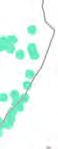
There are 971,770 people currently living in Mexican territory who identify as Mayan. The Mexican Mayan population is distributed in southeastern Mexico, with most Mayan settlements found in the Yucatan peninsula. Within the peninsula, most Mayan population is in Yucatan (745,768), followed by Quintana Roo (126,550) and then Campeche (99,439) (Figure 12).1
Figure 12
Map of the Yucatan peninsula where communities that identify as Mayan are highlighted































1 “Mayas,” Secretaría de Cultura/Sistema de Información Cultural, accessed July 20, 2022, https://sic.cultura.gob.mx/ficha.php?table=grupo_etnico&table_id=15.















































Settlements with a population that identifies as Mayan



ROAD NETWORK
02 / 1.7
13
The transportation network within the peninsula can be divided into three main road types. The larger of the three would be federal highways. These federal highways connect the three state capitals of the peninsula and connect the peninsula to the rest of Mexico, the United States, and Guatemala. Secondary roads or state highways connect the state’s largest urban zones with neighbouring states with more urban areas, with Yucatan having a better-developed road network. Finally, the local roads
















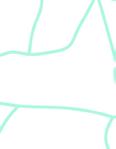
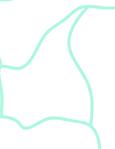


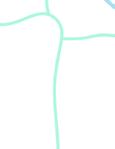









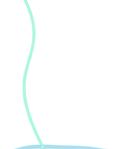







































connect smaller rural settlements with larger urban areas. These roads are scattered around the peninsula and are mostly dirt roads with little or no maintenance (Figure 13).
URBAN AREAS
02 / 1.8
Figure 14
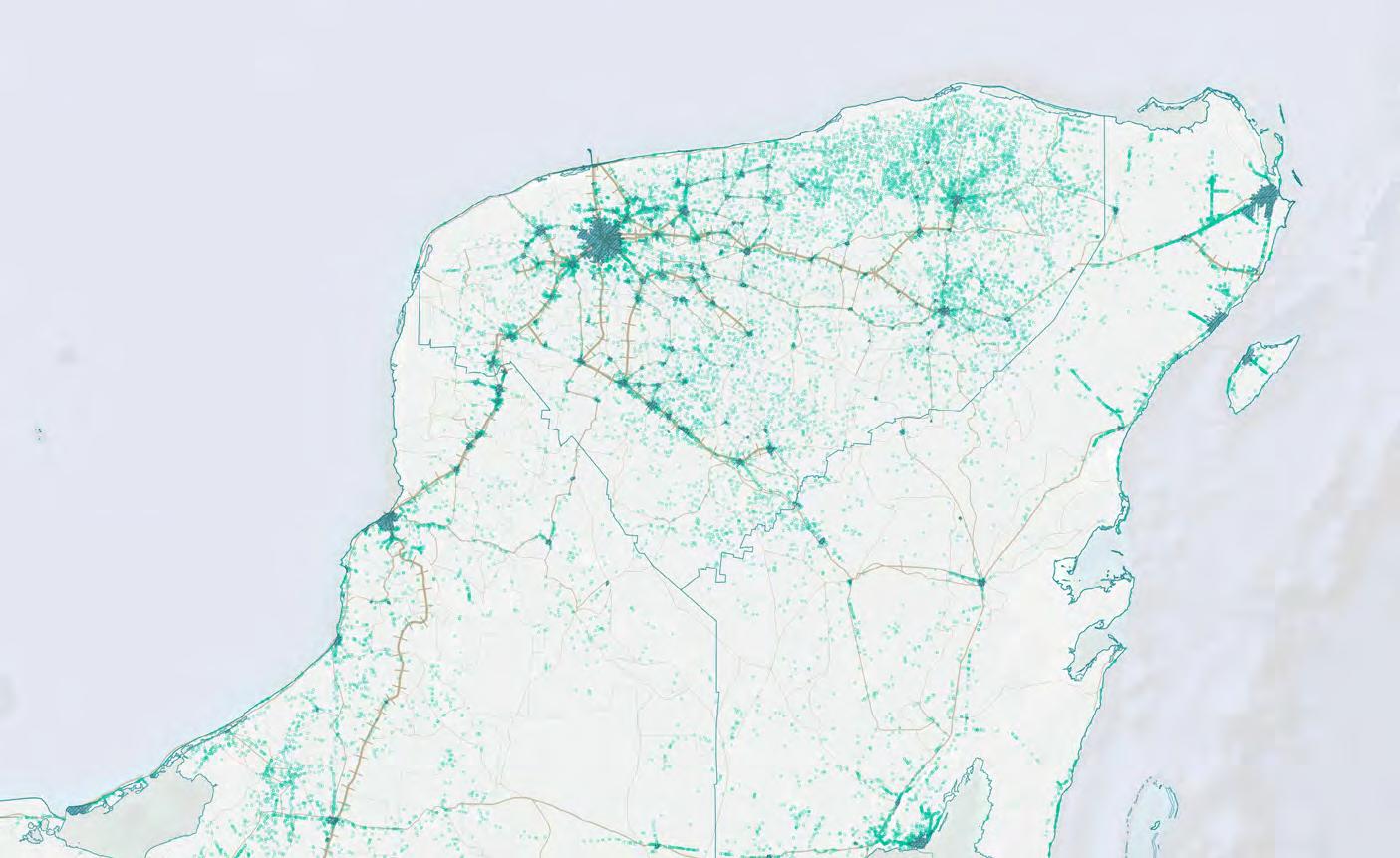
Map of the Yucatan peninsula with major urban areas marked. Most development is centred around the state capitals.






The peninsula’s urban area distribution varies depending on the site being analysed. Quintana Roo has most of its urban development around the city of Cancun and continues south following the coast in the touristic development known as the Mayan Riviera. Yucatan is the more urbanised of the three states, with urban pockets located throughout the state. Lastly, Campeche’s urban areas are located around the capital city and towards the northwest of the state, where oil reserves have caused a surge in development around that area (Figure 14).
Figure
Map of the Yucatan peninsula showing major roads and highways Federal Highway
Highway
TROPICAL CYCLONE
02 / 2.1
02 / 2
HURRICANES
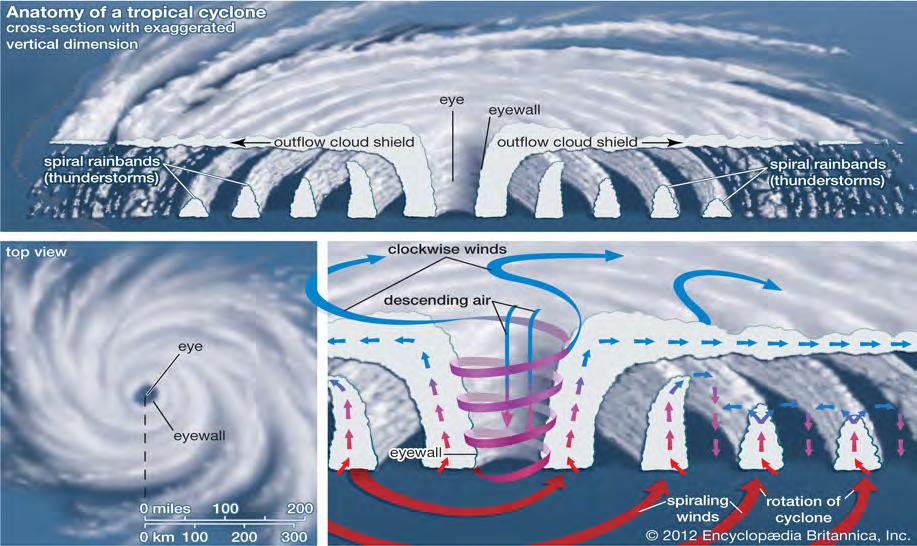
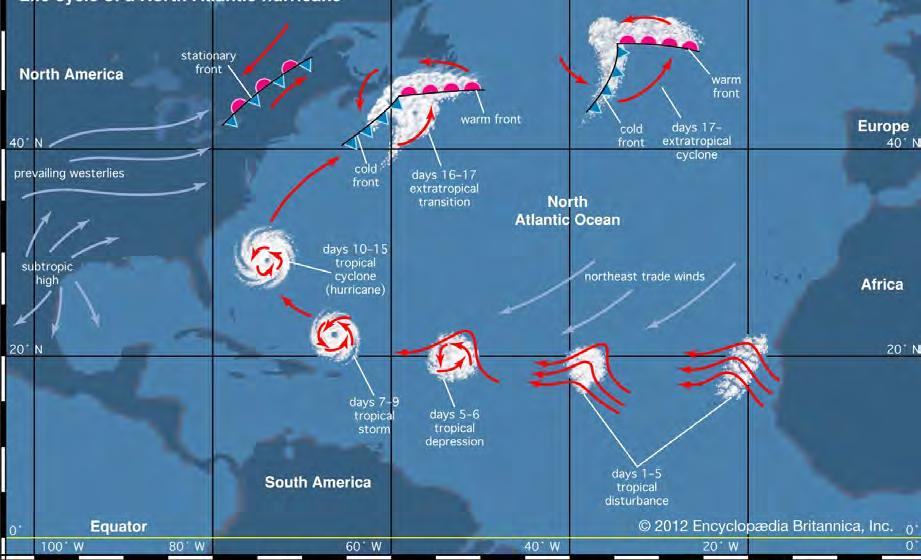
The NOAA defines a tropical cyclone as follows: “A tropical cyclone is a rotating, organized system of clouds and thunderstorms that originates over tropical or subtropical waters and has a closed low-level circulation.”1 (Figure 17) These intense storms are defined by low atmospheric pressure, high wind speeds, and intense rains. These storms are generally generated from warm oceans where they take energy from and maintain their speed by evolving over warm water. As The storm intensity increases and its wind speed continues to rise, its classification changes until it can finally be named a “major hurricane.” NOAA classifies these storms into the following categories:
“Tropical Depression: A tropical cyclone with maximum sustained winds of 38 mph (33 knots) or less.
Tropical Storm: A tropical cyclone with maximum sustained winds of 39 to 73 mph (34 to 63 knots).
Hurricane: A tropical cyclone with maximum sustained winds of 74 mph (64 knots) or higher. In the western North Pacific, hurricanes are called typhoons; similar storms in the Indian Ocean and South Pacific Ocean are called cyclones.
Major Hurricane: A tropical cyclone with maximum sustained winds of 111 mph (96 knots) or higher, corresponding to a Category 3, 4, or 5 on the Saffir-Simpson Hurricane Wind Scale.”1
1 “Tropical Cyclone Climatology,” accessed June 5, 2022, https://www.nhc.noaa.gov/climo/.
18
The life cycle of Storms formed among the north Atlantic hurricane path. Rising sea temperatures are set to accelerate the lifespan and frequency of the storms.
The Atlantic hurricane season (Figure 18) occurs every year from early June to November end. However, in recent years, these dates have continued to shift, with storms continuing this pattern later than expected. On average, the Atlantic Hurricane trail produces fourteen storms, seven hurricanes, and three major hurricanes each year. With the last couple of years showing more and more storms. The season’s first storm is usually formed around mid to late June. This is followed by the first-named hurricane from early to mid-August. The stronger storms are formed later as the water continues to warm, with the first significant hurricanes making landfall from late August to early September. Historically, hurricanes formed along the north Atlantic path dissipate into
two main paths when they land in the Americas. Hurricanes tracks show that storms that enter the Gulf of Mexico at peak intensity turn north and thus make landfall along the United States’ southern and eastern coasts. Storms entering the Caribbean at peak intensity continue on an eastern trajectory. They land on the Caribbean islands before entering the Yucatan peninsula along its eastern and south-eastern coasts.1 The rate and intensity of these storms are set to get worse as experts predict that the average storm intensity is expected to increase by almost 10 %, with damages and precipitation predicted to increase to almost 20 % near the eye of the storm.2
1 “Hurricanes in History,” accessed July 18, 2022, https://www.nhc.noaa.gov/outreach/history/.
2 “Increased Hurricane Intensity,” NEEF, accessed July 18, 2022, https://www.neefusa.org/nature/water/increased-hurricane-intensity.
Figure
Figure 17
This diagram provides a basic understanding of how air circulates through a tropical cyclone.
SCALE AND DAMAGES
02 / 2..3
CATEGORY 1
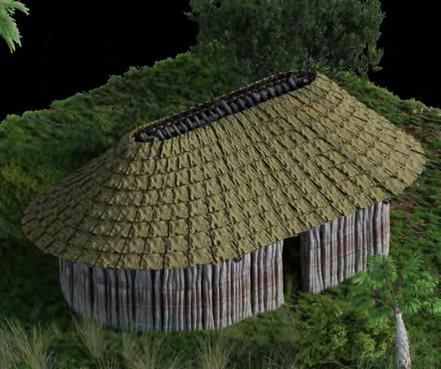
Since 1972, the Tropical prediction centre at NOAA has adopted and utilised the Saffir/Simpson hurricane scale. This Scale uses the storm surge,
central pressure, and the maximum sustained winds to classify Atlantic hurricanes into one of five categories as follows: 1
1 “The Saffir/Simpson Hurricane Scale” (NOAA’s National Climatic Data Center, n.d.), chrome-extension://efaidnbmnnnibpcajpcglclefindmkaj/https://www.ncei.noaa.gov/pub/data/extremeevents/specialreports/saffir-simpson-hurricane-scale.pdf.
“Wind speed: 74-95 mph 119-153 km/h
Storm Surge: 4-5 ft 1.2-1.5m
Pressure: 980 mb
Minimal Damage Damage is primarily done to trees, shrubs, and detached caravanes. No real structural damage to buildings. Poorly constructed signs have some damage. Low-lying coastal roads are inundated, minor pier damage, and some small craft in exposed anchorages are torn from moorings.”1
Figure 19
Simulation of damages caused by a Category 1 hurricane to a vernacular Mayan dwelling typology. Damages can include some light damage to the roof and displacement of some palms, as well as some slight water damage to the walls.
CATEGORY 3
“Wind speed: 111-130 mph 178 -208 km/h
Storm Surge: 9-12 ft
2.7 -3.7m
Pressure: 945 -964 mb
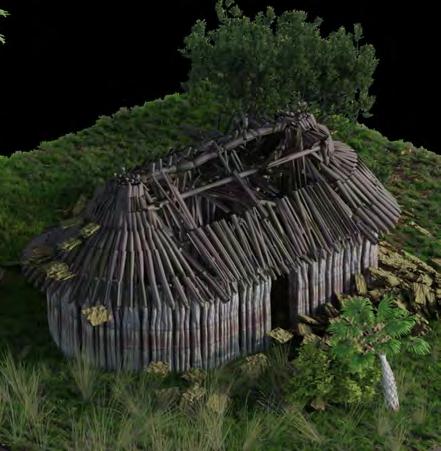
Extensive damage: Foliage is torn from the trees and shrubbery; large trees fall. Poorly constructed signs are down. Roofing materials of buildings are damaged, as well as some doors and windows. Some structural damage to small buildings, residences, and utility buildings. Mobile homes are destroyed. There is a minor failure of
curtain walls (in framed buildings). Severe flooding occurs on the coast, with many destroyed small structures. Battering waves and floating debris damage larger structures near the coast. Low-lying escape routes inland may be cut by rising water 3-5 hours before the hurricane centre arrives. A flat terrain of 5 feet (1.5 m) or less above sea level is flooded inland for 8 miles or more.
Evacuation of low-lying residences on the shoreline may be required.” 1
CATEGORY 2
“Wind speed: 96 -110 mph 154-177 km/h
Storm Surge: 6-8 ft 1.8 -2.4 m
Pressure: 965-979mb
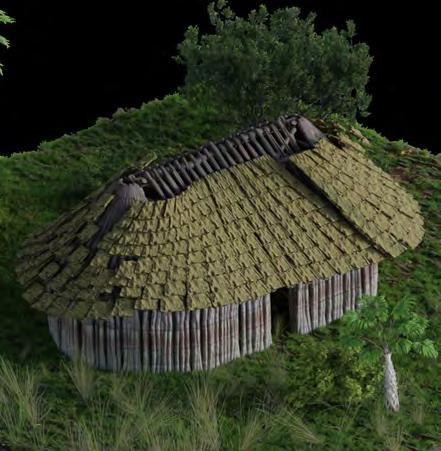
Moderate Damage: Some trees are blown down by significant damage to shrubs and tree foliage. Significant damage occurs to caravans. Poorly constructed signs receive extensive damage. Roofing materials, windows,
Figure 20
and doors face damage; no significant damage to the building’s structure. Around 2-4 hours before the hurricane centre arrives, coastal roads may be cut by floods. Considerable pier damage and flooded marinas. Some shoreline residences are evacuated, and low-lying island areas are required.“1
A Category 2 hurricane will have a higher effect on the dwelling. During these storms, there is moderate damage to the canopy and some damage to joints and structural elements such as secondary beams.
CATEGORY 4
“Wind speed: 131 -155 mph 209-251 km/h
Storm Surge: 13-18 ft 3.9-5.5 m
Pressure: 920-944mb
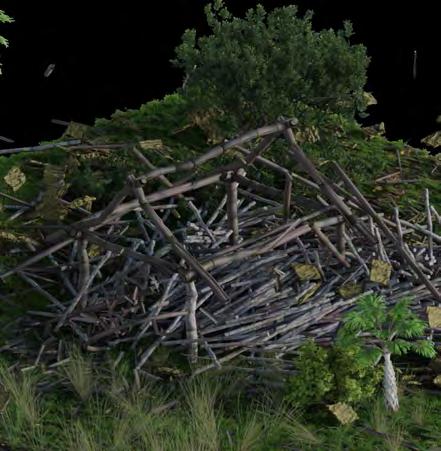
Extreme Damage: Shrubs, trees and all signs are down. Extensive damage to roofing material and openings. Complete destruction of roofs on many small residences, and caravans are destroyed. A Flat terrain of 10 feet (3 m) or less above sea level is flooded inland as far as 6 miles (9.7 km). Significant damage to lower floors near the shore due to flooding, battering
waves and debris. Around 3-5 hours before the hurricane centre arrives, low routes may be cut by floods. Significant erosion of beaches occurs. Evacuation of all residences within 457 m of the shoreline may be required.“1
Figure 21
A category 3 Hurricane causes significant damage to the primary and secondary structure systems, with some secondary beams being lost or broken. Most of the canopy material is lost.
Figure 22
A major hurricane, such as a category 4 will cause significant damage to the whole structure. Moreover, it can cause a possible total collapse of the roof structure, some severe damage to the walls, and total loss of palm.
CATEGORY
5
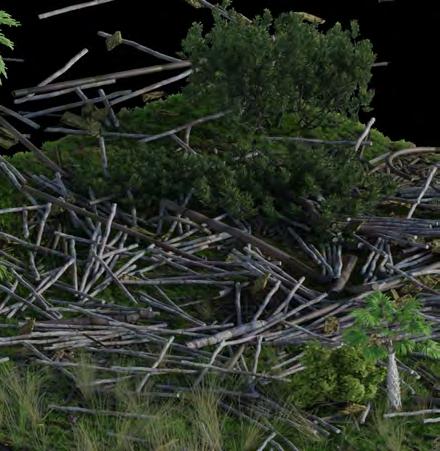
Figure 23
“Wind speed: Greater than 155mph 252 km/h
Storm Surge: Greater than 18ft 5.5 m
Pressure: Less than 920mb
Catastrophic Damage Shrubs, trees and signs are down. Important damage to buildings’ roof. Severe doors and windows damage. Complete failure of roof in many buildings, and extensive glass shattering. Several buildings may fail completely. Small buildings are blown. Complete destruction of caravans. Significant damage occurs
to the lower floors located less than 14.6 m above sea level and within 457 m of the shoreline. Around 3-5 hours before the hurricane centre arrives, low roads may be cut. Significant erosion of beaches. Important evacuation of residential areas within 8-16 km of the shoreline may be required.” 1
Category 5 hurricanes cause devastating damage. There is a near to total loss of the dwelling structure, roof and walls. Most material is lost during the storm forcing inhabitants to completely rebuild their homes after the storm.
DAMAGE TYPES
02 / 2.4
Figure 24
Wind pressure and suction effects on a dwelling1
1 “Hurricanes: Science and Society: Hurricane Winds at Landfall,” accessed July 18, 2022, http://hurricanescience. org/society/impacts/windsatlandfall/.
High winds produced by storms produce the highest threat to structures. During storms, high winds are known to uproot trees, tear down powerlines and sweep through towns and cities, leaving
chaos in their wake.1
As a hurricane makes landfall, the shear force produced by the winds of the hurricane will damage anything not ade-
1 “Hurricane Damages and Effects,” The Weather Channel, accessed July 18, 2022, https://weather.com/safety/hurricane/ news/hurricane-damages-effects-20120330.
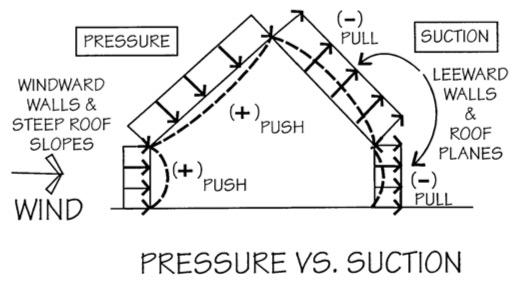
quately built. The high winds are known to topple trees, destroy buildings, blow vehicles away and take down powerlines. The disaster left on the hurricane’s path gets worse as flying debris, such as roof parts, road signs, and small items, are destructive. This raises the potential of damage for homes as not only are they being impacted by differential pressure among the building and the road, but they are also constantly impacted by airborne debris. This is extremely dangerous as debris can fracture the building envelope resulting in rainwater entering the structure and further damaging it.2
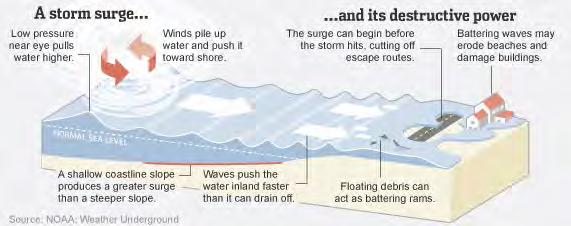
Along the coast, NOAA considers storm surges as threatening life and possessions. This event is produced by an intense storm, creating an unusual rise in water. This rise is produced by water constantly being pushed toward the shore by the cyclone’s strong winds moving in a circular motion around the eye of the
storm. The waves are making the surge even worse; these may rise with the tide and can begin to batter constructions built too close to shore. Considering water has an approximate weight of 1,700 pounds per cubic yard, these waves can demolish any structure not designed to sustain these forces. By working together, storm surge makes it possible for the ocean waves to reach deeper inland, increasing the storm’s damage. Flooding is not uncommon during storms. Storm surges may lead to coastline flooding, but inland areas are not immune to this effect. Even hundreds of kilometres from where the storm passed, the heavy rain it carried caused flooding. Most of the rain is due to the clouds surrounding the storm’s eyewall.
These clouds create rainbands among the outer edges of the cyclone. It leads to constant rain with short and intense bursts that result in several centime-
National Oceanic
tres of rain per hour and create rainfall that can consist of rates of 500 to 1,000 mm. Like in urban environments, rainfall rates will eventually overwhelm the city’s drainage and storm drains, resulting in local flooding. Regions with little elevation gain, such as the Yucatan peninsula, are particularly vulnerable to this disaster. The rain can be worse in mountains and canyons as they concentrate the rainfall and produce floods which in some cases are known to wash away entire towns. 3
2 Hurricanes: Science and Society: Hurricane Winds at Landfall,” accessed July 18, 2022, http://hurricanescience.org/society/impacts/windsatlandfall/. 3 “Tropical Cyclone - The Storm Surge | Britannica,” accessed July 18, 2022, https://www.britannica.com/science/tropical-cyclone/Life-of-a-cyclone.
p.36 p.37
Figure 25 Storm surge formation1
1
and Atmospheric Administration US Department of Commerce, “What Is Storm Surge?,” accessed July 18, 2022, https://oceanservice.noaa.gov/facts/ stormsurge-stormtide.html.
CURRENT RESPONSE
02 / 2.5
The actual government reaction to natural disasters is to let each states decide actions to be taken. The southern states of Yucatan and Quintana Roo have the clearest emergency plans in the whole country. Both states’ response is quite similar, as they have similar actions focusing mostly on resources and the attention during these disasters given
“Distance: NA
Recommendations:
Use media to inform the storm’s location and predicted path well.
Distance: 1500 km
Recommendations:
Clean roofs and gutters, remove trash and excess leaves from the plot, check windows, doors and roof and give maintenance if required.
Identify any dangers to your home, prune vegetation and remove any antennas and add-ons.
Government Actions:
Distance: 750 km
Recommendations:
If you live in a flood or area prone to storm surge, you must identify your nearest temporal refuge and evacuation route.
If you have chosen to stay at home, begin preparing the home for the storm and add reinforcements to windows, doors, and roofs.
on coastal communities with the highest probability of flooding due to storm surge. Yucatan response follows a five-level approach for incoming storms. The alert level depends on the distance from the storm’s eye to the Yucatan state.
Government Actions: Begin monitoring storm. Give daily updates on storms location and planned government response.
Updates will be given every 12 hours State governments begin working with municipal governments and the secretary of defence and army.
Municipal governments should run through their disaster plans and update the state’s government if in need of resources.
The state’s disaster relief force begins to mobilise, prioritising the municipalities with the highest risk level.
If you need to evacuate on short notice, prepare light baggage with food, water, personal hygiene, and essential documents.
Government Actions:
Updates are given every 6 hours
The state begins preparations for declaring an emergency.
Refuges are identified, and preparations for temporal shelters begin.
Transportation services are set up in risk areas for evacuation.
Resources and relief are sent to the highest risk areas.
ORANGE
Distance: 375 km
Recommendations:
If you have chosen to remain home, reinforce and secure all windows and doors, disconnect from utility networks, and close all gas, energy, or water on the plot.
Move any husbandry and tools of trade to a safe location and tie down any excess material or extrusions from the dwelling.
In case of evacuation, be informed of possible escape routes and risk zones.
Government Actions:
RED
A centralized coordination office is set up.
A special emergency committee is set up within the government to allow for a quick and effective response.
Evacuation orders are given to high-risk areas, and transportation to safe zones begins.
Non-essential workplaces and schools are shut down.
Relocation of heavy machinery and filed hospitals to high-risk zones.
Hospitals and emergency services are placed on high alert.
Large scale information campaign is set up, alerting the population of high-risk zones, evacuation routes and next steps.
Distance: 125 km
Recommendations:
Keep in a safe space, and keep away from doors or windows.
Keep up with the latest information, and do not exit to a safe space until the government has deemed it safe.
Keep calm and carry on.
Government Actions:
1 “Programa Especial de ciclones tropicales,” June 7, 2021.
Government response during this phase is limited due to the meteorological conditions.
Mobilization of emergency services only to be moved or repositioned if human lives are in danger.
Strict stay-at-home orders are placed, urging the population to remain in a safe place until the storm passes.”1
BLUE GREEN
YELLOW
/ 3
The Mayans
INTRODUCTION
/ 3.1
Nowadays, most of the Mayans’ lifestyle rotates around what they call “Solar” (plot), where traditional productive activities take place and have social, cultural, and environmental value. For centuries, they have found a tight relationship between humans and nature. The Solar is a space that involves not only the humans but also any other species in their environment, a symbiosis which is reflected in the multiplicity of constructive knowledge as well as the awareness of the 36 plant species employed in their constructions1 a symbiosis that has been inherited generation through generation for hundreds of years.
Economically, six main productive activities (Figure 26), representing an eco-
nomic opportunity and cultural and ecological values. The most important one is the Milpa, an agriculture system consisting of multiple crops such as corn, bean, chilli and more, providing a healthy diet and a complete ecosystem. For agriculture, they have husbandry animals, for instance, bees and pigs. It is essential to mention that the Milpa and their animals are the valuables they found most important to protect during a storm. The coastal communities have fishing activities for self-supply and commercial purposes. Because of the lack of protection for their traditional productive activities, they are forced to find other economic opportunities in tourism and migrate to big cities2
1 Aurelio Sanchez Suarez, Xa’anil Naj, La Gran Casa de Los Mayas (Mérida, Yucatán, México: Universidad Autónoma de Yucatán, 2017).
2 “Mayas Etnografía,” Atlas de los Pueblos Indígenas de México. INPI (blog), accessed July 19, 2022, https://atlas.inpi.gob. mx/mayas-etnografia/.
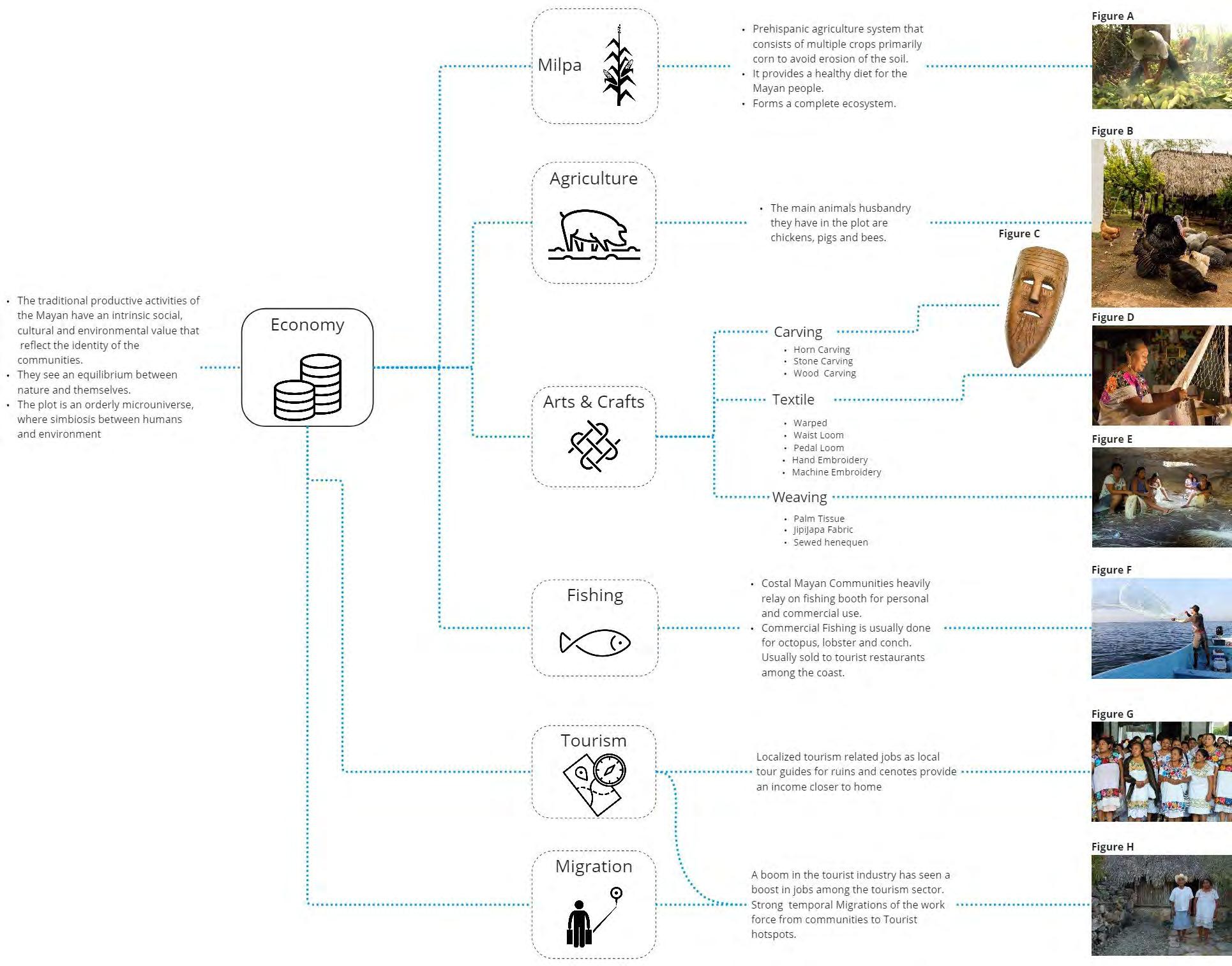
26
Mental map showing the multiple economic activities of the Mayans. A) Workers are harvesting corn on the Milpa. B) Chicken-house on shared solar. C) Handcrafted mask for Las Alabanzas dance. D) Production of a hammock. E) Weaving hats with palm leaves. F) Fishing with nets. G) Group of Mayan people in Mexico City looking for new opportunities. H) Old couple from Yucatan living alone due to their family’s migration to big cities.
Figure
THE SOLAR 02 / 3.2
The first four activities shown in figure 24 have been part of the Mayan culture and tradition for a long time, and they represent their sense of collective efforts and relation to nature. The first three of those four activities occur at the Solar. The plot arrangement is usually divided into five parts, combining living, service, and productive spaces (Figure 27). Turning that diagram into a graphic representation of a typical “Solar” layout unveils the relationship of distances according to their function in the constructed and unconstructed spaces (Figure 28).
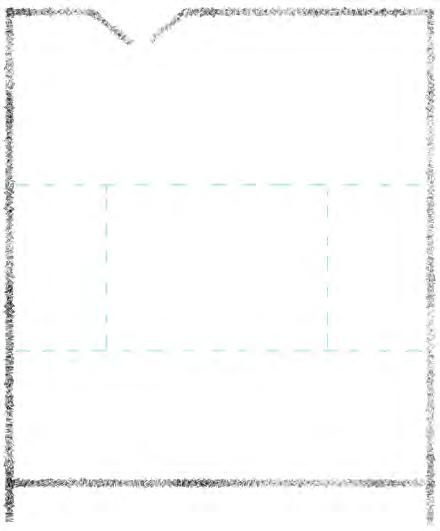
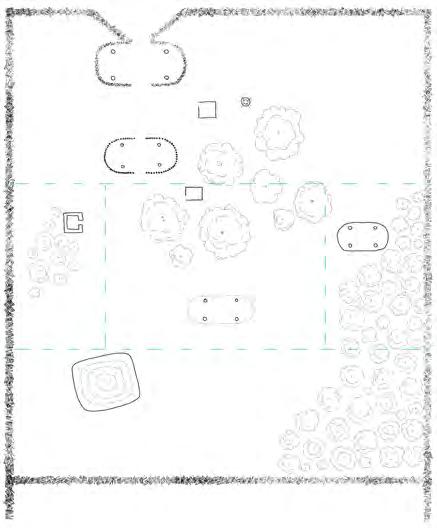
Figure 28
Representation of the uses and distribution of a common Solar and their relation with the roads and adjacent neighbours. 1
1 German Palma Moreno, La casa maya y su solar: Oriente de Yucatan, 1st ed. (Morelos, Mexico: Instituto Mexicano de Tecnologia del Agua (IMTA), 1988).
This assemblage shows the distribution of the different volumes, showing independent volumes for each activity. 1
1 Robert Wauchope, Modern Maya Houses: A Study of Their Archeological Significance (Washington, D.C.: Carnegie Institution of Washington, 1938).
For example, the kitchen is always nearby the main dwelling but always in a separate volume; both are close to the road, the toilet and the well. The storage volume, chicken-house and beehive are far from the main dwelling but nearby (Figure 29). The elongated apsidal volumes have an orientation east to west with a rotation that can vary up to 20. This orientation directly correlates with the predominant winds (Figures 30, 31).
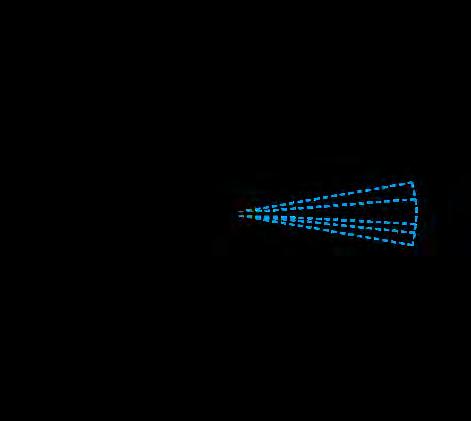
Further, a CFD analysis was conducted with a speed of 7.5m/s (Figure 32), which shows that the arrangement of the volumes in the plot, along with the natural elements such as trees and bushes, help in channelling or diffusing the wind depending on the needs. Also, the apsidal morphologies oriented to the predominant winds mitigate wind forces and allow for cross-ventilation.
The orientation of the volumes inside the plot is usually east to west, with a range of rotation of almost 20°. 1
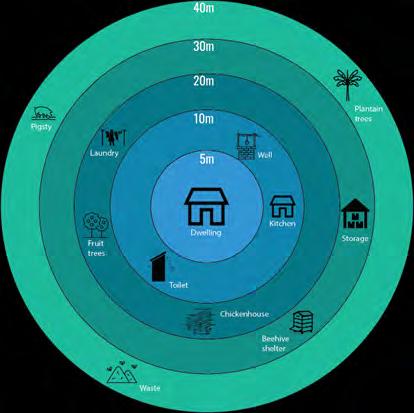
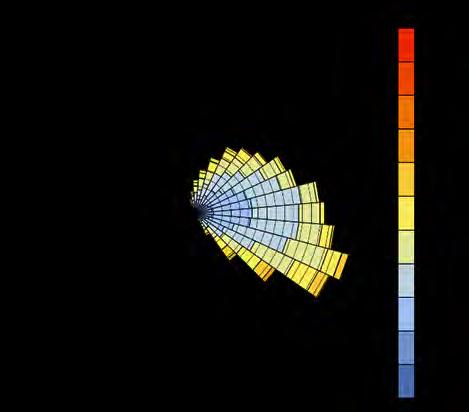
Figure 29
Relation of distances between the different volumes of the plot according to the main dwelling. 1
1 German Palma Moreno, La casa maya y su solar: Oriente de Yucatan, 1st ed. (Morelos, Mexico: Instituto Mexicano de Tecnologia del Agua (IMTA), 1988).
31
rose showing the predominant winds and wind speeds in
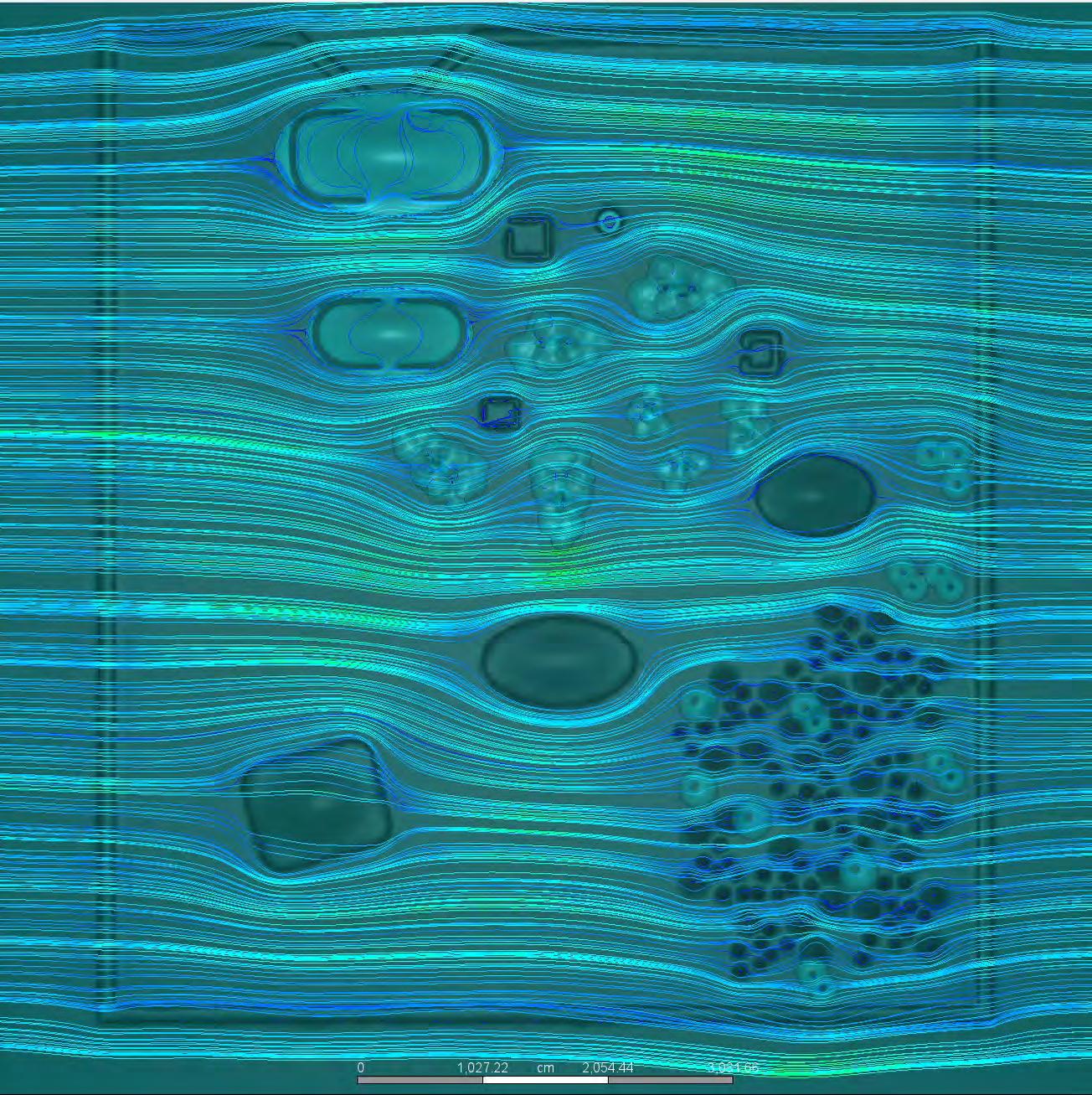
Figure 32
CDF analysis shows the predominant winds’ behaviour in a typical plot arrangement.
Figure
Wind
Yucatan.
Figure 30
1 German Palma Moreno, La casa maya y su solar: Oriente de Yucatan, 1st ed. (Morelos, Mexico: Instituto Mexicano de Tecnologia del Agua (IMTA), 1988).
Figure 27
TRADITIONAL HOUSE
02 / 3.3
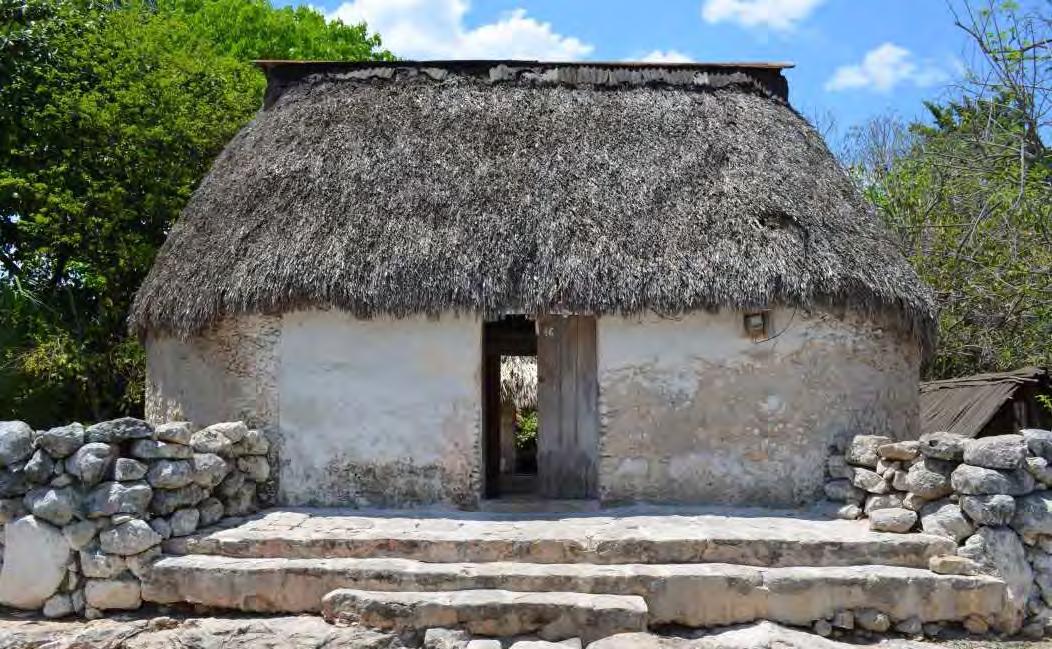
The traditional Mayan house in Yucatan (Figure 33) has a unique morphology of an elongated apsidal floor plan with a ratio of 2:1(4m x 8m usually [Figure 34]) that allows for thermal regulation. The two openings on the long sides, which function as entrances to the dwelling, are always aligned to provide a cross-ventilation. The height of the ceiling, which can reach up to 5 meters, enables the fresh air to regulate the temperature on the inside (Figure 35).
The participatory construction process is a cultural tradition which enables traditional techniques to be passed down through generations. The construction process is quite fast; once all the materials are available and ready on site, five people could only take two days to build a house. The knowledge of traditional construc-
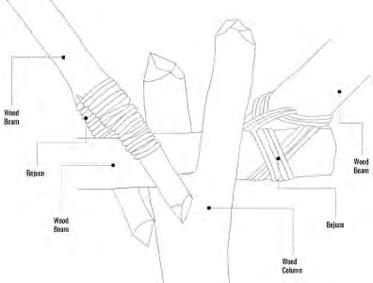
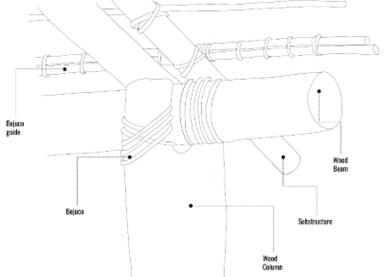
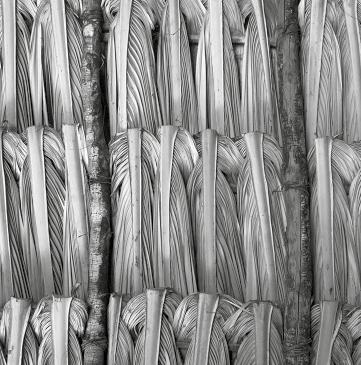
tion techniques and the different use of materials is of utmost importance. This kind of knowledge, transmitted from generation to generation, is the founding pillar of the survival of vernacular architecture. Analysing the structure and roof details makes it easier to understand these techniques. In figure 36a, the use of a local natural fibre called “bejuco” or vine plant is visible to tie up the connection between columns and beams; this type of connection tolerates movement to resist wind forces. Palm leaves are weaved to a guide in the substructure allowing the warm air to go out while providing a water-resistant surface (Figure 36b and c).
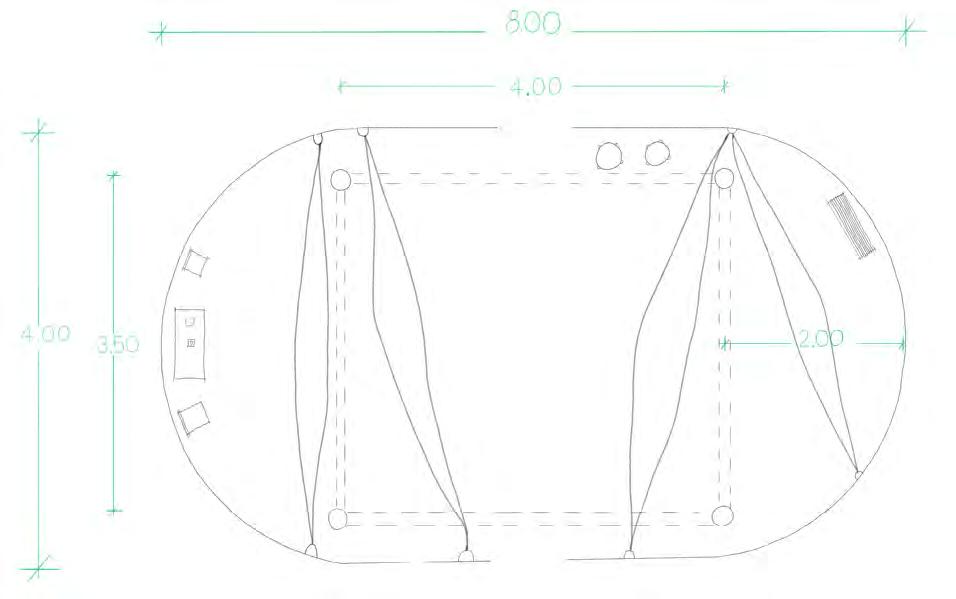
Apsidal floor plan of a typical Mayan house with a distance of 4m x 4m between structural elements and a total dimensions of the wall of 4m x 8m (2:1 ratio) enclosing an open space where multiple activities take place.1
always
36
Details showing construction techniques and materials used on the traditional Mayan house. A) Connection between column and beams. B) Attachment of the substructure to the main structure.
C) Weaving the palm leaves on the bejuco guide. 1
1 Wauchope, Modern Maya Houses: A Study of Their Archeological Significance.
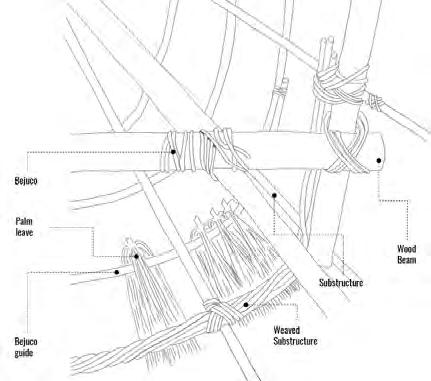
Figure 34
1 German Palma Moreno, La casa maya y su solar: Oriente de Yucatan, 1st ed. (Morelos, Mexico: Instituto Mexicano de Tecnologia del Agua (IMTA), 1988).
Figure 35
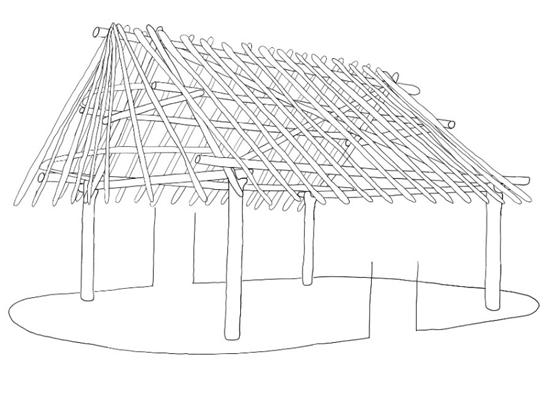
Structure for the roof of the typical Mayan house. The roof structure is
independent of the wall envelope.1
Aurelio Sanchez Suarez, Xa’anil Naj, La Gran Casa de Los Mayas (Mérida, Yucatán, México: Universidad Autónoma de Yucatán, 2017).
Figure
Figure 33
Traditional Mayan house, made out of wood and clay walls (bajareque) finished with white limestone powder to protect from weather and reflect light for thermal regulation. The palm leaves cover the high ceilings that allow the hot air to go out, and the opening allows the fresh air to come in.1
Aurelio Sanchez Suarez, Xa’anil Naj, La Gran Casa de Los Mayas (Mérida, Yucatán, México: Universidad Autónoma de Yucatán, 2017).
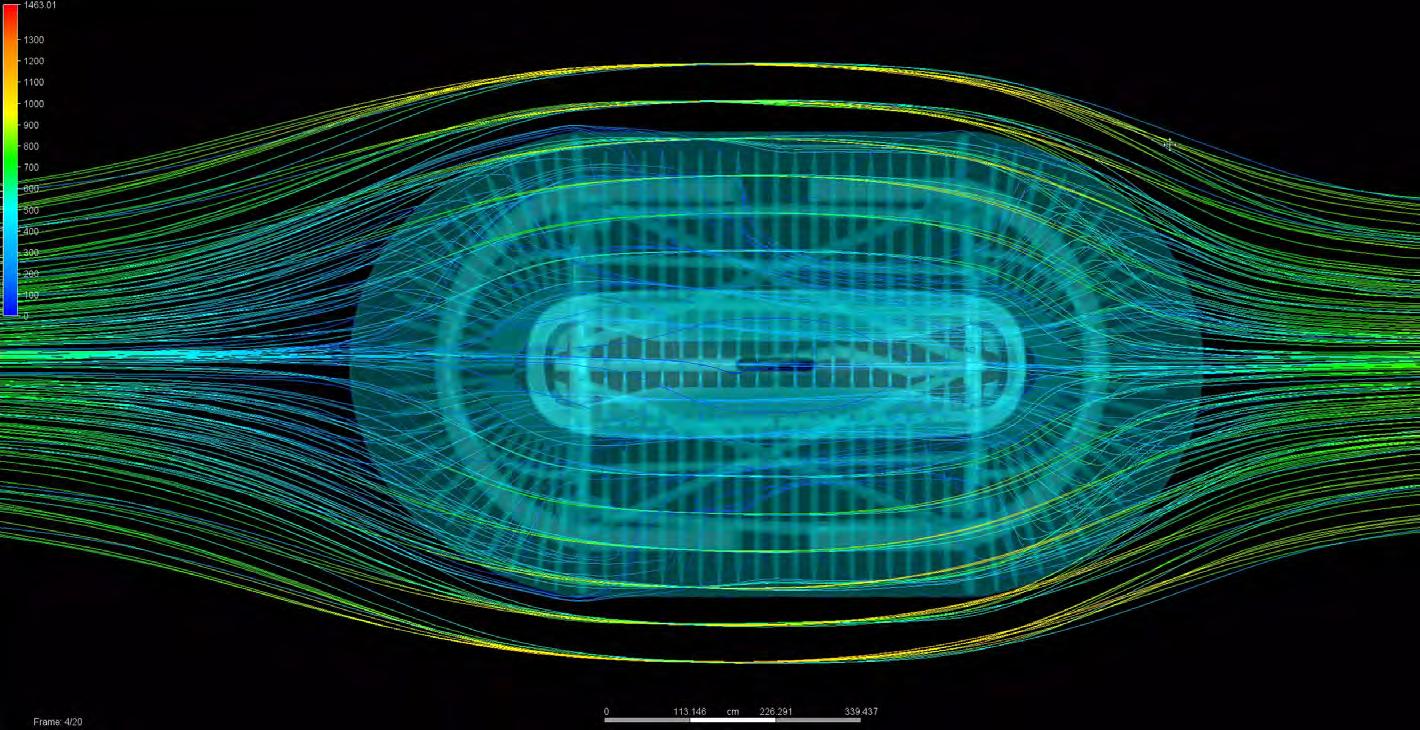
The importance of the door openings can be seen in this image, where the wind can flow across the dwelling providing thermal regulation throughout the day. These openings provide further cross ventilation when the wind is approaching from the north, keeping the dwelling cool at all times.
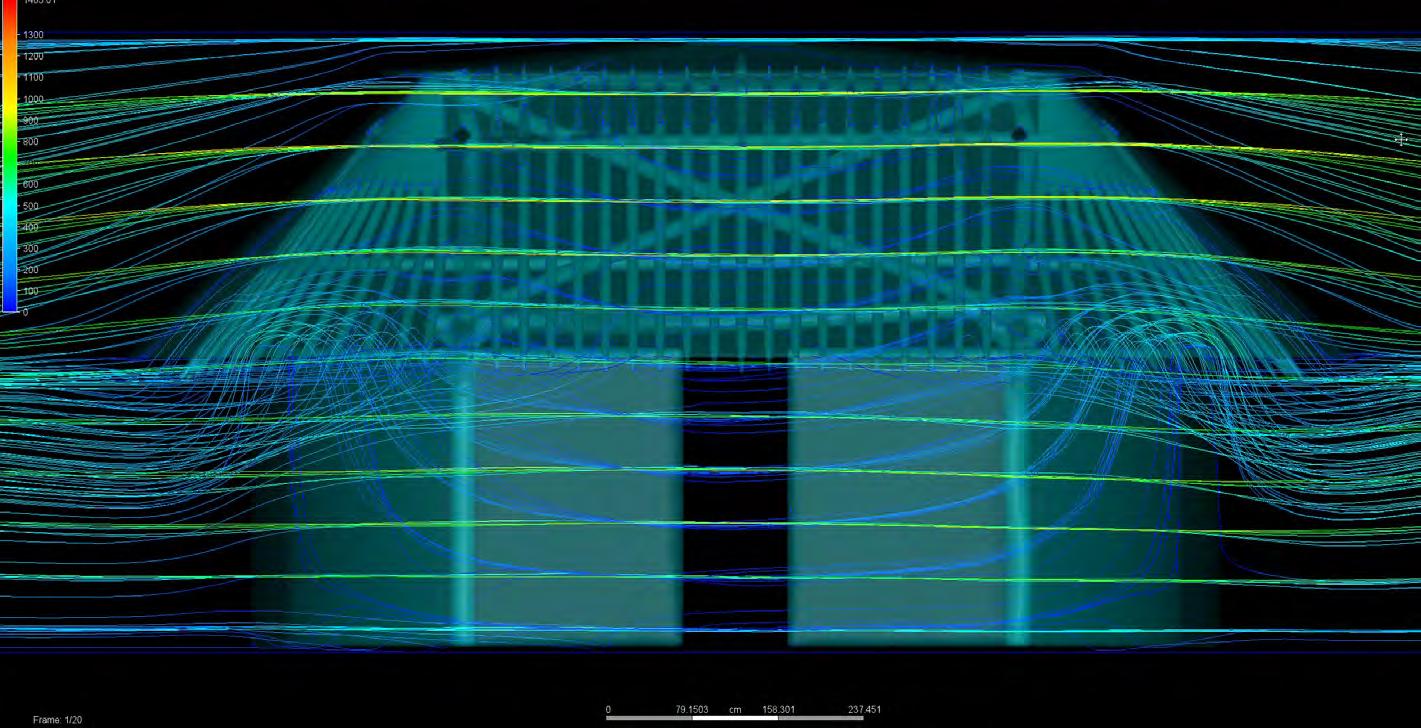
Section view of a CFD conducted on a traditional Mayan house. In this view, it is clear how a small space between the walls and the canopy provides airflow throughout the home. This air then flows through the structure’s full height before being exhausted through the top or the end of the dwelling. During a storm, this effect can provide uplifting forces upon the roof, which can cause a high degree of damage.
Figure 40
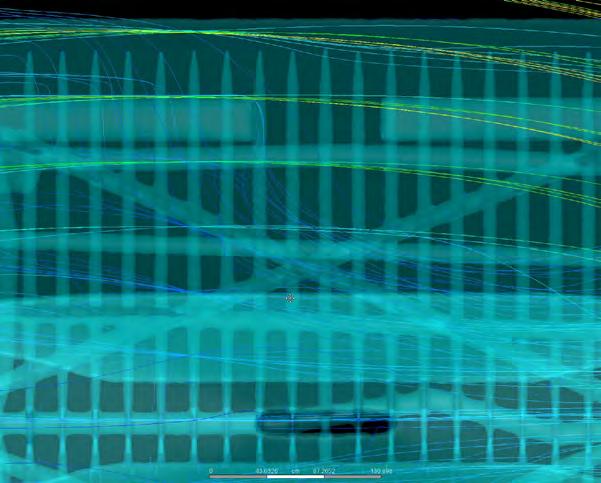
Looking closer at where the walls and roof meet, the importance of a slight gap between both elements can be seen. This gap is located around the whole dwelling and provides a source of intake and air exhaust, disregarding the breeze’s direction.
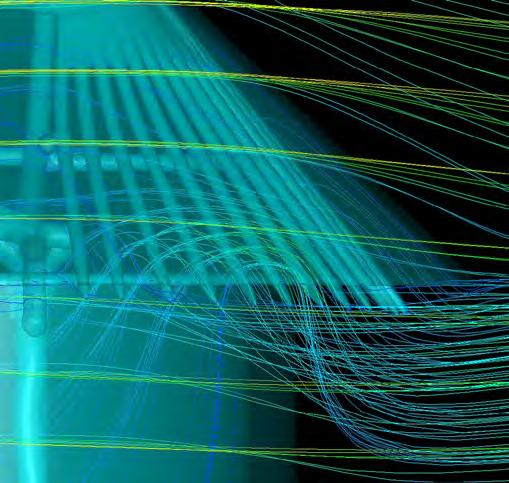
Figure 39
Figure 38
Figure 37
Top view of a CFD analysis of the Myan traditional home. The home’s apsidal shape oriented towards the primary wind directions creates a compact shape where the air is forced around the structure smoothly, reducing the static pressure among the walls of the dwelling.
FIBROUS MATERIALS
02 / 4.1
02 / 4
MATERIAL
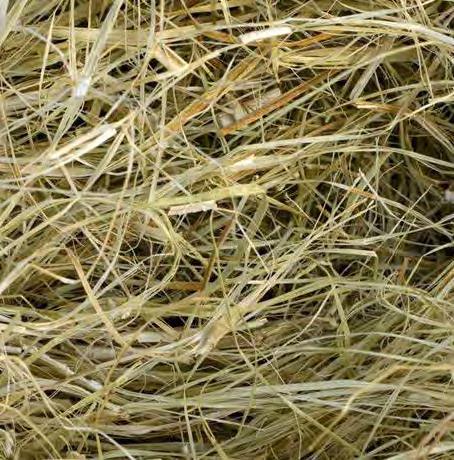
Our material research focused on developing a material system that incorporates the design principles abstracted from the vernacular Mayan dwelling. This system should incorporate structural and thermal properties by incorporating the hygroscopic behaviours found in the Palm traditionally used for homes to provide constant ventilation
One of the main scopes of the material research will focus on finding a replacement for properties given to the traditional construction system by the “palapa” palm canopy. A study of possible fibrous materials will be conducted to inform the creation of a bio-composite panel that can act as a skin for the Mayan dwelling. These fibres should be locally sourced and provide possible

NATURAL RUBBER
02 / 4.2
throughout the year. The material system should also provide higher wind resistance during storms and an affordable reconstruction scheme once the storm has passed. This material should be locally sourced and provide thermal regulation while protecting the dwelling from natural elements during extreme conditions.
economic incentives and a cheap and straightforward reconstruction scheme. By conducting a survey of local fibrous materials, henequen or sisal, as well as the currently utilised palm provided the most promising results in the search for a locally sourced hygroscopic material which could be utilised for the canopy of the dwelling.
It is found inside, in the layers of bark and can be extracted by tapping the tree. 1
In recent years new archaeological finds have helped shine a light on a forgotten industry of Mesoamerican civilizations.
More than 3,000 years before Charles Goodyear “stabilized, vulcanized, and patented rubber in the mid-19th century, the Aztec, Olmec, and Mayan civilizations are known to have been mixing natural latex extracted from the sap of rubber trees (Castilla Elastica) (Figure 42) with a mixture of juice from the morning glory flower (Ipomoea alba) to create a flexible and highly resistant natural rubber. Research conducted at MIT concluded that changing the formula by combining different ratios of the two ingredients resulted in rubber products having different properties. 1
The excellent tensile and tear strength of 1 “Aztec, Maya Were Rubber-Making Masters?,” Science, June 30, 2010, https://www.nationalgeographic.com/science/article/100628-science-ancient-maya-aztec-rubber-balls-beheaded. natural rubber combined with its adhesive properties provide a locally sourced material with an economic incentive and one with great thermal properties. Natural rubber will enable the creation of bio-composite panels; due to its high adhesive properties and elasticity. This material can be combined with fibres to achieve a biocomposite with enough strength to reinforce the structural system during extreme conditions.
1 Karen Harris, “Ancient Mesoamericans Invented Rubber 3,000 Years Before Goodyear,” History Daily, accessed July 15, 2022, https://historydaily.org/ancient-mesoamericans-invented-rubber-3000-years-before-goodyear.
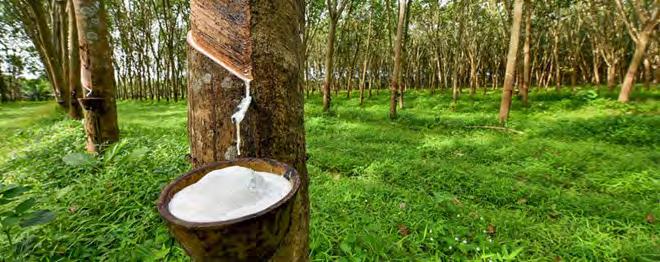
Figure 42
Castilla Elastica, or the Mexican rubber tree, is a large tree originating in Central America that produces latex.
Figure 41
The local sabal palm (A) is the preferred material for the Mayan dwelling. Unfortunately, its availability is greatly reduced. The locally sourced and widely available henequen (B) might provide an alternative. Alien species to the Yucatan, such as hemp (C), could be considered due to their economic and physical attributes.
BAMBOO
02 / 4.3
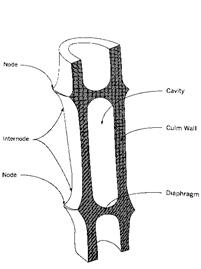
Bamboo is one of the fastest growing plants on the planet, reaching a height of 1 meter in approximately 24 hours. It takes 3 to 4 years for the bamboo diameter to grow enough to be used as a construction material. Cutting the bamboo does not kill the plant; it can be fully grown and ready to harvest every year.1 Bamboo has many favourable properties that make it one of the most sustainable materials to construct, such as biomass production, reduction of soil erosion, water retention, regulation of hydraulic flow, temperature reduction and sequestering of CO2.2 Bamboo has impressive properties, having steel tensile and concrete compressive strength. Nevertheless, it is a very light material thanks to the hollow structure of the culm, comprised of nodes, internodes, diaphragm, culm wall, and cavities (Figure 43). Bamboo acts as a cantilever beam which supports its weight and wind loads.3 The internode length varies along the culm depending on the lateral
1 Susanne Lucas, Bamboo (London: Reaktion Books, 2013).
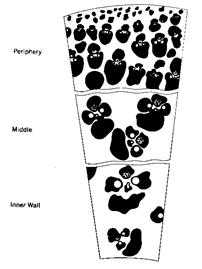
forces to allow bending behaviour. The radial arrangement of the density of the fibres being denser far from its neutral axis (Figure 44) also allows for more bending resistance.4 The minor change in the diameter of the nodes and diaphragms prevents the bamboo from buckling when it bends.5 Due to its environmental characteristics and structural properties and the fact that it is locally sourced, bamboo has become a good alternative for the structure of the Mayan constructions. Physical tests have been conducted on the bamboo, trying different bending techniques such as heat bending and soak bending to explore its elastic deformation properties and achieve a pre-bended active bending structure. The joint system should enable the maximum deformation of the structure without breaking. Therefore, the elastic joints should act as an energy dissipation system for wind loads on the structure.
2 Gernot Minke, Building with Bamboo: Design and Technology of a Sustainable Architecture (Basel, Switzerland: Birkhauser Basel, 2012).
3 Luís Eustáquio Moreira and Mario Seixas, “Analysis of the Bending Behavior of Bamboo Culms with a Full Longitudinal Crack,” Engineering Structures 251 (January 2022): 113501, https://doi.org/10.1016/j.engstruct.2021.113501.
BAMBOO MECHANICAL PROPERTIES
02 / 4.4
The mechanical properties of the bamboo can vary depending on the botanical species, moisture content and internode distribution.1 For the digital experiments, a digital material was created with the fundamental values of the
1
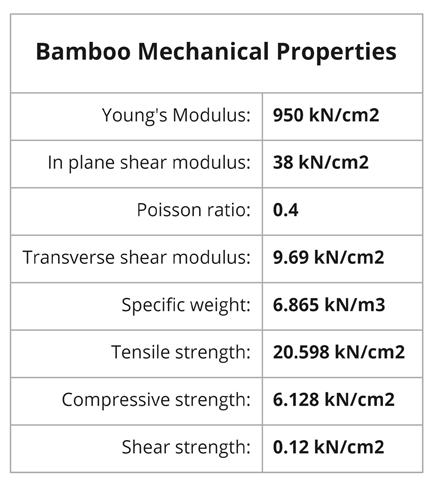
mechanical properties of bamboo in order to have more accurate results in the experiments conducted (Figure 45).
4 Mark Sarkisian, Designing Tall Buildings: Structure as Architecture (New York: Routledge, 2012). 5
Jules J. A. Janssen, Building with Bamboo: A Handbook, Second Edition (Warwickshire, England: Intermidiate Technology Publications, 2007).
Figure 45 Mechanical properties of the bamboo
Figure 43
Cross section showing the configuration of a bamboo culm.
Figure 44
Cross section of the bamboo showing the density of the fibres.
BAMBOO CURING TECHNIQUES
02 / 4.5
BAMBOO BENDING TECHNIQUES
02 / 4.6
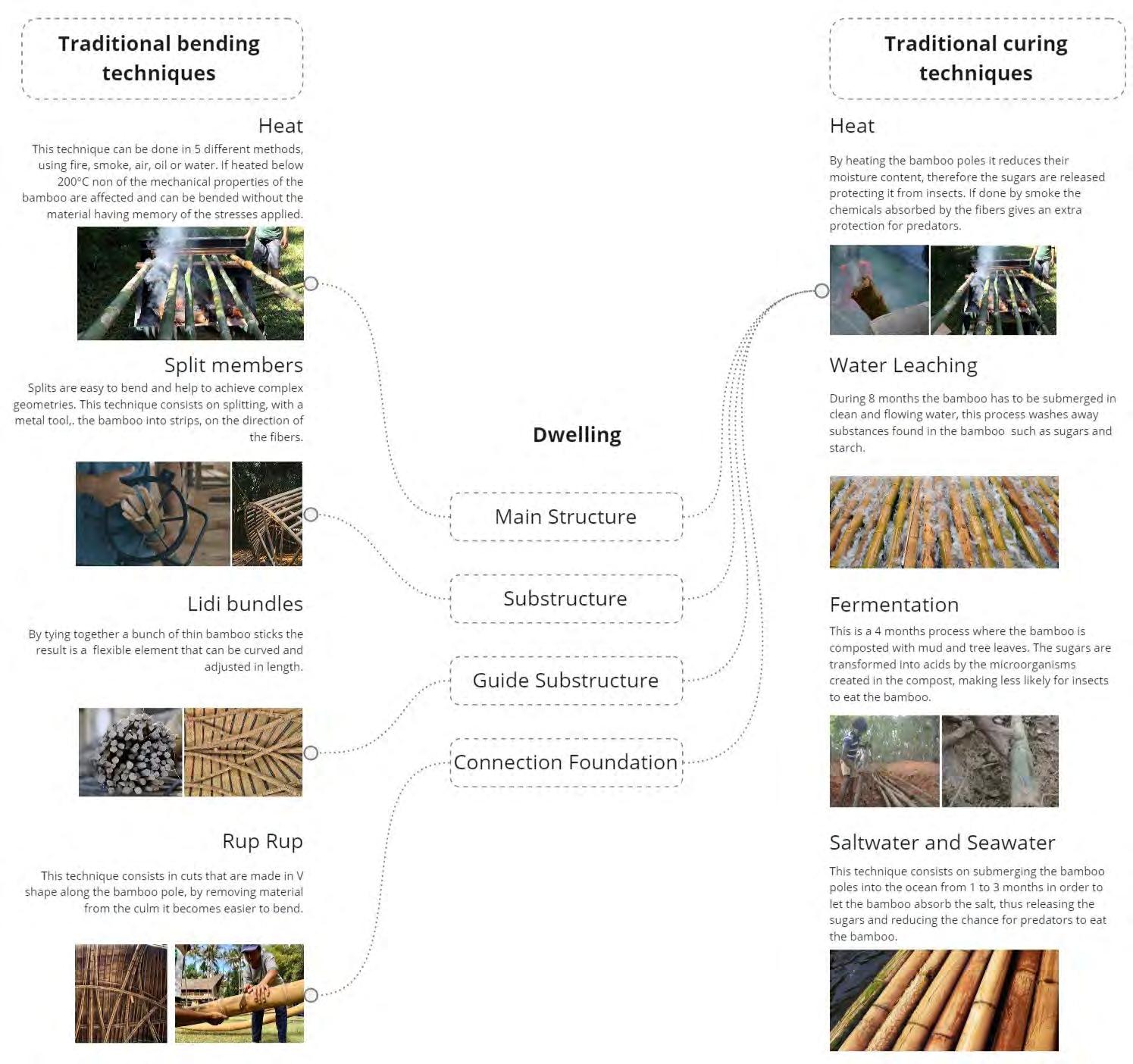
After harvesting the bamboo, the first thing to do for the fresh culms is to cure them to ensure a usable lifetime that can reach up to more than 30 years. Several techniques are employed for curing bamboo, which can be industrialised or traditional. For this project, it is essential to emphasise the traditional ways of curing bamboo to allow the communities to
engage with the construction process.
The traditional approaches to curing bamboo, shown in Figure 46, display four easy and accessible ways to cure bamboo. The fastest of them all is the heating technique. Therefore, this will be the technique employed, which will also be used for bending the bamboo.1
1 Marketing BambooU, “Traditional Methods For Treating Bamboo,” Bamboo U, June 27, 2022, https://bamboou.com/traditional-methods-for-treating-bamboo/.
The bamboo is a straight and slightly tapered pole in its natural state. Nevertheless, the range of elastic deformations it can achieve is remarkable. In order to bend these poles, some traditional techniques will also be employed in the project to enable the local people to do it themselves, allowing for participatory
construction. The four main traditional techniques for creating curved bamboo structures are displayed and explained in Figure 46. Depending on the part of the structure, different techniques will be applied to achieve better results for the bent structural elements.1
1 Marketing BambooU, “Traditional Methods For Treating Bamboo,” Bamboo U, June 27, 2022, https://bamboou.com/traditional-methods-for-treating-bamboo/.
Figure 46 Mind map showing different techniques for curing and bending bamboo.1
1 Sources Sai Goutham, “Creating Curved Structures Using Bamboo,” Bamboo U, March 26, 2021, https://bamboou.com/3-waysto-create-curved-structures-using-bamboo/.
Sai Goutham Maria Farrugia, “Traditional Methods For Treating Bamboo,” Bamboo U, June 27, 2022, https://bamboou.com/traditional-methods-for-treating-bamboo/.
FLORA SELECTION
04/ 4.7
A catalogue of different tree species was created to investigate ways of reinforcing the landscape design. The flora species were selected following guidelines set by Rudolf s. de Groot1 and the University of Florida.2 These species were then further studied upon critical aspects such as wind resistance, growth rate, functionality, height, and longevity, as well as their economic and cultural possibilities, maintenance needed to maintain their wind resistance, mitigation, and diffu-
1 Groot, Functions of Nature.
sion properties. Among others studied, the following species were selected to provide a list of varied species per category that the Mayan people may consider using for wind-mitigating landscape design. (Figures 47, 48)
2 Edward F. Gilman and Laura Paterson Sadowski, “Chapter 7 — Choosing Suitable Trees for Urban and Suburban Sites: Site Evaluation and Species Selection: ENH 1057/EP310, 9/2007,” EDIS 2007, no. 20 (November 19, 2007), https://doi. org/10.32473/edis-ep310-2007.
Figure 47
Overlay of all studied flora with key aspects abstracted and graphed.
Studied Flora Manglar de Franja (Red Mangrove) Manglar de Cuenca
Mangrove) Manglar de Peten( White Mangrove) Roble Ramon La Ceiba Chicozapote Chechén Chacáh Jicara Mexican Palmetto Huano Thatch Coconut Chit Royal Mamey Guanábana Mango Bannana Aguacate Pepino kat Manglar de Franja (Red Mangrove) Manglar de Cuenca Black Mangrove) Manglar de Peten( White Mangrove)
Roble Ramon La Ceiba Chicozapote Chechén Chacáh Jicara Mexican Palmetto Huano Thatch
Coconut Chit Royal Mamey Guanábana Mango Bannana Aguacate Pepino kat
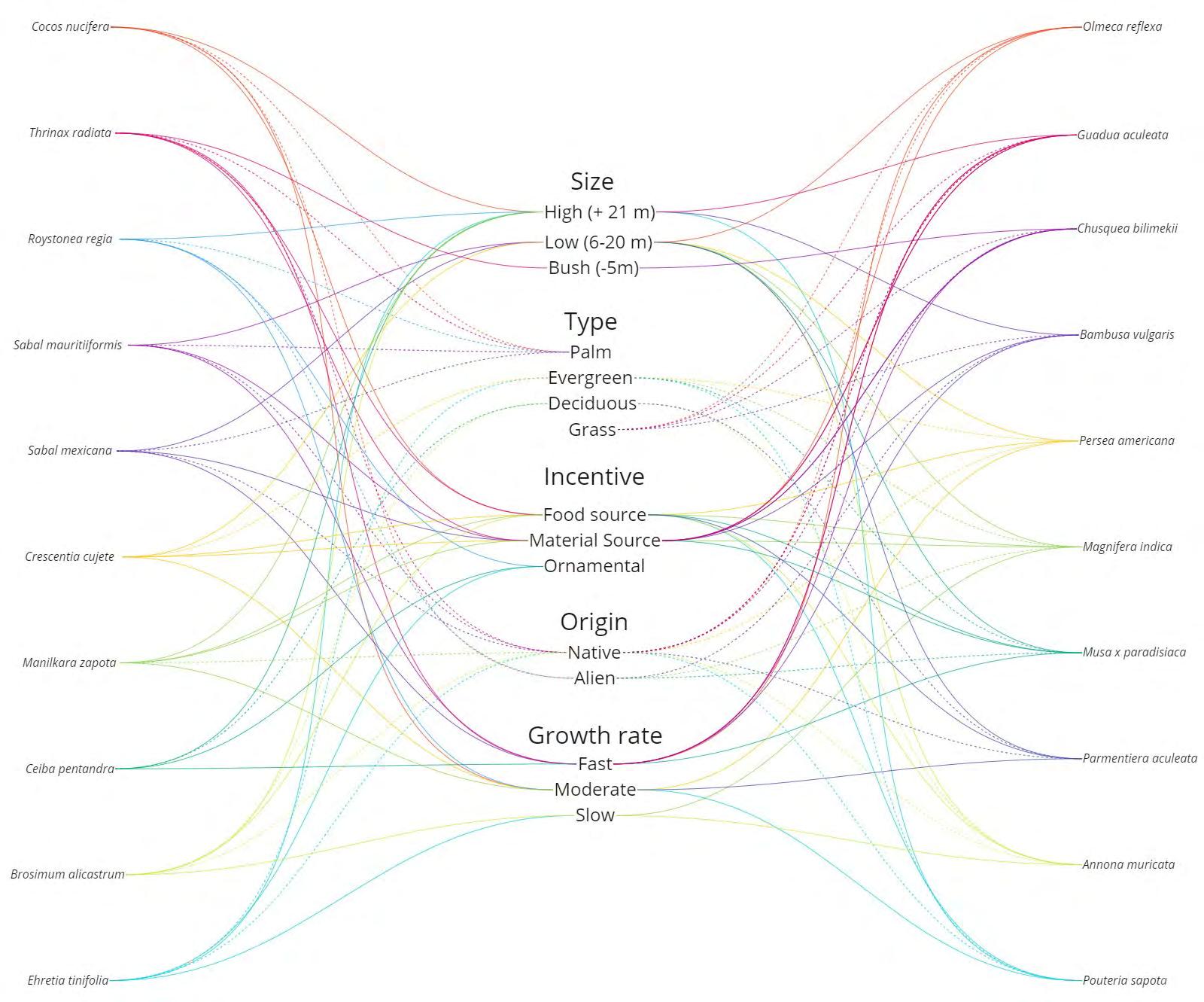
Figure 48
This diagram further subdivided the studied flora into groups of trees based on performance and morphology. These groups provided an easier way for Mayans to choose what trees to plant in their Solar.
ROBLE/ ENDEMIC SPECIES
RAMON/ ENDEMIC SPECIES
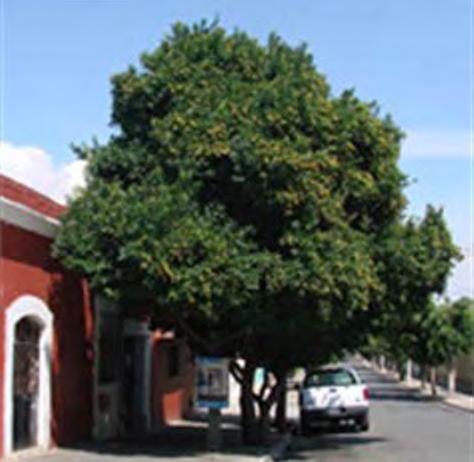
Roble Ehretia Tinifolia is a small bushy tree that can grow up to 25m in height. Locally called the Mexican oak, this tree flowers from February to May. The small white flower produces a tiny yellowish berry with high amounts of nectar.1
1 “Roble,” Gobierno del Estado de Yucatán, accessed August 9, 2022, http://www.yucatan.gob.mx/?p=roble.
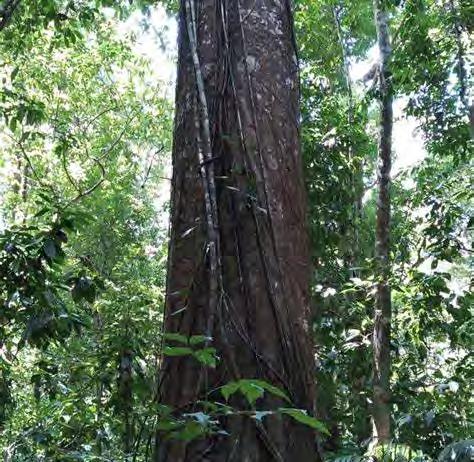
Ramon Brosimum Alicastrum or the Mayan walnut, can grow into a massive tree reaching a height of 45 meters when fully grown. Its globose drupe fruit is between 2 to 3 cm in diameter, producing a sweet and pleasant fruit that has been part of the Mayan diet for more than two thousand years. 1
1 “Brosimum Alicastrum: Characteristics, Habitat, Uses, Cultivation, Care - Science - 2022,” warbletoncouncil, accessed August 9, 2022, https://warbletoncouncil.org/brosimum-alicastrum-11194.
CEIBA/ ENDEMIC SPECIES
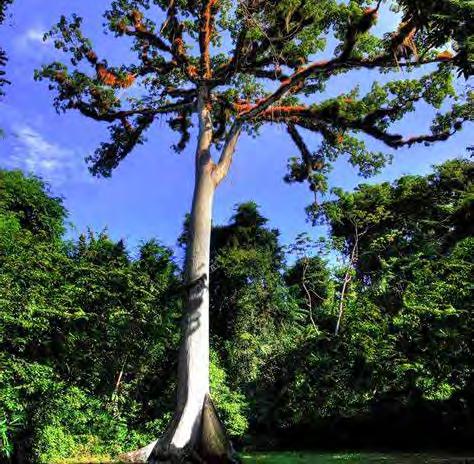
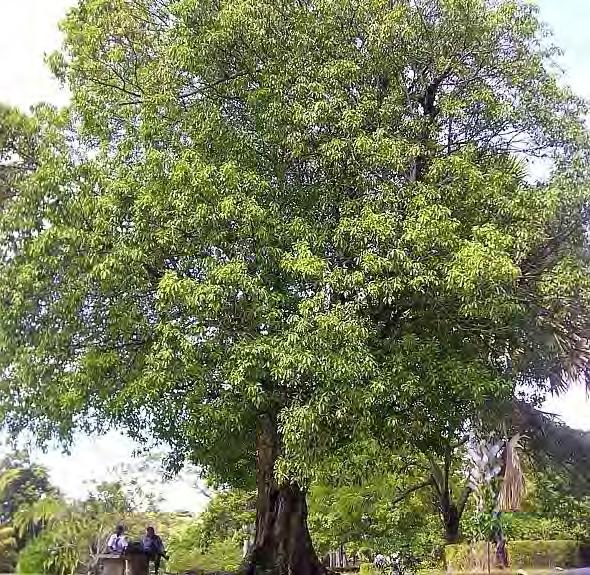
Ceiba Pentandra or commonly known outside of Mexico as Kapok, is a large growing deciduous tropical reaching over 77m in height. The tree is known for its unique buttress roots, which sometimes can extend up to 15m from the trunk and continue well below ground. The tree flower is highly valued due to its high nectar volumes. 1
1 “Ceiba Pentandra - Plant Finder,” accessed August 9, 2022, https://www.missouribotanicalgarden.org/PlantFinder/PlantFinderDetails.aspx?taxonid=277950.
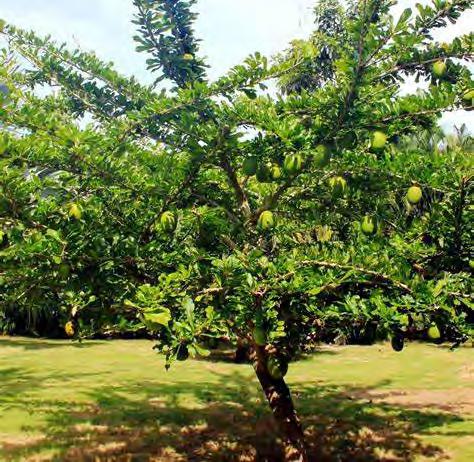
Chicozapote Manilkara Zapota is a southern Mexico native long-living evergreen tree, that can grow more than 30m in height with a truck reaching 1,5m in diameter. This extremely wind-resistant tree is valued for its exquisite fruit, commonly sold and eaten throughout the country. The tree’s bark is rich in chicle, a substance similar to natural rubber. 1
1 Julissa Rojas-Sandoval and Andrew Praciak, “Manilkara Zapota (Sapodilla).,” preprint (Invasive Species Compendium, November 1, 2020), https://doi.org/10.1079/ ISC.34560.20203482870.
Jicara Crescentia Cujete is a small tree which can grow up to 10m high. This shrubby tropical evergreen tree is valued for its fruit. The Jicara produces a calabash fruit that, when fried and carved, is used traditionally to create a canteen or bowl, which is used throughout the milpa for essential agricultural work.1
1 “Crescentia Cujete - Plant Finder,” accessed August 9, 2022, https://www.missouribotanicalgarden.org/PlantFinder/PlantFinderDetails.aspx?taxonid=277886.
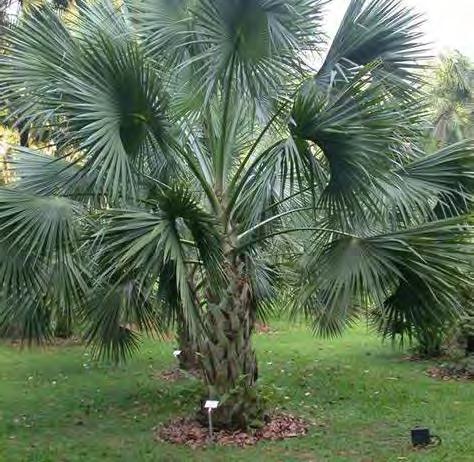
Sabal Mexicana, or Mexican Palmetto as it is commonly called, is an endemic Sabal palm that can grow to a maximum height of 18m with a full spread of 4m. The palm is valued due to its large fan-shaped fronds, commonly used as thatching material in the palapa construction style. 1
CHICOZAPOTE/ ENDEMIC SPECIES
1 Robert Lee Riffle, Paul Craft, and Scott Zona, An Encyclopedia of Cultivated Palms, Second edition (Portland, Oregon: Timber Press, 2012).
JICARA/
ENDEMIC
SPECIES
MEXICAN PALMETTO/ PALM SPECIES
HUANO/ PALM SPECIES
COCONUT PALM/ PALMSPECIES
05 / 2.3
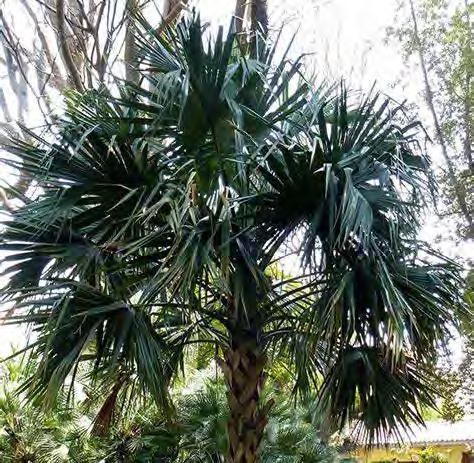
Sabal Mauritiformis, or Huano, is a slender fan palm that can reach up to 20m. This palm is composed of solitary stems with about 10 to 25 leaves, each with around 90 to 150 leaflets. The palm is highly used throughout the milpa. Large plants are used for covers for dwellings due to their long duration and resistance to water. Smaller leaves are used for interweaving works and other handcrafts such as hats. 1
1 Robert Lee Riffle, Paul Craft, and Scott Zona, An Encyclopedia of Cultivated Palms, Second edition (Portland, Oregon: Timber Press, 2012).
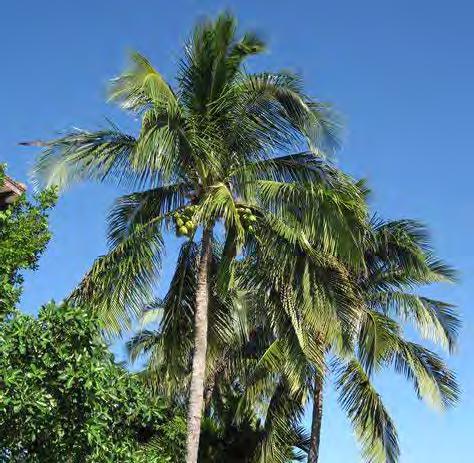
Cocos Nucifera, is the only palm species to produce the coconut fruit. The palm can grow up to 20m with pinnate leaves between four to six meters when fully grown. The palm can give up to 75 fruits per year, providing a stable food and economic source.1
1Robert Lee Riffle, Paul Craft, and Scott Zona, An Encyclopedia of Cultivated Palms, Second edition (Portland, Oregon: Timber Press, 2012).
ROYAL PALM/ PALM SPECIES
05 / 2.4
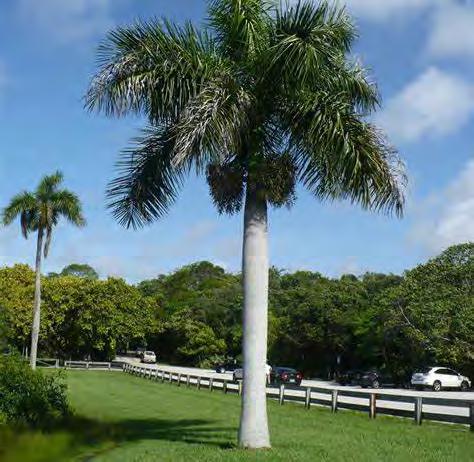
The Royal Palm Roystonea regia is a species of palm native to the Mexican Caribbean. This palm is commonly thought of as the largest palm and can grow up to 40m high. Among its many uses as an ornamental or agricultural plant, its palm fibres are commonly used as a base for creating compost.
1 Robert Lee Riffle, Paul Craft, and Scott Zona, An Encyclopedia of Cultivated Palms, Second edition (Portland, Oregon: Timber Press, 2012).
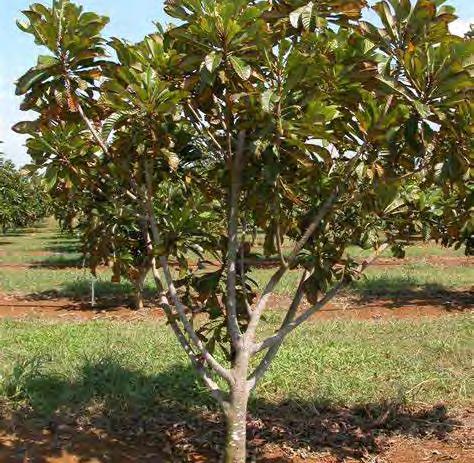
Mamey Pouteria Sapota is another native fruit tree. The mamey is highly valued due to its berry-like fruit that, once open, reveals a creamy and soft flavoured paste. The evergreen tree can be grown between 15 to 45 m and will produce fruit year-round once mature. 1
1 “National
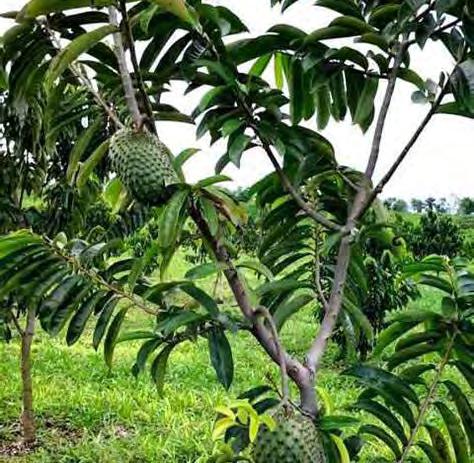
Soursop or Guanabana Annona Muricata is a native broadleaf evergreen fruit tree. This tree produces a fruit that is sold throughout Mexico and the world. Its fruit can grow yearlong if the temperatures allow it and make this 9m tall tree a viable source of food and income.1
1 “Annona Muricata Plant Finder,” accessed August 9, 2022, https://www.missouribotanicalgarden.org/PlantFinder/PlantFinderDetails.aspx?taxonid=275965.
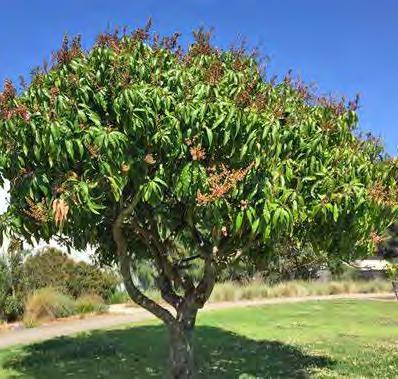
Mango Mangifera Indica is a large fruit tree found around the world up to 30 m. The mango typically grows shorter in the Yucatan. Proven to have withstood countless named storms, the tree is highly valued due for its fruit. The tree is also used as a source of timber once its flowering days are over. 1
1 “ENH563/ST404: Mangifera Indica: Mango,” accessed August 9, 2022, https://edis.ifas.ufl.edu/publication/ ST404.
MANGO/ FRUIT TREES
GUANABANA/ FRUIT TREES
MAMEY/ FRUIT TREES
BANANA/
FRUIT TREES
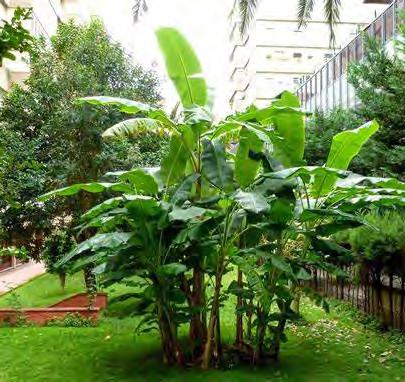
Banana Musa x Paradisiaca, this tree native to Southeast Asia, has been grown in the Yucatan for decades. Highly valued due to its fruit, the tree can grow up to 7m tall but is commonly found around the 2 to 5m range.1
1 “Musa x Paradisiaca (Edible Banana),” Gardenia. net, accessed August 9, 2022, https://www.gardenia.net/plant/ musa-x-paradisiaca.
AVOCADO/ FRUIT TREES
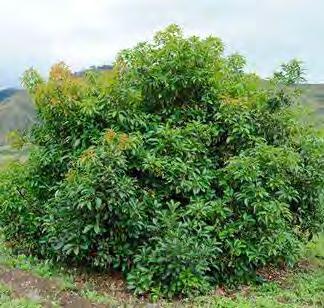
Avocado Persea Americana is a fruit tree initially found in central Mexico. This tree grows up to 18m tall with a wide and broad canopy. Usually, these trees are kept at a smaller size due to their value in the agricultural sector. The avocado plant is considered a superfood that is sold and loved worldwide.1
PEPINO KAT / FRUIT TREES
1 “Persea Americana an Overview | ScienceDirect Topics,” accessed August 9, 2022, https://www.sciencedirect. com/topics/agricultural-and-biological-sciences/persea-americana.
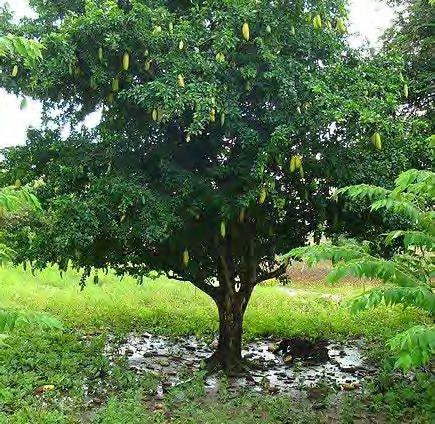
Pepino Kat Parmentiera Aculata is a bushlike, highly ornamental small tree that produces edible cucumber-like fruits. This native Mayan tree can grow up to 12m tall. Its high wind resistance is derived due to its thick branches; these branches have evolved to be able to carry cucumbers, which can reach more than 60cm in length.
1 Fabiola Areces-Berazain, “Parmentiera Aculeata (Cucumber Tree).,” preprint (Invasive Species Compendium, December 2, 2020), https://doi.org/10.1079/ ISC.86635881.20203482924.
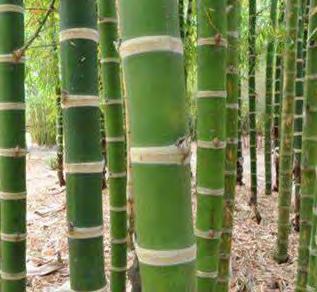
Guadua Aculeata, The Genus Guadua, contains the largest bamboo in tropical America. The Guadua Aculeata is one of the largest of this genus which is endemic to our study zone. This grass can grow up to 25m tall with a diameter of more than 150mm. Guadua is widely used as a building material for construction and similar purposes.1
1 “Guadua Species List,” Guadua Bamboo, accessed August 10, 2022, https://www.guaduabamboo.com/blog/guadua-species-list.
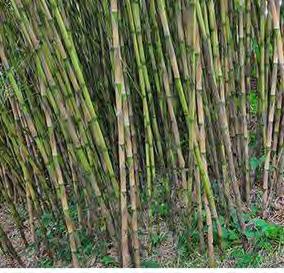
Chusquea Bilimekii, Bamboo species of the genus Chusquea are mountain clumping bamboos native to central and south America. Chusquea Bilimekii is native to Mexico, rarely growing more than 4m tall. This dense grass has an average diameter of 30mm.1
GUADUA/ BAMBOO SPECIES
CHUSQUEA/ BAMBOO SPECIES
1 “Chusquea Species List,” Guadua Bamboo, accessed August 10, 2022, https://www.guaduabamboo. com/blog/chusquea-species-list.
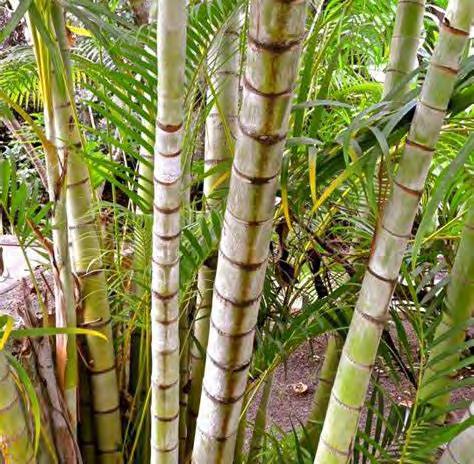
Olmeca Reflexa Olmeca is a genus of Mesoamerican bamboo. It is the only known new world bamboo having large fleshy fruits. It also has rhizomes with long necks and incredibly open plants, which enable a high-density landscape strategy. Olmeca Reflexa can grow up to 12m tall with an average diameter of 20mm. This plant gains its name due to its highly flexible behaviour, which allows it to excel in a high wind environment.1
1 “Tropicos | Name - !Olmeca Soderstr.,” accessed August 10, 2022, http://legacy.tropicos.org/Name/40036508.
OLMECA / BAMBOO SPECIES
STUDIES
PALMAR/ HURRICANE RESISTANT STRUCTURES
02 / 5.1
Figure 49
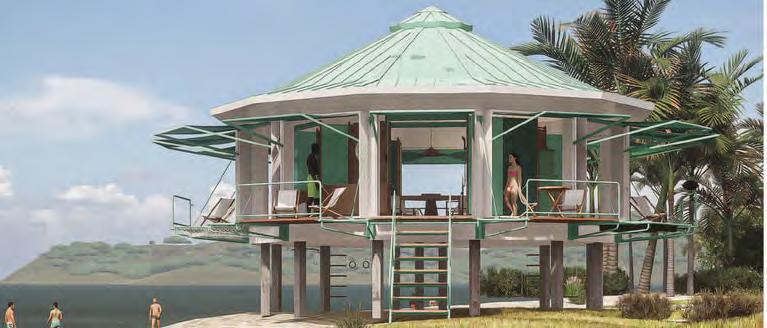
A rendered view of the Palmar hurricane-resistant shelter
Location: Tropical Humid Climate
Architects: Doel Fresse
Project Status: Arch Out Loud Overall Excellence Winner 2021
The Palmar Project was the “overall excellence” winner for the Arch Out Loud Shelter competition. This challenge asked architects around the world to design a storm shelter situated in a humid tropical climate and built close to the shore. This shelter needed to be able to resist category five hurricane winds as well as storm surges, all while utilising any of the competition’s partner
Deltec Homes’ prefabricated structural shells. Palmar took this minimal shell design and transformed it into a modular home. This minimal structure makes excellent use of the indoor and outdoor spaces creating a seamless transition between the inside and the elements. This is accomplished by movable canopies placed around the home. This drawbridge-inspired design allows the outdoor walls to open, creating a balcony and a roof as they come apart. This can be securely closed during a storm, transforming the once-open home into a strong, compact, aerodynamic shell that can withstand the most devastating storms.1
1 “Competitions :Current Architecture Competitions,” ARCH OUT LOUD, accessed August 26, 2022, https://www.archout-
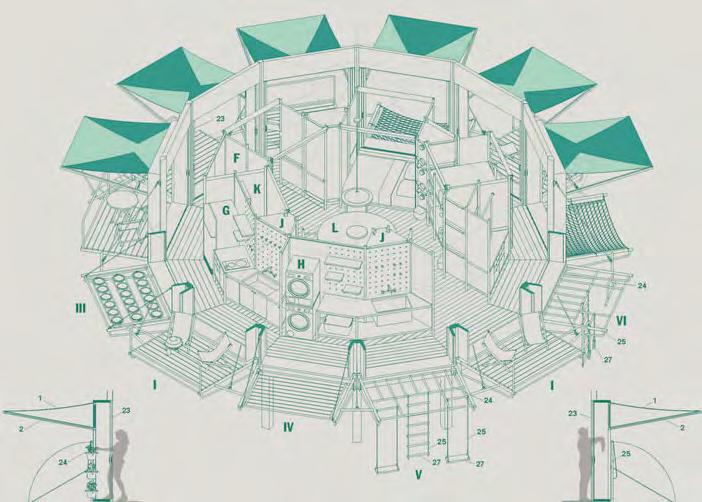
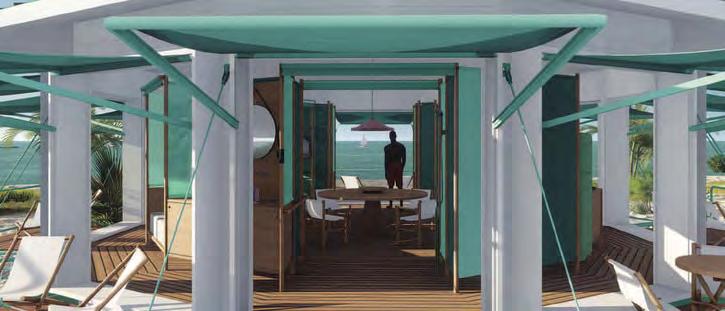
Figure 50 Plan section of the Palmar Shelte
Figure 51
Perspective of the Palmar hurricane-resistant Shelter.
SHINMINKA HOUSE / HURRICANE RESISTANT STRUCTURES
02 / 5.2
Location: Motobu, Okinawa Island, Japan
Architects: ISSHO Architects
Project Status: Constructed in 2016
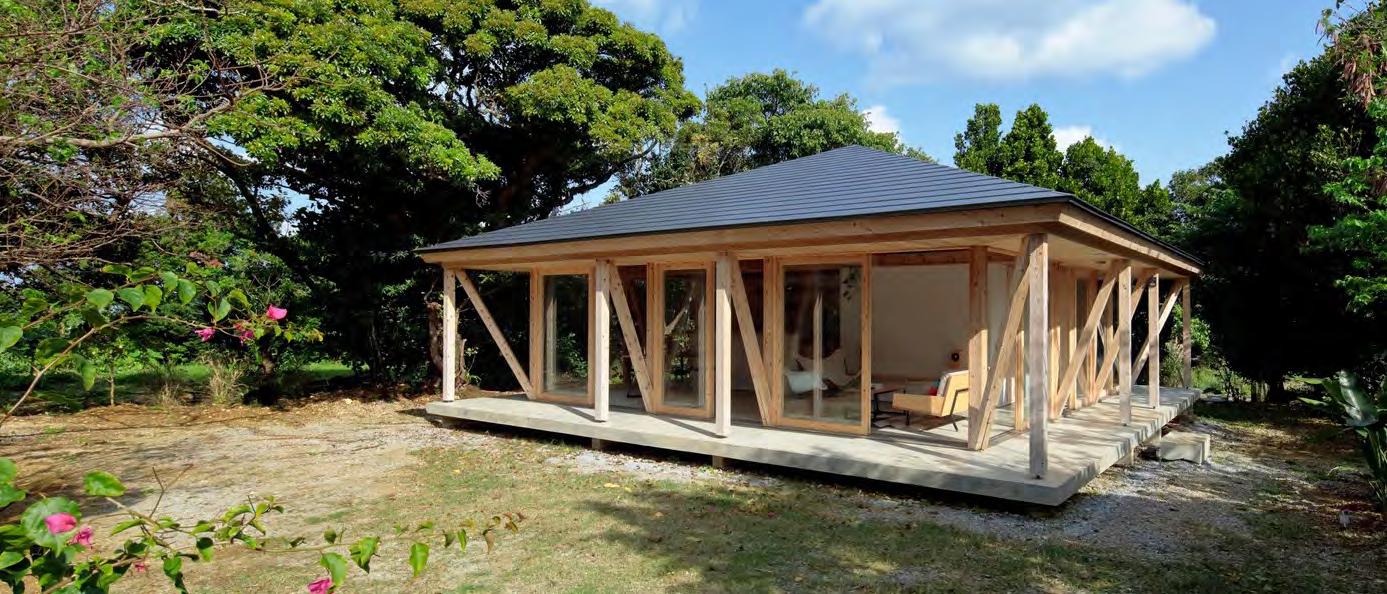
The Shinminka family approached ISSHO architects with a straightforward request; to build their new family home on their ancestral land in a remote part of Okinawa. The Family wished to rebuild the old family home that the storms had destroyed. They sought to accomplish this using only local materials and traditional architectural techniques, as is the Okinawan way. In response, a new construction technique was created. Inspired by traditional Japanese
woodwork ISSHO ‘s technique aimed at structural rigidity while making all inner walls structurally independent. By using a series of timber beams and columns.
The architects created an external skeleton hugging the edges of the building
The result is a robust wooden structure built to withstand the wind loads inflicted by the yearly storms.1 Natural light and ventilation is obtained by having the structure separated from the outside walls. They are thus glazed and can be opened with a sliding system.2 At the centre lay the home’s most essential functions, the kitchen and the closest space, which in extreme conditions is also used as a storm shelter.
1 “SHINMINKA ISSHOArchitects,” ArchDaily, April 16, 2017, https://www.archdaily.com/869100/shinminka-isshoarchitects.
2 evahori, “ISSHOarchitects’ Shinminka House in Japan Binds the Vernacular to Technology,” designboom | architecture & design magazine, April 19, 2017, https://www.designboom.com/architecture/isshoarchitects-shinminka-house-okinawa-japan-04-19-2017/.
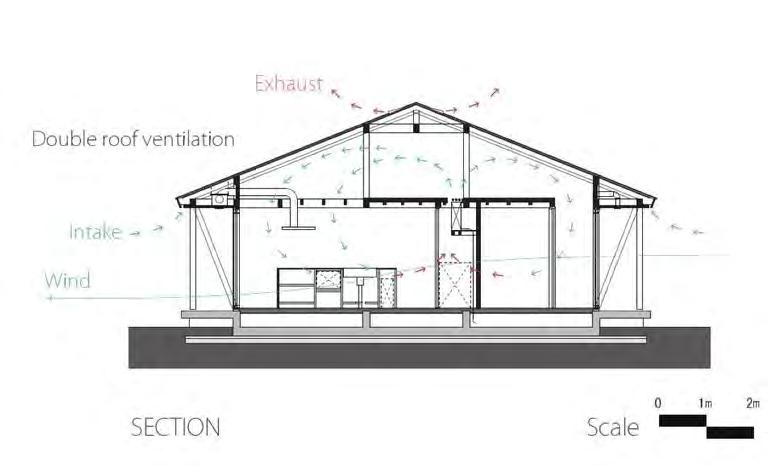
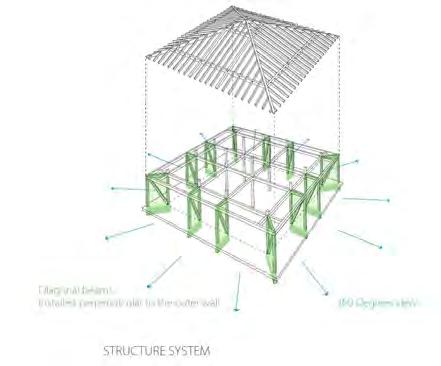
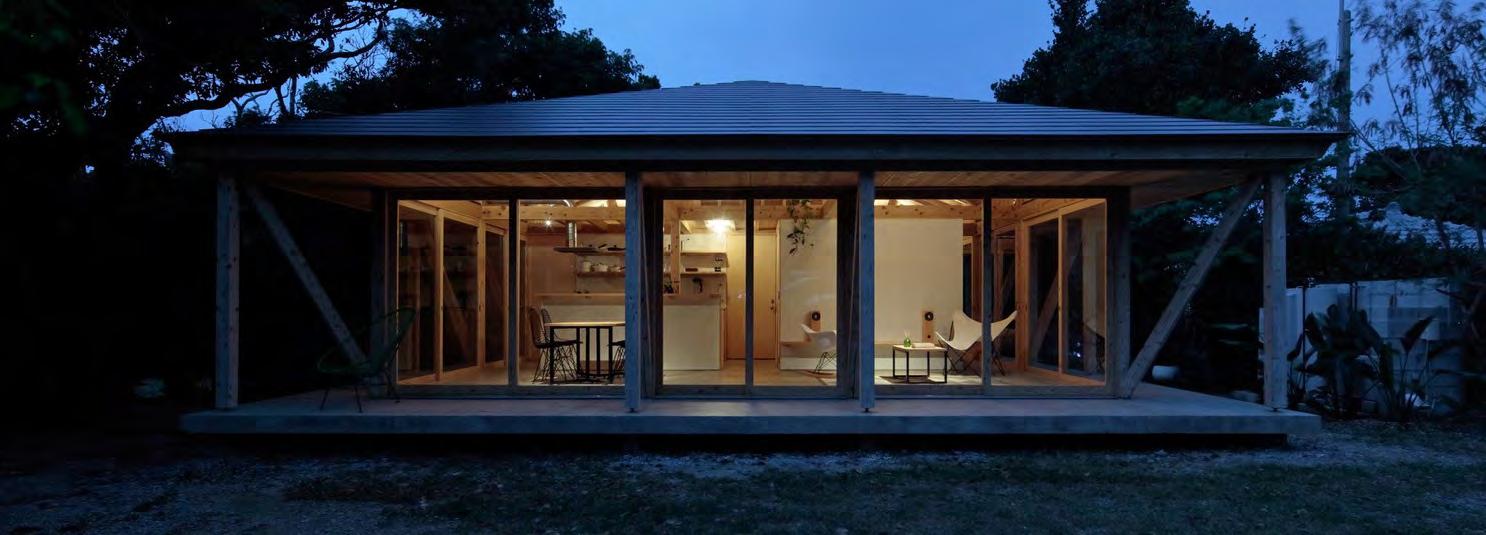
Figure 54 view of the home from the outside
Figure 53
Detached structure
Figure 52
Diagram of air circulation during storms
HOBOKEN: RESIST, DELAY, STROE DISCHARGE/ URBAN & LANDSCAPE DESIGN
02 / 5.3
Location: Hoboken, NJ, USA
Architects: OMA, Balmori Associates
Project status: Competition winner 2015
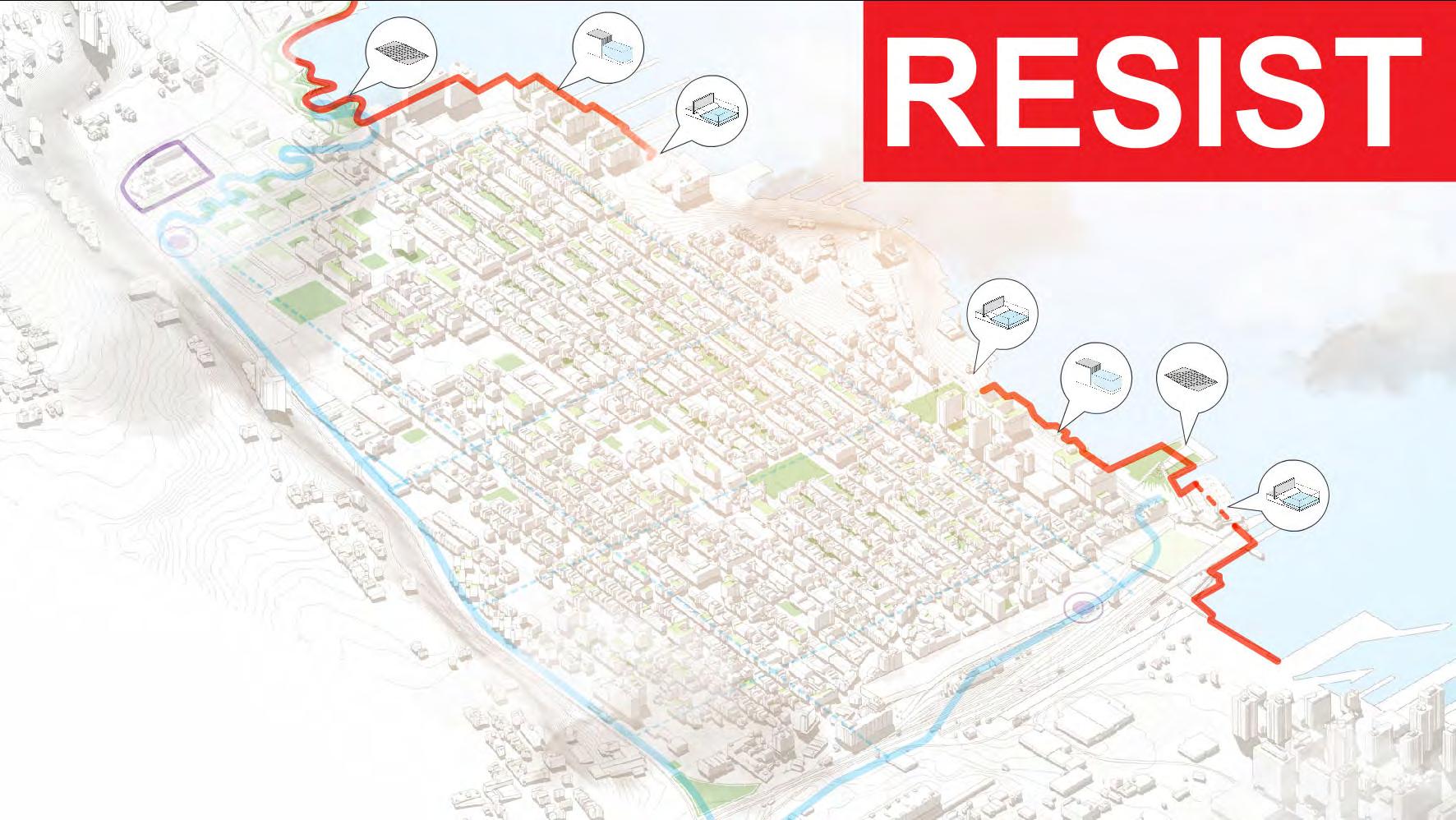
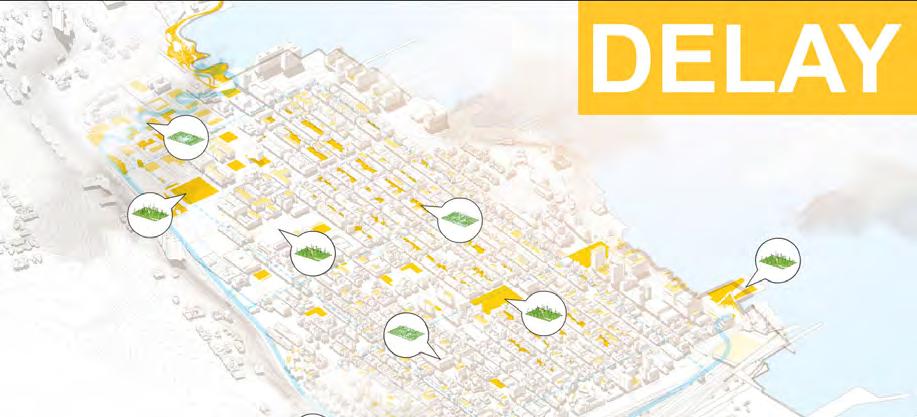
This unique solution to Hobokken’s worsening flooding crisis seeks to utilise the urban fabric of this coastal city to resist and combat storm surges. This innovative strategy by OMA realises the susceptibility to both flash floods and storm surges that the city faces. Creating a comprehensive strategy that relies on complex infrastructure and soft landscape design to resist the storm
then utilises the landscape and the city’s urban fabric to delay the floods. At the same time, green areas and wetlands provide a place to store excess water while water pumps discharge it after the flood. This project focuses on utilising the city’s urban and green infrastructure to combat flooding through a multi-stepped approach. Some parts of the city are sacrificed to protect the most vital infrastructure.1
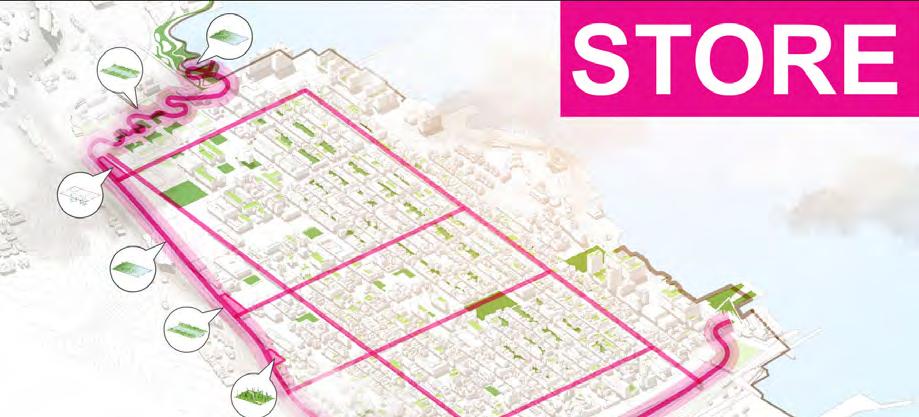
1 “Resist, Delay, Store, Discharge: A Comprehensive Urban Water Strategy,” OMA, accessed August 26, 2022, https://www.oma.com/projects/resist-delay-store-discharge-comprehensive-urban-water-strategy.
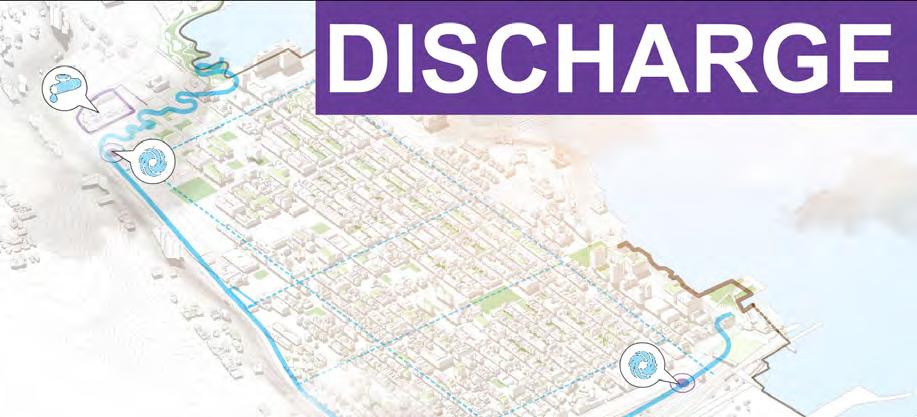
Figure 55
Floodings mitigation
Figure 57
Discharging the excess
Figure 56
Stored flood waters
SPONGE CITY/ URBAN & LANDSCAPE DESIGN
02 / 5.4
Location: More than 200 cities in China and beyond
Architects: Dr.Yu Kongjian
Project Status: In progress
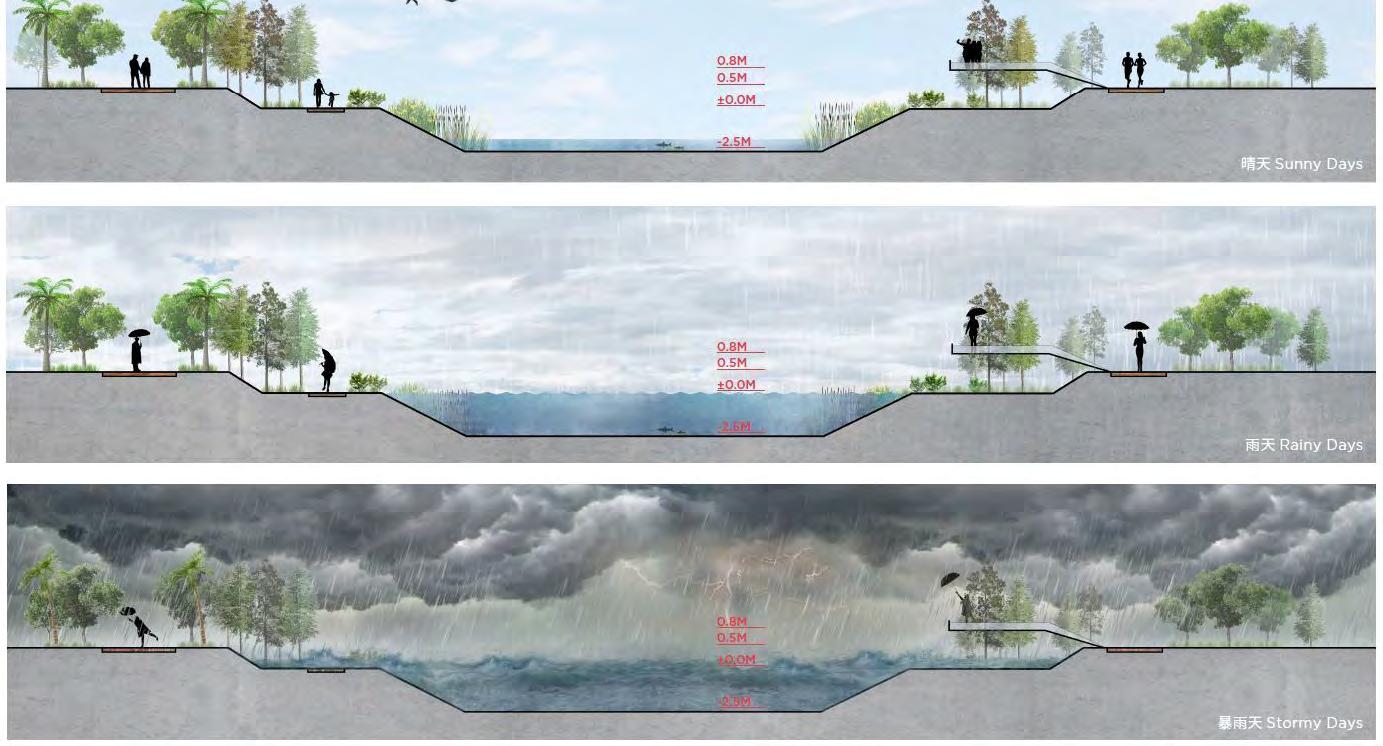
Landscape architect Dr Yu Kongjian revolutionised Chinese urban design when he proposed the concept of re-designing most major Chinese cities into what he called sponge cities. This concept is based on natural storm and flood water management. It can be achieved with landscape design and installation of urban green open areas as well as with infrastructure and construction, focusing on flood control and mitigation. Each
sponge city is different, and the strategies applied can vary depending on the location. However, its goal remains clear to increase the infiltration, detention, storage, treatment, and drainage of water while improving urban liveability.1 By reducing nonpermeable surfaces throughout the cities and increasing green areas throughout the urban sprawl, sponge cities allow to capture and reuse rainwater while providing wetlands for flood mitigation when needed. Providing urban spaces designed to flood can be helpful even in the worse conditions while allowing other areas of the city to remain unaffected during a flooding event.2
1 sysop, “What Is a Sponge City?,” March 7, 2022, https://www.fluencecorp.com/what-is-a-sponge-city/.
2 Bioneers, “Kongjian Yu – ‘Sponge Cities’: Visionary, Nature-Based Urban Design from China,” Bioneers (blog), May 27, 2022,
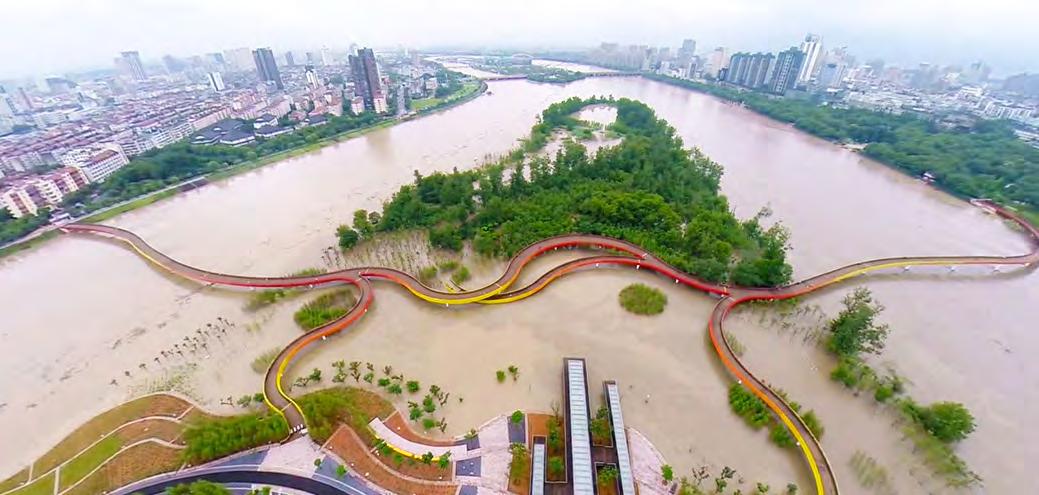
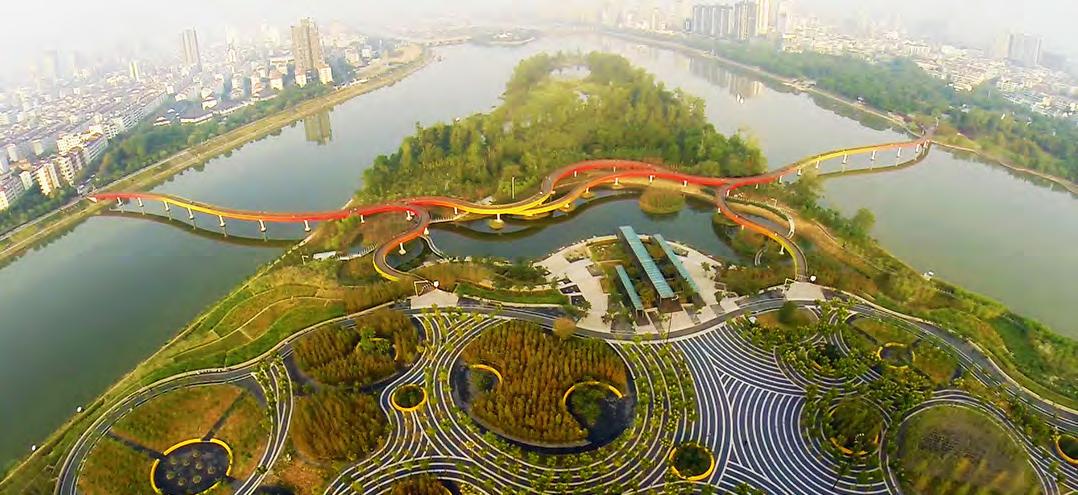
Figure 59
Yanweizhou Park in Jinhua, eastern China.
Figure 58
Elevations for different on weather conditions
GREEEN SCHOOL/ BAMBOO ARCHITECTURE
02 / 5.5
Location: Sibang Kaja, Bali, Indonesia
Architects: John & Cynthia Hardy, Aldo Landwehr, IBUKU
Project Status: Active Project, Construction began 2006
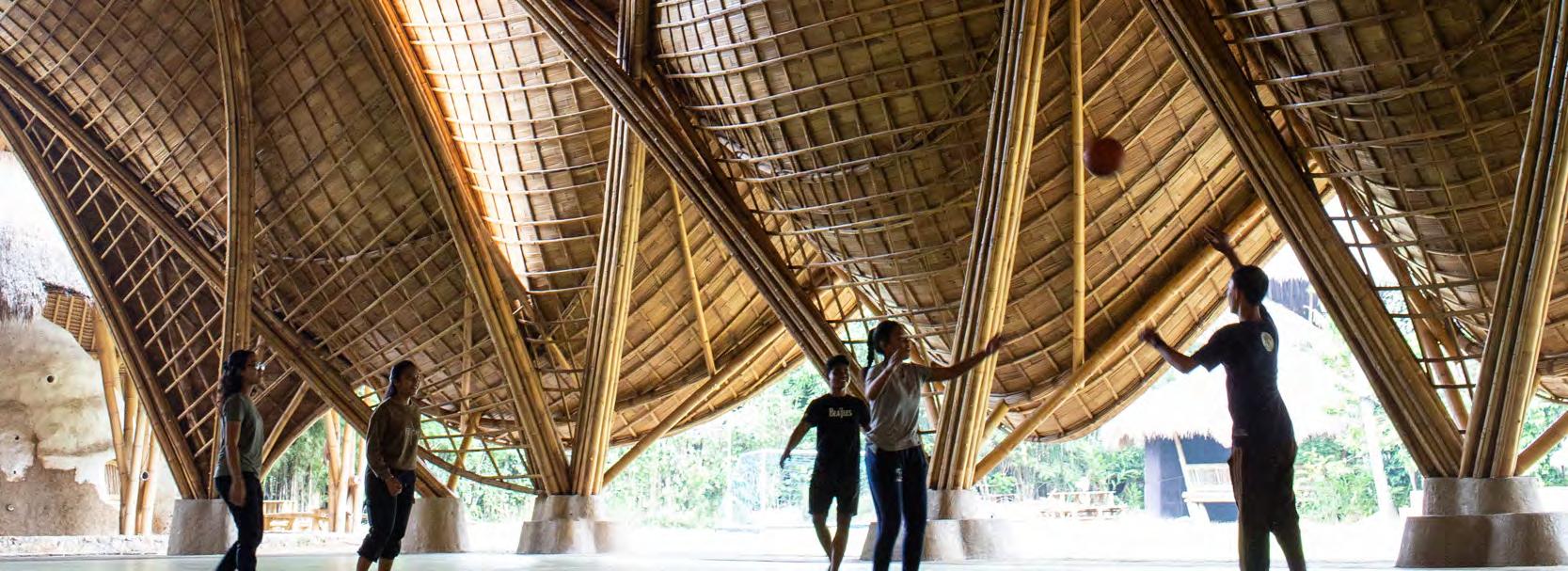
The brainchild and life work of environmental designers John and Cynthia Hardy is to create a space where they could motivate and teach rural communities around Bali to live sustainably. They did this by founding the green school and its affiliates: the Meranggi Foundation. The green school acts firstly as a children’s school with an eco-centred curriculum but also as well as a livening laboratory. Designers and architects around the world are invited to build and explore sustainable architecture, mainly in bamboo.1 The school and facilities are powered by several renewable energy sources. Apart from the commonly used
solar panels, the school’s kitchen and warm water system are powered by a bamboo sawdust hot water and cooking system showing how even bamboo construction waste can be reused. The campus is scattered among the Indonesian jungle with many facilities, including classrooms, a gym, housing for faculty and students, cafes, and offices. These spaces are all created in different architectural expressions, each exploring a different aspect of bamboo construction. The bamboo is grown on-site using sustainable methods and provides ample material for experimentation for visiting architects and designers. The communal building of the arc provides a great example of what can be achieved by combining a strong architectural project working with the natural properties of bamboo. Resulting in a holistic green community looking to inspire students and visitors about the environment and our planet.2
1 “Green School International | Green School International Is Giving Its Students a Natural, Holistic and Student-Centered Education in One of the Most Amazing Environments on the Planet.,” accessed August 26, 2022, https://www.greenschool.org/.
2 “The Green School IBUKU,” ArchDaily, October 13, 2010, https://www.archdaily.com/81585/the-green-school-pt-bambu.
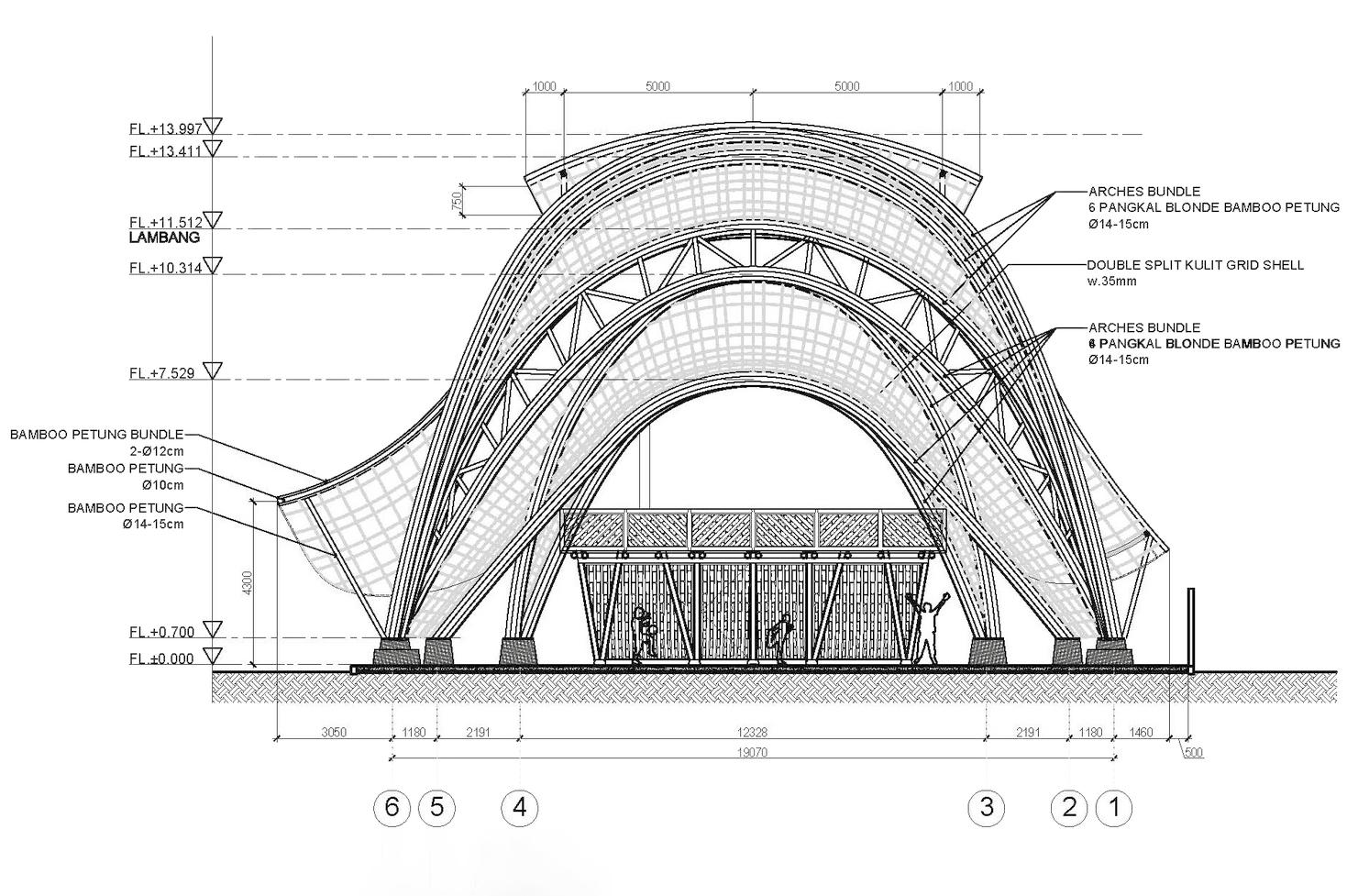
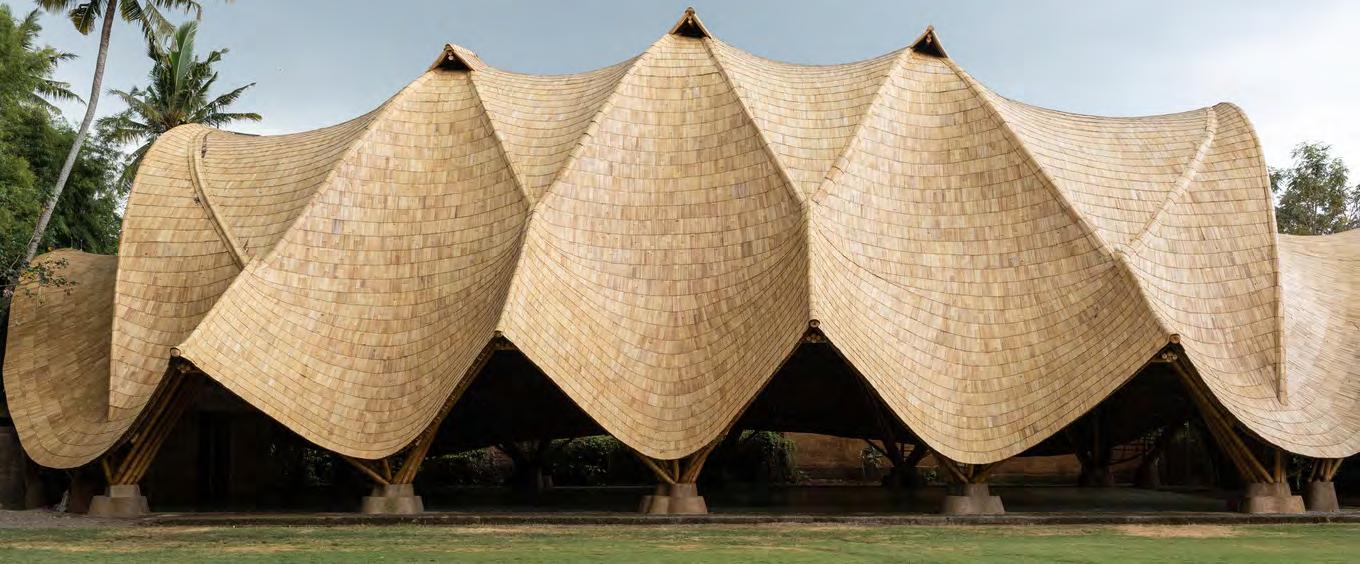
Figure 61
The Arc’s section
Figure 62
View of the Arc’s roof
Figure 60
The Arc’s structure
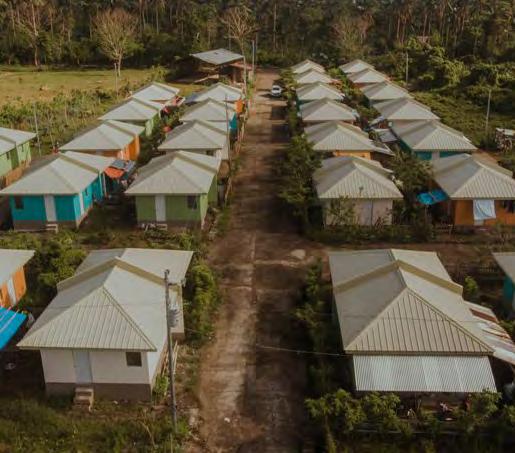
DON JOSE M. BERRINGER SR. BAMBOO VILLAGE/ BAMBOO ARCHITECTURE
02 / 5.6
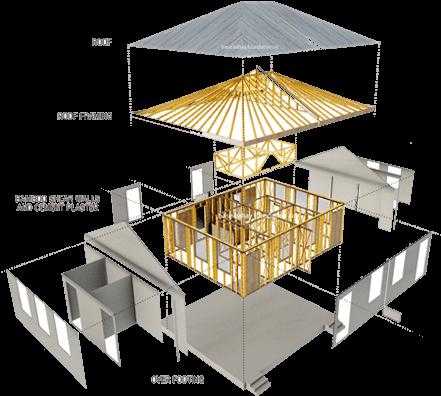
Location: Sorsogon City, Philippines
Architects: BASE-Builds
Project Status: Constructed in 2017
Don Jose M. Beringer’s community faced a yearly choice to rebuild or relocate. This remote village is located in the Philippines and is regularly hit by storms. Over the last five years, the community has had at least two to three named storms. When researchers from the BASE institute approached the residents with reliant renewable solutions, they changed the way they built their homes. Since its construction in 2017, the village has withstood three significant storms
with little to no damage to the homes, and the community reported no loss of life. The success of this project is attributed to the base build foundation, which focuses on developing affordable housing solutions aiming for social development and impacts by using materials grown locally that can be renewed. As their first project, Don Jose bamboo village showcases how a Cement-Bamboo prefabricated framing system can withstand the test of the elements at an affordable and ecological price. 1
CONCLUSION
This chapter aimed to provide an overview of the different areas of study and critical abstractions relevant to the development of this research. An area of study within the territories can be chosen by analysing the Yucatan peninsula environment and context. This study area should incorporate the Mayan communities facing the highest risk and isolation during storms. It became apparent that it was crucial to understand precisely where the phenomenon was created and how it impacted the peninsula. From the research conducted into tropical cyclones, it became clear of the importance of understanding the storm’s lifespan and, more importantly, the damage it can cause and how it causes this damage. The studies conducted on the government and local response are of equal importance, where we can abstract a time frame from which the community can expect help and relief after the catastrophe. As this research focuses on the reliance of Mayan communities, an understanding of the Ma-
yan culture and traditions is to provide a guide for the design development. The importance of the Mayan solar to the Mayan lifestyle can not be understated, as there is no home without a solar. From the material research, abstractions from how landscape and trees can help mitigate airflow during storms informed a diverse catalogue of flora which provides protection, economic opportunities, and construction material. The study of local figures materials informed the need to extract the hygroscopic properties of these fibres and how they can be included through the construction process in different ways. Lastly, the properties and techniques of the bamboo will guide the limit and define the design process. This chapter concluded by looking at six different architectural and urban projects, each implementing strategies in architectural landscape and bamboo design for storm resilience.
1 “About BASE -,” accessed August 26, 2022, http://www.base-builds.com/our-houses/.
Figure 63
The cement and bamboo framing system.
Figure 62
View of the village constructed by the community

03/ Methods
Thischapterpresentsthedifferent methodsemployedtoconductthis study.Partoftheresearchagendahas beentofindtherighttoolsatfirstto experimentwithfewerlimitationspossible.Themethodscitedwereusedin
experimentsthroughoutthethesis. However,severaltoolswereexplored duringearlyresearchbutwerenot usedforthispaper’sexperiments.
PHYSICAL&DIGITAL PROTOTYPING
03/1
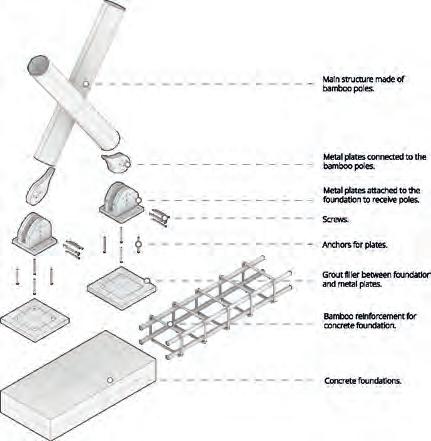
Figure65
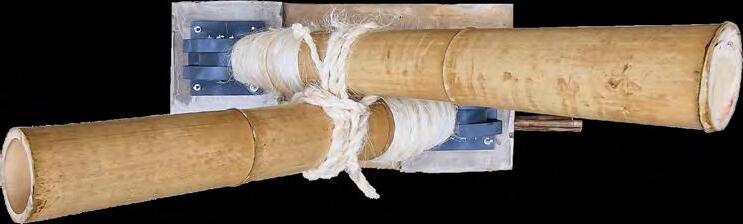
Digital&1:1physicalprototype
Digitalprototypingisconductedupon adigitalmodelcreatedinRhinoceros 3DandGrasshopper’salgorithmic modellingtools.Afteradigitalmodelis achieved,aphysicalscalemodelof someofthemorphology’sdetailsand crucialnodeswascreatedusingthe proposedtechniquesandmaterials. Physicalmodellingisnecessaryforthis projectrequiringmaterialdevelopmentstages.Therehasbeenabackand-forthprocessbetweendigitaland physical.
FINITEELEMENTANALYSIS
03/2
Figure66
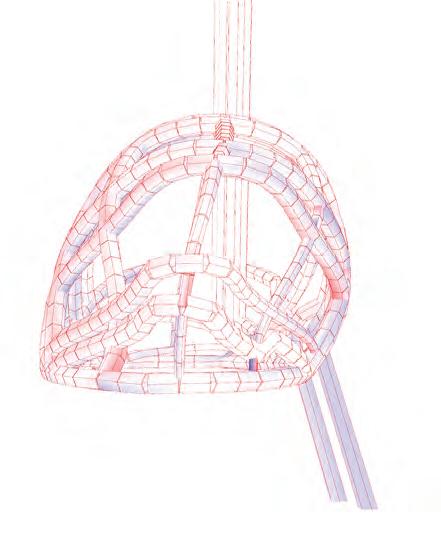
FEAAnalysisofabamboostructure
TheFiniteElementAnalysisisusedin structuralanalysisinthisresearch.1 FEA subdividesthemodelintosmallersimplifiedsegmentscalledfiniteelements tosolveaproblem.Thesubdivided modelcanthenbedeformedand stressedusingaphysicsenginetoconductstressandloadtestsuponthedigitalmodel.Karamba3D2 FEAenginein grasshoppercanbeincorporatedinto anevolutionarymulti-objectiveoptim-
isationprocess,ensuringoptimalstructuresolutionsasoutcomes.
1.SingiresuS.Rao,TheFiniteElementMethodinEngineering, 6thedition(Cambridge,MA:Elsevier,2017).
2.“Karamba3D–ParametricEngineering,”accessedAugust 23,2022,https://www.karamba3d.com/.
AGENTBASEDSYSTEMS
03/3
Figure67
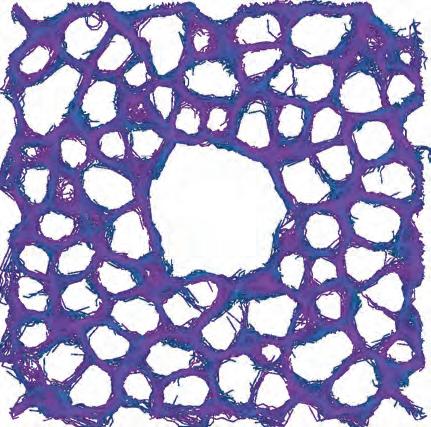
Agent-basedsystemdevelopedtooptimise windchannelling
CommonlyreferredtoasAgent-based Modelling,(ABM)’saremicrosimulations thatsimulatethebehavioursandinteractionsofindependentagents.This computationalprocesscombinesgame theory,complexsystems,computational sociology,evolutionaryprogramming, multi-agentsystemsandemergence1,to simulatehowagentsreactandrespond todifferentenvironmentalchanges.An agent-basedsystemhasbeendevelopedtosimulatethecreationofwind channelsthroughlandscapedesign.al ConceptsandMethodsinModernBiology:UsingModern DiscreteModels(Amsterdam:Elsevier/AcademicPress,2013).
COMPUTATIONAL FLUIDDYNAMICS
03/4
Figure68
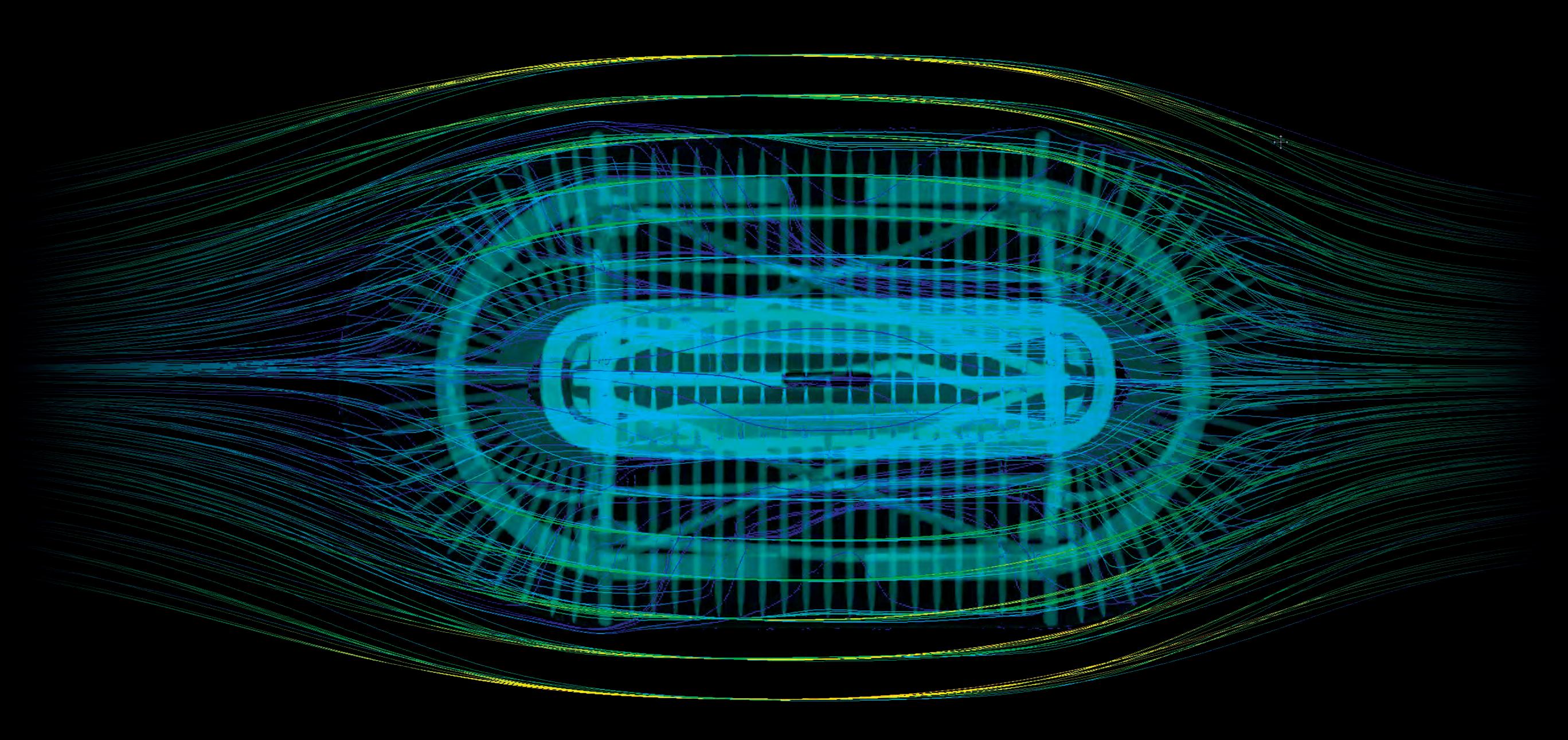
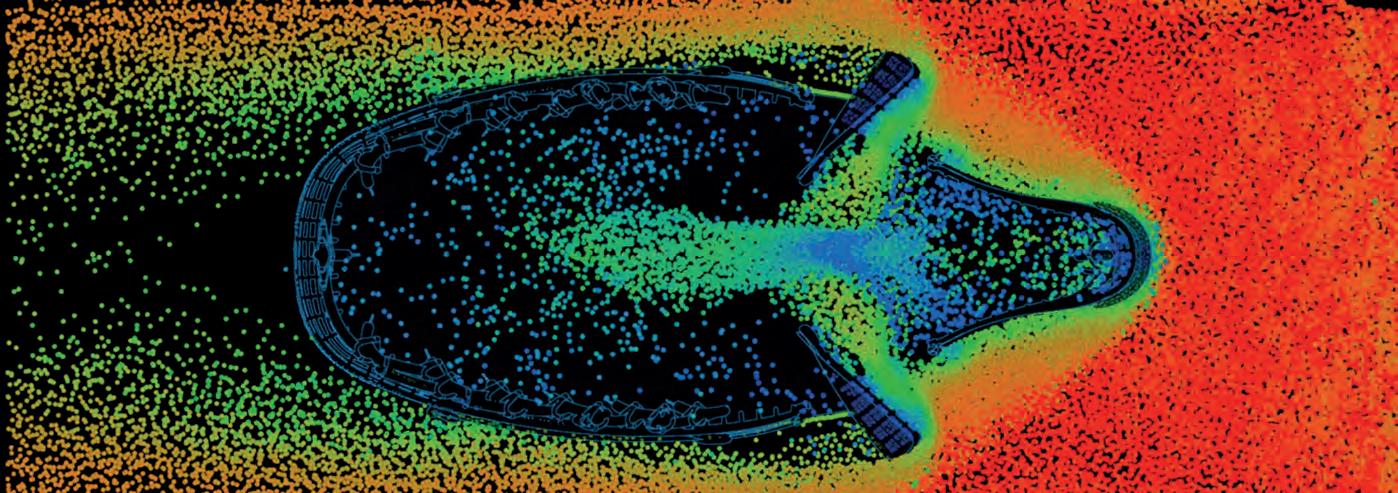
CFDAnalysisofarotatingdoorsystem, achievedinBlender
ComputationalFluidDynamicsiscomputerscience.Itfocusesonthecreation ofquantitativepredictionsoffluidflow. Toachievethis,themodelengineis basedonthelawsofconservation, wheretherulesofmass,energy,and momentumareusedtogovernandinformparticleswhichareusedtorecreatefluidmotion.Thefluidparticlesare thenstudiedwiththeirpath,motion, andspeed.CFDmodelsallowforthe testinganddesigningoffluidsandair. Thesemodelsandengineshaveincreasedinimportanceandaccuracy;itis widelyusedinseveraldisciplines,such asaeroplaneandcardesign;however,
theirpredictionsarenevercompletely exact1.Forthisresearch,modelsthatnecessitatedreal-timeparticlesimulations werecreatedwithBlender2.Thissoftwareprovidesafastandaccurate particlesimulation.MoreprecisesimulationsweredevelopedonAutodeskCFD3 butanalysinghigh-definitionmeshes wastime-consuming.
1.PijushK.Kundu,IraM.Cohen,andDavidR.Dowling,Fluid Mechanics,5thed(Waltham,MA:AcademicPress,2012).
2.BlenderFoundation,“Blender.Org-HomeoftheBlender Project-FreeandOpen3DCreationSoftware,”Blender.Org
3.“AutodeskCFD|ComputationalFluidDynamics SimulationSoftware,”accessedJanuary10,2022,https:// www.autodesk.com/products/cfd/overview.
EVOLUTIONARY MULTI-OBJECTIVEOPTIMISATION 03/5
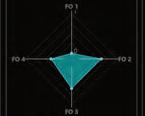
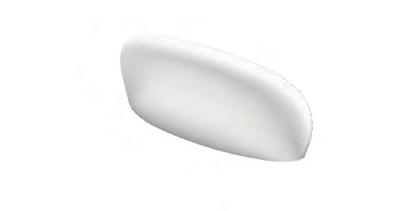
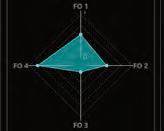
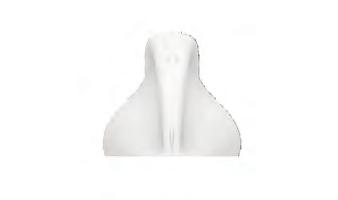
FITNESSCRITERIA 01 MINIMISEWINDPRESSURE
FITNESSCRITERIA 03 MAXIMISEUSABLESPACE
Evolutionarymulti-objectiveoptimisationconcernsmultiplecriteriadecision making,withmathematicaloptimisation problemsinvolvingmorethanoneobjectivetobeoptimisedsimultaneously. TheevolutionaryMulti-ObjectiveOptimisationprocessusestheposteriormethods;onealgorithmrunproducesasetof Paretooptimalsolutions1.Fortheresearch,WallaceiX,anEvolutionarymultiobjectiveoptimisationengine,wasused throughoutthedesignprocess.Itsuse ensuredthatthousandsofindividuals weretestedupongivenobjectivesand evaluatedwiththeanalytictoolsincluded.
1.AjithAbrahamandLakhmiJain,“Evolutionary MultiobjectiveOptimization,”inEvolutionaryMultiobjective Optimization,ed.AjithAbraham,LakhmiJain,andRobert Goldberg,AdvancedInformationandKnowledgeProcessing (London:Springer-Verlag,2005),1–6,https://doi.org/ 10.1007/1-84628-137-7_1.
FITNESSCRITERIA 02 MINIMISEAVERAGECURVATURE
FITNESSCRITERIA 04 MINIMISESURFACE/VOLUMERATIO
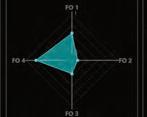
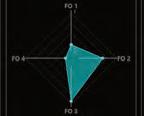

Figure69,70 WallaceiX’soutputedresultstooptimisea formbasedonmultipleobjectives
FUNCTIONALABSTRACTION
04/1.1
04/1
MICRO-URBANSTRATEGIES
Beyondusingthewindasadesign driverformorphologicalform-finding, italsoservedasthemaindesignprincipleforsimultaneousresearchfocusedonlandscapedesignatamicrourbanscale.Thisresearchfocusedon usinglandscapearchitecturetocontrol,mitigateanddiffusewindflow throughtheSolar.Thus,ensuringthat thehigh-speedwindsaredeflected intowindchannelsandlower-speed windsencounterthemorphologieson theirmostfavourableside.Furthermore,thisexperimentwasrecreated atalargerscale,whereeachsolar (plot)workstogetherwithitsadjacent plotstoreducethedamagecausedto thecommunity.
Thetraditionalsolarplotwassetasthe startingpointforthisdesignexploration.Anabstractionofthisorganisation,wheretheplotwasdividedinto fivegeneralzones,eachcontainingits uniqueprogramme,hadtobedeveloped(Figure71a).Thesezones werethereforefurtherrationalised
basedondistancesandimportanceto theusers.(Figure71b).Anewlyestablishedhierarchywiththreedifferent zoneswasusedtorearrangethetraditionalplotintoaradialdisposition(Figure72),representingringsofprotectionfromhigh-speedwinds.The essentialfunctionsinthecentrewould beprotectedfromfloodingandwinds bybeingplacedontopofhillsandsurroundedbyvegetationactingasbarriers.
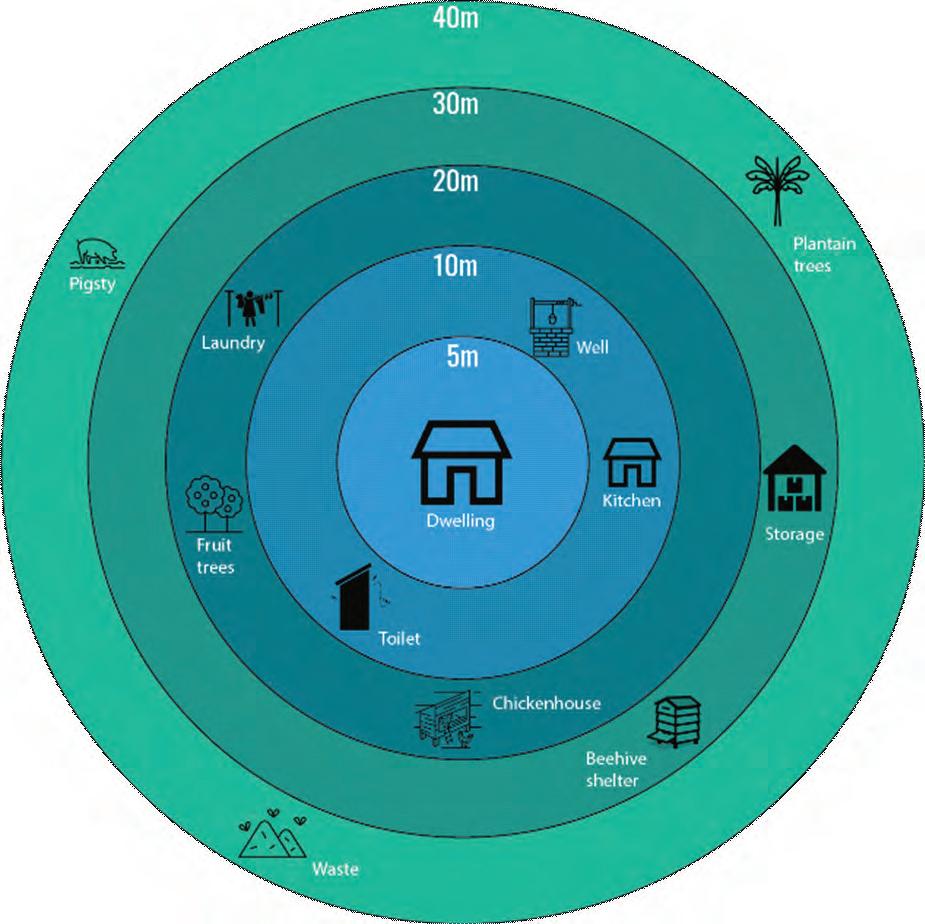
Figure71
a-Actualmayansolarfunctionszoning b-Actualmayansolarfunctionsdistance
Figure72
Abstractionofthesolar’sfunctionsintoanew hierarchy.Threecircularzonesofimportance havebeendrawn,actingasringsofprotection fromstorms
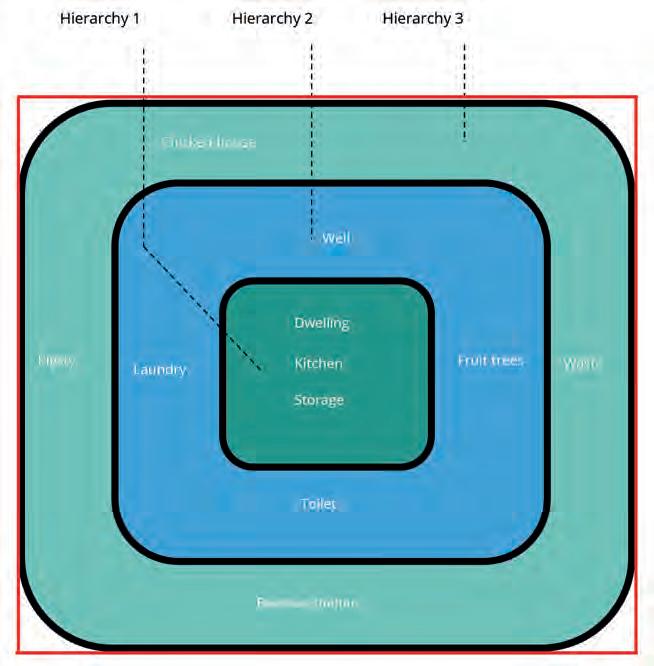
LANDSCAPEARCHITECTURE
04/1.2
Acatalogueofselectedtreespecies waspreviouslycreatedin“Research Domain”toinvestigatewaysofreinforcingthelandscapedesign.Among theseselectedspecies,theMayan peoplecandecidewhichonestouse basedonthediagramwedeveloped, sortingthembycharacteristics(figure 48,page55).Inordertoundertake computationalexperiment,threespecieshavebeenselected(figure73).A descriptionoftheuseofthesespecies andtheterrainelevationintentions,
Ehretiatinifolia
Hurricaneresistant 1to7minheight
FoundinMexico
Therapeuticsfruitsandleaves
Fruitwithpleasantsweettaste Providesabalanceddiet
GuaduaAngustifoliaBamboo
Hurricaneresistant(bends) 15to30mmaxinheight
FoundinMexico
Widelyusedinconstruction, furnitureandcraftmaking
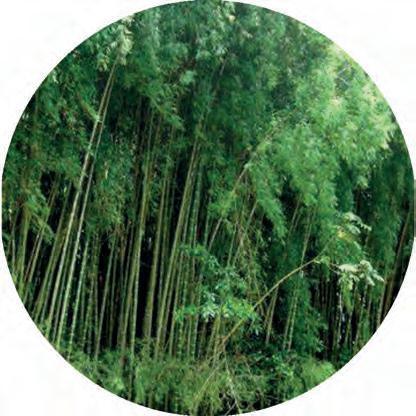
havebeendrawnasahypothetical strategytoprotecttheplotsfromhighspeedwindsandflooding(figure74).
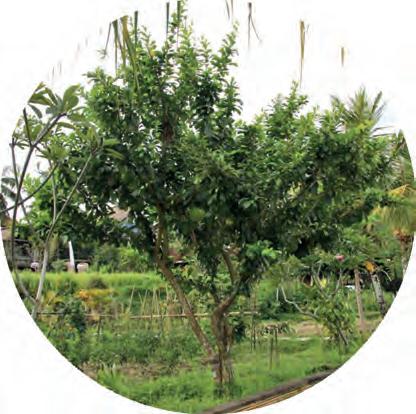
Crescentiacujete
Hurricaneresistant 5mmaxinheight
FoundinMexico
Fruitusedbymexicansasa gourdtocarrywater
Growsinpoordrainageareas
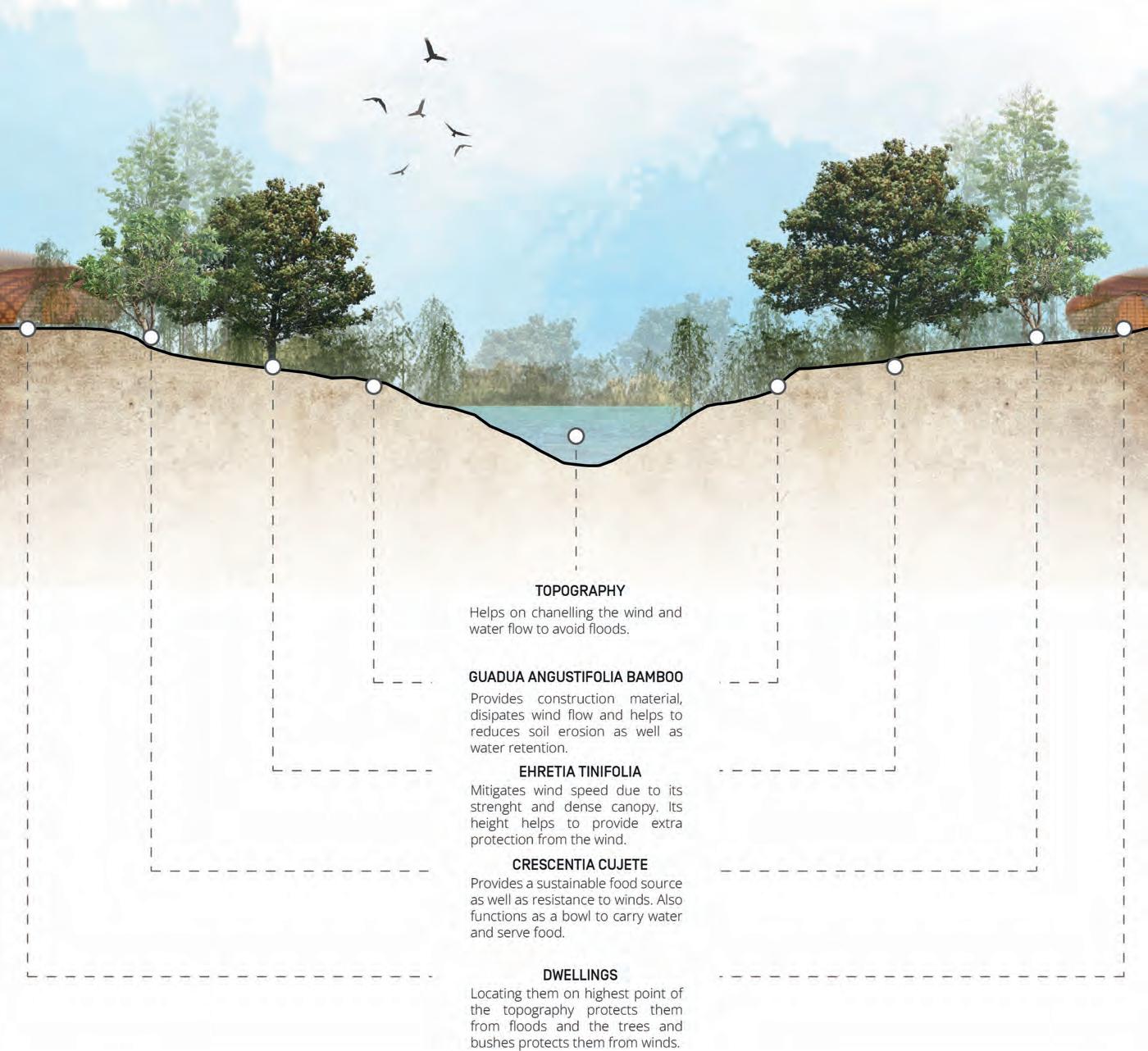
Figure73 Selectedspecies
Figure74
Landscapestrategiessection
Figure75
Windchannelcreation CFDExperiments-Topview
WINDMITIGATION
04/1.3

Differenttreesandbusheswereselectedfromthefloraspecies’catalogueto performsomepreliminaryexperimentationsbasedoncriteriasuchaswind resistance,economicincentiveand preventionofsoilerosion.AdigitalrepresentationoftheEtretiaTinfolia, GuaduaAculetaandCrecienteCujete wascreatedtorepresentatypicalspecimenofeachtypedevelopedabove, aroundthemiddleoftheirlifespan. Eachspecieswasassignedadifferent degreeofpermeabilitybasedonits crowndensitytoallowforamoreaccuratesimulation.Thespecieswere thenstrategicallyplacedtoexperiment withthecreationofwindchannels.This experimentshowshowadenseorganisationofdifferenttreespeciescancreateabarrier,allowingtoredirectwidin desireddirections.Aportionoftheterrainwasthentestedutilisingcomputationalfluiddynamics(CFD)tosimulate extremewindspeedsof50m/s.Asdata cannotbeextractedbutonlyvisualised, theresultshavebeenvisuallyevaluated withthehelpofacolouredgradientreferencingparticles’windspeeds.The resultingmodelclearlyshowsthecreationofawindchannel,protectingthe landbehindthecreatedbarrier(Figure 75).Anotherexperimentwasundertakentoestablishanotherstrategy, windbarrierandzoning(Figures76,
77).TheCFDshowstheimportanceof utilisingdifferentheightswithvariable permeabilitytodiffuseandmitigatethe windreducingdamagestothedwellingsplacedbehind.Thistimethewind isfacingthebarrier,withasimilarinitial speedof50m/s.Weusedtheparticle simulationsystemofBlendersoftware forfastandaccuratesimulationsaswe neededtoiteratetheprocessmultiple timesbychangingthetrees’scattering density.
Figure76
Windchannelcreation CFDExperiments-Sideview
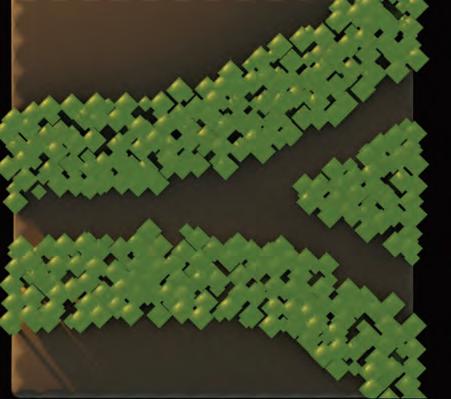
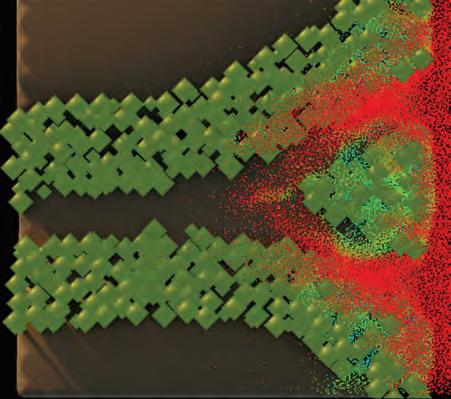
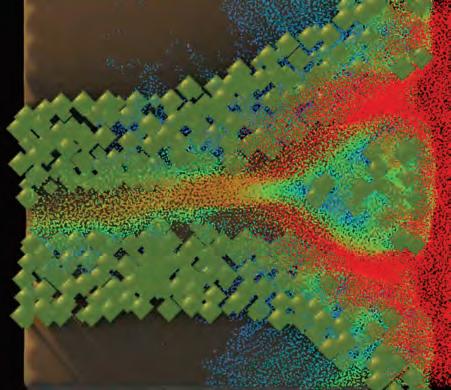
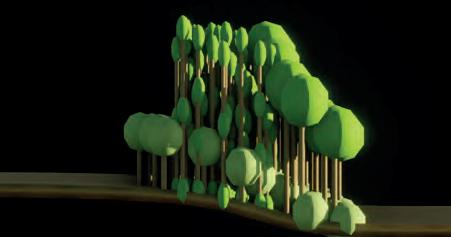
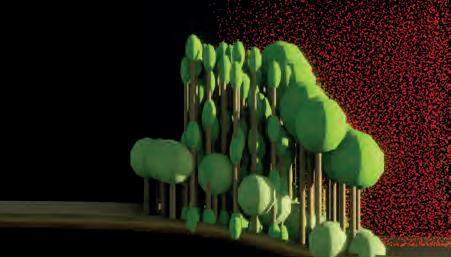
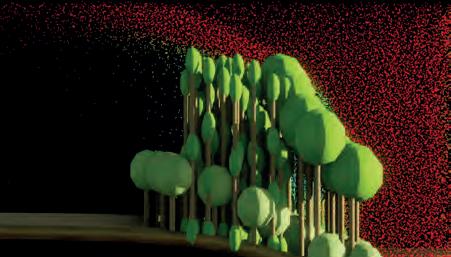
Figure77
Finalscattering CFDExperiments-Sideview
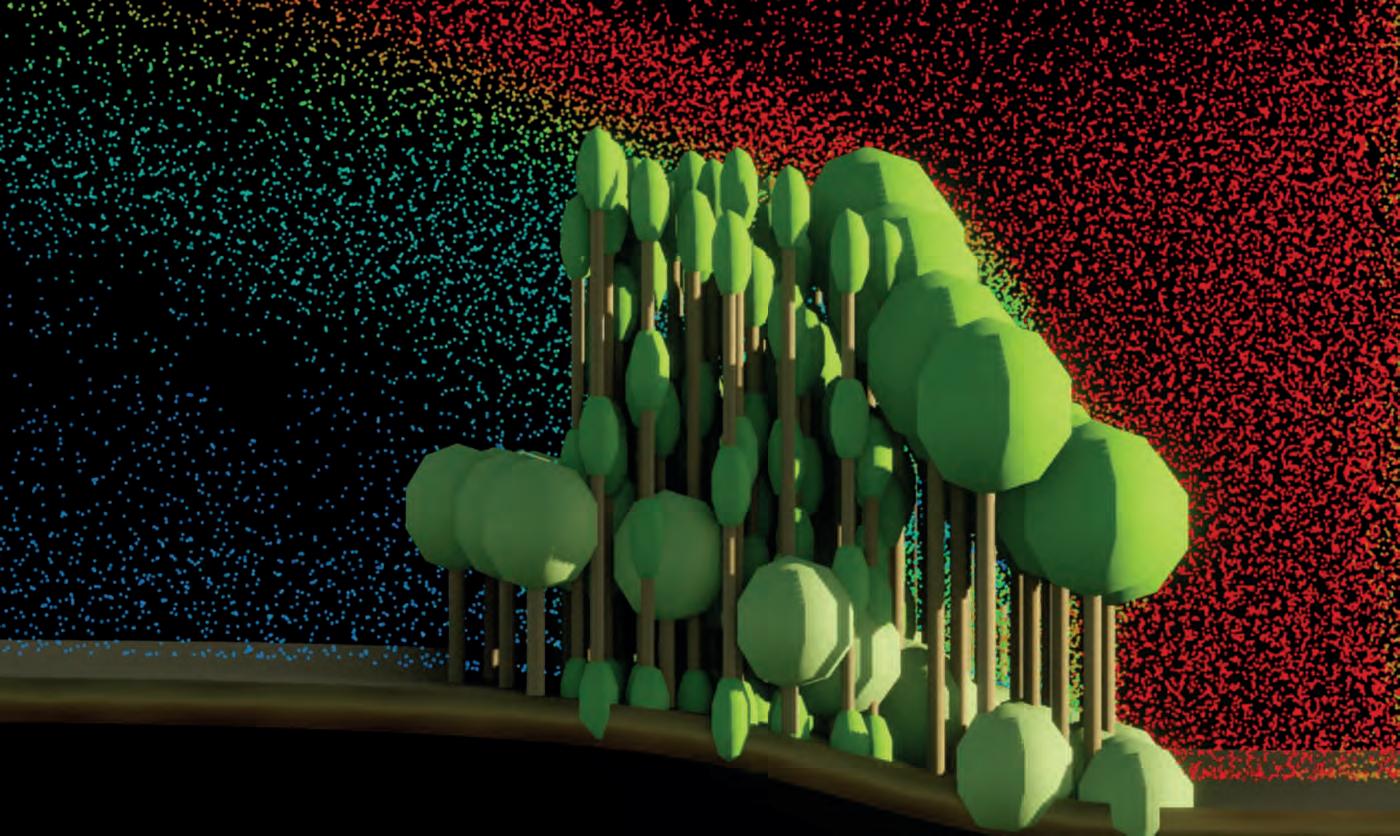
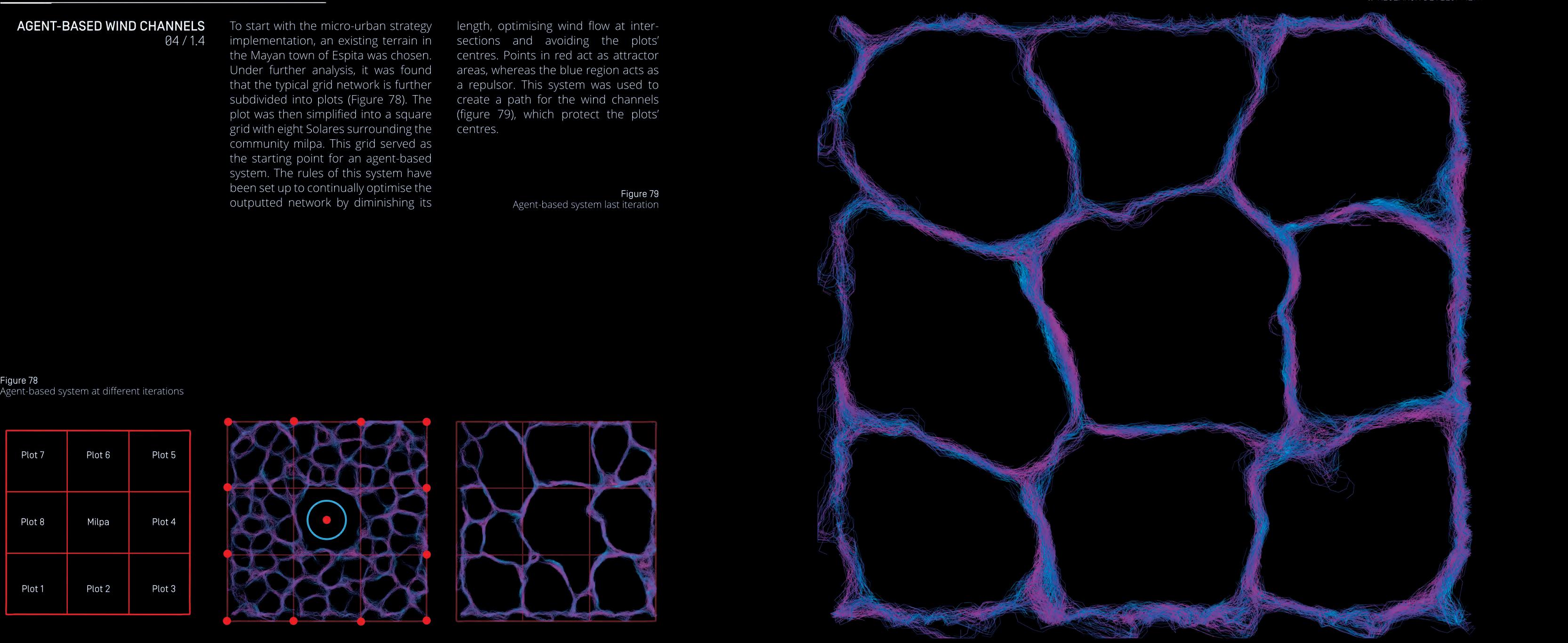
04/2 MATERIAL
NATURALFIBRES
04/2.1
Aninitialexplorationintodevelopinga fibrouscompoundwasundertakentocreateanadaptableskinforstructuraland thermalregulationpurposes(Figure80). Threedifferenttypesoffibreswere chosen,thesefibreswerechosendueto theireasyavailabilityon-site.African Thatchingfibreswerechosentorecreate thepropertiesthatcouldbeabstracted fromthelocalthatchingmaterial.Both thatchingfibresareproducedfromSabal palmleaves.Sisalwaschosenasareplacementforhenequenfibres.Sisalfibresare producedthesamewayashenequenis. Theonlydifferenceistheenvironment wheretheseareproduced;Sisalisgrown fromagaveineastAfrica,andhenequenis fromagavegrownintheYucatan.Lastly, EnglishFieldgrasswaschosentoreplace theSemi-aridgrassproducednorthofthe Yucatanpeninsula.
Threedifferenttypesofsyntheticrubber werechosentoreplicatethenaturallatex rubberfoundinsidethetreeson-site.A Latexrubbermixwaschosenasthiscompound’spropertiesapproximatethatofthe naturalrubber.UrethaneRubberwasthen usedtoenhancefurthertheelasticity foundonthelatexwhileprovidingahigher tearingresistance.Lastly,aSiliconerubber Compoundwasalsotested.Thisrubberallowedforthedevelopmentofquickertests providingafasterdryingtimethanallthe testedcompounds.Unfortunately,thesiliconerubber’stensilestrengthandflexibility provedtobetoolowforitsintendeduse.
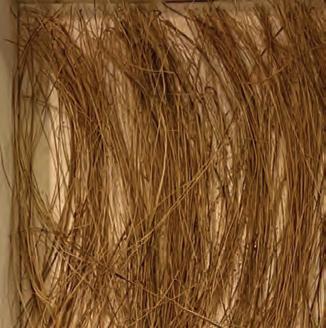
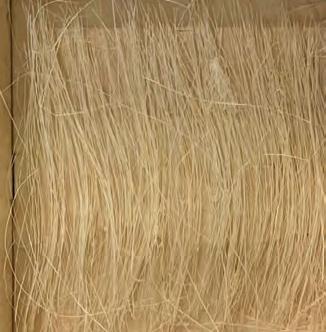
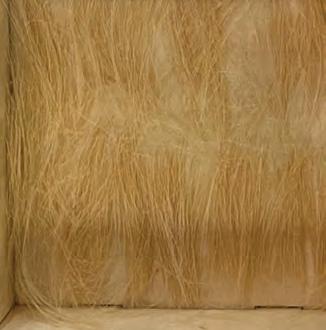
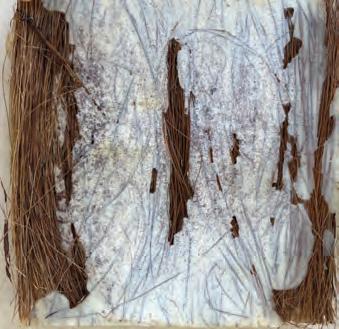
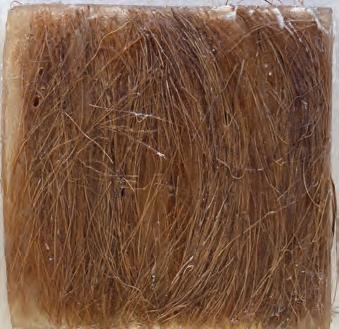
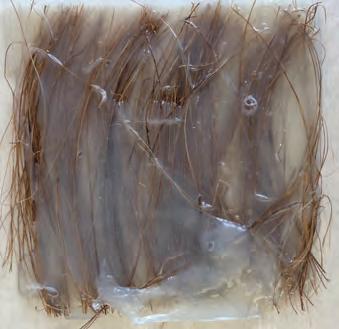
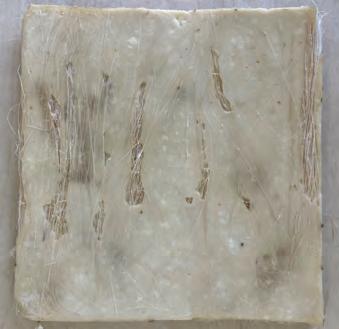
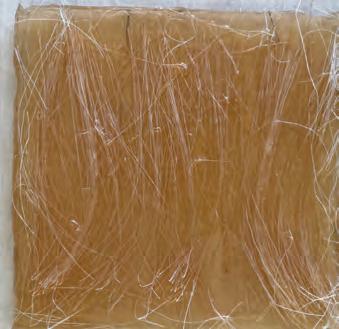
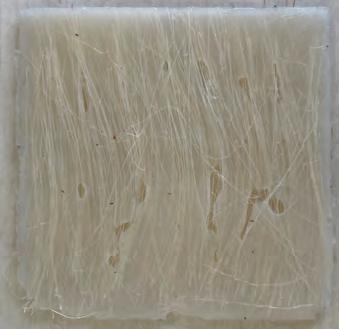
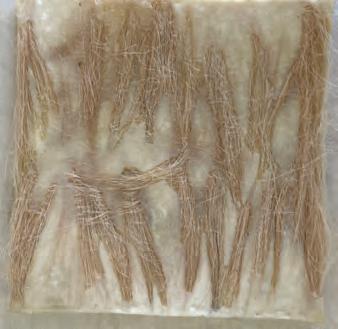
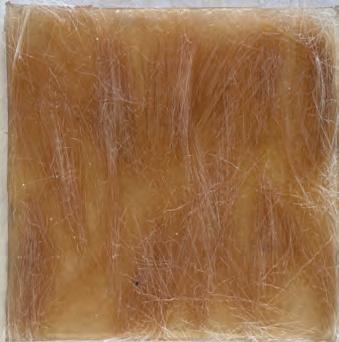
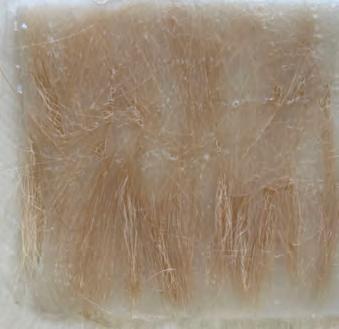
Field
Grass
(5g)
Sisal
(5g)
Thatch (5g)
LatexRubber (400C.C./30hrs)
UrethaneRubber (400C.C./16hrs)
SiliconeRubber (400C.C./5min)
Figure80
VerticalFibreorientation
BAMBOOFIBRESEXTRACTION 04/2.2
Giventheproposedconstructionsequence,bamboomaterialwastebecomesasideeffectofthestructural system.Afterconductingpreliminary research,ithasbeenfoundthatpreviousexperimentshadfoundSodium Hydroxide(NaOH)andcausticsoda (NaOH·H2O)asefficientsolutionsto breakingdownthebambootoits fibres.DuetoUnitedKingdomlaw,SodiumHydroxideisillegaltosellover thecounter.Fortunately,itispossible topurchasesodiumhydroxideina premadesolution.Threecompounds containingthischemicalweretested:
CompoundA -SodiumHydroxide (NaOH)-SodiumHypochlorite(NaClO) CompoundB -SodiumHydroxide (NaOH)-Causticsoda(NaOH·H2O) CompoundC -SodiumHydroxide (NaOH)–Methylisothiazolinone (S(CH)2C(O)NCH3)
BambooStemsweresubmergedfor 12hoursindilutedcontainerscontainingsolutionswhichwere20%compoundAorBand80%water.Onceremoved,thebamboostemscouldbe easilybrokendownintofibresjustby rubbingthembetweenthefingers. Thisefficiencywaslostwhentheouter wallfibresprovedtohavemaintained structuralintegrityandcouldnotbe brokendown.
Secondaryexperimentationwasproposed,whereathirdcompound,compoundC,wasaddedtothetestsubjects.Thebamboostemswereagain submerged,thistimefor36hours,in solutionsof40%CompoundCand60
%ofwater.Uponremoval,thestems wereeasilybrokendownintofibres.It waspossibletocontrolthesizeofthe resultingfibresbyvaryingpressure andbytheimplementationofanailto removethefibresbyascrapingmovement.
CompoundBwasselectedasthebest oneforperformingtheextraction. Stemsremovedfromthissolution couldbeeasilybrokendownbysimple touchwhilestillprovidingahighdegree ofcontroloverthesizeanddensityof theresultingfibres.
12H20/80 36H40/60
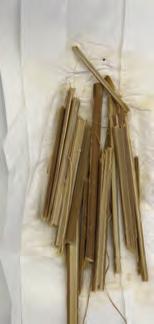
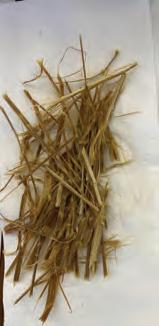
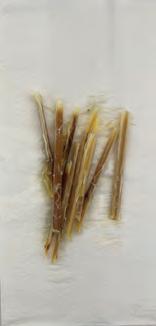
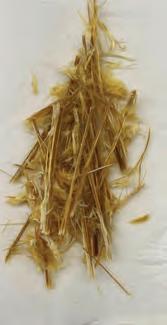
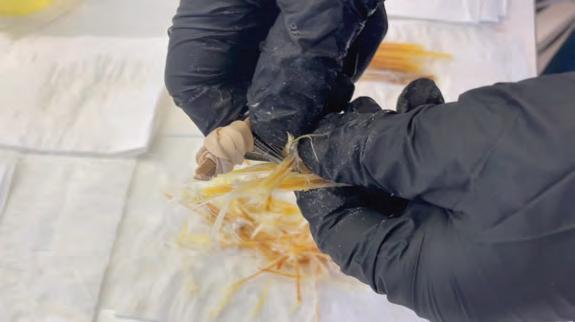
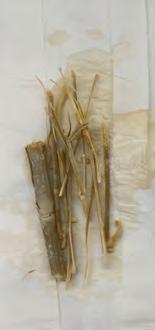
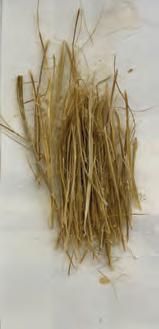
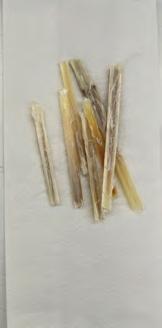
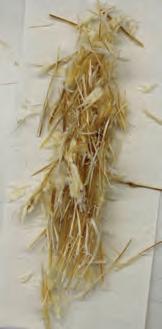
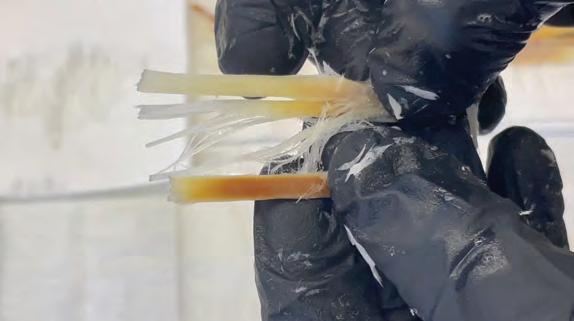
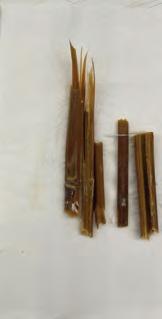
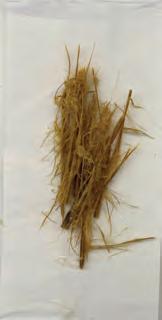
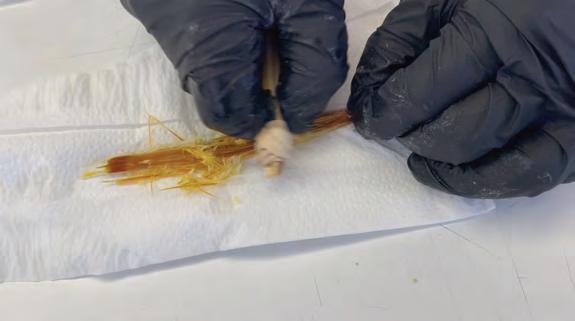
Bamboofibreschemicalextractionwithdifferentsolutions
CompoundA
SodiumHydroxide(NaOH)-SodiumHypochlorite(NaClO)
CompoundB
SodiumHydroxide(NaOH)-Causticsoda(NaOH·H2O)
CompoundC
SodiumHydroxide(NaOH)–Methylisothiazolinone(S(CH)2C(O)NCH3)
Figure81
BI-LAYEREXPERIMENTS
04/2.3
Theactualpalmleafroofstillusedby severalMayandwellingsactsasanefficientthermalregulationdevice.When dry,itsporosityallowstheairtoflow fromthedooropeningstotheroofto exit.However,whenthisroofbecomes wetonrainydays,thepalmabsorbs water,becomesheavierandclosesthe gapstoprotecttheinsidefromrainfall. However,thiscapacityhasdisappeared inmanyMayanhousesusingconcrete ormetalsheetsroofsaspalmspecies areendangered.Thus,anewthermal regulationdevicehadtobeinvestigatedusingotherlocalmaterials.Researchhasbeenundertakenonthe creationofaresponsiveskintriggered byenvironmentalstimuli.InYucatan, thehumidityisimportantandfluctuates.Thisparametercouldbeused withahygroscopicmaterial,changing itsmechanicalpropertiesdepending ontheamountofabsorbedwater.We considereddifferentspeciestowork with.However,wedecidedtostartex-
perimentingwithbalsa,whichisfound locallyinSouthernMexico.Ithasa porosityallowinggreatabsorptionand islightweight.Atfirst,abalsastripwas soakedinwatertoseeinwhichdirectionitcouldexpand.Theobservation concludedthatitexpandsperpendicularlytothefibres.Then,afirstexperimentwasconducted.Thefollowingexperimentsaimedtodeterminethe factorscausingthedevicetobend more.Inthefirstexperiment,active andpassivelayersof1mmweretested withdifferentwidthstoseeifthisparameterisimportant.Nonoticeable differencehasbeenobserved.The otherexperiments(figure82)varyin activeorpassivelayerthickness.Ithas beennoticedthatthedevicesgivingthe bestcurvatureshavethesamethicknessofpassiveandactivelayers.Also, thethinnertheyare,themorecurved theywillbeafterdrying.
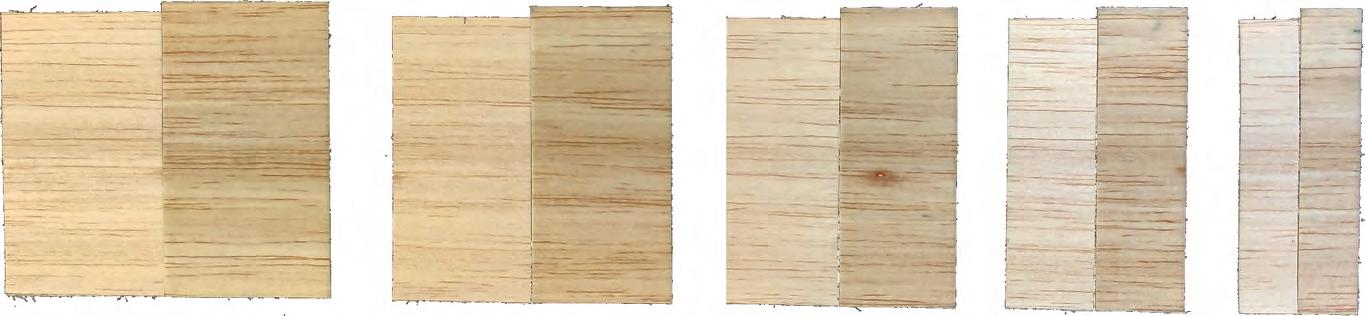
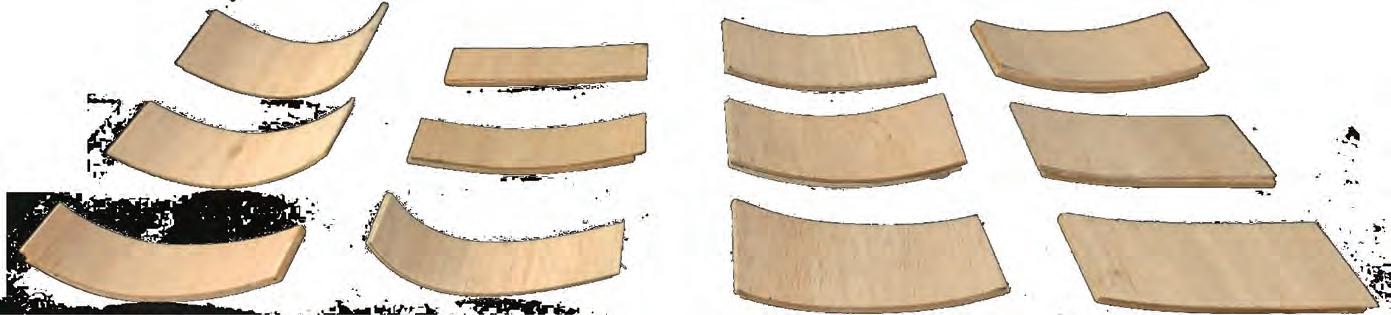
ExperimentsSet1
Invariables:
Activelayer:1mm
Passivelayer:1mm
Variables: Width:3,4,5mm
Observations:
Sameexpansionaftersoaking, similarcurvatureafterdrying
ExperimentsSet2
Invariables: Activelayer:1mm Width:3mm
Variables: Passivelayer:1,2,3mm
Observations:
Highestcurvaturewhenlayersthicknessarethesameat 1mm.Decreaseasthethicknessofthepassivelayerincrease
ExperimentsSet3
Invariables:
Activelayer:2mm Width:3mm
Variables: Passivelayer:1,2,3mm
Observations:
Highestcurvaturewhenlayers thicknessarethesameat2mm. Decreaseasthethicknessofthe passivelayerincreaseordecrease
ExperimentsSet4
Invariables:
Activelayer:3mm Width:3mm
Variables:
Passivelayer:1,2,3mm
Observations:
Highestcurvaturewhenlayers thicknessarethesameat3mm. Decreaseasthethicknessofthe passivelayerdecrease
Figure82
04/3 MORPHOLOGY
WIND-DRIVENFORM-FINDING
04/3.1
Awind-drivenform-findingprocesswas introducedtoensuretheproposed designwascreatedfollowingprinciples setforththroughtheresearch. TheapsidalformoftheMayanHouse wassetasastartingpoint,asthisvernaculardesignalreadytookwindinto accounttoreducewindpressureonits surface.Basedonthisdesignintention, geneshavebeensetuptogenerate ovoidshapeswhosesurfacescouldbe deformedatdifferentdegreesandlocations(Figure83a).Thefirstsetof genesdefinestheoveralldimensions, andasecondoneinfluencesthedeformation,withgenesselectingthe pointsofagridtobedeformedandexpressingtheirintensity(figure83a). Thus,alargenumberofmorphological
variationsarepossible.Theyhaveall beenevaluatedtomeetthesecriteria (figure84):minimisingwindpressure onthesurface,minimisingcurvature (calculatedbyplanaritydeviationper face,asshortestbetweendiagonalsdividedbyaveragediagonallength), maximisingusablespace(floorarea) andminimisingthevolume/arearatio forthermalregulation.FC1iscalculatedthroughaloopingscriptusingthe Anemoneplug-in(figure83).Pointsare movedtowardsthewinddirectionand projectedonthesurfaceateachiteration.Afterteniterations,pointsareinterpolatedintocurves.Thelongerthey are,thelesspressureisappliedtothe form.
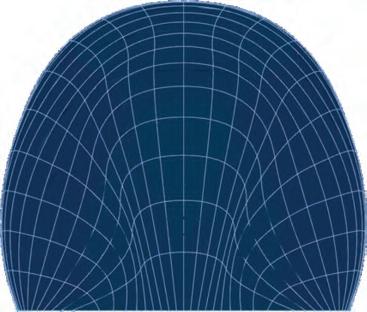
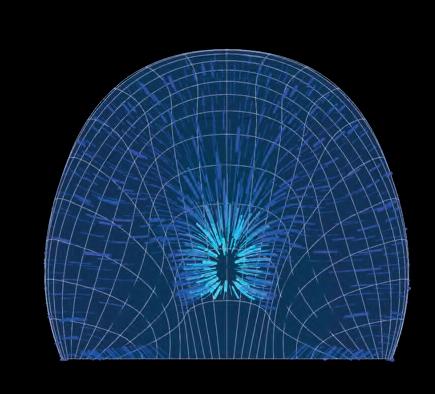
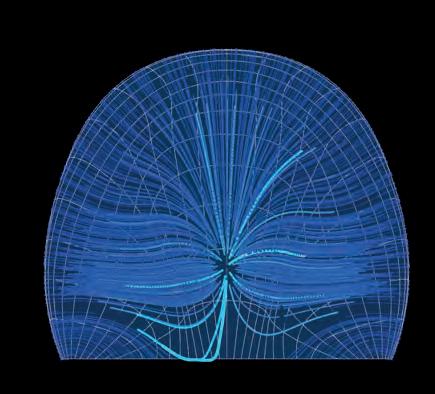
Figure83
a.Bodyplan:ovoidshape,deformedbyrandomselectionofpointsofagridandvectorintensitiesperpendiculartothesurfaceasgenes. Thereisasymmetryinthedeformation. Windflowloopingscriptati=0
b.Windflowloopingscriptati=3
c.Windflowloopingscriptati=10
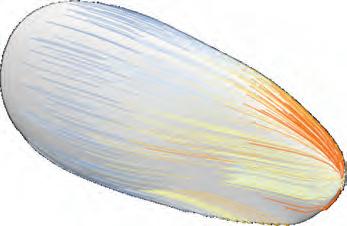
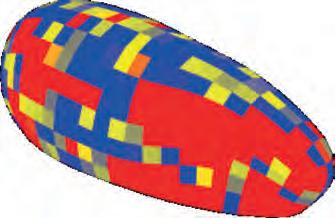
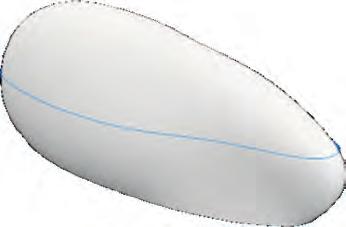
Figure84
Wind-drivenevolutionaryalgorithmfitness criteria
p.97
FITNESSCRITERIA
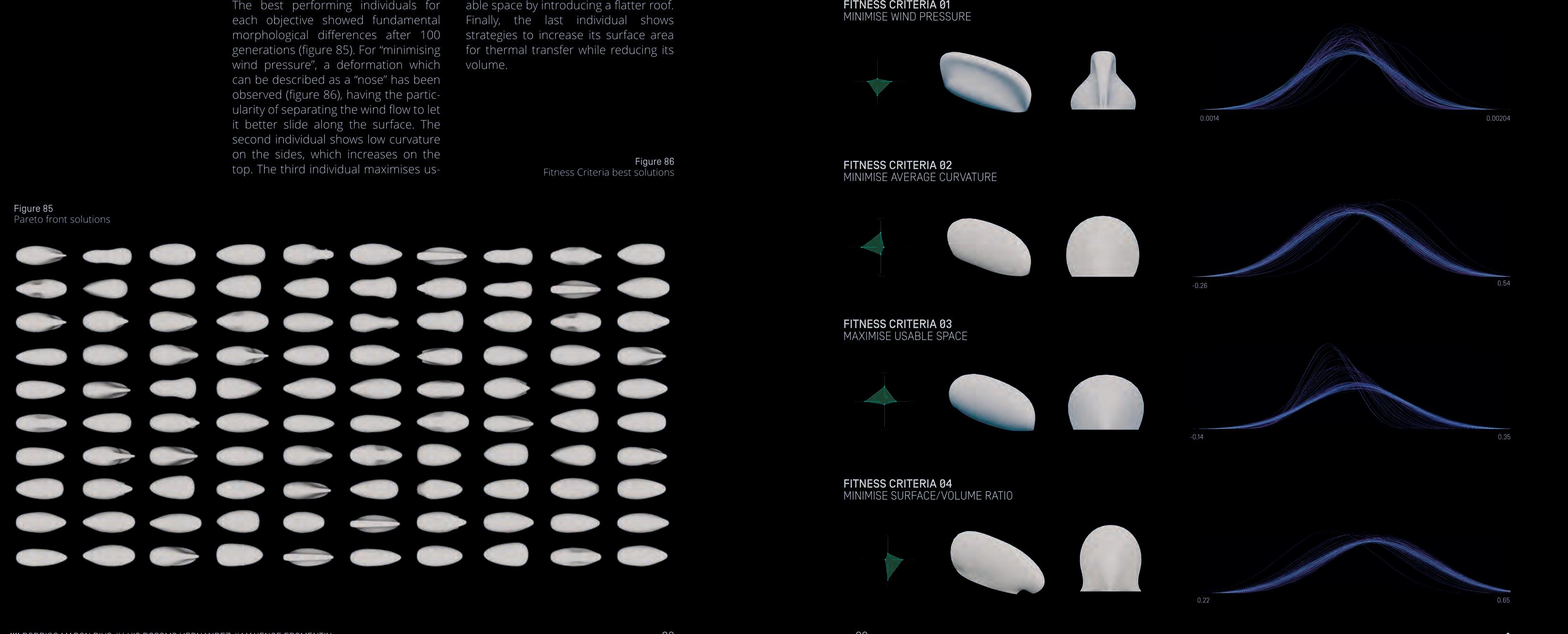

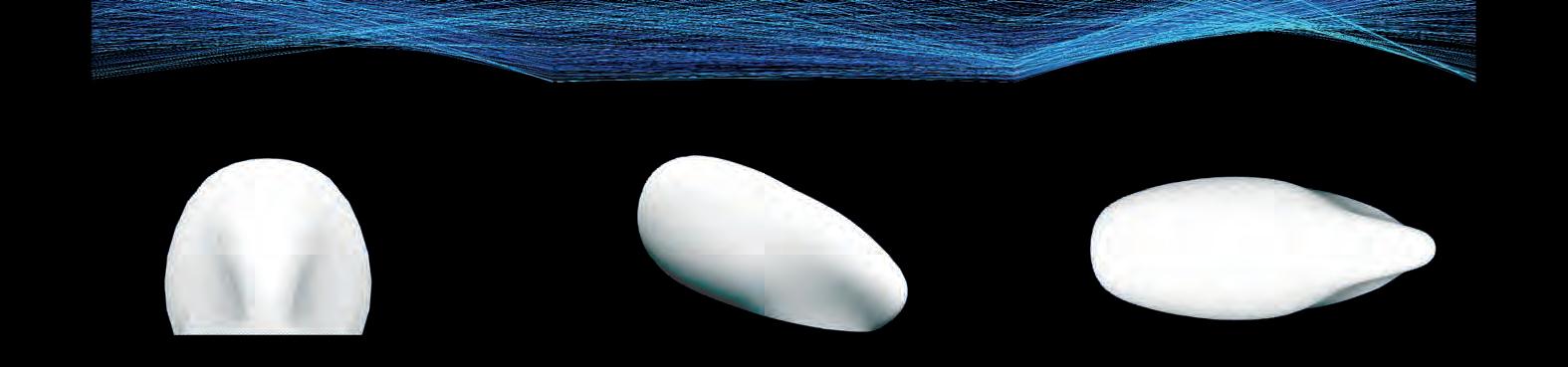
Theindividualwiththebestoutcome amongallobjectiveshassuitablemorphologicalexpressionsforthenext stage(Figure87).The“nose”morphologicalcharacteristicisfoundhereas well,improvingwindmitigationand thusreducingwindpressureonthe surface.Anoverallsmoothcurvature hasalsobeennoticed.Lateron,this surfacewillbeusedtogenerateabamboostructurewhosebendingislimited withouttheuseofspecificbending techniques.
CONCLUSION
Duringthisstage,theproject’scritical designdecisionsweretaken.Experimentationduringthisprocessprovided andestablishedthelimitationsand propertiesforthefollowingstepsof thiswork.Duringtheseexperiments, rulesfordevelopingthemicro-urban environmentwereset.Theseguidelines andsuggestionsweretestedand proventhroughvariousmethodsto mitigateandreducewindspeeds withinthesolar.Theseexperiments alsoprovidedguidelinesforthelayout ofthisspace,formingringsofprotectionforthemostvaluablefunctionsin theplot.Thematerialexperimentsconductedprovidedinsightintothedevelopingmaterialpossibilitiesandlimitations.Lastly,thischapterconcluded withthewind-drivenmulti-objective optimisationofabasicmorphology, furtherdevelopedatanarchitectural scaleinthefollowingchapterusing bentbamboo,studiedintheresearch domain,asstructure.
Figure87 Bestaveragesolution
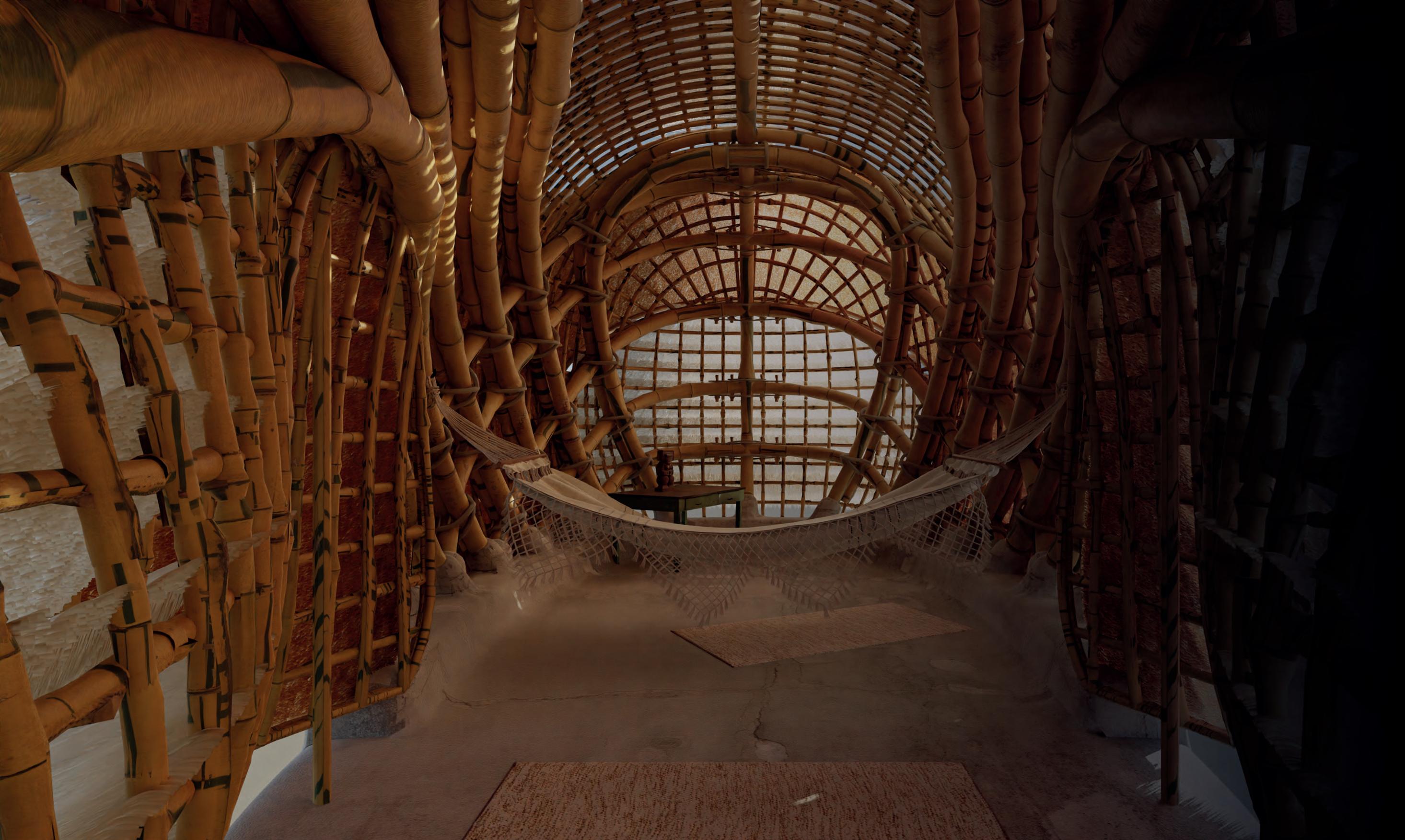
MORPHOLOGY/ GENERATIVESTRUCTURE
05/1.1
MORPHOLOGY/ STRUCTURALOPTIMISATION
05/1.2
MORPHOLOGY/ 1:1PROTOTYPE
05/1.3
MATERIAL/ BREATHABLEPANELS
05/2.1
MATERIAL/ ELASTICPANELS
05/2.2
MICRO-URBANDESIGN/ GENERATIVEDESIGN
04/3.1
MICRO-URBANDESIGN/ FUNCTIONALOPTIMISATION
04/3.2
MICRO-URBANDESIGN/ COMMUNITY-BASED CONSTRUCTIONPROTOTYPE
04/3.3
EVACUATIONNETWORK/ RURALSAFEZONES
04/4.1

05/1 MORPHOLOGY
GENERATIVESTRUCTURE
05/1.1
Themorphologicaldesignprocessutilises windforcesasthemaindriverforitsexploration.Windandself-weightloadswere appliedondeformedovoid-basedforms previouslycreatedandoptimisedtoextracttheprincipalstresslinesfromalarge shelldeformationanalysis.Furthermore,a rationalisationofthesecurveswasconductedwithintheelasticdomainofthebamboo.Ultimately,aFiniteElementAnalysis wasconductedformultiplewindloadsto testthestructure.
Alargeshelldeformationanalysishasbeen undertakentounderstandwhatthestructurecouldbewithsuchwindloads,with self-weightandfronteastdominantwinds loadsasforcesapplied(respectively0.5 N/m²and0.7N/m²).Fromthisanalysis, stresslineshavebeengeneratedacross thesurface.Thus,raisingquestionsonhow tointerpretandusethisoutputtedresult. Toprovidethefirstelementofrationalisationofthestructure,itwasdecidedto definethesupports’locationtosortthese linesandselectthemostrelevantones(figure88).Theresultseemsconsistentsince linessimulatingacompressionstructure havebeenobtainedperpendiculartothe sumofweightandwindpressurevectors. Othertensionstructurallinesweregeneratedperpendiculartothecompression lines.However,althoughgenerallyconsistent,thepathoftheselinesissometimes erratic.Thus,arationalisationoftheselines mustbecarriedout.Regardingstructural logic,rationalisationintheelasticdomain ofthebamboomaterialwasdecided.Usingdatafromthemomentofinertiaand Young’smoduluselasticityvalues,asimulationcouldbeconductedusingthe
Kangaroophysicalsimulationengine.Thus, offeringamoreorderlylayoutsuitablefor structuralpurposes(figure89b).
FiniteElementAnalysis
AfirstFiniteElementAnalysiswasthen conductedwithself-weightanddominant eastwindloads.Astructurehasbeenset upusingfundamentalmaterialproperties valuestocorrectlysimulatethebamboo structuralbehaviour,withadefaultcross sectionof12cmdiameter.Thisfirstsimulationwasencouraging,showingminordeformationwithmaximumuseof4.7%in compressionandtension(figure90a).A secondsimulation,simulatingtheworstcasescenario,wasconducted,withaviolenthurricanewindhittingtheflank(3.5N/ m²).Theresultwasalsoconclusive,indicatingamoreadvanceduseofthestructure withanobtaineddeformationmadepossiblebybamboo’selasticity.Towithstanda hurricane,witherraticwinddirectionsand forces,thestructuremustadaptbybeing elastic.Indeed,astructurecapableofdeformingbybendinghelpstodissipatethe exertedpressures.
Figure88a,b Obtainedmorphology andsetupofthesupports
Figure89a,b Obtainedstresslinesfromlargedeformation analysisandrationalisationintheelasticadomain
Figure90a,b FiniteElementAnalysisfortwoscenarios. a-Gravity+strongdominenteastwind b-Gravity+Sidehurricanewind

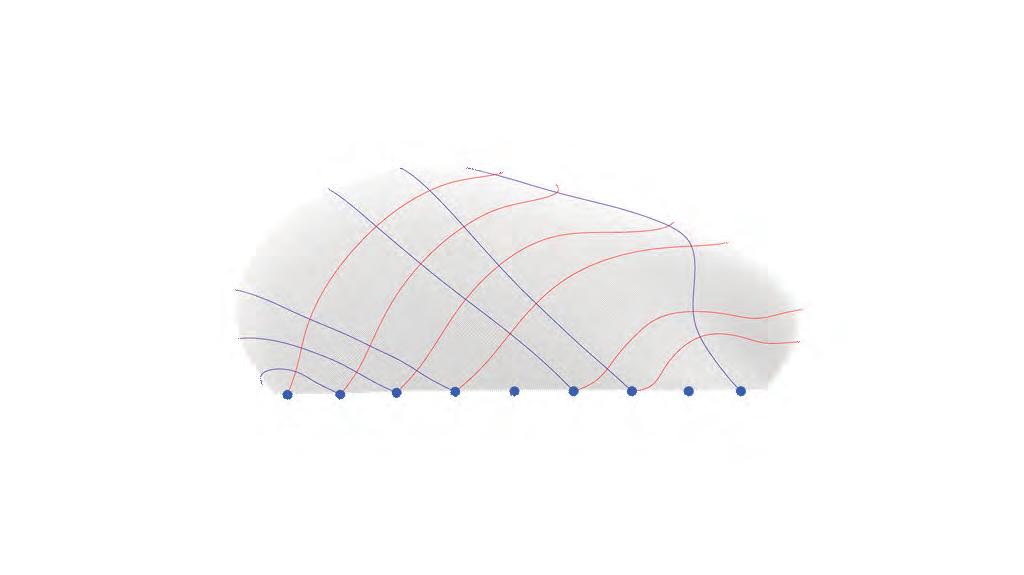
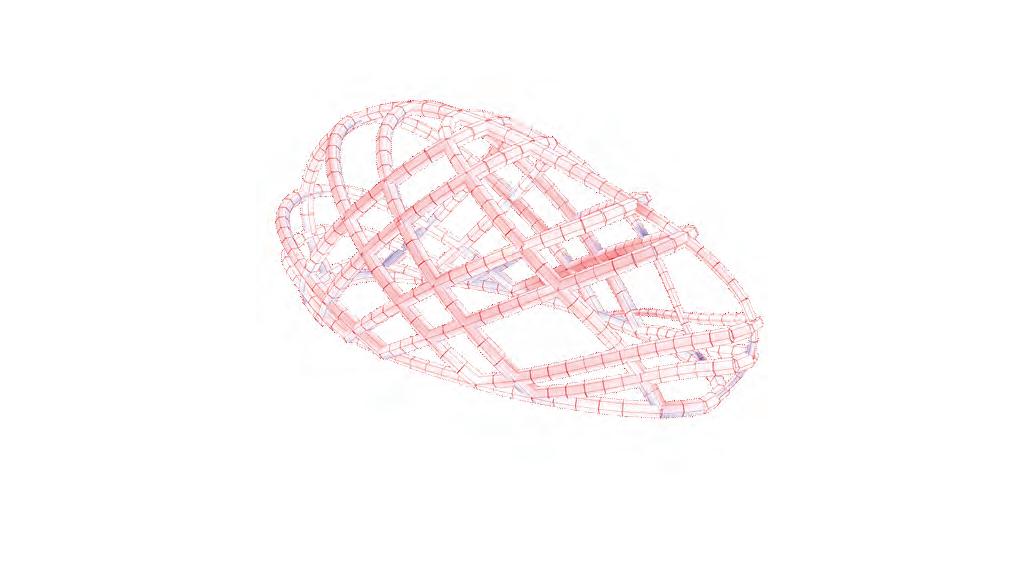
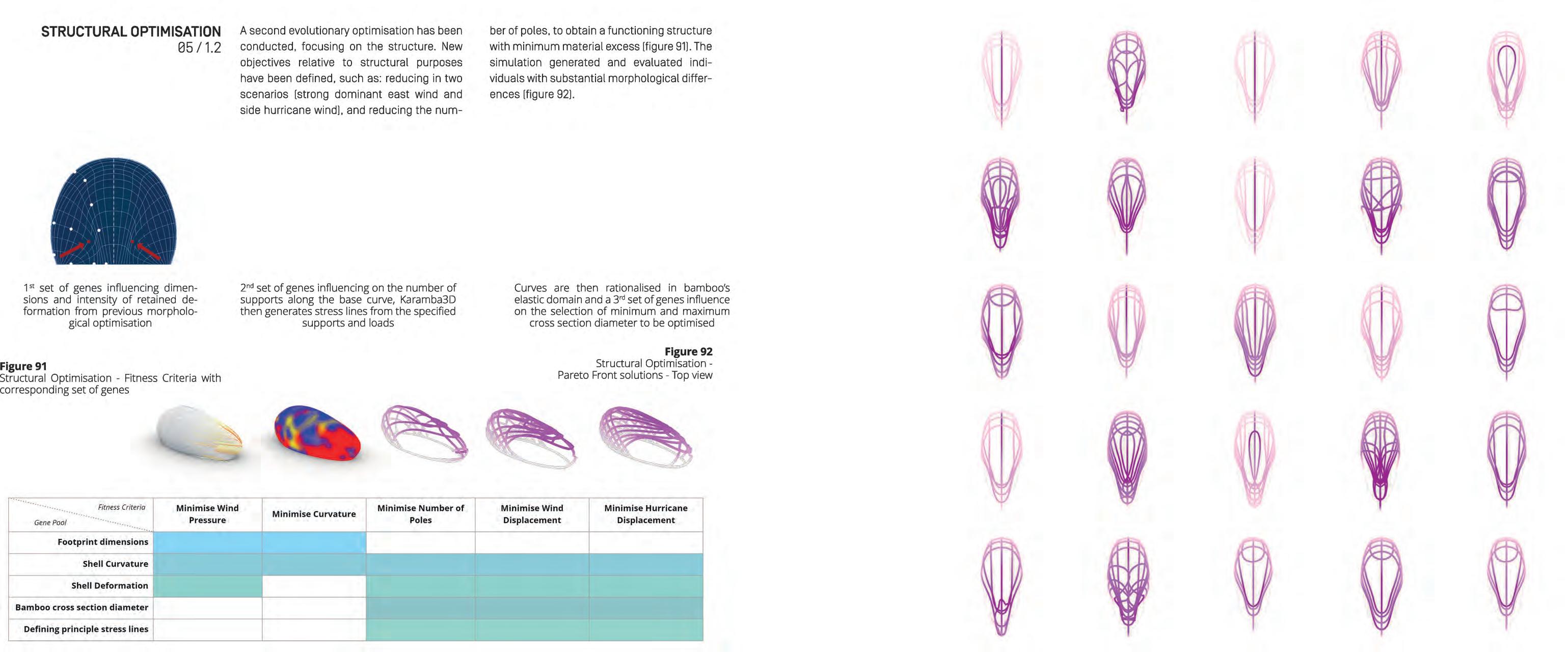
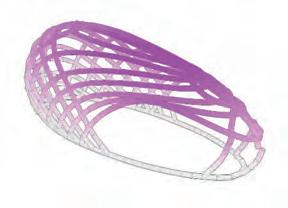
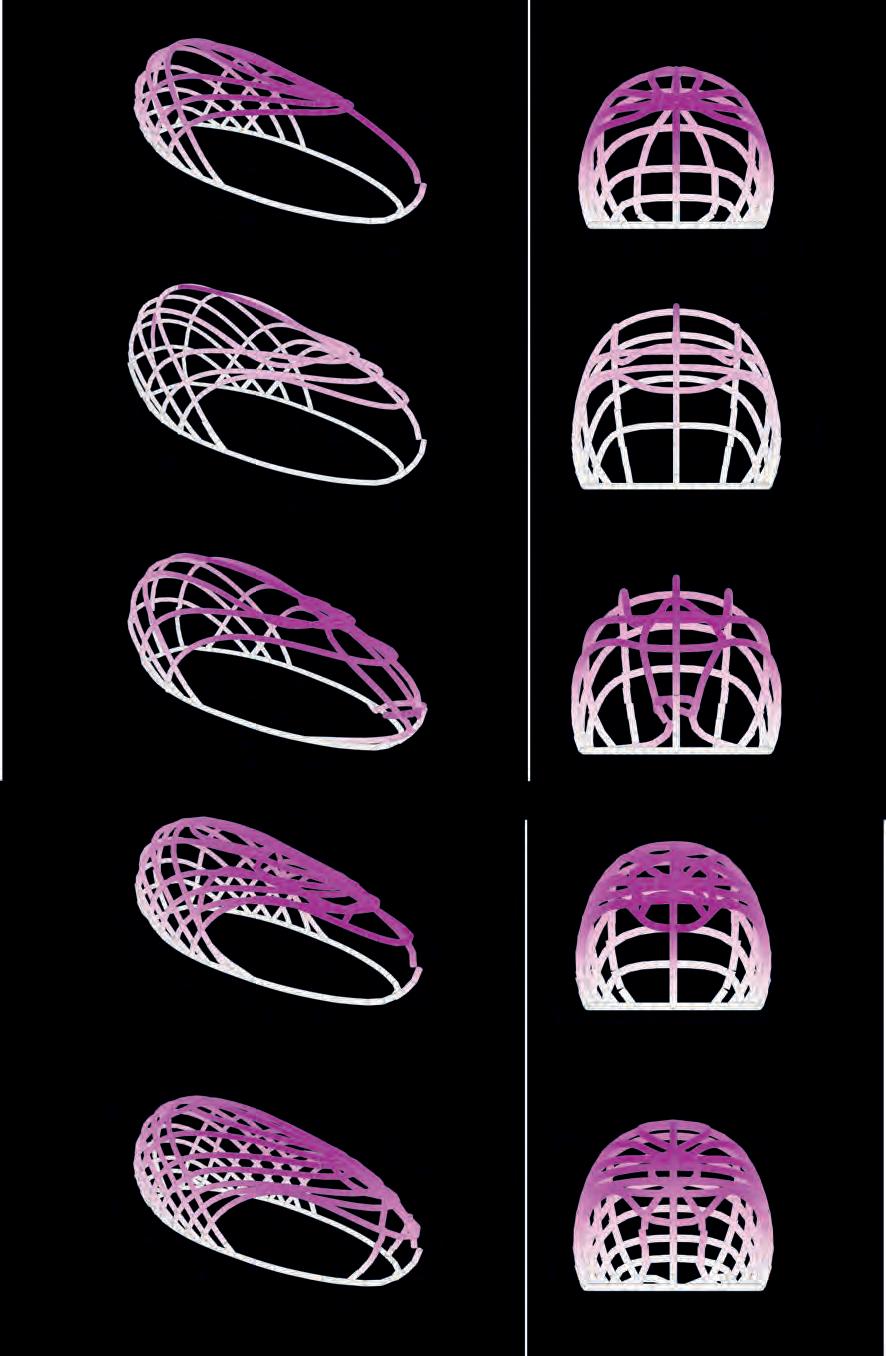
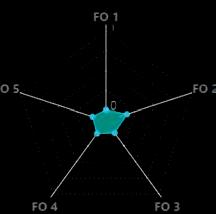
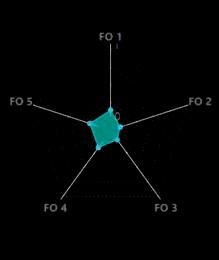
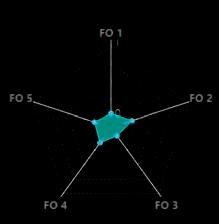
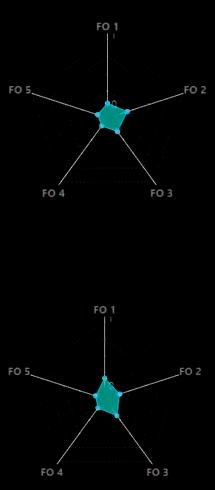
Figure93
FtinessCriteriabestperformingsolutions
Aprevioussimulationwithdifferentgenes andobjectiveswasinconclusiveasitpresentedsomeinfeasibleindividuals.Thissimulationblockedspecificgenestokeepthesame deformationlocationofthemorphologyobtainedinthefirstwind-drivenform-finding optimisation. Genesactingonoveralldimensionsandintensityofthedeformationarestillactive.The best-performingindividualsforeachfitness criterionshowfeasibilityintheirconstruction forthisoptimisation(figure93).Ithasbeen
noticedthatthedisplacementforFC2is morehomogeneousacrossthestructure. Besides,thebestindividualforFC3shows abnormaldisplacementonthefront.After generatingthebestaverageperformingindividualforallthefitnesscriteria(figure95),it hasbeendecidedtocontinuethedesignfurtheronwiththissolutionbasedonitsperformancewithamaximumdisplacementof 36.9cmforaflankhurricanewindscenario (figures94,95).
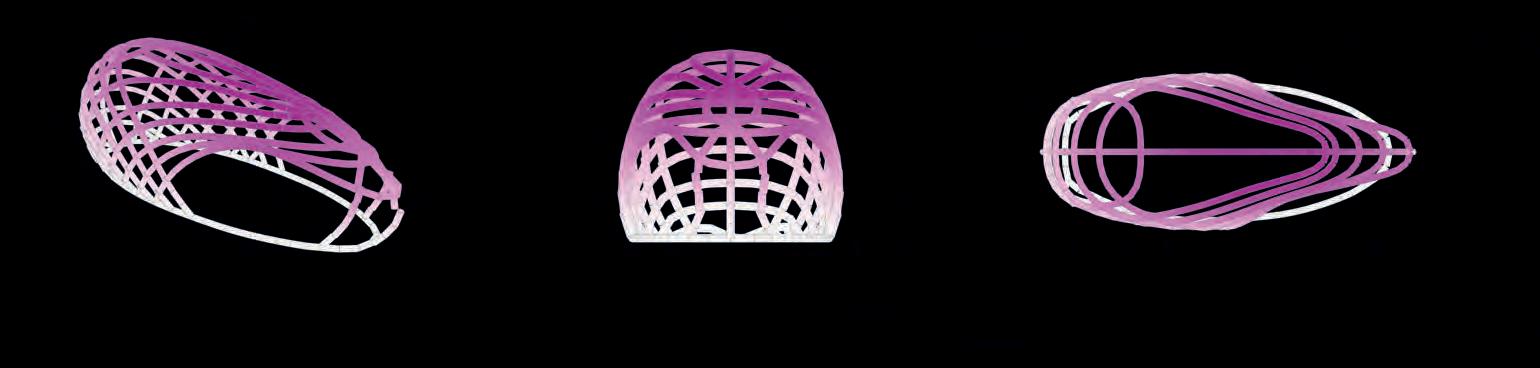
Figure94
ParallelCoordinatesPlotgraphandbestaverageselectedinwhite
Figure95
Bestaveragesolution(isometric,frontandtop views).Displacementvaluesforhurricanewind fromtheflank. 36.9cm
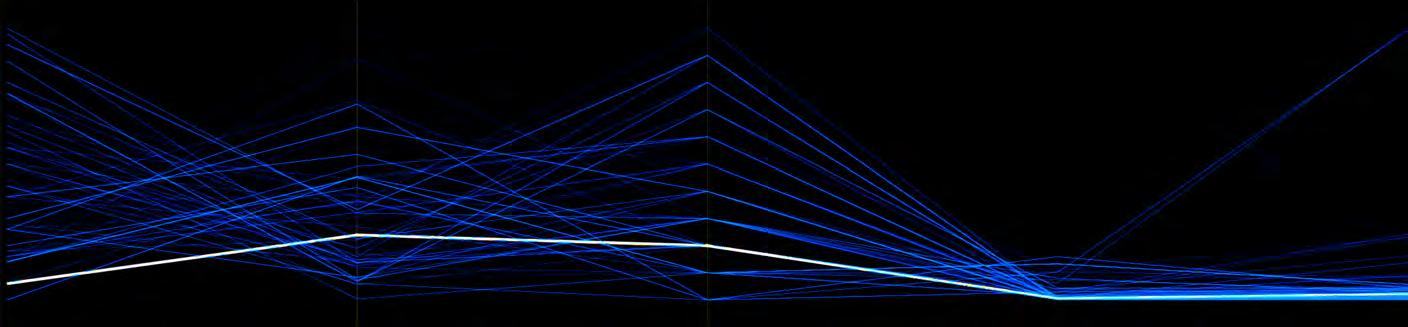
Furtheronintheinvestigation,researchhas beenfocusedontheforcestransferredfrom theskintothestructure.Findingsindicated thatthisevaluationrequiredamoreprecise calculationofthewindforcesonthesurface. Byunderstandingthatnotalltheforcesare evenlydistributedalongthesurfaceanddividingitintothreepartsofdifferentloadsof suctionandpressurealongthevolumeto havemoreaccurateresults(figure96).
AfirstFEAanalysisonthecompletesurface showedasignificantdisplacementofthe structurebysuction,wherethestructureis notdense(figure97a).Wethusconducted anotherFEAanalysisafterremovingtheskin inareaswherethestructureisnotpresentor notimportant.Thissecondanalysisshowed animportantdifferenceindisplacement(figure97b).Thedeflectionunderastronghurricanewindisnowdownatamaximumof 14.7cm,whereasthefirstanalysisdisplayeda displacementpeakof255cm.
Windpressurecalculationmethoddrawings (1-topview,2-sideview,3-frontview
Figure97a-b
a-FEAconsideringthewholesurface b-FEAremovingthesurface withoutsupportingmainstructrue
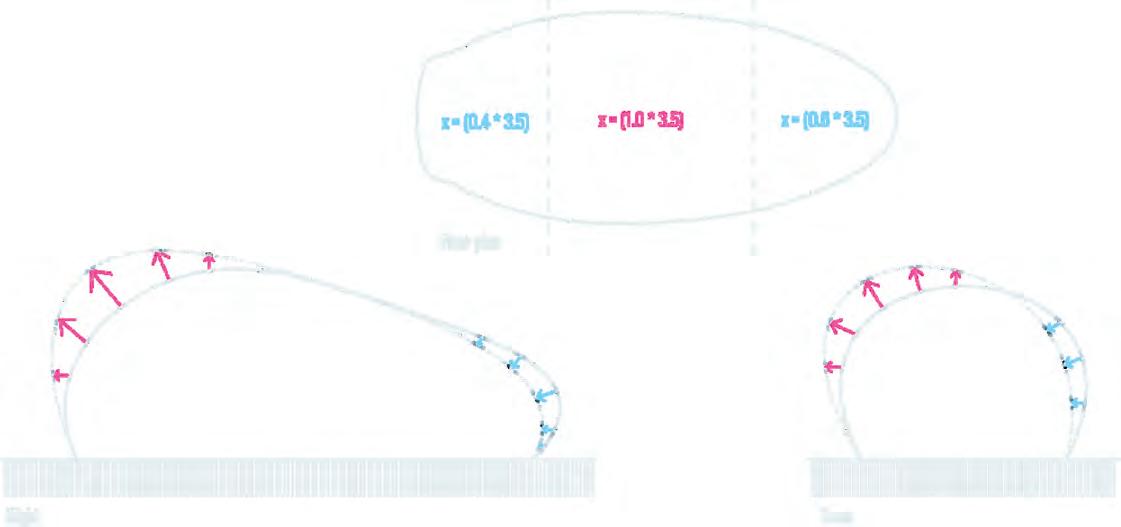
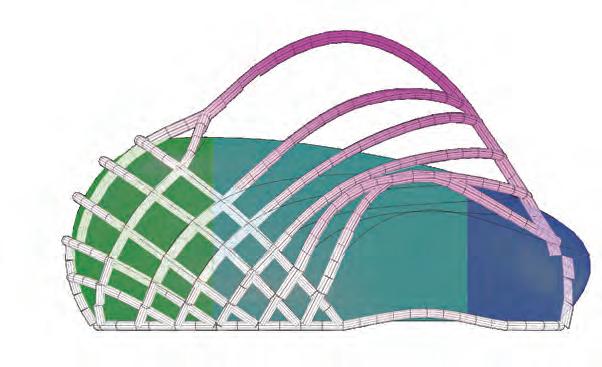
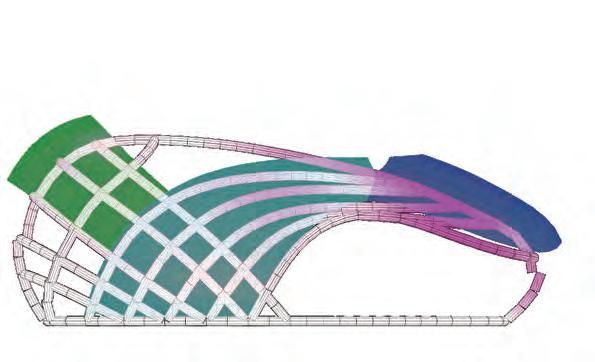
Figure96
STRUCTURELAYERS
05/1.3
Aprimarybentbamboostructureactsasthe coreofthestructuralsystem(figure98).A concretefoundationsecuresthebamboo. Thisfoundationwillalsoworkasacompressionringenablingthebentstructuretomaintainitsform.Asecondarybamboosubstructureisaddedabovethemainstructure.This substructureiscomposedofverticalandhorizontalbambooelementstoformashell structureabovethemainstructuralone,to whichtheskinisattached.BasedonthepreviousFEAanalysis,thesurfaceisdividedinto twotypesofskinareas.Thefirstcontainsthe elasticpanelsthatfollowthemorphology’s deformedstructureunderhurricanewinds. Theotherareasofthesurfacearecovered withresponsivescales.Thesepanelscan openandclosetoprovideventilationand protectionfromtheenvironmentonaday-todaybasis.However,theycanberemoved duringextremeconditionstoprovideclear windcirculationandreducepressureupon thestructuralsystem.Similartothetraditionallybuilthouse(figure98),theproposed designsolutionreliesonamulti-layered designtoensurestructuralandthermaloptimalperformanceindifferentscenarios.
Onfigure99,renderedviewsofthestructural layersshowgenerativelycreatedtiedjoint detailsandsubstructure.Thekitchenhas beengeneratedusingthesamealgorithm. However,thisfunctionneededotherparameters.Itdidnotrequirea2:1ratiobutmore surfaceareaofbreathableskintohavemore efficientnaturalventilation.Thestoragetypologyhasbeengeneratedwithamorerobuststructureasitrequirestobeonly coveredinelasticskin,notremovableduring storms.
Figure98
Ontheleft,anexplodeddiagramrepresenting thetraditionalmayanhouse’sstructurallayers.
Ontheright,anexplodeddiagramrepresentingthenewmayandwellingdesign’sstructural layers
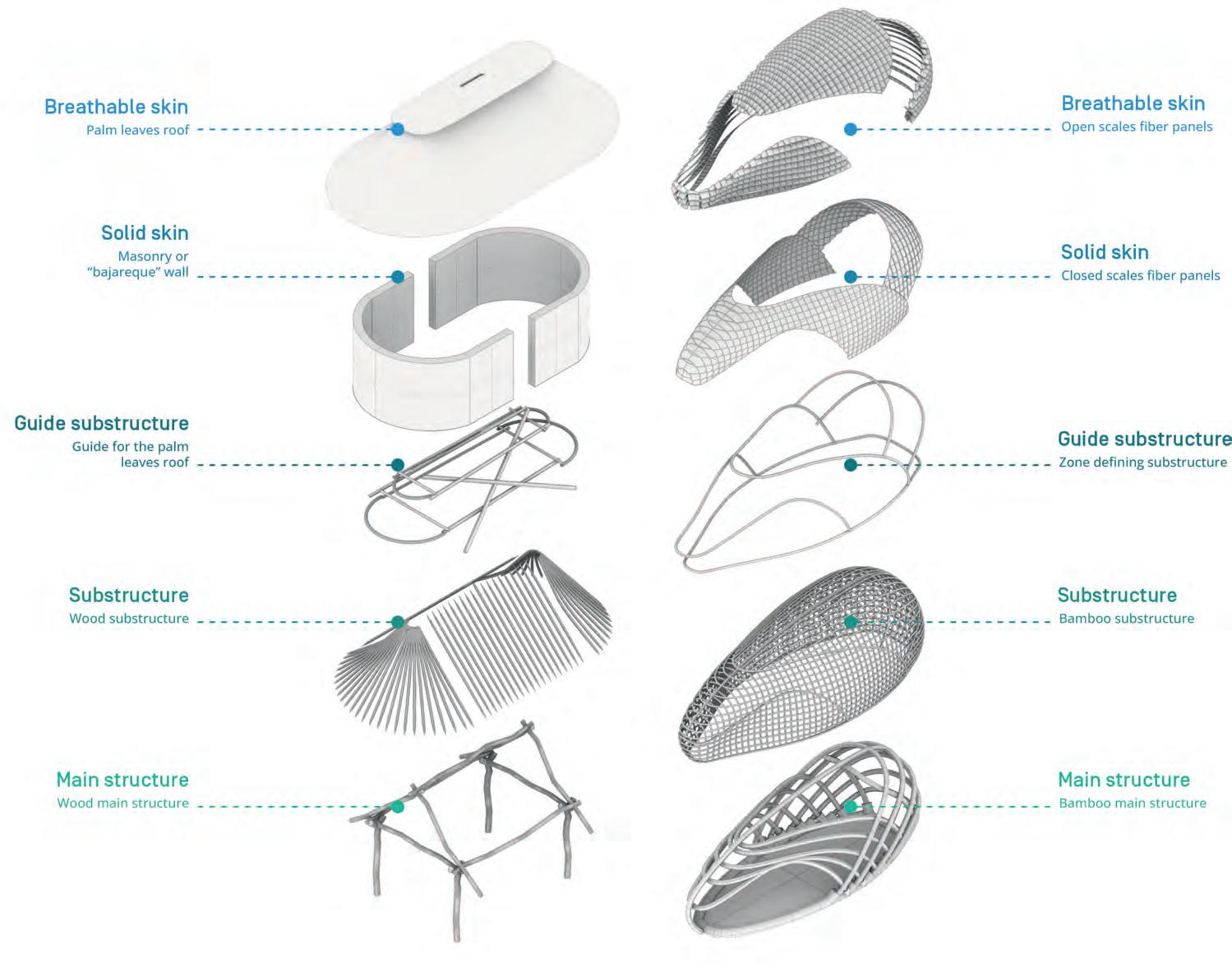
TRADITIONAL MAYANHOUSE
NEWDESIGNPROPOSAL MAYANHOUSE
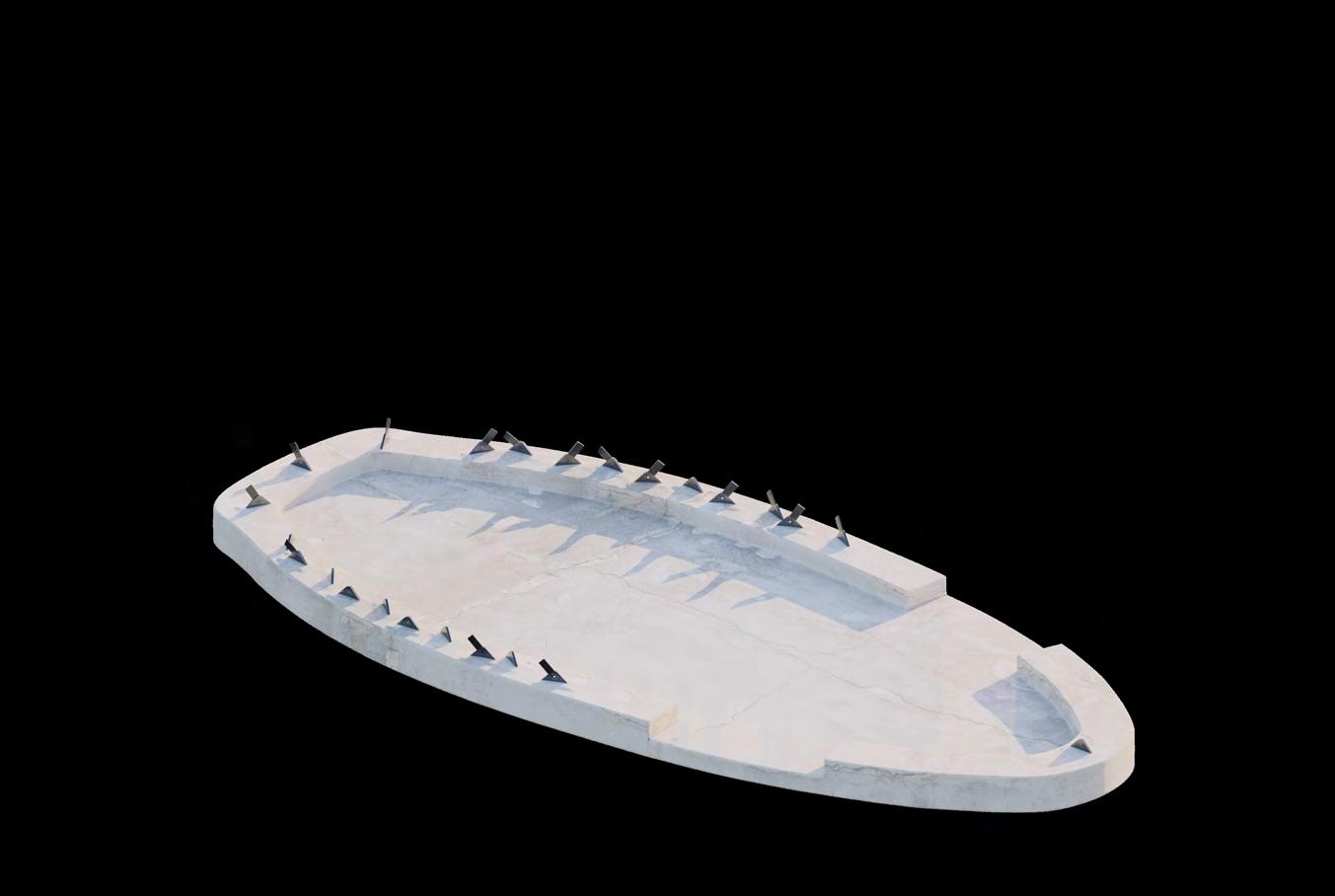
PSEUDO-CODES
05/1.4

A/Concretefoundations
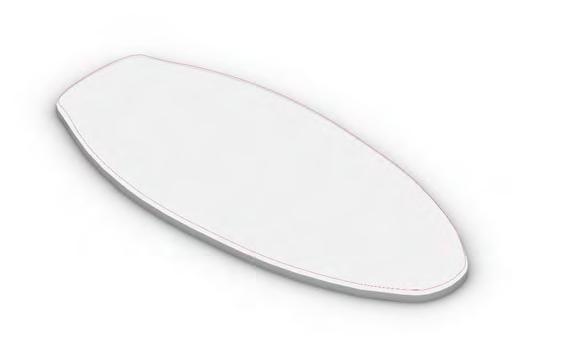
1/Extractionandextrusionofthemorphology’scontourcurve
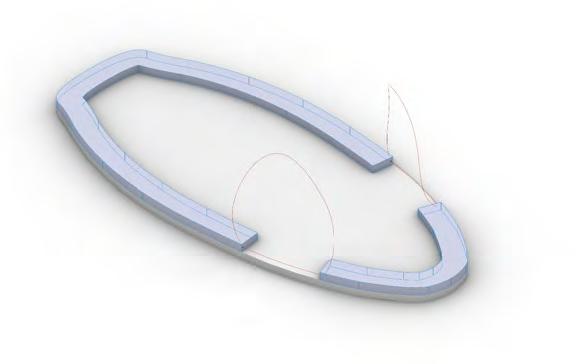
2/Doorsendsseparatingthecurve,ofsettingandextrusion
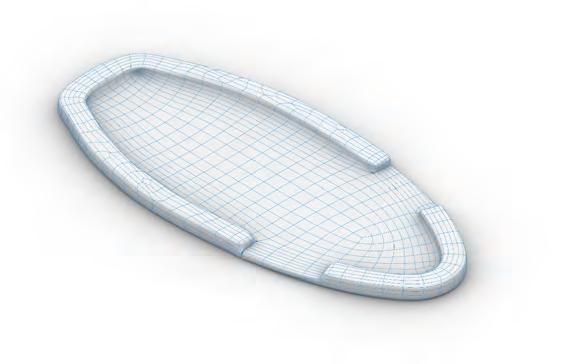
3/Meshmerging,quadremeshing& subdivision
Figure99
Renderedisometricviewsofthestructurallayers:foundations
Fromtheobtainedsurfaceduringthewinddrivenform-findingoptimisation,bamboo beamshavebeencreatedbylargedeformationanalysisandevolutionaryoptimisation. However,thesebamboobeamsneedsolid foundations,whichhavebeengenerated(A). Beamsandfoundationsareconnectedbyan articulatedmetaljoint,ensuringflexibility duringassembly(B).
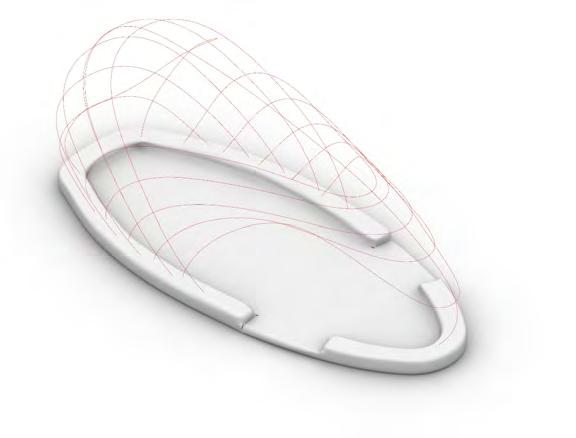
1/Structureintersectionwithfoundations plane 2/Orientationtothecurves’perpendicularframes
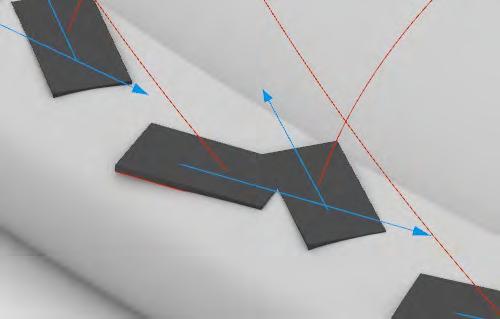
2/Orientationtothecurves’perpendicularframes
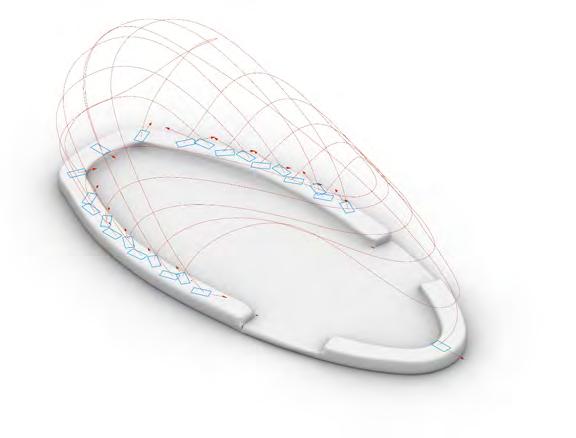
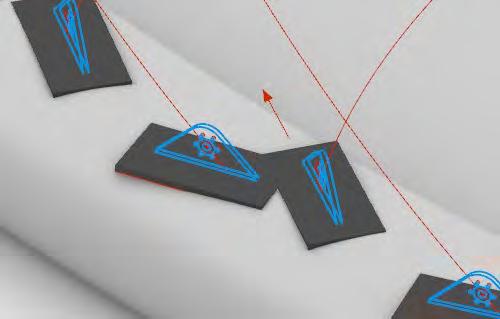
3/Creatinggeometryonanewplane
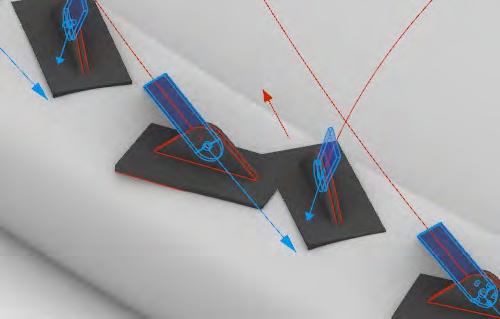
4/Orientingtopoles’tangentsandcreatinggeometry
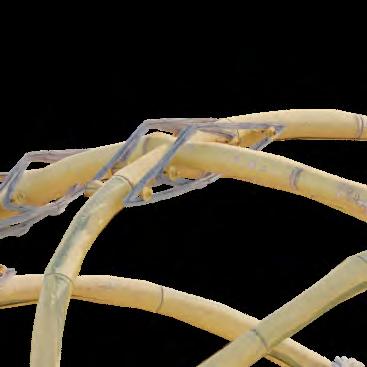
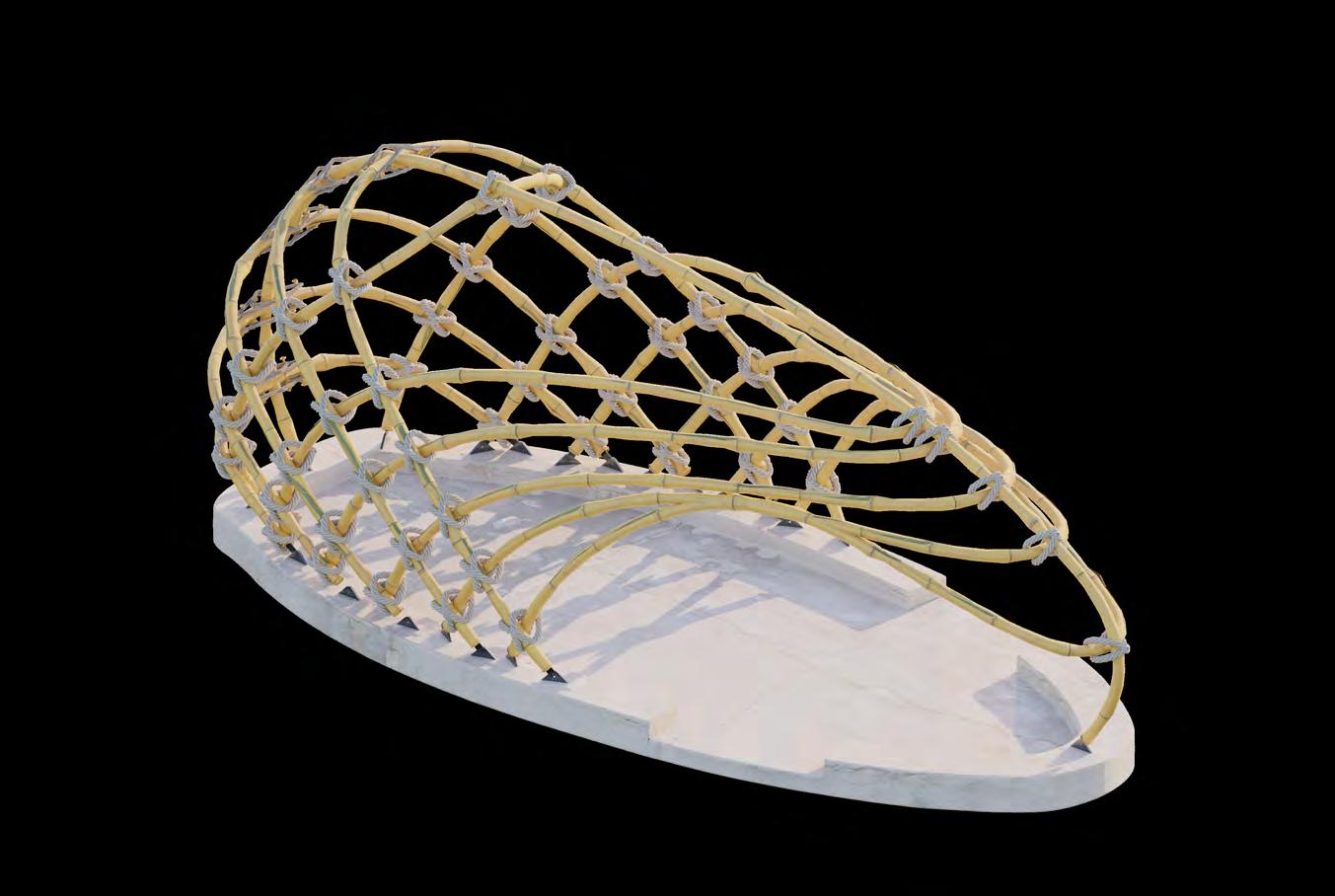
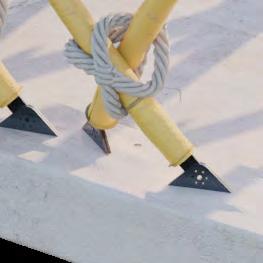
Figure100 Renderedisometricviewsofthestructurallayers:joinery
Inordertopromotelocalmaterialand craftsmanship,mostoftheconnectionsare tiedjoints.Inthisproject,twotypesoftie jointsareusedandaredigitallygenerated (A&B).
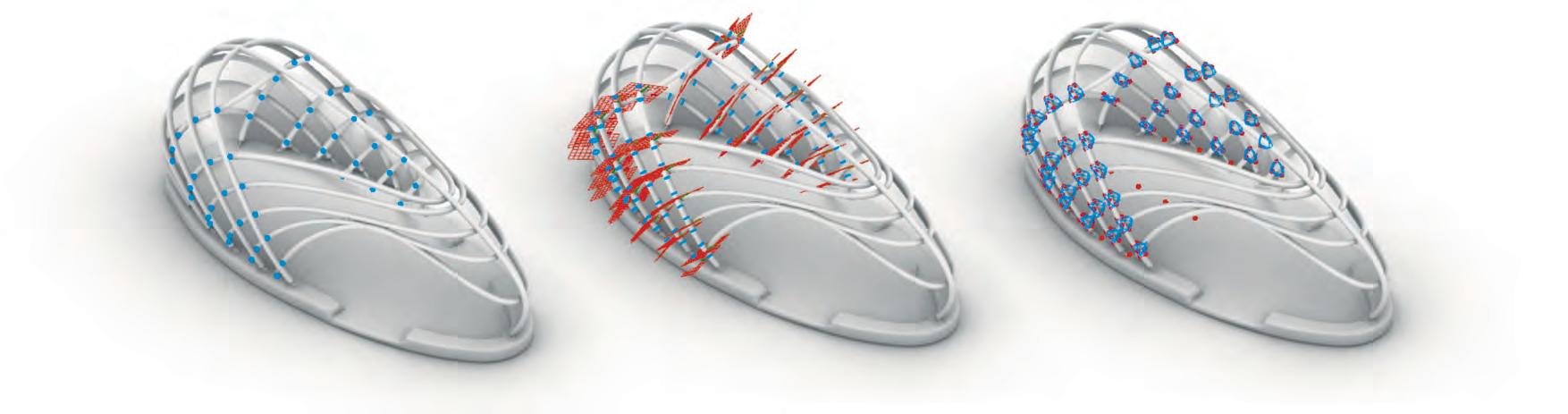
1/Beamsintersection 2/Perpendicularframes,beamcutting, divisionofcurves.
B/Tiedjoint2
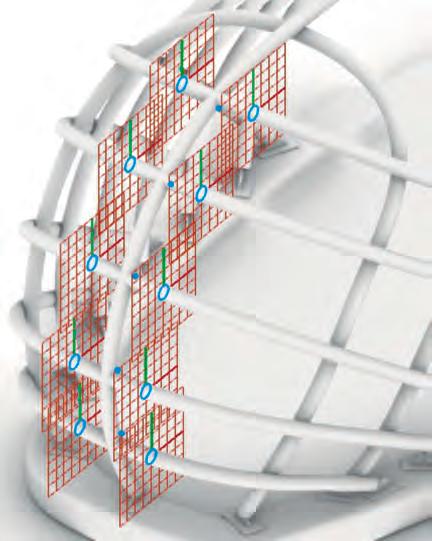
1/Tensilebeamsintersectionwithcentral beam.Beam-cuttingfromplanes,division ofcurves
3/Pointssortingandinterpolation
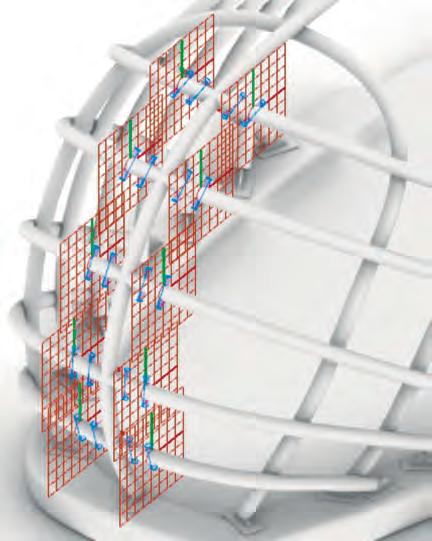
2/Orientationtocentralbeamtangents, creationoforientedlines,piping
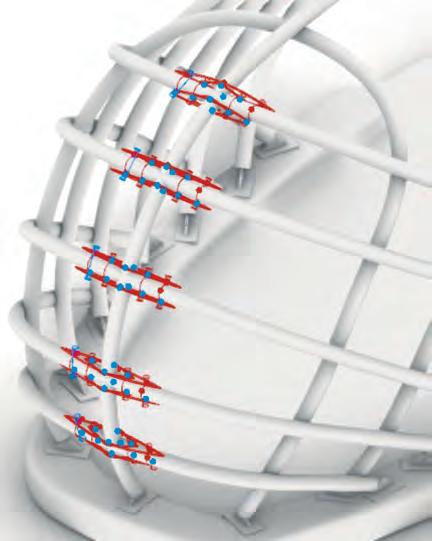
3/Interpolationofcreatedpoints
A/Tiedjoint1
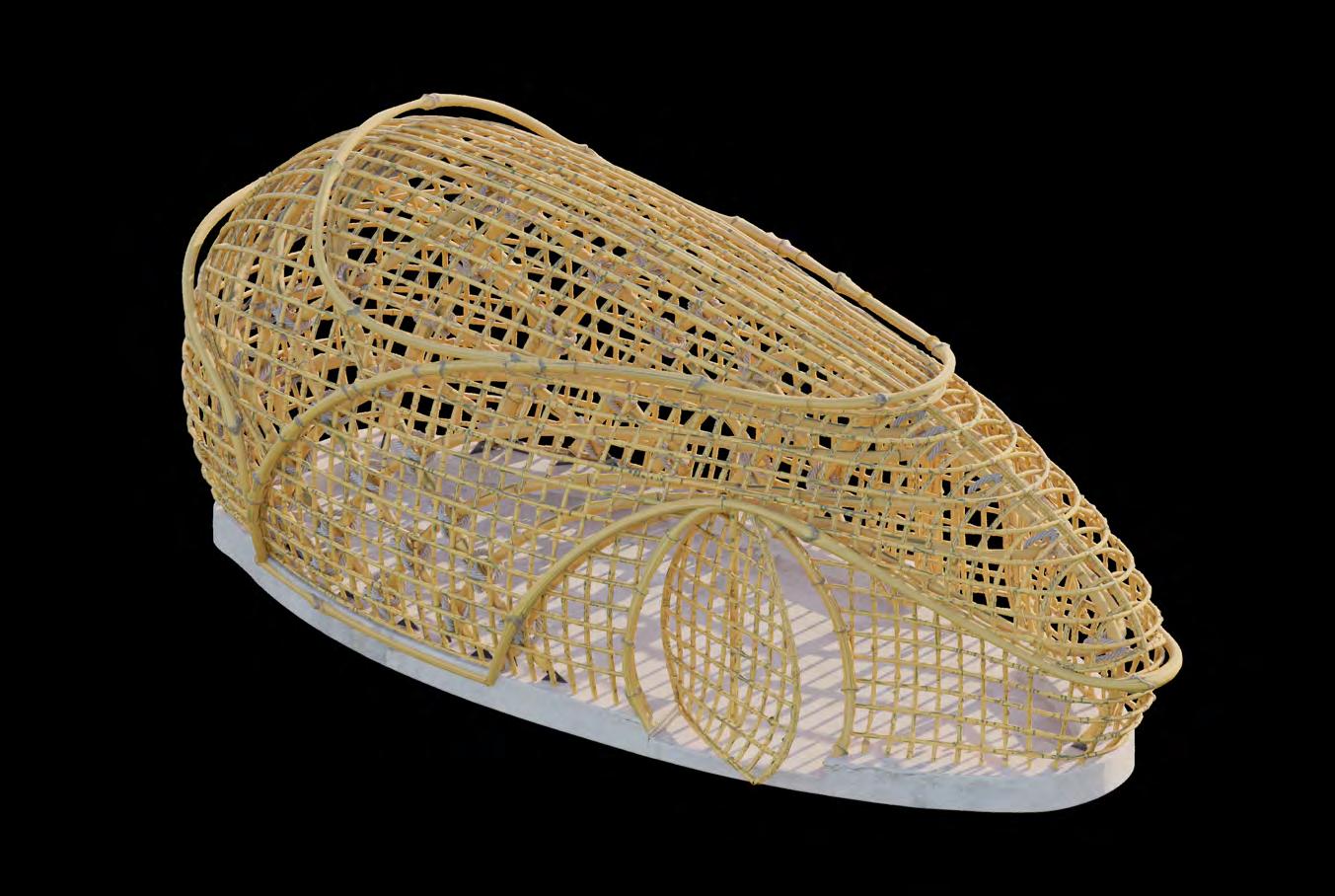
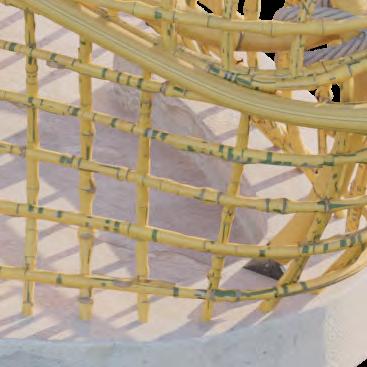
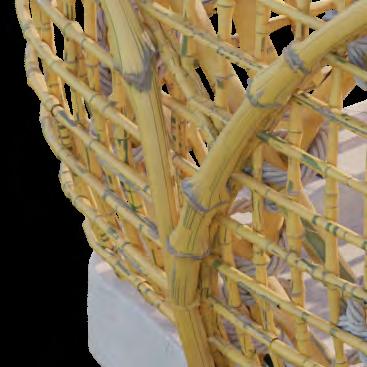
A/Substructure
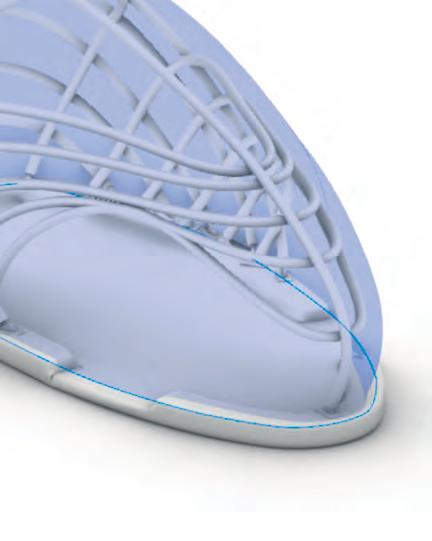
1/Offsettingthesurface
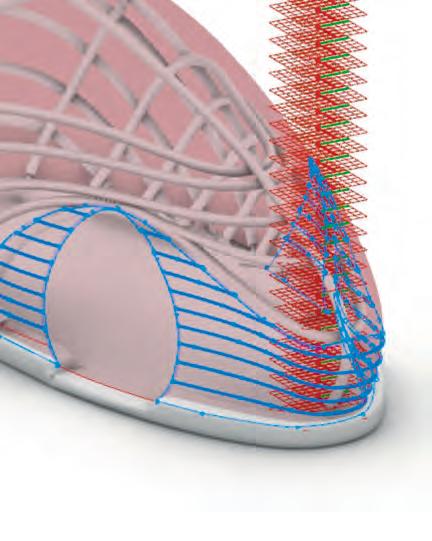
2/Horizontalbeams:seriesofcutting planes
B/Skin-zoningstructure
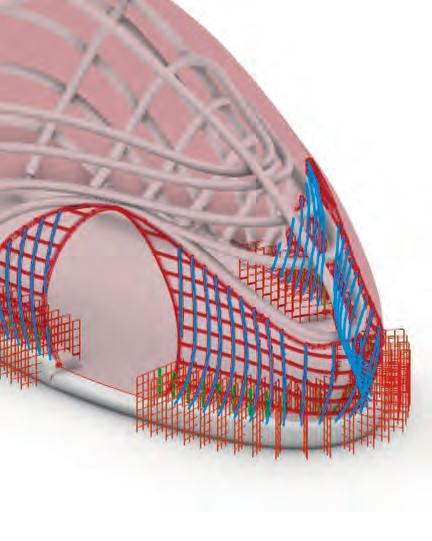
3/Selectingthecurve,dividingatequal distance,generatingperpendicularcuttingplanes
Figure101
Renderedisometricviewsofthestructurallayers:substructure
Oncethemainstructureisanchoredand stable,asubstructureiswrappedonittoreceivetheskin(A).Asecondarystructureis setuptocreatezonestolocatethedifferent skinpanels(B).
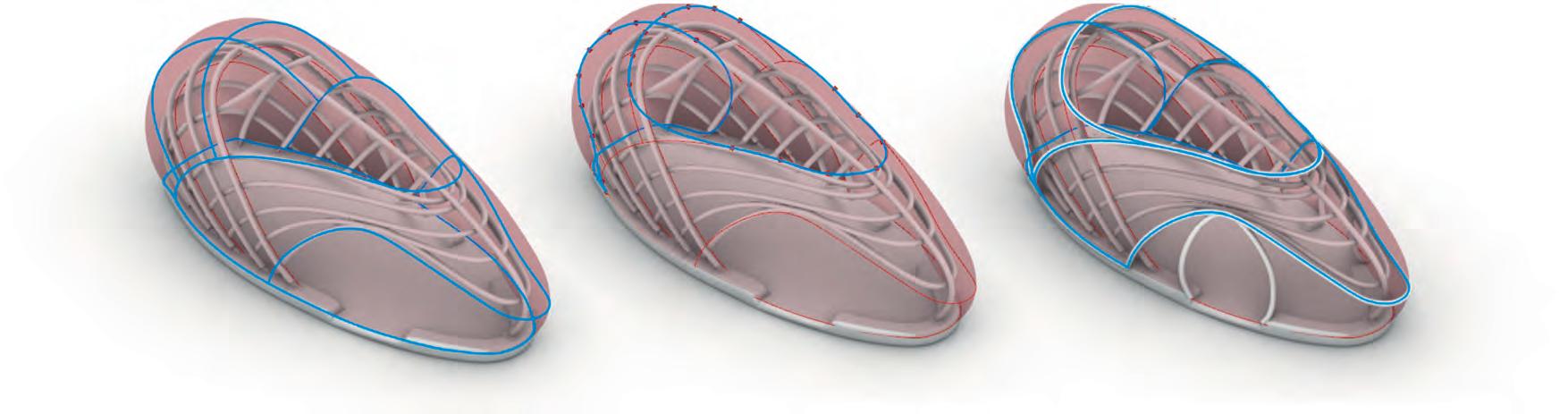
1/Dividingsurfacebyedgebeams,extractingcreatedcurves
2/Cullingpointsandre-interpolate
3/newcurvesdividingthesurfaceinzones
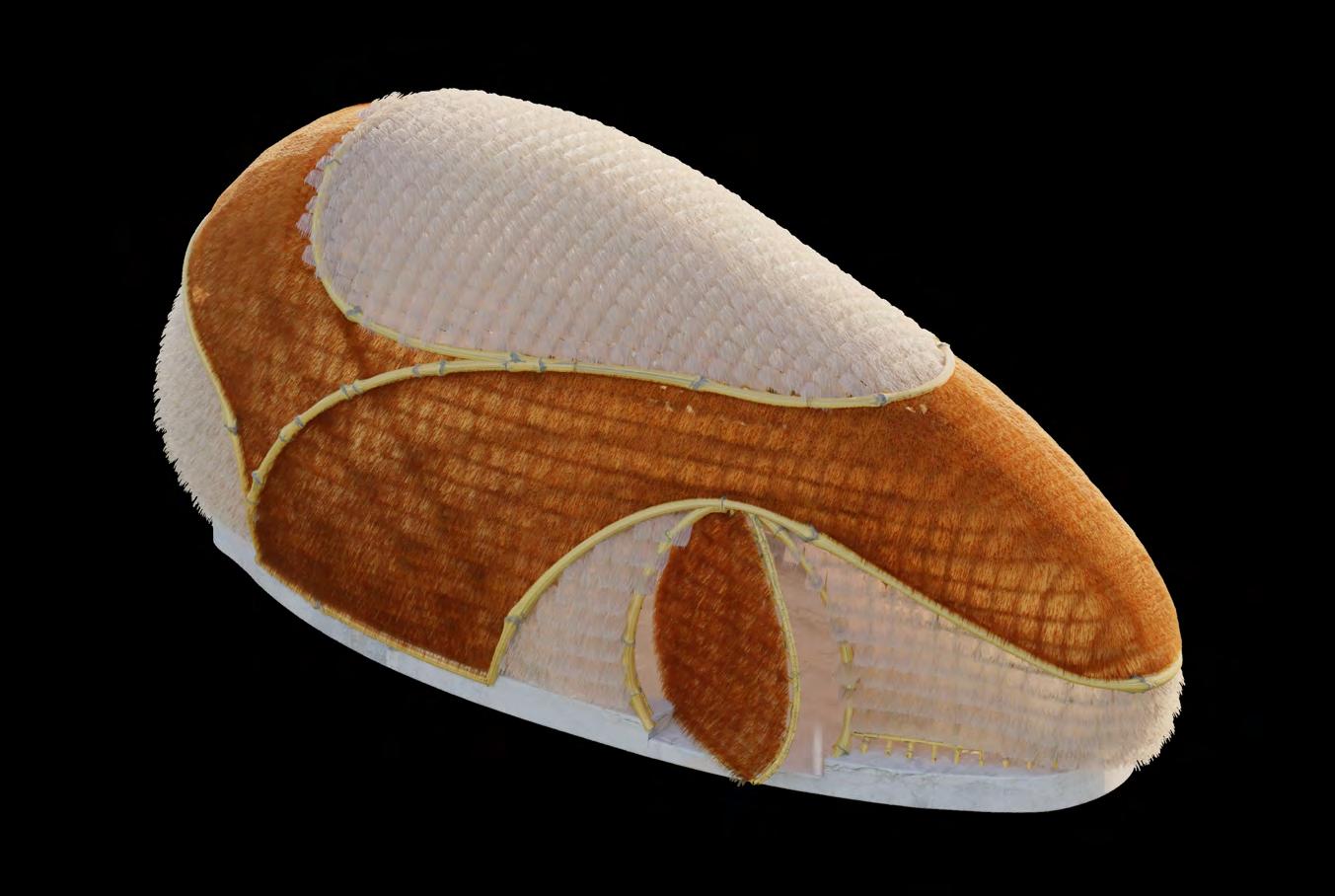
Thesubstructuredividestwodifferentskin zones.Oneisneverremovedandconstituteselasticbutsolidskin.Theotherpartis composedofpanelsthatopenorclosedependingonclimateconditions(B).Lastly,rotatingdoorshavebeenimplemented(A)to givetheusersfreedominnaturalventilation.
A/Rotatingdoors
Figure102
Renderedisometricviewsofthestructurallayers:skins
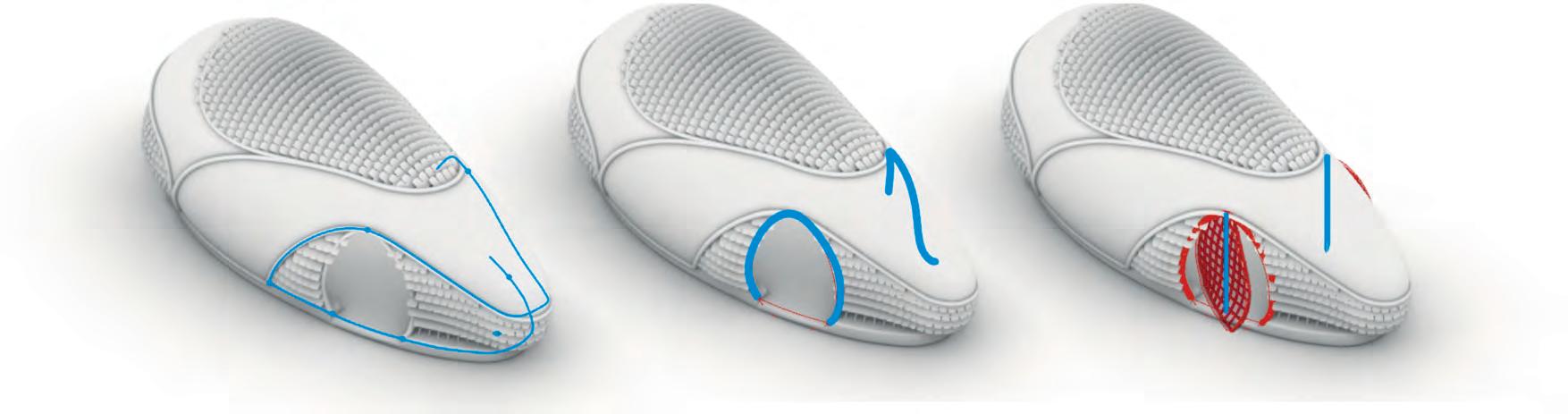
1/Selectinghighcurve,findextreme points.Selectlowcurve,divideandkeep pointsclosesttoextremes
2/Interpolatingpointandpipemesh
3/Creatingpoleascentreofrotation,creatingthesubstructureasexplainedpreviously.
B/Breathablepanelsscatteringandactivation
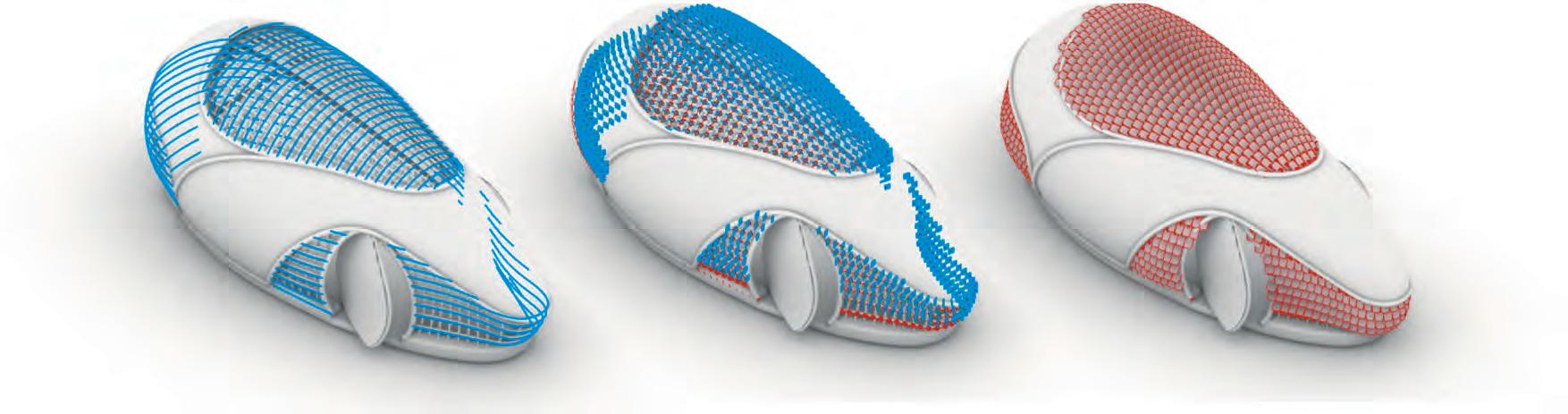
1/Selectingsupportingstructure 2/perpendicularframesfromcurveson gridpoints
3/Moveandorientgeometry.Rotation guidedbygraphmapperanddistancetoskin zoneedges
TheMulti-layereddesignstrategyincorporatedintothedwelling’stypologyallowsfor thedesignofthreedifferentscenarios.The firsttwoscenariosrespondtoconditions thatcanbefoundonaday-to-daybasison thesite,wheremodificationstotheopening angleofthebreathableskinpanelsallowfor adegreeoftemperaturecontrolwithinthe dwelling.Thethirdscenariorespondstoextremeconditionsandhigh-speedandunpredictablewindsfoundinahurricane event.
Scenario1/Lightbreeze-Openedscales
Thefirstdesignscenario(Figure102)isintendedfordailyuse.Duringthisscenario, themorphologyofthebreathableskinis foundinitsopenstance.Thepanels(principleandprototypesdevelopedlaterinthis paper),arebendedwhendry,allowingfor crosswindventilationthroughoutthestructure.Openingsthroughthemorphology providethermalregulationbyallowingairto freelyenterandexitthestructure,similarto howthetraditionalpalapacanopysystem workstoday.Thisdesignwastestedbycre-
Figure101
Scenario2-Strongwindmode CFDsimulation-Topview
atingaCFDmodelwhichsimulatesthemaximumwindspeedfoundthroughouttheday. Thismodelshowshowthewindflowsto enterandexitthemorphologythroughthe breathableskinpanelareas.
Scenario2/Strongwind-ClosedScales
Thissecondscenarioisalsointendedfor dailyuse.Bytheclosureoftheskin,the morphologybecomesmoreaerodynamic, enablingamoreefficientwindmitigation strategy.Whilethescalesareclosed,the morphologyallowsheavyrainandwindto flowonthesurfacewithoutenteringthe dwelling.ACFDmodelofthisscenario(figures101,103)wascreatedwithanaboveaveragewindspeed.Inthismodel,itisvisiblehowthedwellingformbecomeshighly aerodynamic,allowingthewindstotravel aroundthestructure,mitigatinganypossibledamageandprovidingasafe,dryenvironmentwithinthedwelling.
Scenario3/Hurricane-Removedscales
Thefinaldesignscenario(Figure104)was createdfortheextremeconditionsfound duringstorms.Thebreathablepanelsofthe skinareremovedandplacedinsafestorage forprotectionbyMayanpeoplebeforea stormarrives.Thisresultsinhavingjustthe solidskinpanelsremaininginplace.Once thebreathablepanelsareremoved,the shellsubstructureisuncovered.Withaminimumsurfacearea,thissubstructure
providedlittleresistancetotheincoming winds,allowingthehighwindstoenterand exitthedwellingfreely.Theelasticbehaviour ofthesolidpanelsprovidesthestructure withaflexiblemembranethatallowsthe mainandsubstructuretomoveanddeform throughthestorm,diminishingtheoverall damagesreceivedtothestructureand joints.AdigitalsimulationwascreatedutilizingCFD,andtheresultingmodelprovided solidproofofconcept.Inthismodel,itisvisiblehowthewindisallowedtoflowfreely throughthedwelling,highlyreducingthe stresscausedbythestaticpressureofthe windhittingthesurface.Highwindsimpactingthesurfaceofasolidskinarequickly mitigatedintoanopeningduetothedwelling’shighlyaerodynamicform.
Scenario1-Lightbreezemode CFDsimulation-Sideview
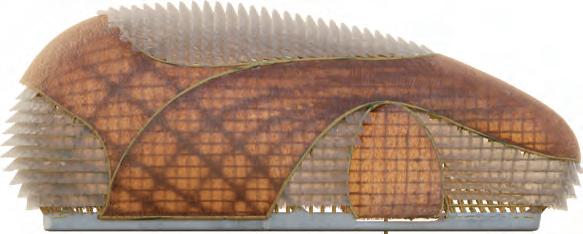
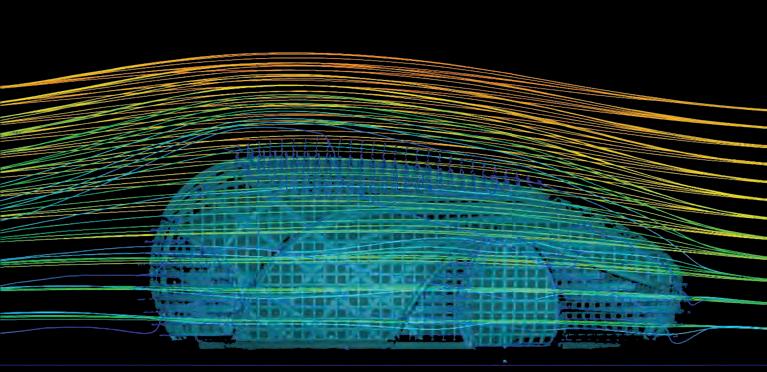
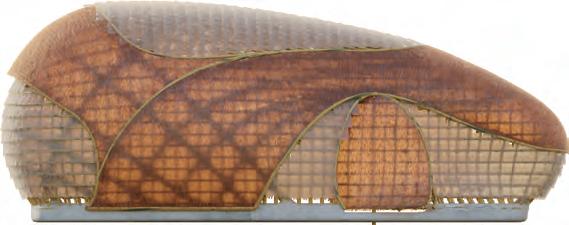
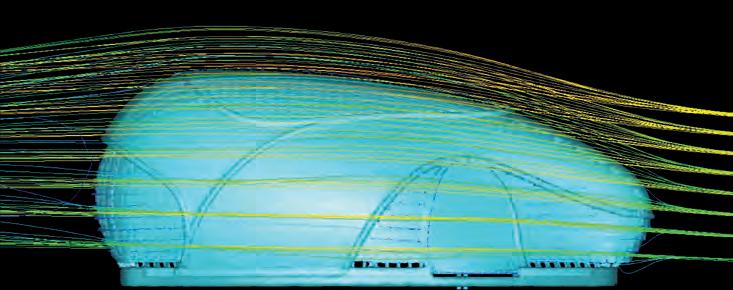
Scenario2-Strongwindmode CFDsimulation-Sideview
Scenario3-Hurricanemode CFDsimulation-Sideview
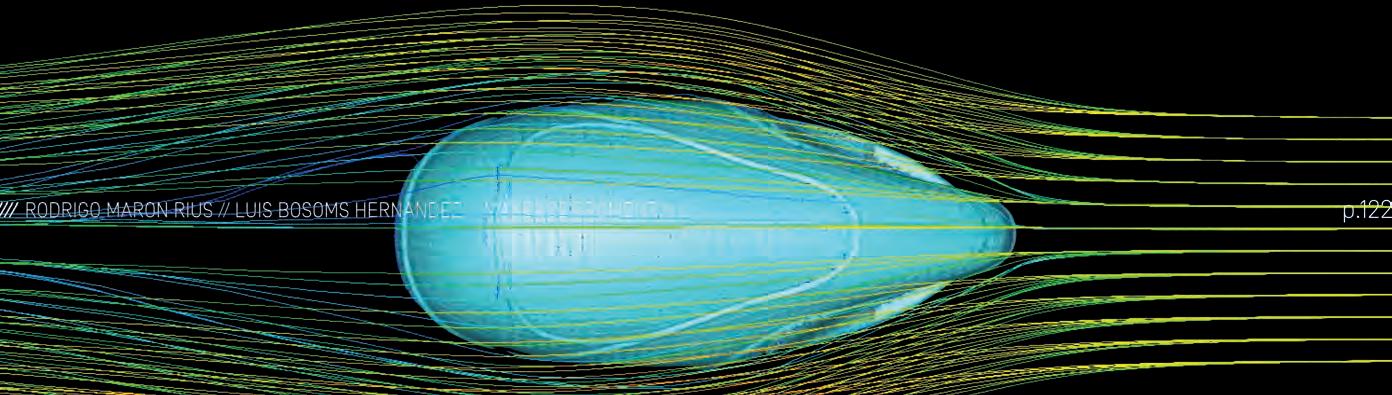
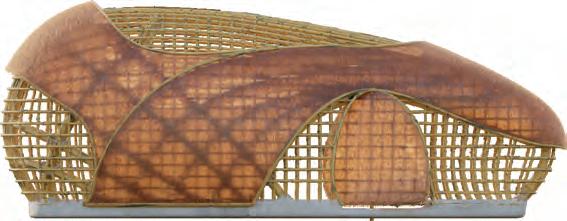
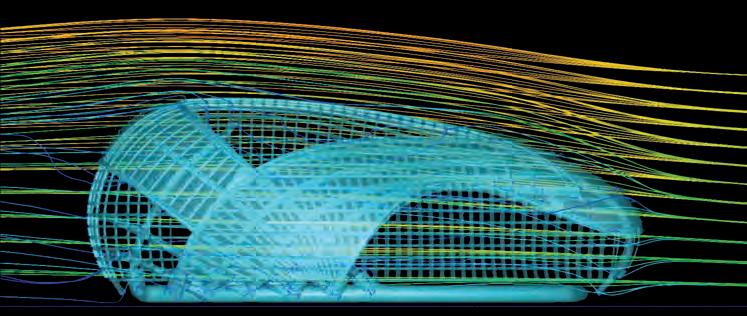
Figure104
Figure103
Figure102
Theimplementationofdoorsforthedwelling raisedquestionsintermsofintendeduse. MosttraditionalMayanhouseshavenodoors buttwodoor-sizedfacingopenings.Theyallowcross-ventilationwhilebeingparallelto strongwinds.Insteadofhavingasimple opening,cental-axedrotatingdoorshave beendeveloped(figure105)asourdifferent modesrequiredopeningortotalclosingof thevolume.Userscanalsocontrolthe amountanddirectionofnaturalventilation insidebyallowingdoorstorotate.Toprove thecapabilitiesofthisdesignsolution,arealtimeCFDhadtobeperformed.Theparticle simulationsystemofBlendersoftwarehas beenchosenforitsreal-timeperformances anddatadisplaycapacities.Thesimulation
wasrenderedasananimationshowingstepby-stephowtherotationofeachdegree changesthewindflow.Twoinstanthave beenchosenforillustrationinthispaper.In thefirstmode(figure106),theangleopening ofdoorsallowscross-ventilationwhileprotectingtheinsidefromstrongdominant winds.Inthesecondone(figure107),the doorsmitigatethewindflowstoventilatethe wholevolume,idealduringhightemperaturesandalightbreeze.
Rotatingdoors-Mode1 CFDsimulation-Topview
Figure107
Rotatingdoors-Mode2 CFDsimulation-Topview
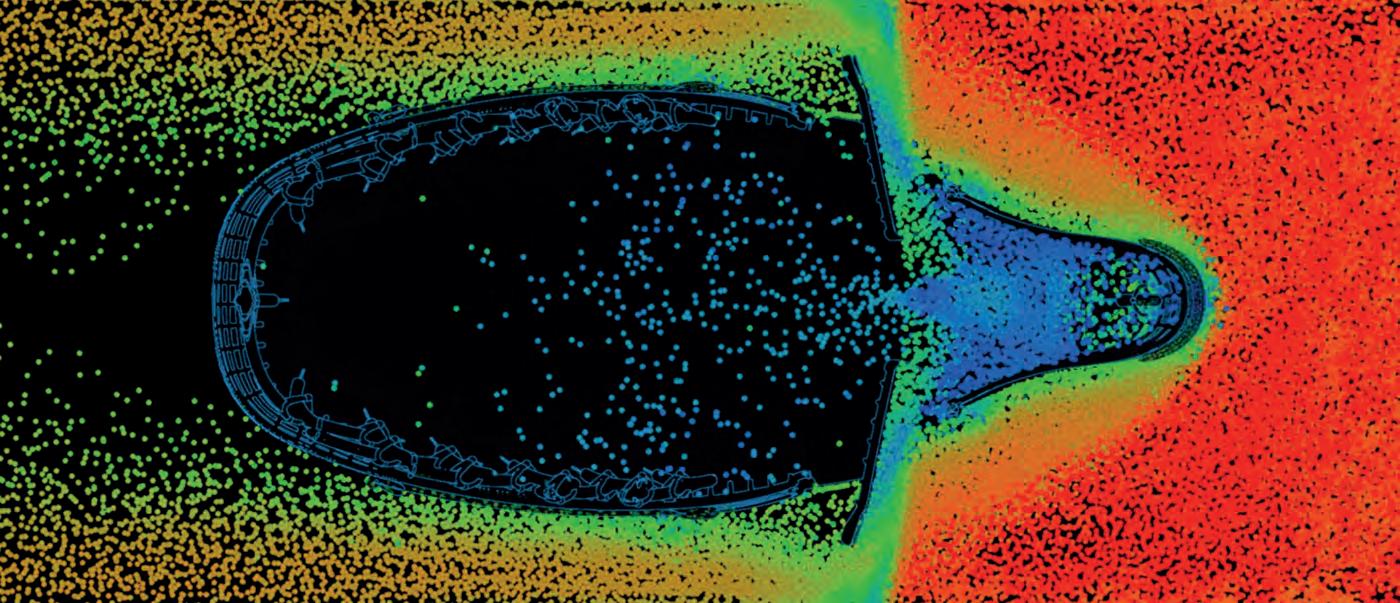
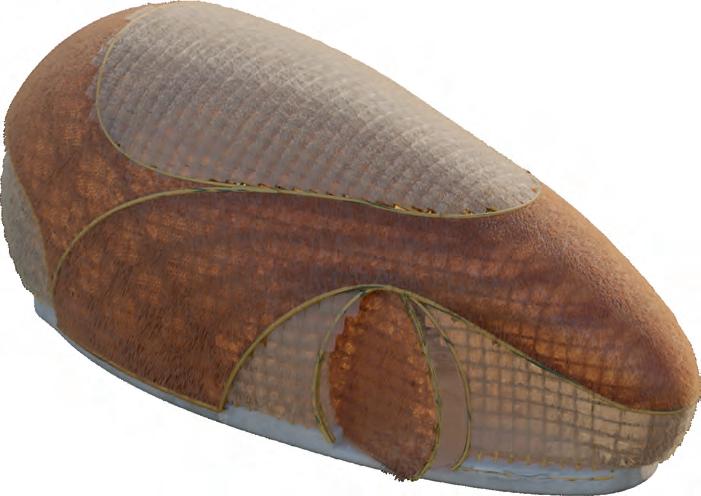
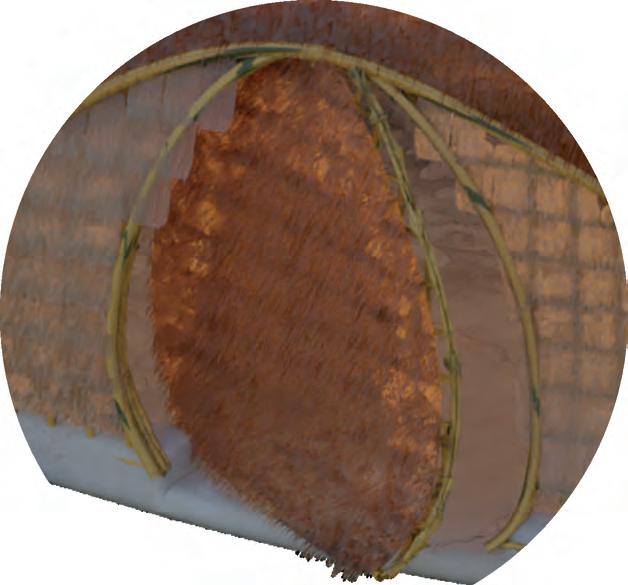
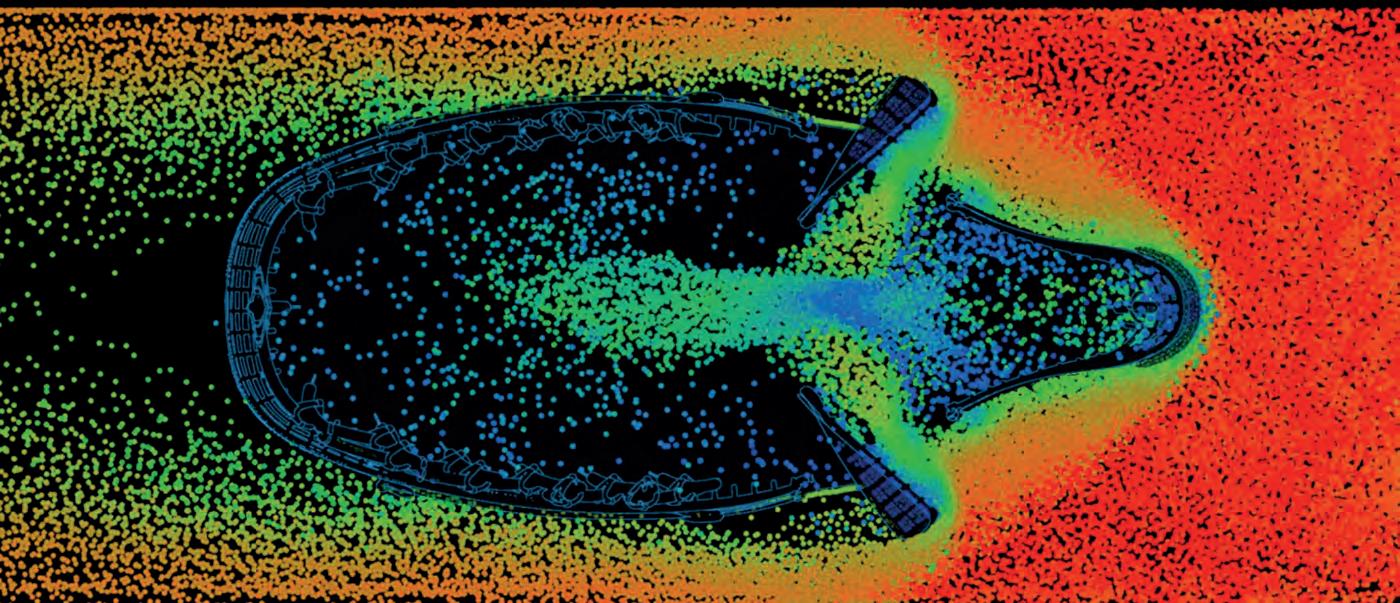
Figure105 Dwelling’srotatingdoors
Figure106
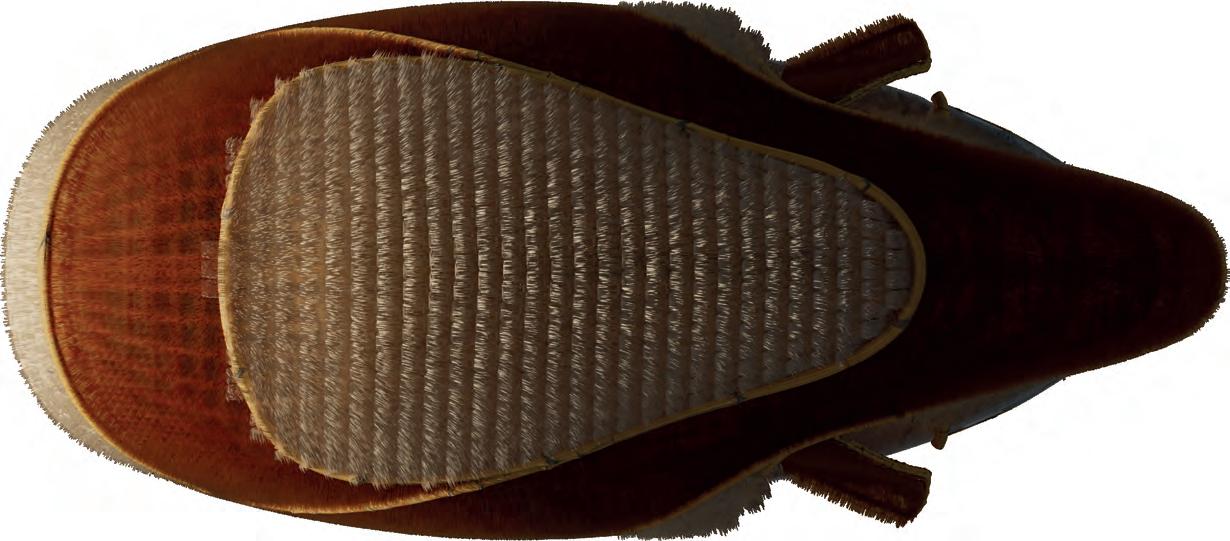
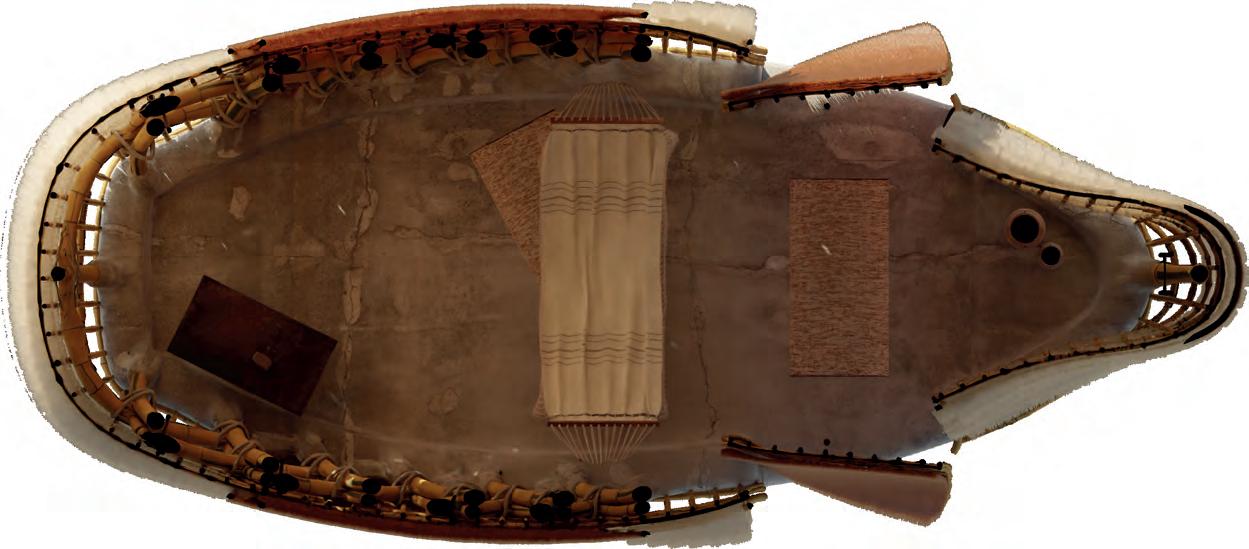
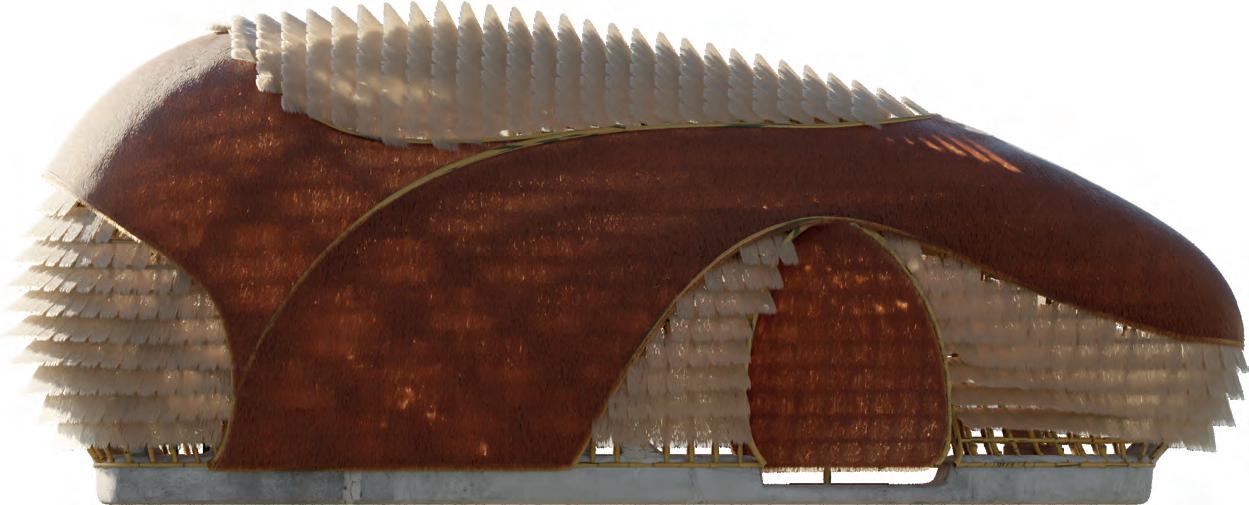
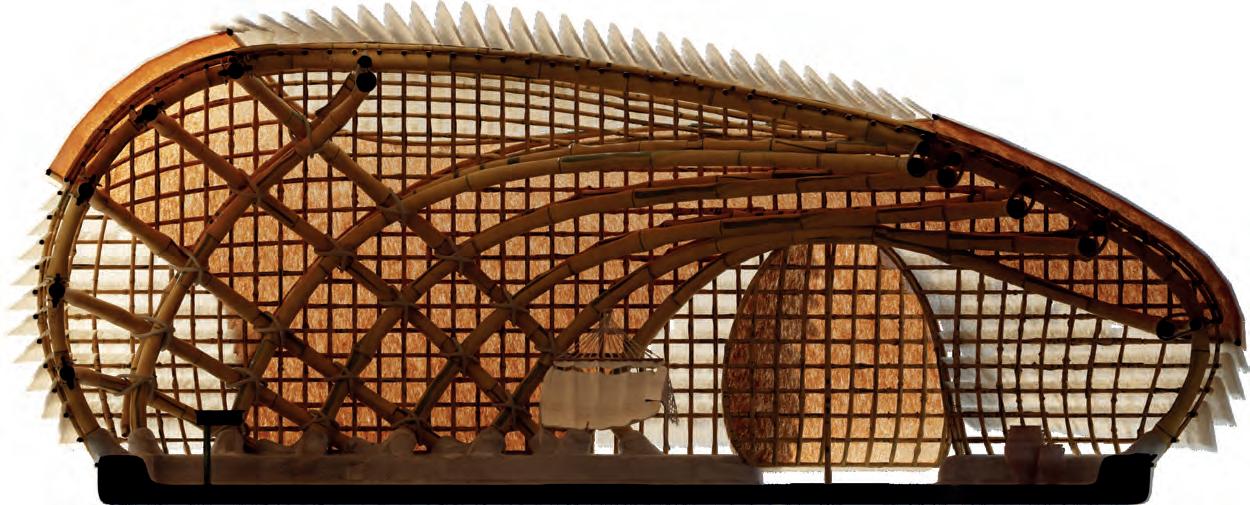
Figure110
Dwelling-Elevation
Figure111
Dwelling-Section
Figure108
Dwelling-Topview
Figure109
Dwelling-Planview

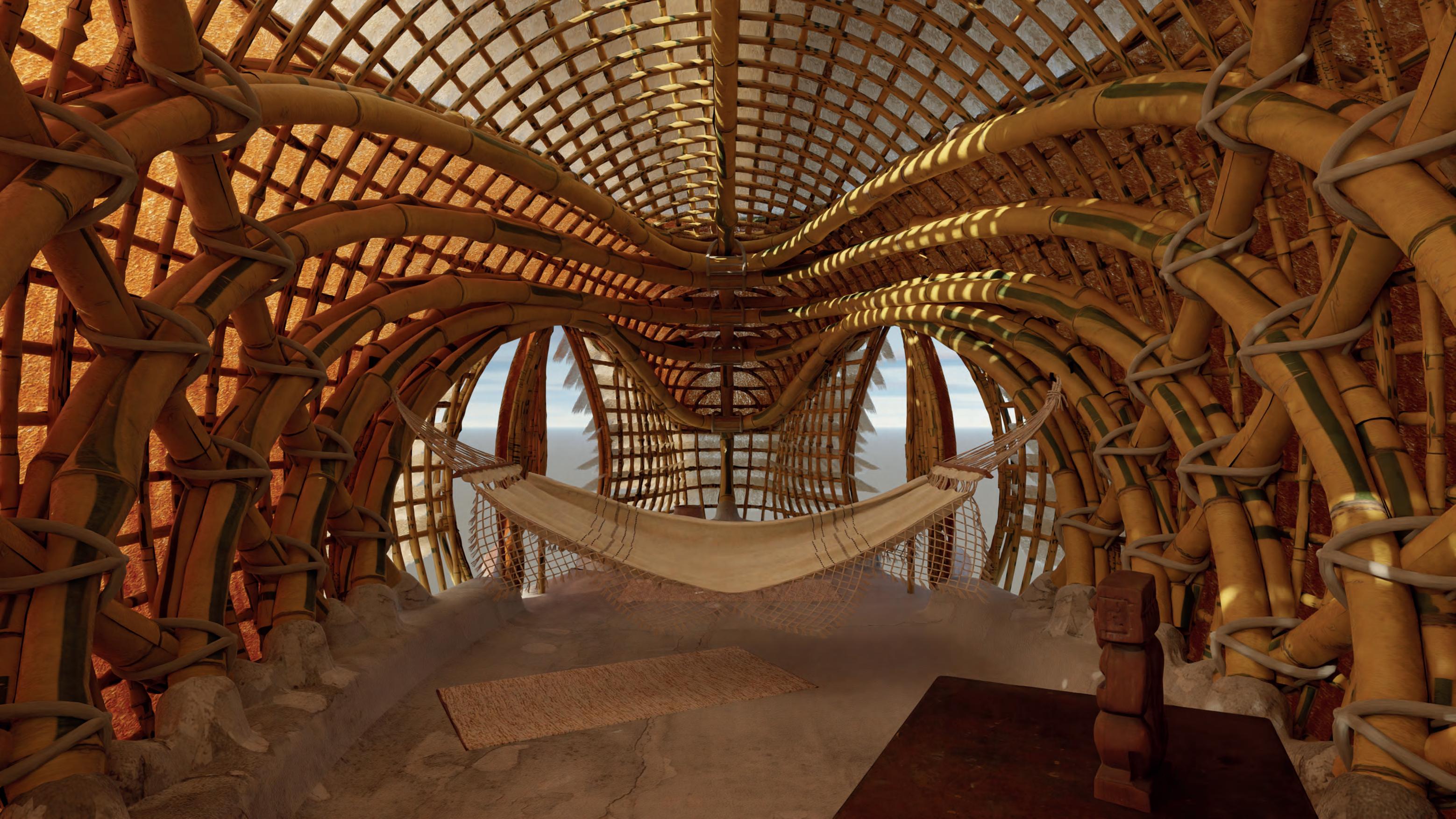
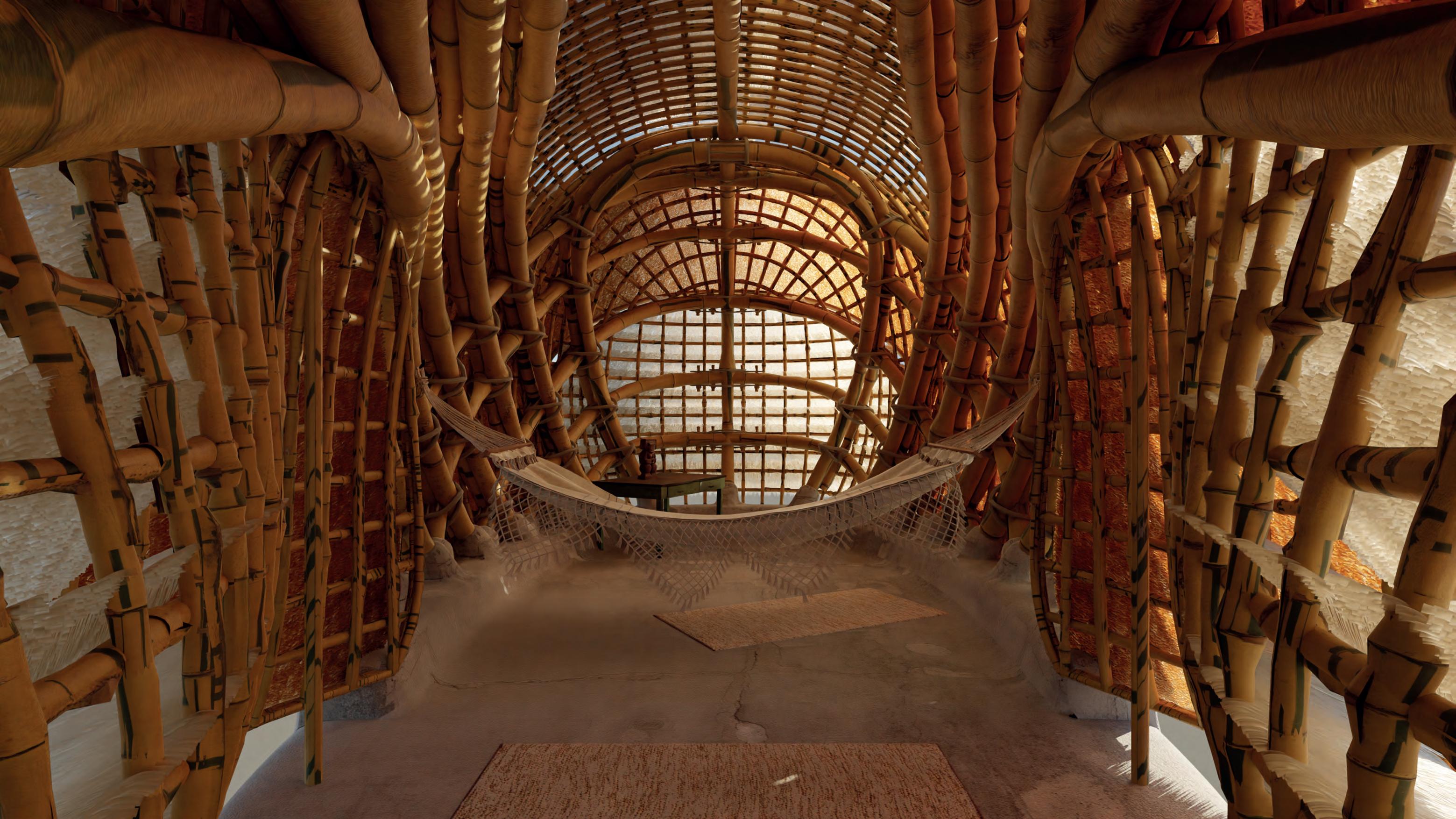
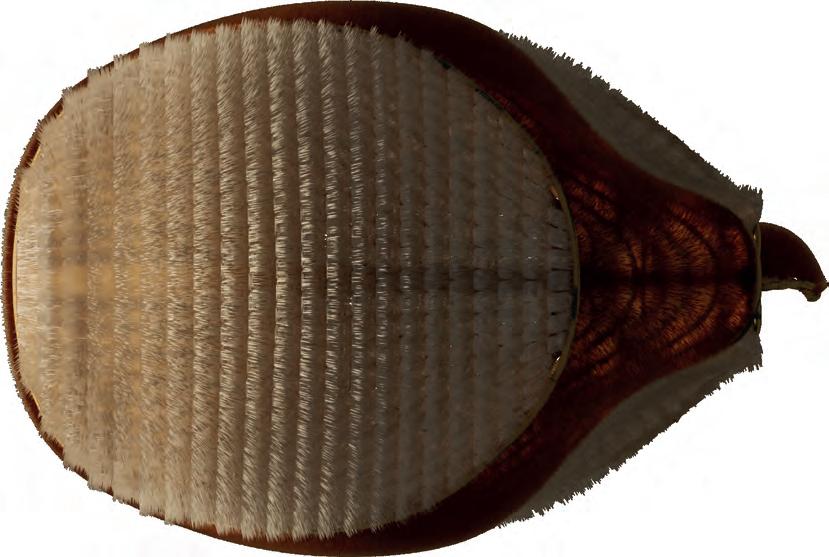
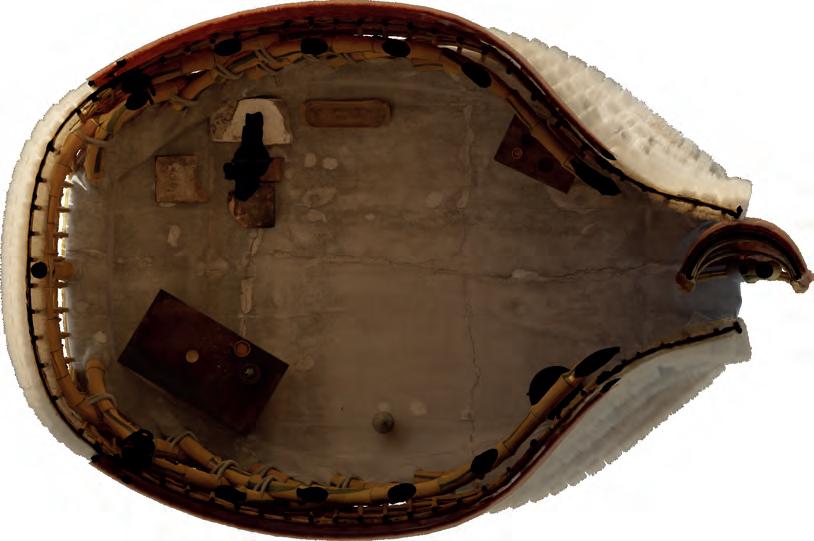
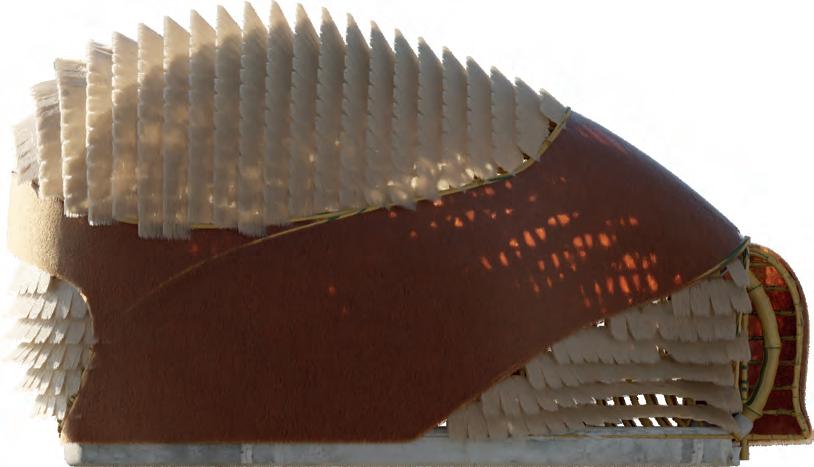
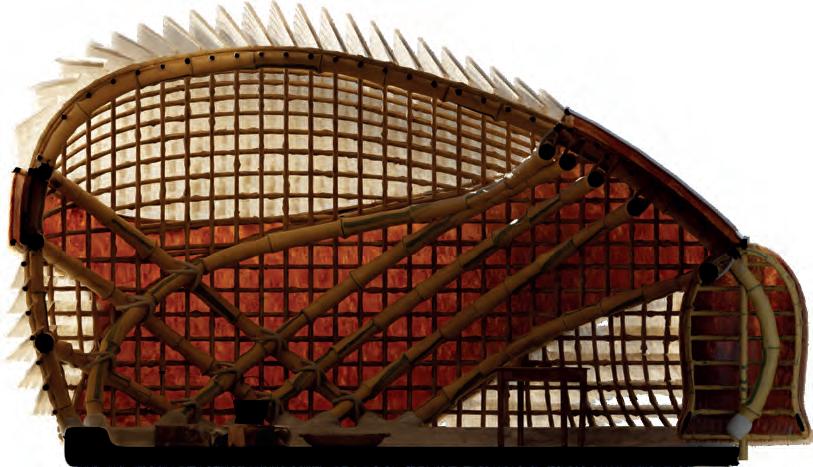
Figure116
Kitchen-Elevation
Figure117
Kitchen-Section
Figure114 Kitchen-Topview
Figure115 Kitchen-Planview
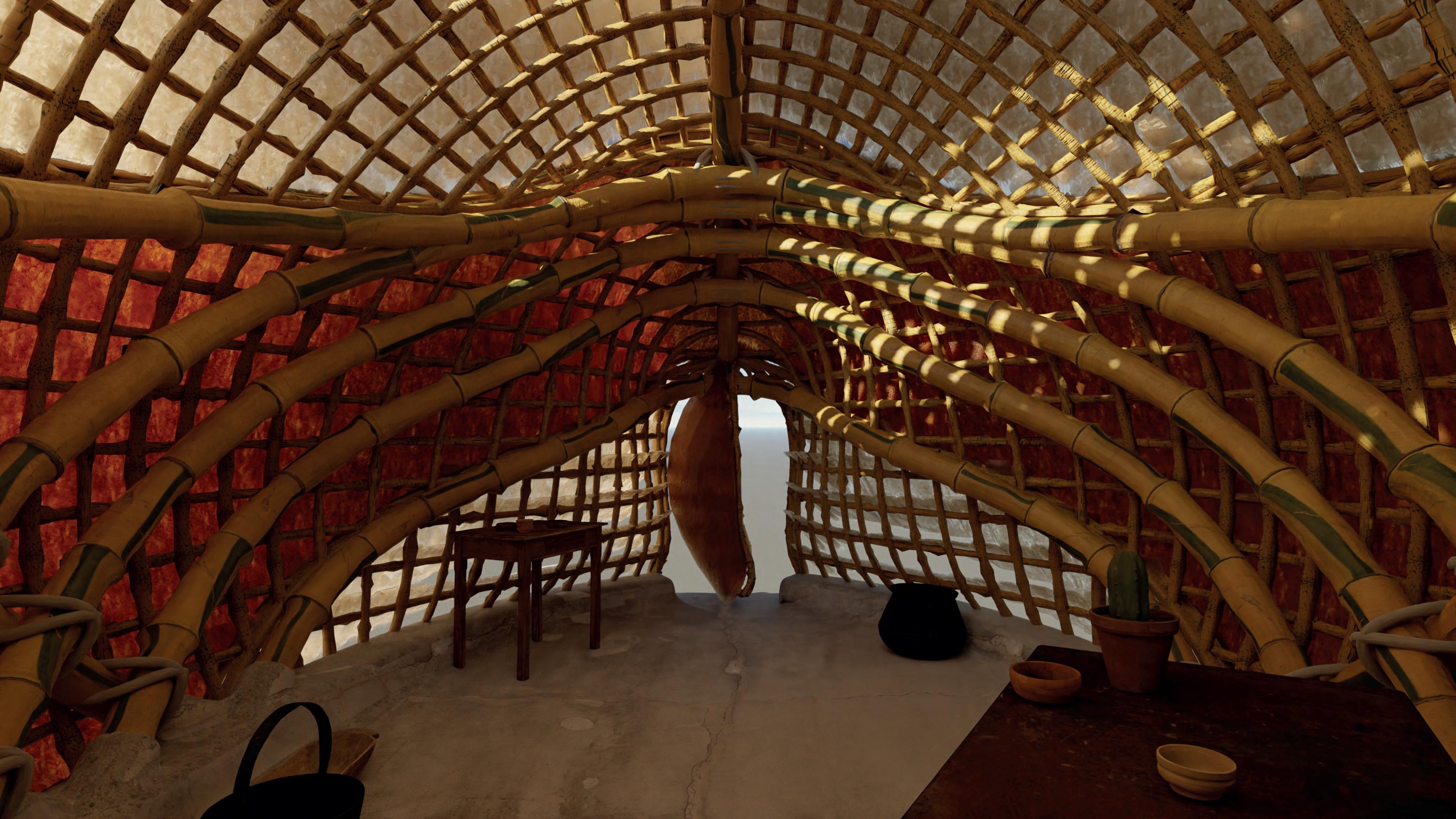
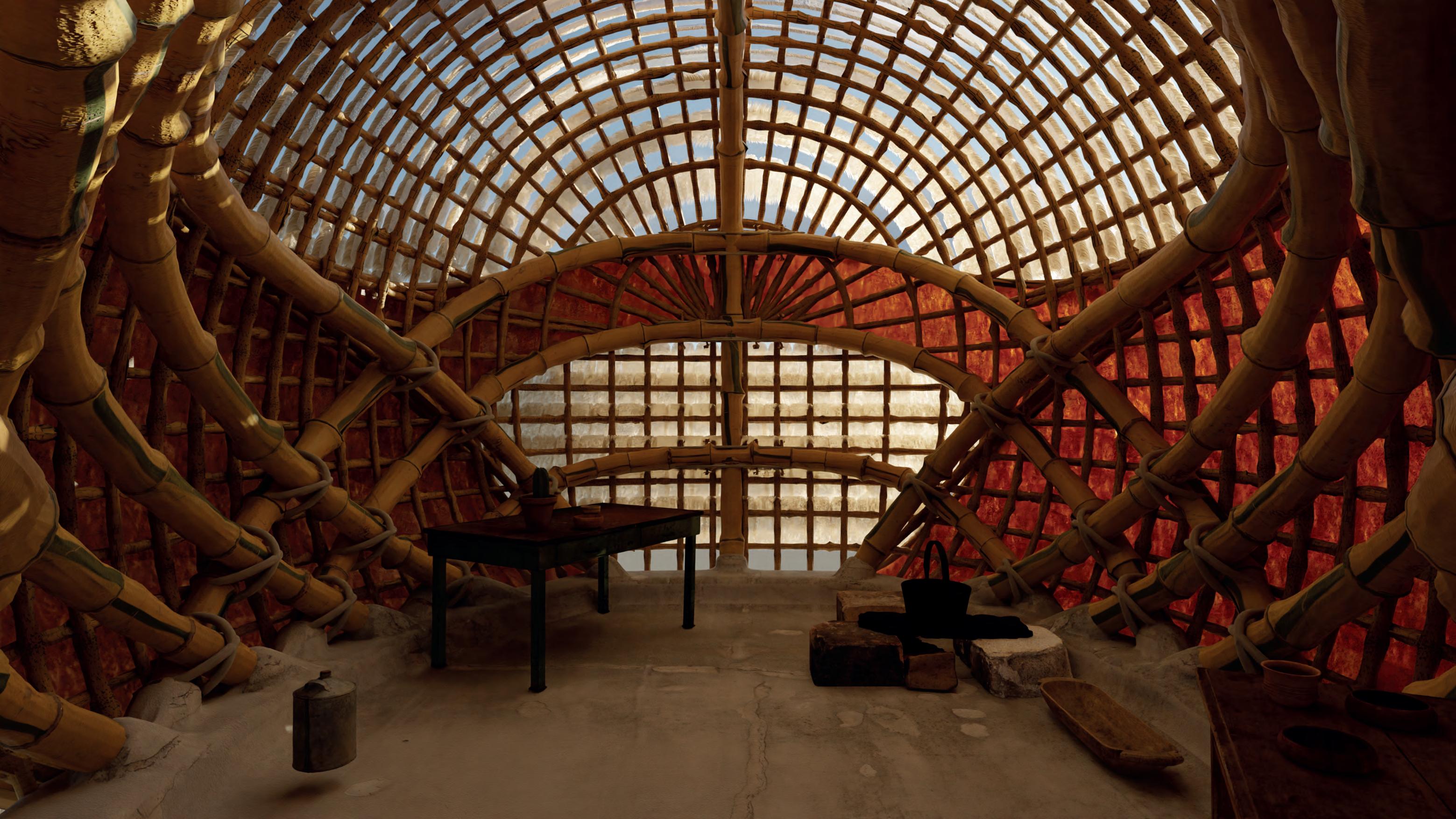
PROTOTYPE
05/1.3
Figure120a,b Renderisometricviewofthemainstructure andjoints,zoomontheselctedportionforthe 1/1physicalprototype
Inthecalculationsofthestructure,astrong connectionbetweenthebamboobeams andtheconcretefoundationshasbeen takenintoaccount.Afterconsideringcastingthebeamsintotheconcretefoundations,ithasbeendecidedtoexploreamore complextypeofjoinerywithsomeflexibility neededduringassembly.Ametaljointallowingrotationinoneaxishasbeendesignedforthatpurpose(figure120a).Atied jointisnecessarytoensureflexibilityatthe intersectionofthebeams.Atthesametime, thestructureisbeingdeformedduring storms,andancienttieingtechniques shouldbeusedwhenpossibletopromote
localcraftsmanship.Tounderstandand masterthisimportantpartoftheproject,it hasbeendecidedtobuilda1/1prototypeof thatsection(figure120b).Thediagraminfigure121displaysthedifferentpartsandtechniquesusedfortheprototype.
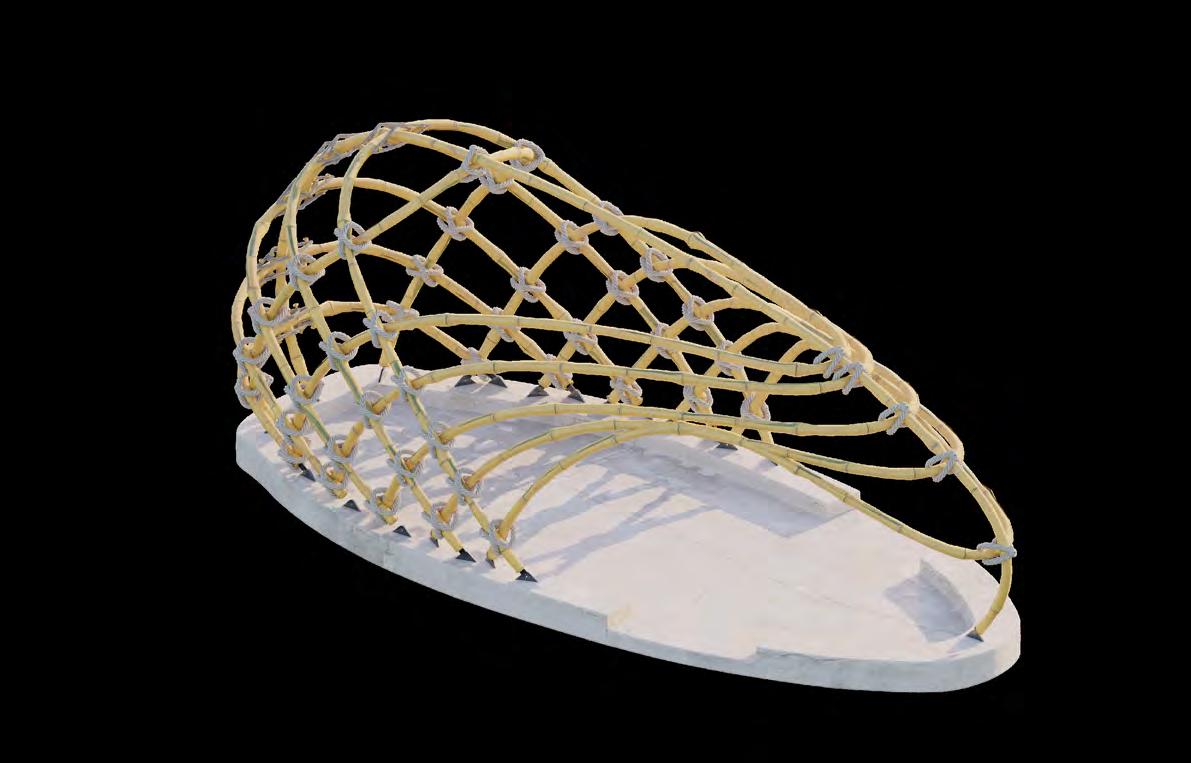
Explodeddiagramofthe1/1physicalprototype
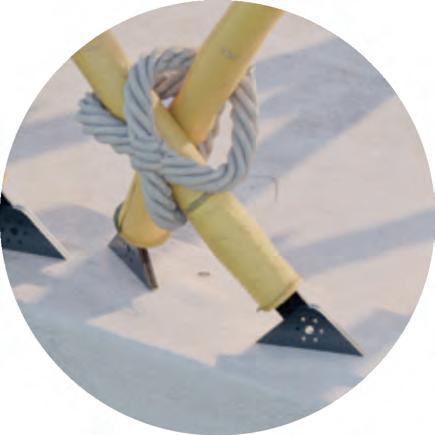
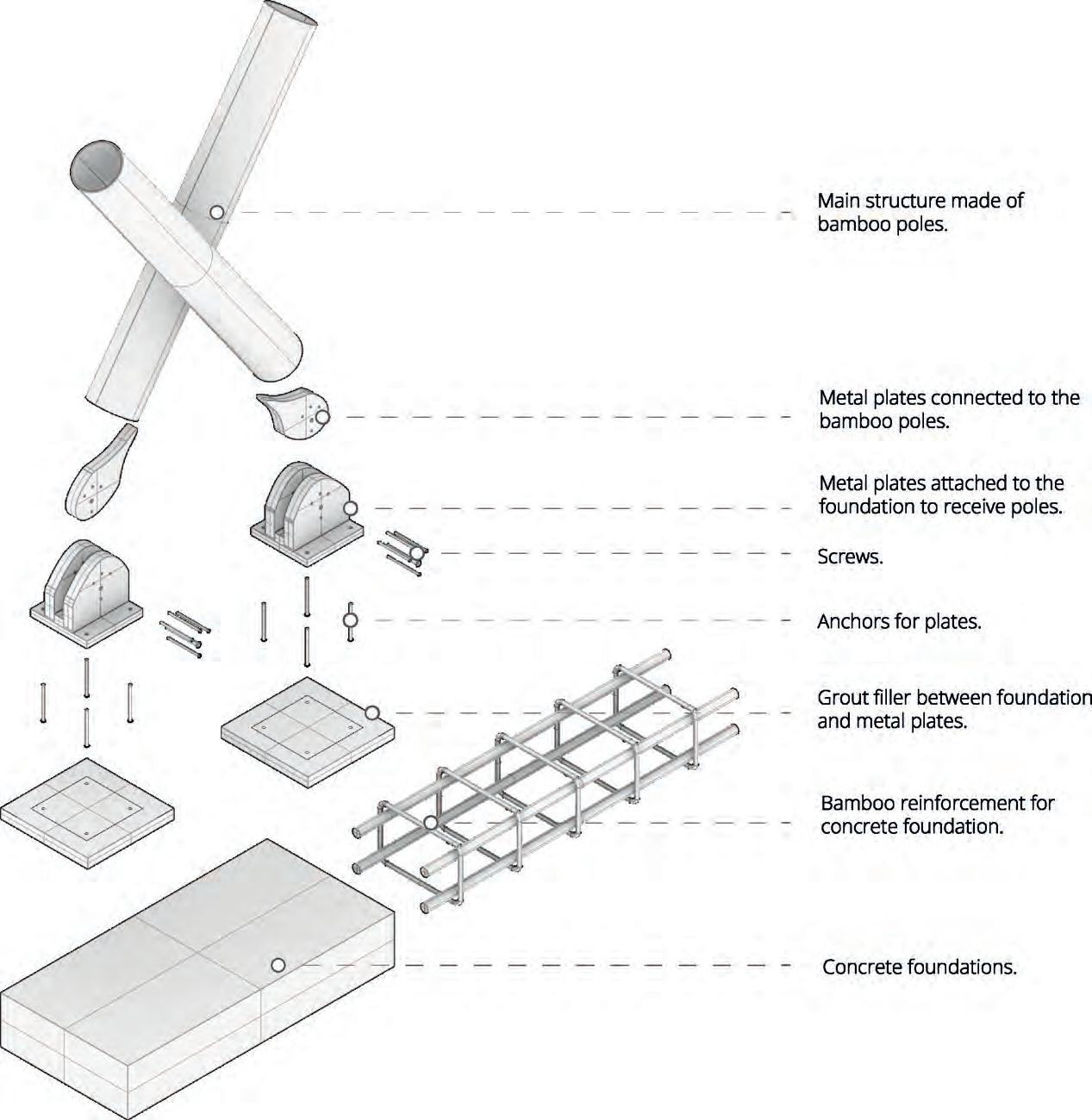
Figure121
Themakingofthe1:1prototypenecessitated undergoingseveralstepsbeforefinalassembly.
Preparingthebeams
Firstly,thebamboobeamshadtobeprepared.Slitswerecutonthetipandheatedto bebenteasily.Theyresultinaconicshape, necessaryforittobekeptconnectedtothe jointduringhightensilestresses.Thepole wasthenfilledwithnaturalfibresand pouredwithconcrete,withoneendofthe metaljoint.
Preparingthefoundations
Fromasimplifiedmodeloftheconcrete foundations,aboxhasbeendesignedand laser-cutinplywood.Afterassembly,ithas beenusedtopourconcrete.Beforecasting, bamboorebarshavebeenputinplace,and theconcretemixturehasbeenmixedwith extractedbamboofibres.Afterafewdays, anotherpartofconcrete,thegrout,has beenpoured,onwhichametalplatewould beconnectedto.
Creatingthejoints
Beingunabletocreatethemetaljointinsitu, ithasbeendecidedtoreplicateitin3Dprintedplastic,withmorethickness,toensure itsresistanceduringandafterassembly.All thepieceshavethenbeenscrewedandtied togetherwithhenequenropes.
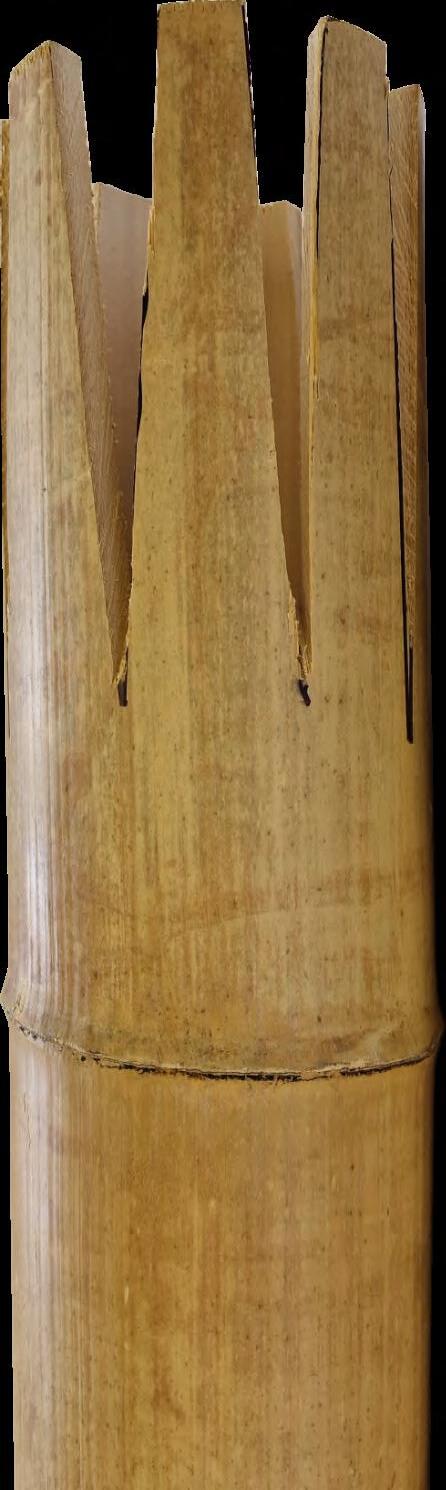
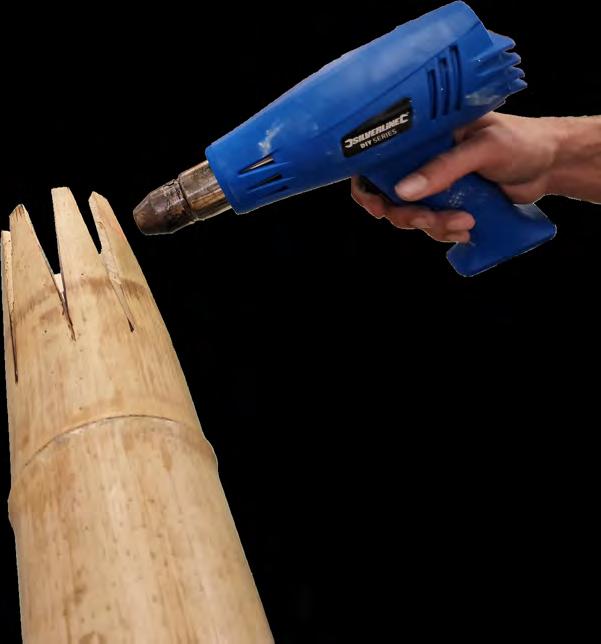
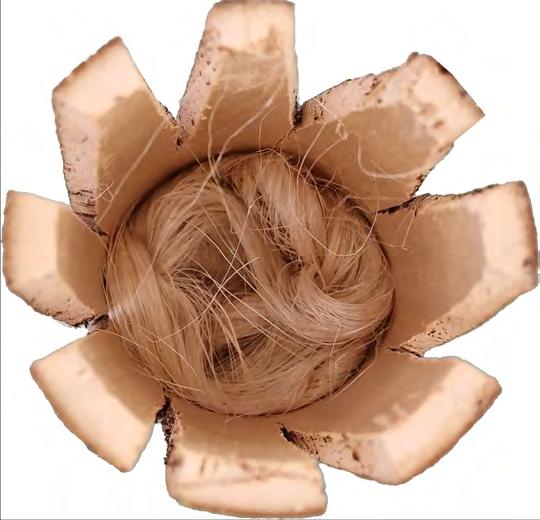
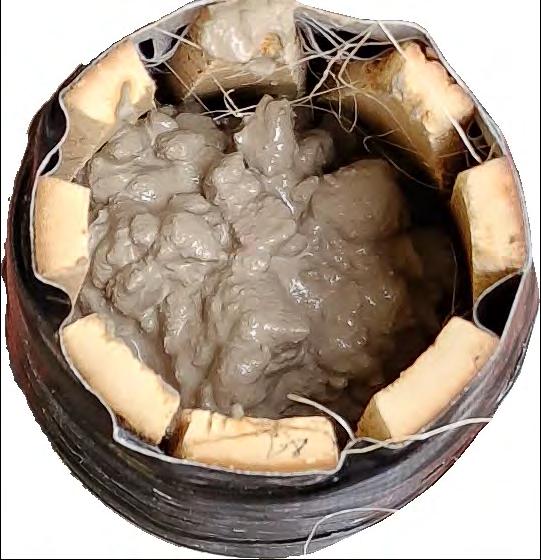
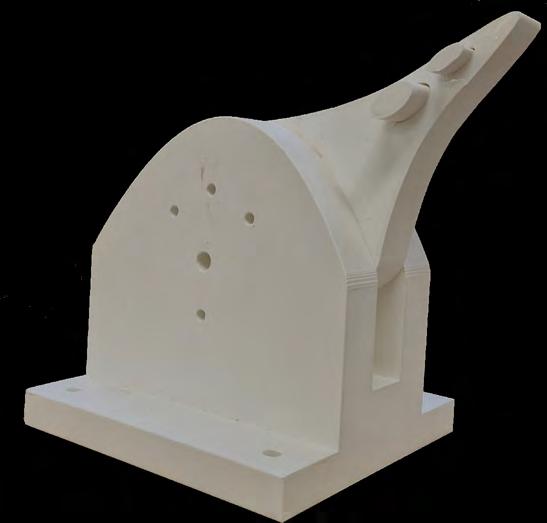
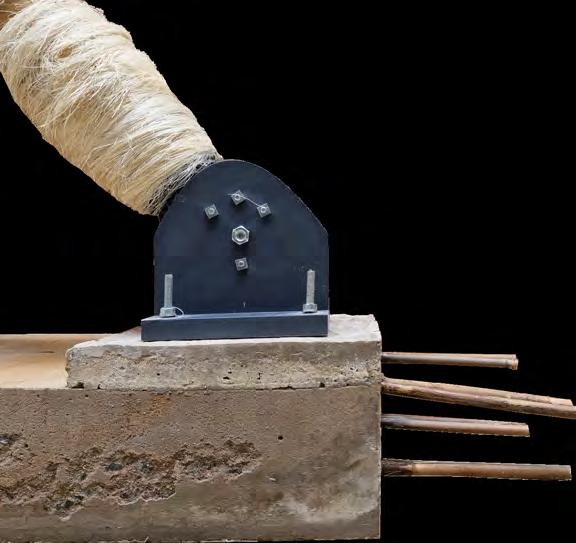
Figure122 Slittedbamboobeam
Figure124 Henequenfibresinsidebamboopole
Figure123
Heatedbamboobeam
Figure125 3D-printedarticulatedjoint
Figure126 Concretepouredinsidebamboopole
Figure127 1:1prototypeconnection
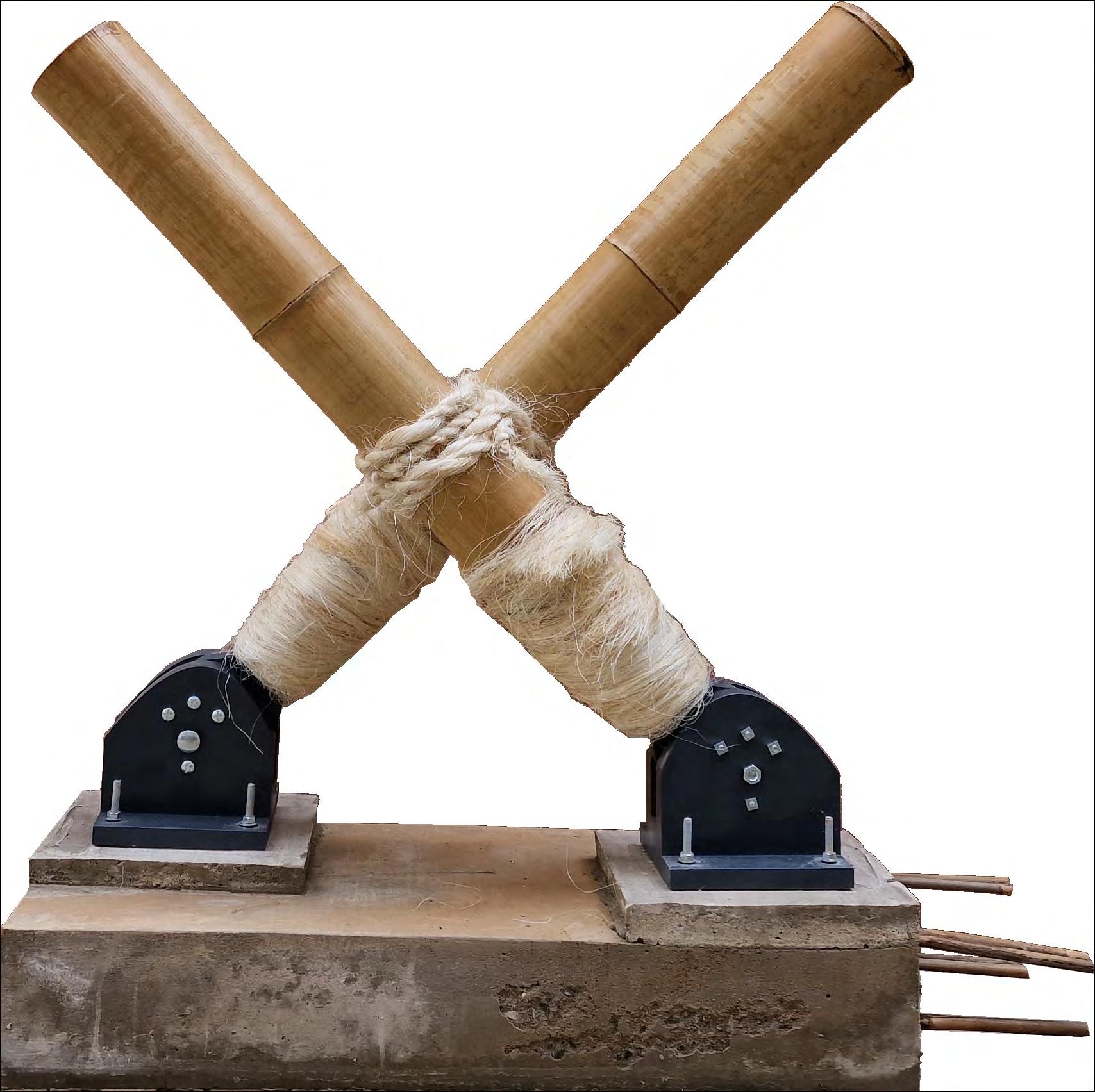
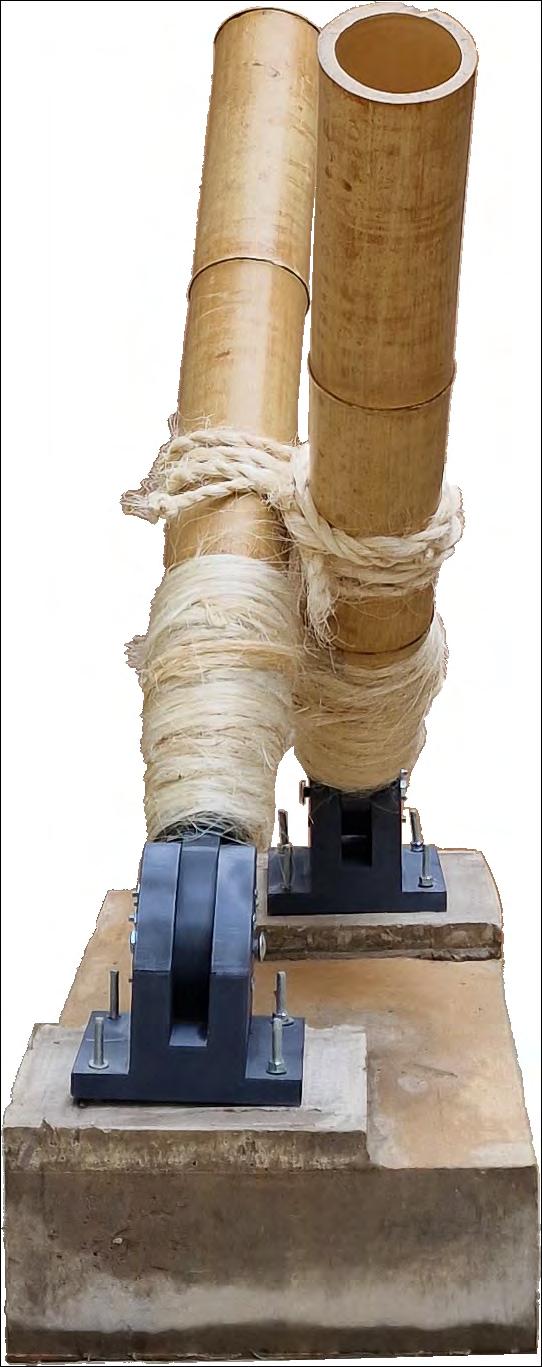
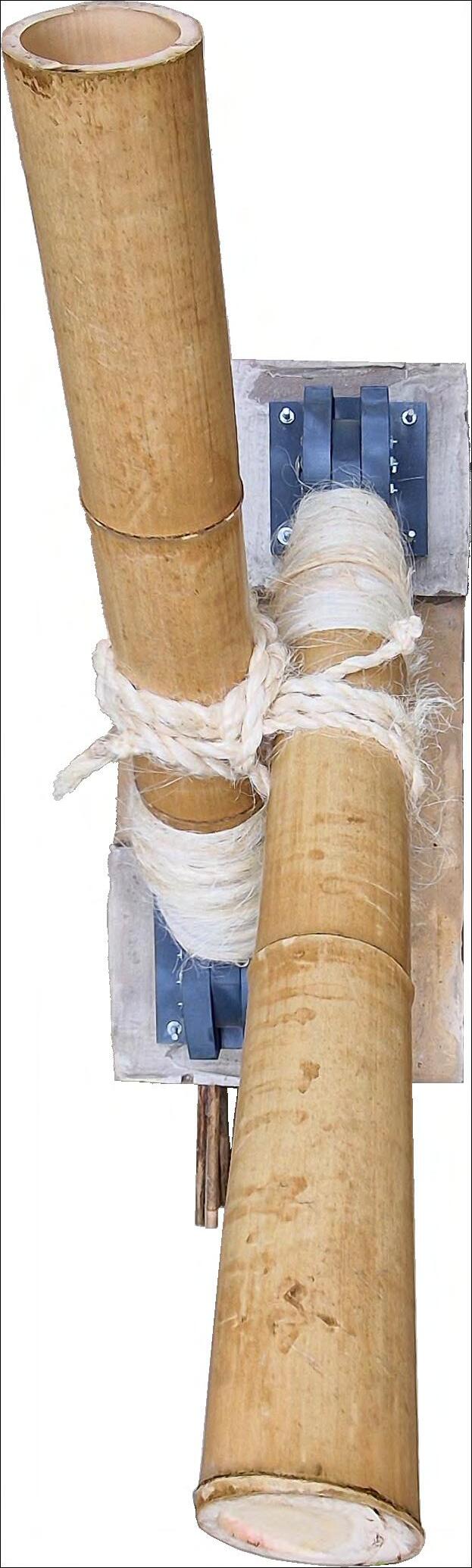
Figure128 1:1physicalprototype
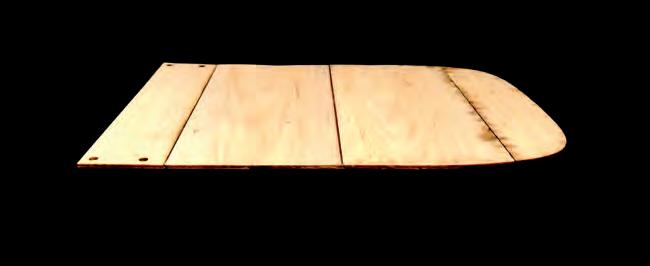
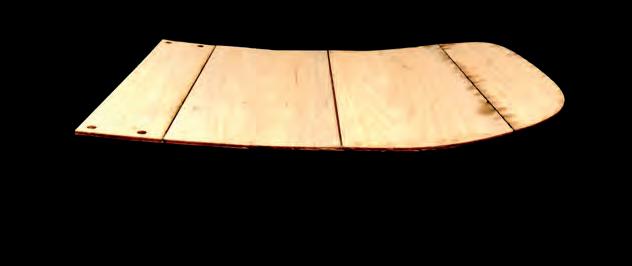
Afterexperimentsin“ResearchDevelopment”onbalsa’shygroscopicbehaviourand bi-layerdevices,anupscalingoftheprinciple hasbeenexperimentedwithtocreatea “breathable”skin1/1prototype(figure130).Dimensions(20x40cm)havebeendecided uponanalysishavethepreviousexperiments obtainedcurvaturesandadequatedimen-
sionsofthesubstructureofthedwellingsto whichthesescaleswouldbeattached.On figure129,theevolutionofthecurvaturecan beseen.Simulatingadryingprocessunder thesunwithanexternalheatsource,the photosweretakenevery10minutes.Inunder 30minutes,thedevicecanbecompletely activated.Withoutexternalheating,atambi-
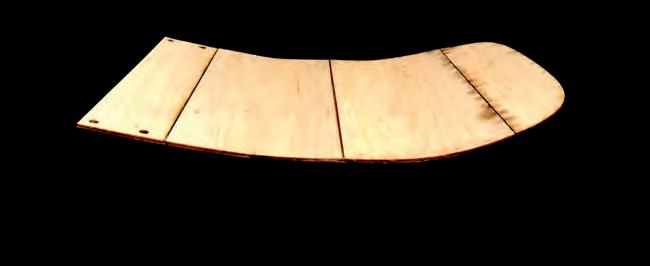
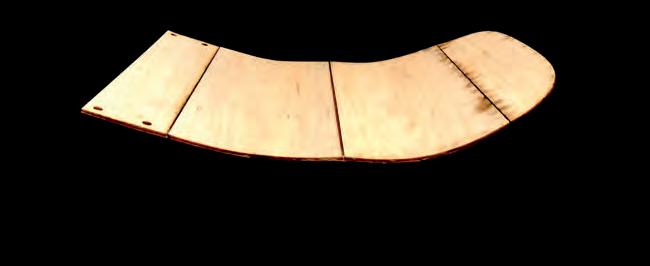
enthumidity,theprocesstook4h.Theprocessisfastwhenheated.Thus,anotherlayer ofhenequenfibreshasbeenaddedtocontainhumidityaccumulatedafterrainfall longer(figures130,131).Thislayerisalsoused asinsulationforthedwellingswhenthesystemisclosed.
1:1breathableskinprototypewithhenequen (20x40cm)
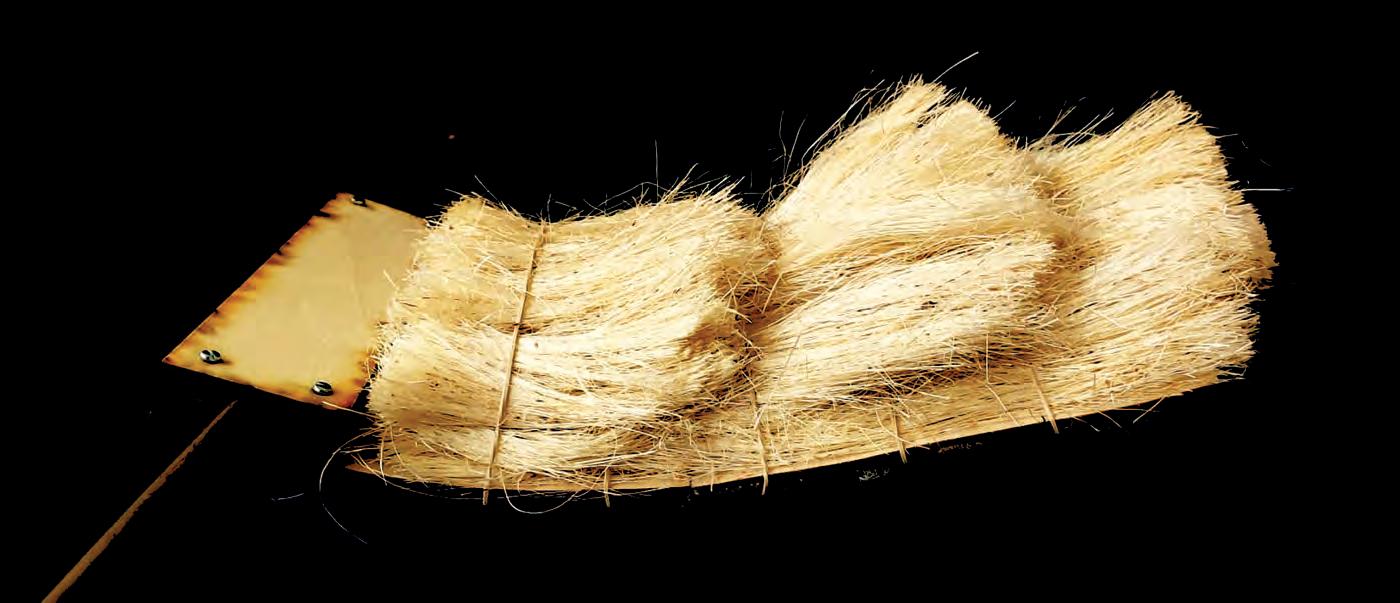

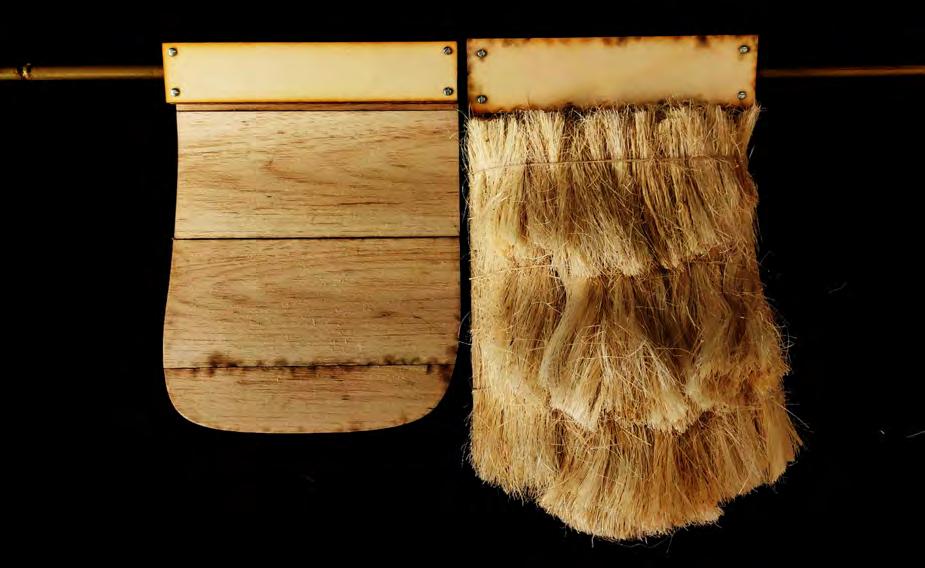
Figure130
Figure129 dryingprocess
Figure131
1:1breathableskinprototypes
After“ResearchDevelopment”experiments onamatrixofnaturalfibres/rubber,anupscalinghasbeendonetocreatea“deformable”skinpanelfromtheselectedindividual mix(Figure133).Henequenfibreshavebeen selected,aswellaslatexrubber,toapproximatenaturalrubber’stransparency.Amould creatingholesinthepanelhasbeencreated (figure134)topourliquidrubberwith henequenfibrestogetherandthuscreatinga “deformable”panel1:1prototype(figure135).
Theholesallowthepaneltobetiedtothe substructureonthebottomandtop,from fibresendtoendandconnectedfrompanel topanelonthesides.Thephotowastaken twodaysaftercasting.Onthefourthday,the skinbecomestranslucid.
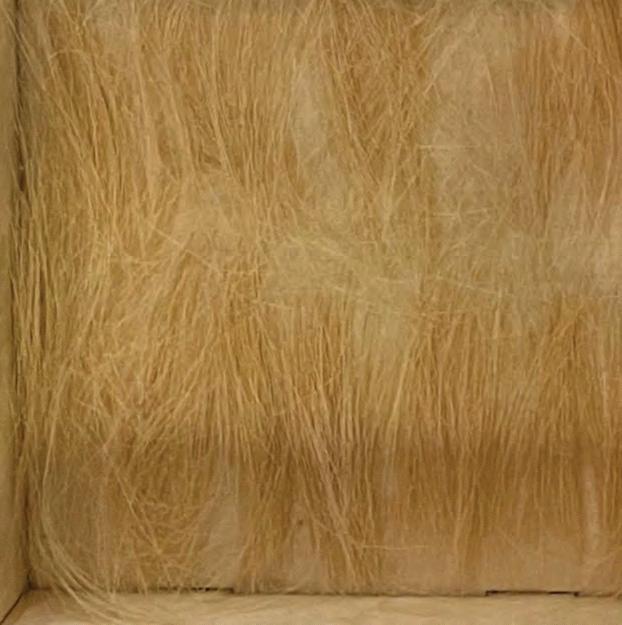
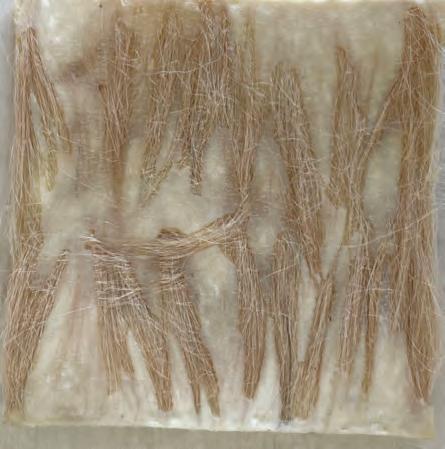
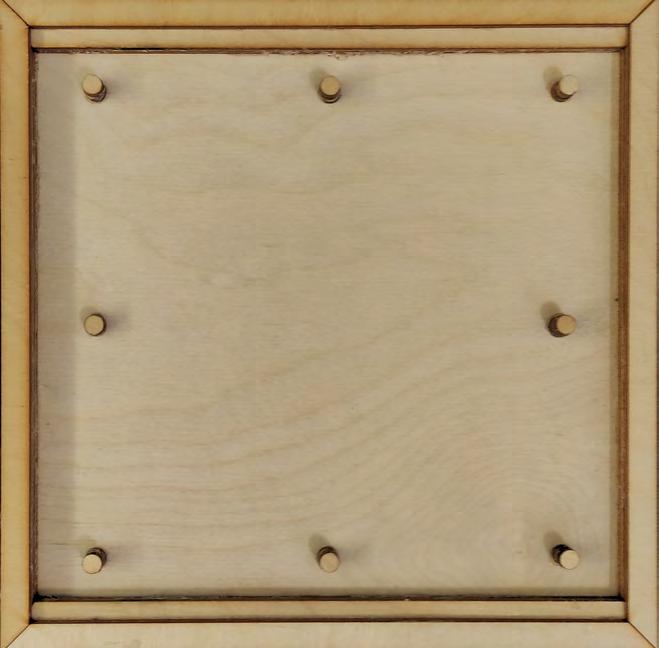
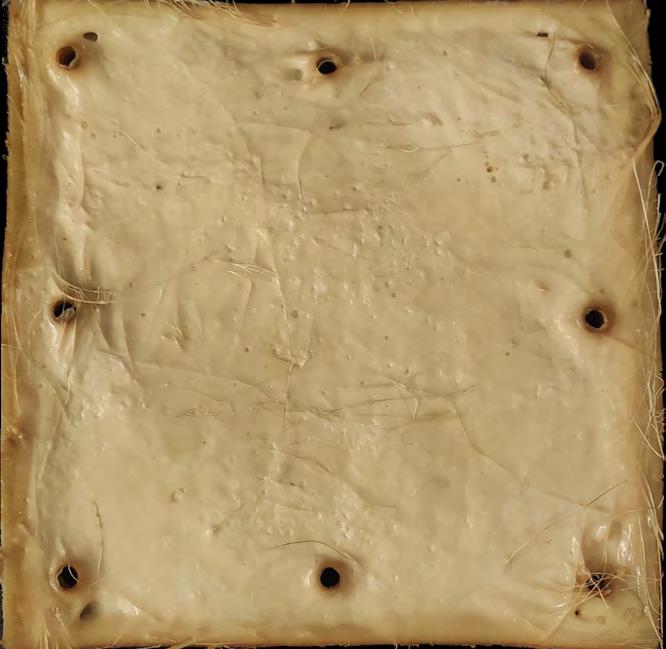
Figure132 Henequenfibreslayout
Figure133 Matrixrubber/henquenfibressample
Figure134 Finalmouldfor1:1prototype
Figure135 Final1:1prototype(20x20cm)
GENERATIVEDESIGN
05/3.1
05/3 MICRO-URBANDESIGN
Thisdevelopmentaimstocreateanadaptiveandgenerativedesignprocess.To achieveit,aseriesofalgorithmsaredevelopedwhereanyurbanlayoutcanbeinsertedasinput.Thisinputprovidesthebasic gridonwhichthedesignprocesscanbegin. Oncetheprocessiscomplete,anewmicrourbanplotiscreated.Thisnewplotcontains keylandscapeandarchitecturaldesignsenablingthecreationofahurricane-resistant micro-urbanenvironment(figure136).
Tostartwiththemicro-urbanstrategyimplementation,anexistingterraininthe MayantownofEspitawaschosen.Uponfurtheranalysis,ithasbeenfoundthatthistypicalgridnetworkisfurthersubdividedinto plots.Theplotwasthensimplifiedintoa squaregridwitheightSolaressurrounding thecommunitymilpa.Thisgridservedas thestartingpointforanagent-basedsystemaimingtocreatewindchannels.The rulesofthissystemhavebeensetupto continuallyoptimisetheoutputtednetwork bydiminishingitslengthandavoidingthe plotcentres.Thissystemwasusedtocreate apathforthewindchannels,whichprotect theplots.Theresultingmeshwasthenused toinfluencetheterrainelevation,wherethe closestpointstothemeshwouldbecome thelowestpointontheterrain(-2m)andthe
centrepointsoftheplotsthehighestelevatedpointbybeingthefurthestawayfrom themesh(+1m).followingthisstep,thetrees andbushesareplacedfollowingtherulesof terrainelevationplacement,anddensity learnedfrompreviousCFDexperimentsin the“Researchdevelopment”chapter.The functionalprogramisthensetfromthe centreofthenewplots,wherethefunctions areorganisedwithintheseplotsfollowing theradialhierarchyestablishedbeforehand. Themainvolumesarealignedparalleltoa smallerwindchannel(alwaysperpendicular tothemainwindchannelingnetwork)connectingtheplots.
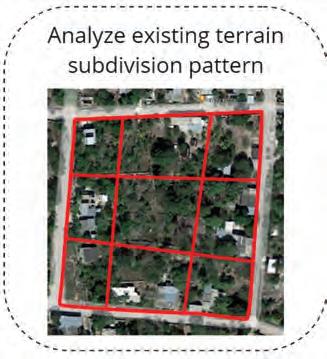
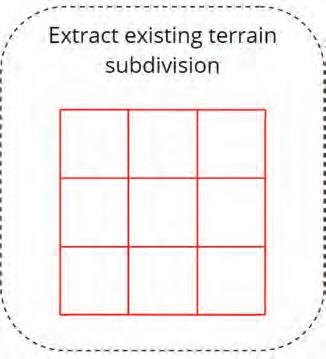
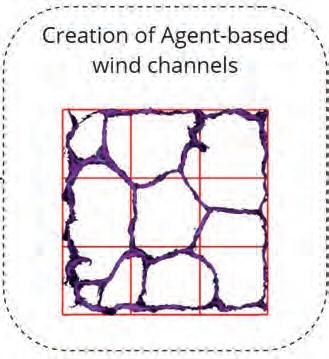
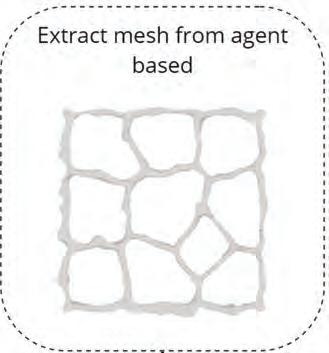
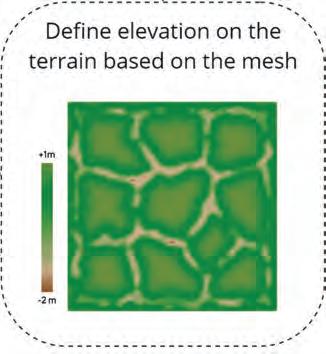
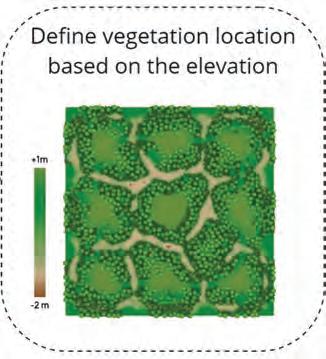
Micro-urbangenerativedesign processsteps
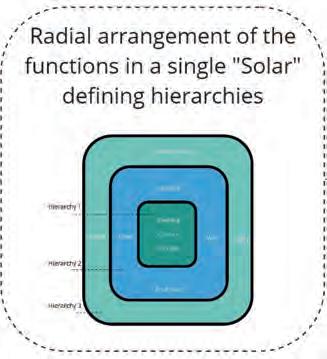
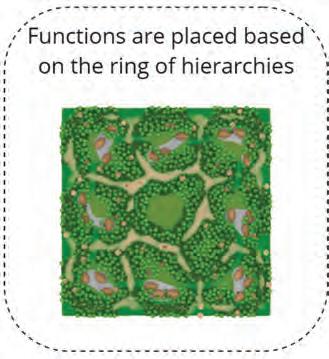
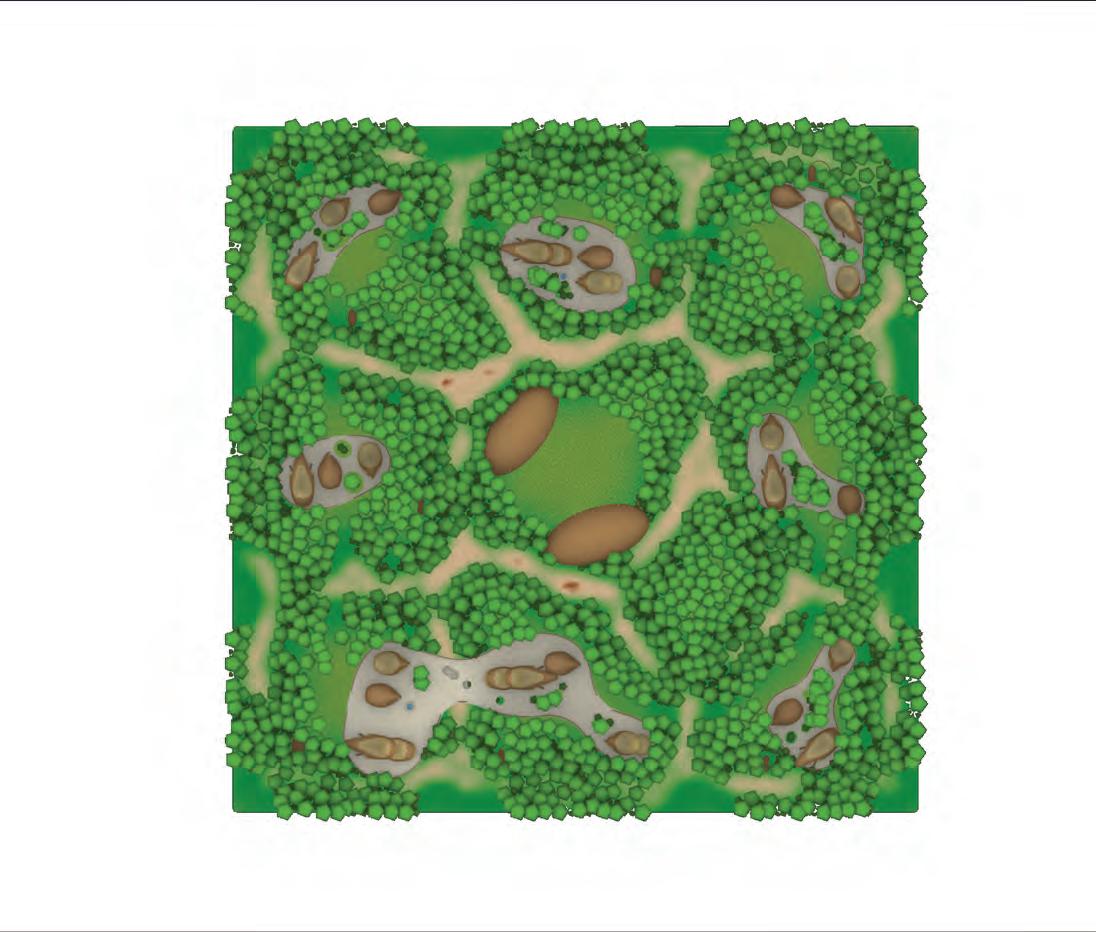
Figure136
InitialtestswereconductedutilisingCFDs. Thelatesttestedindividualshowedaresult thatisworkinginchannellingthewindduring hurricanespeedsof50m/sfromtheeast(figure138).AsecondCFDmodelwascreated wherethehurricanewindshittheplotfrom thenorthinsteadofthepredominanteast direction.(Figure137).Theefficiencyofthe landscapedesignwasalsoprovedwiththis secondsimulation.Athirdfluidsimulation wascreatedwheretheproposeddesignwas
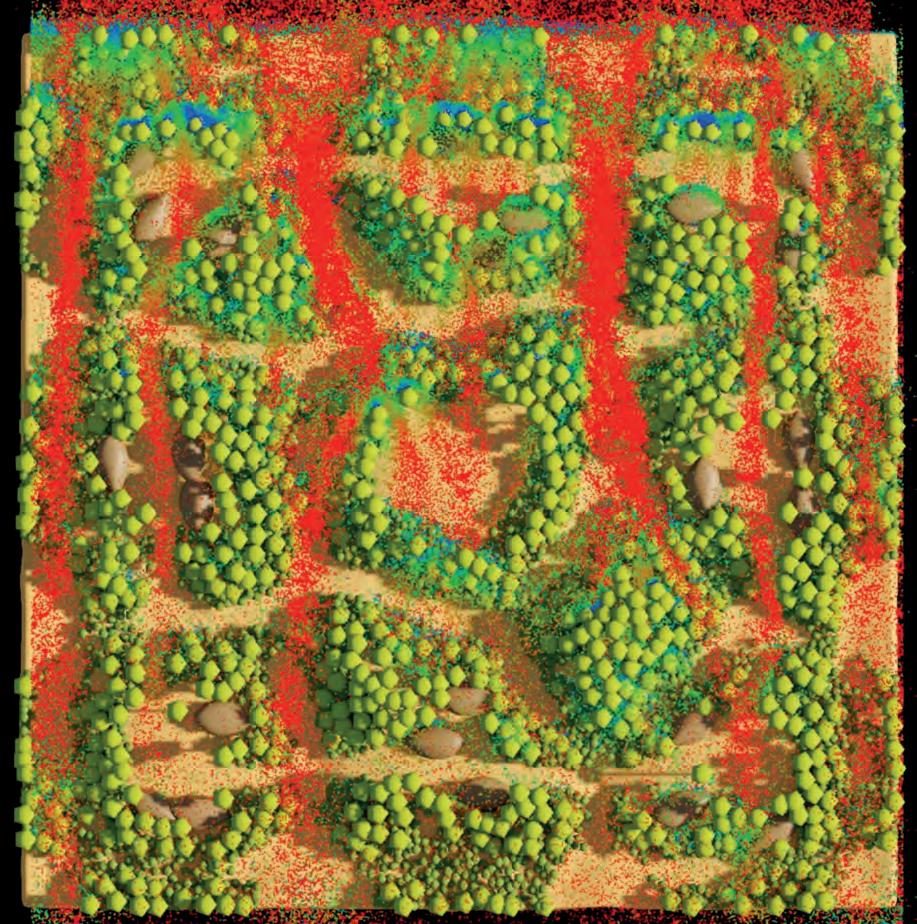
testedinafloodingscenario(Figure139).This scenarioaimedtosimulatehowtheproposeddesignwouldworkatmitigatingfloodingcausedbystormsurgesfromthemain programmes.Followingitslastiteration,the proposeddesignshowedahighrateofwater mitigation,wheretheelevationchange amongthelandscapeworksatprotecting themostvaluablestructureswhilemitigating anyexcesswaterawayfromareaswithahigh floraconcentration.
Figure137 LandscapeDesign NorthWindCFDanalysis
LandscapeDesign EastWindCFDanalysis
Figure139 LandscapeDesign Floodingparticlesimulation
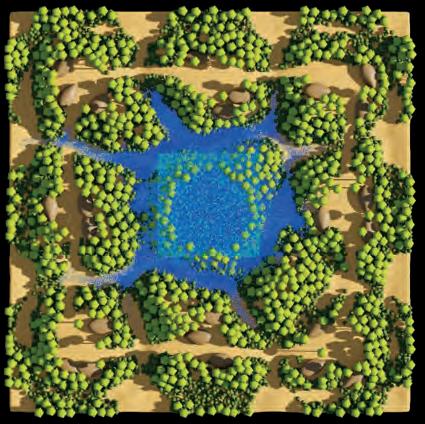
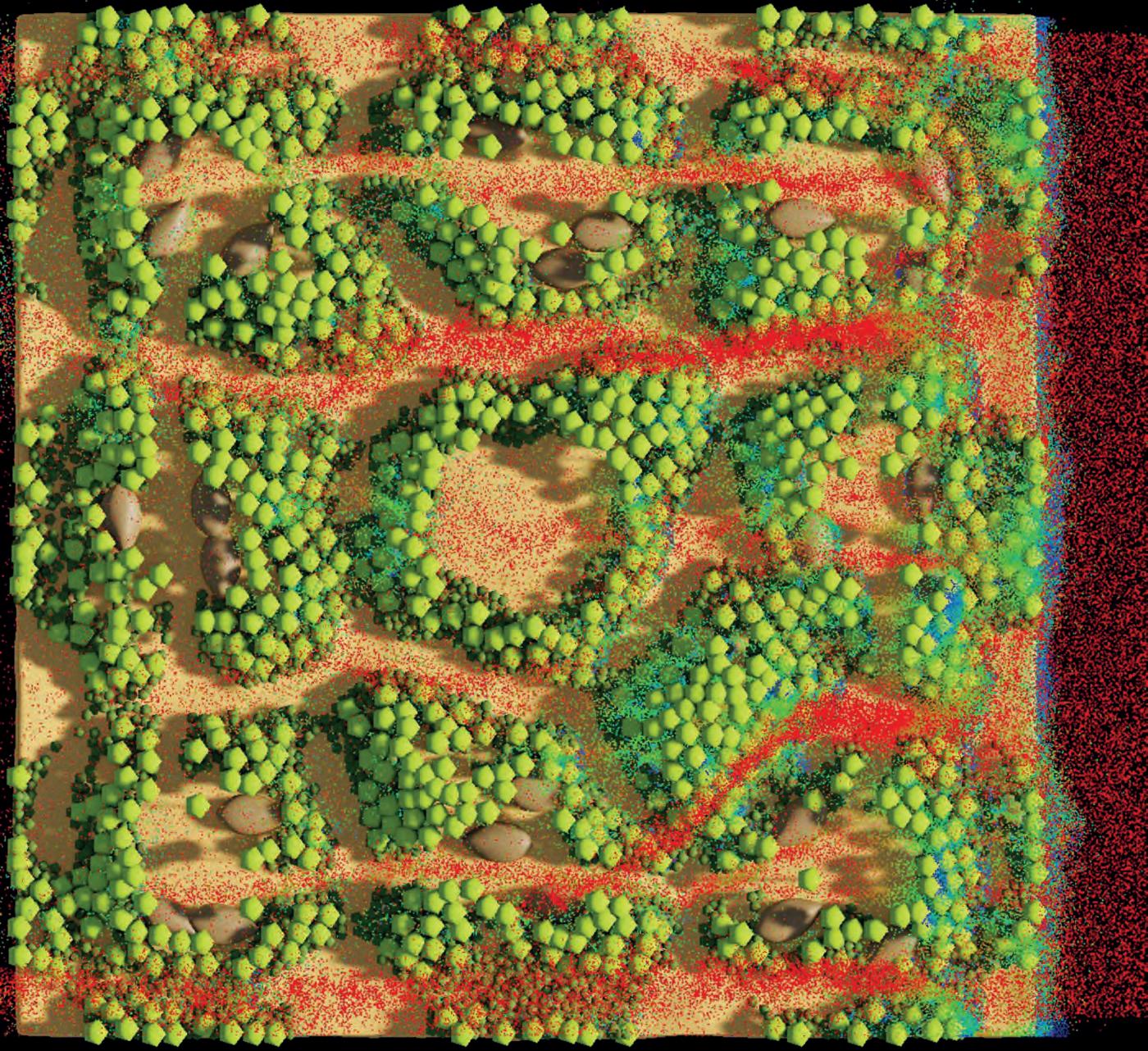
Figure138
250km/h
FUNCTIONALOPTIMISATION
Evolutionaryoptimisationfortheplots’spatialorganisationhasthenbeensetup,aimingtominimiseshading(FC1)onthemain volumes,increasingthedistancebetween themainfunctions(FC2)tocreateanoutdoorspace,andincreasingthedistance betweensecondaryfunctions(FC3)topush awaythewaste,pigstyandbeehivefromthe mainfunctions.Themainvolumes’surface hasbeendividedintoagridofpointsto measurethefirstobjective.Eachofthemre-
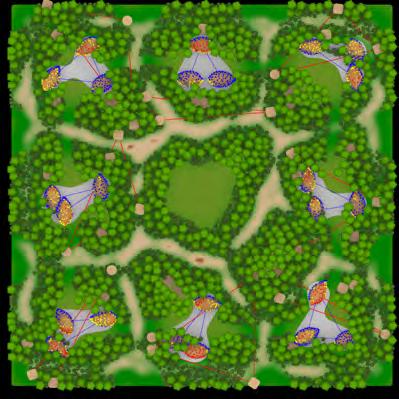
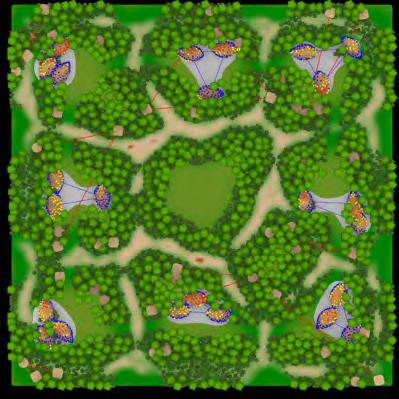
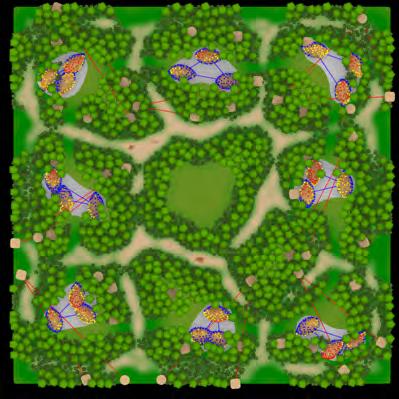
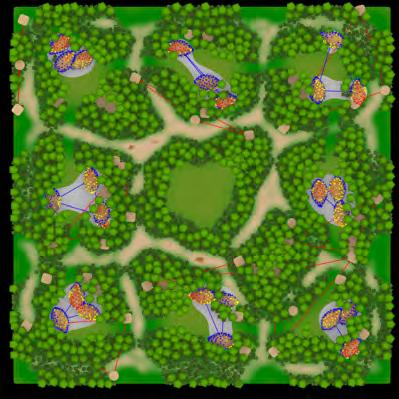
ceivesacertainnumberofraysoutoften. Thesimulationconsidersthetrees,bushes, terrainandmainfunctionsgeometriesas rayblockers.Thetotalnumberofhitsisthen measuredandusedforevaluation.
FC1:Minimisesolargainsonmainvolumes
FC2:Minimisedistancebetweenmainfunctions
FC3:Maximisedistanceofring3functions fromring1volumes
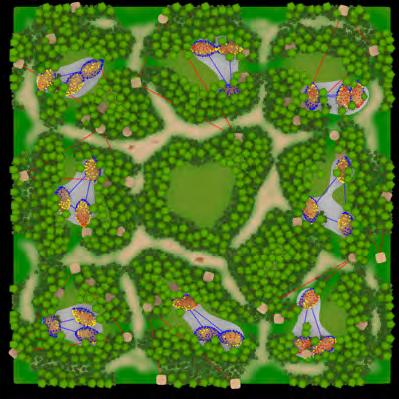
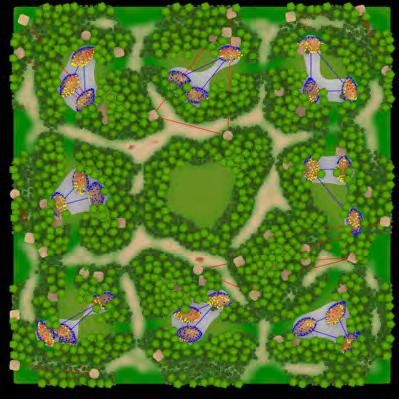
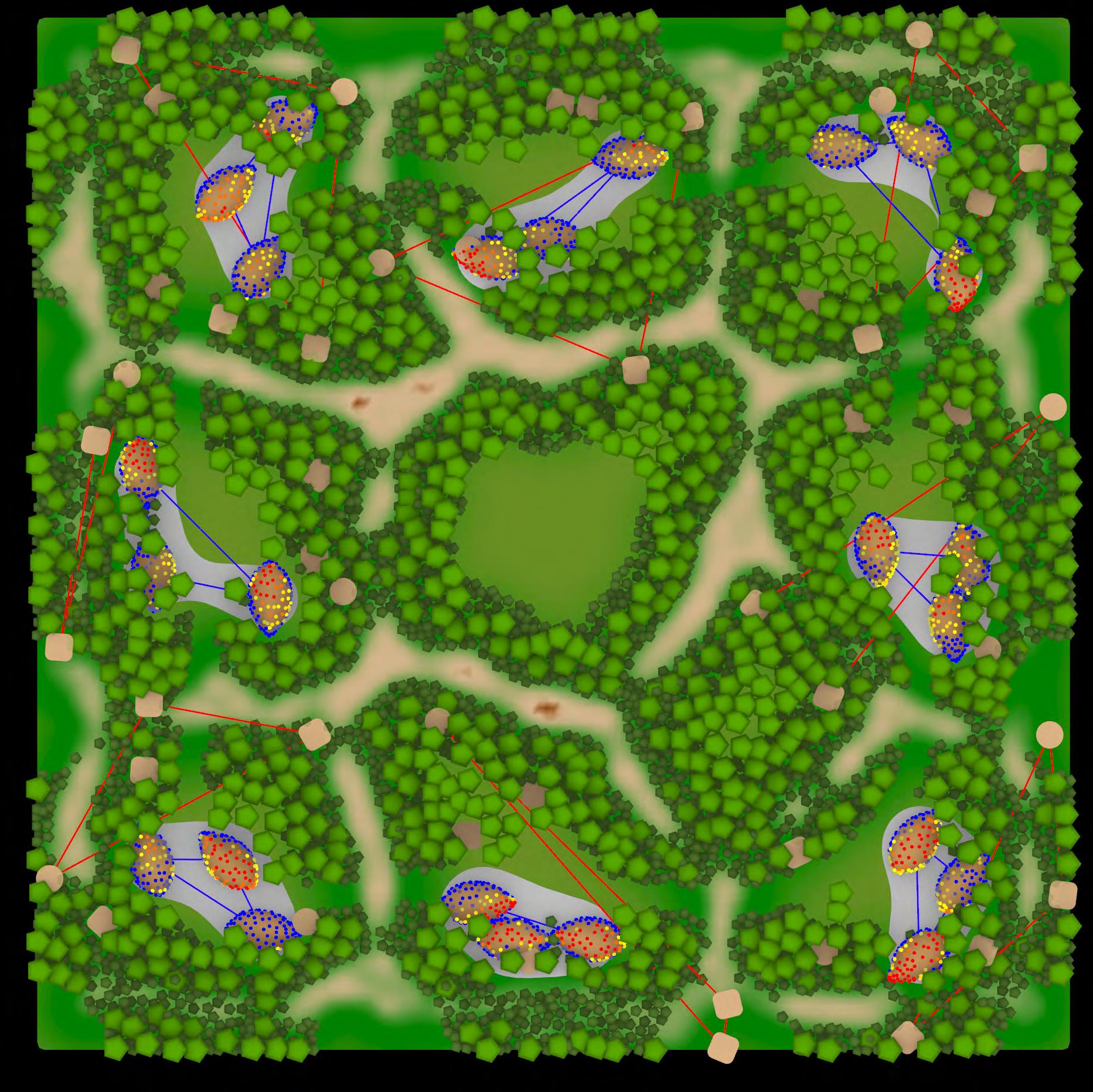
Figure140
SeveralParetoFrontindividuals
Thegenerativealgorithmiscomplexandinvolvesmanycalculations.Thetimecalculationofanindividualsolutiontakes2 minutes.Effortshavebeenputintosimplifyingthealgorithmtoreducethistime.However,therelationofthedifferentcreated geometriesandtheirrulesstillrequiresa consequentcomputingtime.Forthis reason,only25individualsthrough25generationshavebeencreated.Theobjectives optimisationishardtodifferentiatefromone solutiontotheother;duetoasimultaneous optimisationoneightplots.Ithasbeendecidedtoselectthebestaveragesolutionfor
eachfitnesscriteriontocontinuethedesign developmentfurtheron(figures141,142).The optimisationworkedinmanyways.Several plotsontherightshowthatthemain volumesarefarfromeachother,creating moretreesbetweenthemontheterraces’ centres,thankstoestablishedrulesinthe algorithm.Thisnewvegetationalsoparticipatesintheshading.FC1andFC2seemthus toworktogetherinmostcases.AsperFC3, thefunctionsarevisuallyhiddenmostofthe timebythesurroundingtreesbutcanbenoticedfarfromthemainvolumesinmost cases.
Bestaveragesolutionamongfitnesscriteria
Figure141 ParallelCoordinatesPlotgraphshowingthe bestaverage’sperformances
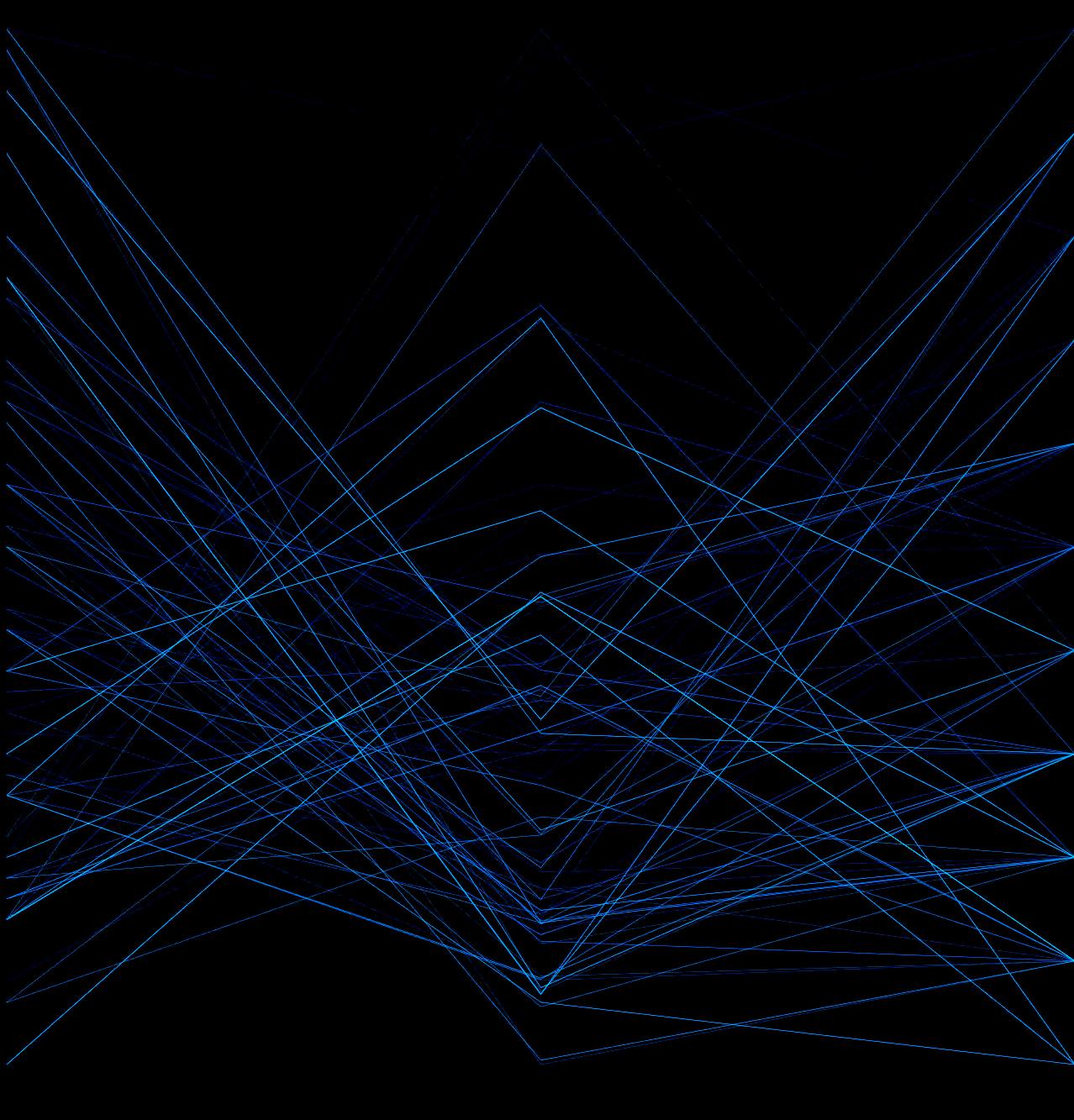
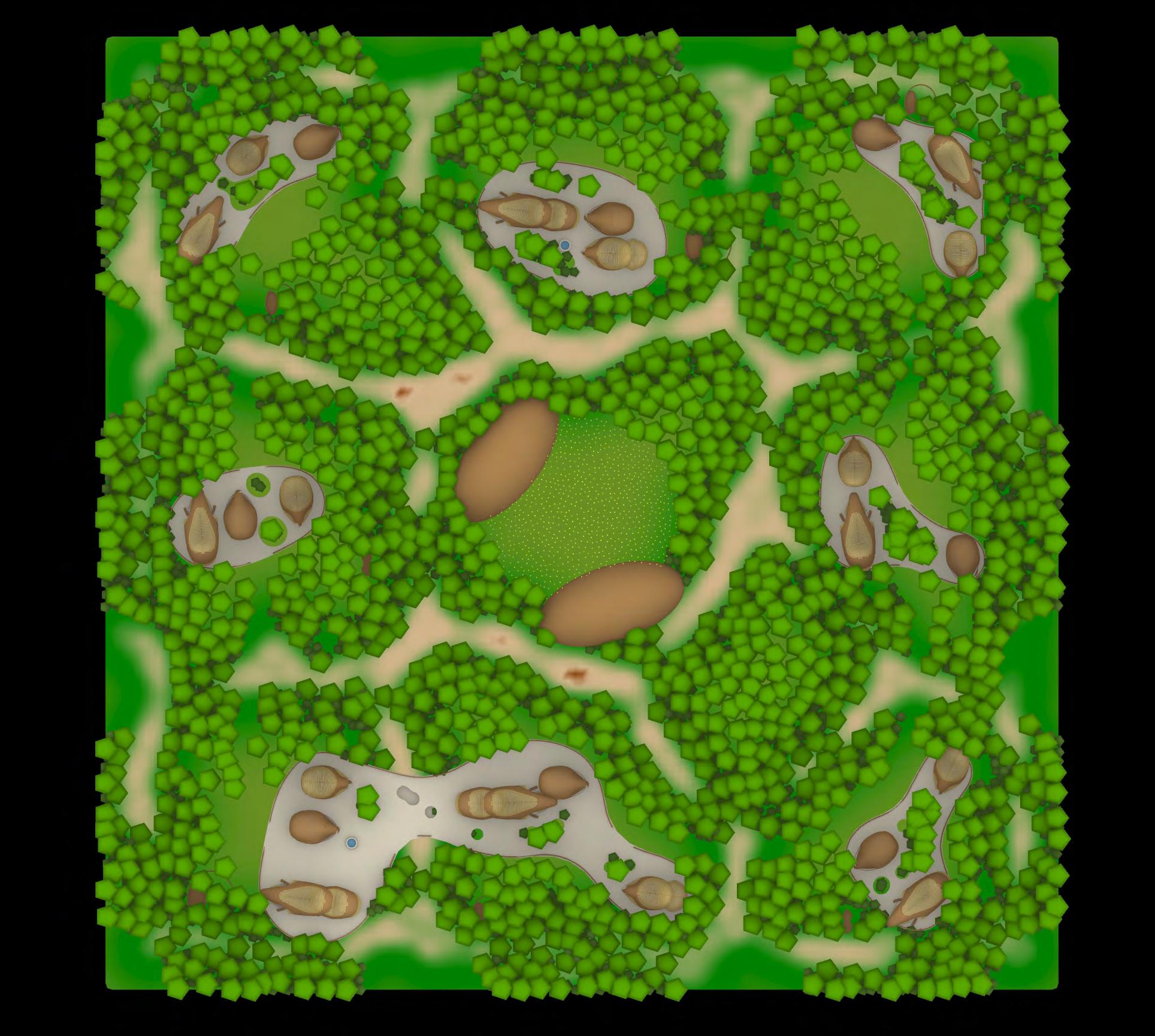
Figure142
PSEUDOCODE
Figure140
Micro-urbandesignpseudocode
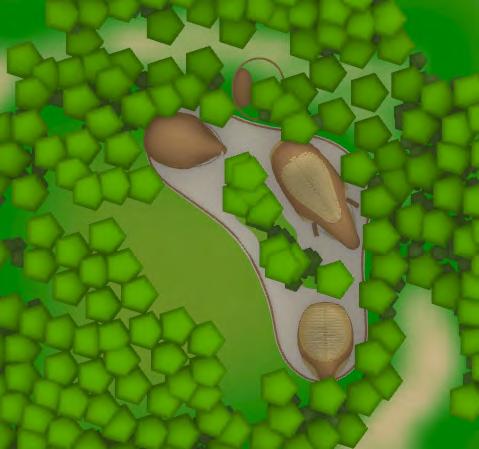
Randomselectionofpointsfromagridonthe terrain.Assigningfunctionsonebyoneandrespectingminimumdistancebypointsculling
InterpolationwithMetaballs,togenerateasurfacethenextruded.Thisterracecreationremovedthevegetationinplace
Thealgorithmreliedonanorganiseddata treewithseverallayers.Everygeneratedobjectislinkedtotheothersbasedondefined rules.Theplacementoffunctionsandtheir terraceaffecttheplacementofvegetation.
Thinwindchannelconnectingtheplots,affectingshrubsandtreesdensityandtherotationof thefunctions.
Withaminimumdistancefromfunctionsandterraceedge,randompointsareselected
Onthecontrary,thevegetationparticipates inthesimulationbyshadingthemorphologies.
Generatingoutdoorspaceterracebydefiningradiusintensity
ThesepointsareinterpolatedwithMetaballsto createmoregreenery,withasoliddifference fromtheterrace
Thealgorithmhasbeeninformedbyinputs characterisingthefamilies’identities.Each familycanconfiguretheirplanbyinforming theirnumberofpeopleandtheirtwomain economicactivities,maytheybeanimal (pigsty,chicken-houseorbeehive)orvegetal (fruittrees,onions,orgarlic)(figure143). Thesepiecesofinformationwillautomaticallysettheappropriatemorphologies.For example,whenafamilyexceedsthree people,anextensionisaddedtothedwelling,andanotherextensiontothekitchen containinganovenisalsoaddedwhenthe familyhasatleastfivemembers.Theactivities’morphologieswillalsobegenerated. Whentwofamiliesgrowbig(Plot1and2), theyeventuallymergeintoasharedplot.
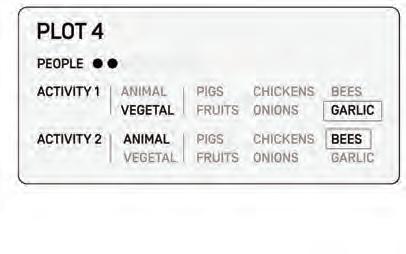
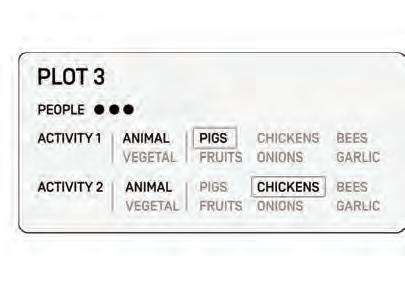
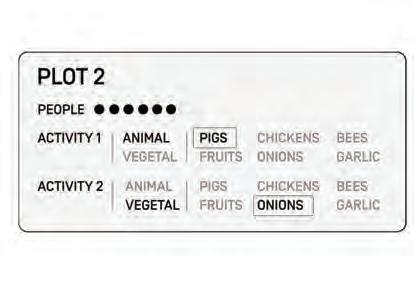
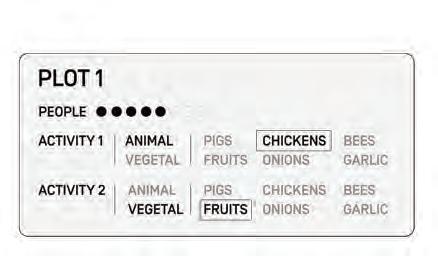
Figure143 Plotsconfigurator
COMMUNITY-BASEDCONSTRUCTIONPROTOTYPE
05/3.3
Micro-urbancommunityfunctions
Themaincommunityactivitiesconsistof themilpaandthebambooworkshop,allowingparticipatoryconstructionprocesses (figure144).Thebendingbambooproduction willconsistofajigmadeofbamboopoles. Curveswillbecataloguedaccordingtotheir geometricsimilaritytoachievemultiple curveswithasmallernumberofjigs.For eachcurve,aconcretefoundationwillbe constructed,readytoreceivethebamboo poles.Thesepolesareprefabricatedinthe bambooworkshopatadefinedheight.Dependingonthefoundation’slocationand
orientation,thepoleswillhelpbendthe bamboobeamstotheirdesiredcurves. Oncethecurveisachieved,thebamboo polesthatformthejigaremovedtothenext foundationsettocreateanothercurve.This methodallowsforacheap,easy,andparticipatorystructurecreation(figure145).The neighboursparticipatingintheconstruction ofthefirstdwellingwilllearntheprinciples andsharetheknowledgeforthenextone.
Figure145
Jigsystemcreationpseudo-code
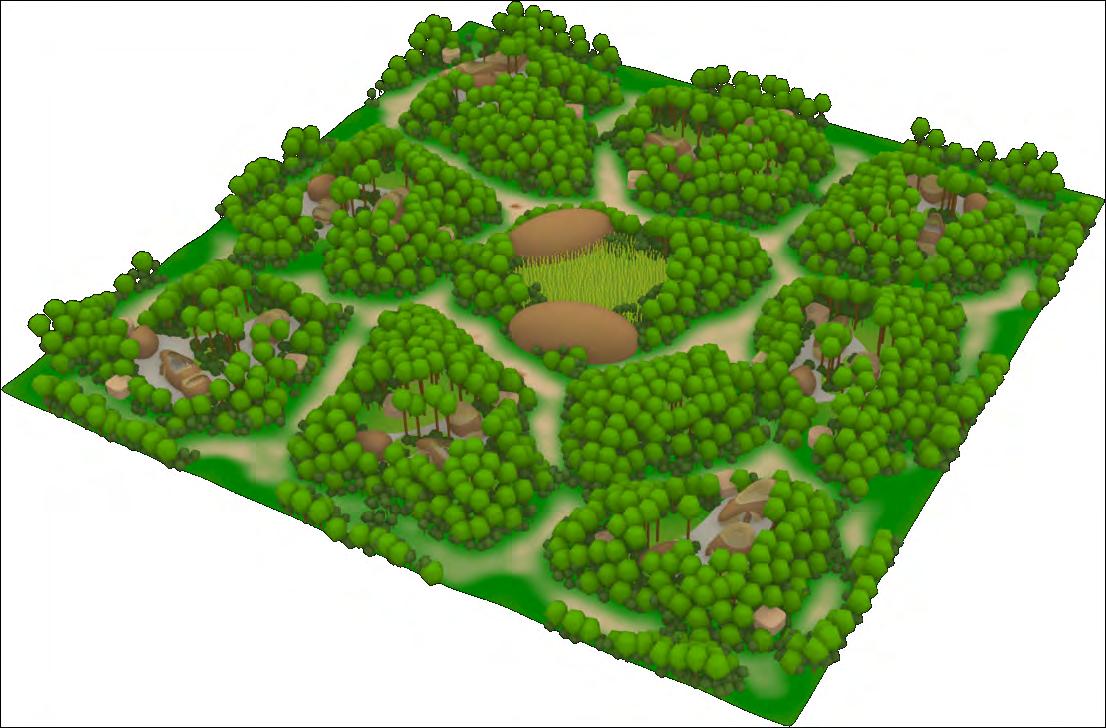
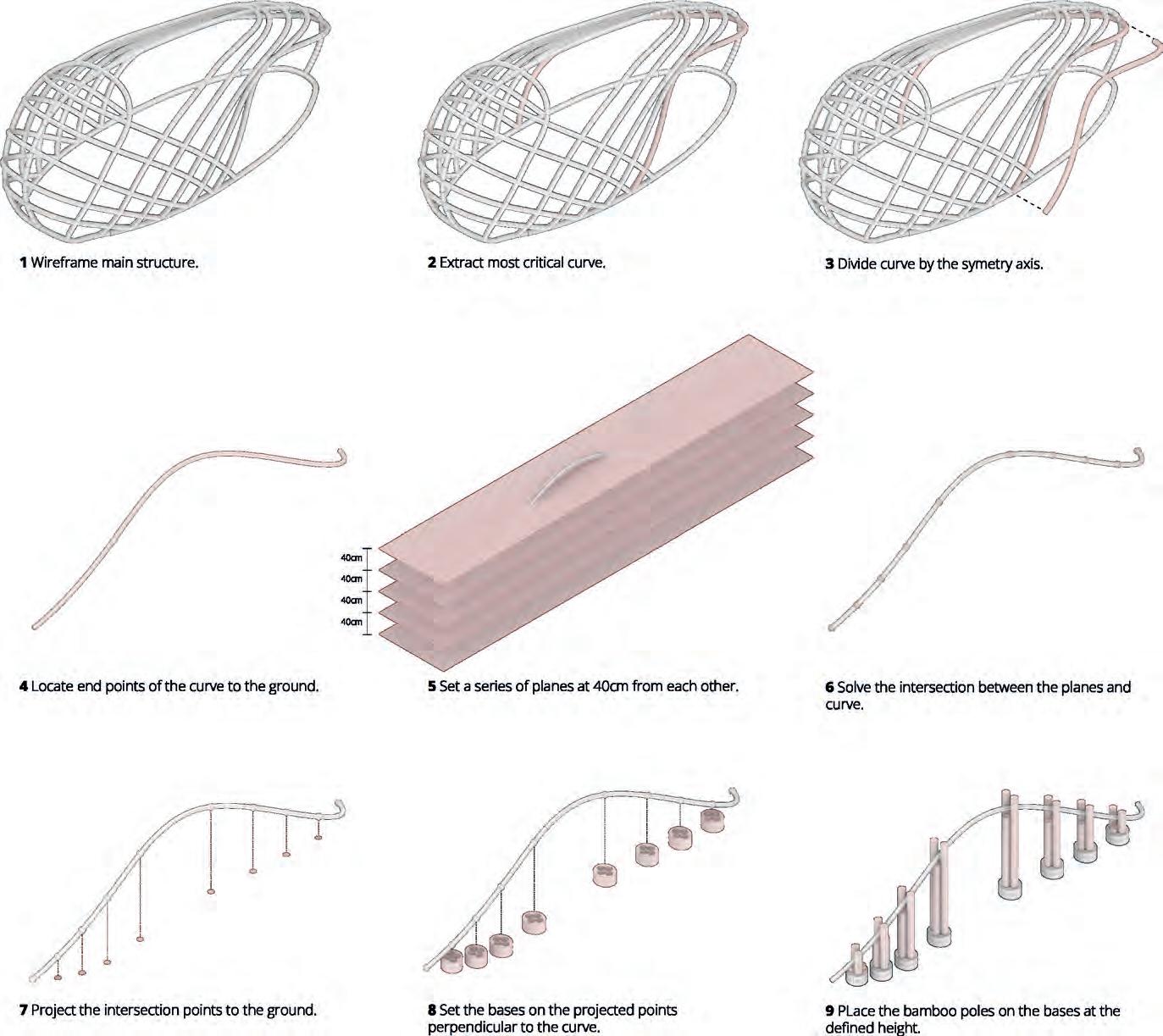
Figure144
MILPASTORAGE
BAMBOOMILPA
BAMBOOWORKSHOP
Thejighasevolvedthroughresearch.This workhasfollowedaniterativeprocessby prototypingatfirstdigitally.Questionsarose regardingmaterialconstruction,easeofassemblyanddisassemblybythecommunity andwaysofoptimisation.Thefirstphysical prototype(figure146)demonstratesthe feasibilityofsuchaprocess.However,severalissueshavebeenhighlighted.Oncethe bamboohadbeenbent,therewasnopossibilityofremovingitfromthejig.Thebamboobeamwassplitinhalfbecausethejig structurewasbendingbecauseoftheforces appliedbythebentbamboo.Thesplithas beennecessarytoreleasesomepressure. Regardingthisissue,asecondprototype hasbeencreated(figure147),withthicker poles,strongerconnectionstothefoundationbase,anddemountabletoppartstoremovethebentbeamfromthejig.Theprototypecouldholdabentbeamwithout splittingitinhalfthistime.Thisjigsystem wasworking,butaftersomethoughtsona possibleupscalingforreal-lifeuse,itwas decidedthatthesystemneededtobereconsidered.Afinalprototypehasbeencreated(figure148),workingfor1/10and1/1 scales.Thematerialconsumptionhasbeen improved,andthesystemisnowusing bamboopoles.
Bamboobendingjig-Prototype2-Scale1/10
Bamboobendingjig-Prototype2-Scale1/10
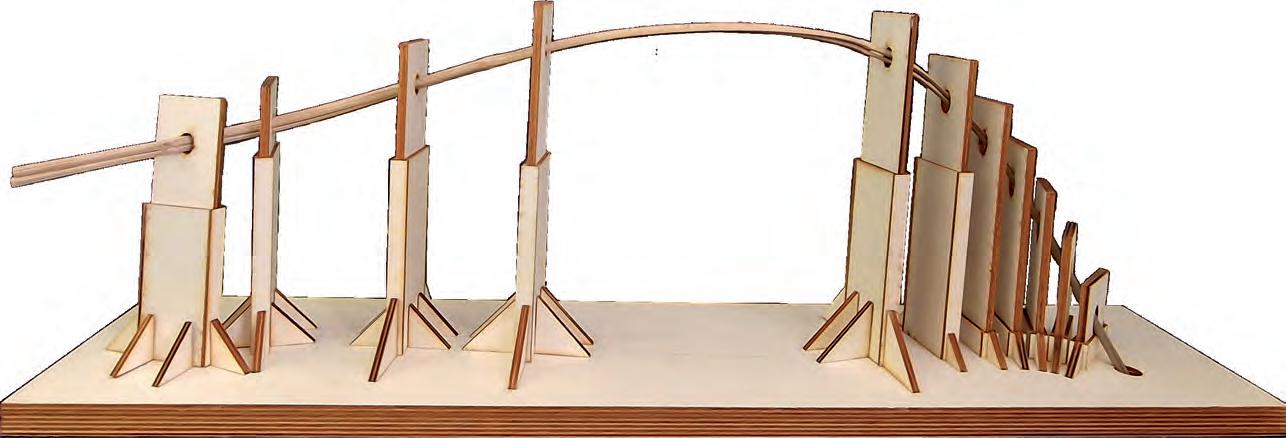
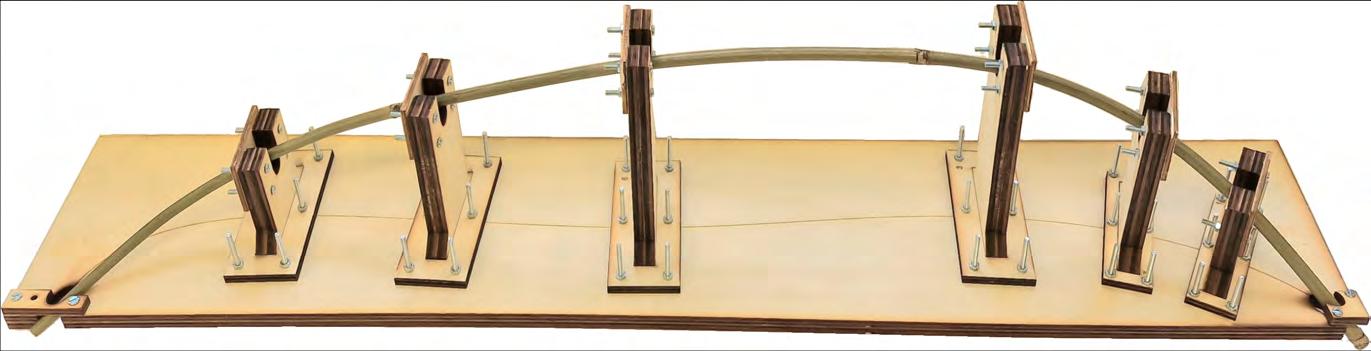
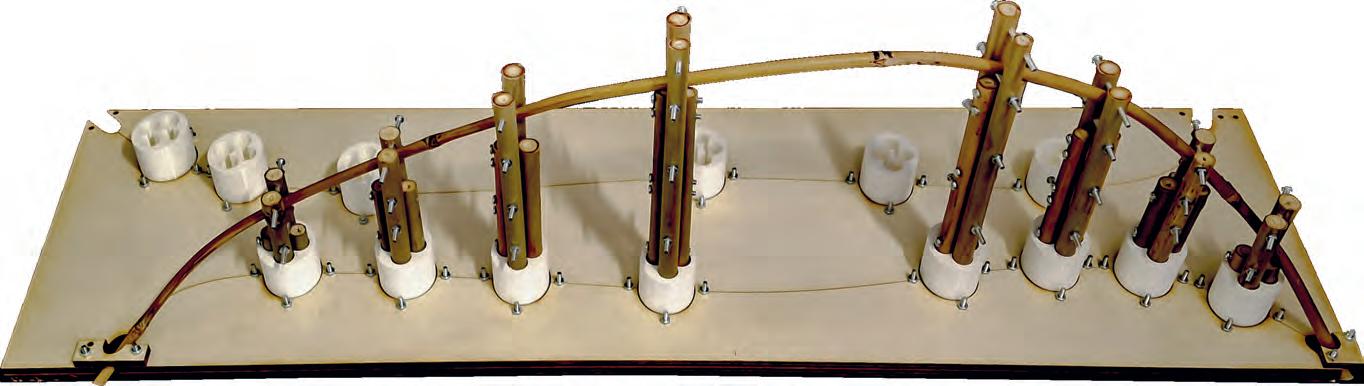
Figure146
Bamboobendingjig-Prototype1-Scale1/10
Figure147
Figure148
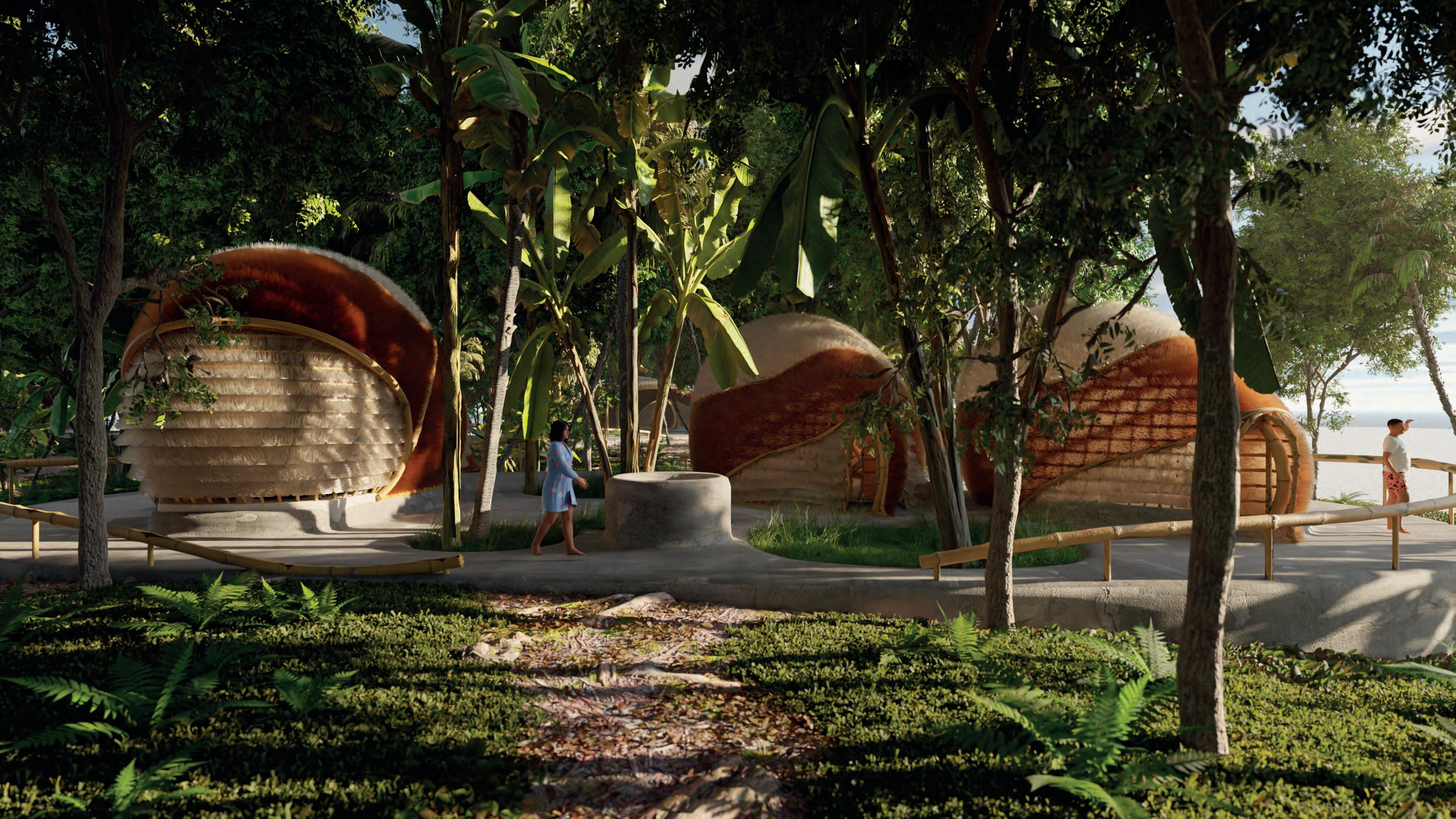
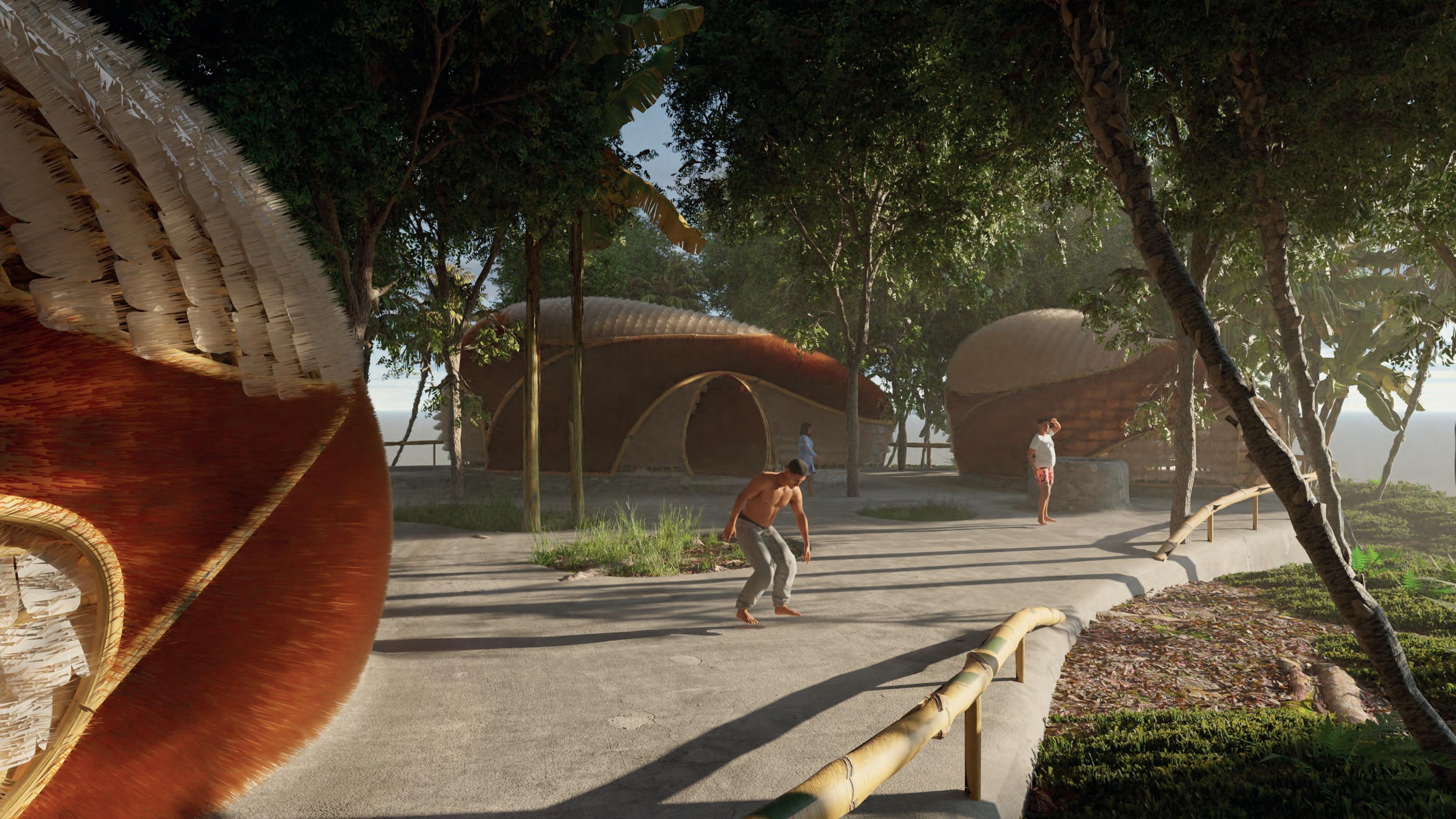
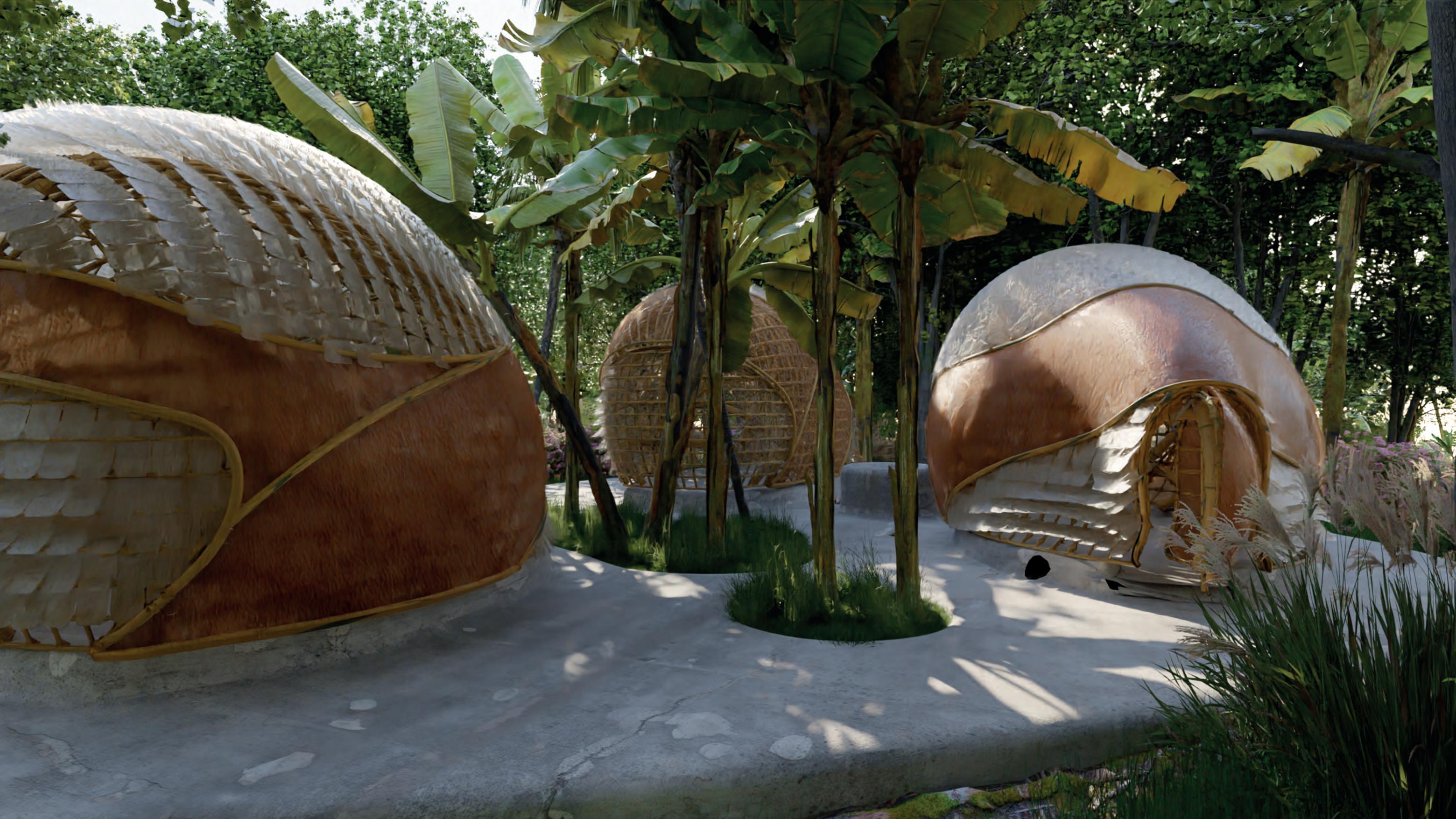
RURALSAFEZONES
05/4.1
05/4 EVACUATIONNETWORK
Tocontinuefurtherontheresearchforthe nextstagethatwillfocusoncommunity functionsandreinventingtheurban strategiesinsafezones,theinitialdevelopmentofanevacuationnetworkwascreated. Currentevacuationnetworkstrategiesset bythelocalgovernmentaremarginalizinga significantpercentageoftheruralpopulation.Mostevacuationdistancesaretoolong
forpeoplewithoutaccesstocarsormotorizedtransportation.(Figure152)thedistance betweenMeridaandCelestumis90km(Figure153),animpossiblefeatforsomeonetryingtoevacuatewithoutacarduringstorm conditions.Anewsolutionisneeded.
Yucatancoastevacuationplan
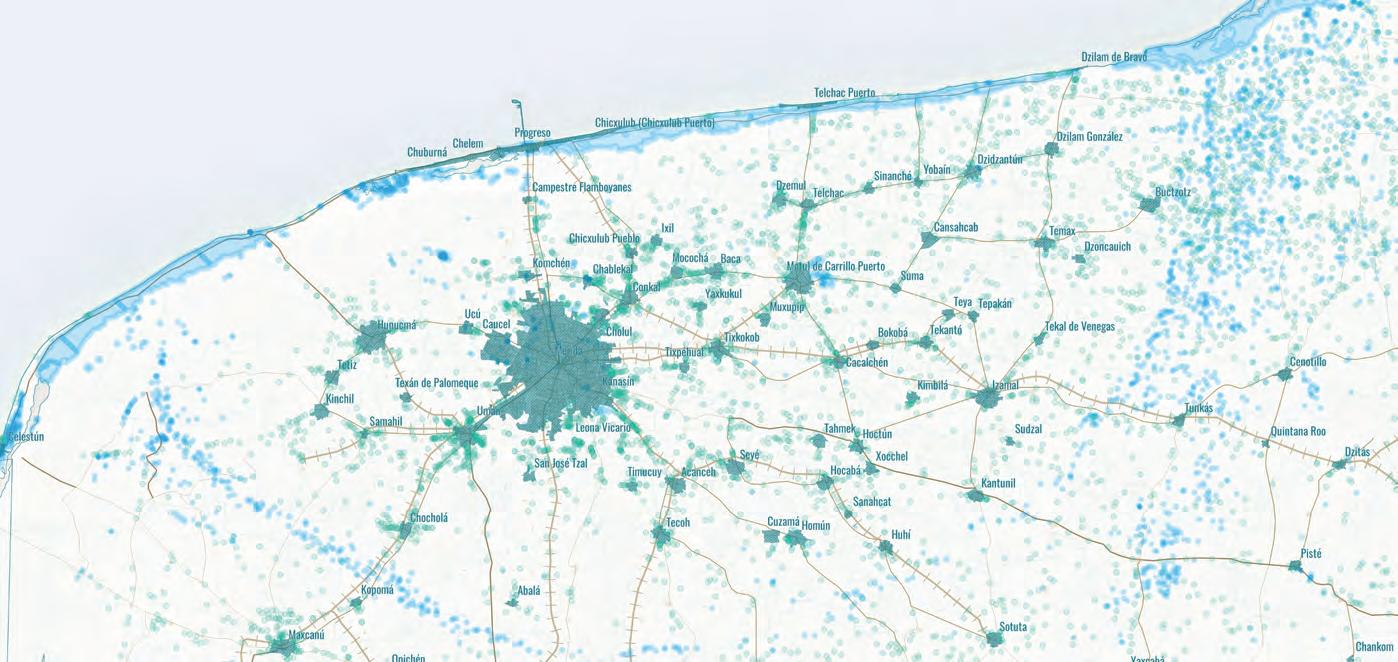
Yucatancoastevacuationplandistances
Figure152
Merida
Celestun Sisal
Hunucma Chuburna
Merida Merida Chelem Telchac Puerto
Crisanto Chabihau
Clara Dzilam de Bravo
Figure153
IdentifingMayansettlmentswithina1hwalk rangefromcities’safezones
Thedevelopmentofthisnewevacuation networkbeganbyidentifyingMayancommunitiesonthestate’snortherncoastand areaswithahighprobabilityofbecoming newdesignatedsafezones.Thesecommunitiesweresortedbya1-hourwalkradius distance(Figure154).Analgorithmwascreatedtoidentifywherenewsafezonecommunitieswouldbeneededtoprovideample coverageofthestudyzone(Figure155)and toincorporatethesenewsettlementsinto theexistingroadnetwork.(Figure156)Lastly, aclusteringalgorithmwasusedtoidentify whichcommunitiesshouldevacuateto whichsafezone.Furtherdevelopmentfor thisnetworkisplannedduringtheMarch
stagesofthisresearch.Althoughthedevelopmentofthisresearchprovidessomeexcitingpossibilitiesforthisacademicwork,it remainsafar-fetchedpossibilitythatthe authoritiescanimplementthelessons learnedandabstractedfromthisstudy.
Outputofanevolutionaryoptimisationtocreatenewruralsafezones
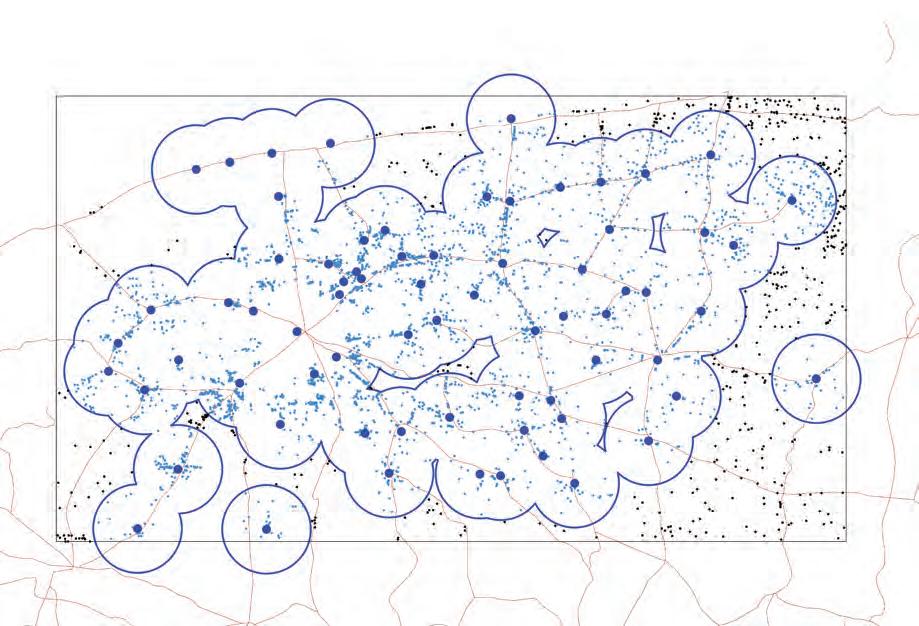
ClusteringMayanSettlementswiththeir closestsafezones
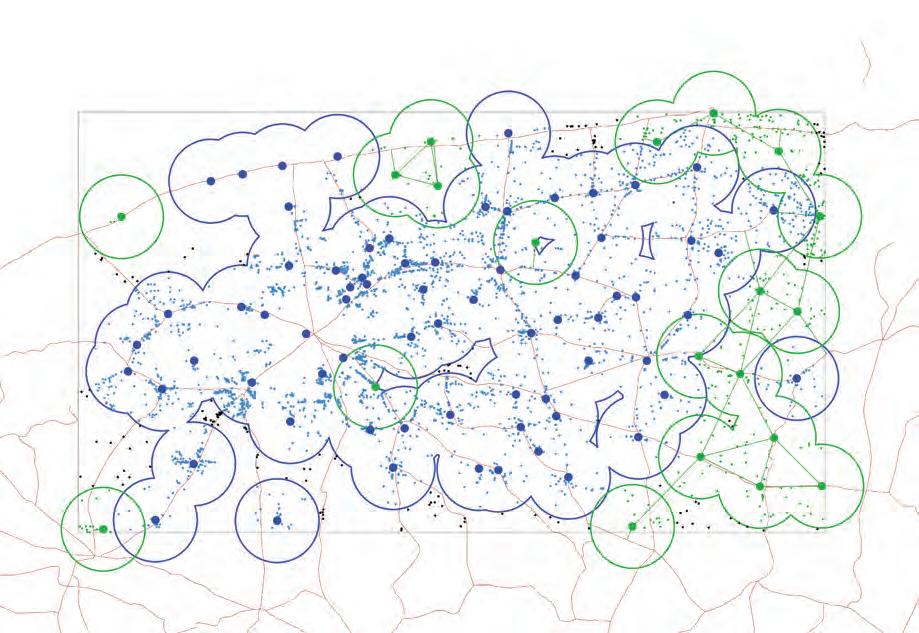
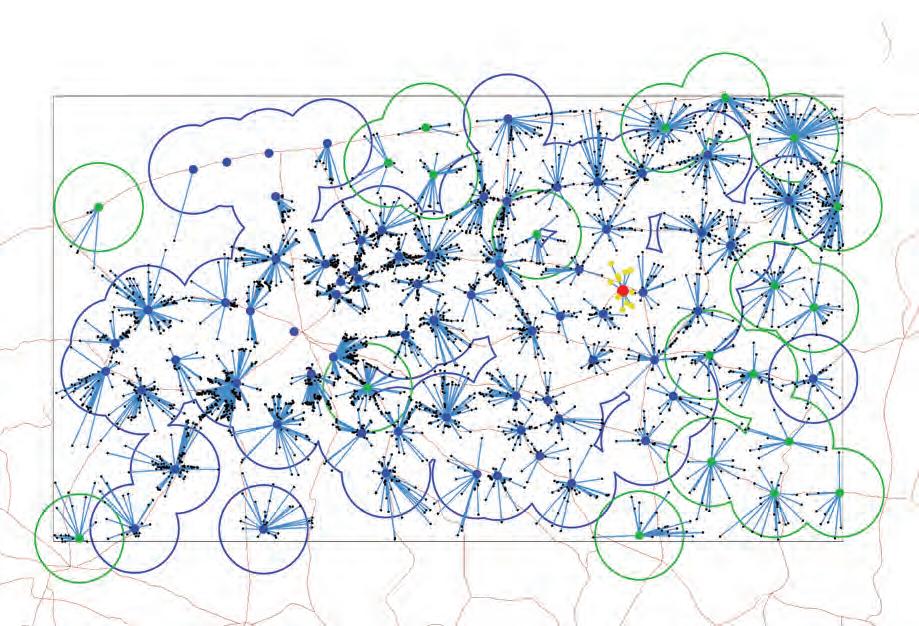
Figure154
Figure156
Figure155
06/
DISCUSSION
Thisprojectwaschallenginginmany ways.Workinginamultiscalarapproach unveiledseveraltopicstoreflecton.Climatechangeincreasesthedamage causedbyhurricanesintheYucatanPeninsulaeachyear,aswellasextinguishing localspeciesusedforconstructionby theMayanpeople,makingithardertorebuildthedamagesafterastorm.This thesisextensivelyresearchestheadequatesolutiontosuchissues,encompassingwind-drivenform-finding,materialresearch,digitalandphysical experiments,constructiontechniques, generativelandscapearchitectureand micro-urbandesign.
Atamorphologicalscale,thegenerated design,alongwiththeanalyseddataregardingwindmitigation,andstructural resistanceunderextremehurricane windconditions,demonstratesthepossibilityofrethinkingtheMayanhouseto resisttheseclimaticeventswhilehaving efficientthermalregulationwiththeuse oflocalmaterialsandconstructiontechniques.
Moreresearchontheremovableand permanentskinpanelsneedstobeundertakenintheMArchstage.Additionally,morestructuredetailsandanassemblymanualshouldbedevelopedto makepossibleaparticipatoryconstructionprocessthatengagesthecommunitieswiththeproject.Moreresearchand developmentwillbecarriedoutregardingthecurvedbambooworkshoptodevelopacheap,fastandeasywayto achievethecurvesproposedinthedigitalexperiments.Moreover,allthein-
sightfulinformationobtainedinthefibre skinpanelsexperiments,suchasthehygroscopicbehaviourofthematerialand compositesbetweenfibresandresins, willbethesteppingstonetoamoreprofoundstudyforanalternativesolution forthepalmleavesonthetraditional Mayanhouse.
Onthelandscapeandmicro-urbanscale, abroadrangeofdigitalexperiments weredeveloped,informedbyenvironmentalandsocialresearch.Theseexperimentscomprisedare-arrangingofthe activitiesofthetraditionalplot,aflora paletteandanewwind-drivendesign landscapestrategythathavebeenimplementedtocreateasenseofcommunity, mitigatewindforcesandavoidfloods. Whiletheseexperimentsshowedpromisingresults,furtherdevelopmentonthe landscapestrategyshouldbeconducted intheMArchstage,addressingthe coastalcommunitiesmorelikelytobe damagedduringahurricane.Research regardingcoralreefsandcoastaldunes willbeconductedtoprovideasuitable solutiontomitigatehurricanedamage beforeenteringtheland.
Finally,althoughsystematicresearchhas beenconductedonthetraditional Mayanwaysoflife,constructiontechniques,economicactivitiesandmore, furtherresearchshouldbedoneinsitu inordertoaddressmoreprofoundlythe necessitiesofthesepeople,helpingto makeaseamlesstransitionfromtheir traditionalarchitecturetoanewproposal thatrespondstothenecessitiesofa changingworld.
BIBLIOGRAPHY
“AboutBASE-.”AccessedAugust26,2022.http://www.base-builds.com/our-houses/.
Abraham,Ajith,andLakhmiJain.“EvolutionaryMultiobjectiveOptimization.”InEvolutionaryMultiobjectiveOptimization,editedby AjithAbraham,LakhmiJain,andRobertGoldberg,1–6.Advanced InformationandKnowledgeProcessing.London:Springer-Verlag, 2005.https://doi.org/10.1007/1-84628-137-7_1.
“AnnonaMuricata-PlantFinder.”AccessedAugust9,2022.https:/ /www.missouribotanicalgarden.org/PlantFinder/PlantFinderDetails.aspx?taxonid=275965.
Areces-Berazain,Fabiola.“ParmentieraAculeata(Cucumber Tree).”Preprint.InvasiveSpeciesCompendium,December2, 2020.https://doi.org/10.1079/ISC.86635881.20203482924.
Associates,RobertMcNeel&.“Rhinoceros3D.”www.rhino3d.com. AccessedAugust23,2022.https://www.rhino3d.com/.
“AutodeskCFD|ComputationalFluidDynamicsSimulationSoftware.”AccessedJanuary10,2022.https://www.autodesk.com/ products/cfd/overview.
Science.“Aztec,MayaWereRubber-MakingMasters?,”June30, 2010.https://www.nationalgeographic.com/science/article/ 100628-science-ancient-maya-aztec-rubber-balls-beheaded.
BambooU,Marketing.“TraditionalMethodsForTreatingBamboo.” BambooU,June27,2022.https://bamboou.com/traditionalmethods-for-treating-bamboo/.
GuaduaBamboo.“BambusaVulgaris-CommonBamboo.”AccessedAugust10,2022.https://www.guaduabamboo.com/blog/ bambusa-vulgaris.
Bioneers.“KongjianYu–‘SpongeCities’:Visionary,Nature-Based UrbanDesignfromChina.”Bioneers(blog),May27,2022.https://
bioneers.org/kongjian-yu-sponge-cities-visionary-nature-urbandesign-china-zstf2206/.
warbletoncouncil.“BrosimumAlicastrum:Characteristics,Habitat, Uses,Cultivation,Care-Science-2022.”AccessedAugust9,2022. https://warbletoncouncil.org/brosimum-alicastrum-11194.
“CeibaPentandra-PlantFinder.”AccessedAugust9,2022.https:/ /www.missouribotanicalgarden.org/PlantFinder/PlantFinderDetails.aspx?taxonid=277950.
GuaduaBamboo.“ChusqueaSpeciesList.”AccessedAugust10, 2022.https://www.guaduabamboo.com/blog/chusquea-specieslist.
Clifton,Dixon.“YucatanaftertheWind:HumanandEnvironmental ImpactofHurricaneGilbertintheCentralandEasternYucatan Peninsula.”GeoJournal23,no.4(April1991).https://doi.org/ 10.1007/BF00193607.
ARCHOUTLOUD.“Competitions:CurrentArchitectureCompetitions.”AccessedAugust26,2022.https://www.archoutloud.com/ shelter.html.
“CrescentiaCujete-PlantFinder.”AccessedAugust9,2022.https:/ /www.missouribotanicalgarden.org/PlantFinder/PlantFinderDetails.aspx?taxonid=277886.
CruzRios,Raul,andRolandoRodrigoZapataBello.“ATLASdepeligrosporfenomenosnaturalesdelestadodeyucatan.”Gobierno estataldeYucatan,2018.
“DonJoseM.BeringuerSr.BambooVillageinSorsogonCityResistsTyphoonQuintaandRolly-,”December18,2020.http://www .base-builds.com/news/sorsogon-update/.
“ENH563/ST404:MangiferaIndica:Mango.”AccessedAugust9, 2022.https://edis.ifas.ufl.edu/publication/ST404.
EustáquioMoreira,Luís,andMarioSeixas.“AnalysisoftheBendingBehaviorofBambooCulmswithaFullLongitudinalCrack.”EngineeringStructures251(January2022):113501.https://doi.org/ 10.1016/j.engstruct.2021.113501.
evahori.“ISSHOarchitects’ShinminkaHouseinJapanBindsthe VernaculartoTechnology.”designboom|architecture&design magazine,April19,2017.https://www.designboom.com/architecture/isshoarchitects-shinminka-house-okinawa-japan-04-19-2017/.
wallacei.“EvolutionaryEngineforGrasshopper3D.”AccessedJanuary10,2022.https://www.wallacei.com.
Foundation,Blender.“Blender.Org-HomeoftheBlenderProject -FreeandOpen3DCreationSoftware.”Blender.Org(blog).AccessedAugust23,2022.https://www.blender.org/.
García,Enriqueta.ModificacionesalSistemadeClasificaciónClimáticadeKöppen.5thed.SereiLibros,Num.6.InstitutodeGeografia-UNAM,2004.
Gilman,EdwardF.,andLauraPatersonSadowski.“Chapter7— ChoosingSuitableTreesforUrbanandSuburbanSites:SiteEvaluationandSpeciesSelection:ENH1057/EP310,9/2007.”EDIS 2007,no.20(November19,2007).https://doi.org/10.32473/edisep310-2007.
“GreenSchoolInternational|GreenSchoolInternationalIsGiving ItsStudentsaNatural,HolisticandStudent-CenteredEducationin OneoftheMostAmazingEnvironmentsonthePlanet.”Accessed August26,2022.https://www.greenschool.org/.
Groot,RudolfS.de.FunctionsofNature:EvaluationofNaturein EnvironmentalPlanning.ManagementandDecisionMaking. Groningen:Wolters-Noordhoff,1992.
GuaduaBamboo.“GuaduaSpeciesList.”AccessedAugust10, 2022.https://www.guaduabamboo.com/blog/guadua-species-list.
“HistoricalHurricaneTracks.”AccessedMay9,2022.https://coast .noaa.gov/hurricanes/#map=5.21/22.36/-90.874&.
TheWeatherChannel.“HurricaneDamagesandEffects.”Accessed July18,2022.https://weather.com/safety/hurricane/news/hurricane-damages-effects-20120330.
“HurricanesinHistory.”AccessedJuly18,2022.https:// www.nhc.noaa.gov/outreach/history/.
“Hurricanes:ScienceandSociety:HurricaneWindsatLandfall.”AccessedJuly18,2022.http://hurricanescience.org/society/impacts/ windsatlandfall/.
NEEF.“IncreasedHurricaneIntensity.”AccessedJuly18,2022.https://www.neefusa.org/nature/water/increased-hurricane-intensity.
Janssen,JulesJ.A.BuildingwithBamboo:AHandbook.SecondEdition.Warwickshire,England:IntermidiateTechnologyPublications, 2007.
“Karamba3D–ParametricEngineering.”AccessedAugust23, 2022.https://www.karamba3d.com/.
ScienceOnaSphere.“Koppen-GeigerClimateChanges-19012100.”AccessedJuly19,2022.https://sos.noaa.gov/catalog/datasets/koppen-geiger-climate-changes-1901-2100/.
Kundu,PijushK.,IraM.Cohen,andDavidR.Dowling.FluidMechanics.5thed.Waltham,MA:AcademicPress,2012.
Lucas,Susanne.Bamboo.London:ReaktionBooks,2013.
“MapaDigitaldeMéxicoV6.”AccessedMay19,2022.http://gai-
a.inegi.org.mx/mdm6/?v=bGF0OjIwLjQ1Mjc3LGxvbjotOTAuMDM2OTksejo0LGw6YzEwMg==.
SecretaríadeCultura/SistemadeInformaciónCultural.“Mayas.” AccessedJuly20,2022.https://sic.cultura.gob.mx/ficha.php?table=grupo_etnico&table_id=15.
AtlasdelosPueblosIndígenasdeMéxico.INPI.“Mayas-Etnografía.”AccessedJuly19,2022.https://atlas.inpi.gob.mx/mayas-etnografia/.
“Mexico’sMayaCouldPredictHurricanes.”AccessedJune5,2022. https://www.undrr.org/news/mexicos-maya-could-predict-hurricanes.
Michener,WilliamK,ElizabethRBlood,IKeithLBildstein,MarkM Brinson,andLeonardRGardner.“ClimateChange,Hurricanes andTropicalStorms,andRisingSeaLevelinCoastalWetlands,” 2022,33.
Minke,Gernot.BuildingwithBamboo:DesignandTechnologyofa SustainableArchitecture.Basel,Switzerland:BirkhauserBasel, 2012.
Gardenia.net.“MusaxParadisiaca(EdibleBanana).”AccessedAugust9,2022.https://www.gardenia.net/plant/musa-x-paradisiaca. NationalTropicalBotanicalGarden.“NationalTropicalBotanical Garden|PouteriaSapota-PlantDetail-TropicalPlantsDatabase.”AccessedAugust9,2022.https://ntbg.org/.
PalmaMoreno,German.Lacasamayaysusolar:OrientedeYucatan.1sted.Morelos,Mexico:InstitutoMexicanodeTecnologia delAgua(IMTA),1988.
“PerseaAmericana-anOverview|ScienceDirectTopics.”AccessedAugust9,2022.https://www.sciencedirect.com/topics/agricultural-and-biological-sciences/persea-americana.
“ProgramaEspecialdeciclonestropicales,”June7,2021. Rao,SingiresuS.TheFiniteElementMethodinEngineering.6th edition.Cambridge,MA:Elsevier,2017.
ArchDaily.“RebuildStrategyforHoboken/OMA,”November19, 2013.https://www.archdaily.com/450236/resist-delay-store-discharge-oma-s-comprehensive-strategy-for-hoboken.
Reguero,B.G.,CésarArmandoAcevedoRamírez,andFernando SecairaFajardo.“CoralReefsandDunesinCoastalProtection.” TheNatureConservancyTechnicalseries.TheroleofnaturalsystemsincoastaldynamicsintheMexicanCaribbean(2017).
OMA.“Resist,Delay,Store,Discharge:AComprehensiveUrban WaterStrategy.”AccessedAugust26,2022.https://www.oma.com /projects/resist-delay-store-discharge-comprehensive-urban-water-strategy.
Riffle,RobertLee,PaulCraft,andScottZona.AnEncyclopediaof CultivatedPalms.Secondedition.Portland,Oregon:TimberPress, 2012.
Robeva,RainaS.,andTerrellL.Hodge,eds.MathematicalConceptsandMethodsinModernBiology:UsingModernDiscrete Models.Amsterdam:Elsevier/AcademicPress,2013.
GobiernodelEstadodeYucatán.“Roble.”AccessedAugust9, 2022.http://www.yucatan.gob.mx/?p=roble.
Roig,FidelA.,JuanJ.JimenezOsornio,JoseVillanuevaDiaz,Brian Luckman,HolmTiessen,AndreaMedina,andElkeJ.Noellemeyer. “AnatomyofGrowthRingsattheYucatánPeninsula.”Dendrochronologia22,no.3(September2005):187–93.https://doi.org/ 10.1016/j.dendro.2005.05.007.
Rojas-Sandoval,Julissa,andAndrewPraciak.“ManilkaraZapota (Sapodilla).”Preprint.InvasiveSpeciesCompendium,November1, 2020.https://doi.org/10.1079/ISC.34560.20203482870.
SánchezSuárez,Aurelio.Xa’anilnajLAGRANCASADELOSMAYAS. Mérida,Yucatán,México:UNIVERSIDADAUTÓNOMADEYUCATÁN, 2017.
SanchezSuarez,Aurelio.Xa’anilNaj,LaGranCasadeLosMayas. Mérida,Yucatán,México:UniversidadAutónomadeYucatán, 2017.
Sarkisian,Mark.DesigningTallBuildings:StructureasArchitecture. NewYork:Routledge,2012.
ArchDaily.“SHINMINKA/ISSHOArchitects,”April16,2017.https:// www.archdaily.com/869100/shinminka-isshoarchitects. “StormSurgeOverview.”AccessedJuly18,2022.https:// www.nhc.noaa.gov/surge/.
sysop.“WhatIsaSpongeCity?,”March7,2022.https://www.fluencecorp.com/what-is-a-sponge-city/.
ArchDaily.“TheGreenSchool/IBUKU,”October13,2010.https:// www.archdaily.com/81585/the-green-school-pt-bambu.
“TheSaffir/SimpsonHurricaneScale.”NOAA’sNationalClimatic DataCenter,n.d.chrome-extension://efaidnbmnnnibpcajpcglclefindmkaj/https://www.ncei.noaa.gov/pub/data/extremeevents/specialreports/saffir-simpson-hurricane-scale.pdf.
“TheTropicalRainForest.”AccessedJuly21,2022.https://globalchange.umich.edu/globalchange1/current/lectures/kling/rainforest/rainforest.html.
Thompson,JohnEricSidney.TheRiseandFallofMayaCivilization. 2.ed.,Enlarged.Norman:Univ.ofOklahomaPr,1977.
“TropicalCyclone-TheStormSurge|Britannica.”AccessedJuly 18,2022.https://www.britannica.com/science/tropical-cyclone/ Life-of-a-cyclone.
“TropicalCycloneClimatology.”AccessedJune5,2022.https:// www.nhc.noaa.gov/climo/.
“Tropicos|Name-!OlmecaSoderstr.”AccessedAugust10,2022. http://legacy.tropicos.org/Name/40036508.
Wauchope,Robert.ModernMayaHouses:AStudyofTheirArcheologicalSignificance.Washington,D.C.:CarnegieInstitutionof Washington,1938.
WorldAtlas.“YucatanPeninsula,”March22,2021.https://www .worldatlas.com/islands/yucatan-peninsula.html.
MAAK BO’OY
REPURPOSINGVERNACULAR MAYANARCHITECTUREFOR STORMRESILIENCE
CourseDirector -Dr.ElifErdine
FoundingDirector -Dr.MichaelWeinstock
StudioMaster -Dr.MiladShowkatbakhsh
StudioTutors -FelipeOeyen, EleanaPolychronaki,LorenzoSantelli
LuisBosomsHernandez(MArch)
RodrigoMaronRius(MArch)
MaxenceFromentin(MSc)