Serving as 2025–2026 AACP President has been eye-opening. The backbone of the organization, its members, were exceptionally productive, and I am grateful to present this year’s Annual Report.
Over the past year, every member of AACP has served as an important piece of a larger puzzle. Whether leading through bold initiatives, solving problems quietly behind the scenes or offering support to others, these contributions formed the foundation of meaningful progress in AACP’s programs, products and services. I am pleased to share several highlights from 2025–26 below. You can read more about each of these initiatives, and others, in the full report.
Outreach and Engagement
Ɂ AACP’s new Advocacy Center, which launched in the spring, is a comprehensive, member-focused online hub designed to advance awareness, strengthen alliances, and drive action in support of pharmacy education and research. By centralizing resources, tracking engagement, and elevating opportunities to connect and act, the Center, with support from the Strategic Engagement Committee, helps hold the Academy accountable to its advocacy priorities while empowering members to engage with clarity, confidence, and purpose.
Ɂ New Member Engagement: AACP leaders and staff have been actively engaging with new members in a variety of ways. The online member hub contains valuable resources to help guide members through their first year of membership while the Membership Ambassador Program provides new members with information about AACP meetings, publications, and professional development opportunities. Beginning in January, AACP leaders held Coffee Chats with new members to discuss programs, leadership opportunities, Sections and SIGs, advocacy efforts, research support, and more.
Practice
Ɂ Two Successful Institutes: The Advancing Community Pharmacy Institute held in Fall 2025 drew more than 250 attendees to explore how community
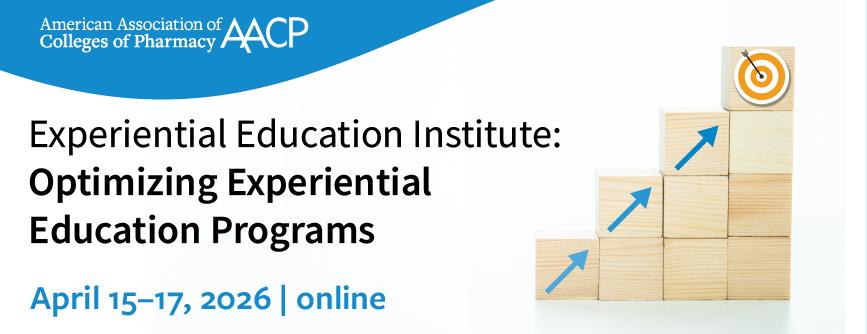
pharmacy is evolving, how patient care continues to expand, and how advocacy can drive meaningful change. Nearly 500 people registered for the 2026 Experiential Education Institute: Optimizing Experiential Education Programs, held in April 2026, and many of those attendees were professional staff, new members and first-time Institute attendees.
Education
Ɂ New Programs Within AACP Learn: Members took advantage of a wide range of new opportunities to strengthen their leadership capabilities, refine technical skills, and explore new areas of interest. Among the new offerings is the Pharmacy Foundations: A Non-Pharmacist’s Guide to Pharmacy Education course, the EngageRx: Active Learning in Pharmacy Education Microcredential and the certificate program Soaring into SoTL: Learning the Basics of Engaging in the Scholarship of Teaching and Learning.
Research and Scholarship
Ɂ Advancing Research Through Collaboration: Pharmacy SuRGE convenes leaders from pharmacy schools to advance research, research training, and graduate education. Quarterly SuRGE meetings provide members with opportunities to explore research partnerships with industry, including discussions on the cultural and practical challenges involved in developing and sustaining productive collaborations. These conversations also highlight the potential for industry partnerships to strengthen training opportunities and enhance research impact.
I am delighted that there have been so many AACP member and staff accomplishments, and I encourage all of you to remain optimistic about the bright future ahead. Without your piece, the picture is incomplete. Every piece matters.
Sincerely,
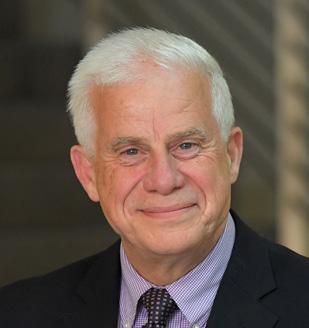
Robin M. Zavod, Ph.D., FAPhA 2025–2026 AACP President
Professor,
Pharmaceutical Sciences
Midwestern University College of Pharmacy
From the Executive Vice President and CEO
Dear AACP Members, Partners, and Stakeholders,
This past year has been defined by transformation, collaboration, and a commitment to advancing the future of pharmacy education. My deepest thanks go to our incredible volunteers, devoted Board of Directors, and exceptional staff. Their dedication, hard work, and resilience have been instrumental in helping us navigate the challenges we’ve faced, and their hard work has led to many successes in the last 12 months that we celebrate together.
The AACP Strategic Plan, approved by the House of Delegates in February, builds upon four evergreen strategic priority pillars: Education, Practice, Research and Scholarship, and Outreach and Engagement. It provides an important roadmap that guides the programs, activities and initiatives of the various groups within AACP, such as our Councils, Sections, SIGs, Committees and Taskforces. Grounding our collective work in these shared priorities helps us maximize our impact in advancing pharmacy education. President Zavod has highlighted several of the achievements from this report in her message, but I encourage you to read through the entire report.
As we look to the future, we remain committed to advancing excellence in pharmacy education and practice while strengthening the connections with our members, partners and other key stakeholders. Thank you for your continued partnership and dedication to our shared mission.
Lee Vermeulen, B.S.Pharm., M.S., FCCP, FFIP Executive Vice President and CEO American Association of Colleges of Pharmacy
Providing Academic Pharmacy Guidance Toward
The 2024–2026 AACP Strategic Plan, approved by the House of Delegates in July 2024, provided a roadmap to guide AACP’s efforts to advance pharmacy education, practice, research and outreach. Grounded in a commitment to intentional and continuous progress in an evolving healthcare landscape, the plan reflected AACP’s ongoing strategic approach—one that is agile, responsive and focused on achieving meaningful outcomes for members, institutions and the profession.
Throughout the last two years of implementation, AACP has made significant strides across its four strategic priority pillars: Education, Practice, Research and Scholarship, and Outreach and Engagement. Through the collaborative efforts of governance, volunteer leaders, members and staff, strategic action plans have translated the Association’s goals and objectives into impactful initiatives and measurable results.
To highlight AACP’s successful strategic initiatives and efforts, the first section of the 2026 Annual Report, organized by the strategic priority pillars, captures major activities and achievements over the past two years. The second section includes descriptions of additional Academy highlights for the 2025–2026 strategic cycle. Together, these outcomes illustrate the power of a unified strategic framework and reinforce the Association’s role in leading positive change across academic pharmacy and the broader healthcare community.
The achievements from the 2024–2026 Strategic Plan provide a strong foundation for continued progress and underscore the importance of sustaining focus on the strategic priority pillars that will shape the future of pharmacy education, practice, research and engagement. As we reflect on the goals and accomplishments of the previous year, this report also emphasizes the strategic priorities that will guide our work in the current AACP Strategic Plan as we look toward the year ahead, ensuring continuity, focus and sustained organizational impact.
a Resilient Future
Strategic Plan
Empowering the Pharmacy Academy and Pharmacists to Impact the Health Care Landscape
2024–2026
Strategic Priority Pillar: Education
Strategic Priority Pillar: Education
AACP and its members are responsible for educating and preparing pharmacists, faculty and academic staff who are ready to lead or engage in advancing pharmacy education and training, practice and research. Here is where AACP and its members will identify and commit to the competencies essential to achieving and sustaining a thriving, impactful workforce. The goals and objectives under this priority aim to move us closer to that optimal workforce by evaluating competency-based pharmacy education, critically assessing prerequisites for Pharm.D. programs, exploring the use of technology (digital health and artificial intelligence), and ensuring that student, faculty, preceptor and staff well-being is achieved.
Key Activities and Achievements
Evaluate the advantages and disadvantages of Competency-Based Pharmacy Education (CBPE) and other curricular models/frameworks that support outcomes achievement for students.
The Academic Affairs Standing Committee has continued to work on charges related to CBPE, including the development and piloting of a readiness-tochange CBPE instrument and the development of recommendations for training effective coaches in the context of CBPE.
Ɂ In 2025–2026, the committee finalized five individual-level, readiness-tochange instruments for CEO deans, academic deans (who would oversee CBPE implementation), faculty, preceptors/clinical educators and learners based on the theoretical framework, analysis from the Delphi panels and cognitive interviews, and peer review from CBE experts from medicine. The finalized instruments were then pilot-tested at several institutions, representing both low- and higher-resource institutions, as well as public and private institutional types. The committee will continue its work in this area in 2026–2027.
Ɂ Regarding coaching, the committee completed a scoping review of the literature (abstract and full-text reviews) and data extraction. The resulting data synthesis found that undergraduate and graduate medical
Strategic Priority Pillar: Education
education appears to offer the most developed and structured coaching frameworks from which pharmacy programs advancing CBPE may draw. In contrast to in-the-moment or clinical coaching, which often requires coaches to function as content or performance experts, longitudinal approaches emphasize learner development over time, without the need for discipline-specific expertise. This approach is well-suited to operationalizing programmatic assessment, which aggregates multiple data points across time to inform judgments about learner competence and progression. Within this context, coaches assist learners in interpreting assessment evidence, engaging in reflective practice and planning subsequent steps along their educational trajectory.
Critically assess prerequisites to Pharm.D. programs, consider options for competency-based admission requirements, and evaluate pre-matriculation programs and preparation resources for effectiveness.
In response to the growing emphasis on student readiness and competencybased education, the 2025–2026 AACP Student Affairs Standing Committee was charged with reviewing historical admissions criteria and evidence that support successful outcomes in the Pharm.D. program, as well as developing a set of pre-professional competencies to assist colleges and schools in guiding admissions practices.
Ɂ The committee report, which will be published in summer 2026, shares suggested pre-professional competencies to pharmacy programs for applicants to be ready for professional education on day one. These competencies encompass foundational knowledge, scientific understanding, quantitative reasoning, communication skills, critical thinking, ethical decision-making and professional behaviors, which establish a clear baseline for the knowledge, skills and attitudes students should develop prior to entering professional education. Additionally, the committee highlights recommendations and suggestions for considering competency-based admission requirements.
Strategic Priority Pillar: Education
Related to curricular innovations, explore and summarize options to support the inclusion of technology (e.g., digital health, artificial intelligence) in pharmacy teaching and curriculum.
Ɂ In January 2025, AACP offered an Artificial Intelligence (AI) in Pharmacy Education Institute, an immersive virtual program to help members explore the fundamentals of AI in education and how to implement educational tools within the curriculum.
• This two-and-a-half-day program covered approaches to using AI as an educational tool, and participants had the opportunity to personalize their learning through various tracks (didactic, experiential education, skills lab and administration).
• Participants also engaged in interactive presentations, demonstrations and group discussions. Institutional teams collaborated with other faculty, staff and students across the Academy to discuss tools and implementation strategies for using AI as an educational tool.
Ɂ The AACP Technology in Pharmacy Education and Practice Special Interest Group (SIG) is also quite active, and our members offer regularly scheduled “Tech Talks” throughout the year.
Ɂ AI and Digital Health remain “hot topics” at the AACP annual conference, and there are a variety of invited presentations and poster presentations at the meeting.
Ɂ AACP plans to develop and execute a learning series on AI and Digital Health during the 2026–2027 academic year.
Enhance the holistic well-being of faculty, staff, preceptors and students to ensure a healthy pharmacy workforce.
Ɂ AACP continues to be engaged with the National Academies of Medicine (NAM) Clinician Well-Being Initiative as part of its Accelerator for Change Maker campaign. AACP contributed to the Inaugural Accelerator Posters for Embedding Well-Being as a Lasting Value.
Strategic Priority Pillar: Education
Ɂ AACP staff also continue serving on the Federation of Associations of Schools of the Health Professions (FASHP) Well-being Group, which shares Association resources and ideas related to well-being.
Ɂ The 2025–2026 Council of Deans (COD), Council of Faculties (COF), and AACP Institutional Research and Assessment Committee (IRAC) task force worked together to develop recommendations for a national well-being assessment tool for faculty and staff at colleges and schools of pharmacy. This task force will continue its work into the 2026–2027 year. The taskforce charges are: 1) analysis of the 2023–2024 COD/COF addressing burnout task-force work and the existing tools that assess wellbeing and burnout to determine the domains of a well-being assessment tool for faculty and staff; 2) request colleges and schools share what was submitted to the Accreditation Council for Pharmacy Education (ACPE) as part of their readiness report for Standards 2025 to inform a possible national assessment tool for faculty and staff; 3) exploration of components of existing wellness and well-being assessments for inclusion in a possible national assessment tool for faculty and staff; 4) a recommendation on the feasibility (including resources and a proposed timeline) of a national assessment tool to be administered by IRAC as part of the AACP survey program.
Ɂ Well-being remains a “hot topic” at the AACP annual conference, with a variety of members presenting on the subject.
Ɂ The Well-Being and Resiliency Connect Community is also active, offering webinars and well-being “rounds” throughout the year.
Strategic Priority Pillar: Practice
Strategic Priority Pillar: Practice
AACP supports the continued evolution of community pharmacy toward a primary care model with pharmacists serving the public by working with other members of the healthcare team to deliver products and clinical services within the full scope of their practice. AACP also supports preparing pharmacists to evaluate, advocate for and implement the expansion of the scope of pharmacy practice to meet patients’ and public health needs.
Key Activities and Achievements
Create and deliver programming on the transformation of communitybased pharmacy practice to be reflected in the curriculum; teaching/learning environments; collaborations with stakeholders within and external to pharmacy; and pharmacy workforce readiness for expanded community-based pharmacy practice.
Ɂ Medical Billing 201 Workshop: Teaching Pharmacist Medical Billing, Contracting and Credentialing: a virtual event, held in January 2026.
• Attendees explored how pharmacy educators play a key role in helping future and practicing pharmacists understand not only how to care for patients, but also how to navigate the business side of pharmacy practice, credentialing in outpatient care settings.
• This program equipped 102 participants to integrate medical billing, credentialing and payer contracting into the Pharm.D. curriculum and practice environments. Participants learned to navigate the interplay between clinical scope and payment models, create tailored instructional materials and drive the culture change needed to secure sustainable reimbursement for pharmacist-provided care.
• The workshop offered hands-on, practical strategies and ready-touse tools and resources for pharmacy educators to teach effectively. Efforts in this area will continue with networking sessions during the 2026-2027 academic year to support pharmacy educators with implementation.
Strategic Priority Pillar: Practice
Ɂ Socialization of the Key Elements of Practice Redesign in Community Pharmacies document by the 2026 Professional Affairs Standing Committee.
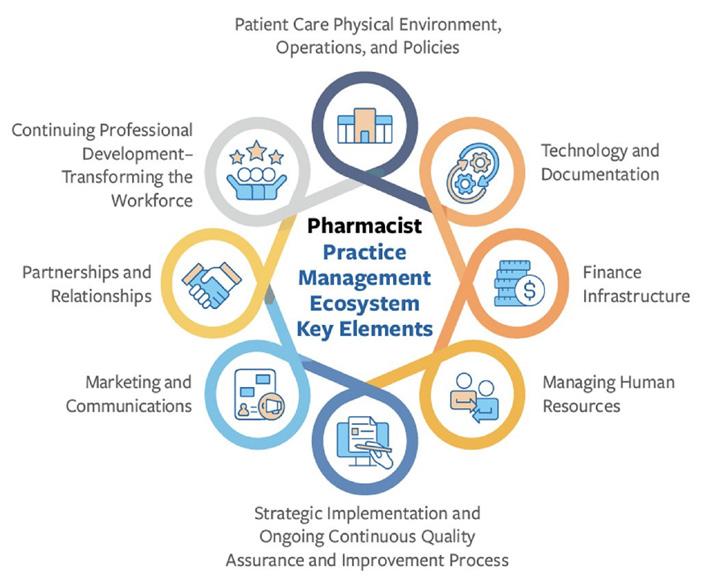
• The document provides an overview of the philosophy of practice, patient care process and practice management ecosystem components for community pharmacy practice.
• Socialization focused on the pharmacy practice management ecosystem elements, which are based on the JCPP Key Elements of a Pharmacist Practice Management Ecosystem.
» The committee held a focus group of community pharmacy employers and a focus group of pharmacists working in community practice.
» The committee also held a continuing education webinar, “Envisioning the Future of Community Pharmacy-Key Elements of a Practice Management Ecosystem,” found on AACP Learn. Recommendations to AACP regarding community pharmacy practice will also be provided by the committee.
Ɂ
NMA Workshop
• AACP will host the 2026 Navigating Modern Approaches in SelfCare Education, Community Practice and Beyond workshop (NMA Workshop) on July 18, 2026, in Grapevine, Texas, as a pre-session to its annual meeting. Offered in collaboration with the AcademiaCommunity Transformation (ACT) Pharmacy Collaborative and the AACP Self-Care and Nonprescription Medicines Special Interest Group, this one-day event celebrates over 25 years of bringing North American self-care educators and leaders together.
• The 2026 workshop focuses on bridging pharmacy education and outpatient practice by exploring emerging clinical topics, public health initiatives and industry trends within the expanding self-care market. Attendees will share innovative teaching strategies designed to empower patients and combat health misinformation, while also participating in valuable networking and scholarly collaboration, to advance community pharmacy education.
Strategic Priority Pillar: Practice
Within the Academy, amplify the value and improve the visibility of communitybased pharmacy practice.
Ɂ The Academia-Community Transformation (ACT) Pharmacy Collaborative continues its mission to support the transformation of community-based pharmacy practice from a product-based care model to a community-based pharmacy care delivery model by uniting colleges/ schools of pharmacy and community pharmacist leaders nationwide, mobilizing stakeholders and resources to support implementation, and amplifying the development and implementation of sustainable community-based pharmacy care delivery.
• In addition to the monthly ACTion Hour Webinars that brought the collaborative together to learn and network, a commitment/ recommitment process was completed, resulting in 97 engaged colleges/schools and 234 ACT Champions.
• The ACT Community Pharmacy Centers of Excellence are in the process of writing and publishing three white papers, each one focusing on how colleges and schools of pharmacy can advance community pharmacy in one of these areas: teaching/curriculum, practice/service and research/scholarship. They are also developing a resource toolkit to lower the implementation barrier to these advancements.
• The third cohort of the ACT Pharmacy Collaborative Community Pharmacy Practice Transformation Educators Badge saw 17 individuals participate in this program to build competencies in recognizing opportunities to advance community pharmacy services, demonstrate evidence-based change practice to drive implementation, support community pharmacy practice transformation and persuasively communicate the value of advanced pharmacy services to relevant stakeholders.
• Cohort 2 of the Community Pharmacy Student Scholars program, sponsored by the Compliant Pharmacy Alliance (CPA), Community Pharmacy Enhanced Services Network (CPESN), National Community Pharmacists Association (NCPA) and Walgreens, enrolled 20 students to facilitate a deeper understanding of career paths in community
Strategic Priority Pillar: Practice
pharmacy through asynchronous learning modules, mentorship, networking, a group poster presentation, workshop training on leadership and self-awareness, and networking event at the 2026 AACP Annual Meeting.
Ɂ Advancing Community Pharmacy Institute
• The Advancing Community Pharmacy Institute in October 2025 was an impactful virtual institute held in honor of American Pharmacists Month to elevate the voice and value of pharmacy in today’s changing healthcare landscape.
• The three major themes were: 1) cultivating a stronger community pharmacy culture; 2) pharmacists’ expansion of patient care services in community pharmacy; and 3) advocating for the future of community pharmacy.
• The event served as a place for attendees to reconnect with purpose, reimagine possibilities and rise to the moment together through engaging didactic sessions, small group discussions and real-time collaboration. Participating teams collaborated on a roadmap to advancing community pharmacy scope of practice and payment opportunities among colleges, schools, community pharmacies, state associations, pharmacy boards and other partners.
• This program equipped over 250 participants to reshape the perception and narrative of community pharmacy through coordinated advocacy and strategic communication.
Create new programs and collaborate with other organizations in the education/ training of pharmacists in evolving areas of pharmacist-provided patient care services.
Ɂ 2025–2026 Council of Deans (COD) Standard of Care Task Force aspires to show how regulation in pharmacy practice is essential for advancing the profession and improving patient care. The task force charges are to:
• Develop educational programming on how standard of care regulatory models can support practice transformation and advanced scope of practice, as well as advocacy guidance to pursue a standard of care regulatory model in a state.
Strategic Priority Pillar: Practice
• Develop standard of care-related programming resources for local, state or regional meetings hosted by colleges and schools of pharmacy.
• Contribute to the national advocacy agenda for standard of care regulatory models for the ACT Pharmacy Collaborative.
The work of this task force will continue during the 2026–2027 academic year.
Ɂ Workgroup on Payment for Faculty-Provided Patient Care Services: The AACP Pharmacy Faculty Clinical Service Reimbursement Workgroup was originally formed as a Council of Deans Task Force in July 2024. Its initial charges focused on a comprehensive review of clinical faculty payment models.
• The AACP Board of Directors elevated this to the ongoing Workgroup on Payment for Faculty-Provided Patient Care Services for the Academy, recognizing that the topic of payment for patient care services for pharmacy faculty requires continuous, dedicated efforts to advance advocacy, education and resource development. Evergreen charges were created and are concentrated in the following areas:
» Payer engagement & strategy
» Advocacy & education
» Resource development & knowledge exchange
• Workgroup goals for 2025–2027 include conducting listening sessions with diverse payer types and other stakeholders in this space, creating a core set of advocacy talking points, launching a digital resource hub, optimizing mentorship and peer-to-peer learning opportunities. Listening sessions have been completed and resource creation is underway.
Strategic Priority Pillar: Research and Scholarship
Strategic Priority Pillar: Research and Scholarship
AACP recognizes the essential contributions of research and scholarship to the “body of knowledge,” and the importance of increased and ongoing support of faculty and student research, educational programming focusing on researcher development and collaborations, and the development of organizational infrastructure with sustainable pathways to pharmaceutical science graduate education, research careers and fellowships.
Key Activities and Achievements
Support faculty and student research across all areas of scholarship.
Ɂ In the last year, AACP has continued to develop resources to aid research and scholarship at pharmacy schools.
• The AACP Survey and Ad Hoc Data Request Committee was established in 2024 and continued its work through the 2025-2026 academic year, providing guidance and assistance to members seeking to use AACP mailing lists and other resources to distribute and advertise surveys for research and programmatic studies. Submitters are required to share summaries of survey results with AACP to create a repository of completed surveys as a resource for the Academy.
• The AACP Office of Institutional Research and Effectiveness (OIRE) has updated the AACP data use policy to clarify and simplify how members can access AACP data and work with OIRE to use AACP data for research projects.
• The Research and Graduate Affairs section of the AACP website is being updated to capture more resources for researchers, including information on funding opportunities, researcher communities within AACP (e.g., the Pharmacy Academia Implementation Science [PAIS] and Pharmacy Scholarship, Research and Graduate Education [SuRGE] communities), and research and graduate education posters from the AACP Annual Meeting.
Strategic Priority Pillar: Research and Scholarship
Ɂ AACP is also developing and delivering educational programs that advance researcher development.
• The Guided Grant Writing for Pharmacy Faculty Program completed its first cohort in October 2025. Program participants submitted funding proposals to the National Institutes of Health (NIH), state funding agencies and private funders; two participants had proposals funded by state or private funders. AACP intends to run the program again in 2027.
• An implementation science webinar learning series is being planned for Fall 2026, building on an earlier series of webinars held in 2022 and the 2023 Implementation Science for Transforming Pharmacy Practice and Education workshop.
Develop infrastructure within AACP for expanding pathways to graduate education and research careers in colleges and schools of pharmacy for individuals with varied backgrounds and experiences.
Ɂ Originating in discussions at a quarterly SuRGE meeting in 2025, the Graduate Education SIG has seated a Re-envisioning Pharmaceutical Graduate Education Task Force for 2025-2027, with charges that include optimizing training pathways and time to graduate and enhancing recruitment.
Ɂ AACP Scholar-in-Residence Johnnie Early collaborated with the Office of Institutional Research and Effectiveness (OIRE) on a project to describe the history and emergence of bachelor programs in pharmaceutical sciences. Preliminary data was collected on the future training pathways for graduates of these programs, including continuation in graduate programs in pharmacy schools.
Strategic Priority Pillar: Outreach and Engagement
Strategic Priority Pillar: Outreach and Engagement
AACP recognizes enrollment, increases in AACP membership, and increases in advocacy and strategic engagement efforts advance and expand the capacity for pharmacists, future practitioners and other pharmacy profession personnel to provide optimal care for individuals and populations. In addition, a high priority is given to our Association-wide agenda on inclusion, accessibility and belonging that moves us toward health equity and achieving optimal and improved health for all.
Key Activities and Achievements
Develop and enhance programs to increase and expand the number of students, faculty and staff in the pharmacy profession.
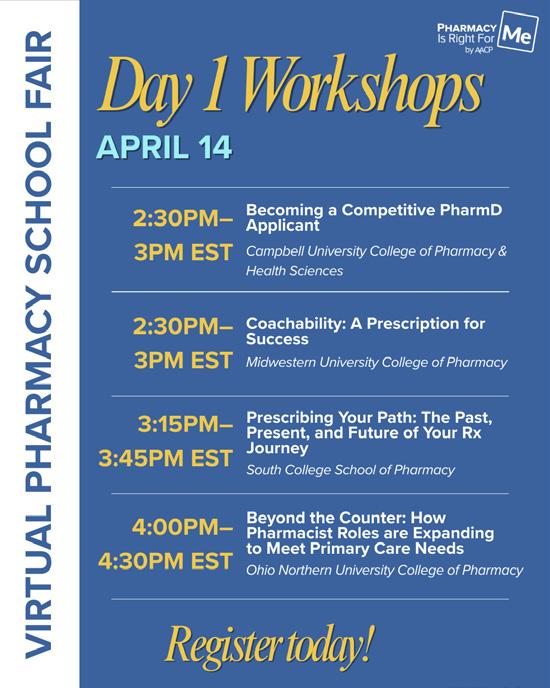
Ɂ Pharm4Me by AACP hosted two Virtual Pharmacy School Fairs—one in the fall and one in the spring—which together attracted more than 1,600 registrants and nearly 600 attendees. For the spring fair, AACP introduced partnership sponsorships with companies and employers, broadening industry involvement and exposure for attendees. To further enhance engagement, we continued offering workshops alongside the fairs, creating additional opportunities for interaction between prospective students, pharmacy schools and resource providers.
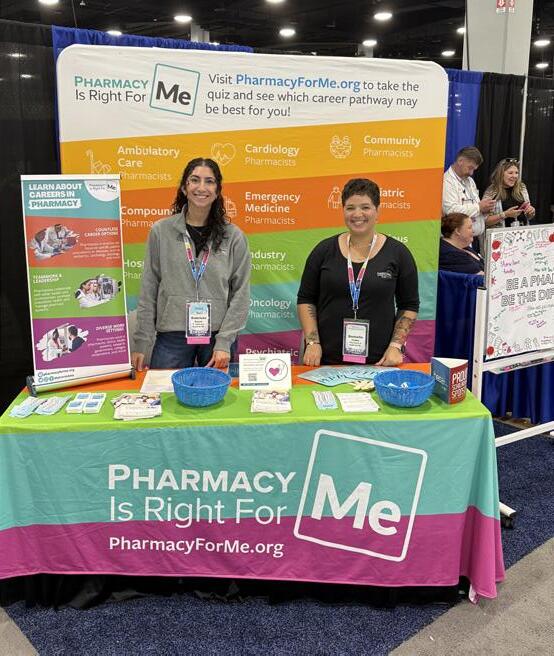
Ɂ The Pharmacy is Right for Me (Pharm4Me) campaign advanced its engagement of prospective students and influencers through the core pillars of outreach, messaging, resources and partnerships. In 2026, a four-month-long paid social media campaign was created and launched, targeting undergraduate students interested in health science careers through Facebook, Instagram, YouTube and TikTok, with plans to continue the campaign into the next year, alongside the launch of the 2027 Pharmacy College Application Service (PharmCAS) cycle.
Ɂ The Pharm4Me Student Ambassador Program successfully launched in April 2026, engaging 43 students representing 41 institutions nationwide. As part of their onboarding, ambassadors completed four structured training modules covering AACP and Pharm4Me, social media strategy,
Strategic Priority Pillar: Outreach and Engagement
professional identity formation and pharmacy recruitment. Equipped with this foundation, ambassadors have begun actively contributing to program goals by creating and submitting original content for Pharm4Me social media channels and leading outreach efforts within their communities. Their early engagement reflects strong momentum and enthusiasm for advancing awareness of pharmacy careers.
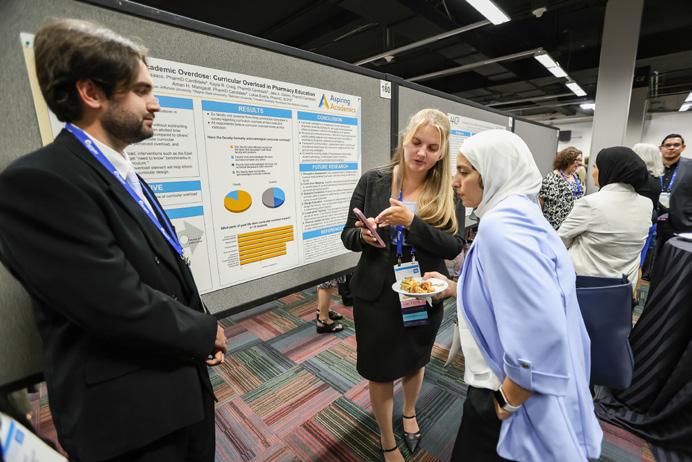
Ɂ AACP hosted the third cohort of the Aspiring Academics Program with the goal to strengthen pharmacy students’ understanding and commitment to pursuing a career in academic pharmacy. Twenty-eight pharmacy students were selected to participate in the year-long program. Students received guidance from a faculty mentor from their school and were part of a small group of students from across the country guided by an AACP mentor. Students completed online modules about academic pharmacy, participated in interactive discussions and online networking events, observed an AACP committee meeting or other Association activity, and completed a group project. The program culminates with in-person attendance at the AACP Annual Meeting, where they will present a poster of their project, attend meeting sessions, including the Teachers’ Seminar, and celebrate with a recognition and networking event. We also received funds from the Boyle-Love family to establish the Aspiring Academics Fund, which will support at least one student participating in the Aspiring Academics Program each year through a scholarship. The Boyle-Love Endowment is being administered by the American Foundation for Pharmaceutical Education (AFPE). For the upcoming year, we have added opportunities for graduate students to participate in the fourth cohort of Aspiring Academics.
Expand and increase engagement in AACP membership.
Ɂ In June 2025, AACP launched its Open Membership program, welcoming more than 10,000 new individual members.
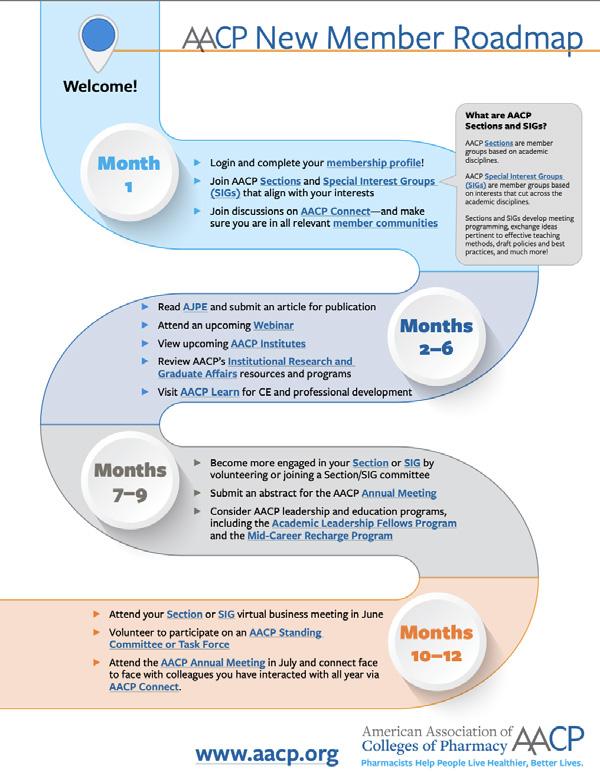
• To support engagement, AACP developed and distributed a New Member Roadmap and implemented a series of targeted communications from August 2025 through June 2026. These communications welcomed new members, shared informational webinars and resources, promoted the annual meeting, and encouraged engagement in AACP Sections and SIGs.
Strategic Priority Pillar: Outreach and Engagement
• Additional engagement efforts included a revised New Member session and an AACP Engagement Table at the 2025 Annual Meeting.
• Council, Section, and SIG leaders sent messages to welcome new members to AACP, and a centralized new member webpage was published to highlight available resources and help new members become familiar with AACP benefits.
Ɂ To further strengthen member engagement and belonging, AACP recently launched the new Membership Ambassador Program to support faculty and professional staff who joined through the Open Membership program. The membership ambassadors will serve as an on-the-ground resource for new members, which includes providing information on AACP meetings, publications and professional development opportunities. AACP has received over 190 membership ambassadors to represent each college and school of pharmacy in this new initiative.
To champion positive change, enhance our advocacy and strategic engagement efforts to raise awareness and drive pharmacy policy initiatives.
Ɂ AACP expanded its advocacy impact over the past year by combining strategic policy leadership with new platforms for member engagement.
• AACP advanced its commitment to public policy engagement with the April 2026 launch of the AACP Advocacy Center—a dynamic, centralized hub designed to equip members with educational resources, tools and information to support informed engagement on issues affecting academic pharmacy. Developed in collaboration with the AACP Strategic Engagement Standing Committee, the center reflects a strategic, member-informed approach to strengthening the Academy’s collective voice. The Advocacy Center brings together a comprehensive suite of resources, including Current Advocacy News and Updates, Advocacy Starter Guides and Toolkits, the Legislative and Policy Resource Library, and Partnerships & Coalitions, along with access to the members-only Advocacy Champions Connect Community. By consolidating timely information, scholarly literature, and opportunities for professional engagement in one accessible location, the center supports faculty, staff, students and
Membership Ambassador
Strategic Priority Pillar: Outreach and Engagement
interested parties in understanding relevant policy developments and contributing their expertise in appropriate and meaningful ways. This initiative underscores AACP’s dedication to fostering a culture of informed engagement and ensuring that academic pharmacy perspectives are thoughtfully represented in ongoing policy conversations related to education, research and healthcare.
• AACP elevated its national influence through active participation in federal rulemaking and coalition advocacy, including responses to major student loan reforms, engagement on Food and Drug Administration (FDA) and National Institutes of Health (NIH) policy requests, and leadership in multi-organizational efforts advocating for sustained federal investment in research, workforce development and public health infrastructure.
• AACP also joined national partners to address critical issues such as vaccine policy, research funding and workforce shortages, amplifying a unified voice for academic pharmacy.
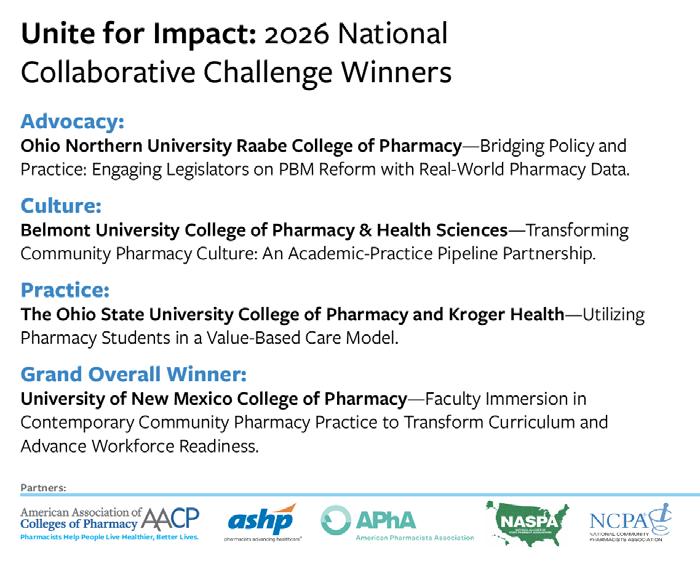
Ɂ Complementing these efforts, the Unite for Impact: A National Collaborative Challenge mobilized colleges and schools of pharmacy nationwide to design and showcase innovative community pharmacy solutions, reinforcing the profession’s value to policymakers and the public.
• This challenge was a direct follow-on to the insights fostered at the 2025 Advancing Community Pharmacy Institute, which provided members with an opportunity to translate ideas into action by encouraging ongoing collaboration and strategic engagement.
• This challenge fostered unprecedented collaboration between pharmacy academia and essential partners across the profession and healthcare spectrum to drive measurable community pharmacy advancement through advocacy, practice transformation and/or public engagement.
• A grand overall winner, University of New Mexico College of Pharmacy, was named, along with a winner in each submission category: advocacy (Ohio Northern University Raabe College of Pharmacy), culture (Belmont University College of Pharmacy &
Strategic Priority Pillar: Outreach and Engagement
Health Sciences), and practice (The Ohio State University College of Pharmacy and Kroger Health). Learn more about the winners’ projects here.
Promote and prioritize efforts related to ensuring inclusiveness, accessibility and belonging in pharmacy education and the pharmacy profession.
Ɂ This year, AACP completed its work on the Innovation Fund award from Genentech and the Genentech Foundation, which supported the pilot implementation of the Pharmacy Advances Clinical Trials (PACT) Network. Grounded in real-world implementation science principles and behavioral theory, this project aimed to mobilize and evaluate partnerships between academic pharmacists, community-based pharmacists, and community-based organizations to increase the level of knowledge, awareness, attitudes/trust related to clinical trials, address barriers to clinical trial participation, and increase the willingness to participate in clinical trials.
Ɂ AACP advanced its commitment to fostering inclusiveness, accessibility and belonging across pharmacy education through strengthened resources, intentional engagement and expanded institutional support.
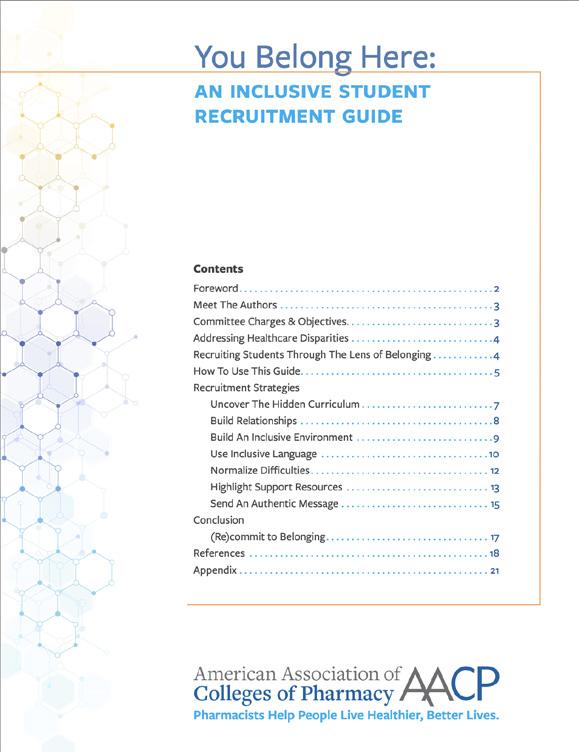
• A key milestone was the update to the AACP Belonging Guide, providing colleges and schools with practical, actionable strategies to cultivate inclusive learning and work environments and embed belonging into organizational culture.
• AACP also worked to embed these principles more intentionally across its programs and member engagement efforts—promoting dialogue, shared learning and the exchange of leading practices that support student success and workforce readiness via webinars such as “Listening, Learning and Leading Through Uncertain Times.”
By elevating belonging as a strategic priority, AACP reinforced its commitment to ensuring that pharmacy education reflects the diverse communities it serves.
Additional Academy Highlights
American Journal of Pharmaceutical Education Welcomes New Editor-in-Chief
The American Journal of Pharmaceutical Education, AACP’s flagship journal, proudly welcomed its new Editor-in-Chief, Dr. Kristin Janke, on January 1, 2026.
As editor, Dr. Janke will drive the strategic vision of the Journal, explore emerging areas that shape the future of the profession, and champion cuttingedge research in pharmaceutical education. She will engage with associate editors, authors, reviewers and AACP staff to ensure the Journal reflects current trends and meets the needs of its members, while guiding the Journal into its next phase of growth and global impact.
Dr. Janke assumed the position after former Editor-in-Chief Dr. Gayle Brazeau announced she would be stepping down at the end of 2025. Dr. Brazeau dedicated an impressive 20 years of service to the Journal and more than a decade of leadership as Editor-in-Chief. Under her guidance, the Journal flourished, reaching new heights in scholarly impact, editorial excellence and global visibility.
AACP Corporate Partners Program
Throughout the year, the Senior Director of Development worked closely with senior staff to cultivate new relationships and strengthen existing connections with organizations that support and influence pharmacy education and practice. Now in its second year, the Corporate Partnership Program (CPP) remains a key component of AACP’s external engagement strategy, providing organizations with meaningful opportunities to support pharmacy education while engaging with AACP members and initiatives through a single annual commitment. As a result of strong stewardship and relationship management, AACP has maintained and expanded engagement with its corporate partners, including CVS, Echo-Interactive LLC, the NACDS Foundation, Walgreens and Walmart.
In addition to the Corporate Partnership Program, AACP has continued to identify innovative approaches to generating non-dues revenue, including the strategic bundling of sponsorship, marketing and engagement opportunities across programs, events and initiatives. This approach has created new
Additional Academy Highlights
pathways for organizations to support AACP’s mission while increasing the visibility and value of their investment.
AACP remains committed to cultivating strategic partnerships that advance the profession and provide meaningful benefits to member institutions. While financial support remains an important component of these relationships, the value of partnership extends beyond revenue by fostering collaboration, supporting innovation and creating opportunities to address emerging challenges and opportunities in pharmacy education and practice. Looking ahead to fiscal year 2027, AACP will continue to strengthen existing partnerships while expanding outreach to organizations across pharmacyrelated sectors, further diversifying support for the Association’s mission and strategic priorities.
Student Support and Student Recruitment
AACP supports students applying to pharmacy education through three centralized application services: PharmCAS, PharmDirect, and PharmGrad. PharmCAS remains the largest, with nearly 13,000 applicants in the 2024-2025 cycle. An infographic highlighting this cycle’s key data is available.
To support student pharmacists, AACP partnered with CVS Health and Walmart to provide financial assistance. In the 2025-2026 academic year, 21 students received $20,000 scholarships through CVS Health and seven students received $5,000 scholarships from Walmart, totaling over $450,000 awarded. Both programs will continue in 2026-2027.
AACP maintained our monthly Pharm4Me newsletter, which saw a tremendous increase in subscribers, from 3,570 in May 2025 to 5,551 in May 2026. Pharm4Me also had a strong presence at in-person events, including HOSA-Future Health Professionals and the National Association of Advisers for the Health Professions (NAAHP).
Throughout the year, AACP maintained consistent engagement with students through a series of webinars hosted in partnership with key stakeholders. In the fall, we collaborated with Walgreens and CVS Health to host two sessions focused on preparing students for the elimination of Grad PLUS loans, providing practical guidance on alternative ways to finance a pharmacy
Building the Future of Pharmacy
Additional Academy Highlights
AACP
Recruitment and Admissions Toolkit
education. AACP also continued our annual panel with the Board of Pharmacy Specialties, an important event that highlights the breadth of pharmacy career pathways for prospective and current students. Additionally, AACP introduced a new panel in collaboration with the Pharmacy Technician Certification Board to spotlight career opportunities for pharmacy technicians. Collectively, these four events attracted nearly 1,000 registrants. We plan to continue offering similar programming in the future, with support from new sponsors like Juno and College Ave.
AACP also launched the new AACP Pharm4Me Recruitment and Admissions Toolkit, a comprehensive resource designed to support pharmacy school faculty and staff involved in student recruitment and admissions. Developed in direct response to member feedback, the toolkit serves as a dynamic, allin-one guide to help onboard new team members and strengthen recruitment efforts. It includes an overview of AACP and Pharm4Me resources, an introduction to key application services such as PharmCAS, PharmDirect and PharmGrad, and practical tools to help institutions grow awareness of pharmacy careers.
AACP Learn
AACP launched AACP Learn at the July 2024 AACP Annual Meeting to provide high-quality, flexible professional development for academic pharmacy professionals. Since its introduction, the platform has expanded to include new programs such as “EngageRx: Active Learning in Pharmacy Education and Pharmacy Foundations: A Non-Pharmacist’s Guide to Pharmacy Education.” EngageRx is a four-and-a-half-hour continuing education micro-credential designed to build skills in selecting, integrating and evaluating active learning strategies.
Pharmacy Foundations features nine 30-minute modules covering key areas including pharmacy practice, experiential education, accreditation, student services and interdisciplinary collaboration. The program is offered as individual modules, bundled options, or a full-course package. Similar flexibility has been introduced to “Soaring into SOTL: Learning the Basics of Engaging in the Scholarship of Teaching and Learning,” in response to results from the 2025 member needs assessment, which highlighted a preference for shorter, more customizable learning experiences.
Institutes and workshops continue to be delivered through the platform, alongside the Community Pharmacy Practice Transformation Educators Badge and the Community Pharmacy Student Scholars Program, which support workforce development and innovation. Bulk purchasing discounts and promotional pricing have contributed to strong early adoption, particularly for the EngageRx and Pharmacy Foundations programs.
AACP Webinar Update
AACP’s Webinar Program continues to be popular among our membership, offering a wide variety of topics. Through May 2026, AACP hosted 50 webinars for fiscal year 2026, with a registration/attendance ratio of 5,212/2,864. With a lineup of webinars through June 2026, AACP presented 60-plus sessions in fiscal year 2026. This is the second fiscal year in which all webinars have been held on AACP Learn, and we are currently tracking an increase in registrations compared to previous years.
Popular topics included assisting and coaching students, Artificial Intelligence (AI) trends in education, and professionalism in pharmacy education.
AACP Learn gives our members unlimited access to all webinars, past and future, making it an immediate, accessible member benefit.
AACP Publishes Third Annual AACP Argus Commission Forecast
Strategic planning is an essential function to which all organizations must commit to ensure that they have clarity of direction, aligned with their mission and overarching goals. In times of uncertainty and instability, as we face today in higher education, having a robust strategic plan allows organizations to be responsive to change, not simply reactive to unplanned events that occur regularly. One of the most challenging aspects of maintaining a resilient strategic plan is being able to predict future events that might impact strategic plans or provide new opportunities for the strategic direction of an organization. The AACP Argus Commission Forecast, which will be published for the third time in 2026, provides AACP member institutions with guidance regarding potential future events that are likely to impact pharmacy education. The intent of the report is to provoke thought and discussion within colleges and schools of pharmacy, helping
Additional Academy Highlights
to ensure that strategic planning efforts prepare for the future. The AACP Argus Commission Forecast–2026 reflected on 32 future scenarios that may impact pharmacy education in the next five years. Over 400 AACP members responded to a survey exploring the likelihood that those scenarios would come to pass, and Forecast authors provide recommendations for member institutions to consider in response to those potential circumstances. The report explores future events in financing pharmacy education, research and graduate education, pharmacy practice, the impact of misinformation and the public distrust of science and education. We hope this most recent report will provide AACP members, and our Association leaders, with ongoing guidance to help prepare, strategically and tactically, for potential future events.
AACP Experiential Education Institute
AACP hosted the Experiential Education Institute in April 2026, registering 492 individuals. AACP members in attendance, with over 200 of these attendees being new members and professional staff. The institute focused on optimizing experiential education programs in academic pharmacy. The program offered a variety of topics, including building stronger relationships and support with students and within the experiential education team, improving office efficiencies and using data to enhance the program. Participants gave the institute an average score of 4.7 out of 5 points, with the majority agreeing that the institute will impact their teaching, administration or practice.
Mid-Career Faculty Program
AACP offered a professional development program, Mid-Career Recharge, for faculty and staff. Thirty-five individuals completed the year-long hybrid program in Cohort 3. The Mid-Career Recharge program aspires to help faculty and staff reflect, refocus and recharge with a plan and support to thrive in their next career stage. Cohort 3 highlights included an in-person retreat, virtual programming, Crucial Conversations® training, synergy support groups, and group or one-on-one coaching. Key aspects of this program include individualized support/coaching, building a community and improving wellbeing to enhance career vitality in the middle stages of an academic pharmacy career. More than 90 percent of participants agreed that completing the program enhanced their professional development and well-being.
Microlearning Series
AACP’s Microlearning Miniseries provides learners with brief educational content (average length less than 5 minutes), accessible and engaging modalities. This is the third year of this free educational content that is made available in the fall and spring semesters. The content, initially sent via email to all members, is currently archived on the AACP Learn educational platform. The main content areas include Good Pedagogy, Educational Research and Microlearning from a Member. Within each of these areas, a variety of topics are presented. Such content can seamlessly be woven into a busy, academic day and can serve as a professional development tool for faculty and staff. The response to the Microlearning series has been positive, and metrics suggest strong engagement from our members.
Pharmacy SuRGE
Pharmacy SuRGE (Scholarship, Research and Graduate Education) is a community within AACP intended to support all research and graduate education occurring in pharmacy schools and enhance AACP’s leadership in research and graduate education within the Academy. SuRGE promotes innovation and excellence in graduate education, provides an ongoing forum for discussion of best practices in graduate education, and examines current and emerging trends in research and graduate training in academic pharmacy. SuRGE engages leaders in research and graduate education through quarterly meetings and a monthly SuRGE newsletter. The newsletter disseminates information on federal and private funding opportunities, science policy updates, upcoming AACP meetings and educational programs, and partnership and professional development opportunities for researchers. SuRGE quarterly meeting topics in 2025-2026 included alternative models for research support, institutional research training programs, cultivating research partnerships with industry and preparing graduate students for careers outside academia. Outcomes of SuRGE meetings have included the formation of the Graduate Education SIG Re-envisioning Pharmaceutical Graduate Education Task Force for 2025–2027 and the Communicating Impact: Telling Your Pharmacy Research Story virtual session in 2025.
Additional Academy Highlights
Pharmacy Career Information Council (PCIC)
The Pharmacy Career Information Council (PCIC) serves to centralize and share accurate, up-to-date information about pharmacy education and career pathways. PCIC accomplishes its mission by increasing awareness of diverse careers in pharmacy, collaborating across multiple pharmacy organizations to have a collective voice for the recruitment of the next generation of pharmacy professionals, and sharing information across organizations related to application, student enrollment and workforce trends. This year, the PCIC hosted a Learner Tour for students, residents and fellows interested in Association management, and participated in the spring Virtual Pharmacy School Fair.
2025 AACP Association-Wide Awards
Robert K. Chalmers Distinguished Pharmacy Educator Award
Naser Zaki Alsharif, Ph.D., Lebanese American University, recognized for his outstanding achievements as an educator and mentor, his innovations in the classroom, and his overall impact on pharmacy education and the profession.
Volwiler Research Achievement Award
Alan J. Zillich, Pharm.D., Purdue University, recognized for his exemplary research investigating strategies to improve prescribing, delivery and outcomes of medication use among ambulatory patients with chronic disease.
Paul R. Dawson Award for Excellence in Patient Care Research
C. Daniel Mullins, Ph.D., University of Maryland, recognized for his research focused on community-engaged, patient-centered comparative effectiveness to advance health equity.
Distinguished Teaching Scholars, recognized for their excellence in scholarly teaching and the scholarship of teaching and learning:
Michelle Z. Farland, Pharm.D., University of Florida
Daniel R. Kennedy, Ph.D., Western New England University
Lifetime Achievement Award
Brian Erstad, Pharm.D., The University of Arizona, recognized for a prestigious career advancing the profession and healthcare on a national and interprofessional level, and for his commitment to patients and students through instruction, leadership, service and research and scholarship for over 40 years.
Distinguished Service Award
David Zgarrick, Ph.D., Northeastern University, recognized for over three decades of contributions to the pharmacy profession, the Academy and AACP, including 12 years of service on the Board of Directors.
Rufus A. Lyman Award
“A National Survey of Perceptions Around Conditions Associated with Pharmacy Faculty Workload Equity”
American Journal of Pharmaceutical Education, Volume 88, Issue 3 Article 100664, March 2024
Authors
Daniel R. Malcom, Pharm.D., Sullivan University
Sharon K. Park, Pharm.D., M.Ed., Notre Dame of Maryland University
Lisa Lebovitz, J.D., M.S. University of Maryland
Omar F. Attarabeen, R.Ph., Ph.D., University of Maryland Eastern Shore
Ashley Castleberry, Pharm.D., M.Ed., The University of Texas at Austin
Surajit Dey, B.S.Pharm., Ph.D., Roseman University of Health Sciences
Margarita V. DiVall, Pharm.D., R.Ph., M.Ed., Northeastern University
Cynthia Kirkwood, Pharm.D., Virginia Commonwealth University
Kelly C. Lee, Pharm.D., M.A.S, BCPP, University of California, San Diego
Melissa Medina, Ed.D., The University of Oklahoma
Elizabeth A. Sheaffer, Ph.D., M.B.A., M.S.L., Samford University
David Weldon, Ph.D., William Carey University
Lawrence C. Weaver Transformative Community Service Award
The University of Michigan College of Pharmacy, recognized for its commitment to addressing unmet community needs through education, practice and research.