Architecture begins long before the architect. Across cultures, the earliest dwellings emerged from an instinctive reading of place, climate, and material—forms shaped not by authorship but by necessity. This lineage of what Bernard Rudofsky called architecture without architects reveals a fundamental truth: that beauty often arises not from invention, but from an elemental coherence between matter, technique, and human presence. Toronjos is born from that same sensibility, drawing from the primitive, the handmade, and the artisanal as sources of knowledge rather than nostalgia. In doing so, it positions material honesty and craft as the highest form of contemporary luxury.
In many vernacular traditions, materiality is not an aesthetic choice but a direct consequence of living in harmony with the land. Toronjos follows this ethos, embracing the tactile intelligence of earth, wood, and brick—materials that carry the memory of their making. The project reads these substances not merely as construction systems, but as cultural artifacts: earth transformed through the slow rhythm of sun drying; wood shaped by the span it can naturally hold; brick emerging from manual labor and imperfect edges. This deliberate celebration of the hand-made aligns with Peter Zumthor’s belief that architecture should “touch our senses,” grounding spatial experience in texture, mass, and the intimacy of construction.
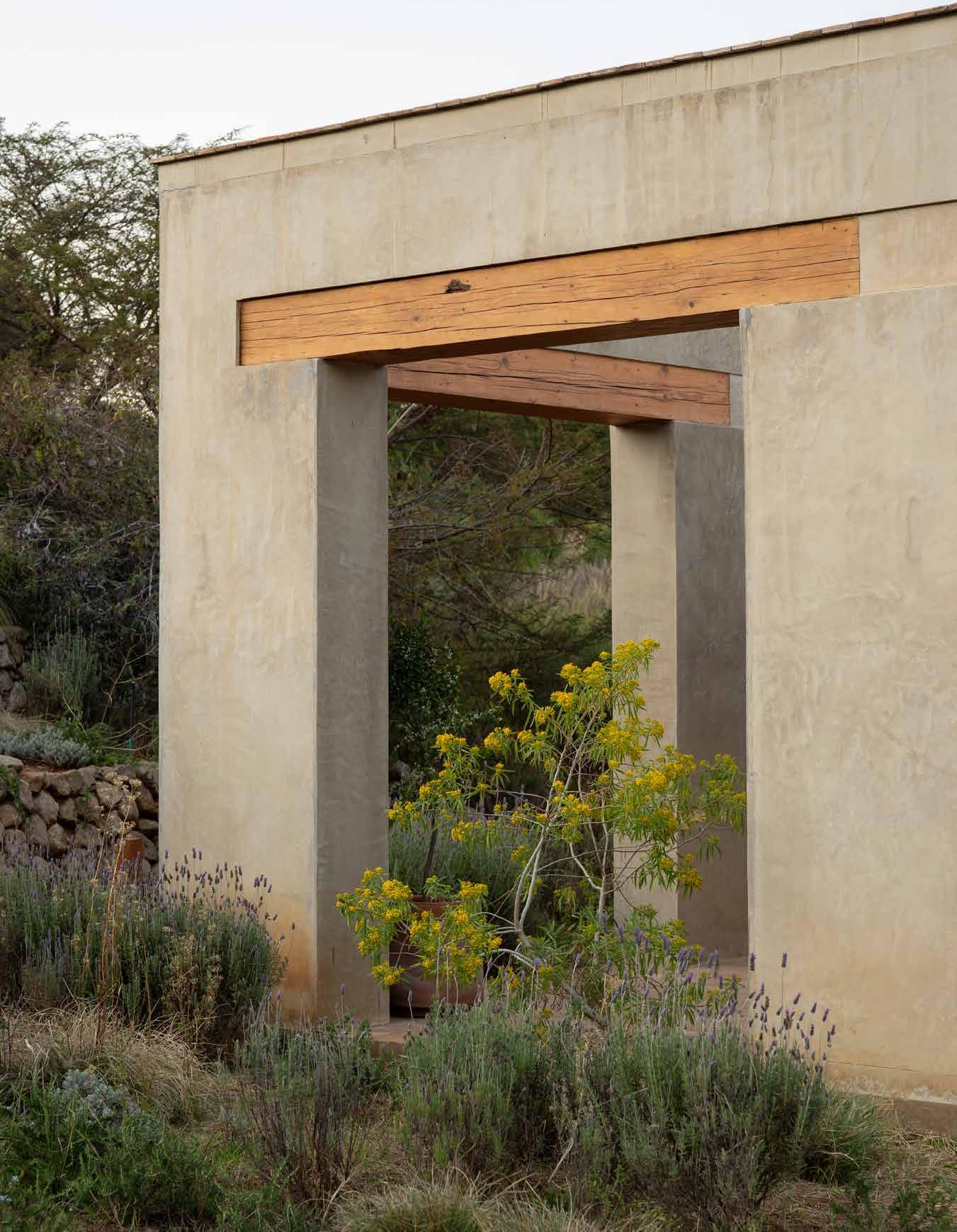
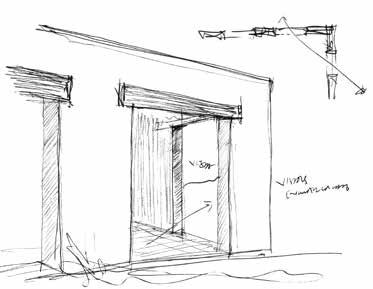
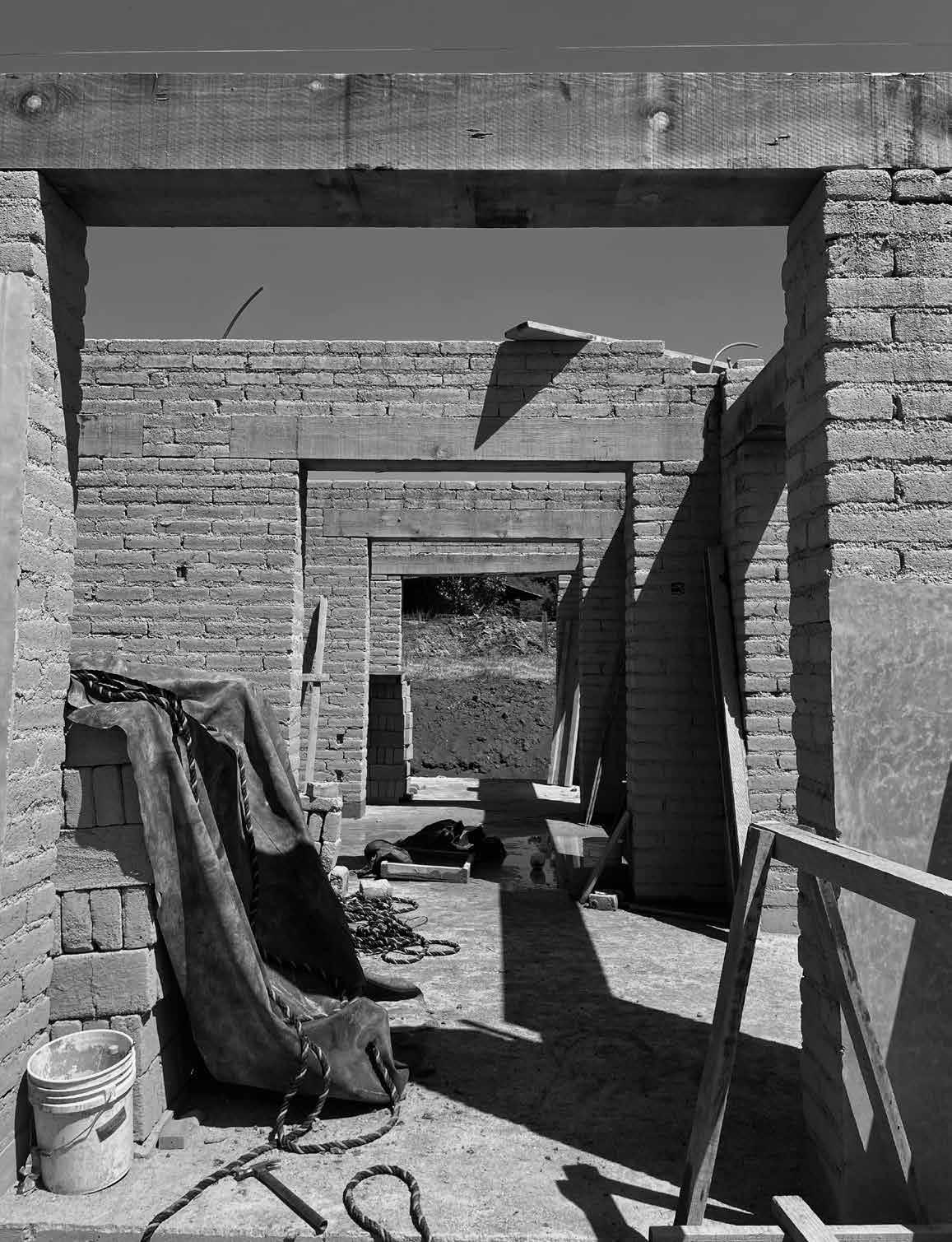
The geometric order of Toronjos originates not from abstract composition, but from the humble dimensions of its materials. The module of the adobe brick and the natural length of local timber dictate the cadence of the walls and openings. What emerges is a structural logic guided by proportion and repetition, echoing the simplicity that Jørn Utzon described as “the true basis of architecture.” In rejecting superfluous form, the project aligns itself with a lineage where necessity is not a constraint but a path to clarity.
Craft, in this context, becomes a form of authorship. The irregularities of handmade elements—the slight variations in brick, the marks of labor, the shifts in texture—become part of the architectural language. These traces humanize the building and situate it in contrast to contemporary notions of perfection. Toronjos suggests that luxury lies not in excess, but in the authenticity and patience required to build with one’s hands. It is an approach that recalls Luis Barragán’s conviction that true beauty is found in “the serenity of spaces,” a serenity that emerges when architecture listens more than it speaks.
By grounding itself in vernacular intelligence, material truth, and artisanal making, Toronjos proposes a way of building that is both ancient and urgently contemporary. It seeks an architecture rooted in the land, shaped by human craft, and capable of offering a quiet, enduring form of beauty—one that does not impose itself, but reveals itself slowly, through matter, light, and time.
STATE MEXICO, MEXICO
2023 - 2024
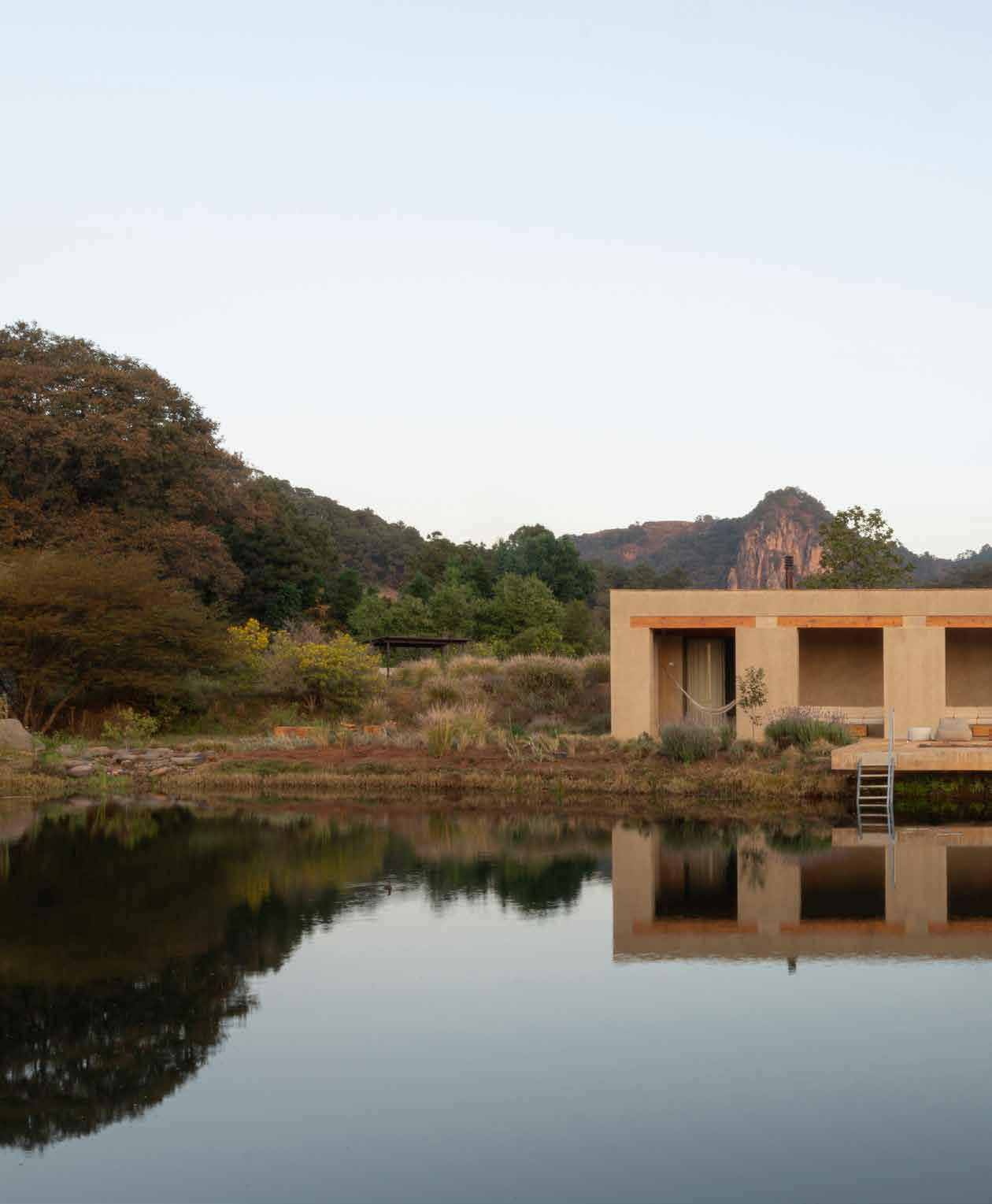
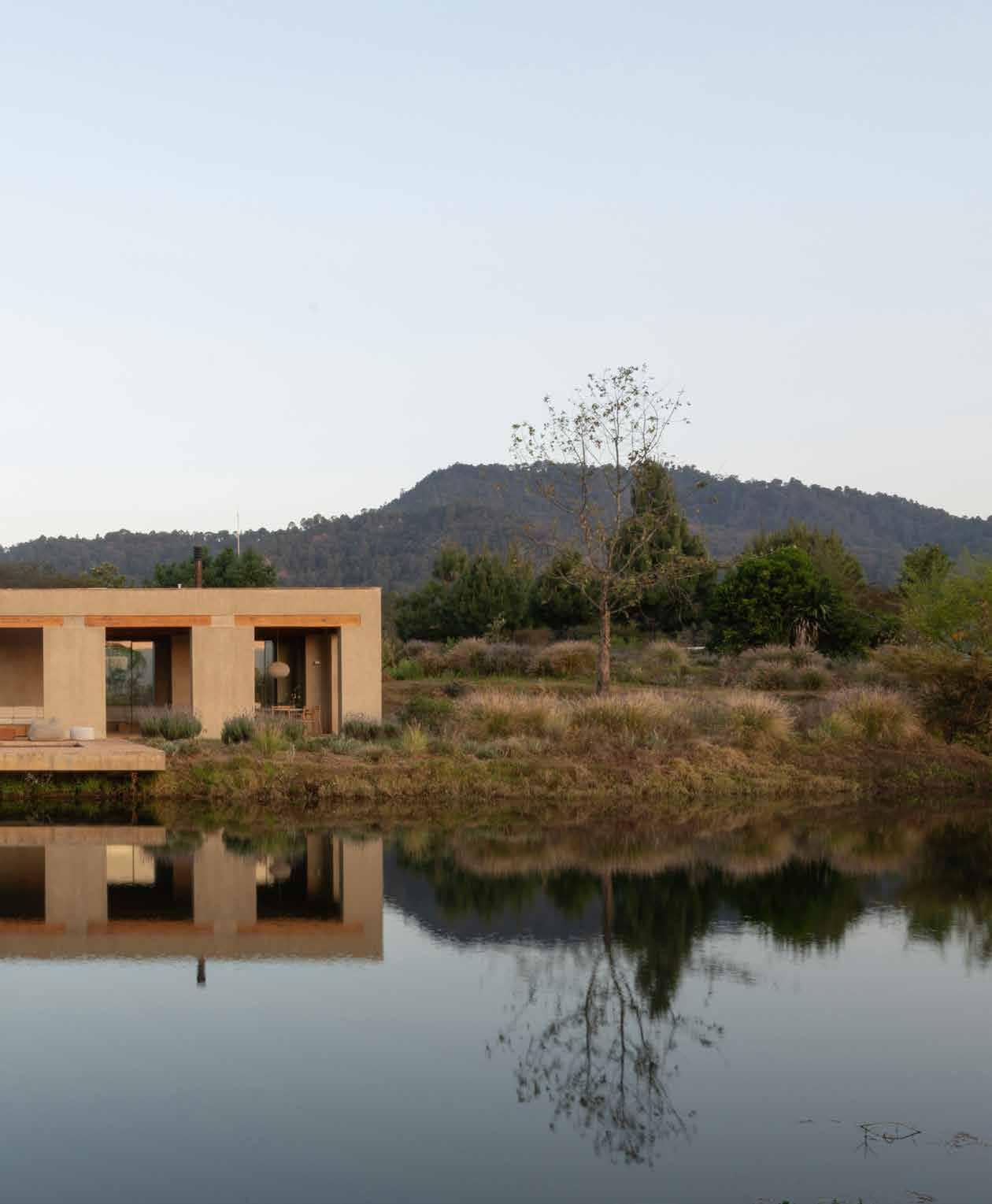
Toronjos is a retreat home guided by the qualities of its natural surroundings. From its conception, the project embraced the principle of full self-sufficiency, adopting a minimal footprint and a fully sustainable approach. Set between two avocado orchards, the house proposes an architecture that consciously and respectfully takes advantage of the site’s resources.
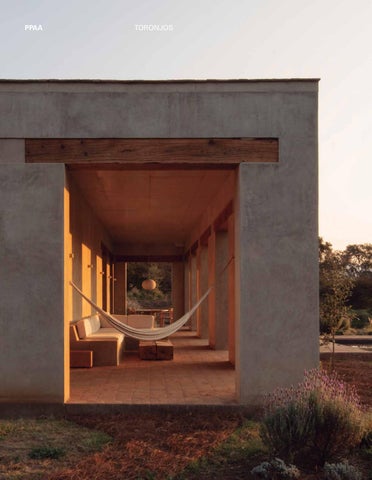
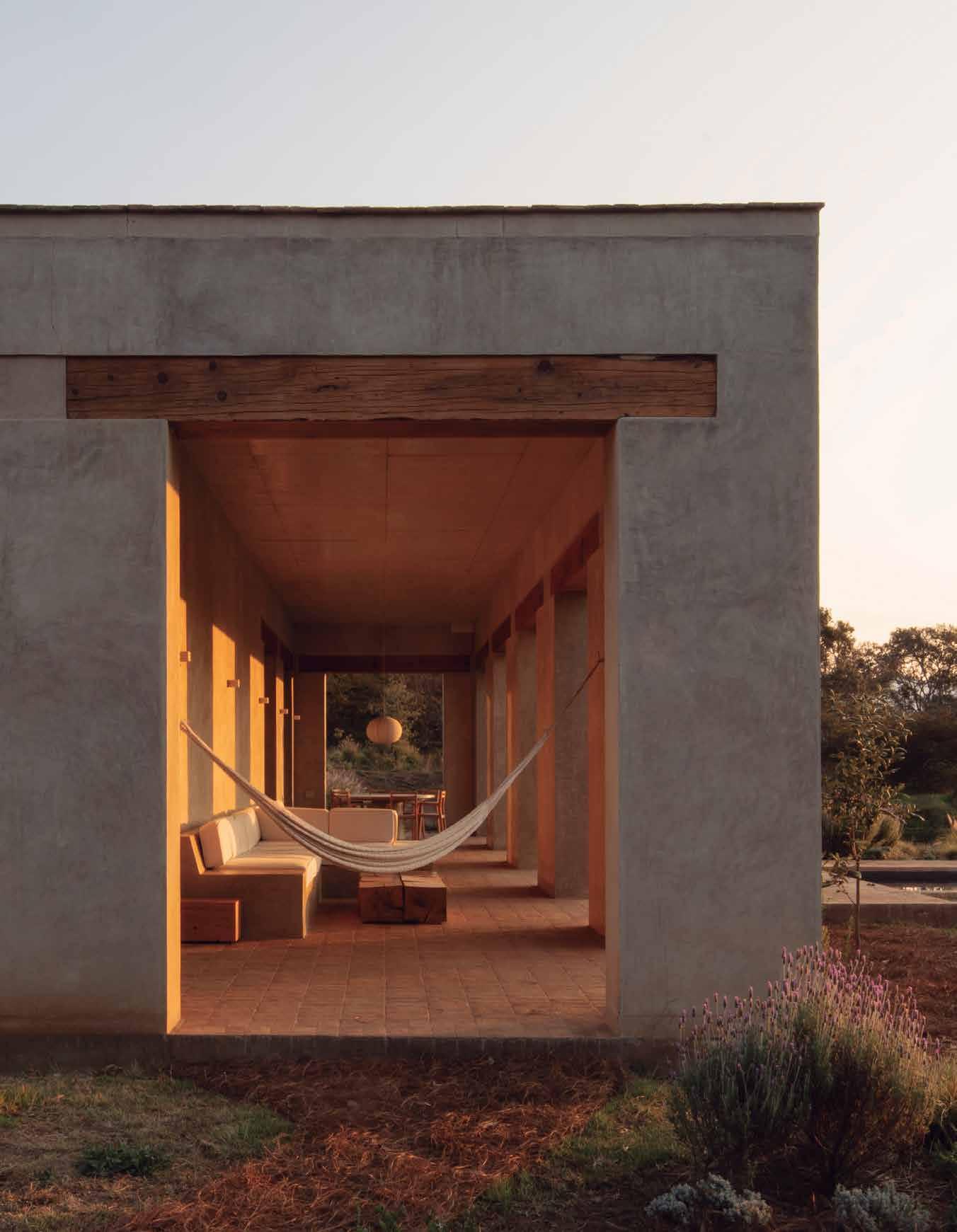
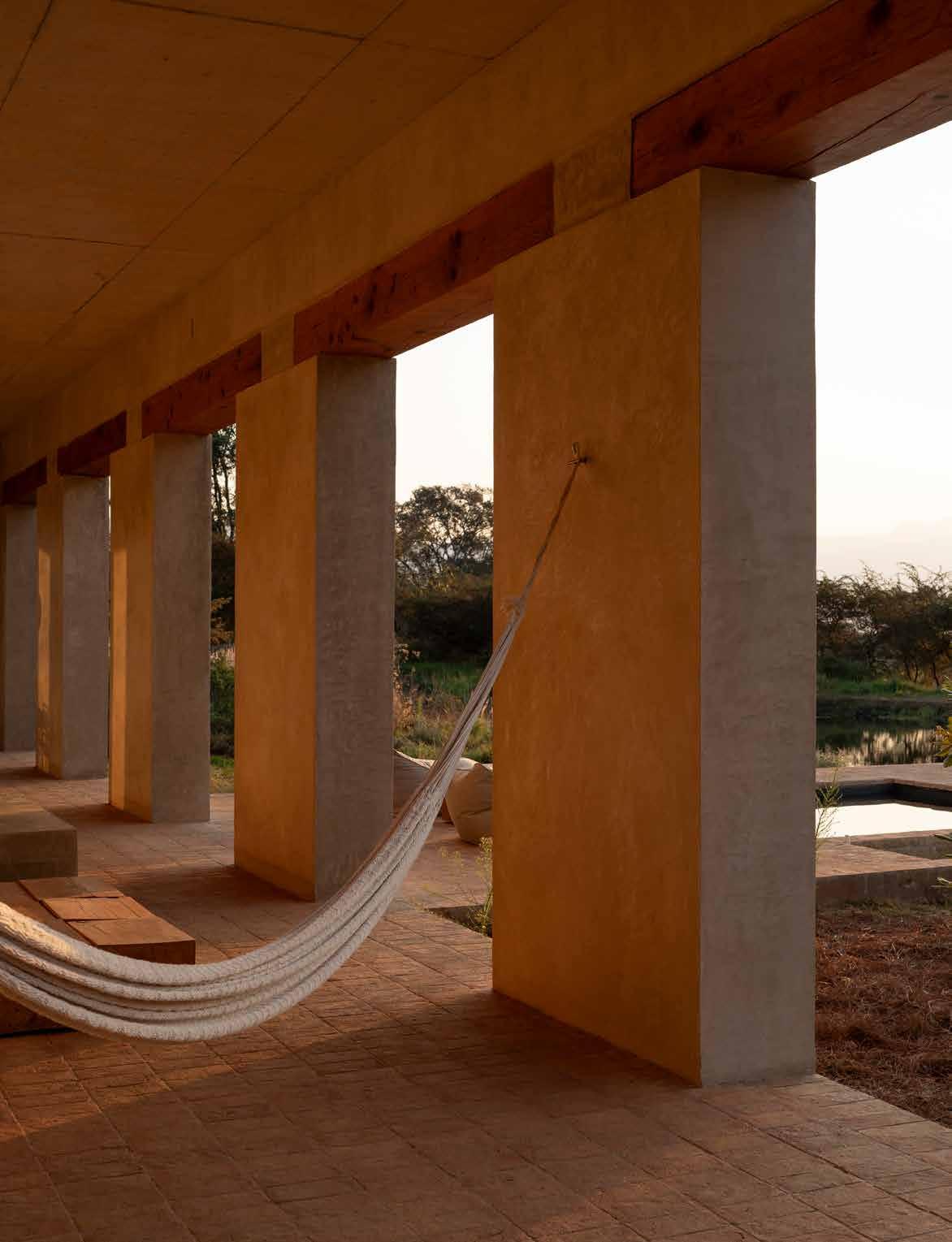
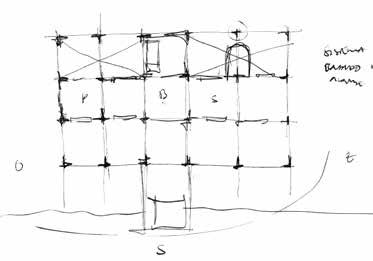
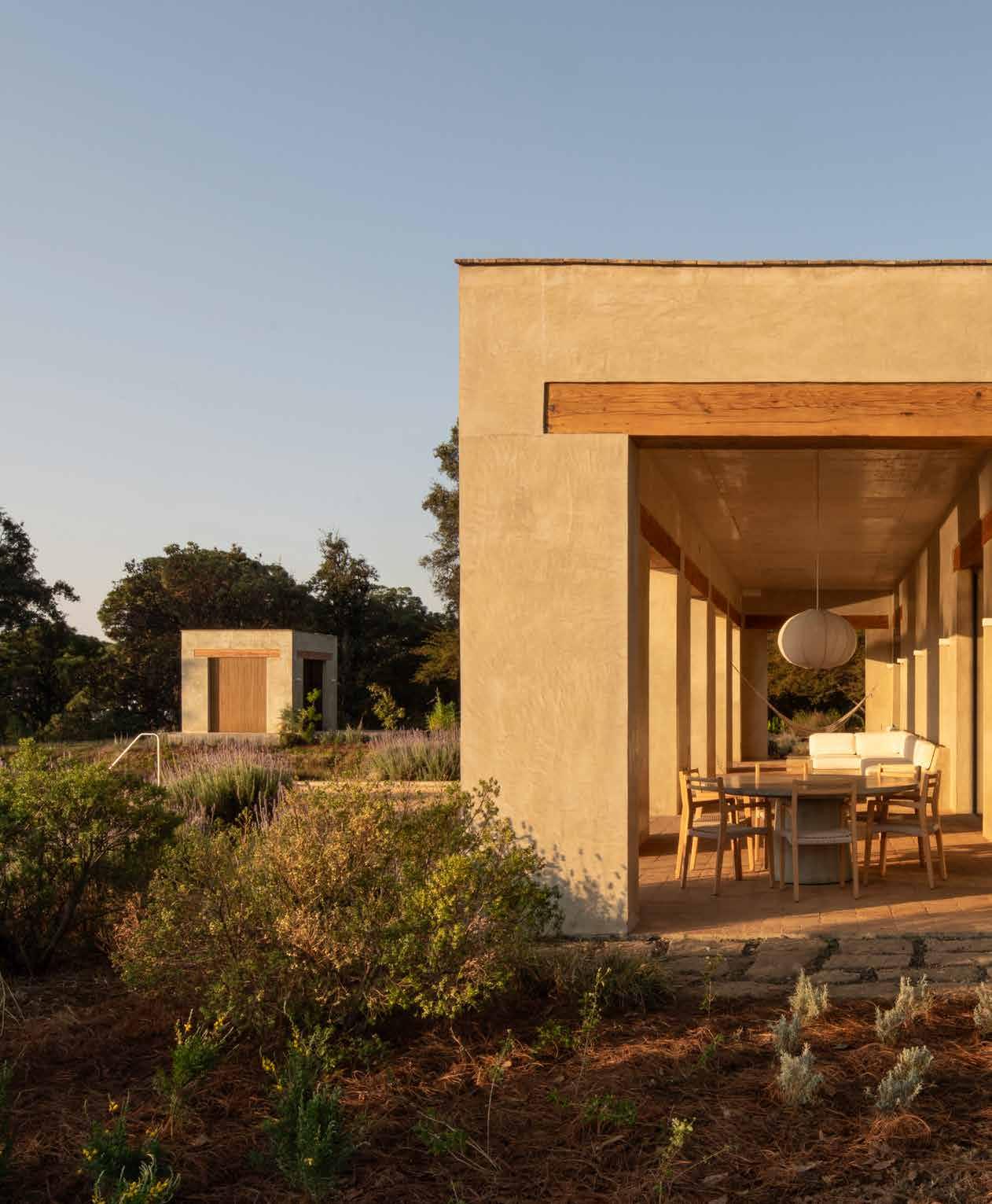
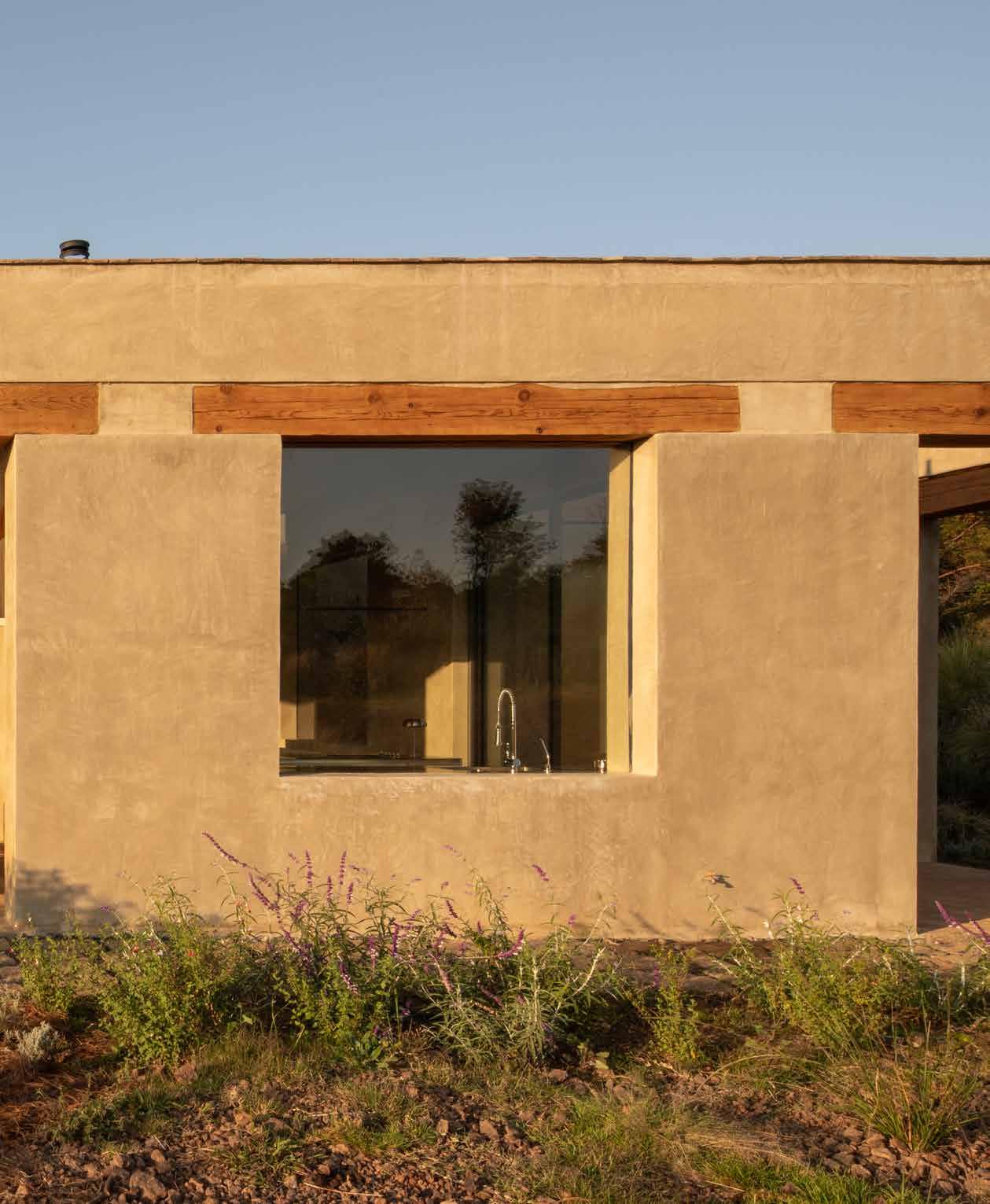
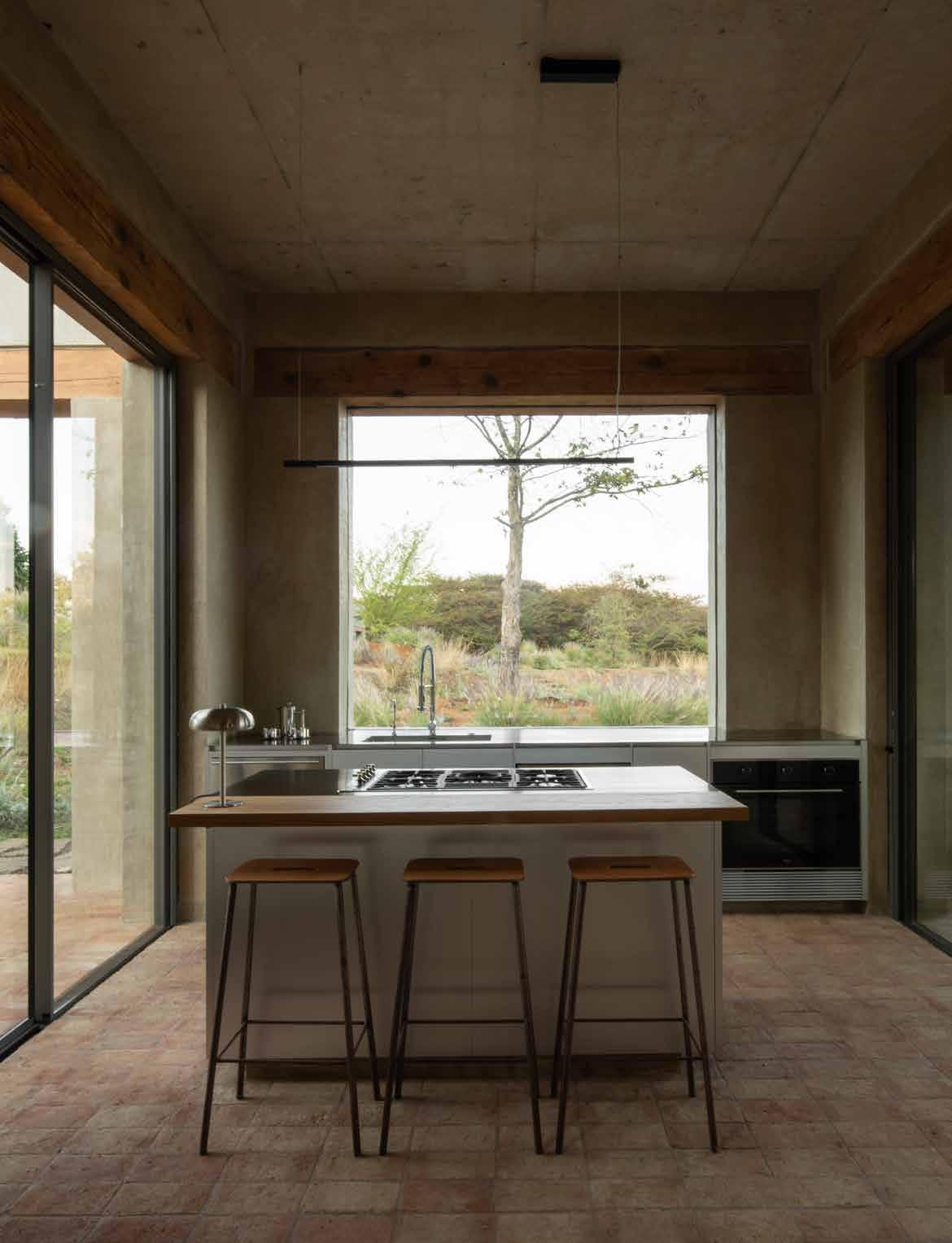
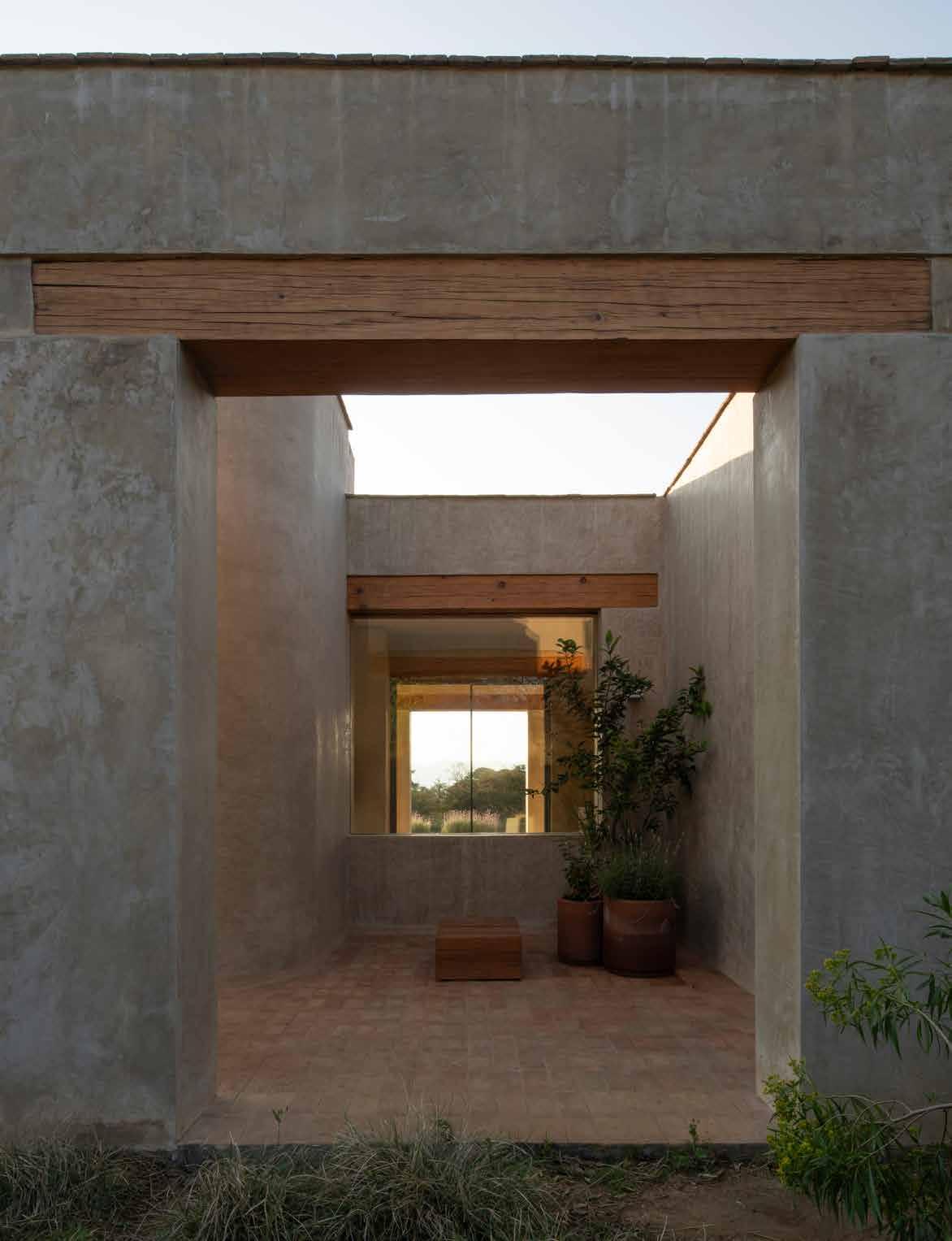
The house functions as a refuge that fosters an intimate connection with nature. A sequence of short walls and generous openings along its entire perimeter provides both shelter and openness, allowing the landscape to flow freely through the architecture. This layout not only allows for cross ventilation and the use of natural light, but also creates a continuous relationship with the outdoors. The openings frame the surrounding views and generate an interplay of light and shadow that transforms the interiors throughout the day.
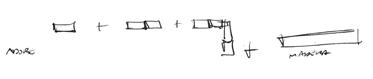
More than an architectural object, Toronjos is a conscious space that invites contemplation and rest, where nature takes center stage. Every space celebrates the surrounding landscape, offering moments of calm and connection through open social areas. The house unfolds on a single level and is organized into three longitudinal sections. The central part houses the private areas— bedroom, bathroom, and dressing room— while the two side sections contain the social areas, with large living rooms open to the landscape and hammocks designed for pause and contemplation. The goal of Toronjos is clear: to enjoy and preserve the natural environment.
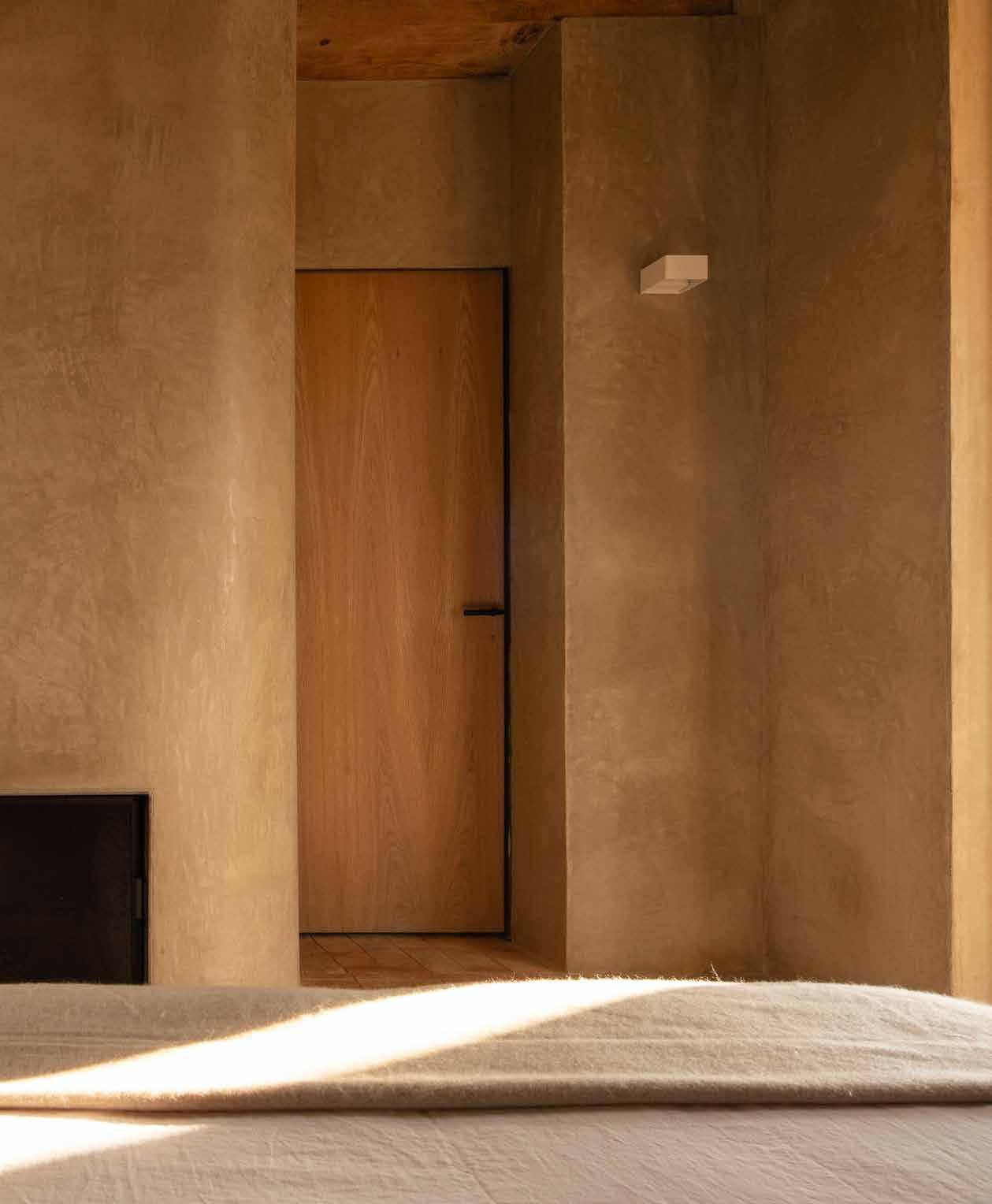
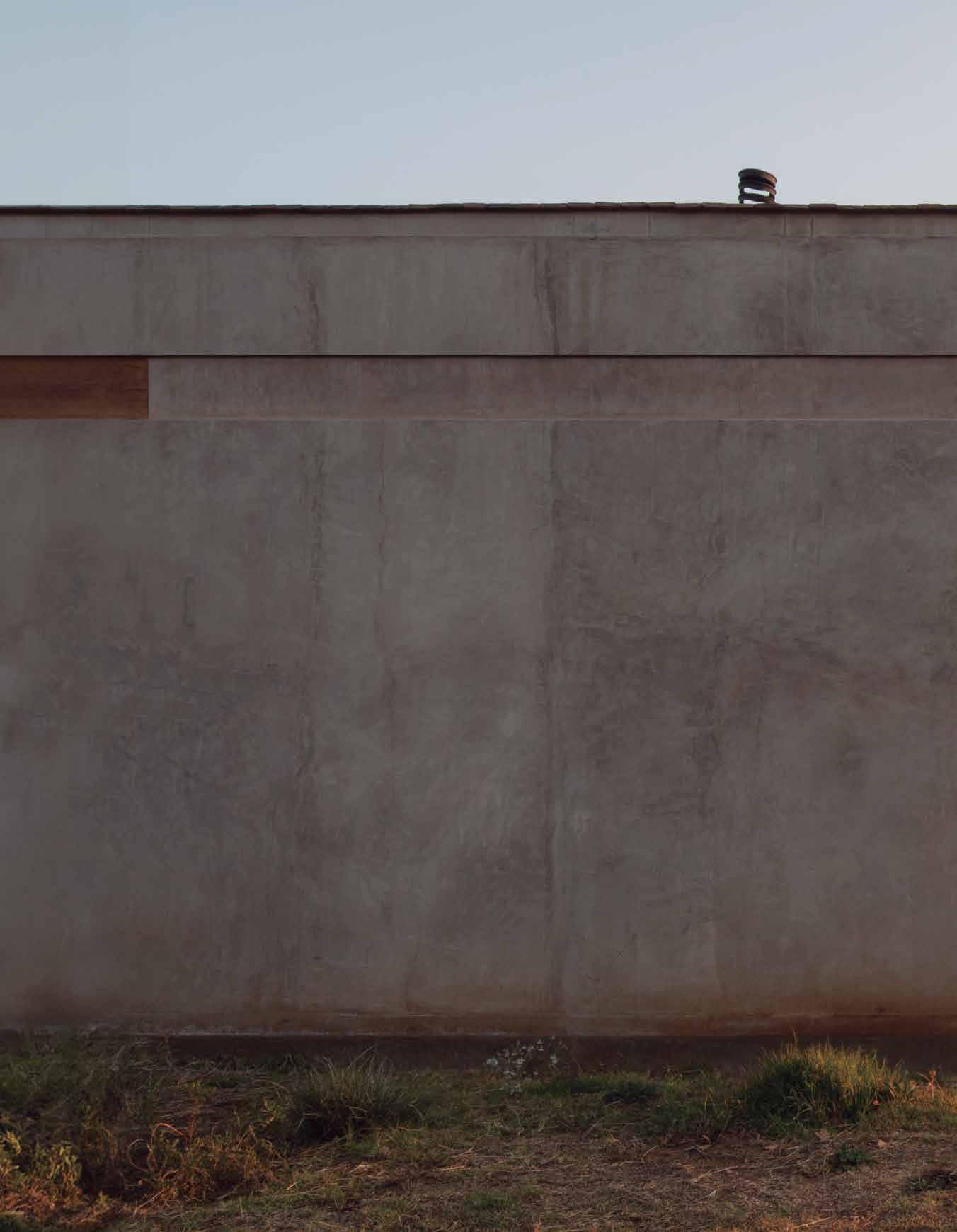
The project’s commitment to sustainability is evident in every aspect. The materiality is local, honest, and exposed. The house was built exclusively with adobe and wood: bricks were handcrafted on-site using earth and straw from the land, dried naturally in the sun; and wooden beams whose length—determined by local availability—defined the rhythm of the openings. The floors are made of locally sourced brick, and the walls are coated with a finish crafted from the leftover earth and dust
produced during the adobe-making process, creating a warm atmosphere that harmonizes with the palette of the landscape.
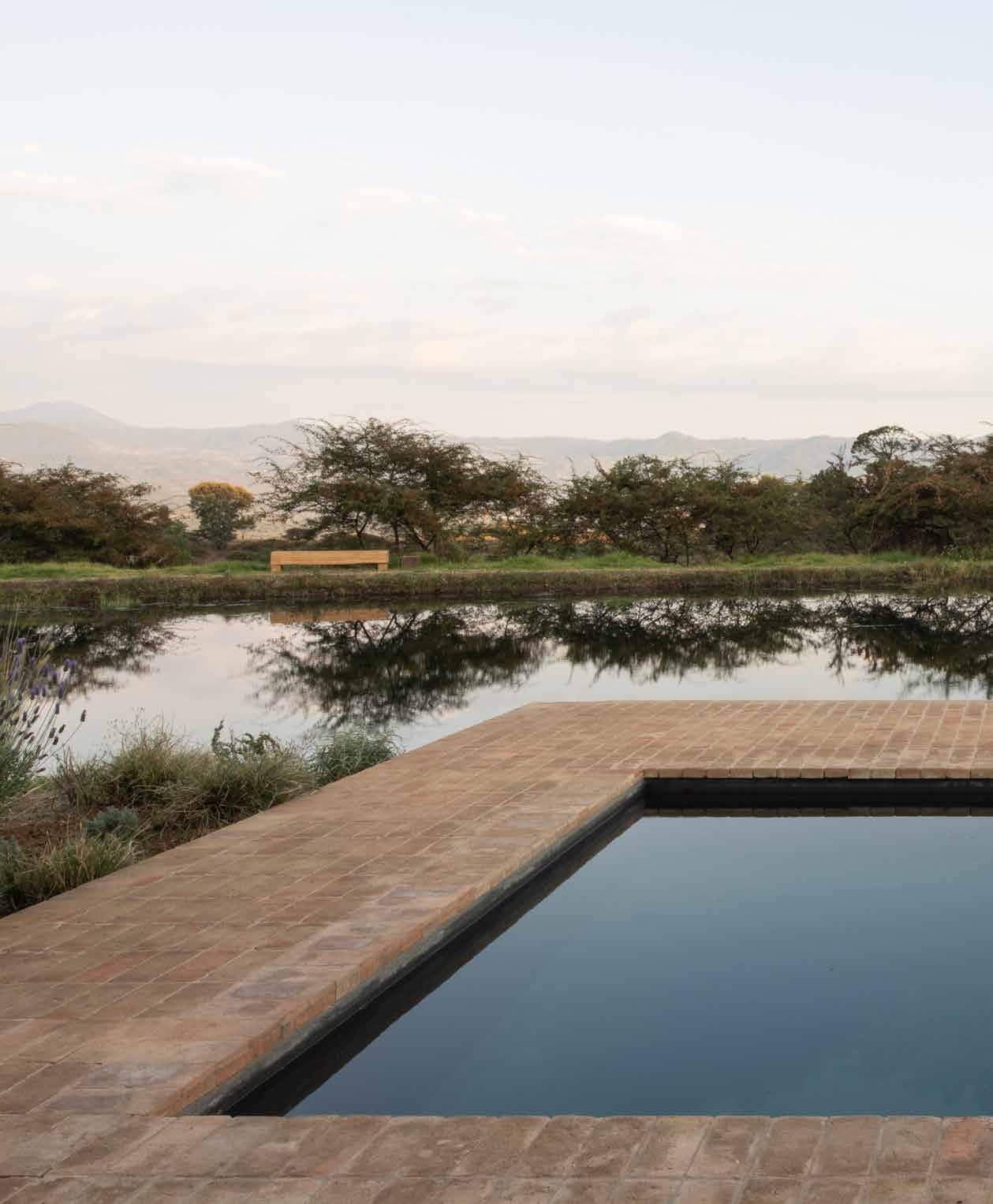
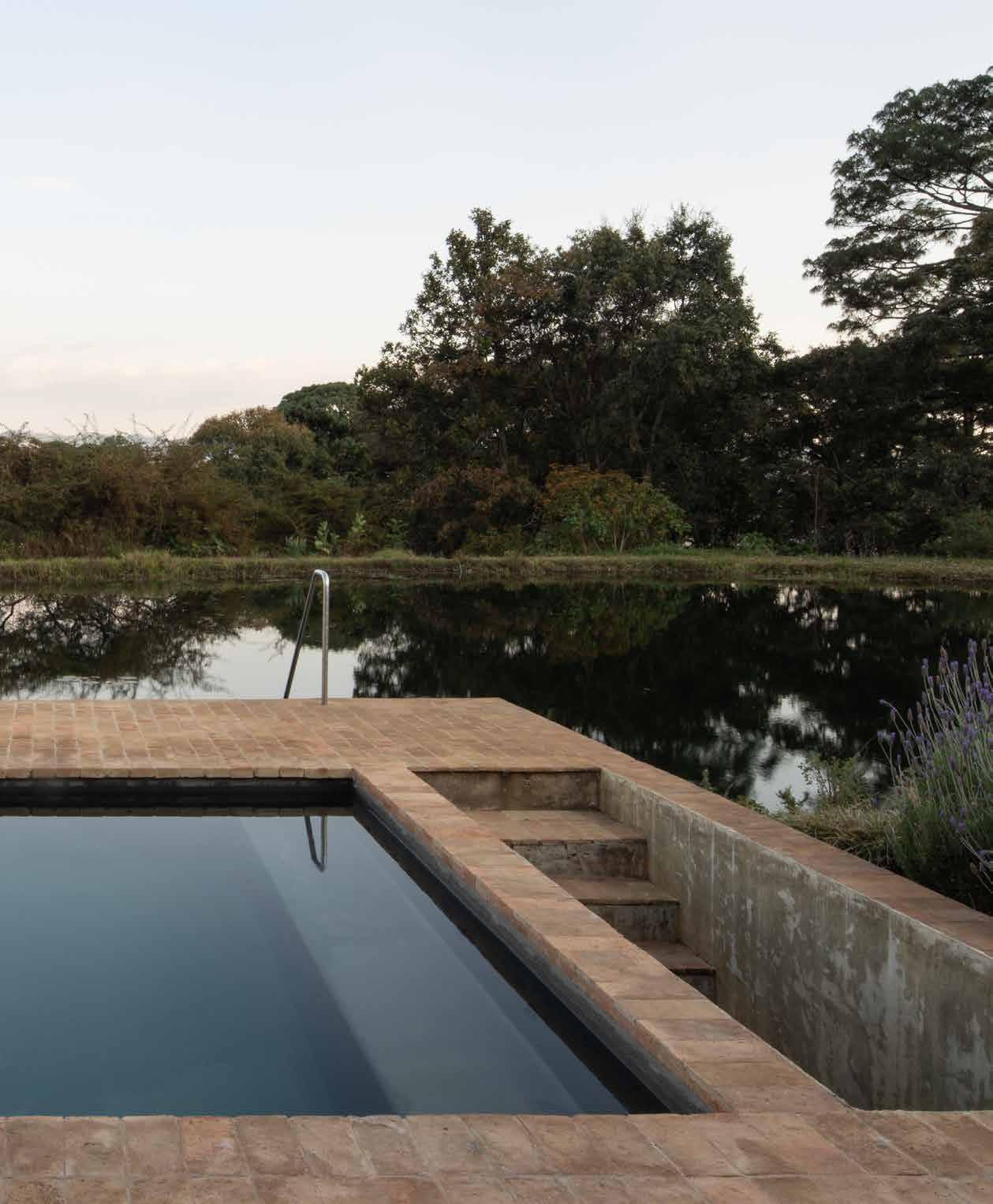
Water self-sufficiency is achieved through an artificial lake designed to capture rainwater. This body of water not only visually enriches the landscape, but also serves as a year-round reservoir for domestic consumption and irrigation of the fruit trees. As for energy supply, the house is entirely powered by solar panels, ensuring a clean and autonomous operation.
Toronjos does not impose itself—it blends into the land and enhances its beauty. The architecture dissolves into the vegetation, water, and earth, consolidating a way of inhabiting that is deeply connected to its environment. In this project, sustainability is not an added feature, but the guiding principle behind every decision—and the landscape, the real protagonist of the architectural experience.
The architectural order of Toronjos originates from the simplest of measures: the dimension of an adobe brick. From this module, a constructive rhythm emerged—one shaped by the repetition of the brick itself and by the locally sourced wooden beams whose natural lengths determined the spans and cadence of the openings. In this way, the project affirms that architecture becomes more compelling when it responds not only to its site, but also to the inherent logic of its materials. By renouncing formal arbitrariness and focusing instead on proportion, structure, and light, Toronjos aligns itself with the timeless clarity found in vernacular architectures—those “architectures without architects” whose beauty stems from necessity, coherence, and an intimate dialogue with place. It is in this pursuit of elemental sense—rather than spectacle—that the project seeks a quiet and enduring form of beauty.
PABLO PERÉZ PALACIOS

FEATURED WORK
TORONJOS
STATE OF MEXICO, MEXICO
2023-2024
Office
Collaborators
Pablo Pérez Palacios
Emilio Calvo
Miguel Vargas
Nancy Estévez
Miguel González
Jonathan Reséndiz
Andrés Domínguez
Adán García
Area 312 m2
Structure Consultant
Ricardo Camacho
Materials
Local adobe blocks, and local handmade brick floor tiles.
Builder
Emiliano Bonilla
Lake
Concepto Q
Windows Venster / Cortizo
Kitchen
Cocinas Maaw
Curtains and sofas Artell
Images
© Fabián Martínez
AMAG LONG BOOKS COLLECTION brings together a unique selection of projects that establish new paradigms in architecture.
With a contemporary and timeless conceptual graphic language, the 1000 numbered copies of each LONG BOOK will document works with different scales and formal contexts that extend the boundaries of architectural expression.