
Demystifying ‘Mr. Davidson’
SÖREN POTTHOFF ’27 (HE/HIM)
Nestled between an apathetic student section and the quarter-zipped septuagenarians that constitute the standard audience at John M. Belk Arena, seated behind the Davidson bench on gamedays is a bearded, man-bunned fellow in his mid thirties. Normally toting a beer in one hand, this pillar of the Davidson basketball community is one Jordan Rubens, otherwise known as “Mr. Davidson.”
In an age of fan apathy around a struggling athletics program, Rubens is an
anomaly, a relic from a bygone era when the program was something to be proud of; an era that feels foreign to a current day Davidson student, but is much more tangible and recent to longtime supporters of the program like the Rubens family. This author’s fascination with Rubens started his first year. Rubens was a curiosity. Students would spend entire games on their phones; if one stood up in a moment of excitement, they ran (and still run) the risk of being chided by the student behind them. Rubens, whose seat is right next to the student section in the far end of Belk Arena, can often be seen religiously exhorting stu-
dents and townies alike to stand up, to inject the team with some much needed energy; his efforts are rarely rewarded by the team’s performance, but Rubens continues nonetheless. When rats are subjected to constant stress and poor conditions, the learned response is disinterested lethargy. So too has been the response of Davidson students to their constantly-disappointing basketball team. Nowadays, students can only be convinced to turn out en masse to basketball games if there is the promise of free beer or a PS5 raffle.
Who can blame them?
CONTINUED ON PAGE 5
Students allege RLO failed to properly communicate policy enforcement
CLARA OTTATI ’27 (SHE/HER)
Kiko Lancastre ’26 was in Sintra, Portugal for winter break when he received a “written warning” from Davidson’s Residence Life Office on Dec. 22 about a game table stored outside his Armfield Complex apartment, in response to a violation of RLO policy 61 days earlier, on Oct. 10.
According to a copy of RLO’s email obtained by The Davidsonian, Martin Court area coordinator Nic Capano observed a large wooden game table outside Armfield 101, where Lancastre lives.
Capano informed Lancastre that he was in violation of the Martin Court Apartment Housing Agreement and invited him to an optional meeting to discuss the incident.
“Although not required, you are invited to meet with me to talk
about this issue. During this time, I can (1) summarize pertinent information from the report, (2) give you an opportunity to respond to the report, and (3) collect information to help determine if alternative ways to resolve the issue are appropriate. If I do not hear from you within 5 business days of this letter, I will consider this as a closed matter,” Capano wrote.
CONTINUED ON PAGE 3
Eating House members upset by placement day errors
SAVANNAH SORAGHAN ’27 (SHE/HER)
Some students donned forced smiles amidst ecstatic peers during Placement Day on Saturday when an algorithmic error placed multiple first-years into their least preferred Eating House. Placement Day is a long hailed Davidson tradition. First-years looking to join an Eating House rank the houses from first to fourth preference on WildcatSync in the beginning of February and are woken up Saturday morning to
discover their placement and celebrate. Policy dictates that if students receive their last choice, they should be notified via email the night before.
Respondents are given a randomized ID, which is used to sort people into each house. The algorithm balances two priorities: giving people their top choices and making sure the eating houses maintain a consistent and roughly equal membership. The morning of placement, members of each house pick up their new members from their
Caitlin Andrews-Lee lectures on Venezuela, authoritarianism
CASEY SCHEINER ’28 (HE/HIM)
UNC Chapel Hill Professor of Political Science
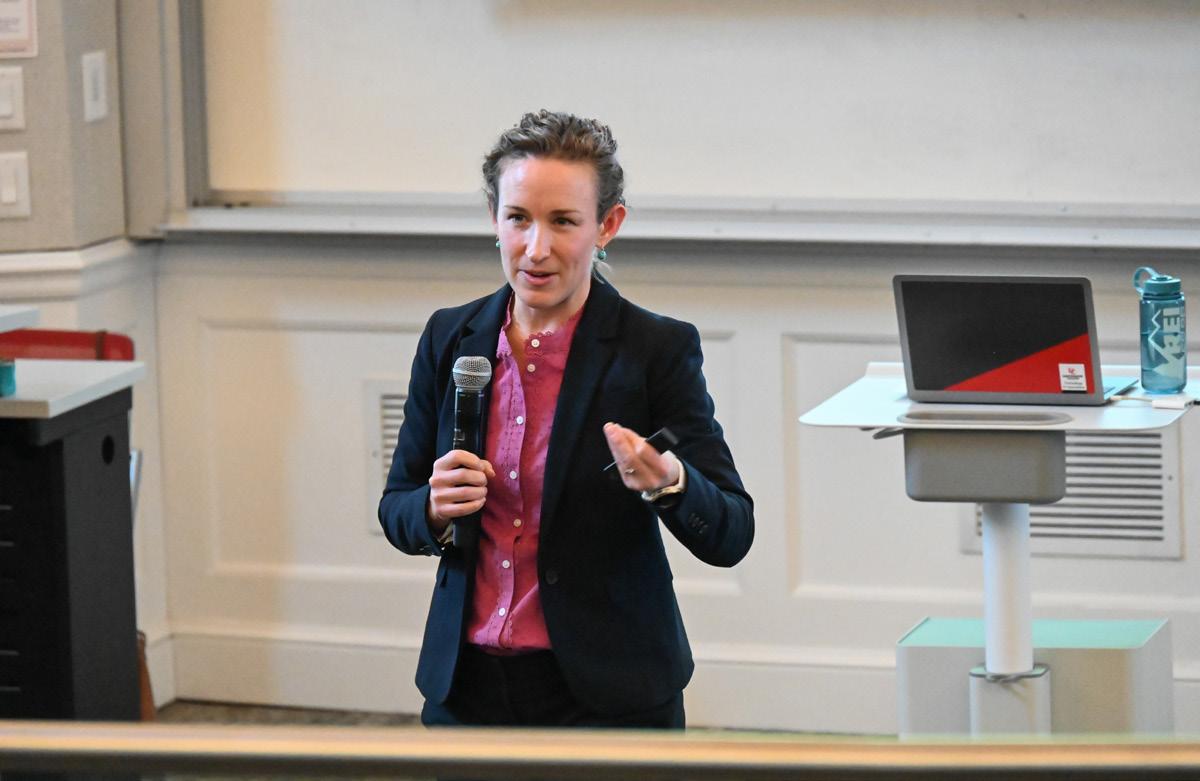
Caitlin Andrews-Lee, a comparative politics scholar specializing in Latin America, visited Davidson Monday Feb. 9, deliver-
The people behind Davidson’s winter storm response
STELLA MACKLER ’26 (SHE/HER)
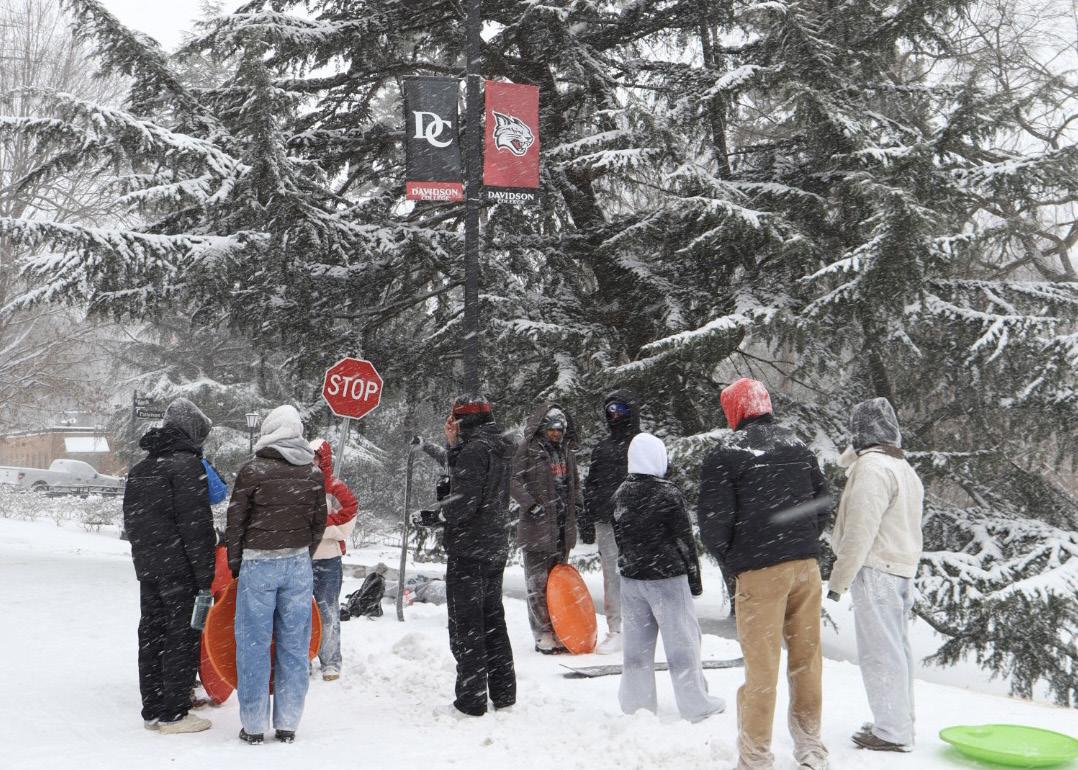
Davidson’s campus looked more like its northeastern counterparts than small town North Carolina in January when an ice storm hit just before the first full week of class. Eleven inches of snow fell the next weekend. While students sled down the old tennis courts and built snowmen outside of Chambers, dining services and physical plant staff braved freezing weather and spent nights away from their families to keep campus running.
Davidson considers dining services and physical plant staff, including building services, essential workers. They are required to come to work during periods of inclement weather or other emergency situations. The college needs them, Richard Terry, director of auxiliary services said,
even when the roads are rough and the weather is “terrible.”
“Essential employees are basically people that if they’re not here, then you don’t eat, or we have three inches of ice on the sidewalks, or the power doesn’t get turned back on,” Terry said.
These employees put in hours of overtime over the course of the storms. Commons workers stayed through their morning shifts, which began at 6 a.m. Physical plant, typically only on campus during weekdays, worked 7 a.m. to 4 p.m. through both weekends. Many employees stayed in rooms in the Homewood Suites on Griffith St. or the Carnegie Guest House so that they could keep coming to work.
Terry, who lives three blocks from campus, walked to Commons the morning of Feb. 25, the first ice storm, expecting few workers in the kitchen.
“I’m imagining I’m going to open
the door and there are going to be two people there sprinting around trying to prepare food. Instead, without fail, I go in that back door,
and there are 15 to 20 employees busy getting things ready.”
ing a lecture in Hance Auditorium titled “Charismatic Leaders and Authoritarian Legacies: Venezuela in Comparative Perspective.”
The lecture, sponsored by the Dean Rusk International Studies Program, comes just a month after
CONTINUED ON PAGE 2
3 4 5 6 7
on
Henry Coy ’27 on offcampus housing
Zoe Turnbull ’29

Clara Ottati ’27
Kevin Kosar lecture
on NASCAR driver Mia Lovell ’29 Sophia Schur ’27 on DACE arts residency
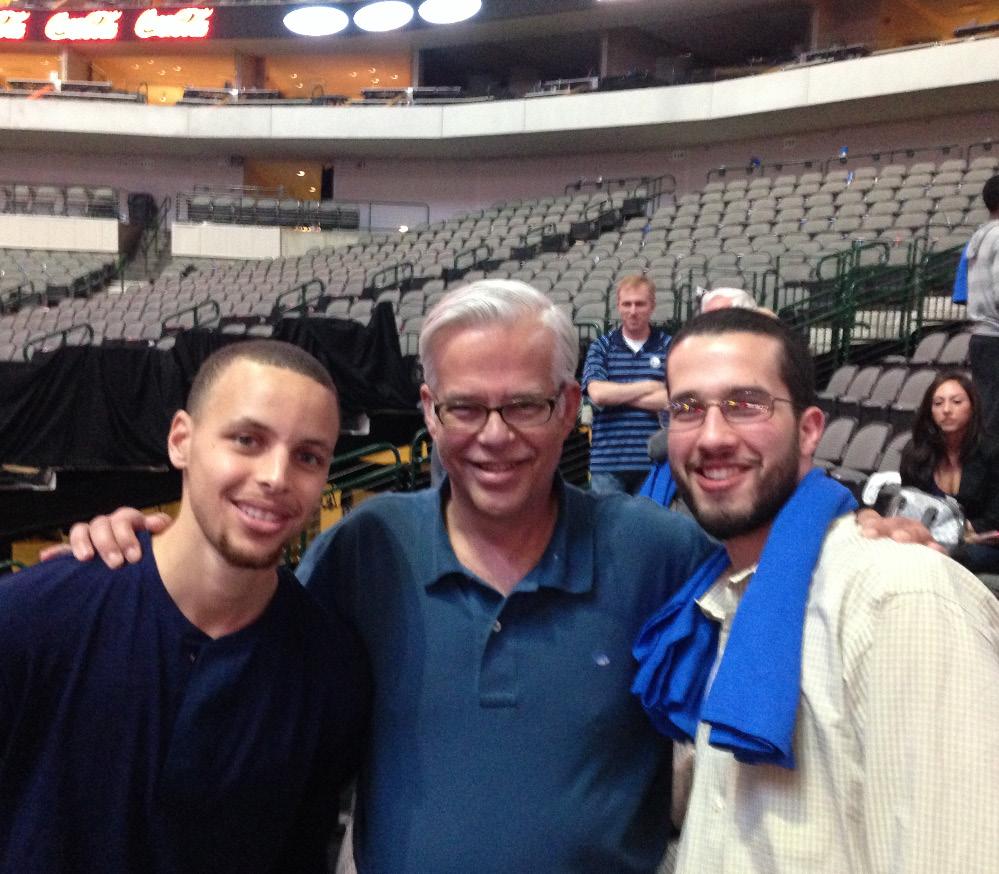
The Rubens (Barry, left; Jordan, right) pose with Steph Curry ’10 after a game. Photo courtesy of Jordan Rubens.
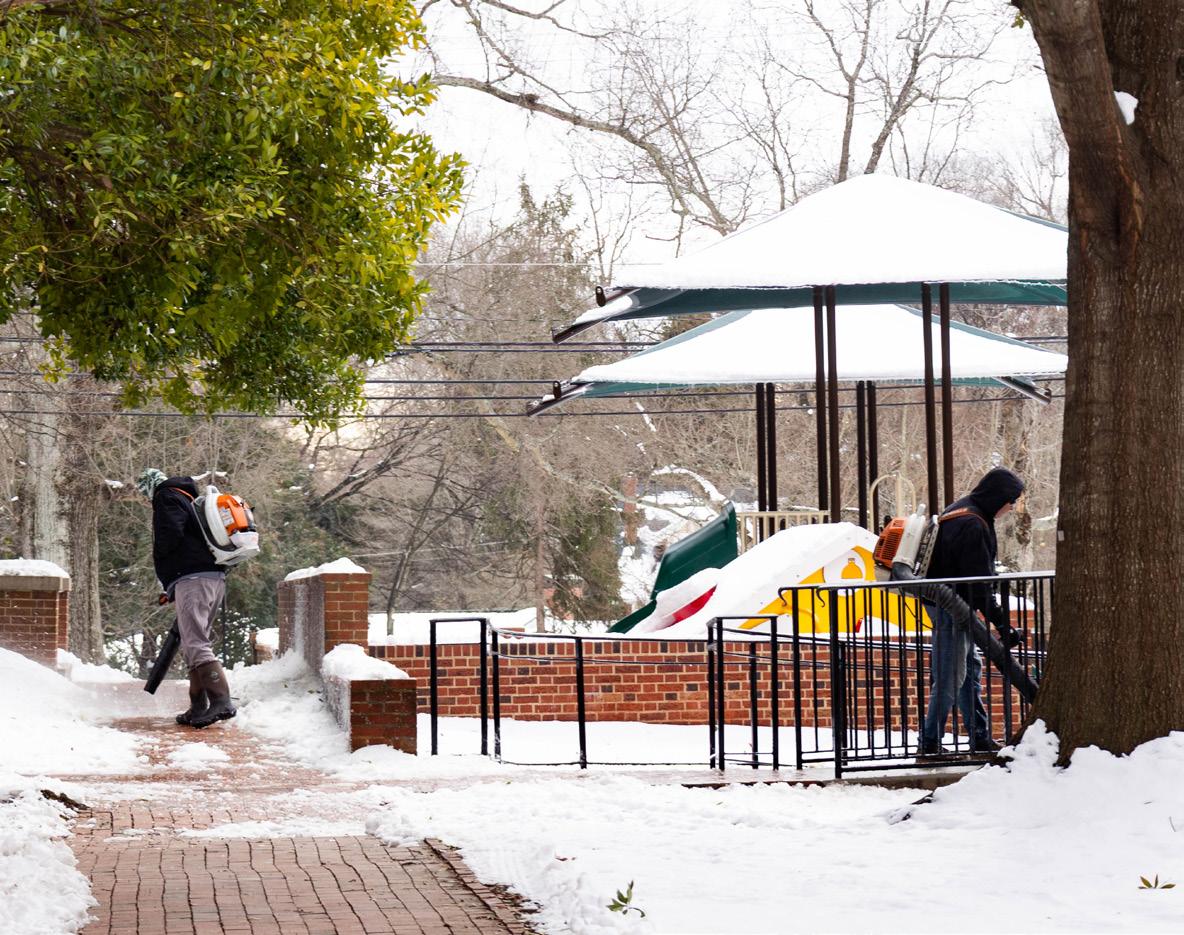
Physical plant staff use leaf blowers to clear paths near Davidson College Presbyterian Church. Photo courtesy of Ada Long ’29.
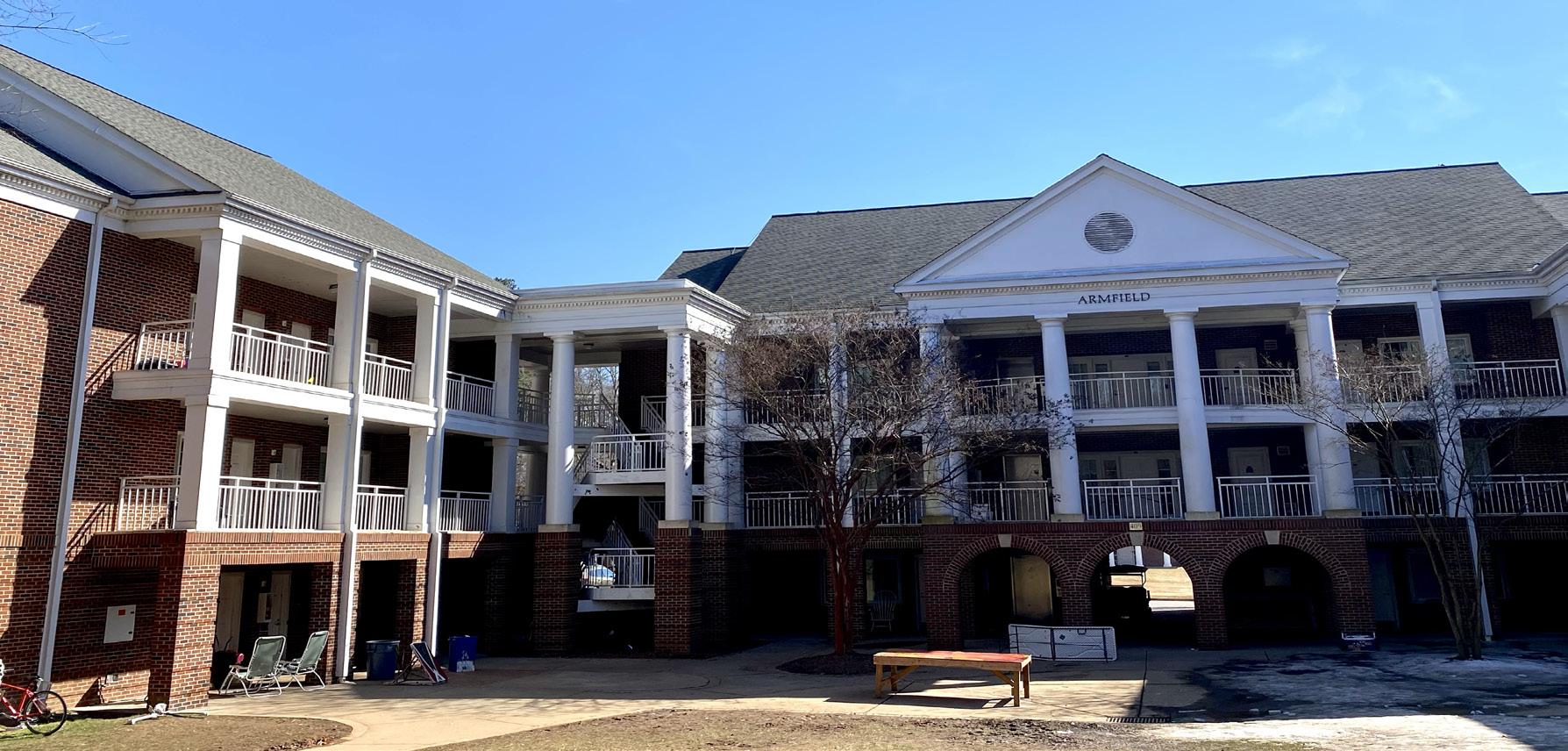
The Armfield courtyard, prior home of the KSIG game tables. Photo by Savannah Soraghan ’27.
Student Activities apologizes for placement issues
CONTINUED FROM PAGE 1
dorms and run with them to their new houses.
In the early hours of placement day, first-years anxiously waited to see what house would knock on their door. When the knock came, many ended up disappointed when they were given their fourth choice.
“I expected not to get my fourth choice because I didn’t get an email and then Connor knocked on my door and I was kind of confused [...] the day didn’t really go how I thought it was gonna go,” Bea Marchesani ’29 said.
A ranking error on the WildcatSync survey caused the mix-up. Bella Godoy ’27, the PCC eating house representative, sent an email to placement chairs and participating first-years the morning of placement day.
“The survey ranking on the form was out of order, and therefore your 2nd place choice and 4th place choice were swapped when we downloaded the data. We truly believed, until this was brought to our attention this morning, that you received your 2nd choice,” Godoy wrote.
According to Student Activities, two first-years were omitted from the algorithm completely. Briana Camilo ’29 was left waiting and confused in her dorm room as she waited for a knock that did not come.
“It seemed like an important tradition to take part of but it was a big let down when I didn’t get picked up,” Camilo said. “Eventually I did get picked up but it wasn’t the same and it sucked, however the Rusk girls were really nice and helped me move on from the whole ordeal.”
The mix-up also disappointed house placement chairs who spent months preparing for the event. “We poured hundreds of hours into planning the most special day and are sad that something completely out of our control affected our thoughtful preparation,” said Connor placement chair Laura Aycock ’28 in an email to The Davidsonian.
Godoy confirmed in an email that the houses primarily affected were Connor and Rusk.
Over the weekend, Godoy worked with Director of Student Activities Emily Eisenstadt and Associate Director of Student Activities Brandon Lokey to resolve the error.
“The mistake did not come from the algorithm itself. The mistake/human error came from how the data was collected so the form on wildcat sync had the issue,” Godoy wrote in an email to The Davidsonian.
On Feb. 8, Eisenstadt sent out an email apologizing again for the mistake and confirming that they would re-run the algorithm and students who wanted to change houses will get their second or first choice.
“If you choose to switch houses, we will ensure you receive your first or second choice house. [...] We found and fixed the error on the placement survey, and we will also be evaluating our whole process to join an eating house to see if other changes need to be made moving forward,” Eisenstadt wrote in the email.
As of publication, the placement surveys were re-run and affected first-years’ rankings were fixed.
Physical plant and dining services navigate treacherous conditions to keep campus open
CONTINUED FROM PAGE 1
Commons remained open at full service throughout both storms, minus one Monday morning when they opened two hours late, at 9 a.m. This decision was made, according to Terry, with worker safety in mind for those who were not staying nearby.
“We knew conditions would be treacherous, but driving in daylight versus driving at dark—on our regular schedule, we would have had cooks coming in and it would have been pitch black,” Terry said.
Many of these essential employees do not live in Davidson. Some live as far as Denver, on the other side of Lake Norman. Christ Battle, the superintendent of building services, typically has an hour commute to work both ways. Following the ice storm, his drive took two hours.
“I took so many different alternate routes to avoid certain areas, to make sure I can make it to the highway,” Battle said.
He ended up spending three nights in the Homewood Suites with his family. Several of his other team members came by themselves. Several more, for those first few days, could not make it at all. On Feb. 25,
11 workers in building services were able to come in, out of a staff of 48.
“It was kind of bad, it was bad.” Battle said.
Bad as it was, Battle was able to pull a team together. The fact that it was a Sunday provided some relief as they did not have to worry about cleaning any academic buildings. Still, building services are responsible for the cleanliness of residence halls and, critical during a snow storm, five feet outside of the halls. Battle and some of his team had to drive to Lowes to buy more shovels and ice melt. The grounds crew had that equipment, but they needed it to clear the rest of campus.
“Roads were definitely icy, but our main priority is serving the students,” Battle said.
The icy conditions proved challenging for on-campus work as well. Two people on Battle’s team slipped and fell while working outside, went to the hospital, and reported for work the following day.
“They came right back the next day with knee braces and shoulder braces on,” Battle said. “They [are] here to serve.”
Physical Plant Director David Holt-

houser put in 26 days of work as of Feb. 6, starting with move-in weekend when physical plant was on campus. The crew, who typically does not work on weekends, remained on campus for the three weekends to follow.
“This group of people is unbelievably dedicated to show up for a snow event,” Holthouser said.
During the icestorms first weekend 53 people showed up for work, just around half of the 117-person staff. The second weekend, that number rose to 60.
“A pretty good number, considering where a lot of my folks live,” Holthouser said. “Miles and miles away. My folks are essential employees, so it’s in their job description. When we call you need to be here.”
Decisions on what areas of campus to work on were made with students in mind. Because both storms hit on the weekend, physical plant dedicated their efforts to clearing paths from residence halls to dining resources like Commons and the Union.
“When we feel like we have won that battle, then we drop into library, fitness resources, and then we’ll go to academic buildings to be ready for the following day,” Holthouser said.
With the long hours spent in below-freezing temperatures, Holthouser prioritized keeping his team warm and their spirits up. The team cooked meals for each other and changed their socks often. Holthouser also cut their work off at 4 p.m. to get them on the road before sunset.
“I’ve got some stories some of my folks told when they came back in the next day about places that they struggled to get home,” Holthouser said. “One guy lives in Kannapolis, and there was a 100-car pile up on Interstate 85.”
As the snow melts and the weather returns to normal, leadership across dining services, building services and the rest of physical plant emphasized their teams’ commitment to the College and the work they put in to keep it safe.
“These are people with their own families, with their own house, with their own kids, with their own dogs, with their own livestock and in an event like this, they leave that to come here, and that’s a big deal,” Holthouser said. “Your husband, your wife, your partner might be at home, can’t get out of the driveway and you’re here.”
Andrews-Lee on charismatic leaders, US-Venezuela relations
CONTINUED FROM PAGE 1
the United States captured President Nicolás Maduro of Venezuela, which Andrews-Lee criticized as illegal and unwarranted.
“This operation was a military endeavor and a violation of international law,” Andrews-Lee said. “I’m going to briefly go over the stated reasons that the United States justified this intervention with and I’m going to show that they don’t really stand to scrutiny.”
As well as explaining why kidnapping Maduro did not address the drugs, migration and oil interests that the US used to justify the action, Andrews-Lee used Venezuela and Maduro’s predecessor Hugo Chavez as a case study for charismatic legitimacy, a form of political authority rooted in a leader’s personal magnetism.
“Chavez is the quintessential charismatic leader,” she said. “I ran a lot of focus groups and surveys in 2014 and 2015 when I was living in Caracas with followers of Hugo Chavez.
I can’t tell you the number of people who started to shed tears when talking about Chavez.”
With Venezuela at the top of
the headlines, the timing of Andrews-Lee’s visit to campus was no coincidence. Seeing Maduro’s capture as a matter of global significance, Dean Rusk Program Director and Professor of History and Latin American Studies Jane Mangan looked to bring in an expert on the subject to speak at Davidson.
“There was so much going on with the US and Venezuela over break that I started reaching out to people to figure out who we might bring in,” Mangan said. “We wanted somebody who was an expert on Venezuela, and that’s what [Andrews-Lee] has been doing for several years. But I wasn’t sure if we could get her, because I figured everyone who works on Venezuela is being asked to give a talk right now. We felt lucky that we were able to bring her in.”
As well as responding to major world events, Dean Rusk lectures have the goal of “support[ing] the curriculum at Davidson” and “connect[ing] to professors’ areas of teaching or research.” As a result, prior to her evening lecture, Andrews-Lee visited two classes during the day: Comparative Politics and Intro to Latin American Studies.
“She talked a lot about what legitimacy looks like in the state, and how charisma plays into that,” Madeline Kleiner ’28, a student in Comparative Politics, said. “I thought she was a really good speaker — I was really engaged the whole class period.”
Much like Kleiner’s experience in class, student reactions at the lecture were quite positive.
“Before the professor even spoke, it struck me that this was one of the
rare times where I had encountered a young female voice within the realm of political science and academia,” Virginia Barber ’26 said. “Her knowledge on the topic was very evident as she continued with the lecture. It’s very impressive the amount of energy and time she had clearly spent on this topic and proposing her own ideas around charismatic leaders within Latin America.”
Physical plant staff worked around the clock to clear paths from residence halls to dining locations. Photo by Ada Long ’29.
Caitlin Andrews-Lee spoke to students and community members in the Hance Auditorium Monday evening. Photo by Natalia Dascombe ’26.
Students gather to sled by the old tennis court lawn. Photo by Aidan Marks ’27.
Features
KSIG game tables removed over winter break
CONTINUED FROM PAGE 1
The warning did not specify how RLO would resolve the situation if Lancastre declined to meet. Lancastre reached out to his roommates, Thomas Crough ’26, Ross Hope ’26, Lars Oehler ’26 and Jack Srinivasan ’26. All had received the same email and did not know how to respond.
“The report said if we didn’t respond ‘the matter would be closed’ which we thought made the most sense given there wasn’t anything we could do since it was break,” Crough said. He assumed they would deal with the situation once they were back on campus.
When Crough returned to campus on Jan. 16, the tables were gone. Lancastre contacted RLO. “Nobody told us anything about what happened to them at first,” he said. “We tried reaching out to RLO. We had a meeting with Capano [...] and he
told us that he was the one who personally disassembled the tables, and someone took them away.”
Capano redirected a request for an interview to RLO Associate Director Ivy Barefoot, who declined to comment. “While we appreciate the interest, Residence Life is unable to conduct interviews at this time,” Barefoot wrote in an email to The Davidsonian.
Barefoot attached a copy of the Martin Court Apartments Housing Agreement. “This agreement was provided to all Martin Court and Armfield residents at the beginning of the academic year, with the expectation that each resident review and sign it,” Barefoot wrote.
The agreement states that “Tables used for drinking games are not permitted in residence hall rooms, apartments, or community spaces, including the Armfield Courtyard.
This includes hand-built or modified
tables that are clearly intended for drinking games.”
RLO outlines the consequences for failure to uphold apartment cleanliness expectations. The consequence for first offenses is a written warning—what F101 residents received. Neither the lease agreement nor Capano’s written warning indicated that failure to meet with RLO would result in property removal.
Ezra Steinman ’28 is chair of the Student Government Association’s Food and Housing Committee. He was confused by RLO’s decision to take action over winter break and emailed Capano looking for answers. Capano did not respond.
“I was trying to clarify why the letter asking for the removal of tables was sent on December 22nd, which is during winter break and there was no possible way for them to be removed by the students,” Steinman said. “The letter did not say the tables would be removed [...] it wasn’t specific about what would happen if the students chose to meet with RLO or not. It was just too vague.”
Steinman said that the situation is an example of RLO not prioritizing student interest. “I think they put restrictions, rules, regulations before anything else and one of the things that I’ve been trying to do [...] is to encourage them to at least take student input into consideration when making decisions and be as transparent as possible. And they’re just not doing it.”
Students are similarly frustrated. Lancastre does not understand why the rule exists in the first place. “First of all, if it’s about the drinking
games that may or may not happen on the tables, [...] the people who live at F101 [...] we are all 21,” Lancastre said. “It’s happened for so many years and it’s always been something that is allowed [...] and all of a sudden it’s not allowed anymore?”
Armfield Courtyard is the only open consumption space on campus.
Prohibiting game tables tightens the rules on an already highly regulated drinking culture at Davidson. “It just doesn’t make sense, for a lot of us. We just don’t know why it’s a whole thing all of a sudden,” Lancastre said.
Will Capps ’27 is president of the Kappa Sigma fraternity. He noted that the tables were paid for by students and, therefore, their property.
“We did spend five hundred or six hundred bucks on supplies for the tables out of pocket, so that’s really irritating,” Capps said. “We used some of those tables to eat on in the house, too.”
The Armfield residents are similarly frustrated by the loss of property.
“I am like angry and annoyed that they were able to destroy these tables we had. That we made, we owned, we paid for them,” Lancastre said. “We paid for each individual part and we built them. All of a sudden, when we’re not on campus to, I guess maybe to defend ourselves, keep our property, they just went up behind our backs and destroyed all of them. [...] It seemed like a very angry and kind of immature thing to do.”
One student, Mike Liu ’26, is frustrated by the loss of tables for a dif-
ferent reason.
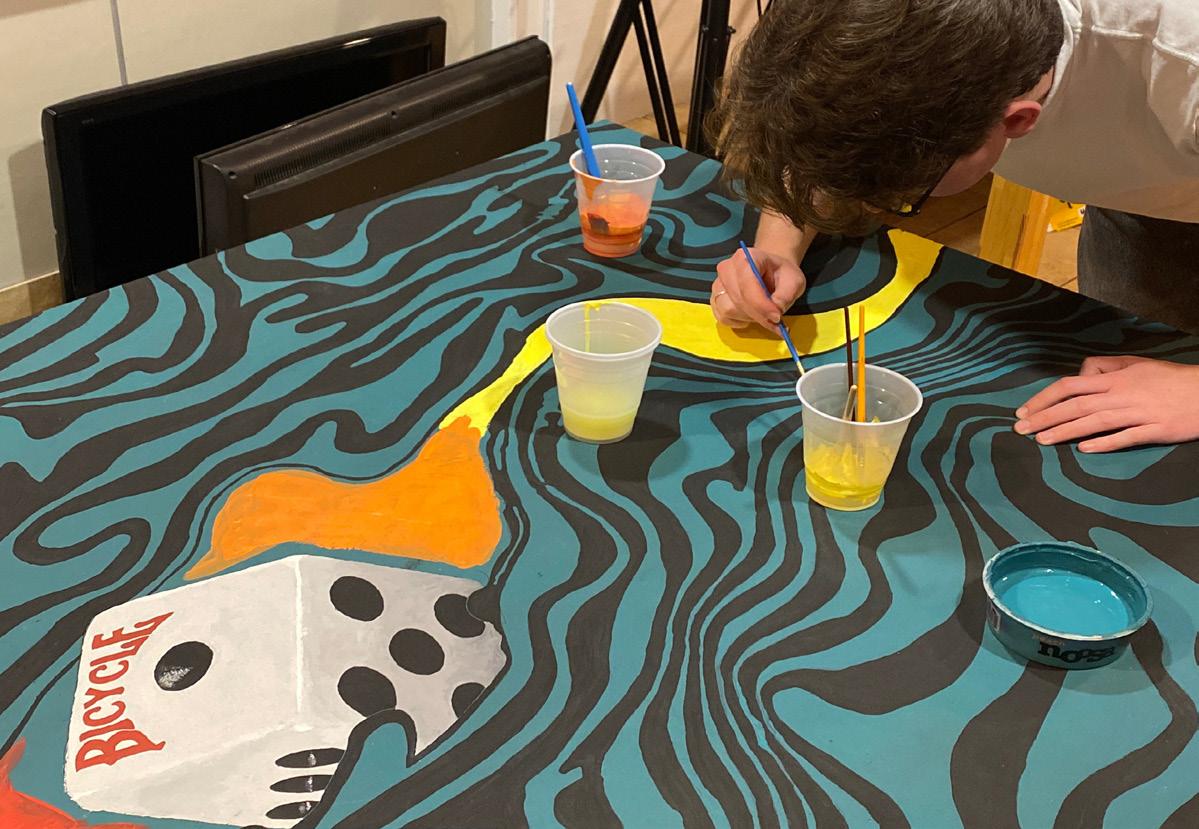
He made one of the tables during his freshman year as a new member of KSIG. “Me and this other junior at the time were working on painting the surface, or table, and it took us like two weeks,” Liu said. “He was also a studio art major and he did a bunch of digital design and we ended up setting up a projector in the KSIG house and painting it collectively, as a group project.”
Liu hoped to save parts of the table and create a new piece out of it by the end of the year.
“It is something that’s pretty significant to me and my experience at Davidson, the fact that it was something I made my freshman year,” Liu said. “I was hoping for it to be like kind of rundown [so] that people don’t really use it anymore by the time I had my [senior art exhibition], so I was hoping to take it down myself to turn it into an art piece.”
Liu knows that RLO was not aware of the table’s significance. “I understand it from the perspective of RLO, they obviously don’t have all the info on the specific meanings behind each wooden gaming table. But it’s still something that we all collectively put so much time and energy into and it’s definitely more than just a table that we used to play drinking games.”
Liu emailed RLO asking where his table is on Jan. 16 and has yet to hear back. Liu plans to visit the office in person to get a response. At the time of publication, Lancastre and his roommates have no information about the status of their property.
Politics 3
Kevin Kosar lectures on ‘What’s Wrong with Congress?’
“Congress is not a hopeless case,” he opened. “Although it may sometimes seem that way.”
When Kevin Kosar, a senior fellow at the American Enterprise Institute, asked a room full of Davidson students to raise their hands if they felt Congress was “doing a good job,” no one moved. The response was not a shock to Kosar, who has been studying Congress for over 20 years. “That is the typical reaction,” he joked to the crowd.”
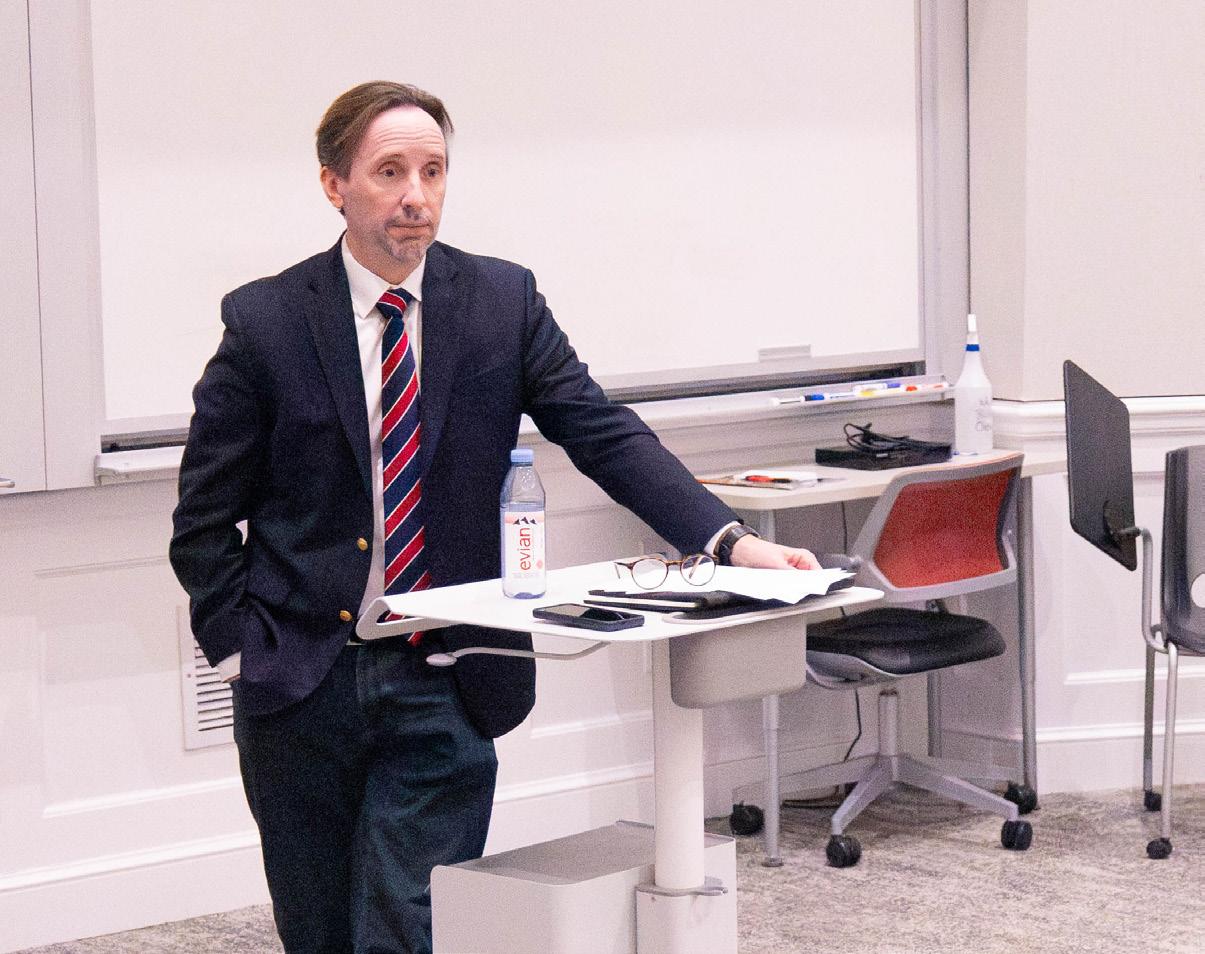
On Tuesday, Feb. 9, Kosar gave his talk “What’s Wrong with Congress?” in the Hance Auditorium. Originally published in January 2026 to Public Discourse as an essay, Kosar’s piece explores what Congress is doing right, what Congress is doing wrong and what we, as citizens, can do to get involved. Before diving in, Kosar explained the role of the American Enterprise Institute in politics. On the board behind him, Kosar scribbled “501 C3,” the category AEI falls under. 501(c) (3) refers to a type of nonprofit organization in the US that is exempt from federal income tax. Kosar simplified AEI by referring to it as “the closest thing to a political university” one can get. Kosar then began his argument.
He looked to previous legislative branches as proof that Congress can be an effective vehicle for change.
“Congress regularly sent President James E. Carter legislation that he found disagreeable. [...] He vetoed 31 bills sent to him by Congress in his four year term,” Kosar explained. This example displays that Congress was not always “passive to the Executive Branch.”
Even with a lack of legislative pressure against the executive branch, Kosar pointed out that Congress is still passing plenty of laws—the media just does not cover them.
“We watch reality tv shows for the drama,” Kosar said. “The news is the same way. They cover conflict because that is what keeps them employed.”
With more focus on covering “the red coats versus the blue coats,” as Kosar referred to the news’ depiction of partisan politics, the public remains ignorant of times that laws are actually enacted. Kosar flipped through pages of legislation passed pertaining to North Carolina: “The news isn’t covering any of this.”
Kosar also discussed his concept of there being two congresses:
“There’s a toxic Congress and a secret congress.” Toxic Congress are the raging partisans, “Those who you see red-faced on television,” Kosar said. These members of Congress “reflexively support or oppose whoever is president” and rarely pass legislation.
Secret Congress is the side that gets things done, “but they are undercovered by the media,” Kosar said. As he wrapped up his talk, Kosar emphasized the importance of public participation. “Democracy doesn’t just spin on its own,” he said. “Citizens have to be involved to keep it moving.”
Heidi McGannon ’26 came away from Kosar’s discussion with a renewed feeling of hope. “When he talked about the things Congress has actually gotten done, it restored some of my faith in the legislative branch,” she said.
Mary Blackstock ’26 was a key player in bringing Kosar to campus. “I interned at AEI last summer and got to know [Kosar],” she said. “I felt he would bring a good conversation to campus. It is both a critique and a reassurance that things can get better.”
In an interview with The Davidsonian after his talk, Kosar emphasized that students can and should
get involved. “There are so many positions on the Hill. Whether you want to be giving advice or writing […] if you want to get involved in Washington, the opportunities are there. You just have to want them and have a real drive for it.”
Even those who do not want to enter politics as a career can make a difference by calling and emailing their congressperson. “There are interns and aides who read those
emails and take those calls, and their boss is always asking what the public is saying, what they care about,” Kosar said. “The more you get in contact, the more your Congressmen will understand the wants of the public.”
When asked what he would want students to take away from his talk, Kosar simply stated, “Don’t lose hope.”
CLARA OTTATI ’27 (SHE/HER)
Kevin Kosar spoke to students in the Hance Auditorium on Monday about Congress’ failings and areas for hope. Photo by Ada Long ’29.
Joe Claire ’24 helps Mike Liu ’26 paint tables. Photo courtesy of Mike Liu.
Perspectives Against off-campus housing
If a Davidson student decides that four years with RLO as the landlord is too much, they can choose a different landlord at the Depot apartments, or perhaps in some house on Concord Road. Having made this choice, you can now ask people to come to your apartment “off campus” to make the trek to hang out.
Many factors probably go into this decision. Although landlords are a wildcard, the desire to opt out of dealing with RLO is understandable. You probably get more space. While you have to navigate the bureaucracy of obtaining permission to live off campus, once you do so, you are less monitored. You don’t have to worry about running into an acquaintance from a class while stepping out, groggy and tired, first thing in the morning.
But think about it: what is the statement being made? Do you think that you are so cool that you ought to be spared the horror of living with and around the rest of us plebes? What makes you so special? So special that you think
that you should not also have to suffer the indignity of a work order that goes unaddressed for three weeks? And then you say, “oh Henry, you have to walk all the way across the railroad tracks to come hang out with me.” My time is valuable! I can’t just do that!
Now, I have friends and acquaintances that I like who live off campus. I don’t mean this as an insult to them. Their apartments are normally nice. My issue is with the system that forces people into this choice, this choice that detaches students from the community! Here at Davidson, we all get to live, cramped up here all together. Running away from that, hiding from on-campus life for a more peaceful existence, it eats away at the fabric of the closely cramped Davidson community, where your next-door neighbor is also the guy who keeps disrupting your 8 am by showing up ten minutes late every day.
But still, our overlords have not done a good job of ensuring that partaking in this cramped, crowded lifestyle is a wholly desirable choice. The college’s continued commitment to over-admitting has made housing a remarkably scarce commodity, with lounges everywhere being converted into dorms. What you do with
your space is over-policed; if you leave a table out on your porch when you aren’t supposed to, you get cited and have to navigate an infuriating bureaucracy. Those embracing the off-campus lifestyle are simply making what they think is a logical choice. Or maybe they do think they are better than me; I cannot tell.
At the risk of sounding moralizing or idealistic, I think that there is something to be said for the value of being crowded together, living so close to all of your peers. It inherently makes your fellow students something more than a classmate; it turns them into your neighbor. When everybody is equally subject to the consequences of the actions of a governing institution, it motivates the institution to do a better job. There is a tremendous sense of solidarity among students who all have to deal with the same problems in the same places.
Is the sterility, the relative unfamiliarity, of off-campus life more desirable? I’m not sure, and I am not up to the task of answering that question, but as much as it makes me sad, I cannot blame people for making the choice. Who wouldn’t, having the means and all, pay the 4,300 dollar fee to live off campus after coming back from abroad, instead of having to live in a
Maternal care deserts are no accident
In 2023, the maternal mortality rate was 18.6 per 100,000 live births. Although the U.S. rate is back to its pre-pandemic levels, the U.S. maternal mortality rate is still three times higher than in the United Kingdom, according to The Commonwealth Fund. While this rate is off-putting in any context, Black women face significant differences in maternal mortality with a 2023 rate of 50.3 per 100,000 live births. In contrast to the total overall trend of maternal mortality rates, the rate among Black women has risen consistently since 2018, with a small peak during the height of the COVID-19 pandemic. I learned of these significant disparities for Black mothers in Shanika Jerger Butts’ class titled U.S. Maternal Health Disparities in the Fall 2025 semester.
The large disparity in maternal outcomes for Black women compared to the total maternal mortality rate can be attributed to systemic racism in the United States. Racism is the root cause for many social determinants of health that deeply influence future health outcomes. A Black woman is more likely to face factors such as low socioeconomic status, both limit-
ed access to healthcare, and a lower quality of it, and a lack of education. All of these factors negatively impact health. The stress of continual injustice causes chronic stress for Black individuals and has been linked to cardiovascular disease and other negative health outcomes. Social determinants and the effects of chronic stress have resulted in higher rates of chronic disease among the Black and African American populations. Many Black Americans are less likely to have access to improved healthcare for chronic disease due to inadequate insurance coverage and scarcity of care.
Over 35% of U.S. counties received designation as a ‘maternal care desert’ according to Dimes’ March 2024 report on the subject. They define this term as “a county without a hospital or birth center offering obstetric care and without any obstetric clinicians.” The map of these ‘deserts’ directly overlaps with the concentration of the Black population in the United States. While there is a risk for all pregnant women living in counties designated as ‘maternal care deserts’, the risk is compounded for Black women. On average Black women experience higher rates of chronic disease, and have been historically neglected and mistreated in the medical establishment.
‘Maternal care deserts’ are not naturally oc-
Crime Log
Time Reported Description/Location
02/08/26, 04:46 hrs
02/07/26, 16:45 hrs
02/07/26, 16:19 hrs
02/04/26, 14:48 hrs
02/03/26, 14:10 hrs
02/03/26, 10:00 hrs
Alcohol Offenses: Possess Beer/Unfortified Wine Under 21 Watts, Inactive
Alcohol Offenses: Possess Beer/Unfortified Wine by Person 19 or 20 Chidsey, Inactive
Alcohol Offenses: Possess Beer/Unfortified Wine Under 21 Sentelle, Inactive
Larceny Offenses: Misdemeanor Larceny Irwin, Inactive
Larceny Offenses: Misdemeanor Larceny Watts, Further Investigation
Burglary Offenses: Breaking or Entering a Vehicle, Attempted Breaking or Entering a Vehicle; Larceny Offenses: Misdemeanor Larceny Belk, Further Investigation
curring. They have been intentionally created by purposeful neglect from these systems of governance on which our healthcare system is built. This sentiment was shared during a session of the American Public Health Association’s Annual meeting I attended in Washington, D.C in early November 2025. This session, under the maternal and child health section of the APHA, invited experts in the field of maternal health and ‘maternal care deserts’ to speak on the topic. Aza Nedhari, who is the co-founder and executive director of Mamatoto Village, spoke at this conference.
converted bathroom stall, or some other horror?
Ultimately, I should reiterate that my problem is not with people who live off campus; it is with off-campus living as a concept. Until the college makes on-campus living more desirable, however, this unfortunate flaw in the community will probably remain. I will continue to be a stalwart defender of the virtues of living on campus, and can only dream of a future in which the scourge that is its off-campus counterpart is eradicated.
Again, do you really want me to walk five minutes to your Depot Apartment? I’m a busy guy!
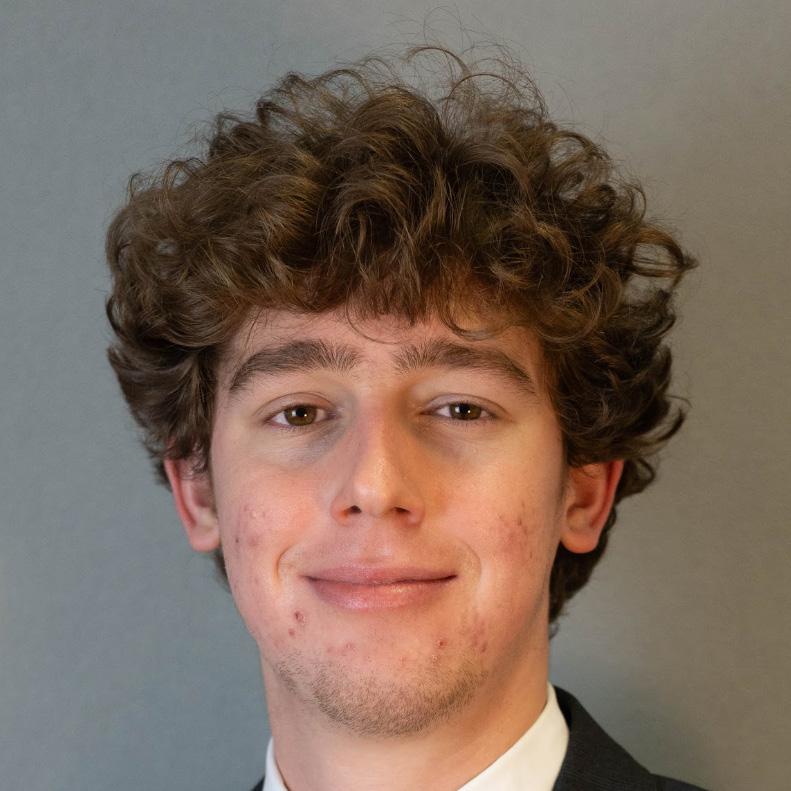
Henry Coy is a Biology major from Durham, NC. He can be reached for comment at hecoy@ davidson.edu.

Mamatoto Village provides perinatal care, education, and midwifery services to the obstetrically underserved community of D.C.’s Ward 7. In D.C. Black people account for half of the births, but 90% of maternal mortalities according to the District’s maternal mortality review committee. The concentration of Black residents is greater than 80% in Ward 7 and 8, resulting in 64% of maternal mortalities occurring within these areas. Despite poor outcomes and obstetric care located in affluent areas, D.C. is considered as a full access to care area. A more detailed designation for under-resourced but still full access areas will be useful for areas similar to Washington D.C. to recognize and thus direct more care resources toward such areas.
Nedhari and other members of the panel discouraged the understanding of ‘maternal care deserts’ as inevitable, and they emphasized that they are instead intentionally under-resourced spaces created to harm Black communities. March of Dimes Chief Medical Officer, Michael Warren, also agreed with this idea. March of Dimes brings recognition to these disparities and implies intention behind care scarcity; they should recognize ‘maternal care desserts’ as a man-made issue in their annual report on the topic. Renaming ‘maternal care deserts’ as maternal care disinvestment zones will bring more attention to the intentional root of the problem. .
Anna Morrow is a Political Science major and Public Health minor from Baltimore, MD. She can be reached for comment at anmorrow@davidson.edu.
ANNA MORROW ’28 (SHE/HER)
HENRY COY ’27 (HE/HIM)
The last superfan? Inside Jordan Rubens’ devotion to Davidson men’s basketball
CONTINUED FROM PAGE 1
In the Matt McKillop era, Davidson has been atrocious in important games; the ones where students are goaded to come out and support the ’Cats are normally the ones that are lost in a demoralizing fashion. It is Davidson’s recent mediocrity that makes Rubens’ undying dedication especially impressive. One can watch him as he climbs in between rows, imploring the audience to get loud, red in the face, his voice hoarse. His yelling is shortly rendered impotent, seemingly a mere exercise in personal catharsis, and then: the crash. A missed basket or a failed boxout on a crucial defensive possession indicates that again, the ’Cats are going to lose. Rubens sinks down, head in his hands. Why has Rubens, with all of his passion, not suffered the same fate of indifference as the rats and the students?
Rubens’ dedication to Davidson
smart enough to get in” to Davidson, but added that “it just would’ve been too close. My house was closer to Davidson than my apartment in Athens was to UGA.”
Raised in the Town of Davidson, Rubens, who now works in Charlotte, went to his first Davidson game at a young age. His father Barry recounted taking the young Rubens home from his first Davidson game at halftime. “The score was 32-28. I pointed at it and said, ‘look Jordan, we won!’ and then took him home,” Barry said. From that point on, the Rubens’ bought their signature seats by the visitor’s tunnel that they have been keeping warm since the early years of the Bob McKillop era.
What started as a mechanism to facilitate family bonding quickly evolved into something more. Rubens began attending Bob McKillop’s basketball camp. “I learned so many lessons from McKillop, man. The biggest one was just the
basketball is made all the more impressive by the fact that he did not attend college here, opting for the University of Georgia instead. Rubens jokingly said that he “wasn’t
Iimportance of being on time. Ever since those camps I’ve tried to be fifteen minutes early to everything,” Rubens said.
Rubens learned this lesson the hard way. One day, having overslept and running late, Rubens found himself on the somewhat humiliating end of a basketball camp tradition: like all late campers, he was forced to dance in front of the whole camp, a tradition which was discontinued a few years back because “some parent got all upset about it.”
Rubens was a Davidson fanatic. At camp, despite living a short walk from campus, Rubens would always stay in the Davidson dorms. His exploits on the court went beyond Davidson basketball camp. He recalls playing against Stephen Curry in high school and feeling unmoved by the phenom’s recent commitment to Davidson because “he didn’t do anything against us.” Naturally, Rubens changed his mind about Curry during Davidson’s 2008 Elite Eight run as a senior in High School.
As Rubens’ family continued to ingratiate themselves with the college, they came to take on a somewhat parental role as it pertained to players on the Men’s Basketball team, as they slowly started getting familiarized with players and coaches alike.
Players would join the Rubens family for dinner, most notably Stephen Curry’s (’09) roommate Bryant Barr ’10, who, on particularly loud days on campus, would stay at the Rubens house to avoid the noise.
It is occasionally difficult to keep track of the Rubens’s name-dropping; he and his father share a dinner guestlist that is a veritable who’s who of late 2000s, early 2010s Davidson Basketball: he starts with Barr, then Peyton Aldridge, then Jack Gibbs (“man, they just don’t make ‘em like Jack Gibbs anymore”), and he just keeps going and going.
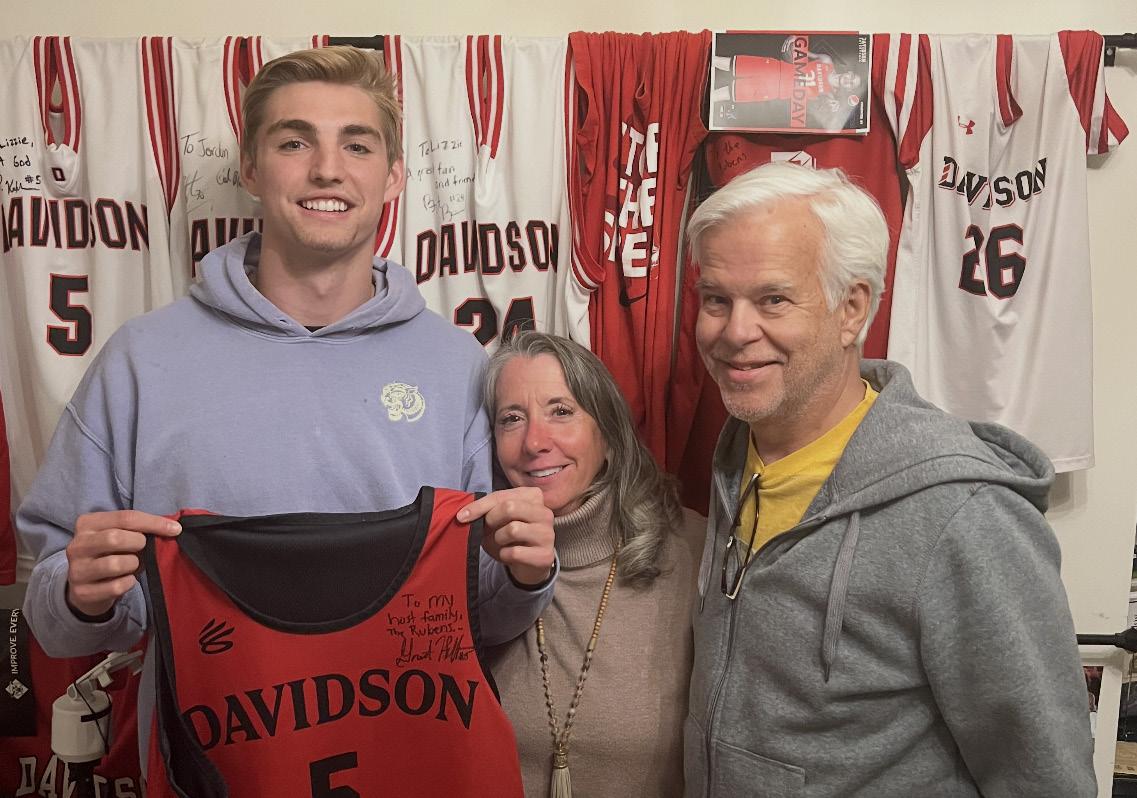
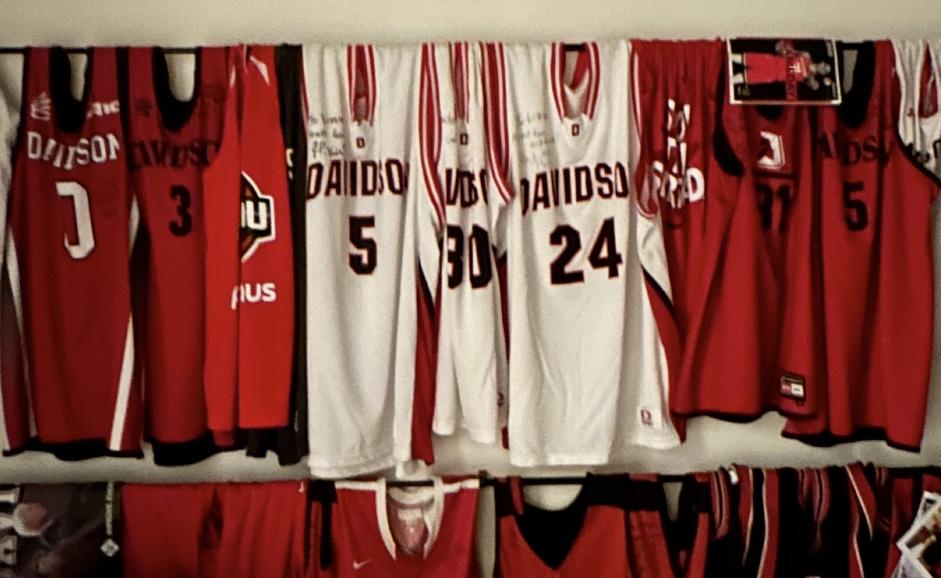
Back home, his parents have a wall adorned with game-worn Davidson jerseys, many of them signed by players, tokens of gratitude for a family that consistently provided food, companionship and support throughout their four years at Davidson.
Rubens discusses the state of Davidson basketball, and college basketball more broadly, with a wistful, stoic but heavy hearted tone. It is worth wondering, in this era of transfers and NIL and constant player mobility, whether today’s environment would be conducive to a player forming a lasting friendship with a nearby family over four years. “The guys just don’t stick around like they once did,” Rubens said.
Indeed, what frustrates the Rubens family—and the Davidson die-hards like them—is not just the constant mediocrity engendered by the postBob McKillop era; it is the sense that what made Davidson Basketball special and unique is slipping away, no longer tenable in an environment that prizes constant mobility and size, as well as the glitz, glamour, and flash that has always been unfashionable (and maybe even undignified) at Davidson.
Despite succumbing to NIL in a bid to stay competitive, Davidson’s undersized squad has not completely lost its charm—and nor have its fans. Though perhaps the most recognizable, Jordan Rubens is probably not Davidson’s sole superfan. Fans like the Rubens, with their almost irrational loyalty to a program that has been disappointing as
of late, might just be the antidote to the rootless and atomized landscape that make Rubens such an anomalous figure.
The Rubens family is emblematic of a bridge that is not always visible to Davidson’s students who often come from out of town: the connective tissue between town and institution. Rubens, nor either of his parents, went to Davidson. Their connection is one rooted in something as strong as matriculation: the bond of place, of home, the sense that there is a particularity to Davidson, that its traditions and its success are yours because they are tied to where you are from and who you are.
The path forward for Davidson Men’s Basketball is unclear, if not bleak. The college’s historically signature program is in a strange, difficult place, but its bid to become a “championship level program” (or maybe just a few more games above .500) is partially dependent on sustained support from families like the Rubens. It is that energy, that passion, and that level of personal involvement that will preserve what makes the Davidson Basketball program special. If it loses that, even its most remarkable successes will feel hollow.
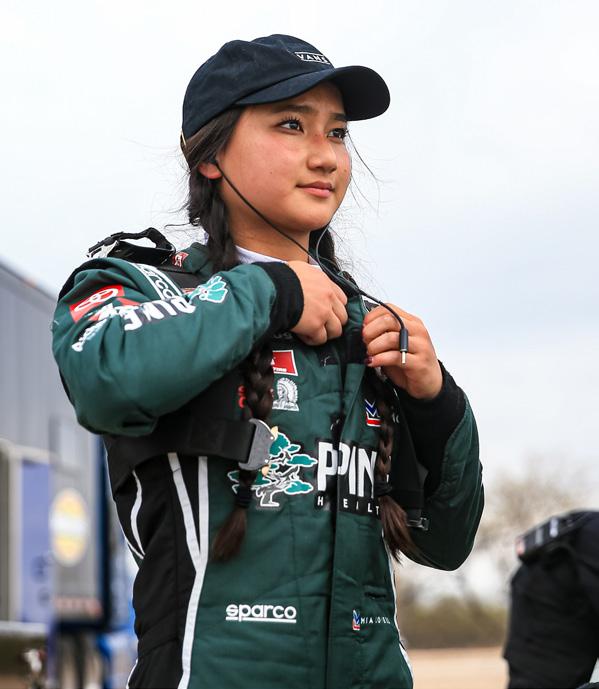
Burning rubber: Mia Lovell ’29 eyes NASCAR career
n Phoenix Arizona, a shiny new race car shot down the NASCAR track with 18-year-old Mia Lovell ’29 at the wheel, testing her new vehicle before her upcoming Auto Race Car of America (ARCA) series on March 5. Rapidly making a name for herself and rising through the NASCAR ranks. Lovell was exposed to high-stakes competition as a preteen when she won multiple gold medals in skateboarding at the California State Games. Her interest in racing began at the age of 13, when her father took her to the local race track in Arizona, Apex Motor Club. “He thought it’d be a good idea, since I was going to get my driver’s license soon, to put me in a car and see what I thought,” Lovell explained. “I didn’t think that this was the path that I’d be going on because I was still really strong in the skateboarding world.” However, with COVID having halted skate boarding competitions, Lovell was eager to try something new.
After beginning racing lessons at 13, Lovell got the opportunity to participate in her first professional series, the Toyota GR Cup, three years later. The young racer spent two years competing in the series.
“After the first year, I realized that [...] racing could actually be a career for me,” said Lovell. “I don’t know how they let me into a professional series, but it was kind of like a sink or swim situation.” Lovell has certainly been swimming.
Lovell’s next step after the Toyota GR Cup was the Trans Am series, which she began racing in 2025. She raced TA2, a high performance vehicle geared towards longevity. The Trans Am track was a complicated course that required Lovel to make left and right turns instead of only left turns. The series is a hybrid of sports cars and stock cars where the vehicles are known for their strong chassis and heavy, raw engines. It was the perfect stepping stone for Lovell’s introduction to NASCAR.
Lovell’s goal is to compete in the NASCAR Cup Series, the best avenue for making a career out of racing.
“I would love to be a freaking race
car driver. That would be awesome,” she said.
Lovell is about three or four series away from her racing dream, as the young driver will be racing in the 2026 ARCA Menards West Series. Her current series is an unofficial but crucial stepping stone to driving in the NASCAR Cup Series.
In the Trans Am series, finesse and maneuverability are key; but in NASCAR, the focus is speed. No more bells and whistles, just pure engine.
“We’ll probably get up to 150 [MPH] in this series which is moving pretty good,” Lovell said. Top speeds on larger courses in the 2025 ARCA Menards West Series were around 150 MPH as well. As usual, Lovell is aiming high but as her record suggests, she will strike the target.
In an activity as exhilarating and dangerous as racecar driving, Lovell emphasized the importance of maintaining the childlike sense of wonder that drew her in. “There’s really just nothing like being in a wheel-towheel battle with another car. It’s just so exciting. You’re on the edge, you’re leaning on each other. There’s no room for errors. It’s just so, so ex-
citing,” she said.
Though Lovell is now a seasoned racer, she has not abandoned academic aspirations. “I could load up my schedule and be racing every weekend, but I choose not to because my school is really important to me,” Lovell explained. “Balance is what helps longevity in the sport, and also keeps me in a good mindset where not everything is about racing.”
Many young professional racecar drivers like Lovell elect to drop out of school or take courses online so as to focus exclusively on racing. “But to me, you just miss out on so many life experiences and other skills that you just can’t get anywhere else,” Lovell said. “And I love it here.”
Lovell chose Davidson for its intimate size and academic excellence. Establishing an emotional and physical equilibrium has been Lovell’s continuous aim. “I do a lot of self reflection practices [...] I keep a journal. I really just focus on being a student of the sport, and really just focus on taking care of my mindset and making sure I’m in a good place to make the most out of everything,” she said. While poised and unbothered,
Lovell is still focused on what comes next. Having tested her new ARCA car last week, she is ready to progress and continue striving toward the NASCAR Cup series. The young athlete is not about to let the competition, or their car, get in her way. “Truly it’s an individual sport,” Lovell said. “At the end of the day, only one person can hoist the trophy.”
The Rubens collection of signed Davidson basketball players jerseys. Photo courtesy of Jordan Rubens.
Former Davidson guard Grant Huffman with Sara and Barry Rubens.
Photo courtesy of Jordan Rubens.
ZOE TURNBULL ’29 (SHE/HER)
Mia Lovell ’29 suits up before a race. Photo courtesy of Mia Lovell ’29.
Arts & Entertainment
Inside DACE’s summer residency program
ISOPHIA SCHUR ’27 (SHE/HER)
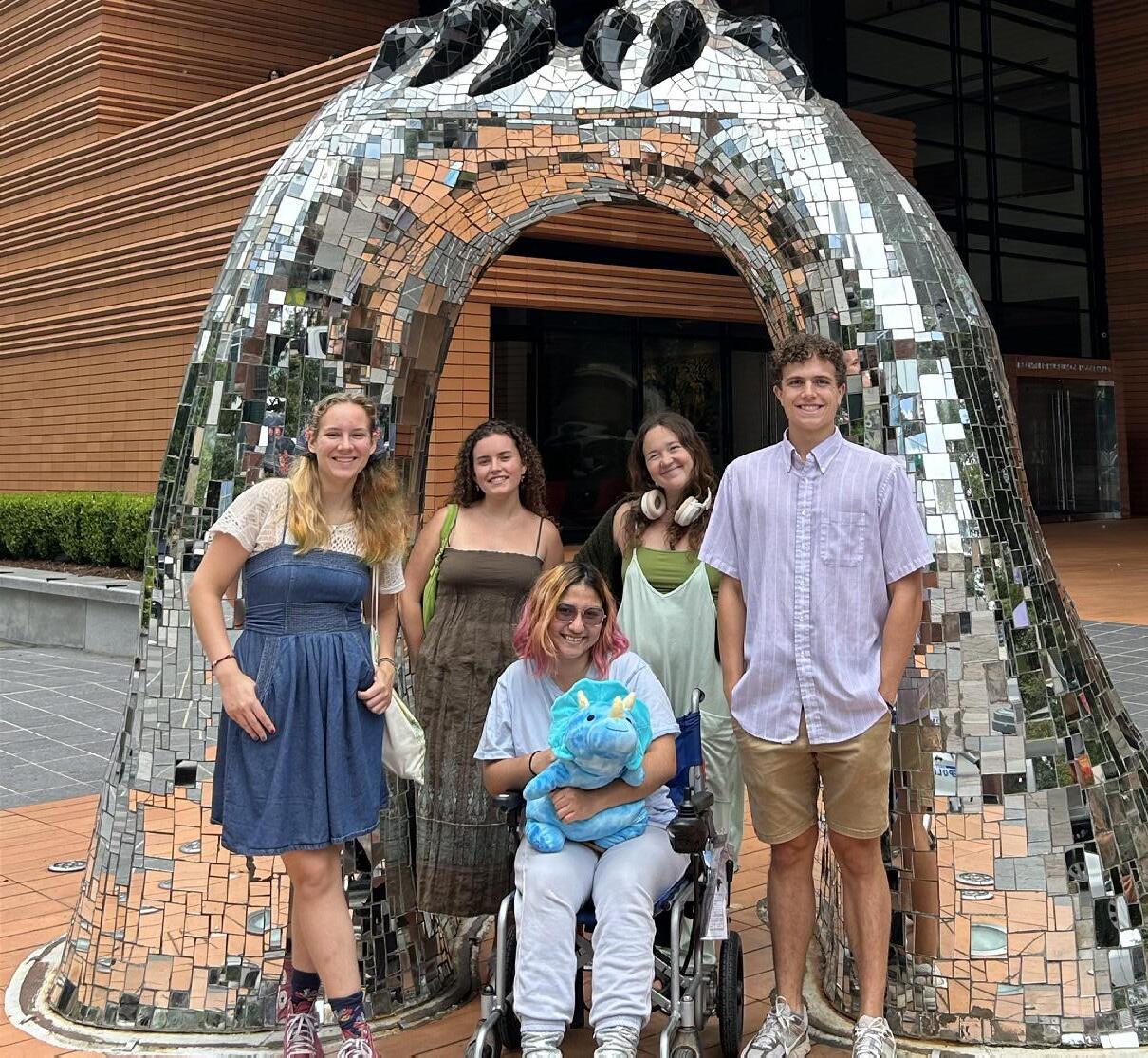
t has been about six months since Davidson Arts and Creative Engagement’s summer arts residency wrapped up its pilot run, and over the next three weeks applications will be reviewed for the next cohort. The residency is a nine-week long program for student-artists to live, work and perfect their practice in a small community of peers and mentors. Last year the cohort included Annabel Semans ’26, Belle Staley ’26, Grace Catan ’26, Ezra Minard ’28 and Sarah Catalano ’26.
Sherry Nelson, founding director of DACE, reflected on the inception of the residency program. Every month, she meets with a group of chairs of Davidson arts departments—theatre, art, dance, music, film and literary arts—to discuss Davidson’s arts programming. “Two years ago, [we started] to think about some opportunity for artists on this campus that is equal to the research to Davidson Research Initiative,” Nelson said. The Davidson Research Initiative allows students to work with a proposed faculty member on a project that fits the faculty member’s own scholarship. Though students can technically propose projects in any discipline with DRI, the initiative is not often utilized by student artists. “We wanted something that was really intentional and that would mirror what the professional opportunities would be for the students once you [have] graduated,” Nelson said.
The residency is much more independent and self-realized than a DRI project would be. According to Semans, a songwriter in last year’s cohort, most Davidson pursuits necessitate that “you’re working towards a specified goal.” At a residency, the artist’s intent can shift throughout the duration. “The whole point is that that’s not necessarily conducive to the artistic practice,” Semans said.
By contrast, artist residency programs are designed to support artists, typically by allowing them to live in new environments and have time to refine their process. “If you are driven by just, you know, trying to practice and practice consistently, then you will inevitably create [a] product, and it might take you in unexpected and fruitful ways in the process,” Semans said.
The five artists accepted into Davidson’s summer cohort are given studio space in the Visual Arts Center and have access to mentors in a broad range of disciplines for the nine-week duration of the program.
“We can provide opportunities for the student artists or the scholar artists to meet or come into contact with someone like themselves or not […] it is about the creative flow and about what you’re learning and how you’re collaborating,” Nelson said.
The students were exposed to several visiting artists through weekly workshops, and were encouraged to engage with mediums outside of their own expertise—taking lessons from other disciplines as a result. “I adopted techniques and exercises and ways of thinking from a chore-
ographer and from a poet and from […] a dance filmmaker,” Semans reflected Catan, who used the residency to write a musical, lauded the program’s ability to help her find herself creatively. “My biggest discovery within the residency was allowing myself to replace my scenes with spoken word poetry,” Catan said.
One aspect Nelson hopes to expand in the future is collaboration between cohort members themselves. Cohort members spend most of their time with themselves and their art.
“It’s mostly independent work time; that’s what a residency is. And it’s easy as an artist engaging in that,” Semans said.
However, the independent aspect of the program can have both positive and negative consequences. It can serve as a boon to everything a residency intends to do; allowing for experimentation, discipline, creation and research. But, especially for Davidson students so accustomed to community, Nelson notes that it can feel isolated. “[Next year,] we may have an intentional project that the group works on for the first week, you know, just to just develop something together,” Nelson said.
Because the cohort intentionally includes students whose focus spans many mediums, Semans sees potential for productive intra-cohort collaboration next year. “Concepts of practice are totally transferable across so many artistic disciplines […] between the residents, the mentors, and most of our guest artists, almost all of them were from different disciplines,” Semans said.
Artists like Semans can expect to apply to residencies in their careers post-graduation. These residencies often have limited spots, but having completed one at Davidson may make the difference for applicants.
“If you want to do a residency, a professional residency, you really need to have some residencies under your belt to be able to get to the […] really great ones,” Nelson said.
However, the residency provides more direct results than its value on a resume. Parts of Catan’s musical, now much more developed, will be featured in her thesis performance in April. Semans has been developing her songs with instrumentation from her band Fool’s Errand. “Now
a number of songs that I wrote from the residency are going to be in the program of my senior recital as a music major on March 21,” Semans said.
Coming out of the residency, several cohort members had a confidence in their art-making that they hadn’t before. Semans already considered herself a musician, but now she is proud to don the title of songwriter. Catan felt similarly, emphasizing the impact of the program. “The residency helped me practice making art with others and sharing my heart in a way that I hadn’t before.”
Normalizing nonviolence: Reflections on Maloney-Otts screening
Students and faculty recently gathered for the Maloney-Otts Film Viewing which screened the 2021 film “Ahimsha Ghandi: The Power of the Powerless.” The viewing comprised just one part of a two-day series that explored the intersection of nonviolence, religion and social justice. Although the Religious Studies department planned this event nearly a year ago, the current circumstances
in Minnesota and racial tensions permeating the country have made the talk especially timely. Professor of Religious Studies Greg Snyder attributes the idea for this film viewing and discussion to Visiting Assistant Professor in Religious Studies Ved Patel, who specializes in Gandhi’s teachings and taught a course last spring titled “Was Gandhi Good?” Conversations within the course tapped into whether nonviolence has expired or if it remains a viable method of protest today. “Ahimsa Gandhi” sought to prove the latter,
underscoring the role of nonviolence as an effective political strategy with a spiritually aggressive nature that can promote reconciliation amongst religious, cultural and political differences. The film draws out Gandhi’s early life and his experience after getting forcibly thrown off of a train in South Africa, leading to his development of Satyagraha, a form of non-violence resistance that strives to convert rather than defeat the opponent. His teachings and influence ultimately manifested themselves in some of the most influential protest movements in India, South Africa, the United States, Poland and Czechoslovakia throughout the 20th century. While viewers also get a glimpse into various governments’ critical reactions and forceful responses to nonviolent protests, the moment of exhilaration comes after seeing these movements succeed.
In India, for example, the film highlights the 1930 Salt March, a 240-mile journey led by Gandhi in defiance of the British salt tax. Unarmed Indian demonstrators pick up salt in protest, a deliberate refusal of their government, leading to the arrest of over 60,000 Indians. Over time, though, the march instigated a widespread movement for independence from British colonial rule. Beyond India, the film suggests that nonviolent protest played a critical role in the collapse of communist regimes across Eastern Europe and the end of the Cold War, revealing their victories.
In the United States, the documentary focuses heavily on the Civil Rights Movement, particularly Martin Luther King Jr. and John Lewis. While King derived inspiration from Jesus Christ, his technique stemmed from Gandhi. The film excelled at exposing the costs of nonviolent resistance in a society where violence remains a constant threat, particularly with the 16th Baptist Church bombing shortly after the March on Washington in 1963. The end of the film further exposes this contrast, with a clip of then-President Obama speaking on racial justice played before the audio of George Floyd proclaiming “I can’t breathe” is heard. Images from the 2020 Black Lives Matter protests featuring violence accompanied Floyd’s final words on the screen, a visible antithesis of Gandhi’s message.
At times the film’s structure was puzzling. It jumps from India in 1930 back to 1920 then rotates between decades in the Civil Rights Movement with no clear explanation for these sudden switches. Meanwhile, some moments in the film seemed to drift away from the focus on nonviolence and read more like a retelling of historical events without clearly depicting how the protests intersected with Gandhi’s influence, or doing so too late.
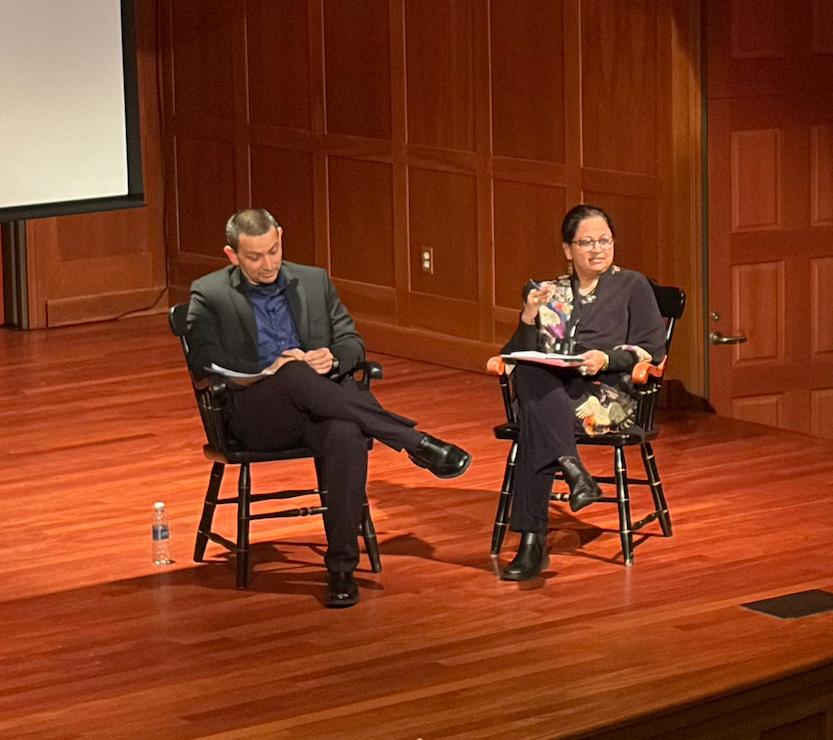
Professor of Religious Studies Leela Prasad from Brown University shared remarks following the film, stressing that “you cannot resort to violence” no matter what. Prasad
does not think of nonviolence solely as resorting to arms, but also considers how one speaks, thinks of others and the everyday ways people relate to one another as facets that contribute to violence. Rev. Adam Russell Taylor, president of the Christian nonprofit Sojourners, echoed Prasad’s thoughts while situating American society in a tug of war battle, with racial and religious diversity as a form of kryptonite that seems to fragment us exponentially more than it unites us.
Religious Studies major Ellison Baker ’27 felt that the film’s history was very relevant today. “The documentary highlighted a lot of what is going on in a modern context. It made very realistic claims about our country’s situation right now and our future.” To Baker, it displayed what can happen when violence or nonviolence is utilized as the primary mechanism of protest.
Although the film viewing did not offer easy answers to the frustration that many feel today, it is still a reminder of the myriad successes that nonviolence has instigated in the past. Refusing violence may just be the best way to democratize America’s democracy.
SOPHIA REES ’27 (SHE/HER)
Last year’s DACE summer residents. Photo courtesy of Savannah Deal ’18.
Leela Prasad and Adam Taylor Russell lead discussion on “Ahimsha Ghandi.”
Photo by Ali Santana ’28.
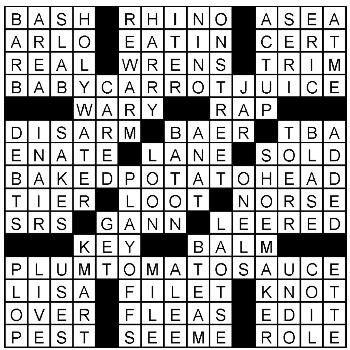
24-/48- Across

Placement Day for Davidson Eating Houses
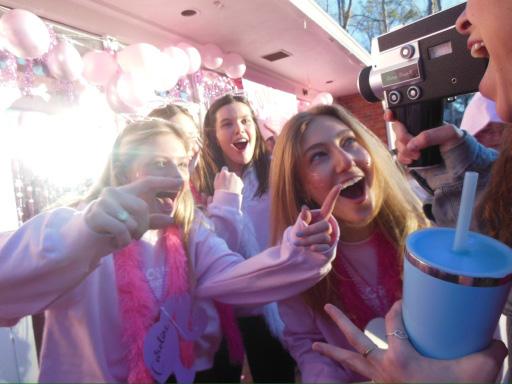
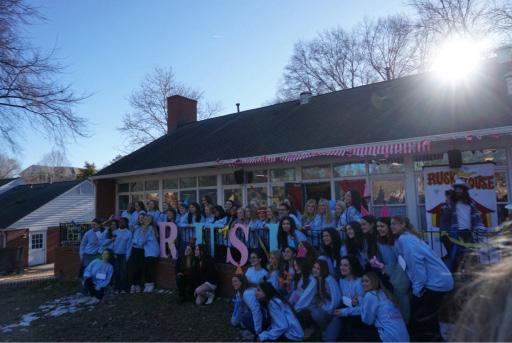
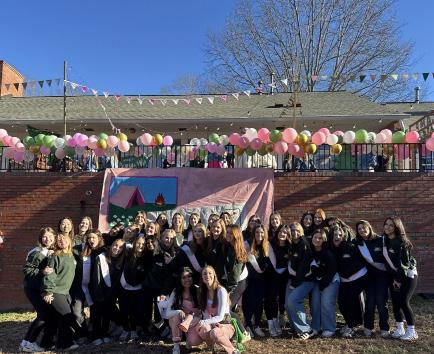

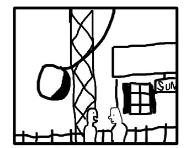
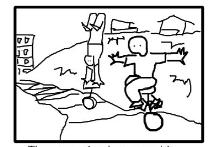
Students who joined Eating Houses celebrated Placement Day on Saturday Feb. 7 in theme. Connor House was decorated in pink for their theme, Barbie (top left). Rusk House welcomed new members into the house decorated as a circus (top right). Warner Hall House dropped their new “weebs” off at “Camp Warner” (bottom left). New Turner House members walked the runway surrounded by decorations commemorating their theme, Bratz (bottom right). Photos courtesy of Campbell McColluch ’28 (top left), Sophia Lenhart ’28 (top right), Maddie Brown ’28 (bottom left) and Mary Bigenho ’28 (bottom right).
Comics by Harris Huber ’27.
TIrreverent student journalism since ______. Castigat Ridendo Mores.
yowl.com/Yowlspansion The Rushed Issue
I Got A Cold At The Same Time As My Crush... Is This Fate
Page: Delusional
PPGA Announces Gimp Suit As New Prize For Raffle
Page 2: Health
Turner Point USA
February 11, 2026
Yowl Reportedly Underpaying Newsies
Page 3: DOL
Alternative Placement Day
his weekend saw the return of a classic culmination of the Davidson-American culture, placement day. Placement day comes only once a year and is a time for celebration, with houses accepting new members and flaunting their theme throughout campus. This year’s placement day, however, has attracted controversy among members of the campus. The Turner house, for its theme this year, chose Bratz. This sparked a harsh reaction from certain members who believed that Bratz was a choice antithetical and harmful to Turner. Bratz is a doll brand that focuses on “passion for fashion, self-expression, celebrating diversity, inclusivity, and fostering creativity and friendship.” A group formed from this descent, naming themselves Turner Point USA. This group claims that a “passion for fashion” is but a dog whistle for loose morals, sexually explicit behavior, and a predatory homosexual agenda. They claim that Turner is a house of respect, chastity, and the American Dream. Insulted by anti-turner placement theme, TurnerPUSA hosted an alternative theme: American Girl doll. Gone were the days of glitter, lip filler, and hip liposuction. This theme brought petticoats, crinoline, subservience, and all the other trad wife trends to PCC.
King Agnarr and Queen Iduna of Arendelle Listed in Epstein Files
Last Winter, Yowl correspondents reported on Putin’s use of nuclear warheads on Arendelle, an unprecedented attack on neutral Arendelle. But is that the full story?
Last Wednesday, Attorney General Pam Bondi saw to the release of 40lbs worth of new Epstein files despite a grueling attempt to delay the process for months. Among the files, many notable names appear, but tucked away are the flight logs from Arendelle Municipal Airport to Little St. James, Geoffory Epstine’s private, child-trafficking island. The logs report attendance from the late King Agnarr and Queen Iduna as many as forty-six times from 2004 to 2013, right up until their untimely death.
Princess Elsa’s involvements are unknown, but theorists speculate Queen Anna to be illegitimate. It’s well known that Elsa’s ice powers are a metaphysical manifestation of her two different backgrounds: Northuldra and colonizer, her parents’ backgrounds. Queen Anna, on the other hand, bears little to no resemblance to her supposed parents and doesn’t have access to cool ice powers– unless you count her premature graying. This leads to but one conclusion: Queen Anna must be half troll, originating from the Valley of the Living Rock, and merely attempting to pass as a human. This would explain why she was able to recover from a lethal blow to the head from Elsa’s ice power, because of her thick, sediment-lined skull.
As more and more speak out against the Arendellian royalty, including the twisted Queen Anna, Elsa, the more level-headed and wise of the two sisters, attended TPUSA’s halftime show to show her support for the right side of history– the one taking down evil, pedophile rings. She even stuck an icicle up Donald Trump’s p*ssy after they got a photo together. Subsequently, on the following Friday, federal investigators under Attorney General Pam Bondi’s guidance announced there was no substantial evidence that could be verified. This article was very thought provoking and caused me to thoroughly evaluate the idea of gender and the role it plays in our society. The article discussed peers using teasing as a way to enforce gender norms. I do not necessarily see this as a problem. God made male and female and made us differently from each other on purpose and for a purpose. God is very intentional with what He makes, and I believe trying to change that would only do more harm. Gender roles and tendencies should not be considered “stereotypes”. Women naturally want to do womanly things because God created us with those womanly desires in our hearts. The same goes for men. God created men in the image of His courage and strength, and He created women in the image of His beauty. He intentionally created women differently than men and we should live our lives with that in mind.
We Need To Regulate Nummit Aux
Page 4: Opinion
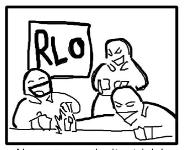
RLO
TThe Body Of Union Rep Found In Library
Construction Site
Page5 : Crime
Drunk Interviews
here was some serious outrage last week as RLO made the controversial decision to hold RA interviews on placement day, a day of leisure, merriment, and most importantly, severe alcoholic behavior. But not to fear. After pressure from Yowl Reporters, RLO dropped an encouraging statement: “This was very intentional. We know students drink, and most importantly, RAs drink. This is your ultimate test to see how you do under pressure and, more importantly, under the influence. Give it your all.” The interviews will be an RLO “obstacle course” wherein blacked out potential RAs will begin with mediating a scream match between RLO employees. Candidates will then have to successfully pull trig on five different freshmen. Finally, competitors will have to reconstruct broken exit signs and finish the course by scrubbing vomit off the floor. All of this must be completed in under twenty minutes with a blood alcohol content above 0.11. RLO is proud to be conducting this string of experimental interviews and is excited to see Davidson students at their worst— while trying to be their best.

Textual Saunterings of an Editor
To maintain anonymity this editor will refer to themselves as DH Dear Yowler,
This week I found myself strolling the greens of Davidson College and found myself looking at the playground at DCPC. A thought entered my mind, as an institution we contain countless overworked and stressed students forcing themselves down the path of unrelenting progress, but the only playground on campus has wall erected around it creating a sense of unwelcomeness towards your average Davidson student. Think about it. These kindergarteners have no stress, no deadlines, no situationships or responsibility and they just get a slide for free. I wa infuriated at this fact and find it ridiculous that tuition increase while the number of playgrounds remain static. This is what should become of OTL, not a new commons, but a playground for all davidson students. Just imagine Turner girls playing cat, SAE men kicking sand into fiji men’s eyes, and DUFF doing the same as usual. If you are reading this, join me in my push for a playground by sending an open letter to Doug Hicks.
Sincerely, DH
Quote of the Week
“My special passion is for biological disease warfare”
-Bioterrorism Major
Note: The Yowl is a satirical supplement to The Davidsonian Hence, nothing in it should be taken as truth.