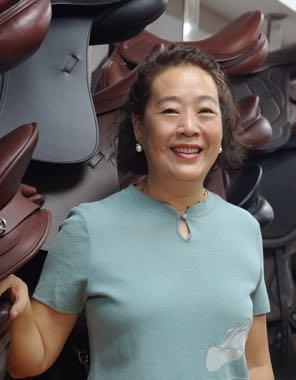
維樂創辦人暨董事長 Founder and Chairwoman of Velo 余彩雲 Stella Yu
創意總監 Creative Director/ 黃適烱 Kevin Huang
總編輯 Editor in Chief / 陳雵 Tinyu Chen
副總編輯 Associate Editor in Chief / Director
陳俐伃 Kelly Chen
編輯群 Editors/
藍淑芳 Lilianna Lan
汪智超 Lothar Wang
曹文彬 Wenbin Cao
曾致婷 Lily Tzeng
傅育德 Eddie Fu
藝術總監 Art Director/
林政儀 Karena Lin
資深美術設計 Senior Designer/ 何珉 Min Ho
何曉苓 Lydia Ho
攝影 Photographers/
王承揚 Wesley Wang
朱孟建 Ajian
張靜 Chang Jing
陳翰 Andy Chen
錢淑慧 Shuhui Qian
馬鵬 Mars
翻譯Translator/ Elly Huang Tinyu Chen
潤稿 Proof Editing / Reading Ken Yamakoshi, VELOSADDLES.US
VELO ENTERPRISE CO., LTD.
TEL: +886-4-2686 4546
FAX: +886-4-2686 8636
ADD: No. 1012, Sec. 1, Chung-Shan Rd., Dajia Dist., Taichung City, Taiwan
www.velosaddles.com info@velosaddles.com
Publication Date: Mar, 2026
Whether the wind is at your back or in your face—keep moving steadily forward.
管他順風、逆風 都能穩定前行
This year’s Contact Point special issue arrives in the spirited Year of the Horse. We’ve curated a theme we call “Ride Point = Starting Point”—an invitation to return together to Velo’s original intention.
Velo’s “starting point” has always been the saddle. For more than forty years, we’ve stayed devoted to innovation, relentless R&D, and uncompromising quality. In the cycling world, speed is the headline-grabber—the keyword that catches every eye. But seasoned riders know this truth: speed is an outcome, not the beginning. The true beginning of a ride is stability—a setup that lets you sit securely, hold firmly, and keep your mind steady. Only then can you focus, meet the wind, and ride with ease. That’s why Velo has stayed focused on this “ride point” for so many years. Velo is the kind of teammate in the cycling world that doesn’t crave the spotlight—"the invisible hero”. It doesn’t steal attention, but when a rider’s body and spirit hit their limits—when you’re close to giving up—it quietly holds you up, so you can savor the wholeness and beauty of finishing your journey.
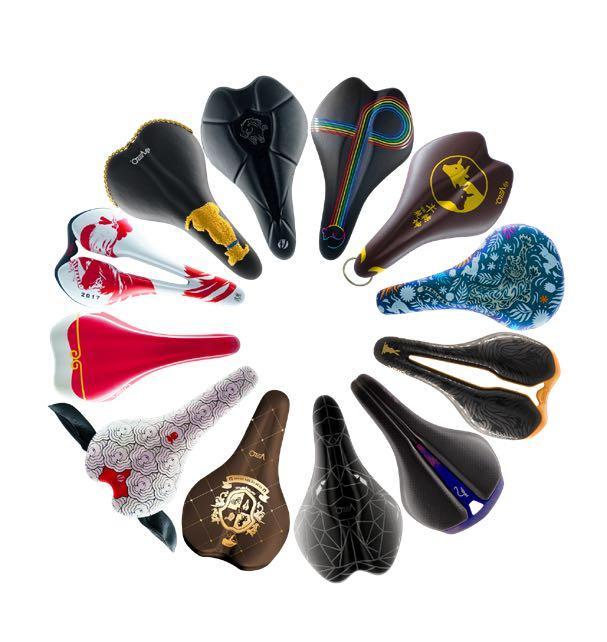
To celebrate the fresh energy of the Year of the Horse, Velo is launching a Year-of-the-Horse limited design saddle, and our premium 12-Zodiac series is now complete—our way of paying tribute to the entire cycling industry. Our General Manager, Ann Chen, even hopped onto horseback to revisit a passion for riding she picked up while studying in the U.S. and sends everyone her warm wishes: may good fortune “gallop” your way, may you rise step by step, and may success arrive swiftly.
The world is changing fast full of waves and tremors. Facing new challenges can feel a lot like a long ride. So, let’s practice allowing life to unfold: allow the moon its waxing and waning; allow people their joys and partings; allow the year its spring, summer, autumn, and winter; allow the turning of the seasons;
allow regrets to exist and impermanence to be real; allow your rides to include days of fierce motivation and days of deep fatigue.
When we allow all that is, we learn to move forward with steadiness—in tailwinds and headwinds alike—and we can smile, breathe out softly, and say: everything is exactly as it should be.
Whether the wind is at your back or in your face— keep moving steadily forward.
總編輯的話
管他順風、逆風 都能穩定前行
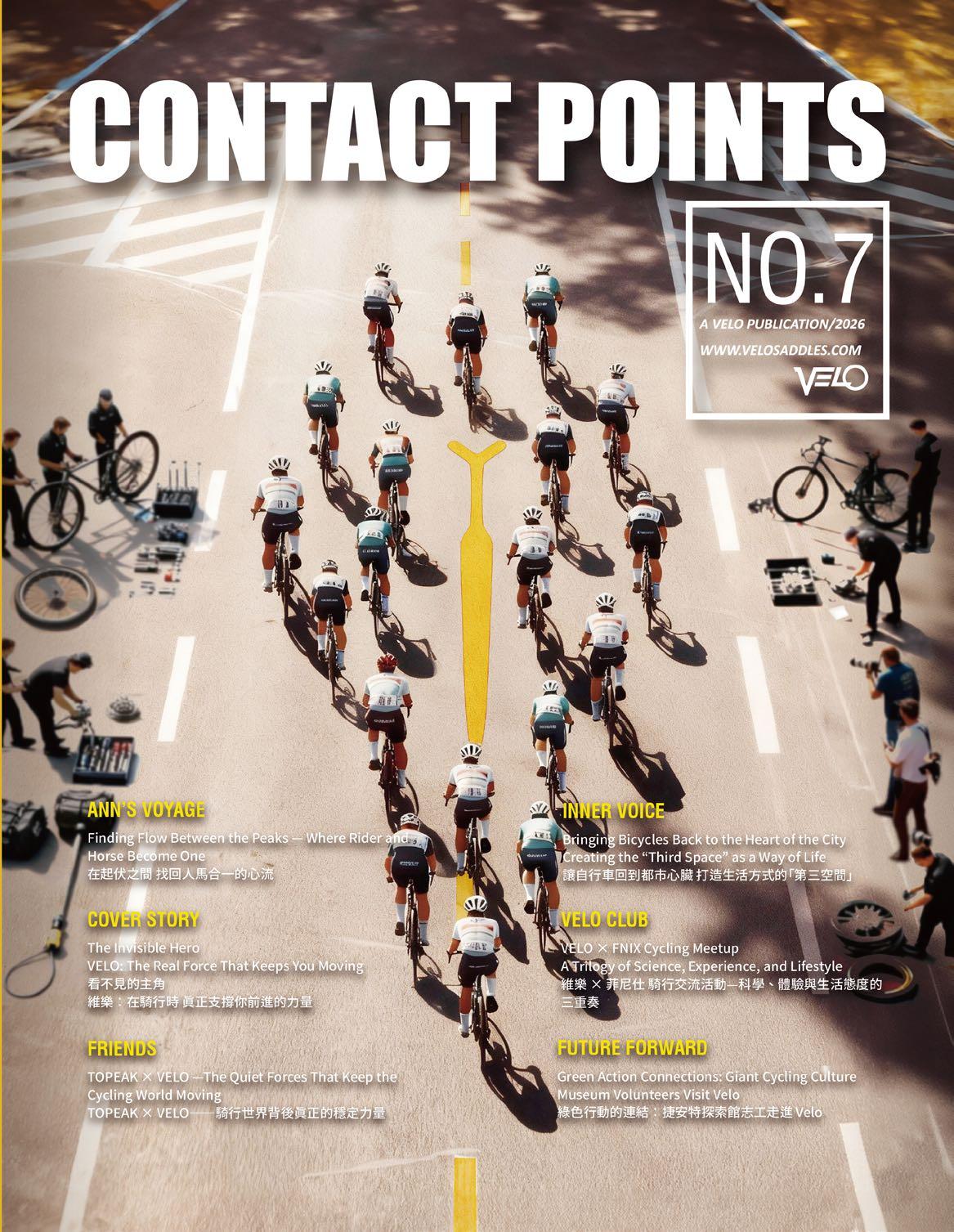
ANN’S VOYAGE
Finding Flow Between the Peaks—Where Rider and Horse Become One 在起伏之間 找回人馬合一的心流
COVER STORY
The Invisible Hero
VELO: The Real Force That Keeps You Moving 看不見的主角
維樂:在騎行時 真正支撐你前進的力量
HASHTAG
The Hashtag of Velo’s News, Cycling, and Global Trends.
用關鍵字紀錄維樂最新消息,串聯自行車界與全球趨 勢。
FUTURE FORWARD
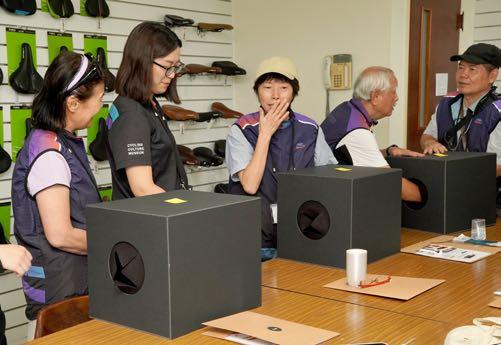
Green Action Connections: Giant Cycling Culture Museum Volunteers Visit Velo 綠色行動的連結:捷安特探索館志工走進 Velo
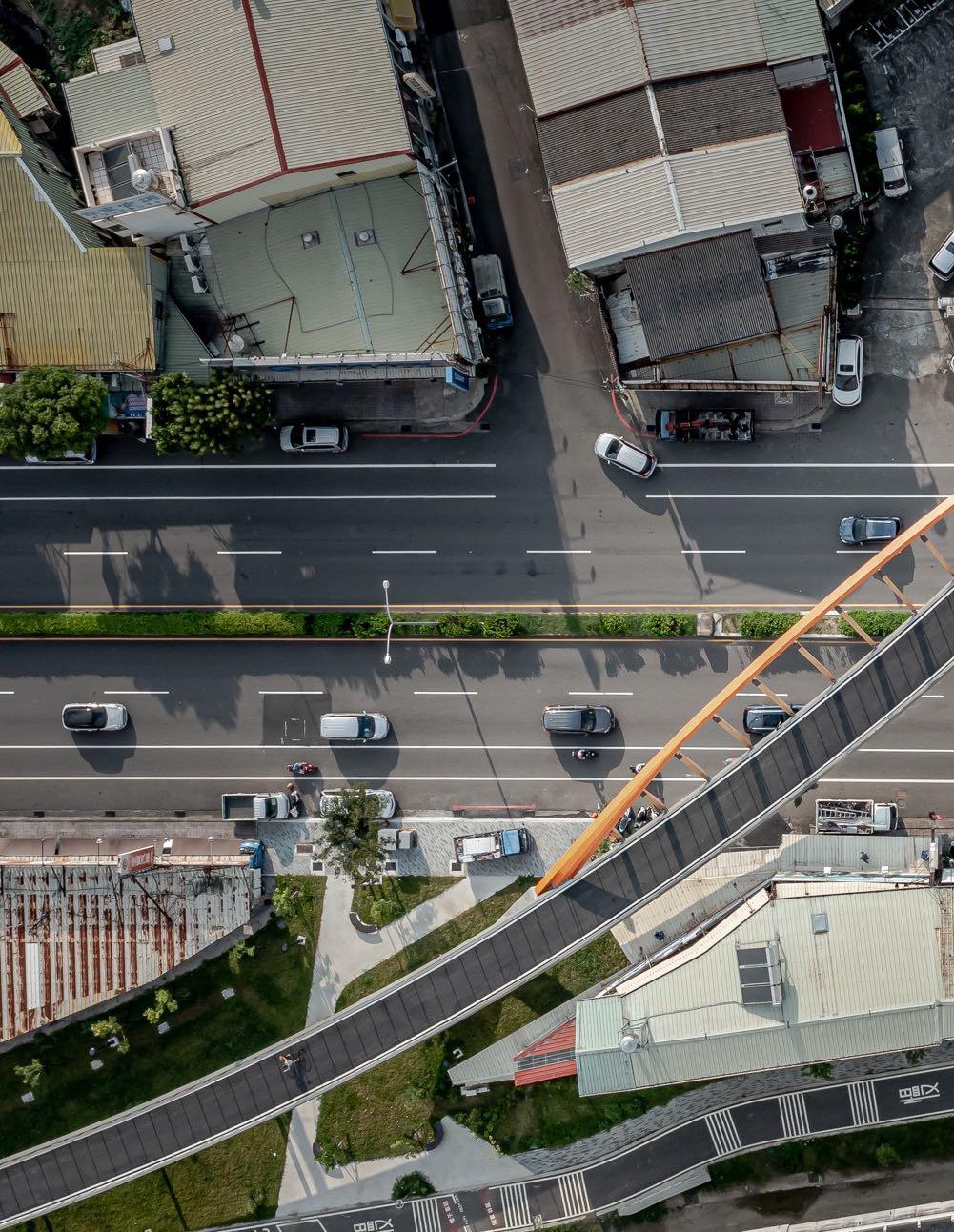
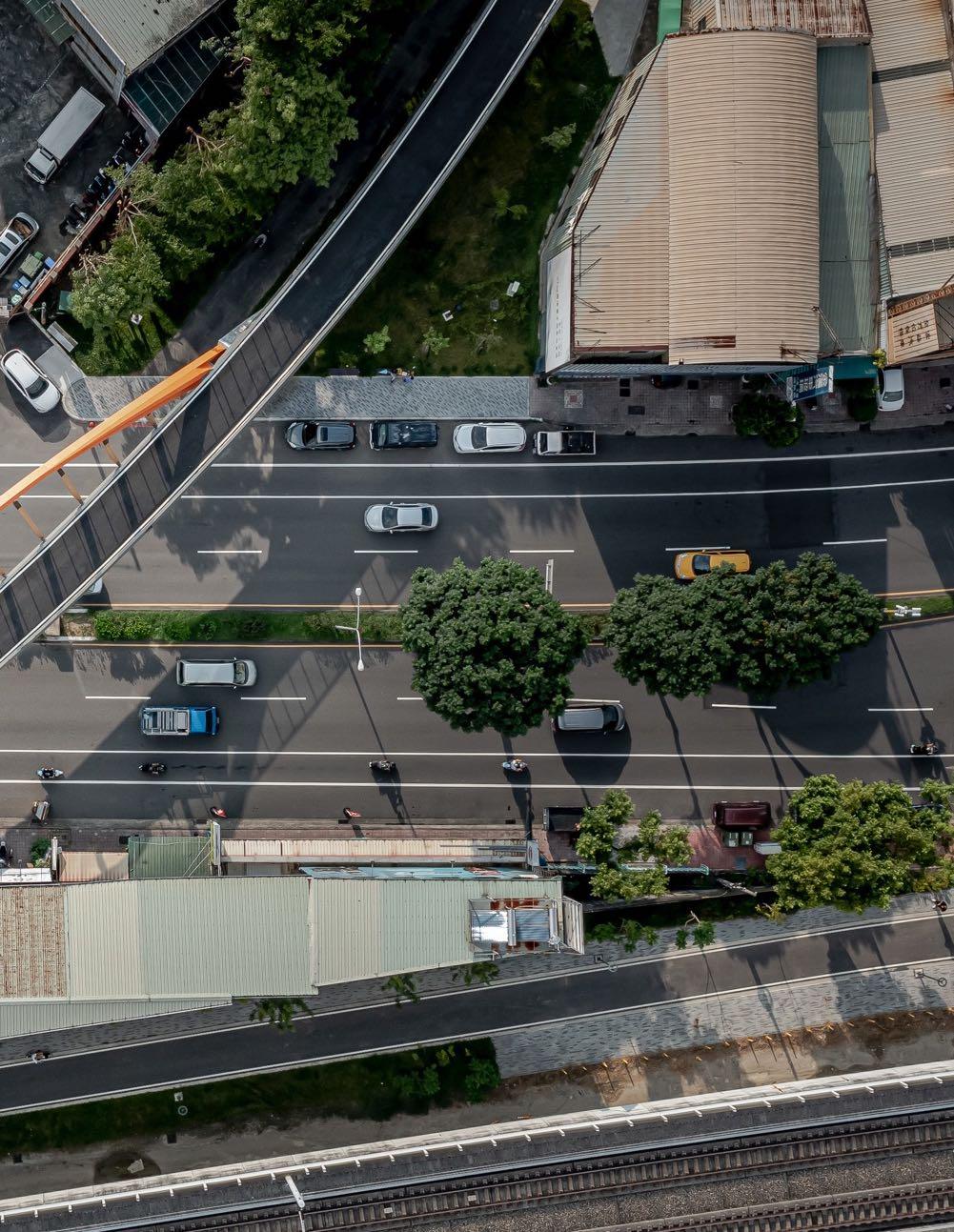
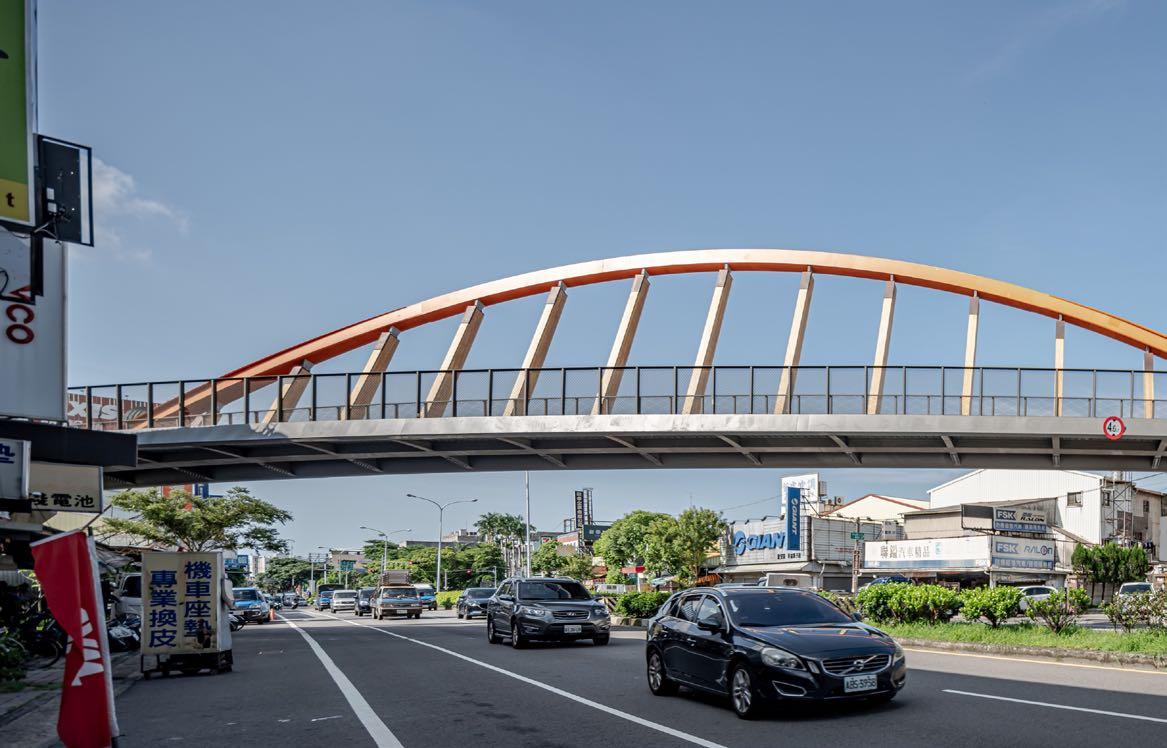
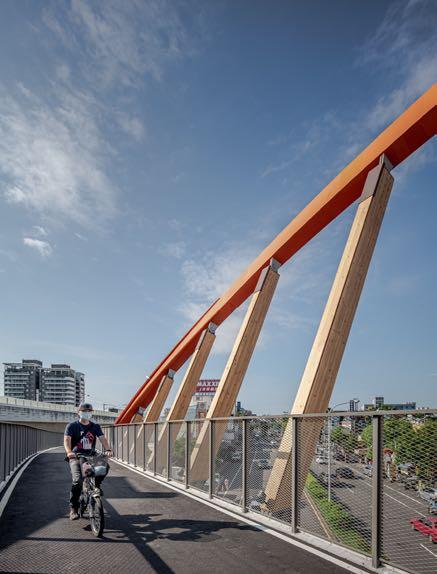
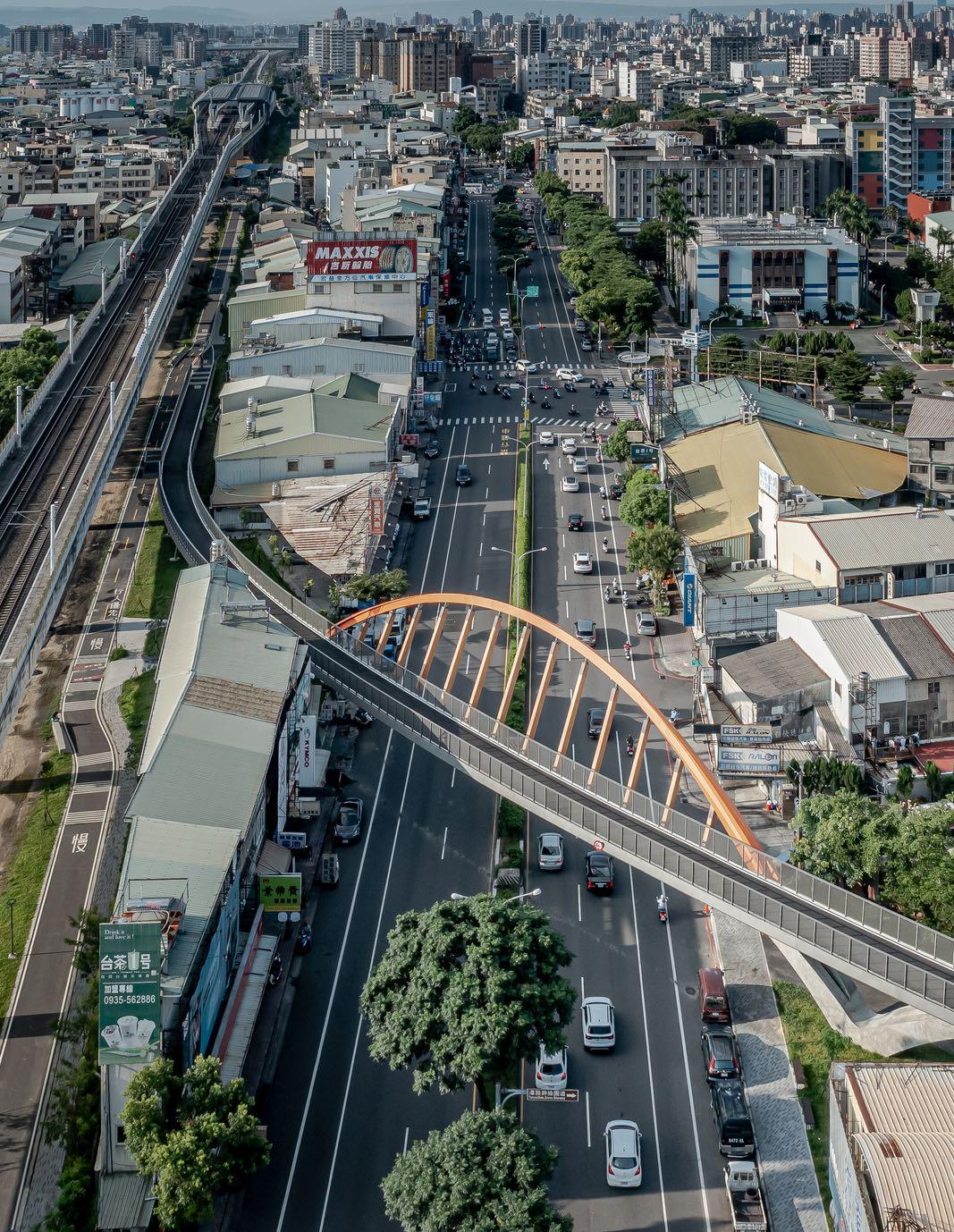
The Evolution of Urban Cycling Spaces: Tanzi Bicycle Bridge–A Stunning Arc Connecting the City 都會單車空間的進化之路 潭子自行車橋 串聯城市的美麗弧線
FRIENDS
TOPEAK × VELO—The Quiet Forces That Keep the Cycling World Moving TOPEAK × VELO——騎行世界背後真正的穩定力量
INNER VOICE
Bringing Bicycles Back to the Heart of the City
Creating the “Third Space” as a Way of Life 讓自行車回到都市心臟 打造生活方式的「第三空間」
The Symphony of Saddles and Bicycle Seats: From Craftsmanship Heritage to the Joy of Modern Riding 馬鞍與自行車座墊的交響曲:從工藝傳承到現代騎行的 樂趣
2026新品 05 44 48 60 74 80 94 08 12 18 20 28 32
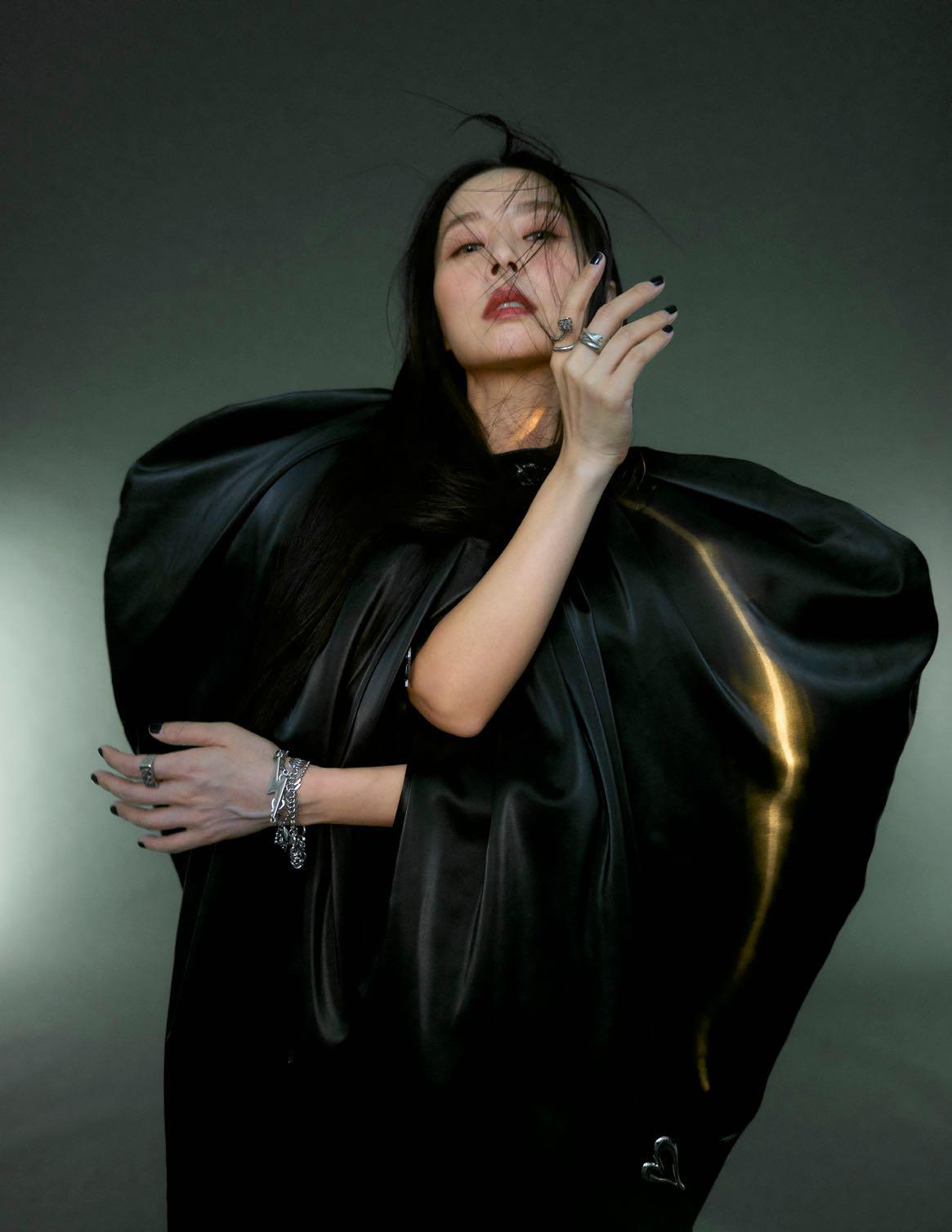
Singing the Song of Life: Her Honesty, Her Soft Power 唱一首人生的歌 孫淑媚的真性情與溫柔的力量
ONCE IN A LIFETIME
Pedaling Into the Poetic World of Mogan Mountain 乘著秋風 騎進莫干山的詩意世界
GLOBAL VIEWS
New information from The Netherlands, Canada and South Korea. 來自荷蘭、加拿大和南韓的最新情報
HAPPY CYCLING
Central Taiwan’s Classic Training Route — Finding Your Rhythm in Zhongliao, Nantou 中部經典訓練路線 在南投中寮鄉找到自己的節奏
The Invisible Accelerator: How Drinking Coffee the Right Way Can Power Up Your Ride 看不見的加速器:正確喝咖啡,讓騎行更強大 !
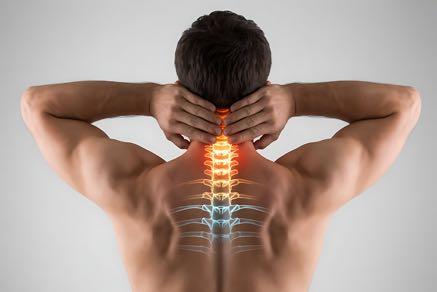
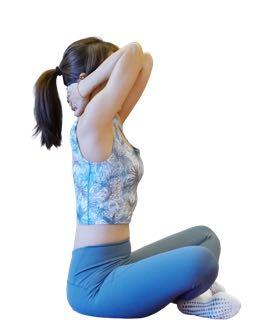
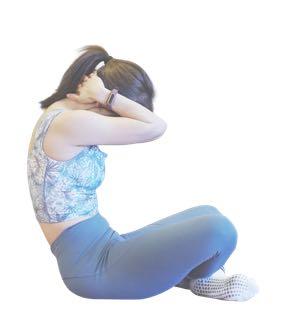
Easing Neck and Upper-Back Tension After Cycling: Start With Simple Daily Stretches 緩解騎行後頸椎不適:從日常伸展開始
Easing Hidden Neck Stress from Cycling Stretch More and Avoid Red-Flag Symptoms 舒緩騎行頸椎隱性壓力 多伸展避免紅旗症狀
VELO CLUB
VELO × FNIX Cycling Meetup
A Trilogy of Science, Experience, and Lifestyle 維樂 × 菲尼仕 騎行交流活動—科學、體驗與生活態度 的三重奏
PRODUCTS
Aesthetic/ Racing/ Leisure
美學/ 專業/ 休閒
CATALOG
COLLECTION 2026
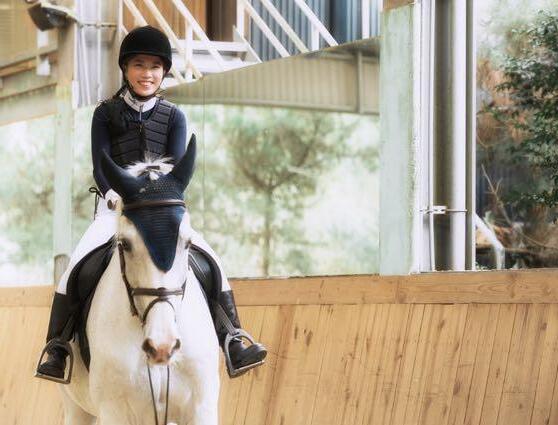
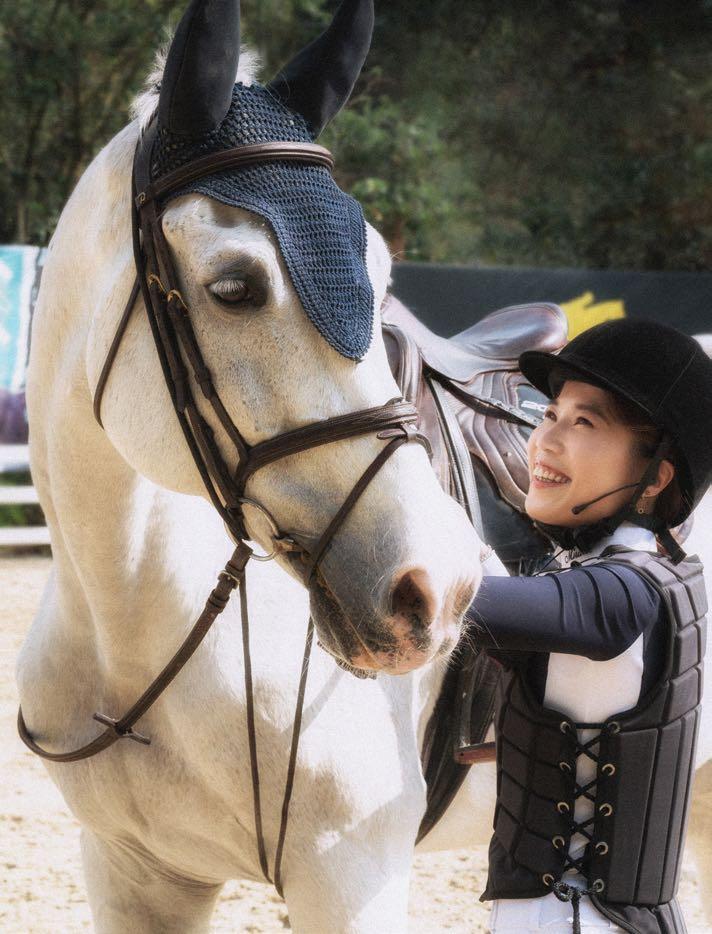
On this winter morning in the Daxueshan foothills, sunlight gently spills across Xianteng Equestrian Center in Dongshi, Taichung. The air is so clean it invites a deep, instinctive breath. A soft breeze carries the scent of dry hay, mingled with the warm, grounded presence of the horses themselves—an atmosphere quietly alive with energy.
Standing beside the “white horse prince” carefully chosen by the coach for the day, Ann Chen, General Manager of VELO, moves calmly and with intention. Before mounting, she reaches out to touch the horse’s neck, smoothing its mane—an unspoken ritual of familiarity. Only after this quiet exchange does today’s ride begin.
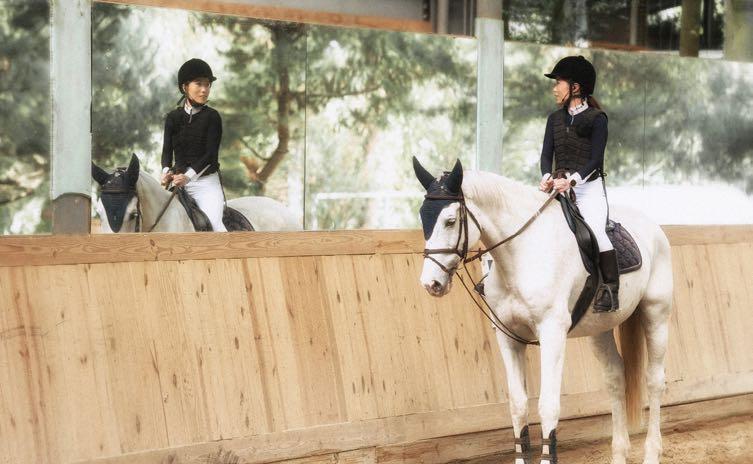
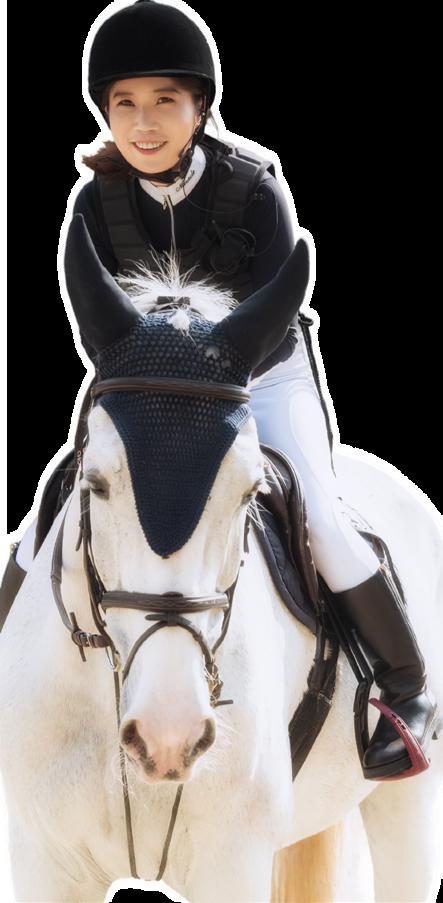
Ann mounts swiftly, almost instinctively—much like a cyclist who quickly locks into the right cadence. After a few slow laps led by the coach, her posture settles, her balance stabilizes, and her core naturally takes over. Hearing this, the coach remarks through the
microphone with a hint of surprise, “Your core is strong.” With that, the reins are loosened, allowing Ann and her white horse to wander freely— sometimes relaxed, sometimes light and playful—while still offering the photographer moments of poised elegance on horseback.
The cost of that elegance, however, arrives the next morning.
Laughing, Ann later recalls, “I didn’t expect my ‘white horse prince’ to leave me so sore I almost fell out of bed.” She sent a message to friends, poking fun at herself. Although the ride itself wasn’t long and much of the time was spent on photos, even a handful of basic movements—rising trot, sitting trot, hand and leg control—were enough to fully awaken her body. The soreness that followed came from deep within the inner thighs, muscles rarely used in daily life but constantly engaged while riding. The body, honest as ever, reminded her of the sweet price paid for truly being present in the saddle.
Saddles and Seats: The Invisible Power of the Core
As someone who has spent decades working intimately with bicycle saddles, Ann’s sensitivity to saddle design became one of the most profound takeaways of this ride. She notes that saddle structures reflect fundamentally different philosophies of balance across cultures.
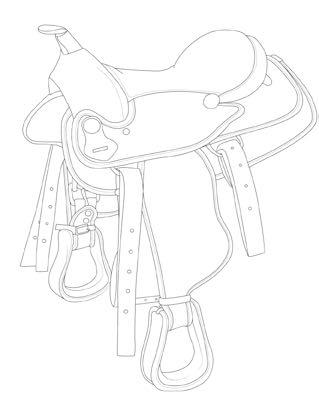
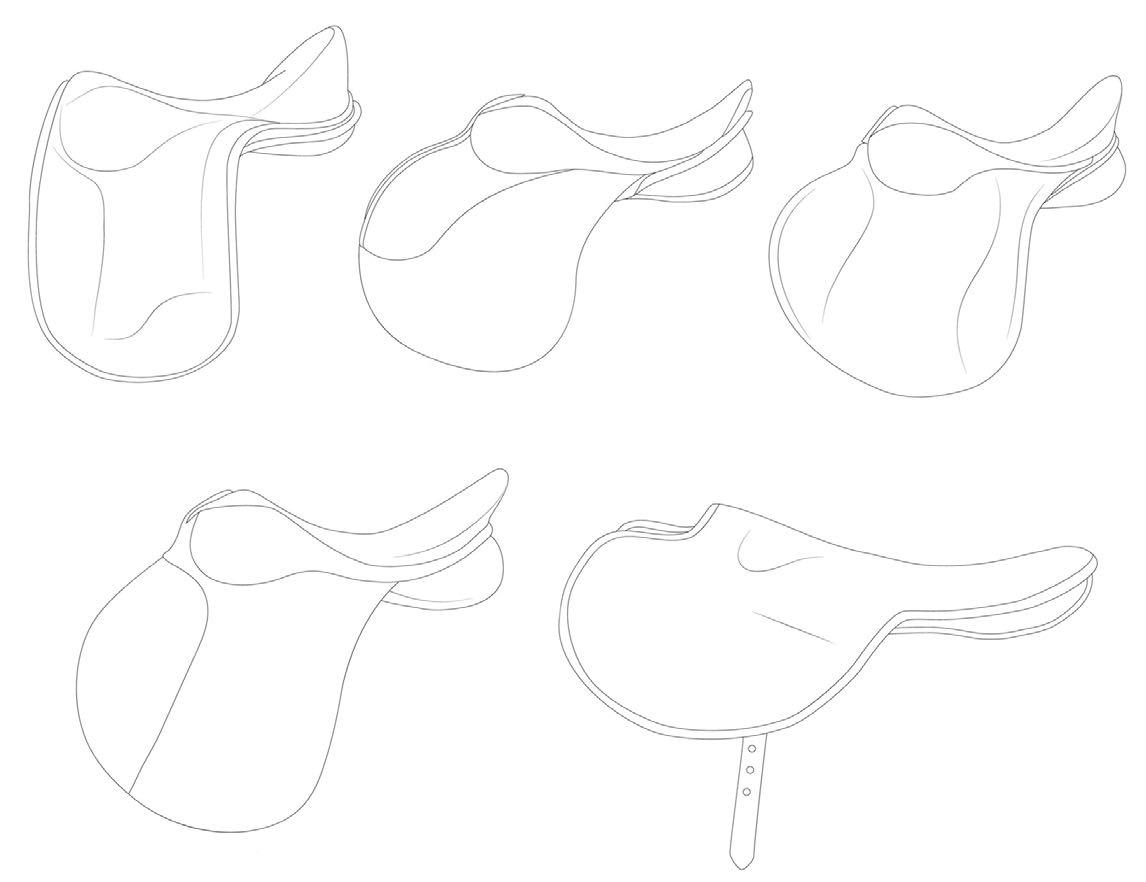
In her memory, the Western saddles she encountered while studying near Half Moon Bay, just outside San Francisco, featured a rounded horn at the front. Coaches explained that this design originated as a functional anchor for cowboys managing ropes and livestock. In leisure riding, it became a point of physical reassurance. Similarly, many beginner-friendly riding centers in Taiwan add metal rings to saddles—providing riders with something solid to hold, a way to borrow stability from the hands.
This time at the equestrian center, Ann began warming up indoors using a beginner saddle. Once comfortable, she moved outdoors to the obstacle-training arena, where the coach switched to a professional competition saddle—completely bare, with nothing to hold onto.
That subtle change instantly shifted the experience from recreational to intensely physical. “With no handhold at all,” Ann explains, “your hands can only manage the soft reins. Everything else—balance, pressure, stability—must come from your core and your thighs pressing firmly into the saddle.”
In that moment, she felt something familiar: when the hands can no longer compensate, the body must truly listen. Only then does a real conversation begin—between rider and horse.
It mirrors VELO’s philosophy in developing high-end bicycle saddles: the best saddle disappears. What remains is not hardware, but pure support, flow, and connection. Ann first discovered her love for horses when she was just five or six. Her aunt—Stella Yu, founder of VELO—took her to Houli Equestrian Park, where she rode a small pony in gentle circles. Though simple, that experience left a lasting impression: the world, when seen from horseback, felt alive, rhythmic, and free. Years later, horses found their way back into her life while she was studying in San Francisco. A group outing to Half Moon Bay introduced her to coastal horseback riding, where sunset rides along the Pacific Ocean were a popular local ritual. Unlike Taiwan, these rides came with what Ann jokingly calls a “five-minute crash course”: one guide, about ten riders, a few basic instructions—and then you were on your own.
She remembers clinging tightly to the saddle, leaning low, doing everything she could not to fall. That freedom was comforting—but it also meant complete personal responsibility. There was no one to carry your fear for you.
Over time, Ann began riding alone. Especially during moments of emotional low tide, horseback riding became a quiet form of self-dialogue. “Sometimes it wasn’t even about riding,” she reflects. “It was seeing how vast the Pacific was— how freely the waves moved. Somehow, the knots inside me loosened. Things felt… more manageable.”
Whether driving, cycling, or riding horses, Ann is ultimately chasing the same sensation: flow. She openly admits her love of speed and still refuses to part with her old Mercedes—because that deep, intuitive human-machine unity represents more than velocity. It represents trust.
Asked to compare cycling and horseback riding, Ann pauses thoughtfully. “They’re similar—and they’re not. What’s the same is entering that flow state. When the rhythm aligns and breathing settles, you stop forcing and simply move forward. What’s different is that a horse is alive. It responds to who you are in that moment. You can’t dominate—it requires familiarity, negotiation, cooperation. And yes… sometimes it’s also about chemistry.” Some horses simply don’t suit you. Others
feel right the moment you sit down. Returning to the saddle after so many years, Ann came away with a renewed understanding of the core—not only in riding, but in leadership and brand-building. There is no need to rush to prove anything. What matters is stabilizing the invisible foundation: finding your rhythm, maintaining balance, and cultivating trust. Whether it’s rising and sitting trot on horseback, or cadence and posture on a bicycle, once the rhythm is right, the journey becomes lighter—and longer. And perhaps that is the quiet wisdom behind Ann’s journey: true strength is rarely loud. It lives in the invisible core—steady, patient, and always in motion.
At the world’s biggest bike shows, the first things that grab you are usually the flashy stuff—the sculpted lines of alloy frames, carbon fiber shimmering under the lights, wind-tunnel charts, e-assist power curves. These spotlight stars define what the industry loves to brag about: faster, newer, stronger. But every rider knows the truth: whether a ride actually works— whether you finish strong, finish happy, and finish without wanting to throw your bike into the nearest river—rarely comes down to speed alone. It comes down to support. The unsexy, unglamorous, wildly important stuff: saddles, grips, contact points, pressure distribution, and that quiet sense of confidence that keeps you in the saddle even when your legs are cooked, and your soul is negotiating terms. That’s where VELO lives. Not as the loudest brand in the room—but as the one that quietly decides whether your entire ride feels achievable. While the industry obsesses over “lighter, faster, higher wattage,”
VELO has spent more than four decades doing the opposite—investing relentlessly in R&D, protecting quality like a family legacy, and refining the delicate interface between rider and bike. Pressure, support, stability, comfort—so precisely tuned, you forget it’s even there. And honestly, that’s the highest compliment a saddle can earn: you forget it’s there.
The last few years have been a full-body shakeout for the global cycling industry: post-pandemic demand cooled, inventory corrections hit hard, inflation and geopolitical instability didn’t exactly send
That’s the power of an “invisible hero.” It never steals the spotlight—but it decides whether the ride can go on.
Looking Back Through Global Trends - What’s the Bike Industry Changing?
consumers into a spending mood, and budgets tightened across the board.
The industry stopped obsessing over “what’s the next big leap forward,” and started asking a more basic, more honest question: What helps riders go longer?
In a world like this, riders and buyers aren’t looking for luxury embellishments. They’re looking for real quality—the kind that holds up over long miles and longer seasons.
VELO CEO Ann Chen puts it honestly: “In some Western countries, inflation has even hit 30–40%. That force bicycles to shift from ‘leisure spending’ back to their core identity—as transportation. When inflation squeezes consumers, people become extremely careful. They’ll only spend on what they truly need. That means the bike industry must face a much harsher test.”
Ann has also noticed clear trend signals across Europe, Japan, and North America: the compass is swinging toward micromobility and deeper integration with e-bikes. Speed isn’t the only obsession anymore. Comfort and health are back at the center. And with e-bikes and long-distance riding growing, ergonomics suddenly matter even more.
People aren’t just buying specs. They’re buying peace of mind—products that make everyday life feel more stable, more reliable, more sustainable. And that’s why saddles, grips, and contact points are no longer background characters. They’ve become key.
That’s exactly where VELO has stood for forty-plus years. When the world goes chasing speed and electricity, VELO keeps studying the physics of a few square inches of saddle surface—protecting one of the three most important rider-bike contact points.
This level of commitment to quality can seem almost stubborn. Ann admits the turbulence hit VELO just like everyone else: production delays, inventory digestion, rising costs,
squeezed margins. But when challenges stacked up, VELO’s founder and chairwoman Stella Yu (余彩雲) gave one non-negotiable order: Never switch to inferior materials just to relieve cost pressure. And that’s a big reason why, after brands search the globe, many still come back to VELO: the technical bar is high—and hard to clear.
Craft With a Human Pulse
VELO’s Most Valuable Asset-People
VELO’s invisible-hero status isn’t earned by quality, equipment, or R&D alone. It comes from something harder to replicate: a team that’s grown with the company for decades. In Ann’s life, VELO Executive VP of Sales Tina Chuang isn’t just a powerhouse colleague—she’s more like a guardian.
Ann remembers being kindergarten-age, shorter than the office filing cabinets. Tina had just graduated
and first joined VELO as an accountant. She would hand Ann candy and even braid her hair. Later Tina moved from accounting into sales—and with an almost superhuman mix of loyalty and meticulous care, she remembered not only each customer’s birthday, but even details about their kids growing up.
She turned supply-chain management—normally the most soul-draining phrase in the English language— into something human: a network of relationships with warmth and memory. That near-40-year bond is why Ann jokes that Tina is basically “ChatGPT in real life.” When something gets messy and Ann needs clarity, all it takes is one sentence:“ Hey, sister Tina… can you handle this for me?”
And suddenly, chaos calms down.
Another key pillar is R&D lead Mr. Lin—a story straight out of Taiwan’s old-school manufacturing legends. Rich used to work in a mold factory. When that factory was about to collapse, the owner personally called Stella to recommend him as top talent.
Lin joined VELO and stayed more than twenty years—injecting deep mold and manufacturing expertise that pushed VELO saddles forward in both comfort and structural performance.
To Ann, these veterans aren’t “legacy weight.” They’re priceless capital. They stayed through the earliest, hardest years and grew with the company. That kind of mentor-apprentice craft spirit is what helps
VELO hold its edge even against global competitors—because machines can copy processes, but they can’t replicate that refined, lived understanding of how a rider feels.
The
Next Turning Point Automation, AI, and a HmanCentered ESG Path
Even invisible champions don’t get a free pass from the times. In an era of fast change, “transformation” is everyone’s favorite buzzword—because everyone must do it. Global volatility—including tariff uncertainty tied to trade conflicts— has made Western brands far more cautious when placing orders. Facing a long-term battle cycle in the industry, Ann is redefining what “transformation” means for VELO. She knows transformation can’t be just a slogan. It has to solve real productivity and communication bottlenecks. But for Ann, transformation also isn’t about discarding the past—it’s about knowing what absolutely cannot be sacrificed.
She says it plainly: “If you drop quality just to survive a down cycle, even if you make it through—you won’t be VELO anymore. “That isn’t romance. That’s manufacturing reality.
VELO’s processes include a lot that outsiders don’t see and can’t easily quantify: rebound characteristics, long-duration pressure testing, mold stability, iterative corrections based on real human feedback. It’s not the easiest thing to sell in a trade-show booth -- but it’s the reason a manufacturing brand can stay credible for more than forty-five years.
When markets contract, many companies hit the “fast-forward” button: faster, cheaper, simpler. VELO chooses the opposite. Ann says: “I keep reminding myself: don’t panic and start making random moves. “For her, step one is stabilizing the core.
Factory-side: Smart manufacturing, step by step. VELO’s production model is low-volume, high-mix—so “full automation” is tricky. Still, the direction is clear: toward smarter manufacturing. When people hear “factory upgrade,” they picture robotic arms and AI inspection lines. The real question is: which step should be automated first to create immediate value?
VELO’s approach is pragmatic: start with the stages that most often create bottlenecks or affect consistency. Introduce automation and data capture gradually, so processes become traceable, yield becomes manageable, and learning curves become repeatable.
Management-side: An AI-powered internal knowledge base. Ann also has a forward-looking plan: introducing AI to build an internal information-sharing system. She doesn’t sugarcoat it: “I hate repeating the same thing three times.”
Her goal is to integrate technical data and market signals so teams can search and share information instantly reducing communication loss. She even imagines a future where VELO has its own tailored intelligence system, and when she
wakes up in the morning, AI has already organized her key schedule priorities and industry briefings. But she’s very clear about one point: AI and automation are for preserving experience—not replacing people.
VELO has many seasoned employees. Their value isn’t speed—it’s judgment. Automation should take over repetitive, physically exhausting tasks, so humans can focus on improving the progress and sharpening the tech. AI should help translate senior employees’ instincts into transferable rules—so experience moves from individuals into systems.
Ann’s stance is crisp: “AI supports judgment. It doesn’t take responsibility for you.”
VELO’s ESG work has extended from energy saving and carbon reduction (E) into the “S”—real social responsibility.
Ann notes that international customers no longer ask only about lead time and price. They also ask about carbon footprint, supply chain transparency, labor conditions, and ESG practice. Taipei Cycle itself has pushed sustainability forward as a headline theme, even partnering with third parties for sustainability tours and recognition. That signals a future where purchase orders increasingly look like values-based decisions.
In this environment, “S” isn’t just checking ILO human-rights boxes— it’s real care for employee welfare and dignity. People are VELO’s most
important asset. And in an industry downturn.
VELO is choosing the harder path: continuing to improve employee benefits and systems. closer to a global standard.
In headwinds, visible innovation matters. But invisible stability is rarer still. When the industry gets rough, you learn who’s riding on luck—and who’s built on real capability.
Welcoming the Year of the Horse A 12-Year Zodiac Saddle Series
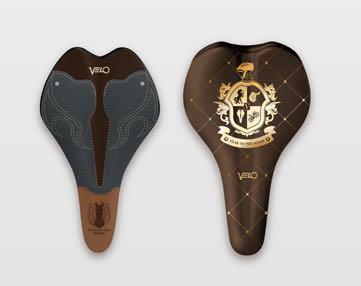
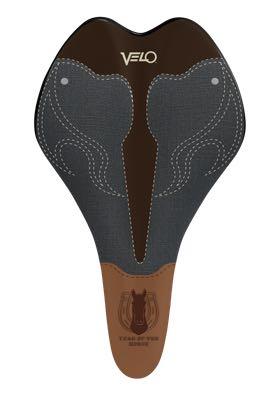
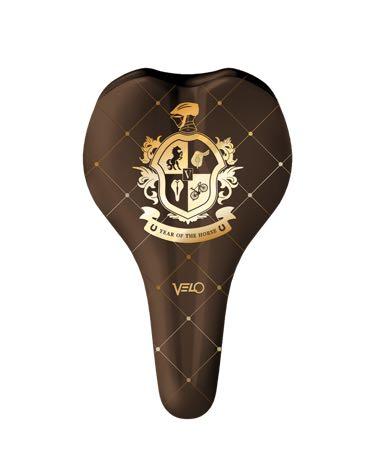
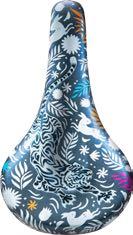
For the Year of the Horse, VELO is launching a horse-themed design saddle—blending a cowboy vibe with modern rider style—as the perfect
finale to its 12-year Chinese Zodiac saddle series.
Across twelve years, each piece has been more than a beautiful design object -- it’s been VELO’s most affectionate love letter to cycling itself.
An insistence on originality. An obsession with quality. A deep loyalty to longtime partners and teammates. That’s why VELO stays firmly rooted—steady, unshaken-And no matter how the bike market shifts in the future, VELO’s craft as the “invisible hero” will continue doing what it’s always done—like precise saddle mechanics themselves: Quietly, reliably, and beautifully… supporting every rider’s journey, mile after mile.
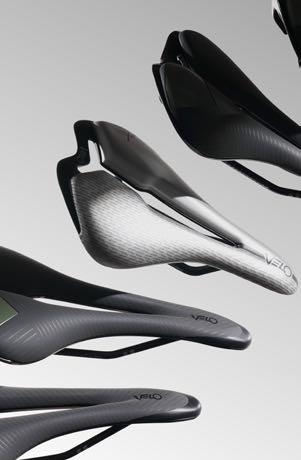
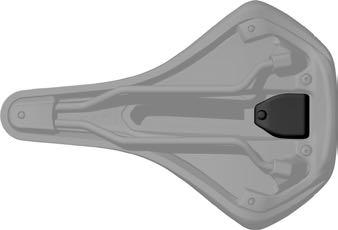
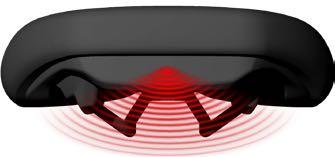
Guided by a practical and forward-thinking approach, Velo introduces a multifunctional saddle series that integrates practical design with everyday security needs, offering a more comprehensive solution for a wide range of riders. A dedicated compartment compatible with tracking devices such as AirTag beneath the saddle allows users to discreetly place a tracking device inside, making it easier to locate their bike and enhancing anti-theft protection when parked.
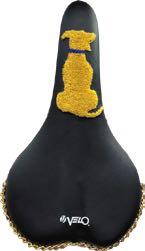
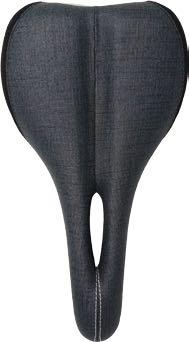
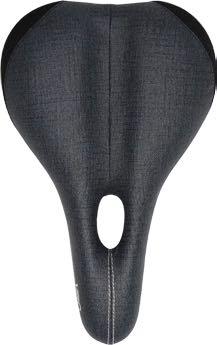
A-The horse has long stood as the cowboy’s steadfast companion—a timeless symbol of freedom and adventure. Inspired by denim craftsmanship, this cowboy-style design is featured on VELO’s popular Prevail TT with stitching, labels, and design details that capture the rugged spirit of the wild frontier.
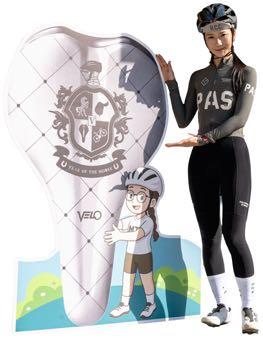
B-In Western culture, the horse symbolizes strength, elegance and speed. Drawing from the heritage of a knight’s crest, this saddle gracefully blends the spirit of the modern “iron horse” with traditional craftsmanship, reflecting the elegance and power of today’s rider.
“DuoSync” Designed for Passionate, Near-Professional Cyclists
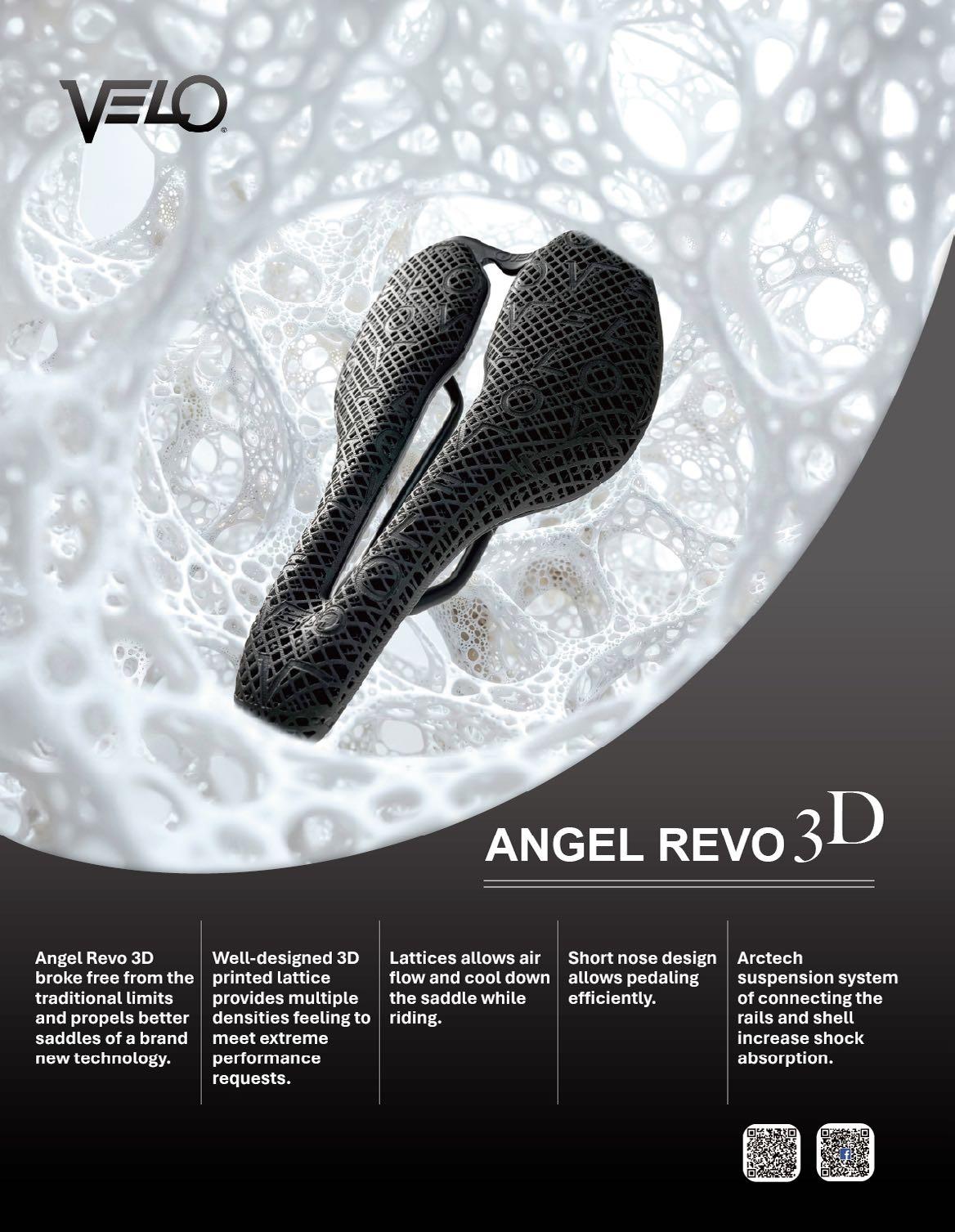
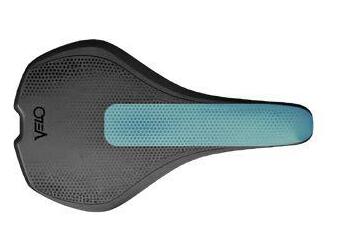
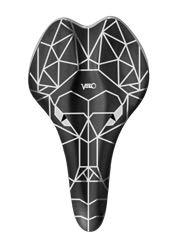
Launched at Velo’s new product presentation, DuoSync is the brand’s key saddle technology for 2026—built for passionate, near-pro road and endurance riders. It targets real-world fatigue scenarios where riders drift forward or lose pelvic stability, increasing perineal pressure and compromising comfort and efficiency. DuoSync uses a flat nose platform to widen effective contact, distribute load more evenly, and expand the usable sitting zone. An ultra-soft, highly adaptive center foam helps reduce pressure hot spots, while a firmer, high-density rear zone supports the sit bones for clearer structural stability and more effective power transfer.
From out-of-the-saddle surges to seated recovery, DuoSync delivers a more synchronized support system that stays consistent when performance demands—and fatigue—rise
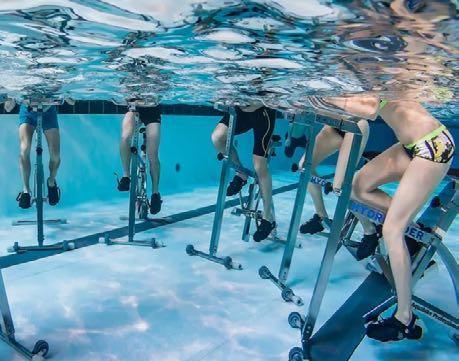
A new fitness trend has been quietly making waves in Taiwan — Aqua Cycling , a workout that blends the intensity of indoor spinning with the fluid benefits of water-based exercise.
Participants pedal on stationary bikes placed inside a swimming pool. Water’s buoyancy reduces joint impact, while its resistance increases fat-burning efficiency and strengthens cardiovascular endurance.
Beyond protecting the knees and improving circulation, the water environment offers a soothing, meditative quality. Aqua Cycling is ideal for anyone looking to lose weight, support rehabilitation, or simply explore a refreshing new way to move.
Green Action Connections: Giant Cycling Culture Museum Volunteers Visit
Velo
Saddle Anatomy 101 — Discovering the Craft and Care Behind Every Ride
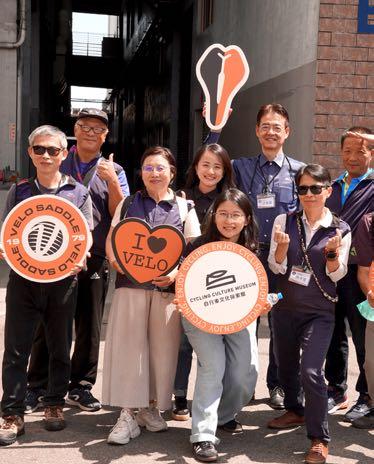
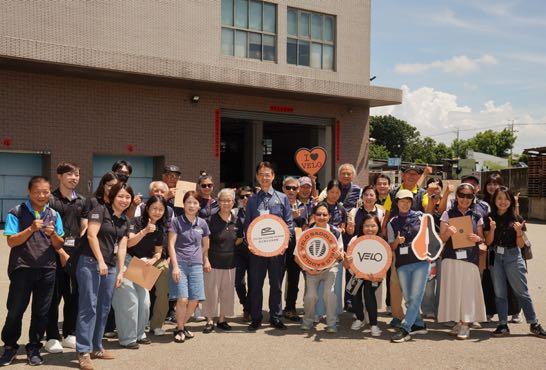
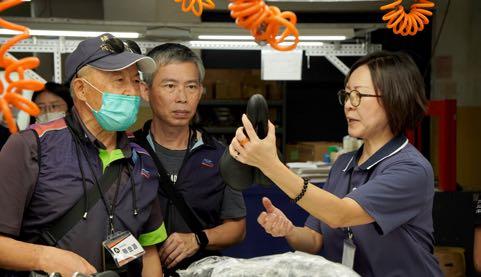
As long-time friends and partners, the volunteers from the Giant Cycling Culture Museum took a special field trip to Velo’s factory, diving deep into the art and science of saddle design. Through a hands-on workshop and factory walk-through, they got to see, touch, and truly feel what makes a Velo saddle more than just a seat — it’s a story of comfort, craftsmanship, and sustainability.
The session kicked off with a crash course in “Saddle Anatomy.” The instructor broke down each component — rails, base, foam, and cover — explaining how every layer serves a purpose. Then it was time to get hands-on: By assembling the parts themselves, volunteers discovered the careful engineering that lies behind a component they’ve seen countless times on bikes. Next was the factory tour, walking us through the entire process: raw materials, molding, hand-wrapping, and final assembly. Amid the faint scent of rubber and the rhythmic hum of machines, the volunteers witnessed how Velo brings precision and care into every step. It was not just a visit; it was a journey into the heart of responsible manufacturing — proof that quality and sustainability can share the same saddle.
The Art of Choosing a Saddle: Education in Motion, Sustainability in Action
Saddles aren’t one-sizefits-all — riders deserve what fits them. Long-distance cyclists value comfort and pressure relief, racers chase lightness and precision fit, while city commuters prize stability and durability.
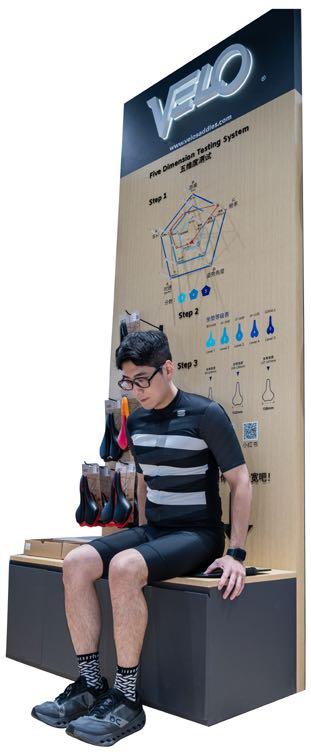
Through Velo’s innovative “ Five-Dimension Testing System,” the Giant Discovery Center volunteers learned how to match saddles to posture, body type, and riding style. They discovered how every curve, cutout, and contour has a reason — design driven by both science and empathy. What used to be just a bike part now became a story they could share with others.
As they left the factory, one volunteer laughed and said, “I never knew it took this much detail just to make sitting feel right!” And that’s exactly the point. From every saddle, Velo hopes to spark a deeper appreciation for the connection between riding, design, and sustainability. At Velo, education is more than a program — it’s the foundation of sustainability. By opening up its knowledge and craft, the idea of sustainability evolves from a concept into practice. It becomes something you can touch, feel, and pass along — one ride, one story, one saddle at a time.
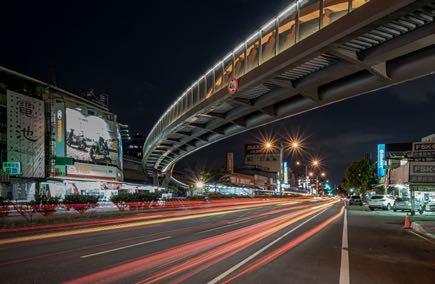
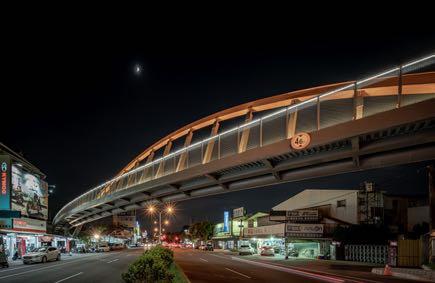
The Evolution of Urban Cycling Spaces: Tanzi Bicycle Bridge – A Stunning Arc Connecting the City
都會單車空間的進化之路潭子自行車橋 串聯城市的美麗弧線
In recent years, Tanzi District in Taichung City has become a hotspot for industrial development. The establishment of the Juxing Industrial Park has positioned Tanzi as a key hub for producing essential components in Taichung's industrial ecosystem. Strategically located, Tanzi serves as a vital nexus connecting Fengyuan, Houli, and other neighboring regions. Its accessibility through major arteries like National Highway No. 4 and the Taiwan Route 74 expressway allows for seamless travel across Taichung and other parts of Taiwan. This has solidified Tanzi's status as a crucial satellite town for the Taichung metropolitan area, all while retaining its potential for independent growth
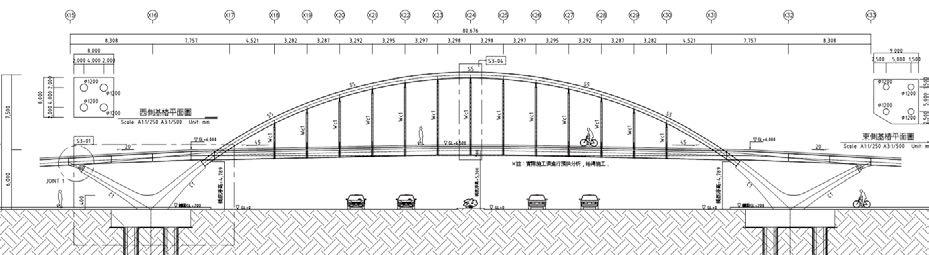
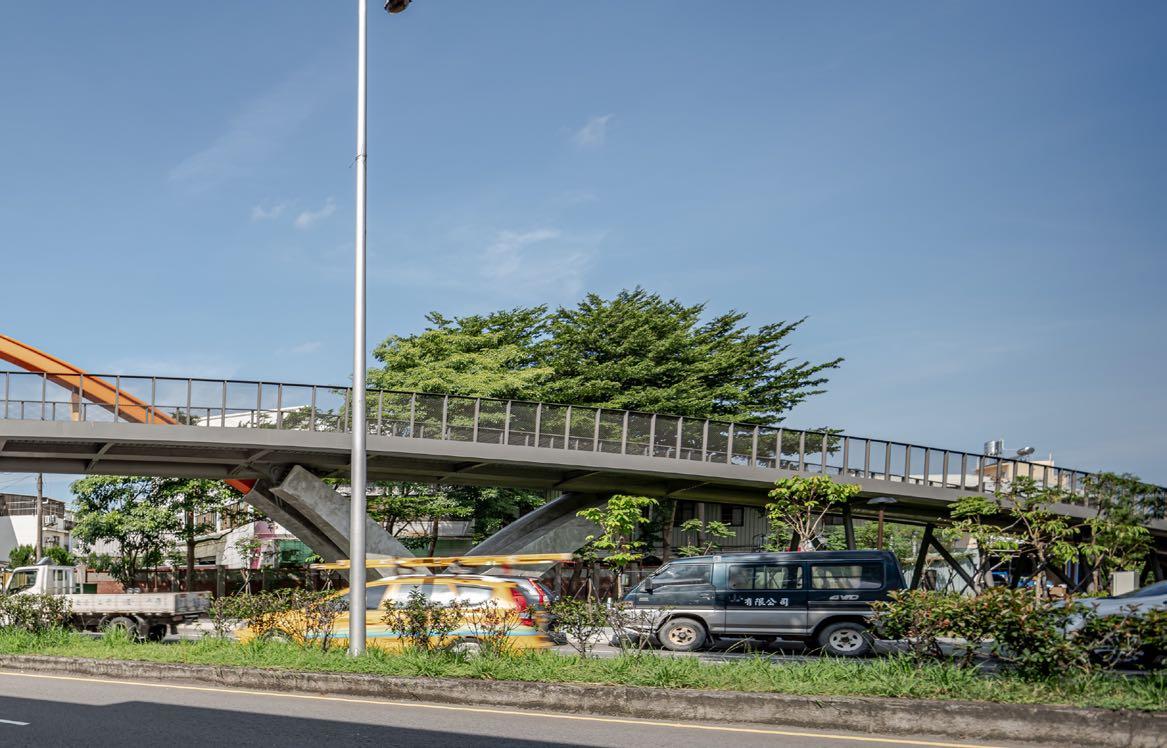
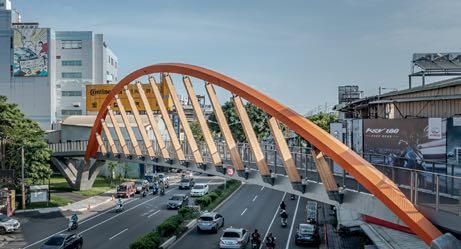
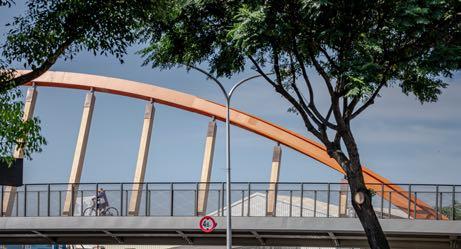
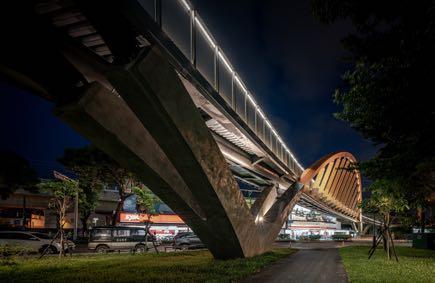
Amid this urban renaissance, the "Tanzi Bicycle Bridge" emerges as a striking arc that not only connects the city but also exemplifies the evolution of urban cycling infrastructure. Designed by architect Huang Ming-Wei, the bridge may appear elegantly simple, but its construction presented numerous challenges.
The core philosophy behind the Tanzi Bicycle Bridge is rooted in the concept of "Human-Centered Transportation." Following the advent of the Route 74 expressway and the elevation of the railway system, the challenge was to integrate the cycling path into the overall transportation network. This bridge was tasked with connecting the eastern side, where the reclaimed railway corridor now serves as a lush greenway, with the western side, linking the Tan-Ya-Shen Bicycle Path—a feat of urban planning and design.
Spanning an impressive 52 meters, with approach ramps extending approximately 120 meters on each side, the bridge’s design had to overcome the structural challenge of maintaining a central span without any supports.
Initially, the design team proposed an innovative "all-wooden arch" structure. However, due to concerns from relevant authorities regarding the novelty of the approach, as well as the lack of experience and regulations for such a design, the final plan adopted a hybrid structure of steel with partial wood elements.
Architect Huang Ming-Wei remarked with a smile, "Every innovation, regardless of the industry, inherently includes an element of the unknown. Without the unknown, it wouldn’t be innovation."
Human-Centered Transportation: The Challenges and Future of Urban Bike Lanes in Taiwan
Taiwan’s urban bike lanes currently face significant challenges in terms of safety, functionality, and design. On many bike paths, cyclists must navigate spaces shared with pedestrians and even vehicles, making every interaction a potential risk for an accident.
Architect Huang Ming-Wei puts it bluntly: “True dedicated bike lanes are still a difficult goal for Taiwan to achieve at this stage. The debate over whether bike lanes should be placed alongside roads or integrated into sidewalks is ongoing. Add to that the challenge of coexisting with scooters and buses in Taiwan’s dense urban environment, where limited space must accommodate diverse public infrastructure, and you have a real conundrum.”
Moreover, most bike lanes in Taiwan are designed primarily for leisure rather than commuting. They often lack connectivity between districts, especially in older urban areas. Poor pavement materials, rampant illegal parking by scooters, and the absence of clear distinctions between recreational and commuter bike lanes further exacerbate the issue.
The concept of "Human-Centered Transportation" aims to reduce the reliance on private vehicles while promoting public transit and (shared) bicycles. For urban bike lanes to serve this vision, they need to transition from their current leisure-focused purpose to become essential commuter routes. Only then can they tightly integrate with public transportation systems and achieve greater traffic efficiency. For example, Taiwan’s railway and metro systems could follow the lead of cities like Copenhagen by introducing dedicated bike carriages, enabling commuters to bring their bicycles on board. This could solve the “last mile” problem for daily riders and encourage more people to use bicycles as a short-distance transit option.
Additionally, bike lane planning and design must return to fundamentals, focusing on smooth and well-maintained pavements to ensure a safe and comfortable riding experience. Overly decorative designs, while aesthetically pleasing, often hinder maintenance and detract from usability.
From Leisure to Commuting Aesthetic Design Meets Human-Centered Care:
The Tanzi Bicycle Bridge is more than just a structure spanning space—it is a catalyst for community connection and environmental enhancement. The space reclaimed from the elevated railway has been transformed into parks and bike lanes, providing residents with verdant recreational areas. This case exemplifies how cycling infrastructure can evolve from purely recreational facilities into multifunctional assets that foster community ties and improve urban environments.
Inspired by the Tanzi Bicycle Bridge, we can envision the next generation of bike-friendly cities, where bicycles transcend their role as recreational tools to become vital components of urban mobility. By making cycling a safer, more comfortable, and sustainable option, we can create cities that are truly “bike-friendly,” both in traffic systems and in urban living.
Ming-Wei Huang is the Principal Architect of Studiobase Architects. He holds a B.Arch from Tunghai University and an M.Arch in Urban Design from Harvard University, with prior experience at I.M. Pei & Partners. Huang received the 15th Outstanding Architect Award of R.O.C. in 2017. His work focuses on environmental integration and people-oriented design, exemplified by projects such as the award-winning Chiayi Art Museum and the Tanzi Bicycle Bridge.
In cycling, the spotlight often falls on whatever dazzles at first glance— iridescent frame paint, wind-slicing silhouettes, the seductive sheen of carbon fiber. Riders debate endlessly over whether shaving 20 grams makes them a second faster, or whether wind-tunnel data truly translates to real-world gains. Yet what determines whether a ride begins smoothly and ends safely is usually far less glamorous: a dependable pump, a life-saving tire repair kit, a compact ratchet tool that never slips, never breaks, and never asks for praise.
TOPEAK—the globally respected yet intentionally unflashy Taiwanese tool brand—is the embodiment of these “essential but invisible” details. Cyclists have a saying: “TOPEAK doesn’t make you faster. It
makes sure you get home.”
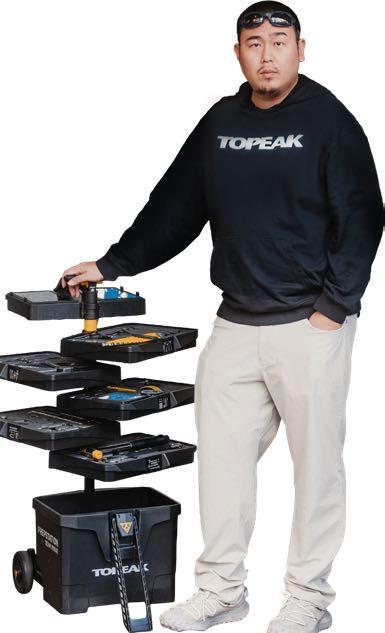
When TOPEAK Brand Manager Max Chuang first heard that, he laughed— though he admits it might capture the brand’s spirit better than any slogan they’ve written.
To him, a smooth ride is never achieved by the rider alone. Mechanics, shop owners, the friend who fixes your saddle angle, the teammate who cheers when you’re ready to quit— they are the quiet heroes behind every great ride.
And TOPEAK’s role?
To be the most trusted teammate those quiet heroes could ask for.
What Is TOPEAK’s Core Value? Max’s Answer Might Surprise You.
Most people would quickly say precision tools, durable quality, or a comprehensive product lineup.
But Max offers something deeper: “Real convenience means being prepared before you even realize you need it.”
Cutting steps and saving time is only the beginning.
True convenience is the quiet confidence that when something goes wrong—a slow leak, a stubborn bolt, a rock that slices your tire—TOPEAK lifts the anxiety from your chest before panic sets in.
This kind of convenience isn’t a feature.
It’s peace of mind.
That’s why TOPEAK isn’t built around a single star product.
It’s an ecosystem—tools, pumps, bags, racks, hidden tool systems.
Each one exists to complete another piece of the puzzle of a perfect ride, letting cyclists leave their worries behind long before they roll out.
The Magic of the Ratchet Tool: Invisible Until the Moment You Need It Most
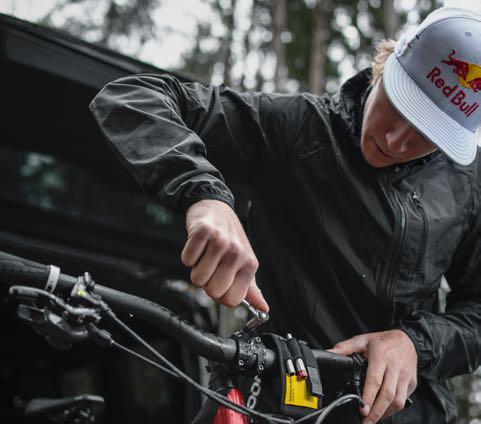
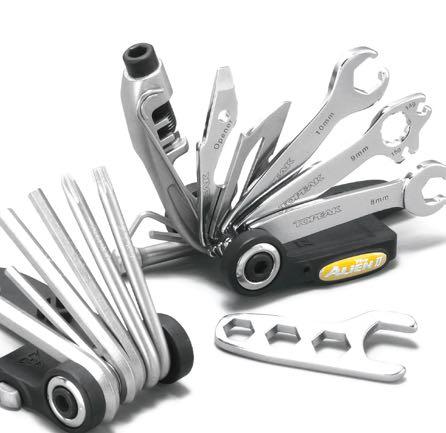
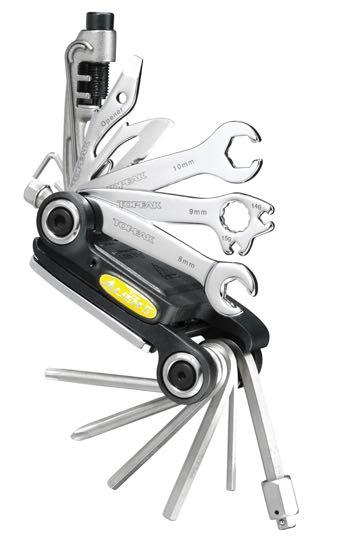
When asked which product riders overlook the most yet immediately regret not carrying, Max answers without hesitation: the ratchet tool wrench .
Every cyclist knows the struggle— bolts tucked deep inside the frame, awkward angles no traditional tool can reach, or tools that are simply too big, too long, too clumsy. A tiny adjustment suddenly demands dismantling half the bike. But with a ratchet tool, everything changes.
What once took minutes—and plenty of frustration—becomes quick, precise, and almost effortless. “These tools make problems disappear before they even become problems,” Max says.
You may not notice their brilliance every day, but the moment they save you, you’ll remember them forever. Across tools, bags, pumps, and accessories, TOPEAK maintains a unified design language: consistent proportions, function-first geometry, cohesive materials and textures, and communication that extends from packaging to user instructions. Max jokes that this consistency isn’t just about aesthetics—it’s what convinces riders to buy their second TOPEAK product.
TOPEAK is also one of the most shared tool brands among cyclists on social media worldwide. For Max, this visibility is more than exposure; it’s fuel. “Whether the feedback is positive, negative, subjective, or objective, we treat it as our most valuable source of growth.”
Cyclists share stories of emergency
puncture saves, teammates rescued mid-race, and long-distance rides completed against all odds. These real moments anchor TOPEAK deeply in riders’ lives and reinforce its identity:
the brand that understands cyclists best—and the brand they trust most.
The
Most Touching TOPEAK Moment: When a Tool Became a Father-and-Son Memory
When asked about his most unforgettable user story, Max pauses—his voice softening.
At an international trade show, a young boy walked up to the TOPEAK booth clutching a handful of coins he had saved. He wanted to buy a folding tool for his father, because every day he watched his dad fixing bikes in the garage with an old TOPEAK tool scarred by years of use and marked with the iconic triangular logo.
Pointing eagerly at the alien-shaped icon, the boy said, “This one! This is the one Dad uses!” and emptied every last coin from his pocket.
In that moment, the tool wasn’t just metal.
It was a memory. It was love
With his mother’s permission, TOPEAK and the local distributor gifted the new tool to the boy. A small gesture— yet a perfect reflection of TOPEAK’s soul:Tools repair bikes. But they also connect people.
Technology Pushes Cycling Forward —And Raises the Bar for TOPEAK
For more than 30 years, Prepare to Ride has guided TOPEAK through every evolution in cycling — from
early MTB and classic road bikes to gravel, e-MTBs, and today’s commuter E-SUVs.
As e-bikes and long-distance touring continue to surge, they introduce new challenges: greater storage needs, lighter gear, stronger weather protection, and equipment that must endure farther and last longer.
That’s why TOPEAK’s Bike Packing series evolves year after year — continually refining materials, waterproofing, and modular systems to meet the realities of modern riding.
TOPEAK
× VELO:
The Invisible Forces That Make Every Ride Better
In a cycling world obsessed with speed and appearance, TOPEAK and VELO stand out in a quieter, more meaningful way—by supporting the moments that truly matter.
Both brands are rooted in Taiwan. Both refuse to compromise on quality.
Both share a deep, intuitive understanding of the rider’s experience. VELO helps riders sit naturally and ride longer.
TOPEAK helps riders adjust, repair, and solve problems with confidence. Together, they form the unseen architecture that makes modern cycling safer, smoother, and more enjoyable.
For over three decades, TOPEAK has proven a simple truth: the ones who make your journey successful are rarely in the spotlight. They are the ones standing behind you—quietly ensuring everything goes right.
That is why TOPEAK and VELO together represent one of Taiwan’s most trusted—and most deserving— forces in the global cycling world.
Bringing Bicycles Back to the Heart of the City Creating the “Third Space” as a Way of Life
讓自行車回到都市心臟 打造生活方式的「第三空間」
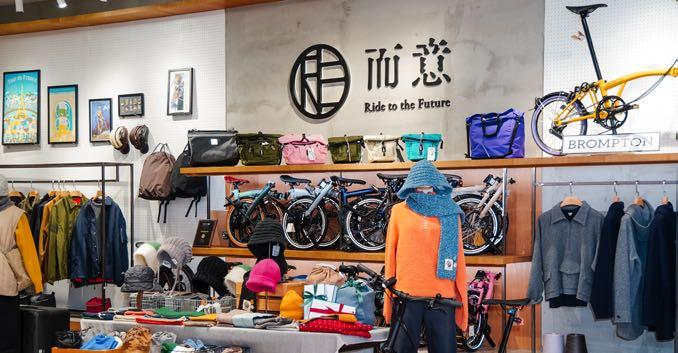
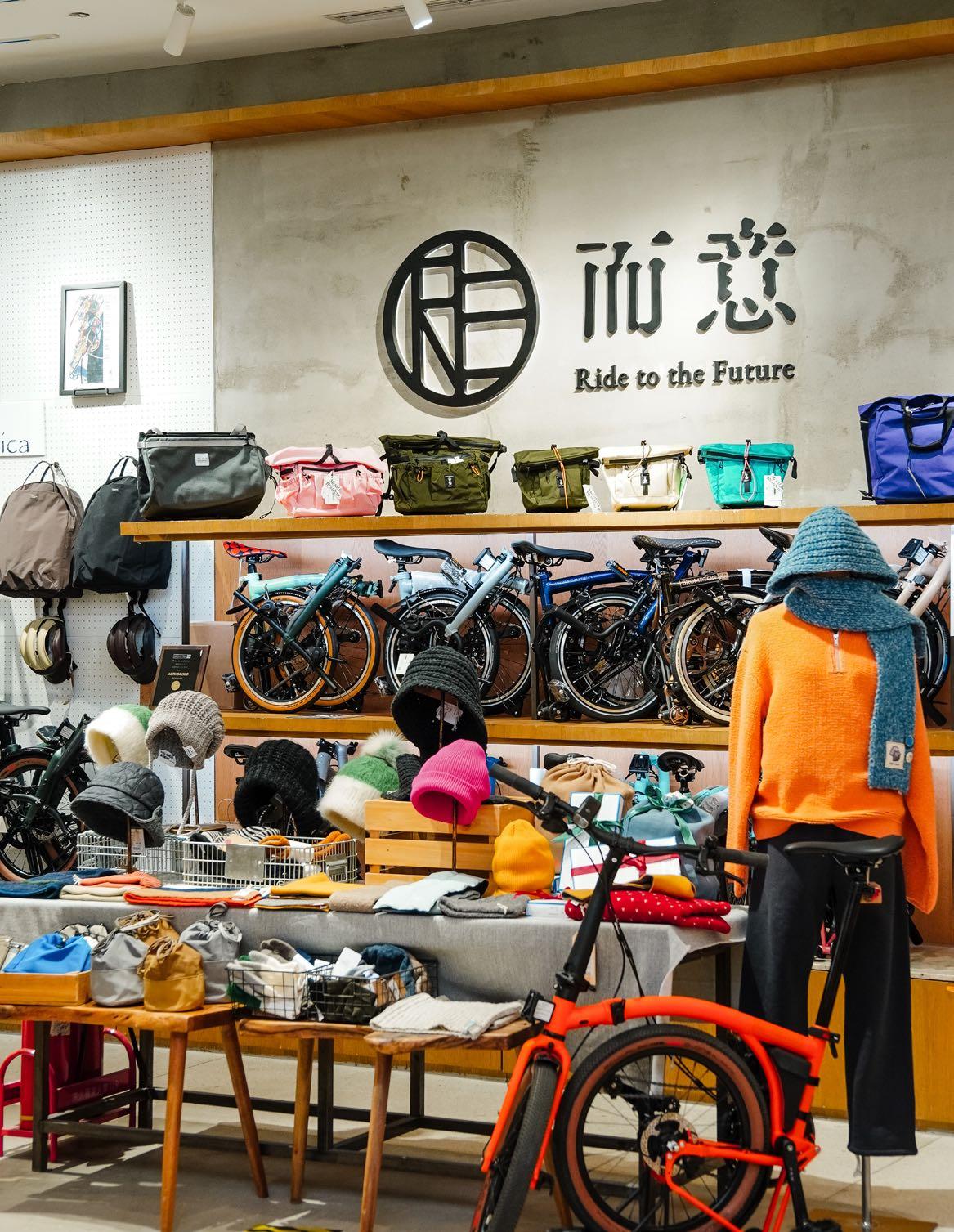
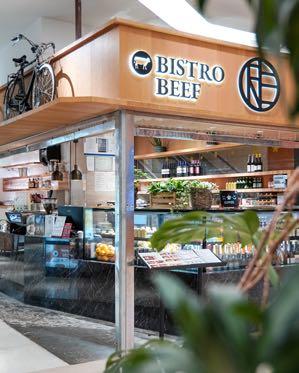
When you step into RE 而意 (RE Design & Cycling), the first thing you notice may not be the scent of chain lube, but the rich aroma of freshly brewed coffee. Rather than a conventional bike shop, it feels more like a carefully curated lifestyle concept store. Many visitors try to label it a “cycling select shop,” but founder Luo Yuan will gently correct them—because that definition, she says, is not quite right.
For RE 而意 , the bicycle transcends being a mere means of transport or a competitive pursuit. It is a medium— one that carries the intersection of city life, sustainability, the human body, and culture. The name “RE” itself reflects four commitments to living well: Recycle, Research, Recreation, and Revolution. These are not empty slogans, but a vision to carve out a healthy, sustainable sanctuary within the concrete density of modern cities. Here, you can browse through thoughtfully designed apparel and accessories—cycling wear so refined it blends seamlessly into an office meeting. You can order a coffee, sit by the window, watch the city flow by, and chat with the staff about the perfect route for a weekend ride. This is the “third space” they are creating: not home, not work, but a place where people begin to understand why this way of living matters.
From “Zero” to “One” — A Mind-Body Rebirth
When talking about the soul of this shop, it’s impossible not to mention the founders — Shiro Sugane and Yuan Lo, the husband-and-wife duo behind RE 而意 . Their ability to embrace beginners with such warmth and ease comes from a simple truth: they were once beginners too, warriors who survived the brutal leap from “zero” to “one.”
The beginning of their story carried more questions than plans. They asked themselves relentlessly: What is a lifestyle? What kind of lifestyle do people truly crave? And deeper still: In an AI-saturated era, what becomes of human relationships? What kind of world will my child grow up in? What will the city, the body, the heart, look like in the future?
Meanwhile, Shiro’s body had been quietly filing a resignation letter of its own — too many overtime nights, too many deadlines stacked like poorly tightened bolts. His health was far from ideal.
Then his long-time riding buddy and partner, Kaoru Suzuki, nudged him back onto a bicycle. Not dramatically — just a gentle encouraging push of a good friend saying, “Hey, try again.”
After a few kilometers, Shiro discovered the tightness in his shoulders, the fatigue in his breath, the weight on his mood — all began to dissolve with each pedal stroke.
He realized: Health isn’t a feature, it’s the foundation.
A healthy body, a healthy mind, a healthy environment — only then can a beautiful lifestyle take shape. And cycling, he found, was the simplest vessel for that transformation. Not just transport, not sport — but a daily catalyst for change.
“A bicycle doesn’t just move you forward,” Shiro said, “It moves your life back into alignment.”
founder-Luo Yuan 羅園
And then there’s Yuan — whose story feels like a group ride we’ve all bonked on at least once. She didn’t ride at all.
Then came the pandemic. Shops closed, routines cracked, the world stalled.
Suddenly, she had to run the company solo while the store couldn’t operate normally. To keep the community alive, she had to ride herself — not for podiums, but for people.
She laughed remembering it: “Can you imagine? I was a rookie leading group rides. I bonked so hard I hit hypoglycemia, wanted to melt into the pavement, and wondered if helmets covered emotional damage.”
But beneath the humor, the turning point was clear: “Because I tasted that urge to quit,” she said, “I finally understood why cycling must belong to life, not just sport.”
She spent three months pushing her distance from 30 km to 70 km — including 600 m of climbing — a feat that didn’t make headlines, but made her life make sense again.
Her legs grew stronger, her breathing longer, and her mindset flipped from “dragging myself out” to “looking forward to the ride. “And that’s why RE 而意 feels like a sanctuary, not a racetrack.
They don’t care whether you’re fast — they care whether you feel free, safe, and joyfully in motion. “The hardest part,” Yuan smiled, “isn’t speed. It’s the courage to begin.”
From Curated Selection to In-House Brand: A TenYear Titanium Dream
As their immersion in cycling culture deepened, RE 而意 began to grow a backbone of its own. What started as
buying, curating, and representing other brands slowly evolved into something more ambitious. The founder— Shiro Sugane and whole team demonstrated a strong instinct for brand-building—but never rushed the process. True development, they believe, takes time. After years of observing the market and accumulating data, they noticed something telling: despite coffee, clothing, and accessories, nearly 80 percent of their sales still came from bicycles themselves. This confirmed that their lifestyle-driven approach had not lost focus. The scene exists to support the product—to return the bicycle to its most natural place in daily life.
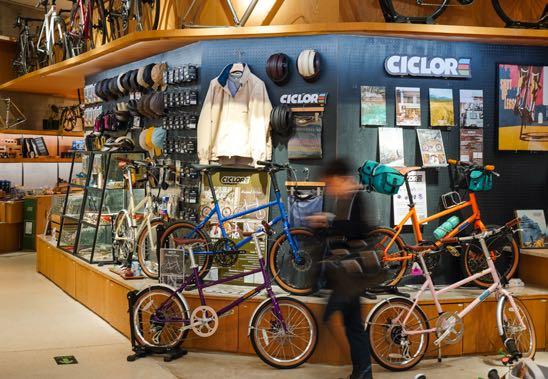
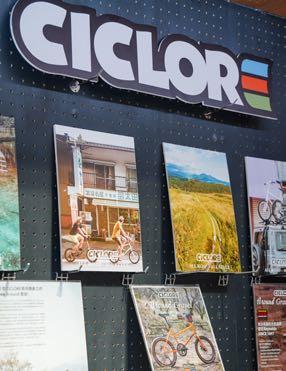
In 2023, after six years of quiet preparation, they launched their own brand: Ciclore. Notably, they chose titanium, a material still considered niche in much of the Asian market. Titanium is a metal with soul—durable, warm in character, and rich in craftsmanship—perfectly aligned with RE 而意 ’s belief in longevity and timeless design.
For a small company, selling over 1,000 bicycles in a single year is no small achievement. Luo Yuan gives herself a decade. Her goal is for Ciclore to become a truly independent brand—one that is visible, respected, and trusted for its reputation.
An Architect’s Perspective: Returning the Bicycle to the City’s Core
One might wonder why RE 而意 consistently chooses locations within five kilometers of major business districts, international trade centers, and premium office towers. The answer lies in the founders’ professional roots.
Both Sugane and Luo Yuan are trained architects. They view daily life through the lens of urban planning. As cities expand and satellite suburbs grow, they observed that urban cores often become hollowed out, while people exhaust themselves in long commutes. This led them to champion the idea of the “15-minute city”—a vision where daily needs are accessible within a short, human-scale radius.
With architectural precision, they placed their stores in neighborhoods dense with white-collar professionals and international executives—people highly receptive to the idea of cycling as a lifestyle rather than a utility. As Luo Yuan explains, these are individuals who understand that a bike is not just a tool, but a way of living. Her hope is to inspire office workers to rediscover cycling, replacing traffic jams with green mobility, and allowing bicycle culture to spread naturally between offices and cafés.
Letting a Culture Take Root—Slowly, in the city
For Luo Yuan, the future is not simply about selling more bikes. Her concern lies with the broader ecosystem: advocating for safer cycling infrastructure, better urban parking solutions, and a shared-road culture rooted in mutual respect.
Cycling culture does not have to be confined to tight jerseys and aggressive competition. It can be expansive, gentle, and fashion. It can be mountain, road, gravel—or simply an easy ride on the way to work.
If you long for a lifestyle that is healthier, more refined, and more intentional, take a weekend and visit RE 而意 You may discover that falling in love with cycling requires no extraordinary fitness—only a genuine love for life. Let us ride slowly through the city and allow this culture to grow like a tree—quietly, steadily, and with a character all its own.
The Symphony of Saddles and Bicycle Seats: From Craftsmanship Heritage to the Joy of Modern Riding
馬鞍與自行車座墊的交響曲: 從工藝傳承到現代騎行的樂趣
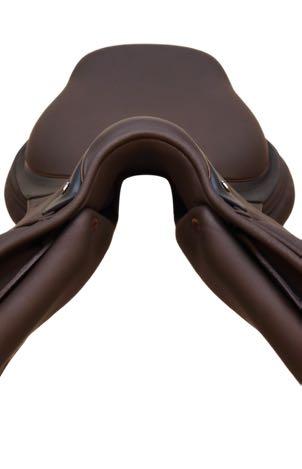
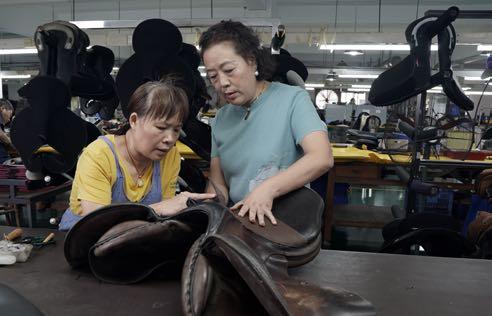
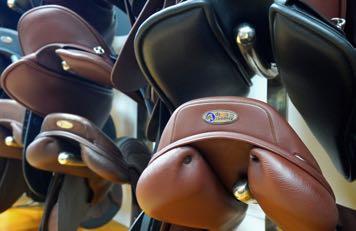
In Dongguan, a city brimming with creativity and industry, lies a workshop with German roots and craftsmanship excellence—DT Saddlery. Founded by Ms. Eva Liu Chunmei, DT Saddlery has its headquarters in Munich, Germany, while its production facility is based in Dongguan, China. This workshop is not just a showcase of traditional German saddle-making craftsmanship; it is also a source of inspiration for cycling and equestrian enthusiasts alike.
Saddles for bicycles and horses are more alike than you might think. Aside from sharing the English word "saddle," the similarities go deeper. Saddle design prioritizes the seamless connection between rider and horse, requiring a perfect fit to the horse's body while providing stability and support for the rider. In simple terms, the core philosophy of saddle-making is that the shape determines the riding experience. The same logic applies to bicycle seat design: comfort alone isn't enough; the seat must meet the rider's specific needs. A plush seat might feel great initially but can cause discomfort during long-distance rides due to insufficient support.
The history of equestrianism dates to around 4000 BCE when humans first domesticated horses for agriculture and warfare. As societies evolved, horse riding became an art form. During the Renaissance, Europe saw the establishment of specialized riding schools that trained horses for intricate movements and obstacle navigation. Today, equestrianism is an Olympic sport, celebrated for its blend of power, precision, and grace.
The saddle is the heart of this sport, and crafting one is a meticulous process. It begins with measuring the horse
using specialized tools to document the contours of its back, the position of its shoulder blades, and the distribution of its muscles. This ensures a custom fit that minimizes pressure points and maximizes riding comfort.
The selection of leather is equally critical. DT Saddlery uses premium leather sourced mainly from Italy and Spain, known for its durability and flexibility. Each hide undergoes rigorous inspection before being cut, stitched, and padded. The process involves nearly 30 steps, all executed by experienced craftsmen using traditional handcrafting techniques.
Equestrianism is unique among Olympic sports as it requires human athletes and their animal partners to work together seamlessly. Achieving this harmony is key to success.
"Horses are remarkably intuitive animals," Eva Liu shared with a smile. "They can sense a rider's emotions and movements. Their ears, tails, and steps are their language—all we need to do is listen."
Eva learned this firsthand during her riding lessons. "I once tried to force a horse to follow my command," she recalled. "It became nervous, uneasy, and even threw me off its back. I later changed my approach, spending time feeding, grooming, and talking to the horse to build trust. Slowly, we found our rhythm and started to enjoy riding together."
Trust and patience, not dominance, are the keys to taming a horse. Riders must understand the horse's language and use gentle, consistent cues to communicate. This subtle exchange of trust and understanding is what makes equestrianism so captivating.
From Billiard Bags to Saddles: A Cross-Industry Journey
Before founding DT Saddlery, Eva Liu was in the billiard accessories business, manufacturing leather cue cases and other items. One day, a European client asked, "Since you work with leather, could you try making saddles?"
This seemingly casual question set Eva on a new path. "At the time, we knew nothing about saddle-making," Eva admitted with a laugh. "So, I decided to go to Munich to learn the craft, from material selection to hand stitching." During her training, she lived in a small town on the outskirts of Munich. Days were spent in workshops; evenings at local stables, observing trainers and taking notes. Her only goal was to master the art of saddle-making. However, fate had other plans.
"One evening, a local equestrian trainer approached me, curious about the Chinese apprentice who kept showing up at the stables," Eva recounted with a twinkle in her eye. "We bonded over our shared passion for horses and craftsmanship. We spent hours discussing saddle design and riding techniques."
As the months passed, their friendship blossomed into something more. Two years later, they got married, becoming not only life partners but also professional collaborators. "I thought I was just coming to Germany to learn a skill," Eva said, chuckling. "I didn't realize I'd leave my heart here as well."
This serendipitous turn of events brought DT Saddlery closer to the local community, unlocking access to valuable German expertise that helped the company thrive. Today, DT Saddlery is a leader in English-style saddles, supplying top-tier products to equestrian competitions across Europe.
In the Dongguan factory, each craftsman undergoes rigorous training to uphold the company's exacting standards. "We're not just making products," Eva explained. "We're continuing a legacy. Our goal is to share the elegance and joy of equestrianism with more people."
As China's economy grows, equestrian sports are gaining popularity. DT Saddlery aims to bridge the gap between Eastern markets and Western craftsmanship, offering bespoke solutions for riders of all levels. Whether it is on horseback or a bicycle, riding is about more than motion; it is about connecting with oneself and the world around us. In Europe, horseback riding is a cherished tradition, with riders meandering through scenic countryside. In China, cycling has become a popular way to explore cities and nature. "Riding," Eva mused, "is a conversation with nature and with yourself. When material needs are met, it is these moments of simple joy that bring true fulfillment."
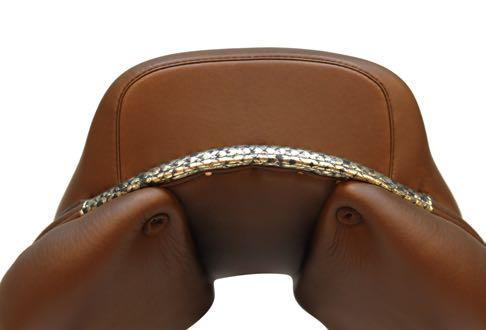
Saddle-making is an art of precision and passion. DT Saddlery works closely with German artisans to integrate digital measurement technology for enhanced accuracy while preserving the warmth of traditional hand-stitching. They also customize designs for Asian riders, tailoring saddles to better suit their body structures. Interestingly, this same philosophy extends to bicycle seats. Like saddles, high-quality bike seats must offer reliable support and long-term comfort to ensure a smooth ride, especially for long-distance cyclists.
Singing the Song of Life: Her Honesty, Her Soft Power
唱一首人生的歌
孫淑媚的真性情與溫柔的力量
“Singing helped me fall in love with myself again.”
For Sun Shu-Mei, this wasn’t just an acceptance speech when she won the Golden Melody Award for Best Taiwanese Female Singer — it was a truth spoken straight from the heart. From Golden Melody–winning vocalist to leading actress on screen, from the spotlight of a stage to the confidence of a runway, Sun Shu-Mei has always carried the warmth of honesty and the courage of a voice that never hides. In her songs lives the humor and resilience of Taiwanese women — tender, real, and beautifully unfiltered.
Between Stage and Reality: A Life Without a Script
If life is a song, then Sun Shu-Mei’s is far from a single melody.It holds sweetness and ache, laughter mixed with tears, wounds that healed into light.More than a “queen of ballads,” she is a woman who stands unarmored before life’s spotlight. From the raw sorrow of “Ài Kàu KhámTsām” to the bright sparkle of “I Wanna Shine and Glow,” she keeps telling the world:
“I’m still singing. And I still love myself.”
“When I sing or act, I can play any role. But real life? That’s the hardest role of all.” When asked about her greatest challenge, Sun Shu-Mei laughed as she delivered this line — half playful, half painfully honest. It’s a truth we all know but often avoid: being yourself is the hardest performance. She has known hurt too. Early in her career she was labeled “local singer,” and not every camera was kind. But she never fought back. Instead, she stood on stage and let her voice speak for her.“ I eventually realized it doesn’t matter how others see me — it only matters whether I can like myself.” From that moment on, she learned a gentler truth: vulnerability is also strength. She no longer fears tears — because they are simply her truest form.
A life without a script means facing every chapter with honesty. And perhaps that’s why she cherishes the stage so deeply — because there, she feels most like herself.
On-Screen and Off: Seeing Herself Through Every Role
“Each character is like a different chapter of life — sometimes tears, sometimes laughter.”
In “Saturday Sunday,” her character Hsiao Ju-Ju is both tough and deeply loving. “Sometimes the character is braver than I am. And I grow with her. Acting is special — you get to live someone else’s life and make peace with your own.”
From the explosive-haired Mom in “The Magician on the Skywalk” to the fiery, candid Ju-Ju in “Saturday Sunday,” her performances always carry warmth — the kind that comes from telling the truth through someone else’s story.
Where other actors work to “become” a character, Sun Shu-Mei often finds herself reflected in them.
Onstage and Behind the Curtain:Courage, in Her World, Is a Form of Gentleness
When she won the Golden Melody Award in 2004 with “Ài Kàu KhámTsām,” she stood on stage with tears in her eyes and said:
“Singing helped me love myself again.”
Years later, she returned with “I Wanna Shine and Glow,” a completely different kind of strength:“Even if life doesn’t light you up, you must learn to glow on your own.”The song was born in a low point of her life. She sang less. Her voice faltered.“There were moments I felt no one needed me anymore,” she admitted.
“But then I realized… maybe light isn’t something given by a stage. Maybe it must be lit from the inside.”
She laughs: “I just wanted to tell everyone — it’s okay if you’re not glowing. A little shine is enough.” It wasn’t motivation. It was life speaking.
Talking about her song “Rice Weevil,” she burst into childlike laughter: “Haha! Because I really DO want to be a happy little rice weevil! But reality won’t let me — so humor is my therapy!”
In that song, she sings about everyday wisdom: Even when life is suffocating, you must rest. You must laugh.
“Sometimes the goal isn’t to be strong. It’s to gently accept yourself — the crying, the weight gain, the disappointments.” She says this without sadness, only lightness — like someone who has finally made peace with herself.
Then she adds, grinning: “People tease me that the only desire left in me now is appetite! When I hit a low point, I heal with one huge buffet and one huge cry. As long as I can still eat, nothing is truly that bad!” She doesn’t avoid shadows, nor does she force sunshine. Through her voice, she lights a warm lamp for herself — and for everyone else walking in their own dark.
Don’t Rush to Be Successful. Be Happy First.
At the 2025 Taipei Fashion Week, she appeared in a bold, avant-garde outfit.
“There were only two looks that day — and I picked the more conservative one!” she joked. When the photos went viral, she realized something important:
“I think that’s everyone telling me they accept me. That they like
seeing me try new things.”
Every style, every role, is a chance for her to rediscover herself —to realize she can be different, surprising, radiant in new ways.When asked what she would tell young dreamers, her voice softened:“Don’t rush to be a successful person. Be a happy person first.
Dreams don’t have to shine — they just need to give you a reason to wake up each morning.Remember, the light doesn’t come from the stage. It comes from your heart.”
Through that one sentence, Sun ShuMei passes on her philosophy, not of success, but of living.
From the sorrow of “Ài Kàu KhámTsām” to the glow of “I Wanna Shine and Glow,”to the playful humor of “Rice Weevil,” Sun Shu-Mei has sung the story of a woman becoming herself. Every song, every character, every burst of laughter — a wave in the ocean of her life.
If she could speak to herself twenty years ago?
“Don’t be afraid. You’ll only get better.”
And to the version of herself twenty years from now?
“If you’re still singing, enjoy it. Be happy.”
Simple, gentle, wonderfully Shu-Mei —not chasing perfection, not chasing applause ,just choosing, again and again, to live with honesty and a heart that still glows.
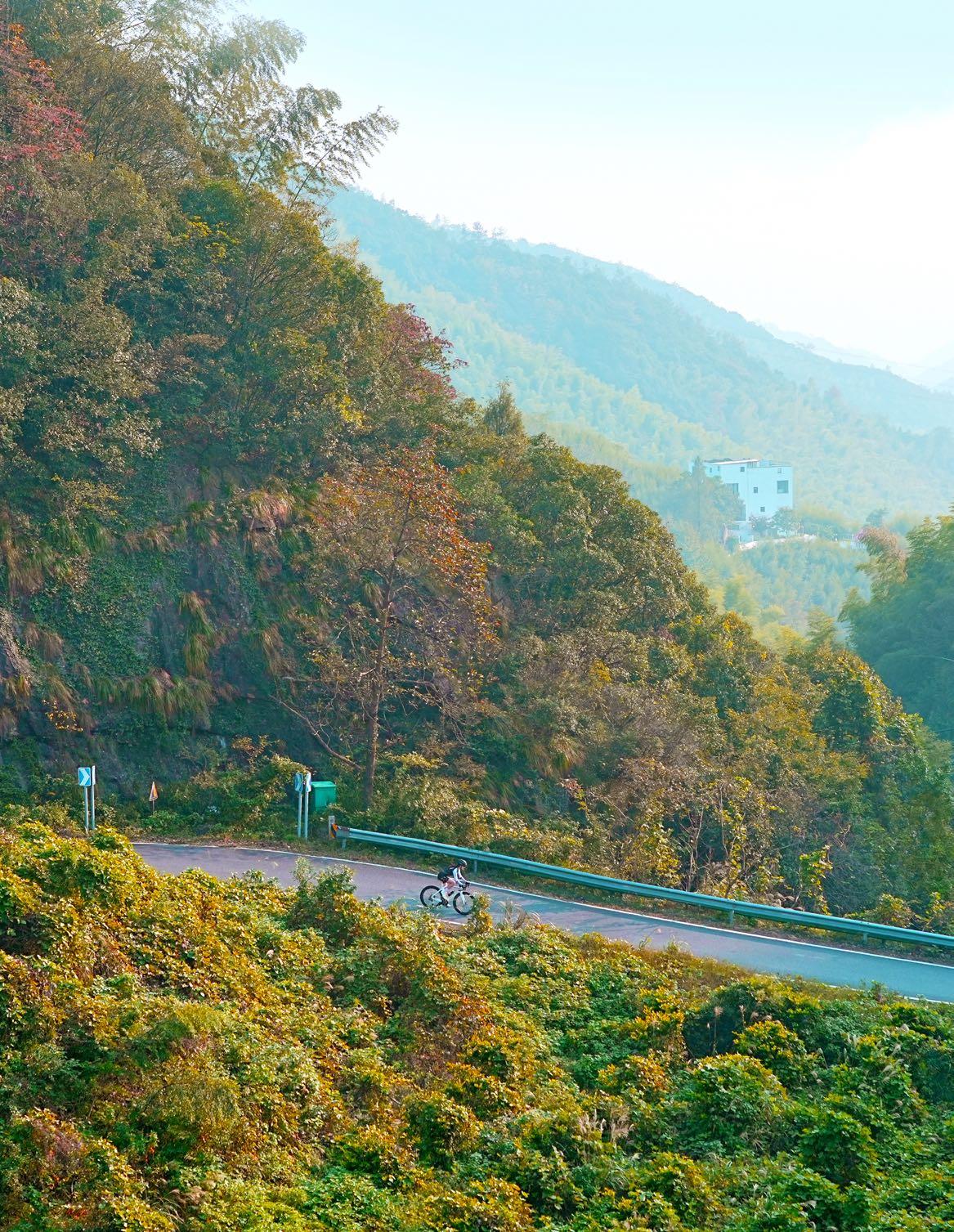
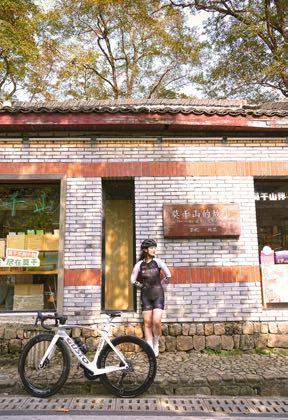
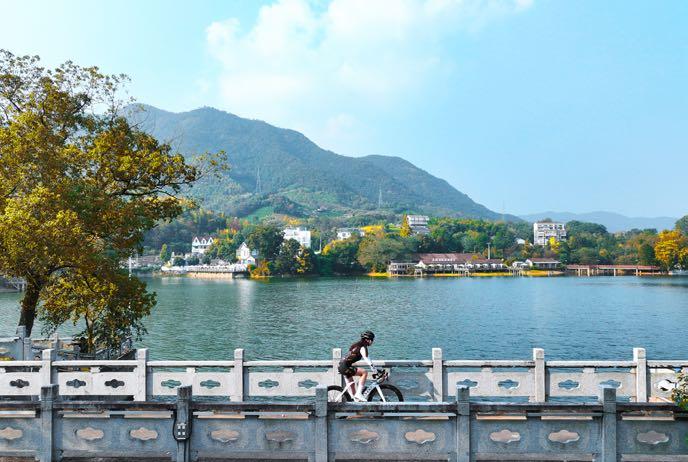
For anyone who loves to ride, the chain’s soft hum and the whisper of tires over fallen leaves make a tune all their own. And when that melody drifts through the autumn air of Mogan Mountain, it feels as though you’ve ridden straight into a living painting.
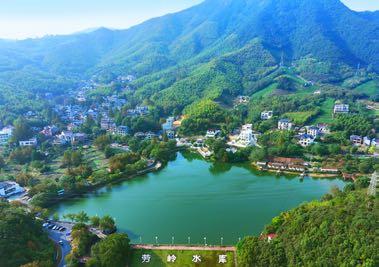
Located in Deqing, Zhejiang, Mogan Mountain has long been known as a place where “clear winds rise, and mountain mists breathe.” Once a retreat for hermits and scholars, it has now become one of China’s most soulful cycling havens. In contrast to the speed of modern life, more and more riders come here not to go faster, but to rediscover the quiet beauty of slowness. Mogan Mountain becomes the compass for that return.
The Mountain Isn’t Something You Conquer — It’s a Gentle Conversation
In Mogan Mountain, nobody tells you where to start your ride. Nobody asks how many kilometers you covered. The joy of riding here isn’t about pushing limits—it’s about the freedom to wander.
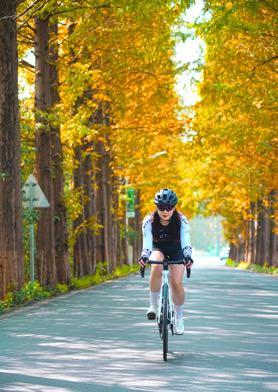
If you’re seeking solitude, head to the Metasequoia forest in Wusi Village. Tall, straight water firs form a silent green cathedral overhead. Sunlight filters through the leaves, scattering gold across the path. The soft rustle of your wheels on the fallen leaves becomes the only soundtrack—intimate, unhurried, perfect.
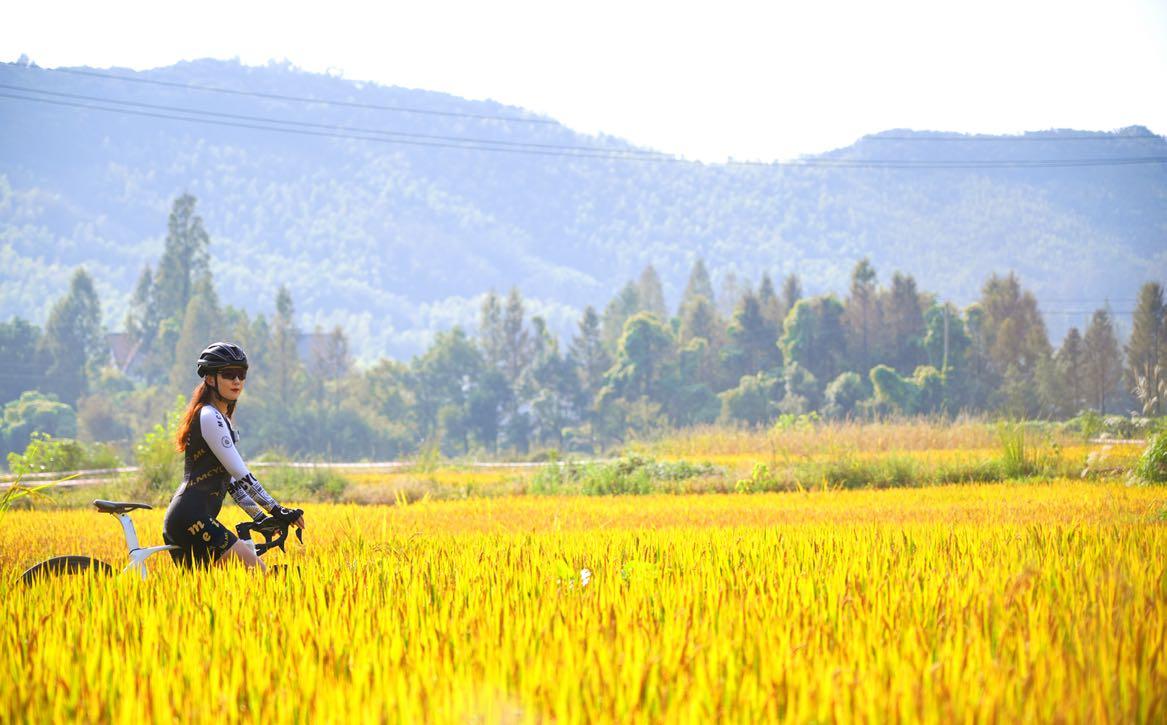
If you’re here to slow down with friends or family, Yiyuan Organic Farm is ideal. Golden rice stalks sway in the wind, carrying a warm, earthy fragrance through the valley. Capture a moment with someone you love, feed the animals with your kids, or simply breathe in the quiet. In autumn, the farm unfolds like an oil painting in slow motion.
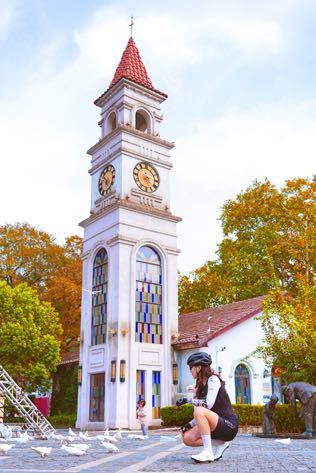
When you need a break, roll into Yucun Village. With its old station, towering plane trees, and red-brick clock tower, it feels like a pocket of gentle nostalgia. Grab a coffee, feed the pigeons in the square, rest your legs, and recharge for the afternoon ride.
As evening approaches, finish at the Tianquan Mountain viewpoint—the perfect place for a sunset. Sit down with a cup of hot tea and watch as autumn mist drifts across the ridges. As the sun sets, the mountains fade into dusk and a gentle quiet settles in. That final moment becomes the perfect punctuation mark to your journey.
China’s Cycling Boom: From “Daily Commute” to “A Way of Life”
The story of Mogan Mountain is part of a larger movement in China. From the ring greenways of Beijing to the rolling trails of Longquanshan in Chengdu, and the lakeside routes of Baiyun in Guangzhou, cities are reimagining their infrastructure for cyclists.
According to the 2024 China Sports Industry Report, sales of road bikes and gravel bikes grew by over 30% nationwide. More young people proudly call themselves “riders,” investing not just in performance, but in style. On social media, hashtags like #RideToCamp and
#CyclingCheck-InSpots have become cultural symbols. Cycling is no longer just exercise—it’s a lifestyle movement.
Where Sweat Meets Poetry
What makes Mogan Mountain so enchanting is its balance. You can push your limits—or let go completely. It’s neither as austere as the Alps nor as familiar as Yangmingshan; it lingers somewhere beautifully between the real and the dreamlike. Every autumn, Mogan Mountain transforms into a golden robe, waiting quietly for each rider to arrive and begin a personal journey into poetry, movement, and the rhythm of their own breath.
Han-yin is an independent cultural researcher and freelance writer. She is dedicated to promoting multilingual and multicultural education and loves to engage in discussions related to cultural rights, cultural diversity and social inclusion.
Safety on Two Wheels: Dutch Kids Have to Pass a Bike Test Before Graduating Elementary School
Mention driving tests in Taiwan and most people immediately think of memorizing reverse-parking tricks and practicing on a training-center course. Learn the test route well enough, and you’re set.
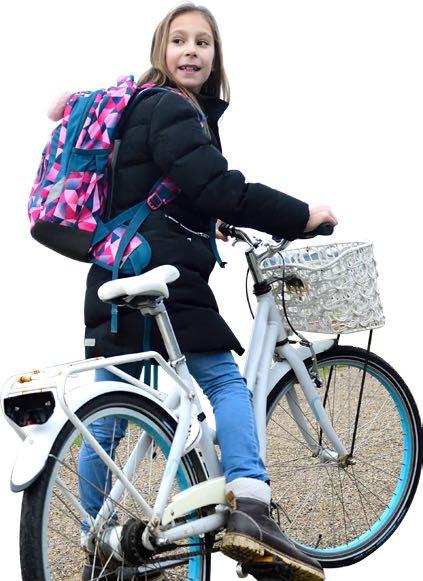
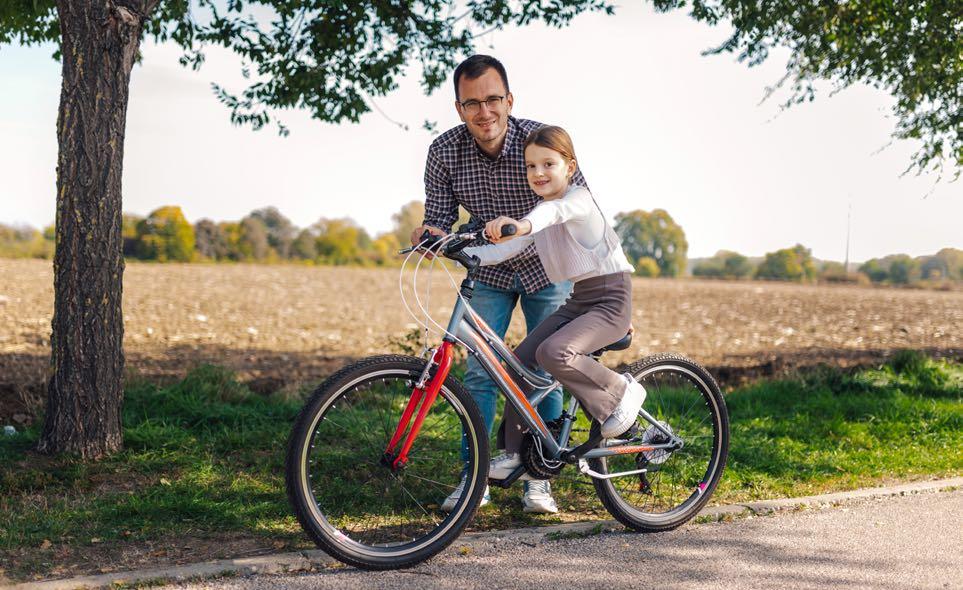
In the Netherlands, things work very differently. From day one, driver training happens on real streets, and Dutch children even take a kind of “driver’s test” in elementary school—only it’s not for cars, but for bicycles. It’s a tradition that perfectly reflects the Netherlands’ reputation as the world’s leading cycling nation.
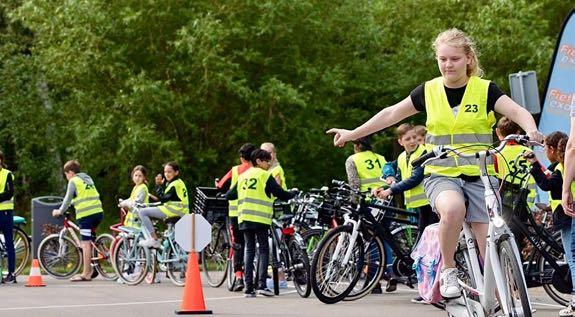
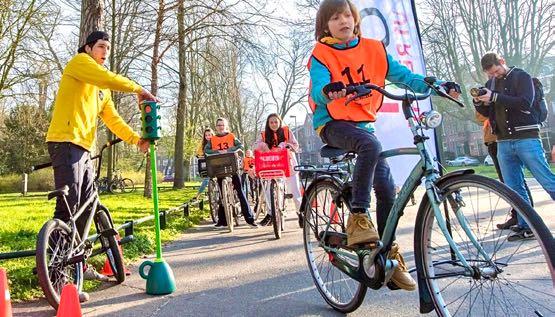
Before finishing elementary school, Dutch students participate in the Verkeersexamen (traffic exam) and earn the Verkeersdiploma (traffic diploma). The goal is to build traffic awareness early, preparing them to walk or bike to school independently once they enter middle school. For many families, earning this diploma is considered an important milestone.
The exam includes both a written test and an on-road riding test,
Photography/ Han yin Huang Word/ Han yin Huang
though participation isn’t mandatory. To support this system, the Dutch Traffic Safety Association (Veilig Verkeer Nederland, VVN) provides age-appropriate teaching materials for grades 1 through 8. According to VVN, around 70% of Dutch teachers spend 30–60 minutes each week teaching students about traffic safety.
The Paradox of Safety: When Driving Kids Makes Streets Less Safe
In recent years, research shows that fewer children are biking or walking to school. The Dutch Cyclists’ Union (Fietsersbond) reports that 30–50% of parents now regularly drive their children, citing concerns about safety, long distances, or the convenience of combining drop-off with their commute.
As kids rely more on car rides, they get fewer chances to practice navigating real traffic. Some even reach the end of elementary school without being able to ride a bike. In 2019, about 20% of schools reported that some students failed the practical exam simply due to lack of experience.
Ironically, driving children “to keep them safe” can lead to the opposite problem. With fewer kids walking or cycling, their independence declines — and increased car traffic around schools leads to congestion, parking disputes, and more chaotic streets. This reinforces parents’ fears, creating a vicious cycle in which children lose space, safety, and confidence as road users.
Reclaiming the Streets for Kids: Giving Children Space to Ride Safely
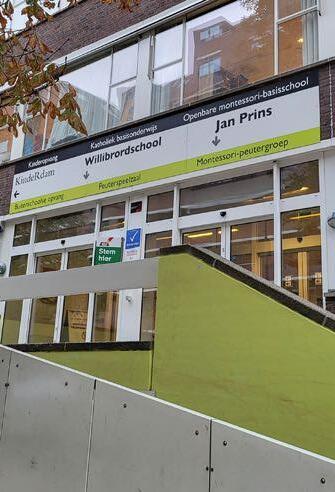
In the center of Rotterdam, one elementary school has spent the past three years working to break this cycle. Located behind the famous Markthal building, two schools share the same campus. According to counselor Helen Webster from Jan Prins Montessori School, more than 800 students arrive every morning, flooding narrow streets already busy with city traffic. Conflicts over parking and road use were common, putting walking and cycling students at risk.
To address this, the school launched a student-centered road-rights initiative, discussing traffic concerns directly with the children to understand their experiences.
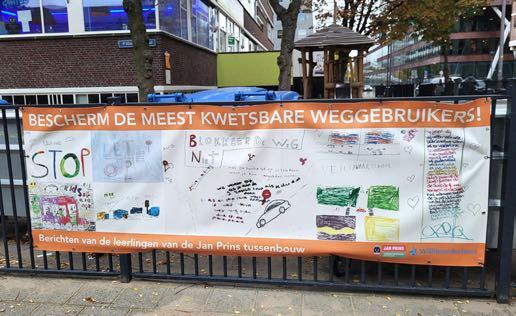
鹿特丹市中心布拉克站一帶的揚普林斯小學(Jan Prins)學生製作的海報,海報大標題為 :保護脆弱的用路人Poster created by students of Jan Prins Elementary School near Blaak Station, Rotterdam. The headline reads: “Protect Vulnerable Road Users.”
After three years of advocacy and coordination with local businesses, residents, and city officials, the Rotterdam City Council approved plans to redesign the street in front of the school. The changes include adding a dedicated bike lane for safe bike parking and entry, and reducing car access to the area.
Dutch traffic-safety organizations hope these improvements will encourage more students to walk or cycle to school again. This highlights the true value of the Dutch traffic exam: not just testing knowledge, but teaching children to participate independently in daily traffic. Many European countries, including neighboring Denmark and Germany, have similar school-based safety programs. However, unlike those countries—where tests often take place on closed or protected roads—the Dutch practical exam unfolds on regular public streets. Children learn not only rules and theory, but also real-world judgment, awareness, and confidence. By riding a bike, they become truly independent road users.
In the Netherlands, learning to ride isn’t just a skill — it’s part of learning to live.
Image from: Holland Education Association in Taiwan
Image from: Holland Education Association in Taiwan
Tinyu Chen 陳廷宇
Tinyu Chen (Divya) is a seasoned media professional—a former producer and host at Taiwan Public Television Service (PTS), and the director of the documentaries. Over the years, she always bringing a warm yet steady gaze to the frontlines of society, capturing the pulse of our times through human stories.
Beyond her work in media, she is also the founder of the Himalayan Yoga Meditation Association of Taiwan, offering practices such as yogic sleep (yoga nidra) and meditation—gently guiding people back to inner stillness and clarity.
Riding Against the Wind: The Counterclockwise Beauty of Vancouver’s Stanley Park Seawall
逆時針看海與風:溫哥華史坦利公園腳踏車道
Photography/ Han yin Huang Word/ Han yin Huang
ANN'SVOYAGE
Riding Against the Wind: The Counterclockwise Beauty of Vancouver’s Stanley Park Seawall
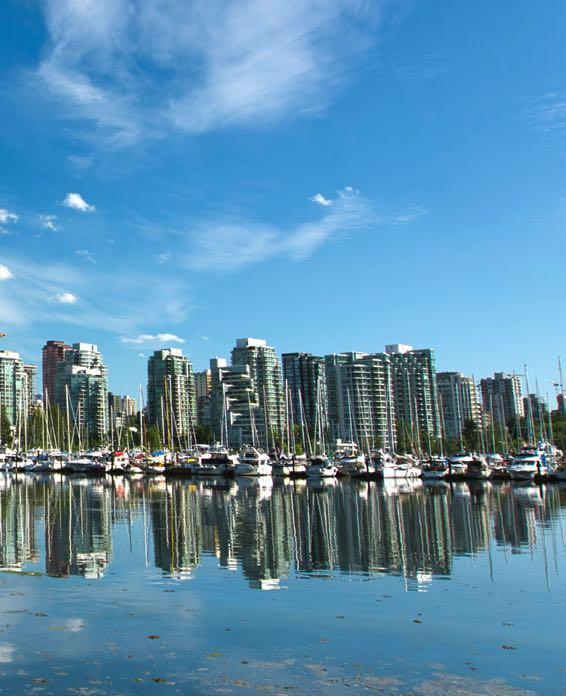
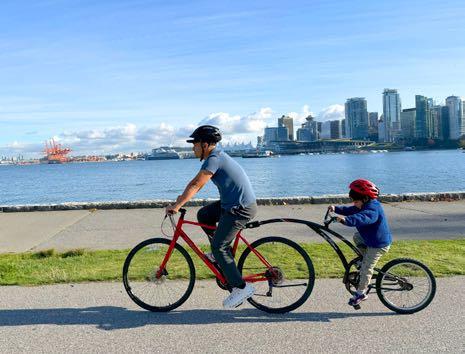
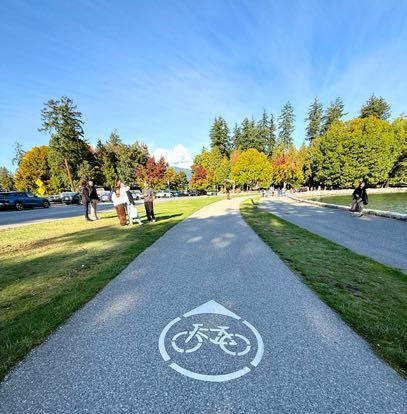
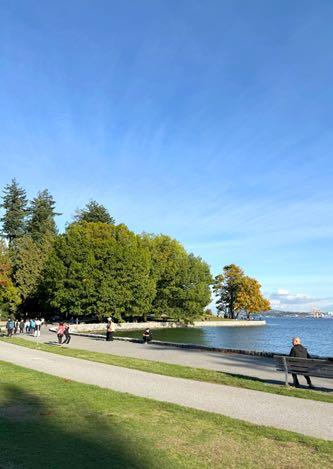
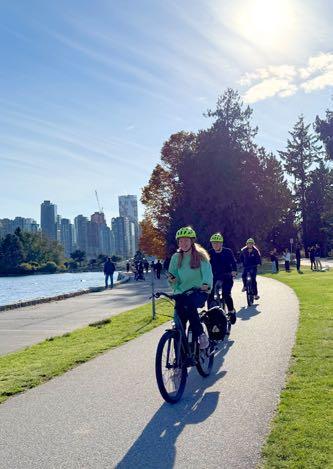
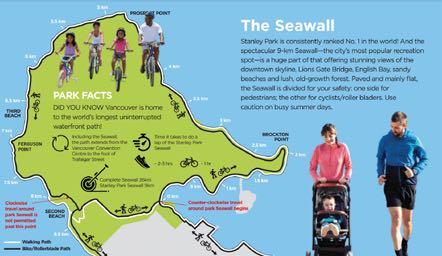
If there’s one path that captures the essence of Vancouver, it’s the Stanley Park Seawall — a path that breathes in rhythm with the tides. This nine-kilometer loop ties together the city skyline, Lions Gate Bridge, the North Shore mountains, and the soft percussion of waves against the stone wall. Walking it takes two to three hours; cycling, about one. Its signature rule — a counterclockwise-only direction — keeps the flow steady and safe. Beneath its gentle coastal charm, the Seawall quietly balances mobility, tourism, and ecology, reflecting Canada’s long-term vision for greener, more sustainable cities.
The Lungs of the City
Stanley Park stretches across a peninsula at the northwestern edge of downtown Vancouver, covering 405 hectares — one of North America’s largest urban parks. Long before it became a park in 1888, this land was home and sacred ground to the Squamish, Musqueam, and Tsleil-Waututh peoples of the Coast Salish Nations.
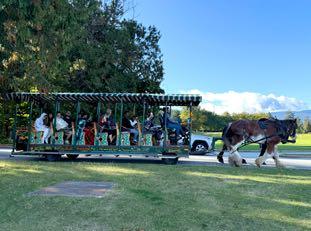
Unlike manicured city parks, Stanley Park is a living extension of the coastal rainforest — nearly half a million trees, some towering over 70 meters. Seagulls, seals, deer, and people weave through the same wooded trails, forming one of the city’s most iconic natural landscapes.
Cycling into the park from downtown brings a shifting rhythm: flat waterfront paths give way to shaded forest lanes, then out again to seaside boardwalks. Riding counterclockwise feels like syncing your breath with the ocean — each curve offering new vistas of mountains, harbor, and skyline, a portrait of a city in effortless coexistence with nature.
The Seawall Debate: Where Environment Meets Mobility
During the pandemic, Stanley Park briefly became bicycle-only, opening its roads to low-carbon travel. When restrictions eased, a debate simmered: Should the separated bike lanes become permanent?
Supporters argued they would reduce emissions and improve safety. Opponents worried about limited access for seniors and tour buses. In 2025, the Park Board approved a proposal to study permanent bike lanes for the northern section and the slopes around Prospect Point.
This ongoing discussion embodies Vancouver’s evolving philosophy: how to ensure everyone can enjoy nature, safely and sustainably.
Photo by Masaru Suzuki on Unsplash
Echoes of the First Peoples: The Totem Poles of Brockton Point
At the eastern end of the Seawall stands Brockton Point, home to some of Vancouver’s most photographed — and culturally rich — landmarks: the Indigenous totem poles.
The newest pole was carved in 2009 by Squamish artist Robert Yelton. Featuring the Thunderbird, Wolf, ancestral figures, and the Killer Whale, it honors his mother, Rose Cole Yelton — the last Indigenous resident who once lived within the park.
Totem poles, created by the Northwest Coast Nations, record family lineage, mythology, and community heritage. Their presence in Stanley Park is both artistic and reflective: although the land belongs to the Coast Salish peoples, many of the displayed poles originate from northern nations, revealing layers of colonial history, cultural mixing, and reinterpretation.
With more Indigenous artists returning to carve and reclaim these traditions, Brockton Point is shifting from a “photo landmark” to a space of cultural dialogue.
Pedaling Toward Canada’s Low-Carbon Future
Across the country, Canada’s National Active Transportation Strategy, launched in 2021, has invested CAD $400
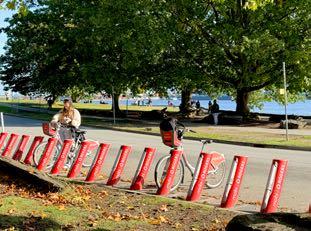
million to build trails, bike lanes, and pedestrian bridges. At the city level, Vancouver’s bike-share program, Mobi by Rogers, stands as a model of success. Since adding e-bikes in 2022, total trips have surpassed 1.1 million — nearly double the ridership of traditional bikes. Here, cycling is more than a commute. It’s part of a nationwide movement toward low-carbon living and reimagining cities as shared, sustainable spaces.
A Road to Coexistence — A Conversation That Never Ends
Ride through Stanley Park and the sea breeze whispers a quiet truth: a good bike path is never the work of a single department. It requires planners with vision, users with patience, and the courage to face disagreement without losing momentum.
Through national policies, local experimentation, and civic participation, Canada is shaping a future where cycling goes beyond transportation — becoming a proposal for how we live together.
So next time you’re in Vancouver, rent a bike and follow the Seawall counterclockwise. When you pause at Brockton Point and feel the wind lift the wings of the Thunderbird above, you’ll sense it — the shared breath of time, nature, and humanity, carried forward in an endless conversation.
圖騰柱原為西北岸原住民族用以紀錄家族血統、神話與部落傳 承的木雕。如今在 Stanley Park 的展示,既是藝術遺產,也引 發關於文化再現的反思——這片土地屬於薩利士族,不過展出 的不少是北岸文化的圖騰柱,顯示出殖民歷史留下的混雜與再 詮釋。隨著近年原住民藝術家的回歸創作,Brockton Point 不 再只是「拍照地標」,而逐漸成為「文化對話」的現場。
下次來到溫哥華,不妨租輛單車,在海堤 上逆時針前行。當你在 Brockton Point 停 下,風拂過圖騰柱頂端的雷鳥之翼,那正 是時間、自然與人類的呼吸,一場永遠持 續進行的對話。
Photo
Tsai Jo Ping 蔡若蘋
Enjoying photographing, traveling, observing, and Nietzsche, Tsai Jo Ping worked in Taiwan in the advertisement, media, and technology industry. Having been living in Korea for 10 years, she has 1 girl, 1 boy, and her own brand. Believing it's a rare opportunity living on earth, she vows to enjoy and experience this life, to share all things of beauty, and to leave all beautiful things behind.
The World’s Largest Urban Bridge Ride: 3,000 Cyclists Join the “Busan Seven Bridges Grand Tour”
“Life is like riding a bicycle — to keep your balance, you must keep moving.” Einstein’s famous words perfectly capture this crisp autumn morning in Busan, a city that embodies sustainability and the spirit of freedom.
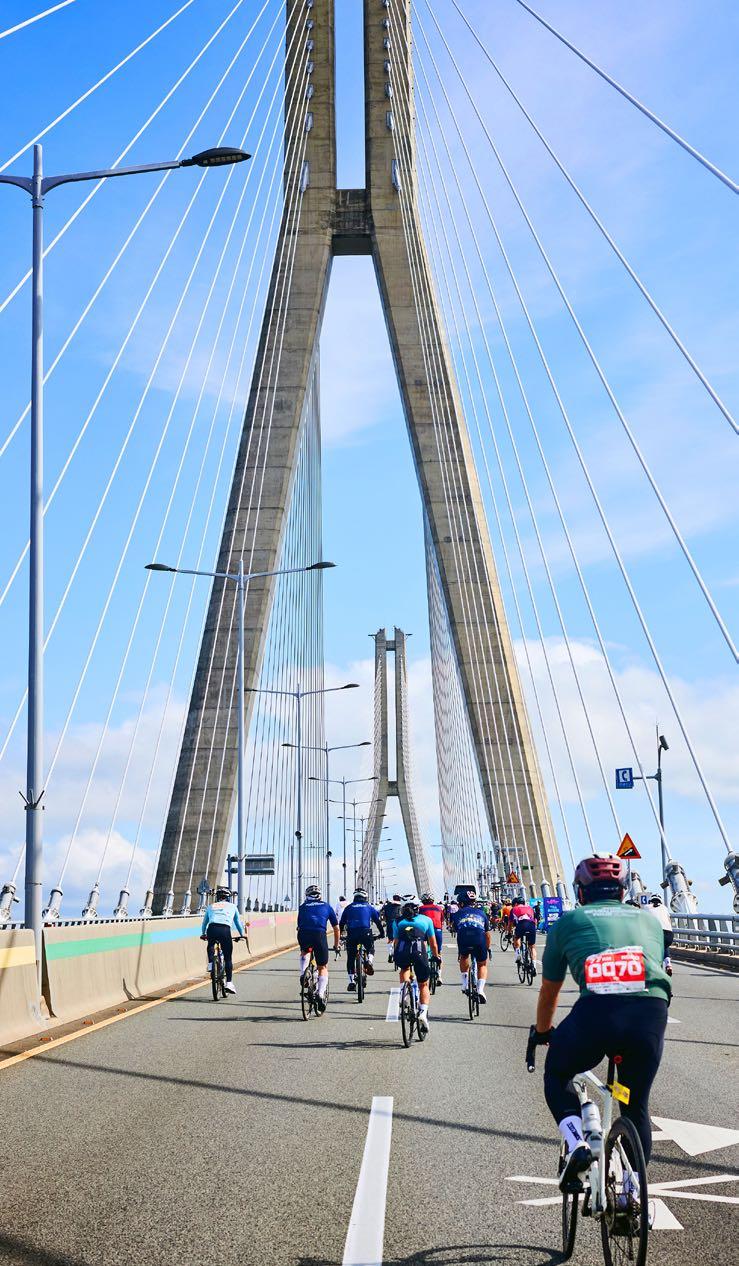
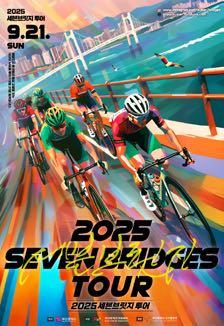
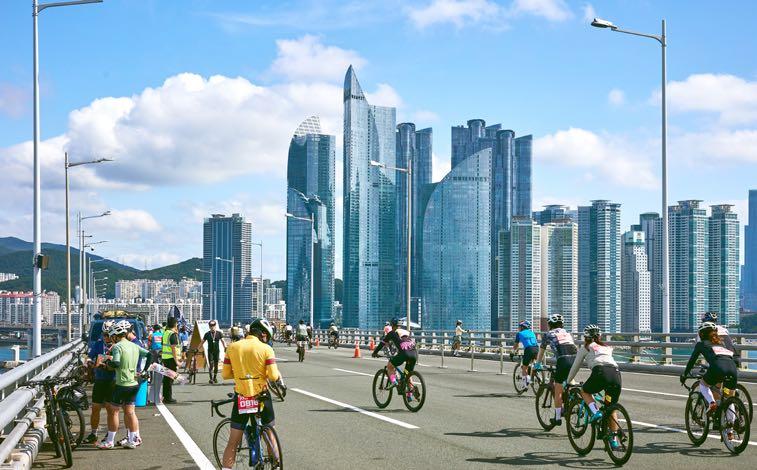
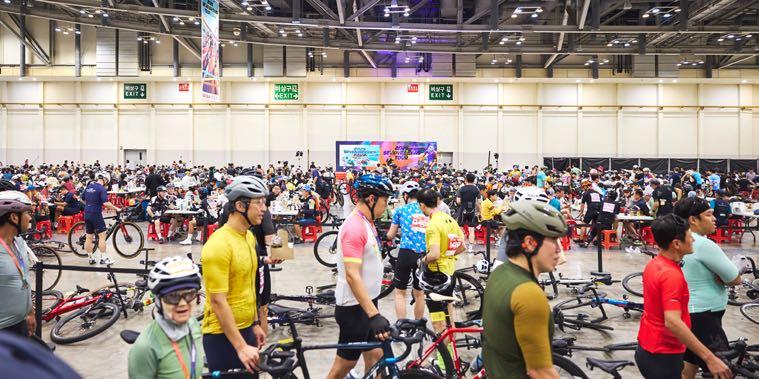
As dawn broke over early autumn, the sound of thousands of spinning wheels awakened the city. Co-hosted by Busan Metropolitan City and the Busan Festival Committee, the 2025 Seven Bridges Grand Tour: Riding in Busan made its spectacular debut. Celebrated as the world’s largest urban sea-bridge cycling festival, it drew more than 3,000 riders from Korea and abroad — showcasing Busan’s energy, scale, and vitality as a true maritime city.
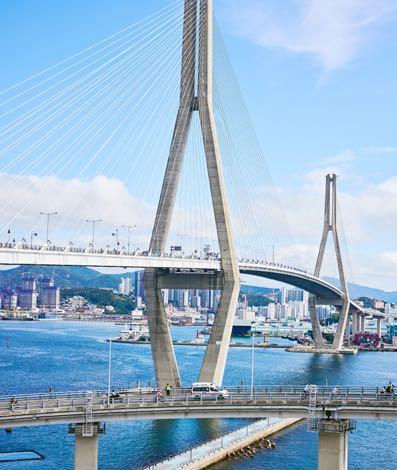
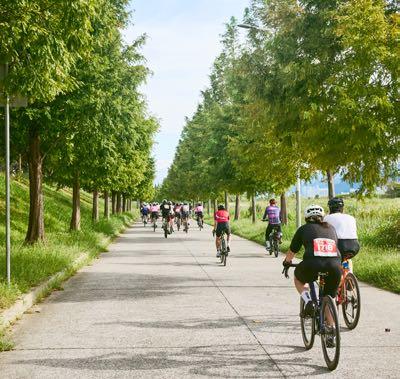
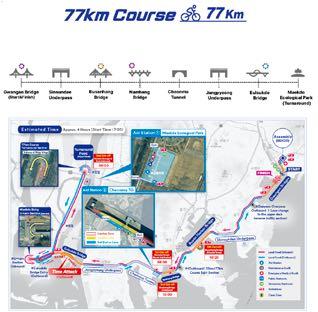
cyclists, starting at BEXCO and passing Gwangandaegyo, Busandaegyo, Namhangdaegyo, Eulsukdo Bridge, and through both the Cheonma and Jangpyeong tunnels before looping back from Maekdo Eco Park.
• The 33 km “Three-Three Route”, ideal for beginners and intermediate riders, turning back at the Cheonma Tunnel.
The combination of open-air bridge climbs and high-speed tunnel descents created a cycling experience unlike anything seen before — a true celebration of athleticism and urban dynamism.
The World’s Only Urban Bridge-and-Tunnel Ride
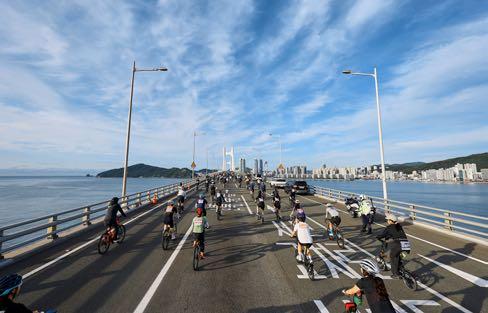
The highlight of the event was its groundbreaking route — the first of its kind in the world — linking seven sea bridges and multiple tunnels into a breathtaking loop. Riders weaved seamlessly between city and ocean, experiencing an unparalleled blend of motion, speed, and coastal scenery.
Two routes were offered:
• The 77 km “Seven-Seven Route”, designed for advanced
When Sports and Sustainability Ride Together
More than a sporting event, the Seven Bridges Grand Tour was Busan’s statement about the future of sustainable urban living. With “health, eco-friendliness, and carbon reduction” at its core, the ride encouraged citizens to explore the city through low-carbon transportation while inviting visitors to discover the charm of green tourism.
The event’s popularity was undeniable — all 3,000 registration slots sold out within one minute. Over 350 police officers and staff ensured smooth operations,
Photography/ Studio GAGA @jaduck_sgg Word/ joping_nora
carefully balancing traffic control with public convenience. Residents and tourists lined the route to cheer riders on, their voices blending into a vibrant soundscape: applause echoing through tunnels, cheers rising across bridges.
From the sweeping ocean views atop Gwangandaegyo to the wetlands of Eulsukdo and the dance of ships beneath the port bridges, every stretch of the route reflected the harmony between movement, nature, and city life.
Where Riding Meets Sightseeing
The Seven Bridges Grand Tour has become one of Busan’s most distinctive cultural showcases. After crossing the final bridge, many riders extended their journeys — savoring seafood feasts at Jagalchi Market, strolling along Haeundae Beach, or watching the city sparkle from Hwangnyeongsan Observatory.
Busan’s seamless blend of sport and tourism offers visitors unforgettable memories while infusing the city’s brand with new energy.
Mayor Park Heong-joon captured it succinctly: “These seven bridges don’t just connect roads — they connect people and the city, health and nature. Busan will continue advancing green mobility and international exchange.”
A City’s Declaration for the Future
As the event came to a close, Busan had done more than host a world-class cycling celebration — it demonstrated how a city can balance athletic vitality with environmental consciousness, and how tourism and sustainability can thrive together.
Through one extraordinary ride, Busan sent a clear message to the world: Moving forward isn’t just a slogan — it’s a promise, and a belief in the city’s future.
Founded 2011 in central Taiwan, the Yuanlin Power Riders bring together both retired and active cyclists who gather on weekends to keep their legs and spirits in top form.
Their philosophy is simple yet powerful: Health, Safety, and Joy. The team rides not just to compete, but to grow stronger, share laughs, eat good food, and savor the pure happiness that cycling brings — body and soul in perfect balance.
Tucked in the rolling hills of Zhongliao Township, Nantou, the Guanyin Pavilion Vending Machine Route is often hailed by local cyclists as Central Taiwan’s classic training route. The ride begins with a gentle ascent along County Route 26, climbing 5.8 kilometers at an average grade of 5.6%, topping out around 600 meters above sea level.
The series of tight switchbacks pull riders into the rhythm of breath and cadence, testing both focus and willpower. Reaching the vending machine at the summit for a cold drink is more than a break—it’s a ritual every rider cherishes on this route.
The descent continues onto County Route 22, a smooth, steady downhill glide that leads you safely back to the start — equal parts satisfying and serene.
With the perfect right mix of effort and ease, this ride strikes a rare balance— perfect for both beginners and seasoned riders looking to rediscover their rhythm and reconnect with the landscape.
Central Taiwan’s Classic Training Route 中部經典訓練路線 Zhongliao Township 中寮鄉
Total distance: approximately 46 kilometers, with a maximum elevation gain of around 600 meters.
總行程約46km,最高爬坡約600公尺
Nantou Service Area
南投服務區
The Nantou Service Area offers ample parking with space for about 600 cars making it the perfect meet-up spot for riders traveling from other cities. From here, it’s just a five-minute ride to Musen Bakery, the ideal place to fuel up (or grab a pastry to-go) before setting off on your Zhongliao cycling adventure.
As the starting point of the route, Musen Café & Bakery is more than just a pit stop — it’s a pre-ride ritual. Freshly baked artisan bread fills the air with warmth, while hearty pastas and burgers offer all the fuel you need before hitting the road. The perfect place to begin your ride — strong legs, full stomach, happy heart.
Famous for its freshly pressed sugarcane juice, Pinjia Refreshment Stop is a must-visit for cyclists looking to cool down on a hot summer day. One icy serving is all it takes to quench your thirst, recharge your energy, and savor a true taste of local flavor — a refreshing stop that’s become a favorite for many riders.
Guanyin Pavilion Vending Machine
觀音亭販賣機
Unassumingly located atop the summit, this vending machine marks the symbolic finish line of the Zhongliao training route — a small monument to every rider’s perseverance. Here, you can refill your water, grab a cold drink, or reward yourself with a can of Taiwan’s nostalgic classic, HeySong Sarsaparilla. Just don’t forget to bring some coins as this victory beverage is cash-only. 品家冷飲站以香甜清爽的現榨甘蔗汁為招 牌,炎炎夏日來一杯既解渴又補充能量, 是車友補給的在地風味打卡點。
On your way down, take a short break at Shilong Temple — a serene spot to offer a prayer, soak in Taiwan’s vibrant temple culture, and maybe enjoy a steaming bowl of instant noodles. It’s a simple ritual that warms both body and spirit before rolling on.
下山途中,不妨停留石龍宮,參拜祈福、 感受台灣廟宇文化,順道再來一碗熱騰騰 的泡麵,暖身又暖心。
Qiushan Tea 丘山茶
Brew a pot of fine Taiwanese tea, pair it with a soft, sweet mung bean pastry, and let the quiet rhythm of steeping time draw you in. Here at Qiushan Tea, every sip captures the quiet soul of an old village — a peaceful moment where life slows, one cup at a time.
沏上一壺台灣好茶,搭配甜香鬆綿的綠 豆糕,利用泡茶的片刻,慢慢品味老眷 村的悠閒時光。
Zhi Shi Bistro 稚時
If you wrap up your ride in Zhongxing New Village, make sure to treat yourself to a full meal at Zhi Shi Bistro. Their perfectly roasted vegetables keep their natural sweetness, paired with crispy yogurt-fried chicken breast that’s juicy and flavorful. It’s a refreshing,
e92 Still Love Café e92依舊愛咖啡
For riders who enjoy a good drink, e92 Still Love Café is the perfect pit stop. Order an ice-cold Schneider Weisse, Germany’s classic wheat beer, and you might just end up chatting with the witty, easygoing owner about bikes, boards, and life
Zheng Dian Milk King 正典牛乳大王
Nestled in Taichung’s Third Market, Zheng Dian Milk King has been a beloved staple since 1958, famous for its signature Biscuit Ice Cream Sandwich — two crispy soda crackers hugging a thick slab of rich, creamy ice cream. Every bite is a nostalgic taste of Taiwan’s sweet, simple past — cold, crunchy, and irresistibly satisfying.
wholesome finish — the kind of meal that makes your ride feel truly complete.
HOW DRINKING COFFEE THE RIGHT WAY CAN POWER UP YOUR RIDE
Starting the day with a rich, aromatic cup of coffee has become a daily ritual for many people. But for cyclists, that cup often carries extra significance. After a long week of work, the long-awaited weekend ride finally arrives — and coffee becomes an essential part of the experience. It lifts the spirits, sharpens the senses, and creates a moment of calm before the road ahead. For many riders, enjoying a good brew mid-ride is just as important as the ride itself. What most cyclists don’t realize, however, is that drinking coffee properly can have a meaningful impact on performance. Coffee isn’t just a comforting habit — it’s an “invisible accelerator,” quietly enhancing your power, endurance, and overall riding experience.
According to Yi-Chun Tseng, a sports nutritionist at Taiwan’s National Sports Science Center, caffeine plays a significant role in cycling performance. It can delay fatigue, improve focus, and even help the body burn fat more efficiently.
But coffee is also a double-edged sword. To truly harness the power of caffeine, timing and dosage are key. Drink it at the wrong moment or take too much, and you may end up feeling jittery or uncomfortable instead of energized. Get it right, though, and that morning espresso might just be the secret turbo boost you didn’t know you had.
CAFFEINE TRICKS YOUR BRAIN AND BOOSTS YOUR ENDURANCE
That wave of fatigue you feel mid-ride isn’t just in your legs — it starts in your brain. As you ride, adenosine receptors activate and send the message: you’re getting tired. Caffeine steps in by blocking those receptors, essentially muting the fatigue signal. It’s like having an encouraging coach in your head shouting, “You’re fine! Keep going — you’re not tired yet!”
In simple terms, caffeine convinces your brain that your body isn’t as tired as it feels. At the same time, it heightens alertness, improves focus, and helps you maintain
effort longer — a powerful combination for endurance rides.
But if the brain no longer sounds the fatigue alarm, where does the extra energy actually come from? According to sports nutritionist Yi-Chun Tseng from Taiwan’s National Sports Science Center, the body relies on two primary fuel sources during exercise: carbohydrates and fatty acids, both stored within the muscles. Here’s where caffeine truly shines — it helps break down stubborn fat stores into free fatty acids, which can then be used as fuel. For long-distance cycling, this means your body taps into fat more efficiently, helping you ride farther and longer while also supporting fat-loss goals.
HOW MUCH COFFEE DO YOU NEED? SPLIT DOSES KEEP YOU AT YOUR BEST
To make caffeine your “invisible accelerator,” timing and dosage are crucial. Tseng recommends drinking coffee about 60 minutes before your ride, giving caffeine enough time to reach peak effectiveness. For rides longer than 90 minutes, she suggests taking an additional dose later in the ride — ideally when fatigue starts to creep in. This “split-dose” strategy helps keep your performance stable and your energy levels steady throughout the entire ride.
- Certified Sports Nutritionist from the International Society of Sports Nutrition (CISSN) -國家運動科學中心營養師
So how much caffeine is ideal? Tseng offers a simple formula:
3 mg of caffeine per kilogram of body weight.
Example: A 70 kg rider →
70 (kg)× 3(mg) = 210 mg of caffeine, roughly the amount in two espresso shots.
For long training sessions, Tseng often uses a low-dose, multiple-intake strategy with professional athletes. Instead of a full dose at once, she recommends 2–4 mg/ kg per intake, repeated in smaller portions — the “small but frequent” approach. She also cautions not to exceed 9 mg/kg per day, which can cause side effects such as rapid heartbeat or anxiety. Lower doses spaced out over time offer steadier, longer-lasting benefits.
TSENG YI-CHUN
While coffee is convenient, its caffeine content varies widely depending on the beans, grind, and brew method. Add in hidden sources — tea, cola, energy drinks, flavored whey protein — and it’s easy to unintentionally overdo it.
Excess caffeine can lead to shaky hands, anxiety, dizziness, sweating, elevated blood pressure, or digestive discomfort — all of which can hurt performance. For precise control, Tseng recommends standardized caffeine tablets or caffeinated gels, which deliver predictable doses.
She also warns about “pre-workout” supplements. Many contain caffeine plus stimulant-like ingredients such as guarana or yerba mate. Taken together with additional caffeine, they can overstimulate the central nervous system. Cyclists should read labels carefully and avoid stacking stimulants.
CAFFEINE + L-THEANINE: A SMART COMBO FOR A SMOOTHER RIDE
Recent research shows that combining caffeine with L-theanine — an amino acid naturally found in tea — can enhance focus while reducing side effects like jitters or palpitations. Taking 100–200 mg of purified L-theanine alongside caffeine helps deliver a cleaner, calmer boost.
Tseng also emphasizes an important distinction: don’t confuse caffeine with energy gels. Energy gels provide carbohydrates — the body’s physical fuel. Caffeine provides mental stimulation.
If you’re trembling from low blood sugar or feel completely drained mid-ride, what you need is carbs or a sports drink, not more caffeine.
For cycling enthusiasts, the best approach is to start with low doses, observe how your body responds, and gradually find the amount that works best. Avoid caffeine within four hours of bedtime to protect sleep and recovery. And don’t forget to keep an eye on hidden caffeine sources in your daily diet.
Caffeine is a double-edged sword: used correctly, it helps you ride stronger and farther; used carelessly, it can negatively affect both performance and health. Understand the science, listen to your body, and let this “invisible accelerator” energize every mile of your cycling journey.
Every cyclist knows the feeling: after a long ride with hours of leaning forward, lifting the head, and locking into one position, the neck begins to complain. That dull tightness usually settles right around the cervical spine and upper back.
Yoga instructor Irene Yang reminds us that a few simple stretches can dramatically ease post-ride discomfort — and that the issue isn’t limited to cyclists.
Irene explains that this kind of tension happens in everyday life too. Long hours of sitting, staring at screens, or holding one posture without moving can all create the same pattern of stiffness. She shares the example of one of her students, a university professor in central Taiwan. Years of writing on the blackboard with her right hand eventually caused fascia adhesions and frozen shoulder. Muscle elasticity decreased, strength dropped, and even simple daily movements became limited. Through consistent yoga stretching, she slowly reopened the fascia and regained balance — and the pain began to fade.
Irene warns that shoulder and neck issues rarely appear out of nowhere. They start as subtle signals: a tight chest, stiff neck and shoulders, shallow breathing, constant fatigue, the urge to crack or twist your neck throughout the day.
These often indicate that the body is compensating for tension, resulting in patterns like rounded shoulders or forward head posture, two very common signs of muscular imbalance.
For mild discomfort, a short break to stand, move, and stretch is usually enough.
But if the pain becomes persistent, stays in the same spot, or doesn’t improve no matter how much you stretch, it may mean the muscles have lost elasticity or inflammation is already present. At that point, more structured training, rehabilitation, or even medical treatment may be necessary.
Irene emphasizes that relaxation is simple: 15 minutes of stretching a day, plus 2–3 short yoga sessions a week, allowing the breath to soften and lengthen the muscles over time. Gradually, your sense of balance returns.
Here are a few easy movements that work well whether you’re resting mid-ride or stepping away from your desk:
以下幾個簡單動作,不管是在騎行的休息區間,或上班 時短暫離開座位的空檔,都能放鬆肩頸:
STRETCH
Place one arm behind your back. Use the opposite hand to gently guide your head toward the opposite side. Let the neck soften.
動作一:一手向後,另一手抱頭向壓,頸椎放鬆。
STRETCH
Interlace your fingers behind your head. Gently draw the head forward and down. Allow the upper back to widen.
動作二:雙手抱頭,往前向下施力。
STRETCH
Reach one hand behind your back to touch between your shoulder blades. Use the opposite hand to hold the elbow (or “eagle wing”) and apply light downward pressure. Turn your head toward the side of the reaching arm. Breathe into the stretch.
If your body feels especially tight after a big workout or a full day at your desk, doing a full body stretch before bed can help your muscles recover more quickly and prevent fatigue from carrying into the next day.
動作三:左右手交互向後摸背,另一手拉著摸背手的鷹嘴骨, 向下施力,同時頭轉向摸背手的一側。
若是長時間運動或整天久坐後,睡前做一組全身伸展,身體會 比預期更快恢復,也比較不會把累帶到隔天。
STRETCH
Back
Apparel Sponsor: Easyoga
服裝贊助:Easyoga
Lie on your stomach. Bend both knees and hold the tops of your feet with your hands.
Lift the chest gently while pressing the thighs downward. This opens the quadriceps and revitalizes the front body.
動作四:趴著雙腳勾起,雙手抱住腳掌,上身緩慢抬起,大腿 下壓,伸展前股四頭肌。
EASING HIDDEN NECK STRESS FROM CYCLING
STRETCH MORE AND AVOID RED-FLAG
SYMPTOMS
舒緩騎行頸椎隱性壓力 多伸展避免紅旗症狀
In today’s world, hours spent bent over phones and computers have made forward head posture common. So when the weekend comes, getting on a bike feels like a welcome reset. Yet during cycling, holding the head up to keep our eyes on the road creates different kind of strain on the neck. So the question becomes: how do we really take care of our cervical spine?
Dr. Yu-Ju Lin, Director of Chengxin Rehabilitation Clinic, explains that daily “looking down” at screens and “looking up” while cycling may seem like opposite movements — but for the neck, both continuously add load. Weekdays pull the neck forward toward screens; weekends demand sustained extension on the bike. The cervical spine is constantly being tugged between these two extremes, leaving it very little chance to truly rest.
During cycling, holding the head up is a subtle but often ignored source of strain. Road cycling posture requires strong core stability. When core strength is insufficient, the weight of the head shifts to the back of the neck instead.
Over time, the body tries to hold the posture by recruiting other areas to compensate. That’s where injuries quietly accumulate — not in dramatic moments, but in small, repeated stresses.
Dr. Lin emphasizes that neck problems rarely appear overnight. They develop in stages: first, muscles lose their ability to support, and tension builds up; then the shoulder blades and upper back begin to compensate; ligaments are stretched beyond their limits; eventually, the pressure reaches the
SIMPLE NECK & SHOULDER EXERCISES YOU CAN DO ANYWHERE
隨時隨地可做的簡易肩頸伸展
intervertebral discs. By the time numbness, pain, or movement limitations show up, the body is often already displaying “red-flag symptoms.”
What Are “Red-Flag Symptoms”?
Dr. Lin explains: “If discomfort lasts longer than two weeks, it is important to seek professional evaluation right away. Rehabilitation medicine is not just about treatment — it’s about identifying where the problem originates, whether in the muscles, ligaments, joints, or deeper structures.”If symptoms worsen — such as increasing numbness, weakness in the hands or legs, or difficulty with daily movements — it may indicate nerve compression. That’s a red flag and medical attention is needed immediately.
In the past, cervical degeneration was mostly seen in people in their 50s and
C. These movements can be done during cyclingbreaks or short moments a way from your desk:
這些伸展非常適合在工作及騎行的休息空檔時練習喔:
A.
CHIN-TO-CHEST STRETCH
Clench both fists, extend both arms forward, and gently lower the head. Feel the chin draw toward the chest.
雙手握拳,雙臂向前方出力伸直,並頭部向下, 感受下巴往胸口施力。
B.
ISOMETRIC NECK HOLD
Place both hands on the back of the head. Push the head backward while the hands resist engage the neck muscles without moving the head.
雙手抱住後腦勺,頭部與雙手施加方向相反的 力量,頸部肌肉用力,但頭部保持不動。
SIDE NECK RESISTANCE
Place the right palm against the head and gently push left. Tilt the head to the right while resisting with the hand. Switch sides after completing.
60s. Today, widespread smartphone use has led to a growing number of cases among people in their 30s. Many assume it’s “just shoulder stiffness,” but in reality, it may already go beyond simple muscle fatigue and require closer assessment.
Dr. Lin shares the case of a young engineer in his early 30s working in Taiwan’s tech industry. Years of looking down at design work led to forward head posture — often called “turtle neck.”On weekends, he cycled for recreation, but the low, aggressive posture of a road bike combined with sustained neck extension and weak core stability created a perfect storm. At first, he felt only stiffness. Later came migraines and hand numbness. Imaging revealed early signs of cervical degeneration — a condition that had quietly accumulated between workdays and weekend rides.
Your Body Carries Stress Quietly — Until It Can’t. Dr. Lin reminds us: when something feels “off,” pay attention. Seek professional evaluation when needed and make stretching a regular habit. Those small, ignored stresses can otherwise turn into pain that lingers far longer than expected.
Clasp both hands behind your back. Pull the left arm gently to the right with the right hand, while lowering the head toward the right shoulder. Switch sides and repeat.
VELO × FNIX Cycling Meetup A Trilogy of Science, Experience, and Lifestyle
維樂 × 菲尼仕 騎行交流活動
“ “
科學、體驗與生活態度的三重奏
Under the warm autumn sun and cool seasonal breeze, VELO and FNIX came together at Shanghai Hubin Plaza to host a brand event built around one central idea: Experience. For VELO, whose conversations with riders have largely lived online, this gathering marked a notable turning point. Bringing the saddles back into a real, tactile environment let participants feel them with their hands, their eyes, and their bodies—reminding them that these aren’t just products, but extensions of the riding experience.
From Philosophy to Form: Discovering the Depth of the VELO Brand
The event opened with VELO’s core philosophy—not just a product briefing, but a guided introduction that allowed riders to understand the technical depth behind VELO’s saddle expertise. Through the host’s presentation, participants were introduced to innovations such as the patented Y-Cut, advanced material configurations, and a range of ergonomic designs that define VELO’s approach.
VELO’s Three Major Saddle Series — Aesthetic, Performance, and Leisure
Aesthetic Series:
Designed around lines, craftsmanship, and visual balance, this series creates a distinctive riding style through form and proportion.
Performance Series:
Built on rigorous ergonomics and pressure-mapping research, it meets the demands of racing, training, and high-intensity rides.
Leisure Series:
Returning to the rhythm of everyday life, this series offers soft, approachable, comfort-focused designs suited for city cruising and lifestyle riding. Through test-sitting, side-by-side comparisons, and tactile observations, participants could clearly feel the differences in support, thickness, and shape across the three series.
Beyond engineering, the event also showcased VELO’s Chinese Zodiac Saddle Collection—a bold reinterpretation of the zodiac through modern aesthetics. Far from traditional motifs, each design becomes a highly recognizable visual statement.
This collection is both a cultural symbol and an expression of brand identity, revealing VELO’s ongoing exploration of beauty, storytelling, and design possibility beyond pure function.
VELO
The Science Behind the Choice: VELO’s Five-Dimension Testing System
After exploring VELO’s philosophy and design language, the event shifted to the brand’s core logic for saddle selection—the Five-Dimension Testing System. This framework considers five key factors:
Bike type
Riding distance
Riding frequency
Riding posture
Riding speed
Combined with an on-site sit-bone measurement tool, these dimensions help riders identify the saddle that truly fits their needs. Rather than relying on guesswork, assumptions, or a trial-and-error hunt through endless options, the system narrows the field through a structured, evidence-based approach, bringing each rider closer to their ideal choice.
Once the assessment was complete, technicians helped participants install the saddle best suited to their analysis results—ensuring that every rider entered the next stage of the experience with a setup tailored precisely to their body and style.
From Theory to Reality:
A 30 km Ride Along the Suzhou River
“To understand a saddle, sitting is never enough— you have to ride.”
The short-distance test ride followed the Suzhou River, where cityscapes blend with shifting waterfront light—an ideal setting to evaluate how a saddle performs in the real world. During accelerations, slowdowns, rhythm changes, and cornering, riders could clearly feel shifts in support zones, pressure distribution, and core engagement.
Back at the shop, the feedback was valuable and specific:
• Pressure felt more evenly spread
• Pedaling cadence became steadier
• Long-ride fatigue noticeably decreased
• Riders gained a sharper awareness of how saddle shape interacts with their natural riding posture
No elaborate explanation was necessary. The body had already offered the most honest testimony—and that clarity, born only from real experience, is the true value of a test ride.
VELO
More Than an Event A Living Reflection
of VELO
From philosophy to product, from culture to science, from analysis to lived experience—this gathering became a vivid portrait of what VELO truly is.
A brand that invites riders not just to see a saddle, but to understand it through the body. Whether standing before the display rack, testing a saddle indoors, or riding through the Suzhou River breeze, every moment circled back to one simple, essential question: Which saddle truly fits me?
Looking ahead, VELO will continue to advance with research expertise, design innovation, and a genuine passion for cycling culture—accompanying riders on the road as they discover a way of moving that is freer, steadier, and more joyful.
WHERE RIDING BEGINS — A RETURN TO THE ESSENCE OF CYCLING
騎點即起點 騎行本質的回歸
In the world of cycling, the rider and the bike meet at just three contact points: hands on the handlebars, feet on the pedals, and the most critical one of all, the saddle. It carries the largest contact area, defines comfort, and ultimately shapes the entire riding experience.
For 2026, VELO CEO Ann Chen shared their new philosophy: “The riding point is the starting point.” The moment you sit on the saddle, the true Contact Point, is when the journey genuinely begins. Whether it’s an all-out race or a relaxed weekend ride, the starting point isn’t when the wheels turn, but when your body settles, your balance aligns, and trust replaces tension.
Through three distinct saddle series, VELO invites riders of every style to find their own beginning with a saddle designed to match their journey.
In VELO’s Aesthetic Series, the saddles are more than industrial products. They reflect a deep commitment to craftsmanship. From refining lines in early design sketches to checking material textures by touch, each saddle goes through countless rounds of testing, revision, and rebuilding.
This dedication to detail defines the starting point for the craftsmanship of the Aesthetic Series.
For riders who care deeply about nuance, the saddle is the soul of the bike. VELO elevates saddle production to an art form, creating pieces that feel complete before the first ride even begins.
Run your hand across the surface, trace the textures — the riding experience has already started in that quiet moment of recognition, when beauty and function meet.
For competitive riders, the saddle is not a seat, it’s a launch pad.
Whether sprinting toward the finish line in the final 200 meters or attacking a brutal 15% climb, performance depends on pure explosiveness and instant response. The Racing Series is built around one uncompromising principle: stability is the foundation of speed.
對競技選手而言,坐墊是發射台。
在終點線前的衝刺,或是面對 15% 陡坡的決絕,需要的是 純粹的「爆發力」與「瞬間感」。
VELO 專業系列設計核心只有一個:成為選手穩定與爆發 力的起點 。
If a saddle fails to provide firm support, power is lost through unnecessary movement. In racing, “comfort” is redefined. It means precise support and direct, uncompromised power transfer.
Whether it's SENSO TRI built for triathletes who juggle power and endurance, or SENSO PRIME designed for all-round performance, every saddle in this series exists to serve one mission: to make sure the rider never loses power to wobble, never loses focus to discomfort, and never loses the race to doubt.
From the SENSO TRI, designed for the demands of triathlon, to the versatile SENSO Prime, VELO engineers every racing saddle through rigorous testing and real-world competition. The goal is simple: when the moment matters most, the rider can focus solely on the road ahead and the finish line beyond. Because true stability gives speed its foundation.
Because when stability is perfect, speed finally has something to stand on.
因此無論是針對三鐵需求的 SENSO TRI,或是全能型的SENSO PRIME,維樂從研發測試到賽 場實戰,都致力於讓選手在關鍵時刻能夠心無旁騖,迎向賽道、衝向勝利!
因此無論是針對三鐵需求的 SENSO TRI,或是全能型的SENSO PRIME,維樂從研發測試到賽 場實戰,都致力於讓選手在關鍵時刻能夠心無旁騖,迎向賽道、衝向勝利!
SENSO Prime
SENSO Prime Light PU
FILL Light PU
RAIL Cr-Mo
RAIL Cr-Mo
WEIGHT Cr-Mo : 245g±2% 242x141mmz
WEIGHT Cr-Mo : 245g±2%
SIZE 242x141mmz
Not every ride needs to push limits or beat the clock. Sometimes, it's a reunion with yourself.
For city commuters and weekend riders, the journey often begins right outside the front door. The Leisure Series is built around “the start of the day,” supporting riders as they move through the city and rediscover their natural rhythm.
Models like PURE 199 and PURE 143 embrace ease and everyday comfort. These saddles are made for flowing through traffic with calm confidence, for after-work rides taken simply to feel the wind again.
PURE 199 與 PURE 143 型號,是擁抱「自在」與「生活感」 的最佳選擇,維樂休閒系列坐墊所承載的,是穿梭在車水馬龍 時的從容,是下班後想吹吹風的渴望。
In a world that never stops accelerating, cycling doesn’t always have to chase speed. Sometimes, it’s about slowing down, sitting comfortably, feeling morning light on your face, and letting the day begin gently.