PORTFOLIO
Anastasiia Berseneva
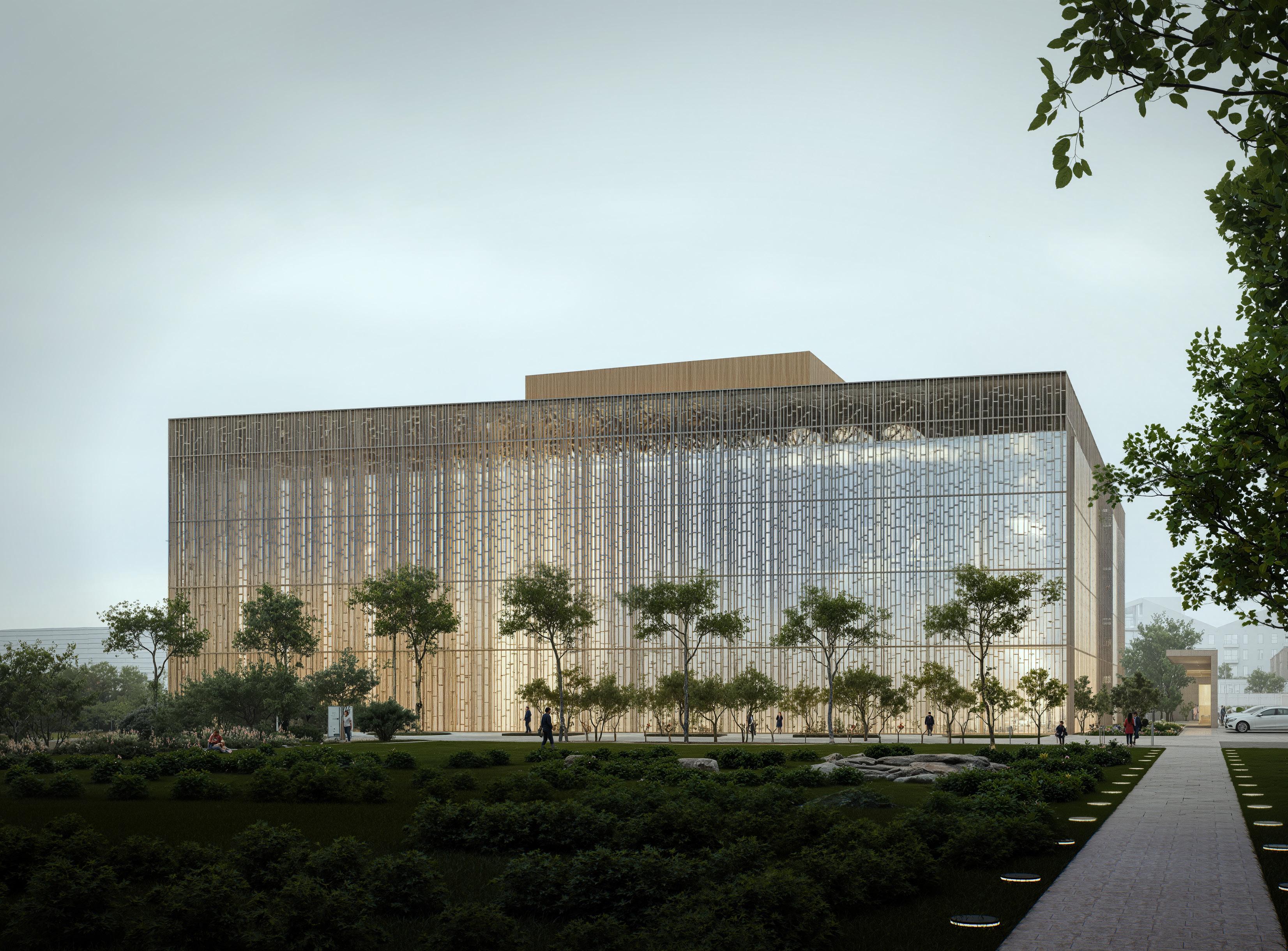
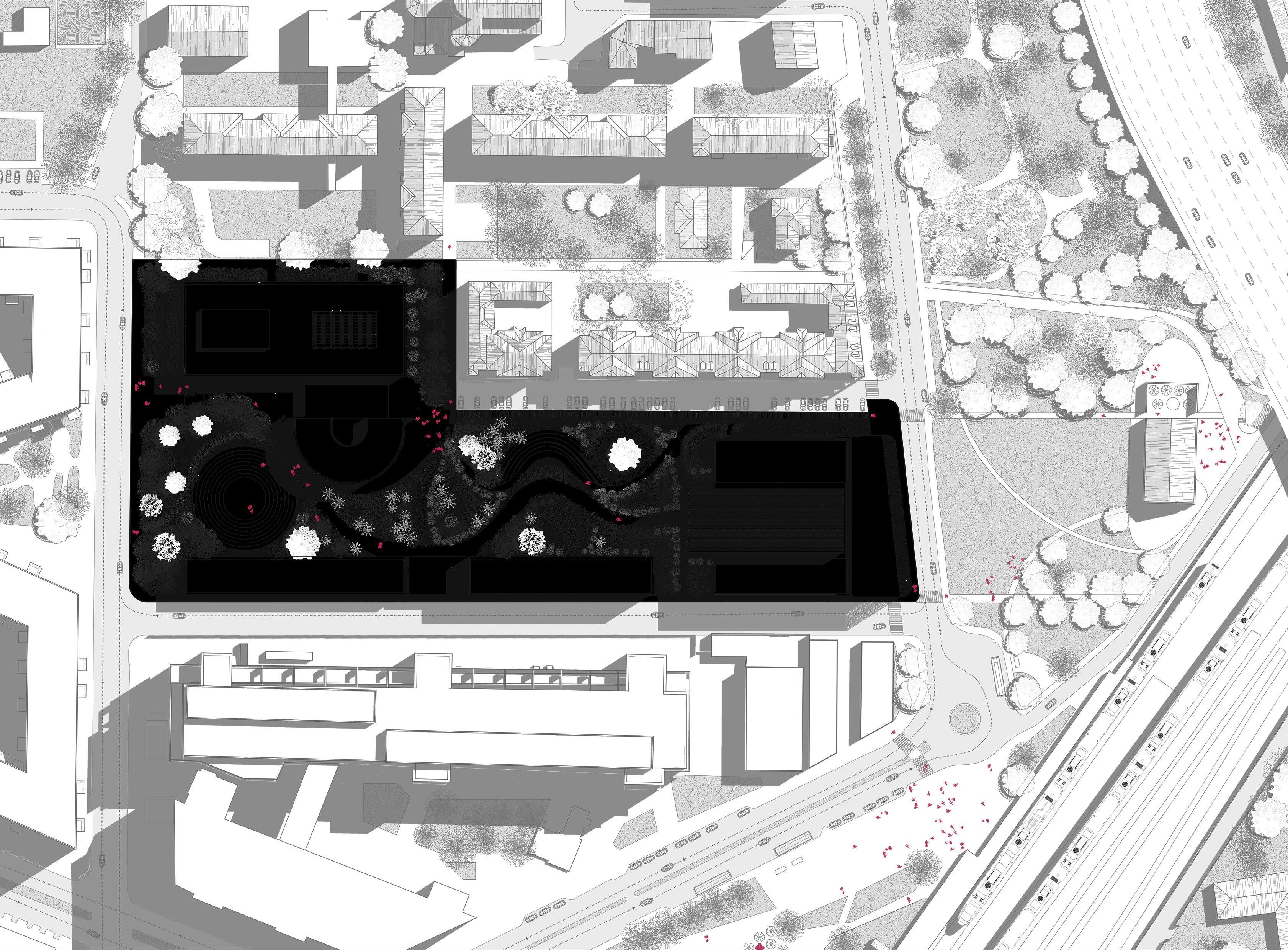
Located in Milan, this group project was developed as part of a competition organized by the Milan Conservatory. The site and program were predefined, focusing on spaces for conservatory use. The proposal contributes to the urban regeneration of a post-industrial area, aiming to create meaningful and accessible spaces for the local community, addressing the ongoing social and physical degradation of the area.

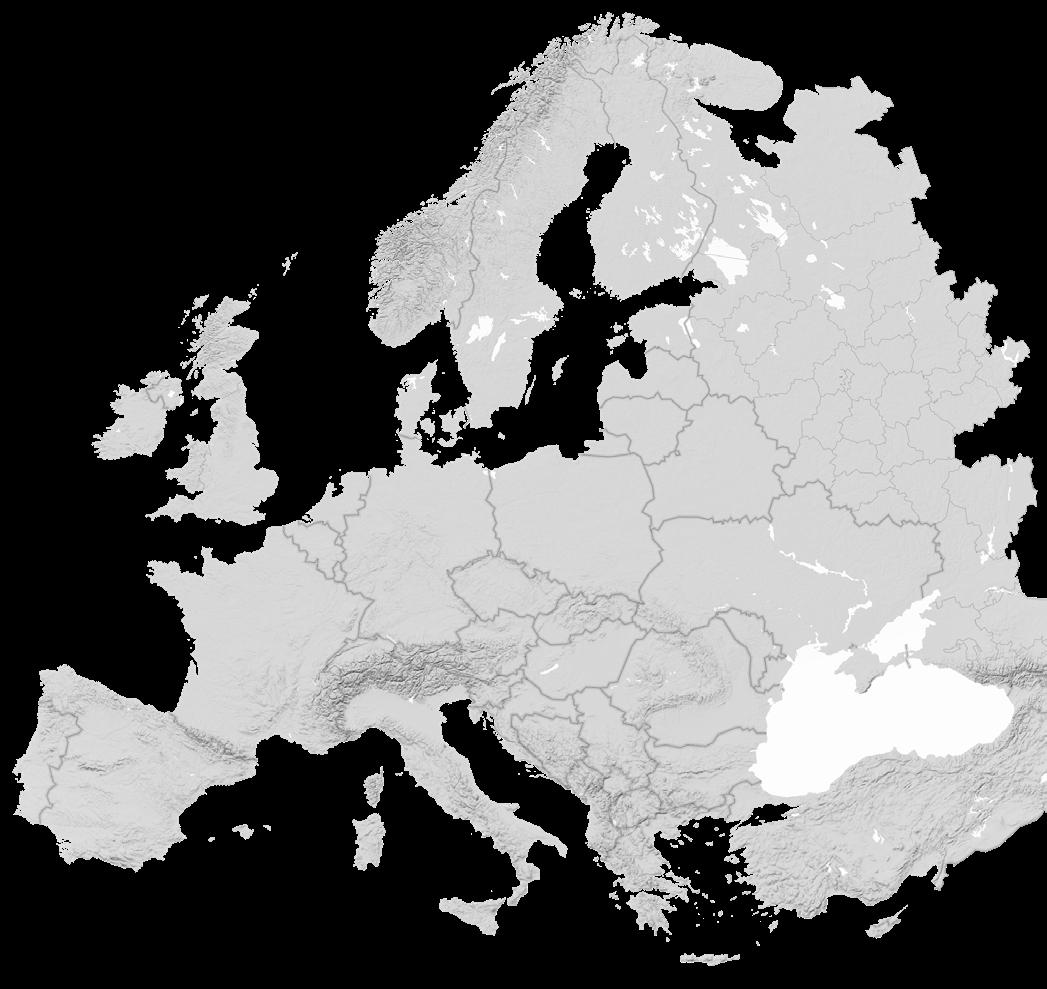
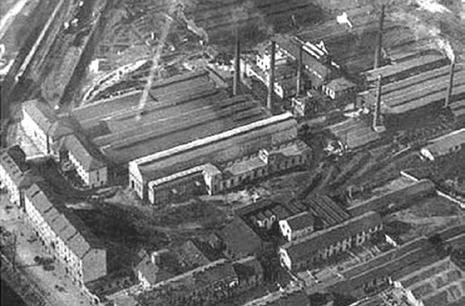
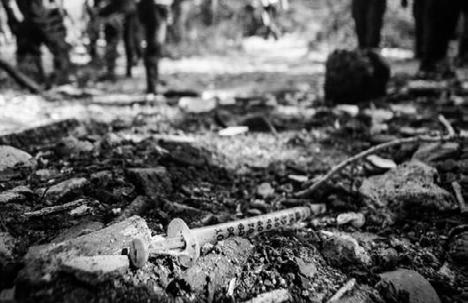
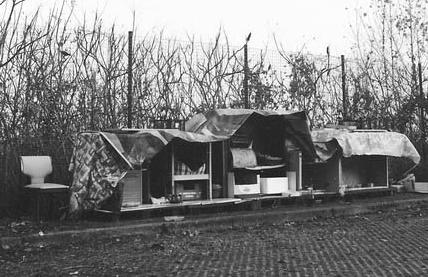
The site is located in Rogoredo, a district in Milan, Italy, currently undergoing redevelopment. Historically, it was a rapidly developing industrial area (1) in the 20th century, supported by a railway station and strong logistical connections to the city and the wider region. While this strategic connectivity remains, the decline of industrial activity led to the loss of workplaces and a gradual deterioration of the area’s social and urban fabric (2,4,5). By the early 21st century, the district became widely known as the “forest of drugs”(4), reflecting its transformation into a space associated with marginal and informal activities.
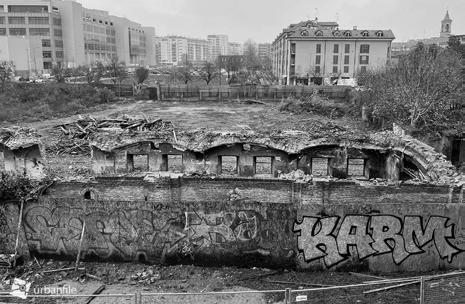
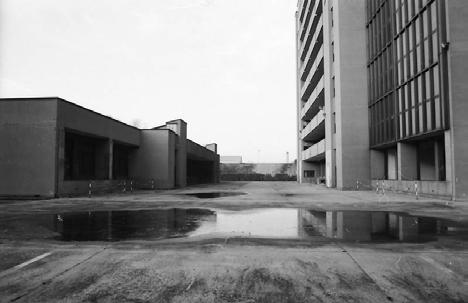
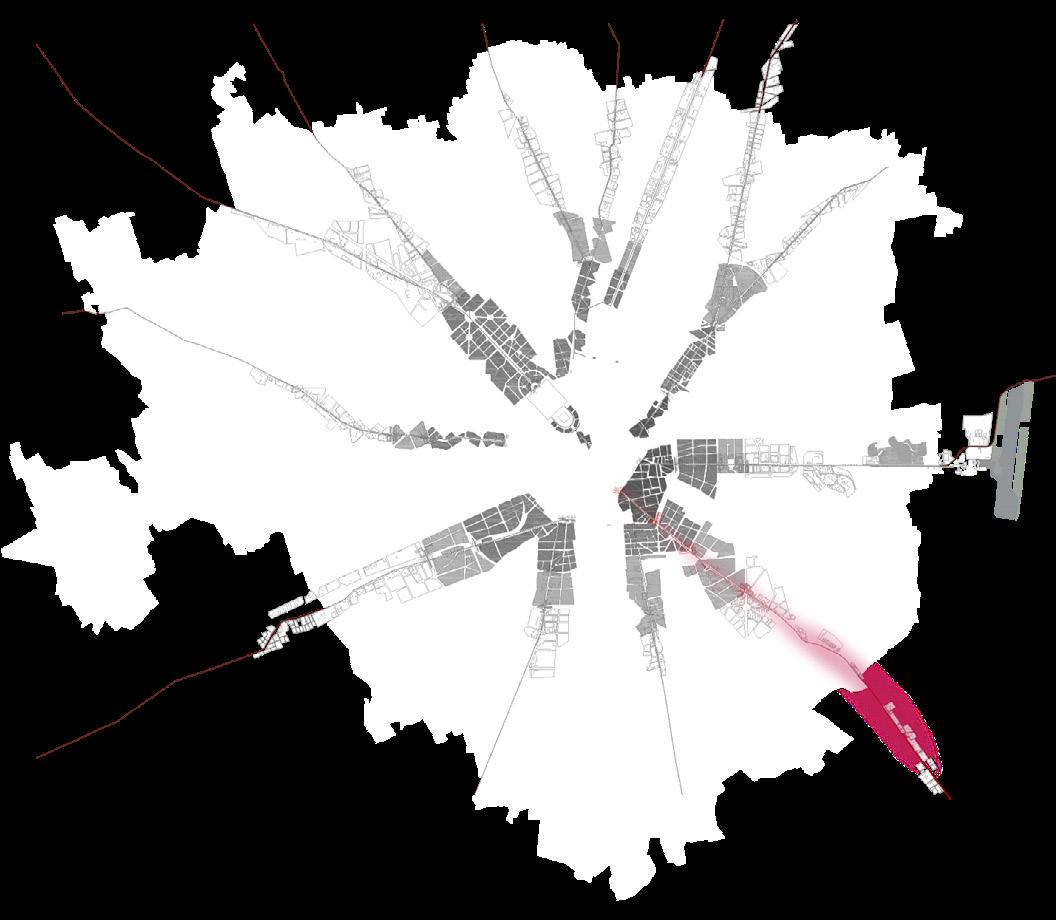
Within the urban fabric, the site aligns with an ancient Roman road that still connects Milan to the capital. This historical axis remains a significant spatial and cultural reference, forming a strong linear element within the city. Its presence became a key factor in positioning the concert hall, envisioned as an accessible and inclusive destination, welcoming not only musicians, but also residents, visitors, and the wider public.
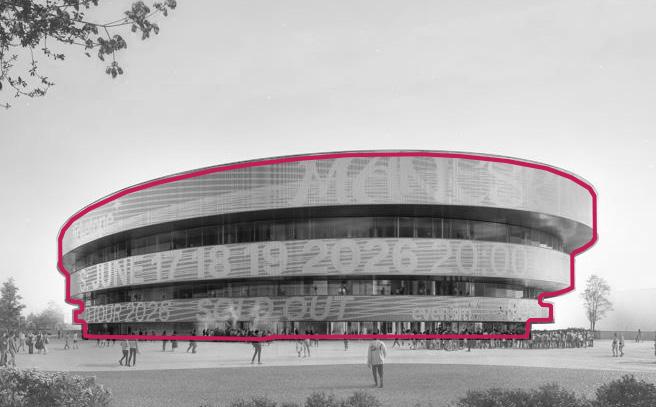

2026 Olympics Arena
Scalo Rogoredo
the existing situation
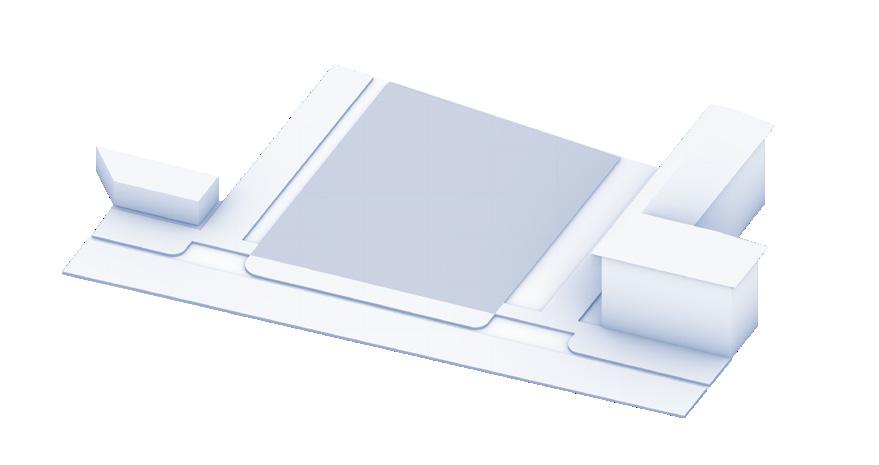
we began by placing the main auditorium near the station side, aligning the elongated “shoebox” volume with the long edge of the site
then positioned the C shaped building so that it aligns with Via Rogoredo and clearly defines the street edge
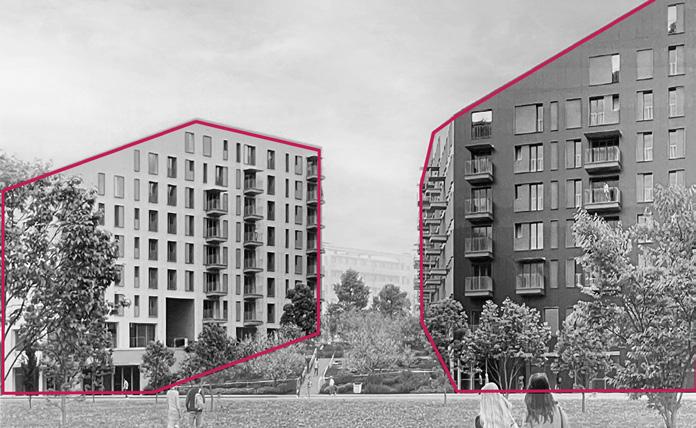
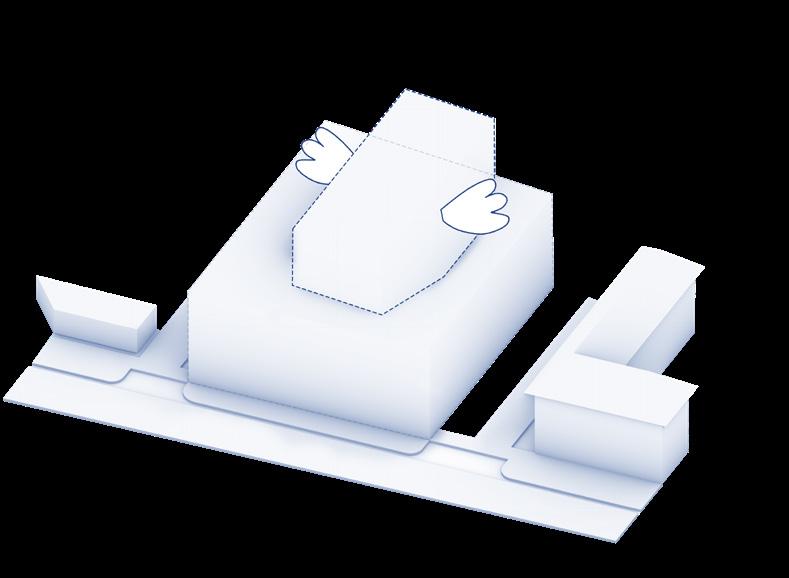
a visual buffer (library / community center) was introduced in front of the “Sky” building to screen the inner courtyard from the surrounding office environment, improving its spatial quality and sense of enclosure
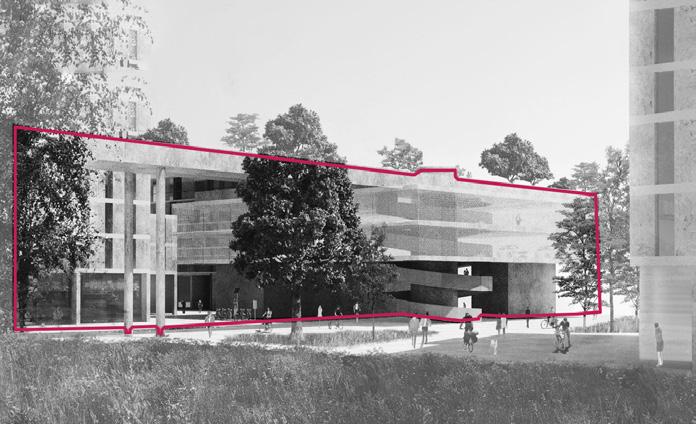
the conservatory volumes were arranged at the same height as the existing Ex Chimici structure to ensure spatial continuity and a cohesive overall composition
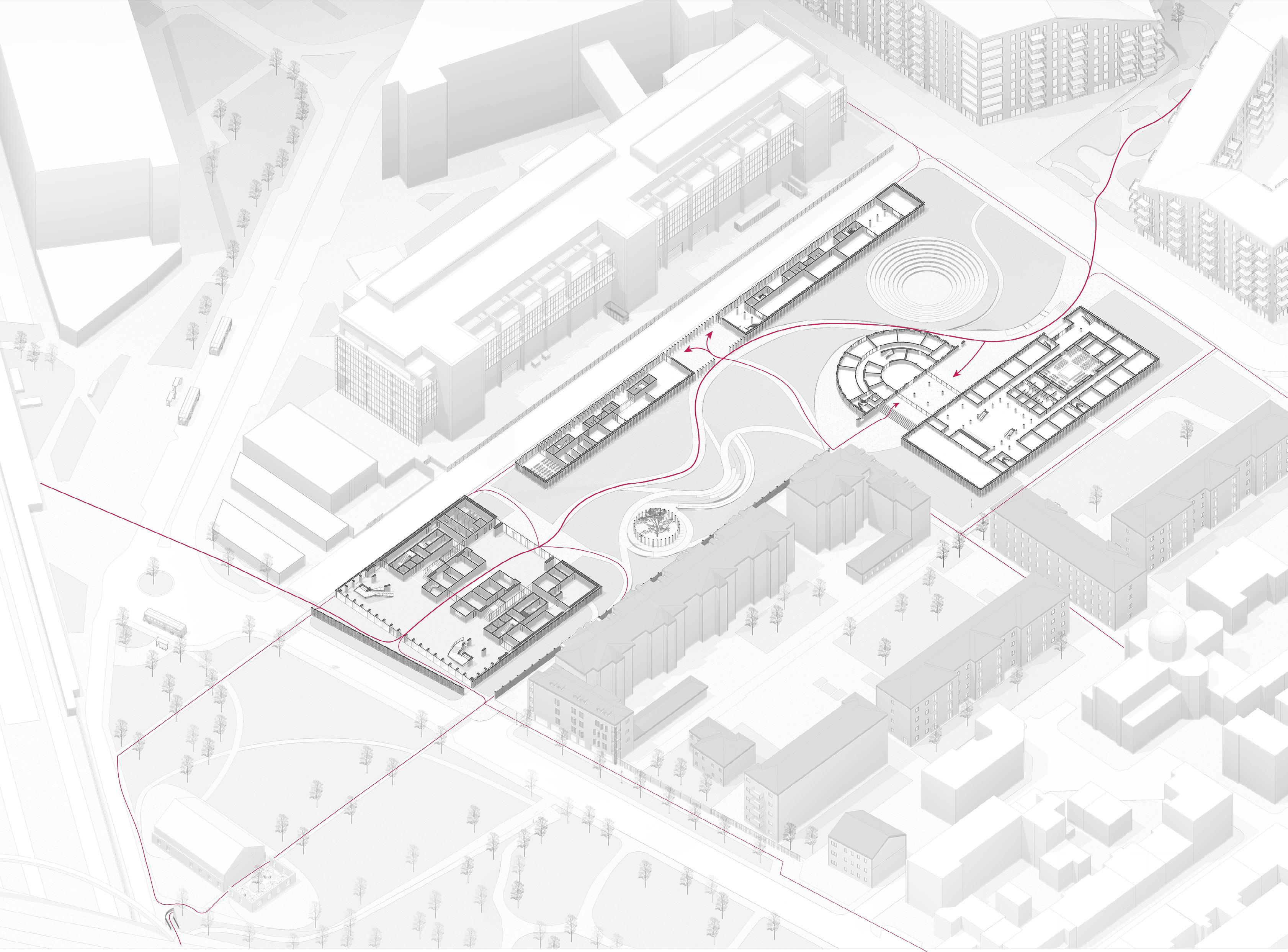
while assigning functions to the volumes, we considered both the degree of privacy required in each building and the most likely routes of arrival for different users. Consequently, the most public programme is located along Via Rogoredo, close to the train station and metro access, whereas the quietest and most private activities are placed toward the back of the site
Via Rogoredo

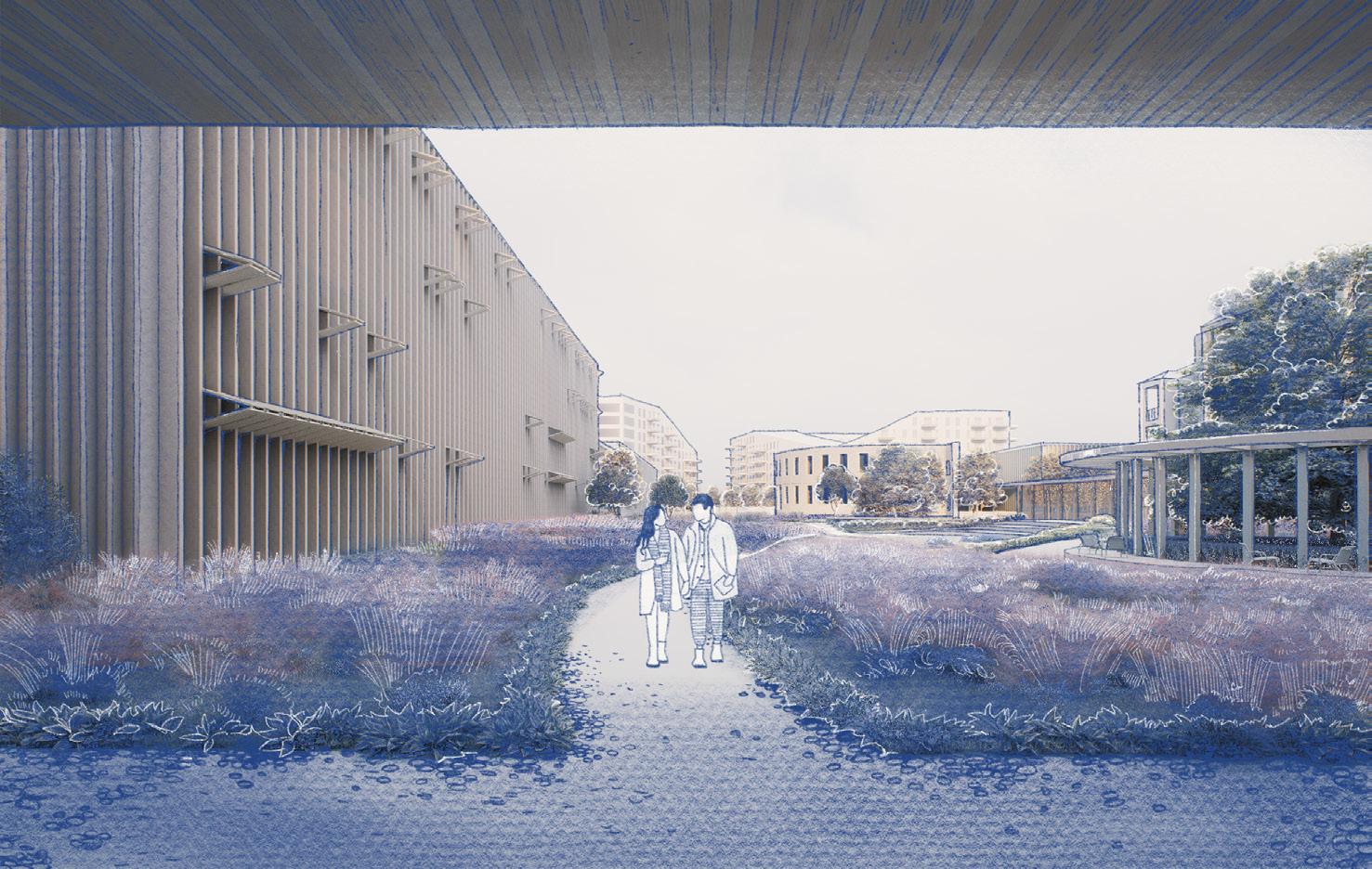
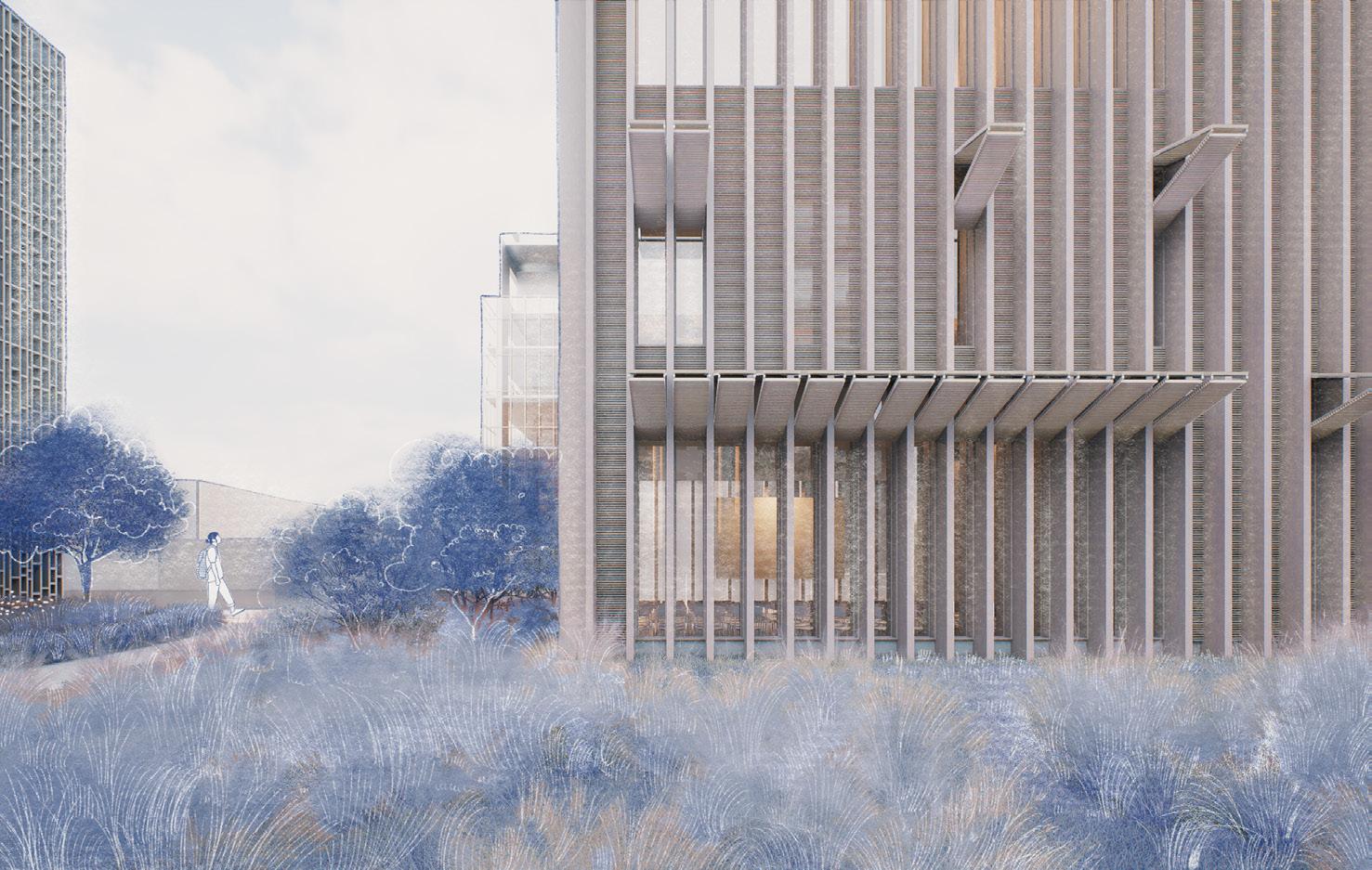
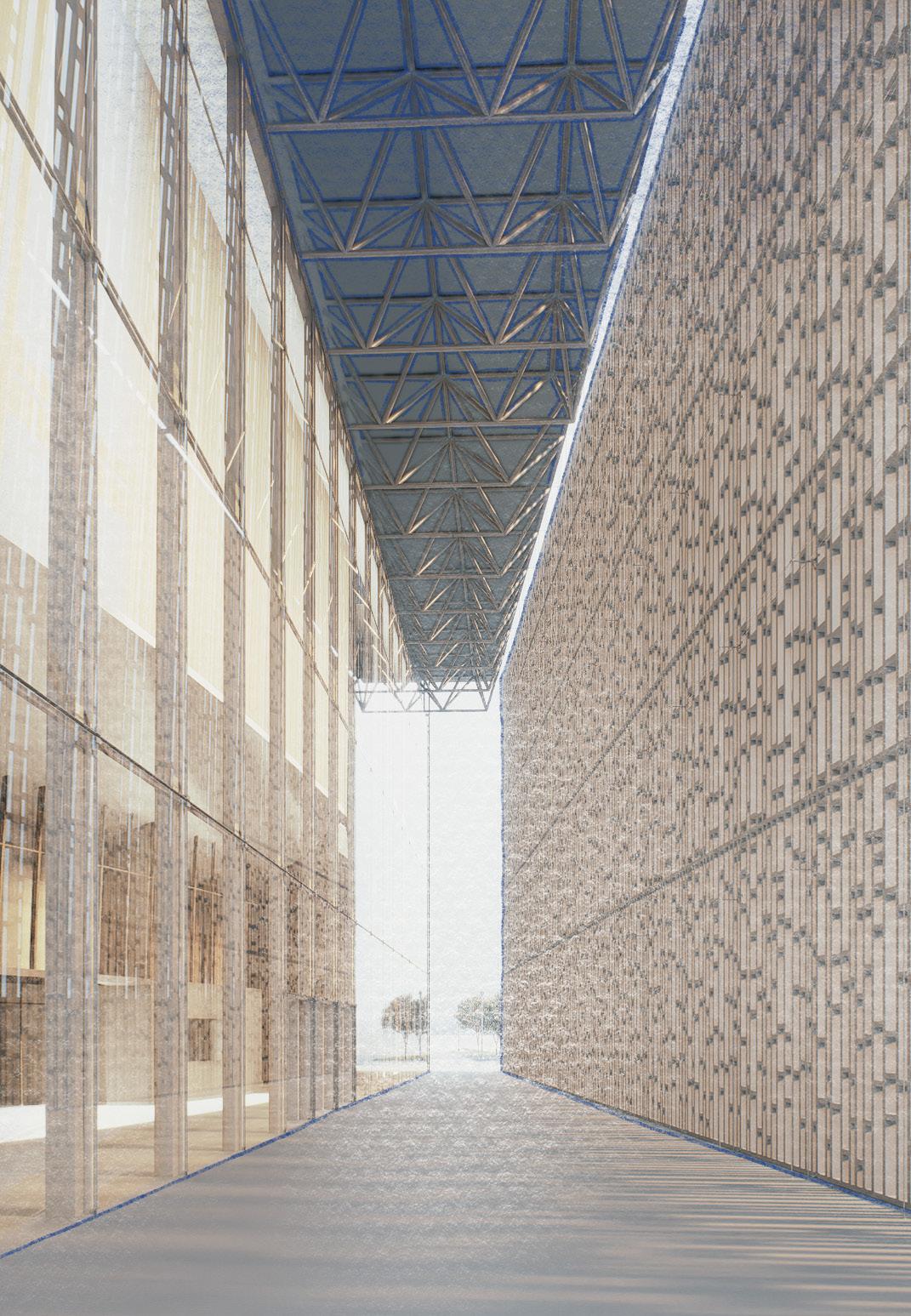
View from under the concert hall
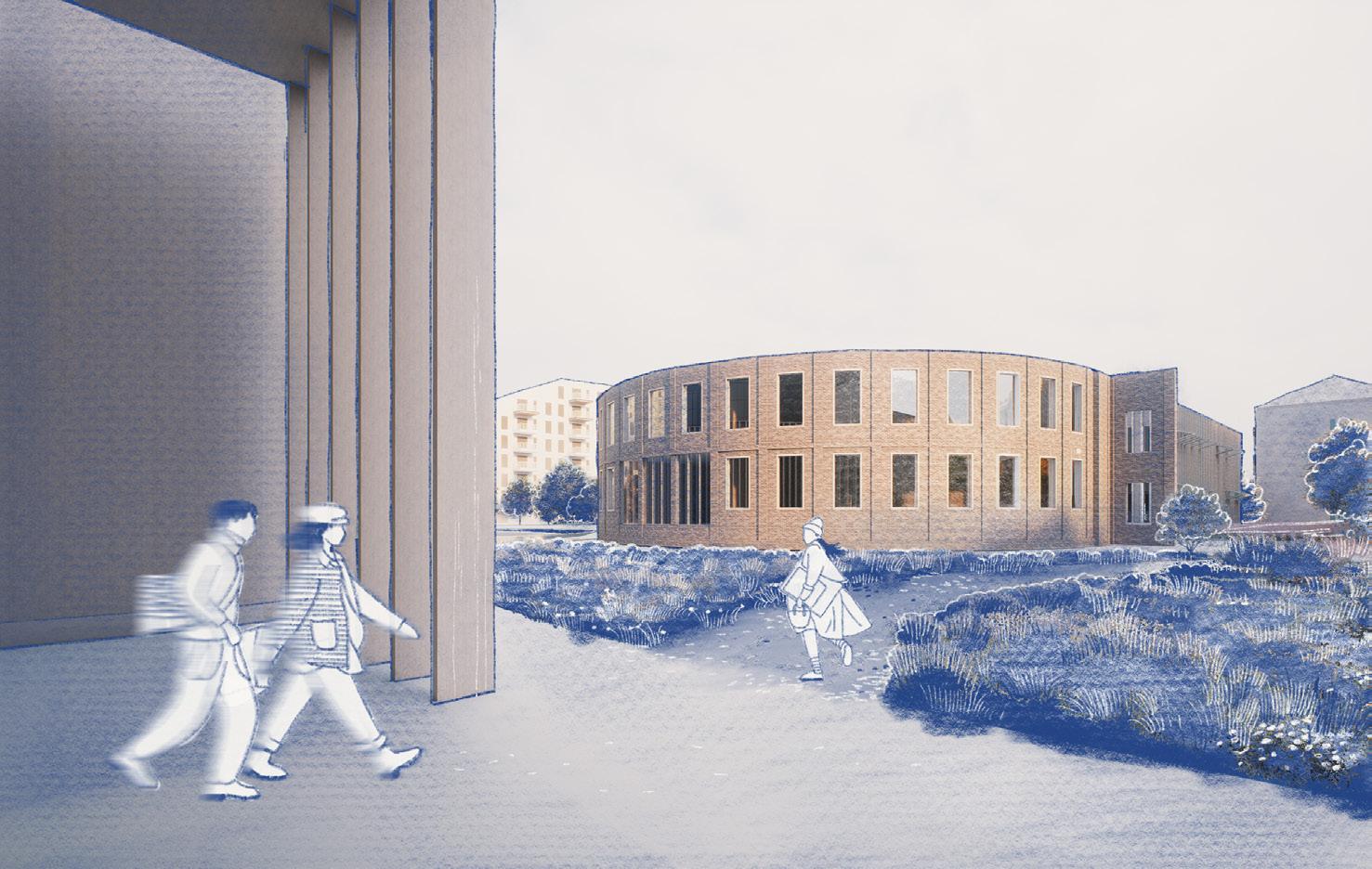
A passage from the street to the inner courtyard / facade of the library
On the path to the entrances leading to the conservatory and the library
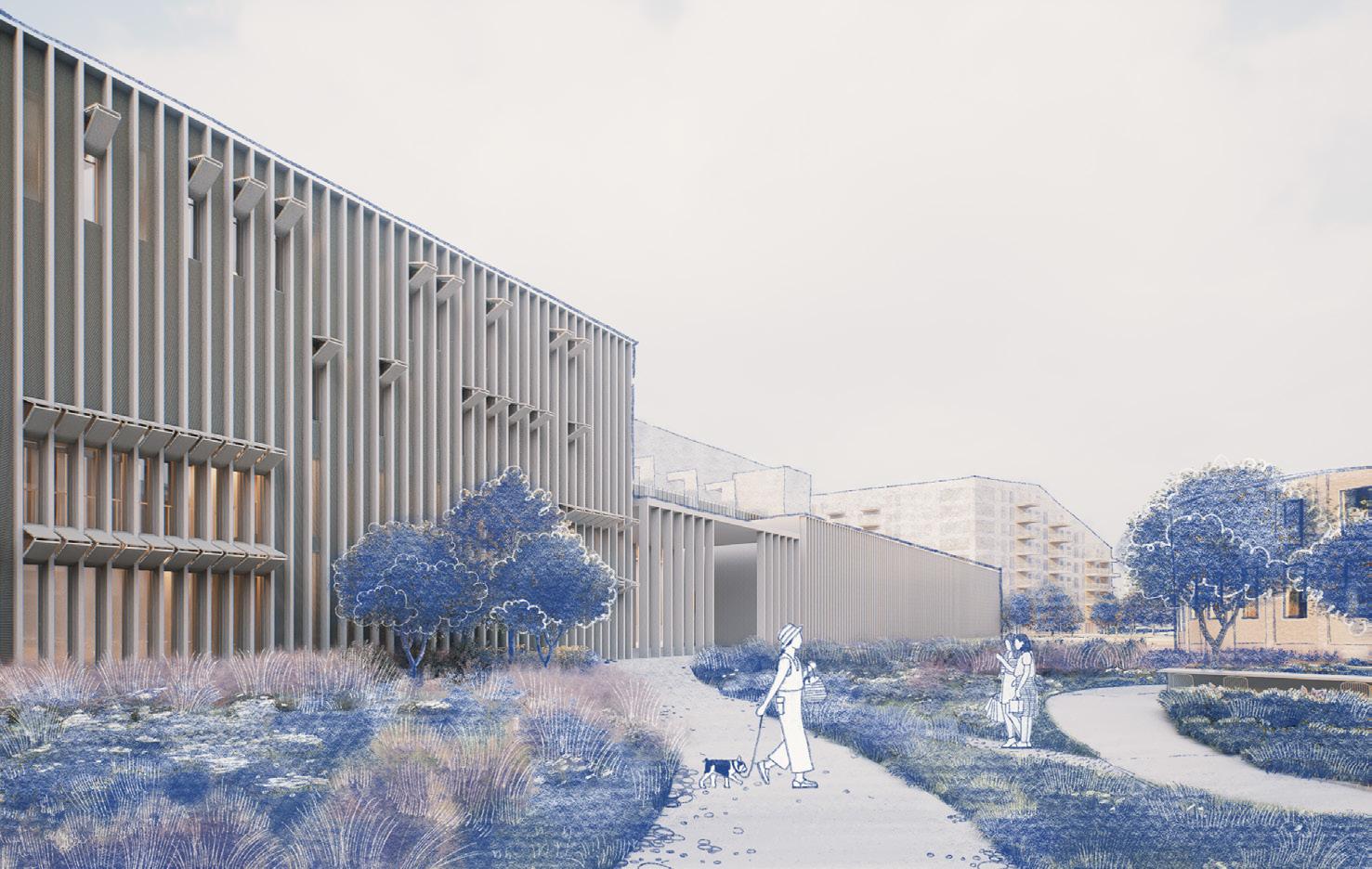
On the path to the entrances
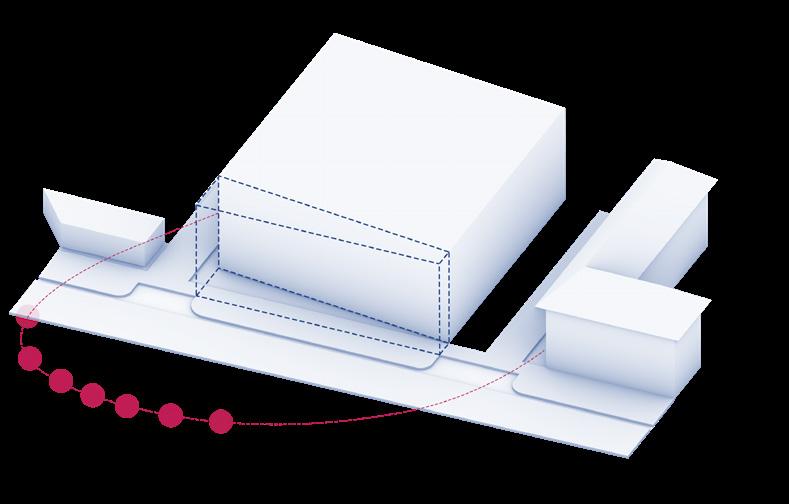
The pink line in the diagram illustrates the new pedestrian circulation in the neighborhood, showing how visitors move through the project site and how the park is integrated into the experience.



section C-C
section B-B
section A-A
Key principles:
1. Urban alighnment. Provides a strong edge and reinforces the existing city structure.
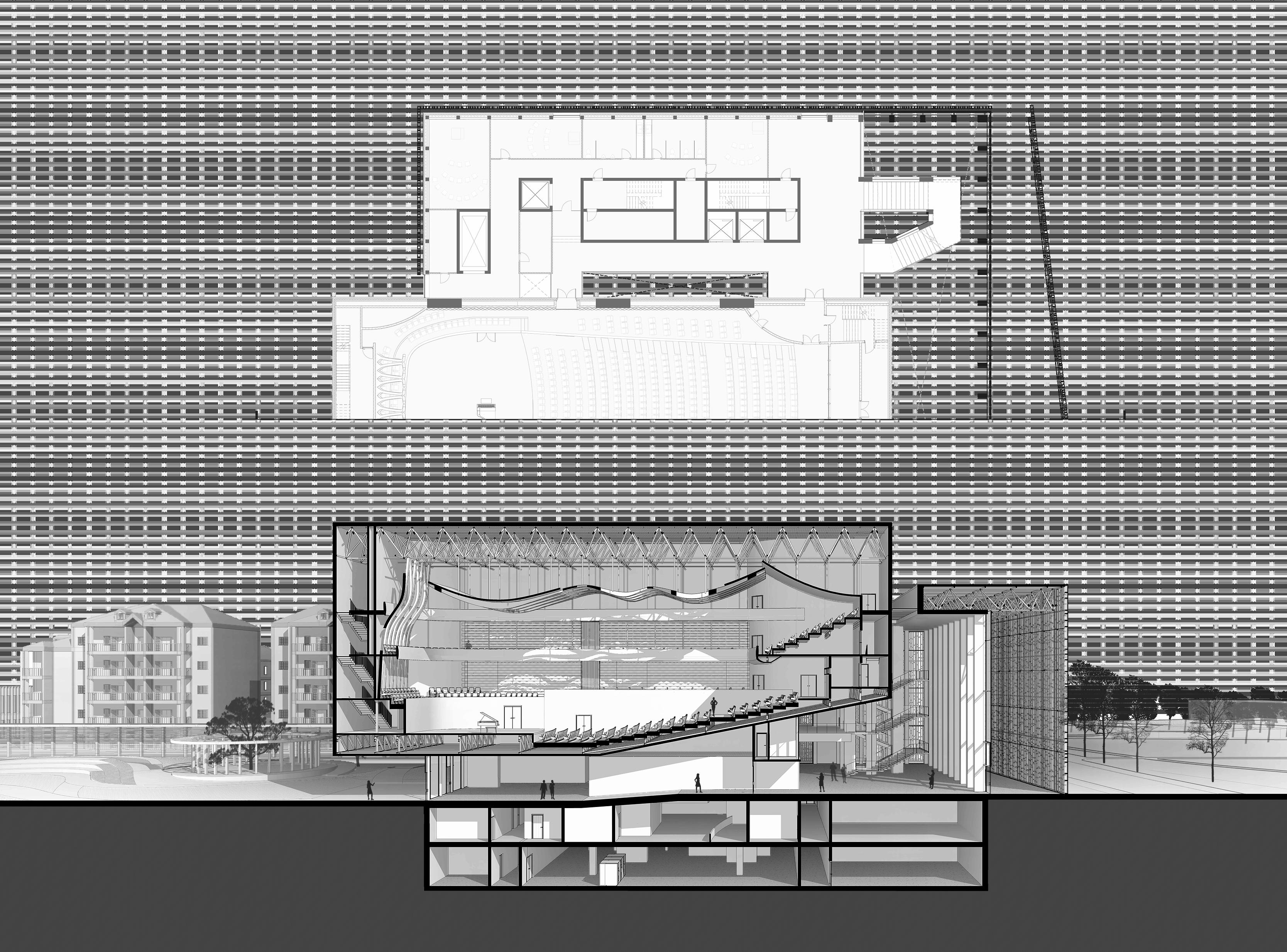
2. The “Flying Hall”. Lifting the concert hall above the ground creates a unique civic identity and frees the ground for public life.
3. The climate active portico withing social purpose.
On the southern Via Emilia front there is a deep shaded portico. It is a reinterpretation of Milan’s iconic architectural features and it serves a triaple function. It provides social shelter for pedestrians, an inviting entrance for visitors, and a climate regulating buffer for the building by taking into consideration its orientation to the South to shield the interior from solar gain.

4.
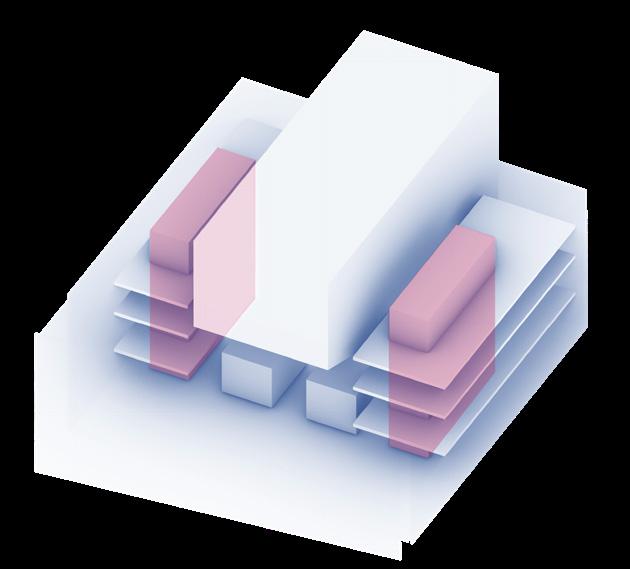
- Concrete cores
A system of four structural cores is introduced to achieve the building’s visual permeability and accommodate services. These cores not only provide the necessary stability and stiffness but also resolve the functional issues mentioned previously.
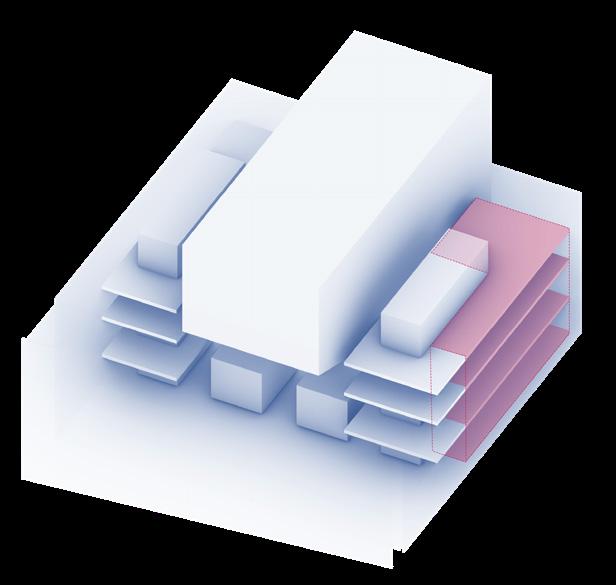
- Private area for artists
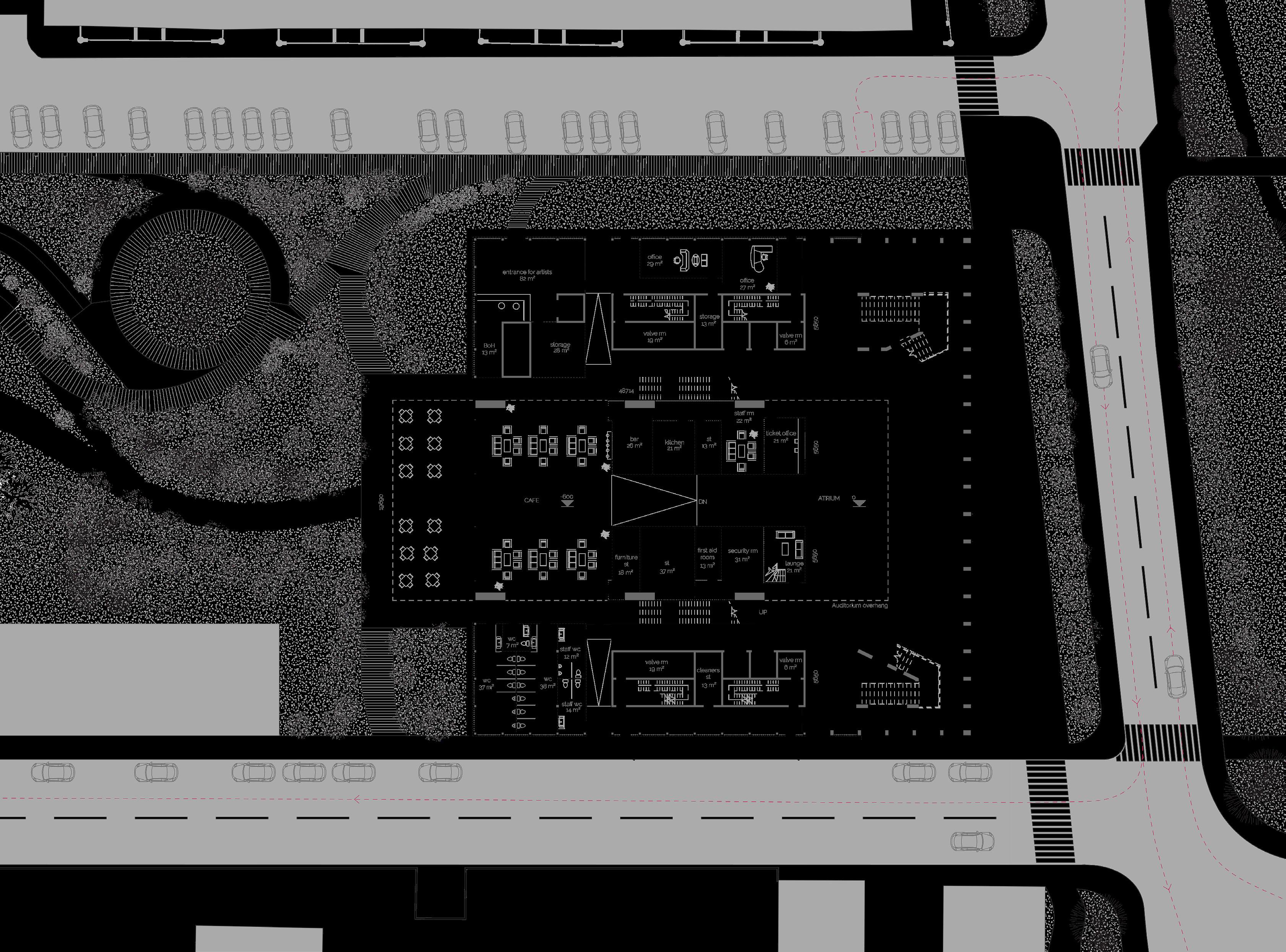
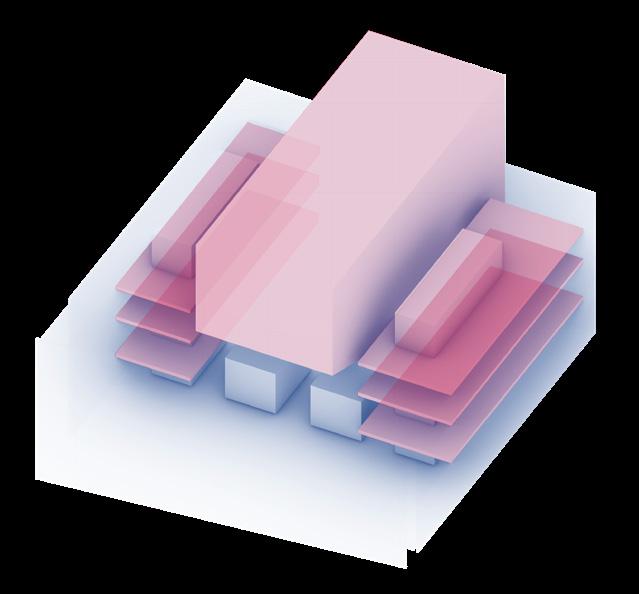
All rooms are organized into two wings that run along its sides. One wing, on the more narrow side of the hall, contains public services and facilities. The other, broader wing is dedicated to artists and technicians.
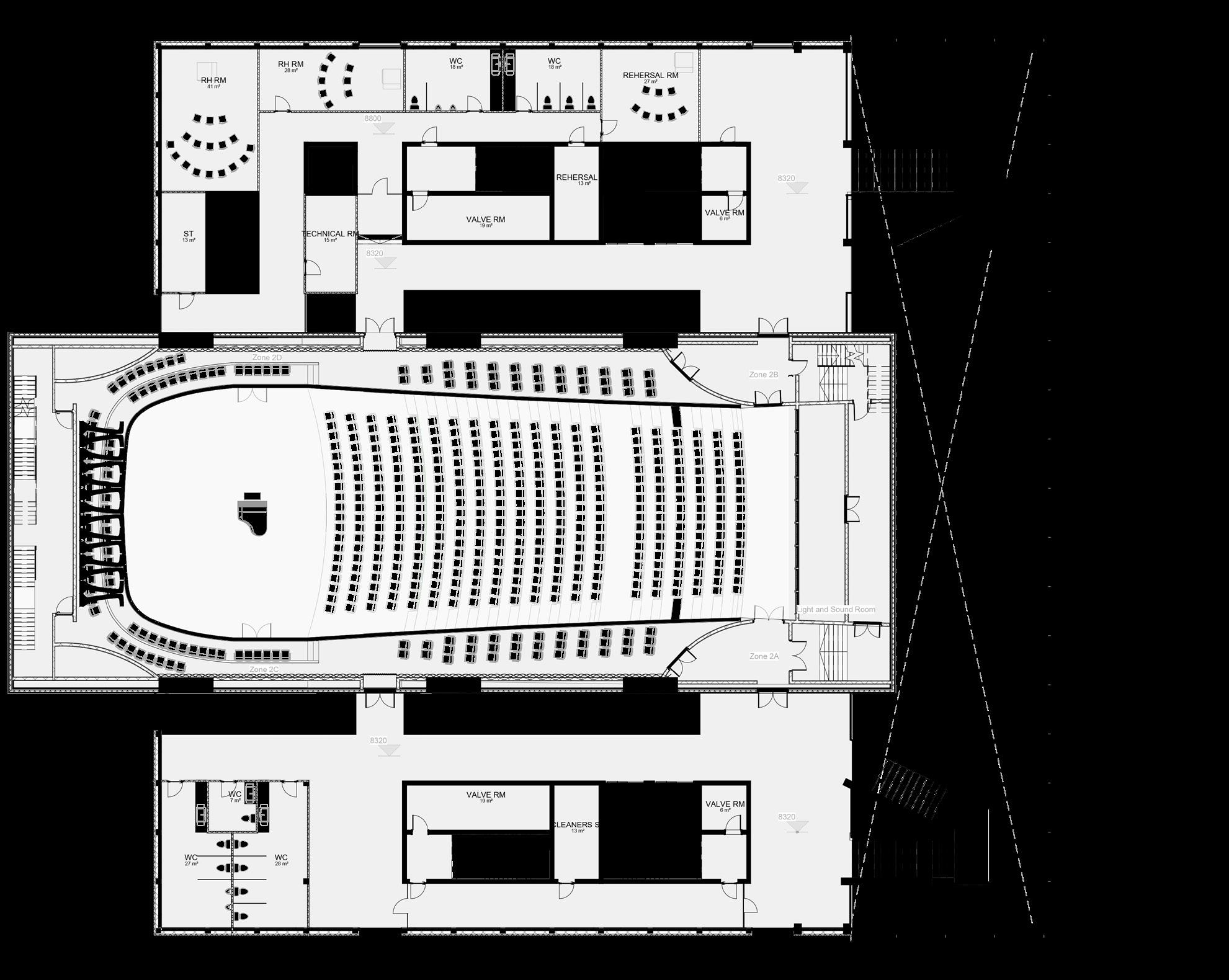

2nd Floor
Four concrete cores of equal width.
5. Zoning
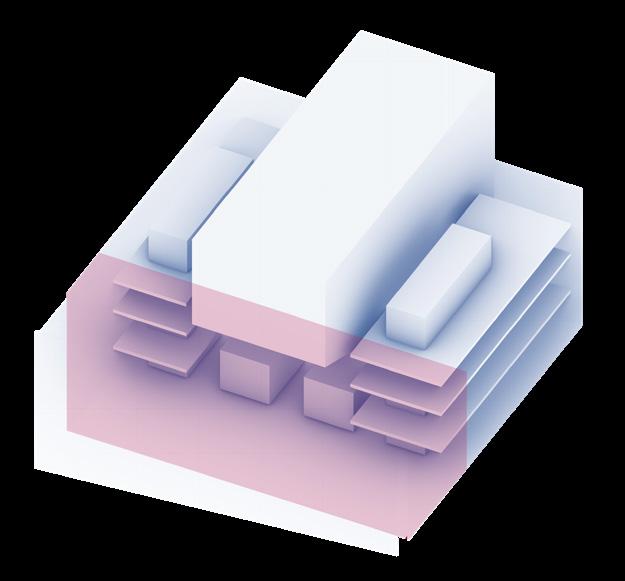
The full height atrium is located in front of the concert hall leaving the box open for the visitors and welcoming everyone with light space full of air and game of light.
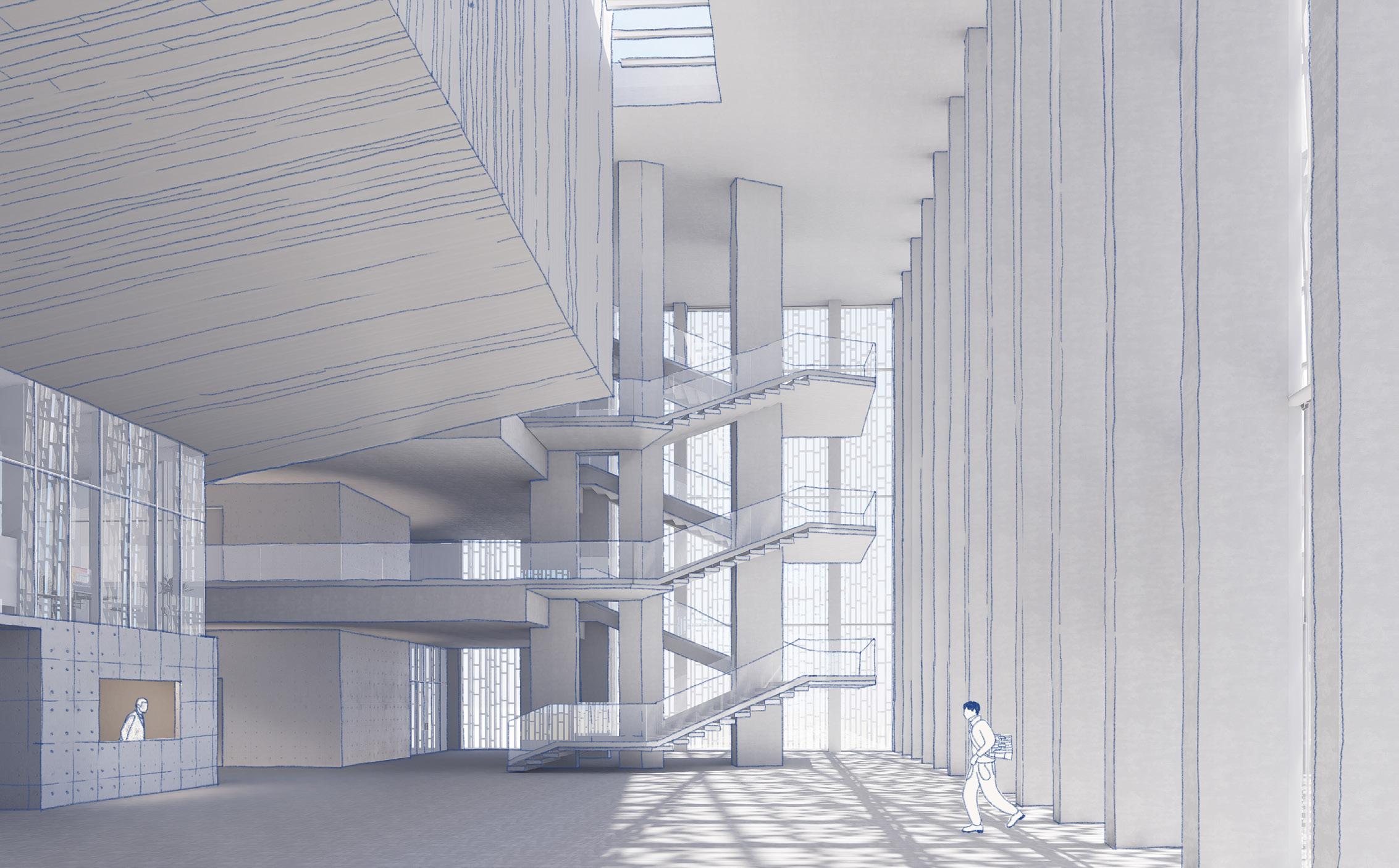
5. Atrium - Atrium
Atrium. Entrance area
In order to intuitively guide visitors toward the concert hall, we introduced wooden flooring that shares the same texture and colour as the concert hall box. This material continuity subtly directs people through the building while reinforcing the spatial identity of the performance space.
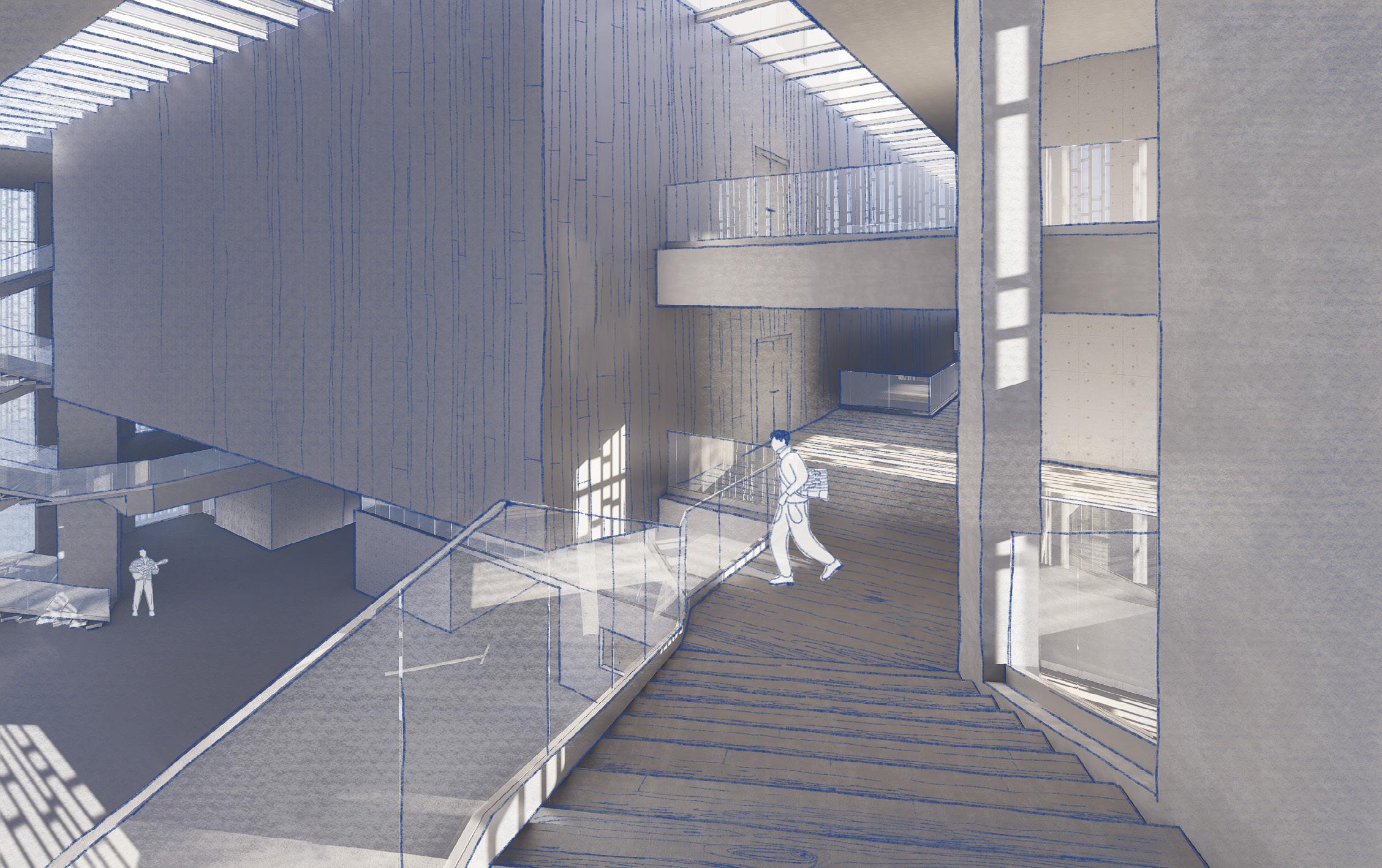
6. Wooden floors Laeding to the AuditoriumHeart of music - Wood
Entrance to the concert hall from a staircase
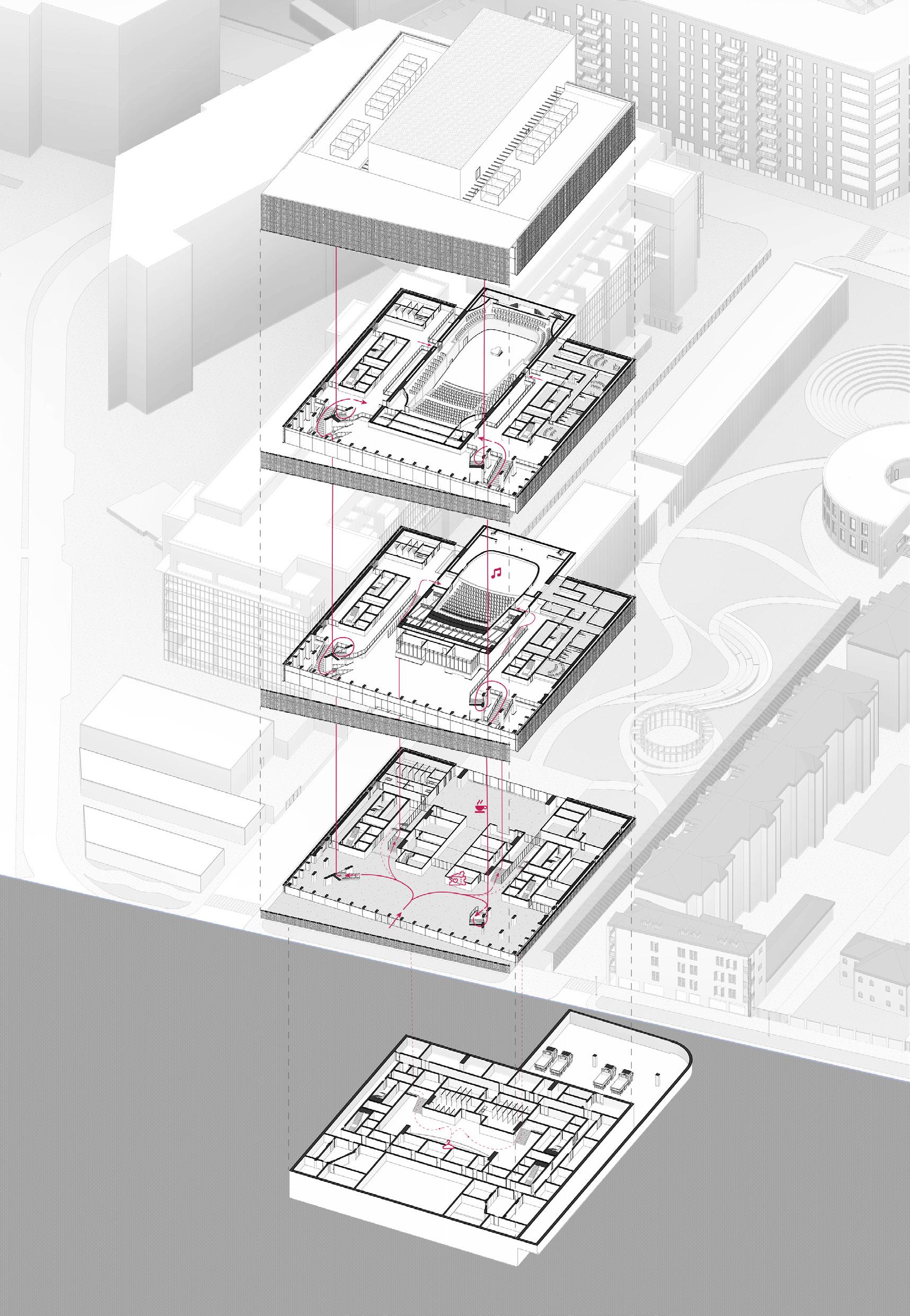
circulation and the gap
The circulation
The circulation begins before entering the building. Under the portico, the interplay of light and shadow from the curtain wall engages visitors and sets the atmosphere. Inside, a large central atrium acts as the main hub, allowing access to ticketing, the concert hall, and other functions. The wardrobe and toilets are located underground, reached by staircases on both sides of the hall for clear and intuitive wayfinding. Vertical circulation to the concert hall is also organized along both sides, with staircases and elevators enabling visitors to choose the most convenient route depending on their seating level.
The gap
To emphasize the concert hall as a sacred, floating object within the larger volume, a full-height space isolates it on all sides. This void is top-lit by a continuous skylight, creating a dramatic light well that channels daylight deep into the heart of the building. This configuration allows the central light shaft to remain a continuous, open volume, with access bridges placed strategically to minimize visual interruption. The resulting composition reinforces the hall’s presence as a luminous, sculptural vessel, perceived almost like an object of reverence suspended within a calm, shadowed court.
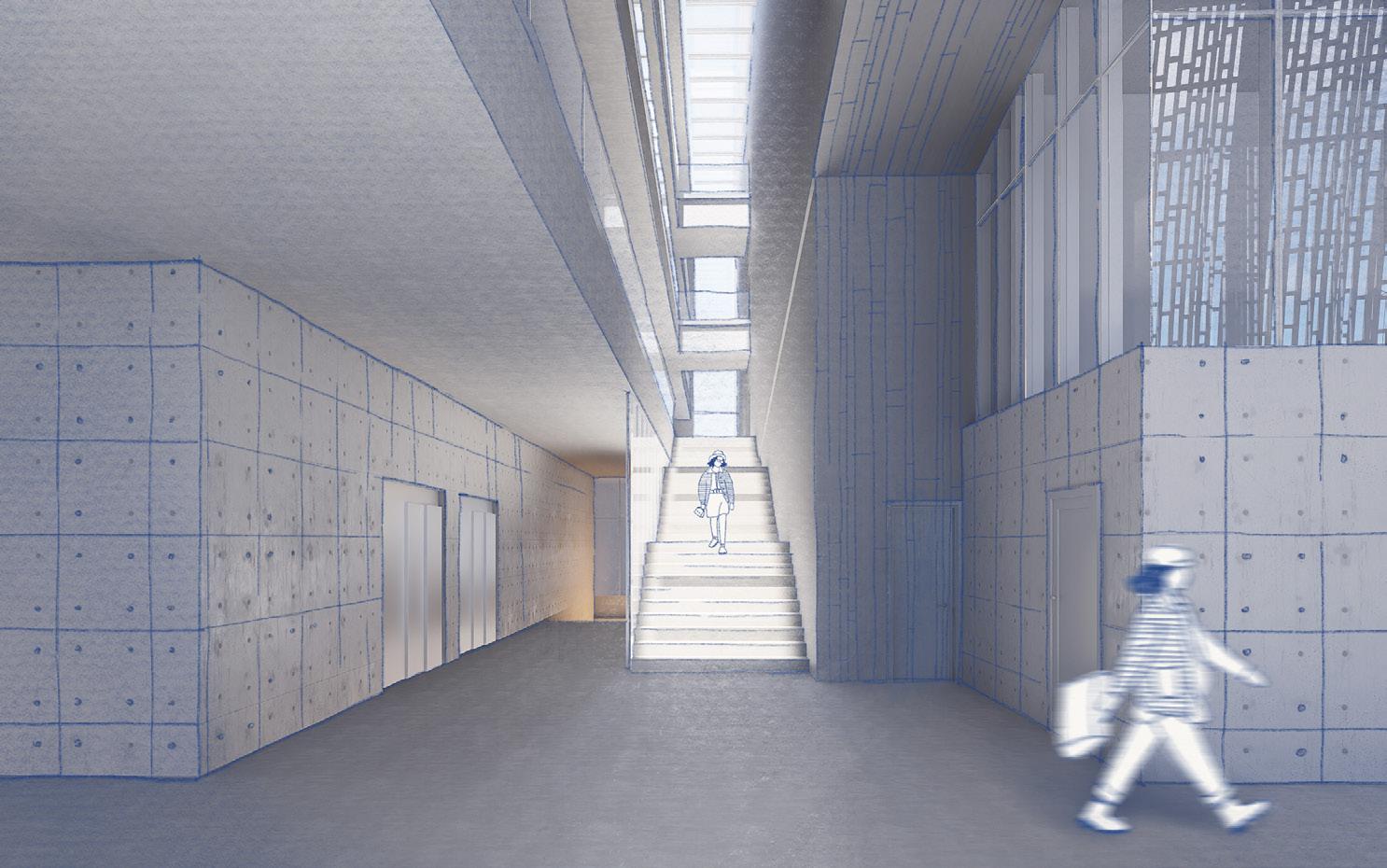
Staircase leading to the first floor
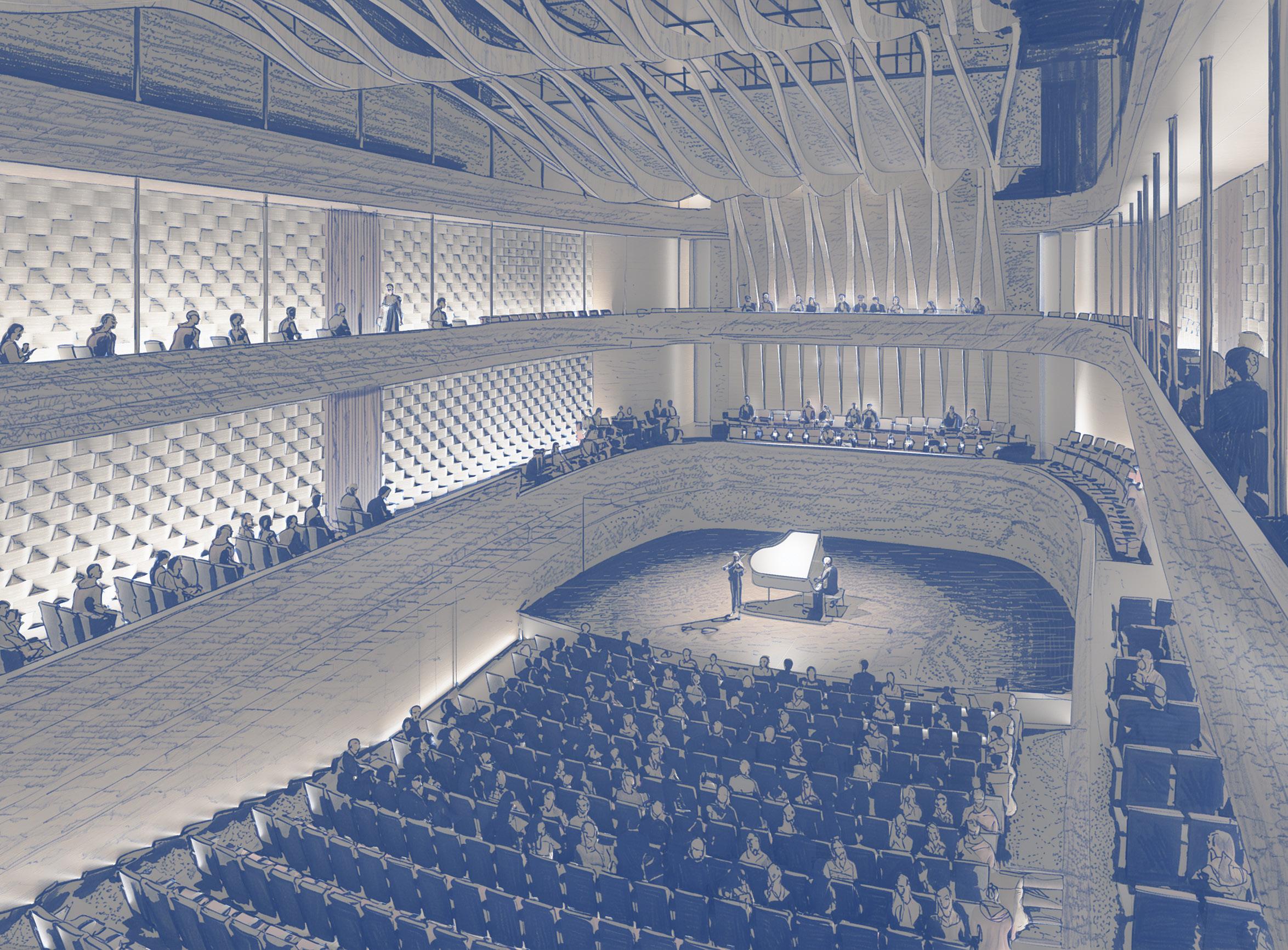
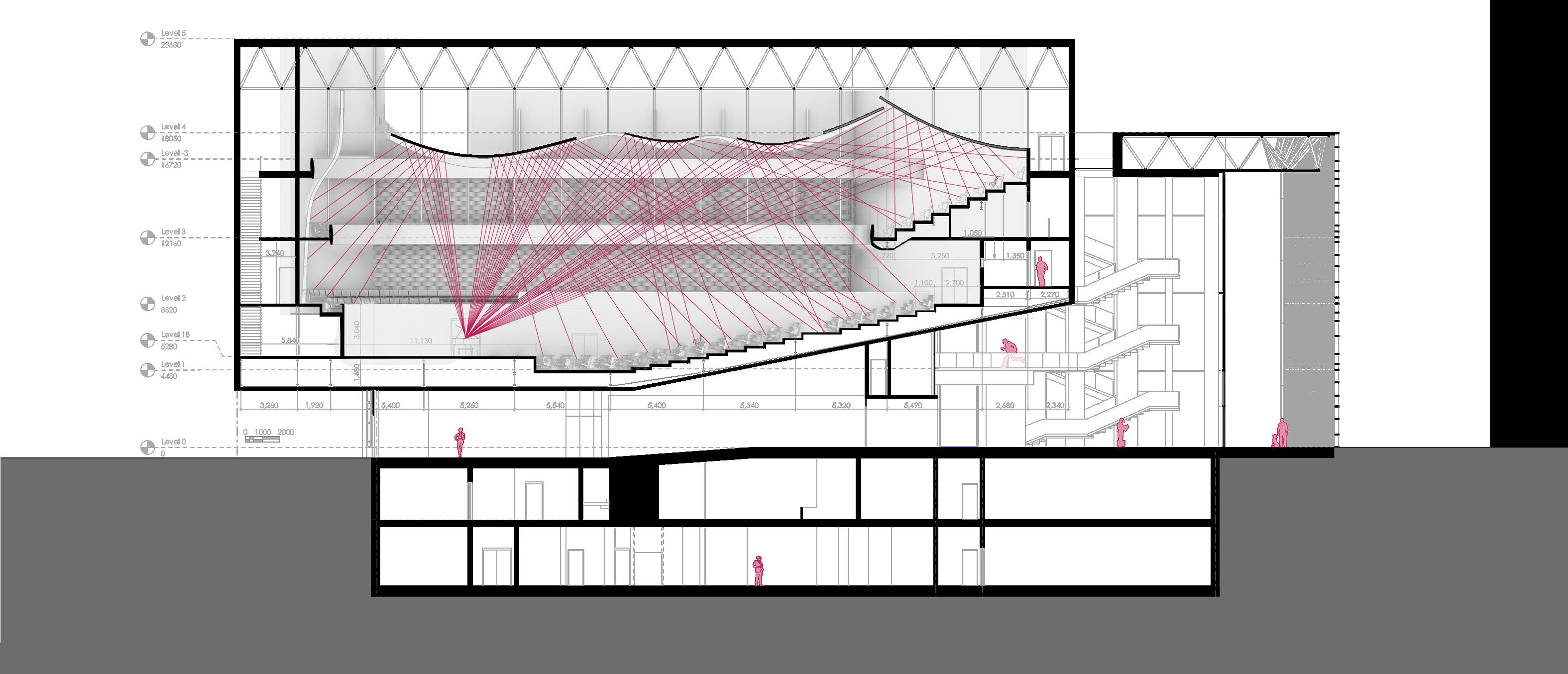
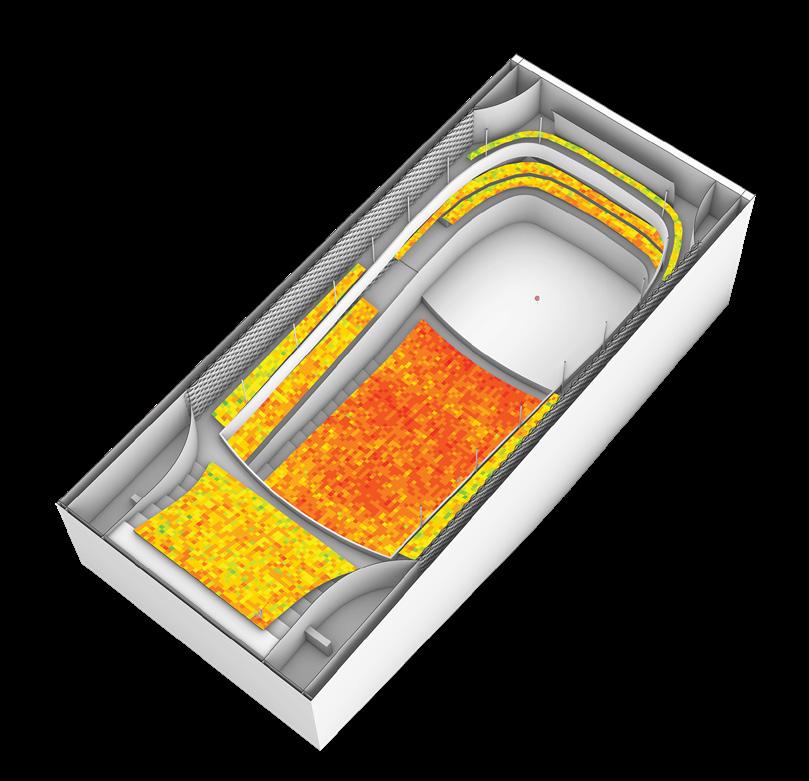
This analysis establishes the foundational acoustic character of the hall, with a primary design target optimized for classical music. The geometry and material properties, defined by their sound absorption coefficients, were simulated to achieve an optimal reverberation time (RT) between 1.6 and 2.2 seconds.
Three representative receiver locations were analyzed to ensure acoustic consistency throughout the seating area. The material palette was iteratively refined across multiple attempts via Pachiderm to balance the RT across all receivers, ensuring a rich, uniform auditory experience.
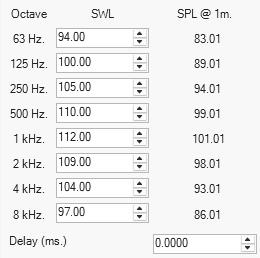
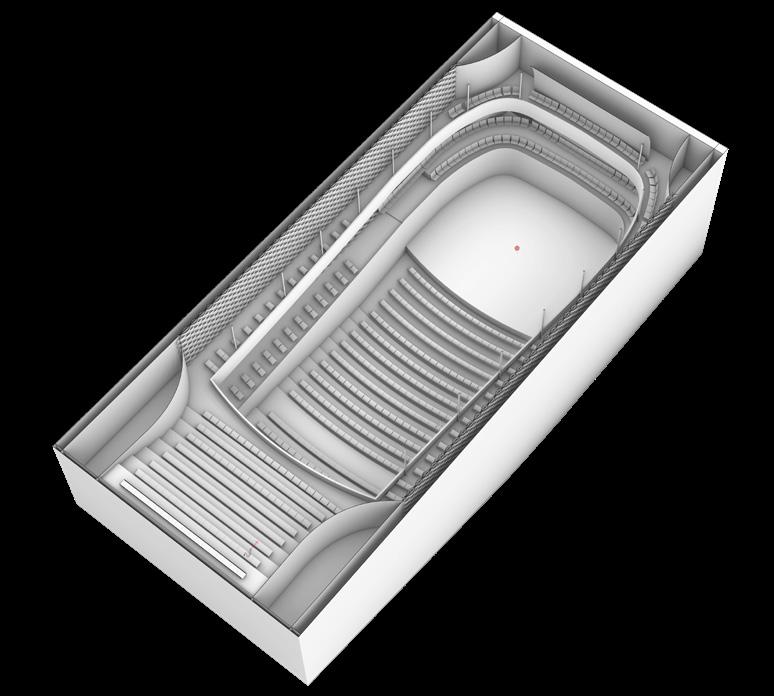
The tuning process was primarily driven by strategically varying the surface materials— specifically, the ratio of sound-reflective (grey birch) to sound-absorptive (perforated oak) panels on the walls and ceiling. Minor adjustments to the hall’s geometry provided secondary fine-tuning
Cladding Bamboo X-treme with closed profile (BO-DTHT538) irregular dimmentions withing 80220 mm
Physical models translate abstract ideas into physical form, making it possible to assess whether a concept works in a direct, tangible way. The following slides present a series of photographs of the physical models.
materials: wood, cardboard, paper, plastic, acrylic sheet, foam
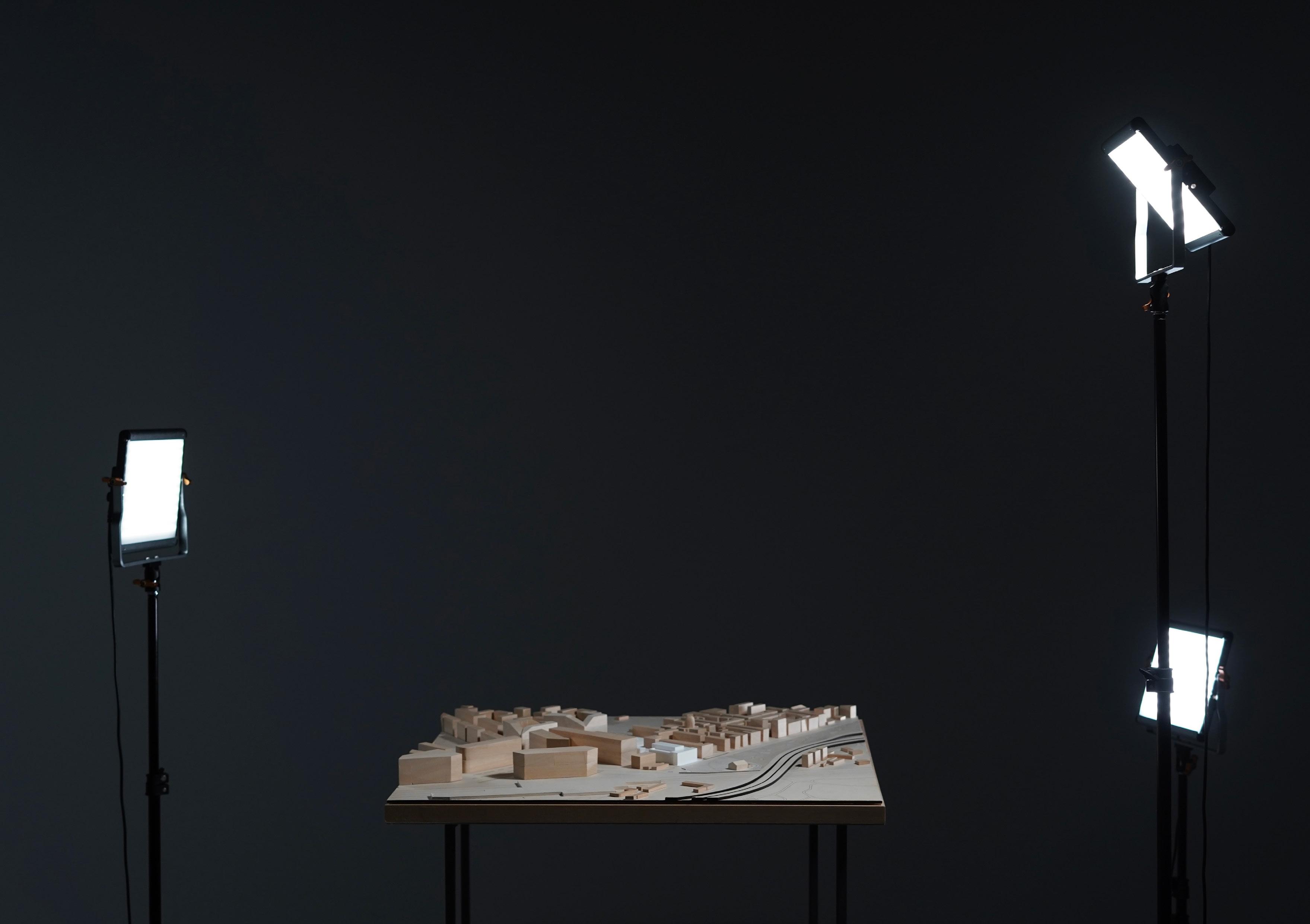
The physical model was produced at a 1:1000 scale to situate the project within its urban context. The primary volume was 3D-printed, allowing for a high level of detail and a precise representation of the site’s topographical differences.
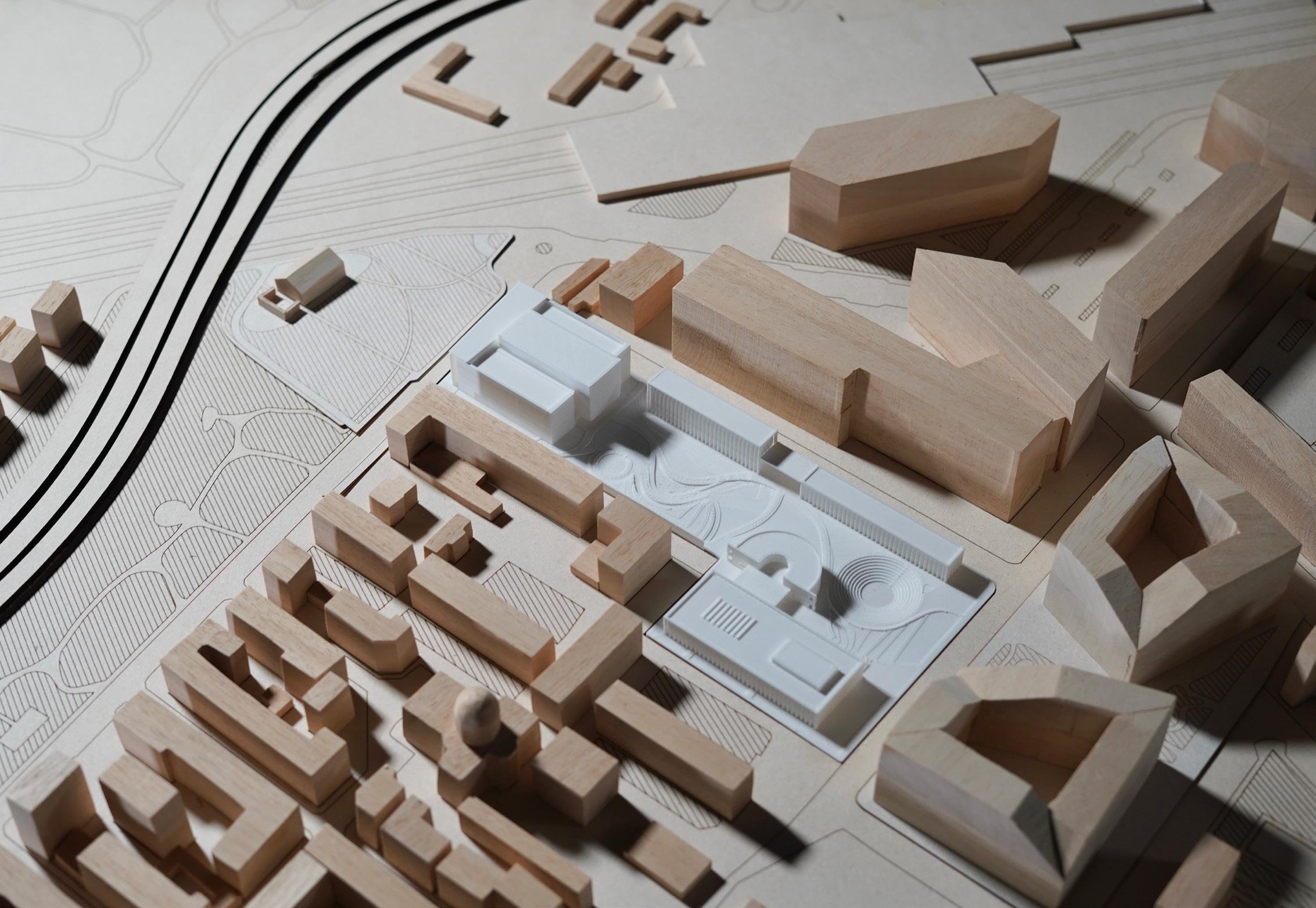
a physical model made by the project team
materials: wood, cardboard, plastic
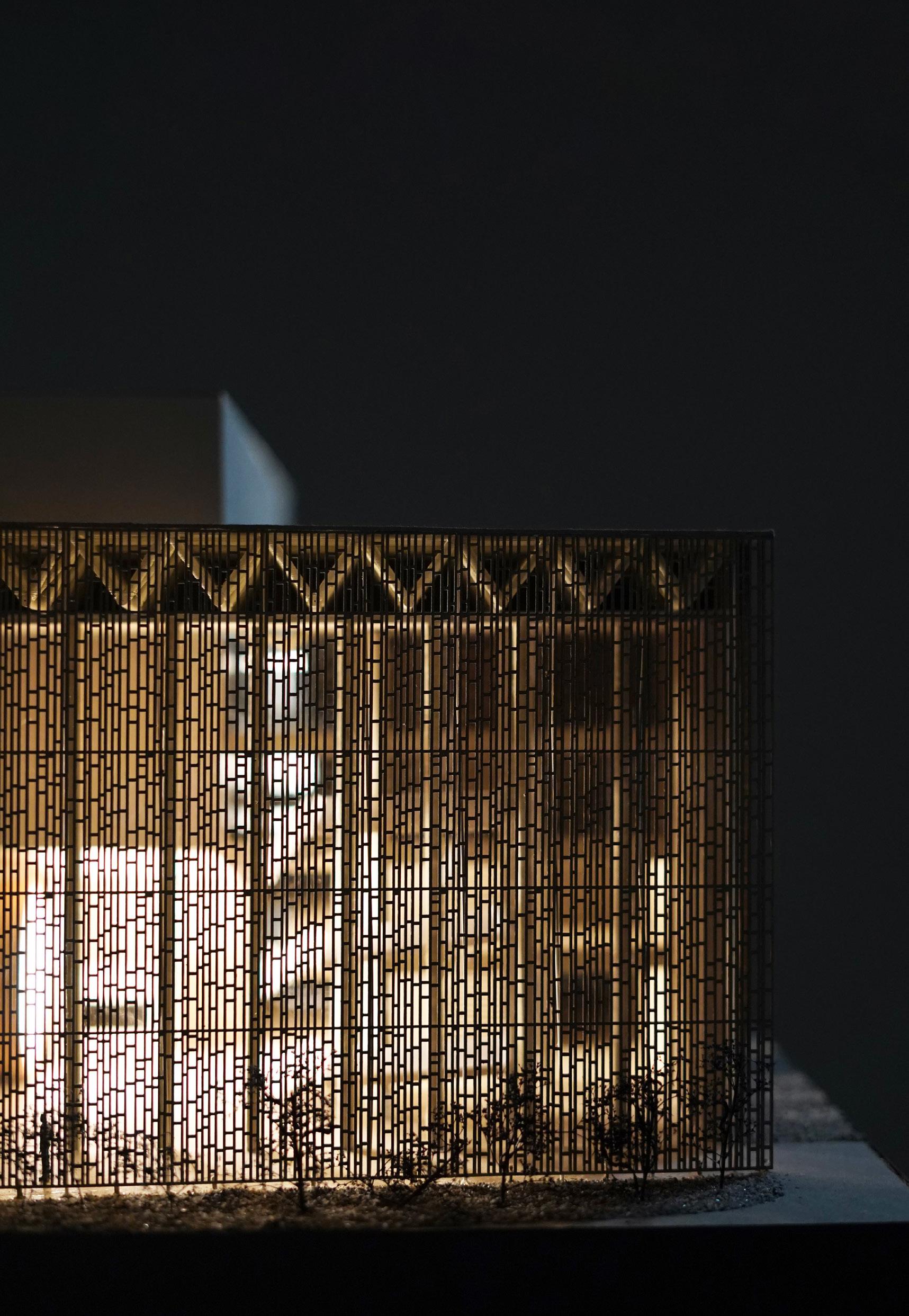
physical models / different scale
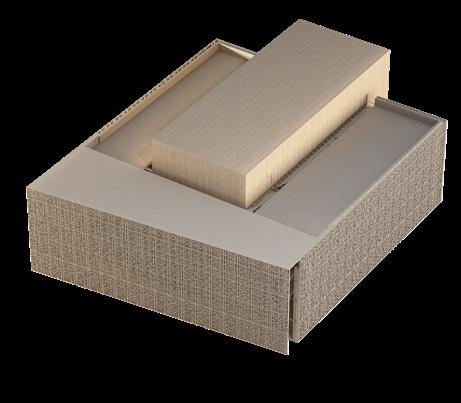
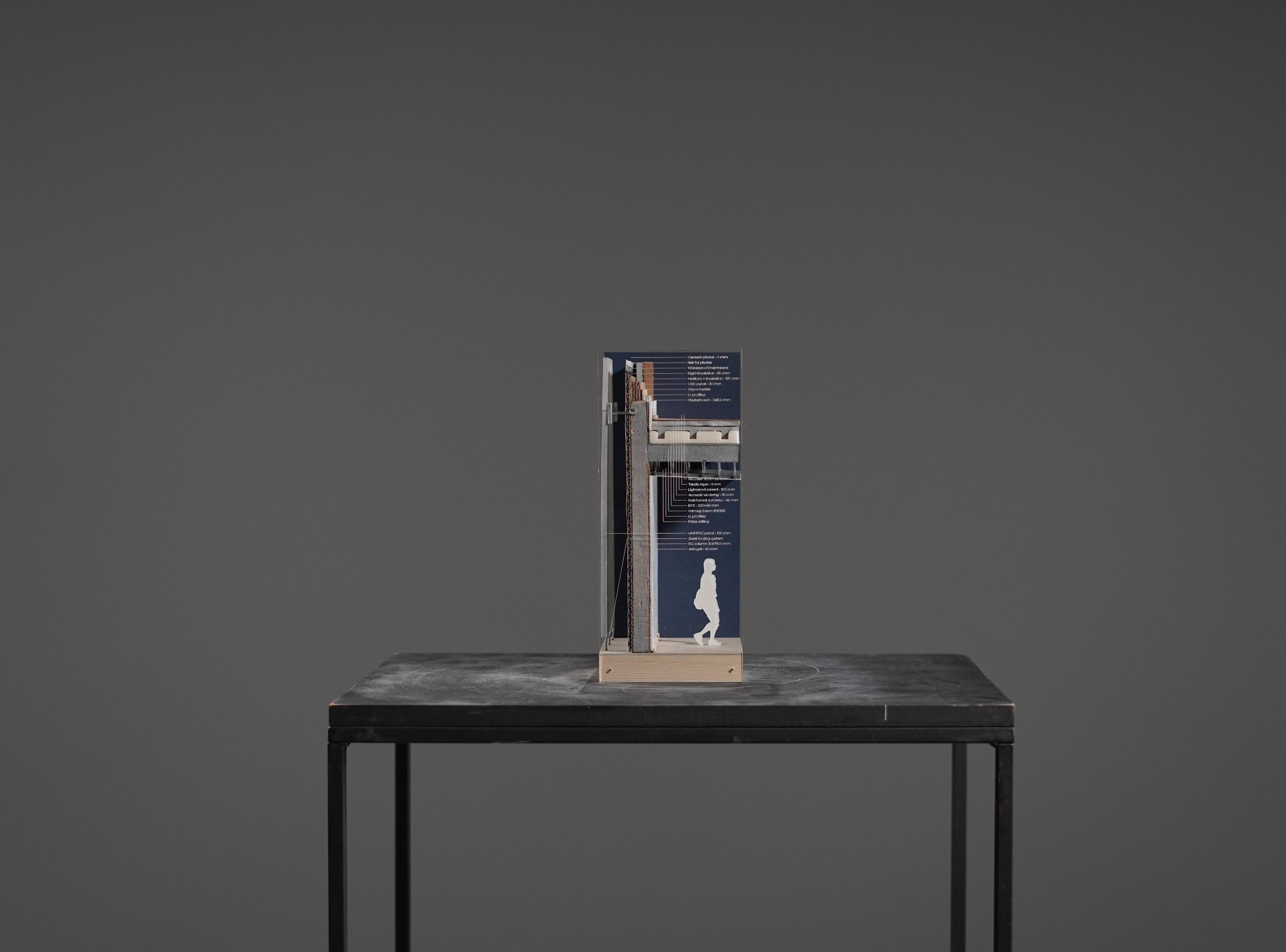
The model is a 1:100 sectional model, developed to present the design of the concert hall and to highlight the semi-transparent character of the curtain wall facade.
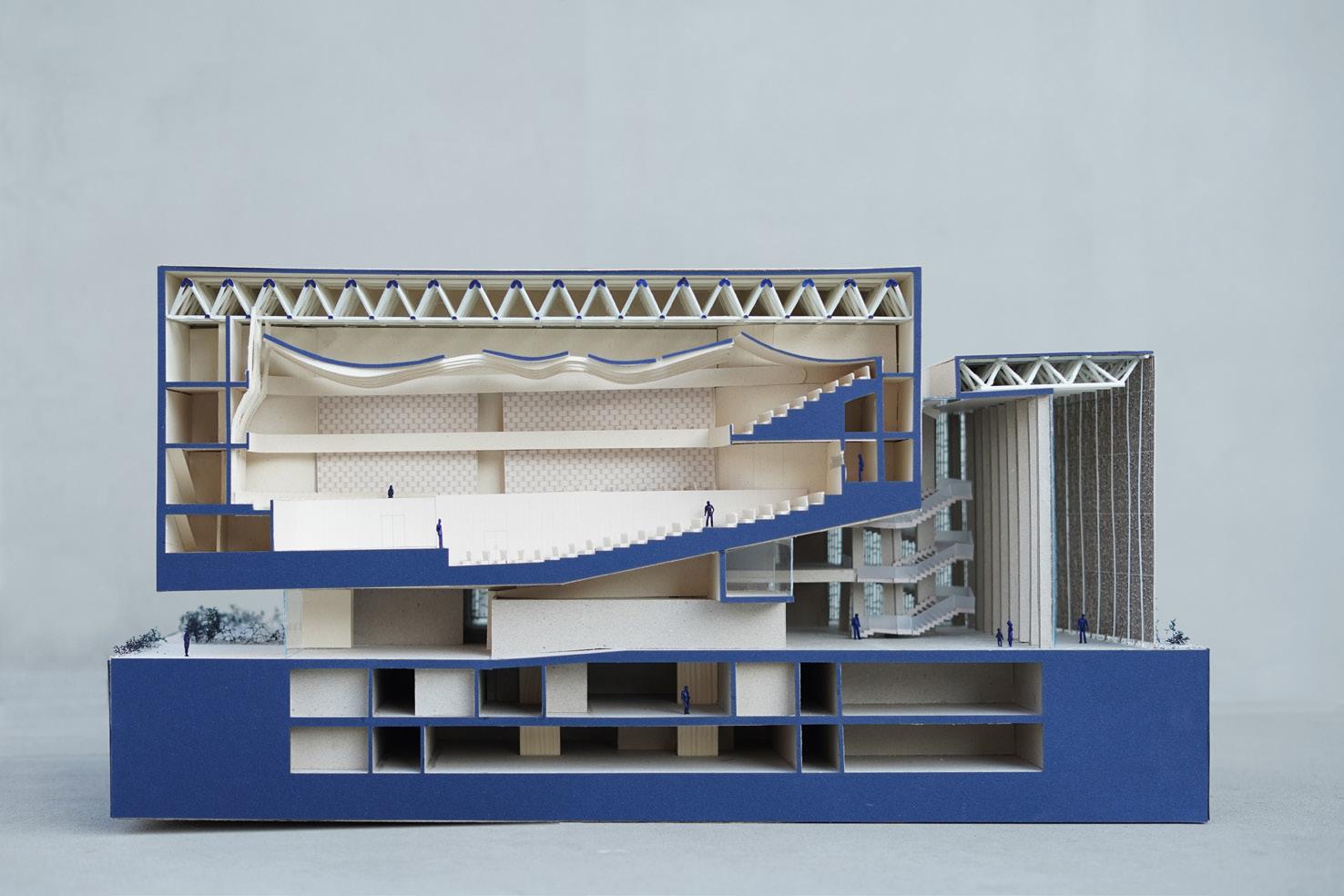
model in 1:20 scale, view 3/4
materials: wood, cardboard, paper, plastic, acrylic sheet, foam
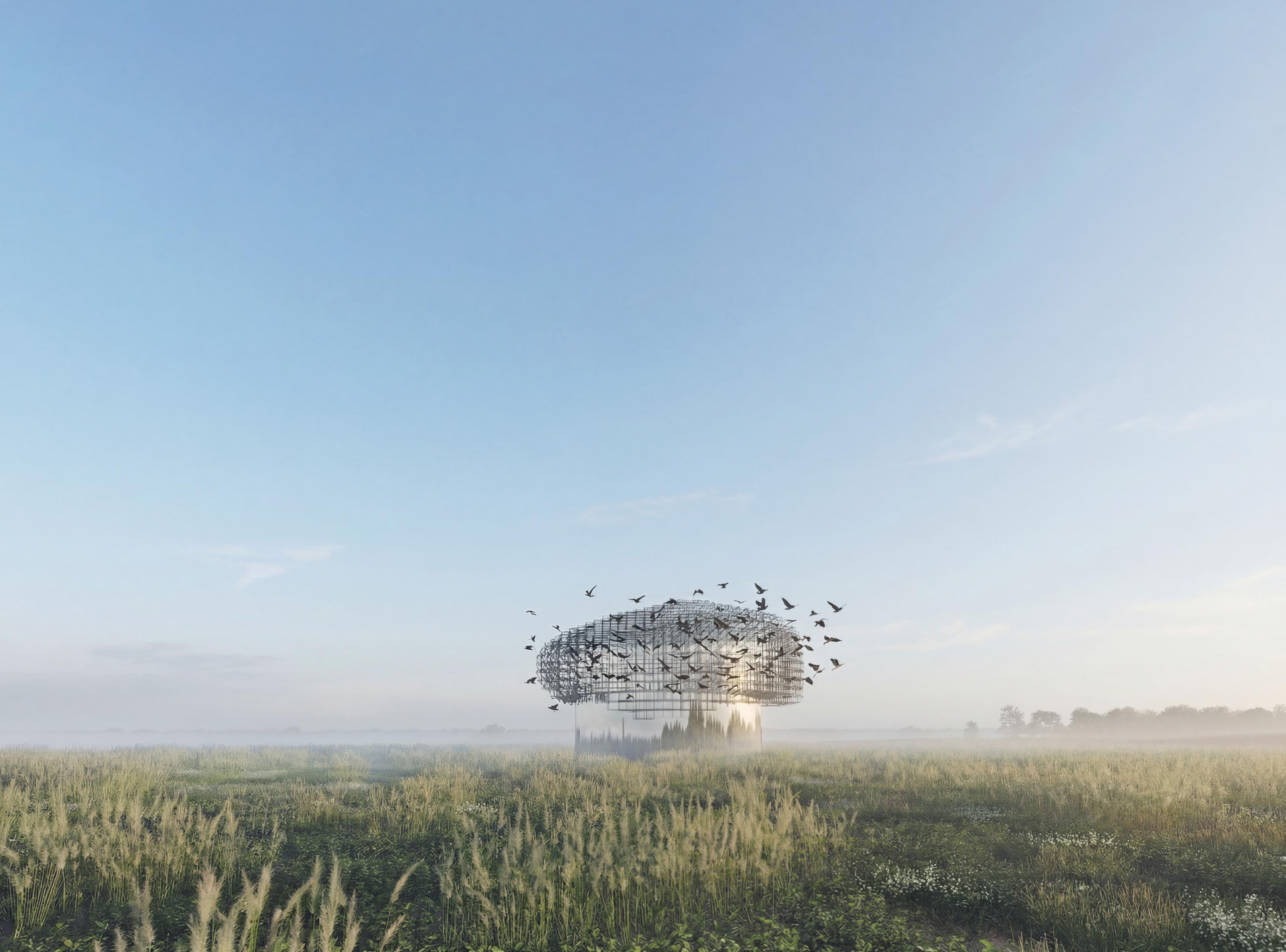
This project presents a pavilion dedicated to the country to which the participant feels the strongest sense of belonging. It was developed in response to a competition inviting participants to critically reconsider the nature of the pavilion: what it represents and how it communicates. The pavilion is situated in a deliberately chosen location, anchoring it within a defined context while allowing for a personal interpretation of place. Rather than engaging with questions of materiality, the proposal focuses on meaning and obraz, understood as image, symbolism, and spatial expression.
The pavilion is thus conceived not merely as a physical structure, but as an articulation of identity and cultural affiliation.

1. The project begins with childhood memories of vast open fields and flocks of birds, forming a strong, almost archetypal image. This image becomes essential to the concept, shaping the building as a solitary object in the landscape—perceived more as a sculpture than a conventional building, gradually revealing itself from a distance and evoking a sense of freedom, calm, and quiet presence. flock of


2. Building on this, the project draws from the language of fairy tales, where the act of choosing a path reflects deeper existential questions. It explores moments of decision, uncertainty, and personal direction, embedding a narrative layer within the spatial experience.
choosing path
existential questions

3. These ideas are ultimately translated into architecture through the choice of form, materials, and the placement within the site, shaping both the internal experience and the overall presence of the project.
design solutions reflecting local culture

*entrance / portal
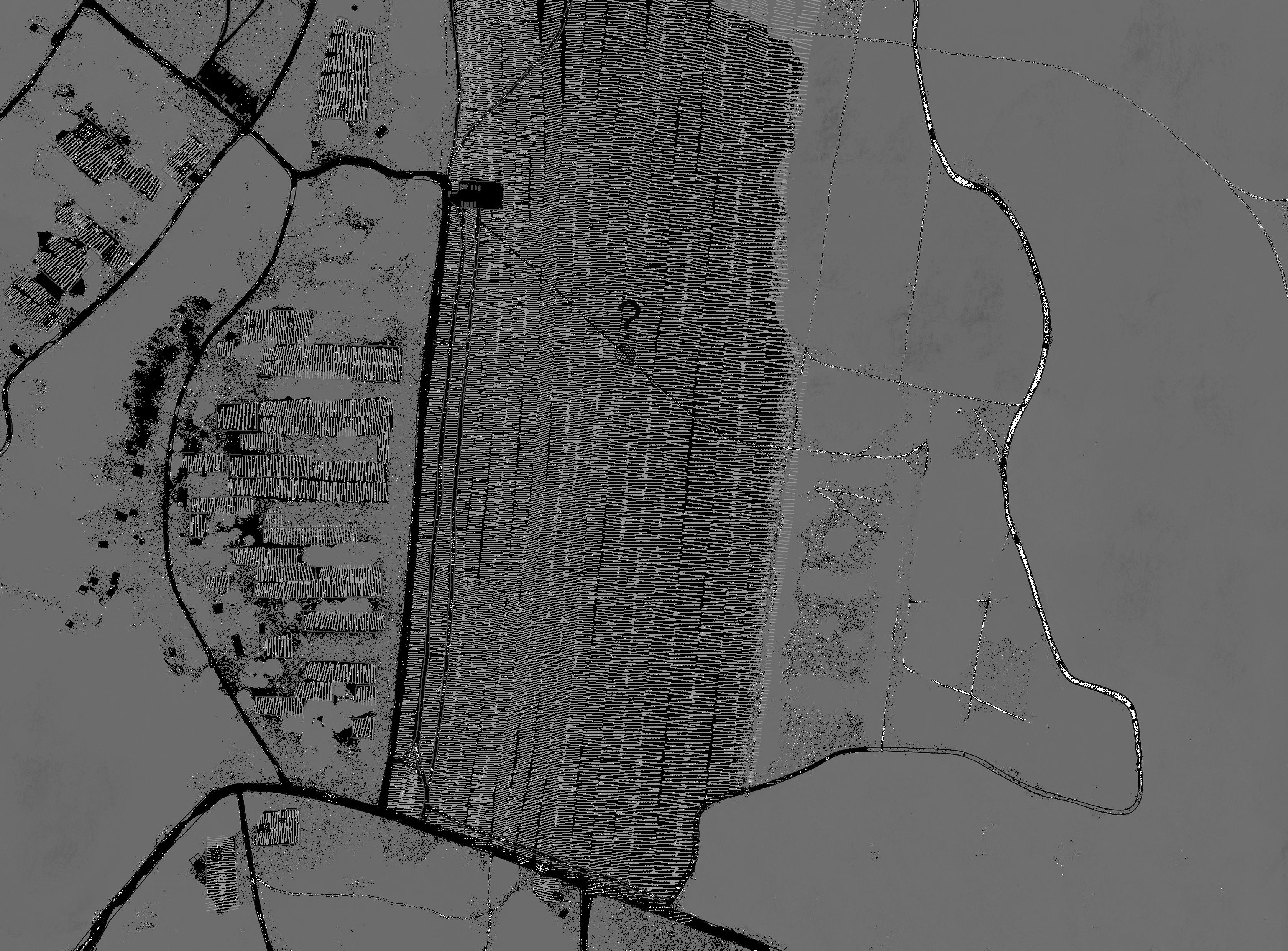
The site is located in Nikola-Lenivets, an art village in Russia, which attracts visitors from across the country for music festivals, cultural events, holidays, and outdoor modern art exhibitions. Its open, rural setting perfectly suits the project’s needs, allowing the structure to be integrated harmoniously within the fields of the Russian “glubinka,” creating a strong connection between architecture and landscape.
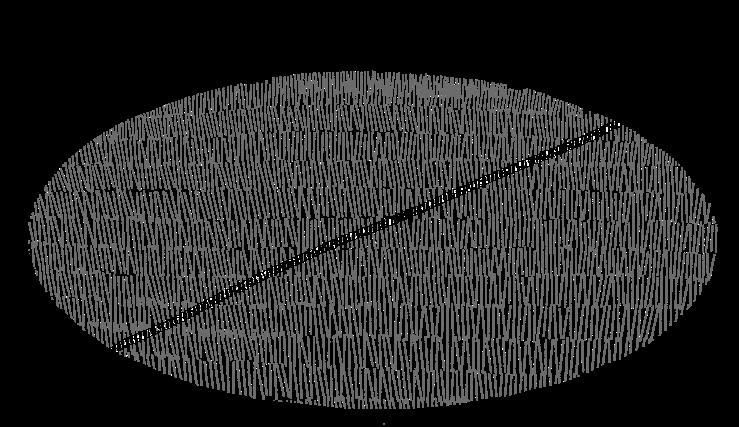
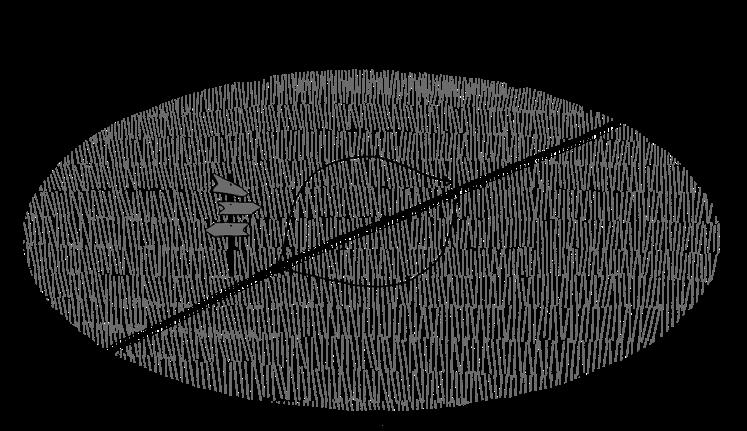
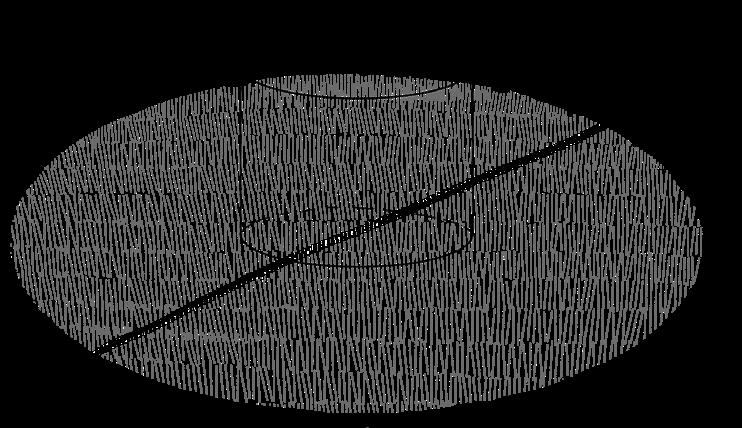
location: empty, wide field and a path that leads to the other side of the village
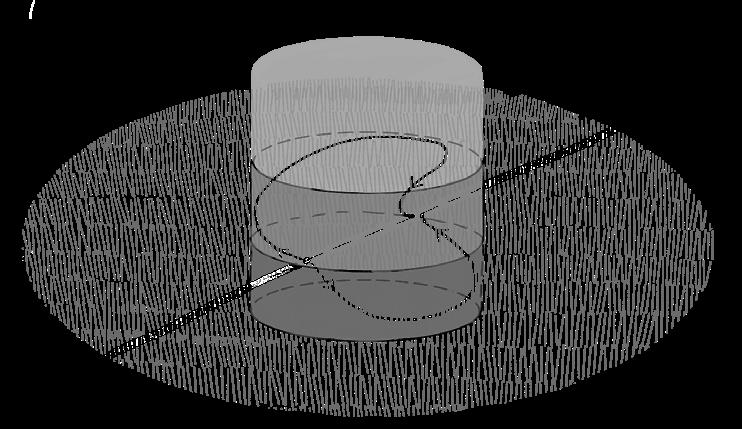
the experiences happen in the middle of the cilinder weareas the circulation is on the edge of it
idea is to have a volume of experiences in the middle of the way with three path choices (inspired by russian fairy tails)
the volume has a circular shape to allow to accomodate 3 possible scenarios, allowing to enter the pavilion from both sides
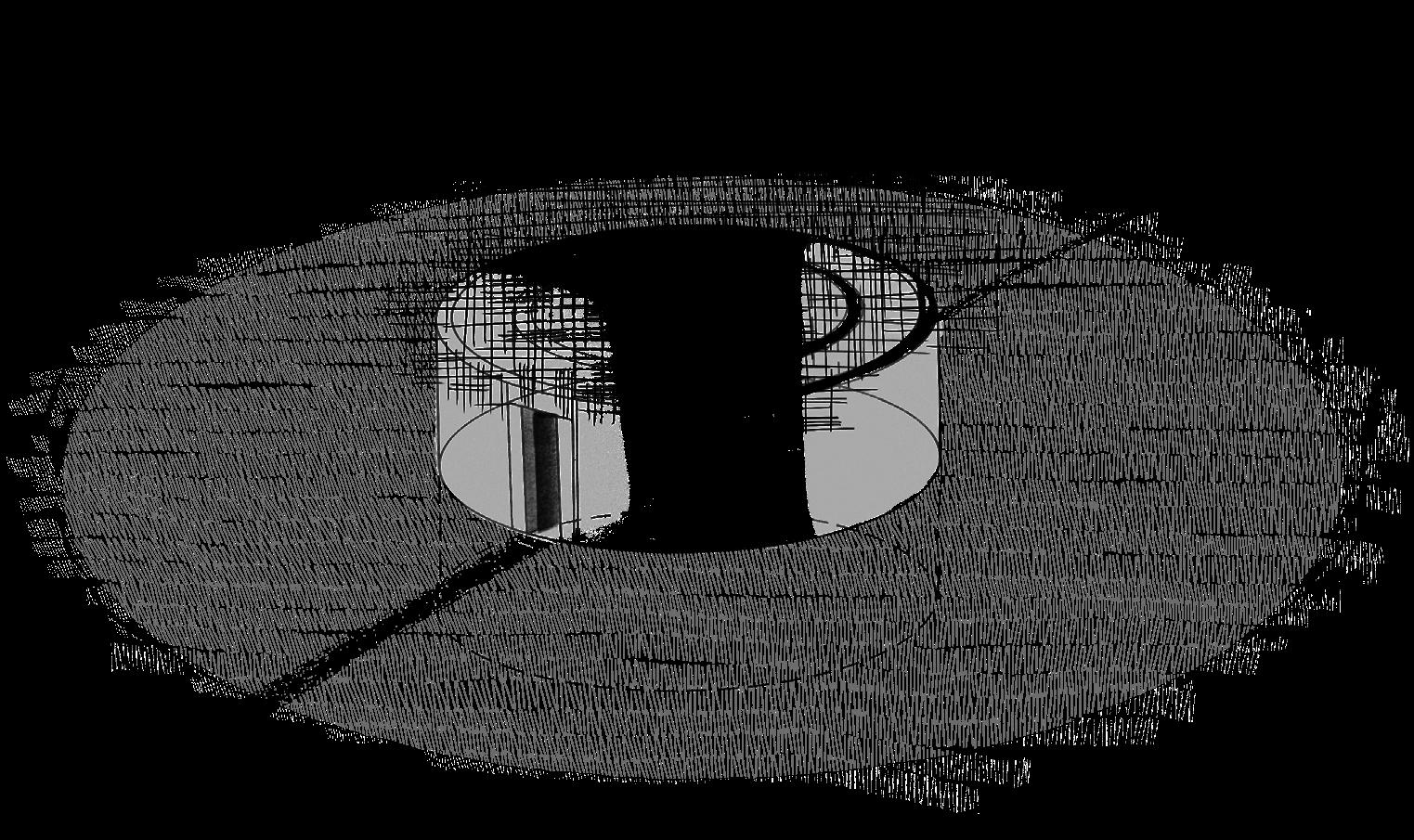
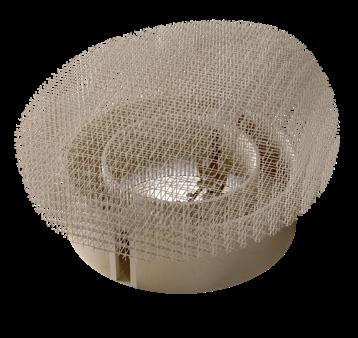
The top level represents the “Love Path,” offering visitors elevated views of the surroundings and helps to see and understand from above the experience of the “life path”, as love usually does. This complex structure appearing as a flock of birds from a distance and a “nest of love” up close. It was initially modeled in Grasshopper and later transferred to Revit.
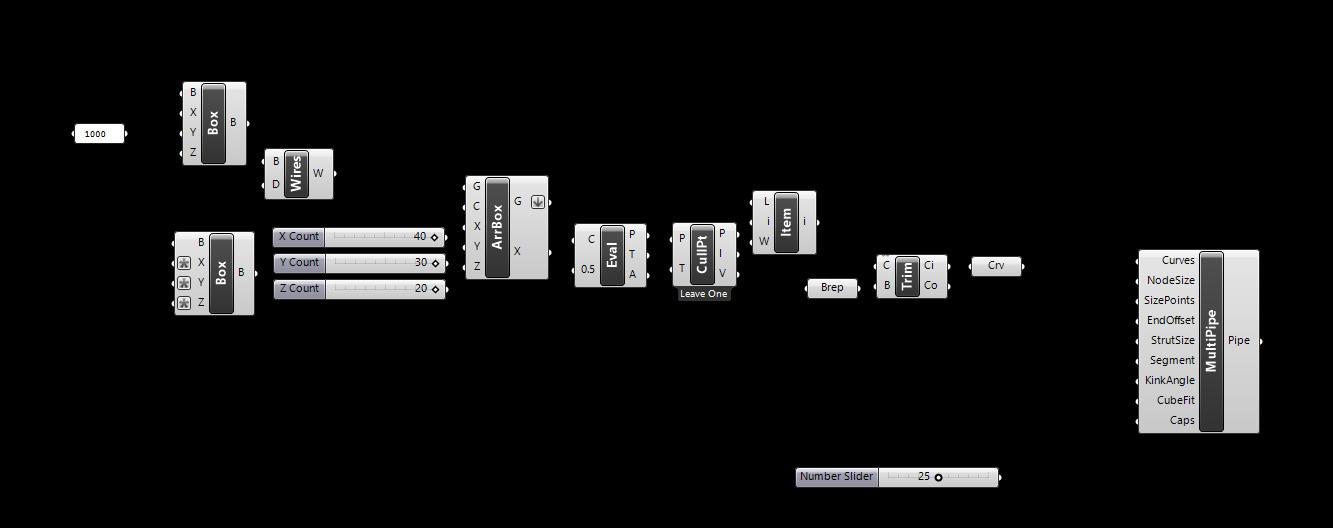
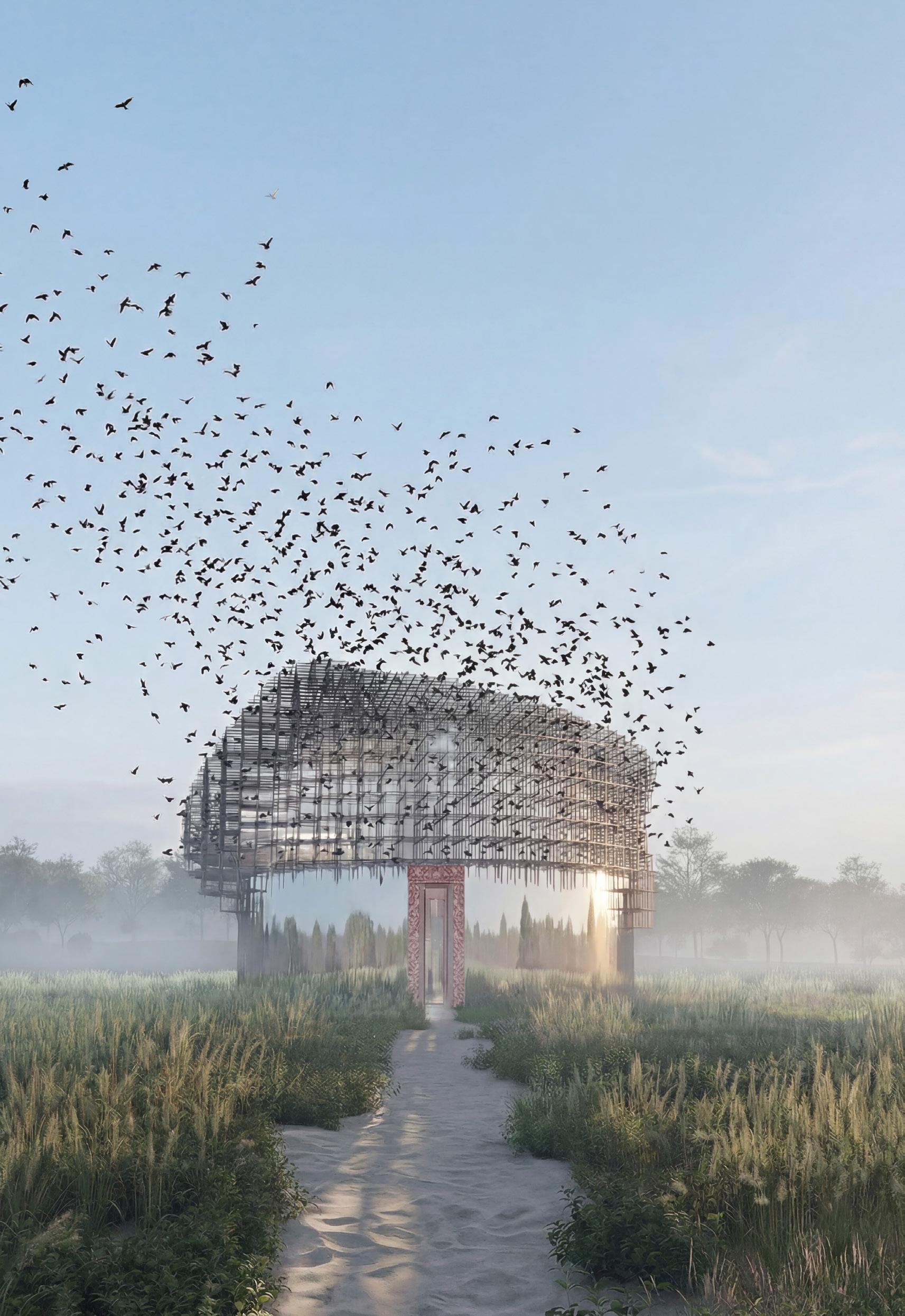
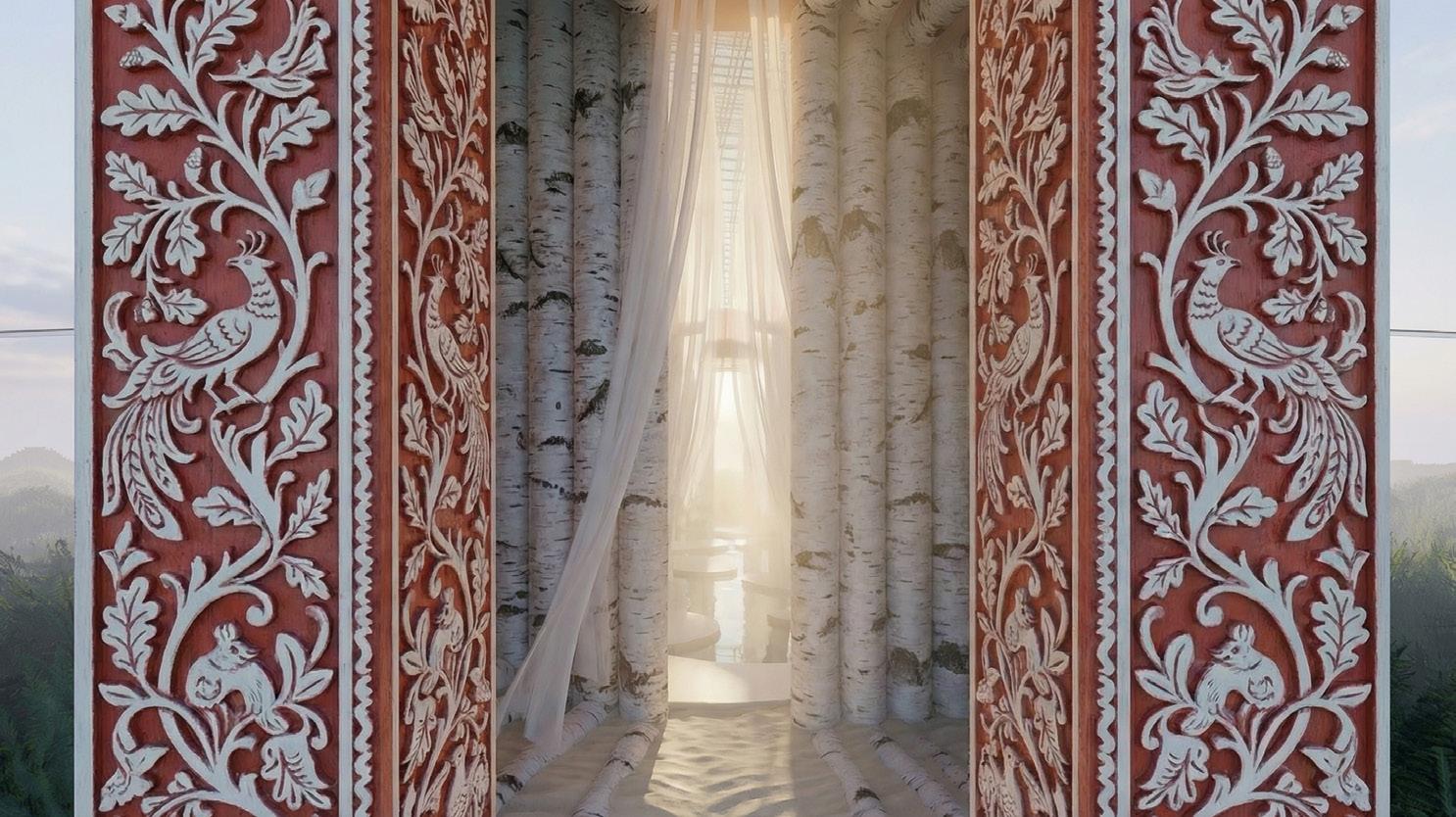
The entrance is framed with “nalichniki” traditional decoration around doors that symbolizing the transition from one world to another. From “chaos” to a “safe space”.
After you enter you can eiather go to the left, right or straight. As they say in fairy tails o find “love”, “death” or “yourself”.
Ground floor. Scale 1:200
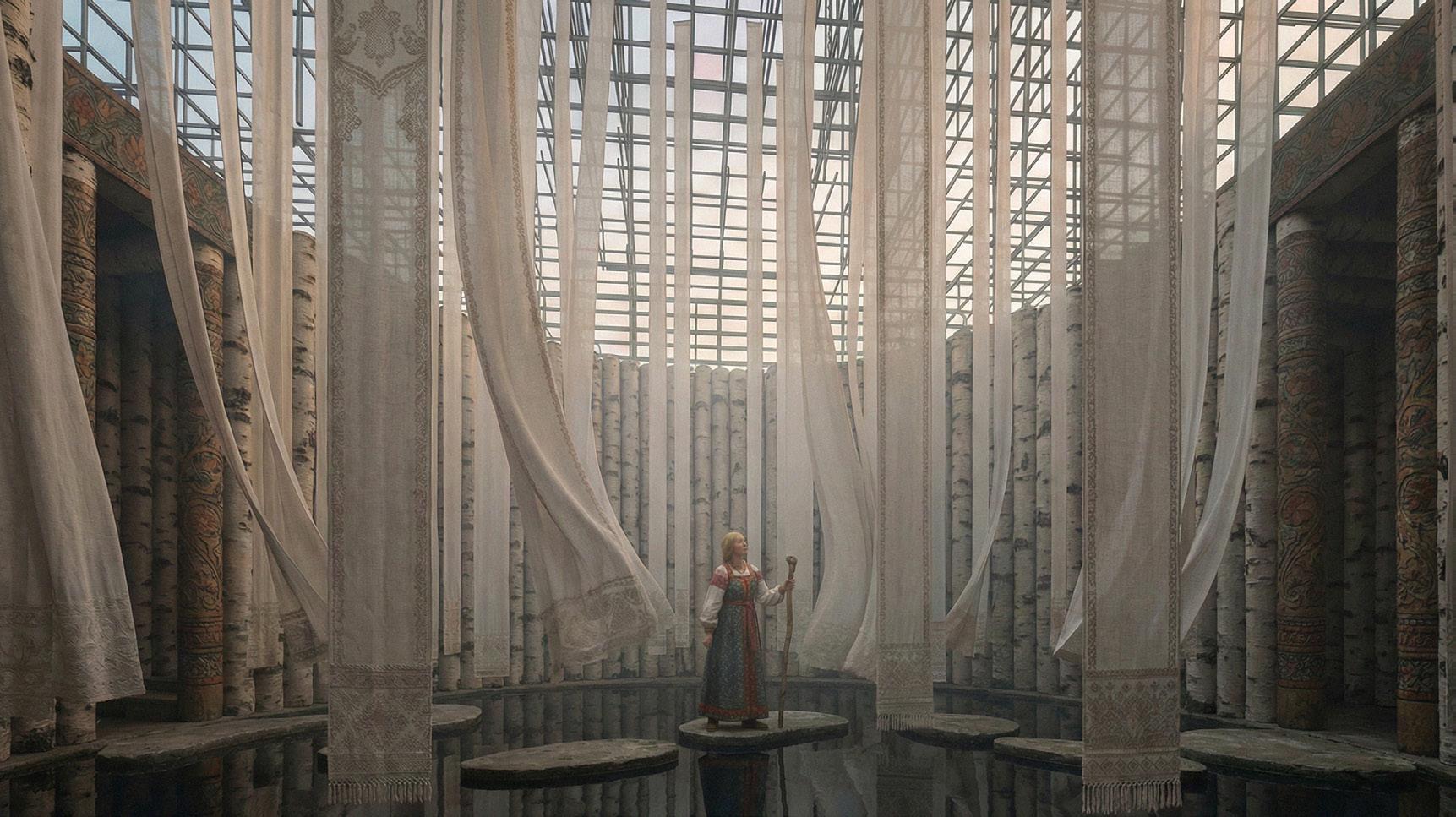
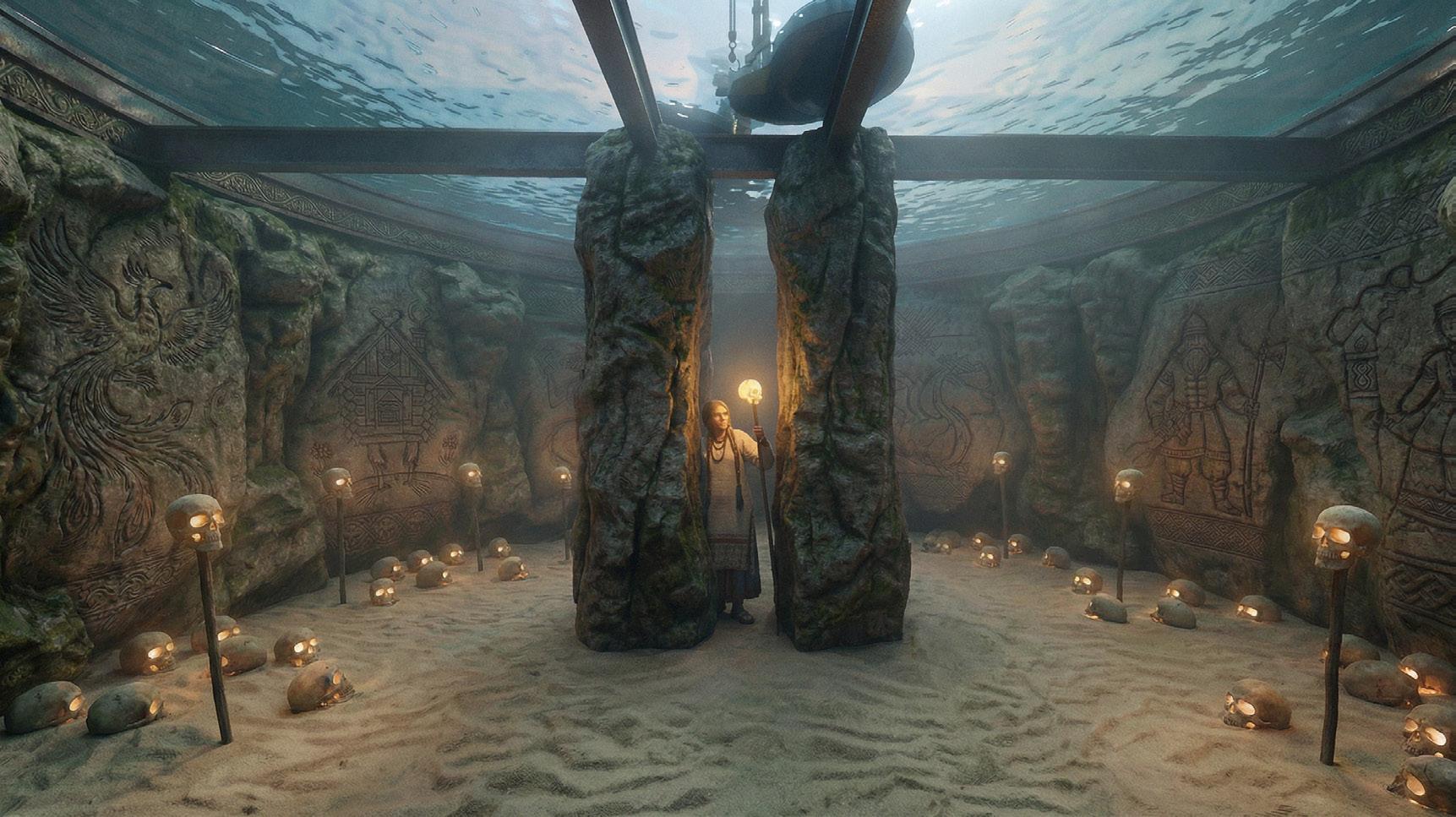
Ground floor level. “Find yourself”.
The ground floor experience is about “finding yourself” through a path of challenges. Visitors navigate irregular stepping stones surrounded by water, while textiles partially obscure the view, making the journey both physically and mentally engaging. As often noted in books, the more difficult the path, the deeper the self-discovery. The phylosophy behind the space is similar. But you need to trust yourself.
Underground floor level. “Find death”.
After going through many steps, the visitor reaches a quiet and calm underground space, where water is above the head and sculptures are placed below. This area represents a heavy stage of the journey that everyone goes through at some point in life. It is a moment of stillness and weight, where everything slows down. Death is quiet, but it takes effort to choose to move toward the light again and climb back up the stairs.
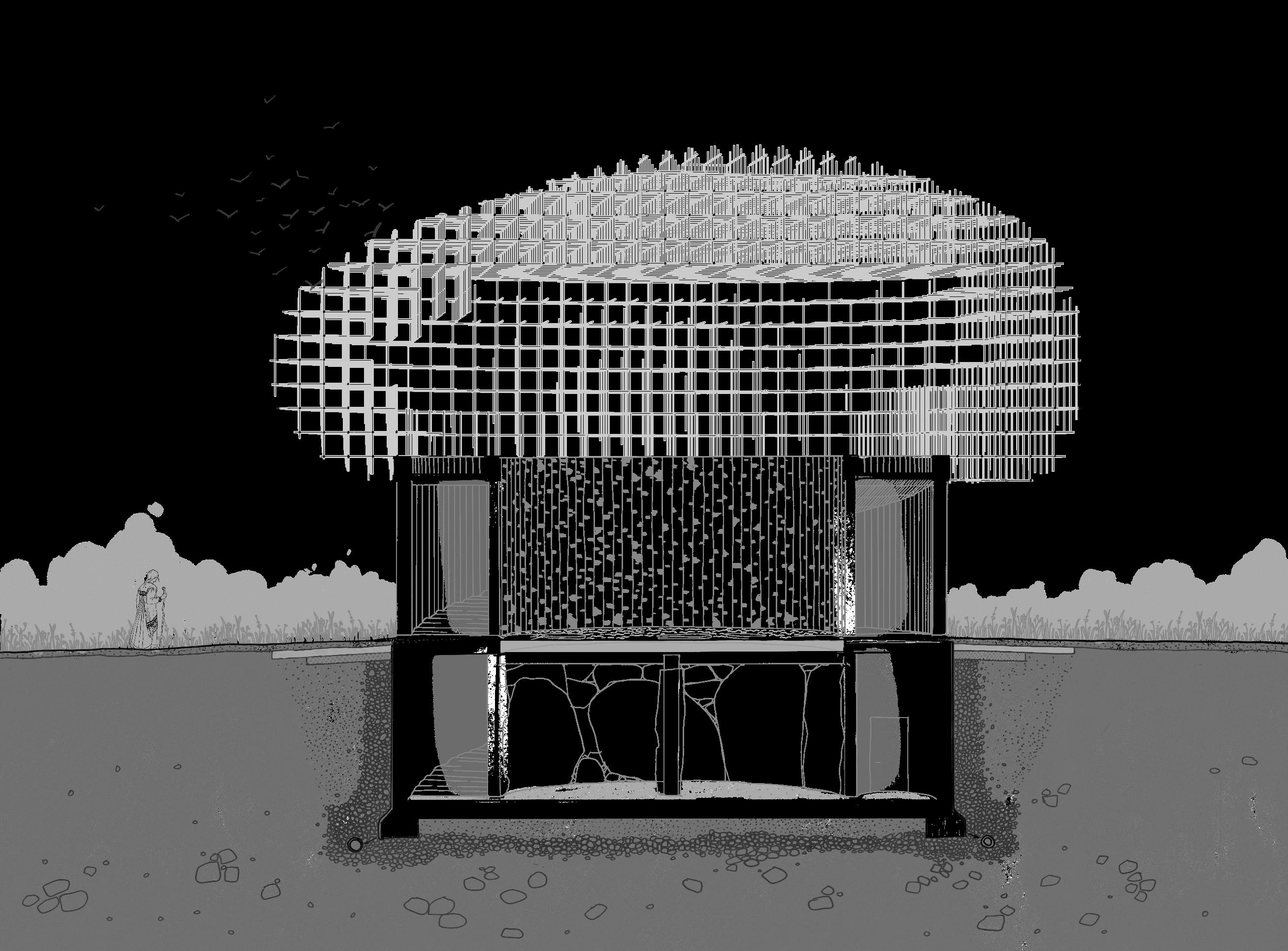
birch trunks
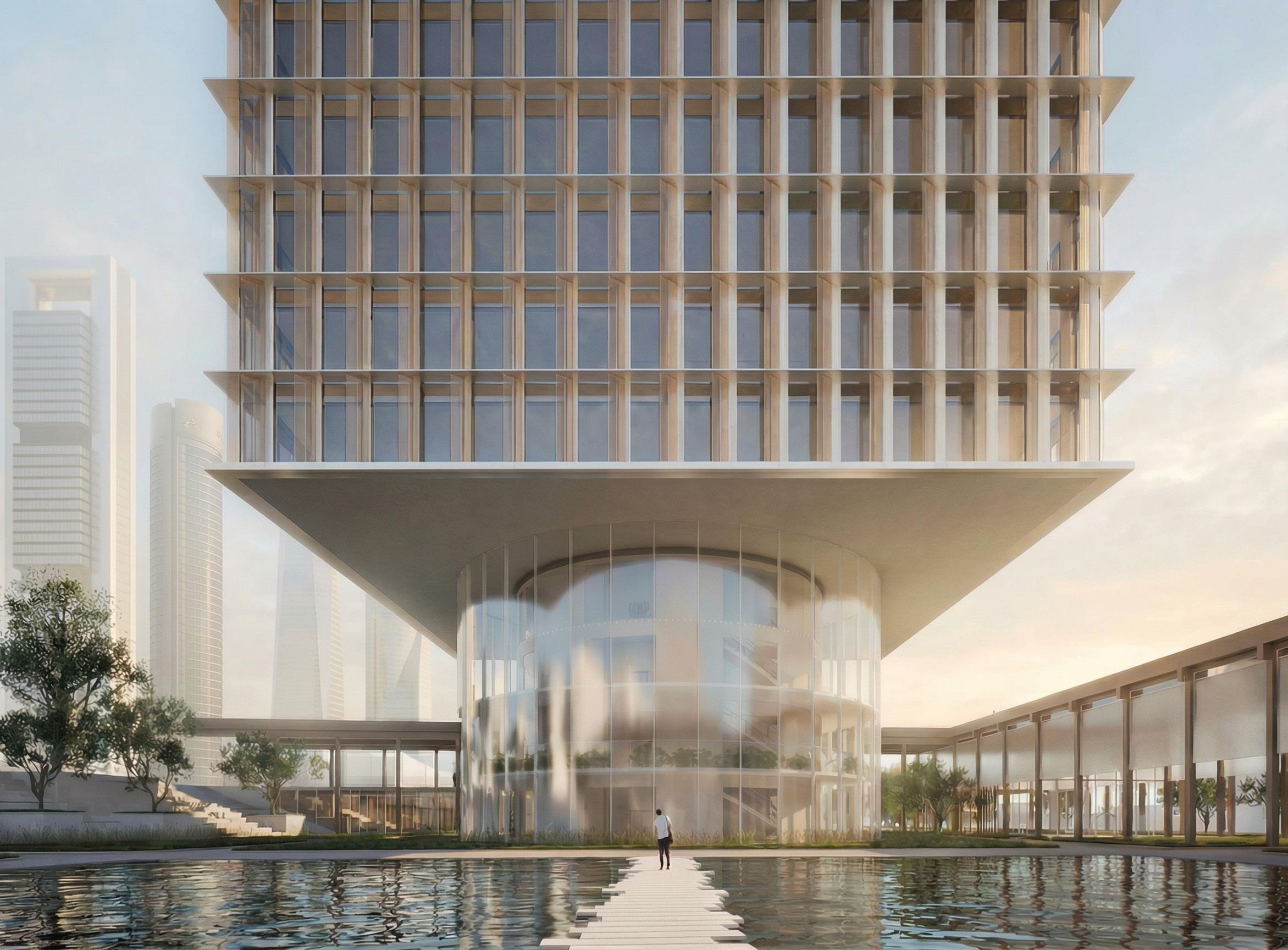
Madrid Nuevo Norte Tower is a skyscraper designed for the rapidly developing Nuevo Norte district of Madrid.
Positioned in a prime location designated for high-rise development, the tower benefits from excellent transport connectivity and integrates seamlessly into the city’s evolving skyline. As part of a larger urban regeneration plan, the project contributes to the district’s transformation, offering a contemporary architectural solution that enhances the area’s functionality and identity.
Nuevo Norte tower
parks development of Madrid
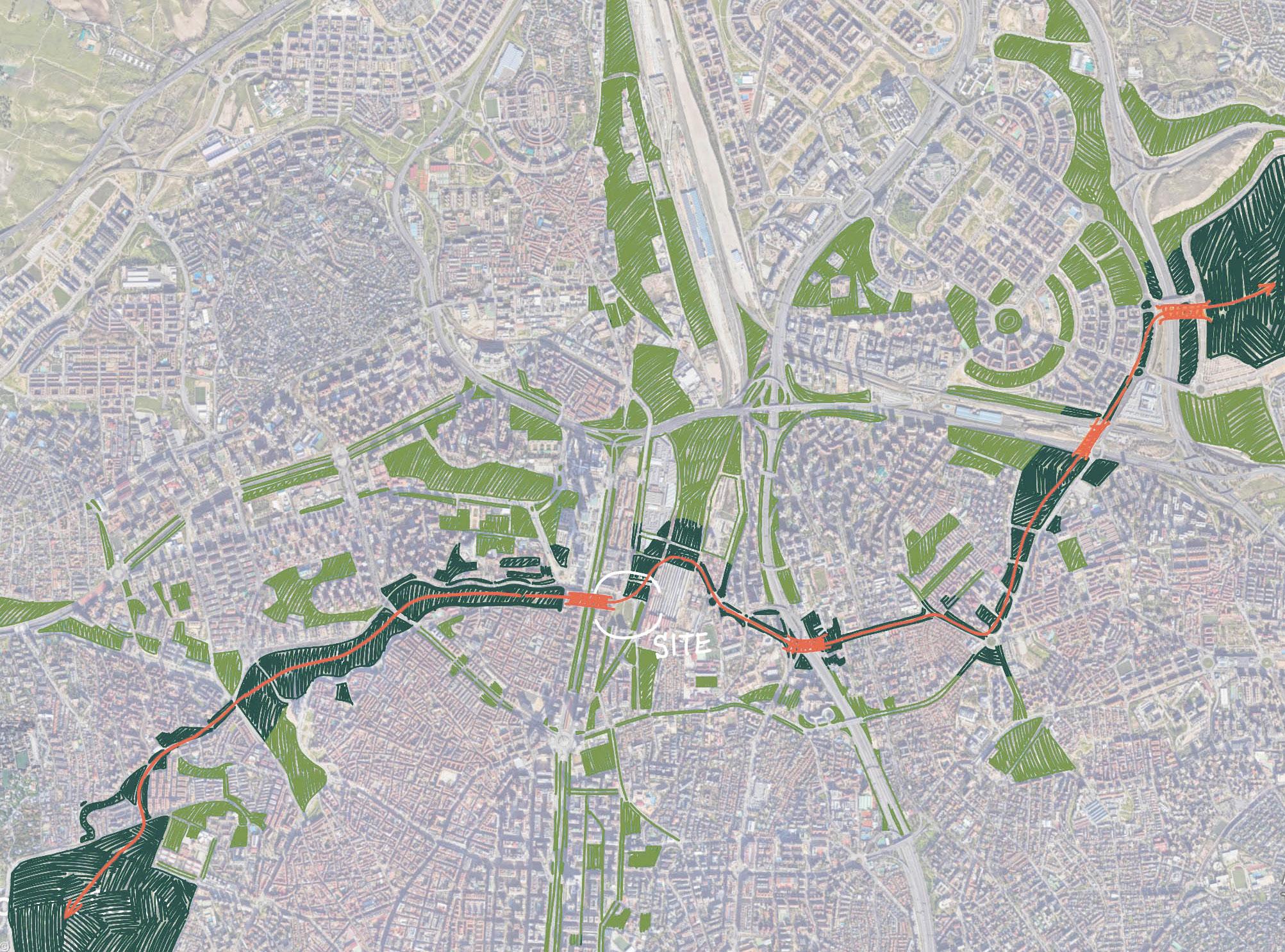
In the northern part of Madrid, there is a problem with connectivity between the areas on both sides of Chamartín train station. The city’s urban plan aims to move the railways underground and create a connection for a green corridor next to our site. This regeneration project will encourage walking and cycling, while also making the district more accessible and better connected.
In the masterplan, the new parks are already included, showing how green spaces surround the site on three sides. This proximity makes the area more desirable and creates the potential for better views from the tower. As a result, the presence of these parks became the main guiding idea for the project.
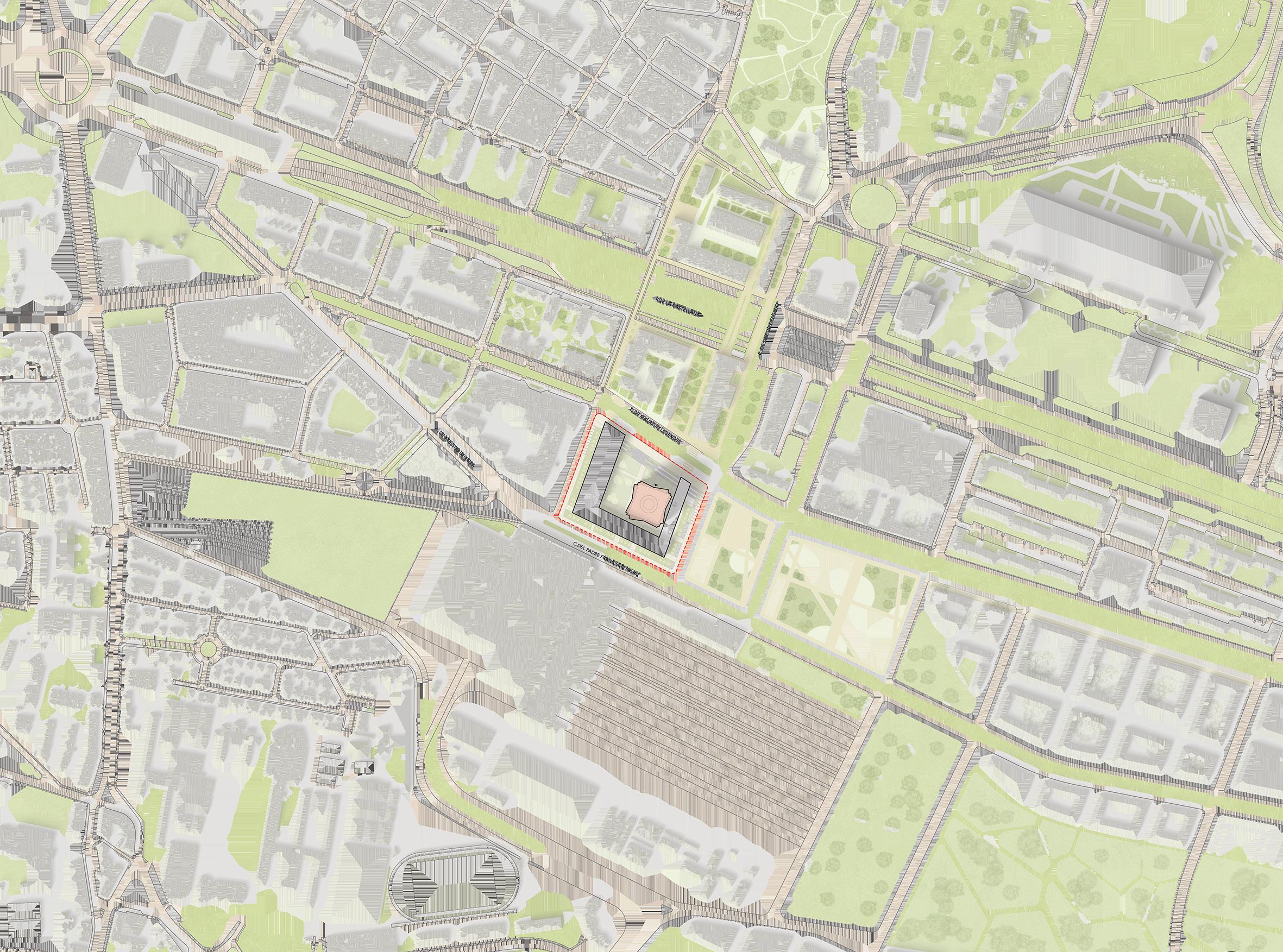
the intersection of green axes on the site
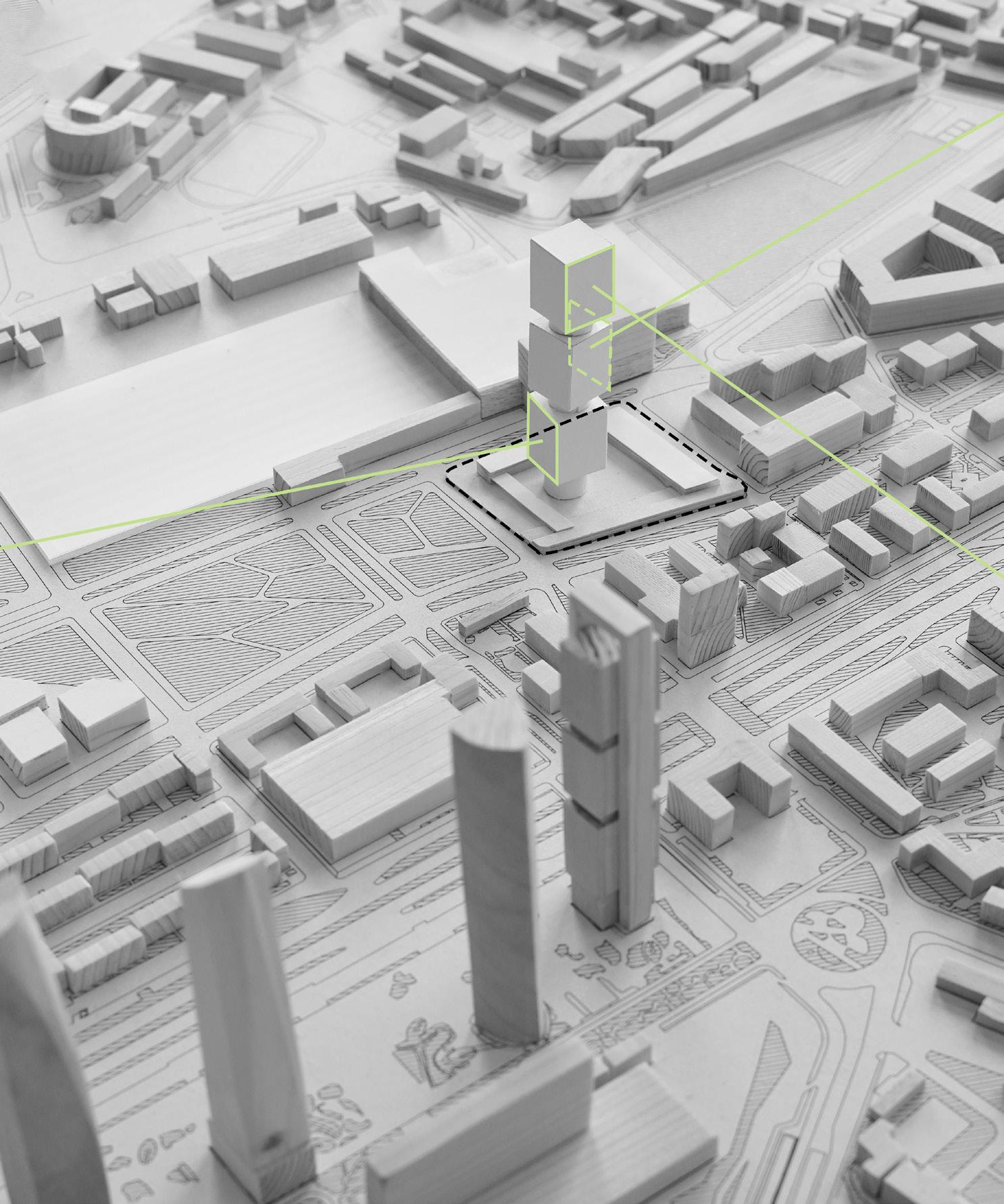
positioning of the main volume of the tower on the intersection
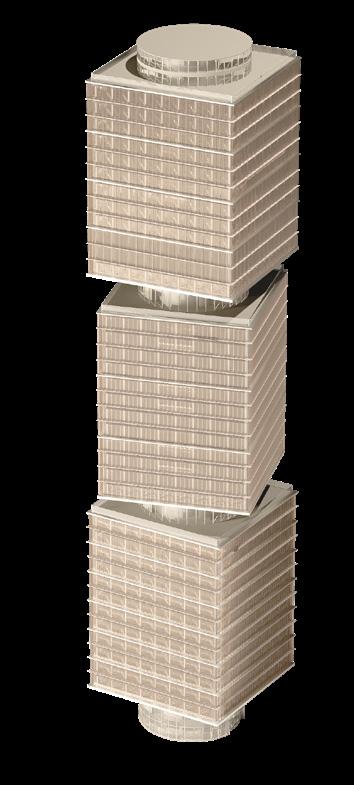
it forms three blocks that hinge around a central core, like branches growing from a tree trunk. Each block is rotated to face one of the surrounding parks
at the pedestrian level, a highly transparent podium creates visual openness from all sides, allowing clear views of the tower. This transparency makes the building feel more inviting and encourages interaction with the surrounding public space.
Green axes
initial sketch
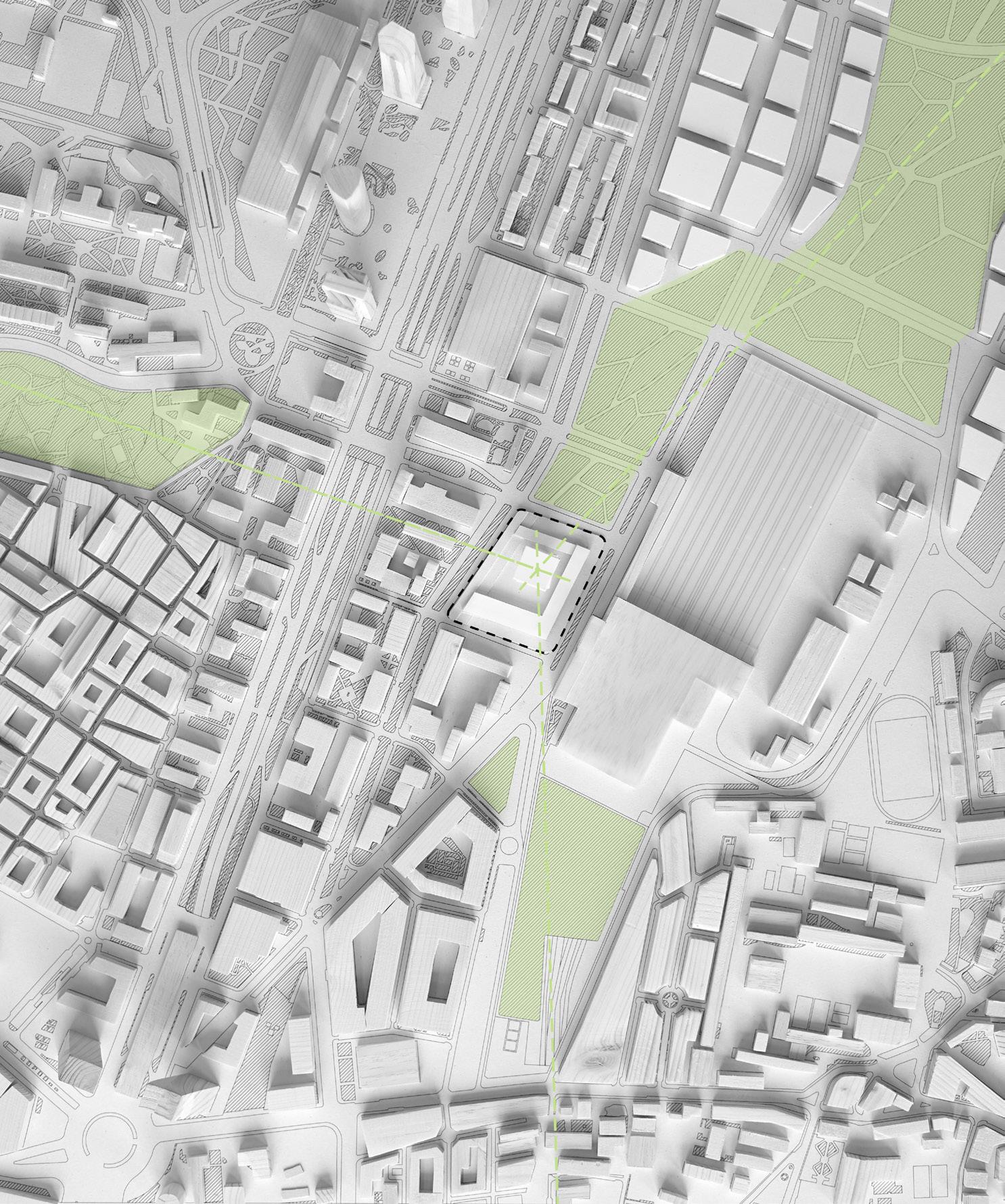
Physical model in 1:2000 scale for the urban examination, top view
Physical model in 1:2000 scale for the urban examination, perspective view
materials: cardboard, wood, paper
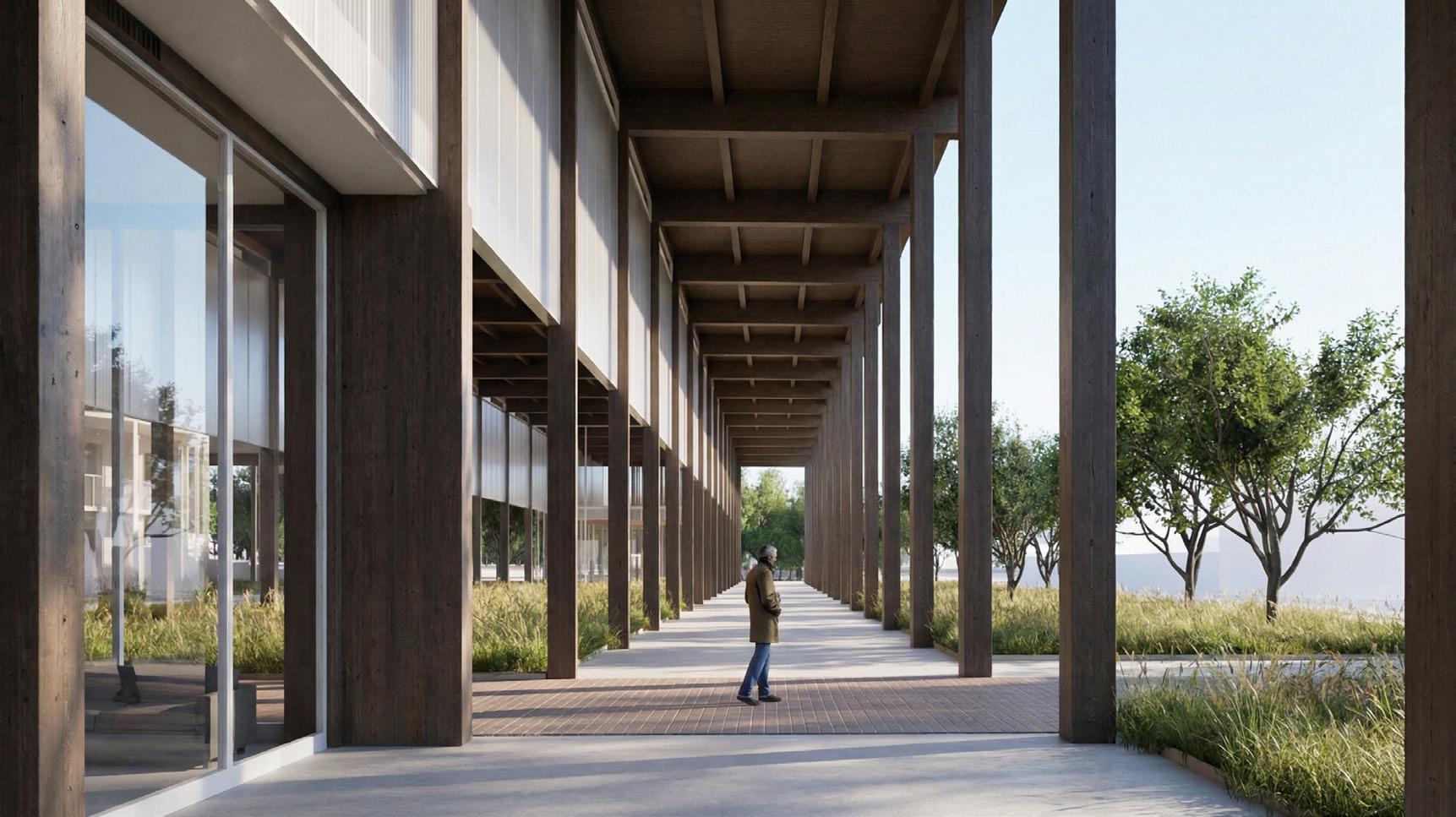
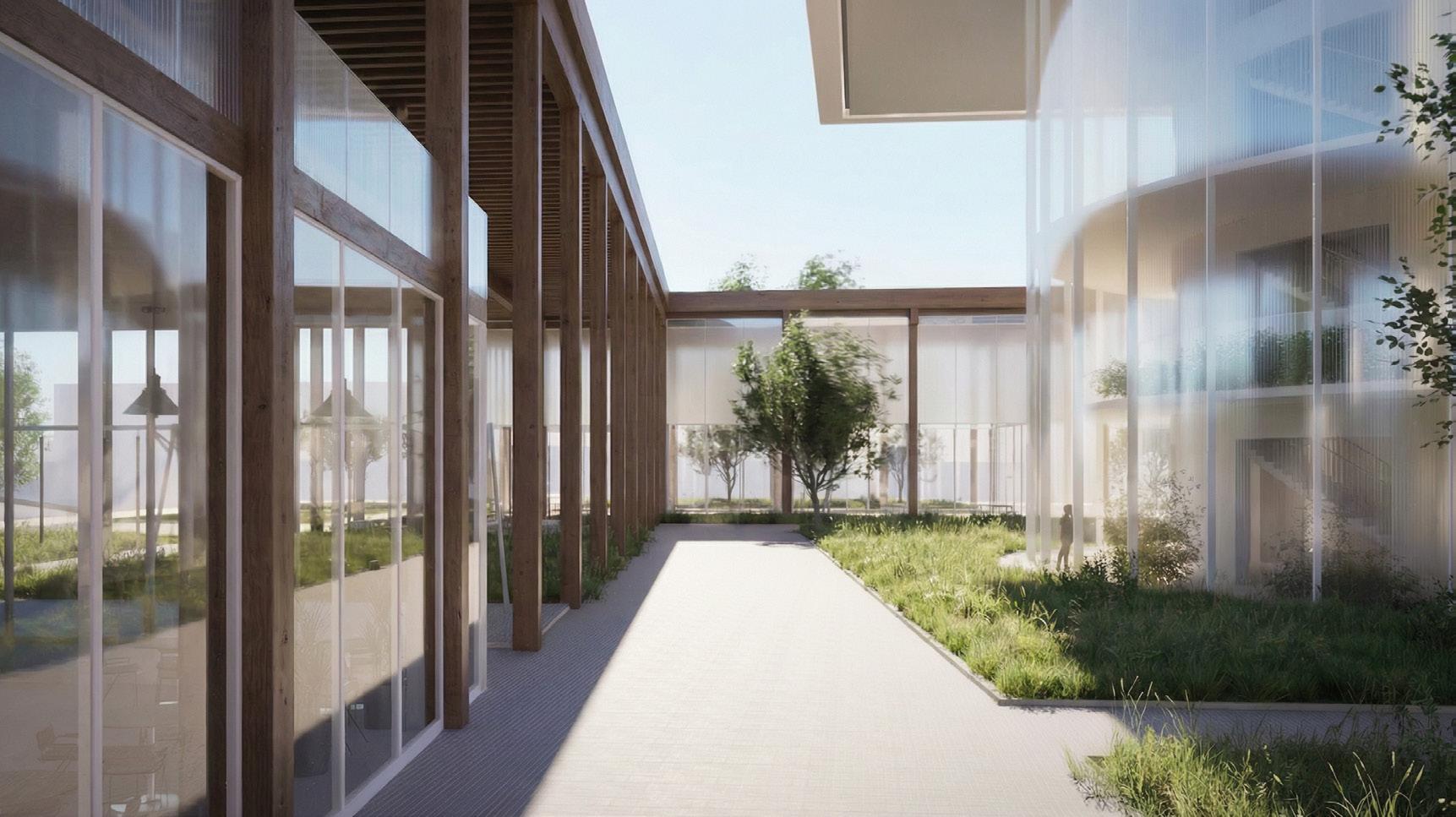
In view 2, a long canopy provides shelter for pedestrians moving along the highway toward the adjacent park, protecting them from Madrid’s intense summer sun as well as rain. The canopy is semi-transparent and integrates a range of public functions, including a gallery, lecture hall, café, and bar. The openness of the podium creates a seamless transition between the natural landscape and the built environment. In view 3, both the lower floors of the tower and the canopy are visible. The building’s foot-
print is designed to preserve greenery and maintain an open, accessible environment for pedestrians, reinforcing the connection between the architecture and the surrounding landscape. Overall, the project integrates architecture with the surrounding green spaces to create a more connected and accessible urban environment. By prioritizing openness, visibility, and pedestrian experience, it strengthens the relationship between the built form and nature while enhancing the quality of life there.
Key masterplan
The spaces within the podium are designed to serve community needs. Since the site previously hosted outdoor street art activities, one wing of the pavilion is dedicated to art. It includes a large lecture hall that can be used for studying when no events are scheduled, as well as for talks and presentations by artists. Their work can then be exhibited on the floor above in the gallery, creating a strong connection between creation, discussion, and display.
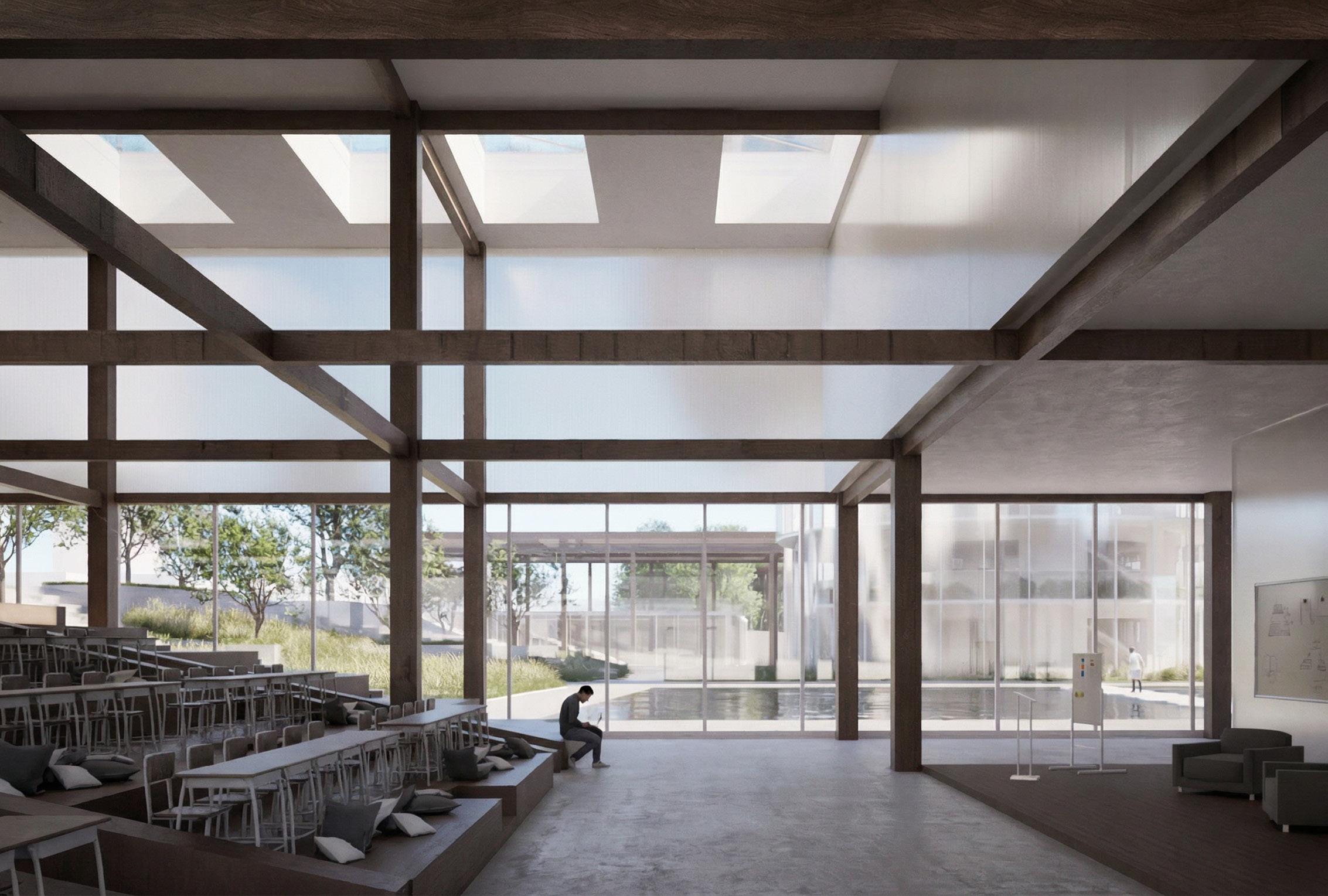
Light wooden frame and transparency of the structure of the hall
Sustainable design protects from eccessive light and heat, plus produces energy
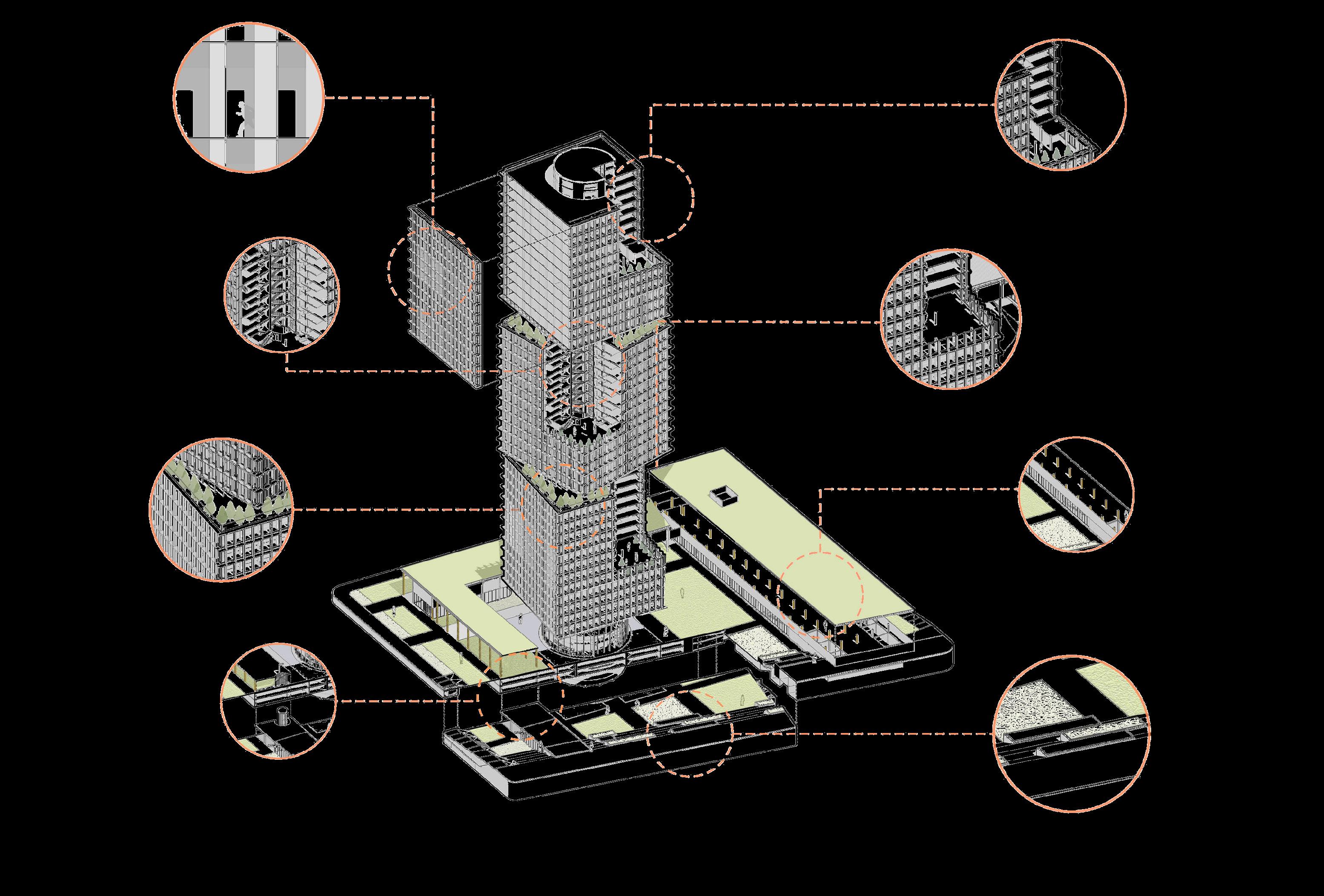
Discovery design
open landscape staircases to reduce elevator use and promote discovery
Ecological design
open green terraces as urban farms
Design for change
less parking to promote use of public transport
software: Revit + Photoshop
Sustainable design good lighting for public spaces enhancing quality of space
Wellness design
double height spaces to enhance interactions and visual connections inside the living spaces
Sustainable design wood structures for podium, less use of concrete approach
Community design
open spaces to promote idea of community, offering various green scenarios
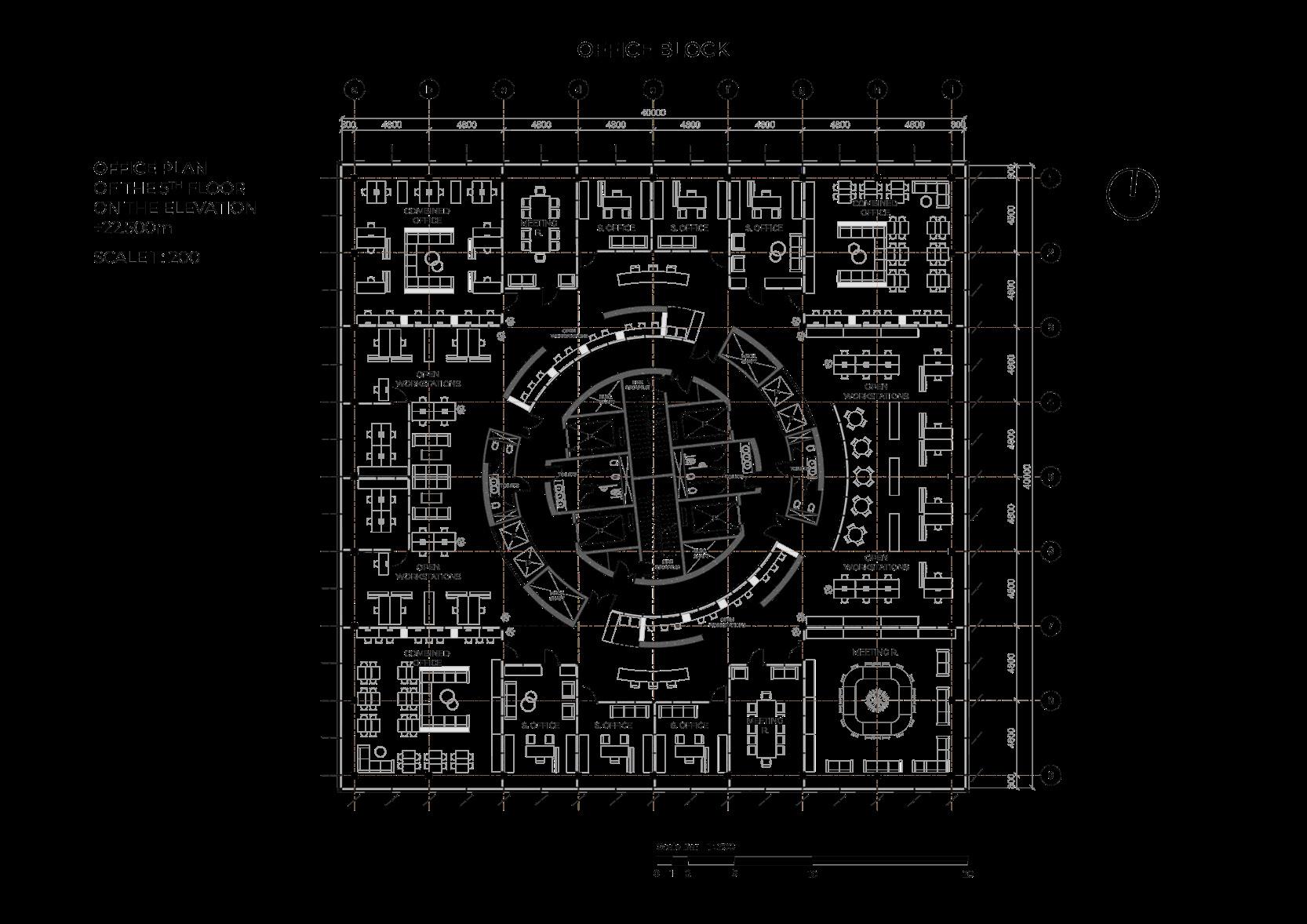
Office plan of 5th floor on the elevation
+22.500 m
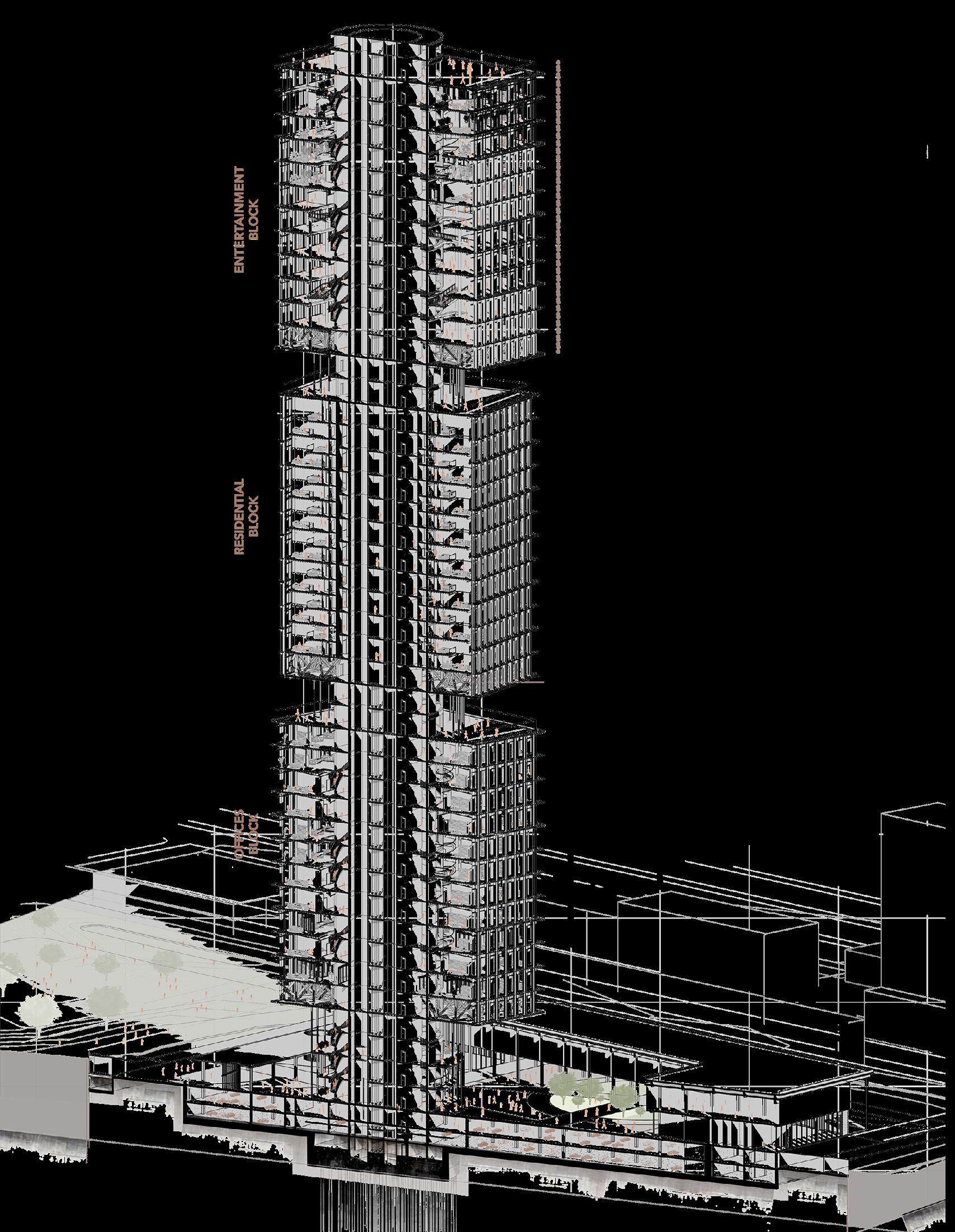
block
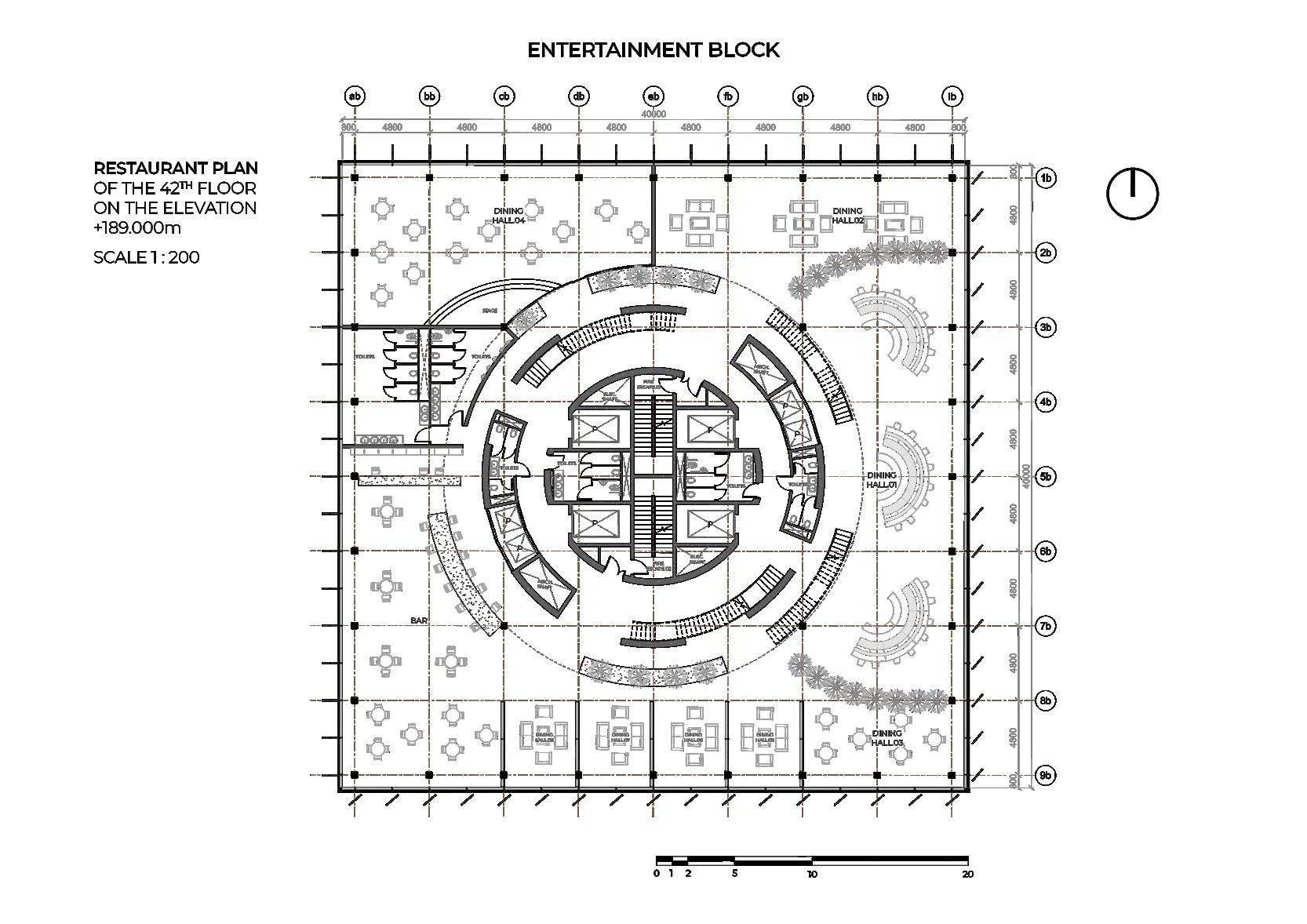
Restaurant plan of 42th floor on the elevation
+189.000 m
Office block
Entertainment
Each block’s bottom features a spacial space frame structure, doubling as a mechanical floor to house duckts and piping, all covered by a parametric facade
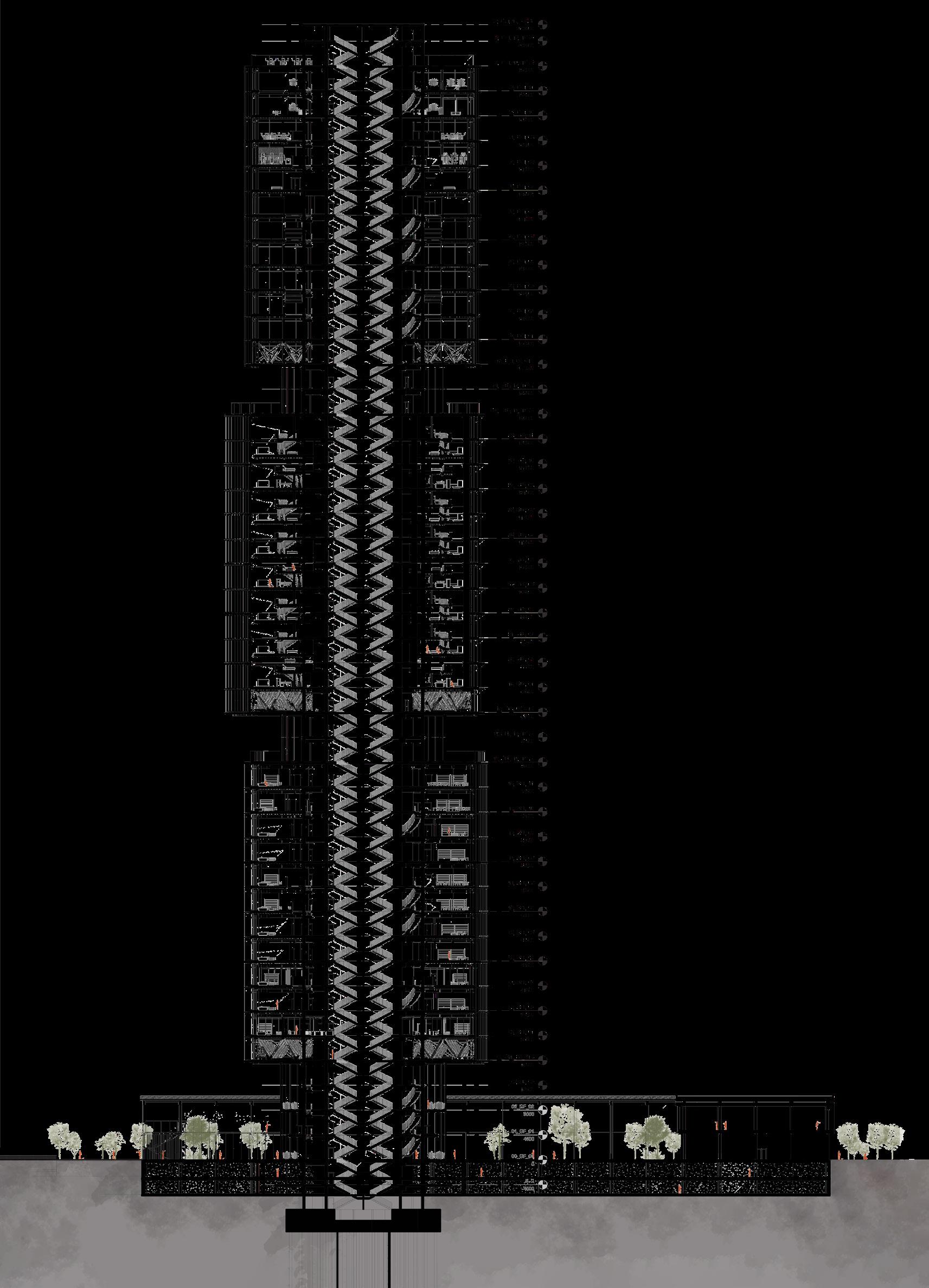
3D section of the tower features three independent, tilted blocks, each aligned towards a different green axis. Each block’s load is supported by a space frame structure, which transfers the load to a central concrete cylinder, ensuring stability and structural integrity
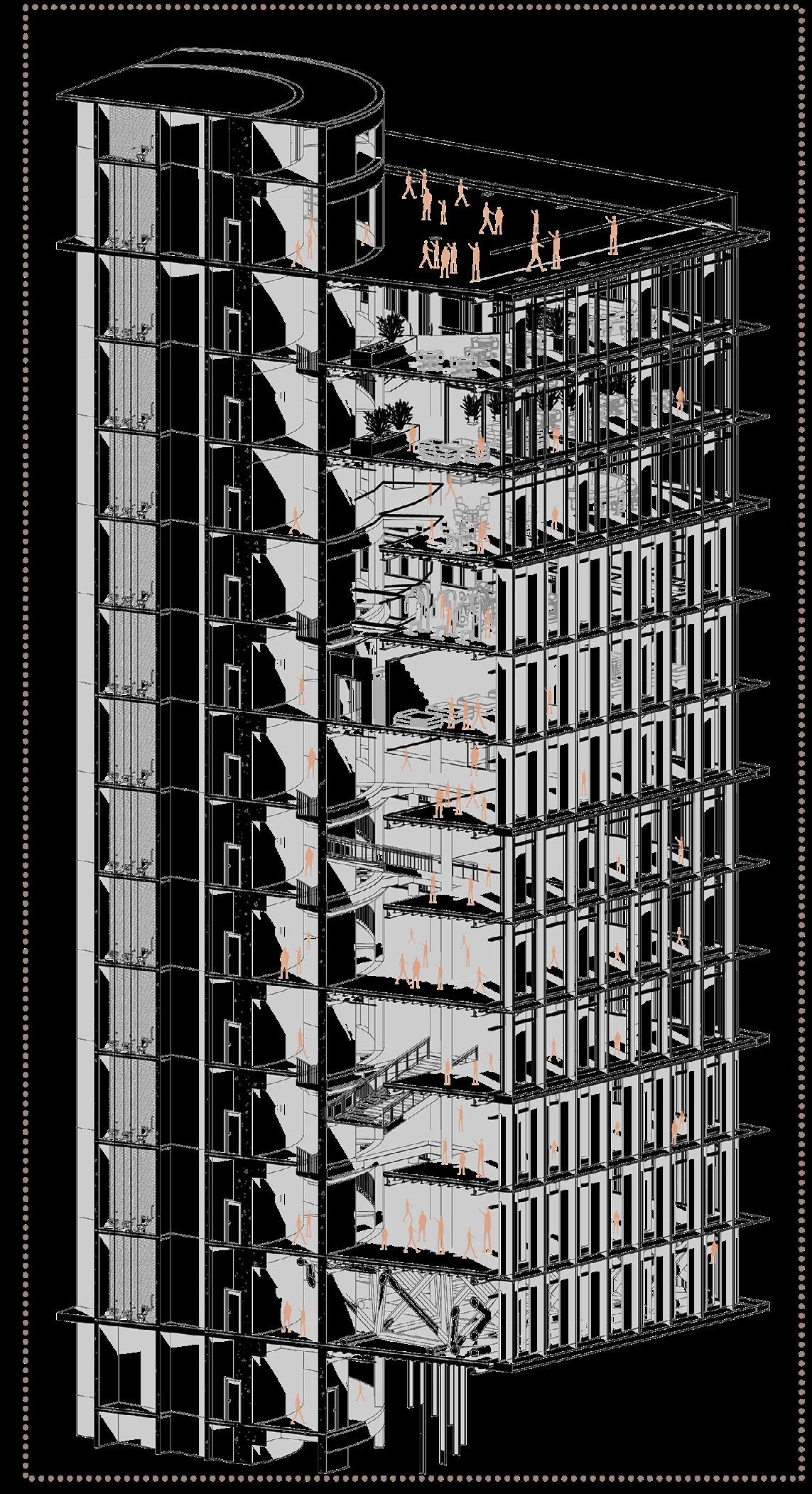

3D section detail
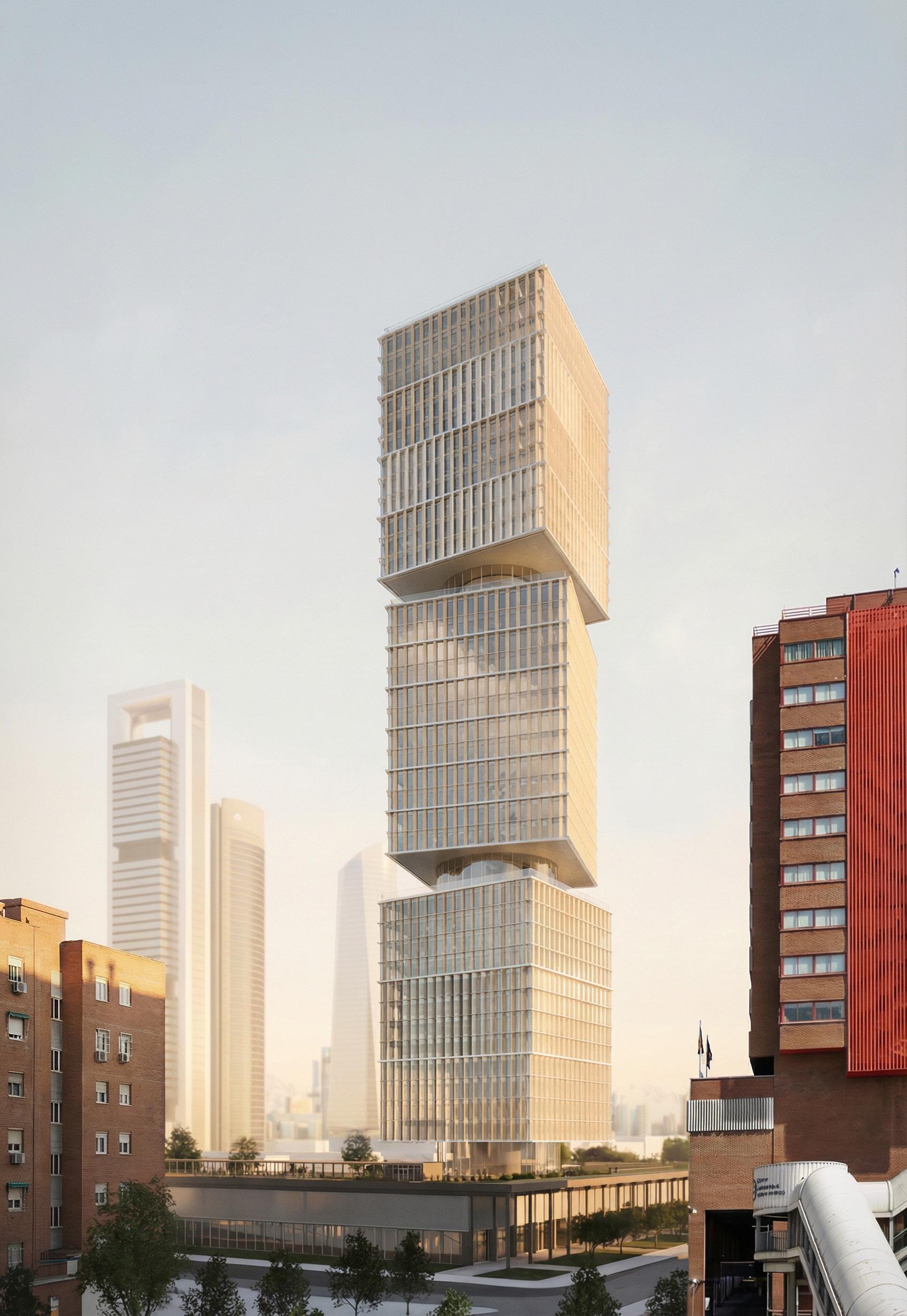
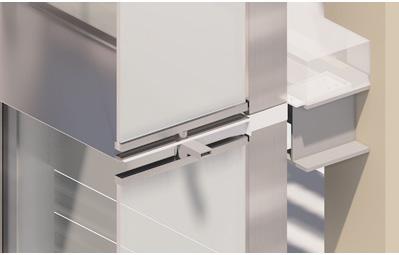
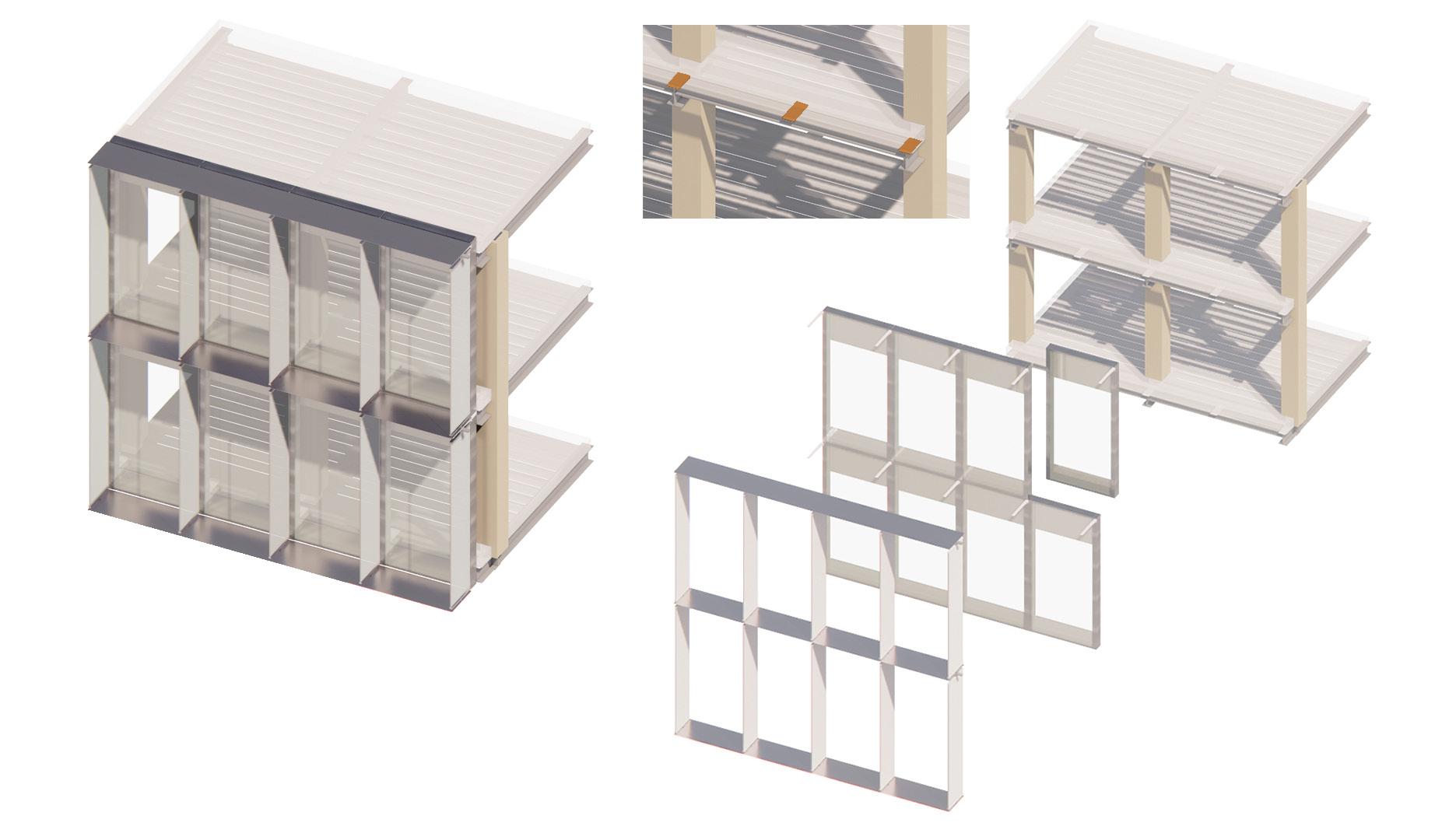
Each panel is made of durable metal with preinstalled connectors. On-site, mounts are attached to the building’s structural beams to support the weight and alignment of the curtain wall panels.
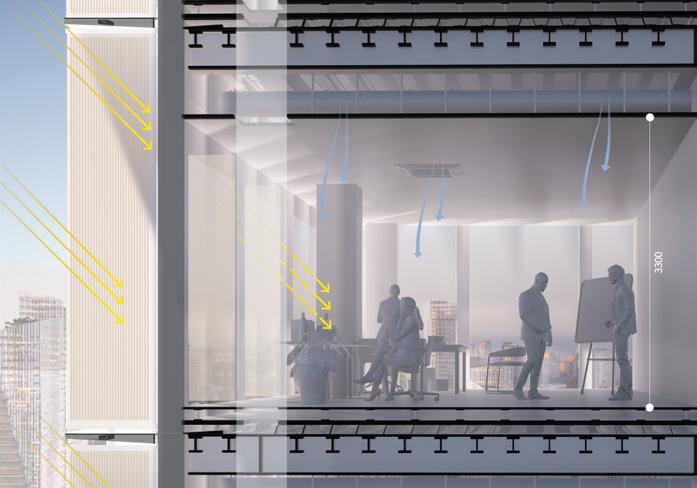
Our curtain wall system uses prefabricated panels with integrated photovoltaic elements for energy efficiency.
3D section
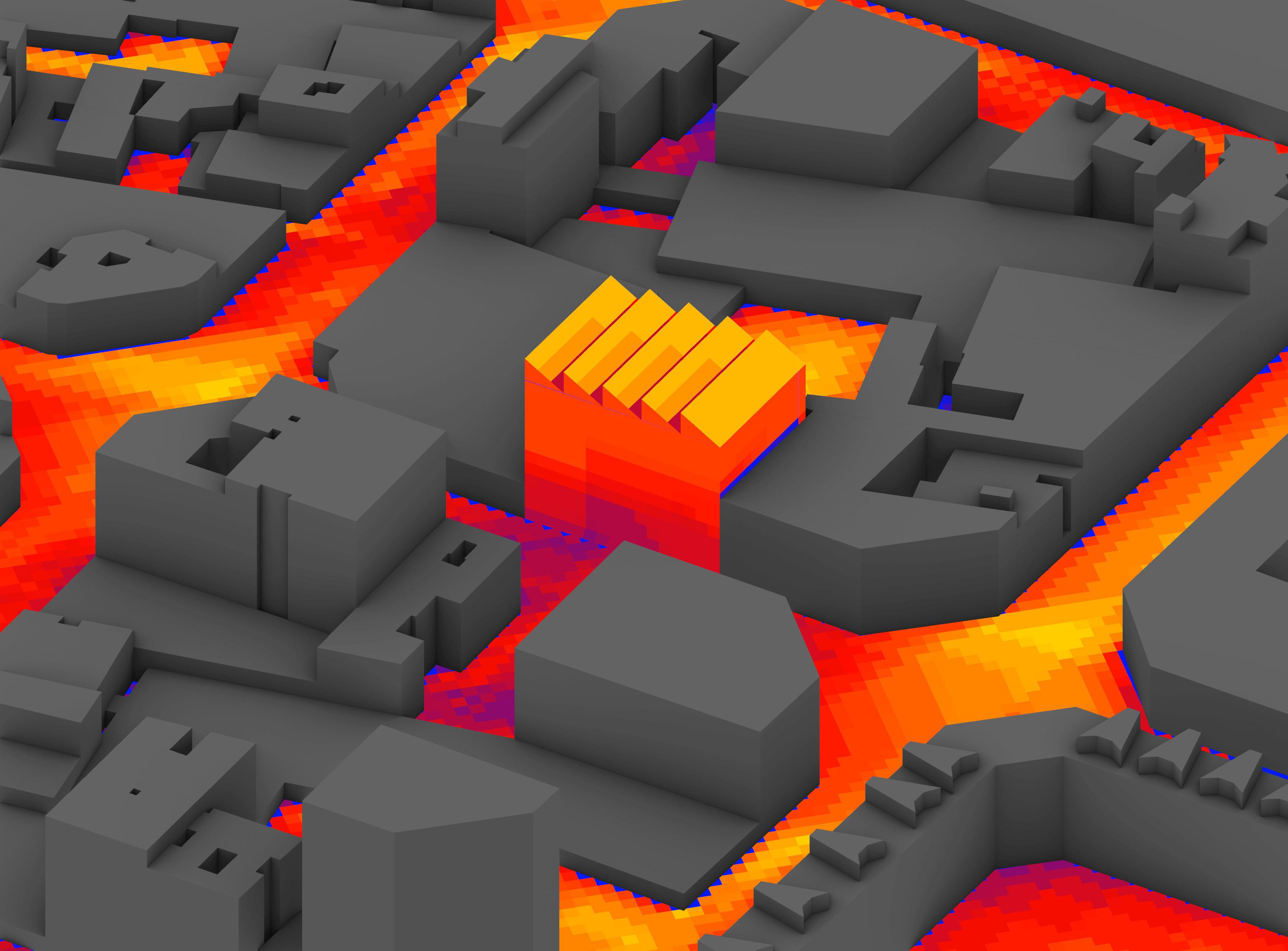
The use of parametric tools enables precise analytical exploration based on calculated data, making them an advanced and powerful resource that I greatly enjoy working with. Beyond model generation, these programs allow for in-depth analysis of environmental conditions, spatial relationships, distances, and even acoustics. In the following slides, I present my interest in this approach and my intention to further develop and expand my skills in this field in the future.
software: Rhino + Grasshopper
In almost every project, there was a need to use Grasshopper or Rhino for analysis and form generation. During my master’s degree, I also took a Grasshopper course to better understand the possibilities these tools offer. In this chapter, I would like to present the knowledge I have gained and express my genuine interest in further exploring this area of project development.
So far, I have used these tools to create complex geometries with controlled form development for the Hohohot East Coach Hub Terminal, conduct solar analysis to determine optimal shading sizes and intervals, and perform acoustic analysis using Pachyderm. I have also developed structural systems in Grasshopper and linked them to Revit, as in the pavilion project.
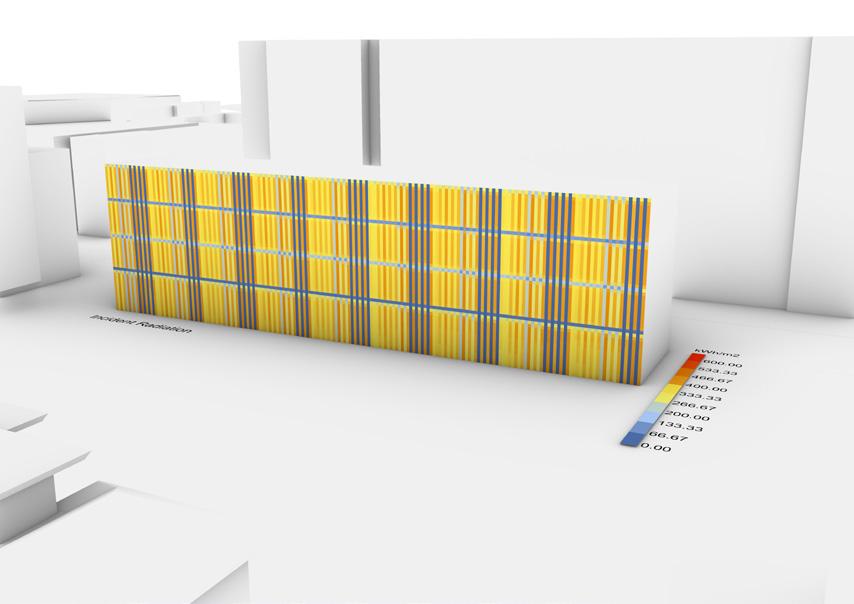
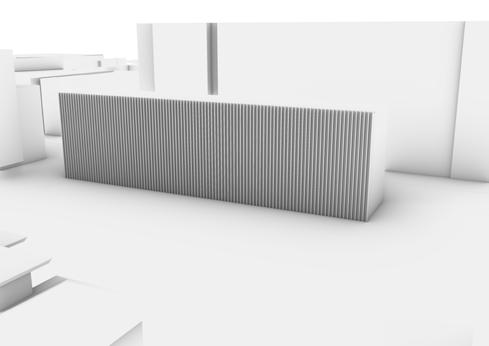
The southeast-facing facade, which also overlooks the park, was optimized to reduce glare and overheating in reading areas. Solar radiation analysis identified early-morning eastern sunlight as a key issue. Vertical facade elements were parametrically adjusted to maintain solar gain within the target range of 200–400 kWh/m².
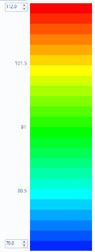
The diagram on the right indicates a smooth and even distribution of sound pressure levels. This positive initial data suggests the potential for a favorable reverberation time, which was verified in the following analysis.
Video demonstration of working in Rhino and Grasshopper (data from QGIS)
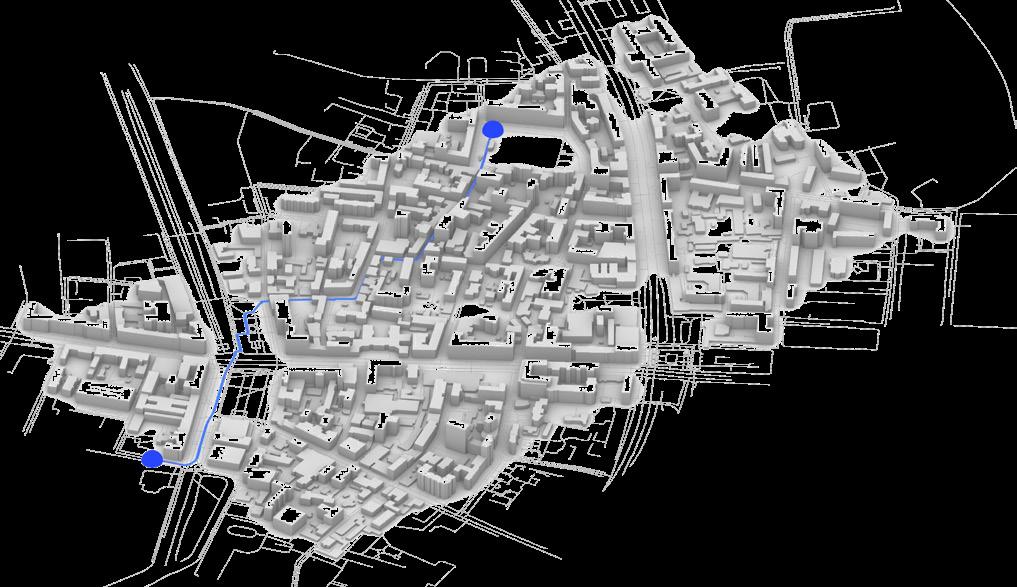
1. The scheme of the shortest path that changes depending on the position of points on the map
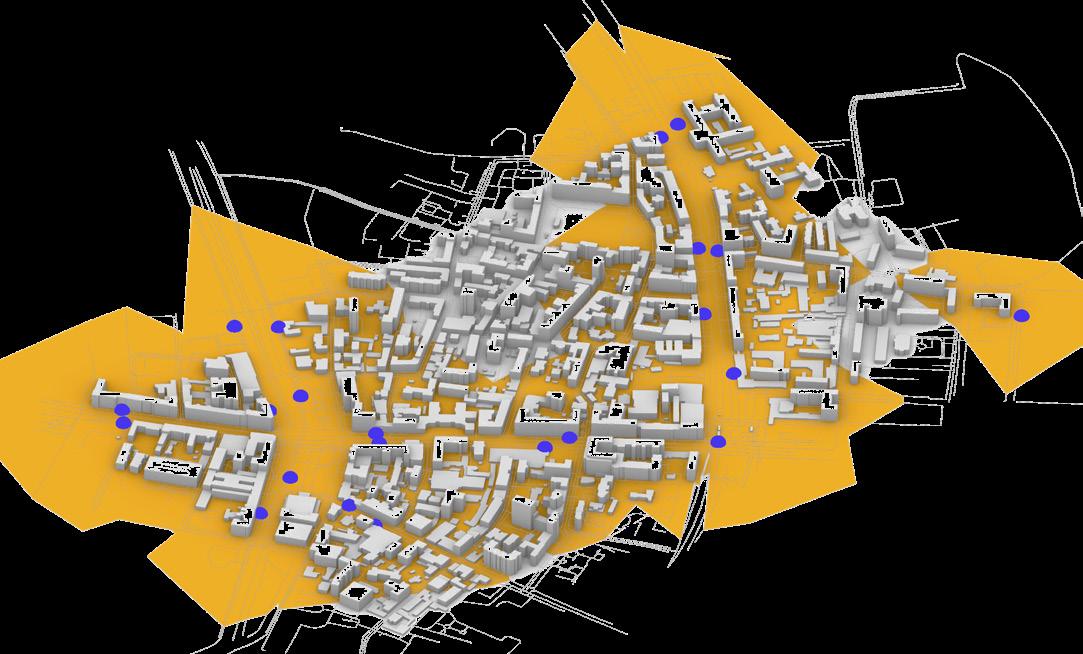
2. Scheme with single isochrones and from multiple bus stops - accessibility area
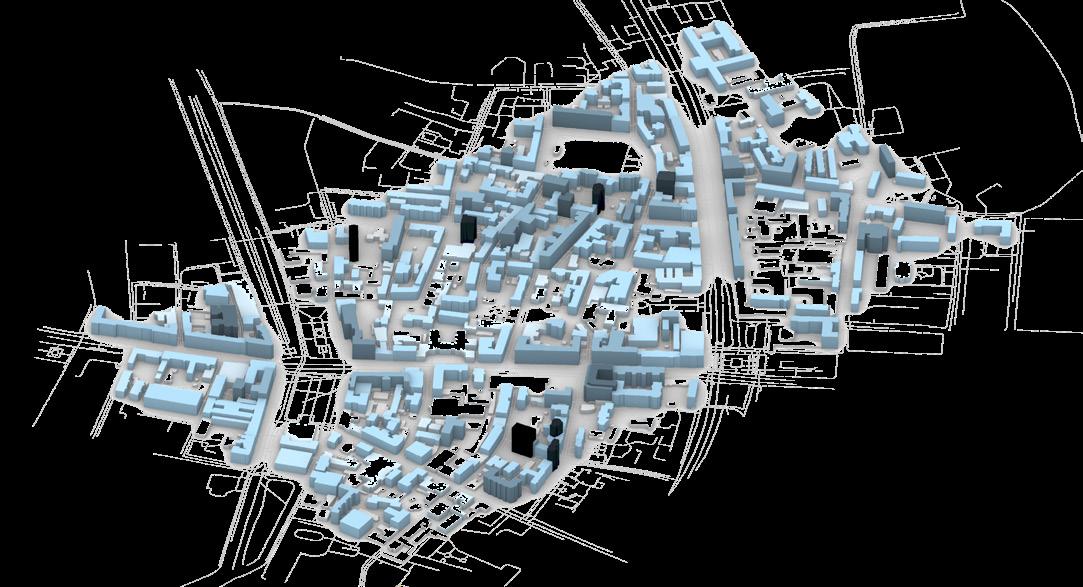
3. Elevation scheme of the area made in Rhino and Grasshopper with data from QGIS
House of Music
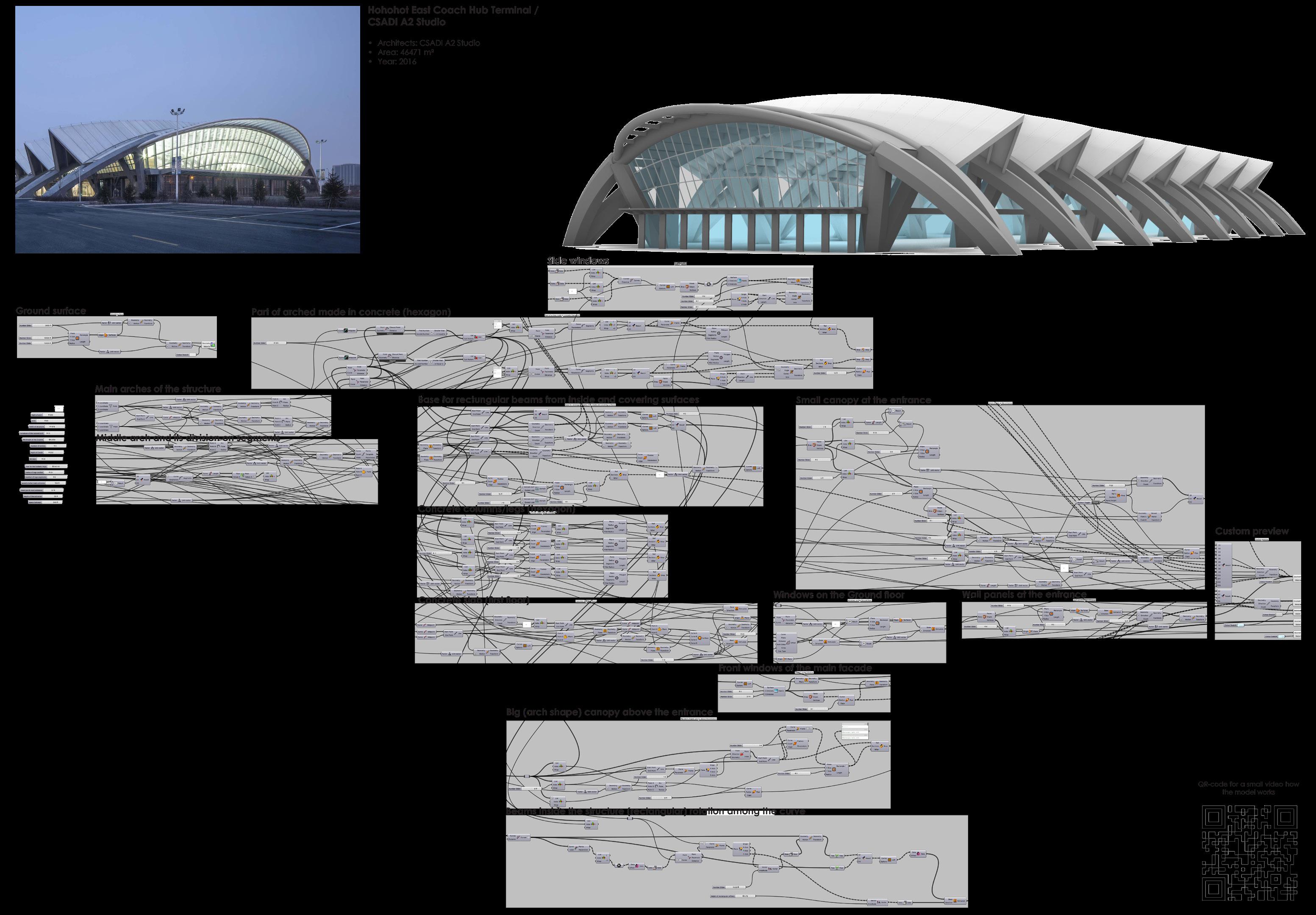
The main goal of the project was to recreate a complex structure that could be parametrically controlled and modified through nodes in Grasshopper. For this purpose, I selected the Hohhot East Coach Hub Terminal by CSADI A2 Studio and rebuilt it entirely within the parametric environment.
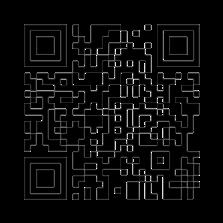
All elements were generated through Grasshopper, allowing the form to adapt dynamically to changes in key parameters. The QR code demonstrates how the geometry evolves in response to adjustments of the core modifiers.
I am Anastasiia,
an architecture enthusiast receintly graduated from my Master’s degree at Politecnico di Milano.
With a passion for innovative design and sustainable practices, I aim to create spaces that inspire and enhance the human experience.
I appreciate your time and consideration, and I’m grateful for the opportunity to apply for this position.
Phone: +39(349)118-65-97
Email: anastasiia.bers@outlook.com Inst: bers_anastasia
EDUCATION
Master in Architecture
Politecnico di Milano
2023-2025 (graduation grade 110L)
Bachelor in Architecture
Moscow State University of Civil Engeneering 2016-2022 (grade 4.93 of 5)
EXPERIENSE
Internship - bureau “pfc. architects” 2025
Freelance - bureau “NOVOE” 2022
Internship - bureau “.ket” 2021
SOFTWARE
Revit ArchiCAD Rhino Grasshopper D5 Twinmotion Adobe AutoCAD
HONOURS AND AWARDS
Participant Bauhause campus, 2021
The winner
Competition for 3D printed house design, 2021
Third prize
The second Russian competition of student projects in architecture, 2021
Certificate of honor “The Best Project or Facility by Student” Golden Trezzini, 2021
Participant in international competition of architectural projects of residential buildings after COVID, DIVOC, 2020
Third prize
BRAUIC University
Student Architectural and Structural Design Competition 2020
Participant
Retina competition on the topic of modular houses, 2020
Thank you for your consideration
Anastasiia Berseneva email: anastasiia.bers@outlook.com