Producing knowledge Shaping futures Building impact Creating excellence
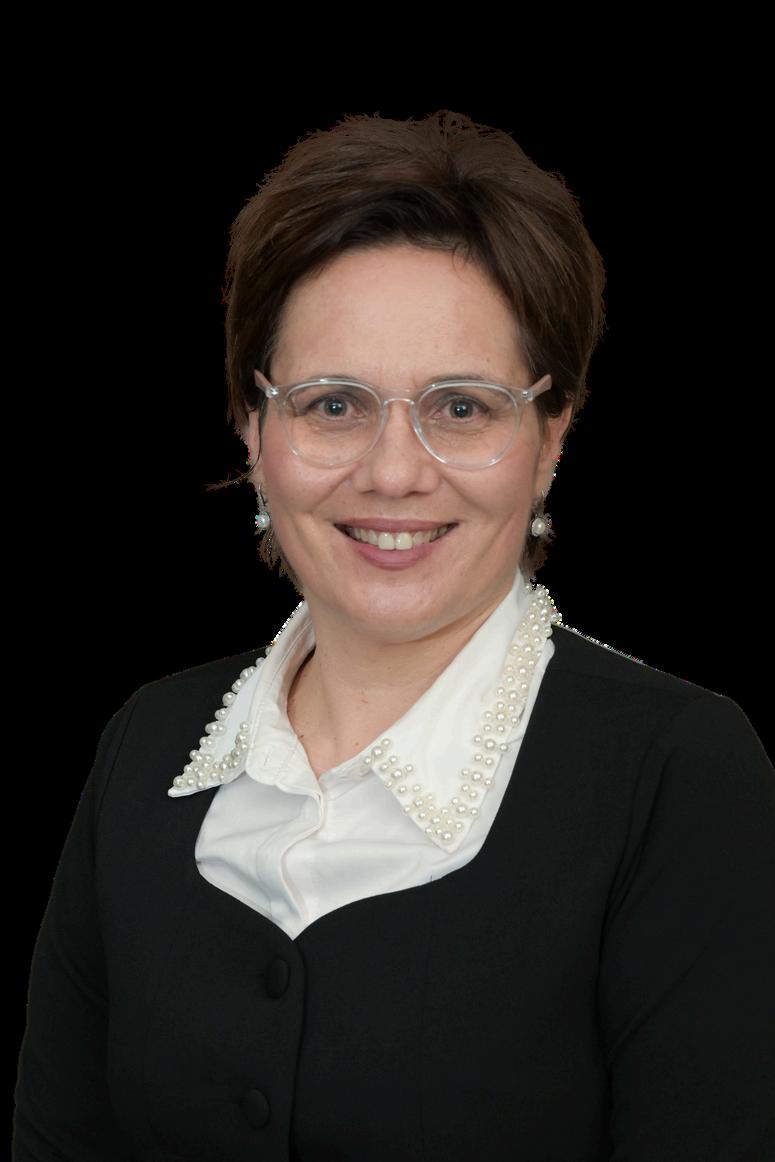
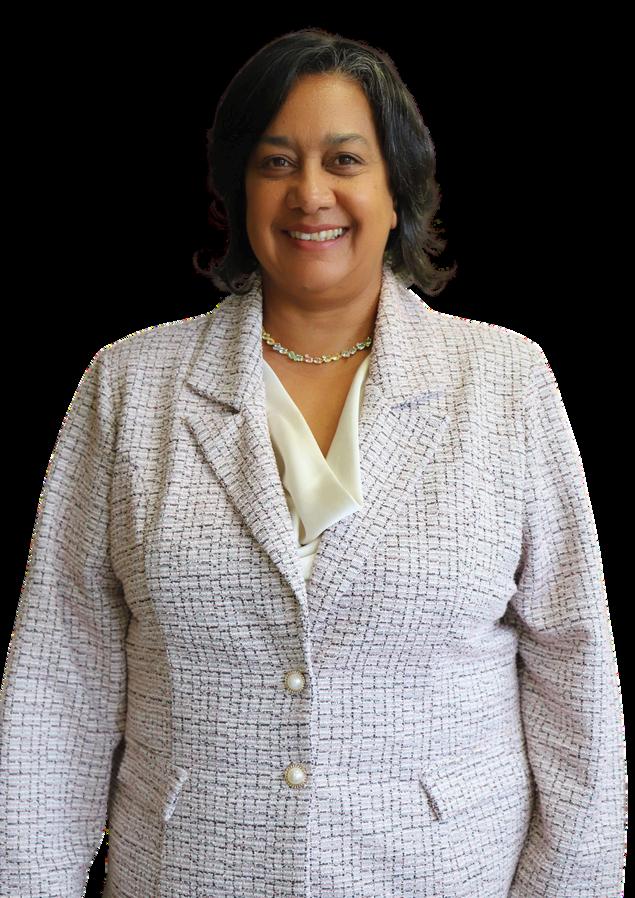
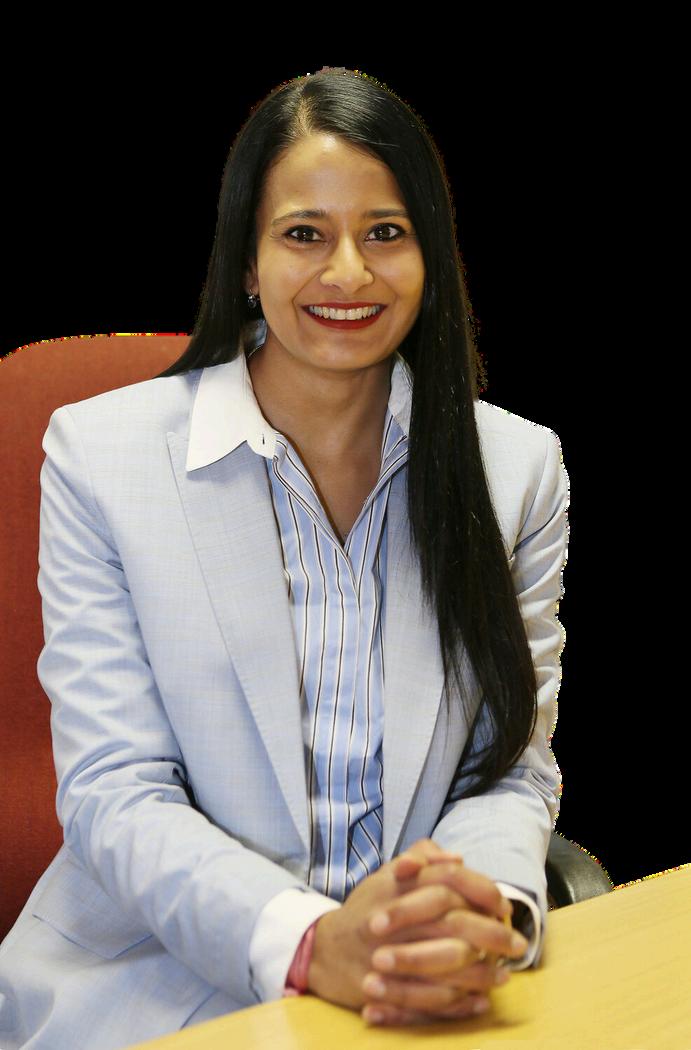
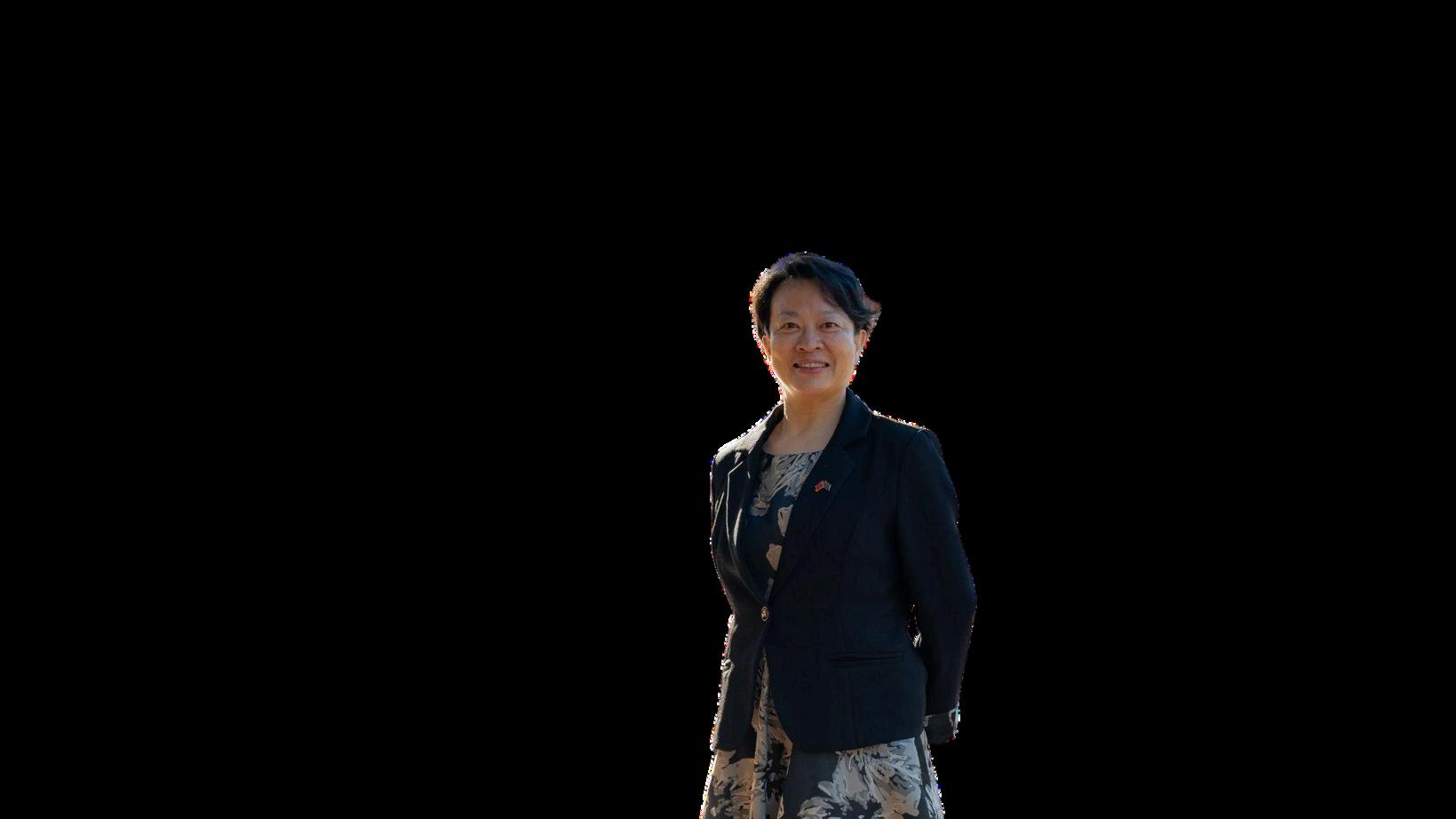
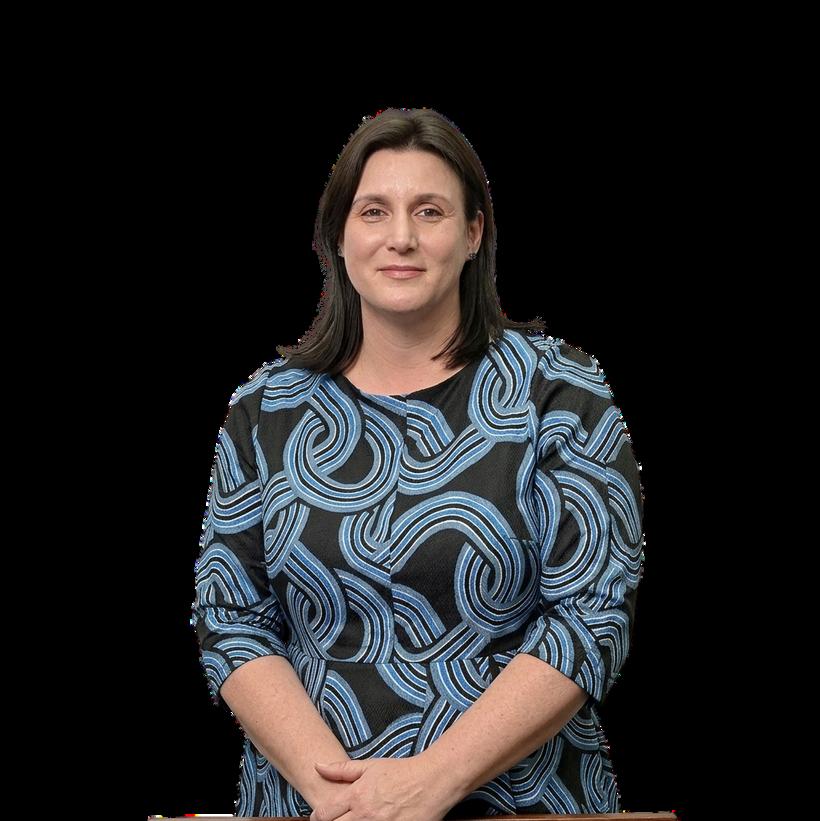
Prof Nicolene Schutte,
Director: Special Projects
Office of the Deputy Vice-Chancellor: Research & Innovation
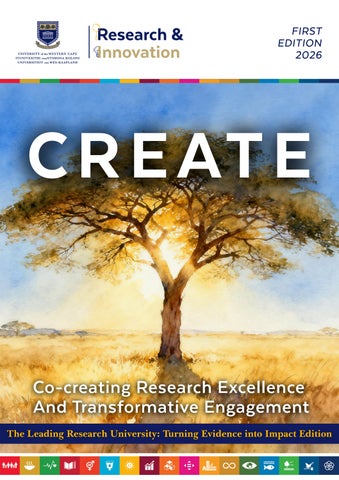
Welcome to the inaugural edition of CREATE Research Magazine, a flagship publication of the Special Projects Unit in the Office of the Deputy Vice-Chancellor: Research and Innovation at the University of the Western Cape (UWC)
This first edition represents far more than the launch of a magazine; it reflects a strategic commitment to strengthening the visibility, impact and identity of UWC towards becoming a leading research university on the African continent and beyond As our institution continues its journey towards becoming a globally recognised, research-intensive university, CREATE provides a platform for celebrating excellence, amplifying scholarly voices, and demonstrating how research drives meaningful transformation across society
The name CREATE acronymically reflects our shared purpose –Co-creating Research Excellence And Transformative Engagement. It captures the heart of what research at UWC represents
The theme of this inaugural edition is ‘Towards a Leading Research University: Turning Evidence into Impact’ In an increasingly complex and rapidly changing world, research leadership requires far more than academic productivity It calls for courage, strategic vision, interdisciplinary collaboration, and a deep commitment to ensuring that evidence is translated into meaningful societal outcomes This edition reflects that journey and the people who make it possible.
CREATE is, therefore, not just a publication It is a strategic instrument for visibility, a platform for institutional storytelling, and a call to collective action It reflects UWC’s belief that research excellence and transformative engagement cannot be separated.
I invite you not only to read these pages, but to see yourself within them, as a contributor to a shared future where research leads, evidence matters, and impact becomes our legacy
From
the Office and Rector of the Vice- Chancellor
Leading Research: Turning Evidence into Impact
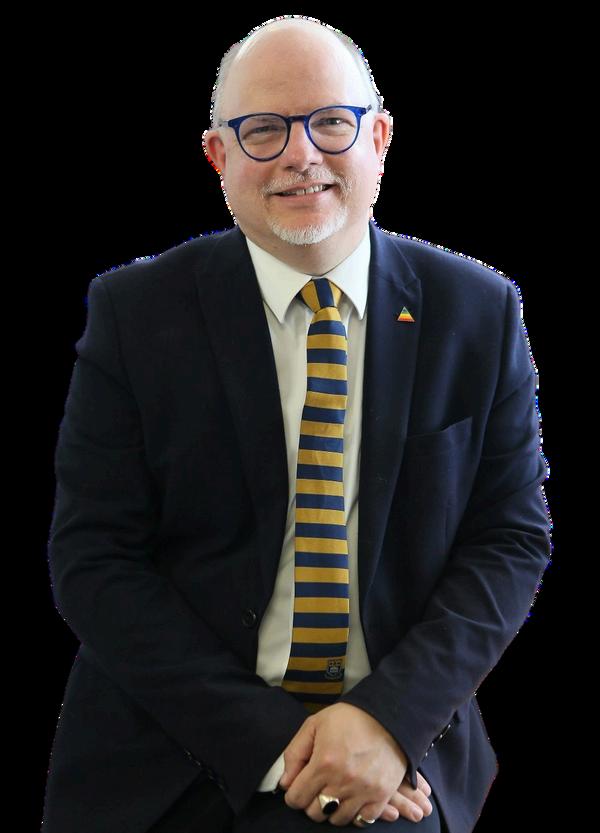
Prof Robert Balfour, Rector and Vice-Chancellor:
University of the Western Cape
The University of the Western Cape (UWC) stands today as a powerful testament to what is possible when an institution refuses to be defined by its origins Established under apartheid with a limited mandate, UWC has emerged over the past three decades as a leading university in South Africa and on the African continent. Its history of intellectual resistance, its commitment to access, equity and quality, and its enduring mission to advance social and economic justice have shaped a distinctive institutional identity Today, our position among the top ten universities in Sub-Saharan Africa reflects not only academic achievement, but the strength of a values-driven project rooted in transformation and public purpose
This journey has laid a strong foundation of research excellence UWC has developed a globally recognised and socially engaged research profile, with strengths spanning law and social justice, health sciences, and the physical and natural sciences These are complemented by interdisciplinary areas such as food security, water studies, biotechnology, public health and environmental sustainability. Our scholarship in the humanities and social sciences, particularly in areas of citizenship, democracy and multilingualism, continues to shape critical national and global debates What distinguishes UWC is not only the quality of its research but its orientation in knowledge production that is deeply connected to communities, responsive to societal needs, and committed to advancing the public good
From the Office and Rector of the Vice- Chancellor
Leading Research: Turning Evidence into Impact
As we launch CREATE: Co-creating, Research, Excellence and Transformative Engagement, under the theme ‘Towards a Leading Research University: Turning Evidence into Impact’, we are called to reflect on the next phase of our journey Our ambition to be a leading research university must be defined not only by outputs, but by outcomes, and by the extent to which our research informs policy, shapes institutions and improves lives.
To realise this vision, we must continue to invest in areas of established excellence while fostering new and emerging fields of inquiry. We must strengthen interdisciplinary collaboration, deepen partnerships across Africa and globally, and build robust pathways that translate research into practice Equally important is the cultivation of the next generation of scholars by our leading scholars, ensuring that our postgraduate pipeline reflects both excellence and inclusivity
Leading Research at UWC is not confined to laboratories or academic publications. It is also expressed in how we mobilise knowledge to address inequality, support development and contribute to global conversations It requires intentionality, collaboration and a sustained commitment to evidence-based engagement.
In this inaugural edition, I invite our community and partners to join us in shaping our collective vision, a vision in which research excellence and transformative engagement remain inseparable, and where the work we do continues to advance a more just and equitable world
Prof Priscilla Baker, Acting DVC: Research & Innovation: University of the Western Cape
Prof Priscilla Baker serves as the Acting Deputy Vice-Chancellor for Research and Innovation at UWC, holds a National Research Foundation (NRF) B-rating, and is the SARChI Chair for Analytical Systems and Processes for Priority and Emerging Contaminants (ASPPEC) She co-directs the SensorLab Research Centre and leads the Electrochemical Sensors Node of the Nano-Micro Manufacturing Facility (NMMF) at UWC, reflecting her strong contribution to scientific research and innovation.
Prof Baker shared valuable insights into UWC’s current position and its future trajectory as a leading research university
In today's global and societal context, a leading research university is defined not just by its academic prestige but by its capacity to use knowledge to drive innovation and address pressing societal needs At UWC, we believe people should embrace both community engagement and hardcore science, as our institution proudly stands in both worlds
We have been recognised for our profound strengths in areas highly relevant to Africa's development challenges. These include public health, biotechnology, water science, nanoscience, materials design and synthesis, renewable energy and energy efficiency This foundation is anchored by our 26 recognised DSTI NRF SARChI Research Chairs These chairs reflect the continuous investment of UWC leadership in capacitating both emerging and established researchers, preparing them to compete and grow internally, while also showcasing their excellence in highly competitive regional and international arenas
Leading Research: Turning Evidence into Impact
Strategic partnerships and national consortia represent another area where UWC leaves a strong footprint For example, we actively collaborate within the HIRAX (Hydrogen Intensity and Real-time Analysis eXperiment), applying our shared strengths in astronomy, large-scale data-intensive projects, and advanced training initiatives UWC is not merely a research leader in its own capacity, but a driving force within these broader collaborative networks where we pitch our greatest energies
Furthermore, our campus is home to advanced technologies, particularly in smart devices and sensors We proudly host the Electrochemical Sensors node of the NMMF, one of five nodes established by the DSTI under the South African Infrastructure Roadmap to support researchers across the country. As the Electrochemical Sensors node, UWC provides state-of-the-art capabilities and techniques for the design, synthesis and analysis of organic and inorganic electroactive 'smart' nanomaterials Sustained government investment in this crucial project remains essential
These initiatives actively close the gap between university offerings and industry requirements. We extend an open invitation to industry partners to participate with us on various levels, particularly in skills transfer and technology transfer
Our researchers have worked tirelessly to diversify our interests and extend our reach across the continent. As we continue to develop our space as a leading research university, our focus remains on societal impact, addressing the needs of our time, and driving progress in Africa and globally
UWC is widely known for its impact on local communities and policymakers globally, helping to amplify our reach and integrate African perspectives into broader international conversations Crucially, we lead the expansion of higher education opportunities for historically disadvantaged groups, while maintaining growing research outputs and postgraduate training This delicate balance between equity and excellence is something we never want to lose Instead, we are determined to strengthen it as we head into the future. It is central to our understanding of what leadership means in the higher education landscape, and it remains the core of the UWC identity, past, present and future
Taken together, UWC exemplifies a different, yet equally important, model of a leading research university It is a model that may not seek to simply dominate traditional global rankings, but one that is deeply influential in advancing knowledge, fostering innovation and addressing societal needs in ways that are locally grounded but globally relevant
I invite our stakeholders to look at us through a different lens. We ask you not only to support us but also to help direct the future of our research from a South African industrial perspective Let us incorporate your interests in helping us continue to grow as a profoundly impactful, leading research university.
Times Higher Education Rankings for the University of the Western Cape
The University of the Western Cape (UWC) continues to strengthen its position among leading universities globally and across the African continent. In the Times Higher Education World University Rankings 2026, UWC was placed in the 601–880 band worldwide, while the 2025 Impact Rankings recognised the University in the 401–600 band globally for its commitment to the United Nations Sustainable Development Goals (SDGs) UWC also achieved a 7th regional standing across SubSaharan Africa
Established in 1960, UWC has evolved from a historically significant centre of intellectual resistance against apartheid into a globally recognised leading research institution. Its enduring commitment to social justice, inclusive education, community engagement, and research excellence continues to drive meaningful impact locally, across Africa, and internationally
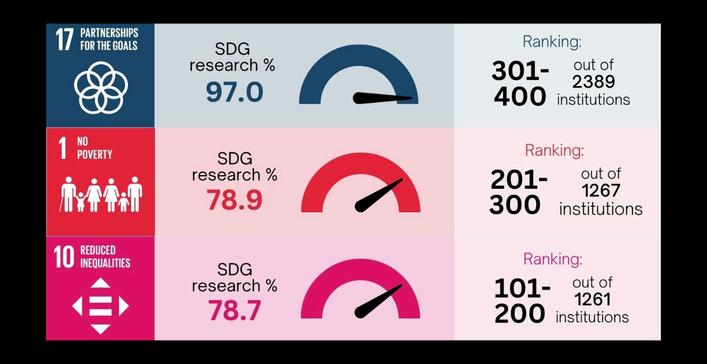
Top 3 SDG Performance (Based on SDG Research Score) in 2025
The University of the Western Cape (UWC) continues to demonstrate strong global impact through its performance in the Times Higher Education Impact Rankings, with particular excellence reflected in its SDG research outputs The following represent the University’s top three SDGs achievements based on SDG research scores:
Collectively, these results demonstrate UWC’s sustained leadership in research that advances global development priorities, with a particular focus on partnerships, poverty reduction, and reducing inequalities
Faculty Leadership
Featuring Deans and Deputy Deans in Research
As UWC advances its vision of becoming a leading research-intensive institution, this journey begins within its faculties. Here, leadership is defined not only by strategy but also by the ability to shape research direction, cultivate collaboration and build environments where knowledge can thrive.
Featuring Deans and Deputy Deans in Research
Faculty of Arts and Humanities
Dean: Prof Fiona Moolla
My tenure as the new Dean of the Faculty of Arts and Humanities at UWC coincides with the Institutional Operating Plan 2026 to 2030, which sets UWC on the path to becoming a leading research institution in the country, the region and the continent.
My focus has been on harnessing the current research strength within my faculty and giving it new energy by facilitating empowering connections across centres, departments and units.
THE RESEARCH ECOSYSTEM
The faculty is home to 13 departments, each engaged in interesting, exciting and impactful research.
“I aim to create the fertile common ground within which the work of departments and centres may flourish.”
Key Highlights:
Women’s and Gender Studies –Leader in photovoice research methodology, producing provocative student research projects
English – One of the most successful multilingual creative writing programmes in the country, exploring local lived experiences through prose and poetry
Geography, Environmental Studies and Tourism – Leader in sustainable food security projects and co-host of a migration and mobility research platform
CROSS-POLLINATING IDEAS
Research Centres:
Centre for Humanities Research - Puppetry Project
Centre for Multilingualism and Diversities ResearchAfrikaaps work
Centre for Advanced Studies of African SocietyBook publications
Desmond Tutu Centre for Religion & Social JusticeAdvocacy and Activism
My aim in the next few years is to create the fertile common ground within which the work of departments and centres may flourish
I would like to bring the research niches across the faculty into cross-pollinating conversation, out of which we establish a faculty-wide identity and collective research orientation We could establish subprojects in food research, for example, where big international and national questions of food security are explored through the Arts and Humanities, and intersect with research into local food security by the UWC community – its students and staff
LOOKING AHEAD
My dream, which I hope to realise soon, is to see successful grant proposal applications that will enable the faculty to resource staff and student research projects and become known as the dynamic hub of cutting-edge, creative and impactful research
Research efforts in the faculty should seek to widen the net through collaboration with other faculties and institutions in neighbouring countries, further afield in Africa, and around the world, where knowledge hierarchies may be rewritten.
This is an exciting and meaningful task, and I am privileged to be able to channel the expertise of my colleagues
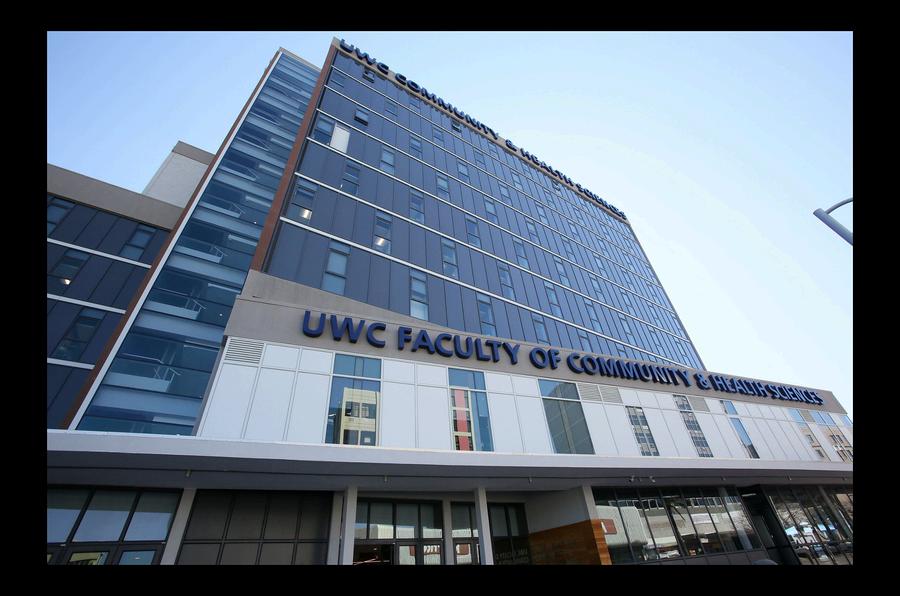
Faculty of Community & Health Sciences
Dean: Prof Anita Padmanabhanunni
Leading Research means producing knowledge that is rigorous, collaborative and socially accountable It is about creating the conditions for research to flourish across the faculty through a shared culture of inquiry, mentorship and public responsibility.
In this view, a leading research university is defined not by outputs alone, but by the extent to which its research deepens understanding and improves the lives of the people and communities we serve
“A leading research university is defined by how its research improves lives.”
THE RESEARCH ECOSYSTEM
My focus is on building and sustaining a vibrant, inclusive research culture. A key priority is re-engaging research-inactive staff through mentorship, structured support and opportunities that rebuild confidence and productivity Research leadership must, therefore, be developmental and enabling
A second priority is strengthening international grant writing Successful funding depends not only on technical excellence but on relationships, reciprocity and strong scholarly networks We are deepening engagement with international partners so that collaboration becomes the foundation for funding, innovation and visibility.
Faculty Leadership
Featuring Deans and Deputy Deans in Research
RESEARCH IN PRACTICE
A third priority is integrating research, teaching and community engagement to maximise social impact. Too often, findings generated in community contexts do not return to those communities in meaningful ways This risks reproducing extractive modes of knowledge production Leading Research must ensure that knowledge circulates back to the people who make it possible
My own contribution focuses on scholarship in trauma, resilience, mental health and well-being in South Africa. I define impact as knowledge that is both scientifically rigorous and socially responsive
LOOKING AHEAD
I aim to build a faculty where every staff member sees themselves as a knowledge producer, every postgraduate student sees publication as achievable, and every community partner experiences the university as accountable, ethical and beneficial
Featuring Deans and Deputy Deans in Research
Faculty of Dentistry
Deputy Dean of Research:
Prof Razia Adam
I have focused on developing a transformative framework that fosters the generation of impactful knowledge, interdisciplinary collaboration, and innovation A "central component of this is an ecosystem approach" We are consciously establishing interconnected networks that encompass researchers, clinicians, industry collaborators, and community stakeholders.
Through this collaborative matrix, we are positioning our institution at the global forefront of critical, cutting-edge domains:
Digital Dentistry: Pioneering the integration of advanced technologies, AI, and modern diagnostics into oral healthcare
Systemic Intersections (NCDs): Championing the integration of oral health into the broader global non-communicable disease agenda.
Health Equity: Addressing systemic disparities to ensure underserved populations benefit from modern medical advancements
‘Together we can go far’ Building Research Ecosystems for Global Collaboration
The comprehensive modernisation of our Dentistry Research Laboratory is a critical infrastructure priority in order to maintain this momentum. By transforming this facility into a cutting-edge centre, we will attract top talent, empower our researchers, and significantly improve our technical capabilities. In the end, this framework not only advances clinical science but also establishes a strong institutional capacity to address intricate oral health challenges from multiple perspectives It seamlessly integrates our local advancements with UWC's Institutional Operating Plan (IOP) and global healthcare priorities
Faculty Leadership
Featuring Deans and Deputy Deans in Research
What is your contribution to leading research impact?
In my role, I contribute to the transformation of evidence-based research into tangible benefits for both the institution and society by means of several critical initiatives, such as
Global Research Centres: Our collaborative centres have been established through partnerships on five continents. One example is membership in the INSPiRE consortium.
Capacity Development: To enhance the scholarly impact and publication output of academic staff and postgraduate students, I have implemented programs such as "Research Tuesdays," writing retreats, and the CROWN program. We are also providing support for undergraduate research initiatives in the laboratory to pique interest in the role of a dentist scientist
Evidence-to-Clinical Translation: We are committed to promoting cutting-edge technology, including digital dentistry software and modern microscopy, to enhance student learning and improve patient outcomes in clinical settings
·Public Health Impact: By establishing partnerships that prioritise evidence-based methodologies, we enhance the application of research to public health, with particular emphasis on the role of oral health in systemic diseases such as cancer and diabetes
SDG Integration: Our research is increasingly aligned with the Sustainable Development Goals (SDGs), with a particular emphasis on Quality Education (SDG 4) and Good Health and Wellbeing (SDG 3) This approach is intended to ensure that our work contributes to social change
What is your dream in your role?
I foresee a future in which research is a collaborative endeavour that has the potential to transform lives I aspire to mentor a new generation of oral health professionals who are not merely skilled clinicians I aspire for them to become advocates for improved health outcomes, independent thinkers, and inventive problem-solvers Ultimately, I aspire for our collaborative research to resolve the "wicked problems" we currently encounter, particularly oral health inequities, and to contribute to a healthier, more equitable future for South Africa and the entire African continent.
Featuring Deans and Deputy Deans in Research
Faculty of Law
Dean: Prof Jacques de Ville
The Law Faculty’s research agenda is guided by its strategic plan, aligned with the Institutional Operating Plan and the university’s vision of becoming a leading research institution. Within this framework, the faculty is strengthening its position as a leading law faculty on the African continent by cultivating a vibrant and sustainable research culture
THE RESEARCH ECOSYSTEM
Our focus is on building research capacity, supporting niche areas of excellence, strengthening postgraduate research, and ensuring that scholarship achieves both academic impact and societal relevance. We prioritise strengthening research output through workload policies that protect research time, targeted mentoring and clear recognition of excellence
“Our goal is to ensure that research contributes meaningfully to legal transformation and social justice.”
RESEARCH INFRASTRUCTURE:
We are consolidating and expanding research institutes, centres and chairs in key areas, including legal integration, environmental law, fintech, transnational justice, and governance. These platforms enable interdisciplinary collaboration, attract external funding and extend our networks across Africa and internationally
LOOKING AHEAD:
I aim to cultivate an environment where scholars pursue ambitious, innovative and socially meaningful research that shapes legal thought, informs policy and advances practice
Deans and Deputy Deans in Research
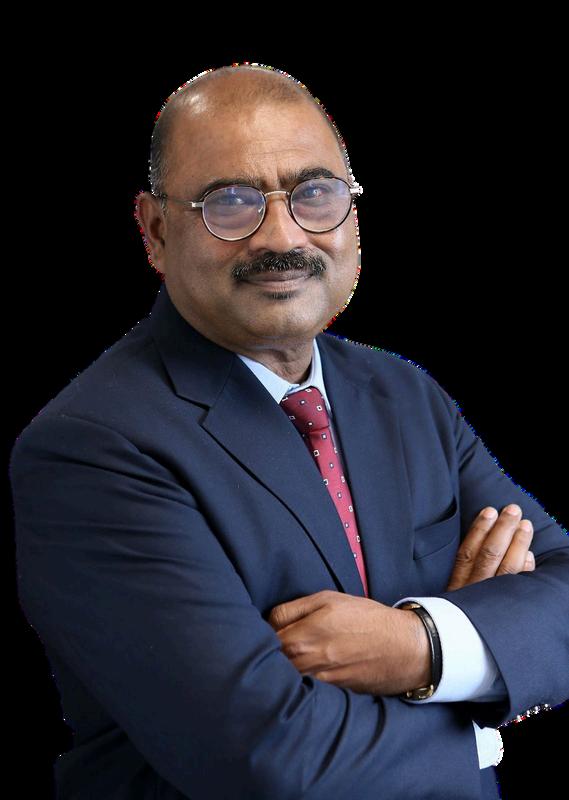
Faculty of Education
Dean: Prof Rajendran Govender
My focus as Dean is to advance a transformative academic project that integrates teaching, research and postgraduate education into a coherent, socially responsive ecosystem. Anchored in the Institutional Operating Plan, this work positions research as the driver of curriculum renewal, innovation and engagement
THE RESEARCH ECOSYSTEM
Within the Faculty of Education, this translates into research-informed teaching, AI-enabled learning and contextually grounded knowledge production that responds to both local and global education systems
My contribution is to build integrated research ecosystems that translate evidence into practice, strengthen postgraduate pipelines, enhance supervision quality, and ensure that research informs both policy and classroom practice.
“Research drives curriculum renewal, innovation and community impact.”
RESEARCH IN PRACTICE:
Through school-university partnerships, professional learning networks and community-engaged research hubs, research actively shapes teacher development and education systems
Supporting this vision at both strategic and operational levels, Deputy Deans of Research play a critical role in strengthening research culture, building capacity and translating faculty priorities into sustained research impact
Faculty of Education
Deputy Dean of Research: Prof Rouaan Maarman
My focus is to drive the faculty and university’s vision by focusing on critical and contextualised pedagogical practices in the teaching, research and postgraduate spaces. This is embedded in our Africanized focus, where we use ecological approaches to address educational issues of our time The demystification of research remains one of my priorities, and I therefore also drive the scholarly growth of staff according to their academic ambitions. I am also cognisant of setting the example as a Deputy Dean through my own scholarly and research engagements within and outside UWC, especially by playing different roles with schools, provincial departments of education and the national department of education My focus also includes facilitating continental and global initiatives with a prominent participation of emerging and mid-career scholars to attend to the sustainability and succession of our faculty as a leading role player.
WHAT IS YOUR ROLE IN LEADING RESEARCH IMPACT?
I have built, maintained and consolidated a scholarly ecosystem in the faculty, including both students and staff This ecosystem is underscored by my servant leadership and Ubuntu philosophy, whereby I infuse capability and life design practices to enhance the freedoms of students and staff, as well as developing free agency amongst these stakeholders to pursue and achieve the ambitions they value. It is thus an amalgamation of various personal and systemic assets of our faculty members to impact the spaces of our students by doing research that matters to diverse communities in South Africa I have built up the ecosystem with practical initiatives consisting of different kinds of Communities of Practice, for example, supervision training, grant writing support, and continental and global networks for both students and staff During February and March 2026, I hosted an international colleague who is an expert in the translation of research into community activism programmes to share her experience and reflections of her journey.
WHAT IS YOUR DREAM IN YOUR ROLE?
My dream is to see the faculty playing a leading role within UWC to drive the institution towards a leading research university This can be done by drawing on faculty strengths which have been consolidated over the last 10 years or so Further to this, our faculty should grow more towards national and continental prominence with teaching and research programmes and expand the current community engagement strategy to be impactful in the communities around the perimeter of the university
Faculty of Natural Sciences
Dean: Prof David Holgate
A leading research university is defined not only by what it produces, but by the impact it creates through its research Impact must ultimately reflect how research shapes disciplines and contributes to society.
“Impact is quality, worked out in relationship.”
THE RESEARCH ECOSYSTEM
Our approach is grounded in depth, novelty and quality These are reflected in publications, postgraduate outcomes and recognition, but should not be reduced to metrics alone
RESEARCH CULTURE
The faculty is home to researchers whose work is recognised at the highest levels Even excellent research has a limited impact in isolation. Building relationships is therefore essential, which we seek to do through engaged departments, vibrant seminars, active scholarly networks, and meaningful community engagement.
A leading research university is defined not only by what it produces, but by the impact it creates through its research. Impact must ultimately reflect how research shapes disciplines and contributes to society
LOOKING AHEAD
We aim to balance research excellence with strong relational engagement to ensure impacts that are both meaningful and enduring
Featuring Deans and Deputy Deans in Research
Faculty of Economic & Management Sciences
Dean: Prof Michelle Esau
We aim to be a leading faculty on the African continent, recognised for transformative and socially impactful scholarship. This requires embedding research into the core activities of the faculty.
“Transformative research brings diverse minds together to address real challenges in everyday life.”
THE RESEARCH ECOSYSTEM
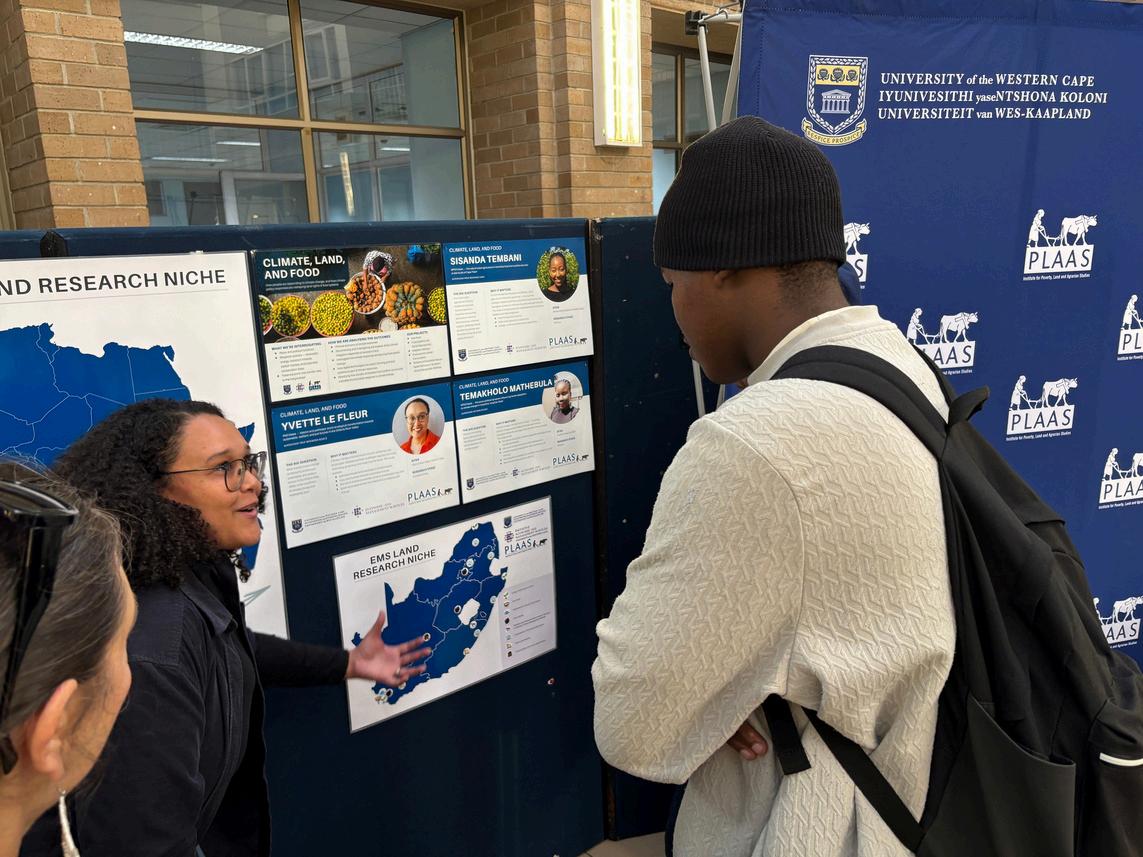
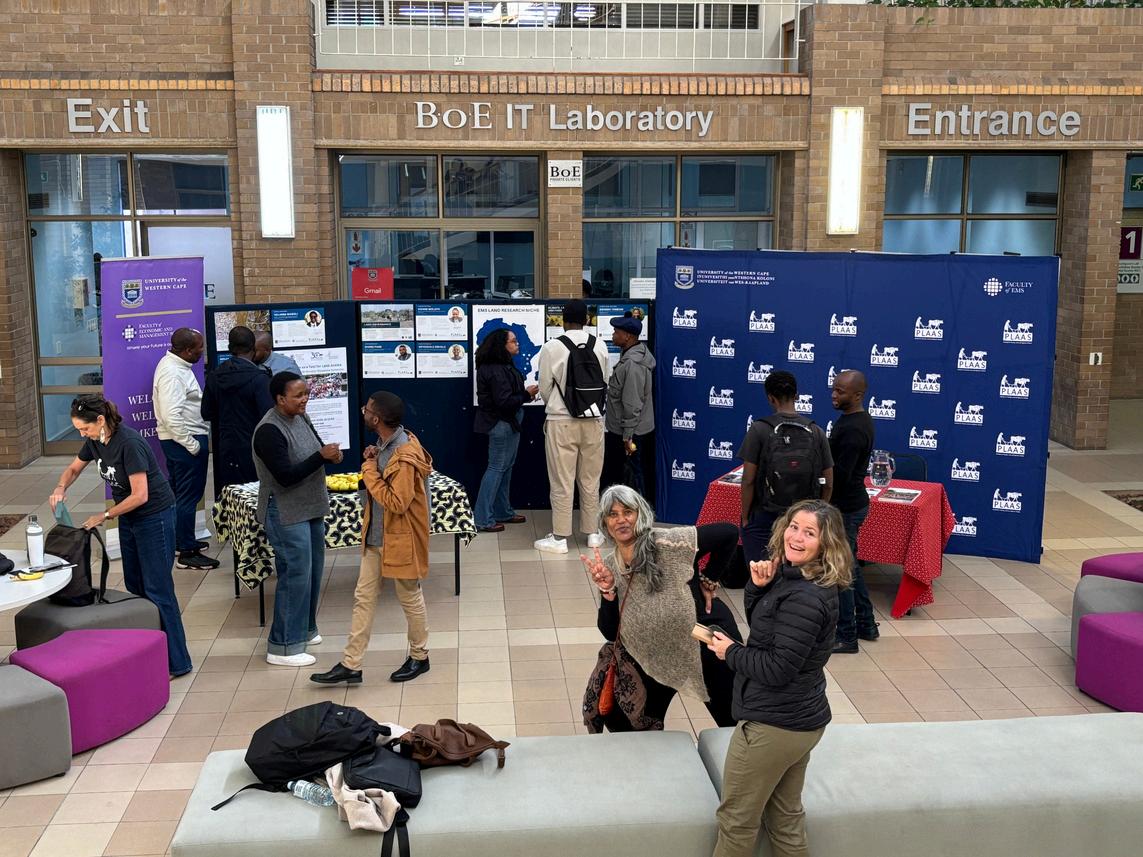
Research is integrated into teaching through research-infused pedagogies, while community engagement is strengthened Our focus areas-Citizenship & Democracy, Entrepreneurship, and Land & Agrarian Studies-address key 21st-century challenges
RESEARCH IN PRACTICE
Our impact includes collaborative outputs, such as the Entrepreneurship Education publication, that contribute to both academic discourse and practical insight
We prioritise an environment where academics and students thrive and support one another Leading through example, while aligning research with strategic faculty initiatives, strengthens both individual and collective impact
Supporting this vision at both strategic and operational levels, Deputy Deans of Research play a critical role in strengthening research culture, building capacity and translating faculty priorities into sustained research impact
LOOKING AHEAD
Our aim is a faculty where scholarly excellence and social impact are deeply connected across African and global contexts
Faculty of Economic & Management Sciences
Deputy Dean of Research: Prof Christie Swanepoel
My vision of a Leading Research university can be captured in a simple idea: research should not only generate knowledge, but also shape understanding and inform the world beyond the university
At the University of the Western Cape, our strength lies in the ability to combine rigorous scholarship with a deep awareness of the social and economic challenges facing our country and the broader global community As Deputy Dean of Research, my focus is therefore on nurturing a research culture where excellence and relevance go hand in hand
My own research work in economic history, particularly the historical development of financial markets in South Africa, constantly reminds me of the value of a long-run perspective. By examining how economic institutions evolved, research can provide insights that help us understand present realities more clearly and enrich policy discussions and public understanding
WHAT IS YOUR CONTRIBUTION TO LEADING RESEARCH IMPACT?
In my leadership role, I see my contribution primarily as enabling others to succeed A strong research culture grows through collaboration, mentorship, and shared intellectual curiosity I focus on supporting researchers and postgraduate students, strengthening supervision, encouraging interdisciplinary collaboration, and helping early-career scholars develop the confidence and networks needed to establish their research trajectories
WHAT IS YOUR DREAM IN YOUR ROLE?
My dream is to cultivate a research environment where curiosity, critical thinking, and collaboration thrive Ultimately, Leading Research is about creating the conditions in which excellent scholarship can flourish while ensuring that knowledge informs policy, shapes public debate, and contributes to social and economic progress
Research with Perspective, Impact with Purpose
DRIVING RESEARCH EXCELLENCE: UWC SARChI Chairs
The South African Research Chairs Initiative (SARChI) is a flagship national programme of the Department of Science, Technology and Innovation (DSTI), administered by the National Research Foundation (NRF). Established to strengthen South Africa’s research and innovation landscape, SARChI supports leading researchers in driving world-class scholarship, developing future generations of scientists and scholars, and addressing complex societal challenges through evidence-based research.
As part of its commitment to research excellence and societal impact, the University of the Western Cape (UWC) is proud to host 30 SARChI Chairs across a diverse range of disciplines. This achievement positions UWC as the leading Historically Disadvantaged Institution (HDI) in South Africa for SARChI Chairs and reflects the University's growing influence in shaping research that matters.
Aligned with this edition's theme, Leading Research: Turning Evidence into Impact, UWC's SARChI Chairs are advancing knowledge, informing policy, fostering innovation, and creating solutions that contribute to a more sustainable, equitable and prosperous society
Congratulations to the newly appointed SARChI Chairs at UWC
Read more
Scan the QR codes to read more and watch highlights of UWC’s SARChI Recognition Event and celebrate the university’s historic milestone of 30 SARChI Chairs driving research excellence and impact.
Prof Christopher Arendse, Chair in Low-Dimensional Materials for Solar Energy Conversion (LDMSEC)
Prof Jennifer Chipps, Chair in Digital Health
Prof Stephen Devereux, SA-UK Bilateral Chair in Food Security
Prof Jaap de Visser, Chair in Multi-level Government, Law and Development
Prof Asha George, Chair in Health Systems, Complexity and Social Change
Prof Premesh Lalu, Chair in Digital Humanities
Prof Mervin Meyer, Chair in Sustainable Nanotechnology
Prof Sarojini Nadar, Chair in Religion and Social Justice
Prof Nicolette Roman, Chair in Human Capabilities, Social Cohesion and the Family
Prof Mario Santos, Chair in Cosmology with Multiwavelength Data: exploiting SALT and Meerkat
Prof Patricia Hayes, Chair in Visual History and Theory
Prof Catherina Schenck, Chair in Waste and Society
Prof Emmanuel Iwuoha, Chair in NanoElectrochemistry and Sensor Technology
Prof Cyril Julie, Chair in Mathematics Education
Prof Marshall Keyster, Chair in Plant Improvement for Regenerative and Sustainable Agriculture (PIRSA)
Prof Renier Coetzee, Chair in Health Systems Governance
Prof Tamara Shefer, Chair in Blue Humanities and Gender Justice
Prof Marla TuffinTrindade, Chair in Microbial Genomics
Prof Rajendra Chetty, Chair in Decolonisation of Language Teacher Education
Prof Ajay Mishra, Chair in the Development of membrane technology for water treatment and waste valorisation
Prof Fiona Anciano, Chair in Democracy and Urban Governance
Prof Lindiwe Khotseng, Chair in Agricultural Waste Valorisation for Sustainable Energy Transition
Prof Priscilla Baker, Chair in Analytical Systems and Processes for Priority and Emerging Contaminants (ASPPEC).
Prof Louise Leenen, Chair in Artificial Intelligence and Cybersecurity
Prof Admire Dube, Chair in Nanomedicine and Infectious Diseases
Prof Russell Kaschula, Chair in Forensic Linguistics and Multilingualism
Prof Chux Iwu, Chair in Entrepreneurship
education challenges in the African setting
Prof Nancy Stiegler, Chair in Big Data and Social Sciences
Prof Joy Papier, Chair in TVET Teaching and Learning
Leadership Management in the Healthcare Sector
DRIVING RESEARCH EXCELLENCE
UWC Research Chairs
Building on faculty leadership, the UWC Research Chairs represent the forefront of knowledge creation. Anchored in disciplinary strength and interdisciplinary collaboration, their work deepens research excellence while addressing complex societal and global challenges.
Driving Research Excellence
UWC Research Chairs
UWC Research Chair in Person-Centred Digital Health: Prof Jennifer Chipps Faculty of Community & Health Sciences
Advancing digital and AI-driven health innovation to strengthen equitable, accessible healthcare systems.
WHY THIS RESEARCH MATTERS
“Digital health can enable equitable, affordable, and sustainable care for all.”
Digital transformation is reshaping healthcare globally, yet access remains unequal. In South Africa and across the continent, health systems face increasing pressure to deliver quality care in resource-constrained environments Digital health offers a pathway to bridge these gaps, improving efficiency, expanding access and strengthening health outcomes
This work directly contributes to the UN’s Sustainable Development Goals (SDG 3: Health and Well-being), addressing critical areas such as maternal health, communicable diseases, mental health, and healthcare workforce development
RESEARCH FOCUS
The Chair positions UWC at the forefront of digital and AI-driven healthcare innovation, aligned with global and national priorities, including the WHO Global Strategy on Digital Health and South Africa’s National Digital Health Strategy
The research is grounded in a social justice framework, advancing equitable and universal access through technology-enabled health systems
Driving Research Excellence
UWC Research Chairs
RESEARCH IN ACTION
Key contributions include:
Development of augmented and virtual reality tools for nursing training
Research on AI in clinical decision-making and health worker education.
Digital healthcare solutions, including chatbot-integrated primary care systems
UWC is currently leading this work in South Africa, particularly in digital education innovation for nursing and clinical training.
IMPACT
This work contributes to:
Improved access to primary healthcare services
Strengthened healthcare workforce training.
Scalable digital health solutions for underserved communities
It connects research, technology and practice to deliver real-world healthcare transformation.
Global and African Contribution
By aligning with global health strategies while addressing local healthcare realities, this research positions UWC as a leader in digital health innovation in Africa, contributing to global conversations on equitable healthcare systems
Looking Ahead
The vision is to expand access to healthcare services, particularly in hard-to-reach areas, and to increase the uptake of health services through innovative digital solutions.
Note: Prof Chipps has been awarded a DSTI-NRF SARChI in Digital Health
UWC Research Chairs
UWC Research Chair in Entrepreneurship in Higher Education:
Prof Chux Gervase Iwu, Faculty of Economic & Management Sciences
Reimagining entrepreneurship education to drive economic participation and innovation across Africa.
Why this Research Matters
“Entrepreneurship education must move beyond theory to enable real economic participation.”
Research Focus
Entrepreneurship development remains a critical challenge in South Africa and across the continent Higher education institutions play a pivotal role in shaping economically active graduates who can contribute to job creation and sustainable growth.
This work aligns with UN SDG 4 (Quality Education) and SDG 8 (Decent Work and Economic Growth), addressing the urgent need to equip students with entrepreneurial capabilities
The Chair focuses on entrepreneurship education as a catalyst for economic participation, exploring how curricula, pedagogy and institutional systems can better support entrepreneurial uptake
Key Research Questions
At what level should entrepreneurship education begin?
How effectively do current curricula support entrepreneurship?
How can entrepreneurship be embedded across disciplines? What pedagogical approaches best support entrepreneurial development?
Driving Research Excellence
UWC Research Chairs
Research in Action
Entrepreneurship development remains a critical challenge in South Africa and across the continent. Higher education institutions play a pivotal role in shaping economically active graduates who can contribute to job creation and sustainable growth
Through collaborative research and institutional engagement, the Chair has: examined gaps between pedagogy, curriculum and lecturer competency; identified structural challenges such as inadequate infrastructure and policy support; and engaged with historically disadvantaged institutions and African universities to expand research impact
This work has generated significant academic and policy dialogue, with invitations to contribute to national and continental discussions
Impact
The research contributes to: strengthening entrepreneurship education frameworks; informing policy and institutional practice; and advancing student entrepreneurship and self-employment pathways.
Global and African Contribution
By addressing systemic gaps in entrepreneurship education, this work contributes to developing a model that is relevant not only for South Africa but for higher education systems across Africa.
Looking Ahead
The vision is to develop a robust, contextually relevant entrepreneurship education framework that supports innovation, economic participation, and sustainable development across the continent
Note: Prof Chux has been awarded a DSTI-NRF SARChI in Entrepreneurship education challenges in the African setting
UWC Research Chairs
UWC Research Chair in Citizenship and Democracy:
Prof Fiona Anciano, Faculty of Economic & Management Sciences
At a time when democratic values are increasingly under pressure globally and locally, the Citizenship and Democracy Chair in EMS positions research as a tool for participation, inclusion, and societal transformation.
Researching Democracy in a Time of Global Uncertainty
South Africa’s democracy carries both immense promise and deep contradictions
While the Constitution envisions a country founded on equality, dignity, and universal rights, the realities of inequality shaped by race, class, gender, and cultural divisions continue to define many lived experiences
“People are the infrastructure of democracy and collective research has great power to change systems where needed.”
At the same time, democratic values are increasingly under strain globally. Across many regions, principles such as: human equality gender equity anti-racism and respect for human rights
They are facing growing challenges amid authoritarianism and the rise of right-wing populism
Although South Africa continues to uphold democratic freedoms, ongoing governance crises raise important questions about the long-term resilience of these systems
Driving Research Excellence
UWC Research Chairs
These tensions form the foundation of the work undertaken through the Citizenship and Democracy Chair and niche area in EMS
The niche area seeks not only to showcase existing research, but to channel it toward the development of a more just, inclusive, and democratic society, both within South Africa and beyond
Research Grounded in Community Experience
A central contribution of the Chair lies in the use of Participatory Action Research methodologies, including, PhotoVoice and Storytelling
These approaches enable research to be conducted with, rather than on, marginalised and vulnerable communities.
Through this work, the Chair contributes to the development of grounded theory in democratic governance, rooted directly in lived experience and community participation
Creating Spaces for Dialogue and Accountability
Research also serves as a platform for connecting residents with decision-makers and power holders By fostering participatory spaces that encourage inclusive dialogue, the Chair helps communities engage directly with structures of governance
One recent example was a PhotoVoice exhibition where residents from Khayelitsha presented their own stories of service delivery through photography directly to the Mayor of Cape Town.
At the event, the Mayor reflected on the impact of previous collaborative research initiatives, noting:
“We can draw a straight line to five pilot sites we have around the city doing better sanitation experimentation… that came out directly from the first PhotoVoice exhibition.”
This illustrates how community-engaged research can influence policy discussions and practical interventions
UWC Research Chairs
Developing the Next Generation of Researchers
The Chair also functions as an incubating space for postgraduate students through research internships focused on: politics governance urban research
These opportunities help prepare emerging scholars for the world of work while strengthening research capacity in areas critical to democratic development.
Looking Ahead
Holding a Chair is described as a privilege, but the work itself is understood as deeply collective
The broader vision is to inspire and capacitate scholars across all stages of their careers to see universities as spaces that both protect and expand democratic values
At the centre of this vision is the belief that meaningful research can contribute to reshaping systems and strengthening democratic participation
Note: Prof Anciano has been awarded a DSTI-NRF SARChI in Democracy and Urban Governance
UWC Research Chairs
UWC Research Chair in Gender, Transformation and World-making: Prof Karin Van Marle Faculty of Law
Grounded in jurisprudence, critical thought, and public engagement, the Research Chair in Gender, Transformation and Worldmaking seeks to create spaces where knowledge, power, and society can be reimagined.
Reimagining Gender, Transformation and Freedom
“The aim is to collectively think, learn and unlearn.”
The focus of the Research Chair in Gender, Transformation and Worldmaking is to engage deeply with each of the concepts embedded within the Chair’s title: gender transformation worldmaking
At its core, the work seeks to interrogate the multiple and contested meanings of these ideas at a conceptual level
Located within the Department of Public Law and Jurisprudence, the Chair carries what is described as a responsibility to remain truthful to what it means to occupy the role of a jurisprudent committed to the public in all senses of the word
The work draws attention to the ongoing pressures placed on gender discourse globally and locally Referencing the work of Judith Butler (2024), the Chair reflects on how gender remains under siege and continues to challenge patriarchal systems of power
Driving Research Excellence
UWC Research Chairs
Against this backdrop, the Chair asks:
The focus of the Research Chair in Gender, Transformation and Worldmaking is to engage deeply with each of the concepts embedded within the Chair’s title: gender transformation worldmaking
Transformation, in this context, is not understood as reform or gradual evolution, but as a deeper process aimed at creating different and multiple worlds where freedom can be more fully realised
Research as Critical Intervention
The Chair’s impact is advanced through: research postgraduate supervision teaching public engagement
Research outputs include journal articles, book chapters, and books that engage critically with questions of inequality, law, race, and spatial justice
One recent co-edited volume, The Endurance of Inequality: Race, Property and Spatiality in Bloemfontein and Surrounds (2025), investigates the enduring violence of apartheid forced removals and their contemporary implications.
Through both undergraduate and postgraduate teaching, this research is shared with students in ways that contribute to building future generations of: theorists activists jurisprudents who can contribute meaningfully within public life and institutions
Driving Research Excellence
UWC Research Chairs
Creating Spaces for Public Thought and Dialogue
A central dimension of the Chair’s work lies in convening spaces for collective reflection and engagement. These range from: intimate reading groups seminars workshops conferences bringing together scholars, students, artists, poets, activists, and members of civil society
The intention behind these engagements is not only to exchange knowledge, but to create opportunities to collectively: think learn unlearn
A recent event, co-convened with the Centre for Rhetoric Studies at the University of Cape Town, titled “Other Voices: Law, Poetry and the Truth and Reconciliation Commission (TRC) at 30”, created space for intergenerational dialogue across disciplines and communities.
Knowledge, Reconfigured
At the heart of the Chair’s vision is the desire to create spaces where knowledge can be: taken apart rearranged reconfigured
This work reflects an understanding of research leadership that is not only concerned with producing knowledge but with questioning inherited systems and opening possibilities for new ways of thinking and relating.
UWC Research Chairs
UWC Research Chair in Dental & Craniofacial Genetics: Prof Manogari Chetty,
Faculty of Dentistry
Advancing African-led research in craniofacial genetics to transform diagnosis, care and scientific understanding.
Why this Research Matters
Craniofacial conditions and oral diseases are often underrepresented in genetic research, particularly within African populations This has created critical gaps in knowledge, limiting the effectiveness of diagnosis and treatment.
This research addresses these gaps by building an evidence base grounded in African contexts, ensuring that global scientific understanding reflects diverse populations
Research Focus
“African clinical realities must shape global knowledge in craniofacial genetics.”
The Chair focuses on: the genetic basis of craniofacial development; rare dental disorders; and common oral diseases in African populations
The work bridges clinical practice and laboratory science, integrating expertise from dentistry, genetics, radiology and molecular biology.
Research in Action
Key initiatives include the: establishment of interdisciplinary clinical and research collaborations; development of diagnostic pathways informed by genetic research; and creation of the African Dental & Craniofacial Society
This society provides a platform for African researchers and clinicians to collaborate and build a shared knowledge base
Driving Research Excellence
UWC Research Chairs
IMPACT
This work contributes to:
Improved diagnosis and patient care
Strengthened clinical research networks
Development of the next generation of clinician-scientists
Postgraduate training and international collaboration are central to building long-term research capacity.
Global and African Contribution
By centring African populations in genomic research, the Chair ensures that the continent contributes meaningfully to global scientific discourse and clinical guidelines
Looking Ahead
The vision is to position Africa as a visible and influential contributor to global research in craniofacial biology and dental genetics
Driving Research Excellence
UWC Research Chairs
UWC Research Chair in Mathematics and Applied Mathematics: Prof David Holgate,
Faculty of Natural Sciences
Building a future-focused mathematics ecosystem through topology, collaboration and talent development.
WHY THIS RESEARCH MATTERS
Mathematics is a basic science that underpins technological advancement, yet research capacity in pure mathematics has tended to be neglected within historically disadvantaged institutions This research chair project aims to address that imbalance, building not only a strong research presence in topology but fostering a research culture that values the impact of fundamental mathematics
RESEARCH FOCUS
“Research leadership is about excellence, community, and long-term identity.”
The Topology for Tomorrow (T4T) initiative focuses on topology, the mathematics of shape and form, while developing new directions and building a pipeline of emerging mathematicians
RESEARCH IN ACTION
Key achievements:
Five international workshops bringing together national and global scholars
Graduation of MSc students and progression into PhD programmes
Postdoctoral fellowships and external funding exceeding R2 million.
Collaboration with the African Institute for Mathematical Sciences (AIMS)
Driving Research Excellence
UWC Research Chairs
IMPACT
This work contributes to: strengthening mathematics research at historically disadvantaged institutions; building national and international research networks; and developing future mathematical leaders
GLOBAL AND AFRICAN CONTRIBUTION
Through its partnership with AIMS and international collaborations, T4T extends UWC’s research footprint across Africa and globally.
LOOKING AHEAD
The vision is to establish UWC as a leading hub for topology research while continuing to build community, talent and long-term research identity
Driving Research Excellence
UWC Research Chairs
UWC Research Chair in Media Inclusion and Diversity: Prof Sisanda
Nkoala
and Prof Leo van Audenhove, Faculty of Arts and Humanities
Bridging research and reform to shape inclusive, diverse and sustainable media futures.
WHY THIS RESEARCH MATTERS
Media systems shape public discourse, identity and democracy. Yet issues of inclusion, representation and misinformation continue to challenge societies globally This research addresses these challenges by linking academic inquiry to real-world media reform
RESEARCH FOCUS
The Chair advances interdisciplinary research on: media inclusion and diversity; media literacy and misinformation; and digital platforms and cultural representation
“Academic research must inform the policies and practices that shape our digital future.”
Driving Research Excellence
UWC Research Chairs
RESEARCH IN ACTION
Key initiatives:
International roundtables with stakeholders across South Africa and Europe
Engagements with organisations such as the Press Council, SABC and VRT.
Research on digital platforms, including the “10 Years of Netflix in South Africa” project
Global participation in G20 dialogues on disinformation
IMPACT
This work contributes to: media policy and literacy development; strengthening democratic processes; and advancing inclusive representation in media systems.
It also directly supports postgraduate research addressing multilingualism, misinformation and digital identity.
GLOBAL AND AFRICAN CONTRIBUTION
The Chair positions UWC as a bridge between the Global South and North, contributing African perspectives to global media discourse while shaping international collaboration
LOOKING AHEAD
The vision is to establish a transdisciplinary centre of excellence focused on media, technology and society, while developing future leaders in inclusive media scholarship
UWC Research Chairs
UWC Research Chair in Forensic Linguistics and Multilingualism: Prof
Russell Kaschula, Faculty of Arts and Humanities
Advancing forensic linguistics to shape justice, language policy and knowledge creation in Africa.
WHY THIS RESEARCH MATTERS
Language plays a critical role in justice systems, education, and social interaction. Yet the relationship between language and law remains underdeveloped in many contexts, particularly in Africa This research addresses these gaps by advancing forensic linguistics as a critical field of study
RESEARCH FOCUS
The Chair focuses on: language policy in legal and education systems; language of record in South African courts; comparative forensic linguistics models; authorship, plagiarism and legal discourse; interpretation and multilingualism in legal contexts; language, technology and new media in the courtroom.
“Forensic linguistics creates knowledge that speaks directly to language, law, and society.”
RESEARCH IN ACTION
Key developments:
Establishment of the African Centre for Applied Research in Forensic Linguistics (ACARFiL)
Expansion of academic programmes from undergraduate to PhD level.
Growth in student enrolment and postgraduate output
Development of a forensic linguistics book series Driving
Established
Researchers
UWC Research Chairs
IMPACT
This work contributes to: improving legal and language policy frameworks; strengthening multilingual justice systems; and advancing knowledge at the intersection of language and law
GLOBAL AND AFRICAN CONTRIBUTION
UWC is currently the only university on the continent leading this field at this scale, positioning Africa within global forensic linguistics research.
LOOKING AHEAD
The vision is to continue expanding the discipline, strengthening research outputs and ensuring that forensic linguistics contributes meaningfully to societal and legal transformation
Note: Prof Kaschula has been awarded a DSTI-NRF SARChI in Forensic Linguistics and Multilingualism
DVC: RESEARCH & INNOVATION Directors
While research excellence is driven by people and ideas, its impact is enabled by systems that support, translate and sustain it. Across the University, specialised units and centres play a vital role in ensuring that research moves beyond discovery toward meaningful application and societal benefit.
DVC: Research & Innovation Leadership
Directors
FROM EVIDENCE TO IMPACT: RESEARCH LEADERSHIP IN A CONTESTED FOOD SYSTEM
At the intersection of research and policy, centres of excellence demonstrate how evidence informs decision-making and drives systemic change.
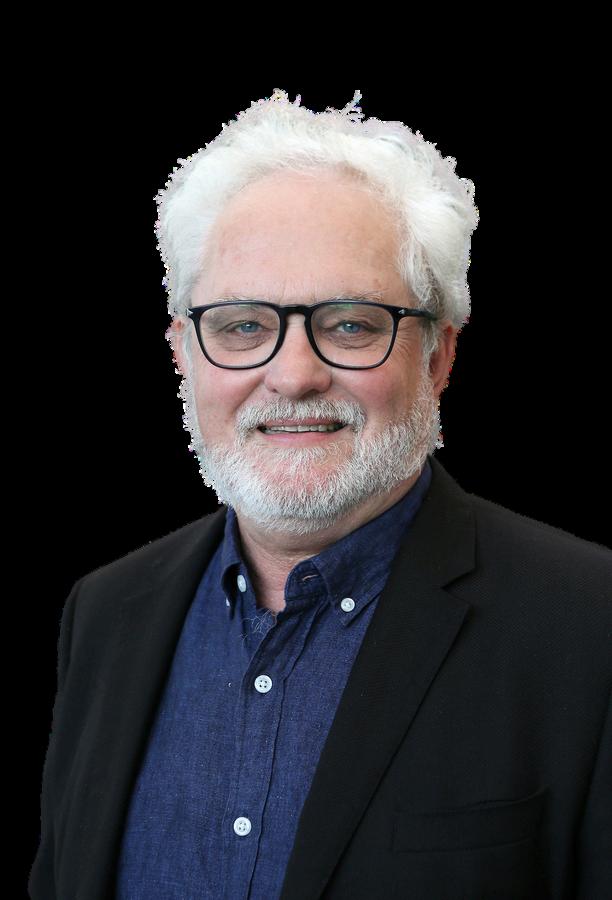
Prof Julian May
Director:
DSTI-NRF
Centre of Excellence in Food Security
Understanding and reshaping food systems to deliver equitable, evidencebased outcomes in complex and contested environments.
UNDERSTANDING THE FOOD SYSTEM PARADOX
South Africa’s food system is defined by a persistent paradox: the country produces enough food, yet hunger, poor diets and food-related disease remain widespread
“Turning evidence into impact is not a single act; it is an ongoing commitment.”
For UWC, research leadership begins by confronting this contradiction, explaining why it exists and identifying pathways to address it
At the DSTI-NRF Centre of Excellence in Food Security (CoE-FS), the focus is on how food systems function in practice, from production and distribution to access and use, and how these systems can be reshaped to deliver fairer outcomes
A RESEARCH FRAMEWORK GROUNDED IN REALITY
The work of the CoE-FS is organised around three core questions: How are food systems changing? Who is excluded, and why?
What can shift these outcomes
These questions are grounded in a central principle: Evidence must be rooted in people’s lived realities Early work on participatory poverty assessments demonstrated that policy is weakened when built on abstraction rather than grounded evidence This insight continues to shape the Centre’s research approach.
Directors
RESEARCH IN ACTION: BUILDING KNOWLEDGE AND CAPACITY
In 2025 alone, 107 research outputs were produced, and 141 postgraduate students and postdoctoral fellows were supported. Most of these are black South Africans and women, reflecting a strong commitment to transformation and capacity development
This work contributes to building a pipeline of researchers, analysts and practitioners who understand the food system and can operate across government, academia, industry and civil society.
ENGAGING POLICY AND PRACTICE
The CoE-FS engages directly with policy processes at multiple levels, contributing evidence to debates on food systems governance, food safety, nutrition and agricultural development Engagement is extended through platforms such as: communities of practice;
The Food Imbizo; and
The Union Against Hunger
These platforms bring traders, farmers, community organisations and households into the research process, ensuring that evidence remains grounded, credible and usable
NAVIGATING COMPLEXITY IN FOOD SYSTEMS
Food systems are complex and contested For evidence to inform decision-making, it must be translated, debated and, at times, challenged This is why the CoE-FS integrates multiple research approaches, including governance analysis, economics, food science and innovation.
Equal emphasis is placed on engagement and publication, recognising that impact requires both
GLOBAL AND INSTITUTIONAL CONTRIBUTION
Since 2014, the CoE-FS has built a research platform that: supports Historically Disadvantaged Institutions; expands postgraduate training; and contributes to African and global food systems debates.
The Centre employs a mix of quantitative, qualitative and participatory methods, ensuring that research remains closely connected to the realities it seeks to understand
Directors
LOOKING AHEAD
Research leadership is demonstrated through the ability to generate rigorous evidence, build the capacity to use that evidence, and sustain engagement with processes of change Turning evidence into impact is therefore not a single outcome, but a sustained commitment, one that defines both the CoE-FS and UWC’s broader research mission
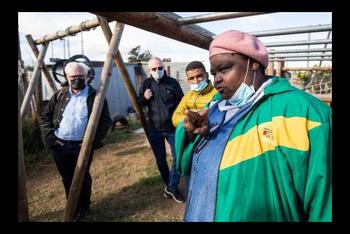
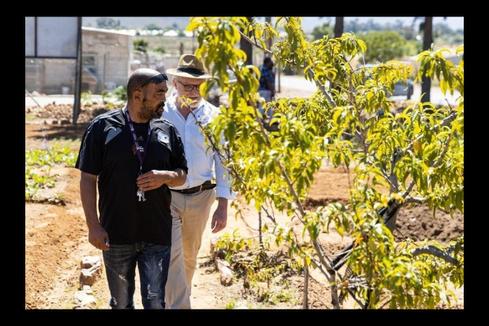
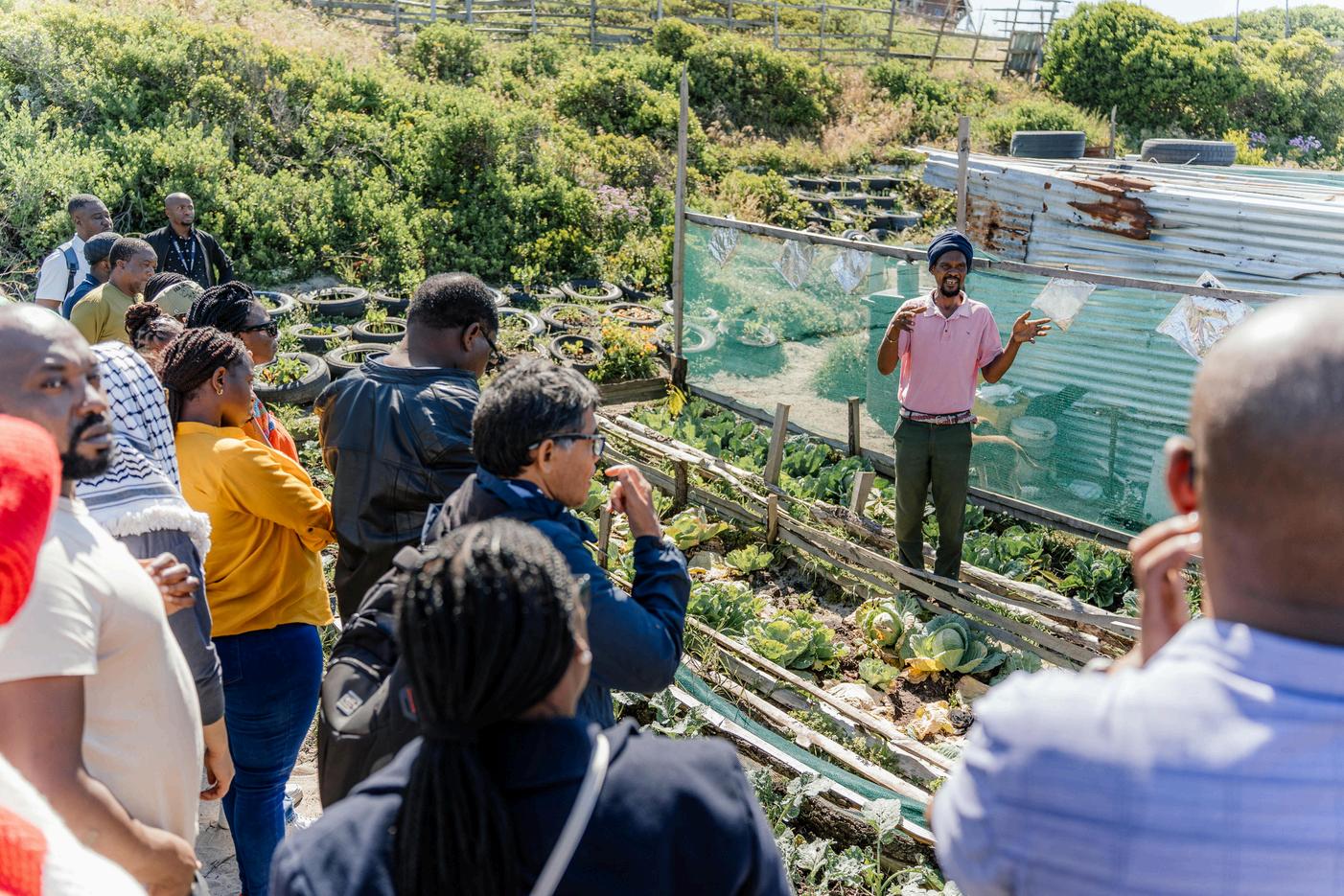
All action shots are by Ashraf Hendricks, and the one of Professor May alone is by Dollie House
Scan the QR code to watch our documentary on food system transformation:
Note: Prof May is the Director of the DSTI-NRF Centre of Excellence in Food Security (CoE-FS) and the Principal Investigator and Project Lead of the African-German Centre for Sustainable and Resilient Food Systems and Applied Agricultural and Food Data Science He holds the UNESCO Chair in Science and Education for African Food Systems, and serves on the National Planning Commission.
Directors
FROM ACCESS TO IMPACT: ENABLING RESEARCH LEADERSHIP THROUGH LIBRARY INNOVATION
Access to knowledge remains foundational to research leadership, shaping how evidence is produced, shared and amplified globally.
Dr Shirlene Neerputh
Director: UWC Library Services
Transforming access to knowledge into a strategic engine for research visibility, collaboration and global impact.
A STRATEGIC PARTNER IN RESEARCH LEADERSHIP
UWC Library serves as a strategic partner in advancing research leadership and knowledge creation, closely aligned with the university’s Institutional Operating Plan
“The library is no longer a custodian of knowledge, but an active partner in the research lifecycle.”
The Library has evolved from its traditional role as a custodian of knowledge to an active participant across the research lifecycle
This transformation is reflected in: the provision of digital infrastructure; research and scholarly communication support; and expanded access to high-quality information resources
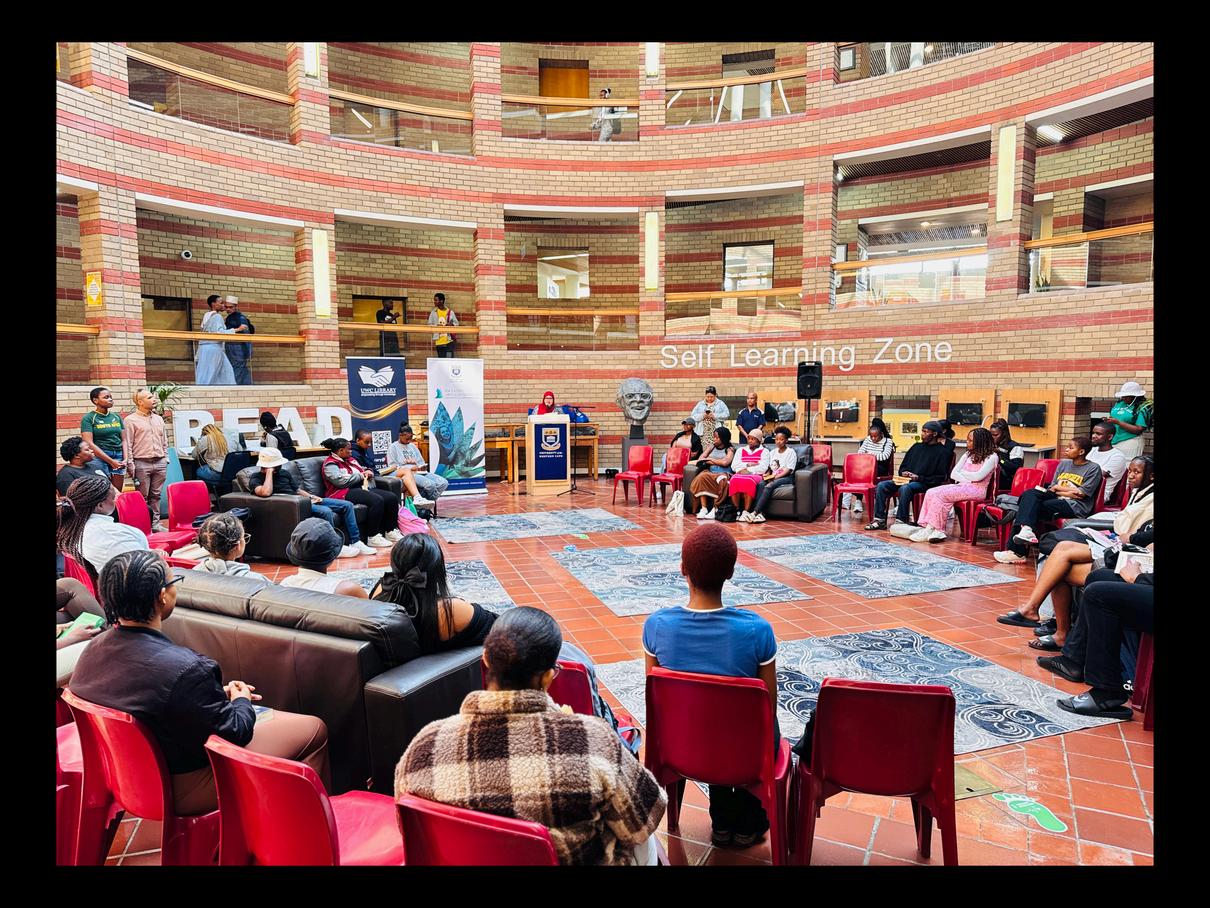
Through a 24/7 web gateway to more than 120 crossfaculty electronic databases and specialised research collections, the Library ensures that knowledge creation is not limited by time or location More than 85% of the Library’s budget is dedicated to peer-reviewed subscriptions and information resources, supporting both core disciplines and niche research areas
Directors
ENABLING RESEARCH VISIBILITY AND SCHOLARLY IMPACT
The Library plays a critical role in enhancing the visibility and reach of UWC research Key initiatives include:
Negotiation of 11 “Read and Publish” agreements with major publishers, enabling Open Access publishing with reduced or no article processing charges
Support for online researcher visibility through platforms such as ORCID and Google Scholar Guidance on copyright, publishing and awareness of predatory journals.
As a champion of Open Science, the Library ensures that UWC-generated knowledge is accessible beyond paywalls, increasing its potential for societal impact and global collaboration
RESEARCH IN ACTION: DATA, TOOLS AND CAPACITY DEVELOPMENT
The Library actively supports research processes through: Management of the YODA Research Data Management platform, ensuring compliance with FAIR principles (Findable, Accessible, Interoperable, Reusable)
Collaboration with faculties and the Research and Postgraduate Support Office to build capacity in literature searching, reference management and systematic review tools
Training in the ethical use of AI and digital research tools
The Library also maintains unique archives and special collections that provide primary source material for historical, social and political research
ACCELERATING THE RESEARCH CYCLE
Access to high-quality digital resources underpins research impact. Through its e-strategy and investment in digital collections, the Library: enables real-time access to current research, reducing delays in knowledge production; supports advanced discovery through AI-integrated databases and precision search systems; and enhances literature review and analysis through access to diverse and specialised data sources
This ensures that research outputs remain current, rigorous and globally competitive.
DVC: Research & Innovation Leadership Directors
DRIVING GLOBAL VISIBILITY AND RESEARCH CREDIBILITY
The Library strengthens research impact through: Open Access integration, increasing downloads and citations; indexing in global databases such as Scopus and Web of Science; and access to high-quality datasets through digital repositories
Digital platforms also enable cross-disciplinary engagement, fostering collaboration and innovation across fields Through cloud-based resources, UWC researchers can collaborate internationally in real time, contributing to a globally connected research ecosystem
OPEN ACCESS AS A CATALYST FOR IMPACT
The Library’s advocacy for Open Access transforms how research is accessed and shared Key contributions include: The UWCScholar institutional repository, making research globally discoverable via search engines; Support for Green Open Access through self-archiving; Increased citation rates through unrestricted access to research outputs
Open Access also enhances equity by ensuring that research is accessible to practitioners, policymakers and communities, particularly in resource-constrained environments Through transformative agreements with major publishers, the Library enables researchers to publish Open Access in high-impact journals without individual financial burden
DIGITAL PLATFORMS AND INSTITUTIONAL VISIBILITY
Digital platforms play a central role in strengthening researcher profiles and institutional impact
The Library supports: integration with ORCID to ensure accurate attribution of research outputs; search engine optimisation to improve discoverability; and long-term preservation of research through institutional repositories
These platforms contribute directly to UWC’s global rankings, including those by Times Higher Education and Webometrics, by increasing research visibility, fostering collaboration and enhancing citation impact
Directors
SHAPING THE FUTURE: AI AND DIGITAL INNOVATION
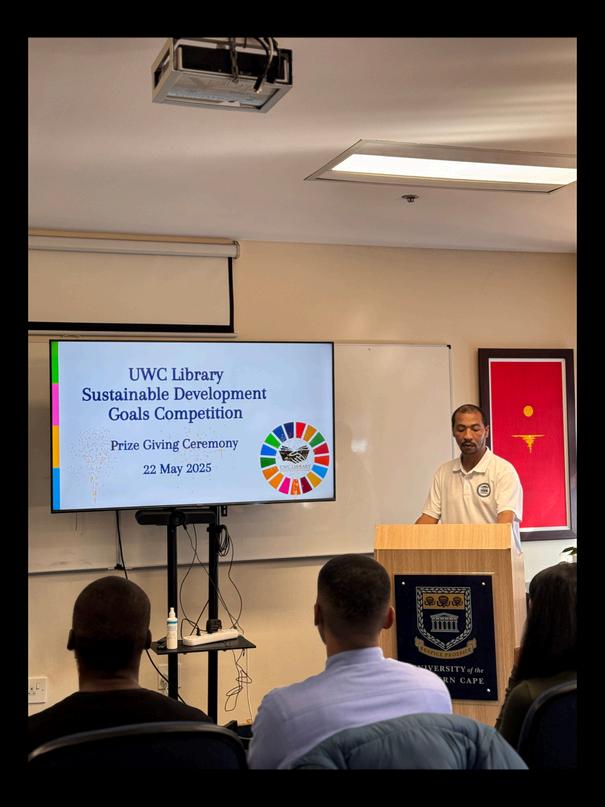
Digital innovation and artificial intelligence are reshaping academic libraries. UWC Library, in collaboration with the e-Research Office, is actively leading this transition through a human-centred approach to AI Key initiatives include:
AI-enhanced research tools for discovery and analysis; training in ethical and effective use of generative AI tools; and The South African Library Week 2026 AI Skills Challenge
The Library positions AI as a companion to research, ensuring that technological advancement is balanced with critical thinking and academic integrity
FROM KNOWLEDGE TO IMPACT
The Library’s transformation reflects a broader shift from providing information to enabling actionable knowledge This is demonstrated through:
Active participation in research teams, including systematic reviews in health sciences.
Alignment with UN SDGs to enhance global discoverability
Open Access strategies that democratise knowledge
The Library also supports inclusive access through initiatives such as the 24/7 Learning Centre and services for persons with disabilities, ensuring equitable access to knowledge.
Through partnerships with the e-Research and Research Development offices, the Library builds capacity in data stewardship, digital scholarship and advanced research methodologies.
LOOKING AHEAD
The Library’s contribution to UWC’s research mission lies in its role as an equitable academic partner
By providing access to knowledge, digital tools and open platforms, it enables UWC researchers to compete globally, transforming locally generated evidence into meaningful global impact.
Directors
FROM INNOVATION TO IMPACT: ENABLING RESEARCH TRANSLATION THROUGH TECHNOLOGY TRANSFER
Translating research into innovation requires pathways that connect discovery with application, enabling ideas to move from concept to real-world impact.
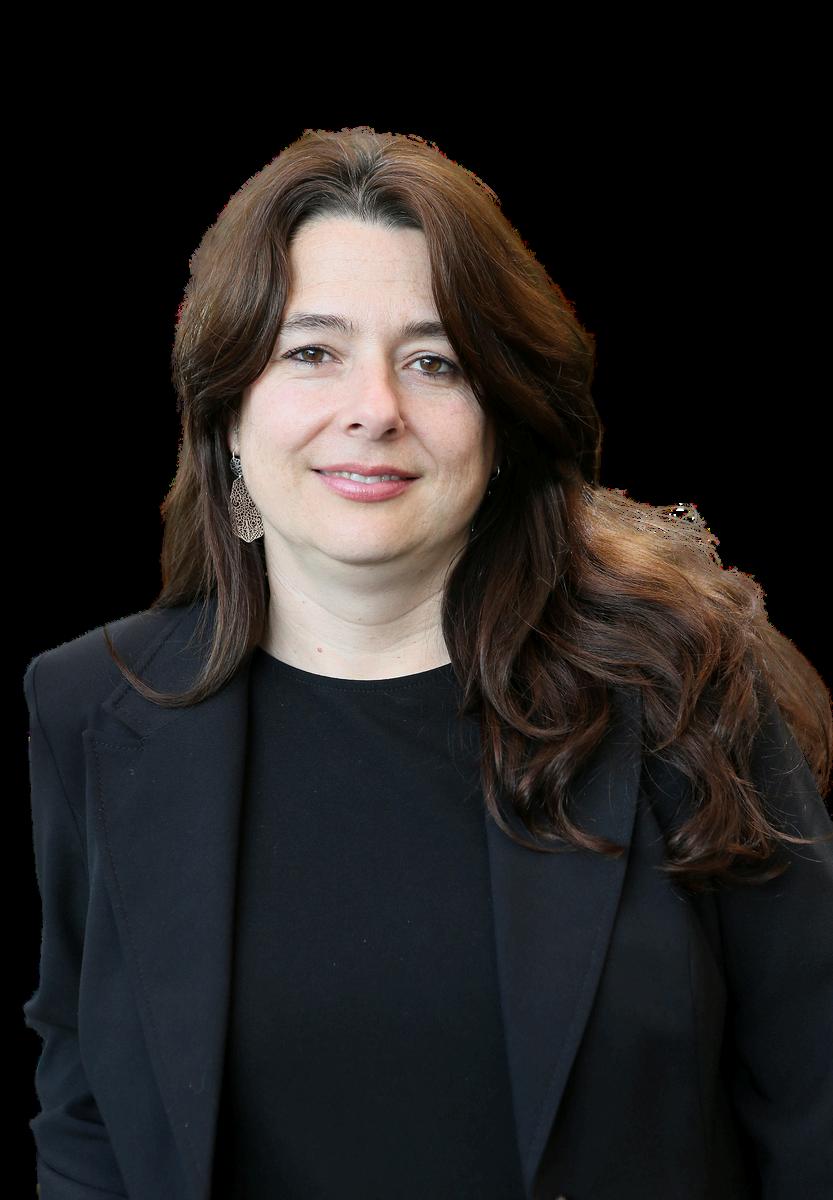
Dr Ana Casanueva
Director: Technology Transfer Office
Bridging the gap between research and real-world application to ensure that innovation delivers measurable societal and economic impact.
TURNING RESEARCH INTO REAL-WORLD SOLUTIONS
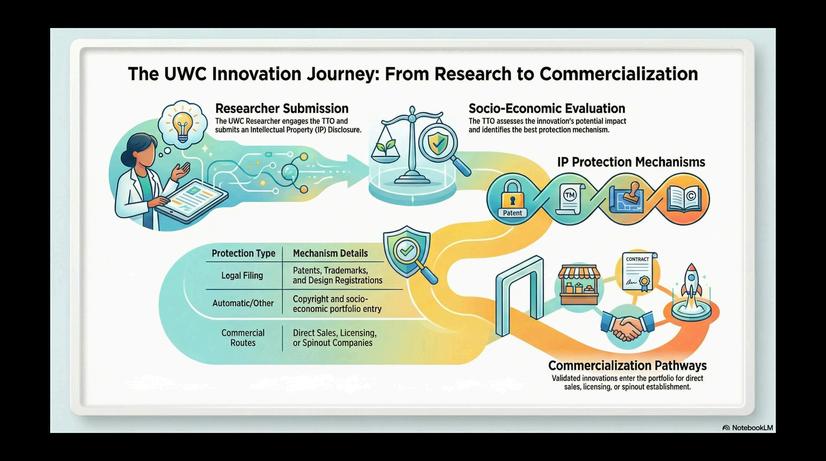
At its core, the Technology Transfer Office (TTO) ensures that research does not remain confined to academic outputs but is translated into tangible impact. The TTO plays a critical bridging role between academia and society by: identifying promising research; protecting intellectual property; and enabling pathways to real-world application
“Great ideas should not stay on the shelf; they should improve lives, create opportunities, and drive impact.”
Through this work, discoveries made in laboratories and research environments are transformed into products, services and social innovations
The overarching goal is to ensure that knowledge generated at UWC improves lives, creates opportunities and delivers measurable impact beyond academia
Directors
SUPPORTING THE JOURNEY FROM CONCEPT TO COMMERCIALISATION
The TTO supports researchers across the full innovation lifecycle from early-stage idea disclosure to market entry Acting as both guide and partner, the TTO helps refine research ideas, explores their application potential, and connects researchers with relevant opportunities and networks
Recognising that many researchers are not familiar with commercialisation pathways, the TTO makes the transition from concept to impact more accessible and less daunting
PARTNERSHIPS AS A CATALYST FOR SCALE
Strategic partnerships are central to amplifying the impact of UWC research By working with industry and external stakeholders, the TTO: aligns innovation with real-world needs; unlocks access to funding, expertise and markets; and enables research to scale beyond the university
These collaborations ensure that promising ideas reach industries and communities, enhancing both societal and economic outcomes
UNLOCKING INNOVATION THROUGH THE SEED FUND
The establishment of the Seed Fund marks a significant step in strengthening UWC’s innovation ecosystem Designed to support early-stage research, the fund provides risk-tolerant funding, supports prototype development and proof-of-concept validation, and enables market testing and refinement By bridging the gap between research and commercial readiness, the Seed Fund allows promising ideas to grow into viable ventures and attract further investment
SHAPING THE FUTURE OF INNOVATION IN HIGHER EDUCATION
The landscape of higher education is evolving, with universities increasingly positioned as engines of innovation and impact Key trends shaping this future include:
Growing emphasis on collaboration across sectors.
Increased researcher participation in entrepreneurial activities
A stronger focus on solving real-world challenges
This shift positions technology transfer as a central mechanism for ensuring that innovation benefits society in meaningful and inclusive ways
FROM KNOWLEDGE TO SOCIETAL IMPACT
As UWC advances towards becoming a leading research institution, the role of the TTO becomes increasingly significant. The university’s research is driven not only by academic advancement but also by a commitment to addressing real-world challenges and contributing to a more inclusive and sustainable future
The TTO enables this vision by: identifying and supporting high-potential innovations; facilitating strategic partnerships; and creating pathways for research to reach markets and communities
Through commercialisation and socially driven initiatives, the TTO ensures that research is translated into meaningful impact that contributes to both social progress and economic development
LOOKING AHEAD
The TTO continues to strengthen UWC’s position as a university where research is not only produced but actively transformed into solutions that shape society
By unlocking the full potential of research and connecting it to opportunity, the TTO plays a key role in ensuring that innovation delivers lasting value beyond academia
Directors
FROM TRANSFORMATION TO INCLUSION: BUILDING A RESEARCH AGENDA FOR EQUITY AND CHANGE
Advancing the agenda of transformation and inclusion through research as a mode of critical engagement, while strengthening institutional cultures that support equity and lived transformation.
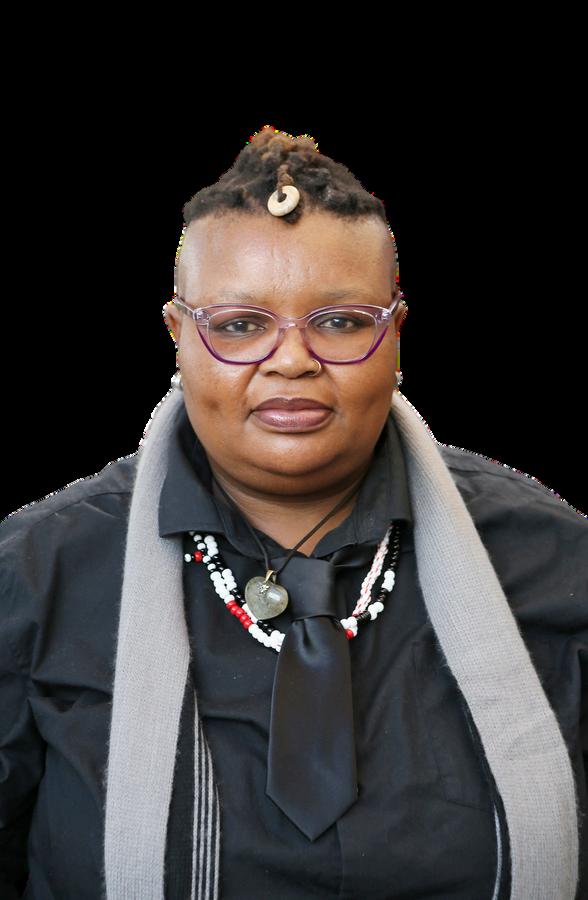
Dr Fikile Vilakazi-Alberts Director: Gender Equity Unit (GEU)
A NEW RESEARCH AGENDA FOR TRANSFORMATION
The Gender Equity Unit's research portfolio is relatively new, having been formally established in 2024 with the appointment and creation of the researcher post As a result, this work is slowly shaping its way into driving the agenda of transformation and inclusion through research as a mode of critical engagement.
While it is still early to measure the impact of this work, the Unit recently concluded research that cuts across the lived experiences of gender, sexuality, and disability in the city of Cape Town This research has forged partnerships with university departments, including the Department of Social Work, as well as public partners such as the City of Cape Town.
“The responsibility for transformation is shared and led amongst all stakeholders of the University as a way of life for the institution.”
BUILDING PARTNERSHIPS AND EXPANDING SCHOLARSHIP
In 2024, the Gender Equity Unit signed a partnership with scholars from the University of Missouri to conduct research investigating comparative institutional equity practices in higher education through the lens of UWC and the University.
In this work, the internationalisation of research and scholarship is key, as is the strengthening of transformative relationships between UWC and the Missouri University, a partnership that has existed for more than 30 years
Directors
The Unit is also currently conducting research on the experiences of cyberbullying between staff and students at UWC. These are new areas of inquiry whose impact can only be measured in the coming years, perhaps from 2030 onwards
MONITORING TRANSFORMATION IN PRACTICE
For several years, the Unit has conducted gender audits with various departments to measure and monitor the work of transformation within the University
The nature of these audits includes: research, sensitisation, and monitoring of work undertaken.
The impact of this work is evident in how some departments increasingly prioritise the transformation agenda through scholarship, staffing, leadership, and community engagement
THE WORK THAT REMAINS
Whilst the University is far ahead in some ways, there is still much to be done to shift mindsets towards real and lived transformation on the grounds of: age, gender, disability, race, class, nationality, and sexuality
LOOKING AHEAD
Experiences of conservatism, fuelled by religion, culture, belief, passive aggression, power mongering, harassment, bullying, and unconscious bias, continue to challenge meaningful transformation
On paper, we look good, but in practice, some of us still do the work of harm.
This is the work that remains: to move from harmful practices towards a truly inclusive and transformed UWC
The vision is to strengthen organisational culture in ways that ensure responsibility for transformation is shared and led amongst all stakeholders of the University as a way of life for the institution, not merely as a job or function, but as a true rhythm of UWC culture
The conversation regarding feminist research, scholarship, praxis, and thought leadership remains a thorny and unfinished one
Directors
FROM EQUITY TO TRANSFORMATION: ADVANCING RESEARCH THROUGH FEMINIST SCHOLARSHIP AND SOCIAL JUSTICE
Advancing research leadership through feminist intellectual activism, intersectional methodologies, and institutional advocacy that promote equity, social justice, and inclusion. DVC:
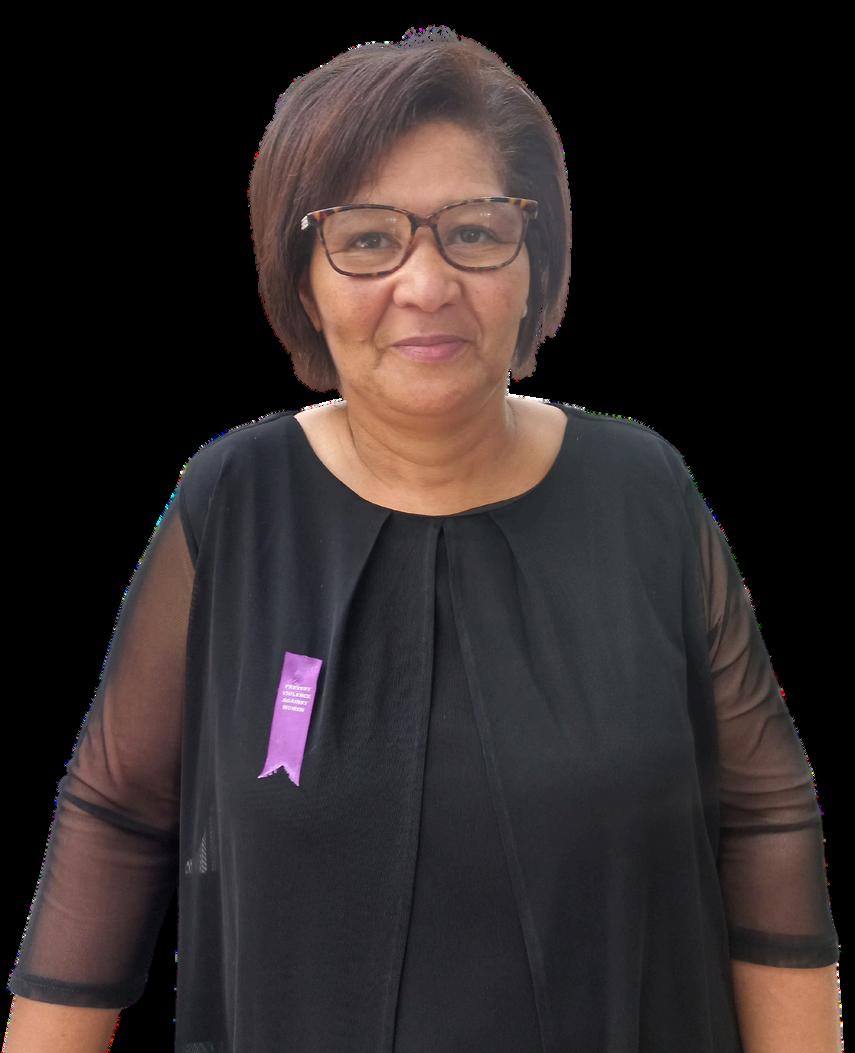
Ms Maria van Staden Researcher, Gender Equity Unit (GEU)
ADVANCING RESEARCH LEADERSHIP THROUGH EQUITY AND INCLUSION
The Gender Equity Unit advances research leadership through feminist intellectual activism, intersectional research methodologies, and institutional advocacy
The Unit's work is grounded in approaches that recognise how gender intersects with race, class, sexual orientation, and (dis)ability, ensuring that research questions, methods, and data frameworks remain inclusive and do not marginalise vulnerable populations
In doing so, the Unit works to dismantle power structures by challenging patriarchal, colonial, and heteronormative hierarchies embedded within traditional academic research and leadership spaces.
“Knowledge is inseparable from accountability and social responsibility.”
RESEARCH THAT DRIVES INSTITUTIONAL AND SOCIAL TRANSFORMATION
Through interdisciplinary collaboration and broader scholarly engagement, the GEU extends its influence across academic, policy, and community contexts
The Unit contributes to: institutional equity; gender transformation; gender-based violence scholarship; and broader national and international policy debates
DVC: Research & Innovation Leadership
Its work has contributed to a gradual but significant reshaping of institutional culture by interrogating entrenched power relations, exclusionary norms, and institutional silences
This has led to stronger accountability mechanisms and a growing expectation that equity and justice are central to the University's functioning
RESEARCH THAT DRIVES INSTITUTIONAL AND SOCIAL TRANSFORMATION
Through interdisciplinary collaboration and broader scholarly engagement, the GEU extends its influence across academic, policy, and community contexts
The Unit contributes to: institutional equity; gender transformation; gender-based violence scholarship; and broader national and international policy debates
Its work has contributed to a gradual but significant reshaping of institutional culture by interrogating entrenched power relations, exclusionary norms, and institutional silences
This has led to stronger accountability mechanisms and a growing expectation that equity and justice are central to the University's functioning.
LOOKING AHEAD
The work of the Gender Equity Unit demonstrates a central principle: Knowledge is inseparable from accountability and social responsibility
By aligning research with advocacy and community engagement, the Unit has moved beyond theory to contribute to real, sustained transformation within the University and in broader society
DRIVING UWC'S DIGITAL RESEARCH FUTURE
Building the digital capability, infrastructure, and skills that enable researchers to produce visible, highimpact research while advancing UWC's commitment to social justice.
Prof
Clement Nyirenda Director: eResearch Office
BUILDING DIGITAL CAPABILITY FOR RESEARCH EXCELLENCE
My focus is on making advanced digital capability a normal, accessible part of every UWC researcher’s working life.
This includes strengthening on-campus high-performance computing while opening doors to national and international facilities such as the Centre for High Performance Computing (CHPC) and global research networks It also includes embedding sound research data management into everyday practice and streamlining how researchers acquire and use software.
Equally important is building an eResearch knowledge unit that grows digital literacy across staff and postgraduate students, from HPC and Python to the responsible use of AI
This work is inherently collaborative, aligning the eResearch Office with ICS, the Library, RDPS, and external partners, including IDIA, CHPC, and NITheCS, to ensure UWC’s research infrastructure is coherent, connected, and sustainable.
“Digital research excellence and social justice are not competing priorities but the same project.”
ENABLING RESEARCH IMPACT THROUGH INFRASTRUCTURE AND DATA
I see my contribution as an enabler: facilitating access to infrastructure, technologies, and data practices so that researchers can use them to produce better, faster, visible work
DVC: Research & Innovation Leadership Directors
When a student in Dentistry can capture data using REDCap, when a biotechnologist can access HPC without being a computer scientist, or when a humanities scholar’s data becomes findable and citable through FAIR principles, research impact is multiplied behind the scenes
Our eResearch agenda is also anchored to the Sustainable Development Goals and UWC’s role as an anchor institution in the region, ensuring that digital investments support priorities such as food security, water, energy, and social justice.
Equally important is financial sustainability. Through open-source adoption, co-developed grants, incomegenerating short courses, and consistent overhead recovery, we work to ensure that research impact is not undermined by funding fragility
LOOKING AHEAD
My dream is for UWC to be unmistakably recognised, nationally and internationally, as an institution where digital research excellence and social justice are not competing priorities but the same project
I dream of a UWC where every researcher, regardless of discipline, has the computing power, data skills, and institutional support to compete confidently on the global stage
I dream of new Research Chairs in fields such as Smart Healthcare and Smart Food Systems, a thriving pipeline of homegrown computational talent through our knowledge unit, and an eResearch Office so embedded in the institutional fabric that advanced digital research becomes the way UWC does research
Ultimately, I dream of leadership measured not by infrastructure alone, but by the researchers we have empowered and the problems they have helped solve
eResearch Director, Prof Clement Nyirenda (left), with former ICS Director, Mr Raymond Crown (right), at the launch of the UWC HPC Facility.
eResearch hosts the NiTHECS/CHPC Coding Summer School, bringing together students from all UWC faculties
DVC: Research & Innovation Leadership Directors
STRENGTHENING UWC’S RESEARCH LEADERSHIP
Building an agile research ecosystem through research administration, research development and postgraduate support.
Prof Rachael Jesika Singh Director: Research Development & Postgraduate Support
BUILDING THE FOUNDATIONS FOR RESEARCH EXCELLENCE
The launch of the 2026–2030 UWC Institutional Operating Plan (IOP) has provided an opportunity to reflect on the role of research development for both research staff and postgraduate students.
As the institutional Research Office, RDPS focuses on three core areas: research administration, research development, and postgraduate support
Research administration includes ethics approval processes, publication output administration, NRF grants and funding calls, research incentives, research assistants, postgraduate bursaries, and the administration of DHET-funded projects.
Research development focuses on supporting researchers at different stages of their career pathways. Through workshops and training programmes, researchers are supported in areas such as proposal writing, article writing, supervision, and NRF ratings
Postgraduate support is delivered through faculty-based workshops covering proposal development, research methodologies, data analysis, research ethics, literature reviews, plagiarism awareness, and writing for publication. The unit also manages the postgraduate mentorship programme, editing services, and NRF postgraduate funding support.
“Research support, both administrative and in research development, is crucial to enabling an agile research ecosystem that is responsive and demonstrates impact.”
CONTRIBUTING TO LEADING RESEARCH IMPACT
For UWC to become a leading research university, research leadership through efficient administrative support is essential
The Research Office provides support through the advertising of funding opportunities, application and proposal processes, and engagement with funding agencies. It also ensures that research outputs are collated, captured and verified for submission
The growth of research at UWC is reflected through the increasing number of successful SARChI Chairs, the rise in both the quality and quantity of publications that demonstrate societal impact and alignment with the Sustainable Development Goals, as well as national and international recognition received by UWC researchers
Through these support structures, the office contributes to strengthening the University's overall research ecosystem and enabling research excellence across disciplines
LOOKING AHEAD
The vision for this role is to advance research excellence and postgraduate success
This includes providing excellent service to the University community, ensuring that research support remains accessible, maintaining a visible presence wherever research support is required, and offering continuous capacity-building opportunities for the research community
The focus is on creating enabling systems, structures and processes, while ensuring that emerging and established scholars are equipped to translate knowledge into meaningful academic, institutional and societal impact
CENTRES, INSTITUTES AND NICHE AREAS AT UWC
Research excellence is strengthened when knowledge is brought into conversation with society, policy, industry and communities. Across the University of the Western Cape, centres and institutes create spaces where specialised expertise, interdisciplinary collaboration and engaged scholarship thrive.
These entities extend UWC’s research footprint beyond traditional disciplinary boundaries, connecting evidence to action, ideas to innovation, and scholarship to societal impact.
In this edition, we spotlight the Dullah Omar Institute and the Institute for Poverty, Land and Agrarian Studies (PLAAS), showcasing how their work contributes to addressing critical social, policy and development challenges.
Together, they reflect UWC’s commitment to research excellence, impact and transformation. Look out for future editions as we continue to showcase the remarkable work of UWC’s centres, institutes, units and niche areas.
Please be on the lookout for future editions featuring these institutes and centres, as well as the niche areas associated with each faculty
Institutes at UWC
Centres at UWC
Centres and Institutes at the University of the Western Cape
The Dullah Omar Institute:
ADVANCING CONSTITUTIONAL DEMOCRACY, GOVERNANCE AND HUMAN RIGHTS
Transforming academic knowledge into democratic and developmental impact through research, policy engagement, advocacy, and public scholarship
Research That Matters Beyond the Academy
At a time when South Africa continues to debate the meaning, promise, and fragility of constitutional democracy, the Dullah Omar Institute remains dedicated to carrying forward the legacy of Dullah Omar, South Africa’s first democratic Minister of Justice. Established in 1990, the Institute focuses on constitutional law, governance, and human rights, addressing some of the most pressing challenges facing South Africa and the African continent Its work spans human rights protection, strengthening democratic institutions, criminal justice reform, children’s rights, socio-economic rights, and multilevel governance The Institute is not merely a research entity within UWC It is a public intellectual space where research, policy, and society intersect to address issues of justice, accountability, and democratic development
Driving Research Impact Through Policy and Public Engagement
The Institute’s work is organised around several key areas of expertise.
The Children’s Rights Project advances research, advocacy, and education focused on African children’s rights and well-being, including issues such as climate change, digital rights, child safety, and socio-economic rights
The Socio-Economic Rights Project focuses on advancing rights to health, dignity, equality, and access to basic services, with particular attention to sexual and reproductive health rights, access to medicines, and barriers to healthcare across Africa
The Africa Criminal Justice Reform Project addresses critical governance and human rights challenges through research on legal reform, torture prevention, decriminalisation of poverty, and reform of criminal justice institutions.
The Multilevel Government Project undertakes research, advocacy, consultancy, and postgraduate education on multilevel governance in Africa. Its work focuses on strengthening provincial and local governments to advance development, deepen democracy, and promote peace, while supporting evidence-based policy and legal reform grounded in the rule of law
Centres and Institutes at the University of the Western Cape
Together, these projects contribute to strengthening accountability, protecting rights, and advancing democratic governance across the continent.
“It is a public intellectual space in which academic knowledge is transformed into democratic and developmental impact, research is integrated with policy, and law intersects with society.”
A Living Legacy of Justice
Deeply rooted in UWC’s historical commitment to justice, transformation, democracy, and social impact, the Institute continues to strengthen the University's position as a leading centre for constitutional law, governance, and human rights. Its research outputs, public lectures, policy submissions, international collaborations, and postgraduate programmes contribute to national, continental, and global conversations
Since its establishment, the Institute has published:
88 books
341 book chapters
414 journal articles
487 research reports
With more than 86 000 website views, thousands of subscribers, and extensive public engagement, the Institute continues to extend UWC’s reach into civil society, government, academia, the legal profession, and the broader public.
Looking Ahead
South Africa and the African continent continue to face significant challenges relating to democracy, governance, and peaceful coexistence The Institute remains committed to increasing research, education, and policy engagement in response to these challenges
Current priorities include:
Improving accountability in South Africa, including reform of the National Prosecuting Authority Act
Contributing to debates on local government reform and the 2026 local government elections
Expanding research on climate change and children’s rights.
Strengthening work on sexual and reproductive health rights across the continent
Through this work, the Dullah Omar Institute continues to serve as a bridge between research and reform, constitutional ideals and lived realities, and the university and society.
Centres and Institutes
at the University of the Western Cape
RESEARCH LEADERSHIP FOR JUSTICE, LAND AND FOOD SYSTEMS
Advancing research, policy engagement and partnerships that contribute to justice, freedom and sustainable development across Africa and beyond
Prof Ruth Hall
Director: Institute for Poverty, Land and Agrarian Studies (PLAAS)
Research with Purpose
The Institute for Poverty, Land and Agrarian Studies (PLAAS) has established itself as a leading centre of excellence focused on poverty, land, agrarian reform, food systems, fisheries, and natural resource governance
Its work contributes to understanding and addressing some of the most pressing challenges facing South Africa, the African continent, and the broader global community. Through rigorous research, policy engagement, teaching and learning, and strategic partnerships, PLAAS continues to strengthen UWC’s position as a leading research-intensive university
“PLAAS contributes to global knowledge creation and documentation for the global majority of people seeking justice and freedom in their countries.”
Contributing to Leading Research Impact
Research impact at PLAAS extends beyond publications and academic outputs The institute actively contributes to policy processes, legislative reform, governance debates, and evidence-based advocacy
Its work includes:
Contributions to presidential, parliamentary, ministerial and diplomatic briefings
Partnerships with state institutions, including the Land Court
Engagement on legislative amendments, including the Expropriation Act and PIE-related Bills
Research that supports civil society organisations working towards justice and accountability.
Centres and Institutes at the University of the Western Cape
PLAAS also continues to demonstrate research excellence through highly rated scholars, postgraduate training, international masterclasses, seminars, and structured research initiatives that strengthen research capacity across Africa
Global Partnerships and Continental Reach
PLAAS partners with universities and research institutions across Africa, Europe and North America, contributing to global knowledge creation and international collaboration.
The institute plays a leading role in major international research initiatives and networks, including: Vulnerability to Viability (V2V) Global Partnership
Land Deals Politics Initiative
BRICS Initiative for Critical Agrarian Studies
Observatory for Food Systems and Social Reproduction
Medium Scale Farmers in Rural Africa
At the African Union level, PLAAS contributes research and expertise to continental land governance initiatives and serves as the technical node for the Network of Excellence of Land Governance in Africa (NELGA), supporting training and research across the continent
The institute also convenes major international gatherings, including the Land, Life and Society conferences, bringing together researchers, policymakers and practitioners to engage on critical questions relating to land, food systems and governance
Building the Next Generation
PLAAS continues to invest in postgraduate training, early-career researchers and professional development across Africa.
Through postgraduate programmes, short courses, fellowships, masterclasses and network-based learning initiatives, the institute supports a growing community of scholars and practitioners committed to advancing evidence-based approaches to land governance, food systems and social justice.
Looking Ahead
The next big step in PLAAS’s record of partnerships is a planned memorandum of understanding with the South African National Biodiversity Institute
Building on its strong foundation of research excellence, policy engagement and international collaboration, PLAAS remains committed to generating knowledge that informs decision-making, strengthens institutions and contributes to more just and sustainable futures
Centres and Institutes at the University of the Western Cape
PARTNERSHIPS & COMMUNITY ENGAGEMENT FOR IMPACT
Extending beyond institutional boundaries, Leading Research is strengthened through partnerships, dialogue and shared knowledge. External collaborators and thought leaders contribute to a broader ecosystem where research is not only produced but continuously shaped, challenged, and enriched.
Partnership & Community Engagement for Impact at the University of the Western Cape
Dr Iris Wu, Director: Confucius Institute for Chinese Medicine
GLOBAL
VOICES: LEADING RESEARCH, LEADERSHIP IN PARTNERSHIP
Strategic partnerships expand the reach of research, fostering collaboration across borders, disciplines and cultures.
PARTNER PERSPECTIVE
Advancing global collaboration, cultural exchange and interdisciplinary research to strengthen UWC’s position as a researchintensive and socially responsive university
“Leading Research is realised through the ability to convene, connect, and translate knowledge into meaningful and lasting impact.”
PARTNERSHIP FOCUS
The Confucius Institute at UWC plays a strategic role in advancing the university’s vision of research excellence, global engagement and transformative impact Its work centres on: promoting Chinese language and culture; supporting academic and intellectual exchange; and advancing collaboration in areas such as Chinese medicine and acupuncture.
Through these intersecting domains, the Institute contributes to internationalisation, interdisciplinarity and societal relevance
COLLABORATION IN ACTION
The Institute facilitates: academic lectures and seminars; research collaborations; professional and institutional exchanges; and public-facing initiatives
These platforms enable knowledge to move across disciplines, sectors and national boundaries
Partnership & Community Engagement for Impact at the University of the Western Cape
IMPACT THROUGH PARTNERSHIP
This collaboration contributes to: strengthening UWC’s global research networks; expanding interdisciplinary research opportunities; and advancing knowledge exchange in health, culture and education
It also broadens engagement in areas such as healthcare innovation through Chinese medicine and acupuncture
WHY THIS PARTNERSHIP MATTERS TO UWC
The Confucius Institute enhances UWC’s identity as a globally connected, outward-looking institution
It supports a research environment that: translates knowledge into societal impact, encourages cross-cultural and interdisciplinary dialogue; and positions UWC within global conversations on innovation and wellbeing
LOOKING AHEAD
The vision is for the Institute to grow as a fully embedded strategic partner within UWC’s research and innovation ecosystem, deepening international collaboration, expanding interdisciplinary engagement, and contributing to the development of students, scholars and communities
Partnership & Community Engagement for Impact
at the University of the Western Cape
FROM ENGAGEMENT TO IMPACT: ADVANCING THE SCHOLARSHIP OF ENGAGEMENT FOR SOCIETAL CHANGE
Dr Samantha van Schalkwyk, Acting Director of the Community Engagement Unit
Positioning community engagement as a rigorous, co-created approach to knowledge production that drives meaningful societal impact.
Equally critical is ensuring that research remains grounded in society, where knowledge is cocreated, and impact is defined through engagement and transformation
REFRAMING
COMMUNITY
ENGAGEMENT IN RESEARCH
UWC’s Community Engagement Unit (CEU) advances the Scholarship of Engagement for Societal Impact (SoE-SI) as a central component of academic leadership
“Impact is not only measured by outputs, but by how research contributes to the public good.”
Community engagement is positioned not as a peripheral activity, but as a rigorous, ethical and transformative approach to knowledge production, one that is embedded across all university functions.
Grounded in reciprocity and co-creation, the CEU supports partnerships that bring academics, leaders and communities into meaningful dialogue, where diverse knowledge systems are recognised and valued.
At the centre of this work is a commitment to amplifying the agency and voice of communities, contributing to a research culture that is socially responsive and rooted in the realities of post-apartheid South Africa
Partnership & Community Engagement for Impact
at the University of the Western Cape
EXPANDING THE MEANING OF RESEARCH IMPACT
The CEU’s contribution to research leadership lies in expanding how societal impact is understood, enabled and sustained This includes: supporting the design and implementation of community-engaged research; building capacity among academics, students, and partners; and fostering networks that enable sustained collaboration
A flagship initiative is the Community-Engaged Learning Programme (CELP), which equips students to embrace leadership grounded in social justice and transformative scholarship. Through this work, impact is defined not only by outcomes, but by mutual benefit, sustained transformation and social justice
The CEU also strengthens visibility through its annual Social Impact Engagement and Scholarship of Engagement reports, highlighting UWC’s contributions to society
RELATIONAL APPROACH TO RESEARCH LEADERSHIP
For the CEU, research leadership is inherently relational and accountable. It is grounded in partnerships built on trust, reciprocity and shared purpose. This approach recognises that meaningful research impact emerges when knowledge is co-created with communities, rather than produced in isolation
CO-CREATING KNOWLEDGE FOR SOCIETAL CHANGE
The CEU envisions expanding opportunities for participatory research that is collaborative, contextually grounded and socially responsive This includes creating spaces where research is co-designed, coimplemented and shaped by community voices and lived experiences In this model, communities are not recipients of knowledge but active contributors to research agendas, methodologies and outcomes
DEVELOPING FUTURE LEADERS THROUGH ENGAGEMENT
A key dimension of the CEU’s work is student development. The unit seeks to create spaces where students are mentored in community engagement as both a scholarly and a transformative practice to apply their knowledge in meaningful societal contexts.
Through these opportunities, students are prepared to lead with purpose, responsibility and an understanding of social impact
LOOKING AHEAD
The CEU envisions a university where the Scholarship of Engagement for Societal Impact is embedded at the core of academic excellence
In this future, research is valued not only for its outputs but for its contribution to the public good and its ability to create meaningful, sustained change Impact is understood not only in what is produced, but in how the university supports growth, builds relationships and collectively transforms evidence into action
STORIES FOR IMPACT
Beyond strategy and structure, research at UWC is ultimately about impact. These stories highlight how ideas, leadership and researchers come together to shape lives, communities and futures.
RESEARCH THAT MATTERS. EVIDENCE THAT ENABLES. IMPACT THAT INCLUDES.
The CoLab for e-Inclusion and Social Innovation, University of the Western Cape
At the CoLab for eInclusion and Social Innovation, our focus is on advancing digital inclusion and shaping an inclusive digital transformation agenda for South Africa Working at the intersection of people, society, technology and the digital economy, we bring together research rigour, policy engagement and social innovation to generate evidence that matters. We believe that meaningful participation in an increasingly digital society requires more than access to technology alone It requires the skills, confidence, enabling environments and sense of digital wellbeing that allow individuals and communities to benefit from and thrive in a rapidly changing digital world. The gap between those who can navigate the digital world meaningfully and those who cannot is not merely technological; it is profoundly social
“A leading research university has a responsibility not only to produce knowledge but to deploy it in the service of a more equitable society.”
Over the past decade, the CoLab has generated evidence that strengthens digital inclusion initiatives and informs policy. More recently, we have developed a Digital Competence Framework and, in collaboration with our national partners, are facilitating its national adoption. We have also undertaken evaluations of largescale national digital skills programmes and mapped South Africa's digital engagement landscape through a validated survey instrument Together with UWC colleagues, we developed an AI Maturity Assessment Framework and conducted the inaugural assessment to support national dialogue on South Africa's readiness for artificial intelligence Through our Samsung EEIP partnership, the Future-Innovation Lab demonstrates how research, curriculum design, and industry collaboration can translate into measurable youth employability and digital-economy participation
A defining feature of our work is the continuous relationship between research, implementation and evaluation Through monitoring and evaluation frameworks, theories of change and outcome-focused assessments, we seek not only to understand whether digital interventions work, but how they can be strengthened and scaled In this way, research outputs become practical tools that guide programme design, policy development and investment decisions
Stories for Impact
at the University of the Western Cape
Research leadership also requires collaboration. The CoLab serves as a convening space where government, industry, academia and civil society can collectively explore solutions to complex challenges By bringing together diverse perspectives and expertise, we contribute to evidenceinformed approaches that are both contextually relevant and socially responsive
Our dream is that evidence consistently shapes a more digitally inclusive South Africa and that UWC plays its full part in making it happen UWC's founding commitment to social justice and the historically marginalised is not incidental to this work; it is constitutive of it The CoLab embodies UWC's conviction that a leading research university has a responsibility not only to produce knowledge but to deploy it in the service of a more equitable society
LEADING FROM WITHIN: RETHINKING LEADERSHIP IN A LEADING RESEARCH UNIVERSITY
Beyond institutional practice, leadership also invites reflection, challenging how leadership is understood, developed and sustained in a complex world.
Prof Nico Schutte
Director:
School of Government, and
Departmental Chairperson for the Department of Industrial Psychology
A leading research university is not defined only by what it produces, but by how research reshapes the way its leaders think, decide and engage with complexity
“The real shift in leadership is not about doing more, it is about seeing deeper.”
LEADERSHIP BEYOND MANAGEMENT
A university that seeks to become genuinely leading in research must treat leadership as more than management It must recognise leadership as a way of thinking, deciding and relating. This way of leading must be grounded in evidence, yet sufficiently mature to navigate ambiguity, pressure and change
INNER CODE OF LEADERSHIP
At the centre of this perspective is what Prof Nico Schutte describes as the “inner code” of leadership His work explores how leaders grow into roles that require more than technical expertise, focusing instead on how they make sense of data, interpret complexity and choose their responses. The distinction, he argues, lies not only in what leaders know, but in how they think and the range of intelligence they bring into decision-making: intellectual, emotional, ethical, relational and spiritual, in the sense of purpose and meaning
FROM TECHNIQUE TO DEVELOPMENT
From this perspective, leadership in a leading research university is not a fixed set of skills, but a developmental journey In their book, Unlocking the Leadership Master Code, Marius Pretorius and Nico Schutte described this as a “leadership master code”, a framework that explains how leaders evolve from narrow, performance-driven thinking towards integrated, reflective and regenerative leadership. This shift is particularly relevant for universities seeking to move beyond rhetoric and embed research into how leadership is actually practised.
RETHINKING LEADERSHIP IN RESEARCH INSTITUTIONS
For universities committed to becoming leading research institutions, the challenge is not only structural but also deeply cognitive and reflective
This requires asking different questions:
How do leaders make sense of complex evidence?
How do they navigate tensions between access and excellence?
How do they balance local relevance with global standards?
How willing are they to challenge their own assumptions in light of new data?
THE LEADERSHIP CHALLENGE OF OUR TIME
The leadership crisis is not simply a lack of skills, but a mismatch between the complexity of the world and the internal frameworks leaders use to navigate it. For universities, this means that adding more policies, plans and performance indicators will not be sufficient What is required is vertical development, a transformation in how leaders think and who they are becoming
FROM OUTPUT TO IMPACT
A leading research university is therefore not defined only by the volume of its research outputs It is defined by whether research reshapes leadership thinking, informs decision-making and transforms how institutions engage with society In this sense, research becomes not just a product but a force that changes how leaders lead
FROM RESEARCH TO PRACTICE: LEADERSHIP IN ACTION
Emerging platforms within and beyond the institution continue to explore how research can shape leadership practice in dynamic and evolving contexts.
Dr Tolulope Balogun
UWC Leadership Lab, Industrial Psychology Department
Developing authentic, research-informed leaders equipped to navigate complexity and drive meaningful impact.
FOCUS ON LEADERSHIP AND POTENTIAL
At the core of Dr Tolulope Balogun’s work is a deep commitment to young people and their potential She aims to support students and emerging leaders in discovering their unique strengths and positioning themselves to thrive in an increasingly complex world This vision is realised through the UWC Leadership Lab, which is dedicated to developing authentic leadership that is rooted in the African context while remaining globally relevant.
“Leadership must be both evidencebased and deeply human, grounded in context, purpose, and impact.”
The Lab equips researchers, managers and aspiring leaders with evidence-based tools to uncover leadership competencies, drive innovation and respond effectively to organisational challenges Through this work, leadership is not treated as an abstract theory, but as a lived, applied practice grounded in research
TURNING RESEARCH INTO IMPACT
In alignment with UWC’s vision of becoming a leading research university, Dr Balogun’s contribution lies in translating academic insight into practical leadership strategies, through initiatives such as leadership symposia, interactive platforms and upcoming short courses.
The Leadership Lab creates spaces where research leaders, industry experts and professionals can engage, exchange ideas and co-create solutions
Stories for Impact
A key dimension of this work is the expansion of collaboration beyond institutional boundaries
By partnering with international universities and leadership academies, the Lab elevates African perspectives on leadership in global conversations
VISION FOR TRANSFORMATIVE LEADERSHIP
Dr Balogun’s vision for the UWC Leadership Lab, launched in April 2025, is both ambitious and grounded in impact She seeks to equip young people with the leadership competencies required to remain relevant in a rapidly evolving workplace, while simultaneously reshaping the narrative of African leadership.
She aspires to cultivate a new generation of leaders who are authentic, research-informed and capable of driving meaningful change.
The Leadership Lab is envisioned as a beacon of excellence, a space where ideas are unlocked, leadership is developed, and research translates into sustained institutional and global influence
LEADERSHIP LAB IN THE UWC ECOSYSTEM
As UWC advances its Institutional Operating Plan, the Leadership Lab plays a pivotal role in strengthening the university’s research and impact agenda By aligning rigorous evidence with practical application, the Lab contributes to: a stronger research identity; enhanced leadership capacity across the institution; and the development of students and staff as confident, future-ready leaders
In doing so, it reinforces UWC’s position as a university that leads through evidence, collaboration and impact
PHD & POSTDOC WORKSHOP
(1-2 APRIL 2026)
The two-day PhD & Postdoctoral Meet and Greet brought together emerging researchers from across UWC's seven faculties to connect, collaborate and share experiences. The event provided valuable guidance on the doctoral and postdoctoral journey while fostering a strong sense of community, belonging and interdisciplinary engagement.
STORIES
OF IMPACT WEBINARS 2026
The Special Projects Unit in the Office of the DVC: Research & Innovation has hosted a series of thought-provoking leadership webinars exploring the role of leadership in shaping research excellence, innovation, and institutional impact
These engaging discussions brought together distinguished academic and professional leaders who shared valuable insights, experiences, and perspectives on leading research universities in a rapidly changing higher education landscape
If you missed the live sessions or would like to revisit the discussions, simply scan the QR codes below to access the webinar recordings and continue the conversation on leadership, research excellence and the future of research universities.
Leadership Perspectives on Leading Research Universities (25 March 2026) Outside Lens:
on
Research Universities (18 June 2026)
A Tribute to Research Leadership Leading Research: Turning Evidence into
Impact
After 29 years of dedicated service to the University of the Western Cape, Prof José Frantz concluded her service as Deputy Vice-Chancellor: Research & Innovation in February 2026, leaving behind a legacy defined by principled leadership, empathy and an unwavering commitment to research excellence.
Throughout her career at UWC, Prof Frantz played a pivotal role in strengthening the University's research culture, supporting emerging scholars, expanding postgraduate development, and advancing research that meaningfully responds to societal needs. Guided by the belief that leadership is about service and creating spaces where others can thrive, she helped position UWC as a leading research-intensive institution.
As we reflect on her remarkable contribution, we celebrate not only an accomplished academic leader, but also a mentor, colleague and champion of knowledge in the service of society. Her influence will continue to shape the University's research landscape for generations to come.
Prof Josè Frantz, Emeritus Professor & Former DVC: Research & Innovation, University of the Western Cape
My approach to leadership at UWC is grounded in the belief that evidence becomes truly powerful when it is centred on people As I practice it, Leading Research is not only about data, metrics or policy outcomes; it is about understanding individuals' purposes, potentials and lived realities, and aligning that understanding with institutional impact Evidence is the bridge between human insight and sustainable change At the core of this approach is a person-centred leadership philosophy I begin by asking not only what the data shows, but who the data represents. Through participatory research methods, dialogue and reflective engagement, I aim to identify what motivates people, where they feel constrained, and how their strengths can be activated meaningfully At UWC, this has meant creating spaces where students, staff and community partners are not merely research subjects, but cocreators of knowledge and solutions Leading Research, in this sense, becomes a tool for unlocking potential. By identifying patterns in engagement, access and participation, I have been able to connect individual aspirations with collective goals When people understand how their personal purpose contributes to a broader mission, their capacity for impact expands
My leadership focus has, therefore, been on translating evidence into opportunities that empower individuals to act with intention and confidence within their roles. Turning evidence into impact also requires translating insights into actions that are both strategic and humane Data alone does not change systems; people do By combining quantitative analysis with qualitative narratives, I work to design interventions that respond to real needs while recognising the dignity, agency and diversity of those involved This approach ensures that initiatives are not only effective but also inclusive and responsive to context Adaptability is a key element of this process People and environments evolve, and leadership must evolve with them I view research as an ongoing, reflective cycle: listen, test, learn and refine At UWC, this has involved piloting initiatives, collaboratively evaluating outcomes and adjusting strategies based on feedback
This iterative model reinforces trust and demonstrates that leadership is accountable to evidence and to people Collaboration further strengthens leading research, person-centred leadership Impact is amplified when individuals see themselves as contributors rather than recipients By fostering interdisciplinary and cross-faculty partnerships, I aimed to align diverse skills and perspectives toward shared outcomes This collective approach ensures that research findings translate into action that is widely owned and sustained Ultimately, Leading Research is about aligning evidence and empathy, purpose and practice, and potential and impact. My involvement at UWC reflects a commitment to leadership that is informed, ethical and deeply human By grounding decisionmaking in both data and personal purpose, I strive to ensure that impact is not only measurable but meaningful, transforming institutions while enabling individuals to realise their capacity to lead and contribute
“Ultimately, Leading Research is about alignment between evidence and empathy, purpose and practice, potential and impact.”
ACKNOWLEDGEMENTS TO OUR CONTRIBUTORS
The perspectives presented in CREATE reflect a shared commitment to advancing Leading Research, where evidence informs action, collaboration drives innovation, and knowledge is translated into meaningful and lasting impact.
We acknowledge the thought leaders who were unable to contribute at the time of publication
We look forward to featuring their valuable insights in future editions The following contributors are thanked for their assistance in this edition.
Visit the DVC: Research and Innovation social media platform pages for the latest information on upcoming webinars and other events.