















































































Rainy days have ushered in the greenest season at last, and Vermonters know how to make the most of it. Yes, you can head to the lake or the mountains, but what about planting a tree or three? Chris Urban at Monkton’s BORO HILL NURSERY grows resilient beauties that stand up to global warming. Meantime, 20-year-old Miles Jordan of Charlotte does his part for the planet with JUNKIT. His young team will take away your trash, repurposing and recycling what it can. Nest goes indoors to tour a BURLINGTON OLD NORTH END HOME that’s a continual — and highly creative — work in progress for the whole family. Planning renovations of your own? Start by checking the STATE REGISTRY OF RESIDENTIAL CONTRACTORS. Happy summer!
Vermont’s registry of residential contractors aims to prevent fraud in the home improvement sector
BY KEVIN MCCALLUM
One Burlington couple learned to create a home that works best for their family
BY MARY ANN LICKTEIG
Boro Hill Nursery grows resilient trees and human connections
BY PAMELA POLSTON
A 20-year-old Charlotte entrepreneur lends a helping hand with debrisremoval company Junkit
BY CAROLYN SHAPIRO





























Klima and Anna elemarck’s




















Vermont’s registry of residential contractors aims to prevent fraud in the home improvement sector
BY KEVIN MCCALLUM • kevin@sevendaysvt.com
Of all the decisions homeowners need to make during a renovation project, perhaps none is more important than hiring a contractor who won’t rip you o .
Residential contractors often require large up-front deposits, and some bad actors, after cashing that first check, have been known to disappear.
That’s what happened to a homeowner in Lowell in 2024.
The homeowner paid Danby contractor Jordan Atwood nearly $10,400 to build a detached garage. But Atwood never did a lick of work on the job, according to the state.
“When homeowners are paying substantial amounts of money to folks who are doing construction, fraud happens,” said Jennifer Colin, director of the Vermont O ce of Professional Regulation, which stripped

Atwood of his license last year. “Our o ce gets complaints about fraud all the time.”
To help protect homeowners against shady operators, the state established a residential contractor registry in 2023.
The registry requires any residential contractor doing work costing more than $10,000 in Vermont to sign up with the state, use written contracts and carry su cient insurance. The fee is $75 per year for individual contractors and $250 for businesses.
The registry exists to limit the risk to homeowners when they are hiring contractors to do substantial work on their homes, Colin said.
Requiring written contracts can give homeowners legal recourse when fraud does occur, and insurance can help homeowners recoup damages if a contractor does shoddy work. The law requires contractors to carry $1 million of insurance per occurrence and $2 million in the aggregate.
Creating the registry was a contentious endeavor. Gov. Phil Scott vetoed an earlier version of it with a lower financial threshold ($3,500) because he worried about imposing regulatory burdens on smaller contractors. The governor also argued that he didn’t see the need.
But Scott later signed o on the registry in 2023 as part of a larger housing bill, after the bar was raised to $10,000 and a number of professions were exempted. Enforcement began in 2024.
Tradespeople who already have licenses from the Department of Public Safety, such as plumbers and electricians, do not have to sign up. Also exempted are licensed engineers and architects. Those fields have separate licensing requirements.
Today the registry includes about 1,400 individuals and businesses. Colin, whose o ce is nestled within the Secretary of State’s O ce, thinks there are many more residential contractors in Vermont who have not signed up. Her team has done significant outreach to let people know about the requirement, hanging posters at


lumberyards and home supply stores and posting on Front Porch Forum.
When that doesn’t do the trick, there are other ways of getting contractors’ attention.
In May, Vermont Attorney General Charity Clark filed two lawsuits against residential contractors for failing to register. Sevin Gulfield of Burlington paid a $5,000 fine, and Montpelier contractor Jesse Reeder’s civil case is still pending.
people are often so desperate to find contractors that they are willing to put down big deposits or overlook their lack of participation in the registry.
“What happens if you have a hole in your roof and you have to get it fixed right away?” Colin said. “People are vulnerable in this space.”
The registry is not the only form of protection available to homeowners.
The O ce of Professional Regulation maintains a page with links to the registry and to other entities that can








“Residential contractors provide a crucial service to our state by helping Vermonters repair or improve their homes,” Clark stated in a press release. “Registration is essential for a secure marketplace and to reassure Vermonters that businesses are operating legitimately. Residential contractors who fail to comply with the law, or rip people o , could be subject to enforcement actions.”













In addition to her o ce’s education and enforcement e orts, Colin hopes that homeowners will also encourage contractors to sign up. When considering a contractor, homeowners should always ask if the person is on the registry. That will send a strong message that homeowners value the regulation the registry provides, Colin said.


Still, it’s an uphill battle. Because the industry has been unregulated for so long, there’s a culture of resistance even to what Colin considered “very light” regulation.
The 1,400 people and businesses that have registered, when compared to the business filings for the industry maintained by the Secretary of State’s O ce, suggest that only a fraction of contractors have signed up.
The registry is important not just to protect homeowners doing optional upgrades, such as bathroom or kitchen remodels, but also to ensure that home repairs are done right, which Colin said is vital for health and safety. Yet




help when a home improvement project goes awry.
The Attorney General’s O ce has a Consumer Assistance Program that maintains a list of contractors convicted of home improvement fraud. Also included are links to the Better Business Bureau and small claims court.
One of the challenges in regulating the industry is that the line between outright fraud and poor-quality work can be “blurry,” Colin said. But when the former occurs, contractors can be removed from the registry and prosecuted.
“If a contractor runs o with your money, you should definitely make a report to our o ce,” she said. ➆






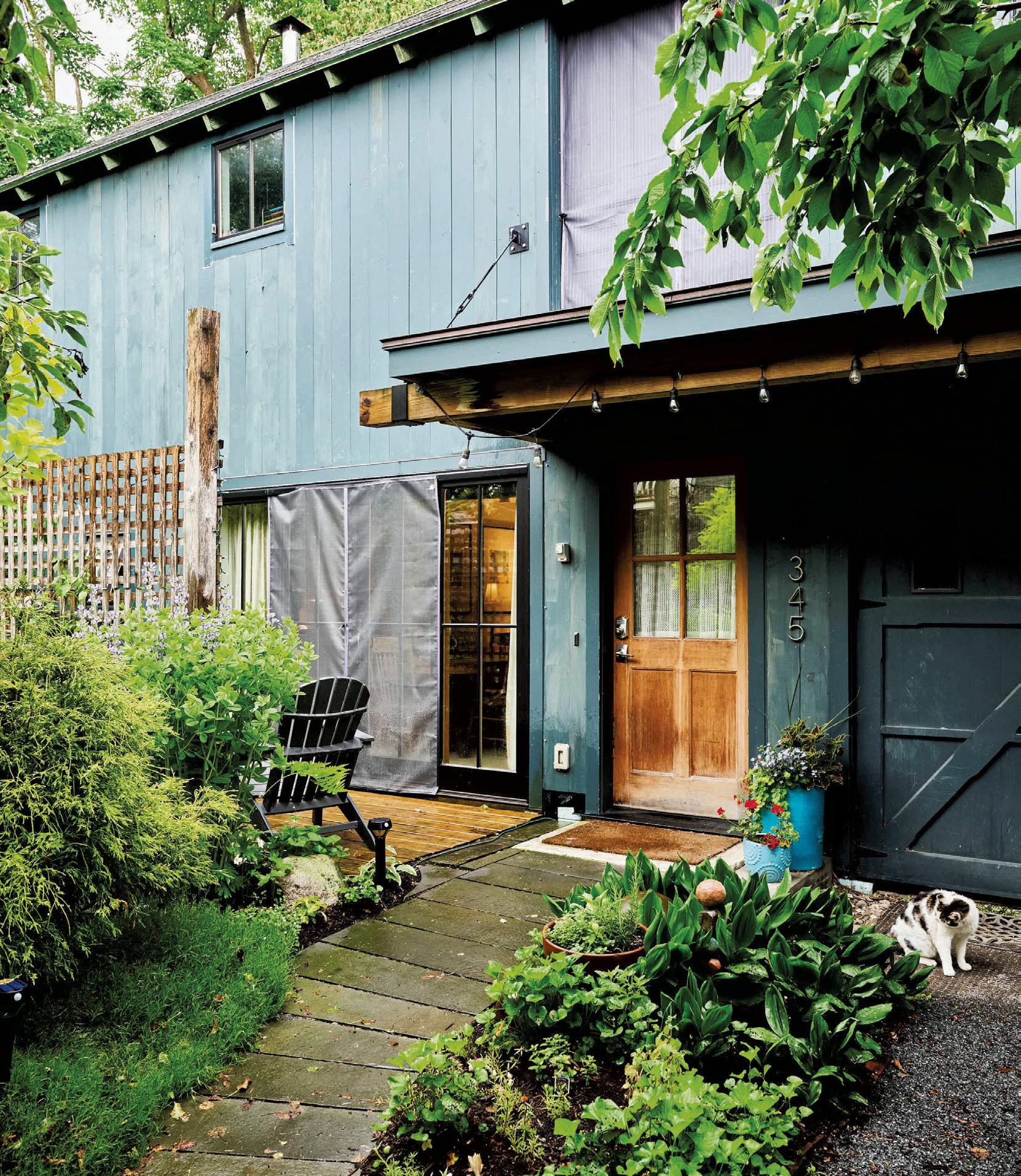
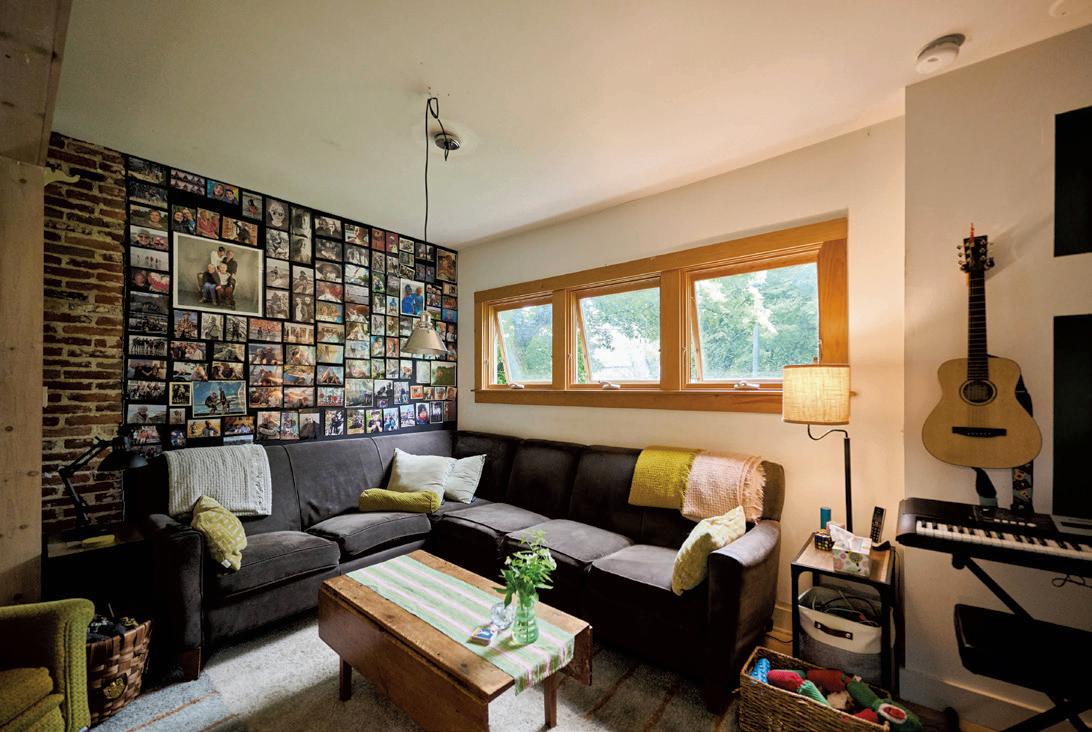
One Burlington couple learned to create a home that works best for their family
CIERI
For nearly 15 years, Judy Klima and Anna Thelemarck had been moving walls and reconfiguring space in their home. But it finally all came together when they changed the goal.
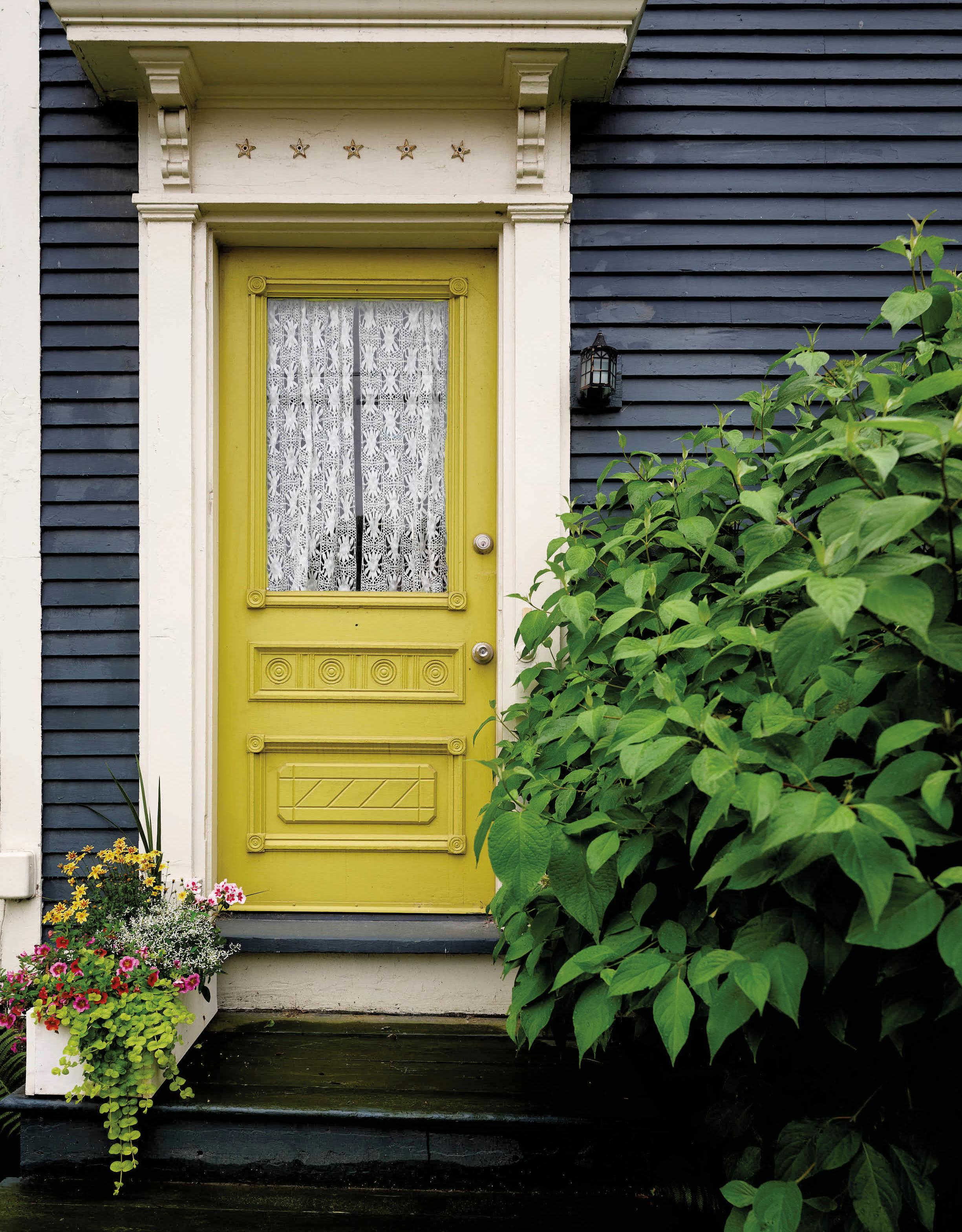
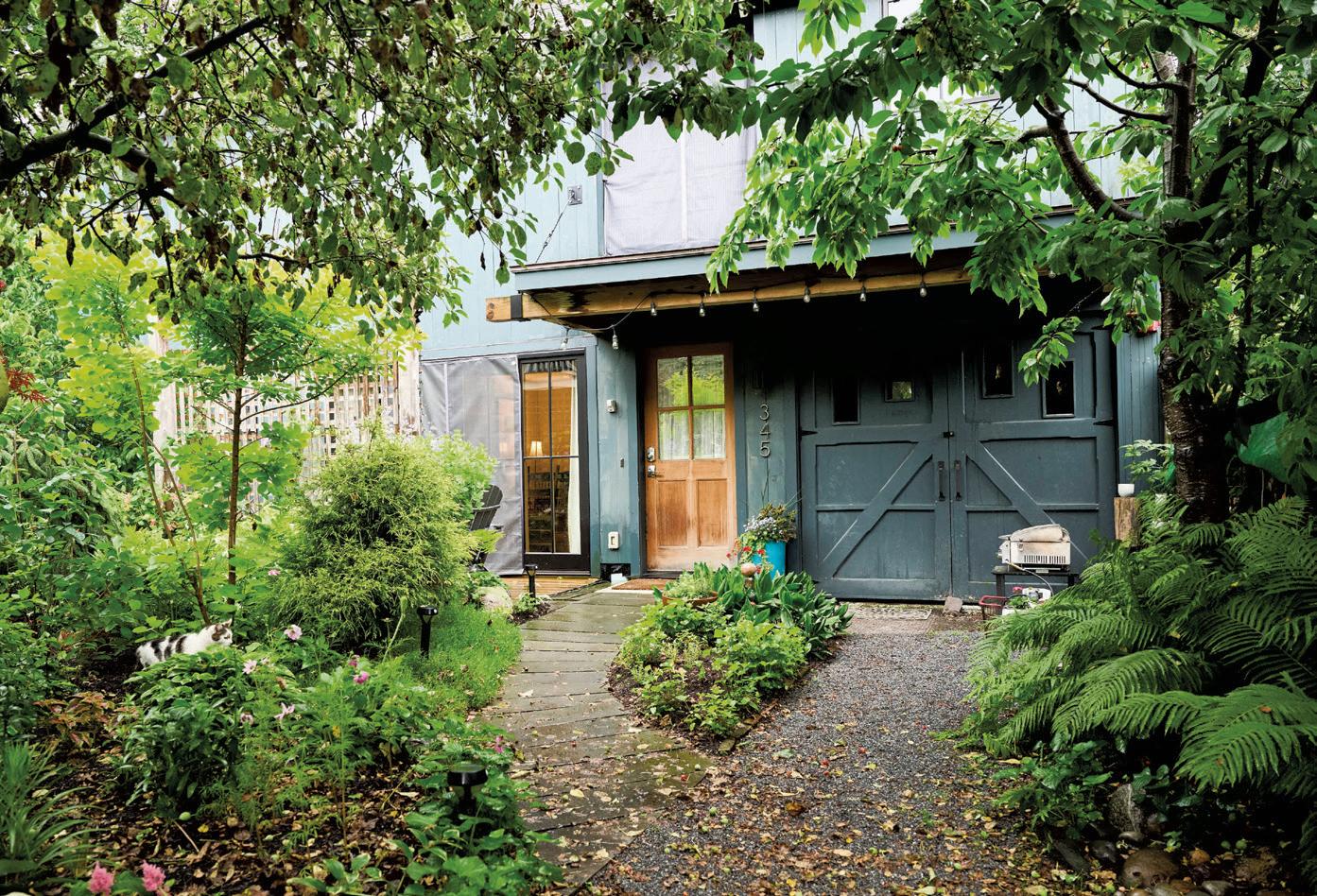
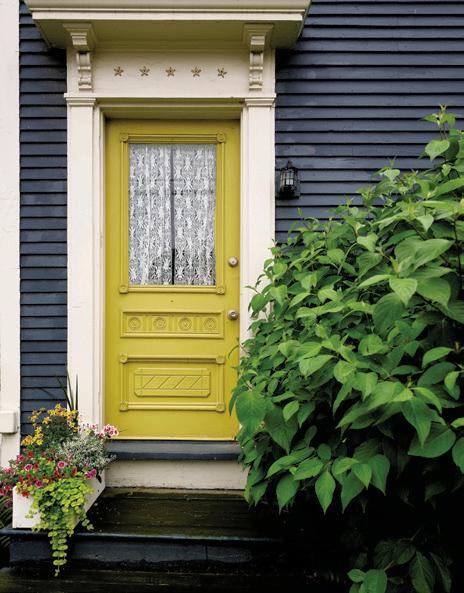
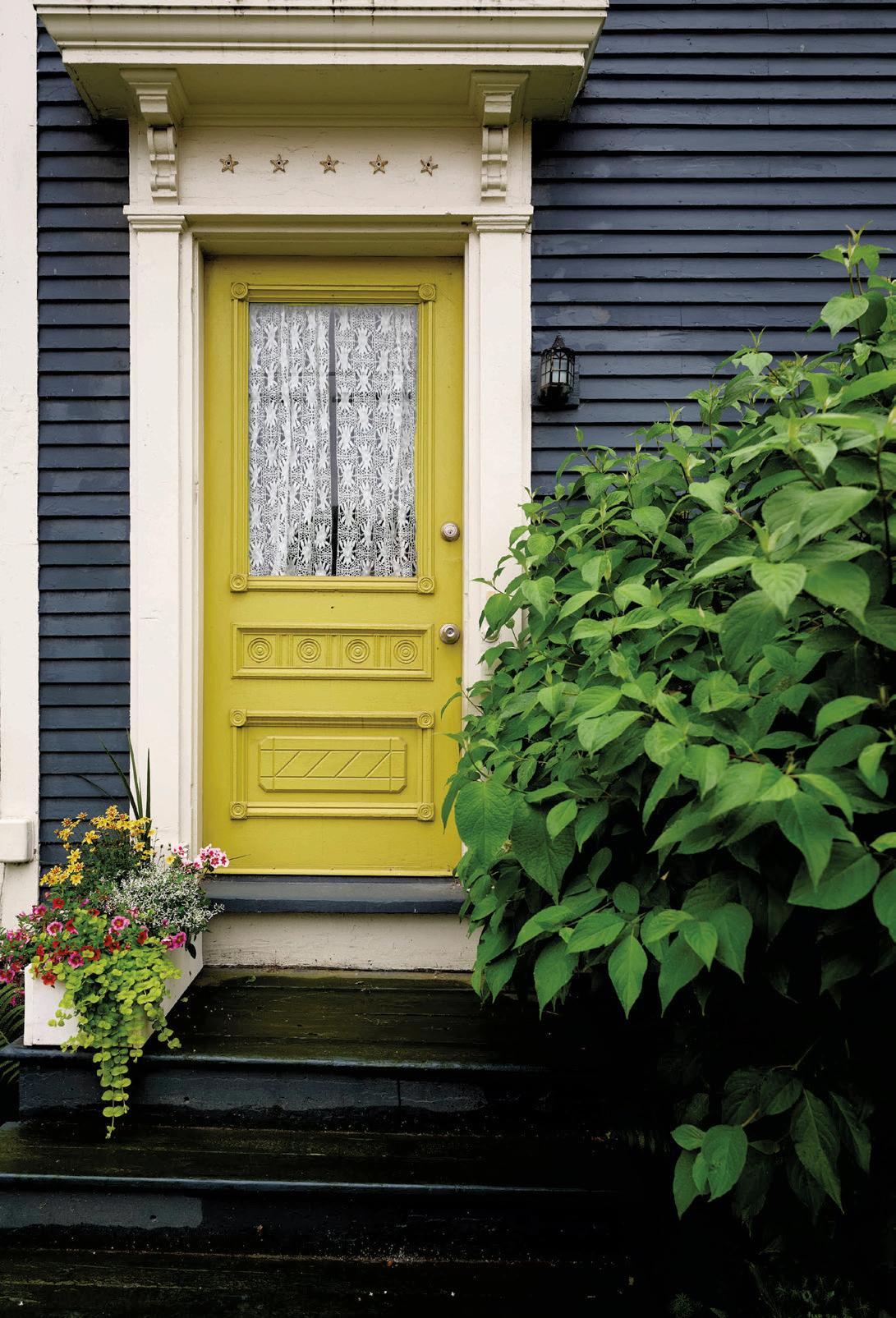
The two-story, late 19th-century house in Burlington’s Old North End is an eye-catcher. Dark blue with white trim and a chartreuse front door adorned with a white lace curtain, the house was a duplex when Thelemarck bought it in 1999. She initially rented out the upstairs unit and lived on the main floor. Soon, Klima moved in, and the couple took over the whole house. They opened up the downstairs and took out the upstairs kitchen — but they retained all the necessary hookups so it could be reinstalled, which would allow the house to be sold as a duplex. That created an area they never managed to maximize.
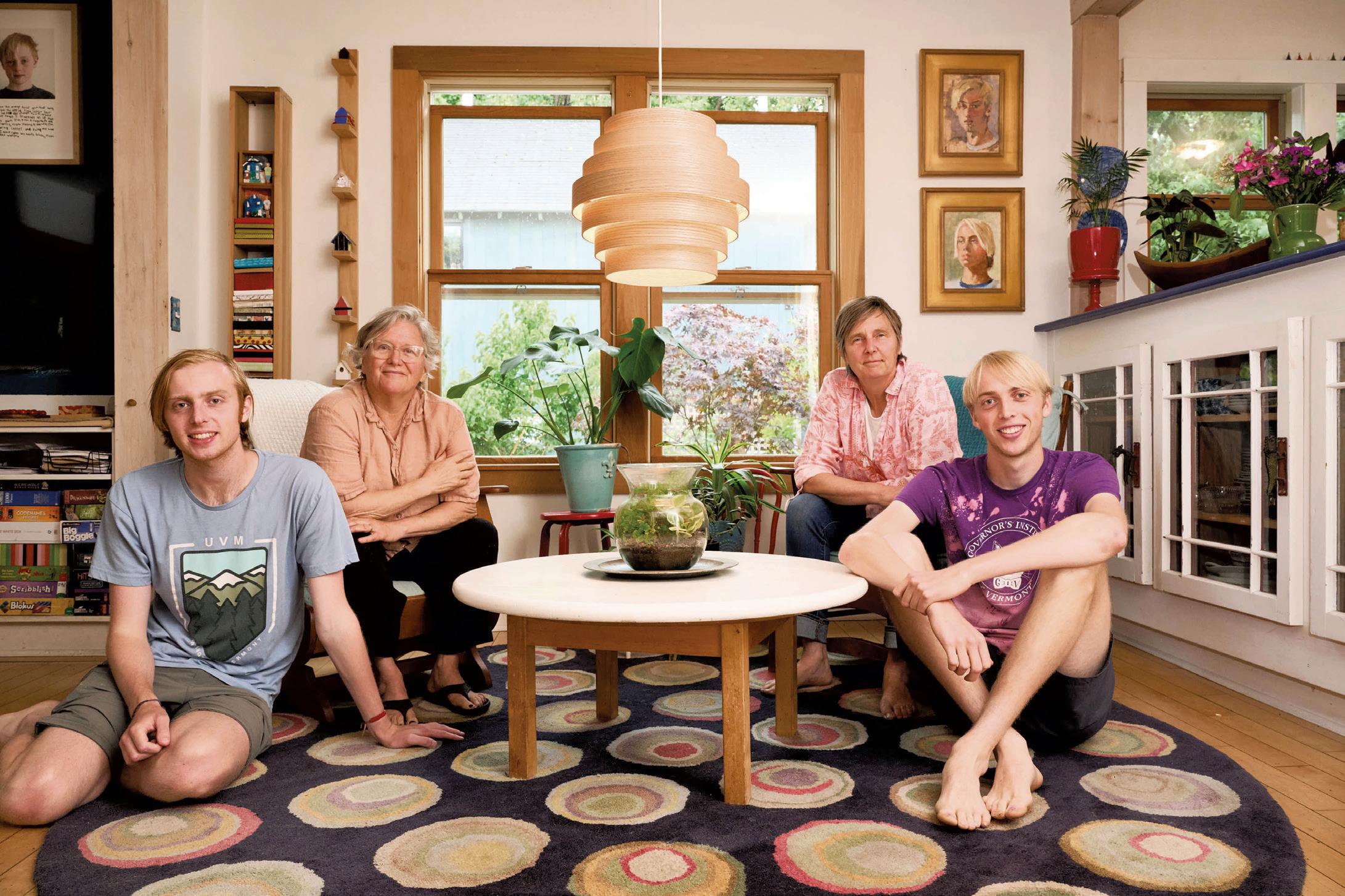
Their two sons came along — Anders, now 21, and Kuba, 18 — and the family made the imperfect layout work. Thelemarck, 58, is an architect who owns Burlington firm Struktur and specializes in smallscale residential renovations and additions. Klima, 65, is a longtime art teacher who just retired from Edmunds Middle School in June. Each brings strong skills, and strong opinions, to home design.
“You couldn’t talk to people who


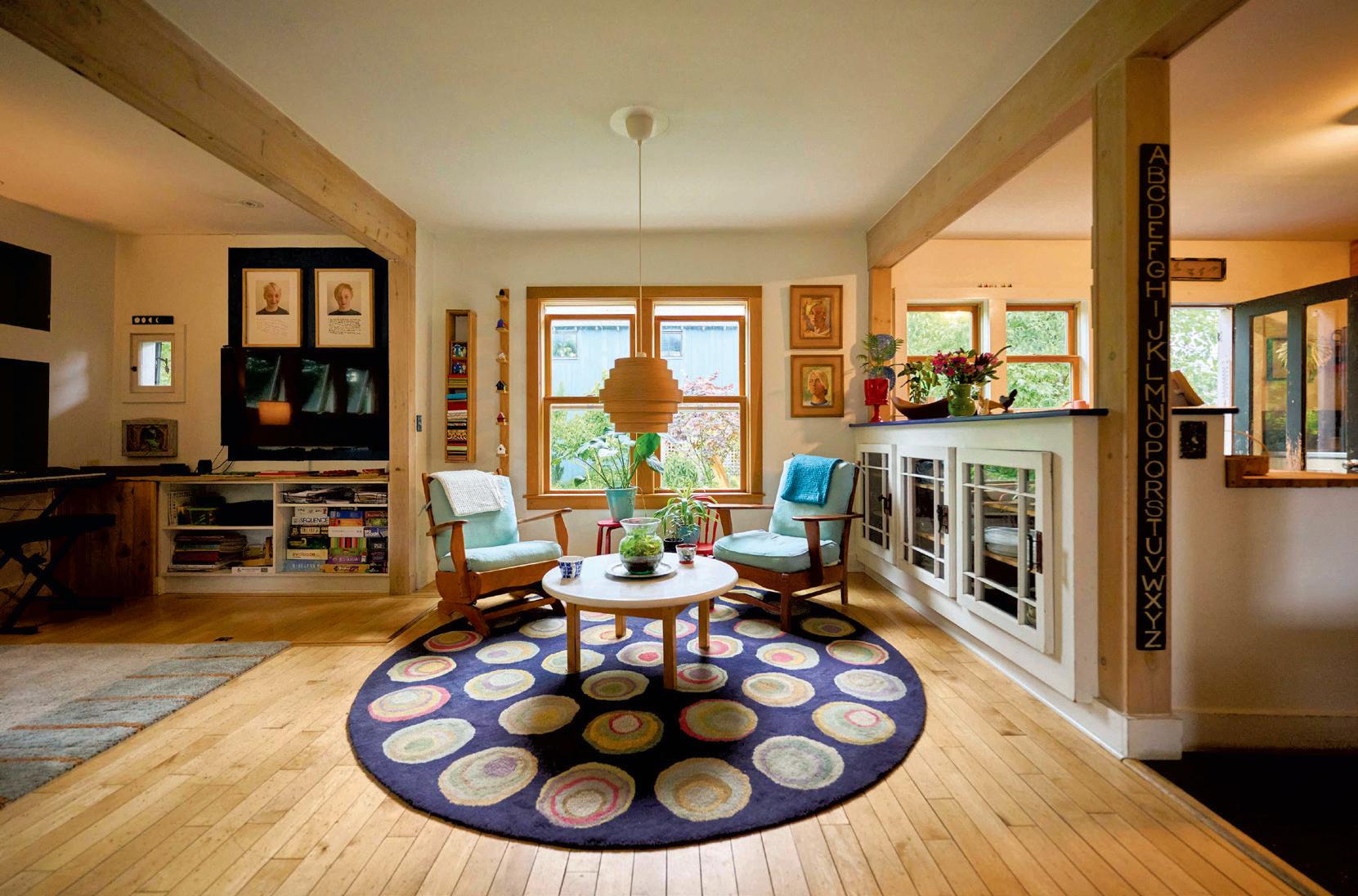
are more passionate about this topic,” Klima said. They continually identify areas of their home — the living room bookshelves at the moment — and ask how they might better use the space. All of it, however, is tastefully furnished with items and artwork created by family and friends or meaningful to the family in some way.
Wall décor includes artful family portraits and paintings that Anders and Kuba made in the summer art camps Klima ran.
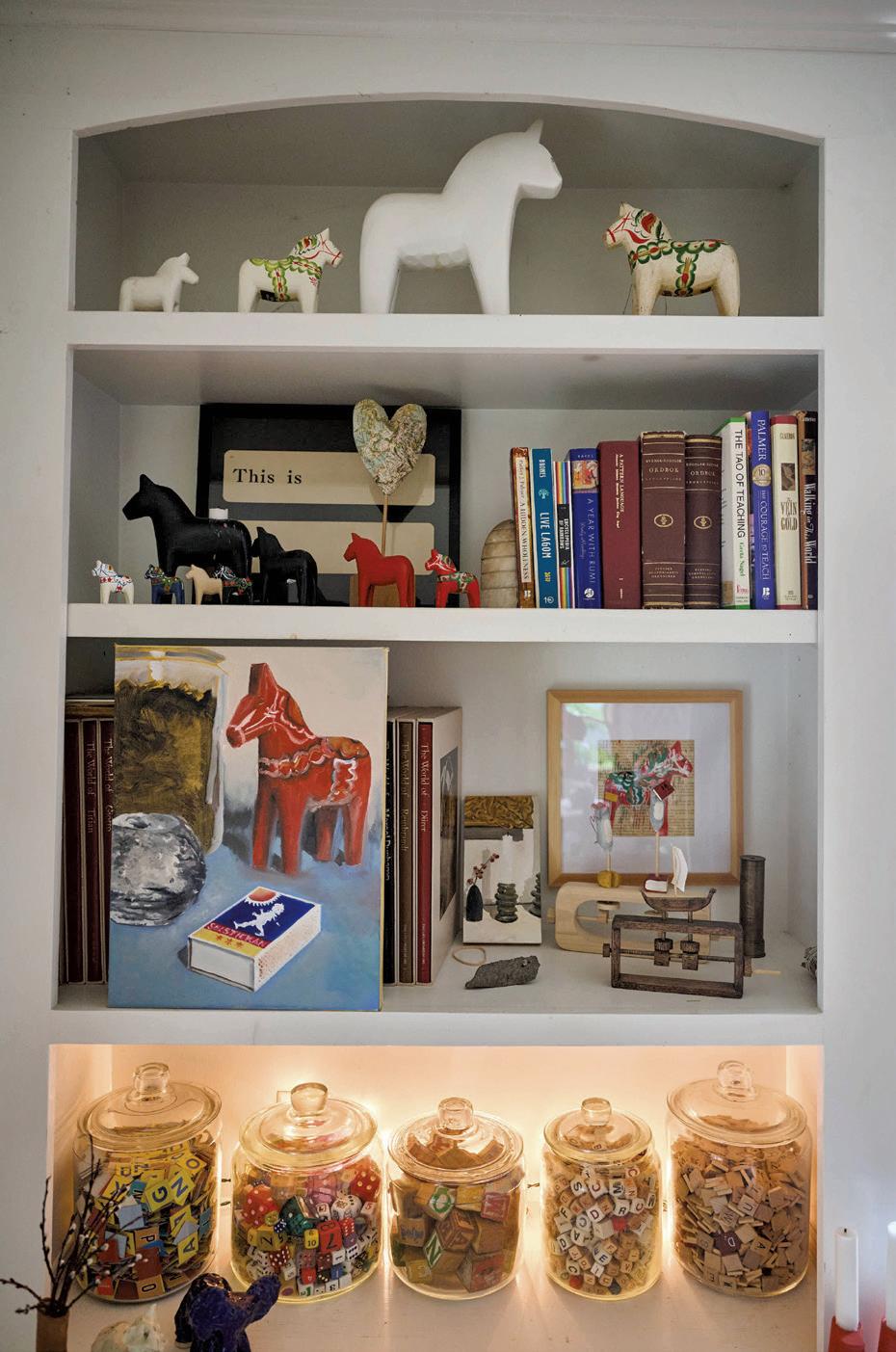
Brass candlesticks fashioned by Thelemarck’s grandfather stand on the dining room table atop a linen runner her grandmother wove. Kinetic sculptures created by Thelemarck’s brother are displayed on a dining room shelving unit along with Klima’s colorful collection of game pieces displayed in glass canisters and a herd of painted wooden Dala horses that represent Thelemarck’s Swedish heritage. Tiny works of art that Klima and Thelemarck have made and exchanged over the years as Valentine’s















EVERYTHING IN HERE HAS A STORY TO IT.
ANNA THELEMARCK

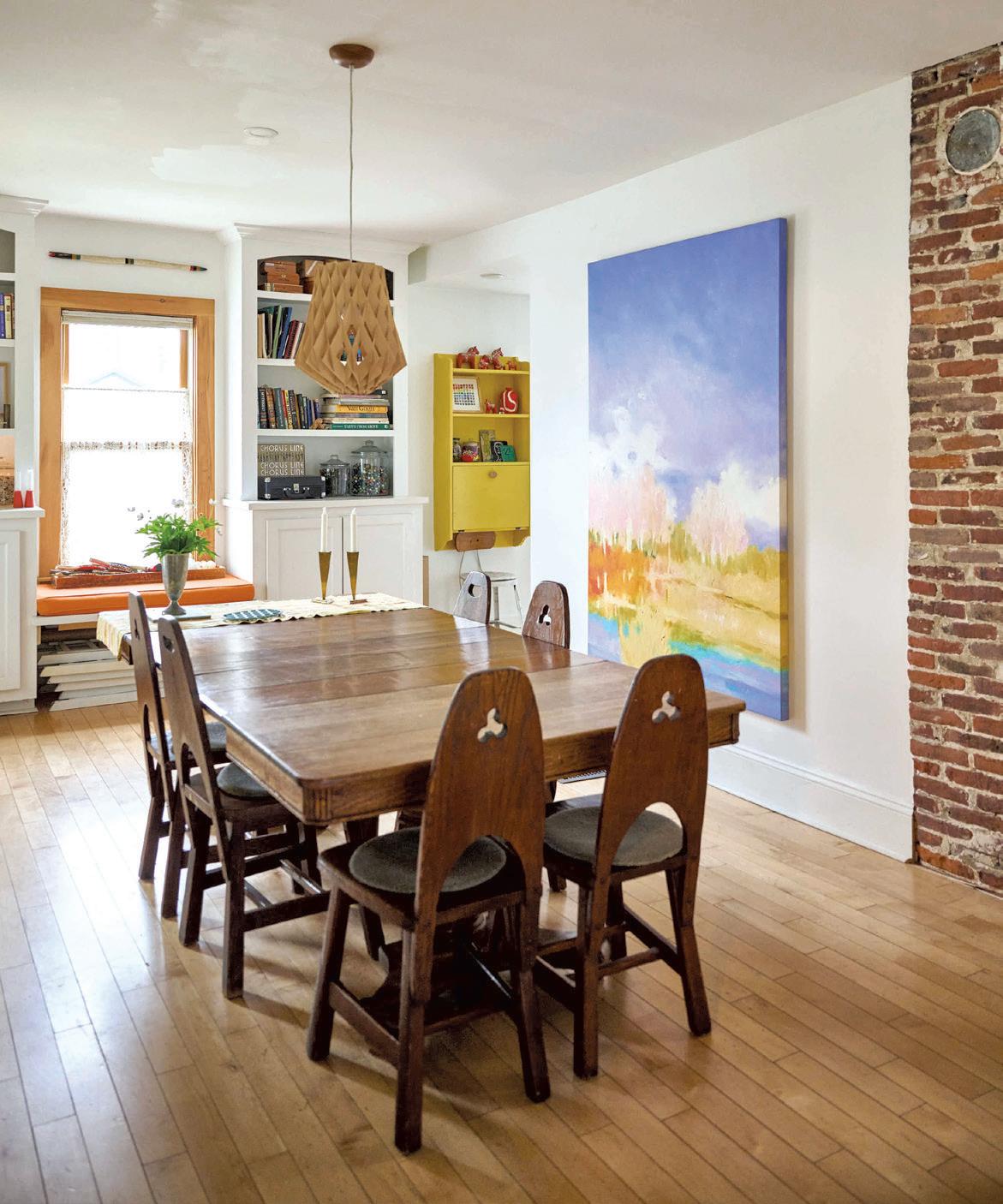
Day gifts line two vertical shelves in a seating area off the kitchen.
“Ultimately, everything in here has a story to it,” Thelemarck said.
The house has been a constant work in progress, but for years she and Klima approached each project with the idea that they had to preserve the ability to sell the place as a duplex. They figured that in a college town, a duplex would be worth more than a single-family home. “Then we realized we are not leaving here,” Thelemarck said, “so it freed us up so much.”
About four years ago, they finally ripped out the upstairs kitchen hookups to install a warm pine floor, which Klima loves, and create the home that works best for their family. “We renovated the upstairs, and it magically shifted,” Klima said. “Everything felt really useful.”
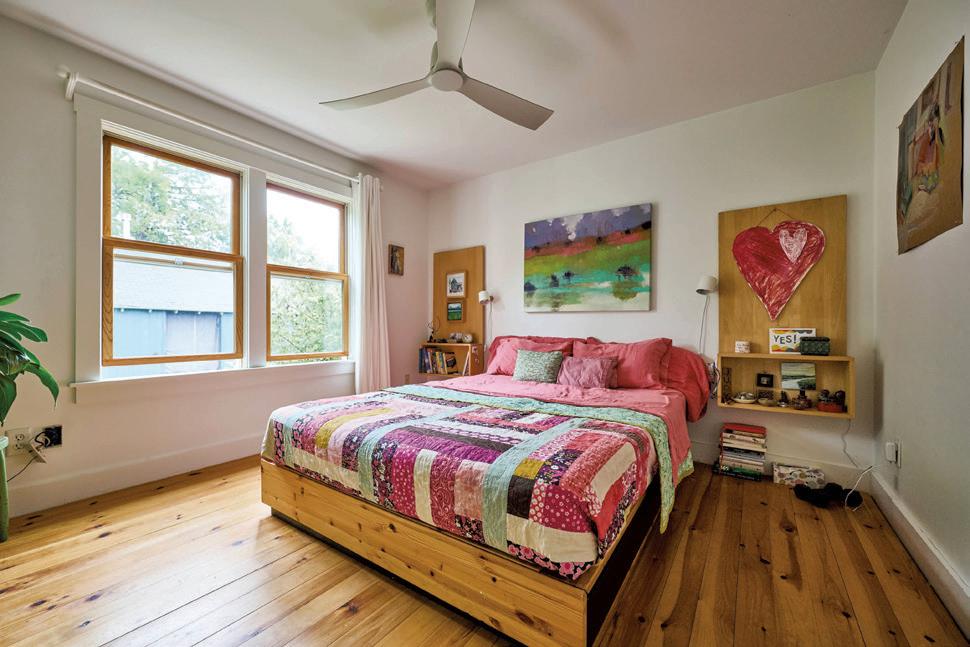
They gained a third bedroom, so their sons no longer needed to share. The new room is tiny but light-filled. Thelemarck designed a built-in platform bed that maximizes storage: There are six drawers under the mattress and shelves that serve as a headboard.
More storage is tucked in a hallway closet. Thelemarck’s ability to configure spaces is akin to a talent for playing Tetris, her wife said. In the primary bedroom, Thelemarck created a walkin closet that features a narrow floor-to ceiling set of shelves for bed linens and a long rod to hang clothes over a row of drawers that were actually designed for a kitchen. They fit perfectly. “That was luck,” Thelemarck said.
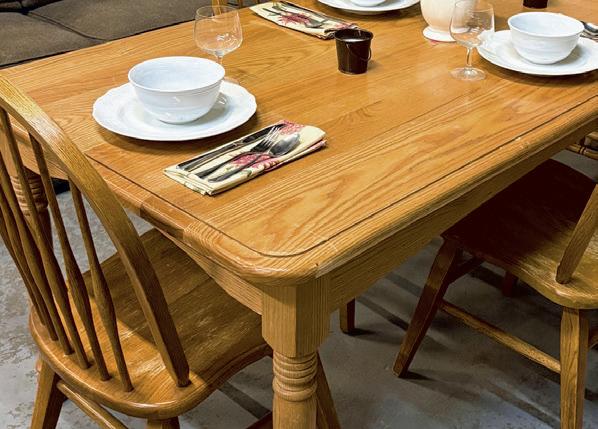
On the first floor, after pondering how best to use the long room that had been their sons’ playroom, Thelemarck built bookshelves that flank the front window on the short wall. “Once Anna built those, this became a really clear dining room space,” Klima said. With an oak table that seats up to 14, the room has become the heart of the home.
Even though the room has never had a fireplace, they installed a mantel on the long wall, and Klima filled the area that normally would contain a firebox and the surround with a wooden sculpture of her own, inspired by those of late American sculptor Louise Nevelson. She incorporated game pieces, wooden spools, parts of her children’s toys and Scrabble racks, which allow family members to spell out birthday and holiday wishes on special occasions.





































more! Pick-your-own blueberries approximately July 20th
Apple cider & raised donuts daily. Pies, cookies, breads & more!

Daily starting at 11:00























Abair Band Details on our website or Facebook.
Pebble Art Workshops • July 26, August 16 • 10-noon Fundraiser for Camp Ta-Kum-Ta Tix/info: onceuponarockvermont.com
ROAST & CAR SHOW Saturday, August 8 • 10AM-4PM
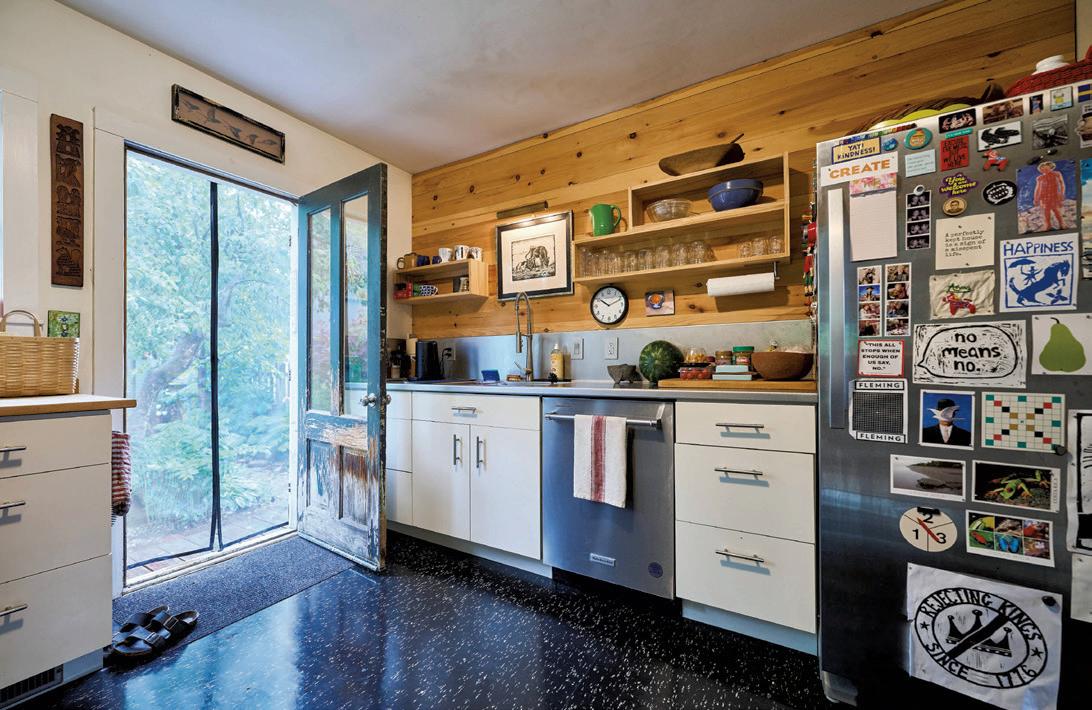
To make better use of the dilapidated front porch, they enclosed it and divided the space to create a kitchen pantry and a mudroom. The entryway, like much of the house, features brilliant ideas. Old lockers purchased on Facebook Marketplace give each family member storage and keep the area tidy. The flooring is a wall-to-wall textured industrial mat that they simply rolled out.
On the narrow wall between the pantry and mudroom, the couple are going to remove the drywall and build shelves between the studs. They will be just deep enough to function as a spice rack.
The stainless steel of the kitchen counter wraps 12 inches up the wall in one continuous piece to create a sealed backsplash — no more behind-thefaucet rot. Just before a vacation home swap with a Swedish family four years ago, Klima and Thelemarck realized their kitchen had no upper cupboards. To better accommodate their guests, Thelemarck swiftly built rectangular frames and mounted them as floating shelves. Now, she and Klima plan to fill the space with several more, inspired by such an arrangement at an Essex bakery.
“If they can do it, we could do it,” Klima said.
The couple’s property includes a large building they call the barn. They
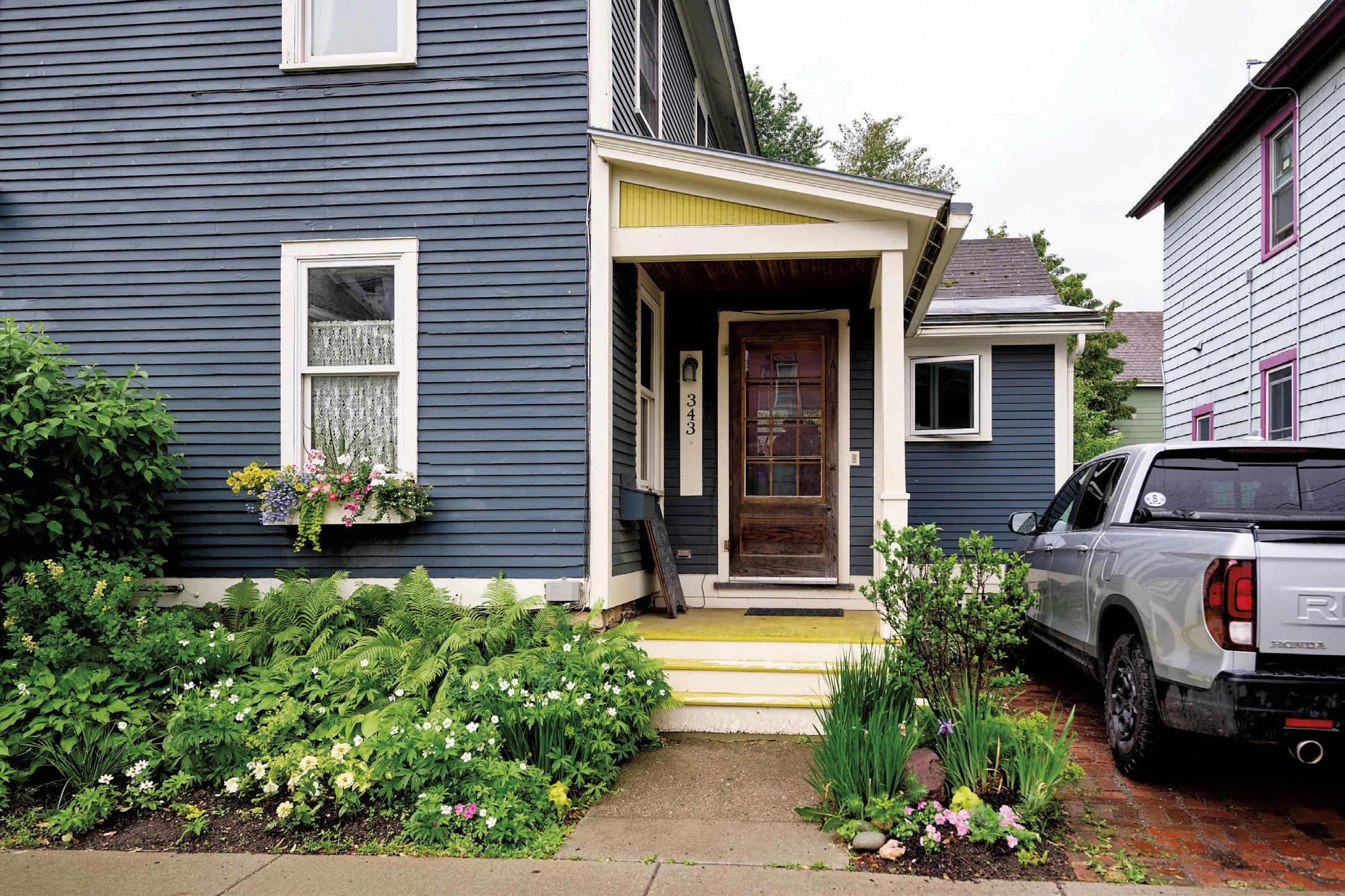
believe it was once used to dry and mill lumber. They built an accessible apartment on the first floor for Klima’s parents. Although her father died just before it was finished, her mother lived there for five years. The unit is now for rent on Airbnb.

Thelemarck has an office on the second floor, and Klima plans to renovate the rest of the large space to create an art studio to teach adults.
The repurposing and reimagining continue. After all those years of planning renovations to preserve the resale

value of their home, Thelemarck and Klima have planted deep roots. In the future, when they’re ready to downsize, they plan to move into their barn apartment and rent out their house — reconfiguring their living situation one more time. ➆


























































































































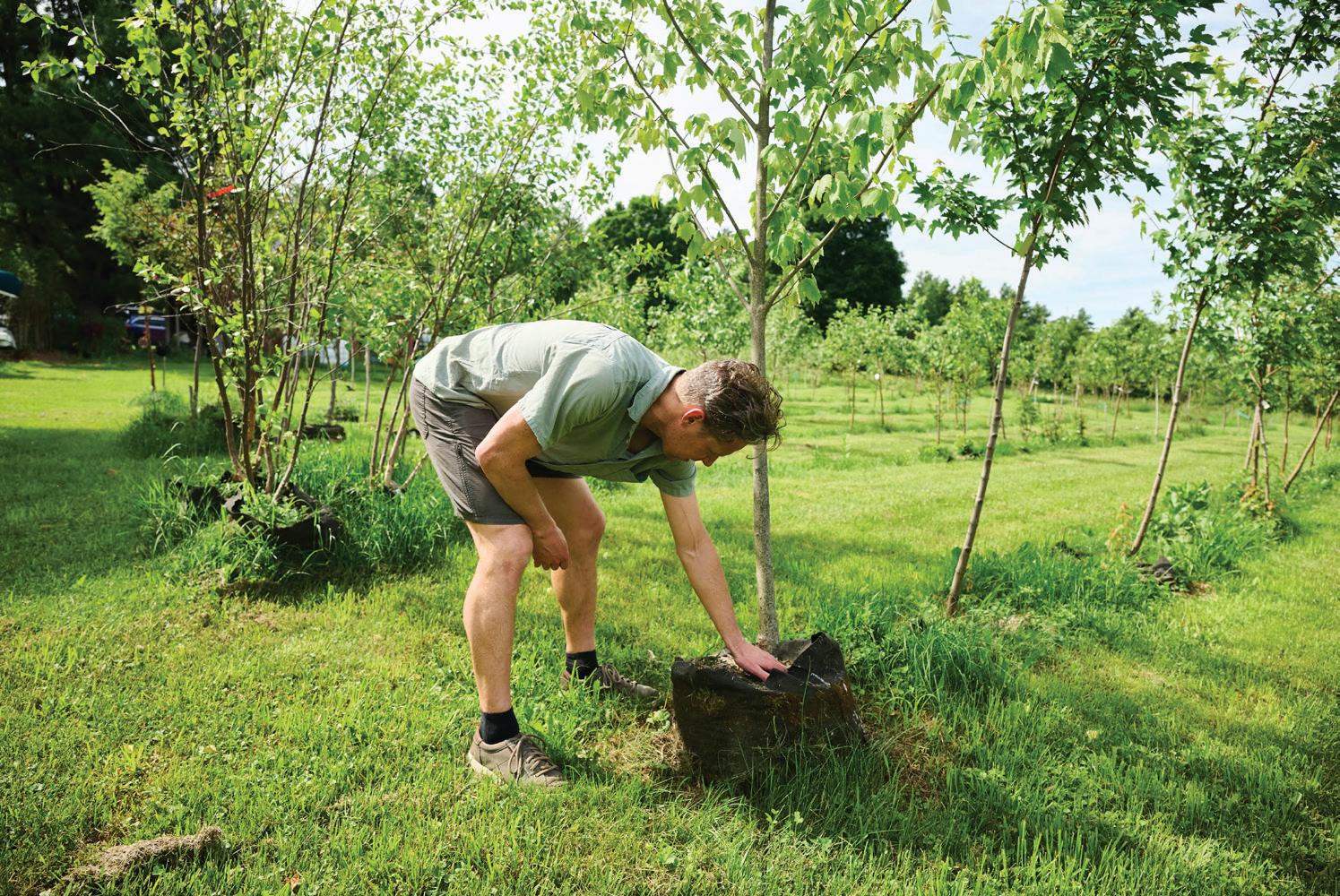
IT FEELS GOOD TO SELL PEOPLE TREES.

No one who’s known Chris Urban since childhood is surprised that he’s a tree guy. His Boro Hill Nursery is on land his parents bought in the early 1970s in Monkton. The surrounding forest provided a vast playground for Urban, his two siblings and their friends. As a kid, he built trails, forts and tunnels among the trees. With his dad, he learned to recognize di erent species.
“I remember he helped me with a sixth-grade tree identification project, for which I got an A+,” Urban said of his father. “It was a formative experience because I was unaware of all the plant diversity.”
Now, 1,000 young trees grow on a section of the property that slopes toward the Monkton-Vergennes Road — and Urban’s former elementary school. Urban chose the dozens of species for their
resilience in a rapidly changing climate. Bonus: They’re also beautiful.
Boro Hill is not a retail operation with standard business hours, nor does Urban want it to be; instead, he calls it a production nursery. Prospective clients might find him online or through word of mouth. Visits to the nursery are by appointment only, plus for pop-up sales in spring and fall. The business doesn’t even have a sign by the road. Urban said his priorities are relationships with clients and helping them realize their landscaping visions with “the right trees for their habitats.”
While Sam Schoenhuber and Wyatt Thompson manage the day-to-day responsibilities at the nursery, Urban handles site visits, bids, consultations and designs. “I’m in a unique position to work with a person as designer and ecologist,” he said.
Urban’s journey from playing among trees to raising them, if inevitable, was a bit circuitous. At Bates College in Maine, he earned a degree in environmental studies with a concentration in ecology. Then he put away the books and spent half his twenties working for several Vermont nurseries, immersing himself in the business of growing and selling plants. He also taught English to migrant farmworkers in Vermont. That led, in 2008, to a non-botanical gig: teaching Spanish at Harwood Union Middle & High School in Duxbury.
Three years later, Urban and his wife, Mara, launched their sustainabilityfocused nursery; both have retained their jobs in education (she works for the extended learning program in the Mount Abraham Unified School District). Since Boro Hill opened, the couple have added three children to the family and two employees to the business.
Now 44, Urban has a lot on his plate. But the nursery seems to nurture him as much as his trees.
“I always loved growing things and using my body,” he said. “It feels good to sell people trees.” He has an aptitude for the long game, finding a parallel in teaching students and raising healthy plants: “Over time, you get to see them grow and flourish.”
Mary Slosar and Luis Camacho of Weybridge like Urban’s yard-side manner. They hired him in early 2024 to reimagine and transform their two adjacent properties — an 1850s farmhouse, now used as a guesthouse and Airbnb, and a newly built home.
“We asked Chris to consult with us and dream up what we could do with that part of the property,” Slosar said of the farmhouse. “He helped us dream


up a foundation garden. Now it’s almost in full bloom [with] fothergilla, winterberry, inkberry, chokeberry, [black-eyed] Susans, grasses for texture and movement. We’re slowly putting in trees and always consult with him,” she added.
“He’s my go-to guy if I say, ‘What if we do this?’”
Though Boro Hill grows only deciduous trees, Urban said he has accounts at other local nurseries to procure evergreens and perennials for clients as needed.
Whether he sources trees locally or out of state, they will spend a few years in Vermont soil at his nursery, Urban
HE’S MY GO-TO GUY IF I SAY, “WHAT IF WE DO THIS?”
MARY SLOSAR
said. Their bare roots are wrapped in black fabric grow bags and treated with homemade compost and a biostimulant from North Country Organics in Bradford. He grows, as his website proclaims, “superior cultivars of hardy and disease-resistant fruit, shade and ornamental trees.” Urban underscores this promise with a catchy slogan: “Raised Right Here, to Fight Climate Change Everywhere!”
When the friend building Boro Hill’s website was considering how to differentiate his nursery from others, Urban recalled, “I wanted some aspect of social justice. Not just to install the nicestlooking plants but ones that are good for the ecosystem and promote more biodiversity.”
Diversity is the operative word. Maple, birch, beech, redbud, hawthorn, oak and others stand in orderly rows at Boro Hill, their leaves rustling in the breeze. There are plenty of fruit trees, too. If global warming has any upside, perhaps it’s that peach trees can survive in Vermont.
Just ask Mark Groves. This spring,
on his five-acre property in Charlotte, Urban “planted four maple trees, fruit trees — two apples, a peach and two plums — and foundation plantings in front of the house,” Groves said. “Also, cedars in the back for a privacy screen and some lilac bushes.”
Working with Urban and his staff was “great,” Groves said. “He’s very knowledgeable, attentive and patient. Chris continues to give us ideas.”
Urban’s devotion to climate-adaptive plants includes “not bringing in invasive species,” he noted. The trees are thoroughly examined before they arrive.
The struggle is real, as Vermonters know. Japanese beetle, spongy moth, ash borer, cedar-apple rust and other flora foes have converged on the Green Mountain State in recent years. As for that other ubiquitous pest — for people and animals — Urban said this: “When I was playing in the woods as a kid, I never saw any ticks.”
Unwelcome insects aside, Urban said planting trees — whether on lawns or along city streets — reconnects him with his childhood and the land that inspired him.
“Of all the jobs out there,” Urban added, “it’s good, honest work that gives back, that leaves the world a better place.” ➆
Boro Hill Nursery, 995 Monkton-Vergennes Road in Monkton. borohillnursery.com



























































































A 20-year-old Charlotte entrepreneur lends a helping hand with debris-removal company Junkit
STORY CAROLYN SHAPIRO | PHOTOS LUKE AWTRY
After Ryan Frere’s father died in the spring, his mother moved from her Middlebury home to a senior community near him and his wife, Katrina, in Charlotte. Amid their grief, funeral plans and the usual commotion of their lives, the family didn’t want to deal with cleaning out the remaining rubbish and spare household items in his mom’s former place.
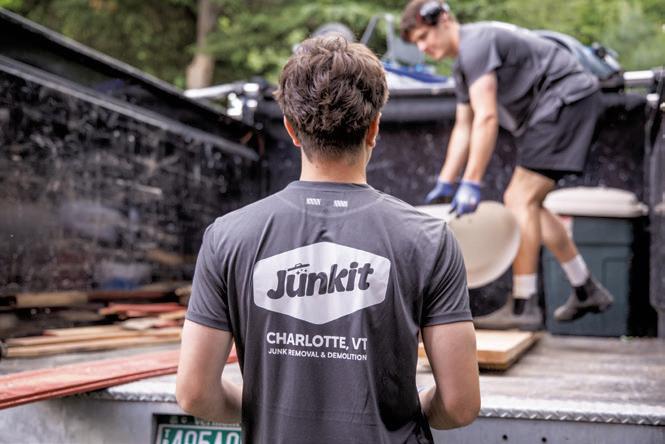
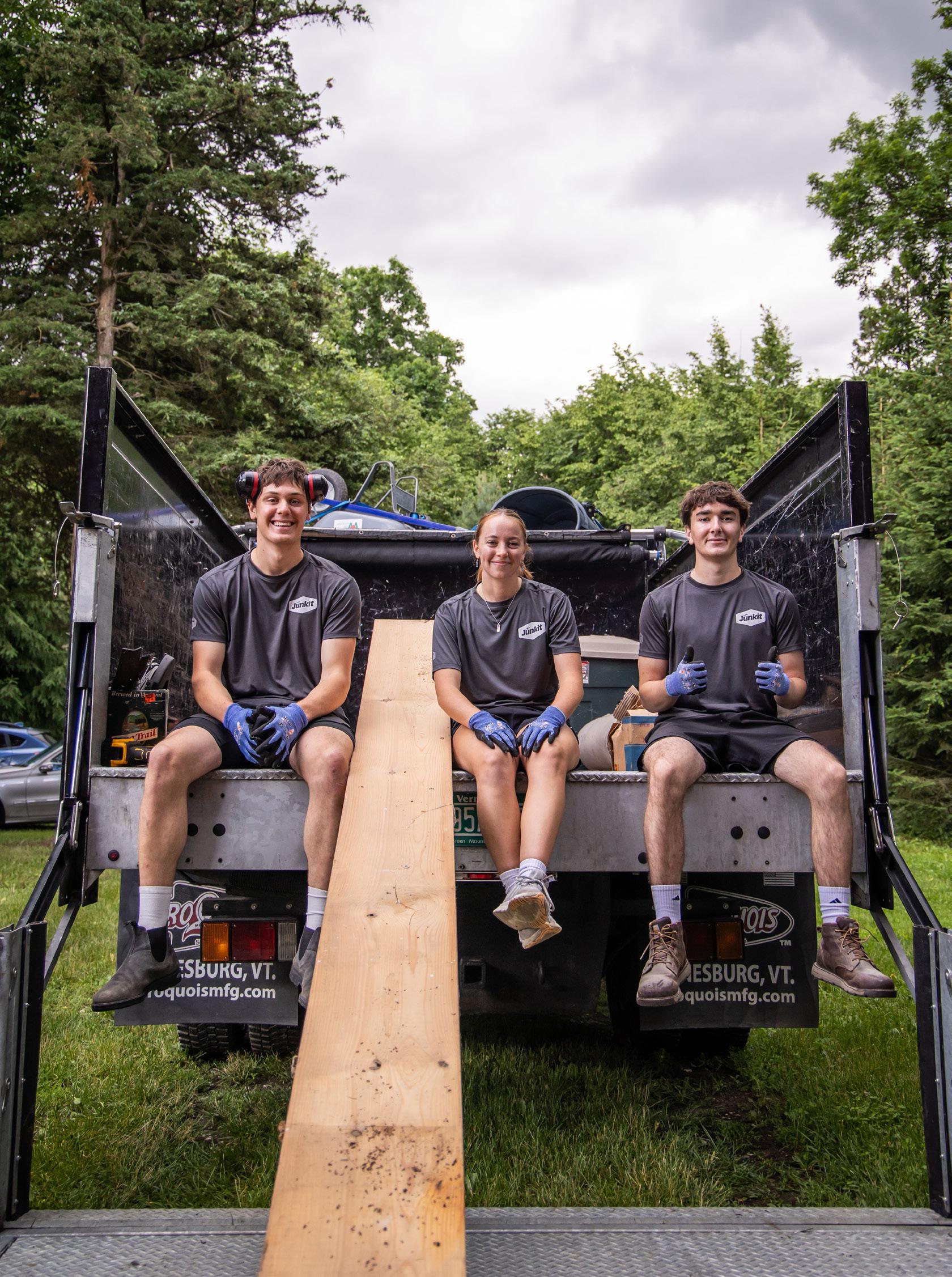
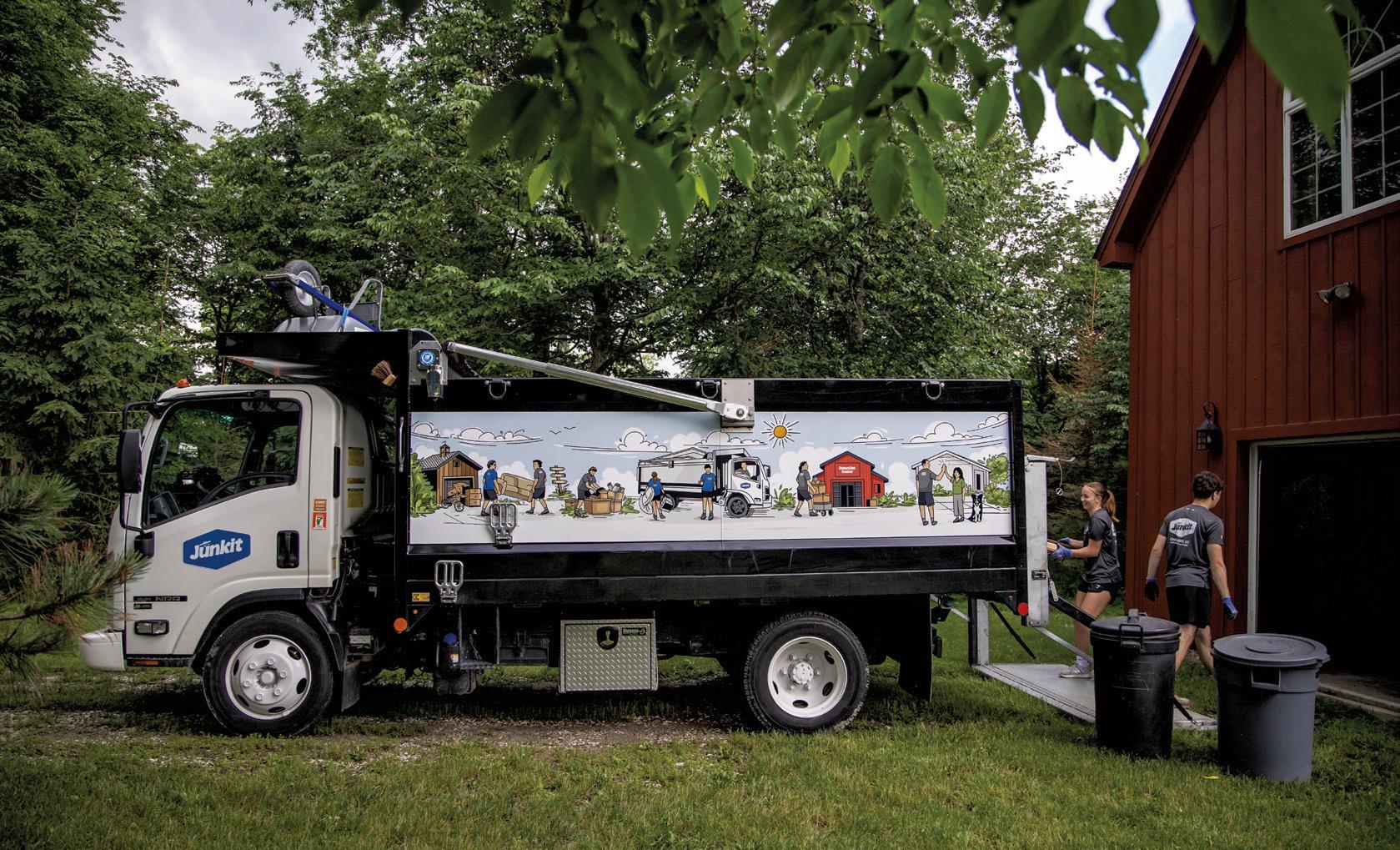
On their local Front Porch Forum, Ryan and Katrina read several enthusiastic recommendations for Junkit, a trash-removal business owned by a Charlotte 20-yearold who had graduated from Champlain Valley Union High School a year before their son. They called, and Miles Jordan showed up with a two-friend crew in matching T-shirts and his hefty Junkit dump truck.
“It’s just been everything all at once, so we needed the help,” Katrina said, her voice echoing in her in-laws’ empty living room as the Junkit team carried out bags and discards. “I wanted to support a local kid. I hate to say he’s a kid ... A young person who’s trying to create something and support the community.”
Jordan founded Junkit at age 16 and has collected a steady clientele of local residents who want to get rid of accumulated junk and support a budding Vermont entrepreneur in the process. Plenty of other companies, locally owned or not, will haul away people’s surplus stuff, but Jordan has carved out his niche with an upbeat attitude and a commitment to reuse and recycle as much as possible.
Junk removal is a lucrative business, he said, “because, at the end of the day, it’s junk. It’s disgusting. No
one wants to deal with it, and there’s a whole lot of work on the back end involved” in disposing of it properly.
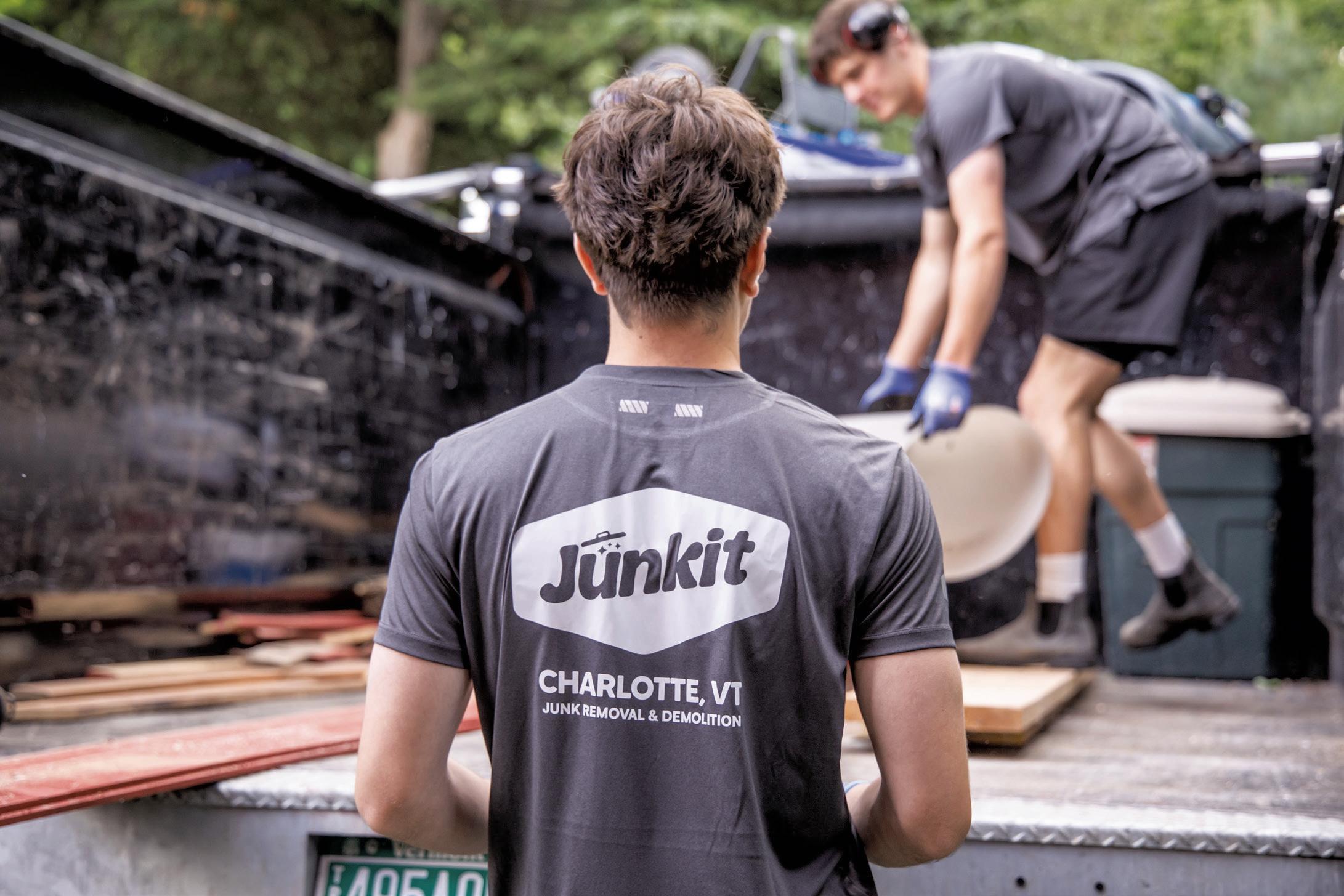
At each job, the Junkit team sorts items into piles: Trash goes directly to the nearest dump; metal, cardboard and other designated materials get recycled; and reusable items in fair condition are donated, usually to a Green Mountain Habitat for Humanity ReStore. Junkit can get a tax deduction for the charitable contributions.
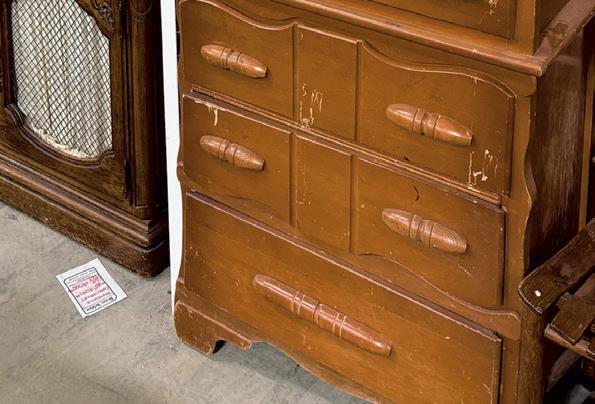
Jordan recently struck a deal with Gillian Klein, owner of ReMaker Furniture in Shelburne: He o ers her pieces in need of repair that he would otherwise donate so that she can refurbish and resell them. In June, she picked up a table with a broken leg, a cabinet and a couple of shelves.
Jordan is six foot three and lanky, with a wide smile and unwavering energy. He handles every customer call and job himself, often alone but sometimes with a couple of workers. “That way people have a service that they can fully trust, fully rely on,” he said. “I know that when I’m there, our employees are doing exactly what they need to be doing and are being respectful.”
The Freres were sold on Junkit’s e orts to keep as much as possible out of the landfill. “We’re just environmentally conscious; we’re socially conscious,” Ryan said. “We wanted to make sure that everything was going somewhere useful, if it could.”
In his mother’s kitchen, one item in particular found its way to a useful end. As Jordan and his crew emptied the contents of the refrigerator into a heavy-duty black trash bag, they stopped before dumping a nearly full jug of maple syrup.
“Who wants it?” Jordan asked.
“I’m pretty hungry,” answered Wolfie Weimersheimer, 18. He turned to a reporter and added, “Miles is a great boss, though. He’s buying me breakfast.”
After taking a truckload to a nearby dump, the team returned for recyclable and donation items. Stacks of artwork, china plates, a microwave oven, lamps and a few shelving units would go into a storage space at Jordan’s home garage until he had time to visit a resale store. Weimersheimer and Junkit coworker Oliver Nelson , 20, swept the garage and driveway and sucked up some spilled sugar with a Shop-Vac.
Junkit charges a minimum of $125 to come to a customer, even if it’s just to take away a few items. “That’s our margin that we need to cover our fuel, truck and
transportation, and time to either sort things out or dispose of things,” Jordan said.
Removal prices are based on volume. A full truck of standard items costs $1,300. For smaller loads, Jordan prorates the fee based on fractions of the truck space. Additional fees apply for excessively heavy items, such as bricks or bulky furniture, or hard-to-move jobs with tight access or steep stairs. Hazardous waste, paint, mattresses and electronics incur extra disposal charges.



with a dump trailer that his father helped him buy for his 18th birthday. He earned enough money to invest in a used Isuzu dump truck with a high-capacity diesel chassis for $20,000 and spent another $30,000 tricking it out with a custom dumping bed, power tarp, ladders, and a half cover to carry wheelbarrows, buckets and other equipment.
Last year, Junkit brought in about $130,000 in revenue, Jordan said. After expenses including fuel, licensing fees, supplies and equipment, workers’ compensation, liability insurance, and
He also initially gave prejob estimates based on photos that people submitted, which involved a lot of back-and-forth. This not only inconvenienced potential customers but also often resulted in him miscalculating — usually charging too little for jobs that were more involved than expected. Now, Jordan determines the rate once he’s on-site and sees what’s needed.
Pete Macia and Jolene Kao own the Old Brick Store in Charlotte and have been renovating a farmhouse they bought in 2022. They called Junkit
YOU WOULDN’T IMAGINE JUNK WOULD BE THAT FUN, BUT I LOVE IT. MILES JORDAN




Jordan developed an app using an AI tool to calculate each total. “It took me months to create an app for absolutely everything I need, catered to how we run and with all the correct pricing,” he said. “I can display estimates. I can convert invoices. I have all my jobs listed, all of our customers.”
When he was in high school, Jordan watched a video of someone hauling away junk and figured he could make some money at it. He solicited a friend who had a small utility trailer on his car, and they started doing removal jobs. They posted on Front Porch Forum and quickly got a dozen inquiries.
The two later went separate ways, and Jordan bought his own utility trailer, then upgraded to a Ford F-150 pickup
commercial auto coverage, he made a small profit.
“You wouldn’t imagine junk would be that fun, but I love it,” he said.
Jordan didn’t love school and absorbed little in a classroom, he admitted. He enrolled last fall at Montana State University but only took classes for about a month during the seasonal break in his business. He stayed to live and snowboard with friends, then resumed his preferred hands-on education with Junkit.
With the business, there has been a learning curve. At the beginning, for example, Jordan didn’t know disposal protocols or recycling rules — until he toured Chittenden Solid Waste District facilities and did some research.
to remove some heavy cabinets and a kitchen range. Jordan knew the load would take up more than half the truck and required an additional weight charge, amounting to a little over $1,000 for the whole job.
Their contractors would have charged even more to haul away the debris, Macia said. “We were looking around and thinking about how we could do it ourselves, and it’s just a lot of work for us,” he said. “We really liked that Miles doesn’t just throw stu away. He goes through everything and tries to preserve or donate as much as he can, which is very much aligned with our values.” ➆
Learn more at junkitvt.com.