Wasilla 4/4/2026, 9:00am - 1:00pm Wasilla Community Health Fair at FYZICAL Therapy and Balance Center, 650 N Shoreline Dr., Wasilla, AK 99654
Anchorage 4/15/2026, 8:00am - 12:00pm Anchorage - Hope Community Resource Health Fair, 570 W 53rd Ave., Anchorage, AK 99518
Houston 4/18/2026, 8:00am - 12:00pm Houston Community Health Fair, Houston Mid-Valley Senior Center, 1975 W. Midvalley Way, Houston, AK 99623
Chugiak 5/2/2026, 8:00am - 12:00pm Chugiak Community Fair at Chugiak Eagle River Senior Center, 22424 Birchwood Loop Road, Chugiak, AK 99567
Wasilla 5/2/2026, 8:00am - 12:00pm Wasilla Area Community Health Fair, Wasilla Area Seniors, Inc (WASI), 1301 S Centur y Cir, Wasilla, AK 99654
Willow 5/10/2026, 8:00am - 12:00pm Willow Community Health Fair, 23557 Willow Community Center Circle, Willow, AK 99688
Anchorage 5/16/2026, 8:00am -12:00pm Anchorage Community Health Fair at St. John's Church, 1801 O'Malley Rd., Anchorage, AK 99507
Let’s have some community fun together! Registration is recommended for faster services; walk-ins welcome. Health fairs are free community events. Bring your friends! We hope to see you at the Health Fairs!
Help us keep Alaskans healthy!
Medical and non-medical volunteer opportunities are available. Volunteering for AHF meets continued competency requirements for RN license renewal.
For more information and to register, visit www.alaskahealthfair.org or call 907-278-0234
Attn: nonprofits and businesses; we offer free exhibitor space to qualified organizations to educate on a health, wellness, or safety topic.
happens if you forget to file for Social Security before your 70th birthday?
LIFESTYLE
Publisher: Ryan Binkley
Editor: Nina Wladkowski
Special Projects Director: Brandi Nelson
Sales Manager: Kris Carlson
Sales: Ryan Estrada & Victoria Hansen
Advertising Operations: Lisa McGuire
Graphic Designer: Jian Bautista
HOW TO PAY FOR LONG-TERM CARE
AMERICANS SIGNIFICANTLY UNDERESTIMATE HOW LONG THEY COULD LIVE IN RETIREMENT. WITH THE POSSIBILITY OF A 30-YEAR RETIREMENT BECOMING MORE COMMON, RETIREES NEED TO PLAN FOR SO-CALLED LONGEVITY RISK TO MAKE SURE THEIR ASSETS LAST A LIFETIME. AND THE LONGER YOU LIVE, THE MORE LIKELY YOU’LL NEED TO PAY FOR SOME FORM OF LONG-TERM CARE. THAT CAN RANGE FROM ASSISTANCE WITH ACTIVITIES OF DAILY LIVING TO IN-HOME CARE TO A NURSING HOME STAY.
The sticking point is that you don’t know where you might fall on this spectrum. “It’s hard for an individual to take action about an unknown cost for an unknown period of time, so inertia sets in,” says Douglas Ornstein, Director, TIAA Wealth Management. To get you moving, let’s take a look at three main ways to pay for long-term care.
Where to start. First, set up a steady income stream using Social Security, a traditional pension or a regular flow of cash from some other source. Then you can fill in any gaps with a plain-vanilla fixed-income annuity or by setting up withdrawals from your assets to mimic a regular paycheck.
When you know your basic expenses are secured through lifetime income, you have the peace of mind and financial flexibility to handle unforeseen health events.
Kourtney Gibson, CEO of Retirement Solutions at TIAA.
And you can use your remaining assets in an investment account to protect against inflation or to cover healthrelated expenses.
Long-term-care insurance can also play a role in your planning. People often hesitate to buy LTC coverage because it’s expensive. When issuing policies decades ago, insurers underestimated how many people would use the policies and what the cost would be, so premiums have increased significantly over the years.
But there are ways to control the costs. “One common misconception is that LTC insurance is there to protect against every possible event, but that doesn’t have to be the case,” says Ornstein.
Janet Bodnar, Kiplinger’s Personal Finance, Kiplinger’s Money Power
Even a smaller policy that covers part of the expense with tax-free money would be very effective.
Ornstein
Another cost-saving option for couples is to buy a joint policy with a shared benefit. If one spouse exhausts his or her benefits, that spouse can use the other spouse’s share.
The new generation of coverage also offers hybrid policies — life insurance policies that allow you to use some or all of the death benefit to pay for long-term care. Another hybrid product is an income annuity that includes a provision to increase your payout in the event you need long-term care. To help pay premiums, you can use money tax-free from a health savings account.
If you don’t like the idea of insurance and you have sufficient available assets, you can self-insure. But pay attention to taxes and which bucket of assets to use. For example, says Ornstein, if you plan to cash in stocks that you’ve held for decades in non-retirement accounts, you could face a big capital-gains tax bill.
BOTTOM LINE: It might make sense to consult a financial adviser to consider all your options. Or you could follow the path of reader Jim Turner. To self-insure, Turner researched nursing home costs in his area, then created a spreadsheet to determine what income he could use and what assets he could liquidate — and in what order — to cover those costs. He updates the plan regularly with his son, who is his executor. Says Turner, “I feel reasonably confident that should I need a nursing home stay, I have a reasonable plan in place to pay for it and still leave some assets to my heirs.”
Janet Bodnar is editor at large of Kiplinger Personal Finance magazine. For more on this and similar money topics, visit Kiplinger.com.
SNOWBIRDS AVOID THESE 3 SNEAKY INSURANCE ISSUES
Sean Jackson, Kiplinger’s Personal Finance, Kiplinger’s Money Power
WINTERS IN THE SOUTH CAN BE SPECTACULAR. THERE’S NOTHING LIKE HAVING THE SUN KISS YOUR CHEEKS, FORGETTING THE BONE-CHILLING CONDITIONS YOU LEFT FOR THE TROPICAL OASIS YOU’RE CURRENTLY ENJOYING.
But as snowbirds know, your home is left behind and has to deal with any harsh winter conditions it encounters.
And if you return home and find damage, you might be in for another surprise: Your provider might not cover it. Because of that, you’ll want to address these common insurance gaps before taking off for the winter.
1. LEAVING YOUR HOME UNOCCUPIED
Say you return home after a restful season, only to discover some minor damage from a leaky roof shingle. No worries, you call your home insurance carrier to start a claim, and they ask if someone watched the home while you were away.
How you answer that question can determine whether you’re out thousands or just your deductible.
SOME INSURANCE COMPANIES WON’T COVER HOME DAMAGE IF THE HOMEOWNER ISN’T HOME FOR 30 DAYS OR MORE AND DOESN’T ASSIGN SOMEONE TO WATCH IT UNDER THE VACANCY
CLAUSE.
This is why it’s integral to have someone visit your home regularly while you’re away. They can pick up anything that arrived that you might have forgotten, and check to ensure your home is OK.
To see if this applies to your home, contact your insurance carrier. It’s also a great time to shop around to see if you’re receiving the best deal.
2. FAILING TO PROTECT YOUR PIPES
One area that winter weather impacts the most is your home’s pipes. If your insurance carrier determines that your pipes burst due to you turning off your heat or because you failed to insulate them properly, you may be liable for all the damage the leaks wrought.
That is why you’ll want to do the following:
• Outside: If you have any garden hoses connected, remove them, drain them and store them somewhere dry. Next, you’ll want to shut off any outdoor water valves. You can find these inside your home near the pipe on the wall that goes outside.
• Insulate your pipes: You can buy foam insulation at your local hardware store, cut it to size, wrap it around the pipe and secure it with insulation tape. Doing this will keep the pipes warmer, making them less likely to burst when the temperatures dip.
• Turn off the water supply: On the day you leave, shut off the water supply entirely, unless you have someone planning to housesit for a portion of the trip. To locate the main valve, look for the point where the water pipe enters your house, typically near your water heater, basement or crawl space.
• Lower, don’t turn off the heat: Set your thermostat eight to 10 degrees cooler than you normally have it while there. This keeps your home cooler without shutting off the heat entirely, which can make your pipes more susceptible to damage.
3. KEEPING YOUR CAR STORED OUTSIDE
If there’s a vehicle you don’t plan to take on your winter journey, you want to ensure it remains in an airtight garage or car capsule before leaving. The reason? Over the winter, critters of all types can find cars and use them as nests to build their families.
As cute as that sounds on the surface, they’ll also chew through wires and other critical components to make room for their growing family. When you return, you may encounter lengthy repair times, particularly if you have a luxury, foreign or antique vehicle.
Additionally, some auto insurance carriers are removing animal damage from their comprehensive policies. That means you could be liable for paying for all damages incurred from these furry little critters. And some of these repair bills can be tens of thousands of dollars.
The solution? Contact your current insurance carrier to see if you have protection.
THE BOTTOM LINE ON INSURANCE GAPS FOR SNOWBIRDS
Before you travel south for the winter, know there are some insurance gaps you’ll need to address before leaving. Doing this ensures you protect some of your most valuable assets while also preventing you from being liable for any damages that occur while you’re gone.
Sean Jackson is a personal finance writer at Kiplinger.com. For more on this and similar money topics, visit Kiplinger.com.
A GUIDE TO LAUNCHING A SUCCESSFUL BUSINESS AFTER 50
DIANE HARRIS, KIPLINGER’S PERSONAL FINANCE, KIPLINGER’S MONEY POWER
HERE’S A QUICK POP QUIZ: WHAT DO RAY KROC, COLONEL SANDERS, ARIANNA HUFFINGTON, BERNIE MARCUS AND GRANDMA MOSES HAVE IN COMMON? ANSWER: THEY ALL LAUNCHED HIGHLY SUCCESSFUL BUSINESSES — MCDONALD’S, KFC, A MAJOR MEDIA COMPANY, THE HOME DEPOT AND A CAREER AS A PREEMINENT FOLK-ART PAINTER — AFTER AGE 50.
Like these icons, a growing number of people are choosing to become entrepreneurs in their 50s, 60s and beyond. Recently, nearly one-fourth of new businesses have been started by founders between the ages of 55 and 64, up from 15% two decades ago, according to the Kauffman Foundation, a nonprofit that fosters entrepreneurship. Overall, the U.S. Census Bureau reports, more than half of small businesses are owned by people 55 and older, with other surveys suggesting the number may be even higher.
Starting a business after 50 can be a great way to add years to your career or earn extra income in retirement. And while the chances you’ll strike it rich by creating a top-selling fast-food franchise or a multibillion-dollar retail operation are slim, your odds of doing well are far greater than for younger founders. Research shows that people launching a business at age 50 are twice as likely to succeed as their 30-year-old counterparts and the probability of being solidly profitable rises further with age after that.
serves small-business owners, private practitioners and independent contractors.
It takes the right mind-set, the right business and the right setup to succeed without sacrificing your current lifestyle or future retirement.
Intrigued by the possibilities? Here’s what experts in entrepreneurship, along with people who have recently launched businesses, say it takes to achieve success.
BUILD ON WHAT YOU KNOW
Just how much more successful are older entrepreneurs? Gusto’s research shows that baby boomers using its platform take home $60,000, on average, in their first year of operation. That’s six times as much as the $10,000 that Gen Z founders are able to pay themselves in year one, and it’s considerably more than millennial entrepreneurs’ first-year salaries as well.
Gusto’s Chamberlain attributes this greater profitability to older entrepreneurs’ deep experience in their industry, which allows them to better identify unfulfilled market needs. Some 44% of founders in a recent Gusto survey said they started a business precisely because they saw a new opportunity, compared with 34% of the respondents overall. “The longer you’re in a field, the more likely you are to see those unmet opportunities, which can be a strong basis for your business,” Chamberlain says.
If you launch a business when you’re older, you also have an edge because you’re likely to have a stronger business network, existing client relationships, and initial credibility and authority built through a long body of work. Says Chamberlain, “These are advantages that just come with age and a long career history.”
Still, entrepreneurship is not without risks. That’s particularly true if you are giving up a steady income to launch your venture or pulling cash from a 401(k) for funding — at exactly the point in life that most people of a similar age are trying to pump up savings before retirement or preserve nest eggs they’ve already built.
“Launching a business can be a great move when you’re older, but it’s not an easy path,” says certified financial planner Jovan Johnson, co-owner of Piece of Wealth Planning, a financial planning firm in Atlanta that primarily
“Utilizing the same skill set you’ve used throughout your career allows you to fast-track the new business,” adds Johnson. “It’s a very different proposition than if you’ve been an engineer or lawyer and now want to buy a food truck or open a restaurant.”
Building off his industry experience is what Rick Moore, 55, had in mind when he launched his consulting business, The RGM Group, in Colorado Springs last year. The former deputy chief of staff for plans and programs for the Air Force, Moore retired in 2024 after 32 years of service so that his son, then a rising eighth grader, could spend his high school years in the same place with the same group of friends. Now Moore, who had been responsible for
The wisdom, experience and network built up over the course of a long career can really pay off for older entrepreneurs.
Andrew Chamberlain, principal economist at Gusto, an online payroll and human-resources platform for small and midsize businesses.
Johnson
the Air Force’s five-year budget and six- to 30-year plan, provides insights into the federal government’s budgeting process for companies that want to work with the Defense Department.
“I’ve been able to leverage the knowledge that I gained in the military to continue to serve the Air Force, helping small businesses get to a point where they can provide a muchneeded service or product that helps airmen,” he says.
To Moore’s surprise and gratification, the consulting business has been a success from the start. He managed to build a client list quickly through referrals and cold calls to companies he thought would be a good fit. The $156 billion in mandatory defense funding passed by Congress over the summer has also been good for business. “Luck and timing are a part of all of these things, and mine happened to be good,” he says.
The greatest challenge so far? “In the military, I always knew what the near future held, and what my next paycheck would be; it was relatively certain and very secure,” he says. “I’m working harder and more than I thought I might when I worried I wouldn’t have enough business, but not harder and more than I desire. It’s the best problem to have.”
DO THE (SIDE) HUSTLE
Sometimes you have little choice but to make a full-body leap into entrepreneurship. That may be the case if you are laid off from a job, still need to earn a living and have had trouble finding another staff position — something more likely to happen later in your career. One-fourth of entrepreneurs age 55 and older in the Gusto survey started their businesses due to job loss, compared with just 10% of founders on the platform overall.
If you start small and learn the ropes while you’re still on someone else’s dime, it takes a lot of the fear and stress out of launching a business... Once it gets going and growing, you can progress into a fulltime job. But don’t jump off the financial cliff first.
Ross Buhrdorf, CEO of ZenBusiness, an online platform that provides a suite of services to help entrepreneurs create, manage and maintain their businesses
But if you have the option to stay on at your current job and start your venture as a sideline business, experts say that’s typically the better way to go. You’ll keep money coming in while you’re getting the business off the ground, and you won’t have to dig into your savings to pay the bills until your business is profitable — if it becomes profitable. It also gives you time to test the idea, see what works and what doesn’t, and get a sense of whether you can really make a success of it while you still have a financial safety net.
The most important thing to learn during this sideline period, Buhrdorf says: “You need to make sure someone — actually, lots of someones — will pay you for what you are selling. It sounds so basic, but not knowing is the number one thing that will trip you up.”
Diane Harris is the deputy editor at Kiplinger Personal Finance magazine. For more on this and similar money topics, visit Kiplinger.com.
WHAT HAPPENS IF YOU FORGET TO FILE FOR SOCIAL SECURITY BEFORE YOUR 70TH BIRTHDAY?
Maurie Backman, Kiplinger's Personal Finance, Kiplinger's Money Power
I waited to claim Social Security and never got around to filing by my 70th birthday. Did I goof?
Given that many private-sector employers have phased out pensions and that the median retirement savings balance among Americans 65 to 74 was only $200,000 as of 2022, Social Security is clearly an extremely important income source for retirees. Many older Americans rely on Social Security to cover their basic expenses. And even those with decent savings appreciate having those benefits to supplement their retirement plan withdrawals.
Of course, the tricky thing about Social Security is figuring out when to start taking benefits. Signing up at full retirement age (FRA) means you can collect your monthly benefits without a reduction. However, the Social Security Administration (SSA) dangles a carrot by making those benefits available as early as age 62, albeit at a reduced rate. And, not surprisingly, many beneficiaries opt to claim Social Security as soon as they are eligible.
On the flipside, the SSA rewards filers for being patient. Waiting beyond full retirement age to claim Social Security results in delayed retirement credits, which are worth 8% per year. Put another way, someone with a full retirement age of 67 who’s entitled to $2,000 a month at that time can grow their monthly benefit to $2,160 by waiting an extra year.
That incentive, however, eventually runs out. Come age 70, you don’t get credit for delaying Social Security, which is why it’s generally considered the “latest” age to sign up.
But what if your 70th birthday has come and gone, and you still haven’t claimed Social Security? It’s a situation you’ll want to rectify right away to avoid losing money.
WAITING ONLY PAYS UP TO A POINT
One big misconception about how Social Security works is that if you don’t end up filing by age 70, you’ll be signed up to get benefits automatically, since there’s no financial incentive to have you hold off beyond that point.
But Andrew Matz, Financial Planner at Oak Road Wealth Management, says, “The Social Security Administration will not automatically start sending you checks when you turn 70. You must file an application to start getting the money you’ve earned.”
In this situation, Matz’s advice is to file for Social Security as soon as possible. However, all may not be lost.
As Matz explains, Social Security will pay up to six months of retroactive benefits in a lump sum. So, if you realize your mistake before turning 70 1/2, you may not end up forfeiting any money.
However, he says, in general, “Waiting past age 70 is a mistake, because you’re only leaving money on the table.”
Matz also explains that retroactive payments from Social Security may be applicable to six months of spousal benefits. But those benefits come with a whole different set of rules.
“For spousal benefits, you should file no later than your full retirement age, because there are no delayed retirement credits,” he says. “Delaying until age 70 would cost you money in this case. By filing at your full retirement age, you can receive up to 50% of your spouse’s benefit based on their full retirement age.”
THE RULES APPLY EVEN IF YOU’RE STILL WORKING
You might assume that if you’re still working at age 70, then it pays to wait on Social Security since you don’t need the money or, worse yet, might get penalized for claiming your benefits and double dipping, so to speak.
But Brandon Wellman, Financial Advisor at Prudential Financial, says the rules are the rules whether you’re working or not — there’s no financial upside to delaying Social Security past age 70, period.
Not only that, but there’s no need to worry about a penalty on the part of the SSA if you’re filing for benefits at 70 while still working. If you work and receive benefits prior to reaching full retirement age, you’re subject to an earnings test where having too high an income could result in having benefits withheld. However, once full retirement age is reached, that risk disappears.
Furthermore, Wellman says, people who are still working past age 70 “may even be able to increase their benefit amount if their earned income is high enough.”
As he explains, the SSA looks at your highest 35 years of earnings to determine what monthly benefit you get. If you earn high enough wages after claiming benefits, you can replace a year of lower earnings with higher earnings, resulting in a boost to your monthly checks.
TAKE ACTION AS SOON AS POSSIBLE
After paying into Social Security your entire life, you deserve all of the money you’re entitled to from it. So if you
didn’t get around to claiming benefits by your 70th birthday, create an account on SSA.gov and sign up immediately. You can also contact the SSA by phone at 1-800-772-1213 to claim your benefits or file in person at a Social Security office near you.
Maurie Backman is a contributing writer at Kiplinger.com. For more on this and similar money topics, visit Kiplinger.com
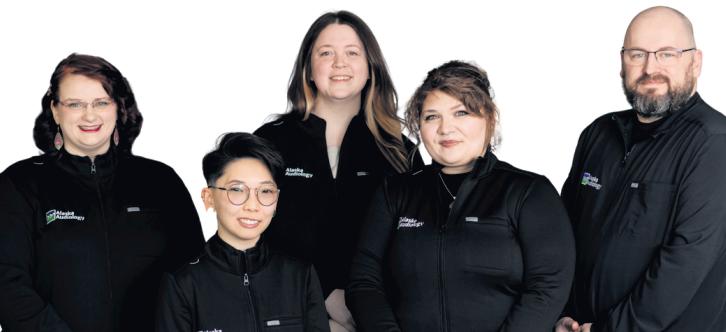
Alaska Audiology Clinic is the expert in hearing loss, hearing aids and hearing tests With over a decade of experience, our certified audiologists are available to serve you.
Comprehensive hearing evaluations
Hearing aid fittings & repair
Real-Ear-Measurements
Custom ear plugs & protection
Tinnitus management
Rehabilitative & preventative counseling
A division of Ear Nose Throat Specialists of Alaska
WHEN EXERCISE CAPACITY NATURALLY DECLINES WITH AGE SET NEW GOALS
Howard LeWine, M.D., Harvard Health Publishing, The Medicine Cabinet
Q: A:
I AM HAVING A HARD TIME ACCEPTING A DECLINE IN MY EXERCISE CAPACITY. WHAT CAN I DO TO REGAIN MY ENTHUSIASM TO GET TO THE GYM?
There comes a time when all of us can no longer run as fast or far as before, hike trails with ease or play sports at the same skill level or intensity. We will also have less endurance and need more time to recover. Whether due to aging, injury or health issues, when the body can no longer perform like it once did, some can experience bouts of grief as they try to confront this new reality.
Physical decline is a type of tangible loss. You can feel this kind of loss practically every day, as the body reminds you that you can’t do everything you once did, and the change feels permanent..
In comparison, an intangible loss is the kind you feel from losing someone. It’s a loss that can’t be seen or touched, so there’s not always a constant reminder like with a tangible one.
A tangible loss like physical decline can make you feel discombobulated about who you are now and what the future holds. This constant ruminating can lead to prolonged bouts of sadness and isolation that, if not dealt with, can quickly progress into depression.
By acknowledging diminishing strength and stamina, you can then focus on adaptations that can be healing and healthy. Here are some strategies that can help.
CHANGE YOUR MINDSET. Make peace with the fact that you have aged. Sure, it’s painful and frustrating to deal with an aging body, but focus on accepting physical changes as a new chapter in your life, not the end of the story.
FOCUS ON THE NOW. Instead of dwelling on what you can’t do, focus on what you can. You can still accomplish a lot working with what you have.
ADJUST YOUR GOALS. There are many things that you can continue doing with some planning and modification. I regularly ride a stationary bike several times per week. Over the past year, my average watts for a one hour ride have declined by 15%. While I don’t like it, I have reset my goal to achieve this new lower level of intensity on my rides.
TALK ABOUT IT. Start by reaching out to your friends. You will probably need to bring up this topic, but if you are with peers, it is highly likely that they are experiencing some version of the same losses. Consider seeking professional counseling if it’s affecting your mood so much that you have stopped exercising.
Howard LeWine, M.D., is an internist at Brigham and Women’s Hospital in Boston and assistant professor at Harvard Medical School. For additional consumer health information, please visit www.health.harvard.edu.
TIPS TO HELP REDUCE AGE-RELATED MEMORY LAPSES
Howard LeWine, M.D., Harvard Health Publishing, The Medicine Cabinet
Q:AS EXPECTED AT MY AGE, I AM HAVING MORE TROUBLE QUICKLY RETRIEVING INFORMATION AND REMEMBERING NAMES. WHAT MIGHT HELP?
At some point, most older adults experience “senior moments.” You misplace your phone or keys, lose your train of thought during a conversation, forget a person’s name or walk into a room and don’t remember why you did.
These moments of brain fogginess can be stressful and embarrassing. But if these are the only symptoms, they usually are not a cause for concern.
People often notice memory lapses beginning in their 50s or 60s. This is when age-related chemical and structural changes begin in brain regions devoted to memory, such as the hippocampus and frontal lobes.
Yet age is not always to blame. Your doctor can help you sort out whether there are other problems contributing to your memory lapses. Here are some of the possibilities:
Depression, anxiety or chronic stress can disrupt the brain’s ability to focus, process and access information. They can also cause negative and preoccupying thoughts that keep people from focusing and being present, which may contribute to memory issues.
Brain fogginess can be a common side effect of some medications. If you are taking a new prescription or over the counter drug, ask your doctor or pharmacist if it could be affecting your cognition.
Sleep problems, such sleeping less than the recommended seven to nine hours nightly, fragmented sleep, and sleep disorders like insomnia and sleep apnea, affect cognitive function.
Even though most memory lapses are normal, you can take measures to manage and improve your existing brain skills. Here are some memory obstacles people encounter and ways to deal with them.
ABSENTMINDEDNESS. This happens when you take on too many tasks or get distracted. When faced with multiple tasks, make a list, put them in order of importance and focus on only one at a time before moving on to the next. Setting up routines and reminders can also help. For example, create a memory table by your front door or in the bedroom where you place vital objects, like your phone, medicines, keys and glasses.
BLOCKING. A common example of blocking is remembering and recalling names. When you meet someone, try linking that person with something that may help trigger name recall, like their hobby, work, background or spouse. Another method is to associate the person with someone with the same name or a similar one, like a relative, celebrity or movie character.
TRANSIENCE. Transience is the loss over time of certain memories like facts and events. To help retain specific memories, keep the information active in your memory; for instance, share it in conversation whenever possible, record it for future reference and review related photographs.
Howard LeWine, M.D., is an internist at Brigham and Women’s Hospital in Boston and assistant professor at Harvard Medical School. For additional consumer health information, please visit www.health.harvard.edu.
things to know about stroke
Prashant Natteru, M.B.B.S., M.D., Mayo Foundation for Medical Education and Research, Premium Health News Service
A FRIEND FROM MY BOOK CLUB RECENTLY HAD A STROKE. I LEARNED THAT WOMEN HAVE A HIGHER RISK OF STROKES. WHAT ARE THE RISK FACTORS, AND ARE THERE SIGNS TO WATCH FOR THAT INDICATE SOMEONE IS HAVING A STROKE?
A stroke can happen at any time and to anyone. You might be talking to your loved one and notice they’re suddenly slurring their words. Or, while grocery shopping, you realize you can’t move your hand to pick up a jar from the shelf. You can go from feeling as usual to feeling sick within a matter of seconds to minutes. Here are five key things to know about stroke.
1. Strokes affect the oxygen and nutrients supplied to your brain.
Strokes occur when nutrients and oxygen are not delivered to the brain through blood vessels, leading to the death of brain cells. This lack of delivery can be caused by a clot in a blood vessel obstructing the blood flow to the brain, known as an ischemic stroke, or when a blood vessel
ruptures and prevents blood flow to the brain, known as a hemorrhagic stroke.
Sometimes, the obstruction to the blood flow and the resulting symptoms are caused by a temporary clot and are transient, resulting in a transient ischemic attack, or TIA, often called a ministroke.
2. Strokes can happen to anyone.
Strokes can happen to anyone regardless of age, gender or race. Certain risk factors can put you at a higher risk of stroke.
Risk factors are divided into two categories:
• Controllable — the ones you can control or improve
• Uncontrollable — those that are not within your control
Common controllable risk factors include:
• Atrial fibrillation, which increases stroke risk by five times
• Diabetes
• Excessive alcohol intake an average of more than one drink per day for women or more than two drinks a day for men
• High blood pressure
• High cholesterol
• Obesity
• Obstructive sleep apnea
• Physical inactivity
• Smoking or vaping
Uncontrollable risk factors include:
• Gender
• Heredity
• Increasing age
• Race
3. Be prepared to spot the signs of a stroke.
Learn to recognize the signs of stroke quickly.
The American Stroke Association lists these symptoms to help you know when to seek medical care:
TA SFFace drooping: Ask the person to smile and see if the smile is uneven.
Arm weakness: Ask the person to raise both arms and see if one arm drifts down.
Speech difficulty: Ask the person to speak and see if the speech is slurred.
Time to call 911: Stroke is an emergency. Call 911 at once. Note the time when any of the symptoms first appear.
Other stroke symptoms to watch for include:
• Numbness of the face, arm or leg, especially on one side of the bod.
• Sudden confusion, trouble speaking or difficulty understanding speech.
• Sudden-onset, severe headache with no known cause.
• Sudden vision issues, such as trouble seeing in one or both eyes.
• Trouble walking, loss of balance, dizziness or coordination.
• If you or someone you are with have any stroke-like symptoms, seek immediate medical care.
4. A stroke is a medical emergency.
Every second counts when someone is experiencing a stroke. Once a stroke starts, the brain loses around 1.9 million neurons each minute. For every hour without treatment, the brain loses as many neurons as it typically does in nearly 3.6 years of regular aging.
While waiting for paramedics, do these things if possible:
• If the person is conscious, lay them down on their side with their head slightly raised and supported to prevent falls.
• Loosen any restrictive clothing that could cause breathing difficulties.
• If weakness is obvious in any limb, support it and avoid pulling on it when moving the person.
• If the person is unconscious, check their breathing and pulse, and put them on their side.
• If they do not have a pulse or are not breathing, start CPR straight away.
5. Women have an increased risk of stroke.
According to the American Stroke Association, stroke is the third most common cause of death in women. Over 90,000 women die from a stroke in the U.S. each year. Every 1 in 5 women will have a stroke, and about 55,000 more women than men have a stroke each year, with Black women having the highest prevalence of stroke.
The risk of stroke increases in women who smoke, have atrial fibrillation or migraines with aura, take birth control pills, use hormonal replacement therapy, are pregnant or have preeclampsia.
Talk to your healthcare team about your stroke risk and ways to lower your risk by addressing controllable factors.
Prashant Natteru, M.B.B.S., M.D., Neurology, Mayo Clinic Health System, La Crosse, Wis.
Mayo Clinic Q & A is an educational resource and doesn’t replace regular medical care. This Mayo Clinic Q&A represents inquiries this healthcare expert has received from patients. For more information, visit www.mayoclinic.org.
HOW TO HELP SAVE FOR YOUR GRANDKIDS’ COLLEGE EDUCATION
I want to help save for my grandkids’ college. Should I make a large lump-sum 529 plan contribution or spread funds out evenly through the years?
A lot of people experience sticker shock when they sit down to look at college costs today. For the 2025-2026 academic year, U.S. News & World Report puts the average cost of tuition and fees at a four-year, public in-state school at $11,371.
For a public out-of-state school, the average price tag is $25,415; for private universities, it’s $44,961.
Meanwhile, an estimated 425 million people today owe federal student loan debt, according to the Education Data Initiative, which also says the average public university student borrows $31,960 to get a bachelor’s degree.
Owing all that money can take a toll. A late 2023 Bankrate survey found that 59% of student loan borrowers felt forced to delay key financial milestones because of their student debt, including building emergency and retirement savings.
If you’re in a strong enough financial position to help pay for your grandchildren’s education, you might be eager to ease that burden — both for them and your grown children who might also be struggling to set aside money for college savings.
If so, a 592 plan is a good place to start. These plans offer the benefit of tax-free gains and withdrawals, provided the money is used to cover qualifying educational expenses.
You might wonder if it’s better to make a large lump-sum contribution to a 529 plan now or spread those funds out evenly over the years. You could go either way. It’s important to understand the pros and cons of both options.
The case for megafunding a 529 up front
If you can afford to fund a 529 plan with a lot of money up front, it could pay to do so, says Jonathan Sparling, director at CollegeWell.
As he explains, “Contributions to 529 plans are excluded from an individual’s taxable estate, even though the account owner retains control of those funds.”
Moreover, Sparling says, “529 plans are eligible for the super-funding provision, which allows individuals to front-load five years of contributions in one tax year. A married couple could contribute as much as $190,000 per beneficiary, thereby reducing their taxable estate by that amount of money.”
There’s also the benefit of time to consider from an investing standpoint.
Maurie Backman, Kiplinger's Personal Finance, Kiplinger's Money Power
Contributions made to 529 investment plans when a child is very young have more time to accumulate growth and weather market fluctuations. The same is true for 529 prepaid plans, like ones provided by certain states and the Private College 529 Plan.
With the Private College 529 Plan, Sparling explains, contributions lock in a percentage of tuition and fees at nearly 300 member colleges across the country.
“Making a lump-sum contribution earlier on locks in more years of tuition at a lower rate, protecting against future tuition inflation,” he says.
THE CASE FOR FUNDING A 529 PLAN THROUGH THE YEARS
If you can afford to front-load 529 plan contributions, not only does it give your money that much more time to grow, it’s also an expense you won’t have to think about year after year.
However, Brian Schmehil, CFP and managing director of Wealth Management at The Mather Group, points out that while you’re generally better off investing a lump sum of money, this approach increases your market-timing risk compared with dollar-cost averaging year after year.
Schmehil also points out that it’s important to consider the tax benefits your state might offer.
“Many states limit the amount you can deduct from your income each year,” he says. “Spreading out your contributions can provide a guaranteed tax benefit to
you and your family. In some cases, the value of this guaranteed tax benefit may outweigh the uncertainty of market returns.”
Schmehil also says that making contributions on a yearly basis gives you more flexibility if your circumstances, or those of your beneficiaries, change.
For example, you might end up in a situation in which your health care costs increase dramatically later in retirement. One of your grandchildren might decide that once they reach middle school, they’re interested in a specific trade and don’t wish to attend college.
Even though 529 plans give you some flexibility to switch beneficiaries, ultimately, you’ll get even more flexibility by having your money outside one of these accounts.
ANY 529 PLAN CONTRIBUTIONS YOU MAKE SHOULD GO A LONG WAY
When it comes to funding a 529 plan, there’s really no right or wrong approach. Sparling also points out that not everyone can make a significant lump-sum contribution to a 529 plan, so for many people, spreading out contributions over time is the only feasible option.
No matter which option you choose, as Sparling says, “Regardless of when contributions are made, every dollar saved for college can help offset future costs and increase college options for their grandchildren.”
Maurie Backman is a contributing writer at Kiplinger.com. For more on this and similar money topics, visit Kiplinger.com.
GOING BACK TO LIVE ON A COLLEGE CAMPUS, TAKING CLASSES AND MIXING AND MINGLING WITH STUDENTS YOUNG ENOUGH TO BE THEIR GRANDCHILDREN WASN’T ORIGINALLY ON ANNA AND JEFFRY YOUNG’S RETIREMENT BINGO CARD. YET THAT’S THEIR LIFE THESE DAYS.
The Youngs’ grand plan when they stopped working several years ago had been to eventually move to a life-plan retirement community near their home in Monte Sereno, Calif.; the couple had even put money down to hold spots on waiting lists at two places. Then, while on a 2024 vacation in Arizona, Jeffry, 78, a retired hospital chief of nephrology, and Anna, 74, a former operating-room nurse supervisor, decided to take a tour of Mirabella, an upscale retirement community on the campus of Arizona State University in Tempe. It offered the amenities and continuum of health care options they’d been looking for, along with the benefits of being an ASU student — full access to classes, clubs, facilities and academic, sporting and cultural events, all at their doorstep.
They were immediately hooked. “We just couldn’t walk away from this,” Anna says. “It felt like the retirement we wanted and needed.”
The Youngs moved into a two-bedroom, two-bath apartment at Mirabella last May and have been on an
academic tear ever since. Between the two of them, they’ve taken classes on the Constitution, health care economics and the future of technology. They play in weekly intergenerational bridge games, and they have joined or helped start bird-watching, foreign-policydiscussion and many other special-interest groups. They enjoy concerts by student musicians who live and work at Mirabella, and Jeffry attends an ethics coffee hour with students and other residents.
“It makes you feel like you’re a kid in an academic candy store here,” says Jeffry. Adds Anna, “Moving here in retirement has been quite a gift we’ve given ourselves.”
Whether it’s taking advantage of the many academic courses that welcome seniors on college campuses, enrolling in a program that helps older adults navigate the transition to retirement and redefine purpose in their post-career years, or choosing to live in a retirement community affiliated with a university, the opportunities for people 50 and older to pursue lifelong learning are abundant. And the demand, experts say, has never been greater as recent increases in life spans lead to a redefinition for many people of what a satisfying retirement is all about.
“With people living longer than ever, looking at possibly a 90- to 100-year life, longevity is forcing us to see that
Diane Harris, Kiplinger's Personal Finance, Kiplinger's Money Power
work-centric learning, focused around employability, is incomplete,” says Simon Chan, founder and CEO of Adapt with Intent, a consulting firm that helps organizations identify opportunities for innovation and growth at the intersection of longevity, work, higher education and retirement. “There’s also great value in learning centered around enrichment, identity, purpose and social connection.”
“Lifelong learning means that you’re curious and open to new experiences, premised on the idea that learning is a personal journey that makes your life more meaningful,” says Chip Conley, cofounder and executive chairman of the Modern Elder Academy, which runs workshops and online courses to help people navigate midlife transitions.
Plus, there are other tangible benefits, Conley notes. “Learning to become a beginner again, whatever the topic, is positively correlated with longevity and improved health — something we should be pursuing our whole lifetime,” he says.
Here is a closer look at the payoffs of lifetime learning and the programs specifically designed for or likely to be of interest to older adults.
WHY LIFELONG LEARNING MATTERS
Learning new things has long been touted as a way to stem cognitive decline — the gradual decrease in memory, judgment and other mental skills that often happens as we age. And research supports that those brain-function benefits are real.
In one study, for instance, older adults ranging in age from 58 to 86 (average age: 72) signed up for three to five classes over 10-12 weeks, the equivalent of a college semester, with instructions to choose courses — options included Spanish, music composition and photography — based on how little they knew about the topic so the learning curve would be challenging. After six weeks, the participants’ cognitive skills, measured by a standardized test, had improved to be on par with people 30 years younger.
And their brain function continued to get sharper until, at the one-year mark, well after the experiment had concluded, the participants’ cognitive abilities were similar to those of college undergraduates — a 50-year improvement, on average, compared with their scores before the classes began.
It’s not yet clear how long the cognitive improvement will last, and most older students won’t take that many challenging classes at once. Still, the results are promising. “It was crazy how much of an improvement in functional abilities there was in every measure we put out there,” says Rachel Wu, an associate professor of psychology at the University of California-Riverside and head of its Cognitive Agility Across the Lifespan lab, which conducted this and similar studies.
An even more important benefit of ongoing education when you’re older, says Wu, is simply that it helps you get comfortable with learning again, given how rapidly the world and personal circumstances can change and the
importance of being able to adapt. For example, she says, during the pandemic, many people had to learn how to bank online and access telehealth to keep their financial and medical affairs in order. If you’re buying a new car for the first time in 20 years, you’ll need to master how to start the engine without a key and other digital controls. There are constant updates to smart phones, and knowing how to navigate artificial intelligence is rapidly becoming integral to daily life.
“Learning new things is not something you can avoid if you want to stay independent,” says Wu. “If something happens that you have to adapt to and it’s the thirtieth thing you’re learning in the past five years, you’ll be fine; if it’s the first thing you’re learning in 20 years, maybe not so much.”
Perhaps the greatest benefit, says Wu: “We found learning gave our older participants a sense of empowerment, the feeling that they are in control of their own lives.”
TAKING CLASSES THAT ENRICH YOUR LIFE
Fortunately, there are plenty of ways to access educational opportunities, with hundreds of programs across the country designed specifically with older adult learners in mind.
Have a hankering, for instance, to take a college class or two, without the stress of homework, exams and grades? Most states make it relatively easy — and inexpensive — to audit courses at community colleges and public universities by offering free tuition or deep discounts to older learners, usually on a space-available basis. Typically, you need to be at least 60 or 65 to participate, and you’re on your own for the cost of books, other course materials and registration fees. (Find a list of the different rules by state at kiplinger.com/kpf/collegeretirees.)
There are also more than 400 college-affiliated Lifelong Learning Institutes nationwide that offer courses and activities primarily designed for people 50 and older. These include 124 membership organizations in the Osher Lifelong Learning Institute Network, known as OLLIs for short, which offer noncredit courses, activities and lectures on topics ranging from history and science to art and current events, with a goal of intellectual stimulation and social connection without grades or tests.
Each OLLI sets its own rules, courses, schedules and pricing. Some may charge a single all-inclusive membership fee that covers classes and activities, while others may charge separately for membership, then on an à-la-carte basis for individual offerings. Total annual costs range from $60 to about $1,000, says Steve Thaxton, executive director of the National Resource Center for Osher Lifelong Learning Institutes at Northwestern University.
History is by far the most popular subject area, says Thaxton — not just traditional courses such as ancient or early American history, but also more offbeat topics such as the history of punk rock, baseball or the local
community. “These people have often lived that history — served in that war or worked in that administration — and can share that knowledge with other students, which makes for a very different classroom experience,” says Thaxton.
Members also often make connections beyond the classroom, creating special-interest groups, such as the science book group, the hikers, the travelers or the dinnerout group. “The secret sauce is building community,” Thaxton says. “You get the cognitive benefits that come with academic and intellectual exploration. But it’s as much about developing a friend group where you can talk about what you’re learning and enjoy it.”
Diane Harris is the deputy editor at Kiplinger Personal Finance magazine. For more on this and similar money topics, visit Kiplinger.com.
For over 20 years, Midnight Sun Home Care has been a proud, Alaska-owned provider of heartfelt care - supporting seniors and their families with trust, compassion, and the power of staying home We're not a chain; we ’ re your neighbors, deeply rooted in Anchorage
Bringing a caregiver into your home is a loving choice That’s why we offer more than care - we offer real, honest respectful relationships, built around kindness and understanding. Every visit matters, every voice is heard
Whether you need a few hours of help or 24-hour live-in support, our local team is available 7 days a week. We personalize every care plan to fit your unique needs.
At Midnight Sun, we believe home is healing - a place of comfort, dignity, and independence. Our care helps families navigate sensitive decisions with clarity and heart
Each of our caregivers is carefully screened and trained to ensure safety, skill, and compassion. Our core values -Compassion, Integrity, Professionalism, and Consistency guide everything we do