





Special
Sales:
Victoria
Joleesa
Advertising
Graphic

Special
Sales:
Victoria
Joleesa
Advertising
Graphic
Claire McCarthy, M.D., Harvard Health Blog, Premium Health News Service

Before going any further, here’s the main thing parents should know about swimming lessons: all children should have them.
Every year, over 4,500 people die from drowning in the United States — and, in fact, drowning is the leading cause of death for children ages 1 to 4. Swimming lessons can’t prevent all of those deaths, but they can prevent a lot of them. A child doesn’t need to be able to swim butterfly or do flip turns, but the ability to get back to the surface, float, tread water and swim to where they can stand or grab onto something can save a life.
As you think about swimming lessons, it’s important to know:
1. Children don’t really have the cognitive skills to learn to swim until they are around 4 years old. They need to be able to listen, follow directions and retain what they’ve learned, and that’s usually around 4 years old, with some kids being ready a little earlier.
2. That said, swim lessons between 1 and 4 years old can be useful. Not only are some kids simply ready earlier, younger children can learn some skills that can be useful if they fall into the water, like getting back to the side of a pool.
3. The pool or beach where children learn must be safe. This sounds obvious, but safety isn’t something you can assume; you need to check it out for
yourself. The area should be clean and well maintained. There should be lifeguards that aren’t involved in teaching — since teachers can’t be looking at everyone at all times. There should be something that marks off areas of deeper water, and something to prevent children from getting into those deeper areas. There should be lifesaving and first aid equipment handy, and posted safety rules.
4. The teachers should be trained. Again, this sounds obvious — but it’s not always the case. Parents should ask about how teachers are trained and evaluated, and whether it’s under the guidelines of an agency such as the Red Cross or the YMCA.
5. The ratio of kids to teachers should be appropriate. Preferably, it should be as low as possible, especially for young children and new swimmers. In those cases, the teacher should be able to have all children within arm’s reach and be able to watch the whole group. As children gain skills the group can get a bit bigger, but there should never be more than the teacher can safely supervise.
6. There should be a curriculum and a progression — and children should be placed based on their ability. In general, swim lessons progress from getting used to the water all the way to becoming proficient at different strokes. There should be a clear way that children are assessed, and a clear plan for moving them ahead in their skills.
7. Parents should be able to watch for at least some portion. You should be able to see for yourself what is going on in the class. It’s not always useful or helpful for parents to be right there the whole time, as it can be distracting for children, but you should be able to watch at least the beginning and end of a lesson. Many pools have an observation window or deck.
8. Flotation devices should be used thoughtfully. There is a lot of debate about the use of “bubbles” or other flotation devices to help children learn to swim. They can be very helpful with keeping children safe at the beginning, and helping them learn proper positioning and stroke mechanics instead of swimming frantically to stay afloat, but if they are used, the lessons should be designed to gradually decrease any reliance on them.
9. Being scared of the water isn’t a reason not to take, or to quit, swimming lessons. It’s common and normal to be afraid of the water, and some children are more afraid than others. While you don’t want to force a child to do something they are terrified of doing, giving up isn’t a good idea either. Start more gradually, with lots of positive reinforcement. The swim teacher should be willing to help.
10. Just because a child can swim doesn’t mean he can’t drown. Children can get tired, hurt, trapped, snagged or disoriented. Even strong swimmers can get into trouble. While swimming lessons help save lives, children should always, always be supervised around water, and should wear life jackets for boating and other water sports.
Claire McCarthy, M.D., is a former senior faculty editor for Harvard Health Publishing

No mat ter what sparks your child’s curiosit y and imagination, we have a plan
for it .
Use your savings at any eligible university, college, vocational school, apprenticeship, or for K–12 expenses.
Go online or call the number listed above to request a Plan Disclosure Document, which includes investment objectives, risks, fees, expenses, and other information. You should read the Plan Disclosure Document carefully before investing. O ffered by t he Educat ion Trus t of A laska T Rowe Price Inves t ment Ser v ices, Inc , Dis t ribu tor/ Under wri ter
202606-5527288 1 - 888 - 425 -2752 | Alaska529plan com
As Alaska kids deal with anxiety, depression, HERE’S

Alaskan youth are facing increased feelings of hopelessness, sadness and even suicidality. Here’s how family support systems can help.
When Sarah Pype’s young patient initially came to her, they were in a challenging place.
“The kiddo was really struggling with both depressive and anxious symptoms,” said Pype, a licensed clinical social worker who works with Alaska Behavioral Health. “There was also lots of anger and some behaviors that caregivers were like, ‘This is not okay with us, and we don’t really know what to do.’”
With Pype’s support through oneon-one and family sessions, the child and their family were able to learn the skills they needed to problemsolve their way through depressive and behavioral symptoms, which eventually declined.
“It took repetition and sustained practice over time with support, and both kiddo and caregivers felt much more effective,” Pype said.
This patient and their family aren’t an isolated case in Alaska, where
Pype and other mental health professionals are seeing more youth grapple with behavioral and mental issues.
In 2011, the state Department of Health’s Alaska Youth Risk Behavior Survey showed that 25.9% of high schoolers reported persistent feelings of sadness and hopelessness; by 2019, that figure had risen to 38.1%.
With resources and support, Alaskan parents and kids can navigate mental health challenges together and develop skills that support the whole family.
“Parents play one of the most important roles in helping children recognize, understand, and manage their emotional well-being,” said representatives at the Alaska Department of Health’s Division of Behavioral Health. “Research consistently shows that supportive parent-child relationships help build resilience…coping skills.”
With increasing feelings of hopelessness and sadness come serious consequences. The 2011 Alaska Youth Risk Behavior Survey found that 8.7% of high schoolers had attempted suicide, a number that had risen to 19.7% by 2023.
Why are Alaskan youth struggling so heavily with mental illness and suicidality? While every child’s brain chemistry and circumstances are different, professionals like Pype and the team at the Division of Behavioral Health are noticing trends.
“Something that we see particularly in our teens and adolescents is some challenges with recognizing that online content is curated and isn’t always representative of the real lives that people live and the normal human challenges that exist,” Pype said. “We see lots of comparison there, and often when we see kids

For 40 years, thread has led the way in strengthening early childhood education by helping families find affordable, high-quality child care, suppor ting early educators in their professional growth, and par tnering with communities to advance early learning systems statewide.
thread helps families make informed choices about early childhood education through:
• Free child care referrals for all families and enhanced referrals for militar y families and children with special needs. Visit threadalaska.org or call 800.278.3723 to star t your search today.
• Consumer education on selecting a quality child care program.
• Shor t-term suppor t around parenting and child development through the thread line, 800.278.3723.
thread educates child care professionals and suppor ts early childhood programs so they can provide the best possible care and education to Alaska’s children.
thread par tners with businesses, policy makers, and communities to ensure Alaska’s families and workforce have access to affordable, quality child care.
who feel really socially anxious or are really self-critical of themselves.”

Kids who spend time online may also be exposed to virtual bullying. According to the Division of Behavioral Health, 46% of students report experiencing cyberbullying, and those kids are more likely to deal with mental health struggles.
The social, academic and routine disruptions of the COVID-19 pandemic years also occurred during many young people’s formative years, leaving a lasting impact. Since the pandemic started, the Division of Behavioral Health said, 79% of early childhood educators in Alaska report more behavioral health challenges among young children.
“Even several years later, many young people continue to report anxiety, sleep problems, loneliness, emotional dysregulation and difficulty reconnecting socially,” Division of Behavioral Health representatives said.
Other external issues are feeding into young Alaskans’ mental health crisis. Factors like long provider waitlists, clinician shortages, a lack of providers that accept Medicaid and a lack of specialized behavioral
health care for young kids mean that families struggle to access care before their child’s situation has reached emergency levels.
“These challenges are especially significant in rural Alaska, where communities may rely heavily on itinerant providers or telehealth as the primary source of care,” Division of Behavioral Health professionals noted. “Families often describe the system as fragmented and difficult to navigate, particularly when trying to identify which providers are available, what insurance they accept or what ages they serve.”
Though education professionals can often serve as a first line of defense by noticing kids’ mental health struggles or behavioral changes, parents are also a critical piece of their children’s mental health resource network.
A supportive home environment often starts with parents who model healthy behavior and emotions themselves, which can make targeted conversations around mental health go more smoothly.
“I think that it starts maybe not with such a targeted conversation, but really building a family culture around, ‘It’s okay to talk about our feelings, both positive, negative, neutral — all feelings are valid,’” Pype said.
When mental health and behavioral concerns do arise in kids, the symptoms can be highly individualized. General warning signs might include a child not wanting to engage with friends or leave their room, dealing with lower-thanaverage energy or losing interest in activities that were once important to them, Pype said.
Parents are the best judges of their own children’s behavioral changes. “I often take the perspective that I can be an expert on therapy, but parents are the experts on their kids,” Pype said.
If you have noticed these or other changes in your child, it’s helpful to approach the conversation with curiosity and start asking openended questions, Pype said. You can also let your child know that they’re not alone, and that they have supportive adults or peers.
“It is also important to normalize mental health treatment and helpseeking in the same way we would approach physical health concerns,” the Division of Behavioral Health said. “Young people benefit from knowing that anxiety, depression, trauma and emotional struggles are treatable.”
Where emerging mental health struggles may require compassionate, curious conversation, suicidality in kids can require a more direct dialogue. Don’t
be afraid to ask your child directly if they’re thinking about harming themselves — and don’t be afraid to seek emergency help if your child is at risk.
“Parents, caregivers and mentors can approach these conversations in a calm, direct and nonjudgmental way by asking openly about stress, emotional pain, hopelessness or suicidal thoughts,” the Division of Behavioral Health said. “Research shows that asking directly about suicide does not increase risk. In many cases, it helps young people feel seen, supported and safer.”
Despite the factors that keep Alaskans from accessing mental health care, there are still plenty of supportive resources available. Parents can get help finding
counseling, crisis care and more through resources like:
• Help Me Grow Alaska
• FindTreatment.gov
• Alaska’s Resource Guide to Healing and Hope: The 2025 Guide
• Alaska Medication for Addiction Treatment
• Local rapid-access behavioral healthcare
• Tribal health resources
• The 988 crisis lifeline
“Sometimes, the hardest part of accessing services is taking that first step,” Pype said.
“It takes all of us — whether we’re mental health professionals, or school personnel, or aunties, or uncles, or parents or grandparents — to really support kids.”

When Petersburg resident and program coordinator Jessica Doril pulled her son out of a childcare program at age 3 due to staffing issues, she never expected what the next four years would bring.
Since then, she’s applied to childcare programs that could accommodate her son’s need for an Individualized Education Program (IEP), which provides extra support in school for kids eligible for special education services. She’s been denied, sat on
Anchorage
providers and families say a community approach to childcare is vital for
From waitlists to “impossible math,” see how Alaska’s childcare shortage is impacting families and what new state laws like SB 95 and SB 96 mean for you.
waitlists and faced the reality of living in a community with extremely limited after-school options — issues that have forced Doril and her husband to juggle alternating work shifts and enjoy limited family time.
“It makes it hard to focus on other things when our day-to-day is scrambling to know who is available to care for our son,” Doril said, adding that she still hasn’t found consistent childcare for her now 7-year-old son.
Doril’s reality is one that the thousands of Alaskan families living in “childcare deserts” face: extremely limited options.
According to the 2025 KIDS COUNT report from the Annie E. Casey Foundation, which tracks the wellbeing of kids across the country, 61% of Alaskan children ages 3 and 4 are not in school. Meanwhile, 30% of

Alaska children live in families where parents lack secure employment.
“This impacts what jobs they’re choosing ... how they manage their schedules or manage split schedules,” said Stephanie Berglund, CEO of thread, Alaska’s primary childcare resource and referral organization. “We’re hearing families … making their life decisions around their childcare needs, which feels bigger than it has before.”
She said the data also shows that 61% of Alaska is a childcare desert, reflecting a growing trend in the state.
“Ten years ago, we had over 500 licensed child care (providers)... now we have about 380... we just really haven’t seen that capacity come back,” Berglund said.
Brittany Worsham, the program director at Joy Child Development Center in Eagle River, has a profound understanding of the challenges providers face to reopen. Worsham, along with her co-lead Justice Hansen, reopened the center in June 2025 after it closed in December 2024.
“Many programs across the state have closed or reduced capacity, creating a major imbalance between the number of licensed childcare spaces available and the number of families needing care,” Worsham said. “We especially see this with infant and toddler care.”
The challenge, she said, comes primarily from providers managing the need to retain high-quality staff,
who earn an average wage of $17.50 per hour, far below Alaska’s living wage of $25 per hour.
“One of the hardest realities in childcare is trying to balance paying educators fair wages while also keeping care affordable … providers are stuck in the middle,” Worsham said, adding that most providers aren’t charging higher tuition because they are making large profits, but rather to keep their programs going.
As providers across the state find it increasingly difficult to walk this tightrope, children are left at risk.
Trevor Storrs, president and CEO of Alaska Children’s Trust, an advocacy group focused on raising awareness of children’s needs, compares the need to keep children healthy, safe and successful to an elastic band. The band, he said, is stretched thin when parents face economic stressors such as low wages, high childcare and living costs, and a lack of childcare options.
“If you don’t have the knowledge, skills, supports or resources to lessen that tension, [the band] stays there,” Storrs said. “When you stretch it too far, what happens? It snaps. That’s where child abuse and neglect happen.”
Storrs added that many families who are stretched thin due to a lack of care options turn to neighbors, family members or even partners, which can lead to less safe childcare solutions or moving elsewhere.
“One of the largest populations that’s leaving our state are young families,” Storrs added. “People always think the people leaving our state are those who are retiring. No. Actually, there are young families that are leaving, either because of lack of child care ... and/or our K-12 system.”
Early childhood education is also critical to kids’ long-term development, with the National Institutes of Health reporting that 90% of brain growth occurs before age 5.
“When a child does go into those high-quality centers, we see their reading skills increase,” Storrs said. “They’re more prepared for kindergarten.”
The childcare shortage is clearly reflected in the KIDS COUNT data, which shows that only 22% of Alaska’s fourth graders are proficient in reading.
Finding high-quality childcare requires proactivity and constant
communication. Berglund encourages parents to call or email thread and to follow the organization on social media.
“There are pockets of care available,” she said.
Worsham added that getting on waitlists as early as possible and staying in regular contact with providers can go a long way.
“A lot of openings happen unexpectedly,” she said.
Parents, providers and advocacy groups alike agree that solving the childcare issue, which is critical to ensuring that families don’t leave Alaska, will take solutions shared by the community as a whole.
“Stable childcare allows parents to work, businesses to function and communities to grow,” Worsham said.
At the state level, two bills signed into law in 2025 aim to move the needle:
• Senate Bill 95, which expanded direct assistance eligibility to families making up to 105% of the state median income (up from 85%)
• Senate Bill 96, which incentivizes Alaska businesses to provide or subsidize care for their employees
Storrs and Berglund noted that while the bills are a great start, it will take the entire community to work toward a solution that stops families from
leaving the state to find affordable, accessible care.
“It takes parents to raise a child and a village to uplift those families,” Storrs said.
“thread... believes that childcare is a public good, a part of our core infrastructure as much as our roads,” Berglund added.
And for families like the Dorils, seeing community support move the issue in a positive direction will make all the difference.
“We are the working class,” Doril said. “We want to be able to support our families, and we want to know that people are also invested in us. This is what communities are built on.”

Raising a child with special needs presents unique and long-term financial planning considerations.
Parents need to focus on ensuring their child has the care, resources and support they require — today, and, quite often, well into adulthood and their own retirement.
This level of planning often involves complex financial decisions and, in some cases, trade-offs that may impact other priorities. And parents in this cohort are hungry for more guidance.
According to Ameriprise Financial’s recent study, 68% of parents of children with special needs expressed concern that the decisions they’re making now will impact their own financial future.
Fortunately, there are steps parents can take to help ensure their child has the support they need in the years ahead, while still planning for their own financial futures.
Here are five important areas to consider for parents with children with special needs who may be in various stages of the planning process.
Depending on your child’s needs and their ability to earn a future income, your financial plan may need to consider your full lifespan and your child’s.
Clearly, this puts pressure on one’s resources.

One important area to consider are public programs that can help supplement what you may need to provide, such as Supplemental Security Income (SSI), Medicaid, and other federal and state benefits and community-based waivered services.
These resources often have eligibility requirements based on income and assets that can vary state by state, so working with an attorney who specializes in this area is important to determine which options will best preserve your child’s access to these benefits.
As you consider the long term and the potential need for a child’s lifelong care, life insurance can play a critical role. Knowing that your child will be cared for financially provides peace of mind and emotional relief for parents and guardians.
Before naming your child as a beneficiary in your will or life insurance policy, it’s important to pause and consider the potential impact. Doing so could unintentionally affect their eligibility for government benefits like SSI and Medicaid.
Instead, you may want to explore a special needs trust (SNT), which allows your child to continue receiving public support while also benefiting from your estate or policy proceeds.
There are several types of SNTs, each with specific rules and eligibility requirements, so it’s a good
idea to work with an attorney to determine the best fit for your situation.
Keep in mind that beneficiaries don’t have direct control over funds in an SNT, so this option may not be ideal if your adult child is capable of managing their own finances.
Under the Achieving a Better Life Experience (ABLE) Act of 2014, you can set up a taxadvantaged savings account to help support your child with a qualifying disability as they grow into adulthood.
ABLE accounts are designed to supplement benefits such as SSI, Medicaid and private insurance, helping your child maintain their health, independence and quality of life as an adult.
Anyone, including friends and extended family, can contribute, keeping in mind that annual contributions are limited to the gift tax exclusion amount.
The funds can then be used tax-free for qualified expenses, such as groceries, housing, transportation, education, employment support and medical care.
Some states also offer tax credits for contributions to ABLE accounts. Since rules, investment options, enrollment requirements and limits vary by state,
it’s a good idea to consult with an attorney or financial adviser before getting started.
Here are a few additional considerations to keep in mind:
• Up to $100,000 in an ABLE account is not counted as a resource for SSI eligibility.
• Each state has its own limits on what will not affect current or future eligibility for programs such as the Free Application for Federal Student Aid (FAFSA), Housing and Urban Development (HUD) assistance, the Supplemental Nutrition Assistance Program, Medicaid, Medicare, SSDI or vocational rehabilitation services.
• Individuals who are disabled and who work may be able to make additional contributions (limits vary by state) if their employer hasn’t contributed to a retirement plan for them.
As part of your estate planning, include clear instructions in the event you’re unable to manage your child’s care owing to illness, injury or death. Your child may need support with financial, legal or medical decisions, and appointing a guardian or conservator can help ensure those needs are met.
Once your child turns 18, you no longer have automatic legal authority over their decisions, so you may need to be appointed as a legal guardian through the court to continue acting on their behalf.
For planned absences, such as travel, many states allow you to set up a short-term guardianship without a court hearing, often valid for up to 365 days.
You know your child best. As you make decisions about the future, try to involve them in the process whenever it’s appropriate. They may have
thoughts about their ability to live independently or concerns about what lies ahead.
Having open, honest conversations can ease anxiety on both sides and help ensure everyone feels informed and comfortable with the plans being made.
Planning for a child with special needs involves unique considerations, but it also reflects the deep care and commitment parents have for their child’s future.
By working with a financial adviser and attorney, you can create a thoughtful, personalized strategy that provides lasting support and peace of mind.
With the right guidance, you can feel confident that your child will be well cared for, both today and in the years to come.
Deana Healy, CFP®, is vice president of financial planning and advice for Ameriprise Financial. is a contributing writer to Kiplinger.com.





When the school bell rings, where do your kids go? For many younger children, they’re headed home with older siblings. Some are watched by extended family members, such as grandparents. Others are cared for by family friends and neighbors.
If this is describing your family, you’re not alone. Children in the care of family, friends, and neighbors is the most common type of nonparental child care in the United States.
As the cost of child care rises and more providers are closing their doors, this option makes financial sense for many families. Yet, over half of Alaskan families, higher than the national average, say they would enroll their child in an afterschool program if one were available to them.
And it’s easy to see why. Melanie Hooper, President and CEO of Camp Fire Alaska, the largest licensed child care provider in the state, says that afterschool programs provide a hands-on lear ning environment essential in healthy child development.
“Children are building skills in emotional regulation, problem solving, critical thinking, and communication,” she says. “And when being exposed to new interests and experiences, children become more confident and build new social connections. We see these benefits firsthand every day.”
INCREASED WELLBEING AND REDUCED SCREENTIME
The phrase, “iPad kid,” has been growing in popularity. Children today are growing up lear ning to crave the same app-based dopamine rushes that adults struggle with. Teens are averaging nearly 9 hours of media use per day, including an average hour and half on social apps like Instagram or Snapchat. For younger children, research shows that fast-paced videos or interactive games can hook them to the point of addiction. High screen use may lead to attention difficulties and social challenges.
“Given the rapid increase in technology exposure, afterschool program involvement is more essential than ever,” Hooper says. “We know that screen time and social media use is linked to increased mental health concer ns and the growing loneliness epidemic this generation is experiencing.”
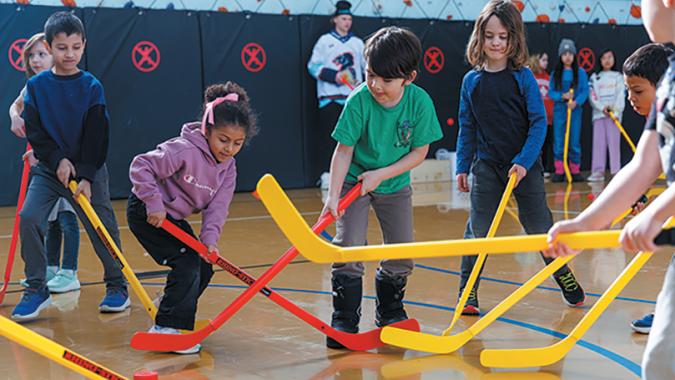
In Camp Fire’s licensed afterschool programs, kids have access to books, art supplies, and nutritious snacks. They can play outside or in the gym. They move and they create, building healthy habits and increasing their skills to positively interact with the people and the world around them. The Teen Leadership Program offers leadership development, resume building, and community service lear ning.
PROTECTIVE FACTORS
These positive interactions with the people around them are key to healthy development and child safety. In fact, it’s what’s known as a protective factor for building resilience and stronger families.


Children of all ages whose social and emotional competence are supported lear n to better communicate with others and selfregulate their behavior, leading to better relationships with family and peers.
In Camp Fire’s programs, 94% of youth say there is a staff member they can go to for help with a problem. Research consistently shows that having safe, trusted supportive adults in childhood is associated with positive, long-ter m outcomes—including better mental health in adulthood.
This past spring, one of Camp Fire’s eighteen afterschool sites hosted a talent show for their monthly family night. There was a lot of what you might expect, like singing and dancing. But families also enjoyed a Chinese yoyo perfor mance, a showcase of drawings, and a silent, silly Ninja battle. Beyond being just a hobby, many of these kids expressed the desire to continue these talents professionally one day.
Hooper explains that Camp Fire is more than child care: “It’s an opportunity for youth to explore and discover who they are. W ithout screens, they are more likely to seek out other creative for ms of play, discover new interests, and ultimately discover and develop their identity. They find the best within themselves in a fun, safe lear ning environment.”
Cost is the number one barrier to enrolling a child in afterschool programs. Camp Fire offers scholarships, based on each individual family’s circumstances, for all of their school year and summer programs. Additionally, as a licensed child care provider, Camp Fire’s afterschool program, and some of its summer programming, is eligible for Child Care Assistance, further reducing the financial burden.
“At Camp Fire, we believe cost should never be a barrier for a child to attend an afterschool or summer camp program,” Hooper says. “And we have incredible network of supporters who donate to make sure this is possible. We are grateful to have a community so committed to investing in our future generation.”
To lear n more about Camp Fire’s programs and scholarships, and the research referenced here, visit campfireak.org/raisingalaska.


A. Noelle Larson, M.D., and Anthony Stans, M.D., Mayo Foundation for Medical Education and Research, Premium Health News Service

Q: My 10-yearold daughter was just diagnosed with scoliosis. The curve is 19 degrees, and I have read that it could worsen with time. Will she need to wear a brace? Or is surgery in her future?
While scoliosis is often stable in adults, it’s important that children and teenagers with scoliosis be followed closely, since it can progress over time in growing young people. This typically involves low-dose X-rays or exams twice a year.
If your daughter’s scoliosis does progress, she may need to wear a brace or undergo surgery to prevent the curve from getting worse throughout her lifetime.
Scoliosis is an abnormal side-to-side curvature of the spine. Most people have a spine that is relatively straight. Generally, a spine with a 10-degree curve or less is considered normal. A curve greater than 10 degrees is defined as scoliosis.
The goal of scoliosis treatment is to keep the curve from getting worse. Treatment options depend on the curve’s severity. Curves between 10 and 19 degrees — where your daughter’s case fits — are in the mild range. The moderate range is between 20 and 40 degrees, and greater than 40 degrees is considered severe.
For children with scoliosis that progresses beyond 25 degrees, bracing is an effective treatment option. The brace holds the spine in a corrected position while the spine continues to grow.
A scoliosis brace is made of plastic and contoured to conform to the body. It’s close-fitting and goes unnoticed under most clothing since it fits under the arms and around the rib cage, lower back and hips.
Because a brace is more effective the more it’s worn, most children wear their braces day and night. Special nighttime braces are also available for some curve types. It’s important for children to get an X-ray while in the brace to ensure that the brace is correcting the scoliosis.
Physical therapy can also help with pain control, spinal flexibility and improved posture. It’s also an option for mild curves or for patients interested in nonsurgical treatment, in combination with bracing.

However, many children are unable to tolerate a brace, especially those with sensory issues.
Several motion-sparing surgical treatment options that help preserve spinal flexibility and growth now exist for patients with moderate to severe scoliosis. These include:
• Vertebral body tethering. The spine is accessed through small incisions in the side, and a special camera is used during surgery. Metal screws are placed in the vertebrae where the spine is curved, and a plastic cord connects these screws. The cord is tightened to shorten the long side of the scoliosis curve, acting as an internal brace. As children grow, the curve may correct over time. The cord is flexible, so the spine can still move and continue to grow. Patients can return to all sports in six weeks.
• Posterior dynamic distraction. An incision is made over the back. Three screws are placed and connected with a single rod with two ball-bearing joints to allow for motion and growth.
Severe scoliosis almost always benefits from surgical treatment. The most common type of scoliosis surgery is spinal fusion, which involves connecting two or more of the bones in the spine together so they can’t move independently. After fusion, the spine no longer grows or moves in the area where it’s fused. In most cases, the unfused spine area can compensate, and children can perform most daily activities and return to most sports in three to six months.
Talk to your daughter’s health care team about her diagnosis and the risk of the spinal curve worsening. It may be helpful to consult with a pediatric orthopedic surgeon to understand her treatment in the future.
Also, talk with your daughter about how she’s feeling. Coping with scoliosis can be difficult for preteens and teens. Support and encouragement from family and friends can help.
— A. Noelle Larson, M.D., and Anthony Stans, M.D., Orthopedic Surgery, Mayo Clinic,
Rochester, Minnesota
Mayo Clinic Q & A is an educational resource and doesn’t replace regular medical care. This Mayo Clinic Q&A represents inquiries this healthcare expert has received from patients. For more information, visit www.mayoclinic.org.

Q: We just
celebrated my daughter’s first birthday. Toddlers and screen time
have been in the news a lot these days. It can be hard to find a balance, but I want to make sure I’m doing my best as she continues to grow and develop. What are the negative effects of screen use for kids? And how much is too much?
These days, screens are everywhere. It’s no longer as simple as the one big TV that might have sat in the living room when some of us were growing up. Nowadays, we consider anything to be a screen if it can show us pictures and broadcast images and videos. So even the smartphone that a parent might have is considered a screen. Much to the surprise of some of our teen patients who spend a fair amount of time on mobile devices, we count that as a screen as much as we count televisions, computer screens, laptops and tablets — they’re all part of the new world of screens.
The American Academy of Pediatrics and pediatricians have been concerned about the effect of screens and media on children for decades. So while it is not a new issue for us, what is new is the way screens have evolved and how much more abundant they have become. We know that with screens being smaller and more portable now, it is much easier for younger kids to access screens. The main concern that we have with screens and young children is the fact that screens oftentimes do not provide the same level of educational, communicative and interactive input that they need for language development. Some studies have even shown that supposedly educational content can potentially have a detrimental effect, particularly
on the language development abilities of young children.
When we think about young children spending time in front of screens, we worry primarily about developmental outcomes being stunted. We also know that sitting in front of a screen usually means that it’s sedentary time. So instead of getting up and running around, kids are not able to be active during this time. We also worry about the fact that they’re not interacting with other human beings, including adults and even other kids their age, to listen, hear and have that back and forth that is so important for language development and building social skills.
We have found that kids under 2 years old most likely do not benefit from technology or screen time, so it is best to avoid it altogether for this
age group. When we say no screens before age 2, however, that doesn’t mean that you and your child can’t have video chats with family members. That’s just as important for grandparents and other relatives as it is for young children.
There is potentially a benefit for children in the 2 to 5 age range who have no more than one hour of high-quality educational TV content per day with little to no commercials. There are some wonderful shows that have been around for decades that are focused on teaching kids and can help them learn about other people and cultures. Studies have shown this can even lead to diversity enhancement. When children see children of other backgrounds playing with each other, they’re more likely to want to play with a child who has a different background from their own.


When children reach 5 years and older, we used to tell parents no more than two hours of noneducational screen time per day. But really, we want to make sure that screen time isn’t taking the place of schoolwork, sleep or physical activity.
Common Sense Media is a website where people can log on and look at both kid and adult ratings as well as background information for video games, movies and TV shows. This can be a really good resource where parents can go to find out if something is appropriate for their child to see.
As a pediatrician, I always tell parents that just because something says it’s for kids, doesn’t mean it’s beneficial for kids. That goes for not only screen time but also medications, food and toys. The key thing that I want all parents to know is that screens aren’t all good or all bad. A lot of this depends on how you use screens. We know that it can be hard for parents, and we don’t want anyone to feel bad or guilty. Give yourself a pat on the back for being an aware, concerned and proactive parent.
— Nusheen Ameenuddin, M.D., Pediatric and Adolescent Medicine, Mayo Clinic, Rochester, Minnesota
Mayo Clinic Q & A is an educational resource and doesn’t replace regular medical care. This Mayo Clinic Q&A represents inquiries this healthcare expert has received from patients. For more information, visit www. mayoclinic.org.




















Providence Alaska Medical Center (PAMC) is honored to be the only hospital in Alaska recognized as Best Regional Hospital in U.S. News & World Repor t ’ s 2025 -2026 Best Hospitals Rankings. PAMC was also recognized as high per forming in the treatment of two adult specialties and nine procedures and conditions, more than any other treatment center in the state.
Our award-winning care reflects the exceptional work of our caregivers, providers and community par tners, who share our commitment to ensuring Alaskans get the best care possible close to home.















Alpenglow
Denali • Gladys Wood • Government Hill • Huffman
Ravenwood • Rogers Park • Sand Lake • Scenic Park Trailside