ABOUT THE PROJECT
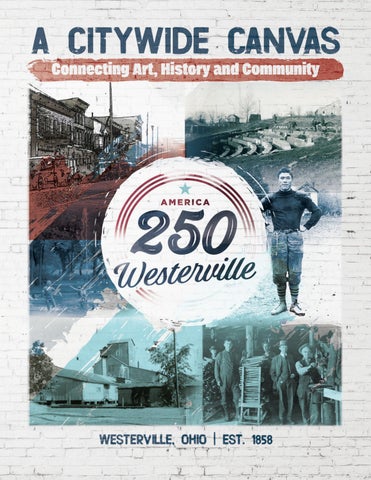
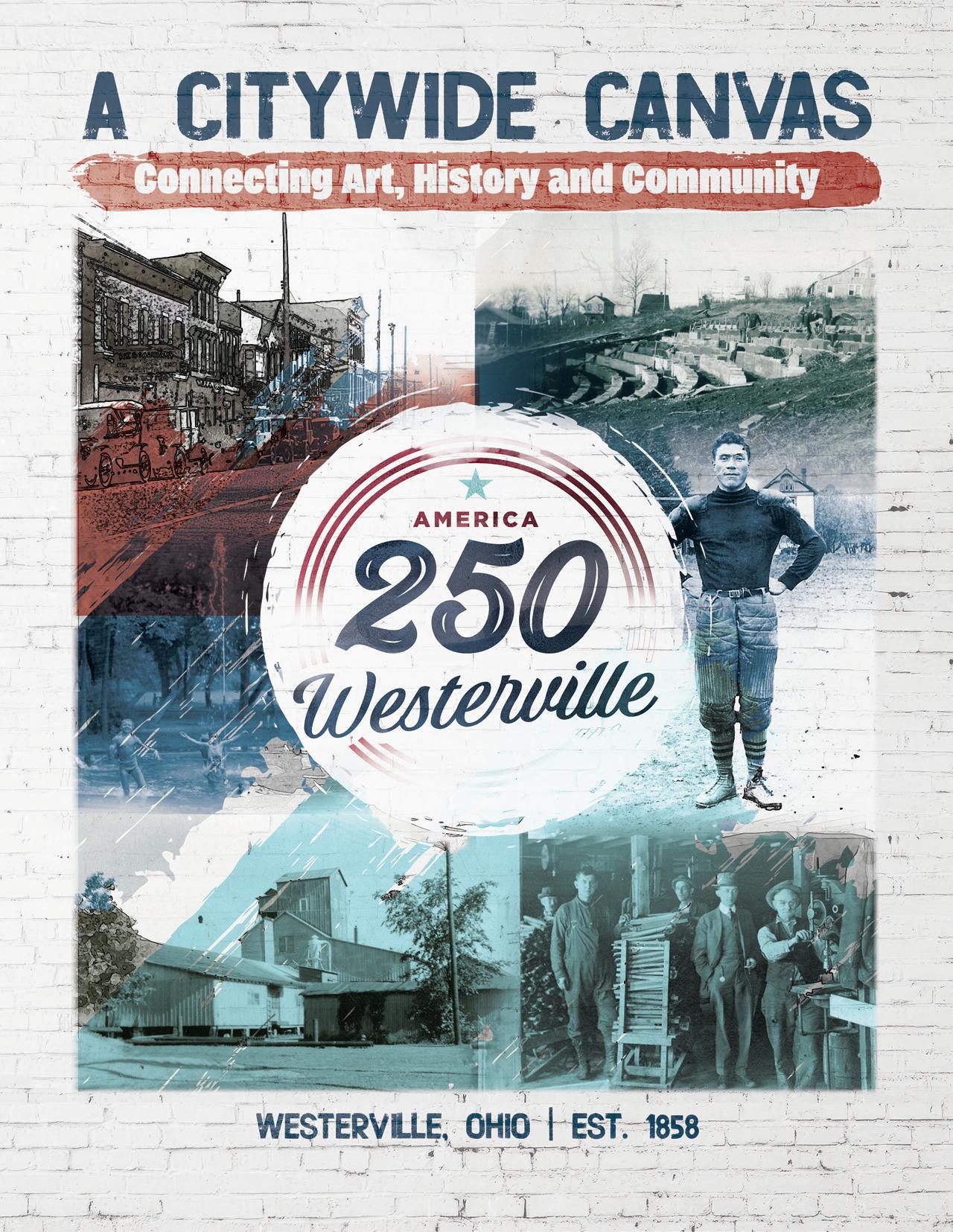
The America250 Westerville Mural Project is a citywide public art initiative designed to honor the stories that have shaped the community—specifically, Westerville’s untold stories.
Through 12 large-scale vinyl murals installed at locations across the city, the project highlights themes rooted in Westerville’s past, from innovation and resilience to culture and community. Each mural will remain on display for two years, creating an extended opportunity for both residents and visitors to experience and engage with these stories over time.
Created by a diverse group of eight Ohio-based artists, the murals reflect a collaborative effort grounded in creativity, craftsmanship, and community connection. From concept to production, the project blends artistic vision with innovative production methods, resulting in a cohesive collection of installations that transform everyday spaces into storytelling moments. Together, the murals represent a shared investment in preserving Westerville’s history while honoring the creativity and innovation that continue to shape its future.
Explore the America250 Westerville Mural Project at VisitWesterville.org/250
The America250 Westerville Mural Project is made possible through the generous support of our funding partners, whose investment has been instrumental in bringing the project to life.

Thank you to all of our generous sponsors for their valued support in helping extend the America250 Westerville Mural experience throughout the community and to visitors exploring Westerville.
Special thanks to our Steward of History Sponsors:


Friends of History Sponsors
The America250 Westerville Mural Project is a collaborative effort led by:
• Derrick McPeak, City of Westerville
• Stacey Rusterholz, Westerville Area Chamber
• Jackie Barton, Westerville History Museum at the Westerville Public Library
• Kristen Wojdyla, Otterbein University
• Robin Collins, Visit Westerville
• Beth Weinhardt, Westerville Historical Society
• Curtis Smith, Otterbein University
With appreciation to those whose collaboration and expertise helped bring this project to life:
Contributing Organizations & Individuals
Arts Council of Westerville Erica Darlin
Rotary Club of Westerville (Noon) Dave Read
Sunrise Rotary of Westerville Jim Caldwell
Uptown Westerville Inc Joe Meyer, Kris Thompson, Lynn Aventino
WeRISE James Prysock
Westerville City Council Jeff Washburn
Westerville City Schools Charlie Boss, Angie Hamberg, Victoria Hazlett
The Westerville News Gary Gardiner
Westerville Symphony Axl Pons Jennifer Bernard Merkowitz
Westerville Historical Society Don Foster
Westerville History Museum Staff
Katy Kaslow
Jim Seitz
Kaitlin Seeburch
City of Westerville Community Affairs Team
Artists
Yao Cheng
Dexter Komakaru
Jackie Jeromin
Jill Chronister
Research Support
Linda Shepard
Zach Cardoza
Steve Olszewski
Carly Mitchell
Jenny Adkins, Project Scientists, MAD Scientist Associates, LLC
Midge Dellinger, MA, Historic and Cultural Preservation Department, Oral Historian, The Muscogee (Creek) Nation
Stephen Grinch, Archivist, Otterbein University
Michael A. Hoggarth, Ph.D., Department of Biology and Earth Science, Otterbein University
CREATED BY
ART DIRECTOR
Andrew Thomas
DESIGNER
Julie Friedman

EDITORS
Jack McLaughlin
Mary McCarthy
Jackson Hall
COVER DESIGN
Steve Olszewski

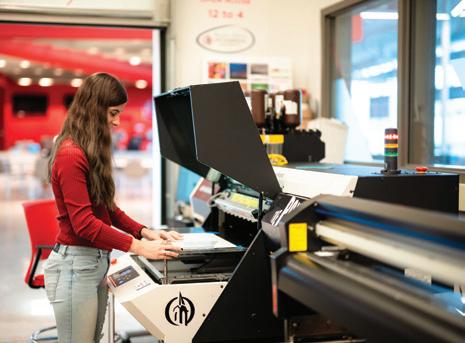
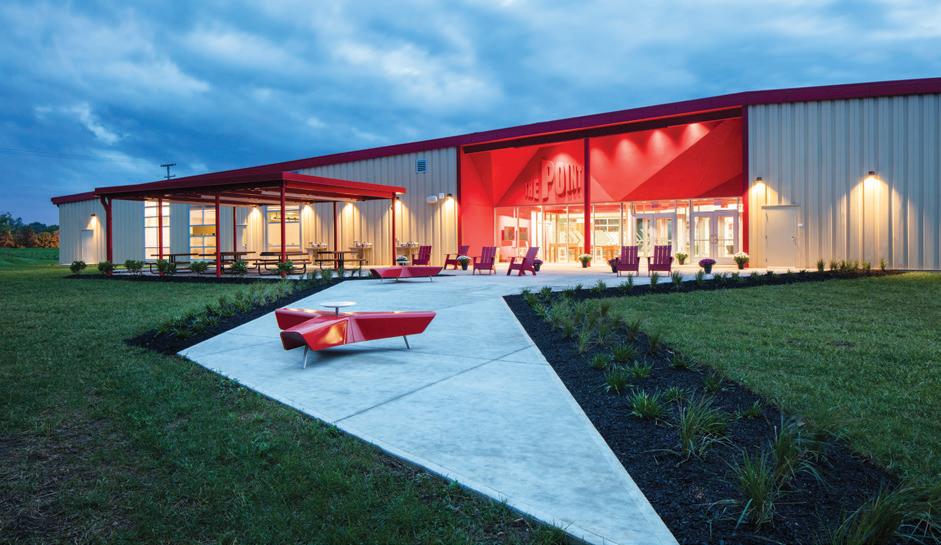
Tucked inside The Point at Otterbein University, a new kind of storytelling is taking shape, one that blends cutting-edge technology with the rich history of Westerville. The Maker Space at The Point is playing a central role in bringing the America250 Westerville Mural Project to life, transforming ideas into largescale visual experiences that will soon be seen across the city.
WHERE INNOVATION MEETS STORYTELLING: THE MAKER SPACE AT OTTERBEIN UNIVERSITY
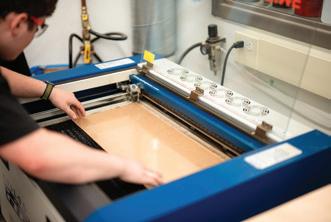

Equipped with advanced digital fabrication tools, large-format printers, and collaborative workspaces, the Maker Space is designed to turn creative concepts into tangible outcomes. For this project, it serves as the production hub for all 12 vinyl murals, where artists’ designs are carefully translated into high-quality, large-scale installations. Each mural is printed with precision, ensuring durability and vibrancy while maintaining the integrity of the artist’s original vision.
What makes this effort even more meaningful is the hands-on involvement of students from Otterbein University. Working alongside professionals in the Maker Space, students are gaining real-world experience in digital production, design application, and large-scale fabrication. Their role in preparing and producing the murals reflects the collaborative spirit of the project, where education, creativity, and community converge through handson teamwork.
Beyond its technical capabilities, the Maker Space represents something larger—an ongoing spirit of innovation deeply rooted in Westerville’s past. In the early 20th century, local companies like Hance Manufacturing and Kilgore Manufacturing helped position Westerville as a hub of ingenuity and production. J.W. Hance’s foundry produced everything from globally distributed seed cleaners to the wildly popular “gocycle,” a wooden scooter with cast iron wheels that sold more than 250,000 units in just two years. Meanwhile, Joseph Kilgore’s factory became one of the largest producers of toy cap pistols in the United States, later expanding into toy vehicles, dollhouse furniture, and pyrotechnic products distributed nationwide.
Today, that same forward-thinking energy lives on inside the Maker Space where creativity, technology, and community continue to shape what’s next.
“The Maker Space is about more than just the tools. It’s about giving students and artists the opportunity to bring ideas to life in ways that are both innovative and meaningful,” said Curtis Smith, Maker Space and Laboratory Operations Manager. “Being part of a project like this, where we’re helping tell Westerville’s story while training the next generation of creators, is exactly what this space was built for.”
As visitors explore the murals throughout the city, they are not only experiencing history through art—they are also witnessing the next chapter of Westerville’s creative legacy, made possible by a space where imagination, innovation, and community come together.
AMERICA250 WESTERVILLE MURAL TRAIL
MURAL THEMES
Westerville’s
Otterbein
Take your experience one step further with the America250 Westerville Mural Trail—an interactive way to explore the murals across the city. As you visit each location, simply scan the QR code to check in and track your progress along the way.
The trail runs from June 26 through December 31, 2026, offering a sixmonth window to explore all locations at your own pace. While the check-in experience is limited to this timeframe, the murals themselves will remain on display for two years—creating an extended opportunity to experience the murals and revisit your favorites over time. Participants who complete the trail will be entered into a drawing to win one of three grand prizes, adding an extra incentive to visit each stop.
Designed as a self-guided journey, the trail encourages you to move through Westerville while engaging with the themes, artists, and stories represented throughout the collection. Whether you visit one mural or all twelve, each stop offers a new perspective and a deeper connection to the city.
For more insight into each mural’s inspiration and the stories behind them, be sure to explore additional content throughout this guide and on our website.
DISCOVER
HISTORY AT PLAY
by Steve Olszewski
ARTIST BIO
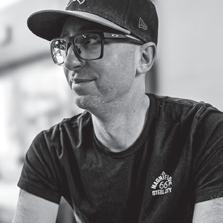
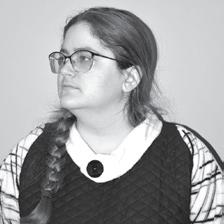
A digital artist since the single-digit versions of Photoshop, Steve Olszewski has designed everything from wine labels to sidewalk adhesives. His portfolio is as diverse as his interests, often exploring the intersection of music, family, and the great outdoors. Whether he’s navigating government wayfinding projects or masterminding his annual “running plus Photoshop” charity fundraiser, Steve brings a seasoned eye and a sense of humor to every project.
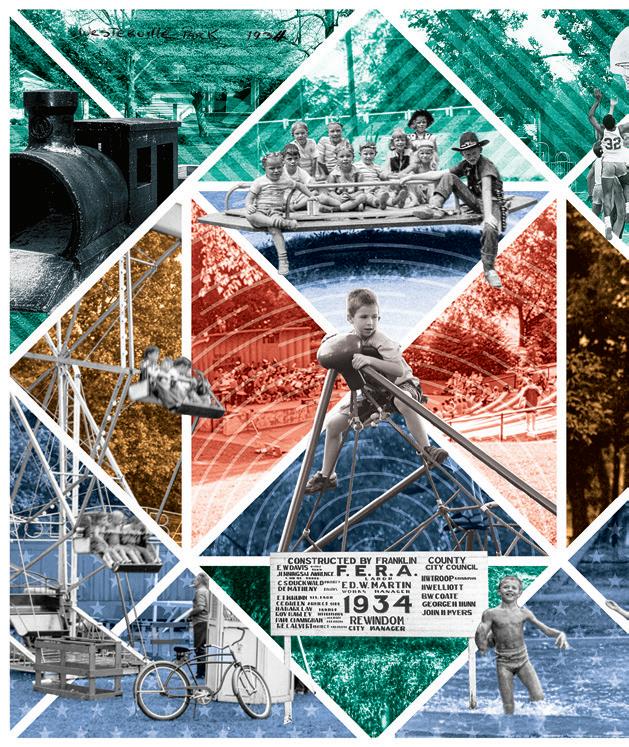
“This project draws on moments when the community feels most alive through music, play, and celebration, while honoring the rich history of Westerville’s first park.”
HISTORICAL SIGNIFICANCE
Westerville’s first municipal park began taking shape in 1934, when the Village purchased the nine-acre Gantz property at Main and West Street. A year later, construction was underway on what would become Alum Creek Park North, built through the Works Progress Administration at a cost of $32,000. When the park was dedicated in 1936, it offered residents an impressive range of amenities, including a shelter house, playground, fountain, log cabin, and amphitheater.
Over the years, the park became a gathering place woven into daily life and community memory. The fountain was enjoyed not only as a decorative feature, but also as an unofficial swimming spot. The log cabin, originally built for scouts, still stands today.
The amphitheater has evolved through several eras, with its original stone terraces remaining as a link to the park’s earliest days.
For many residents, Alum Creek Park North is perhaps best known as “train park.” In 1968, the Westerville Kiwanis Club added a cinder block train to the playground, creating a feature that generations of families came to love. Forty years later, the train was rebuilt, and today’s train-shaped playground continues that tradition.
Now home to updated play structures, sports courts, ball diamonds, and open green space, Alum Creek Park North remains one of Westerville’s most beloved public places—a park rooted in history, but still very much part of everyday life.
WESTERVILLE COMMUNITY CENTER - 350 N. CLEVELAND AVE.
FARMERS IN THE FIELD
by Yao Cheng

ARTIST BIO
Yao Cheng is a Columbusbased artist and illustrator who has been creating art since childhood. A 2009 graduate of the Rhode Island School of Design with a BFA in Textiles, Yao began her career designing for a corporate fashion brand before founding her own creative studio, Yao Cheng Design, in 2012. She is best known for her joyful watercolor artworks created for products and licensing projects, with designs featured by brands like Samsung The Frame TV (coming soon), Google Photos, Target, Tervis, Chronicle Books, and BlueSky Planners. Passionate about community and collaboration, Yao is also deeply involved in fostering creative connections through leadership and mentorship.
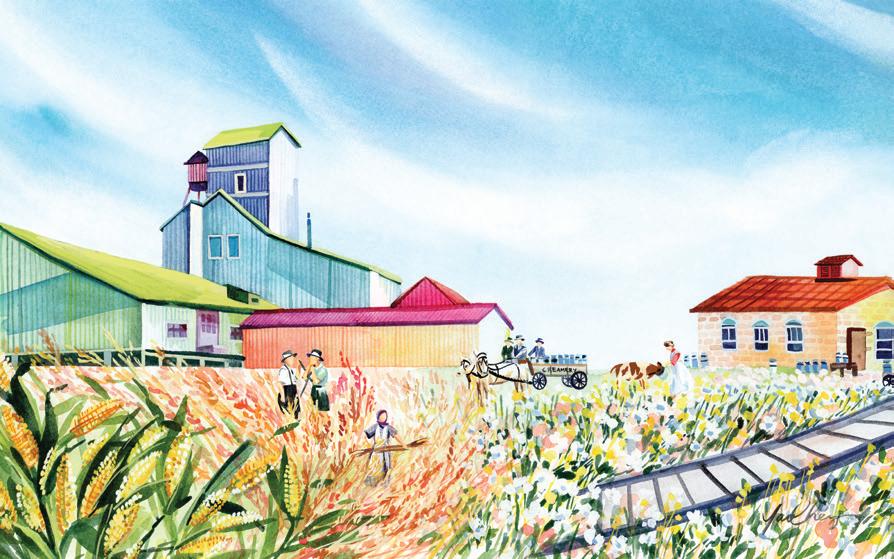
“This painting showcases the richness of Westerville’s agricultural history, inspired by the stories behind the Farmer’s Exchange and the Westerville Creamery, with textures and patterns that invite viewers into the piece.”
HISTORICAL SIGNIFICANCE
Westerville’s roots run deep in agriculture, with the community first taking shape as a farming settlement in the 19th century. Early settlers cleared dense forests and drained swampy land to plant staple crops like wheat and corn, gradually transforming the landscape into productive farmland.
By the early 1900s, dairy farming had become a defining part of the local economy. The Westerville Creamery, located on East College Avenue, produced milk, cream, and ice cream for the region and beyond, operating for nearly a century. Nearby, the Westerville Farmers Exchange served as a vital hub where farmers gathered to buy feed and seed, sell crops, and
process grain—strengthening both the agricultural economy and the sense of community.
Innovation also played a role in Westerville’s farming success. Local manufacturers, including Hance and Bennett Manufacturing, developed equipment that improved efficiency and productivity.
Bennett’s stump puller, for example, gained international recognition, helping farmers clear land more effectively.
Today, while the landscape has evolved, agriculture remains an essential part of Westerville’s story—one rooted in resilience, ingenuity, and a strong connection to the land.
WESTERVILLE ELECTRIC DIVISION - 139 E. BROADWAY AVE.
LILLIAN AND FAIRCHILD HALL
by Yao Cheng
HISTORICAL SIGNIFICANCE
The area now known as Central College began as a small but meaningful settlement called Amalthea, established in 1816. Platted at the intersection of Sunbury and Central College Road, the community laid the foundation for what would become an important educational and cultural center in Westerville.
In 1842, Central College opened on land originally owned by one of Amalthea’s founders. Over time, the campus evolved, and in 1875, Fairchild Hall was constructed, serving as a preparatory school. Named after the college’s only graduate, I. Fairchild, the building became a lasting symbol of education and community growth.
The site took on new purpose in 1896 when it was purchased by the Ohio Home for the Aged & Infirm Deaf. Known for its emphasis on selfsufficiency, the Home attracted Deaf and DeafBlind individuals from across the region, creating a supportive and vibrant community. Though the facility later closed due to changing state funding and regulations, its mission continued nearby as the Columbus Colony.
Through each chapter, Amalthea’s legacy has endured—evolving from a small settlement into a place defined by education, care, and connection.
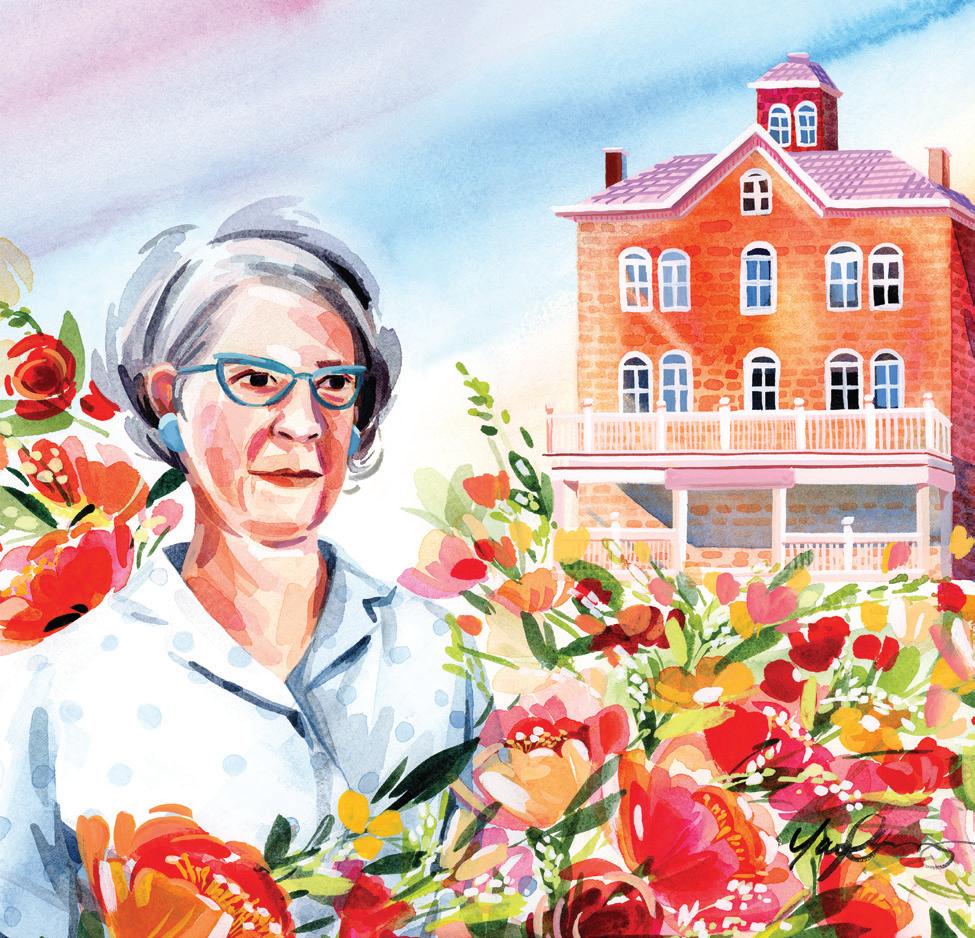
“A bountiful bouquet of peonies and roses swirls around Lillian Gossett, showing her dedication to Fairchild Hall and its community.”
SKIP IVERY INSURANCE - 855 S. SUNBURY RD.
DUTY, HONOR, COUNTRY
by Zach and Brooke Cardoza
ARTIST BIO
Zach Cardoza is a professionally trained artist with over a decade of experience, grounded in classical fine art traditions and driven by curiosity around material and process. After studying Fine Art at Northwest College in Wyoming, he built a strong foundation in drawing, painting, sculpture, and pastels; skills that continue to shape his work today.
Now based in Columbus, Zach’s practice has evolved to incorporate both traditional and nontraditional materials, ranging from graphite and pastel to thread, yarn, and wool, allowing the medium itself to guide each piece. His work bridges classical technique with contemporary experimentation and has been featured in the Ohio Arts Council Spring Juried Selection and other publications, reflecting a thoughtful balance of structure and innovation.
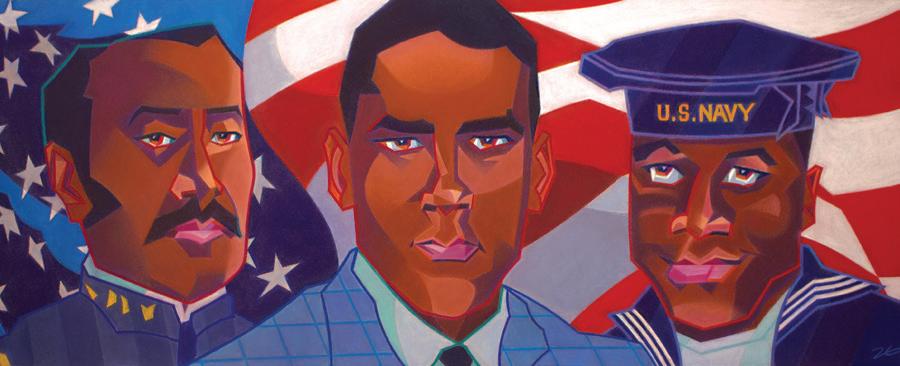
“My primary goal was to depict these men as they truly were— their real faces, their character, and their humanity.”
HISTORICAL SIGNIFICANCE
Black residents of Westerville have a long history of service, contributing to their country across generations. This mural honors three individuals whose lives reflect courage, commitment, and community impact.
Walter Thomas, a civil rights activist, served in the 9th Ohio Volunteer Infantry Battalion during the Spanish-American War. He was part of a unit led by Major Charles Young, one of the few African American officers commanding troops at that time.
Norman Tarpley, who spent part of his childhood in Westerville, was
a student-athlete and graduate of Dublin High School. He served in the 101st Airborne Division, continuing a family tradition of service shared by several of his siblings.
Jack Dempsey Foster contributed both at home and in service. After working in railroad manufacturing, he helped build ships before serving at the Puget Sound Naval Shipyard, where he repaired vessels for the Pacific fleet.
Together, their stories reflect dedication, resilience, and a lasting legacy of service rooted in the Westerville community.
Honor on Display at Annual Field of Heroes
Westerville Sunrise Rotary Club’s annual Field of Heroes theme for 2026 was “We the People” in recognition of the nation’s 250th celebration. In honor of this occasion the tribute field commemorated seven events in our history over these years: the American Revolution, the Civil War, the Women’s Suffrage Movement, the Great Depression, World War II, the Civil Rights Movement, and September 11, 2001. This tribute field featured red, white and blue poppies. A history walk was held at Pioneer Cemetery to honor veterans of the Revolutionary War, the War of 1812, and the pioneer families who settled Westerville.
VETERANS MEMORIAL - 325 N. CLEVELAND AVE.

“By presenting him with such dignity, the image celebrates Exendine’s legacy not merely as a coach, but as a visionary strategist.”
TASKMASTER by Zach and Brooke Cardoza
HISTORICAL SIGNIFICANCE
Albert A. Exendine’s story is one of talent, leadership, and lasting impact. A citizen of the Delaware Tribe from Oklahoma, Exendine came to Otterbein University in the early 1900s, where he coached football from 1909 to 1911, leading the team to a strong record.
Before arriving in Westerville, Exendine attended the Carlisle Indian School, where he excelled as both a track athlete and football player. In 1912, he was called back to Carlisle to help train fellow athlete Jim Thorpe for the Olympic pentathlon and decathlon— an effort that contributed to Thorpe’s historic gold medal victories.
OTTERBEIN WOMEN IN THE ARTS
Exendine’s career extended well beyond athletics. He later coached at Georgetown University, achieving multiple winning seasons, and went on to earn a law degree from Dickinson College. As an attorney, he advocated for tribal rights and worked with the Bureau of Indian Affairs.
His contributions were widely recognized, earning him the title of “Indian of the Year” in 1968 and induction into the College Football Hall of Fame in 1970. Exendine’s legacy reflects a life of achievement, leadership, and service.
CURATORS OF EXPRESSION by Zach and Brooke Cardoza
HISTORICAL SIGNIFICANCE
Women have played a vital role in shaping the artistic and educational legacy of Otterbein University.
From 1872 to 1893, Harriet Thompson served as the driving force behind Otterbein’s art instruction. At a time when art was considered an extracurricular activity, she taught students independently, building a growing community of artists and creating portraits of prominent faculty and founders.
Ruth “Petie” Dodrill was a visionary theater educator, director, and designer whose decades of work helped shape the performing arts landscape in Westerville. As a longtime faculty member at Otterbein University, she served as costume designer for more than 100
CONTINUING
productions and played a foundational role in establishing Children’s Theatre in 1962—bringing accessible, youth-focused performances to both campus and community audiences. Alongside her husband, Dr. Charles Dodrill, she helped build one of the nation’s most respected collegiate theater programs. Beyond Otterbein, Dodrill spent 30 years leading the Speech and Theater Department at Gahanna Lincoln High School, mentoring generations of students through classroom instruction and stage productions.
Together, these women represent creativity, innovation, and a commitment to expanding opportunities—leaving a lasting mark on Otterbein and beyond.
THE LEGACY Westerville Symphony: Til All Success Be Nobleness
Continuing Otterbein University’s legacy of women shaping the arts, the Westerville Symphony premiered Til All Success Be Nobleness by Jennifer Merkowitz. Commissioned for the nation’s 250th anniversary and inspired by Westerville’s temperance history, the piece celebrates the city’s heritage and creative spirit. Created in partnership with the Westerville History Museum, the Westerville Historical Society, and the Johnstone Fund for New Music, the composition brings Westerville’s story to life through live symphonic music while continuing Otterbein’s tradition of women leading as artists, educators, and innovators.
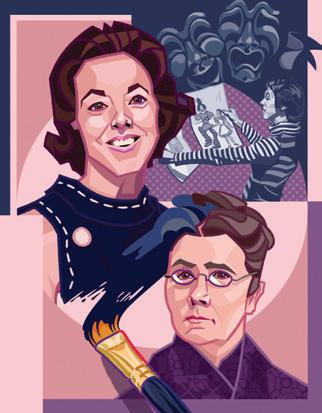
“This work is more than a dual portrait; it is a celebration of two trailblazers whose dedication ensured that creativity would flourish for generations.”
COWAN HALL AT OTTERBEIN UNIVERSITY - 30 S. GROVE ST.
COWAN HALL AT OTTERBEIN UNIVERSITY - 30 S. GROVE ST.
TREATS FROM THE PAST
by Jackie Jeromin
ARTIST BIO
Jackie Jeromin is an Ohio-based artist who loves variety—playing with color and style from hyper-colorful to minimal palettes, and from realism to surrealism, often with a sense of whimsy. Jackie experiments with a variety of media including oils, acrylics, and digital illustration.
In recent years, she’s expanded into mural work.
Jackie’s work has been featured in exhibitions across Ohio, including the Ohio State Fair (where she placed 2nd in the 2025 Live Mural Competition), galleries, and juried shows.

“Each
gumball holds imagined scenes from the past, reflecting just a fraction of the toys and joys Westerville has produced throughout its history.”

HISTORICAL SIGNIFICANCE
For much of the early 20th century, Westerville played a surprising role in shaping how people across the country experienced play and recreation.
Hance Manufacturing introduced the “GoCycle” in 1912—a wooden scooter with cast iron wheels that quickly became a national sensation. With special attachments for gliding over snow and ice, more than 200,000 units were sold in just a few years. The company also produced vending machines, bringing small moments of fun to everyday life.
Kilgore Manufacturing added to Westerville’s legacy of play by producing toy cap pistols, dollhouse
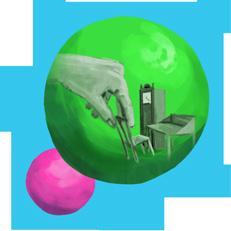
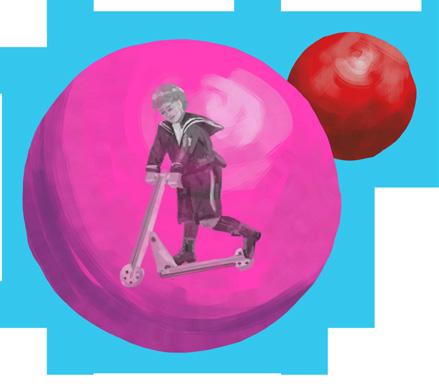
furniture, and toy vehicles at an impressive scale. By the 1930s, the company was producing tens of thousands of toy pistols and hundreds of thousands of caps daily, making it one of the largest toy manufacturers of its kind.
Innovation extended beyond children’s toys. Sanders Frye’s improvements to automatic pinsetting machines in the 1940s helped revolutionize bowling, influencing equipment used across the country.
Together, these inventions reflect a community where creativity and industry came together to shape how people play.


ROUSH HARDWARE - 609 S. STATE ST.
GOOD CITIZENS by Carly Mitchell
HISTORICAL SIGNIFICANCE
Westerville has long been shaped by individuals and organizations dedicated to making a difference— both locally and beyond.
From its early years, the community demonstrated a commitment to inclusion and progress. Otterbein University was among the first colleges in the country to admit both women and people of color, setting a tone of opportunity and access. Local leaders also played key roles in the Underground Railroad, supporting those seeking freedom.
Preservation efforts have ensured these stories continue to be told. Advocates like Dacia Shoemaker and William Fouse worked to
WESTERVILLE AREA RESOURCE MINISTRY (WARM) - 150 HEATHERDOWN DR.
ARTIST BIO
protect the Hanby House, an important historical site tied to abolitionist efforts.
That spirit of service continues today through organizations such as the Westerville Area Resource Ministry (WARM), Special Olympics Ohio, and FORM5. Each contributes to the well-being of the community in meaningful ways.
Together, these stories reflect a shared commitment to compassion, leadership, and making a lasting impact.
“This mural honors those who have worked, past and present, to make the world a better place.”


Carly Mitchell is a Columbus-based artist who loves turning everyday spaces into bright, joyful landmarks that celebrate community and connection. Her mural work blends bold design, vibrant color, and playful shapes to reflect the stories and energy of each place.
Carly’s creative approach centers on curiosity, collaboration, and a desire to bring more color—both literal and metaphorical— into the world through joyful, inclusive public art.

MVSKOKE by Dexter Komakaru
ARTIST BIO
Dexter Komakaru is the artist behind DXTROSE, his independent visual arts practice and creative studio rooted in Central Ohio. Since establishing his practice in 2015, Komakaru’s work has been shaped by both his Mexican and Native American identities, and lived experiences in his own lifetime and beyond. His work weaves together visual magic, multigenerational storytelling, and community organizing into visual art that connects with the spirit and sparks transformation. His work explores art as alchemy, movement meditation, and a transformative process for the individual and collective. Through community collaborations, grant-funded projects, and his creative practice, he makes visionary art that honors place, lineage, and the generations of living beings who share it.
Voices Through Time

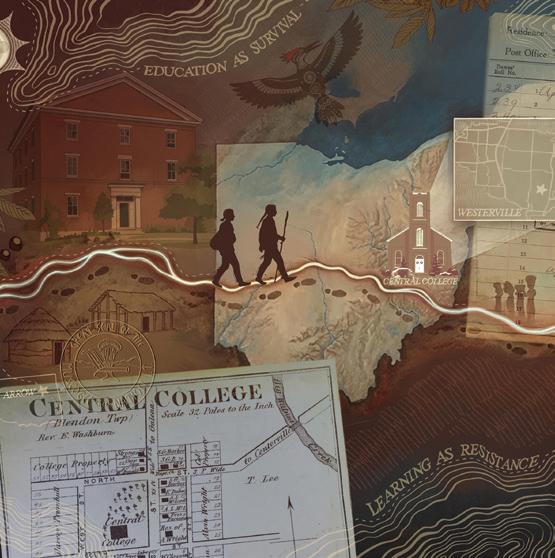
“This mural reflects how Muscogee Nation students came not to assimilate, but to arm their people with knowledge and return to serve and strengthen their nation.”
Public Opinion: Beyond the Headlines in Westerville
On view at the Westerville History Museum, Public Opinion: Beyond the Headlines in Westerville is an interactive exhibit that invites visitors to step into the role of an investigative journalist—exploring the stories behind some of the city’s most compelling headlines and debates. Through hands-on experiences, visitors are encouraged to examine multiple perspectives, question bias, and uncover how public opinion has shaped Westerville over time.
This exploration of voice and perspective reflects a deeper connection to Westerville’s past. Just as Muscogee Nation students once came to Central College to gain the tools needed to advocate for their communities and navigate complex cultural landscapes, this exhibit highlights the ongoing importance of understanding different viewpoints. It reinforces the idea that education, communication, and critical thinking remain essential in shaping both individual voices and the broader community—then and now.
HISTORICAL SIGNIFICANCE
The story of Muscogee Nation students at Central College reflects resilience, education, and the pursuit of self-determination.
The Muscogee (Mvskoke) people, originally from the Southeastern United States, were forcibly relocated to present-day Oklahoma. In response to ongoing challenges, the Nation developed the Youthin-the-States program, which sent students to institutions like Central College to gain language skills and education that could support their communities.
In the late 1870s, students William Apueka and Taylor Chissoe studied
in Westerville through this program. Apueka lived with a local minister and educator while attending school, becoming part of the community during his time there.
After returning home, Chissoe went on to serve as a judge, educator, and leader within the Muscogee Nation, eventually becoming a chief of Broken Arrow and contributing to the founding of the University of Tulsa. Apueka also served his community through agriculture and government leadership.
Their stories highlight the power of education and the enduring strength of cultural identity.
WESTERVILLE PUBLIC LIBRARY - 126 S. STATE ST.
3C THROUGH TIME by Linda Shepard

ARTIST BIO
Linda Shepard is a representational artist living and working in central Ohio who never outgrew her childhood dream of being an artist—even after a few detours along the way. From hairdresser to Air Force wife to mom, Linda eventually found her way back to art, studying fine art and graphic design and embracing a philosophy rooted in experimentation, storytelling, and thoughtful composition.
Her work celebrates curiosity, bold attempts, and the beauty of discovery—sometimes through glorious failures that lead to something new. Featured in numerous national juried exhibitions and award-winning competitions, Linda creates from her “happy place” and hopes her art helps others discover joyful places of their own.
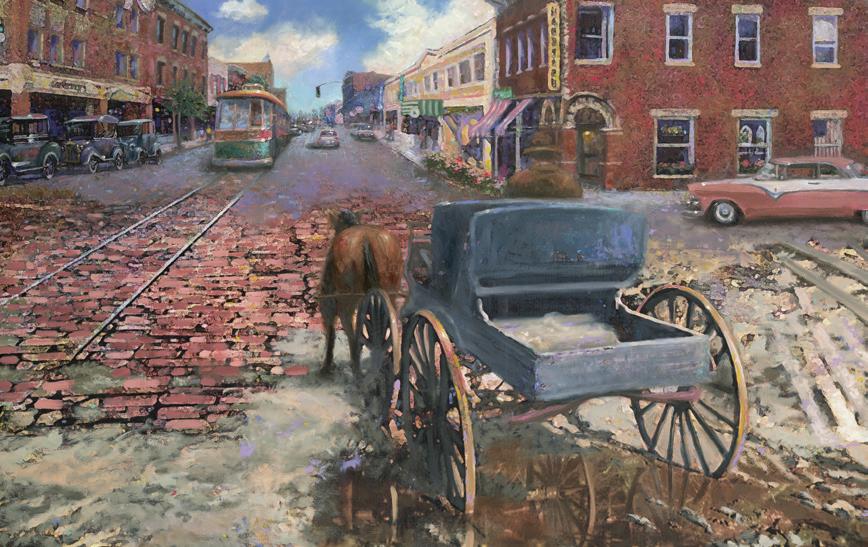
“This work explores the story of the historically significant 3C Highway and its connection across generations.”
HISTORICAL SIGNIFICANCE
Westerville’s growth has long been shaped by the ways people move through and connect to the city.
State Street, now a central corridor, began as a muddy, unpaved road that was often difficult to travel. In 1854, the Blendon Plank Company improved the route by installing wooden planks, creating a toll road between Westerville and Columbus. Though the planks eventually deteriorated, the route remained vital to the community.
By the late 19th century, the interurban streetcar line—known
as the Green Line—connected Westerville to Columbus and Minerva Park, offering residents new opportunities to travel for work and leisure. As automobiles became more common, the streetcar system gave way to modern roadways, including the 3C Highway, which linked Cincinnati, Columbus, and Cleveland.
From plank roads to highways, Westerville’s transportation story reflects constant evolution—each innovation bringing the community closer together.
WESTERVILLE CITY HALL - 21 S. STATE ST.
FOOTPRINTS ACROSS TIME
by Jill Chronister

ARTIST BIO
Jill Chronister is a multidisciplinary artist based in Ashland, Ohio, known for blending realism with a touch of whimsy to create murals that spark curiosity, connection, and joy. Working across traditional and digital mediums, Jill specializes in large-scale murals that celebrate community, history, and storytelling.
From corporate installations to charitable projects for children’s hospitals, her work is rich with detail, subtle symbolism, and warmth—inviting viewers to look closer and discover the stories woven into each piece. Through her art, Jill brings imagination to life while honoring the people and places that shape a community.
Tradition Continues through the annual Westerville Area Chamber Music & Arts Festival
In the 1870s, farmers from 12 nearby townships chose Westerville to host a four-day fair with exhibits, entertainment, and most important horse-racing. They purchased land near the intersection of Walnut St. and Otterbein Ave. This fair was a miniature Ohio State Fair with the same agricultural displays and contests. The Fair ended in 1901. The concept was revived at the city park in 1955 when the Chamber of Commerce sponsored a Fall Festival.
The last Fall Festival was held in 1973, and the following year was the inaugural year of the Westerville Area Chamber’s Music and Arts Festival. This year’s 52nd Music and Arts Festival will be held at Heritage Park on July 11-12, 2026.
HISTORICAL SIGNIFICANCE
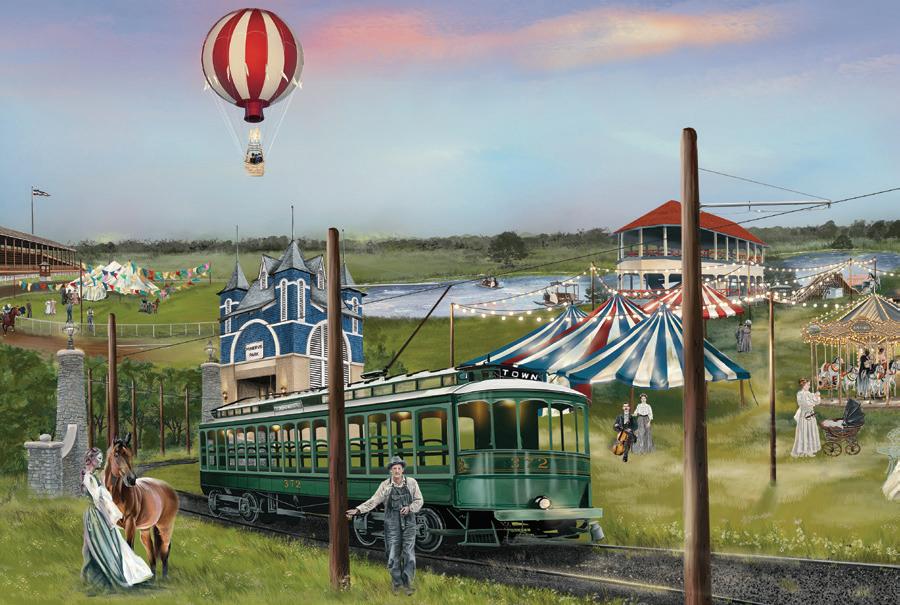
In the late 19th and early 20th centuries, Westerville was a hub of entertainment, drawing crowds to lively fairs and amusement parks filled with energy and excitement.
From 1871 to 1906, a sprawling fairground east of today’s Whittier Elementary hosted a wide range of attractions. Visitors enjoyed exhibition halls, bicycle and foot races, trained animal performances, brass bands, and even hot-air balloon rides. A half-mile racetrack added to the excitement, offering cash prizes and unforgettable moments— including the story of a racehorse named Rowdy Boy, who was buried
at the center of the track after his final race.
Nearby, Minerva Amusement Park and Casino offered another layer of entertainment. Open from 1895 to 1902, the park featured a roller coaster, carousel, zoo, gardens, and a scenic lake with rowboats. Created to encourage travel along the electric railway connecting Columbus and Westerville, it quickly became a popular destination. Together, these spaces brought people together through shared experiences—laying the foundation for the vibrant events and festivals that continue to define Westerville today.
“This piece reflects how places continually evolve, while the human longing to gather and belong remains constant.”
NORTH HIGH BREWING - 250 S. STATE ST.
THE QUIET RENEWAL OF NATURE
by Jill Chronister
HISTORICAL SIGNIFICANCE
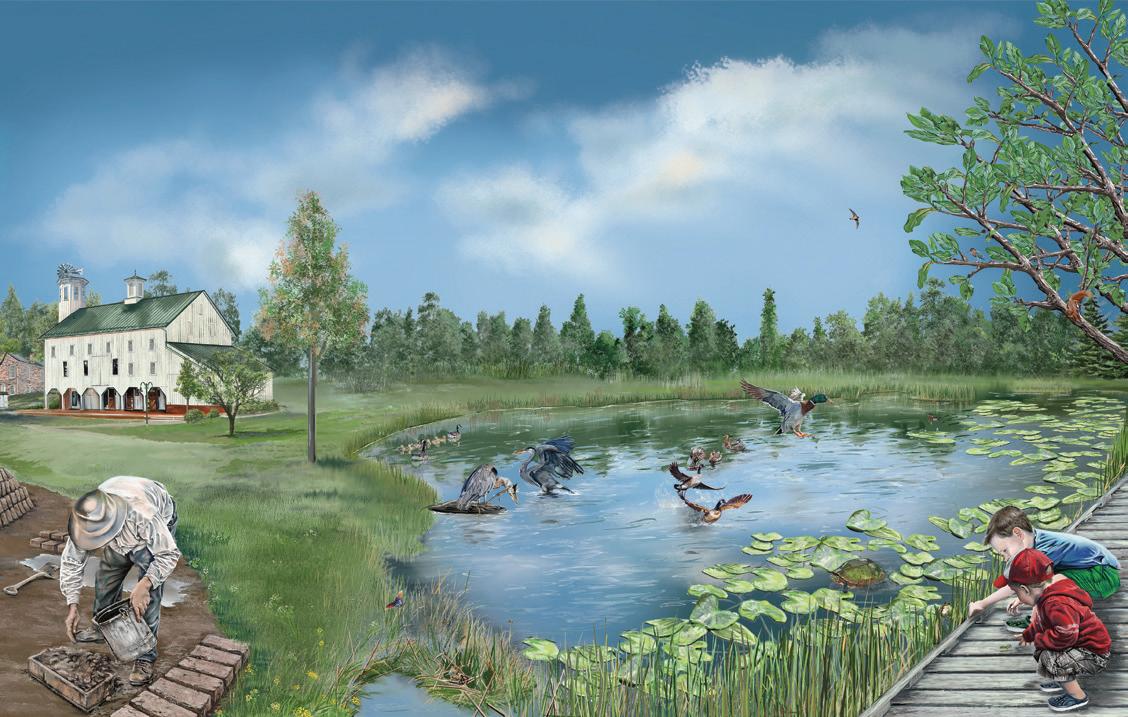
Westerville’s natural landscape was shaped thousands of years ago by glaciers, leaving behind the conditions that formed its wetlands.
As glaciers moved across the region, they deposited layers of soil and sediment that limited water absorption, creating wetland environments. Over time, much of this landscape was altered by settlement and development, but several important wetlands remain today.
Boyer Nature Preserve features a unique glacial kettle formation—a pond created by melting ice left
behind by retreating glaciers. Heritage Park offers a forested wetland habitat that supports a wide range of wildlife, including turtles, birds, and amphibians. Highlands Park, once drained for farming, has been restored, now serving as a thriving marsh ecosystem that helps manage stormwater and support biodiversity.
These preserved spaces offer a glimpse into Westerville’s natural history, highlighting the importance of conservation and the lasting impact of the region’s geological past.
“This mural reflects how the same land that once fueled industry now nurtures nature and curiosity, continuing to grow and renew.”
HIGHLANDS PARK - 245 S. SPRING RD.

FIND THE MURALS. DISCOVER THE STORIES.
Follow the murals across Westerville and uncover the stories behind each one— brought to life through art, history, and community.