
The United States SPECIALIST
for the Collector of Postage & Revenue Stamp Issues of the United States
WHOLE NUMBER 1154
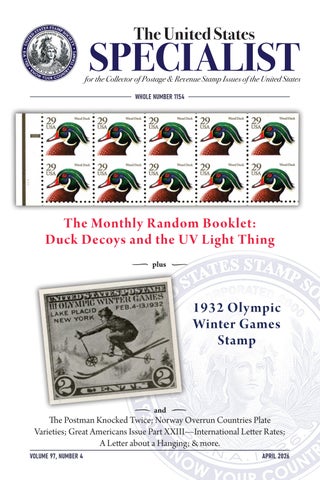
The Monthly Random Booklet: Duck Decoys and the UV Light Thing
s plus e
c and j
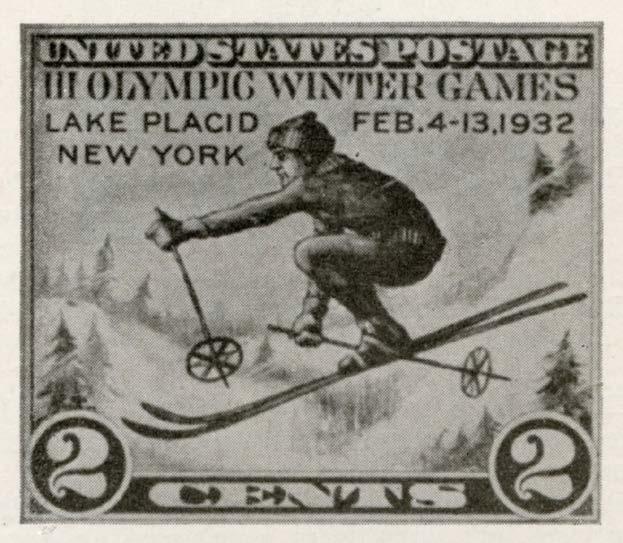
1932 Olympic Winter Games Stamp
The Postman Knocked Twice; Norway Overrun Countries Plate Varieties; Great Americans Issue Part XXIII—International Letter Rates; A Letter about a Hanging; & more.


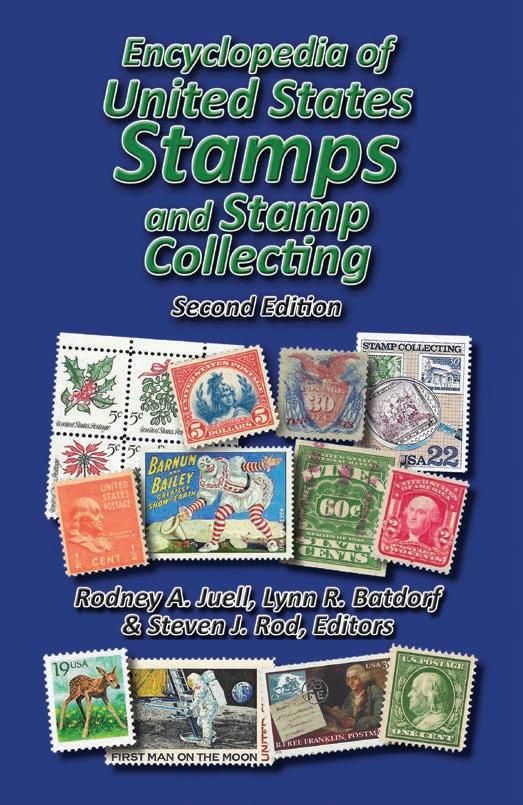
Encyclopedia of United States Stamps and Stamp Collecting Second Edition
Edited by Rodney A. Juell, Lynn R. Batdorf and Steven J. Rod
Hardbound, 769 pages. $35 members, $40 nonmembers. Visit the website for shipping costs.
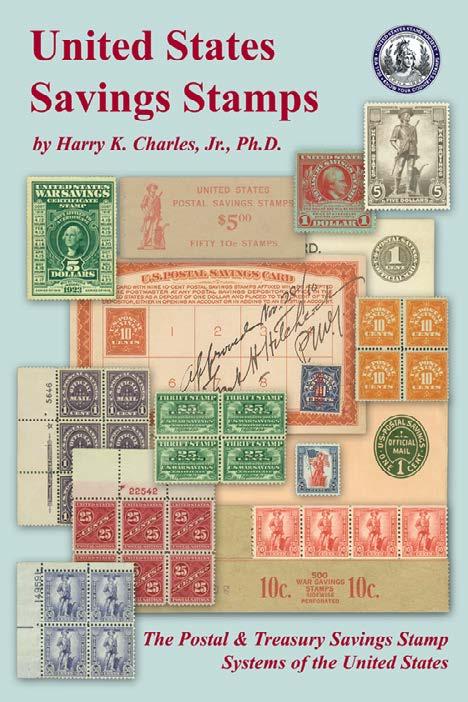
United States Savings Stamps by Harry K. Charles, Jr.
A presentation of the United States Postal and Treasury Savings Stamp Systems, the stamps and their closely associated collection cards and booklets, and Official Mail stamps and stationery.
Softbound, 253 pages.
Postpaid: $25 members, $28 nonmembers. Visit the website for shipping costs.
Order from: USSS, P.O. Box 1602, Hockessin, DE 19707-5602 or online at: www.usstamps.org/store/

The United States SPECIALIST
the journal of the United States Stamp Society
VOLUME 97, NUMBER 4 Ap R i L 2026
WHOLE NUMBER 1154
An association of collectors to promote the study of all postage and revenue stamps and stamped paper of the United States and US-administered areas produced by the Bureau of Engraving and Printing and other contract printers. American Philatelic Society Affiliate No. 150
147 Society News
151 The Postman Knocked Twice by Marjory J. Sente
153 Great Americans Issue Part XXIII— International Letter Rates by Jay Stotts
160 FDR and the 1932 Olympic Winter Games by Paul M. Holland
168 Vintage Photo of the Month by Rodney A. Juell
171 Hung from the Gallows! by Terry Kurzinski
174 Margin Name Varieties on the Norway Overrun Countries Stamps by Keith Lichtman
177 The Monthly Random Booklet: Duck Decoys and the UV Light Thing by Dieter R. Kohler, PhD
189 Report of the Executive Secretary by Robert Rufe
190 Plate Number Report compiled by Kim D. Johnson
192 Classified Advertising
192 Index of Advertisers
Andrew S. Kelley, Editor 9038 East 25th Drive Denver, CO 80238
email: editor@usstamps.org www.usstamps.org
Manuscripts, publications for review, and all advertising including classifieds, should be sent to the Editor at the address above.
Forms close on the 20th of the second month preceding the month of publication, as February 20 for the April edition.
The United States Specialist (ISSN 0164-923X) is published monthly January through December by the United States Stamp Society, Inc., P.O. Box 1602,
Hockessin, DE 19707-5602. Membership in the United States $25. North America $40; all others $65. Single copy $2. Periodical postage paid at Hockessin, DE, and at additional entry offices. Printed in USA.
Copyright ©2026 United States Stamp Society, Inc. All rights reserved. Opinions expressed by authors are their own and do not necessarily reflect those of the United States Stamp Society, its officers, or staff.
Correspondence concerning business affairs of the Society, including membership and changes in address, should be addressed to the Executive Secretary, PO Box 1602, Hockessin, DE 19707-5602.
Postmaster: Send address changes to U.S.S.S., P.O. Box 1602, Hockessin, DE 19707-5602.
The United States Specialist
Founded 1930 as The Bureau Specialist
EDITOR
ANDREW S. KELLEY
9038 East 25th Drive Denver, CO 80238 email: editor@usstamps.org
United States Stamp Society Bureau Issues Association, Inc.
P.O. Box 1602 Hockessin, DE 19707-5602
CHAIRMAN
Roger S. Brody
P.O. Box 5836 Somerset, NJ 08875-5836 email: brody@usstamps.org
PRESIDENT
Nicholas Lombardi
P.O. Box 1005 Mountainside, NJ 07092 email: 8605@comcast.net
VICE PRESIDENT
Jeffrey Shapiro
P.O. Box 3211 Fayville, MA 01745-3211 email: coverlover@gmail.com
SECRETARY
Joel Cohen
10703 Kings Riding Way, Unit T-1 Rockville, MD 20852-5420 email: cohenji@comcast.net
TREASURER
David S. Sugar 1740 Mission Hills Rd., #311 Northbrook IL 60062-5744 email: david14501681@gmail.com
GOVERNORS
Lynn Batdorf
Kim Johnson
Mike Lampson
Leonard Piszkiewicz
James Robinson
Robert Rose
Rod Juell
Gregory Shoults
David Steidley
Jay Stotts
Steven Unkrich
EXECUTIVE SECRETARY
Robert Rufe
P.O. Box 1602
Hockessin, DE 19707-5602
email: execsecretary@usstamps.org
— Committees — AWARDS
Denise Stotts
email: stottsjd@swbell.net
BOOKLETS & BOOKLET PANES
Michael O. Perry
P.O. Box 1194, Rainier, OR 97048 email: MOPerry@mac.com
DURLAND EDITOR
Kim D. Johnson
310 E N 3rd Street, Georgetown, IL 61846 email: westhome1@aol.com
ESSAY-PROOF
James Patterson
1850 North Central Avenue, No. 1400 Phoenix, AZ 85004
email: jhpatterson@yahoo.com
EXHIBIT PDFs
Chris Steenerson
P.O. Box 1818
Westminster, CO 80038-1818
email: Chris@RxStamps.com
FARLEY ERA
Paul M. Holland email: pholland.thorleaf@gmail.com
FOURTH BUREAU ISSUE
Jay B. Stotts email: stottsjd@swbell.net
LIBERTY SERIES
Roland Austin P.O. Box 2641, Stillwater, OK 74076-2641 email: RAustin13@aol.com
MARGINAL MARKINGS
Chris Steenerson
P.O. Box 1818 Westminster, CO 80038-1818 email: Chris@RxStamps.com
MODERN POSTAL HISTORY
Douglas B. Quine 59 Taylor Rd., Bethel CT 06801 email: usss2010@quine.org
PLATE NUMBER & CHECKLIST SERVICE
Kim D. Johnson
310 E N 3rd Street, Georgetown, IL 61846 email: westhome1@aol.com
PRECANCELS
Lynn R. Batdorf 6005 Kingsford Road, Bethesda, MD 20817 email: hollykids@comcast.net
PRESIDENTIAL ERA
Jeffrey Shapiro P.O. Box 3211, Fayville, MA 01745-3211
RECRUITING
Steven Crippe PO Box 117001, Carrollton, TX 75011 email: scrippe@gmail.com
REVENUE ISSUES
Peter Martin P.O. Box 6074, Fredericksburg, VA 22403 email: pmartin2525@yahoo.com
SECOND BUREAU ISSUE
Nicholas Lombardi P.O. Box 1005, Mountainside, NJ 07092
VENDING AND AFFIXING MACHINE PERFORATIONS
Dan Ryterband 40 Carolyn Place, Chappaqua, NY 10514 email: djryterband@fwcook.com
WASHINGTON-FRANKLIN
HEAD ISSUES (Co-Chairmen)
Greg Shoults 11248 Frederick Lane Twinsburg, OH 44087 email: coilcollector@hotmail.com
Andrew S. Kelley 9038 East 25th Dr, Denver, CO 80238 email: stamps@andrewkelley.net
WEBMASTER
Mike Lampson
P.O. Box 652 Matthews, NC 28106 email: lampson@usstamps.org
— Study Groups — DUMMY STAMPS
Terry R. Scott
P.O. Box 10406, Napa, CA 94581 email: terryrscott@comcast.net
FIRST BUREAU ISSUE [open]
LUMINESCENCE
Wayne L. Youngblood 705 Forest Glen Circle, Prairie du Sac WI 53578
email: wystamps@gmail.com
OVERRUN COUNTRIES SERIES
Thomas Schilling
P.O. Box 432, New Lisbon, NJ 08064-0432 email: cbtkschilling@yahoo.com
PROMINENT AMERICANS AND AMERICANA SERIES
Ron Blanks
P.O. Box 9282, Chesapeake VA 23321 email: rblanks_stamps@yahoo.com
REGISTERED MAIL
Mike Ludeman
P.O. Box 2024, Denton, Texas 76202-2024 email: mike@ludeman.net

Harry G. Brittain, PhD, Wins the 2025 Walter W. Hopkinson Memorial Literature Award
Congratulations to Harry Brittain on his selection as the Walter W. Hopkinson Memorial Literature Award recipient for the best article or series of articles published in The United States Specialist during 2025. His winning three-part series, “The Coming and Going of China Clay in BEP Printing Paper: Kaolin Content in the 2¢ Stamps of the First, Second, Third, and Fourth Bureau Issues,” appeared in the June, September, and November issues of the journal.
For easy reference, the titles of the three-part study are as follows:
“The Coming and Going of China Clay in BEP Printing Paper: Kaolin Content in the 2¢ Stamps of the First, Second, Third, and Fourth Bureau Issues” (June 2025)

“The Coming and Going of China Clay in BEP Printing Paper. Part II: Detailed Analyses of the Return of Kaolin in the Regular Issue, Commemorative, and Airmail Stamps Printed between 1926 and 1935.” (September 2025)
“The Coming and Going of China Clay in BEP Printing Paper. Part III: Kaolin Content Trends in the Paper Used to Print Regular Issue, Commemorative, and Airmail Stamps Between 1935 and 1955.” (November 2025)
The series builds on earlier work by this author published in 2016–2019, which focused on employing XRD (X-Ray Diffraction) techniques as a forensic tool for the analytical study of U.S. stamps, in particular with regard to postage-stamp paper. In the intervening years, the scope of the Kaolin study has grown exponentially. The 2025 study now provides detailed insight covering over half a century of BEP stamp issuance between 1895 and 1955.
Within the broad framework, Brittain’s work outlines the evolution of commercial postage-stamp paper production methods issue by issue, as well as exploring materials science innovations within the US Bureau of Engraving and Printing (BEP) during the
Harry G. Brittain, PhD.
first several decades of BEP postage stamp production. The information presented will find lasting impact as an important reference for specialist collectors with interests in any of the first four Bureauissued definitive stamp series. Brittain has also published several adjunct studies in the journal with regard to BEP postage stamp printing inks.
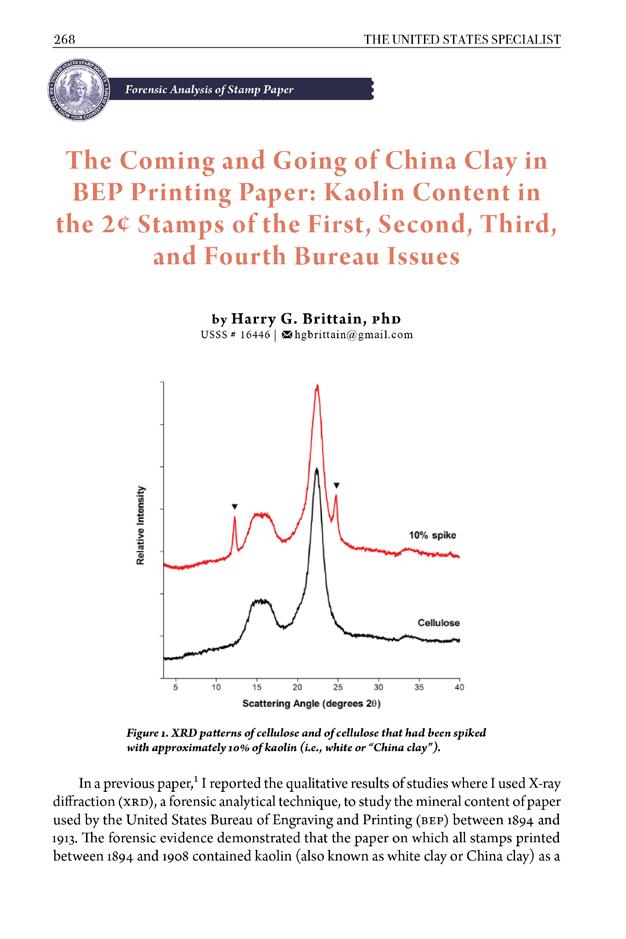
The first of three articles in Brittain’s series.
The 2025 Hopkinson award is Brittain’s second win as an individual Hopkinson recipient, and third win in total, all arising from a decade of comprehensive study and publication of various aspects of his forensic findings. The 2025 series meets all the established criteria for the Hopkinson Award, judged according to standards defined in The United States Specialist in January 2013: (1) Original research–development of new facts from examining data, not just finding information from previous literature. The new information should add in a substantial way to knowledge of the subject; (2) A subject meaningful to US specialists; (3) A clear, comprehensive presentation with relevant illustrations and quality writing; and (4) Comprehensive identification of past literature and proper citations providing future researchers with knowledge of what was known to the author.
The Walter W. Hopkinson Memorial Literature Award was established in 1953 to honor society member Walter W. Hopkinson and his interest in philatelic scholarship and the dissemination of research and knowledge through the society’s publications. The first award was presented in 1954, and it has been given each year afterwards. The 2025 selection committee was comprised of the three award recipients from the previous three years: Jay Stotts (2024), Andrew Kelley (2023), and James Robinson (2022; acting as committee chair). Previous winners of the Hopkinson Memorial Literature Award are listed on the Society’s website (www.usstamps.org).
Correction to Contributor Recognition
The Contributor Recognition in last month’s Specialist failed to recognize Janet M. Gillis as a Patron member of the Society. Instead, we incorrectly listed her non-collecting husband, Mark Gillis. We thank Ms. Gillis for her generous support, and sincerely apologize for the error.
Die Proof Survey
The Fourth Bureau Issue Committee is conducting a survey of Fourth Bureau Issue (FBI) large die proofs. Our goal is to verify and report which of the fewer than 400 proofs that left the government are currently in collector or dealer hands. We would also like to encourage the exchange of FBI proof information among the members of the United States Stamp Society. The survey will also be announced through other philatelic media.
The proofs left the Post Office Department as postmaster general gifts or in the hands of Bureau of Engraving and Printing engravers. Some were in thirteen complete sets of proofs, but very few of those sets have remained intact over the years.
The current proofs can vary in appearance. More than half are expected to have postmaster general approval signatures and dates on approximately 6 in. × 8 in. card stock that bear six-digit or seven-digit proving room control numbers on the card reverses. The other proofs might not have the signatures, their cards may have been trimmed, or the cards have unofficial five-digit control numbers or lack control numbers. Some may be trial colors.
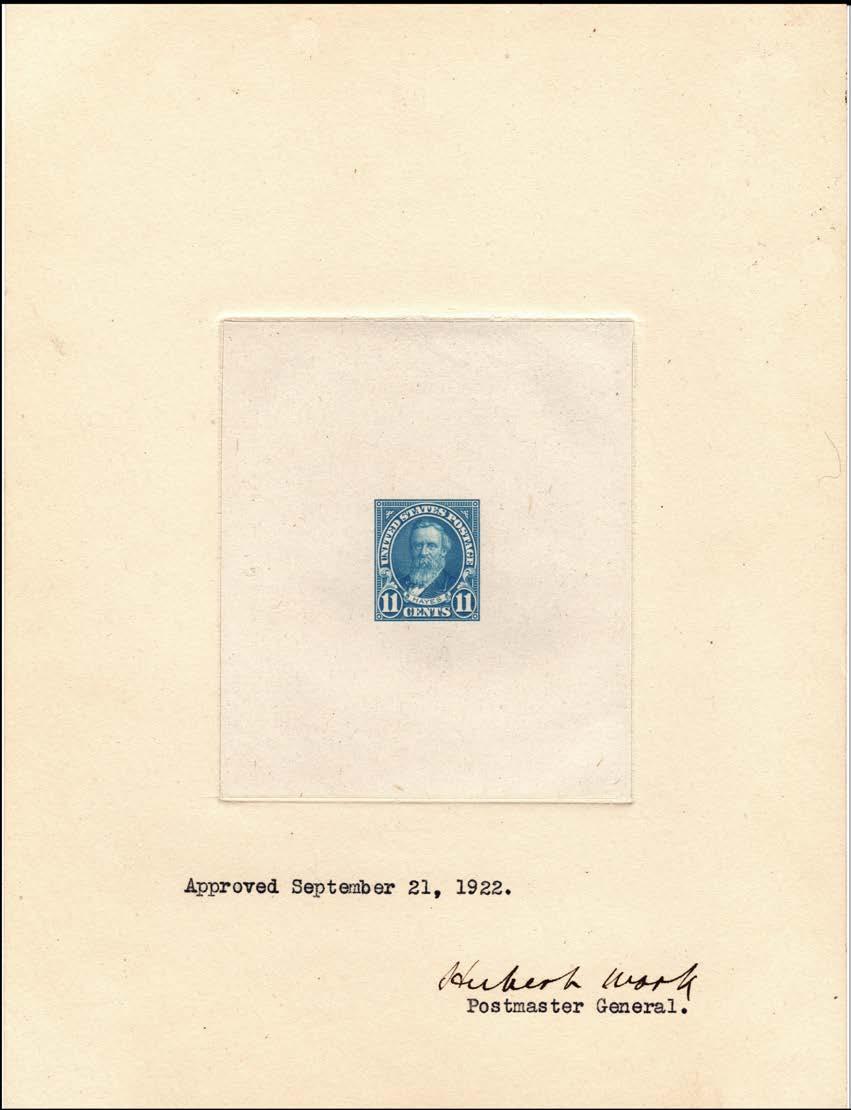
11¢ Hayes die proof with Postmaster General signature.
Please send full-size color scans of each of your proofs accompanied by any control numbers to jerryakatz@aol.com. We will not disclose your specific ownership without your approval. In exchange, we make available to you an extensive article on “Die Proof Sets of the Fourth Bureau Issue” that can be viewed at sw1954.wordpress.com. You will gain a better understanding of your proofs. The survey results will eventually be used to update that article.

Our treasurer is retiring after many years of service to the Society; we are searching for a qualified successor.
Duties:
• Prepare and mail checks
• Summarize deposits and enter them into the accounting system
• Prepare financial statements, including adjustments to reconcile accounts
• Manage the bank and investment accounts
• Prepare or supervise preparation of the annual tax return
Necessary Skills:
• Proficiency with accounting
• Working knowledge of QuickBooks or similar software
• Some knowledge of non-profit taxation is a plus
Compensation: $125/month Interested?
Please contact Roger Brody (brody@usstamps.org) or Nic Lombardi (8605@comcast.net)
Washington Bicentennials
The Postman Knocked Twice
by Marjory J. Sente USSS # 13557 | m marjsente@earthlink.net
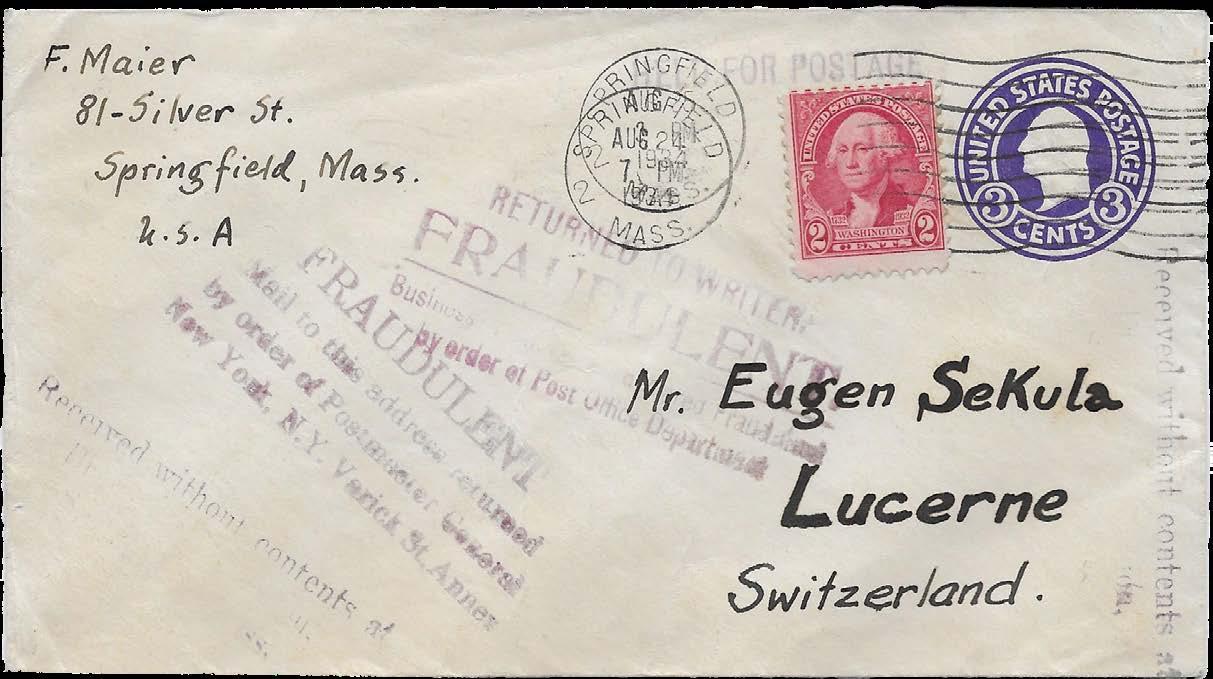
On August 24, 1934, when Fritz Maier mailed this cover to Eugen Sekula in Lucerne, Switzerland, he did not expect to hear from the Post Office twice. Or did he?
Using a three-cent entire, Maier underpaid the surface letter rate to Switzerland by two cents. So the Springfield, Massachusetts Post Office marked the cover “HELD FOR POSTAGE” and would have notified Maier to remit the additional two cents. After he paid the amount, the Post Office added a two-cent Washington Bicentennial commemorative, and the cover received a second Springfield machine cancel dated August 25, 1934. The cover proceeded to New York City, where two auxiliary markings regarding fraudulent mail were affixed to it. One reads, “FRAUDULENT/ Mail to this address returned by order of the Postmaster General, New York, N.Y. Varick St. Annex.” The other states, “RETURNED TO WRITER ./FRAUDULENT/ Business Address ordered Fraudulent/
Figure 1. Cover sent to Eugen Sekula returned to the sender with auxiliary markings regarding fraudulent activities.
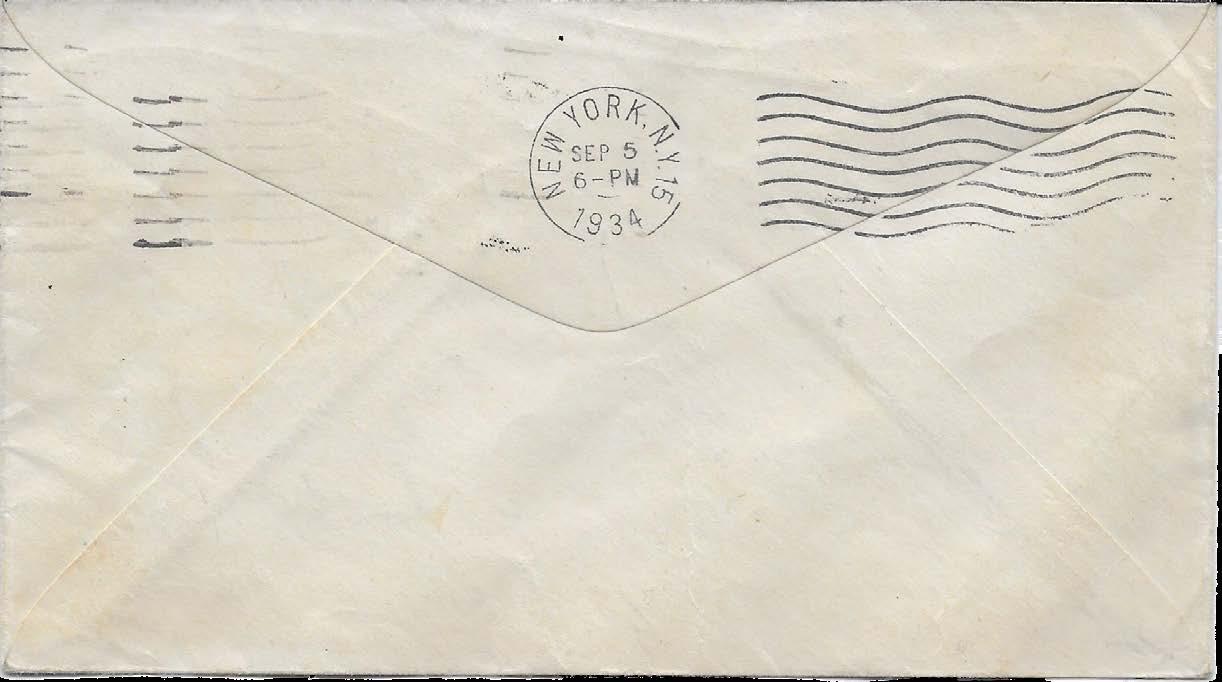
Figure 2. Back of cover with NYC cancellation. by order of Post Office Department.” A New York, New York, September 5, 1934, machine cancel appears on the back of the cover.
In the July 24, 1934, Postal Bulletin, a Fraud Order against Eugen Sekula, Inc., Eugen Sekula, and Bela Sekula of Lucerne, Switzerland appeared. The posting stated that mail to these addressees should be returned, and no money orders to them should be issued or certified.
In the August 16, 1934, Springfield Union, the “With The Stamp Collectors” column included a notice about the Sekulas that echoed the announcement in the Postal Bulletin.
The August 28, 1934, Postal Bulletin rescinded the Fraud Order against Bela, but kept it in place for Eugen and his firm until it was rescinded on December 7, 1934, per the December 14, 1934, Postal Bulletin.
Was Maier disappointed when he received the returned cover? Likely not, because while at the Springfield Post Office, the cover also received the auxiliary marking “Received without contents at…. Springfield, Mass.”
It appears that he had intentionally underpaid an empty cover that he sent to Sekula to obtain the held for postage and fraudulent auxiliary markings.
2026 HEBERT’S
All New and Revised Mint and Used Plate Number Single Catalogue $52.50 postpaid
American Plate Number Single Society (www.apnss.org)
Expanded pricing, back-of-the-book, tag/paper varieties, PN/ZIP/ME types
Rick Burdsall / APNSS P.O. Box 1023
Palatine, IL 60078-1023
Great Americans Issue Part XXIII— International Letter Rates
by Jay Stotts USSS #10921 | m stottsjd@swbell.net
International letter rates during the Great Americans (GA) era varied by destination and conveyance type. Letters sent to Canada, Mexico, the Western Hemisphere, and other destinations worldwide had different postage rates, and these will be discussed in this installment of the series.
Letter Rates to Canada
Table 1 lists the letter rates to Canada from March 1981 through 1999. Letters to Canada were conveyed by air when convenient, and no airmail surcharge was assessed. During the early part of the period, until February 17, 1985, the rates were identical to U.S. domestic first-class letter rates.
Effective on February 17, 1985, the first-ounce rate to Canada remained identical to the domestic rate at 22¢, but additional ounces cost just a penny more to Canada (18¢
The Great Americans
Figure 1. The 30¢ Laubach stamp paid the single ounce letter rate to Canada.
In Effect
22 Mar. 1981
George Mason
Rachel Carson
Charles R. Drew MD
1 Nov. 1981
17 Feb. 1985 *
3 Apr. 1988 *
3 Feb. 1991 *
Ralph Bunche
Thomas Gallaudet
Harry S. Truman
John J. Audubon
Frank C. Laubach
Claire Chennault
Rachel Carson
Robert Millikan
Lillian M. Gilbreth
John J. Audubon
Mary Cassatt
* Rates shown apply for letters weighing up to 12 ounces.
Table 1. Great Americans paying letter rates to Canada to July 9, 1995.
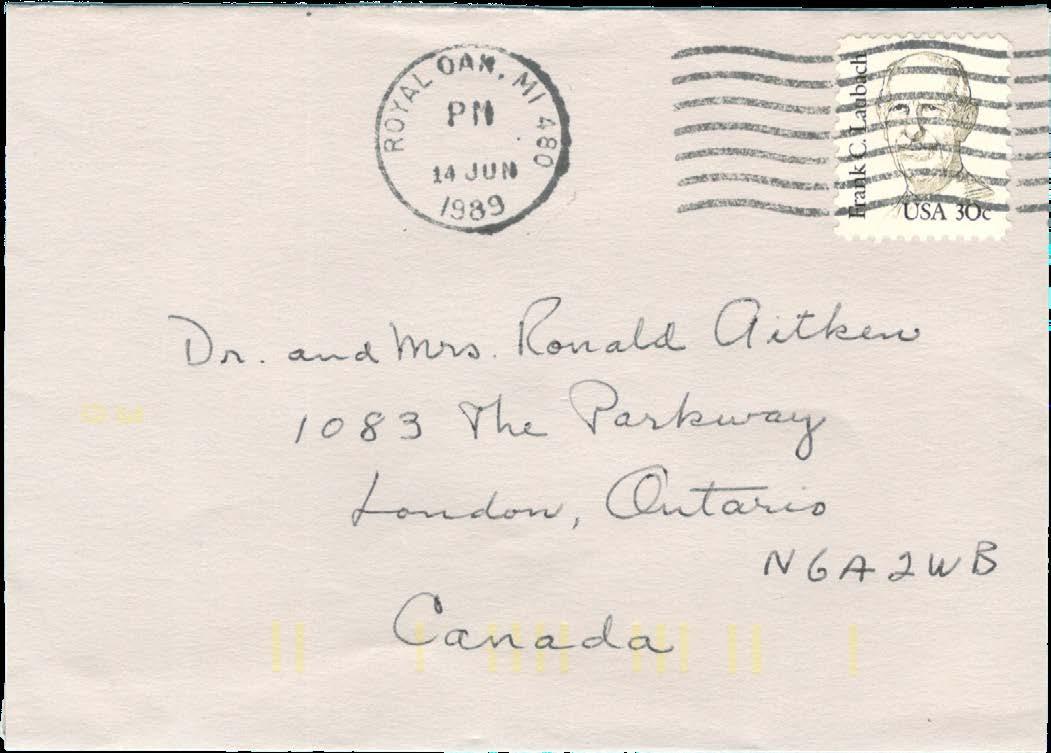
versus 17¢). During the next rate change, effective on April 3, 1988, the rate for the first ounce was differentiated. Domestically, the first ounce increased from 22¢ to 25¢, while the first ounce to Canada jumped from 22¢ to 30¢. Figure 1 shows a letter sent to Canada in June 1989, paid at the 30¢ rate by a Frank C. Laubach stamp.
Table 2 shows rates to Canada effective on and after July 9, 1995. At that time, the basic rate to Canada became based on half-ounce weight increments rather than fullounce increments. All the tables included in this article list Great Americans stamps available to pay the rates. Figure 2 shows a letter posted at the 46¢ half-ounce rate effective in 1998, using a Ruth Benedict stamp.
9 July
30 May 1999
Tables 3 and 4 list the letter rates to Mexico during the GA era. Like domestic letter rates and those to Canada, letters to Mexico were carried by airmail throughout the Start of Rate Period
Ruth Benedict
Hubert H. Humphrey
Justin Morrill
Table 2. Great Americans paying letter rates to Canada from July 9, 1995.
Letter Rates to Mexico
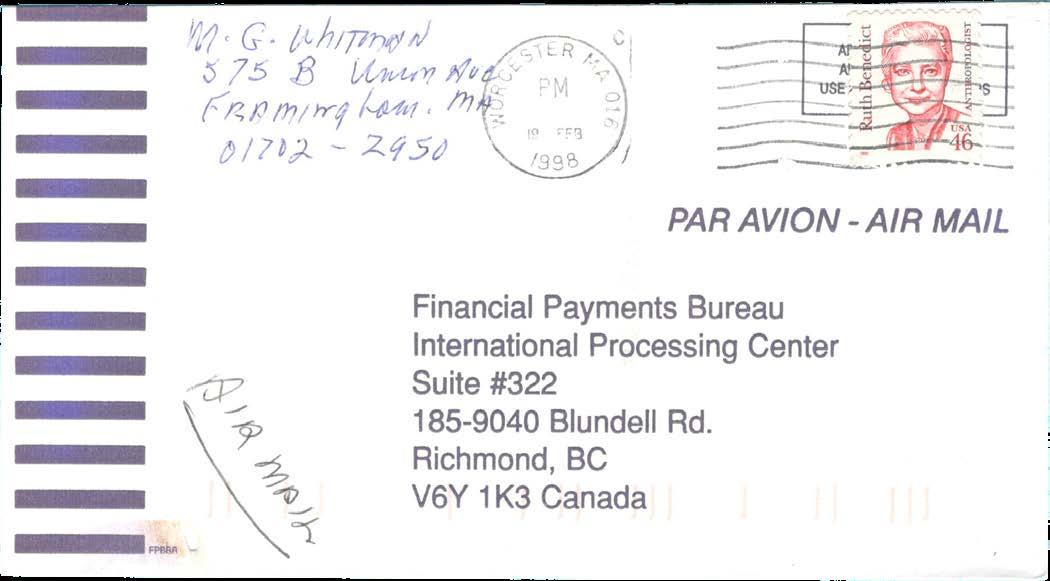
Figure 2. A 46¢ Ruth Benedict stamp paid the half ounce letter rate to Canada.
George Mason
Rachel Carson Charles R. Drew MD 1 Nov.
Ralph Bunche
Thomas Gallaudet
Harry S. Truman
3
Rachel Carson
Robert Millikan
John J. Audubon Lillian M. Gilbreth
Jack London
Harry S. Truman Harvey Cushing MD H.H. Hap Arnold
* Rates shown apply for letters weighing up to 12 ounces.
Table 3. Great Americans fulfilling letter rates to Mexico to February 3, 1991.
3 Feb. 1991
9
Dennis Chavez Harvey Cushing MD H.H. Hap Arnold
Claire Chennault
Ruth Benedict
Table 4. Great Americans fulfilling letter rates to Mexico from February 3, 1991.
period unless surface carriage was faster. As with the rates to Canada, letter rates to Mexico were the same as domestic letter rates during the earliest years.
For reasons we can’t explain, later rates for letters to Mexico were lower than those to Canada. For example, effective April 3, 1988, when the basic letter rate to Canada jumped from 22¢ to 30¢, the rate to Mexico increased only from 22¢ to 25¢.
Surface Letter Rates to World Destinations
Mailers of letters to other foreign countries had two options during the early GA period. They could dispatch letters by surface means, or they could request airmail service, which will be discussed later in this article.
Table 5 lists the surface rates for letters until this option was discontinued, effective July 9, 1995. The rates listed applied to letters weighing up to eight ounces. As you might expect, surface letters cost less than airmail letters during the first two rate periods. The cost difference was minimal, so few such letters were sent by surface means versus airmail, and examples of these rates are difficult for collectors to find.
1
17
3 Apr. 1988
3 Feb. 1991
Harry S. Truman
Lillian Gilbreth Mary Cassatt
Jack London
Table 5. Universal Postal Union (UPU) surface letter rates to July 9, 1995.
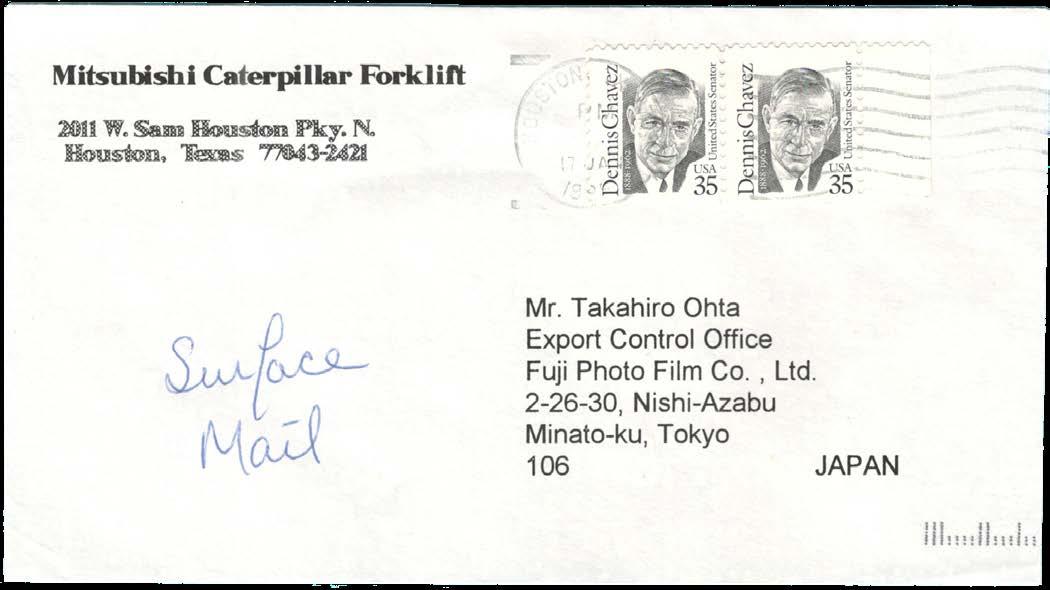
Effective February 3, 1991, the rate was increased to exceed airmail rates for a half ounce, probably to discourage the service as much as possible, given the presumably low volume of such mail compared to letters sent internationally by airmail. Figure 3 shows a mailing to Japan at the 70¢ international surface letter one-ounce rate. Had the letter been sent by the faster airmail service, the rate would have been only 50¢ for a half-ounce letter. If the letter actually weighed between a half and a full ounce, the rate for airmail service would have been $1.00.
International Airmail Rates
Table 6 shows the international airmail letter rates applicable during the Great Americans period to destinations other than Canada and Mexico. The rates shown in the tables apply to letters weighing up to two ounces. Initially, during the period, there was a rate differential for letters bound to Western Hemisphere destinations versus those
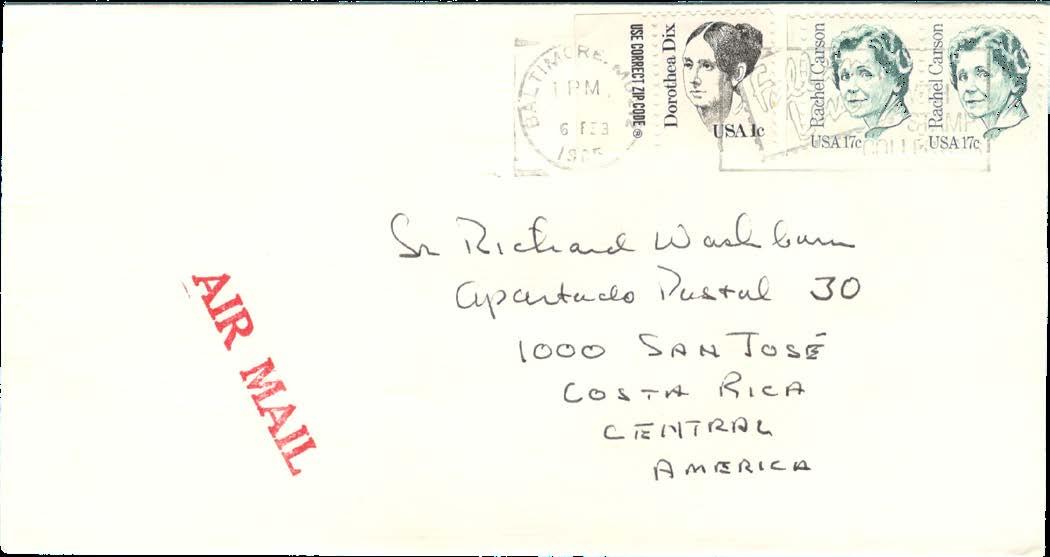
bound to other destinations. Figure 4 shows a letter mailed to Costa Rica on February 6, 1985, at the reduced 35¢ airmail letter rate to Western Hemisphere destinations.
Collectors will find airmail covers to Western Hemisphere destinations before the rate change of April 3, 1988, but more often than not, these letters were paid at the higher rate applicable to the rest of the world. It seems that mailers were tuned into the higher rates that applied to the rest of the world, and it may have been easier to apply the higher rate to all outgoing international airmail. The majority of Western Hemisphere-bound airmail letters between 1981 and April 1988 that we have seen were overpaid to meet the rest-of-the-world fees.
Figure 5 illustrates one of the international airmail fees that a solo GA franking could pay. This letter to Portugal was postmarked on September 21, 1989, using a single 45¢ Harvey Cushing stamp. Among the other solo franking opportunities are international airmail double-weight letters mailed after the July 9, 1995, rate change. Figure 6 shows such a double-weight letter mailed to Bolivia, franked with a $1.00 Johns Hopkins stamp.
Figure 4. Letter mailed at the 35¢ reduced airmail letter rate.
Figure 3. An example of the 70¢ international surface letter rate.
1
3
9
Gilbreth
Harvey Cushing MD Harvey Cushing MD
Johns Hopkins Claire Chennault
Table 6. International Airmail Letter Rates (excluding Canada and Mexico) up to two ounces.
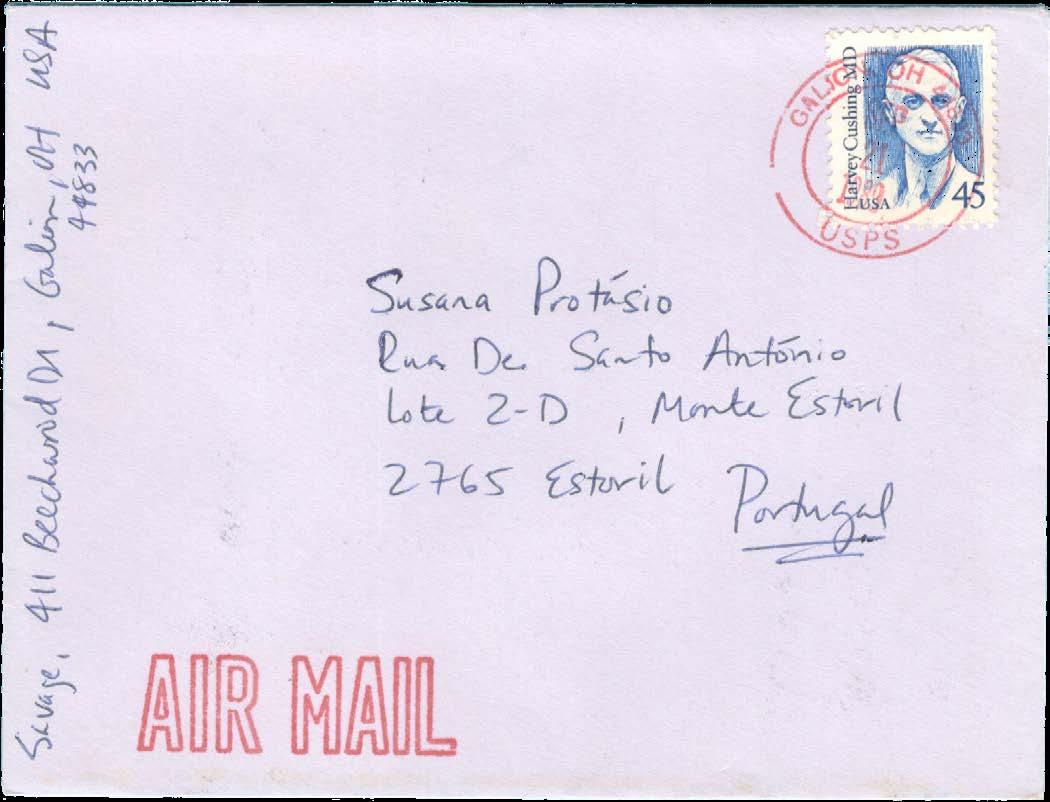
Figure 5. A 45¢ Cushing stamp paid the half ounce airmail rate to Portugal.
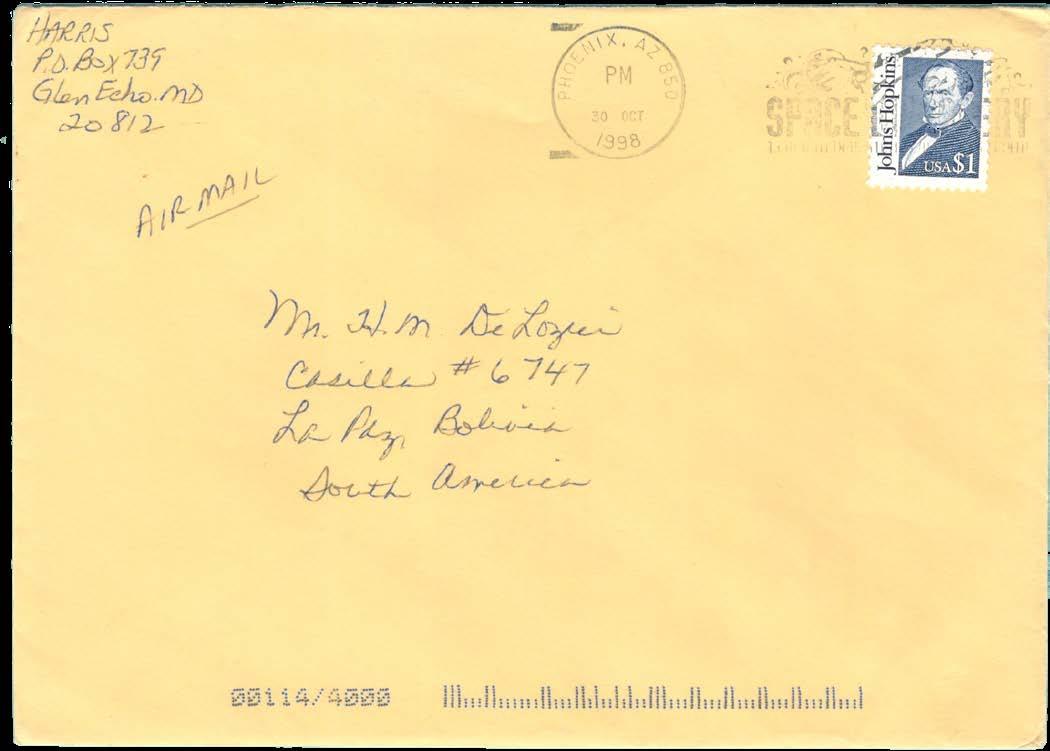
Figure 6. A double weight mailing in 1998 was serviced with a $1 Johns Hopkins stamp.
Although solo uses are desirable and fun to find, so are mixed frankings featuring two or more GA stamps to pay these fees. Figure 7 shows an interesting trio of stamps that added up to $1.34 for the 1 ½ ounce letter mailed in 1993.
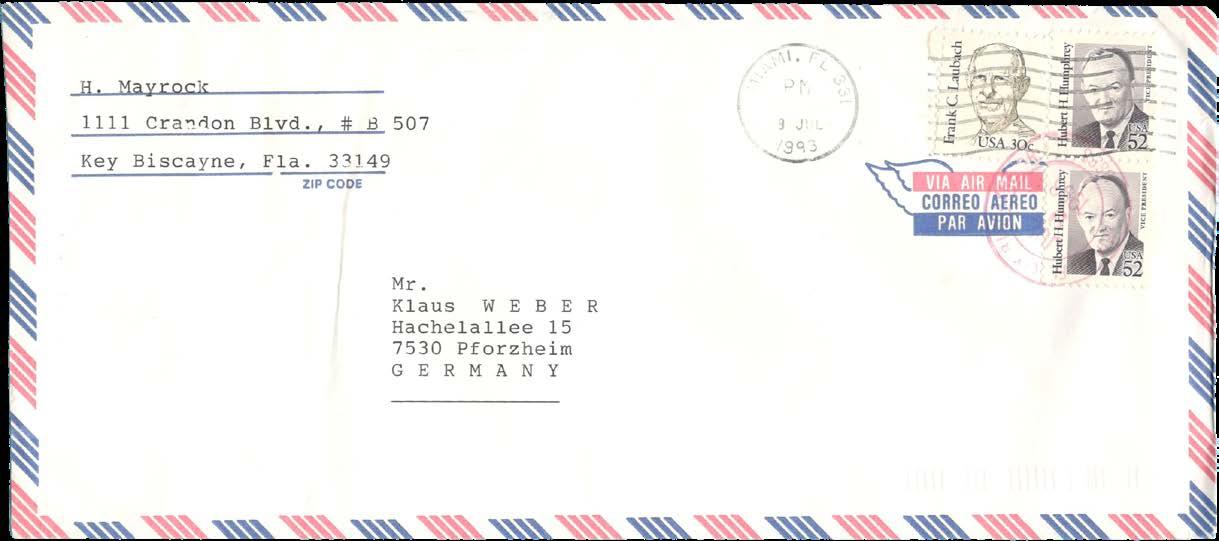
Figure 7. Frankings add up to $1.34 for this 1 ½ ounce letter.
FDR and the 1932 Olympic Winter Games
by Paul M. Holland USSS #16849 | m pholland.thorleaf@gmail.com
The original Olympic Games were held in Greece at Olympia every four years, and are traditionally dated to 776 BC, when a foot race was the only event. Over time, other events were added, including longer distance foot races, the pentathlon (with its five events of running, javelin throw, discus throw, long jump, and wrestling), boxing, and even chariot racing. The original version of the Olympic Games continued until the year 393, thus spanning over a thousand years.
After a gap of fifteen hundred years, the Olympic Games were revived under the leadership of Pierre de Coubertin, a Frenchman, with the first modern Olympic Games held in 1896 in Athens, Greece. Interestingly, the 1920 Olympics held in Antwerp, Belgium, featured both figure skating and ice hockey. The following year, a meeting of the International Olympic Committee (IOC) decided that France, as the host nation for the 1924 Olympic Games, would be allowed to host an “International Winter Sports
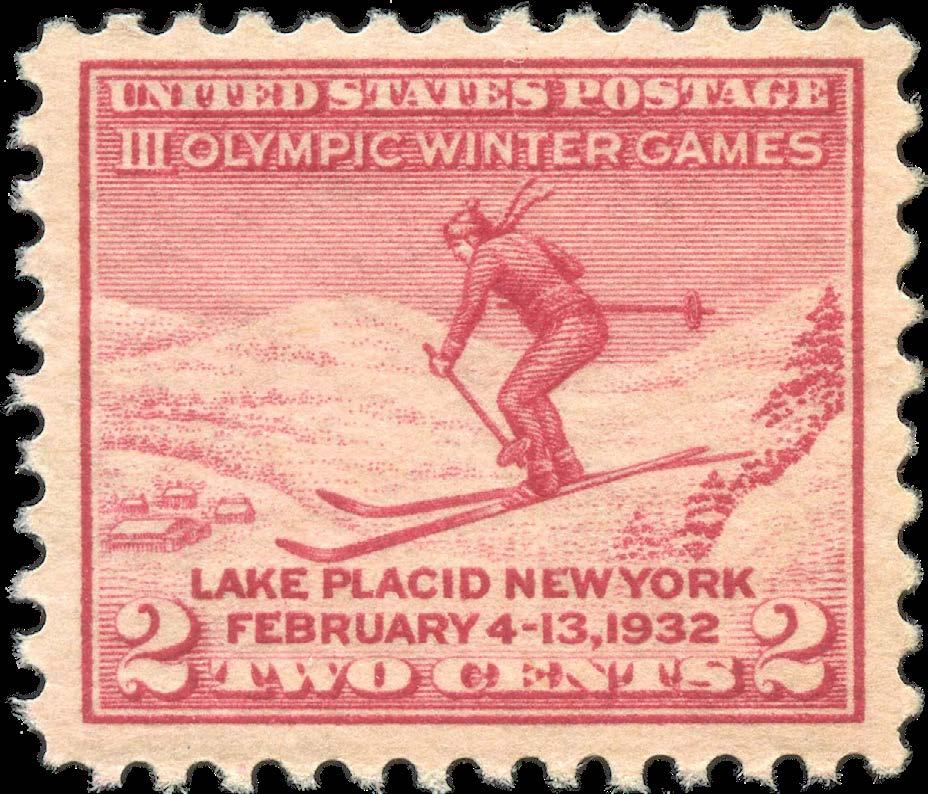
1932 Winter Olympics Stamp
Week” in Chamonix, France, along with the Summer Games in Paris. This event proved successful and was later officially designated the first Winter Olympic Games by the IOC.
After the United States was selected to host the tenth modern Olympiad, to be held in Los Angeles in 1932, Winter Olympic Games were also slated for Lake Placid, New York, and these became the third Olympic Winter Games. While postage stamps had been issued to help raise funds for Olympic Summer Games, including a lengthy 1896 set for the first modern Olympics in Athens, none had previously been issued to commemorate Winter Games. In a previous article, I described how 1932 United States stamps were issued for the Los Angeles Olympic Summer Games.1
Regarding the Lake Placid Winter Olympic Games, it was Representative Snell of New York, the Republican Floor Leader, who first requested that President Hoover’s Postmaster General (PMG) Walter F. Brown authorize a special stamp for this event. The request was granted, and in late December 1931, PMG Brown announced that a 2¢ stamp depicting a “ski jumper in action” paying the then-current first-class rate would be issued.2
The BEP explored various trial designs for this stamp, as shown in Figure 1. The top two show the traditional pose of a ski jumper in flight, including a closeup. However, curiously, the other essay shown displays a skier holding ski poles as if jumping from a cornice on a ski slope while skiing fast. To me, this looks much more like an alpine skier during a downhill race, although alpine skiing events were not formally introduced into the Winter Olympics until the 1936 Games in Germany.
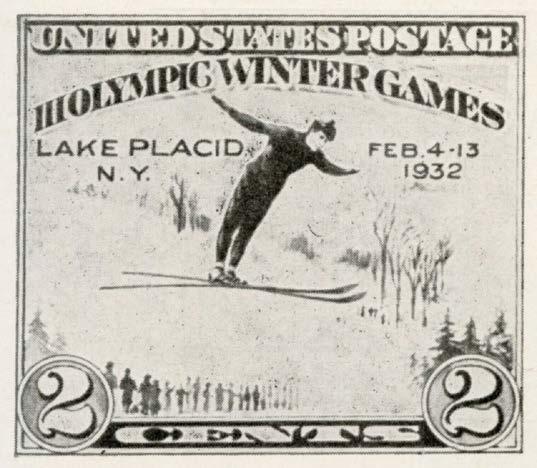
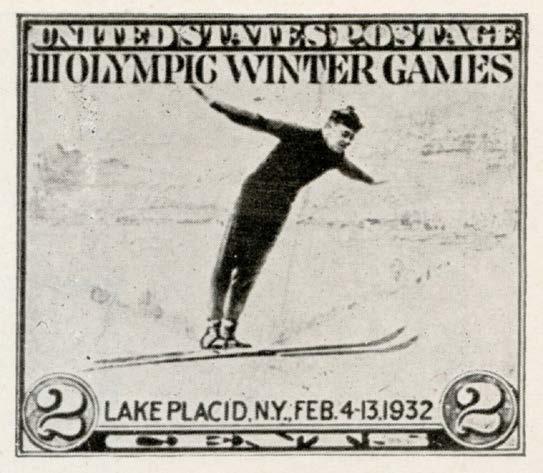
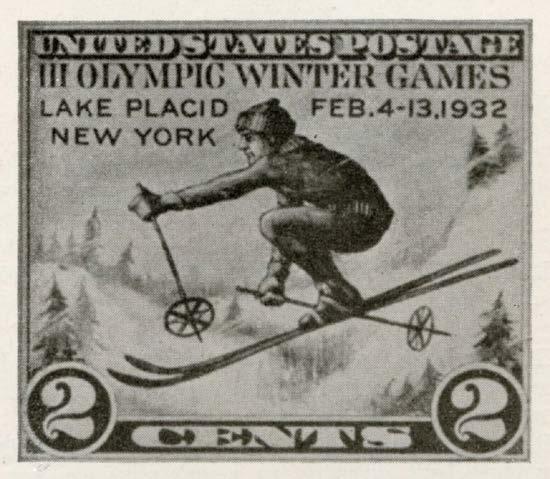
Figure 1. BEP essays for the 1932 Lake Placid Winter Olympic Games stamps.2
The approved design for the 2¢ stamp for the Lake Placid Winter Olympic Games by A. R. Meissner included elements of the earlier designs, especially the last one. The vignette was engraved by J. Eissler, and the frame and lettering by E. M. Hall of the BEP.2 Franklin D. Roosevelt (FDR) was an avid stamp collector, and of special interest, he had the only known large and small die proofs for this stamp, as well as examples of all three of the photo essays shown in Figure 1. Images of these die proofs, and auction lot descriptions from the February 1946 H. R. Harmer sale of FDR’s stamp collection are shown in Figure 2.3 Note that the BEP control number 334193 stamped on the back of his large die proof is listed.
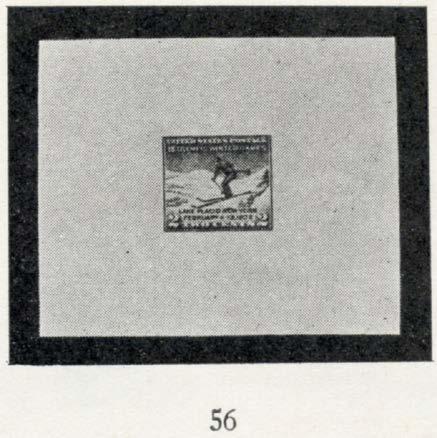
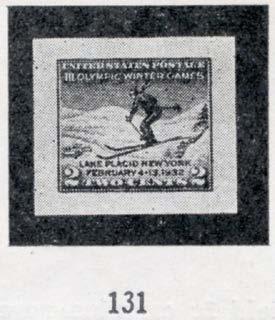
131).3
The 1932 Lake Placid Winter Olympic Games stamps were printed using a flat plate press in sheets of 400 subjects divided into four panes by vertical and horizontal arrow guide lines. This is shown on the plate proof in Figure 3. Curiously, printing plate 20816 apparently went to press on January 12, 1932, the day before the plate was formally approved, with a total of twelve plates (20815–20826) being used in printing these stamps.4
The stamps were first issued in Lake Placid, New York on January 25, 1932. Unlike Jim Farley, Hoover’s PMG Walter Brown did not send out favor first day covers (FDCs) with letters, so in lieu of one of these, I’ll instead show my FDC sent to FDR that is franked with plate number block of four in Figure 4. Note that this 20816 plate block came from the lower half of the sheet shown in Figure 3. The printed bi-color FDC cachet labeled “ III Olympic Winter Games” by Harry Ioor (Mellone 716–15) illustrates a hockey player above and ski jumper below. The Harmer Auction backstamp indicates that this came from the February sale, most likely from lot 374, consisting of 1928–1933 first day covers mounted in a large ring binder with card pages, that were “mostly addressed to the President when he was Governor of New York.”3 Such binders of FDCs were clearly an important part of FDR’s personal stamp collection.
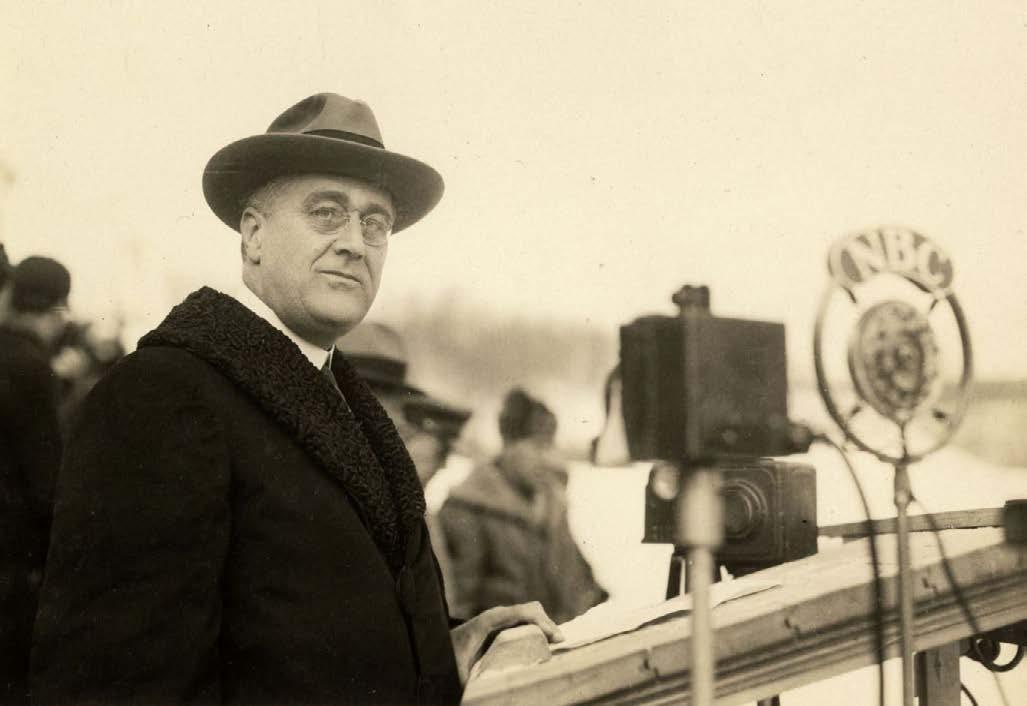
This particular FDC likely held special meaning for him, since as the Governor of New York State, FDR opened the 1932 Winter Olympic Games in Lake Placid on
Figure 2. Winter Games die proofs from FDR’s collection (Harmer auction lots 56 and
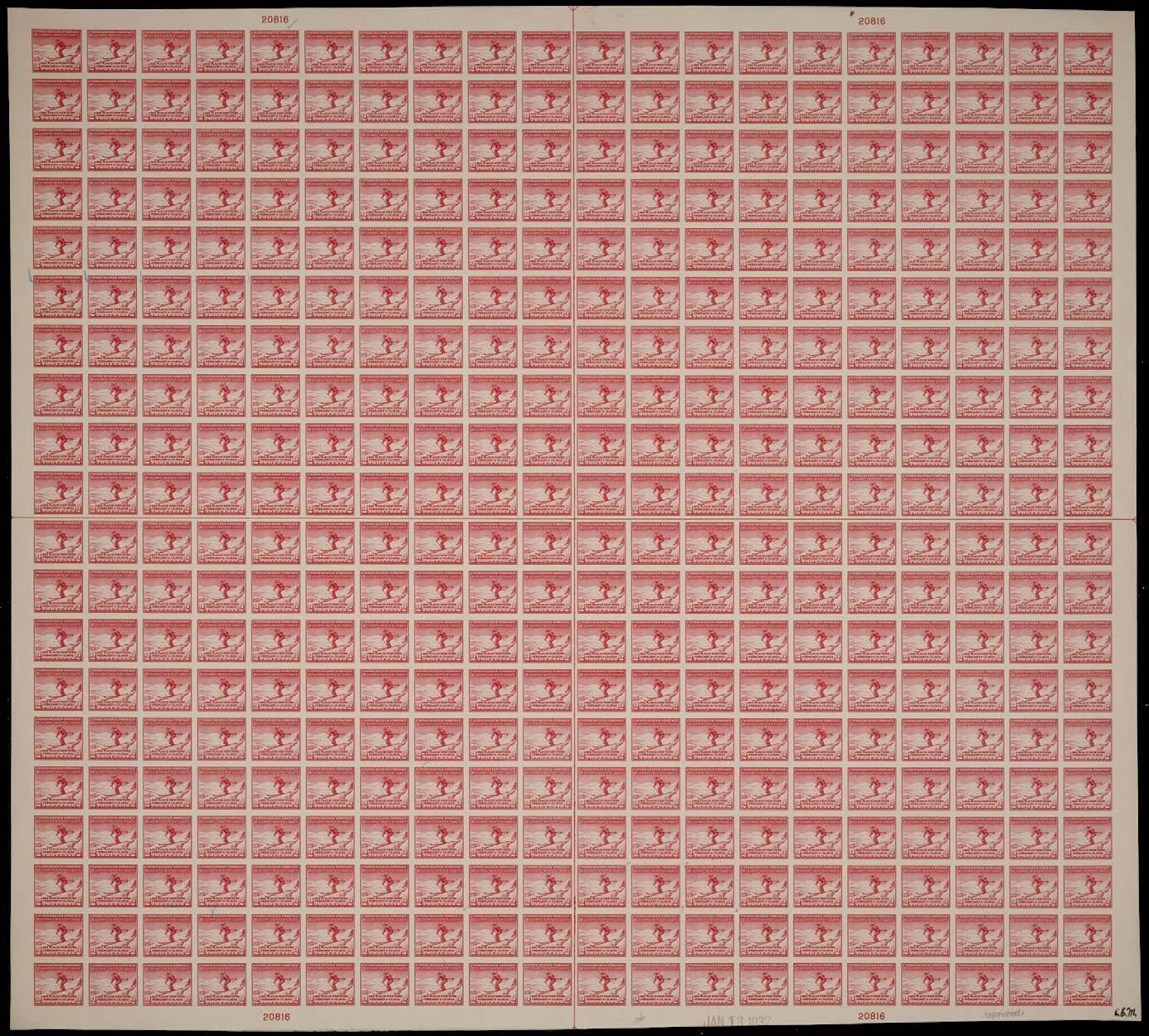
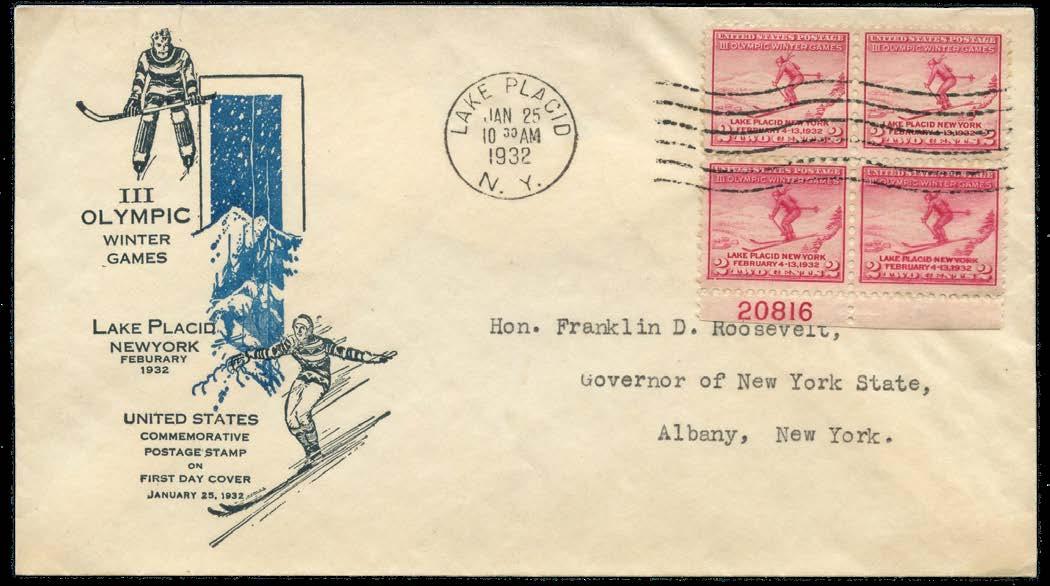

Figure 3. Plate proof for 2¢ Winter Olympics stamp (Smithsonian, National Postal Museum).
Figure 4. FDC with 1932 Olympic Stamp plate block of four sent to FDR.
February 4, 1932. This is shown in Figure 5. In his remarks, FDR focused on international friendship and the spirit of competition, bringing a message of unity to the games. It should be noted that at the time, FDR was also actively running for President of the United States and was elected nine months later.
Examples of usage of the 2¢ Lake Placid Winter Olympic Games stamps include covers on official Third Assistant Postmaster General stationery from the Philatelic Agency that were used to mail stamps to collectors. Shown in Figure 6 is my example where the registration fee and postage have been paid using a block of ten of the Winter Olympic stamps, along with recently issued Washington Bicentennial stamps. Because blind double oval cancellations were used on these stamps, it’s the registration backstamps that reveal that this cover was mailed from Washington, D.C., on February 24, 1932.
I also show my unusual airmail event cover franked with examples of all three 1932 Olympic Stamps in Figure 7. This includes the 2¢ stamp for the 1932 Lake Placid Winter Olympic Games. Note that the cachet on this cover is for the 30th National Ski Meet in Salisbury, Connecticut.
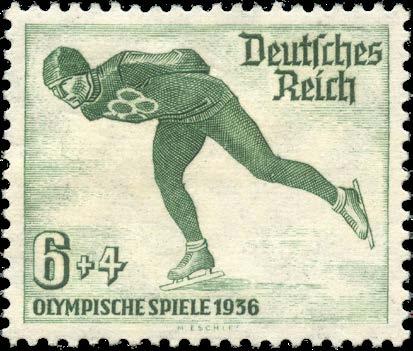
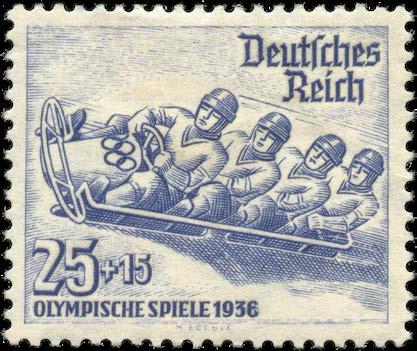
This cover was posted on President-Elect Franklin Roosevelt’s 51st birthday on January 30, 1933. Coincidentally, this was also the same day that Adolf Hitler was named chancellor of Germany. Three years later, the 1936 Winter Olympic Games were held in Germany, and a set of three semipostal stamps (Scott B79-B81) to celebrate this were issued. Examples of these from my representative worldwide stamp collection are shown in Figure 8. These stamps depict the Winter Olympic sports of speed skating, ski jumping, and the four-man bobsled. While the 1936 Summer Games were famously held in Berlin, the Winter Games were held in Bavaria in the German towns of Garmisch and Partenkirchen during February. Interestingly, the year 1936 turned out to be the last time that both the Summer and Winter Olympics were to be held in the same country and
Figure 5. Governor Franklin D. Roosevelt opening the Lake Placid Winter Olympic Games on February 4, 1932.
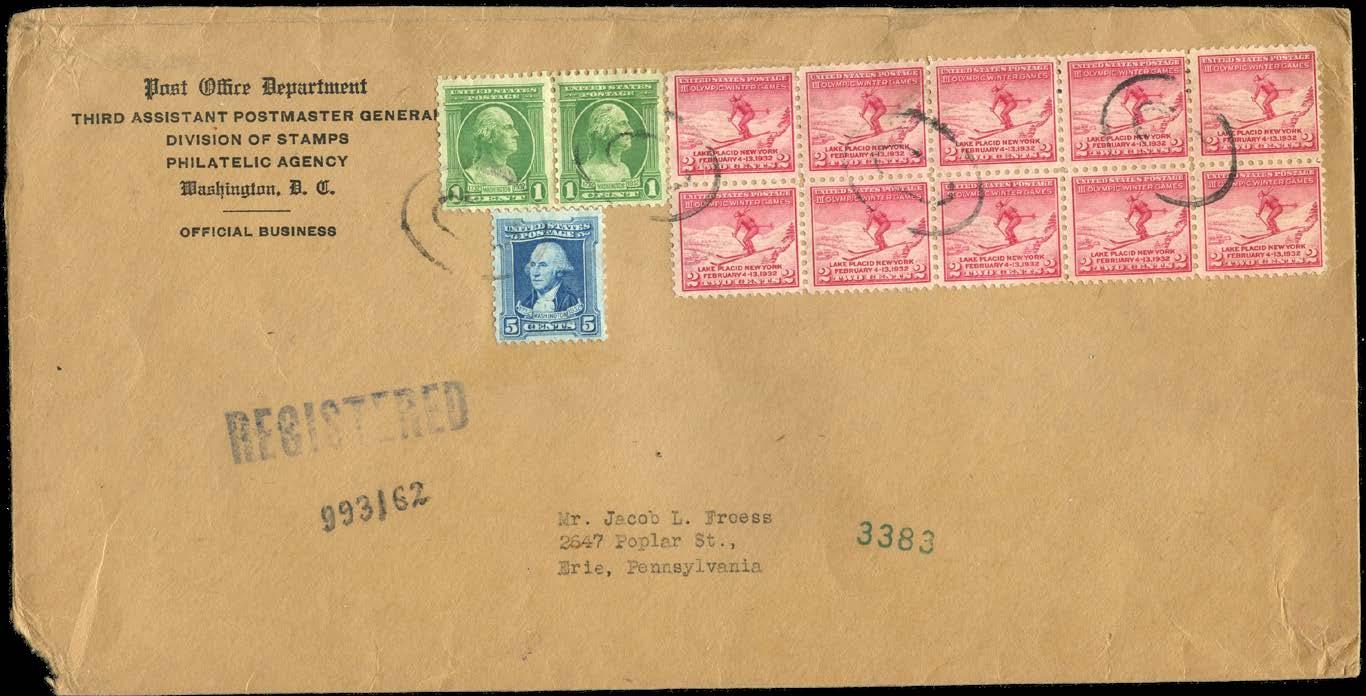
Figure 6. Official usage of 2¢ Winter Olympic stamps on Third Assistant PMG stationery from the Philatelic Agency.
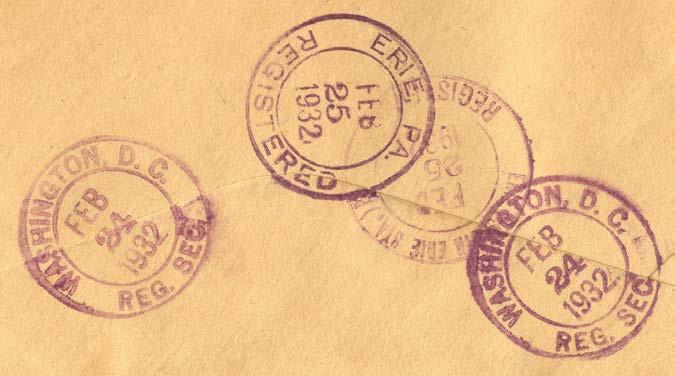
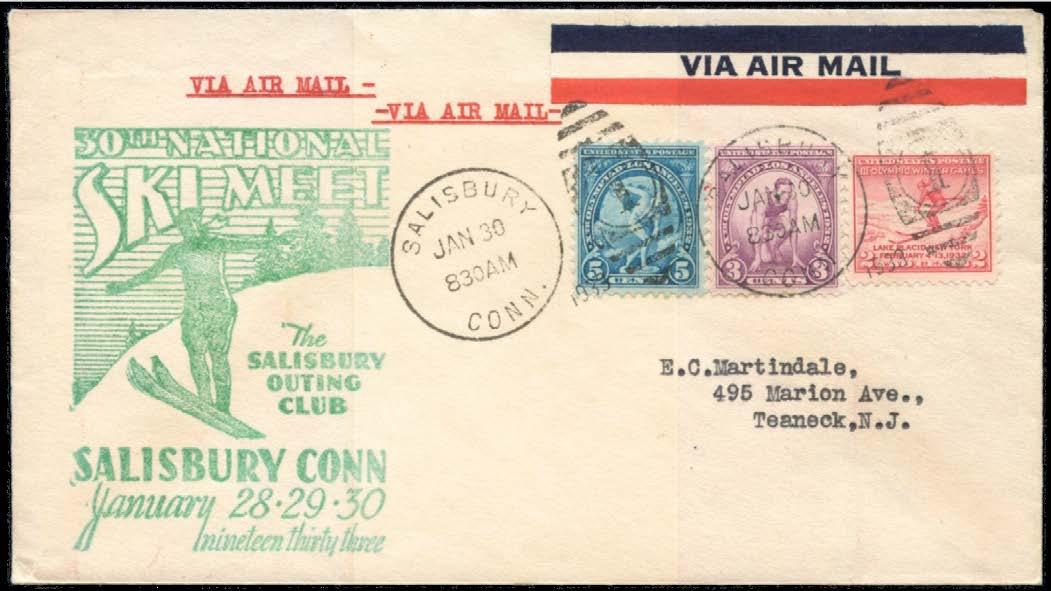
Figure 7. Event cover with all three 1932 Olympic Stamps sent January 30, 1933.

the only Olympics that took place during FDR’s presidency, since World War II caused both the 1940 and 1944 Olympic Games to be canceled.
The story of the cancellation of the 1940 and 1944 Olympic Games is a curious one. The 1940 Winter Games had been awarded to Sapporo, Japan, but this decision was rescinded in 1938 due to the Japanese invasion of China. The Olympic Winter Games were then switched to Garmisch-Partenkirchen, Germany, but ultimately these were canceled following the German invasion of Poland in 1939. The 1944 Winter Games had originally been scheduled for Cortina d’Ampezzo, Italy, the same venue where skiing events for the 2026 Games were recently held, but they were also canceled due to World War II. Thus, at one time, all three of the Axis Powers had been planned to host the 1940–1944 Winter Olympic Games.
Finally, in Figure 9, I show my naval cover franked with a 2¢ stamp for the 1932 Lake Placid Winter Olympic Games. Cancelled “At Sea” aboard the USS Portland, a United States Navy cruiser (CA-33), the cachet on this cover shows two steaming warships and bears a Locy Type 3 Naval Postmark (as classified by the Universal Ship Cancellation Society). This cancellation type allows words and small symbols to be inserted between the three killer bars to denote holidays, special events, or locations. FDR himself was an avid collector of such naval covers, and while I have a variety of examples sent to
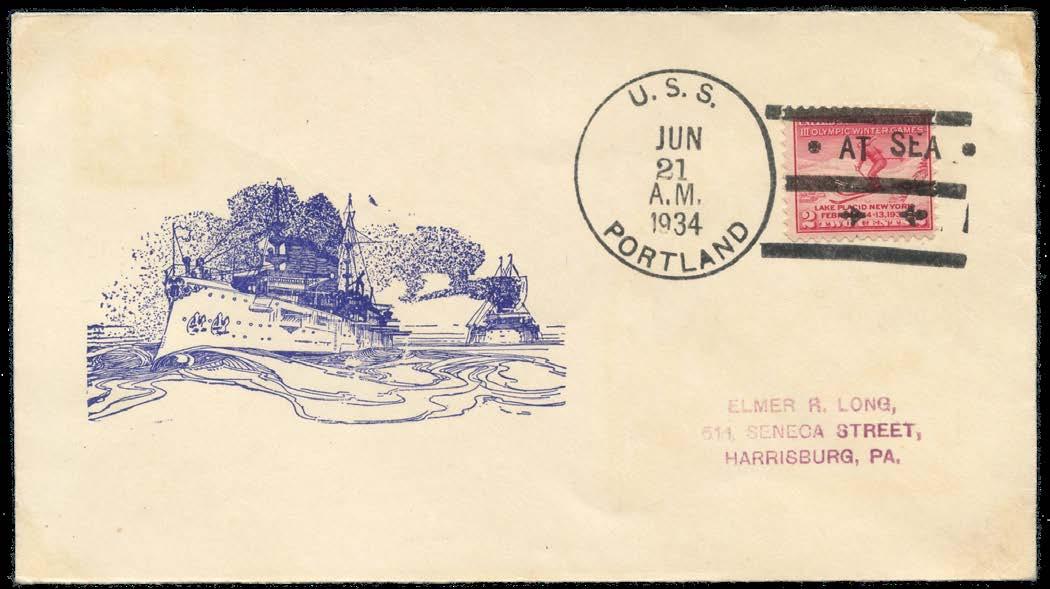
Figure 8. German semipostal stamps issued for the 1936 Winter Olympic Games.
Figure 9. Use of the 2¢ Winter Olympic Games stamp aboard the USS Portland while at sea.
FDR in my own collection, I lacked one franked with the 2¢ Winter Olympics stamp, hence the one shown here.
The USS Portland would have been well known to FDR , since it accompanied the USS Houston on FDR’s 1935 Presidential Cruise from San Diego, through the Panama Canal to Charleston, South Carolina. Later during World War II, the USS Portland became one of the most decorated ships in the US Navy, earning 16 Battle Stars for actions ranging from the Battle of the Coral Sea, the Battle of Midway, Guadalcanal, the Battle of Leyte Gulf, and Okinawa.
Acknowledgment
The author would like to thank Doug Henkle for his help identifying the cachet on the FDR cover in Figure 4.
References
1. Paul M. Holland, “FDR and Stamps of the 1932 Olympic Summer Games,” The United States Specialist, 95, no. 8 (August 2024): 363–376.
2. Max G. Johl, The United States Commemorative Postage Stamps of the Twentieth Century: Volume I, 1935–1947 (New York: H. L. Lindquist, 1947), 214–215.
3. H. R. Harmer, Inc., The President Franklin D. Roosevelt Collection, Part One (New York, February 1946), lots 56, 131, and 374.
B.I.A. Plate Number Checklist: Plates 20000–41303 (United States Stamp Society, revised 1990).

by Rodney A. Juell
Vintage Photo of the Month
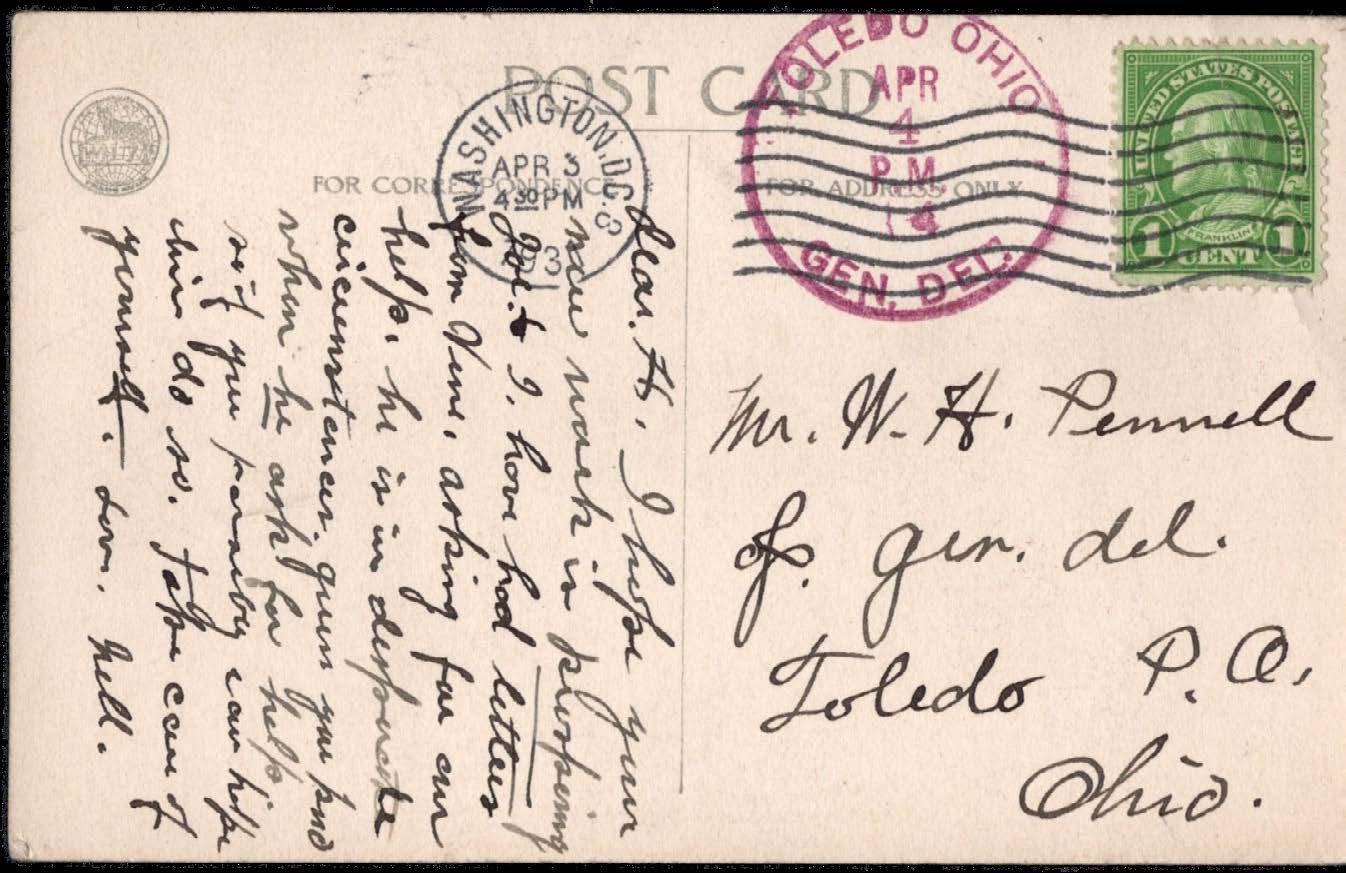
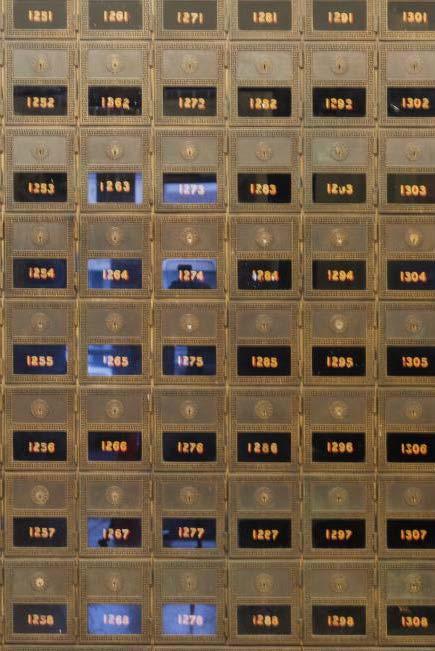
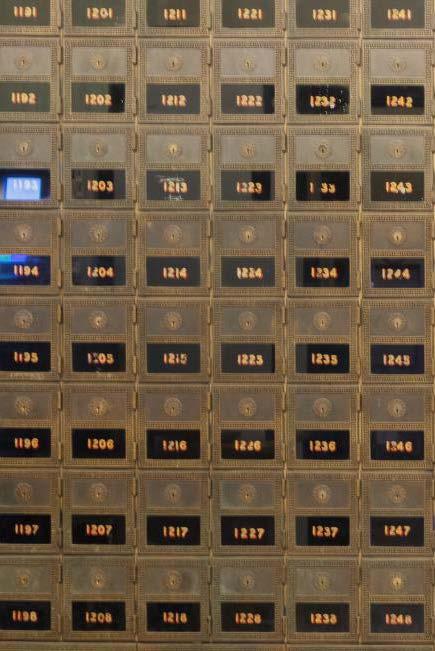
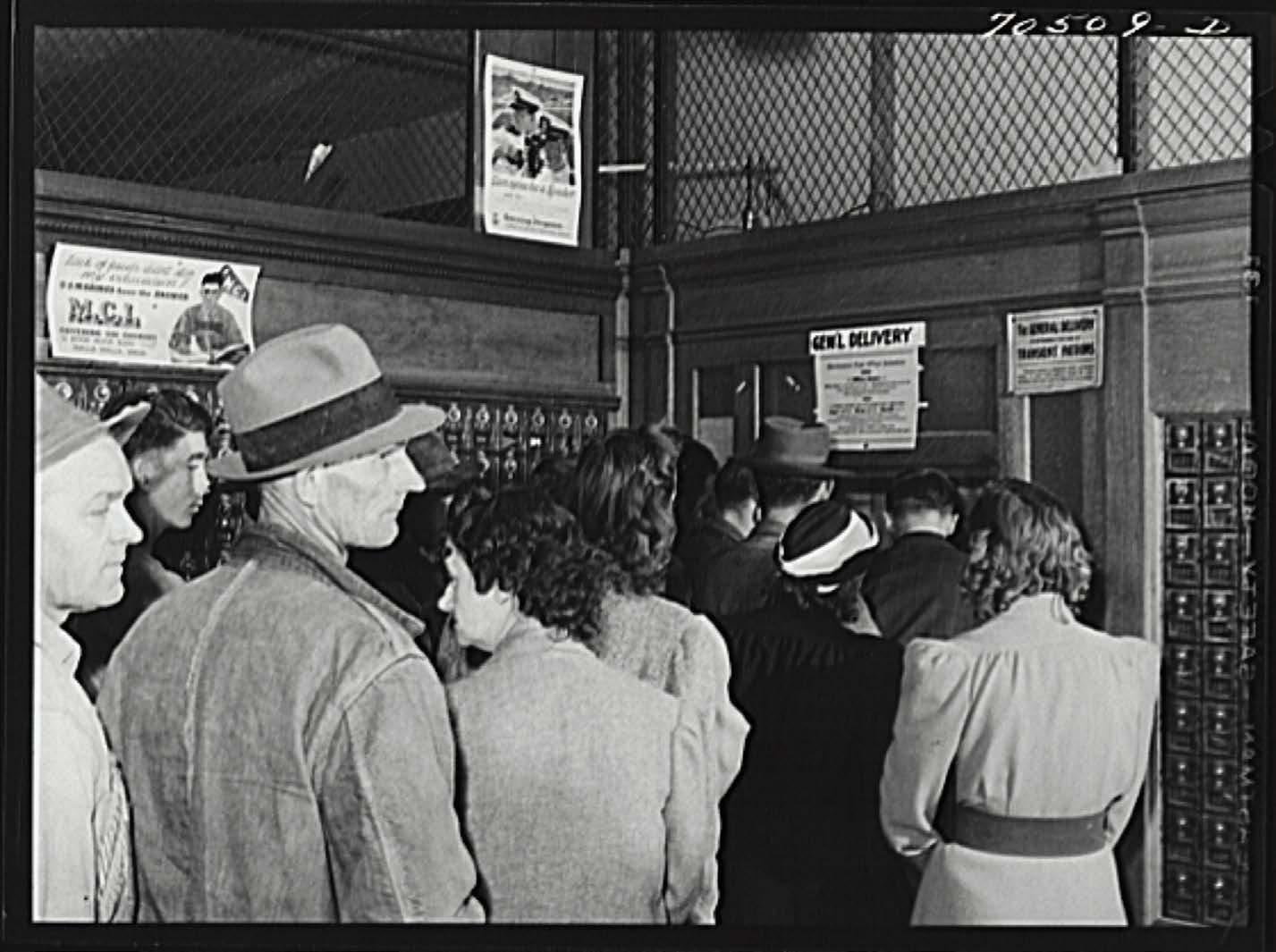
This month’s photo shows a line of customers at the General Delivery window of the Hermiston, Oregon post office in 1941. General Delivery was frequently used by customers who wished to pick up mail at the local post office because they did not have a permanent address in the community. The service, which is still available today, might be used by transients such as traveling salesmen. Shown nearby is a postcard delivered through General Delivery in Toledo, Ohio in 1931.
KramerGrossMooz
Siegel offers unparalleled expertise, a worldwide client base, financial reliability, intelligent marketing, and the best internet resources of any philatelic auction house. Contact us today to learn more about consigning with Siegel and ensuring your legacy.
Phone (212) 753-6421
Email: stamps@siegelauctions.com
Hung from the Gallows!
by Terry Kurzinski USSS # 13670 | m tkurzinski2002@yahoo.com
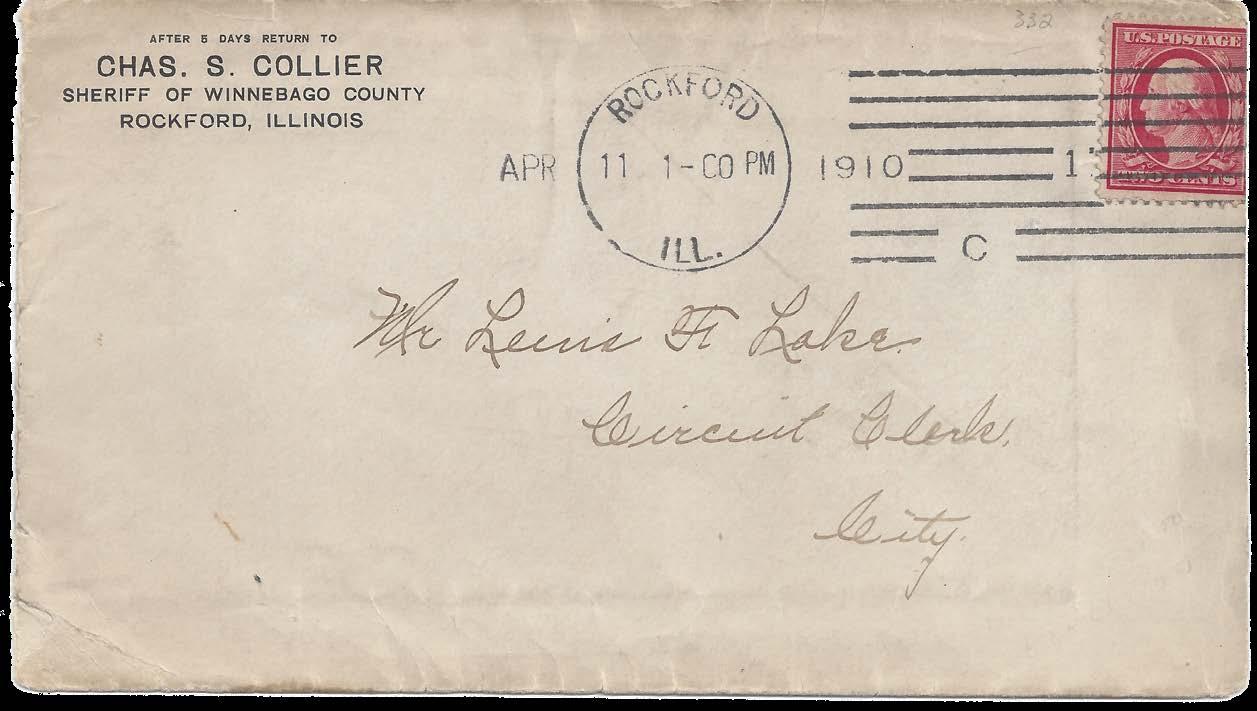
Usually, the outside of a cover is the interesting part. This time a big surprise came with the contents. This letter was from Chas. S. Collier, the sheriff of Winnebago County, city of Rockford, Illinois, addressed to Mr. Lewis Lake, Circuit Clerk, City [Winnebago County, Rockford, Illinois].
The letter is on Sheriff Collier’s letterhead and invites Mr. Lewis F. Lake, the circuit clerk for Winnebago County, to be present at the execution of Mr. Clinton St. Clair, to be held in the county jail on Friday, April 15, 1910, between the hours of eight AM and two PM. I did a little research at the Rockford Public Library, going through their old newspaper microfiche files and found the following.
From the Rockford Daily Register Gazette, April 15, 1910:
Clinton C. St. Clair was swung into eternity from the gallows in the county jail. He was convicted of the fiendish murder of Mary McIntosh, aged and living alone. The deed was committed the morning of January 20, 1910. The home was also robbed of $72.00. Mr. Clinton St. Clair , was traced through a letter written by his wife which he had forgotten to mail. This letter was thrown away with letters taken from the McIntosh home and rifled. He was arrested the night of the murder. St. Clair confessed. His trial started Thursday February 13 [sic], 1910 and concluded on Saturday February 13 [sic], 1910 with a verdict of death.
Quality
United States Stamps (1847-1945)
Singles (mint and used)
Plate Blocks
Booklet Panes plus Complete Booklets
Price lists-$2.00 each category
Price lists free on web: www.mountainsidestampsandcoins.com
We also buy quality U.S. and foreign stamps
Mountainside Stamps, Coins and Currency
P. O. Box 1116
Mountainside, NJ 07092
Tel: 908-232-0539 or 908-419-9751
E-mail: tjacks@verizon.net
Tom Jacks, owner Member APS, ASDA, USSS
USatFACE.com
If you collect Plate Blocks, Booklets, Coils, or Sheets, the above website, with hundreds of sets at Face Value, will be a great savings to you. Enjoy the hobby.

Armen Hovsepian (APS 150170)
P. O. Box 24222

Overland Park, KS 66283 info@USatFACE.com





• The Boston Convention and Exhibition Center is located fifteen minutes from Boston Logan International Airport. It is ten minutes from South Station and Amtrak Acela Express to New York City and Washington DC.
• All show hotels will be within walking distance.
• In a 352,000 square foot contiguous exhibition area, BOSTON 2026 WORLD EXPO will be hosting a large dealer and postal administration bourse, as well as a large society presence and hundreds of meetings/events.
• There will be a competitive exhibition of approximately 3,500 frames, plus other special/court of honor exhibits, as well as a large literature competition.
Margin Name Varieties on the Norway Overrun Countries Stamps
by Keith Lichtman USSS # 14279 | m stampmankeith@gmail.com
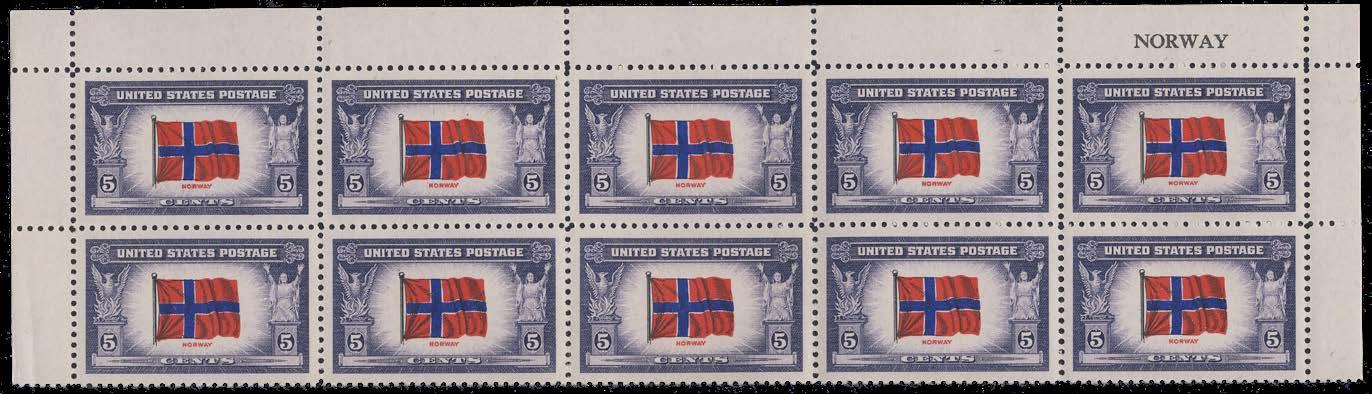
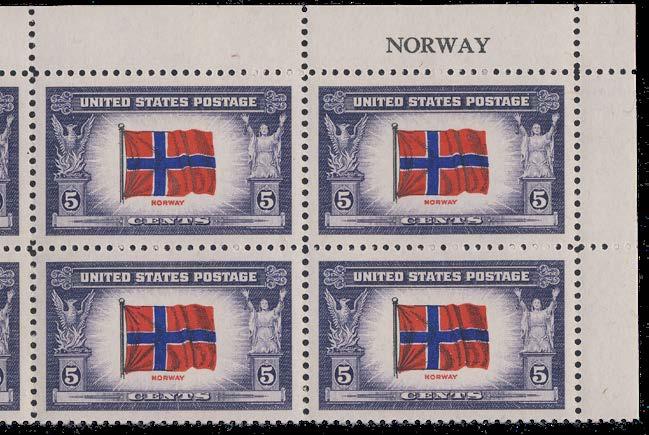
The Overrun Countries series was printed under contract by the American Bank Note Company. Instead of using a plate number, each pane was printed with the name of the honored nation in the pane’s top right margin. Printed in a sheet of 200, the top two panes of 50 with the Czechoslovakian flag and the bottom two panes of 50 with the flag of Norway.
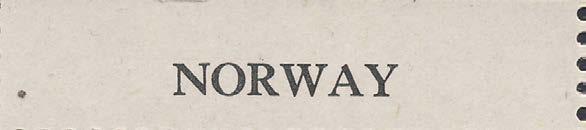
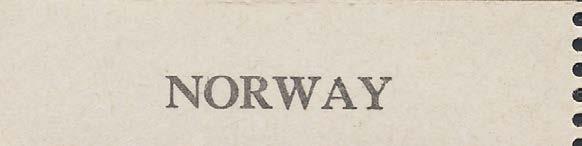
Norway can be found printed in light or dark black ink. The lighter color is just the product of under inking, creating an illusion of two different color inks. There are also other variations ranging between the dark and the light shades.
The Overrun
Figure 1. Different shades of black ink.
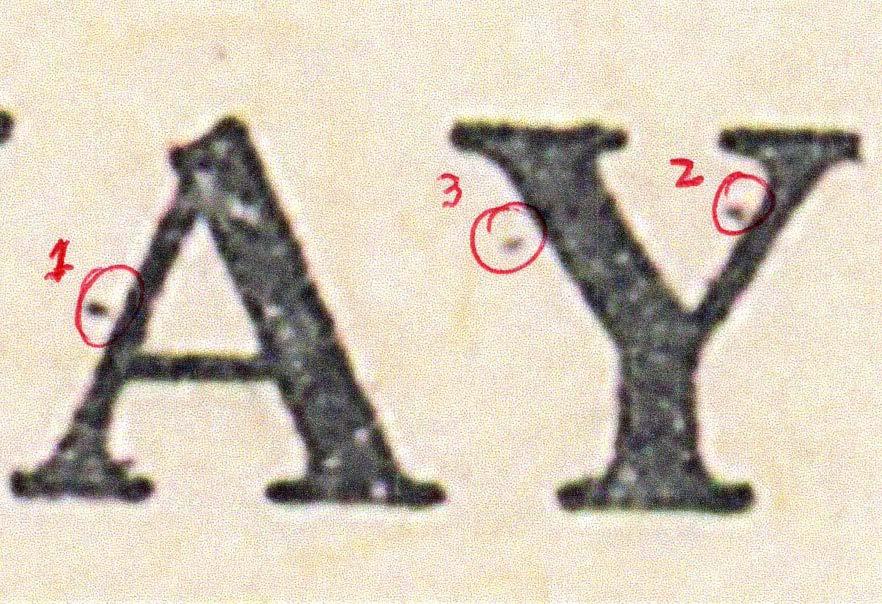
There are three plate varieties found on Norway. Type 1: has three black dots: one is on the left side of the “A” just above the horizontal line (position 1). A second is between the vertical lines of the “Y” close to the right side (position 2), and the last one on the left side of the “Y” (position 3). Type 1a: position 3 does not appear on all panes, making it a variety of a variety. Both plate varieties are found on lower right panes.
Type 2: has a black dash centered between the “N” and “O”. This variety is found on about 10% of the panes. This plate variety is found on lower right panes.
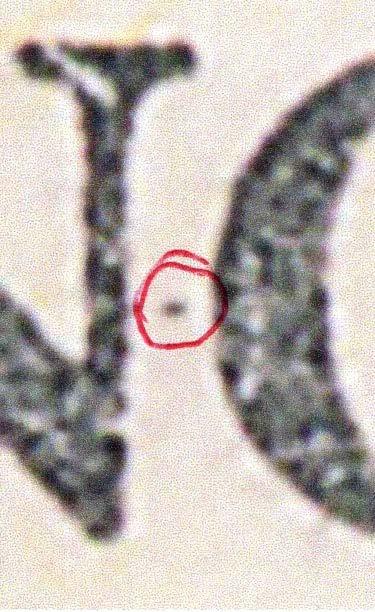
Figure 2. Type 1 variety.
Figure 3. Type 2 variety.
Type 3: has a black vertical dash above the “R” with a black dot just to the bottom right of the dash. Type 3a: on some stamps the vertical line can appear smaller, almost like one or two dots. The dot to the right is also smaller but clearly shows on all stamps of this variety. Plate variety 3 and 3a are both found on lower left panes.
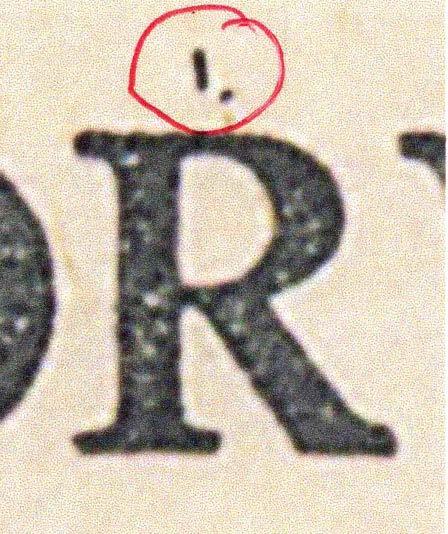
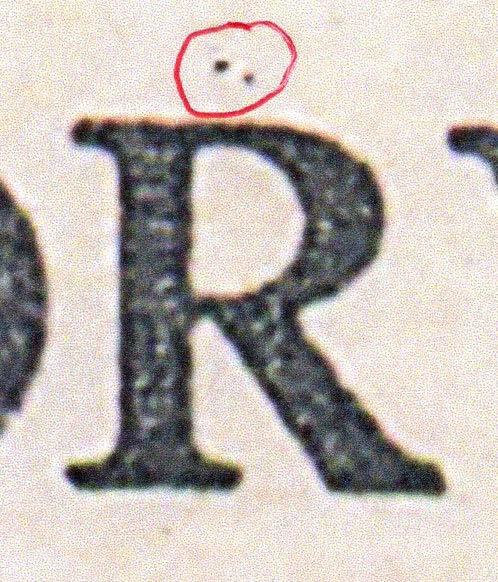

Figure 4. Type 3 variety.
Figure 5. Type 3a variety.
The Monthly Random Booklet: Duck Decoys and the UV Light Thing
by Dieter R. Kohler, P h D USSS # 12538
Introduction
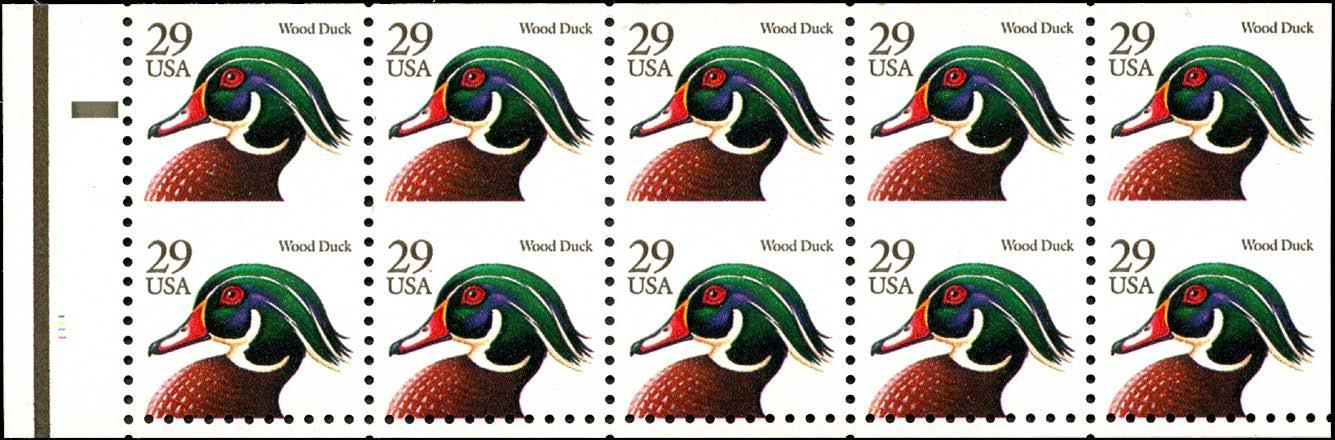
In early 1991, the USPS (United States Postal Service) issued stamps featuring a duck decoy. The stamps were issued only in booklet form, with two panes of 10 showing the new domestic 29¢ rate. The duck booklets replaced the non-denominated “F” flower booklets. Two printers were chosen, the BEP (Bureau of Engraving and Printing) and KCS Industries Inc. At that time, KCS was an unusual consortium of several companies: Banta Security Printing (30%), Fergusson Stamp Venture Group (30%), and Unique Binders, Inc. (40%). Unique Binders was a subsidiary of Sennett Enterprises. Sennett Enterprises and Stamp Venturers were essentially the same and also handled the printing for Fergusson. These were the times when private contractors competed with the BEP and with one another for stamp-printing contracts, without creating the impression of a monopoly. The early 1990s was also a time when changes from water-activated stamps to self-adhesive stamps (which the BEP did not make) emerged, and it was possible that the BEP could entirely drop out of the stamp manufacturing business, as there would not be enough demand for water-activated stamps to run the presses efficiently in the future.
From The Booklets and Booklet Panes Committee
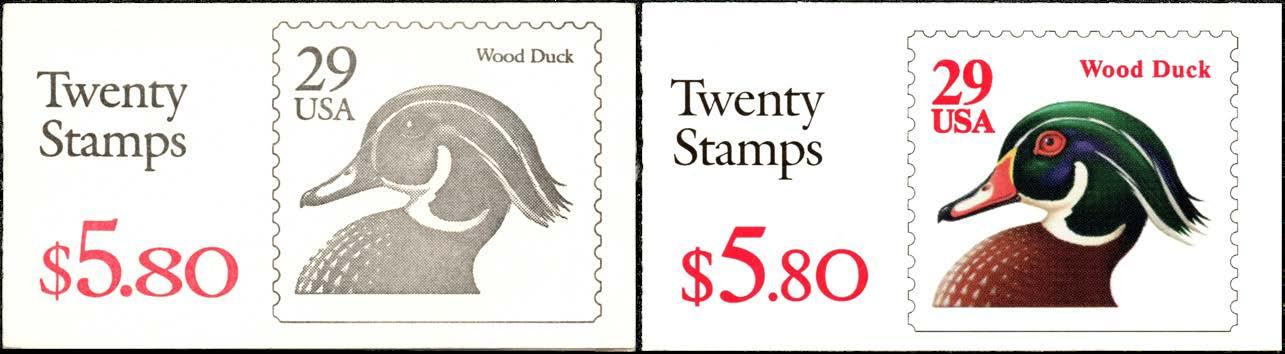
Figure 1. Front covers. BEP in gray and KCS in color.
Richard Sennett saw the writing on the wall and left his post as Assistant Director of the Bureau of Engraving and Printing in 1979 to become executive vice president at American Bank Note Co. He also formed his own company, now called Sennett Security Products. The Wood Duck booklet issue fell into a time period when USPS had problems with stamp qualities printed by the private sector, as well as the BEP. From a Congressional hearing report:
One of our witnesses today alleges that the first printing of the fishing flies booklet produced by the private sector had to be destroyed due to the poor quality of the printing. The Postal Service disputes this particular charge. There have been reports that the Bureau of Engraving and Printing also has had its problems. The Wood Duck stamp and the Love stamp which were printed by the BEP were printed using water-based inks. Thus, when the stamps were soaked in water for 10 minutes, some of the ink flaked off.3
The last sentence is important for collectors who want used booklet panes in their collections. The fishing flies booklets do have their own problems in that many panes in the booklets have scuffed perforations due to suboptimal placement and folding.
The Plates
KCS required only a single plate. The KCS booklets can easily be differentiated from the BEP issue. The cover shows the stamp design in color, with red “29 USA Wood Duck” printing on the stamps. The BEP issue shows the cover stamp in gray, with gray “29 USA Wood Duck” printing on the stamps. A year later, the BEP also issued a single pane booklet with the same cover design, but with a light blue-green $2.90 cover denomination.
The BEP used a total of nine plate combinations. Initially, over a period of a few months, four plate numbers were reported, 1111, 2222, 3222 and 3333. In May 1992, USPS started selling single-pane and two-pane booklets with plate 4444. Around the same time, new booklet numbers were reported in two-pane booklets, plates 2122, 3221, and, in rarer cases, 3331. Curiously, plate 1211 was not reported until early 1994. It also proved to be a rare booklet number.
The USPS and the BEP were also caught off guard by the laundry detergent industry. Some clever engineer at some point discovered that adding fluorescent pigment to detergents made clothes look “whiter than white” after washing. This was great fun for disco owners who installed black lights on dancing floors to the amusement of the dancers whose clothes would shine brightly. Soon paper manufacturers discovered the same, paper would look “whiter than white” when brighteners were added. This was no fun for the printers whose printer control mechanisms might rely on glowing marks or to the USPS whose automated mail sorters relied on glowing stamps to sort the mail. Glowing paper could easily pose a serious problem for the operation of these machines.
The BEP quickly notified its suppliers with a new directive not to use brighteners in their papers. But sometimes glowing paper still slipped through quality control. The directive was rescinded in the early 1980s when modern mail sorters no longer reacted to paper fluorescence. Nowadays, almost all papers contain brighteners.
Initially, panes were printed on dead pane and cover stock (no glow under long-wave UV irradiation), and with overall tagging on the panes. Then, new booklet panes were printed on prephosphored paper and with cover stock that glows under both long- and short-wave UV illumination. What makes the whole Wood Duck issue somewhat complicated is the fact that the paper changes also happened with new printings for some of the early plate numbers. Table 1 gives an overview of the various printings.
In Table 1, plate numbers 2222, 3222, and 3333, which were printed with both tagging varieties, are denoted in bold.
Issue
Plate numbers
2484a (BEP, April 1991) 1111+, 2222, 3222, 3333
Tagging as per Scott
Overall
2484a (BEP, April 1991?) 1211 Overall
2484e (BEP, May 1992) 2122, 2222, 3221, 3222, 3331, 3333, 4444 Prephosphored, solid
2485e (KCS, April 1991) K1111+ Prephosphored, speckled
Table 1. Overview of the Duck stamp issue. + Unfolded panes known from these plates.
With the change in paper and cover stock, we have multiple possible combinations as far as reactions to UV light are concerned. Table 2 lists the combinations and how you are likely to find them.
Pane Cover cardboard Frequency
Dead paper, overall tagged Dead Standard
Dead paper, overall tagged Hi-bright Unreported
Prephosphored paper Dead Very rare
Prephosphored paper Hi-bright Standard
Table 2. The possible combinations of paper and cover glow under UV.
When the BEP switched to prephosphored paper, there seems to have been some leftover old cardboard cover stock that was used up in booklets containing the new pane paper.
There are minor varieties visible in the paper and cover fluorescence, which are noticeable when viewed under long-wave (365 nm) UV light.
In order to illustrate the differences, we have to figure out how to correctly take pictures of stamps under long-wave UV light. Short-wave UV light (254 nm) is a lesser problem as the stamps usually react with a very strong greenish glow (or reddish glow with airmail stamps), but taking pictures using long-wave (365 nm) UV light sources often results in pictures that do not really show the true paper reaction due to several interfering effects.
UV Test Equipment
For the tests, the strong 8 W self-built UV lamp1 was used, which has thick glass filters that remove the visible wavelength parts of the emitted light (at the cost of also removing a good part of the UV light). Incidentally, work on this article was interrupted during the cold winter months. The short-wave UV lamp emits 254 nm light, which is powerful enough to break apart oxygen molecules in the light path. This immediately results in the creation of ozone molecules with their distinct smell. As ozone is not particularly healthy, the short-wave UV lamp could only be used with open windows, which is no fun when it’s below freezing outside. Many collectors use the four AA battery-driven handheld devices, which are good for doing work on the road. Unfortunately, these devices do not emit pure UV light but also emit some light into the visible wavelength range, which often distorts the true paper reaction in photographs. The same is often true with lamps made for gemology. Some lamps use 395 nm UV diodes for long-wave UV, which emit a significant amount of blue light.
The photographic equipment used is listed in Table 3:
1 Panasonic DMC-LZ51 pocket camera 6M Insufficient
2 TOMLOV 602 Pro digital microscope Approx. 4M Insufficient
3 Samsung Tab S9 Lite tablet 8M Some
4 Canon EOS R50 + RF85/2.0 MACRO 24M Yes
Table 3. Equipment used for testing stamps under long-wave UV lighting.
In the old days with analog film cameras, such a UV filter was absolutely necessary, as film is highly sensitive to UV light. In modern cameras, this is no longer necessary as the sensors are protected against UV radiation (and by the many coated lenses in front of the chips).
Figure 2 shows the transmission curves of a “cheap” generic UV filter and an “expensive” UV blocking filter. Cheap UV filters gradually pass part UV light above 340 nm, so they are not that well suited for a 365 nm UV light source. The special filter blocks off all UV light. All devices are equipped with CCD chips, some older, some newer technology.
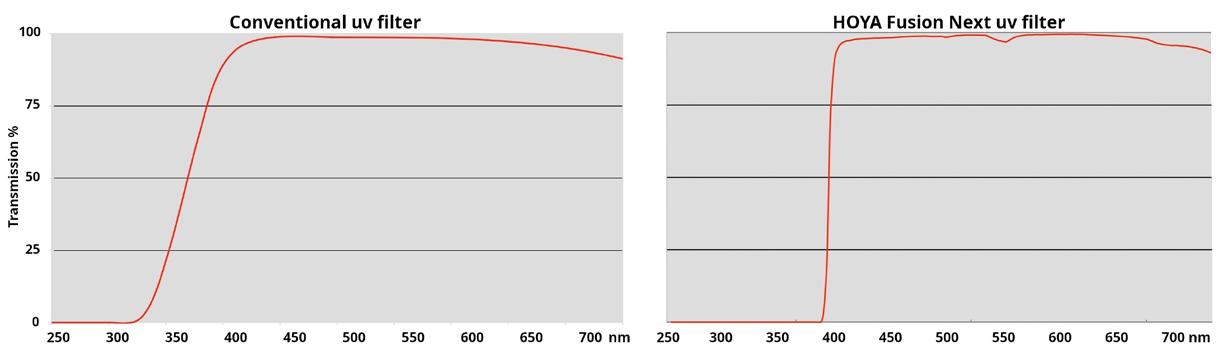
Figure 2. Transmission curves for standard and high quality UV filters.
In order to remove any residual UV light, a high-quality HOYA Fusion One Next filter in front of the camera sensor was required in some cases.
Most people take photos by letting their camera or phone automatically determine the exposure settings. This is harder than it sounds, because camera sensors and the human eye respond to light very differently—so the camera’s built-in algorithm must calculate the appropriate conversion based on current lighting conditions. Most cameras offer a mode dial (the “wheely thing”) that lets users select a preset for different scenarios, such as daylight, night, or overcast conditions.
This automatic approach becomes a serious problem when working with UV light sources. Camera sensors are extremely sensitive to UV wavelengths, while the human eye is essentially blind to them—the exact opposite situation. To make matters worse, UV light, particularly at shorter wavelengths, can cause severe eye damage even though you cannot perceive it directly. This is why you should never look directly into a shortwave UV bulb.
A Walk Back Down Memory Lane
Ever since collectors became interested in luminescent stamps, describing the intensity of fluorescence has been a hot topic. What is low, medium, and high bright fluorescence? Where does one category end and the following category start? That problem is not unique to stamp collecting; it is a problem in all scientific areas (“The search for a standard candle”) where standards are needed in order to compare results of different research groups using possibly different equipment.
In the 1970s, that question was addressed by a group of dealers and collectors researching the subject. The group comprised the “tagging luminaries” under the guidance of avid collector and stamp dealer Gene Paquette.5 The result was a set of three archival-quality dual paper sets, each set defining a “low” and “high” range of fluorescence for high, medium, and low bright fluorescence categories. This way, collectors had a tool to agree on the fluorescence strength of their stamps (unless they were simply interested in a “yes/no” answer).
Good luck if you can find one of those guides. Even luckier if it had been stored in total darkness so as not to degrade. While the cellophane envelope for this guide shows all the telltale signs of aging over almost 50 years, the paper samples are still pristine. As for the guide itself, the remaining samples have likely morphed into obscure collector’s items by now.
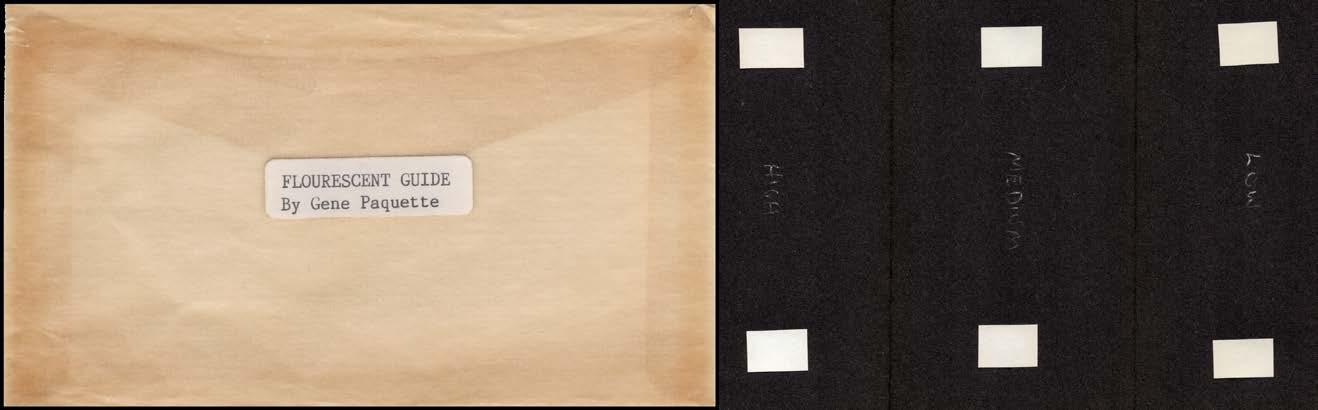
Figure 3. Fluorescent guide by Gene Paquette.
Figure 4 shows the Guide’s answer to long-wave UV (at left) and short-wave (at right) illumination using the Canon camera setup.
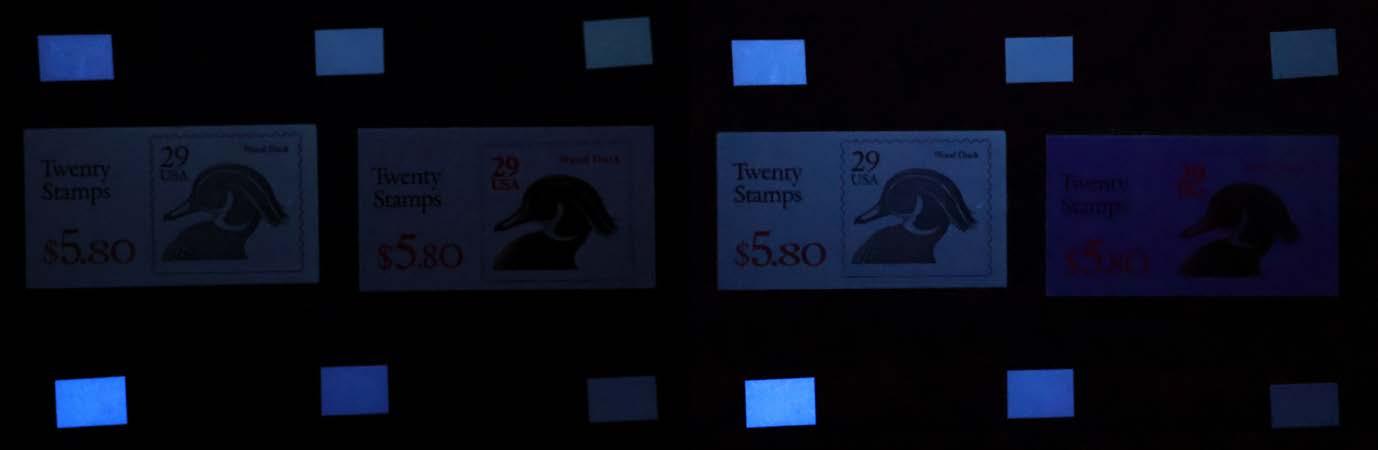
The papers react to both long-wave and short-wave illumination. It turns out that the two papers for low fluorescence (rightmost column) were glued onto the black cardboard the wrong way, the weaker paper is at the bottom, the stronger paper at the top. In Figure 4, the brightness of the sw image was enhanced to match the guide’s papers’ response to lw illumination. The high bright papers show some bluish glow, which booklet pane paper does not show, in general.
A BEP and a KCS booklet is placed in the middle of the guide. Notice that the KCS cover was printed with phosphorescent red dye.
Long-wave (365 nm) UV Irradiation
Photographing stamps under long-wave UV is a very low-light situation. This poses an immediate problem for all devices with small lenses as they collect very little light. Taking pictures under long-wave UV light is less of a problem when having a strong enough light source. The problem is to get pictures that correctly show the reaction of the stamp paper to the UV light the same way as the human eye sees it. That is not a simple task as everyone knows who has tried.
Most commercial UV lamps emit not only UV light, but also light reaching into the visible wavelength region. If this component is not filtered out, it will be reflected by the white paper. As camera chips are very sensitive from the blue into the UV wavelength region of the spectrum, this usually results in images with bluish hues that do not reflect the actual reaction of the stamp paper to pure long-wave UV light.
A related challenge involves white balance—a camera’s ability to identify what “white” looks like under a given light source. When we look at a white sheet of paper under almost any lighting condition, our brains automatically compensate and recognize it as white. Camera sensors have no such intuition; instead, they rely on built-in algorithms to estimate what white should look like in the scene. This can go badly wrong in low-light situations, where the lack of contrast—“all cats are gray in the dark”—causes the algorithm to miscalculate the white balance. For this reason, photographing under long-wave UV lighting typically requires manual adjustment of the key camera parameters.
Figure 4. The Paquette guide illuminated under lw (at left) and sw (at right) illumination.
Figure 5 shows images taken with the Panasonic and Tomlov cameras in automatic mode, without a UV filter in front of the lenses.
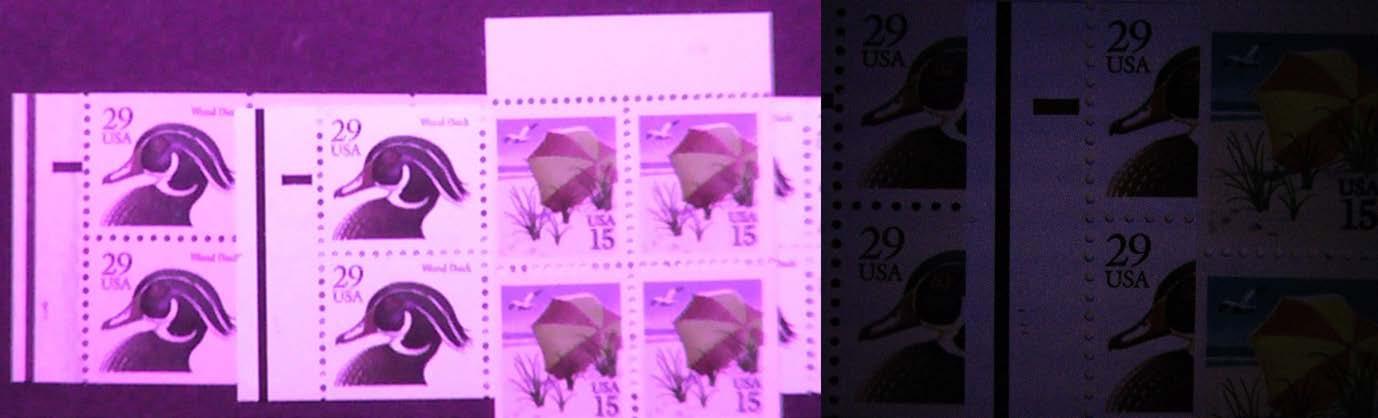
Both cameras “freak out” due to the short-wave UV light hitting the cameras. The Samsung tablet shows a completely bluish image while the Canon camera gets it reasonably close but badly overexposed. For all devices used, automatic camera settings fail to reproduce what the human eye sees.
Camera sensitivity can be set within its ISO settings range (which may also significantly change the white balance of the chip). The higher the ISO number, the better the sensor reacts to low-light conditions. This may come at the cost of more noise in the images, so large lenses are always much better than small ones like the ones in cell-phones or tablets. Additionally, an expensive UV filter was used if needed, which sharply cuts off any wavelengths below 400 nm.
For our task, we use the highest possible ISO settings and best white balance settings without resulting in excessive noise.
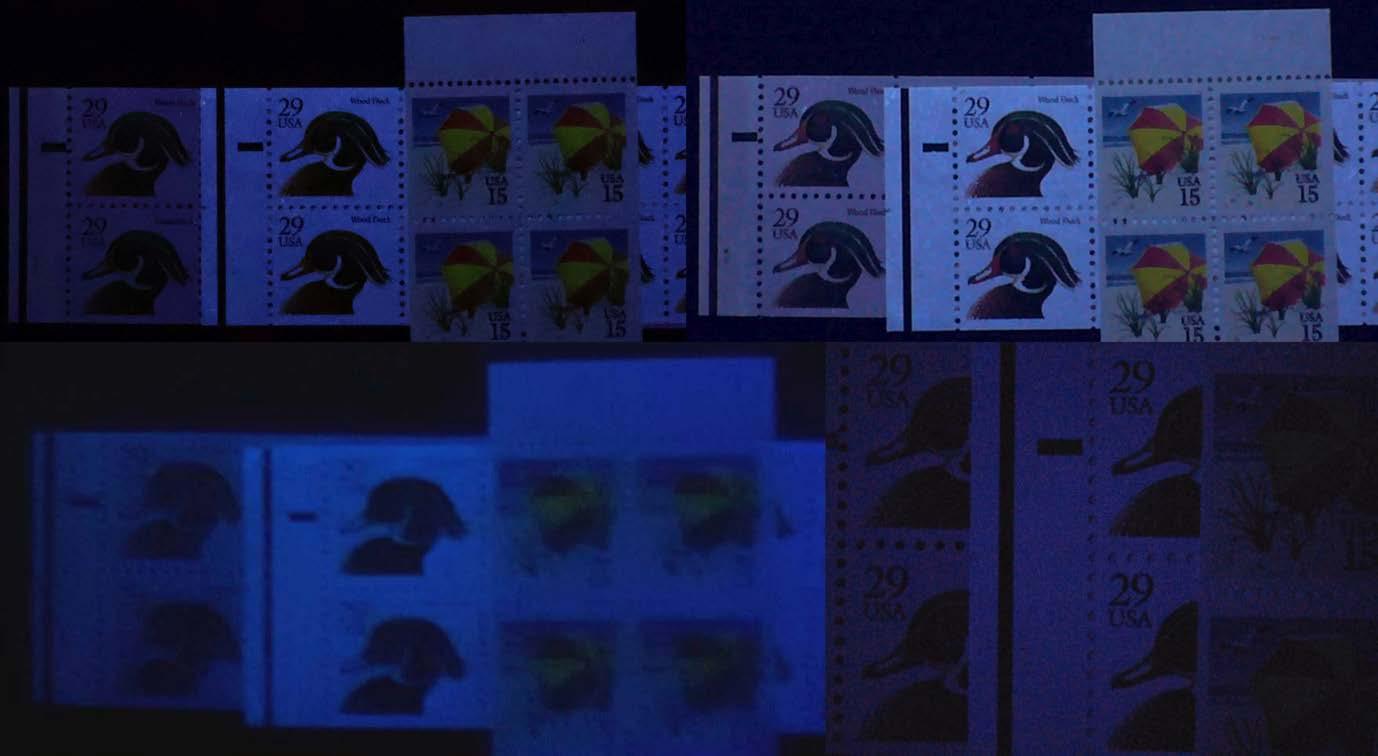
Figure 5. Long-wave UV image from the Panasonic camera and Tomlov microscope, both set to automatic.
Figure 6. Images taken with manual settings.
Figure 6 shows the results using manual camera settings.6
Top left: The Canon camera shows the best match with what the human eye sees.
Top right: The Panasonic camera is reasonably close but too bright overall.
Bottom left: The Samsung tablet can’t get rid of the overall blue hue and has serious problems with the camera focus.
Bottom right: The Tomlov microscope gets reasonably close to reality but shows strong noise in the image.
For all the devices used but the Canon system, extensive fiddling with the images could eventually lead to a reasonably close agreement with what the human eye sees. As the hassle to find the correct settings is more than annoying, all future articles will use the Canon system only. Easy camera settings, the absence of the usual lens distortion effects, and the high light collection factor were the primary reasons for choosing the Canon system.
Some Notes on Tagging
The various forms of tagging methods and brighteners in paper are a wide-open field that is mostly ignored by catalogs. A detailed discussion can be found in a reprint of a series of articles by Gene Paquette4. For our purposes, it is sufficient to provide a brief overview. There are three basic methods for tagging web rolls. The taggant is applied either before, during or after printing. At the time, the BEP used zinc orthosilicate in a suspension as taggant. Also known as Willemite (Zn₂SiO₄), it is a highly fluorescent mineral. Often Willemite rocks contain other elements that lead to all kinds of colored rocks and different glowing colors (or none at all) when submitted to UV light. For regular stamps, the BEP always used artificial Zn₂SiO₄ to “keep it purely green”.
Figure 7 visualizes the three basic methods of how a tagging substance could be applied. From left to right: 1. Before printing. 2. After printing. 3. During printing.
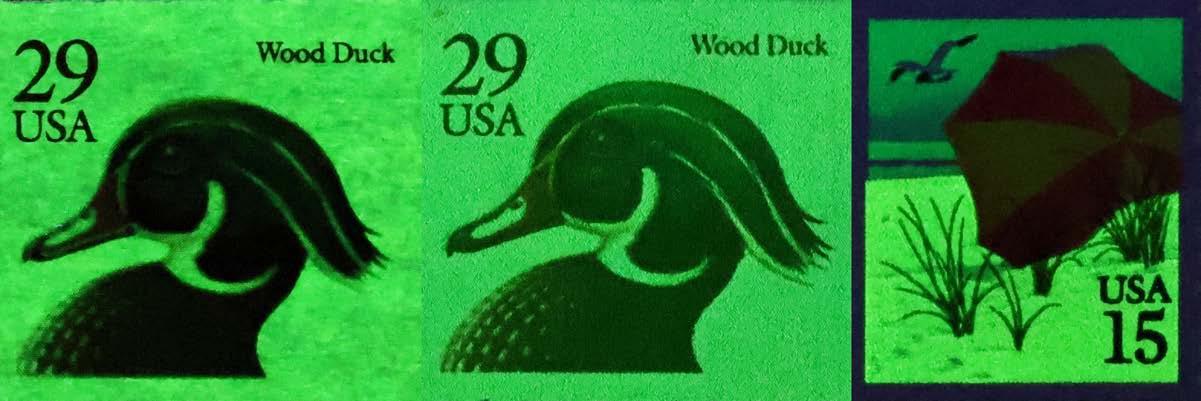
Figure 7. The basic methods of applying taggant to stamps.
1. Before printing (uncoated paper in our case).
With this method, the paper is supplied to the printer already with taggant, hence the label “Prephosphored paper”. The taggant is contained in the top layer(s) of the web roll only, so looking at the back side of a stamp will not tell anything about tagging. The paper structure often is somewhat rough so the pane will generally have a spotty or mottled appearance as the taggant is not uniformly distributed in the top paper layer(s).
The stamp shown is from a KCS booklet pane. Notice the “sharp look” of the duck as the design is printed over the speckled tagging.
2. After printing.
In this method, the taggant is applied to the finished stamp printing, before the web is perforated and cut. The taggant covers the entire web roll on top of everything, hence the label “Overall tagged”. Initially, it was feared that the abrasive nature of the taggant would degrade the perforation pins too fast, so the tagging method shifted to shape tagging, which in its most targeted form does not cover the perforation areas with taggant. The simplest form of shape tagging is a small or large rectangle covering the stamp design only.
The stamp shown is from a BEP booklet pane. Notice the “hazy look” of the duck as the smooth tagging is applied over the design.
3. During printing.
With this method, the taggant is a component of one or more specific color dyes. The method is often labeled “Embedded tagging”. Obviously any color dye must be transparent to the UV light and to the light produced by the taggant, so this method is limited to light colors.
The stamp shown is from a Beach Umbrella booklet pane stamp. The taggant is contained in the beach sand and to a minor extent in the background sky. The color dyes of the umbrella, bird and grass do not glow.
In theory, overall tagged stamps should glow over the entire stamp design (as the taggant is on top of everything), while prephosphored stamps will only glow in areas where the color dyes are transparent to the taggant as it is hidden under the printed stamp design. Coated paper should glow solidly as the taggant is spread uniformly while uncoated paper should glow speckled due to the paper surface roughness which leads to uneven distribution of the tagging substance.
Unfortunately in real life, various effects could make it difficult to differentiate the tagging methods (at least on mint panes and used stamps—there is always the chance that taggant is washed off when the stamps are soaked in water). As with the printing cylinders, tagging mats or cylinders would also show wear effects over time. The type of paper, varying amounts of taggant deposited, color dyes that are transparent to UV light and the greenish light generated by the taggant, and the age of the taggant itself can blur the differentiation. The key problem with overall tagging is the fact that the taggant is deposited as a fine layer on top of whatever it is supposed to cover. If the taggant does not stick sufficiently, it can easily be rubbed off. If the taggant sticks too well, it can migrate into the color dyes (or the paper itself) and be shielded from the UV radiation.
The Mystery Booklet
The two tagging methods used for the duck booklets would seem to be fully accounted for. By happenstance, one (misperforated) BEP plate 1111 booklet in the author’s collection does not follow the rules at all. Figure 8 shows an enlarged stamp design from the pane under short-wave UV light.
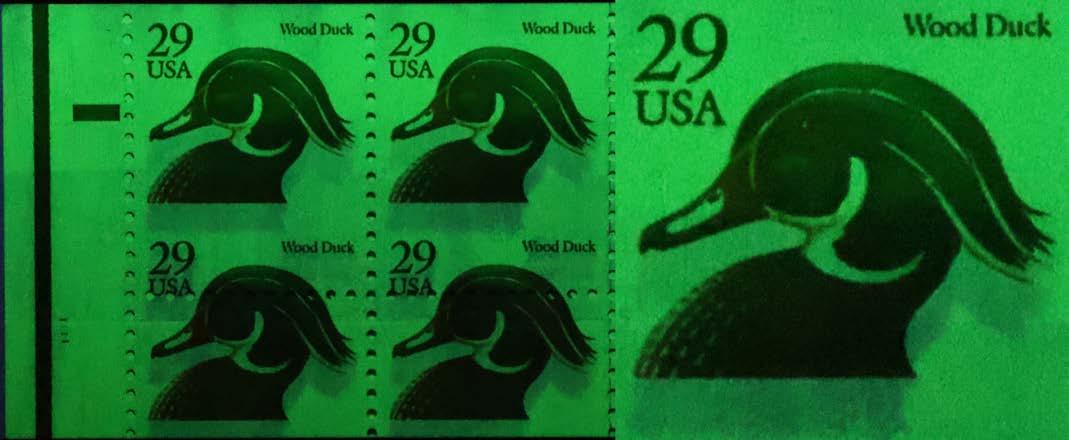
All stamps in the booklet show an “untagging ghost” in the form of the duck design. Due to what seems like a misregistration on the tagging cylinder, we see an untagged area matching the duck design. The untagged area is shifted down by several mm from the duck design area. The top part of the duck design shows the features of an overall tagged stamp (“hazy” appearance), while the bottom part of the duck design shows the features of a prephosphored stamp (“sharp” appearance). The simplest explanation would be that the overall tagging applied actually excluded the shape of the duck. If perfectly aligned, the result would be an overall tagged pane where the duck design appears sharp rather than hazy, matching the look of a prephosphored, coated pane. Was this booklet part of a small experiment in shape tagging to avoid the “hazy look” of the duck design?
Other explanations might be possible but they would have to explain the lack of tagging in the shape of the duck design only.
I have a plate 2222, 3222 or 3333 pane—Now what?
Table 1 shows that these three plates were used with both tagging methods. So if you sit in front of such a pane, which is it, and is the difference easy to spot?
For the duck booklet panes, the answer would be: On overall tagged stamps, all parts of the stamp glow, while on prephosphored panes, the duck design does not glow under long-wave UV. Unfortunately this criterion might sometimes be very difficult to verify as very little light is actually emitted from the overall tagged duck design.
A more reliable criterion is the appearance of the duck design—either sharp or hazy—as shown in Figure 6. The design on the KCS booklet pane is always sharp so this serves as the template for prephosphored stamps.
The Glow Tables
Tables 4 and 5 list the true reactions of the covers and panes for the various tagging combinations. Apparently many different paper and cardboard shipments were used to print the booklets, so there is a range of color shades within the booklet issue.
Figure 8. The mystery tagging.
Issued by Long-wave UV Short-wave UV (greenish glow)
BEP overall tagged Dull violet/brownish shades
BEP prephosphored Dull violet shades
KCS prephosphored Dull violet
Solid, “hazy” duck
Solid, “sharp” duck
Speckled, “sharp” duck
Table 4. Pane shades under long-wave and short-wave UV lighting.
Issued by
Long-wave UV
BEP Dead cover stock Dull violet shades
Short wave UV
No glow, light shades of violet
BEP Bright cover stock Yellowish or light violet shades Bright white glow, light shades of violet
KCS (plate K11111) Dark violet (outside coating)
No glow, dark violet (due to coating)
Table 5. Cover shades under long-wave and short-wave UV lighting.
Freaks and Errors
As with any booklet issue, there are various perforation freaks and errors on the duck issue. Panes exist with the horizontal perforation row shifted up or down by various amounts, up to shifts that create horizontal imperforate panes. Figure 9 shows an extreme downward shift. Such panes usually are described and offered in sales as horizontally imperforate. For the extreme booklet purists, the horizontal perforations just minimally touch the bottom design of the duck so the pane would not qualify as truly horizontally imperforate. You be the judge.
Foldover panes are known that create vertical pairs imperforated between the stamps (although the foldovers cut into the stamps so the purists again would not count them as true imperforated stamp pairs). No tagging omitted panes or panes with omitted color(s) have ever been reported.
Figure 9. Horizontal perforation row shifted to bottom.
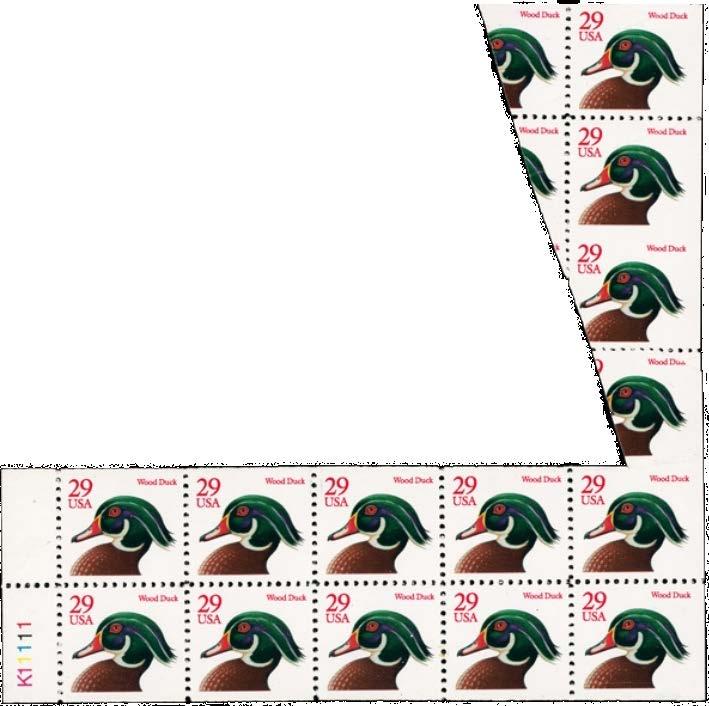
Figure 10. Foldover freak.
References
1. Dieter R. Kohler, "The Monthly Random Booklet," The United States Specialist, 93, no. 10 (October 2022).
2. Tomlov DM602 Pro, like Linkmicro LM249, is a clone of Andonstar AN249. Likely more clones exist (Chinese do not only copycat western gadgets). While many advertise a 24 megapixel camera and magnifications up to 1000 times, the real specs are much lower than that. The microscopes are also too insensitive to be useful with long-wave UV light.
3. Production and Procurement of Postage Stamps, hearing before the Subcommittee on Postal Operations and Services, Committee on Post Office and Civil Service, House of Representatives, 102nd Cong., 1st sess., June 5, 1991.
4. Gene Paquette, Luminescent Tagging on United States Stamps, BIA Reprint Series, no. 4. Downloadable from the Society's website.
5. Gene Paquette, "Fluorescent Guide," U.S. Educator Packet No. 4; with William Bayless, Alfred "Tag" Boerger, Wayne Chevery, and David Gronbeck-Jones.
6. Key Settings:
Canon: ISO 20000, f 5.6, 1/30 sec exposure time
Panasonic: ISO 1600 (max), night picture settings
Samsung: ISO 400 (max), night picture settings
Tomlov: ISO 400 (max), approx. 6–8 sec exposure time
Precancel Stamp Society
Interested in Learning More about Precancels? Request a copy of “Th e ABCs of Precancel Collecting” and also receive a sample copy of the PSS Forum, the Precancel Stamp Society’s monthly journal. Contact: Frank Bird III, 1095 Pinellas Point Dr South, Apt 352, St. Petersburg, FL 33705-6377. Email: promo@precancels.com.
Report
of the Executive Secretary
APPLICATIONS RECEIVED FOR FEBRUARY 2026
17654 John White, Cedar Park, TX 17655 James Prowant, Louisville, KY 17656 Larry Judah, Seminole, FL 17657 Richard Lawrence, Pacific Palisades, CA 17658 Micah Salb, Washington, DC 17659 James Repetti, Dover, MA
APPLICATIONS PENDING
17651–17653 NEW MEMBERS
17644–17650 REINSTATED
7340 Sherrill Burgess
12787 Cuthbert L. Scott III
15926 Martin D. Green 16729 Jason Dinger 16759 Dave Loving 16925 Jim Anniss 16979 Travis Eaione 17165 Keith Knutson 17206 Eugene Setwyn 17257 Thomas VanParys 17267 Steve Olson 17386 Steven Kok 17451 Lucky Stokes
17506 Michael Cortese 17516 Darryl Duke 17551 Frank Jamison 17593 Catherine Boyer RESIGNED
11306 Donald R. Levesque
USSS Membership Recruiting
We are getting ready for BOSTON 2026! At the USSS Annual Meeting show, and The Great American Stamp Show every year we hand out promotional copies of back issues of The Specialist and separately, a Membership Application form. We know these copies are widely circulated. Make a renewed “New Year's Resolution” and promote USSS membership! Request your own updated PDF “quadrafold” Membership Application via email from Bob Rufe: execsecretary@usstamps.org or USSS, Box 1602, Hockessin DE 19707-5602.

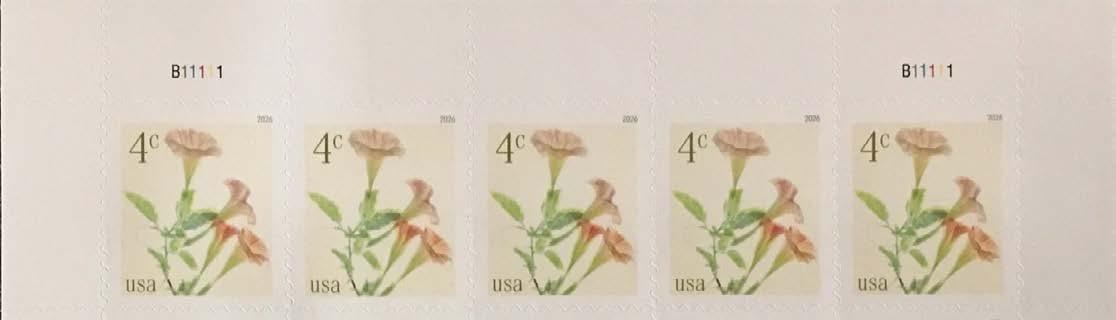
#???? 4¢ Angel Trumpets

Love Birds
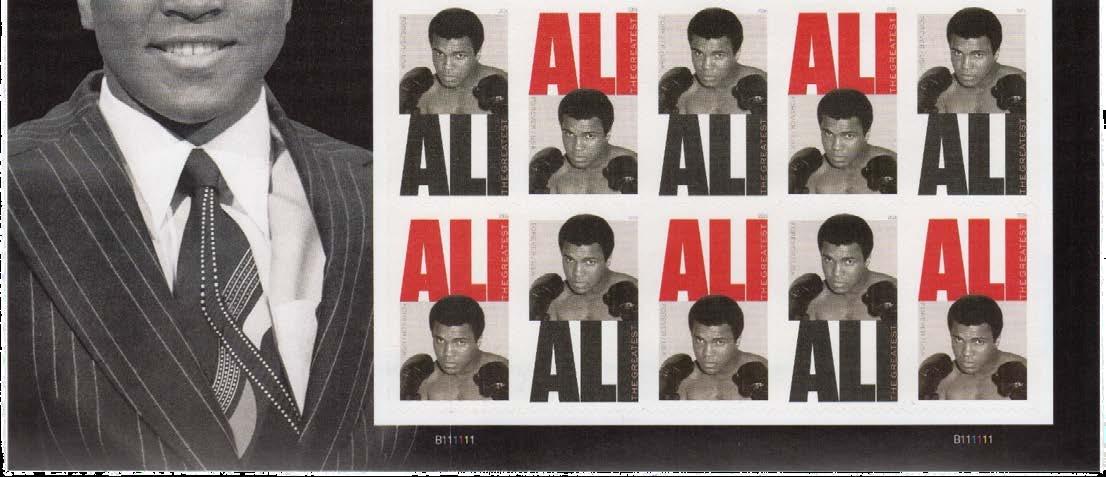
Muhammad Ali
3
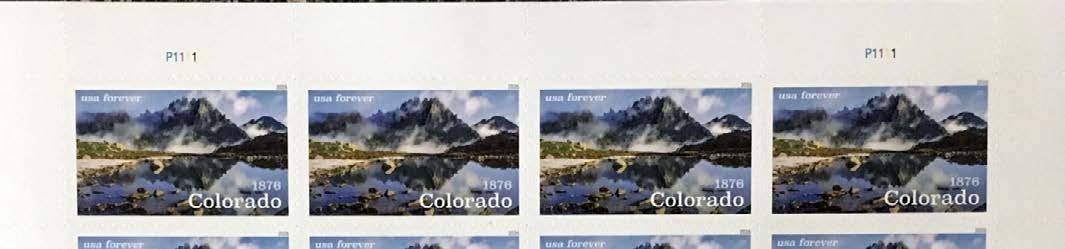
#???? Colorado Statehood P1111 UL UR LL LR 2r × 3c 1,2,3,4,5,6*
3
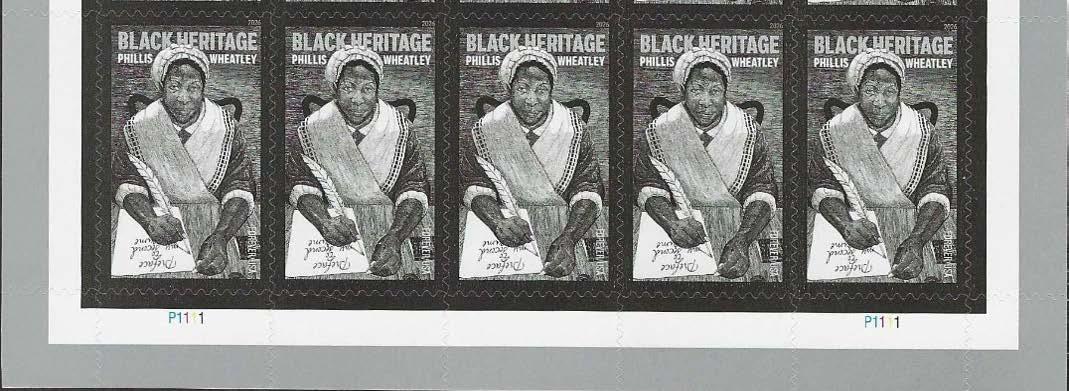
#???? Phillis Wheatley P1111 ‡ ‡ LL LR 3r × 2c 1,2,3,4,5,6*

3
#???? Year of the Horse B111111 ‡ ‡ LL LR 2r × 2c 1,2,3,4*
COORDINATORS: Members are invited to report their findings to the appropriate coordinator.
All issues through 1980
Sheet stamps after 1980
Kim D. Johnson
310 E N 3rd Street
Georgetown, IL 61846
Jim Cochrane P.O. Box 2009
Great Bend, KS 67530
Coil stamps after 1980 Jill Ambrose PO Box 54622 Cincinnati, OH 45254
Booklet stamps after 1980 Michael O. Perry P.O. Box 1194 Rainier, OR 97048
This monthly report is used to update the Durland Standard Plate Number Catalog.
Classified Advertising
USSS MEMBERS are entitled to two free ads of up to 40 words each year. Other ads are 10¢ a word, payable in advance. For 6 insertions, take a 5% discount; for 12 insertions, take a 10% discount. Ads with [1154] at the end expire with this issue. Make checks payable to USSS. Send copy and check to The United States Specialist, 9038 E. 25th Dr., Denver CO 80238. The Editor strongly prefers to receive ad copy by email: editor@usstamps.org. Emailing ads saves substantial time for you and the Editor and avoids errors.
WANTED
SEEKING USS INDEPENDENCE STAMP similar to Scott #4703 USS Constitution stamp. Bernard Wojnowski; 64 Mariner Rd., Vineyard Haven, MA 02568. [1157]
WANTED - NAMW TEXAS POSTMARKED covers. Member APS, IPDA, USSS, APNSS. Email: htputney@gmail.com [1162]
WANTED FOR MY COLLECTION: SCOTT #102 to #111, 1869 Special Printings (re-issues). Please— only nice examples without major faults. Must be face-up bright and attractive. PF or PSE Certs only! Strong buyer—Rob Lehmann (240)422-0118 or diecasttoys@yahoo.com [1163]
WANTED, 1960 WINTER OLYMPICS (#1146) archival material, announcements, promotional items, EFOs, cachet artwork, rare FDCs, unusual usages and destinations, other ephemera, please send information or scans to LBallantyne@att.net [1154]
WANTED—MAY 29, 1964 POSTMARKS OF 5¢ John Kennedy 1246 on cover. Searching for small town postmarks for this stamp on cover. This was a nationwide first day. Henry Scheur, P.O. Box 5351 Madison Square Station, New York NY 10159 [1154] FOR SALE
IF MY STAMPS ARE NOT VF/XF, SUPERB, I sell in packets. Upgrade now at low prices. U.S.A. and Norway with no faults, centered and clean. Request list—Reed Roholt, P.O. Box 1006, Beaver, UT 84713. Satisfaction guaranteed. [1160]
GET A COMPLETE SET OF U.S.A. OVERRUN Countries Scott Catalog numbers 909 through 921. That’s 13 stamps. All are XF/SUP MNH nicely centered no faults. Catalog value is $3.75+, but in hoping to find more customers, I am selling for $1.00+SASE. Along with your stamps you will receive a price list of mint and used stamps at same savings. Reed Roholt, P.O. Box 1006, Beaver, UT 84713 [1156]
THESTAMPNUT.COM IS LOADED WITH over 15,260 listings and as always > Better Prices, Better Customer Service, Better Order Processing,
Better Packaging and Flat Rate Shipping too! > From Scott# 1 to recent issues ~ MNH or Used All Formats * APS, USSS, IPDA * 845-791-0950 [1154]
PREXIES OUT-OF-THE-MAILS COLLECTION available – 17 uses of Prexies on cover, domestic and foreign – would make an excellent single-frame exhibit. Also available, many unusual and seldom-seen Prexie uses, domestic and foreign, odd shapes and sizes, 1st, 2nd, 3rd class uses, booklet panes and $1 uses on cover. Send request for illustrated PDF lists to Leonard Piszkiewicz, lenp@pacbell.net. [1154]
Index of Advertisers
Armen Hovsepian (www.USatFACE.com)...........................................172
Mountainside Stamps, Coins and Currency (www.mountainsidestampsandcoins.com) 172
American Plate Number Single Society (www.apnss.org) ......................................................152
Boston 2026 (www.boston2026.org) 173, 192
Precancel Stamp Society (www.precancels.com)............................................188
Richard Friedberg (www.friedbergstamps.com) ................................ 167
Robert A. Siegel Auction Galleries (www.siegelauctions.com) .....................................170
Scott A. Shaulis (www.shaulisstamps.com) .....................................172
The United States Stamp Society (www.usstamps.org) 150, 176, Covers
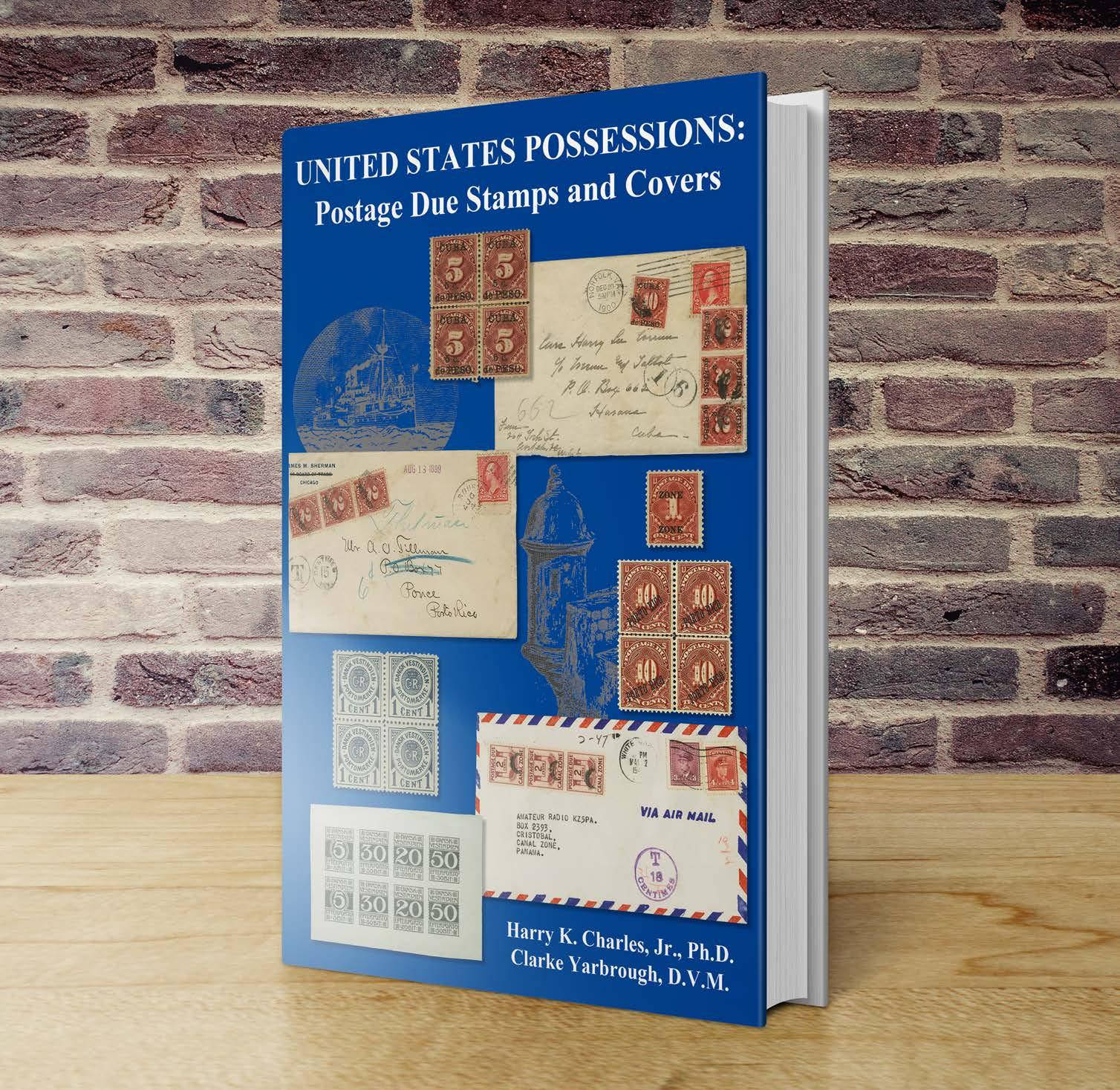
United States Possessions: Postage Due Stamps and Covers presents the story of Postage Due stamps used in the major possessions or territories of the United States. Written from a stamp collector’s perspective, the authors address the challenge of identifying the myriad of Possession Postage Due stamps by concentrating on stamp identification while also covering the Postage Due issues of Cuba, the Danish West Indies, Puerto Rico, the Panama Canal Zone, the Philippines and more.
In addition to the text, the monograph contains over 300 illustrations and five appendices which provide information to supplement and further explain key points. In many cases, the information presented is new or, if previously reported, organized in a new manner to help the reader understand the complexity of the Possession Postage Dues.
United States Possessions: Postage Due Stamps and Covers
Hard cover, 352 pages, 6-in × 9-in.
Member Price: $39 US postpaid Non-Member Price: $43 US postpaid Purchased online at: www.usstamps.org/store/ or by mail to: Executive Secretary, P.O. Box 1602, Hockessin, DE 19707-5602

United States Stamp Society
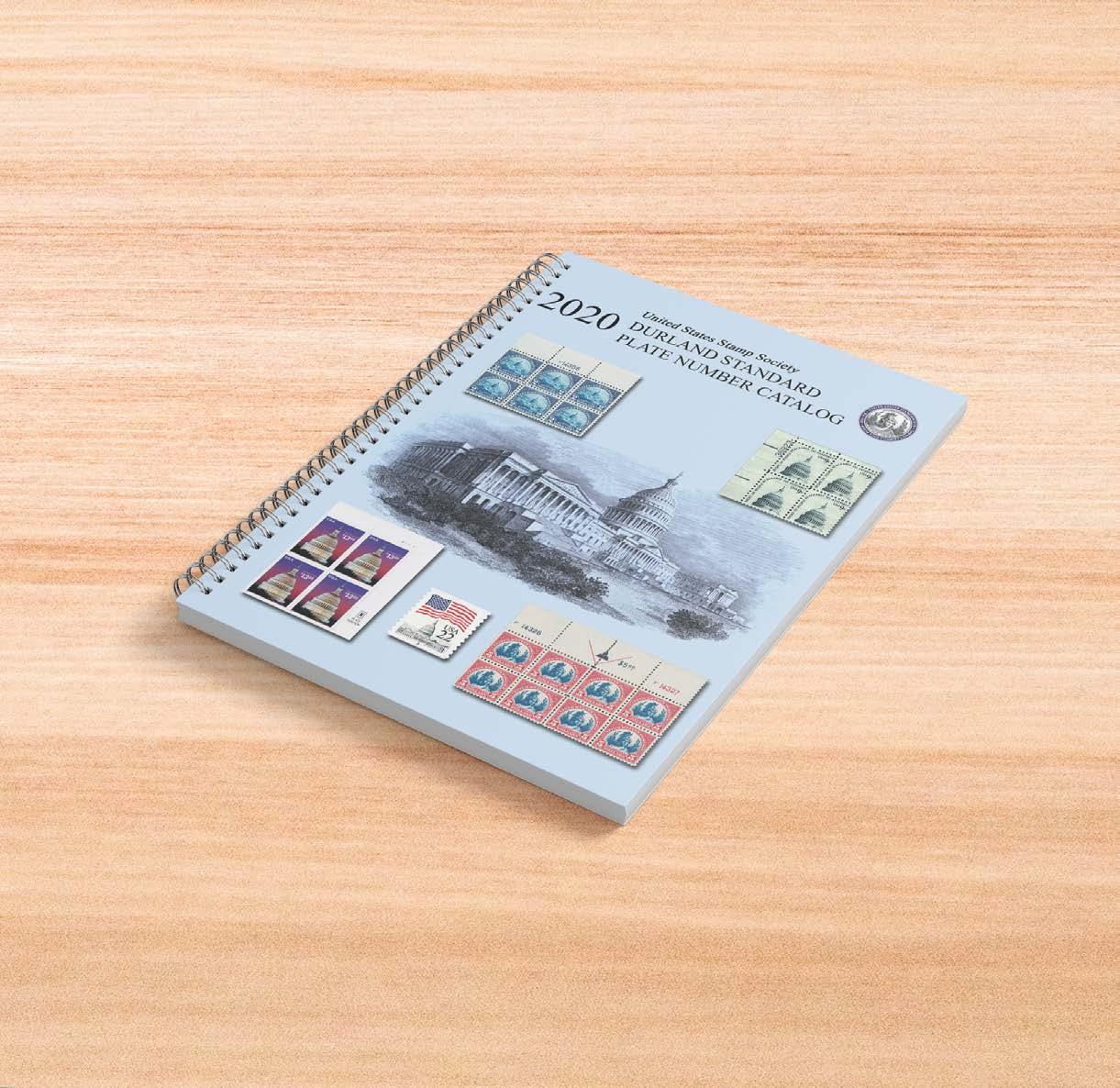
The 2020 edition the Durland Standard Plate Number Catalog provides the most comprehensive research source for plate number information on United States postage and revenue stamps, including tax-paid revenue stamps, with listings for overprinted Possessions postage, Allied Military government stamps and other back-of-the-book stamps, dummy and test stamps, MDI "Blue Cover" booklets and partial plate numbers on booklet and coil stamps.
2020 Edition of the Durland Standard Plate Number Catalog 448 pages available in Spiral Bound format.
Member Price: $40 US plus shipping Non-Member Price: $45 US plus shipping
Order Online at: www.usstamps.org/store