– June 16-22, 2026

David Feldman International Auctioneers
Office 1-800-470-0457 info@davidfeldman.com www.davidfeldman.com / ~ /
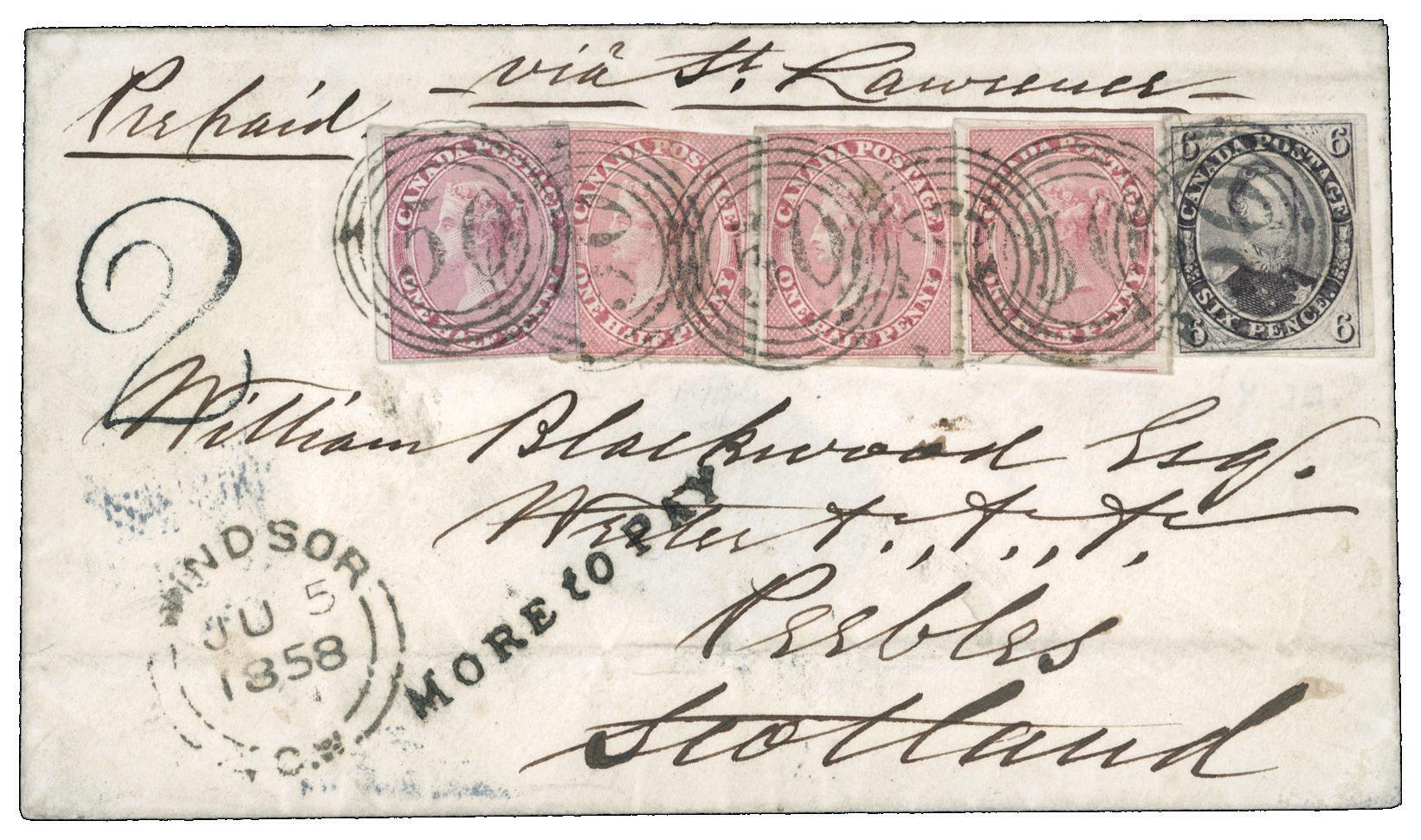
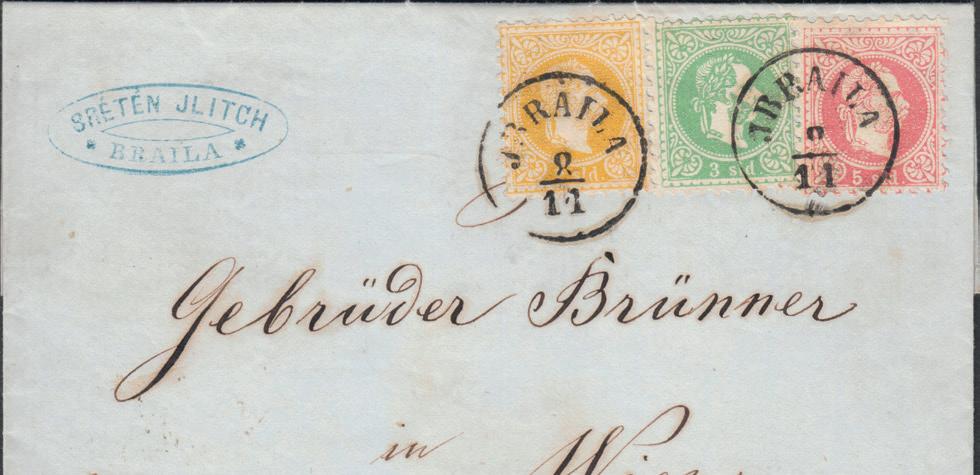
Canada: 6d reddish-purple on very thick soft wove paper with four ½d rose on medium hard wove paper, all on cover from Windsor 5/6/1858, endorsed “via St. Lawrence”. The letter missed the St. Lawrence route and was sent via Hamilton, carried on Cunard “Africa” via New York and Liverpool (with PKT. LETTER 20/6 handstamp on reverse) to Peebles, Scotland. An exceptional cover with an elusive usage of the 6d reddish-purple on very thick soft wove paper.
Your contact in the US: Dr. Vivek Chopra vivek.chopra@davidfeldman.com
Take part in our Spring-Summer 2026 Auction Series and explore a carefully curated selection of single stamps and collections from around the world, suited to collectors at every level.
Visit us at Booth 232 at Boston 2026, where our specialists will be available to discuss your material and assist with consignments.

Editor & Advertising Manager: Tony Bard
Telephone (WhatsApp): +44 7977 989812 editor.ccphilatelist@gmail.com
Proofreader: Richard Colberg
Publications Committee:
John Barwis RDP
Robert Gray
Matthew Healey
Daniel M. Knowles
Robert P. Odenweller RDP (member emeritus)
Executive Secretary and Librarian: Andrea Matura collectorsclub@collectorsclub.org
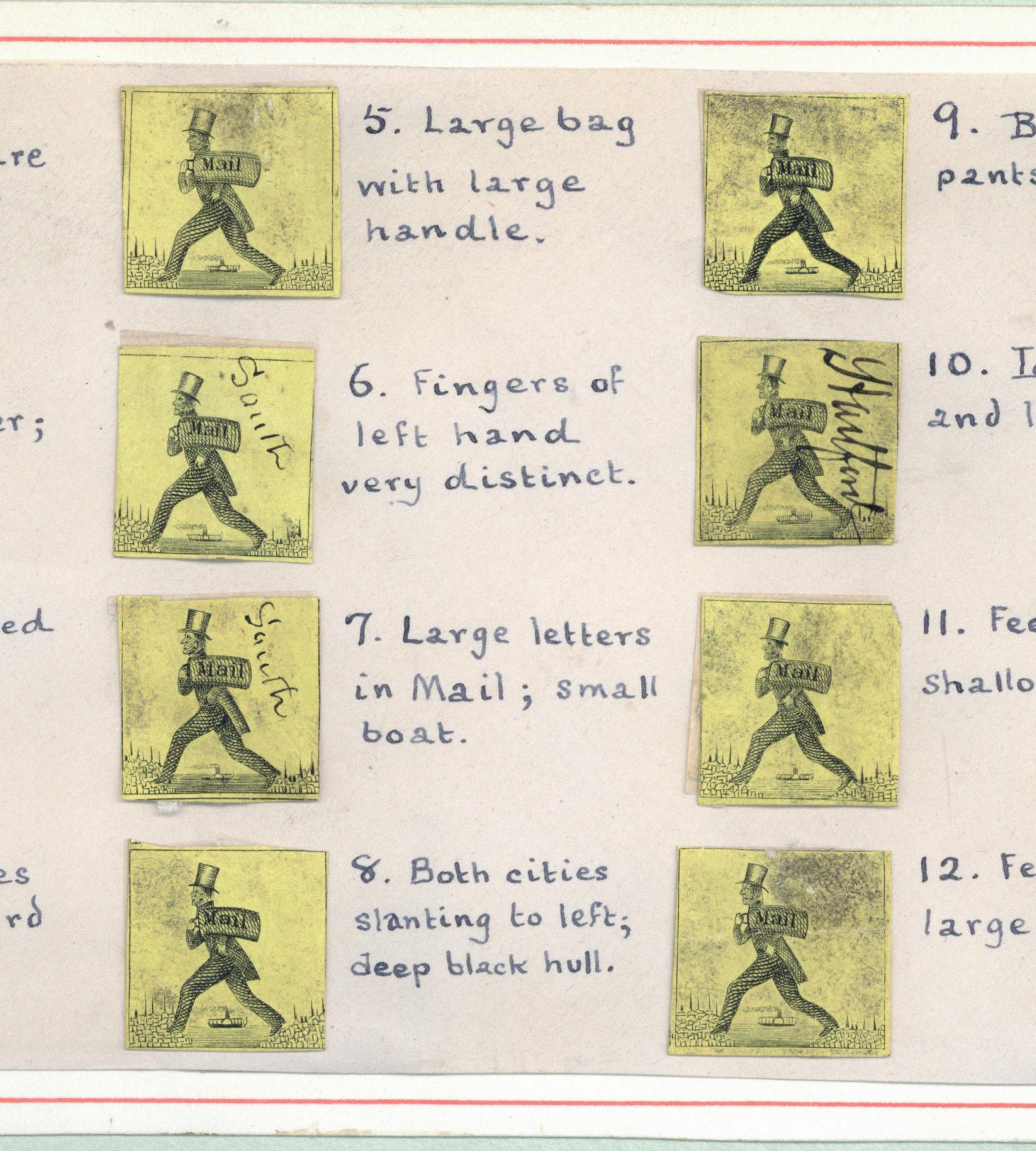
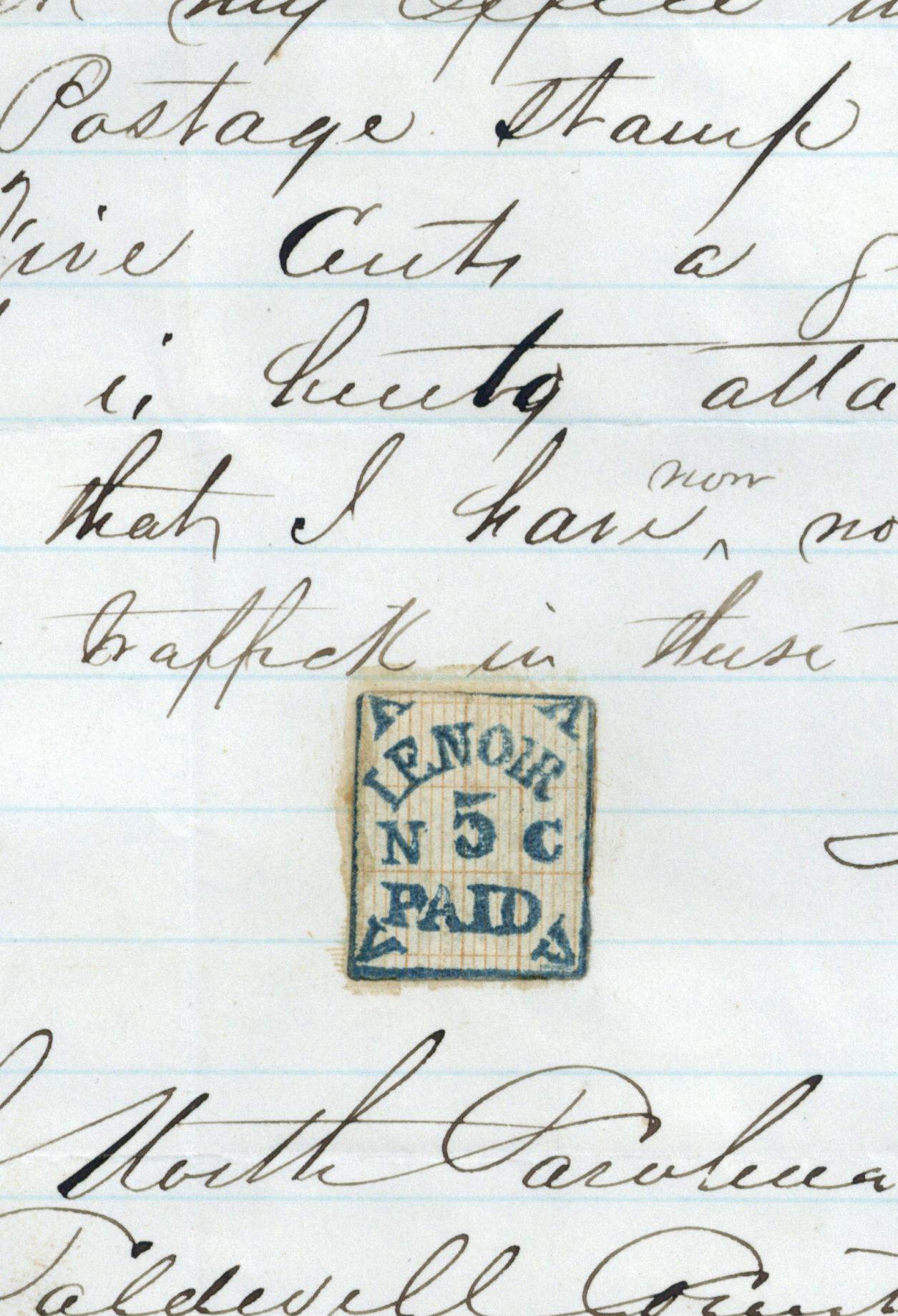
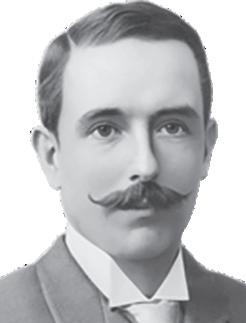
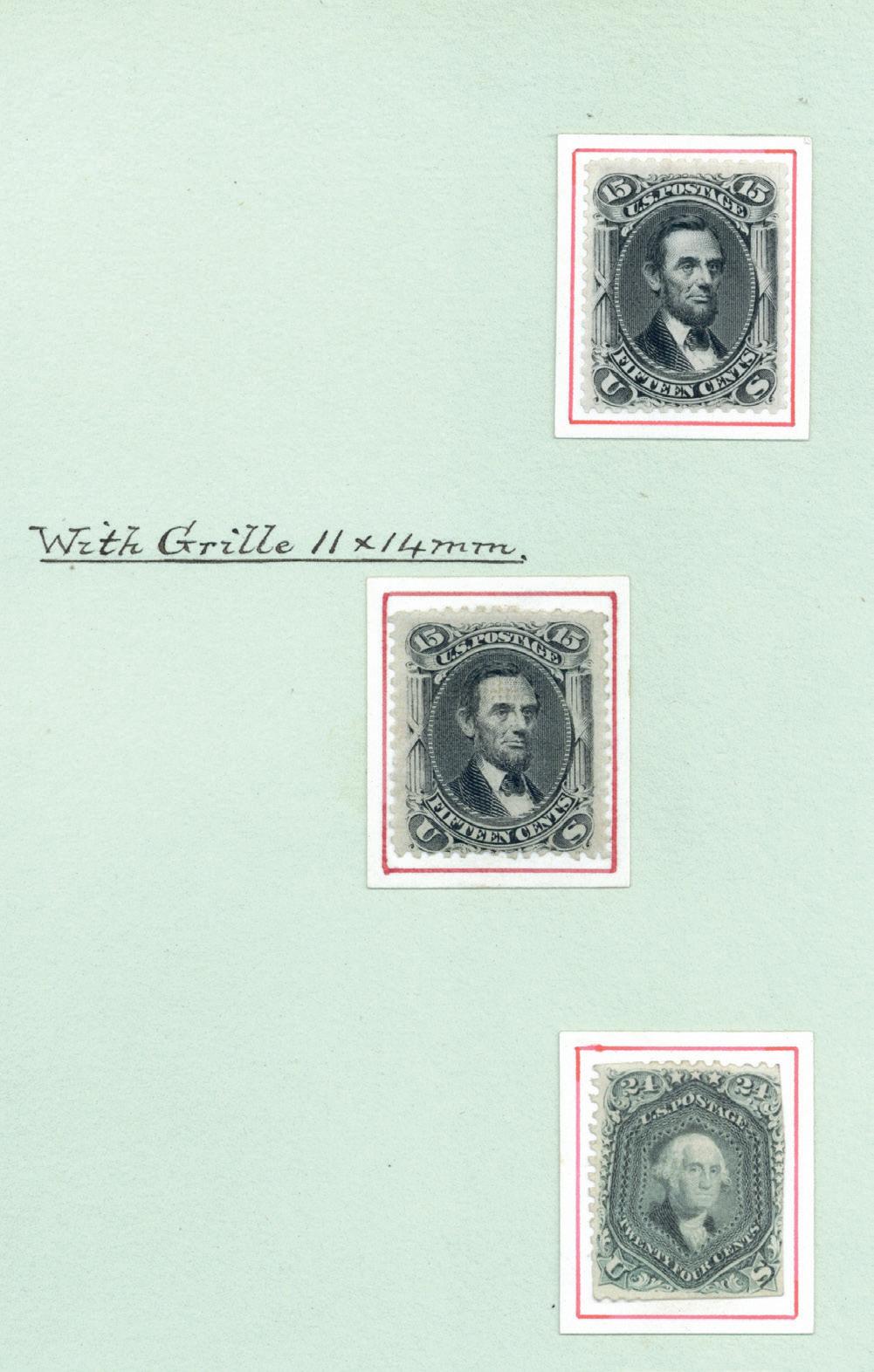
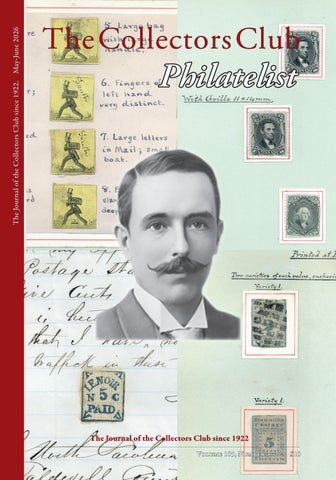
Front cover: Thomas Tapling with a selection of pages from his US and Hawaii collections: (clockwise from top left) Hartford Mail Route position types; the Lincoln 15c Z grill; Hawaiian Missionaries; the Lenoir Confederate postmaster’s provisional. See Richard Scott Morel’s article, “The Tapling Collection: Digitizing the US Sections of a Philatelic Time Capsule”, on page 137.
Guidelines for submitting articles for publication in The Collectors Club Philatelist are available from the Editor.
The Tapling Collection: Digitizing the US Sections of a Philatelic Time Capsule
New York to Vienna Via West Africa:
Florida Arsenal and the Mount Vernon and Chattahoochee Post Offices 1828-1845
The Collectors Club Philatelist (ISSN 0010-0838) is published bimonthly in January, March, May, July, September and November by The Collectors Club, 58 W 40th St. Mezzanine, NEW YORK NY 10018. A subscription to The Collectors Club Philatelist is included with dues paid by members of The Collectors Club. Subscription price for nonmembers in the United States is $70. Prices for foreign addresses and/or other classes of mail are higher depending on actual cost; consult publisher. Subscriptions for outside the United States should be paid in U.S. funds drawn on a U.S. bank. Back issues $9, including postage. For a complete list, write the publisher. Claims for undelivered issues will be honored only within six months of the date of publication. Beyond that, replacements will be provided at the single copy price. Periodicals class postage paid at New York, New York 10001 and additional offices. Office of Publication: The Collectors Club, 58 W 40th St. Second Floor, NEW YORK NY 10018. Copyright 2026 by The Collectors Club. All rights reserved. We do not give implied or other consent for copying for more than personal use.
Indexed in PhiLindx by E.E. Fricks and included in the article index of the American Philatelic Research Library and the Global Philatelic Library. The opinions and statements contained in the articles are those of the authors and not necessarily those of The Collectors Club, its officers or staff.
POSTMASTER: Send change of address to The Collectors Club

58 W. 40th St., Mezzanine, New York, NY 10018 (212) 683-0559 www.collectorsclub.org info@collectorsclub.org
The Collectors Club is open Monday through Friday, 10 a.m. to 5 p.m.
President
Vice President
Secretary
Treasurer
CLASS OF 2026
Vincent Cosenza
Joan Harmer
Kathryn Johnson
Behruz Nassre
Steve McGill
Robert Gray
Vincent Cosenza
Matthew Healey
Roger S. Brody RDP
GOVERNORS EMERITI
Mark Banchik
Roger S. Brody RDP
Stephen Reinhard
CLASS OF 2027
Alan R. Barasch
Jere Dutt
Andrew Kelley
Larry Lyons
Robert G. Rose
IMMEDIATE PAST PRESIDENT
Lawrence Haber
CLASS OF 2028
David Fritz
Robert Gray
Matthew Healey
Daniel J. Ryterband
Bob Gray
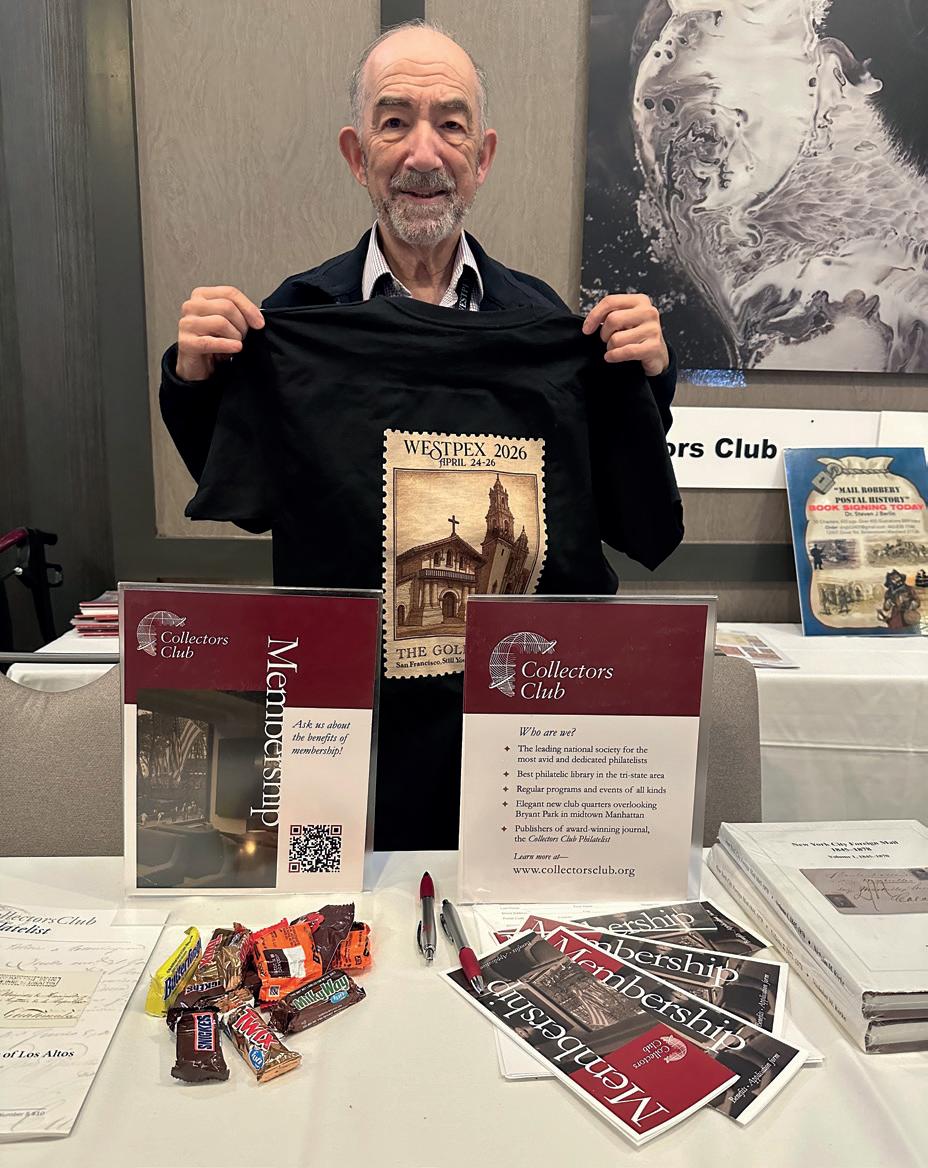
As the photo shows, I indeed bought the T-shirt.
What a privilege to be at such a remarkably well-run philatelic show. Our thanks to the volunteers at WESTPEX who made all this happen and to the WESTPEX chairman, Collectors Club Board member, Behruz Nassre.
The Collectors Club came to WESTPEX and entered 22 Exhibits with a total of 97 frames. We not only came in force but won as well. 13 of the 23 exhibits won Large Gold, which speaks very well to the quality of the Club’s exhibits . Collectors Club member, James Mazepa won WESTPEX Grand Award with Poland: Warsaw Postal Administration-First Issues of a New Country November 11, 1918, to June 1919 .
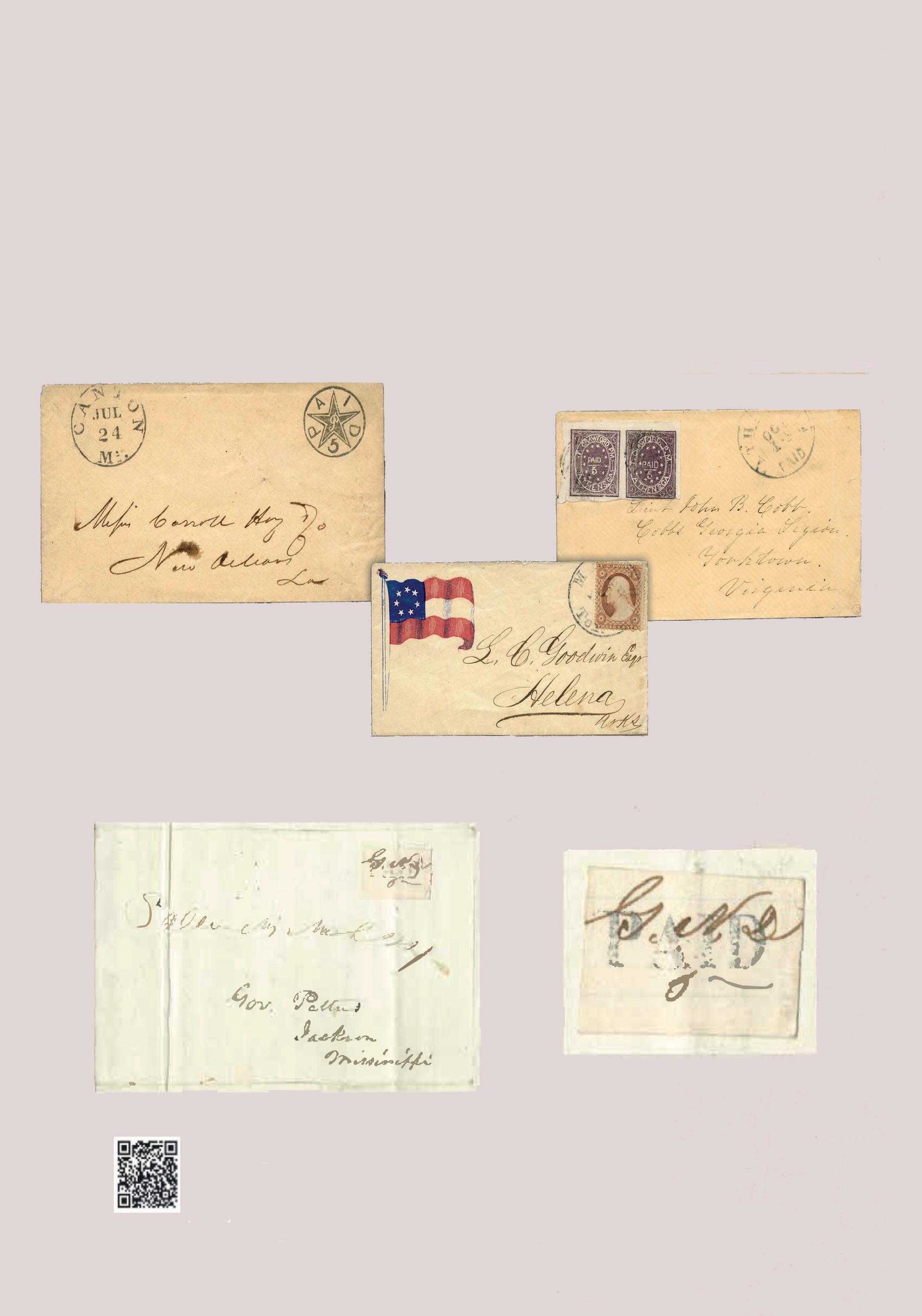
Daniel Knowles, Collectors Club member, won WESTPEX Grand Award – Single Frame Exhibit for Mail Handling Across the Union and Confederate Lines Following Creation of the Confederate States of America: May 24, 1861, through August 26, 1861 . In addition, two Club members’ exhibits were in the Court of Honor exhibits, Mark Horne with A Miscellany of Rarity and Gus Clark with Hawaii Provisional Govt Overprints, April 1893-February 1894 .
The joint dinner with the Collectors Club of San Francisco was held at the Shalizaar Restaurant serving an amazing Persian dinner. Once dessert was served, Daniel Ryterband, Collectors Club Board member, gave a five-star presentation on the US Zeppelin issue.
The following day, club member Fredrick Lawrence presented at WESTPEX, showing Alice in Wonderland, California , focusing on new information about the now dead post office in the now ghost town, Wonderland, California.
Because the Club was a sponsoring society and brought more frames than the other sponsors, WESTPEX provided a hospitality room. There was not a lot of attendance but the members who did stop by had ample opportunity to talk philately and enjoy some social time. Others were perhaps at the exhibits, talking to dealers, or just relaxing elsewhere.
The Club’s table was staffed with a couple of volunteers, and we could have had a few more there. Having a table is important because it affords a focal point to attract potential new members and to inform and assist our visiting members. Mark Banchek dropped off several bags of candies and nuts, Steve Berlin stayed for hours as did I, along with my wife Ilona.
The next big show is BOSTON 2026. If you are attending, please stop by The Collectors Club table, if only to rest your feet or if you are inclined, perhaps to take a turn at the table. Membership growth is important both to the Club and to philately as a hobby.
Whether you are working the table or talking informally, please encourage avid and active collectors to join.
See you at BOSTON 2026!

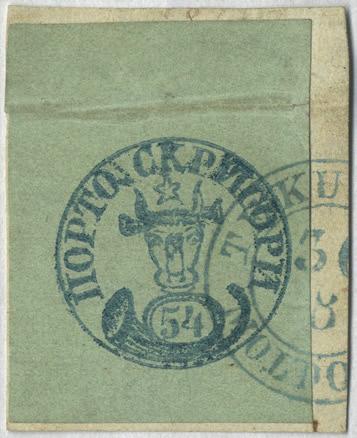
Provenance : “Cihangir” (Corinphila sale, 2000)






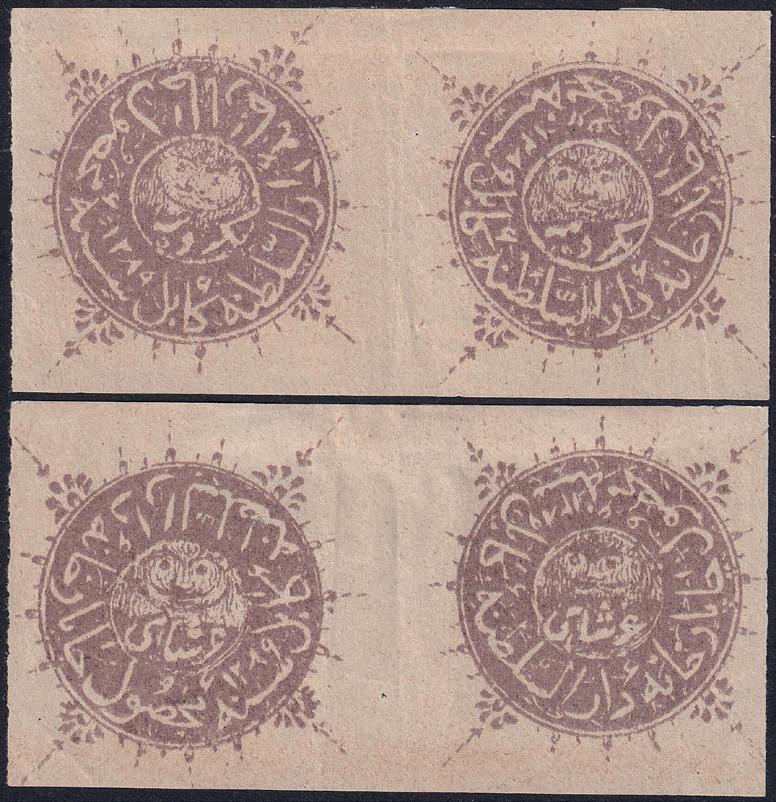


Provenance 1 Rupee:
Philippe von Ferrari (1926)
Corinphila sale 49 (1963)
Major Adrian Hopkins MC. (1988)
Corinphila sale 77 (1988)
Horst Dietrich (2003)
Provenance 6 Shahi: Hadlow’s Auction (1893)
Philippe von Ferrari (1926)
Corinphila sale 49 (1963)
Corinphila sale 77 (1988)
Horst Dietrich (2003)

Afghanistan – The Best Classic Collection Extant – The CAMELLIA PLC Collection Österreich – 20. Jahrhundert –Die Sammlung CAMELLIA PLC Austrian Levant and DDSG – The Prof. Vodrazka Collection Mail From Denmark to Foreign Destinations During the Skilling Period 1854–1874 – The Jørgen Jørgensen Collection (part II) The Danish War 1864 – The Jørgen Jørgensen Collection Romania Outbound Mail 1853–1875 – The Eddie Leibu Collection (part II) Worldwide Postal History – The Morton R Laby Collection Madagascar – Its Postal History Seen Through Times of Change and Turbulence – The Robert Mustacich Collection Albania, Ottoman and First Independence Period – The Zvi Salant Gold Medal Collection (part I) South Polar Mail Great Britain – Mint Victorian Stamps – Gems from the ‘Château du Soudun’ Collection (part II) Postal Communications from the UK to Italy 1840–1874 – The ‘ELMA B’ Collection British New Guinea & Papua Lakatoi –The Mark Robinson Collection Australia States: New South Wales, Queensland & South Australia – The ‘HONITON’ Collection (part II) Early New Zealand Postal History – The ‘FARMER’ Collection The Dr. John Pitts Collections Postgeschichte des Kantons Luzern (Teil II) Die Postgeschichte von Chur und des X. Postkreises Pro Patria – Die Sammlung Hansruedi Keller Sitzende Helvetia ungezähnt 1854/62 (Strubel) – Spezialsammlung Abarten- und Plattenfehler der Strubelausgabe
Provenance :
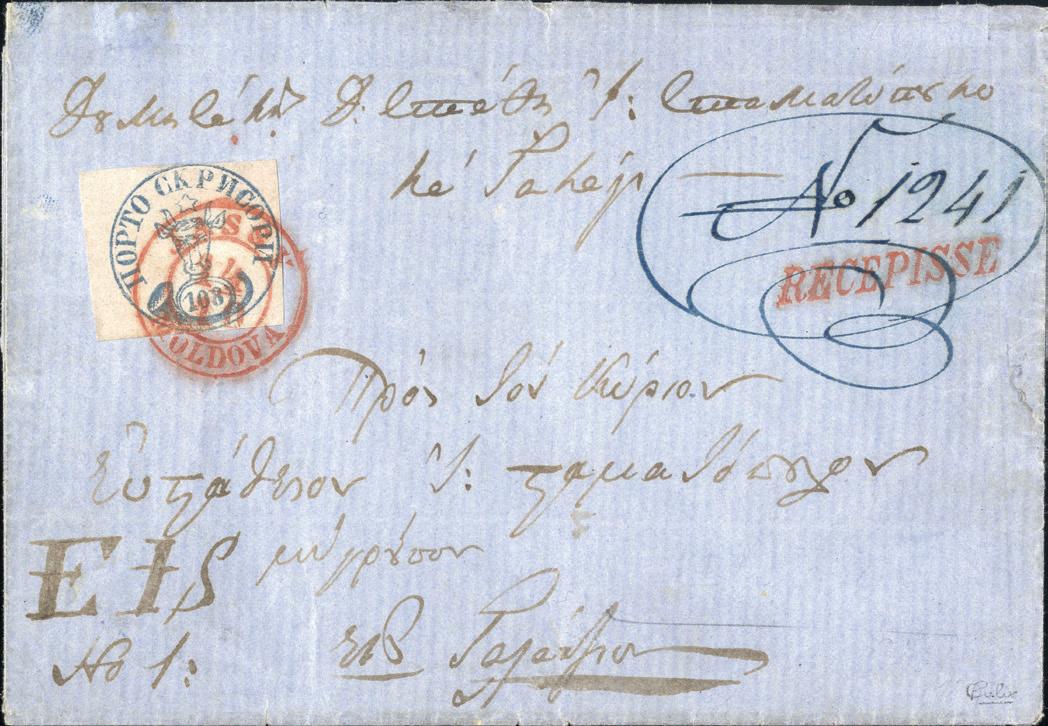



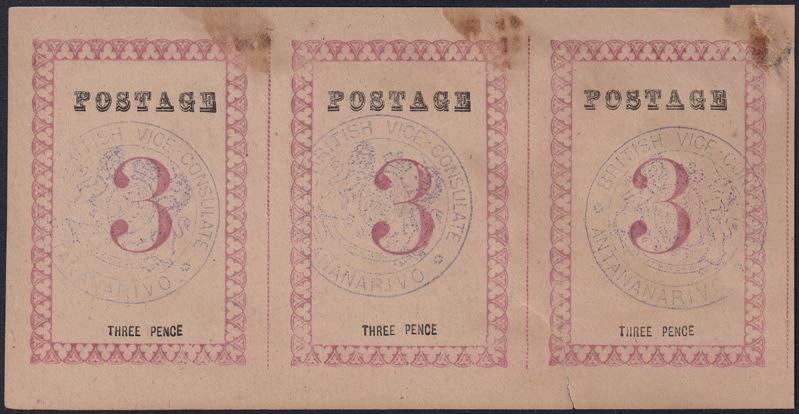

Provenance : Paul Mirabaud (1900) Ernst Zumstein (1908) ERIVAN Collection
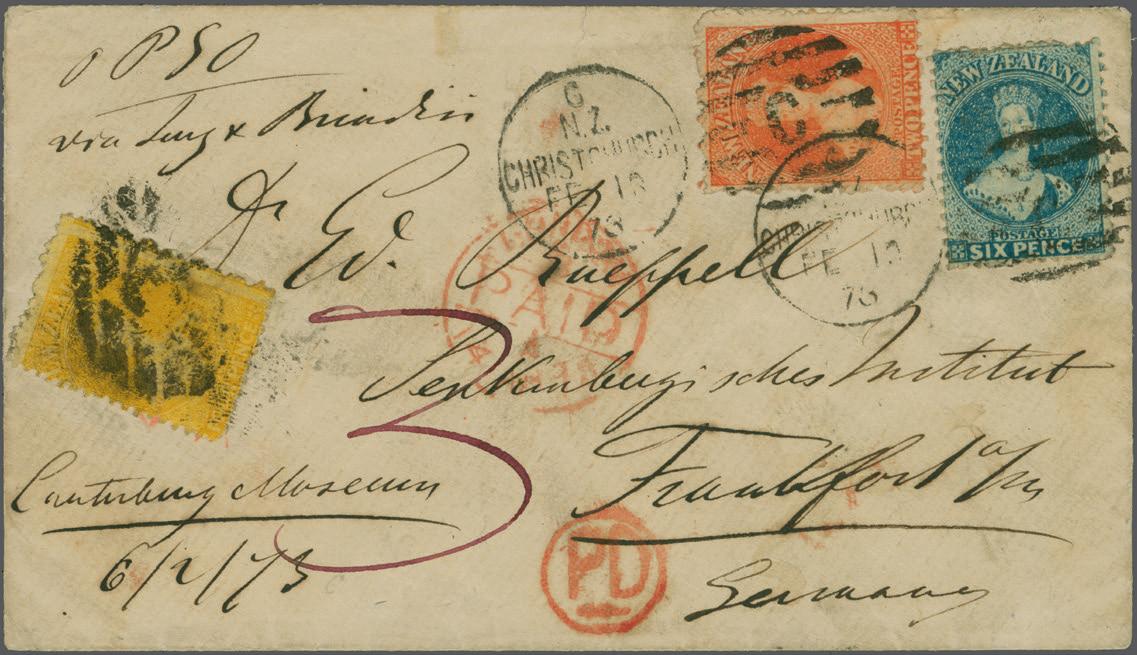




State-of-the-art Presentation: Separate ‘hard bound’ Auction Catalogues for ‘one country’ or ‘single owner’ are our speciality.
Specialised Expertise: Thanks to ProFi, our industry-leading experts provide definitive insights into provenance, rarity, and value for every consigned lot. For Great Britain and Switzerland, we leverage the exclusive Karl Louis Card Index and Corinphila Auktionen Card Index.
Order auction catalogues now! Or visit www.corinphila.ch
“The British are Coming!” But This Time We’re Bringing Gifts!
Tony Bard
Well,at least this particular Brit will be there, and he is bringing a gift of philatelic friendship to one and all for Boston 2026. When my wife and I visited Boston a couple of years ago, we did what we invariably do when travelling to a city for the first time (it was my second time in Boston, but the less said about my stop there in 1972 the better), we did the food tour. Which was great, from a taste point of view. The only slight indigestion caused was the endless viewing of sites where you bested the British!
Now, I don’t take such historical face-slapping too personally, as I doubt that my forbears in 1775 had even heard of the Colonies, and were far too busy trying to make ends meet in rural Mitteleuropa to even care about the historical events unravelling in the New World, if they even knew such a place existed.
Rather, as a gesture of my continuing support for the ‘Special Relationship’, I have negotiated an exclusive for The Collectors Club Philatelist. This issue announces the forthcoming release of scans of the United States, Confederate States and The Hawaiian Islands sections of the world famous Tapling Collection in the British Library. These will be uploaded to the Internet Archive during Boston 2026. With luck, I will also be publishing a limited edition book containing all of the Tapling pages from the USA and Hawaii sections, to be available at the show (the Confederates volume will be next in the publication sequence). I am advised that this will be the first time that the complete pages from any section of the Tapling Collection have ever appeared in print.
My first interaction with the Tapling Collection was hugely impactful. My own stamp collecting journey began at my school stamp club, and was honed by a visit to see the Queen’s Collection, on the only occasion that it was ever publicly displayed. But going to the British Museum (where the Tapling Collection was previously housed) and actually being able to handle an exhibit was, in itself, shockingly unexpected. The ability to pull out the frames of treasures, marvel at their contents and then slide them back again just added to the experience. Plus, unlike Her Majesty, Tapling collected Indian States, which were my “thing”. Specifically, Tapling had “Cashmere” circulars, so he became my idol.
Accordingly, all these decades later, it is doubly satisfying to have the opportunity to firstly publish Richard Morel’s article in this issue, and secondly to be able to produce a book celebrating Tapling’s gift for those of us who, still, like the physical as much as the virtual element of philately. Moving on from Tapling, I am also delighted to include articles from Cheryl Ganz, unsurprisingly covering an aspect of her zeppelin interest. Gary Loew does a deep dive into every conceivable strand of research relating to a well-traveled first day cover, while Tom Lera looks back at the postal history of the short-lived Florida Arsenal.
On a serious note, The Collectors Club Philatelist is proud of its tradition of publishing articles of record. So when an article ‘s conclusions, analysis or interpretations are contested by a number of respected specialists, it is imperative to publish a response as promptly as possible. I refer in this instance to the “Letter to the Editor” appearing in this issue on page 172.
Richard Scott Morel Curator, The British Library Philatelic Collections
This paper publicly inaugurates a major digitization project undertaken by the British Library Philatelic Collections to make the Tapling Collection of worldwide postage and telegraph stamps freely available online. At the end of May 2026, the United States, U.S. Locals, Confederate States, and Hawaiian Islands material will be launched on the Internet Archive, to coincide with Boston 2026 and the forthcoming America250 commemorations.
The Tapling Collection is globally renowned for its concentration of philatelic rarities, errors, and varieties, with particular significance for United States philately. Assembled by Thomas Keay Tapling and bequeathed to the British Museum in 1891, it is the only major nineteenth century worldwide stamp collection to survive intact. Until now, however, the collection has been accessible to researchers only through on-site consultation at the British Library.
Thomas Keay Tapling: Collecting, Structure, and Intent
Born in 1855 at Kingswood House in Dulwich and educated at Harrow and Trinity College, Cambridge, Thomas Keay Tapling was called to the Bar at Middle Temple in 1880. Following his father’s death in 1882, he abandoned his legal career to assume control of the family firm, Thomas Tapling & Company. Under his management, the Gresham Street carpet-manufacturing business was transformed into a highly profitable supplier of home furnishings. He entered politics in 1886 as Conservative Member of Parliament for Harborough, but philately remained his primary intellectual pursuit.
Tapling began collecting stamps at the age of ten and, by 1881, had been elected Vice-President of the Philatelic Society (later the Royal Philatelic Society), London. His financial independence enabled him to collect comprehensively rather than selectively, and he was widely regarded as a systematic collector who preferred to acquire major collections in their entirety [Ref. 1].
Among his principal purchases were the collection of William Edmond Image, noted for its United States material; the European collection of W. A. S. Westoby; and Major Edward B. Evans’s Mauritius holdings. Further acquisitions included collections formed by Henry Oxenden Weare, Edward Chauncy Luard, Victoriano Gregorio de Ysasi, and Marcellus Purnell Castle. Tapling also exchanged material with leading European philatelists, most famously acquiring an unused 1847 Mauritius two‑pence Post Office from Philipp von Ferrary [Ref. 2]. His stated ambition was to obtain every variety in unused condition wherever possible, leading him to advertise internationally for material such as the 1850 “Sydney Views”.
During the mid-1880s, Tapling acquired 100 red Morocco leather-bound albums from Frederick Adolphus Philbrick for the final arrangement of his collection. In 1886, he further refined its structure through the purchase of a substantial portion of the Caillebotte collection for £5,000 (2026 purchasing power $750,000) [Ref. 3]. On October 29, 1889, he willed the Collection to the British Museum, intending it to form the foundation of a national philatelic collection. His will stipulated that the Collection must never be dispersed or sold and that it should remain accessible to organized philatelic scholarship, supported by a further bequest of £1,000 (2026 purchasing power $179,000) for its mounting and arrangement [Ref. 4].
Institutional Arrangement and Curatorial Practice
Tapling died of tuberculosis on April 11, 1891, aged thirty‑five. His collection entered the British Museum under the care of the Department of Printed Books, at which point only a small proportion had been written up.
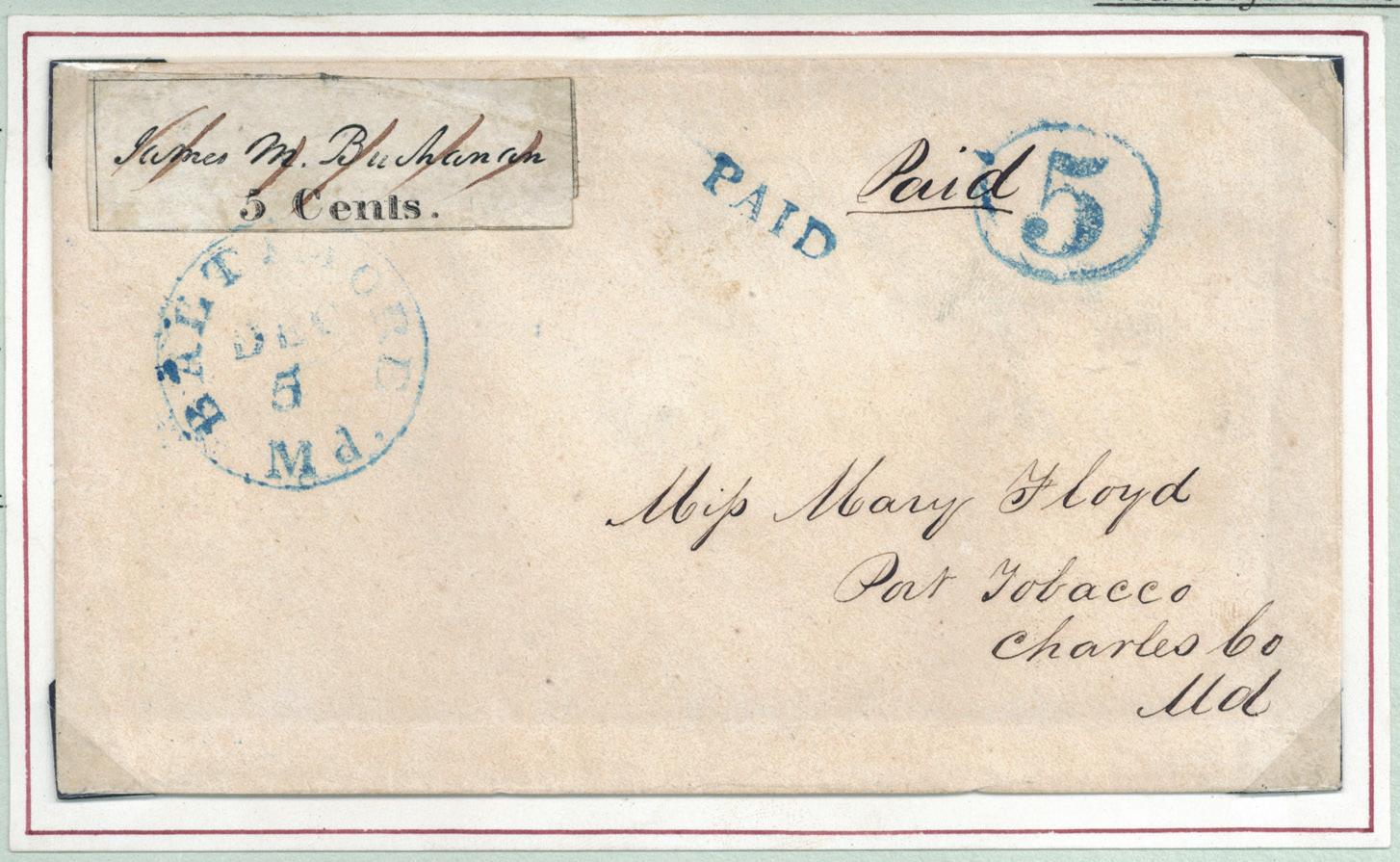
1846 Baltimore, MD, 5c black on white postmaster’s provisional, on cover to Charles County, MD, tied by the BALTIMORE / Md.” datestamp.
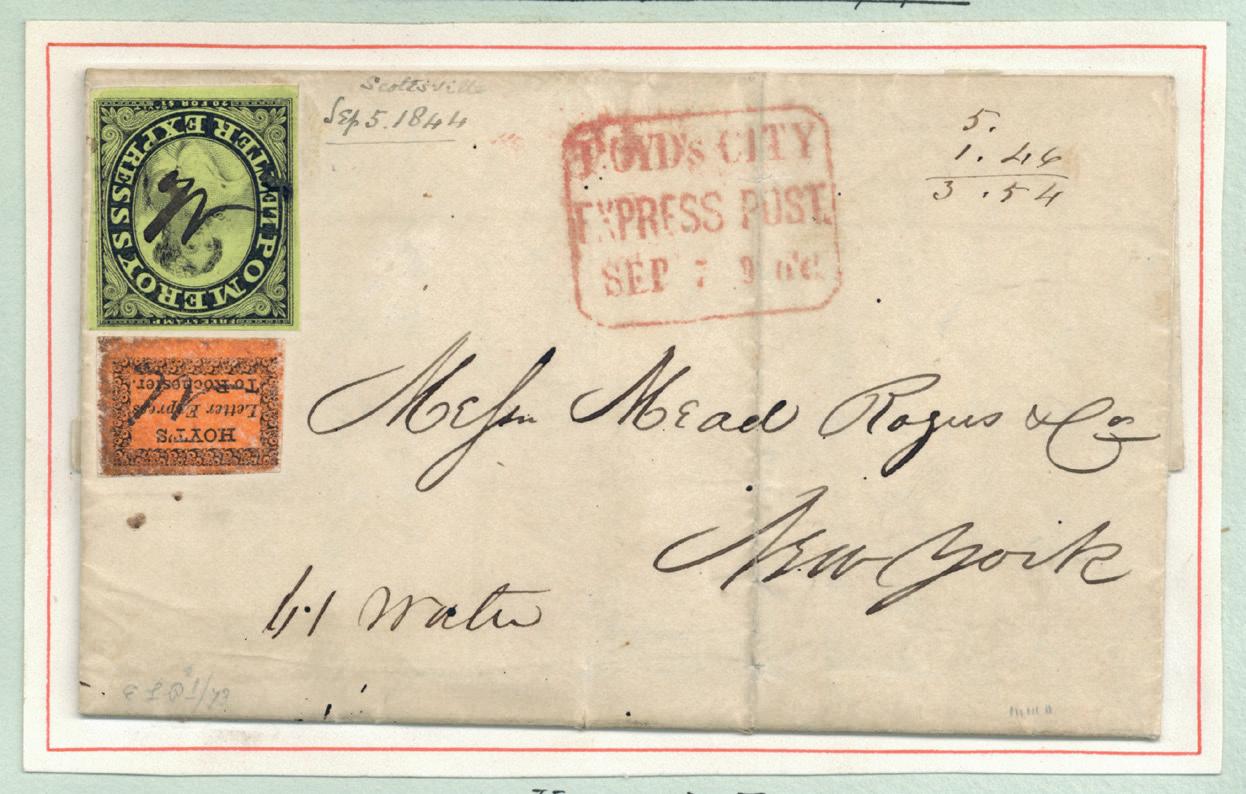
September 5, 1844, cover from Scottsville, NY, to New York City bearing Hoyt’s and Pomeroy’s Letter Express stamps. The cover was delivered by Boyd’s City Express two days later.
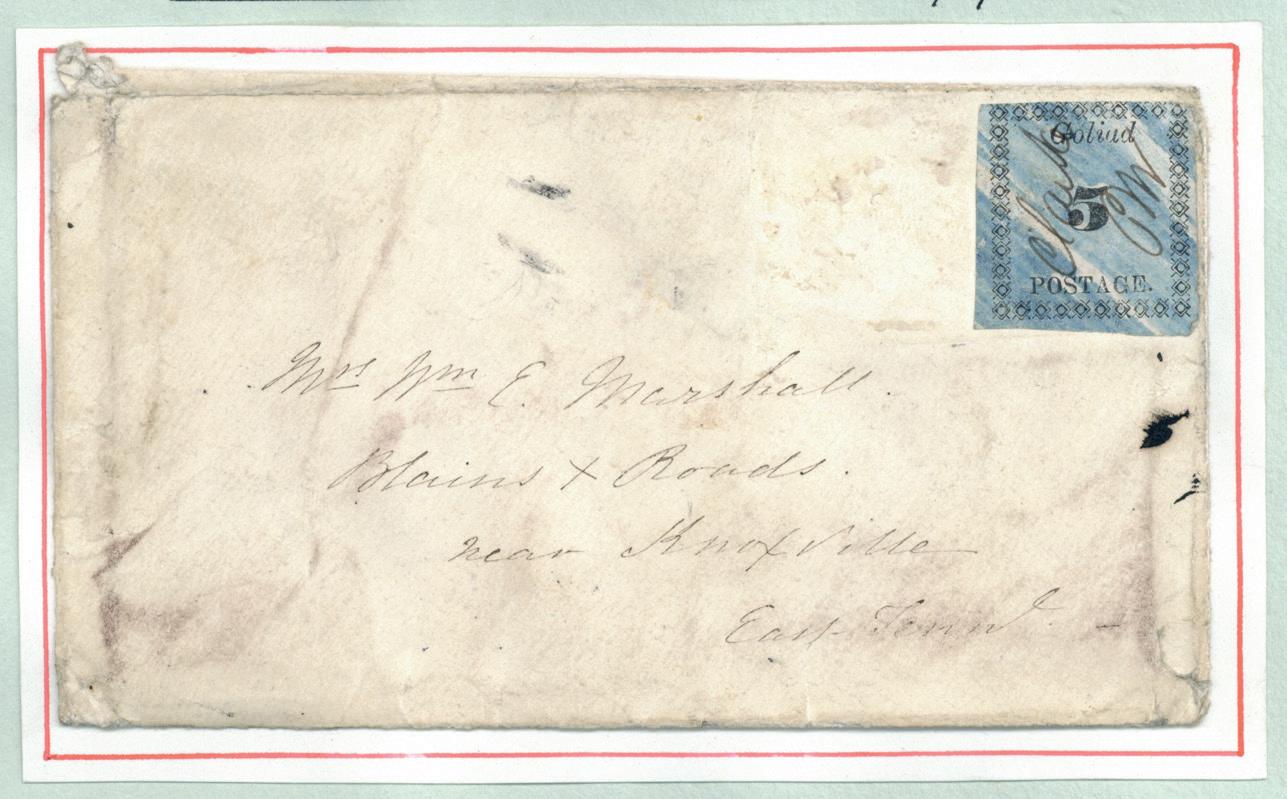
1861-62 Goliad, TX, Type 1 5c Provisional with blue ink wash applied to the paper. This provisional was issued by the Goliad postmaster J. A. Clarke, and his signature was used as a method of canceling the stamp.
In response, the Museum’s Trustees appointed Edward Denny Bacon as Philatelic Advisor in May 1892. Bacon, an established professional philatelist and later President of the Philatelic Society, London, worked part-time over seven years to arrange, mount, and document the Collection, completing the work in 1899. From 1895, he was assisted by Jane Elizabeth Hamilton, responsible for the mechanical work of mounting the material [Ref. 5].
Bacon implemented the Collection’s physical arrangement originally envisaged by Tapling. Each stamp was hinged on white card with a red border and arranged chronologically by date of issue, with essays, proofs, and non-postal material placed at the end of each section. Countries and issues were treated as coherent units of study rather than as accumulations of examples [Ref. 6].
Bacon’s biennial reports document this work between 1892 and 1899, from early work on Mauritius, Hawaii, and the British North American colonies through to Great Britain, the West Indies, and wider imperial holdings. In the mid-1890s, emphasis shifted towards large-scale mounting and physical arrangement, including extensive United States material, with detailed writing‑up deferred until the final phase [Ref. 7].
During the arrangement process, numerous gaps were identified. As the Museum lacked funds to acquire additional material, Bacon supplemented the Collection using his own resources and appealed publicly for donations through The London Philatelist. Contributions received between 1892 and 1899 were systematically integrated into existing sections, with donors identified directly on album pages [Ref. 8].
From Page to Public: Exhibiting the Tapling Collection
From the earliest stages, public exhibition formed an integral part of Bacon’s work on the Tapling Collection. As sections were completed, selected material was exhibited in the King’s Library of the British Museum from October 1893 onwards, with displays rotated and publicly announced in the philatelic press. These interim exhibitions served both to satisfy public anticipation and to document the Collection’s progressive organization. Material from the United States, completed between November 1895 and May 1896, was first exhibited to the public in June 1896, providing an early example of how the Collection was revealed in stages as it was written up [Ref. 9].
Exhibiting the entire collection presented far greater challenges. Concerns over security, light exposure, and space delayed full public display while a series of purpose-built solutions were developed and abandoned during the 1890s. The final design, adopted in 1902, employed vertical cabinets fitted with sliding glass‑fronted frames, allowing dense but controlled display of the mounted albums. When the Tapling Collection opened in its entirety in October 1903, it was centrally positioned within the King’s Library alongside supporting catalogues and indexes [Ref. 10]. This established a model for large-scale philatelic exhibition later adapted by similar institutions in the United States, Japan, and elsewhere. Aside from brief wartime interruption, the Collection remains on public display in purpose-designed cases, complemented by research access via the British Library’s Philatelic Collections Reading Room [Ref. 11].
The Tapling Collection as a Philatelic Knowledge System
To the modern specialist, the Tapling Collection can initially appear unconventional or unevenly structured, marked by apparent errors of attribution or sequence. At the highest level, the Collection is organized alphabetically by political entity or postal authority. This principle treats postage stamps primarily as expressions of sovereign or administrative entities recognized at the time of issue, each forming a discrete unit of study. As a result, Confederate States material is encountered under “C” rather than as a subsidiary of the United States, and Hawaiian Islands material appears under “H”, reflecting its status as an independent kingdom before annexation. Such ordering privileges contemporaneity and political identity over later national narratives and introduces a comparative framework that can appear counter-intuitive to modern readers [Ref. 12].
Selected items from the Tapling Collection
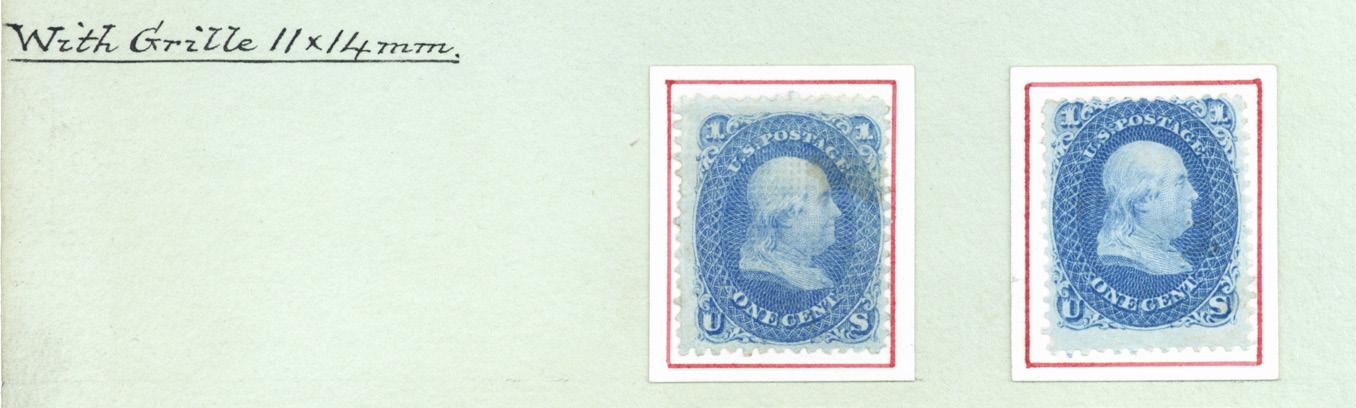
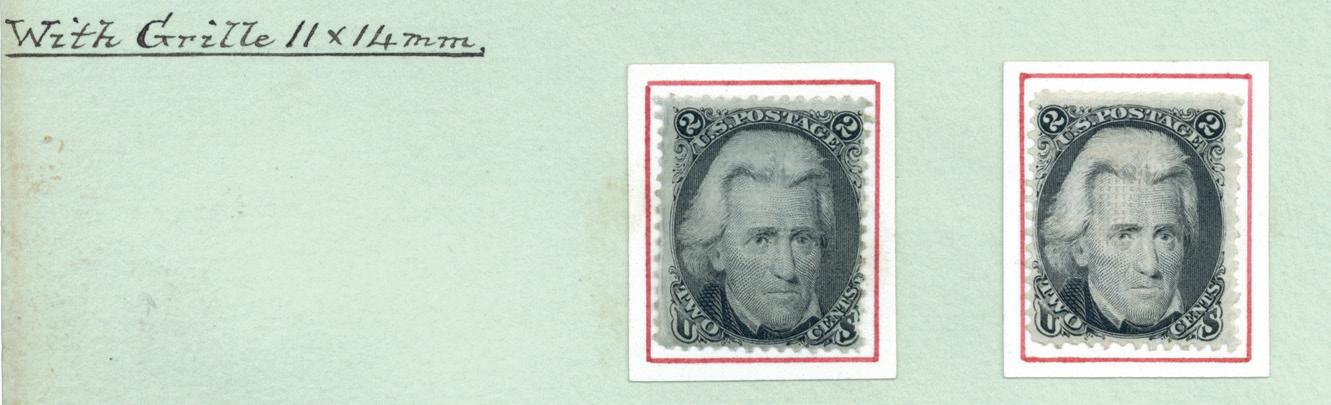
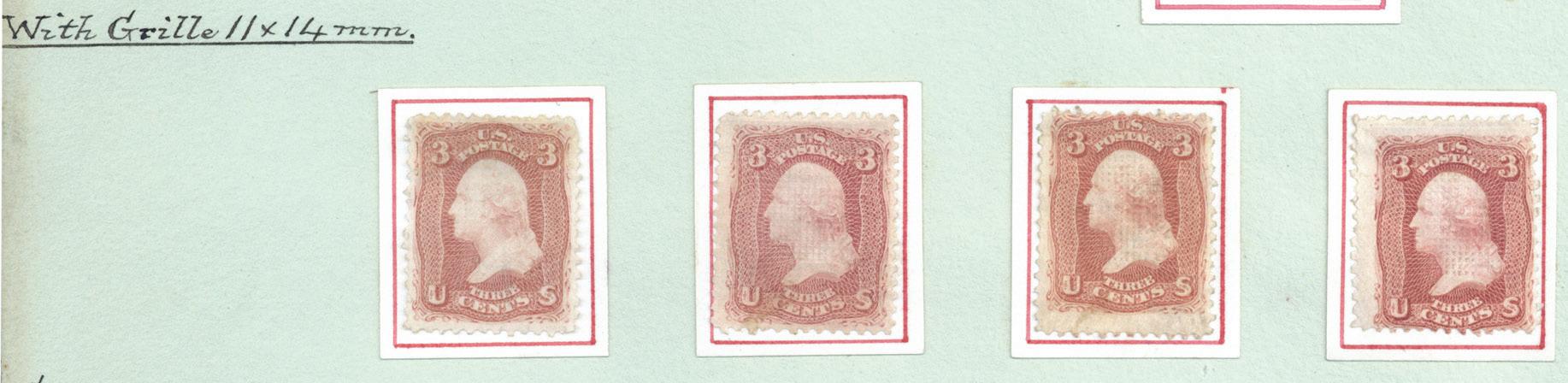
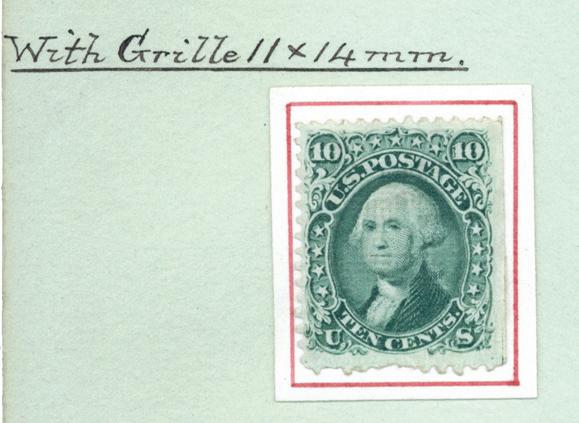
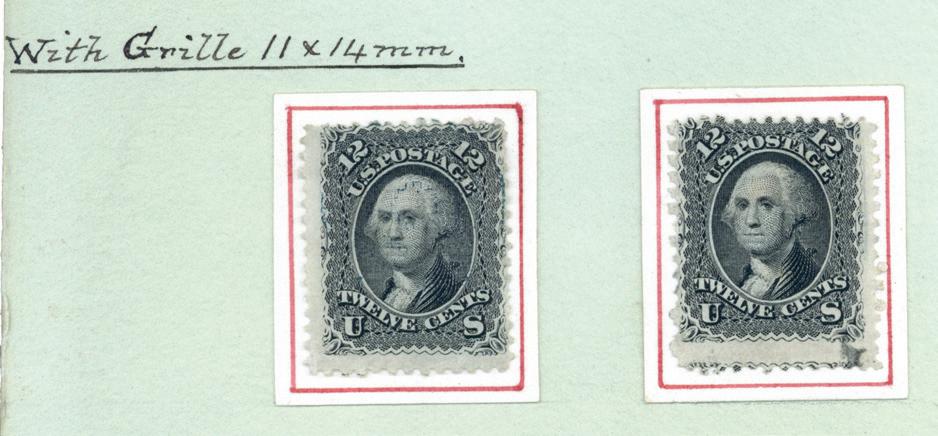
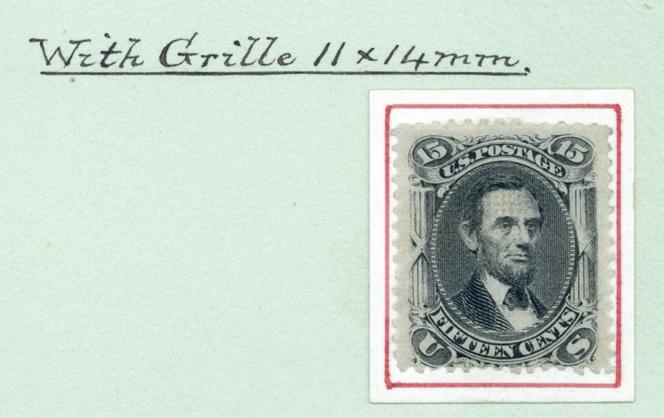
Examples of the 1868 series from the Tapling Collection’s USA section showing items described as “With Grille 11 x 14 mm”. Bacon’s write-up of the Collection predated Stevenson’s 1913-14 classification of grills, which would assign the letter “Z” to grills of this size.
Within each entity, material is arranged chronologically by date of issue rather than according to retrospective catalogue classification. Varieties, essays, proofs, and non‑postal material are incorporated within each country or authority instead of being segregated by format or function. This internal organization was intended to facilitate direct visual and analytical comparison, allowing changes in design, production, and usage to be apprehended in sequence. The Collection was therefore conceived as a tool for comparative study rather than as a representative or decorative assemblage.
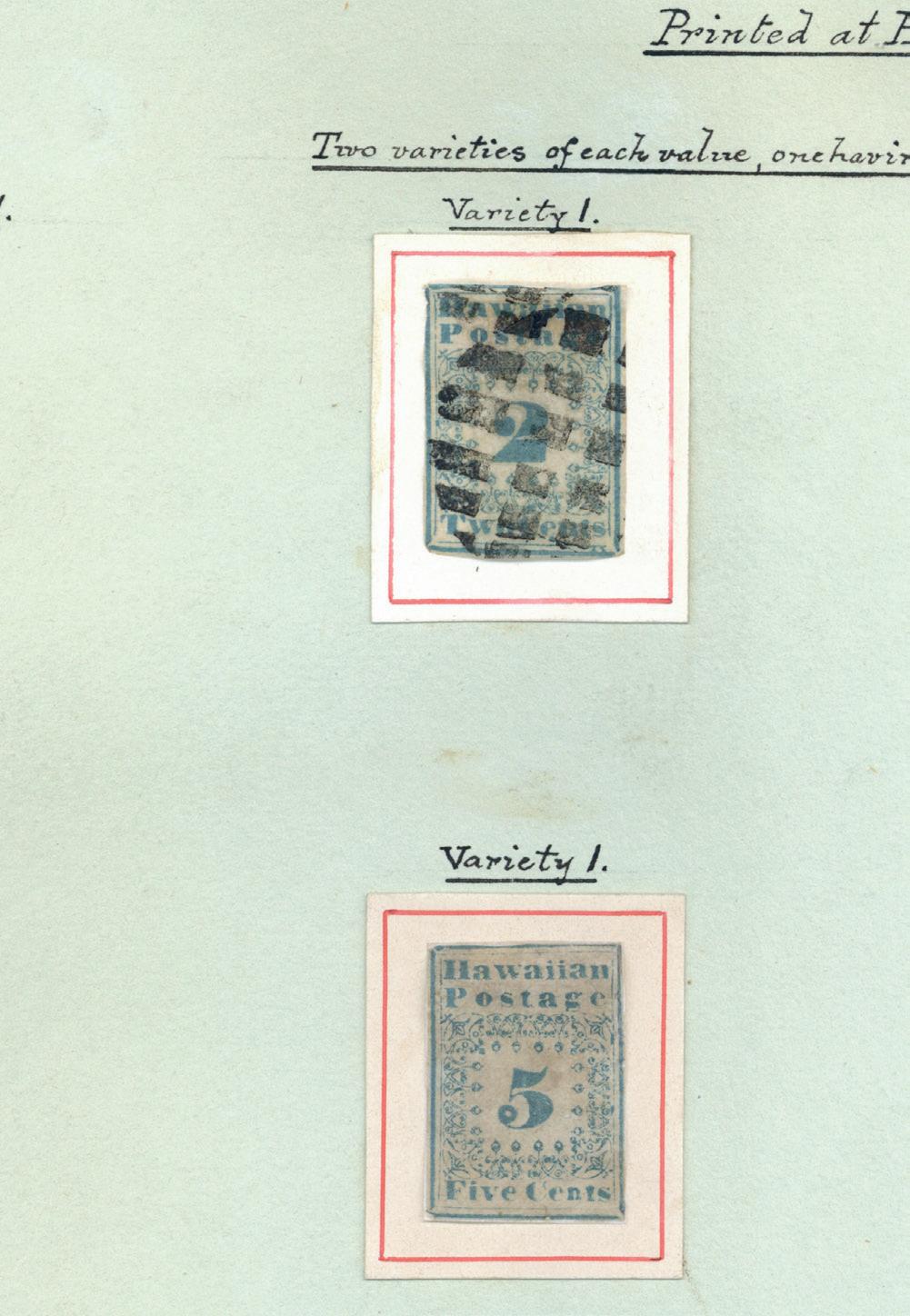
Certain arrangements that now appear anomalous are therefore historically intelligible. The placement of the United States 1861 Première Gravure stamps alongside issued designs, or the reversed ordering of the two types of the 1851–52 Hawaiian Missionary issues, reflects contemporary understanding rather than modern consensus. Such groupings preserve evidence of how stamp issues were interpreted before later research clarified production sequences and attribution.
Seen in this light, the Tapling Collection records not only philatelic artefacts but the intellectual framework through which they were studied. Its original mounting, sequencing, and written commentary document philatelic reasoning in practice at a formative moment in the discipline. The Collection thus functions as a historical knowledge system, preserving the methods by which nineteenth-century collectors and curators organized stamp issues to produce meaning.
The United States, United States Locals, Confederate States, and Hawaiian Islands material comprises 202 album pages containing 2,780 items. While philatelists will rightly admire the rarities, essays, proofs, errors, and varieties preserved within this corpus, its principal achievement lies in its breadth and historical coherence. No collection can ever be entirely complete, and gaps inevitably remain. Nevertheless, the Tapling Collection provides a sustained record of the origins and development of North American postal systems from the Stamp Act crisis of 1765 [Ref. 13] to the late nineteenth century, documenting the emergence of the United States postal and related communications infrastructure [Ref. 14].
The United States section, comprising eighty-one album pages with 1,305 items, was conceived as a comprehensive survey of American postal and communications systems across the nineteenth century. Arranged chronologically by issue, it preserves contemporary assumptions about sequence rather than later catalogue rationalization. The section opens with Postmasters’ Provisionals issued from 1845, representing local responses to postal reform and administrative uncertainty prior to the introduction of federal postage in July 1847. Federal postage stamps issued from 1847 onwards form the core of the section and are represented in both unused and used condition, with extensive coverage of values, shades, and varieties.
Specialized services are also well represented, including carrier stamps for urban delivery, newspaper and periodical stamps introduced from 1865, postage-due stamps, seals, and a substantial body of official departmental stamps issued following the abolition of the franking privilege in 1873. Telegraph stamps issued by private companies between 1870 and 1892 extend the section beyond the postal system to encompass developments in electrical communication.
It concludes with material that situates United States philately within a wider historical context. Among the earliest items is the 1765 American four‑pence Almanac revenue stamp, the first stamp intended for use in America, opposition to which formed part of the wider resistance to the Stamp Act. Later material includes postage-currency notes issued in 1862, illustrating the federal government’s response to the political and financial disruption of the Civil War. Together with an extensive body of essays and proofs, these items reinforce the section’s value as documentary evidence of the relationship between postal systems, state formation, and historical contingency.
United States Locals form a section in their own right, occupying seventy-eight album pages with 821 items, and document the proliferation of private city posts and express companies from the 1840s (see Appendix). Although not exhaustive, the material preserves sufficient breadth to illustrate a volatile communications economy characterized by rapid innovation, competition, and eventual suppression under expanding federal regulation. Mounted together, the Local issues record a transitional phase in which private enterprise anticipated, complemented, and competed with national postal provision.
The Confederate States holdings, totaling twenty-seven album pages containing 353 items, chronicle the rapid creation of an independent postal administration during the secession crisis of 1860–1861. The section opens with General Issues of 1861–1862 produced by Hoyer & Ludwig and J. T. Paterson & Co. This is followed by the April 1861 issues engraved and printed by Thomas De La Rue & Company in London, a notable episode of overseas security printing undertaken before the effects of the Union blockade were fully realized. Later 1863–1864 issues, printed by Archer & Daly and Keating & Ball, record the consolidation of Confederate stamp production under increasingly constrained wartime conditions.
These general issues are complemented by a substantial body of Confederate Postmasters’ Provisionals, representing local responses to disrupted supply, material shortages, and administrative uncertainty (see Appendix). Together, these issues reveal a decentralized postal system operating within an emerging national framework.
Finally, the Hawaiian Islands section, comprising sixteen album pages with 302 items, traces postal development from the “Missionary” issues of 1851–1852 through to the period immediately preceding annexation. Early locally produced stamps reflect technical experimentation within an independent kingdom, while later issues engraved and printed in Boston and New York combine assertions of sovereignty with reliance on American manufacturers. Inter-Island and numeral issues demonstrate administrative pragmatism, while subsequent productions by the American Bank Note Company record Hawaii’s increasing integration into American-dominated postal and commercial networks.
The digitization of the Tapling Collection follows the same methodological framework previously developed for the Row Collection of Siam (Thailand) [Ref. 15]. That framework, now tested, documented, and subject to scholarly scrutiny, combines high-resolution imaging with archival description structured to preserve provenance, physical arrangement, and intellectual order. Applied to the Tapling Collection, this approach is consciously iterative, deploying a proven method at greater scale and complexity to make the Collection publicly accessible while maintaining fidelity to its original structure and evidential relationships.
Image creation was undertaken to standards commensurate with specialist philatelic research. Each album page was digitized at 600 dpi, a resolution deliberately selected to exceed standard digitization practice, enabling closer examination of engraving, plate wear, paper texture, and ink application. TIFF files were created as archival master images, selected for their long‑term stability. For online access, derivative formats are presented that allow close zooming while maintaining reasonable file sizes and download speeds. Higher‑resolution images suitable for publication or detailed reproduction can be supplied on request in accordance with established British Library procedures.
However, digitization involves far more than merely reproducing images. Equally critical was the representation of the Collection’s hierarchy and internal arrangement. The Tapling Collection has therefore been catalogued using ISAD(G) (International Standard of Archival Description) principles, which are well suited to describing collections in terms of provenance, structure, and arrangement. Metadata is organized hierarchically, with fonds-, series-, sub‑series‑, and file‑level descriptions corresponding to the Collection as a whole, its albums, and individual pages.
Item‑level description of individual stamps has not been attempted at this stage, reflecting both the scale of the Collection and the decision to digitize at page level, where meaning is often generated through adjacency rather than isolated description. The metadata architecture nevertheless allows for greater granularity should future research priorities or resources warrant it.
Platform selection was guided by institutional realities and long-term scholarly priorities. With the British Library’s digital infrastructure under redevelopment following the COVID-19 pandemic and a major cyberattack, an external platform was required to enable timely public access. The Internet Archive was selected for image hosting, while authoritative archival metadata is maintained within The National Archives’ “Find an Archive” (Discovery) system. Cross-referencing between the two platforms preserves archival integrity, supports citation, and allows for future migration onto a unified British Library platform.
Legal and licensing considerations formed a further component of the methodology. While the original philatelic material is firmly out of copyright, the high‑resolution digital images constitute new photographic works under UK law. The British Library therefore asserts copyright over the images while releasing them under a Creative Commons Attribution–Non-Commercial (CC BY-NC) license, permitting scholarly reuse while retaining institutional oversight of commercial exploitation. In implementing this methodology, the digitization process has sought to apply, rather than reinterpret, the organizing logic outlined in the preceding section.
The publication of the Tapling Collection online followed a structured process of internal review and institutional approval within the British Library. Drawing on experience gained through earlier digitization projects, permission to proceed was granted following assessment by senior curatorial and digital governance bodies, ensuring that the project met institutional requirements for scholarly integrity, legal compliance, and long-term sustainability.
In practical terms, the digitized Collection can be accessed via the Internet Archive. Users can locate relevant material by entering “Tapling Collection” together with the country or area of interest into the site’s search facility. The resulting digitized albums can then be browsed page by page in their original sequence.
This archival approach to digitization is particularly significant for a collection of Tapling’s scale and complexity. Online access removes longstanding geographical barriers, enables comparative study through high-resolution images, and reduces physical handling, ensuring long-term preservation.
The Collection’s online availability extends Thomas Keay Tapling’s original vision within a sustained program of curatorial innovation at the British Library Philatelic Collections. A limited-edition commemorative monograph, produced with Bard Philately in a print run of 100 copies, complements the digital release by situating the United States, United States Locals, and Hawaiian Islands material within the wider history and formation of the Tapling Collection. It is planned to release further volumes of sections of the Collection, commencing with the Confederate States, through this collaboration.
The public release of the United States, United States Locals, Confederate States, and Hawaiian Islands sections in May 2026, coinciding with Boston 2026 and the approaching America250 commemorations, significantly extends access to one of the most important nineteenth century philatelic collections, ensuring that the Tapling Collection remains an accessible research resource.
Selected items from the Tapling Collection
Hawa;;,._,,, Islands.
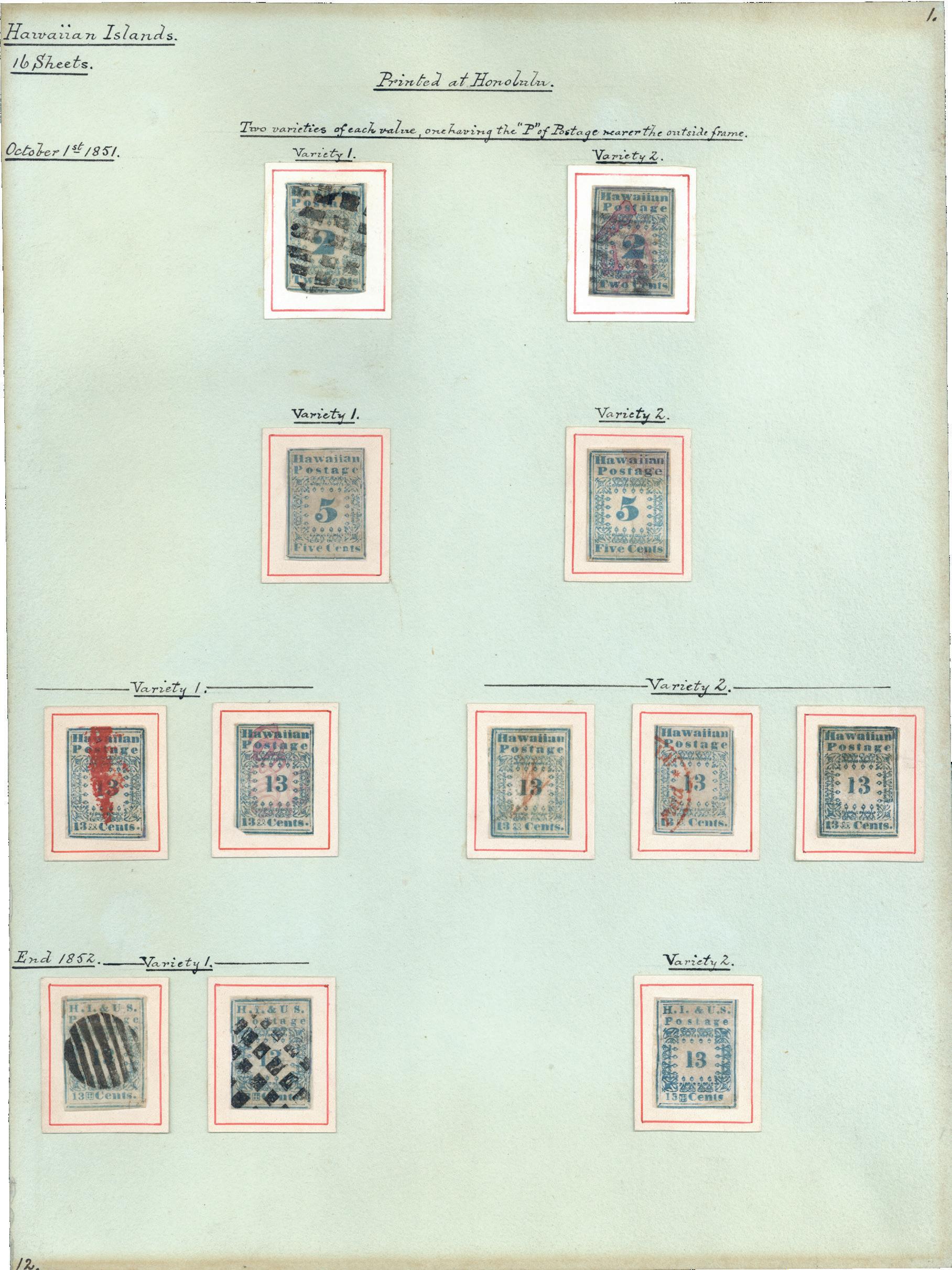
Page 1 of The Hawaiian Islands. The top two rows show the 2c and 5c “Missionaries” classified by the types that at the time were believed to be correct, but were subsequently reversed.
A. Post Masters’ Provisionals, Carrier, Telegraph & Official Stamps in the Tapling Collection Post Masters’ Provisionals
Baltimore, MD; Providence, RI; Brattleboro, VT; New Haven, CT; St Louis, MO; New York City, NY. U.S. Locals
City Despatch, New York, NY, 1846 [mislabeled as a Boston carrier];
City Carrier Department Stamps
United States City Despatch Post, New York, NY, 1842-1845; U.S. Mail, New York, NY, 1849; U.S.P.O., Philadelphia, PA, 1849-1850; Baltimore, MD. 1851-1856; Honour’s City Post, Charleston, SC, 1850-1852; Steinmeyer’s City Post, Charleston, SC, 1858-1859; City Carrier Department Stamps; Louisville, KY.: Brown & McGill’s U.S.P.O. Despatch, 1858; U.S.P.O. Despatch, Philadelphia, PA, 1852.
General Issue Carrier Stamps
Carriers Stamps, 1851; U.S.P.O. Despatch Stamps, 1851-1875
City Carrier Department Stamps
Baltimore, MD: Post Office Despatch, 1852; Penny Post Paid, Boston, MA, 1845-1850 Telegraph Stamps
American Rapid Telegraph Company, 1881-1882: Atlantic Telegraph Company, 1884; Baltimore & Ohio Telegraph Company, 1885; Baltimore & Ohio Connecticut River, 1887; California State Telegraph Company, 1870-1875; The City & Suburban Telegraph Company, 1881; Mutual Union Telegraph Company, 1882-1883; Northern Mutual Telegraph Company, 1883; Pacific Mutual Telegraph Company, 1883; Postal Telegraph Company, 1885-1892; Western Union Telegraph Company, 1872-1892.
Official Stamps
Agriculture; Executive; Department of the Interior; Department of Justice; Navy Department; Post Office Department; Department of State; Treasury Department and War Department
B. Issuers of United States Local Stamps in the Tapling Collection
Adams & Co Express
Adams City Express
Allen’s City Dispatch
American Express Co.
American Letter Mail Co.
Barr’s Penny Dispatch
Bentley’s Dispatch
Bishop’s City Post
D. O. Blood & Co.
Bouton’s Despatch Post
Boyce’s City Express
Boyd’s City Express
Brady & Co. New York
Brady & Co. Chicago
Brainard & Co.
Brigg’s Despatch
Broadway P.O.
Bronson & Forbes
Brooklyn City Express
Brown & Co.
Browne’s Easton Despatch
California City Letter Express
California Penny Post Co.
Carnes City Letter Express
Carter’s Paid Despatch
Cornwell P.O.
Cressman & Co.
Crosby’s City Post
Cumming’ s City Post
Davis’s Penny Post
Douglas’ City Despatch
Dupuy & Schenck
Eagle City Post
East River P.O.
Empire City Dispatch
Essex Letter Express
Floyd’s Penny Post
Frazer & Co.
Gahagan & Howe
Glenn Haven Daily Mail
Gordon’s City Express
Grafflin’s Baltimore Despatch
Guy’s City Despatch
Hale & Co.
Hourly Express Post
Hoyt’s Letter Express
Hussey’s Post
Jefferson Market P.O.
Jenkin’s Camden Dispatch
Jone’s City Express
Messenkope’s Post Office
Metropolitan Express Co.
G. A. Mills.
New York City Express
One Cent Despatch
Overton & Co.
Penny Express
Philadelphia City Despatch
Pips Daily Mail
Pomeroy’s Letter Express
Price’s City Express
Priest’s Paid Despatch
Russell’s P.O.
St Louis City Delivery
Smith’s City Express Post
Snow’s Express
Squire & Co.
Staten Island Express Post
Stringer & Morton
Swart’s Dispatch
Teese & Co.
3rd Avenue Post
Union Post
Union Square P.O.
Waldron’s Express, Cheaver & Towle
Chicago Penny Post
Cincinnati City Delivery
City Dispatch
City Despatch Post
City Letter Express Mail
Clark & Co.
Kidder’s City Express
Langton & Co.
Letter Express
W. E. Loomis & Co.
McIntire’s City Express
Mearis’ City Despatch
Menant & Co.
T. Walters
Wells, Fargo & Co.
Westervelt’s Post
Westown
Winan’s City Post
W. Wyman
C. Issuers of Confederate Post Masters’ Provisionals in the Tapling Collection
Athens, GA; Baton Rouge, LA; Charleston, SC; Fredericksburg, VA; Goliad, TX, Greenwood Depot, VA; Greenville, AL: Houston, TX; Kingston, TN; Knoxville, TN; Livingston, AL; Lenoir, NC Lynchburg, VA; Macon, GA; Marion, VA; Memphis, TN; Mobile, AL; Nashville, TN; New Orleans, LA.; Petersburg, VA; Pittsylvania Court House, VA; Pleasant Shade, VA; Rheatown, TN; Tellico Plains, TN; Uniontown, AL.
References
1. Negus, Ron (2007). “Tapling: The Main Behind the Collection”, The London Philatelist, 116, Whole no. 1343, [March], pp.39-47.
2. Williams, L. N. (1992). “A Legendary Swap: Tapling and Ferrary – What did Ferrary Receive?”, Gibbons Stamp Monthly, [December], pp.32-33.
3. Beech, David R. (1996) “Note on Caillebotte as a Philatelist”, in Gustave Caillebotte: The Unknown Impressionist, Royal Academy of Arts, London.
4. Morel, Richard Scott. (2021). “The Formation, development, and curation of the Tapling Collection at the British Museum Library in the Nineteenth Century”, Electronic British Library Journal, London.
5. Ellis, Mrs Herbert M. (1939). “Tapling Collection Memories.”, Philatelic Magazine, 43, [12 May], pp.409-410.
6. Hardy, William John and Bacon, Edward Denny (1898). The Stamp Collector, G. Redway, London.
7. Morel, Richard Scott. (2021). “The Formation, development, and curation of the Tapling Collection at the British Museum Library in the Nineteenth Century”, Electronic British Library Journal, London; Beech, David R. (2019). A Guide to Philatelic Research at the British Library, The Author, London.
8. Morel, Richard Scott (2020). “Donations to the Tapling Collection from the Philatelic Community, 1891-1899”, The London Philatelist, 129, [September], pp.334-343.
9. Morel, Richard Scott. (2021). “The Formation, development, and curation of the Tapling Collection at the British Museum Library in the Nineteenth Century”, Electronic British Library Journal, London.
10. Morel, Richard Scott. (2021). “The Formation, development, and curation of the Tapling Collection at the British Museum Library in the Nineteenth Century”, Electronic British Library Journal, London.
11. Beech, David R. (2019). A Guide to Philatelic Research at the British Library, The Author, London.
12. Mackay, James A. (1964). The Tapling Collection of Postage and Telegraph Stamps and Postal Stationery, British Museum, London; Melville, Frederick K. (1905). The Tapling Collection of Stamps and Postal Stationery at the British Museum, Lawn & Barlow, London.
13. Morel, Richard Scott (2026). “Stamp Act Proofs: Insights from the British Library Philatelic Collections”, The Collectors Club Philatelist, 105: 2, [March-April], pp.74-86.
14. Headrick, Daniel (1991). The Invisible Weapon: Telecommunications and International Politics, 1851–1945, Oxford University Press, New York, NY, USA; John, Richard R. (1995). Spreading the News: The American Postal System from Franklin to Morse, Harvard University Press, Cambridge, MA, USA; Leonard, Devin (2016). Neither Snow nor Rain: A History of the United States Postal Service, Grove Press, New York, NY, USA.
15. Morel, Richard Scott & Skinner, Paul (2025). “From Album to Algorithm: Digitising the British Library’s Row Collection, 1881-1918”, The London Philatelist, 134, Whole no. 1531, [December], pp.522-531.
Gary Wayne Loew FRPSL
In Greene County, New York, The News-Herald reported in its February 5, 1937, edition that the Snow Festival would take place despite the lack of snow. Nevertheless, it was a blustery, cold day when Leo Vermann drove to his local post office in Coxsackie, NY. He was mailing a letter to a philatelic service agent in Washington, DC, to arrange obtaining a First Day Cover (FDC) for a new airmail issue. Every cover has a story to tell. Many FDCs have several stories, but the 1937 FDC shown in Figure 1 has many stories to tell. I will share all of them with you in this article.
First, we will explore the First Day issuance of the stamps, the creation of both First Day and First Flight covers, and the many cachets designed for these two stamps. Then, we will examine this Coxsackie cover in depth, including the franking and the rate calculation, the cancellations and Auxiliary Markings, the route it took, and an alternative route that most mail would have followed at the time. To tell the complete story, I will apply some principles of Context Philately. I will also employ the Postal History Framework, my structured analytical methodology. Buckle up, this cover has more to say than meets the eye.
The Story Before the Story
Let me start with a different story. My dear friend and mentor, the late philatelist extraordinaire Randy Neil, loved to tell the story of his trip to FIPEX in 1956. At the age of fourteen, Randy was given parental permission to take the train from St. Louis to New York City. He spoke more about his trip and what he learned about philately than about the stamps he bought. FIPEX opened up a world of philately to Randy that lasted his entire life.
My own FIPEX story is not quite as dramatic. My father and I took the subway from The Bronx to Columbus Circle. I remember Dad advising me to buy covers rather than stamps because of the stories they could tell. I still have those covers and have added to my collection annually. But it was at FIPEX that I saw my first cacheted First Day Cover. I was quite taken with it. Indeed, I was so interested that when I passed by the small booth of the AFDCS, I decided to become a junior member. I was really proud to become charter member number J76Ch. And I’ve never lost interest in collecting FDCs.
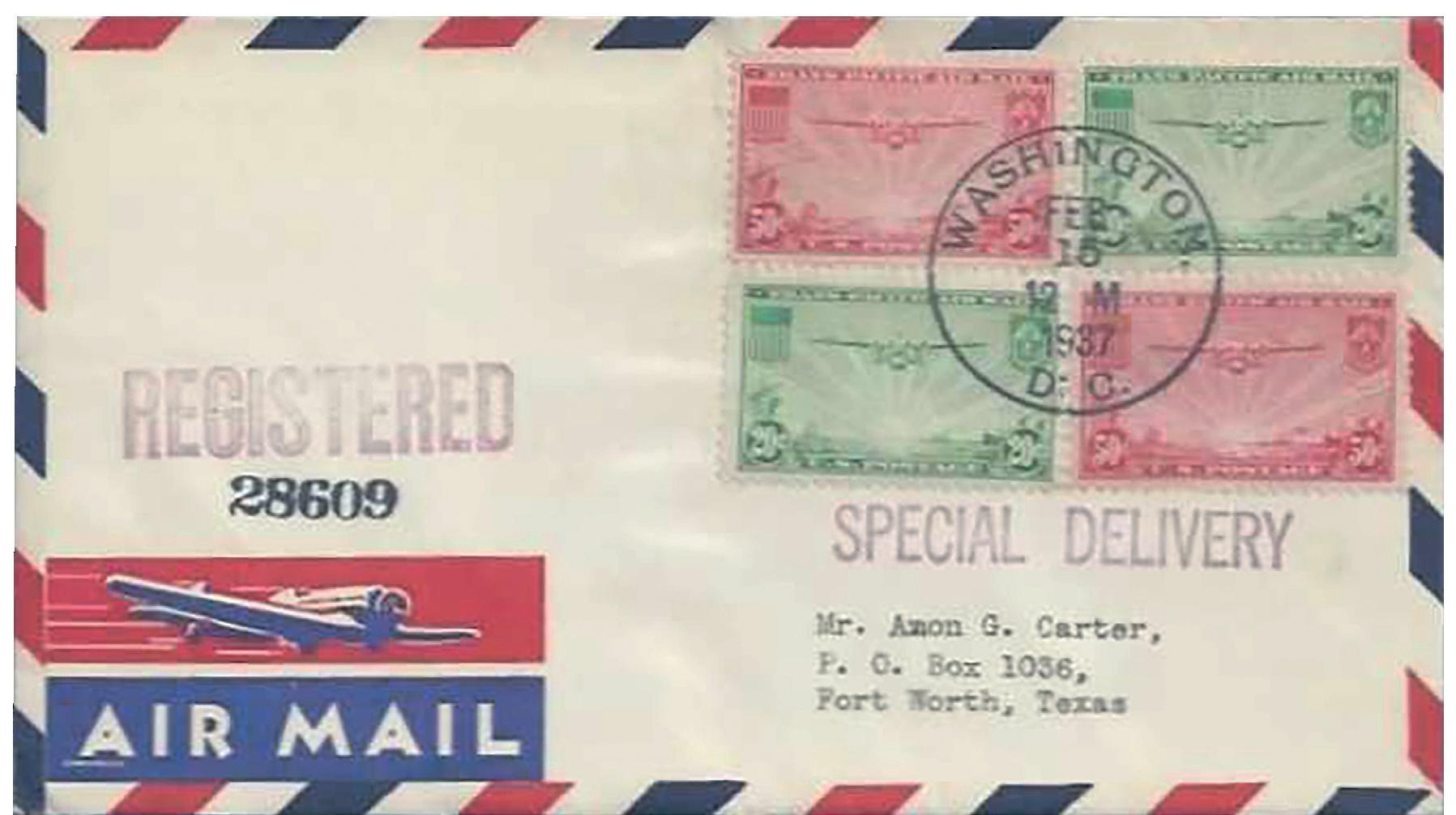
But in my wildest 11-year-old imagination, I would not have thought about owning the cover seen in Figure 1. This intriguing, registered cover traveled mostly by air in 1937 from Coxsackie, New York, to Vienna, Austria, via the South Atlantic and West Africa. This FDC features two face-similar airmail stamps and a third airmail stamp. It is a deceptively complex cover that warrants detailed analysis.
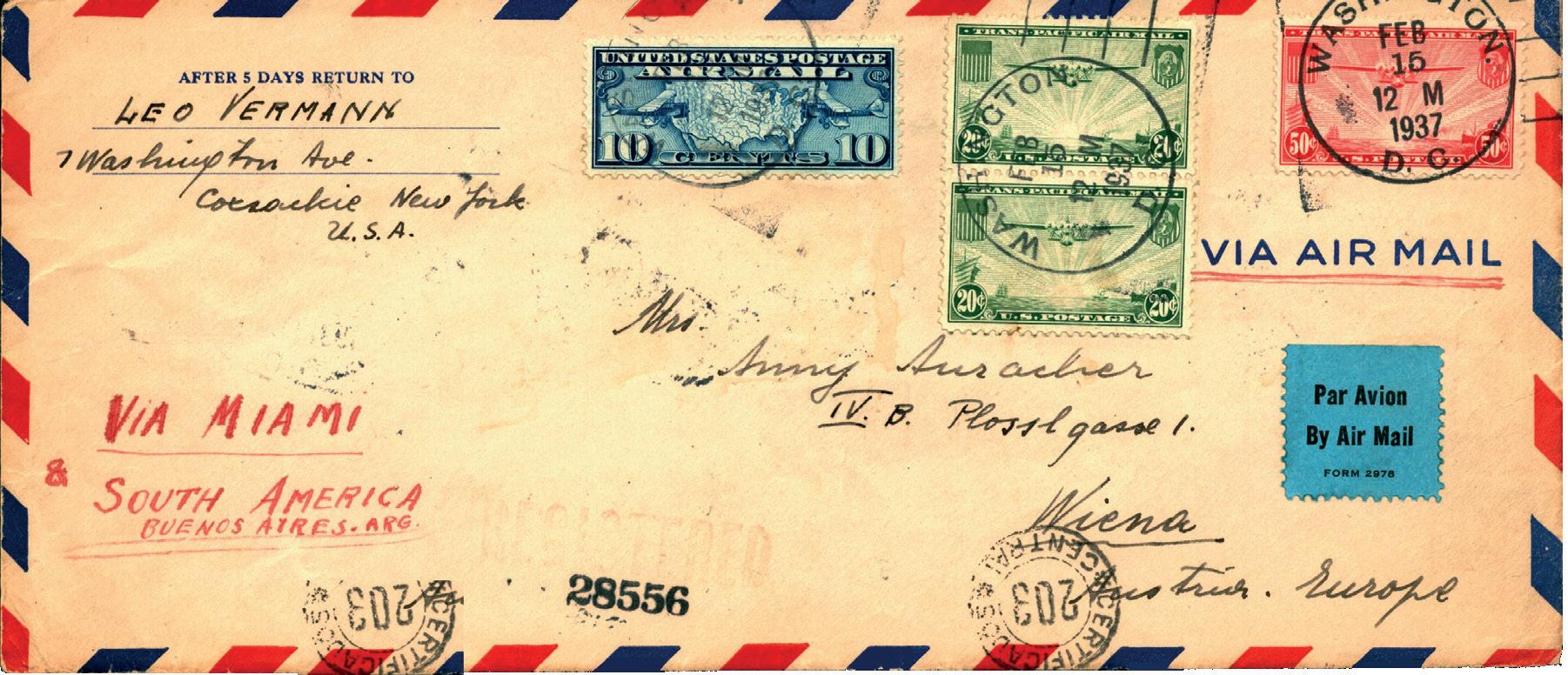
The cover is a preprinted airmail envelope with a standard red-and-blue border. Leo Vermann entered his name and return address in the provided space. It is franked with a vertical pair of the 20¢ Trans Pacific Air Mail stamp (Scott C21), a 50¢ Trans Pacific Air Mail (Scott No. C22), and a 10¢ airmail stamp (Scott C7). We will explore that franking and its validity later. The stamps are cancelled with a handstamped “WASHINGTON / DC” cds (circular date stamp) dated February 15, 1937, at 12 midnight. A blue airmail etiquette reads “Par Avion / By Air Mail / Form 2976”.
The envelope is addressed to Mrs. Anny Auracher, IV. B. Plösslgasse 1, Wiena, Austria Europe. An Argentine transit mark is located below the address. Next to it is a faint red “REGISTERED” handstamp with the registration number 28556 underneath. On the left, in Vermann’s own handwriting, is the routing instruction “ V ia M ia M i / & / S outh a M erica / BUENOS AIRES . ARG .”
Before we begin our examination of this cover, I would like to introduce the analytical framework I employ to study such postal artifacts.
Numerous philatelists have sought to define postal history; (Note 1) I have developed my own approach. The Postal History Framework comprises five major categories, which together encompass 22 distinct cover elements. I developed this framework for use in my forthcoming book, Fundamentals of Postal History . (Note 2.)
Figure 2 illustrates the schematic of this classification system. The major categories are Postal Artifacts, Moving the Mails, Postal Services Offered, Markings and Affixments, and Non-Postal Considerations. Not all cover elements apply to every cover, but the list provides a rigorous taxonomy for analyzing the Coxsackie Cover.
Throughout this article, I use the Postal History Framework to analyze individual aspects of the Coxsackie Cover.
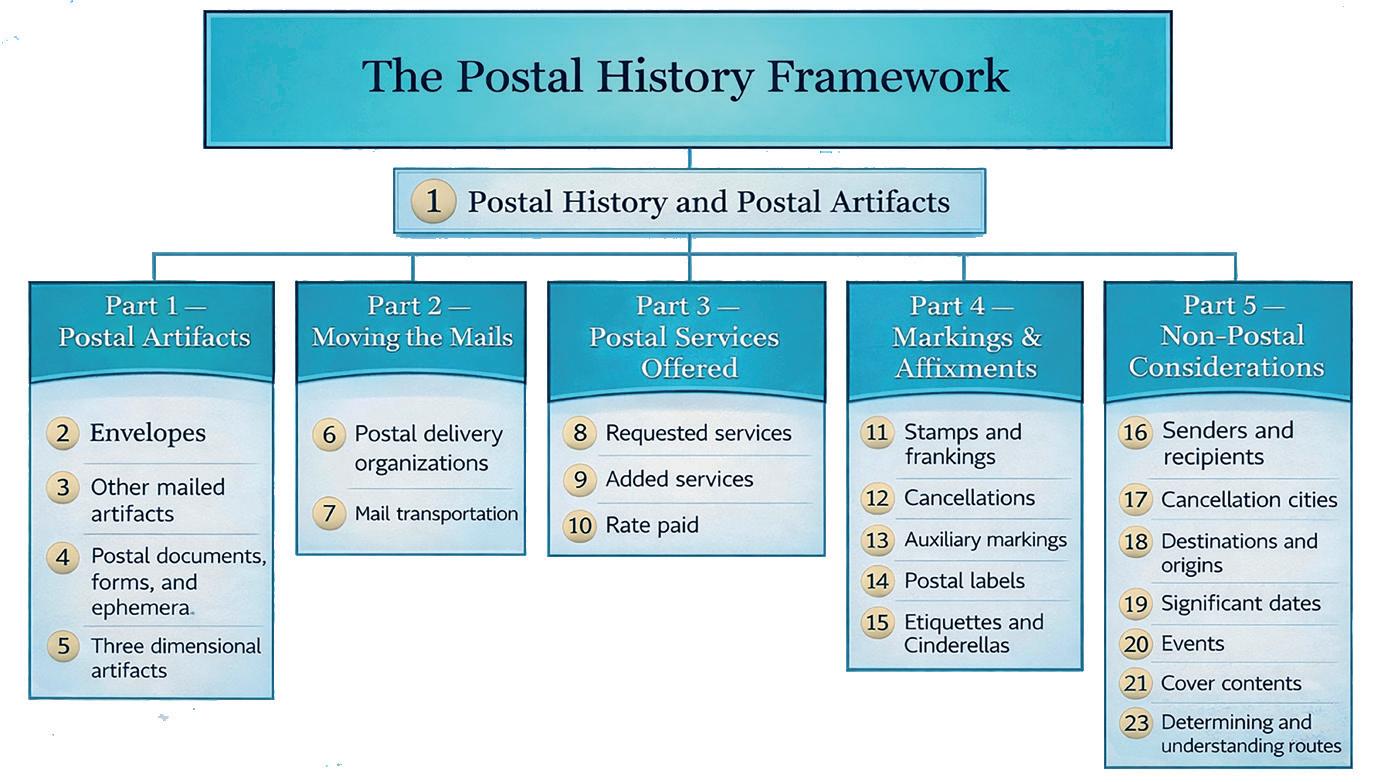
Figure 2. The Postal History Framework. From Fundamentals of Postal History, to be published in 2027.
Context Philately is a term first introduced by David Beech in 2023. My interpretation is that this concept enables philatelists to document the infrastructure of civilization through postal artifacts. Beech defined Context Philately as a new term for an old idea. But I found his concept a refreshing extension and integration of these old ideas. Here is his description of the goal of Context Philately:
Context Philately aims to extend the understanding of the aspect of philately that you have decided upon, to collect or study, by setting it in a wider context. This wider context may be as broad or as focused as you please; examples might be to see your collection or subject as a part of historical development in political, economic, social, geographical, human, cultural, or other terms, and thereby gain a better understanding of its significance and ability to describe it fully. (Note 3.)
Clearly, Beech intends for philatelists to take a deeper dive into their collectables and, in so doing, gain a better understanding of our society. I do not have the space to go into great detail here, but readers may wish to consult my article in the second quarter Boston 2026 edition of Kelleher’s Stamp Collectors Quarterly. (Note 4.) One thing that will become apparent is how Context Philately can help us understand the history of our own beloved hobby.
Trans-Pacific
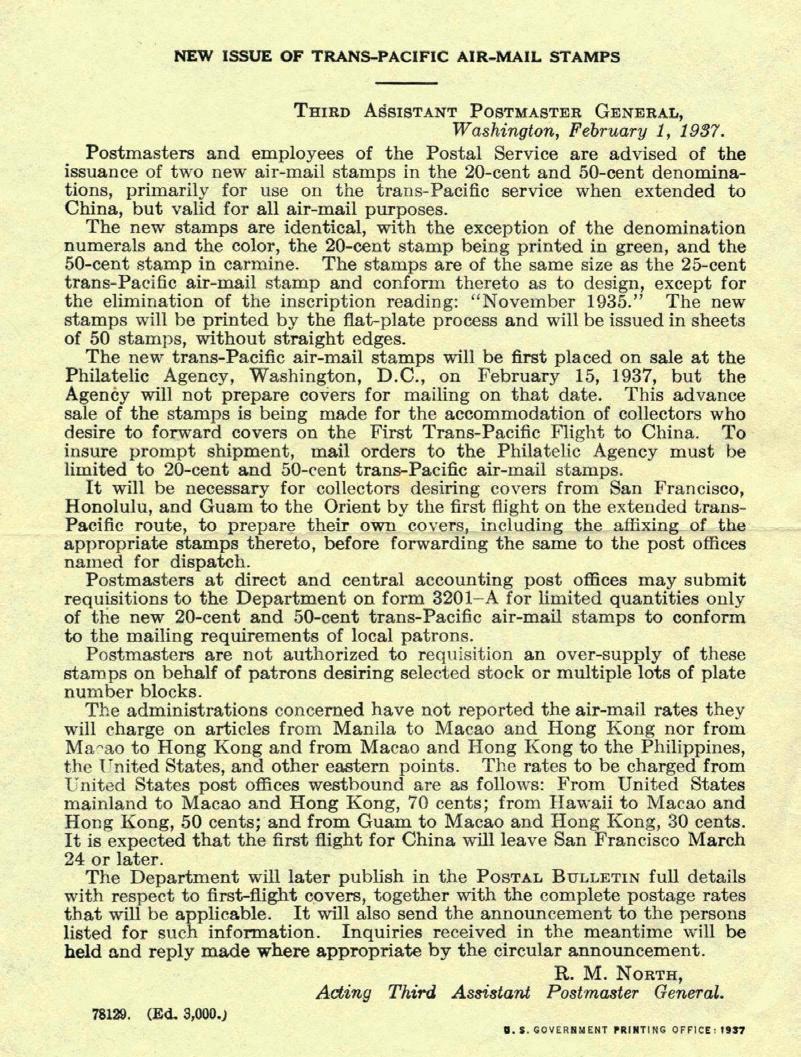
Despite the worldwide Depression, the mid-1930s saw a growing demand for high-value, international commercial communications. The U.S. government also sought more rapid and reliable communications capabilities across its Pacific territories and possessions, terminating in U.S.-administered Manila. These commercial and geopolitical factors led to the award of a contract for the Foreign Air Mail Route 14 (FAM 14) to Pan American Airways in 1935. The service was inaugurated on November 22, 1935. The two envelopes seen in Figure 3 were carried on that first flight, along with over 110,000 other covers.
Commercial demand continued to expand, justifying the extension of the Trans-Pacific route to Macao and Hong Kong. The logistical plans for this extension were developed by PanAm and were highly publicized. However, the route’s readiness preceded the conclusion of postal rate agreements with Macao and Hong Kong. The post office shared this information with the philatelic press, sometimes “on background”, enabling philatelic servicing organizations to prepare but not disclose expected first flights or rates. The post office announced its plans on February 1, 1937 (Figure 4).
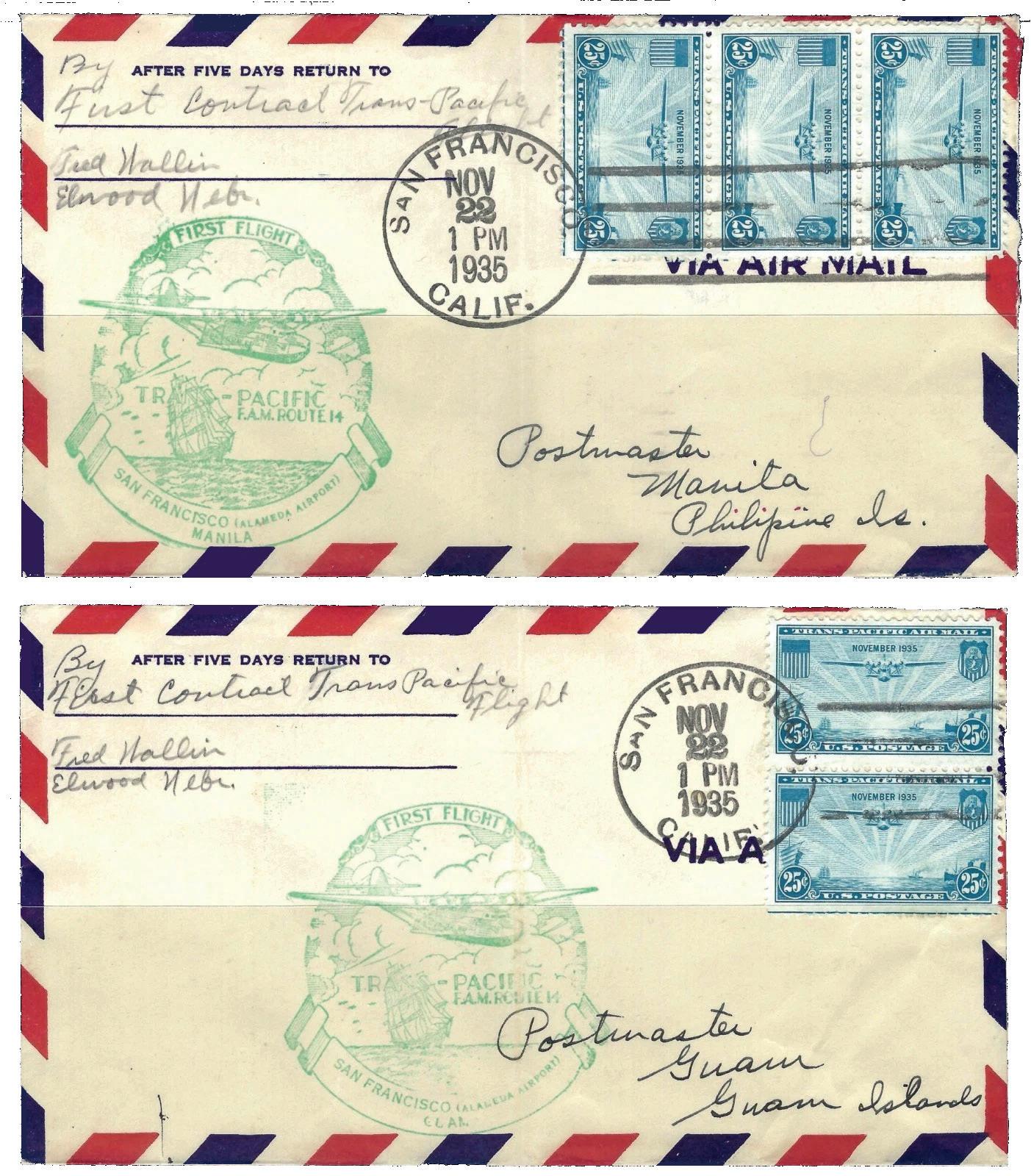
STAMPS T OIRD ASl3t8TANT POSTMASTER GENERAL, Wa,hinglon, Ftbruary 1 19$7. Poatmasten and employees of the Postal Service arc advised of the issuance of two new air-mo.ii stamps in the ZO.cent and 50-cent denominations, primarily for use on the trans-Pacific i,ervice when extended to China, but valid for all air-mail purposes.
The new stamps are identical, with the exception of the denomination numerals and the color, the 20--oent stamp being printed in green, and the 50-cent stamp in carmine. The stamps are of the same size as the 25-oont trans-Pacific aiMnail stamp and conform thereto as to design, e,cccpt for the elimination of tho inscription reading: November 1035." The new stamps will bo printed by the flat.plate prooo88 and will be Issued in sheet.a or 50 stamps, without straight edges.
The new trans-Pacific air-mail .stamps will be first placed on sale at the Philatelic Agency, Washington, D.C., on February 15, 1937, but the ~!!11oc/t:~,~~~p~~~~n:'~ef1~r ir:!1~~~~!t~te~f ~n:~~1 : desire to forward covers on the First Tran.s--Pacific F1ight to China. To insure prompt shipment, mail orders to the Philatelic Agency must be limited to 20--cent and 50--eent trall.8--Pacific air-mail stamps. It will be neecssary for collectors desiring co, ers from San Frnnciseo, Honolulu, and Guam to the Orient by the first flight 011 the e:d.euded trans-Pacific route, to prepare their own co,ers, including the a.ilixing of tlw appropriate stamps thereto, before forwarding the same to the post offices named for dispatch.
Postmaaters at direct and central accounting poet offices may submit requisitions to the Department on form 3201- A for limited quantities only of tlie new 20--ctmt and 5().eent tran.s--Pacific air-mail stamps to conform to the mailing requirements of local patrons.
Postmasters are not authorized to requisition an ovcr<Supply of these stamps on behalf of patrons deeiring selected stock or multiple Jots of plate number blocks.
The administrations concerned have not reported the air-mail rates they will charge on articles from Manila to Macao and Hong Kong nor from Mll.'"'aO to Hong Kong and from Macao and Hong Kong to the Philippinea, U11~i~~i~~:~t~i~~e~=:rai~ts~ f!::~\\~:~·~m™\j!i:.e1 00sf.a"'t! mainland to Macao and Hong Kong, 70 cents; from Hawaii to Macao and fti~~=~5 i1i~t~~ fi0;!/~~f1~~~n~1~1ee.:! 24 or later. The Department will later publish in the POSTAL BUl,LETIN full details with respe<:t to first-flight covers, together with the complete postage rates ii~~t}~rb:u~tP:~cf!~~ti!~~li:~~jrt:dr::ei::;ic;;:n:1~:1:!a~ti~~ ~ill:;! held o.nd reply ma.de where appropriate by the circular announcement.
R. M. NORTH, Acting Third Awtant Poatma3ler General.
7813$1. (Ed. S,000.J
Figure 4. Post Office announcement of the new 20¢ and 50¢ Trans-Pacific airmail stamps, dated February 1, 1937.
Figure 3. First Flight covers to Guam and Manila, dated November 22, 1935. The stamps were issued on the same day as the first flight. Courtesy eBay dealer dolinks.
The February 2, 1937, issue of The Postal Bulletin (Note 5) printed that announcement from the post office press release:
…[T]he issuance of two new air-mail stamps in the 20-cent and 50-cent denominations, primarily for the use on the Trans-Pacific service when extended to China, but valid for all air-mail purposes…
The new Trans-Pacific air-mail stamps will be first placed on sale at the Philatelic Agency, Washington, D.C., on February 15, 1937, but the Agency will not prepare covers for mailing on that date… [M]ail orders to the Philatelic Agency must be limited to the 20-cent and 50-cent transPacific air-mail stamps.
These stamps were specifically designed for the Trans Pacific routes that were expected to begin sometime after February 15th, although the exact first flight dates were unknown when the February 1st announcement was made. The purpose of the February 15th release was to give philatelists time to prepare envelopes for First Flight covers. Interestingly, the PO gave no consideration to FDCs. Therefore, there was to be no special cancellation on the first day of issue, nor any first day servicing by the Post Office.
Philatelists in general, and FDC collectors in particular, were a profitable market for the post office. Despite this, the post office’s relationship with the philatelic community was somewhat frayed in early 1937. An article by airmail reporter D.H. Davenport in the January 25th edition of Mekeel’s was titled “First Day Cover Protest”! The post office mishandled the January 15th issuance of the 2¢ Soldiers and Sailors commemorative. And Postmaster Vincent C. Burke was unrepentant. Davenport ended the article by noting that “… it is understood that protests have been made to the president [FDR] and Mr. Farley .” (Note 6.)
Nevertheless, Mekeel’s front page ran the official post office notice by publishing the announcement seen in Figure 5, also reported by Davenport, on the same page as the FDC protest article. And, just a week later, the February 1st issue of Mekeel’s Weekly Stamp News contained the announcement seen in Figure 6.
Two new airmail stamps will make their appearance shortly, and probably with short notice to collectors. Designs have been submitted for the values that are to be used in connection with trans-Pacific service to China. Postal officials will not permit announcement of the denominations until all arrangements for the initial flights to Macao and Hong Kong are made public.
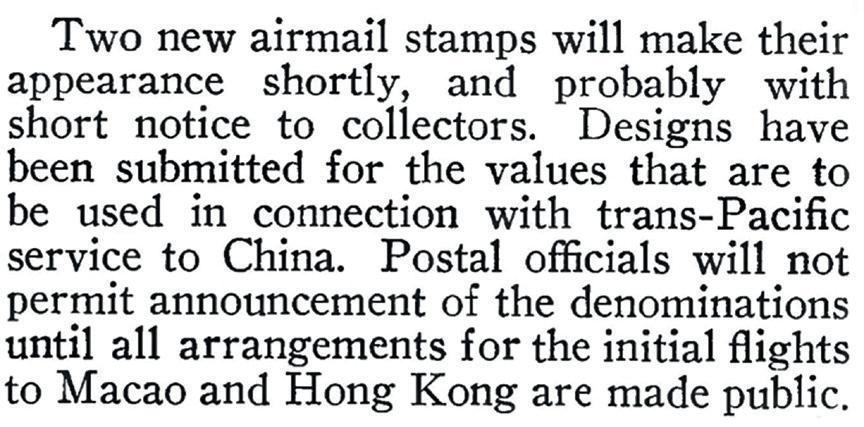
Figure 5. Notice appearing in the November 25, 1937 issue of Mekeel’s
It became !mown today that the Post Office Department is definitely ready to inaugurate the long-delayed trans-Pacific air mail service into China.
Rates have been decided, and the two new-value stamps are ready for the presses. While MEKEEL's representative has known the values for two weeks, publication of this information has been withheld at the request of postal officials, who felt that it would be wiser to await completion of all details.
Figure 6. Announcement of the Trans-Pacific airmail stamps printed in Mekeel’s Weekly Stamp News, 51: 5, whole no. 2404, February 1 1937. Accessed via the Robert A. Mason Digital Library (https://digital. stamplibrary.org/digital/).
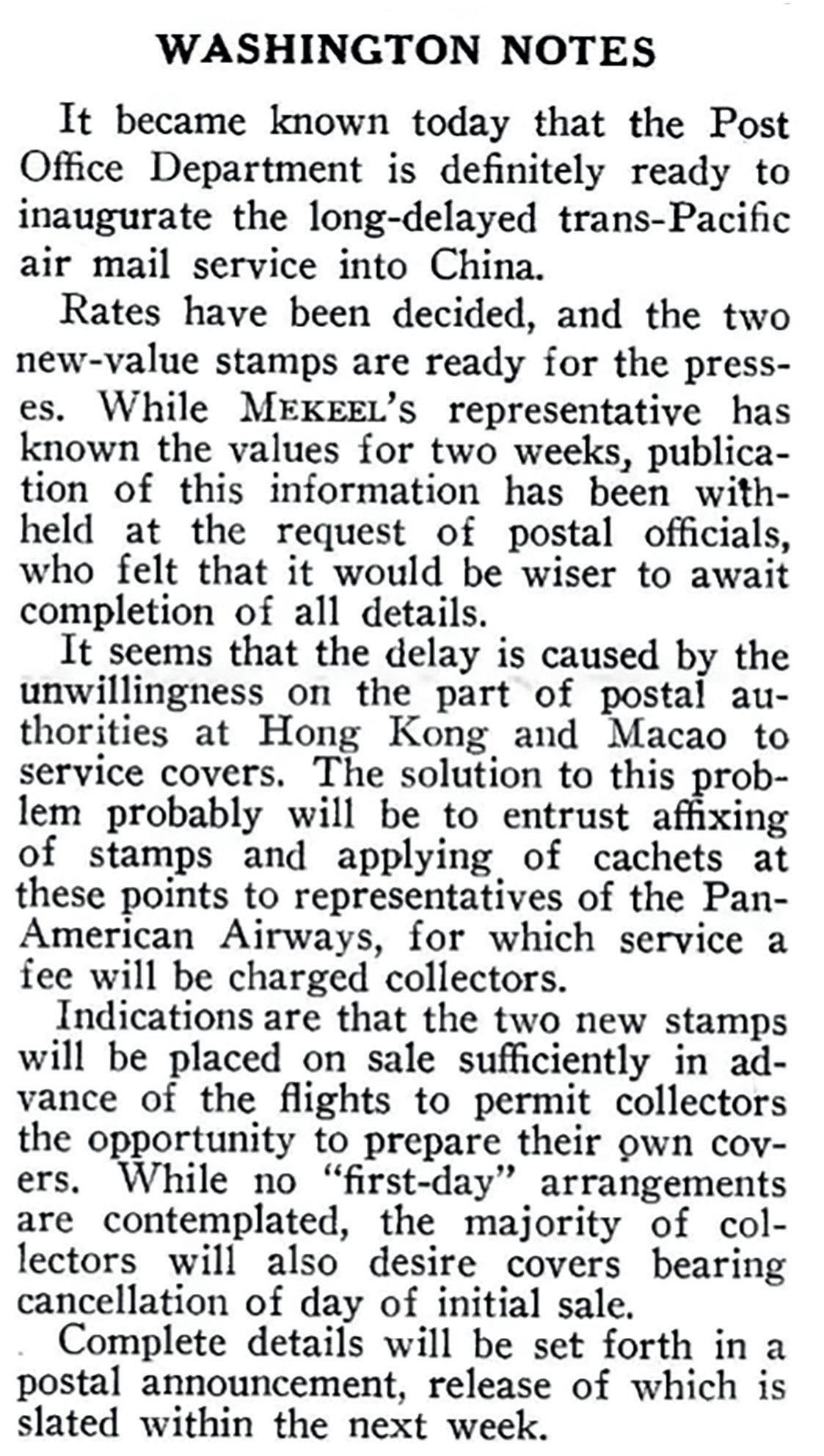
It seems that the delay is caused by the unwillingness on the part of postal authorities at Hong Kong and Macao to service covers The solution to this problem probably will be to entrust affixing of stamps and applying of cachets at these points to representatives of the PanAmerican Airways, for which service a fee will be charged collectors.
Indications are that the two new stamps will be placed on sale sufficiently in advance of the flights to permit collectors the opportunity to prepare their 9wn covers. While no "first-day" arrangements are contemplated, the majority of collectors will also desire covers bearing cancellation of day of initial sale.
Complete details will be set forth in a postal announcement, release of which is slated within the next week.
Following announcements like this in the philatelic press, and despite the restriction that the Philatelic Agency would not prepare covers for mailing on that date, philatelists and philatelic agents managed to operate within the narrow three-week window. They had to buy the stamps directly at the Washington, DC, philatelic window, prepare the FDCs, and then return the envelopes to the window for cancellation and mailing. According to the Scott Specialized Catalog , (Note 7) a total of 40,000 covers featuring the 20¢ (Scott C21) and/or the 50¢ (Scott C22) were prepared. According to Scott, FDCs with both stamps are not common.
The first commercial FDC cachet reportedly dates back to 1923, when George W. Linn created a simple, text-only cover for the United States Warren Harding issue (Scott 610). By 1937, cachet making was a prospering business. Cachet catalogs have identified innumerable varieties from hundreds of vendors.
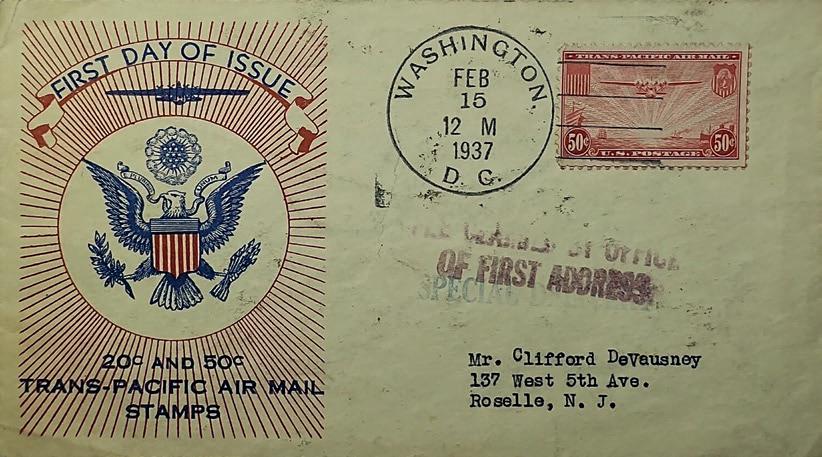
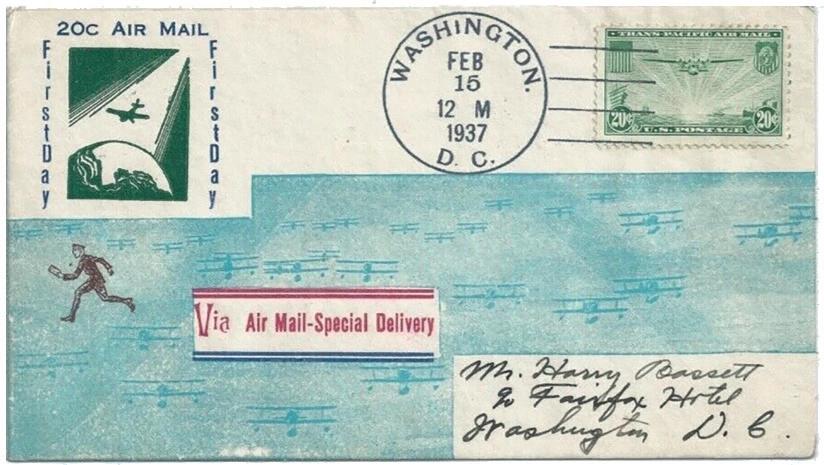
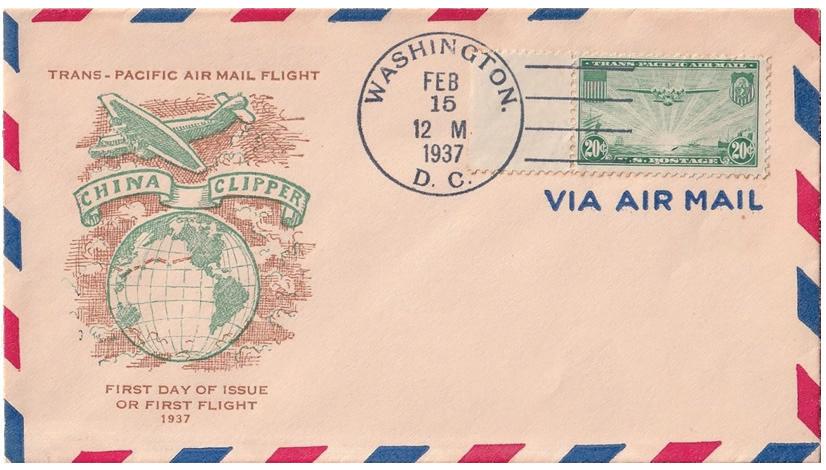
Despite the limited development window for the Trans Pacific issues, cachetmakers rushed to market. Mellone’s Planty Photo Encyclopedia (Note 8) documented 53 cachetmakers who produced 81 issue specific design varieties. Seen in Figure 7 is a selection of colorful cachets, some of which are not listed in Mellone’s . These range from simple, rather crude illustrations to charming and creative designs. The various services requested reflect the creativity of collectors at the time. Each cover that traveled through the mail was sent to a domestic address; each contained a single stamp. Nearly all were overfranked for the service they actually received.
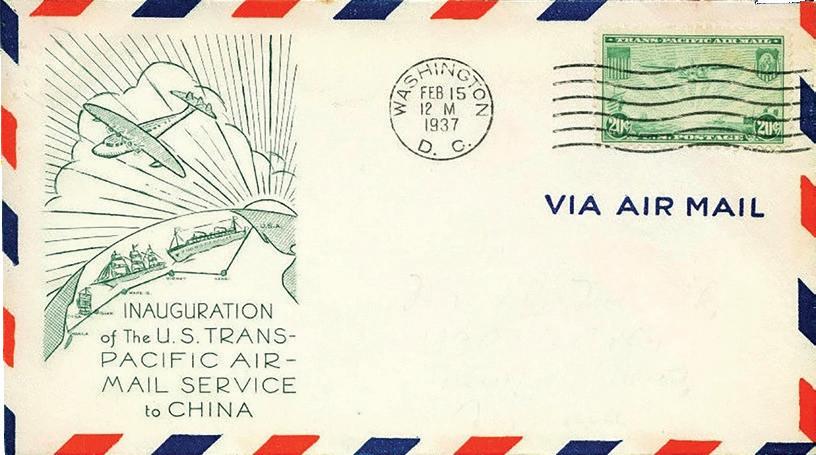
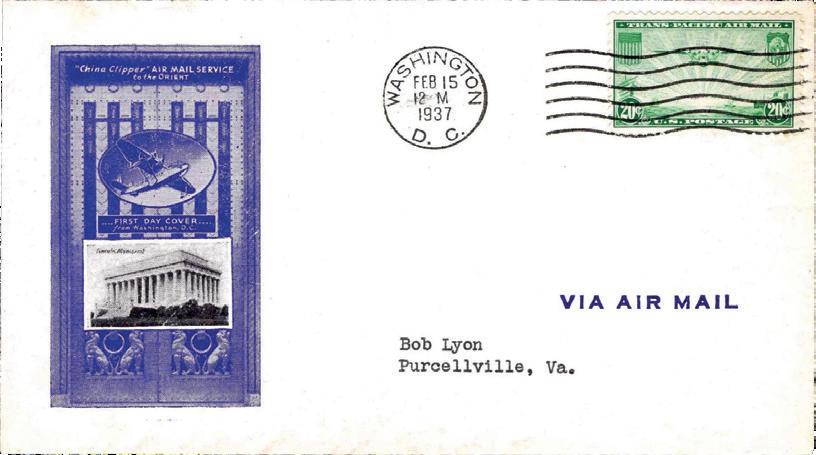
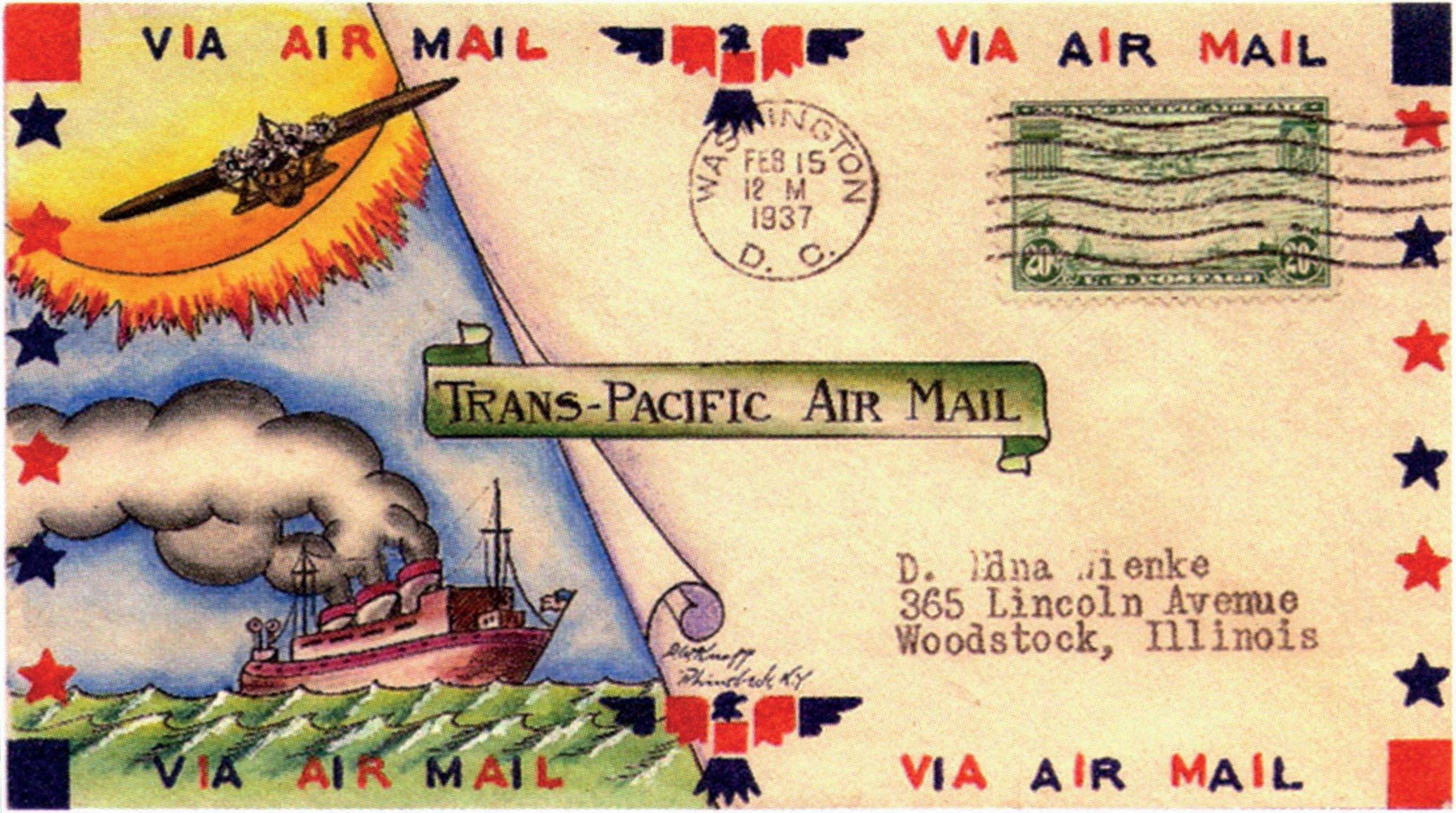
My favorite cachet is not listed in Mellone’s . The sumptuous cover in Figure 8 is a handmade original. I spotted this beauty in Douglas Weisz’s masterful and loving biography of Dorothy Knapp. (Note 9.) Is it any wonder why her art is so collectible?
Few FDC collectors resided in the Washington, DC, area. Nearly all the covers we see today were produced by one of the numerous philatelic service agents operating at the time. Many were located in the Washington area, where so much postal activity occurred. Others traveled to the site of key philatelic events to provide their services.
Many advertisements for these services appeared in the pages of Mekeel’s. Figure 9 is typical of such ads. Perhaps a more interesting example is seen in Figure 10. Notice that the advertiser is none other than D.H. Davenport! Davenport was an active U.S. philatelic commentator in the mid-to-late 1930s, best known today for his coverage in Mekeel’s of contemporary airmail developments, notably Pan American’s Trans Pacific routes.
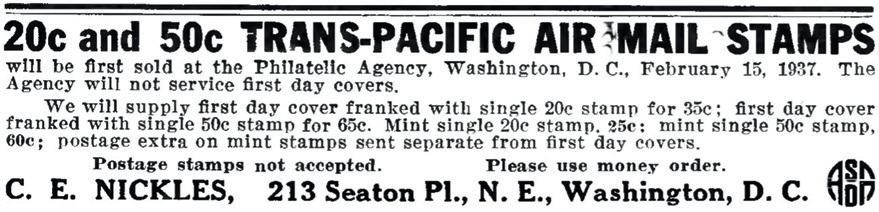
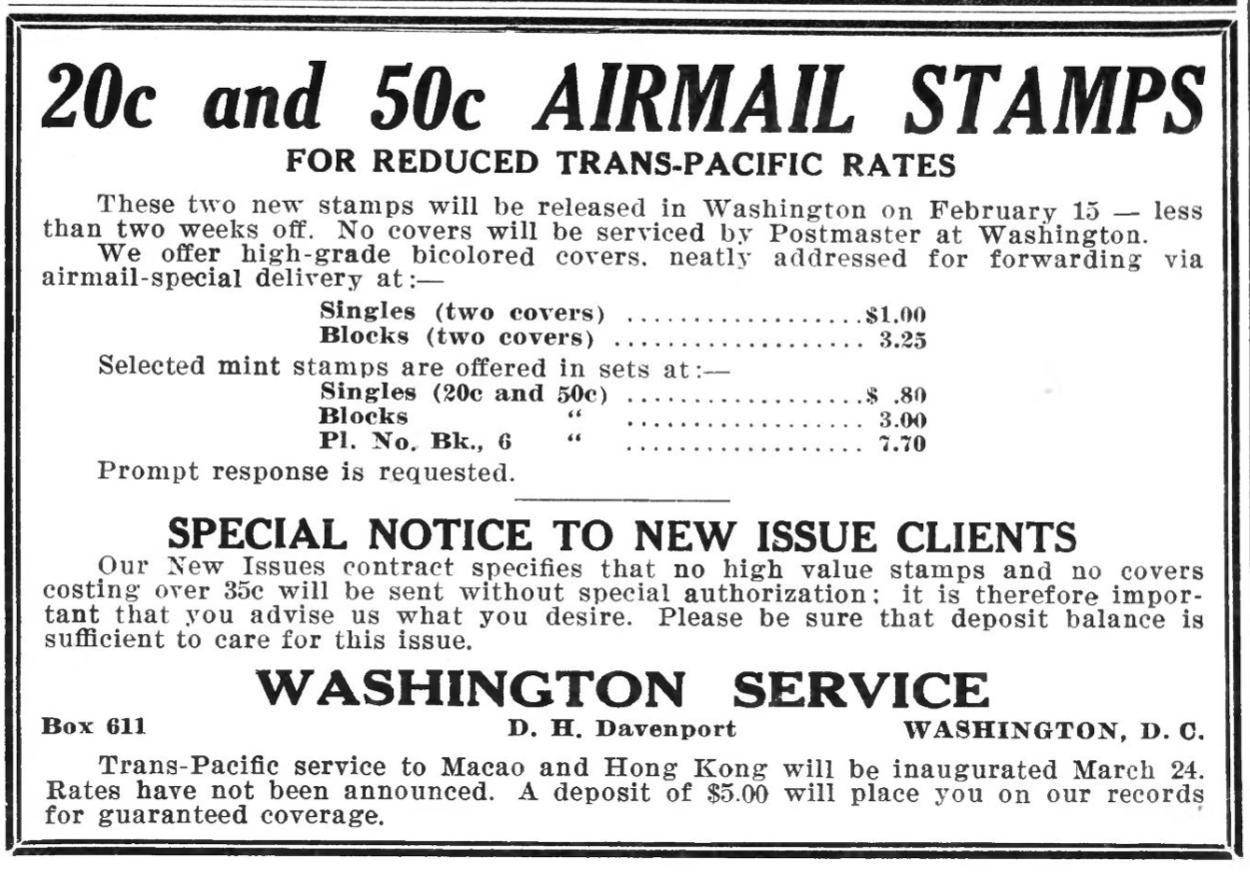
In addition to his journalistic work, he operated a Washington, D.C.-based stamp-dealing and servicing business. This likely helped keep him close to the Post Office Department and to developments in the Philatelic Agency that were central to the stories he covered.
Who created the Coxsackie Cover ...?
Philatelist Leo Vermann, the sender of this FDC, did not request a cacheted envelope. He was far more interested in creating a cover that would test the transatlantic mail service. While these two stamps were issued for the Trans-Pacific route, there was no comparable route across the North Atlantic. The volume of mail between the U.S. and Europe was vastly greater than that across the Pacific to Asia. But no direct airmail service was available. Vermann set out to make his own route, and in the process, perhaps he created a unique postal artifact.
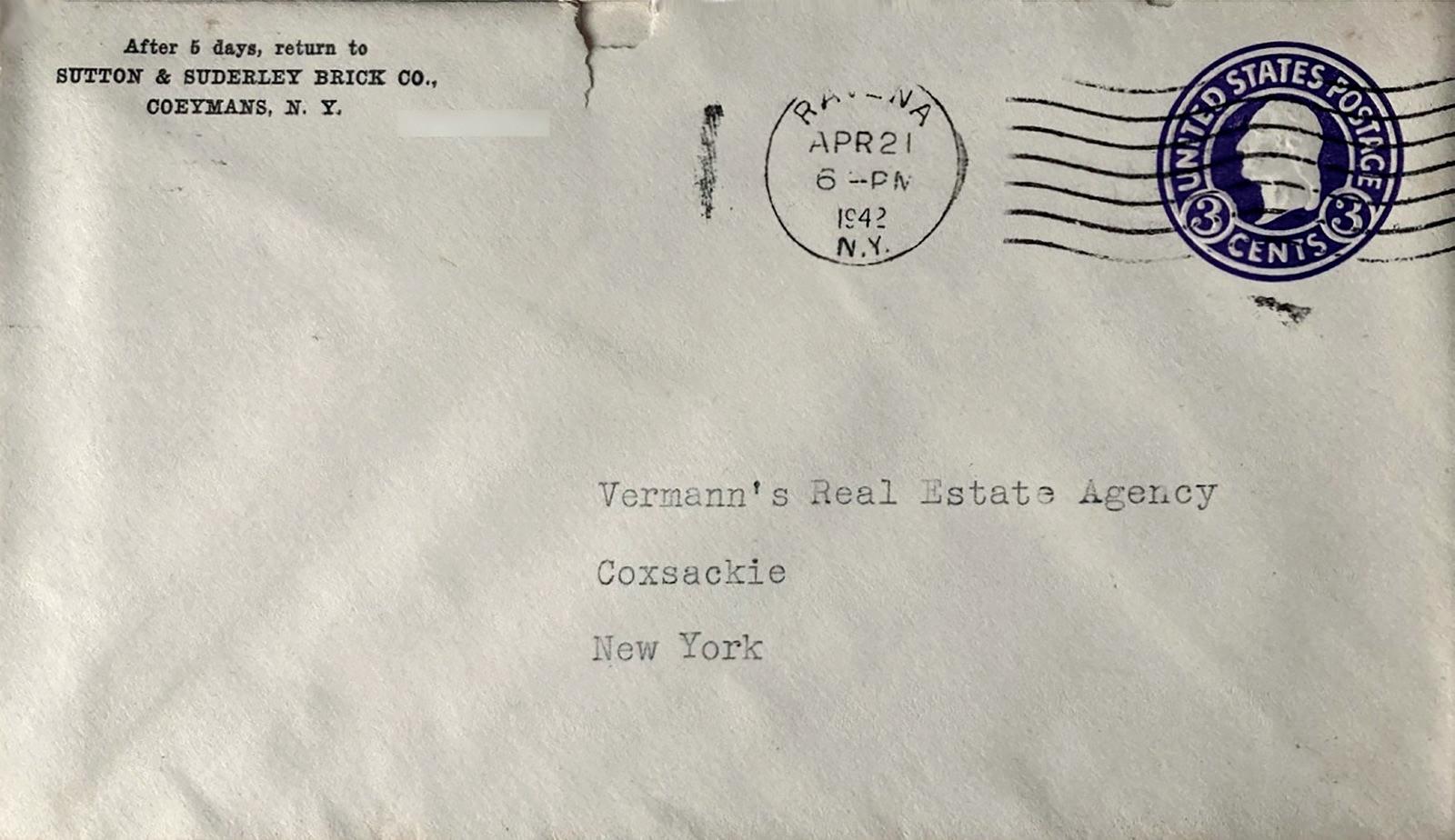
According to anccestry.com (Note 10) Vermann was born in Vienna, Austria, in 1898 and immigrated to the U.S., where he became a citizen. The 1930 U.S. Census (Figure 11) shows him living in Coxsackie, New York, and working as a self-employed real estate agent. His real estate business was active throughout the 1940s, as suggested by the envelope addressed to his firm in 1942 (Figure 12). Vermann’s Real Estate Agency was a fixture in Greene County, New York, for several decades. The January 1962 edition of the Rural New Yorker shows four classified ads offering homes and farms for sale. Vermann was a local fixture. Indeed, the Spring 1979 issue of the Greene County Historical Society Quarterly Journal reported on his ongoing local activities. Leo Vermann lived to age 93. Find A Grave (Note 11) reported his passing on July 18, 1991. He is interred in Saint Mary’s Cemetery in Coxsackie.

... and the Addressee?
I consulted the Wienbibliothek ‘Lehman’ Wiener Adressbuch (Note 12), the historical directory for Vienna residents and streets. There were a dozen or so Aurachers listed in the resident directory (Band 1) but none close to “Anny”. Moreover, checking the street address in Band 2 (Note 13) also failed to identify our mystery addressee. Perhaps further research will yield better results. Nevertheless, the Coxsackie Cover shows no markings indicating that delivery was not completed.
the route
Coxsackie was about a 400-mile drive from Washington. Vermann did not personally appear to create this FDC. Instead, he relied upon a philatelic agent such as C.E. Nickles or D.H. Davenport. Let us follow the route this envelope took. Vermann mailed the envelope with his request for first day treatment. The agent arrived at the philatelic window the morning of Monday, February 15, 1937, and purchased Trans‑Pacific stamps for his clients. The philatelic window on that day was only selling these two airmail stamps. The agent likely supplied the 10¢ airmail stamp and added all four stamps to the envelope. He then returned to the philatelic window and dropped off his clients’ envelopes. The cover was cancelled that same day. Per Vermann’s instructional marking, the letter was routed to Buenos Aires and sent to the airport for the following day’s flight to Miami. It is probable that this mail piece was placed in a sealed bag with other mail bound for Buenos Aires.
POST OFFICE DEPARTMENT WASHINGTON, D. C.
EFFECTIVE JULY 15, 1936. Subject to change. Post offices will be e,:pededto keep this leaHet current from notes in Post.al Bulletin • •
AIR MAIL SERVICE TO CANADA, MEDCO CENTRAL AND SOOTH AMERICA, A.ND THE WEST L~DIB;S (TIUJ(s.UctnC SUTIC£ae&m11LD llllDOWJfOl'I 1'.le&l;I -S-~p.-.J'ri. Meadoa•.m..ODdS-a\htop.m. & \.,uul.Wtd .... Wed.""'4&"-
15, 1936.
The flight departed Washington, DC, on Tuesday morning at 1045 hours and arrived in Miami, Florida, around 1750 hours. (Note that in this article, I use the military designation for time, as that is the standard usage in airline schedules and flight logs.)
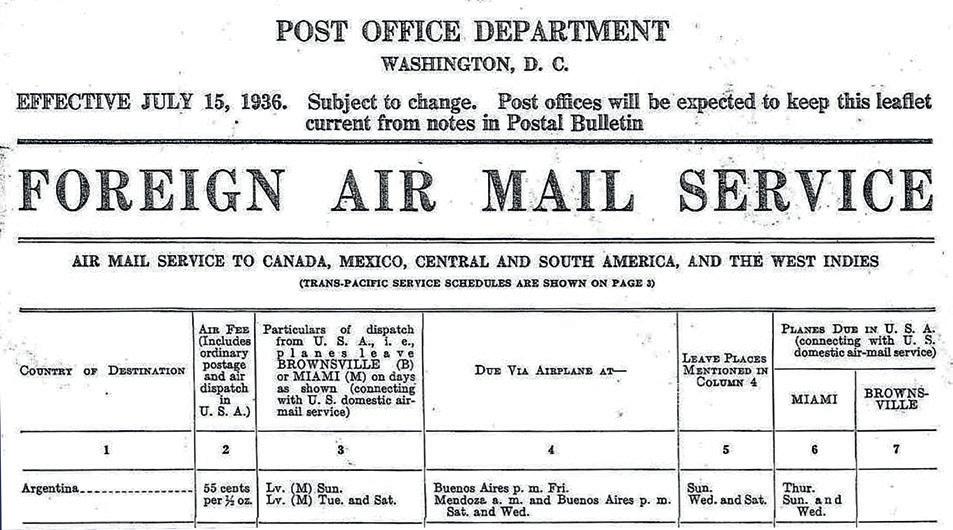
FAM 9 was serviced by the Pan American Airways System. Airmail service to Argentina departed on Saturday, Sunday, and Tuesday, according to the post office international air mail schedule (Figure 13). The Miami transit mark is dated Wednesday, February 17th, so the cover did not depart until February 20th, after a three-day layover. 4:05
Arg. • L, s. iEos t::
:.·:::.. :::: ii.14 1:35 A.r BUENOS AIRES (P,Riv ), Arg. J,v, \Vcd, 1:15 "" fa•. BUENOS AIRES ( P Ri v ) , Arg Ar. MONTEVIDEO (Mtlll11l Ur• "· LY. 6:00 Th.Su. 3,10 (1) 12:50 s,oo Tu.•·, w;:s;: 2'40(1) 2,12(1) 1:25 12:55 1i,io F. S. 8,30 8:30 s.,. 8:01 8.30
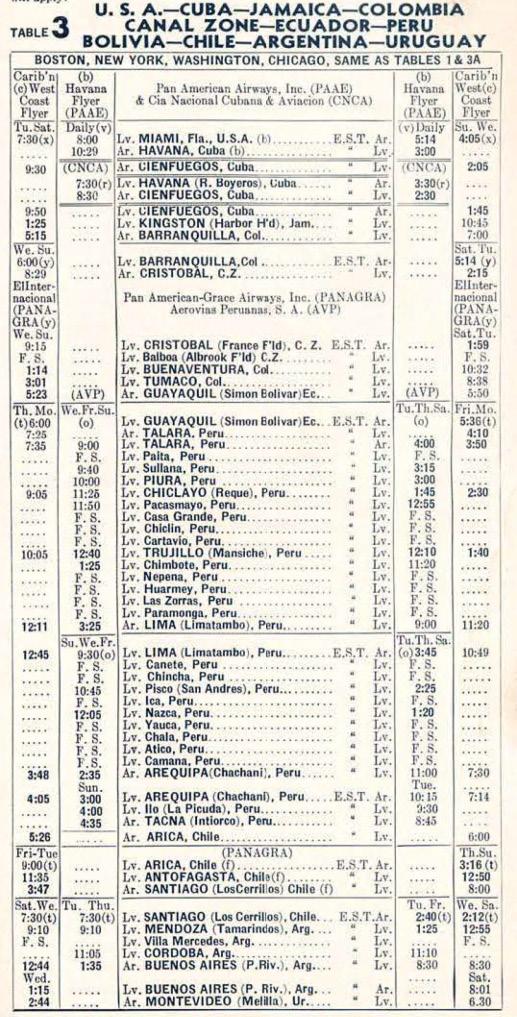
14. Pan American Route 3 Schedule from the timetable effective December 1, 1936.
The southbound airmail service, the PanAm West Coast Flyer (Route 3), followed a circuitous route (Figure 14). From the PanAm timetable (Note 14), I have extracted the following routing: Miami Havana Kingston (Jamaica) Barranquilla (Colombia) Cristóbal (Canal Zone) Guayaquil (Ecuador) Talara (Peru) Lima (southbound Peru coastal/ interior stops shown as scheduled/flag stops, including Pisco, Ica, Nazca, etc.) Arequipa Tacna Arica (Chile) Antofagasta Santiago Mendoza Buenos Aires.
The final leg of the PanAm flight landed in Buenos Aires on Wednesday, February 24th at 1245 hours.
As indicated by Vermann’s instructional marking, he intended for his cover to travel to Buenos Aires in order to fly via the Deutsche Lufthansa (DLH) route from South America to Europe. There was an alternative and more direct PanAm route to South America. The PanAm East Coast Flyer (Route 2) departed on Thursday, February 18th, and arrived in Natal, Brazil, on Sunday, February 21st. However, Air France offered a competing route from Brazil to Europe that would have departed on the 22nd, four days earlier than the DLH service. (The route information: (Note 15) “Flight 82R left Natal on the morning of Feb. 22, 1937. Flight duration: 16 hr 22 min. Pilot: Fernand Guerrero. Co-pilot: Henri Delaunay. Aircraft: Farman 2200 (4-engine landplane) Ville de Montevideo F-AOXE.”) Had Vermann specified Natal instead of Buenos Aires, the Coxsackie cover would have arrived in Paris after a much speedier trip.
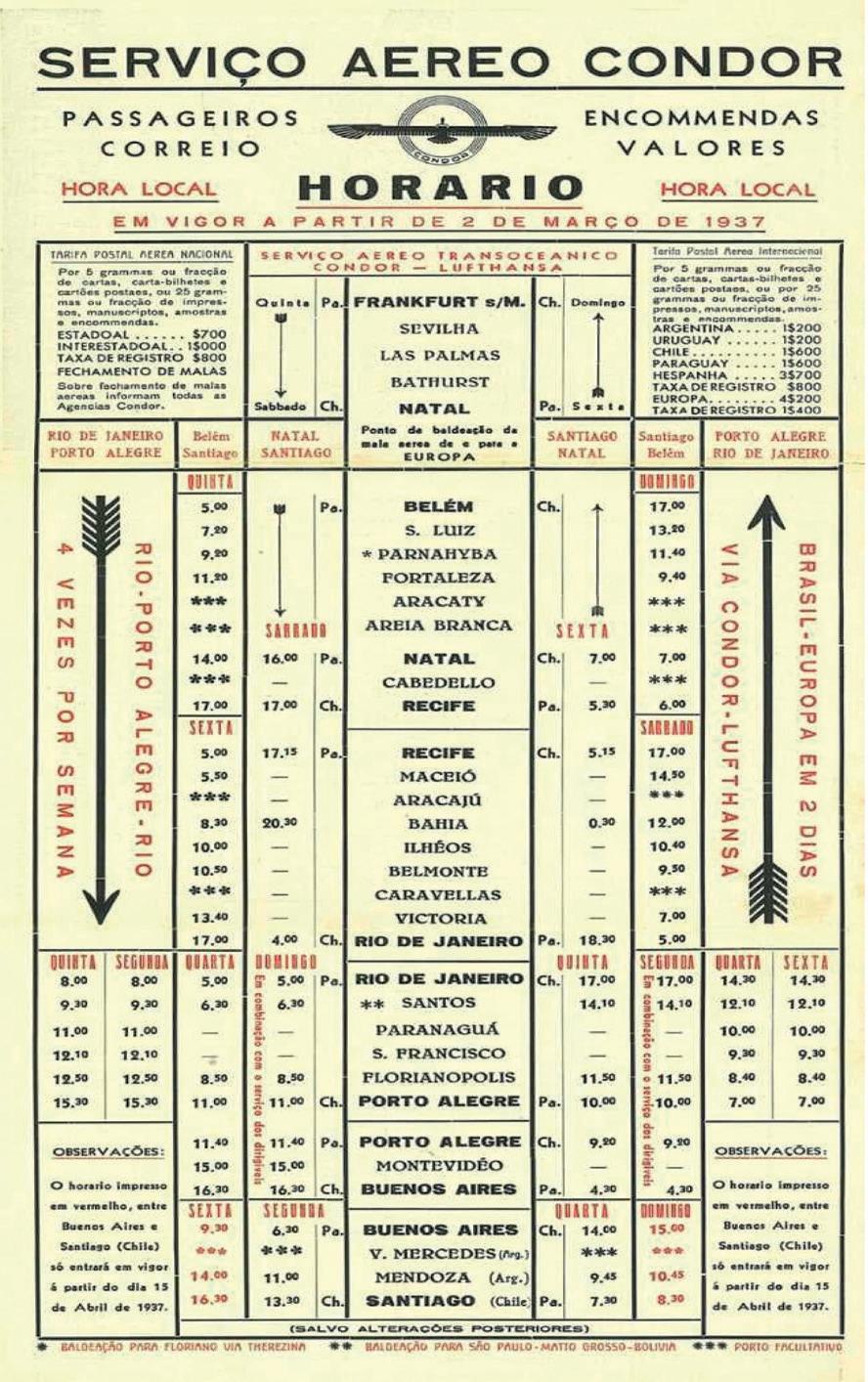
Figure 15. Condor Air Service schedule 1937.
The table (Figure 15) shows the stops the cover made on its journey to Vienna. (Note 16.) While Vermann left no further routing instructions, the postal clerks in Buenos Aires were intimately familiar with the available airmail routes to Europe. In Buenos Aires, the cover was transferred to a Syndicato Condor aircraft. Condor was deeply integrated with DLH in the 1930s. Lufthansa schedules throughout the decade listed Condor flights as an integral part of DLH’s routes. Legal details aside, Lufthansa effectively controlled Condor throughout the 1920s and 1930s.
At Buenos Aires, mail for the DLH flight was placed in a sealed bag for the trip to Berlin. Condor departed Buenos Aires on Thursday, February 25. The flight schedule (Figure 15) shows a departure time of 0430 hours, with intermediate stops in Porto Alegre (0920 hours arrival), Rio de Janeiro (1700), Recife (Friday 0515), and Natal (0700). In Natal, DLH took over for the remainder of the route to Europe.
The seaplane D-AGAT Boreas took off at 1240 hours for Fernando de Noronha, a Brazilian island 200 miles off the coast. There, she was hoisted aboard the German catapult ship Westfalen , which steamed to the middle of the South Atlantic Ocean.
There were certain flights where Boreas could transit the entire South Atlantic without aid, but this was not one of them. Boreas was launched from the steam catapult at 90 mph, creating significant G forces. This alone explains why the DLH route did not carry passengers.
Boreas flew overnight, landing safely at Bathurst, Gambia, at 0900 hours. There, the mail was transferred to D-ALIX Rostock, which departed an hour later and arrived in Las Palmas after a six hour journey. The next leg was flown by D-ATYL Karlsruhe. It departed at 0215 hours the next morning, Sunday, February 28th, landing in Lisbon at 0830 hours.
The final leg of the DLH route was flown by D-AQUA Breslau . It wasted no time, taking off 30 minutes later and landing in Marseille at 1440 hours. There, Breslau refueled and dropped off any mail for local delivery. She then took off for Frankfort am Main, a three-hour journey. After an hour and a half, she was once again in the air, landing in Berlin at 2100 hours. Breslau offloaded her sealed mail bags. The next morning, one of the numerous flights departed for Vienna. On March 1st, the Coxsackie Cover’s two week journey was complete.
Explaining the franking and the rate
This cover contains one dollar of postage. We will examine whether this was the correct postage in a moment. That sum could have been made up with two 50¢ TransPacific stamps. Clearly, Vermann wanted both denominations on his FDC and asked his servicing agent to create a mixed franking. Also on this cover is the 10¢ Map of the U. S. airmail stamp (Scott C7), first issued in 1926. As the philatelic window was only selling the two Trans ‑ Pacific stamps on that day, the 10¢ was provided by the agent. Clearly, Vermann wanted exactly one dollar on the envelope.
We know that the envelope was handed over the philatelic counter. Examination of the post office foreign airmail bulletin in effect at the time (Note 17) does not show any single airmail rate to Europe. But the philatelic postal clerk might have known of such a rate or been able to derive one. If the clerk had thought the envelope underpaid for the requested routing, he might have applied a “Taxe” handstamp to indicate postage due. Perhaps the one dollar postage was sufficient to cover some valid rate, although we cannot rule out intentional overfranking.
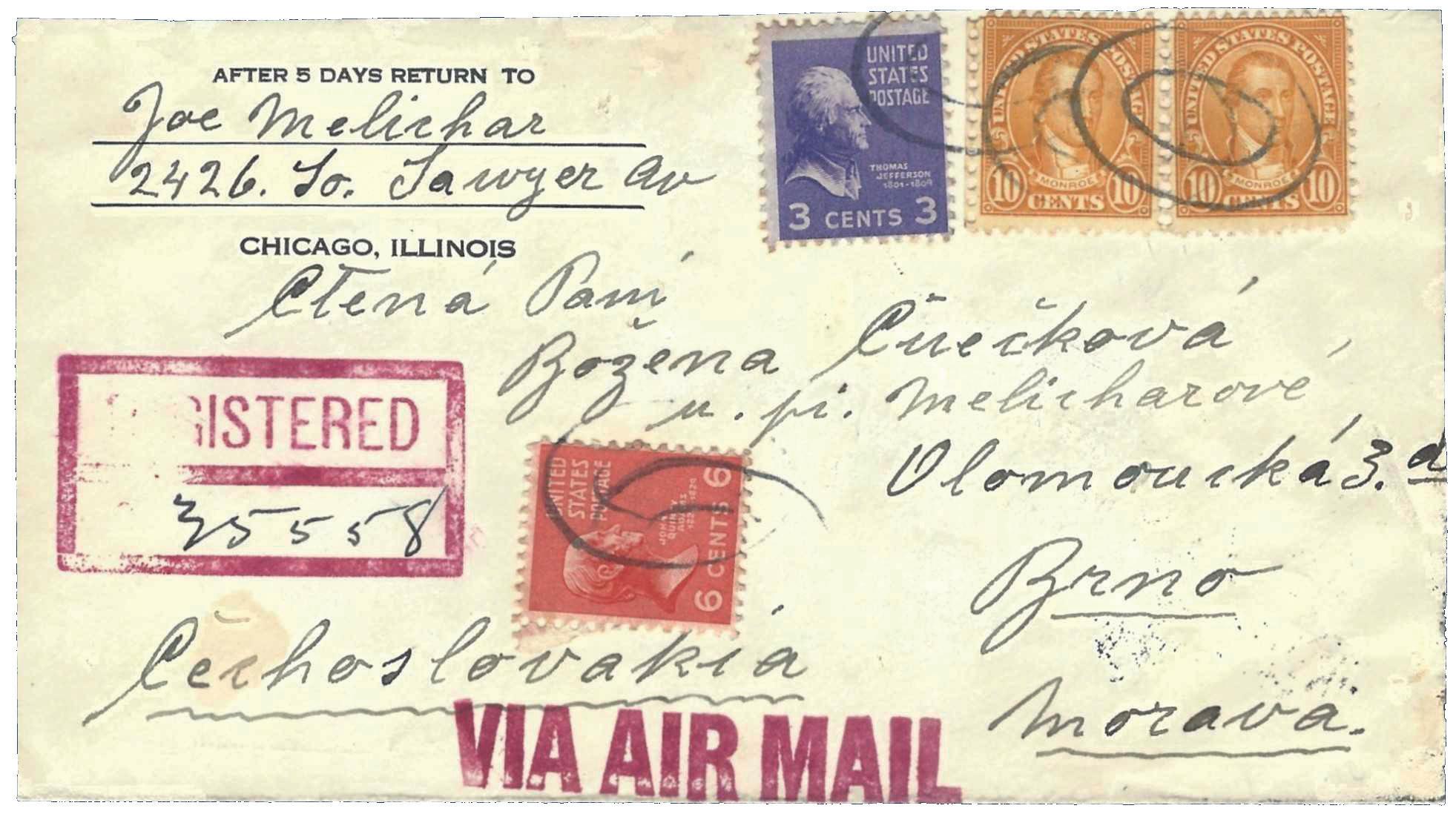
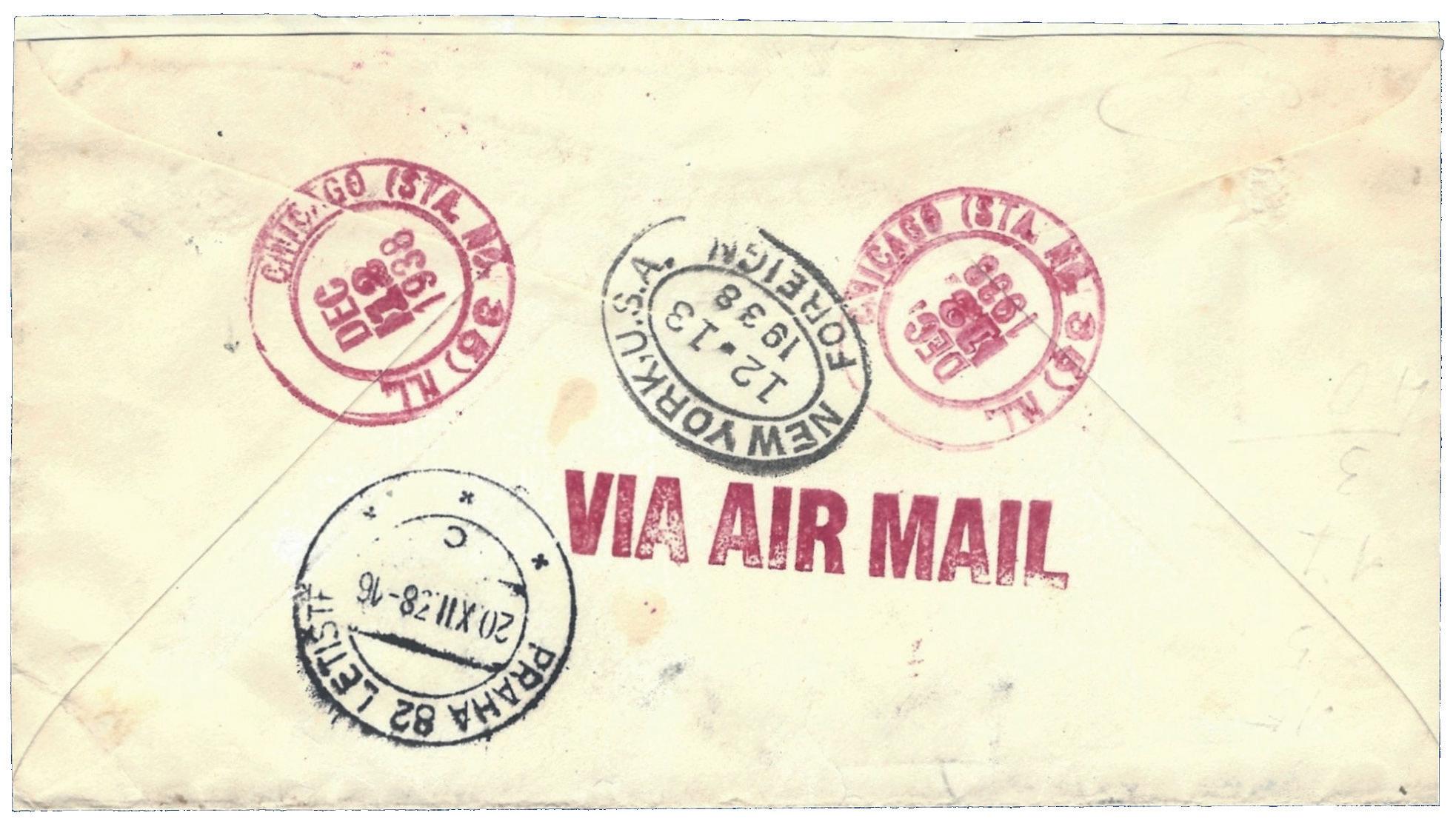
As I see it, there are four route segments that might have some relevance: 1) Bi-modal U.S. to Europe: There was no eastbound continuous airmail service between the U. S. and Europe in 1937. The reasons for this are complex, and the subject for another time. Airmail covers between the U.S. and Europe only flew within the U.S. and within Europe. Ships took all such mail across the North Atlantic. An example of this is seen in the Figure 16 cover.
The postage (Note 18) is comprised of:
2) Deutsche Lufthansa South Atlantic Route: The base rate for the DLH route from Germany to Brazil was 150 pfennigs; to Argentina, 180 pfennigs. Based on the February 1937 exchange rate, that amounts to 60¢ and 72¢, respectively.
3) Hindenburg North Atlantic Route: In February, the special Hindenburg airmail rate of 40¢ was still theoretically in effect.
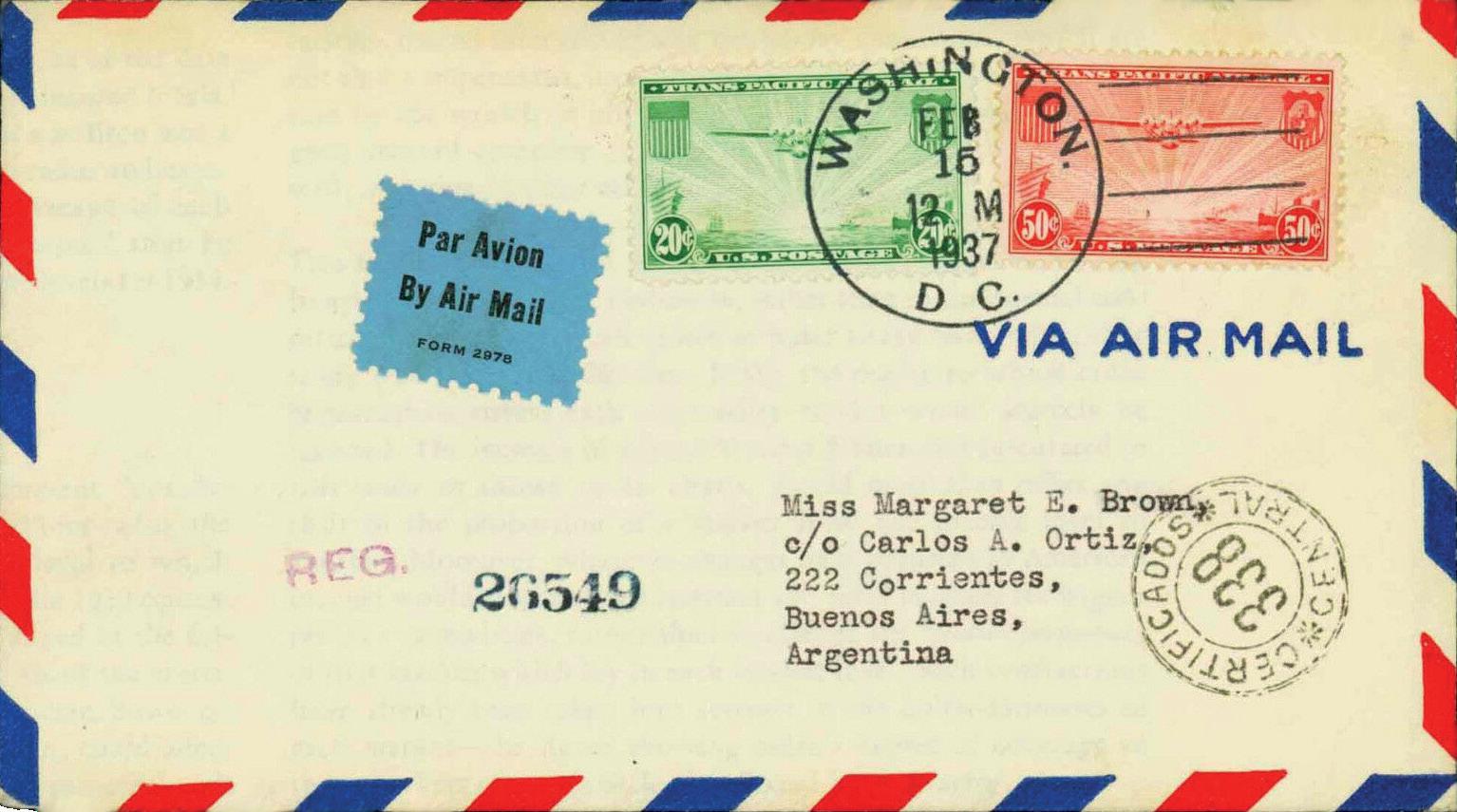
4) U.S. to Argentina Route: The international airmail rate to Argentina was 55¢. (Note 19.) The cover was mailed as a registered letter. The international registry fee was the same as the domestic fee, 15¢. (Note 20) The Trans Pacific stamped cover in Figure 17, mailed to Argentina, confirms this calculation.
So, here is my conclusion regarding the rate. There is no combination of any of these route segment rates that yields the one-dollar franking. The envelope has instructional markings directing the envelope to be sent via Miami and Buenos Aires. The postage was more than sufficient to pay for that routing. The clerk at the philatelic window, either by knowledge or ignorance, allowed the Coxsackie Cover to be mailed without a “Taxe” deficiency mark. And, clearly, it worked: the cover followed Vermann’s desired route and was delivered.
- ..----=-.
Miss Margaret E Bru.»"-,>;<1 '/ , , c/o Carlos A Ortiz ( '?/1)'···<'
222 C0 rriente s, {a ( OdJ Buenos Aires, •~.\.. <f?,1.';:~ Argentina '.;,,;~ ·,-/ -iclr •· -~-~
The cancellation applied to the Coxsackie Cover is a standard 4-bar large cds. If 10 or fewer covers were handed over the counter at the philatelic window, they received this handstamped cancellation. Larger quantities brought to the philatelic window were machine cancelled with a six-bar small cds. The array of covers shown in Figure 7 illustrate both types of cancellations.
I have recently acquired a cover (Figure 18) cancelled with a large handstamped cds without any bars. Perhaps there are other varieties yet to be reported for this FDC.
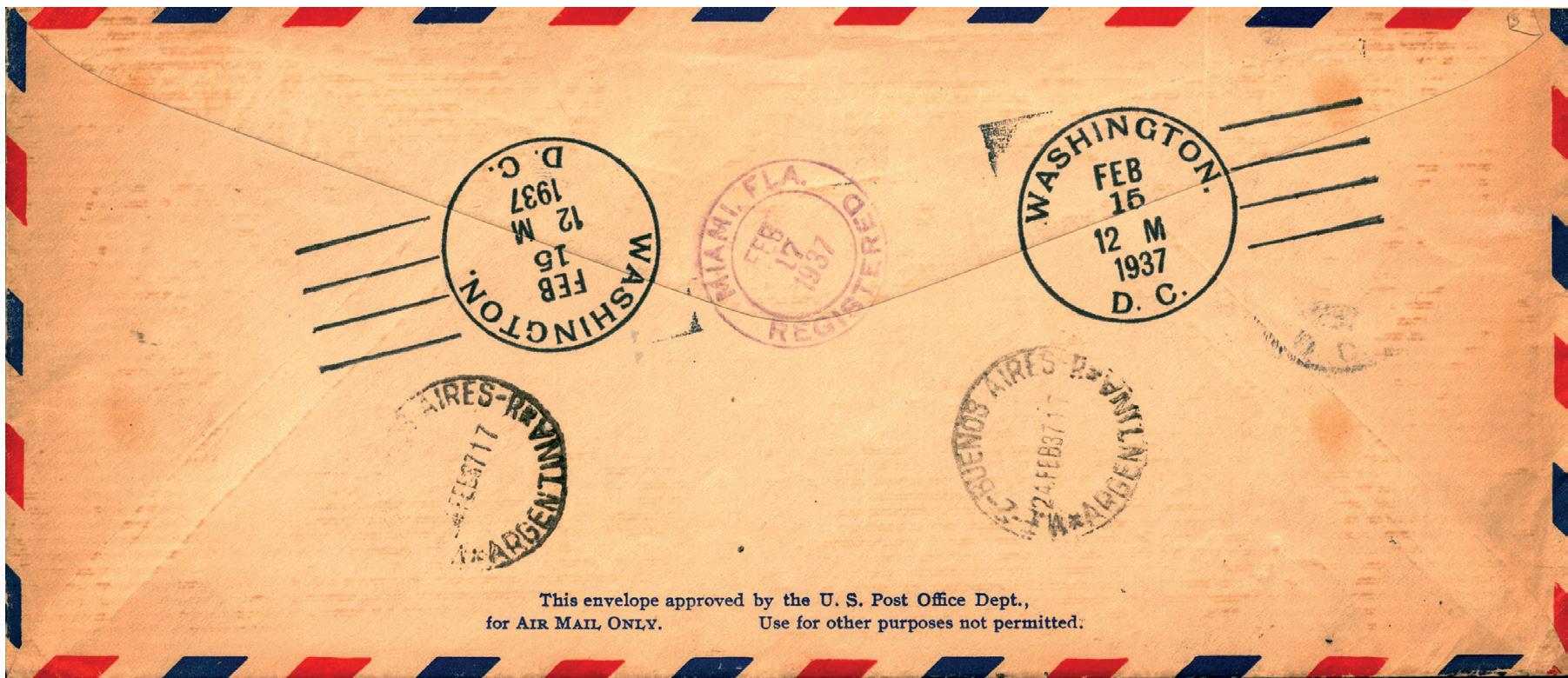
IOn the reverse, (Figure 19) the post office applied the four bar cds across the envelope flap, as specified by registered mail procedures. When the cover arrived in Miami, the receiving post office applied the double circle “MIAMI, FLA. REGISTERED” cds dated “17 Feb”, also conforming with postal regulations. When the cover arrived in Argentina, the reverse was backstamped with the transit mark “BUENOS AIRES – ARGENTINA. The arrival was “24 FEB37” at 1700 hours. On the front, the handstamp “CERTIFICADO * CENTRAL 203” demonstrates that the envelope received registered treatment up to that point, but no further.
There are no other markings indicating an arrival in Berlin or Vienna. It was not uncommon for postal authorities to skip the niceties of postal accountability in favor of postal celerity. Getting the mail to recipients was their top priority. While today’s postal historians might wish for a more thorough postmark timeline, we have sufficient information to support our assumption about the route the Coxsackie Cover took.
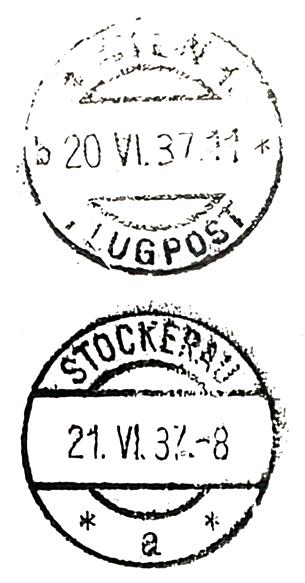
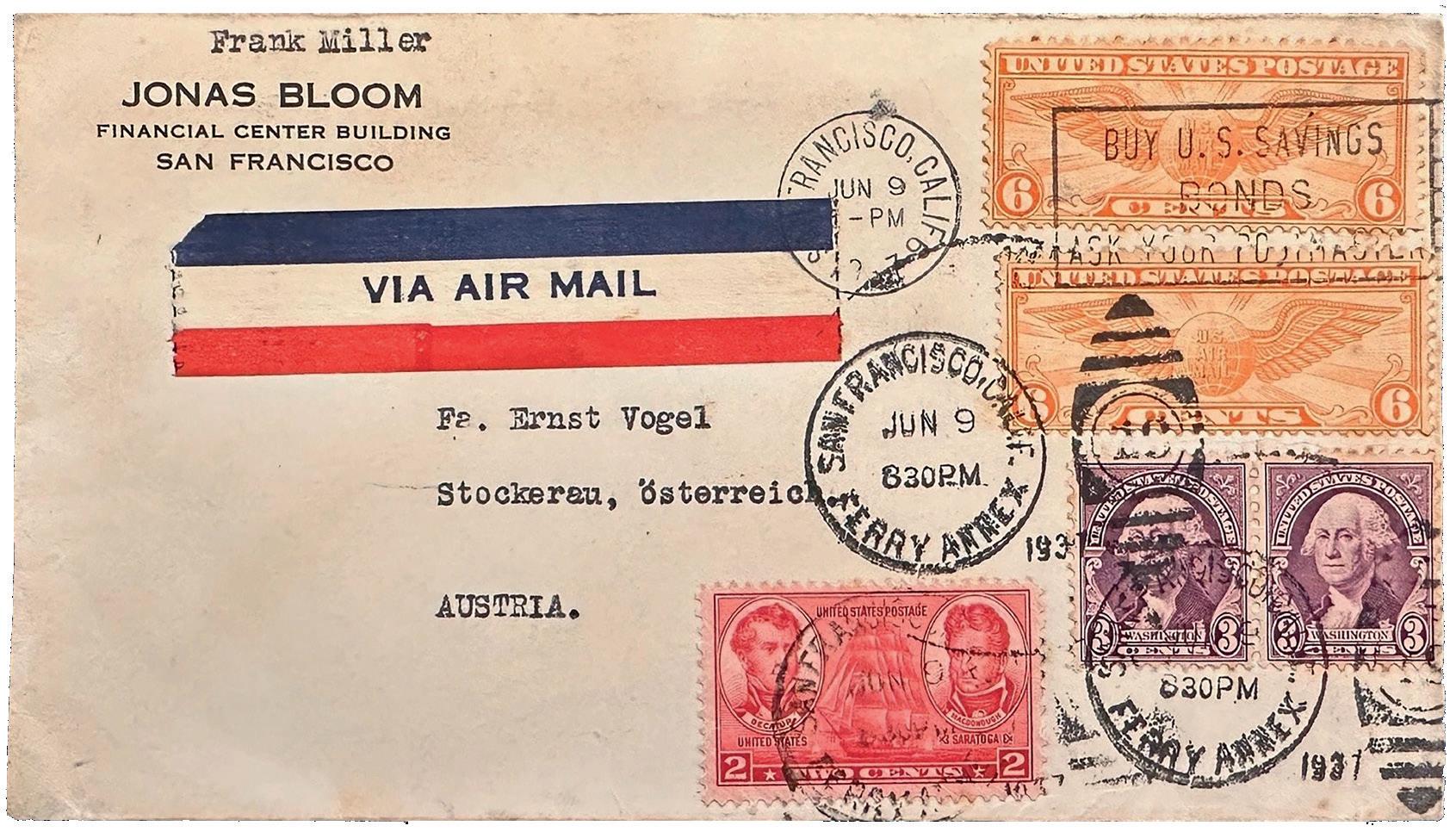
Although Vermann designed this cover for travel via the DLH route, it raises a question: was there a faster (albeit non-philatelic) route to Europe? Surface mail via ship was, of course, the normal means of transport. The New York Times devoted a full half-page to announcements of shipping and mail departures and arrivals. On February 13th, The Times reported the scheduled departure of President Roosevelt (United States line) on the 17th for Hamburg. They also reported the scheduled departure of the Bremen (North German Lloyd line) on February 19th for Bremen. Similar alternatives were available through ports of arrival in the United Kingdom and elsewhere in Europe.
If the Coxsackie Cover had been aboard the President Roosevelt , it would have arrived in Hamburg on February 28th, the precise same day that it actually arrived in Berlin! Had our cover taken this route, it might have looked much like the cover in Figure 20. The rate on this cover warrants some explanation. Here, I got assistance from Ken Lawrence. (Note 21.)
His explanation:
Without a proper endorsement, we don’t know what the sender intended, but let’s guess that he intended air to New York, ship to Europe, air from European seaport to Austria. In that case, postage was 5¢ for the first ounce, plus 3¢ for the partial additional ounce, plus 3¢ for the first ounce of domestic air surcharge, plus 3¢ for the partial additional ounce of surcharge plus 3¢ for the first half ounce of European air surcharge plus 3¢ for the second half ounce of European surcharge plus 3¢ for the partial additional half ounce. So, it was 3¢ short paid, because the sender assumed that the domestic and foreign air surcharges were the same, whereas European air surcharges were double domestic air surcharges.
Vermann clearly knew how to get airmail sent from the U.S. to Europe in 1937. He could have saved money by taking a standard surface route. The envelope would still have been an FDC with a cool mixed franking. But it would not have taken its peripatetic journey along the west and east coasts of South America, flown the Deutsche Lufthansa route across the South Atlantic and up the west coast of Africa, nor visited the Iberian Peninsula. It just wouldn’t have been the Coxsackie Cover!
I am grateful for research assistance provided by Ken Lawrence, Dan Gribbin, Lloyd de Vries, David Ball, and Nate Fenush (APRL).
Throughout this article, I have made several assumptions and outright guesses, in particular concerning that one-dollar franking. I am happy to hear from readers who can correct or expand upon what I’ve written.
This article is a co-publication with First Days, the journal of the American First Day Cover Society (www.afdcs.org)
Notes
1. Laurence, Michael (2006). Philatelic Definition of Postal History - Blount Symposium on Postal History, Smithsonian National Postal Museum, Washington, DC.
2. Fundamentals of Postal History, Volume 1 – Understanding Postal Artifacts , will be published in 2027 by Philatelic Research Press in association with the Collectors Club of Chicago. Additional information is available at www.PhilatelicResearch.org.
3. Beech, David R. (2023). “Context Philately: An Introduction”, FEPA News , Federation of European Philatelic Associations, 43, [July], pp.50-53; and Beech, David R. (2025). “Context Philately - A New Brand for an Existing Idea”, FEPA News , Federation of European Philatelic Associations, [February], 46, pp.56-58.
4. Loew, Gary Wayne (2026). “Following an Envelope from Canton to São Paulo – A Context Philately Perspective”, Kelleher’s Stamp Collectors Quarterly , second quarter.
5. The Postal Bulletin (1937). Vol VLIII, 17113, [February 3], p.1.
6. Davenport, D.H. (1937). “First Day Cover Protest”, Mekeel’s Weekly Stamp News , [January 25], p.55.
7. Scott Publishing Co. (2025). Scott Specialized Catalogue of United States Stamps & Covers 2025 , 103rd edition, p.467, New York; Sidney, OH.
8. Mellone, Michael A. and Planty, Earl Gerald (2000). Mellone’s Planty Photo Encyclopedia of Cacheted First Day Covers, Vol. XI - 1936-1937 , F.D.C. Publishing Co., Stewartsville, NJ.
9. Weisz, Douglas S. (2014). Dorothy Knapp - philately and family , Douglas S. Weisz, McMurray, PA.
10. Leo Verman’s entry is at https://www.ancestry.com/search/?name=Leo_ Vermann&event=1937_coxsackie-greene-new+york-usa_10723&name_ x=s_1&searchMode=advanced. Accessed 12/29/2024.
11. Find A Grave website: https://www.findagrave.com/memorial/210338252/leo vermann?utm_source=chatgpt com#view-photo=267619850. Accessed 2/24/2026.
12. Wienbibliothek im Rathaus. Adolph Lehmann’s allgemeiner Wohnungs-Anzeiger: nebst Handels- u. Gewerbe-Adressbuch für d. k.k. Reichshaupt- u. Residenzstadt Wien u. Umgebung. Jahrgang 1937, Band 1, p.28, Wienbibliothek Digital. Accessed February 25, 2026. https:// resolver.obvsg.at/urn:nbn:at:AT-WBR-480507
13. Ibid. Band 2.
14. Pan American Airways System (19360). “Time Table,” effective December 1, 1936, table 3.
15. Collot, Gérard and Cornu, Alain (1990). Ligne Mermoz : Histoire aérophilatélique, Latécoère, Aéropostale, Air France, 1918-1940 , Editions Bertrand Sinais, Paris.
16. Phillip, Rudolf (2010). Von Stuttgart nach Rio de Janeiro, Aufstellung der Flugdaten 1933-1939 [From Stuttgart to Rio de Janeiro, flight details overview], The author, Kornwestheim.
17. United States Post Office Department (1936). Foreign Air Mail Service: Air Mail Service to Canada, Mexico, Central and South America, and the West Indies , effective July 15, 1936 , U.S. Government Printing Office, Washington, DC.
18. Wawrukiewicz, Anthony and Beecher, Henry W. (1996). U.S. international postal rates, 1872-1996 , p.106, CAMA Publishing Co., Portland, OR.
19. Ibid., p.115.
20. Ibid., pp.233, 321.
21. Email correspondence with Ken Lawrence dated February 24-45, 2026.
Thomas M. Lera
Introduction
This article discusses the importance of the surrounding area of the Florida Arsenal and how it played a significant part in the establishment of the Mount Vernon and Chattahoochee Post Offices.
British troops came to the area in June 1814 as the War of 1812 entered its closing months and built a small fort on top of a large Indian mound at the Chattahoochee Landing on the Apalachicola River. They named it Nichols’ Old Fort, correctly spelled Nicolls, after British Lt. Col. Edward Nicolls. Its strategic importance was to protect the confluence of the Chattahoochee and Flint Rivers (red arrow Figure 1) at Mount Vernon, which later was changed to Chattahoochee. (Vignoles)
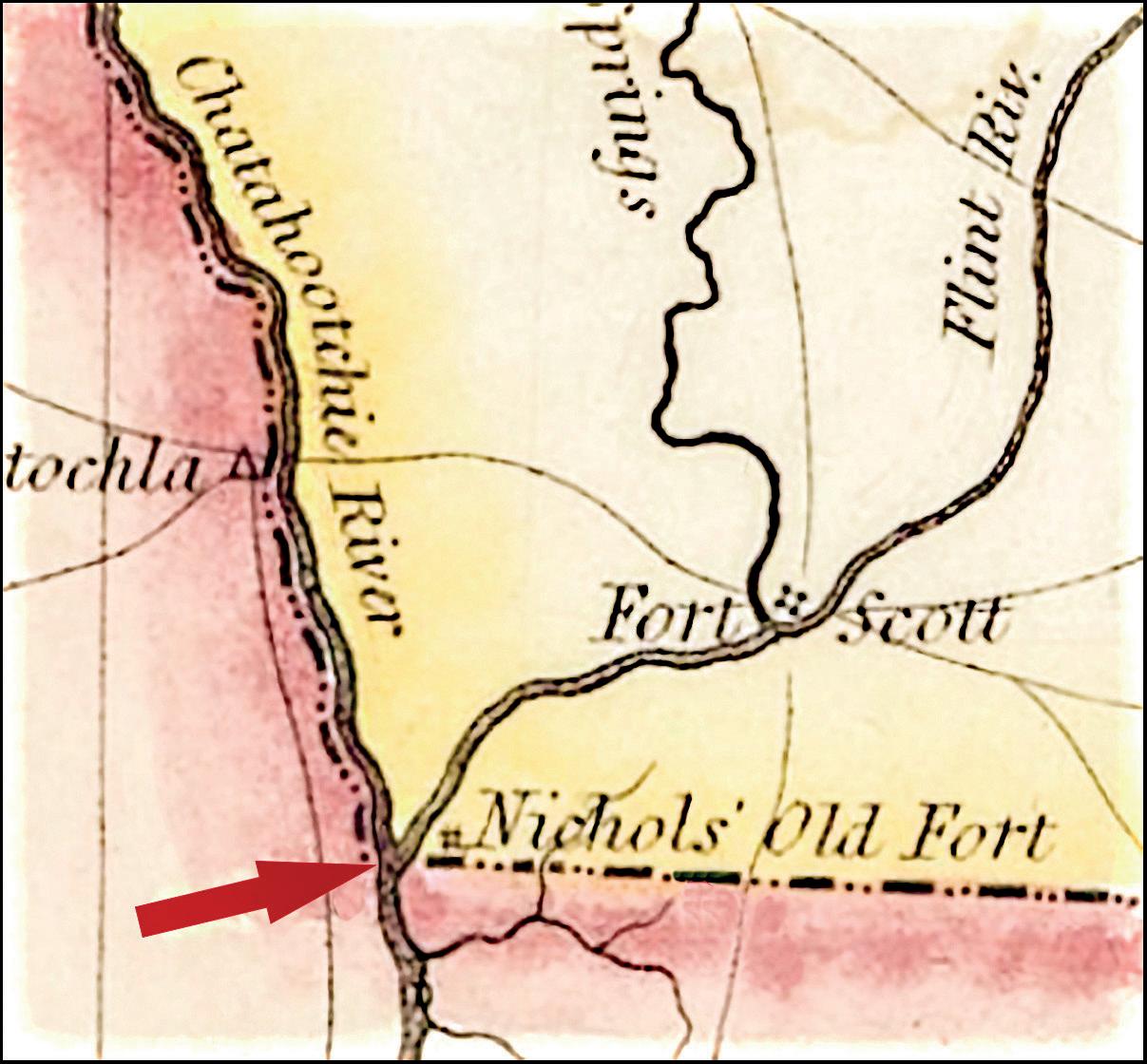
Nicolls held a council with 30 chiefs in the British fort [Nicolls’ Outpost] at the confluence of the Flint and Chattahoochee Rivers, at which a memorial to King George IV was drafted on behalf of the Red Stick Creek and Seminole Indians. It detailed their miserable conditions and implored British aid against the Americans and Spanish. The British Parliament did not accept the memorial. The Nichols’ Old Fort was abandoned shortly after the March 1815 council.
Mount Vernon Post Office
Mount Vernon was a small village on the Apalachicola River near Nicolls’ Outpost and served as an inland port for tobacco and cotton farmers. John McCulloch operated the ferry across the Apalachicola along the Old Spanish Trail (later Bellmay Road) about one mile below the junction of the Chattahoochee and Flint Rivers. He was appointed postmaster March 6, 1828, and his Mount Vernon postmark is seen below (Figure 2 red arrow). Mount Vernon was on Post Route No. 2473 with delivery once a week between Tallahassee and Pensacola. Figure 3 is a letter which traveled on this route.
The Election Return letter from Mount Vernon to Tallahassee travelled 45 miles. Postage rates were determined by distance for delivery over 30 yet less than 80 miles, therefore the correct rate should have been 10¢ not 6¢ (Figure 4). The total income of the Mount Vernon post office in 1829 was $47.11. As the community grew so did the post office total income to $51.58 in 1833. (Note 1)
There were five different postmasters from 1828 to 1833, and six different postmarks. The first five were manuscript and the sixth was an oval handstamp (Figure 4) which was used for four months. (Briggs, Ferguson & Lera: Mount Vernon, p.261, and Chattahoochee, p.110) The post office was discontinued because of the name change February 19, 1834, from Mount Vernon to Chattahoochee.
Joseph W. King was appointed Mount Vernon postmaster July 12, 1833. King received several letters discussing his Quarterly Reports 1833 to 1836, which had been reviewed several months after the end of each quarter. These letters listed various inconsistencies in his returns. They overstated the number of unpaid letters received, undercharged his and the newspaper commissions, and charged the Post Office Department (USPOD) for contingent expenses which were extremely high or should have been paid by the mail contractor.
He received one letter which had been sent February 22, 1834, by W. G. Eliot, Chief Examiner of the USPOD Examiner’s Office (Figure 5). It stated:
POST OFFICE DEPA.RTMENT, Exanllner ,i Offl«, ::'"'If 'l. "t. 183~ l/ SIil: Herewith yo11 l1n,c a m cmorandn111 of Nuch crror,i n.1 haTe been illfJco, ered and corr cclcd in , our ,,uarlcrl!· r eh11 m1 fur flu, quarter endlnr 1 l!t October, l 8 33.
IA:ttcr!I conccrnht~ the crrorlf, or relnling in :my re1111ect 1o tl1e qmn terly r eturn", muiil 1.te adclrctffed '' .1.-ost Oltlcc lhpnrtm.c Ht, .E:l:am i n e r ' • Ollicc."
Rcq>ccttully, , om· obedient 111irvant, Jka:J '- _,) .E,q. P M, CAiif .Eiraminu
Lot\Crj 1'11l:tining in your offi« lll!lt relum, Uupaitl l11ttcr rccch c.d,···" "•'·• l':.id leltt.r1 uni,•·•· , Mtten on:rchargd mislcnt, and foC"lnnl :Letter c<Mnm u i o11,'. "'""" !< ~. •~·-•;, ---~ Ncw papcr a.. ~.,, ~v .• 1 • _, "" c"' '"•'"' '·'" "-,· ::: ·.::~~~t·-~.'. ~'.·=~=:~7:,'~·~;~,,"} ,-·•~., u .'J
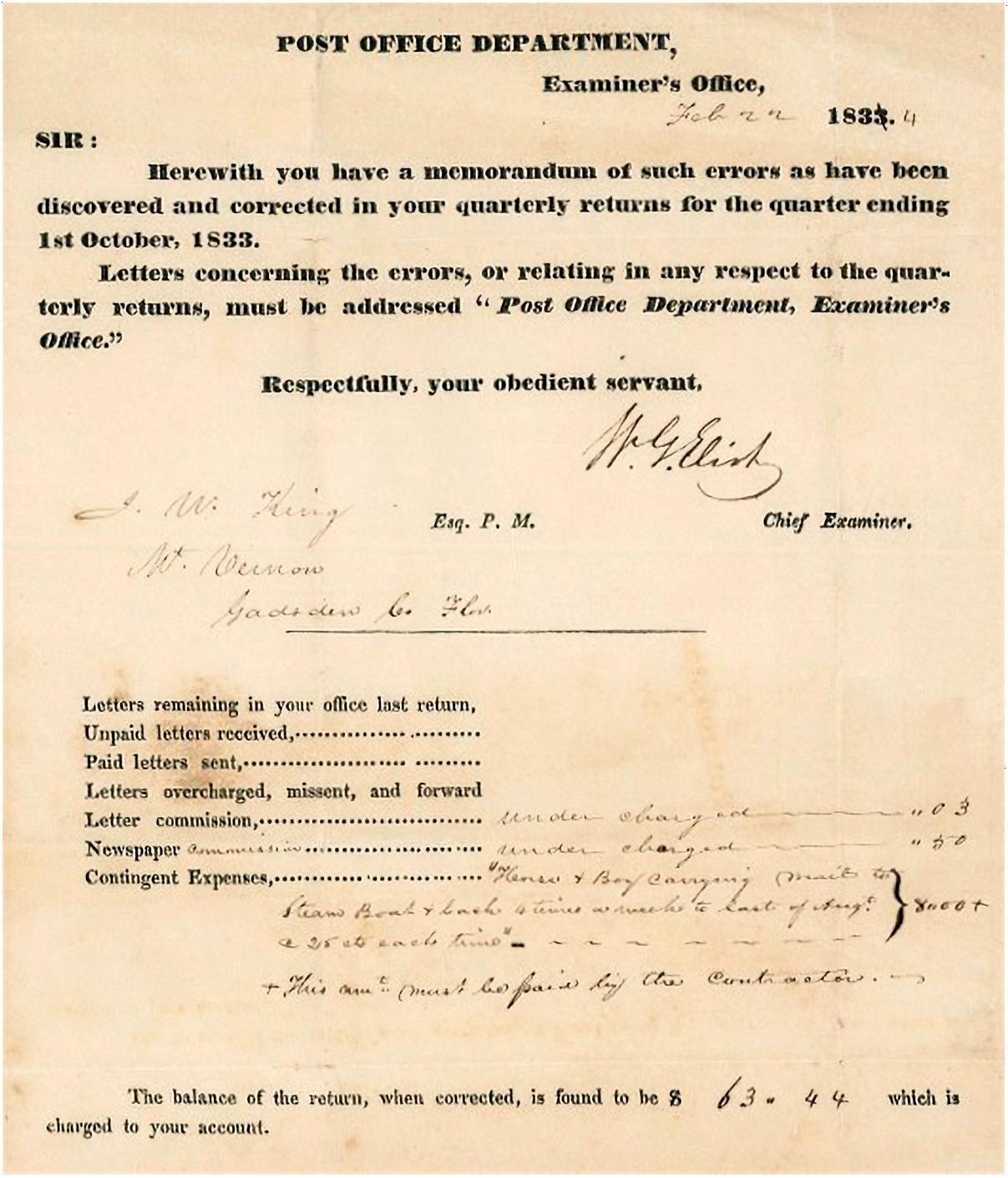
'l'llc b:1.l,.nCfl of the r.itul'll, when eO•'t'etled, iJ found to lie 15 / 3 • 4- Y. whleh \1 chrged to yo111 account.
SIR:
Herewith you have a memorandum of such errors as have been discovered and corrected in your quarterly returns for the quarter ending 1st October, 1833. Letters concerning the errors, or relating in any respect to the quarterly return, must be addressed “Post Office Department, Examiner’s Office.”
The balance of the return, when corrected, is found to be $63.44 which is charged to your account.
Figure 5. Portion of the Chief Examiner’s letter for Postmaster King’s October 1, 1833, Mt. Vernon, Gadsden Co., Fla., quarterly return. (Courtesy of Worthpoint)
The first existing reference to an arsenal at Chattahoochee was in the form of a resolution offered to the Legislative Council of the Territory January 31, 1832. Joseph M. White, Delegate to the U.S. House of Representatives from the Florida Territory, secured inclusion of a line item in the appropriation for the support of the Army for 1832:
For an arsenal in Florida, twenty thousand dollars, in the appropriations for the support of the Army in 1832.
This was approved April 5, 1832. (Boyd, p.279)
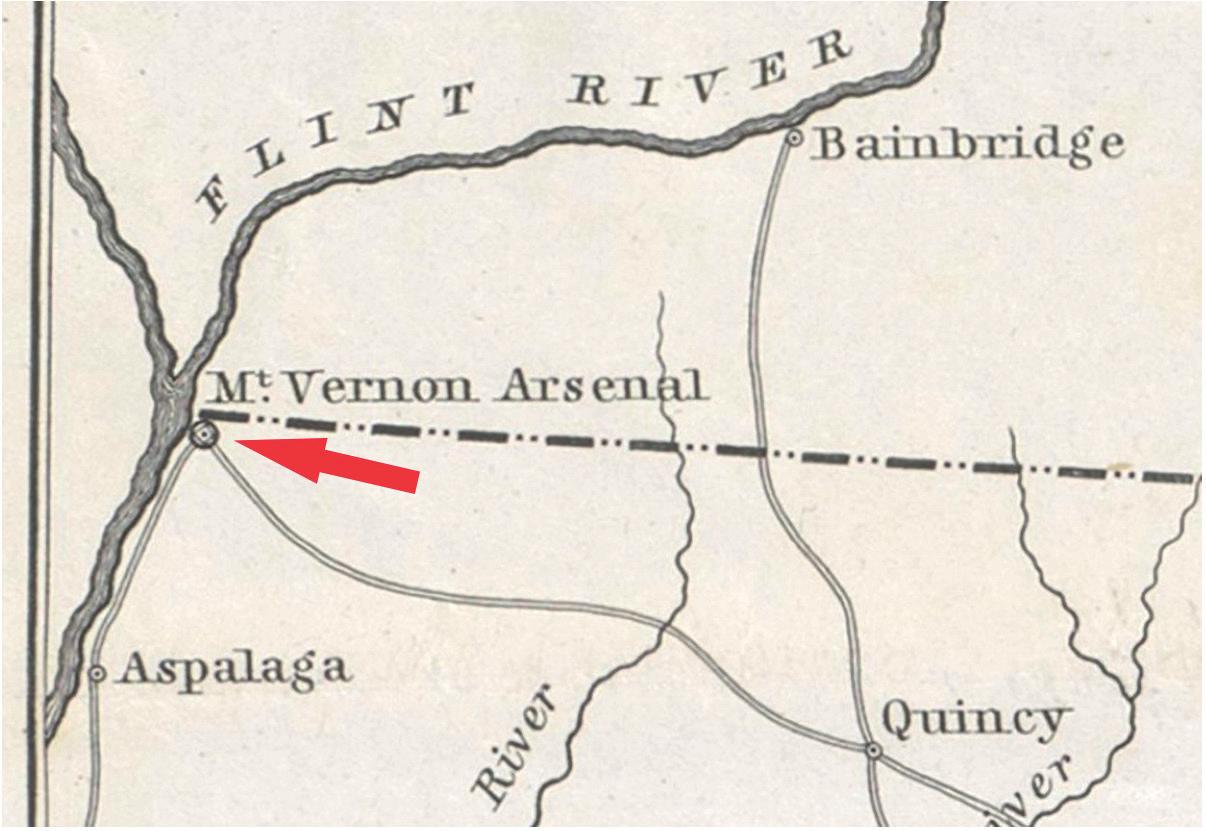
Figure 6. Portion of Capt. John MacKay’s 1839 map showing Aspalaga and the previously named Mt. Vernon Arsenal.
U.S. Army Brevet 2nd Lt. John Hills began surveying the area between the Suwannee and Apalachicola Rivers. This strategic location at the head of the Apalachicola River led the War Department to approve the selection of Mount Vernon village as the site for Florida’s only arsenal (red arrow Figure 6). (MacKay & Blake) Recently promoted Captain Hills was put in charge of construction of the arsenal which was, at that time, referred to as the Mount Vernon Arsenal after the village. (Roberts, pp.145-146)
During the construction, the U.S. Post Office Department changed the Tallahassee to Pensacola Mail Route No. 2473 (Bloom & Carter, p.429) to cross the Apalachicola River at Aspalaga. This rerouting was a major inconvenience for Hills in the receipt of official War Department mail and, through his letters to the Territorial Legislature and the War Department, the route to Mount Vernon Post Office was restored.
Identical names for arsenal sites in Florida and Alabama meant Florida mail was frequently sent to the Alabama Mount Vernon Arsenal. Hills was influential in persuading the Legislative Council to change the village name to Chattahoochee, which was incorporated January 24, 1834. (Boyd, p.280) Chattahoochee was on the new Post Route No. 2477 with twice a week delivery between Quincy and Holmes Valley which was effective between January 1, 1835, and December 31, 1838.
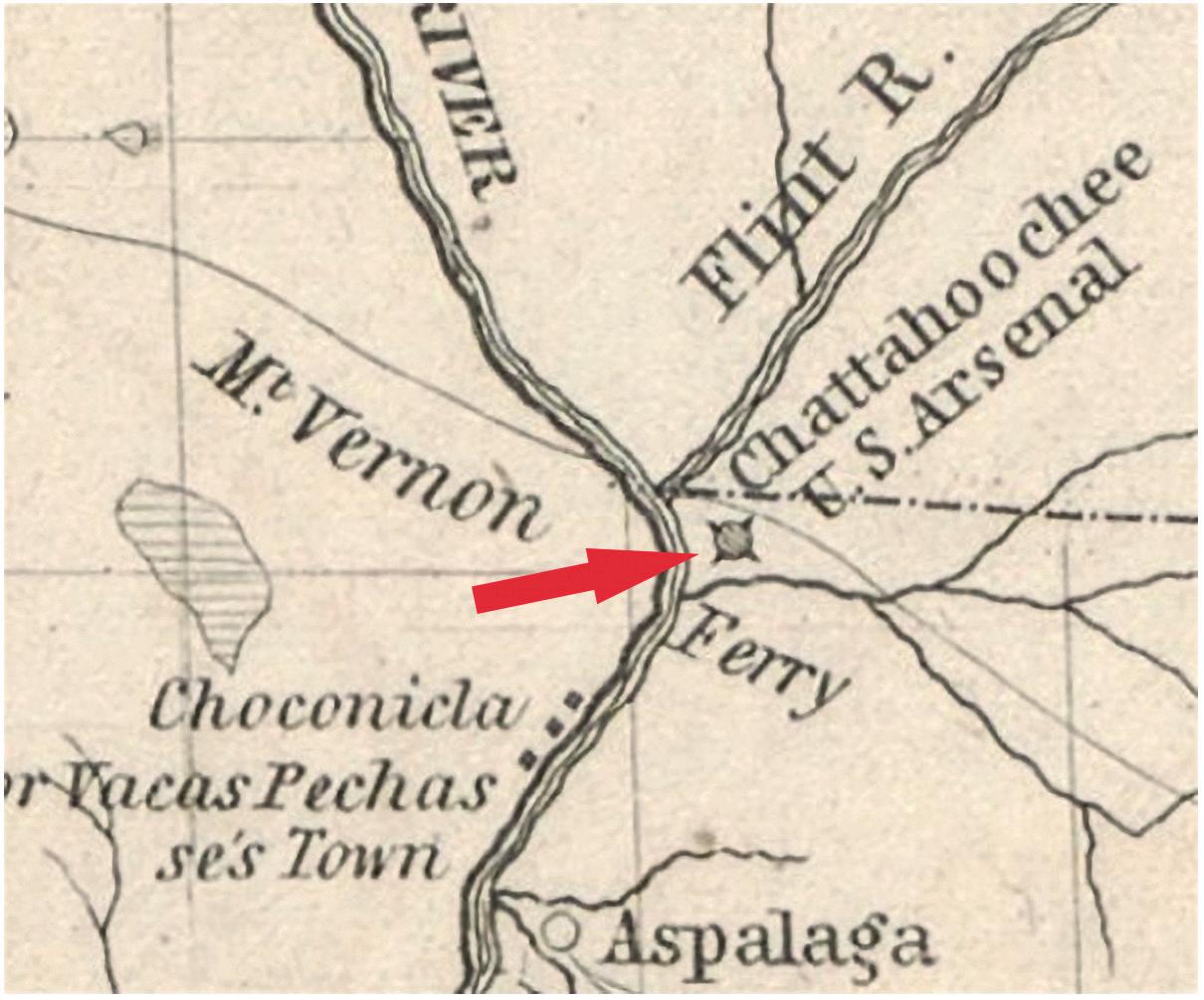
Figure 7. Portion of an 1846 map showing the location of Chattahoochee and U.S. Arsenal.
In reviewing various maps it appears cartographers retained many listings from previous editions. Figure 7 is an 1846 map showing Mt. Vernon Ferry, which crossed the Apalachicola River, in a different font face to Chattahoochee/ U.S. Arsenal which have a font similar to that used for Aspalaga. (Goldsborough & McClelland)
Construction on the four-acre arsenal complex began in 1834. John Hills, Captain of Ordnance, wrote to Colonel G. Bomford, Chief of Ordnance: Chattahoochee, Florida March 4, 1834.
“Sir, By a recent Act of the Legislative Council of this Territory, this place, formerly known by the name of “Mount Vernon” has been changed to that of Chattahoochee. The Postmaster General has been advised of this change and has altered the title of the Post Office accordingly.
The change of name was effected principally through my exertions. The Arsenal in Alabama had the same name, and the miscarriage of letters, etc. for the one, but directed to the other Arsenal, caused much delay and consequent embarrassment. An opportunity is now afforded of giving an appropriate name to this Arsenal.
I have the honor to be, Sir with perfect respect, Your most obedient servant.
Captain Hills died from unknown causes February 25, 1835.
As soon as this news reached the Ordnance Bureau, 2nd Lt. Charles Petigru of the 4th Artillery was ordered to take charge of the post. He arrived on April 13 and died of malaria six months later on October 6, 1835 (Petigru, p.97). Lt. John Williamson of the 1st Artillery was selected to succeed Petigru and arrived at the Arsenal November 28, 1835. There are October 1835 letters from Colonel Bomford to Adjutant General Jones referring to the Apalachicola Arsenal, (Note 2) as does page 21 of The Official Register of the Army, 1835.
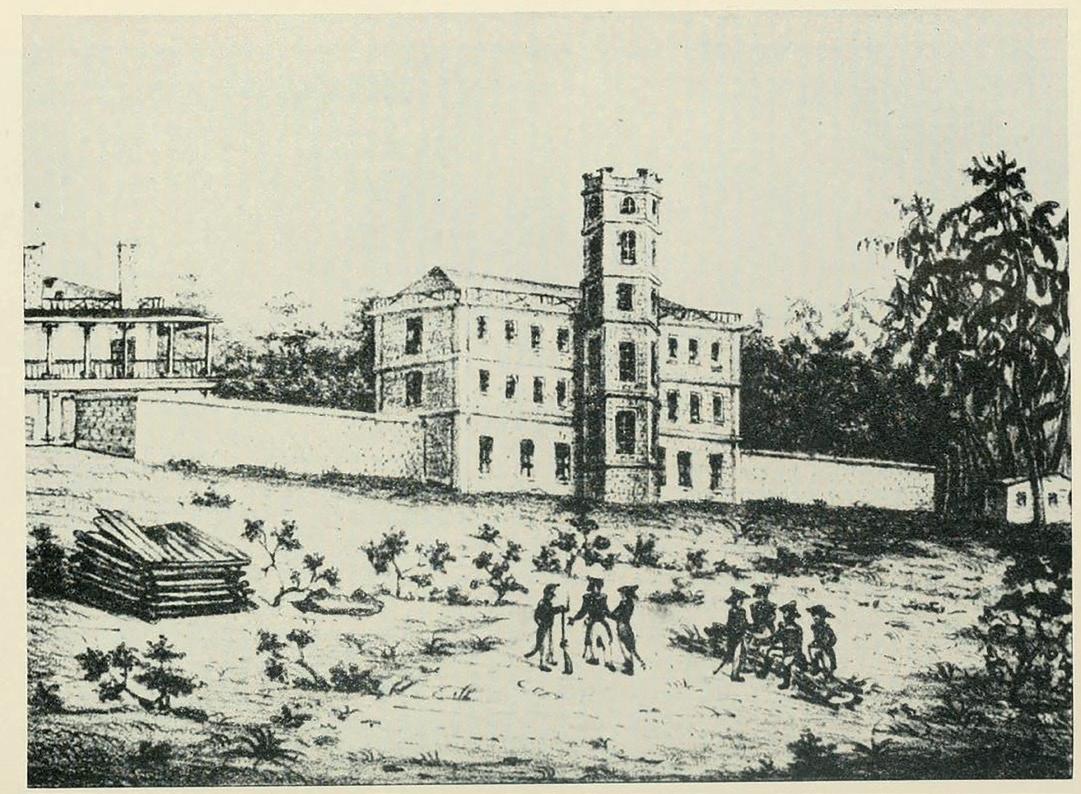
Office
The Arsenal was completed in 1839, surrounded by a strong brick wall with a shot tower (Figure 8). (Castelnau, p.308) The project, having cost around $226,932, became a major supply depot during the Second Seminole War.
Figure 8. Francis Castelnau’s 1842 drawing of the Arsenal at Mount Vernon. (Courtesy of the Smithsonian Institution)
The Chattahoochee Post Office was established February 19, 1834, with Joseph W. King as postmaster, shortly after the incorporation of the town, and the Mount Vernon name was discontinued.
Between 1834 and March 3, 1845 there were nine different postmasters, four black manuscript postmarks, two red handstamps postmarks, and two red rate markings. Below are four of these postmarks (Figures. 9-12).
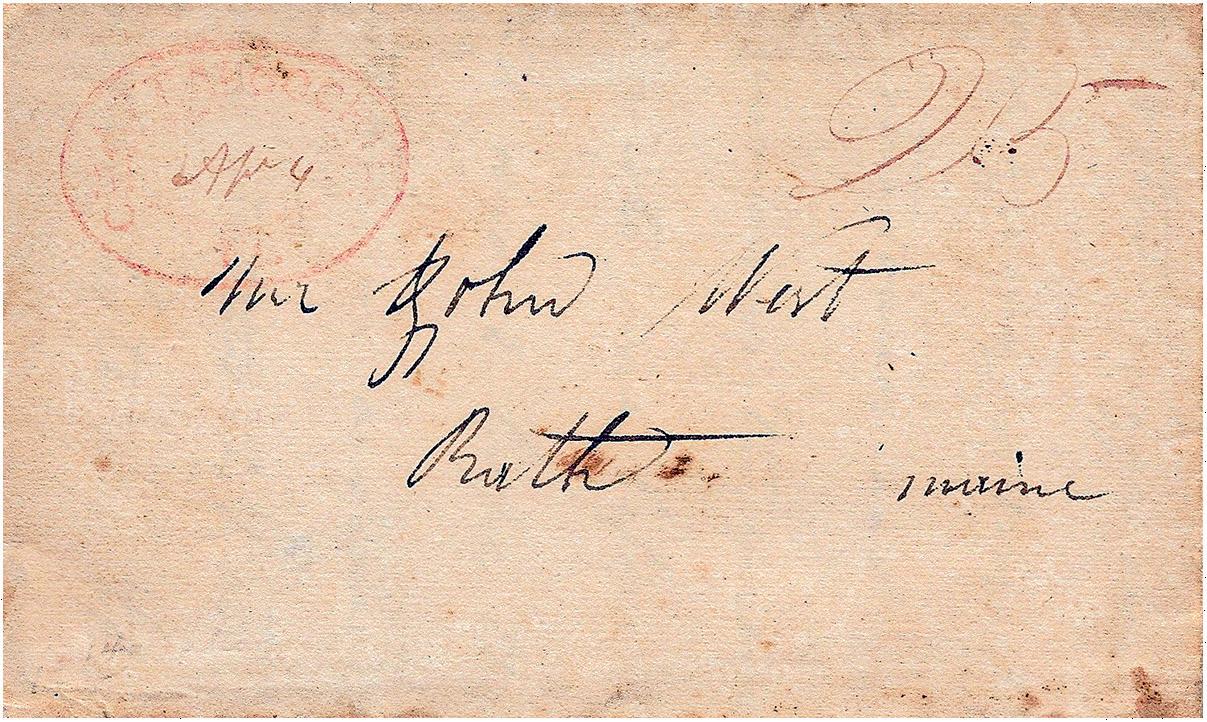
Figure 9. Double oval Type IV. “CHATTAHOOCHIE / FLa.” with manuscript date “Apr. 4” [1834]. (Courtesy of Rumsey Auctions, Sale 39, Lot 61)
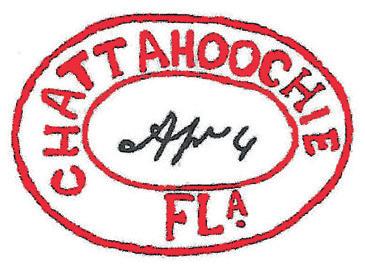
The red oval is faint, so a tracing was done to show the details (Figure 9). The name was misspelled “Chattahoochie” and was confirmed as such in The 1835 Official Register. Joseph W. King was postmaster with an annual compensation of $207.36. The total income for the post office was $373.55, making it the 6th highest revenue post office in the Territory of Florida at that time. (Note 3)
With this larger compensation figure, it seems odd more examples of this Type IV handstamp have not been found, particularly since the town, as the construction site for the Mt. Vernon Arsenal, must have generated a fair amount of mail. The earliest known postmark of the replacement handstamp was May 6, 1834, which implies the period of use for the oval mark was less than three months.
The replacement was a Type V 30mm cds, ”CHATTAHOOCHEE / FLO.” with manuscript date (Figure 10). (Thompson, pp.6-7) This folded letter, handstamped by Postmaster King, was from 2nd Lt. Charles Petigru of the 4th Artillery. The letter has four red “FREE” handstamps over the red 25¢ rate for the 400+ mile trip to Washington D.C., with “public service” at the top which indicated a free rate.
Figure 10. Type Vb “CHATTAHOOCHEE / FLO.” red cds with manuscript “June / 3”, [1835]. (Courtesy of William Youngerman)
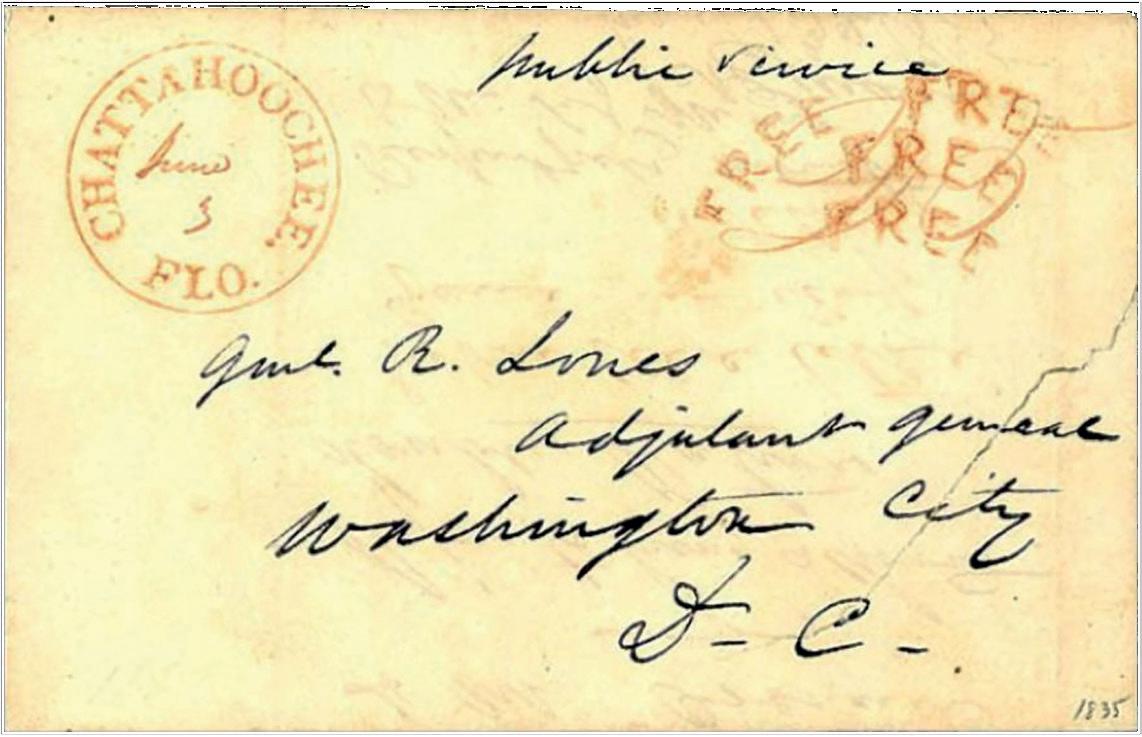
On April 9, 1816, Congress set the postal rate at 6¢ for a single letter going 30 miles or less. At that time in Florida, Spanish dollar coins were equal to one U.S. dollar. The Spanish dollar was made up of eight reals, also known as bits, which made them each worth 12½¢. There was also a medio real, (i.e., half of a real), which equaled 6¼¢. British currency had a coin in use known as a thruppence, or three pence, which also equaled 6¼¢.
As a necessity, postmasters routinely accepted the foreign coins for rate of convenience payment of both the 6¢ and 6¼¢ manuscript rate (Figure 12).
There were nine different postmasters from 1834 to 1845, and eight different postmarks, four of which were manuscript, two red handstamps, and two red rate markings. (Briggs, Ferguson & Lera, p.110)
Apalachicola Arsenal Letters
There are no known covers addressed to Apalachicola Arsenal. However, there are a significant number of letters with a dateline Apalachicola Arsenal, Chattahoochee Fla. and manuscript date.
Figure 11. Only known example of a Type VI. “Chattahoochee Flo T.”, dated March 24th [1836]. (Courtesy of Florida State Archives)
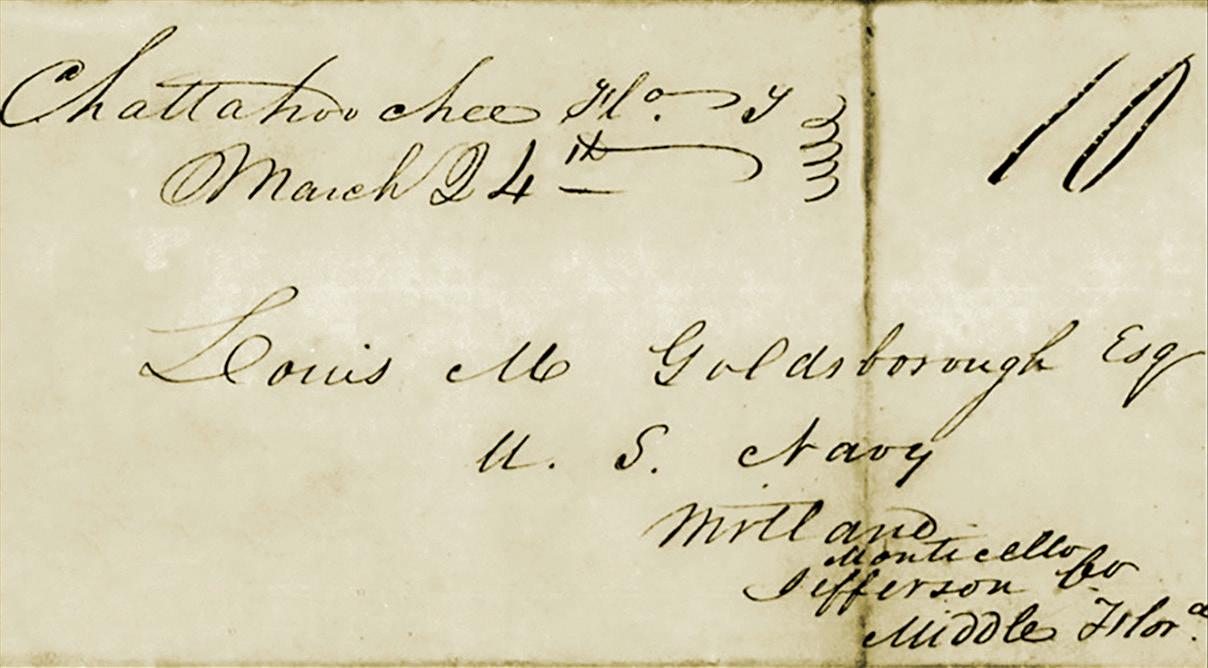
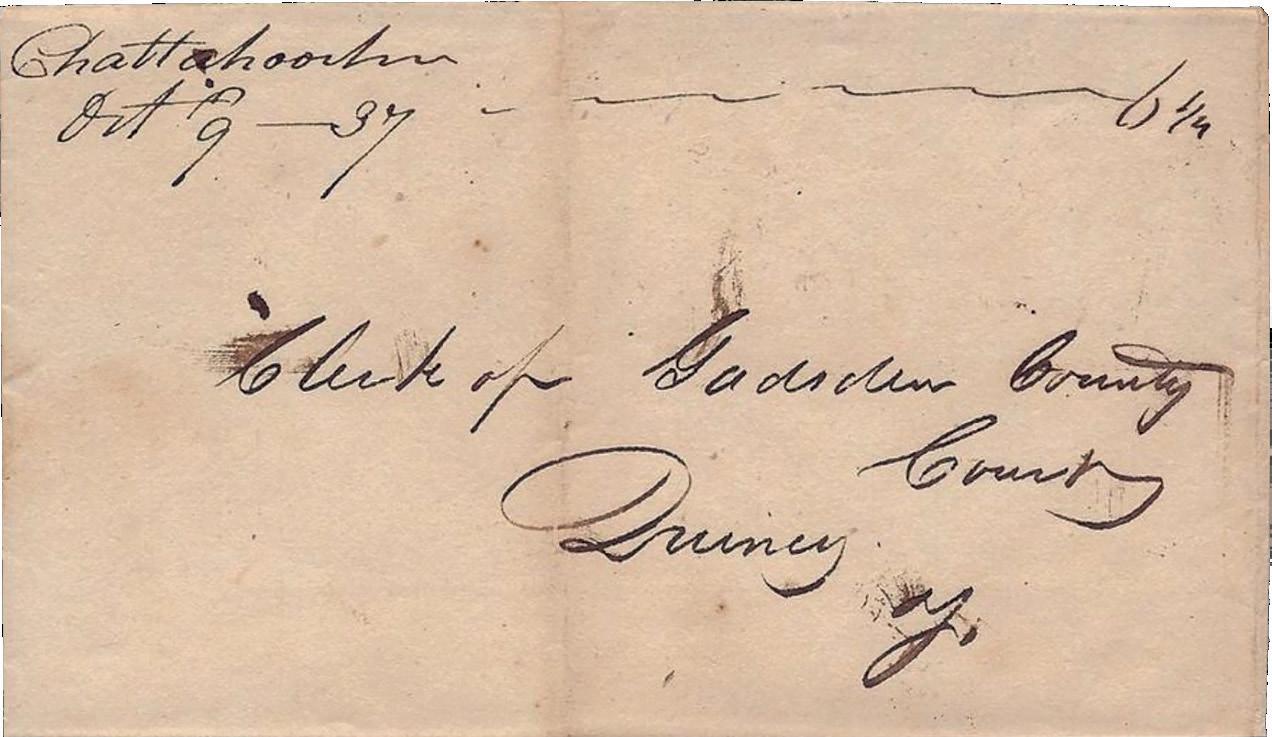
Figure 12. Type I Chattahoochee dated Oct. 9 [18]37, with the scarce 6¼ rate.(Source: Florida Postal History, p.106)
The letter had a manuscript rate of 25¢ which was lined out with a single blue line. In its place On Ordnance Service is written and underlined, indicating the delivery of the letter was free (Figure 13).
Datelined Apalachicola Arsenal, Figure 14 is the top portion of a letter from Capt. John Williamson, Captain of Ordnance, to Lieutenant Colonel G. Talcott, Ordnance Corps. The letter discusses illegal harvesting of white oak timber on Arsenal land.
Capt. John Williamson was not only the Captain of Ordnance stationed at the Arsenal but also the Chattahoochee Postmaster from September 28, 1838 to February 15, 1840. There are over 18 recorded letters from Williamson to various military persons with different manuscript and handstamp postmarks.
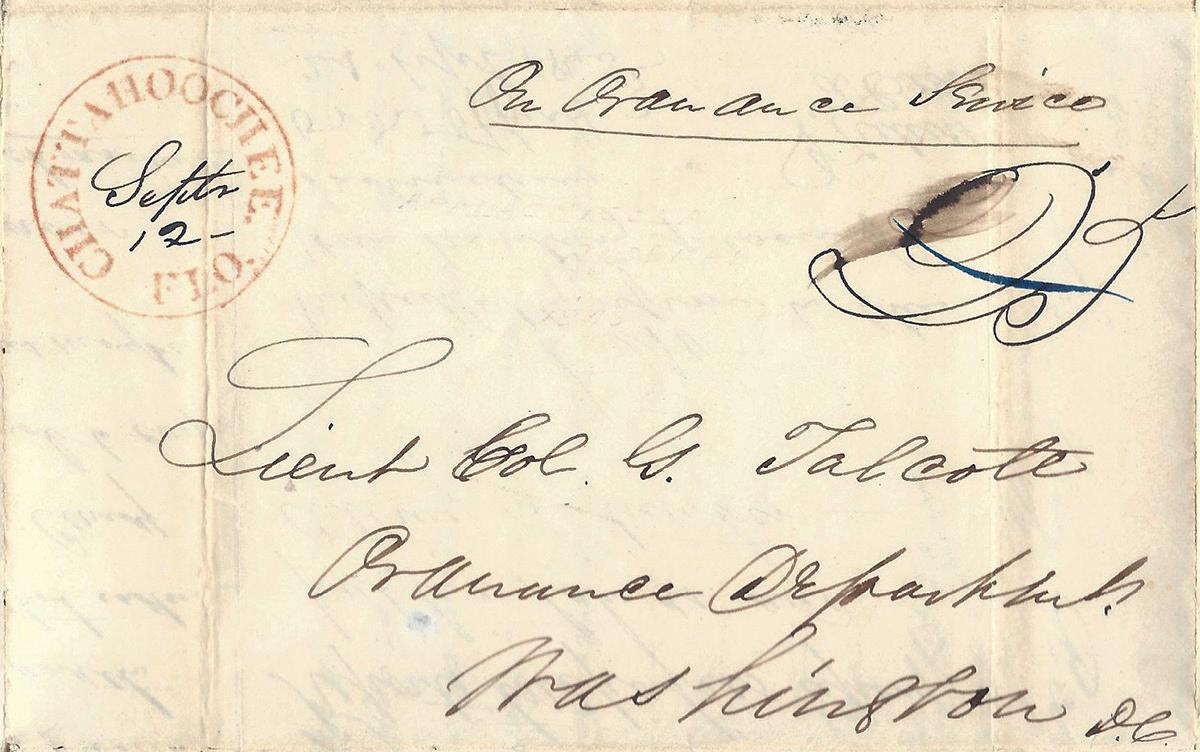
Figure 13. Type V. CHATTAHOOCHEE / FLO. red cds with manuscript September 12 [1840]. (Author’s Collection)
Figure 14. The enclosed letter is datelined “Apalachicola Arsenal, / Chattahoochee Fla / Sept 10th, 1840”. (Author’s Collection)
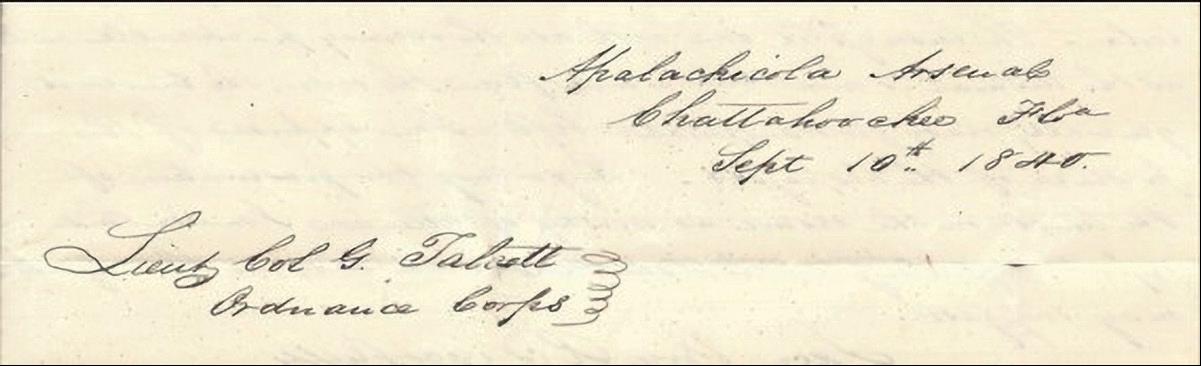
Williamson remained in command until September 1841, when he was transferred to the Charleston depot. Monthly post returns for the period from October 1840 to August 1845 reveal, in addition to Williamson, the command consisted of only one man from the Ordnance Service, with, for varying periods, small detachments from the 1st, 6th, 3d, and 8th Regiments of Infantry. The whole force never exceeded 15 men, with Williamson, the last commissioned officer, in command.
Williamson was succeeded by military storekeepers Richard J. Young, who received his discharge in December 1842, and John M. Galt, who continued at the post until at least late August 1845. The military storekeeper rank was an ordnance sergeant responsible for the care of the ordnance, arms, ammunition and other military stores. The post reports noted “M.S.K. of Ord.” after the storekeeper’s name. (Ancestry.com)
Conclusion
The POD established Florida‘s Mount Vernon Post Office in Florida 1828. It was the tenth post office in the United States with this name. The Florida Mount Vernon Arsenal name was often confused with the Mount Vernon Arsenal in Alabama, so the POD changed the Florida town name to Chattahoochee in 1834, and the War Department changed the arsenal name to Apalachicola Arsenal circa 1835 for reporting purposes.
Cartographers continued to identify the location of the arsenal as Chattahoochee and soldiers sent letters datelined Chattahoochee Arsenal. The incorrect use of this name in internet articles and references has added to the misinformation. The name indicates it is the correct location of the arsenal but not the given name by the War Department.
I would like to thank the following individuals and organizations for allowing me to use their images: Touchton Map Library at The Tampa Bay History Center (Figures 1, 7, and 8); The Florida State Archives in Tallahassee (Figures 2, 3, 4 and 12); Worthpoint.com (Figures 5 and 6); Schuyler Rumsey Auctions (Figure 10); William Youngerman (Figure 11), and the Florida Postal History Society (Figure 13).
I finally thank Linda Kranert and Chris Kimball, members of the Seminole Wars Foundation, and Sandra Fitzgerald for their editorial comments and suggestions.
Notes
1. Official Register of the United States, September 30, 1829: $17.29 p. 169, and September 30, 1833: $17.04 p. 144. United States Congressional Serial Set #956, Washington: U.S.G.P.O. #197, Document 61: p.83, $29.82; and #255, Document 255: p.64, $34.64 . Total income was $17.29 + $29.82 = $47.11; $17.04 + $34.64 = $51.68. Accessed August 15, 2025 at https://hdl.handle.net/2027/uc1..b3984774
2. United States Congressional Serial Set #266. Washington: U.S.G.P.O: pp.214-217. “Summary of the money through the Ordnance Department in the year 1833”, Capt. J. Hills, Arsenal Apalachicola, FL. Total Amount $16,046.
3. Official Register of the United States, September 30, 1835, p.186.
References
Ancestry.com. Search “U.S. Returns from Military Posts 1806-1916” > “Post Location Florida” > “Apalachicola Arsenal 1841 Oct to 1845 Aug.” There are 100 pages available.
Bloom, J. Porter., Carter, C. Edwin (1828-1834), The Territorial Papers of the United States, 24, Florida Territory, p.429.
Boyd, Mark F. (1958). “Historic Sites in and Around the Jim Woodruff Reservoir Area Florida Georgia River Basin Surveys” Papers, No. 13, Smithsonian Institution: Bureau of American Ethnology Bulletin 169, pp.195 314, plates 46 55, United States Government Printing Office, Washington, D.C.
Briggs, Deane R., Ferguson, Francis and Lera, Thomas M., eds. (2022). Florida Postal History 17631861, Second Edition, Florida Postal History Society, Winter Haven, Florida. See Mount Vernon, p. 261; Chattahoochee, p.110.
Castelnau, Francis, (Comte) De. “Arsenal á Mount Vernon”, Plate 9, Figure 3, Vues et souvenirs de Amerique du Nord, Paris, 1842, reprinted in Boyd, 1958, op. cit., Plate 55, [p.417, but unnumbered], also listed in the bibliography on p.308. https://library.si.edu/digital-library/book/bulletin1691958smit Goldsborough & McClelland. Portion of J, Goldsborough and D. McClelland’s 1846 ‘State of Florida Map,’ Touchton Map Library, Accession Number: L2004.069.001, accessed August 26, 2025 at https:// luna.tampabayhistorycenter.org
MacKay and Blake. Portion of Capt. John MacKay and Lieut. J.E. Blake’s 1839 Map of the Seat of War in Florida, Touchton Map Library, Accession Number: L2011.070.148.100. Accessed August 26, 2025 at https://luna.tampabayhistorycenter.org
Official Register of the Army (1835). “Stations of Officers on Ordnance Duty”, Adjutant General’s Office, Washington D.C. Accessed September 9, 2025, at https://hdl.handle.net/2027/ nyp.33433008010492
Petigru, Charles (2014), “Fellow Cadets Charles Petigru’s Dedication of the Kościuszko Column at West Point” The Polish Review, 59: 3, p.97. Accessed September 12, 2025 https://doi.org/10.5406/ polishreview.59.3.0095
Roberts, Robert B. (1988). Encyclopedia of Historic Forts: The Military, Pioneer, and Trading Posts of the United States, pp.145-146, Macmillan, New York.
Thompson, Donald G. (1997). ‘Chattahoochee Double Oval,’ Florida Postal History Journal, 4: 2. Vignoles. Portion of Charles Vignoles’ 1823 Map of Florida, Touchton Map Library, Accession Number: L2011.070.148.001. Accessed August 26, 2025 at https://luna.tampabayhistorycenter.org
From Larry Lyons
Right after the David Wilcox article appeared in the March-April issue of The Collectors Club Philatelist (Volume 105, Number 2, pp.112-117), claiming he had the only reported double impression of a Pomeroy’s Letter Express stamp, there was a flurry of emails from various astute philatelists shouting out that this stamp is not a double impression. Of the group, I was selected to write this correction. I am currently the Executive Director of The Philatelic Foundation (PF) and take serious issue with the statements made in the article and the insinuation as to the Foundation’s declared findings when examining the stamp in question.
On page 115, at the end of the first paragraph in the CCP article, Wilcox states “… PF 609,436 for the double impression.” A copy of that certificate is shown overleaf. The opinion given by the Philatelic Foundation states clearly “Rather it is a double transfer, not a double impression.” Despite this very clear wording, Wilcox wrote that the PF certifies this stamp as a double impression, which appears to the Philatelic Foundation to be a deliberately erroneous, and unacceptable claim.
For an explanation of a double impression, I refer the reader to the Scott Specialized Catalogue of United States Stamps and Covers which explains terms used in philately in the introduction section (2022 edition, introduction pages 29A and 24A).
The explanatory paragraph for the term “double impression” states the following:
“Double impression—a second impression of a stamp over the original impression. This is not to be confused with a “double transfer,” which is a plate imperfection and generally shows just bits of doubling of the design.”
The Scott Specialized Catalogue also gives a definition of a “double transfer” as follows:
“Double transfer—the condition of a transfer on a plate that shows evidence of a duplication of all or a portion of the design. A double transfer usually is the result of the changing of the registration between the relief and the plate during the rolling of the original entry. Occasionally it is necessary to remove the original transfer from a plate and enter the relief a second time. When the finished re-transfer shows indications of the original transfer because of incomplete erasing, the result is known as “double transfer.”
The Leeds name became entangled with that of Anna Anderson (1896-1984), the Anastasia Romanov imposter. Anderson claimed to be the only surviving daughter of Russian Tsar Nicholas II, even though reports maintained that in July 1918 the entire family had been executed by a Bolshevik death squad in Ekaterinburg in the Urals. Xenia Leeds, to offer Anna/Anastasia respite and an escape from the European press and surviving Romanov family, invited her to the US to live at Kenwood. In 1928, she lived with the Leeds for several months until conflict over inheritance of the House of Romanov funds divided the “cousins”. Bill Leeds, who never cared for the difficult house guest, clashed with his wife, and he offered to buy Anna a home anywhere in the world and establish a fund to support her for life if she would not take the Russian family to court. Anderson, the greedy hoax perpetrator, moved out of Kenwood to pursue legal action. (Kurth) In time she married a teacher named Manahan and lived in Virginia. She died in 1984. After her death, DNA identified her as Franziska Schanzkowska, a Polish factory laborer.
Despite their lavish life of racing yachts, collecting fine art, world travel, golf, fishing, and engaging in philanthropic endeavors, Bill and Xenia Leeds divorced in 1930. Their marital troubles had begun a couple of years earlier, but they denied that Anastasia caused the divorce. They had one daughter, Nancy. Shortly after his divorce, Bill Leeds rescued Olive Hamilton, a telephone operator, from a flooding rowboat. In 1936, they married. In 1939, he suffered and survived a heart attack. Bill Leeds used his wealth to support a variety of causes, from sending medical supplies to Pitcairn Island, supporting a leper colony in Tahiti, donating an ambulance corps to Britain during WWII. During the war, he joined the Coast Guard and retired as a full commander. Leeds was a pilot with a keen interest in aviation, and he supported numerous related activities. He helped fund Graf Zeppelin’s 1931 Polar Flight. In 1932, he sponsored the William B. Leeds Trophy Race from Roosevelt Field on Long Island to the Cleveland National Air Races.
WINGS TOWARD CLEVEL AND »
B. LEEDS TROPHY RACE
Figure 4. Flyer for the William B. Leeds Trophy Race from Roosevelt Field, NY, to the 1932 Cleveland Air Races. Leeds offered a trophy and cash prizes. (Smithsonian Air & Space Museum collection.)
Bill Leeds had a ticket to fly on Graf Zeppelin’s 1928 first flight to North America. Unfortunately, he became ill shortly before the flight and had to cancel his reservation.
Eager to fly over an ocean, he booked the last reservation for the 1929 Graf Zeppelin flight around the world. There were actually two flight options: the American World Flight from Lakehurst east around the globe to Lakehurst or the German World Flight, Friedrichshafen to Friedrichshafen. Boarding at Lakehurst Naval Air Station on August 7 for the American World Flight, he excitedly bid Xenia farewell. She returned to greet him on September 4 after his global adventure.
Leeds boarded Graf Zeppelin with a wind-up gramophone. Commander Dr. Hugo Eckener was displeased because of the weight limitations, so Leeds removed some of his other belongings so that he could keep the portable music machine. He placed it on a window sill in the dining room, a location also used by the onboard mailbox. Some passengers and crew members loved the diversion; others found it disruptive and loud. This first introductory impression on Eckener, however, did not prevent a friendship.
Figure 5. Passengers Bill Leeds and arctic explorer Sir Hubert Wilkens on the first leg of Graf Zeppelin ’s 1929 World Flight from Lakehurst to Friedrichshafen. Fellow passenger and photographer Robert Hartman took the photograph of them in the dining room. (M-G-M International press photo.)
L,nJdFil.-to/'Bttf,Tr11ffl.-S,111u FnJh 0.fuJhrocmu i11 [r<"dllt [r/try,"Vinaigr.-llt s,,.,w1,n,ry T
Figures 6 & 7. Menu cover with inside autographed by passengers who made the complete world trip either from Lakehurst to Lakehurst or from Friedrichshafen to Friedrichshafen (only Lady Grace Drummond-Hay missing, so this might have been her menu): journalist Leo Gerville-Reache, meteorologist Heinrich Seilkopf, Lt. Col. Chrisof of Iselin, explorer Sir Hubert Wilkens, photographer Heinz von Perckhammer, journalist Joachim Rickard, naval observer Lt. Cmdr. Charles E. Rosendahl, naval observer Lt. Jack C. Richardson, journalist Karl von Wiegand, photographer Robert Hartmann, journalist Max Geisenheyner, journalist Gustav Kauder, millionaire William B. Leeds, physician Jerome Megias, and journalist Heinz von Eschwege-Lichberg. (Jim Hill collection.)
Leeds won the seating lottery to sit at Eckener’s dining table on the first leg of the flight, together with explorer Sir Hubert Wilkins, Hearst journalist Lady Grace Drummond-Hay, and physician Jerome Megias. (Botting)
It must have been a thrill for Leeds to fly over Russia, his wife’s family homeland. He stayed up into the night to watch as the airship passed over Siberia and regions that had never been seen from the air. He watched the stars and even spotted a streaking meteor. Over the Pacific, he drank champagne and ate caviar as he scanned the horizon for evidence of land. The officers in the control car offered him some time to man the wheel. After the flight, he told the press that the leg flying over the continental United States was his biggest thrill.
Eckener commanded Graf Zeppelin on its first of two triangular flights in 1930. The Pan American Flight flew from Germany to Brazil to the United States and back to Germany. After departing Rio de Janeiro, the airship made a landing in Recife, Pernambuco. There Leeds boarded for the flight north to Lakehurst. Aboard, Leeds wrote postcards using the special overprinted German zeppelin postage stamp and noted that the trip to South America established another first for Graf Zeppelin
Figure 9. When Leeds returned from the 1929 Graf Zeppelin World Flight, his secretary Lester Barton (right) met him, and they traveled with the other passengers by train from Lakehurst to Jersey City. (Acme press photograph.)
Figure 10. Bill Leeds was so enthused about his World Flight aboard Graf Zeppelin, that his 1930 New Year greeting card featured an etching of the zeppelin, Mt. Fuji, and characters for the Imperial Hotel in Tokyo. Inside his name appeared after “My sincere good wishes for your happiness and prosperity throughout the coming year.”
In July 1931, Eckener commanded Graf Zeppelin on an Arctic flight. Scientists and their equipment sought to study unexplored land, search for the 1928 wreckage of the airship Italia, and exchange personnel and mail with the Russian icebreaker Malygin. Eckener announced that foreign associations provided seventy five percent of the expedition costs and stamp collectors covered the remainder. (Collectors sought flown mail with special postage stamps and markings.) Leeds, who had sailed with Eckener from New York to Germany in May of that year, donated $25,000, and was originally announced as a passenger. However, he was not aboard. What he really wanted was to go underwater to the polar region in the submarine Nautilus with Sir Hubert Wilkins, with whom he had spent many hours of conversation on an earlier zeppelin flight. Unfortunately, he did not make that trip either.
11. On Graf Zeppelin’s 1930 Pan American Flight from Germany to Brazil to the United States and return, Leeds sent this onboard card, written between Recife and Lakehurst, to Frederick C. Bellinger, a lawyer in New York City.
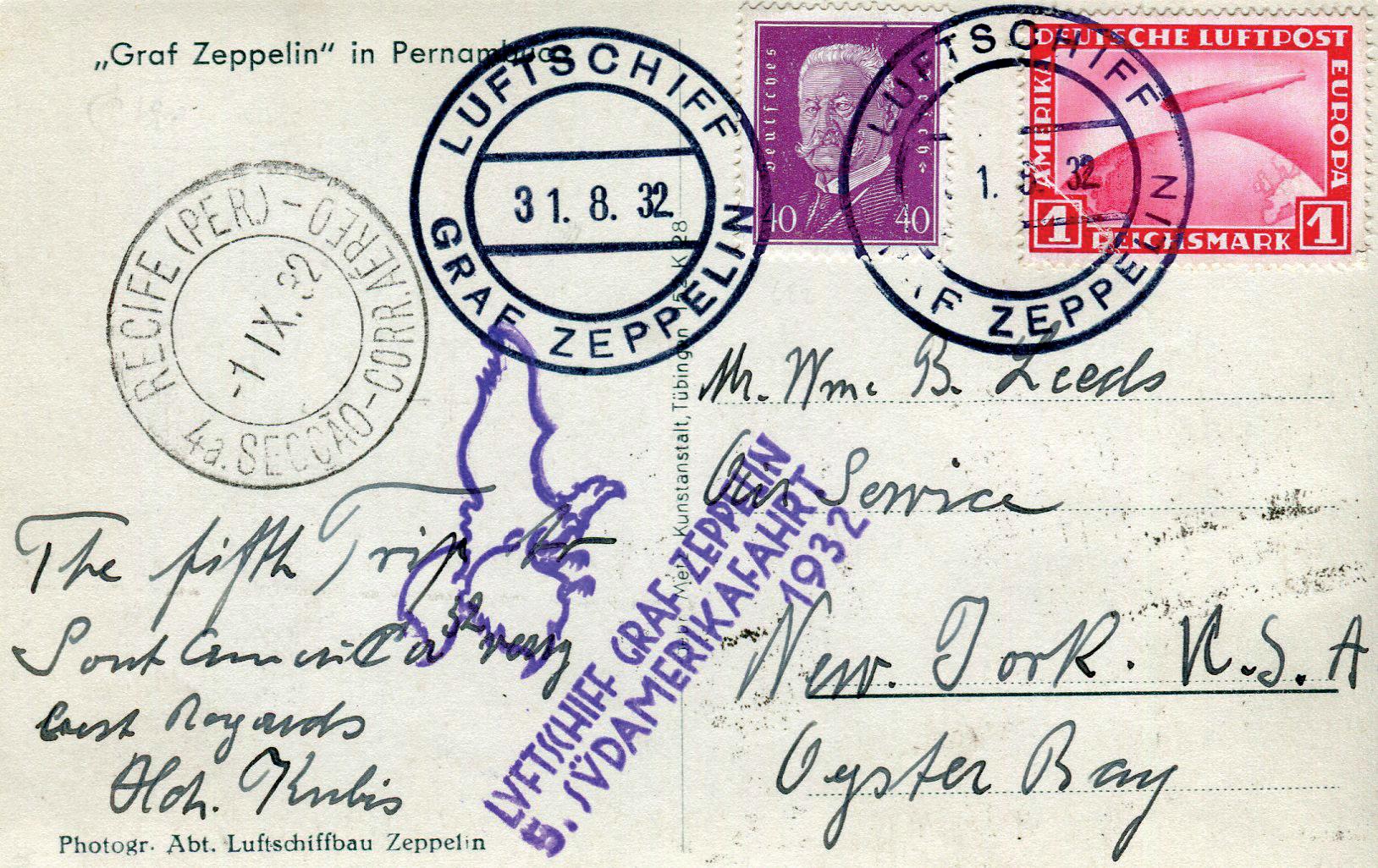
Figure 13. Chief Steward Heinrich Kubis mailed a postcard to Leeds from aboard Graf Zeppelin’s fifth South America flight in 1932, evidence of the esteem the crew had for this famous passenger. (Jim Hill collection.)
By 1932, Graf Zeppelin flew a transatlantic schedule of nine flights to Brazil. Leeds flew on the third South America flight that year, from Recife to Friedrichshafen. On this flight, passengers experienced a special ceremony as they crossed the equator. King Neptune made an appearance and performed the equatorial baptism to initiate those who previously had not crossed 0 degrees latitude. After the rites, officers presented certificates of crossing.
In late September 1933, Leeds arrived on his yacht Moana in Washington, DC, to meet with Eckener, who was there to finalize plans for the triangular Chicago Flight passing over the World’s Fair. It was probably then that Leeds received confirmation that he could make a leg of the flight after it left Brazil and Miami. Leeds flew the short distance from Akron to Chicago.
Distain for Hitler had already seeped into the city, and officials feared the German Graf Zeppelin would create political unrest. Eckener hoped to avoid trouble. As a result, the airship arrived earlier than announced. Menacing letters and bomb threats forced the Post Office Department to examine all mail and parcels before delivery to the zeppelin. Police and military provided additional security at the landing field.
Germany’s National Socialist government had required all aircraft to paint the swastika banner on the port side of the tail fins. When Graf Zeppelin approached Chicago at daybreak on October 26, Eckener ordered the crew to fly west beyond the city and then circle clockwise, although a northerly route from Indiana with an approach over Lake Michigan would have been more expeditious. They circled the city for about an hour with spectacular views of the World’s Fair along the lakefront and then safely landed in a northern suburb to exchange passengers and crew. Eckener had chosen this route because he preferred Chicagoans to see the starboard side of the craft, which featured the traditional tricolor German flag. (Ganz)
Although no longer flying on zeppelins, Leeds continued a strong interest in their flights and disasters. He kept scrapbooks of New York City newspaper clippings about both the Akron and Macon disasters. (Note 2) He wrote letters to William Randolph Hearst and his news editor Arthur Brisbane to commend and support their editorials. He thanked Hearst for pointing out naval “blunderings of bureaucracy,” including “jealousies, petty department politics and antiquated regulations.” To Brisbane, he wrote that on his many zeppelin flights they flew “through several line squalls . . . of greater intensity than the one which passed here that night and destroyed the Akron.”
He complained that the U.S. Navy trained highly efficient airship officers only to send them to sea. He believed that if Lieutenant Commander Charles E. Rosendahl (with whom he had flown on the World Flight) had been in command, there would not have been a loss of Akron and seventy-three of the seventy-six men aboard. (Leeds Correspondence)
Figure 14. On May 6, 1937, Hindenburg burst into flames while landing at Lakehurst Naval Air Station. Captains Max Pruss, Ernst Lehmann, and Albert Sammt (arrow) escaped from the control car as burning framework collapsed over them. Pruss returned to the fire to help others escape and carried out chief radio operator Willy Speck. Leeds intervened to provide transport and costs for expert medical services. (Faces of the Hindenburg: facesofthehindenburg.blogspot.com)
In February 1936, Eckener traveled to Washington, DC, hoping to meet with President Franklin D. Roosevelt. Eckener wanted permission for Hindenburg to land at Lakehurst Naval Air Station on its ten transatlantic flights that year. The German ambassador Hans Luther was unable to secure an appointment. A couple of days later, Leeds showed up at Eckener’s hotel. His father, William B. Leeds, Sr., had been a fisherman friend of Roosevelt and, suddenly the next day, a White House invitation arrived for Eckener but not the ambassador. FDR and Eckener met, and FDR paved the way for Navy Department approval and support. (Eckener, pp.159-161)
Leeds knew many of the crew aboard Hindenburg from his flights on Graf Zeppelin. Although Leeds never flew on Hindenburg, he followed news of the May 6, 1937, disaster at Lakehurst. (Note 3) When he learned that commander Max Pruss had survived but was seriously burned, Leeds intervened to help. He arranged for Pruss, watch officer Albert Sammt, and Captain Ernst Lehmann to be transferred to the Columbia Presbyterian Hospital burn center in New York City, and Leeds paid for their many weeks of care. Lehmann died before transfer, so radio operator Willy Speck took his place but died the next day in the hospital.
Sammt left after six weeks with minor burn scars. Despite several reconstructive surgeries over four months, Pruss was badly scarred, including on his face. (Russell)
At 69, Bill Leeds died by gunshot of his own hand after suffering from cancer. The tragedy occurred at Wintsberg Peak, his estate on St. Thomas, USVI.
Acknowledgments
I am grateful to M.T. Sheahan and Patrick Russell for research assistance.
1. The 60-acre estate has had many owners since, including record producer Ric Wake and tennis star John McEnroe. The boathouse no longer stands.
2. Annotations in the Leeds scrapbooks are not in his handwriting. Most likely, his secretary Lester Baron clipped the articles and noted the newspapers and dates.
3. The press mistakenly reported that Leeds and his wife were on the 1936 first North America flight, but, in fact, it was Walter Scott and Margaret Leeds of Palm Beach, Florida. Leeds and Olive Hamilton married later that month.
References
Botting, Douglas (2001). Dr. Eckener’s Dream Machine: The Great Zeppelin and the Dawn of Air Travel, Henry Holt, New York. For a complete list of passengers and crew on the World Flight, see airships.net. Eckener, Hugo (1958). My Zeppelins, Putnam, London.
Ganz, Cheryl R. (2008). The 1933 Chicago World’s Fair: A Century of Progress, University of Illinois Press, Urbana.
Kurth, Peter (1983). Anastasia: The Riddle of Anna Anderson, Little, Brown, Boston. Later, a German court ruled that she failed to prove her identity as Anastasia.
Leeds Correspondence, “The Akron Disaster” scrapbook (April 1933), in the Author’s collection. Russell, Patrick. Faces of the Hindenburg, at facesofthehindenburg.blogspot.com (retrieved June 10, 2024).
The New York Times (1972). “William B. Leeds, Sportsman, Dead”, [January 3], p.30.

96 Euston Road, London NW1 2DB
https//bl.uk/
Conveniently located near St Pancras main line rail station, the British Library is free to enter. You can access millions of books, newspapers, maps, sound recordings, patents, and stamps from the British Library’s collections.
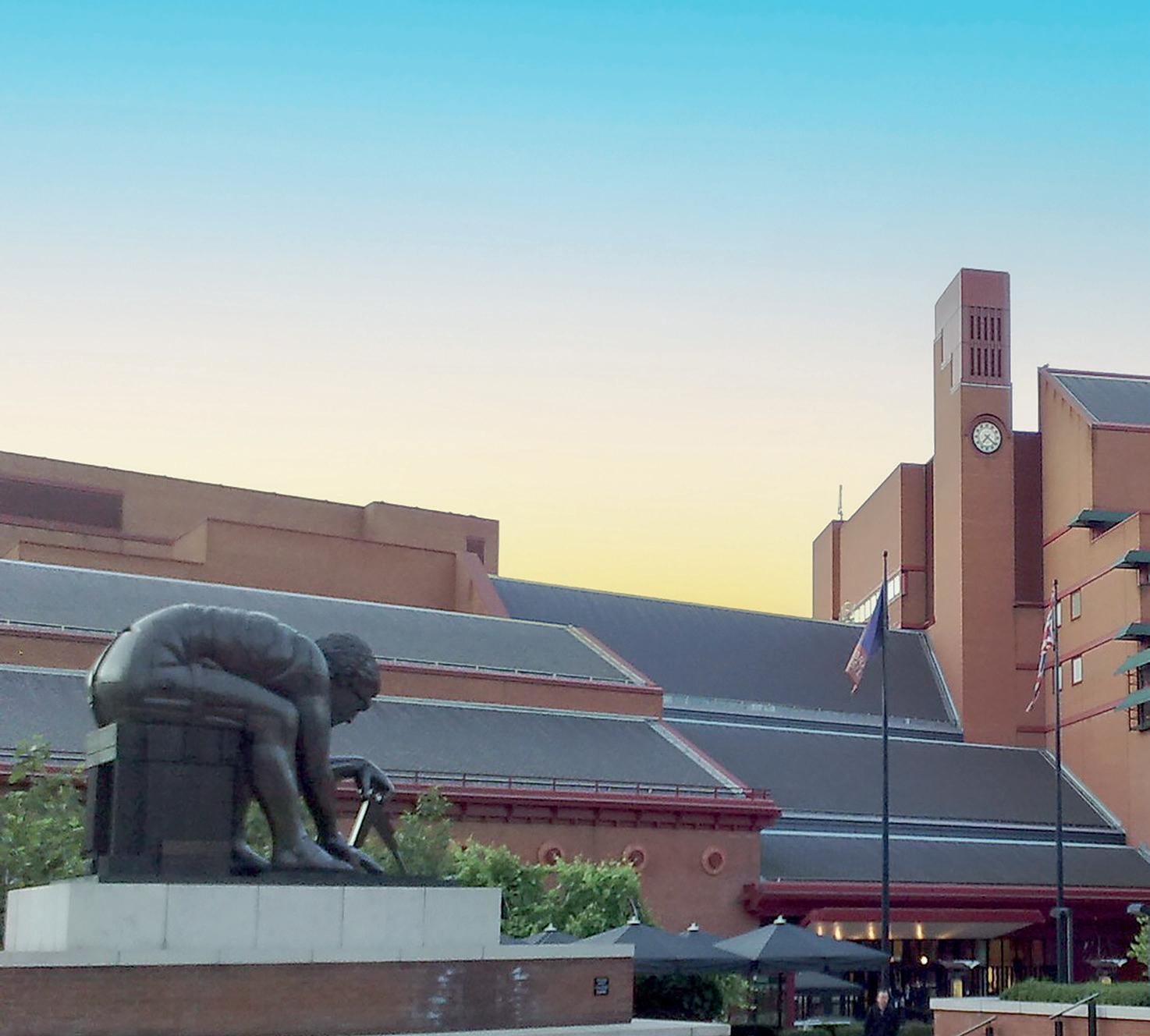
IS PROUD TO ANNOUNCE THE FORTHCOMING PUBLICATION OF THE TAPLING COLLECTION. THE UNITED STATES AND THE HAWAIIAN ISLANDS
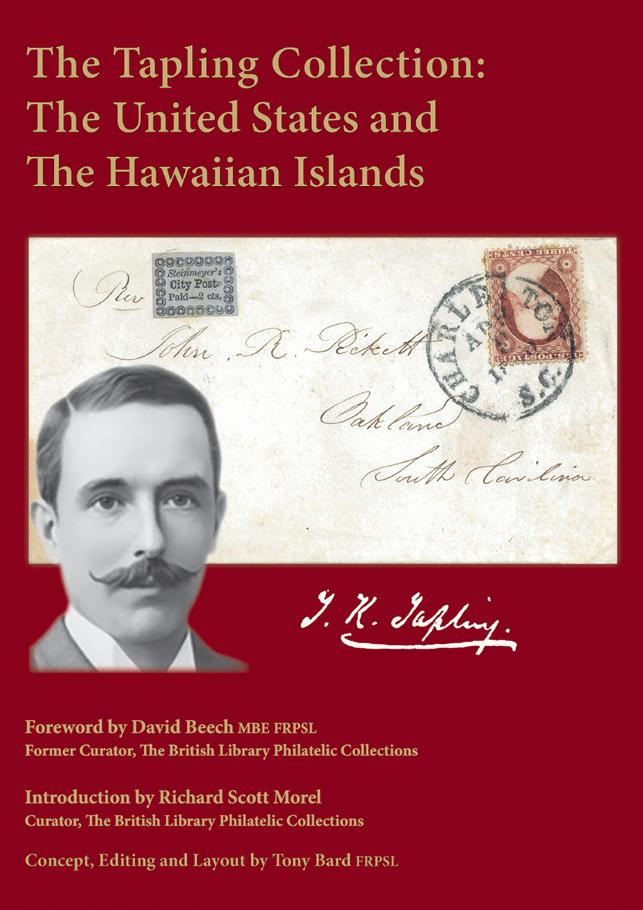
The Tapling Collection: The United States and '!he Hawaiian Islands
The first in a series, in association with the British Library Philatelic Collections, dedicated to reproducing the previously unpublished contents of the worldfamous collection formed by Thomas K. Tapling, which extends to over 4,500 pages.
All of the Tapling US postmasters’ provisionals, locals, carriers and postage stamps, plus the Hawaiian issues, are included in this 192-page full-colour volume.
With the Boston 2026 World Expo celebrating both American philately and the 250th anniversary of independence, this volume will be published on 15 May 2026. The first impression is limited to 100 copies.
Order your copy online at www.bardphilately.com or for more information email info@bardphilately.com
Order by May 21 for collection at Boston 2026 and save the cost of mailing from the UK

The following new members were approved by the Board of Governors:
April 28, 2026
Non-Resident:
Resignations
Deaths
Nigel Mohammed, Montgomery, IL
Allen Aboff, Louisville, KY
Jack Harwood
Francis Crown
James W. Graue, Valleyford, WA
If you would like to update your contact information, please contact our Executive Secretary, Andrea Matura, at info@collectorsclub.org
Respectfully submitted, Alan Barasch, Membership Chair
June 3
June 17
June 24
September 2
Panel Discussion on Boston 2026
The Special Arrangement Mark Schwartz
Modern US: The Scenic American Landscapes series Jay Bigalke
From Perkins, Bacon to De La Rue. The Story of the 1879 and 1880
GB Tenders Howard Hughes
September 16 East Germany. The Cold War Propaganda Forgeries 1953-1957
Oliver Wyrtki
September 23 The Hindenburg Crash Cover: A Philatelic Icon Cheryl Ganz RDP
September 30 Indian Stamps used in Iraq Akthem Al-Manaseer
October 14 Poland. Airmail of the Siege of Przemysl (1914-1915)
October 28
November 4
November 11
Jerzy Kupiec-Weglinski
GB QV Surface-Printed issues: An Inside Look at How We Up dated and Expanded the SG Specialised Catalogue Matthew Healey
The Postal History of the American Civil War Dan Knowles
Single Frame Competition
November 18 Early Transatlantic Mail Carol Bommarito
December 2
December 9
December 16
Panel Discussion on the Hobby's Future
Governors’ Open House
Postcard exhibiting Liz Hisey
When the Cunard ships started sailing in 1840, the volume of letters into Boston increased dramatically. Current postal regulations required that each letter receive a “SHIP” cds and a rate at the Boston Post Office. As a result of the huge volume (perhaps 20,000+ letters), New York merchants were receiving their letters late and urged the postmaster general to find a way to speed things up.
Efforts directly with the head of the British post failed. Eventually, the Liverpool postmaster agreed to separate letters going south of Boston into a separate bag. That bag, instead of going to the Boston Post Office for processing, was now able to go directly to the train bound for New York. This is the story of how that “Special Arrangement” was reached and how to identify letters directly affected.
Before the “Special Arrangement”: Boston to New York, before the “Special Arrangement” was in place, showing the “BOSTON / SHIP / MS” cds. The letter was charged 39½c manuscript rate for a double letter. Both the cds and the manuscript rate were applied in Boston.
After the “Special Arrangement”: This incoming 1844 letter to New York, went by train without going via the Boston Post Office. It has no cds, and the rate was not applied until it reached New York City.
The Scenic American Landscapes stamp series, issued by the United States Postal Service from 1999 to 2012, stands as one of the most popular and visually cohesive sets in modern United States philately. Comprising 18 airmail and international rate stamps, the series features iconic natural wonders presented through vivid photographic imagery that captures the scale and diversity of the American landscape.
The series begins with the 1999 Niagara Falls stamp (48¢), followed by the Rio Grande issue (40¢), establishing a design approach focused on aerial perspective rather than traditional aircraft imagery. This shift emphasized the experience of flight, showing collectors what travelers see from above. Subsequent issues continued this theme with well-known locations such as the Grand Canyon (2000), which drew attention for an early labeling error placing the canyon in Colorado.
Designs throughout the series highlight a wide range of terrain, including Acadia National Park (2001), Bryce Canyon and Great Smoky Mountains (2006), and Glacier National Park (2012). The final issue, Lancaster County, Pennsylvania (2012), carried a $1.05 denomination reflecting international rate needs at the time.
Originally created to serve airmail and global letter rates, these stamps were issued during a transitional period in U.S. postal operations as the distinction of airmail as a separate category was fading.
My presentation draws from a specialized collection that includes commercial uses on cover, original source photographs, and related production material. Together, these elements provide added context and bring the series to life beyond the stamps themselves, offering collectors a deeper understanding of this modern classic.

We are privileged to announce the landmark auction of The Tejima Collection, an assembly that rede nes our understanding of Japan’s transition into the modern postal era. Comprising an unprecedented 210 covers and 49 sheets resp. meticulous plate reconstructions, this collection represents approximately 40% of the world’s known census of Japan’s inaugural stamps on cover in private hands.



The Tejima Collection is not merely an assembly of rarities; it is a technical foundation for the study of Japan’s rst issues.

• Plating Mastery: Includes 49 sheets and reconstructions of the hand-engraved copper plates, used to verify the exact origin and period of every piece.
• Positional Rarities: Mapping the "DNA" of early printings, including legendary aws like the "Dragon’s tail partly missing" and "3 claws missing".

June 1, 2026, 5pm ET
H.R.HARMER


• Postal Revolution: Documents the rapid expansion of the post from the Tokyo-Osaka corridor to the remotest frontiers of Kyushu, Shikoku, and Hokkaido.
The live auction will be held at the prestigious Collectors‘ Club New York. Part II to be o ered in November 2026.
May 23–30, 2026 at our stand A+ 103!







▲ The Earliest Known Cancelled Dragon: A 100 Mon Plate 1 cover from Minakuchi, sent on Meiji 4.3.3—just 48 hours after the system’s o cial birth.


For printed copies, please contact H. R. Harmer Inc. directly. View the complete catalogue online at www.hrharmer.com.

◄ The 500 Mon High-Value: A rare Plate 1 Yellow Green with pos. 2 missing stroke error usage from the Kanaya mountain station to Yokohama. Contact +1 929-436-2800 info@hrharmer.com Request the Catalogue

















The 388 th Heinrich Köhler Auction in March 2026 saw spectacular results, proving once again that items from all over the world sell for top prices at our auctions.
If you are aiming to maximize the value of your collection, now is the time to consign! We are actively seeking stamps and covers for our sale in September 2026. We accept consignments until 15 July 2026.
Why consign with Heinrich Köhler?
• Tradition since 1913 – Profi t from over a century of expertise. We have consistently achieved magnificent results, especially for specialised collections that demand deep market knowledge and targeted international reach.
• Provenance & Research – We provide unparalleled documentation of the history of your most important stamps and covers using our extensive card indexes and the digital ProvenanceFinder ‘ProFi’.
• Reliability & Trust – Your collection is in safe hands. Our commitment to excellence is proven by our certified quality management and the top credit rating from CrefoZert.
Sell your collection now – your trust in Heinrich Köhler pays off.

Heinrich Köhler Auktionshaus GmbH & Co. KG

















We invite you to discover these once-in-a-lifetime collections!
June 19, 2026: Canada Part II
Canada Pence, Cents & Large Queens
June 20, 2026: Newfoundland Part I
• Newfoundland Pence to Airmails
We are thrilled to present the fabulous collections formed by Camellia PLC, the finest of their kind ever assembled.
When choosing an auction house, you should also consider the things they don't sell.
Knowledge. Experience. Integrity. Things that cannot be bought, bartered or sold. Yet they’re responsible for realizing the highest prices for your stamps. At Rumse y Auctions, we’ve built our reputation on these qualities as much as on the impressive financial results we achieve for our clients. Please call or email us and let us show you how much we can do for you.


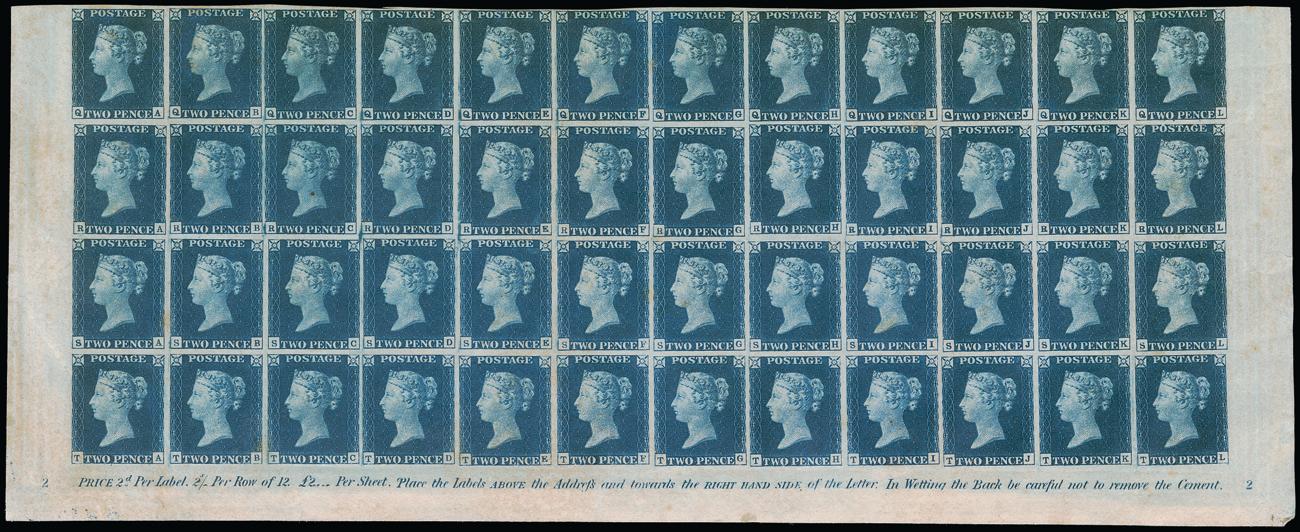
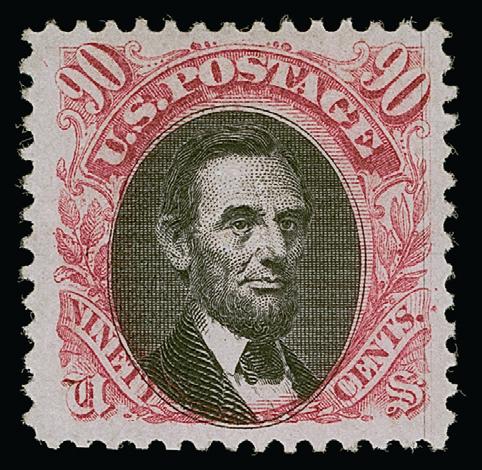
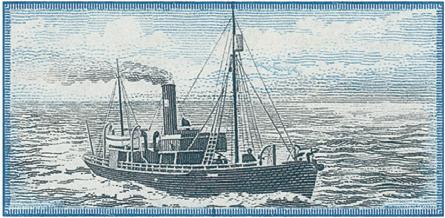
Sale Date: Tuesday, April 21
The 1869 Pictorial Issue collection formed by Nick Kardasis over 40 years is without question the finest assemblage of high quality examples ever gathered in one collection.
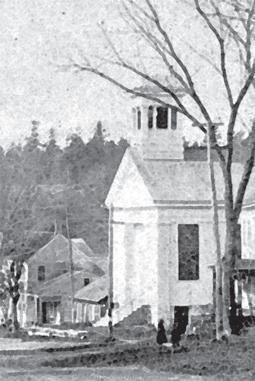
Sale Date: Wednesday, April 22 – Assembled over 20 years by a discerning collector, the collection includes proofs,
singles, and rare multiples.