

Publications Committee:
John Barwis RDP
Robert Gray
James Grimwood-Taylor RDP
Matthew Healey
Daniel M. Knowles
Robert P. Odenweller RDP (member emeritus)
Executive Secretary and Librarian: Andrea Matura collectorsclub@collectorsclub.org
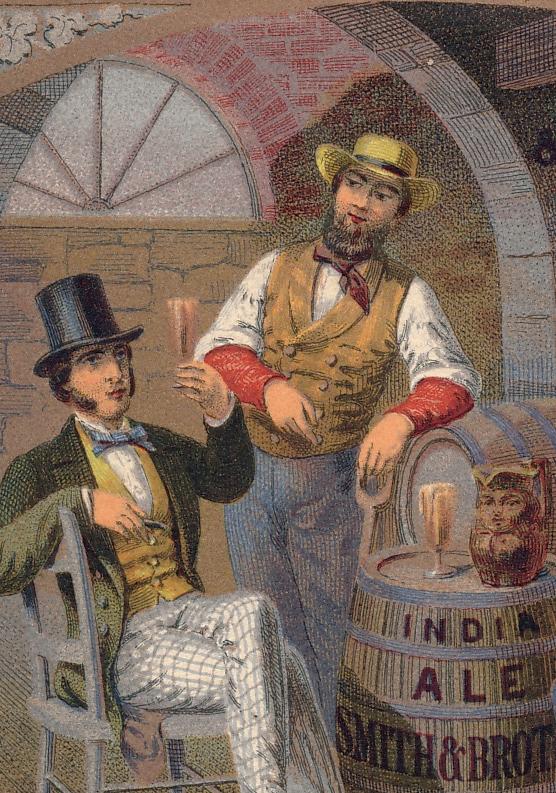
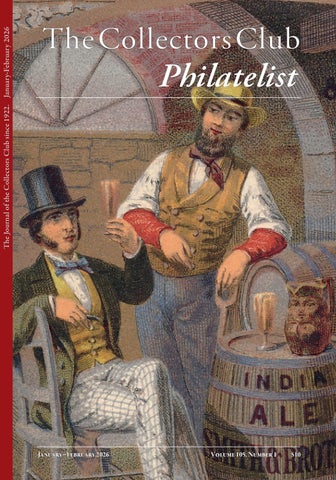
Front cover: Detail of the 1862 chromolithographed advertising cover described on page 11 of this issue by Daniel M. Knowles.
Guidelines for submitting articles for publication in The Collectors Club Philatelist are available from the Editor.
The Collectors Club Philatelist (ISSN 0010-0838) is published bimonthly in January, March, May, July, September and November by The Collectors Club, 58 W 40th St. Mezzanine, NEW YORK NY 10018. A subscription to The Collectors Club Philatelist is included with dues paid by members of The Collectors Club. Subscription price for nonmembers in the United States is $70. Prices for foreign addresses and/or other classes of mail are higher depending on actual cost; consult publisher. Subscriptions for outside the United States should be paid in U.S. funds drawn on a U.S. bank. Back issues $9, including postage. For a complete list, write the publisher. Claims for undelivered issues will be honored only within six months of the date of publication. Beyond that, replacements will be provided at the single copy price. Periodicals class postage paid at New York, New York 10001 and additional offices. Office of Publication: The Collectors Club, 58 W 40th St. Second Floor, NEW YORK NY 10018. Copyright 2025 by The Collectors Club. All rights reserved. We do not give implied or other consent for copying for more than personal use.
Indexed in PhiLindx by E.E. Fricks and included in the article index of the American Philatelic Research Library and the Global Philatelic Library. The opinions and statements contained in the articles are those of the authors and not necessarily those of The Collectors Club, its officers or staff.
POSTMASTER: Send change of address to
1896
FOUNDED 1896
58 W. 40th St., Mezzanine, New York, NY 10018
58 W. 40th St., New York, NY 10018
(212)683-0559
(212)683-0559
www.collectorsclub.org info@collectorsclub.org
www.collectorsclub.org info@collectorsclub.org
The Collectors Club is Monday through Friday, a.m. 5 p.m.
The Collectors Club is open Monday through Friday, 10 a.m. to 5 p.m.
President
Please call ahead if intending to visit.
Please call ahead if intending to visit.
President
Vice President
Vice President
Secretary
Secretary
Treasurer
Treasurer
Robert Gray
Robert Gray
Vincent Cosenza
Vincent Cosenza
Matthew Healey
Matthew Healey
Roger S. Brody RDP
Roger S. Brody RDP
Immediate Past President
Lawrence Haber
CLASS OF 2026
CLASS OF 2026
CLASS OF 2027
Roger S. Brody RDP
Roger S. Brody RDP
Mark E. Banchik
Vincent Cosenza
Vincent Cosenza
Alan R. Barasch
Joan Harmer
Joan Harmer
Larry Lyons
Kathryn Johnson Behruz Nassre
Johnson Behruz Nassre
CLASS OF 2028
David Fritz
Robert Gray
Matthew Healey
Stephen Reinhard
Robert G. Rose
Daniel J. Ryterband
Several weeks ago, I was speaking with a friend who asked me to define organized philately. Given my service on the Collectors Club Board and, more recently, my role as a Board member and treasurer of the APS, I was a reasonable person to ask. I paused for a moment—it’s a deceptively difficult question—and finally offered that organized philately is the structured way in which stamp collecting and postal history are advanced through clubs, societies, and other formal institutions.

It’s the ecosystem that supports the hobby: bringing collectors together, sharing knowledge, setting standards, preserving history, and promoting the study and enjoyment of stamps. This aligns quite neatly with the purpose laid out in the opening paragraphs of our bylaws. The first paragraph gives our name; the next tells you why we exist. You can look it up. It’s on our website.
Perhaps you have a better definition, and that’s perfectly fine. But that’s not really the point.
The real question is why? Why do we need “organized philately” at all? Couldn’t we get by without it? A generation or two ago, no one would have even thought to ask this. So let me try to answer the underlying question: why do we need organized philately?
Implicit in the question is a belief that an individual collector can get along perfectly well without the larger structure. That we don’t need groups that take up time, space, and money—groups with cliques, self-congratulation, and all the rest. That I can do just fine in my stamp room with my catalogs and my albums. I can check what’s available on eBay or at the big auction houses. I can buy what I need, fill the gaps, and enjoy the satisfaction of doing it on my own. I don’t need the journals or the societies or the meetings.
And in the short term, that’s probably true. Our non-organized friend can do just fine—for now. But long-term, it’s a dead end.
We are not numismatists; there is no bullion value propping up the little pieces of paper we cherish. Stamps and postal history derive their value from knowledge—knowledge of usage, production, scarcity, context, and story. Without the backstory, these are simply bits of paper, intrinsically worthless. We all understand why the Inverted Jenny has its aura: the story of its printing, the chain of ownership, the lore surrounding that original sheet.
But the same principle applies to far more “ordinary” stamps: the distinction between dry and wet printings, the shift from flat plate to rotary press to offset, the subtle color variations born of wartime ink shortages, the way a cover posted in London in 1845 made its way to New York—on which ship, with which markings.
All of this—all of it—comes from organized philately. It was built, documented, debated, and preserved by those who came before us.
But why is the question even arising now? Because we are living through a generational shift. As the baby boomers age out, they are succeeded by people who want more of a quid pro quo. “What do I get for my support?” replaces the older model of membership for membership’s sake—where you supported an institution because the institution was worth supporting, even if the journal went straight into the recycling bin. Attitudes are changing. People want direct, tangible benefits. We may find the question uncomfortable, but it is being asked. And we shouldn’t be afraid to answer it.
So why should someone join—and remain a member of—the Collectors Club? Yes, we have a library you can borrow from by mail. Yes, we publish a fine journal. And yes, we host events throughout the year, in New York and at major shows. (We’ll be at Westpex in April—hint.) The Zoom programming is great, and I know you don’t come to New York all that often. Neither do 87% of the members of the Collectors Club.
But more importantly, by being part of the Club and its sister organizations, you help sustain the very value inherent in those little pieces of paper. You support the knowledge, the research, the community, and the continuity that keep philately alive.
And as for the direct, personal benefit? You gain a network. You join a group of people who share the same odd, wonderful language of philately. You become part of something that makes the hobby richer, deeper, and far more enjoyable.
Frankly, it’s a damn sight better than sitting alone in your stamp room.
Our new President, Robert Gray, will begin his column in the next issue - Ed.
Tony Bard
By way of introduction to those who do not know me, I am a Brit who now lives on the south coast of England, having been a Londoner until five years ago. For the last six years I had the privilege of editing what is considered to be The Collectors Club Philatelist’s “sister” publication, The London Philatelist, the journal of the Royal Philatelic Society London. I also edit four other journals, most of which are based in the US or deal exclusively with American philately, this should count as an important qualification for a foreigner, namely the ability to read and write US English!
As far as collecting is concerned, I describe myself as an obsessive postal historian with a penchant for “the roads less traveled by”, thereby feeding my other obsession, research. I make no claims regarding the breadth of my knowledge of American philately. Much of what I know has come from working with the fine team at Cherrystone Auctions in New Jersey, and through my Korean War postal history collection. Add in the articles I have previously edited on American topics in the LP, and I would perhaps rate my knowledge as a couple of notches above “beginner”. But I am a keen learner, and the job of editing most definitely broadens one’s philatelic vision. So that might represent my second qualification for my new job.
Although you might think I’m the “new kid on the block” (and I use the word “kid” in its loosest sense), I’m not. Not at all. I knew that I had been a member and read The Collectors Club Philatelist for what seemed like many years, but I was never exactly sure when I had actually joined the Collectors Club. Turns out it was way back in November 1975! This gives me one more qualification for the role that I have just stepped into, I guess, namely familiarity with the journal. Continuing the fine job that Wayne Youngblood and previous Editors of this journal have accomplished is, however, a whole different kind of ball game. The Collectors Club Philatelist has built its reputation on the support of its contributing authors and the quality of their articles, and that has to be my overriding focus going forward and one which I hope you, the reader, will continue to support.
I plan on reviving the “Every Cover Tells A Story” feature, which used to feature regularly in the CCP. This column is designed to tempt those members who, for whatever reason, would prefer not to submit a “full-blown” article to this journal. Instead, the opportunity will be available to provide a piece which details a favorite cover, regardless of its monetary value, age or even scarcity, which you would like to share. Your piece can be any length from one page upwards. I hope this encourages your involvement. “Full blown” articles are definitely most welcome, too.
* CHF 20‘910.* USD 25,928.-

* CHF 44‘280.-
* USD 54,907.-

* CHF 25‘830.* USD 32,029-






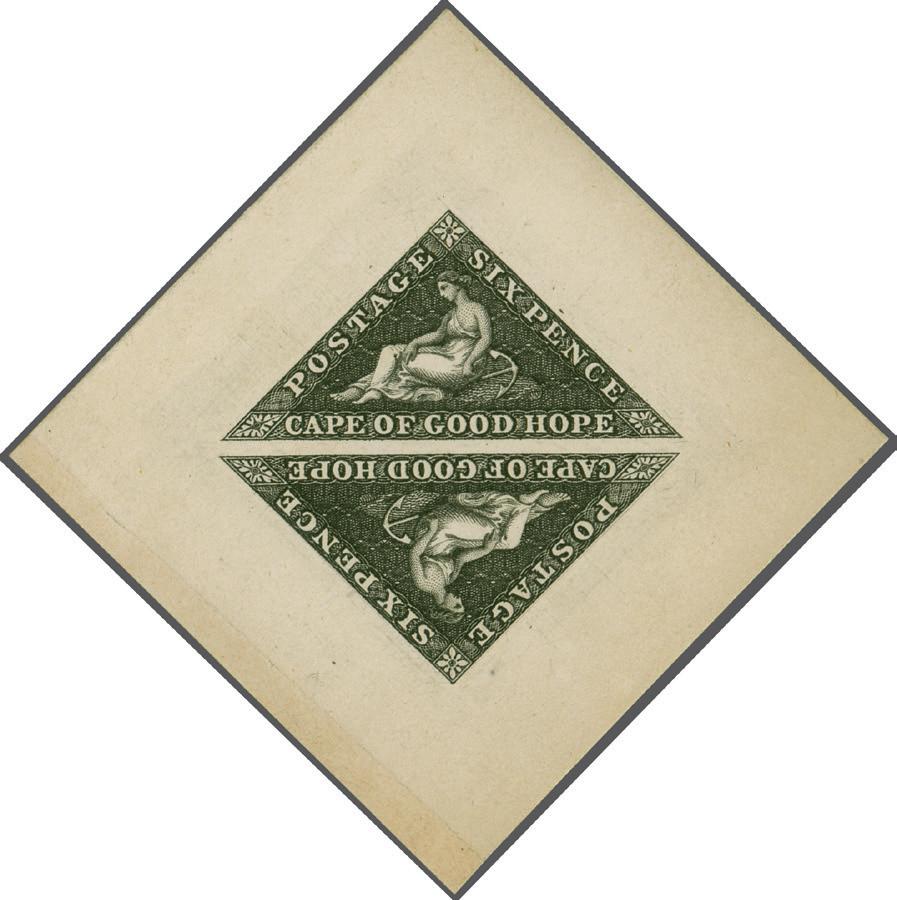
* CHF 41‘820.* USD 51,857.-

We operate our business since 1919. Selling in Swiss Francs is a quality assurance nancially. Continuously we run auctions in traditional formats: printed auction catalogues for all material offered; shipped in thousands to all its destinations; parallel ONLINE presentations; starting prices as the only reserve; to verify our transparency, our auditor testi es on our website in his report the plausibility and the correct processing of the accounting for vendors and buyers; auctions as LIVE performances.

* CHF 16‘605.-
* USD 20,590.-
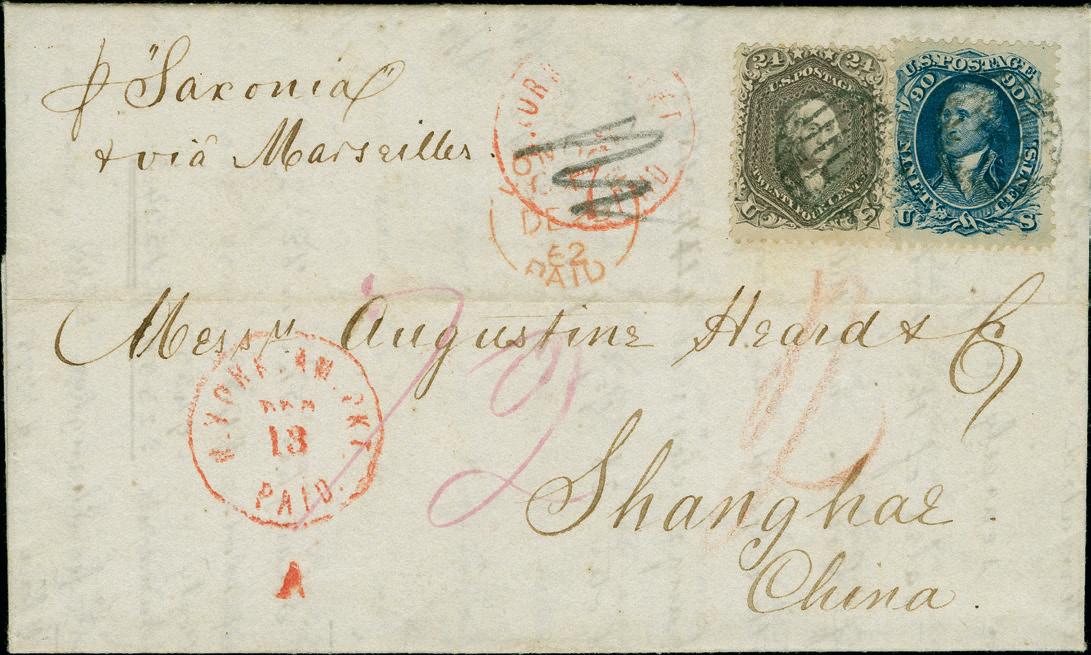


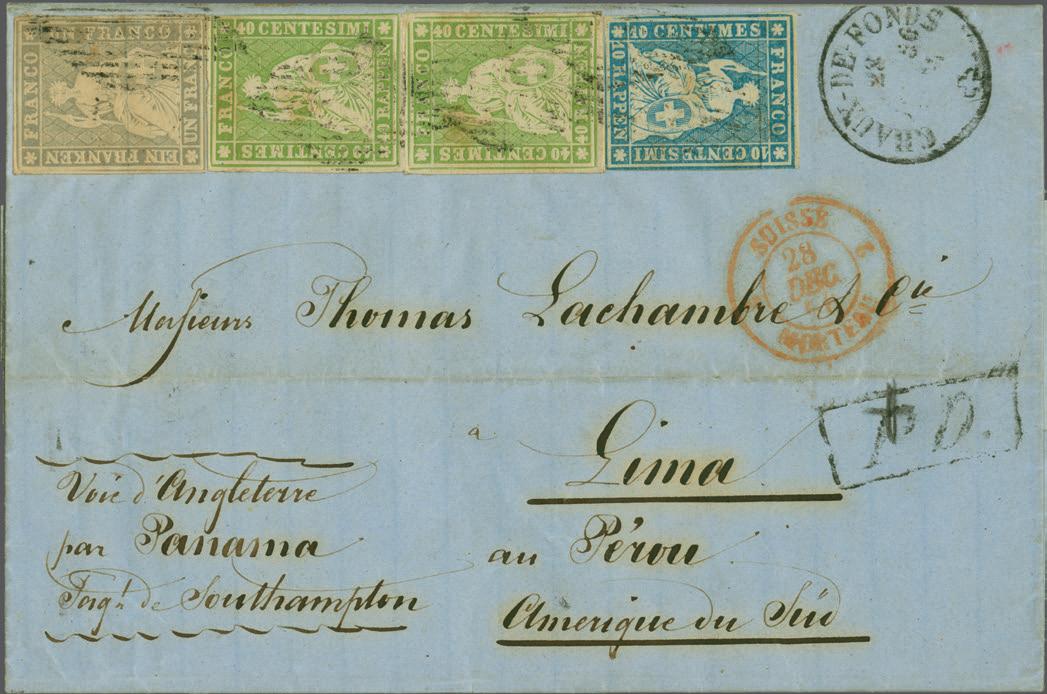
* CHF 12‘300.* USD 15,252.-




Next Corinphila Auction: 1 – 6 June 2026
Provenance:
* CHF 15‘375.* USD 19,065.-


* CHF 19‘680.* USD 24,403.-

Provenance: Agathon Fabergé (1940) Maurice Burrus (1964) Lipschutz Collection “Cihangir” Collection (2000)


Separate ‚hard bound‘ Auction Catalogues for ‚one country‘ or ‚single owner‘ a specialty
We are quite willing to discuss larger holdings in your own home.
Latest date for consignments: 6 March 2026
Daniel M. Knowles
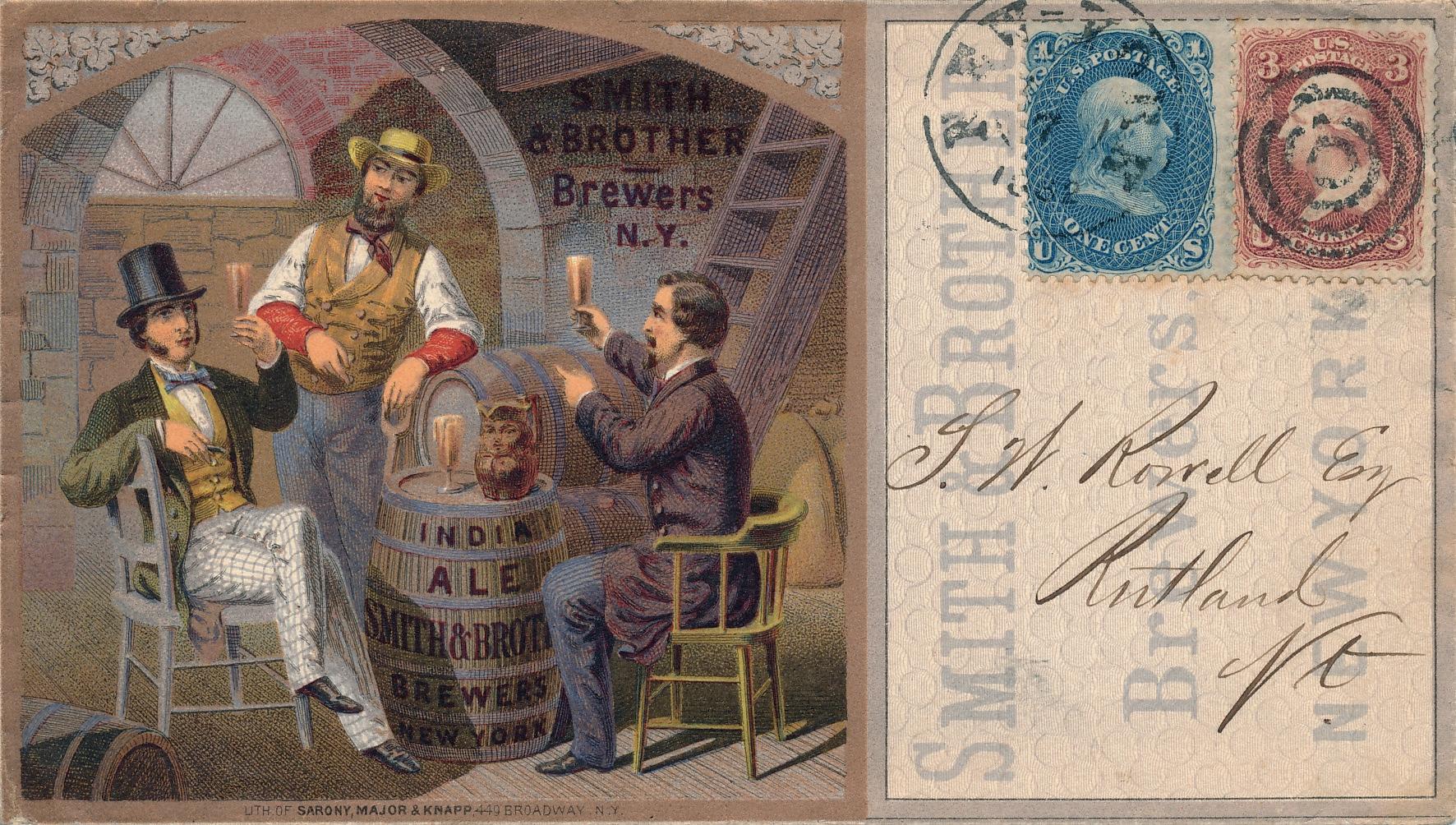
This multicolored advertising cover for Smith & Brother Brewers N.Y., depicting men toasting with India Pale Ale is widely considered to be the most beautiful American advertising cover of the classical period. The exquisite colors displayed in this envelope, which was produced by chromolithography, sets it apart from all other American advertising covers of that period. It is also one of, if not, the earliest, known chromolithographed American advertising cover (Figure 1).
The cover is postmarked “New-York (month ?) 7, 1862 and franked with 1861 issue 1 cent and 3 cent stamps to pay the carrier fee to the mails and postage from New York City to Rutland, Vermont. The “Sarony, Major & Knapp, 449 Broadway, N.Y.” printer’s imprint appears below the design. The cover was awarded Philatelic Foundation certificate #379289. The cover, in immaculate condition, graced the front cover of the Siegel Auction Galleries catalog for the June 25, 2015, sale of the Benjamin Franklin Bailar collection (Stamp Auction Network).
Lithography is a method of printing on flat surfaces, using a flat printing plate instead of raised relief or recessed intaglio techniques. Chromolithography refers to the high quality multicolored lithographic prints produced during the mid to the late nineteenth century. This technique produced a richer and more vibrant finished product than color wood engraving in part because of the far greater number of colors that could be employed. Skilled chromolithographers, employing as many as 40 stones, could create sophisticated and richly colored images that closely approximated the appearance of original oil paintings (References 2 and 3).
The chromolithographic process is based on the rejection of water by grease. An image is applied to a smooth surface, usually a highly polished limestone, with a grease-based crayon or ink. The stone is subsequently treated with hydrophobic chemicals. The contrast of hydrophobic chemicals with water enables ink to adhere to the positive image and water to clean the negative image. The areas of the stone that retain ink will leave an impression on a sheet of paper. In chromolithography each color in the image comes from a separate stone inked in the desired color. Each sheet of paper is run across the stones or through a printing press as many times as there are different colors in the final print. In this way, the lithographer gradually builds the print to attain the desired finished product. Each stone is precisely lined up so each color is placed in the right position. Simple, inexpensive lithography employed only two or three colors. Five or six colors were usually employed to create nineteenth century trade cards. Printing the envelope under discussion here required many more colored stones, perhaps as many as 40, to achieve the richness of color, and the subtle shade variations and tonal qualities seen in this envelope. It took chromolithographers about three months to draw colors onto the stones and another five months to print a thousand copies. So, the highest quality chromolithographic technique was extremely time consuming and hence expensive. Likely, it took skilled workers several months to produce this extraordinarily high quality envelope (Wikipedia 1 and Rhode Island School of Design).
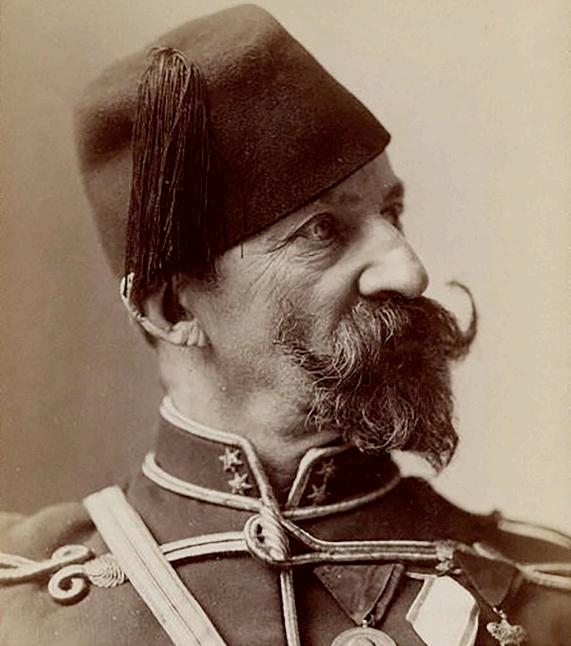
Napoleon Sarony (Figure 2) was a well-known lithographer and even more famous photographer in mid to late nineteenth century America. Sarony was born in Quebec in 1821. He moved to New York City in 1833 where he apprenticed as an illustrator for Currier and Ives before starting his own lithography business with James Major in 1843. The firm was known as Sarony, Major and Knapp between 1857 and 1867. Sarony left the firm in 1858 to travel to Europe to learn the photographic portrait business from his brother (Wikipedia 2).
He returned to New York City in 1866. There he established what was to become the most famous photographic studio, and himself the premier portrait photographer, in America. Sarony photographed numerous celebrities and distinguished individuals. These included internationally famous stage actress Sarah Bernhardt, literary figures Samuel Clemens (Mark Twain), Walt Whitman, and Oscar Wilde, the inventor Nikola Tesla, and Civil War General William Tecumseh Sherman. Sarony’s photograph of General Sherman was used as the model for engraving the 1893 issue 8 cent postage stamp picturing Sherman.
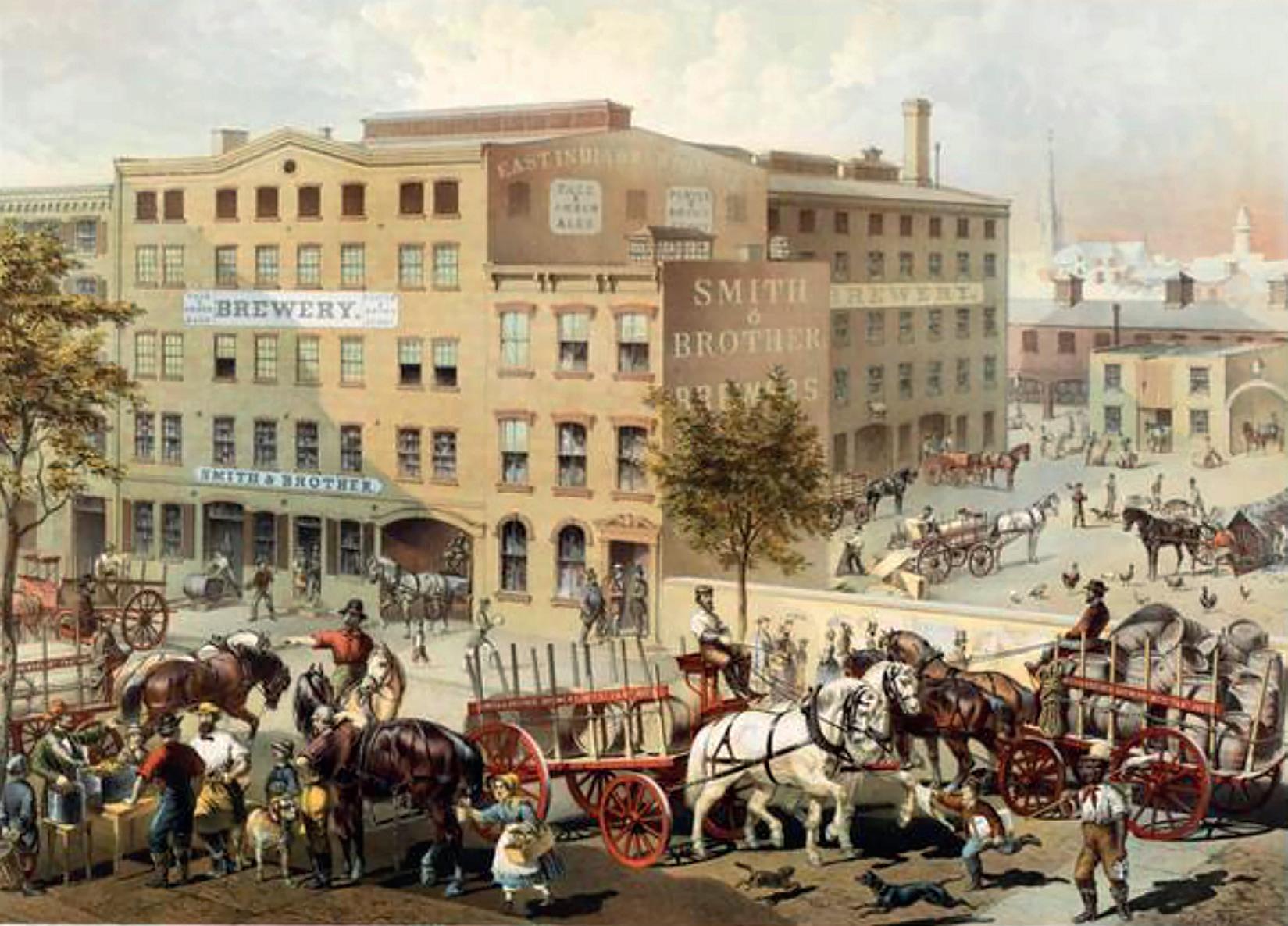
The Smith and Brother Brewery was a large, well known Manhattan brewery in the 1860s. The brewery is pictured in a color lithograph housed in the Museum of the City of New York (Figure 3) and mentioned in a newspaper advertisement (Figure 4).
The first American chromolithograph was created in 1840. Chromolithography was the most successful color printing method in the nineteenth century. It became the principal means of producing colored advertising after the introduction of machine printing in the 1860s.
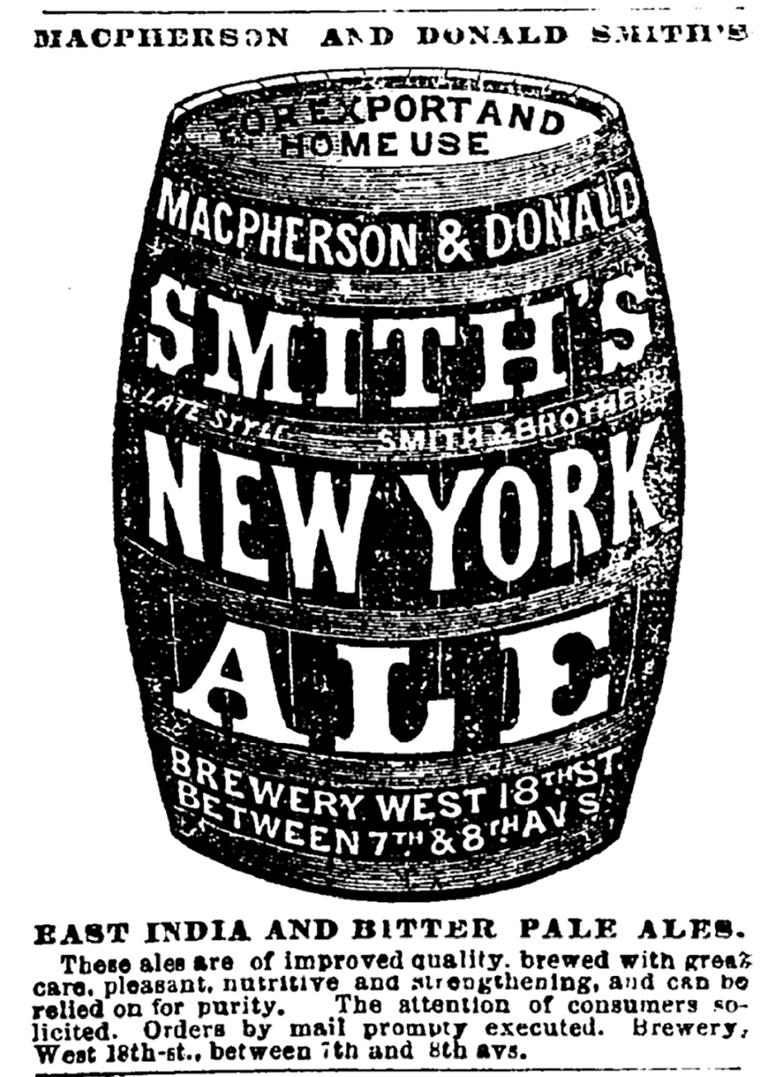
Figure 4. A beer barrel is used as the background to advertise MacPherson and Donald Smith’s “New York Ale”. “East India and Bitter Pale Ales” from the Smith & Brother Brewery are advertised as well. (Source: The New York Times , April 15, 1865, p.8). The major news story on the day that this ad appeared was the of Abraham Lincoln’s assassination.
During the Victorian era, chromolithography was widely used to produce detailed, colorful illustrations for children’s books and fine art publications, trade cards, labels, posters, advertisements, and reproduction prints of paintings. The latter were commonly used to decorate American parlors. They were prominent after the Civil War because of their low production costs, ability to be mass-produced, and because the methods allowed pictures to look like hand-painted oil paintings.
However, the highest quality chromolithographs were very costly to produce because of the several months of work and the expensive equipment required. Purchasing a chromolithograph was cheaper than purchasing a painting but it was still expensive in comparison with other color printing methods developed later. Offset printing replaced chromolithography in the 1930s ( (References 2 and 3)).
References
1. https://siegelauctions.com/auctions/sale/1105
2. Wikipedia 1. https://www.Wikipedia.org/wiki/Chromolithography
3. Rhode Island School of Design. “Rainbow Stones; Chromolithography through time: Exhibit”, Rhode Island School of Design, Fleet Library at https:// risd.libguides.com/rainbowstones
4. Wikipedia 2. https://wikipedia.org/wiki/Napoleon_Sarony#

Confederate States Stamps and Postal History featuring the Unique and Newly Scott-Listed Salem, Mississippi CSA Postmaster Provisional and the Thomas Ross Collection of Confederate States Coming to Auction in 2026
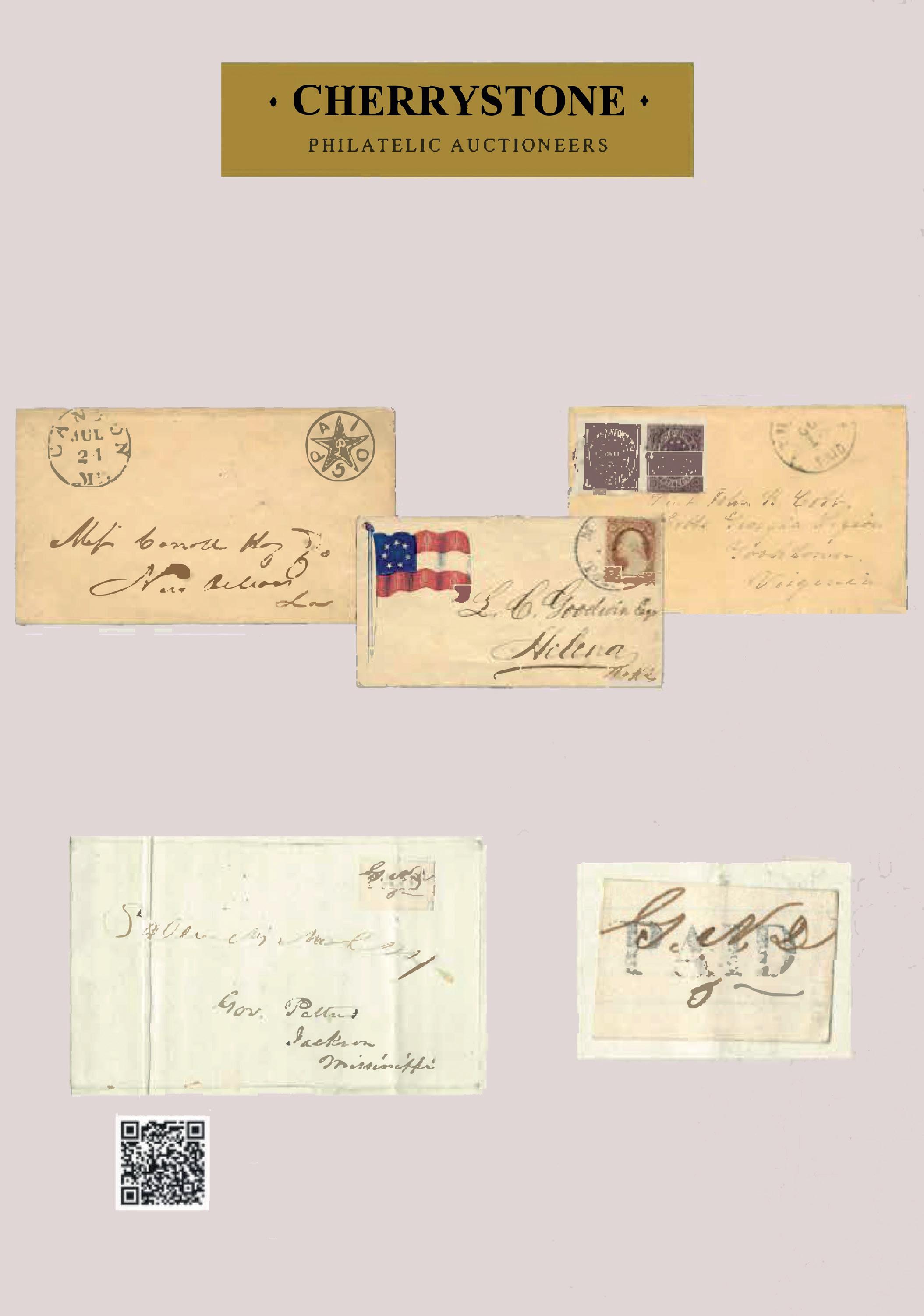
1862 Salem, Mississippi CSA Postmaster Provisional, Scott 154XUI Used on folded letter - Offered to the Market for the First Time!
Dinesh Kanabar
The lithographed 1854 Half Anna, the first stamp issued by India, has long been a subject of intense and continuing research. Before the adoption of the familiar Queen Victoria portrait, the authorities experimented with several designs that were ultimately discarded.
Among these were a lion-and-palm-tree essay, an East India Company coatof-arms design resembling the Gold Mohur coin, and even a concept modeled on the British Penny coin. These essays, of which surviving examples are known, reflect the spirit of experimentation that accompanied the birth of India’s postal system.
After these preliminary trials, Captain H. L. Thuillier, then Deputy Surveyor General, was commissioned to evolve a final design. Not unsurprisingly, he selected the bust of Queen Victoria, mirroring contemporary British practice. That design was finally adopted for the first issues of India: the ½ anna, 1 anna and 4 annas values, all printed by lithography, and the 2 annas value printed by typography. Thus was born the foundation of Indian adhesive postage.
The Half Anna blue stamp featuring Queen Victoria’s portrait was officially released on October 1, 1854, coinciding with the introduction of a uniform inland rate for letters within British India.
Several auction houses have since recorded examples of this stamp used on its first day of issue—including a part cover clearly dated October 1, 1854, shown in Figure 1 (Harmers of London). Although the date fell on a Sunday, it is important to remember that at that time many post offices in India remained open on Sundays, making such usage entirely possible.
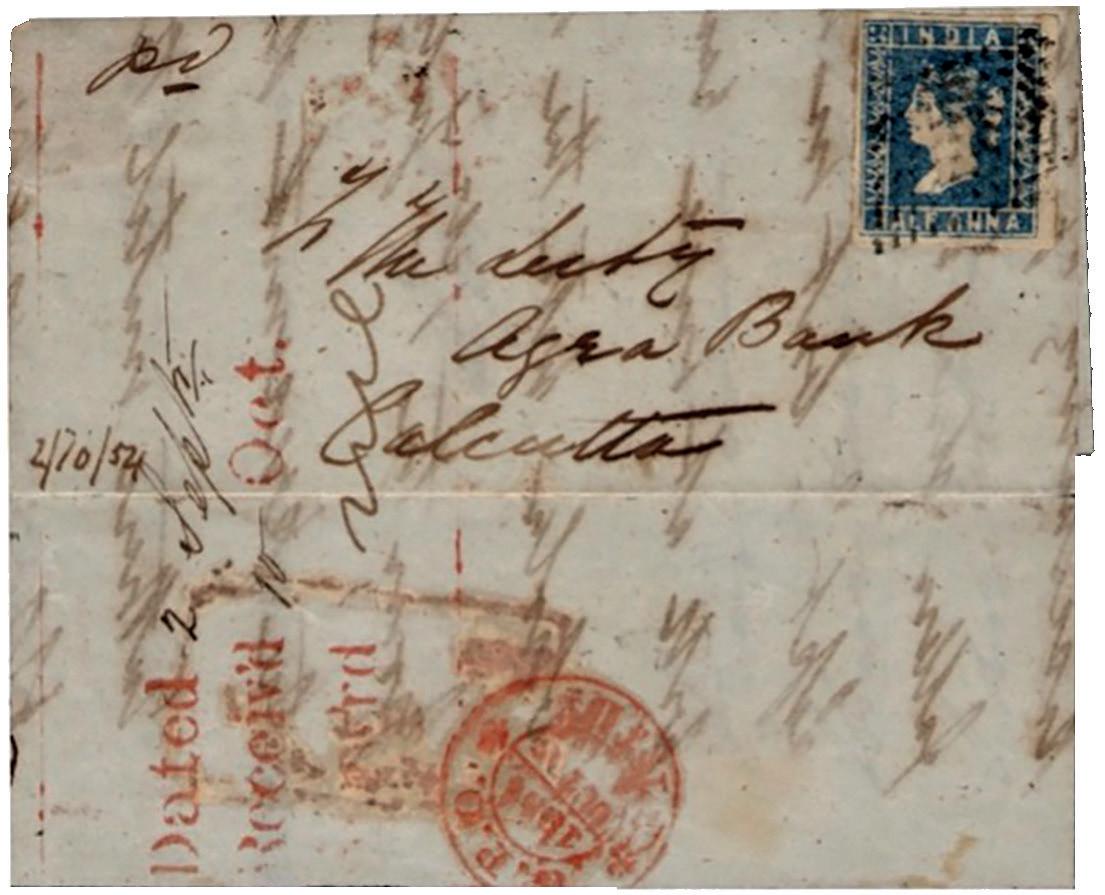
My own October 2, 1854, dated cover (Figure 2) was sent on the first working day following the issue.
Together these demonstrate how quickly the new adhesives entered practical postal use across the Presidencies.
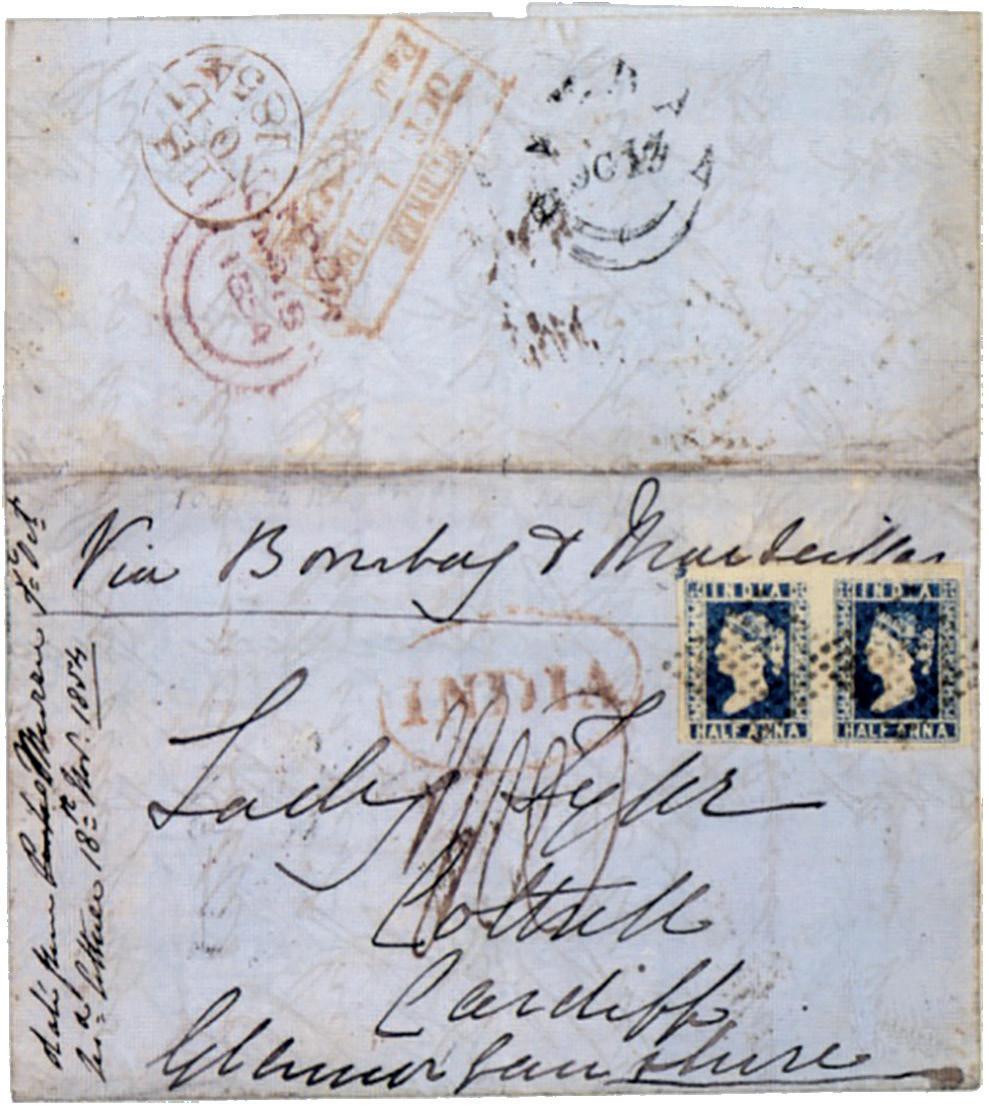
Figure 2. Entire used on the second day of issue from Allahabad to Calcutta, with manuscript note “2/10/54”, franked with 1854 Half Anna blue, Die I, Stone A, position 77. Canceled by diamond of dots obliterator. From the author’s collection.
While the official narrative is neat and well-documented, philatelists have long been intrigued by the existence of a few covers bearing the half-anna stamp with postmarks dated before October 1, 1854. Such “pre-issue” usages pose fascinating questions about how stamps were distributed, how local postmasters interpreted instructions, and what in fact constitutes an official issue date. In several instances, the letters bear a manuscript note “Stamped,” apparently added to confirm that postage was paid by adhesive and not by a later addition. These minute details help us understand the mindset of postal officials experimenting with a brand-new system.
According to Stamps of India (Cooper), Captain Thuillier had delivered over 23 million half-anna stamps to the Stamp Office in Calcutta by mid-July 1854. From there, the stamps were dispatched to the three Presidencies and major provincial offices to ensure ample stock for the forthcoming October reform. Given such large-scale logistics, it is entirely plausible that some post offices, having received their supplies early, began using them before the formal announcement. Human initiative and administrative improvisation were hardly uncommon in mid-nineteenth century India’s postal network.
The subject was first brought to serious attention by G. S. Farid in his 1968 article. Farid listed four covers used before the official issue date:
July 14 Poonah, Bombay Earliest known. Year clearly reads ‘1854’
August 17 Toungnoo, Burma Used in Burma. (Sinchawla)
September 15? Madras
September 24? Calcutta
Close to the official launch date
Predates the official launch date
Farid stressed that the Poonah cover’s “1854” date was unmistakable and that the manuscript “Stamped” annotation strongly suggested a genuine contemporary use. Since then, major auction houses such as David Feldman have also acknowledged that “some post offices had already sold the stamps before the official date of issue.” Each recorded example is a small window into how rapidly and unevenly the new system was implemented.
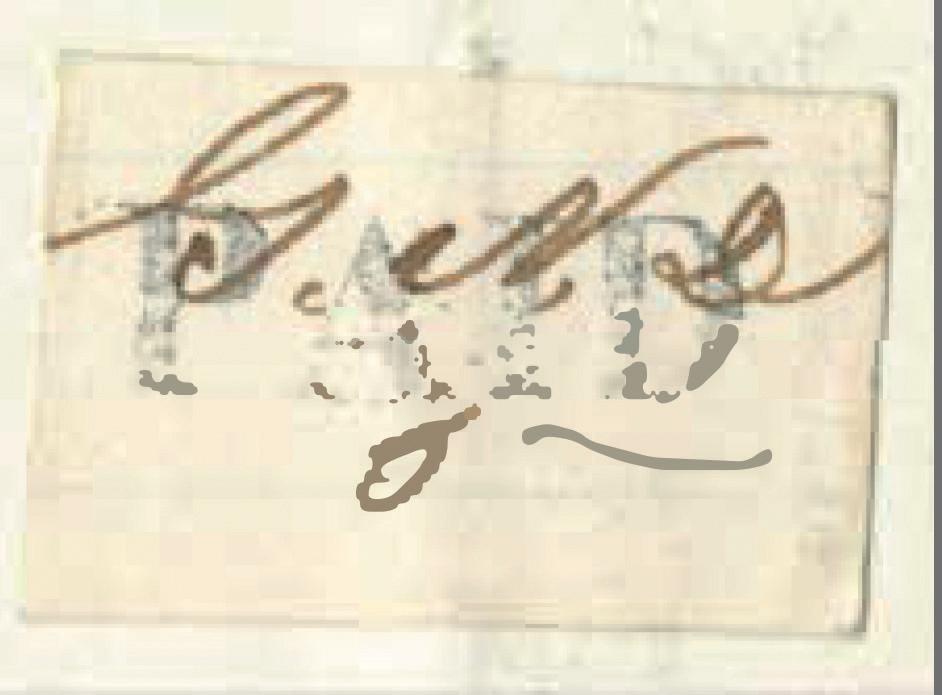
Among my own holdings is a previously unpublished cover (Figure 3) originating from Poonah, dated August 8, 1854. Although this does not predate the earliest known date of use of July 14, 1854, it nonetheless represents one of the very few authenticated examples of pre-issue use.

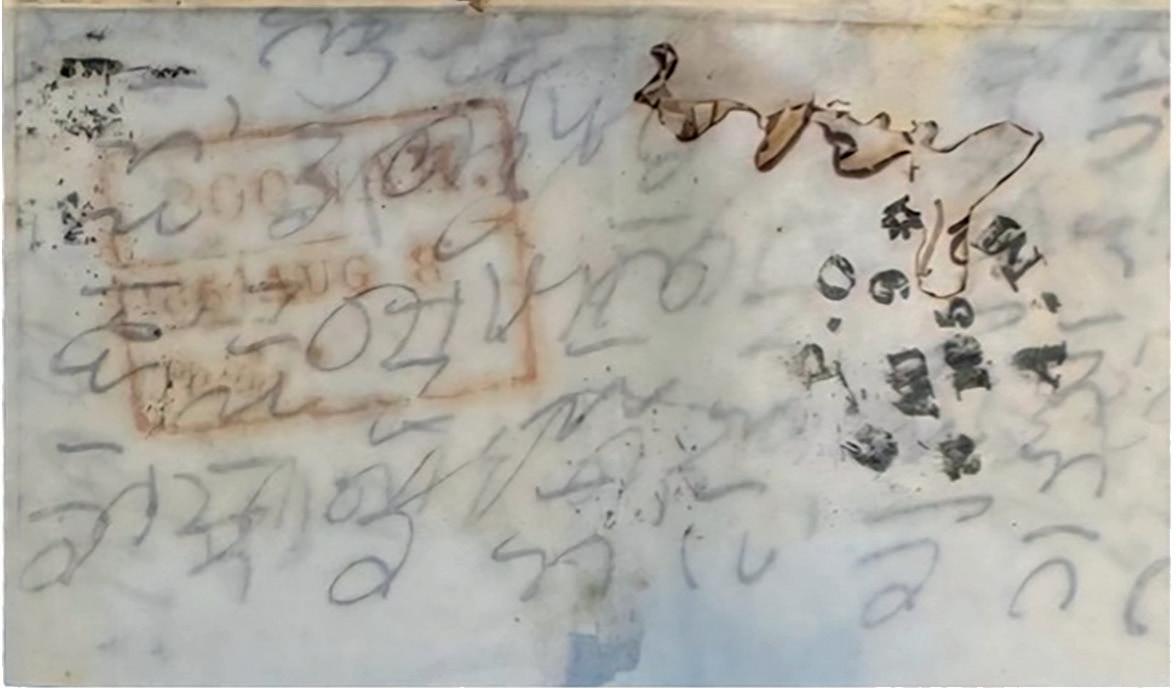
Figure 3. Entire predating the official date of issue by almost two months, sent from Poonah via Bombay. Dated August 8, 1854, and franked with 1854 Half Anna blue, Die I, Stone A, Group 6 lithograph, canceled by a diamond of dots obliterator. From the author’s collection.
Its importance lies not in pushing the chronology earlier but in demonstrating the geographical spread of the new adhesive within the Bombay Presidency. The clarity of the dateline and the genuineness of the datestamp’s strike make this cover a significant addition to the small corpus of known examples.
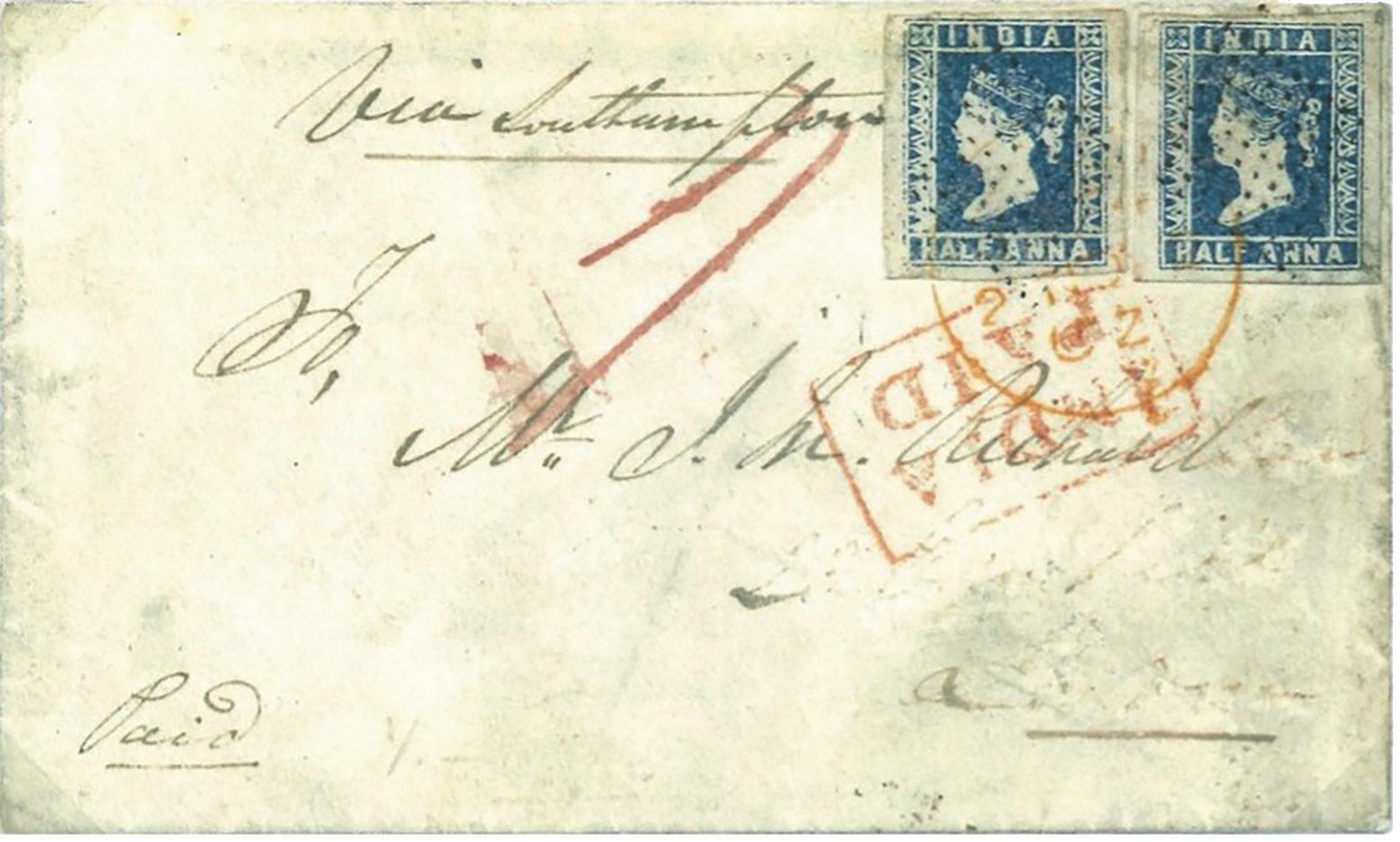
Figure 4. Cover sent on August 17, 1854, from Toungnoo Post Office, Burma, franked with two Half Anna Die I stamps canceled by a diamond of dots obliterators, paying 1 anna postage, the double rate for up to 1⁄2 tola. Unique, and one of the earliest known usage of the Half Anna lithograph stamp prior to the official date of issue. (Sinchawla.)
The existence of another August 1854 dated cover (Figure 4) was made public in 2019 (Sinchawla). This was sent overseas, “Via Southampton”, from Toungnoo in Burma. It has been prepaid with two examples, and bears the manuscript note “Paid”.
A minority of researchers has suggested that certain early dated covers may have been the result of mis-set year slugs or even back-dated cancellations. Farid, however, explicitly rejected that explanation for the Poonah cover, arguing that the year “1854” was perfectly clear and that the manuscript endorsement “Stamped” was consistent with postal practice of the time.
The debate illustrates the need for careful examination and expertization of every claimed early usage. As archival discoveries and private collections continue to surface, it is entirely possible that additional examples will come to light, or that existing ones will be re-evaluated with modern techniques.
The 1854 half-anna lithographed issue remains a cornerstone of Indian philately. Each of these covers is rare, and the fact that only a handful have been discovered to date makes the subject both intriguing and endlessly fascinating.
While the official issue date of October 1, 1854, marks the formal postal reform, the evidence of July to September usage reveals the practical complexities of mid-nineteenth century administration.
The August 8, 1854, Poonah cover, reported here for the first time, adds to this narrative, demonstrating that India’s first adhesive postage was already in the hands of the public weeks before its formal release.
Future research and discoveries will no doubt continue to refine our understanding of this remarkable chapter in postal history.
References
Cooper, Jal, ed. (1942-1968). Stamps of India (three editions), The Author, Mumbai, India.
David Feldman SA, (2021). India Half and One Anna 1854 Stamps – Available by Private Treaty, Geneva, Switzerland.
Farid, G. S. (1968). “India 1854 ½ Anna”, Robson Lowe Philatelist, [September], p.364.
Harmers of London (2008). All World Stamps and Postal History, [November 11], Lot #903.
Heddergott, Jochen (2014). “The First Day of the Indian Lithographs”, India Post, 48: 2, Whole no. 192, pp.49-55.
Kanabar, Dinesh (2025). A Compendium of Articles on the Half Anna Lithograph Stamps, The Author, Mumbai, India.
Martin, D. R. and Smythies, E. A. (1927). The Half-Anna Lithographed Stamps of India 18541855, The Philatelic Society of India, Lahore.
Sinchawla, Santpal (2019). “Half Anna Die I August 1854 used in Burma”, in Bailey, Mark W. and Walton, Frank L., eds., Royal Philatelic Society London Members’ Collections , Royal Philatelic Society London.
Please note, if you are scheduled to present a Program, a Preview will be needed to appear in The Clubhouse Chronicle section
You just need to send up to 200 words, plus two or three illustrations of your choice. Please make sure the items to be illustrated are scanned at not less than 300 dpi, and are on a white background. It may not always be possible to use all the images, due to space constraints, so please indicate which image(s) you would most like to be included. Short captions should also be provided.
Please send the text and images to me at least 4 weeks before your Program date.
Tony Bard, editor.ccphilatelist@gmail.com
Robert Gray
In 1914 Europe it was “The War”. Then it was the Great War and after 1939, the First World War. In the US, it is typically called World War I or WWI. It was an existential war with military casualties of 10 million killed and 21 million wounded, and civilian deaths of around 16 million. Combat lasted from July 1914-November 1918 involving most of Europe, East Africa, and the Middle East. It marked the ending of the German, Austria-Hungarian, Russian, and Ottoman Empires and the economic exhaustion of the French and British Empires.
1875-1916 is referred by some as the golden age of philately, when some of the greatest collections were assembled. The First World War marked a turning point in the hobby with the disruption of commerce and international mail. As a collector of WWI material, and a volunteer at the Collectors Club Library, I was fortunate to find two Stanley Gibbons publications bracketing the war years, 1914-1919 discussing the impact of the war.
The 1914 Important Notices to Stamp Collectors (Figure 1) included “The War & the Stamp Business”. It relates that the directors of Stanley Gibbons carefully considered the impact the war might have on their business. By November, when the booklet was printed, business news was coalescing and what had happened could be translated into stamp business terms. Cutting costs required the discontinuance of the Stanley Gibbons Monthly Journal:
We have had a rather hard hit owing to the large number of debts due to us in Germany and Austria and to stamps out on approval.
The hit was £8,000, which using the Consumer Price Index, the purchasing power would be equivalent to about £1,179,654 in 2025, about $1.58 million.
In German-occupied Belgium, especially Antwerp, there were many “valued” Stanley Gibbons customers, and the conclusion of the directors was that they would not be paid in a very long time. The notice continued with the offer of a substantial discount for collectors willing to purchase large amounts of stamps. What intrigued me was the notice regarding Enemy’s Stamps. The British papers had reported that many stamp firms were offering stamps that Germany had produced for use in occupied Belgium. The Stanley Gibbons note continues:
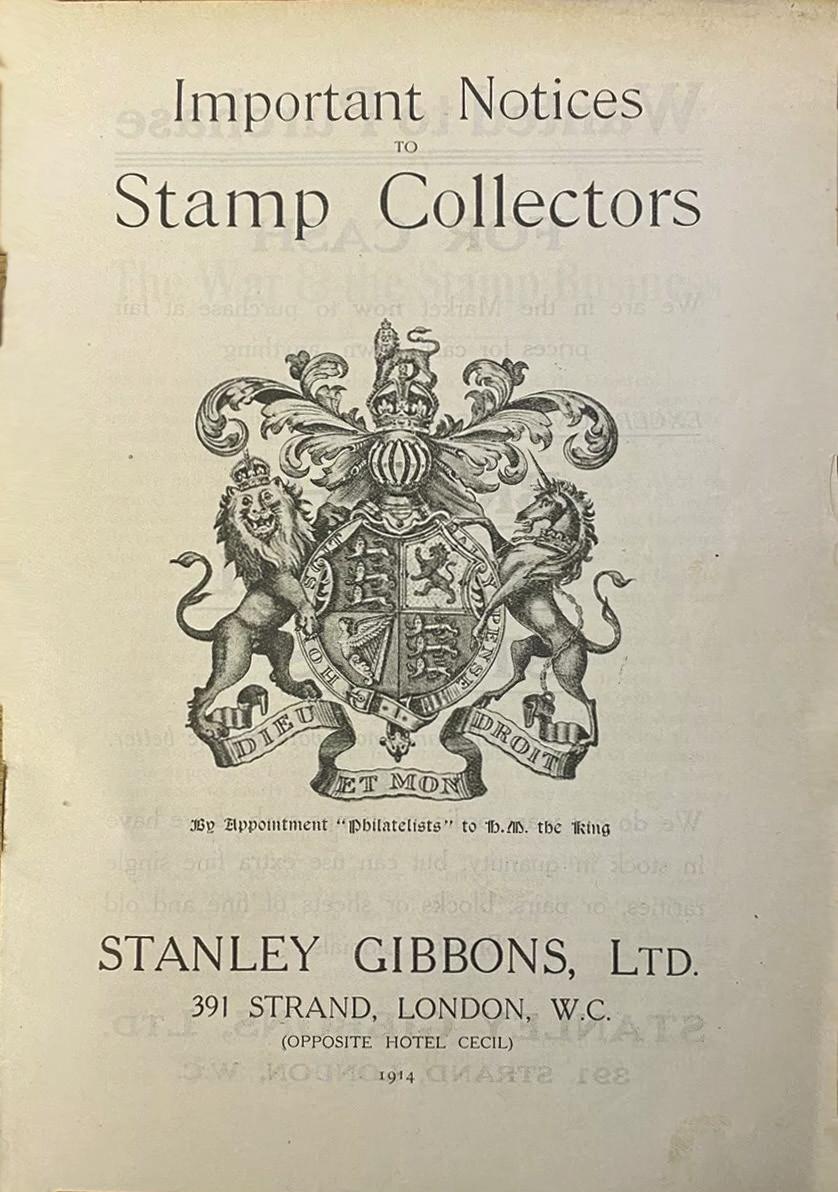
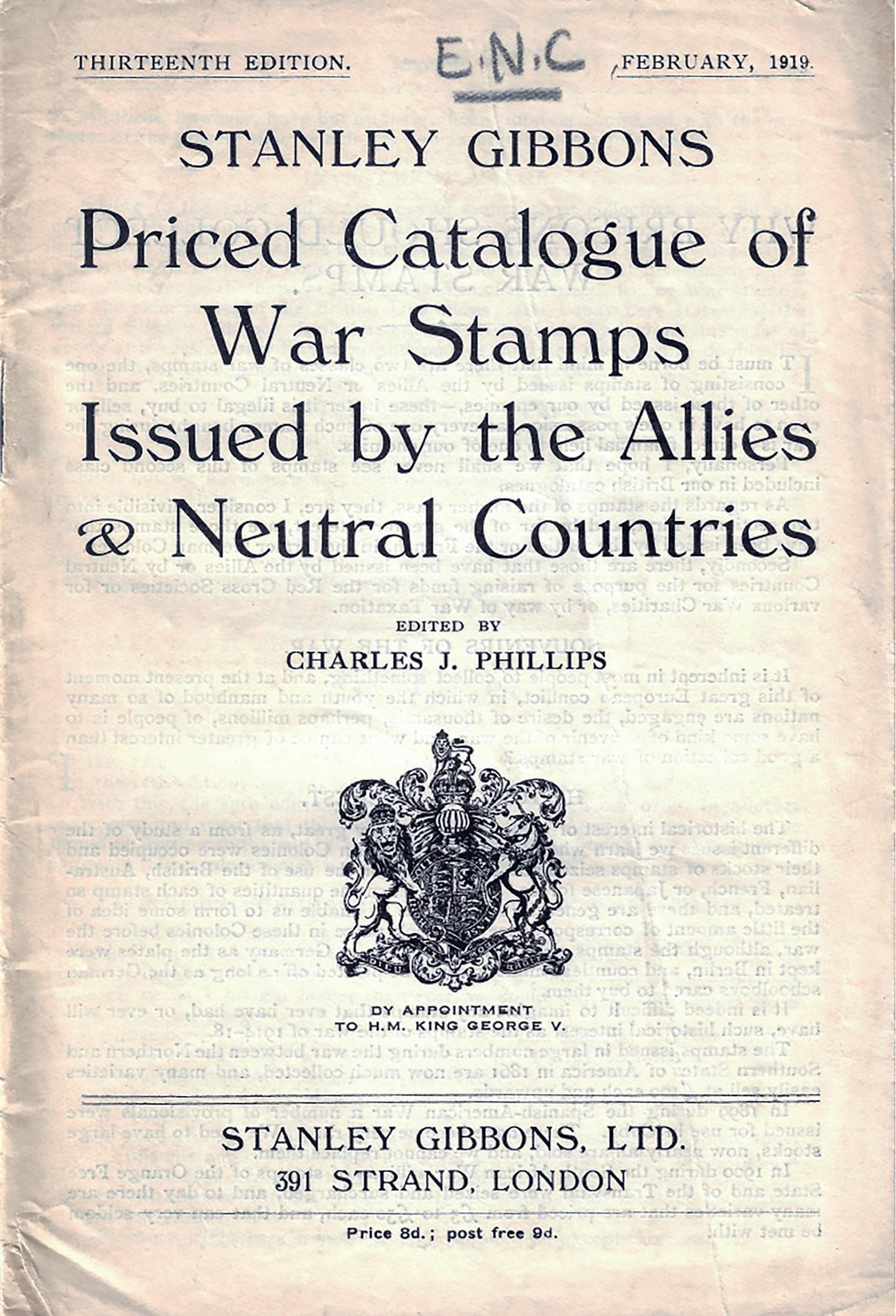
Figure 2. Priced Catalogue of War Stamps Issued by the Allies & Neutral Countries, 1919, edited by the new Chairman of Stanley Gibbons, Charles J. Phillips. (Source: Collectors Club Library.)
There is no doubt in our mind that anyone who sells or buys these stamps in an unused condition is trading with the enemy, and under the proclamation issued by the Government such trading constitutes an offense punishable by law.
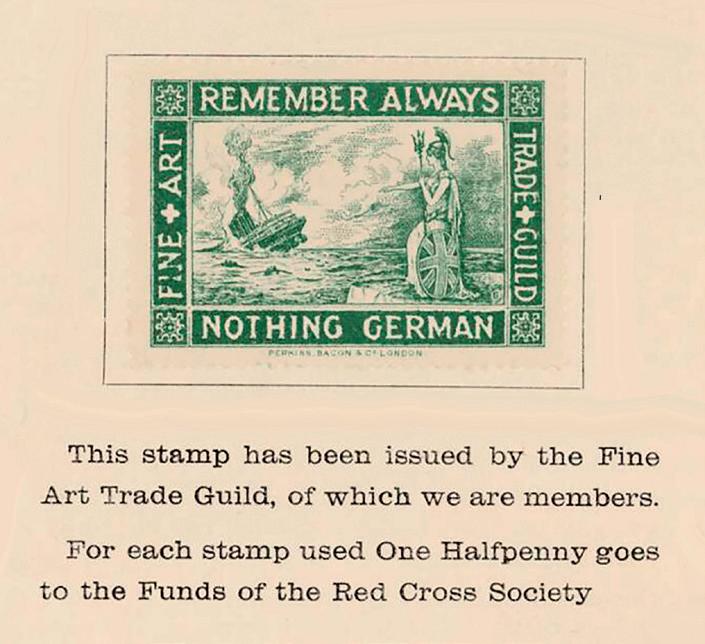
Figure 3. The fourth edition (and possibly earlier versions) of the Stanley Gibbons Priced Catalogue of War Stamps published in April 1916, included this Fine Art Trade Guild “REMEMBER ALWAYS / NOTHING GERMAN” label.
The central design depicted Britannia pointing at the stricken Royal Mail Steamer Lusitania, which had been torpedoed by the German U-boat U-20 on May 7, 1915 with the loss of 1,198 lives. Printed by Perkins, Bacon Ltd a donation was made to the British Red Cross Society for each label used by Stanley Gibbons. Source: National Library of Australia.
The paragraph concluded with Stanley Gibbons declaring that it would not handle or catalogue these (enemy) stamps during the war.
Five years of war and with the Armistice in effect, the philatelic war had progressed with the commercial situation improved. A new section titled “Why Britons Should Collect War Stamps” had been added to the Priced Catalogue of War Stamps (Figure 2) by the seventh edition published in May 1917. Touted were stamps from the British Empire and from its allies. They were described a souvenirs of the war, of “historical interest”, investment value and having an international demand.
Stanley Gibbons described itself as “The Firm for Bargains” and cited one example of an unnamed dealer with this offering:
In many cases I pay 50% to double Gibbons Catalogue prices.
The Armistice ended the combat and in 1919 Stanley Gibbons was adamant:
No Future Business with Germans. No stamps issued by our enemies during the war will be catalogued or sold by Stanley Gibbons, Ltd.
Enemies included Germany, Austria, Bulgaria and Turkey (i.e. Ottoman Empire).
The war brought carnage and inflation. Postage rates within the British empire were up 50% by 1920. The Stanley Gibbons bulletin warned customers:
Catalogue Prices obsolete. The depreciation in the purchasing power of the sovereign [i.e. the one pound sterling gold coin], postage stamps, on common with all other commodities, have largely appreciated in value…
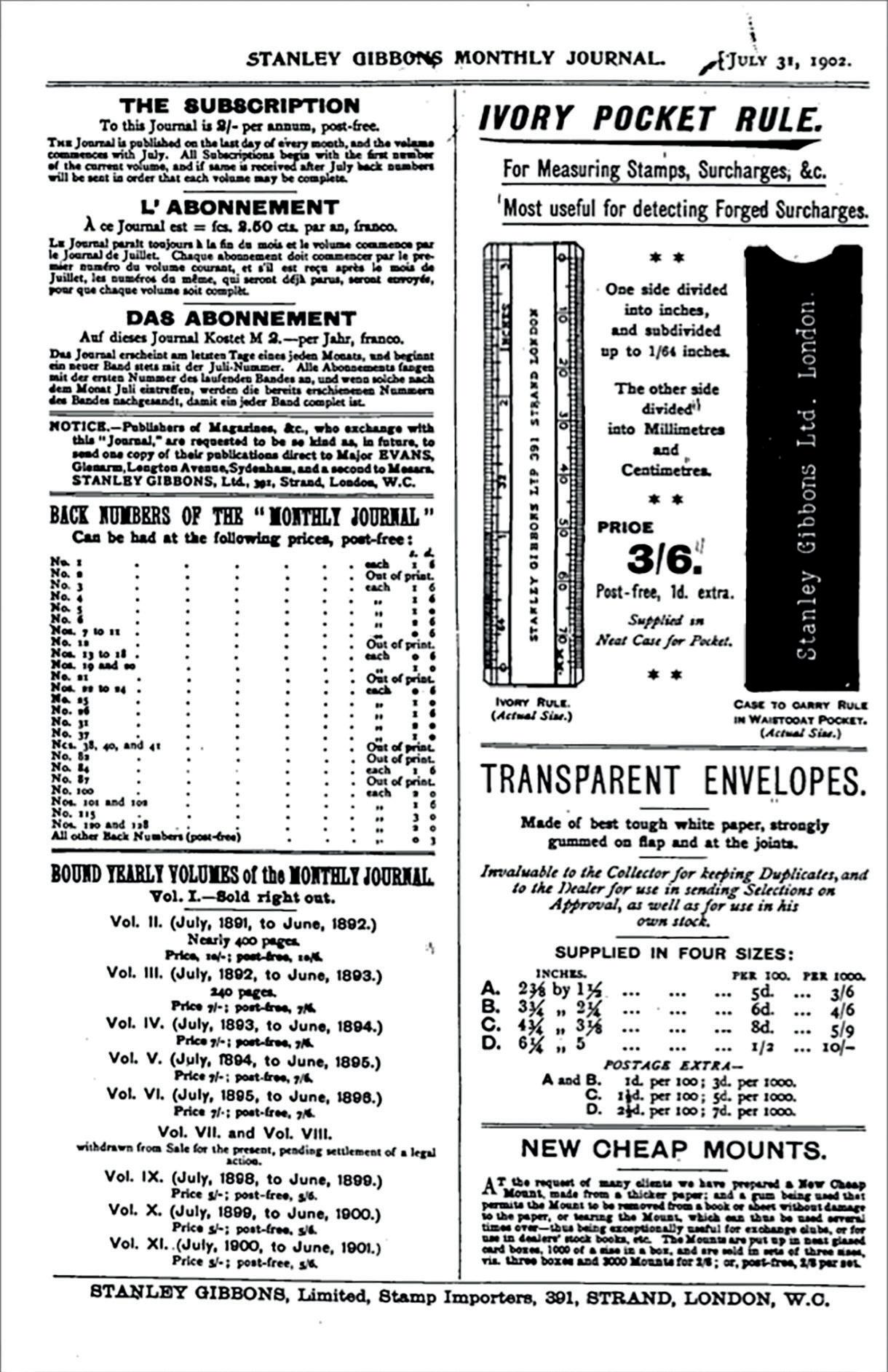
Figure 4. “Ivory Pocket Rule” measured in both Imperial and metric units. From the Stanley Gibbons Monthly Journal, July 31, 1902.
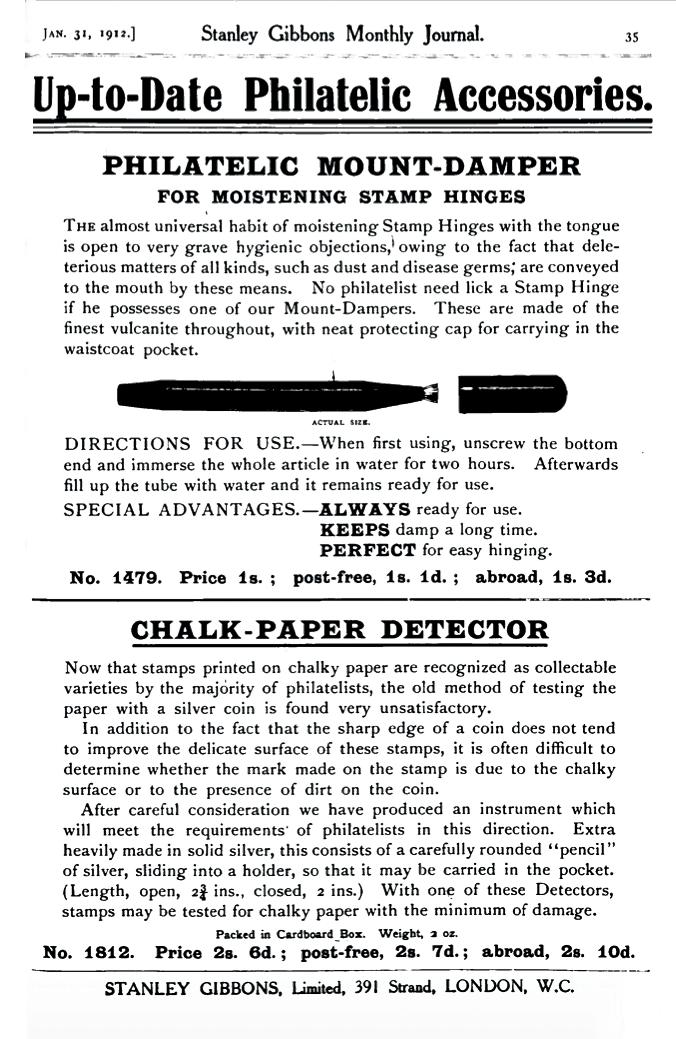
Figure 5. “Philatelic Mount-Damper for Moistening Stamp Hinges” at 1 shilling and the “Chalk-Paper Detector” at 2 shillings (£7.50 and £15 or $10 and $20 respectively, in today’s money). From the Stanley Gibbons Monthly Journal, January 31, 1912.
The wartime issues therefore were not listed. The 1920 edition cited a royal proclamation entitled ‘Trading with the Enemy’ and said that we (Stanley Gibbons) were still prohibited from dealing in enemy nation stamps.
I wondered why there was such a delay. The war was “over”, but peace was not yet set in terms of a final treaty.
For Western Europe the armistice was to take effect from the eleventh hour of November 11, 1918. Treaties were negotiated and mostly ratified by the respective parties and were given effective dates. The signed dates, ratified dates and effective dates are given in Table 1.
Enemy Treaty Effective Date
Name
Germany Versailles, France
Austria Saint Germanen-Laye, France
Hungary Trianon (a chateau in Versailles)
Ottoman Empire Sevres
Date Signed Ratified
July 28, 1919
September 10, 1919
June 4, 1920
November 20, 1919, exchanged; some parties (US) never ratified it.
October 17, 1919, (US did not sign, but signed one in 1921)
November 16, 1920
August 10, 1920 Not ratified
January 10, 1920
July 16, 1920
July 26, 1921
July 24, 1923, as the Treaty of Lausanne
Since the Austrian and Hungarian borders were radically changed and several new nations emerged, these treaties needed more time to negotiate and implement. The Turkish war of Independence was fought to prevent the conquest of Turkey by Greek, Italian, and French forces.
Enemy stamps appeared in the 1922-23 catalogue, with a comment that Stanley Gibbons did not deal in the war issues of our enemies but included them in the catalogue: to save ourselves numberless enquires about stamps we are supposed not to catalogue.
The 1925 catalogue brought everything back to “normal” with fully-priced listings without editorial comments on this change.
Acknowledgements
Thanks to Hugh Jefferies and Natasha Williams of Stanley Gibbons Baldwins for providing information on the catalog listing of enemy stamps.
Richard Scott Morel, Curator, The British Library Philatelic Collections
On 4 July 1776, representatives from thirteen North American colonies signed the Declaration of Independence, formally breaking away from British rule and creating the founding document of what became the United States of America. To commemorate the 250th anniversary of this monumental event, the newly appointed editor of The Collectors Club Philatelist invited me to submit some articles in 2026, showcasing significant American material held in the British Library. Perhaps the most important institutional legacy of the American Revolution, and one central to the transformation of disparate colonial administrations into a unified nation-state, was the creation of the American Presidency in 1789. With this in mind, the present article examines a selection of letters written by American Presidents, during various phases of their careers, possessing clear postalhistorical significance.
While postal historians frequently utilize library and archival resources for contextual research, they often overlook the manuscript correspondence itself, focusing almost exclusively on material circulating within the collecting market. This is a regrettable limitation, since major libraries and archives preserve vast bodies of original letters that offer invaluable insights into postal practices, routes of transmission, administrative privilege, and systems of communication. Such material has the potential to significantly broaden the evidentiary base of postal history. Beyond official correspondence created within military or administrative contexts, the British Library also holds presidential letters preserved through entirely different collecting traditions. In some cases, the individuals responsible for assembling these collections might be described as ‘accidental’ philatelists or postal historians.
One such figure was Zenas Lewis Crane (1840–1917), head of the security paper manufacturing firm better known today as Crane Currency, supplier of paper for postage stamps and paper money. In 1917, Crane bequeathed a deluxe volume entitled Autograph Letters of the Presidents to the British Museum Library (Ref. 1). This volume comprises a copy of John Fiske’s 1879 monograph The Presidents of America, containing engraved portraits of American Presidents based on well-known artworks, accompanied by biographical sketches. Crane expanded the work through to the presidency of Woodrow Wilson.
Mounted and interleaved between each printed entry are original manuscript letters signed by successive Presidents, from Washington to Wilson. Although collected primarily for their autograph value, a number also possess postal-historical significance. It is striking that this correspondence has attracted relatively little attention from postal historians, despite the fact that several of these letters possess legitimate postalhistorical interest.
The letter shown in Figures 1 and 2, from the Bouquet Correspondence (Ref. 2), written by Colonel George Washington on July 3, 1758 (Ref. 3), serves as a compelling case in point. Long before he became the first President of the United States, George Washington was a loyal British subject, serving as a provincial colonel in the Virginia Militia during the French and Indian War (1754–1763). (Ref. 4).

Figure 1. July 3, 1758, OHMS entire from Colonel George Washington to Colonel Bouquet at Rays Town,
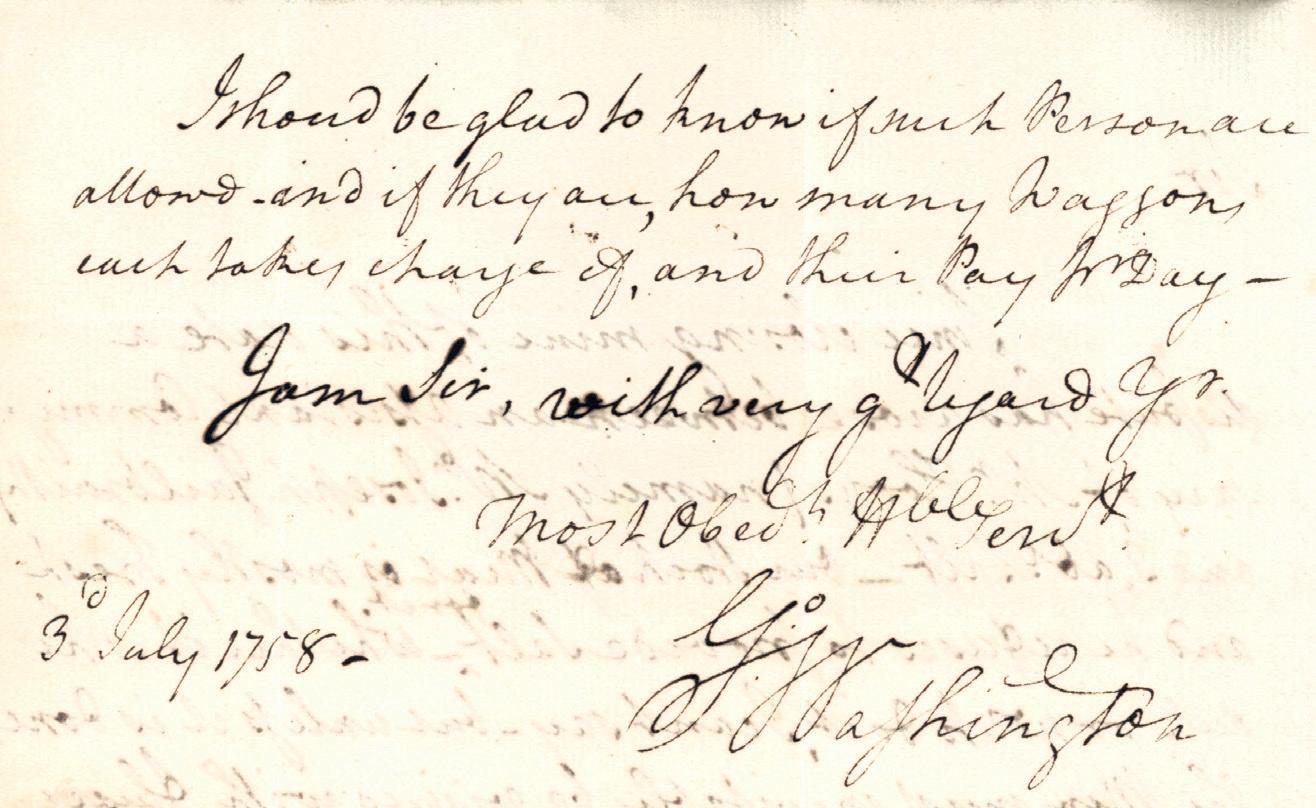
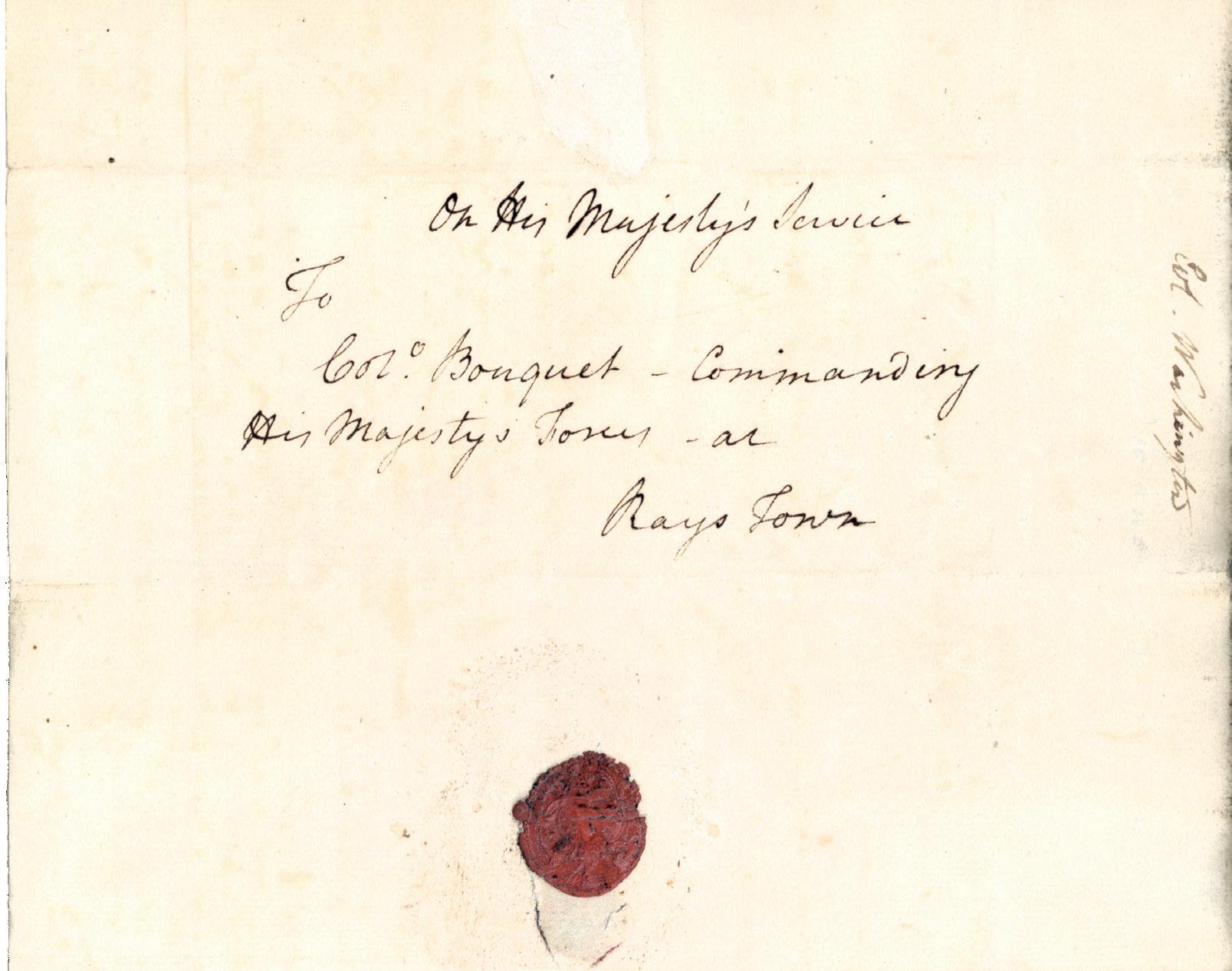
This letter was written during the Forbes Expedition, the British campaign to capture Fort Duquesne (present-day Pittsburgh), and was addressed to Colonel Henry Bouquet, a Swissborn professional officer in British service. At the time, Washington reported operationally to Bouquet under the overall command of General John Forbes (Ref. 5).
In this letter, Washington discusses the difficulties of obtaining salt to preserve meat for his troops. It forms part of a corpus of twenty-seven letters from the Bouquet Correspondence now held by the British Library, material frequently used by historians to assess Washington’s developing style of military command, an evolution fundamental to his later leadership during the American War of Independence.
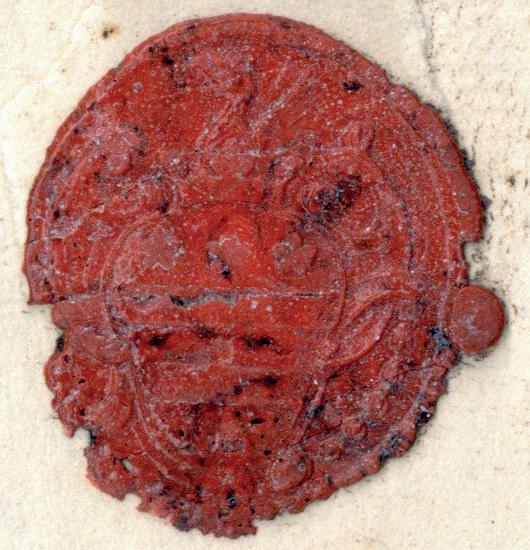
In July 1758, communication along the unfinished Forbes Road relied upon express riders, scouts acting as dispatch carriers, and messengers travelling between posts and supply depots, including Raystown (Fort Bedford), Ligonier, and forward camps. Official correspondence bypassed civilian postal routes and was conveyed by military couriers operating under command authority. The address panel of this entire makes that status explicit through the endorsement “On His Majesty’s Service”, signifying official government or military business and entitling the letter to free carriage at the Crown’s expense. This practice, established in the late seventeenth century, was employed throughout the British Empire for administrative and military correspondence. The letter also bears a particularly fine example of George Washington’s personal seal (Figure 2, detail), displaying his family’s armorial bearings and demonstrating contemporary letter-locking practices.
On January 2,, 1789, just months before his inauguration, George Washington wrote from Mount Vernon to James Madison (Ref. 6). Although the letter (Figure 3) bears no postal markings, it focuses entirely on the safe, secure, and expeditious transmission of private correspondence between the two men via the post office at Fredericksburg:
“Is there any safe, and tolerable, expeditious mode by which letters from the Post Office in Fredericksburgh are conveyed to you?–I want to write a private & confidential* letter to you, shortly, but am not inclined tp trust to an uncertain conveyance, so as to hazard the loſs or inspection of it”
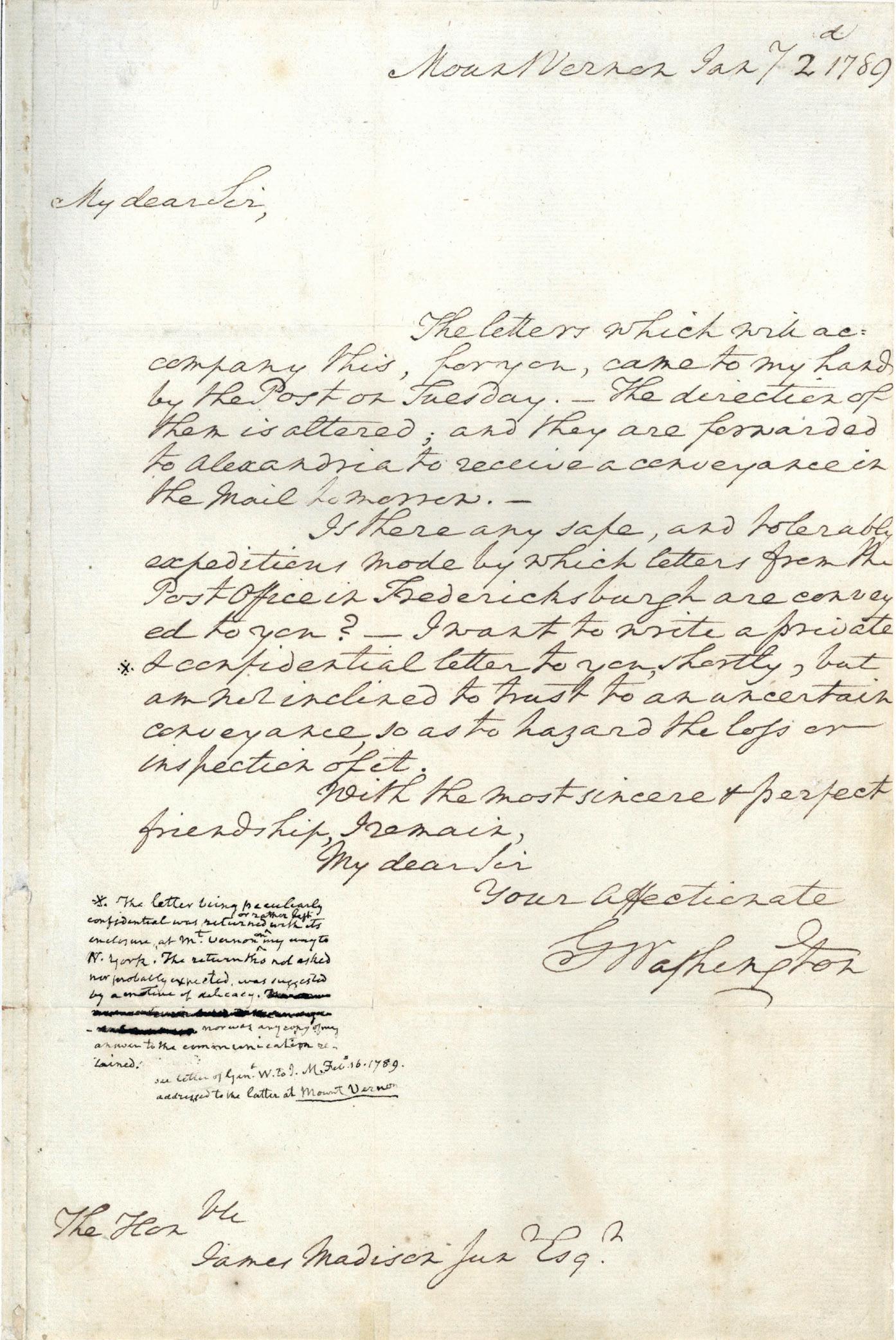
Figure 3. January 2, 1789 letter from George Washinton at Mount
Madison’s later (asterisked) explanatory note regarding the phrase “private & confidential” reads:
The return, tho not asked nor probably expected, was suggested by a motive of delicacy... nor was any copy of my answer to the communication entertained.”
Despite the absence of postal annotations, the letter highlights the reliance placed upon the postal system by leading political figures at a critical moment in the formation of the new Republic.
Figures 4 and 5 illustrate a letter written by Thomas Jefferson to Joel Barlow on August 14, 1805 (Ref. 7), which moves into a much stronger postal-historical domain. Writing from Monticello to New York in reply to his friend’s letter of August 4, President Jefferson welcomes Barlow back from Europe, briefly discusses recent political developments, and invites him to visit Virginia. Barlow’s letter to Jefferson of August 4, had noted that “If you are now at washington I would be much obliged to you if you will drop me a line to the care of Peter Talman merchant in this place...” (Ref. 8)
This letter is an excellent example of a Presidential free frank. At the top left of the cover is written “free Th. Jefferson Pr. US” in Jefferson’s own hand, fulfilling the statutory requirement for official correspondence to be transmitted at government expense. Beneath this, the notation “Milton pr of Aug” indicates receipt at the Milton, Virginia post office Monticello on the “primo” or first of August, a practice common at smaller offices prior to the standardization of circular datestamps. Below these postal markings appears the address to the recipient, followed by the instruction “to the care of Peter Talman Merc[han]t, New York,” indicating delivery via a trusted urban merchant.

Figure 4. August 14, 1805, presidential ‘Free Frank’ entire from Thomas Jefferson in Monticello to Joel Barlow via Peter Talman in New York.

Figure 5. The enclosed letter from Jefferson.
As the American Post Office expanded and became increasingly formalised during the first half of the nineteenth century, the postal-historical evidence present in Crane’s volume becomes correspondingly stronger. The next two letters illustrate the inland postage regime in force from 1816 until the reforms of 1845, under which stampless letters were charged were charged by distance and number of sheets: 6¢ for under 30 miles; 10¢ for 30–80 miles; 12½¢ for 80–150 miles; 18¾¢ for 150–400 miles; and 25¢ for distances exceeding 400 miles (Ref. 9).
The first example is a letter (Figure 6) sent by James K. Polk to Colonel Samuel H. Laughlin on 26 March 1840. Headed “Private and Confidential,” the letter was written while Polk was Governor of Tennessee. Its contents describe in-state political maneuverings intended to secure Laughlin’s appointment as a delegate to the 1840 Democratic National Convention in Baltimore, and capture a future President actively engaged in coalition-building. Written in Nashville, Tennessee, the reverse of the entire is addressed to “Col. Samuel H. Laughlin, McMinnville, Tennessee.” A manuscript single letter rate postal charge of 10 cents, corresponding to the 30–80 mile distance band, is noted in blue crayon, alongside a circular “NASHVILLE T.MAR 30” datestamp in blue ink. The recipient’s docket: “Recd 31st Mar., Ansd same day, and noticed the difference of date and postmark.” documents a one-day delivery time.
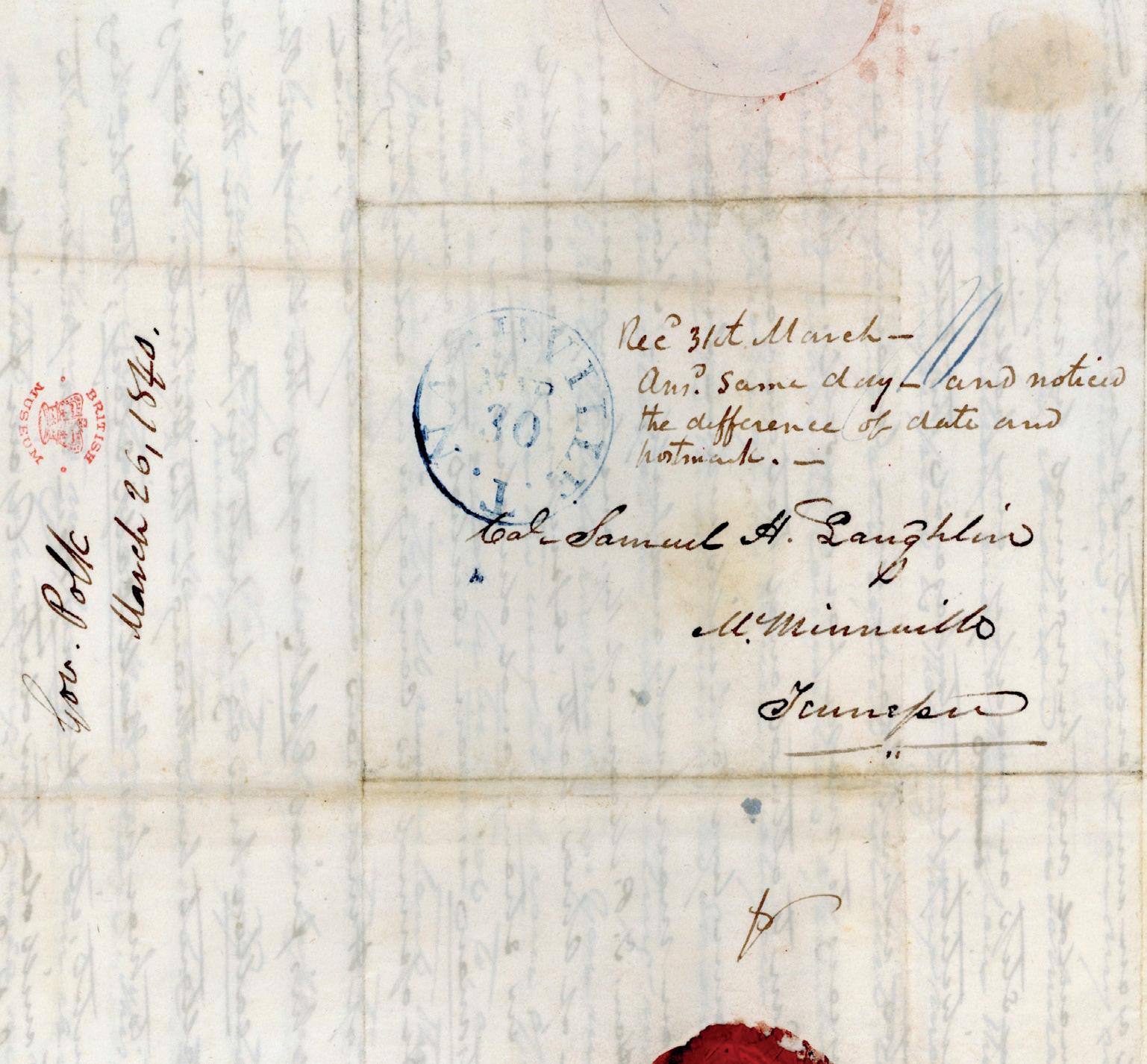
Figure 6. March 26, 1840, address panel with postal rate and markings from a letter written by James K. Polk in Nashville, to Colonel Samuel H. Laughlin at McMinnville, Tennessee.
The second example (Figures 7 and 8) was written by Abraham Lincoln to fellow Illinois lawyer Richard S. Thomas on March 2, 1843 (Ref. 11). The letter discusses factional politics within Illinois at the time. While other examples of Lincoln–Thomas correspondence are known in both institutional and private collections, it is worth placing the postal-historical details of the British Library’s example on record.
Written from Springfield to “R. S. Thomas Esq. Virginia Cap. Co. Illinois,” the entire bears a manuscript single letter 10-cent rate for the 30–80 mile band in black ink. A “PAID” handstamp in blue indicates prepayment, while a circular “SPRINGFIELD / IL / MAR / 3” datestamp, also in blue, completes the postal markings.
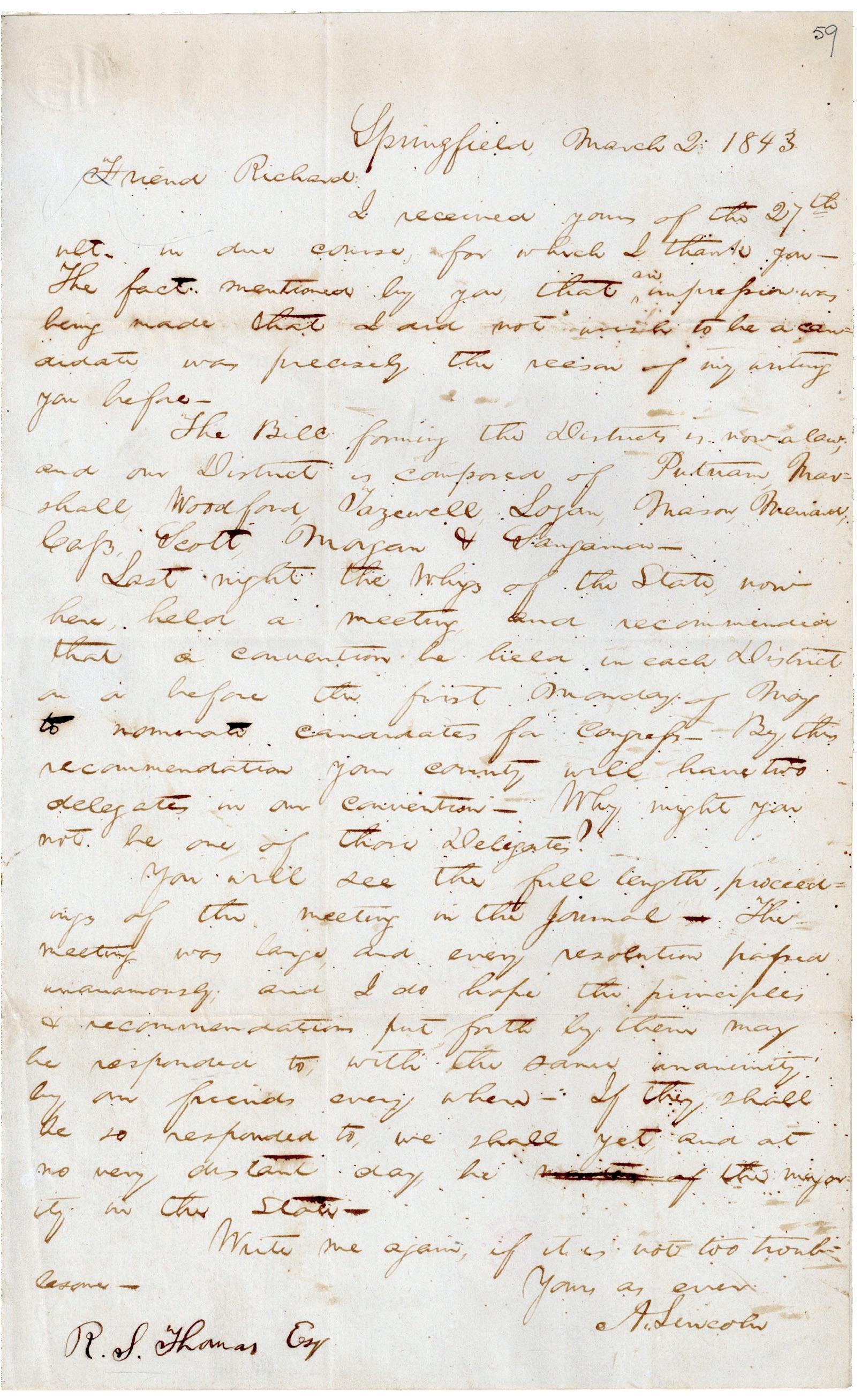
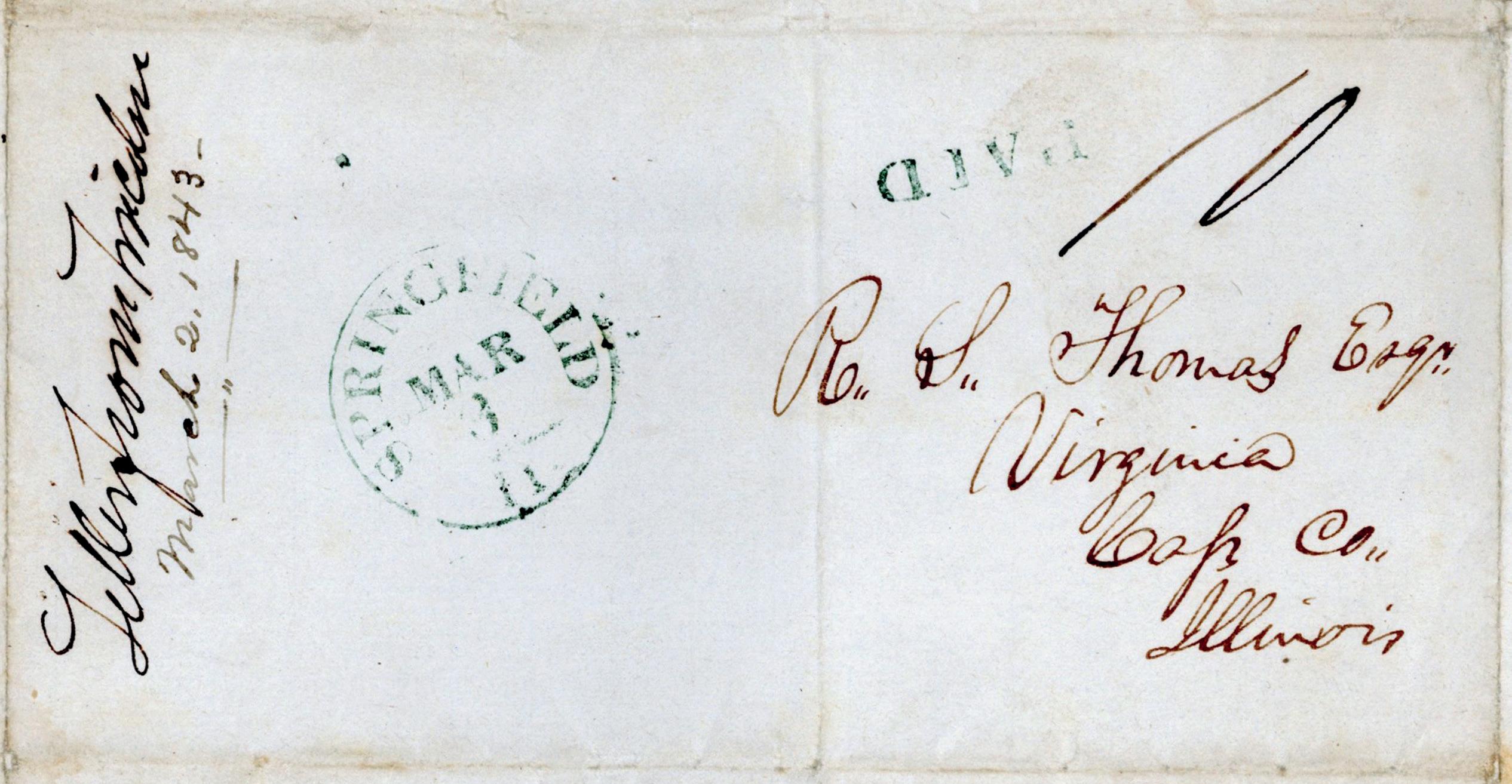
Figure 8. Address panel of Lincoln’s letter showing the postal rate, datestamp and “PAIF” straight-line marking.
Although clearly identified as part of Crane’s collection, the remaining presidential letters in the volume possess minimal postal-historical significance owing to the absence of accompanying envelopes or postal annotations. Nevertheless, such material remains invaluable to historians and biographers seeking to understand the personal qualities, administrative skills, and political networks that underpinned presidential leadership.
Taken together, the examples discussed here illustrate not only the central role of the postal system in the formation and operation of the United States, but also the potential of major library collections to enrich postal history as a discipline. By engaging more fully with archival and manuscript holdings, postal historians can extend their analytical reach beyond the marketplace and gain deeper insight into the systems of communication that shaped political authority, governance, and national identity.
References
1.The British Library, Add MS 39908: Autograph Letters of the Presidents, 1789-1913.
2.The British Library, Add MS 21641: Correspondence of Colonel Bouquet with Colonel George Washington, 1758.
3.The British Library, Add MS 21641: Letter from Colonel George Washington to Colonel Henry Bouquet, 3 July 1758.
4.Chernow, Ron (2011). George Washington: A Life, Penguin.
5.Anderson, Fred (2000). Crucible of War: The Seven Years’ War and the Fate of Empire in British North America, 1754-1766. New York.
6. The British Library, Add MS 39908: Letter from George Washington to James Madison, 2 January 1789.
7.The British Library, Add MS 39908: Letter from Thomas Jefferson to Joel Barlow, 14 August 1805.
8.National Archives, Washington, DC. “Joel Balow to Thomas Jefferson, 4 August 1805,” Founders Online, National Archives, https://founders.archives.gov/documents/Jefferson/01-47-0151. The text of Jefferson’s August 14 reply is also given at https://founders.archives.gov/documents/ Jefferson/01-47-02-0204.
9.USPS. Rates for Domestic Letters, 1792-1863. Available online: https://about.usps.com/who-weare/postal-history/domestic-letter-rates-1792-1863.pdf
10.The British Library, Add MS 39908: Letter from James K. Polk to Colonel Samuel H. Laughlin, 26 March 1840.
11. The British Library, Add MS 39908: Letter from Abraham Lincoln to Richard S. Thomas, 2 March 1843.
Highlights
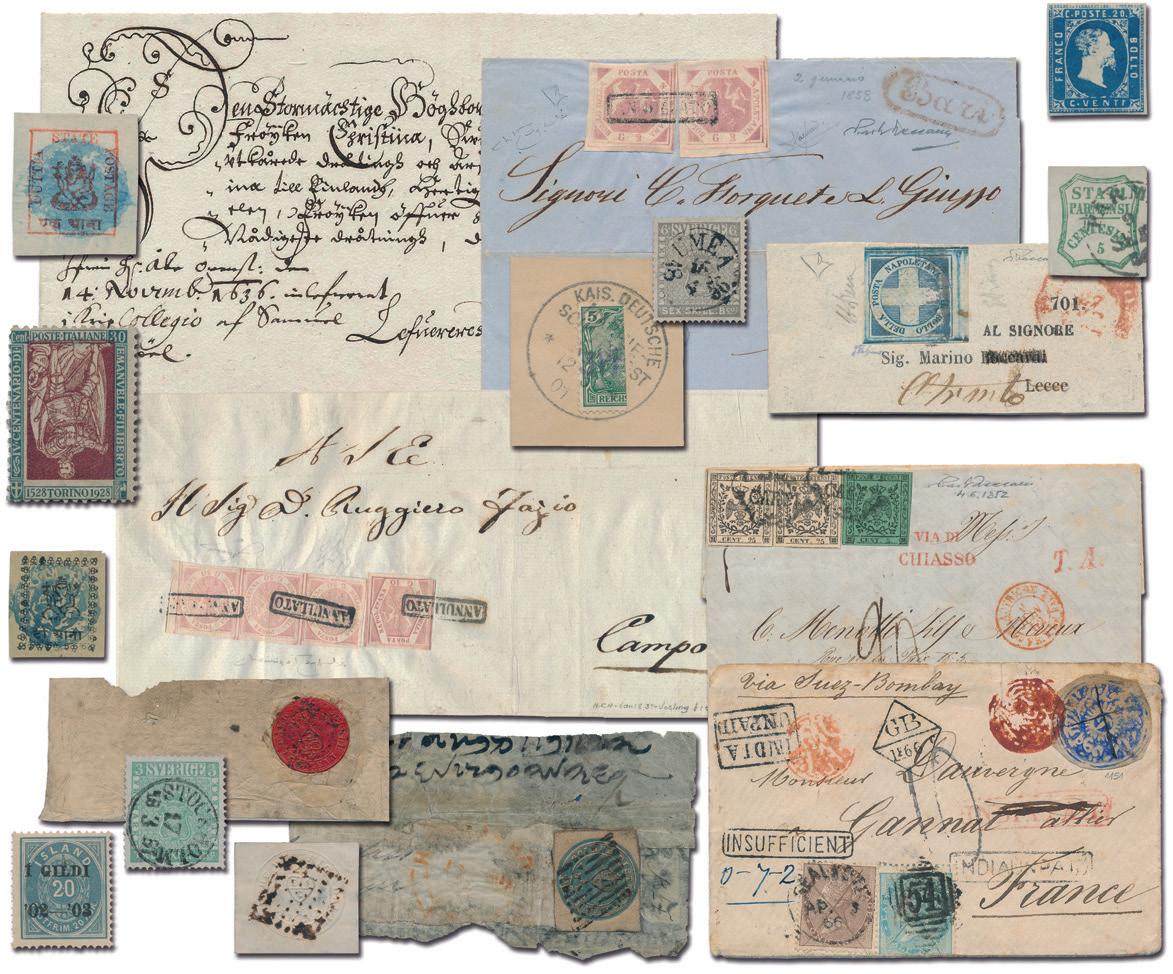
Indian Scinde Dawks & Feudatory States Italy & States, important rarities Exceptional Sweden, Iceland and Denmark Gold Medal collection Åland Islands
Large selection country collections including many complete ones! Italian Kingdom, complete collection never hinged!

The study and uses of postal history can be more diverse and intricate than most collectors or academicians realize. This article is based on my participation in the 12th Winton M. Blount Symposium in Washington, DC, and the 3rd International Congress of the Istituto di Studi Storici Postali “Aldo Cecchi” in Prato, Italy.
The purpose in writing is to promote a greater appreciation for the broad scope and breadth of postal history as well as to encourage philatelists and researchers to think about all the different approaches to answering the question of “what is postal history?”
I have never considered myself to be a postal historian or a postal history exhibitor and my own take on postal history exhibits, especially nineteenth century ones, was that they are displays of “Fifty Shades of Brown.” Yet not until I attended the two postal history conferences mentioned above did I realize that my own view of postal history was, in fact, conditioned by my philatelic exhibiting experience and the APS Manual of Philatelic Judging and Exhibiting. For within the US philatelic exhibiting and judging community, “postal history” is generally defined as the study of rates, routes, markings, modes of transport and uses where the emphasis is on “postal.”
Yet when my exhibit of The Development and Use of the Provisional Issues of South Vietnam (i.e., the National Liberation Front and Provisional Revolutionary Government) won the Postal History Society medal at the 2022 Garfield-Perry MARCH PARTY show, I began to take postal history much more seriously.
This led to my participation in the December 8-9, 2022, 12th Winton M. Blount Postal History Symposium sponsored by the Smithsonian National Postal Museum, the American Philatelic Society, and the American Philatelic Research Library. Held at the National Postal Museum in Washington, DC, the symposium theme was “Political Systems, Postal Administrations, and the Mail” for which one of the potential topics, regime change and its impact on postal services, seemed tailor made for my presentation which dealt with “Regime Change in Vietnam: Issues of the Provisional Revolutionary Government and Restoration of Postal Services in the Defeated South.”

Presenting “Regime Change in Vietnam: Issues of the Provisional Revolutionary Government and Restoration of Postal Services in the Defeated South” at the 12th Winton M. Blount Postal History Symposium, held in Washington, DC, on December 9, 2022.
The Blount Symposium involved 17 speakers on 15 different topics ranging from the postage stamp iconography of Fascist Italy, Hitler’s Third Reich, and Franco’s Spain; postal reforms in the consolidation of imperial state power in the eighteenth century; the postal politics of the National Association of Letter Carriers Ladies’ Auxiliary; and the evolution of mail delivery from the Renaissance to the present. Given both the sponsors and the theme, philately was inherently built into the Blount Symposium where any philatelist or “stamp collector” could readily understand how each presentation contributed to “postal” history and our hobby.
Two critical requirements for participation in the Blount symposium were the submission and acceptance of a 5,000-6,000 words paper (all of which were refined via appropriate feedback) and a 30-minute slide presentation based on the submitted paper.
Enjoying this foray into postal history so much, I was quite interested when the organizers of the symposium informed me about the Third International Congress on Postal History sponsored by the Istituto di Studi Storici Postali “Aldo Cecchi” [Institute for the Study of Postal History “Aldo Cecchi”] in Prato, Italy from June 20-22, 2024. Founded in 1982 by Aldo Cecchi, the institute is the only private organization in Europe devoted to the preservation, research and sharing of knowledge on postal history and organized communications. The theme of the 2024 conference was deliberately wide-ranging to encompass every aspect of postal history without limitations on chronology or geographical area.
Admittedly, the first thing I did when seeing the Congress title – “Postal History: Multidisciplinary and Diachronic Perspectives”– was look up the meaning of the word “diachronic.” Once I understood it meant “change over time,” I again realized that my Vietnam presentation was ideally suited for this conference, as nothing said “diachronic” more than when a country catastrophically loses a 20-year war and must deal with all the attendant philatelic, political, social, and cultural changes that ensued.

First and foremost, this was a conference of academicians and doctoral candidates; the emphasis was very much on the “history” of postal communications. Of 29 presenters, only four of us were classified as “independent researchers” (I identified myself as “just an old guy who collects stamps”); the remainder were affiliated with either universities, journal editors or government institutions. Presentations were 20 minutes in length with the objective of presenting a topic, having it discussed and refined by conference attendees, and then writing a paper for eventual publication in the Congress Proceedings book.
Like at the Blount symposium, one of the best parts of the conference was the Q&A and discussions after a series of presentations, conversations that often continued during mealtimes and, in my case, by email long after the conference was over. But this also meant that the publication of papers had a two-year time delay (like the Blount symposium, the Prato congress is held every two years) so we received the Proceedings of the 2nd International Congress held in 2022 at this 2024 meeting.
Befitting an international European congress, papers were submitted in Italian, French and English, but Congress organizers thoughtfully alternated languages for the presentations and the frequent use of slides helped nonItalian or non-French speakers still understand the material.
The range of categories and topics covered was very broad, these included:
The Ancient World:
Letter carriers in ancient Rome; The geography and economy of the cursus publicus; Postal systems in the Chin and Han dynasties);
The Medieval and Renaissance periods Maritime postal routes of the Genoese postal system; Venetian merchants and mail routes to Constantinople and Mamluk Egypt).
Different time periods—same problems:
Use and misuse of the mail in Song China and the USA today.
Social philately:
The history and function of letter addresses in sixteenth century Europe; Love letters from late eighteenth century France to the modern day; Letters from Romania to Radio Free Europe during the Cold War; Cold War greetings with 40,000 post cards; Late nineteenth century faux “ethnographic” postcards of indigenous women of Algeria.
The post as partner in nation-state building:
Postal communications in Tudor-era incorporated towns; Contract postal agents in West Texas, 1851-1861; The growth of global mail order; Postal policy in a trans-imperial age.
The presentation entitled “Camels in swift postal systems of Umayyad and Abbasid Caliphates (661-1258 CE)” aroused particular interest and discussion as it involved both postal history and veterinary science. Only one presentation dealt with what we philatelists in the US would call “traditional” postal history and it was on the postal iconography of stamps of India and China during the Cold War.
All the presentations at the Prato Congress were decidedly “academic” in tone and methodology and most dealt with what philatelists would call the “prestamp” or “stampless cover” period.
Only two presentations, mine and the one on Indian and Chinese stamps during the Cold War, actually addressed postage stamps at all. In this respect, my presentation on regime change in Vietnam and the restoration of postal services in the defeated South bridged the gap between the collector and the academic communities as it addressed both traditional and social philately but also placed postal communications within the context of the role of the post in nation-state (re)building.
The purposes of both the Blount and Prato symposia are to recognize postal history as a “stand alone” field of study but one that can also be of use to academic researchers in many other fields of social, political, cultural, and economic studies. For one of the other outcomes of the Prato Third International Congress on Postal History was the proposed creation of a basic document or statute calling for the recognition of Postal History as a defined field of study for academic scholars with its own tools and methodologies.
The statute also recognizes that cooperation between collectors and academicians need not be adversarial. Collectors no longer need to think that academicians “squeeze all the fun out of the hobby” and academicians now realize that research done by collectors is equally as rigorous and detailed as their own. This fruitful collaboration between collectors and academicians bodes well for the study of postal history.
Postal history collectors and exhibitors can take pride in knowing that they are contributing to an international body of knowledge whilst academic researchers benefit from having access to actual philatelic materials. Conversely, postal history academicians research topics that can provide new collecting directions or questions for philatelists.
Participating in both events broadened my own knowledge and understanding of “what is postal history?” and that collectors and academicians are, indeed, members of the same postal and historical fraternity who have a shared appreciation for how varied and intricate the topic can be. For the study of postal history enriches our common body of knowledge on the role of the post in human development and world history.
Acknowledgments
I would especially like to thank Dr Susan Smith and Dr Bruno Crevato-Selvaggi RDP for helping me broaden my understanding and appreciation of postal history and for realizing that (gasp) you do not have to be a philatelist to be a postal historian.

For over 110 years, one name has shaped German and international philately: Heinrich Köhler.
What began in 1913 with the first auction held by legendary founder Heinrich Köhler has evolved into one of the world’s leading stamp auction houses—driven by a pioneering spirit, philatelic excellence, and a passion that connects generations.
• Tradition since 1913 – Auctioning magnificent specialized worldwide collections.
• Provenance & Research – Most of the world's significant philatelic items can be found in our archives and our digital ProvenanceFinder, "ProFi."
• Reliability & Trust – TÜV-certified quality management & CrefoZert.
Today, Heinrich Köhler successfully combines absolute integrity, technological innovation, and philatelic expertise—making us the reliable partner for collectors worldwide.
Sell your collection now – Your trust in Heinrich Köhler pays off.
Next Opportunity: 388th Heinrich Köhler Auction, March 23–28, 2026. We are accepting consignments for this auction until January 15, 2026.
Heinrich Köhler Auktionshaus GmbH & Co. KG
www.heinrich-koehler.de info@heinrich-koehler.de

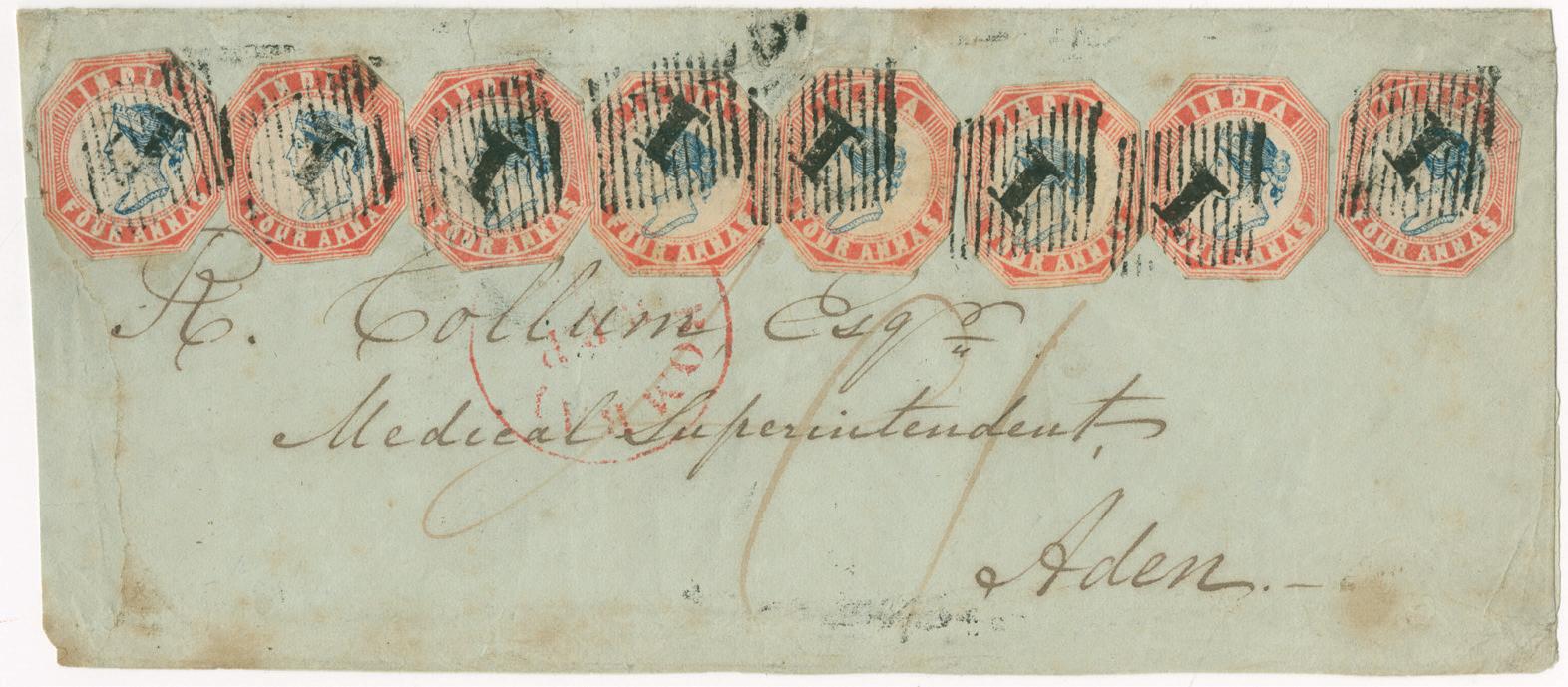




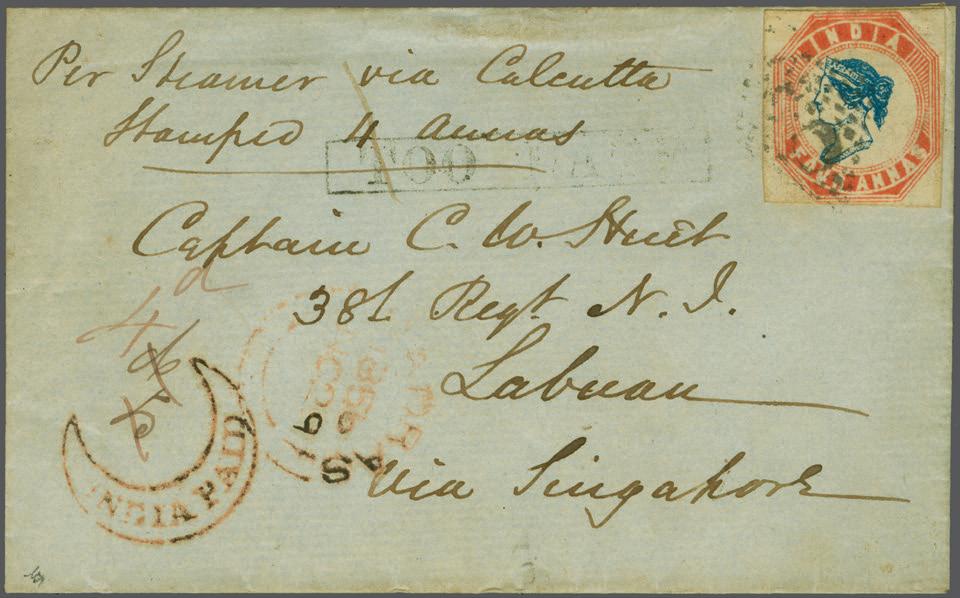
India 1854, 4th Printing, 4a red & blue, eight cut to shape singles, tied by "1" diamond grid cancels to quadruple rate cover to Aden.
Provenance: Frenkle, "Kohinoor", Heddergott, Dr. Kornan
Schleswig-Holstein 1865, Duchy of Schleswig 1 ⅓ Schilling, strip of four and three singles, in mixed franking with Prussia 10 Sgr. on cover from Ulderup to Shanghai, China – UNIQUE.
Provenance: Rothschild Collection (1939), John Boker Jr. (1992), The ERIVAN Collection
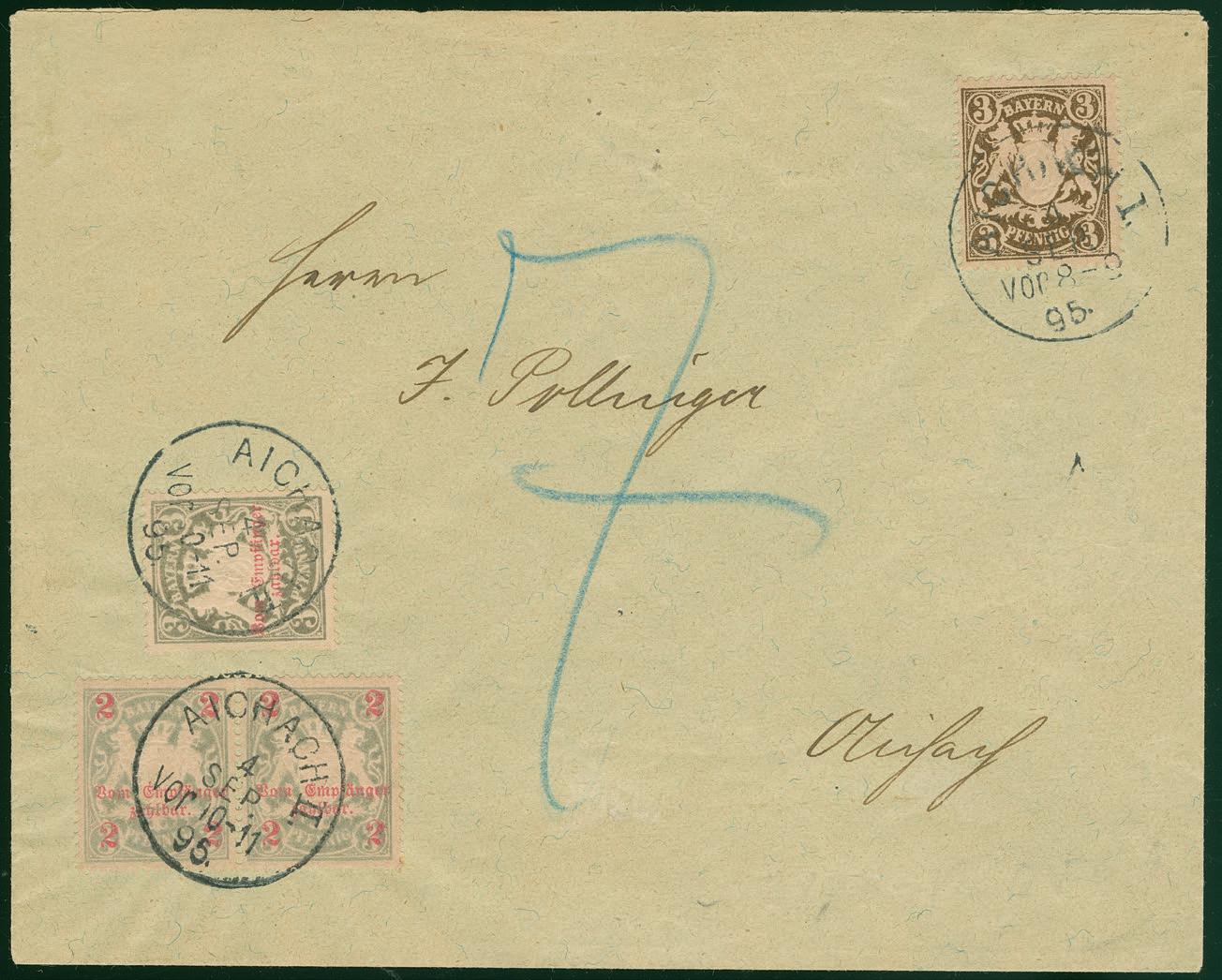
The Aichach Cover
The only complete cover with the horizontal pair of Bavaria's 'Aichach Provisional' – A world rarity!
Provenance: Philipp von Ferrari (1923), Dale-Lichtenstein (1992), Fritz Kirchner (2009)



The Collectors Club is delighted to announce that Alfredo Frohlich of Aventura, FL, is this year’s winner of the Alfred F. Lichtenstein Memorial Award for Distinguished Service to Philately. The award was announced at the Club’s annual meeting in New York on January 14. Alfredo ’ s selection was unanimously endorsed by the Club’s directors at the end of last year.

The Alfred F. Lichtenstein Memorial Award for Distinguished Service to Philately is awarded annually to living individuals for outstanding service to philately. The award was established in 1952 in honor of Alfred F. Lichtenstein, one of America’s most accomplished philatelists."
Frohlich collects, exhibits and is an ambassador for philately. He provides support in numerous ways, through volunteering, by sharing both his knowledge and time with other collectors. He is an active exhibitor and won the APS Champion of Champions in 2007 for his exhibit, Classic Columbia.
During the APS’s financial crisis in 2009-10, he was instrumental in heading a development effort, the APS Campaign for Philately, that raised more than $6.7 million, serving as the Campaign’s chairman from September 2009 to August 2015. He has taught courses for the APS and has served as an APS and FIP judge. Alfredo was a recipient of the APS Luff award in 2021 for his outstanding services to the American Philatelic Society.
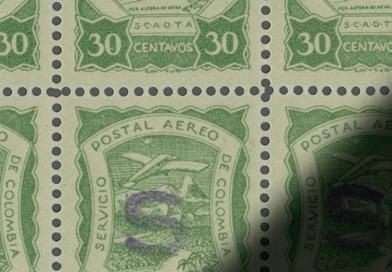
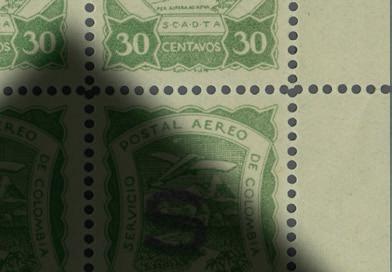
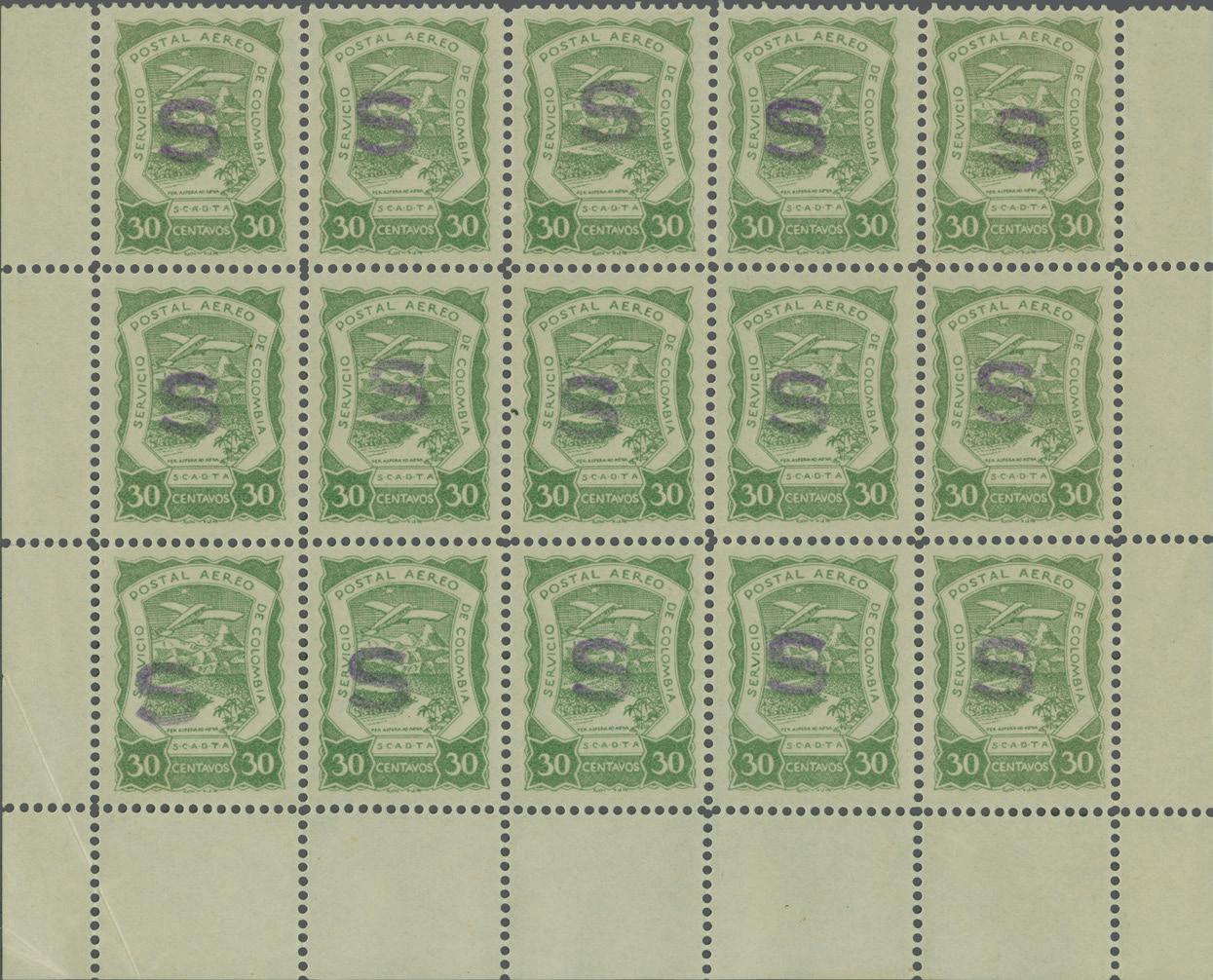
As an author and researcher, he co-authored (with Dieter Bortfeldt) The Lansa Story - The Postal History of the Colombian Airline LANSA and Private Mail Carriers of Colombia (with Dieter Bortfeldt and Carlos Valenzuela). In the exhibiting world, beyond winning the Champion of Champions, he is known for his single-frame “Replating Colombia’s 1861 1 peso stamp. Correcting the Laarsen Stone Theory” which proved that the sheet comprised 36 stamps, not 54 as had been postulated in the late 1950s. His other collecting areas include Chile, SCADTA Airmails of Ecuador, Panama, and Delaware. He presented the latter as a part of the Collectors Club Virtual Philatelic Program Series in 2021.
Outside of philately, Freddie is a financial adviser and venture capitalist. He has raised funds and taken a particular interest in charities with a focus on depression, anxiety, autism, and suicide prevention.

W e mourn the loss of Wade E. Saadi — a devoted husband, a passionate collector, and a guiding light in the world of philately — who passed away on October 9, 2025, at the age of 76.
We knew that this day would come. He had been quite ill for the last few years, but Wade was a fighter. He fought to the last and remained positive, engaged, and active until the last. Still, with the news came a communal tremor of loss.
Wade’s love affair with stamps began in childhood — what started as a pastime blossomed into a lifelong dedication to the art and history of postal heritage. Over decades, he built a reputation as one of the most knowledgeable and respected specialists in U.S. classic stamps.
Though he was a businessman by profession, his true legacy lay in the stamp community. We served as the president of The Collectors Club from 2005 to 2007, and sat on our Board for more than 30 years. He was a source of wisdom. Wade knew virtually everyone in the hobby, regardless of whether they were in the US or abroad. If we wanted to connect with a difficult-to-book speaker, Wade’s outreach was always the key ingredient.
He served with distinction as President of the APS from 2008 to 2013. During his term, he played a significant role in helping the APS through one of its greatest periods of challenge and subsequently guided it to a more secure future. Wade served as President of World Stamp Show – NY 2016 — an event that not only celebrated the joy of stamp collecting but also raised substantial funds to support other philatelic organizations.
As a researcher and exhibitor, Wade’s work was groundbreaking. His gold-medal 1847 exhibit is still considered one of the finest studies of shades and cancellations ever produced. He also authored and edited authoritative studies on early U.S. postal history, including his longstanding role as editor of the 1847 and 1851 sections for the U.S. Philatelic Classics Society. Both sections prospered under Wade’s stewardship. Issue after issue, he provided wonderful coverage in his categories. The content he generated was wide-ranging and intensely visual.
During his tenure, Wade wrote more than 20 articles for The Chronicle , many of them revealing discoveries he had made himself through years of collecting and research. His initial contribution to the journal, back in 1994, announced the discovery of a consistent plate flaw on one of the 5¢ 1847 stamps.
But beyond the material he wrote himself, he made an equally important contribution by inducing others to write for The Chronicle . One of Wade’s great gifts was his ability to get other people to do things—by persuasion where possible, or witty cajolery, or even his main strength, which was to call upon the best instincts of his friends and colleagues.
Collectors saw this effectiveness (and forcefulness) at work during all his endeavors. He will be missed for many reasons, and this is surely one of them.
We should not forget that he also served as President of the Classics Society.
His contributions brought him much recognition — from the Lichtenstein Award in 2015 to the Luff Award for Outstanding Service to APS in 2017 — honors that recognized not only his scholarship but his leadership, generosity, and tireless support for the philatelic community. He also signed the Roll of Distinguished Philatelists in 2010.
Beyond stamps and societies, Wade was more than a public figure: he was a friend, a mentor, a presence who welcomed newcomers with generosity, guided young collectors with patience, and made everyone feel part of something greater. As noted by members of his APS family, “Wade’s exuberant personality and positive attitude live on in all he touched.”
To those who knew him — through stamp shows, late-night discussions about cancellations, or simple shared laughter over a cup of coffee — Wade was a beacon of kindness, curiosity, and quiet dignity. His legacy does not end with his passing. It lives on through the collections he helped build, the exhibits he shaped, and the countless people he inspired.
One of the most important lessons Wade taught us, which we will not forget, is that volunteers are a gift. They deserve not to be taken for granted, and deserve to get whatever help we can provide to do their job.
Today, as we say farewell, we take comfort in knowing that the world of philately, and the hearts of all who loved him, are richer for having had Wade in them. In every rare cancellation studied, in every young collector encouraged, in every turn of a stamp album page, a piece of Wade endures.
Rest in peace, Wade — may your legacy inspire generations to come. We will miss you.
Perfins of the Kingdom of Bavaria incl. Farewell Issue Overprinted Deutches Reich. With Facts and Figures on the Firms’ History. Handbook and Catalogue. Rainer von Scharpen, revised second edition. German and English text. A4 (8.4 x 11.3 inches) format, 477 + iii pages, color, hardcover. Price €89 plus shipping. Order from the author at rainervonscharpen@t-online.de, or by mail to Rainer von Scharpen, Tucholskyweg 5, 55127 Mainz, Germany. Telephone +61 317 1727.
In 2010, the author published the first edition of his work under the title ‘Perfins of Bavaria’, and even then the figures were impressive. The 555 pages contained images of around 650 perforations, showing both fronts and backs, as well as more than 1,000 documents. The texts were in French, English and German. At IPHLA 2012 in Mainz, the major international exhibition of philatelic literature, this work was awarded a Grand Vermeil Medal with a special prize.
15 years after the first edition, a second edition is available, which has been extensively revised and enlarged, is now completely in color, and contains over 650 perfins with front and back illustrations. It also features over 500 documents (cards, envelopes) with letterheads.
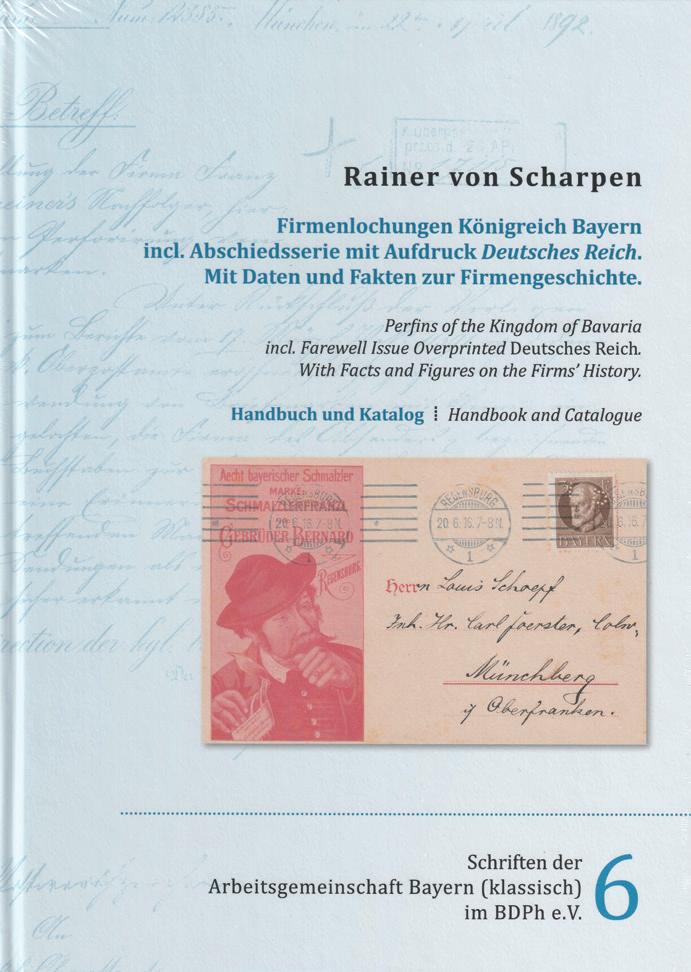
The secret behind the remarkable increase in information (despite the reduced number of pages) is easy to discover when you take a closer look at both books: the new edition was professionally typeset and designed by an expert (Dietmar Schmitz). This not only made it possible to significantly reduce the number of pages required, but also to include new content. The French translation of the introductory chapters also fell victim to the red pen. In return, two new chapters were added: postal stationery cards with embossed addresses as perfin forerunners, and company address cancels applied to pre-cancel square-number stamps as perfin precursors.
However, the most significant innovation is probably the elaborate integration of lexicographical data and facts about the history of the companies that created the perforations. With these, the author aims to establish a link to contextual (social) philately. Access to the book’s contents is made easy by detailed German and English indexes for names and companies, places within and outside of Bavaria, topics and stamp issues. This work can be recommended without reservation and is also likely to be a handbook catalogue that will play an important role in future exhibitions and/or literature awards.

The following new members were approved by the Board of Governors:
October 28, 2025
Resident:
Non-Resident:
Daniel Laby, New York, NY
Mark Castel, Mono, IN
Annamalai K. Udumalpet, Tamil Nadu, India
Jay M. Weiss, Canaan, NH
Larry Volovski, Thomaston, CT
November 25, 2025
Non-Resident:
December 15, 2025
Non-Resident:
Jane Louise Snowdon, Cos Cob, CT
Thomas Luly, Cambridge, MA
Bob Lewin, Hemet, CA
We have recently been informed of the deaths of the following members:
Hal Vogel
Wade Saadi RDP
If you would like to update your contact information, please contact our Executive Secretary, Andrea Matura, at info@collectorsclub.org
We appreciate the continuing outreach efforts in collaboration with the Philatelic Foundation and major auction houses in membership recruitment. Upcoming meetings at the Club continue throughout the year. Our ongoing 2026 remote “Zoom” and combined “Zoom + Live” meeting series is in progress.
Respectfully submitted, Alan Barasch, Membership Chair
February 4
February 11
February 18
March 4
March 18
March 25
April 15
Mike’s Latest (Greatest) Revenue Research Hits
Michael Mahler
Mail through Chaos; Navigting Postal Diruptions during the Indian Mutiny
1857-59
Apratim Bhattacharya
Baltimore and Foreign Mail
Patricia Stilwell Walker
The History of US Postal Wrappers
Dan Undersander
Queensland
Bernard Beston
Boston 2026 Update
Yamil Kouri
Mail Robbery In Military Conflicts 1745-1945!
Steve Berlin
April 22 The Prexie Coils. New Discoveries, Usages and Rarities
April 29
Bill DiPaolo
Trinidad. The Britannia Issues
Nigel Mohammed
May 6 The Siege of Paris 1870-1871. Movement of Mail
Robert Myers
May 27 Live from Boston!!!!!
June 3
Panel Discussion on Boston 2026
June 17 The Special Arrangement
June 24
Mark Schwartz
Modern US
Jay Bigalke
September 2 From Perkins, Bacon to De La Rue. The Story of the 1879 and 1880
GB Tenders
Howard Hughes
September 16 East Germany. The Cold War Propaganda Forgeries 1953-1957
Oliver Wyrtki
September 23 The Hindenburg Crash Cover: A Philatelic Icon
September 30
October 14
October 28
November 4
Cheryl Ganz RDP
Indian Stamps used in Iraq
Akthem Al-Manaseer
Poland. Airmail of the Siege of Przemysl (1914-1915)
Jerzy Kupiec-Weglinski
GB QV Surface-Printed issues: An Inside Look at How We Updated and Expanded the SG Specialised Catalogue
Matthew Healey
The Postal History of the American Civil War
Dan Knowles
November 11 Single Frame Competition
November 18 Early Transatlantic Mail
Carol Bommarito
December 2 Panel Discussion on the Hobby's Future
December 9 Governors’ Open House
December 16 Postcard exhibiting Liz Hisey
Members will receive notifications informing them of upcoming Clubhouse Programs and if they will be In-Person or via Zoom. All In-Person Programs will also be available via Zoom.
S ingle F rame Champion oF ChampionS
Exhibits
Bill DiPaolo - Mail Transportation on Lake Como.
Chip Gliedman - Leominster, Mass. Provisional Postage Due and Instructional Labels
Mark Schwartz - Packet Mail Sent from Essex County, Mass.: 1840 up to UPU
Andrew Urushima - Spoiled by War: The Games of the XIIth Olympiad
Daniel Knowles - Trans-Mississippi Express Mail Services by the CSA PO Dept and Private Individuals During the American Civil War
Cheryl Ganz - Basel Zeppelin Posts
Alfredo Frohlich - Replating Colombia's 1861 1 Peso Stamp
Mark Schwartz - Carrier Service at Boston: 1823-1863
Gregory Shoults - Production of Rotary Press Coil Waste Third Bureau Issues 1919-1922
Sponsored Awards
AAPE Single Frame Champion of Champions
Bill DiPaolo - Mail Transportation on Lake Como
AAPE Single Frame Grand Award
Doug Weisz - The $5 Hamilton Liberty Series Stamp
AAPE Single Frame Reserve Grand - 2
Mark Schwartz - The Use of Boston's "PAID in Grid" Cancels, 1851-1859
AAPE Single Frame Reserve Grand - 1
J-J. Tillard - Fisherman and Seagull Stationery Issued for St. Pierre Miquelon 1909-1918
m ulti -F rame e xhibit S
Large Gold:
Robert Gray - Postal History of WWI Germans and Austrians Interned in British India (90 pts); Serge Kahn - Charcot in the Antarctic (94 pts); Emory Toops III - Provisional Issues of South Vietnam (1963-1980), Philatelic Evolution and Uses (90 pts); Lester C. Lanphear - U.S. Departmentals, 1873-1884 (94 pts); Andrew S. Kelley - The Offset Lithographed Washington-Franklin Heads (95 pts); Alfredo Frohlich - German Prisoners of War Interned in Japan - Their Mail - WWI 1914-1919 (90 pts); Murray Abramson - Outgoing Commercial Airmail: from US & Territories, 1922-41 (94 pts); Jiří KrausFinding Antarctica - Then Finding More of It (94 pts)
Gold:
John Hotchner RDP - Mail to and from American Prisoners of War During and after the Korean War (88 pts); Louis Fiset - Japanese American Soldiers in World War II (87 pts); Jon Krupnick - Pan Am Clippers Conquer the Pacific (88 pts)
Large Vermeil:
Stephen [& Marilyn] Suffet - Primary Rate Usages of the U.S. One-Cent Circular Die Postal Stationery (80 pts); Thomas Slemons - GB Postal Reform 1837-1840 Pathway to the Penny Black (80 pts)
S ingle F rame e xhibit S
Large Gold
Louis Fiset - Political Prisoners' Mail from the 1848 Paris "June Days Uprising" (90 pts); Cheryl Ganz RDP - German Navy WWI Zeppelin L48 (90 pts); John Hotchner RDP - Bureau of Engraving & Printing Repairs on U.S. Stamp Production 1914-The Presidential Era (91 pts); Stephen Knapp - Introducing the ABN Co Bust of Peace (91 pts); Stephen Knapp - An Essay-Proof History for the One Cent Franklin of 1887 (91 pts); Mark Schwartz - The Use of Boston's "PAID in Grid" Cancels: 1851-1859 (92 pts); J-J Tillard - Fisherman and Seagull Stationeries Issued for St. Pierre Miquelon 1909-1918 (93 pts)
Gold
Emory Toops III - The Insurrectionist Issues of Laos from 1961-63 and 1974-76 (88 pts); Wayne Farley - Confederate "Paid" Uses from West Virginia (1861-1864) (85 pts); Scott Pendleton - Second Bureau's Ugly Duckling: Two Cents Washington Flag, 1903-04 (85 pts); Carlos Vergara - Pursuing the Variant: Plating the "Dropped N" Variety on Chile's Second Airmail Etiquette (87 pts)
Large Vermeil
Jere Dutt III - AKA: The Name Changes of a Former French Colony (80 pts)
Sponsored Awards
Theo Van Dam Military Postal History Society Best Single-Frame
Cheryl Ganz RDP - German Navy WWI Zeppelin L48
American Society of Polar Philatelists Grand
Serge Kahn - Charcot in the Antarctic
American Society of Polar Philatelists Reserve Grand
Jiri Kraus - Finding Antarctica - Then Finding More of It
United Postal Stationery Society Single Frame Award
J-J Tillard - Fisherman and Seagull Stationeries Issued for St. Pierre Miquelon 1909-1918
Collectors Club of Chicago Gold Medallion
Andrew S. Kelley - The Offset Lithographed Washington-Franklin Heads
American Philatelic Society 1900-1940 Medal of Excellence
Murray Abramson - Outgoing Commercial Airmail: from US & Territories, 1922-41
United States Stamp Society Medal
Lester C. Lanphear - U.S. Departmentals, 1873-1884
United States Philatelic Classics Society Medal
Lester C. Lanphear - U.S. Departmentals, 1873-1884
United States Cancellations Club Award
Lester C. Lanphear - U.S. Departmentals, 1873-1884
American Association of Philatelic Exhibitors Jean Benninghoff Encouragement Award
Bill Johnson (William?) - US Western Mail Routes - 1848-1865
l iterature
Gold: Jerzy W. Kupiec-Weglinski - A New Perspective on Airmail Operations During the Siege of Przemysl (1914–1915) (88 pts); Robert Gray - The Ahmednagar Prisoners of War Camps India, 1914–1920: A postal history (85 pts).
David Fritz
OnWednesday, December 3, the Collectors Club hosted a “Scotch & Stamps“ night that turned out to be one of the most enjoyable evenings we’ve had in quite a while. Members, friends, and a handful of curious first-timers came together for a relaxed mix of whisky, revenue stamps, and good conversation.
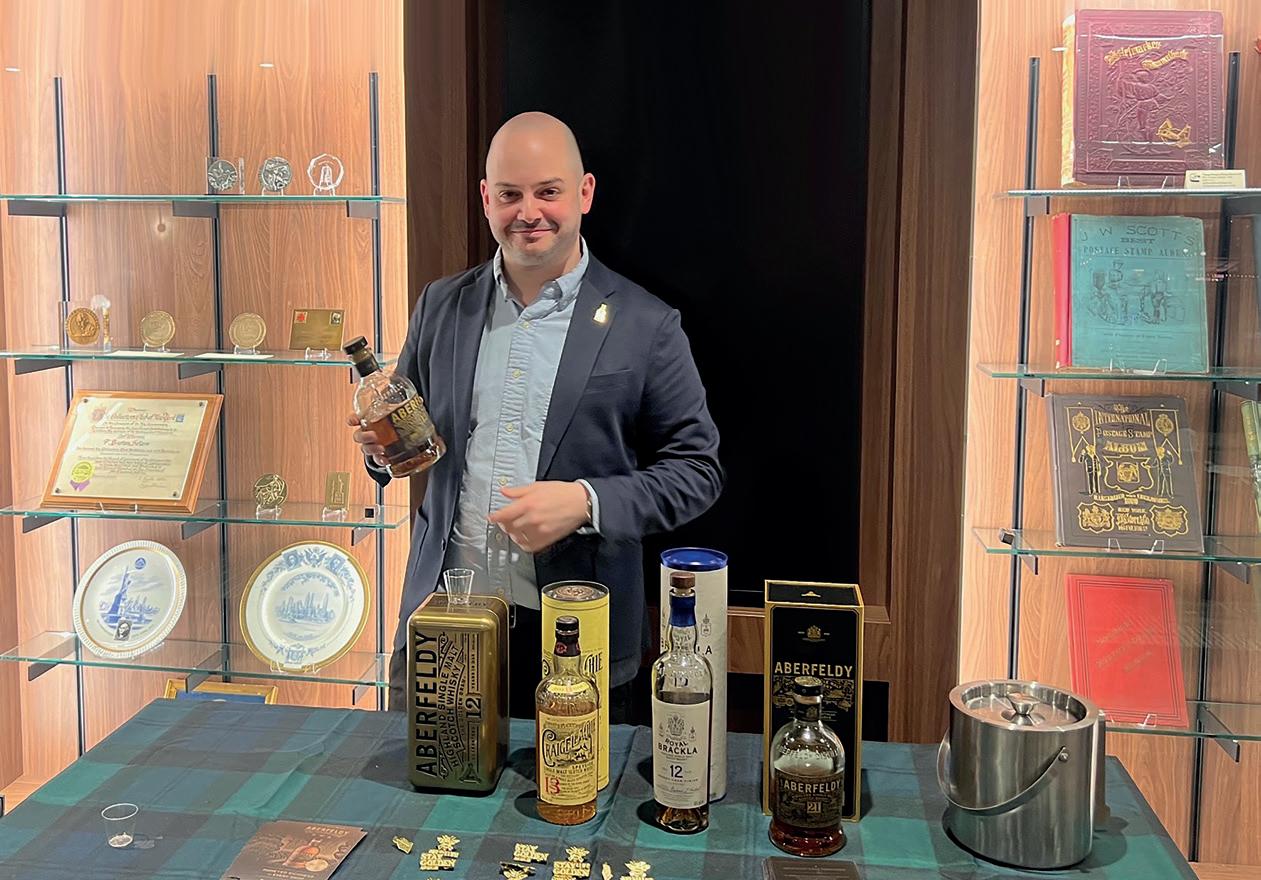
Anthony Levenson, the guest whisky educator at the “Scotch & Stamps” evening, with his selection of treasured drams from the Bacardi rare Scotch portfolio.
The night was a reminder of how easily philately can open the door to broader interests—and how shared learning can bring in people who might never have thought to visit the Club.
Our whisky guide for the evening, Anthony Levenson, a New York City whisky educator who works with Bacardi Limited, led guests through a terrific tasting of selections from Bacardi’s rare Scotch portfolio. We sampled Aberfeldy, Aultmore, Craigellachie, Deveron, and Royal Brackla, each introduced with helpful notes and a bit of background that made the tasting especially enjoyable.
The refreshments didn’t disappoint, either. Guests dug into Cornish pasties and pies—vegetable, chicken, and meat—from Myers of Keswick in the West Village, as well as cheeses chosen from Murray’s. Everything paired naturally with the whiskies and helped create the easy, welcoming atmosphere that carried through the night.
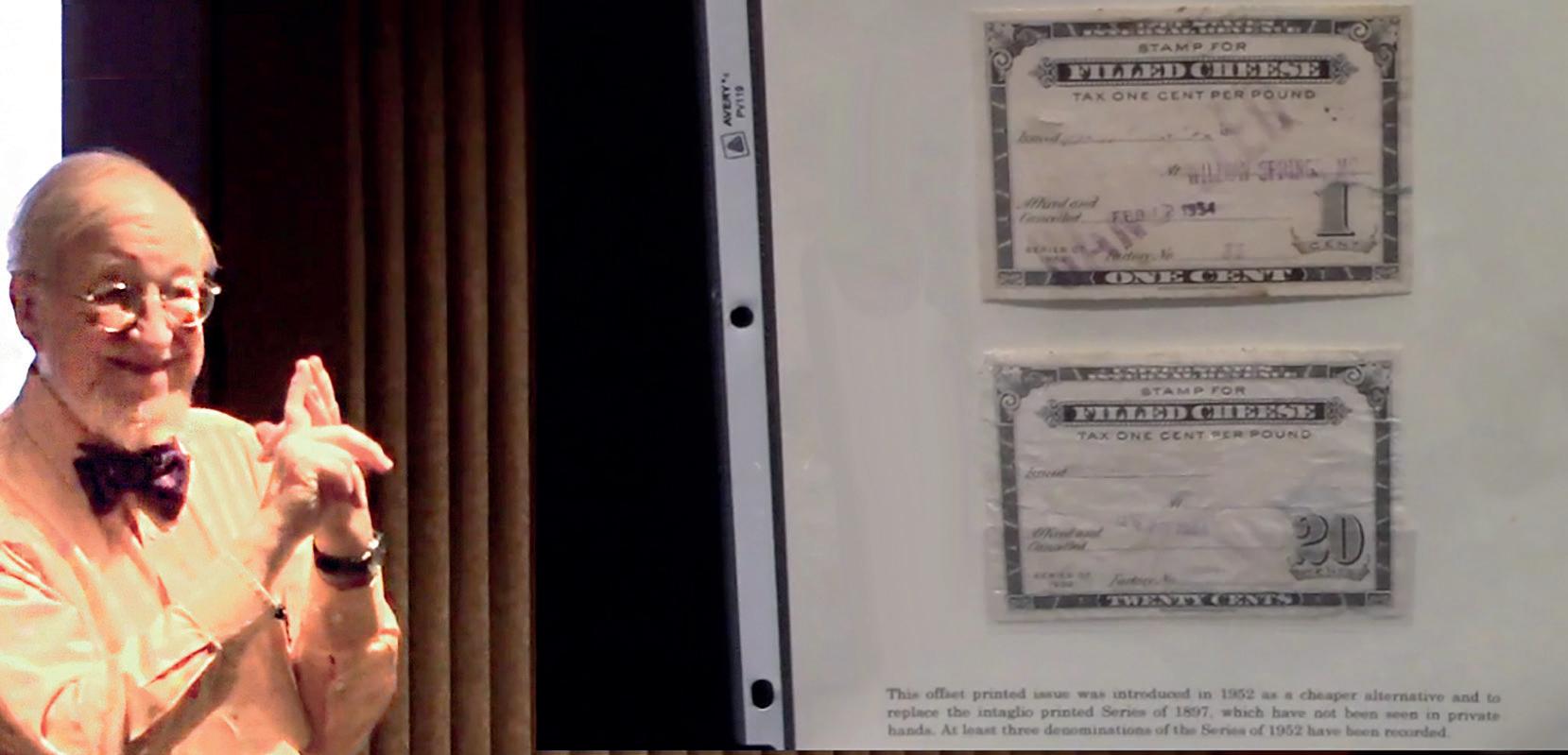
Having captivated the audience in the Clubhouse with his presentation on whisky tax stamps, Ron Lesher ended his program with a real challenge: to identify a mysterious – but still taxable – product called “Filled Cheese”. Ron’s two clues, that it had absolutely no connection with whisky, and contained no dairy ingredient, did not enlighten most of the attendees. Any ideas as to what it was?
The centerpiece of the program was Ron Lesher’s fascinating talk on whisky tax stamps. Ron walked us through an impressive range of material showing how whisky production and distribution in the United States were regulated over the past century and a half. He shared stamps used on the stills, the worms, the barrels, the bottled spirits, and even those used by wholesalers and dealers. Seeing how deeply the government tracked the process—and how those regulations changed over time—was eye-opening, even for longtime collectors. A video of Ron’s presentation is available to members on the Club’s website.
The energy in the room was noticeable. Many members commented that it had been a while since they had felt that level of enthusiasm at the Club. The program also drew in people who weren’t collectors at all but simply enjoyed learning something new. One guest—a special education teacher from Queens who received his ticket as a gift from his daughter—left genuinely excited about the idea of joining. Moments like that show how themed events can broaden the Club’s reach and introduce philately to people who might never have encountered it otherwise.
As the evening wrapped up, talk quickly shifted to what we might do next. Several guests immediately asked when the next themed food-and-philately night would be. We’re happy to say that an Italian wine tasting, paired with Italian philately and postal history, is now in the works.
“Scotch & Stamps” offered more than good whisky and intriguing tax stamps. It showed the strength of our community and the promise of programs that bring together learning, fellowship, and discovery. The Collectors Club is well positioned to build on this momentum.
Matthew Healey
Our January 14 Annual Meeting took place in hybrid form, with fifteen attending in person at 58 West 40th Street and another 45 or so joining via Zoom, easily reaching the necessary quorum.
Our outgoing president, Larry Haber, called the meeting to order and led off with the announcement of the 2026 winner of the Alfred F. Lichtenstein Memorial Award for Distinguished Service to Philately: Alfredo Frohlich. (A separate article about Mr. Frohlich appears elsewhere in this issue.)
Larry proceeded with his President’s report, which covered the Club’s preparations for the Boston 2026 show, the publications the club produced in 2025, the launch of our Substack channel edited by Rob Faux, and the conclusion of Wayne Youngblood’s years of service as editor of our journal, now replaced by Tony Bard.
In 2025, the Collectors Club hosted 21 lecture programs on Zoom and seven in hybrid form, with in-person gatherings at the club’s headquarters.
On the exhibiting front, the following awards had been presented:
The Grand Award for our November 5 single-frame competition
To Dan Knowles, for “Trans-Mississippi River Express Mail Service by the CSA POD and Private Individuals during the American Civil War,”
Reserve Grand Award
To Apratim Bhattacharya for “Mails Through Chaos: Navigating Route Disruptions During the Indian Mutiny.”
The Alan Holyoake Friendship Cup for the Most Popular Exhibit
To Dan Knowles.
Awards of Merit
To Larry Lyons, Robert Myers, Behruz Nassre and Robert Gray.
Two additional awards for 2025 were announced:
For Best Presentation:
Michael Laurence for “The U.S. 10¢ 1869 Issue—A 50 Year Study of Postal Uses” and
The Robert P. Odenweller Award for Best Article in The Collectors Club Philatelist
Richard Coffey for his ongoing series “Essential Elements.”
The remaining officers and committee chairs then gave their reports:
Treasurer
Roger Brody informed the group that the accounts for 2025 have not yet been audited and will be presented to the membership in the near future.
Membership
Alan Barasch said that membership has held steady over the course of the year and stands at 630, with nine applicants pending approval by the end of January. Considering the declining memberships of many other philatelic organizations, this trend bodes well for the future.
Collectors Club Philatelist
Bob Gray welcomed our new journal editor and noted that Tony had also taken on the responsibility of advertising manager, already bringing in at least one new yearlong advertiser.
After the reports, the slate of candidates for the Board of Governors’ Class of 2028—David Fritz, Robert Gray, Larry Haber, Matthew Healey and Dan Ryterband—was voted on and elected by the members present.
The members of the Board then retired to a closed meeting, in the conference room at 58 W 40th and in a Zoom “breakout room,” to conduct some business including the election of new officers, designation of financial institutions to manage club accounts, signatories to conduct club business, the president’s spending authority and acceptance of ethical guidelines. When they were done, they rejoined the larger group.
While the Board was away, the remaining attendees were treated to a brief presentation by Henry Scheuer entitled “1909 Inauguration Covers (William Howard Taft).”

Henry Scheuer entertained the attendees at the Annual Meeting with his presentation entitled “1909 Inauguration Covers (William Howard Taft).”
As with all other presentations, a video can be viewed on the web at Collectorsclub.org
Once Henry had concluded his talk, Matthew Healey introduced the new president, Robert Gray, who briefly introduced himself and thanked Larry Haber for his years of tireless dedication to our club. Also newly elected was Vincent Cosenza as vice-president; Messrs Healey and Brody returned to the roles of Secretary and Treasurer, respectively.






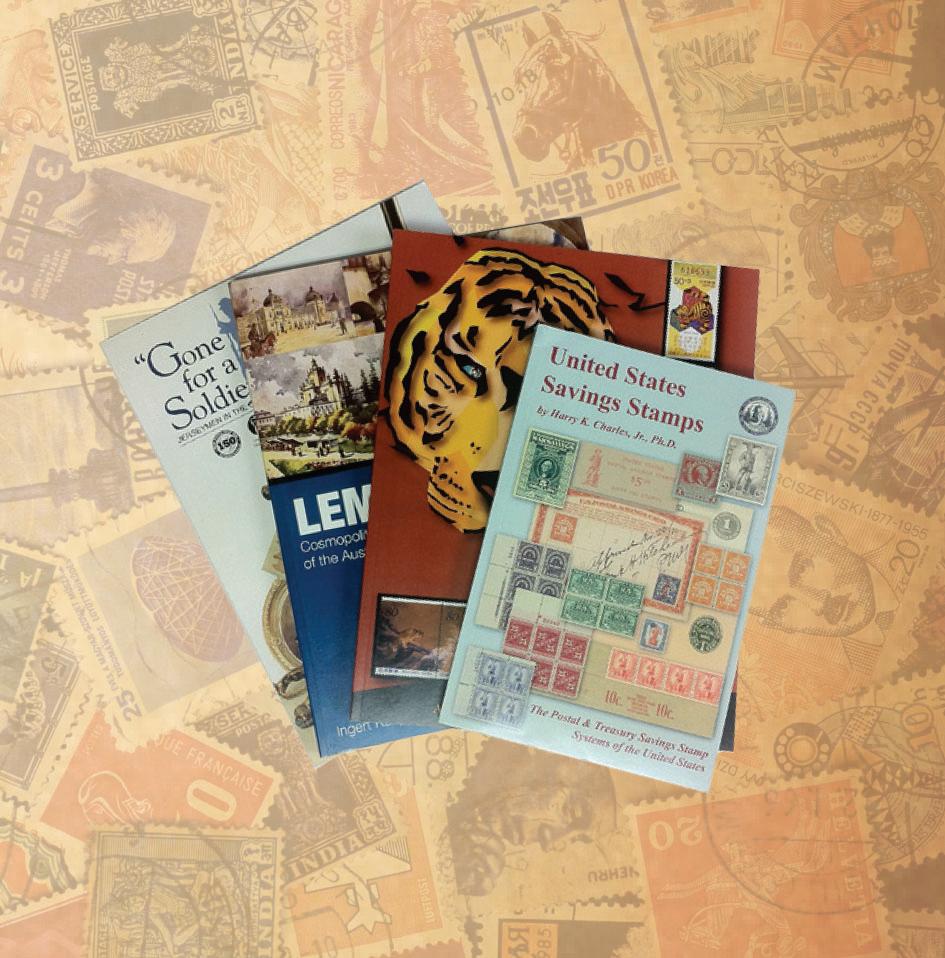

4,
Three philatelic items — revenue-stamped documents — will be discussed in detail, each presenting a puzzle: one purely philatelic, the others historical. In the latter cases, discussions quickly devolve into historical matters having little or nothing to do with traditional philately (i.e., rates, stamps, cancels, etc.) but are nonetheless intriguing.
Do historical backstories deserve a role in philatelic discussions? Of course! Once a stamp is placed on an object, every aspect of that object becomes a part of its philatelic profile. This is a fundamental principle of “Context Philately,” as championed by David Beech.
Where is the harm if the historical aspects overwhelm the purely philatelic - it is often the case? It is unavoidably true that historical importance of philatelic items does lie mostly certainly not entirely, but mostly with fiscal rather than postal items. This is simply in the nature of things; as inimitably expressed by German fiscal historian Wolfgang Morscheck: “ Stamps whisper, covers speak, documents scream .”
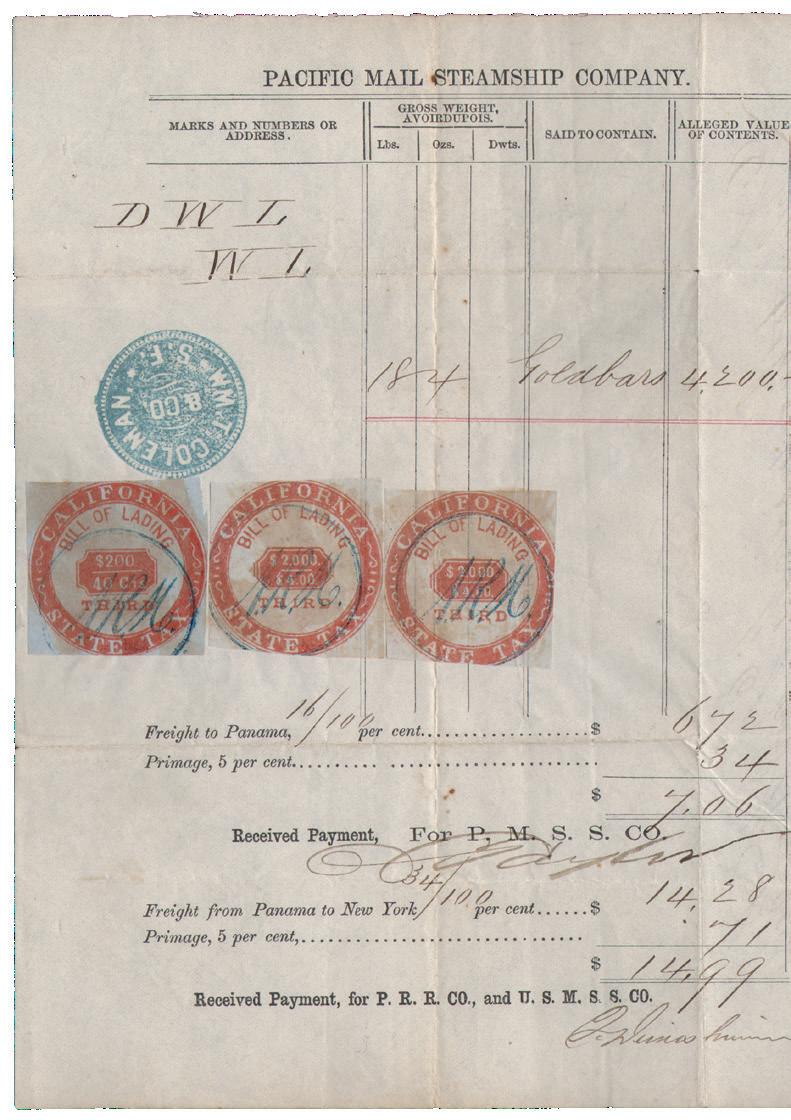
July 27,
Left: June 18, 1859, bill of lading (detail) for a shipment of $4,200 in gold bars, stamped with two $4 and one 40c “Third” Bill of Lading tax stamps. Did the “First”, “Second” and Fourth” stamps come along for the $8.40 payment? Above. July 27, 1864, promissory note from Esmeralda (aka Rocky Bar), Idaho Territory, bearing five 3c Telegraph revenue stamps. By all previous accounts, it should not exist!
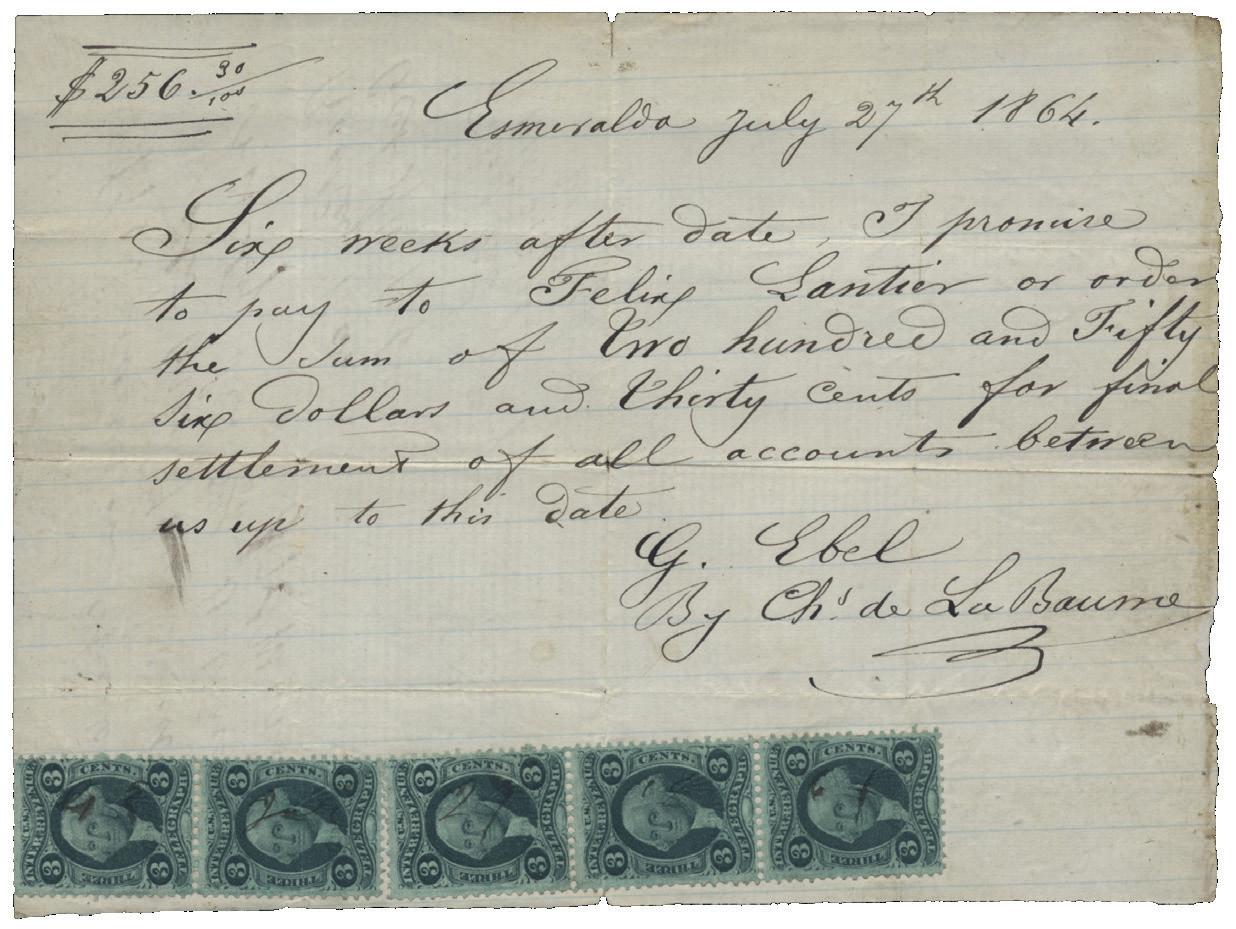
February 11,
The Indian Mutiny of 1857–59, variously termed the “Sepoy Mutiny” or “India’s First War of Independence”, marked a major rupture in British rule in India.
The uprising led to the dissolution of the East India Company and the formal transfer of power to the British Crown, while also prompting Empire-wide reforms, including the reorganization of colonial armies, the expansion of centralized civil administration, and a revised imperial policy toward non-interference in local customs.
These developments significantly influenced British governance across other colonies. The mutiny severely disrupted India’s postal system, rendering major routes unusable for extended periods. Postal operations were affected across large parts of northern India, requiring the Post Office to rely on improvised routes, temporary field offices, and the conveyance of mail by military personnel alongside troops and supplies.
Although these emergency arrangements were short-lived, they proved sufficient to avert a total breakdown of communication, and normal operations were largely restored by early 1858. Drawing on postal history ranging from provenanced late usages of the Indian First Issues, only now attributable to the mutiny, to outwardly unassuming newly discovered covers, this presentation reflects the joy of serious research, where careful attention to detail brings to light the resilience and adaptability of Imperial communications under extreme disruption.
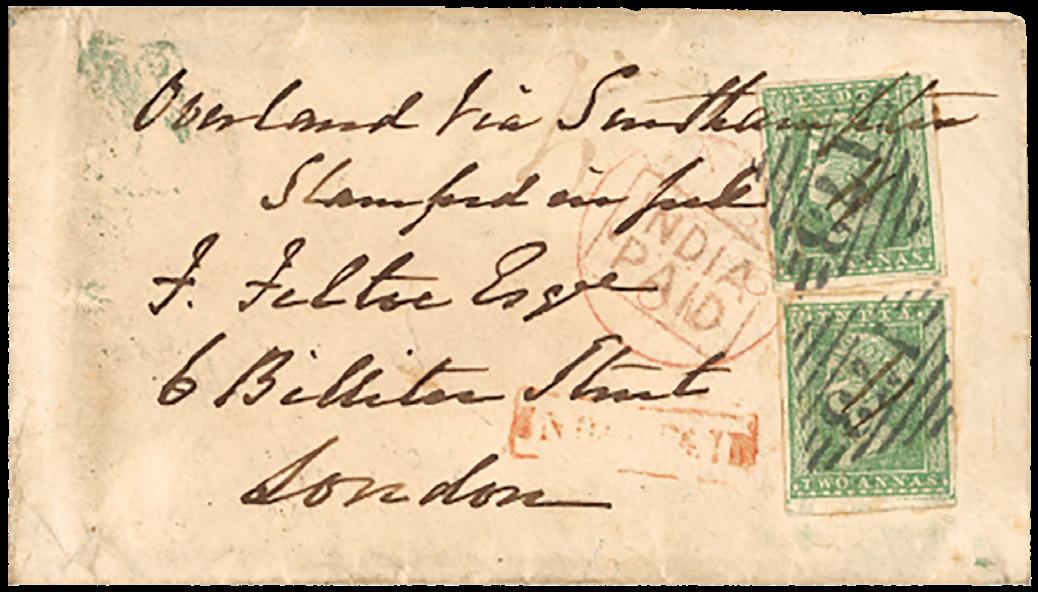
November 14, 1857 cover from Landour to London prepaid 4 annas. Bcauee of the impact of mutinies, covers destined for Bombay and overseas carriage had to be routed via Lahore. They were carried along the emergency routes established by Sir John Lawrence and Sir Bartle Frere.
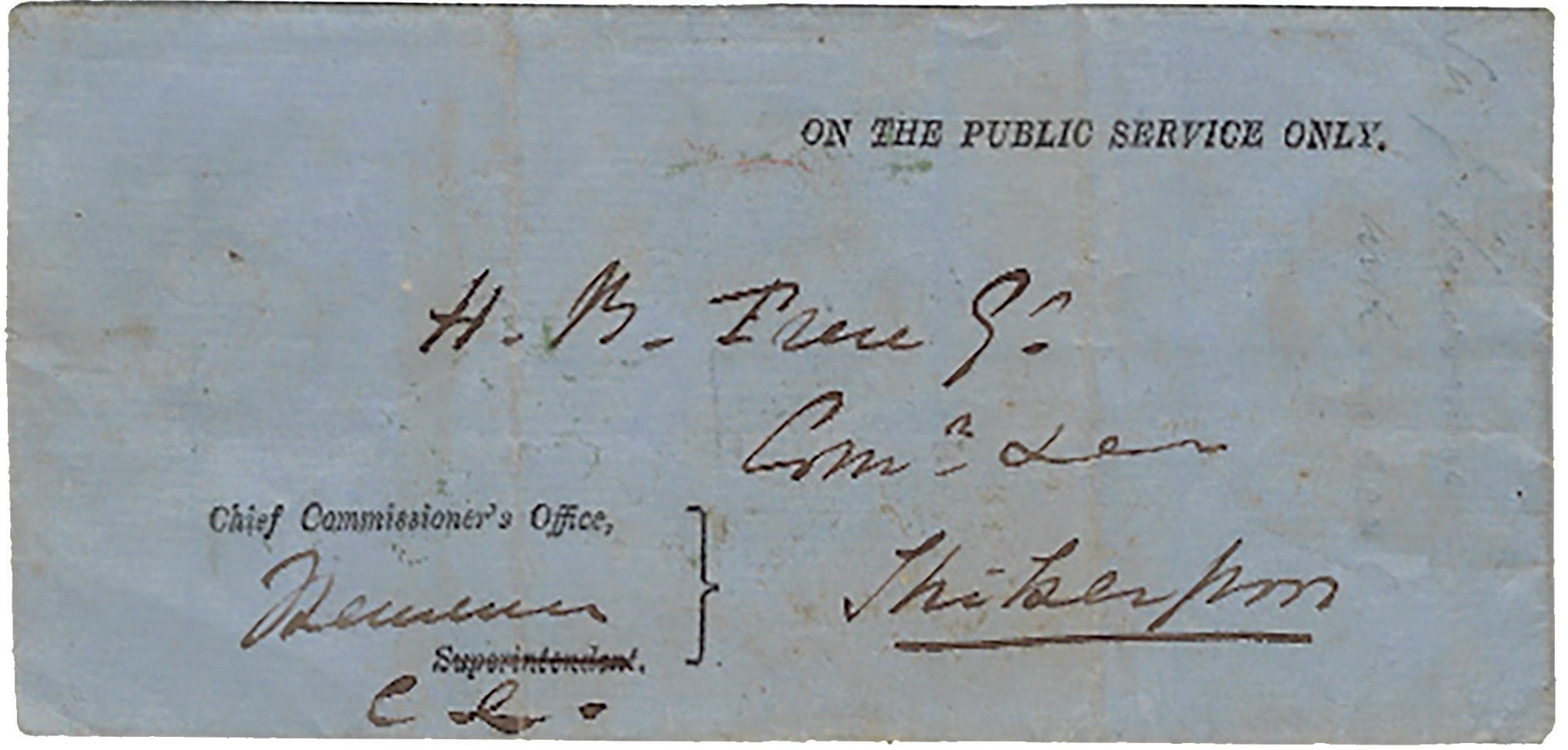
Since Baltimore is a port, there is early incoming ship mail known from the late 1700s; however, outgoing mail largely went via New York and then Boston when the Cunard line was established. (Figure 1)
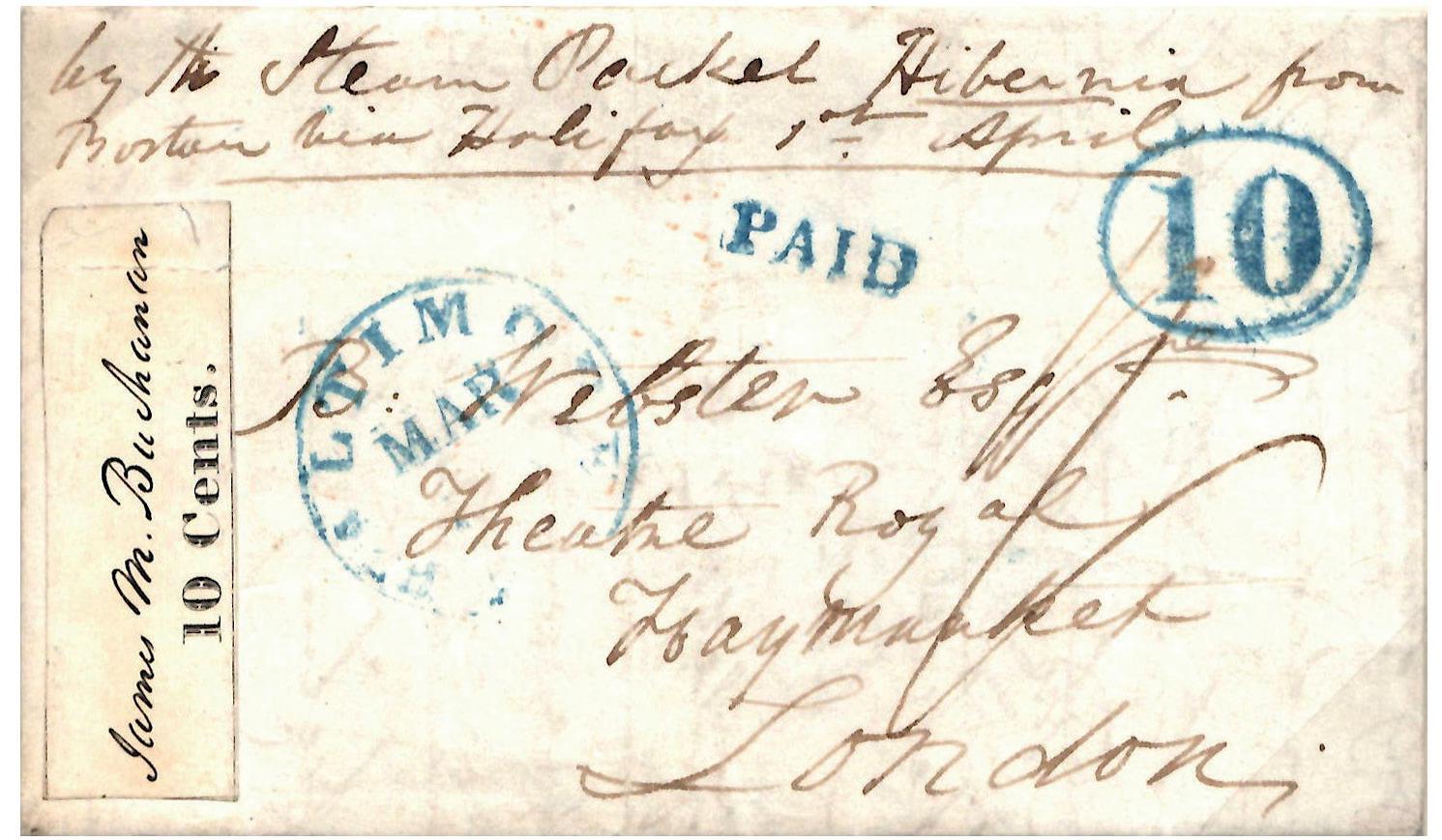
Figure 1. March 28, 1847, endorsed to go by Cunard packet ship Hibernia, leaving Boston for Liverpool on April 1. Inland postage of 10c for a distance of over 300 miles paid with a Baltimore Postmaster Provisional. Baltimore participated in the Freight Money system (late 1830s) that provided for prepayments of the sea postage to the New York postmaster to “expedite” the mail; both sailing packet and steam packet letters are known. Letters sent in the Retaliatory period and later the restored rate period will be shown, leading up to the establishment of the 1848 Treaty with England. Examples of mail sent by many of the major treaties will be discussed with some less usual destinations. (Figure 2)
Some more unusual items are those sent after Baltimore became an Exchange Office for foreign mail in 1866, which include letters sent direct from Baltimore under the treaty with the NGU on North German Lloyd line of steamers via Bremen.
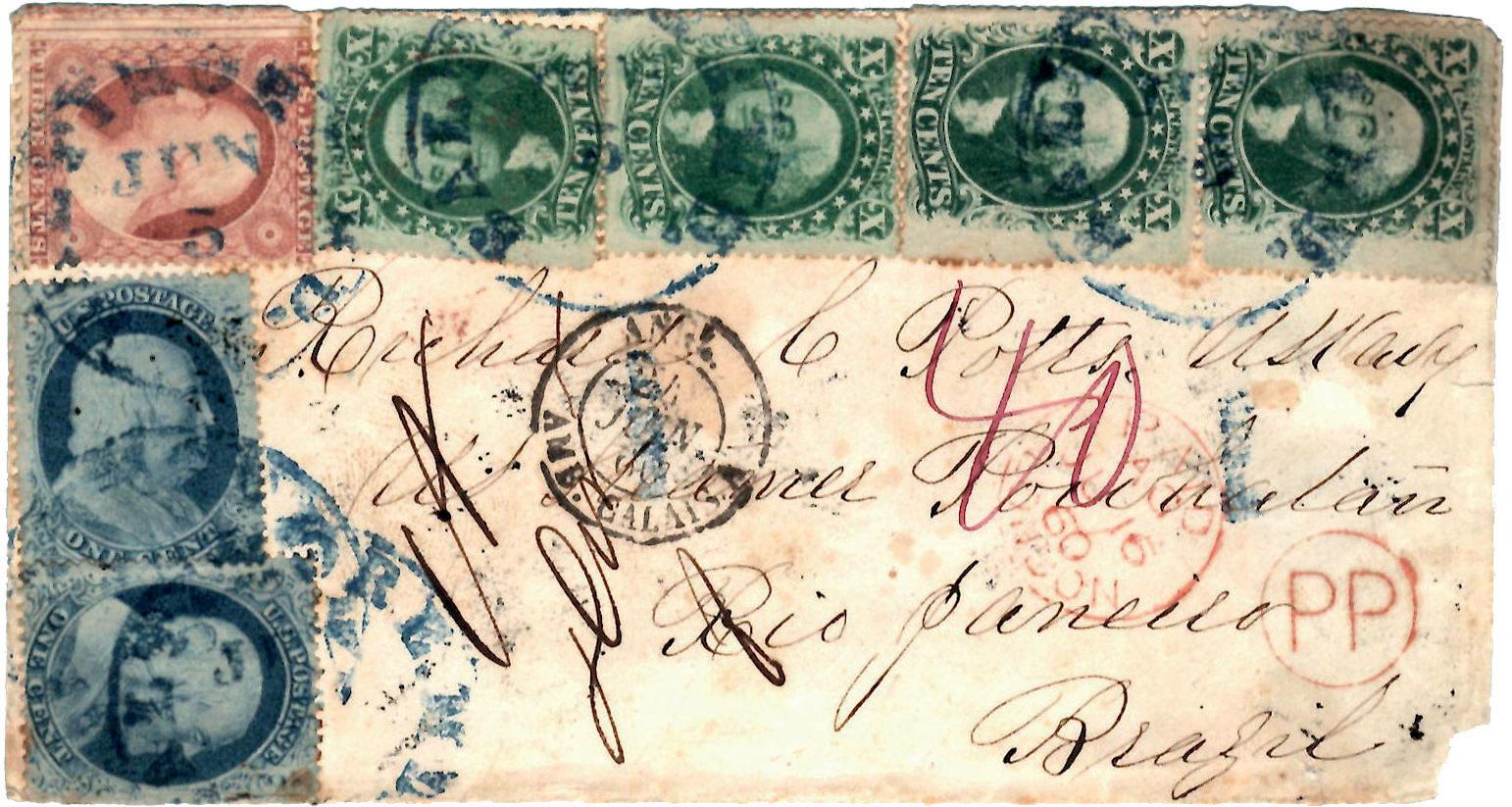
Wrappers or wrapper bands were defined as early as 1783 in a letter from Postmaster Ebenezer Hazard sent to a local postmaster stating that “…the proper way of sending them is open,..” This distinction of “open” (visible ends) versus “closed” was used until the cessation of wrappers. Postal stationery wrappers are sometimes erroneously called ‘newspaper wrappers’ but they seldom carried newspapers since the subscriber newspaper rates were much less than the denomination of wrappers. Wrappers were generally used to mail catalogs, brochures and other 3 rd class mail.
Double wrappers for higher postage rates are scarce since U.S. postal stationery wrappers and envelopes were sold for value of postage plus cost of printing. So, it was less expensive to add a stamp than to use a second wrapper. (figure 1, double wrapper to Danzig.
Since most wrappers carried 3 rd class mail, examples of special rates such as registered, special delivery or airmail are extremely scarce. (Fig 2, registered use of wrapper to Java).
Entrepreneurs used wrappers in various ways. A few wrappers have messages printed on the inside of the wrapper and one individual made window envelopes from wrappers before the Post office began manufacturing window envelopes. (Figure 3, wrapper with cutout for window and made into envelope).
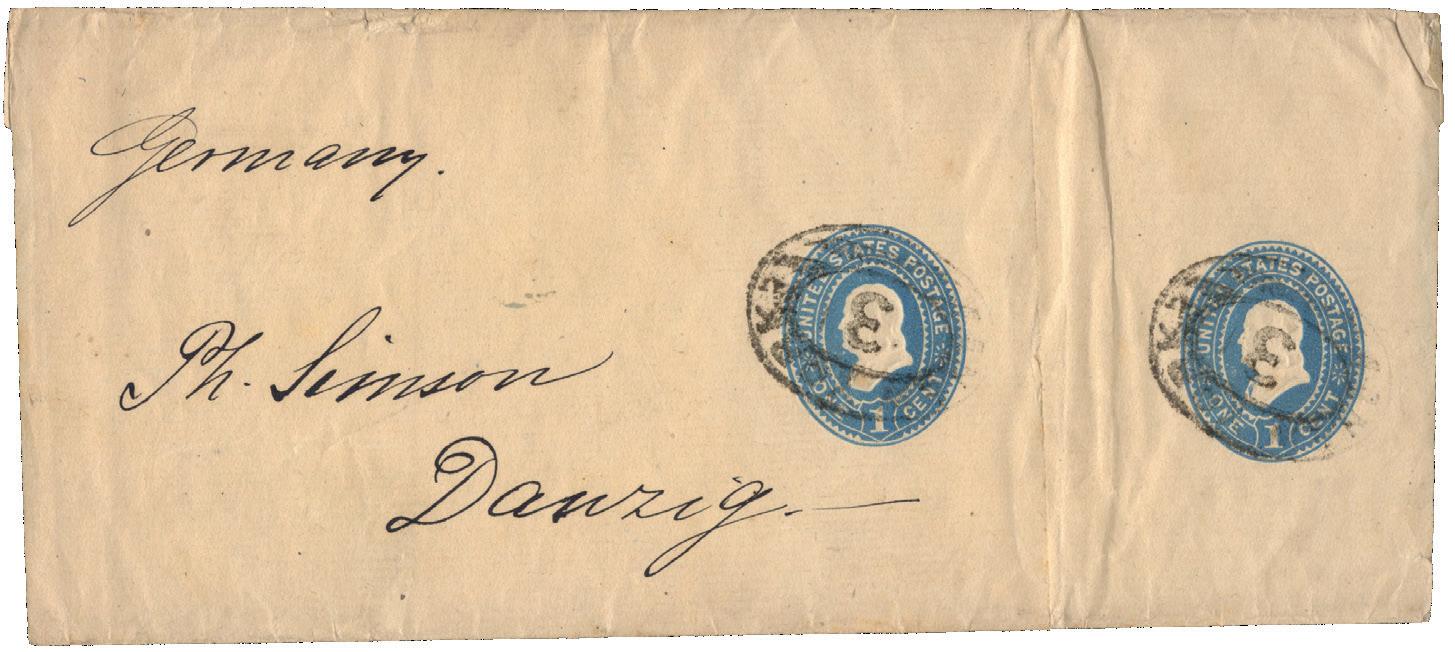
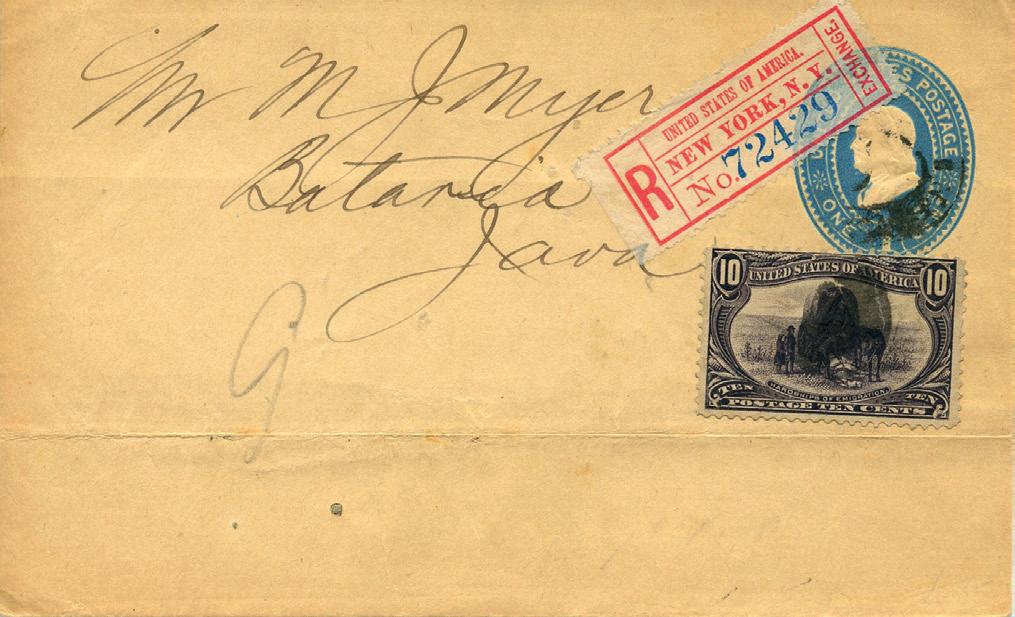
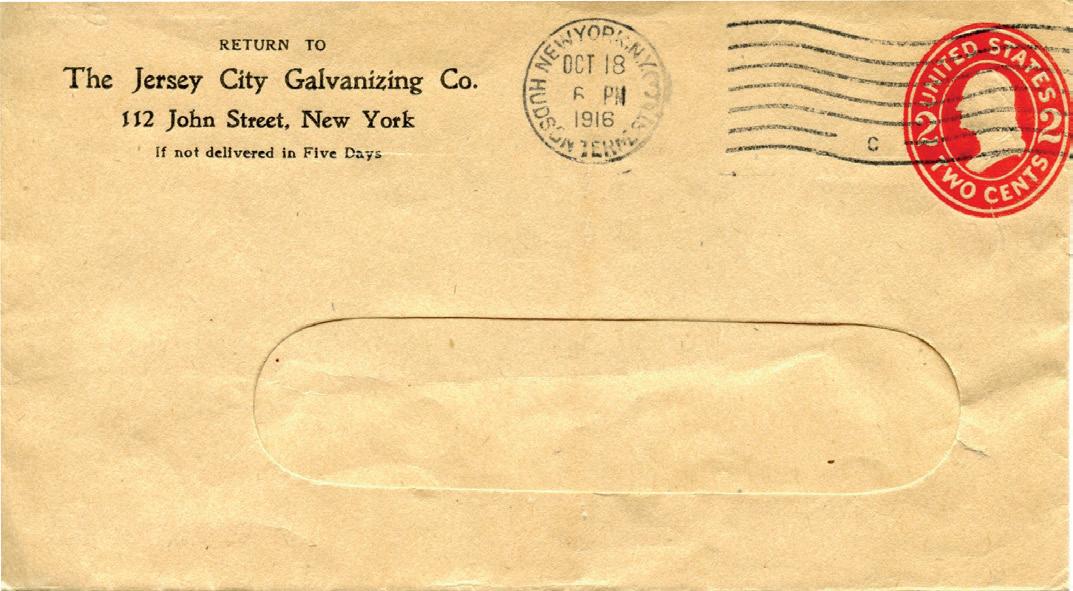
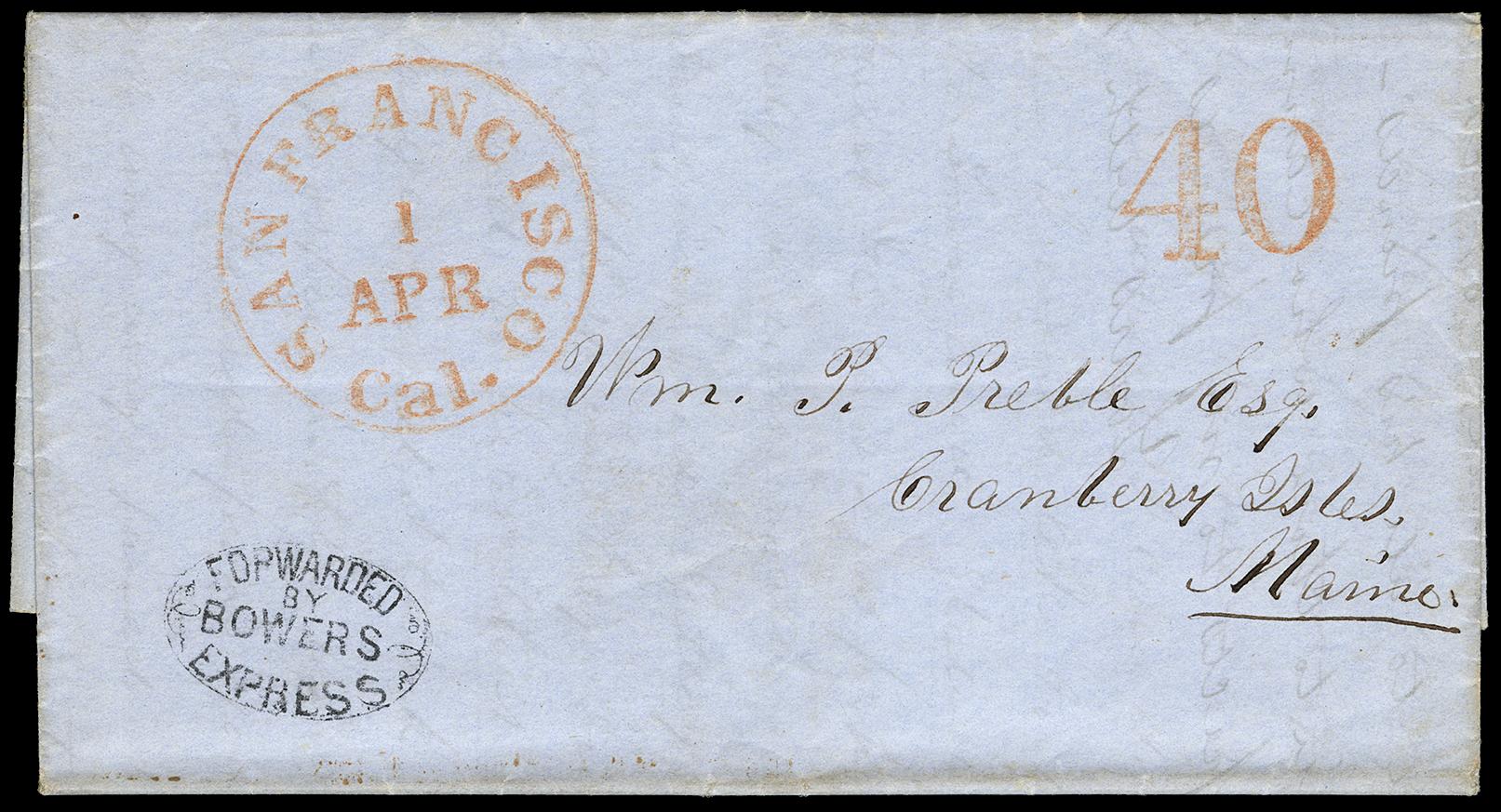
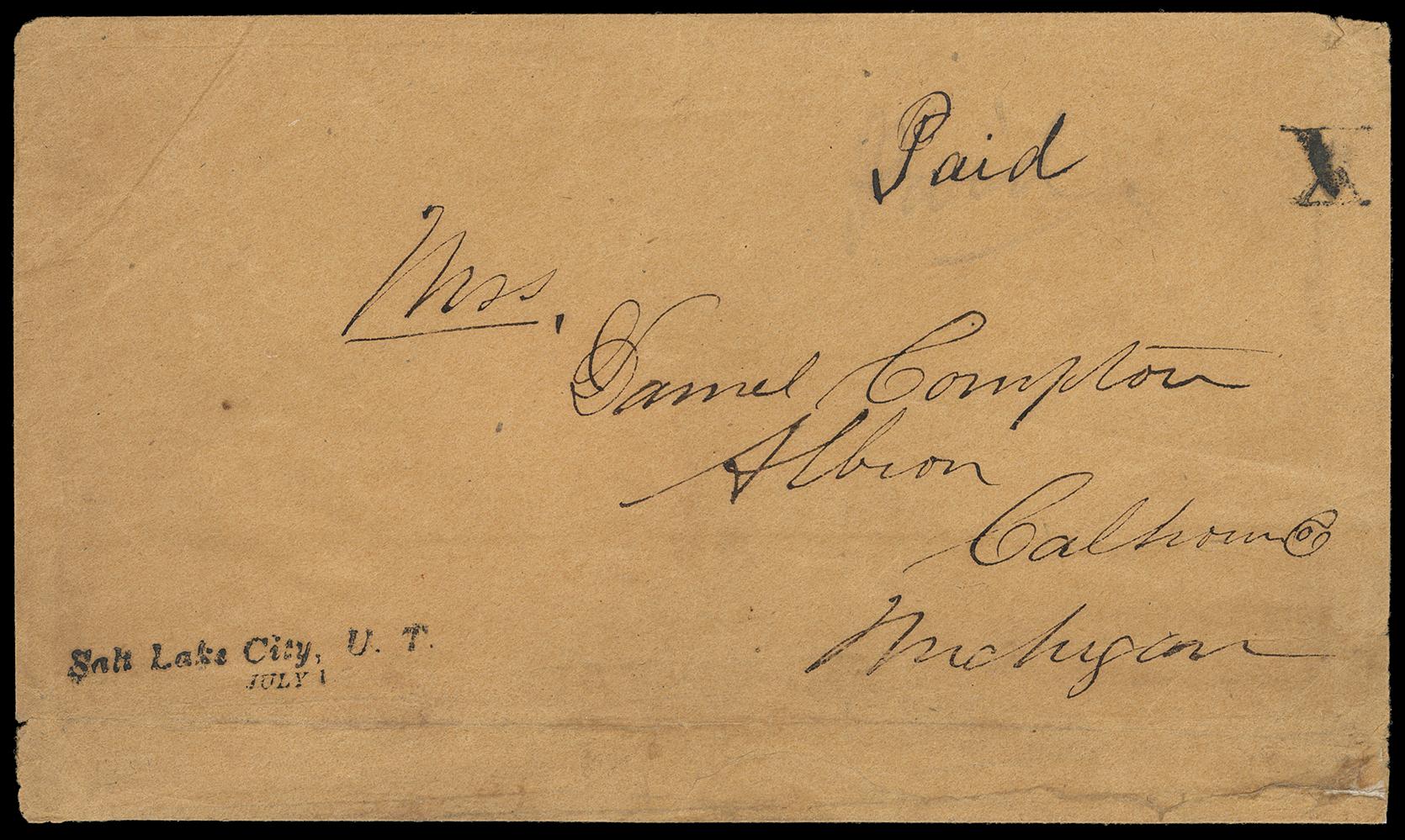
Dr. Milgram has long studied the development of the American West through the lens of postal history. His collection features an exceptional array of trail letters, illustrated lettersheets, expresses, material from the Indian Territories, and much more. Many pieces include their original enclosures, each carefully chosen for its historical significance. This remarkable collection is scheduled to be offered in February 2026
415



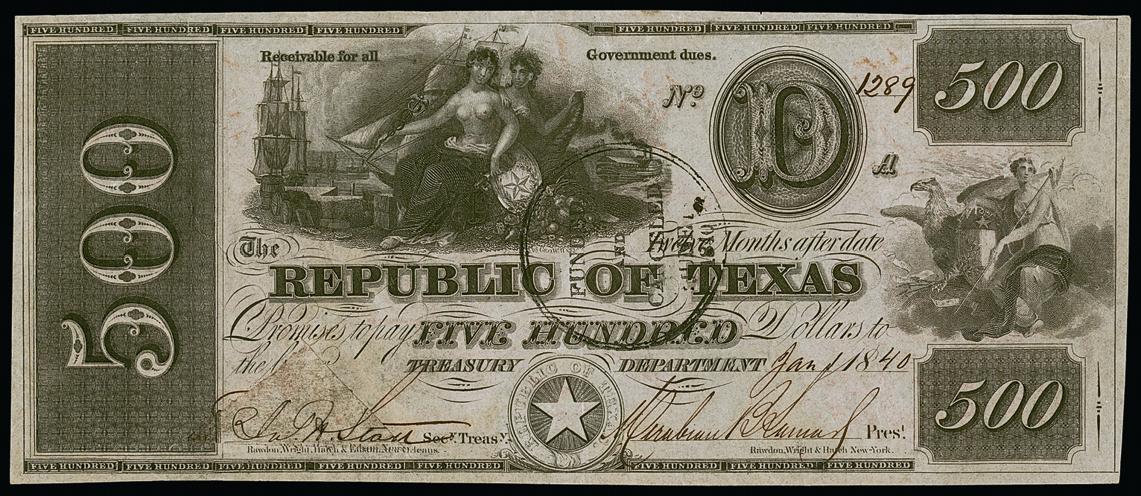





The Magnolia Collection of Texas Postal History sales will bring to market a panoramic array of rare and spectacular stamps and covers, spanning the evolution of Texas as a colonial possession of Spain and Mexico, an independent republic, and a state before, during and after the Civil War. The first sale in March 2026 includes some of the rarest and most valuable items in Texas philately, including the only known example of the “Large Beaumont” postmaster’s provisional.
For information and updates about the Magnolia sales, go to siegelauctions.com

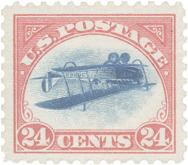
For buyers or sellers, Siegel Auction Galleries offers unparalleled expertise, a worldwide client base, financial reliability, intelligent marketing, and the best internet resources and search tools.
Phone (212) 753-6421 • Email: stamps@siegelauctions.com