
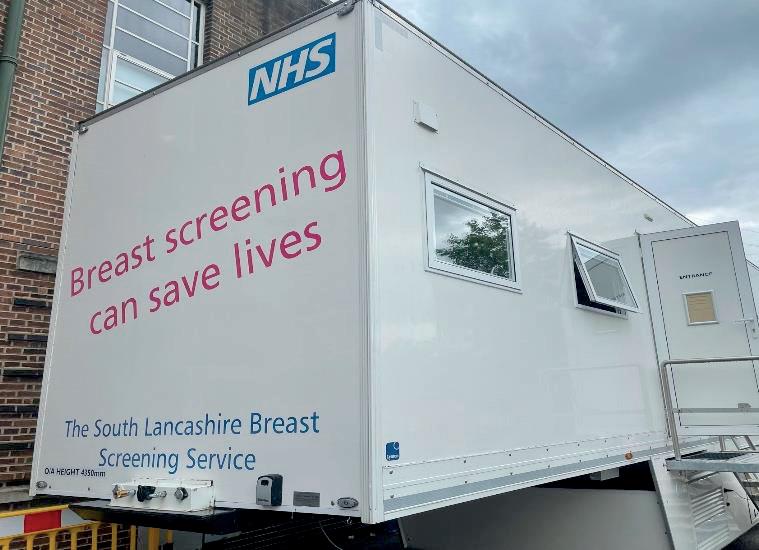
BREAST SCREENING Saves lives through detecting cancer early
The National Breast Screening Programme invites all women aged between 50 – 70 every 3 years for a mammogram Each GP Practice is screened in turn and all women registered with a GP will receive an invitation
What happens when I reach 71?
Women over the age of 71 will not be sent an appointment automatically but they can self-refer for a mammogram every 3 years by contacting us.

What is breast screening?
Breast screening (or mammography) is an x-ray of the breast that is used to find any changes in the breast tissue that could be cancer, so they can be investigated early
South Lancashire Breast
Screening is your local service , covering Wigan, West Lancs and Chorley and South Ribble
0300 707 5899

bsuappointments@wwl.nhs.uk
www.wwl.nhs.uk/specialities/breast_screening

South Lancashire Breast Screening Unit


Why do I need to be screened?
1 in 7 women in the UK will be diagnosed with breast cancer at some point during their lives. Breast cancer is now the most common cause of cancer in women in this country
Early detection saves lives
Most breast changes will not be cancer, but if cancer is found, the treatment needed will often be less intense and the chance of making a full recovery is much higher
The earlier breast cancer is found, the better the chances of survival

IN THIS ISSUE
4-5
6-7
12-13
16-18
TWITTERING ON
By Angela Kelly
TRAVEL
La Bella Vista - La Cinque Terre
CELEBRITY FEATURE
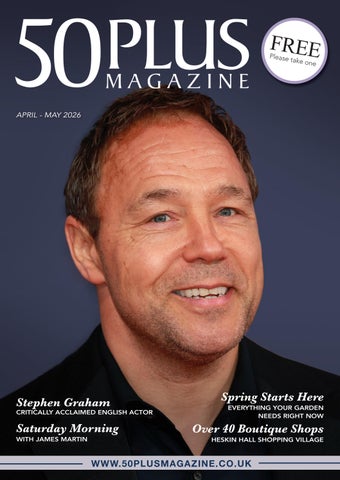
Stephen Graham, critically acclaimed actor
HOME
Modernising your home
20-21 GARDEN
Spring gardening tips.
25-27 FOOD
Saturday Morning with James Martin
28-29 STEVE HOWARTH'S TEST DRIVE
A look at the Nissan Aryia Nismo and the Citreon C4 Hybrid.
Ground Floor | 546 Blackburn Road | Astley Bridge Bolton BL1 8NW. Sales Enquiries : T: (01204) 238180
E: artwork@mcgrathmedia.co.uk www.50plusmagazine.co.uk
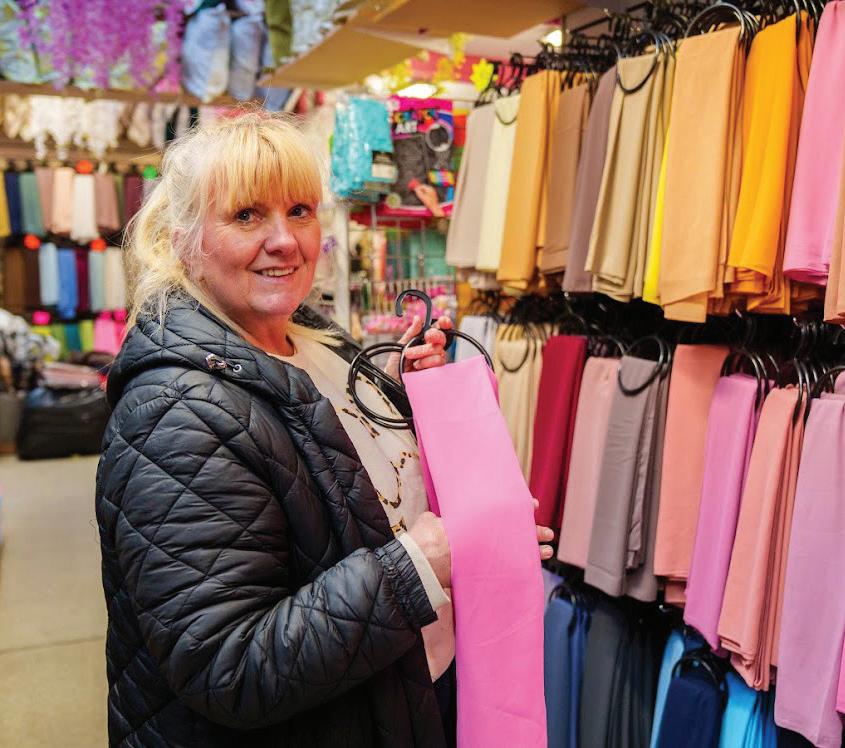
Bolton Market


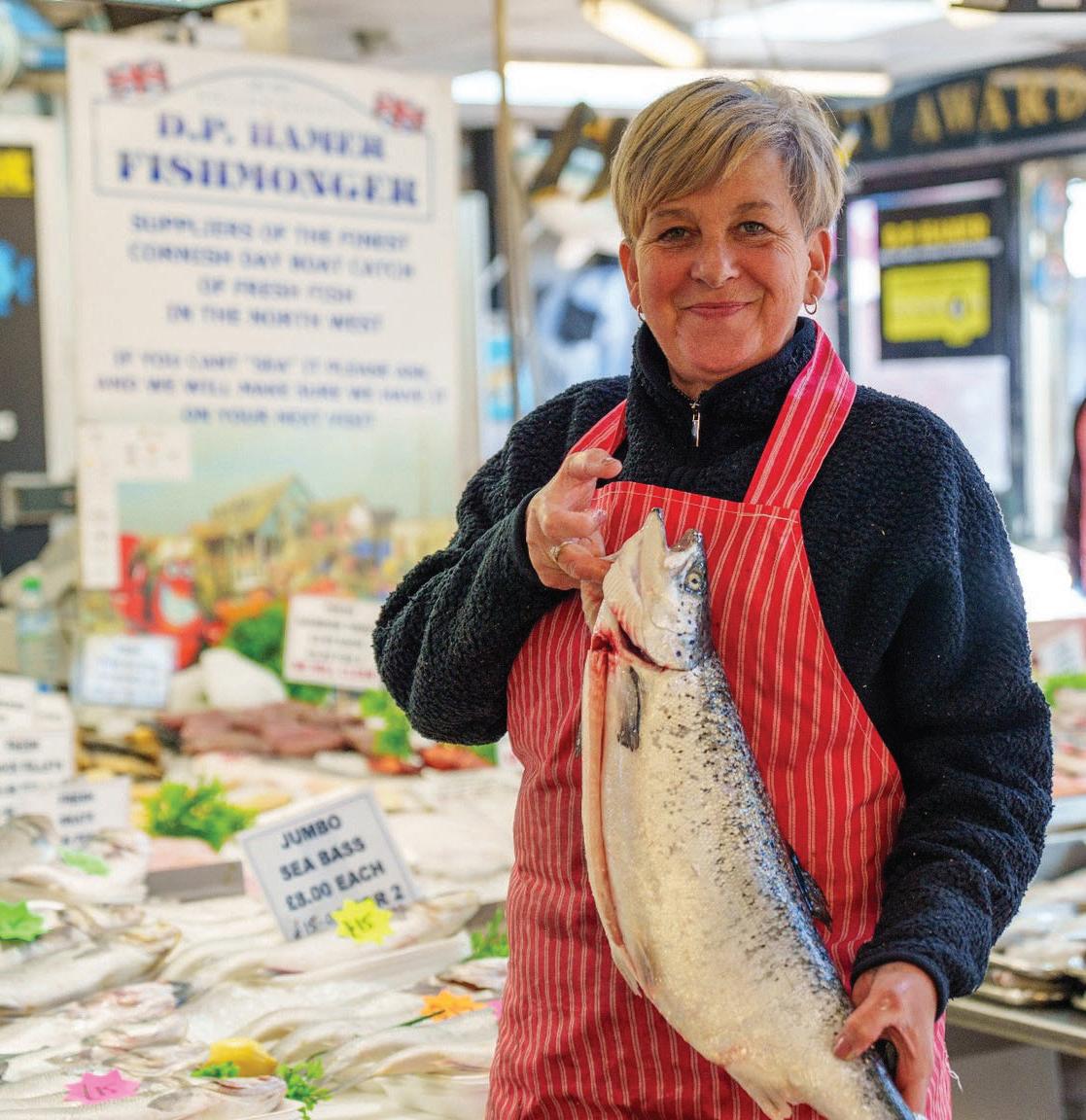
TWITTERING ON
By Angela Kelly - because x’ing on doesn’t sound quite the same

FAMILY REALLY DOES MATTER
IF there is one thing we’ve learned by now it’s that family is important.
Because, whether you’re the King, a world-famous millionaire couple or just an ordinary person, fall-outs happen in the best –and worst – of families and times like the annual festive season really highlight them.
This is the time when cracks in relationships turn into chasms. When not being invited to celebrations or simply remembered in a card has the ability to hurt forever and tear families apart.
Just witness the Royal Family’s festive get-togethers with notable missing individuals or glance at David and Victoria Beckham’s much-chronicled split with son Brooklyn.
Ordinary families understandably often contain friction. This means that sisters and brothers don’t speak for years, parents lose touch with their children and Grandmas and Grandads don’t get to see their grandchildren grow up.
At worst, major problems can force teens to flee home and violence or sexual threat for the hell of homelessness on the streets.
At the very least, misunderstandings, re-opened old wounds or simply a row over some triviality can cause chaos to the family dynamic.
And while we often take this latter kind of event for granted as being “normal family life”, it can cause untold damage to relationships forever.
The bottom line is that, often, family is all we have. They are the people who should love us unconditionally, defend us to our detractors and be there for us when life throws tragedy our way.

Never mind that they may sometimes annoy us to death. What does that matter when someone is dealing with genuine trauma and needs the comfort of their own people?
True, we may rely on good friends for support, if we’re lucky enough to have them. But many people never have true friends, just that enduring blood tie.
I know it sounds idealistic and, yes, that old saying “you can choose your friends but not your family” may well be true. But, if you have had a serious falling out with a close family member, it may well be worth a simple decision to think it through in 2026.
Life is far too short to lose family members over some disagreement that you may not even completely remember or now realise was simply a misunderstanding.
Just re-considering it may lead to a different, and far better, outcome for all your futures.
SUCCESS OR FAILURE?
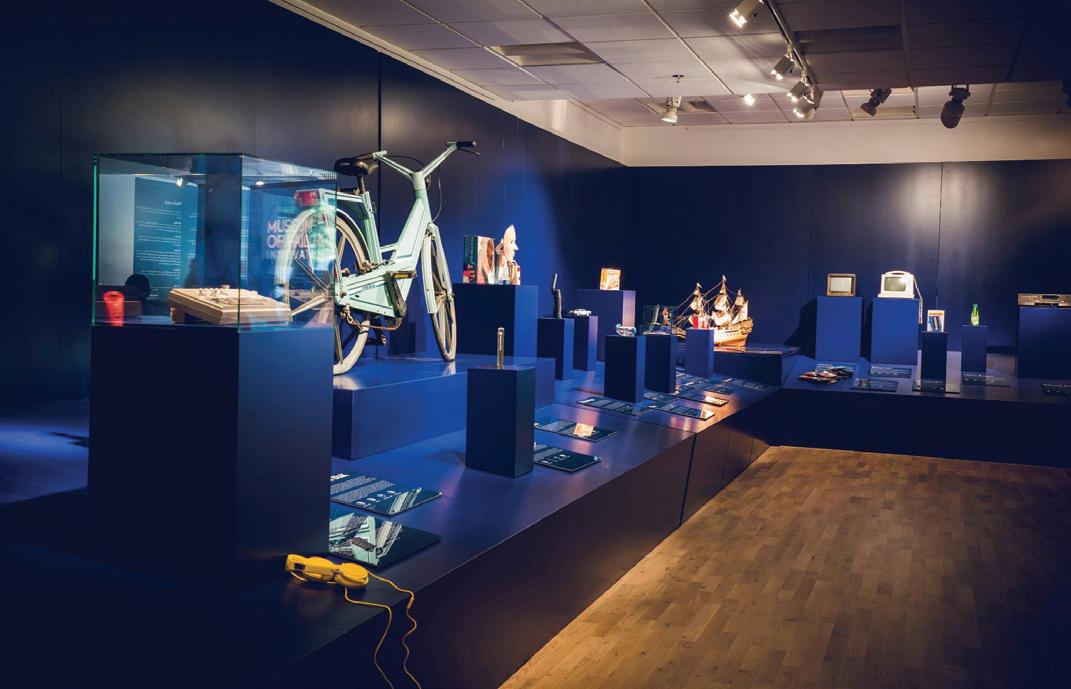
IN an age when we glorify success and largely ignore anything that doesn’t come up to scratch the Museum of Failure is a fabulous beacon.
This wonderful travelling exhibition, founded by Dr Samuel West, aims to shift attitudes on how society considers failure to show it as a “universal and necessary part of innovation and learning.”
Now, he is bringing it home to the UK where visitors can marvel at everything from Snapchat spectacles to the Nintendo power glove and the Tesla Cybertruck.
Dr West told the Guardian: “I’ve travelled all over the world with the museum but I’ve always wanted to bring it back home because of our black humour and our support of the underdog.”
A venue and opening date haven’t yet been confirmed but, apparently, fans should soon be able to witness everything from failed cars to disappointing gadgets, flawed ideas and AI disasters.
Fittingly for the UK which has nurtured many eccentric individuals and ideas, there are plenty of British-born concepts including the Titanic, Sinclair C5, Dyson’s Zone headphones and even the NHS’s national IT system.
I suppose “failure” can be a bit subjective but you can’t argue about entries like the Titanic – famously sunk on its maiden voyage from the UK to America in 1912.
Or inventor Sir Clive Sinclair’s electric tricycle unveiled in 1985 and certainly ahead of its time. Another brainwave, The Fyre Festival, billed as a luxury music festival, fell so far below its advertised standards that the whole dream fizzled out.
However, failed designs still paved the way for some of the greatest innovations of the last century. The Apple Newton was the forerunner of the iPhone and Google Glass was among the first in a now successful range of wearable items augmenting reality.
Innovator Ben Strutt, who specialises in turning failures into successes, told the Guardian that the exhibition was designed to change attitudes towards the ideas that don’t succeed.
As Dr West stated: “I want to reframe failure and show it is a universal and necessary part of innovation and learning.”
In other words, we may still need to take bold risks to solve the biggest problems of our times - environmental, social and economical.
Failure can definitely be a learning curve, although not everyone who has been to the Museum of Failure around the world gets this. According to Dr West, Americans treated it as a joke and South Koreans struggled to understand the concept of celebrating failure.
Hopefully, the UK will welcome the whole idea with open arms, and we’ll all learn from it.
GET FIT OVERNIGHT
THE start of any New Year is when we reassess the shape we’re in and look to improving our health.
Usually, this means joining a gym or radically reviewing our diet. In fact, it’s when we look to fitness gurus like Joe Wicks to show us the way.
Interestingly, though, Joe – who became a household name during lockdown as the “nation’s PE teacher” with his daily workouts for all – is advising a different top tip for wellness this year.
He recommends focussing on sleep.

He told PA: “We often don’t think about how important sleep is. We have routines where we stay up late and we don’t get enough sleep and so everything feels a bit harder.
“I think the first thing anyone should really focus on, regardless of your age, is really getting a good sleep routine. Because that allows you the next day to wake up with energy, to exercise with a bit more willpower with the food and discipline around that.”
And anything Joe Wicks suggests is good enough for me.

La Bella Vista - La Cinque Terre
By Rebecca Underwood, BA Hons | Travel Journalist
For those seeking that elusive peaceful spot in which to unwind, a tranquil and charming place to escape the constant demands of life in the fast lane, the Cinque Terre, located on the glorious Italian Riviera on a rugged section of the Liguria region is the ideal destination.
La Cinque Terre, (which translates to five lands), dates back to the 11th century and consists of the five small Medieval villages of Monterosso al Mare, Manarola, Vernazza, Riomaggiore and Corniglia. Recognised as a ‘cultural landscape’ and awarded UNESCO World Heritage Site status in 1997, the Cinque Terre is a protected national park, linked by a series of meandering paths and the railway line, which was built in the 1870’s, cuts through a series of coastal tunnels. The area, known for its lush vineyards, citrus orchards and olive groves, is partly inaccessible by car and the best way to travel is by train from Rome, Genoa or Pisa or drive to La Spezia and then board the local train. An area of outstanding natural beauty, the Cinque Terre attracts hardy souls keen to hike the seven mile coastal trail linking all five villages. Water babes seeking solitude will find a surprising number of coves and bays dotted along the coastline and a leisurely dip in the glittering waters of the Mediterranean is sure to soothe those aching limbs at the end of a day’s arduous explorations.
Riomaggiore is the Cinque Terre’s most famous village due to its prolific production of Sciacchetrà, a delicious sweet dessert wine with aromas of honey and white blossoms and hints of citrus. It is said that the origins of Riomaggiore date back to the 8th century when the inhabitants of La
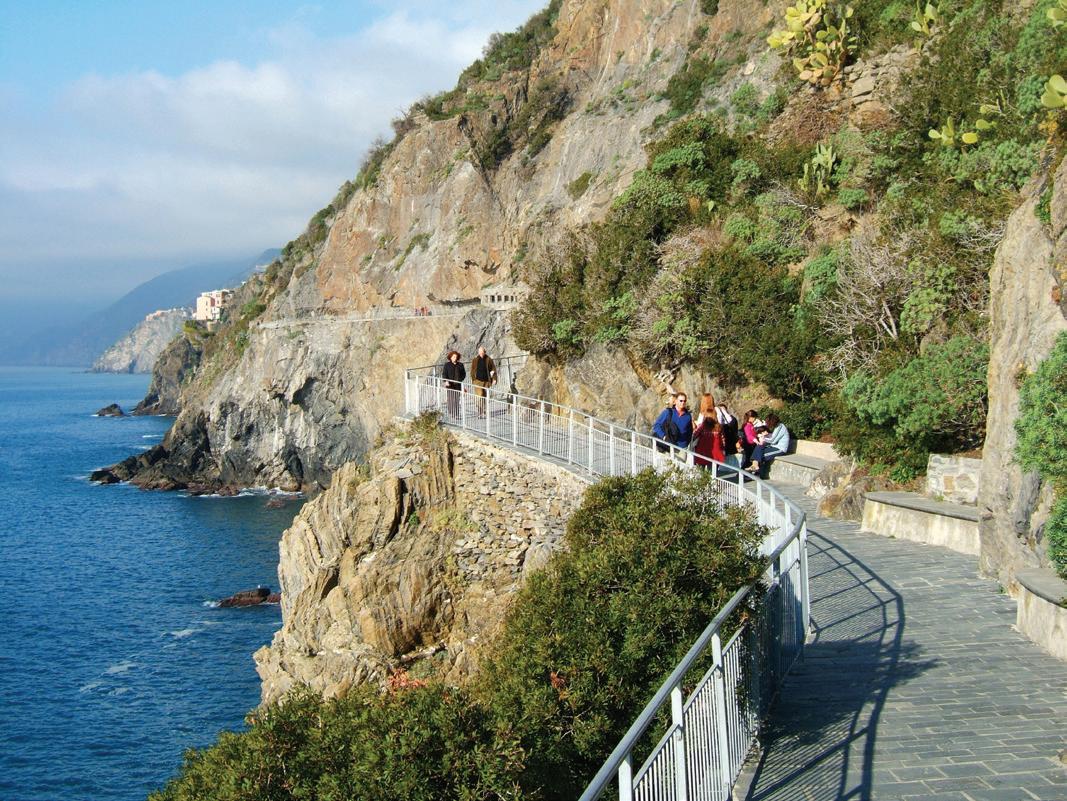
Spezia’s Vara valley relocated to the coastal regions in order to escape marauding pirates and to benefit from the milder climate in their cultivation of grapevines and olive trees. The town reflects its history and is characterized with typical pastel coloured houses perched along a vertical axe and a number of very steep staircases are the only means by which to move around the interior. Riomaggiore is also the main embarkation point for the Cinque Terre hike and the first leg along the Via dell ‘Amore (the ‘love walk’), which leads to Manarola, is easy, due to the width of the path, and as it is level with the seaside promenade the panoramic ocean views are simply breath-taking.
Manarola, the oldest village in the Cinque Terre is the ideal place to stay. Located only 200 metres from the town’s main square and a short distance from the train station, the Hotel Porto Roca holds a prominent position with the beautiful bay spread out below. The property offers a selection of suites measuring 44 sqm with double balconies furnished with comfortable sun loungers, and of course that is the perfect place for an afternoon snooze. Contemporary furnishings include walk-in wardrobes, spacious bathrooms featuring Jacuzzis, double washbasins and all the amenities expected including WI-FI. The hotel also features a sea view infinity pool (open from June to September), which faces a small secluded bay and it’s the ideal spot for an early morning dip prior to embarking on the next leg of a hike.
The hiking trail from Manarola to Corniglia is not for the faint hearted and although it takes only an hour the trail crosses a promontory and dips down to the original railway line. Those who embark on this path will be richly rewarded with a view of the little houses perched on a ridge around 100 metres above sea level and surrounded by tumbling vineyards. To reach the town, visitors must negotiate the Lardarina; which consists of 33 flights of steps. Local attractions include St Peter’s church, which was built in 1334 and reflects the dramatic intensity of the Baroque style with Gothic and Ligurian elements. The 14th century façade is adorned with a white marble rose window and the interior features a christening font dating back to the 12th century.

The three mile hike from Corniglia to Vernazza and the section from there to Monterosso offers the most challenging paths with uneven terrain, meandering and narrow walk ways through vineyards and lemon and olive groves and of course the most spectacular views which demand attention at strategic vantage points along the way.
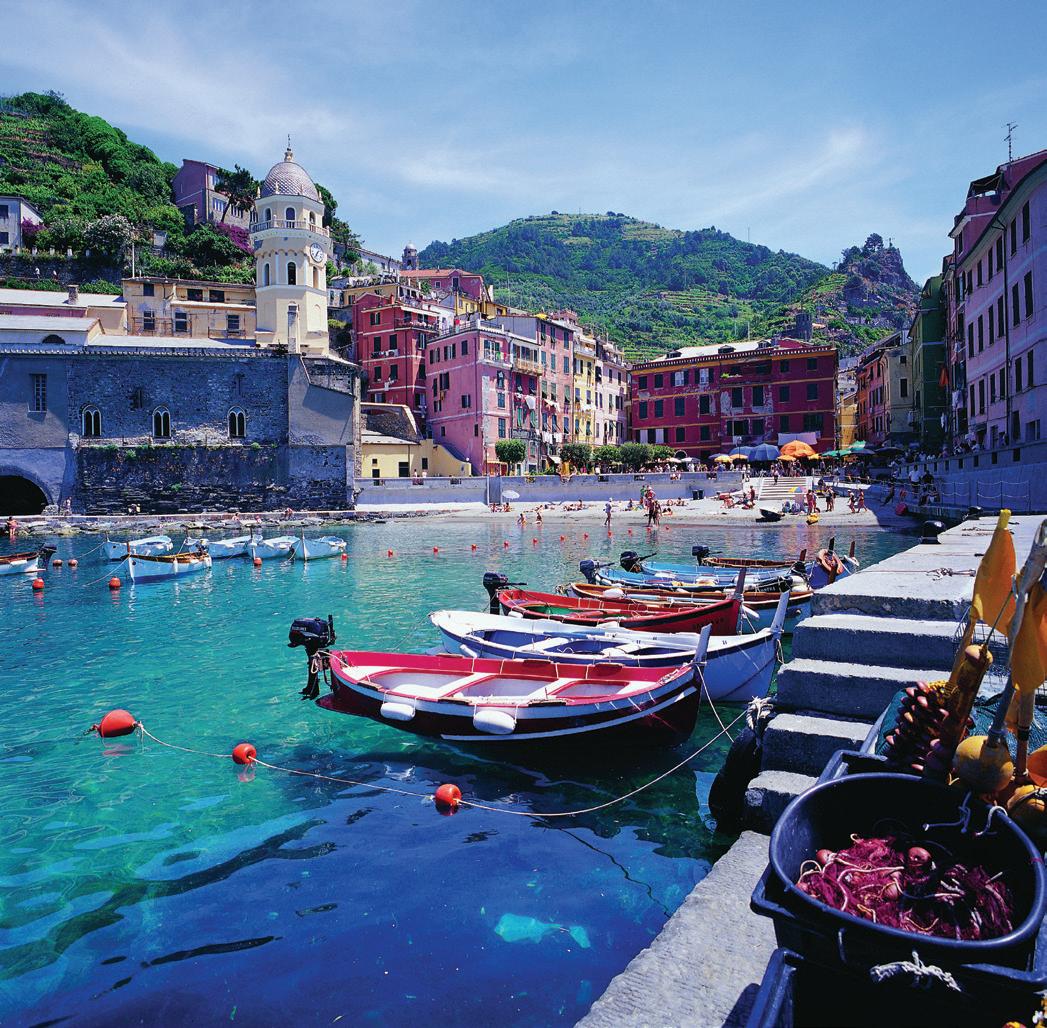
During the Middle Ages, Vernazza, which has a natural harbour, prospered greatly as a fishing and trading centre and records show that the town was fortified prior to 1080 and was thought to be a departure point for naval forces defending
Vernazza – credit - Agenzia Regionale In Liguria
St Peter’s Corniglia – credit Fototeca ENIT – photographer -Gino Cianci
the area from buccaneers. Local places of interest include the Doria Castle, the oldest surviving fortification in the Cinque Terre. Built in the 15th century, it was used as a lookout tower to alert the village to foreign invaders. The Church of St Margherita d’Antiochia, which dates back to 1318, is located on Piazza Marconi, the main square. The small church, which was built in the Gothic-Ligurian style, features an octagonal belfry soaring 40 metres into the sky. It is said that a casket containing the remains of St Margaret was washed ashore nearby and the church was built in her honour.
Monterosso al Mare, is only a 90 minute hike away, located in the province of La Spezia and it covers an area of 11.25 kilometres. Considered by locals to be the unofficial capital of the Cinque Terre, it is divided into two areas; the old town and the new town of Fegina. Local attractions include the Cappuccini Abbey and the Church of Saint Francesco, which occupy a site on the hill of Cristoforo. The church, which dates back to 1632, features an aisle encircled by wooden altars and treasures include one of Anthony van Dyck’s masterpieces, ‘the crucifixion’, painted around 1630. Fegina also features the largest sandy beach in the Cinque Terre and the pedestrian tunnel which links the old and new towns can become very crowded in the summer months. Near to Fegina’s beach, lies another local attraction, which garners much interest; the Monterosso Giant is an impressive sculpture of Neptune, looking out over the ocean. The imposing statue, sculpted by Arrigo Minerbi in 1910, stands 14 metres high on a promontory and although it was severely damaged during WWII and subsequently by the unrelenting elements, it is clearly a masterpiece.
Should the sea air awaken your appetite, an outstanding dining experience awaits at L’Ancora della Tortuga located on Salita Cappuccini. Dine ‘al fresco’ and sample some local specialities such as focaccia bread, served with anchovies and olives and order a glass of Sciacchetrà. And as you admire the ocean view make a toast to ‘la bella vista’ of La Cinque Terre and reflect on the words of one of Italy’s most famous sons; Leonardo da Vinci; who once said ‘Simplicity is the ultimate sophistication’.
Top Tip: For access to the hiking paths purchase a Cinque Terre Pass prior to arrival. Local bus and train travel is also included. For more information visit parconazionale5terre.it/Ecinque-terre-card.php
Top Tip: During high season (Easter and mid-June to mid-September) the majority of hotels accept bookings on a half board basis only.
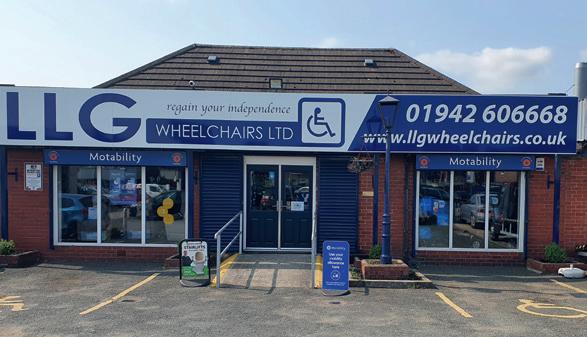
WHEELCHAIRS LT D regain your independence
Established over 35 years
Your Local Mo bility Store
OPENING TIMES:
Monday till Friday 9.00am till 4.00pm
Saturday - 10.00am till 1.00pm
Sunday - CLOSED
LLG Wheelchairs Ltd have been in the mobility business since 1983, offering a high quality service to our customers throughout the UK. We carry one of the largest stocks of new and used mobility scooters, powered wheelchairs and mobility accessories in the North West. We don’t just sell wheelchairs and mobility scooters in Leigh – we can also supply small household mobility aids to stair lifts and everything in-between throughout the North West and the UK. Our after-sales customer care is second to none.
If you have a disability or mobility problem our aim is to help you to find the best solution, so why not contact us or call into our showroom. Our experienced staff are always happy to offer friendly and useful advice on the best mobility solution for your needs.






FINANCE AVAILABLE along with free HOME DEMONSTRATION on request.


3 MONTHS FREE INSURANCE IS INCLUDED WITH EVERY POWERED WHEELCHAIR OR MOBILITY SCOOTER PURCHASED
HEAD OFFICE (LEIGH BRANCH)
PARSONAGE GARAGE, KIRKHALL LANE LEIGH WN7 5RP TEL: 01942 606668
sales@llgwheelchairs.co.uk www.llgwheelchairs.co.uk






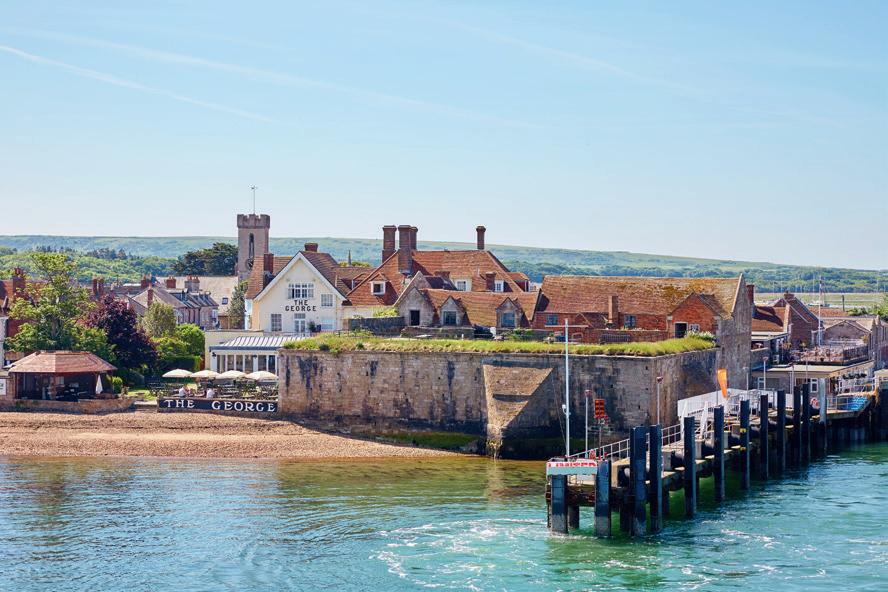
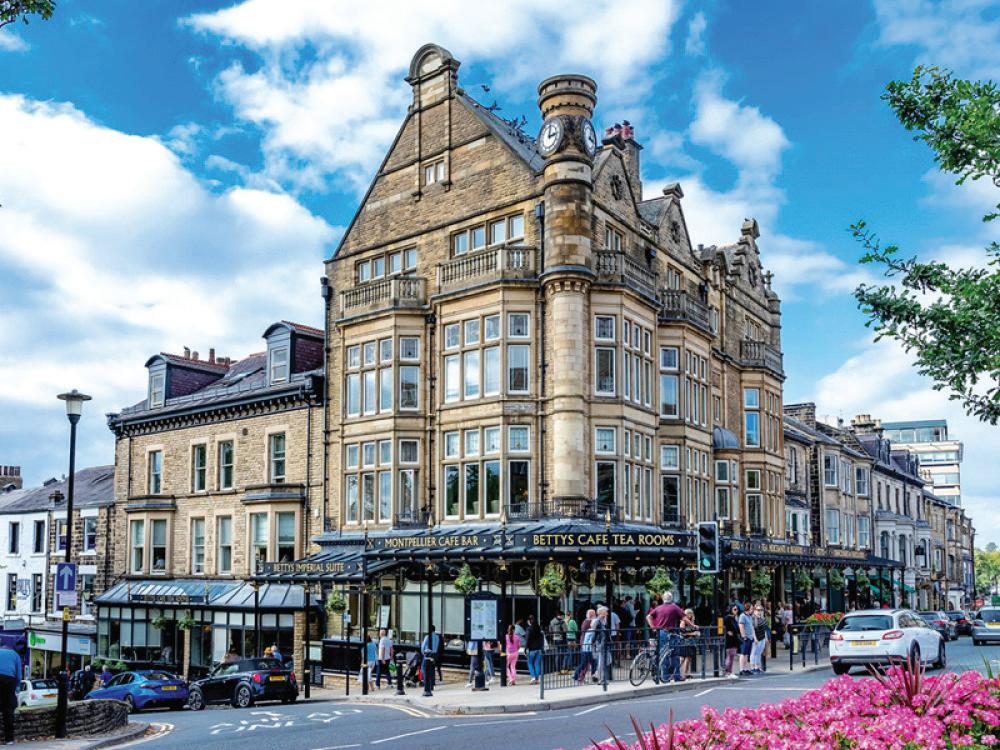
Established in 2016 we offer fantastic holidays in the UK and across Europe.
With fabulous excursions, quality hotel accommodation, executive coaches and top class tour drivers, a trip with AVA Travel is one to remember!
We also have a huge selection of UK day trips to suit every traveller.
AVA are committed to making the whole process of taking a holiday with us as easy and pain free as possible.

OVER 200 HOLIDAYS AND SHORT BREAKS TO CHOOSE FROM!
VISIT OUR WEBSITE OR CALL OUR FRIENDLY TEAM TO ORDER YOUR FREE BROCHURE TODAY!
Ava Travel Leyland Ltd













Welcome to Zurich
By Rebecca Underwood, BA Hons | Travel Journalist
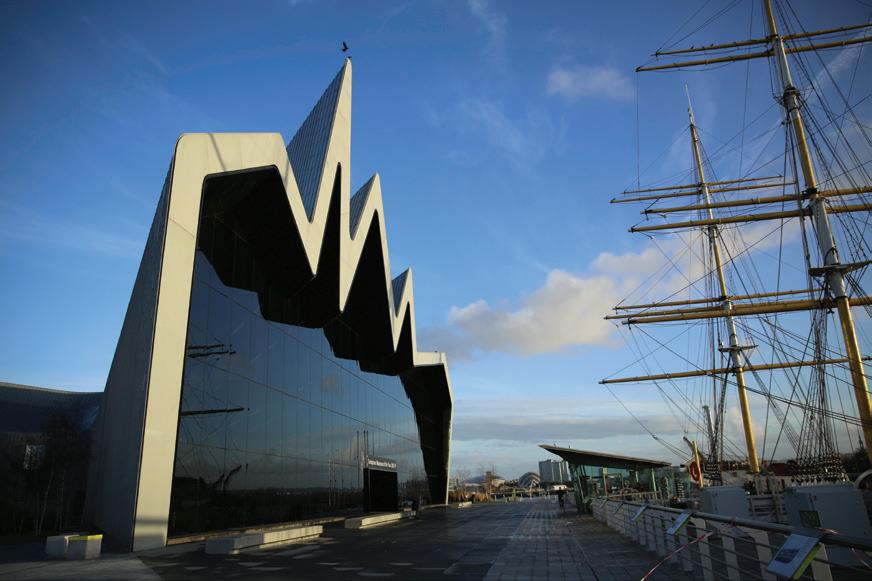
For those yearning to escape the constant demands of life in the fast lane, consider taking a weekend break this summer and escape to Zürich, the largest city in Switzerland, located on the northern shores of the tranquil Lake Zürich.
Zürich is widely regarded as the best city in the world for its quality of life and as a centre of finance and banking it remains the wealthiest city in Europe. The people of Zürich are clearly dedicated to protecting their environment as the public transport system is used by the vast majority. Trains, trams, electric and diesel buses, river and lake boats and a cable car are the preferred modes of transport and this is reflected in the quality of the city air. Zürich offers visitors the opportunity to experience an insight into a thriving and vibrant city, which is not dominated by the car.
Take a leisurely stroll along the promenade of Lake Zürich, festooned with colourful flowers creating a heavenly scent, which hangs in the air. Head for the meandering cobbled stone streets of Aldstadt (the old town) and browse around the eclectic art galleries, the charming antique shops and book stores galore. Pause awhile and stop off for a coffee and a Swiss pastry or two. No doubt you will be enchanted by the view of the snow capped Alps in the distance.
For an exceptional shopping experience wander along Bahnhofstrasse, where the finest boutiques and stores feature international fashion labels, exquisite jewellery and of course an abundance of wrist watches. Even the most resistant shopper is sure to part with a substantial amount of francs, once succumbing to the sight of those glittering treasures displayed in the shop windows.
To examine another impressive collection of time pieces visit the Clock and Watch Museum within the Beyer Chronometrie shop, also on Bahnhofstrasse. This private collection includes exhibits dating from 1400BC to the present day and features fascinating oil and water clocks, sun dials, hourglasses, table and grandfather clocks and delicate pocket and wrist watches.
Take a leisurely stroll along to the nearby Confiserie Sprüngli; it’s Swiss chocolate heaven for those of us with an insatiable sweet tooth. The Sprüngli company dates back to 1836 and they are certainly masters in their field and you are sure to be tempted by the mountains of homemade pralinés and truffles. Sample the delicious VIP selection, made with butter ganache with a hint of kirsch or rum or the chocolate apricot or Tahitian vanilla.
After that calorific overload, make your way to Platzspitz Park, the location of the Swiss National Museum where you will be able to take an intriguing glimpse into Swiss culture and history. The Museum was built in 1898 by the talented Gustav Gull and it is a truly striking building reflecting the style of a French Renaissance city chateau, with beautiful towers and courtyards. The main exhibition effortlessly guides the visitor from prehistoric to ancient times, through to the Middle Ages and on to the present day. There are several fascinating artefacts including colourful costumes, old pieces of furniture, stained glass and a selection of weapons and the mesmerising collection of Gothic art is not to be missed.

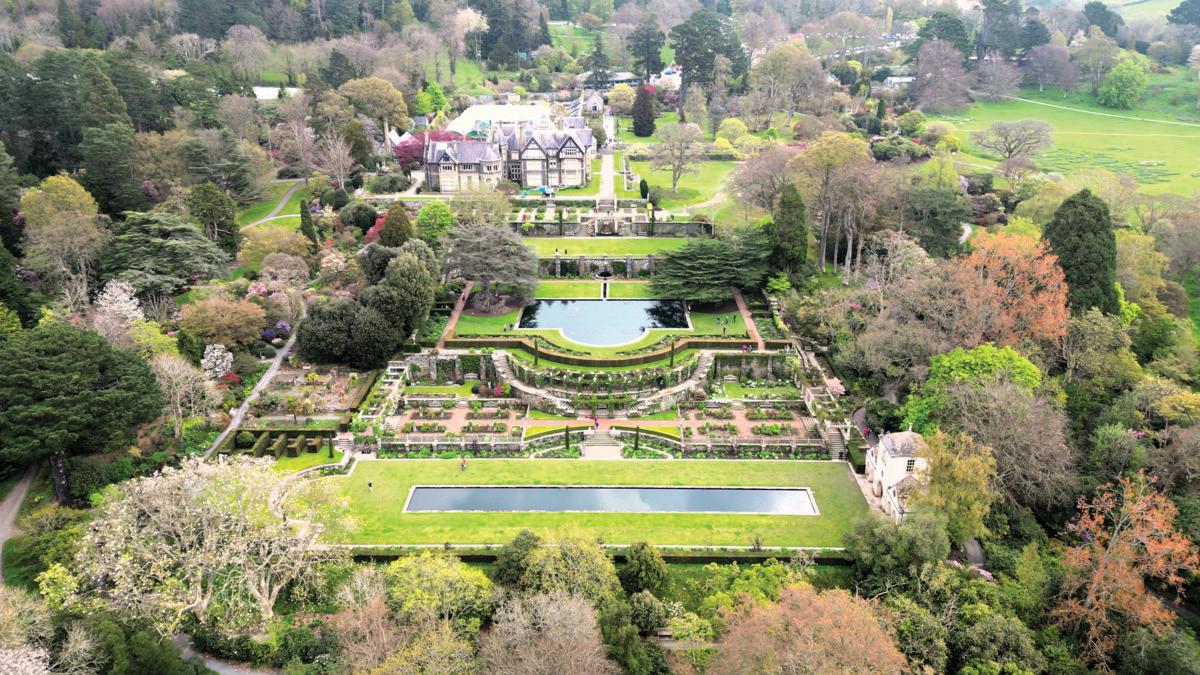
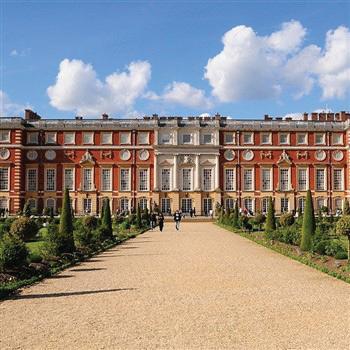
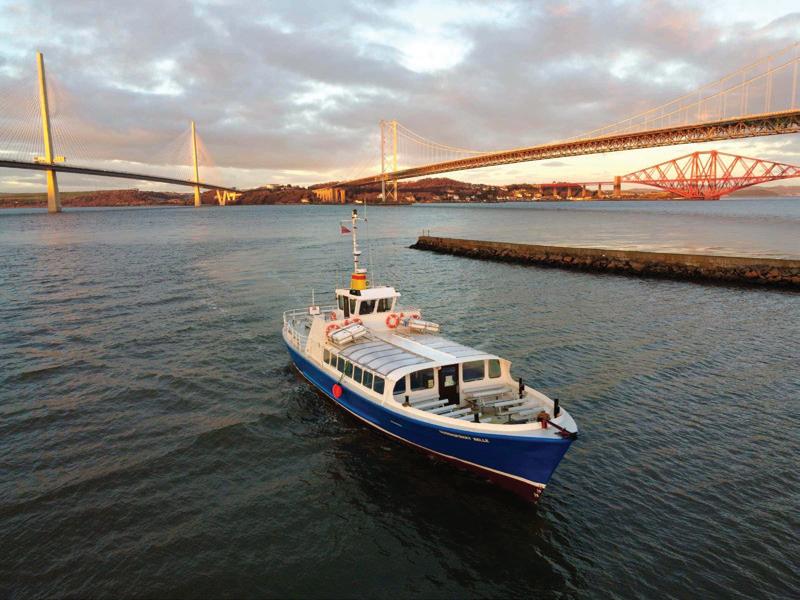
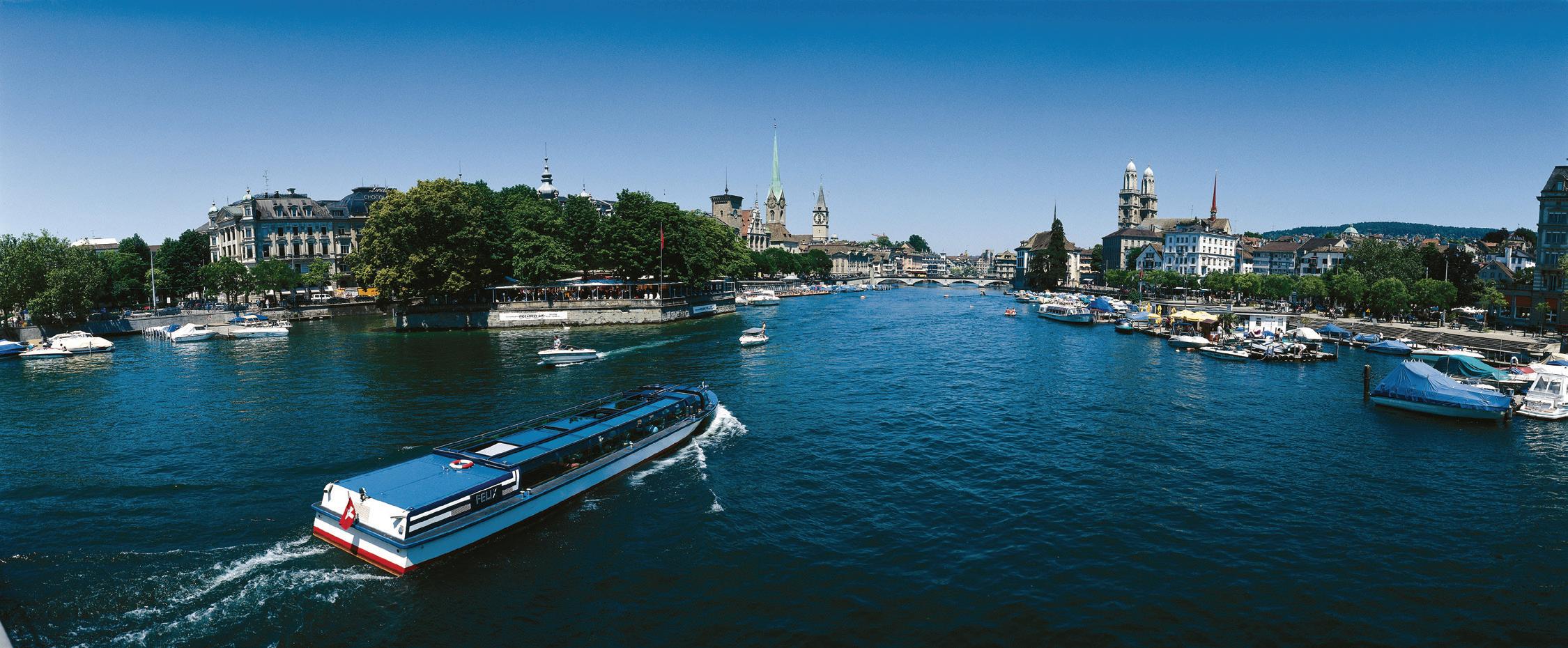
Zürich, from the bay of the lake with a Limmat boat. On the left Bauschaenzli and the towers of Fraumuenster and St. Peter, on the right the Wasserkirche and Grossmuenster.
Signature: Christof Sonderegger. Credit: Switzerland Tourism
Zurich with a view of Quaibruecke and the Alps.
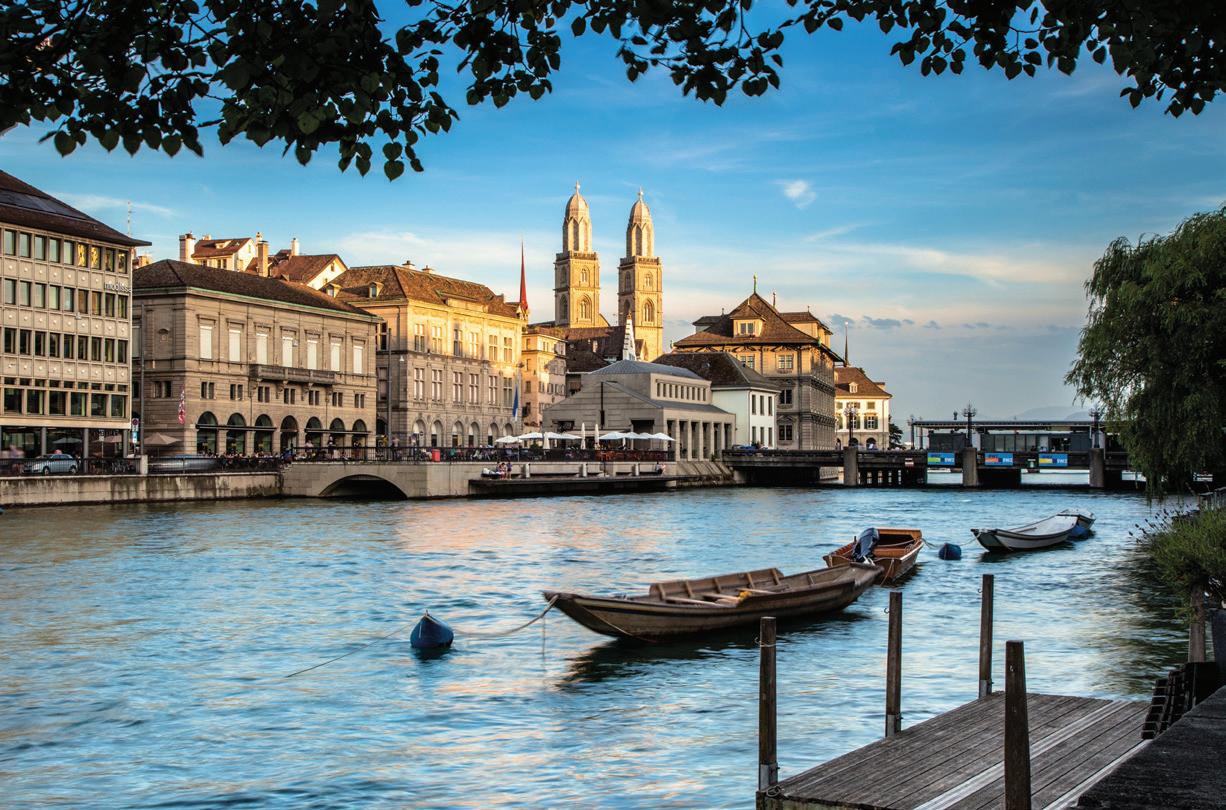
For art lovers, Zürich is a treasure trove with more than 100 galleries and over 50 museums, and 14 of those are dedicated solely to art. View Zürich’s largest collection of modern art at the Kunsthaus Museum, which houses the widest selection of Munch masterpieces outside Norway. Other works include masterpieces by Chagall, Picasso, Braque, Giacometti and Monet, several medieval sculptures and a selection of contemporary pieces by Swiss artists including Ferdinand Hodler.
Be sure to make your way to the Fraumunster Church, which dates back to the 13th century, and where you can view five magnificent stained glass windows designed by Marc Chagall and visit St Peter’s Church, another treasured landmark, located next to the Lindenhof hill, its towering steeple is a city landmark and features the largest clock face in Europe.
For a relaxing afternoon take a 90 minute boat cruise and sail on the calm waters of Lake Zurich. The Lake Zurich Navigation Company at Burkliplatz harbour is a short walk from the old town and it is one of the most popular attractions in the city.
Weary explorers seeking relaxation should head for the luxurious Baur au Lac Hotel, which offers the highest levels of comfort and service. The property is set within its own private park overlooking the lake and the Alps, and is within walking distance to the Bahnhofstrasse. Accommodations are spacious, elegant, comfortable and inviting. Treat yourself to a 70 sqm deluxe suite with an unforgettable lake view. The spacious bathroom is the ideal
spot to sink into a bath tub of bubbles, and the ultra comfortable beds with plump pillows and crisp white linens ensure a deep and rejuvenating slumber.
The hotel’s Michelin starred Pavillon restaurant provides an exceptional fine dining experience and the service is first class. Sample the Gyoza tortellini filled with butternut squash and sweet and sour diced pumpkin, followed by the most delicious steamed sole roulade, garnished with crayfish, Nantua sauce, Swedish turnip and pilaf rice, and the Grand Marnier Soufflé just cannot be ignored.
To dine further afield, hop on to tram no. 4 and head for the LaSalle restaurant and bar on Schiffbaustrasse. This stylish restaurant resembles a glass cube and is housed within the Schiffbau building, which dates back to 1825 when it was a cotton mill and later became a production plant. Steel beams and old rivets remain in place and a trolley crane hangs down from the ceiling. The menu features a wide variety of delicious dishes including a first class squid and papaya salad with chilli and coriander and a mouth watering braised beef in a red wine sauce.
For jazz lovers, Moods, also on Schiffbaustrasse, is undoubtedly one of the best ‘live’ jazz clubs in Europe and attracts some of the biggest names in the industry. Located next to LaSalle restaurant, this is the place for a toe tapping jazz experience.
And for a late night tipple or two visit Clouds on the 35th floor of the Prime Tower, the tallest building in Switzerland, located on Maagplatz. This contemporary and sophisticated bar, which is also a restaurant, is set on two floors and features floor to ceiling windows, which of course ensures that the visitor is overwhelmed by the stunning views over the city.
Whatever you decide to do in Zurich, you are sure to be charmed, it really is a Swiss gem.
Top tip: Take advantage of low air fares. Visit easyjet. com for daily flights from Gatwick to Zurich.
Tip: Consider visiting Zurich in June or July when the Zurich festival takes place. A wide selection of operas, concerts, drama, dance and open air theatre performances take place and the city is even more vibrant and colourful in the Swiss sunshine. For more information visit https://www.zuerich.com/en/visit/ bluesnjazz-rapperswil
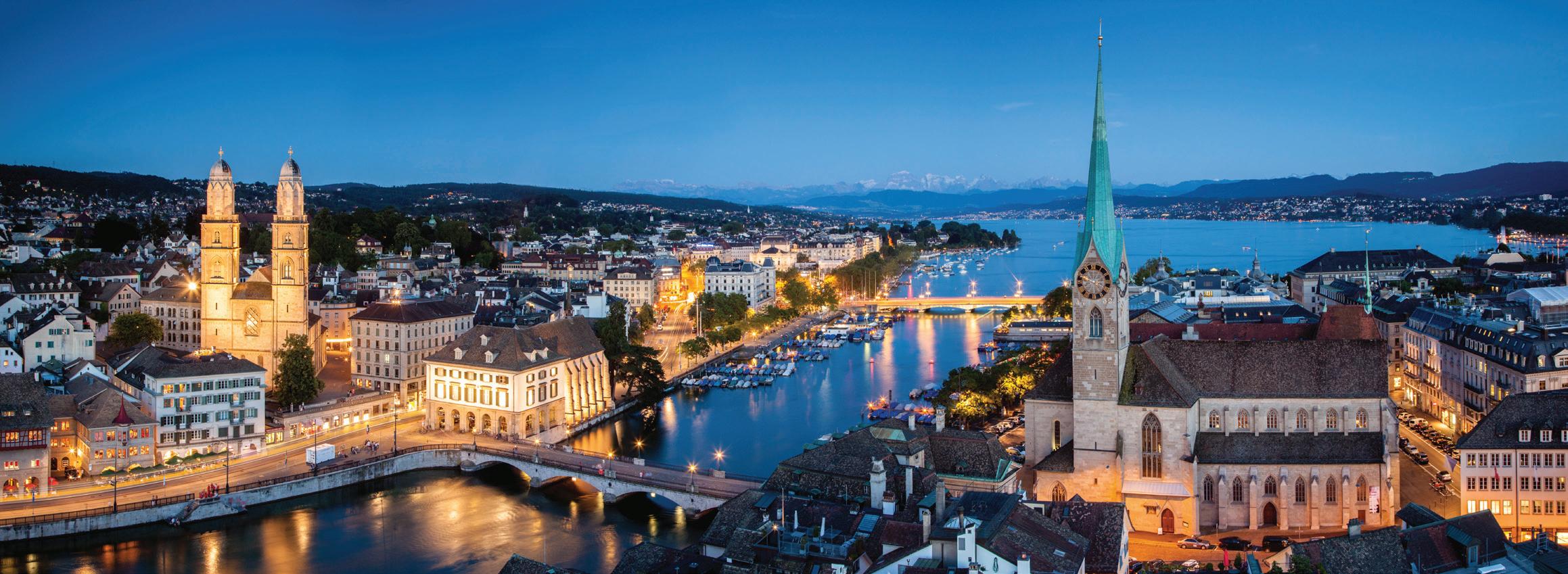
Evening view of the Schipfe on Limmatquai with Grossmuenster, Zurich.
Signature: Jan Geerk. Credit: Switzerland Tourism
Zurich by night with panoramic view over the whole lake basin.

STEPHEN GRAHAM
Critically acclaimed English actor
THE name Stephen Graham has become a new Industry Standard – spot a new film, play or TV series with him in the cast list and you just KNOW it’s worth watching.
He’s just won three Emmy’s for the amazing Netflix psychological crime drama Adolescence for acting, writing and producing the programme that had everyone talking and which has prompted social perceptions to change.
This should be no surprise to most fans as Stephen is quoted as insisting: “I’m drawn to dramas that make people think. I want to make an impact.”
Well, the 52 year-old Liverpudlian has certainly done that. Ever since, in fact, he first came to public attention playing the dimwitted Tommy in Guy Ritchie’s 2000 film Snatch.
His story, though, goes back to his upbringing in Kirkby, Lancashire where he was encouraged to try for an acting career while performing in a school production of Treasure Island.
“I was 10 and I played Jim Hawkins,” recalled Stephen, “and this great Liverpudlian actor called Andrew Schofield – he was Johnny Rotten in Sid and Nancy – came to watch it and he had a word with my mum and dad afterwards and told them I should have a go at the Everyman Youth Theatre. I’ve never looked back.”
After attending Ruffwood School, and receiving some theatrical training at the Rose Bruford College of Theatre and Performance, he began an acting career which initially saw him taking on bit parts.
All that changed, though, when he went with a friend who was auditioning for Snatch and was offered the role of Tommy. He followed that up with a role in Band of Brothers in 2001.
This exposure led to America taking notice of the quirky Brit actor and a part in Gangs of New York in 2002.
Then he had his breakthrough role as Andrew “Combo” Gascoigne in the 2006 film This is England. On TV, Stephen then reprised this role for This is England ’86, This is England ’88 and this is England ’90.

He played Al Capone in the HBO series Boardwalk Empire from 2010 to 2014 and a slew of high-profile appearances followed. These included film roles in Pirates of the Caribbean: On Stranger Tides and later in Pirates of the Caribbean: Dead Men Tell No Tales.
He was Anthony Provenzano in The Irishman in 2019 and Patrick Mulligan in Venom: Let There Be Carnage in 2021 and its sequel Venom: The Last Dance in 2024.
He has become a regular favourite in some of the best TV of the past decade, like the thought-provoking 2017 drama Little Boy Blue, based on the true-life murder of 11 year-old football fan Rhys Jones.
Stephen played Detective Superintendent Dave Kelly in the fourpart series, earning attention and accolades and ramping up his burgeoning acting reputation.
He had a pivotal role in the fifth series of multi award-winning Line of Duty in 2019 and played Hayden Stagg in the sixth series of Peaky Blinders in 2022.
One of his key skills is handling accents in his many roles and as a result he has accurately portrayed characters from various parts of Britain, Ireland and America. For example, he played Welsh detective Taff Jones in 2020’s TV series White House Farm based on more true-life murders.
“People in New York are surprised when I open my mouth,” he has stated.
Not content with all that exposure, he has also appeared in music videos like When The Sun Goes Down with Arctic Monkeys and Unlovable by Babybird which was directed by Johnny Depp. He has also been on Radio 4’s Desert Island Discs.
Unsurprisingly, his varied and highly accomplished work has brought him plenty of official recognition through awards.
He was nominated for an RTS Award for his work in The Street and for a British Independent Film Award for his role in this is England. He has received nominations for five British academy Television Awards and two British Academy Film Awards among others.
Stephen was also made an OBE (Officer of the Order of the British Empire) in 2023 for his services to drama, which he dedicated to his late mother.
In 2020, he set up a production company with his wife Hannah Walters. Matriarch Productions exists to “try to develop good stories that will be a broader representation of the cultural aspects of our society.”
He and Hannah – whom he met while they were both training as actors – have two children and live in Leicestershire.
“I wouldn’t rule out LA life but I love England,” he is reported as saying. “I have a lovely house and garden. I walk my kids to school –family is most important to me.
“I don’t need to move to the States. I love our little village, Ibstock.”
A plainly moral man with a strong sense of social justice, he applies his straightforward approach to his profession. “There has to be something that I like about a character for me to be able to play him,” he stated.
“I’m a mixed race lad from Liverpool. I get to play a lot of hard characters and some people perceive that’s what I’m like, but it’s great for me ‘cos they’re always the most interesting characters.”
In fact, he has had three fine portrayals onscreen of infamous gangsters – Baby Face Nelson in Public Enemies in 2009, Al Capone in Boardwalk Empire and Anthony “Tony Pro” Provenzano in The Irishman.
Stephen is quite traditional in various areas of his life. For instance, “I like how TV used to be,” he once commented. “Boys from the Blackstuff and Play for Today instead of Stars in Your Eyes and Celebrity Come Cook with Me or whatever. I hate all that stuff.”
In spite of his success and international recognition, Stephen Graham keeps his feet firmly on the ground.
“There are moments when you’re stepping out of a really nice car on to a red carpet and you feel inside like ‘this is quite nice.’ But I’m never whisked off my feet.”


Modernising Your Home
A Fresh Start Without Losing Its Soul
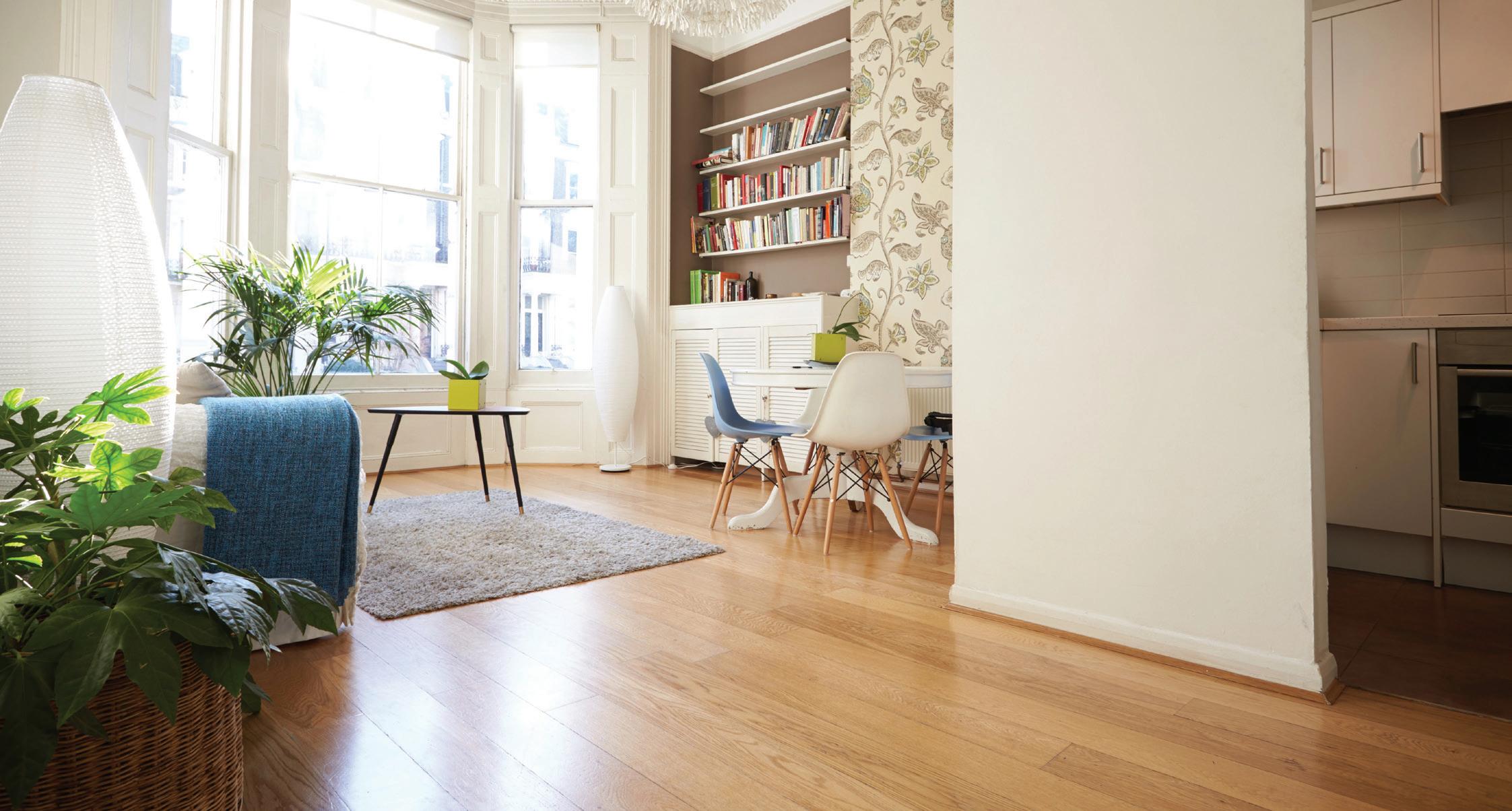
Modernising your home isn’t about chasing trends or turning your living room into something from a glossy brochure. It’s about making your space work better for the life you actually live now. Our homes change with us: children grow up, work moves online, knees get creakier, and priorities shift. What once felt perfect can quietly start to feel awkward, dark, cluttered or simply tired. Modernising is your chance to realign your home with your present self – not the one who moved in years ago.
The good news? Modernising doesn’t have to mean a full-scale renovation or eye-watering bills. Often, it’s about rethinking layout, improving light, embracing technology gently, and choosing finishes that feel calm, practical and contemporary without losing warmth.
Rethink How You Use Space
The biggest shift in modern homes isn’t style – it’s function. Rooms no longer have single jobs. Kitchens are now social hubs, dining rooms double as offices, and spare bedrooms become hobby rooms, gyms or guest spaces depending on the week.
Open-plan living is still popular, but it’s evolving. Instead of knocking down every wall, many homeowners are choosing “broken plan” layouts: partial walls, glass screens, sliding doors or shelving units that keep light flowing while giving you defined zones. This works particularly well if you want to contain noise or smells without losing that sense of space.
Ask yourself:
• Do I use every room the way it was intended?
• Is there dead space that could be better used?
• Could one room serve two purposes?
Modernising can be as simple as reassigning roles: turning a formal dining room into a snug or study, or carving out a work zone from a large bedroom with clever storage and lighting.
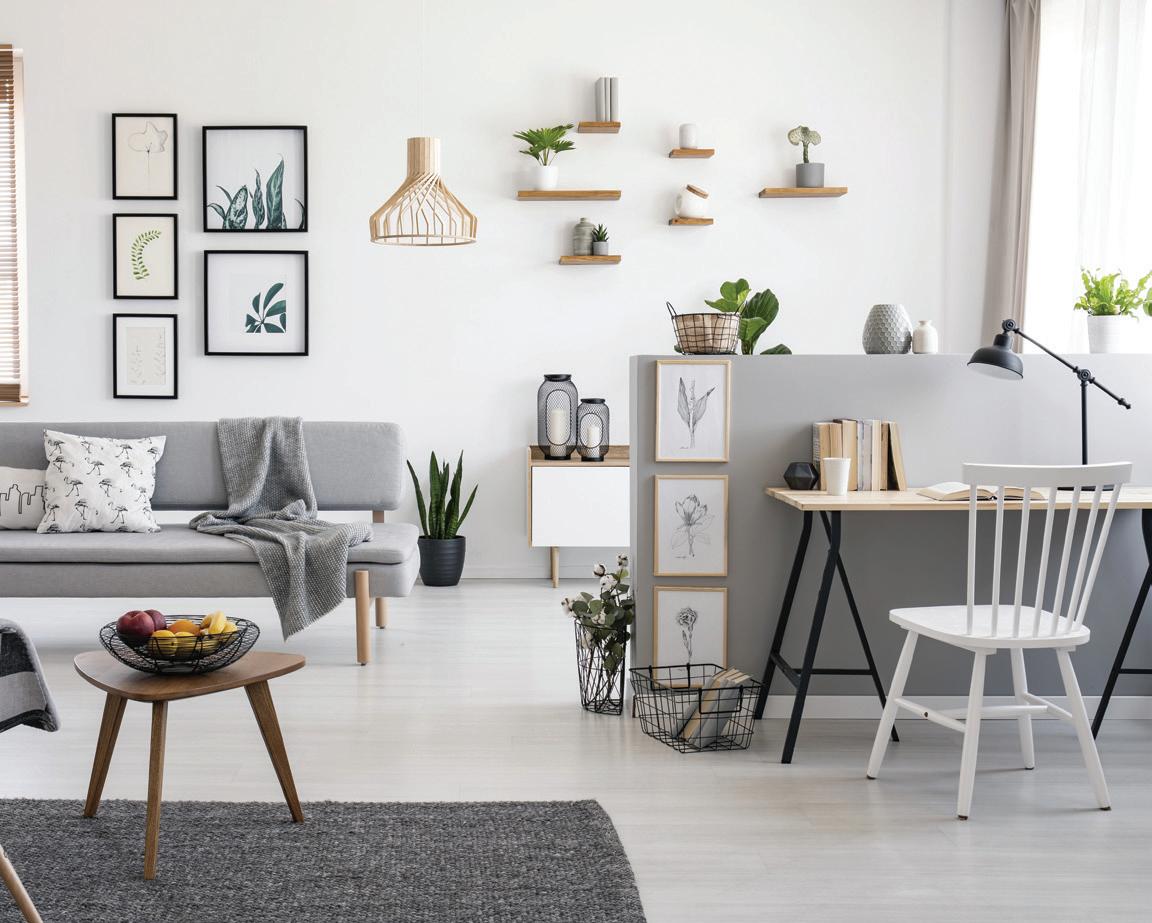
Let There Be (Better) Light
Lighting is one of the fastest ways to modernise a home – and one of the most overlooked. Many older homes rely on a single central ceiling light per room. Modern lighting is layered: ambient, task and accent lighting working together.
Think:
• Recessed spotlights for general brightness.
• Pendant lights over kitchen islands or dining tables for drama.
• Wall lights and lamps for softness and atmosphere.
• LED strips under cabinets, stairs or shelves for a subtle glow.
Natural light matters just as much. Lighter wall colours, larger mirrors, and sheer curtains can make rooms feel instantly bigger and brighter. If budget allows, adding roof lights or replacing old windows with slimmer-framed versions can completely transform dark spaces.
A modern home feels light, open and easy on the eyes – not harsh, but not gloomy either.
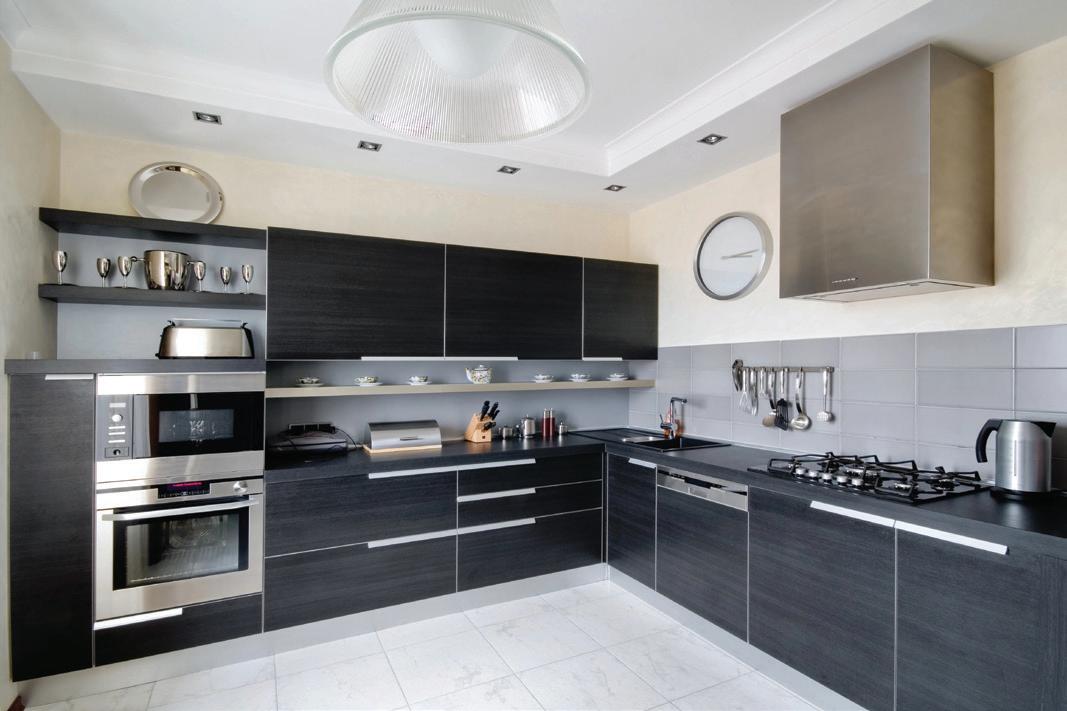
Update the Kitchen (Without Starting from Scratch)
The kitchen is often the emotional centre of a home, so modernising it brings an immediate sense of renewal. But you don’t need to rip everything out to make it feel current.
Small but powerful changes include:
• Replacing cupboard doors or handles.
• Painting tired units in warm neutrals or muted greens and blues.
• Swapping laminate worktops for composite or wood-effect surfaces.
• Installing modern taps with pull-out sprays or boiling-water functions.
• Upgrading splashbacks to glass, metro tiles or stone.
Modern kitchens prioritise clean lines and storage. Hidden bins, deep drawers and integrated appliances reduce visual clutter. Open shelving can look stylish, but only if you’re disciplined – otherwise, closed cupboards are your best friend.
A modern kitchen should feel practical first and stylish second. If it’s easy to clean, easy to move around in, and pleasant to sit in with a cup of tea, you’re winning.
Bathrooms: Calm, Not Clinical
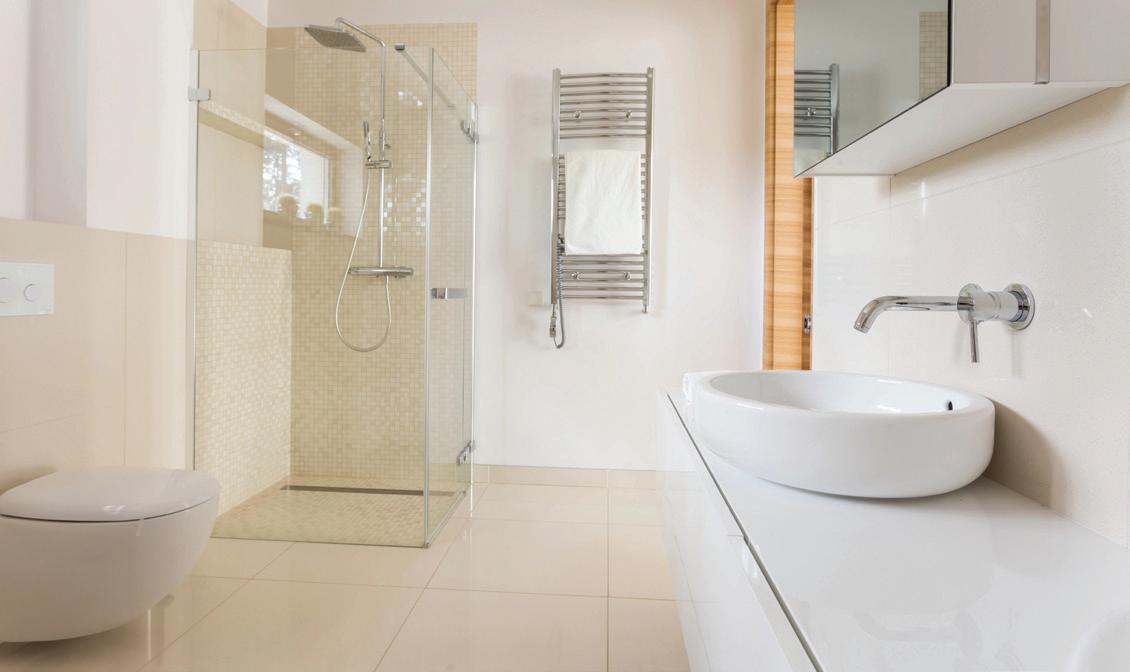
Modern bathrooms have moved away from the clinical white box and towards spa-like calm. Soft greys, warm stone tones and natural textures create a space that feels restful rather than sterile.
Key updates that modernise instantly:
• Walk-in showers instead of shower-over-bath.
• Wall-hung toilets and basins for a lighter look.
• Large-format tiles with minimal grout lines.
• Backlit mirrors and concealed storage.
Good ventilation is part of modernisation too. A bathroom that stays fresh, dry and mould-free will always feel newer than one that doesn’t, no matter how fancy the tiles.
If you’re planning ahead, consider accessibility: level floors, wider doorways and easy-grip taps future-proof your bathroom without making it look like a hospital.
Embrace Smart Technology (Gently)
Smart homes aren’t about talking to your toaster. They’re about convenience, safety and efficiency. Used well, technology modernises your home quietly in the background.
Simple upgrades include:
• Smart thermostats for better heating control.
• App-controlled lighting and plugs.
• Video doorbells and security cameras.
• Smoke and carbon monoxide alarms that send alerts to your phone.
These systems don’t need to be intrusive.You can start with one or two and build up gradually. A modern home feels responsive: warm when you arrive, well-lit when you need it, secure when you’re away.
The aim is not to make your home complicated – it’s to make it easier.
Declutter and Simplify
Nothing dates a home faster than clutter. Modern interiors breathe. That doesn’t mean they’re cold or empty – just that every item has a purpose or a place.
Modernising often begins with:
• Editing down furniture.
• Creating better storage.
• Replacing bulky units with streamlined alternatives.
• Hiding wires, chargers and routers.
Built-in storage can transform awkward spaces like under stairs or alcoves. Ottomans, benches with hidden compartments and beds with drawers all help keep surfaces clear.
Visually, modern homes favour:
• Fewer, better-quality pieces.
• Calm colour schemes.
• Consistent materials across rooms.
You don’t need to throw everything out. You just need to be choosier about what stays.
Colour and Texture: Subtle Is the New Bold
Modern doesn’t mean white and grey everywhere. It means thoughtful colour choices that feel intentional rather than accidental.
Popular modern palettes include:
• Warm neutrals (beige, stone, mushroom).
• Muted greens and blues.
• Soft terracotta and clay tones.
• Charcoal used sparingly for contrast.
Texture replaces pattern: wood, linen, wool, stone and metal working together to add depth without chaos. A modern home feels layered rather than busy.
One simple rule: limit each room to three or four main colours and stick to them.
Floors That Flow
Flooring plays a huge role in how modern a home feels. Where possible, continuous flooring across spaces creates a sense of flow and scale.



Look forward to ageing backwards
Modern options include:
• Engineered wood.
• Luxury vinyl planks.
• Polished concrete or microcement.
• Large-format tiles.
Carpet still has a place – especially in bedrooms – but modern carpets are plain, textured and neutral rather than heavily patterned.
Your floor is the backdrop for everything else. If it looks modern, the whole room benefits.
Modernising With Meaning
The best modern homes don’t feel like showrooms. They feel lived in, loved, and quietly up to date. They respect the past while making room for the present.
Modernising isn’t about:
• Copying Instagram.
• Spending the most money.
• Erasing character.
It is about:
• Improving comfort.
• Making spaces work harder.
• Reducing stress.
• Planning for the future.
Whether you start with a new light fitting or end up reconfiguring your whole ground floor, every small step moves your home closer to being what it should be: a place that supports your life rather than fighting it.
A modern home is not a style. It’s a mindset. It says: this house grows with me.





Living at The Standard is so much more than owning a beautiful, 1 or 2-bedroom apartment exclusively for residents aged 55+.




Included in the monthly service charge is Anchor’s award-winning Be Well 360 service. It’s tailored to each participant’s needs and abilities, akin to having your own personal trainer or life coach onsite. This pioneering, holistic programme will see in residents:



To �nd out more about later living at The Standard, including the Be Well 360 service, come visit us and see for yourself. We’d be delighted to welcome you for a complimentary co�ee and cake and a relaxed, no-obligation tour.



“I feel �tter, happier, and more connected than ever. This programme has transformed my daily life.”



Schoolreaders Volunteers Needed

One in four children in England leave primary school unable to read to the expected standard for their age. Reading is the gateway to learning across every subject, and without strong reading skills pupils may struggle to fully access their secondary education, and future opportunities beyond.
At Schoolreaders, the vision is simple: every child should learn to read well.
Schoolreaders is the largest in-school literacy charity in England, recruiting, training and placing volunteers into local primary schools to listen to children read one-to-one each week. These regular sessions help children develop fluency, comprehension and, just as importantly, their reading confidence.
This year, Schoolreaders is proud to be a lead partner in the National Year of Reading. As part of this national effort to inspire a lifelong love of books, the charity has pledged to deliver 1.5 million reading sessions to support children’s literacy across the country.
Volunteers are central to achieving that goal. Across the country including Merseyside, Southport and Ormskirk, Schoolreaders is currently recruiting people who can spare just one hour a week to listen to children read in primary schools. You don’t need teaching experience – just patience, encouragement and a love of books to share.
While the benefits for children are clear, volunteering can be equally rewarding for those who take part. The Schoolreaders Annual Impact Survey found that 85% of volunteers felt they were making a meaningful difference to children’s lives, while 73% reported an increased sense of purpose and personal fulfilment.
As one volunteer explains:
“This is such a fulfilling thing to do and I love it. I have watched my children progress from basic low-level books to reading more advanced stories, which they obviously enjoy. We discuss the books
in a way far wider than just the actual words. Improving their ability to communicate their thoughts, especially with adults, is an important skill they’re learning. Hopefully they’ll go up to the next class a little more capable because of my input.”
By giving just one hour a week, volunteers can help transform a child’s reading.
Find out more about Schoolreaders at Schoolreaders.org/volunteer Or contact us at: office@schoolreaders.org or on 01234 924111

Spring Gardening Tips
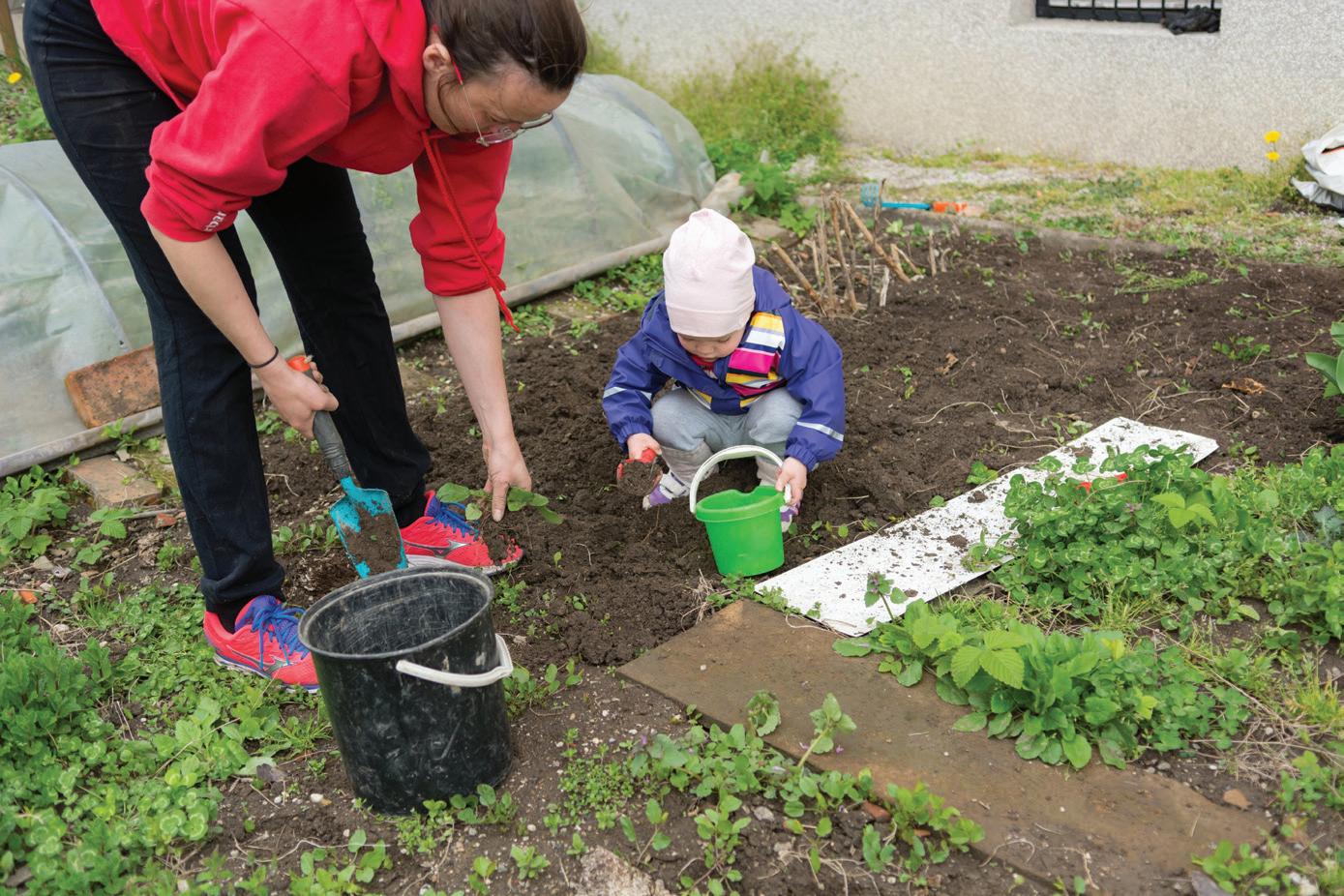
Spring never really arrives all at once. It tiptoes in—first with longer afternoons, then with that unmistakable smell of damp soil warming up after winter. For gardeners, this is the season of possibility. The beds may still look a little bare, but beneath the surface, everything is waking up, ready to grow.
Spring gardening is less about instant gratification and more about optimism. You plant seeds that look impossibly small and trust that, given time and care, they’ll turn into something abundant. That act alone feels quietly radical in a world that wants everything now. Gardening in spring teaches patience, attention, and faith in processes you can’t rush.
The first job of the season is not planting but observing. Walk your garden slowly. Notice where the sun lingers, where water pools, which plants survived winter with grace and which struggled. Spring has a way of revealing the true character of a garden. Frost damage, compacted soil, and broken branches tell stories about the past months—and offer clues about what needs to change.
Soil is the real star of spring. Before the first seed goes in, it deserves care. Loosening beds, adding compost, and letting earthworms do their quiet work sets the tone for the whole season. Healthy soil is not glamorous, but it’s the difference between a garden that merely survives and one that thrives. Think of it as investing early in long-term returns.
Spring also invites restraint. It’s tempting to plant everything at once when the weather turns mild, but the garden rewards those who pace themselves. Cool-season crops like peas, lettuce, and radishes are eager to get started, while tender plants prefer to wait until the threat of frost truly passes. Learning when not to plant is just as important as knowing when to begin.
There’s an emotional rhythm to spring gardening that’s easy to overlook. After winter’s stillness, even small tasks—pruning roses, dividing perennials, sowing herbs—feel deeply satisfying. These rituals reconnect us with time measured in weeks and months rather than notifications and deadlines. The garden doesn’t care how busy you are; it responds only to consistent attention.
Spring is also a season for editing. Some plants will need to be moved, thinned, or removed altogether. This can feel harsh, but it’s an act of care. Space, light, and airflow matter. Letting go of what no longer works makes room for stronger growth. In that sense, gardening becomes a quiet lesson in renewal—not everything is meant to stay.
By the end of spring, the garden rarely looks finished. And that’s the point. It’s alive, changing daily, full of promise rather than perfection. The real reward isn’t just the harvests to come, but the way spring gardening gently shifts our perspective. It reminds us that growth is incremental, effort compounds, and new beginnings often start in the dirt, with our hands dirty and our hopes firmly planted.
Start with the soil
Before planting, clear debris and loosen compacted soil. Add compost or well-rotted manure to replenish nutrients lost over winter. Healthy soil leads to stronger plants and fewer problems later.
Clean up carefully
Remove dead stems and leaves, but be gentle. Beneficial insects often overwinter in garden debris. Delay heavy cleanup until temperatures consistently reach 50°F (10°C)


Start seeds smartly
• Start seeds indoors 6–8 weeks before the last frost date
• Use seed trays with drainage holes.
• Keep soil moist but not soggy.
• Gradually “harden off” seedlings before moving them outside.
Don’t rush planting
Warm days can be misleading. Check your local frost dates and soil temperature before planting tender seedlings. Cool-season crops like spinach, peas, and lettuce can go in early, while tomatoes and peppers should wait.
Choose the Right Plants for Your Area
Check your local climate zone before planting. Popular springfriendly plants include:
• Vegetables: lettuce, spinach, peas, carrots
• Herbs: parsley, cilantro, chives
• Flowers:
• Tulipa (tulips)
• Narcissus (daffodils)
• Petunia
Plan for Continuous Growth
• Stagger plantings every 1–2 weeks for continuous harvest.
• Mix flowers and vegetables for better pollination and visual appeal.
Divide and transplant
Overcrowded perennials benefit from division in spring. Plants like hostas, daylilies, and ornamental grasses respond well and reward you with healthier growth—and free plants.
Feed early, but lightly
Use slow-release fertilizers or organic feeds as plants begin active growth. Over-fertilizing too early can encourage weak growth and fewer blooms.
Watch for Pests
• Inspect plants regularly.
• Remove pests by hand when possible.
• Encourage beneficial insects like ladybugs.
Mulch after the soil warms
Mulch helps retain moisture and suppress weeds, but applying it too early can keep soil cold. Wait until the ground has warmed, then apply a light layer around plants.
Prune with purpose
Spring is ideal for pruning many shrubs and perennials, but timing matters. Prune summer-flowering plants now, and wait until after blooming to prune spring-flowering shrubs like lilac or forsythia. Cutting back dead wood on shrubs and fruit trees may feel drastic, but it is an invitation for new growth. Clearing away what is tired or damaged allows sunlight and airflow to reach the heart of the plant, giving it the strength it needs to flourish.
Stay ahead of weeds
Spring weeds are easier to remove when young. Regular, quick weeding sessions prevent them from establishing deep roots and competing with your plants.
Plan for water
Inspect hoses, irrigation systems, and rain barrels early. Consistent watering now helps roots establish deeply, making plants more resilient later in the season.
Water Wisely
• Water early in the morning.
• Deep, less frequent watering encourages stronger roots.
• Avoid wetting leaves to reduce disease risk.
Observe and adjust
Spring reveals what worked—and what didn’t—last year. Take notes, move plants if needed, and adjust spacing or sun exposure while it’s still early.
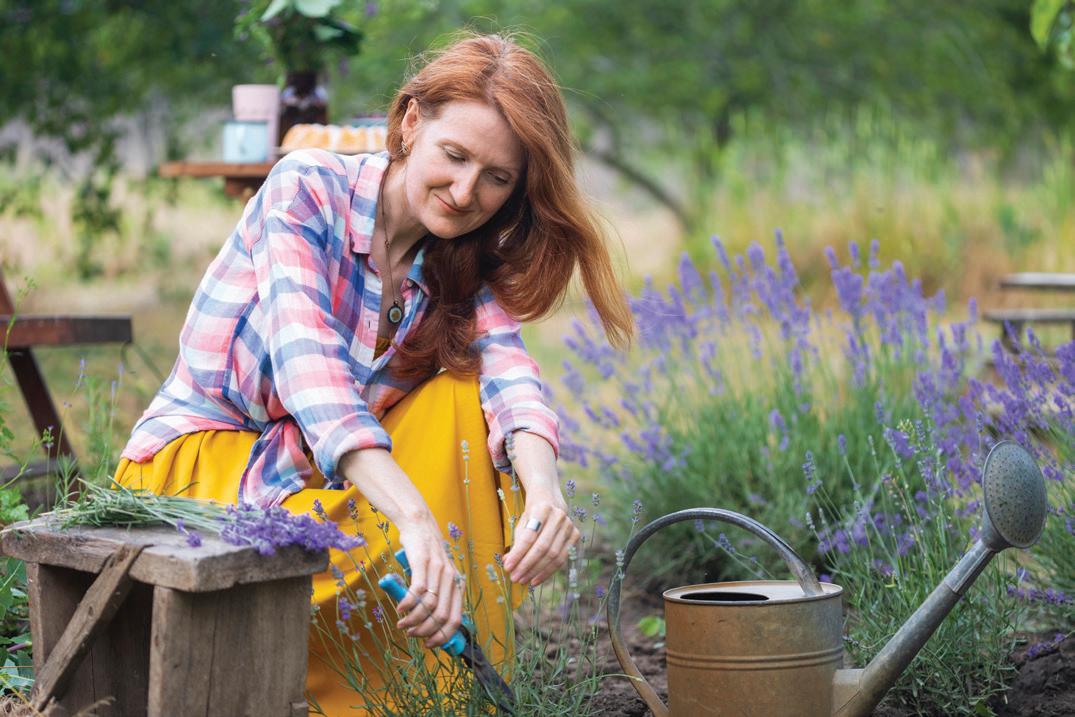
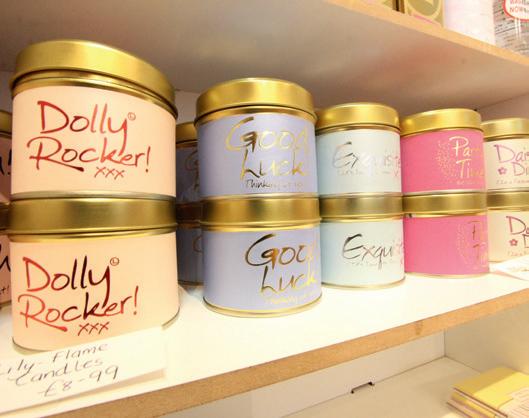
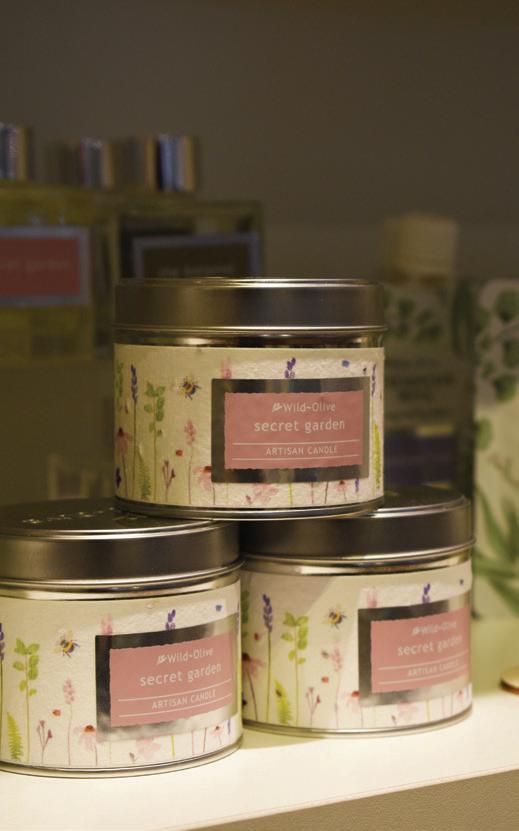
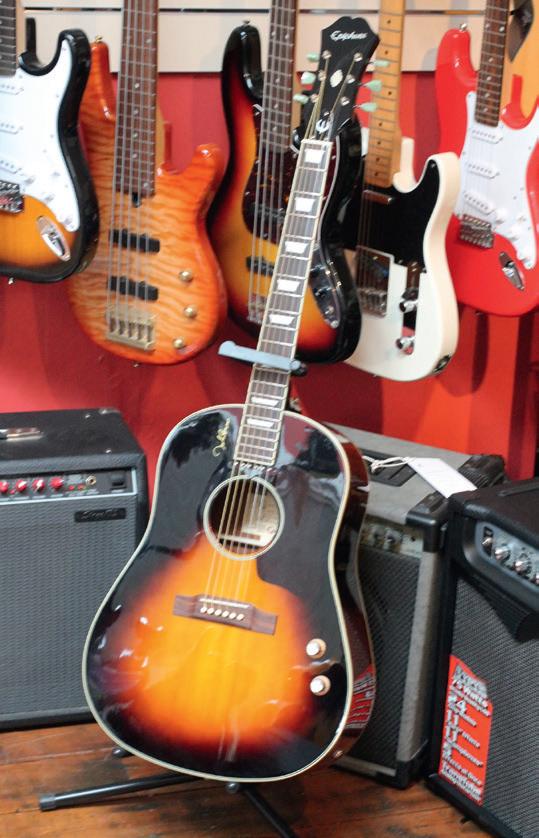
A Warm Welcome Awaits You at Heskin Hall Shopping Village
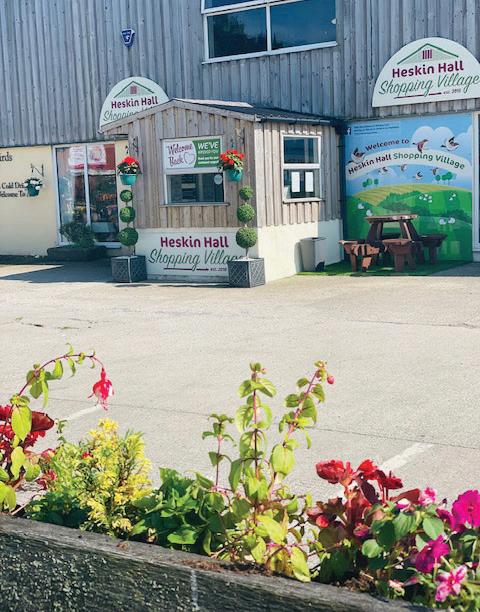
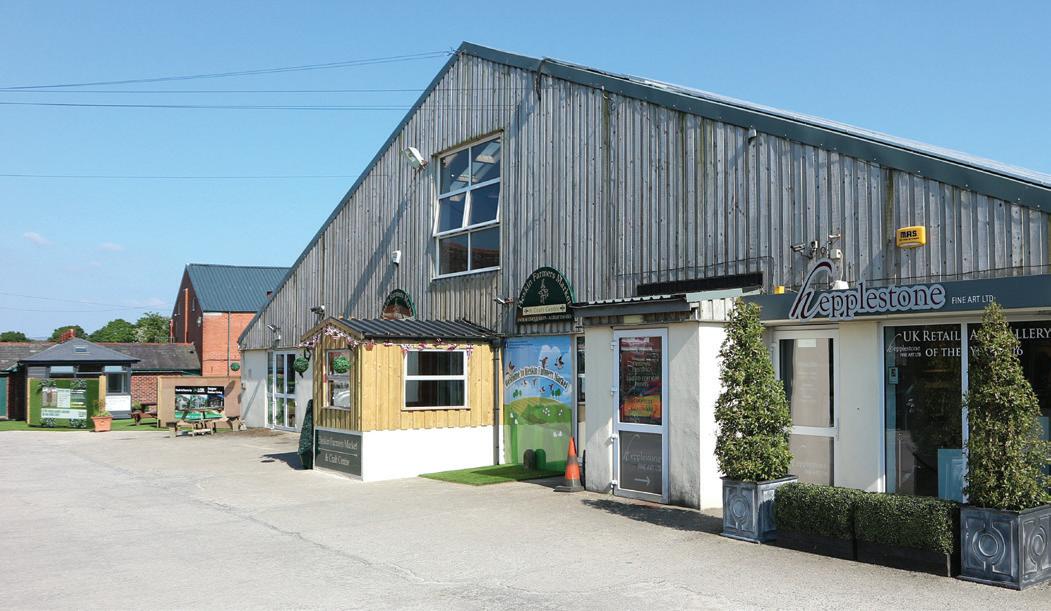
Nestled in the heart of rural Lancashire and surrounded by rolling countryside, Heskin Hall Shopping Village offers a truly refreshing shopping experience. Designed to be more than just a place to browse, the village brings together over 40 independent boutique shops and businesses under one welcoming roof, creating the perfect destination for a relaxed and enjoyable day out. With free entry and free, easy parking, visitors can take their time exploring everything the village has to offer.
Heskin Hall Shopping Village is proud to showcase a diverse mix of independent retailers, each bringing its own personality and passion. From unique gifts for all the family to stylish ladies clothing, handbags and jewellery, there is something for every taste. Shoppers can discover beautifully crafted homewares, gifts, hair and beauty services, a bathroom showroom, wood-burning stoves, cake decorating supplies, toys, books and much more. Art lovers will also enjoy visiting the leading on-site art gallery, Hepplestone Fine Art, while food enthusiasts will be spoilt for choice with high-quality local produce available throughout the centre.
Food plays a central role in the Heskin Hall Shopping Village experience. Visitors can browse the well-stocked deli, pick up fresh local fruit and vegetables, or treat themselves to a scoop of the ever popular Fredericks ice cream. At the heart of the food offering is the
village’s quintessential British butchers shop. Supplying beef and lamb from their own farms, the herd is free range and 100% grass fed, producing natural, high-quality meat with exceptional flavour. The beef is reared for 24 months and dry matured for 28 days, resulting in tenderness and depth of flavour that truly stands out. All other meats are also free range and carefully sourced from trusted farms and producers where quality always comes first.
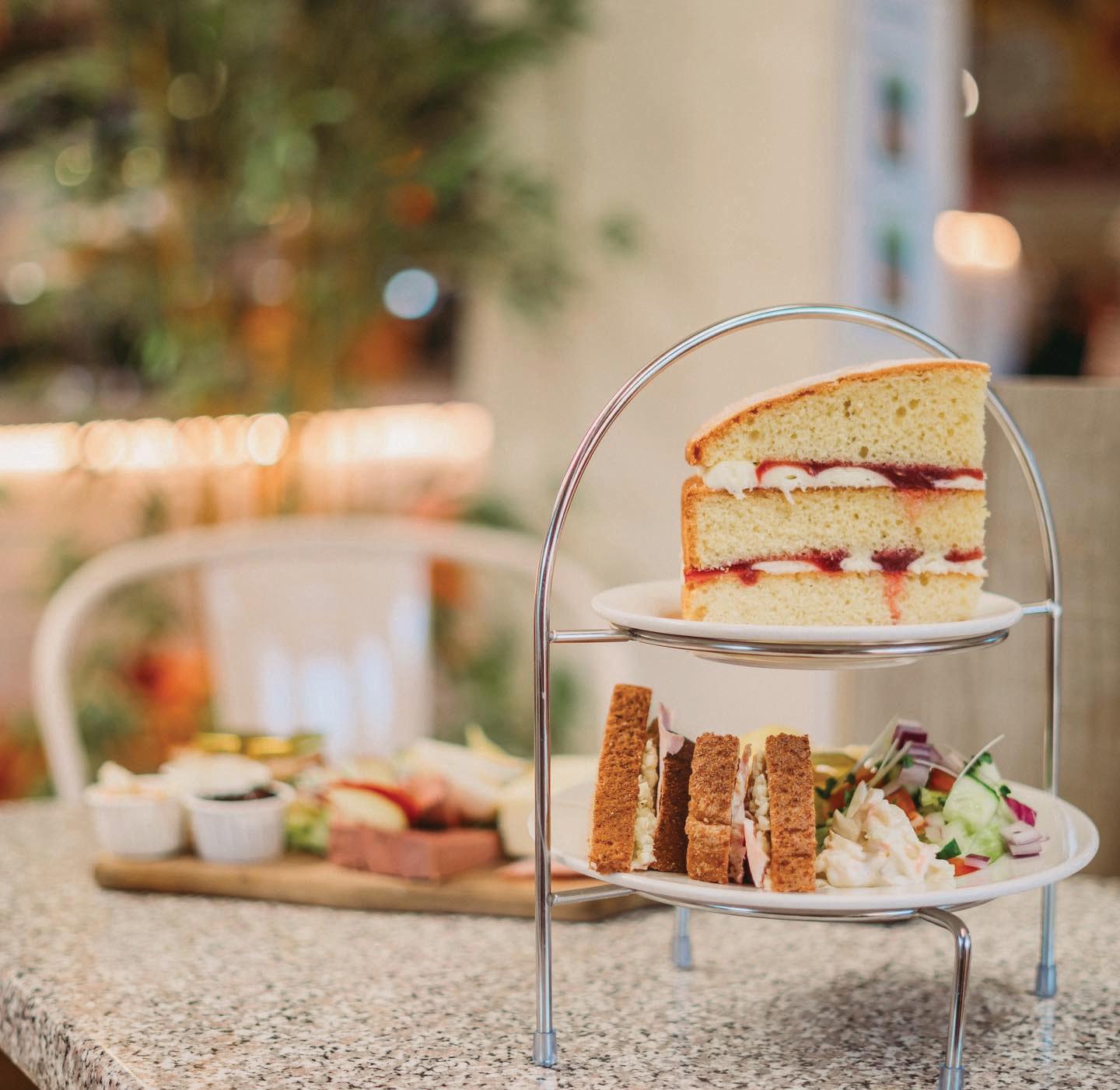
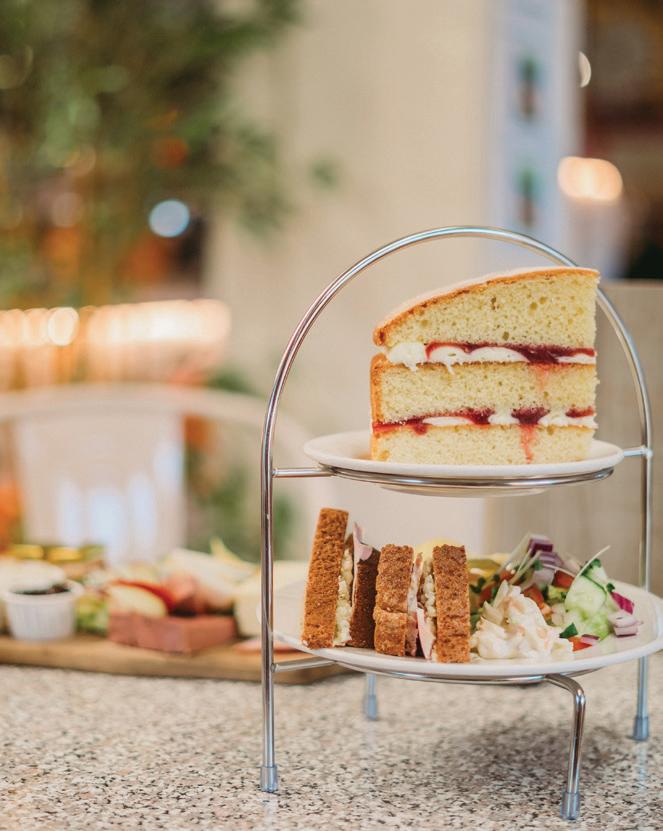
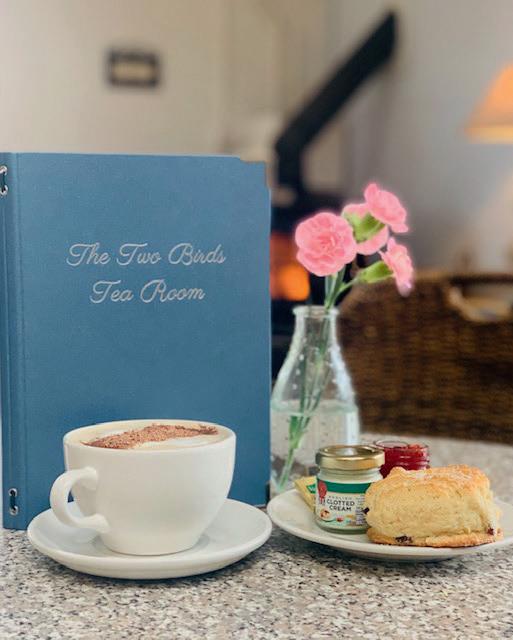
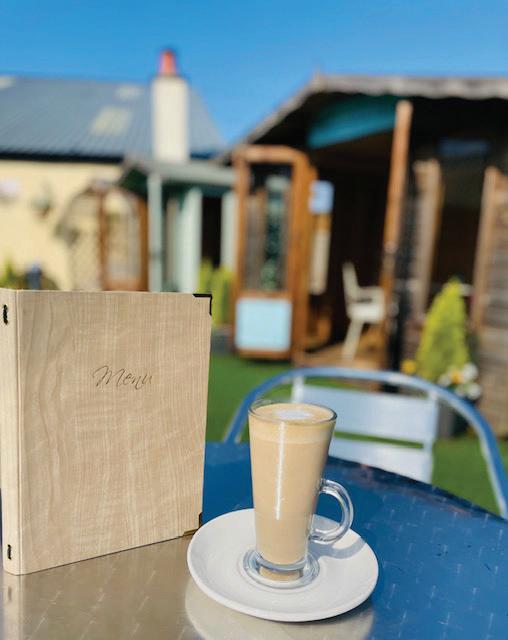
No visit would be complete without a stop at The Two Birds Tea Room, an ideal place to pause and relax. Whether you’re looking for a light snack or a leisurely lunch, the menu offers homemade soup, sandwiches, toasties, wraps, salads, daily specials and indulgent afternoon teas. There is also a tempting selection of cakes, alongside coffee, wine and beer. Wherever possible, ingredients are sourced from the food shops within the village, ensuring freshness and supporting local businesses.
Conveniently located just minutes from Junction 27 of the M6, Heskin Hall Shopping Village is easy to reach from Preston, Bolton, Southport, Liverpool, Manchester and surrounding Lancashire towns. It is also just two minutes from Park Hall and the former Camelot site near Chorley. Combining rural charm with excellent accessibility, the village is a perfect choice for anyone seeking a memorable shopping day out in Lancashire.
Whether you’re visiting for the first time or returning for another relaxing browse, Heskin Hall Shopping Village promises a warm welcome, exceptional independent shopping and a truly enjoyable experience for all.





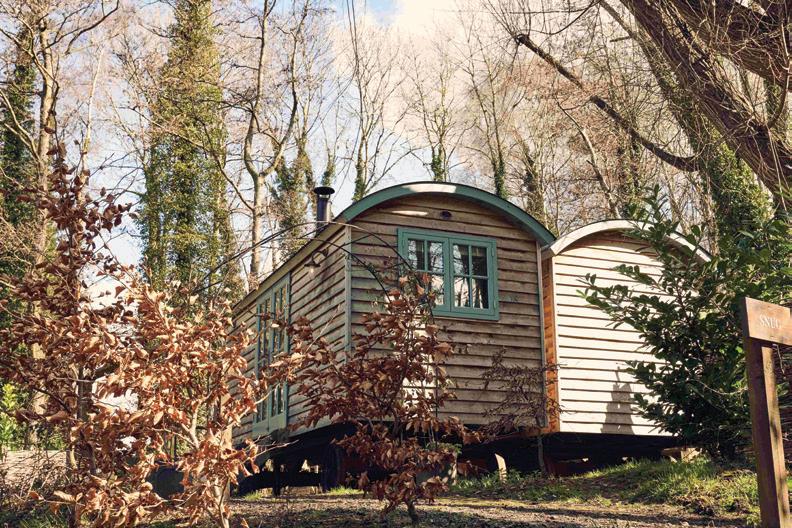
NOW here is something really different – staying in total luxury in the middle of beautiful countryside in a quirky, unique retreat resort.
Set high on Fish Hill - part of the 500-acre Farncombe Estate above Broadway in the Cotswolds - The Fish is made up of restored Cotswold stone buildings including a Coach House, Stables and other original structures.
THE FISH
By Steve Howarth
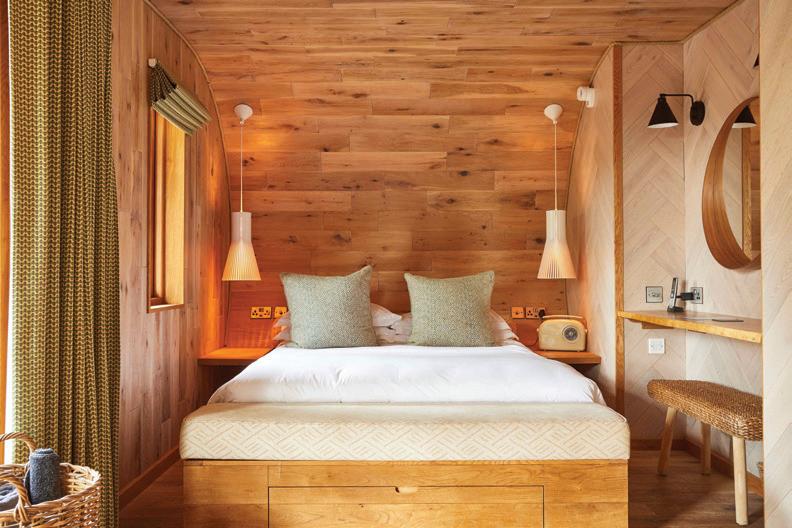
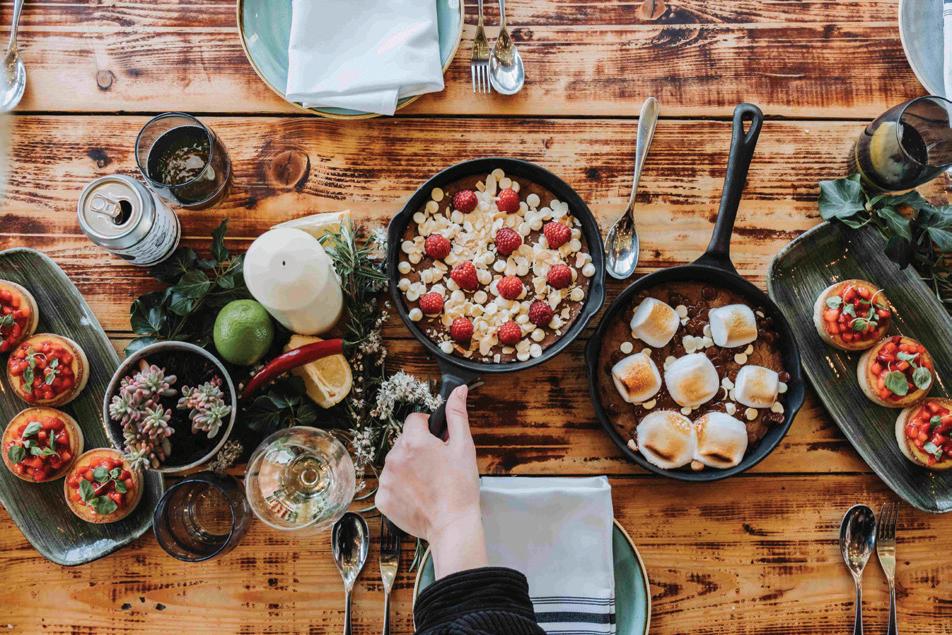
It boasts 63 individually styled rooms and suites as well as handcrafted shepherd’s huts with wood-burning stoves, roll-top baths, showers and private hot tubs; rustic shepherd-style huts with private hot tubs, terraces, underfloor heating (adults-only) and treehouseswoodland cabins which sleep up to 4 with bunk beds, dual outdoor baths and deck seating (one is even dog-friendly).
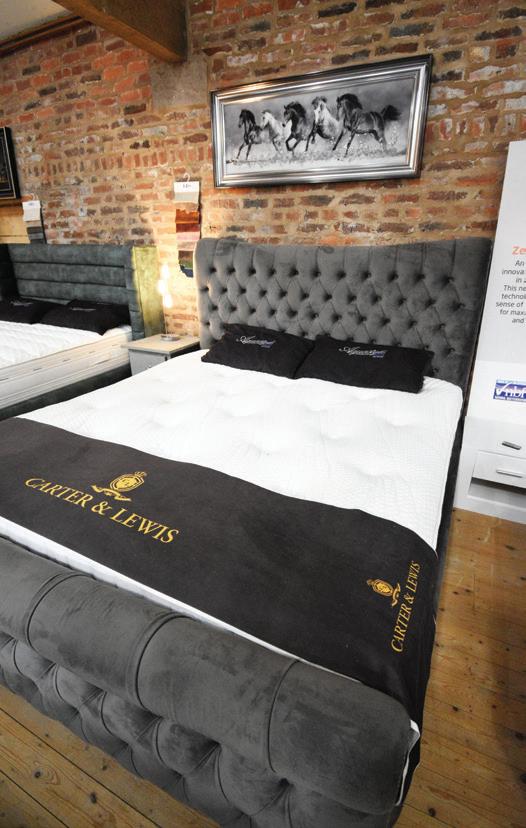
We stayed in one of the more traditional stables rooms which are bedrooms/suites decorated in calming neutral tones and again many are dog-friendly. Our generously-proportioned suite also boasted a log burner, roll top bath and super king-sized bed.
The Coach House, Stables and nearby Outhouse recently underwent a £4 million makeover and now feature ‘Scandi-country’ chic interiors in the buildings and new glamping-style accommodation.
Set in spectacular rolling countryside as well as walks and woodland trails there are activities like archery, axe-throwing and falconry. The estate is also a perfect base to explore the magnificent Cotswolds and its many attractions.
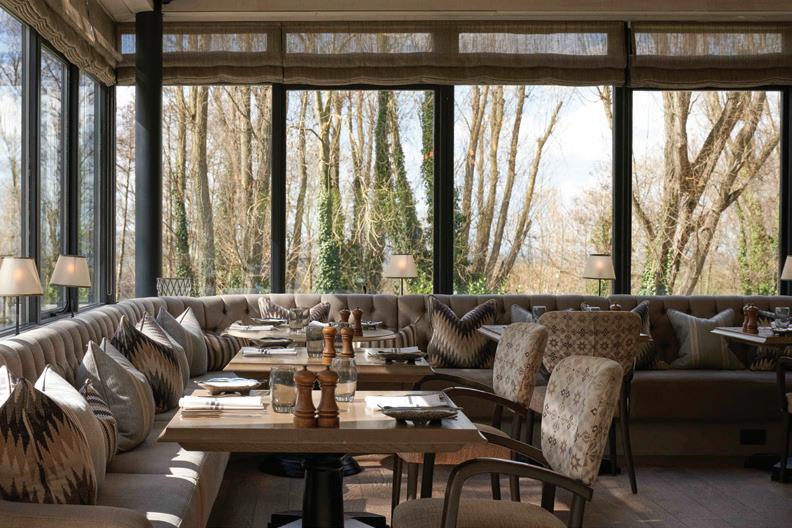
One big attraction is the superb food on offer at the on-site Hook restaurant which has a seafood-focused, high-quality menu served in comfortable surroundings that are extensive yet cosy with several bars and lounges boasting log fires, board games and craft beers.
Outdoor BBQ-style group dining is available year-round while private dining is also catered for with various spaces including the
Conservatory (seats up to 20), Green Room or Feasting Deck - for special events.
We went on a damp Friday night and the place was busy (always a good sign) with locals as well as hotel guests. The Fish also has dog-friendly features, even a pooch playground and boot room with dog shampoo and dog-walker essentials.
The food was excellent and while my better half stuck to the seafood vibe with a generous and delicious fish dish I went off script a little with a superb rib-eye steak that melted in the mouth.
Rooms at the Fish start from £275/night for B&B double up to £695 for a treehouse which sleeps four. For more information see https://thefishhotel.co.uk/.
Elsewhere on the sprawling Farncombe Estate is Dormy House Hotel, a beautifully restored 17th-century iconic hostelry which also underwent a multimillion-pound refurbishment and now features oak-panelled lounges, roaring log fires and plush cosy nooks with 39 individually styled rooms and suites. It also has a 16m indoor infinity pool, outdoor hydrotherapy/terrace hot tub, Scandi-style thermal suite, Gym, meditation suite, wave-massage bed and float tank plus six treatment rooms. More information at https://dormyhouse.co.uk/
Also part of the Farncombe Estate is Foxhill Manor - a Grade IIlisted Arts & Crafts manor house, converted into an intimate 5-star private-house hotel with five bedrooms and three suites accommodating up to 16 guests.
There is an option to book for exclusive use, ideal for weddings, celebrations, corporate retreats, or house parties (the ballroom holds up to 60–70 guests!). See https://foxhillmanor.com/
Saturday Morning
With James Martin
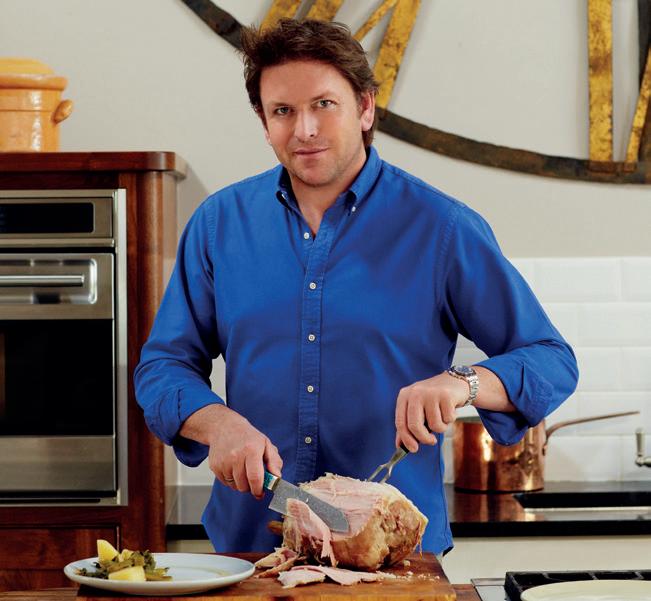
Host of ITV’s flagship cookery show, James Martin’s Saturday Morning, James Martin is one of the UK’s most popular TV chefs, whose enthusiasm and passion for food have won him countless fans. His accessible approach to cooking has been showcased across bestselling books including Cheese, James Martin’s Spanish Adventure, Potato, Butter, James Martin’s Great British Adventure and James Martin’s French Adventure. He regularly appears on the BBC, ITV and Food Network, as well as demonstrating live at the BBC Good Food Show and touring the UK with his own one-man show. James has compiled a selection of dishes that will have you cooking from scratch through the week and into the weekend.
COQ AU VIN
This is a classic dish that I learnt when cooking in France. You can actually use red or white wine, but soaking the chicken in the wine and then sealing it off properly is key. I love a good French Bistro dish, especially if you’re sitting in Paris watching the world go by. Chef Claude Bosi is a great friend of the show and I cooked this dish with him. Even the French chefs with the Michelin-starred restaurants love the classic French brasserie food because, cooked properly, they are some of the best dishes around. Soak the chicken portions in the wine overnight in the fridge.
Serves 4–6
1.8kg chicken, portioned into 8 pieces
500ml red wine
2 tablespoons plain flour
25g butter
500ml chicken stock
150g pancetta lardons
100g pearl onions
250g small chestnut mushrooms
a few sprigs of thyme and parsley tied with a bay leaf
sea salt and freshly ground black pepper
To serve mashed potatoes
METHOD
Preheat the oven to 180ºC/1600C fan.
Drain the chicken, reserving the wine. Put the chicken in a roasting tray and dust in the flour. In a large frying pan, over a medium-high heat, fry the chicken in the butter until browned on both sides.
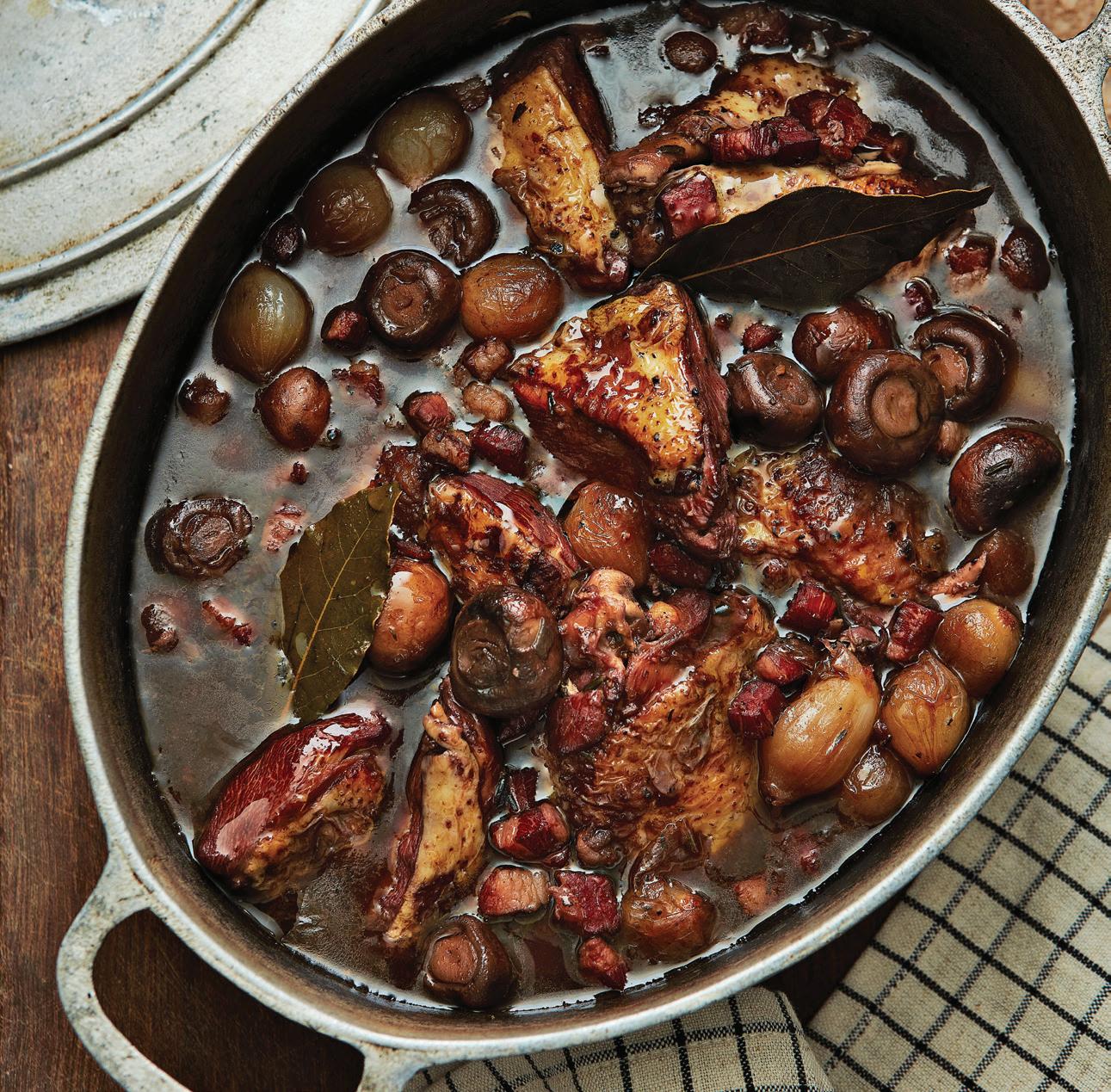
Put the reserved wine in a large, ovenproof pan and add the chicken stock. Add the browned chicken, the lardons, onions, mushrooms, bouquet garni, salt and pepper and bring to the boil, then pop a lid on and put in the oven for 11/4 hours, or until the chicken is completely tender.
Serve with mashed potatoes.
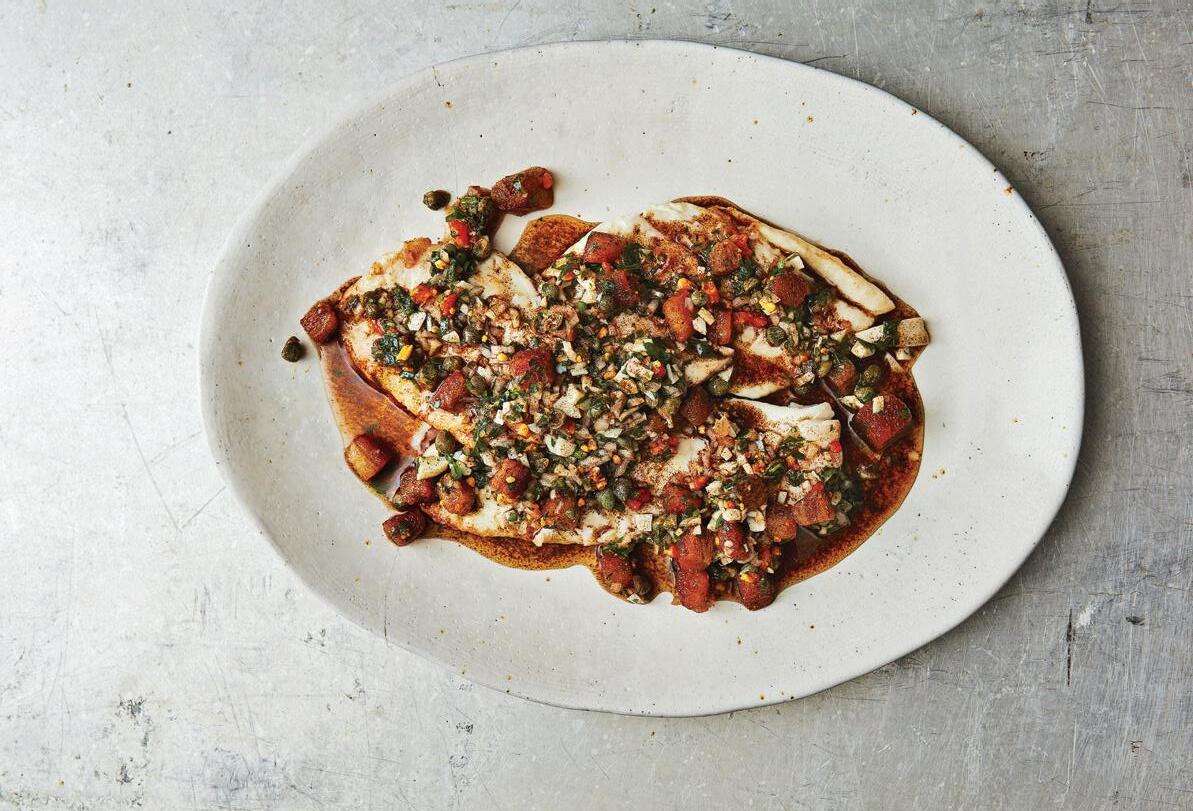
PLAICE WITH SAUCE GRENOBLOISE
This is another dish from my restaurant Chewton Glen. It was one of the first dishes I put on the menu.When I was working at the Waterside with Michel Roux Snr, he taught me never to cook fish fillets in too hot a frying pan as it makes the fish curl up and dry out.The most foolproof way to cook a delicate fish is on a well-buttered baking tray and in the oven.
METHOD
Preheat the oven to 2000C/180ºC fan.
Pop the fish into a roasting tray, dot with the butter and cook in the oven for 5–10 minutes, depending on the thickness of the fillets. Meanwhile, to make the grenobloise, heat some vegetable oil in a heavy-based pan and deep-fry the capers and sourdough croûtons until
Serves 2
2 x 200g plaice fillets
50g butter, cubed
For the grenobloise
vegetable oil, for deep-frying
2 tablespoons capers
2 slices of sourdough bread, cubed
1 hard-boiled egg, cooled, peeled and diced juice of 1 lemon
1 small bunch each of parsley and mint, chopped 1/2 shallot, finely diced
1 garlic clove, chopped sea salt and freshly ground black pepper
For the butter sauce
150g butter and juice of 1 lemon
golden, then drain on kitchen paper. Add them to the remaining sauce ingredients on a board and chop and mix them all together.
To make the butter sauce, heat a pan until very hot, add the butter and cook, stirring, for about 3 minutes until nut brown, before adding the lemon juice.
To serve, place the fish onto a plate/platter, then spoon the grenobloise on top and spoon over the nut brown butter sauce.



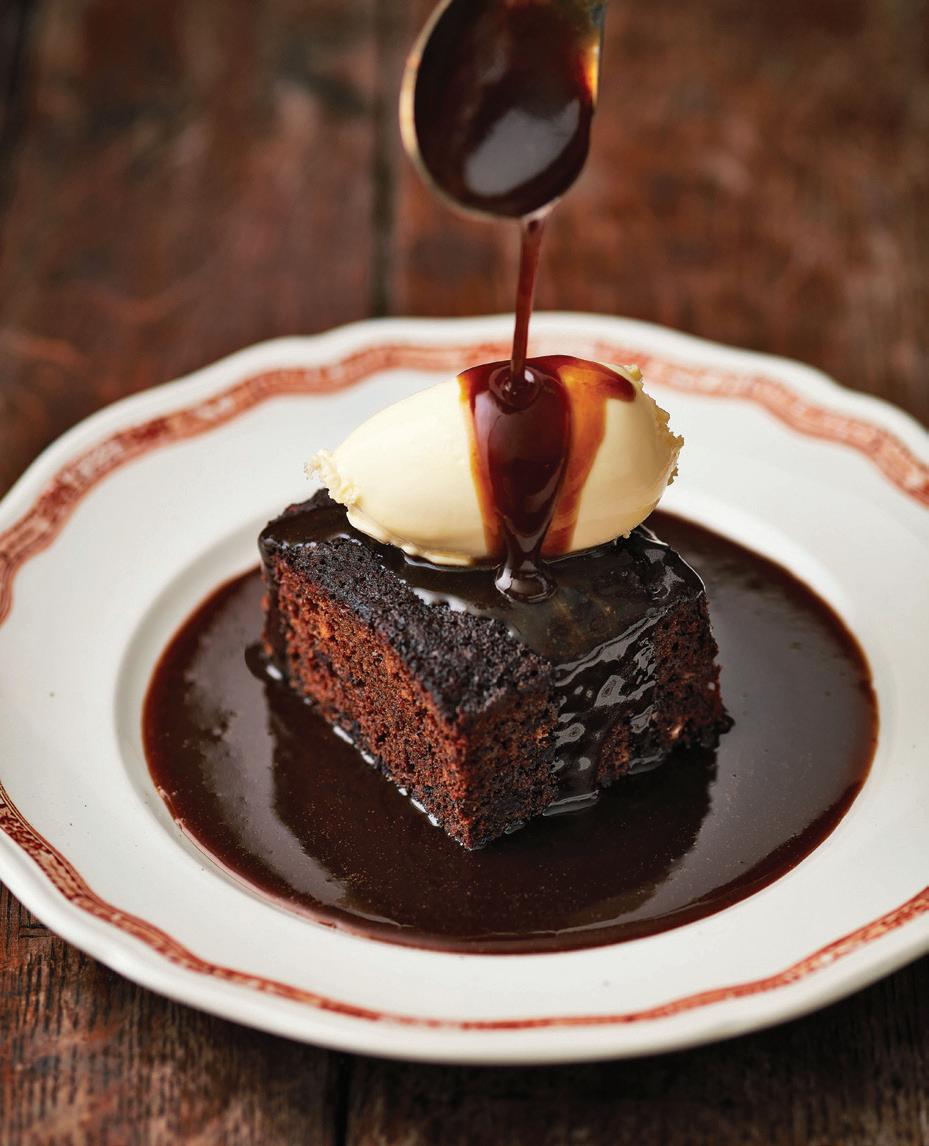
STICKY TOFFEE PUDDING WITH MISO
CARAMEL SAUCE & CLOTTED CREAM
There are loads of variations of sticky toffee pudding, and I love to put my own spin on it. Miso is a brilliant savoury ingredient and when added to caramel it’s amazing, but it has to be high-quality miso!
METHOD
Serves 6
290ml boiling water
200g stoned dates
50g butter, softened, plus extra for greasing
175g Demerara sugar
1 tablespoon golden syrup
2 eggs, beaten
2 tablespoons black treacle
200g sifted plain flour
1 teaspoon vanilla bean paste
1 teaspoon bicarbonate of soda
Preheat the oven to 1800C/160ºC fan. Grease a 20cm square, 5cm deep cake tin and line it with baking parchment.
Pour the boiling water over the dates in a bowl and leave to sit for 5 minutes, then blitz until smooth and pour back into the bowl.
In a separate bowl, beat together the butter and sugar until pale, then fold in the syrup, eggs, treacle, flour and vanilla until smooth and combined.
Stir the bicarbonate of soda into the blitzed dates, then mix into the pudding batter. Pour into the prepared tin and bake for 35–40

For the miso caramel sauce
200ml double cream
100g butter
100g dark muscovado sugar
3 tablespoons black treacle
2 tablespoons golden syrup
2 tablespoons white miso paste
To serve clotted cream
minutes until springy to the touch. Leave to cool slightly in the tin, then turn out onto a plate to serve.
Meanwhile, to make the toffee sauce, put all the ingredients into a pan and bring gently to the boil, stirring until blended, then take off the heat.
To serve, cut squares of the pudding, spoon over the toffee sauce and top each portion with a dollop of clotted cream.
Credit: James Martin’s Saturday Morning Kitchen (Quadrille, £25), Photography © Dan Jones

STEVE HOWARTH’S TEST DRIVE
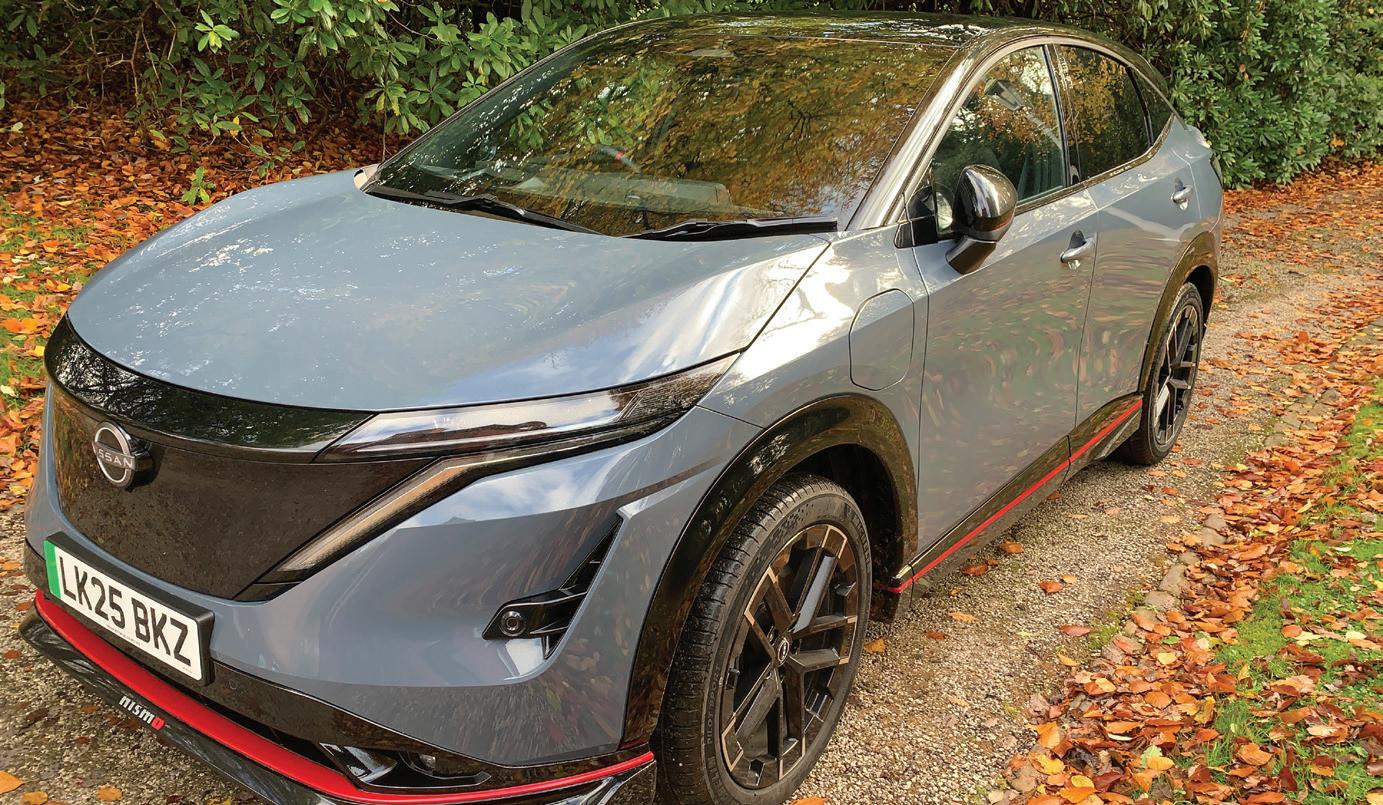
NISSAN ARYIA NISMO
ONE of the great things about this job is that I get to try out the very latest new cars… but thanks to those lovely people at Nissan I recently got to go one better.
That was because they loaned me a pre-production vehicle to try out - and not any old Aryia but the new hot Nismo version which has been much anticipated in the world of performance electric cars.
The Nismo badge last appeared in the UK on the Juke compact crossover and 370Z sports cars but now it has been fitted to the Japanese brand’s electric SUV to create a dual-motor, 429bhp Crossover.
That is a 129bhp power hike over the standard Ariya and e-4orce and Nismo badges plus red accents and bespoke alloy wheels let you know that this is far from the standard SUV.
Priced at £56,630 this hot Ariya has twin motors which are set-up to give that joint BHP figure plus four wheel drive. There are four drive modes but it is in the top Nismo setting where things get interesting with 60 per cent of the power going to the rear wheels.
Flicking the Ariya into Nismo mode also sharpens throttle response and regenerative braking– and there’s even a synthesised engine note to mimic the whine of an electric motor.
Nissan’s engineers have also tweaked the suspension, particularly at the rear, for a more entertaining drive and as with Nismo models
of the past the Ariya has a more aggressive look with bespoke 20in Enkei wheels shod with Michelin Pilot Sport EV tyres.
Deeper bumpers and side skits, a front splitter, ducktail spoiler and lots of red sporty accents complete the look – oh and UK buyers can have it only in Stealth Grey.
Inside there are glowing red panels in the foot well and doors but things are still quite civilised despite the red accents, Nismo badges and black ‘graphite suede’ upholstery.
That being said, it’s still quite a relaxing place to sit, with easy to use screen functions and physical buttons. Space is the rear is particularly generous for the class as is boot space with the rear seats down.
Standard kit includes heated electric front seats, auto air con, lights and wipers, parking sensors and rear camera, 10 speaker Bose audio, head up display, wireless phone charging, sat-nav, power tailgate and adaptable cruise control. There is also a comprehensive suite of the very latest safety aids.
Nissan claim a full charge range of 261 miles and the 87kw battery can charge at 22kw/hour AC and 130kW/hour on a DC rapid charger. Performance is 0 to 62 in a very respectable 5 seconds (and it feels even faster) and a limited top speed of 124mph.
Now £56K seems a lot for a Nissan but with this level of performance and practicality that price tag starts to make sense –plus there is the kudos and street cred of the Nismo badge.
For more information see www.nissan.co.uk


CITROEN C4 HYBRID
NOW everyone goes on these days about electric cars when it comes to saving the planet - and fuel… but if you are not yet ready to go totally green there is an economical alternative.
Super-efficient hybrid cars can now give impressive real world MPG like the latest version of the Citroen C4, which I took for a 300-mile round trip to see friends in the North East of England.
Comfy and with performance to impress (135bhp from its 1199cc three cylinder petrol engine, 0 to 62 in eight seconds and a top speed of 130mph) my metallic red chariot of choice was the range-topping MAX Hybrid 136 e-DCS6, which Citroen claim can return over 62mpg. There are three driving modes, Eco, Normal and Sport.
After clocking up the miles in a week of busy motoring that claim seems more that realistic as I gave the car back with a surprising amount of juice still in the tank!
With prices that undercut many of its rivals the C4 range starts from £24k up to our test car at £26,625. They are available with a choice of three 1.2-litre petrol engines, starting with a mild hybrid called the Hybrid 110 with a modest 109bhp which gets from 0-62mph in 10.4 seconds. The next engine up is the petrol 130 with no hybrid tech but more power (129bhp) and at the top of the range is our Hybrid 135.
The C4 was perfect for both motorway cruising and pot-holed Yorkshire B roads thanks to Citroen’s Advanced Comfort Suspension which makes it one of the better-riding small SUVs, gliding over large undulations and cushioning you well from the ruts and mini craters in our UK roads.
The power plants are surprisingly quiet, only when working hard do they have that usual three pot thrum with the only slight downside being the occasional jolt when the petrol engine cuts in and out at slow speed (hybrid versions are autos). On the move there’s very little wind, road or suspension noise and the seats are comfy in a typically Citroen way.
Physical knobs and buttons for controlling features like climate control make it much easier to adjust things on the move.
All C4s come with clear digital instruments as standard and if you go for Plus trim or above you get a head-up display that projects key information into your line of sight. Rear parking sensors are across the range while Plus and Max trims add front parking sensors and a rear-view camera with a 360-degree system available as an option on Max trim.
All get automatic wipers and bright automatic LED headlights plus an easy to reach and read 10in infotainment touchscreen mounted high up in the middle of the dashboard with features like DAB radio and Bluetooth, plus you can run your phone’s apps. Wireless phone charging is available as part of an option pack.
Overall the C4 feels fairly plush inside with some soft materials and is quite well put together.
Head and leg room in the front is good and there are some thoughtful storage touches, including a dedicated area for your smartphone. All except entry-level ‘You!’ also get a tray that slides out of the passenger’s side of the dashboard which you can clip your tablet computer to!
Despite the reasonable price tag the entry-level C4 comes with plenty of standard equipment, including 18in alloy wheels, electrically heated and adjustable door mirrors, adaptive cruise control, dual-zone climate control plus the features we’ve already mentioned, including LED headlights, 10in touchscreen infotainment system, and rear parking sensors.
Upgrading to Plus trim does add quite a few extras: a larger driver’s display (from 5in to 7in), a head-up display, power-folding door mirrors, rear-view camera, sat-nav, and keyless entry and start. Top-spec Max gets part-electrically operated heated front seats, heated steering wheel and rear privacy glass.
So good value for money, comfortable, stylish, economical and practical… what’s not to like?
For more information see www.citroen.co.uk

For all the latest car tests see the motoring section of our website at www.50plusmagazine.co.uk/motors/

We’ll get you smiling ...
Many denture wearers suffer with poor fitting, worn out or artificial (false) looking dentures that cause the wearer to feel a lack of confidence in their dentures. This can present itself when chewing or even by just worrying about the denture dropping during a conversation. All these are issues that Dental Arts @ 23 Lord Street specialise in correcting.
WHAT IS A CLINICAL DENTAL TECHNICIAN?
A Clinitcal Dental Technician (CDT) is a qualified dental technician that has under gone further Education and Training in areas such as Medical Emergencies Cross Infection Control and Oral Pathology (cancers and anomalies) to name just a few sections that make up the Diploma in Clinical Dental Technology as Awarded by the Royal Collage of Surgeons (RCS).
It is this qualification that allows the clinicians to be able to be registered and regulated with the General Dental Council (the official body for protecting the public with regards to dentistry) and carry indemnity insurance. It is this qualification, which means that only Dentists and Clinical Dental Technicians are the only Dental Professionals permitted
to supply dentures direct to the public. A dental technician is not qualified to supply a denture directly to the public. However, despite this being an act of Mal practice many technicians will still practice illegally without informing the patient that they are not qualified. If you are unsure if your denture provider is qualified; ask them for their GDC registration number, then contact the GDC to see if they are registered not just as a dental technician but as a CDT.
Over recent years there have been many improvements in both the way we construct dentures and in the materials and denture teeth that we use. This means that the end result looks more natural than ever before. Why not call for a FREE Consultation to find out more about these new innovations in denture design and manufacture?
DENTURES NEED REGULAR SERVICING
Dentures are in constant use almost 24 hours a day, 365 days a year. They are also in a pretty hostile environment in the mouth, being attacked by strong acid, bacteria, hot, cold and spicy food. Denture material absorbs liquids and food odour.
Daily cleaning is essential as well as professional ultrasonic cleaning in a dental laboratory at least once a year. Due to constant bone resorbtion dentures will become loose sooner or later.
Loose dentures will increase damage to the gums and bone structure, and increase the risk of breakage. Have them re-lined as soon as possible to get a good fit. It only takes a day or two.
Have your dentures inspected by a Clinical Dental Technician at least every two years, or more frequently if necessary.
YOUR DENTURES NEED ATTENTION
1. When they become loose.
2. When teeth or denture base discolours.
3. When tooth surfaces become flat.
4. When denture base does not fit around natural teeth (in partial dentures).
5. When you develop deep lines around your mouth.
6. When your chin sticks out, and the corners of your lips are constantly wet, developing sores.
7. When you stop smiling and feel embarrassed.
MY DENTURES HAVE BECOME LOOSE!
This is easily remedied by a procedure know as Re-lining. A new layer of Denture base is added to your existing Denture, improving the fit and restoring confidence.
DENTURES ON IMPLANTS
This type of Denture is constructed in conjunction with the Dental Implant Surgeon. This is a very good procedure when the patient has limited control and retention of their Dentures. The finished Dentures ‘click’ into position offering the ultimate in Denture Retention.
SHOULD I HAVE A SPARE SET OF DENTURES MADE?
Yes, it is very important to have a spare set of dentures for emergencies in case of breakage.
CONSTRUCTING A GOOD SET OF DENTURES
Constructing a functional and aesthetically pleasing set of dentures is the most difficult task in dentistry. We are not only replacing lost teeth, but also lost tissue matter and bone. In other words, we have to re-create your facial features as they were before the loss of your natural teeth.
In most cases we do not know what your teeth looked like, what size they were or what position they were in originally. We have a few indications but mostly we have to rely on our visual and artistic judgement.
At the same time we have to use our technical expertise in order to make the denture stable and functional. Denture construction is more art than science.
Dental Arts @ 23 Lord Street can offer all aspects of denture care including;
l Free Consultations
l Denture cleaning and polishing service
l Repair of broken or cracked dentures
l Relining existing dentures to improve fit
l New full dentures
l New partial dentures (following treatment plan from dentist) *
l Sports mouth guards
*Dentist treatment plan can be arranged.


by arrangement Monday to Thursday, 9am - 5pm Friday, 9am - 1pm