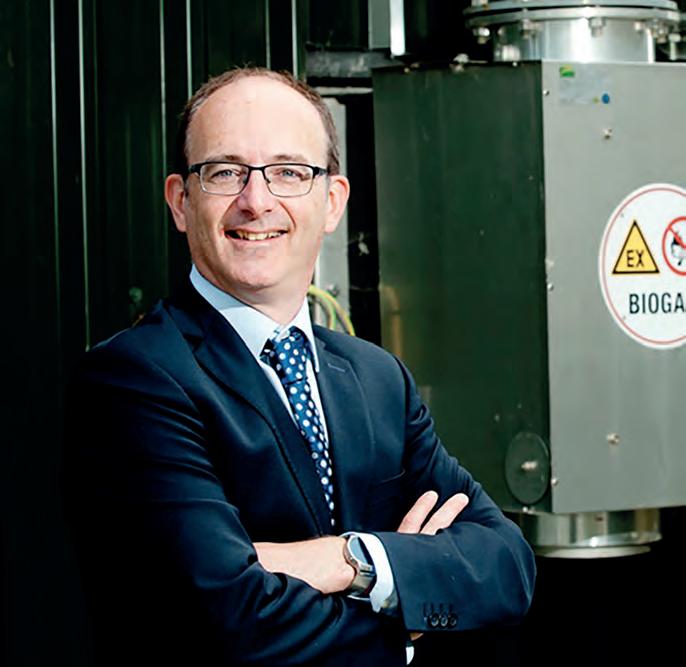
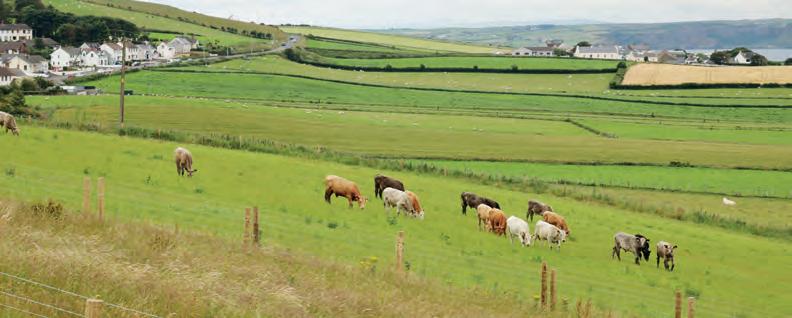
UFU - Farming - A resilent industry navigating a complex operating environment 86-87 John McLenaghan, President, Ulster Farmers’ Union
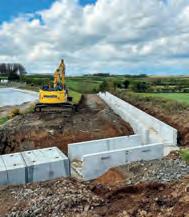
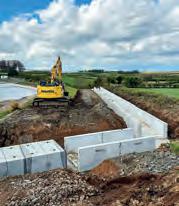
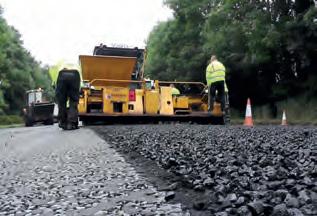
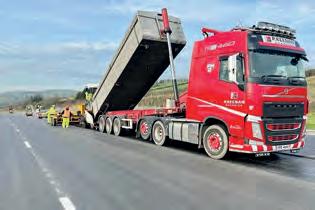
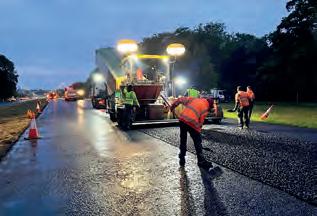
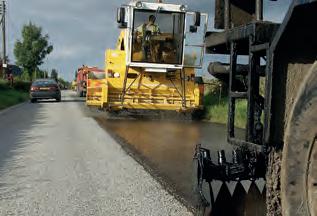
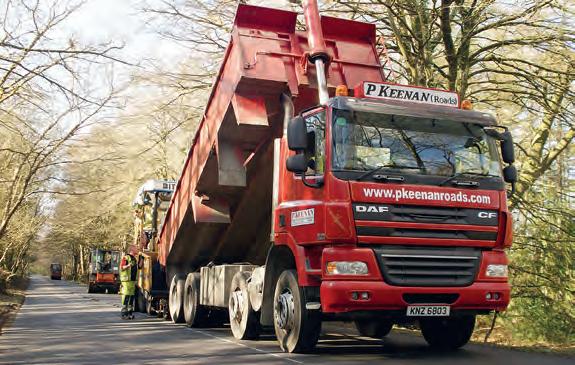
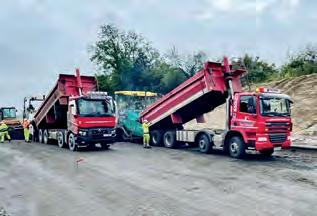
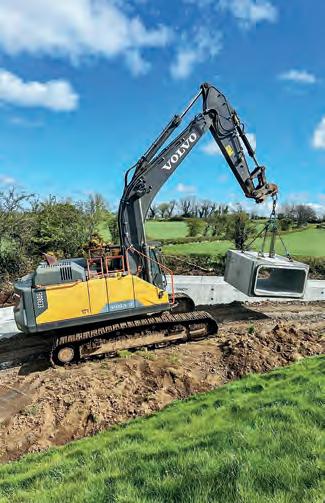
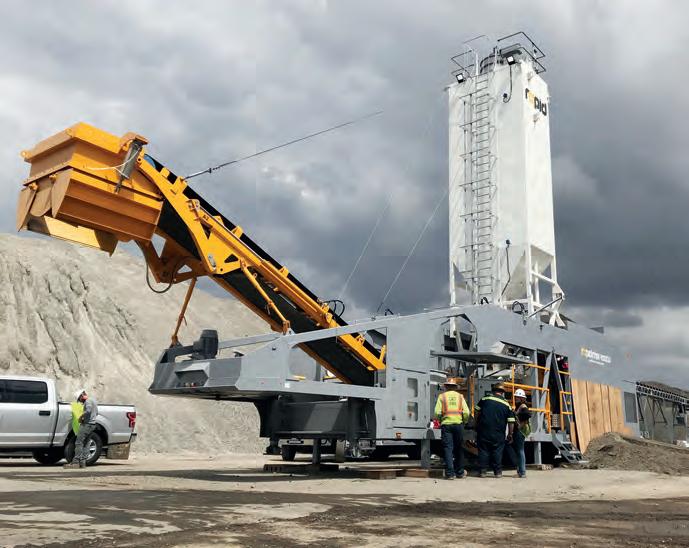
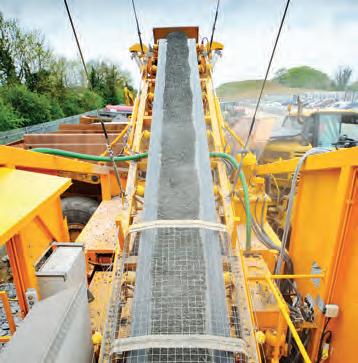
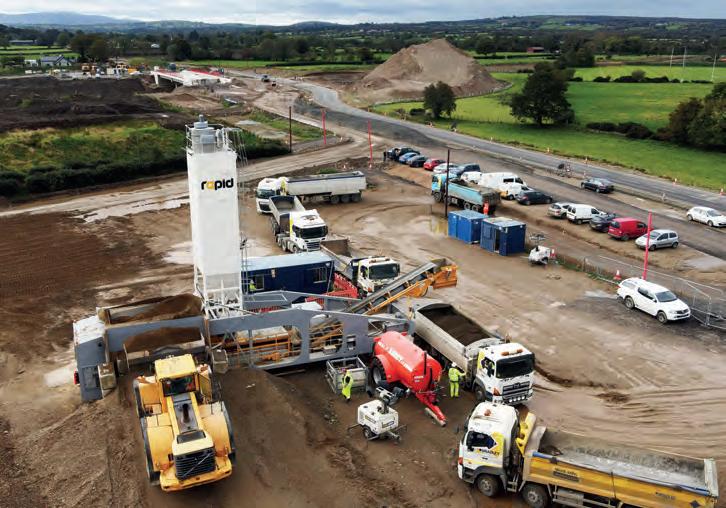
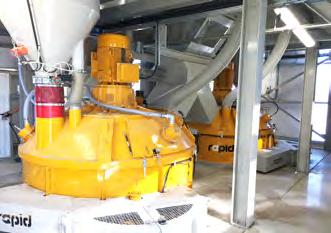
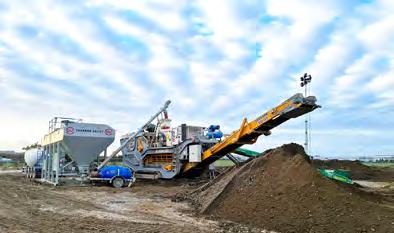
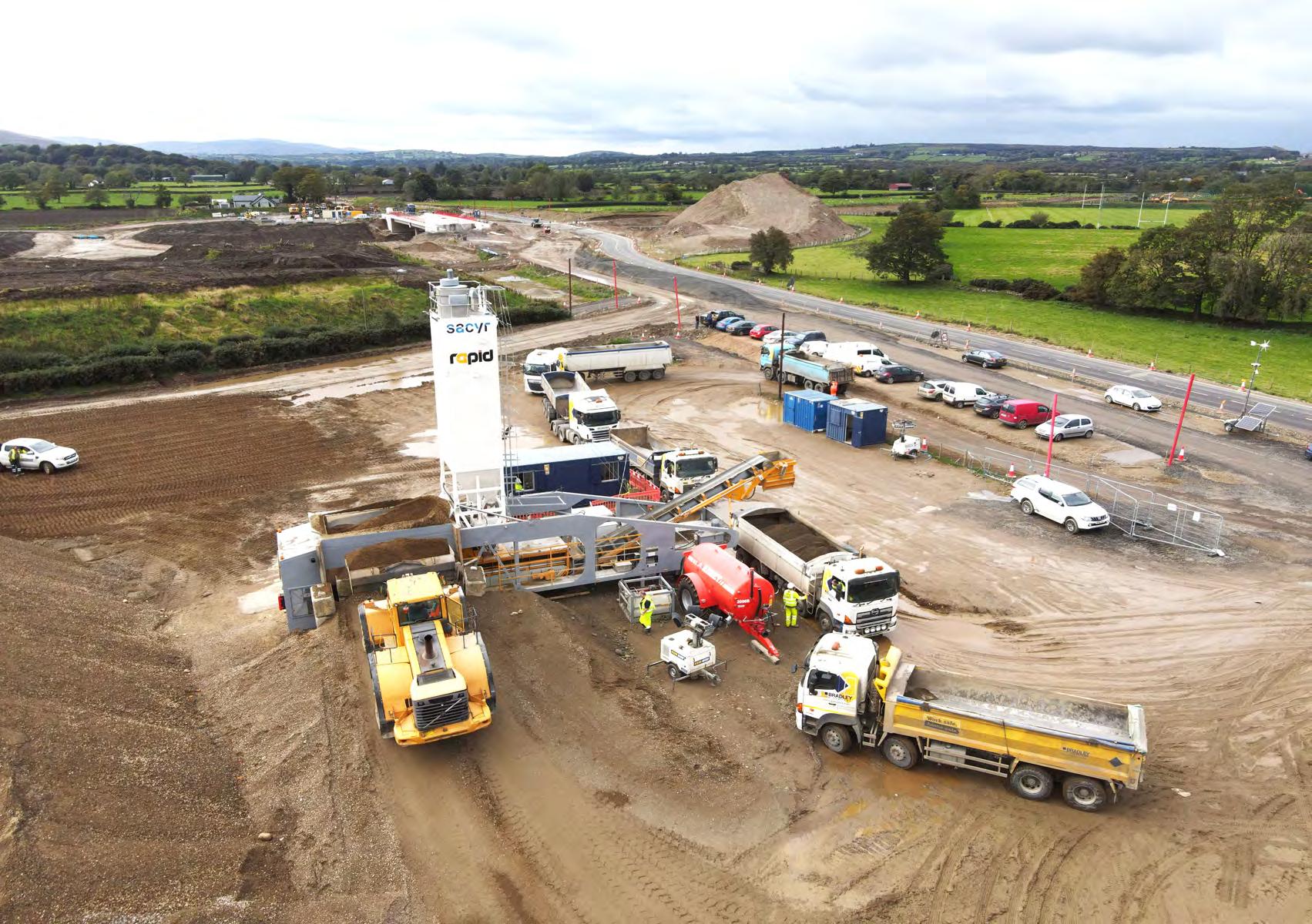
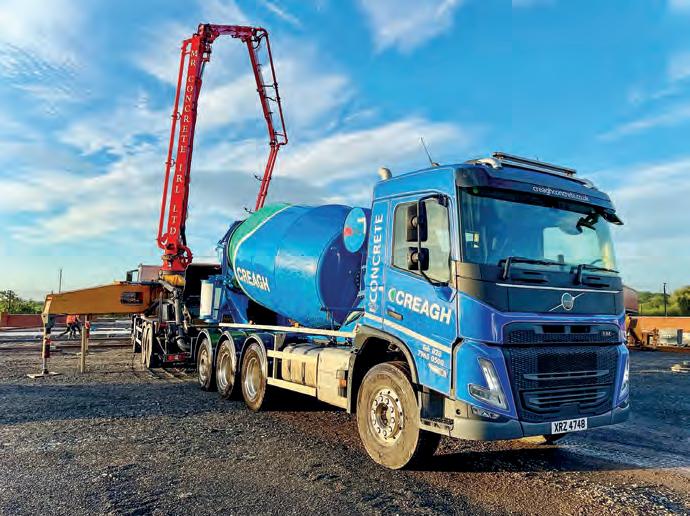
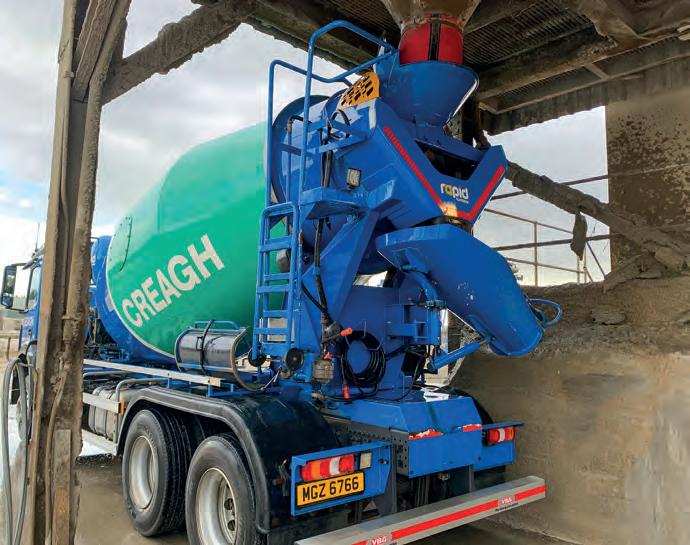
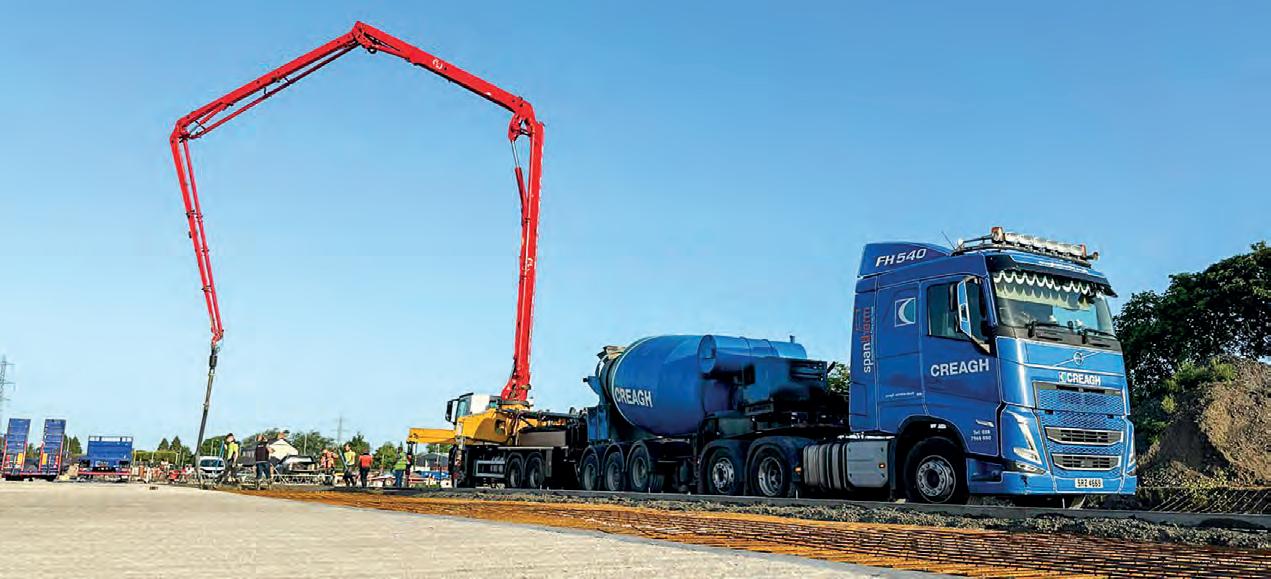
Rapid International Technology Powers Progress on Landmark Adare Bypass 88-89
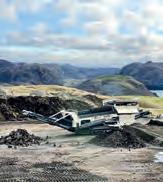
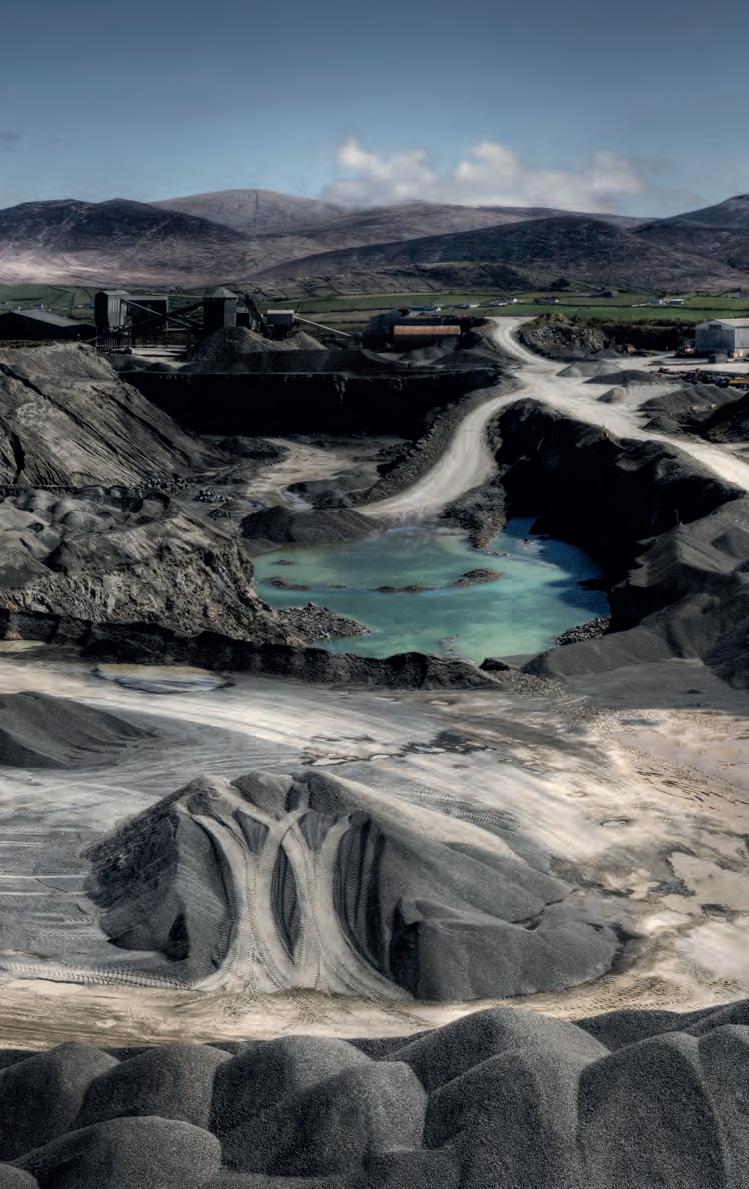
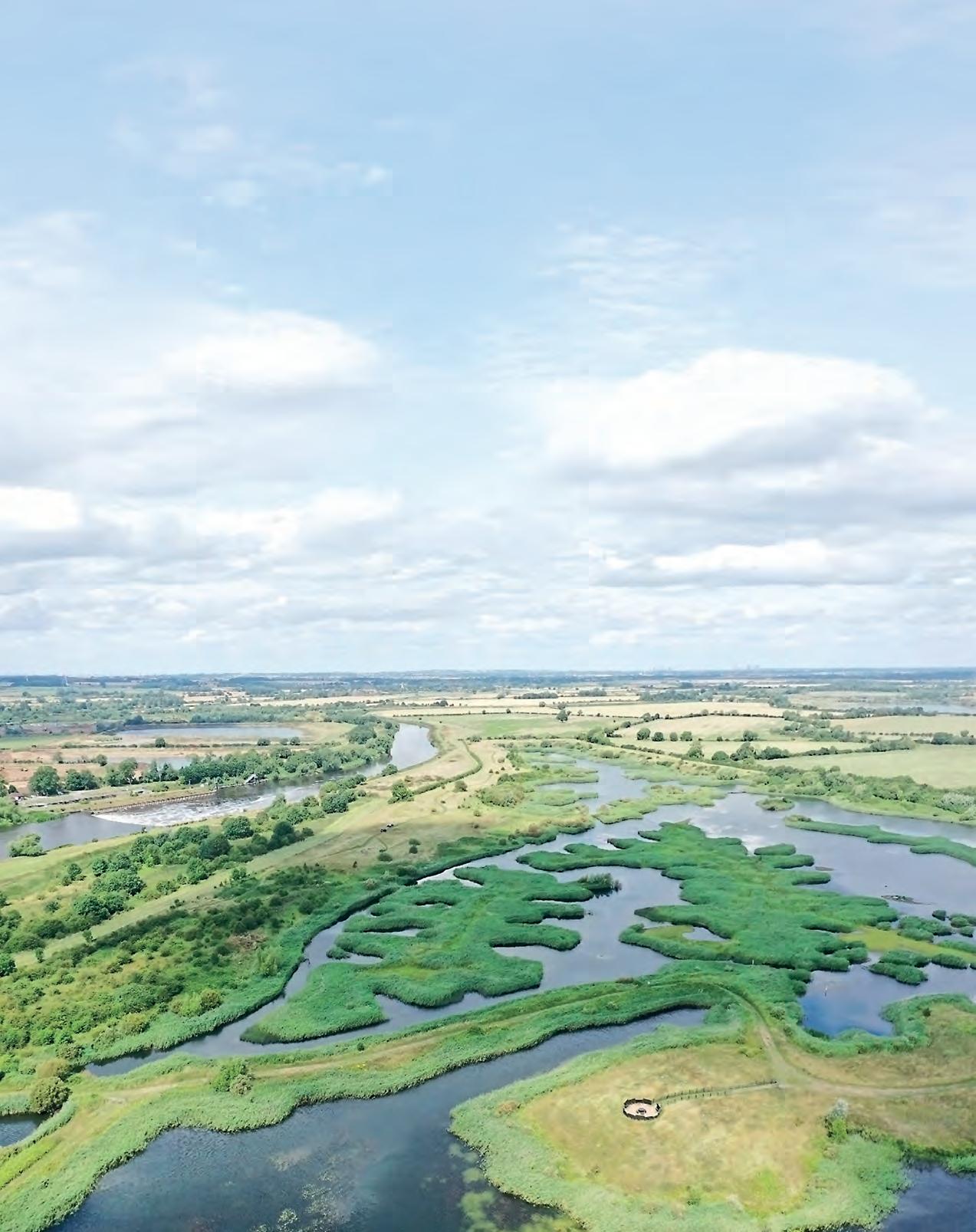
RSPB - Big Holes, Big Goals: Delivering Nature Recovery Across the Lifecycle of a Quarry 91-92
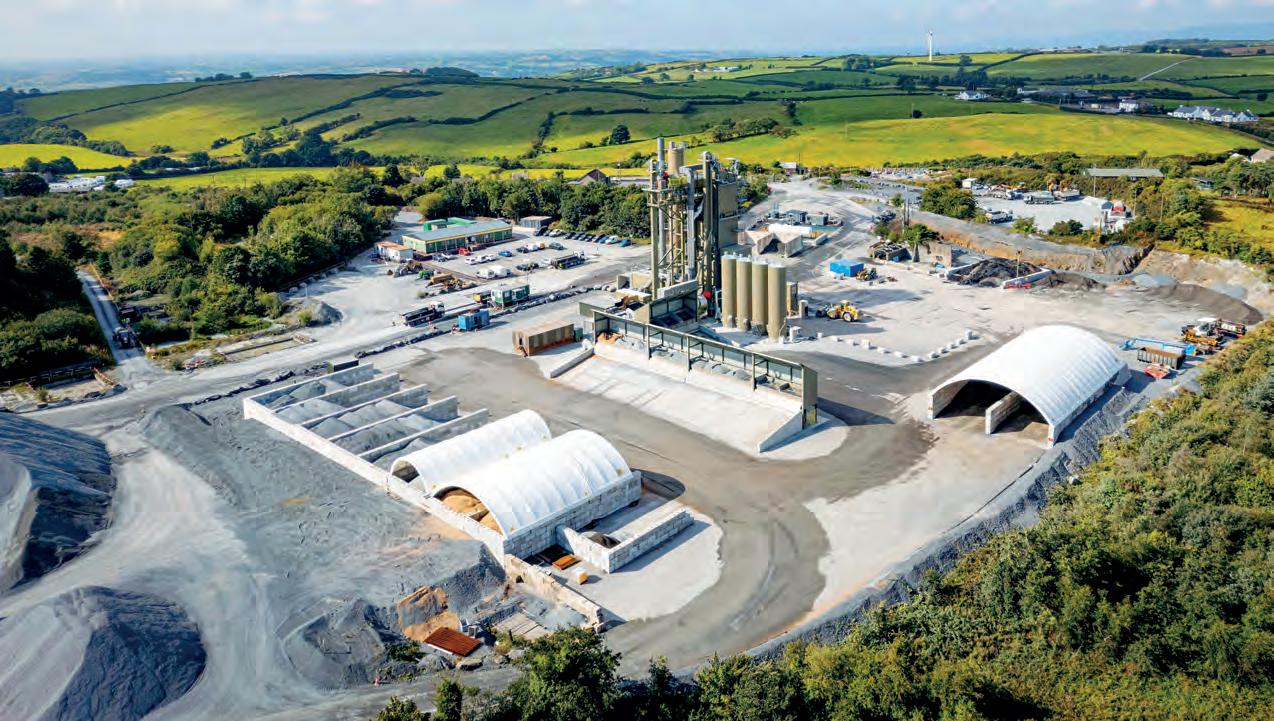
WR Kennedy - Powering Progress: Decarbonising Construction Through Strategic Partnerships 94-95
Dalradian - Funding Northern Ireland’s Unmet Needs: How Our Project Could Help Northern Ireland Prosper 96-97 Next generation blasting technology: Orica’s innovations in drill and blast 98
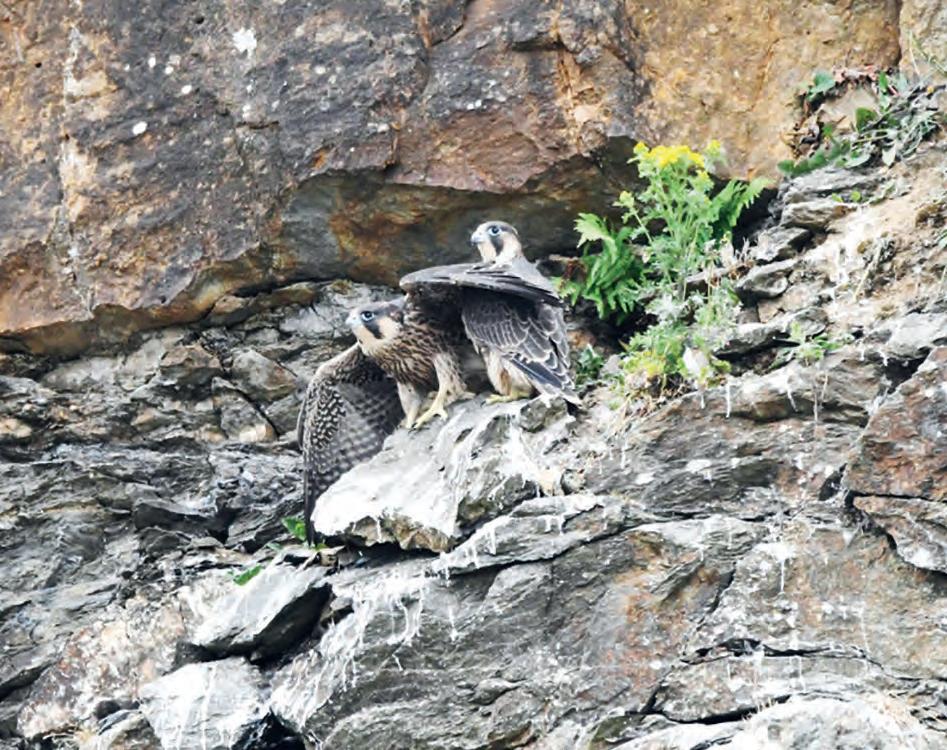
The Northern Ireland Raptor Study Group Record breaking year for Peregrines nesting in Northern Ireland quarries
This journal is published by ‘Plant & Civil Engineer’, a division of 4 SM (NI) Ltd, at The Old Coach House, 12 Main Street, Hillsborough, N. Ireland BT26 6AE. The publishers cannot be held responsible for any inaccuracies supplied by the contributors. All rights reserved. The contents of this publication may not be reproduced or transmitted in any form, either in part or in full, including photocopying and recording, without the written consent of the owner. Nor may any part of this publication be stored in a retrieval system of any nature without prior written consent of 4SM (NI) Ltd.
Sarah
Martin Elliman General Manager
Joel Byers Production Manager
Brenda Kerr Accounts Administration
Helen Beggs Chief Operating Officer
MPANI 2026/27 is Published by: Plant & Civil Engineer, The Old Coach House, 12 Main Street, Hillsborough BT26 6AE
CONTACT - Golda: 07724 192032 or Martin: 07985 887171 Email: golda@4squaremedia.net or martin@4squaremedia.net
Golda Burrows General Sales Manager
Nelson Editor
OVER 50 YEARS OF MOVING IRELAND
Each solution we supply from Volvo Construction Equipment, including the ground-breaking Electric models; Volvo Penta engines; Sennebogen material handlers; and Kohler engines comes with a nationwide team of qualified service engineers, a next-day parts delivery system and an all-island branch network.
www.quarryplan.co.uk
Trust in experience
Quarryplan have provided specialist planning and property advice to the minerals, waste management and renewable energy sectors for over 20 years, delivering a full range of services for the preparation of successful planning applications.
Quarryplan provide commercially driven advice you can trust, so you can concentrate on your business.
Planning
Environmental Impact Assessment
Estates management
Due Diligence
Expert Witness
Land Surveying
Renewables
Northern Ireland
t. +44 (0) 2844 832904
e. info@quarryplan.co.uk
England t. +44 (0) 1934 713741
e. info@quarryplan.co.uk
Foreword
Energy is clearly a major talking point. The war in Iran continues to disrupt global supply chains, particularly the fuels which power heavy machinery and aviation, heat most NI homes and supply us with fertilizer, aluminium and polymers needed by many businesses.
When combined with high court rulings halting major infrastructure projects like the A5, a decision partly based on legislated climate obligations, it is not surprising to see the debate on climate targets and calls to exploit indigenous fossil resources become more energised. I’ve written and spoken before about the fallacies behind many key arguments used to stall decarbonisation progress. The ones that immediately come to mind include the “It’s our oil fallacy” the belief that companies will sell locally at a price point significantly below global market value. The second, and perhaps more important, being “The significance fallacy” or insignificance fallacy depending on your point of view. This one representing the belief that NI is too small to make a difference in what is a global problem. While there is a degree of truth to both, on aggregate they are wrong. Yes, there will be some economic return from exploiting indigenous resources, but it will deliver nothing now and at best very little in the medium term. More importantly businesses in NI are not insignificant. Take construction where the sector continues to demonstrate success supporting international airport projects in Hong Kong, theme parks in Dubai and Premier League football stadiums. When it comes to decarbonisation within MPANI industries it is arguably the race to net zero which is more important than the destination. This is not to say that the target is not important but simply stating that companies who can innovate to shield themselves from increasingly turbulent energy prices and supply products at the right price, quality and environmental credentials will be more resilient and gain market share. Many MPANI companies continue to invest in and demonstrate success through innovation. Low carbon fuels,
more efficient machinery, renewable integration and digital solutions are showing success. New tools are emerging which can accelerate optimisation through digital twinning and measurement, validation and reporting of carbon stocks. MPANI members have also demonstrated opportunities arising from partnership with agriculture. A CASE funded project showcased how biochar produced from agricultural residue can be successfully integrated into precast materials delivering superior performance. It is clear, at least to me, that the sector has the capability and ingenuity to support a decarbonised supply chain.
Projects like the A5 offer a route to demonstrate how government, industry and academia can invest in significant infrastructure to deliver good for the region.
Queen’s and Ulster Universities as well as the GRASP project at Southwest College amongst others can support the research and skills pipeline needed to underpin future activities. As this future builds, CASE will continue to support the sector.
David Rooney.
MPANI Chairman’s Report
It is a great honour for me to take on the role of Chairman of the Mineral Products Association Northern Ireland. Having been involved in the industry for many years, I am proud to represent a sector that continues to demonstrate resilience, innovation and a strong spirit of collaboration in the face of ongoing change.
The operating environment for our industry remains dynamic. We continue to navigate the longerterm impacts of Brexit, the aftereffects of the pandemic, and sustained pressures relating to energy and input costs. At the same time, challenges around planning, sustainability and workforce availability remain firmly on the agenda. Notwithstanding these pressures, I am confident that our industry is well placed to adapt and to continue to play its essential role in supporting economic growth and societal development across Northern Ireland.
The policy landscape is also evolving at pace. The introduction of carbon budgets and the advancement of Northern Ireland’s Climate Action Plan set a clear direction of travel towards a lower carbon economy. This brings both challenge and opportunity for our sector, which supplies the essential materials required to deliver the infrastructure, housing and renewable energy projects that will underpin that transition. As an industry, we are committed to being part of the solution—through innovation, responsible sourcing and continued improvements in environmental performance.
Continued progress on planning reform, infrastructure investment and energy policy will be critical in enabling our sector to deliver efficiently and sustainably. There remains a clear need for a planning and regulatory framework that is timely, proportionate and aligned with the practical realities of development on the ground. Alongside this, the availability of skills continues to be a key issue across construction and manufacturing, reinforcing the importance of attracting, developing and retaining the next generation of talent within our industry.
The restoration of the Executive and Assembly provides renewed opportunity for engagement and delivery. As an Association, we look forward to working constructively with government and stakeholders to ensure that policy supports sustainable growth, encourages investment and enables our industry to continue to operate effectively as a foundation sector of the Northern Ireland economy.
One of the most encouraging developments in recent years has been the continued progress in health, safety and environmental standards across our membership. There is now a greater openness in the sharing of knowledge and best practice, and a shared commitment to protecting the health, wellbeing and safety of all those working within our industry.
We are also witnessing a period of rapid technological advancement. Digitalisation and the growing application of artificial intelligence are beginning to reshape how we design, produce and manage our
operations. When adopted responsibly, these technologies have the potential to enhance productivity, support better decision-making and improve safety outcomes across our sites. As an industry, we must embrace these opportunities while ensuring that appropriate governance and oversight remain in place.
The strength of MPANI lies in the commitment and engagement of its members. I am particularly encouraged by the continued success of initiatives such as the Young Leaders Group and the Women in Minerals network, both of which are helping to shape a more inclusive, dynamic and forward-looking industry. The participation of younger professionals across our committees and working groups provides a strong foundation for the future of our sector.
I would like to acknowledge the continued support of Gordon, Fiona and the wider Executive Committee, whose dedication and leadership are central to the ongoing success of the Association. I would also like to extend my thanks to Darren McMillan on his appointment as Vice Chairman, and I look forward to working closely with him in the year ahead as we build on the strong foundations established by previous Chairs.
Together, we will continue to strengthen relationships across the Northern Ireland business community and with our counterpart organisations in the Republic of Ireland, ensuring that MPANI remains a strong and effective voice for our members.
Thank you to all members for your continued support and commitment. By working together, I am confident that we can deliver a sustainable, innovative and prosperous future for the mineral products industry in Northern Ireland.
William Doherty.
MPANI Regional Director’s Report
Reshaping our Future and Driving Sustainable Change
Once again, it gives me great satisfaction and pride to publish my report in our professional Journal and to look back on the previous year and report another successful year for MPANI.
I have highlighted our achievements and focus areas later in this report and no one should be in any doubt these have only been delivered through the collective work and leadership of our Executive Committee and Sub Committees, and last but by no means least through the continued support of you, our Members and Affiliate Members.
I have commented in previous reports, Journals and at various forums about how our local businesses perform locally, across these islands and further afield and how we “punch above our weight” and that we do so in spite of the non-existent political leadership and decision making of our local Executive and Assembly. In effect the Executives annual report could be summarised as “long on strategies and announcements, short on delivery.”
The next few years (2026–2030) will be crucial: the success of the Programme for Government, draft budget and Investment Strategy will depend on whether ministers can turn plans into action, invest for the long-term, and prioritise reforms that improve outcomes for ordinary people rather than just ticking policy boxes. With the prospect of new longer 3 year resource budget and 4 year capital budgets one would expect better financial planning and delivery. However, given the disagreements and the “battle a day” environment around the Executive table and the looming 2027 Assembly election I do believe it will be much more of the same up on the hill!!
In January of this year MPANI wrote to our MLAs highlighting what we believe must be the Key Priorities
for our politicians as we start 2026. Taking the decisions that will help kick start growth, deliver infrastructure and enable net zero are not an option, they are a necessity! Use the following link to download the flyer: Key Priorities for Our Politicians – 2026
According to official construction output statistics, total construction activity in NI rose by 3.4 % in the third quarter of 2025 compared with the previous quarter and was about 3.4 % higher on a rolling four-quarter basis, despite being slightly lower than a year earlier. Housing construction reached its highest levels in around 15 years, and infrastructure work (roads, bridges, rail, etc.) showed double-digit quarterly growth, indicating strong activity in these
areas. Some industry reports indicated that construction output had grown by around 7.3 % in the year to mid2025, outperforming the wider UK construction sector and reflecting a rebound from earlier weak periods. Some industry forecasts described 2025 as a challenging year for construction, with a notable slowdown in new project starts (e.g., a reported 17 % decline) due to economic headwinds, political uncertainty and planning constraints, though recovery was expected to begin in 2026 and accelerate into 2027. In summary 2025 was a year of steady economic expansion for Northern Ireland, with overall output rising and hitting record levels, supported by strong services growth and solid private sector performance.
The construction industry in NI displayed mixed but generally upward momentum, with solid output growth, strong housing and infrastructure activity, and robust repair and maintenance. However, the year was uneven, with some project starts decreasing and challenges from planning and infrastructure constraints. Most early forecasts pointed to a recovery and stronger growth from 2026 onwards, especially as investment and confidence improve. However, as we all know the current conflict in the middle east has changed everything and with increasing uncertainty on energy prices, food prices and resulting economic uncertainty at home and abroad we, along with other business organisations have been vocal in calling for both local and national Government to do more to help the growing cost of doing business in NI and across the UK and Ireland.
Gordon Best.
The headwinds and challenges of the slow planning process, energy prices, public sector reform and the need for revenue raising to fund the maintenance and development of our essential infrastructure assets means that NI Business groups, including MPANI, must continue to work together to drive change and much more effective decision making by our politicians and public sector.
MPANI and others had been highlighting the significant costs that rural businesses were facing in getting upgrades to their electricity connections thus making it more difficult and financially viable to invest in low carbon technologies. As a result of lobbying by many of us Economy Minister, Dr Caoimhe Archibald, announced her decision to make new connections to the electricity grid fairer and more affordable for rural businesses.
Reinforcement costs, previously charged for any upgrade to increase the capacity of the local network, will now be spread across all consumers, and over a longer period of time. The decision will remove a major barrier to business investment in rural areas. This announcement by the Minister is very welcome news for our members across Northern Ireland.
Another “win” as a result of effective lobbying was that common sense prevailed on Governments proposed reforms to the landfill tax regime, with the quarry exemption being retained. Consultation processes can
be frustrating at times, but this is one example where hard data and evidence of the economic impact on the minerals sector and the wider construction industry it supports has directly influenced the direction of policy travel being taken by HM Treasury. The government listened to stakeholders’ arguments made in response to the consultation, and revised its approach to ensure the reforms to Landfill Tax are proportionate, do not impose unavoidable costs on businesses and do not undermine the government’s target of building new homes.
MPANI again were extremely active in 2025 representing Members and the wider Industry interests. I have summarised some of our achievements
and also listed our overall focus areas and objectives for 2026 below.
1. HEALTH & SAFETY
Employee and Contractor:
• MPANI support and co-ordinate the prestressing, silica dust, workplace health initiatives with HSENI.
• MPANI issue guidance to members on Driver Safety and All Round Visibility in vehicles.
• MPANI issue guidance and toolbox talk on preventing violence and aggression toward Roadworkers.
• MPANI continue to promote safe quarry and the need to report safety alerts.
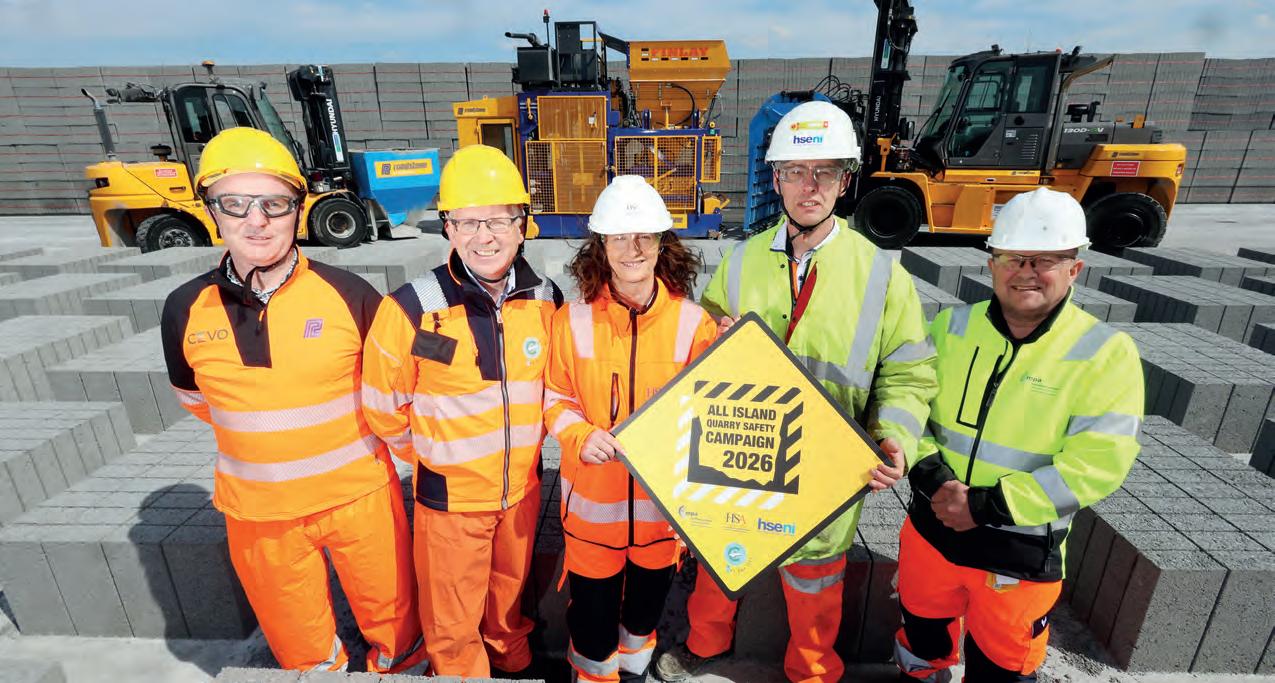
Quarry Safety Campaign.
Public Safety:
• MPANI and HSENI write to School Principles in NI seeking support for Cold Water Safety message and warning of the dangers of trespassing in active and disused quarries.
• MPANI, Department for Infrastructure Roads and the Police Service of Northern Ireland run two successful social media campaigns in 2025 promoting Road Worker Safety.
2. PEOPLE
Employment:
• MPANI develop and promote our Women in Minerals initiative by producing a video for social media specifically targeted at young women and girls.
• MPANI work with Construction Futures in NI to promote the wider construction sector as an exciting and valuable long time career.
Skills and Competence:
• MPANI work with South West and Northern Regional Colleges to promote apprenticeships in our Industry.
• MPANI, in partnership with CITBNI and People First run another L4 Site Supervisors Course with Highway Maintenance Focus.
• MPANI in partnership with CITB and Concrete Society run two “Back to Basics with Concrete” courses for construction site supervisors based on MPA Best Practice Booklet.
Equality and Diversity:
• MPANI Women in Minerals Group hold a number of Networking Events to promote our industry to young women and girls.
Local Communities:
• MPANI become members of the Sperrin Partnership to promote and safeguard our members operations in the Sperrins AONB.
• MPANI continue our affiliation with the Belfast Hills Partnership to promote and communicate the economic, heritage and social value in the Belfast Hills.
3. RESOURCE USE
Access to Sufficient Minerals and Resources:
• MPANI work with the Department for the Economy Minerals Branch to improve and maximise returns of the annual minerals statement.
• MPANI work with local councils to build relationships with local
operators and facilitate the flow of important information that measures the economic and social value of the mineral products sector in each Council area.
• MPANI working with local councils on the important issue of identifying Mineral Reserve Areas.
Circular Economy:
• MPANI work with stakeholders to investigate the use of biochar in cement, biomethane as a fuel and the longer term use of small scale green hydrogen.
Water:
• MPANI work with the NI Environment Agency to promote and ensure compliance to the “Wise Use of Water” best practice guidance
4. CLIMATE CHANGE AND ENERGY
Carbon & Atmospheric Emissions:
• MPANI continue to play important role as a partner in the Innovate UK supported NI Decarbonisation Initiative.
• MPANI continue to support and facilitate a number of decarbonisation collaborative networks;
• Use of Biochar in Cement with Queens University, Agri-Food and Bio-Science Laboratory, Agriad and four local Cement Companies.
• Low Value / High Volume materials as cement replacements.
• Manufacture and use of Biomethane in mineral product transport and manufacturing
• Formed a Mineral Products cluster in the Toomebridge area for MPANI members to reduce energy costs and decarbonise.
• Through the IDNI project we have set up a Community of Shared Interest (COSI) to promote collaboration across our mineral products sector in NI to accelerate decarbonisation.
Energy:
• MPANI continued our working relationships with the Department for the Economy, NIE Networks and the Energy Regulator to improve access to and cost of connecting to the energy grid to reduce costs for Members and help facilitate the journey to Net Zero. This has resulted in the Economy Minister announcing the “Socialisation” of grid reinforcement costs thus reducing the costs for our members to connect to the electricity grid.
5. NATURAL ENVIRONMENT
Biodiversity:
• MPANI continue work to facilitate Biodiversity Partnerships between members, local councils and NGOs
• MPANI and a number of members continue to engage and support the work of the All Island Pollinator Plan.
Geodiversity:
• MPANI continues to play an important role on the Consultative Committee for the Geological Survey NI
6. BUILT ENVIRONMENT
Technical Codes and Standards:
• MPANI inform the local construction and design sectors about changes to BS8500 and promote the use of companies that have 3rd Party BSI and QSRMC quality assurance.
Sustainable Construction:
• MPANI work with colleagues in the NI Construction Group and with Government Construction Clients to promote Responsible Sourcing and recognition of responsible operators.
7. COMMUNICATING INDUSTRY VALUE
Contribution to Economy and Supply Chain:
• MPANI respond to 15 Consultations during 2025 on behalf of Members.
• MPANI lobby extensively on the need to invest in asset management including roads maintenance and our waste water infrastructure. We met with both the Assembly Infrastructure Committee and the Infrastructure Minister on 2 occasions during 2025.
Influencing Business Environment:
• MPANI play key role on a number of Industry Bodies
• All Party Group on Construction
• CBI Infrastructure Group
• CBI Economic Strategy Group
• CBI Energy Group
• NI Business Brexit Working Group
• UK Minerals Group
• Consultative Committee for the Geological Survey NI.
MPANI Focus Areas and Objectives for 2026
Role – Facilitator to/from Government influence
Under Planning
Objective 1 – Continue to Work with others, including CBI, NI Chamber and NICG, to improve the Planning System in NI via the planning reform agenda and in particular to establish a more efficient minerals planning system to ensure that the long-term sustainability of the Mineral Products Industry and its right to operate are protected. Continue to engage and build on work done to date with local council planning departments to build and raise awareness of the economic and social value of the mineral products sector in each council area.
Objective 2 – Continue to engage with senior planners via the Strategic Planning Group, led by Senior Planner Rosemary Daly, to establish a “Council Shared Service” for Minerals Planning. Encourage the Industry to supply the relevant aggregate resource and production information to enable Department for Infrastructure and local council planners to develop mineral policies and plans that ensures the future sustainable supply of minerals and construction materials.
Objective 3 – Continue our work with IoQ, RTPI, DfI, NILGA and others to build the knowledge and capacity of local planning officers to ensure their understanding of the industry results in a fast and efficient service to MPANI members.
Objective 4 – Continue to work with the Department of the Economy, GSNI, Strategic Planning Division and local Council Planning staff to establish a Northern Ireland Minerals Forum. MPANI will continue to make a constructive contribution to the UK Minerals Forum.
Objective 5 – Work with regulatory authorities within Northern Ireland to ensure a level playing field for the minerals industry and clear recognition for responsible operators. Ensure that the introduction of a review mechanism for environmental conditions does not come with additional planning fees. Work to ensure that the introduction of restoration bonds is risk based, fair and economically sustainable.
Objective 6 – Work with NIEA and others to improve communication and understanding between MPANI members and environmental regulators.
Objective 7 – Respond to Public Sector Consultation Papers on issues that affect our members operations.
Under Economy
Objective 1 – Continue to work through our Highway Maintenance and Construction Group and with Northern Ireland Construction Group (NICG) partners to improve the communication of the pipeline of infrastructure work, maximise funding for the maintenance of key infrastructure assets, maximise the benefit of longer term 3 and 4 year budgets from April 2026.
Objective 2 – Work with Industry Colleagues and the NI Executive and Assembly to ensure more investment into improving skills, knowledge and experience in key decision-making roles in the public sector departments.
Objective 3 – Work with Construction Industry colleagues, Manufacturing NI, FE and others to ensure the education and careers systems develop young people so they gain the relevant skills suitable for a modern growing economy.
Objective 4 – Work with DfE, Invest NI, local Councils, Universities and FE Colleges to secure support for collaboration between MPANI members to enable them to transition to renewable/zero carbon energy, for the re-training of staff for new zero carbon technologies and to utilise innovative technology and digitisation.
Objective 5 – Engage with Government and others to make realistic changes to the NI Climate Change act 2030 and 2040 targets so that they do not act as a barrier to much needed development in NI.
Objective 6 – Work with other Business Groups and the NI Energy Regulator to ensure we see changes in the NI Energy market. Work with all relevant parties to ensure the efficient roll out of the socialisation of grid connection costs.
Objective 7 – Work with our colleagues in the farming and agri-food sector to collaborate on areas such as biomethane and biochar production that will assist the Mineral Products sector in reaching net zero ambitions.
Role - Education internal/external
Objective 1 – To advise and inform the industry on its legal obligations under health and safety law to ensure that improving performance on reducing incidents of harm continues. We will continue working with other partners to assist Members in dealing with the management of mental health, the fatal 6 risk areas and achieving our aims as set out in the MPA Vision Zero. To ensure that all members fulfil their obligations in reporting health and safety data, signing up to safequarry and circulating safety alerts.
Objective 2 – To develop and deliver training, competence assessment and Level 3 and above apprenticeships in partnership with IoQ, IAT, CIHT, MPQC, Concrete Society, CITBNI and others to raise skill levels across all sectors that MPANI represent and with customers who use our members products.
Objective 3 – To promote our MPA Good Neighbour Scheme and to assist members in engaging with their local community stakeholders.
Objective 4 – To take every opportunity to engage with political decision makers to highlight the essential contribution the mineral products sector makes to the local and national economy.
Objective 5 – Work with key stakeholders, such as Womenstec, our Women in Minerals Group and our Young Leaders Group to promote diversity and the important role of women within the mineral products industry.
Objective 6 – Work with all relevant stakeholders to inform and advise our members on energy efficiency and on reducing their carbon emissions.
Role - Protect & expand market
Objective 1 – Work with public sector agencies, including local councils building control, Housing Associations and other construction representative bodies to promote the use of quality assured and responsibly sourced construction materials.
Objective 2 – Be an active participant in the promotion of UK Concrete, highlighting the positive aspects of concrete and masonry construction to those within the NI construction sector and Government construction clients.
Objective 3 – Work collaboratively with the Department for Infrastructure to improve the procurement and delivery process for highway maintenance and construction by more contractor involvement.
Objective 4 – Maximise the benefits created by AI and new online technology to promote the positive contribution our Industry makes to the economy and people’s quality of life.
Objective 5 – Advise and inform our members as they continue to manage the challenges and opportunities
created by the Windsor Framework.
Objective 6 – Sustain and Increase the MPANI full and affiliate Membership.
Our 2026/27 Journal once again is packed with hard-hitting, informative editorials authored by industry leaders, specialists, and high-ranking figures.
A particular focus in this edition is the essential nature of our sector and how the materials we produce will help rebuild our infrastructure, our housing, schools, hospitals and assist in decarbonising our built environment.
This year will see the inaugural NI Construction Awards, formerly the CEF Awards, with MPANI and the Institution of Civil Engineers (ICE) sponsoring awards bringing together contractors, material suppliers and designers to showcase and celebrate the best of the wider NI Construction Industry.
MPANI are also joining with other business organisations to ensure that the Economy Ministers “Good Jobs Bill” is thought through properly and due consideration is given to its impact on many small businesses in NI and that it does not attempt to solve a problem where there is clearly none.
On behalf of Fiona and myself can I thank all of you for your continued support and wish you and your family a very safe, healthy and successful year ahead.
Regional Director
Construction Awards.
Ranked as Northern Ireland’s top law firm for Planning & Environmental Law by The Legal 500 in:
…we're going to need a bigger page.
WOMEN’STEC: Women and Girls Shaping the Future of Construction
Expanding access to industry
At WOMEN’STEC, we work with women and girls across Northern Ireland every day, supporting them to gain practical skills, build confidence and explore pathways into industries where women are underrepresented, including construction. Through handson training in basic construction skills such as joinery, plumbing, bricklaying, electrics or tiling – skills that have traditionally been seen as ‘not for women’, alongside school outreach, youth engagement and industry partnerships, we challenge the stereotypes, dispel the myths and break down barriers to enable women and girls to access opportunities in these sectors.
As the construction sector looks to reshape its future, responding to housing demand, infrastructure needs and the transition to net zero, there is a need to look beyond traditional workforce pipelines. There is a large, untapped group of people who could contribute to the sector, if the right opportunities and support are in place. By widening participation and recognising the role women can play in meeting the workforce challenges and driving sustainable change, the sector can unlock new talent, strengthen its workforce and better position itself to meet the demands of the future.
Our work over the last 28 years has shown us that the issue is not a lack of ability or interest. Rather, research indicates it is a lack of exposure, confidence and clear pathways, compounded by long-standing stereotypes and misconceptions about what a career in construction involves. Many of the women we engage with have never considered a role in construction, not because they are not interested or capable, but because they have never been encouraged to see it as an option.
This has clear implications for the sector. At a time when construction is facing ongoing skills shortages
and increasing demand, there is a significant opportunity being missed.
As the sector continues to focus on sustainability and the transition to net zero, there is a need to think more broadly about what sustainability means in practice. Alongside innovation in materials, infrastructure and energy, there is also a need to consider the sustainability of the workforce itself – who is entering it, who is being left out, and how it is being developed for the future.
Creating the conditions for change
At WOMEN’STEC, our experience has shown that increasing female representation in construction is not about a single intervention, but about creating the right conditions for women and girls to explore,
engage, progress and succeed. This means addressing perceptions at an early stage, building confidence through practical experience, offering real-world exposure to the sector through direct engagement with industry, and ensuring that clear and supported pathways into the sector exist. It requires strong collaborations and partnerships across and within industry, alongside a focus on accessible and inclusive opportunities.
Early engagement in practice
In practice, this approach is already making a difference, with early engagement playing a key role.
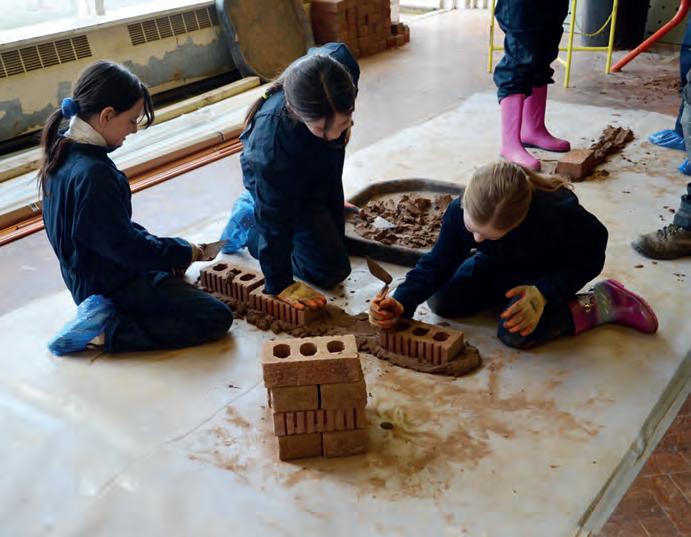
Through our #NotJustForBoys programme, we work with schoolaged girls at both primary and postprimary level, to challenge perceptions and introduce them to careers in construction and related sectors
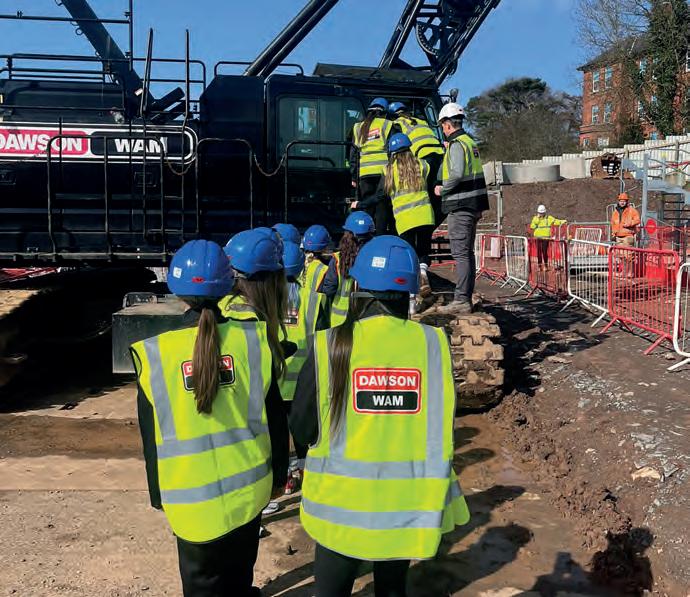
#NotJustForBoys Site visit for Fort Hill Integrated College students hosted by Dawson Wam.
that they may never have previously considered. Providing hands-on, workshop-based experiences in a supportive environment helps to build both confidence and interest. We introduce girls to basic skills from using power tools, working with wood or learning about basic electrical components to mixing cement, building brick walls or tiling floors. Alongside practical skills, industry site visits form an important aspect of the programme by providing real-world exposure to the sector and meeting female role models, helping participants better understand what a career in construction involves, to see themselves in these roles and recognise how they contribute to building the world around them.
As the programme has developed since its introduction in 2019, we are already beginning to see encouraging signs of longer-term impact. While positive outcomes have been evident throughout, it is now that we are seeing some of the girls who engaged in the early stages of the programme beginning to progress into further education, training and apprenticeships in construction and related disciplines. These examples are still emerging, but given the significant barriers that exist, they represent an important shift. They demonstrate what is possible when girls are given the opportunity to engage with the sector in a meaningful way. In response, the programme is continuing to evolve, not only providing insight and early exposure, but increasingly focusing on supporting progression. This includes linking participants with employers, supporting applications to further education and training, and providing ongoing support to those who choose to pursue pathways within the sector.
Supporting progression into the sector
This progression-focused approach is being strengthened through closer collaboration with industry. In 2024, we secured funding from the Department for the Economy’s
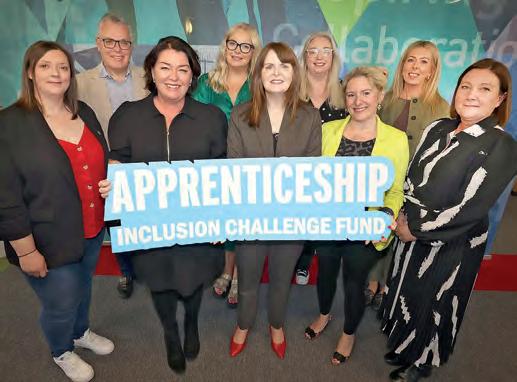
Apprenticeship Inclusion Challenge Fund to lead a consortium of cross-sector partners in delivering our #NotJustForBoys Pathways+ programme. Bringing together a strong partnership of education (North West Regional College, South Eastern Regional College), industry (Chartered Institute of Building, Construction Futures) and community (WOMEN’STEC, Northern Ireland Housing Executive), the programme engages schoolgirls through industry insight programmes and mentoring support for young women currently enrolled in construction and related courses at college.
Recognising that it is not enough to simply support girls into the sector, but to ensure they remain and progress within it, Pathways+ places a strong emphasis on mentoring and ongoing support. This includes signing up people working in the sector to become mentors, providing them with training and matching
them with young women in further education or apprenticeships, and creating opportunities for peer support through group mentoring.
#NotJustForBoys
Champions – working in partnership with industry Central to all our work at WOMEN’STEC is meaningful collaboration with industry. Through our #NotJustForBoys Champions initiative, established in 2022, employers commit to supporting our work and play an active role in developing future talent – providing site visits, sharing real-world insights, and acting as visible role models for women and girls considering careers in the sector. These partnerships help to bridge the gap between education and employment, giving participants a clearer understanding of what opportunities exist and how to access them.
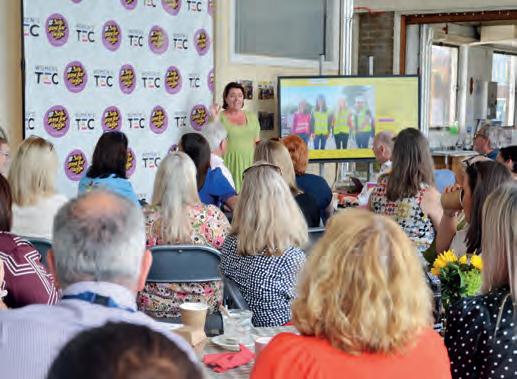
Breakfast of Champions event at WOMEN’STEC, June 2025 (#NotJustForBoys Champions).
Launch of #NotJustForBoys Pathways+ programme funded through the Department for the Economy’s Apprenticeship Inclusion Challenge Fund. Project partners alongside Minister for the Economy, Dr Caoimhe Archibald.
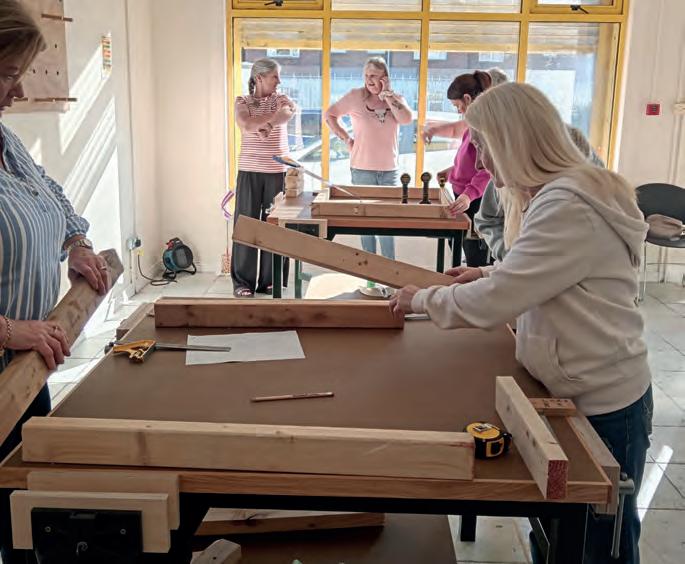
Women’s DIY programme at our North West workshop.
Confidence, independence and inclusion
While a strong focus of the #NotJustForBoys work is on building the future workforce, supporting women who are currently outside the labour market remains central to our mission. For 28 years, WOMEN’STEC has worked with women from disadvantaged communities, providing practical skills in areas such as home maintenance and basic construction, alongside support to build confidence, independence and resilience.
For many of the women we engage with, progression into construction is not the immediate goal. Instead, the impact is seen in increased confidence, improved wellbeing, greater social connection, and the ability to carry out essential tasks in the home, reducing costs and increasing independence.
For some, this becomes a stepping stone back into education, training or employment, whether within construction or in other sectors.
This work also creates valuable opportunities for engagement with industry. Through site visits and interaction with employers, women gain insight into the sector, while industry partners are able to support programmes through sponsorship, resources and expertise. While the outcomes may differ from those of our #NotJustForBoys programme, this work plays an equally important role in building confidence, widening participation and supporting more inclusive pathways into the workforce. In recent years, we have also seen a growing number of women engaging with our services who are experiencing domestic abuse and coercive control. This reflects wider societal challenges, but also reinforces the importance of creating safe, supportive environments where women can build confidence, independence and connection.
A shared role in wider societal change
While this has long been a part of our work, there is increasing recognition across wider society of the need to address violence against women and girls. Industry leaders within the construction sector, including the Construction Employers Federation (CEF), have recognised that they too can play a role, bringing this conversation into a predominantly male workforce and using their influence to promote awareness and positive change. In partnership with CEF and Construction Futures, we are hosting our first conference focused on engaging men within the construction sector in addressing violence against women and girls. The conference will bring together industry leaders and expert voices to explore the role the sector can play in promoting
awareness, challenging behaviours and contributing to a safer and more respectful society. It reflects a growing recognition within the industry that this is not a conversation for women alone, but one where leadership, influence and collective action can make a meaningful difference.
Shaping what comes next
Looking ahead, our focus is on building on our progress in recent years and continuing to respond to the evolving needs of both women and industry. A key priority over the coming year is the development and integration of green skills across our training programmes, ensuring that women and girls are equipped not only to access opportunities within construction, but to contribute to the sector’s transition towards more sustainable practices. Alongside this, we are focused on building wider awareness and understanding of sustainability and climate issues, supporting participants to apply this knowledge in their everyday lives, whether through more energy-efficient practices in the home or a greater understanding of the role they can play in addressing climate change. This will include investment in staff and tutor development, as well as the continued evolution of our programme content. We are also focused on strengthening progression pathways, with the ambition to sustain and grow our Pathways+ model beyond its current funding period. Creating clearer, more supported routes into training and employment will remain central to our approach, alongside deepening our collaboration with industry to ensure that these pathways align with workforce needs.
The expansion of our presence in the North West is another important step in widening access. Following the opening of our new workshop in Derry/Londonderry in 2025, we are already seeing strong demand for our services in the region, highlighting both the need and the opportunity to engage more women and girls in construction and related sectors. Alongside this, we recognise the importance of continuing to build our evidence base, strengthening our understanding of what works and ensuring that our approach remains responsive, effective and impactful. As the sector looks to reshape its future, the opportunity to build a more inclusive, diverse and sustainable workforce is clear. For WOMEN’STEC, this means continuing to work alongside industry, not only to widen access and support progression, but to help shape a sector that reflects the society it serves. By bringing together skills development, career education, real-world exposure and meaningful collaboration, there is a genuine opportunity to unlock new talent and create lasting change. Women are part of that future, and through partnership with industry, we can ensure they are part of building it.
Introduction to Construction with Holy Cross Primary School at our Belfast Workshop.
Irish Mining and Quarrying Society
As president of the Irish Mining and Quarrying Society, I am pleased to contribute to this edition of the MPANI Industry Journal and to reflect on the ongoing work of the Society and the broader role of the extractive sector within Ireland.
The importance of mining and quarrying to Irish society cannot be overstated. The sector underpins the delivery of essential infrastructure, supports housing and national development, and provides the raw materials necessary for energy transition and modern technologies. It also sustains employment, particularly in regional and rural communities, and continues to play a vital role in supporting balanced economic growth.
Against this backdrop, IMQS has continued to represent its members and the wider industry across a range of national and international forums.
The Society remains actively engaged with key organisations including the European Federation of Explosives Engineers, the Prospectors and Developers Association of Canada, Geoscience Ireland, and a number of important national initiatives such as the Quarry Safety Partnership, the Quarry Skills Certification Scheme and the Minerals Information Working Group. Ongoing interaction with the Department of Climate, Energy and the Environment, the Northern Ireland Planning Appeals Commission, and representative bodies including MPANI, the Institute of Quarrying Northern Ireland and the Irish Concrete Federation ensures that the Society contributes constructively to policy, standards and industry development.
A significant highlight during the year was the joint IAEG–IMQS Conference, “Ireland’s Natural Resources: Signs of Revival and Change,” held in Mullingar. The event brought together participants from industry, academia and government, reflecting renewed interest in Ireland’s resource potential and the role it can play in future economic development. The conference provided a valuable platform for discussion on exploration, quarrying, sustainability and innovation, and demonstrated the importance of continued collaboration across the sector.
The Annual Field Trip, held in May, included a visit to Valentia Slate
in County Kerry, Ireland’s oldest producing quarry. The visit offered members a practical insight into both the heritage and ongoing operation of the site, highlighting the quality and longevity of Irish stone production and its continued relevance to the industry.
The Society has also maintained a strong focus on technical knowledge and professional development through its programme of technical talks. Topics over the past year have included acoustics and noise control, energy management and renewable integration, advances in shaft sinking performance, and dewatering and refurbishment of underground workings. These engagements support the sharing of expertise and reinforce the high standards expected across the industry.
In this context, the provision of structured training remains increasingly important. LTMS, in conjunction with Thoroughbred Drill & Blast Consultants, an IMQS member, is planning to deliver two specialised training courses in Naas this September, focusing on drill and blast management in quarries and in underground mining operations. These courses are timely, given the growing emphasis on technical competency,
safety performance and operational efficiency across the sector.
The Society’s annual social programme continues to play an important role in maintaining strong connections across the membership. The 2025 Dinner Dance, held at the Hodson Bay Hotel in Athlone, was once again well supported and provided an opportunity for colleagues from across the industry to come together. Preparations are now underway for the next event.
The IMQS bursary, introduced in 2024, has continued to support individuals pursuing education and training relevant to the sector. This initiative reflects the Society’s commitment to developing future talent and supporting career progression within the industry.
IMQS has also continued its support for the GeoDrilling Apprenticeship programme delivered through South East Technological University in Carlow. While a cohort completed the programme in 2024, it is currently paused due to lower application numbers. The Society is examining alternative approaches, including the development of targeted microcredentials, to ensure that appropriate training pathways remain available.
The Society’s communications activities continue to develop, with its LinkedIn platform providing an effective channel for sharing industry updates, technical developments and Society news with a growing audience.
Looking ahead, IMQS will continue to represent its members, promote best practice and support the sustainable development of Ireland’s mining and quarrying sector. In doing so, the Society remains mindful of the industry’s essential contribution to Irish society and its role in delivering the materials and infrastructure required for future growth.
Ruairi O’Connor, President of the Irish Mining and Quarrying Society.
View from the South Irish Concrete Federation
It is my pleasure to contribute to the MPANI 2026/27 Journal which I hope will give readers a sense of the issues, challenges and priorities for the Irish Concrete Federation (ICF) currently. I would like to thank the MPANI Regional Director, Gordon Best, for the opportunity to contribute to the Journal, which I know is regarded as a ‘must read’ publication among many ICF members.
I would also like to take this opportunity to express our gratitude for the continued co-operation and support for ICF, which is always forthcoming from MPANI and which I know will continue under the leadership of Chairman, William Doherty of Creagh Concrete, who has been a highly respected figure among the ICF membership for many years.
It will come as no surprise to readers that the primary concern of ICF members at the current time is the uncertainty of future construction activity levels arising from the war in Iran. The impacts of the war are being clearly experienced by our members in the increased costs of raw materials, fuel and energy, all of which feed into increased construction material and building costs. These cost increases present additional affordability challenges for end customers, particularly in the area of housing which is the most significant domestic issue facing Government at this time.
From recent engagements with other construction stakeholder organisations, it is abundantly clear that there is little knowledge or appreciation among these organisations of the massive cost increases that the aggregates and concrete products industry has borne in recent years. This is an area that ICF intends to highlight in the immediate future, particularly given the ongoing daily impacts of current geopolitical uncertainty on supply chains.
It is also clear the regulatory and compliance costs seem to be on an ever increasing spiral. At a recent Aggregates Europe board meeting, there was frustration expressed by aggregate producers from all corners of the continent at the seemingly endless raft of legislation emanating from Europe. We can only hope that the European Commission will eventually live up to its own stated objective of reducing regulatory burdens to strengthen EU competitiveness,
while protecting economic, social and environmental goals.
Notwithstanding the ever present challenges facing our members, there is certainly room for optimism for the medium to long term future, particularly in the areas of infrastructure and housing. The government recently published a reviewed National Development Plan, committing a record €275.4 billion in public capital investment to 2035. This plan aims to address infrastructure needs in housing, transport, water and energy reflecting the Government’s heightened ambition to address infrastructure deficits and respond to demographic, environmental and economic pressures.
In November 2025, the Government also introduced a new housing plan ‘Delivering Homes, Building Communities’, which aims to speed up the delivery of new homes and tackle homelessness. The plan targets the construction of 300,000 homes, including 72,000 social homes and 90,000 affordable housing units. This plan will see the State take a bigger role while also encouraging the private sector to play a key part in delivery.
Despite a 20% increase in house completions to approximately 36,000 units for the year, supply continued to fall far short of the estimated annual demand of over 50,000 homes. Encouragingly the government has also published ‘Accelerating Infrastructure - Report and Action Plan’ to help drive the efficient delivery of infrastructure, including housing, across Ireland which hopefully will address the barriers to infrastructure development identified by the Accelerating Infrastructure Taskforce last year.
As ever, the ‘work engine’ of the ICF are the policy committees which operate across a broad range of disciplines and business areas. Our committees are open to all members to join and we actively encourage new representatives from our member companies to participate in our committees, where they can learn from their peers in the industry while also contributing to the development of ICF policy.
Over the past year our Health and Safety Committee has partnered with the Health and Safety Authority (HSA) on two industry safety campaigns, one focused on geotechnical safety in quarries and the other dedicated to precast and pre-stressed concrete manufacturing. ICF remains committed to improving the safety, health and welfare of all persons involved in the quarrying industry and industry safety campaigns are a key part of that effort and we welcome the support of the HSA which is key to their success.
Recently, ICF and MPANI supported a joint AllIsland Concrete Block Making Safety Inspection Campaign ran by the HSA and the Health and Safety Executive Northern Ireland (HSENI) which took place over two weeks in May. This campaign was the first joint quarry safety initiative undertaken by the HSA and HSENI and focused on blockmaking operations and associated activities, with inspectors from both jurisdictions carrying out coordinated inspections across the island of Ireland.
Our Planning and Environment Committee continues to highlight the essential role of aggregates in society and the need for national policy to ensure the long term sustainable supply of aggregates. In 2025 ICF published “Essential AggregatesAn Evidence-Based Assessment to Inform Ireland’s Planning Policy” which attracted substantial media coverage and comment. ICF presented the report, which highlights the need for national planning policy for the future supply of aggregates to meet Ireland’s developmental needs, to the Minister for Housing, Local Government and Heritage James Browne and other stakeholders, including the Office of the Planning Regulator, with whom we continue to engage on the recommendations identified in the report.
Our Technical Committee continues to contribute to the development of product standards and associated guidance and our Sustainability Communications Working Group recently oversaw the publishing of a range of Environmental Product Declarations for some key concrete products. ICF has also commissioned a technically focused, whole-life carbon assessment of typical housing construction types in Ireland which will be completed soon and will support ICF messaging with policymakers, construction clients and designers and with the public at large. The purpose of the study is to develop accurate data to counter overly simplistic claims on the environmental benefits of some forms of construction and to highlight the minimal differences between the whole life carbon impacts of houses and apartments built in concrete and those built with alternative materials.
One of the key elements of the ICF’s sustainability strategy is to increase the level of recycling in the industry. ICF has established a working group on recycling which includes ICF members, Irish Waste Management Association, Construction Industry Federation, Irish Geological Institute and demolition contractors to develop a proposal to the Environmental Protection Agency to extend the permitted uses of recycled aggregates in Irish construction. We also continue to work with stakeholders on relevant NSAI committees through the standards revision process to achieve this objective.
The Irish Precast Concrete Association (IPCA) and the Ground Limestone Producers Association of Ireland (GLPAI) are maintaining their busy work programmes. IPCA regularly engages with Enterprise Ireland on the challenges and opportunities facing the Irish precast concrete sector while the Ground Limestone Producers Association of Ireland remains highly involved with stakeholder organisations in promoting the benefits of lime to the farming community, including improved farm enterprise productivity and reduced agricultural emissions.
The ICF Council has recently commenced the process of developing a strategic plan for the organisation. ICF is currently undertaking a review of the organisation which will identify the key challenges and opportunities facing the industry and will set strategic organisational objectives and goals based on addressing these challenges and opportunities and meeting members’ needs. The Council intends that our strategic plan will recommend governance and
organisational structures to implement the organisational strategy and will provide the Council and executive with a clear roadmap to build a thriving, unified and progressive federation which achieves a high impact for members and provides a meaningful, relevant and responsive membership services offering.
I hope that this contribution to the MPANI Journal gives you a sense of the current work programme of the Irish Concrete Federation. Trade federations like MPANI and ICF inevitably have busy and varied agendas, but with the support and drive of their members, they can positively influence the environment in which the industry operates. I would like to pay tribute to the members of trade organisations across all industry sectors for their willingness to go beyond the call of their own organisations for the betterment of their industry. Finally, I would like to wish all readers a prosperous remainder of 2026 and I hope that you will enjoy reading the many valuable contributions in this year’s MPANI Journal.
MPA Scotland
On the 7th May the Scottish electorate voted in the Holyrood election, with a turnout of approximately 53%, they voted to elect the 129 MSPs to the Scottish Parliament.
The governing Scottish National Party secured a fifth term as they emerged as the largest party winning 58 seats, but short of the 65 required to secure a majority. John Swinney MSP duly elected as First Minister will, it would appear at this time, run with a minority administration. It is notable that each of the other parties represented in the Scottish Parliament all have the numbers to provide a workable majority (Scottish Labour17, Reform UK - 17, Scottish Greens – 15, Conservative – 12, Liberal Democrats – 10).
Stephen Flynn MSP, who previously served as leader of the SNP in the House of Commons from December 2022 until May 2026, has been appointed as Cabinet Secretary for Economy, Tourism and Transport. Tom Arthur MSP has been newly appointed as Minister for Business & Fair Work. It is worth noting that during his time as Minister for Public Finance & Community Wealth he was involved in the introduction of the Scottish Aggregates Tax and established the SAT Technical Advisory Group to better inform the emerging legislation. MPA Scotland welcomed the establishment of the Group and played a key role within it.
MPA Scotland continues to move forward representing the interests of its members during these challenging times and looks forward to working with the new government whilst also developing established links. Recently published analysis from the MPA has shown the growing tax burden on UK producers of construction materials and industrial minerals, stripping away business confidence and damaging industry investment. Scotland is equally affected and the sector remains concerned that the Scottish Government may, in due course, move to increase the SAT rate and diverge from the UK Aggregates Levy which will add to the costs of construction across Scotland and will not necessarily result in either an increase in the availability or suitability of recycled or secondary aggregate. Cross border issues are also a concern of MPA Scotland. The aforementioned MPA analysis
highlights the overall tax burden on our industry has grown up to 29% in just four years. The same four years has seen extremely weak market demand across the construction supply chain with sales of aggregates, readymixed concrete, asphalt and mortar hitting record lows. This is a direct result of cumulative policy changes that have hampered the industry by increasing employers’ National Insurance Contributions, Corporation Tax, fuel duty and business rates.
MPA Scotland shares the concerns that this is putting investment under real pressure across an industry that is essential to delivering housing and infrastructure ambitions, including those contained in the SNP manifesto.
The Scottish and UK Government must now focus on stability and no further increases in business taxation, certainly in the near term. There must be a clear commitment to delivery of the much need infrastructure required to grow the Scottish economy as well as support for housing demand. The Scottish Government must take steps to increase confidence, encourage investment and stimulate growth. Indeed, at our last annual Members & Guests lunch event we launched a report by BiGGAR Economics focused on the ‘Economic Contribution of Primary Aggregates in Scotland’.
The Report, issued in advance of the commencement of the Scottish Aggregate Tax in April 2026, highlights the vast contribution of quarried construction materials to the Scottish
economy. In the first report of its kind it reveals the scale and strategic importance of the quarried materials sector to the Scotland’s prosperity.
The Scottish Aggregates Tax, is only the third devolved tax to transfer from the UK Government to the Scottish Government, following the Landfill Tax and Land & Buildings Transaction Tax.
The study shows that in 2024 the sector generated £450 million Gross Value Added (GVA) and supported 4,930 Scottish jobs.
Edinburgh-based consultancy BiGGAR Economics who conducted the study also reported that the industry generated £99.1 million in tax contributions in Scotland, including, at that time, £60 million from the UK Aggregates Levy. Accounting for the biggest flow of materials by volume in Scotland’s economy, primary aggregates are those quarried from naturally occurring mineral deposits and used for the first time, supplemented where readily available by recycled materials arising from demolition and excavation, such as crushed concrete. The report highlights that Scotland produces around 22 million tonnes of crushed rock and 5 million tonnes of sand and gravel each year, accounting for nearly one-fifth of UK production.
With a GVA per head at £113,850, productivity in the aggregates sector is significantly above the Scottish average of £74,420, reinforcing its role as a high-value, high-productivity industry that anchors employment in rural communities. This means each job in the sector generates more value than the average across all sectors of the economy. As a result, retaining and creating roles in the aggregates sector supports stronger growth and higher wages. Local supply also helps retain spending and tax revenues within Scotland, avoiding the carbon emissions and cost impacts of long-haul imports such as steel.
The report’s findings provide strong evidence as to the importance of the primary aggregates industry to Scotland’s infrastructure, economy and net zero ambitions. Future policy and fiscal decisions need to be informed by robust evidence and dialogue with producers to prevent another great Scottish manufacturing
Alan Doak MRTPI MRICS FIQ Director, Mineral Products Association (Scotland) Ltd.
sector from being damaged whilst economic opportunities are lost.
Crucially, there’s a misconception that Scotland has a readily available source of recycled materials waiting to be tapped into and – whilst the industry recycles whatever it can – there is a limited quantity of recycled aggregate available. We need a balanced, datadriven approach to ensure Scotland’s construction industry is properly supplied with the essential aggregates.
To that end MPA Scotland has also recently commissioned consultants to undertake a review into the availability and suitability of recycled and secondary aggregates in Scotland. It is considered such a report will help inform the Scottish Government and their officials, regarding the availability of recycled and secondary aggregates in Scotland in advance of future SAT rate reviews.
The report will provide an analysis of published data from SEPA, Scottish Government and UK Government with examination of at least a 10 year timeline. It will consider such matters as virgin aggregate production in Scotland, review of materials to landfill, review of materials deposited under waste management exemptions, review of Scottish Landfill Tax rates, review of UK Aggregates Tax rates, an estimate of existing and future incinerator bottom ash (IBA) tonnages noting previous Scottish Government’s adopted policy of a moratorium on new permissions for Waste to Energy plants. Given continuing growth in population, infrastructure, and Scottish Government’s aspirations for growth in the number of homes , primary aggregates will remain an essential input to the Scottish economy.
Despite the challenges, the industry in Scotland remains committed to improving the health, environment and economic wellbeing of Scotland.
Furthermore In response to the recent Scottish elections MPA Scotland have undertaken a review of their ‘Priorities for Scotland’ document
The document will highlight the sector faces a number of policy challenges that must be addressed in order to ensure it can continue supporting Scotland’s economy and environment. These include a growing tax burden, high energy prices, and issues around planning, permitting, and land use. All the while, these essential materials have supplied, and continue to be required to supply, the projects and industries that power Scotland’s economy: homes, schools, hospitals, roads, railways, ports, and even manufacturing, agriculture, and energy infrastructure.
Scotland requires infrastructure investment, and it is fundamental
to our economy that both the Scottish Government and UK Government drive its delivery. The document will contain the following policy requests.
Taxation
• The Scottish Aggregates Tax should not be diverged further from, or increased to a higher rate than, the UK Aggregates Levy
• No regional variation of the Scottish Aggregates Tax
• Introduce a sustainability fund to contribute towards projects in communities near aggregates extraction sites, funded by revenue from the Scottish Aggregates Tax
• The quarrying exemption for the Scottish Landfill Tax, which facilitates quarry restoration, should be maintained and rates should not be increased
• No increase to Land and Buildings Transaction Tax
• No increase in non-domestic rates
Planning and permitting
• Review mineral planning and permitting to reduce cost, delay, uncertainty, and bureaucracy, to ensure the supply of essential permitted aggregates reserves to satisfy the needs of the Scottish economy and the ambition of the Scottish Government
• Utilise planning hubs to ensure all planning authorities in Scotland have access to specialist mineral planning expertise
• Oppose proposals to make Review of Old Mineral Permissions (ROMP) processes even more complex for operators
• Appoint a cabinet-level minister for construction and infrastructure to provide policy coherence and strategic leadership
Energy and net zero
• Continue the Scottish Industrial Energy Transformation Fund to support investment in decarbonising industrial sites
• Work with the UK Government to deploy CCUS in Scotland, including for dispersed sites, and ensure Scotland has the necessary skilled workforce to meet the CCUS industry’s future need
• Invest in port infrastructure to enable use of domestic supply chains for offshore wind installations
• Incentivise offshore wind projects to use domestic supply chains, including for concrete (and
associated aggregates and cement) to maximise the socioeconomic benefit to Scotland
• Replace the specific promotion of timber in construction with a materials-neutral approach that equally supports all lowercarbon building materials.
Biodiversity
• Ensure any metric for mandatory biodiversity net gain is industry-specific
Scottish Minerals Forum
• Establish a Scottish Minerals Forum for dialogue on issues relevant to the sector, including forward planning and reserve replenishment to meet the needs and ambition of the Scottish economy
In addition to the above MPA Scotland continues to monitor the significant number of Scottish Government consultation documents issued in addition to consultation documents from other key stakeholders. A copy of our responses to such consultations are published on the MPA Scotland website.
MPAS continues to be outward looking and seeks to engage with all relevant stakeholders through liaison meetings or invitation to our committee meetings.
Indeed, following MPA Scotland engagement through the SAT Technical Advisory Group we have advised the Scottish Government of our wish that industry engagement continues to exist with Revenue Scotland and the Scottish Government post implementation of the SAT. Revenue Scotland have committed to this, and discussions are ongoing at present regarding the establishment of such a liaison group.
MPA Scotland recognises the benefits of a close working relationship with MPANI as well as across the wider MPA family. As part of that engagement
MPA Scotland look forward to continuing to develop our relationship with MPANI for the benefit of our members through sharing experiences relating to devolution, intelligence and ideas on all of the above and continually seeking ways for better collaboration with our stakeholders in efforts to drive out more efficiencies.
Health and Safety Executive for Northern Ireland (HSENI)
Preventing unsafe behaviours, dangerous shortcuts and serious incidents
Protecting the health and safety of all those involved in work activities is especially critical in the extractive industry, where inherently highrisk environments are commonplace. Although these risks cannot be eliminated, employers, employees, and dutyholders must take all reasonable measures to ensure they are effectively controlled.
Preventing unsafe behaviours, dangerous shortcuts, and inappropriate risktaking is fundamental to avoiding serious incidents. HSENI supports this objective through a robust programme of education, inspection, and enforcement.
As part of its continued commitment to raising standards, HSENI works in close partnership with industry stakeholders to improve health and safety performance across the extractive sector. A recent priority has been occupational health, supported through HSENI’s Workplace Health Campaign, which encourages proactive management of risks such as respiratory hazards, musculoskeletal disorders, and workrelated stress across all industries, including quarrying and concrete.
Complementing this wider campaign, HSENI’s Explosives, Extractive Industries and Waste Group (EEIWG) has led targeted work to address the potentially lifelimiting effects of workplace dust exposure. Supported by the Mineral Products Association Northern Ireland (MPANI), this initiative highlights the serious and lasting impact that uncontrolled dust exposure can have on workers’ health and quality of life. As part of this programme, quarry operators have been required to develop and implement sitespecific dust control strategies to ensure effective prevention of ill health. HSENI has been encouraged by the progress made across the sector, with many operators now adopting stronger controls to protect workers’ health, both now and in later life.
HSENI recently completed a successful allisland joint initiative with the Health
and Safety Authority, focusing on the manufacture of concrete blocks using mobile blockmaking equipment. The initiative was supported by MPANI and demonstrated the value of collaborative working to improve health and safety standards across the sector.
HSENI’s proactive inspection programme also covers specialist activities such as the prestressing of concrete. These inspections examine the integrity of systems, control measures, and storage arrangements associated with prestressing operations, ensuring that operators effectively manage the significant hazards linked to hightension concrete and remain compliant with required safety standards.
In addition to these initiatives, HSENI’s current inspection priorities focus on key risk areas including workplace transport, machinery guarding, maintenance activities, explosives, and the management of excavations and tips.
HSENI is pleased to continue its partnership with MPANI in support of the Stay Safe, Stay Out campaign for children. The campaign aims to raise awareness among young children, teenagers, parents, teachers, and youth workers of the serious dangers of entering quarries without permission, reinforcing the clear message that quarries are not playgrounds.
Continuous improvement across the industry relies on genuine collaboration between HSENI, employers, employees, and industry partners. Reducing serious injuries and workrelated ill health in Northern Ireland requires a longterm commitment to eliminating unsafe practices, preventing cornercutting, and ensuring workers have the competence, skills, and knowledge to carry out their roles safely.
HSENI remains firmly focused on stopping unsafe work practices and making work safer every day. We extend our thanks to all those who share our ambition of ensuring that Northern Ireland’s workplaces are as safe and healthy as possible.
Robert Kidd.
Uncharted territory: Championing an essential industry in challenging times
The mineral products sector has always flexed to accommodate economic ups and downs, infrastructure demand fluctuations and layers of often contradictory public policy. Yet the past year has tested the resilience —and the patience — of our industry in ways few could have anticipated just a few years ago.
For our members, their customers and industry stakeholders the combination of geopolitical instability, domestic financial pressures and an increasingly complex regulatory environment has created a ‘perfect storm’ (and that’s before we consider the impacts of conflict in the Middle East).
The role of the MPA has never been clearer or more critical: to advocate, to inform and to protect the interests of a domestic industry that underpins nearly every aspect of modern life. We were recently, and quite rightly, described as “the industry of industries” — providing the essential materials that enable construction, manufacturing, energy generation and all infrastructure to happen. Without mineral products, all other economic growth stalls, and it’s a shame that penny still hasn’t dropped for some.
A market under severe strain
The backdrop to our campaigns over the past year is a market that remains in serious difficulty, with sales hitting record lows and members desperate for action.
Following a tough 2025 (the fourth year of decline in a row) the first quarter of 2026 has continued the downward trajectory. Our latest sales survey shows demand across aggregates, ready-mixed concrete, asphalt and mortar — has weakened further, reflecting subdued construction activity, stagnant housebuilding, delayed infrastructure projects and fragile investor confidence.
I realise that for Northern Ireland, these pressures are amplified by regional dynamics, including planning constraints, crossborder trade sensitivities and the ongoing implications of postBrexit arrangements. The result is a market environment that’s the toughest since 2008.
Unfortunately this is not simply a
cyclical downturn. It is the culmination of inherent failures, compounded by rising costs, policy uncertainty and exposure to external shocks, with the Middle East situation being the latest. The Gulf conflict has reverberated through global energy markets, driving volatility in fuel prices and increasing the already excessive cost base for industries such as ours. The consequences are immediate and tangible — compounding low confidence, deferred investment, fragility across supply chains, leading to squeezed margins, mothballed sites and job losses. And we’re not even in a recession.
A complex governance landscape
If the economic environment is difficult, the governance framework we operate in is equally challenging, no more so than in Northern Ireland. Few industries have to navigate such a complicated policy landscape, where devolved administration, UK-wide legislation and international obligations intersect.
The layering of regulatory responsibilities — across environmental policy, taxation, planning and industrial strategy — creates a level of complexity that hinders timely decision-making and exacerbates the uncertainty. This means taking a highly coordinated and informed approach to advocacy. Our engagement spans multiple levels of government, requiring not only technical expertise but also strategic alignment and persistence. It is not enough to make the case once; we must continue to reinforce it consistently, in the hope that policymakers understand the foundational role our sector plays supporting the wider economy, the challenges it faces and the consequences of inaction.
A coordinated campaign for change
Against this backdrop, the MPA has intensified its campaigning efforts over the past year. Our expert team of staff and consultants has been galvanized and — drawing on insights from our members and supported by robust data — we have taken every opportunity to highlight the cumulative pressures and injustices facing the industry and the urgent need for policy intervention.
Alongside a concerned lobbying effort, MPA has actively sought to turn up the volume on the problems — and potential solutions — through the media and has achieved a vast amount of press coverage over the past year, not only in the UK trade media but also across the national press. One of the most significant moments so far in 2026 was the collective intervention from our Board. Senior industry leaders took the unprecedented step of putting their names to a formal letter to the Chancellor of the Exchequer, setting out in clear terms the scale of the challenges and the risks to the sector. The message was unequivocal: without decisive action, the sustainability of domestic mineral
Chris Leese, Executive Director MPA.
production — and the supply chains it supports — would be at risk. This was not a rhetorical exercise. It was a strategic escalation designed to ensure that the concerns of the industry were heard at the highest levels of Government. As I write, we have yet to receive a response and will continue to push until we at least achieve response and recognition, let alone action and policy change.
Taxation: a growing burden
Central to our advocacy has been the issue of taxation. Our economics team recently reported on how the mineral products sector is facing a mounting cumulative tax burden that is both significant and disproportionate. From the Aggregates Levy to Landfill Tax, carbon pricing mechanisms, fuel duty and broader business taxation, the combined impact, especially in the past 4 years, is increasing the strain on operators who are already under considerable pressure. Our campaign has consistently emphasised the need for a more balanced and coherent approach—one that recognises the essential nature of our products and the strategic importance of maintaining domestic supply.
Landfill Tax and unintended consequences
A particular focus has been Landfill Tax reform which affects only Northern Ireland and England. While the original intent of the tax — to reduce waste and encourage recycling — remains valid, its current structure is creating predictable unintended consequences. For the mineral products industry, it can be seen to distort markets, increase costs and undermine the efficient use of materials.
The MPA has been actively engaging with policymakers to advocate for reform that aligns environmental objectives with economic realities. This includes ensuring that the tax does not inadvertently penalise the responsible use of mineral by-products or hinder the development of circular economy solutions. And it absolutely must not compromise our ability to deliver world class quarry restoration, another area where our industry’s contribution is recognised only when it suits policy makers.
Cumulative impact and disadvantage
Beyond individual taxes, it is the cumulative effect that is most concerning. Each additional cost layer increases the burden on business, reducing competitiveness, discouraging investment and increasing the risk of supply chain disruption. In a global market where materials can be imported, usually with higher
carbon footprints, this creates a paradox: domestic production is penalised despite maintaining high environmental standards, while less sustainable alternatives gain competitive advantage.
Our message is clear: the core demand does not go away, even in a subdued market, and policy must support, not undermine, the transition to a low-carbon, resilient economy. That requires a holistic view of taxation and its impact on essential industries.
Securing wins amid uncertainty
While the challenges are considerable, it is important to recognise that our advocacy is delivering tangible results for members. Through sustained engagement, I am confident the MPA is succeeding in raising the profile of the sector’s issues and influencing key policy discussions. Such successes may not always be headline-grabbing, but they are meaningful and they are enabling improved dialogue with government departments, greater recognition of the role of mineral products in infrastructure delivery and incremental progress on specific policy areas. In an environment as complex as the one we operate in, progress is often achieved through persistence and small nudges rather than sudden breakthroughs. Each engagement, each piece of evidence, each coordinated message contributes to a broader shift in understanding.
Challenging misconceptions: the case for concrete
A significant strand of our recent work has refocused on tackling the stereotypical narratives surrounding concrete. As you’ll be aware, in public discourse, concrete is often portrayed as environmentally problematic, while alternatives such as timber are presented as inherently and magically sustainable.
The reality, as you might imagine, is far more nuanced. Through our ongoing work highlighted on This is UK Concrete, we have sought to present a balanced, evidence-based perspective. Concrete offers durability, resilience and thermal efficiency, making it a vital component of sustainable construction — and that is increasingly recognised by influential bodies such as the Future Homes Hub. Moreover, the industry is, more than ever, investing in innovation — developing a variety of lower-carbon cementitious materials, improving production efficiency and driving forward carbon capture technologies. These efforts are slowly transforming the environmental profile of concrete and positioning it as a key enabler of the transition to net zero.
The aim of our campaign is not to diminish other materials, but to ensure that decisions are informed by facts rather than misconceptions. A diverse materials mix, chosen on the basis of whole-life performance and sustainability, is essential for achieving our shared objectives.
Unlocking opportunity: floating offshore wind power
While much of our focus has been drawn into addressing immediate challenges, it is equally important to highlight the opportunities ahead. One of the most compelling examples is the role of UK-sourced cement and concrete in the development of floating offshore wind power.
As the UK expands its renewable energy capacity, floating offshore wind presents one of the biggest growth opportunities. The construction of these hollow floating structures requires substantial volumes of high-quality materials that can, and should, be sourced domestically. By leveraging UK-produced cement and concrete, the UK can retain value within the domestic economy, support local jobs and reduce the many issues associated with imports. Even better if the wind turbine blades themselves can be made in the UK using locally sourced high-purity industrial sand – as is the case at the Siemens Gamesa manufacturing facility at Green Port Hull. This is a clear illustration of how the mineral products industry contributes not only to traditional construction but also to the future of energy.
For Northern Ireland, with its strategic location and industrial capabilities, this represents an outstanding opportunity, and it is encouraging to see that Belfast harbour is set to play a major role in the assembly and installation of offshore renewable energy infrastructure. Ensuring that the policy framework supports domestic supply chains will be critical to realising the full potential of such initiatives.
The
bigger picture: recognising
the value of all minerals
A recurring theme in policy making circles is the somewhat spurious distinction between ‘critical’ minerals and ‘essential’ minerals. While this categorisation may serve certain analytical purposes, it risks overlooking a fundamental truth: all minerals play a vital role in our economy, society and environment. From aggregates used in roads and structures to the industrial minerals supporting manufacturing processes, each segment of the extractive sector contributes to the functioning of modern life. Some minerals are here in the UK with short supply chains, while others are sourced from all
over the world. Some are abundant, others are scarce. Yet isn’t it time to recognise the intrinsic value of the entire sector and its products — through supportive regulation, fair taxation and strategic investment?
Strength through collaboration
Despite the challenges we face, none of the progress we have made would have been possible without the active engagement of our members.
The strength of the MPA lies in its collective voice—a voice that is informed by real-world experience and grounded in practical understanding. In Northern Ireland, this collaboration is just as important as anywhere. The unique challenges of the NI region require tailored solutions, and the insights of local operators are invaluable in shaping our advocacy. As always we are committed to working closely with members, ensuring that their interests are represented and their concerns addressed.
Looking ahead: more of the same?
As we look to the year ahead, the challenges remain significant. Economic uncertainty, geopolitical instability and policy complexity will continue to shape the operating environment.
However, I would posit that there are also reasons for cautious optimism. The increased visibility of our sector’s issues, the strengthening of our relationships with policy makers and the growing recognition of the importance of domestic supply chains all provide a foundation for constructive discussion.
Our focus will remain on delivering practical outcomes — whether through lobbying for tax reform, regulatory clarity or support for innovation. At the same time, we will continue to champion the broader value of the mineral products industry and our 89,000-strong workforce, ensuring that their contribution is understood and appreciated.
Welcoming new leadership
Finally, after a temporary period during which the MPA has been led by the EMC (Executive Management Committee) I would like to take this opportunity to share with you an important development — welcoming Paul Adeleke as our new Chief Executive from summer 2026.
Paul will join us from the Global Cement and Concrete Association (GCCA), where he has served as Strategy, Communications and Policy Director for several years. He brings with him a wealth of experience, a
genuine passion for our sector and a deep understanding of the issues we face. His career, spanning over two decades, has encompassed roles at the highest levels across industry, government and communications. This breadth of experience will be invaluable as we navigate the challenges ahead. I know he is looking forward to engaging with members across all parts of the UK and I know that you will make him very welcome. In conclusion, while the current environment is undoubtedly challenging, it also underscores the importance of what we do to support our members. The mineral products industry is fundamental to the functioning of our economy and the wellbeing of our society. By continuing to advocate, innovate and collaborate, we are determined to ensure that it remains resilient in the face of uncertainty. The road ahead may be complex, but with a clear purpose and a unified voice, we are well placed to navigate it.
Established 1944
P. KEENAN ROAD CONTRACTORS & QUARRY OWNERS
A Family Business in its fourth generation and with over 80 years experience, Patrick Keenan have grown to become a leading Road Surfacing and Civil Engineering Company who supply a full range of Quarry Products and Contracting Services.
We endeavour to build upon our reputation for providing customers with exceptional levels of Quality, Value and Service.’
P.Keenan have been operating in the Quarry Industry for over 80 years. We provide an extensive range of High Quality Aggregates from our Quarries located in Cookstown, Dunloy, Knockloughrim, Corkey, Scraghey, Plumbridge and Irvinestown.
We also provide a full range of Asphalt and Bitmac Surfacing materials from our manufacturing plants located in Counties Tyrone, Derry, Antrim and Fermanagh. Our surfacing solutions are designed to meet the requirements of the customer and include Bitmac, Hot
Rolled Asphalt, Stone Mastic Asphalt – KEENPAVE®, Surface Dressing and Geotextile Enhanced Overlays.
P.Keenan specialise in the delivery of a range of Term maintenance contracts including Asphalt Resurfacing, Surface
Dressing and Minor Improvement works for Department for Infrastructure throughout Northern Ireland.
We adopt a flexible and versatile, partnering approach, with all Clients, taking full account of their individual needs and devising workable, best value solutions. The continual investment in our People, Processes and Plant has allowed us to consistently deliver Quality projects on time, within budget. Through the implementation of our independently assessed, Quality Management System, we carry out all our company activities with the highest regard to Health and Safety, the Environment and with minimal inconvenience to the General Public.
Messages from our Partners
“Reshaping Our Future and Driving Sustainable Change” – CIAT
Architectural technologists are ideally placed to tackle the problems the built environment sector is facing in Northern Ireland, driving the development of healthy and sustainable communities across the country. Perhaps, as the leading professional membership and qualifying body for architectural technology as a profession and discipline, you could call us biased, but it’s evident that Chartered Architectural Technologists have a unique skillset which makes them the ideal construction professional to address the interconnected challenges of our time.
With a laser-like focus on building performance and sustainable construction, strong projectmanagement skills, and expertise in both the aesthetic and the technical, Chartered Architectural Technologists can rapidly deliver new high-quality, healthy and sustainable homes, and retrofit older buildings to modern standards, working with sustainable materials and finding innovative solutions to entrenched challenges.
Put in the simplest terms, architectural technology is a design discipline for building projects that focuses on the form, function, and performance of the building. A future-focused discipline, it is architecture meets engineering, science, and technology – architectural technology is at the heart of it all. After architectural technology professionals gain a significant level of knowledge, experience and competence, they may qualify as Chartered Architectural Technologists. The role of the Chartered Architectural Technologist is to ensure their building projects are treated with the technical respect they deserve and completed to the highest standard. Using both innovative and traditional methods, they make sure the built environment meets the needs of both people and planet.
Chartered Architectural Technologists can work in companies alongside other professionals, such as architects and engineers, as well as lead their own projects. They work across a wide variety of jobs, from sports stadiums to high rise skyscrapers to home conversions.
We at the Chartered Institute of Architectural Technologists (CIAT) are big advocates for creating a circular economy across the built environment sector. In England alone, the Government is aiming to deliver 1.5 million new homes and 5 domestic million retrofits between 2024 and 2029, demand for sustainable construction is on the rise, with an increasing focus on redevelopment, reuse and design for disassembly. Reusing, repurposing, and recycling materials from old buildings to new ones delivers a more resource efficient, environmentally conscious process. And when it comes to new projects, Chartered ATs are increasingly bypassing the steel supply chain shortage with solutions such as using timber framing; just as effective but better for the world.
While the design and delivery of sustainable new social and economic infrastructure are integral to best practice, retrofitting is one of the most effective ways to improve energy efficiency and reduce carbon emissions in the built environment. Across the UK, around 80% of the buildings we will use in 2050 already exist, so there is an urgent need for existing structures to be retrofitted to comply with modern standards to meet the needs of society.
Retrofit measures are pivotal in reducing carbon emissions and achieving the UK’s climate targets. They also have the added benefits of lowering energy bills, mitigating fuel poverty, improving national resilience and enhancing living standards for occupants.
The vast, beautiful countryside of Northern Ireland means there are many homes built off grid. Such homes often rely on unsustainable fuels, such as oil. Chartered Architectural Technologists have the skills, experience, knowledge and behaviours to build, work on, or retrofit such homes so they are as sustainable as possible, while still ensuring they are state- of-theart, comfortable, and accessible.
CIAT not only exists to represent, and promote architectural technology, but also to set the discipline’s education, practice, and professional standards. The Institute ensures its members and affiliates abide by its Code of Conduct, while providing a robust disciplinary framework to protect clients and the public. Of course, the close economic ties between Northern Ireland and the Republic of Ireland can create complexity, as professionals may work across different regulatory and policy regimes.
CIAT can help address any confusion that arises from this complex landscape. And you can rest assured that any professional holding the globally recognised professional designation of CIAT Chartered Membership (MCIAT) will be operating at the highest standards of professionalism. Working with a Chartered Architectural Technologist means peace of mind. When it comes to the future of construction and the built environment – from solving the housing crisis to tackling the climate and environmental crisis – architectural technology professionals are leading the charge for practical, sustainable change.
Eddie Weir FCIAT PPCIAT CIAT IMMEDIATE PAST PRESIDENT
In our role as the sole certified representative body for the second largest industry in Northern Ireland, the construction industry, the Construction Employers Federation has been a strong ally of and advocate for the work and members of Mineral Products Association Northern Ireland for many years.
That collaborative approach to the challenges and opportunities facing the sector will remain key as we move towards the Northern Ireland Assembly and local government elections in May 2027.
With the 30th anniversary of the Belfast/Good Friday Agreement in 2028, our sector reflects on a challenging decade which has seen not just a number of crises and economic shocks, but also a sustained period of stop/start devolved government.
To ensure the voice of the industry is heard, the CEF has recently published its Manifesto for the elections ahead.
Our manifesto is set against the challenging backdrop of the last decade – the need for political stability, the critical importance of dealing with decades-old infrastructure and housing blockages, sensibly addressing our financial challenges, building a Northern Ireland that deals with the climate and environmental issues that face us, and ensuring that we have the skills and workforce that will underpin our success.
Failure to act will not simply delay progress; it will increase costs, constrain housing delivery, deter investment, and see Northern Ireland fall further behind competing regions economically and in the transition to net zero.
Our seven key asks of the next NI Executive therefore are:
・ Ensure political stability by agreeing a draft Programme for Government before the end of May 2027 before the allocation of ministerial portfolios and consider a programme of institutional reforms which are geared towards the better functioning of devolved government
・ Create a streamlined and supported entry pathway that enables SMEs to take on apprentices and new entrants with reduced administrative burden and risk, including targeted incentives where appropriate. Additionally, simplify the skills and qualification landscape and reduce fragmentation across education providers to create clearer, more accessible pathways into construction employment for learners, educators and employers. While
also ringfencing the approximately £80m per annum raised by the Apprenticeship Levy, which is returned to the NI Executive via the Block Grant, for apprenticeships and training interventions
・ Deliver a legally binding commitment to funding NI Water’s PC28 to the level determined by the Utility Regulator at its commencement as well as implement an Infrastructure Levy to unlock economic development and address environmental decline. This Levy should be brought forward as part of The Rates (Regional Rates) Order (Northern Ireland) 2028 no later than February 2028. Additionally, between now and the election, bring forward the legislation to enable voluntary developer contributions and assess how this has worked in practice during 2029/30 and complete the passage of the Water, Sustainable Drainage and Flood Management Bill and bring forward the soft SuDS guidance, after extensive industry engagement and agreement, in 2028 while also working to advance the retrofitting of soft SuDS as a major part of PC28
・ With the NI Executive’s legally binding commitment to funding NI Water’s Price Controls in place, set an ambitious target of completing a minimum of 10,000 new homes for each of the next fifteen years to meet our housing need. An incoming Executive must also use the multiyear budget to deliver a multiyear Social Housing Development Programme and implement a housing retrofit strategy which must be combination of grants and loans that not only focuses on new and emerging technologies, such as heat pumps, but also on the need for a fabric first approach for much of our ageing local stock
・ Agree a multi-year capital budget to 2030 to provide Government Clients with fiscal certainty as well as considering other means to grow the funding envelope through a combination of enhanced borrowing, governance changes, and alternative funding such as road tolling
Finalise and publish an Investment Strategy to 2050 to enable key
Mark Spence MANAGING DIRECTOR, CEF
projects such as the A5, A1 Junctions, Casement Park, Belfast Rapid Transit Phase 2, the All-Island Strategic Rail Review, and the Roads Maintenance Strategy - with a baseline allocation of £150m per annum to roads maintenance which can be added to through Monitoring Rounds - along with the creation of an independent Infrastructure Commission
Agree, introduce, and approve an ambitious Planning and Infrastructure Bill which seeks to address our broken planning system. This should encompass a number of key asks, including:
o Processing agreements should be agreed by planning authorities and proposed applicants for all major and regionally significant applications, with these agreements clearly detailing a timetable from PAN to application decision to which all parties, including statutory consultees, are obliged to stand over
o Put in place a 28-day statutory timeframe within which statutory consultees must respond to major and regionally significant applications Where statutory consultees do not respond, or respond substantively, within the timescales that all parties have agreed to in a processing agreement, then the planning authority must have the right to determine an application without further delay
o Reduce the time limit for lodging a judicial review from three months to six weeks
o Consider how projects of regional importance can be advanced more speedily through the system – using Ireland’s Critical Infrastructure Bill as a template
o Reform the Planning Appeals Commission so that it enhances its decision-making processes
The coming period is therefore a critical juncture for our industry, and it is one where our collective, united voice will be crucial. We believe the CEF Manifesto is a strong focal point for the industry to unite behind, and we look forward to joining with partners like MPANI to advocate for it over the coming year.
Championing the power of good design
RSUA continues to champion the need for good design to maximise value in our built environment. Our focus is in on promoting architecture that improves health and wellbeing, works in harmony with nature, drives our economy and lifts the spirit. Whilst our local architects are increasingly successful at delivering work outside Northern Ireland, we are maintaining our focus on how to enhance the built environment at home. There are many challenges.
Climate Change
RSUA advocated strongly for changes to the building regulations to ensure that buildings built today were lesscarbon intensive and lowered our dependence on imported fossil fuels. Government delivered an interim uplift to building regulations in 2022 which we warmly welcomed. However that was meant to be followed by another uplift in 2023/24. That didn’t happen. Here we are in mid2026 and we still haven’t even been consulted on the next specific set of changes. The pace is too slow.
Housing Supply
Our devolved government agreed the Housing Supply Strategy in December 2024. The headline was a 15 year plan to deliver at least 100,000 homes. The Strategy is a framework for the development and delivery of policies and actions needed to deliver our housing supply needs. The first Action Plan was due, according to the Strategy, in 2024/25. We were due to be getting the annual progress report on that first action plan any time now. The problem is that 16 months after the Strategy was signed-off, no action plan has been published. When the Minister wrote his foreword to the Strategy nearly 48,000 people were on the housing waiting list. Now there is just shy of 50,000 on that list. There is a bit of a theme with the current government – Lots of consultations and lots of strategies produced as a result. Actions plans are harder to come by. Actual actions are even harder to find. Ultimately, it is not really the actions that we are interested in, it is the outcomes. As a result of the cascade of stagnation, outcomes are worsening.
Planning
The planning system is often harangued but sometimes I feel the criticism is a little too broad brush.
We have engaged, in person, with all 12 planning authorities in Northern Ireland over the last 12 months and our experience is extremely varied. We see some Local Councils who are making it work, engagement with planners for local applicants is easy, processing times are good and progress is being made on the Local Development Plan to some extent at least. Equally we have met others who can’t process the most basic of planning applications in the course of a year. There are a lot in the middle – let’s say a work in progress. However the system at large is too often a bureaucratic quagmire that makes good quality development too hard rather than being an enabler of good quality development.
In Belfast, I have been monitoring one case-study planning application to make sense of how the new policies on healthy density will work out. So far the results are not positive. The planning officer stated that the application for 28 social housing units on the site was too low and that a minimum density of 88 units would be in line with policy. That was 2.5 years ago. As of writing, no decision has been made.
Seasonal species surveys have also emerged as a major challenge in recent times. RSUA wants to see nature protected and enhanced as a result of development but the we’re concerned that the bureaucracy around species surveys is neither helping protect the environment nor assisting development. A number of Councils are now seeking completed species surveys for a planning application to be validated but those surveys can only be carried out over the spring/summer months. This has the potential to create a real bottleneck in the system. To add to the challenge, there aren’t enough ecologists to deal with the high volume of work.
NI Water
I’ve no doubt this will be covered extensively elsewhere. Suffice to say this is one of the greatest impediments to development. There is a postcode lottery. Some places you can’t develop because you can’t get a wastewater connection, other places you’re told you can, but then you get told the price you’ll have to pay to make it possible and your development becomes unviable. It’s a disaster and radical steps are required to address the issue for the sake of the economy, housing and the water quality of one our most precious assets – our loughs and rivers.
Ciarán Fox DIRECTOR, ROYAL SOCIETY OF ULSTER ARCHITECTS
One particular problem which needs a short term fix is that dereliction in town and village centres is being exacerbated by the current approach by NI Water. Where a building hasn’t been in use for a period of time it is deemed to have no impact on the wastewater system. Thus any proposal to redevelop that building will be deemed to increase the pressure on the wastewater system. This results in refusals and no development.
Whole-life
carbon emissions
One bright spot in the public project landscape is that the Government Construction Clients Group and the Northern Ireland Construction Group has agreed to form three working groups to propose measures that Government Construction Clients should take to reduce whole-life carbon emissions arising from publicly funded projects in Northern Ireland. The three groups will tackle general construction, housing and civil engineering projects.
The early stages of a project’s development are when the greatest reductions in carbon emissions can be achieved. By the time a construction contractor is appointed, only marginal carbon savings can be made. Therefore, it is essential that reducing carbon emissions is a client goal from the outset.
City and Council Architects
Many of the challenges facing our cities, towns and villages are complex and interlinked. The built fabric plays a central role in enabling people to enjoy healthy, happy, productive lives but conversely when it isn’t working well the built fabric locksin and exacerbates problems.
RSUA believes that architecture and urban design needs to be given a higher priority if we are to revitalise our villages, town and cities. We are building a campaign to promote the role of the City Architect or Council Architect. The role has a proven track record across Europe in co-ordinating urban renewal. This is a senior role in Local Councils but one that has the support of the Government departments responsible for regeneration, planning, transport, historic environment and housing policy – namely the Departments for Infrastructure and Communities.
The Federation of Master Builders (FMB) plays a vital role in supporting and strengthening the Northern Ireland construction industry, particularly for small and medium-sized enterprises, which make up a significant proportion of the sector.
Its influence can be seen in areas such as quality assurance, skills development, advocacy, and business support.
The construction industry in Northern Ireland itself is fundamental to the region’s economic, social, and environmental development. As a key driver of growth, it contributes significantly to employment, infrastructure, and overall prosperity. Its importance extends far beyond the delivery of buildings; it underpins daily life and long-term regional stability. One of the most important contributions of the FMB is its commitment to promoting high standards of workmanship and professionalism. Members must meet strict entry requirements and are subject to inspection and vetting processes, ensuring that work carried out is reliable and of a high standard. In an industry where trust is essential, this builds client confidence and enhances the overall reputation of the sector. However, for builders to successfully deliver projects, the wider supply chain must reflect the same commitment to quality and professionalism. This is where strong industry partnerships become essential. With this in mind, the FMB greatly values its
collaboration with the MPANI. One of MPANI’s core roles is to uphold high standards of workmanship and professionalism across the aggregates and quarry products sector, ensuring consistency and reliability throughout the construction process.
FMB and MPANI work together across a range of policy and delivery forums, addressing both strategic challenges and the everyday issues that affect their members. The FMB recognises and values the dedication, integrity, and leadership shown by Gordon, Fiona, and MPANI members as they continue to innovate and maintain high standards within an evolving regulatory landscape.
MPANI also plays an important role in promoting innovation and best practice. Through guidance on modern construction methods, sustainability, and energy efficiency, it supports members in adapting to changing industry standards and environmental requirements. As sustainability becomes increasingly important, this leadership is essential in ensuring that Northern Ireland’s construction businesses remain competitive and compliant.
In addition, MPANI is known for its collaborative and supportive approach across the industry. Its willingness to share knowledge,
Actuate UK - the engineering services alliance - is the umbrella body for UK engineering services.
It brings together the leading trade, technology, and professional bodies within the multi-billionpound sector: BESA, BSRIA, CIBSE, ECA, FETA, LEIA.
We speak with a single, shared, and authoritative voice to affect positive change in the built environment. Actuate UK is the ‘go to’ organisation for Government and key stakeholders within the built environment for the engineering services sector
We provide thought leadership, expertise, and practical guidance. Our purpose is to instigate and effect
positive change in our industry to facilitate a better built environment for all. We represent the wider engineering services sector in the built environment with one shared voice. Actuate UK works in partnership with sector bodies operating in the UK nations. Actuate UK represents the interests of the sector in four key areas: the current business environment; implementation of Building Safety Act – post-Grenfell competences and compliance; skills for the future; and climate crisis and UK’s net zero target. Actuate UK work closely alongside
Gavin Maguire REGIONAL DIRECTOR, FEDERATION OF MASTER BUILDERS
provide timely updates, and offer practical support strengthens relationships across the sector and reinforces a culture of cooperation. Despite these strengths, challenges remain. There is widespread recognition that the full potential of the region is being held back by limited investment in critical infrastructure and delays in key projects. This has led to frustration across the industry. There is a clear need for the Executive to deliver tangible progress on housing and infrastructure targets. While confidence may be uncertain, the commitment within the industry to drive progress forward remains strong. Together, the FMB and MPANI represent complementary parts of the construction sector, creating a more unified and effective industry voice. Through collaboration, they help raise standards, align best practices, and ensure compliance with regulations. This results in smoother project delivery, fewer disputes, and higher-quality outcomes for clients. In conclusion, the partnership between the FMB and MPANI demonstrates the value of collaboration within the construction industry.
Alfie Watterson EXECUTIVE OFFICER, ACTUATE UK NORTHERN IRELAND
Gordon and the Suppliers Group on the Northern Ireland Construction Industry Group (NICG) and the All-Party Group on Construction at Stormont.
I look forward to working with Gordon and Fiona on the various industry groups that we represent our respective sectors on throughout 2026 and into 2027.
Institute of Quarrying
The quarrying and minerals products industry has always been about more than stone, sand, and asphalt.
For those of us who have spent decades working across quarries, plants, and construction supply chains, we understand that our industry provides the foundations upon which modern society is built. Every road travelled, every school constructed, every hospital expanded, and every home delivered begins with the materials produced by our sector. Yet while our products shape the built environment, it is our people who truly define the industry.
At a time of rapid change across society and the economy, the importance of community, identity, and professional connection has never been greater. This is particularly true for the newest generation entering our sector. Young professionals, graduates, apprentices, and site operatives are not simply looking for employment; they are looking for purpose, belonging, and the opportunity to contribute to something meaningful. That is why the role of the Mineral Products Association Northern Ireland and the Institute of Quarrying remains an important a place where men and women in our sector from every corner of Northern Ireland can come together to share knowledge, build relationships, and feel part of something larger than themselves. They have access to mentors, to experience, and to a professional network that is invested in their success.
This shared identity is not simply beneficial; it is essential to the future sustainability of our industry. It drives retention, encourages excellence, and creates workplaces where individuals feel valued and supported. In an increasingly competitive labour market, industries
that invest in people and culture will be the industries that thrive.
As we look toward the future, it is also important to recognise that the health of the quarrying sector is intrinsically linked to the stability and vision of government economic policy. Our industry is not a sideshow to economic development; it is a fundamental enabler of it.
The ability to invest in new equipment, modernise operations, develop sustainable extraction methods, and create long-term employment opportunities depends heavily on clear and consistent support from both Stormont and Westminster. Businesses require certainty to plan for the future. Infrastructure projects, housing delivery, renewable energy developments, and public utilities all rely on a secure and competitive local supply of aggregates and mineral products. We therefore need policies that recognise the strategic importance of indigenous material production. We need planning systems that are efficient and proportionate. We need long-term infrastructure commitments that provide confidence for investment. And we need practical support for businesses that are actively improving sustainability and environmental performance across their operations.
The quarrying sector in Northern Ireland has already demonstrated its willingness to innovate and adapt. Across our sites and operations, companies are investing in cleaner technologies, more efficient production systems, biodiversity initiatives, and improved environmental management. Sustainability is no longer viewed as an obligation; it is becoming embedded within the culture of our industry. Looking ahead, the pace of
Pierce Kirwin CHAIRMAN IOQ
NORTHERN IRELAND BRANCH
technological change is accelerating rapidly. Innovation is central to how we operate safely, efficiently, and sustainably. Artificial intelligence and advanced technologies are already transforming quarrying and mineral production. Across our operations, digital systems are improving production efficiency, optimising yields, and enhancing fleet management. Predictive maintenance powered by AI is reducing costly downtime and helping businesses improve operational reliability. Perhaps most importantly, the greatest impact of these technologies is being seen in health and safety. Machine learning and advanced monitoring systems are identifying hazards faster than ever before. Remote operation technologies are removing individuals from dangerous environments. Fatigue monitoring systems are helping prevent accidents before they occur. These are not concepts for the future; they are practical tools that are already saving lives and making our workplaces safer.
As an industry built on operational excellence and responsibility, we must embrace these developments while ensuring our workforce is fully equipped to harness their benefits.
The future of quarrying in Northern Ireland will undoubtedly bring challenges. However, it also presents enormous opportunities for industries willing to adapt, collaborate, and lead. By investing in our people, embracing innovation, and working constructively with government and stakeholders, we can continue reshaping our future while driving meaningful and sustainable change.
Building resilience in a volatile world: A defining moment for Northern Ireland’s economy
Last year, CBI member conversations centred on an emerging ‘new world order’ in terms of global trade. The Trump administration’s shifting tariff regime and evolving global alliances, alongside the ongoing cost of doing business crisis were all being discussed in boardrooms. Yet even then, few anticipated the scale of volatility that has since unfolded.
The uncertainty has intensified into a far more unstable global landscape. The Middle East conflict is disrupting supply chains, logistics networks, energy markets, and international trade flows. Economies face the dual threat of persistent inflation and subdued growth, with the likelihood of higher borrowing costs compounding the challenge.
Resilience has become the defining priority for chief executives across Northern Ireland, and CBI members are keen that it becomes the central organising principle of local policy too.
A turning point for Northern Ireland
The challenges facing the region today, in terms of energy prices and inflationary pressures, are not entirely new. But recent events have exposed longstanding vulnerabilities with renewed clarity - particularly dependence on external energy sources, the need for secure supply chains and the consequences of underinvestment in critical infrastructure.
The conflict should serve as a stark reminder of just how exposed Northern Ireland remains in terms of energy security and the need to invest in both renewables and interconnection.
These geopolitical upheavals present a pivotal opportunity to get things right for the long-term. Businesses are determined that the local Executive should see today’s instability as a moment that demands long-term strategy, decisive action, and a commitment to building an economy capable of withstanding global shocks.
Northern Ireland has a unique opportunity to reshape its economic model – to one that is more resilient, secure, and fit for the future. This requires strong leadership from
both industry and government.
In times of economic turbulence, government intervention is often necessary. However, such measures must be targeted, temporary, and delivered at pace. Crucially, they should reinforce long-term resilience by improving efficiency, sustainability, and competitiveness.
CBI members have outlined a clear set of priorities for policymakers:
1. Put the economy at the heart of policymaking
A strong economy underpins higher living standards, with improved health outcomes and stronger public services. Economic growth must be the foundation upon which all other ambitions are built.
2. Deliver a viable, growth-focused Budget
The Executive’s Budget must be agreed urgently, and fiscal decisions must support economic expansion. This will provide stability and confidence for businesses and investors alike.
3. Invest in the drivers of growth: infrastructure and people Long-term competitiveness depends on modern infrastructure and a skilled workforce. The Investment Strategy for Northern Ireland is long overdue, and the Executive will struggle at the next election if this is not delivered.
The business community requires clear signals that political parties can work together to create a decisive and ambitious plan for local infrastructure. In addition, adequate funding models must be agreed to create the right skills and a strong pipeline of talent for our future economy.
4. Remove barriers to growth and investment
Structural challenges continue to hinder progress. Reform is needed in key areas, including planning processes, the use and impact of Judicial Review, and delivering a sustainable funding model for our water infrastructure.
Addressing these issues will require difficult decisions, particularly around funding, but they are unavoidable if growth is to be unlocked.
5. Strengthen energy capacity and resilience Meeting carbon commitments while
Angela McGowan DIRECTOR CBI NI
ensuring energy security is critical. Northern Ireland must expand capacity, enhance interconnection, and leverage expertise, nationally, if necessary, to deliver the energy system businesses need.
Supporting business through the cost crisis
As the cost-of-living crisis continues to affect households, there is a parallel imperative to support businesses. The two are intrinsically linked. Employers are only too aware of the rising cost of employing people. This has been driven by changes to National Insurance and increases in minimum wage levels. The cost pressures on firms are enormous and have implications for competitiveness, growth, and particularly youth employment.
If government is serious about supporting households, it must also be serious about creating the conditions in which businesses can thrive.
A culture of resilience
Despite the challenges, Northern Ireland’s business community offers grounds for optimism. Resilience, persistence, and long-term thinking are deeply embedded in its economic fabric. We see examples every day of great firms across Northern Ireland that are rooted in their communities, creating jobs, driving growth, and upholding strong values.
Looking Ahead with Confidence
The challenges and opportunities in 2026-27 are significant. As Northern Ireland endures this latest economic shock, the importance of staying focused on its strengths – its people, its values, and its entrepreneurial spirit – cannot be overestimated. The path forward will not be easy, but by keeping a long-term focus, and with industry and the Executive working collaboratively, there is every chance that we can build a more resilient and competitive future economy.
Tracking the transition to sustainable building materials
The BMF, the only trade association representing building and specialist merchants, building material manufacturers, and suppliers in the UK and Ireland, is assisting in accelerating the industry’s transition to more sustainable building materials and operational practices.
It has been a prominent supporter of the Construction Leadership Council’s “ConstructZero” initiative since its launch in 2023. The initiative aims to drive carbon out of every part of the construction supply chain by 2050.
The BMF Sustainability Forum, which meets to share best practices and discuss current issues, and the BMF Sustainability Working Group, are two practical ways in which it is supporting members.
One of the key outputs of the Sustainability Working Group is an annual research project that examines the current positioning of the building materials sector and advises on the best path for members to take to meet the challenges that more sustainable products and a more sustainable service provision will bring
The third Sustainability Research Report, published in November 2025, covered all categories, including lightside and heavy-side building materials, plumbing and heating, painting and decorating, roofing and timber, tools and engineering products. A summary of the key findings follows.
Barriers to Sustainability in the sector
The top 3 barriers to adopting more sustainable building materials were all customer-related. Low customer awareness of the need for sustainability remained the top barrier, with customer scepticism about sustainability rising to second place, alongside customers’ unwillingness to pay more for sustainability. Merchants still appear to struggle to shift conversations with trade customers away from the lowest price towards more sustainable products. Suppliers noted that they can talk to contractors and end users about Environmental Product Declarations
(EPDs), but they find it much harder to talk to builders’ merchants about them. Growing presence and awareness of sustainability metrics
The research, conducted by the BMF with support from our strategic agency CMDi, highlighted how sustainability is maturing in the building materials sector.
Encouragingly, the proportion of merchant respondents who stock products with Environmental Product Declarations (EPDs) has doubled, from 3 out of 10 to 6 out of 10. At the same time, the share of respondents who did not know whether the products they sell have these measures of sustainability fell from 5 out of 10 to 3 out of 10.
Smaller merchants talk less to customers about sustainability metrics
Not all businesses use EPDs equally to encourage customers to buy more sustainable building materials. Among merchants with annual turnover below £50m, 3 out of 4 respondents reported that they do not currently discuss EPDs with their customers.
The BMF needs to help merchants discuss sustainability metrics
The single most important action the BMF could take to accelerate the adoption of more sustainable building materials would be to support merchants in shifting conversations with trade customers from lowest price to sustainability as a value driver.
At the smaller end of the merchant scale, there is still a need to begin the journey towards a more sustainable product and service offering, and merchants are seeking help with this. They also need to be kept up to date with new legislation to remain compliant.
Most profitable sustainable product categories
Renewable energy, insulation, underfloor heating, doors & windows, and boilers & radiators remained the five categories where
customers were believed to be willing to pay the highest premiums. Plaster & plasterboards moved up to displace paints & woodcare. Tiling moved up, while sealants & adhesives moved down, as categories where customers were believed to be willing to pay more.
State of sustainability in 2025 compared to 2023 and 2024
research
Although sustainability slipped as a top-3 priority for all business types except suppliers in 2024, it held steady overall in 2025.
A larger share of respondents from merchants and distributors reported having in-house sustainability specialists than in previous years. However, a smaller share of supplier respondents reported having specialists.
• Sustainability is becoming more integrated into business strategies, with a smaller share of larger suppliers seeing it as a major source of value creation and a higher share of merchants turning to sustainability to drive growth rather than focusing solely on compliance. Ethics gave way to compliance as the top driver of sustainability.
The premiums respondents believed customers would pay for sustainability still varied by category, but differences between business types narrowed, with suppliers reducing their expectations and merchants and distributors increasing theirs.
Sustainable building materials are not a niche; they are the future. The BMF is stepping up its Sustainability support through its Working Group, providing practical guidance and giving members the tools, clarity, and confidence needed to stay competitive, compliant, and future-ready.
Download the full report at www.bmf. org.uk – click on the ‘About’ tab, select ‘Our Work -Building Sustainability’
Leo Bagnall
CHAIR OF NI CONSTRUCTION GROUP
As a learned society with over 15,000 members, the Chartered Institution of Highways and Transportation (CIHT) brings together industry, professionals and government to support shared objectives across the highways and transportation sector.
As a respected Chartered body, we offer access to expert insights, training, professional qualifications, and an extensive network. We award the full spectrum of highways and transportation qualifications - from Engineering Technician to Chartered Engineer and Chartered Transport Planning Professional.
The mineral products sector underpins the delivery of transport infrastructure. Decisions on material supply, production capability, environmental performance and resilience directly influence the affordability, deliverability and
longterm performance of highways and transportation assets. Through its members, MPANI provides leadership across these issues, helping ensure that infrastructure ambitions can be translated into practical outcomes.
CIHT and MPANI share a strong strategic alignment. As transport policy places increasing emphasis on decarbonisation, climate adaptation, and valuebased procurement, close collaboration between professional institutions and industry bodies is essential. Objectives around net zero, network resilience and asset stewardship depend
Institution of Civil Engineers
The Institution of Civil Engineers (ICE) is the home of infrastructure. It is a professional institution with 2.500 members in Northern Ireland, and some 95,000 globally. It qualifies civil and infrastructure engineers, promotes lifelong learning and provides trusted, impartial, expert advice to decision makers.
Its vision is a world where infrastructure enables people and planet to thrive. Its global membership designs, builds, and maintains trustworthy and sustainable infrastructure.
The infrastructure decisions we make today will shape our world for decades. Well-planned, purposeful infrastructure is the heartbeat of a thriving society, yet its delivery is increasingly threatened by short-termism.
In Northern Ireland, short-termism can be an issue, where stop-start approaches to infrastructure have become an exhausting norm. Siloed working within government often prioritises immediate political wins over strategic endurance. While new capital projects can capture the headlines, essential maintenance- the bedrock of safety, resilience and economic continuity – is
consistently deprioritised. To address the climate and resilience challenges of today, we must shift our gaze from the ‘next fiscal quarter’ to the ‘next generation’. Transformative change cannot be achieved in isolation. It requires collective engagement and commitment. In Northern Ireland, we must maximise our collective impact by bringing together the best minds across the sector.
I am hugely encouraged by the collaborative work currently taking place among industry representatives. We have incredible people working, often behind the scenes, to provide expertise to infrastructure stakeholders. In this context, particular recognition must be given to the mineral products sector. As an essential primary material producer, the sector is a quiet
on the sectors that supply and innovate around core materials.
Northern Ireland faces distinct challenges, including constrained investment, ageing infrastructure, skills pressures and ambitious climate commitments. Continued collaboration will be vital in supporting sector capability and reinforcing the essential role of mineral products in delivering sustainable transport infrastructure.
CIHT Northern Ireland is pleased to support this 2026/27 edition of the Mineral Products Association NI Journal.
giant of our economy, committed to meeting the future demands of a growing society, while navigating its own journey toward sustainability.
Northern Ireland has the expertise and the ambition to deliver world class infrastructure, yet it lacks the long-term policy certainty to truly flourish. The ICE will continue our vital partnerships with MPANI and other industry expert bodies as we address the significant and continuing challenges our sector and society face.
If we are to deliver infrastructure that allows both people and planet to thrive, we must commit to future-proofing our infrastructure. Collaboration is the mortar that holds those foundations together. By scaling our efforts and sharing our resources, we don’t just build projects; we build a resilient, sustainable legacy for Northern Ireland.
Wendy Blundell ICE NI CHAIR 2025-26
Stephen Bradshaw
OUTGOING CHAIRMAN, CIHT NORTHERN IRELAND
Concrete Society Northern Ireland
This year marks 60 years since the formation of the Concrete Society. Claire Ackerman, Chief Executive reflects on the Society’s priorities in this milestone year, and the trailblazing activity of its Northern Ireland region.
Some things haven’t changed in 60 years. The Concrete Society is still an independent membership organisation, and our priority is still to promote knowledge and support the advancement of concrete. Following an extensive membership survey we also have your feedback about what you want and need from us, now and in the future.
Sharing knowledge and advice
You told us that your priority is technical advice and guidance. The Society are investing resource to deliver a programme of new and updated guidance. Our technical committee comprises 35 industry experts and the committee has initiated task groups to update technical reports including TR22 Non-structural cracks in concrete, TR34 Concrete Industrial Ground Floors, TR67 Movement, restraint and cracking in concrete structures and TR74 Cementitious Materials. New topics and guidance are needed too, and our standing committees of Materials; Design & Construction; and Repair & Reuse will meet to discuss a range of emerging issues and applications.
In 2025 we brought back our technical conference, Evolving Concrete, and following its success this year’s conference will see a packed programme of technical insights, case studies, and lively panel discussions.
Developing competence
Attracting and retaining people in our industry is a growing priority for our members and our sector. As part of the construction industry-wide super sector industry competence framework, the Concrete Society
is working with CONSTRUCT and citb to deliver the framework for concrete operative competence. This will provide a mechanism to identify transferable and specialist skills and create clear career pathways for those in construction.
The Society is investing resource in education and training. Our Spring programme represented a significant update to course materials and new courses will be added to our Autumn programme. We continue to work with the Institute of Concrete
Young members committee organised a visit to Cemcor.
Shauneen Cavanagh collects her prize from Donna Harkin, Chair, NI Young members Committee.
Mark Gilliland and James McKeague, Creagh Concrete collect their award from Enda McKenna, Chair NI region.
Technology and the University of Derby’s Centre of Mineral Products to support formal qualifications too.
Engaging young members
The Society are developing initiatives to give young members a voice.
At our annual regional assembly, Enda McKenna, chair and Donna Harkin, Young Member chair of our trailblazing Northern Ireland region shared insights from their young member committee and a new Young Member Committee has since been launched in the Wales region.
The Society and its regional committees are working together to develop more initiatives to support those in early career stages. For example, the Society has partnered with the UK Concrete Show to champion those in early-stage careers through the Emerging Talent award.
The category winners were announced at a prizegiving at UK Concrete Show in March, and the overall winner will be announced at the Concrete Society Awards on 11 November.
Northern Ireland Young Members Committee
Recent events organised by the region include the annual pub quiz, held at the Pavilion, Belfast. There was an excellent turnout
and a fantastic atmosphere; congratulations to the winning teams: Ferrocious, A Series of Pour Decisions, and Pour Decisions.
The committee also hosted a Lunch & Learn at Ulster University, delivered in collaboration with the Ulster University Construction Society and the School of the Built Environment & Architecture.
At the event Committee Chair Donna Harkin shared insights into the benefits of the Concrete Society Young Members Committee, and our engaging speakers, Hanna Miskimmin from Northstone Materials and Jake McAteer from Creagh Concrete, provided their perspectives on their roles and experiences within the Concrete Society.
Celebrating Northern Ireland’s Future Talent
The evening event began with the Student Awards, presented by Donna Harkin, the newly appointed Chair of the Young Members Committee. Congratulations to this year’s outstanding student winners: Aoife Duddy, Summit Vishwarkama, Aibrean Keyes, Jonathan Coon.
The Young Members Committee Sustainable Concrete Challenge showcased innovative thinking, with Shauneen Cavanagh taking home the top prize.
Honouring Industry Excellence
At the 2025 Concrete Society Northern Ireland Awards Dinner in November, awards to recognise groundbreaking projects and processes that are shaping the future of construction were presented.
• Process Innovation Award
Winner: CEVO+ Wireless Concrete Monitoring System – Northstone (NI) Limited
• Project Award
Winner: Belfast Grand Central Station – Arup (joint submission with Doran’s and FSJV)
• Building Projects Award
Winner: Guilford Crescent – Creagh Concrete
Entries for the 2026 awards will open in July.
To find out more about the Concrete Society, getting involved in the region, or to nominate a project for the 2026 awards visit www.concrete.org.uk
Young members committee organised a visit to Mannok.
Reshaping Our Future:
Driving Sustainable Change Through Skills, Innovation and Collaboration
Northern Ireland’s construction industry stands at a pivotal moment. The demand for housing, infrastructure, and a net-zero built environment is rising rapidly, while at the same time the sector faces persistent skills shortages, an ageing workforce, and the need to adapt to new technologies and methods of delivery.
Competition across sectors for the same talent pool means our sector must offer attractive entry conditions and strong career prospects to appeal to individuals. At CITB NI, we are focused on ensuring the industry is not only equipped to meet these challenges, but is actively shaping a stronger, more sustainable future.
Recent labour market intelligence* underlines the scale of the opportunity ahead. The Construction Workforce Outlook for Northern Ireland forecasts that construction output will grow by an average of 2.3% annually. Crucially, this growth will require an additional 1,090 workers each year - around 5,450 extra construction workers between 2025 and 2029. These figures are both a challenge and a call to action. Without decisive intervention, the sector risks falling short of the capacity needed to deliver the infrastructure and homes our society depends upon.
Building the skills pipeline for tomorrow
At CITB NI, our role is to help the construction workforce to prepare not just for today’s demands, but for the future. Working closely with industry partners and stakeholders, we are strengthening training and education programmes so that individuals can access the right skills early in their careers while also benefiting from continuous professional development throughout their working lives. This work includes increased engagement with schools, targeted outreach to career changers, and support for those entering the sector through non-traditional routes. We recognise that future talent will not come from a single pipeline. It will come from diverse backgrounds, experiences, and communities and we must ensure the industry is open,
Barry Neilson OBE, Chief Executive, CITB NI
accessible, and attractive to all.
Our initiatives such as the Build Your Career - A Future in Construction Programme, Construction Bootcamps, the Adopt a School Programme, and our network of Construction Ambassadors are helping to reshape perceptions of the industry. By engaging young people and careers influencers early, we are building awareness of construction as a dynamic, innovative, and rewarding career choice.
Skills Academies: a new model for entry-level training
One of the most encouraging developments in recent years has been our collaboration with employers and stakeholders to develop entry-level Skills Academies. These academies provide structured pathways into construction, combining practical training with industryaligned skills development.
Early results have been extremely positive, and we believe this model has the potential to become a
cornerstone of future workforce development. By aligning training directly with employer needs, Skills Academies ensure that new entrants are job-ready, confident, and capable of contributing from day one. This is exactly the kind of industry-led innovation that will be essential as we respond to growing demand.
Supporting industry through investment and training
The CITB NI Levy remains a vital mechanism in enabling this work. While statutory in nature, the levy is fundamentally an investment by industry in its own future. It allows us to plan strategically, support employers, and deliver targeted training interventions that address real and evolving skills gaps.
Last year alone, CITB NI provided £2.26 million in training grants to construction companies across Northern Ireland. More than 2,000 individuals were trained in essential health and safety courses, ensuring high standards across sites and workplaces. In addition, over the past nine years, we have supported approximately 1,500 apprentices through apprenticeship grants - helping to build the next generation of skilled professionals. We are committed to ensuring that levy funding delivers tangible value to employers, whether through financial support, access to training, or the development of long-term workforce strategies.
Partnerships driving innovation and inclusion
Collaboration remains central to everything we do. CITB NI works closely with industry bodies, educational institutions, and employers to ensure training reflects real-world needs.
Through our Training in Partnership Programme, we have delivered practical initiatives such as concrete handling workshops in collaboration with the Mineral Products Association NI (MPANI) and the Concrete Society.
We have also partnered with Ulster University to support a ‘Concrete Technology & Construction: Concrete Practice’ short course, helping students gain valuable knowledge and progress towards professional qualifications.
These partnerships ensure that learning is relevant, applied, and future-focused.
Building a Sustainable Future
While some remain sceptical about climate change, the benefits of more energy-efficient buildings are clear. Rising energy costs and concerns over fuel availability have sharpened the focus on improving efficiency in the built environment. For households and the wider economy, reducing energy demand is both a practical and economic priority.
The construction industry will play a key role in delivering a more energy-efficient future. Achieving this will require investment not only in technology, but also in people.
New building methods and standards will demand new skills and the adaptation of existing ones.
CITB NI is working with industry and stakeholders to develop the training needed for the years ahead. As demand for sustainable construction grows, the sector must be ready to equip its workforce with the skills required to deliver change.
Looking ahead
The future of construction in Northern Ireland will be defined by three key drivers: sustainability, digital transformation, and workforce inclusion.
We must equip the existing workforce with the skills needed to transition to low-carbon construction methods and embrace digital tools that improve productivity and efficiency.
At the same time, we must attract new entrants who bring fresh ideas, diverse perspectives, and adaptability.
This includes widening participation across all groups encouraging greater gender balance, supporting those from underrepresented communities, engaging people from other sectors, and providing opportunities for individuals who may not have followed traditional educational pathways.
A shared responsibility for the future
The challenges facing the construction industry are significant, but they are not insurmountable. What is required is a coordinated, collaborative effort between industry, government, education providers, and training organisations.
At CITB NI, we remain committed to leading this effort - ensuring that skills development keeps pace with industry needs and that every individual has the opportunity to build a rewarding career in construction.
By investing in people today, we are laying the foundations for a stronger, more resilient, and more sustainable construction sector tomorrow.
For more information on how CITB NI can support your organisation, visit www.citbni.org.uk or follow us on our social media channels.
*Construction Workforce Outlook (CWO), Labour Market Intelligence Report for Northern Ireland 2025-2029
Belfast Hills Partnership
Journey to 30x30 in the Belfast Hills
In 2025 Belfast Hills Partnership (BHP) were awarded funding by the Department for Agriculture, Environment and Rural Affairs (DAERA) to deliver an ambitious new pilot project called ‘Journey to 30x30’ across the Belfast Hills.
This project supports the UK government’s target to protect 30% of land and sea for nature by 2030 and its outcomes will help shape the emerging 30x30 framework in Northern Ireland. While similar initiatives exist across the UK and Ireland, this is the first pilot 30x30 project of its kind in Northern Ireland, placing the Belfast Hills at the forefront of nature recovery. Over the next two years BHP will be working in partnership with industrial site owners, farmers, and communities across fifteen sites in the Belfast Hills. Together, we are strengthening habitats, improving biodiversity and building long-term resilience across the Belfast Hills. What is 30x30?
At COP15 in 2022, over 190 countries adopted The Global Biodiversity Framework (GBF), which included the landmark 30x30 commitment. The 30x30 goal is the global commitment to protect and restore at least 30% of land and sea for nature by 2030. Scientists identify this as the minimum threshold needed to avert the worst impacts of biodiversity loss.
By protecting 30% of the planet we could safeguard over 90% of species, critical ecosystems and connecting habitats for a healthier, more resilient future. In order to achieve this, it has been recognised that there has to be greater diversity and inclusion not just in terms of land types but also landowners and communities involved.
How we achieve this in the Northern Ireland context is what we aim to explore and provide a model for. 30x30 in Northern Ireland
– A Shared Approach to Nature Recovery
Northern Ireland faces significant environmental challenges, with only a small proportion of land currently well protected.
‘Journey to 30x30’ shows how global goals can be achieved through local action, demonstrating what is possible when communities, businesses and landowners work together.
Each participating site plays a unique role, for example industrial sites like quarries provide important refuges for birds, orchids and wetland species. Together, these landscapes form a connected network that strengthens biodiversity across the Hills. This project is about exploring a collaborative approach to conservation one that recognises landowners and communities as co-creators of nature restoration and long-term management, rather than something that’s done to or around them.
How the Project Works
Journey to 30x30 follows four key stages:
Identify
We work with landowners to identify sites with strong potential for nature recovery. Each site is supported through a tailored
approach that balances conservation with livelihoods and land use.
Recognise
Baseline habitat and species surveys help us understand what is on these sites. We use the results to create bespoke 20-year habitat management plans, ensuring long-term benefits for all.
Support
Practical conservation projects bring these plans to life, including woodland creation, hedgerow planting, wetland restoration, grassland enhancement and species monitoring. Support also includes access to funding advice, volunteers, contractors and technical expertise.
Collaborate
Communities, farmers and quarry operators help shape the project through workshops, surveys and events. Their insights guide training, volunteering opportunities and habitat improvements, ensuring the project reflects local priorities.
Other Effective Conservation Methods (OECM’s)
Currently, 17.6% of the planets’ land and oceans are protected for nature and in Northern Ireland just 9.8% of land is protected. Therefore, we need to work outside these already protected areas. OECMs are sites outside protected areas that deliver effective and long-term conservation of biodiversity, support associated ecosystem functions and services and promote other locally relevant values.
Nature conservation will not be the primary objective for many of these sites e.g. working farms, quarries, recreational spaces but recognising the fact that they do and can deliver for nature at the same time is crucial for meeting the 30x30 target. Therefore, OECMs provide the opportunity of balancing landowner and business needs with mitigating biodiversity loss. This more holistic approach provides untold potential for better habitat connectivity and species protection by buffering protected areas and providing ecological corridors. The aim of the ‘Journey to 30x30’ project is to help create a pathway towards OECM recognition for participating sites in order to recognise their value and provide avenues of future support.
Case Study –Breedon group sites
Many industrial sites, particularly quarries, in the Belfast Hills contain areas that have been undisturbed for decades, making them valuable refuges for wildlife.
Often only small parts of active quarries are used for extraction, surrounding land can support a wide range of habitats and species that benefit from low levels of disturbance. Nowhere better showcases this than the Breedon sites of Blackmountain Quarry, Whitemountain Quarry and Mullaghglass landfill. Building on Breedon’s commitment to environmental stewardship and longstanding relationship with Belfast Hills Partnership, the company has become one of the first landowners participating in ‘Journey to 30x30.’
Breedon is a vertically integrated quarrying and construction materials company with over 320 sites across Great Britain, Ireland and the USA. Breedon’s main aim is “to ensure that our actions and decisions are sustainable, balancing the long-term
economic, social and environmental impacts of our activities for the benefit of all our stakeholders.”
This ethos and Breedon’s evidenced commitment to the environment make them a key participating partner in 30x30. Their commitment to environmental stewardship is broad, ranging from habitat conservation, restoration and tree planting to employee volunteering and tackling business challenges with nature-based solutions.
Building on the already existing Biodiversity Action Plans for each of the three sites and the conservation measures carried out to date; Belfast Hills Partnership commissioned an ecologist to survey the sites to provide long-term management plans in relation to 30x30 priorities.
These priorities include the conservation of rare, threatened or endangered species and ecosystems and the Breedon sites abound with these important species and habitats. Across the three sites many of the NI priority bird species reside, such as Skylark, Meadow Pipit, Barn owl, Snipe, Kestrel and Preregrine Falcon.
The diversity of priority habitat in the areas surrounding the active quarry or reclaiming the nonoperational sites include; Upland Heath, Priority Grassland, Wetlands, ponds and fens, Open Mosaic Habitat and Mixed Woodland.
Within these special habitats which are in relatively good condition, more priority species flourish.
It is a privilege for BHP to be able to work on these rich sites and to collaborate with the knowledgeable and passionate staff who work there. At Blackmountain Quarry, BHP facilitated
the creation of 3 ponds in recent years, the last one was thanks to the 30x30 funding. Within weeks, staff were able to confirm that newts had appeared in the newly created pond. Crucially for 30x30, Breedon staff and stakeholders are very engaged in the biodiversity of the sites.
The 30x30 framework provides the opportunity to take a more site specific, landowner specific approach that recognises and values the landowner’s own knowledge and input. As such, BHP are looking forward to continuing the collaboration with Breedon staff to help with the monitoring and long-term management of their precious habitats and species.
The Belfast Hills as a Model for 30x30
The Belfast Hills already embody the principles of 30x30: connected habitats, active community
involvement and strong partnerships. Journey to 30x30 builds on this foundation, helping to showcase how conservation, access, heritage and education can work hand in hand. Ultimately, our landscape can be multi-purpose and deliver for nature and people at the same time. As a pilot project, learning from this work will help shape how 30x30 is delivered across Northern Ireland in the future. We aim to showcase best practice in flexible and adaptive conservation approaches which are led by landowner motivations and consent. We are promoting a more inclusive approach, encouraging cross-sector collaboration and partnership. Follow our website and social media channels for case studies, opportunities and regular project updates and join us on this journey to protect the Belfast Hills for generations to come.
• Revocation, discontinuance and modification of permissions
• Regulatory and licensing appeals
• Contaminated land
• Compulsory purchase and compensation
• Planning guidance to Environmental Consultants
• Defending prosecutions
Manufacturing NI
Making Things Still Matters
Has there ever been a more difficult time to be in business? Huge rises in costs, weak labour availability, global rules of trade shredded, wars in Europe and the middle east, a UK government floundering and locally our Executive struggling to legislate and get stuff done particularly with a budget which they say doesn’t cover the costs of even the modest things they’re trying to do.
You would be excused for just wanting to pack up and leave it to the robots, but for the rewards that being in business brings. It’s about delivering work for communities in which we all live, providing solutions to the world’s problems, being the best we can be and beating the competition. Despite rapid advances in digital technology, automation, and artificial intelligence, the Northern Ireland economy continues to rely on people who make things. Manufacturing remains not only relevant, but essential to economic resilience, innovation, and long-term prosperity. Our most recent index of production proves exactly that: an NI-wide increase in production was driven by a 2.8% increase in manufacturing production over the final quarter of 2025.
If you listen to the doomsayers, you might think that technology is replacing traditional industry. The reality is that the industry is being transformed, not replaced, by this technology. Modern manufacturing is no longer defined by repetitive manual labour alone; it is a sophisticated blend of advanced machinery, digital systems, and highly skilled people. Engineers, technicians, designers, and operators are working alongside cutting edge technologies to create products that are exported across the world. The human role has evolved, not diminished.
The strength of the sector in Northern Ireland underlines this point. A 2025 report found that manufacturing accounts for 13.4 per cent of total economic output, contributing more than £6 billion and making it the second largest sector after retail and wholesale. Industries will always have to change with the times, but this is
not an industry in decline. It is a major economic driver that continues to grow despite global uncertainty, supply chain disruption, and rising costs. The importance of the sector is even clearer when looking at employment. Manufacturing accounts for 17 per cent of private sector jobs and now has returned to providing almost 100,000 direct roles. That represents one in 10 of all workforce jobs in Northern Ireland, compared to just over seven per cent across the wider UK. When indirect employment is included, the sector supports around 250,000 jobs, equating to a quarter of all employment in the regional economy. These figures highlight a sector that is
deeply embedded in communities and critical to family livelihoods. What makes this even more striking is the sector’s deep impact into the economy. Manufacturing represents only six per cent of the total private business population, yet it generates 21 per cent of turnover. For every £1 million the sector produces, the wider economic value rises to £1.7 million, demonstrating a powerful multiplier effect that benefits other industries, from logistics to professional services. It is why AMIC, Barclays, Carbonfit, KPMG, Mills Selig, Netcompany, Reliance and Vickerstock join Manufacturing NI celebrate May as Manufacturing Month.
Technology has undoubtedly accelerated productivity and opened new possibilities, but it has not removed the need for people. On the contrary, it has increased the demand for skilled individuals who can design, operate, and improve complex systems. The future of manufacturing will depend on continued investment in skills, innovation, and people who can adapt to a rapidly changing environment. In a world increasingly shaped by digital advances, making things still matters. It matters for economic stability, for jobs, and for strong communities. Northern Ireland’s manufacturing sector shows that even in an age of automation, people remain at the heart of production.
Stephen Kelly, Chief Executive, Manufacturing NI.
Natural Resources in Northern Ireland
Data and Services
GSNI collects, interprets and provides geological data, research and advice to central and local government, industry, academia, NGOs, schools and the public. GSNI maintains extensive digital databases and paper archives that are accessible online and through our enquiry service.
The data held by GSNI include:
• Modern and historical geological maps including 1:10k vector map data
Decarbonising industrial heat is essential because it accounts for approximately one-fifth of global carbon dioxide emissions. Moving to low-carbon heat meets climate objectives, reduces toxic air pollutants, and reduces business risk associated with volatile fossil fuel markets as renewable electricity from wind and solar energy become more dominant.
COP28 pledged to triple the world’s renewable energy capacity by 2030 and to double global energy-saving efforts over the same period including a nearly 10 times increase in the number of heat pumps. For the UK, the CCC’s Seventh Carbon Budget states that industrial heat pump energy demand must go from 0 TWh to 9 TWh in 2030 and 23 TWh in 2040. Currently, there are examples of UK and Ireland industrial heat pumps include the Hepworth Brewery delivering up to 130°C for the brewing process, and Ireland’s whiskey industry at the Ahascragh Distillery, delivering 115°C.
Europe is leading in demonstrating such systems with trial deployments noted from International Energy Agency (IEA) Heat Pumping Technologies (HPT) Project 68 “Industrial High Temperature Heat Pumps” shown in Figure 1. Operating temperatures range from 115°C to over 200°C across a wide assortment of applications ranging from Food & Beverages, Paper Drying, Brick Drying to Sludge Waste Drying at scales of up to 12MW of heat.
Development is underpinned by a strong pipeline of industrial high temperature heat pumps to meet a global demand of industrial decarbonised heating. However, there are a number of issues we need to address.
Heat pumps present a major opportunity for the quarry and mineral products sector to decarbonise hightemperature drying processes (e.g., asphalt production and aggregate drying) while drastically cutting operational emissions and fuel costs. The heavy reliance of the sector on fossil fuels, primarily for thermal drying and calcination, makes industrial heat pumps a strategic fit for upgrading low-grade waste heat into usable thermal energy. The precise target temperatures in the UK are dictated
by standards such as BS EN 13108 for asphalt mixtures and BS 594987 for transport, laying, and compaction with Hot Mix Asphalt (HMA) at 140°C–190°C (depending on binder grade and mix type) and Warm Mix Asphalt (WMA) at 110°C–135°C. Again, referring to IEA IHP Project 68, Figure 2 illustrates the temperature lift of current systems and these temperatures are well with range. However, a major issue is electrification itself. Traditional energy systems have been built around, typically, gas and electricity where heat is derived from gas (or oil if off-gas grid) and appliances supplied by
electricity. Electrification of Industry, i.e., electrification of transport fleets and process heating reduces carbon emissions and (in times of energy crises), reduces running costs, but it relies heavily on electricity grid capacity. Therefore, for industrial heat pumps, we must improve performance to reduce electricity network impacts. Fundamentally, this can be achieved by taking heat from a high temperature heat source and deliver it to a low temperature heat demand. This will improve the coefficient of performance (COP) i.e., the ratio of heat out to electricity required. In industry, process temperatures can be better controlled
Figure 1: IEA HPT Project 68 Demonstration Cases in Europe.
with improved insulation to reduce heat losses, and indeed process temperatures can be questioned as many are rooted in tradition.
Savings also arise from using higher temperature heat as a heat source. Heat networks are being heavily invested in Great Britain with the ambition that 20% of space heating being provided by district heating by 2050. Such networks could utilise recoverable heat from industry or align with future developments of Small Modular Reactors but lower temperature space heating could utilise as a heat source for heat pumps, sewerage systems, rivers, seawater etc. for the above ambient air temperature heat recovery, thus improving performance and reducing electricity capacity increases. However, it is Geothermal energy that offers a range of as yet unexploited solutions. The UK and Ireland has significant resources such as the United Downs Deep Geothermal Power Project in Cornwall utilising naturally hot, radiogenic granites to generate electricity and heat while recovering Lithium.
Deep Sedimentary Aquifers of the East Midlands, Greater Manchester, and the Cheshire basin have significant
thermal groundwater resources for large-scale district heating networks.
Abandoned flooded coal mines across central and northern Britain offer highly accessible, low-risk heat, e.g., at Gateshead, where warm water is pumped to the surface to heat homes and businesses. Shallow
closed-loop and open-loop groundsource heat pumps (GSHP) can be deployed nearly anywhere across Great Britain and Ireland, providing decarbonised heating and cooling for residential and commercial developments, and industry.
Figure 2: IEA HPT 68 Industrial Heat Pump Temperature Lifts.
AG Paving and Building Products
AG Paving and Building Products (AG), a leading manufacturer of low carbon paving, walling and brick across the UK and Ireland, has reported strong sustainability performance in 2025 while continuing to expand its responsible business initiatives.
The third generation family owned company confirmed that its Scope 1 and Scope 2 emissions are now 57% below 2019 levels, surpassing the 30% reduction target set through its Climate Action Pledge with Business in the Community
During 2025, AG transitioned the majority of its electricity supply to 3T Power, with the remaining demand supplemented by biomethane sourced from a neighbouring farm – supporting the company’s commitment to manufacturing with 100% renewable energy.
In 2025, AG also expanded its carbon reporting to include additional Scope 3 emissions across its supply chain, providing a more complete and transparent picture of its environmental impact. Scope 3 emissions are inherently more complex to measure, as they sit largely outside a company’s direct control, but expanding this reporting is a critical step in understanding and reducing the true carbon impact of construction.
AG’s leadership in sustainability and responsible business has been widely recognised across the industry, highlighting consistent leadership in responsible business. In 2025 the company achieved Platinum
Status for the third consecutive year in Business in the Community’s Northern Ireland Environmental Benchmarking Survey, highlighting consistent responsible leadership.
L-R: Lisa Fenner, Group Procurement & Transport Manager (AG), Stephen Acheson, CEO (AG) and Thomas Kelso, Director, 3T Power
Queens AMIC, Newtownabbey.
Under the leadership of Head of Innovation and Carbon Reduction, Michael Davies, the company has implemented supplementary cementitious materials (SCMs) across its product range. This reduces Scope 3 emissions and reliance on traditional cement. These initiatives ensure customers can specify AG products with confidence, balancing performance, durability and reduced environmental impact Progress in this area is supported by third party verified Environmental Product Declarations (EPDs) introduced in 2024 for more than 370 of AG’s products. These provide transparent data on product impacts and clearly demonstrate the carbon reductions the company has achieved to date.
Looking ahead to 2026, AG is continuing to implement operational improvements across its sites to enhance sustainability. This includes the introduction of six new Hyster forklifts, replacing diesel models with LPG alternatives as part of the company’s ongoing efforts to reduce emissions and improve operational efficiency.
Additional recognition in 2025 included the Responsible Product
Award at the Business in the Community’s Responsible Business Awards for Woodward, Ireland’s bestselling concrete brick range, and the Best Sustainable Business Award at the Irish News Workplace and Employment Awards.
Stephen Acheson, CEO of AG, said: “Surpassing our carbon reduction targets is an important milestone, but it is not the end goal. As our business grows, reducing our environmental impact becomes more complex – not less – and that is a challenge we
are choosing to confront headon.”
“Real progress in decarbonising construction will come from transparency, innovation and a willingness to rethink how products are designed, sourced and manufactured. By investing in materials innovation, responsible sourcing and more comprehensive emissions reporting, we are laying the foundations for the next phase of AG’s sustainability journey – one that balances growth with accountability and longterm impact.”
2025 BITC Responsible Business Awards Winner Responsible
Product/Service Award
Student Roost, Belfast.
McHale Plant Sales: Your Metso Distributor in Northern Ireland
As its shipyard, drydock and aerospace industries continue to form part of Northern Ireland’s economy and its reputation for engineering and fabrication on global markets (Dublin’s James Joyce Liffey bridge fabricated in Belfast is an example), so too is Finland’s global reputation for quality and excellence in design, and its dedication to top-quality engineering found within the equipment produced by Metso to service a global market in quarrying, mining and aggregates production.
Alongside others such as telecommunications giant Nokia, glassware producers Iittala, and fabrics designers Marimeeko, Metso is a Finnish manufacturer of exceptional note whose equipment reaches into every crevice of global activity in which its crushers and ancillary equipment and expertise can bring value to an enterprise, above or below ground.
In all of these examples, good taste, excellence in terms of design, build quality, long-life performance, innovation, and superior value retention are by-words for all that customers get when choosing Metso.
In addition, as their distributors McHale Plant Sales would be first to agree, quarry owners and aggregates producers who buy into Metso, buyin also to advice, support, contacts, experience, technical knowledge, research and data which, collectively, heap depth and dimension on to the value of the equipment itself.
In Northern Ireland, customers coming to Metso and McHale Plant Sales can select from both static and mobile crushers. Of particular note is the new Metso Nordberg HPe cone crusher range, an ‘e’ for ‘evolutionary’ unit that straddles the fixed and mobile requirement that Metso says is ‘a versatile rock crushing machine’ designed for high productivity, with low operating and wear costs ‘frequently utilized as a secondary, tertiary, or quaternary crusher in aggregates production’.
Stand-alone static units from the HPe range - recommended for fitting to new or existing static plants to increase efficiency and output - are HP200e, HP350e, HP450e and the HP600e, Kilsaran being one prominent
purchaser who installed a static version HP350e at one of its centres last year.
Meriting particular attention within the Metso Lokotrack range of mobile crushers are the spin-offs benefits customers might expect in terms of productivity that arise from their ‘transportability’ and faster start-up features.
Of particular focus is the Lokotrack LT350HP unit – a facelifted and enhanced LT300HP model whose Nordberg HP350e crusher delivers up to 10% more capacity. Streamlined for high-capacity mobile crushing, its hydraulic diesel-direct drive combines with major updates to enhance usability, safety, and support a more sustainable aggregates process.
Sharing importance within its diverse crushing and screening offering is the work McHale Plant Sales is doing within its markets to promote the excellent work of Monaghan-based manufacturer MDS - now properly and formally known as Terex MDSwhose stature is significantly enhanced through its association with the highly-regarded Terex brand name.
Proud to manufacture cutting-edge, heavy-duty track trommel screeners and conveyor equipment, MDS is headquartered at Drummond,
MDS M300.
Metso HP350e.
near Carrickmacross, in the heart of a county becoming increasingly famed for its engineering output.
With the added comfort that many naturally feel through their proximity to its production base, Terex MDS is widely admired for the innovation, enduring quality, unmatched toughness and durability embedded in their equipment. Thanks in large measure to the bespoke nature of their products – a factor that strikes a positive chord with owners – Terex MDS equipment is said to ‘stand out from their competition’ by virtue of their power to ‘tackle the hardest applications’.
In this, pride of place from a competitive viewpoint goes to their powerful MDS M300 heavyduty scalper. From processing quarry-blasted rock to managing construction and demolition debris, the M300 is built to maximize efficiency and durability.
Designed to excel in rugged environments, they are the ideal choice for contractors, quarry operators, and recycling yards seeking high-performance equipment that combines strength with portability.
Also from Terex MDS are trommel units held by McHale Plant Sales and available for delivery, whether by sale or on long term hire, they being
Besides the quality standards that Terex MDS injects into all of their products, McHale Plant Sales expresses pride in having the opportunity to represent what their sales director, Denis McGrath says is ‘a product range with the quality of MDS’ supported by ‘customer deliveries to all points in Ireland, backed with tailored solutions to suit each customer’s needs’.
M518R and a smaller M413 units.
M518R.
Mesto LT350HP.
M413 MDS.
Biodiversity Ireland
Businesses: actions to help pollinators
Wild pollinators, such as the island’s bumblebees and solitary bees, are the unsung heroes of nature’s ecosystem. They play a vital role in the reproduction of many plants and crops and contribute to the overall health of our environment.
On this island we have over 100 wild bees – the workhorses of pollination. Of those, around 20% are bumblebees and 80% are solitary bees.
We know from the scientifically Bumblebee Monitoring Scheme, which has been running since 2012, that our pollinators on this island, including three of the most common bumblebees, are under pressure.
They are being impacted by a range of environmental pressures – the five drivers of biodiversity loss – which means they don’t have enough food, shelter and safety in the landscape. Quarries associated with aggregate and mining businesses, often perceived as barren landscapes devoid of life, can offer a crucial environment supporting pollinator needs.
And traditional habitats on our business office sites, like small native meadows or strips and native hedgerows are incredibly
important features which can also support these essential insects.
The All-Ireland Pollinator Plan (AIPP) has the science covered
Established in 2015, the All-Ireland Pollinator Plan was developed as a voluntary, evidence-based
biodiversity framework, to bring together different sectors across the island to create a landscape where pollinators can survive and thrive.
AIPP partners include ~150 Government and NGO supporters, 100% of the island’s Councils, ~400 business supporters, and thousands of community groups, farmers and gardeners.
The AIPP is supported by a 15-member expert steering group and by the Irish Pollinator Research Network (IRPN) – a team of independent pollinator ecologists who provide the science. This science is then distilled down into the AIPP evidence-based actions. Between 2021-2025 over 75 pollinator-related scientific papers were published in Ireland.
The AIPP co-founders have been recognized for their work in the realm of insects and pollinators. Dr Úna FitzPatrick, AIPP Steering Group Chair won the Royal Entomological Society’s (RES) 2022 Insect Conservation Award, an award which recognises the outstanding contributions to the conservation of insects and other invertebrates. In 2024 Professor Jane Stout FRES, AIPP co-founder
Box cut hedgerows won’t provide food for bumblebees, though may be helpful for Health & Safety. Credit Donna Rainey
Solitary mining bee nesting habitat on a south facing earth bank. Credit NBDC
and Steering Group Deputy Chair was appointed President the RES.
So how to does the AIPP integrate with the current regulatory environment?
• The AIPP features in both Northern Ireland’s Nature Recovery Strategy up to 2032 (draft) and Ireland’s 4th National Biodiversity Action Plan (2023-2030).
• The AIPP also provides a framework through which businesses can respond to the EU’s Corporate Sustainability Reporting Directive (CSRD), including the Voluntary SME comprehensive framework – a cornerstone of the EU Green Deal which translates the goals of the EU Biodiversity Strategy for 2030.
• The CSRD supports the EU Nature Restoration Regulation - NRR (Regulation (EU) 2024/1991) which includes specific, legally binding provisions for the protection and restoration of pollinators.
• The AIPP is also aligned with the UN Sustainable Development Goals (SDGs) and ISO 14001:2015 (2026 update due).
A shared plan of action for pollinators
Implementation of the AIPP is coordinated by the National Biodiversity Data Centre.
The National Biodiversity Data Centre is delighted to have received funding to deliver the next phase of the AllIreland Pollinator Plan 2026-2030.
The next AIPP phase will be supported through funding from the Department of Agriculture, Food and the Marine, National Parks and Wildlife Service, and the Northern Ireland Environment Agency. Funding also includes €1.8 million from the Government of Ireland’s Shared Island Fund.
So where to start with pollinators-biodiversity on your quarry/ aggregate site?
When considering your quarry site, and how it might support pollinatorsbiodiversity, the following are actions you might consider taking:
• Leave south-facing banks of sand or soil undisturbed as this provides excellent nesting habitat for solitary bees.
• Avoid topsoil replacement after-use. The mineral substrate will be lower in nutrients and is ideal for allowing a meadow flora to naturally establish. In rich topsoil, robust grasses will take over and suppress the more fragile native flowers which are a source of food for bumblebees.
• Maintain or create native hedgerows around the periphery of your site. This will allow insects to move from the quarry into the surrounding landscape.
• Plant native trees in appropriate locations – but remember don’t strip out a lovely meadow to replace it with native trees! Meadows are critical habitats for pollinators.
• If you have a pond, ensure the shallow edges have aquatic flowering plants to provide pollen and nectar.
• Reduce mowing on access roads to one cut and lift once a year, allowing meadows to naturally return on these verges.
• Control invasive plants like Butterfly Bush or Himalayan Balsam.
• Avoid the use of herbicides, insecticides and fungicides where possible.
• If you have a flower bed at the quarry entrance or outside offices, consider ornamental planting with nectar and pollen rich perennials. Choose from the AIPP’s TOP TEN pollinator-friendly plants for different situations.
So how do we engage with the AIPP – a step-bystep process?
The Businesses: actions to help pollinators guideline is the starting point – a series of 33 potential actions for your business site is set out in a simple easy to follow, step-by-step.
Caption Buff-tailed bumblebee on Common knapweed. Credit Ruth Wilson
There are also a range of companion resources (e.g., pollinator-friendly planting and maintenance, or solar guidelines) which will help support your decision-making.
Your value chain
The AIPP business supporters’ guidelines can help your business:
• Engage with your value chain in a more meaningful way, through the likes of evidence-based biodiversity sponsorship in the local community.
• Build capacity and knowledge among employees and suppliers through free online courses, webinars and workshops.
• Avoid pitfalls and false assumptions at the outset of your journey. These include having (or sponsoring) honeybee hives on-site, or sowing (or gifting) wildflower seed mixes – neither of which is a biodiversity action, and neither is recommended by the All-Ireland Pollinator Plan.
The AIPP Businesses: actions to help pollinators guidelines will help your ESG/Sustainability team identify the correct action, map the action and then check to see if the action has worked over-time on each of your sites.
So how do we tell if the actions have worked?
AIPP mapping, tracking and monitoring tools provide AIPP business
supporters with the ability to:
• Score actions with a simple On-site Scoring Checklist tool (Page 34-35).
• Download a report of what biodiversity is on your site with Biodiversity Maps
• Map GIS Actions for Pollinators (NI/RoI) to layer data over time.
• And, track to see if actions are working through the scientifically
robust Flower-Insect-Timed Counts and the Bumblebee Monitoring Scheme – available in NI and RoI.
And the great thing is, you don’t need to know anything about pollinators at the start of your journey!
Interested in finding out more?
The AIPP is free to join as a business supporter and free to use all resources.
On sign up you will receive:
• An AIPP Business supporters Certificate of Participation and the AIPP business supporters’ logo.
• A listing on www.pollinators.ie
• And the monthly AIPP business supporter which provides tips and advice as you embark on your nature-positive journey.
To find out more about becoming an AIPP business supporter go to https://pollinators.ie/businesses/signup-for-business/ or contact Sarah Kelly– Pollinator Plan business officer on skelly@biodiversity.ireland.ie
Consider planting perennials at the quarry entrance. Credit NBDC
Allow clover to appear in biodiversity verges through reduced mowing and lift cuttings. Credit NBDC
Maintain or create native hedgerows around the periphery of your site. Credit NBDC
Allow biodiversity verges to develop through reduced mowing on access roads. Credit Una FitzPatrick
Mannok 2030 Vision
A three-phase project to substitute fossil fuels with alternative fuelsspecifically locally sourced Solid Recovered Fuels (SRF) - has delivered significant results for Mannok as it works towards the decarbonisation targets set out in its ambitious sustainability strategy, the Mannok 2030 Vision.
Decarbonisation remains the cement industry’s most pressing challenge, and Mannok has committed to reducing CO₂ emissions by 35% by 2030.
A key component of this strategy is increasing the substitution of fossil fuels with SRF in cement production. To achieve this, Mannok implemented a world-first technology in partnership with Fuller Techologies (previously FLS Cement): the FuelFlex system, installed at the calciner. This was followed by the installation
of a satellite burner and the upgrade of the kiln burner to a JetFlex system within the kiln pyro system.
The project began as an international R&D collaboration between Mannok and Danish engineering firm Fuller, focused on developing the FUELFLEX® Pyrolyzer - a nextgeneration combustion system.
Led by Mannok’s Decarbonisation Engineering Manager, Paul Carron, and supported by senior management, the innovation underwent continuous development from 2018, culminating
in its successful launch in 2023.
This pioneering solution enables Mannok to replace up to 90% of its coal consumption in the pre-calcination stage with locally sourced SRF - material that would otherwise be sent to landfill.
Following the successful commissioning of the FuelFlex unit, Mannok progressed to subsequent phases of the project, introducing SRF into the kiln pyro system for the first time to further reduce fossil fuel use.
Cement Site Overview.
The satellite burner was installed in 2024, informed by benchmarking research conducted in Slovakia, and complemented by the JetFlex kiln burner upgrade, completed in February.
A further investment in January this year, involved the replacement of the original kiln cooler, installed in 2000, with a new advanced energy efficiency ABC Cooler Inlet. This complements the previous investments and is already enabling significant energy efficiency and further fuel-switching capacity.
Together, these initiatives represent one of the most ambitious fuelswitching programmes undertaken in the Irish cement industry, delivering substantial decarbonisation and circular economy benefits.
As a result, Mannok has made significant advances in co-processing, achieving a thermal substitution rate (TSR) of up to 75% in grey cement production.
To date, the company has eliminated more than 104,000 tonnes of coal annually, replacing it with lowcarbon SRF and reducing Scope 1 CO₂ emissions by approximately 98,000 tonnes per year.
The use of locally sourced SRF also supports the circular economy: in 2024, over 90,000 tonnes of waste was diverted from landfill, increasing to more than 100,000 tonnes in 2025.
While the primary benefit comes from reduced coal consumption, the FuelFlex project has also delivered an unexpected benefit: a significant reduction in NOx emissions. As a result, Mannok has virtually eliminated its use of ammonia water, avoiding the previous requirement of approximately 48,000 litres per week and delivering further operational savings.
Mannok continues to advance additional decarbonisation initiatives to accelerate progress towards its 2030 Vision targets.
The upcoming installation of an SRF dryer will further enhance fuel quality and burner performance.
Furthermore, a bypass system upgrade, scheduled for late 2026 to early 2027, will enable even greater levels of coal substitution.
These initiatives underscore Mannok’s long-term strategic commitment to decarbonisation and its determination to lead the transition to lowcarbon cement manufacturing.
FUELFLEX Pyrolyzer.
JetFlex.
Sourcing the Future: Strengthening Supply with Creagh Concrete
In the evolving landscape of construction and infrastructure development, the importance of reliable, high-quality aggregates and sand has never been more critical. These materials form the essential foundation of everything from housing and commercial developments to energy and infrastructure projects across Northern Ireland and beyond. At the centre of this supply chain stands Creagh Concrete, a company that continues to expand and innovate within the quarrying and aggregates sector.
Building on over five decades of experience, Creagh Concrete has established itself as a trusted name in the industry, combining operational expertise with a commitment to quality, sustainability, and long-term resource management. Today, with an enhanced quarry and sand offering, the business is playing a key role in supporting regional growth and delivering consistent, dependable materials for projects of every scale.
Expanding Capability Across Quarries and Sand
The acquisition of the Norman Emerson Group marked a significant milestone for Creagh, strengthening its position within the aggregates and sand market and extending its geographic reach across Northern Ireland. A state of the art bagging facility at the Tandragee site allows Creagh to venture into new markets servicing builders merchants like Murdock’s with prepack and ton bags
of various types of sand, screened soil, decorative gravels, slate and cobbles. With additional sites acquired, Creagh now manufacture premium quality pre-mix concrete and screed at five production facilities based at Toomebridge, Dunloy, Draperstown, Ardmore and Tandragee.
This expansion has enabled Creagh to further integrate its quarrying operations with its existing concrete and manufacturing divisions, creating a more streamlined and efficient
Lough Sand.
supply chain. With multiple quarry sites and a growing production network, the company is now well positioned to meet increasing demand for high-quality aggregates, premix and sand across residential, commercial, and infrastructure projects.
From bulk fill and drainage stone through to specialist sands for sports, equestrian, concrete production and construction applications, Creagh’s portfolio supports a wide range of site requirements. This breadth of offering ensures that customers can rely on a single, trusted supplier for materials.
Quality from Source to Site
At the core of Creagh Concrete’s quarry and sand operations is an unwavering commitment to quality.
On a recent project at the historic Inverness Castle, Creagh were tasked with providing architectural precast concrete panels that would complement the existing castle, originally constructed using rich red sandstone. After multiple iterations, the final mix incorporated red granite sourced from Creagh’s own local quarry, combined with white cement and a red iron oxide pigment to enhance the natural warmth of the aggregate. Using materials from the company’s own quarry allowed complete control over consistency and gradation, significantly reducing colour variation between panels. The result was a concrete mix that not only blended seamlessly with the existing stonework but also delivered the durability and precision required for modern construction.
Advanced processing equipment and modern quarrying techniques allow for precise grading and consistent output across all aggregate products. This attention to detail is vital in ensuring that materials perform reliably in demanding construction environments, where consistency can have a direct impact on project outcomes. By maintaining tight control over
sourcing and production, Creagh Concrete continues to deliver a level of reliability that has become synonymous with its name across the construction sector.
Driving Efficiency Through Integration
One of the key advantages of Creagh Concrete’s expanded quarrying operations is the ability to integrate aggregates and sand supply directly into its wider product offering. Recent they expanded their product line to include prestressed wall panels, L Walls and Interlocking blocks. This vertical integration allows for greater control over material availability, pricing stability, and delivery timelines.
In an industry where delays and material shortages can significantly impact project schedules, this integrated model offers a clear competitive advantage, enabling Creagh to meet tight deadlines and support large-scale developments with confidence.
Sustainability in Quarrying and Resource Management
Sustainability remains a central focus across Creagh Concrete’s operations, and its quarry and sand business is no exception. As demand for construction materials increases, responsible resource management is essential in ensuring long-term environmental and economic viability. Creagh are already projected to exceed their 2026 carbon reduction target by over 300T. This achievement is underpinned by the company’s vision of offering carbon optioneering to significantly reduce both embodied and operational carbon before designs are finalised on their vast range of precast products. Creagh can offer cement replacement on concrete mixes using products like EvoZero® from Heidelberg that can lower carbon by 75% per m2 of concrete. Creagh is committed to minimising environmental impact through careful planning and efficient
Draperstown.
extraction processes. This includes optimising resource use, reducing waste, and investing in technologies that enhance operational efficiency while lowering emissions.
By embedding environmentally responsible practices into its quarrying operations, Creagh Concrete is helping to set a standard for sustainable aggregates production within the region.
Supporting Key Sectors
Across Northern Ireland
The importance of aggregates and sand extends far beyond the quarry itself, these materials are fundamental to nearly every construction project. Creagh Concrete’s supply supports a wide range of sectors, including:
• Housing and residential development, where consistent aggregates are vital for foundations and infrastructure
• Commercial and industrial projects, requiring durable materials for structural applications
• Roads and infrastructure, where quality stone and sand underpin long-term performance
• Energy developments, including wind and renewable projects that demand reliable base materials
Investing in Innovation and the Future
From advancements in crushing and screening technology to improved logistics and data management, these innovations allow Creagh to respond quickly to customer needs while maintaining high operational standards. Looking ahead, continued investment in both infrastructure and expertise will ensure that Creagh remains at the forefront of the aggregates sector, ready to meet the demands of a rapidly evolving construction industry.
A Solid Foundation for the Future
As the construction industry continues to evolve, the demand for high-quality aggregates and sand will only increase. The adding of 2 sand barges on Lough Neagh and its expanded quarrying operations, strengthened supply chain, and continued investment in sustainability and innovation, Creagh Concrete is well positioned to meet this demand.
By combining decades of experience with a forward-thinking approach, the company is not only supporting the projects of today but also helping to build the infrastructure of tomorrow.
Northstone Materials: Shaping the Future of Lower‑Carbon Construction Materials in NI
At Northstone Materials, a CRH company, we have been a key supplier of the Northern Ireland construction industry for over 60 years. Today, that role is evolving. As the sector faces the urgent challenge of decarbonisation, our focus is on delivering practical solutions that enable our customers to reduce carbon without compromising on quality, performance or programme certainty.
The opening of our award-winning asphalt plant at Craigantlet in 2025 represents a major step forward in this journey. Located in the Greater Belfast area, Craigantlet is now the most advanced asphalt plant in Northern Ireland and a cornerstone of our ambition to lead the transition to a more sustainable built environment.
What makes Craigantlet different is not just its capability, but its purpose. It has been developed to bring proven low-carbon technologies, already widely used across Europe, into the Northern Ireland market – while also providing a platform to go further.
Lower-Carbon Road Solutions
Across Europe, high levels of recycled asphalt in new road construction are already standard practice. In contrast, adoption in Northern Ireland has historically been limited by specifications rather than technical feasibility. Craigantlet has been designed to address this
gap directly. It is the only plant in the region capable of producing asphalt with up to and beyond 70% Reclaimed Asphalt Planings (RAP), enabling the reuse of existing road materials in new infrastructure.
This shift has immediate and measurable benefits. By reducing reliance on virgin aggregates and bitumen, high-RAP asphalt significantly lowers embodied carbon while keeping materials in use for longer.
For customers, it offers a practical route to decarbonise highways projects using solutions that are not experimental, but tried, tested and already delivering results elsewhere.
In addition to high recycled content, Craigantlet incorporates warmmix asphalt technology, allowing materials to be produced at lower temperatures. This reduces fuel consumption and associated emissions during manufacturing while also improving workability during installation – particularly in challenging weather conditions.
Combined with precision-controlled drying systems and the potential to transition to lower-carbon fuels, these features deliver meaningful reductions in operational emissions without impacting product performance.
Importantly, the plant has also been designed with flexibility in mind. As standards evolve and new materials emerge, Craigantlet provides a platform to trial and introduce nextgeneration solutions. This includes alternative binders, additives and further carbon-reduction technologies. This ensures that customers are not only able to reduce carbon today but are also future-ready as specifications and expectations continue to develop.
While asphalt plays a critical role in road construction, the transition to lower-carbon infrastructure requires a broader materials approach. Alongside our asphalt innovations, Northstone continues to expand its low-carbon concrete solutions to support decarbonisation across multiple asset types.
Low Carbon Products.
CIHT Award Winners.
Lower-Carbon Concrete
Our CEVO Low CO₂ concrete range has been developed to reduce embodied carbon through optimised mix designs – including the increased use of supplementary cementitious materials and other innovations. These solutions allow our customers to achieve significant carbon reductions while maintaining the strength and durability required for modern construction.
Supporting this is CEVO+, our digital concrete monitoring technology. Using real-time data and AI-driven maturity modelling, CEVO+ enables in-situ strength verification that gives contractors greater confidence in lower-carbon mixes. This improves programme certainty, reduces the risk of overdesign and minimises waste on site – delivering both environmental and commercial benefits.
Together, these solutions reflect a simple principle: reducing carbon must also make practical sense for customers. By combining material innovation with digital tools, we are enabling more informed decisions and helping projects move forward with confidence.
Data and Transparency
Transparency is another essential part of this process. As demand grows for accurate carbon data, we are continuing to develop Environmental
Product Declarations (EPDs) across our product range, providing independently verified information on environmental performance. We also support customers with projectspecific carbon reporting, enabling more informed choices at design, tender and construction stages.
This focus on data is critical. It allows customers to compare options, understand trade-offs and actively select lower-carbon materials based on evidence, rather than assumption. In doing so, it helps move the industry forward collectively.
Driving Change in Northern Ireland
For Northern Ireland, the significance of these developments goes beyond any single material or facility. While lower-carbon asphalt, concrete and circular construction practices are already well established in other markets, their adoption locally has historically been slower, shaped by legacy specifications and limited access to enabling infrastructure. Through investments such as Craigantlet, Northstone is helping to change that. By bringing proven technologies into the local market and making them available at scale, we are enabling customers across both public and private sectors to adopt lowercarbon solutions with confidence. Just as importantly, this capability
supports broader industry progression. By demonstrating that high recycledcontent asphalt, optimised concrete mixes and data-driven decisionmaking can be successfully delivered in Northern Ireland, we help build confidence across the supply chain – from designers and contractors to clients and policymakers. This creates a platform for collaboration and change. Through engagement with industry bodies, customers and public sector stakeholders, we are helping to support the evolution of specifications and encourage the wider adoption of lower-carbon materials.
Looking Ahead
In this way, Craigantlet is not just a step forward for Northstone, but part of a wider shift that helps to bridge the gap between what is technically possible and what is currently delivered across the region. To find out about our lower-carbon solutions, contact sales@northstone-ni.com now! Or visit the sustainability section of our website.
Craigantlet Asphalt Plant.
RESHAPING OUR FUTURE AND DRIVING SUSTAINABLE CHANGE
Sustainability is now central to how the construction materials sector designs, manufactures and delivers the products that shape the built environment. At FP McCann, we recognise the responsibility and opportunity to reduce carbon while continuing to provide highquality precast concrete solutions for essential infrastructure and housing.
Our strategy is built around practical action, measurable improvement and long-term innovation. We have set a target to reduce carbon emissions by 50% within five years and remain committed to achieving net zero by 2050, supported by renewed Energy, Environmental and Sustainability Policy Statements reviewed in January 2026.
“At FP McCann, sustainability is embedded in the way we design, manufacture and invest for the future. From reducing embodied carbon to expanding renewable energy, improving efficiency and supporting biodiversity, our focus is on practical change that makes a measurable difference.”
Reducing embodied carbon is a major priority. Across our precast operations, we use cement replacement materials, including Pulverised Fuel Ash and limestone fines, where appropriate. We have also manufactured the UK’s first cement-free precast manhole rings and pipes using Earth Friendly Concrete, a geopolymer binder technology developed to reduce concrete’s carbon impact while maintaining performance and durability.
In Northern Ireland, our industry-leading Research and Development facility is central to this journey. Working across product development, materials science, manufacturing efficiency and emerging technologies, the team is focused on lower-carbon concrete, alternative binders, supplementary cementitious materials and innovative mix designs. This supports projects including cement-free precast products, graphene-enhanced roof tiles, AI-enabled quality control, robotics, 3D printing and smarter manufacturing.
Renewable energy and operational efficiency are also key to our roadmap. Our solar programme has reached approximately 2.6MW of installed capacity, with the Cadeby array surpassing 1GWh of clean electricity generation. Across our sites, LEAN manufacturing, programmable logic controllers, inverter-driven motors, energy monitoring, automated shut-off systems, and AI-driven process control are helping to reduce waste, energy demand, and emissions.
Since 2022, FP McCann has also planted almost 30,000 native trees across approximately 50 acres in Northern Ireland, complementing biodiversity initiatives such as the All-Ireland Pollinator Plan.
By combining local innovation, investment and environmental stewardship, FP McCann is helping to reshape the future of construction and drive sustainable change across the industry.
The Tax Incentives Many Businesses Overlook... Until Now!
For businesses in construction, quarrying, manufacturing, engineering, logistics and any commercial property, two of the UK’s most valuable tax incentives remain significantly underutilised: R&D Tax Relief and Property Capital Allowances.
Together, these incentives can return substantial value to qualifying businesses or individuals, yet many companies never claim their full entitlement because they are unaware they qualify, uncertain about compliance requirements or have simply received advice that failed to identify the opportunity.
Why Businesses Miss Out On This Value Tax Relief
The issue is rarely eligibility. More often, businesses do not recognise that everyday business activities and commercial property investments may qualify.
A manufacturer improving production processes, a quarry developing new extraction methods, a construction company overcoming technical challenges on-site or a logistics operator investing in commercial facilities could all be entitled to valuable tax incentives without realising it.
R&D Tax Relief: Where Technical Challenges Create Tax Opportunities
R&D Tax Relief is one of the most valuable corporation tax incentives available in the UK. Contrary to popular belief, qualifying R&D does not require a scientist or dedicated research team. HMRC focuses on whether a business sought an advance in science or technology and had to overcome a technical uncertainty.
Many qualifying activities take place on factory floors, construction sites, engineering workshops and operational facilities.
Eligible costs can include:
・ Staff salaries
・ Subcontractor costs
・ Materials and consumables
・ Software
・ Utilities and more
Claims can often be made retrospectively, creating opportunities to recover tax previously paid or mitigate future tax liabilities.
With HMRC scrutiny increasing, robust documentation and specialist support
are essential to ensure claims are accurate, compliant and fully defensible.
Property Capital Allowances:
The Hidden Value Within Commercial Property
Property Capital Allowances provide tax relief on qualifying fixtures and integral features within commercial properties.
Qualifying assets frequently sit within broader construction, refurbishment or fit-out costs and are often overlooked. These can include:
・ Heating and cooling systems
・ Electrical installations
・ Lighting
・ Lifts
・ Security systems
・ Sanitary ware
・ Specialist integrated equipment
Claims are not limited to new developments. Refurbishments, acquisitions, leasehold improvements and office fit-outs can all generate qualifying allowances. In many cases, historic property expenditure can also be reviewed to identify previously unclaimed tax relief.
Why Many Businesses Qualify for Both
For many businesses, R&D Tax Relief and Property Capital Allowances are not separate opportunities, they work together.
A company developing innovative processes while investing in commercial facilities may be eligible for both incentives simultaneously.
R&D Tax Relief helps reduce the cost of innovation and technical problem-solving, while Property Capital Allowances reduce the tax cost of commercial property investment. Combined, they can significantly improve cash flow and strengthen a company’s overall tax position.
Both incentives sit at the intersection of technical industry knowledge and complex tax legislation.
Identifying qualifying activity requires more than a standard tax review. An incomplete or poorly prepared claim can result in lost value, delays or unnecessary HMRC or Revenue scrutiny.
Momentum Tax Group specialises in helping businesses across construction, quarrying, manufacturing, engineering and plant sectors identify and secure valuable tax incentives.
Having secured hundreds of millions in R&D Tax Relief and Property Capital Allowances, our team applies a detailed Skilled Observation® methodology to accurately capture qualifying activity and present claims in a format recognised by HMRC and Revenue. Every report is compliant and robust.
Our Property Capital Allowances specialists and chartered surveyors conduct detailed reviews to uncover qualifying assets that are routinely missed within construction and acquisition costs, helping clients unlock value they did not know existed.
Don’t Leave Tax Incentives Unclaimed
For businesses that innovate, solve technical challenges or invest in commercial property, R&D Tax Relief and Property Capital Allowances represent some of the most valuable tax incentives available.
The biggest obstacle is rarely eligibility. It is awareness.
A structured review of your innovation activities and property investments can quickly determine whether your business is missing significant opportunities.
Momentum Tax Group offers a FREE Review and Second Opinion Review to help businesses identify and maximise available tax incentives.
Book your free consultation or Second Opinion Review today.
Many businesses in construction, quarrying, manufacturing and commercial property are missing valuable tax relief opportunities without realising it. At Momentum Tax Group, we help companies identify and maximise claims through our specialist expertise in:
R&D TAX CREDITS & PROPERTY CAPITAL ALLOWANCES
R&D TAX CREDITS
Your business may qualify if you have invested in:
• Developing new products or processes
• Solving technical challenges
• Improving efficiency or performance
• Engineering and manufacturing advancements
• Construction, quarrying or plant-related innovation
PROPERTY
CAPITAL ALLOWANCES
Significant tax relief may be available on qualifying expenditure within Commercial Property for:
• Refurbishments & Extensions
• Fit-Out Projects
• Property Acquisitions
• Heating & Ventilation Systems
• Electrical Installations
• Lighting & Security Systems
• Specialist Equipment & Integral Features
RTU Group’s ESG Journey in Manufacturing
Across the construction and manufacturing sectors, ESG expectations continue to grow. Customers, supply chains, communities, employees and regulators are all increasingly focused on how businesses are reducing environmental impact, supporting their people and building long-term resilience.
For manufacturers operating in heavy industry, however, ESG cannot simply become a reporting exercise or a marketing message. It must be practical, measurable and embedded into day-to-day operations.
That is the approach RTU Group comprising RTU and Colinwell has taken through the launch of its first standalone ESG strategy and report, Our Plan for What Matters.
The strategy is built around a simple principle: focus on the issues that create the greatest impact for the business, its people and its stakeholders. Rather than attempting to address every ESG
topic, RTU Group has concentrated on the areas most relevant to manufacturing and construction, including resource efficiency, circular economy, workforce development, governance and operational resilience.
For the construction products sector, these issues are becoming increasingly important. Manufacturers are under pressure to improve carbon performance, reduce waste and strengthen supply chain resilience, while continuing to deliver the durable, high-quality products the industry depends upon.
At RTU Group, one of the clearest examples of this approach is the commissioning of a £500,000 waste recycling system at RTU’s Newtownabbey facility in 2025. Officially opened by Minister Andrew Muir, the system is currently the only installation of its kind operating in Ireland.
Cutting of the Ribbon - Waste Recycler.
Building the Supply Chain for Northern Ireland’s Offshore Wind Future
How NI Maritime & Offshore is championing the policy and commercial conditions needed to put Northern Ireland’s minerals and construction sectors at the heart of the green energy revolution.
The offshore wind sector presents a significant commercial opportunity for Northern Ireland’s minerals and construction businesses. With global energy markets exposed to the effects of conflict in the Middle East and broader geopolitical uncertainty, developing indigenous, domestically generated energy has gained additional relevance for energy security and price stability.
NI Maritime & Offshore (NIMO) is working across government, industry, and the investment community to ensure local businesses are well positioned to benefit from the transition to renewable energy.
Northern Ireland’s ambition, as set out in the Offshore Renewable Energy Action Plan (OREAP), is to deliver at least 1GW of offshore wind capacity from 2030, a target that could prove transformational for our coastal communities and construction sector. Realising it requires progress on two key policy fronts.
The Legislative Framework
A key enabling step for Northern Ireland’s offshore wind sector is the passage of domestic legislation governing Offshore Renewable Energy Installations (OREI). This framework would cover the installation, operation, and decommissioning of offshore wind
assets in Northern Ireland’s waters.
Without this framework, The Crown Estate cannot issue Agreements for Lease, and development activity cannot progress. Investors require regulatory certainty on liability, safety zones, and decommissioning before committing capital at the scale offshore wind demands.
The equivalent regulations are already in place in Great Britain, and the groundwork for transposing them to Northern Ireland has largely been done. The OREI Bill is planned for the 2026/27 Assembly session, and timely passage would support continued investor interest in the sector.
The Economic Prize
The economic figures attached to a successful Northern Ireland offshore wind sector are compelling. Research from the Fraser of Allander Institute identifies offshore wind development as central to achieving the NI Energy Strategy’s target of £2 billion in
K Muldoon.
annual Low Carbon and Renewable Energy Economy (LCREE) turnover from 2030. The RenewableNI Clean Revolution Report goes further, projecting that unlocking the sector’s full potential could deliver:
• Up to £2.4 billion in Gross Value Added (GVA)
• Over 1,500 highly-skilled green jobs across the project lifecycle
• An estimated £50 million in annual operational expenditure per 1GW wind farm
• Creation of 750+ jobs for 1GW of offshore wind including direct roles in operations & Maintenance (O&M) sustained for 25+ years, and indirect roles in the wider supply chain (e.g. vessel operators, logistics support, port workers, etc.)
Those O&M jobs, critically, will not be concentrated far from the windfarm or in city centres. The operations bases that anchor long-term employment are expected to be located in coastal communities across Northern Ireland, including Ardglass, Belfast, Coleraine,
Foyle, Kilkeel, Larne, Portavogie, and Warrenpoint. For the minerals and construction industries, whose own operations and aggregates facilities are often based in or adjacent to these coastal and harbour locations, this proximity represents a direct commercial opportunity.
Where the Minerals & Construction Sectors Fit In
Northern Ireland’s minerals and construction businesses are better positioned than many may realise. The supply chain underpinning an offshore wind project, from initial site preparation through to decades of ongoing maintenance, draws directly on capabilities these businesses already possess. Onshore cable routes, substations, and port infrastructure all generate demand for aggregates, concrete, and civil engineering works. O&M activity creates ongoing requirements for materials, logistics, and marine support services that reach a wide range of local suppliers.
NIMO’s role is to help businesses like those in MPANI understand where
those opportunities lie and, importantly, how to position themselves to access them. That means engaging with developers and Tier 1 contractors early, understanding their procurement frameworks, and building the relationships and the accreditations that will be required long before a contract is ever advertised.
Understanding the Timescales
Supply chain engagement cannot wait. From the initial leasing stage to first power generation typically takes around ten years, and developers build long-term supplier relationships years before final investment decisions are made. Companies not already in conversation with the sector risk finding the door has closed before they ever knocked on it.
NIMO is helping, in effect, to compress this lead time bringing local businesses into the conversation now, while there is still time to build the relationships and capabilities needed when contracts begin to flow.
The Challenges That Remain
The OREI legislation remains the most immediate policy requirement. Without that framework in place, developers cannot secure lease agreements and the financial structures underpinning project development cannot be established. Given the long lead times involved in offshore wind, progress on the legislation is important to allow sufficient time to meet the 2030 renewable energy targets.
A second critical gap is the absence of a long-term renewable electricity support scheme. Since the Northern Ireland Renewables Obligation closed in 2018, only 109 MW of new capacity has come online against 700 MW in the preceding five years, and the renewable share of electricity has fallen from 51.6% in 2022 to 47% in 2025.
The Renewable Electricity Price Guarantee (REPG), which is modelled on GB’s Contracts for Difference and Ireland’s RESS, is designed to fix this. It will provide long-term revenue certainty through competitive auctions. Primary legislation is required in 2026, with the first auction targeted for onshore renewables in 2027, with offshore wind to follow soonafter.
For offshore wind, the cost is falling and is now cheaper than new gas or
nuclear on a like-for-like basis. Through the REPG, a fixed price would shield consumers from fossil fuel price volatility, as demonstrated during the energy price rises of recent years. With conflict in the Middle East highlighting the risks of dependence on imported fossil fuels, there is an additional energy security dimension for a region that currently imports almost 90% of its total energy. Renewables already reduced NI’s gas and carbon costs by £218 million last year, demonstrating the value of indigenous generation to both consumers and the wider economy.
For companies wanting to part of this sector, meeting qualification standards requires investment in accreditations and capabilities - but these barriers are surmountable with early preparation. Scale is also a consideration. Contracts in this sector can run to hundreds of millions, and NI’s SME-dominated business community will often need to pursue joint ventures, consortium bids, or subcontracting to compete effectively. NIMO is actively helping to build those collaborative frameworks.
A Call to Engage
Northern Ireland is at a genuine inflection point in its energy and economic history. The offshore
wind opportunity is real, the economics are compelling, and the communities and sectors that stand to benefit most (coastal, industrial, construction-based) are precisely those that make up the membership of associations like MPANI and NIMO. NIMO’s message to businesses across the minerals and products sector is clear: do not wait for the contracts to appear before getting involved. The time to engage is now, with developers who are already active in Northern Ireland waters, and with the broader supply chain ecosystem that is taking shape.
The OREI legislation will come, the REPG will follow, the leasing round will open. And when it does, Northern Ireland needs its local supply chain to be ready to realise economic growth for the region.
This article was prepared by NI Maritime & Offshore Limited (NIMO). The economic projections cited are drawn from research by the Fraser of Allander Institute and the RenewableNI Clean Revolution Report.
McQuillan Companies Continues Strategic Growth with the Introduction of Wallace Contracts
McQuillan Companies has continued to strengthen its position as one of Northern Ireland’s leading providers of road construction, surfacing, quarrying, environmental and outdoor maintenance services through strategic investment, diversification and a strong focus on delivering quality across every area of the business.
With decades of industry experience and an expanding portfolio of specialist services, the company has built a reputation for reliability, innovation and long-term partnership working across both public and private sectors. As part of its ongoing growth strategy, McQuillan Companies is proud to introduce Wallace Contracts into the wider business group — a move that significantly enhances its property maintenance, facilities management and specialist service offering across Northern Ireland.
Established in 1987, Wallace Contracts has developed a strong reputation for delivering contracting and facilities management services. With an experienced team and a customerfocused approach, the business is known for delivering high-quality workmanship, responsive service and dependable project delivery across a wide range of sectors.
The addition of Wallace Contracts represents a natural progression for McQuillan Companies as it continues to evolve its service offering to meet the changing needs of clients. By integrating complementary expertise and expanding operational capabilities, the business can now offer an even more comprehensive range of services under one trusted group.
Insurance Repairs
Wallace Contracts delivers coordinated insurance repair and reinstatement services in partnership with insurers, loss adjusters and property owners following fire,
flood, storm and accidental damage. From emergency response through to full reinstatement, the team manages the process efficiently and professionally, helping to restore properties with minimal disruption.
Landscaping & Grounds Maintenance
Wallace Contracts provides grounds maintenance and landscaping services across public, commercial and private sector environments. Experienced teams deliver tailored maintenance programmes that help ensure outdoor spaces remain safe, functional and well-maintained throughout the year, from routine upkeep to largerscale landscape improvements.
Facilities Management, Building & General Maintenance
The company delivers a comprehensive range of facilities management, building, and general maintenance services, supporting both planned and reactive requirements across multiple sectors. This includes multitrade repairs, ongoing facilities management support, refurbishment works and property upkeep, helping ensure buildings and sites remain safe, compliant and fully operational.
Sports Pitch Services
Wallace Contracts provides sports pitch maintenance services for
both natural and artificial playing surfaces. Working with schools, local authorities and sports organisations, the team delivers tailored maintenance programmes designed to support surface performance, safety and durability. The business also utilises robotic line marking technology to deliver accurate, efficient and consistent pitch markings across a range of sports facilities.
Winter Services
Wallace Contracts also delivers planned and reactive winter services, including gritting and snow clearance, supported by weather monitoring and response planning. These services help clients maintain
safe access and reduce disruption during periods of adverse weather.
Within McQuillan Companies, winter services are also delivered through McQuillan Outdoor, ensuring clients benefit from a coordinated and scalable groupwide capability across a wide range of sites and service requirements.
The introduction of Wallace Contracts further strengthens the McQuillan Companies’ portfolio and reflects the company’s commitment to sustainable, longterm business growth. By combining expertise across multiple divisions, McQuillan Companies continues to create integrated solutions that provide greater efficiency,
flexibility and value for clients. As the business continues to expand, investment in people, innovation and service delivery remains at the heart of its strategy. The addition of Wallace Contracts not only broadens the group’s capabilities but also reinforces its commitment to delivering high-quality services that support communities, businesses and infrastructure across Northern Ireland.
Looking ahead, McQuillan Companies remains focused on building strong partnerships, developing specialist expertise and continuing to grow a business trusted to deliver across every stage of a project or facility lifecycle.
Bangor Academy.
Northern Ireland Federation of Housing Associations
Unlocking Social Housing in Northern Ireland: Challenges and Solutions
Over 155,000 people in Northern Ireland rely on housing associations for a place to call home - but delivering those homes is becoming increasingly difficult. Northern Ireland’s recent Social Housing Week campaign – the first of its kind – shone a spotlight on the positive impact housing associations have across the region, with a track record of delivering high-quality homes and supporting thriving communities.
There are currently 19 registered housing associations in Northern Ireland and between them they own and manage over 62,000 units. If the average social home is occupied by 2.5 tenants, then housing associations provide homes to roughly 155,000 people! The team at NIFHA (Northern Ireland Federation of Housing Associations) works to make sure that the needs of our sector are heard all year round, so that this number may continue to increase whilst providers maintain the standard of their existing stock. The sector also serves as a key driver of the local economy, employing nearly 3,500 people and supporting a wide range of roles across construction, maintenance, and supply chains.
So, what do housing associations need?
When the Minister for Communities announced changes to Housing Association Grant (HAG) and Total Cost Indicators (TCI) effective as of December 2025, NIFHA commissioned Sumer NI to carry out an independent analysis on the impacts.
The resulting report revealed that these new grant levels would reduce the overall number of viable social housing developments at the time from 2,092 to 1,100. This suggested an implicit expectation that housing associations would bridge the funding gap through increased borrowing - but borrowing must be repaid. Simply put: addressing urgent housing demand cannot be done by making social housing more expensive to deliver. Rather, housing associations need a modernised funding approach that provides certainty and enables strategic planning over the long term.
Alongside funding constraints, insufficient capacity in the outdated and underfunded wastewater system in Northern Ireland remains a barrier to new developments across the sector. Even after a housing association has secured a site, their schemes can be delayed or refused as infrastructure cannot support them. In order to progress large schemes and begin to meet the demand for social housing, the Department for Infrastructure must prioritise upgrades
in areas where the need for housing is greatest (currently Belfast).
In 2025 NIFHA, in collaboration with the NI Chamber of Commerce and the Construction Employers Federation, published recommendations on how to sustainably fund NI Waterprimarily through the introduction of an infrastructure levy. This can be accessed here: https://nifha. org/2025/06/26/report-on-potentialsolutions-to-niw-infrastructuredeficit-launched-today/
Seamus Leheny, Chief Executive.
Land purchase is one of the most significant costs to housing associations when building new social homes. The provision of publicly owned land, such as that held by councils and government departments, would significantly lower costs whilst also regenerating vacant sites, thus making better use of public assets. There is strong appetite within the sector to accelerate the pace of development and build social housing at scale – the Northern Ireland Executive can help them to do this by establishing mechanisms to enable the transfer of publicly owned land. But the work that housing associations carry out is about more than just land, bricks and mortar. It’s fundamentally about people and creating thriving communities. The Supporting People Programme was launched in 2003 and enables housing associations to provide short and long-term support which helps tenants, who may otherwise struggle to live on their own, to live independently in the community. However, the funding for this has not kept pace with inflation and the programme is at a critical point after almost two decades of frozen funding levels. NIFHA recognises the need to address this funding shortfall
urgently with coordinated action across departments including Health. The programme gives money to roughly 80 partner organisations, enabling them to run over 800 vital services that help up to 20,000 people in Northern Ireland. It’s crucial that they’re able to continue doing so.
NIFHA’s final policy ask considers demographic changes in Northern Ireland, specifically our rapidly ageing population. Housing, health and social care are intrinsically linked and NIFHA is calling on these policies to align in the development of a coordinated, cross-departmental Housing Strategy for Older People. There is at present no clear strategic direction for housing, and the supply of suitable homes for older people is inadequate. NIFHA would like to see ageing-population planning embedded within the Programme for Government 2024-27.
The sector also continues to contribute to wider policy objectives, including tackling fuel poverty and decarbonising housing stock. Efforts are ongoing to retrofit older homes to achieve SAP Band C by 2030, supporting both environmental targets and tenant wellbeing.
Looking ahead, NIFHA’s core ambition is to ensure housing associations are equipped to meet the Programme for Government target of delivering 33,000 new social homes by 2039. We will continue to work collaboratively with the government to ensure housing policy is best placed to support social and affordable housing, while promoting best practice and innovation right across the sector. Housing associations play a vital role in Northern Ireland’s economy, communities, and - most importantly - the lives of tenants. With the right support, their impact can continue to grow.
E: sleheny@nifha.org
6c Citylink Business Park, Albert Street, Belfast, BT12 4HQ
Project Profile: Dunalis Spillway
The Dunalis Spillway project brought together some of Ireland’s leading engineering and construction specialists to support NI Water in achieving its objectives. With consultancy services provided by Aecom, main contractor BSG Civil Engineering and subcontractor CM Civil Engineering, the project demanded bespoke precast solutions capable of meeting complex site-specific requirements.
Tracey Concrete was proud to play a key role in the scheme, supplying specialist precast concrete drainage products designed to deliver long-term performance, durability and efficient water management.
The Dunalis Spillway project presented unique technical challenges due to its geographical location and specific design requirements.
Working closely with the project team, Tracey Concrete’s experienced technical department developed tailored precast solutions that met the precise needs of the scheme, demonstrating the company’s ability to provide practical, engineered answers to complex infrastructure challenges.
Products Supplied Spillway Units
Two specialised spillway units of differing heights were required to accommodate the project’s
demanding site conditions, with one unit manufactured at 800mm and the other at 1450mm. Tracey Concrete’s spillway units are designed, engineered and manufactured to the highest technical standards, ensuring reliable performance in critical water management applications. Every unit is produced with a focus on quality, durability and hydraulic efficiency, helping to ensure project objectives are achieved while maintaining longterm operational effectiveness.
Aqua Culvert
An Aqua Culvert was utilised to connect the two spillway units and form an integral part of the overall water management system.
L-R: Darren Maguire & Luke McClintock, Tracey Concrete, Mark McCutcheon, Aecom, Cathal Mullin, CM Civil Engineering, James McGrath, BSG.
Developed to optimise hydraulic performance, the Aqua Culvert provides an efficient and cost-effective solution for water conveyance. Its innovative design promotes continuous flow, even on sites with low gradients, it is self-cleaning helping minimise maintenance requirements over the asset’s lifespan. The system’s ability to maximise hydraulic
capacity while reducing operational costs makes it an ideal choice for complex infrastructure projects.
Delivering Bespoke Solutions for Complex Infrastructure Projects
The Dunalis Spillway project highlights the value of early collaboration, technical expertise and high-quality
precast concrete solutions in the successful delivery of projects.
No two projects are the same, which is why Tracey Concrete’s technical team works alongside engineers, consultants and contractors to develop bespoke precast solutions for even the most technical applications to bring projects from concept to completion.
Farming - A resilent industry navigating a complex operating environment
As I take up the role of President of the Ulster Farmers’ Union, I do so at a time of both significant challenge and real opportunity for agriculture in Northern Ireland.
Farming has always been an industry defined by resilience. However, the current landscape presents a unique combination of pressures that are testing that resilience like never before. From global instability and volatile input costs to evolving policy frameworks and environmental expectations, farm businesses are navigating an increasingly complex operating environment.
At the same time, there is a growing recognition of the essential role that agriculture plays in underpinning our economy, sustaining rural communities and delivering food security. Northern Ireland, with a population of just 1.9 million people, produces enough food to feed over 10 million. That is an achievement of which we should be immensely proud, and it underlines the strategic importance of our sector.
The theme of this year’s journal, “Reshaping Our Future and Driving Sustainable Change,” is particularly relevant. For farming, reshaping the future must be grounded in realism, practicality and a clear understanding of how food is produced on the ground.
Recent geopolitical tensions, particularly in the Middle East, have once again highlighted the vulnerability of agriculture to global events. Farmers in Northern Ireland are particularly exposed due to our reliance on imported inputs, including fertiliser, fuel and energy. We have already experienced the impact of global instability following the war in Ukraine, where sharp increases in input costs placed enormous pressure on farm businesses. There is now a real concern that further disruption could lead to renewed volatility in key inputs.
Across all sectors, beef, dairy, arable and beyond, margins remain tight. For many, rising costs continue to outpace returns, creating a sustained financial squeeze. Fertiliser and fuel remain fundamental to production, particularly within the arable sector,
where fluctuations in price have an immediate and direct impact on viability. These pressures extend far beyond the farm gate. Increased energy and transport costs are felt throughout the entire supply chain, ultimately contributing to higher food prices and placing additional strain on consumers. This reinforces a simple but critical point: food production cannot be taken for granted. It is highly sensitive to external shocks, and without a sustainable and profitable farming sector, the resilience of our wider food system is at risk. Alongside global pressures, local policy decisions continue to shape the future of agriculture. Farmers in Northern Ireland are managing ongoing changes linked to environmental regulation, climate targets and support frameworks. While the industry is committed to playing its part in delivering environmental outcomes, it is essential that these measures are practical, proportionate and aligned with how farm businesses operate. One of the most pressing issues
remains the planning system, particularly in relation to ammonia policy. For too long, farmers have faced significant delays and barriers when seeking to modernise or improve their infrastructure. This includes investments that would enhance environmental performance, improve animal welfare and increase overall efficiency. A planning system that prevents progress ultimately undermines the very objectives it seeks to achieve. There is an urgent need for a more balanced and pragmatic approach, one that supports sustainable development rather than restricting it.
Similarly, recent proposals around carbon auditing have raised important questions for the industry. While there is broad support for improving sustainability, any measures introduced must be clearly driven by market demand and deliver tangible value back to farm businesses. Imposing additional requirements without clear purpose or return risks adding further pressure to an already stretched sector. Farmers need clarity, transparency and confidence that any changes are both justified and achievable.
Resilience is not just about withstanding pressure; it is about creating the conditions that allow businesses to adapt, invest and grow. At present, many farmers are striving to do just that. There is no shortage of ambition within the industry.
Across Northern Ireland, farm families continue to invest in their businesses, adopt new technologies and look for ways to improve efficiency and sustainability. However, resilience cannot be built on uncertainty alone. The government has a critical role to play in providing stability, clear direction, and a supportive policy framework. This includes recognising fertiliser and energy as strategically important inputs, improving market transparency and ensuring that local farming systems are fully considered in the development of
John McLenaghan, President, Ulster Farmers’ Union.
future policy. There is also a need for greater alignment across the supply chain. Farmers must be able to operate in an environment where risk is shared more fairly and where value is recognised appropriately.
As we look to the future, it is clear that agriculture will remain central to many of the key challenges facing society. Food security is increasingly recognised as a matter of national importance.
At the same time, agriculture has a vital role to play in supporting rural economies, maintaining our landscapes and contributing to environmental sustainability.
The materials produced by the mineral products sector, and the food produced by our farmers, are both fundamental to rebuilding and maintaining the infrastructure that society depends on, from homes and schools to hospitals and transport networks. There is a clear opportunity to ensure that agriculture is positioned not as part of the problem, but as part of the solution. Reshaping our future requires collaboration, understanding and a shared commitment to delivering sustainable change. For agriculture, this means ensuring that policies are informed by real-world experience, that decision-makers fully understand the
implications of their actions, and that farmers are supported in continuing to produce high-quality, sustainable food. It also means recognising the human dimension of farming. Behind every business are individuals and families who are deeply committed to what they do, often working under significant pressure and uncertainty. Despite the challenges, I remain confident in the future of our industry. The strength of Northern Ireland agriculture lies in its people, their resilience, their innovation and their determination to continue farming for generations to come. With the right support, clear direction and a balanced approach, there is no
doubt that our sector can continue to evolve, adapt and thrive.
As we navigate a period of change, it is essential that we do not lose sight of the importance of maintaining a strong, sustainable and profitable farming sector. Because ultimately, the future of food, our rural communities and much of our economy depends on it.
Rapid International Technology Powers Progress on Landmark Adare Bypass
Rapid International Ltd has recently sold Breedon Ireland a Rapidmix RMX400CW continuous mixing plant for the Adare Bypass project.
This investment supports the delivery of a major infrastructure scheme requiring high volumes of accurately mixed, precision-bound materials.
As Ireland accelerates investment in critical infrastructure, the Adare Bypass is emerging as one of the country’s most strategically significant road projects.
Designed to ease chronic congestion in the village of Adare while strengthening regional connectivity, the scheme also carries added importance as Ireland prepares to host the Ryder Cup in 2027 at nearby Adare Manor.
A project of National Significance
Delivering a project of this scale and complexity demands not only engineering expertise, but also the ability to produce large volumes of high-quality construction materials with consistency and precision. It is here that the Rapidmix 400CW from Rapid International Ltd, headquartered in County Armagh, has provided huge advantages to Breedon.
Part of the wider Breedon Group, Breedon Ireland has established itself as one of the country’s leading construction materials and contracting businesses. With capabilities spanning aggregates, asphalt, readymix concrete, and civil engineering services, the company continues to play a central role in delivering major infrastructure projects across Ireland.
Engineering Performance at Scale
For the Adare Bypass, Breedon Ireland required a solution capable of meeting rigorous modern road specifications while maintaining high output and operational efficiency across a multi-
phase build. Rapid International responded by supplying its Rapidmix RMX400CW continuous mixing plant. A system specifically engineered for highcapacity, high-accuracy production.
The plant is being used to produce Cement Bound Granular Material (CGBM), a critical component in modern road construction. With output rates of up to 400 tonnes per hour and mixing accuracy within 1%, the Rapidmix system ensures a consistent, homogenous material essential for longterm road performance and durability. Beyond performance, mobility has proven to be a defining advantage. The fully self-contained design allows the plant to be quickly deployed and repositioned on-site as construction progresses, reducing downtime and
minimising logistical complexity. This flexibility has enabled Breedon Ireland to maintain momentum across different phases of the project while ensuring a steady, reliable material supply.
Rapid International has also supported Breedon with ongoing technical expertise, helping to ensure smooth integration and dependable operation throughout the construction process with the Rapidmix.
Delivering Results on Site
The impact of the Rapidmix RMX400CW has been evident throughout the project thus far. Its ability to maintain high production output has helped the team meet demanding programme schedules, while consistent material quality supports the long-term durability of the road.
Big Holes, Big Goals: Delivering Nature Recovery Across the Lifecycle of a Quarry
Minerals are essential to our society. They provide the raw materials needed for homes, roads, renewable energy infrastructure, and the transition to net zero. In Northern Ireland alone, targets include building 100,000 new homes to these standards by 2039.
Alongside these demands sits another urgent priority reversing biodiversity decline and restoring nature at scale.
The State of Nature 2023 report shows that Northern Ireland is now one of the most nature depleted countries in the world. To reverse this trend, action is required across all sectors and there is growing recognition that economic growth and nature recovery must go hand in hand, with a transition toward a more Nature Positive economy.
For the minerals industry, this presents both a challenge and an opportunity. The challenge is ensuring extraction can continue at an economically viable pace and scale, which in turn supports economic growth and meets government targets. The opportunity is recognising that mineral sites, when their restoration is well planned and well delivered, can become some of the most valuable places for wildlife and communities, and support climate resilience.
The minerals industry is no stranger to nature’s recovery, with a strong track record of habitat creation, restoration and species conservation. This has been recognised through initiatives such as the Mineral Product Association’s (MPA) Quarry and Nature awards since 2011, and in the groundbreaking 2006 report, Nature After Minerals, which highlighted the extent that restored mineral sites make towards targets for priority habitat restoration and creation. Since then, in partnership with RSPB’s Nature After Minerals programme, the industry has contributed over 4000 hectares of land restored to nature.
Opportunities for nature conservation on mineral sites is not limited to when extraction has ended. Biodiversity can be integrated throughout the entire lifecycle of a quarry — from site selection and planning, through active operations, to restoration, aftercare and future land use. At each stage quarry sites can provide valuable habitats. Embedding nature outcomes into a restoration plan can be shaped by evolving policy frameworks. In England this includes Biodiversity Net Gain (BNG) and Local Nature Recovery Strategies (LNRS). BNG is now mandatory in England; Scotland and Wales, at present, have policy led approaches focused on securing biodiversity enhancements qualitatively; Northern Ireland is in the early
stages of considering how BNG or a similar approach could be adopted through its draft Nature Recovery Strategy. However, policy alone does not deliver biodiversity outcomes. The real challenge is translating these policies into practical, “boots on the ground” delivery for nature. Partnership working between mineral operators, planners, local government and eNGOs, such as RSPB, is critical in putting policy into practice and delivering landscape scale conservation.
Planning for Nature
The greatest opportunities can be realised when biodiversity is considered from the outset, before extraction begins. Early site visits, strategic planning for nature, and stakeholder engagement all play key roles in determining how and where nature can be successfully integrated into a site. At this stage, embedding the principles of RSPB’s Nature After Minerals (NAM) guidance is critical. NAM’s advice focuses not only on mitigating impacts, but on identifying opportunities for long term biodiversity gains through planning and management. It encourages looking beyond the immediate red line boundary of a proposed quarry to consider how the site fits within the wider landscape, and which species can be supported. By shaping landform and habitat in the right place, at the right scale, sites can contribute to a bigger, better, more connected and resilient ecological network. Mineral extraction is different from many other forms of development.
Catherine Cullen, RSPB Nature After Minerals Advice Manager
Quarries can only operate where the resource exists, and extraction takes place progressively in phases, often over decades. Restoration outcomes are often influenced by underlying geology and hydrology, including the water table.
These long timescales create a unique opportunity to plan strategically and deliver meaningful habitat creation over time. Phased restoration gives earlier gains for biodiversity, which then accumulate over the course of a quarry’s operational life.
In Northern Ireland, the draft Nature Recovery Strategy emphasises the development of a Nature Network — connecting protected sites with buffer areas and improving the wider landscape connectivity through hedgerows, grasslands, wetlands and woodland. For mineral developments, this means thinking not only about individual sites, but about how they contribute to habitat connectivity and species movement across geographic regions.
A good example of this approach can be seen in landscape scale initiatives, such as the Trent & Tame catchment in the English Midlands, where sand and gravel extraction is contributing to a network of wetland habitats.
Putting Policy into Practice
Environmental policy is increasingly shaping how mineral sites are restored, but translating policy into practice
is not always straightforward.
In England, one of the most significant developments in the planning system has been the introduction of Biodiversity Net Gain (BNG). While the intention and expectation is that development should leave biodiversity in a better state that it was before, the application of the BNG metric to mineral sites has highlighted some challenges with this approach.
The long timeframes and phased extraction of quarries means that habitats are created, disturbed and restored over time. Biodiversity metrics designed for more conventional built developments do not always work well
in this context. For example, habitats that are best suited to sand and gravel extraction (such as waterbodies with reedbeds) score poorly in the BNG metric compared to other habitats, because they are seen as difficult to create and take a long time to reach ecosystem functioning.
The minerals industry is very experienced in creating these biodiversity-rich habitats and there is a risk that focusing on measurable units for the final outcome of a development could favour simpler, uniform habitats over the diverse mosaics delivered through quarry restoration that often deliver greater ecological value.
This will be particularly relevant for Northern Ireland, where a BNGtype approach to development is under active consideration. There is an opportunity to design a policy that better reflects the realities of mineral extraction by recognising biodiversity value throughout operational phases, allowing for adaptive approaches, linking biodiversity outcomes to restoration and long term management. By learning from the experience of BNG in England, Northern Ireland can adopt a more flexible and effective framework, ensuring that policy tools support nature restoration on mineral sites.
Nature During Minerals
When a quarry is operational, the phased nature of extraction and activity on site creates a constantly evolving mosaic of habitats. Bare ground, quarry faces, sediment lagoons, sand & gravel banks, and early successional vegetation provide ideal conditions for a range of species. This dynamism is not seen in the wider countryside as the ecological drivers that cause it have been lost. Birds such Sand Martin and Peregrine Falcon rely on quarry habitats for nesting. Temporary ponds support waders and amphibians, while open, sparsely vegetated, disturbed areas provide important foraging habitat for invertebrates and pollinators. Recognising the importance of nature during minerals is essential for future policy development. If
nature frameworks focus only on final restoration outcomes, they risk overlooking significant ecological value created during the operational phase.
Future Land Use and Aftercare
Restoration to future land use is the legacy of a quarry site. While it’s not always possible to put back what was on a site before quarrying, there is an opportunity to create habitats that have been lost for generations through other land use changes. The future use of restored quarries is becoming increasingly diverse with sites delivering nature reserves, public recreation, flood management and as sites for renewable energy infrastructure, such as for solar. These uses can complement biodiversity objectives when planned and managed effectively. However, long term restoration success depends on ongoing management. Habitat creation alone is not enough, sites require active aftercare for habitats, which can include grazing, water management and monitoring. The 30 year aftercare term of BNG aims to ensure sites are maintained and don’t fall into unfavourable condition once extraction is complete.
Minerals Industry Supporting a Nature Positive Future
The minerals industry is in a unique position to support nature’s recovery. Unlike many forms of development, quarrying offers the opportunity
to reshape and create landscapes, often turning low grade habitat into ecologically rich habitats over time. In Northern Ireland, the development of the Nature Recovery Strategy offers a critical opportunity to embed an ambitious, Nature Positive approach to restoration, informed by lessons from England’s policy in BNG, and grounded in the Nature After Minerals principles of planning for nature, habitats and species at landscape scale from the outset. Success will rely on genuine partnership working, bringing together mineral operators, planners and eNGOs: to advise, design, deliver and manage sites for biodiversity. These partnerships are key to moving beyond compliance and achieving meaningful, long term landscape scale recovery of nature. In the end, the success of the minerals industry will not be defined solely by what is extracted, but also by what is left behind.
HVO Renewable Diesel
The sustainable option for businesses who want to help the environment.
Fuelled by years of early investment and leadership in the field of renewable energy, Texaco HVO Renewable Diesel is lower in carbon and burns cleaner than regular diesel. Its high cetane count enhances engine performance and gives a smoother delivery that performs well in both cold and warm climates. As a drop-in fuel with a chemical makeup that’s the same as regular petroleum-based diesel, no engine or infrastructure changes are needed.
Why Texaco HVO Renewable Diesel is the better choice:
100% renewable and sustainable
Up to 90% less greenhouse gas emissions compared to regular diesel
Chemically the same as petroleum-based diesel
Burns cleaner with a lower carbon footprint
Provides higher engine performance
Performs in cold and warm climates
Cost-competitive
More reliable than electric vehicles
Significantly lower greenhouse gases than hybrid and electric vehicles
Guaranteed performance
Powering Progress: Decarbonising Construction Through Strategic Partnerships
Decarbonisation is no longer a future ambition for the construction sector, it is an immediate priority. Across the UK and Ireland, organisations continue to advance operational excellence, driving the ongoing reduction of emissions while supporting business growth and aligning with national Net Zero targets.
At the forefront of this transition is Creagh Concrete, whose latest initiative in collaboration with WR Kennedy demonstrates how practical, scalable solutions can deliver meaningful results.
Creagh’s sustainability strategy is underpinned by its comprehensive Net Zero Roadmap, a structured pathway to eliminate carbon emissions across its operations by 2050, supported by five-year milestone targets. This roadmap addresses both direct emissions (Scope 1 and 2) and engages with the wider supply chain (Scope 3), reflecting a commitment to emissions removal within its control; but also to influencing change across the sector.
Speaking on the company’s approach, Creagh’s Managing Director James McKeague emphasised the urgency of this transition: “Decarbonisation is paramount within the construction industry. Creagh are determined to achieve its Net Zero objectives set out in our Net Zero Roadmap. Through strategic planning and implementation, we are projected to exceed our 2026 year target by investing in the switch to 100% certified renewable electricity supply.”
This ambition is already translating into tangible outcomes. Through a series of targeted initiatives, from reducing cement content in products to investing in renewable energy Creagh has consistently delivered measurable reductions in carbon emissions. The business recently confirmed it is on course to exceed its 2026 carbon reduction target by approximately 300 tonnes, further reinforcing the effectiveness of
its roadmap-driven approach.
A key contributor to this progress is Creagh’s recent partnership with WR Kennedy, a leading fuels and lubricants wholesaler operating province-wide and the authorised distributor for Texaco Lubricants in Northern Ireland. The collaboration centres on the introduction of Hydrotreated Vegetable Oil (HVO), HVO delivers 90% emissions reduction compared with Diesel fuel, into Creagh’s transport fleet.
The trial involves two ready-mix concrete trucks operating on HVO fuel. One of the major advantages of HVO is its ability to act as a direct ‘drop-in’ replacement for conventional diesel. This means no mechanical modifications or software upgrades
for modern trucks, allowing for seamless integration into existing operations. As a result, Creagh has been able to implement the solution quickly and efficiently, without any disruption to its customers.
Operational performance remains a critical factor in any fuel transition, particularly in construction logistics where customer service is paramount. Several weeks into the trial, driver feedback has confirmed that the switch to HVO has had no adverse impact on vehicle performance, even across varied terrains and operating conditions. Maintaining performance integrity while reducing emissions is a key benchmark for success, and early indicators suggest this
initiative is delivering on both fronts. The environmental benefits are equally compelling. Collectively, the two vehicles cover an annual distance of 47,709 miles. By switching to HVO, the calculated emissions reduction amounts to 69.98 tonnes of CO₂e emissions each year.
To contextualise this saving, it is equivalent to burning approximately 1,414, 25kg bags of coal annually, an illustration that highlights the scale of impact achievable through relatively straightforward changes.
This initiative forms part of a broader strategy to decarbonise transport energy, which is recognised as a significant contributor to Creagh’s overall emissions profile. Replacing traditional fuels with renewable alternatives such as HVO represents an important interim solution, particularly while longer-term technologies such as hydrogen and Biomethane continue to mature.
Crucially, the partnership with WR Kennedy demonstrates the importance of collaboration across the supply chain. Achieving Net Zero cannot be done in isolation; it requires alignment between manufacturers, suppliers, and technology providers. By working with an established distributor like WR Kennedy, Creagh has ensured a reliable and scalable fuel supply while supporting the wider adoption of low-carbon alternatives across Northern Ireland.
Beyond transport, Creagh continues to invest heavily in decarbonisation initiatives across all areas of its operations. Creagh installed a wind turbine on its main flooring factory which exports excess renewable
electricity to the regional grid contributing to the greater regional decarbonisation objectives set by Government, while also optimising energy use through advanced monitoring systems, and implementing continuous improvement which reduces process fuel emissions.
The aggregation of marginal emissions reductions across multiple internal processes results in a cumulative impact that is greater than the sum of its parts. Whether through material innovation, strategic investments, or operational efficiency, Creagh’s approach reflects a clear understanding that Net Zero will be achieved through
a combination of incremental gains and strategic transformation.
Creagh’s partnership with WR Kennedy to introduce HVO is a clear example of strategy becoming action. In the face of the climate challenge, the company is demonstrating the innovation, adaptability and commitment required to drive meaningful progress towards Net Zero.
Funding Northern Ireland’s Unmet Needs: How Our Project Could Help Northern Ireland Prosper
Since submitting our planning application for an underground, multi-metal mine in November 2017, the economic landscape has changed. Global commodity prices have surged, UK Corporation Tax has risen, and Northern Ireland’s public finances continue to face considerable strain.
The project’s potential tax contributions could be weighed against some of Northern Ireland’s most pressing and unfunded needs — from NI Water (£2 billion), the A5 (£1 billion+) and health waiting lists (£500million+) to school infrastructure (£800 million) — helping to support the services and opportunities our communities need most.
A Landmark Investment for Northern Ireland
Against this backdrop, the Curraghinalt Project represents a once in a generation opportunity to strengthen Northern Ireland’s economy for the long term.
Dalradian’s proposed £500 million investment in Tyrone would be one of the largest American foreign direct investments (FDI) ever made in Northern Ireland — almost 400 times larger than the average inward investment typically attracted by Invest NI. Even when considered at a UK level, it stands among the largest FDI investments in recent years.
Supporting Jobs and Local Prosperity
The project will create 1,000 jobs. Direct jobs at the proposed mine will pay an average salary of £45,000 — higher than the averages for Fermanagh & Omagh (68% higher), Northern Ireland (56% higher), and the UK (42% higher). These will be quality, long-term roles that could help sustain families and communities for a generation or more.
A £15 million skills training programme over three years will support local people in developing the expertise required to take up these positions. Once complete, we
expect up to 90% of the workforce to be from the local area.
Strengthening the Local Supply Chain
The benefits of the project will extend far beyond the mine site, with an estimated £1 billion local supply chain (70% of the overall £1.4 billion supply chain). Local businesses across Tyrone and beyond stand to gain from supply chain spending on goods and services ranging from environmental to engineering and fabrication, health and safety equipment, haulage, equipment and vehicle hire, mechanics, materials such as concrete, steel and fuel, catering, cleaning and printing, to name only a few.
A community development fund of at least £4 million will also support local projects, ensuring the benefits of mining are shared locally.
Generating Growth and Reducing the Trade Deficit
At current commodity prices, the project is expected to add £9 billion in Gross Value Added (GVA) to the economy, which is a key measure of economic growth that reflects the value a project contributes beyond the cost of inputs. GVA represents the additional wealth created by the project through its activities, such as production, employment, and services.
Northern Ireland currently faces a trade deficit of about £1.5 billion.
The Curraghinalt Project could help reduce this deficit by almost a quarter, strengthening Northern Ireland’s balance of trade.
Contributing to Public Finances
While Dalradian has no role in determining how government
The Curraghinalt Project represents a once in a generation opportunity to strengthen Northern Ireland’s economy for the long term.
revenues are allocated, the project’s estimated lifetime tax contribution of approximately £2.3 billion would make it one of the largest corporation taxpayers in the UK and represent a major boost to the UK Treasury.
This level of potential contribution is comparable to the budgets needed for many of Northern Ireland’s most pressing infrastructure and public service challenges — from water infrastructure and health waiting lists to school improvements and road maintenance.
As noted by the Northern Ireland Affairs Committee in March 2024, “Northern Ireland’s public services, especially in the health, education and justice sectors, are in a poor state after years of political instability, lack of funding and of reform.”
At a time of financial strain, projects of this scale can demonstrate that Northern Ireland is open for business and ready to attract investment that supports renewal and growth.
Setting a New Benchmark for Modern Mining
Our proposed mine has been designed to meet the highest environmental standards, with a commitment to carbon neutrality and a water
Vein V75 grades 234g of gold per tonne — far above the mine’s 13.5g/tonne average — with a single cubic metre of rock here potentially worth up to $100,000.
treatment plant that can treat to better than drinking water quality. The mine design incorporates the best available technologies for waste management and includes measures to enhance local biodiversity.
The Curraghinalt Project is nearing the end of the planning process, with the public local inquiry currently underway.
Northern Ireland’s Funding Shortfalls:
NI Water
£2bn
Mobuoy (Illegal super-dump)
£700m
As Northern Ireland continues to face economic challenges, the project offers an opportunity — still subject to planning approval — to deliver long-term benefits through investment, skills, and innovation.
Health waiting lists
£500m
Social housing (2025/26)
£60m
School Infrastructure
£800m
A5 development >£1bn
Casement Park/ NI Football Fund
£3bn
PSNI
£320m
References-*NI Water - Summary Position Paper (NI Chamber of Commerce / NIFHA / CEF) June 2025 *Health waiting lists - https://www.newsletter.co.uk/health/investment-of-more-than-ps1bn-and- culture-shift-on-patient-care-needed-to-fix-ni-waiting-lists-mlas-told-4907705* A5 Development - https://www.infrastructure-ni.gov.uk/news/odowd-announces-a5-construction-begin * Mobuoy Dump - DAERA Annual Accounts 2022/23 * Road Maintenance Backlog - https://www.niauditoffice.gov.uk/publications/html-document/road-openings-utilities-media-release * Social Housing - https://www.nihe.gov.uk/getattachment * School Infrastructure - https://www.niassembly.gov.uk/news-and-media/press-releases/session-2025-2026/new-report-shows-systemic-failure-in-schools-estate-management-with-bill-of-up-to-800m-for-outstanding-repairs-and-maintenance * Casement Park / NI Football Fund - https://www.pivotalpolicy.org/our-work/pivotal-platform/from-the- maze-to-the-ni-football-fund-20-years-of-stadium-promises *PSNI -https://www.bbc.co.uk/news/articles/c2d3xjewzjdo
Next generation blasting technology: Orica’s innovations in drill and blast
Orica: A leader in blasting technology
With a legacy spanning over 150 years, Orica is a global leader in explosives and blasting systems, providing cutting-edge solutions for mining, quarrying, and construction industries.
In Northern Ireland, Orica BQS plays a pivotal role in supporting quarry operators with advanced drill and blast technologies, land and hydrographic surveying and sustainable solutions that enhance both safety and operational efficiency.
Rock-on-Ground Services: A Comprehensive Blasting Solution
Orica’s Rock-on-Ground (ROG) service is a fully integrated approach to blast management. Covering every aspect of the process—from blast design and explosives supply to pattern loading,
shotfiring, and overall blast execution— ROG ensures seamless, efficient, and timely delivery of broken stock.
With a dedicated team utilising state-of-the-art technology, Orica’s ROG service enhances productivity while maintaining the highest safety standards. By entrusting their blasting needs to Orica’s experienced crew, quarry operators can improve efficiency, optimise costs, and reduce operational risks.
Orica BQS continues to invest in state of the art, fuel efficient drill rigs to further increase efficiency and drilling accuracy.
Land, hydrographic and Drone surveys: cutting edge technology to improve data collection and analysis
Within Orica BQS we have a specialised surveying department who carry out topographic, hydrographic, stockpiles, quarry surveys, setting out, drone and measured building surveys. These services are primarily of interest to geotechnical engineers, quarry managers, consulting engineers, architects, developers, builders, quantity surveyors, district councils and public authorities
LEADING THE WAY
ORICA BQS - TRUSTED PARTNER FOR NORTHERN IRELAND’S QUARRYING AND MINING OPERATIONS
With decades of experience and a strong local presence, Orica BQS delivers integrated Drill & Blast and Survey solutions designed to improve safety, efficiency and productivity on site.
DRILL & BLAST
• Optimised blast design and execution
• Improved fragmentation and downstream performance
• Focus on safety, efficiency and precision
SURVEY & TECHNICAL SERVICES
• Quarry and stockpile surveys
• Setting out and volume calculations
• Drone surveys and 3D modelling
• Accurate, data-driven decision support
At Orica BQS, we combine local expertise with advanced technology to deliver measurable results and long-term value for our customers.
Record breaking year for Peregrines nesting in Northern Ireland quarries
2025 was a record year for Peregrines nesting in Northern Ireland’s quarries, with no fewer than 92 young fledged from 37 successful nests.
Peregrines were first found nesting in a quarry in north Antrim in 1978 and over the last 47 years the number of pairs using this new habitat has increased dramatically, with over 80 quarries occupied at some point in this period.
In 2025 over 60% of the Northern Ireland peregrine population were using quarries - 75% of these were still actively being used for rock extraction. The noise and dust associated with normal quarry activities seems to have no impact at all on the nesting Peregrines – indeed Northern Ireland’s working quarry population is the most successful group in the United Kingdom, doing much better than birds nesting in natural habitats such as Scottish sea cliffs or the high cliffs of the Lake District (Wilson et al. 2018).
These results were reported by Jim Wells who has been studying the species for 49 years along with other members of the Northern Ireland Raptor Study Group. Commenting on the 2025 season he told the MPA-
‘Our Peregrines have had a great season and much of the credit for this success must go to the many quarry owners, managers and staff who have done so much to protect their nesting pairs. From Fermanagh to the north coast I find that quarry workers are very positive about their Peregrines and other wildlife and work to ensure that they nest successfully. They are also quick to alert Raptor Study Group members if any problems arise, which I am pleased to report happens very infrequently’.
‘All the suitable quarries west of the Bann have now been occupied but there are still vacant sites in the Belfast Hills and parts of County Down. I am hopeful that the increase will continue as in 2025 we found no fewer than five new quarry sites, including two which were reported to us by quarry staff’.
‘While I and other fieldworkers (especially Cliff Dawson) spend many hours checking quarries I have no doubt that we have not found all the pairs in Northern Ireland and welcome any information that MPA members may have about this iconic bird of prey.’
The Northern Ireland Raptor Study Group is a voluntary organisation that carries out the monitoring and surveillance of birds of prey across Northern Ireland. They record the changes in distribution and population size of birds of prey, their habitat use and threats and pressures.
Peregrine falcons face several main threats in Northern Ireland including direct killing, disease, disturbance during the nesting season, habitat destruction affecting prey abundance and nest destruction. Peregrines re-use their nests, and can roost at nest sites all year round, so their nests are protected by a special piece of legislation in the Wildlife (Northern Ireland) Order 1985, ‘Schedule A1’ – birds which reuse their nests. This means that their nests cannot be destroyed at any time of the year. Peregrines often build their nest on the back boundary wall of an active quarry
but it may occasionally be necessary (e.g. for health and safety) for works on the face containing a nest. There may be alternative ledges available elsewhere, that the birds have used for nesting in the past, however any works will require a licence. Extra care should be taken during the nesting season (Feb-July) to make sure an active nest is not being disturbed by quarrying activities elsewhere in the quarry.
The main concern in relation to the species is the continued, widespread, targeted killing of peregrines. Since 2010 there have been 29 peregrines confirmed killed in Northern Ireland (confirmed via x-ray examination or toxicology for poisons), 17 of which were in quarries during the breeding season. There were also an additional four incidents where tethered live pigeon baits, laced with poison, were found in quarries in this period. These incidents occurred in both working and disused quarries. NIRSG work closely with PSNI on Operation Peregrine, which sees a specialist PSNI unit carrying out surveillance of peregrine nest and roost sites using drones.
The group are extremely thankful to quarry owners and operators for their support of Operation Peregrine.
Recent research has also shown the impact of avian flu on peregrines in the UK, with the falcons catching the disease from infected prey.
NIRSG remind quarry workers to not touch any dead, dying or injured falcons, and call PSNI on 101 in the case of suspected persecution (shooting, poisoning, trapping), or inform DAERA of any suspected sick or dead birds on https://www.daera-ni.gov.uk/ services/daera-dead-wildbird-online-reporting-tool
For more information the NIRSG can be contacted at raptorofficerni@gmail.com
Over the coming years the Northern Ireland Raptor Study Group aim to continue their long-term surveillance of peregrines and wish to thank the quarry owners and staff who continue to safeguard this iconic falcon in many of the quarries around the country.
Could International Recruitment Help Solve Skills Shortages?
The mineral products sector plays a vital role in Northern Ireland’s economy, supporting construction, infrastructure and manufacturing projects across the region.
However, like many industries, employers continue to face challenges in recruiting and retaining skilled workers for a range of technical, operational and specialist roles.
While businesses should continue to invest in local recruitment and workforce development, international recruitment may also form part of the solution where suitable candidates cannot be found in the domestic labour market.
The UK’s immigration system enables eligible employers to recruit skilled workers from overseas through the Skilled Worker Visa. To do so, businesses will generally need to hold a sponsor licence issued by the Home Office. A sponsor licence allows an employer to sponsor eligible
overseas workers when recruitment needs arise, providing access to a significantly wider talent pool.
Importantly, obtaining a sponsor licence does not mean a business must immediately recruit from overseas. Rather, it can help employers prepare for future workforce requirements and avoid delays when vacancies become difficult to fill.
The sponsor licence process requires businesses to demonstrate that they have appropriate systems and procedures in place to meet their immigration compliance obligations. Employers should therefore consider whether now is the right time to review their workforce planning and assess whether a sponsor licence could support their longerterm recruitment strategy.
For businesses operating in the mineral products sector, maintaining access to skilled labour is essential to sustaining growth, delivering projects and meeting customer demand. Having the right recruitment options available can help ensure that workforce challenges do not become a barrier to success.
Cleaver Fulton Rankin’s Business Immigration team advises employers on sponsor licence applications, compliance requirements and the recruitment of overseas workers under the UK’s immigration system. For a free consultation on sponsor licences and international recruitment strategies please contact us.
Nathan Campbell, Associate Director n.campbell@cfrlaw.co.uk
Application for Full Membership
NOTES FOR GUIDANCE:
1 Where a company is applying for membership this form must be completed in full by the secretary or a director of the company.
2 When completed this form should be sent to MPANI Ltd, Nutts Corner Training Centre, 17 Dundrod Road, Crumlin, Co Antrim, BT29 4SR
PRODUCTION AND PROCESSING UNITS (including details of Associated Companies) (Details of Concrete Blocks, Cement, Quarries, Pits, Ready Mix, Black Top Processing Units)
NUMBER OF PLANTS/OUTLETS (Please provide details overleaf)
We hereby apply to become an member of Mineral Products Association Limited and agree to be bound by the Articles of Association and any rules made thereunder by the council of the Association.
MAIN FIELD OF ACTIVITY (e.g. plant supplier, finance, quarry product user, consultancy)
We hereby apply to become an affiliate member of Mineral Products Association Limited and agree to be bound by the Articles of Association and any rules made thereunder by the council of the Association.
Gene McCarey, AG Paving and Building Products Limited
CONCRETE DEVELOPMENT GROUP
Chair: Henry Heron, F P McCann
Gordon Best, MPANI
Brian Curtis, Curtis Concrete Solutions
Colin Emerson, Creagh Concrete
Glenn Henry, Breedon Ireland (North)
Kevin Maguire, Mannok
Kieran McHugh, Tracey Concrete Ltd
Samuel McIlroy, RTU Ltd
Steven Oldham, Northstone Materials
Sean Toal, Creagh Concrete Products Ltd
Declan Wright, Larsen Building Products Ltd
Ryan McGarrity, McGarrity Brothers
Membership List 2026
AG (Acheson + Glover)
Adcrete Ltd Affiliate
B McCaffrey & Sons Ltd
Barrick Hill Quarries
Breedon Group
Campbell Contracts Ltd
Carson McDowell LLP Affiliate
CDE Affiliate
CEMCOR
Clady Aggregates
Cleaver Fulton Rankin Affiliate
Colas (Associate)
Colinwell Concrete Ltd
Collen Brothers (Quarries) Ltd
Conexpo (NI) Ltd
ConveyorTek Affiliate
Core Aggregates
Creagh Concrete Products Ltd
CRJ Services Ltd Affiliate
Curtis Enterprises
Dalradian Gold Ltd
Dennison Commercials Ltd Affiliate
Douglas Acheson
Ecocem Ireland Ltd
Encom Energy Affiliate
Finning Affiliate
F P McCann Ltd
Gibson Bros Ltd
Harold Graham
Hughes Precast Products Ltd
Industry Training Services Ltd Affiliate
Irish Salt Mining and Exploration Co Ltd
Irwins Quality Aggregates Ltd
Jordan Concrete Ltd
Kemek Ltd Affiliate
Kilwaughter Minerals Ltd
Larsen Building Products Affiliate
Loughran Rock Industries
Macrete Ireland
MANNOK
Matthew Robinson & Son Concrete Products
McGarrity Bros Ltd
McQuillan Companies
MCL Consulting Affiliate
Miskelly Bros Ltd
Momentum Group Affiliate
Moore Concrete Products Ltd
MW Johnston
Norman Emerson Group Ltd
Northstone Materials
Nova Geo Consulting Ltd Affiliate
OMYA
Orica Blast & Quarry Surveys Ltd Affiliate
Origin NI Ltd
P Keenan
Peter Fitzpatrick Ltd
Premier Cement Ltd
Quarryplan Affiliate
Rapid International Ltd Affiliate
ReCon Waste Management Ltd Affiliate
RHM Commercial Affiliate
R J Mitten & Sons
Robinson Quarry Masters
Rocblast
RSK Ireland Ltd Affiliate
RTU Ltd
Simplicity Group Affiliate
Six-West Affiliate
Stanley Bell Sand & Gravel
Tennants Bitumen (Associate)
T H Moore (Contracts) Ltd
Tobermore Concrete Products Ltd
Tracey Concrete Ltd
Tullyraine Quarries Ltd
Turley Affiliate
W & J Chambers Ltd
William Orbinson KC Affiliate
W.R. Kennedy & Co. Affiliate
Essential materials from quarry to customer
Breedon is a leading vertically-integrated construction materials group in Ireland, the UK and the USA.
We supply the construction industry with the essential materials needed to build the places where we live and work, play and in-between.
We use our core assets to produce value-added downstream products, pulling our aggregates and cement through to deliver asphalt, ready-mixed concrete and surfacing solutions to the construction supply chain.