







Another year has flown by in fleet world, and so much has changed.
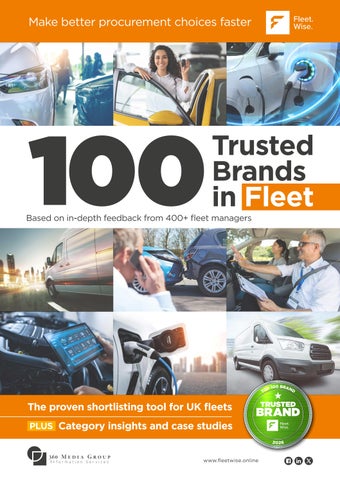
As those 12 months hurtled past, there’s barely been time to catch your breath, and that makes fast and reliable decision-making more vital than ever. Not least because of the added complexity brought about by the ZEV transition. These challenges are alleviated to a large degree by the fleet sector’s best supplier-shortlisting tool, 100 Trusted Brands in
Now in its fifth year, this comprehensive, independent guide is carefully compiled using the in-depth feedback of over 400 fleet professionals. It transpires there are no shortcuts to gaining trust, it has to be earned the hard way, through the investment of time and resource, in people, training, systems, facilities and constant innovation.
For that reason, this year we are celebrating the extraordinary consistency of those fleet suppliers that have achieved Trusted Brand status for all five

years the report has been in existence.
This exceptional level of reliability is arguably the best indicator for fleet managers to use when selecting worthy and dependable suppliers for their fleet procurement.
Our research for 100 Trusted Brands has also unexpectedly furnished us with a whole host of real-world case-studies, that we like to call ‘Success Stories’. We’ll be sharing the best of these through 100 Trusted Brands and our Better Fleet initiative over the coming months, as we help you navigate the pathway to fleet success.
Enjoy the crucial interviews, information and inspiration in this report.

John Sootheran
Editor, 360 Media Group e: john@360mediagroupltd.com w: 360mediagroupltd.com
“Trust takes years to build and moments to lose. Brands that inspire confidence gain a clear advantage by consistently proving their values, and delivering on their promises. Research from the Fleet Power Index highlights a strong connection between awareness, trust and brand consideration – with the most-trusted brands best placed to achieve long-term success.”
Ian Richardson, Managing Director, 360 Media Group
98
Choosing suppliers for a fleet operation has never been more complex. Operators are faced with an endless stream of products, services and promises – all competing for attention, all claiming to offer the perfect solution. The challenge, of course, is knowing whom to trust.
That’s precisely why the latest research from the Fleet Power Index matters. Drawing on realworld feedback from more than 400 current fleet managers, the study explores how trust influences purchasing decisions across the sector – and the findings are revealing. Reliability, integrity, transparency, competence and consistency emerged as the qualities operators value most highly. In other words, it’s no longer enough for suppliers simply to offer competitive pricing or impressive specifications. Fleet professionals want reassurance that companies will deliver, support and stand behind their services over the long term.
Brands that communicate well, demonstrate expertise and build strong relationships are more likely to be considered when purchasing decisions are made. Familiarity breeds confidence –particularly in fleet, where reliability is everything.
What’s especially interesting is how much emphasis respondents placed on consistency. Fleet managers are dealing with enough uncertainty already, particularly as the industry navigates electrification, emissions legislation and rapidly changing technology. They value suppliers who remain dependable and responsive when challenges arise.
“Comprehensive and independent data gives realworld answers”
John Sootheran, Editor 360 Media Group
And rightly so. Whether specifying vehicles, telematics, tyres, finance packages or workshop equipment, operators are making significant financial commitments with long-term consequences. A poor supplier choice can cost far more than money; it can damage uptime, driver confidence and customer satisfaction, too.
This report also highlights something many in the industry already understand instinctively: trust and awareness are very closely linked.
In many ways, trust has become the industry’s real currency. The strongest brands are no longer simply those with the biggest marketing budgets or the broadest product ranges, but those that repeatedly prove their value through action. Companies that communicate clearly, support customers properly and behave responsibly, create loyalty that extends beyond a single transaction.
For fleet operators, thorough research remains essential. Comparing suppliers carefully, speaking to existing users and looking beyond headline pricing can save time, money and frustration later on.
In crowded markets, informed shortlisting has never been more important – because the right supplier partnership can transform a fleet operation, while the wrong one can quickly become an expensive and stressful lesson.


SMEs are becoming one of the most influential forces in the UK fleet sector. Collectively, smaller and medium-sized businesses account for the vast majority of fleet operators, and control a significant share of the UK vehicle parc. This makes them increasingly important to manufacturers, leasing companies and suppliers.
But the fleet landscape is changing rapidly, and many SMEs risk falling behind if they continue to approach fleet management as a purchasing exercise focused only on upfront price and immediate vehicle availability.
For years, the lowest monthly rental often dictated decision-making. Today, however, rising operating costs, electrification, compliance pressures and changing workforce expectations require a far more balanced approach. Businesses now need to think beyond acquisition costs and focus on the wider relationship between fleet costs, productivity, driver experience and administration.
This creates both a challenge and an opportunity for SMEs. Unlike larger corporates with dedicated fleet teams, many SMEs manage vehicles alongside finance, operations or HR responsibilities, leaving limited time to assess changing technologies, taxation and whole-life vehicle costs. Yet, this is precisely why businesses need to embrace new tools, stronger supplier relationships and betterquality data to remain competitive.
One of the biggest changes across the market is the growing importance of total cost of
“SMEs risk falling behind if they approach fleet management as a purchasing exercise focused only on upfront price and immediate vehicle availability”
ownership (TCO). Fuel, maintenance, insurance, downtime, taxation and residual values all shape the real operating cost of a vehicle. Businesses that understand this are often better positioned to reduce long-term costs, and make more confident decisions.
Fortunately, the market is becoming more accessible for SMEs. Fleet management software, once associated with larger organisations, is now available in flexible and affordable formats tailored specifically to smaller businesses. These systems can simplify compliance, servicing schedules, driver management and reporting, helping SMEs reduce administration while improving visibility and control.
Digital tools are also helping fleets make smarter decisions. Businesses can now easily model EV running costs, compare powertrain options, calculate savings and manage emissions reporting.
Operational complexity is also increasing as fleets manage a mix of fuel cards, public charging
“One of the biggest changes is the growing importance of total cost of ownership calculations”
networks, home charging reimbursements and mileage claims. Recent research from Allstar reveals that 97% of fleets are anxious about managing fuel and EV charging payments, highlighting the growing pressure on businesses to maintain visibility and control. Fortunately, payment and reimbursement platforms have improved significantly, enabling SMEs to manage fuel costs, mileage claims and EV charging reimbursements through a far more streamlined process that reduces unnecessary administration.
At the same time, electric vehicles are becoming a more realistic option for SMEs. New entrant manufacturers are bringing more affordable EVs to market, with increasingly credible driving ranges, while the growth of used-EV leasing is expected to improve affordability further, as more electric vehicles enter the secondary market.
Importantly, SMEs do not need to electrify overnight. The most effective strategies are often phased and practical, using mixed powertrains and pilot programmes to build confidence gradually, while maintaining operational continuity.
Ultimately, the businesses that succeed over the next decade are unlikely to be those simply chasing the cheapest deal. They will be the organisations willing to embrace change, improve their understanding of fleet data, explore new technologies and build supplier relationships that help balance costs, productivity and administration more effectively.

“Every brand recognised in the 2026 100 Trusted Brands report has demonstrated exceptional capability, consistency and service standards, validated by the largest judging panel ever assembled in fleet, representing more than 400 UK fleets”

T360 Media Group Director, Ian Richardson, gives an overview of this year’s report
he composition of the 2026 Trusted Brands report reflects a fleet sector in transition –where operational complexity, electrification and cost control are reshaping fleet priorities and the supplier landscape supporting them.
Across every category, suppliers are evolving their propositions to help fleets manage a range of new challenges; while the fleets are demanding greater transparency, integration and flexibility.
A clear shift can be seen in the EV and Fuel Payments category. As electric vehicle adoption becomes more prevalent, the distinction between traditional fuel card suppliers and EV payment specialists is rapidly disappearing. Payment providers are increasingly delivering integrated solutions that support ICE and electric vehicles, including public-charging access, home
charging reimbursement and consolidated reporting. This convergence addresses what fleets saw as their No1 operational pain point in 2026: the admin burden of managing mixed-energy fleets and fragmented payment systems.
“66%
of fleets expect to invest in their own charging infrastructure within the next 12 months”
In addition, four specialist EV services providers are recognised this year, reflecting the growing importance of dedicated EV infrastructure and energy expertise. These companies support fleets across a broad spectrum of requirements, from EV readiness assessments and transition planning tools, through to full workplace charging and integrated energy solutions. Their role will become increasingly valuable as fleets seek greater control of charging strategies, operational resilience and long-term energy costs. According to the latest Fleet Power Index, 66% of fleets expect to invest in charging infrastructure within 12 months. Meanwhile, investment in solar generation and energy storage is now firmly on the radar of one-infour fleets. This demonstrates how electrification is evolving beyond vehicle acquisition alone.
The growing influence of fleet management software providers, represented by 13 companies in this year’s report, highlights a significant market trend. Fleets are placing greater emphasis on transparency, data visibility and total cost of ownership analysis as they seek to improve decision-making and reduce operational costs. Trusted Brands research identified a lack of integrated data as a key frustration among operators, with many fleets now reconsidering incumbent suppliers that cannot provide a connected, insight-led platform experience.
The leasing and salary sacrifice sector is evolving at pace, with 23 providers featured in this category. The boundaries between vehicle leasing and salary sacrifice are becoming increasingly blurred, as most major leasing companies have integrated salary sacrifice into their core proposition. This reflects both strong employer demand and continued employee interest in accessing electric vehicles through affordable and taxefficient schemes.
Recent BVRLA data highlighted significant growth in salary sacrifice adoption over the last 12 months, reinforcing its emergence as a mainstream fleet and employee benefit.
evolving workforce patterns and operational disruption have increased demand for flexible vehicle access solutions. Fleets are increasingly relying on rental providers to support new starters, temporary contracts, seasonal demand and vehicle downtime, while also using flexible mobility solutions to reduce long-term risk exposure during periods of market uncertainty.
The continued growth of the vehicle services category, featuring seven companies, demonstrates the expanding role of specialist SME suppliers within the fleet sector. Vehicle conversion specialists, repair providers, security companies and graphic design experts are playing an increasingly important role in helping fleets tailor vehicles to operational needs, while protecting uptime, compliance and asset value.
“The Trusted Brands study identified a lack of integrated fleet data as a key frustration among operators”
Importantly, the leasing market itself is evolving beyond simply funding vehicles. Fleet research within the Trusted Brands study identified that, alongside competitive pricing, the quality of account management and customer service are the strongest drivers behind fleets increasing investment with a leasing provider. Sustainability and EV expertise are also growing in importance.
As fleets navigate increasingly complex operational and environmental requirements, leasing providers are being judged not only on cost and vehicle availability, but also on their ability to deliver strategic guidance, support decarbonisation goals and provide proactive customer support that reduces operational friction.
The rental sector, represented by 12 companies, remains a resilient and strategically important part of the fleet ecosystem. Economic uncertainty,
Beyond operational support, these suppliers are also critical in elevating fleet brand image, ensuring vehicles are professionally presented, correctly equipped and repaired to the right standard, first time. As fleets place greater emphasis on driver experience, operational continuity and customer perception, vehicle services providers are becoming an essential extension of the fleet operation itself. The breadth of suppliers, demonstrates how the fleet industry is moving towards a more integrated, service-led and technology-enabled future.
This year’s report once again features the findings from Zapmap’s UK Driver Satisfaction Survey 2025, revealing the UK’s top-rated EV charging networks, as rated by EV drivers themselves.
The inclusion of independent driver sentiment – alongside fleet-buyer research – reinforces the growing importance of charging reliability, user experience and confidence, in supporting the wider transition to electric mobility.
The breadth of suppliers represented across the 2026 Trusted Brands report demonstrates how the fleet industry is moving towards a more integrated, service-led and technology-enabled future.
Fleets are no longer selecting suppliers based solely on price or vehicle availability. Instead, the focus has shifted towards operational continuity, actionable data, administrative simplicity and the ability to support long-term strategic change.
Thank you to all contributors, advertisers and category partners – including Allstar, Driving for Better Business, Fleet Operations, FleetCheck, Novuna, Tusker and Stewart Signs – for supporting the 2026 Trusted Brands Report.
Finally, congratulations to all 100 Trusted Brands recognised within this year’s report. This recognition is measured and earned through one of the fleet sector’s most comprehensive and robust research programmes, conducted by 360 Media Group as part of the Fleet Power Index. It reflects the brands that fleets trust most to support their operations, transition strategies and long-term success.
The 2026 100 Trusted Brands Report is built upon one of the most robust, consistent and transparent research programmes in the UK fleet sector. Conducted by 360 Media Group as part of the Fleet Power Index, the research has now been carried out consistently over five years, generating high-quality, detailed responses from over 400* fleet professionals on each occasion.
For the 2026 programme, we distributed an indepth survey questionnaire to more than 400 fleet professionals, requesting detailed feedback on the suppliers, products and services they trust most across the fleet industry.
Participants were asked to evaluate brands based on their real-world experiences, operational performance and long-term confidence in the organisations they work with.
The resulting data was analysed to generate overall brand trust scores and rankings across 10 key supplier categories, covering more than 200 fleet sector brands. This creates an intensely competitive environment for inclusion within the final Top 100 Trusted Brands list, reinforcing the significance of recognition within the report.
“The 2026 100 Trusted Brands Report is built upon one of the most robust, consistent and transparent research programmes in the UK fleet sector”
Importantly, the methodology is designed not only to measure popularity, but to assess the qualities that underpin long-term fleet partnerships. Areas such as reliability, transparency, customer service, expertise, consistency, problem resolution and strategic support, all influence how suppliers are perceived and recommended by fleets.
The 2026 report also demonstrates the independence and fluidity of the research process, with 12 new entrants recognised within this year’s Top 100. This continual movement reflects changing fleet priorities, evolving supplier capabilities and the increasing demands being placed on fleet partners as the market transitions towards more connected, data-led and electrified operations.
Alongside quantitative scoring, the research also captures anecdotal insight and sentiment from fleet operators, providing a broader understanding of the reasons why certain brands continue to earn trust and recommendation within the market.

Today, more than 60 fleet-sector brands actively use Fleet Power Index data and benchmarking insights within their own marketing, customer experience and strategic planning processes. This demonstrates the growing importance of independent brand perception measurement in a market where trust, transparency and service delivery increasingly influence supplier selection and retention decisions.
Beyond recognition alone, the Trusted Brands Report has evolved into a practical decision-making tool for the fleet sector. The report is distributed monthly to thousands of fleet buyers and decisionmakers, ensuring it remains active and relevant throughout the year, as fleets review suppliers, build shortlists, invite tender submissions and evidence procurement decisions.
By analysing 10 critical fleet sectors in one independent report, the 100 Trusted Brands guide helps organisations save time, strengthen justification and increase confidence when selecting new suppliers and partners.
“The report is distributed monthly to thousands of fleet buyers and decision-makers”
300-400 responses is the research industry standard for robust B2B brand tracking and high-stakes business decisions. This achieves a solid confidence interval (95% confidence level, +/- 5% margin of error)


100
The first edition of 100 Trusted Brands in Fleet in 2022 coincided with fundamental changes to fleet strategies, and the arrival of new technologies to meet unprecedented challenges
It feels like Covid-19 ushered in a completely new 21st century world for fleets.
True, many of the trends had started prior to the pandemic, but Coronavirus confirmed their trajectories and accelerated their progress. Evolution became revolution.
Decarbonisation and data lie at the heart of these developments, underpinned by the perennial need for fleets to control costs. ZEV pressures have grown exponentially during the last five years – the challenge for fleets is to pivot cost-effectively, and without disrupting business productivity.
Covid-19 certainly upset long-established processes, exposing weaknesses in supply chains, after factory shutdowns led to critical shortages of both vehicles and replacement parts.
This forced fleets to switch from an operational approach, managing the total cost of ownership of vehicles, to a strategic approach centred on minimising the total cost of operations.
“HMRC tracked an annual increase in company-car tax payers, from 720,000 in 2020-21 to 840,000 in its most recent set of figures”
And in the years since coronavirus, the shockwaves have kept crashing against fleet’s shores one after another.
● Russia’s invasion of Ukraine drove up fuel prices to levels that tore up fleet budget forecasts.
● Inflation caused the Bank of England to raise interest rates from 0.1% in December 2021 to 5.25% by August 2023, dramatically increasing fleet borrowing costs.
● The crash in electric vehicle residual values has massively amplified depreciation.
● Most recently, the conflict in the Middle East has pushed fuel-pump prices to desperate levels, hammering fleet bottom lines.
Such relentless and unavoidable challenges have necessitated a new approach from, and skillset for, fleet decision makers.
“Cost volatility, extended replacement cycles and tighter ESG expectations have forced fleet decisionmakers to think longerterm, while acting more tactically,” says Rory MacKinnon, Commercial Director at Holman.
“As a result, the role of fleet management has broadened, from managing vehicles to balancing risk, productivity, regulation and sustainability across the business.”
Unfortunately, the traditional cost-saving levers that fleets could formerly rely upon, such as

extending renewal cycles, switching fuel types and locking into long-term contracts, now carry greater risk than they once did. The management of costeffective fleet operations has become a challenge akin to 4D chess.
“Cost, regulation, electrification, uptime and risk are all now fundamentally connected, so decisions made in one area increasingly create consequences elsewhere,” explains Chris Raynsford, Fleet Director at Volkswagen Financial Services.
These ever-shifting sands have demanded a fresh approach, with organisations treating fleet as a core strategic function, that has ramifications for the entire business.
Such developments were brought to the fore during Covid-19, when working practices and business operations had to pivot to reflect new realities. Figures from the Office for National Statistics show that in October 2025, 27% of workers in Great Britain were working in some form of hybrid arrangement, as video conferencing boomed. A further 13% were working fully-remotely, compared with 12% and 5% respectively in 2019.
Drilling into the data shows hybrid workers to be more likely than average to have higher-level qualifications, work full-time, and be aged between 30 and 49 – prime company car candidates.
The findings chime with the BVRLA’s quarterly Leasing Outlook report, which has tracked a steady reduction in the annual mileages of leasing contracts, as the frequency of both commuting and client visits has declined.
Despite hybrid working, the popularity of the company car as an employee benefit has grown since Covid, with HMRC tracking an annual increase
“Last year, UK car manufacturers spent £5 billion on discounts and incentives to sell electric vehicles”
Continued over
in company-car tax payers, from 720,000 in 202021 to 840,000 in its most recent set of figures. The reason lies in the highly-supportive benefit-inkind tax treatment of low and zero-emission cars, which has triggered a return of drivers who had previously opted out in favour of a cash allowance. Furthermore, employers are extending the benefit of a battery-powered car to their entire workforces via salary sacrifice schemes, making this the fastestgrowing sector of the fleet industry in recent years.
The difficulty facing fleets and their leasing company suppliers is that the retail car market’s appetite for electric vehicles has proved to be significantly weaker, with fleets accounting for about four in every five EV registrations. Consequently, residual value forecasts set for cars that started their leases during the post-pandemic supply shortages, when used car prices were delivering substantial windfall profits, have proved to be massively over-optimistic. This elevated depreciation, in tandem with higher interest rates, has pushed up fleet costs for new EVs and brought a forensic focus on every area of expenditure. Rental versatility
“As the saying goes, ‘If the wheels aren’t turning, the business isn’t earning’.”
Rightsizing both the number and size of vehicles in a fleet is a first step to alleviating these issues. Vehicle utilisation is now a key metric, according to Tom Middleditch, Head of B2B Marketing and Sustainability spokesperson at Europcar Mobility Group UK.
“Businesses,” he says, “understand the role of
rental in replacing vehicles sitting unused in car parks, with the flexibility to be able to access the right vehicle for every use case.”
“Rental,” added Middleditch, “enables organisations to pivot as workload demands and staffing change, without being tied to long-term lease agreements.”
In the freight and logistics world, sustainability pressures are leading commercial vehicle operators to explore the possibility of downsizing trucks to vans. While they sacrifice payload and cargo volume, they benefit from cheaper electric vehicles and salary savings, especially as HGV-qualified drivers, who are able to command higher levels of pay, are not always required.
With higher levels of depreciation now baked into EV holding costs, fleets are extending contracts to avoid the inflated costs of replacing vehicles. They also appear increasingly prepared to consider running used vehicles. John Peters, Head of the Arval Mobility Observatory in the UK, says its most recent research shows that 58% of fleets are operating pre-owned cars and vans, up from 52% in 2025.
The greater reliability of electric vehicles and the absence of a cliff-edge in maintenance spend as they age has steered leasing companies to create viable second-life leases for used EVs. The challenge lies in establishing a price that offers customers a worthwhile reduction compared to new equivalents, at a time when manufacturers are engaged in a cutthroat price war to meet their EV registration obligations under the Zero Emission Vehicle Mandate.
Last year, UK car manufacturers spent £5 billion on discounts and incentives to sell electric vehicles, equating to roughly £11,000 per vehicle sold, according to the SMMT, and they still failed to achieve the 28% of registrations required to meet the mandate.
If there are too many new EVs chasing too few
buyers, the same situation is evident in the used car market, where supply continues to outstrip demand. The situation is so serious that leasing companies have tracked a 71% decline in EV residual values from their peak in September 2022, and, while prices have stabilised recently, there is no sign of an uptick as supply mounts.
New data from the SMMT shows that rising volumes saw used battery-electric-car transactions increase by 32% in the first quarter of 2026, compared to the same period last year. However, this still meant that only one in 23 buyers made the transition to battery power.
This escalation in depreciation costs has forced fleets and leasing companies to explore multiple disposal channels, in a bid to maximise resale proceeds. The sector’s seen a growing deployment of artificial intelligence to identify the optimum time to sell, as well as the most profitable channel.
Incorporating used battery-electric cars in salary sacrifice schemes, for example, “broadens access, adds scale and strengthens resilience, making electric mobility sustainable for the long term,” reveals Andy Wolff, Managing Director of Zenith’s Corporate division.
If the life of a company car or van is bookended by buying, leasing or renting at the best price, and selling at the highest possible value, fleets now have a completely new set of tools to maximise the efficiency of the months and years between those two events.
First and foremost is keeping vehicles on the road – as the saying goes, ‘If the wheels aren’t turning, the business isn’t earning’.
“Fleets are far more focused on maximising uptime and utilisation, as systems are able to show these metrics in far greater detail,” says Ash Connell, Commercial Director at r2c. “They need platforms across the operational spectrum to feed into this reporting, and provide solutions for issues that previously were hard to define.”
The connectivity of new vehicles supports this innovative way of thinking. Historically, telematics systems captured data from black boxes installed in commercial vehicles for subsequent download, analysis and review, whereas today almost every new vehicle features embedded technology capable of providing real-time usage data to fleet decision makers.
“Fleets are no longer reacting to incidents – they are actively preventing them,” says Oliver Holt, Senior Sales Manager UK&I at Geotab. “Data-driven coaching, smarter route planning and integrated platforms are helping operators cut fuel use, reduce emissions and improve duty of care.”
Such insights recognise that driver behaviour is central to cost control, safety performance and ESG goals – and fleets have the opportunity to influence it in real time.
“Getting it right isn’t a ‘nice to have’ anymore,”
concurs Paul Hollick, CEO at Lightfoot, and AFP Chairman. “It has a direct impact on profitability and sustainability targets.”
The richness of connected data is also allowing fleets to get on the front foot with fuel and energy costs, as well as maintenance policies. In this area, machine learning is laying the foundations for a shift from preventative to predictive maintenance.
“We see a shift in the market from fixing vehicles and managing the failure, to managing the performance of the vehicle,” acknowledges Nikos Kotrozos, Supply Chain Director of Fleet Assist.
Firms that monitor, for example, coolant temperatures or vibrations across hundreds of thousands of vehicles are giving fleets visibility of the likelihood of issues developing into breakdowns. A fleet might decide, for instance, that when the probability of a breakdown reaches 20%, the vehicle automatically schedules a repair request with a workshop, booking the appointment directly, with no human intervention.
Authorisations for service and maintenance work are also being automated, freeing fleet teams from mundane work to concentrate on areas where they can add more value to the operation.
“The speed of response to garages increases dramatically, decisioning-consistency across similar jobs for each fleet rises, [and] auto-authorisation of jobs out of hours is possible,” explains Charlie Brooks, Vice President of Strategy, Growth & Data at epyx.

If a week is a long time in politics, the five years since the first 100 Trusted Brands in Fleet report launched has been an aeon. Vehicle technology has moved on and electrification has been normalised. Sustainability has become part of everyday fleet conversation while data-based decision making is now a core feature of vehicle and driver management, and cost control. Hold onto your hats for the next five!

Paul Holland is Managing Director for UK/ANZ Vehicle Payments, Corpay, including UK brand Allstar
Over the past five years, fleet has experienced one of its most profound periods of transformation. Post-Covid disruption accelerated digital adoption, reshaped driver expectations and increased pressure on businesses to balance cost control with sustainability. Fleet operators are navigating greater complexity, from volatile fuel prices and compliance demands to the shift towards electrification. For fleets today, resilience depends on visibility,
flexibility and smarter decision-making. Realtime transaction data, integrated telematics and simplified operational management are now essential for controlling costs, supporting drivers and meeting environmental objectives. Trust has also become increasingly important, with fleet leaders seeking partners and technologies that can help them adapt with confidence.
Looking ahead, connected mobility, alternative fuels and evolving regulation will continue to redefine fleet priorities. Payment solutions that extend seamlessly across traditional fuel and EV charging – on the road, at home, near-home, and at depot or workplace – will be key to managing the transition effectively. The most successful fleets will be those that embrace innovation, while remaining focused on efficiency, agility and driver experience – ensuring they're prepared for continued disruption, and for long-term opportunity.
“For fleets today, resilience depends on visibility, flexibility and smarter decision-making.”

Tom Middleditch, Head of B2B Marketing and Sustainability spokesperson, Europcar Mobility Group UK
Probably the biggest change we have seen in the rental sector is the focus on sustainability. Usership is at the centre of many conversations we now have with businesses operating fleets – they understand the role of rental in replacing vehicles sitting unused in car parks with the flexibility to be able to access the right vehicle for every use case. And, of course, vehicle electrification is now front of mind for every fleet manager.
Europcar has made a significant commitment to supporting fleet operators on their electric transition, including EV rental price parity with ICE, training and education for new electric drivers and
growth in EVs on our fleet well above the industry average. As a result, we have seen demand for full battery-electric-vehicles account for nearly half a million rental days in 2025 – an increase of 93% on the previous year.
Rental enables organisations to pivot as workload demands and staffing change, without being tied to long-term lease agreements - and to utilise zero-emission vehicles without committing to technology that may be rapidly superseded. Replacing permanent fleets with long-term rental is becoming much more common. The pressure to transition to electric will only increase. And as Scope 3 emissions feature in almost every RFP, fleet operators will need to adopt flexible solutions like rental to ensure they are compliant.
“Replacing permanent fleets with long-term rental is becoming much more common. The pressure to transition to electric vehicles will only increase”

Oliver Holt, Senior Sales Manager UK&I at Geotab
We’ve seen rapid industry evolution in the last few years. Basic tracking seems like a distant memory – fleets are now readily equipped with fullyconnected, data-driven operations, accelerated by post-Covid pressures around efficiency, safety and sustainability. In-cab tech, like AI-enabled video telematics, can provide real-time insight into driver behaviour, proactively reducing risk and improving operational performance.
The technological change means fleets are no longer reacting to incidents – they are actively preventing them. Data-driven coaching, smarter
route planning and integrated platforms are helping operators cut fuel use, reduce emissions and improve duty of care. Our partnership with Tarmac, for example, reduced driver-fault collisions by around 30% after deploying integrated video telematics, alongside gains in fuel efficiency and driver performance.
Going forward, maintaining driver trust will be critical for fleets. Our research shows that 91% of professional UK drivers are ready to embrace AI-powered in-cab coaching, highlighting strong demand for tech that improves safety and performance. To realise these benefits, fleets need to prioritise transparency, have clear data policies and privacy-first approaches, so that new tech is used as a tool to support and protect drivers, rather than monitor them.
“Maintaining driver trust will be critical for fleets. Our research shows that 91% of professional UK drivers are ready to embrace AI-powered in-cab coaching”

John Peters, head of Arval Mobility Observatory in the UK
At Arval, it’s a source of great satisfaction to be named among the 100 Trusted Brands in Fleet by our customers and other stakeholders across the fleet sector.
The needs of vehicle operators grow ever more complex, with our range of products and services continually enhanced in the five years since this Fleet Power Index survey was first launched.
This changing picture is something we monitor every year through our Arval Mobility Observatory Barometer report.
Here are five of the report's most significant findings for 2026:
● Fleets are increasingly upbeat about growth, with 33% of our respondents predicting their car and van numbers will expand. That’s up from 28% last year.
● More fleets are looking towards used vehicles, with 58% operating pre-owned cars and vans. That compares with 52% in 2025.
● Fleet concerns over downtime are easing, with 21% saying they have seen an increase in vehicle offroad time during the last 12 to 18 months, against 24% previously.
● Charging remains the biggest fleet barrier to electric car use, accounting for three of the top five obstacles to adoption in our research.
● Safety is the main reason why fleets adopt telematics, with 30% of respondents using the data to improve on-the-road driver behaviour.
See more unmissable Five Years of Fleet Change views from key figures on www.fleetwise.online

100 Trusted Brands in Fleet

This year we celebrate the fleet suppliers that have consistently achieved Top 100 status for the entire five years of Trusted Brands in Fleet
The Trusted Brands Gold Standard recognises a select group of suppliers that have earned their place in the 100 Trusted Brands every year since the programme launched in 2022.
In a fleet market shaped by operational pressure, rising costs, electrification and constant change, these brands have consistently delivered for fleet operators. They have adapted, innovated and supported fleets through the most significant period of transformation the sector has known.
The Gold Standard is earned through the confidence and recommendation of fleet professionals across the UK. Consistent inclusion over five consecutive years signals something powerful: long-term trust, proven performance and the ability to deliver real value, year after year.
These brands are trusted partners that fleets
rely upon to keep vehicles moving, control costs, simplify administration and support strategic decision-making. Their continued recognition demonstrates resilience, service quality and an ongoing commitment to improving the entire fleet experience.
For fleet operators, the Gold Standard Roll of Honour provides a valuable benchmark when evaluating suppliers and building tender lists. These companies have already earned the trust of the market consistently and at scale, making them credible partners for fleets seeking dependable, forward-thinking suppliers.
As the fleet sector continues to evolve, Gold Standard brands stand out as organisations that not only respond to change, but help shape the future of fleet management itself.
Drax Zapmap
Epyx
FleetCheck Click here
Optimize - The Algorithm People Click here
Allstar Click here
Key Fuels
Shell Fleet Solutions
AA DriveTech
The AA
Fleet Operations Click here
Ford Fleet Management
Holman Click here
RAC
Octopus Electric Vehicles
Tusker
Alphabet (GB) Ltd
Arnold Clark Leasing
Arval UK
Athlon UK
Ayvens
Driveway Vehicle Solutions - Lithia Click here
Grosvenor Leasing
Leasys
Lex Autolease
Novuna Capital Vehicle Solutions Click here
Ogilvie Fleet
SG Fleet UK
Volkswagen Financial Services | Fleet
Zenith
Avis/Budget Group
Enterprise Rent A Car
Europcar
Hertz
Northgate Vehicle Rental
Crystal Ball
Geotab
Lightfoot Click here
Michelin Connected Fleet
Samsara
Webfleet Solutions
There are hundreds of inspiring success stories in the fleet sector every year – but many of these good-news case studies go undiscovered and unread… informing and inspiring no-one, despite their hugely positive PR potential.
Yet, these success stories are crucial to the fleet industry, as they are provable and real-world examples of best practice in action. These powerful narratives instantly engender trust with fleet managers, making them essential to any supplier’s business growth. The best success stories are contextual and measurable, reinforced with data and ‘happy-client’ quotes.
At a time when the industry is undergoing huge transformation, from rapid electrification to the digitisation of compliance, you might expect the market to be full of clearly documented success stories. In reality, something different is happening. A widening ‘success gap’ is emerging. Fleets are achieving remarkable results, but many organisations are not
yet structuring or sharing those results in ways that allow others to easily learn from them.
At FleetWise, we recently analysed how the top 100 trusted fleet brands communicate their outcomes. A clear pattern emerged.
These organisations are delivering significant operational improvements for fleets, yet translating those results into clear, timely, and accessible content is often more complex than it appears.
“A widening ‘success gap’ is emerging. Fleets are achieving remarkable results, but many organisations are not sharing those results in ways that allow fleets to benefit from them”
This insight builds on our Trusted Brands research, which examines the companies that fleets consistently rely on to support critical operational decisions.
In other words, many companies are sitting on a goldmine of operational wins and measurable improvements that could play a much bigger role in how they communicate their value.
This matters because the way fleet buyers research suppliers has changed. Fleet managers no longer wait for brochures or sales presentations
“Many providers are sitting on a goldmine of operational wins and measurable improvements that could play a much bigger role in how they communicate their value to fleets”
to understand what a supplier can deliver. Long before a conversation begins, they are researching independently and looking for clear examples of what works in real fleets.
In a market saturated with bold marketing claims, buyers increasingly look for proof: short, digestible examples that show outcomes rather than simply describing solutions.
The suppliers that stand out treat success stories as awareness and educational assets rather than simple marketing trophies.
Across our in-depth analysis, the strongest examples followed a simple pattern: a clear operational challenge, a structured solution and a measurable outcome.
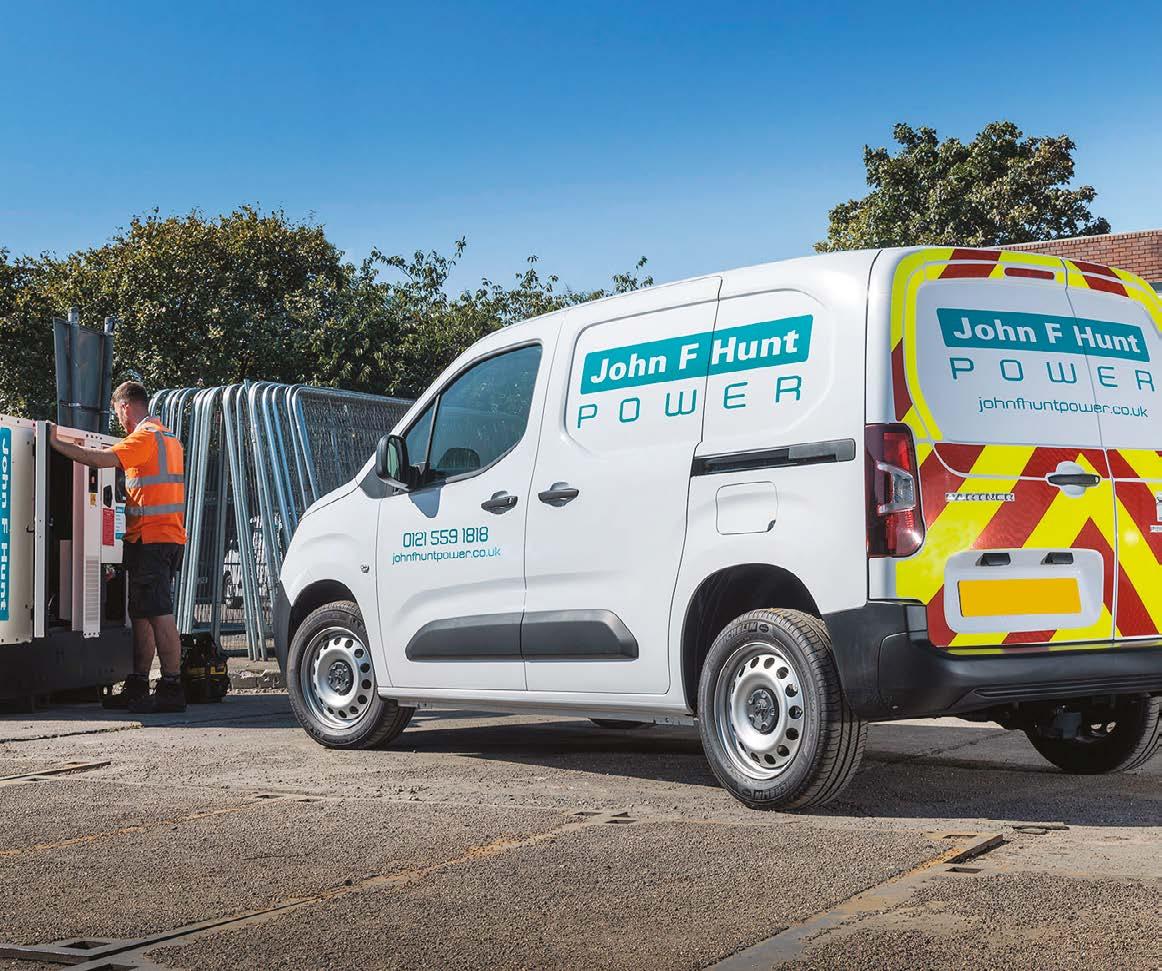
Take the collaboration between Allstar ServicePoint and John F Hunt. By moving from a fragmented, multi-element system to a centralised, pre-authorised maintenance process, the business gained full visibility of all work before payment, and significantly improved operational control.
Likewise, the partnership between Sanofi Pasteur MSD and ADT, replaced paper-based processes with a data-driven risk assessment framework. That led to a 31% reduction in insurance claims and 100% driver compliance.
These examples reflect a broader shift across the fleet sector. Data visibility, operational control and

compliance confidence are becoming central to how organisations define and measure success.
For suppliers, the lesson is a wholly positive one. Proven, real-world success is one of the most valuable assets a business has, particularly when it is captured clearly and shared consistently.
The companies shaping the future of fleet are not necessarily the ones making the loudest subjective claims about their products. They are the ones making their results visible, accessible and useful to the wider market.
The fleet market moves quickly. Regulations change, technologies evolve and operational priorities shift. Without a deliberate investment in capturing and updating success stories, even the strongest results can quickly become difficult to find, or disconnected from the wider narrative of how a brand solution continues to evolve.
Success stories are not trophies. They are blueprints for progress – especially when organisations are intentional about capturing them and confident about sharing them.
“In a market saturated with bold marketing claims, buyers increasingly look for proof”
Fleet Wise is keen to promote great Success Stories within the fleet sector, in any of the categories in this report.
From time/admin saved, and cuts in emissions, to revenues grown and costs cut, we’re here to spread your good news, which informs and inspires the sector.
Email pr@fleetwise.co.uk, or contact Issie directly at isabel@fleetwise.info to share your good news.
How fleets balance sustainability, operational complexity and cost control
Funding and Cost Confidence
Lack of transparency across fleet operations
Difficulty implementing sustainable fleet practices
Managing vehicle and driver data
Administrative burden of operating a lowemission fleet effectively
Complexities involved in transitioning to electric vans
The top-three fleet pain points are linked to sustainability, with growing operational, admin and infrastructure pressures as low-emission strategies evolve. Data visibility is also a major concern.
Cost Reduction Priorities
Fuel savings remain the number one short-term
Operational Tools Being Deployed
Fleets are increasingly relying on data-led operational efficiency tools to reduce in-life costs.
Rate SMR management as effective or very effective
Are exploring alternative funding methods
EV-operating fleets exploring alternative funding
Non-EV fleets exploring alternative funding
EV-operating fleets are significantly more open to new funding approaches.
Operational EV experience is changing how fleets prioritise infrastructure, funding and cost reduction.
What EV Fleets Prioritise
71% EV charging policy
67% Vehicle choice
64% Improved charging infrastructure
54% Workplace charging funding
Fleets with EVs increasingly focus on infrastructure optimisation and operational efficiency.
What Non-EV Fleets Prioritise
59% Government incentives
55% Vehicle choice
50% Lower-cost vehicles
50% Asset funding support
Non-EV fleets remain more focused on affordability and financial feasibility.
The challenge is no longer whether fleets will electrify, but how efficiently they can manage cost, infrastructure and operational complexity.
Source: Fleet Power Index 2026


HAidan Bartlett –Holman’s Head of Marketing and Product Development
ow has Holman UK evolved beyond traditional fleet leasing?
Holman UK has come a long way from being a traditional leasing provider. Today, we support customers through the full vehicle lifecycle – from funding and acquiring vehicles, to maintaining and remarketing them. That includes things like fleet management, SMR, compliance, telematics and driver risk – but for us it’s really about how those pieces come together. Every business is different, and the market’s changing quickly, so we focus on staying flexible and working closely with our customers to understand what they actually need.
What's most valuable about having one strategic partner managing all elements of your fleet?
What customers value most is the ability to bring greater transparency, stronger cost control and better use of data across the entire fleet operation. When one partner is managing multiple parts of the fleet, it’s easier to get a clear, consistent view of what’s going on, across costs, performance and risk.
How are fleet strategies changing as a result of recent enormous disruptions in the market? Fleet strategy has always needed to evolve, but the pace and scale of change has definitely increased in recent years – fleets need to be more efficient, more agile and better informed.
As a result, having access to the right data has become much more important. Businesses need that visibility to make confident decisions and adjust their strategy as things change.
As fleets assess whether traditional contract hire is flexible enough, is demand growing for more tailored funding, and what benefits can it offer?
We’re seeing more businesses look beyond traditional contract hire, mostly because they want greater flexibility in what’s still a pretty uncertain market. Contract hire still has its place, but it’s no longer the default. More customers are exploring options like finance lease or sale-and-leaseback, depending on what they’re trying to achieve.
Our role is to help them understand those options and shape a funding approach that works for them.
“What customers value most is the ability to bring greater transparency, stronger cost control and better use of data across their fleet operation.”
We go beyond simply reporting what’s already happened, we use data and insight to help shape what happens next.
A more transactional approach tends to be reactive, whereas a consultative one is much more proactive. We spot trends early, highlight potential risks and help clients make better decisions, before those issues start to impact performance.
Where is most support needed during EV transition? One of the biggest challenges is knowing where to start and how quickly to move. There are a lot of moving parts – from vehicle choice and planning charging infrastructure, to managing investment and setting the right policies.
What we see time and again is that it only really works when it’s led by data, not guesswork.
Every fleet is different, so these days, a one-sizefits-all approach just doesn’t translate into day-today operations.
That’s where Holman’s EV Consult comes in. It gives customers a clear, structured plan, based on their operation; helping them move at the right pace, make informed decisions and build a transition that genuinely works for them.

For commercial vehicle operators, uptime isn’t just a performance measure. It’s the difference between delivering for customers, keeping colleagues productive and protecting the cost base of the business.
Every vehicle off the road can mean missed appointments, delayed work, replacement vehicle costs, disrupted schedules and additional pressure on drivers and operational teams. That’s why improving uptime starts long before a vehicle reaches the workshop. It starts with the way vehicles are managed, checked, reported and maintained throughout their life.
At Novuna Vehicle Solutions, we help customers fund and manage fleets with ownership, to keep vehicles safe, compliant, available and costeffective. But better uptime is not only achieved through maintenance contracts or reliable supplier networks. It also depends on the daily habits, processes and decisions that help prevent avoidable downtime.
Here are five practical ways fleet operators can improve uptime.
1 Make daily checks non-negotiable
Walkaround checks are one of the simplest ways to prevent avoidable downtime, but making it a daily, mandatory process is key. Tyres, lights, windscreen visibility, dashboard warning lights, fluid levels and visible damage should be checked and reported before the vehicle starts work. Small issues spotted early are often easier, quicker and cost-effective to resolve.
2 Make defect reporting easy
Drivers need a simple way to report issues as soon as they appear. At Novuna, our customer drivers use My Novuna Vehicle to report faults and book repairs digitally, 24/7, helping fleet teams gain clearer visibility of issues as they emerge. The faster a defect is logged, the more options there are to plan the right response.
3
Use data to spot repeat problems
Recurring faults, repeated MOT failures or common repair themes can point to wider issues across a vehicle type, depot, driver group or operating profile. Reviewing maintenance and downtime trends helps fleets move from reactive fixes to proactive improvement.
4
Better uptime is not just about fixing vehicles quickly; it is about reducing disruption. By grouping service, MOT and ancillary equipment maintenance into a single visit, fleets can complete several essential events at once could reduce total downtime from five days to one, saving valuable operational time and helping keep vehicles where they need to be: on the road.
5 Educate drivers on why it matters
Drivers are often the first to notice when something changes. Helping them understand what to look for, why early reporting matters and how vehicle condition affects safety, compliance and uptime can make a meaningful difference to fleet performance.
The most successful fleets treat uptime as a shared responsibility between drivers, fleet teams, suppliers and their fleet management partner. With the right maintenance support, digital tools and operational oversight, businesses can make better decisions, reduce disruption and keep vehicles working harder for longer.
Better uptime doesn’t start when something goes wrong. It starts before the journey begins.


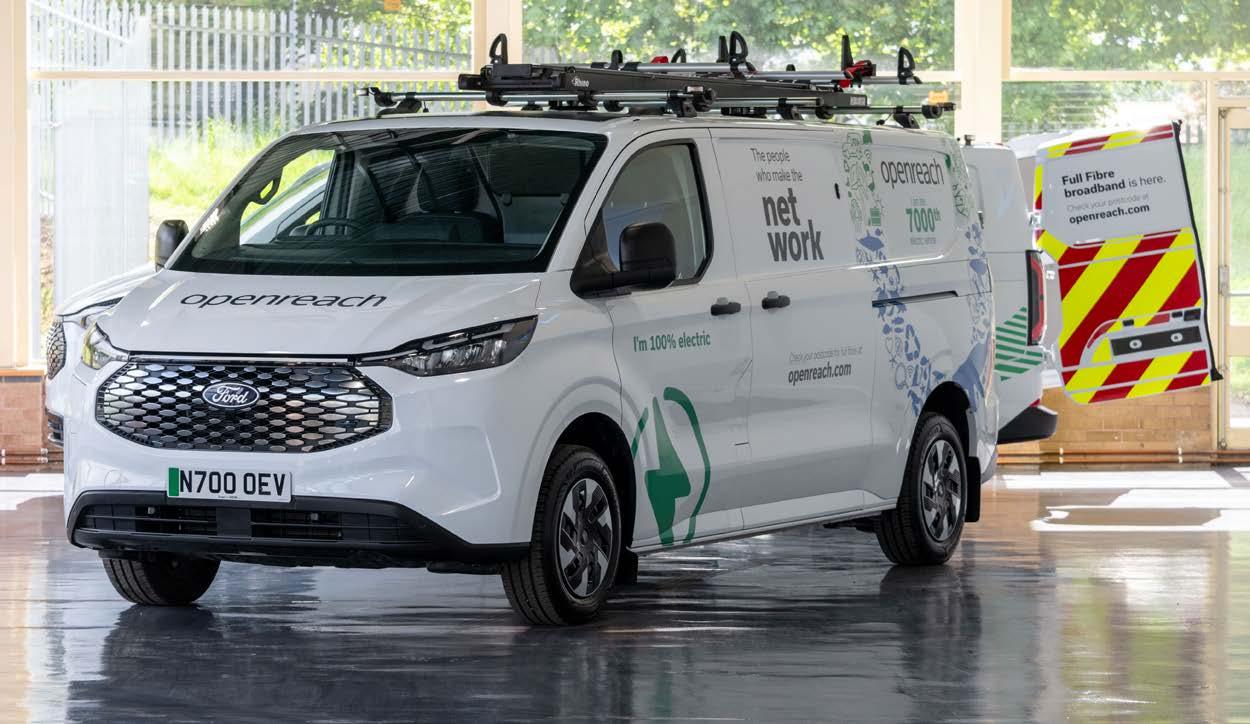
Stewart Signs is proud to be a trusted Openreach partner since 1992. Throughout this time we have branded new vehicles, maintained existing ones and completed multiple rebrand projects
For more than three decades, Stewart Signs has been a trusted partner to Openreach, delivering large-scale fleet branding and graphics solutions across the UK. Since the partnership began in 1992, Stewart Signs has played a key role in maintaining and evolving the visual identity of one of the country’s most recognisable and largest vehicle fleets.
Over the years, Stewart Signs has supported Openreach with a comprehensive end-to-end fleet branding service, covering design,production, installation, maintenance and accident repair.
The scale of the partnership is significant, with the company supporting a fleet of over 23,000 vehicles across multiple programs and operational needs.
One of the most notable achievements in the partnership was a major national rebrand program, during which Stewart Signs successfully rebranded 22,000 vans in record time.
The project began at an exceptional pace, with 500 vehicles being completed per week from the outset. Delivering at this scale required precise coordination between production, logistics and installation teams to ensure minimal disruption to nationwide operations.
Beyond large rebrand programs, Stewart Signs continues to provide ongoing fleet management and maintenance, ensuring vehicles remain compliant with brand standards and operational requirements.
The partnership has also supported Openreach’s transition towards electric vehicles (EVs). Stewart Signs delivered branding for Openreach’s first electric van deployed during the London 2012 Summer Olympics, marking the beginning of a longterm shift toward a more sustainable fleet.
Since then, we have continued to support this transition, helping brand thousands of electric vehicles across the network, including milestone vehicles such as the 5000th EV.
Another innovation developed through the partnership is Stewart Signs’ Accident Repair Portal, designed to streamline the process of replacing damaged vehicle graphics.
When fleet vehicles require repairs, the portal allows replacement graphics to be produced, dispatched and installed quickly, significantly reducing Vehicle Off Road (VOR) time. This helps to ensures vehicles can return to service faster, maintaining operational efficiency for field engineers and service teams.
Today, the long-standing collaboration between Stewart Signs and Openreach demonstrates the value of reliable partnerships, scalable delivery and continuous innovation. By combining the latest print technology and production capabilities with responsive fleet support, Stewart Signs continues to help keep one of the UK’s largest branded vehicle fleets visible, consistent and operational across the country.
For more information on Stewart Signs fleet services, including vehicle conversions, scan the QR code or email enquiries@stewartsigns.co.uk


Sanctuary Housing, one of the UK’s leading providers of housing and care, has sustainability at the heart of its strategy, and an ongoing commitment to employee wellbeing. The introduction of the Tusker car scheme was an obvious next step.
The team were keen to:
1 Enhance employee benefits: Offering meaningful perks to attract and retain talent.
2
Support its sustainability agenda: Transitioning to EVs aligns with its net-zero-emissions goals.
3
Help with financial efficiency: Providing cost savings for employees and the organisation.
Why Tusker?
Through a tender process, the team evaluated multiple providers. Tusker emerged as the best fit, blending expertise with the ability to deliver an essential EV-only program.
How the scheme fits Sanctuary Housing’s goals
The team were keen that this wasn’t 'just another perk' – it’s part of a broader strategy that speeds Sanctuary's EV transition, and supports personal EV driving for employees. Together, these are part of the company's holistic approach to reducing its carbon footprint.
A seamless integration
Sanctuary runs the scheme through its Reward Gateway platform, so it's easy for employees to access. The integration was well-structured, with
weekly calls and step-by-step guidance.
As Tusker handled the heavy lifting – from documentation to charger installations – it was 'refreshingly straightforward' to implement.
Employee feedback: positive and growing Staff response is overwhelmingly positive.
● Employees are pleasantly surprised by how simple the quoting and ordering processes are.
● The scheme has enabled many employees to order 'previously-unaffordable' EVs.
● Employees appreciate contributing to Sanctuary’s green agenda.
● 18% of employees signed up in the first six months
What’s Next?
Jo Hammonds, Head of Fleet Services, comments:
“The Tusker scheme is just the beginning. As more employees become aware of the benefits, we expect steady growth in uptake.
“Additionally, our commitment to sustainability means we’ll continue exploring ways to align employee benefits with organisational goals.”

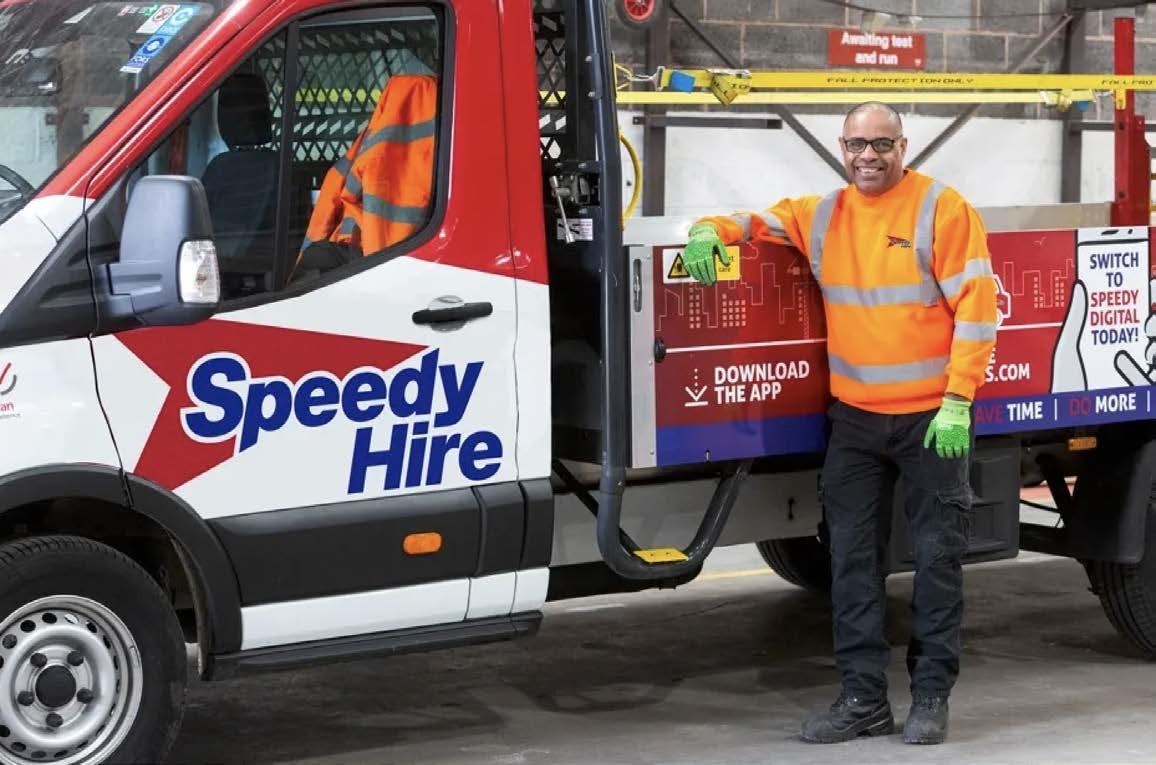
Speedy Hire, the UK’s leading provider of tools, equipment, and plant hire services, supports a wide range of customers. With 135 Service Centres and on-site locations right across the UK and Ireland.
Speedy Hire operates a national fleet of more than 800 vans, 200 HGVs, and 600 company vehicles, a large proportion of which are electric and hybrid. This fleet plays a vital role in daily operations and, as the business works towards its ambition of becoming net zero by 2040, transforming how that fleet is fuelled has become a major priority.
Speedy Hire’s ESG strategy, The Decade to Deliver, outlines clear targets for carbon reduction, across the business.
The Challenge
Speedy Hire operates at scale, requiring a significant refuelling network to support its ICE vehicles, while its goals for net zero mean there is a growing demand for an electric charging strategy.
The company was looking for a fuel and charging partner that could offer flexibility on refuelling locations, a way of always getting the best deal, and a fuel supplier that could support the company’s ESG targets and its move to EV with an electric-vehicle charging card.
Most of all, Speedy Hire wanted its fuel needs handled by a single partner instead of several, with firstrate customer service, and a single connection to the data they need to optimise their fuelling.
Speedy Hire looked to Allstar, with its suite of offerings across fuel and EV, and selected the Allstar Chargepass card. The collaboration included working with its sistercompany, Keyfuels, to fulfill its HGV fuelling needs.
electric-charging payment network for businesses. It encompasses more than 36,000 locations nationwide, providing 88,000 connectors. Over 78% of this network is fast, rapid and ultra-rapid.
Speedy Hire now has 300 Allstar Chargepass cards among its drivers, who can search, plan and pay for EV charging in the Allstar Co-Pilot app. Meanwhile, Fleet managers can access Allstar Online to view all transactions and analyse where and when drivers are spending company money.

In doing so, Speedy Hire's drivers can access the UK’s largest fuel card network. Allstar is accepted at over 90% of fuel sites across the UK, including the four main supermarkets, major oil companies and motorway fuel sites.
Allstar’s EV network is the UK’s largest and fastest
“The
EV offering has been integral to our strategy, ensuring we can meet our targets… it is easy to use and accepted virtually everywhere”
The Result
In less than a year, Allstar has had a transformative effect on Speedy Hire. Around 600 cards are using the Discount Diesel network; its petrol/hybrid fleet can use low-cost supermarket networks, and EVs have convenient access to a vast number of UK charging stations.
By using Keyfuels cards, its commercial vehicle drivers reduced fuel costs, with an average saving of 11p per litre – meeting its savings target in six months, not 12.

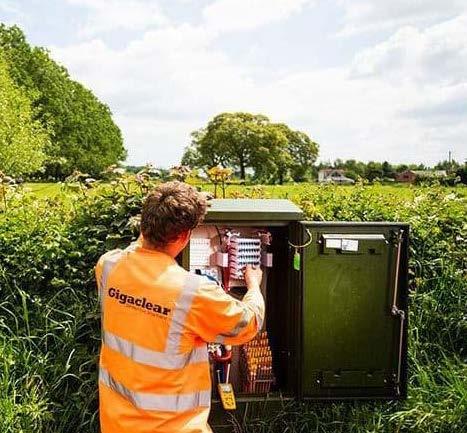
The client
Internet service provider Gigaclear is on a mission to bring fast full-fibre broadband to rural Britain. The company’s engineers use a fleet of 200+ customised LCVs to deliver connectivity to even the most remote rural communities.
The challenge
Fleet Operations was originally appointed in 2020 to implement a bespoke, fully-kitted leased van fleet. Rapid growth has since identified the need for better operational fleet efficiency, reduced vehicleoff-road (VOR) time and rigorous cost control.
The solution
The fleet solution now includes vehicle sourcing, pay-as-you-go maintenance, fuel card management, risk assessment, breakdown and accident management, driver support and VOR control. With every service carefully scrutinised for return on investment and added value, Fleet Operations consistently delivers on exacting KPIs using a costfocused partnership approach.
“The team works very hard, fighting our corner with garages proposing inflated repair costs”
Simon Maltby, Head of Facilities & Fleet, Gigaclear
Bespoke van conversion management
As well as sourcing competitive pricing via its multi-bid approach, Fleet Operations has managed the entire customisation process – from configuring, ordering and checking the racking solutions and livery, to overseeing delivery and return of old vehicles.
Sourcing the right vehicles…
“No matter how unusual the ask, the Fleet Operations team always delivers”
Simon Maltby, Gigaclear
In-depth knowledge of total cost of ownership allows the team to pinpoint the best vehicles – not just at purchase but throughout the whole contract.
Gigaclear was advised not to go for higher-tech models, where a simple windscreen replacement cost would be significantly escalated.
…with the best manufacturer support
Fleet Operations leveraged its relationships with van manufacturers to secure a wide range of added-value extras, including courtesy vans for vehicle breakdowns and compensation payments.
An expert eye on maintenance and repair costs
Fleet Operations’ experienced team quickly spots when repair quotes have been inflated. It scrutinises every repair estimate, including end-of-lease returns, demanding evidence of anything that affects residual values.
This saved nearly £34,000 in 2024, and a further £47,000 on end-of-lease damage costs.
Fuelcard savings
Having negotiated discounted fuel costs with no card fee, Fleet Operations organised a move to a single fuel-card provider, saving nearly £85,000pa.
Driver compliance and risk management
Drivers use the Fleet Operations' MOVE app on their phones to perform daily safety checks. Issues are quickly resolved by the maintenance team.
The team identifies non-compliant or high-risk drivers, with appropriate training delivered.
Accident management
Through a combination of training, telematics, and testing, accidents have been reduced by 70%, and fleet insurance slashed by 25%.

As SMS Energy’s fleet expanded, the team recognised the need for a more digital and integrated approach to fleet oversight.
Traditional paper-based processes no longer provided the efficiency or real-time insight required for a nationwide fleet of more than 560 vehicles.
By adopting FleetCheck over a decade ago, SMS Energy strengthened its audit trail, improved operational visibility, increased driver engagement and introduced new controls that now save the business around £19,000 each year through clearer management of hire vehicle damage alone.
Today, the fleet team maintains a 79% First Notice of Loss (FNOL) rate, described by its motor insurer as ‘best in class’; and manages almost £180,000 of annual PCN activity with improved accuracy and confidence.
“I don't think any fleet can afford to be without FleetCheck, if they want to remain fully compliant. It's affordable, easy to use, and does what it says on the tin”
Yvonne
Cannon, Fleet Manager, SMS Energy
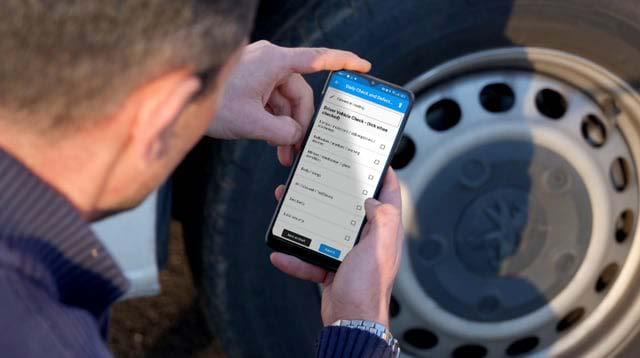
SMS Energy provides energy infrastructure services throughout the UK. Fleet Manager, Yvonne Cannon, supported by an eightperson team, oversees the day-to-day management of the organisation’s mixed fleet of 561 vehicles across the UK.
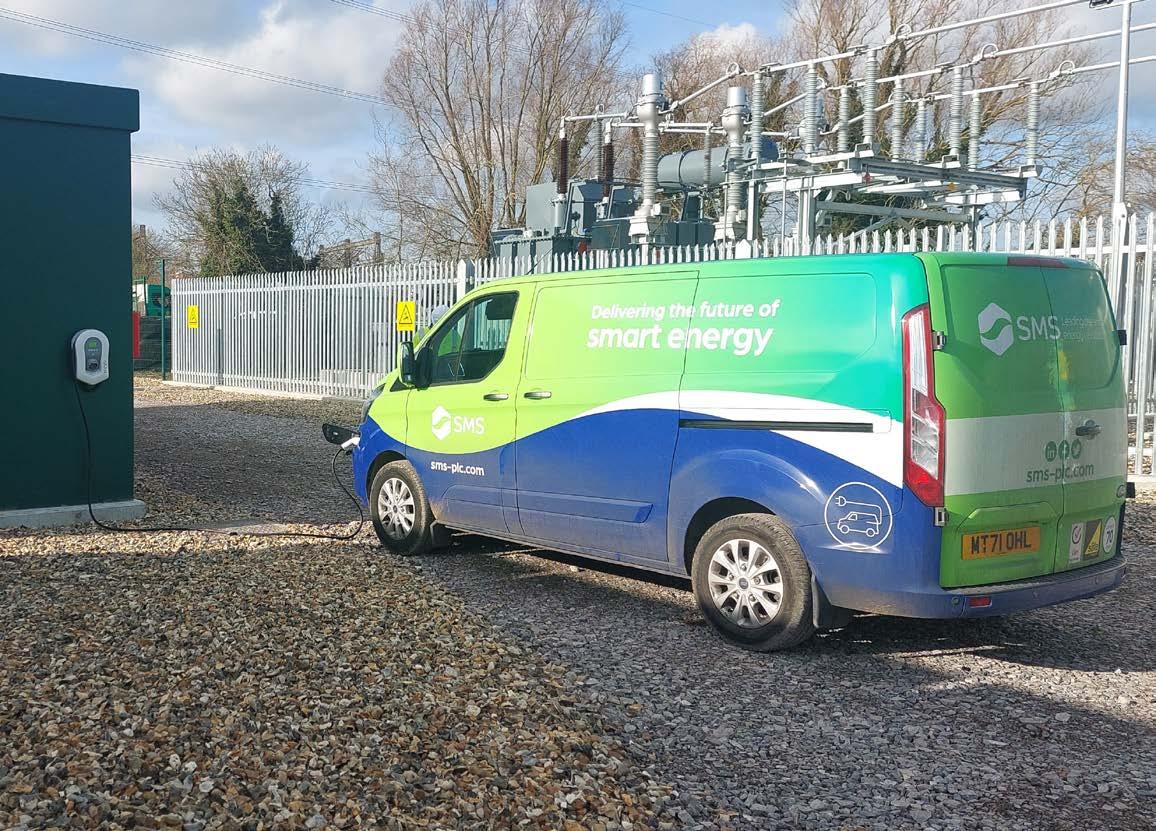
Operations SMS Energy wanted to improve
● Alleviating admin pressure as the fleet scaled Paper-based checks and manually-uploaded photos had become increasingly time-consuming.
● Enhancing visibility of vehicle condition
Real-time photographic evidence at the point of hire or return, helps protect the business, allowing validation of any third-party claims with confidence.
● Strengthening driver engagement
The team aimed to make compliance tasks easier and more accessible for its drivers, to ensure reliable checks and prompt incident reporting.
● How FleetCheck supports SMS Energy today FleetCheck has enabled SMS Energy to bring together vehicle checks, maintenance records, accident reporting, fuel data, PCNs, grey-fleet documentation and more, giving the team complete visibility in one place.
Automation has reduced manual work, allowing for faster access to information across departments.
SMS Energy used manual processes for many years, but the team wanted to future-proof its operations with a centralised digital system. FleetCheck was selected for its reliability, simplicity and ability to integrate all aspects of fleet administration into a single platform.

obligations
Driving is the most dangerous activity most employees ever undertake. Each year, almost 500 people are killed and over 30,000 are injured in crashes involving at least one business driver. Half the vehicles on Britain's roads are used for work, yet many organisations have little understanding of how to manage the risk.
The Driving for Better Business programme from National Highways was designed to help employers reduce work-related road risk, control the associated costs and improve compliance.
It's free to access and contains useful online resources, like our Driving for Work Policy Builder and safety updates, to help driver evaluation, strengthen culture and enhance performance.
Many companies use our tools and resources to improve driver safety and reduce collisions. They achieve significant benefits as a direct result.

Railway Contractor with 140 company vans
● Speeding fines down 96%, leading to fewer crashes and lower fuel use
● Vehicle collisions down by 45% in less than 18 months
● Fleet insurance premium down 35%, due to fewer crashes
● Fuel costs down 20%, due to moreconsidered driving
“DfBB provided practical guidance and resources that helped us strengthen our fleet risk management approach. Its support has delivered tangible, bottom-line results, and I wouldn’t hesitate to recommend the programme to other driversafety managers.”
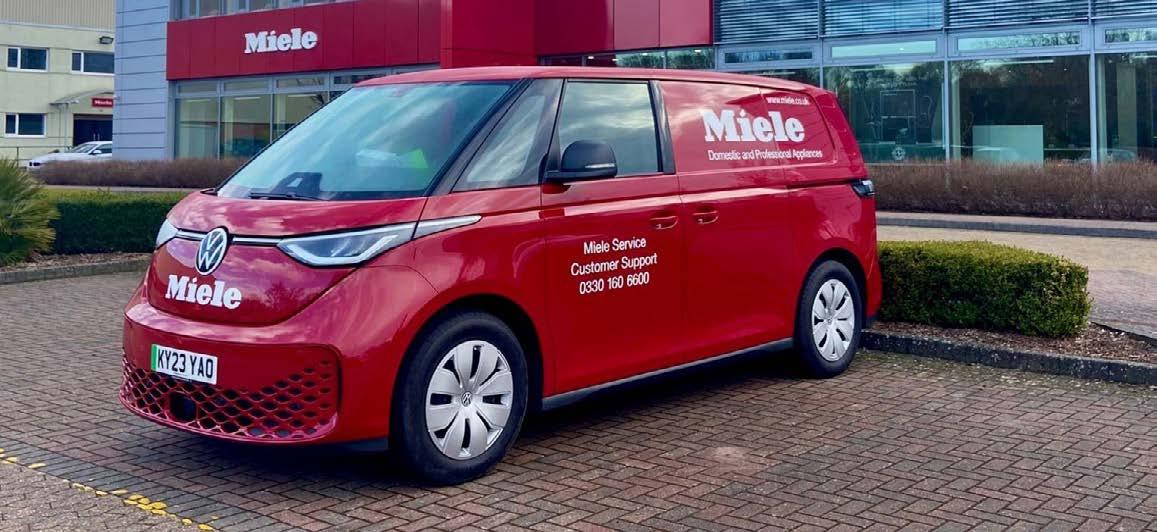

Delivery and maintenance services. 210 company cars and vans
● Safer driving brought insurance claims down 23%
● Fleet insurance premium down 30%, due to fewer incidents
“At Miele the safety and welfare of our drivers is paramount, and our partnership with National Highways and their Driving for Better Business team has enabled us to gain access to many useful resources.”
For more information visit: www.drivingforbetterbusiness.com
Sciensus was looking to improve the performance of its 183-van fleet, and manage risk more effectively.
It selected Lightfoot’s real-time driver coaching and rewards technology to help it boost efficiency, prioritise road safety and improve driver performance.
The Challenge
Sciensus had never used a telematics solution or any form of in-cab driver coaching technology in the fleet before, but knew that something needed to change.
“The improvements we’ve seen since rolling out Lightfoot have been significant.”
Ross Baxter, Fleet Manager, Sciensus
Collision rates within the delivery van fleet were beginning to lead to higher risk scores, and this was in turn resulting in increased insurance costs.
The Sciensus fleet team set themselves the challenge of improving safety and overall performance within the delivery fleet, with the aim of reducing costs and boosting driver wellbeing.
Following a successful free trial of Lightfoot’s fleet management system, the telematics devices were rolled out across the Sciensus fleet, and now drivers receive real-time guidance on how to travel in a safer, more efficient, and more sustainable way.
The Solution
As part of its commitment to a safer, more established fleet, Sciensus brought about several changes – bringing in more professional drivers, changing depot management, and onboarding new vans.
Ross Baxter, Fleet Manager at Sciensus, had used Lightfoot in a previous company and knew the driver coaching solution was the final piece of the puzzle when it came to changing driving behaviour for the better.

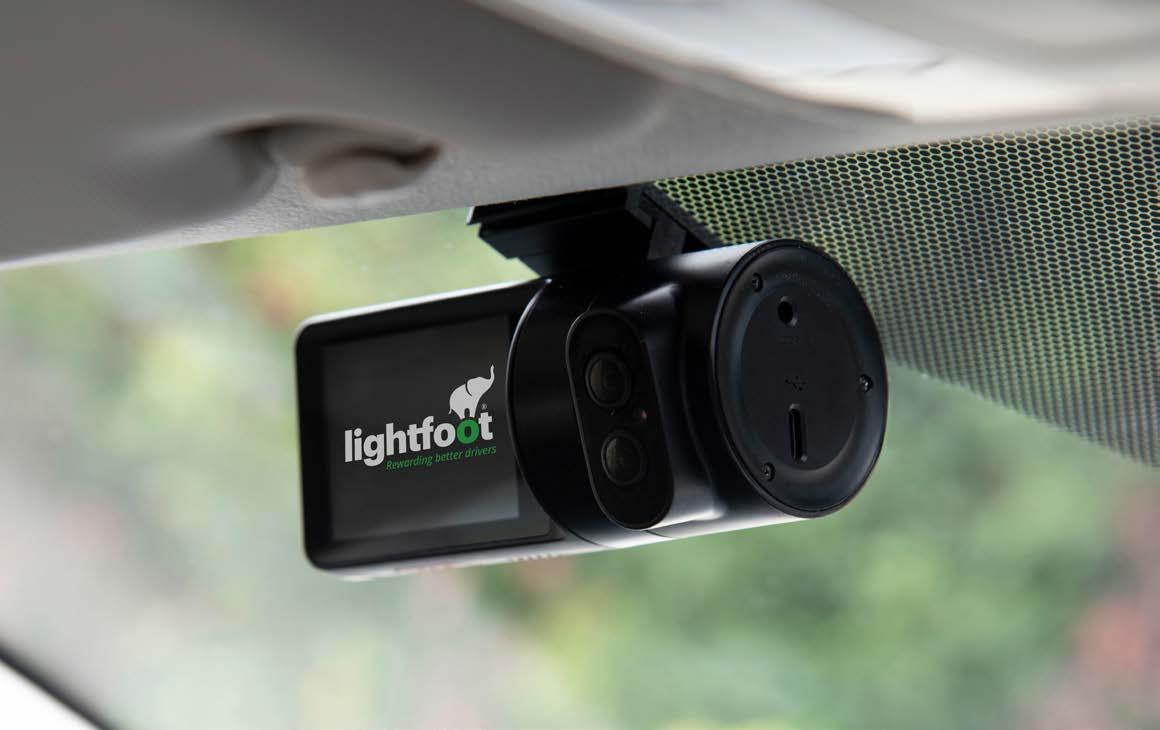
Following a successful free trial of Lightfoot’s fleet management system, the telematics devices were rolled out across the Sciensus fleet, and now drivers receive real-time guidance on how to travel in a safer, more efficient, and more sustainable way.
Since introducing Lightfoot across its fleet, Sciensus has achieved major operational improvements. The business has seen a 15.3% increase in fuel economy, saving money and increasing sustainability, while in-cab coaching has helped to reduce harsh driving incidents by 77%, contributing to a full rollout across the fleet.
Drivers now average an impressive 94.6% weekly driving score, regularly placing Sciensus among Lightfoot’s top-performing fleets.
The company now plants one tree for every 1.5% improvement in driving performance and aims to reach net zero by 2045. Lightfoot’s real-time driver data and incident alerts have also strengthened fleet safety and duty-of-care management.
“Lightfoot has proved to be the cornerstone of our fleet renaissance, effectively providing us with a yardstick with which to measure our fleet’s performance.”
Ross Baxter, Fleet Manager, Sciensus
to pr@fleetwise.info For more information visit: www.lightfoot.co.uk
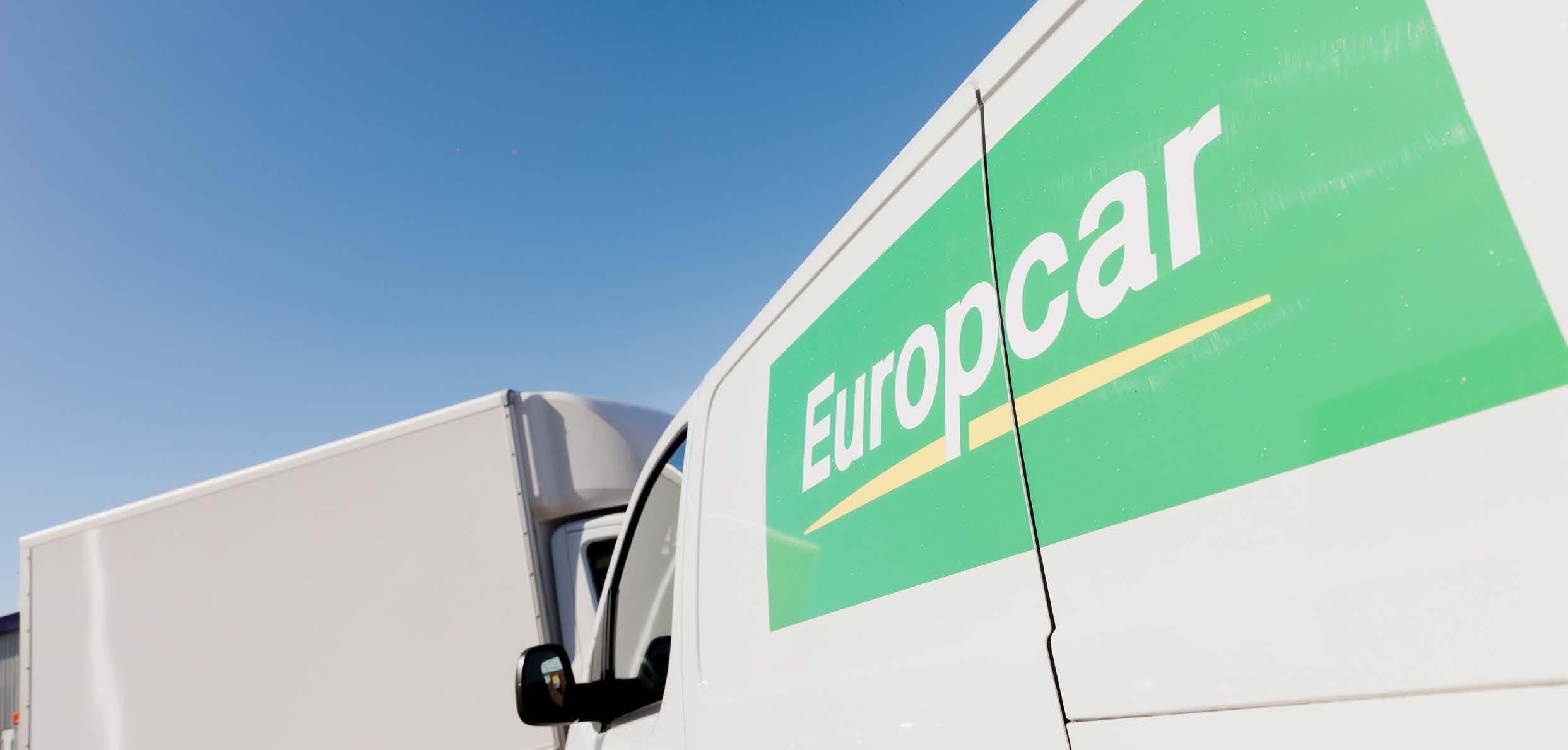

Film Logistics, the specialists in providing transport support to the film & TV sector, is working with Europcar Mobility Group to help it deliver film-industry sustainability goals.
Hiring carbon-neutral vehicles from Europcar enables the firm to meet these sustainability needs without a long-term financial commitment.
Film Logistics prides itself on being a onestop-shop for all TV and film production mobility requirements. It has a clear mission to deliver sustainable solutions as the film sector leads the charge in sustainability actions with BAFTA albert.
Europcar has worked with Film Logistics for over five years. Its fleet of hybrid and fully-electric vehicles makes it the ideal partner to help them meet their sustainability goals, while delivering effective mobility solutions to their clients.
Talking about the important role Europcar plays in supporting its sustainability goals, Film Logistics’ Director, Michael Matthews, said: “Due to the ever-changing needs of our clients, and the time pressures we face to get to locations across the UK, a fixed fleet wouldn’t meet our business needs.
“In 2025, Europcar saw fully-electric rental grow 93% year-on-year”
In 2025, Europcar saw fully-electric rental grow 93% year-on-year. Full battery electric vehicles accounted for nearly half-a-million rental days and its EV fleet grew by 70%.
EVs now make up 15% of the Europcar fleet, with 86% of all EV rentals being for business drivers. In the first quarter of 2026, EV rentals were 139% ahead of the same period last year.
“We can ‘flex’ and ‘green’ our fleet with Europcar in a way that leasing simply can’t deliver”
Michael Matthews, Director, Film Logistics
“To make sure we comply with the various eco and sustainability targets that the industry sets, we were looking for a partner that could match our mission. Europcar was the obvious choice because, as well as giving us flexibility, we now have access to carbon-neutral vehicles with no long-term financial commitments, deposits or earlytermination penalty charges.
“We can ‘flex’ and ‘green’ our fleet with Europcar in a way that leasing simply can’t deliver, and that means we can meet our clients’ sustainability requirements. Europcar gives us a level of flexibility that a fixed fleet simply couldn’t accommodate.”
Tom Middleditch, Head of B2B Marketing and Sustainability spokesperson at Europcar added: “Many businesses are going through a mindset shift recognising the ‘usership’ value of rental over ownership. The agility it delivers is obvious, but the environmental benefits are becoming more and more apparent.
“By accessing full-electric and hybrid vehicles on short or long-term rental, an organisation can pivot its fleet on a case-by-case basis."
For more information visit: www.europcar.co.uk/en-gb/business
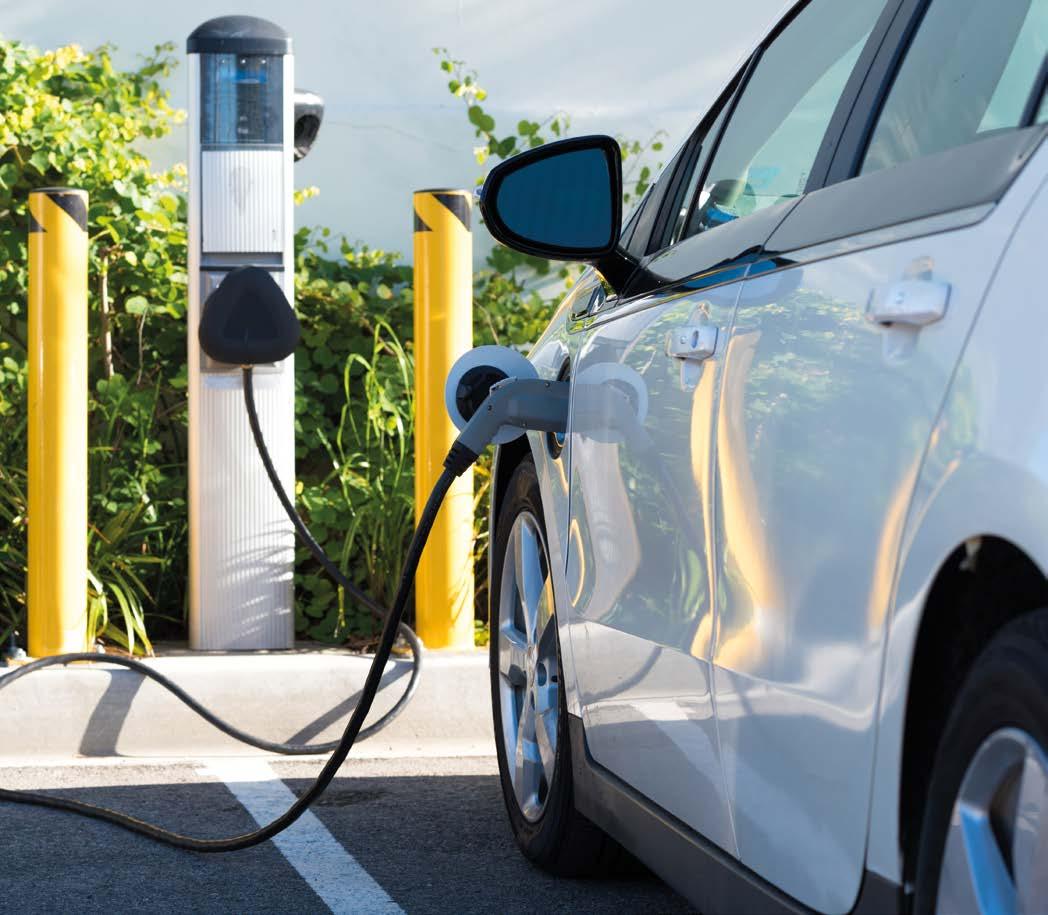
With growing pressure to reduce carbon emissions and support sector-wide net zero targets by 2030, SES Water began exploring how to decarbonise its vehicle fleet without compromising operational performance or increasing costs.
Working closely with Drax, SES Water identified fleet electrification as a practical and effective route forward.
The challenge was significant. SES Water operates a fleet of around 120 diesel vehicles, and any transition needed to be carefully planned to ensure business continuity, reliability and value for money.
“SES
For fleet managers, this data-led approach is particularly valuable. It reduces uncertainty, helps avoid unnecessary expenditure and provides a strong evidence base for investment decisions.
Drax then conducted a comprehensive charging infrastructure assessment. The team evaluated vehicle types, charging requirements, user profiles, charging speeds and future operational needs. The assessment also considered SES Water’s requirement to provide charging facilities for staff and fleet drivers.
Based on these findings, Drax recommended an initial installation of 16 vehicle charge points. The proposed solution included untethered sockets for maximum flexibility.
To ensure the project was future-ready, Drax carried out electrical site surveys at every relevant location. These surveys identified the most suitable positions for charge points and assessed potential grid reinforcement requirements. This enabled SES Water to plan accurately, budget effectively and understand any future electricity supply implications. During implementation, Drax managed key aspects of project delivery, including hardware lead times, liaison with approved contractors, scheduling purchases and overseeing installation activity.
saved 56% on vehicle running costs (electricity vs fuel) and 18 tonnes of carbon dioxide emissions were eliminated”
Drax began by carrying out a detailed EV suitability assessment, and the team analysed realworld fleet operations, selecting 10 representative vehicles from across the business. This provided a clear picture of how electric vehicles could perform in everyday use.
“Every year we’re expanding our EV fleet, which is in line with our company goal to become more environmentally friendly and reach net zero by 2030. Drax has helped us on this journey”
Laura Plumadore, Head of Corporate Services, SES
Water
The result was a well-planned, evidence-based transition strategy that supports operational efficiency, cost control and long-term sustainability goals.
For fleet managers looking to save time, reduce risk and build a practical roadmap to electrification, the SES Water project demonstrates the value of partnering with an experienced energy and infrastructure specialist such as Drax.

Allstar Highly Recommended
BP Fuel Cards Highly Recommended
Paua
Rightcharge
Octopus Electroverse
DKV Mobility
Shell Fleet Solutions Highly Recommended
The Miles Consultancy Highly Recommended
WEX Esso Fuel Cards Highly Recommended
Key Fuels
Motia
FleetMax Solutions
Drax
Dynamon
Mer UK
Zapmap Highly Recommended
Sopp+Sopp
AA Drivetech
The AA Highly Recommended
AX
BCA
CLM Fleet Management
Fleet Assist
Fleet Operations
Fleet Logistics
FMG
Ford Fleet Management
Global Autocare
Green Flag
Holman Highly Recommended
IAM RoadSmart Highly Recommended
RAC
RED Corporate Driver Training
TTC
1 Link
Asset Works
Bynx
Chevin
DAVIS Licence Check (Ebbon Group)
Digital INNK
Ebbon Group
Epyx
FleetCheck Highly Recommended
Jaama Highly Recommended
Optimize - The Algorithm People
R2C Online
Tranzaura Highly Recommended
(includes SalarySacrifice suppliers)
Alphabet (GB) Ltd Highly Recommended
Arnold Clark Leasing
Arval UK Highly Recommended
Athlon UK
Ayvens Highly Recommended
Driveway Vehicle Solutions - Lithia (formerly Pendragon Vehicle Management Limited)
Fleet Alliance
Grosvenor Leasing
JCT600
KINTO UK Limited Highly Recommended
Leasys Highly Recommended
Lex Autolease Highly Recommended
Marshall Leasing
Novuna Capital Vehicle Solutions Highly Recommended
Octopus Electric Vehicles Highly Recommended
Ogilvie Fleet ltd
Select by Mobilize
SG Fleet UK
The Electric Car Scheme
Tusker Highly Recommended
Venson Automotive Solutions Limited
Volkswagen Financial Services | Fleet Highly Recommended
Zenith Highly Recommended
Avis Budget Group
Dawsongroup plc
Enterprise Rent A Car Highly Recommended
Europcar Highly Recommended
Fleet On Demand (FOD)
Herd Group
Hertz
Nexus Vehicle Rental
Northgate Vehicle Rental Highly Recommended
Reflex
Sixt rent a Car Ltd
Switch Car Rental
Crystal Ball
Geotab Highly Recommended
Lightfoot Highly Recommended
Michelin Connected Fleet
Quartix
RAM Tracking
Samsara
Targa Telematics
Teletrac Navman
TrakM8
Webfleet Solutions Highly Recommended
Bott UK
Bri-Stor Highly Recommended
Kwik Fit Fleet Highly Recommended
Halfords
MediaFleet Highly Recommended
Stewart Signs Highly Recommended
The Car Key People


Every day, UK employees get behind the wheel as part of their jobs: making deliveries, attending meetings, travelling between sites. It's routine. It's necessary. And for many businesses, it's one of their biggest unmanaged risks.
The statistics are stark. Government figures reveal that collisions involving someone driving for work result in over 30,000 injury casualties each year, nearly 500 of them fatal.
Crucially, over 18,000 of those casualties are other road users, like pedestrians or cyclists, who had no say in how your business manages its drivers.
Your Legal Duty is Clear
Under the Health and Safety at Work Act 1974, every employer has a legal responsibility to assess and manage the risks associated with driving for work. The Health and Safety Executive is unambiguous: a company car or van is an extension of the workplace. The same obligations you have for your office or factory floor apply the moment one of your employees turns an ignition key.
Directors must put robust policies and procedures in place and be able to prove compliance is being monitored. Failure to do so exposes a business
“When driving standards improve, collision rates fall, bringing down third-party claims, insurance premiums, maintenance bills, fuel use, and vehicle off-road time”
and its management to prosecution, heavy fines, and even imprisonment. Courts can issue publicity orders that can devastate a company's reputation.
The business case is just as compelling
Beyond legal compliance, there's a powerful financial argument. Fleet costs typically rank among any business's top three operational expenses. Yet many employers underestimate how dramatically better driver management can reduce those costs. When driving standards improve, collision rates fall, bringing down third-party claims, insurance premiums, maintenance bills, fuel use, and vehicle off-road time. Speeding penalties and associated admin decrease. Staff absence linked to road incidents reduces. The cumulative impact on your bottom line can be transformative.
Where Driving for Better Business comes in
DfBB is a free National Highways programme designed to help fleet operators take control of their work-related road risk. From building a comprehensive Driving for Work Policy – covering driver management, vehicle roadworthiness and journey planning, etc – to communicating key safety messages to your drivers, DfBB provides resources and guidance to make sustainable improvements.
DfBB helps to ensure your drivers have the best possible chance of getting home safely.
Driveway Vehicle Solutions supports UK businesses with smarter company car and van solutions, designed to reduce cost, complexity and vehicle downtime.
Formerly Pendragon Vehicle Management, we combine over 40 years of fleet expertise with the backing of one of the UK’s largest automotive retail groups. With access to 170+ locations nationwide, we offer a unique advantage, faster access to vehicles, reduced downtime and stronger operational support. Our approach brings together company cars and vans, flexible funding, full fleet management and our Employee Car Benefit Scheme, helping businesses improve retention while delivering a more costefficient way to drive.
Rated ‘Excellent’ on Trustpilot , our services are built on responsiveness, accountability and longterm partnership. We deliver a specialist, personal approach with the infrastructure, insight and technical expertise to keep your fleet moving.
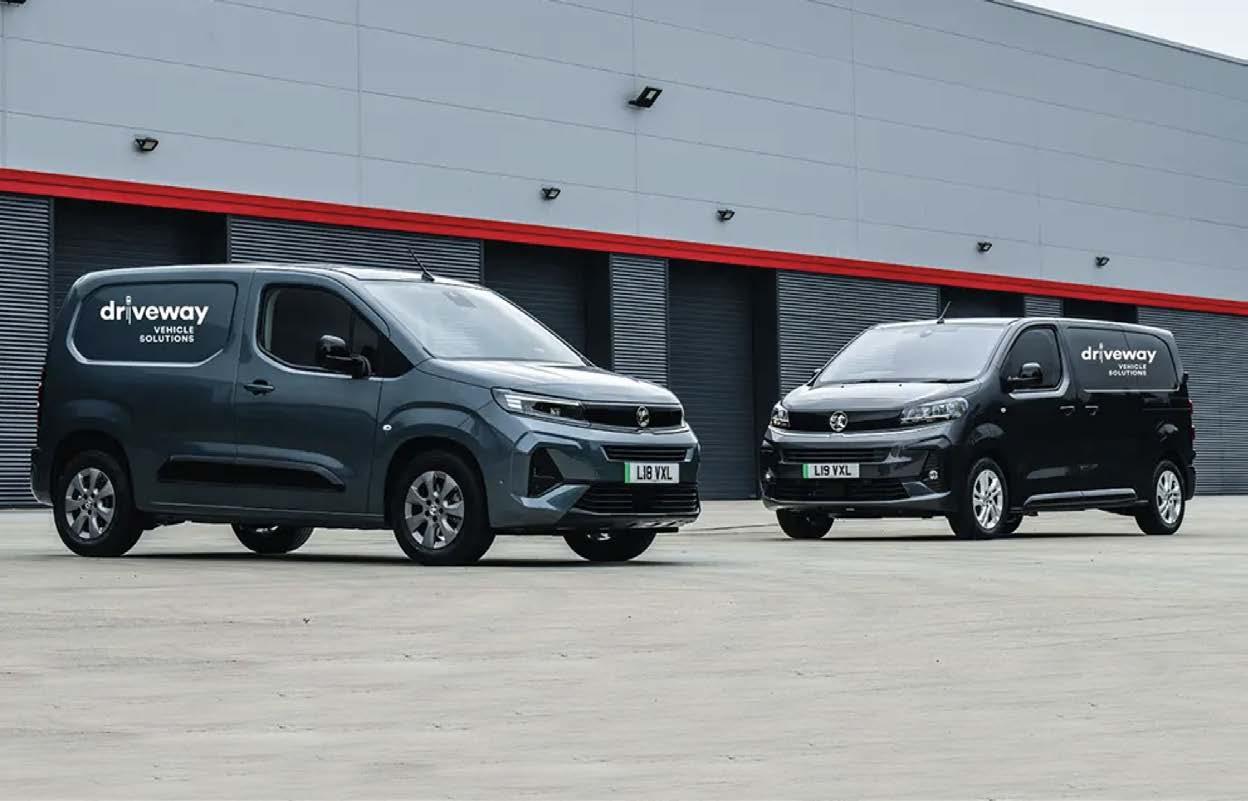
● 40+ years fleet expertise
● Backed by Lithia UK
● 170+ UK retail locations
● Faster vehicle access & reduced downtime
● Company cars & vans
● Full fleet management
● Rental & short-term mobility
● Employee Car Benefit Scheme
● In-house technical expertise
● Rated ‘Excellent’ on Trustpilot Where fleets lose time, they lose money.
www.drivewayvehiclesolutions.co.uk

Delays. Poor access to vehicles. Slow repairs. We fix all three.

• 170+ UK locations = faster repairs, less downtime
• Direct access to stock = vehicles when you need them
• Backed by one of the UK’s largest automotive groups





Employee Car Benefit Scheme
→ Save employees money, boost retention
Company Cars & Vans
→ Reliable supply with real control

Fleet Management
→ Less admin, more uptime
Rental - Short & Long Term, Daily, and Specialist
→ Keep your drivers moving
For many businesses, leasing is no longer simply a way of funding vehicles. It has become one of the central tools for managing cost, operational flexibility and fleet risk.
At its simplest, leasing allows a business to operate vehicles for a fixed monthly cost over an agreed period and mileage, without purchasing the asset outright. But the modern leasing sector now stretches far beyond finance alone. Today’s leasing agreements often bundle together maintenance, servicing, breakdown cover, tyre management, telematics and even EV charging into a single package designed to simplify fleet operations.
That simplicity matters more than ever.
Vehicle costs have risen sharply over the last five years, while uncertainty around electrification, residual values and changing tax rules has made outright ownership more difficult for many operators to justify. Leasing shifts much of that uncertainty away from the fleet itself, allowing businesses to budget more accurately and replace vehicles more predictably.
The shift towards electric vehicles has accelerated that trend. Many fleets remain cautious about battery degradation, future used EV values and rapidly evolving charging technology. Leasing lets operators access newer EVs without carrying the long-term ownership risk attached to emerging technologies.
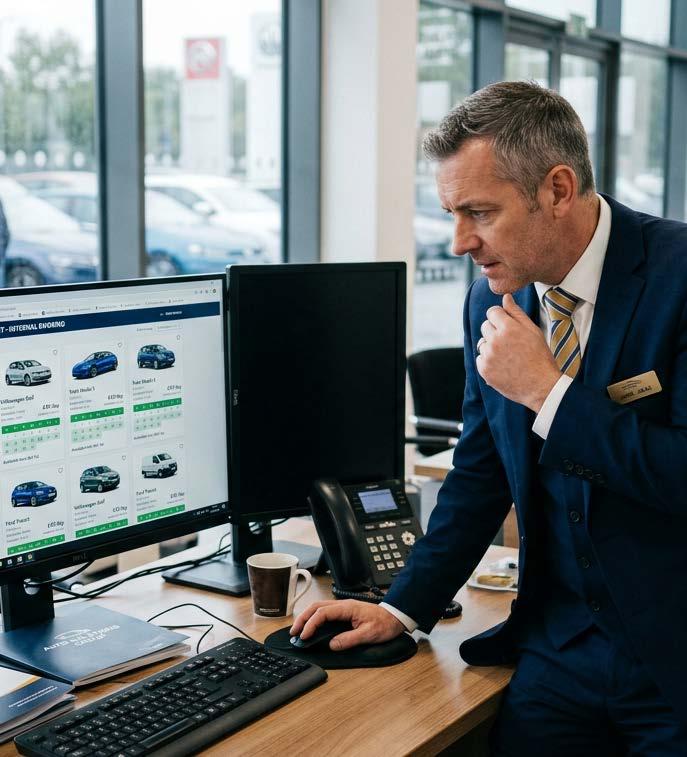
That has helped drive growth in flexible leasing products, medium-term rental agreements and salary sacrifice schemes linked to leasing.
There is also a growing focus on data. Lease Cos increasingly work with fleet management platforms, telematics systems and maintenance providers, to help operators optimise utilisation, downtime, servicing patterns and replacement timing. That wider visibility has become particularly valuable as fleets operate vehicles for longer periods. Improved reliability, rising acquisition costs and ongoing supply pressures mean replacement cycles remain above pre-pandemic norms across the market.
“Leasing is increasingly about operational certainty as much as vehicle funding”
The result is that leasing has evolved into something more strategic than just vehicle procurement. For many fleets, it's about cost control, recruitment, compliance management and electrification planning.
For company drivers, leasing also gives faster access to newer vehicles with lower benefit-in-kind taxation, improved safety systems and better fuel or energy efficiency. This means many drivers are now stepping into electric or hybrid vehicles that would previously have sat outside traditional fleet budgets.
Operational flexibility has become another major factor shaping the sector. Businesses are increasingly looking for shorter replacement cycles, scalable fleet sizes and funding arrangements that can adapt quickly as economic conditions change.
Done well, leasing lets businesses remain agile, while reducing the financial shocks associated with running large vehicle fleets.
For all the information you need on Leasing in the UK fleet sector, search BetterFleet by FleetWise on LinkedIn W www.linkedin.com/showcase/betterfleetfleetwise/posts/ Fleet Suppliers: To tell your story to 35,000 UK fleet managers every week, contact Lisa Turner at lisa@fleetwise.info

Novuna’s MD reveals the secret to fleet success

TJon Lawes –Managing Director, Novuna Vehicle Solutions
he last few years have changed the way many businesses operate. Expectations around speed, reliability and responsiveness have risen, supply chains are being tested by geopolitical disruption, and AI is reshaping how organisations understand data, make business-critical decisions and provide important services.
At the same time, continued economic volatility has forced businesses to think harder about cost, resilience and service continuity. For fleet operators, this raises an important question about whether standard leasing and finance models have kept pace with the economic, operational and strategic pressures they now face.
Faster reporting tools and more sophisticated data analysis are important developments, but it doesn’t automatically create the operational understanding needed to reduce the total cost of fleet.
Why complex fleets don’t fit into standard models
The leasing industry has always been good at managing scale, with tried and tested processes, consistent service models and digital workflows all playing their part in improving efficiency and visibility across a large number of vehicles.
The problem is that larger multi-asset fleets don’t always fit neatly into standard operating models, and this is where fleet operators can be forced into a difficult choice. Operators can prioritise partners that offer strong funding lines, supplier relationships and service infrastructure. Alternatively, they can work with a smaller, more flexible provider that may be more willing to adapt, but doesn’t always have the resource, resilience or specialist capability to support complex operations at scale.
For operationally demanding fleets, what’s really needed is the financial strength and service capability of a major provider, combined with the flexibility and operational understanding of a partner that knows how each customer’s business really works. And it’s here at Novuna Vehicle Solutions, that we focus on combining the scale and stability needed to deliver the right level of support, with the flexibility to shape services around the needs of individual fleets and operating models.
Why operational understanding matters
It’s important to remember that fleet management and support isn’t delivered solely by a knowledgeable consultancy team or experienced account lead. It fundamentally depends on the people at the heart of the operation; managing vehicles, drivers and service or compliance events, having a practical understanding of what those assets actually do and why they are so important to the business.
Without this level of operational understanding, they may understand the support request and know which process to follow, but not fully appreciate the pressure the fleet manager feels when a driver is unable to complete a route, a replacement asset isn’t fit for purpose, or a customer contract is under threat.
manage downtime and protect residual value.
Of course, easy access to the right data is key, but it needs context. A report can show utilisation rates, maintenance spend or downtime trends, but it requires the depth of insight on why those patterns are happening, what they mean for the customer’s operation, or how things need to change.
The risk of rate-led decision-making
Fleet procurement decisions can often be driven by headline figures. After all, vehicles are a significant cost, and fleet operators need a consistent basis for comparing potential funding and fleet management partners. That said, there are very real risks when the selection process becomes too heavily weighted towards the numbers that are easiest to compare.
“The move to electric and alternative fuel vehicles makes operational knowledge even more important”
At Novuna, our Customer First culture ensures our teams have the knowledge, skills and ability to think like the fleet managers they support, basing decisions and actions on a clear understanding of the operational impact when vehicles are unavailable or at risk of becoming non-compliant, even for a short period of time.
Backed by dedicated fleet engineers with in-depth knowledge of the assets being used, and customer fleet managers providing a consistent voice of the customer within our business, we’re able to look beyond standard processes or the precise terms of a contract and deliver the right support when, where and how it’s needed. Just as importantly, this operational understanding makes it easier to sensecheck specifications, anticipate operational risks,
For example, if maintenance is purely reactive or if the operational consequences of failure are poorly understood, additional and often more significant costs start to appear elsewhere, such as lost productivity, lower asset utilisation, extended hire costs, avoidable repairs, or vehicles that are technically compliant but operationally compromised.
In this context, the question to ask is “which partner can help us make better fleet decisions and reduce the true total cost of fleet?”
EV transition requires operational expertise
The move to electric and alternative fuel vehicles makes operational knowledge even more important. While it’s true that for some applications the transition may be relatively straightforward, for others it requires a detailed understanding of duty cycles, payload, charging windows, depot layouts, grid capacity and working processes.
This means that a vehicle that works on paper may not work in practice if it cannot be charged reliably, carry the required load, complete the duty cycle or fit the way the business operates. Equally, a charging strategy that looks sensible in isolation may fail if it doesn’t account for shift patterns, site constraints, future fleet growth or variable driver behaviour.

Continued over
In reality, EV transition is not just a vehicle replacement exercise. It changes the operating model around the vehicle, affecting energy, infrastructure, maintenance, driver engagement, route planning and whole-life cost.
This is where our dedicated Decarbonisation team, operational expertise and impartial advice add real value to help customers decide which assets to transition and when, plan and deliver the infrastructure required, and successfully qualify for relevant government grants and incentives.
While many fleets use some form of TCO, it can often be calculated at vehicle level and only used to support cost-efficient asset selection and specification. This is obviously important, but it is only one part of the picture.
“EV
optimise the timing of repairs and replacements, reducing downtime by as much as 50%.
In short, total cost of fleet is not a replacement for TCO but a broader lens that helps fleet operators understand how connected decisions shape financial and operational performance.
As the pressures on fleet operators continue to grow, fleets need more than funding, supply and contract management. They need a partner that understands their sector, working environment, business processes and the role each asset plays, with the capability to turn that insight into decisions that are both financially viable and practical to deliver.
transition is not just a vehicle replacement exercise. It changes the operating model around the vehicle, affecting energy, infrastructure, maintenance, driver engagement, route planning and whole-life cost”
The wider question is what the entire fleet costs to operate, manage, support and optimise. This includes vehicle-level TCO, but also needs to consider the asset mix, age profile, utilisation, downtime exposure, alongside wider considerations such as insurance and infrastructure requirements. It also means looking at the operational factors that shape cost, including management and administration resource, compliance burden, systems and data, driver support, and the processes that sit around the fleet as a whole.
It also works both ways because wider fleetrelated decisions can significantly influence the TCO of individual vehicles. For example, while a proactive maintenance strategy may require more to implement and manage, intelligent use of connected vehicle data can help predict potential issues and
One of the key reasons we work with so many large-scale and multi-asset fleets is that the best outcomes rarely come from forcing customers into standard models and rigid multi-customer procedures. After all, reducing the total cost of fleet isn’t just about how competitively an asset can be sourced, funded and maintained. For us, this is where the real value lies. And it’s why we focus our expertise and resources on combining real-world operational knowledge with financial strength, delivery capability and service flexibility to create total asset solutions that minimise unplanned downtime, reduce risk, increase efficiency and protect business productivity.
To find out more about how Novuna Vehicle Solutions can help you build a smarter, more sustainable fleet strategy, visit www.novunavehiclesolutions.co.uk












The UK leasing sector reached a historic milestone in early 2026, with the total managed fleet surpassing 2.1 million vehicles (BVRLA). While supply chain disruption has eased compared with previous years, fleets remain focused on controlling whole-life costs, managing replacement cycles and balancing the operational realities of electrification. Against this backdrop, leasing companies are increasingly positioning themselves as broader mobility and consultancy
“The UK leasing sector reached a historic milestone in early 2026, with the total managed fleet surpassing 2.1 million vehicles”
partners, supporting businesses with funding, fleet optimisation and transition planning.
Novuna Capital Vehicle Solutions, a five-year Trusted Brand and Highly Recommended provider, continues to build momentum through consultancyled fleet support and vehicle funding. A major recent success for the business is its six-year partnership with Morgan Sindall Group plc. This sees Novuna managing MSG's 3000-vehicle fleet.
Beyond vehicle management, Novuna is providing the infrastructure required for the construction giant’s transition, including the installation of 60 charging sockets across key sites.
The company has also remained visible within the salary sacrifice and fleet decarbonisation space, with growing demand for EV funding and whole-life cost analysis services, as businesses reassess fleet strategies around sustainability and cost.


Driveway Vehicle Solutions (Lithia UK) accelerated its 2026 growth strategy with the April acquisition of Agility Fleet. This deal adds 1200 managed vehicles and robust FCA-registered expertise to Driveway’s portfolio, moving the business closer to its 20,000-vehicle target.
As fleets continue to prioritise flexibility and availability, brokers and sourcing specialists are becoming increasingly important partners.
Leasys also continues to strengthen its position in the UK fleet market and is recognised as both a five-year 100 Trusted Brands performer and Highly Recommended provider.
Alphabet (GB) Ltd remains both a five-year Trusted Brand and Highly Recommended supplier. It reported a record portfolio of over 800,000 vehicles across international markets in early 2026, with EVs now making up 42% of that fleet.
The business has continued investing heavily in connected fleet technologies and electrification consultancy, including support tools designed to help fleets model whole-life costs and EV suitability.
Arval UK, another super-consistent five-year Trusted Brand and Highly Recommended provider, continues to emphasise sustainable mobility and fleet decarbonisation strategies. The company recently strengthened its salary sacrifice and EV consultancy offering amid rising employer demand for employee EV schemes and mobility support.
Meanwhile, Ayvens continues integrating the former ALD Automotive and LeasePlan operations, following one of the sector’s largest global mobility mergers. The scale of the combined operation is expected to make Ayvens one of the most influential fleet and mobility providers in the UK market, as integration continues through 2026.
Other established leasing providers including Athlon UK, Lex Autolease, Volkswagen Financial Services | Fleet and Zenith, continue to support fleets with vehicle funding, salary sacrifice, fleet
“As
fleet requirements evolve, leasing providers are increasingly expected to deliver more than vehicle finance alone”
management and electrification strategies. Across the wider sector, Trusted providers including Fleet Alliance, Grosvenor Leasing, Marshall Leasing, Ogilvie Fleet Ltd, SG Fleet UK, Venson Automotive Solutions Limited, KINTO UK Limited, Select by Mobilize and JCT600 continue to handhold fleets through the electric revolution.
According to the latest Fleet Power Index, a trio of highly influential brands consistently goes above and beyond in the areas most valued by fleets.
Volkswagen Financial Services remains one of the market's standout performers, ranking as a top-three brand across key leasing competencies, including supporting EV/hybrid transition, salary sacrifice schemes and consultancy services.
Lex Autolease continues to benefit from exceptional awareness and familiarity, reflecting its long-standing position as one of the UK's largest leasing providers.
Meanwhile, Zenith has strengthened its reputation among fleet buyers, securing a top-three position for brand consideration. These brands demonstrate the importance of expertise, visibility and customer relevance in an increasingly competitive leasing market.

● www.allstarcard.co.uk
Highly Recommended
● www.alphabet.com
Highly Recommended
● www.arnoldclarkleasing.com

● www.arval.co.uk
Highly Recommended

● www.athlon.com

● www.ayvens.com
Highly Recommended

● www.thegrosvenorgroup.co.uk

● www.jct600vls.co.uk

● www.kinto-mobility.co.uk
Highly Recommended

● www.leasys.com
● www.lexautolease.co.uk
Highly Recommended

● www.fleetalliance.co.uk
● www.marshall-leasing.co.uk

● www.novunavehiclesolutions.co.uk
Highly Recommended
● www.ogilvie-fleet.co.uk
● www.drivewayvehiclesolutions. co.uk
● www.selectleasebymobilize.co.uk

● www.sgfleet.com/uk

● www.venson.com
● www.vwfsfleet.co.uk
Highly Recommended

● www.zenith.co.uk
Highly Recommended





Modern fleets generate huge amounts of operational data. Vehicle usage, servicing schedules, fuel spend, driver compliance, licence checks, downtime, charging activity and accident reporting all create information that has to be managed somewhere.
For many operators, fleet software has become the central system holding everything together.
What began as relatively simple database tools has evolved into highly connected operational platforms capable of overseeing almost every aspect of fleet activity in real time. Today’s systems automate maintenance scheduling, track vehicle availability, manage driver documentation, monitor costs, process fines and support compliance reporting for thousands of vehicles simultaneously. That operational visibility has become increasingly important as fleet complexity grows.
Electrification is one of the biggest drivers behind that shift. Managing EV fleets introduces entirely new layers of operational planning, from charging schedules and energy costs to route suitability and battery performance. Software platforms are increasingly being used to help fleets understand which vehicles are suitable for electrification and where charging infrastructure is needed.

issues before breakdowns occur, while others can automatically prioritise compliance risks, or identify patterns in driver behaviour, such as erratic driving and speeding, that may lead to accidents or an unexpected increase in operating costs.
“Fleet management software is increasingly acting as the operational control centre for modern fleets”
At the same time, rising cost pressures mean operators are placing greater focus on vehicle utilisation and whole-life operating costs. Advanced software systems can now identify underused vehicles, flag excessive downtime, monitor maintenance trends and highlight where replacement cycles may need adjusting.
For drivers, many platforms also simplify daily administration through smartphone apps that allow mileage claims, defect reporting, licence uploads and vehicle checks to be completed digitally.
Artificial intelligence technology is beginning to shape the sector too. Some systems now use predictive analytics to forecast maintenance
There is also growing demand for software capable of integrating multiple suppliers into one platform. Rather than logging into separate systems for leasing, telematics, servicing, charging and risk management, fleets increasingly want a single operational view across the entire vehicle parc. That integration is becoming especially valuable as businesses run mixed fleets of petrol, diesel, hybrid and electric vehicles simultaneously. The result is that fleet management software is no longer simply an administrative tool. It has become a key operational asset helping businesses reduce downtime, improve compliance, control costs and make correct decisions faster in an increasingly data-saturated fleet environment.
For all the information you need on Fleet Management Software in the UK fleet sector, search BetterFleet by FleetWise on LinkedIn W linkedin.com/showcase/betterfleetfleetwise/posts/
Fleet Suppliers: To tell your story to 35,000 UK fleet managers every week, contact Lisa Turner at lisa@fleetwise.info
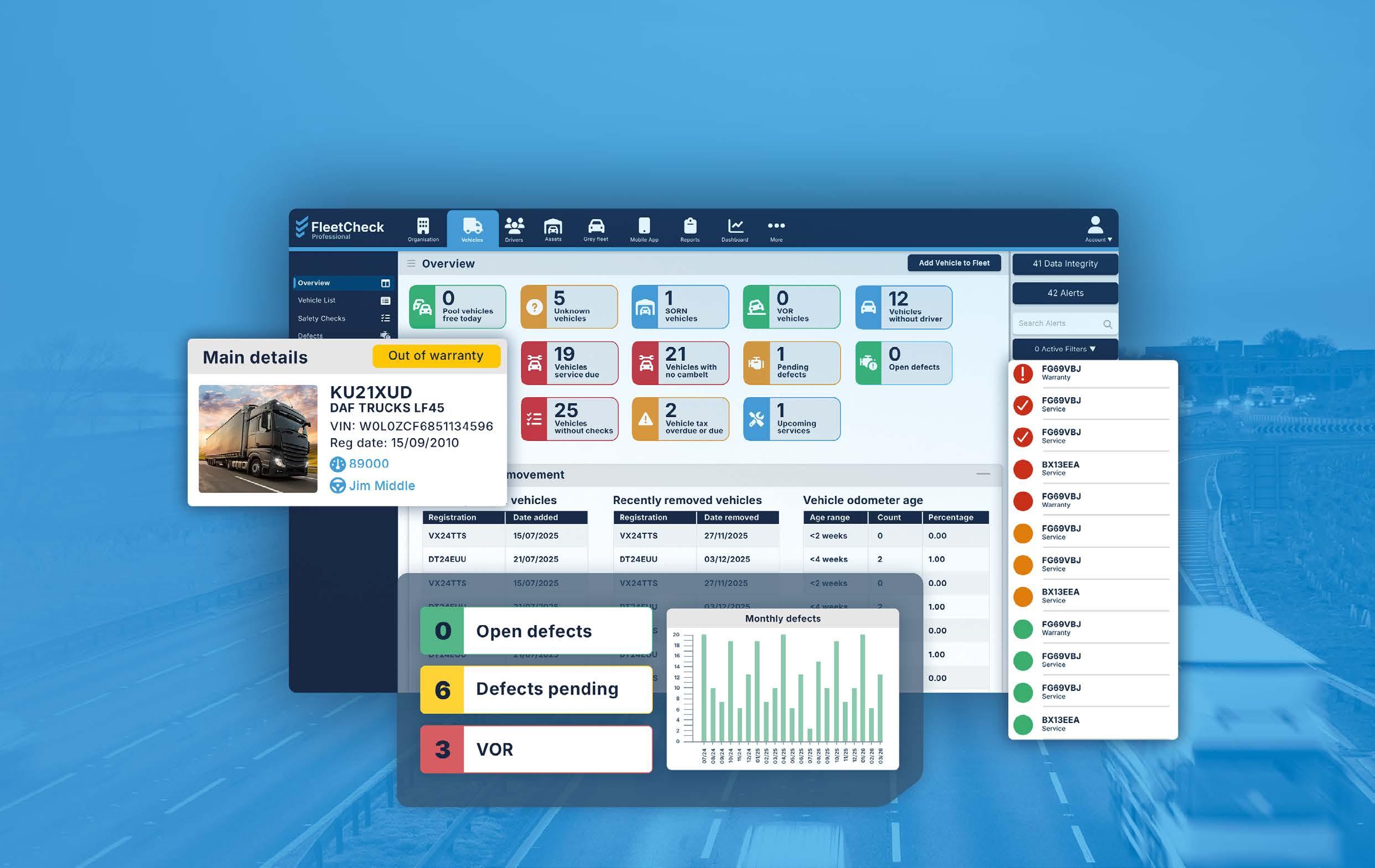
FleetCheck’s COO reveals why clean data, operational visibility and human oversight are critical in an AI-driven industry

BCallum Haymon-Collins Chief Operating Officer, FleetCheck
y any measure, the fleet industry is entering one of its most transformative periods ever.
Electrification, rising costs, mounting operational pressures and the emergence of AI are all reshaping how fleets operate and how decisions are made. Yet, amid the excitement surrounding new technologies, many operators are still wrestling with a far more fundamental problem: fragmented data.
For Callum Haymon-Collins, the conversation around the future of fleet management begins not with AI, but with centralisation.
“Most fleets we talk to don’t lack data,” he says.
“If anything, the opposite is true. Most fleets have too much data, but not enough time to look at it properly.”
From disconnected to integrated
That challenge sits at the heart of FleetCheck’s proposition. Since 2006, it's been helping operators move away from paper admin and disconnected systems, towards integrated fleet management.
“We provide what we call fleet management software – a term used by a lot of people to mean slightly different things,” says Haymon-Collins. “We're a pure software business. Whatever size the
fleet, we put everything in one place so operators can see what's happening and act on it – rather than piecing it together across spreadsheets or disparate systems.
He compares FleetCheck's role to accounting software: “You could run your accounts on a spreadsheet, but almost nobody does. Whether you're a small firm on Xero or a large business on SAP, you invest in software built for the job. We're that, but for fleets.”
The hidden risks of fragmented fleet data
Despite the growing sophistication of fleet technology, Haymon-Collins says many businesses are still heavily reliant on manual processes.
“We looked at the demos we've done over the last 12 months, and a surprisingly high percentage of those companies had missed key dates,” he says. “I think we were looking at around 30%."
“The consequences can range from reputational damage to compliance failures and unnecessary operational costs.
“A little while ago, we took on a fleet of 150 vans and cars, and 16 of them did not have a valid MOT!”
According to Haymon-Collins, most fleets begin looking for dedicated software solutions for one of three reasons: reducing manual administration, improving cost analysis or strengthening compliance visibility.
“The most common driver is time saving,” he says. “People want everything integrated and centralised, rather than manually updating spreadsheets and paper records.”
However, the operational implications extend far beyond efficiency.
Without consolidated fleet data, businesses often struggle to identify wider trends around vehicle utilisation, fuel spend, maintenance costs or replacement cycles.
EV transition brings new complexity
Electrification adds further fleet-admin challenges.
While EV adoption continues to accelerate across company car fleets, Haymon-Collins believes many operators underestimate the additional layers of administration and analysis involved.
“The management of EVs isn’t that different for us,” he reveals. “You still need to service them, tax them and MOT them. You still analyse their efficiency, and you still do licence checks on drivers. None of that changes.”
“A little while ago, we took on a fleet of 150 vans and cars, and 16 of them did not have a valid MOT!”
“You can’t make informed decisions quickly if your data is spread across spreadsheets, HR systems, finance systems and telematics platforms,” he explains. “You’re always working retrospectively.”
That issue becomes particularly significant as operators navigate rising cost pressures.
“If margins are tight, and fuel prices suddenly rise, fleets need to be able to analyse what’s happening quickly,” he says. “Who’s driving what vehicle? Which routes are causing inefficiencies? Does that vehicle need replacing?
“If you haven’t got that data to hand in a way that’s accessible, then you’re already behind.”
“While EV adoption continues to accelerate across company car fleets, Haymon-Collins believes many operators underestimated the additional layers of administration and analysis involved”
But, fleet suitability remains highly dependent on operational context.
“If you’re running parcel deliveries in central London, EVs can work very well,” he explains. “But if you’re carrying construction equipment or heavy payloads, an EV might not yet be the most suitable option.”
Critically, he argues that successful EV adoption depends on having access to integrated operational data.
“If you don’t have your data in one place, it becomes very difficult to identify which vehicles are suitable for electrification,” he says. “Fleets end up flipping between spreadsheets, finance systems, telematics and paper records trying to piece together the full picture.”
Charging data has become an increasingly important part of that picture.
Historically, fleets often struggled to obtain accurate charging information, particularly around home charging reimbursement and usage tracking.
“That’s been one of the major challenges,” says Haymon-Collins. “How do you know which vehicle is being charged? How do you separate costs when households now commonly have multiple EVs?”
However, improvements in telematics and OEM integrations are beginning to change that.
“We’re now seeing much better-quality charging data coming directly from vehicles themselves,” he says. “That allows fleets to compare EV and ICE performance properly from a cost and efficiency perspective.”
Importantly, he believes charging data only becomes valuable when analysed alongside wider operational information from the fleet.
“It’s not just about charging costs in isolation,” he Continued over
explains. “You have to understand it in the context of what the vehicle is actually doing operationally.”
AI readiness starts with clean data Unsurprisingly, AI now dominates many conversations across the fleet sector.
But while Haymon-Collins believes AI has genuine potential to improve reporting, analysis and operational decision-making, he is equally clear that many fleets are not yet ready to take full advantage of it.
“First and foremost, you must make sure your data is both clean and centralised,” he comments. “That's a very sensible starting point, and currently, it is not the case for the majority of fleets.”
FleetCheck itself is already exploring AI, across areas such as document reading, trend analysis and reporting. Yet, Haymon-Collins emphasised to us the importance of context and continued human oversight.
“Using a general AI tool like Claude or ChatGPT isn't necessarily the best solution for fleets that work in a very specific way.”
During a recent customer conference, Haymon-Collins demonstrated AI-assisted fuel analysis using a large language model.
using AI as a support tool rather than a replacement for operational expertise.
“AI is very good at trend analysis and number crunching,” he says. “It can absolutely help expedite decision-making.
“But fleets still need human oversight. Someone still has to apply context, challenge outputs and make the final decision.”
That philosophy increasingly shapes how FleetCheck views the fleet manager role.
“I think the role will become more systemised and more data-driven,” he adds. “A lot of the manual administration should disappear. But the highvalue decision-making – replacement strategies, operational judgement, risk management – that human element becomes even more important.”
For FleetCheck, the industry’s current challenge is less about racing towards futuristic AI capabilities and more about building the right operational foundations for success.
“During a recent customer conference, HaymonCollins demonstrated AI-assisted fuel analysis using a large language model”
“What it overlooked when I asked it to do analysis, was the Iran war,” he explains. “What it told me very confidently was that something must have happened with the fuel card company, because our fuel spend had grown significantly between February and March.
“But the reality was simply that global fuel prices had risen significantly.”
While the example was relatively harmless, given the obviousness of the LLM’s mistake, HaymonCollins says it highlights a wider issue around overreliance on AI-generated outputs.
“AI, in particular, likes to please,” he says.
“So, if you give it bad data, it will try and give you something which sounds kind of useful.”
He believes the real opportunity for fleets lies in
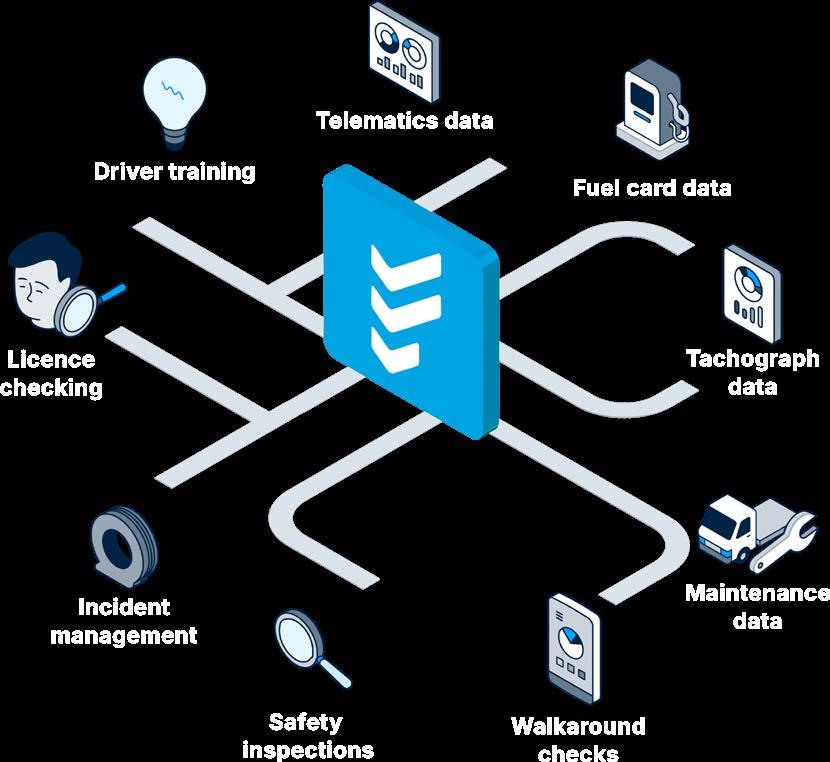
“The fleets that are best prepared for the future are usually the ones that have already centralised years of key operational data,” reveals Sarah Bengochea, FleetCheck’s Marketing Director.
“When they start looking at trend analysis or AI tools, they can do it because they already have everything in one place.”
That includes everything from walkaround checks and collision reports, to maintenance history, fuel data and compliance records.
“If fleets don’t start centralising that information now, then in 12 months’ time AI simply won’t be fit for purpose for them,” she says.
Haymon-Collins agrees. “It is… how do they build today for the future, not just try and skip straight to the end,” he says. “They need to put ‘the hard yards’ in now.”
That focus on practical support, operational visibility and long-term client relationships has become a defining part of FleetCheck’s reputation within the sector.
For Haymon-Collins, being recognised as a Trusted Brand ultimately comes back to people.
“The product is important, but it’s not just about the system itself,” he says. “It has to be delivered by people who care, who understand the industry and who clients can actually speak to. One without the other doesn’t work.”
As fleet operations become increasingly digitised, data-led and AI-assisted, FleetCheck’s view is that technology alone will not define success. Instead, the fleets best positioned for the future may simply be the ones that have built the strongest operational foundations today.

f l e e t o p e ra t o r s o f ₀/⁰ 5 5
Fleet software providers are becoming increasingly central to fleet operations in 2026, as operators place greater emphasis on compliance, cost control and real-time operational visibility. With fleets managing growing volumes of vehicle, driver and risk data, alongside the added complexity of electrification, software platforms are evolving from administrative tools into business-critical operational systems for fleets.
As organisations continue to consolidate suppliers and streamline processes, demand is increasing for integrated platforms capable of combining compliance, maintenance,
Optimize is a leader in fleet and freight transport optimisation, decarbonisation, and business transformation, powered by advanced artificial intelligence. Its proprietary algorithms address complex operational challenges, delivering measurable improvements in efficiency, asset utilisation, and emissions reduction. As the transport sector transitions to new vehicle technologies, energy sources, and infrastructure models, Optimize enables organisations to develop smarter routes, duty cycles, and fleet strategies that support longterm resilience and accelerate progress toward net zero objectives.

driver management and analytics within a single environment. Automation, AI-led reporting and predictive fleet analysis are also becoming more prominent across the sector.
Among the leading providers, DAVIS Licence Check (Ebbon Group) continues to strengthen its position within the compliance and fleet risk management market. As a key supporter of the sector, the business has recorded major recent growth milestones through its DAVIS platform, surpassing 1.5 million licence checks and more than one million drivers on the system during 2025. The platform continues to evolve beyond licence checking into broader fleet management and compliance support, with new functionality covering supplier management, downtime analysis, vehicle inspections and driver coaching
The wider Ebbon Group business has also expanded its compliance capability following the acquisition of DriverCheck, strengthening its position within the UK fleet compliance market.
Major fleet operators, including Travis Perkins, have continued adopting the DAVIS platform to support large-scale compliance and driver risk management operations.
FleetCheck, a five-year 100 Trusted Brands performer and Highly Recommended supplier, continues to focus on fleet maintenance,



compliance and operational management software.
The company maintains its focus on SME fleet operators seeking integrated management tools covering inspections, servicing schedules and driver compliance processes.
Tranzaura, another key supporter and Highly Recommended provider, continues to develop its FleetNow platform and AI-led fleet intelligence capabilities. The company keeps its focus on connected operational data and AI-powered business intelligence tools, as fleets seek faster access to actionable operational insights.
Across the wider market, software providers are expanding their platform integration and data visibility capabilities. Jaama, a Highly Recommended provider, remains active across fleet, leasing and accident management software solutions, while Epyx, a five-year Trusted Brand performer, continues to support digital procurement, SMR authorisation and vehicle lifecycle management across the fleet sector.
Other established providers including Chevin, Bynx, Asset Works, 1 Link, Optimize - The Algorithm People, R2C Online and Digital INNK maintain their support for fleets with a broad range of operational, compliance and optimisation tools.
“Demand is increasing for integrated platforms capable of combining compliance, maintenance and analytics”
“As fleet operations become increasingly data-led, software platforms are evolving into core operational infrastructure”
As fleet operations become increasingly dataled, software platforms are evolving into core operational infrastructure. Providers able to combine automation, compliance management and actionable business intelligence are becoming increasingly valuable partners for fleets navigating operational complexity and electrification.






www.bynx.com

www.chevinfleet.com
www.licencecheck.co.uk






Ebbon Automotive has been at the forefront of developing and delivering innovative software solutions to the automotive industry for over 25 years.
Through advanced automation and intelligent integration, the company connects the global

automotive community with a suite of trusted, forwardthinking products.
Across the UK and Europe, Ebbon Automotive’s solutions play a vital role in linking the industry, driving efficiency and value for all key stakeholders throughout the supply chain. www.ebbon-automotive.com
DAVIS connects the dots by processing and presenting driver and vehicle data for an instant view of risk. Our award-winning applications minimise manual input and consolidate multiple tasks into a single, automated process.
Modules include Licence Checking, Fleet Management, Grey Fleet management and Coaching. www.licencecheck.co.uk
● The number-one licence checking provider in the UK, with over 1,000,000 licences checked
● Trusted by over 4500 companies
● GDPR secure, cloud-based solution
● Cyber Essentials Plus certified
● ISO270001 accredited




From live vehicle tracking to predictive maintenance and driver behaviour analysis, telematics has evolved into one of the fleet sector’s most important operational tools.
For many fleets, telematics started with a simple objective: knowing where vehicles were.
Today, the technology has become far more sophisticated. Modern telematics systems can monitor driver behaviour, fuel consumption, idling, route efficiency, maintenance status, vehicle utilisation and even EV battery performance in real time.
That level of visibility is reshaping how fleets control costs, improve safety and manage increasingly complex operations.
At its core, telematics works by combining vehicle data, GPS positioning and cloud-based software to create a live operational picture of fleet activity. For operators running dozens, hundreds or even thousands of vehicles, that information can be hugely valuable.
Fuel savings remain one of the biggest drivers behind adoption. Harsh acceleration, speeding, excessive idling and poor route planning all increase operating costs. Telematics allows fleets to identify those behaviours quickly and coach drivers towards smoother, more efficient driving styles.

consumption and real-world EV range. Official figures rarely tell the full story, particularly for heavily loaded vans or vehicles operating in cold weather conditions.
Telematics data can help fleets decide which routes are suitable for electrification, where charging infrastructure is needed and whether vehicles are being operated efficiently.
There is also growing interest in predictive maintenance. Rather than waiting for breakdowns to happen, connected vehicle systems can increasingly identify faults early by monitoring vehicle diagnostics and wear patterns. That helps reduce downtime while improving workshop planning and vehicle availability.
“Telematics has shifted from being a tracking tool to becoming a real-time operational management system”
That matters even more as businesses continue to face rising fuel prices and tighter operating margins.
Safety has become another major focus. Many modern systems now integrate AI-powered cameras capable of identifying distracted driving, mobile phone use, fatigue and collision risks in real time. Combined with driver scoring systems and targeted coaching, fleets are increasingly using telematics to reduce accident rates and strengthen duty-of-care compliance.
The transition to electric vehicles has also expanded the role of telematics considerably.
Fleet managers increasingly need visibility over charging patterns, route suitability, energy
At the same time, many fleets are looking to integrate telematics into wider operational platforms covering leasing, compliance, maintenance and driver management.
The result is that telematics is no longer simply about tracking vehicles. It has become a central source of operational intelligence, helping fleets make faster decisions, reduce costs and improve efficiency across increasingly-connected fleet operations.
For all the information you need on Telematics in the UK fleet sector, search BetterFleet by FleetWise on LinkedIn W linkedin.com/showcase/betterfleetfleetwise/posts/
Fleet Suppliers: To tell your story to 35,000 UK fleet managers every week, contact Lisa Turner at lisa@fleetwise.info

The fast-developing technologies that allow administrators to maintain deep insight into how their drivers and vehicles are performing
The commercial telematics sector has entered a period of intense operational refinement.
Previous eras of tracking focused on the adoption of basic GPS tracking, but today’s economic reality – marked by fluctuating fuel costs, margin compression and tightening regulatory frameworks – demands that data transforms from a passive record into an active strategic partner.
“Today’s economic reality demands that data transforms from a passive stagnant record into an active strategic partner”
Modern fleet tracking has graduated from simple location visibility to sophisticated, AI-driven asset optimisation and risk mitigation technology.
Highly Recommended brand Lightfoot continues to dominate the sustainability and driver engagement niche by proving that carbon reduction does not require immediate, capitalintensive vehicle replacement.
In its fifth year on the 100 Trusted Brands list, Lightfoot helps its customers save on fuel costs and achieve sustainability goals. In 2025, the brand’s unique real-time, in-cab coaching hardware and gamified app model delivered a massive aggregate impact, guiding drivers across more than a billion miles while saving millions of gallons of fuel and cutting millions of kilograms of CO2
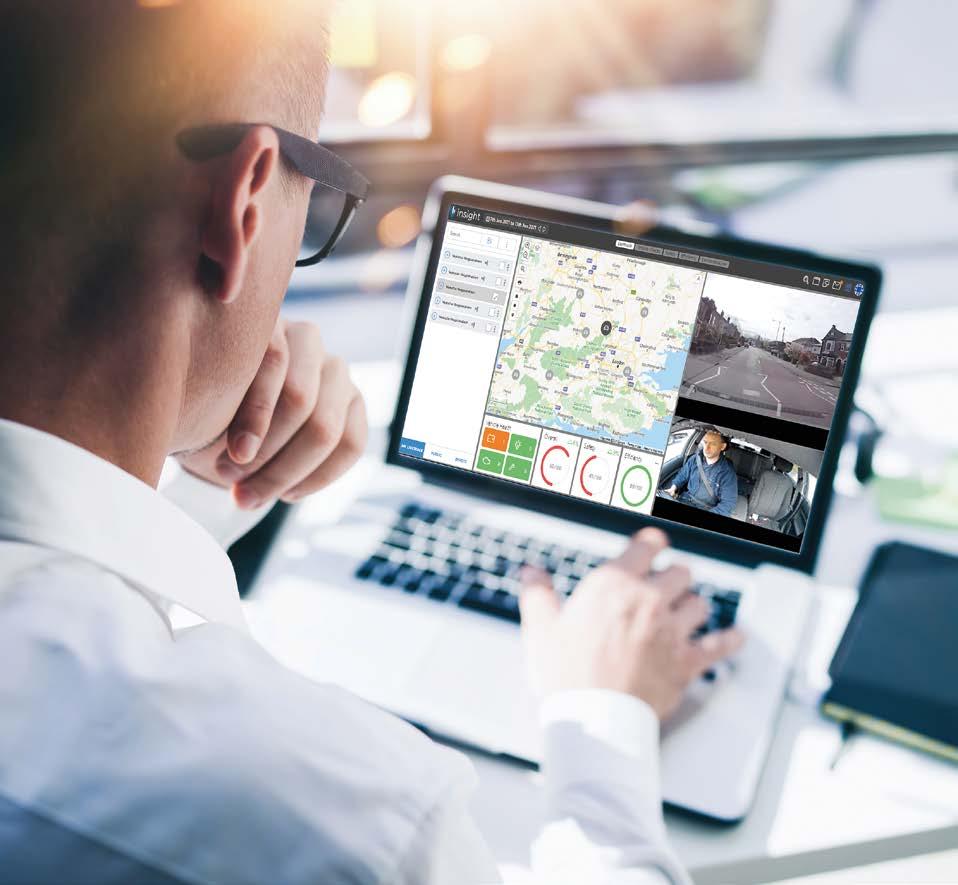
Lightfoot’s gamified model has been its biggest differentiator with one-in-nine drivers winning a prize every week, and £280k in prizes distributed. By turning safer driving into a competitive culture, where drivers are rewarded rather than penalised, Lightfoot secures an immediate micro-level ROI for cash-flow-conscious CFOs looking to insulate their bottom line against rising operational overheads.
For fleets prioritising compliance, Crystal Ball and Quartix offer highly-tailored solutions.
Crystal Ball has reached is fifth year as a Highly Recommended Trusted Brand and has aligned its product suite with stringent urban safety mandates, integrating 4G dash cams, blindspot detection and automated smart tachograph analysis for companies to operate safe and compliant fleets.
goals by tying vehicle tracking directly to financial security. Through deep integration with major fuel card networks, RAM cross-references live vehicle locations with transaction data to eliminate fuel fraud and eliminate unauthorised asset use. Its new On-Board Diagnostic Vehicle Tracker allows fleet managers to go beyond geolocation and access vehicle health insights such as engine and fuel monitoring, battery health, and automatic mileage and service reminders remotely.
Expanding beyond standard vehicle boundaries, Michelin Connected Fleet (5Y) and Targa Telematics focus on specialised asset ecosystems. Michelin Connected Fleet leverages its deep automotive heritage to offer advanced preventative maintenance, utilising predictive tire platforms and proprietary smart algorithms to flag temperature and pressure anomalies before they cause catastrophic highway blowouts. As a leading tracking service provider, Michelin reaches its fifth year on the 100 Trusted Brands list.
Targa Telematics addresses the broader mobility market, specialising in corporate car-sharing, shortterm rental tracking, and leasing networks. Its openmobility platform excels in data fusion, seamlessly coordinating telematics across OEM embedded systems into a single dashboard.
“Its technology helps fleets reach optimal efficiency and cost effectiveness”
Quartix remains the gold standard for SMEs seeking agility tracking. As a top telematics supplier for 26 years, it is recognised for its flexible short-term contracts, driving-behaviour analysis, and as a intuitive platform that delivers Clean Air Zone alerts that protect its customers from unexpected fines.
Geotab and Samsara are redefining data ingestion through advanced artificial intelligence, as they both celebrate five years as Trusted Brands.
Processing billions of daily data points, Highly Recommended brand, Geotab, recently introduced Geotab Ace, a generative-AI assistant that allows fleet managers to interrogate complex utilisation and diagnostic data via natural-language queries. Coupled with its re-engineered GO-devices, Geotab delivers frictionless, high-integrity data streams to help companies operate in an optimised way.
Meanwhile, Samsara continues to dominate the all-in-one, connected-operations cloud market. Last year, Samsara launched its suite of over a dozen AI-driven technologies designed to transform safety, efficiency and decision-making in physical operations. Through key partnerships with compliance technology brands like VDO, Samsara turns tedious tachograph data into a proactive edge, leveraging dual-facing AI cameras that significantly improve driver safety.
RAM Tracking achieves similar cost-reduction
For complex, multi-environment operations, Teletrac Navman, Trakm8, and Webfleet (Highly Recommended) deliver heavy-duty solutions. Teletrac Navman bridges the gap between on-road commercial vehicles and off-road heavy machinery, turning fragmented asset data into unified operational intelligence for construction and complex logistics. Trakm8 has focused on edge-AI hardware with its new AI-enhanced dash cam, the RH600 Plus, featuring its unique Advanced Driver Assistance System (ADAS) to help enhance fleet safety and reduce accident rates by identifying driver fatigue and tailgating in real-time, a move that has prompted major contract upgrades from large-scale service providers looking to curb insurance premiums.
Finally, Highly Recommended Trusted Brand Webfleet, Bridgestone’s globally-trusted fleet management solution, remains the dominant force for cross-border European transport.
In 2025, the company was named European Fleet Telematics Company of the Year, marking its third win in five years. It pairs live-traffic optimisation with native remote tachograph downloads to manage international HGV compliance seamlessly. Experts say it has held this position for its cuttingedge technologies that tackle the evolving challenges businesses face. Its tech cleverly integrates tyre sensors, dashcams, AI and IoT.
As telematics continues to mature, the distinction between simple vehicle tracking and holistic operational intelligence will widen. The brands leading the sector are no longer just tracking assets, instead they are predicting risks, automating compliance, and helping clients maximise cash flow.
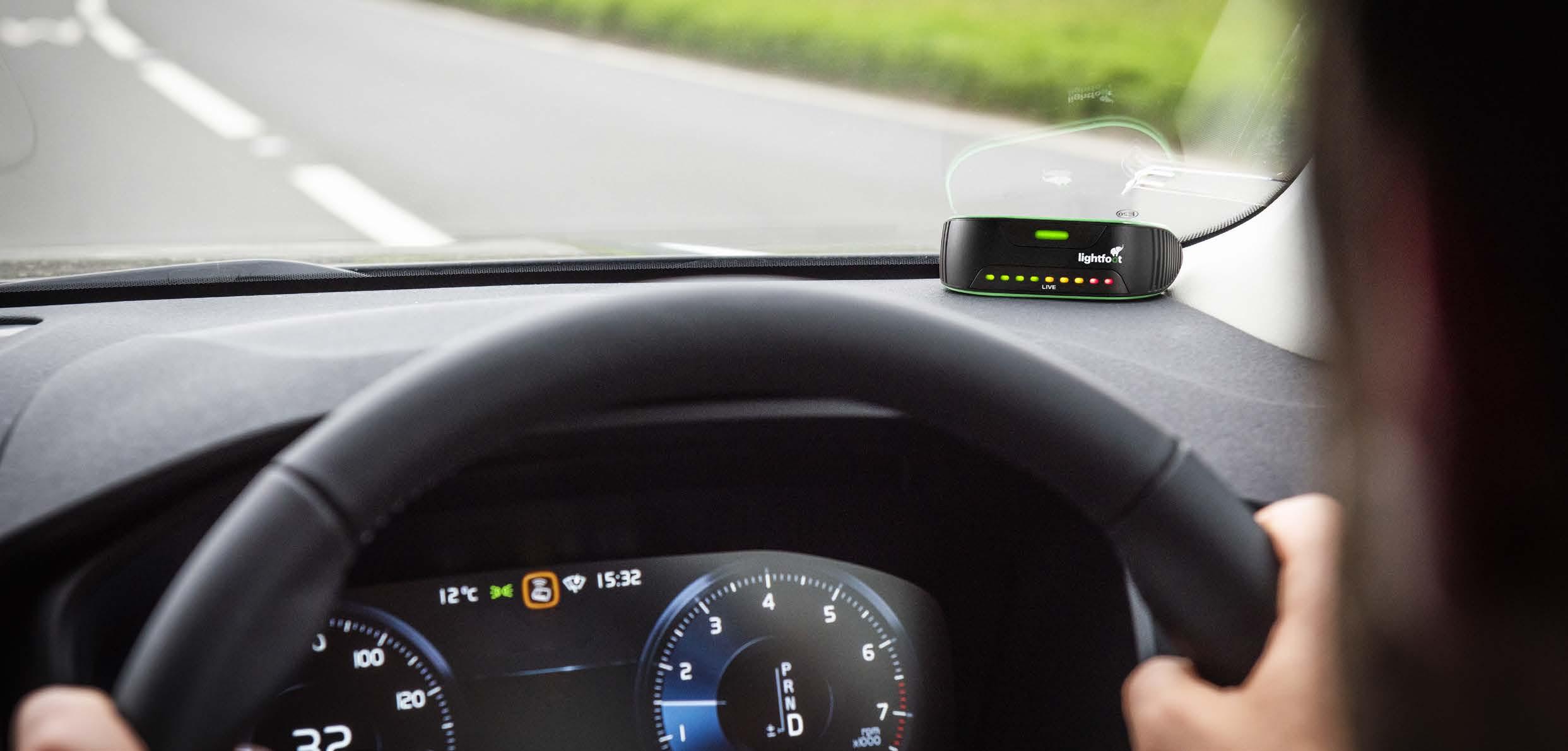

Lower fuel bills. Fewer incidents. Reduced emissions. And drivers who are safer, more engaged and more efficient every day. For fleet managers under pressure to cut costs, improve safety records and hit sustainability targets, Lightfoot delivers on all fronts.
Lightfoot's award-winning technology transforms fleet performance by improving behaviour behind the wheel. More than traditional telematics, it's a driver-first optimisation platform that combines real-time, in-cab coaching with powerful analytics and meaningful rewards. It creates lasting change, not short-term fixes.
Fleets using Lightfoot have cut at-fault accidents by up to 40%, reduced dangerous driving by 84%, and delivered fuel-efficiency improvements of 15%+. At the same time, customers are reducing wear and tear, minimising downtime and idling, and unlocking
"Unlike
traditional telematics providers, Lightfoot doesn't simply record driving data – we actively reward better driving through gamification and positive incentivisation. When drivers are motivated rather than monitored, improvement becomes continuous, and that's where the strongest fleet savings are delivered."
Paul Hollick, CEO of Lightfoot
operational savings across the whole fleet.
The sustainability benefits are equally compelling. In 2025, Lightfoot customers saved 32 million kilograms of CO₂ and 1.7 million kWh of energy, demonstrating how better driving delivers immediate environmental progress – without costly infrastructure investment or vehicle replacement. Continuous innovation is central at Lightfoot. From AI-enabled dashcams and advanced asset tracking, to intelligent EV monitoring and a unique approach to gamifying driver behaviour, Lightfoot embeds real-time coaching that sustains improvement, long term.
Major national fleets are seeing significant results including six-figure annual fuel savings, substantial emissions reductions and dramatic safety improvements – showing how behavioural technology reshapes fleet culture at scale.
Crucially, drivers are responding positively to Lightfoot, they feel supported rather than tracked.
Lightfoot is helping organisations protect their people, cut costs and accelerate the journey to a safer, cleaner future – all while getting every driver home safely at night. www.lightfoot.co.uk















Fuel and EV charging payments, unified. Vehicles maintained.
Every mile, every cost, under control. All together in one strategic platform.
As payment technology accelerates, it’s time to call in the professionals

For fleet managers, the transition to electric vehicles is no longer future focused. It has become an operational reality – and increasingly, a financial one. Yet, while much of the public conversation still centres on EVs themselves, an equally important transformation is taking place in the background – the increasingly-complex world of EV-charging payments.
For fleets, fuel cards once represented a simple proposition, 'diesel in, invoice out' – but EVs have complicated that model entirely. Drivers now charge at home, at depots, at public rapid chargers and occasionally at customer locations, each carrying different tariffs, reimbursement structures and administrative challenges. Suddenly, energy becomes fragmented, variable and difficult to monitor… without the right systems in place.
That is why intelligent charging and payment management has rapidly become one of the most crucial areas of EV services.
The best providers now offer integrated payment ecosystems, capable of consolidating public charging immediately upon plug-in; and intelligent software that can schedule charging for lower-cost overnight tariffs or periods of lower grid demand.
With charging costs varying wildly – from 7p/kW to 85p/kW – across a medium or large fleet, the financial implications are substantial. Electricity pricing volatility means energy management is now as important as fuel procurement once was.
Energy itself has become strategic.
Modern EV payment strategies increasingly extend beyond vehicles into broader energy ecosystems, helping fleets to procure renewable electricity, forecast charging demand and even integrate on-site solar generation or battery storage (including vehicle-to-grid charging).
This all illustrates the speed of change in the sector; advances that individual fleet managers will struggle to keep up with. It makes partnerships with credible and reliable EV payment and service providers even more crucial than ever, and that's where our Trusted Brands excel.
For information on EV & Fuel Payments, search BetterFleet by FleetWise on LinkedIn W linkedin.com/showcase/betterfleetfleetwise/posts/ Fleet Suppliers: To tell your story to 35,000 UK fleet managers every week, contact Lisa Turner at lisa@fleetwise.info


Paul Holland, Managing Director, UK/ANZ Vehicle Payments, Corpay, including UK brand Allstar, explains how a focus on data and transparency is fuelling success

1Paul Holland –Managing Director, UK/ANZ Vehicle Payments, Corpay, including UK brand Allstar
00 Trusted Brands: What do you see as the biggest shifts redefining fleet and fuel payment management right now?
Paul Holland: “Long term, the biggest shift is definitely around decarbonisation and how fleets gain better control over their operations while future-proofing themselves.
“We’ve seen the larger corporates leading the way on electrification and EV adoption, driven by things like benefit-in-kind incentives, CSR and ESG pressures and broader sustainability commitments. But that trend’s now filtering down through fleets of every size, not just the major corporates.
“At the same time, it’s proving to be a far more complex transition than many people originally expected. Even charging alone creates huge operational questions around infrastructure, charging locations, home charging, reimbursement and overall fleet management.
“So that strategic transition is absolutely continuing, but the immediate issue hitting fleets right now is fuel cost. Most fleets are still materially dependent on fossil fuels, and fuel prices have risen significantly since the conflict in the Middle East began. Sometimes that longer-term strategic journey gets disrupted by the realities of what’s happening in the here and now, and we’re certainly seeing that.”
Different fleets are moving through the EV transition at very different speeds. How is Allstar helping operators navigate that complexity in a practical and commercially realistic way?
private) charging networks that are restricted and work economically for that specific fleet, while maintaining operational control.
“If drivers can charge at home, we also manage all the associated data and reimbursement processes. So ultimately, we provide a fully-integrated solution covering both fuel and EV charging, which puts us in a very unique position within the market.”
Mixed fleets will remain the reality for operators for years to come. Does that require a different approach to fleet management and payments?
“Fleets are absolutely in transition at the moment. The only real variable is the speed of transition, not whether the transition itself is happening.
“If you look at the top 100 leading fleets in the UK, we’re fortunate enough to work with 84% of them, and they’re all at different stages of electrification. Some have made huge progress, while others are moving more gradually – but almost all of them are on some kind of EV journey.
“That’s where having a single partner becomes incredibly valuable, because we can support every stage of that transition. As fleet requirements evolve, customers don’t need to move between multiple providers to satisfy different needs.
“When you move into SME fleets, the pace of change is often slower and their immediate requirements can be narrower. Part of our role is building confidence in electrification, showing operators how to transition successfully.
“If you look at the top 100 fleets in the UK, we’re fortunate enough to work with 84% of them”
“When you look at fleet mobility, fuel in some shape or form remains absolutely imperative. Fleets need convenience around where they can refuel or recharge, but they also want to do it at the lowest possible cost. Quite often those two objectives contradict each other.
“There’s a variation in fuel pricing depending on the brand or location, and EV charging introduces even more complexity. Home charging costs are massively different to public charging costs, so fleets are trying to balance operational practicality with cost control.
“What we’ve done at Allstar is invest heavily in both fuel and EV solutions. We have the largest universal fuel card network in the UK, which is a major differentiator for us, because it gives customers flexibility around where they refuel, including access to lower-cost supermarket sites.
“On the EV side, we work with customers to identify which vehicles within their fleet are operationally compatible with electrification. We then help build bespoke (and sometimes semi-
“There’s definitely a consultative element to that process because, it’s in everybody’s interests that we move towards a lower-carbon environment as quickly and practically as possible.”
Customer service is a major differentiator in fleet. What does firstclass customer service look like today?
“The world’s moving increasingly into a digital space, without question. We’ve invested heavily in mobile app technology and web selfservice capabilities, because our customers want to manage as much as possible digitally, and on their own terms.
“They want access 24/7, whether they’re at a desk or on the move, and that’s been a major success for us. Nearly 80% of our customers now manage their accounts online through web self-service.
“But at the same time, sometimes people simply need to speak to another human being. We’ve never taken a digital-only approach. Customers always have access to our contact centre because not every issue is straightforward or intuitive to resolve digitally.
“For larger fleets especially, the challenges can be highly complex. They need bespoke policies around fuel, EV charging and operational efficiency, which is why our account managers work very closely with customers to design the right solutions for their fleet.
“Customer service is absolutely imperative, because our customers are under enormous
Continued over
competitive pressure themselves. Our role is to stand shoulder-to-shoulder with them and help them navigate those challenges.”
What keeps fleets loyal in a competitive market?
“The quality of the product never stands still. We invest heavily at every level of our product offering to create more value, improve usability and make life easier for customers.
“If you go back seven years, there was no EV charging network, no home charging functionality and none of the things that are now becoming essential for fleet operators. We’ve deliberately built those capabilities based of what customers told us they needed.
“Continuous evolution is a huge part of customer loyalty, because fleets want partners who understand where the market’s heading, and who are investing ahead of future demand, not reacting after the fact.”
Is there something you feel Allstar does better than competitors in the market?
Fleets now expect far greater visibility over spending, performance and ESG reporting. What role does data transparency play in building trust with customers?
“Data and control are absolutely at the heart of why customers use our services.
“The reason fleets use fuel and EV charging cards is because they provide visibility, accountability and analytics that help businesses make better operational and investment decisions.
“That ranges from simple cost visibility and benchmarking, to monitoring driver behaviour.
“But I’d also say we’re still in the early stages of what’s possible as an industry. We’re investing heavily in AI technology across the business, whether that’s customer support, fleet analytics, fuel purchasing behaviour or helping drivers charge more efficiently and economically.
“Continuous evolution is a huge part of customer loyalty, because fleets want partners who understand where the market’s heading”
“From a market positioning standpoint, we’re the only provider offering a truly universal fuel and EV card product in the UK market.
“That’s underpinned by a very strong digital experience, but also by human support whenever customers need it.
“Beyond fuel and EV charging, we also support fleets with mileage capture, service, maintenance and repair solutions, parking payments and broader vehicle payment services.
“Essentially, if it relates to vehicle payments or keeping fleets mobile, we’re looking at ways to simplify it and make it more valuable and convenient for the customer.”
“Fleets are going to face increasing pressure to become more efficient, and the data and analytics we can provide will play a pivotal role in helping them do that.”
Allstar operates at enormous scale across the UK fleet sector. What enables you to deliver consistency and reliability at that level?
“Technology sits right at the heart of our business. We invest heavily in connectivity with our network partners and in the customer experience itself.
“That consistency is hugely important, whether it’s for a driver refuelling a vehicle, tapping to charge an EV or a fleet director analysing performance data and efficiency opportunities.
“I genuinely believe our technical infrastructure is among the strongest in the market.
“But behind every technology platform, you still need great people.
Our customer-facing teams are highly skilled and very focused on understanding how they can support customers even more effectively.”


Fleet charging and fuel payments are entering a smarter era. Unified platforms now simplify EV charging, fuel spend, driver reimbursements and reporting in one place.
Fleet managers gain tighter cost control, cleaner operations, better compliance and easier transitions to electric vehicles, while drivers benefit from smoother journeys, reimbursement and administration.
Here’s what the most-trusted suppliers are doing…
Allstar, a Highly Recommended provider, continues to lead the fleet fuel and mobility sector with flexible payment solutions designed for modern fleet operations. Its extensive fuel network, EV charging support and digital account management tools help businesses improve efficiency, reduce administration and gain greater visibility over fleet spending – all while supporting drivers with convenient nationwide access.
its proposition through partnerships that enable access to high-powered depot charging for commercial fleets.
Read our Allstar interview from page 64.
“Unified platforms now simplify EV charging, fuel spend, driver reimbursements and reporting in one place”
BP Pulse remains a major provider of fleet charging solutions. Its Fuel & Charge solution has seen a strong uptake in 2025 and 2026, particularly among mixed fleets navigating the ‘messy middle’ of the transition. By enabling a single payment method across traditional fuel, and a network of more than 40,000 charge points, it is designed to simplify administration for fleet managers.
Across the wider market, providers continue to expand capability. Paua has grown its roaming offering to around 75,000 connectors, improving access across regions, including Scotland.
Support services also play a vital role.
Allstar's owner, Corpay, is further developing
Octopus Electroverse is simplifying roaming and Continued over

payment, while Rightcharge is streamlining home-charging reimbursement and charger installation for ‘home-start’ fleets.
Shell Fleet Solutions is helping fleets manage the transition from traditional fuel to EV charging through integrated payment and fleet management solutions. Its growing network coverage, digital tools and reporting capabilities are giving fleet managers greater visibility, control and flexibility across mixed-energy fleets.
Meanwhile, The Miles Consultancy is supporting fleet operators with specialist advice around fuel cards, mobility strategy and operational efficiency. By helping businesses compare providers, optimise costs and adapt to changing fleet technologies, the consultancy is making the sector easier to navigate for busy fleet managers.
WEX Esso Fuel Cards continues to play a major role in simplifying fleet fuel payments through extensive station acceptance and digital account
management tools. Its solutions help fleets reduce administration, improve spend tracking and support drivers with its nationwide access to fuel services.
DKV Mobility is expanding beyond traditional fuel cards by building integrated payment solutions for fuel, EV charging and toll services across Europe. Its focus on digital fleet management and crossborder mobility is helping fleet operators simplify administration, while supporting the transition to lower-emission transport.
Key Fuels remains a trusted name in UK fleet fuel payments, offering wide bunker network coverage and strong pricing support for commercial fleets. Its card solutions and reporting tools are helping operators manage fuel spend more effectively, while improving convenience for drivers nationwide.
Motia is bringing a modern, technologyled approach to fleet payments and mobility management. By focusing on connected digital services, streamlined payment processes and data visibility, the business is helping fleets improve operational efficiency and adapt to changing transport demands.
FleetMax Solutions is supporting fleets with tailored fuel card and fleet management services. They are designed to reduce complexity and control operating costs. Its customer-focused approach and flexible solutions are helping businesses gain better oversight of fuel usage, driver activity and overall fleet performance.
As fleet mobility continues to evolve, integrated fuel and EV charging payments are becoming essential tools for smarter operations. Modern solutions now offer greater visibility, efficiency and flexibility than ever before. This helps fleet managers reduce administration, control costs and support sustainability goals, all while keeping drivers moving with confidence on every journey.
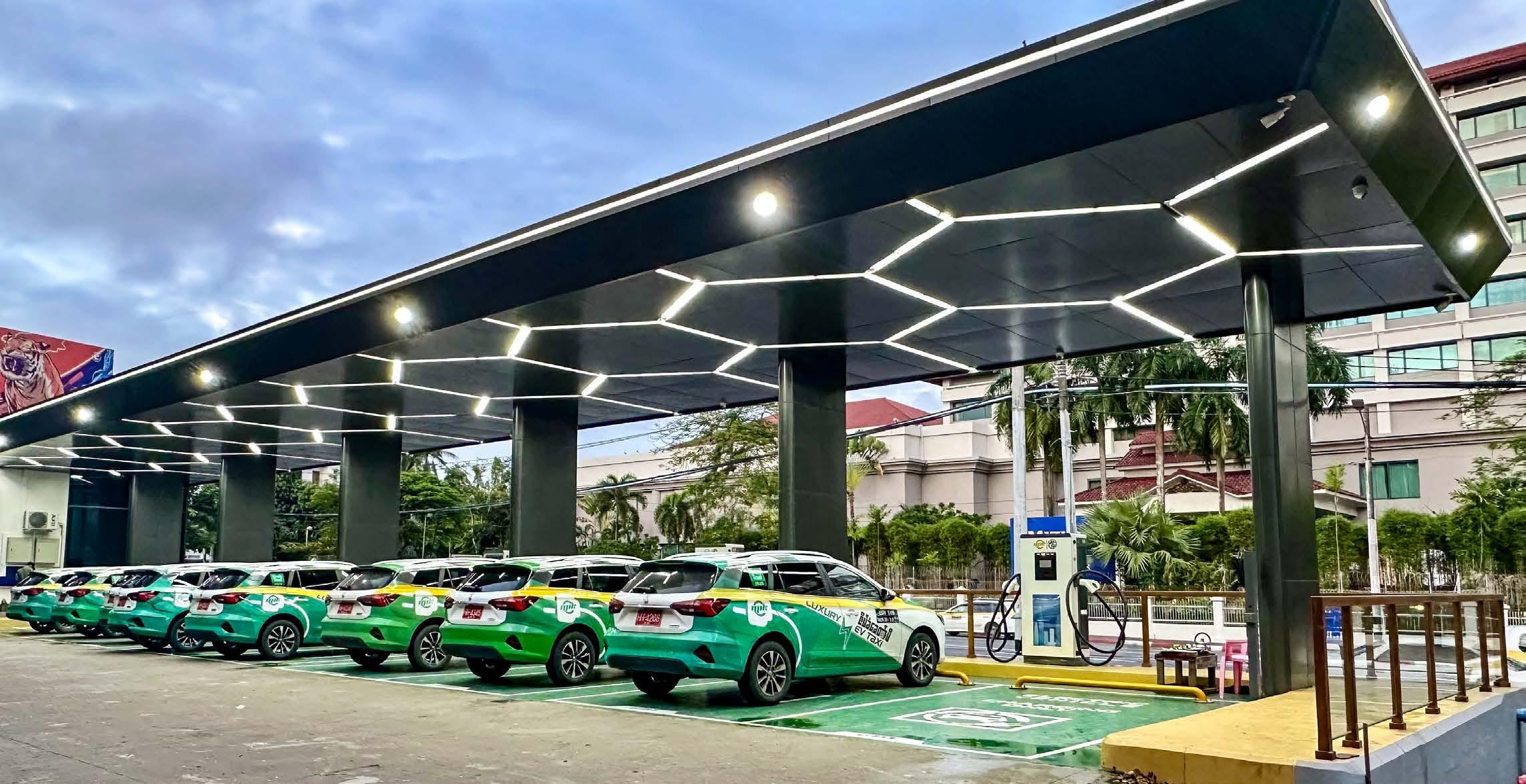














Fleet electrification is not just an infrastructure challenge, it's an operational one.
It’s an area where telemetry and data analytics have emerged as indispensable tools.
Fleet managers can now monitor vehicle efficiency, charging habits, route suitability, battery condition and driver behaviour, in real time. Advanced systems predict range based on payload, terrain, weather conditions and driving style.
For businesses operating time-critical or high-mileage fleets, this level of predictive intelligence changes decision-making fundamentally.
Meanwhile, smart driver apps locate the best charging options … and they pay for the charge as well.
“EV Services
considerable rewards: lower running costs, improved operational visibility, reduced downtime, stronger sustainability credentials and access to increasingly sophisticated fleet intelligence.
There are even businesses offering end-toend fleet-electrification services, taking the stress and guesswork out of the biggestever change in how fleets function.
are no longer supplementary. They have become central to the efficient management of the modern fleet”
Crucially, the ZEVolution has also highlighted the importance of driver behaviour.
The most effective electric-powered fleets are rarely those with the newest vehicles. They are the fleets whose drivers understand how to operate their vehicles efficiently. Smooth acceleration, regenerative braking awareness, intelligent charging and better route planning all have a measurable effect on energy consumption.
Complexity is perhaps the defining characteristic of modern fleet management.
Yet done properly, electrification offers
The businesses succeeding in this transition are rarely the ones moving fastest. More often, they are the ones approaching electrification methodically – understanding that EV adoption is not simply about vehicles, but about building a smarter, more connected fleet operation around them.
In that respect, EV planning and charging services are no longer supplementary, they have become central to the efficient management of the modern fleet.
For all the information you need on EV Planning & Charging in the UK fleet sector, search BetterFleet by FleetWise on LinkedIn W linkedin.com/showcase/betterfleetfleetwise/posts/ Fleet Suppliers: To tell your story to 35,000 UK fleet managers every week, contact Lisa Turner at lisa@fleetwise.info
“2026 is less about whether to electrify and more about how to do it well”
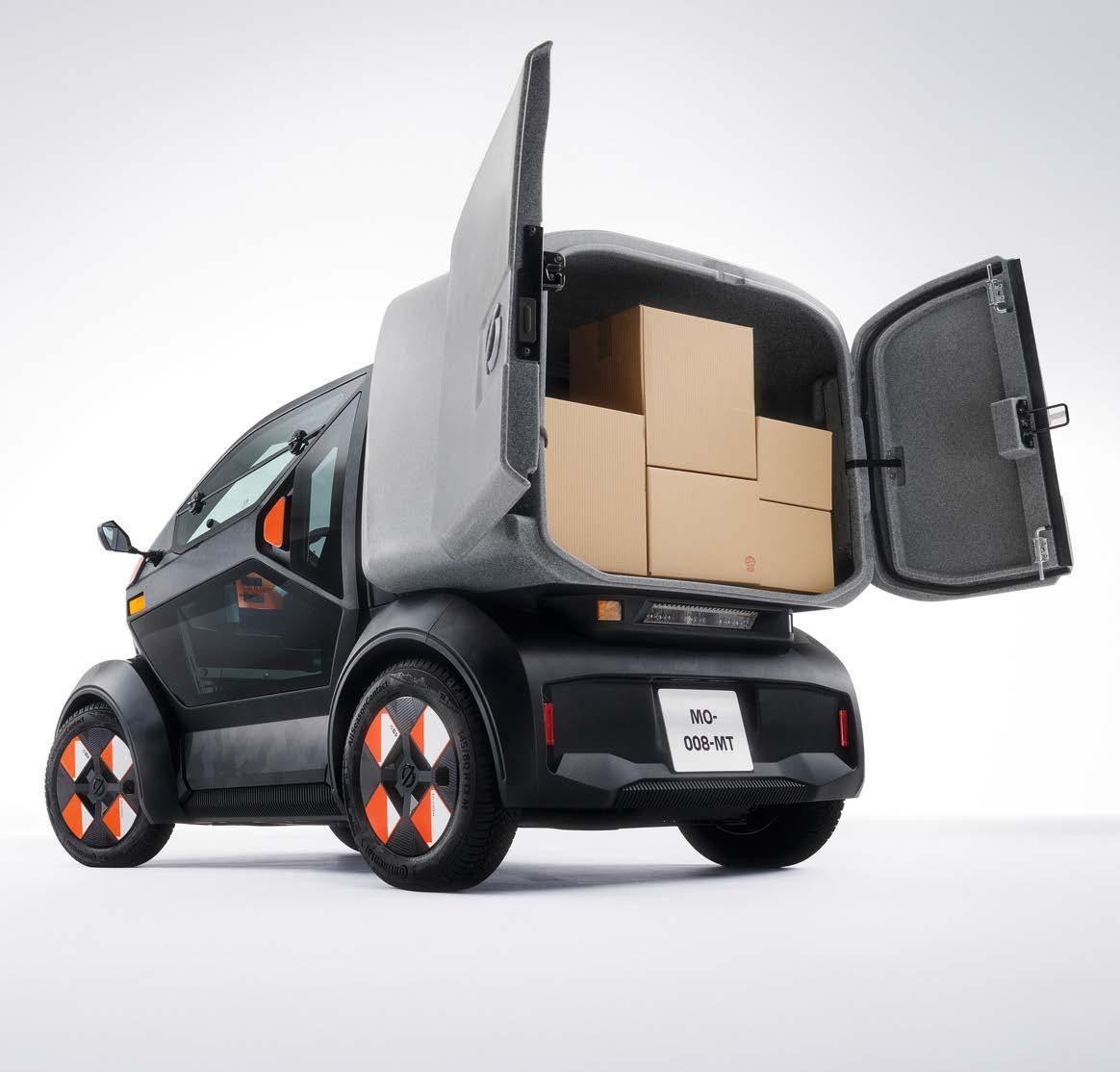
As Naomi Nye from Drax explains: "2026 is less about whether to electrify and more about how to do it well. It’s about assigning clear ownership of data and grid capacity to turn the learning curve into a competitive advantage.”
There are now numerous suppliers in all aspects of EV adoption, integration and optimisation.
Here are four of the best.”
“Zap-Pay is addressing one of the sector’s most persistent pain points – payment fragmentation”
Zapmap, both a five-year 100 Trusted Brands performer and Highly Recommended provider, continues to play a central role in improving the driver experience, by constantly evolving and expanding its offerings.
Initially, focused on helping drivers to find vacant, working EV charge points, it has now expanded its repertoire to include seamless payment solutions.
Its Zap-Pay platform is addressing one of the sector’s most persistent pain points: payment fragmentation. As CEO Richard Bourne notes, the company’s core mission remains, “making charging an EV as simple as possible”.
Ongoing integrations with major charging networks are bringing fleets closer to a genuinely seamless, single-app solution.
Continued over
Zapmap also independently rates all the main EV charge point operators, using in-depth feedback from their customers. You can see the results of the 2025/26 survey on page 74.
Mer UK is a leading provider of EV charging infrastructure, specialising in solutions for commercial fleets, workplaces, businesses and the public sector. Owned by Norwegian renewable energy company Statkraft – Europe’s largest producer of renewable energy – MER combines expertise in clean energy and electric mobility to help organisations transition to electric transport with confidence. The company offers a full turnkey service, including fleet electrification consultancy.
Dynamon's data analytics and simulation tools are used by businesses to ensure their transport operations are as sustainable, efficient and costeffective as they can be.
Specifically developed to help in the transition to electric vehicles, Dynamon’s ZERO software tool uses advanced data analytics to help commercial fleets, consultants, leasing companies, telematics suppliers and charging providers. It can identify the most suitable EVs for a task, along with best routing, the necessary charging infrastructure, all cost implications and depot energy requirements.
Drax Electric Vehicles, a five-year Trusted Brand, has also had a standout year, including securing a place on the ESPO framework to lead public sector decarbonisation. Drax offers an end-to-end model, covering infrastructure, energy supply and optimisation, appealing to fleets looking to align operational performance with sustainability goals.
As the market matures, EV services are becoming more integrated within wider fleet operations, with increasing emphasis on integration, visibility and cost control.
“EV services are becoming more integrated within wider fleet operations, with increasing emphasis on integration, visibility and cost control.”

The UK’s best EV charging survey reveals which providers are rated most highly by users
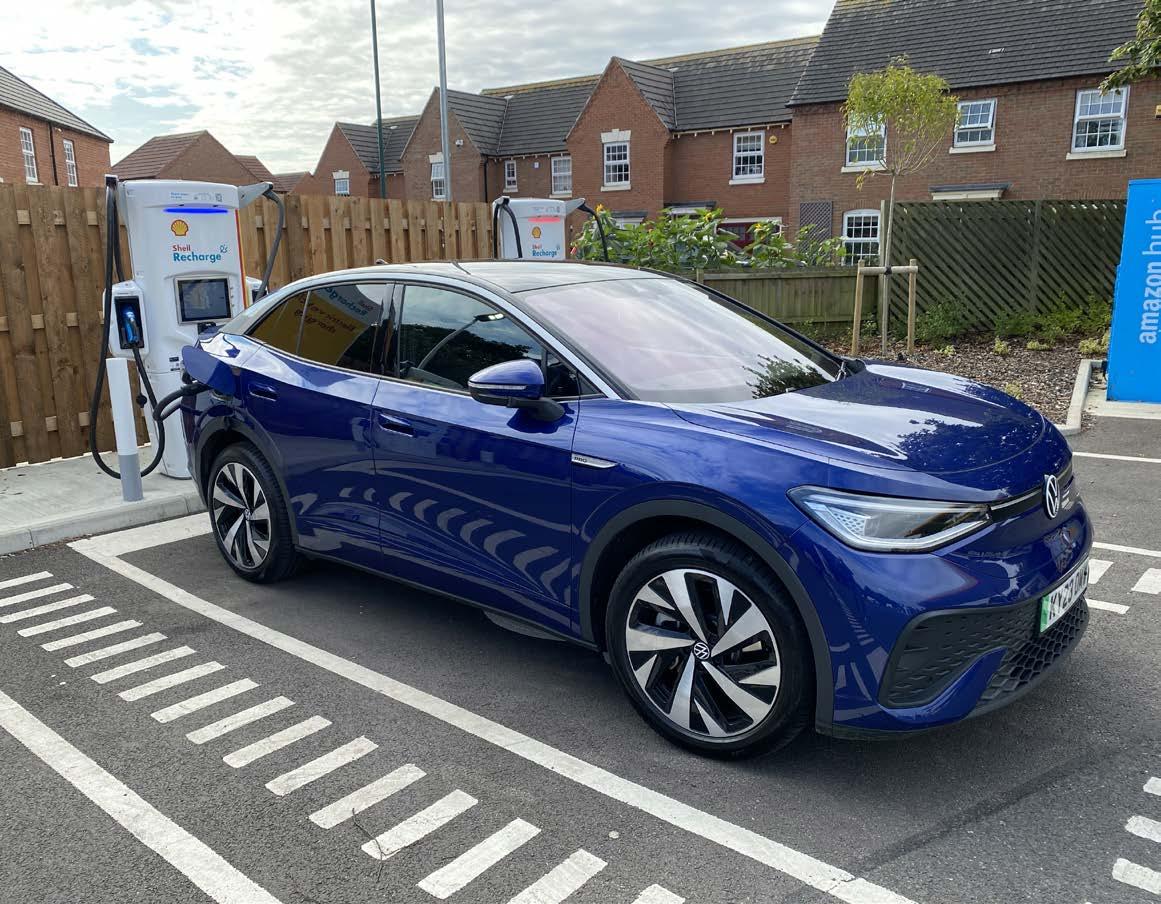
The UK’s public charging network has passed 120,000 chargers for the first time, with ultrarapid charging showing strongest growth.
New figures from Zapmap show 1308 (net) new chargers were added during April, bringing the UK total to 120,388 devices across on-street, destination and en-route locations.
According to Zapmap, ultra-rapid chargers rated at 150kW and above grew by almost 40% year-onyear, reaching 13,346 devices nationwide. These chargers are typically capable of charging an EV battery from 20-80% in around 20-30 minutes.
The number of rapid charging hubs – defined as locations with eight or more rapid or ultra-rapid chargers – also passed 1000 for the first time.
For fleets, this continued growth of charging infrastructure directly affects charging downtime, route flexibility and EV-adoption confidence levels.
Here are the best-performing networks in the Large networks (>500 rapid or ultra-rapid chargers) and Medium-sized networks (150500 rapid or ultra-rapid chargers) categories.
For more details visit: https://www.zapmap.com/news/best-evcharging-networks-2025

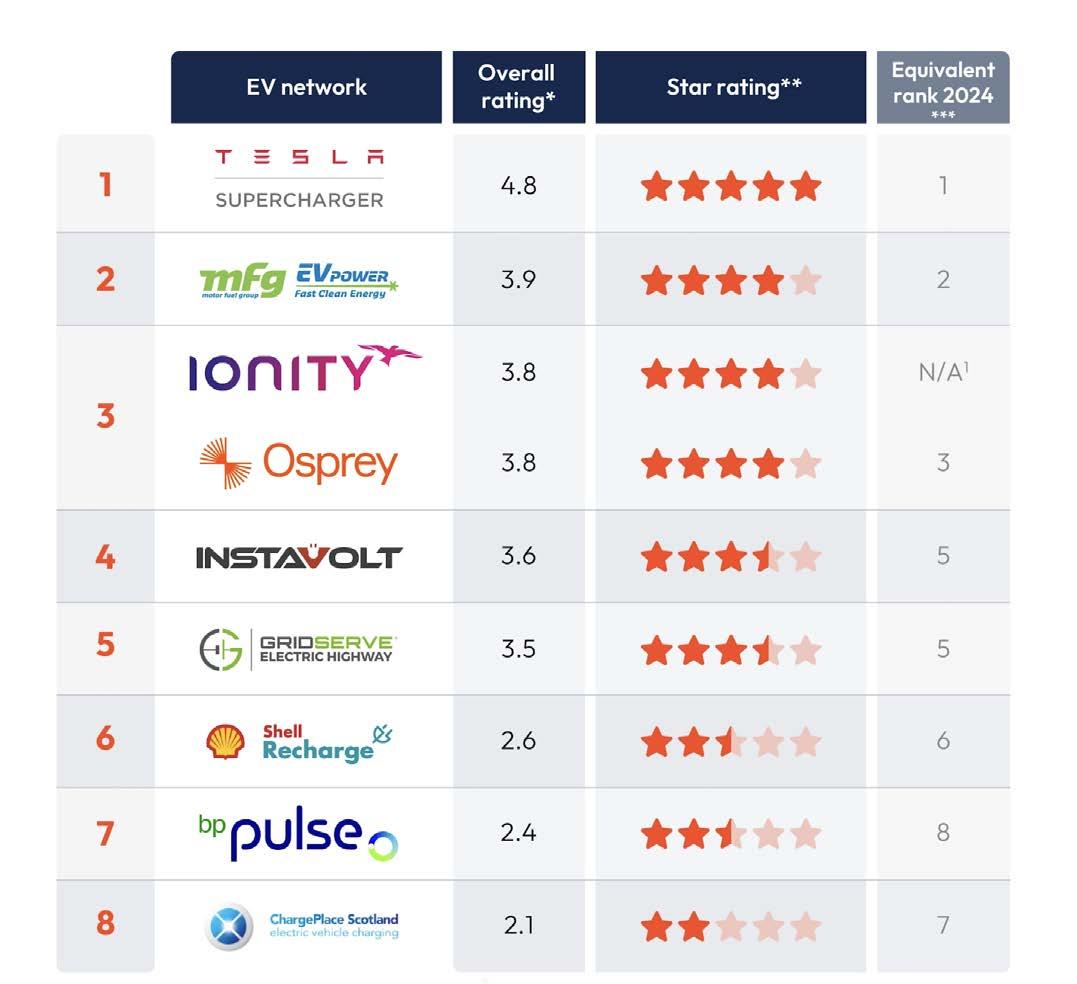
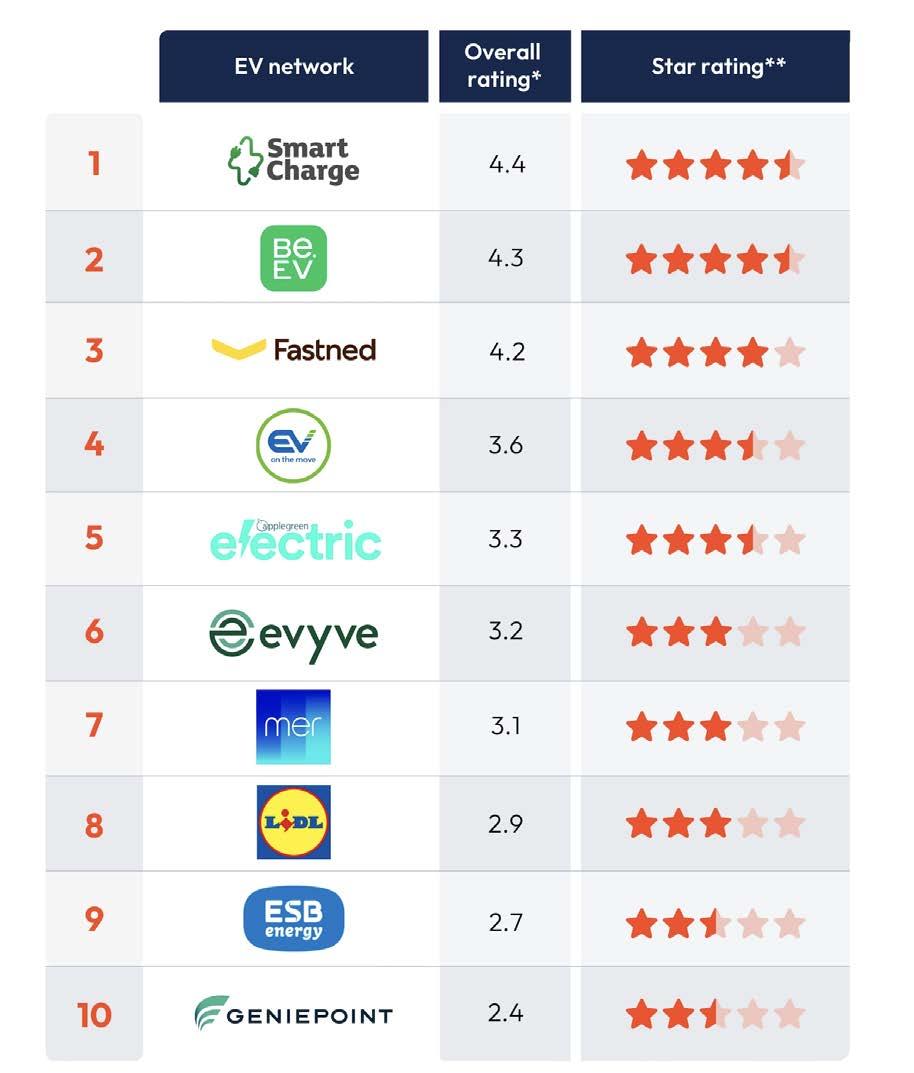




Rising compliance demands, increasing vehicle complexity and growing legal exposure are forcing fleets to take a far more structured approach to driver and vehicle risk.
For many businesses, fleet risk management was once viewed largely as an insurance issue. Today, it sits much closer to the centre of fleet operations.
Modern fleet risk increasingly covers everything from driver behaviour and licence checking to fatigue management, vehicle condition, grey fleet oversight and post-collision investigation. Fleets are also operating in a more demanding environment, with tighter duty-of-care expectations and greater scrutiny.
Technology is playing a major role in how fleets respond to these challenges.
Risk platforms can now combine licence checks, incident history, telematics data, driver assessments, maintenance records and training activity into a single operational view. That allows fleet managers to identify higher-risk drivers earlier and target interventions more effectively.

Driver behaviour is one crucial area. Harsh braking, speeding and fatigue all contribute to increased accident risk, fuel usage and vehicle wear, so fleets are increasingly using telematics-linked coaching and e-learning tools to improve standards.
“Investigations increasingly look beyond the driver to examine wider fleet management processes”
Many systems now flag issues such as expired licences, missing insurance documents, overdue training or high-risk driving behaviours before they become more serious operational problems.
Electrification is also changing the sector. EVs introduce new operational risks around battery safety, charging procedures, high-voltage systems and heavier vehicle weights, particularly for larger electric vans operating close to payload limits. At the same time, the growing use of grey fleet vehicles continues to create challenges for employers. Businesses remain responsible for ensuring privately-owned vehicles used for work are roadworthy, insured and legally compliant, even though they sit outside the traditional company fleet.
There is also increasing recognition that strong risk management can deliver wider commercial benefits beyond safety alone. Reduced accident rates often lead to lower insurance costs, improved vehicle uptime, lower repair bills and better driver retention.
For many fleets, the challenge is no longer understanding that risk exists; it is building systems capable of identifying and managing it consistently across increasingly complex operations.
For all the information you need on Fleet & Risk in the UK fleet sector, search BetterFleet by FleetWise on LinkedIn W linkedin.com/showcase/betterfleetfleetwise/posts/ Fleet Suppliers: To tell your story to 35,000 UK fleet managers every week, contact Lisa Turner at lisa@fleetwise.info
100 Trusted Brands in Fleet
Interview


100 Trusted Brands chats with the MD of one of the UK’s most innovative and trusted fleet-management providers

CRichard Hipkiss –Managing Director
ould you start by explaining what Fleet Operations’ offering is to fleet managers. Richard Hipkiss – Fleet Operations is a fullservice fleet management business.
At one end, our model is very modular, so fleet managers can take individual services, or build-up individual components: things like maintenance and risk management – all those elements that fleet managers and internal teams need support with.
Then, at the other end of the scale, we deliver full outsourcing. Everything in one place, a fullycontrolled supply chain, and full-service provision across the fleet, across risk, and reporting in MI (Management Information).
So, from that perspective, you’ve got reduced or even no internal fleet resource, depending on how the organisation is set up.
From a company car perspective, it normally means no internal dedicated fleet resource is necessary, and from a van perspective, you’ll have a fleet manager who can be more strategic.
How important is data, and how are you delivering it to fleets?
Data makes our world go round. Obviously, data input from the customer is critical. We need to know who the employees are, when they're starting, when they're finishing – all those things.
The vehicle-related data is what we capture and control – a lot of the work we do at the outset, and during implementation, is automation around data flow.
We'll get automation set up from those departments directly. We don't necessarily want the organisation trying to centralise a data file just for us – that’s added complexity for our customer.
They're outsourcing fleet, or certain parts of fleet, and we're there to make their lives easy. So, from that perspective, we'll go to those individual departments, we'll automate the data flow into us, we'll then apply the business logic to that data – what needs to be updated and what needs to be distributed through to supply chain. We'll then validate the supply-chain data regularly, to check it's accurate. That means the flow of invoices back to the customer is 100% accurate, both from a costcentre perspective and a cost perspective.
With all this data, can you deliver solutions before the fleet even knows it has a problem?
Absolutely, yes. You'd be amazed how many issues we report back to the customer, using their own data, and supply-chain data.
That's a key part of getting it right, from day one. The whole data landscape – we're talking millions of lines of data in some cases – is interrogated using current and future technology, including AI, to capture and shape it as much as possible.
“Data makes our world go round”
We’re seeking 100% automation where we can. We don't want humans touching data. We don't want humans auditing data. We want technology to do that, and we've had a lot of success automating customers' data flows.
We remove legacy data flows, where, say, a leasing company is sending an Excel file by email. There are a lot of legacy data flows, and they’re subject to issues and errors – so 100% accuracy on data flows is one of our KPIs.
How do you make it easy for a fleet manager or HR manager to deal with all that data?
From a data-input perspective, we'll go to the source of the data – it could be HR, payroll, finance, or cost centre data.
“You'd be amazed how many issues we report back to the customer, using their own data”
We've got tools that, for instance, can automatically access invoice copies from leasing company portals. Traditionally, that would take somebody logging into the portal and retrieving that data manually. We have another tool that accesses driving fine information, reads and transposes that information through to a platform, and then automatically distributes a recharge to the driver. Our driver app also gives the driver the option to appeal the fine through the issuing authority, or they can liaise with us, as we've got automated processes around mission-critical fleets.
How is the data delivered to the fleet manager?
We've got dashboards based on the individual’s profiles. They can create a persona where, if they're finance, or if they're environmental management, and they want to see certain things, we’ll deliver it. All the data is there.
We have ready-made dashboards that they can plug in and use. Alternatively, we can create, or they can create, their own dashboard, based on their specific roles and objectives in the business.
Our MI platform is built on Amazon Web Services, and the developments in the last few years have been huge. The fact that you can just prompt the platform to tell you a story – all those sorts of things are really big wins for everyone.
We find that customers using sole-supplier arrangements only get around 60% of the data they need to make informed fleet decisions. At Fleet Operations, we take source data from the customer – things like payroll recharging, mileage payments through a map, mileage payment reimbursement through AFR – and we feed it all into our platform, so you actually get a true TCO (Total Cost of Operation), not just part of the story.
Continued over
If you've got one platform providing part of the data, chances are you'll have three or four that have to provide the other parts.
With all this automation, how much human contact do you have with your clients?
Each customer has a dedicated fleet service executive who deals with the day-to-day – so they become an expert in that customer's fleet.
They also develop personal relationships with drivers, you know, helping them out at six o'clock on a Friday night – that's really at the heart of what we do.
All of that's underpinned by our driver app, in terms of communication. If you don't want to speak to somebody, you don't need to. You can book servicing or hire vehicles directly through the app – you can chat with us, you can view policies, take some driving training, things like that. But the team are always there to deliver a human layer on top of that.
management, driver risk, fines and administration, etc. They're all in the background, doing the day-to-day activity in those areas, but our singlepoint-of-contact model, through the Fleet Service Exec, is critical. Things don't get lost, and cases are managed end-to-end by the individual. Also, over time, the driver gets to know, say, Faye in the Service Delivery team by name, and knows that she solves their problems. That's key, and beyond that, we've got a customer-relationship manager, who’s responsible for effective service delivery, measuring KPIs, and making sure our entire organisation is performing and exceeding those KPIs on a day-to-day basis.
“Each customer has a dedicated fleet service executive who deals with the day-today – so they become an expert in that customer's fleet. ”
We know we have a broad range of customers; from very senior sales people and directors that are in perk cars, through to somebody that's driving a mission-critical LCV, who isn't allowed to use a mobile phone, or has to use a company handheld. That individual may not even have a company email address, so they need the human contact, they need to be able to make a call when they're on the move and ask our team to do something, because they can't self-serve. That means getting the right blend of service components, from technology and individuals, is absolutely critical.
With so many elements to your offering, does one person have detailed understanding of them all?
From a day-to-day perspective, there's a single point of contact. Then, we've got all our support teams around vehicle rental, maintenance, accident
Beyond that, we've got a consultancy and strategy team, so they come in for all the strategic elements of what we do on behalf of customers. That could include: annual strategic reviews, looking at carbon reduction plans, vehicle policy from an LCV perspective, and fit-for-purpose assessments on company vehicles and equipment.
So, there's a driver layer, then there's the stakeholder layer, and then over-arching all that is the strategic layer.
Fleet Operations has been a top 100 Trusted Brand in Fleet for five years. What does that mean to the business, and how important has Trust been to the success of the business?
The industry recognising what we do and how we do it is very gratifying. It’s important to be a trusted brand in fleet management, because of what we do. And it’s very important to differentiate ourselves from other providers, that are all very strong in their own right, but don't necessarily provide full-service fleet management and outsourcing in the same way that Fleet Operations does.

In 2026, fleet management and risk services are becoming increasingly interconnected, as operators place greater emphasis on compliance, uptime and duty of care.
Alongside continued pressure on SMR (service, maintenance and repair) costs, fleets are also managing the operational complexities of electrification, increasing the importance of dataled risk management and supplier support.
Among leading providers, Holman continues to strengthen its position as a strategic fleet partner, and is recognised as a five-year 100 Trusted Brands performer and a Highly Recommended provider.
Holman is at the forefront of fleet electrification, having overseen the completion of BT Group’s 3500-van EV rollout – one of the UK’s largest commercial EV deployments.
Its integrated offering, which spans vehicle funding, maintenance, telematics and risk management, continues to position itself around data-led optimisation to manage total cost of ownership for customers.
“Fleet management and risk services are becoming increasingly interconnected, as operators place greater emphasis on compliance, uptime and duty of care”

Fleet Operations, another five-year Trusted Brand, and key supporter of the sector, continues to focus on outsourced fleet management and operational compliance support. As organisations seek to consolidate supply chains in 2026, the company continues to expand its managed-services offering. By providing independent, multi-bid leasing and comprehensive lifecycle management, it offers the full transparency needed to control costs and inspire confidence in a volatile market.
Continued over
Its focus on operational compliance and administrative support is a vital growth area for fleets looking to outsource complex document and duty-of-care requirements.
Breakdown and roadside-support providers remain central to fleet resilience. The AA, a five-year Trusted Brand and Highly Recommended provider, continues to support major portfolios, including its comprehensive breakdown contract for VWFS Fleet’s 54,000 vehicles.
In 2026, The AA scaled its decarbonisation efforts, moving beyond trials to deploy HVO (Hydrotreated Vegetable Oil-powered) recovery trucks across more than 10% of its flatbed fleet, reducing operational emissions by up to 90%.
Supporting this physical resilience is AA Drivetech, another five-year Trusted Brand. The business continues to support fleets with driver training and risk reduction programmes, including support for operators transitioning to electric vehicles. It also continues to support fleets focused on compliance and incident prevention.
As accident management remains critical for


operational continuity, providers such as FMG, AX and Fleet Assist maintain their support for fleets through repair management and supplier coordination, with services designed to minimise vehicle off-road time.
Meanwhile, fleet management specialists CLM Fleet Management, Ford Fleet Management and Fleet Logistics continue to provide maintenance coordination and lifecycle services, with BCA remaining a major player in vehicle de-fleet and remarketing activity.
Driver risk management is further reinforced by IAM RoadSmart, a Highly Recommended provider, focusing on driver assessments and advanced driver training. RED Corporate Driver Training, TTC and Sopp+Sopp are also major contributors in this vital sector. Meanwhile, support networks like Global Autocare, Green Flag, and the RAC – a five year Trusted Brand – reinforce the importance of responsive infrastructure.
As fleet functions become increasingly data-led, providers that are able to combine operational support with effective risk reduction and nationwide coverage, are seen as indispensable strategic partners for UK fleets.

















Why salary sacrifice has become one of the biggest drivers of EV adoption in the company car market
Lower BiK tax, plus rising fuel costs and employee demand are making salary sacrifice a major recruitment and retention tool. Salary sacrifice has rapidly evolved from a niche employee benefit into an important growth area.
At its simplest, the model allows employees to give up part of their gross salary in exchange for a leased vehicle. This is often bundled with insurance, and servicing, etc, and covered in a monthly payment. The biggest growth has come through EVs.
Thanks to low benefit-in-kind taxation, many employees can now access EVs for monthly costs comparable to, or sometimes lower than, petrol or diesel alternatives. That has opened the door to cars which would previously have sat outside traditional company car budgets.
For employers, the appeal goes beyond vehicles alone. Many businesses now view salary sacrifice as a practical way of supporting EV adoption without expanding their formal company car schemes. It also helps organisations strengthen sustainability targets, while offering employees access to newer, safer and more efficient vehicles.
The model has become particularly attractive as living costs and vehicle acquisition prices have risen sharply in recent years. Bundled monthly payments create greater cost certainty for drivers, while employers can often reduce National Insurance contributions through the arrangement.
“Salary sacrifice is increasingly being used as both an electrification strategy and an employee benefit”
Electric vehicles dominate the market because of the tax advantages, but salary sacrifice is also helping overcome some of the barriers that previously slowed EV adoption. Many schemes now include home charger support, public charging access and driver education designed to simplify the transition away from petrol and diesel. Operationally, the sector has also matured significantly. Early schemes were often focused mainly on senior management or large corporates. Today, providers increasingly support SMEs, public sector organisations and businesses with mixed workforces. At the same time, fleets are becoming more aware of the importance of driver suitability and whole-life affordability. Salary sacrifice arrangements must account for parental leave, long-term sickness and early contract termination, all of which can create financial risk if mismanaged.
Fleet
For all the information you need on Salary Sacrifice in the UK fleet sector, search BetterFleet by FleetWise on LinkedIn W linkedin.com/showcase/betterfleetfleetwise/posts/ Fleet Suppliers: To tell your story to 35,000 UK fleet managers every week, contact Lisa Turner at lisa@fleetwise.info

Highly-Recommended Trusted Brand, Tusker, reveals the strategic benefits of Salary Sacrifice schemes

From cost-saving tool to strategic fleet advantage, Salary Sacrifice is changing the fleet and mobility landscape fast.
Rising costs, the shift to electric vehicles, and increasing regulation mean traditional fleet models are no longer enough on their own.
Salary Sacrifice has moved beyond being a niche, tax-efficient benefit – it’s now a practical, strategic way for organisations to manage cost, reduce risk, and support their sustainability goals.
At Tusker, we’ve seen this shift first-hand. With
over 17 years’ experience and more than 90,000 cars on the road, we know what it takes to deliver Salary Sacrifice schemes that work.
What was once seen as an employee perk is now a core part of modern fleet strategy, helping organisations offer affordable access to electric vehicles (EVs) while reducing the administrative burden on their teams.
Fleet leaders today are balancing a range of competing priorities: from controlling costs and meeting compliance requirements, to responding to employee demand and ESG commitments. The challenge is no longer just about buying cars; it’s about delivering mobility solutions that are flexible, scalable and built for the future.
Continued over
Salary Sacrifice offers a simple way to tackle these challenges. By changing how vehicles are funded and managed, it helps organisations to:
● Reduce upfront costs
● Remove exposure to residual value and maintenance risk
● Accelerate the shift to electric vehicles without creating additional cost for the business
● Strengthen their employee offering in a competitive market
Where fleets are losing value today
Despite strong intent, many organisations are still losing value in their fleet strategies. This typically stems from three areas:
total cost of ownership
Many organisations focus on headline lease costs, not the true cost of running a vehicle, which includes maintenance, insurance and depreciation. This leads to hidden inefficiencies, and makes total costs harder to predict.
“With more than 90,000 cars on the road, we know what it takes to deliver Salary Sacrifice schemes that work”
What sets Tusker apart is our simple, fully-managed approach to Salary Sacrifice. As part of Lloyds Banking Group, we use our buying power to deliver strong value for employers and drivers, backed by the scale and stability of a trusted financial institution. From initial scheme design through to ongoing driver support, we take care of the detail, reducing complexity and making the experience straightforward for both employers and employees.
unnecessary risk
Traditional fleet models can leave employers exposed to risks around residual values, compliance and administration – and these pressures are only increasing as regulation evolves.
Salary Sacrifice offers a more secure approach, with built-in protections that support employers and employees if circumstances change.
employee experience
Disjointed systems and unclear processes can make things harder for drivers, leading to lower engagement and reduced scheme success.

“The
future of fleet is not about products in isolation, it’s about connected solutions.”
At Tusker, we tackle this by working with leading employee benefits providers and integrating them through single sign-on. This makes our scheme easier to access, reduces complexity, and creates a more seamless experience for both organisations and their employees.
When they're delivered well, Salary Sacrifice schemes can address all of these challenges, but they rely on a simple, fully-managed approach to get the very best results.
The true value of any fleet solution comes down to the results it delivers. For our customers, Salary Sacrifice provides clear, measurable benefits:
● Cost control: Employers can deliver a valuable benefit while remaining, at worst, cost neutral, and often achieving substantial savings
● Efficiency gains: We take on the day-to-day management, reducing the administrative burden on internal teams
● Reduced risk: Fixed monthly costs, fully-maintained packages and lifestyle protections provide greater certainty and control
a service, we act as a trusted partner, helping organisations get the most from their fleet strategy.
Looking ahead: what comes next
Over the next five years, we expect Salary Sacrifice to become a core part of fleet strategy, rather than an optional extra. This shift will be shaped by a number of key trends:
● Continued growth in EV adoption, driven by regulation and improving affordability
● A stronger focus on employee choice, with flexibility becoming increasingly important
● Greater scrutiny on both cost and carbon, requiring clearer data and reporting
● Closer integration with wider benefits and mobility platforms
Success in this space will come down to keeping things simple, while delivering real value. The organisations that get it right will be those that see fleet not just as a cost, but as a strategic tool to support their wider goals.
“The true value of any fleet solution comes down to the results it delivers. For our customers, Salary Sacrifice provides clear, measurable benefits”
● Sustainability progress: It’s one of the most effective ways to support large-scale adoption of electric vehicles
Sustainability is embedded within our approach. For over 13 years, Tusker has offset the tailpipe emissions of petrol and diesel vehicles, as well as the grid emissions associated with electric vehicle charging, through our schemes.
For example, a typical employer implementing a Tusker scheme can see significant increases in EV uptake within the first 12 months, alongside reduced grey-fleet reliance and improvements in overall employee satisfaction.
The future of fleet is not about products in isolation, it’s about connected solutions. Organisations are looking for partners who can fit seamlessly into their wider mobility and benefits strategy.
At Tusker, that’s exactly what we deliver.
Alongside our fully-managed, end-to-end approach, we place a strong focus on trust and security. Our data security credentials, including ISO27001 and Cyber Essentials Plus, give employers confidence that their data and their employees’ data is handled to the highest standards.
Combined with our experience, expertise and dedicated support, this means we don’t just deliver
One of the biggest risks organisations face today is doing nothing at all. Delaying the move to modern fleet solutions, including Salary Sacrifice, can lead to:
● Higher long-term costs
● Slower progress towards sustainability goals
● Reduced ability to attract and retain the best talent
The market is moving quickly, and those companies that don’t adapt, risk falling behind.
Salary Sacrifice is a practical, strategic tool to help firms manage complexity, control costs and support the ZEV transition. Tusker is proud to play a leading role, helping employers get more from their fleet strategy through simple, fully-managed solutions.
https://tuskercars.com/

Arguably the fastest growing area in fleet, Salary Sacrifice is the main reason company drivers are transitioning to EVs
Salary sacrifice allows UK company car drivers to exchange part of their gross salary for a car, reducing income tax and National Insurance payments. With low benefit-in-kind (BiK) rates on EVs, drivers can access a new electric car for significantly less than funding one privately – often including insurance, servicing and maintenance in one monthly cost.
“Used car orders now make up around 12% of orders received, with used EVs averaging around £130 cheaper per month”
That’s made Salary Sacrifice a key entry point for fleet electrification. The British Vehicle Rental & Leasing Association (BVRLA) recently reported salary sacrifice supply rising 125% year-on-year, playing an instrumental role in EV uptake.
Tusker’s 2025 EV Driver Survey found that 38% of EV drivers cited income tax and national insurance savings as a key reason for their switch. In addition, employers increasingly view salary sacrifice as a cost-effective way to drive EV uptake, reduce fleet emissions, and enhance employee benefits. With the 2030 new petrol and diesel ban approaching, fleet and HR leaders are treating EV salary sacrifice not as a pilot programme, but as a key pillar in their people strategy.
Tuskerdirect remains a market-leading salary

sacrifice provider, and its five years of 100 Trusted Brands in Fleet status underpins this reputation.
Tuskerdirect closed 2025 with more than 2.2 million employees able to access its scheme, managing a fleet of 85,000 vehicles and delivering more than 40,000 salary-sacrifice cars within the year. The business is targeting 100,000 vehicles by Autumn 2026, and continues to be one of our Highly Recommended Trusted Brands.
A defining development has been the scaling of used-electric vehicle provision. Since fully-launching its pre-loved car offering at the start of 2025, used car orders now make up around 12% of orders received, with used EVs averaging around £130 cheaper per month.
Managing Director, Kit Wisdom, notes that Salary Sacrifice has moved beyond being a ‘nice to have’ benefit and is now one of the most effective tools employers have for improving affordability and supporting sustainability goals.
Octopus Electric Vehicles joins Tuskerdirect in reaching its fifth year on the 100 Trusted Brands list and remains amongst the most Highly Recommended providers. Octopus has had a transformative 12 months. Under new permanent CEO, Gurjeet Grewal, its managed-vehicle numbers grew from 27,000 to more than 40,000 cars, supported by £1.5 billion in funding. The business subsequently secured further backing, bringing total EV funding to £2 billion and enabling fleet growth towards its goal of 75,000 vehicles.
Unlike most other sal sac schemes that only offer employee protection from the third month, The Electric Car Scheme offers complete employer protection from day one.
In 2025, The Electric Car Scheme launched The Charge Scheme, a salary sacrifice solution specifically for EV charging costs, saving employees 20-50% on home, workplace and public charging.
For Human Resources and finance leaders, its B Corp certification and multi-funder broker model offer both commercial competitiveness and credible ESG alignment.
For information on a wider range of salary sacrifice providers, see the shortlist on page 89. Many providers also offer specialist leasing services to support organisations implementing and managing vehicle benefit schemes.

With our innovative multi-bid approach for salary sacrifice cars, we ensure your employees get the lowest monthly price in the market, every time. Combined with our comprehensive lifestyle protection, both you and your employees are covered for the unexpected. To find out more scan
or call 0344 567 8000


● www.alphabet.com/en-gb.html Highly Recommended
● www.acvm.com

● www.arval.co.uk
Highly Recommended
● www.athlon.com



● www.kinto-uk.com
Recommended

● www.leasys.com
● www.lexautolease.co.uk
Recommended

● www.ayvens.com/en-gb/ Highly Recommended ● www.marshall-leasing.co.uk
● www.drivewayvehiclesolutions.co.uk

www.novunavehiclesolutions.co.uk
Recommended

www.octopusev.com
www.ogilvie-fleet.co.uk
www.selectleasebymobilize.co.uk

● www.sgfleet.com/uk

● www.electriccarscheme.com

● www.tuskercars.com Highly Recommended


● www.venson.com ● www.salad.fleetoperations.co.uk
www.fleetalliance.co.uk


Supply chain disruption, changing workforce demands and electrification are growing the need for short/medium-term vehicle rental.
Vehicle rental has traditionally been associated with temporary replacement cars or short-term business travel. Today, it plays a far bigger role in fleet operations.
For many businesses, rental has become a critical tool for managing uncertainty, scaling fleets quickly and maintaining operational continuity during periods of rapid change. That shift accelerated sharply during the pandemic-era supply crisis, when many fleets faced long lead times for new vehicles and extended existing replacement cycles well beyond normal patterns.
Short and medium-term rental now allows fleets to react more quickly to changing business demands without committing to long-term contracts or outright vehicle ownership.
It gives businesses the opportunity to assess charging requirements, route suitability and driver acceptance, before wider rollout.
For drivers, rental provides fast access to newer models with more efficient powertrains. This is increasingly valuable as many fleets are operating ageing vehicles due to cost pressures.
“Rental is increasingly being used as an operational buffer against uncertainty in the wider vehicle market”
Seasonal peaks remain one of the biggest drivers. Delivery fleets, construction firms, utilities operators and service businesses often need additional vehicles for weeks or months at a time, rather than across a full lease cycle. Rental allows operators to increase capacity quickly, while avoiding underused assets during quieter periods.
The growth of electric vehicles is also reshaping the sector. Many fleets are now using rental as a low-risk way of trialling EVs before committing to longer-term leasing or purchasing decisions.
Digital booking platforms, app-based vehicle collection and connected vehicle data are helping simplify the rental process, too. At the same time, some operators expect rental providers to integrate with fleet systems like telematics and compliance. Medium-term rental has seen strong growth as it sits between daily hire and traditional leasing. Businesses can secure vehicles for several months with greater flexibility, making it attractive for project-based work, probationary employees or uncertain trading conditions.
Vehicle rental is no longer just a stopgap solution. For many forward-thinking fleets, it has become a core part of wider operational strategy.
For all the information you need on Rental in the UK fleet sector, search BetterFleet by FleetWise on LinkedIn W linkedin.com/showcase/betterfleetfleetwise/posts/
Fleet Suppliers: To tell your story to 35,000 UK fleet managers every week, contact Lisa Turner at lisa@fleetwise.info
Flexibility remains a defining priority for UK fleets in 2026, with vehicle rental providers continuing to play a critical role in helping organisations manage operational uncertainty, electrification and changing workforce requirements. Alongside the passenger-car
ZEV mandate, which now requires 33% of new registrations to be zero-emission, the van sector is also facing increasing pressure to accelerate EV adoption. As a result, many fleets are using short- and medium-term rental to manage vehicle availability, trial electric models and support temporary capacity requirements without committing to long-term capital expenditure.
Leading provider, Enterprise Rent-A-Car remains both a five-year 100TrustedBrands performer and Highly Recommended provider. The business continues to maintain a significant presence across corporate mobility, replacement vehicle support
“Many
fleets are using short- and medium-term rental to manage vehicle availability, trial electric models and support temporary capacity requirements without committing to long-term capital expenditure.”

and a range of fleet-focused rental services.
Recent mobility research from the company highlighted changing business travel patterns, showing that 62% of corporate users now prefer ‘car club’ on-demand access, over traditional 24-hour hire. Enterprise’s broad UK network and expanding mobility offering continue to position it strongly within the evolving fleet car market.
Europcar, also recognised as a five-year Trusted Brand and Highly Recommended provider,
Continued over
continues to focus heavily on electrification and flexible access models.
The company has highlighted growing demand for electric vehicles. This is within both passenger car and light commercial operations, with rental increasingly used by fleets assessing EV suitability, before making longer-term commitments.
Its long-term flexible rental products continue to attract businesses seeking scalable mobility solutions while retaining operational flexibility.
Northgate Vehicle Rental, another five-year Trusted Brand and Highly Recommended provider, remains a major player in the LCV rental and fleet solutions market.
Recognising that the 2026 ZEV mandate requires 24% of new van sales to be zero-emission, Northgate has pivoted its Drive to Zero initiative to focus heavily on consultancy-led infrastructure planning. In 2025, it saw a record volume of ‘turnkey’ electric van hires, where the vehicle is provided alongside mobile charging solutions and telematicsdriven TCO modelling.
Demand for flexible commercial vehicle hire remains strong, particularly among fleets balancing operational requirements against evolving replacement cycles and cost pressures.
Across the wider market, rental providers continue to support a broad range of mobility and operational requirements.
Avis Budget Group, a five-year Trusted Brand performer, continues to develop its corporate rental offering, while Sixt Rent a Car Ltd maintains growth of its premium and business mobility presence within the UK market.
Meanwhile, global renter, Hertz – a five-year Trusted Brand performer – continues to support a range of short- and medium-term corporate mobility requirements.
Commercial and specialist rental providers also remain important to operational flexibility.
Dawsongroup plc continues to emphasise fleet utilisation and asset management within its flexible hire offering, while Nexus Vehicle Rental has developed technology-led booking and fleet management solutions aimed at improving visibility and operational efficiency.
Meanwhile, Trusted Brands Reflex, Herd Group and Fleet On Demand use their deep sector insight to support fleets with specialist hire and shortterm mobility solutions, across a wide range of operational requirements.
As fleet requirements continue to evolve, rental providers are increasingly being used as long-term operational partners, rather than just short-term vehicle suppliers. Flexibility, vehicle availability and mobility integration remain central themes.











From SMR to vehicle conversions and signwriting, specialist vehicle services are central to fleet efficiency and uptime.
Fleet operations rarely succeed or fail on vehicle procurement alone. What happens after vehicles arrive, often has a far greater impact on cost and operational performance; which is why the vehicle services sector has become so important.
The category covers a broad mix of support functions, including servicing, maintenance and repair, tyre management, vehicle fit-out, livery application, glass repair, mobile servicing and specialist conversions. Services that now play a major role in controlling whole-life fleet costs.
Downtime remains one of the biggest operational pressures facing fleets. Every vehicle off the road can disrupt schedules, increase costs and reduce productivity. Modern SMR providers are increasingly using connected vehicle data, predictive maintenance alerts and mobile repair capabilities to minimise any disruption.
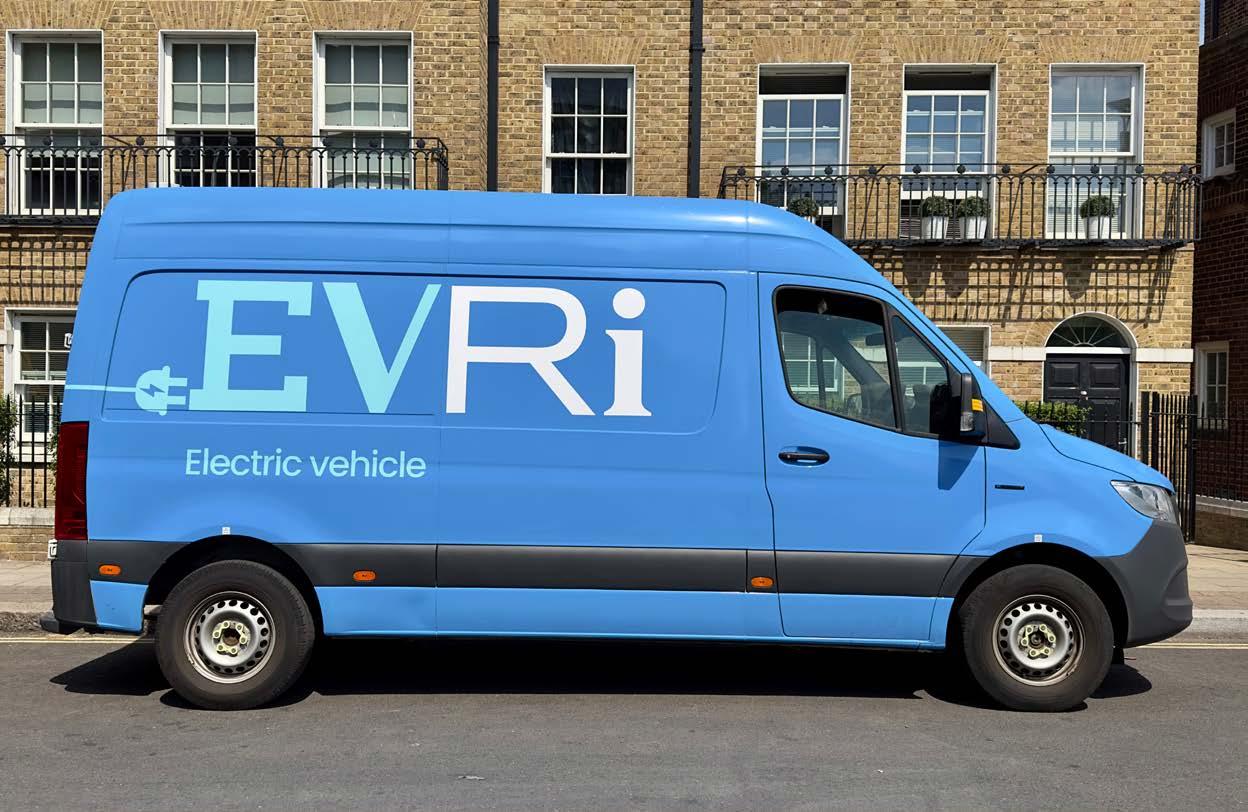
systems, storage layouts, lighting, security features and onboard power solutions can significantly affect driver efficiency and payload management. Well-designed conversions help reduce wasted time while improving vehicle safety and organisation.
Electrification means that payload sensitivity, charging equipment storage and energy management are increasingly influencing how electric vans are configured for operational use.
Signwriting and vehicle branding play a vital commercial role, too, as vehicles are one of the most visible parts of a brand's presence. Modern wrapping technologies allow fleets to refresh branding more easily while protecting residual values.
“Vehicle services are increasingly focused on maximising uptime rather than simply fixing faults”
That matters even more as fleets operate vehicles beyond traditional replacement cycles.
At the same time, vehicle complexity is increasing rapidly. Electric drivetrains, ADAS systems, connected software and larger battery-equipped vans are changing the skills required to service and repair modern vehicles safely. Many fleets are now placing greater emphasis on technician accreditation, EV capability and specialist compliance standards when selecting suppliers.
Vehicle fit-out has also become far more sophisticated. For van operators especially, racking
Meanwhile, online booking systems, and live maintenance tracking, along with integrated fleet management platforms, are helping businesses improve visibility over servicing schedules and operating costs.
The result is that vehicle services are no longer simply reactive functions.
Increasingly, they are integrated operational partners helping fleets improve uptime, reduce costs, strengthen compliance and maximise the effectiveness of every vehicle.
For all the information you need on Vehicle Services in the UK fleet sector, search BetterFleet by FleetWise on LinkedIn W linkedin.com/showcase/betterfleetfleetwise/posts/
Fleet Suppliers: To tell your story to 35,000 UK fleet managers every week, contact Lisa Turner at lisa@fleetwise.info

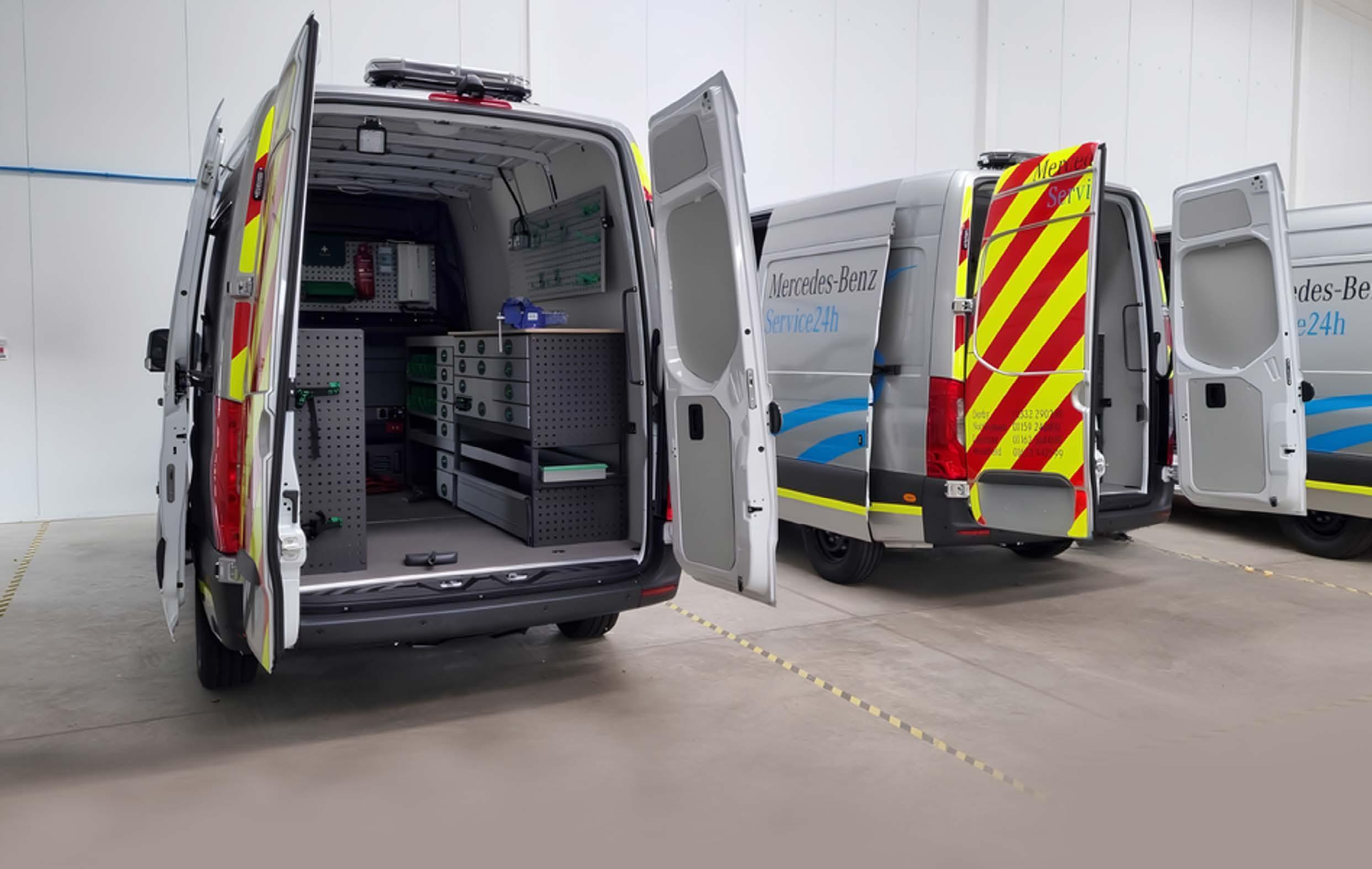
We chat with Gareth Livingstone, CEO of Stewart Signs Group, about the importance of Trust in the Vehicle Services

1Gareth Livingstone –CEO, Stewart Signs Group
00 Trusted Brands: What do you think fleets are looking for from a partner they trust with their branding and public perception?
Gareth Livingstone: “Experience is vital. We’ve got more than 60 years’ experience in the sector, which means we know not only what works, but also what doesn’t. For fleet operators, that reassurance really matters. They want to know their brand’s in safe hands and that consistency will be maintained across the entire fleet, whether a vehicle’s operating in Exeter or Edinburgh, or even across Europe.
“That consistency’s central to protecting brand reputation. Fleets need confidence that their vehicles will represent the business in the way intended, regardless of location or vehicle type.
“We view client relationships as long-term partnerships rather than transactional projects. Instead of approaching work on a job-by-job basis, we focus on a broader roadmap aligned to the customer’s wider fleet journey.
“The process starts with understanding where the fleet is today, where it needs to be in six months, a
year, or even four years down the line, which often aligns with vehicle leasing cycles. From there, the focus shifts to understanding the customer’s wider operational and sustainability goals.
“Honesty and transparency are also key principles. Sustainability, in particular, is an area where fleets can easily be drawn into ‘greenwashing’ or shortterm, tick-box exercises that appear effective on paper, but fail to deliver meaningful long-term value. Stewart Signs believes the right solution depends entirely on the individual fleet and its specific operational requirements.”
What does a genuine partnership approach in fleet look like in practice?
“Establishing a true partnership starts with understanding what the client actually needs.
“Many fleets approach us looking for a ‘sustainable solution’, but the first step is always to define what sustainability means for that business and what outcomes they’re trying to achieve. Asking the right questions is critical.
“That collaborative approach also allows us to think proactively on behalf of our customers. As a 3M Platinum Partner, we have early visibility of upcoming product developments and innovations. That means we can align future fleet requirements with new materials or technologies entering the market.
Continued over
“At Stewart Signs we also use analytics to support customers beyond the initial installation phase. Through our accident repair portal, fleets can order replacement graphics, with designs broken down into smaller sections rather than requiring an entire panel replacement for minor damage.
“That approach improves both efficiency and sustainability, by reducing waste, downtime and unnecessary replacement costs.
“We also provide regular reporting and auditing for customers. By tracking recurring damage patterns, we can identify anomalies and flag potential operational issues. For example, repeated damage to a specific section of a vehicle may indicate a need for driver training, revised unloading procedures, parking guidance or safety reminders.
“It’s not just about generating replacement work, it's helping customers reduce avoidable incidents and improve long-term performance.”
Q: What are the most important early decisions to get branding projects right first time?
“Communication and planning are fundamental to achieving the right outcome.
“We believe there’s often a trade-off between headline sustainability claims and long-term operational performance. A more sustainable material may only last two years, whereas a slightly less sustainable alternative may last four years and ultimately deliver better lifecycle outcomes.
“The key is education and transparency, helping customers understand those trade-offs and make informed decisions.
“Typically, customers are presented with multiple options, including both standard and more sustainable alternatives, allowing them to compare costs, performance and environmental impact.
“We also work closely with suppliers such as 3M to understand how manufacturing processes, recyclability and material innovation are evolving. Alongside this, we align our own processes with GRI, Global Reporting standards, to ensure environmental considerations are embedded throughout the Stewart Signs business.”
“We can align future fleet requirements with new materials or technologies entering the market”
“Drawing on decades of experience, we work closely with customers to define what success actually looks like before recommending any solution. That may involve solving practical operational issues, integrating mixed vehicle types into a cohesive fleet image, or supporting longerterm fleet transition plans.
“Rather than standardised packages, we develop bespoke proposals based on the fleet’s operational requirements, lifecycle expectations and branding objectives.
“Long-term thinking’s increasingly important. Fleets are asking about the full lifecycle of the vehicle, including how graphics will be removed, recycled or disposed of at the end of service life.
“As vehicle retention periods increase, considerations around durability, removability and long-term value have become far more significant than just upfront installation.”
Q: How do you help fleets balance sustainability, durability and cost pressures?
“There’s no universal solution for fleets. Every operation’s different, which means sustainability decisions need to be tailored to the fleet’s real-world usage and priorities.
“Ultimately, smooth deployment comes down to preparation, communication and experience”
Q: How is technology changing the way you design and deliver fleet branding projects?
“Technology plays an increasingly important role in customer experience and operational efficiency.
“Through a Knowledge Transfer Partnership with Southampton University, we’re investing in 3D visualisation, scanning and virtual reality tech.
“For customers, that means fleets can review vehicle branding concepts digitally rather than relying solely on physical prototypes. Teams in different locations can view designs remotely, make instant amendments and assess concepts from multiple angles, without needing to travel.
“Internally, technology is also improving production efficiency. We’re exploring advanced templating and measurement technologies, reducing the need for manual processes, while improving accuracy, consistency and sustainability.
“We’re also using digital optimisation tools to improve how graphics are arranged and produced, helping reduce material waste and improve operational efficiency.”
“A highly sustainable material may only last two years, whereas a slightly less sustainable alternative may last four years and ultimately deliver better lifecycle outcomes”
Q: What separates a smooth, large-scale fleet branding rollout from a disruptive one?
“For large fleet deployments, consistency and scalability are critical.
“Our experience managing national projects ensures fleets receive the same quality, colour accuracy and installation standards regardless of location. Vehicles operating across the UK must maintain a consistent brand image, regardless of the location.
“The delivery process begins with extensive preparation, including adhesion testing, colour matching and project planning. Customers are also given access to live progress tracking through digital project management systems.
“Quality control is equally important. Installation teams are trained to consistent standards, while regular communication with customers helps ensure projects remain aligned with operational requirements and timelines.
“Ultimately, smooth deployment comes down to preparation, communication and experience.”
Q: How are EVs and mixed-vehicle fleets changing branding strategy?
“The transition towards EVs, and increasingly mixedvehicle fleets, is changing how branding projects are delivered.
“We currently support projects involving large EV fleets, including work with Amazon. In this environment, installations are carried out overnight, to ensure there’s no disruption to vehicle availability or driver operations.
“EVs also introduce different installation considerations and infrastructure requirements, meaning processes need to adapt accordingly.
“For fleets with multiple vehicle types, we focus on visual consistency across different makes and models. Design elements need to translate effectively, regardless of vehicle dimensions – all while maintaining a unified brand identity.
“Long-term planning is again central to this process. Fleets may introduce new vehicle types years into a rollout programme, so branding strategies must be adaptable to evolve without prematurely ageing the wider fleet identity.”
Q: What are forward-thinking fleets doing, regarding branding and long-term strategy?
“The most progressive fleets are becoming increasingly data-led.
“Operators are analysing payloads, mileage, usage patterns and operational efficiency to make betterinformed decisions about vehicle suitability, fleet
sizing and EV transition opportunities.
“Sustainability also remains a major focus, particularly as fleets invest in electric vehicles. Increasingly, operators are looking beyond the vehicle itself and considering how branding materials, lifecycle management and end-of-life recycling contribute to wider ESG goals.
“Forward-thinking fleets are taking a much more holistic view of the entire vehicle lifecycle, including how branding materials are removed, recycled and tracked once vehicles leave service.”
Q: What are the biggest challenges when fleets acquire businesses or inherit older vehicles with mixed branding?
“Fleet acquisitions and inherited vehicles can create significant branding and operational challenges.
“Rather than treating acquired vehicles as separate entities, we focus on how they can be integrated into the wider fleet strategy over time.
“That involves considering vehicle lifecycles, replacement plans, colour variations and compatibility across existing and future fleet assets.
“As more businesses retain vehicles for longer periods, selecting the right materials and branding solutions becomes increasingly important in maintaining consistency and long-term value.”
Q: What does accreditation and trust mean within the fleet branding sector?
“We’re a 3M Platinum Partner, which is the highest accreditation level available within the programme.
“That accreditation involves regular auditing across production, printing, installation and aftercare processes, providing fleets with additional assurance around quality and operational standards.
“For customers, that accreditation acts as an independent mark of trust and consistency, reinforcing confidence that we have the expertise and processes required to deliver large-scale fleet branding projects successfully.”

The vehicle services sector in 2026 is increasingly defined by uptime, compliance and asset utilisation. As supply chain pressures ease and vehicle availability improves, fleets are placing greater emphasis on keeping vehicles on the road and operating efficiently.
Minimising Vehicle Off-Road (VOR) time remains a core priority, particularly as SMR costs continue to rise, and fleets manage a broader mix of powertrains, including electric vehicles.
At the same time, branding and vehicle presentation are being treated as strategic access opportunities, supporting both compliance and corporate visibility.
“As supply chain pressures ease and vehicle availability improves, fleets are placing greater emphasis on keeping vehicles on the road”
Stewart Signs continues to hold a strong position in fleet livery and branding, and is recognised as a five-year 100 Trusted Brands performer.
The business has expanded its capabilities in recent years, including broader project delivery across vehicle graphics and specialist installations.
Its work spans large-scale, multi-asset branding programmes, supporting fleets with consistent visual identity across complex operations.
Accreditation as a 3M Select Platinum Partner further underlines its technical capability in delivering durable and compliant graphics solutions.
The Car Key People, a Highly Recommended Trusted Brand, addresses a more operational, but equally critical, challenge: vehicle access. Lost or damaged keys remain a common cause of unplanned downtime, particularly in highutilisation fleets. By providing mobile locksmith services, including on-site key replacement and programming, the company supports rapid resolution without the delays often associated with main dealer routes. Its national coverage and focus on fleet customers make it a relevant partner for operators where continuity of service is essential.
Across the wider category, vehicle conversion and equipment providers play a central role in enabling fleet productivity. Bri-Stor Systems and Bott UK both specialise in racking and storage systems designed to optimise space, safety and workflow within light commercial vehicles.
As fleets transition to electric vans, the focus on lightweight, modular systems has become more pronounced, helping to preserve payload, while maintaining operational efficiency.
SMR provision remains another key pillar of the sector. National providers such as Halfords and Kwik Fit Fleet continue to support fleets through a combination of fixed-site networks and mobile servicing. These models are designed to reduce downtime by bringing maintenance closer to the vehicle, an approach that is increasingly important for high-mileage and time-sensitive operations.
Established in 2018, The Car Key People is a nationwide specialist in vehicle key, lock and immobiliser solutions, supporting leading leasing companies, rental providers, fleet operators and insurers across the UK. Trusted by organisations including Enterprise, Europcar, AVIS, Tesco, Novuna, Lex Autolease and Northgate, the company delivers rapid onsite key replacement and lock services designed to minimise vehicle downtime. As an approved Fleet Assist supplier with 1link integration, The Car Key People provides seamless, SLA-driven service delivery, national coverage and specialist expertise to keep fleets mobile and operational. www.carkeypeople.co.uk
“The Car Key People provides seamless, SLA-driven service delivery, national coverage and specialist expertise to keep fleets mobile”
Fleet branding and signage also remain integral to the category. Providers such as MediaFleet complement the market with large-scale livery rollout and project management, supporting national fleets with consistent branding across distributed vehicle bases.
As fleet requirements evolve, the Vehicle Services sector is becoming more closely aligned with operational performance. Uptime, compliance and efficiency remain central, but there is also increasing recognition of the role vehicle presentation plays in brand visibility and customer engagement. Providers that are able to deliver consistent, nationwide support across these areas are well-positioned to meet the increasing needs of modern fleet operations.











The Better Fleet Cost Clinics are a new series of expert-led sessions designed to help fleets understand where costs arise, why budgets drift, and what actions can deliver effective and measurable savings.
Launching in June 2026, each clinic focuses on multiple areas of fleet spend, combining practical insight, peer discussion and real-world solutions.
JOIN THE WAITING LIST

£4,892 £2,184
Practical cost control. Real fleet challenges. Measurable outcomes. Places are limited
£22,347 £63,247
£41,928
£2,184 £2,184 £17,562 £8,391 £8,391 £8,391 £1,276 £27,418 £27,418 £3,786 £12,743 £41,928
£63,247 £63,247
£6,143 First dates released June 2026.