DUBLIN’S ECONOMIC MOMENTUM STRONG BUT FACING UNCERTAINTY FOLLOWING BREXIT
PAGE 12
DUBLIN’S POST BREXIT FUTURE
by Brendan Dowling, Chairman, DKM Economic Consultants
PAGE 14 TCD-UCD LAUNCH VENTURE CAPITAL FUND
by Dr.
Diarmuid
O’Brien (TCD) & Brendan Cremen (UCD).
HIGHLIGHTS
Dublin unemployment rates fell sharply in Q1 2016 (7%), the lowest level since Q3 2008.
Residential rents in Dublin reached record heights in Q1 2016, with average rents for both houses and apartments increasing, albeit at slowing rates.
Residential property prices returned to growth in Dublin between March and May 2016, following declines around the turn of the year.
Passenger trips on Dublin’s public transport system in Q1 2016 climbed to over 50 million for the first time in the series (commenced Q1 2010).
Dublin’s population recorded robust growth of 5.7% between 2011 and 2016 to stand at 1.35 million in April‘s Census.
The Dublin MARKIT PMI data signalled a further increase in business output in Q2 2016, but the rate of expansion was the weakest since Q2 2013.
KBC/ESRI Consumer Sentiment in Dublin fell in Q2 2016, reflecting consumers’ greater uncertainty about the economic outlook and job prospects.
welcome to the july 2016 issue of the dublin economic monitor
The Dublin Economic Monitor is a joint initiative on behalf of the four Dublin Local Authorities, co-ordinated by the City Council. The Dublin Region (4 Dublin local authorities combined) plays an increasingly important role in the economy of Ireland and it is important that its performance is properly tracked. The Monitor is designed to be of particular interest to those living and doing business in Dublin or considering locating here. It is produced by DKM Economic Consultants, with KBC/ESRI delivering the Dublin consumer sentiment data and MARKIT delivering the Dublin Purchasing Managers’ Index (PMI).
In this edition we have a special article from DKM Chairman Brendan Dowling covering Brexit and possible implications for the Dublin Economy.
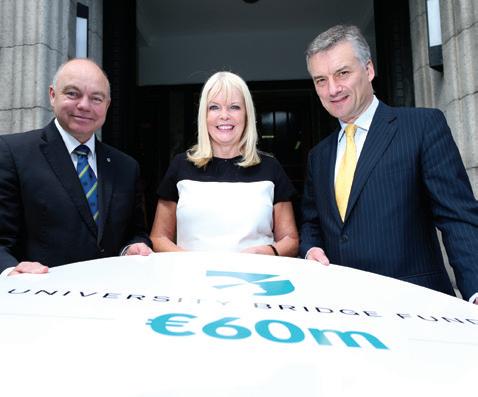
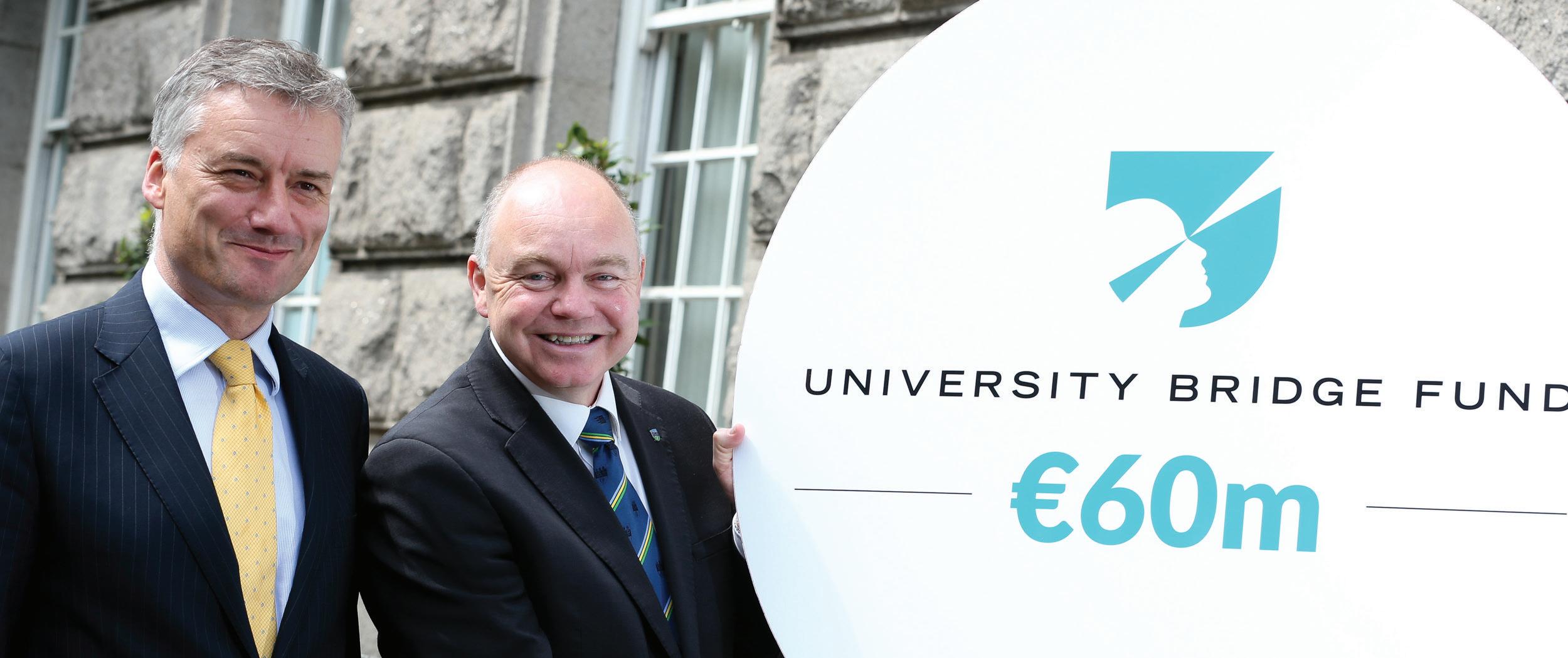
Dr Diarmuid O’Brien, Trinity College Dublin and Brendan Cremen, UCD highlight the launch of a joint €60 million Venture Capital Fund.
You can sign up to our quarterly mailing list and access the Monitor online at www.dublineconomy.ie
We hope you find the Monitor useful and welcome any feedback to info@leo.dublincity.ie. The next release will be published online on 27th October 2016. Interactive charts from the Monitor are available on the Dublin dashboard www.dublindashboard.ie
expressed are those of the relevant author, and do not necessarily reflect the views of the Dublin Local Authorities. The Dublin Local Authorities disclaim all liability in connection with any action that may be taken in reliance of this document, and for any error, deficiency, flaw or omission contained in it.
Dublin City Council South Dublin County Council Fingal County Council Dún Laoghaire Rathdown County Council
NATIONAL ECONOMY GLOBAL ECONOMY
Global growth forecasts continue to be revised downward in light of increasing uncertainty and downside risks. The IMF revised its global outlook marginally downwards in its July update of the World Economic Outlook. Although Brexit is still unfolding the IMF state that it has already created a sizeable increase in uncertainty, including on the political front. Brexit-related revisions have been concentrated in advanced European economies, with a relatively muted impact elsewhere, including the US and China (see table).
In the immediate aftermath of the Brexit vote on June 24th both equity and foreign exchange markets experienced significant volatility and uncertainty. In 2015, the Euro depreciated against Sterling, largely driven by the European Central Bank’s Quantitative Easing programme. More recently however, the Euro has appreciated against the Pound (see chart) caused mainly by capital outflows surrounding Brexit uncertainty. sterling: euro exchange rate
The recent National Income and Expenditure figures released by the CSO indicate that the Irish economy grew by 26.3% in 2015 in GDP terms. GNP, which strips out the profits of multinational companies based in Ireland and is typically used to represent growth at a national level, also recorded strong growth of 18.7% in 2015.
Much of this annual growth was driven by once-off factors including a substantial increase in the stock of capital assets of companies, company relocations, contract manufacturing and inversions by multinationals, and firms involved in the aircraft leasing sector.
To date the UK has yet to trigger ‘Article 50’ of the Lisbon Treaty, formally notifying the EU of its intention to withdraw from the EU. Most commentators, including the IMF, accept that until this process commences it is difficult to quantify or anticipate the extent to which the global growth will be affected.
There are a number of other downside risks facing the global economy. Weakening growth and financial vulnerabilities in China as well as a continued slowdown in Emerging Market Economies over the past three years, continue to be a significant source of risk.
While these growth figures are difficult to interpret there is little doubt that the Irish economy is continuing on a positive trajectory. Other indicators such as tax revenue, employment and consumption continue to indicate a positive trend in Irish growth. Personal consumption, for example, was 4.5% higher in 2015, suggesting that the real expansion in the economy remains strong.
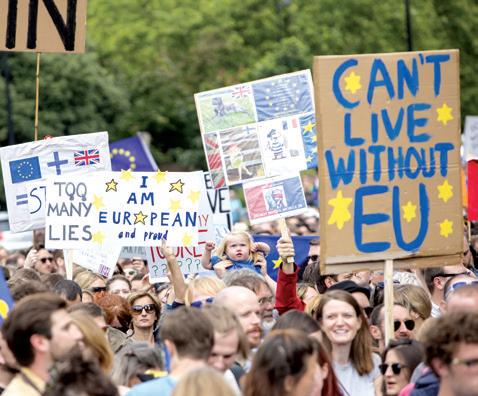
The UK’s decision to leave the EU has created considerable uncertainty regarding how this may impact on the Irish economy. It is widely accepted that the decision will lead to predominantly negative consequences for many sectors of the Irish economy in both the short- and medium-term.
DATA CONFIRMS DUBLIN’S CONTINUED GROWTH
census results and employment data underline capital's momentum
Economic statistics for Dublin continue to point to strong growth in the Capital. Notably, the unemployment rate experienced a further significant drop in Q1 2016 to 7.0%, its lowest point since 2008. If anything this understates the strength of the labour market, as the numbers commuting into the city are also growing. Likewise, the first results from the April 2016 Census point to the focus of population growth in Dublin. While the national population grew by 3.7% (+170,000) between 2011 and 2016, the population of Dublin over the same period grew by 5.7% (+72,000), and the Mid-East region, which incorporates most of the Capital’s commuter belt, grew by 5.3% (+28,000). These growth rates are more than double the 2.5% (+69,000) growth rate recorded in the Rest of Ireland outside Dublin and the Mid East.
at 9%, despite the fact that the housing stock in the former fell marginally between 2011 and 2016. The Government has recently announced a set of initiatives to tackle the national housing problem, but it remains to be seen what effect it will have on the Dublin market.
More broadly, Dublin, along with the rest of the developed world, is coming to terms with the potential fallout of Brexit. This holds both challenges and opportunities, albeit they are shrouded in uncertainty until the exact form Brexit takes begins to crystallise (see article on page 12). Perhaps reflecting some of these concerns, consumer sentiment weakened in the quarter. Austin Hughes, chief economist at KBC Bank Ireland, comments:
“The pull-back in Dublin consumer sentiment reflects notably greater uncertainty about the economic outlook and job prospects with consumers in the Capital more cautious in their spending plans. While the present level of the sentiment index suggests Dublin consumers are generally positive about their immediate economic circumstances, the survey suggests they are also increasingly conscious of a range of risks to a recovery that is still tentative for many households.”
The Dublin Markit PMI business confidence indicators show continued growth, albeit at a somewhat weakening pace compared to Quarter 1. Andrew Harker, senior economist at Markit, comments:
Dublin is now home to 1.35 million people, or 28.3% of the national population of 4.76 million.
While the construction sector continues to expand, and significant new office space is coming on stream in the medium term to meet demand, supplying adequate housing in the Capital remains a challenge. The latest statistics confirm that (mortgagefinanced) house prices have started rising again, as rental increases – already at record levels – show no sign of abating.
This is reinforced by another finding from the Census Preliminary Results, that there are over 35,000 vacant residential properties in Dublin (excluding holiday homes). In all, some 6.9% of the total stock in the four Dublin Local Authority areas is recorded as vacant. While down from 8.3% in 2011, this still represents a significant proportion in a housing market under so much pressure. Interestingly, the vacancy rate in the City Council area is significantly higher than in the other Local Authority areas,
“As we reach the mid-point of 2016, the Dublin private sector remains comfortably in growth territory, according to the latest PMI data. That said, the rate of expansion continued to ease in Q2 and was the slowest for three years. Strong increases in activity were again recorded in the services and construction sectors, with manufacturing underperforming somewhat. The latest data suggest that the performance of the Capital’s economy was broadly in line with the rest of the country. The future path will in part depend on how the UK’s decision to leave the European Union affects Irish companies, with market uncertainty having the potential to disrupt operations and limit growth.”
It is worth noting that the KBC/ESRI consumer sentiment survey and most of the Markit PMI business confidence survey were undertaken before the result of the Brexit vote was known. More detail on these indices is contained on pages 10 and 11 of this edition of the Monitor.
Dublin Mid-East Rest of Ireland State
source: cso census 2016
DUBLIN ECONOMIC INDICATORS
unemployment declines sharply in first quarter of 2016
source:
Dublin’s seasonally adjusted unemployment rate declined at a sharp pace of 0.6 percentage points (pp) QoQ to reach 7% in Q1 2016, its lowest level since Q3 2008. This represented a 1.7pp decline YoY and was the sixth consecutive quarter in which unemployment fell. The unemployment rate at the national level fell by 0.7pp QoQ but, at 8.3%, remained higher than the Capital’s equivalent. Almost 616,000 Dublin residents are now employed, and this is the highest level since the third quarter of 2008.
positive employment trend maintained in first quarter
Employment across the Dublin economy increased by almost 23,000 jobs YoY in Q1 2016. This expansion of just under 4% was primarily driven by the private sector where employment rose by over 17,000 jobs or 4.8%. Construction and industry, which engage small proportions of the Dublin workforce relative to private sector services, recorded employment expansions of 10.1% and 7.4% respectively. Employment in the public sector remained relatively stable in the quarter at over 151,000 jobs.
& national unemployment rate % (sa)
dublin
source: cso qnhs. dublin seasonally adjusted by dkm.
services employment records broad based expansion
Dublin’s services sector recorded YoY employment growth of over 3% in Q1 2016, with a number of specific sectors driving the expansion. Accommodation & Food accounted for the largest proportional employment increase of 13.8%, and this was followed by ICT and Transportation & Storage which recorded growth of 9.1% and 7.9% respectively. Employment growth also exceeded 6.5% YoY in Professional/Scientific/Technical activities, and Education. A notable reduction was recorded in Human Health & Social Work where employment levels fell by 4% YoY.
residential property prices in dublin return to growth
source: cso.
Following MoM declines around the turn of the year, the Residential Property Price Index for Dublin rose in each month between March and May 2016 as upward price momentum returned to the market. The Index for the Capital was 4.8% higher YoY in May. Prices outside of Dublin declined in both March and April, but remained stable in May. At 82.8 on the index, prices outside of the Capital were 8.5% higher YoY. residential property price index (2005 = 100)
residential rents reach new peaks
source: rtb.
The average rent for both houses and apartments in Dublin increased in Q1 2016 to stand at the highest levels recorded since the series began in Q3 2007. Average rents for houses rose by 8.3% YoY in the quarter to reach €1,454, double the average house rent of €731 which applied outside the Capital. Average rents for apartments in Dublin rose by a similar YoY rate of 8.1% in Q1 2016 to stand at €1,306. This was the 12th consecutive quarter in which rents for apartments increased.
dublin office rents stable in q2 2016
source: CBRE
Office rents in Dublin city and its suburbs remained stable QoQ in Q2 2016. The City Centre rent index stayed at 104.6, unchanged from the previous quarter but up by 15% YoY. The index for the South Suburbs was stable on both a QoQ and YoY basis at 110. This, however, means that rents in the South Suburbs were at peak levels for a fifth consecutive quarter, and is reflective of a sustained upward pressure on rents in the city centre and on the southside of Dublin.
office vacancies rise marginally in quarter
source: cbre.
Vacancy rates for Dublin office space increased QoQ in Q2 2016. In Dublin 2/4, vacancy rates rose by 0.3 percentage points (pp) QoQ but stood 1pp below the same quarter in 2015 at 6.1%. This was the first QoQ increase in vacancy rates in the area in 14 quarters. In the Dublin Suburbs, vacancy rates increased marginally (+0.1pp) QoQ to stand at 11.3% in Q2 2016. This was still 2.3pp below the same quarter in 2015.
public transport trips exceed 50 million in q1 2016
Trips on Dublin’s public transport system climbed to a seasonally adjusted total of over 50 million in the first quarter of 2016, despite the LUAS strike action which affected 5 days in the period. This was an increase of 5.5 million trips or 12.1% when compared to Q1 2015. Q1 2016 was the first quarter in the series in which over 50 million trips occurred, with the strongest growth being seen on Dublin Bus and Irish Rail.
office space vacancy rates %
dublin
City Centre
Suburbs Dublin 2/4 Dublin Suburbs
source: cbre.
dublin office rents index (2006 = 100)
DUBLIN ECONOMIC INDICATORS
dublin airport maintains momentum in q1 2016
total arrivals '000s (SA)
mar '16
1,127.1 year on year change
source: cso,
Passenger arrivals at Dublin Airport in Q1 2016 maintained the strong growth trend which had developed through 2015. YoY growth rates exceeded 13% in each of the first three months of 2016, with over 1.13 million arrivals in February alone. This was the highest monthly level of arrivals since the series began in January 2006 (seasonally adjusted). Arrivals in March were marginally lower MoM, but continued the robust growth trend with a YoY expansion of 13.6% or 135,000 passengers. dublin airport arrivals '000s (sa)
housing completions in dublin remain low
MAY '16
New supply to the Dublin housing market remained weak in May 2016 with fewer than 440 completions in the month. This did represent a YoY expansion of 190 houses or 76.9%, but followed two weaker months in which just over 300 houses were completed per month. Growth was driven by the Fingal local authority area where completions almost tripled MoM to over 230 houses in May. Output in the other local authority areas remained relatively stable in the month. Despite sporadic growth over the past two years, supply to the Dublin market remains very low relative to demand.
dublin population reaches record 1.35 million
april '16
source: cso census.
The population of Dublin rose by 5.7% between 2011 and 2016 to stand at 1.35 million in April 2016, the highest level ever recorded in a Census. This equated to an average annual increase of 1.1%. Dublin City Council area (DCC) had the largest population of the four Local Authority areas at over 550,000 people. Fingal had the second largest population at over 296,000 people, and recorded the largest proportional increase of 8.1% since 2011. South Dublin and Dún Laoghaire /Rathdown (DLR) each had population growth rates in excess of 5% over the period.
source: cso census.
source:
dublin housing completions (sa)
source:
BENCHMARKS UNDERLINE
DUBLIN’S IMPROVED PERFORMANCE
Internationally published benchmarks are a useful means of measuring a city’s performance relative to its peers, and recent indicators for Dublin confirm the city’s strong showing across a range of dimensions (see table below).
The benchmarks listed focus on a number of areas – attractiveness for FDI, the real estate market, quality and cost of living, business environment, university quality, start-up environment and tourism.
Dublin ranking as a destination for conferences and conventions has risen to 18th in the world in 2015, up six places on 2014. This improvement, as measured by the International Congress and Convention Association, was driven by the success of Dublin in attracting close to 100 events over the course of the year. Miriam Kennedy, Head of Business Tourism at Fáilte Ireland commented:
“These solid results reflect the hard work on the ground from everybody involved in Ireland’s conference sector. We are certainly punching above our weight with Dublin and Ireland ranking ahead of larger and more established destinations.”
In education, UCD was the only Irish institution listed in the Financial Times Top 50 Global Master’s in Finance Rankings for 2016, ranking in 34th position worldwide. Its Smurfit school course was assessed on a range of criteria including alumni salaries, career prospects and mobility.
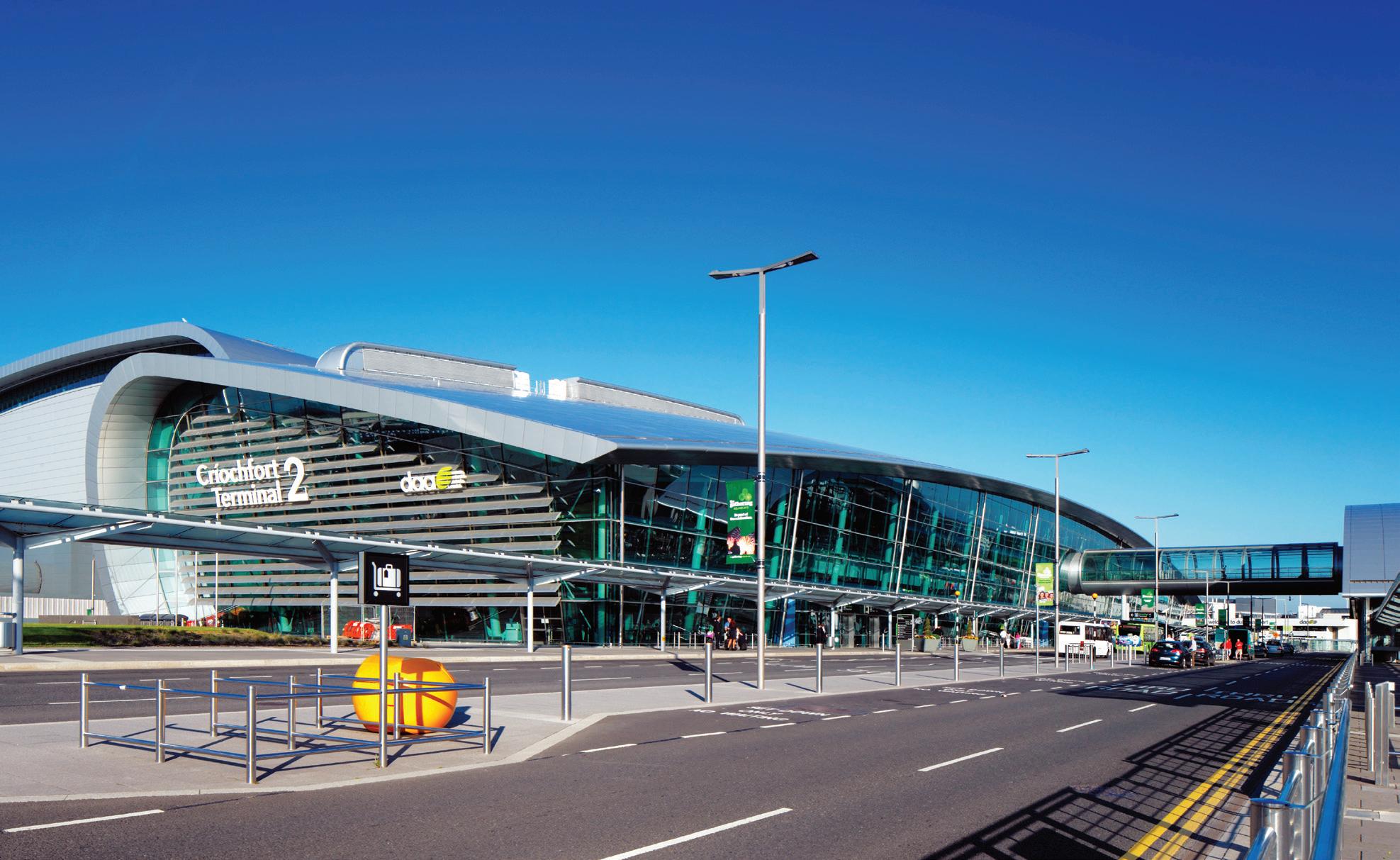
Dublin Airport continued to perform strongly against its international counterparts, with arrivals in April 2016 increasing by 10.7% YoY.
This, according to an ACI Air Traffic Report, was the highest growth rate of all European airports which cater for more than 25 million passengers per annum. Ireland as
a whole also continues to perform strongly in international benchmarks, and the Dublin region is a key driver of this. In the area of competitiveness, the country ranked No. 7 in the world and No.1 in the Eurozone in 2016 according to the IMD business school’s Competitiveness Yearbook. This ranking partially reflected Ireland’s robust economic growth rates and also measured other factors including government efficiency, business efficiency and infrastructure.
On the negative side, Dublin has recently been ranked as the 47th most expensive city in the world for expatriates to work and live in. This was an increase of two places on 2015, and was the third consecutive year in which Dublin’s ranking increased. Mercer, which compiles the Cost of Living Survey, highlighted Dublin’s expensive rental accommodation as a key factor in the city’s ranking.
dublin consumer sentiment weakens in q2
The Consumer Sentiment Index for Dublin weakened in Q2 2016 to 153.2 from 159.8 in the first quarter (Note the survey was completed before the result of the Brexit vote was known). The weakening in Dublin sentiment was principally driven by a more negative assessment of the current buying climate for major household durables, prospects for the jobs market and the general economic outlook. Dublin consumers were more positive in their assessment of their current household finances, but marginally negative in their outlook for the next 12 months.
perceptions of current conditions also weakened
Notwithstanding the decline in the second quarter sentiment reading, most elements of the survey report more positive than negative responses from Dublin consumers in relation to the economic and financial environment affecting them. Close to 54% of Dublin consumers expect the labour market to improve over the next 12 months compared to just over 18% that envisage a deterioration. Over 37% of Dublin consumers expect their household financial situation to improve over the next 12 months.
consumer expectations
in dublin decline
The weakening of consumer expectations in the Capital largely reflected increased nervousness about job prospects and the broader economic outlook. This weakening also presumably reflected heightened concerns about a range of downside risks to the economic environment at home and abroad. In contrast, consumers outside Dublin were more concerned about their household finances.
overall pmi dips but still signals strong growth
The Dublin PMI signalled a sharp growth in output during Q2 2016, posting 57.6. Although expanding, this was down from 59.0 in Q1 and was the weakest increase since Q2 2013. The rate of growth in output in the Rest of Ireland also eased during Q2, but remained broadly in line with Dublin.
Dublin construction firms registered a substantial rise in activity. A sharp increase in services activity was also recorded, while manufacturing continued to trail the other two sectors despite seeing a quickening pace of expansion.
slowest expansion of new orders since q2 2013
In line with the trend in output, new orders increased at a weaker pace in Q2 2016. New business still rose considerably over the quarter. The rise in new orders at companies based in Dublin was marginally quicker than in the Rest of Ireland.
jobs growth eases in second quarter
Dublin companies continued to increase their staffing levels during Q2 2016, and at a solid pace. Despite this increase, the rate of job creation eased to the slowest since Q3 2013. Dublin posted a weaker rise in employment than the Rest of Ireland for the first time since late-2011.
dublin's post brexit future
BY BRENDAN DOWLING CHAIRMAN, DKM ECONOMIC CONSULTANTS
Negative Side-Effects Expected to Weigh on the Dublin Economy
Assessing the impact of Brexit on the Irish economy in general and the Dublin economy in particular is fraught with difficulty. The likelihood is that the future relationship between the UK and the European Union will be unique and not necessarily derived from existing templates such as that of Norway. So any analysis of the impact of Brexit on Ireland or Dublin might best focus on the larger macro issues rather than attempt to explore the detail of the result of a process which has yet to commence.
the exchange rate
To a certain extent one of the main consequences of Brexit, at least in the short run, has already occurred. Sterling has fallen sharply against the Euro relative to the pre-Brexit level. However, it is broadly within the range of the level which was sustained during the 2009 to 2014 period.
There is little doubt that Ireland has benefitted from a strong sterling and is negatively affected by a weak sterling. In the period 1999 to 2003, when sterling was particularly strong with an average value of 64.2 pence to the Euro, GDP growth in the Irish economy greatly exceeded growth in the UK economy. Obviously there were many other factors at work besides the exchange rate, chief of which was the stance of fiscal policy. The same caveat applies to the period 2009 to 2013 when sterling was relatively weak with an average rate of 85.6 pence to the Euro. During this period average Irish GDP growth was over 1 percentage point below the UK growth rate.
ireland
Exchange rates matter, especially in the short term. Over the longer term the economy with the weaker currency experiences higher inflation which offsets the competitiveness gain. Given that Irish wages are
relatively inflexible in the short run there will be an impact on the profits of exporters, especially exporters of services, including hotels and restaurants.
Dublin is likely to be particularly affected as its tourist product is concentrated on relatively short stay visitors, many of whom originate in Britain and Northern Ireland. The strong upward trend in hotel room prices in Dublin is likely to be halted and the emerging shortage of room space may be reversed.
Dublin is a significant exporter of non-financial services to the UK, especially to Northern Ireland. Some of these services are provided by branch operations where the costs are mainly in sterling. But head office costs will affect margins. Similarly, many small businesses located in the Dublin region treat the UK as a domestic market especially in sales to the North West of England and to Northern Ireland. In the short run margins and profits will be affected. This may feed back into earnings levels of the workforce (e.g. less overtime and more part-time working) or in employment levels.
Financial Services
Perhaps most discussion has centered on the prospect of Brexit leading to a substantial growth of the financial services sector in Ireland, especially Dublin. It is important to be realistic in any expectations of a boom in financial sector employment in Dublin.
First, there are many competing cities for high wage employment in Europe. Dublin’s main attraction appears to be language, corporate tax rate and the legal system. However, personal tax rates in Ireland are very high by European standards with anyone earning over €70,000 per annum considered an ultra-high earner and taxed accordingly. Anyone in a senior position in London would expect to earn multiples of this amount annually and will be reluctant to move to such a high tax regime. France is already rolling out the red carpet by extending its inpatriate regime, where only 50% of earnings are taxed, to 8 years.
Second, the domestic UK market in financial services is relatively large, as is the market for financial services to other parts of the globe, including Africa and Asia. The growth of London has not just been due to EU membership. The City has thrived even though the UK remained
outside the Euro. The shift of financial services out of London may be much smaller than some commentators anticipate even if EU passporting is restricted or abolished.
It is likely that, at the margin, there will be an expansion of EU-centred operations at the expense of London, and Dublin stands to benefit from this, albeit in competition with other Capitals in Europe.
Free Movement of Labour
The main drive behind the vote for Brexit was the desire to regain control of immigration. Although over half of the net migration to the UK was from non-EU countries (which the UK is free to control as an EU member) it appeared that the UK had no control of its borders. It is difficult to imagine that Brexit will not involve some restriction on the free movement of labour from the EU to the UK and vice versa.
It is also likely that the common travel area between Ireland and the UK (including Northern Ireland) will be maintained and it is difficult to envisage restrictions on the employment freedoms of Irish citizens in the UK and of UK citizens in Ireland.
Restrictions on other EU citizens being employed in the UK could lead to increased migration from Eastern Europe to Ireland, especially to Dublin, which could put pressure on an already strained housing market. If it affects the employment prospects of native Dubliners it may lead to a growth in anti-immigrant sentiment which, by and large, Ireland has avoided to date.
overview
The main consequences of the Brexit vote has been to create increased uncertainty over the growth of the UK economy and the nature of its relationship with both the EU and the rest of the world. This uncertainty can only be a negative for investment and growth in the UK. Inevitably Brexit has increased uncertainty for the Irish and Dublin economies and this is likely to be reflected in lower investment and growth.
The potentially positive impacts of Brexit on the Irish economy are unlikely, over the next few years, to offset the negative impact of increased uncertainty.
launch of €60 million venture capital fund
DR DIARMUID O’BRIEN DIRECTOR OF RESEARCH AND INNOVATION AT TRINITY COLLEGE DUBLIN
BRENDAN CREMEN DIRECTOR OF
ENTERPRISE
AND COMMERCIALISATION AT UNIVERSITY COLLEGE DUBLIN.
Last June saw a steep change in Ireland’s efforts to translate academic research into high-quality jobs. We are now joining a select group of countries that has a dedicated venture capital fund to translate innovative academic research into companies that compete in global markets.
The new €60 million partnership announced between Trinity College Dublin (Trinity) and University College Dublin (UCD) will be a game changer in creating successful new Irish companies that can grow globally.
This partnership involves the creation of the University Bridge Fund, the country’s first ever investment fund to invest exclusively in the research generated by Irish higher education institutions. Investments will be made very early in the business cycle with a focus on translating world class research created in the lab to drive the creation and scaling of Irish companies with global potential.
On the global stage, it has long been recognised that world class science and research has significant economic impacts. The creation of venture funds which are focussed on university research has increased worldwide in recent years. Leading universities in the UK, such as Oxford and Imperial College London, Belgium’s largest university KU Leuven, and the California State System have used such funds to launch innumerable successful global spin-off companies.
The University Bridge Fund fills existing market gaps in Ireland. It demonstrates how UCD and Trinity have become proactive leaders and drivers of the Irish entrepreneurship eco-system and represents a growing maturity between private funding and public capability.
The Fund will be managed by Atlantic Bridge, which is headquartered in Dublin but has offices in Silicon Valley, London, Beijing and Hong Kong. This international platform and network will accelerate companies’ commercialisation of their groundbreaking research.
The Fund builds on fifteen years of stable investment in university research which has resulted in Ireland being ranked in the top 20 countries globally for research output; and being ranked in the top five countries in research areas such as nanotechnology, material science, immunology, computer science and agrifood.
Its establishment, with significant international investment from the European Investment Fund, provides global validation of the quality of the research in Ireland and properly benchmarks our leading universities with peer institutions internationally.
Importantly this Fund is not built on hope but a proven track record of Irish research leading to strong commercial return.
In the last year Swrve, a campus company from Trinity, raised over €40 million in venture funding and was ranked as one of the fastest growing technology companies globally. In the same period Logentries, a UCD campus company, was acquired by Rapid7 for $68 million.
Over the last decade alone, over €200 million in venture funding has been secured by around sixty spin-outs from UCD and Trinity.
The Fund also represents a national partnership. Apart from the co-operation over the past two years between Trinity and UCD, the establishment of the Fund has also led to co-investment from our two pillar banks – Bank of Ireland and AIB Bank - and a strategic investment from Enterprise Ireland. To conclude, the University Bridge Fund brings together public, private and international institutional investors for the first time, all committed to translating the best of Ireland’s research into new innovative Irish companies with global reach and scale, generating high-quality jobs.
main photo: dr patrick prendergast provost & president trinity college dublin and professor andrew j deeks, president of university college dublin.
dublin: economic scorecard july 2016
Note: These “petrol gauge” charts present the performance of the particular indicator relative to a range of performances from most positive (green) to least positive (red). Each gauge presents the latest value compared to the peak value and the trough value over the last decade (except for public transport trips which cover the past 5 years).