Researching
‘Designers often draw on cultural heritage for inspiration, incorporating traditional motifs, materials and techniques into their designs’.
For my first piece of research, I wanted to establish the inspiration behind the haute couture pieces and find the ‘muse’. I also want to utilise this article to understand the importance of heritage that consumers look for when purchasing items at this market level for me to take forward into to my own work and company.
When Rihanna practically breaks the internet by wearing one of your show-stopping designs on the Met Gala red carpet, it’s easy to say you’ve made it. But in the case of Guo Pei, her reputation had already been cemented.
Beijing is the epicentre of Pei’s ethos, both as a designer and a Chinese woman. Her work has resurrected centuries-old embroidery and painting techniques, and her atelier Rose Studio is a breeding ground for the next generation of Chinese embroiderers.
Although she’s now a member of the Chambre Syndicale de la Haute Couture and shows on Paris’s couture calendar, her style remains rooted in heritage Chinese craft and her vision is firmly set in generational appeal.
“Changing your look every season to please a fickle customer isn’t how I work,” she told The New Yorker in 2016. “I aim to create heirlooms that a woman can pass down.”
Carrying on from researching into how designers are incorporating heritage into designs, I researched into the brand Guo Pei, a Chinese brand who has showcased designs at the Met Gala. I chose to research into this brand due to the traditionality of the brands
Researching the luxury market:
heritage from old embroidery techniques to her desire to create ‘heirlooms’ for women This highlights to me, that consumers at this price point are wanting to purchase pieces with meaning and something to pass down rather than buying into a trend, something I want to take forward into my own company. I feel like I gravitated towards this brand to research into due to the level of detail within each of her designs, even though she doesn’t create wedding dresses she holds the power to make each gown feel special for each woman individually.
How Eight Luxury Fashion Designers Are Injecting Heritage Into Craft – 3
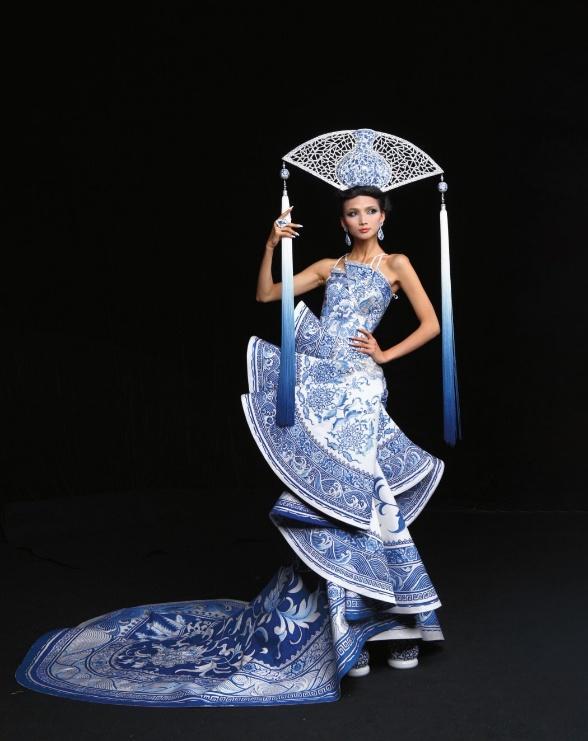
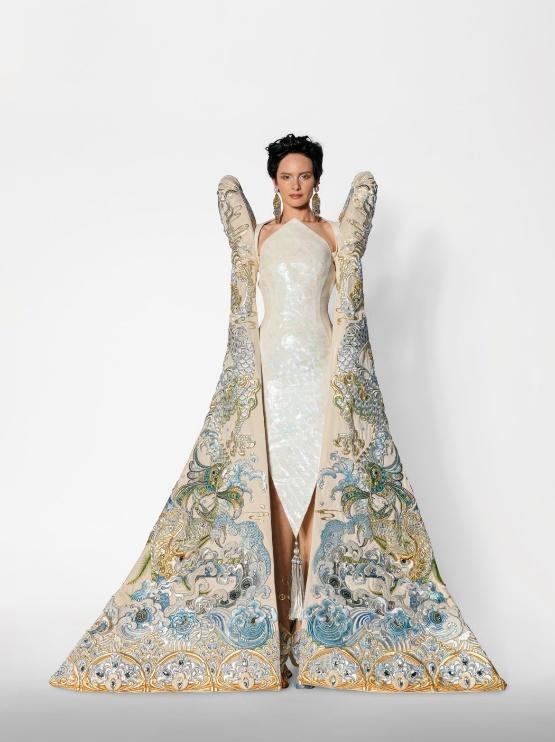
When analysing Guo Pei’s work, these 2 editorial images caught my eye. Both showcase traditional elements from Chinese designs such as sculptured lines and shoulders, headpieces and the blue colour palette designs. Both images allow the designs to be the forefront and tell the story, rather than the model having to create it for the camera, showing to the consumer a story behind each piece.
Renowned Chinese haute couture designer Guo Pei in Aotearoa | RNZ https://www.bing.com/videos/riverview/relatedvideo?q=guo+pei+discussion&&mid=30 1A3E3049A44C2DADEC301A3E3049A44C2DADEC&churl=https%3a%2f%2fwww.youtu be.com%2fchannel%2fUCta4CyuDBmf3ynMZCTaA9ZA&FORM=VRDGAR
An interview with Guo Pei:
From this video, I loved learning about the influences on Pei’s designs from Chinese Buddhism in the patterns, to her love for the colour yellow and gold as they represent the Imperial family. Chinese heritage is continued throughout all the designs whether its from the colour to the pattern designs or reminiscing on childhood memories she has transitioned into the future to capture the essence of the human spirit.
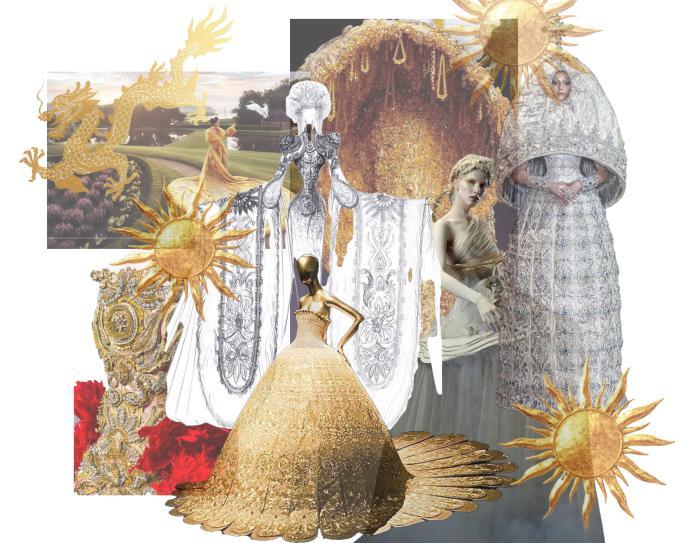
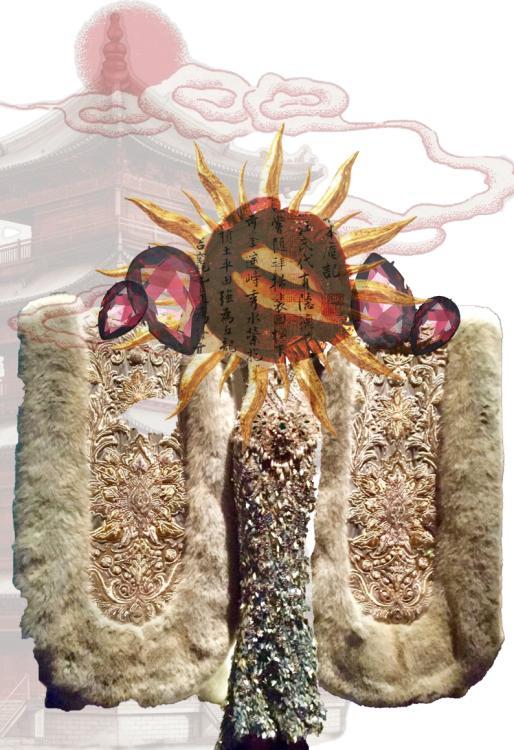
Guo Pei mood board and croquis to capture the essence of the brand and the core beliefs/ Chinese heritage. Creating these images highlighted to me the significance of the embroidery and how this is translated from religion and ancient artifacts.
Dolce & Gabbana’s identity is rooted in Sicily their enduring muse. From the beginning, Domenico Dolce and Stefano Gabbana have pulled from the island’s layered history:
Researching the luxury market:
Baroque churches, hand-painted ceramic tiles, citrus groves, black lace veils, and the folklore of the festa. This isn’t just reference; it’s a vocabulary. You’ll see:
• Colors drawn from sunlit façades and volcanic landscapes: deep blacks, coral reds, lemon yellows, ocean blues.
• Patterns that echo maiolica tiles, sacred iconography, and floral garlands from Sicilian gardens.
• Silhouettes that celebrate the body: corsetry, pencil skirts, fit-and-flare dresses, and sheer overlays that nod to the Catholic sensibility of reveal and conceal.
The brand’s hallmark is this blend of sensuality and reverence. Traditional motifs rosary-like beading, gold filigree, lace mantillas sit alongside sharp tailoring and modern cuts. The effect is both nostalgic and current, a signature that has sustained them for decades.
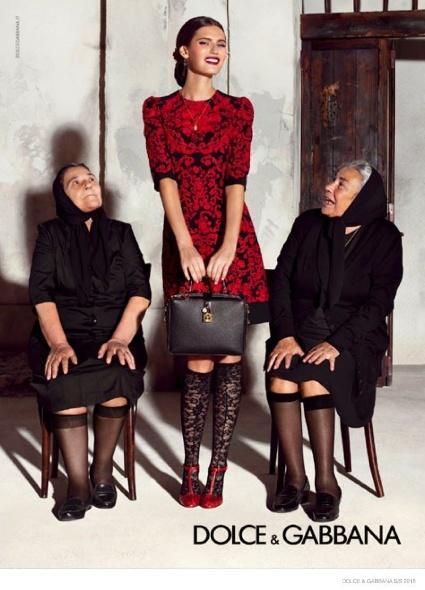
After researching into Dolce & Gabbana previously for an A level project, I was aware of the deep rooted Italian heritage within the brand. From this article, I love the concept of Sicily (their home country) being their muse, something I can take forward myself. Like Pei, Dolce & Gabbana is also heavily influenced by religion, in this case Catholicism. Catholicism designs are always pieces that I have been drawn to such as mantillas, lace etc, always capturing a romantic feel. Taking this forward, I want to analyse whether the influence of religion is linked to the heritage aspect of a brand/ company and why I’m always drawn to the religious/ romantic concept within fashion designs.
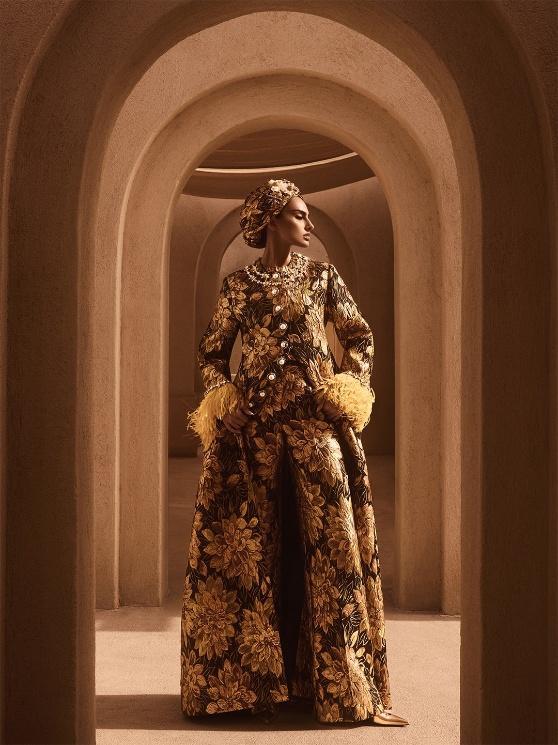
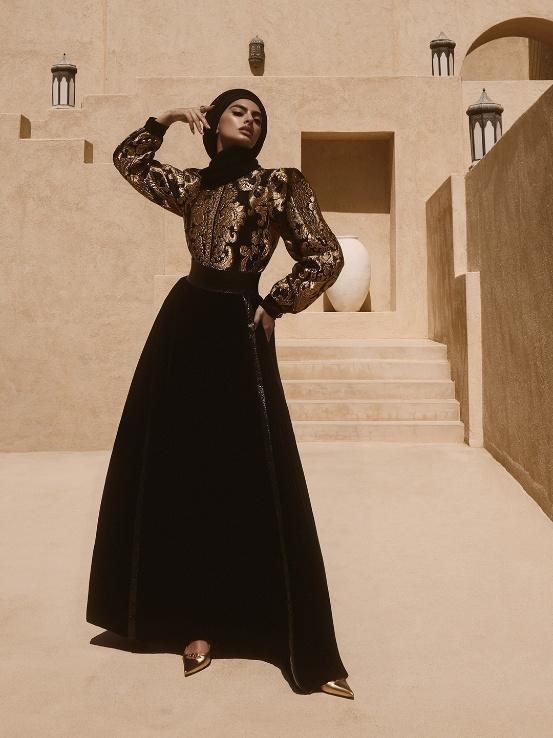
The new Dolce&Gabbana Exclusive Collection celebrates the encounter between the brand’s heritage and the richness of local traditions, giving life to unique creations that blend past and present, elegance and classic lines. Each element is born from a thoughtful dialogue between memory and innovation, where artisanal mastery meets a contemporary vision of style.
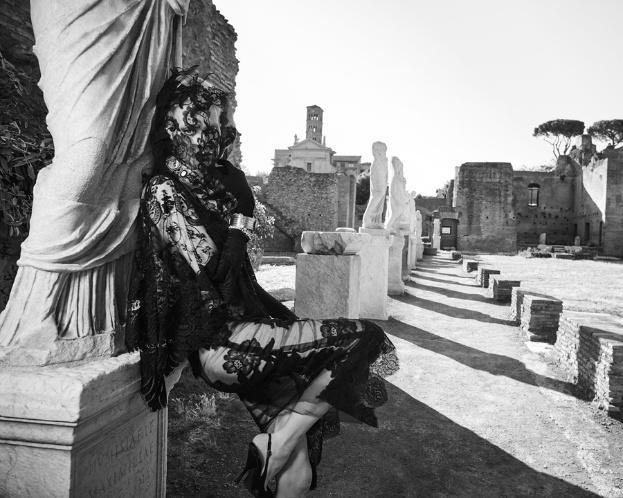
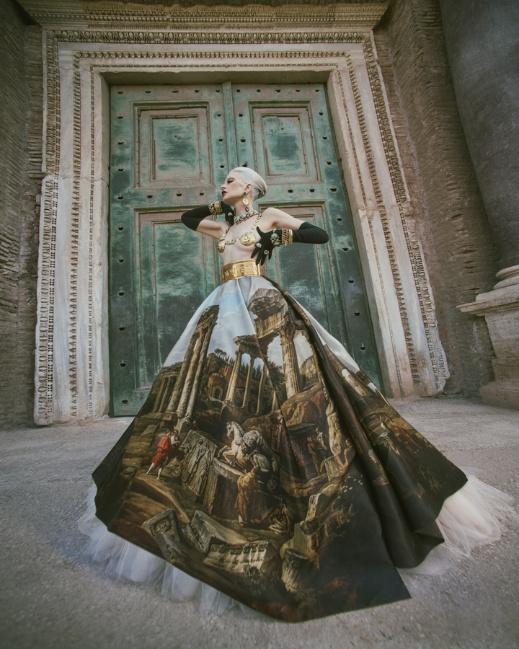
Highlighting the Exclusive Collection is the campaign shot by Nima Benati: the warm colours of the earth and the majestic architecture of the palaces provide the backdrop to the images, enhancing the looks of the collection. A visual narrative in which the elegance of the garments intertwines with the identity of the places
Through further research, these two images captured my eye. Even though they don’t scream original Dolce & Gabbana, the brand has still managed to maintain their brand identity using florals and a yellow/ gold colour palette. Something that all brands should maintain when collaborating with other brands, materials, countries, photographers etc.
Dolce&Gabbana Exclusive Collection 2026 - Timeless beauty
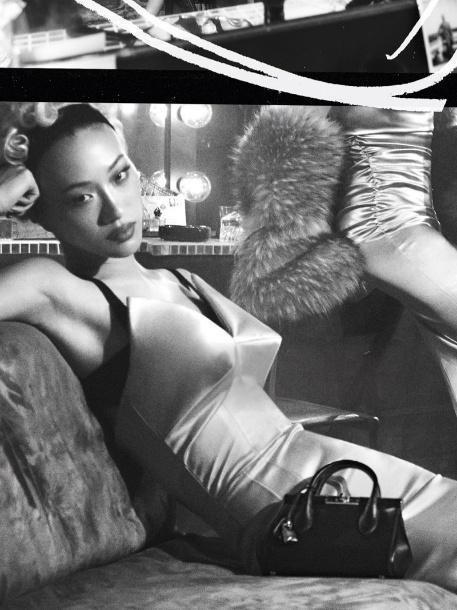
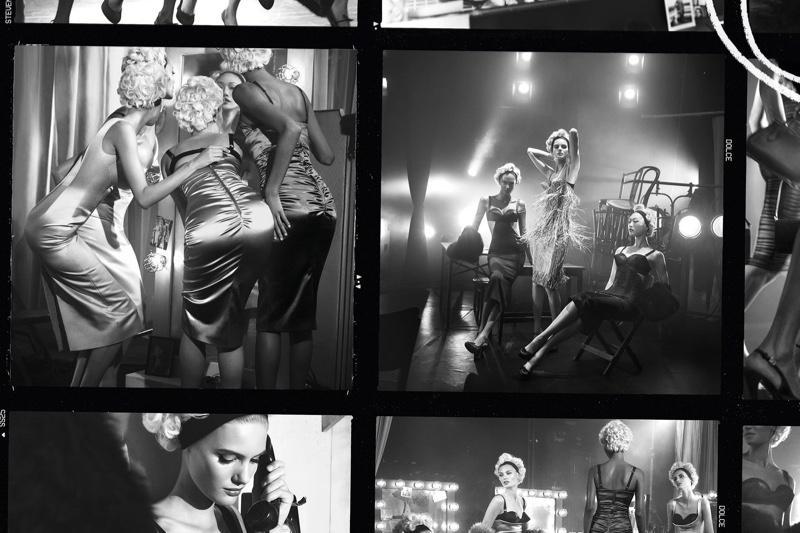
Dolce & Gabbana S/S 24 Campaign shot by Steven Meisel.
https://www.bing.com/videos/riverview/relatedvideo?q=dolce+and+gabbana+campaig ns&&mid=DDB0CA8474B307197B10DDB0CA8474B307197B10&churl=https%3a%2f% 2fwww.youtube.com%2fchannel%2fUCnsNsFAFPvFwpbaHJf2JtCQ&FORM=VRDGAR
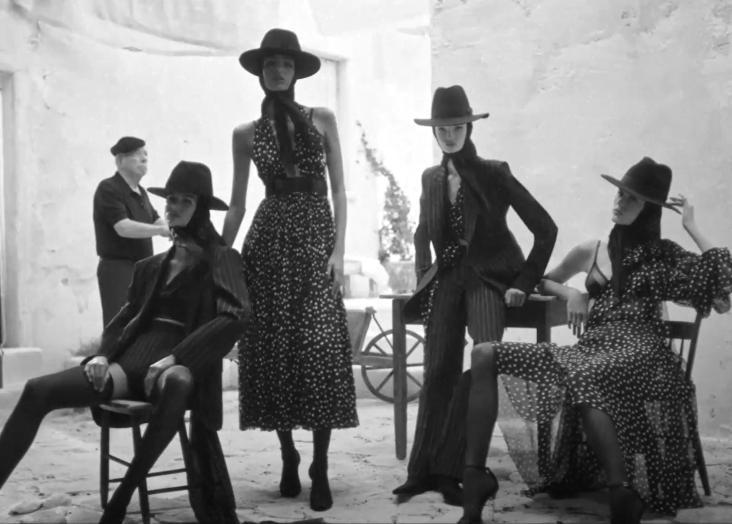
Moody and monochromatic atmosphere, heavily focused on femininity and women in Italian culture. Black lace resemblant of catholic culture and a romantic point of view. Curation of a D&G ‘uniform’, highlights the brand identity and the codes that the brand resonates with and wants to showcase to their consumer.
Dolce & Gabbana ‘Italian Family’ Campaign.
https://www.bing.com/videos/riverview/relatedvideo?q=dolce+and+gabbana+campaig ns&&mid=C323AD4DCBDEDCEF0CC7C323AD4DCBDEDCEF0CC7&churl=https%3a% 2f%2fwww.youtube.com%2fchannel%2fUCUaF-9YIY5oIf2X6lILFn_Q&FORM=VRDGAR
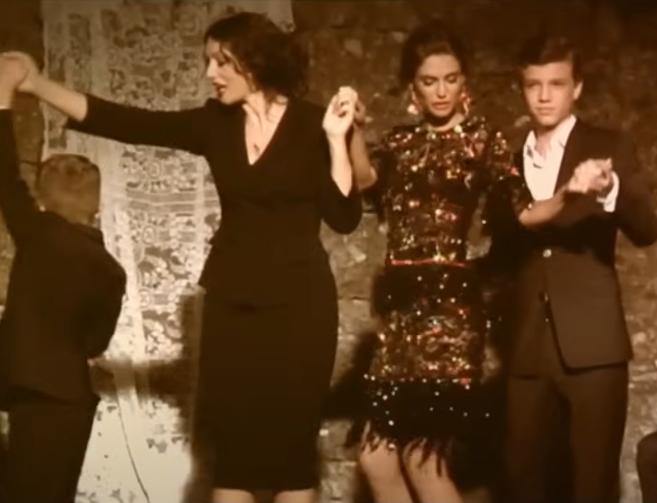

Starring Monica Belluci, appeals to the Italian consumer, being a known celebrity. Focuses on a more vintage feel with enlighten music to resemble the atmosphere. Celebrating Italian family culture to showcase the consumer what brand values they are buying into aka a piece of home and comfort.
Comparison of Campaign videos:
Similarities: Both videos capture the essence of D&G as a brand, whilst still showcasing a timeless elegance. Highlight the Catholic influence
Differences: The S/S 24 campaign utilises one environment with all the women moving around, demonstrating a less authentic campaign. Whereas ‘Italian Family’ utilises multiple shots and types of film portraying an almost homemade film. This curates a stronger narrative and a story for the consumer to follow along to.
Overall, I love the power portrayed in the Steven Meisel film to highlight femininity within the brand from male designers perspectives, yet the creative film direction of ‘Italian Family’ is what I feel like resonates more with my brand, creating pieces that people can walk away and feel like they have been involved in a family and can see the heritage and the story behind it.
Molto Italiano Podcast: By Dolce & Gabbana themselves:
Researching the luxury market:
Ep.6: Crosses, Rosaries And Sacred Hearts • MOLTO ITALIANO
Influence from the Virgin Mary and collection of religious symbols. (strong link between religion and fashion)
Suggest a hierarchy in the church, speaking in codes. heavenly bodies ( met gala ) gold wedding gown (Dolce and Gabbana)
Influence from the renaissance period.
Protection and devotion when wearing religious symbols i.e. crosses and rosaries.
S/S 25 campaign- reflection of Italian film glamour, pointed bras and structured corsetry. Dolce & Gabbana's Spring 2025 Campaign is a Vintage Dream
Researching
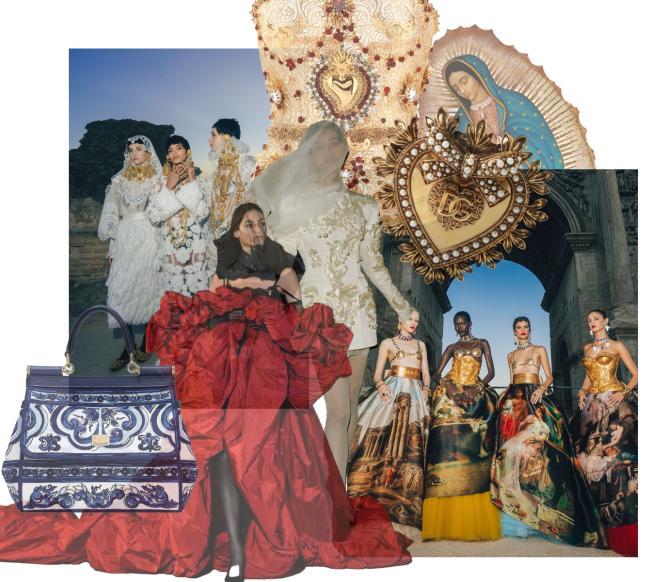
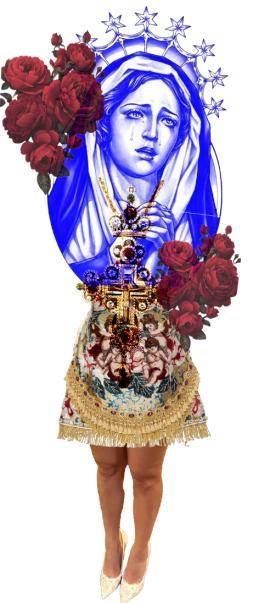
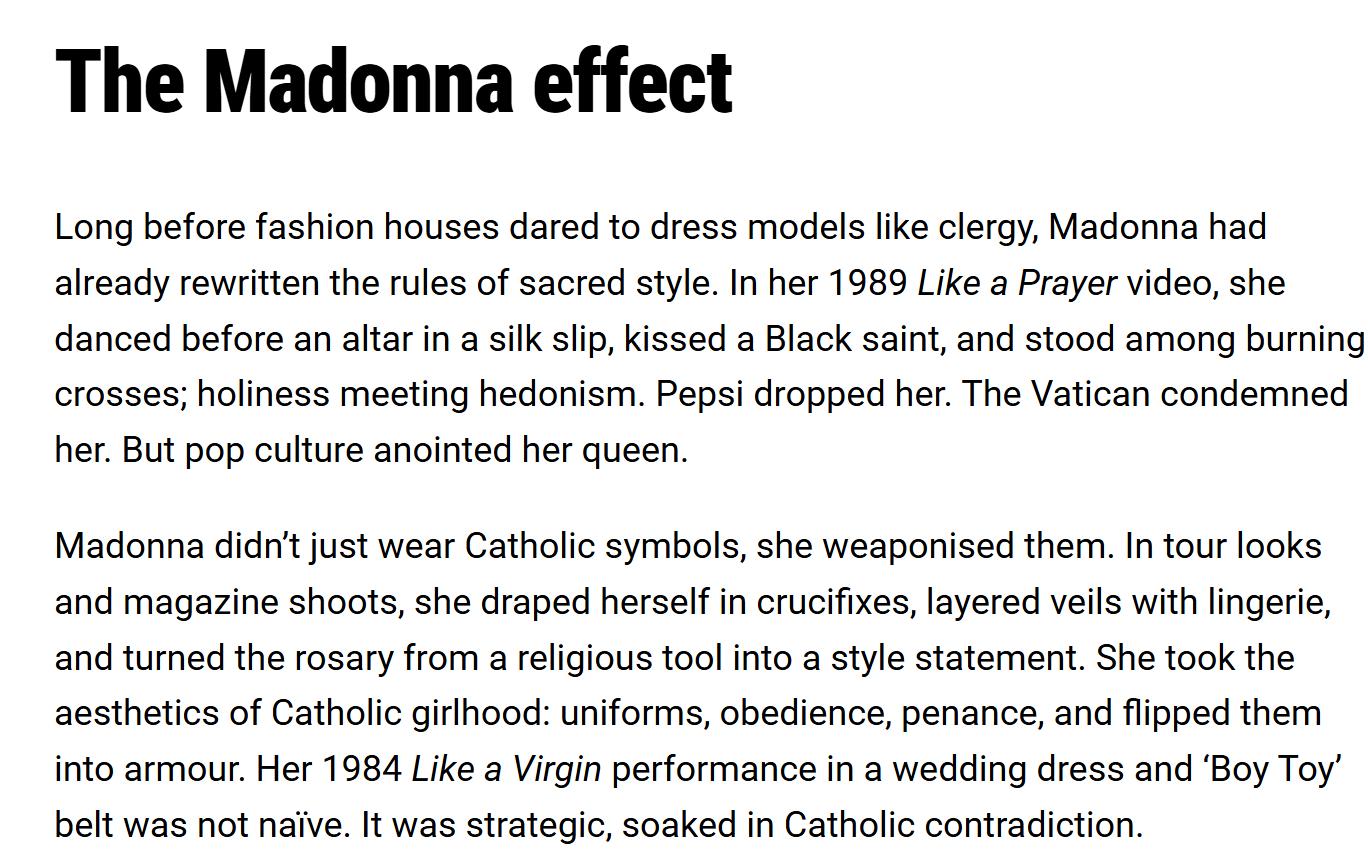
Long before fashion houses dared to dress models like clergy, Madonna had already rewritten the rules of sacred style. In her 1989 Like a Prayer video, she danced before an altar in a silk slip, kissed a Black saint, and stood among burning crosses; holiness meeting hedonism. Pepsi dropped her. The Vatican condemned her. But pop culture anointed her queen.
Madonna didn’t just wear Catholic symbols, she weaponised them. In tour looks and magazine shoots, she draped herself in crucifixes, layered veils with lingerie, and turned the rosary from a religious tool into a style statement. She took the aesthetics of Catholic girlhood: uniforms, obedience, penance, and flipped them into armour. Her 1984 Like a Virgin performance in a wedding dress and ‘Boy Toy’ belt was not naïve. It was strategic, soaked in Catholic contradiction.
From the article, I took particular interest in ‘The Madonna Effect’, Like Dolce & Gabbana, Madonna utilised symbolic Catholic symbols and transitioned them into sexy accessories that everyone desired. I think from researching the Catholic influence on fashion so far it is evident that the religion element is successful due to the power it provides the consumer. They are still able to feel reserved and feminine, yet they are also empowered to be individual whilst still being protected.
Researching the luxury market:
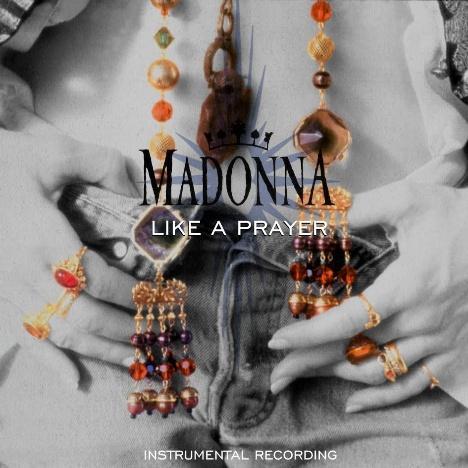
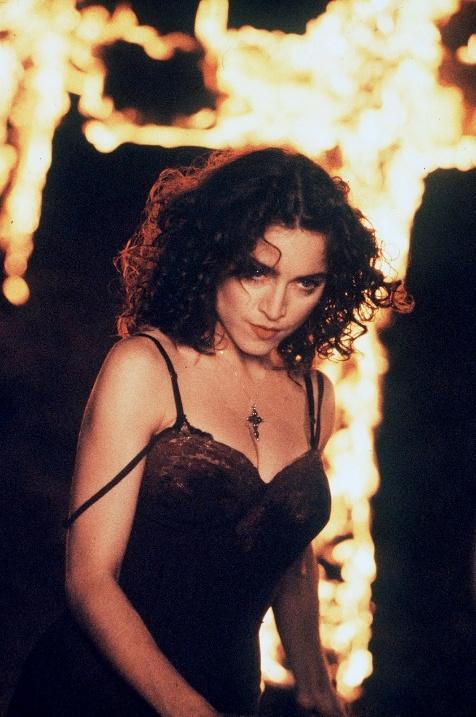
Madonna ‘Like a Prayer’ editorial images
Identifying the Haute Couture consumer ?
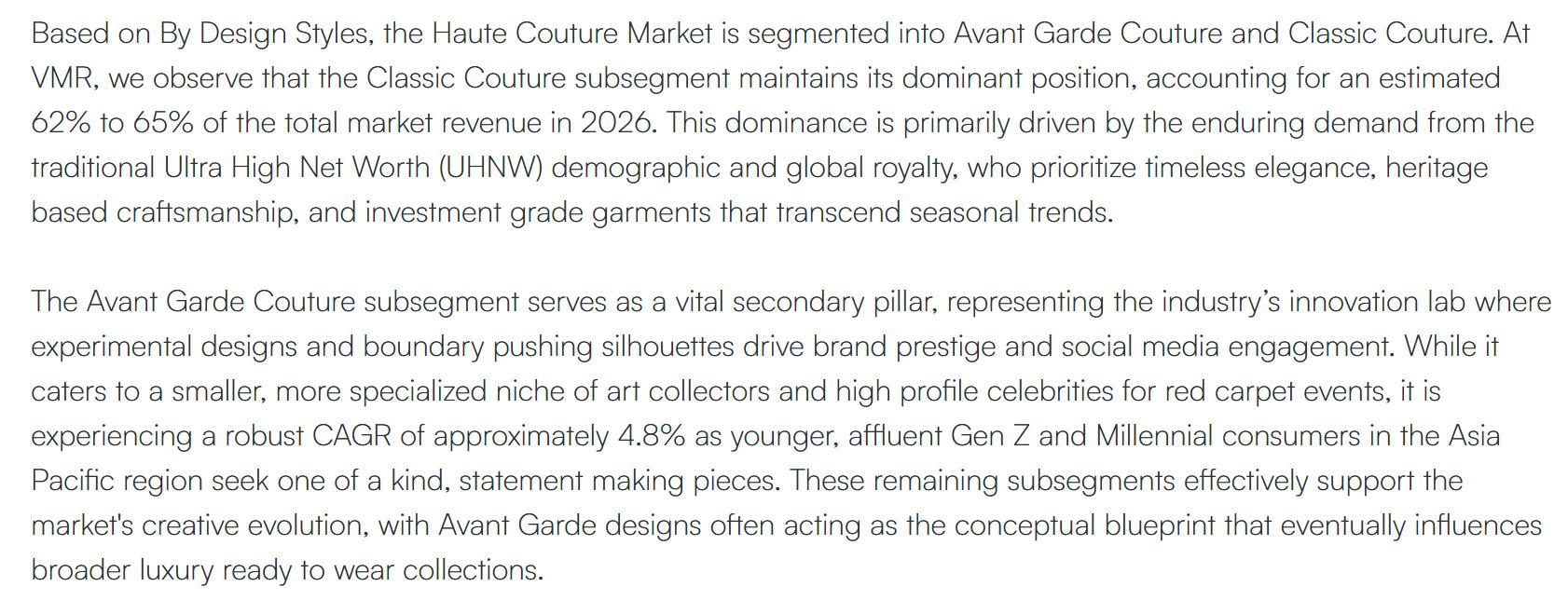
Based on By Design Styles, the Haute Couture Market is segmented into Avant Garde Couture and Classic Couture. At VMR, we observe that the Classic Couture subsegment maintains its dominant position, accounting for an estimated 62% to 65% of the total market revenue in 2026. This dominance is primarily driven by the enduring demand from the traditional Ultra High Net Worth (UHNW) demographic and global royalty, who prioritize timeless elegance, heritage based craftsmanship, and investment grade garments that transcend seasonal trends.
The Avant Garde Couture subsegment serves as a vital secondary pillar, representing the industry’s innovation lab where experimental designs and boundary pushing silhouettes drive brand prestige and social media engagement. While it caters to a smaller, more specialized niche of art collectors and high profile celebrities for red carpet events, it is experiencing a robust CAGR of approximately 4.8% as younger, affluent Gen Z and Millennial consumers in the Asia Pacific region seek one of a kind,
Researching the luxury market:
statement making pieces. These remaining subsegments effectively support the market's creative evolution, with Avant Garde designs often acting as the conceptual blueprint that eventually influences broader luxury ready to wear collections
Haute Couture Market Size, Share & Forecast
they’re dressing for the character version of themselves.
As I watched models move through these enormous silhouettes (sleeves that look like they could knock over a tower, skirts that seemingly take up an entire stadium) it clicked. This is fashion at full volume. And honestly? That’s exactly where Gen Z lives.
Gen Z doesn’t really get dressed the way millennials used to. They don’t just put on sunglasses. They give mob wife. They don’t just wear a vintage skirt. They aspire to poetcore. You walk outside and you’re not wearing denim, you’re announcing an era. Everything is coded, referenced, named, memed.
Researching the luxury market:
Couture, in all its absurd, impractical glory, is doing the same thing. It’s trying to be instantly legible from across the room, and of course, from across a screen.
The world is loud. Life is heavy. Everything feels a little unstable. And Gen Z responds by going extreme: extreme humor, extreme aesthetics, extreme self-definition. Couture responds with extreme clothes.
As of this writing, we’re still waiting on the chaos and romance of Giambattista Valli, a show that traditionally delivers its own brand of larger-than-life storytelling. But even without them, the message of this couture season is already clear: Gen Z extremes are in; Millennial gray is out.
So when people ask, why are the gowns so big this year? Why the huge hats, the volume, the exaggerated everything?!
Honestly, it’s simple: couture is speaking in the language of a generation that doesn’t want to disappear. And couture, for once, is on time to the conversation.
This article showcased to me the influence of Gen Z on the Haute Couture market. Our generation, especially within the fashion industry, is all about bringing back the concept of identity and the persona we want to create i.e. ‘our codes’. I think the Gen Z consumer is utilising this concept as they want to make change and they don’t want to fit in with society anymore and make an impact. I will take this forward into my research and development to identify where my consumer lies as a generalisation, to push this further I will research into the Cheshire Gen Z Consumer, to find my own target audience.
Haute Couture Week 2026 speaks Gen Z’s Language - PureWow
Global luxury spending continues to diversify across age groups, lifestyles, and regions, with experiential value shaping purchase decisions. Bain and Altagamma anticipate the personal luxury goods market to hover around €360–€380 billion in 2024, supported by resilient high-net-worth demand. Dolce & Gabbana aligns segmentation with this shift, balancing couture intimacy with scalable diffusion categories. The approach captures aspirational buyers, repeat clients, and UHNW patrons without compromising status. The brand addresses multiple tiers, from gateway fragrance and beauty to high jewelry and couture. Alta Moda and Alta Sartoria target UHNW collectors seeking bespoke craftsmanship, heritage storytelling, and exclusive access. Ready-to-wear and accessories engage affluent Millennials and Gen Z seeking emblematic pieces with strong design codes. Special-occasion dressing, bridal, and men’s tailored offerings broaden use cases that drive frequency beyond seasonal fashion.
In a luxury market shaped by short-form video and live event streaming, digital storytelling determines cultural velocity and commerce outcomes. Dolce & Gabbana treats each collection as a serialized narrative, optimized for platform behaviours and audience attention. Runways, fittings, and atelier footage translate into snackable content that fuels conversation and search interest. This approach preserves desirability while expanding reach across demographics and regions.
Instagram anchors high-gloss editorial moments, while TikTok amplifies behind-thescenes energy and creator-led interpretations. YouTube and the brand site host longerform films, runway replays, and craftsmanship documentaries that deepen credibility. Email, app, and site personalization connect content to product availability, styling edits, and store appointments. The result strengthens intent while protecting the brand’s premium context across channels
From analysing this article, I was able to establish Dolce and Gabbana’s consumer and how they are also transitioning their pieces to attract the Gen Z consumer without losing their Gen X consumer. To take this forward, I want to transition my research into discovering what the Gen Z bridal consumer wants and how this may differ from traditional haute couture.
When comparing a Gen Z and Gen X consumer, I noticed that due to their purchasing budget and access to pieces, Gen X want individual pieces to create their own identity, yet they aren’t bothered about the concept of personalisation. On the other hand, Gen Z consumers, lack the spending budget so when they can access the higher range pieces,
Researching the luxury market:
they want the product to feel personalised and to speak certain codes This analysis is something I can take forward into my own agency using curating strong narratives and key personalisation for each consumer.
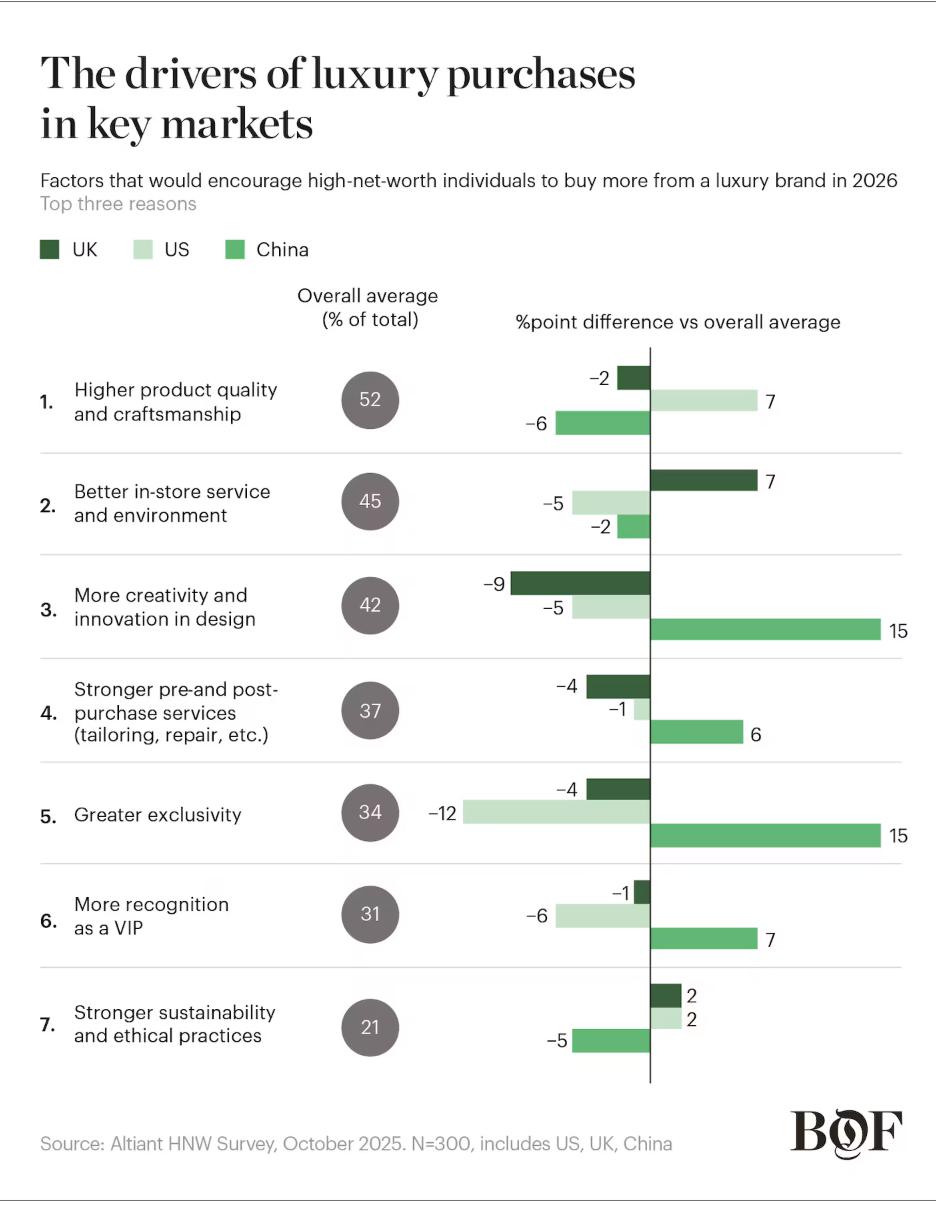
Regional differences in purchase drivers reveal unique formulas to capture high spenders
Researching the luxury market:
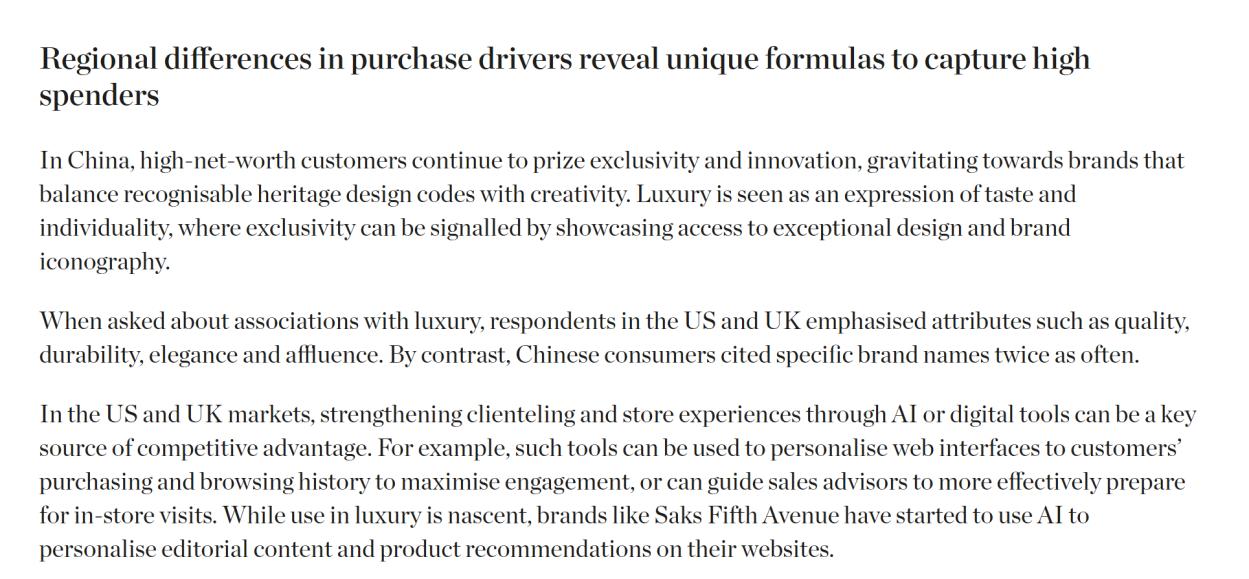
In China, high-net-worth customers continue to prize exclusivity and innovation, gravitating towards brands that balance recognisable heritage design codes with creativity. Luxury is seen as an expression of taste and individuality, where exclusivity can be signalled by showcasing access to exceptional design and brand iconography. When asked about associations with luxury, respondents in the US and UK emphasised attributes such as quality, durability, elegance and affluence. By contrast, Chinese consumers cited specific brand names twice as often.
In the US and UK markets, strengthening clienteling and store experiences through AI or digital tools can be a key source of competitive advantage. For example, such tools can be used to personalise web interfaces to customers’ purchasing and browsing history to maximise engagement, or can guide sales advisors to more effectively prepare for instore visits. While use in luxury is nascent, brands like Saks Fifth Avenue have started to use AI to personalise editorial content and product recommendations on their websites.
Luxury Fashion Is Rethinking Its Value to Shoppers | BoF
From this article, I want to take forward research into how the consumer perceives luxury and the luxury market and how this influences which brands they purchase from dependent on their ‘codes’. I also want to research further into the personalisation of store experiences and websites for engagement, as this is an element I could utilise to make me stand out from other agencies.
For collections to work, designers need to centre women and their needs for both fantasy and function. At its heart, fashion is still a dialogue between creator and client, and that conversation mustn’t become one-sided. When women design for women,
Researching the luxury market:
they tend to see their task differently and the language changes: fashion becomes less about being looked at and more about creating a feeling.
The female gaze isn’t a buzzword, it’s a way of seeing that women designers may understand instinctively but male designers can and must adopt more consistently if they are to succeed.
When creative directors centre women, the results speak for themselves: garments women reach for again and again because they reflect both their fantasies and their realities, and they feel as good as they look.
Opinion: Can the Female Gaze Save Fashion? | BoF
I chose to investigate this article, as I feel like by placing myself at the luxury/ concept market level I need to understand the relationship between the creative director and their vision before they translate it into the designs for the consumer. I also want to take away from this further research into the difference between female and male creative directors in haute couture fashion vs bridal haute couture to see whether there is the same opinion.
Research into Fairfax and Favour:
Aim: establish British countryside aesthetic and how the brand as become so aligned with countryside chic from their brand concept to marketing and PR.

Post-lunch we head over to another landmark of Fairfax & Favor’s stratospheric style journey. A short car ride away lies Fairfax Fountaine’s family seat of Narford Hall, a 14th-century stately whose renovated stables is where all things F&F happen, from design to distribution.
As a Tatler editor, I’ve attended more than my share of horsey events, and one thing I can say for certain is that Fairfax & Favor has become somewhat of a uniform on the scene. From Cheltenham to Badminton Horse Trials, you’re never far from a Regina boot or Windsor bag. This year even Prince Edward stopped by the stand at Windsor Horse Show to peruse the collection - but humbling moments at Holkham Country Fair was their first introduction to the wider world. ‘We had the shoes arrive about a week before, and we thought “What are we going to do now?”. We said “I wonder if Holkham’s on?” We hadn’t even thought about it. We called them up, they said they were full, and that was really demoralising. We thought “Let’s just drive over there and see”. While we were driving up, someone had pulled out, and before they could even give it to the next person on the list, we said “We're here!”. We didn’t have much cash at all because we had just spent it on the shoes, but we gave everyone in the office shoes and I think we managed about half the pitch fee.
I researched into this article from tatler magazine to gage an understanding of the background and heritage of the brand. Key parts I took from this article is that the brand is based on a country estate,showing that even as the brand has grown they still continue to produce from their heritage and their roots of english countryside culture. The second part is that Fairfax and Favour has become ‘somewhat of a uniform’, showing there is an establishment of codes and an identification method for members of this heritage and society. By noticing and researching how these brands have established their codes and brand identity within british culture will help me to position my own brand in the future.
Fairfax & Favor on 10 years of building a brilliantly British brand – with the royal seal of approval | Tatler
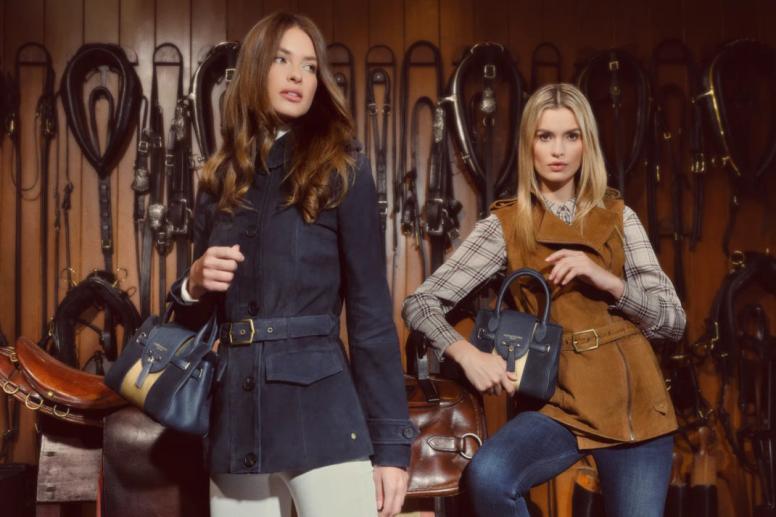
Fairfax and favour editorial imagery. Contiuation of the brand identity and relation to their consumer through the use of the stable background ( Equine). Showcasing their brand colours of navy and a neutral brown, codes of the british countryside and horse races.
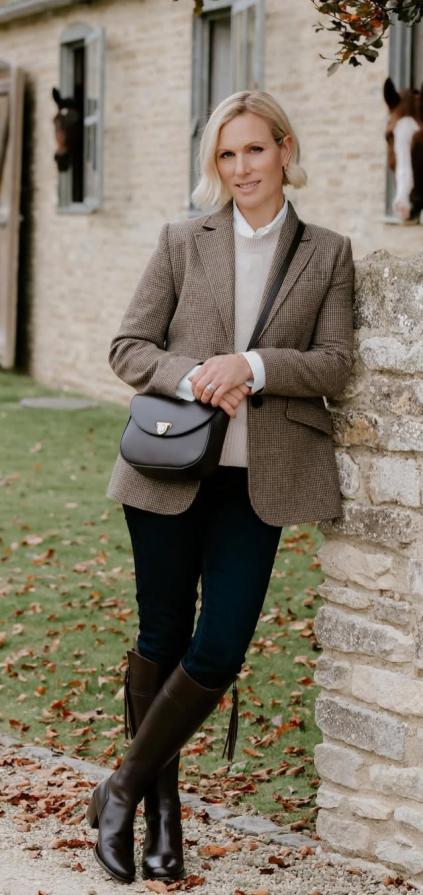
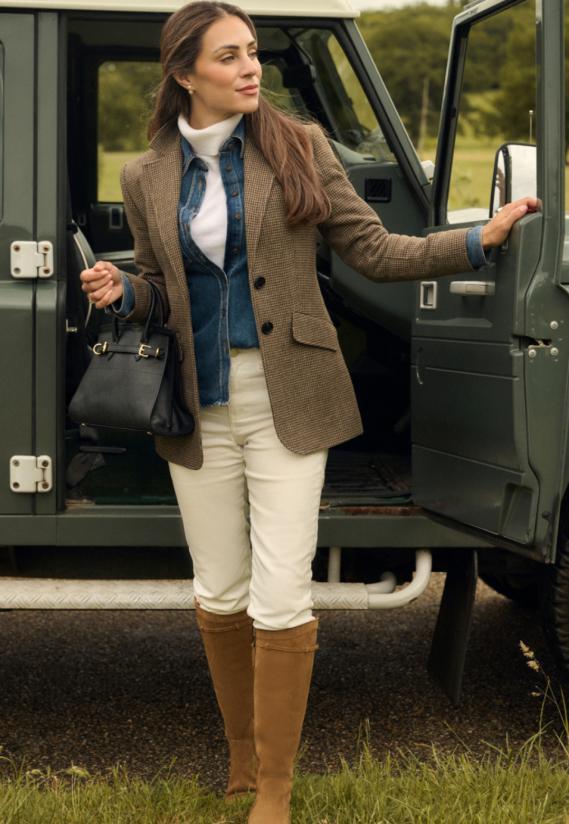
Associating themselves with royals ( providing a sense of hierachy to the brand) and influencers such as Lydia Millen who have the same target audience as Fairfax and Favour themselves. Throughout their imagery, there is constant refernce to british countryside codes such as horses, tweed blazers, and land rover defenders.
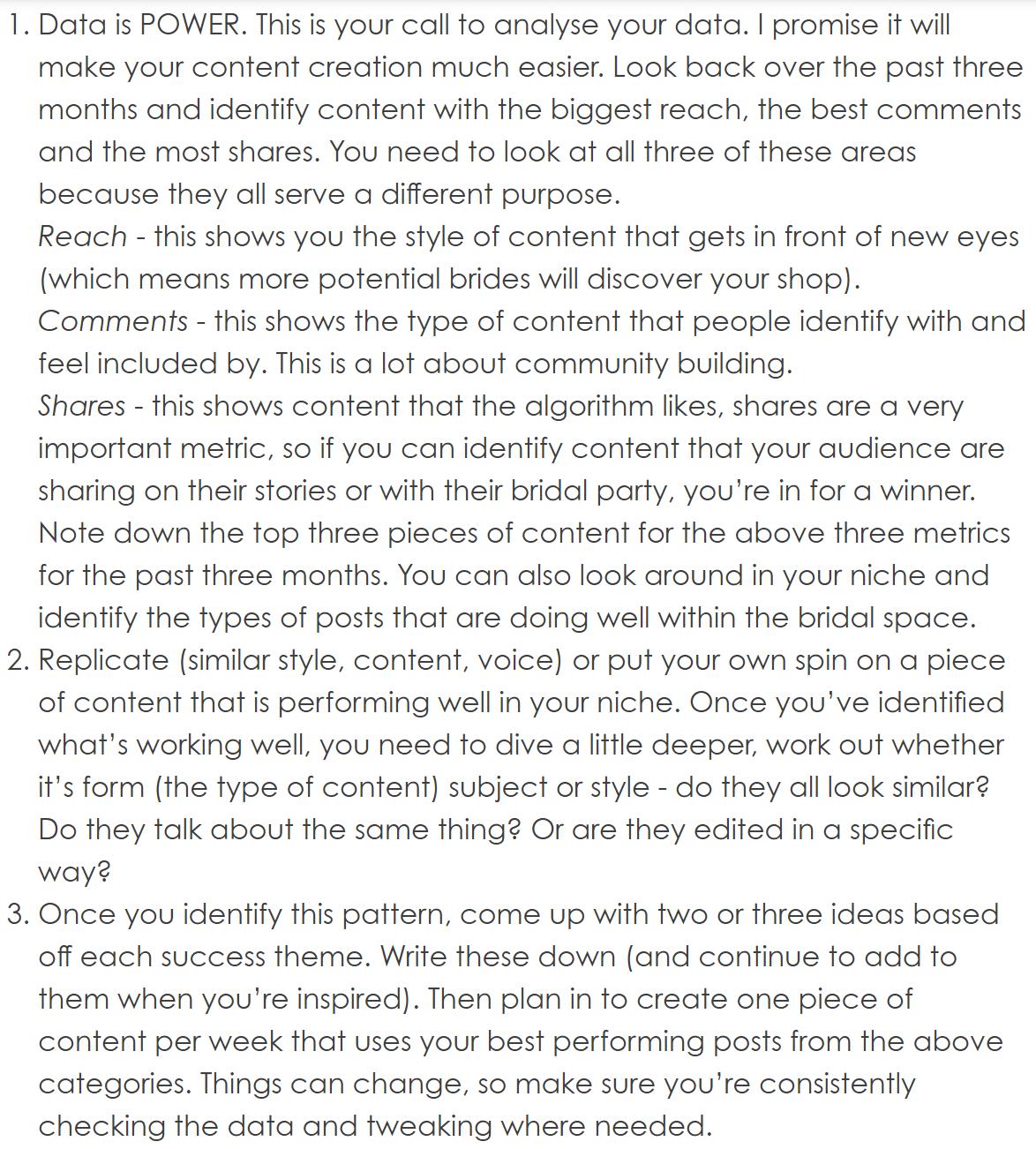
1. Data is POWER. This is your call to analyse your data. I promise it will make your content creation much easier. Look back over the past three months and identify content with the biggest reach, the best comments and the most shares. You need to look at all three of these areas because they all serve a different purpose.
Reach - this shows you the style of content that gets in front of new eyes (which means more potential brides will discover your shop). Comments - this shows the type of content that people identify with and feel included by. This is a
Researching the luxury market:
lot about community building.
Shares - this shows content that the algorithm likes, shares are a very important metric, so if you can identify content that your audience are sharing on their stories or with their bridal party, you’re in for a winner. Note down the top three pieces of content for the above three metrics for the past three months. You can also look around in your niche and identify the types of posts that are doing well within the bridal space.
2. Replicate (similar style, content, voice) or put your own spin on a piece of content that is performing well in your niche. Once you’ve identified what’s working well, you need to dive a little deeper, work out whether it’s form (the type of content) subject or style - do they all look similar? Do they talk about the same thing? Or are they edited in a specific way?
3. Once you identify this pattern, come up with two or three ideas based off each success theme. Write these down (and continue to add to them when you’re inspired). Then plan in to create one piece of content per week that uses your best performing posts from the above categories. Things can change, so make sure you’re consistently checking the data and tweaking where needed.
Audit & action: How to nurture your audience and improve your visibility - Bridal Buyer Magazine - Bridal Buyer: Initially, I came across this article in order to get a base understanding of a comm’s / marketerters perspective within the bridal industry. These are elements I can take forward when creating content for my own uni instagram, work content as well as content fpr brides and bridal brands in the future. Ultimately, I feel like social media is currently playing such a big role in the bridal industry as we are moving into the realm of the Gen Z consumer, when this consumer is generalised they want to showcase off personal touches and their wedding aesthetics via social media almost to create a community.
(2) Instagram: To back up my current research into the Gen Z bridal consumer. This piece of content from the ‘Wedding Wonderland Network’ highlights Gen Z trasnforming social media as a wedding tool for luxury weddings into a detailed narrative and emotional storytelling rather than showing off. Gen Z’s ‘global spending power is projected to reach $12 trillion by 2030’. Because of their spending power and desire to have brand alignment with their wedding, I believe this is the influence behind why they ‘prioritise experiences of possessions’. The Gen Z bride is wanting destination weddings, 3 day experiences with 3 different outfits, plus driven storytelling. For me enterring this industry, it shows that to have a niche its to understand the Gen Z consumer and establish the narrative they want to create from the moment you first meet, as if to bring their pinterest vision to life.
Researching the luxury market:
(2) Instagram: To reinforce my analysis of Gen Z’s desire for emotional storytelling and curating anrrative, I conducted more research and utilised this post to back up my research so far. Elements I decided to take from it is that the goal is ‘ to be the obvious choice when it matters’ rather than going viral. This is the result of Gen Z brides and couples wanting to feel understood and guided rather than being ‘sold to’. Reflecting on this, it helped me to understand that in order to succeed I need to invest more in ‘relationships, collaborations, strategic visibility and trusted platforms’.
Luxury Wedding Dress Market Size, Share, Trends, Report 2035
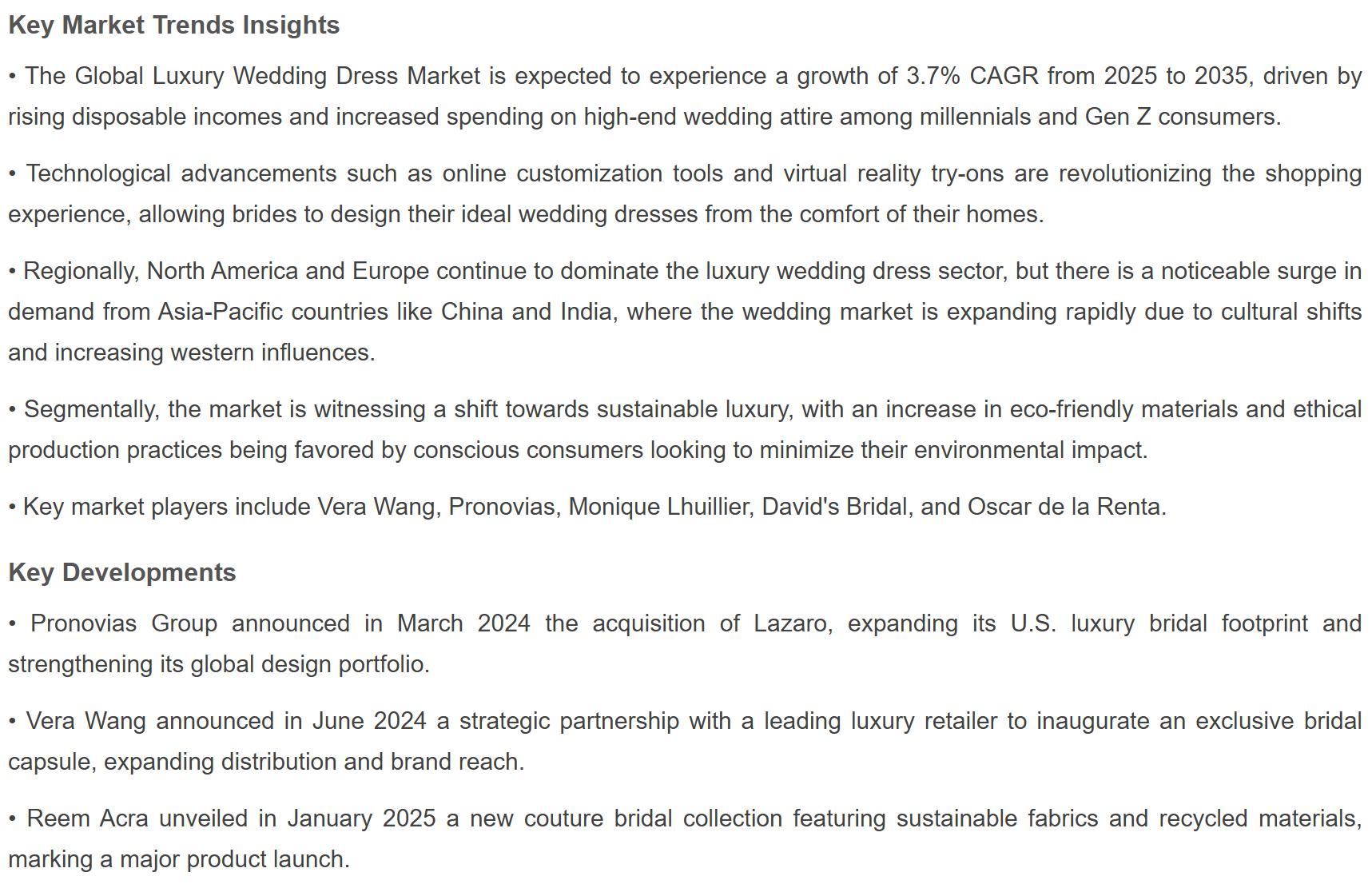
This article supports the concept of the shift into Gen Z consumers and their purchasing insights into luxury wedding couture. As an analytical reflection, I believe this is due to the gen Z consumer resorting back to more traditional values (they want traditional family values, they are getting married young etc), however they still want the modern luxury twist on the event. This is then where the element of customisation comes into the industry as brides want their days to stand out on social media and act as heirlooms for future generations.
To support this argument, I conducted a quantitative assessment during my days at work to get an insight into the ages of our consumers. Over the space of 3 days, 6 brides were 30+, 3 were 25+. Compared to 15 being 25 and under. Ultimately, this highlights to me the reverse of Gen X and older millennials who tended to get married older. Similarly to the article, this may be due to change in disposable incomes within generations.
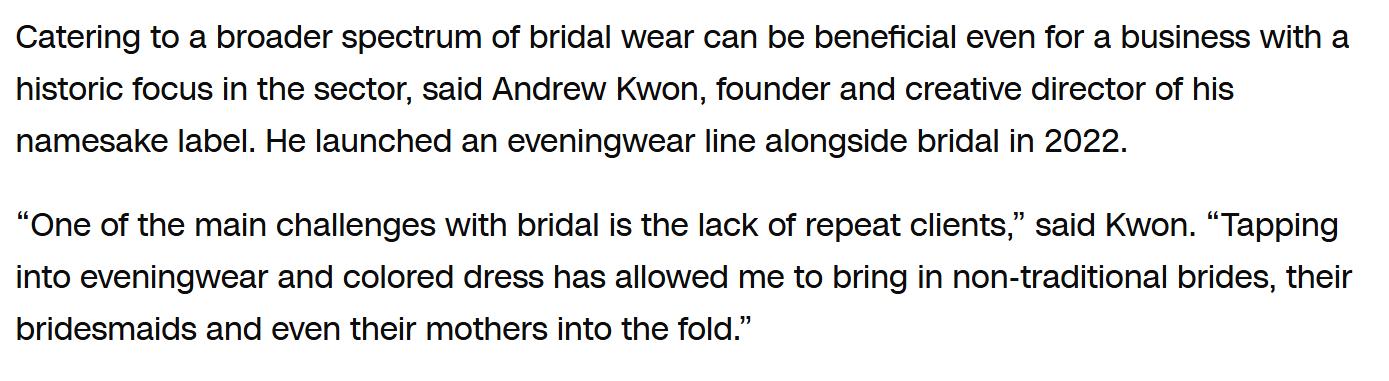
From my previous research, I chose to dive deeper into the Gen Z bridal consumer, to analyse what they are doing differently and what they are buying into. I chose to pick out this specific part of research from the article, as it’s an element, I can expand into myself. This will increase brand loyalty rather than constantly losing clients.
How Gen-Z buyers are changing the bridal fashion business | CNN
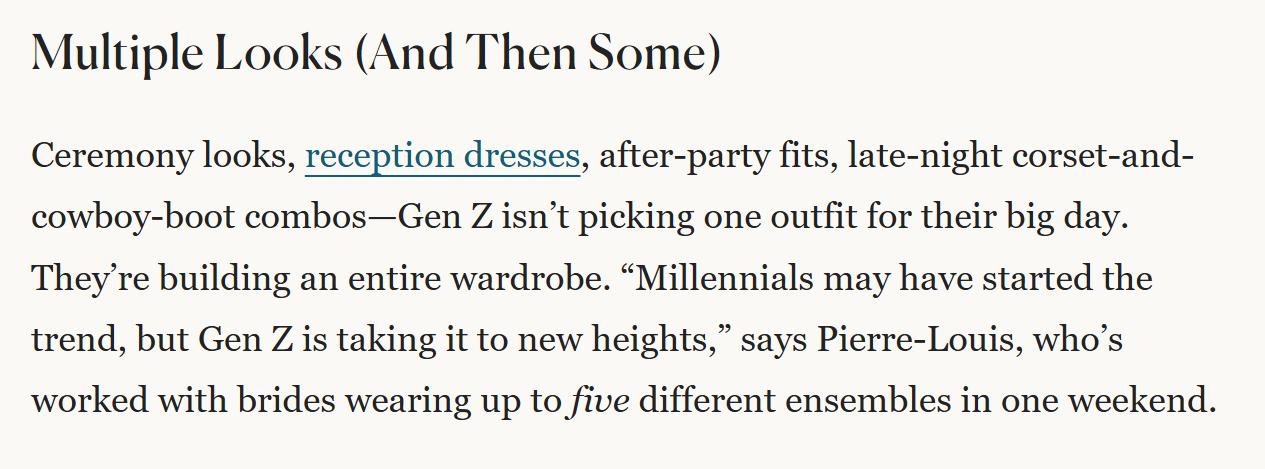
Ceremony looks, reception dresses, after-party fits, late-night corset-and-cowboy-boot combos Gen Z isn’t picking one outfit for their big day. They’re building an entire wardrobe. “Millennials may have started the trend, but Gen Z is taking it to new heights,” says Pierre-Louis, who’s worked with brides wearing up to five different ensembles in one weekend.
This element of research supports the idea of what Gen Z brides are purchasing into. Thr idea that they want to make the day personalised and showcase it through customised or personalised looks for every occasion. Once again this may be driven through disposable incomes or the influence of social media and the desire to showcase your day through certain apps such as Instagram or TikTok.
How Gen Z Couples Are Redefining Wedding Fashion
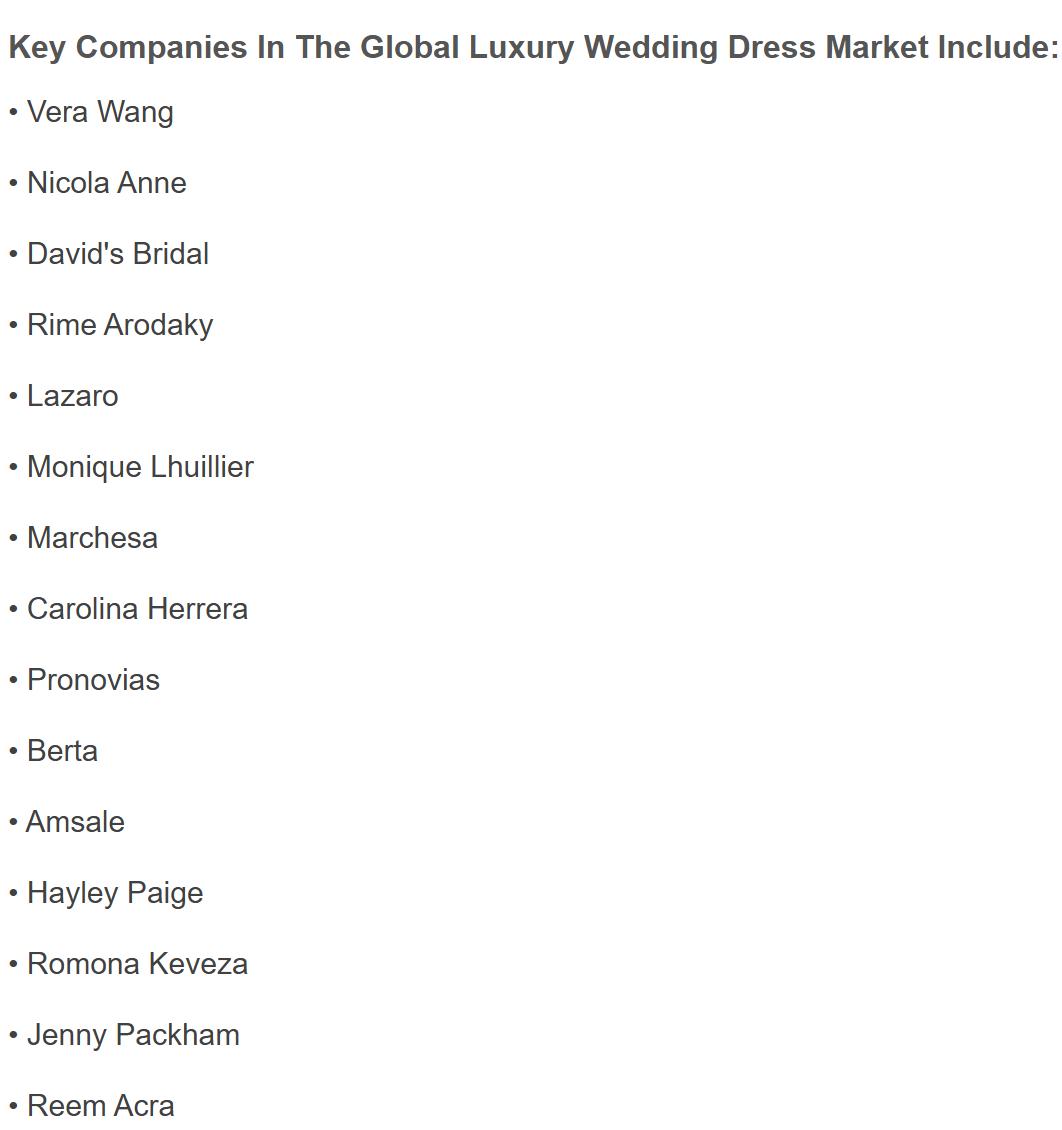
After establishing what Gen Z’s purchasing behaviour is I then decided to identify editorial images from the top companies, to compare to our brands at Knutsford Wedding Gallery (establish the cheshire consumer) and key trends.
Vera Wang:
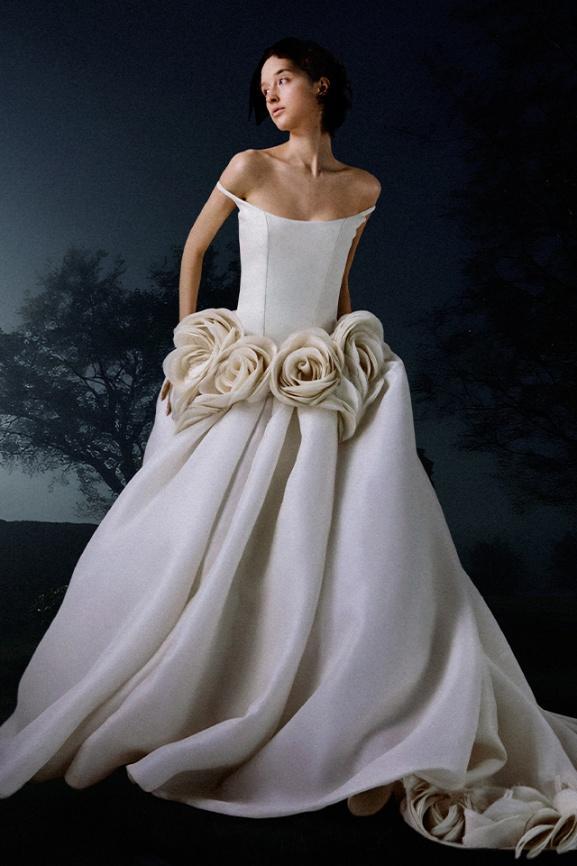
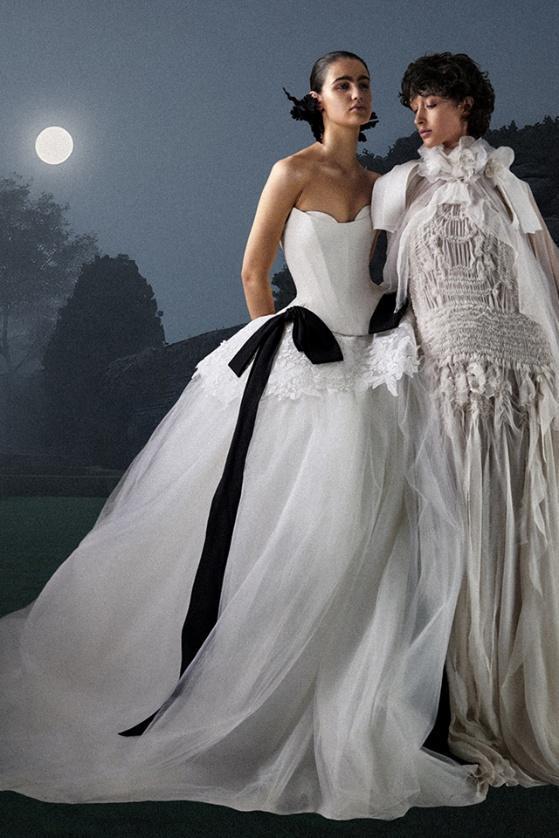
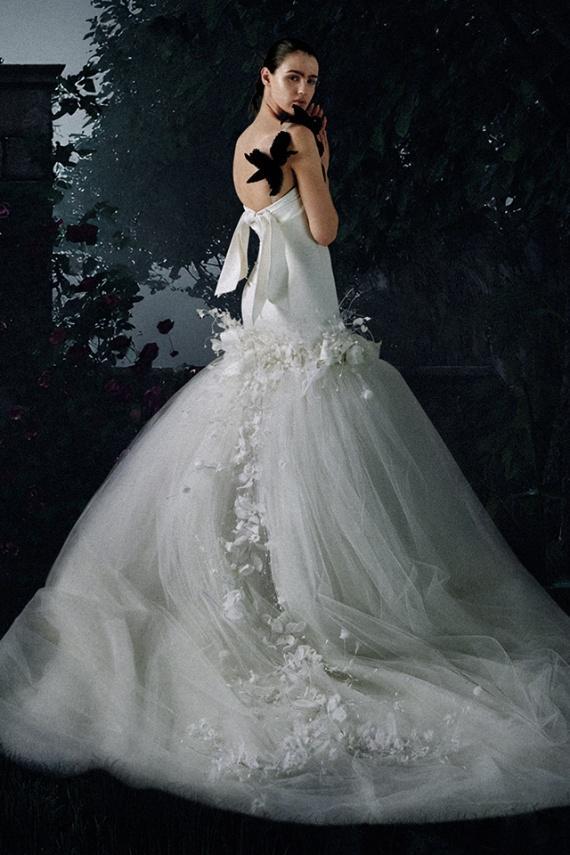
Bridal 2026 collection: Curating a moody aesthetic through the incorporation of the background plus vera wangs signature black elements. The A line gowns establish the influence of the romanticism concept using tule, Mikado roses and sweetheart necklines.
Vera Wang
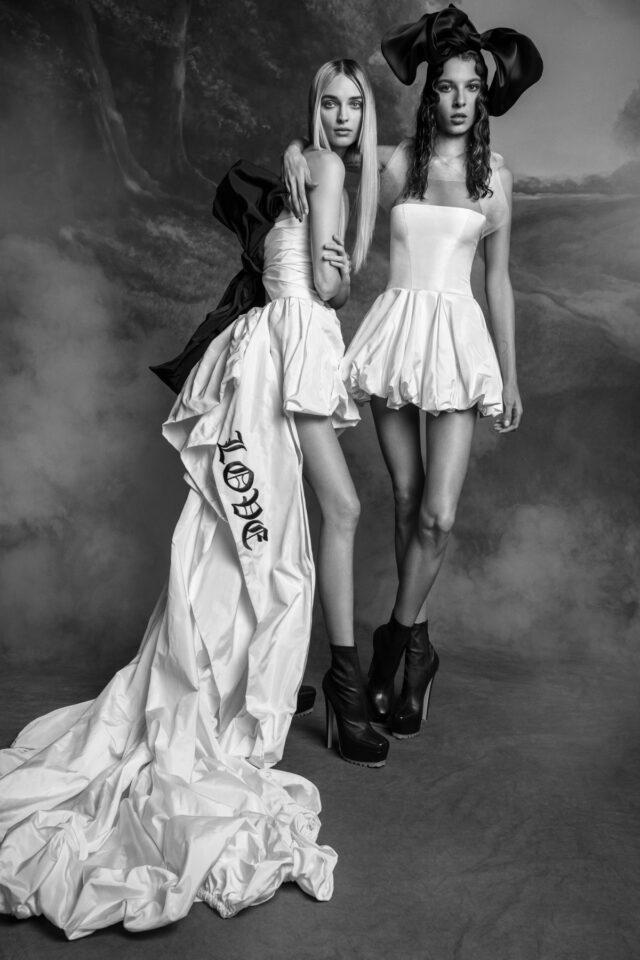
Vera Wang
In comparison to the 2026 collection, this images curates a different story. Using the mini dropped waist dress and the high and low dress with ruffles it speaks to the more modern (Gen Z bride). These characteristics are reinforced through the personalisation of ‘love’ down the side of the dress.
Monique Lhuillier:
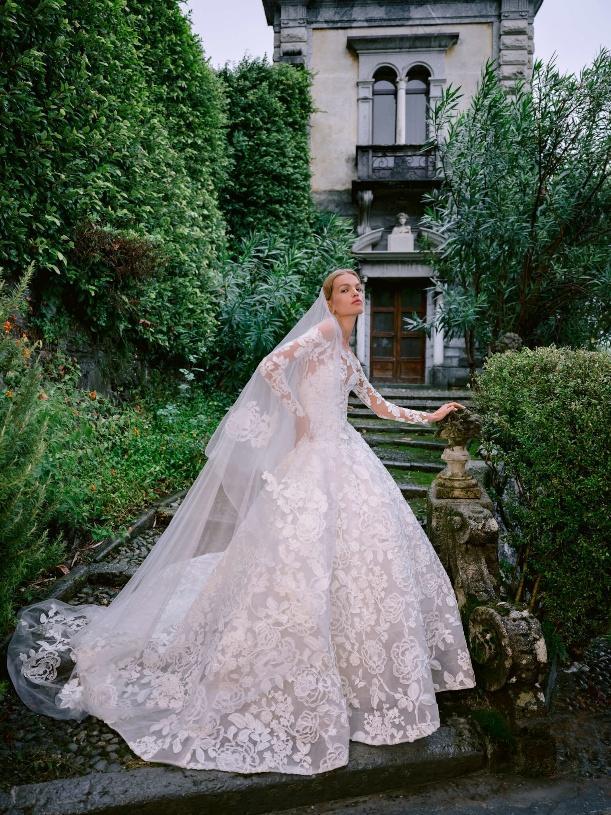
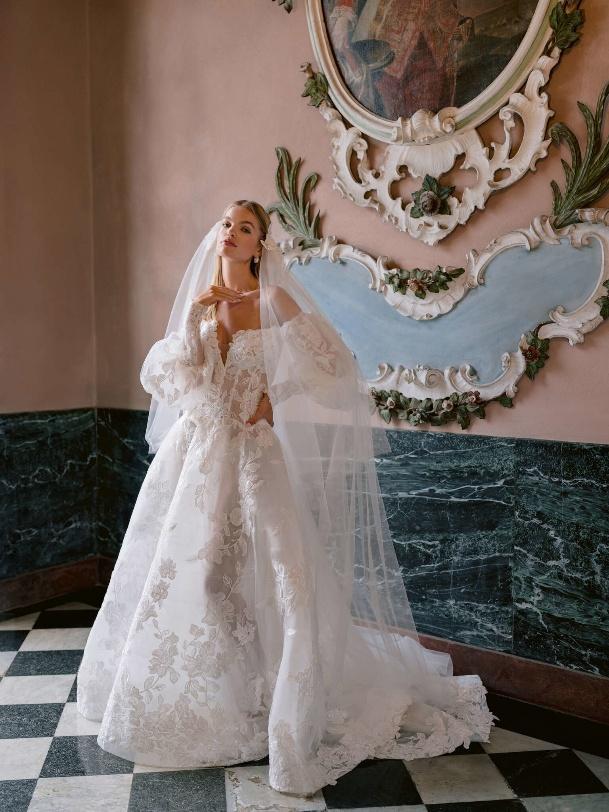
2025 collection. Soft ivory colour tones, with large floral patterns (bringing in the modern aspect compared to a traditional Chantilly lace. Paired with soft tulle veils to reinforce the element of romanticism. The romanticism aesthetic continues using venue for the images (Italian villa), European influences, soft romantics and interests’ buyers who are getting married there.
Monique Lhuillier Bridal Fall 2025 Collection Lookbook: A Captivating Showcase of Timeless Elegance and Modern Romance - OTSMAGAZINE
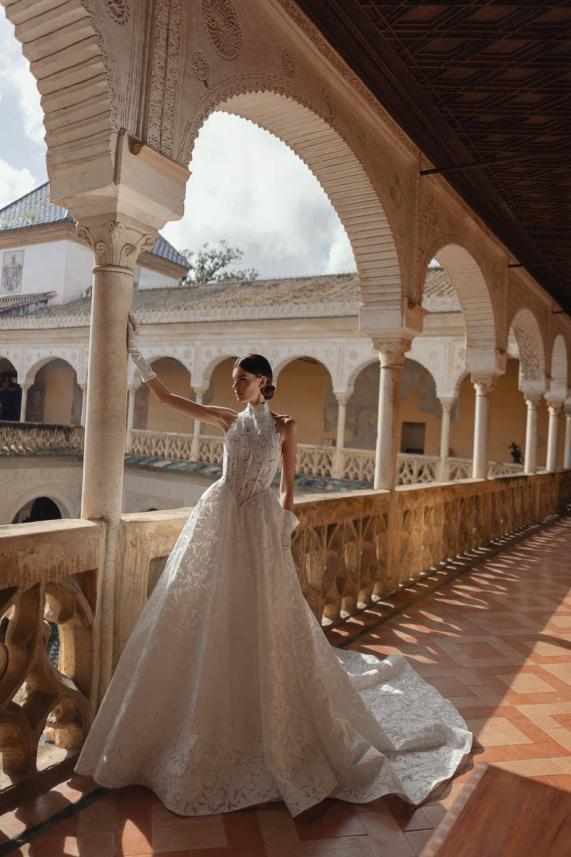
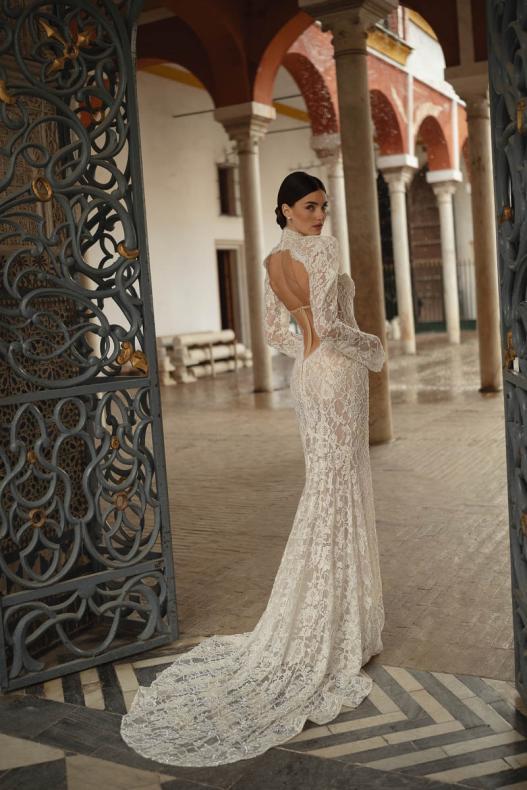
SPRING 2026 – BRIDAL COLLECTION - Wedding Style Magazine: Berta ( Israeli designer) showcases the narrative with a Moroccan style venue, highlighting heritage and still the romantic concept. AS Berta is one of the most well-known bridal designers in the world, their designs often play safer, always utilising an exposed back with boning plus a more traditional Chantilly lace.
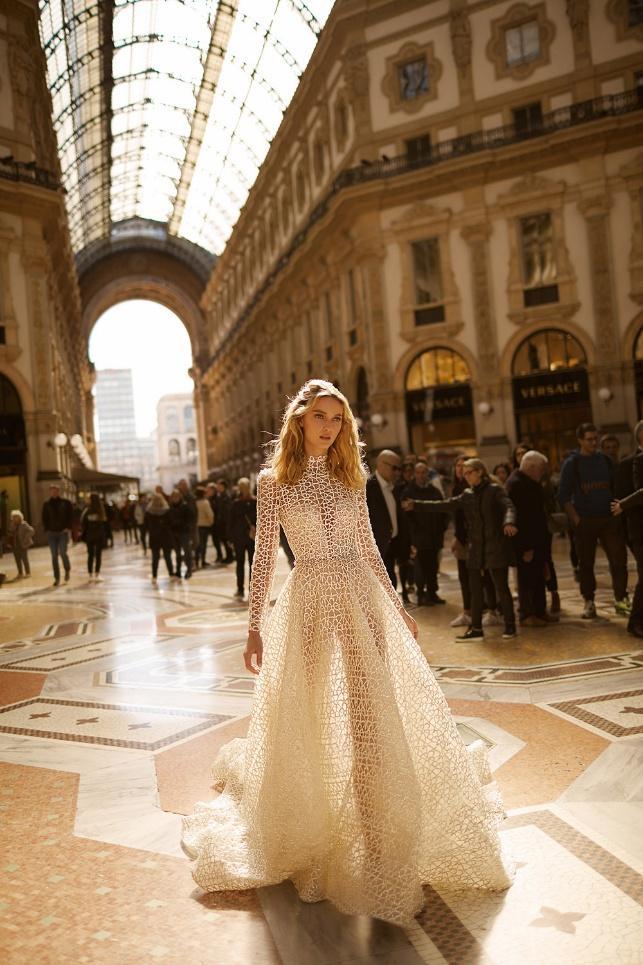
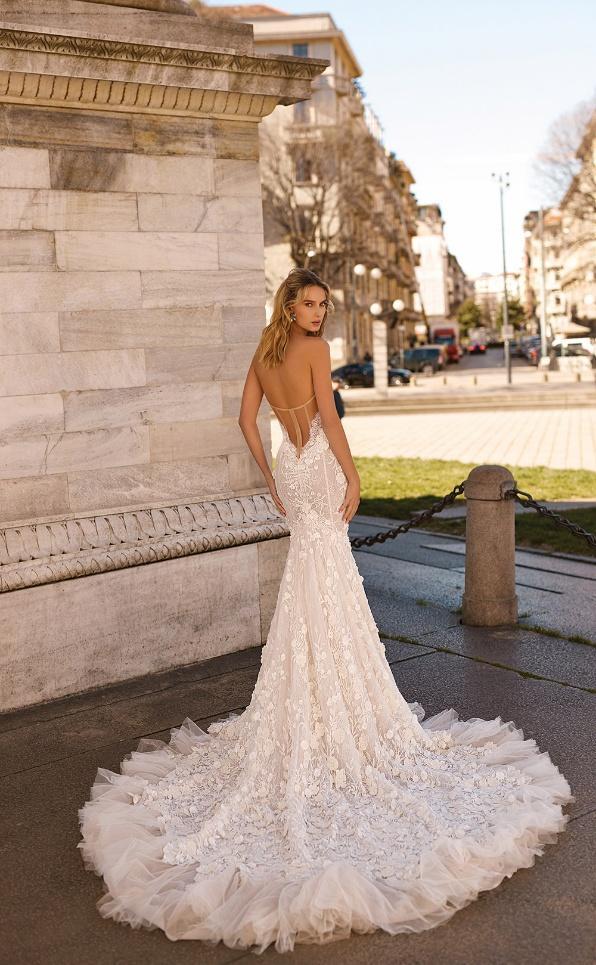
Bridal Spring 2020 Collection – The Wedding Notebook: To gather an idea of the change within the brand, I also researched into previous collections. The 2020 collection plays more into the modern bride with geometric patterns and softer A-line skirts. As well as this, they were possibly trying to reach out to the more fashion forward bride, especially through photographing their editorials in the middle of Milan, ultimately creating a certain target consumer. I also noticed that they are still utilising the open mesh illusion back. After reflecting on previous collections, as Berta have become more noticed by brides, their designs have become more generalised compared to stand out designs. Because of this, I expect Berta to continue this strategy into the next 5 years, as they have already built such a strong brand identity, why would they risk changing it and lose followers and brand loyalty?

Bridal Trends On Our Radar: Part One... Collections16-Feb-2026
Researching the luxury market:
If the last few seasons were about restraint, the first collections we are seeing in 2026 are about release. This season, sitting alongside chic and minimal styling, the volume has been turned up. Plus, detail is back and personality is leading the charge.
While we might love using the word ‘trend’ it’s not something brides are asking for; they’re looking beyond the aesthetic label and discussing things in terms of experiences and vibes. Things that are memorable, transformable and uniquely theirs.
So, what are we seeing in the new season styles that satisfies this? There is drama, sure, but it has been cleverly crafted through texture and versatility, creating gowns that feel fashion-led yet deeply personal. There is an editorial nature to the styles we are seeing; they are the kind of pieces to stop a bride mid-scroll. Here are the directions we have noticed are shaping bridal right now... Part One:
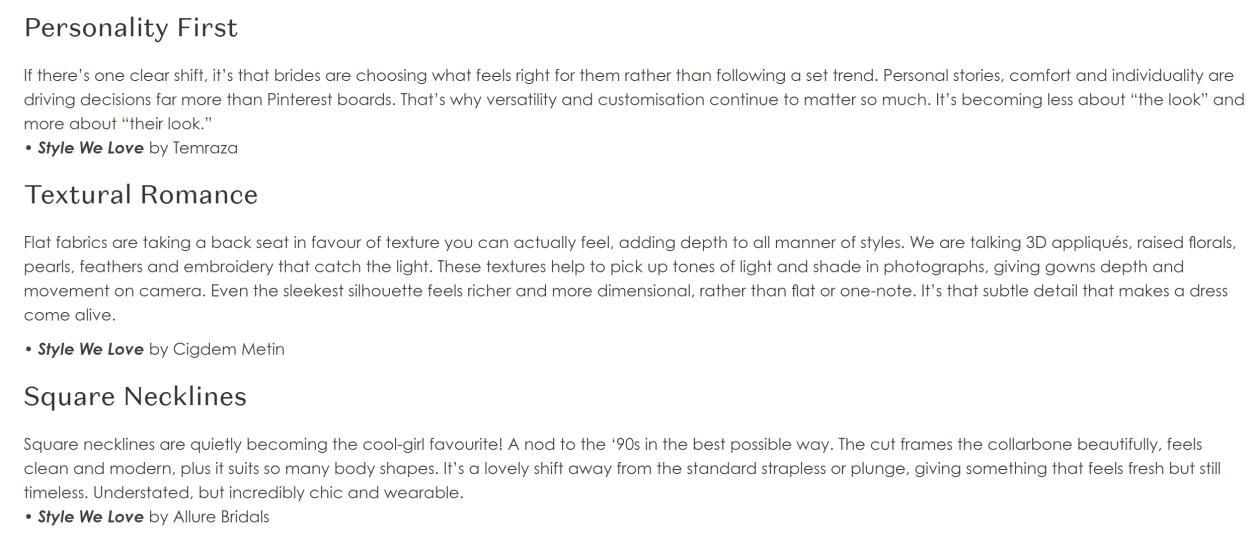
If there’s one clear shift, it’s that brides are choosing what feels right for them rather than following a set trend. Personal stories, comfort and individuality are driving decisions far more than Pinterest boards. That’s why versatility and customisation continue to matter so much. It’s becoming less about “the look” and more about “their look.”
• Style We Love by Temraza
Textural Romance
Flat fabrics are taking a back seat in favour of texture you can actually feel, adding depth to all manner of styles. We are talking 3D appliqués, raised florals, pearls, feathers and embroidery that catch the light. These textures help to pick up tones of light and shade in photographs, giving gowns depth and movement on camera. Even the sleekest silhouette feels richer and more dimensional, rather than flat or one-note. It’s that subtle detail that makes a dress come alive.
• Style We Love by Cigdem Metin
Square Necklines
Square necklines are quietly becoming the cool-girl favourite! A nod to the ‘90s in the best possible way. The cut frames the collarbone beautifully, feels clean and modern, plus it suits so many body shapes. It’s a lovely shift away from the standard strapless or plunge, giving something that feels fresh but still timeless. Understated, but incredibly chic and wearable.
Researching the luxury market:
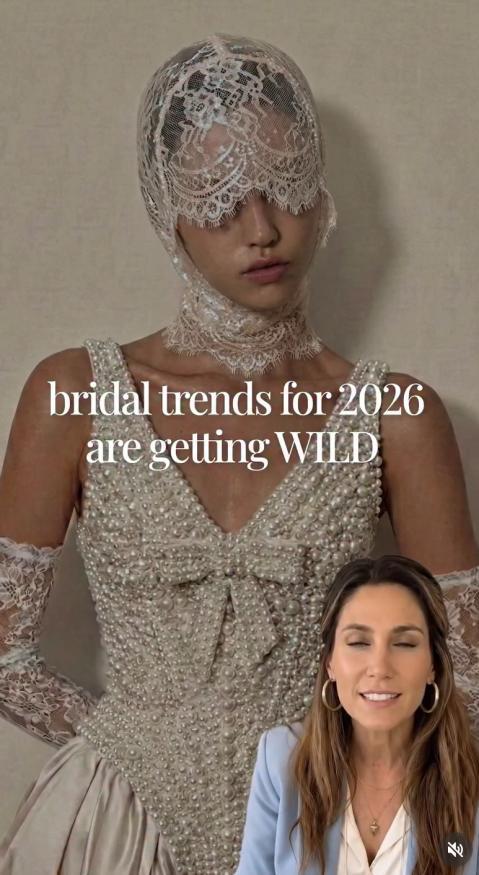
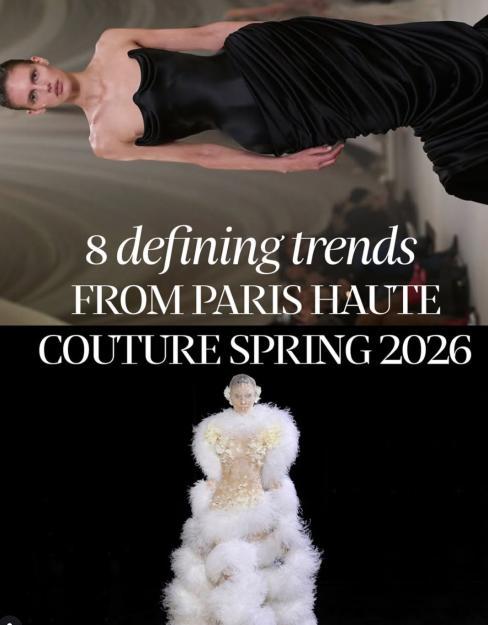
To reinforce the research found from the previous article regarding bridal trends, I found the Instagram account, @the wed, an account that discusses trend forecasting, inspiration etc. From these posts, I was able to establish the desire for modern brides wanting to be different and incorporate the aspect of personalisation into their wedding. Whilst analysing these posts, it was also made clear the influence of art movements and their influence on fashion i.e romanticism being a major aesthetic influence for designers. From research so far, I want to research further into potential art movements to forecast a potential future in bridal and how it could influence my agency.
Historical context
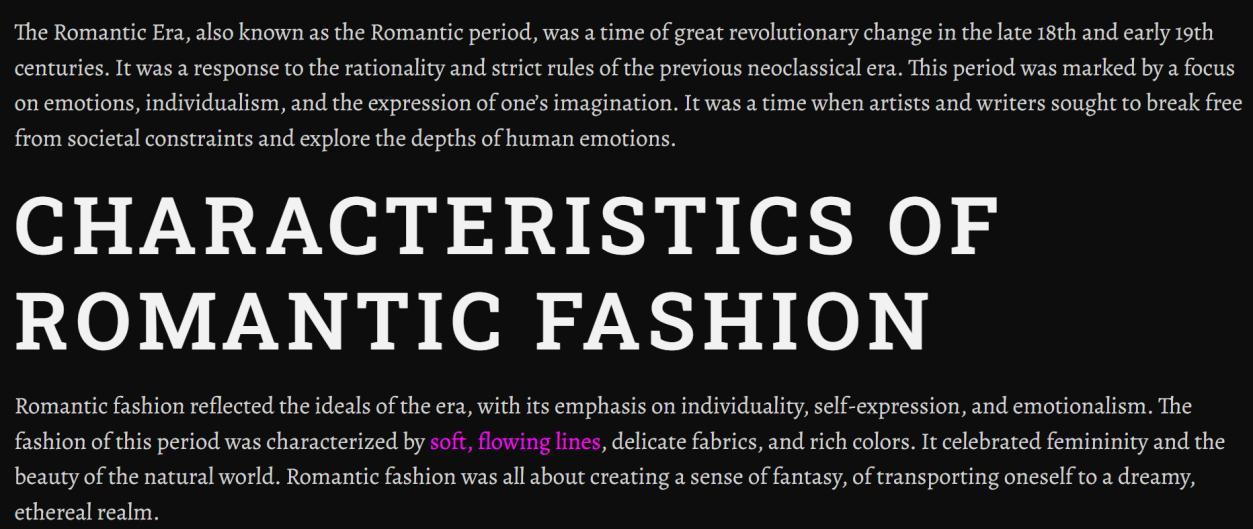
The Romantic Era, also known as the Romantic period, was a time of great revolutionary change in the late 18th and early 19th centuries. It was a response to the rationality and strict rules of the previous neoclassical era. This period was marked by a focus on emotions, individualism, and the expression of one’s imagination. It was a time when artists and writers sought to break free from societal constraints and explore the depths of human emotions.
Characteristics of Romantic fashion
Romantic fashion reflected the ideals of the era, with its emphasis on individuality, selfexpression, and emotionalism. The fashion of this period was characterized by soft, flowing lines, delicate fabrics, and rich colors. It celebrated femininity and the beauty of the natural world. Romantic fashion was all about creating a sense of fantasy, of transporting oneself to a dreamy, ethereal realm.
Factors Influencing Romantic Fashion
Literature and art
Literature and art played a pivotal role in influencing romantic fashion. Romantic writers like Lord Byron and William Wordsworth celebrated nature and the emotional experience of the individual. Their works inspired the fashion of the time, with flowing garments representing the freedom and harmony found in the natural world. Painters such as J.M.W. Turner and Caspar David Friedrich also depicted romantic landscapes, further fueling the desire for nature-inspired fashion. Theese and many more is a big part of the Evolution of Romantic Fashion
Royal influences
Royalty played a significant role in shaping romantic fashion. Queen Victoria, one of the greatest fashion icons of the era, popularized the white wedding dress, which has since become a symbol of romance. Her influence extended beyond the wedding dress, as she often favored romantic styles characterized by voluminous skirts, intricate lace, and soft colors. Her fashion choices set the standard for women of the time and beyond.
Industrial revolution
The industrial revolution brought about significant changes in the production of textiles and clothing, allowing for a wider variety of fabrics and faster production. This led to accessibility and affordability, making romantic fashion more accessible to a broader range of people. The use of new machinery also allowed for intricate detailing and delicate embellishments, further enhancing the romantic aesthetic.
After establishing trends within the bridal industry, romanticism has always played a crucial part within the designs whether that’s due to the psychological reasoning of
Researching the luxury market:
individualism and freedom, the trickle down from Queen Victoria’s influence or due to the softness and femininity of the fabric and embroidery. I believe its key to understand the background to romanticism as its still a key part of the bridal industry today, displayed through ruffles, Chantilly lace etc ( this trickle from the market level is also being showcased in lifestyle and fast fashion through mesh lace tops etc).
The Evolution of Romantic Fashion - FantasyFulfillers
To support my research and analysis into romanticism in fashion and bridal, All posts • Instagram ‘Data but make it fashion’s’ post. Google search data shows that the lexis ‘‘romance’ is 27% more popular in 2026 compared to the past five years’. It is also noticeable that this may be due to Bridgeton and Wuthering heights, shows that illustrate creative freedom within fashion. This has already been seen within bridal fashion through Basque waists and Elizabethan hips, highlighting creative intention and timeless elegance.
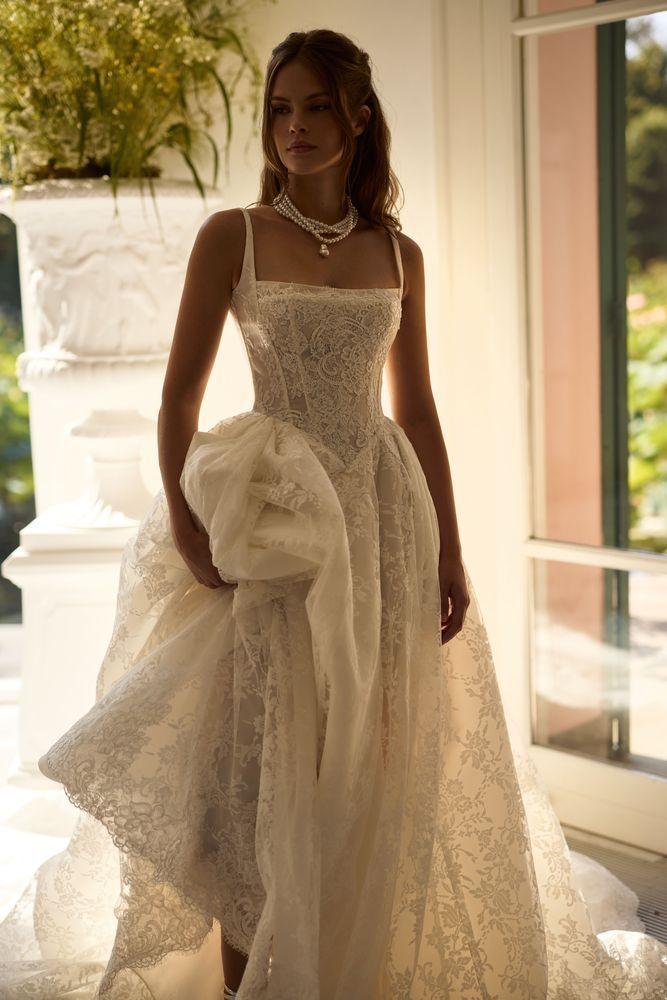
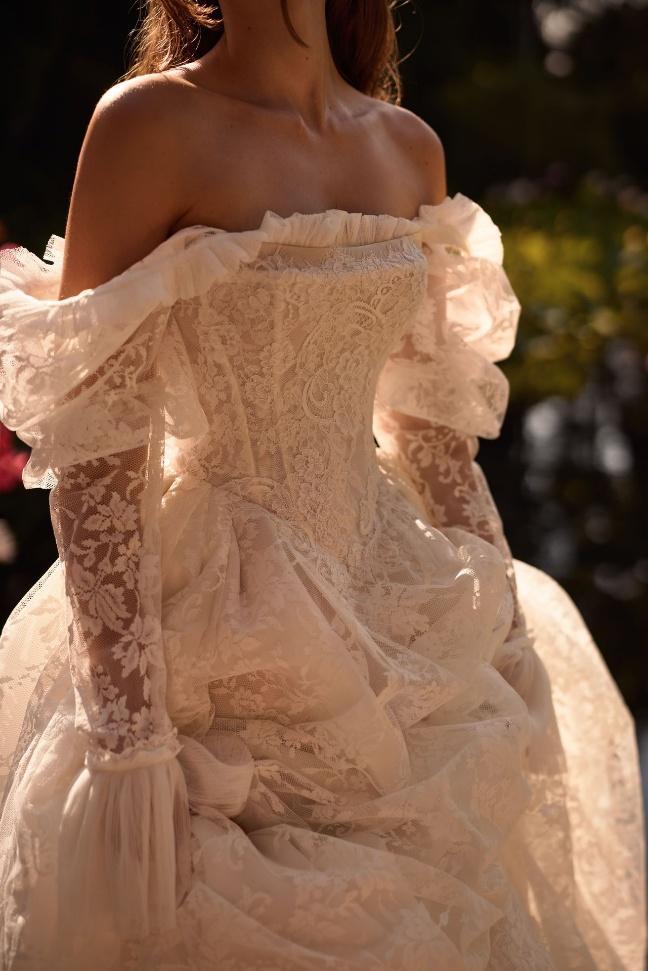
Square neckline with the option to make strapless or sweetheart. The dress also features a Basque waist and horsehair stiffening on the hips to add to waist definition.
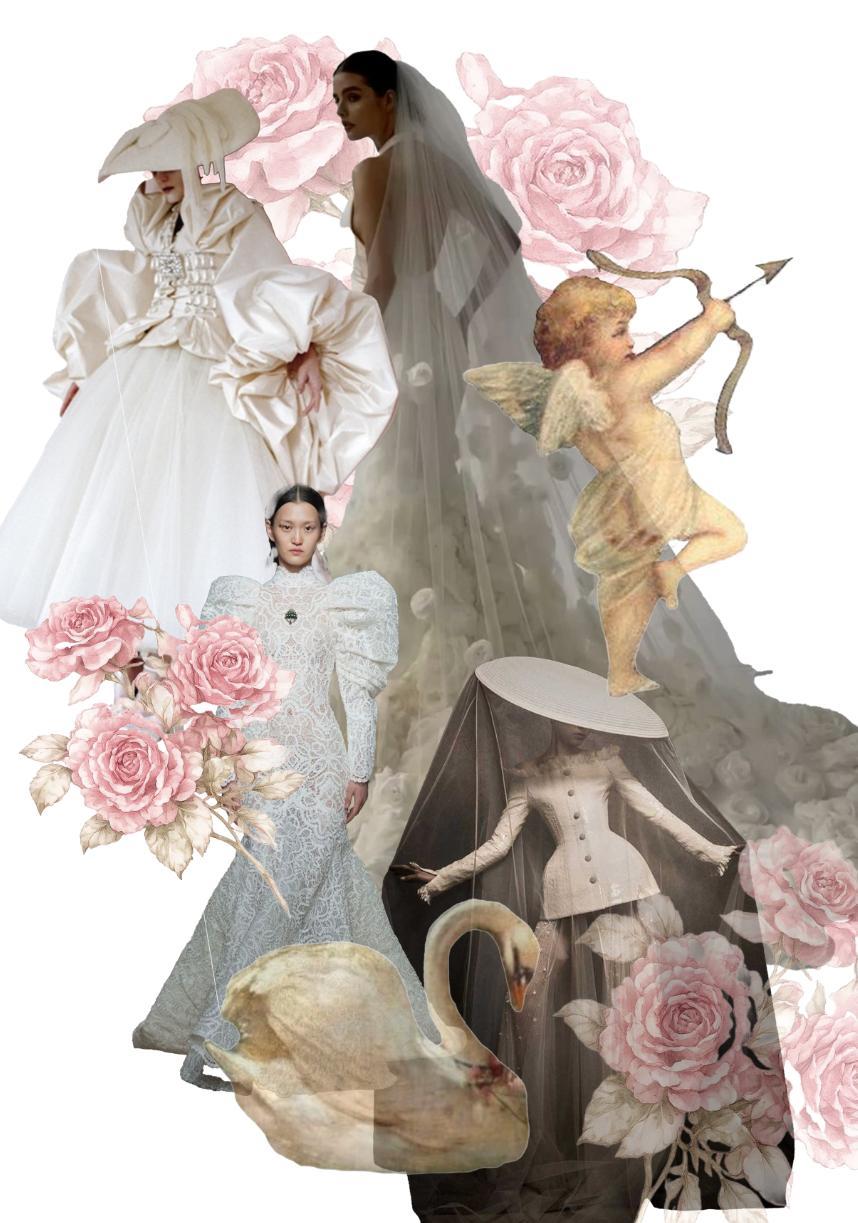
a mood board I created for my reflection on romanticism and bridal trends in the industry.
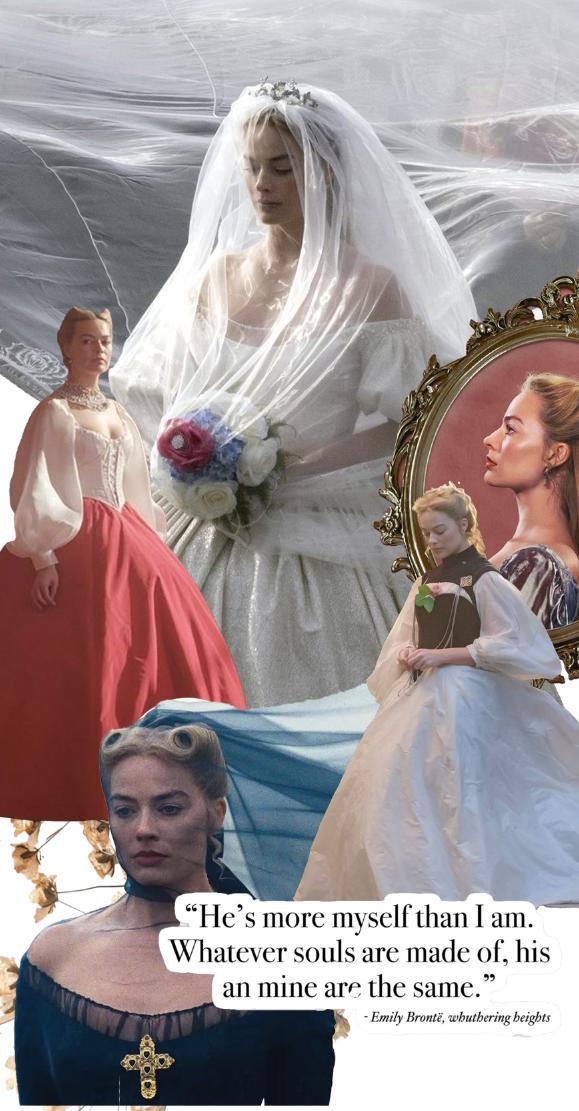
a mood board created for the influence of wuthering heights- focused on satin a-lines ( a trend that is evidently returning), Basque waists and referrals to the influence of religion during this historical era shown through cathedral length veils and gold embellished crosses. This styling technique for Margot Robbie and the film is something I want to research into further for my final pieces.
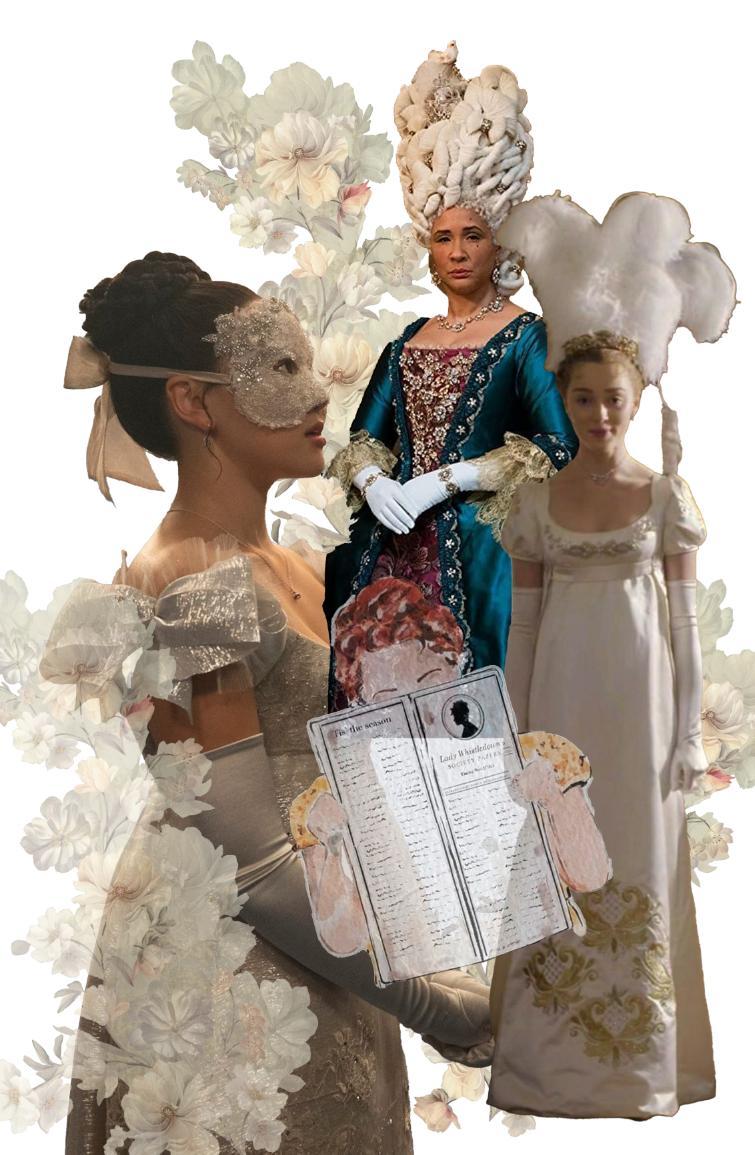
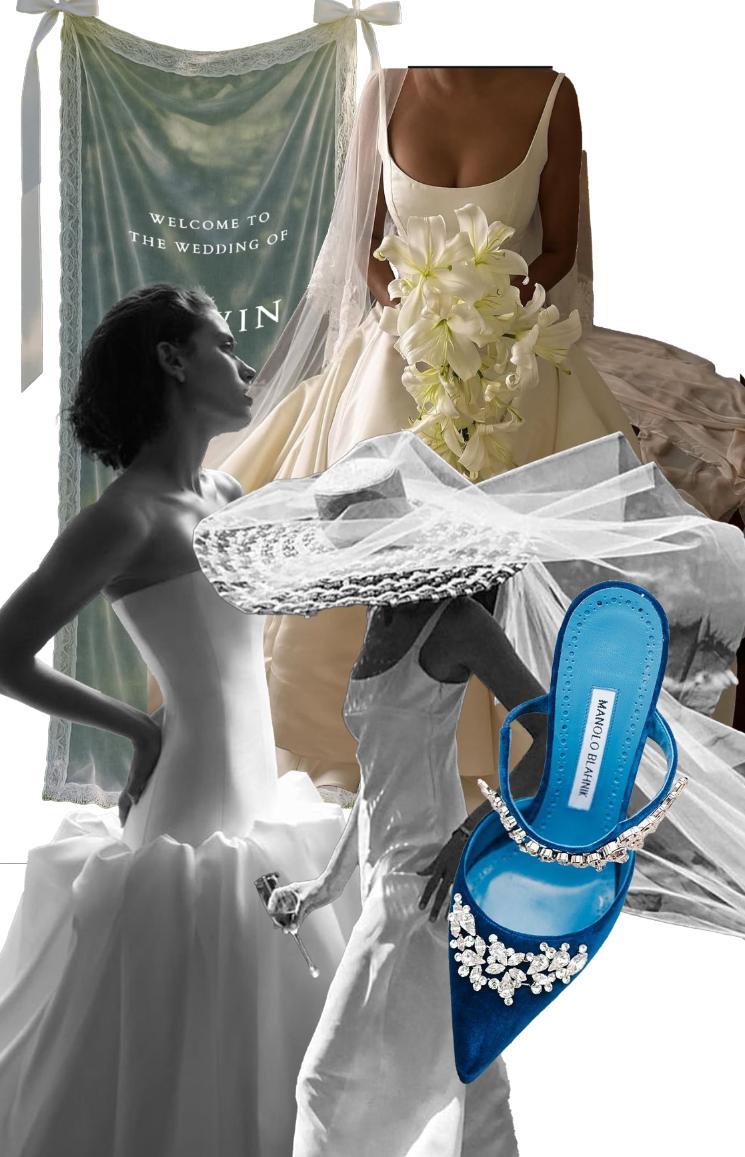
future bridal trend mood board
Significance of colours within the wedding industry:
What is the Meaning of the Color White at a Wedding? Exploring Tradition and Symbolism - OMG Hitched!

Wearing white at weddings represents not only the bride’s innocence but also the unity between two families coming together. It’s a color that signifies new beginnings and a heartfelt commitment to your partner.
The main colour showcased within bridal is white and ivory tones, having a historical meaning drawn from Queen Victoria first making the white wedding dress fashionable as it was representative of wealth and social status, due to the fact it was difficult to keep white attire clean. However, the deeper meaning of why many brides wear white is to showcase purity and innocence. This concept links back to my research into Catholicism within fashion, as when designers use religious references within designs it focuses more on pushing the boundaries of fashion such as The Madonna effect, therefore juxtaposing this religious aspect within weddings. Due to this research, this is something I want to trial within styling for my final piece by introducing religious
Researching the luxury market:
connotations into the image but to attract the fashion forward Gen Z consumer who will push boundaries and personalise through heritage and heirlooms, rather than always being tied to the stereotypical values of the colour.
The Blush Wedding Dress: What Does It Symbolize? | ShunBridal

A blush wedding dress is a romantic choice for brides who want to infuse softness and femininity into their bridal look. The delicate pink shade evokes a sense of tenderness and creates a dreamy atmosphere. It adds a touch of whimsy and ethereal beauty to the bridal ensemble, making the bride feel like a true romantic. Blush dresses embody femininity and elegance, enhancing the bride's natural beauty and complementing various skin tones.
In comparison to the traditional white wedding dress, a lot of higher end wedding dress designer utilise a blush colour tone throughout their dresses, at Knutsford Wedding Gallery, we have noticed that the higher end designers such as Galia Lahav utilise this colour way more than designers such as Milla Nova in order to portray a sense of luxury but also a sense of individualism when buying into that price point. As the blush tone for the ‘new’ wedding dresses evokes a more feminine and romantic look it’s a trend that’s here to stay. The blush colour palette will be good to trial and experiment with during styling when mixing with different coloured tulle for dramatic effect whilst still referencing the significant meaning of the colour into my final pieces.
What is the Meaning of Something Blue in Wedding Tradition
Ultimately, the symbolism of blue in a wedding goes beyond its surface-level meanings, delving into the depths of human emotions and values. It represents the profound bond between two individuals, the promises of a lifetime shared together, and the unwavering commitment to stand by each other through thick and thin.
In conclusion, the color blue symbolizes a myriad of emotions and virtues in a wedding, from love and fidelity to trust and prosperity. Its rich symbolism, cultural significance, and visual appeal make it a cherished choice for couples looking to infuse their special day with layers of meaning and significance that will resonate for years to come.
Blue within the wedding industry has become a significant trend within the past 10 years, drawing upon the marital values of love and prosperity within marriage. Quite often brides introduce this colour through styling such as her shoes or even having her bridesmaids as her ‘something blue’. This colour palette is something I want to trial within styling going forward into component 3, I also want to challenge the emerald green I chose for my logo in component 1 with a blue element to relate more to the bridal industry, rather than the luxury sector
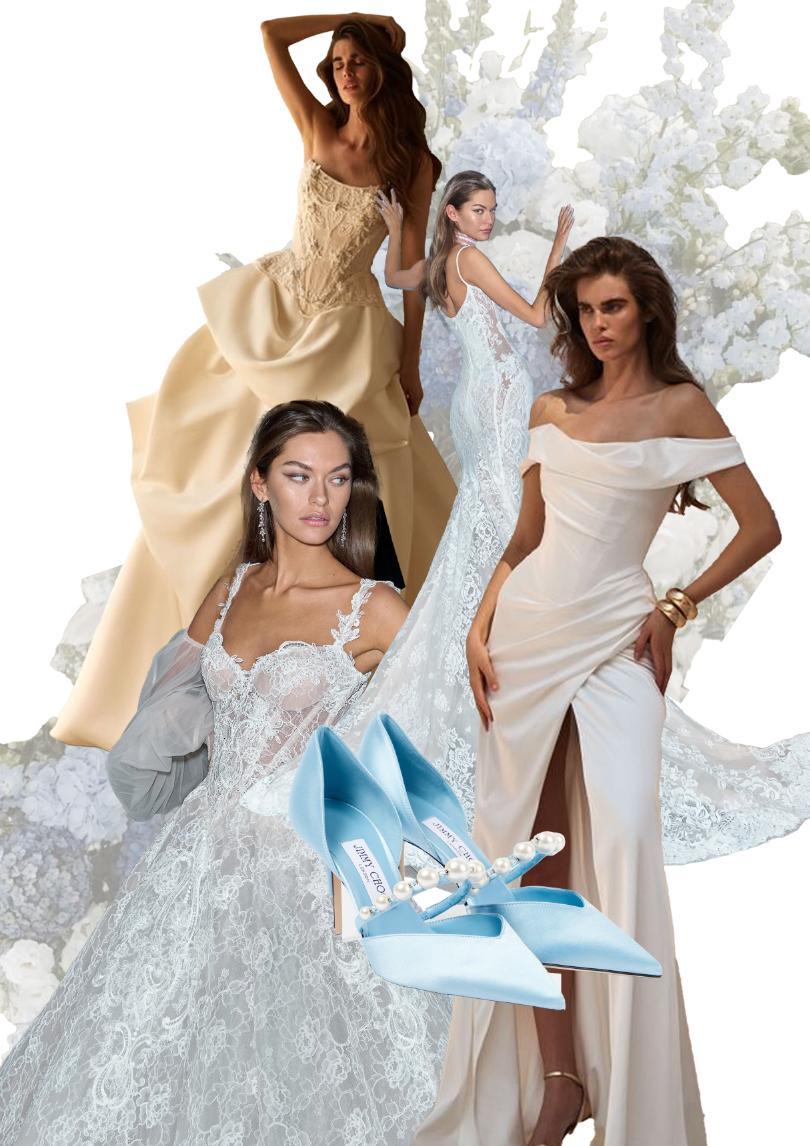
A reflective mood board show showcase my research into the significance of colour palettes within the wedding industry, also showcasing the styles that are currently in trend ie the Basque waist followed by introducing the ‘something blue’ as Jimmy Choo high heels a staple within bridal styling. I feel like this moodboard resonates with my brand and my market level as it establishes the romanticism of editorial bridal images, showcasing the level of luxury of these designs. Through introducing florals as a background, this element reintroduces the consistent theme of romanticism, something that will entice my consumer in when backed up through the concept of heritage and creating heirlooms.
What is the Meaning of the Color White at a Wedding? Exploring Tradition and Symbolism - OMG Hitched!
Tom Sebastien: the future of bridal design as an atelier:
Tom Sebastien is a polish atelier focused on bringing ‘breathtaking style and quality craftmanship’. Their designs are ‘ahead of trends’ whether that is due to the mixing of fabrics or incorporating Japanese lace (element of heritage). The atelier also manages to keep their designs exclusive by only allowing designs to feature in certain countries and boutiques.
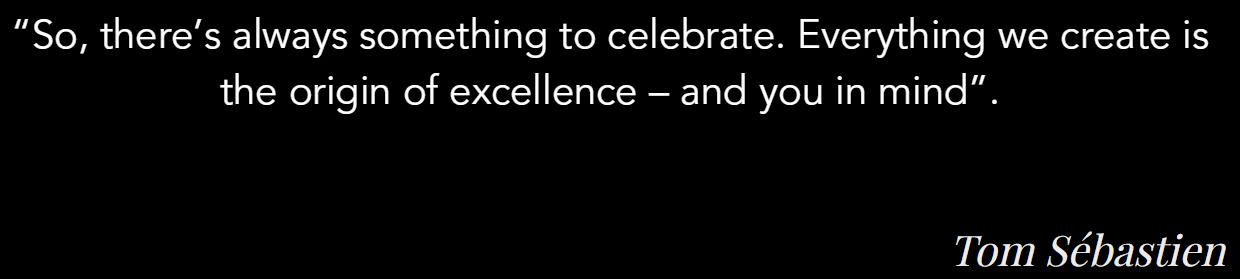
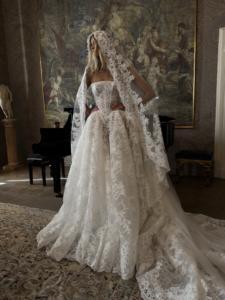
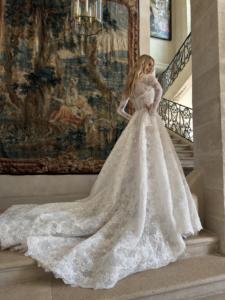
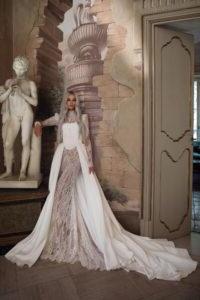
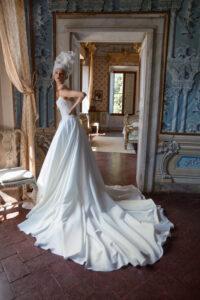
Tom Sebastien’s collection focuses on mixes between satin and lace a-lines whilst also incorporating fitted shapes in their as well (mainly for evening looks, something that is particularly desired by the Gen Z bridal consumer). Tom Sebastien acts an atelier that’s ahead of the current fashion trends within the industry, whether that’s from blending Mikado fabrics with Japanese lace (this highlights the bride’s figure but also provides this sense of elegance and drama). The use of modern lace and mantilla veils are also highly used to showcase to their European consumer; their lace dresses are normally utilising a nude slip/ undertone to their gowns.
Researching the luxury market:
After working with Tom Sebastien for over a year now, it is evident that every gown tells a story. This emotional narrative is also displayed through their editorial imagery and styling. All their imagery is curated in stately homes with large neoclassical paintings and statues in the background to reference to the romanticism period as an influence. From the styling for their shoots, this can vary to quite natural makeup, to Bridgeton inspired wigs from the regency and Georgian era or large white poodles. I think Tom Sebastien incorporate this element of styling to their imagery to highlight this sense of royalty and hierarchy to their designs, whilst also still showcasing a romantic softness to their consumer, to highlight this is the bride you will be when you buy this dress.
About us – Tom Sébastien
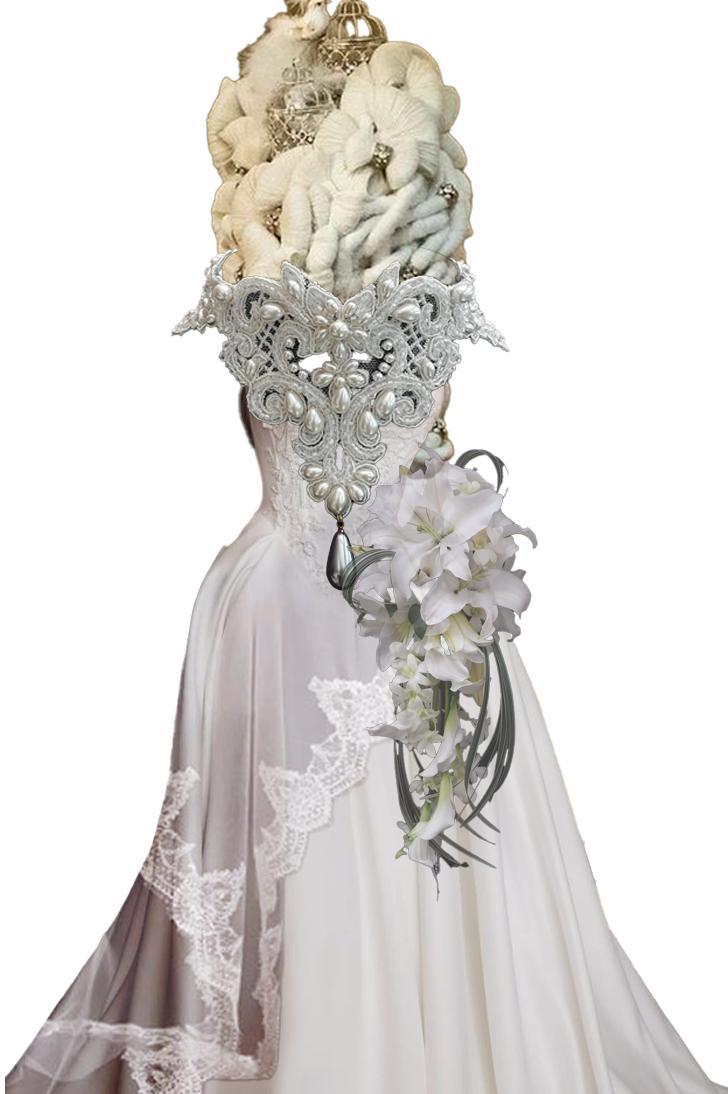
Croquis to display my interpretation of a ‘Tom Sebastien bride’- featuring satin a line skirts, Basque waists, dramatic florals, focal point chokers with pearls, and the styling of regency era wigs to play into the royal and Bridgeton ‘bride’. To develop this level of research further I want to reach a certain level of understanding within the regency era, for me to transfer this concept of styling into the modern bride’s interpretation. Overall, if I were to push this croquis further, before putting into my outcome, I would develop by adding additional styling pieces such as shoes and introducing background imagery. This would help the croquis resonate with Tom Sebastien as a brand but also my market level, as it would showcase a deeper story rather than just a curation of an image.
Regency era styling and significance:
Calling all Bridgerton fans!
At the dawn of the 19th century, a.k.a. the Regency Era, bridal fashion was heavily influenced by the Empire style, which originated in France under Napoleon’s rule. The Empire waistline, positioned just below the bust, created a long, flowing silhouette that emphasized the natural curves of a woman’s body.
This high-waisted design was a reflection of the society’s neoclassical inspirations, where women’s fashion was all about light, airy fabrics and a graceful, understated look. That easily translated to weddings, with white gowns made of muslin or silk and embellished with delicate lace and ribbons.
Think: Daphne’s gown when she married the Duke. And to this day, brides still love this ultra-feminine style.
Basque Waist
Nearing the turn of the century, the evolution of the hourglass figure peaked with the Basque waist ball gown, a popular style during the Gilded Age. The structured skirt, propped up with crinolines and petticoats, was offset by its corseted bodice which featured a deep V-shaped waistline that dipped well below the natural waist.
This striking silhouette accentuated the waistline as the focus point of the gown, enhancing the female form and adding a hint of sexuality that would foreshadow the flapper gowns of the Roaring 20s.
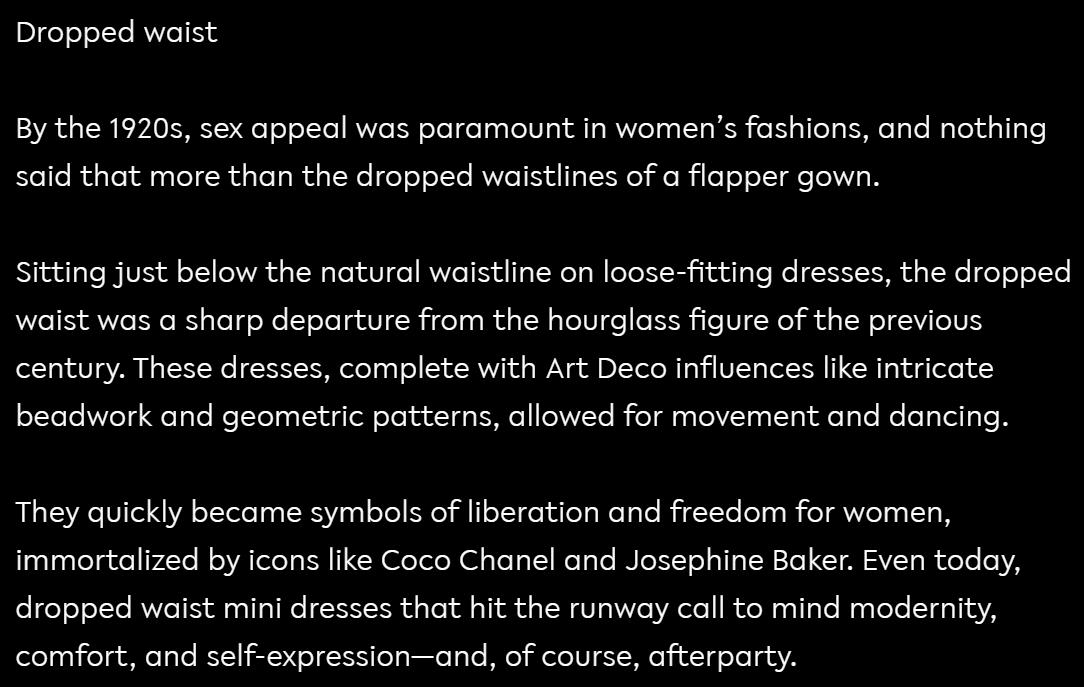
By the 1920s, sex appeal was paramount in women’s fashions, and nothing said that more than the dropped waistlines of a flapper gown.
Sitting just below the natural waistline on loose-fitting dresses, the dropped waist was a sharp departure from the hourglass figure of the previous century. These dresses, complete with Art Deco influences like intricate beadwork and geometric patterns, allowed for movement and dancing.
They quickly became symbols of liberation and freedom for women, immortalized by icons like Coco Chanel and Josephine Baker. Even today, dropped waist mini dresses that hit the runway call to mind modernity, comfort, and self-expression and, of course, afterparty.
The Evolution of Waistlines
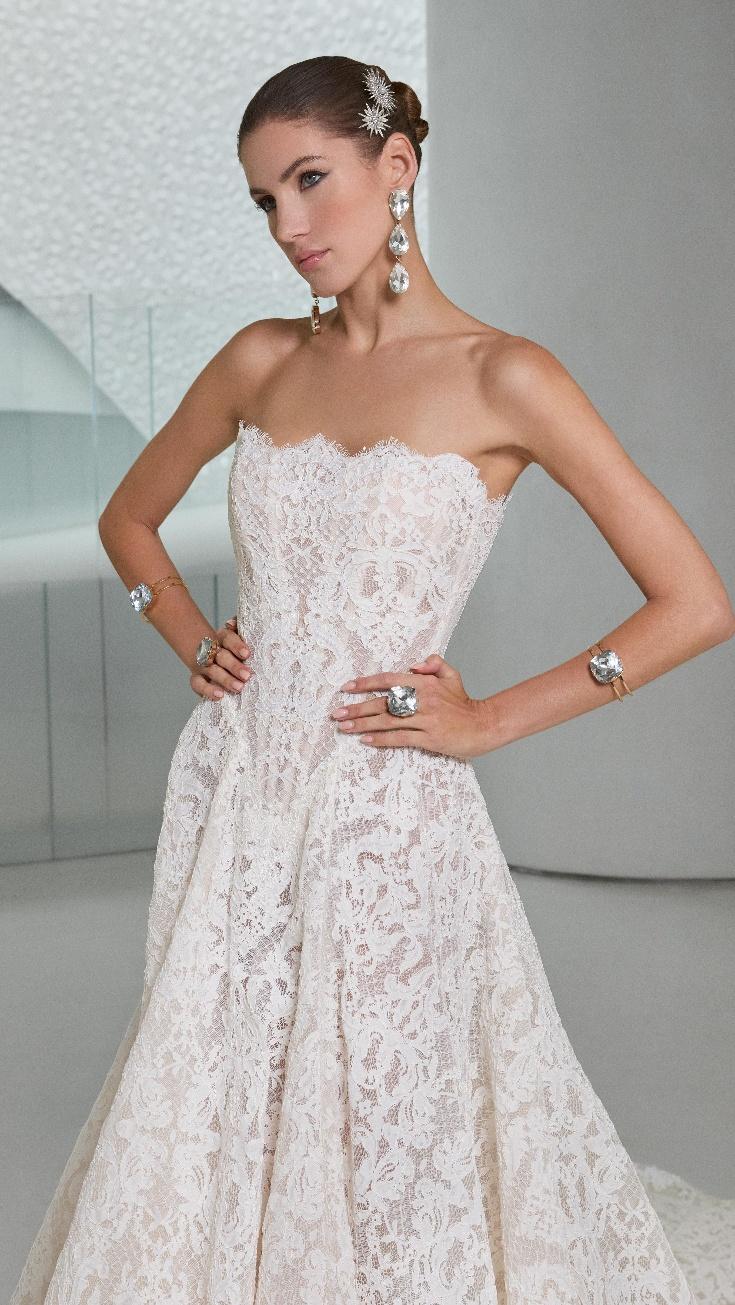
After reflecting on current trends in bridal and what styles we have at work, it was evident that Basque waists are the current trends, however, dropped waists are also coming more into fashion again, as well as empire waists due to the influence of Bridgeton (The Regency Era). To conduct more research into the significance of the types of waist definitions I analysed different articles to establish what eras and movements have influenced bridal fashion the most. I utilised this article by Galia Lahav, as I believe their a -line dress ‘Splendid’ will be one of the most successful dresses entering 2026 as it features a blend of a dropped and Basque waist. This combination of designs is something I could experiment with and dramatize for my final piece, to demonstrate my interpretation of the modern bride.
Researching the luxury market:
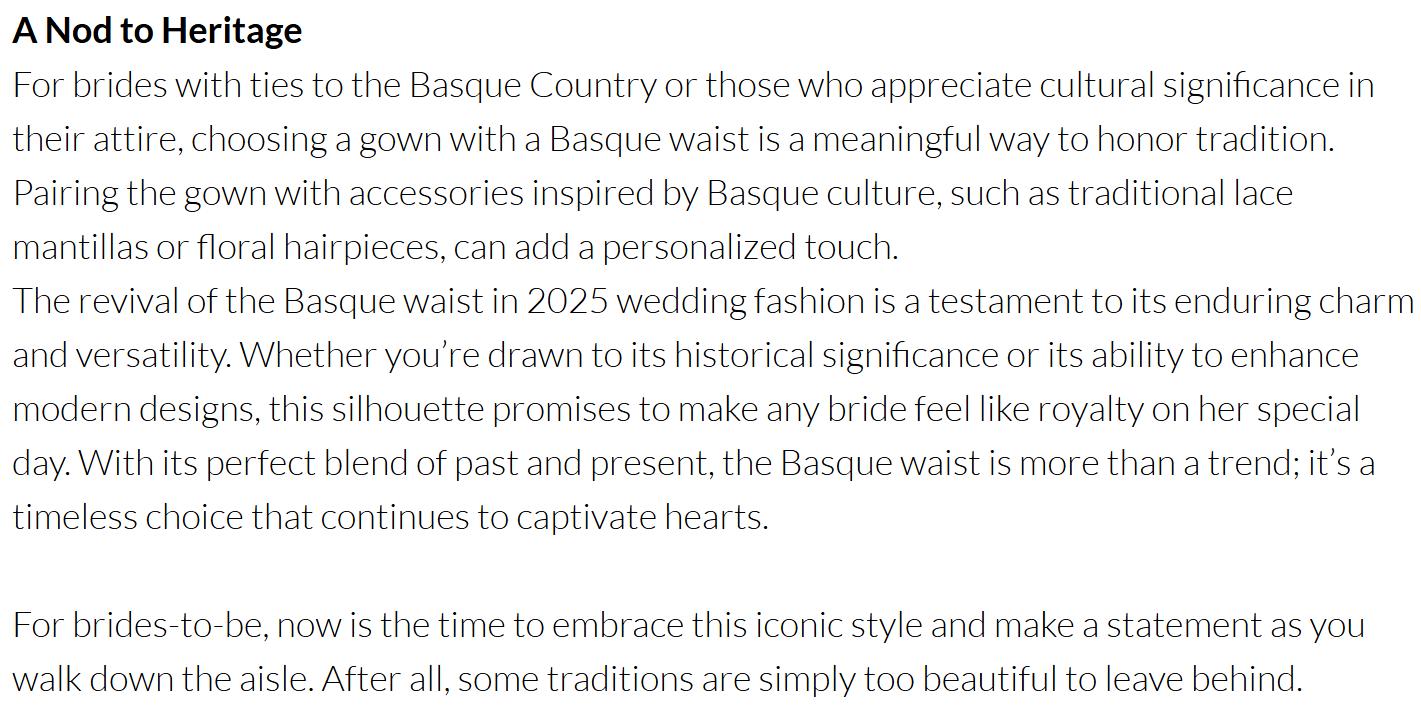
For brides with ties to the Basque Country or those who appreciate cultural significance in their attire, choosing a gown with a Basque waist is a meaningful way to honor tradition. Pairing the gown with accessories inspired by Basque culture, such as traditional lace mantillas or floral hairpieces, can add a personalized touch.
The revival of the Basque waist in 2025 wedding fashion is a testament to its enduring charm and versatility. Whether you’re drawn to its historical significance or its ability to enhance modern designs, this silhouette promises to make any bride feel like royalty on her special day. With its perfect blend of past and present, the Basque waist is more than a trend; it’s a timeless choice that continues to captivate hearts.
For brides-to-be, now is the time to embrace this iconic style and make a statement as you walk down the aisle. After all, some traditions are simply too beautiful to leave behind.
The Return of the Basque Waist - A Timeless Trend for 2025 Wedding Gowns
I chose to research into this article, due to the reference of the heritage, a critical part to my research so far. I wanted to utilise this research to showcase the reasoning behind the next future trend of bridal, as referring to previous research it is evident that Gen Z bridal consumers want emotional storytelling and this curation of heirlooms to pass down.
Nothing speaks to a romantic wedding more than the flicker of soft candlelight. “When Laura and Zack wanted to set the tone for a truly romantic day, we immediately knew the mixture of tall tapers, pillars, and votives with low, lush florals would evoke an intimate and romantic feeling for them and their guests,” says Sarah Worsley, owner of Mint Julep Productions
Scattering romance poems and love notes around your reception is a sweet and memorable touch. Plus, guests can take home this decoration as a favor that will remind them of all the love from your big day.
Romanticism has always been a common theme within wedding styling. To start gathering research into how I could style and narrate my final image I wanted to research into how I could interpretate the influence of romanticism as a promotion for my agency. As I take this research forward, I think it is critical that there is a continuous reference to florals and the softness contrasted with the volume and drama of the final image. And that the editing should feel dark but romantic to reiterate the narrative. To back up this research I will find industry leaders who follow this narrative to create visual mood board references.
23 Romantic Wedding Ideas You'll Fall For
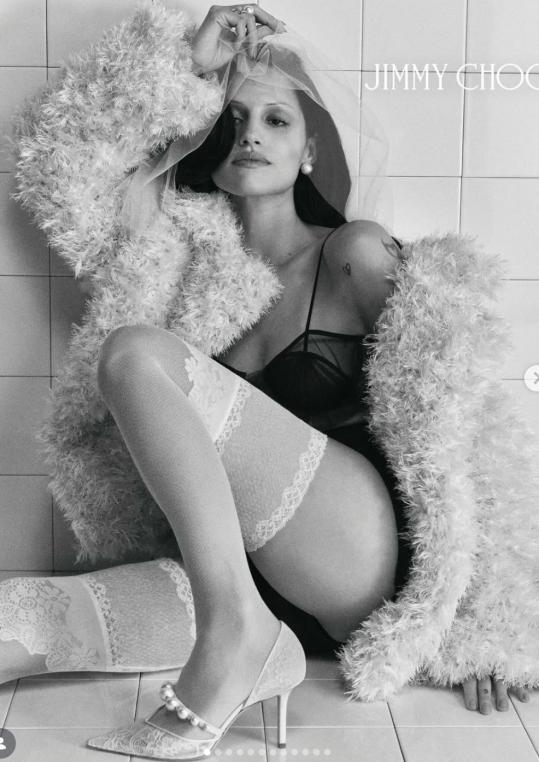
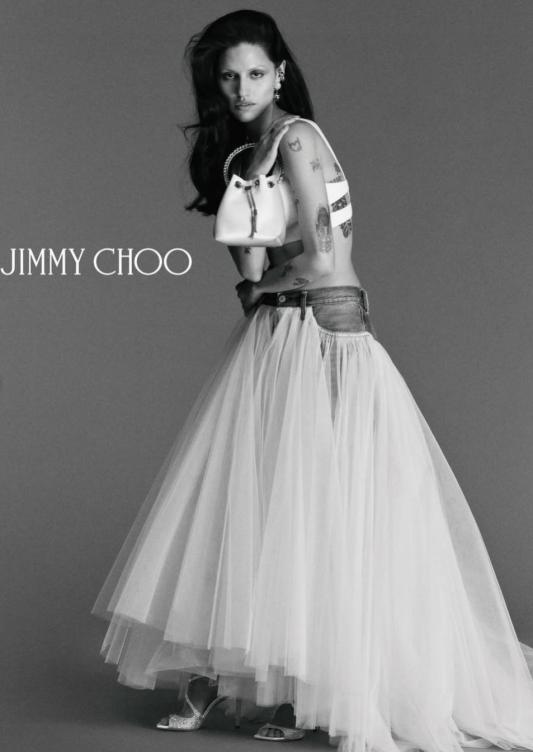
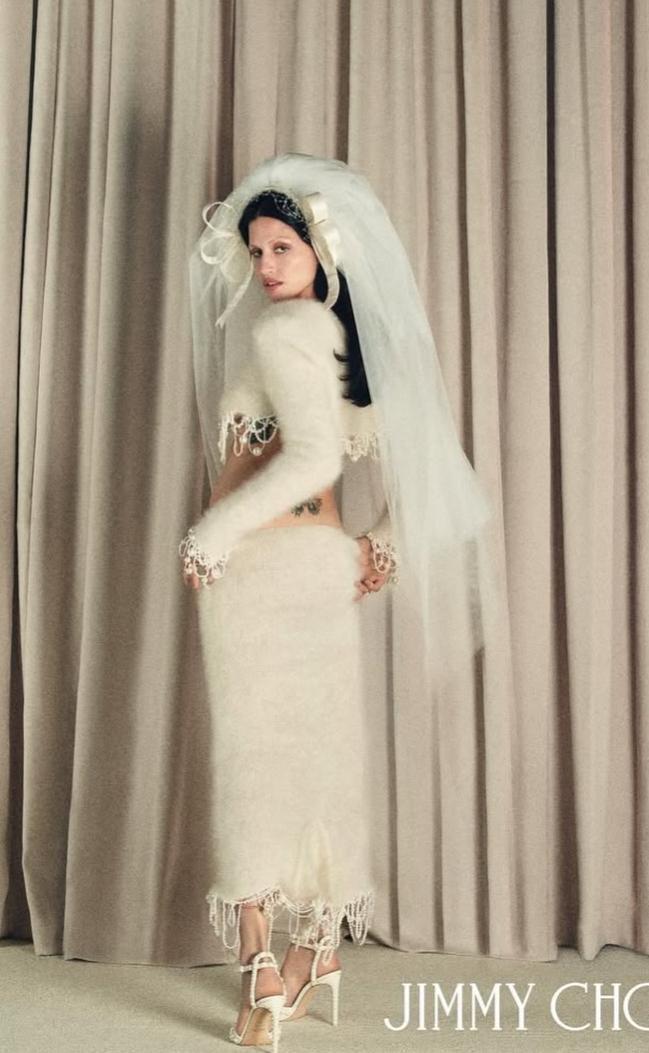
Jimmy Choo’s have always been part of luxury bridals ‘codes’ due to their level of understanding of the consumer and always capturing the essence of the luxury bridal consumer. ‘Rules of Engagement’ their new bridal 2026 collection ‘reframes the traditional wedding wardrobe’. Their styling still utilises traditional elements such as the lace stockings, tulle veils and iconic lace bridal heels. However, they have altered the perspective to showcase to a modern consumer with tulle a line skirts over jeans, fur coats and midi length skirts paired with crop tops. This blend of styling showcases the brands transition into the modern Gen Z consumer,
with their desire for individualism and personalised concepts. These are elements I also want to draw upon within my styling for my final piece.
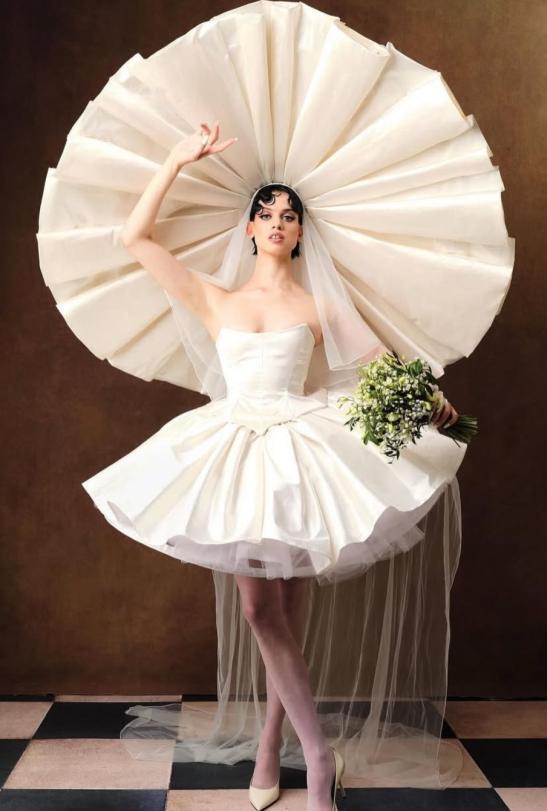
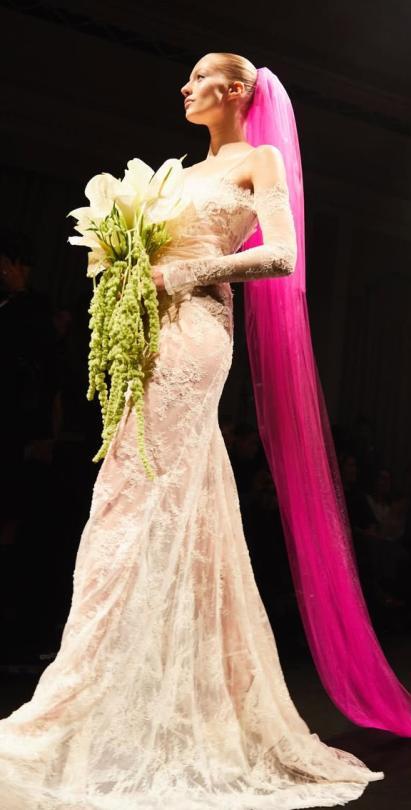
The debut of Harris Reed’s bridal collection 2026.His new collection highlights the modern bride and the element of personalisation through coloured veils, bouquets as art forms and unconventional headpieces and dress constructions. However, as Reed transitions away from the traditional bridal concept he still refers constantly back to the influence of romanticism, whether that’s through Chantilly lace of Basque waists. Through analysing Reed’s collection, It is clear that the Gen Z Bridal consumer, when buying into this luxury space is looking to be different in a way to curate their own personal narrative.
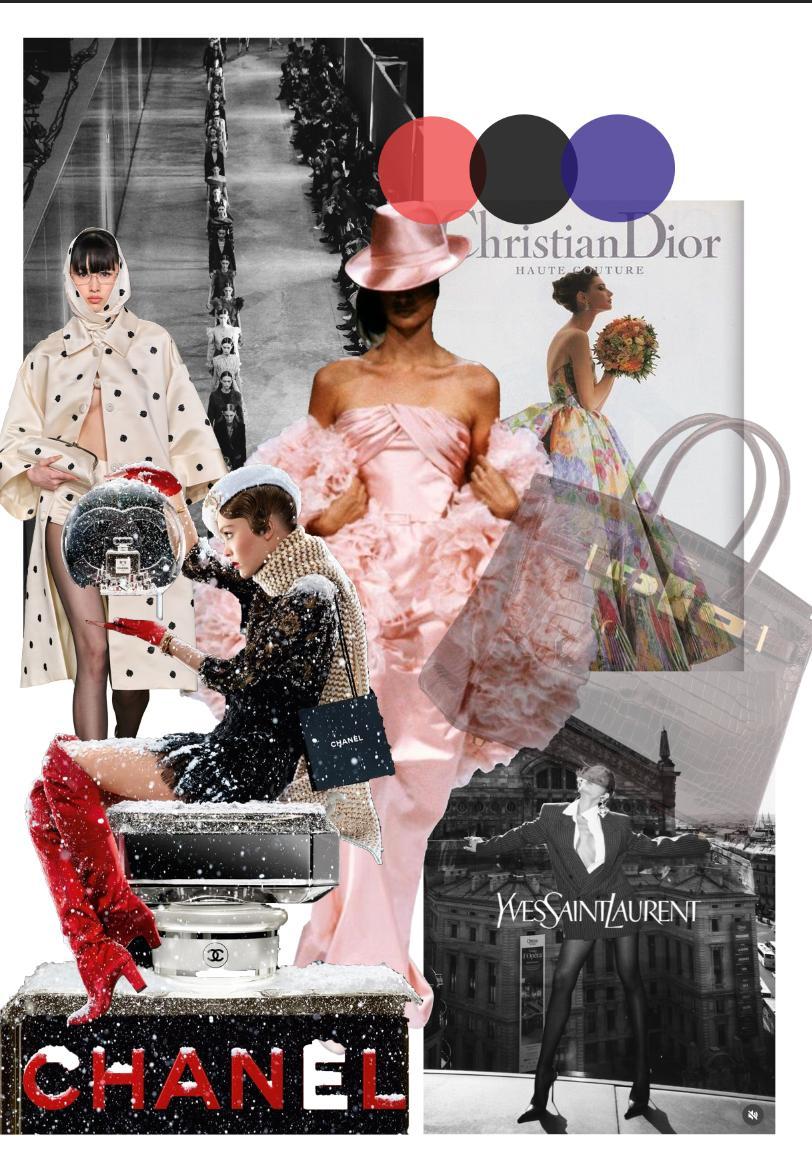
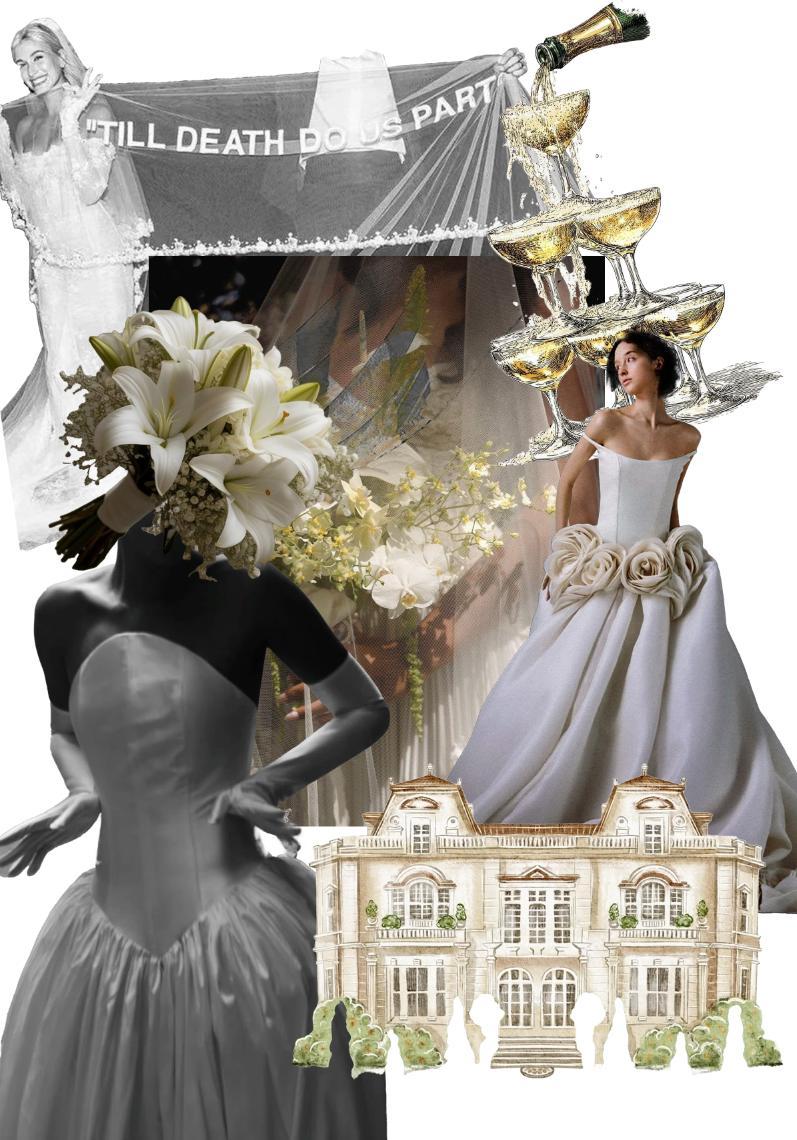
Comparison of the markets: After reflecting on my research into both the luxury market and bridal market, I decided to showcase the comparisons visually to help me understand my future consumer, and how I can potentially blend both for my business in the future. Even though both Luxury and bridal markets curate narratives for their consumer, Haute Couture often features more bolder colours whilst still being influenced and driving trends. On the other hand, Bridal still goes through trends but often shown through shapes rather than fabrics and colours. Bridal is also still always heavily influenced by romanticism. The luxury market sells to the wider consumer, even if not directly to the luxury consumer, the trends shown on the runway will trickle down the market level, whereas with bridal, each piece tells a different story and becomes personalised for each consumer rather than the mass.
Overall, there are many similarities between the haute couture market, and more specific bridal luxury market, however one key element I want to take forward is the importance that each curation of the narrative in bridal should be independent and personalised to make each bride feel special compared to the generalised haute couture market where each story is more theatrical to attract the top tier concept luxury consumers.
Analysis of current brands in the market:
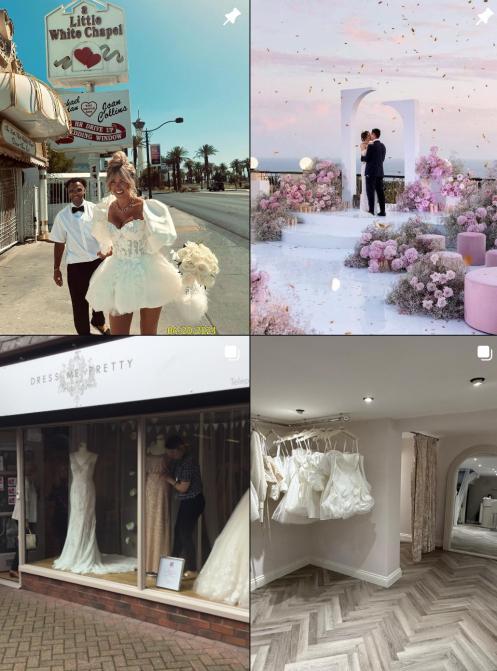
@yoursocialsmanager- Instagram- a business that drives views ans sales for both bridal boutiques and brides themselves. Even though it is clear she has a very close relationship with her clientele, her clients vary meaning clear storytelling isn’t evident through her own branded socials, this is reinforced by every post sharing details on KPI’s.
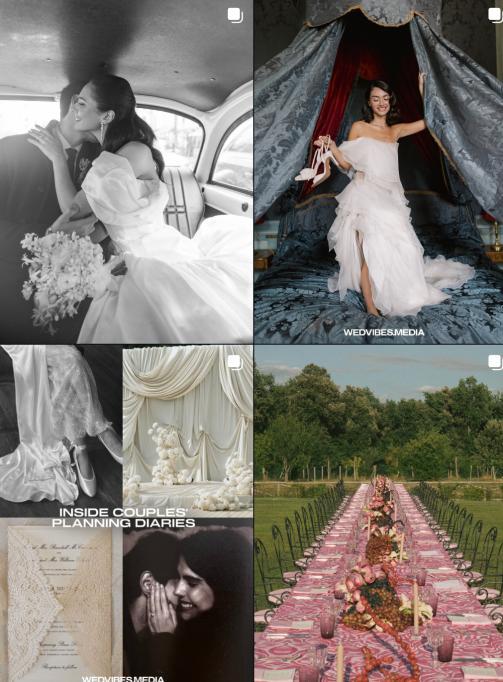
@wed_vibes- Instagram- A curated Instagram page almost like a pinterest just for weddings, taking inspiration from current trends whilst also speaking to other brides. The page is heavily branded and clear emotional storytelling of the brand she wants to create. After Reflecting on both brands, I feel like my brand would be situated closer to @wed_vibes due to the curation of her brand
Overall, within the bridal market there are evidently still brands fuelled by statistics and sales such as Berta, now they have established their brand they have become more
Researching the luxury market:
generalised for a wider audience. This is like @yoursocialsmanager, focused on driving sales for her wider audience. On the other hand, Tom Sebastien attracts a more niche consumer, drawn to emotional storytelling and the curation of the dress. Tom Sebastien also attracts the higher end more personalised consumer, due to the designers working so close with clientele they can provide the personalisation aspect, something that Gen Z brides are drawn to. Reflecting on our own brides at KWG, the designer is loved due to its UK exclusivity as well, automatically meaning the brand becomes a part of Cheshire bridal socialite’s attire.
I felt like it was beneficial to research into other agencies and brands already established in the market to figure out the baseline of success for my own agency. This process highlighted to me the importance of relating to your audience and allowing your brand to be driven by a niche to capture your audience.
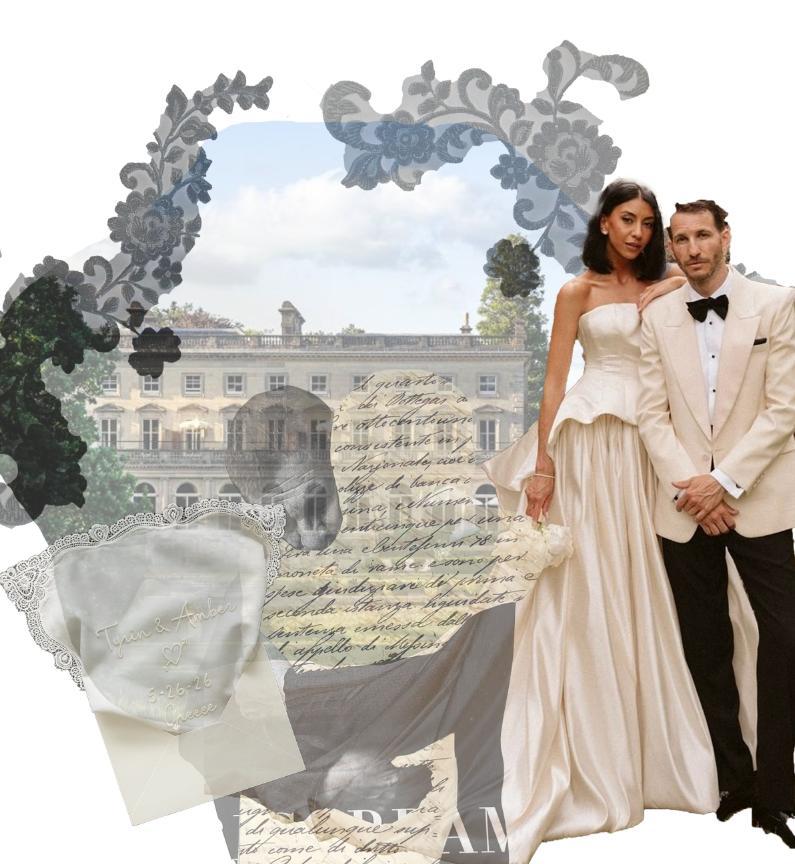
A mood board I created to show the generalised target audience for my brand. Weddings would feature in grand stately homes, showcasing timeless elegance and English heritage. Followed by the bride and groom being in fashion forward yet elegant attire, influenced by romanticism and shown through A-line shapes and Basque waists. The key concept would be dedicated to creating heirlooms and memories through emotional storytelling and curation of the narrative. This links to my brand concept, as I want to follow the route of creating heirlooms for each couple and representing this English heritage. This mood board also reinforces the codes of romanticism weddings and the romantic bride and how she wants to be perceived and understood.

Croquis, I created to establish the Cheshire consumer and the generalised target audience for my brand. I based my concept off the element of heritage and British countryside culture, drawing upon the brand of Fairfax and favour utilising traditional colours such as nude and navy. I utilised this brand within my consumer profile, as its at the luxury clientele that I’m working towards and is aligned with the element of heritage and culture.
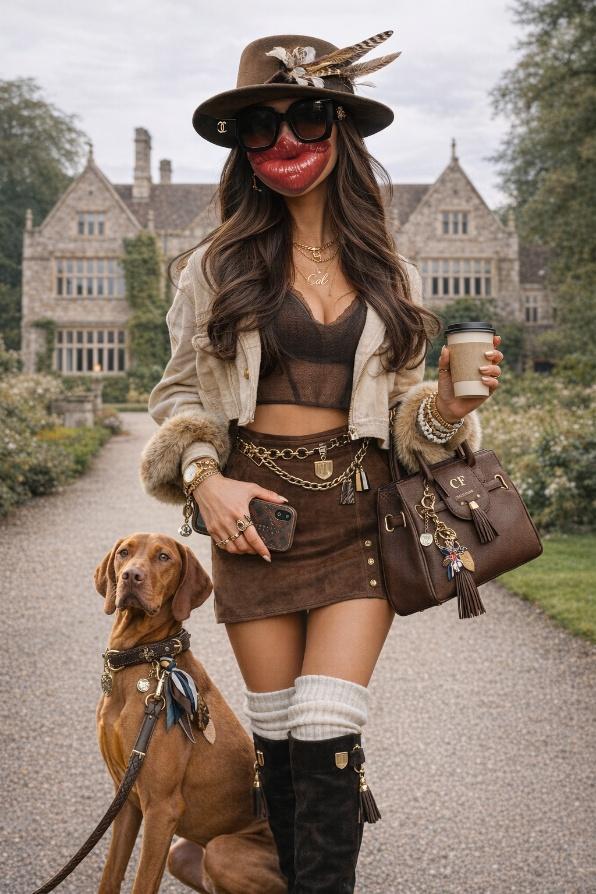
As a reflection of creating a croquis for the Cheshire consumer, I decided to take it into AI and ask it to transition it into their own interpretation on of the Gen Z consumer. A strength of this image is the identification of personalisation as seen on the bag and charms on the bar plus the dog’s collar, an element of which Gen Z consumers are leaning towards, as seen in the luxury bridal industry and predicted trends. However, I think a weakness of the croquis is the change from covered and traditional style dress into crop tops and miniskirts, something a young Gen Z consumer would potentially lean towards. This highlighted and reiterated to me the need to keep the heritage and traditional countryside British culture circulating through these brands to showcase Gen Z the depth and storytelling of the brand rather than the need to change it.
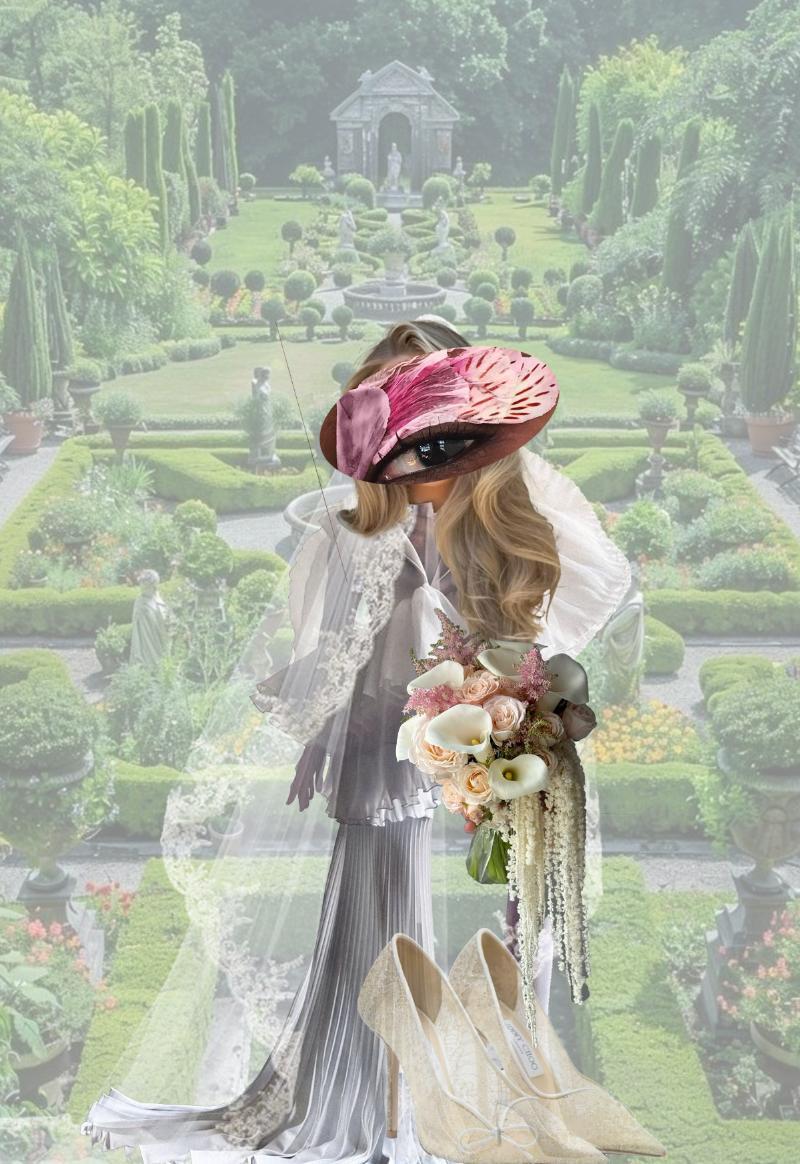
Consumer profile croquis- The romantic and heritage bride- to depict this consumer I utilised a formal garden as a venue followed by the man dress being a tulle pleated outfit, showcased in non-traditional wedding dress attire to depict the Gen Z consumer wanting to be different. To reinforce the element of romanticism I utilised pink florals and lace Jimy Choo heels (as previously researched) to showcase the styling for the romantic Gen Z bride.
What is my Gap in the market?
From my research so far, I have established that the gap in the bridal market is the creation of an agency that can be utilised as content and planning for brides, boutiques and designers that curate emotional narratives rather than focusing on just sales and KPI’s. The brand would reinstate the influence of heritage and creating heirlooms rather than trends whilst always keeping the clientele and romanticism at heart. Eventually, the agency could expand into occasion wear and other sectors to reinforce and continue brand loyalty with existing clientele. I believe that is is an important market to fill as we are entering the Gen Z bridal era, they want to be understood and guided by someone that has over 4+ years of experience in the industry and is also driven by meaning and the curation of emotional heirlooms.
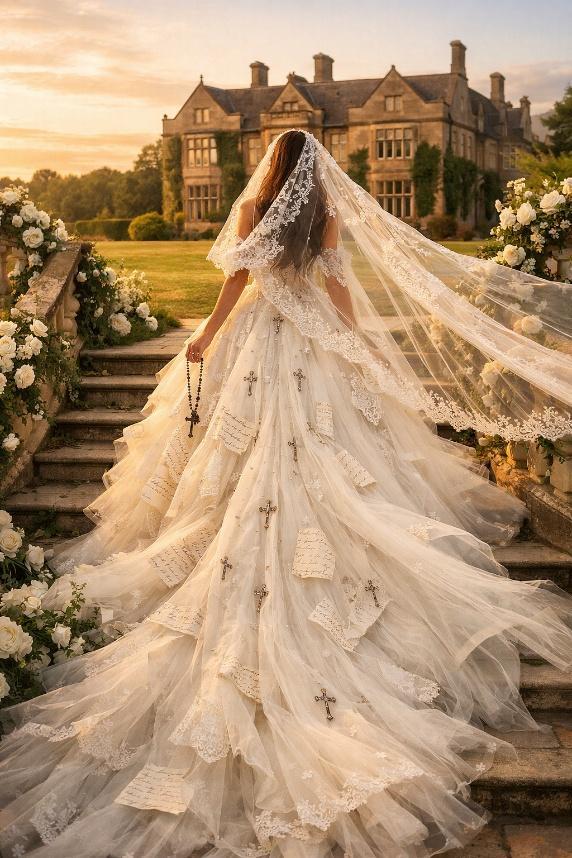
AI generation of my interpretation of what a potential final image could look like for the gap in the market. - One concept I have for my final images is a model being featured on the steps of a garden outside a stately home, referencing to Bridgeton aesthetics. Utilising tulle draped over the face and to create romantic sculptural concepts over the body. I also want to incorporate religious objects such as crosses and rosaries, once again to link to the influence of traditionality and my research into Catholicism as a link to heritage. Another concept I want to explore is incorporating famous love letters into my design to cover the aspect of personalisation desired by the Gen Z consumer.
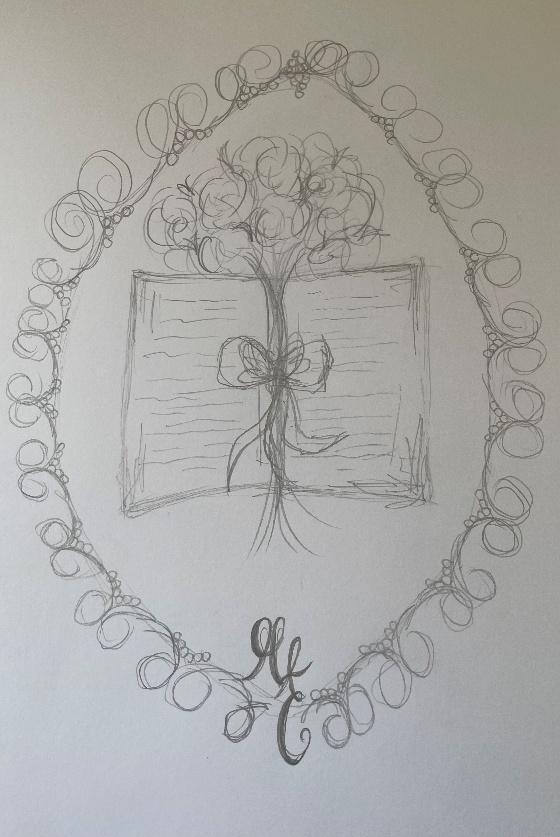
Illustration depicting the gap in the market- heritage drawn from emotional storytelling and curation of the narrative, focus on bridal (shown through the bouquet coming out of the novel).
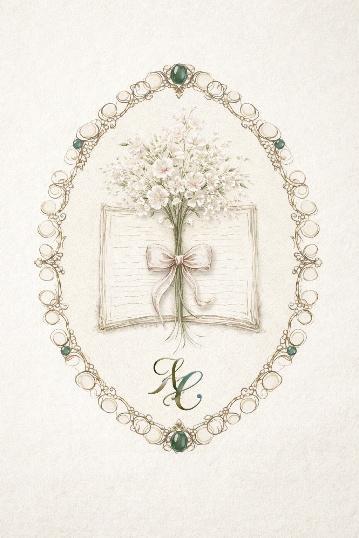
AI generation of illustrated drawing. Captured the romantic essence with florals and open book to highlight the emotional narrative. The colour scheme is on market level using neutral tones continuous in bridal with the element of emerald, green (a luxurious colour that represents my brand as highlighted within component 1). Going forward into component 3, I want to explore further and revert back to my logos from component 1 to see whether they are still highlighting my gap in the market to use them as future trademarks/ logos.
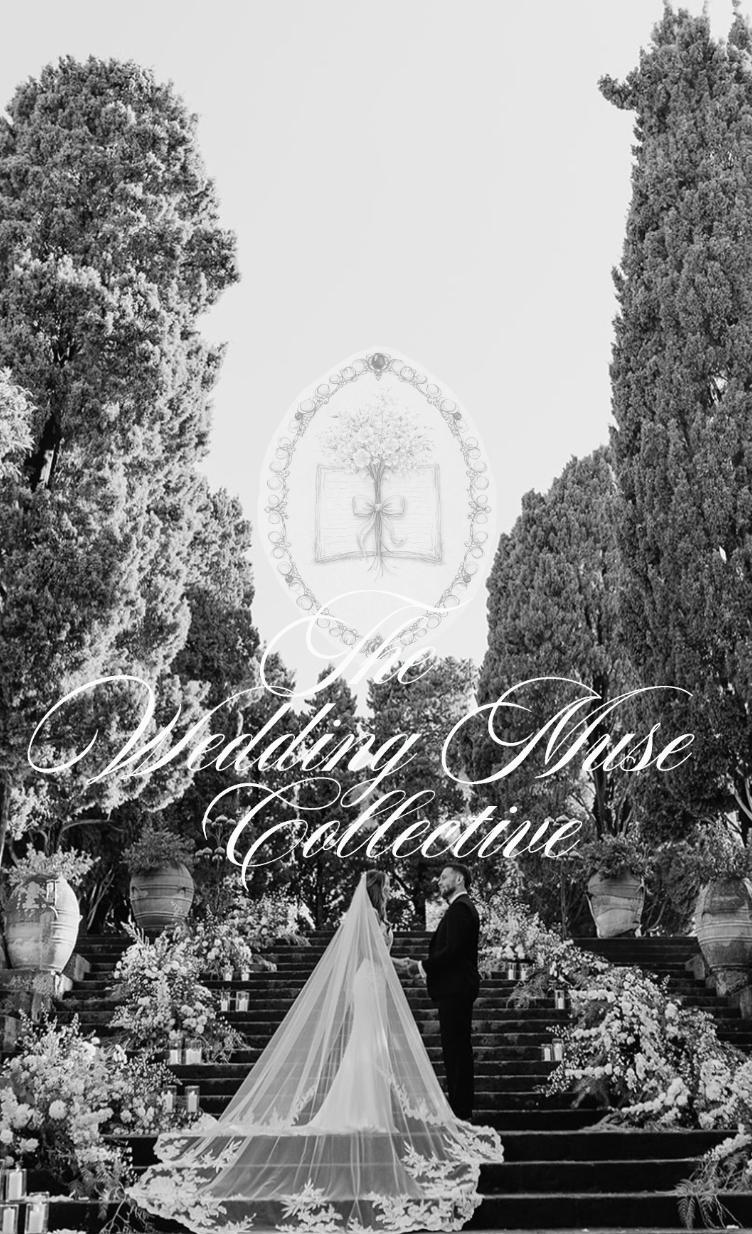
To conclude my case study, I created a mock-up of potential content for my brand. For this image I went through Lucy Henzells photography, A photographer that a lot of brides from cheshire utilise. She always captures the essence of the wedding and narrates the story beautifully through photography. I feel like this image from Emily and Gareth’s wedding in Sorrento, speaks with my brand due to the European/ romantic consumer, heavily driven by romantic florals, heritage and Catholic Italian culture. To develop the image, I placed the emblem I previously created over the top at the forefront of the image, then layered ‘The Wedding Muse Collective’ as the name for my agency over the top. I Utilised the monochromatic effect for the image and the white colour for the font to drawn people in allowing the couple and the text/ logo to be the forefront of the image. Even though I have utilised monochromatic tones for this mock-up image I want to curate the narrative through colour for final imagery to portray this romantic narrative, however, I will also explore the monochromatic tones again within post-production for a strong editorial effect.