Maintaining Peak Performance: How
Vital is Energy and Vitality Management for finance practitioners?

一、
Introduction
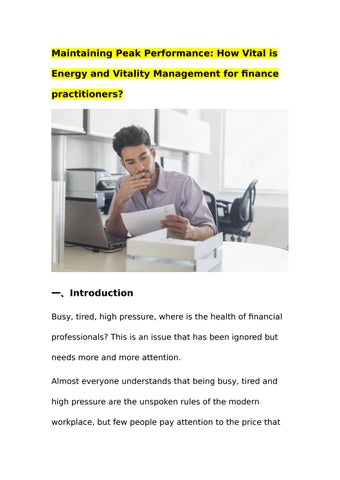
Busy, tired, high pressure, where is the health of financial professionals? This is an issue that has been ignored but needs more and more attention.
Almost everyone understands that being busy, tired and high pressure are the unspoken rules of the modern workplace, but few people pay attention to the price that
company employees pay for this in terms of health and lifestyle.
According to the survey results of Buck Consulting, an international health consulting and research company of non-governmental organizations, on 3,000 companies in 35 countries for six consecutive years, various health problems caused by psychological stress are becoming more and more common worldwide, and there are common problems such as long-term overload, overwork, and high incidence of chronic diseases. "The financial, investment banking and consulting industries are the most stressful among all the industries participating in the survey." said Wolf Kirsten, founder and president of International Health Consulting.
Long-term high pressure and overwork not only affect physical health, but also impose a serious burden on mental health. The pressure faced by financial practitioners comes not only from heavy workloads, but
also from high expectations for career development and fierce competition.
However, the fundamental solution to this severe situation is that practitioners in the financial industry should realize the importance of health and take proactive measures to improve their own conditions.
二、
What health challenges are financial professionals facing?
1. Long working hours and lack of exercise
Work is an integral part of our lives, and scientists have revealed the surprising connection between working hours and health, which has brought us a huge shock.
Working 8-10 hours a day is generally considered the best choice to balance productivity, health and quality of life.
At this work intensity, we usually don't cause any trouble to our bodies because of work, but with the fast-paced development of modern society and the increasing competitive pressure, more and more people are trapped
in the quagmire of long working hours.

There have been many scientific studies showing that long working hours can bring serious health risks, especially related to cardiovascular disease. Sitting for a long time, lack of exercise and long-term high stress can all put a burden on the cardiovascular system. Studies have shown that people who work more than 55 hours a week have a 40% higher risk of heart disease than those who work 40 to 45 hours a week. At the same time, long working hours also increase the incidence of stroke.
It is reported that the Global Physician Association Health Management Branch and others jointly released a report on the health status of financial professionals. This report summarizes the questionnaires of nearly 100,000 financial industry practitioners. Comprehensive data analysis found that the average person working in the financial industry works more than 12 hours a day, among which more than 50% of practitioners work 46 to 55 hours a week, and 43.7% of people work nearly 60 hours. The report further pointed out that the incidence of cardiovascular disease in financial practitioners is significantly higher than that in other industries. These health problems not only affect the quality of life of individuals, but also pose a threat to the productivity and sustainability of the entire industry.
2. Irregular diet and lifestyle
The reason why the financial industry is generally regarded as a high-pressure industry may be highly related to the lifestyle that Wall Street has long advocated.
In Wall Street, in addition to wealth, money and promotion, there is also a popular word called "Seamless Belly".
Seamless originally refers to a meal ordering website commonly used by Wall Street people. After adding Belly, the meaning of this phrase has become "abdominal fat accumulation caused by always eating food on Seamless".
Although they know that high-fat, high-calorie diets will not only lead to abdominal fat accumulation, but may also bring more serious health risks, they have no choice.
Henry Jiang, a former JPMorgan analyst, explained: "When work pressure is high, people tend to gain weight. You can't always eat healthy foods such as salads. Only highcalorie foods can counteract high-intensity work."

However, this "Seamless Belly" phenomenon is just the tip of the iceberg of the impact of the high-pressure work environment in the financial industry on health. Other unhealthy lifestyles frequently seen in financial professionals include: Irregular eating times: Busy work leads to irregular eating habits, which may affect the digestive system and metabolism. This is also the main reason for the extremely high incidence of gastric diseases among financial professionals. Many financial practitioners are under great work pressure and often need to deal with tight deadlines
and frequent meetings, which results in them having no time to eat on time, and sometimes they can only fill their stomachs with fast food or unhealthy snacks. Long-term irregular eating can lead to abnormal gastric acid secretion, which can easily cause excessive gastric acid or gastric acid reflux, affect the normal peristalsis of the stomach and intestines, increase indigestion and lead to gastritis, gastric ulcers and other gastric diseases.
Excessive drinking: In social activities, financial professionals often need to frequently attend various banquets and parties, and alcohol consumption is a common social means in these occasions. However, excessive drinking may cause multiple burdens on health, leading to fatty liver, alcoholic hepatitis, and even cirrhosis. The liver is an important detoxification organ in the human body, and impaired liver function will affect overall metabolism and health.
Smoking: In social occasions in the financial industry, in
addition to drinking and talking about business, smoking is also a very common phenomenon. Faced with the cigarette handed over, many people often find it difficult to refuse. Although the great harm of smoking to the body has long been widely known, many people still find it difficult to quit this habit due to the high addictiveness of nicotine. Smoking not only causes serious health problems such as lung cancer, heart disease, and chronic obstructive pulmonary disease, but also reduces immunity and makes people more susceptible to diseases. Financial professionals work in a high-pressure environment and are under great pressure. Smoking has gradually evolved into a way for them to relieve stress. This short-term decompression method has caused great harm to health in the long run.
High caffeine intake: In order to cope with long working hours and high-intensity mental stress, financial practitioners often rely on coffee or energy drinks to stay awake and concentrate. There are almost always multiple
coffee shops downstairs of any company, and a cup of coffee has become a daily routine for office workers.
However, excessive caffeine intake is a high-risk behavior.
Caffeine is a stimulant, and long-term high-dose caffeine intake may cause irregular heartbeat (palpitations) and high blood pressure, thereby increasing the risk of heart disease and stroke. In addition, caffeine can irritate the stomach. Although many people are accustomed to a cup of iced Americano in the morning, studies have shown that drinking iced coffee on an empty stomach is very harmful to the stomach.
3. Lack of sleep and fatigue
What are the dangers of lack of sleep?
Today, nearly half of the world's population suffers from sleep problems.
The 2022 Global Sleep Study Report pointed out that more than 1 billion people have sleep disorders, and they fall asleep two hours later than in 2012, that is, 10 years ago.
Among them, financial professionals, medical staff, and Internet practitioners sleep an average of only 3-6 hours, and falling asleep after midnight is a common phenomenon.
On the surface, lack of sleep seems to be a problem that can wait for more time to solve, but its negative effects are far beyond your imagination. Not only does lack of sleep make you feel groggy, but its compounding effects will cause real challenges to various systems of the body. Sleep is the core of a balanced daily life, essential to the overall health of an individual, and also directly affects your quality of life.
When you sleep, your body repairs and recovers itself.
Imagine your computer: you charge it at night and use it during the day, and you also know that it can't run smoothly for a long time without rest. This is not only a theory, but also the way your body works. Maybe you say: "Wait, I can drink coffee!" But this is wrong. Caffeine is not
a remedy for lack of sleep. In fact, it can make the situation worse, such as causing insomnia and other problems.

A study published in the Proceedings of the National Academy of Sciences found that sleeping less than 6 hours a night for a week will cause changes in more than 700 genes in the body. Even one night of insufficient sleep can cause serious harm to people! The main symptoms are as follows:
◆Depression: Poor sleep quality can easily lead to
depression and emotional instability.
◆Headache: Studies have found that 36%-58% of people who do not get enough sleep will experience headaches when they wake up.
◆Weight gain: People who do not get enough sleep tend to have increased appetite.
◆Blurred vision: The less sleep time, the more likely it is to cause visual deviation, dark vision, unclear vision, and even hallucinations.
◆Slow reaction: The reaction to external things becomes slow.
◆Memory loss: Lack of sleep can weaken short-term memory ability and affect learning and work results.
◆High risk of heart disease: Compared with people who sleep for 8 hours, people who only sleep 4 hours a day will have much higher blood pressure and are more likely to suffer from heart disease.
◆High risk of death: The biggest risk for people who lack
sleep is that the risk of death in a short period of time increases significantly.
三、Not only your health, but also your vitality is quietly lost!
In addition to physical health problems, the high pressure and busy work in the financial industry also make many practitioners often feel exhausted and lack vitality. This is what many people are currently worried about. Financial practitioners are usually men aged 20-40, who are at an energetic age, but many people are not in high spirits, and even have low vitality, energy and sexual desire due to work. Why is this?
First of all, we need to understand a very important concept: testosterone levels.
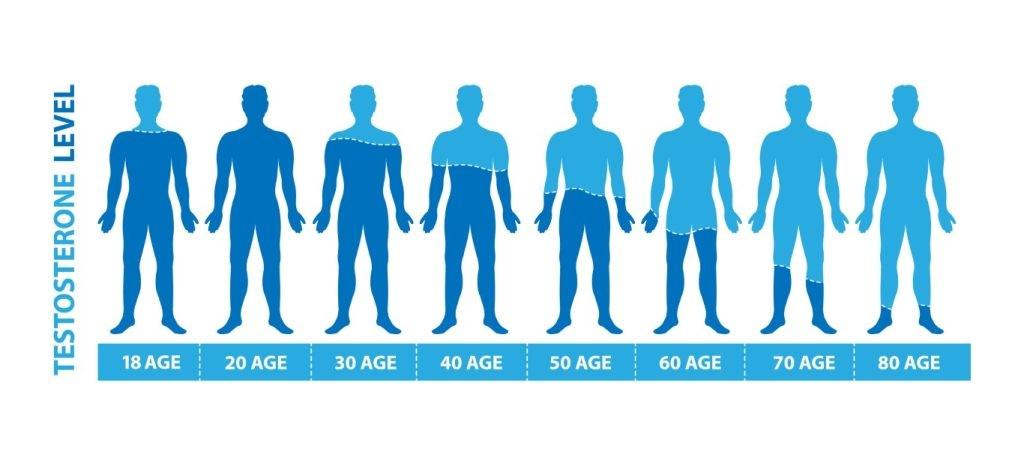
Testosterone is one of the main drivers of sexual desire. It acts on specific areas of the brain, such as the hypothalamus, to stimulate sexual desire and sexual impulses. When testosterone levels are normal, sexual desire is usually strong. High levels of testosterone are usually associated with higher physical fitness and energy, which also help maintain and enhance sexual desire. When testosterone levels are low, sexual desire tends to weaken, and may even directly lead to erectile dysfunction, because testosterone also plays a key role in maintaining normal blood flow and sexual response to the penis.
As we age, testosterone levels naturally decline, which
usually leads to a decrease in sexual desire. Generally speaking, men's testosterone levels begin to decline year by year starting at the age of 25. Studies have shown that after the age of 30, men's testosterone levels decline by an average of about 1-2% per year. Although this decline is a slow process, its effects will gradually become apparent over time, leading to problems such as decreased libido, decreased physical fitness, mood swings, and reduced muscle mass.
In addition, in addition to natural aging, a variety of factors in modern life can accelerate the decline of testosterone levels. For example, long-term work stress, unhealthy eating habits, lack of exercise, lack of sleep, and certain diseases and medications can all have a negative impact on testosterone levels.
Understanding and addressing these challenges is essential to maintaining the health and vitality of their careers and personal lives.
四、How to regain your vitality?
We have learned that if you have been living a sub-healthy lifestyle, your testosterone level will also be affected, thus affecting your sex life. Therefore, it is crucial to change your lifestyle. The three elements of healthy diet, early bedtime and early rise, and regular exercise and exercise are the lowest cost.
1. Balanced nutrition improves vitality
Staying awake and alert can not only be achieved by short-term stimulation such as coffee or energy drinks. Sticking to a balanced and nutritious diet in daily life is the key to long-term and stable energy. A nutritious and comprehensive diet can provide the fuel needed by the body, helping people think more effectively and focus on work or study.
Complex carbohydrates in the diet can provide a stable source of energy, thereby improving concentration and avoiding mental fatigue caused by sharp fluctuations in
blood sugar levels. High-quality protein, such as fish, meat, beans and eggs, contains amine amino acids that improve brain function, which can enhance memory and concentration. At the same time, consuming enough fat, especially omega-3 fatty acids, is also essential for brain health and maintaining a good mood.
Specific recommendations for a nutritious diet:
• Ensure adequate breakfast: Breakfast is the basis for starting a new day. A balanced breakfast containing complex carbohydrates, high-quality protein and healthy fats can ensure that you have sufficient energy from the morning.
• Regular three meals: Regular meals can help the body maintain blood sugar concentration levels and avoid low energy caused by hunger or overfullness.
• Fruits and vegetables: Fresh fruits and vegetables rich in vitamins and minerals can not only meet daily nutritional needs, but also enhance the immune system and maintain
the best condition of the body.
• Stay away from high-sugar snacks: Try to reduce the intake of sugary drinks and sweets. These foods can cause blood sugar to rise quickly and then drop sharply, making people feel tired and depressed.
• Balanced intake: Avoid extreme diets. A balanced diet should contain rich whole grains, high-quality protein, healthy fats, and rich vegetables and fruits.
2.Exercise increases vitality
When it comes to keeping your body and mind active, exercise is always one of the most essential elements. In fact, the stimulant effect of exercise can not only increase our energy, but also inject a steady stream of motivation into our overall life. Next, let’s explore how exercise can be an energizing source of natural energy-boosting methods.
Changes in brain chemicals
First of all, exercise can stimulate the brain to release a
variety of neurotransmitters, such as endorphins and dopamine. These chemicals are directly related to our mood and mental state. Through exercise, the production of these chemicals can be naturally stimulated to increase alertness and concentration.
Improve blood circulation
When you exercise, your heart beats faster, which improves blood circulation, which means more oxygen and nutrients are delivered to all parts of your body, including your brain. Good blood circulation is an important factor in maintaining energy and alertness.
Applicability of exercise hormesis
Exercise doesn't need to be high intensity or long to have a positive impact. Even short, moderate-intensity exercise can have a significant energizing effect. Some activities that can be easily incorporated into your daily life include:
• Brisk walking: Walking briskly for 20 minutes can quickly wake up the body and increase blood flow.
• Stretch: Stretching in the morning can help relax your muscles and increase your overall sense of energy.
• Aerobic exercise: Such as cycling, swimming or dancing, which can promote cardiopulmonary function and enhance the refreshing effect.
3.Sleep boosts vitality
In the pursuit of sustained mental vitality and alertness, we should not ignore the importance of sleep. Getting enough quality sleep is the basis for maintaining our physical and mental health, and it is also the main way we restore energy. Our body is like a delicate instrument, and it needs proper rest time to repair and regenerate itself.
Establish a regular sleep pattern
The first thing to achieve a regular sleep is to establish a regular sleep pattern. This means trying to go to bed and wake up at the same time every day. This can regulate the body's biological clock, which helps improve sleep quality and make you feel refreshed in the early morning.
Create a good sleeping environment
In addition to establishing a regular sleep pattern, it is also important to create an environment that is conducive to rest. This includes choosing a comfortable mattress, keeping the sleeping area clean, setting the temperature appropriately, and reducing noise and light interference.
Control nap time
Naping can help to restore energy, but it is important to control the duration of the nap. It is usually recommended not to exceed 20 minutes to avoid affecting the quality of sleep at night.
Avoid bringing electronic devices into the bedroom
Many studies have shown that electronic products in the bedroom can cause interference with sleep. Therefore, avoid using mobile phones, computers or televisions before going to bed. These blue light-emitting devices may inhibit the production of melatonin and affect sleep quality.
However, these basic methods can only help you maintain vitality, prevent loss, and promote recovery. If you want to gain more vitality, you must increase your zinc intake, such as incorporating zinc-rich foods such as oysters into your daily diet. However, eating oysters every day is troublesome and easy to get tired of, so the effect of food supplements is limited, and this single supplement method also has limitations. In this case, many people will choose some male vitality supplements to maintain energy and vitality. These supplements can provide multiple times more nutrition than food, help improve overall health, and also make your sexual performance better. Among them, 11 Oysters Candy is a very popular choice.
11 Oysters Candy combines 82% of the concentrated essence of oysters and other natural ingredients, designed for men to improve male vitality and energy. Just one candy contains the nutrients of 11 oysters, and even
increases the zinc content. Due to its convenient way of consumption, 11 Oysters Candy can be easily integrated into a busy daily life, helping men to maintain abundant energy and a healthy sex life under the pressure of busy work and life.

五、 Why is boosting vitality the key to a leap in efficiency?
Everyone feels tired sometimes. Maybe you just finished a big project, or maybe you just got up to go to work the next morning after a sleepless night. But if fatigue becomes your normal state, the problem may be somewhere else, and it cannot be solved simply by taking
a nap.
"People generally believe that energy is only related to physical strength, but in fact, energy is closely related to a person's emotions, brain power and mental state." Jennifer Lea, an energy management trainer, introduced to us.
So how do you understand the four dimensions of energy?
Physical strength reflects the degree of fatigue in your body; emotions reflect whether your mentality is positive; brain power can measure your concentration, creativity and decision-making ability; and spirit focuses on whether a person is full of mission in life.
The four dimensions of physical strength, emotion, brain power and spirit are different and interrelated. The downturn in any one of these dimensions will affect the other three, making people feel tired. This is why sometimes you just sit in the office and still feel exhausted after a day of hard work. Similarly, the improvement of any dimension will also have a positive impact on the
other three dimensions.
The so-called "elite" must first have good energy. People with good energy and those with poor energy live two different lives and have two different futures. When we talk about energy, we are actually talking about energy management. I found that people with good energy will concentrate their energy on important things. If you don't take good care of your body, you will have nowhere to generate energy. Don't let sighing and doing nothing erode your precious energy.
First of all, financial professionals often need to work for long hours and deal with large amounts of data and complex tasks. Long-term high-intensity work will lead to physical fatigue, which in turn affects work efficiency and decision-making accuracy. Therefore, maintaining sufficient physical strength is the basis for financial professionals to work efficiently.
Secondly, financial work requires a high degree of
concentration and quick response ability. The financial market changes rapidly, and a slight negligence may lead to significant losses. A high level of brainpower can not only help financial professionals process information faster, but also improve their ability to cope with and the quality of decision-making in high-pressure environments. When faced with complex problems, abundant brainpower can also maintain creativity.
In addition, emotional management of financial professionals is also crucial. Positive emotions not only improve work efficiency, but also enhance teamwork and customer relationships. Social support is always a topic that cannot be ignored in the financial circle, which further emphasizes the importance of emotional management.
Finally, financial professionals need to maintain a strong spiritual motivation. Maintaining enthusiasm and a sense of mission for work can not only improve job satisfaction, but also motivate oneself to keep making progress and
pursue excellence in work. Otherwise, without spiritual support, this high-intensity work mode can easily lead to physical and mental collapse.
Summary:
In order to maintain peak performance and work efficiently in a high-pressure environment, financial professionals must pay attention to energy management and improve their vitality. Healthy diet, regular work and rest, regular exercise and appropriate supplements are all effective means to improve energy. Only through comprehensive energy management can we maintain abundant vitality and health under the pressure of busy work and life, and achieve long-term development of career and happiness in personal life.
Investing in health and paying attention to energy management is an important step for every financial practitioner to succeed. This not only helps to improve work efficiency and decision-making quality, but also
enhances physical and mental resistance, ensuring that you are always in the best condition when facing challenges. An energetic life will not only make you stand out in the workplace, but also allow you to enjoy a richer and more fulfilling personal life. Seize every opportunity to improve your energy and truly achieve a win-win situation in career and life.