The third season of our podcast is heating up—we recently hit a major milestone with 50K streams!
To listen to our latest episode or any of our previous ones, scan this QR code, visit www.1199SEIUBenefits.org/ health-is-the-key or listen wherever you get your podcasts. We have an exciting lineup of guests coming up, with more video episodes, and even a few surprise giveaways—so please be sure to tune in.
Listen on:
Visit www.My1199Benefits.org or use this QR code to download the app today! Have you signed up for MyAccount?
MyAccount is an easy-to-use, personalized online platform to access your benefits and pension information. You can quickly make updates, sign up for popular programs and more.
The National Benefit Fund believes it is a “grandfathered health plan” under the Patient Protection and Affordable Care Act (the “Affordable Care Act”). A grandfathered health plan can preserve certain basic health coverage that was already in effect when that law was enacted in 2010. Being a grandfathered health plan means that this plan may not include certain consumer protections of the Affordable Care Act that apply to other plans, for example, the requirement for an external review process for claims appeals. However, grandfathered health plans must comply with certain other consumer protections in the Affordable Care Act, for example, the elimination of lifetime limits on benefits. The Wage Class III plan is not a grandfathered health plan. Questions regarding which protections apply and which protections do not apply to a grandfathered health plan can be directed to the Plan Administrator at (646) 473-9200. You may also contact the Employee Benefits Security Administration, U.S. Department of Labor at (866) 444-3272 or www.dol.gov/agencies/ebsa/about-ebsa/ask-aquestion/ask-ebsa. This website has a table summarizing which protections do and do not apply to grandfathered health plans.
Check out our video series!
Members’ Voices is our video series that spotlights an 1199 member and their unique healthy living story every month. Each video is just a few minutes long and highlights real experiences and practical tips to support you on your health journey. Feeling inspired and want to share your own story? We’d love to hear from you! Email us at MembersVoices@1199Funds.org and tell us about yourself!
Scan this QR code or visit the Healthy Living Resource Center at www.1199SEIUBenefits.org/ healthyliving/membersvoices.
Message from the Executive Director
The Benefit Funds are here to support you—with programs and resources that make wellness practical and sustainable.
Dear 1199SEIU Members,
Spring has a way of reminding us that renewal is always possible. I love the warm weather and can’t help but celebrate the season! After months of cold weather, the longer days and warmer air invite us to open the windows, take a deep breath and start fresh. Just as many of us tackle spring cleaning at home, this season is also a perfect opportunity to refresh our habits, refocus on our well-being and make full use of the resources we have available to us.
Healthy living is not about perfection. It’s about making small changes that add up over time. Spring gives us a natural boost in that direction. I look forward to spending time outdoors and moving more, eating lighter meals as fresh foods come back into season and reconnecting with family, friends and our communities. These everyday moments matter. They support not only physical health but also emotional well-being.
The Benefit Funds are here to support you—with programs and resources that make wellness practical and sustainable. Spring is a great reminder that focusing on prevention and self-care really pays off in the long run. Our featured member, Pedro Bosque, a Dietary Department Porter at Sodexo, shows just how meaningful it can be to find a health routine that works for you and commit to consistent practice. I hope you’ll take a moment to read his story.
Spring cleaning isn’t just about clearing out closets; it’s about creating space. When we declutter our homes, we make room for what truly matters. The same idea applies to our health. Letting go of what holds us back makes room for healthier choices to take root. In this edition of For Your Benefit, you’ll find information about the wide range of choices available to you. The latest is Noom, a holistic weight-loss program that uses a scientific mind-first approach to make it easier for you to reach your goals.
Finally, I’m excited to share that season three of our Health Is the Key podcast is in full swing, and we’ve hit a major milestone with 50K streams! You can listen to our most recent episode, plus all our previous episodes by visiting www.1199SEIUBenefits.org/health-is-the-key. We have a fantastic lineup of guests this season, so subscribe wherever you get your podcasts!
Be sure to keep an eye on your inbox for the latest Members' Voices video—we share a new one every month. To ensure we reach you with all the latest news, please verify your contact information. You can scan this QR code or visit www.1199SEIUBenefits.org/member-contact-form
As we embrace this vibrant season, I hope you feel refreshed, motivated and ready for the possibilities ahead. Together, let’s continue to support one another on our journey toward lasting well-being.
In good health,
Donna Rey, EdD Executive Director, 1199SEIU Benefit and Pension Funds CEO, 1199SEIU Funds Administrative Operations
A CONVERSATION WITH OUR DOCTORS
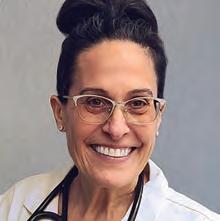
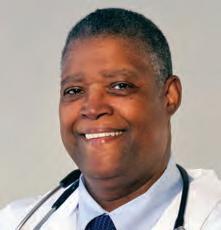
Dr. Van H. Dunn, Chief Medical Officer, and Dr. Lela Mayers, Deputy Chief Medical Officer
Dr. Dunn and Dr. Mayers recently sat down to talk about how to find the right doctor. Here’s a brief transcript from their conversation.
Dr. Mayers: Hi, Dr. Dunn. We're here today to talk about conversations to have with your primary care physician. So, what kind of conversation would you want to have with your PCP?
Dr. Dunn: I think first talk about what's going on in general. If you’re not feeling well, you need to talk about that. What’s not feeling well? You should describe as much as you can about what your symptoms are.
Dr. Mayers: Yes, it depends on why you're visiting the doctor. I also think your age makes a difference. You might want to ask what kind of screenings you need. How do you stay healthy? How do you get healthy? It will also depend on whether you have any medical conditions. If you’re living with diabetes or hypertension, that’s going to make a difference.
To hear the full conversation between Dr. Dunn and Dr. Mayers, scan this QR code or visit www.1199SEIUBenefits.org/ Dunn-Mayers
Dr. Dunn: I think one of the first questions a good doctor will ask you is “What’s going on in your life?” They’re going to want to have a conversation and will listen to what you say.
Dr. Mayers: That’s a good point. It may be important for you to have a doctor who allows you the space to talk about what's going on in your life and ask questions. Not one who just asks, “Why are you here? What prescriptions do you need?”
Dr. Dunn: Exactly. It should be a conversation where you're exchanging ideas. That way, your doctor can identify what you’re really worried about.
Dr. Mayers: I was taught that patients come to see the doctor with a list of priorities to address. And often doctors have a different set of priorities. So, I would say it’s important to find a doctor who takes your concerns seriously while also addressing what they believe is important for your overall health.
Dr. Dunn: I like a doctor who asks, “What can I do to make you feel better?” By having this conversation, the patient feels more like a person and not like a specimen for diagnosis.
Dr. Mayers: That's why you're a great doctor. Because you ask open-ended questions and let your patient say what they want to say. I think that a lot of patients feel their doctors rush them.
Dr. Dunn: It’s a hard balance to find a doctor who listens but still has an office that runs on time—or almost on time.
Dr. Mayers: True. I think it’s a good idea to write down your questions before you go, so you remember all the things you want to ask.
Dr. Dunn: Excellent point. Because a lot of times you start talking to the doctor and forget half of what you want to ask. Having your questions written down will make your appointment more fruitful. You'll come away feeling the doctor heard all your concerns.
Dr. Mayers: And if you're worried about remembering what the doctor says, you can bring someone with you. A friend, partner or family member to be there to listen and even take notes you can refer to later.
Dr. Dunn: Your doctor will never object to you having a relative or friend with you.
Dr. Mayers: If you don’t have a good PCP, the Benefit Funds have a great website with a search tool to help you find one.
Dr. Dunn: Your PCP can be a physician, nurse practitioner or physician assistant. Whatever works best for you. The goal is to keep you well, keep you healthy and keep you happy, so you can live your best possible life. Of course, I have my own PCP. And I have wonderful conversations with my doctor—who listens and tells me, “Don’t think like a physician today. You are the patient and I'm the doctor.”
Dr. Mayers: I'll just say it—doctors make the worst patients. So, if we can find doctors we're happy with, so can you!
Find a PCP who listens to you.
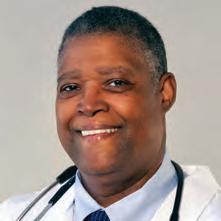
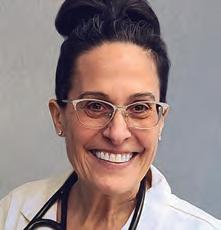
1199er Loraine Moxam has a doctor who listens. Loraine is pictured here with Dr. Ilora Rafique, her PCP for almost 15 years.
Why your gut health matters
Gut health is getting a lot of attention these days—but what does it really mean? And how is your gut different from your stomach? Your gut is your entire gastrointestinal (GI) tract, while your stomach is just one part of it. When your gut is healthy, it helps reduce inflammation and supports a strong immune system.
Digestive issues happen to everyone and often reflect what’s going on in the rest of your body. As we age, digestion can slow down, which makes everyday habits just as important as what’s on your plate. To support gut health, focus on eating fiber-rich foods, getting enough sleep, staying active, managing stress and seeking support for anxiety or depression.
That’s because your gut and your mood are closely connected through what’s known as the brain-gut connection. If your digestion feels off, it may affect how you feel emotionally— and vice versa. Want to learn more? Listen to our April podcast episode, “Healthy Gut, Healthy Mind, with Dr. Preeti Mehta,” at www.1199SEIUBenefits.org/healthis-the-key or wherever you get your podcasts.
Is your doctor listening?
All of this makes one thing especially important: having a doctor who really listens. A strong relationship with your primary care provider can make it easier to ask questions, share concerns and talk honestly about what you’re experiencing—but that only works if you feel heard.
What if you need a specialist?
When it comes to gut health, listening matters even more. Digestive issues can be uncomfortable, confusing and easy to brush off. A doctor who listens—or who refers you to a skilled gastroenterologist when needed—is more likely to catch important details, make the right diagnosis and help you create a plan that actually works for you. Feeling heard builds trust and can take a lot of stress out of medical visits.
If you feel like your concerns aren’t being taken seriously, it can lead to frustration and ongoing health problems.
You deserve better care. Find a new primary care provider or gastroenterologist by visiting the 1199SEIU Benefit Funds Provider Directory at www.1199SEIUBenefits.org/find-a-provider
The Choice Is Yours
Reach your health goals with programs that meet you where you are. Eligibility criteria apply.
Noom is the latest option for weight-loss support available to you. When you join, you'll receive access to award-winning wellness lessons, health tracking tools and unlimited one-on-one human coaching with experts to achieve real results.
Managing your type 2 diabetes or hypertension can be easier with Ochsner Digital Medicine. When you join, you’ll receive a free glucometer or blood pressure cuff (where applicable) that connects to your phone and automatically sends readings to a care team for monitoring and clinical support.
This is an innovative digital program for weight loss and health management. FlyteHealth provides participants with a medical care team, including physicians, nurse practitioners and registered dietitians, who will work with you to create a personalized care plan.
There is a reason why more than 8,000 1199ers have joined WeightWatchers®. WW offers meal planning, a supportive community and an award-winning app packed with smart, high-tech features to help you reach your goals. When you join through the Benefit Funds, you'll get our discounted or no-cost membership!
If you're living with type 2 diabetes, Virta partners with you to build an individualized nutrition plan. If you're eligible, you'll receive a Starter Kit, dedicated medical support and flexible scheduling for health coaching via Zoom, messaging or phone calls.
For more information, scan this QR code or visit www.1199SEIUBenefits.org/ the-choice-is-yours.
Results may vary based on your clinical profile and adherence to the program you participate in.
The Secret to Getting Healthier with Age
Life moves fast, but it’s never too late to start taking better care of yourself. With packed schedules and endless to-do lists, finding a healthy balance can feel tough, but you don't need to overhaul your life. Small changes to your daily routine can make a big difference in how you feel. This isn't about the tons of products out there promising to “turn back the clock.” You don’t need a shelf full of pills and potions to feel like the best version of yourself. When you focus on eating well, moving your body every day and taking care of your mental and emotional health, you’re giving yourself powerful tools to make meaningful change.
Give your health routine a spring cleaning!
Let's start in the kitchen.
You may have heard people say that your fridge is the new medicine cabinet—and there’s some truth to that. Stocking it with foods that keep you fueled, focused and energized can go a long way. And don’t worry, you don’t need to throw everything out. Start by adding a few healthier staples to your grocery list.
Grocery List Cheat Sheet
Pick your protein: Choose lean chicken or turkey and omega-3 rich fatty fish options like salmon and tuna. Following a plant-based diet? Not all options are nutrient dense. Opt for eggs, soy, tempeh and beans like chickpeas and black beans. Fill up on fruit: Load up on citrus, apples and perfectfor-snacking blueberries, blackberries and raspberries.
Veg out: Stock up on fiber-rich broccoli, carrots, sweet potatoes and whatever leafy greens you like. Collards, romaine, kale and arugula are all packed with flavor and benefits. Can't find what you need in season? Frozen fruits and vegetables are frozen at peak freshness and can help you quickly add variety or round out your meals.
Go whole grain: Swap white rice and pasta for brown rice and hearty grains like quinoa and barley.
Expert tip: Try doing most of your shopping around the outer perimeter of the grocery store—that’s where the fresh produce, meat and dairy usually are. The center aisles tend to be where the more processed foods live.
Nothing is totally off-limits, of course, but keeping a mental map of where your go-to healthy items are can help you focus on the good stuff and cut down on those “impulse grabs.”
Noom is a holistic weight-loss program that uses a scientific mind-first approach to support you in building healthy habits that last. You also get unlimited one-on-one human coaching with experts who offer guidance tailored to your health goals.
Get moving.
If you’re new to exercising—or just easing back into it—take it slow. Starting gently helps you figure out what you enjoy and lets your body adjust at a pace that feels right. It’s a great way to work toward your goals without risking injury.
Try beginning with a simple daily walk. Hop on a treadmill or walking pad—or head outside now that the weather’s nice and stroll around your neighborhood or a local park. And on days when you’ve got a little extra energy, switch things up with a high-intensity interval training (HIIT) workout or a quick exercise circuit to get your heart rate going. Strength training is also beneficial. Using weights, resistance bands or even just your own body weight can help you build muscle and stay strong. And to keep everything balanced, try stretching before bed—it’s a relaxing way to wind down and support your flexibility.
Expert tip: Track your progress. If you feel like you’re putting in the effort but not really seeing the results, using a health tracker can really help. You can set goals, jot down what you’re eating and log your workouts or daily activity. Even if the changes feel slow, having everything written down gives you real, in-hand proof that you’re moving forward, which can be very motivating.
Make self-care a priority.
You’ve heard all the self-care talk before. But taking care of yourself really does matter. And it’s not just about bubble baths or a cup of tea. Real self-care is about doing the things that help you feel rested, supported and mentally grounded.
Get good sleep. Everyone’s different, but sticking to a consistent sleep routine can make your whole day feel smoother. Try going to bed and waking up at the same time every day to keep your mind sharp and your energy steady.
Take breaks. Little pauses throughout the day can go a long way. Whether it’s a one-minute meditation, a quick stretch or a short walk, giving yourself a breather helps ease tension and lets you come back to your tasks with a clearer head.
Reach out when you need support. It’s not always easy to ask for help, but sometimes talking to someone is exactly what you need. A trusted friend, counselor, therapist, psychiatrist or social worker can be a great sounding board when things feel heavy or confusing.
Stay social.
It’s time to shake off hibernation mode! With so much of our lives happening online these days, it’s no surprise that loneliness is on the rise. Staying connected to your friends, family and community is actually a big part of staying healthy.
Try taking a class or volunteering with a group you care about. It’s a fun way to meet people who share your interests and stay plugged in to what’s happening in your community. And consistency goes a long way. Whether it’s planning regular dinners with friends, setting up a weekly call with family or just checking in on a neighbor, small moments of connection add up.
Recipe Corner
Simple Spring Grain Bowl with Balsamic Vinaigrette
Make the most of spring produce with this easy-to-assemble bowl. This could be a great addition to your lunch rotation, or you can make it a heartier meal by adding grilled chicken or salmon. Choose your favorite options!
• ½ cup cooked grain like quinoa
• 1-2 cups lettuce, spinach or arugula
• 2 green onions, chopped
• 4 asparagus spears, blanched in boiling water, cooled and sliced into bite-sized pieces
• ½ cup green peas
• ½ cup sliced strawberries
Quick Balsamic Vinaigrette
Whisk together ¼ cup balsamic vinegar, ½ cup olive oil, 1 grated garlic clove, 1 tsp. honey or maple syrup, and salt and pepper to taste.
What’s in Season
Fruits
• Apricots
• Cherries
• Grapefruit
• Kiwi
• Lemons and limes
• Pineapples
• Strawberries
Vegetables
• Asparagus
• Artichokes
• Broccoli
• Carrots
• Greens (collard, kale, spinach)
• Lettuces
• Mushrooms
• Peas
• Radishes
• Turnips
A lifelong commitment to healthy living
keeps Pedro Bosque energized, positive and ready for whatever comes next.
Pedro Bosque
DIETARY DEPARTMENT PORTER
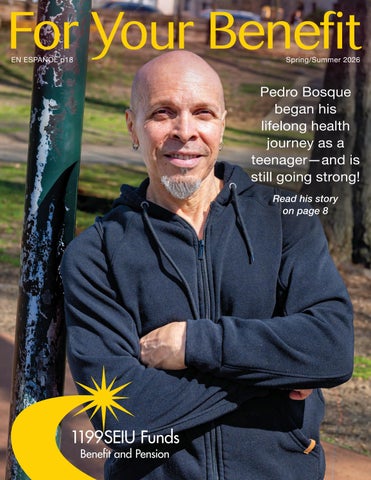
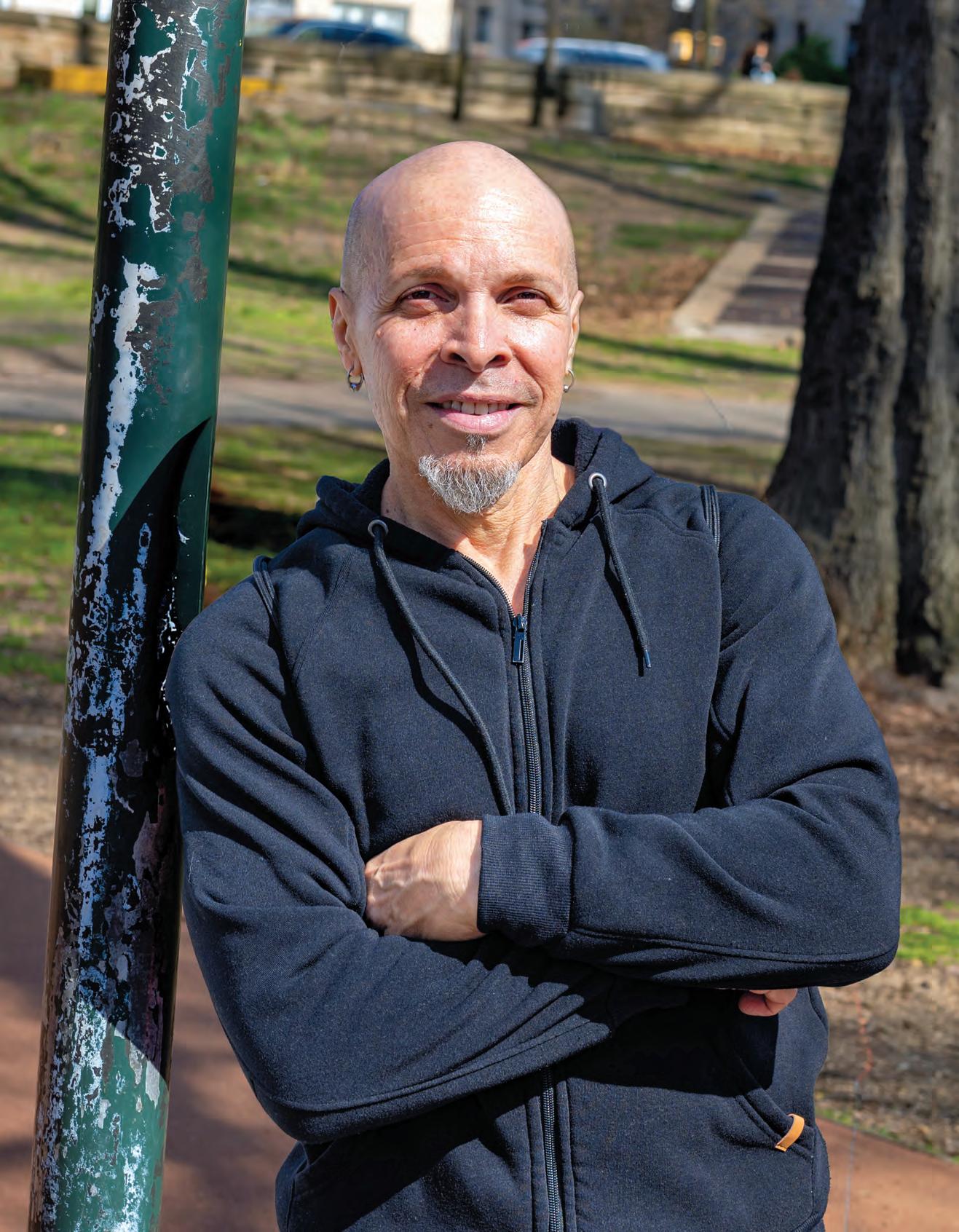
Being proactive about his health has always just been part of who Pedro Bosque is. He grew up in Puerto Rico, and as a teenager, he and his friends watched the Arnold Schwarzenegger movie Pumping Iron. The movie inspired Pedro and, unlike his friends, he began a health routine that he still follows today. “Everyone else said they would too. But I was the one who stuck with it,” he said. “Now, all these years later, I have no health conditions. I’m not a bodybuilder, but because of healthy living, I’m in better shape than a lot of people I know who are much younger than me.”
When Pedro first started working out, he realized pretty quickly that he genuinely enjoyed it. So, when he moved to New York, he brought that routine right along with him. These days, he exercises five days a week. Four of those days, he heads to a nearby gym after work to lift weights and then walks the 30 minutes it takes to get home. Once a week, he skips the gym and goes straight home to focus on aerobic exercises instead.
Pedro likes to make sure he hits every muscle group, so he works on two body parts a day. That way, he covers everything from head to toe. He saves weekends for rest, so he can stay energized during the week. And he’s excited to check out the Benefit Funds' YouTube channel as a new source of inspiration. “Even though I’ve been exercising for a long time, I’m always looking for videos online to motivate me,” he said.
To listen to Pedro's full story, scan this QR code or visit www.1199SEIUBenefits.org/ Pedro-Bosque.
Pedro recently turned 64, and he’s spent an impressive 43 years working as a Dietary Department Porter with Sodexo-SUNY Downstate. He’s proud to help provide meals for hospital patients and staff, and he’s just as committed to paying attention to what he eats. He loves protein shakes and enjoys steaming chicken or fish—especially tuna and salmon—with his girlfriend of 21 years, Rebena.
Many of Pedro’s relatives have struggled with obesity, so he made it a priority early on to stay in control of his eating habits. Still, he’s not overly strict. “On the weekends, maybe I’ll have a slice of pizza or a burrito,” he said. “But then it’s right back to healthy eating!”
He likes to stay informed about nutrition, so he reads as much as he can about what foods to choose and what to skip. He also keeps track of his calories and brings homemade meals to work to help him stick to his plan. “It’s a small sacrifice,” he said. “I’m 145 pounds, and I want to keep it that way.”
That’s why Pedro is such a big fan of the Benefit Funds’ Healthy Living Resource Center. “Being healthy makes me feel young,” he said. “Once I got started, it just became a part of my routine.
I encourage my fellow members to check it out and try it too. You don’t have to be extreme—even 30 minutes of exercise a day instead of watching TV, plus some healthy eating, can make a big difference.”
Because of the lifestyle he’s built, Pedro can keep enjoying the things he loves, now and when he eventually retires and starts making the most of his 1199SEIU pension benefit. He’s also grateful to have the energy to support his girlfriend, Rebena, who’s a recent cancer survivor. “We have fun just walking around and traveling,” he said. “And when I’m here for her, I can help make sure she stays in remission. We don’t have to go far, but we always have a good time together.”
In the meantime, Pedro loves getting out on the water at Liberty State Park in New Jersey when the weather’s warm. He also enjoys riding his bike, which he says does wonders for his mental health. “Riding my bike relaxes my mind,” he said. “I play some music on my headphones and go. And now that it’s spring and the weather is nice again, I can’t wait to get out there. Healthy living—that’s what it’s all about!”
“I’m not a bodybuilder, but because of healthy living, I’m in better shape than a lot of people I know who are much younger than me.”
A lot has happened for Medona Porter since her January 2024 Members' Voices video aired. Her story inspired people in her community to invite her to speak at local schools and churches. “My participation opened a lot of doors for me to help make a difference,” she said. One of the biggest changes happened at home. Medona made a real impact on her father’s health. In her video, she talked about helping him manage his diabetes—and that dedication paid off. His A1C levels have improved so much that he no longer needs medication. And she's got a new role at work. After earning her MBA in Healthcare Management—with help from her 1199SEIU Training and Employment Funds benefit—Medona is now a Clinical Nurse Leader. Congratulations, Medona!
Sofia Espinoza, Residential Hospice Aide, Staten Island University Hospital-Northwell Health
Sofia Espinoza was featured in the Spring 2024 edition of For Your Benefit magazine, making her something of a celebrity at work. Her co-workers proudly displayed the magazine, and even her supervisor called to congratulate her. “I was very honored,” she said. Since then, Sofia was thrilled when offered the opportunity to test-drive a new position as a Patient Care Assistant (PCA), working alongside doctors and nurses. She realized that her role as a Residential Hospice Aide is her true calling, though, and was happy to return to her department and co-workers. Sofia also stayed committed to her health journey—controlling her diabetes and cholesterol through healthy eating and taking her medication as prescribed. Keep up the good work, Sofia!
Online and on-demand classes to support you on your journey
Growing Older, Staying Strong
Session 1
Saturday, May 16 10:00 am
Session 2
Tuesday, May 19 6:00 pm
Yoga
and Pilates
Sleep Well, Live Well Dance
Class
May 2, 9, 16, 23, 30
Saturdays at 10:00 am
June 6, 13, 20, 27
Saturdays at 10:00 am
July 11, 18, 25
Saturdays at 10:00 am
August 1, 8, 15, 22, 29
Saturdays at 10:00 am
Fusion Flow
May 5, 12, 19, 26
Tuesdays at 6:30 pm
June 2, 9, 16, 23, 30 Tuesdays at 6:30 pm
July 7, 14, 21, 28 Tuesdays at 6:30 pm
August 4, 11, 18, 25 Tuesdays at 6:30 pm
Session 1 Saturday, July 18 10:00 am
Session 2 Tuesday, July 21 6:00 pm
Visit www.1199SEIUBenefits.org/wellness-events to get more information and register! Can't make these times? Create your own schedule with our library of wellness workshops and exercise videos on demand. Visit www.1199SEIUBenefits.org/videos for a full list of what's available.
Maternal Health Program
With our free and confidential program, you’ll learn about the habits that lead to a healthier pregnancy and receive support in getting the best care. You can sign up by logging into the MyAccount app or visiting www.My1199Benefits.org.
View our on-demand videos
Our Wellness Department’s online maternal health video series is here to offer you support. Topics include what to expect as your due date approaches and how to care for yourself and your baby after delivery. Plus, we have a library of classes available to watch whenever and wherever it’s convenient for you. Check it out today!
Visit www.1199SEIUBenefits.org/maternal-health to watch our on-demand classes.
Ask the Expert: Know Your Benefits, Know Your Rights
Saturday, June 6, at 10:00 am
To register for this workshop, visit www.1199SEIUBenefits.org/maternal-health. This workshop will also be available as an on-demand video.
Care you need from the comfort of home
Primary360
If you need the convenience of seeing a primary care physician (PCP) virtually, try Teladoc. Having a relationship with a PCP is one of the most important ways you can protect your health. A Teladoc Health Primary360 provider can offer you annual exams and preventive care. They can also diagnose and treat health concerns, help you manage chronic conditions, prescribe medications and refer you to in-network specialists.
24/7 Care
Teladoc Health can help you avoid the ER or urgent care center for non-emergency problems. Avoid long wait times by seeing a clinician by phone or video. With Teladoc, you can:
• Get a diagnosis and recommended treatment for cold and flu, fever, sprains and strains, backaches, rashes and more
• Get a prescription for medication, if you need it
Mental Health
Your mental health deserves as much attention as your physical health. That's why being able to connect with a Teladoc Health licensed therapist from your home is so valuable. They can work with you on things like controlling stress and anxiety, managing depression, handling relationship and family problems, dealing with work issues, healing past trauma and overcoming burnout.
Dermatology
Have your skin concerns evaluated by a licensed Teladoc Health dermatologist. Clear, healthy skin is the goal, but you can also receive help with acne, rashes, eczema, rosacea and more. Just upload images of your skin issue online or on the app. You’ll receive a custom treatment plan within 24 hours.
Visit www.Teladoc.com to set up an account and get started, or call (800) TELADOC
Learn more about becoming a U.S. citizen
Do you have questions about the process of becoming a U.S. citizen? The process can be daunting and complicated, but the 1199SEIU Citizenship Program is here to support you with our twopart webinar series. This webinar series has been developed to assist 1199SEIU members, their spouses and their eligible dependent children. In Part A, you’ll learn about program eligibility, the naturalization and citizenship processes, and Green Card eligibility. In Part B, you’ll learn more about how to obtain lawful permanent resident status, as well as how to prepare and file required forms. Each part is offered twice a month on Tuesdays at 5:00 pm.
For more information, contact the 1199SEIU Citizenship Program, by calling (646) 473-8915, visiting www.1199SEIUBenefits.org/citizenship, or emailing 1199SEIUCitizenship.Program@1199Funds.org.
The 1199SEIU Citizenship Program is jointly administered by the 1199SEIU Benefit and Pension Funds and the 1199SEIU Training and Employment Funds.
Healthy living and healthy minds go hand in hand
If you or someone you love needs support, you’re not alone. We've partnered with the National Alliance on Mental Illness (NAMI-NYC) for an interactive online Healthy Minds series. The series focuses on increasing awareness about mental wellness and provides resources and connections to help support your mental well-being in a safe space. Take a look at the schedule and descriptions below and register for a workshop today!
Thursday, May 14, at 1:00 pm
Family and Friends shares ways to support someone who is struggling—and will connect you with a community that understands what you’re going through.
Thursday, June 11, at 1:00 pm
In Our Own Voices brings you inspiring personal stories from people who are living with mental illness and are willing to share what they’ve learned.
Thursday, July 9, at 1:00 pm
Mental Health 101 is an introductory course on how to recognize the signs of mental illness and find support for yourself or a loved one who needs it.
Thursday, August 13, at 1:00 pm
Family and Friends shares ways to support someone who is struggling—and will connect you with a community that understands what you’re going through.
For more information, visit www.1199SEIUBenefits.org/nami-nyc
has in-person clinics to support your child
Finding the right support for your child can be a challenging process for the whole family. To support you, we've partnered with Brightline to make it easier for you to get an appointment if your child needs one. Brightline has three new family mental health clinics offering in-person treatment and specialty care for depression, anxiety, ADHD, OCD, autism and other behavioral challenges.
Through our partnership with Brightline, you now have access to a dedicated team of therapists and psychologists for your child. Brightline has warm, welcoming pediatric mental health clinics in Brooklyn Heights, Columbus Circle (Manhattan) and Lake Success (Long Island).
With Brightline, you can count on:
• Access to in-person and virtual therapy sessions, medication management and psychological testing to assess for things like autism, learning disorders and giftedness
• Pediatric experts who have extensive experience helping kids who are struggling with their mental health
• Whole-family support—articles, digital exercises, open communication and homework to reinforce learned skills between sessions
Care begins with a thoughtful evaluation. Brightline works with parents or caregivers to create a care plan that fits each child’s needs and goals.
Your future is full of possibilities with an
It may be difficult to imagine where you’ll be in 10, 15 or even 20 years, but as an 1199SEIU member, you have the security of a defined benefit pension. This is a rare benefit, and it's sometimes hard to appreciate what it means when you’re years away from retirement. But a defined monthly pension offers financial security, peace of mind and freedom when it’s time to retire.
As an 1199SEIU member, you can request a pension estimate every year to track how your benefit is growing. It’s easy to do. Taking control and gaining knowledge about your pension today ensures you’ll have more freedom tomorrow. And if you’ll be ready for retirement in the near future, now is the time to figure out what your 1199SEIU pension means for you!
For more information, check out www.1199SEIUBenefits.org/pension-retirement.
How to get your pension estimate
Log into MyAccount at www.My1199Benefits.org
Once you’re logged in, go to the “My Pension” tab and choose “Request & Review Pension Estimate” from the dropdown menu. Then, click the “Request Pension Estimate” button and follow the on-screen instructions. That’s all there is to it.
Remember, this is only an estimate—it’s not your final benefit. Please contact the Pension Department if you believe there is missing wage and/or employment history when you review your information.
“I would tell myself that having an 1199 pension means you have the promise of an independent future. I just retired, I'm secure and I'm smiling!”
Victoria Carter
Ready to retire?
Meet your Pension Counselor: You can meet with a Pension Counselor in person, online or by phone. To learn more, visit www.1199SEIUBenefits.org/virtualpension-counselor or call (646) 473-8666.
Apply for your pension: Your Pension Counselor can help you complete your pension application, or you can do it online at your convenience through MyAccount
Take charge and improve your finances
How Credit Works
Wednesday, June 24, at 6:00 pm
Understand how to use credit, credit reporting and the impact of credit scores.
Keeping It Safe
Wednesday, July 22, at 6:00 pm
Learn about preparing for financial emergency, finding insurance that's available and protecting yourself from identity theft.
Health Careers College Core
Curriculum Program Provides Support to Begin Your College Journey
Throughout more than two decades at the 1199SEIU Training and Employment Funds (TEF), Adrienne Simmons has spent her career walking alongside students at some of their most pivotal educational turning points.
For 17 years, she managed TEF’s High School Equivalency program, helping members earn their New York State high school equivalency diplomas and encouraging them to continue on the path toward higher education.
Today, Adrienne’s work focuses on the next step of that journey. As Program Manager for the Health Careers College Core Curriculum (HC4) Program, she supports students as they step fully onto their college pathway.
“It feels like a full-circle moment,” Adrienne said. “For years, I was telling students, ‘Keep going, don’t stop here.’ Now I get to support them once they’ve done exactly that.”
The HC4 Program is designed to help 1199SEIU members complete core requirements, typically 12 to 36 credits, toward a college degree. It provides a structured, supportive entry into college while helping students build the academic habits needed for long-term success.
“After covering core requirements, students say, ‘I got this. I’m ready to take more classes,’” Adrienne said.
Students are enrolled through one of three partner institutions— College of Staten Island, Lehman College, or Monroe University—and move through the program as a cohort. Most classes are online and meet twice a week, allowing working adults to balance school, work and life responsibilities.
For Adrienne, what stands out is persistence. “I continue to say keep going,” she said. “After the HC4 Program, you already learned time management, you already know what is expected of you in college. Just keep going.”
“It feels like a full-circle moment. For years, I was telling students, ‘Keep going, don’t stop here.’ Now I get to support them once they’ve done exactly that.”
“After covering core requirements, students say, ‘I got this. I’m ready to take more classes.’”
1199SEIU Child Care Funds’ Future of America Learning Center (FALC)
Celebrates 30th Annual Science Fair
This year’s science fair centered around the theme “How Do Containers and Simple Machines Help Us in Our Daily Lives?” reflecting the Creative Curriculum studies explored and celebrated by the Preschool, 3K and Pre-K classes. The young FALC scholars, ages 2 to 5, embarked on an exciting scientific journey as they explored the impact of containers and simple machines on everyday life in the world around them.
Throughout the study, students were encouraged to explore the theme creatively and make meaningful, real-life connections through hands-on, sensory experiences. Their discoveries touched on sustainability, current events, technology and inventions, related professions and health concepts. Investigations took place in their classrooms in FALC's on-site STREAM Lab. (STREAM stands for Science, Technology, Relationships, Engineering, Arts and Mathematics.)
Each year, the science fair experience provides children with meaningful opportunities to collaborate with classmates, teachers and families through STREAM-based projects and exhibits. Students engage in hands-on experiments, test hypotheses, develop critical and analytical thinking skills, and proudly present their findings.
FALC takes pride in being a high-functioning program committed to inspiring transformative learning and positive change. FALC's annual science fair is a cornerstone of its curriculum and family-engagement efforts, emphasizing the quality of the learning process and meaningful interactions rather than the final product. The experience reflects its philosophy of “Being the change we wish to see.”
FALC provides affordable, high-quality early education and child care for working families in the Bronx. Using a handson, play-based approach, the program supports children’s development while fostering creativity, confidence and a love of learning.
Child Care Funds’ Holiday Sleep-Away Programs Earn High Praise from Members
Many parents need child care when their children are on holiday break from school in February and April. During this break, the 1199SEIU Child Care Funds (CCF) Holiday SleepAway Programs provide a fun and educational experience for all participants. Children are encouraged to make new friends and are supported through personal growth in an enriching and safe environment.
The Holiday Sleep-Away Programs are scheduled according to the New York City public school calendar. There is a Winter Session in February and a Spring Session in April. Both are operated by Hands In 4 Youth, the home of Camp Vacamas, in West Milford, New Jersey.
This year, CCF held the Winter Session of the Holiday SleepAway Program (HSAP) from February 16 to February 20 for
children ages 8 to 13. The Teen Holiday Sleep-Away Program (T-HSAP) was held from February 14 to February 20 for teens ages 14 to 17. A total of 79 children attended HSAP, and 47 teenagers attended T-HSAP. At the time this magazine went to press, the counts from the Spring Sessions hadn't been tallied.
Participants in the Winter Session took part in activities ranging from team sports, robotics, games, and arts and crafts to nature exploration and big brother/big sister mentorships between T-HSAP and HSAP campers.
In a satisfaction survey of 1199SEIU members whose children participated, 91 percent said their child liked or loved their camp experience, 95 percent said the program had a positive impact on their child, and 91 percent said they are likely or extremely likely to apply again.
For more information, visit www.1199SEIUBenefits.org/holiday-sleep-away or email HSAP@1199Funds.org.
WF2 Students Gear Up for Summer Jobs with SYEP
Recently, WorkForce (WF2) hosted two preparation and training sessions for students applying to the Summer Youth Employment Program (SYEP), drawing more than 60 participants.
During the sessions, staff worked with students to hone skills that would prepare them for their summer jobs. Some highlights:
• Students wrapped up outstanding paperwork needed to move forward in the SYEP process.
• Staff counseled students on how to dress professionally in the workplace—and what to avoid.
• Students practiced their skills through mock interviews with potential worksites, helping them build confidence.
• Staff reviewed the direct deposit sign-up process with students so that they would be ready when employment begins.
The 1199SEIU Child Care Corporation partners with the New York City Department of Youth and Community Development (DYCD) to provide this opportunity to eligible WF2 participants through SYEP. During a virtual DYCD meeting, DYCD program manager Adam Zaman commended the WF2 team, praising their strong work and thoughtful preparation.
Through SYEP, a select group of eligible WF2 participants will earn paid summer employment for six weeks, from July through August. The experience continues with Saturday academic classes running from September through June—helping students stay supported, engaged and on track for success.
CONTENIDOS
19 Un Mensaje de la Directora Ejecutiva
20 Una conversación con nuestros médicos
21 Por qué es importante la salud intestinal
21 ¿Su médico le está escuchando?
21 La Elección Es Suya
22 El secreto para envejecer con mejor salud
24 Miembro Destacado: Pedro Bosque
25 Miembros de 1199: ¿Dónde están ahora?
26 Tenemos clases en línea para apoyarte en tu camino
26 Programa de Salud Materna
27 Teladoc Health: La atención que necesitas desde la comodidad de tu hogar
27 Obtenga más información sobre cómo convertirse en ciudadano de los Estados Unidos
28 Una vida una mente saludable van de la mano
28 Brightline ofrece clínicas presenciales para apoyar a su hijo(a)
29 Su futuro está lleno de posibilidades con una pensión de 1199SEIU
29 Tome control y mejore su finanzas
30 El Programa de Currículo Básico Universitario para Carreras de la Salud brinda apoyo para comenzar su trayectoria universitaria
32 El Centro Future of America Learning Center (FALC) de los Fondos de Cuidado Infantil de 1199SEIU celebra su 30.ª Feria Anual de Ciencias
33 Los Programas de Campamento Residencial durante los Recesos Escolares de los Fondos de Cuidado Infantil reciben excelentes comentarios de los miembros
33 Estudiantes de WF2 se preparan para trabajos de verano con SYEP
¿Se
registró en MyAccount?
MyAccount es una plataforma en línea personalizada y fácil de usar para acceder a su información sobre beneficios y pensiones. Puede realizar actualizaciones rápidamente, inscribirse en programas populares y mucho más.
Visiten www.My1199Benefits.org o usen este código QR para descargar la aplicación hoy mismo.
El Fondo Nacional de Beneficios considera que es un “plan de salud de derechos adquiridos” en virtud de lo estipulado en la Ley de Medidas de Protección del Paciente y Cuidado de Bajo Costo (la “Ley de Cuidado de Bajo Costo”). Un plan de salud de derechos adquiridos puede preservar cierta cobertura médica básica que ya se encontraba en efecto cuando se aprobó esa ley en 2010. Dicho plan no puede incluir determinadas protecciones al consumidor señaladas en la Ley de Cuidado de Bajo Costo que se aplican a otros planes, por ejemplo, el requisito de un proceso de revisión externa para las apelaciones de las reclamaciones. Sin embargo, los planes de salud de derechos adquiridos deben cumplir con otras protecciones para el consumidor establecidas en la Ley de Cuidado de Bajo Costo, por ejemplo, la eliminación de los límites de por vida de los beneficios. El plan de Salario de Clase III no es un plan de salud de derechos adquiridos. Si tiene preguntas acerca de cuáles protecciones se aplican a un plan de salud de derechos adquiridos y cuáles no, puede comunicarse con el administrador del plan al (646) 473-9200. También puede comunicarse con la Administración para la Seguridad de los Beneficios del Empleado del Departamento de Trabajo de los EE. UU. por teléfono al (866) 444-3272 o visitando el sitio web www.dol.gov/agencies/ebsa/es/aboutebsa/ask-a-question/hace-una-pregunta. Allí, encontrará una tabla en la que se resumen cuáles protecciones se aplican a los planes de salud de derechos adquiridos y cuáles no.
¡La temporada 3 de nuestro pódcast está en pleno
apogeo!
La tercera temporada de nuestro pódcast sigue ganando impulso: ¡recientemente alcanzamos un gran exito con 50,000 reproducciones!
Para escuchar nuestro episodio más reciente o cualquiera de los anteriores, escanee este código QR, visite www.1199SEIUBenefits.org/ health-is-the-key o escúchenos donde quiera que obtenga sus pódcasts. Tenemos una emocionante lista de invitados próximamente, más episodios en video e incluso algunas sorpresas con regalos, ¡así que no deje de sintonizarnos!
Escúchenlo en:
¡Conozca nuestra serie de videos!
Members’ Voices es nuestra serie de videos mensual que presenta a un miembro de 1199 y su historia única de vida saludable. Cada video dura solo unos minutos y destaca experiencias reales y consejos prácticos para apoyar su propio camino hacia una vida más saludable. ¿Se siente inspirado y quiere compartir su historia? ¡Nos encantaría conocerla! Escríbanos a MembersVoices@1199Funds.org y cuéntenos sobre usted.
Escanee este código QR o visite el Centro de Recursos de Vida Saludable en www.1199SEIUBenefits.org/ healthyliving/membersvoices.
Un Mensaje de la Directora Ejecutiva
Los Fondos de Beneficios están aquí para apoyarlo, con programas y recursos que hacen que el bienestar sea práctico y sostenible.
Estimados miembros de 1199SEIU,
La primavera tiene una manera especial de recordarnos que la renovación siempre es posible. Me encanta el clima más cálido y no puedo evitar celebrar esta temporada. Después de meses de frío, los días más largos y el aire más templado nos invitan a abrir las ventanas, respirar profundo y empezar de nuevo. Así como muchos hacemos limpieza de primavera en casa, esta estación también es una oportunidad perfecta para renovar nuestros hábitos, reenfocar nuestro bienestar y aprovechar al máximo los recursos que tenemos disponibles.
Vivir saludablemente no se trata de ser perfectos. Se trata de hacer pequeños cambios que, con el tiempo, suman grandes beneficios. La primavera nos da un impulso natural en esa dirección. Disfruto pasar más tiempo al aire libre y moverme más, comer comidas más ligeras a medida que los alimentos frescos vuelven a estar en temporada y reconectarme con la familia, los amigos y nuestras comunidades. Estos momentos cotidianos importan. Apoyan no solo la salud física, sino también el bienestar emocional.
Los Fondos de Beneficios están aquí para apoyarlo, con programas y recursos que hacen que el bienestar sea práctico y sostenible. La primavera nos recuerda que enfocarnos en la prevención y el autocuidado realmente da frutos a largo plazo. Nuestro miembro destacado, Pedro Bosque, Camarero del Departamento de Dietética en Sodexo, muestra cuán significativo puede ser encontrar una rutina de salud que funcione para usted y comprometerse con la constancia. Espero que se tome un momento para leer su historia.
La limpieza de primavera no solo se trata de vaciar los armarios; se trata de crear espacio. Cuando ordenamos nuestros hogares, hacemos lugar para lo que realmente importa. La misma idea aplica a nuestra salud. Dejar atrás lo que nos frena permite que las decisiones más saludables echen raíces. En esta edición de For Your Benefit, encontrará información sobre la amplia variedad de opciones disponibles para usted. La más reciente es Noom, un programa integral de pérdida de peso que utiliza un enfoque científico centrado en la mente para ayudarle a alcanzar sus metas.
Finalmente, me complace compartir que la tercera temporada de nuestro pódcast Health Is the Key está en pleno desarrollo y que hemos alcanzado un importante exito con 50,000 reproducciones. Puede escuchar nuestro episodio más reciente, así como todos los anteriores, visitando www.1199SEIUBenefits.org/health-is-the-key. ¡Tenemos una fantástica lista de invitados esta temporada, así que suscríbase donde quiera que escuche sus pódcasts!
No deje de revisar su bandeja de entrada para ver el último video de Members’ Voices; compartimos uno nuevo cada mes. Para asegurarnos de que reciba todas las novedades, verifique su información de contacto. Puede escanear este código QR o visitar www.1199SEIUBenefits.org/member-contact-form.
Al dar la bienvenida a esta vibrante temporada, espero que se sienta renovado, motivado y listo para las posibilidades que vienen. Juntos, sigamos apoyándonos en nuestro camino hacia un bienestar duradero.
En buena salud,
Donna Rey, doctora en Educación
Directora ejecutiva, Fondos de Beneficios y Pensiones de 1199SEIU
Directora ejecutiva, Operaciones Administrativas de Fondos de 1199SEIU
UNA CONVERSACIÓN CON NUESTROS MÉDICOS
Dr. Van H. Dunn, Director Médico Ejecutivo, y Dra. Lela Mayers, Directora Médica Adjunta
El Dr. Dunn y la Dra. Mayers se sentaron recientemente para hablar sobre cómo encontrar al médico adecuado. A continuación, un breve extracto de su conversación.
Dra. Mayers: Hola, Dr. Dunn. Hoy estamos aquí para hablar sobre las conversaciones que debe tener con su médico de atención primaria (PCP). ¿Qué tipo de conversación le gustaría tener con su PCP?
Dr. Dunn: Primero, hablar de cómo se siente en general. Si no se siente bien, es importante mencionarlo. ¿Qué no se siente bien? Debe describir lo mejor posible cuáles son sus síntomas.
Dra. Mayers: Sí, todo depende del motivo de la visita. También creo que la edad es un factor importante. Quizás deba preguntar qué exámenes de detección necesita. ¿Cómo mantenerse saludable? ¿Cómo mejorar su salud? Todo esto también depende de si vive con alguna condición médica, como diabetes o hipertensión.
Dr. Dunn: Creo que una de las primeras preguntas que hará un buen médico es: “¿Qué está pasando en su vida?”. Querrá tener una conversación y escuchar lo que usted diga.
Para escuchar la conversación entre el Dr. Dunn y Dra. Mayers, escaneen este código QR o visiten www.1199SEIUBenefits.org/ Dunn-Mayers
Dra. Mayers: Exactamente. Es importante tener un médico que le dé espacio para hablar sobre su vida y hacer preguntas, no uno que solo diga: “¿Por qué está aquí? ¿Qué receta necesita?”
Dr. Dunn: Exacto. Debe ser una conversación en la que se intercambien ideas. Así, el médico puede identificar lo que realmente le preocupa.
Dra. Mayers: Me enseñaron que los pacientes llegan con una lista de prioridades, y muchas veces los médicos tienen otra. Por eso, es importante encontrar un médico que tome en serio sus preocupaciones y, al mismo tiempo, aborde lo que considera importante para su salud general.
Dr. Dunn: Me gusta un médico que pregunte: “¿Qué puedo hacer para que se sienta mejor?”. Esa conversación hace que el
paciente se sienta tratado como una persona, no como un caso clínico.
Dra. Mayers: Por eso usted es un gran médico: hace preguntas abiertas y deja que el paciente se exprese. Muchos pacientes sienten que sus médicos los apresuran.
Dr. Dunn: Es un equilibrio difícil: escuchar bien a los pacientes y, al mismo tiempo, mantener una consulta que funcione a tiempo… o casi a tiempo.
Dra. Mayers: Es cierto. Recomiendo escribir las preguntas antes de la cita para no olvidarlas.
Dr. Dunn: Totalmente de acuerdo. Tenerlas escritas hace la cita más productiva y le ayuda a salir sintiendo que el médico escuchó todas sus inquietudes.
Dra. Mayers: Y si le preocupa olvidar lo que el médico diga, puede llevar a alguien con usted: un amigo, su pareja o un familiar que escuche y tome notas.
Dr. Dunn: Ningún médico se opondrá a que vaya acompañado.
Dra. Mayers: Si no tiene un buen médico de atención primaria, los Fondos de Beneficios tienen un excelente sitio web con una herramienta para ayudarle a encontrar uno.
Dr. Dunn: Su PCP puede ser un médico, un enfermero practicante o un asistente médico. Lo importante es que funcione para usted. El objetivo es mantenerlo bien, saludable y feliz, para que viva su mejor vida posible.
Dra. Mayers: Lo diré sin rodeos: los médicos somos los peores pacientes. Así que, si nosotros podemos encontrar médicos con los que estemos contentos, ¡usted también puede!
Encuentre un proveedor de atención primaria que lo escuche.
La miembro de 1199, Loraine Moxam, tiene una doctora que la escucha. En la foto aparece Loraine junto a la Dra. Ilora Rafique, su proveedora de atención primaria desde hace casi 15 años.
Por qué es importante la salud intestinal
La salud intestinal ha recibido mucha atención últimamente, pero ¿qué significa realmente? ¿Y en qué se diferencia el intestino del estómago? El intestino incluye todo el tracto gastrointestinal (GI), mientras que el estómago es solo una parte de él. Cuando el intestino está saludable, ayuda a reducir la inflamación y a fortalecer el sistema inmunológico.
Los problemas digestivos le ocurren a todo el mundo y a menudo reflejan lo que sucede en el resto del cuerpo. A medida que envejecemos, la digestión puede volverse más lenta, lo que hace que los hábitos diarios sean tan importantes como los alimentos que consumimos. Para apoyar la salud intestinal, concéntrese en comer alimentos ricos en fibra, dormir lo suficiente, mantenerse activo, manejar el estrés y buscar apoyo para la ansiedad o la depresión.
Esto se debe a que el intestino y el estado de ánimo están estrechamente relacionados a través de lo que se conoce como la conexión intestino cerebro. Si la digestión no se siente bien, puede afectar cómo se siente emocionalmente, y viceversa. ¿Quiere aprender más? Escuche nuestro episodio del pódcast de abril, “Intestino sano, mente sana, con la Dra. Preeti Mehta”, en www.1199SEIUBenefits.org/health-isthe-key o donde escuche sus pódcasts.
La Elección Es Suya
Alcance sus metas de salud con programas que se adaptan a usted. Aplican criterios de elegibilidad.
Noom es la opción más reciente de apoyo para la pérdida de peso disponible para usted. Al inscribirse, tendrá acceso a lecciones galardonadas, herramientas de seguimiento de la salud y asesoramiento humano individual e ilimitado para lograr resultados reales.
Todo esto hace que una cosa sea especialmente importante: tener un médico que realmente escuche. Una buena relación con su proveedor de atención primaria puede facilitar hacer preguntas, compartir inquietudes y hablar con honestidad sobre lo que está experimentando, pero eso solo funciona si usted se siente escuchado.
¿Y si necesita un especialista?
Cuando se trata de la salud intestinal, escuchar es aún más importante. Los problemas digestivos pueden ser incómodos, confusos y fáciles de ignorar. Un médico que escucha, o que lo remite a un gastroenterólogo calificado cuando es necesario, tiene más probabilidades de captar detalles importantes, hacer el diagnóstico correcto y ayudarle a crear un plan que realmente funcione. Sentirse escuchado genera confianza y puede reducir gran parte del estrés de las visitas médicas.
Si siente que sus preocupaciones no se toman en serio, esto puede generar frustración y problemas de salud continuos.
Usted merece una mejor atención. Encuentre un nuevo proveedor de atención primaria o gastroenterólogo visitando el Directorio de Proveedores de los Fondos de Beneficios 1199SEIU en www.1199SEIUBenefits.org/find-a-provider.
Manejar la diabetes tipo 2 o la hipertensión puede ser más fácil con Ochsner Digital Medicine. Al inscribirse, recibirá un glucómetro o un monitor de presión arterial gratuito (cuando corresponda) que se conecta a su teléfono y envía automáticamente las lecturas a un equipo de atención para su seguimiento y apoyo clínico.
FlyteHealth es un programa digital innovador para la pérdida de peso y el manejo de la salud. Proporciona a los participantes un equipo médico, incluidos médicos, enfermeros practicantes y dietistas registrados que trabajará con usted para crear un plan de atención personalizado.
Hay una razón por la que más de 8,000 miembros de 1199 se han unido a WeightWatchers®. WW ofrece planificación de comidas, una comunidad de apoyo y una aplicación galardonada con funciones inteligentes y de alta tecnología. Al unirse a través de los Fondos de Beneficios, ¡obtendrá una membresía con descuento o sin costo!
Si vive con diabetes tipo 2, Virta se asocia con usted para desarrollar un plan de nutrición individualizado. Si es elegible, recibirá un kit inicial, apoyo médico dedicado y horarios flexibles para capacitación en salud a través de Zoom, mensajes o llamadas telefónicas. Para más información, escanee este código QR o visite www.1199SEIUBenefits.org/ the-choice-is-yours.
Los resultados pueden variar según su perfil clínico y su adherencia al programa en el que participe.
El secreto para envejecer con mejor salud
La vida se mueve rápido, pero nunca es tarde para comenzar a cuidarse mejor. Con agendas llenas y listas interminables de tareas, encontrar un equilibrio saludable puede ser difícil, pero no necesita cambiar su vida de la noche a la mañana. Pequeños ajustes en su rutina diaria pueden marcar una gran diferencia en cómo se siente.
Esto no se trata de los muchos productos que prometen “revertir el envejecimiento”. No necesita estantes llenos de pastillas o remedios. Cuando se enfoca en comer bien, mover su cuerpo todos los días y cuidar su salud mental y emocional, se da herramientas poderosas para lograr cambios significativos.
¡Haga
una limpieza de primavera en su rutina de salud!
Empecemos en la cocina.
Quizás haya escuchado decir que el refrigerador es el nuevo botiquín, y hay algo de cierto en eso. Tener alimentos que le mantengan con energía, enfocado y activo puede marcar una gran diferencia. Y no se preocupe, no necesita deshacerse de todo. Empiece agregando algunos básicos más saludables a su lista del supermercado.
Guía rápida para la lista de compras
Elija su proteína: Pollo o pavo magros y pescados grasos ricos en omega-3 como salmón y atún. ¿Sigue una dieta basada en plantas? No todas las opciones son densas en nutrientes. Opte por huevos, soya, tempeh y legumbres como garbanzos y frijoles negros. Llene su carrito de frutas: Cítricos, manzanas y bayas perfectas para picar como arándanos, moras y frambuesas.
Agregue verduras: Brócoli, zanahorias, batatas y las hojas verdes que prefiera. La col rizada, la espinaca, la lechuga romana y la rúcula están llenas de sabor y beneficios. ¿No encuentra lo que necesita en temporada? Las frutas y verduras congeladas se congelan en su punto óptimo de frescura y pueden ayudarle a añadir variedad rápidamente.
Prefiera granos integrales: Cambie el arroz y la pasta blancos por arroz integral y granos más completos como quinoa y cebada.
Consejo del experto: trate de hacer la mayor parte de sus compras en el perímetro exterior del supermercado, donde suelen estar los productos frescos, carnes y lácteos. Los pasillos centrales tienden a tener más alimentos procesados.
Nada está totalmente prohibido, pero tener claro dónde están sus opciones saludables puede ayudarle a enfocarse en lo bueno y reducir compras impulsivas.
NUEVO
Únase a a través de los Fondos de Beneficios
Noom es un programa integral de pérdida de peso que utiliza un enfoque científico centrado en la mente para ayudarle a crear hábitos saludables duraderos. También ofrece asesoramiento humano individual e ilimitado con expertos que brindan orientación adaptada a sus metas de salud.
Más información en go.noom.com/1199seiubenefitfunds.
Muévase más
Si es nuevo en el ejercicio—o está retomándolo—comience despacio. Empezar con suavidad le ayuda a descubrir qué le gusta y permite que su cuerpo se adapte a un ritmo cómodo, reduciendo el riesgo de lesiones.
Empiece con una caminata diaria sencilla. Use una caminadora, una plataforma para caminar o salga a recorrer su vecindario o un parque cercano ahora que el clima es agradable. Y cuando tenga un poco más de energía, varíe con un entrenamiento Entrenamiento de intervalos de alta intensidad (HIIT) o un circuito corto para elevar su ritmo cardiaco.
El entrenamiento de fuerza también es beneficioso. Usar pesas, bandas de resistencia o el peso de su propio cuerpo puede ayudarle a desarrollar músculo y mantenerse fuerte. Para mantener el equilibrio, intente estirarse antes de dormir; es una forma relajante de terminar el día y mejorar la flexibilidad.
Consejo del experto: Lleve un registro de su progreso. Si siente que se está esforzando pero no ve resultados, un rastreador de salud puede ser muy útil. Registrar sus comidas, actividades y metas le brinda pruebas claros de que está avanzando.
Haga del autocuidado una prioridad
Ha escuchado mucho sobre el autocuidado, pero realmente importa. Y no se trata solo de baños de espuma o una taza de té. El autocuidado real consiste en hacer cosas que le ayuden a sentirse descansado, apoyado y mentalmente equilibrado.
Duerma bien. Cada persona es diferente, pero mantener una rutina de sueño constante puede hacer que todo su día se sienta más equilibrado. Intente acostarse y despertar a la misma hora todos los días para mantener la mente despejada y la energía estable.
Tome descansos. Pequeñas pausas a lo largo del día pueden marcar una gran diferencia. Ya sea una meditación de un minuto, un estiramiento rápido o una caminata corta, tomarte un respiro ayuda a aliviar la tensión y te permite volver a tus tareas con la mente más despejada.
Busque apoyo cuando lo necesite. No siempre es fácil pedir ayuda, pero a veces hablar con alguien es exactamente lo que se necesita. Un amigo de confianza, consejero, terapeuta, psiquiatra o trabajador social puede ser un gran apoyo cuando las cosas se sienten abrumadoras o confusas.
Manténgase conectado.
¡Es hora de dejar atrás el modo de hibernación! Con tantas cosas de nuestra vida sucediendo en línea hoy en día, no es sorprendente que la soledad esté en aumento. Mantenerse conectado con amigos, familiares y la comunidad es, en realidad, una parte muy importante de mantenerse saludable.
Intente tomar una clase o hacer voluntariado con un grupo que le importe. Es una forma divertida de conocer personas que comparten sus intereses y de mantenerse conectado con lo que ocurre en su comunidad. La constancia también marca la diferencia. Ya sea planificar cenas regulares con amigos, programar una llamada semanal con la familia o simplemente saludar a un vecino, los pequeños momentos de conexión se van sumando.
Visite nuestro Centro de Recursos de Vida Saludable en www.1199SEIUBenefits.org/healthyliving para obtener más información.
Rincón de la Receta
Bowl sencillo de granos primaverales con vinagreta balsámica
Aproveche los productos frescos de primavera con este bowl fácil de preparar. Puede ser un excelente almuerzo o una comida más completa si agrega pollo o salmón a la parrilla.
Ingredientes
• ½ taza de grano cocido (como quinoa)
• 1–2 tazas de lechuga, espinaca o rúcula
• 2 cebollines picados
• 4 espárragos blanqueados y cortados
• ½ taza de guisantes verdes
• ½ taza de fresas en rodajas
Vinagreta balsámica rápida
Mezcle ¼ taza de vinagre balsámico, ½ taza de aceite de oliva, 1 diente de ajo rallado, 1 cucharadita de miel o jarabe de arce, sal y pimienta al gusto.
¿Qué está en temporada?
Frutas
• Albaricoques
• Cerezas
• Toronja
• Kiwi
• Limones y limas
• Piña
• Fresas
Verduras
• Espárragos
• Alcachofas
• Broccoli
• Zanahorias
• Hojas verdes (col rizada, col crespa, espinaca)
• Lechugas
• Champiñones
• Guisantes
• Rábanos
• Nabos
Un compromiso de por vida con una vida saludable mantiene a Pedro Bosque con energía, positivo y listo para lo que venga.
Pedro Bosque
CAMARERO DEL DEPARTAMENTO DE DIETÉTICA
Ser proactivo con su salud siempre ha sido simplemente parte de quien es Pedro Bosque. Creció en Puerto Rico y, cuando era adolescente, él y sus amigos vieron la película de Arnold Schwarzenegger Pumping Iron. La película inspiró a Pedro y, a diferencia de sus amigos, comenzó una rutina de salud que todavía sigue hoy en día. “Todos los demás dijeron que también lo harían, pero yo fui el que se mantuvo constante”, dijo. “Ahora, después de tantos años, no tengo ninguna condición de salud. No soy fisicoculturista, pero gracias a una vida saludable, estoy en mejor forma que muchas personas que conozco y que son mucho más jóvenes que yo”.
Cuando Pedro comenzó a hacer ejercicio, se dio cuenta rápidamente de que realmente le gustaba. Así que, cuando se mudó a Nueva York, trajo esa rutina consigo. En la actualidad, hace ejercicio cinco días a la semana. Cuatro de esos días va a un gimnasio cercano después del trabajo para levantar pesas y luego camina los 30 minutos que le toma llegar a casa. Una vez a la semana, se salta el gimnasio y va directamente a casa para enfocarse en ejercicios aeróbicos.
Pedro se asegura de trabajar todos los grupos musculares, por lo que entrena dos partes del cuerpo por día. De esa manera cubre todo, de pies a cabeza. Reserva los fines de semana para descansar y así mantenerse con energía durante la semana. También está entusiasmado por explorar el canal de YouTube de los Fondos de Beneficios como una nueva fuente de inspiración. “Aunque llevo mucho tiempo haciendo ejercicio, siempre estoy buscando videos en línea que me motiven”, comentó.
Para escuchar la historia de Pedro, escanee este código QR o visite www.1199SEIUBenefits.org/ Pedro-Bosque.
Pedro cumplió recientemente 64 años y ha dedicado unos impresionantes 43 años a trabajar como Camarero del Departamento de Dietética con Sodexo–SUNY Downstate. Se siente orgulloso de ayudar a proporcionar comidas a los pacientes y al personal del hospital, pero también está muy comprometido con cuidar lo que come. Le encantan los batidos de proteína y disfruta cocinar al vapor pollo o pescado especialmente atún y salmón—junto a su pareja desde hace 21 años, Rebena.
Debido a que muchos de sus familiares han luchado con la obesidad, Pedro decidió desde muy temprano mantener el control de sus hábitos alimenticios. Aun así, no es demasiado estricto.
“Los fines de semana, tal vez coma una rebanada de pizza o un burrito”, dijo. “¡Pero después vuelvo de inmediato a la alimentación saludable!”
Le gusta mantenerse informado sobre nutrición, así que lee todo lo que puede sobre qué alimentos elegir y cuáles evitar. También lleva un registro de sus calorías y trae comidas caseras al trabajo para seguir su plan. “Es un pequeño sacrificio”, dijo. “Peso 145 libras y quiero seguir así”.
Por eso Pedro es un gran admirador del Centro de Recursos de Vida Saludable de los Fondos de Beneficios. “Estar saludable me hace sentir joven”, afirmó. “Una vez que empecé, simplemente se volvió parte de mi rutina. Animo a mis compañeros miembros a que lo visiten y lo prueben. No hace falta ser extremo: incluso 30 minutos al día de ejercicio en lugar de ver televisión, junto con una alimentación más saludable, pueden marcar una gran diferencia”.
Gracias al estilo de vida que ha construido, Pedro puede seguir disfrutando de las cosas que ama, ahora y cuando eventualmente se jubile y comience a aprovechar al máximo sus Beneficios de Pensión de 1199SEIU. También agradece tener la energía para apoyar a su pareja, Rebena, quien es una sobreviviente reciente de cáncer. “Nos divertimos caminando y viajando”, dijo. “Y cuando estoy aquí para ella, puedo ayudar a asegurarme de que se mantenga en remisión. No tenemos que ir muy lejos, pero siempre la pasamos bien juntos”.
Mientras tanto, Pedro sigue disfrutando pasar tiempo en el agua en Liberty State Park, en Nueva Jersey, cuando el clima es cálido. También le gusta andar en bicicleta, lo cual según dice hace maravillas por su salud mental. “Andar en bicicleta relaja mi mente”, explicó. “Pongo música en mis audífonos y salgo. Y ahora que es primavera y el clima vuelve a ser agradable, no puedo esperar para salir otra vez. Vivir saludablemente… ¡de eso se trata todo!”
“No soy fisicoculturista, pero gracias a una vida saludable, estoy en mejor forma que muchas personas que conozco y que son mucho más jóvenes que yo”.
Miembros
de 1199 ¿Dónde están ahora?
Medona Porter, Líder Clínica de Enfermería, Jamaica Hospital–Queens
Muchas cosas han sucedido para Medona Porter desde que se transmitió su video de Members’ Voices en enero de 2024. Su historia inspiró a persona de su comunidad a invitarla a hablar en escuelas e iglesias locales. “Mi participación me abrió muchas puertas para ayudar a marcar una diferencia”, dijo. Uno de los cambios más importantes ocurrió en casa. Medona tuvo un impacto real en la salud de su padre. En su video, habló sobre cómo lo ayudó a manejar su diabetes, y esa dedicación dio resultados. Sus niveles de A1C mejoraron tanto que ya no necesita medicamentos. Además, Medona tiene un nuevo rol en el trabajo. Después de obtener su MBA en Administración de Servicios de Salud con la ayuda del beneficio del Fondo de Capacitación y Empleo de 1199SEIU, ahora es Líder Clínica de Enfermería. ¡Felicidades, Medona!
Sofia Espinoza, Asistente de Hospicio
Residencial, Staten Island University Hospital–Northwell Health
Sofia Espinoza fue destacada en la edición de primavera 2024 de la revista For Your Benefit, lo que la convirtió en toda una celebridad en su lugar de trabajo. Sus compañeros exhibieron orgullosamente la revista, e incluso su supervisora la llamó para felicitarla. “Me sentí muy honrada”, comentó. Desde entonces, Sofia se emocionó al recibir la oportunidad de probar un nuevo puesto como Asistente de Atención al Paciente (PCA), trabajando junto a médicos y enfermeras. Sin embargo, se dio cuenta de que su verdadero llamado es su rol como Asistente de Hospicio Residencial, y regresó con gusto a su departamento y a sus compañeros. Sofia también se mantuvo comprometida con su salud, controlando su diabetes y colesterol mediante una alimentación saludable y tomando sus medicamentos según lo recetado. ¡Sigue con el excelente trabajo, Sofia!
Tenemos clases en línea para apoyarte en tu camino
Envejecer, Mantenerse fuerte
Sesión 1
Sábado, 16 de mayo 10:00 am
Sesión 2
Martes, 19 de mayo 6:00 pm
Clase de Baile
2, 9, 16, 23, 30 de mayo
Sábados a 10:00 am
6, 13, 20, 27 de junio
Sábados a 10:00 am
11, 18, 25 de julio
Sábados a 10:00 am
1, 8, 15, 22, 29 de agosto
Sábados a 10:00 am
Flujo de Fusión entre Yoga y Pilates
5, 12, 19, 26 de mayo
Martes a 6:30 pm
2, 9, 16, 23, 30 de junio
Martes a 6:30 pm
7, 14, 21, 28 de julio
Martes a 6:30 pm
4, 11, 18, 25 de agosto
Martes a 6:30 pm
Dormir bien, vivir bien
Sesión 1
Sábado, 18 de julio 10:00 am
Sesión 2
Martes, 21 de julio 6:00 pm
¡Visiten www.1199SEIUBenefits.org/wellness-events para obtener más información y registrarse! ¿No puedes asistir en estos horarios? Crea tu propio horario con nuestra biblioteca de talleres de bienestar y videos de ejercicios a demanda. Visita www.1199SEIUBenefits.org/videos para ver la lista completa de lo que está disponible.
Programa de Salud Materna
Con nuestro programa gratuito y confidencial, aprenderás sobre los hábitos que conducen a un embarazo más saludable y recibirás apoyo para obtener la mejor atención. Puedes inscribirte iniciando sesión en la aplicación MyAccount o visitando www.My1199Benefits.org
TALLER EN LÍNEA
Vean nuestros videos a pedido
Nuestra serie de videos en línea sobre salud materna del Departamento de Bienestar está aquí para ofrecerle apoyo. Los temas incluyen qué esperar a medida que se acerca su fecha de parto y cómo cuidarse a usted misma y a su bebé después del nacimiento. Además, contamos con una biblioteca de clases disponibles para ver cuando y donde le sea más conveniente. ¡Descúbrala hoy mismo!
Visiten www.1199SEIUBenefits.org/maternal-health para ver cualquiera de nuestras clases a pedido.
Pregúntele al experto: Conozca sus beneficios, conozca sus derechos
Sábado, 6 de junio, a las 10:00 am
Para registrarte en este taller, visita www.1199SEIUBenefits.org/maternal-health. Este taller también estará disponible como video a demanda.
La atención que necesitas desde la comodidad de tu hogar
Primary360
Tener una relación con un médico primario (primary care physician, PCP, por sus siglas en inglés) es una de las formas más importantes en que pueden proteger su salud y bienestar. Si necesitan la comodidad de ver a uno de manera virtual, un proveedor de Teladoc Health Primary360 puede ofrecerles exámenes anuales y atención preventiva, diagnosticar y tratar problemas de salud, ayudar a controlar afecciones crónicas, recetar medicamentos y derivarlos a especialistas dentro de la red. Atención las 24 horas del día, los 7 días de la semana
Teladoc Health puede ayudarte a evitar la sala de emergencias o la atención urgente para problemas que no sean emergencias. Evita los largos tiempos de espera consultando con un profesional de salud por teléfono o video. Con Teladoc, puedes:
• Un diagnóstico y un tratamiento recomendado para resfríos y gripe, fiebre, torceduras y esguinces, dolores de espalda, erupciones cutáneas y mucho más.
• Una receta para medicamentos, si es necesario.
Salud mental
Su salud mental merece tanta atención como su salud física. Es por eso que poder conectarse con un terapeuta con licencia de Teladoc Health desde la comodidad de sus hogares es tan valioso. Pueden trabajar con ustedes en cuestiones como controlar el estrés y la ansiedad, manejar la depresión, manejar problemas familiares y de relaciones, lidiar con problemas laborales, sanar traumas pasados y superar el agotamiento.
Dermatología
Hagan que un dermatólogo con licencia de Teladoc Health evalúe sus preocupaciones relacionadas con la piel. El objetivo es tener una piel suave y sana, pero a veces se necesita ayuda con el acné, erupciones cutáneas, eccema, rosácea y más. Suban imágenes de su problema de piel en línea o en la aplicación. Recibirán un plan de tratamiento personalizado en un plazo de 24 horas.
Visite www.Teladoc.com para abrir una cuenta y comenzar a utilizarla o llamen al (800) TELADOC (835-2362).
Obtenga más información sobre cómo convertirse en ciudadano de los Estados Unidos
¿Tiene preguntas sobre el proceso para convertirse en ciudadano estadounidense? El proceso puede parecer abrumador y complicado, pero el Programa de Ciudadanía de 1199SEIU está aquí para apoyarlo con nuestra serie de seminarios web en dos partes. Esta serie de seminarios web fue desarrollada para ayudar a los miembros de 1199SEIU, a sus cónyuges y a sus hijos dependientes elegibles. En la Parte A, aprenderá sobre los requisitos de elegibilidad del programa, los procesos de naturalización y ciudadanía, y la elegibilidad para la Residencia Permanente (Green Card). En la Parte B, aprenderá más sobre cómo obtener el estatus de residente permanente legal, así como cómo preparar y presentar los formularios requeridos. Cada parte se ofrece dos veces al mes, los martes a las 5:00 pm.
Para más información, comuníquese con el Programa de Ciudadanía de 1199SEIU llamando al (646) 473-8915, visitando www.1199SEIUBenefits.org/citizenship, o enviando un correo electrónico a 1199SEIUCitizenship.Program@1199Funds.org
El Programa de Ciudadanía de 1199SEIU es administrado conjuntamente por los Fondos de Beneficios y Pensiones de 1199SEIU y los Fondos de Capacitación y Empleo de 1199SEIU.
Una vida una mente saludable van de la mano
Si ustedes o un ser querido necesitan apoyo, no están solos. Nos hemos asociado con la Alianza Nacional sobre Enfermedades Mentales de la ciudad de Nueva York (National Alliance on Mental Illness, NAMI-NYC, por sus siglas en inglés) para brindar una serie interactiva en línea sobre mentes saludables. La serie se centra en aumentar la conciencia sobre el bienestar mental y brinda recursos y conexiones para ayudarles a apoyar su bienestar mental en un espacio seguro. Consulten el cronograma y las descripciones más abajo y anótense hoy mismo a un taller.
Jueves 14 de mayo, a las 1:00 pm
Family and Friends (familia y amigos) comparte maneras de apoyar a alguien que está pasando por dificultades, y los conecta con una comunidad que comprende lo que están viviendo.
Jueves 11 de junio, a las 1:00 pm
In Our Own Voices (con sus propias voces) presenta historias personales inspiradoras de personas que viven con enfermedades mentales y están dispuestas a compartir lo que han aprendido.
Jueves 9 de julio, a las 1:00 pm
Mental Health 101 (lo básico sobre salud mental) es un curso intensivo sobre cómo reconocer los signos de una enfermedad mental y encontrar apoyo para ustedes o un ser querido que lo necesite.
Jueves 13 de agosto, a las 1:00 pm
Family and Friends (familia y amigos) comparte maneras de apoyar a alguien que está pasando por dificultades, y los conecta con una comunidad que comprende lo que están viviendo.
Para obtener más información, www.1199SEIUBenefits.org/nami-nyc.
Mayo: Mes de la Salud Mental
ofrece clínicas presenciales para apoyar a su hijo(a)
Encontrar el apoyo correcto para sus hijos puede ser un proceso desafiante para toda la familia, pero acaba de volverse más sencillo. Nos hemos asociado con Brightline para ayudarlos a obtener una cita si sus hijos la necesitan. Brightline tiene una nueva clínica de salud mental familiar en Brooklyn, donde se ofrece tratamiento y atención especializada presenciales para tratar la depresión, la ansiedad, el trastorno de hiperactividad con déficit de atención (attention deficit hyperactivity disorder, ADHD, por sus siglas en inglés), el trastorno obsesivo compulsivo (obsessive-compulsive disorder, OCD, por sus siglas en inglés), el autismo y otros problemas conductuales.
Gracias a nuestra colaboración con Brightline, ahora tienes acceso a un equipo dedicado de terapeutas y psicólogos para tu hijo. Brightline cuenta con clínicas pediátricas de salud mental cálidas y acogedoras en Brooklyn Heights, Columbus Circle (Manhattan) y Lake Success (Long Island).
Con Brightline, pueden contar con lo siguiente:
• Acceso a sesiones de terapia presenciales y virtuales, administración de medicamentos y pruebas psicológicas para evaluar aspectos como autismo, trastornos del aprendizaje y superdotación.
• Expertos pediátricos con amplia experiencia ayudando a niños que tienen dificultades con su salud mental.
• Apoyo para toda la familia: artículos, ejercicios digitales, comunicación abierta y tareas para reforzar las habilidades aprendidas entre sesiones.
El cuidado comienza con una evaluación cuidadosa y los padres o cuidadores participan en la creación de un plan de cuidado que se ajuste a las necesidades y objetivos de cada niño.
Visiten brightline.com o llamen al (888) 255-1329 para programar una cita.
TALLERES ONLINE DE MENTES SANAS
Su futuro está lleno de posibilidades con una pensión de 1199SEIU
Puede ser difícil imaginar dónde estarás dentro de 10, 15 o incluso 20 años, pero como miembro de 1199SEIU, cuentas con la seguridad de una pensión de beneficio definido. Este es un beneficio poco común, lo que hace que sea difícil apreciar su valor cuando faltan años para la jubilación. Sin embargo, una pensión mensual definida ofrece seguridad financiera, tranquilidad y libertad cuando llegue el momento de retirarte.
Puedes solicitar un estimado de tu pensión cada año para seguir cómo crece tu beneficio. Es fácil hacerlo. Tomar el control y adquirir conocimiento sobre tu pensión hoy garantiza que tengas más libertad mañana. Y si estás listo para jubilarte en un futuro cercano, ahora es el momento de hacer preguntas y descubrir qué significa tu pensión de 1199SEIU para ti.
Para obtener más información, visiten www.1199SEIUBenefits.org/pension-retirement.
Obtengan el cálculo de su pensión
Como miembros de 1199SEIU, pueden solicitar un cálculo de su pensión, lo que les ayudará a planificar su futuro y disfrutar de su retiro. Comiencen iniciando sesión en MyAccount en www.My1199Benefits.org! En la pestaña “Mi pensión”, seleccionen “Solicitar y revisar cálculo de pensión” en el menú desplegable. A continuación, hagan clic en el botón “Solicitar cálculo de pensión” y sigan las instrucciones indicadas en pantalla. Eso es todo.
Recuerda, esto es solo una estimación no es tu beneficio final. Por favor, comunícate con el departamento de pensiones si crees que falta información sobre salarios y/o historial laboral al revisar tus datos.
¿Qué consejo le daría a mi yo más joven?
“Me diría que tener una pensión del 1199 significa que tienes la promesa de un futuro independiente.
Acabo de jubilarme, estoy segura y estoy sonriendo.”
Cuando te estés preparando para jubilarte
Reúnete con tu consejero de pensiones: Puedes reunirte con un consejero de pensiones en persona, en línea o por teléfono. Para obtener más información, visita www.1199SEIUBenefits.org/ virtual-pension-counselor o llama al (646) 473-8666.
Solicita tu pensión: Tu consejero de pensiones puede ayudarte a completar tu solicitud de pensión, o puedes hacerlo en línea, cuando te resulte conveniente, a través de MyAccount.
¿Busca más información sobre la pensión? Visite www.1199SEIUBenefits.org/pension-counseling para registrarse en una Sesión Informativa en Línea sobre los Beneficios de la Pensión, donde podrá recibir respuestas a sus preguntas.
Tome control y mejore su finanzas
Eliminen las conjeturas de sus finanzas inscribiéndose en uno de nuestros próximos talleres en línea.
Cómo Funciona el Crédito
Miércoles 24 de junio, a las 6:00 pm
Aprenda a usar el crédito, cómo funciona el reporte de crédito y el impacto de los puntajes de crédito.
Cómo Brindarle Seguridad
Miércoles 22 de julio, a las 6:00 pm
Aprenda cómo prepararse para una emergencia financiera, conocer los seguros disponibles y protegerse contra el robo de identidad.
Para obtener más información o inscribirse, visiten www.1199SEIUBenefits.org/healthyfinances.
Victoria Carter
El Programa de Currículo Básico Universitario para Carreras de la Salud brinda apoyo para comenzar su trayectoria universitaria
A lo largo de más de dos décadas en los Fondos de Capacitación y Empleo del 1199SEIU (Training and Employment Fund, TEF, por sus singlas en inglés), Adrienne Simmons ha dedicado su carrera a acompañar a estudiantes en algunos de los momentos educativos más decisivos de sus vidas.
Durante 17 años, dirigió el programa de Equivalencia de Escuela Secundaria de TEF, ayudando a los miembros a obtener sus diplomas de equivalencia de escuela secundaria del Estado de Nueva York y alentándolos a continuar su camino hacia la educación superior.
Hoy, el trabajo de Adrienne se enfoca en el siguiente paso de ese recorrido. Como Gerente del Programa de Currículo Básico Universitario para Carreras de la Salud (HC4), apoya a los estudiantes mientras avanzan plenamente en su trayectoria universitaria.
“Se siente como cerrar un ciclo”, dijo Adrienne. “Durante años les decía a los estudiantes: ‘Sigan adelante, no se detengan aquí’. Ahora puedo apoyarlos una vez que ya han dado ese paso”.
El programa HC4 está diseñado para ayudar a los miembros de 1199SEIU a completar los requisitos básicos generalmente entre 12 y 36 créditos para obtener un título universitario. Ofrece una entrada estructurada y de apoyo a la universidad, al mismo tiempo que ayuda a los estudiantes a desarrollar los hábitos académicos necesarios para el éxito a largo plazo.
“Después de completar los requisitos básicos, los estudiantes dicen: ‘Ya lo tengo. Estoy listo para tomar más clases’”, comentó Adrienne. Los estudiantes se inscriben a través de una de tres instituciones asociadas College of Staten Island, Lehman College o Monroe University y avanzan en el programa como una cohorte. La mayoría de las clases son en línea y se reúnen dos veces por semana, lo que permite a los adultos que trabajan equilibrar la escuela, el trabajo y las responsabilidades de la vida diaria.
Para Adrienne, lo que más destaca es la perseverancia. “Siempre sigo diciendo: sigan adelante”, afirmó. “Después del programa HC4, ya han aprendido a manejar su tiempo y ya saben qué se espera de ustedes en la universidad. Simplemente sigan adelante”.
“Se siente como cerrar un ciclo”. Durante años les decía a los estudiantes: ‘Sigan adelante, no se detengan aquí’. Ahora puedo apoyarlos una vez que ya han dado ese paso” .
Consultas del College of Staten Island
Lekwan Robinson, Consejero II, Programas Universitarios
La feria de ciencias de este año se centró en el tema “¿Cómo nos ayudan los recipientes y las máquinas simples en nuestra vida diaria?”, reflejando los estudios del Currículo Creativo que exploran y celebran las clases de Preschool, 3K y Pre K. Los jóvenes estudiantes de FALC, de entre 2 y 5 años, se embarcaron en una emocionante aventura científica mientras exploraban el impacto de los recipientes y las máquinas simples en la vida cotidiana que los rodea.
A lo largo del estudio, se alentó a los estudiantes a explorar el tema de manera creativa y a establecer conexiones significativas con la vida real mediante experiencias prácticas y sensoriales. Sus descubrimientos abordaron temas como la sostenibilidad, la actualidad, la tecnología y las invenciones, las profesiones relacionadas y conceptos de salud. Las investigaciones se llevaron a cabo en sus salones de clase, en el Laboratorio STREAM de FALC, ubicado en el mismo centro. (STREAM significa Ciencia, Tecnología, Relaciones, Ingeniería, Artes y Matemáticas).
Cada año, la experiencia de la Feria de Ciencias brinda a los niños oportunidades significativas para colaborar con compañeros, maestros y familias a través de proyectos y exhibiciones basados en STREAM. Los estudiantes participan en experimentos prácticos, ponen a prueba hipótesis, desarrollan habilidades de pensamiento crítico y analítico, y presentan con orgullo sus hallazgos.
FALC se enorgullece de ser un programa de alto rendimiento, comprometido con inspirar el aprendizaje transformador y el cambio positivo. La Feria Anual de Ciencias de FALC es un pilar fundamental de su currículo y de sus esfuerzos de participación familiar, ya que enfatiza la calidad del proceso de aprendizaje y las interacciones significativas por encima del producto final. Esta experiencia refleja su filosofía de “ser el cambio que queremos ver”.
FALC ofrece educación temprana y cuidado infantil accesibles y de alta calidad para familias trabajadoras en el Bronx. Utilizando un enfoque práctico y basado en el juego, el programa apoya el desarrollo de los niños mientras fomenta la creatividad, la confianza y el amor por el aprendizaje.
Los Programas de Campamento Residencial durante los Recesos Escolares de los Fondos de Cuidado Infantil
reciben excelentes comentarios de los miembros
Muchos padres necesitan cuidado infantil cuando sus hijos están de receso escolar en los meses de febrero y abril. Durante estos períodos, los Programas de Campamento Residencial para Recesos Escolares de los Fondos de Cuidado Infantil (CCF) ofrecen una experiencia divertida y educativa para todos los participantes. Se anima a los niños a hacer nuevos amigos y se les apoya en su desarrollo personal en un entorno enriquecedor y seguro.
Los Programas de Campamento Residencial se organizan de acuerdo con el calendario escolar de las escuelas públicas de la Ciudad de Nueva York. Hay una Sesión de Invierno en febrero y una Sesión de Primavera en abril. Ambas son operadas por Hands In 4 Youth, la organización que administra Camp Vacamas, ubicado en West Milford, Nueva Jersey.
Este año, CCF llevó a cabo las Sesiones de Invierno del Programa de Campamento Residencial de Receso Escolar (HSAP) del 16 al 20 de febrero para niños de 8 a 13 años. El Programa de
Campamento Residencial para Adolescentes (T HSAP) se realizó del 14 al 20 de febrero para jóvenes de 14 a 17 años. En total, 79 niños participaron en HSAP y 47 adolescentes asistieron a T HSAP. Al momento de imprimir esta revista, las cifras de las Sesiones de Primavera aún no se habían contabilizado.
Los participantes de la Sesión de Invierno disfrutaron de actividades que incluyeron deportes en equipo, robótica, juegos, artes y manualidades, exploración de la naturaleza y programas de mentoría de “hermano mayor/hermana mayor” entre los campistas de T HSAP y HSAP.
En una encuesta de satisfacción realizada a miembros de 1199SEIU cuyos hijos participaron en el programa, el 91% dijo que a su hijo le gustó o le encantó la experiencia del campamento, el 95% afirmó que el programa tuvo un impacto positivo en su hijo y el 91% indicó que es probable o muy probable que vuelvan a postularse.
Para obtener más información, visite www.1199SEIUBenefits.org/holiday-sleep-away o escriba a HSAP@1199Funds.org
Estudiantes de WF2 se preparan para trabajos de verano con SYEP
Recientemente, WorkForce (WF2) organizó dos sesiones de preparación y capacitación para estudiantes que solicitaron el Programa de Empleo Juvenil de Verano (SYEP), con la participación de más de 60 estudiantes.
Durante las sesiones, los estudiantes y el personal trabajaron en el desarrollo de habilidades para que los jóvenes estuvieran listos para sus empleos de verano, incluyendo:
• Los estudiantes completaron la documentación pendiente necesaria para avanzar en el proceso de SYEP.
• El personal orientó a los estudiantes sobre qué vestimenta es apropiada para el trabajo y qué se debe evitar.
• Los estudiantes practicaron sus habilidades mediante entrevistas simuladas con posibles lugares de trabajo, lo que les ayudó a ganar confianza.
• El personal revisó con los estudiantes el proceso de inscripción para el depósito directo, para que estén preparados cuando comience el empleo.
La Child Care Corporation colabora con el Departamento de Desarrollo Juvenil y Comunitario de la Ciudad de Nueva York (DYCD) para ofrecer esta oportunidad a los participantes elegibles de WorkForce (WF2) a través de SYEP. Durante una reunión virtual de DYCD, el representante Adam Zaman elogió al equipo de WF2, destacando su excelente trabajo y su cuidadosa preparación.
A través de SYEP, un grupo selecto de participantes elegibles de WF2 obtendrá empleo remunerado de verano durante seis semanas, de julio a agosto. La experiencia continúa con clases académicas los sábados, de septiembre a junio, ayudando a los estudiantes a mantenerse apoyados, comprometidos y encaminados hacia el éxito.
HIPAA NOTICE
If you would like a copy of the 1199SEIU Benefit Funds’ Notice of HIPAA Privacy Practices, please visit www.1199SEIUBenefits.org, or request one in writing by writing to the 1199SEIU Benefit Funds Privacy Officer at 498 Seventh Avenue, 9th Floor, New York, NY 10018
Eligibility Verification Program
To ensure that eligible spouses are covered under an 1199SEIU Benefit Fund healthcare plan, your Benefit Fund has asked the independent firm HMS (a Gainwell Technologies company) to verify the eligibility of your spouse through an Eligibility Verification Program. This is a common practice that helps plans make sure that they are providing benefits only to eligible spouses and protecting limited benefit dollars.
To help ensure that spouses enrolled in an 1199SEIU Benefit Fund healthcare plan meet the eligibility guidelines, HMS has been authorized to obtain documentation regarding your enrolled spouse. You will be contacted by HMS and asked to provide documentation and will be given a deadline for submission. You must provide documentation to HMS no later than the date they specify. HMS will notify you if you have not submitted the required documentation. All documents provided during the Eligibility Verification Program are securely stored and protected through physical, electronic and procedural safeguards.
REQUIRED DOCUMENTATION FOR SPOUSE
ONE of the following:
• A copy of the front page of your 2025 federal tax return, with Social Security numbers and income information blacked out, confirming that this is still your legal spouse (either a joint return or a “Married Filing Separately” return reflecting spouse’s name)
• A copy of a document dated within the last 60 days showing current relationship status, such as a recurring household bill or statement of account. The document must list your spouse's name, the date and your mailing address.
Discrimination Is Against the Law
The 1199SEIU Benefit Funds comply with applicable federal civil rights laws and do not discriminate against or exclude people on the basis of race, color, national origin, age, disability or sex. The Funds provide free aids and services to people with disabilities to communicate effectively with us, such as qualified sign language interpreters and written information in other formats (large print, audio, accessible electronic formats). The Funds provide free language services to people whose primary language is not English, such as qualified interpreters and information written in other languages. If you need these services, contact the Compliance Coordinator. If you believe the Funds have failed to provide these services or discriminated in another way on the basis of race, color, national origin, age, disability or sex, you can file a grievance with: Compliance Coordinator, 498 Seventh Avenue, New York, NY 10018; (646) 473-6600 (phone); (646) 473-8959 (fax); PrivacyOfficer@1199Funds.org (email). You can file a grievance in person or by mail, fax or email. If you need help filing a grievance, the Compliance Coordinator can help you.
You can also file a civil rights complaint with the U.S. Department of Health and Human Services, Office for Civil Rights, electronically through the Office for Civil Rights Complaint Portal, available at https://ocrportal.hhs.gov/ocr/smartscreen/main.jsf, or by mail or phone at: U.S. Department of Health and Human Services, 200 Independence Avenue SW, Room 509F, HHH Building, Washington, DC 20201; (800) 368-1019 or (800) 537-7697 (TDD).
Complaint forms are available at www.hhs.gov/ocr/complaints/index.html.
Language Assistance Services
: ,
ANNUAL FUNDING NOTICE for the 1199SEIU Health Care Employees Pension Plan
Introduction
This notice includes important information about the funding status of your multiemployer pension plan (the “Plan”). It also includes general information about the benefit payments guaranteed by the Pension Benefit Guaranty Corporation (“PBGC”), a federal insurance agency. All traditional pension plans (called “defined benefit pension plans”) must provide this notice every year regardless of their funding status. This notice does not mean that the Plan is terminating. It is provided for informational purposes, and you are not required to respond in any way. This notice is required by federal law. This notice is for the plan year beginning January 1, 2025, and ending December 31, 2025 (“Plan Year”).
How Well Funded Is Your Plan
The “funded percentage” of a plan is a measure of how well that plan is funded. This percentage is obtained by dividing the actuarial value of the plan’s assets by its liabilities on the valuation date for the Plan Year. In general, the higher the percentage, the better-funded the plan. The Plan’s funded percentage for the Plan Year and each of the two preceding Plan Years is set forth in the chart below, along with a statement of the actuarial value of the Plan’s assets and liabilities for the same period.
Funded Percentage
Valuation Date
Funded Percentage
Year-End Fair Market Value of Assets
The asset values in the chart above are based on actuarial values measured as of the valuation date. Actuarial values differ from market values in that they do not fluctuate daily based on changes in the stock (or other) markets. Actuarial values smooth out those fluctuations and can allow for more predictable levels of future contributions. Despite the fluctuations, market values tend to show a clearer picture of a plan’s funded status at a given point in time. The asset values in the chart below are based on market values measured on the last day of the Plan Year. The chart also includes the year-end market value of the Plan’s assets for each of the two preceding Plan Years.
Participant and Beneficiary Information
The total number of participants and beneficiaries covered by the Plan on the last day of the Plan Year and the last day of the two preceding Plan Years is shown in the chart below, along with the number who were participants currently in employment covered by the Plan (Active Participants), participants retired or separated from service and receiving benefits, and retired or no longer working in employment covered by the Plan (Inactive Participants) and have a right to future benefits.
1. Active Participants
2. Participants retired or separated from service who are receiving benefits
3. Inactive Participants with a right to future benefits
4. Total (1+2+3)
*The 2025 participant counts are estimated and subject to confirmation when the actuarial valuation is finalized.
Average Return on Plan Assets for Plan Year
The gross return on Plan Assets during the Plan Year was estimated to be 14.1 percent.
Funding and Investment Policies
Every pension plan must have a procedure to establish a funding policy for plan objectives. A funding policy relates to how much money is needed to pay promised benefits. The Fund’s primary sources of income are from earnings from investments, and from payments made by contributing employers as stated in collective bargaining agreements, and amendments thereto, with 1199SEIU United Healthcare Workers East and other written agreements.
Pension plans also have investment policies. These generally are written guidelines or general instructions for making investment management decisions. The investment policy of the Plan is to ensure the solvency of the Pension Plan over time and to meet the Fund’s pension obligations as required. The secondary goal of the Fund is to earn the highest rate of return (net of costs) over the long-term, subject to prudent risk management and without jeopardizing the primary goal of solvency and meeting pension obligations.
*This asset value is preliminary and subject to confirmation when the yearly financial audit of the Plan is finalized.
Endangered, Critical, or Critical and Declining Status
Under federal pension law, a plan generally is in “endangered” status if its funded percentage is less than 80 percent. A plan is in “critical” status if the funded percentage is less than 65 percent (or meets other financial distress criteria). A plan is in “critical and declining” status if it is in critical status and is projected to become insolvent (run out of money to pay benefits) within 15 years (or within 20 years if a special rule applies). If a pension plan enters endangered status, the trustees of the plan are required to adopt a funding improvement plan. Similarly, if a pension plan enters critical status or critical and declining status, the trustees of the plan are required to adopt a rehabilitation plan. Funding improvement and rehabilitation plans establish steps and benchmarks for pension plans to improve their funding status over a specified period of time. The plan sponsor of a plan in critical and declining status may apply for approval to amend the plan to reduce current and future payment obligations to participants and beneficiaries.
The Plan was not in endangered, critical, or critical and declining status in the Plan Year.
The Fund’s long-term investment results will be determined in large part by the Fund’s longterm asset mix policy, which reflects a mix of target policy weights, including acceptable ranges around such targets, designed to be most consistent with the Plan’s and the Fund’s goals. Since the Fund is being managed on a going-concern basis and given the goal to maintain the Plan well-funded, the long-term bias in the Fund will be toward equities or equity equivalents, subject to the need to avoid Plan insolvency and to control extreme portfolio volatility. The asset mix policy is based on the Fund’s liability stream, including pension obligations, and financial variables unique to the Fund such as the contribution rate, the funding ratio and the credit balance, and capital market projections. An asset/liability study is conducted periodically, and more frequently if a major capital market event occurs, or if other events necessitate such a review in the opinion of the Trustees.
Under the Plan’s investment policy, the Plan’s assets were allocated among the following categories of investments, as of the end of the Plan Year. These allocations are percentages of total assets:
1. Cash (interest bearing and non-interest bearing)
2. U.S. government securities
3. Corporate debt instruments (other than employer securities): 8.92%
4.
5.
6. Real estate (other than employer real property)
7. Loans (other than to participants)
8. Participant loans
9. Value of interest in common/collective trusts
10. Value of interest in pooled separate accounts
11. Value of interest in 103-12 investment entities
12. Value of interest in registered investment companies (e.g., mutual funds)
13. Value of funds held in insurance co. general account (unallocated contracts)
14. Employer-related investments:
Employer securities
Employer real property
15. Buildings and other property used in Plan operation
16. Other (derivatives/securities lending cash collateral and pending trades) -0.33%
*The asset values are preliminary and subject to confirmation when the yearly financial audit of the Plan is finalized.
For information about the Plan’s investment in any of the following types of investments— common/collective trusts, pooled separate accounts or 103-12 investment entities—contact Michael Kaiser, Chief Pension Officer, at (646) 473-9200 (retirees can call [646] 473-8666), or write to 1199SEIU Benefit and Pension Funds, 498 Seventh Avenue, New York, NY 10018-0009.
Events Having a Material Effect on Assets or Liabilities
By law, this notice must contain a written explanation of new events that have a material effect on Plan liabilities or assets. This is because such events can significantly impact the funding condition of a plan. For the Plan Year beginning on January 1, 2026, and ending on December 31, 2026, the Plan does not expect any event to have a material impact on the assets and liabilities.
Right to Request a Copy of the Annual Report
A pension plan is required to file with the U.S. Department of Labor an annual report (called the “Form 5500”) containing financial and other information about the plan. Copies of the annual report are available from the U.S. Department of Labor, Employee Benefits Security Administration’s Public Disclosure Room at 200 Constitution Avenue, NW, Room N-1515, Washington, DC 20210, or by calling (202) 693-8673. For 2009 and subsequent Plan Years, you may obtain an electronic copy of the Plan’s annual report by going to www.efast.dol.gov and using the Form 5500 search function. Or, you may obtain a copy of the Plan’s annual report by making a written request to the Plan administrator. The Plan’s annual report for the 2025 Plan Year will not be available until mid-October 2026.
Annual reports do not contain personal information, such as the amount of your accrued benefit. You may contact your Plan administrator if you want information about your accrued benefits. Your Plan administrator is identified below under “Where to Get More Information.”
Summary of Rules for Plans in Reorganization and Insolvent Plans
Federal law has a number of special rules that apply to financially troubled multiemployer plans that become insolvent, either as ongoing plans or plans terminated by mass withdrawal.
The Plan administrator is required by law to include a summary of these rules in the annual funding notice. A plan is insolvent for a plan year if its available financial resources are not sufficient to pay benefits when due for that plan year. An insolvent plan must reduce benefit payments to the highest level that can be paid from the plan’s available resources. If such resources are not enough to pay benefits at the level specified by law (see “Benefit Payments Guaranteed by the PBGC” below), the plan must apply to the PBGC for financial assistance. The PBGC will loan the plan the amount necessary to pay benefits at the guaranteed level. Reduced benefits may be restored if the plan’s financial condition improves.
A plan that becomes insolvent must provide prompt notice of its status to participants and beneficiaries, contributing employers, labor unions representing participants, and the PBGC. In addition, participants and beneficiaries must receive information regarding whether, and how, their benefits will be reduced or affected, including loss of a lump sum option. This information will be provided for each year the plan is insolvent.
Benefit Payments Guaranteed by the PBGC
The maximum benefit that the PBGC guarantees is set by law. Only benefits that you have earned a right to receive and that cannot be forfeited (called vested benefits) are guaranteed. There are separate insurance programs with different benefit guarantees and other provisions for singleemployer plans and multiemployer plans. Your Plan is covered by the PBGC’s multiemployer program. Specifically, the PBGC guarantees a monthly benefit payment equal to 100 percent of the first $11 of the Plan’s monthly benefit accrual rate, plus 75 percent of the next $33 of the accrual rate, times each year of credited service. The PBGC’s maximum guarantee, therefore, is $35.75 per month times a participant’s years of credited service.
Example 1: If a participant with 10 years of credited service has an accrued monthly benefit of $600, the accrual rate for purposes of determining the PBGC guarantee would be determined by dividing the monthly benefit by the participant’s years of service ($600/10), which equals $60. The guaranteed amount for a $60 monthly accrual rate is equal to the sum of $11 plus $24.75 (0.75 x $33), or $35.75. Thus, the participant’s guaranteed monthly benefit is $357.50 ($35.75 x 10).
Example 2: If the participant in Example 1 has an accrued monthly benefit of $200, the accrual rate for purposes of determining the PBGC guarantee would be $20 (or $200/10). The guaranteed amount for a $20 monthly accrual rate is equal to the sum of $11 plus $6.75 (0.75 x $9), or $17.75. Thus, the participant’s guaranteed monthly benefit would be $177.50 ($17.75 x 10).
The PBGC guarantees pension benefits payable at Normal Retirement Age and some early retirement benefits. In calculating a person’s monthly payment, the PBGC will disregard any benefit increases that were made under a plan within 60 months before the earlier of the plan’s termination or insolvency (or benefits that were in effect for less than 60 months at the time of termination or insolvency). Similarly, the PBGC does not guarantee the following: pre-retirement death benefits to a spouse or beneficiary (e.g., a qualified pre-retirement survivor annuity) if the participant dies after the plan terminates; benefits above the normal retirement benefit, disability benefits not in pay status, or non-pension benefits, such as health insurance, life insurance, death benefits, vacation pay or severance pay.
For additional information about the PBGC and the pension insurance program guarantees, go to the Multiemployer Plans page on the PBGC website at www.PBGC.gov/prac/multiemployer. Please contact your employer or Plan administrator for specific information about your pension plan or pension benefit. The PBGC does not have that information. See “Where to Get More Information” below.
Where to Get More Information
For more information about this notice, this Plan or your benefits, you may contact Michael Kaiser, Chief Pension Officer, at (646) 473-9200 (retirees can call [646] 473-8666), or write to 1199SEIU Benefit and Pension Funds, 498 Seventh Avenue, New York, NY 100180009. For identification purposes, the official Plan number is 001 and the Plan name is “The 1199SEIU Health Care Employees Pension Fund,” with an employer identification number (“EIN”) of 13-3604862. For more information about the PBGC and benefit guarantees, go to the PBGC website, www.PBGC.gov, or call the PBGC toll-free at (800) 400-7242. TTY/TDD users may call the federal relay service toll-free at (800) 877-8339 and ask to be connected to (800) 400-7242.
ANNUAL FUNDING NOTICE for the 1199SEIU Greater New York Pension Plan
Introduction
This notice includes important information about the funding status of your multiemployer pension plan (the “Plan”). It also includes general information about the benefit payments guaranteed by the Pension Benefit Guaranty Corporation (“PBGC”), a federal insurance agency. All traditional pension plans (called “defined benefit pension plans”) must provide this notice every year regardless of their funding status. This notice does not mean that the Plan is terminating. It is provided for informational purposes, and you are not required to respond in any way. This notice is required by federal law. This notice is for the plan year beginning January 1, 2025, and ending December 31, 2025 (“Plan Year”).
How Well Funded Is Your Plan
The “funded percentage” of a plan is a measure of how well that plan is funded. This percentage is obtained by dividing the actuarial value of the plan’s assets by its liabilities on the valuation date for the Plan Year. In general, the higher the percentage, the better-funded the plan. The Plan’s funded percentage for the Plan Year and each of the two preceding Plan Years is set forth in the chart below, along with a statement of the actuarial value of the Plan’s assets and liabilities for the same period.
Funded Percentage
Valuation Date
Funded Percentage
Value of Assets
Value of Liabilities
Year-End Fair Market Value of Assets
The asset values in the chart above are based on actuarial values measured as of the valuation date. Actuarial values differ from market values in that they do not fluctuate daily based on changes in the stock (or other) markets. Actuarial values smooth out those fluctuations and can allow for more predictable levels of future contributions. Despite the fluctuations, market values tend to show a clearer picture of a plan’s funded status at a given point in time. The asset values in the chart below are based on market values measured on the last day of the Plan Year. The chart also includes the year-end market value of the Plan’s assets for each of the two preceding Plan Years.
the Preferred Schedule and the Default Schedule, which require changes in Plan benefits and contribution rates. Employers that have not adopted either schedule must pay surcharges.
Generally, the rate at which an employer contributes to the Plan will determine which Schedule of Benefits applies to its employees. Please refer to the rehabilitation plan for further details and for the meaning of certain capitalized terms not defined below.
1. Preferred Schedule: The Preferred Schedule applies to an employer and its employees when that employer contributes at the applicable rate provided in the Preferred Schedule.
Contribution Rate: The contribution rate for employers adopting the Preferred Schedule was 9.1 percent of gross payroll, effective September 1, 2014, and increased to 11.7 percent of gross payroll, effective July 1, 2015. Consistent with a collective bargaining agreement, effective from October 1, 2017, to September 30, 2018 (the “2017 Collective Bargaining Agreement”), employer contributions to the Plan were further increased by $18 million in 2018 in lieu of increasing the rate of contribution. Effective with a new collective bargaining agreement, the contribution rate remained at 11.7 percent until September 30, 2019, and pursuant to a collective bargaining agreement that was made effective as of October 1, 2018 (the “2018 Collective Bargaining Agreement”), the contribution rate increased to 12.9 percent, effective October 1, 2019. For employers that were subject to the 2017 Collective Bargaining Agreement or a collective bargaining agreement containing the same terms as the 2018 Collective Bargaining Agreement regarding contributions to the Plan, the Preferred Schedule Contribution Rate was 11.7 percent for the period from October 1, 2017, through September 30, 2019, and, pursuant to the 2018 Collective Bargaining Agreement, effective October 1, 2019, the rate increased to 12.9 percent. For employers not subject to the 2018 Collective Bargaining Agreement or a collective bargaining agreement containing the same terms as the 2018 Collective Bargaining Agreement regarding contributions to the Plan, the Preferred Schedule Contribution Rate increased from 11.7 percent to 12.9 percent, effective January 1, 2018. Pursuant to a collective bargaining agreement effective October 1, 2021, the contribution rate decreased to 11.1 percent.
No Change in Benefit Accruals Except for New Plan Participants: For employees who participated in the Plan prior to August 1, 2009, to whom the Preferred Schedule applies, there is generally no change in the basic benefit structure that existed before the Plan entered critical status. Subject to the rate modifications described below, for employees who became Plan participants on or after August 1, 2009 (“New Plan Participants”), the monthly benefit accrual rate (payable as a single-life annuity at Normal Retirement Age) that applies to all pension credits earned on or after January 1, 2010, is $19 per year of credited service, effective January 1, 2010, with a maximum of 27 years of credited service, effective January 1, 2011.
*This asset value is preliminary and subject to confirmation when the yearly financial audit of the Plan is finalized.
Endangered, Critical, or Critical and Declining Status
Under federal pension law, a plan generally is in “endangered” status if its funded percentage is less than 80 percent. A plan is in “critical” status if the funded percentage is less than 65 percent (or meets other financial distress criteria). A plan is in “critical and declining” status if it is in critical status and is projected to become insolvent (run out of money to pay benefits) within 15 years (or within 20 years if a special rule applies). If a pension plan enters endangered status, the trustees of the plan are required to adopt a funding improvement plan. Similarly, if a pension plan enters critical status or critical and declining status, the trustees of the plan are required to adopt a rehabilitation plan. Funding improvement and rehabilitation plans establish steps and benchmarks for pension plans to improve their funding status over a specified period of time. The plan sponsor of a plan in critical and declining status may apply for approval to amend the plan to reduce current and future payment obligations to participants and beneficiaries.
The Plan was certified by its actuary to be in critical status in 2009. The Plan continued to be in critical status in subsequent years because the Plan had accumulated funding deficiencies in each subsequent year. In an effort to improve the Plan’s funding situation, the Trustees adopted a rehabilitation plan on May 31, 2009. The rehabilitation period began on January 1, 2012, and is projected to last for 18 years. The rehabilitation plan provides two alternative schedules,
Effective July 1, 2015, for New Plan Participants hired as licensed practical nurses (LPNs) or registered nursed (RNs) on or after August 1, 2009, and who left Covered Employment after July 1, 2015, the monthly benefit accrual rate (payable as a single-life annuity at Normal Retirement Age) that applies to all pension credits earned on or after August 1, 2009, is $30. The rate is increased to $37 retroactive to the date of hire for such LPNs or RNs who acquire 10 pension credits.
Effective January 1, 2022 (the “Effective Date”), for New Plan Participants (other than RNs and LPNs) in Covered Employment on or after such date who were hired on or after August 1, 2009, the monthly benefit accrual rate is $30 per year of service retroactive to the date of hire. The monthly benefit rate for such participants increases to $37 per year of service retroactive to the date of hire if they earn 10 pension credits.
2. Default Schedule: The Default Schedule applies to an employer and its employees if an employer contributes at the applicable rate provided in the Default Schedule. The effective date of the Default Schedule for a given employer is referred to as the “Default Schedule Effective Date.”
Contribution Rate: Contributions required under the Default Schedule increased from 9.9 percent to 10.9 percent, effective January 1, 2018.
Reduction in Benefit Accruals: The monthly benefit accrual rate that applies to all pension credits of participants that left Covered Employment before January 1, 2004, is not changed. The monthly benefit accrual rate (payable as a single-life annuity at Normal Retirement Age) that applies to all pension credits earned before the Default Schedule Effective Date, if the participant left Covered Employment after January 1, 2004, is reduced to the accrual rate that was in effect
as of January 1, 2004, (i.e., $35 if your employer was obligated to contribute at the “prevailing rate,” as defined in the Plan document, and $26 if your employer was not). The monthly benefit accrual rate that will be applied to all pension credits earned on or after the Default Schedule Effective Date is $19. The maximum number of pension credits that can be earned under the Default Schedule is 25. In calculating monthly pension payments, the Plan will first count the pension credits to which the highest monthly benefit accrual rate applies. Notwithstanding the foregoing, there will be no accruals for the 2008 and 2009 Plan Years.
Reduction and/or Elimination of Adjustable Benefits: The Default Schedule requires the reduction and/or elimination of the following “adjustable benefits”:
• Subsidies provided under the Early Retirement Pension;
• The Disability Pension;
• The 60-month benefit guarantee;
• The $1,000 lump-sum death benefit; and
• Other similar benefits, rights or features under the Plan.
These reductions will only apply to participants whose benefit commencement date is on or after April 30, 2009, and will only take effect on a prospective basis beginning on a participant’s Default Schedule Effective Date.
The normal retirement benefit (i.e., the “Regular Pension,” as defined in the Plan) payable at Normal Retirement Age is not an adjustable benefit and will not be reduced or eliminated.
This is not a complete summary of the benefits or other provisions under the rehabilitation plan. Please refer to the rehabilitation plan for more detailed information. You may obtain a copy of the Plan’s rehabilitation plan, any update to such plan, and the actuarial and financial data that demonstrate any action taken by the Plan toward fiscal improvement by contacting the Plan administrator. Contact Michael Kaiser, Chief Pension Officer, at (646) 473-9200 (retirees can call [646] 473-8666), or write to: 1199SEIU Benefit and Pension Funds, 498 Seventh Avenue, New York, NY 10018-0009.
Because the Plan is in critical status for the Plan Year ending December 31, 2025, separate notice of that status will be provided.
Participant and Beneficiary Information
The total number of participants and beneficiaries covered by the Plan on the last day of the Plan Year and the last day of the two preceding Plan Years is shown in the chart below, along with the number who were participants currently in employment covered by the Plan (Active Participants), participants retired or separated from service and receiving benefits, and retired or no longer working in employment covered by the Plan (Inactive Participants) and have a right to future benefits.
1. Active Participants
2. Participants retired or separated from service who are receiving benefits
3. Inactive Participants with a right to future benefits
4. Total (1+2+3)
*The 2025 participant counts are estimated and subject to confirmation when the actuarial valuation is finalized.
Average Return on Plan Assets for Plan Year
The gross return on Plan Assets during the Plan Year was estimated to be 15.8 percent.
Funding and Investment Policies
Every pension plan must have a procedure to establish a funding policy for plan objectives. A funding policy relates to how much money is needed to pay promised benefits. The Fund’s primary sources of income are from earnings from investments, and from payments made by contributing employers as stated in collective bargaining agreements, and amendments thereto, with 1199SEIU United Healthcare Workers East and other written agreements.
Pension plans also have investment policies. These generally are written guidelines or general instructions for making investment management decisions. The investment policy of the Plan is
to ensure the solvency of the Pension Plan over time and to meet the Fund’s pension obligations as required. The secondary goal of the Fund is to earn the highest rate of return (net of costs) over the long-term, subject to prudent risk management and without jeopardizing the primary goal of solvency and meeting pension obligations.
The Fund’s long-term investment results will be determined in large part by the Fund’s longterm asset mix policy, which reflects a mix of target policy weights, including acceptable ranges around such targets, designed to be most consistent with the Plan’s and the Fund’s goals. Since the Fund is being managed on a going-concern basis and given the goal to maintain the Plan well-funded, the long-term bias in the Fund will be toward equities or equity equivalents, subject to the need to avoid Plan insolvency and to control extreme portfolio volatility. The asset mix policy is based on the Fund’s liability stream, including pension obligations, and financial variables unique to the Fund such as the contribution rate, the funding ratio and the credit balance, and capital market projections. An asset/liability study is conducted periodically, and more frequently if a major capital market event occurs, or if other events necessitate such a review in the opinion of the Trustees.
Under the Plan’s investment policy, the Plan’s assets were allocated among the following categories of investments, as of the end of the Plan Year. These allocations are percentages of total assets:
of interest in pooled separate accounts
Value of interest in 103-12 investment entities
Value of interest in registered investment companies (e.g., mutual funds)
Value of funds held in insurance co. general account (unallocated contracts)
Employer-related investments:
*The asset values are preliminary and subject to confirmation when the yearly financial audit of the Plan is finalized.
For information about the Plan’s investment in any of the following types of investments— common/collective trusts, pooled separate accounts or 103-12 investment entities—contact Michael Kaiser, Chief Pension Officer, at (646) 473-9200 (retirees can call [646] 473-8666) or write to 1199SEIU Benefit and Pension Funds, 498 Seventh Avenue, New York, NY 10018-0009.
Events Having a Material Effect on Assets or Liabilities
By law, this notice must contain a written explanation of new events that have a material effect on plan liabilities or assets. This is because such events can significantly impact the funding condition of a plan. For the Plan Year beginning on January 1, 2026, and ending on December 31, 2026, the Plan does not expect any event to have a material impact on the assets and liabilities.
Right to Request a Copy of the Annual Report
A pension plan is required to file with the U.S. Department of Labor an annual report (called the “Form 5500”) containing financial and other information about the plan. Copies of the annual report are available from the U.S. Department of Labor, Employee Benefits Security Administration’s Public Disclosure Room at 200 Constitution Avenue, NW, Room N-1515, Washington, DC 20210, or by calling (202) 693-8673. For 2009 and subsequent Plan Years, you may obtain an
electronic copy of the Plan’s annual report by going to www.efast.dol.gov and using the Form 5500 search function. Or you may obtain a copy of the Plan’s annual report by making a written request to the Plan administrator. The Plan’s annual report for the 2025 Plan Year will not be available until mid-October 2026.
Annual reports do not contain personal information, such as the amount of your accrued benefit. You may contact your Plan administrator if you want information about your accrued benefits. Your Plan administrator is identified below under “Where to Get More Information.”
Summary of Rules for Plans in Reorganization and Insolvent Plans
Federal law has a number of special rules that apply to financially troubled multiemployer plans that become insolvent, either as ongoing plans or plans terminated by mass withdrawal.
The Plan administrator is required by law to include a summary of these rules in the annual funding notice. A plan is insolvent for a plan year if its available financial resources are not sufficient to pay benefits when due for that plan year. An insolvent plan must reduce benefit payments to the highest level that can be paid from the plan’s available resources. If such resources are not enough to pay benefits at the level specified by law (see “Benefit Payments Guaranteed by the PBGC” below), the plan must apply to the PBGC for financial assistance. The PBGC will loan the plan the amount necessary to pay benefits at the guaranteed level. Reduced benefits may be restored if the plan’s financial condition improves.
A plan that becomes insolvent must provide prompt notice of its status to participants and beneficiaries, contributing employers, labor unions representing participants, and the PBGC. In addition, participants and beneficiaries must receive information regarding whether, and how, their benefits will be reduced or affected, including loss of a lump sum option. This information will be provided for each year the plan is insolvent.
Benefit Payments Guaranteed by the PBGC
The maximum benefit that the PBGC guarantees is set by law. Only benefits that you have earned a right to receive and that cannot be forfeited (called vested benefits) are guaranteed. There are separate insurance programs with different benefit guarantees and other provisions for single-employer plans and multiemployer plans. Your Plan is covered by the PBGC’s multiemployer program. Specifically, the PBGC guarantees a monthly benefit payment equal to 100 percent of the first $11 of the Plan’s monthly benefit accrual rate, plus 75 percent of the next $33 of the accrual rate, times each year of credited service. The PBGC’s maximum guarantee, therefore, is $35.75 per month times a participant’s years of credited service.
Example 1: If a participant with 10 years of credited service has an accrued monthly benefit of $600, the accrual rate for purposes of determining the PBGC guarantee would be determined by dividing the monthly benefit by the participant’s years of service ($600/10), which equals $60. The guaranteed amount for a $60 monthly accrual rate is equal to the sum of $11 plus $24.75 (0.75 x $33), or $35.75. Thus, the participant’s guaranteed monthly benefit is $357.50 ($35.75 x 10).
Example 2: If the participant in Example 1 has an accrued monthly benefit of $200, the accrual rate for purposes of determining the PBGC guarantee would be $20 (or $200/10). The guaranteed amount for a $20 monthly accrual rate is equal to the sum of $11 plus $6.75 (0.75 x $9), or $17.75. Thus, the participant’s guaranteed monthly benefit would be $177.50 ($17.75 x 10).
The PBGC guarantees pension benefits payable at Normal Retirement Age and some early retirement benefits. In calculating a person’s monthly payment, the PBGC will disregard any benefit increases that were made under a plan within 60 months before the earlier of the plan’s termination or insolvency (or benefits that were in effect for less than 60 months at the time of termination or insolvency). Similarly, the PBGC does not guarantee the following: preretirement death benefits to a spouse or beneficiary (e.g., a qualified pre-retirement survivor annuity) if the participant dies after the plan terminates; benefits above the normal retirement benefit, disability benefits not in pay status or non-pension benefits such as health insurance, life insurance, death benefits, vacation pay or severance pay.
For additional information about the PBGC and the pension insurance program guarantees, go to the Multiemployer Plans page on the PBGC website at www.PBGC.gov/prac/multiemployer. Please contact your employer or Plan administrator for specific information about your pension plan or pension benefit. The PBGC does not have that information. See “Where to Get More Information” below.
Where to Get More Information
For more information about this notice, this Plan or your benefits, you may contact Michael Kaiser, Chief Pension Officer, at (646) 473-9200 (retirees can call [646] 473-8666), or write to 1199SEIU Benefit and Pension Funds, 498 Seventh Avenue, New York, NY 10018-0009. For identification purposes, the official Plan number is 001 and the Plan name is “The 1199SEIU Greater New York Pension Fund,” with an employer identification number (“EIN”) of 13-6601940. For more information about the PBGC and benefit guarantees, go to the PBGC website, www. PBGC.gov, or call the PBGC toll-free at (800) 400-7242. TTY/TDD users may call the federal relay service toll-free at (800) 877-8339 and ask to be connected to (800) 400-7242.
Notice of Critical Status for the 1199SEIU Greater New York Pension Plan
This is to inform you that on March 31, 2026, the Plan actuary certified to the U.S. Department of the Treasury and to the Plan sponsor that the Plan is in critical status for the Plan Year beginning January 1, 2026. Federal law requires that you receive this notice.
Critical Status
The Plan is considered to be in critical status because it has funding problems. More specifically, the Plan’s actuary determined that the Plan has an accumulated funding deficiency for the current Plan Year.
Rehabilitation Plan
Federal law requires pension plans in critical status to adopt a rehabilitation plan aimed at restoring the financial health of the plan. This is the 15th year the Plan has been in critical status. The law permits pension plans to reduce, or even eliminate, benefits called “adjustable benefits” (described below) as part of a rehabilitation plan. On May 31, 2009, the Trustees adopted a rehabilitation plan that includes two schedules, a Preferred Schedule and a Default Schedule. Under the Default Schedule, the Plan reduced or eliminated adjustable benefits.
The Plan is not permitted to pay lump-sum benefits (or any other payment in excess of the monthly amount paid under a single-life annuity) while it is in critical status. If the Trustees of the Plan determine that further benefit reductions are necessary, you will receive a separate notice in the future identifying and explaining the effect of those reductions. Any reduction of adjustable benefits (other than a repeal of a recent benefit increase, as described below) will not reduce the level of a participant’s basic benefit payable at Normal Retirement Age.
Adjustable Benefits
The adjustable benefits that were reduced or eliminated under the Default Schedule include the following:
• Subsidies provided under the Early Retirement Pension;
• The Disability Pension;
• The 60-month benefit guarantee;
• The $1,000 lump-sum death benefit; and
• Other similar benefits, rights or features under the Plan.
Employer Surcharge
The law requires all contributing employers that do not have collective bargaining agreements incorporating either the Preferred Schedule or the Default Schedule to pay to the Plan a surcharge to help correct the Plan’s financial situation. The amount of the surcharge is equal to a percentage of the amount an employer is otherwise required to contribute to the Plan under the applicable collective bargaining agreement. With some exceptions, a 5 percent surcharge is applicable in the initial critical year and a 10 percent surcharge is applicable for each succeeding Plan Year in which the Plan is in critical status. As noted, the surcharge ends for an employer once its collective bargaining agreement incorporates one of the schedules of the rehabilitation plan.
Where to Get More Information
For more information about this notice, or to obtain a copy of the rehabilitation plan, contact Michael Kaiser, Chief Pension Officer, at (646) 473-9200 (retirees can call [646] 473-8666) or write to 1199SEIU Benefit and Pension Funds, 498 Seventh Avenue, New York, NY 10018-0009.