Volume 37, Number 6
JUNE 2026
WWW.ACCESSPRESS.ORG
Minnesota prepares to host the 2026 Special Olympics USA
IN THIS ISSUE
By Frank Murphy The Twin Cities are getting ready to host one of the biggest athletic events of the year: The 2026 Special Olympics USA Games. The event will take place June 20–26, 2026, and will bring together athletes, families, coaches, and disability advocates from across the country. The Games celebrate athletic greatness and inclusion. They are also a reminder that people with disabilities belong in every part of everyday life.
Athletic showcase More than 3,000 athletes from all 50 states will compete over the seven days. They are expected to be supported by over 1,500 coaches and caregivers from other states. The games will feature 16 team and individual sports: Athletics (track and field), basketball, bocce, bowling, competitive cheer, cornhole, flag football, golf, gymnastics, pickleball, powerlifting, soccer, softball, swimming, tennis, and volleyball. Minnesota will also have a strong hometown presence, with more than 189 athletes representing the state in front of local crowds. “Local fans should definitely make a point to catch the basketball and flag football competitions,” said Jessica Poole, director of communications for the 2026 Special Olympics USA Games. “These teams have a deep legacy of excellence here (in Minnesota), and the atmosphere in the stands is always electric.” World-class venues, Minnesota values To host an event of this scale, organizers are utilizing two major Twin Cities venues: the University of Minnesota in Minneapolis and the National Sports Center in Blaine. The University of Minnesota will serve as the central hub for the Games. Student housing will become an athlete village like those used during the Olympic Games. The village will sit just steps away from competition facilities such as the Jean K.
The story behind Rollx Vans Page 3 Fresh Eye Arts celebrates with Jamboree Page 6 Summer activities for all Page 7-9 When should a caregiver wear a mask? Page 11
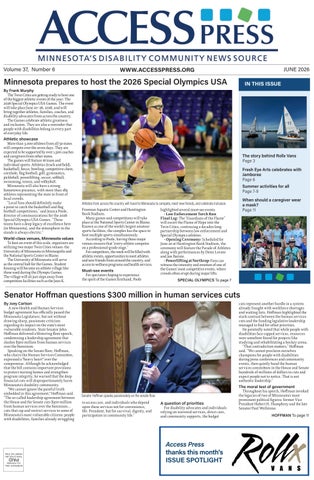
Athletes from across the country will travel to Minnesota to compete, meet new friends, and celebrate inclusion. Freeman Aquatic Center and Huntington highlighted several must-see events: Bank Stadium. • Law Enforcement Torch Run Many games and competitions will take Final Leg: The “Guardians of the Flame” place at the National Sports Center in Blaine. will escort the Flame of Hope into the Known as one of the world’s largest amateur Twin Cities, continuing a decades-long sports facilities, the complex has the space to partnership between law enforcement and host multiple sports simultaneously. Special Olympics athletes. According to Poole, having these major • Opening Ceremony: Scheduled for venues ensures that “every athlete competes June 20 at Huntington Bank Stadium, the on a professional-grade stage.” ceremony will feature the Parade of Athletes For competitors, the week will be filled with along with performances by Demi Lovato athletic events, opportunities to meet athletes and Jon Batiste. and new friends from around the country, and • Powerlifting at Northrop: Fans can access to wellness programs and health services. witness the intensity and emotion of one of the Games’ most competitive events, where Must-see events crowds often erupt during major lifts. For spectators hoping to experience the spirit of the Games firsthand, Poole SPECIAL OLYMPICS To page 7
Senator Hoffman questions $300 million in human services cuts By Joey Carlson A new Health and Human Services budget agreement has officially passed the Minnesota Legislature, but not without drawing sharp, passionate criticism regarding its impact on the state's most vulnerable residents. State Senator John Hoffman delivered a blistering floor speech, condemning a leadership agreement that slashes $300 million from human services over the biennium. Speaking on the Senate floor, Hoffman, who chairs the Human Services Committee, expressed a "heavy heart" over the compromise. Although he acknowledged that the bill contains important provisions to protect nursing homes and strengthen program integrity, he warned that the deep financial cuts will disproportionately harm Minnesota's disability community. "We cannot ignore the painful truth embedded in this agreement," Hoffman said. “The so-called leadership agreement between the House and the Senate cuts $300 million from human services over the biennium... cuts that cap and restrict services to some of Minnesota's most vulnerable citizens: people with disabilities, families already struggling
cuts represent another hurdle in a system already fraught with workforce shortages and waiting lists. Hoffman highlighted the stark contrast between the human services cuts and the funding legislative leadership managed to find for other priorities. He pointedly noted that while people with disabilities face capped services, resources were somehow found for projects like studying and rehabilitating a hockey arena. “That contradiction matters,” Hoffman said. “We cannot proclaim ourselves champions for people with disabilities during press conferences and community events, then quietly hand the human services committees in the House and Senate hundreds of millions of dollars in cuts and expect people not to notice. That is not authentic leadership.”
Senator Hoffman speaks passionately on the senate floor. to access care, and individuals who depend upon these services not for convenience, Mr. President, but for survival, dignity, and participation in community life.”
A question of priorities For disability advocates and individuals relying on waivered services, direct care, and community supports, the budget
Access Press thanks this month's ISSUE SPOTLIGHT
The moral test of government Throughout his speech, Hoffman invoked the legacies of two of Minnesota’s most prominent political figures: former Vice President Hubert H. Humphrey and the late Senator Paul Wellstone. HOFFMAN To page 11
TWIN CITIES, MN PERMIT NO. 4766
PAID
NONPROFIT ORG. U.S. POSTAGE